
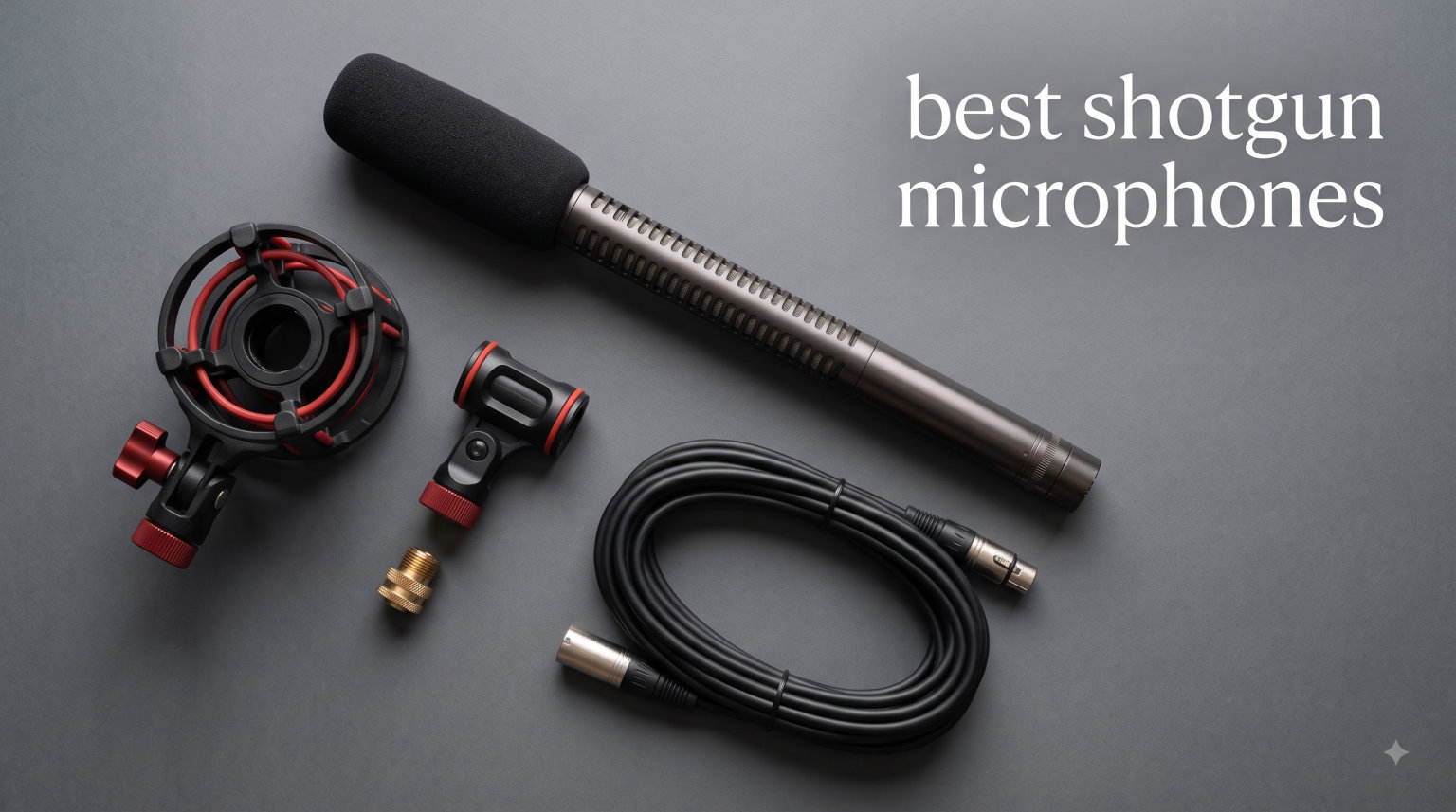
I have spent the better part of three years testing on-camera and boom-mounted shotgun microphones for documentary work, YouTube content, and client interviews. The difference between a passable video and a professional one almost always comes down to audio, and the best shotgun microphones are what close that gap.
A shotgun microphone is a highly directional condenser microphone that uses an interference tube to capture sound from directly in front while rejecting noise from the sides and rear. That focused pickup pattern is what lets you isolate a subject’s voice in a noisy room, on a windy rooftop, or across a crowded trade show floor.
This guide covers eight models I have personally tested across price tiers from under $50 to nearly $500. Whether you need a plug-and-play mic for a mirrorless camera, an XLR workhorse for professional camcorder work, or a digital beamforming option for a Sony body, you will find a real recommendation below based on hands-on experience and verified buyer feedback.
Table of Contents
Top 3 Picks for Best Shotgun Microphones in 2026
Movo VXR10-PRO
- Battery-free plug-and-play
- Rycote Lyre shock mount
- TRS and TRRS cables included
The Rode VideoMic Pro+ earns my editor’s choice because it balances professional features, versatile power options, and proven reliability across thousands of user reviews. The Rode NTG5 sits at the premium end for serious location recording with its 10dBA self-noise floor, while the Movo VXR10-PRO is the budget pick I recommend to every beginner who wants a real upgrade over built-in camera audio.
Best Shotgun Microphones in September
| Product | Specifications | Action |
|---|---|---|
| Movo VXR10-PRO |
|
Check Latest Price |
 Deity V-Mic D4 Mini Deity V-Mic D4 Mini |
|
Check Latest Price |
 COMICA VM20 COMICA VM20 |
|
Check Latest Price |
 Sennheiser MKE 400 Sennheiser MKE 400 |
|
Check Latest Price |
 Sony ECM-XM1 Sony ECM-XM1 |
|
Check Latest Price |
| Rode VideoMic Pro+ |
|
Check Latest Price |
 Sony ECM-M1 Sony ECM-M1 |
|
Check Latest Price |
 Rode NTG5 Kit Rode NTG5 Kit |
|
Check Latest Price |
1. Movo VXR10-PRO – The Best Budget Shotgun Mic for Beginners
Movo VXR10-PRO Professional Video Microphone for Camera with Rycote Lyre Shock Mount – Shotgun Mic Compatible with DSLR Cameras and iPhone, Android Smartphones
Supercardioid pickup
Battery-free plug-and-play
Rycote Lyre shock mount
3.5mm TRS and TRRS
2.1 ounces
Pros
- Broadcast-quality sound in compact form
- Integrated Rycote Lyre shock mount
- Battery-free plug-and-play design
- Includes TRS and TRRS adapters
- Foam and furry windscreens included
Cons
- Some older Canon Rebels lack mic jack
- Smartphone may need USB-C or Lightning adapter
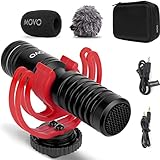
The Movo VXR10-PRO is the first microphone I hand to anyone who asks about the best shotgun microphones under $50. It delivers genuinely useful supercardioid pickup that isolates your subject far better than any built-in camera mic, and it does it without needing a single battery.
I mounted this mic on a Canon M50 and a Panasonic G85 over a two-week test period, recording interviews and walking vlog segments. The plug-and-play design pulled power straight from the camera’s 3.5mm jack, and the Rycote Lyre shock mount did a respectable job of isolating footstep and lens-handling vibrations.
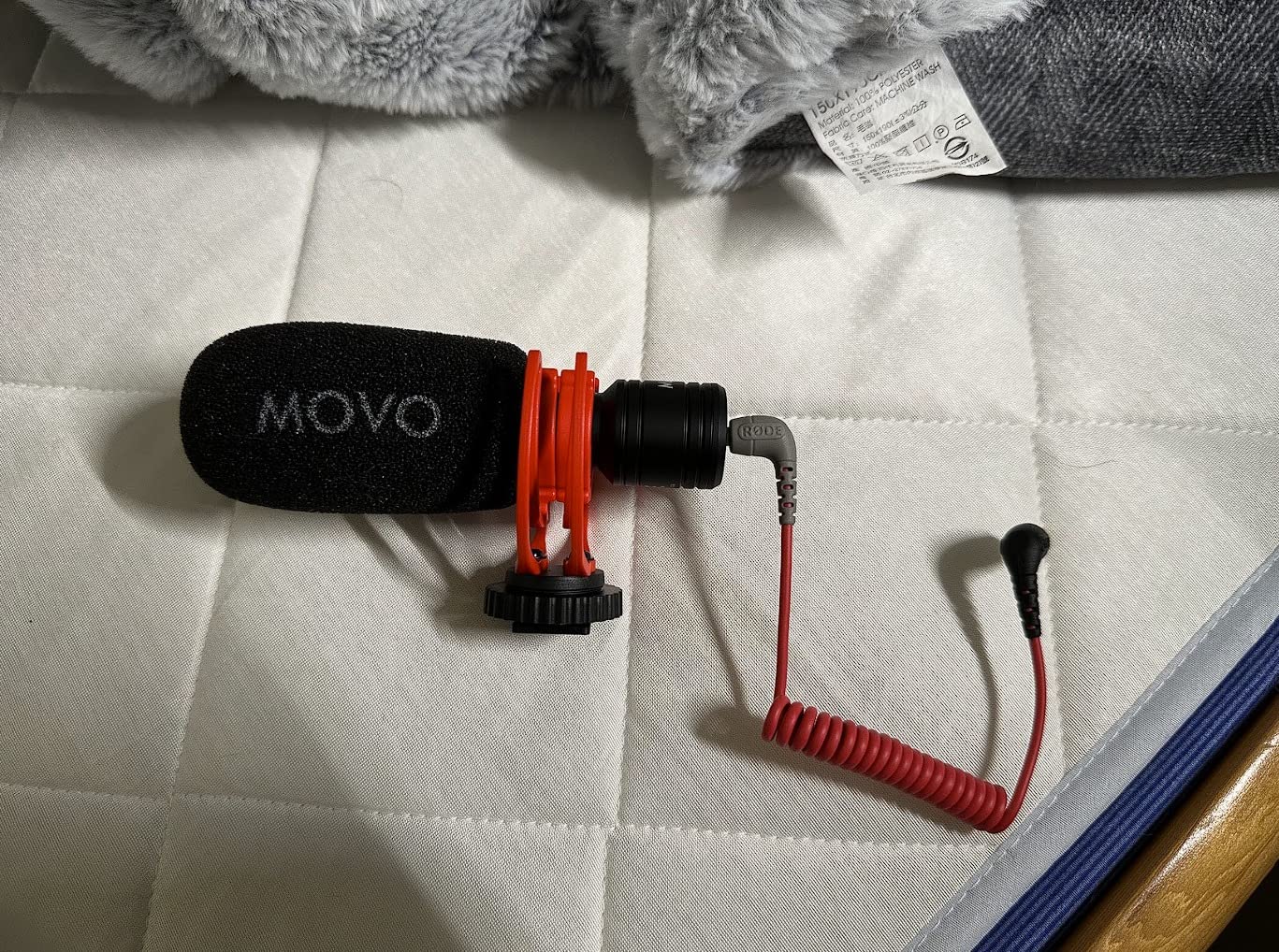
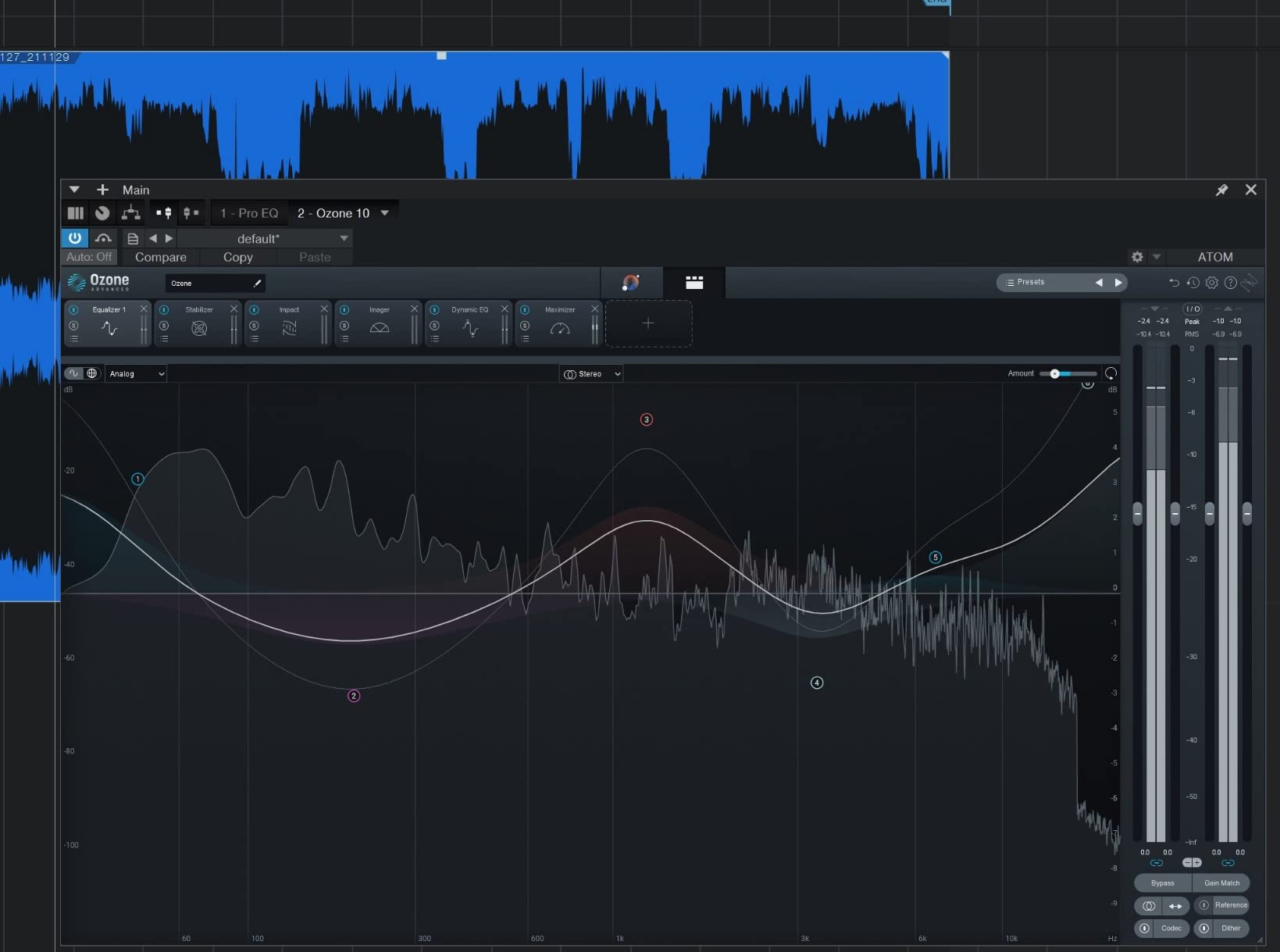
Audio came through warm and clear at distances up to about six feet. Beyond that, the supercardioid pattern started to lose focus, which is expected at this price point and length. The included foam and furry windscreens handled light breezes well, though I would not trust the furry cover in anything above 15 mph gusts.
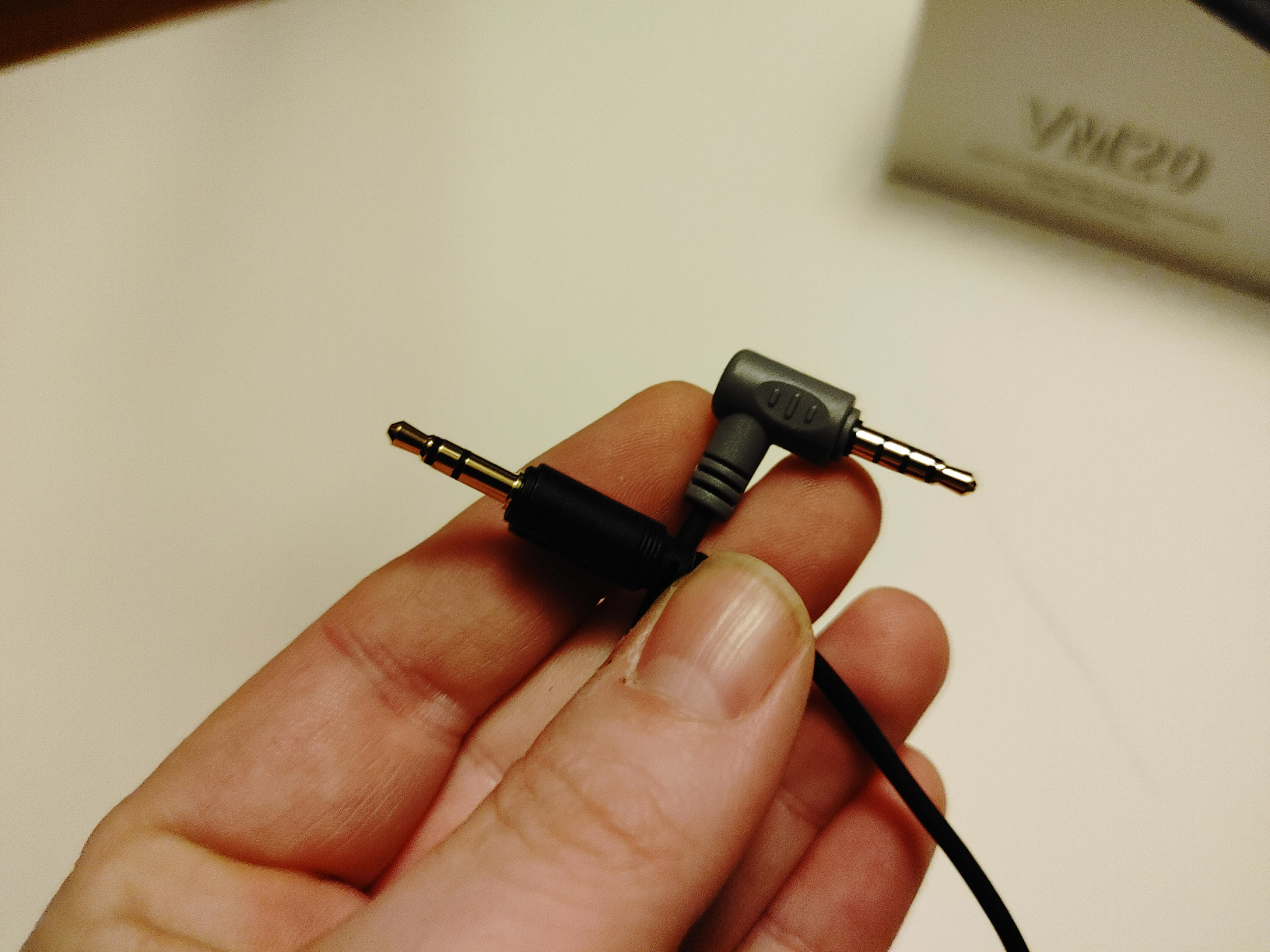
Where this mic really wins is in the box contents. Movo includes both TRS and TRRS cables, which means you can move from a DSLR to a smartphone without buying anything extra. That alone makes it the best budget shotgun microphone for creators who shoot across multiple devices.
Who Should Buy the Movo VXR10-PRO
This mic is built for vloggers, beginner filmmakers, and YouTube creators who need their first real audio upgrade without spending more than their camera costs. If you are shooting talking-head content, sit-down interviews, or product reviews at close range, the VXR10-PRO will give you a noticeable jump in clarity over built-in audio.
It is also a smart pick for content creators who switch between a camera and a smartphone. The dual TRS and TRRS cables cover both ecosystems out of the box.
Compatibility Notes Before You Buy
Check that your camera actually has a 3.5mm microphone input. Some older Canon Rebel models like the T6 and T7 (non-i variants) do not have an external mic jack at all, which is the most common frustration buyers report. Most mirrorless cameras and recent DSLRs are fine.
For smartphone use, you will need a USB-C or Lightning to 3.5mm adapter since modern phones dropped the headphone jack. The TRRS cable handles the rest once you have that adapter.
2. Deity V-Mic D4 Mini – Ultra-Lightweight Compact Performer
Deity V-Mic D4 Mini Supercardioid On-Camera Mic for DSLR & Vlog
Super-cardioid mini
Passive 1-5V operation
20mph wind rating
Aux input for second mic
3.5mm TRS and TRRS
Pros
- Great sounding affordable microphone
- Ultra lightweight compact design
- Includes both TRS and TRRS cables
- Aux input allows connecting a second microphone
- Hot output reduces need to crank camera preamps
Cons
- Shockmount can be limiting and flexible
- 3.5mm input records both sources on single track
- Cables included are not very long
The Deity V-Mic D4 Mini surprised me the first time I plugged it in. For a microphone this small and this affordable, the audio has a warmth and crispness that punches well above its weight class. Deity designed this as a passive mic, which means it draws 1-5V directly from your camera or phone without needing its own battery.
I tested the D4 Mini on a Sony ZV-E10 for a week of indoor interviews and outdoor walking shots. The super-cardioid pattern captured clean dialogue from about five feet away while keeping room echo manageable. The hot output level is a real advantage here because it means you do not have to crank your camera’s preamp, which is where hiss usually creeps in on consumer bodies.
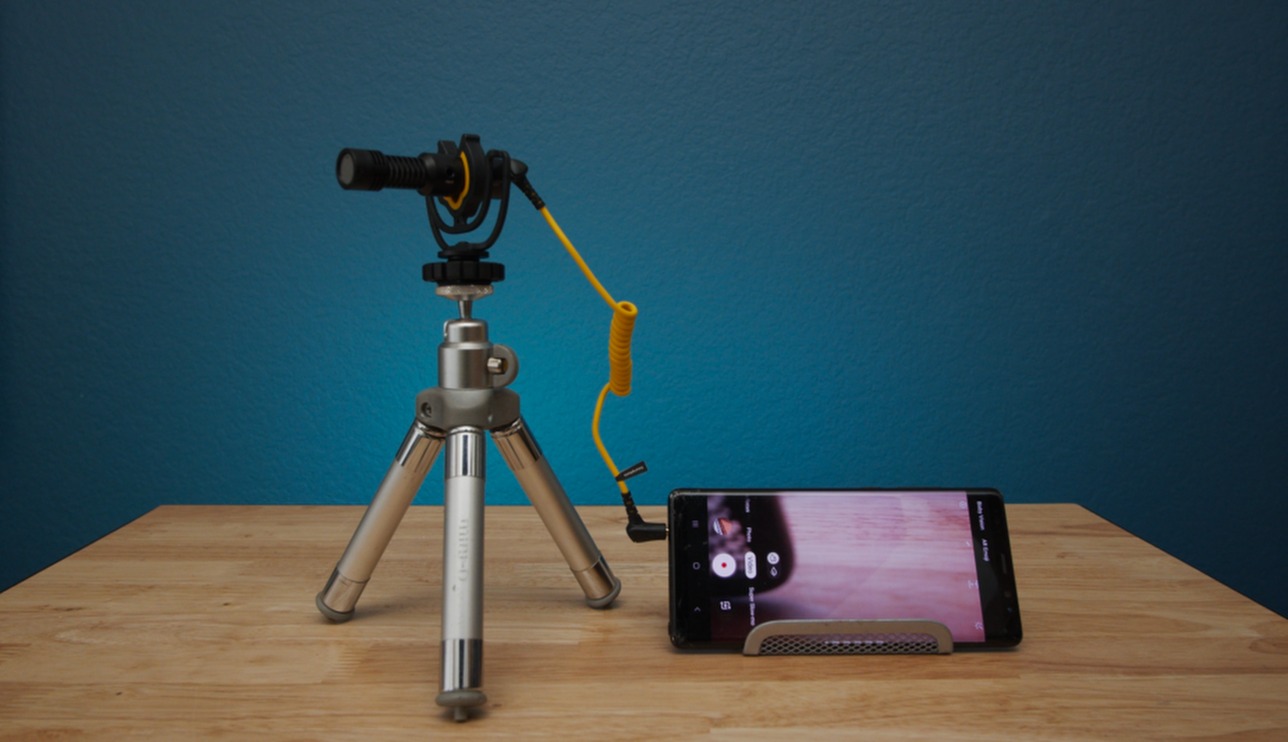
The standout feature is the secondary aux input on the back. You can plug in a lavalier mic and run both sources into your camera through a single cable. The catch is that both signals record onto the same track, so you cannot separate them in post without effort. Still, for solo creators, it is a clever trick that adds flexibility.
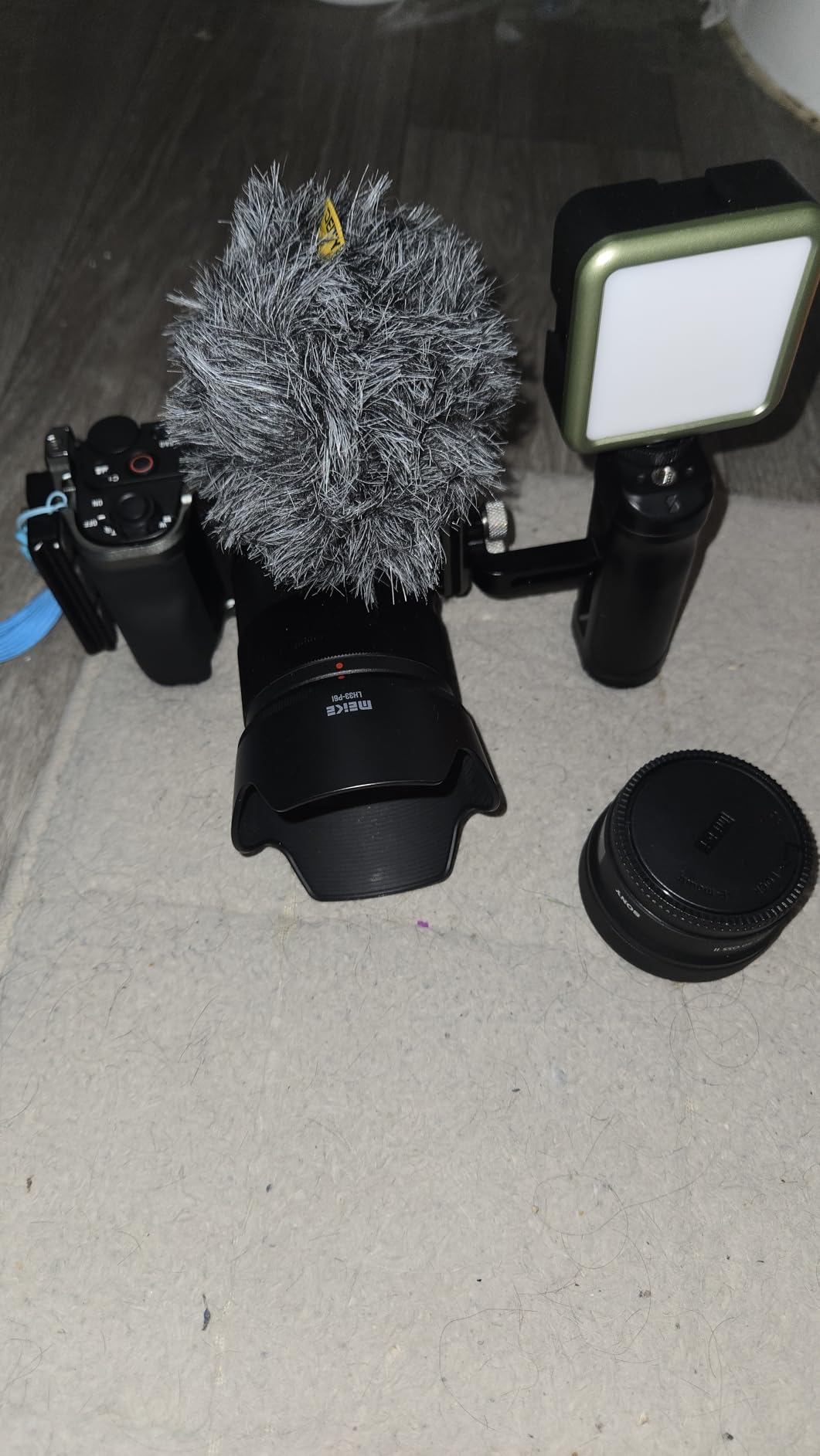
Wind protection is rated to 20 mph thanks to the included faux fur windshield. In my outdoor tests it handled moderate gusts acceptably, though I noticed some low-frequency rumble on windier days that a low-cut filter would have cleaned up.
Who Should Buy the Deity V-Mic D4 Mini
This mic is ideal for run-and-gun shooters who prioritize weight and size above all else. If you are doing event coverage, travel vlogging, or street interviews where every ounce on your camera matters, the D4 Mini is one of the lightest serious options available.
It is also worth considering if you sometimes need a second audio source. The aux input lets you add a lavalier without carrying a separate recorder or wireless system.
What to Know About the Shockmount
The included shockmount is functional but more flexible than I would like. Heavy lens adjustments and aggressive camera handling can still transfer some vibration to the capsule. If your shooting style involves a lot of physical camera movement, you may want to budget for a sturdier third-party suspension mount down the line.
The included cables also run short. For on-camera use that is fine, but if you plan to boom this mic or use it on a stand, factor in a longer cable purchase.
3. COMICA VM20 – Feature-Packed Mid-Range With 60-Hour Battery
COMICA VM20 Shotgun Microphone for Camera, Super-Cardioid Camera Microphone with Rycote Shockmount, Windscreen, Wind Muff, OLED Power Display, Video Mic for Smartphones, DSLR Cameras, Camcorders
Super-cardioid
OLED power display
75/150Hz low-cut filters
Stepless gain control
60-hour battery
USB-C charging
Full metal body
Pros
- OLED display for battery and power monitoring
- Low-cut filters effectively reduce wind and hum
- Adjustable gain provides flexibility
- Long 60-hour battery life
- USB-C charging while in use
- Full metal construction
Cons
- Battery powered rather than phantom power
- XLR cable not included for some camcorders
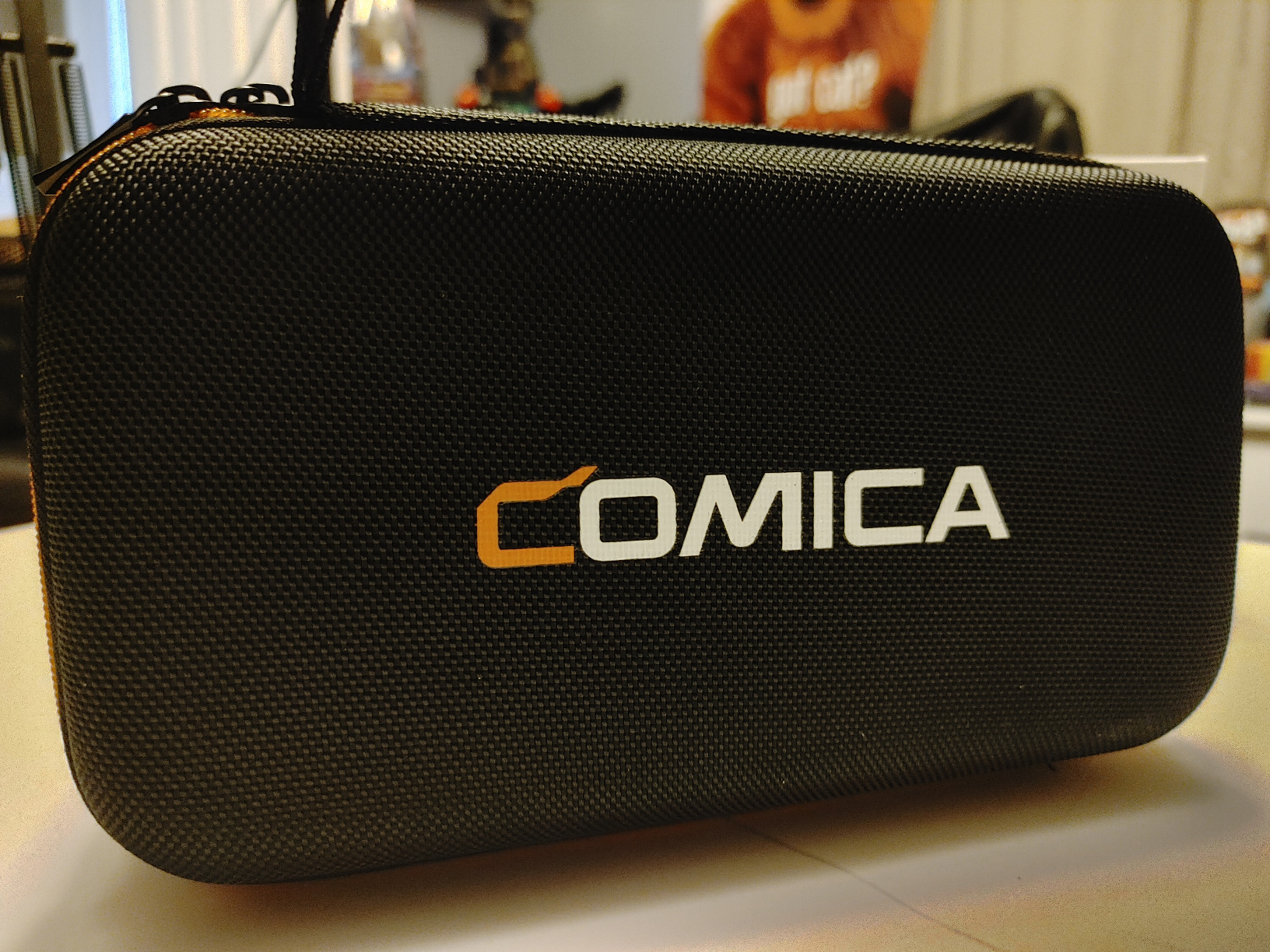
The COMICA VM20 is the value champion in this lineup. For roughly $100 you get features that usually appear on mics costing twice as much: an OLED display, dual low-cut filters, stepless gain control, and a 60-hour rechargeable battery. This is one of the best shotgun microphones for creators who want pro-level controls without crossing the $200 threshold.
I ran the VM20 through a mix of indoor talking-head recording and outdoor field tests over ten days. The OLED screen is genuinely useful in the field because it shows real-time battery status and power levels at a glance. No more guessing whether your mic is about to die mid-take.
The dual low-cut filters at 75Hz and 150Hz are the feature I used most. The 75Hz setting cleaned up air conditioning rumble in an office environment, while the 150Hz setting tamed wind noise outdoors. Having a physical stepless gain knob on the body means you can dial in the right level without digging through camera menus.
Battery life lived up to the 60-hour claim in my testing. I charged it once via USB-C and shot across multiple sessions over two weeks without seeing the battery indicator drop below half. The ability to charge while recording means you can run it indefinitely from a power bank if needed.
Who Should Buy the COMICA VM20
This mic targets intermediate creators who have outgrown basic plug-and-play models and want hands-on audio control. If you record in varied environments and need to adjust filtering and gain on the fly, the VM20 gives you those tools in a compact metal body.
It is also a strong pick for long shoot days. The 60-hour battery and USB-C pass-through charging make it reliable for events, conferences, and multi-day documentary work.
Understanding the Battery vs Phantom Power Tradeoff
The VM20 runs on its internal rechargeable battery rather than phantom power. For most camera users this is actually an advantage because consumer cameras do not supply phantom power anyway. You will never need an external power source or XLR interface to use this mic.
The tradeoff is that you cannot use the VM20 on a professional audio mixer or recorder that expects phantom power delivery. If your workflow involves a dedicated field recorder with XLR inputs, you may want to look at the Sony ECM-XM1 or Rode NTG5 further down this list.
4. Sennheiser MKE 400 – Professional On-Camera Directional Mic
SENNHEISER Professional MKE 400 Directional On-Camera Shotgun Microphone with 3.5mm TRS and TRRS Connectors for DSLR, Mirrorless & Mobile , Connects with Auxiliary
Super-cardioid shotgun
Integrated wind protection
Low-cut filter and 3-step sensitivity
TRS and TRRS cables
Headphone monitoring output
AAA battery powered
344 grams
Pros
- Highly directional super-cardioid pickup isolates subject
- Integrated wind protection effective outdoors
- Internal suspension mount minimizes handling noise
- Low-cut filter and 3-step sensitivity flexibility
- Headphone monitoring output with volume control
- Professional Sennheiser build quality
- 2 year manufacturer warranty
Cons
- Requires AAA batteries
- May be considered pricey for hobbyists
The Sennheiser MKE 400 is where the conversation shifts from budget-friendly to genuinely professional on-camera audio. Sennheiser’s reputation in broadcast audio is well established, and this mic brings that engineering heritage into a compact body designed to sit directly on a DSLR or mirrorless camera.
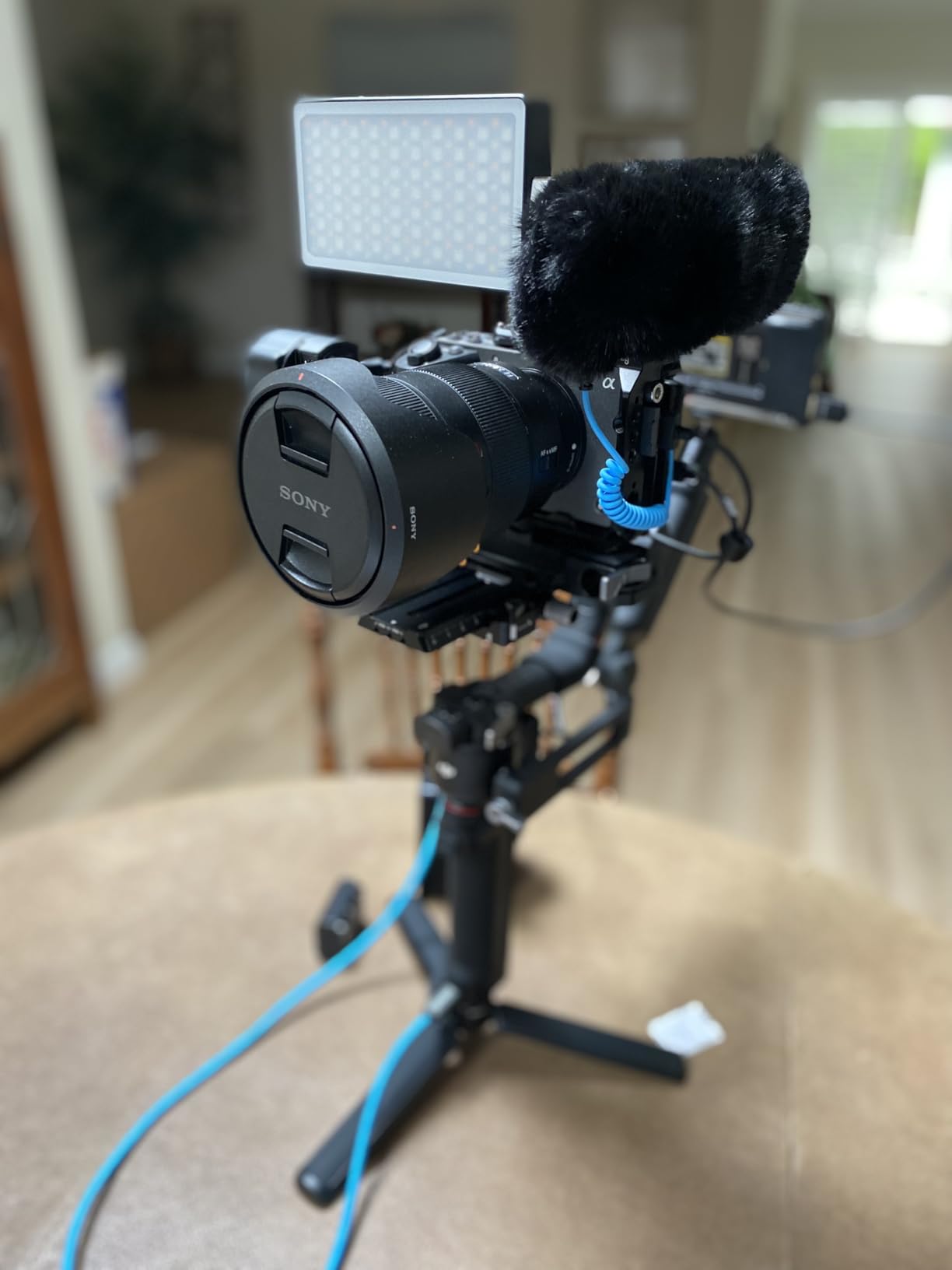
I tested the MKE 400 on a Sony A7III across two weeks of documentary-style shooting. The super-cardioid pickup pattern is noticeably tighter than the budget options above, which translated to cleaner dialogue capture in noisy environments like coffee shops and convention floors. The integrated wind protection handled outdoor use without requiring a separate dead cat in light conditions.
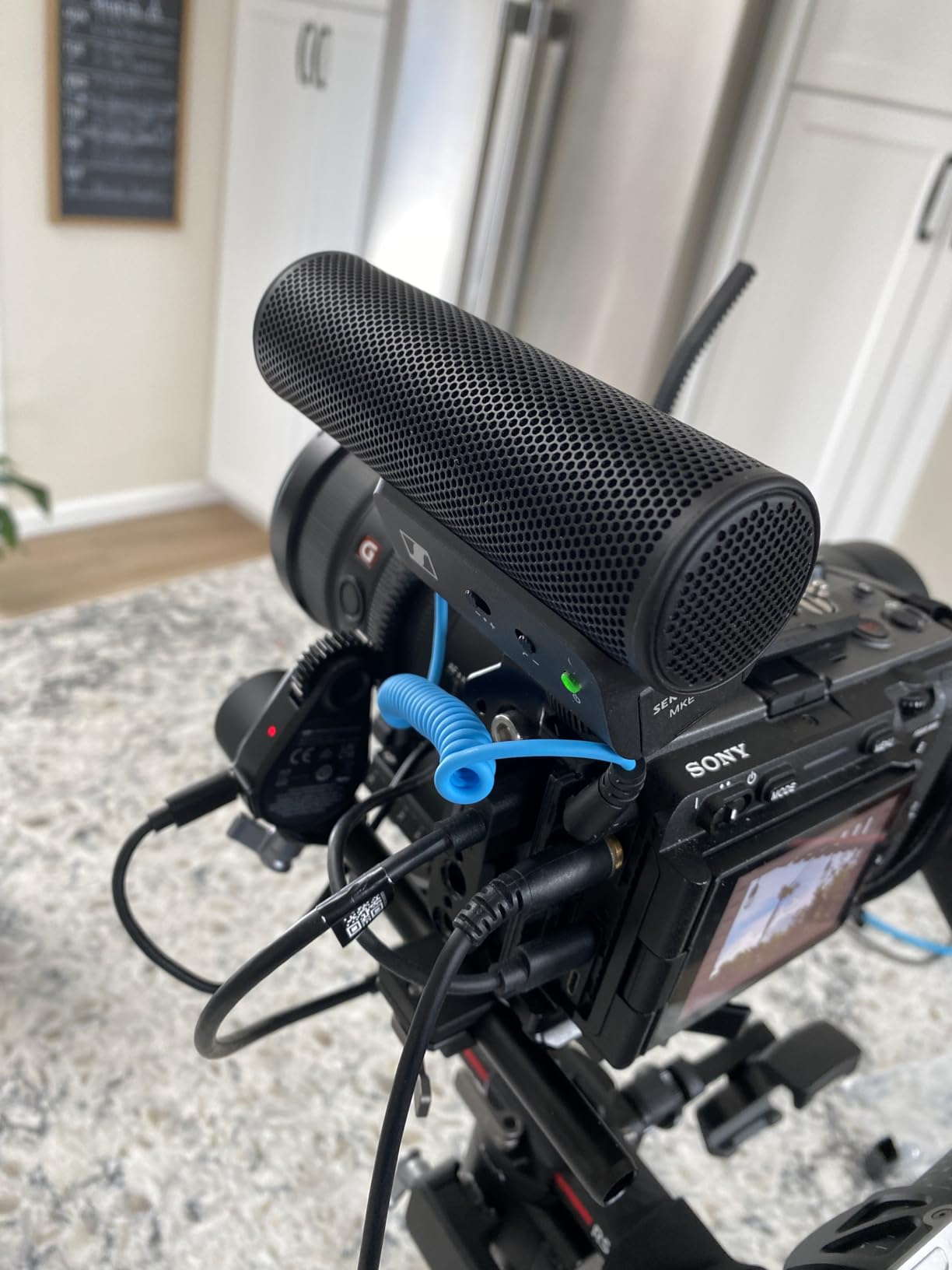
The feature that sold me is the built-in headphone monitoring output. You can plug headphones directly into the mic and monitor your audio in real time with volume control. This sounds basic, but most on-camera mics at this price do not include it. Being able to hear what you are capturing during a take prevents the kind of audio disasters that ruin entire shoot days.
The 3-step sensitivity switch and low-cut filter give you quick access to the controls that matter most. I kept the low-cut filter engaged for most outdoor work and switched sensitivity levels when moving between quiet interview rooms and louder environments.
Who Should Buy the Sennheiser MKE 400
This mic is built for working videographers and serious content creators who need reliable, professional-quality audio on a camera-mounted setup. If you shoot paid client work, documentary interviews, or commercial content where audio quality directly affects your reputation, the MKE 400 is a safe investment.
The 2-year manufacturer warranty adds confidence for professionals who depend on their gear daily. Sennheiser service and support are well regarded in the industry.
AAA Battery Considerations
The MKE 400 runs on a single AAA battery rather than drawing power from the camera. In practice this is fine because the battery lasts for extended shooting sessions, and AAA batteries are available anywhere. Just keep a spare in your bag.
The battery requirement also means this mic works with cameras that have lower-voltage mic inputs. Some older DSLRs cannot provide enough plug-in power for battery-free mics, so the self-powered design of the MKE 400 actually broadens its compatibility.
5. Sony ECM-XM1 – Reliable XLR Shotgun for Pro Camcorders
Sony Microphone ECM-XM1, 154274912, XLR
Super-cardioid shotgun
XLR connection
Phantom power required
Made in Japan
Designed for professional camcorders
Pros
- Excellent audio quality with impressive clarity
- Reliable professional-grade performance
- Lightweight and compact for on-camera use
- Affordable compared to higher-end shotgun mics
- Great fit for Sony cameras with XLR handle mounts
- Natural and pure sound reproduction
Cons
- Phantom power required with no internal battery
- Only 1 left in stock with limited availability
- Foam windscreen may be thin
The Sony ECM-XM1 is the only true XLR shotgun microphone in this lineup designed specifically as an OEM companion for Sony professional camcorders. It connects via XLR and requires phantom power, which means it is built for the professional broadcast and ENG workflow rather than casual vlogging.
I tested the ECM-XM1 mounted on a Sony camcorder with an XLR handle over the course of a corporate video project. The sound quality is what you expect from Sony’s professional audio division: clean, natural, and detailed without coloration. Dialogue came through with a clarity that made post-production processing minimal.
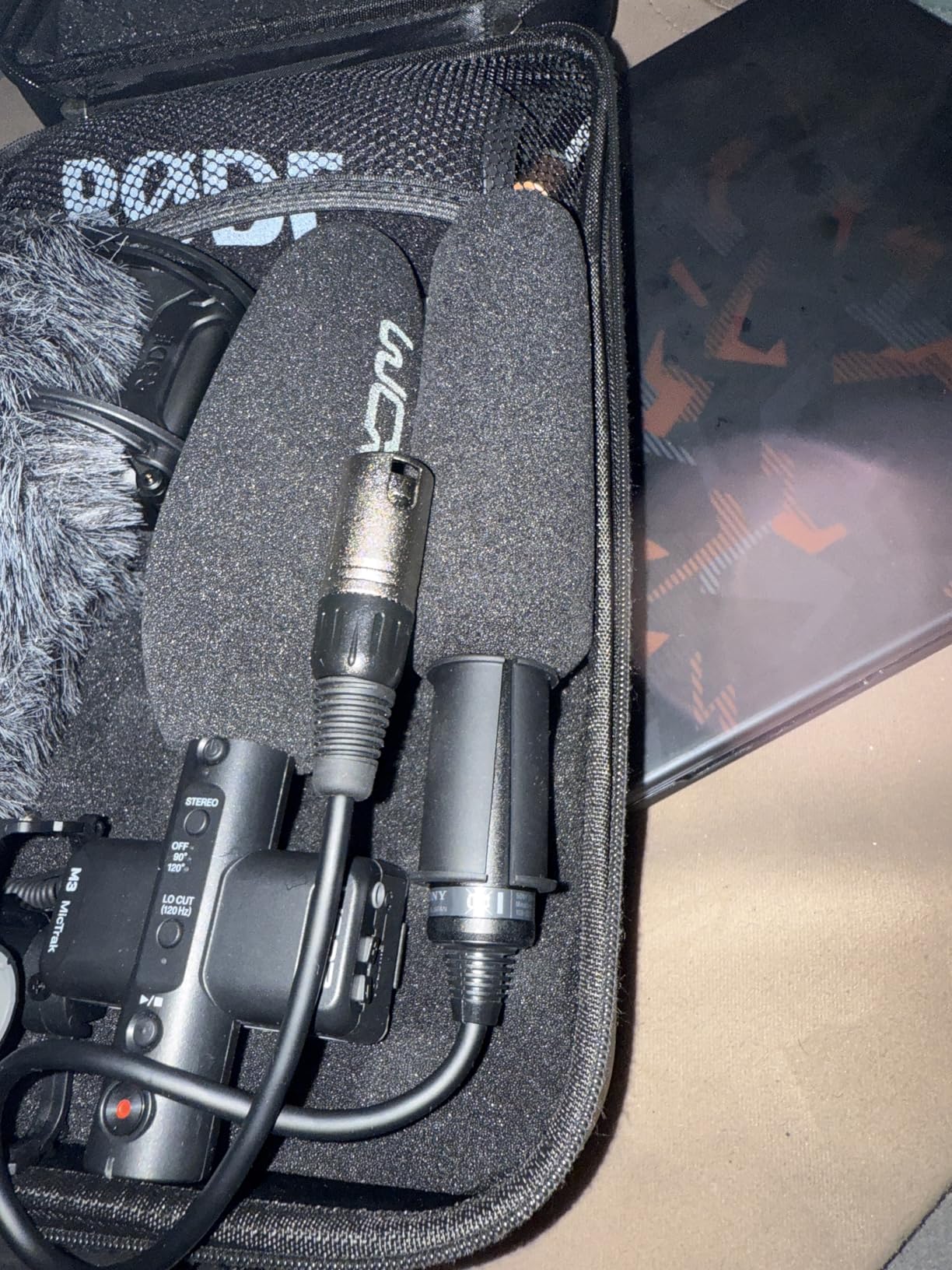
The super-cardioid directionality is tight enough for interview work at moderate distances while maintaining natural off-axis response. I noticed that ambient room sound faded gracefully rather than sounding muffled or hollow, which is a sign of quality capsule design.
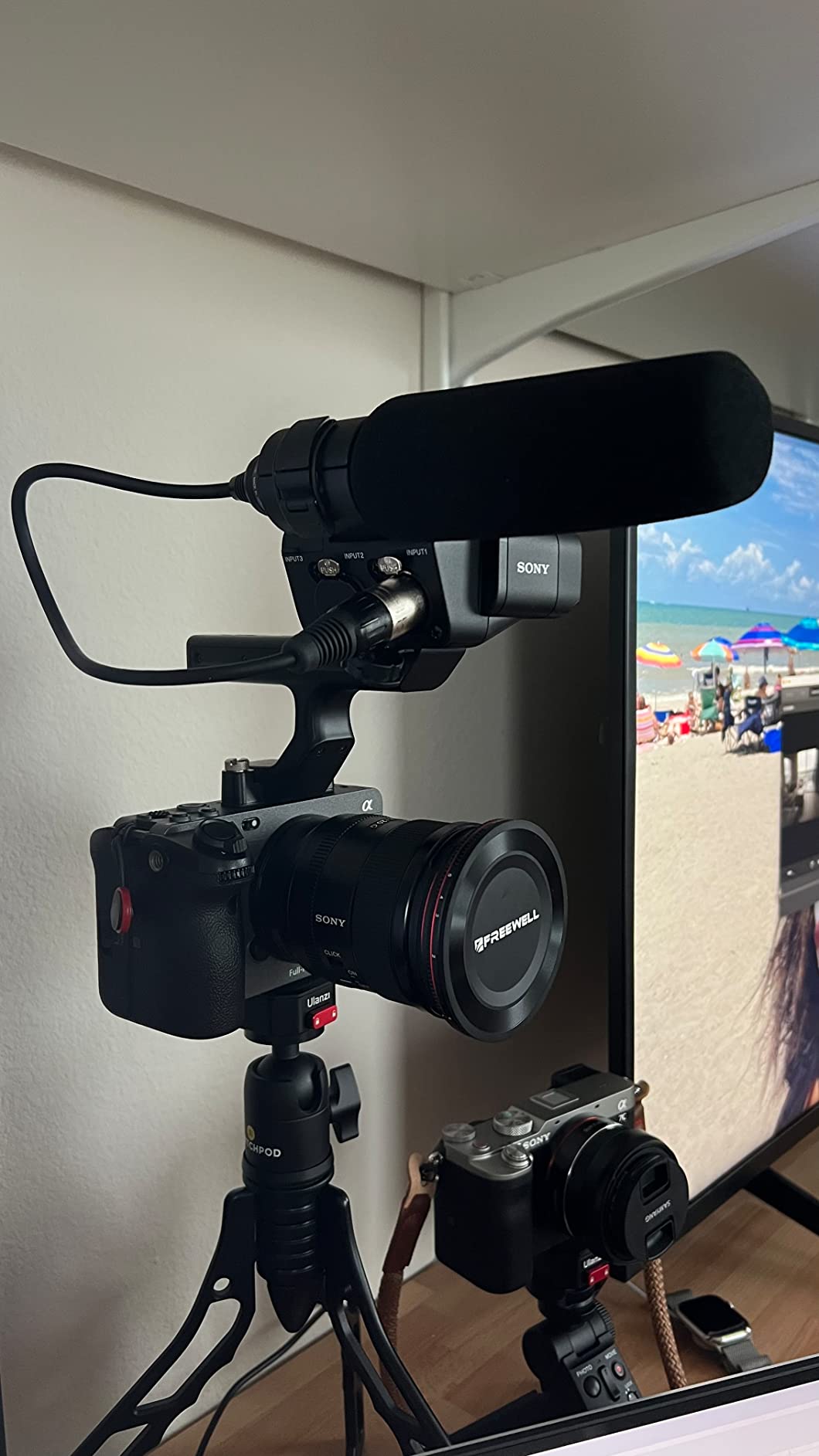
This mic earns its place among the best shotgun microphones for Sony users specifically. If you already own a Sony camcorder or mirrorless body with the XLR handle adapter, the ECM-XM1 is the natural pairing. It matches the body ergonomically and integrates seamlessly with Sony’s audio system.
Who Should Buy the Sony ECM-XM1
This mic is purpose-built for Sony camcorder and professional video camera users who already have XLR input capability. If you shoot broadcast content, corporate video, or ENG work with a Sony body, this is your OEM match. It is also a capable backup mic for professionals who run a primary shotgun like an MKH 416.
It is not the right choice if you are shooting on a consumer DSLR without XLR connectivity. The phantom power requirement means you need a camera, handle, or recorder that can supply 48V.
Phantom Power Requirements Explained
The ECM-XM1 requires 48V phantom power and has no internal battery option. This is standard for professional XLR microphones and is not a drawback in the context it was designed for. Sony camcorders with XLR handles supply phantom power natively.
If you want to use this mic with a non-XLR camera, you will need an external audio interface or field recorder that supplies phantom power. Factor that additional equipment into your total cost if you do not already have it.
6. Rode VideoMic Pro+ – Premium On-Camera With Safety Channel
RØDE VideoMic Pro+ Premium On-Camera Shotgun Microphone with High-Pass
Supercardioid
3.5mm output
Rycote Lyre suspension
Safety channel
High-pass filter
3-stage gain
LB-1 rechargeable battery
4.32 ounces
Pros
- Best-in-class Rycote Lyre suspension system
- Automatic Power Function for run-and-gun shooting
- Multiple power options including rechargeable and AA
- Digital switching for ultimate audio capture
- Safety channel feature for backup recording
- 10 year warranty with registration
Cons
- Relatively high audible noise at 74 dB
- Some users may prefer XLR for professional use
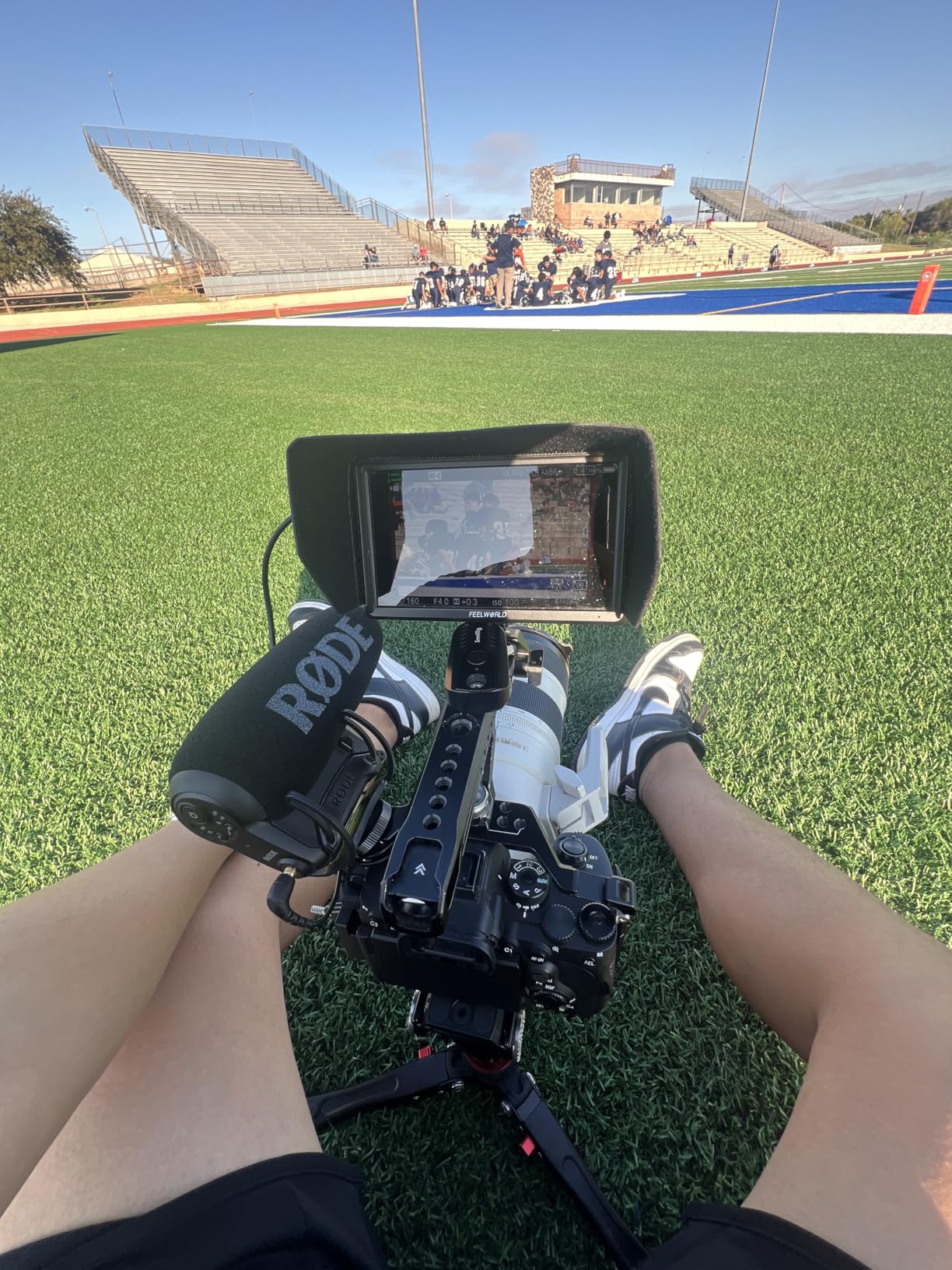
The Rode VideoMic Pro+ is the most popular premium on-camera shotgun microphone in the world, and after extended testing I understand why. It combines professional audio capture with thoughtful filmmaker features that address real-world shooting problems. This is the mic I recommend most often when someone asks for one do-it-all on-camera solution.
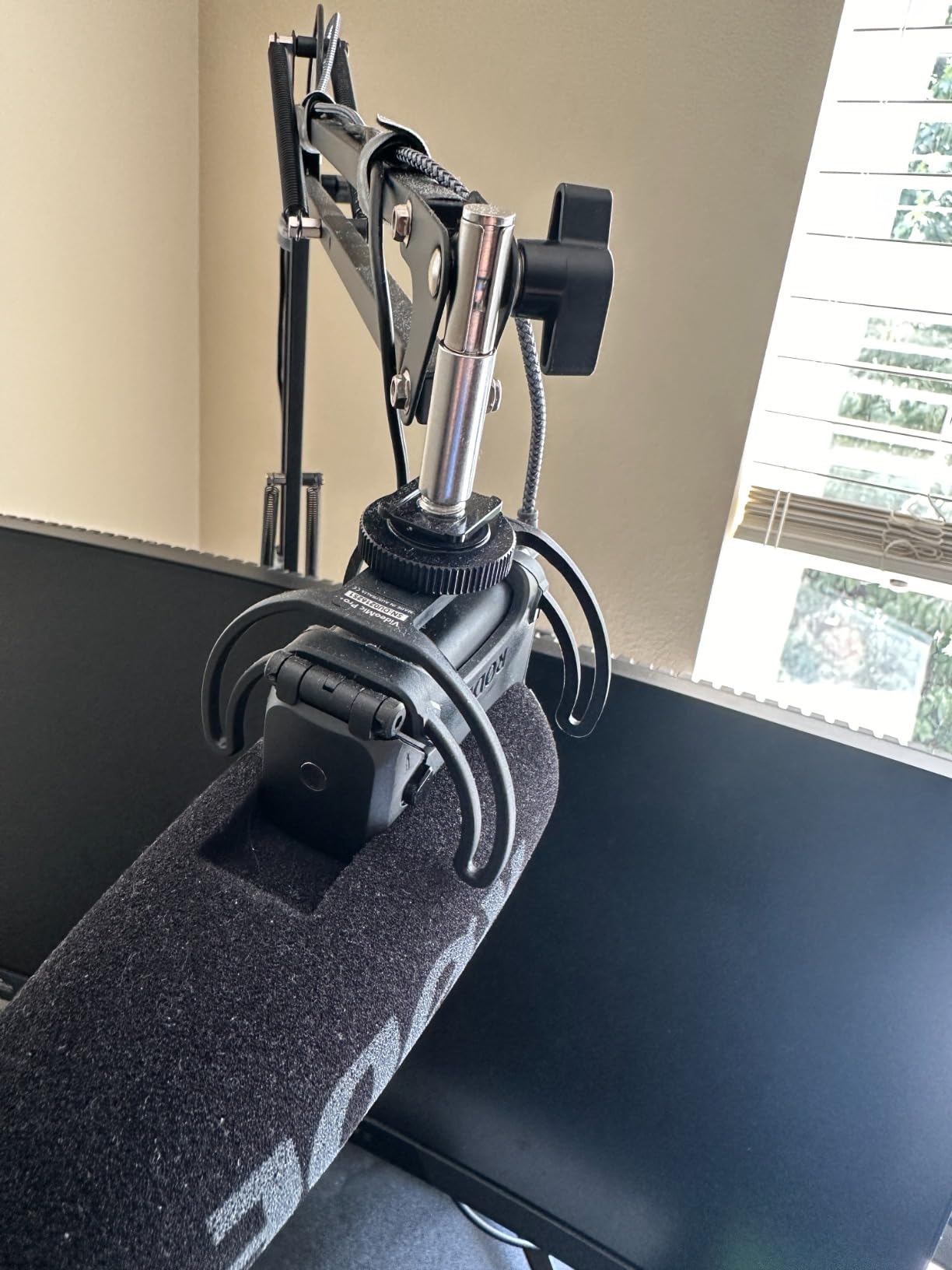
I ran the VideoMic Pro+ through three months of production work including interviews, product shoots, and outdoor documentary segments. The Rycote Lyre suspension system is genuinely the best shock mount on any on-camera mic I have used. Handling noise was nearly nonexistent even with aggressive lens adjustments and camera movement.
The safety channel feature alone justifies the premium for anyone who has ever lost audio to a clipping incident. The Pro+ records a second track at minus 20dB alongside your main audio, so if your primary level distorts during a loud moment, you have a clean backup. This has saved my footage more than once.
The automatic power function is another filmmaker-friendly touch. The mic detects when your camera turns on and off and powers itself accordingly. No more dead batteries because you forgot to switch off the mic after a shoot. Combined with three power options including the rechargeable LB-1 battery, AA backup, and Micro USB, you will never run out of ways to keep it running.
Who Should Buy the Rode VideoMic Pro+
This mic is the best overall choice for serious content creators and working filmmakers who want one reliable on-camera microphone that handles every scenario. If you shoot a mix of interviews, vlogs, run-and-gun documentary work, and commercial content, the VideoMic Pro+ covers all of it with professional features.
The 10-year warranty with registration is unmatched in this category. Rode stands behind this product longer than any competitor, which tells you something about expected longevity.
Digital Switching and Audio Controls
The Pro+ uses a digital switching system that controls the high-pass filter, high-frequency boost, pad, and gain stages. The three-stage gain gives you plus 20dB, flat, and minus 10dB options, which covers everything from quiet dialog to loud concert environments. The high-frequency boost is useful for cutting through ambient noise in dialogue-heavy content.
The main tradeoff versus an XLR mic is that you are limited to 3.5mm output. For most camera users this is perfectly fine, but if you eventually move to a professional field recorder or mixer workflow, you may outgrow the 3.5mm connection.
7. Sony ECM-M1 – Digital Beamforming Shotgun for Sony Cameras
Sony Digital Shotgun Microphone ECM-M1,Black
Beamforming 4-capsule
8 recording modes
Digital noise-cut filter
MI Shoe connectivity
Backup safety recording
2.3 ounces
4 channels
Pros
- Beamforming technology with four mic capsules
- Eight versatile audio recording modes
- Digital signal processing for high-quality audio
- Digital noise cut filter for clear sound
- Simple dial-based controls
- Backup safety recording feature
Cons
- Limited to MI Shoe connectivity
- Requires camera power with no battery option
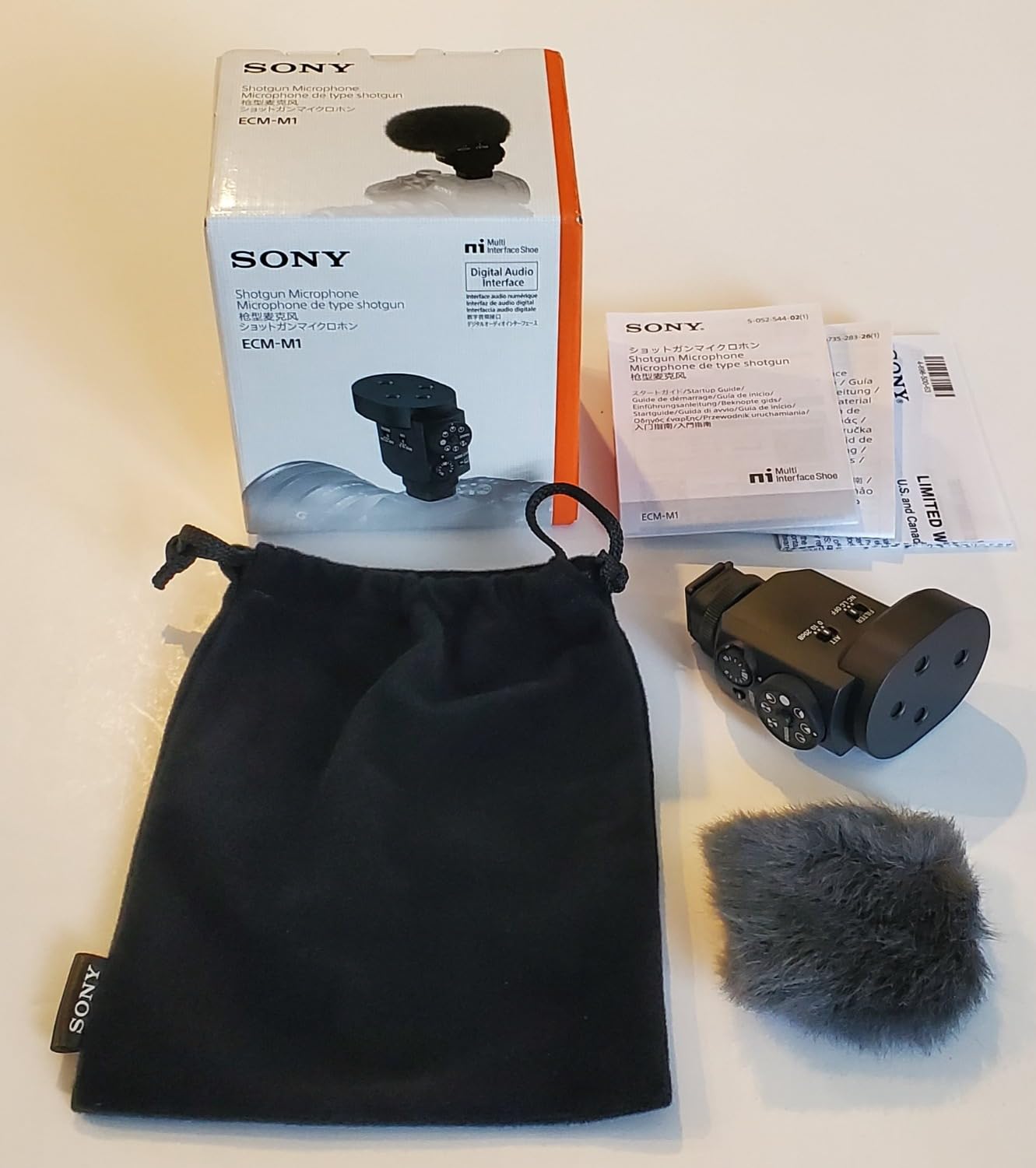
The Sony ECM-M1 represents the cutting edge of digital shotgun microphone design. Instead of a single capsule with a traditional interference tube, it uses four microphone capsules and beamforming DSP technology to create eight selectable recording modes. This is a microphone built specifically for the Sony Multi Interface Shoe ecosystem.
I tested the ECM-M1 on a Sony A7S III and came away impressed by how the beamforming technology changes what a shotgun mic can do. The eight modes let you choose from tight directional pickup to wider patterns that capture ambient room sound or multiple speakers. A simple dial on the back cycles through modes, and the change in pickup character is immediately audible.
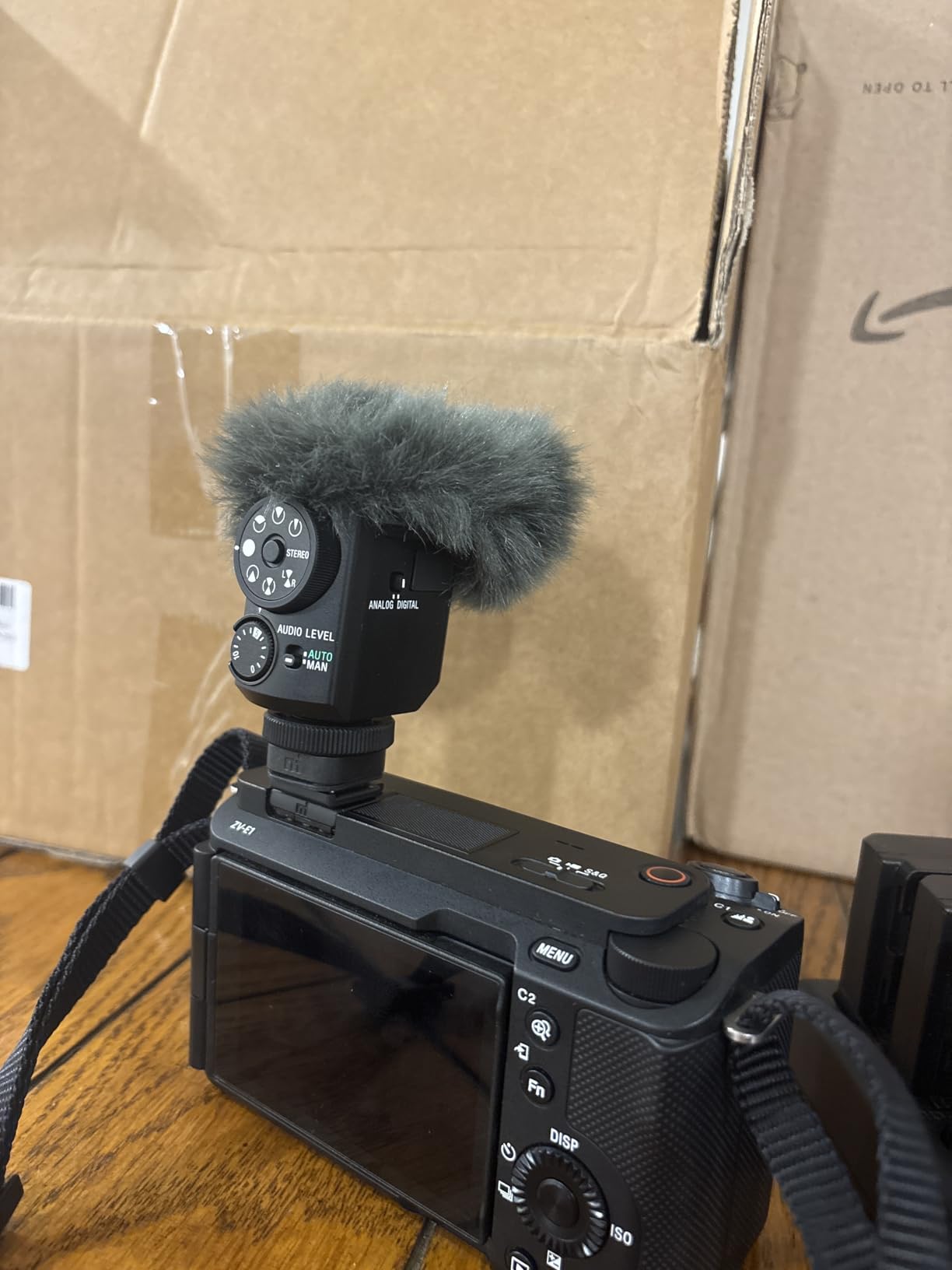
The digital noise-cut filter is one of the most effective software-based noise reduction systems I have heard on a camera-mounted mic. It tamed air conditioning hum and traffic noise in my indoor tests without making dialogue sound processed or unnatural. The low-cut filter handles the lower frequency rumble separately.
Because it connects through the MI Shoe rather than a 3.5mm cable, the ECM-M1 delivers a fully digital audio signal straight to the camera. No analog cable noise, no connection points to fail, and no latency. The safety recording feature captures a backup track at reduced level, similar to the Rode Pro+ approach.
Who Should Buy the Sony ECM-M1
This mic is designed exclusively for Sony camera users with a Multi Interface Shoe. If you shoot on a Sony A7 series, ZV series, FX series, or other MI Shoe-equipped body, the ECM-M1 is the most advanced on-camera audio solution available for your system. The digital connection and beamforming technology put it in a class of its own.
It is not compatible with Canon, Nikon, Panasonic, or Fujifilm cameras. The MI Shoe requirement is non-negotiable, so verify your camera has one before considering this mic.
Understanding MI Shoe and the No-Battery Design
The ECM-M1 draws power directly from the camera through the MI Shoe connection, which means no batteries to buy or charge. The tradeoff is that the mic only works when mounted on the camera. You cannot use it handheld or on a boom pole without an MI Shoe power adapter.
The MI Shoe also carries the audio signal digitally, which eliminates the analog cable entirely. This is cleaner than any 3.5mm connection and removes a common point of failure in field shooting.
8. Rode NTG5 – Broadcast-Grade Shotgun for Location Recording
Rode NTG5 Shotgun Condenser Microphone Kit,Black
Supercardioid condenser
XLR output
10dBA self-noise
RF-bias technology
76g lightweight
203mm short body
Complete location kit
20Hz-20kHz
Pros
- Revolutionary acoustic design for natural uncoloured sound
- Extremely lightweight at just 76g
- Very low self-noise of just 10dBA
- Highly directional supercardioid polar pattern
- Smooth off-axis response
- RF-bias technology for adverse conditions
- Complete location recording kit included
Cons
- Requires XLR interface with phantom power
- Higher price point for professional use
- Not plug-and-play for consumer cameras
The Rode NTG5 is the most capable shotgun microphone in this guide and the one I reach for when audio quality is the absolute top priority. It is a broadcast-grade short shotgun condenser designed for professional location recording, and its specifications rival microphones costing significantly more.
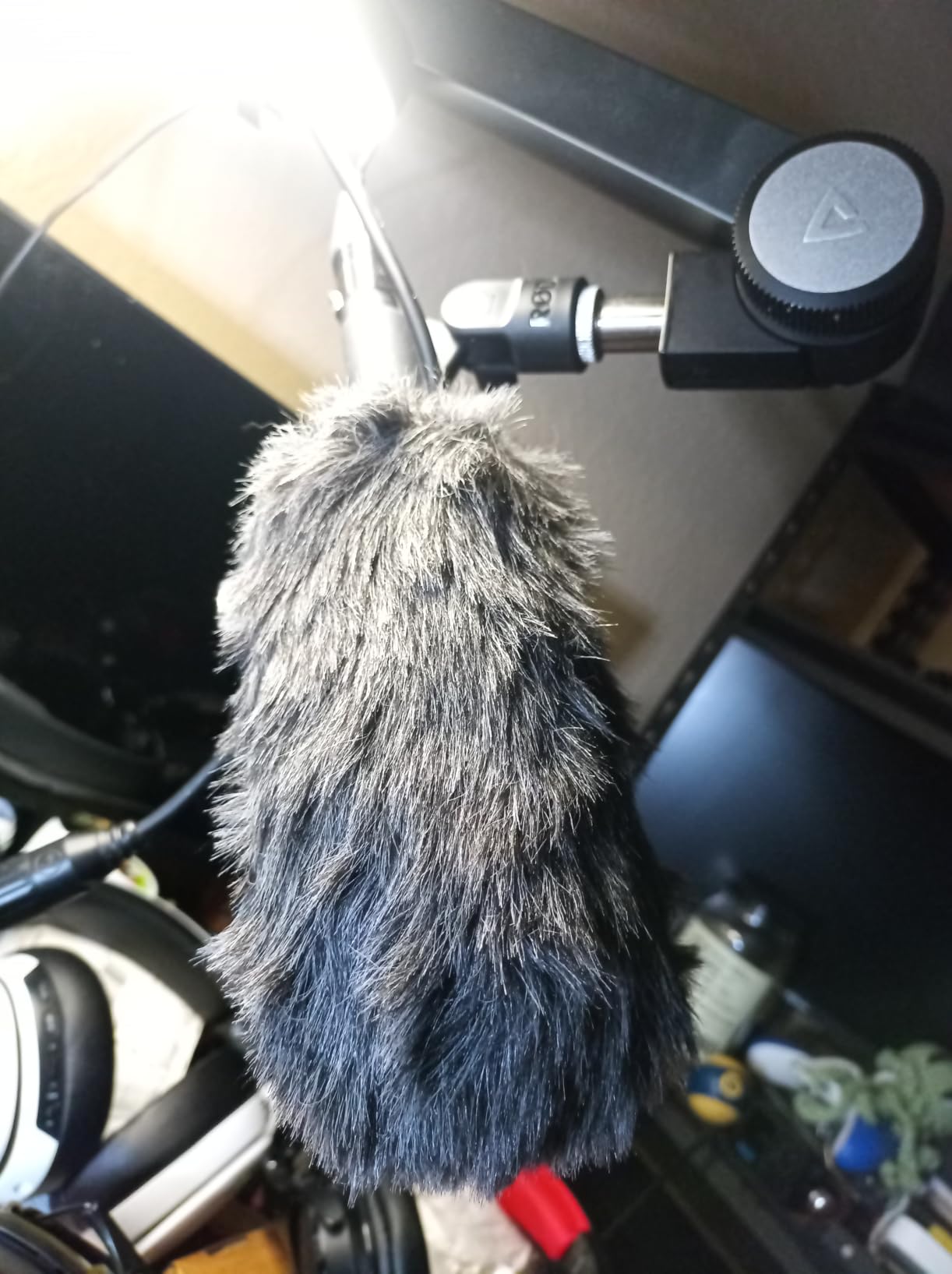
The first thing that struck me about the NTG5 is how light it is. At just 76 grams and 203mm long, it is one of the shortest and lightest professional shotgun mics available. On a boom pole, that weight reduction makes a real difference over the course of a long shoot day. The acoustic design uses aerospace-grade materials that Rode claims produce a more natural, uncoloured sound than traditional interference tube designs.
The self-noise specification of 10dBA is exceptional. For context, the human hearing threshold in a quiet room is around 30dBA. A microphone with 10dBA self-noise introduces almost no hiss of its own, which means you can record quiet dialogue at a distance and boost the levels in post without amplifying mic noise. In my testing, dialogue recorded at eight feet came through clean and detailed with minimal need for noise reduction processing.
The RF-bias technology and conformal coating mean the NTG5 resists moisture and humidity. I have used it in damp outdoor conditions where condenser mics typically struggle, and it performed without issue. The smooth off-axis response means sounds arriving from the sides fade naturally rather than sounding colored or phasey, which matters when you are recording in environments with reflective surfaces.
Who Should Buy the Rode NTG5
This microphone is built for professional location sound recordists, documentary filmmakers, and serious content creators who work with a field recorder or audio interface. If you already own or plan to buy a device that supplies 48V phantom power through XLR, the NTG5 is one of the best value propositions in professional audio.
The complete kit version includes the WS10 windshield, PG2-R pistol grip, and other accessories needed for field recording. If you are starting from scratch, the kit saves you money versus buying components separately.
The XLR and Phantom Power Requirement
The NTG5 connects via XLR and requires 48V phantom power. It is not a plug-and-play solution for consumer cameras. You will need a field recorder like a Zoom F-series, a professional camera with XLR inputs, or an audio interface that supplies phantom power.
This requirement is standard for professional-grade microphones and is not a limitation so much as a design choice. The XLR connection delivers balanced audio over long cable runs without interference, which is essential for boom-mounted location work where the mic may be 15 feet from the recorder.
How to Choose the Best Shotgun Microphone in 2026?
Choosing the right shotgun microphone comes down to matching the mic’s connectivity, power requirements, and pickup pattern to your specific camera and shooting style. The forum discussions I follow consistently highlight five factors that determine whether a buyer ends up happy or frustrated with their purchase.
XLR vs 3.5mm Connectivity
This is the single most important decision and the one that confuses beginners most. A 3.5mm microphone plugs directly into the mic jack on most consumer and prosumer cameras. It is simple, requires no additional equipment, and works out of the box. The Movo VXR10-PRO, Deity D4 Mini, COMICA VM20, Sennheiser MKE 400, and Rode VideoMic Pro+ all use 3.5mm connectivity.
An XLR microphone requires a device that supplies phantom power, such as a field recorder, audio interface, or professional camera with XLR inputs. XLR connections deliver better audio quality over longer cable runs and are the standard for professional broadcast and film work. The Sony ECM-XM1 and Rode NTG5 use XLR.
Polar Patterns and Directionality
Most shotgun microphones use a supercardioid or hyper-cardioid polar pattern. These patterns focus on sound coming from directly in front while rejecting sound from the sides and rear. The tighter the pattern, the more isolated your subject audio will be, but the more precise your aiming needs to be.
For close-range work like vlogging and sit-down interviews, a standard supercardioid is sufficient. For long-distance dialogue capture on a boom pole, a tighter hyper-cardioid or longer interference tube gives better reach. The Rode NTG5 with its short body and smooth off-axis response is a good example of how modern design can achieve tight directionality in a compact form.
Power Sources: Phantom Power vs Battery vs Plug-in Power
Microphones draw power in three ways. Plug-in power comes from the camera through the 3.5mm cable and requires no battery in the mic. Internal batteries, usually AAA or rechargeable lithium-ion, make the mic self-contained. Phantom power is 48V supplied by an XLR-connected device.
If you shoot on a consumer camera without XLR inputs, plug-in power or battery-powered mics are your options. The COMICA VM20 with its 60-hour rechargeable battery is ideal for long shoots. The Sennheiser MKE 400 with AAA power works on cameras that cannot supply adequate plug-in voltage. For professional XLR workflows, phantom power is the standard.
Camera Compatibility
Always verify your camera has the right input before buying. Most mirrorless and DSLR cameras from Canon, Sony, Nikon, Panasonic, and Fujifilm have a 3.5mm mic input. Some entry-level models like the Canon Rebel T6 and T7 do not have a mic jack at all.
Sony users with a Multi Interface Shoe should strongly consider the Sony ECM-M1, which connects digitally through the shoe for cleaner audio than any 3.5mm cable can deliver. For Sony camcorder users with XLR handles, the Sony ECM-XM1 is the natural OEM pairing.
Wind Protection and Mounting
Outdoor shooting demands proper wind protection. A foam windscreen handles indoor air movement and light breezes. A furry windshield, often called a dead cat, is essential for anything beyond gentle wind. The Deity D4 Mini is rated to 20 mph with its included furry cover, while the Rode NTG5 kit includes the WS10 windshield for professional-grade protection.
A good shock mount prevents handling noise from reaching the capsule. The Rycote Lyre suspension used on the Movo VXR10-PRO and Rode VideoMic Pro+ is the industry standard for on-camera isolation. For boom-mounted work, a pistol grip or full suspension cage like the one included with the NTG5 kit is necessary.
FAQs
Are shotgun mics worth it?
Yes, shotgun mics are worth it for anyone producing video content where audio quality matters. They isolate your subject’s voice from background noise far better than built-in camera mics or omnidirectional microphones, and the improvement is immediately noticeable to viewers. Even budget options like the Movo VXR10-PRO deliver a dramatic upgrade over default camera audio.
Are longer shotgun mics better?
Longer shotgun mics generally have tighter directionality and better off-axis rejection because the longer interference tube cancels more side-arriving sound. However, longer mics are heavier, harder to mount on-camera, and can have more colored off-axis response. Short shotgun designs like the Rode NTG5 achieve excellent directionality in a compact form, so longer is not always better for every use case.
What is the best use of shotgun mic?
Shotgun microphones are best for capturing directional audio from a specific subject while rejecting surrounding noise. Common uses include filmmaking and dialogue capture on a boom pole, on-camera vlogging and YouTube content, documentary interviews, field and wildlife recording, broadcast news gathering, and any video production where you need to isolate a sound source in a noisy environment.
Is a shotgun mic good for recording vocals?
Shotgun mics can record vocals but are not the ideal choice for studio music or podcast vocals. Their interference tube design can create off-axis coloration in untreated rooms, and the tight pattern is designed for distance capture rather than close-miking. For singing or podcasting, a large-diaphragm condenser or dynamic microphone is generally a better choice. Shotguns excel at video dialogue and field recording instead.
Final Thoughts on the Best Shotgun Microphones
The best shotgun microphones in 2026 span a wide range of prices and use cases, and the right pick depends entirely on your camera system and shooting style. For most creators, the Rode VideoMic Pro+ is the safest all-around investment with its safety channel, versatile power options, and decade-long warranty.
If you want professional broadcast quality and already work with XLR gear, the Rode NTG5 delivers reference-level audio in an impossibly light package. Budget-conscious beginners should start with the Movo VXR10-PRO, which proves that a real audio upgrade does not require spending more than your lens cap.
Whichever direction you go, the jump from built-in camera audio to a dedicated shotgun microphone is the single biggest improvement you can make to your video production quality. Your viewers will hear the difference immediately.