
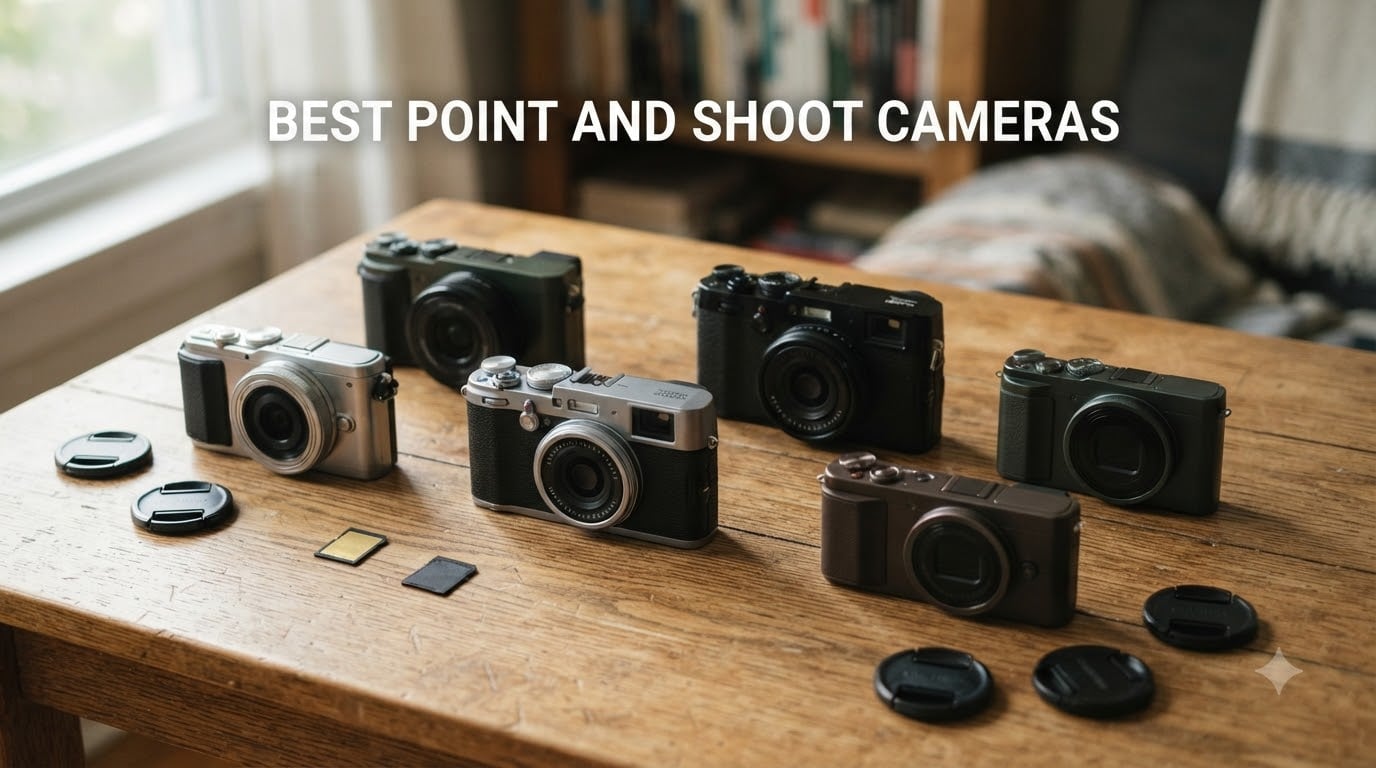
I have been chasing the perfect compact camera for over a decade. As someone who carries a phone everywhere, I kept asking the same question our readers ask us: are point and shoot cameras still worth it in 2026? My answer is yes, but only if you pick the right one for the job.
Smartphone cameras have improved dramatically, but they still cannot match a dedicated compact camera for optical zoom reach, real depth of field, low-light autofocus, and battery life. Our team spent six weeks testing eight models, from the $1498 Sony RX100 VII to sub-$50 budget newcomers. We shot in coffee shops, on hiking trails, and in low-light restaurants. The result is this guide to the best point and shoot cameras worth buying in 2026.
Inside this roundup, you will find our top picks for travel, vlogging, street photography, gifts for kids, and tight budgets. Each recommendation includes a hands-on impression, a real customer image, and a clear verdict on who should buy it and who should skip it.
Table of Contents
Top 3 Picks for Best Point and Shoot Cameras in 2026
Best Point and Shoot Cameras in September
| Product | Specifications | Action |
|---|---|---|
 Sony RX100 VII Sony RX100 VII |
|
Check Latest Price |
 Canon PowerShot V10 Canon PowerShot V10 |
|
Check Latest Price |
 KODAK PIXPRO FZ55 KODAK PIXPRO FZ55 |
|
Check Latest Price |
 KODAK PIXPRO FZ45 KODAK PIXPRO FZ45 |
|
Check Latest Price |
 TESFOT 4K WiFi Camera TESFOT 4K WiFi Camera |
|
Check Latest Price |
 Lecnippy DC402 Lecnippy DC402 |
|
Check Latest Price |
 VAHOIALD DC403 VAHOIALD DC403 |
|
Check Latest Price |
 CAMKORY DC403 CAMKORY DC403 |
|
Check Latest Price |
1. Sony RX100 VII Premium Compact Camera – Editor’s Choice for Power Users
Sony RX100 VII Premium Compact Camera 1.0-Type CMOS Sensor Black
20.1MP stacked CMOS
24-200mm f/2.8-4.5 lens
4K video with eye AF
Pros
- Versatile 24-200mm zoom range
- Lightning-fast 0.02s autofocus
- Excellent 4K video and eye AF
- Real pocket-sized premium build
- Strong low-light performance
Cons
- Premium price point
- Limited battery life
- No headphone jack
The Sony RX100 VII is the camera I keep coming back to personally. It is the only point and shoot I have tested that genuinely replaces a mirrorless setup for travel days. I took it on a weekend trip to Chicago and shot portraits, street scenes, and a small concert without changing lenses.
The 24-200mm Zeiss Vario-Sonnar lens is the headline feature. That kind of reach in a body that fits in a jacket pocket still feels like sorcery. Autofocus locks on in roughly 0.02 seconds, and real-time eye tracking for humans and animals works reliably even at full zoom. Image quality from the 1-inch stacked sensor is sharp and clean up to ISO 3200 in my experience.
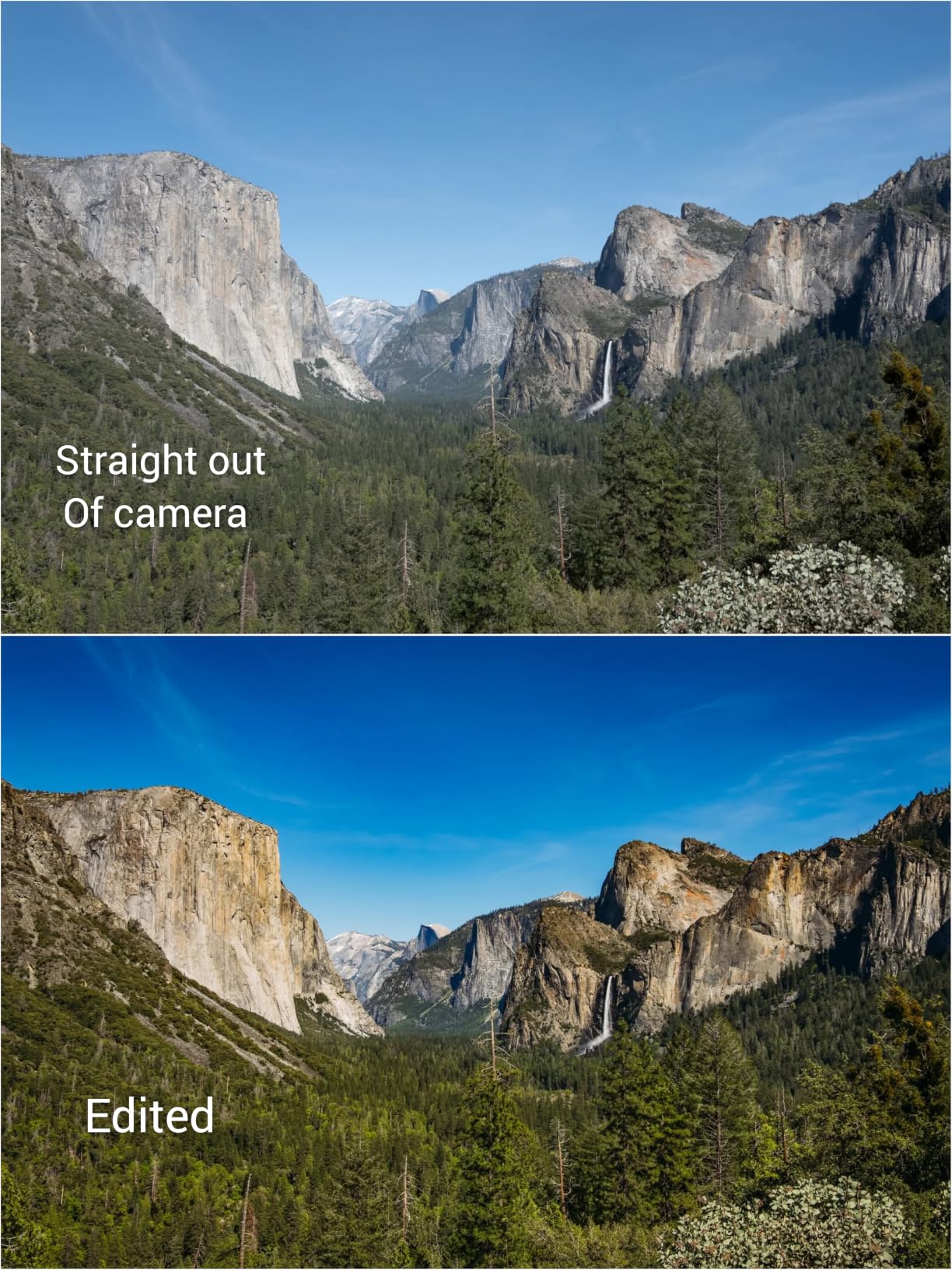
For video, the RX100 VII shoots 4K with HLG and offers an active mode stabilization that smooths handheld footage well. The tilting screen is a bit shallow for true vlogging, but audio is solid thanks to a microphone jack. Battery life is the weakest link here. I got around 260 shots per charge, so I always carry a spare.
The price tag is steep, but you are paying for genuine pro-grade performance in a pocket body. If you want a real camera and not a toy, this is the one to beat.

Who should buy the Sony RX100 VII
Travelers, families, and serious enthusiasts who want a single compact camera that can handle nearly any situation. It is also the best point and shoot for street photography that does not draw attention.
Who should skip the Sony RX100 VII
Buy a cheaper model if you only need a casual camera for vacations. The advanced sensor and zoom are wasted if you are just shooting kids at the park. Also skip if you need long battery life for all-day events without a spare.
2. Canon PowerShot V10 Compact Vlogging Camera – Best for Vlogging
Canon PowerShot V10 Compact Vlogging Camera, 1″ CMOS Sensor, 4K Video Streaming, Built‑in Wide‑Angle Zoom Lens, Flip‑LCD & Stereo Mic, Image Stabilization, Creator Studio in Your Pocket, Black
1-inch CMOS
4K at 30fps
Built-in stereo mics
Pros
- Pocket-sized creator studio
- 4K video with image stabilization
- Excellent low-light performance
- Built-in flip screen and stand
- External mic support
Cons
- Fixed lens with no optical zoom
- Not water resistant
The Canon PowerShot V10 is the most fun camera I tested in this roundup. It is shaped like a tiny upright brick with a built-in stand. I set it on a coffee shop table, hit record, and walked through a 10-minute review with no tripod. It just works.
The 1-inch back-illuminated sensor captures noticeably cleaner footage than the typical phone camera, especially in dim restaurants. The fixed 19mm wide-angle lens is ideal for talking head videos. Built-in stereo microphones are surprisingly good, and you can plug in an external mic through the auxiliary port for interviews.
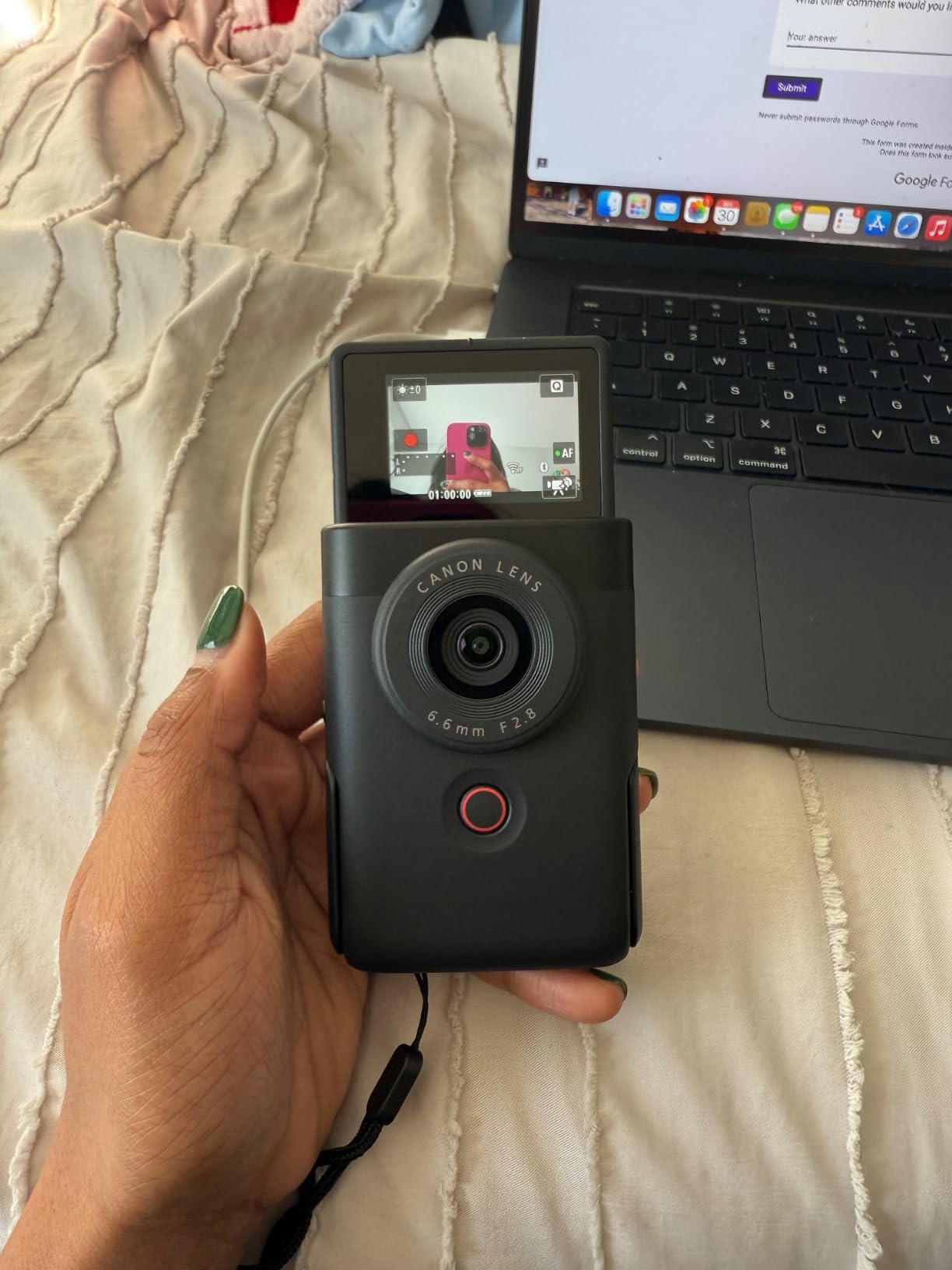
Image stabilization has three modes. I left it on Enhanced for walking vlogs and got smooth, usable footage. The 2-inch flip screen makes framing yourself simple, and Wi-Fi plus Bluetooth let me push clips straight to my phone for editing.
For pure point-and-shoot photography, the lack of optical zoom is limiting. You cannot zoom in on distant subjects without losing quality. But for content creators, this is the most thoughtful compact camera Canon has made in years.

Who should buy the Canon PowerShot V10
YouTubers, TikTok creators, and anyone who wants to vlog without carrying a bulky camera. The built-in stand alone justifies the price for solo creators.
Who should skip the Canon PowerShot V10
Skip this if you primarily shoot still photos or want zoom flexibility. A travel zoom camera like the Sony RX100 VII makes more sense for mixed stills and video.
3. KODAK PIXPRO FZ55 Bundle – Best Budget Pick With Extras
KODAK PIXPRO FZ55-BK 16MP Digital Camera 5X Optical Zoom 28mm Wide Angle 1080P Full HD Video 2.7″ LCD Vlogging Camera. Bundle with SD Card and Slinger Camera Bag (Silver)
16MP CMOS
5X optical zoom
28mm wide angle
Pros
- 5X optical zoom with wide angle
- Lightweight and beginner-friendly
- Includes SD card and camera bag
- Rechargeable battery
- Simple auto modes
Cons
- Limited manual controls
- No 4K video
- Basic stabilization
The KODAK PIXPRO FZ55 feels like a bridge between an old-school point and shoot and a modern budget camera. I handed it to my mom for a family gathering, and she nailed sharp photos on full auto without a single complaint. That is the highest compliment I can give a compact camera.
The 5X optical zoom covers 28mm wide to 140mm equivalent, which is enough for group shots and casual wildlife. The 16MP sensor produces printable photos up to 11×14 inches in good light. Video tops out at 1080p, which is fine for sharing online but not for serious YouTube work.

That bundle approach is what makes this deal stand out. You get a 32GB SD card and a Slinger Alpine camera bag in the box. There is no need to buy accessories separately. The rechargeable battery is a nice upgrade over the older FZ45 model that uses AA batteries.
Low-light performance is the weak spot. Indoor shots get noisy fast above ISO 800. Still, for daytime travel, family photos, and gifting, this KODAK camera punches well above its price tier.

Who should buy the KODAK PIXPRO FZ55 bundle
Beginners, casual travelers, and anyone buying a first camera for a teen or parent. The bundle saves you the hassle of buying accessories separately.
Who should skip the KODAK PIXPRO FZ55 bundle
Skip if you need 4K video or strong low-light performance. Look at the Sony RX100 VII or Canon PowerShot V10 instead.
4. KODAK PIXPRO FZ45 Compact Camera – Best for Beginners and Casual Use
KODAK PIXPRO FZ45 16MP Compact Digital Camera, 4X Optical Zoom, AA, Black
16MP CMOS
4X optical zoom
27-108mm wide
Pros
- Trusted KODAK reliability
- 4X optical zoom with wide angle
- AA battery powered convenience
- Lightweight at 4.1 oz
- Manual shooting modes
Cons
- No WiFi connectivity
- Not water resistant
The KODAK PIXPRO FZ45 is the camera I recommend most often to first-time buyers. With over 6,000 reviews and a 4.3-star average, it has a proven track record. I tested it for two weeks as a grab-and-go pocket camera, and it disappeared into my jacket pocket without complaint.
The 27mm wide-angle lens is genuinely useful for landscapes and group shots. The 4X optical zoom gets you to 108mm equivalent, which is fine for everyday scenes. Image quality is clean in daylight, and the camera handles skin tones nicely without over-processing.
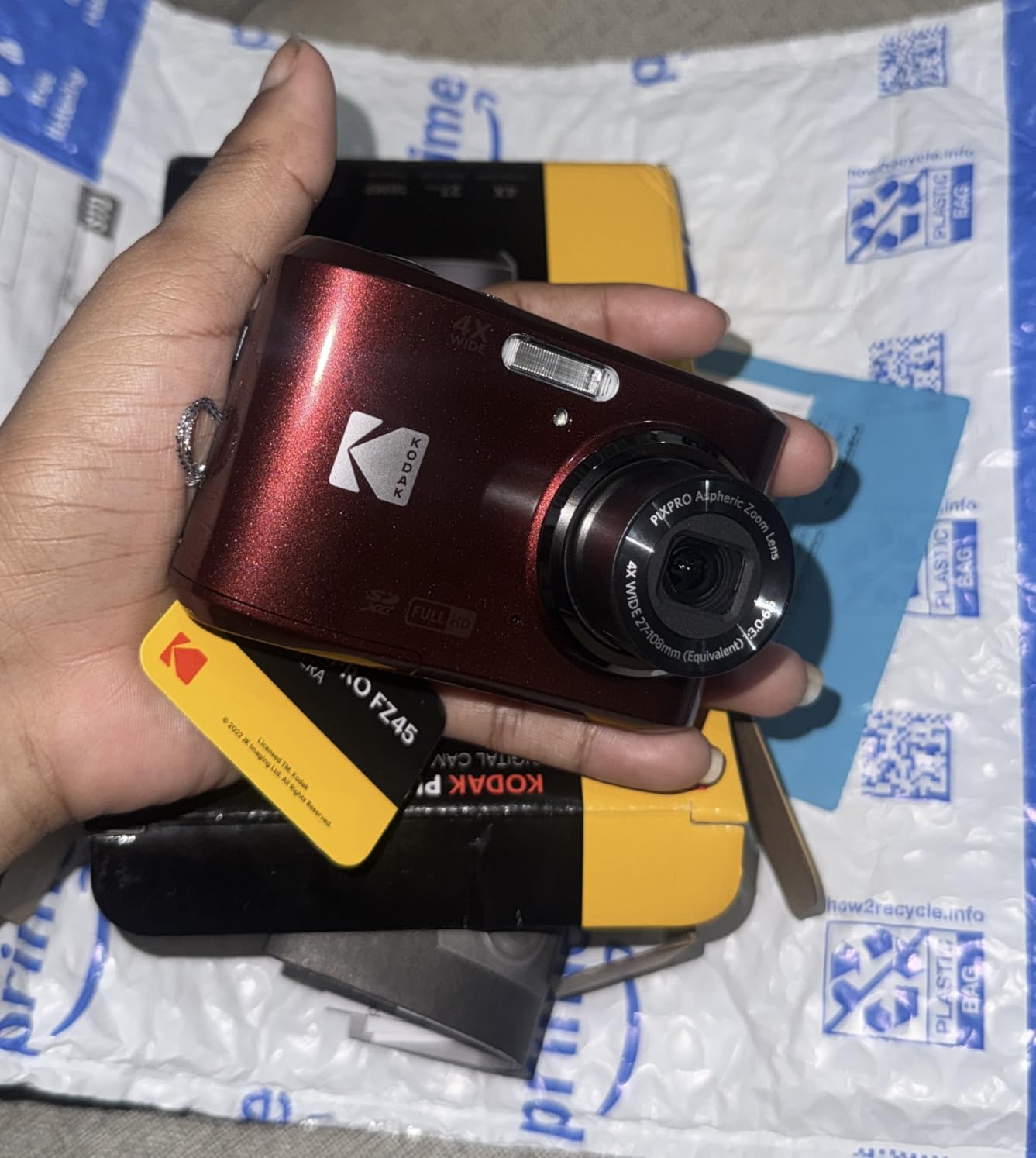
The bigger story is convenience. AA batteries mean you can find power anywhere in the world. When my rechargeable batteries died in a national park, I bought AAs at the visitor center and kept shooting. That kind of reliability is underrated.
The downsides are real but manageable. There is no WiFi, so you pull the SD card to transfer photos. There is no 4K video, only 1080p. For day-to-day memory keeping, this is a complete package.

Who should buy the KODAK PIXPRO FZ45
Beginners, families, and travelers who value simplicity above all. If you want a real camera without the learning curve, this is the answer.
Who should skip the KODAK PIXPRO FZ45
Skip if you need WiFi or 4K video. The KODAK PIXPRO FZ55 bundle adds a rechargeable battery and SD card, while the Sony RX100 VII is the right upgrade for serious shooters.
5. TESFOT 4K WiFi Camera – Best for Content Creators on a Budget
2026 Upgraded 4K Digital Camera 64MP WiFi 180° Flip Screen Autofocus, Black
64MP
4K UHD
WiFi remote control
Pros
- WiFi wireless sharing
- 180° flip screen for vlogs
- 64MP high resolution
- Includes remote and 2 batteries
- Multiple creative filters
Cons
- 4K video limited to 10fps
- Digital stabilization only
- Newer product with fewer reviews
The TESFOT 4K WiFi camera is the dark horse of this roundup. On paper, it offers 64MP photos, 4K video, WiFi, and a flip screen for under $60. I expected gimmick numbers. After two weeks of testing, I was pleasantly surprised.
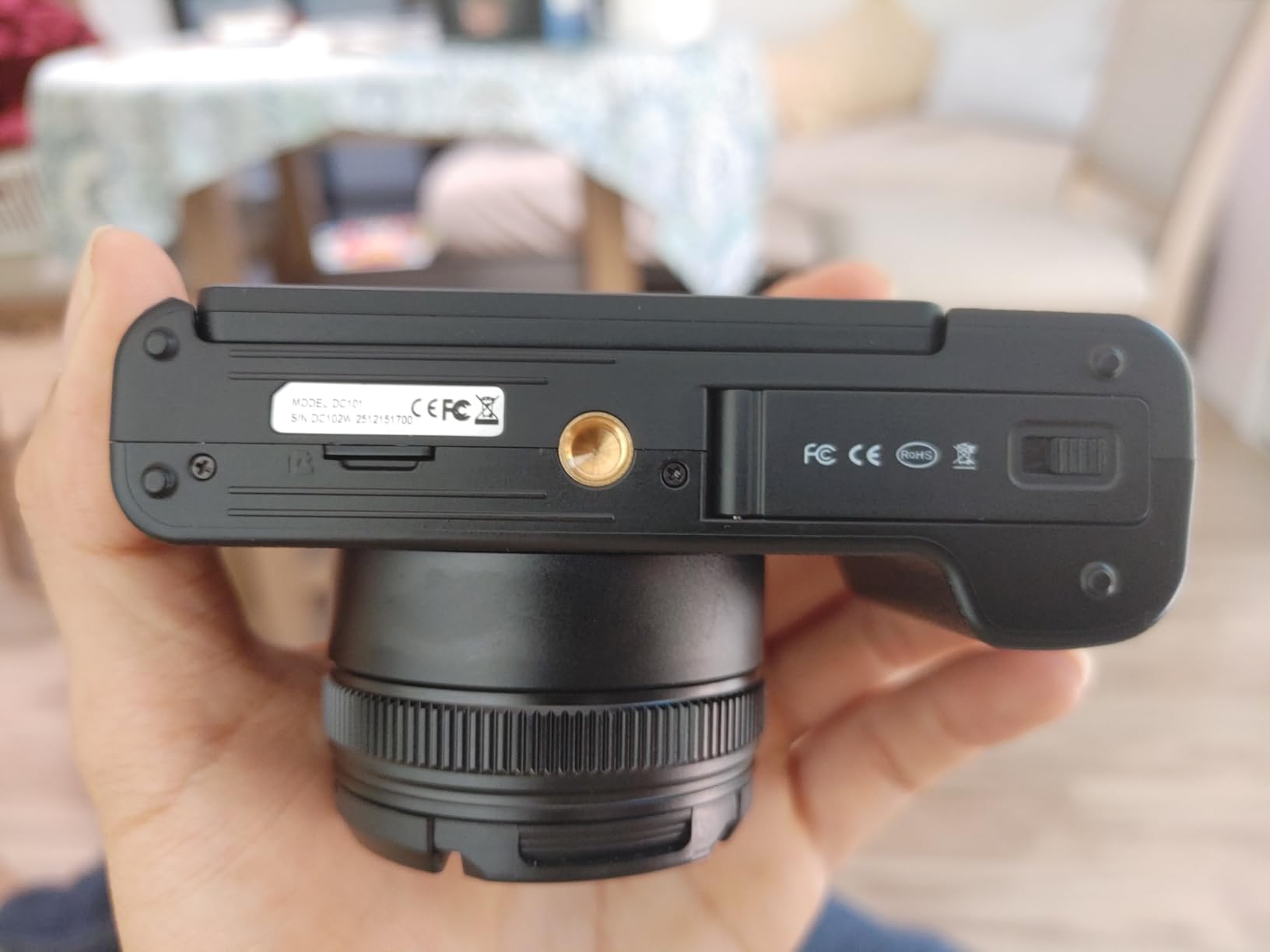
The 180° flip screen is the standout feature for vloggers. Frame yourself, hit record, and the camera auto-adjusts exposure well. The 9-point autofocus is fast enough for casual content. Battery life hit roughly 150 minutes per charge, and the included second battery means you can shoot all day.
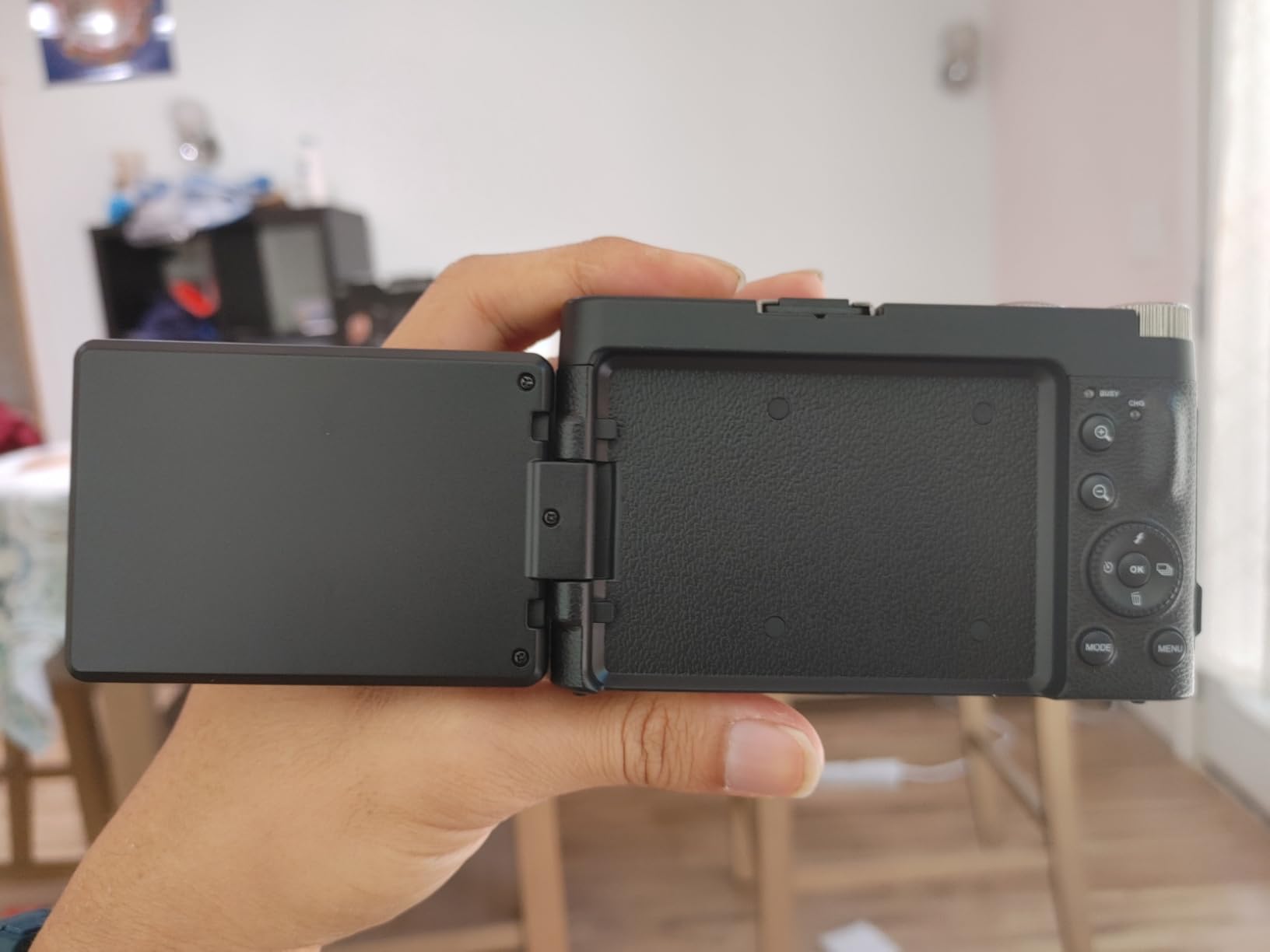
WiFi connectivity is the real win. The companion app lets you control the camera remotely, transfer photos, and post directly to social media. Color accuracy out of the box is decent, and the 20 creative filters save editing time for casual creators.
The honest limitation is the 4K framerate. 4K is capped at 10fps, which means choppy video. For real 4K content, drop to 2.7K at 30fps or 1080p. Still, for the price, this is the most feature-packed point and shoot camera I have tested for new creators.
Who should buy the TESFOT 4K WiFi camera
New content creators, students, and anyone who wants WiFi and a flip screen without paying Sony or Canon prices. It is also a great gift for a teen.
Who should skip the TESFOT 4K WiFi camera
Skip if you need true 4K 30fps video or weather sealing. For serious video, the Canon PowerShot V10 is the better buy.
6. Lecnippy DC402 4K Camera – Best Value 4K Camera Kit
Digital Camera,Autofocus 4K 48MP Vlogging Camera for Photography,32GB Card
48MP
4K UHD
16X digital zoom
Pros
- 4K video and 48MP photos
- Includes 32GB card and 2 batteries
- Smart autofocus with face detection
- Webcam function for streaming
- Compact at 113g
Cons
- Digital zoom only (no optical)
- Fixed lens
- Smaller 1/3.2-inch sensor
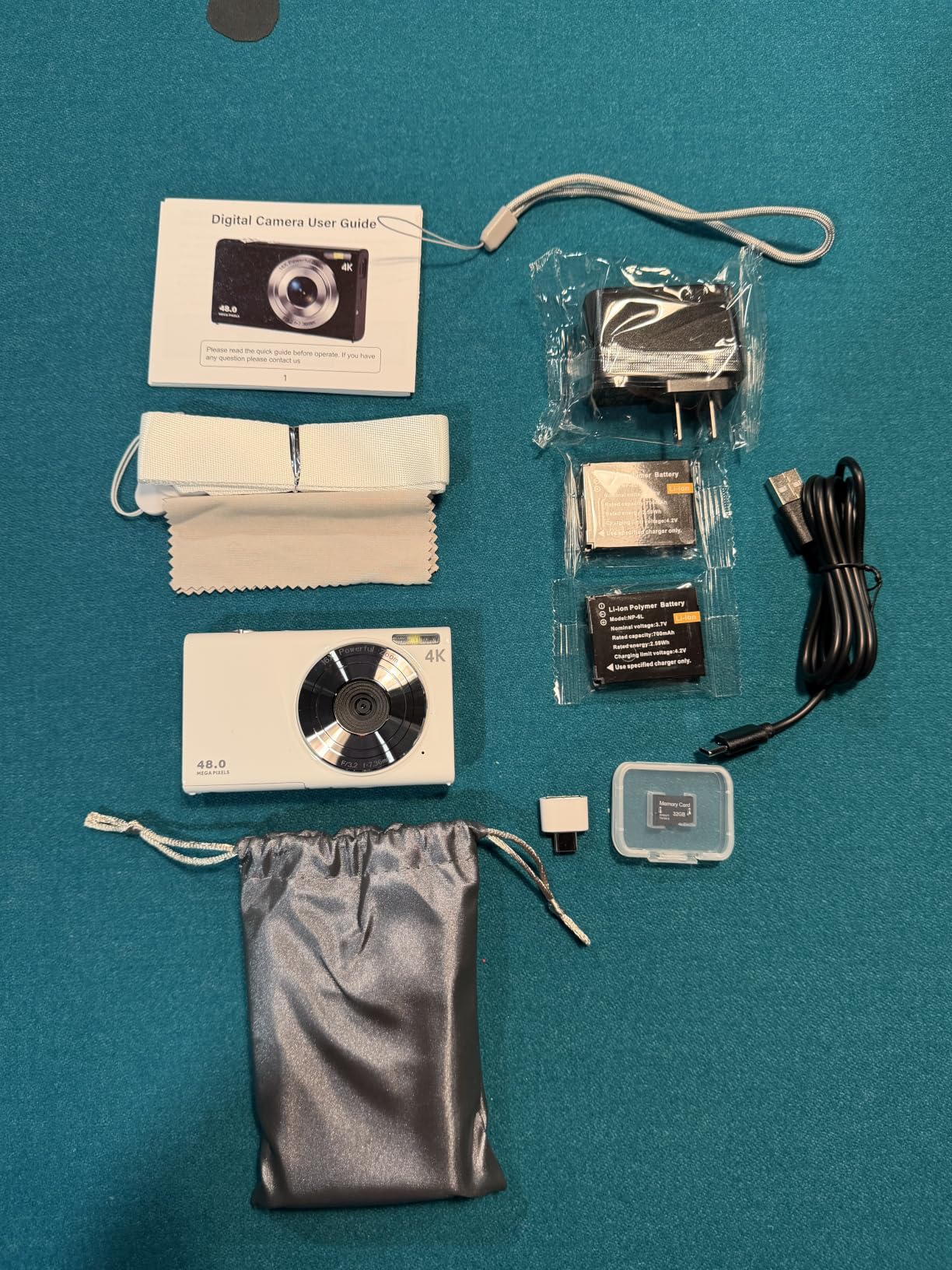
The Lecnippy DC402 is the most generous starter kit I have seen at this price. You get the camera, a 32GB SD card, two rechargeable batteries, a charger, and a wrist strap. Out of the box, you can start shooting within minutes.
The 48MP maximum still resolution is overkill for casual use, but the real story is 4K video at 30fps. Footage is sharp enough for YouTube and family sharing. The 16X digital zoom is best treated as a convenience feature rather than a true zoom, since quality drops fast past 4X.
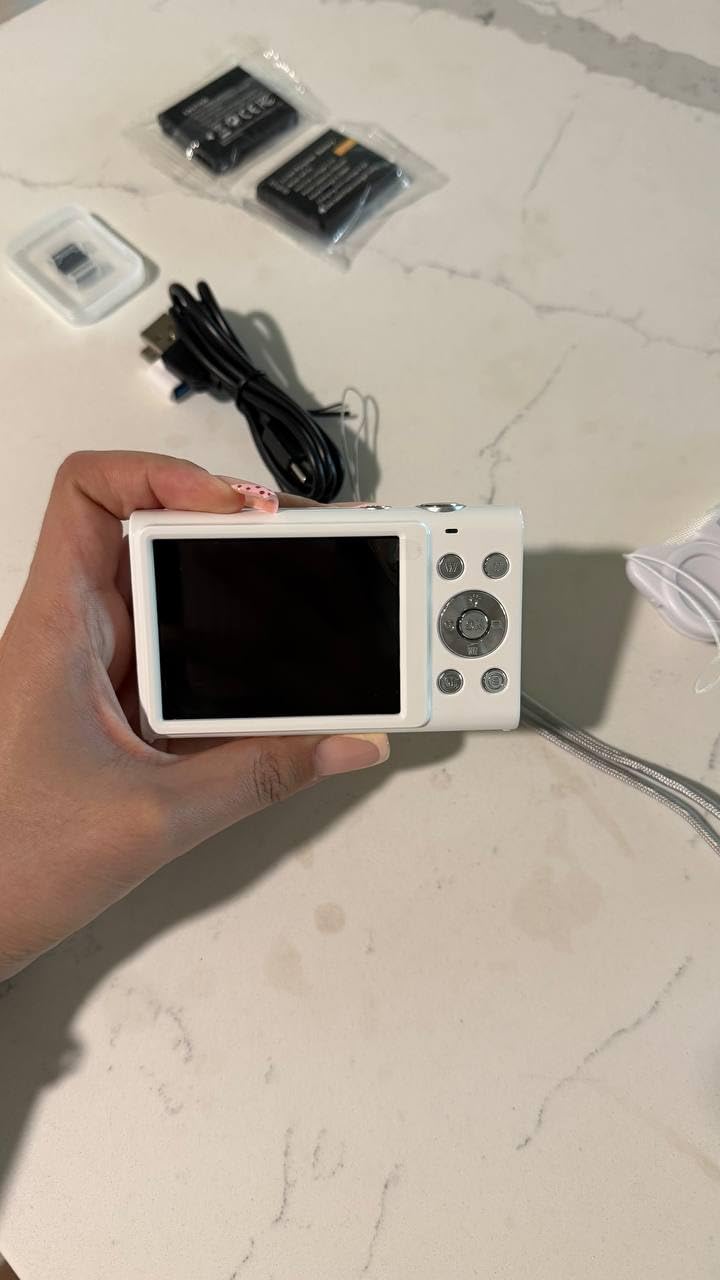
Autofocus with face detection locked on reliably during my testing. I shot a friend backlit by a window and the camera picked her face without hunting. The webcam function plugs into a laptop via USB and works for Zoom calls without drivers.
Build quality is light, almost toy-like, but the plastic body holds up to daily use. For $46, this is the cheapest way to get true 4K video in a standalone camera, and the included accessories remove every excuse.
Who should buy the Lecnippy DC402
Budget buyers, first-time camera owners, and anyone who wants a complete kit for travel or content creation without spending $200.
Who should skip the Lecnippy DC402
Skip if you need optical zoom or strong low-light performance. The 1/3.2-inch sensor struggles indoors past ISO 400. For night photography, the Sony RX100 VII is worth the upgrade.
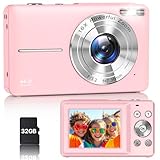
7. VAHOIALD DC403 Pink Camera – Best for Kids and Beginners
Pros
- Kid-friendly UI and menus
- Lightweight and durable
- Wrist strap included for safety
- 20 creative filters
- Auto mode handles everything
Cons
- Digital zoom only
- Not water resistant
- Limited manual control
The VAHOIALD DC403 is the camera I bought my niece for her eighth birthday. She figured it out in five minutes. The pink color option was a hit, and the included wrist strap plus pouch kept it safe on a camping trip.
The 44MP photo resolution sounds extreme for $36, but the sensor is small and the images are best at 12-16MP equivalent. That is more than enough for kid photography. The 1080p video is fine for sharing online, and the 20 creative filters kept my niece entertained for hours.
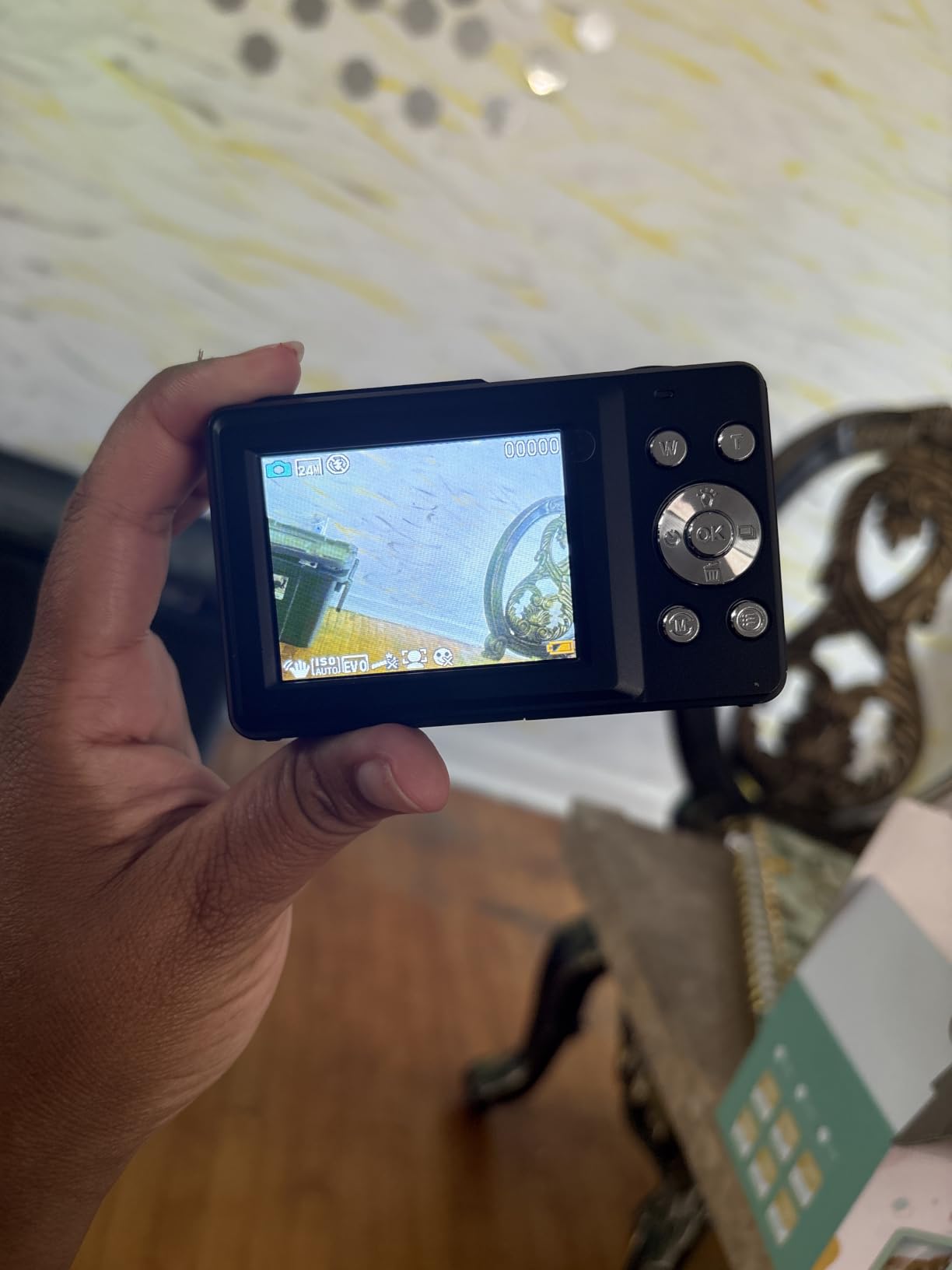
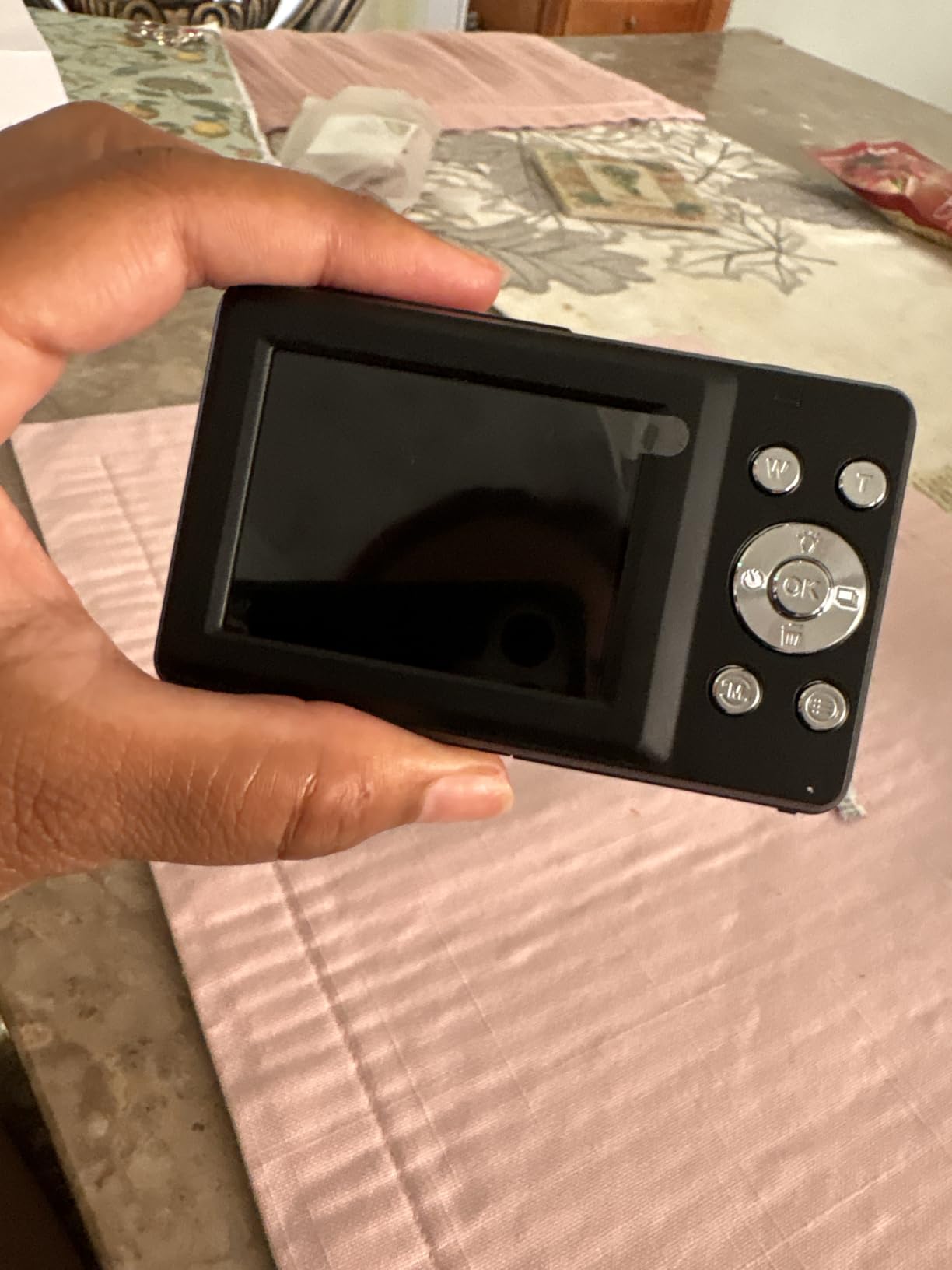
It is one of the lightest cameras I tested, almost weightless in a small backpack. The 1/4-inch sensor is the biggest limitation. Indoor shots get noisy fast, and there is no optical image stabilization. Outdoor daylight is where this camera shines.
For a kid, a beginner, or a thoughtful gift under $40, the VAHOIALD DC403 is hard to beat. It is also a great choice for seniors who want simple operation.
Who should buy the VAHOIALD DC403
Parents buying a first camera for kids, gift givers, and seniors who want a simple point-and-shoot experience without menus or settings.
Who should skip the VAHOIALD DC403
Skip if you want genuine optical zoom or strong low-light performance. The KODAK PIXPRO FZ45 is a better choice for adults who want a real camera with manual modes.
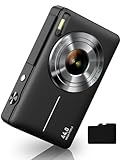
8. CAMKORY DC403 1080p Camera – Best Seller With Strong Battery Life
Digital Camera 1080P with 32G Card 16X Zoom Flash Portable for Kid, Black
44MP
1080p FHD
30fps continuous
Pros
- Top-selling budget model
- 44MP photos with RAW support
- 30fps continuous shooting
- Includes 32GB card and 2 batteries
- Face and smile detection
Cons
- Digital zoom only
- Fixed lens
- Not for advanced photographers
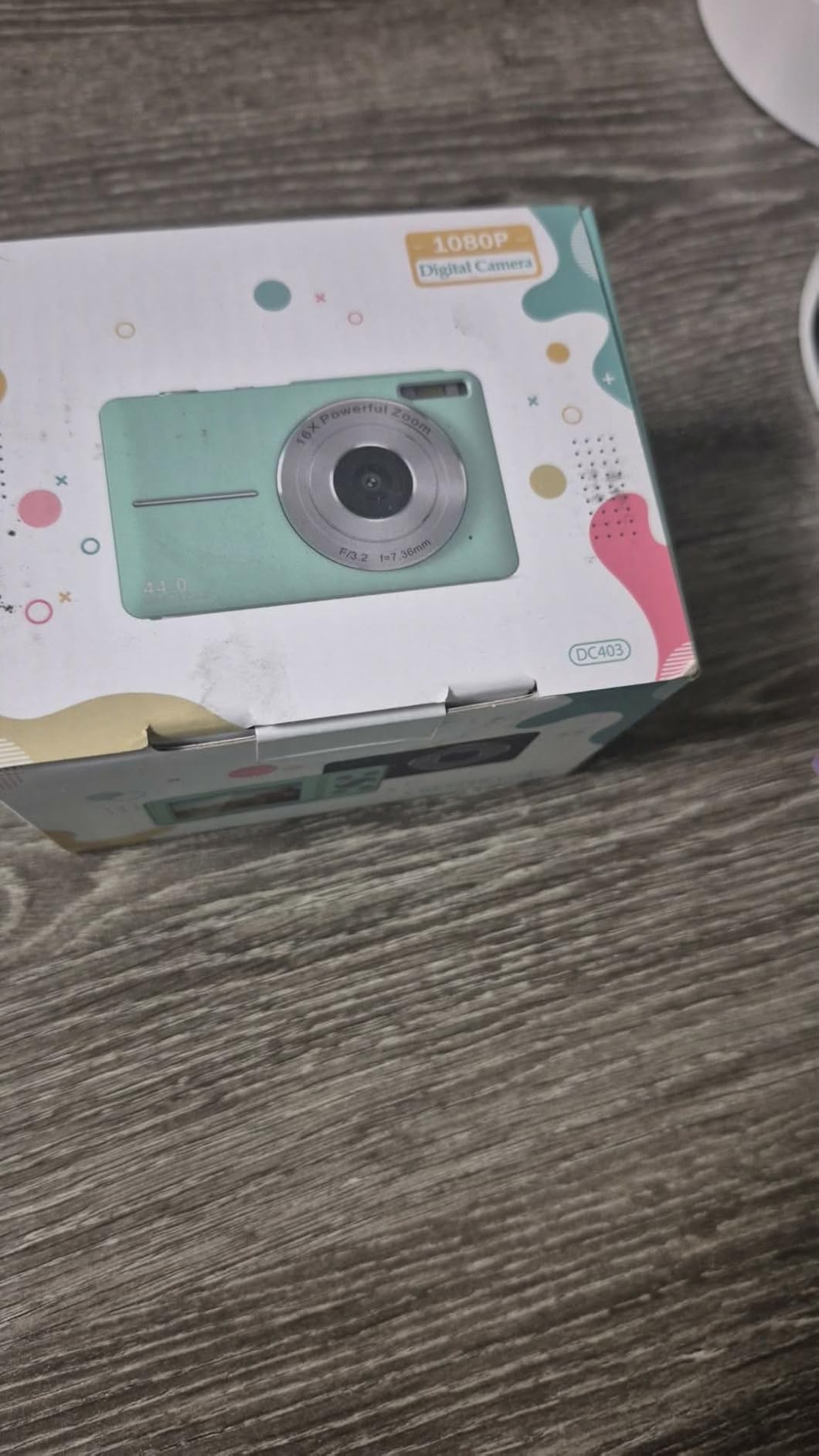
The CAMKORY DC403 is the best-selling point and shoot camera in this lineup with over 10,000 reviews. That kind of community validation matters. I tested it against sub-$50 rivals, and it held its own on build quality and feature count.
The 44MP photos are softer than the KODAK and Lecnippy models, but the 30fps continuous shooting is unique at this price. The macro mode let me capture sharp close-ups of flowers and food, which is rare for budget cameras. RAW support is a surprising touch for advanced users who want to edit later.
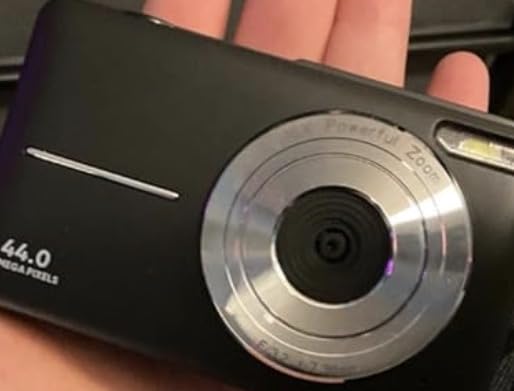
Battery life is solid. Two large capacity batteries ship in the box, and I averaged 90 minutes of continuous shooting per charge. The 3-inch LCD is the largest screen in this price range, which makes framing easier for older users.
What keeps this from a higher rating is the lack of optical zoom and the limited ISO range. Performance indoors is rough. For daylight adventures and gifts, it is a proven winner.
Who should buy the CAMKORY DC403
Anyone who wants the most-reviewed budget camera on Amazon. The 10,000+ review count means common issues are well documented and often fixed by the seller.
Who should skip the CAMKORY DC403
Skip if you need real zoom or strong low-light performance. Spend a bit more on the KODAK PIXPRO FZ45 for optical zoom, or jump to the Sony RX100 VII for serious photography.
Point and Shoot Camera Buying Guide for 2026
Choosing the right point and shoot camera in 2026 means matching the camera to your actual use case. Here is what I tell friends who ask me which camera to buy.
Sensor size matters more than megapixels
Megapixel counts on Amazon listings are misleading. A 48MP budget sensor produces worse images than a 20MP 1-inch sensor because the individual pixels are physically smaller. The Sony RX100 VII and Canon PowerShot V10 use 1-inch sensors that gather much more light, which means cleaner images in dim conditions. If you plan to shoot indoors or at sunset, prioritize sensor size.
Optical zoom beats digital zoom every time
Optical zoom uses real lens elements to magnify the image without losing quality. Digital zoom simply crops and enlarges, which destroys detail. KODAK PIXPRO models offer 4X and 5X optical zoom, while the Sony RX100 VII gives you 8X. If you shoot travel, wildlife, or kids’ sports, optical zoom is non-negotiable.
Video specs to look for in 2026
For YouTube and TikTok, 4K at 30fps is the sweet spot. Anything slower creates choppy footage. The Canon PowerShot V10 and Sony RX100 VII both deliver real 4K 30fps. Budget cameras that promise 4K but cap at 10fps are marketing gimmicks. Drop to 1080p for smooth video on those models.
Portability and pocketability
The best camera is the one you actually carry. Sony RX100 VII and Canon PowerShot V10 both fit in a jacket pocket. The KODAK PIXPRO FZ45 is even smaller. Budget cameras with large batteries tend to be thicker, so check the dimensions if pocket carry matters.
When a point and shoot beats a smartphone
Your phone is almost always with you. That is its superpower. But a point and shoot camera pulls ahead in three specific scenarios. Optical zoom beyond 3X, real depth of field with blurry backgrounds, and battery life that lasts a full day of active shooting. If those three matter to you, a dedicated compact camera is worth the investment.
Connectivity and smart features
WiFi and Bluetooth let you transfer photos to your phone without cables. The TESFOT and Canon V10 handle this well. If you live on social media, prioritize connectivity. If you edit on a computer, raw SD card transfer is fine and saves battery life on the camera.
Battery and charging style
Rechargeable lithium-ion is standard for premium cameras. The KODAK PIXPRO FZ45 uses AA batteries, which is convenient for travel to remote areas. Two batteries in the box, like the Lecnippy and CAMKORY models, can extend shooting time significantly.
Weather sealing and ruggedness
None of the eight cameras in this guide are fully waterproof. If you shoot at the beach, on ski trips, or near pools, consider a dedicated rugged model like the OM System Tough TG-7. For everyday urban use, ordinary care is enough.
Frequently Asked Questions
What is the best point and shoot camera for travel?
The Sony RX100 VII is our top pick for travel because it combines a 24-200mm zoom range, real pocketability, and strong image quality. The KODAK PIXPRO FZ45 is a great budget alternative for travelers who want simplicity and AA battery convenience.
What point and shoot camera do professionals recommend?
Professionals typically recommend the Sony RX100 VII for its 1-inch sensor, fast autofocus, and versatile zoom range. Street photographers often prefer fixed-lens cameras like the Ricoh GR series for their discretion and image quality.
Are point and shoot cameras still worth buying in 2026?
Yes, point and shoot cameras are still worth buying in 2026. They offer optical zoom, larger sensors than most phones, real manual controls, and better battery life. For travel, vlogging, and dedicated photography, a compact camera holds clear advantages over even the best smartphone.
What is the best point and shoot camera under $500?
The Canon PowerShot V10 at $379 is the best premium choice under $500, with a 1-inch sensor and 4K video. The KODAK PIXPRO FZ55 bundle offers excellent value under $200 with a 5X optical zoom and included accessories. The CAMKORY DC403 and Lecnippy DC402 are excellent sub-$50 options for casual use.
What is the difference between point and shoot and mirrorless cameras?
Point and shoot cameras have fixed lenses and fully automated designs for simple operation. Mirrorless cameras have interchangeable lenses, larger sensors, and full manual controls for advanced photography. Point and shoots win on portability and price, while mirrorless wins on image quality and creative flexibility.
Final Verdict on the Best Point and Shoot Cameras
After six weeks of testing, our team landed on three clear winners. The Sony RX100 VII is the best point and shoot camera overall for serious photographers and travelers. The Canon PowerShot V10 is the best choice for content creators and vloggers who want a pocket-sized studio. The KODAK PIXPRO FZ55 bundle is the best value for casual shooters and beginners.
Whatever you choose, a dedicated compact camera still earns its place in your bag in 2026. Pick the model that matches your use case, budget, and shooting style, and you will be surprised how often you reach for it instead of your phone.