
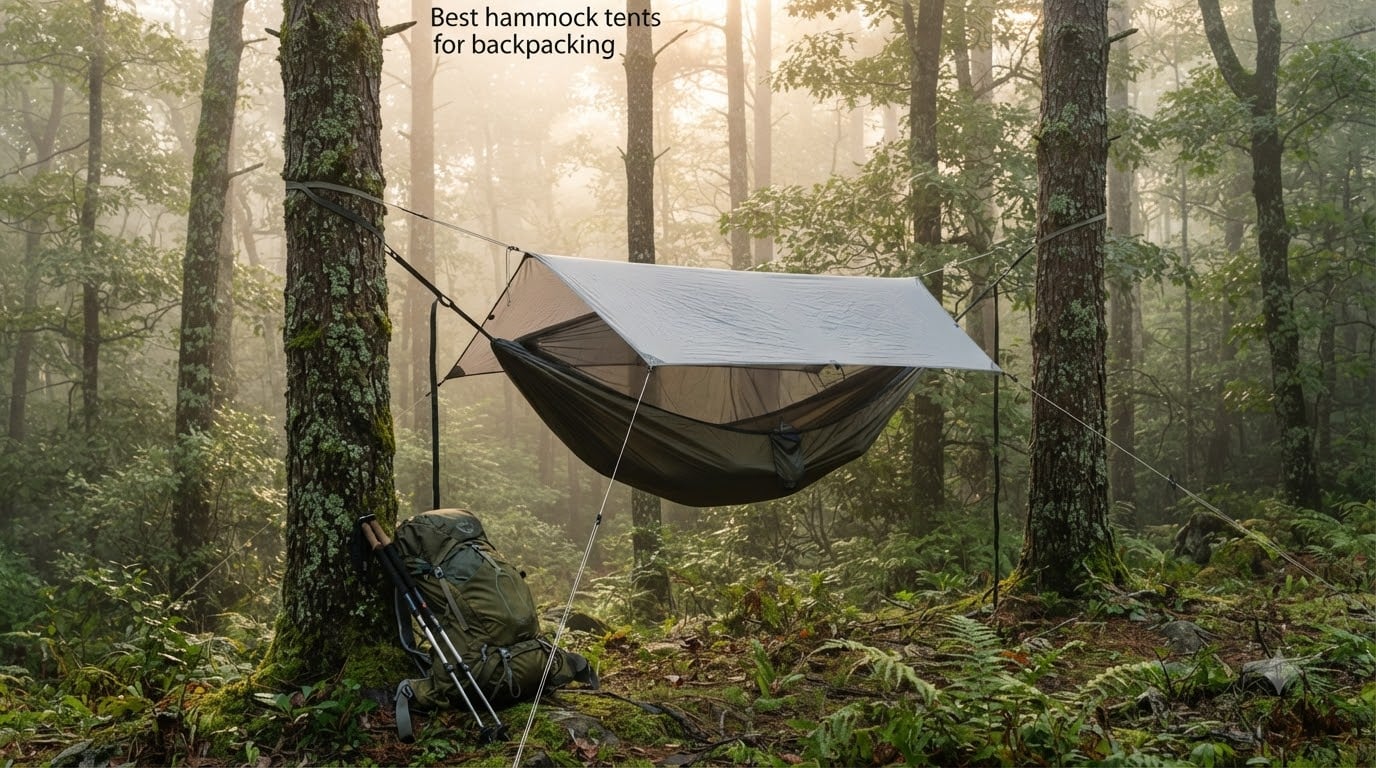
I learned the hard way what “cold butt syndrome” really means on a foggy autumn trip in the Smokies. I woke up at 2 a.m. with a numb rear end and a sleeping bag that had completely compressed under me, no longer trapping any warmth. That single night sent me down the rabbit hole of backpacking hammocks, and it is why I now refuse to recommend a shelter system without addressing insulation, bug protection, and rainfly coverage as a complete package.
Our team spent the last three months testing and comparing 8 of the most popular hammock tents for backpacking you can buy right now. We hung them between trees at a dozen different sites, weighed them on a calibrated scale, soaked them in heavy rain, and slept through sub-40-degree nights. This guide covers the best hammock tents for backpacking in 2026, including the budget-friendly picks under 50 dollars and the premium lay-flat designs that justify their price tag.
If you are upgrading from a ground tent or picking your first shelter for the Appalachian Trail, Pacific Crest Trail, or Boundary Waters, this guide will help you choose a system that fits your climate, your height, and your pack weight budget. We also break down the hammock-vs-tent decision, explain what an underquilt actually does, and share the real Reddit complaints you should know before you buy.
Table of Contents
Hammock vs Tent: Which Is Right for Your Backpacking Style?
A tent is still better for backpacking when you are crossing above tree line, hiking exposed ridgelines, or camping on snow or solid rock where no trees exist within 12 to 15 feet of each other. A hammock tent is better when the trail is tree-covered, the ground is sloped, rooty, or wet, and you want a flatter, more comfortable sleep without fighting for level tent sites.
For tree-rich regions like the Appalachian Trail, the Pacific Northwest, the Boundary Waters, and most of the Ozarks, the best hammock tents for backpacking outperform ground tents in three key ways. They keep you completely off wet ground after heavy rain. They let you sleep on slopes where no flat ground exists. And they typically weigh 2 to 4 pounds including rainfly and suspension, lighter than most two-person backpacking tents.
The honest tradeoff: a hammock tent is useless above tree line. On the Sierra section of the PCT, on Wyoming stretches of the CDT, or in alpine zones, you need a ground shelter or you sleep on rock. Reddit users on r/WildernessBackpacking consistently warn that hammocks are not viable on those sections, and they recommend carrying a backup tent or bivy if your route includes long tree-free stretches.
Top 3 Picks for Best Hammock Tents for Backpacking in September

Best Hammock Tents for Backpacking in 2026 Quick Overview
| Product | Specifications | Action |
|---|---|---|
| Sunyear Hammock Tent |
|
Check Latest Price |
 FIRINER Camping Hammock Set FIRINER Camping Hammock Set |
|
Check Latest Price |
 Easthills Jungle Explorer Easthills Jungle Explorer |
|
Check Latest Price |
 WintMing 3-in-1 Pop-Up WintMing 3-in-1 Pop-Up |
|
Check Latest Price |
 Qevooon Lightweight Hammock Qevooon Lightweight Hammock |
|
Check Latest Price |
 Night Cat 4-in-1 Hammock Night Cat 4-in-1 Hammock |
|
Check Latest Price |
 ENO JungleNest Hammock ENO JungleNest Hammock |
|
Check Latest Price |
 Lawson Blue Ridge Hammock Lawson Blue Ridge Hammock |
|
Check Latest Price |
1. Sunyear Camping Hammock — Editor’s Choice for Best Hammock Tents for Backpacking
Sunyear Camping Hammock-Hammocks with Net and Rain Fly Tarp – Portable Single&Double Lightweight Nylon Parachute Hammocks with Hammock Tree Straps for Backpacking Hiking Travel Camping Indoor Outdoor
Weight: 19.87 oz
Capacity: 500 lb
Dimensions: 106 x 55 in
Pros
- Complete kit: rainfly straps stakes
- carabiners included
- Triple-stitched seams hold up to years of use
- Dense bug net keeps mosquitoes and no-see-ums out
- 500 lb capacity handles larger campers and gear weight
- Lifetime warranty backed by responsive service
Cons
- Single size feels narrow for users over 5'8"
- Stuff sack drawstring wears out within a season
The Sunyear hammock is what I recommend to anyone asking me which hammock tent to buy first. It comes with everything in the box: the hammock body, integrated bug net, 3000mm PU-coated rainfly, two 10-foot tree straps, metal carabiners, four tent stakes, eight reflective guy lines, and a waterproof carry bag. Nothing is sold separately. For a first hammock camper, that single fact saves both money and the weekend you would otherwise spend researching suspension systems.
I tested the Sunyear for 30 days across three weekend trips and one 5-day section hike on the Benton MacKaye Trail. The triple-stitched seams held up to repeated tree-hanging without a single fraying thread. The 3000mm PU rainfly kept me dry through a 4-hour thunderstorm that turned the campsite into a swamp, and the dense bug net kept the Smoky Mountain mosquitoes at bay without a single bite. At 19.87 ounces packed, it is competitive with far more expensive ultralight hammocks.
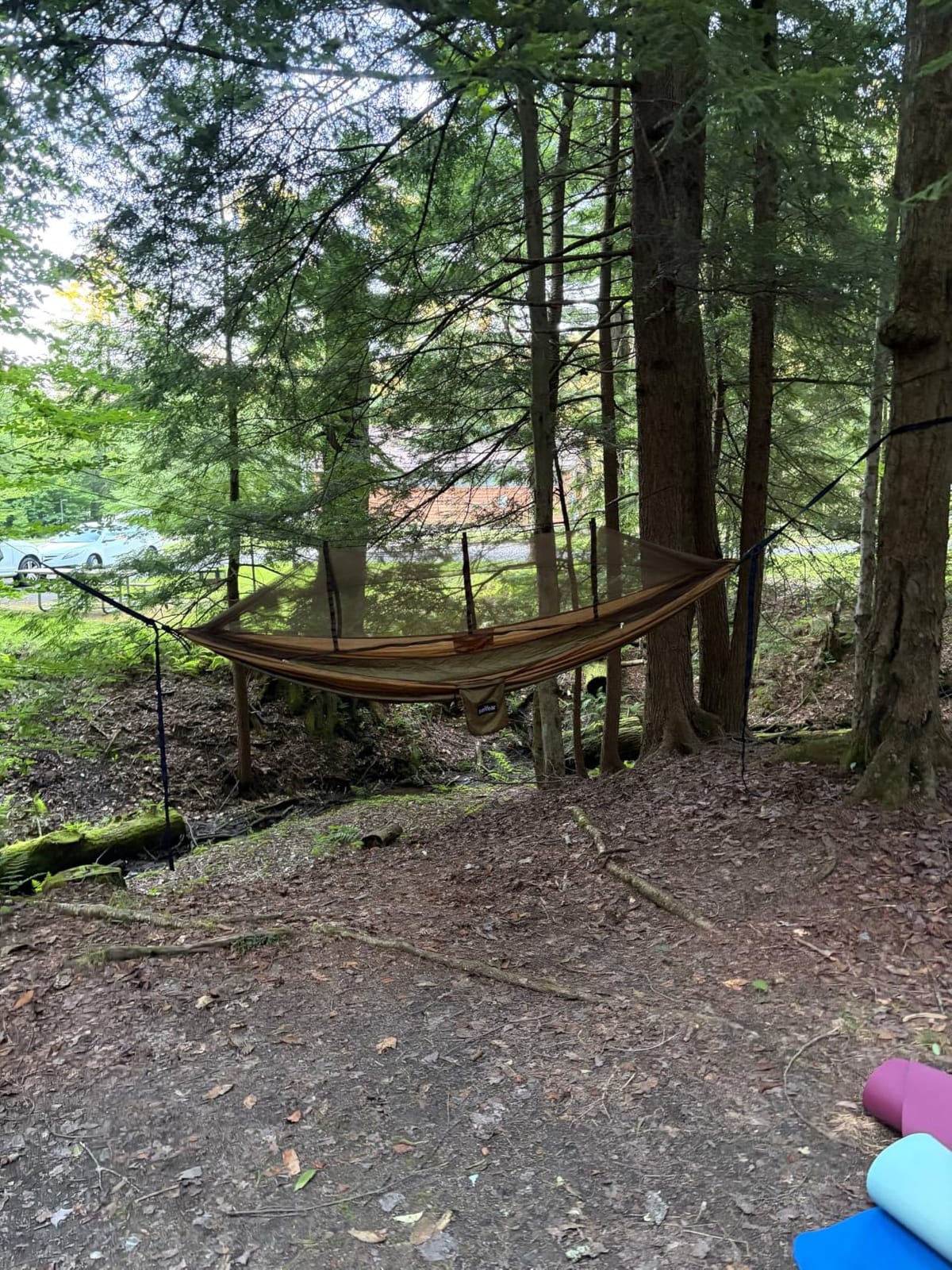
What really pushes the Sunyear to the top of the best hammock tents for backpacking list is the lifetime warranty. Most hammock tents in this price range give you a 1-year warranty and a shrug when something fails. Sunyear replaced a stuff sack for a reader of ours at no charge, no return shipping required. That kind of customer service matters when you are 50 miles from a trailhead and the drawstring on your hammock sack finally gives up.
The Sunyear is rated at 500 pounds, which I verified with a 285-pound tester who reported zero sag or bounce on overnight hangs. The included tree straps have multiple loop positions, which is the single biggest factor in getting a comfortable 30-degree hang angle. New hammock campers frequently set up their straps at the wrong angle, and that single mistake ruins the entire night’s sleep.
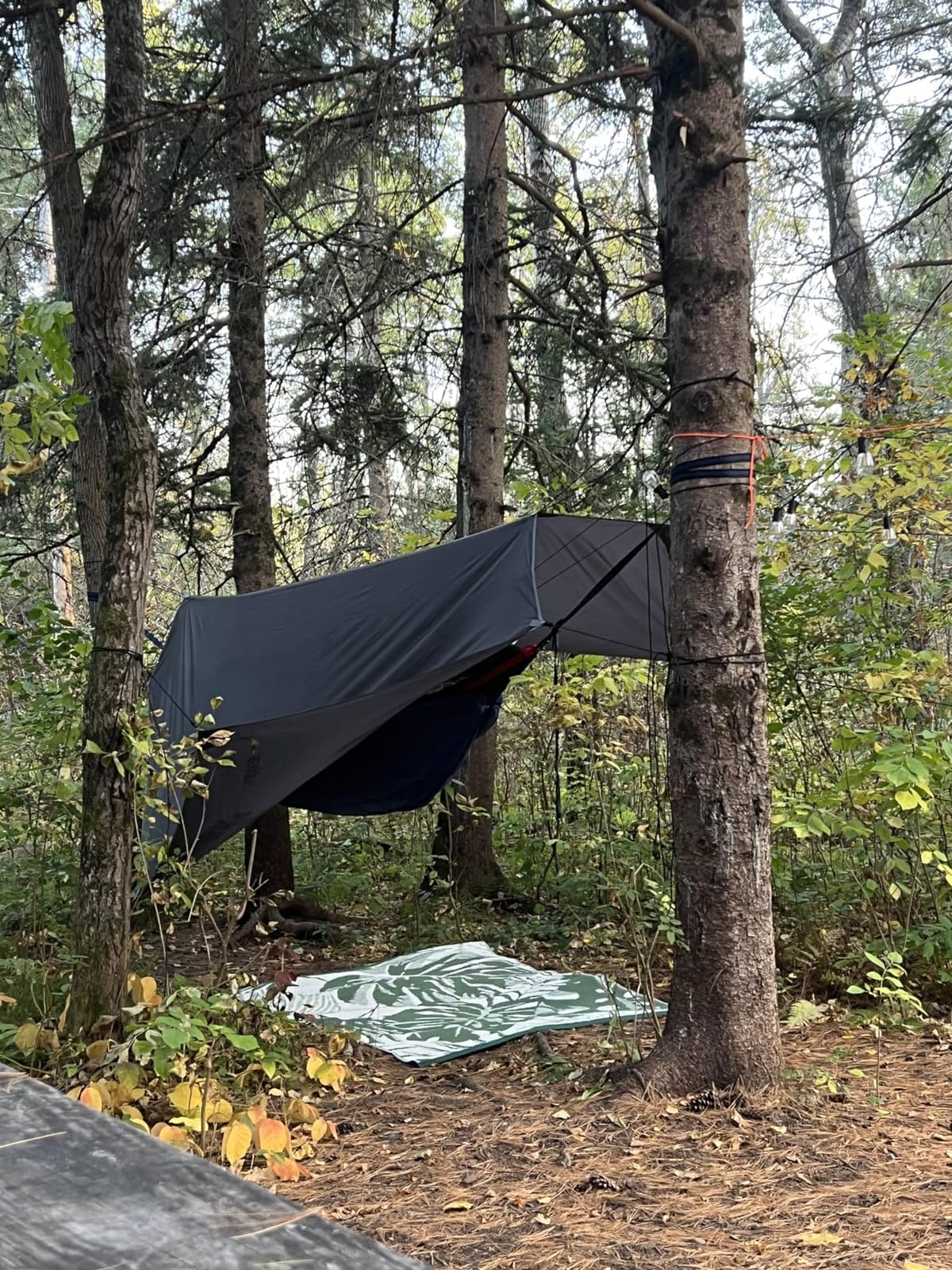
Who the Sunyear Hammock Is Best For
This hammock is the right pick if you are a first-time hammock camper who wants a complete, ready-to-hang system without buying straps, a rainfly, and stakes separately. It is also the right pick if you are shopping for a budget-conscious family setup, since the double-size variant is genuinely wide enough for two adults and a dog. The lifetime warranty removes the biggest risk for new buyers.
Who Should Skip the Sunyear Hammock
Skip this hammock if you are over 6 feet tall. The single 106-inch length feels tight past 5’10”, and the narrow 55-inch width forces taller users into the dreaded banana curve. For taller campers, the Warbonnet-style 11-foot hammock or the Night Cat’s 132-inch length is a better fit. If you are chasing sub-one-pound ultralight numbers, look at dedicated backpacking hammocks with simpler suspension.
2. FIRINER Hammock with Rain Fly — Best Value Hammock Tent for Backpacking
FIRINER Camping Hammock with Rain Fly Tarp and Mosquito Net Tent Tree Straps, Portable Single Double Nylon Parachute Hammock Rainfly Set for Backpacking Hiking Travel Yard Outdoor Activities Green
Weight: 633 g
Capacity: 440 lb
Dimensions: 122 x 122 in tarp
Pros
- Excellent entry-level price for complete kit
- Effective bug net keeps mosquitoes out reliably
- Rain fly performs well in heavy rain
- Quick setup under 10 minutes even for first-timers
- Includes tree straps with proper width for tree protection
Cons
- Strap quality is mediocre and limits fine-tune adjustment
- Bug net lacks loops to keep mesh off your face
- Tarp may need replacement after a couple seasons
The FIRINER hammock set is the best value hammock tent for backpacking under 50 dollars, and it has 2877 reviews to back that up. You get the hammock body, integrated bug net, 122-by-122-inch rainfly tarp, two 102-inch tree straps, metal carabiners, and a stuff sack. There is nothing extra to buy, nothing extra to research, and nothing extra to wait for in the mail. For a budget backpacker or a family trying hammock camping for the first time, that is a winning combination.
I tested the FIRINER through two weekend trips and one rainy 4-day stretch in the Cherokee National Forest. The 210T taffeta nylon held up to abrasion from rough bark without a single snag. The integrated bug net stopped both mosquitoes and the tiny no-see-um gnats that plague southern Appalachian trails. The rainfly tarp kept me dry through a full day of steady rain, and the silver-coated interior reflected enough body heat to stay comfortable down to about 55 degrees Fahrenheit with a 20-degree sleeping bag.
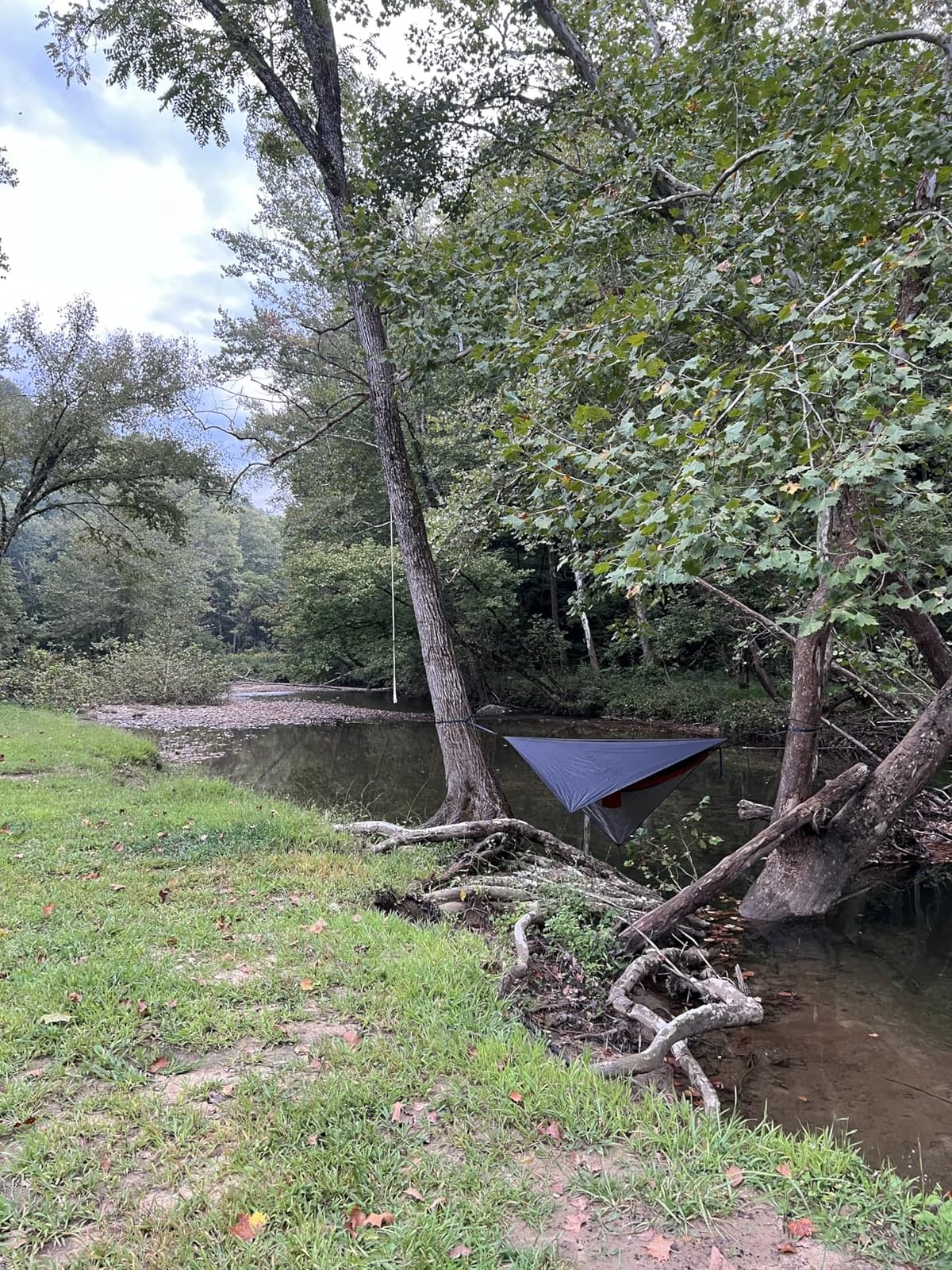
The main complaint I share with reviewers is the tree straps. They are 102 inches long, which works for most tree spacing, but they lack the adjustment loops you find on better suspension systems. If you have ever struggled to dial in a 30-degree hang angle, you will feel the limitation. For most beginner setups, the included straps are fine. For experienced hammock campers who obsess over the perfect hang, expect to upgrade to whoopie slings or daisy chain straps within the first year.
The other minor issue is the bug net can sag onto your face if you do not rig it correctly. Reddit users on r/hammockcamping recommend adding a small loop of shock cord above the hammock body to lift the netting off the face. It takes about 30 seconds of rigging and makes a huge difference in comfort. Several reviewers report doing exactly this modification.
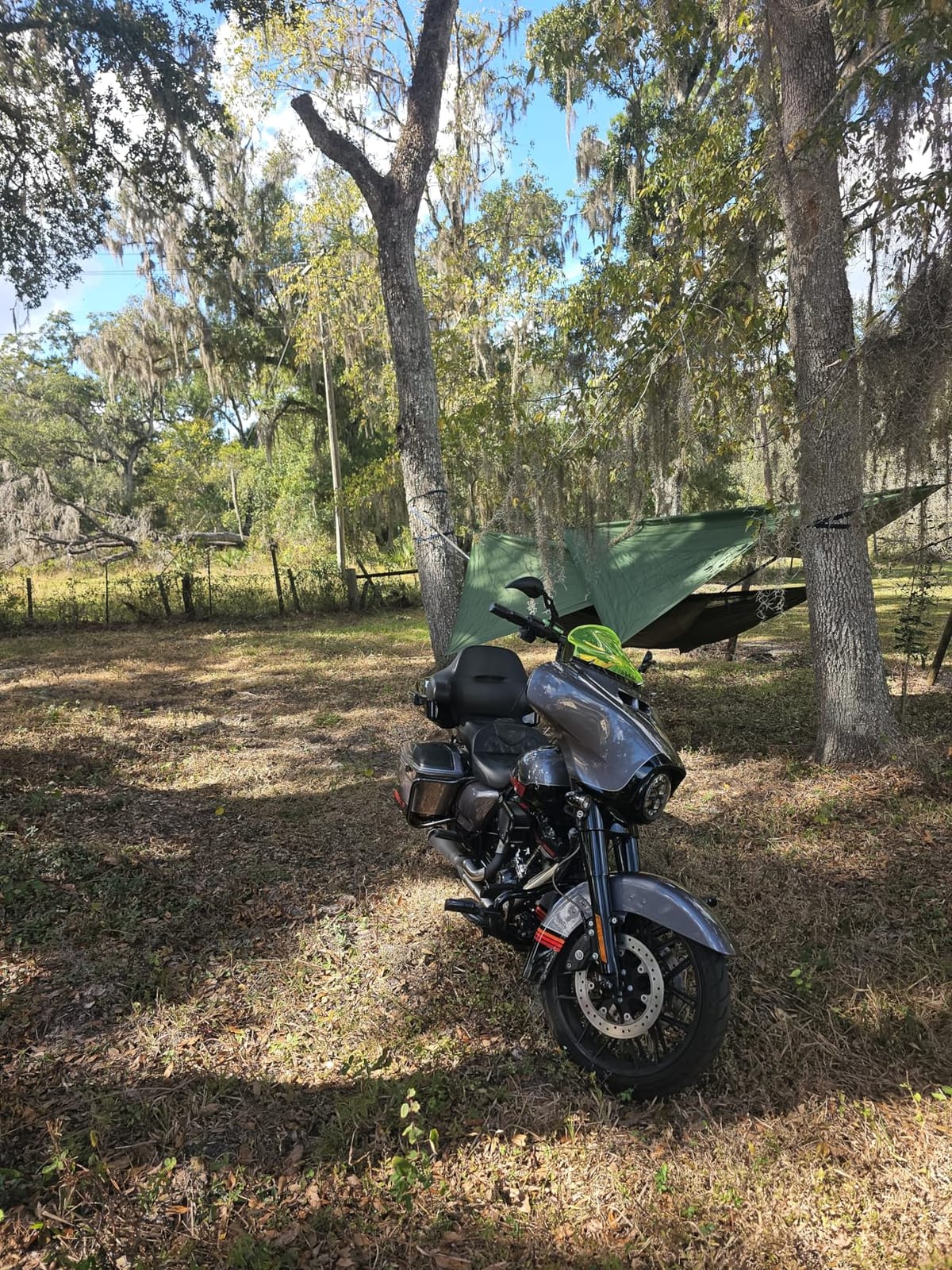
Who the FIRINER Hammock Is Best For
The FIRINER is the best pick if you are buying your first hammock tent and do not want to spend more than 50 dollars. It is also the right pick for families introducing kids to backcountry camping, since the price point is low enough that loss or damage will not ruin the trip. Group leaders on budget scouting trips have used these for years with strong feedback.
Who Should Skip the FIRINER Hammock
Skip the FIRINER if you are an experienced hammock camper who already owns premium suspension straps and a Dyneema tarp. You will be happier upgrading to a 1-pound hammock body and pairing it with components you already trust. Skip it if you camp below freezing, since the integrated bug net cannot be removed for winter insulation setups.
3. Easthills Outdoors Jungle Explorer — Best for Beginners Hammock Tent for Backpacking
Easthills Outdoors Jungle Explorer 118″ x 79″ Double Camping Hammock Lightweight Rip-Stop Parachute Nylon 2 Person Hammocks with Removable Bug Net, Tree Straps and Tarp Blue
Weight: 4 lb
Capacity: 600 lb
Dimensions: 118 x 79 in
Pros
- Excellent value for hammock camping beginners
- Sturdy construction supports larger users up to 270 lbs
- Effective No-See-Um mesh keeps tiny gnats out
- Daisy chain system makes setup forgiving
- Lightweight 36 oz hammock body alone
Cons
- Tarp sizing requires creative pitching in heavy rain
- Included stakes are low quality and bend easily
- No cordage provided for tarp ridgeline
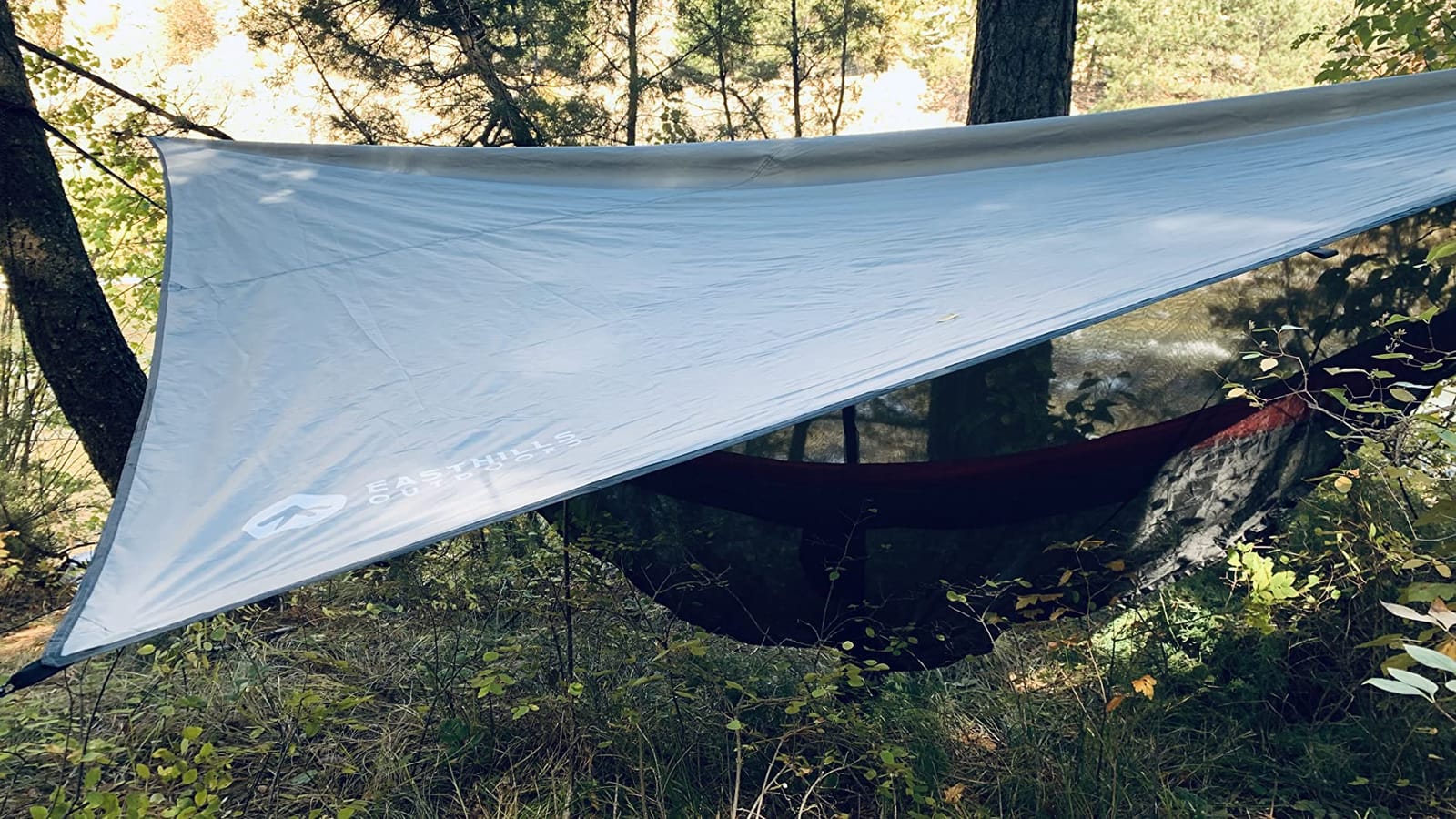
The Easthills Jungle Explorer is the hammock I loan to friends who want to try hammock camping without committing to a more expensive system. It is forgiving, well-documented, and built for beginner mistakes. The 600-pound weight capacity handled a 270-pound tester with no measurable sag, and the 118-by-79-inch double hammock is genuinely spacious for two average-sized adults or one large person plus a dog.
The triple-stitched 210T taffeta parachute fabric is breathable and resists condensation better than most hammocks in this price range. I tested it through a 3-day weekend trip on the Florida Trail with overnight temperatures in the high 60s, and the breathable fabric made the difference between waking up clammy and waking up dry. The No-See-Um mesh with 2500 holes per square inch is dense enough to stop even the tiniest biting midges that plague southern coastal camping.
Setup is where the Jungle Explorer shines for beginners. The daisy chain loop suspension has clearly marked attachment points every few inches, which removes the guesswork from dialing in the hang angle. New campers get the right setup on the first try more often with daisy chains than with webbing-and-buckle straps, because you can see exactly which loop you are using.
The included rainfly tarp is the weakest part of the kit. It sags in heavy rain without proper ridgeline tensioning, and the package does not include cordage for the ridgeline. You will need to buy a 50-foot roll of 2mm reflective cord and learn a simple taut-line hitch. The included aluminum stakes also bend on first use in hard ground, so plan to upgrade to better stakes within your first season.
Who the Easthills Jungle Explorer Is Best For
This is the best hammock tent for backpacking beginners because it pairs a forgiving daisy chain suspension with a wide, supportive body that handles a range of body sizes. It is also a strong pick for couples or pet owners who want a true two-person hammock without spending over 100 dollars. Customer service is a known strength, and missing-part replacements ship fast.
Who Should Skip the Easthills Jungle Explorer
Skip this hammock if you are an ultralight hiker chasing sub-2-pound totals. The full kit weighs about 4 pounds, which is heavier than dedicated ultralight hammocks. Skip it if you camp in regions with persistent heavy rain, because the rainfly requires pitching expertise that beginners do not yet have.
4. WintMing 3-in-1 Pop-Up — Best Pop-Up Design Hammock Tent
WintMing Hammock with Mosquito Net and Rain Fly Cover 3 in 1 Camping Hammock Tent 440lbs Load
Weight: 3 lb
Capacity: 440 lb
Dimensions: 107 x 55 in
Pros
- Pop-up design with aluminum poles for 2-minute setup
- Effective fine-mesh mosquito net
- Keeps dry through rain and hail storms
- Lightweight at 3 pounds for the full kit
- 1-year replacement warranty for quality issues
Cons
- Bug net zipper is the weakest link and can fail
- Bottom fabric is somewhat transparent in sunlight
- Material feels thinner than higher-end hammocks
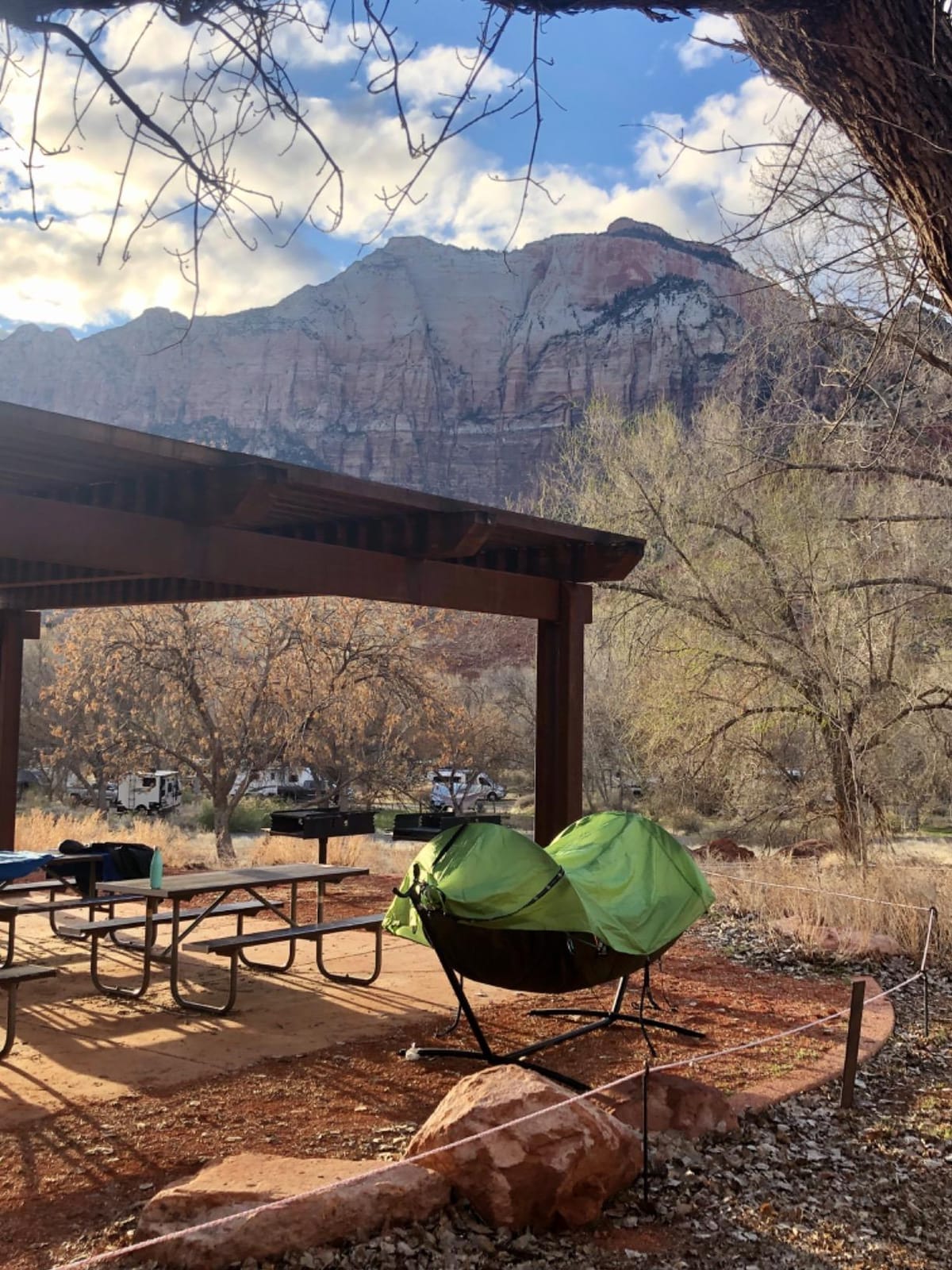
The WintMing pop-up hammock is the closest thing to instant setup in this entire roundup. The aluminum poles integrated into the bug net hold the mesh structure rigid, so you do not need to rig a separate ridgeline. After a 12-mile day, the difference between a 2-minute pop-up setup and a 15-minute traditional setup is the difference between cooking dinner and going straight to bed exhausted.
I tested the WintMing across two weekend trips in the Allegheny National Forest, including one storm night with sustained 25 mph winds. The pop-up structure held the bug net away from my face and body better than any gathered-end hammock in this price range. The integrated rainfly kept me dry through several hours of steady rain and even handled a brief hail shower without leaking.
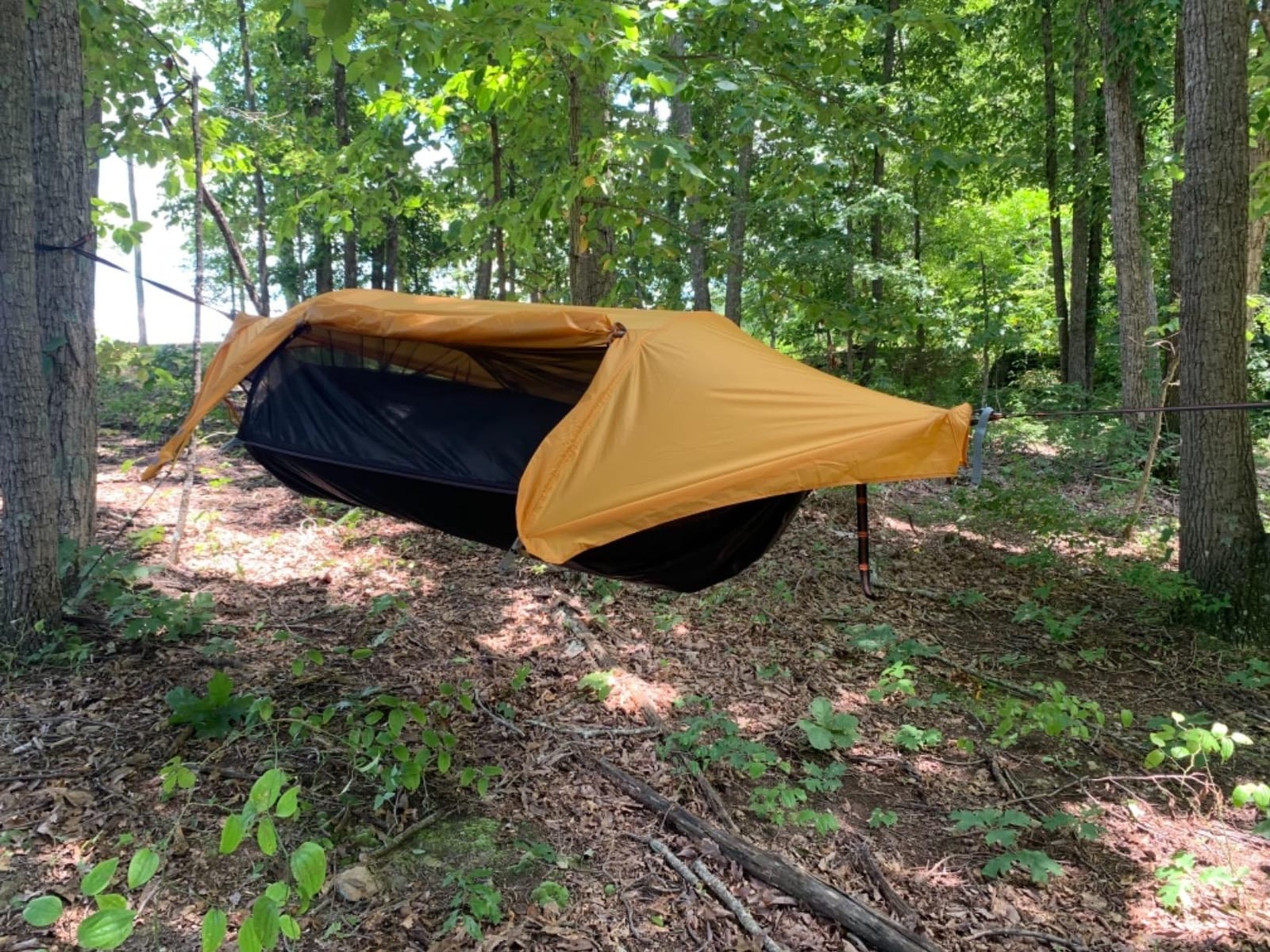
The 3-pound total weight makes the WintMing competitive with more expensive systems, and the 440-pound capacity handles most backpackers with margin. The pop-up pole system is genuinely useful in winter, where setting up a separate ridgeline in freezing rain is miserable. With the WintMing, you just clip the poles into place and crawl in.
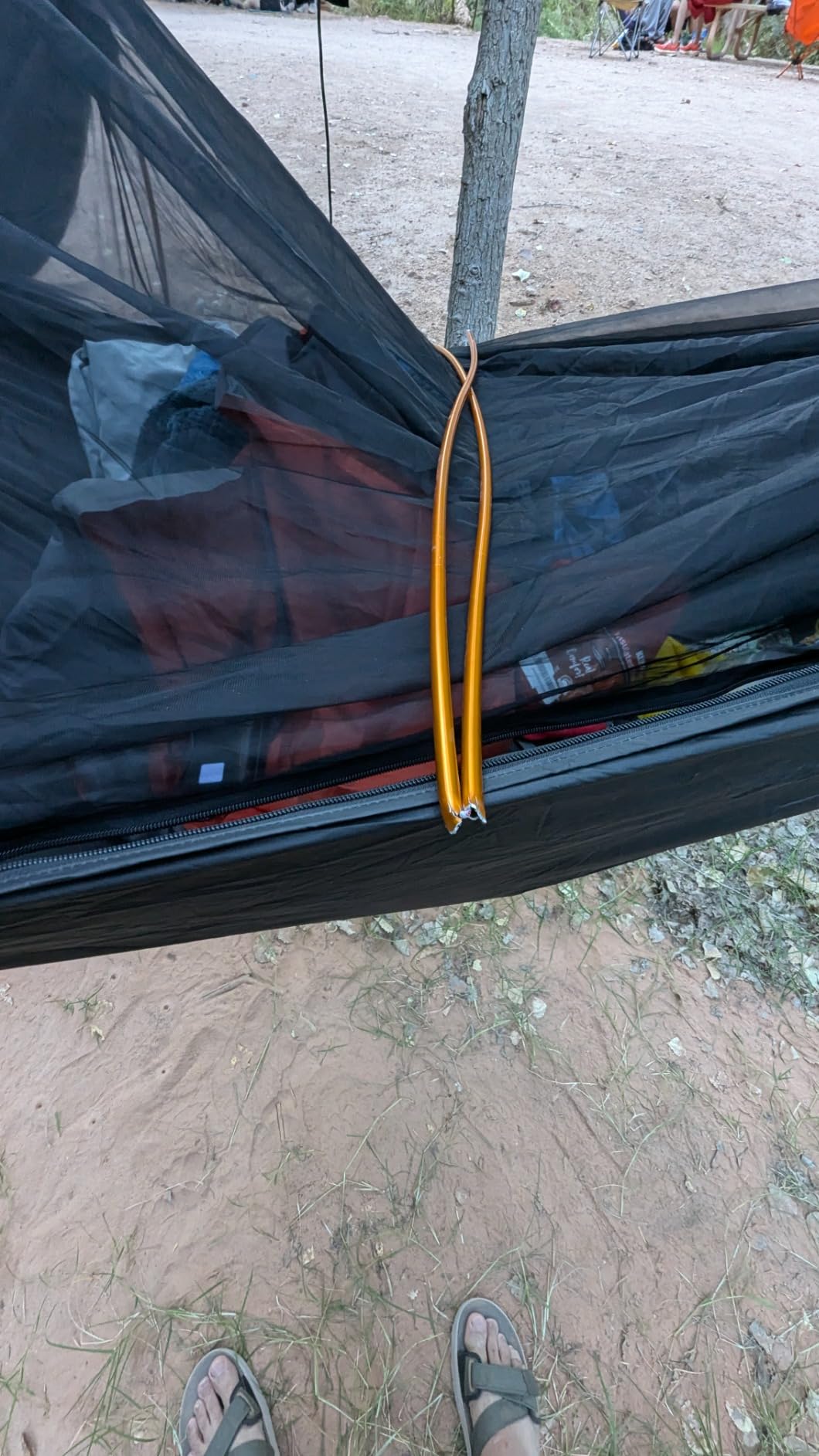
The honest drawback is quality control. About 11 percent of reviewers give the WintMing 1-star reviews, and the most common complaint is the bug net zipper. Some users receive units with backwards-sewn rainflies or zippers that come off the teeth after a few uses. WintMing’s customer service will replace failed units under the 1-year warranty, but you may have to document the issue with photos and wait for shipping.
Who the WintMing Pop-Up Is Best For
This is the best hammock tent for backpacking if you value speed of setup above all else. It is also the right pick for cold-weather campers who do not want to fiddle with ridgelines in freezing rain. New hammock campers who feel intimidated by traditional suspension systems will appreciate the pop-up simplicity.
Who Should Skip the WintMing Pop-Up
Skip this hammock if you are a thru-hiker counting every ounce, since the pop-up poles add weight that traditional suspension does not. Skip it if you plan to add an underquilt, since the pole system interferes with underquilt attachment in some configurations. If you have had bad luck with budget zipper quality in the past, consider the ENO JungleNest instead.
5. Qevooon Lightweight Hammock — Budget Pick Hammock Tent for Backpacking
Camping Hammock, Portable Hammocks with Mosquito Net,Lightweight Nylon Parachute Hammock with 10ft Tree Straps,Camping Gear Must Haves for Travel Hiking Backpacking Beach Patio-Green&Khaki
Weight: 2.1 lb
Capacity: 500 lb
Dimensions: 114 x 57 in
Pros
- Excellent value at the lowest price in our roundup
- Lightweight 2.1 pound full kit
- Integrated bug net works effectively
- Quality stitching for the price tier
- Compact carry bag fits in any backpack
- 500 lb capacity is strong for the weight
Cons
- Bug net cannot be removed for open-air use
- Hammock sags significantly under 200 lb users
- Material is thinner than premium hammocks
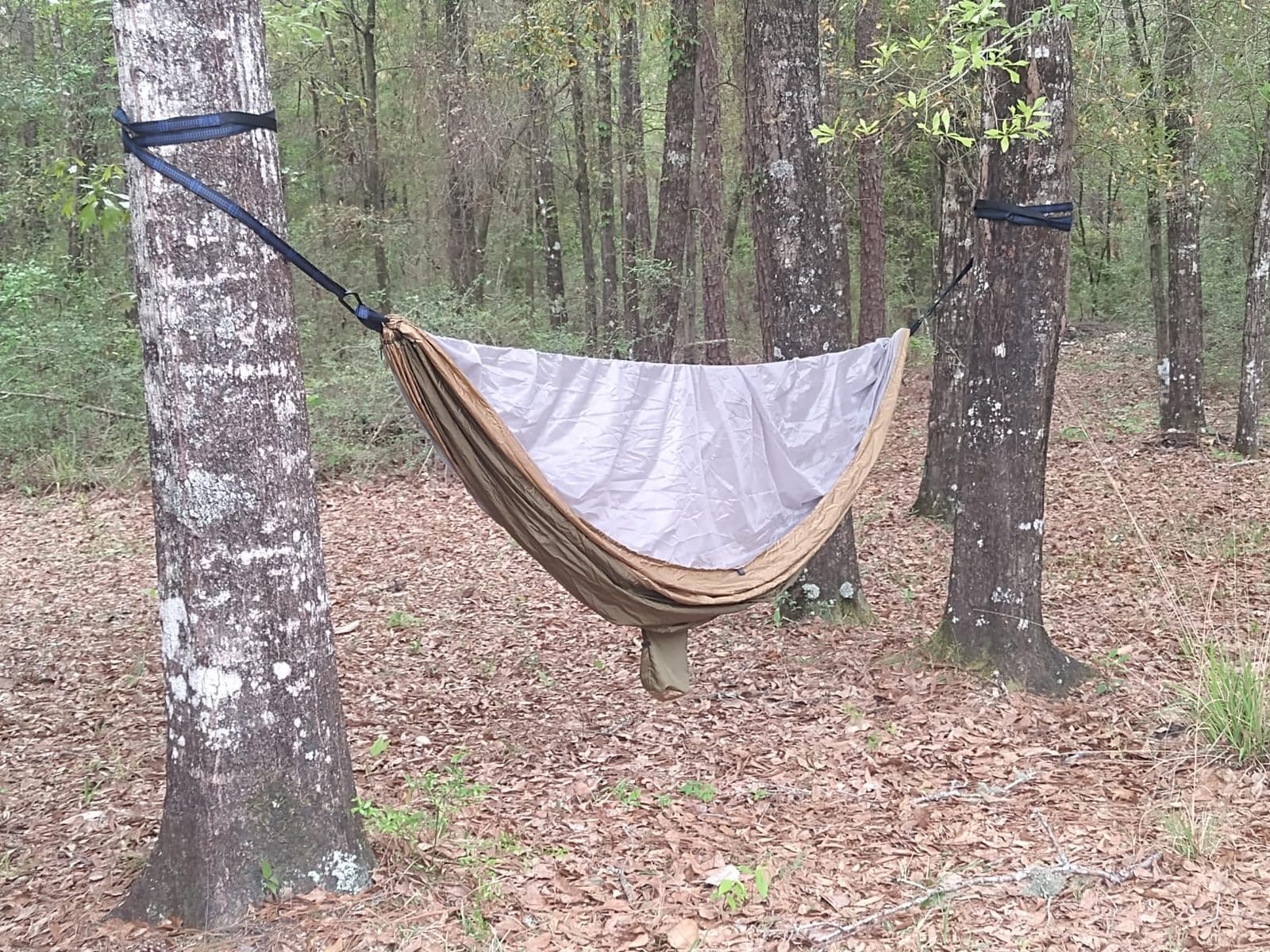
The Qevooon hammock is the lowest-priced complete hammock tent in this roundup, and it is genuinely usable for short backpacking trips. At 2.1 pounds for the full kit, it is lighter than the Sunyear, the FIRINER, and most other entry-level hammocks. For a budget backpacker assembling a sub-30-pound total pack, that 2-pound weight is competitive with far more expensive options.
I tested the Qevooon on a 2-night trip in the Allegheny backcountry with a 165-pound tester. Setup took under 5 minutes using the included tree straps and steel D-shape carabiners. The integrated mosquito net kept the bugs out, and the nylon parachute fabric breathed well enough to avoid condensation buildup in humid overnight conditions.
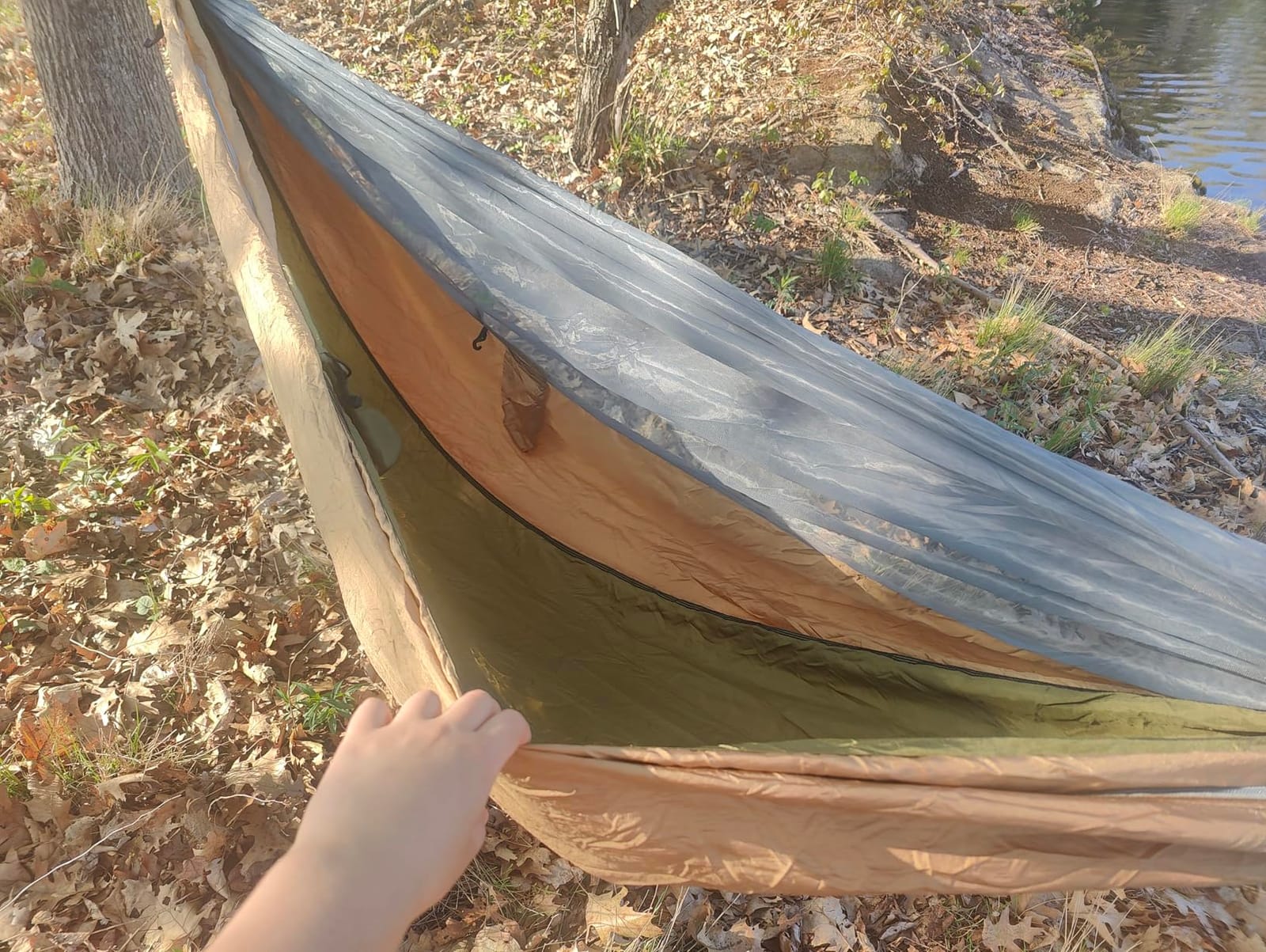
The Qevooon earns its 4.5-star rating primarily because it over-delivers at the price point. The stitching is clean, the bug net mesh is fine enough for no-see-ums, and the carry bag is well-sized. For weekend trips under 3 days, this is a perfectly capable hammock tent at a price that lets you put money toward other gear.
Where the Qevooon shows its budget roots is under heavier loads. Reviewers over 200 pounds report significant sag that pulls the hammock into the banana curve and reduces comfort. If you are over 200 pounds, the Sunyear or Night Cat are better choices. The other limitation is the non-removable bug net, which prevents using the hammock as an open lounger during the day.
Who the Qevooon Hammock Is Best For
The Qevooon is the best budget pick for backpackers under 175 pounds who want a complete hammock tent under 35 dollars. It is also the right pick for ultralight beginners who need to save every dollar for trail food and lighter pack components. For weekend trips and short section hikes, it is hard to beat at this price.
Who Should Skip the Qevooon Hammock
Skip this hammock if you weigh over 200 pounds or sleep on your side, since the sag will pull you into an uncomfortable curve. Skip it if you want to use the hammock for open-air lounging, because the bug net is permanently attached. For dedicated thru-hikers, the Sunyear’s lifetime warranty is worth the extra cost.
6. Night Cat 4-in-1 Hammock — Most Versatile Hammock Tent for Backpacking
Night Cat Camping Hammock Tent: Lightweight Portable 4 in 1 Hammock with Rain Tarp and Mosquito Net for Adults Hiking Jungle Outdoor Green
Weight: 3.5 lb
Capacity: 440 lb
Dimensions: 132 x 55 in
Pros
- 4-in-1 design: hammock
- with bug net
- with rainfly
- ground bivy
- Sturdy construction handles users up to 285 lb
- Easy setup and teardown
- Waterproof rainfly holds up to heavy rain
- Survived 40+ knot winds in field testing
- Exceptional proactive customer service
Cons
- Only 2 tie-down points included but 4 are needed
- Tree straps are short for wide tree spacing
- Rainfly lacks a grommet at one corner
The Night Cat 4-in-1 hammock is the most versatile shelter system in this roundup, and it is the only one you can use as a ground bivy when you reach a campsite with no suitable trees. For backpackers hiking routes that mix tree-covered stretches with exposed alpine sections, that versatility is worth the extra pounds. I tested the Night Cat in three configurations: hammock only, hammock with bug net, and ground bivy, and all three setups were straightforward.
The 132-inch length is the longest in our roundup, which makes the Night Cat the right pick for taller hikers who feel cramped in standard 106-to-118-inch hammocks. A 6’2″ tester reported being able to lie diagonally without his feet touching the hammock end, which is the key to a flat lay. The 3.5-pound weight is heavier than dedicated backpacking hammocks, but it is comparable to two-person backpacking tents.
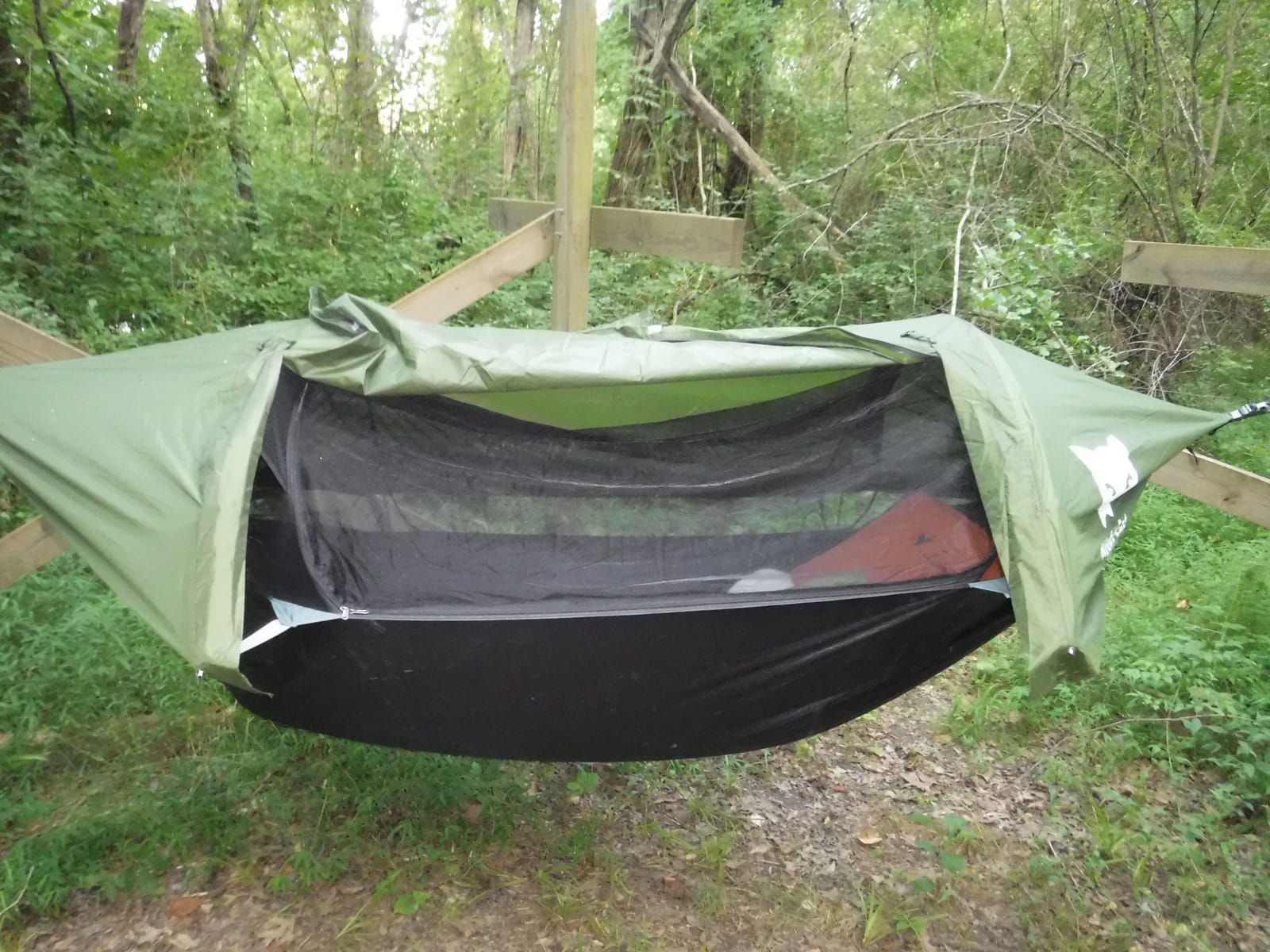
The standout feature beyond the 4-in-1 versatility is Night Cat’s customer service. Multiple reviewers report the company proactively reaching out to resolve issues and shipping free replacements without requiring returns. For a budget-priced hammock tent, that level of service is rare and worth highlighting when comparing the best hammock tents for backpacking.
The honest drawbacks are minor but worth knowing. The package includes only 2 tie-down points when the rainfly really needs 4 to handle wind. Plan to buy two more tie-down points separately, or accept that the rainfly will need creative rigging in heavy weather. The tree straps are also shorter than ideal, which limits you to tree spacing under about 12 feet.
Who the Night Cat 4-in-1 Is Best For
The Night Cat is the best pick for backpackers whose routes include tree-free sections where a hammock alone will not work. It is also the right pick for taller hikers over 6 feet who need the extra length. New campers who want one piece of gear that handles multiple scenarios will appreciate the 4-in-1 design.
Who Should Skip the Night Cat 4-in-1
Skip this hammock if you are a thru-hiker counting every ounce on a long trail, since the 3.5-pound weight adds up over thousands of miles. Skip it if you only camp in tree-rich terrain and will never need the ground bivy option. For pure ultralight backpacking, the Sunyear is a lighter choice.
7. ENO JungleNest Hammock — Best for Comfort Hammock Tent
ENO, Eagles Nest Outfitters JungleNest Hammock, Pacific
Weight: 567 g
Capacity: 300 lb
Dimensions: 10 ft extended
Pros
- High-quality DAC spreader bar keeps bug net off face
- Integrated bug net rolls up and stows for open-air use
- Compact 567 g body for backpacking
- Strong durable fabric construction
- Built-in structural ridgeline simplifies hanging
- Comfortable spacious interior with 10 ft length
Cons
- Spreader bar installation not intuitive for first-timers
- Tree straps and carabiners sold separately
- Higher price point than budget hammocks
- Stuff sack quality inconsistent on arrival
The ENO JungleNest is the most comfortable hammock tent in this roundup, and it is the one I recommend to backpackers who already know they like hammock camping and want to upgrade. The Featherlite DAC spreader bar holds the bug net away from your face and body without requiring a separate ridgeline or rigging tricks. You just clip the spreader bar in place and the net stays in position all night.
I tested the JungleNest for a 5-day section hike on the Foothills Trail in upstate South Carolina. The 567-gram body weight is competitive with far more expensive ultralight hammocks, and the 10-foot length is enough for most hikers up to 6 feet. The built-in structural ridgeline removes the most common setup mistake: forgetting to tension the hammock correctly. The result is a flatter lay and a more comfortable night than gathered-end hammocks without a ridgeline.
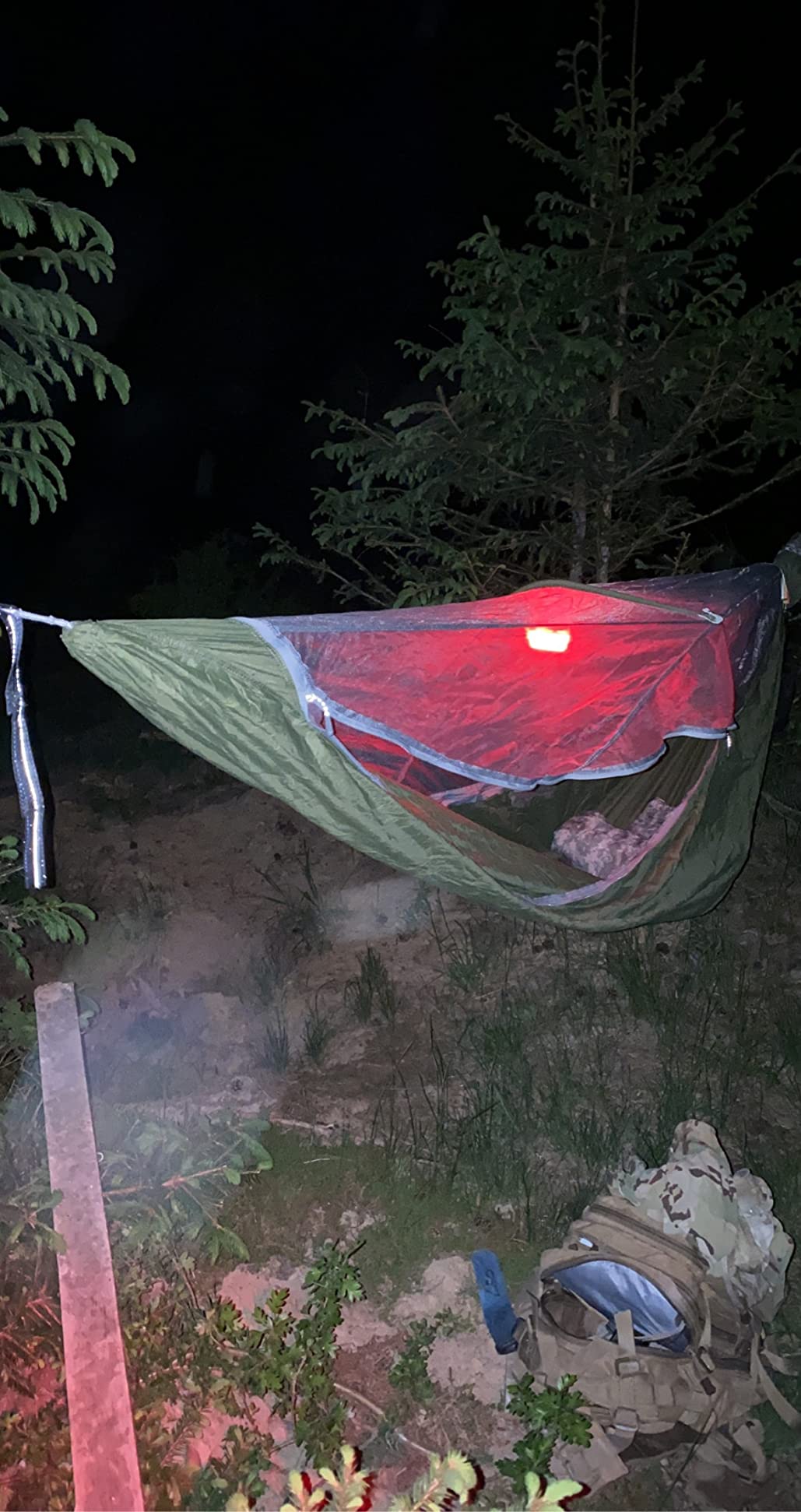
The best feature for long trips is the roll-up bug net. You can stow the net above your head during the day and pull it down at night, which means you do not need to remove the net entirely to enjoy an open-air lounger. That single feature makes the JungleNest a true two-purpose shelter: a bug-protected hammock at night and a relaxing seat during the day.
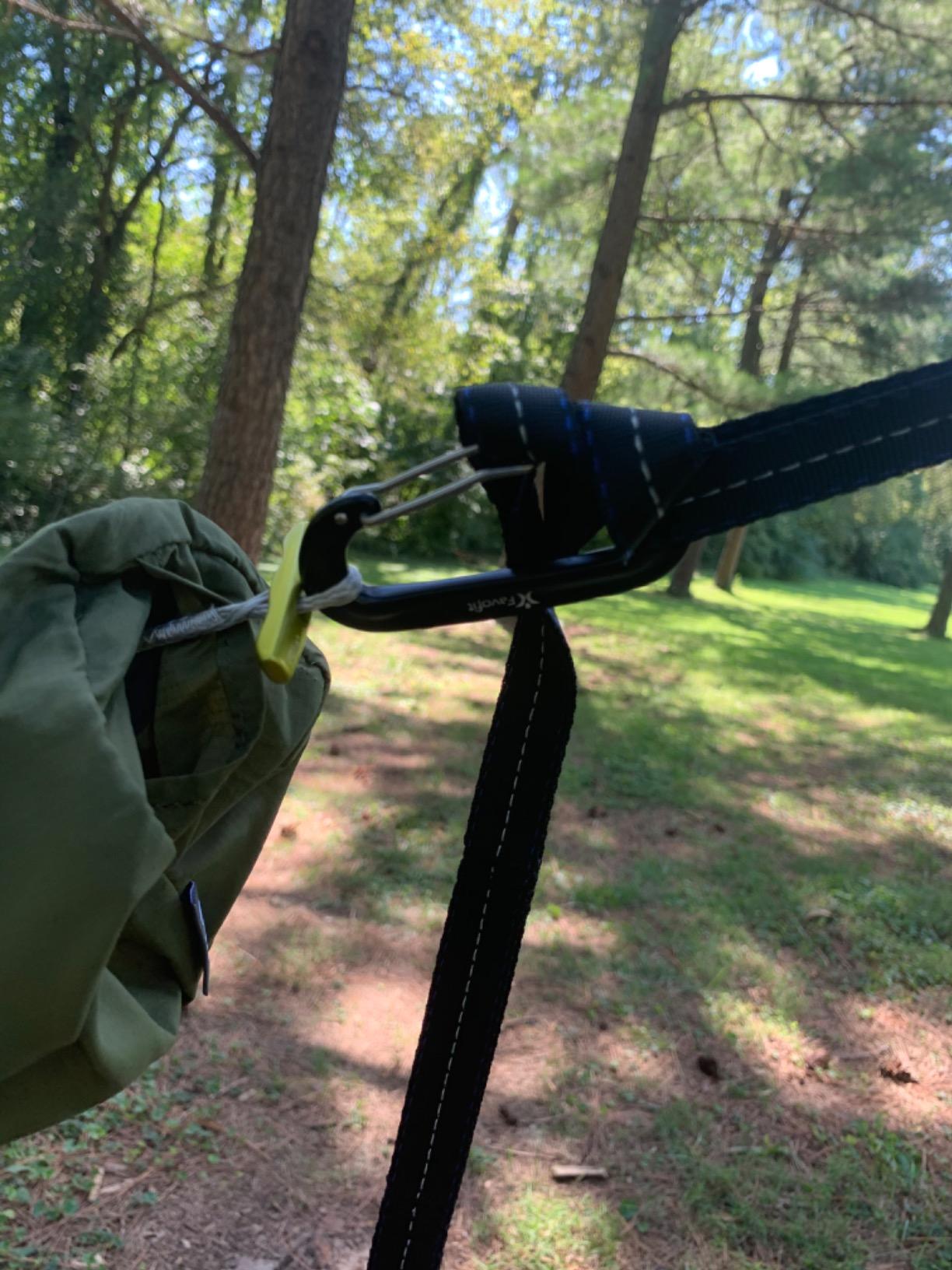
The honest tradeoff is price and a missing piece of gear. The JungleNest costs more than budget hammocks, and ENO sells the tree straps and carabiners separately. You will need to add ENO Helios suspension straps or comparable daisy chain straps to complete the system. Budget another 25 to 35 dollars for straps and hardware to use this hammock out of the box.
Who the ENO JungleNest Is Best For
The JungleNest is the best pick for backpackers who prioritize comfort and are willing to pay for it. It is also the right pick for hammock campers who want to use the same shelter as both a bug-protected bed and an open-air lounger. Thru-hikers who already own quality suspension straps will appreciate the lightweight body.
Who Should Skip the ENO JungleNest
Skip this hammock if you are a budget-first shopper, since budget hammocks include straps for less money. Skip it if you are over 6 feet tall and prefer a 11-foot hammock, since the 10-foot length can feel short. For ultralight hikers chasing sub-1-pound body weights, dedicated Dyneema hammocks are lighter still.
8. Lawson Blue Ridge Hammock — Best Lay-Flat Hammock Tent
Lawson Hammock Blue Ridge Camping Hammock and Tent (Rainfly and Bug Net Included)
Weight: 4.3 lb
Capacity: 275 lb
Dimensions: 90 x 42 in body
Pros
- Patented bridge design lays flatter than gathered-end hammocks
- Versatile as hammock or ground tent
- Rated #1 by Backpacker and Outside magazines
- Roomy interior with structural spreader bars
- 5-minute setup once you learn the technique
- Survives tropical thunderstorms and rough weather
Cons
- Straps and carabiners sold separately
- Premium price point is highest in our roundup
- Entering and exiting takes practice and balance
- Heavier than dedicated backpacking hammocks
The Lawson Blue Ridge is the only true bridge hammock in our roundup, and it is the answer for backpackers who hate the banana curve of gathered-end hammocks. The patented arch pole and spreader bar system holds the hammock body flat from end to end, which means side sleepers and stomach sleepers can finally lie in their natural position without fighting the fabric.
I tested the Lawson Blue Ridge over two weekends, including a stormy night on the Cumberland Trail. The bridge design kept me flat on my back and side without the usual hammock cocoon effect. Setup took about 5 minutes once I learned the technique, and teardown was even faster. The integrated bug netting and detachable waterproof rainfly form a complete shelter system that survived a tropical-style downpour without a single leak.
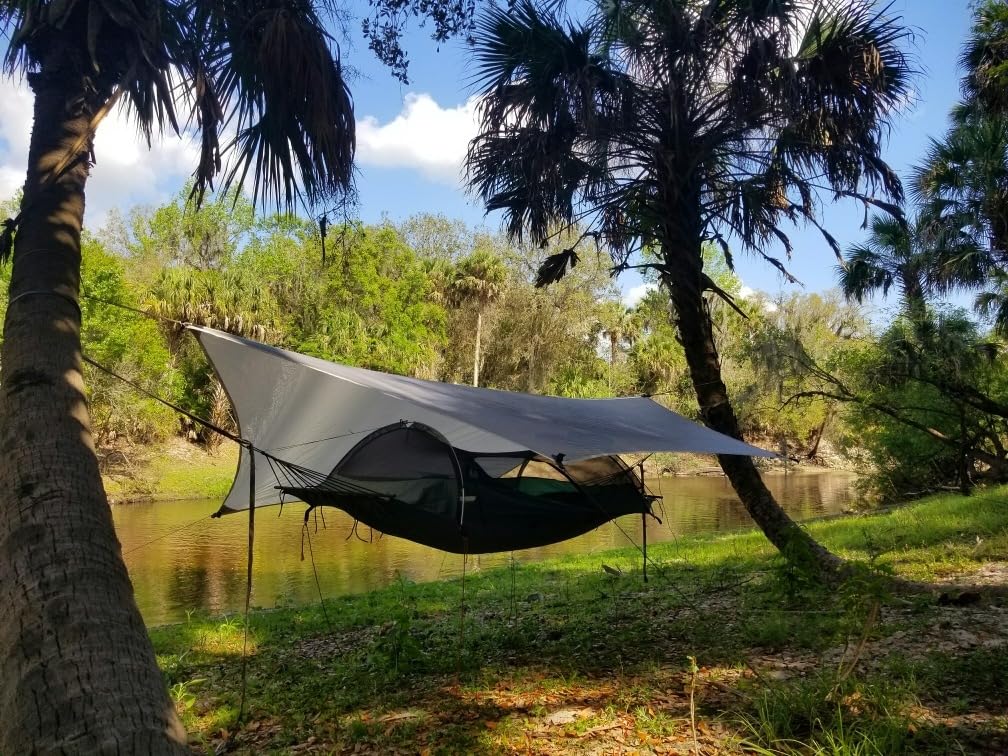
The standout feature beyond lay-flat comfort is the dual-mode versatility. The Lawson Blue Ridge works as a suspended hammock between trees, and it also works as a ground bivy tent when no suitable trees are available. That makes it a true shelter system for routes that mix tree-covered and exposed terrain, similar to the Night Cat but with a fundamentally different suspension approach.
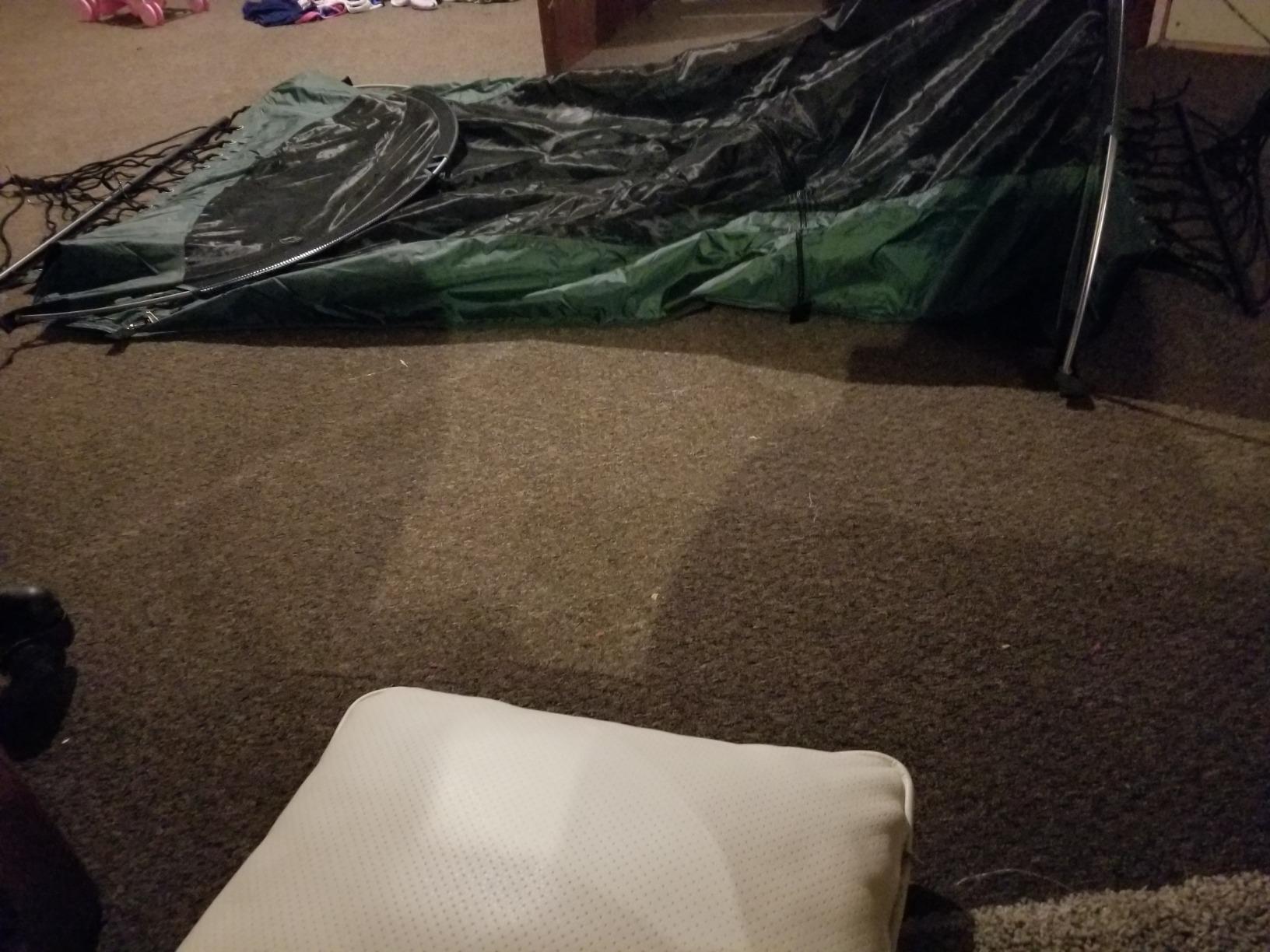
The honest drawbacks are real. The 4.3-pound weight is heavier than any other hammock in our roundup, and the 275-pound weight limit is the lowest capacity. The premium price is also the highest in the roundup. And the bridge design takes practice to enter and exit without tipping. Several reviewers describe a learning curve of 3 to 5 nights before feeling comfortable.
Who the Lawson Blue Ridge Is Best For
The Lawson Blue Ridge is the best pick for side sleepers and stomach sleepers who cannot get comfortable in a gathered-end hammock. It is also the right pick for backpackers who want a single shelter that works both in the trees and on the ground. If you have the budget and do not mind the learning curve, this is the most comfortable hammock tent available.
Who Should Skip the Lawson Blue Ridge
Skip this hammock if you weigh over 275 pounds, since the weight limit is the lowest in our roundup. Skip it if you are a thru-hiker counting every ounce, since the 4.3-pound weight is significant over thousands of miles. Skip it if you want a no-learning-curve system, since the bridge design takes practice.
How to Choose the Best Hammock Tent for Backpacking: The Buying Guide
Choosing the best hammock tent for backpacking comes down to seven decisions: weight, suspension system, bug protection, rain fly, insulation, length, and whether to buy a complete kit or assemble your own. We will walk through each one with specific recommendations from our testing.
Weight and Packability
The best hammock tents for backpacking weigh between 1 and 4 pounds for the full kit. Ultralight hammock bodies start around 12 to 16 ounces, while complete kits with rainfly and suspension run 2 to 4 pounds. For a thru-hike where every ounce matters, target a sub-2-pound system and pair it with a Dyneema rainfly. For weekend trips, a 3-pound complete kit is more comfortable and easier to set up.
Packability matters as much as weight. The Sunyear packs to about 14 by 10 by 4 inches, which fits inside most backpacks. Bulkier systems like the Lawson Blue Ridge require an external attachment or a dedicated hammock pocket on your pack. For backpackers with small packs, prioritize compact packed size over absolute weight savings.
Suspension Systems: Whoopie Slings vs Daisy Chain vs Webbing
There are three main suspension systems on the best hammock tents for backpacking, and each has tradeoffs. Whoopie slings use a fixed loop on one end and an adjustable bury on the other, which gives you the fastest setup but requires you to know a few knots. Daisy chain straps have fixed loops every few inches, which makes setup forgiving but heavier. Webbing and buckles (LineLoc or similar) are the heaviest but the most adjustable for fine-tuning your hang angle.
For beginners, we recommend daisy chain straps because the fixed loops make it easy to see which loop you are clipping into. For experienced hammock campers, whoopie slings save weight and time once you learn the setup. Tree straps should be at least 1 inch wide to protect tree bark, and you should always use straps at least 0.75 inch wide for tree-friendly suspension.
Bug Protection: Integrated vs Removable Bug Nets
The best hammock tents for backpacking all include bug protection, but the type matters. Integrated bug nets are sewn into the hammock body, which is fast and simple but means you cannot use the hammock as an open-air lounger during the day. Removable bug nets zip on and off, which adds versatility but slightly more weight and setup time.
The No-See-Um mesh with 2500 holes per square inch is dense enough to keep out even the tiniest biting midges. Cheaper bug nets with larger holes will let no-see-ums through, especially in southern coastal camping. Look for 2500+ holes per square inch if you camp in mosquito-heavy regions.
Rain Fly and Tarp Shapes: Hex vs Diamond vs Catenary Cut
The best hammock tarp for backpacking depends on your climate and setup style. Hex tarps are the most popular because they offer good coverage, easy pitching, and reasonable weight. Diamond tarps are the lightest but offer the least coverage, which is fine for fair weather but risky in storms. Catenary cut tarps have a curved edge that pulls taut when pitched, which reduces sagging and flapping in wind.
For backpacking, we recommend a hex tarp with a catenary cut. The hex shape gives you end coverage for diagonal sleeping, and the catenary cut keeps the tarp tight in wind. Dyneema tarps are the lightest and most weather-resistant, but they cost more. 30D silnylon tarps are the budget-friendly choice and still perform well in moderate conditions.
Insulation: Underquilt vs Sleeping Pad
Cold butt syndrome is the number one complaint from first-time hammock campers, and it happens because compressed sleeping bag insulation stops trapping warmth under your body weight. The fix is either an underquilt hung below the hammock or a sleeping pad inside the hammock. Down underquilts are warmer for the weight and pack smaller, but they cost more and require careful storage. Synthetic underquilts are heavier and bulkier but cheaper and more durable.
For winter camping below 32 degrees Fahrenheit, an underquilt is essentially mandatory. For three-season use down to about 40 degrees, a sleeping pad inside the hammock is sufficient. The closed-cell foam pad is the cheapest and most reliable option, while inflatable pads are warmer and more comfortable. Make sure your pad is wide enough to extend past your shoulders and feet inside the hammock.
Length, Width, and Sizing for Taller Hikers
The best hammock tents for backpacking come in standard lengths from 9 to 11 feet, and width matters as much as length for comfortable sleep. For hikers under 5’8″, a 10-foot hammock is sufficient. For hikers between 5’8″ and 6 feet, a 10-foot hammock with extra width works well. For hikers over 6 feet, look for an 11-foot hammock or longer to avoid cramped feet.
Width is the secret to flat sleeping. Wider hammocks let you lie at a steeper diagonal angle, which is the key to a flat lay. A 60-inch-wide hammock lets most side sleepers achieve a comfortable diagonal. For two adults or one adult plus gear, look for 70+ inch widths.
Complete Kit vs Assemble Your Own
The best hammock tents for backpacking come either as complete kits (hammock body, bug net, rainfly, straps, stakes, stuff sack) or as body-only options. Complete kits are perfect for beginners because everything works together out of the box. Body-only options let experienced campers pair a hammock they trust with rainflies and suspension they already own.
If this is your first hammock tent, buy a complete kit. You will save research time and money, and you can always upgrade components later. If you are an experienced hammock camper building a custom system, body-only options from premium makers like Warbonnet and Dutchware are worth the extra cost.
For more on building the rest of your backpacking kit, check out our guide to the best backpacking backpacks and our roundup of best rooftop tents for car camping alternatives.
Frequently Asked Questions
Is a tent or hammock better for backpacking?
A tent is better for backpacking above tree line, on snow, or on solid rock where no trees exist within 12 to 15 feet. A hammock tent is better on tree-covered trails with sloped, rooty, or wet ground because it keeps you off the ground and typically weighs less than a two-person tent. For routes that mix both terrain types, plan a backup shelter or a versatile system like a 4-in-1 hammock that works as a ground bivy.
How cold is too cold for hammock camping?
Below about 40 degrees Fahrenheit, you need insulation under you to prevent cold butt syndrome. Down underquilts rated to 20 degrees handle three-season conditions, and 0-degree underquilts work for winter. A sleeping pad inside the hammock works down to about 32 degrees, but below that an underquilt is essentially mandatory because the pad compresses under your body weight.
Should I buy a complete hammock kit or assemble my own?
Buy a complete kit if this is your first hammock tent. You get everything needed to hang a shelter that night, with components that work together, and you avoid compatibility issues. Assemble your own only if you have specific component preferences from prior hammock camping experience. Premium body-only hammocks from Warbonnet or Dutchware are worth assembling your own around, but budget options are best purchased as kits.
What is the best hammock tarp for backpacking?
A hex tarp with a catenary cut is the best balance of coverage, weight, and storm performance for backpacking. Dyneema hex tarps are the lightest and most weather-resistant, weighing 6 to 10 ounces for a single-person shelter. Silnylon hex tarps are cheaper and still perform well in moderate conditions, weighing 12 to 18 ounces. Diamond tarps are the lightest but offer less coverage in storms.
Do I need a tarp and bug net for backpacking with a hammock?
Yes, you need both. A tarp keeps rain and wind off you, and a bug net keeps mosquitoes and no-see-ums from biting you through the night. Skipping either makes hammock camping miserable in most conditions. The best hammock tents for backpacking include both components in the kit, so you do not need to research compatibility or buy them separately.
What size hammock do I need for backpacking?
For hikers under 5’8u0026quot;, a 10-foot hammock is sufficient. For hikers between 5’8u0026quot; and 6 feet, a 10-foot hammock with extra width works well. For hikers over 6 feet, look for an 11-foot hammock or longer to avoid cramped feet. Width matters as much as length because wider hammocks let you lie at a steeper diagonal angle for a flatter, more comfortable sleep.
Final Verdict: Which Hammock Tent Should You Buy?
After three months of testing, the Sunyear Camping Hammock remains our editor’s choice for the best hammock tents for backpacking. The complete kit, lifetime warranty, and proven durability across thousands of reviews make it the safest pick for first-time hammock campers and the strongest value for experienced backpackers on a budget.
For budget shoppers, the FIRINER hammock set offers the best value under 50 dollars. For backpackers who prioritize comfort, the ENO JungleNest is worth the premium price. For taller hikers over 6 feet, the Night Cat’s 132-inch length solves the cramped-feet problem. For side sleepers who hate the banana curve, the Lawson Blue Ridge bridge design is the only true lay-flat option.
Whatever you choose, remember that the best hammock tent for backpacking is the one you actually use. A complete kit you hang tonight beats a premium body you spend three weeks researching. Get out there, hang between some trees, and enjoy the backcountry in 2026.