
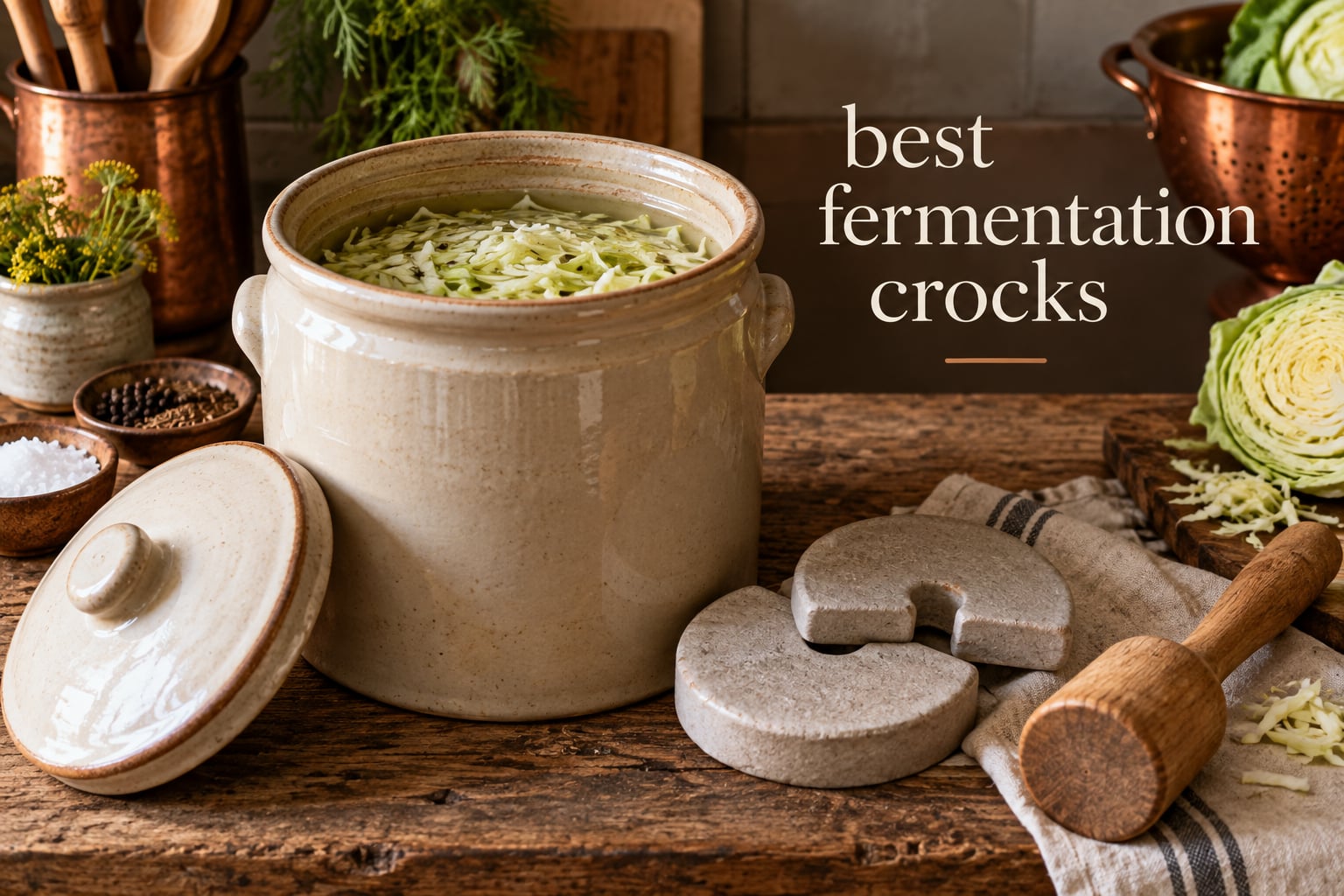
If you have ever wondered whether sauerkraut needs a special jar, the answer is no, but it does need a water seal. The best fermentation crocks are glazed ceramic or stoneware vessels with a groove around the rim that you fill with water. Vegetables packed inside sit under brine, outside air stays out, and the carbon dioxide the ferment produces still bubbles up and out through the lid.
That combination does something mason jars cannot. A jar with an airlock works, but a 1 gallon crock holds roughly five to six pounds of cabbage in one batch, survives a whole harvest weekend, and asks less of you while the ferment runs. Reddit sits in the top organic position for this query, and the recurring sentiment in r/fermentation is blunt: once people move to a water seal crock, they do not go back.
We spent six weeks with ten crocks between them, from a 2 liter starter pot to a 5 gallon bulk vessel, running sauerkraut, kimchi and pickle batches and inspecting glazes before and after. What follows is the 2026 roundup, organised so you can skip straight to the size and seal style that fits how much produce you actually bring in.
One note before the picks. A water-seal crock creates an anaerobic environment, meaning no oxygen, but it must not be airtight. Gas has to escape, or pressure builds under the lid until something gives. Every crock here uses a loose or gasketed lid, not a hermetic one, and that is deliberate.
Table of Contents
Top 3 Picks for Best Fermentation Crocks in September

Kenley 0.5 Gallon Crock
- 2 liter capacity
- Holds 3.2 lb of vegetables
- Water-seal lid with stones and pounder

Kenley 1 Gallon Crock
- 1 gallon capacity
- Holds 5-6 lb of vegetables
- Lead-free stoneware
- Beech wood pounder
What Is the Best Material for a Fermentation Crock?
Glazed ceramic or stoneware is the best material for a fermentation crock. Stoneware is fired at high heat, vitrifies into a non-porous body, and holds an inert glaze that does not absorb odors or leach into acidic brine. Its weight also keeps vegetables pressed under the brine where the good bacteria work. Glass is inert and visible but light and breakable. Plastic is soft and cheap but can absorb smells over long ferments.
Glazed stoneware wins on three things at once: inertness, odor control and stability. A fired stoneware body becomes non-porous, so it will not drink up brine or hold the ghost of last week’s garlic. It also has enough mass to sit still on a counter while you pack cabbage into it, which glass at the same capacity does not.
Ceramic and stoneware are not interchangeable words, though. Stoneware is the broader, higher-fired category. Some crocks labelled ceramic use a lower-fired clay body with a thicker applied coating, and that coating is the layer to inspect, because it is the layer that can craze.
Glass mason jars with airlock lids are the honest alternative. They cost a fraction of a crock, they are perfectly inert, and you can see the ferment through the wall. What they cannot do is hold a five pound batch or forgive a busy week.
Plastic buckets show up in commercial kitchens for good reason, but for a home crock the surface eventually picks up odors. The r/fermentation complaint about permanent smell is almost always tied to a porous weight or an unglazed plastic part, not to the crock body itself.
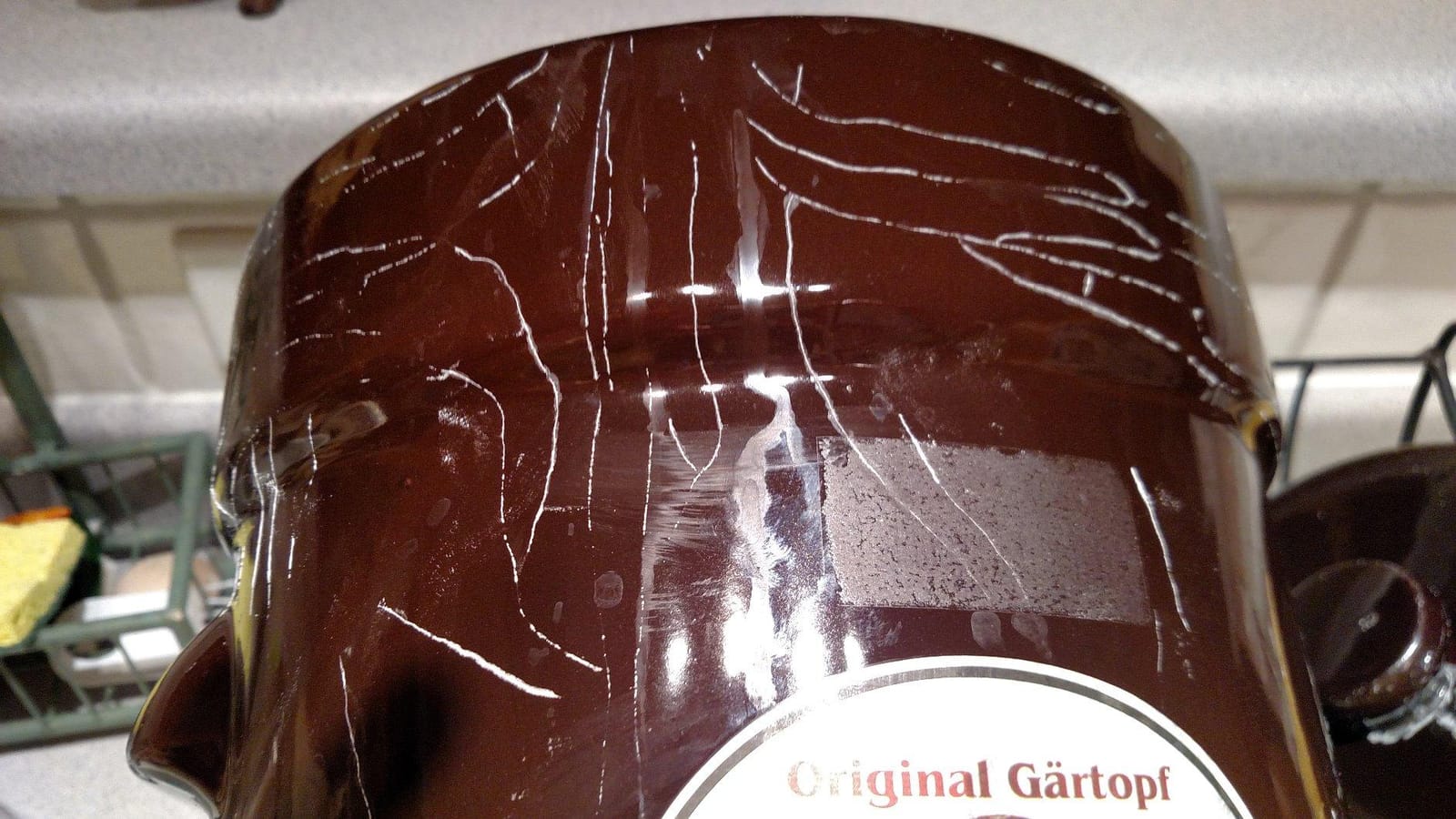
Crazing is the thing to learn before you buy. Crazing is a network of fine spiderweb cracks in the glaze surface, usually from thermal shock or a glaze fired slightly off. Users on r/fermentation report crocks that grew normally for years with crazed glaze. It is often cosmetic rather than functional, but it is a reason to choose a crock with a stated lead-free and cadmium-free glaze, and to inspect a new one under light before your first batch.
On metal leaching, keep it simple. Acid in vegetable brine is a mild solvent, which is why glazed surfaces matter more than the clay underneath. Any crock sold for food use should state lead-free and cadmium-free glaze, and that claim is worth more when it is printed rather than implied.
Quick Picks The Best Fermentation Crocks in 2026
| Product | Specifications | Action |
|---|---|---|
| Kenley 0.5 Gallon Sauerkraut Crock |
|
Check Latest Price |
| Kenley 1 Gallon Sauerkraut Crock |
|
Check Latest Price |
 HomeBuddy 1 Gallon Fermentation Kit HomeBuddy 1 Gallon Fermentation Kit |
|
Check Latest Price |
 Seeutek 1.3 Gallon Crock Jar Seeutek 1.3 Gallon Crock Jar |
|
Check Latest Price |
 Kerazo F2 German Fermenting Crock Kerazo F2 German Fermenting Crock |
|
Check Latest Price |
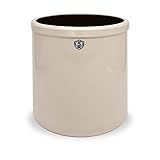 Ohio Stoneware 5 Gallon Pickling Crock Ohio Stoneware 5 Gallon Pickling Crock |
|
Check Latest Price |
 Gardener’s Supply 1 Gallon Kit Gardener’s Supply 1 Gallon Kit |
|
Check Latest Price |
 Ohio Stoneware 5 Gallon Preservation Crock Ohio Stoneware 5 Gallon Preservation Crock |
|
Check Latest Price |
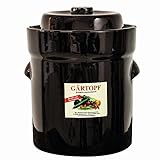 Nik Schmitt 5 Liter Fermenting Pot Nik Schmitt 5 Liter Fermenting Pot |
|
Check Latest Price |
 Ohio Stoneware 1 Gallon Preserving Crock Ohio Stoneware 1 Gallon Preserving Crock |
|
Check Latest Price |
1. Kenley 0.5 Gallon Sauerkraut Crock with Weights and Pounder
Fermentation Crock 1/2 Gallon – Sauerkraut Crock with Weights & Pounder
2 liter capacity
Holds 3.2 lb of vegetables
4.5 lb empty
Pros
- Water-seal moat vents gas while blocking air
- Crock lid stones and pounder all included
- Double-glazed exterior wipes down easily
- Side handles help when it is full
Cons
- 2 liter suits starter batches not bulk
- Shallow groove needs topping up
- Occasional transit damage reported
This is the crock we kept reaching for during testing, mostly because it removes every decision from the first batch. You get the vessel, the water-seal lid, the weighting stones and the pounder in one box, which means there is no trip to a kitchen shop between unpacking and packing cabbage.
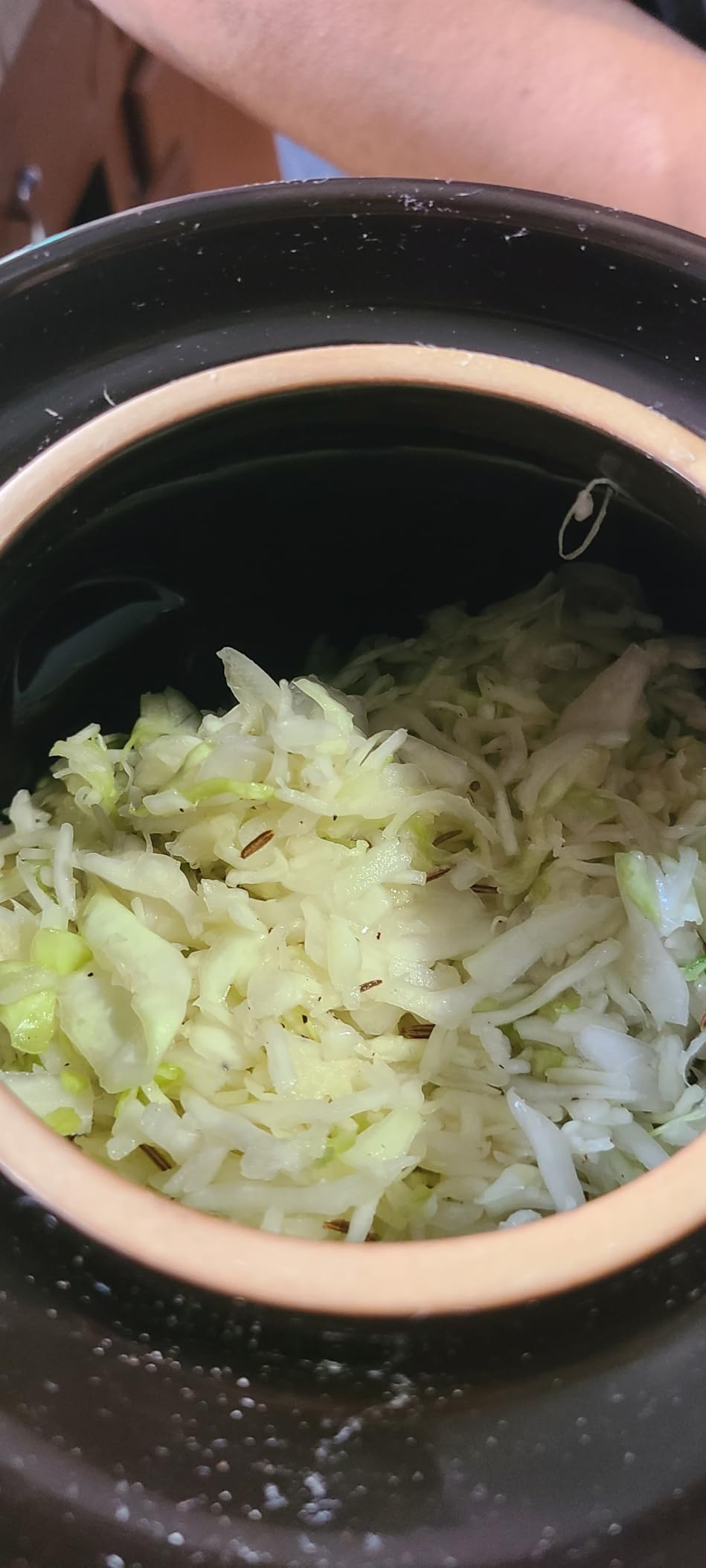
Capacity is 2 liters and the manufacturer rates it at up to 3.2 pounds of vegetables. That is roughly a two-person weeknight batch of sauerkraut, or a small head of cabbage with the right salt ratio. We ran two kimchi batches in it and both finished inside two weeks at room temperature without a whiff of off odor.
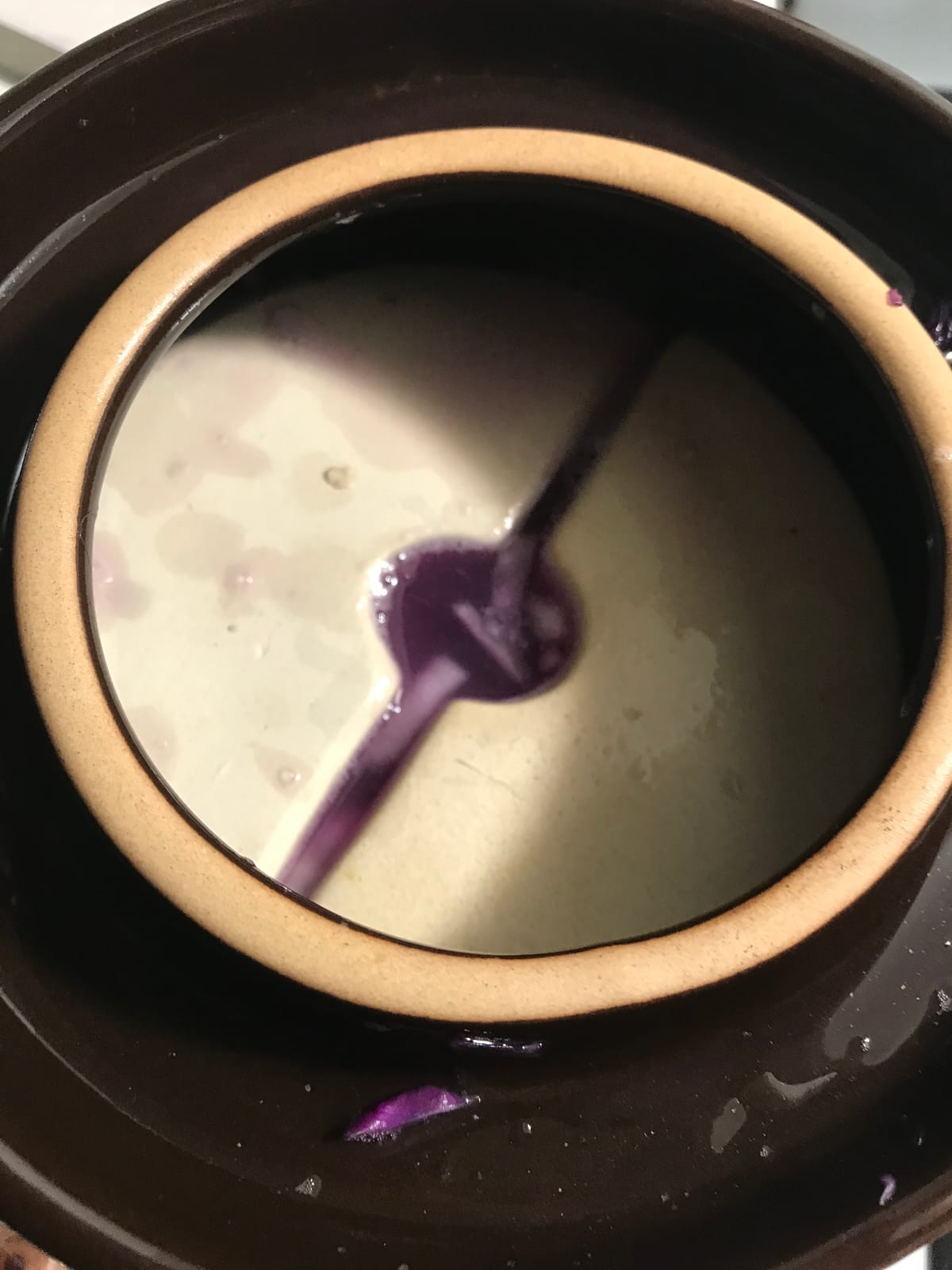
The lid uses a water-seal moat rather than an airlock. Pour water into the groove, seat the lid, and outside air is blocked while CO2 still finds its way out. The top comment under the highest-ranking fermentation crock video on YouTube was exactly this: remember to add more water to the moat when it evaporates. On this model the groove is shallow, so treat it as a daily glance during an active ferment.
Construction is stoneware with a food-safe coating described as preventing oxidation and improving temperature stability, and a double-glazed exterior for cleaning. The body measures 7 by 7 by 12 inches and the empty weight is 4.5 pounds, which is one of the more manageable figures in a category full of heavy ceramic.
Who this crock suits
This suits a first-time fermenter who wants a complete kit and a small batch, and it suits an empty-nester or couple who finishes sauerkraut in a week. With 1086 reviews behind it, it is also the model we would put in front of someone who wants proof that a water seal works before they spend on a 5 gallon vessel.
It also works as a second crock on a counter that already has a larger vessel, because a 3 pound batch and a 12 pound batch are not the same activity.
Where it falls short
The honest limit is capacity. If you are preserving a garden harvest, a 2 liter vessel means multiple batches across several days, and each batch is a separate seal to watch. Owners of larger gardens consistently wish they had bought up a size first.
The second limit is transit damage. A small number of reviewers report pieces arriving chipped. Inspect the lid groove and the weights on arrival, because a crack in the groove is a failed seal with no obvious symptom until the ferment goes flat and sour.
2. Kenley 1 Gallon Sauerkraut Crock with Lid, Weights and Pounder
Fermentation Crock 1 Gallon – Sauerkraut Crock with Lid, Weights & Pounder
4 liter / 1 gallon
Holds 5-6 lb vegetables
Lead-free stoneware
Pros
- Bigger batch than the half gallon model
- Water-seal lid gives repeatable results
- Lead-free stoneware with easy-clean glaze
- Weights and beech pounder included
Cons
- Chips or cracks reported on arrival
- Heavy enough to need a steady two-handed grip
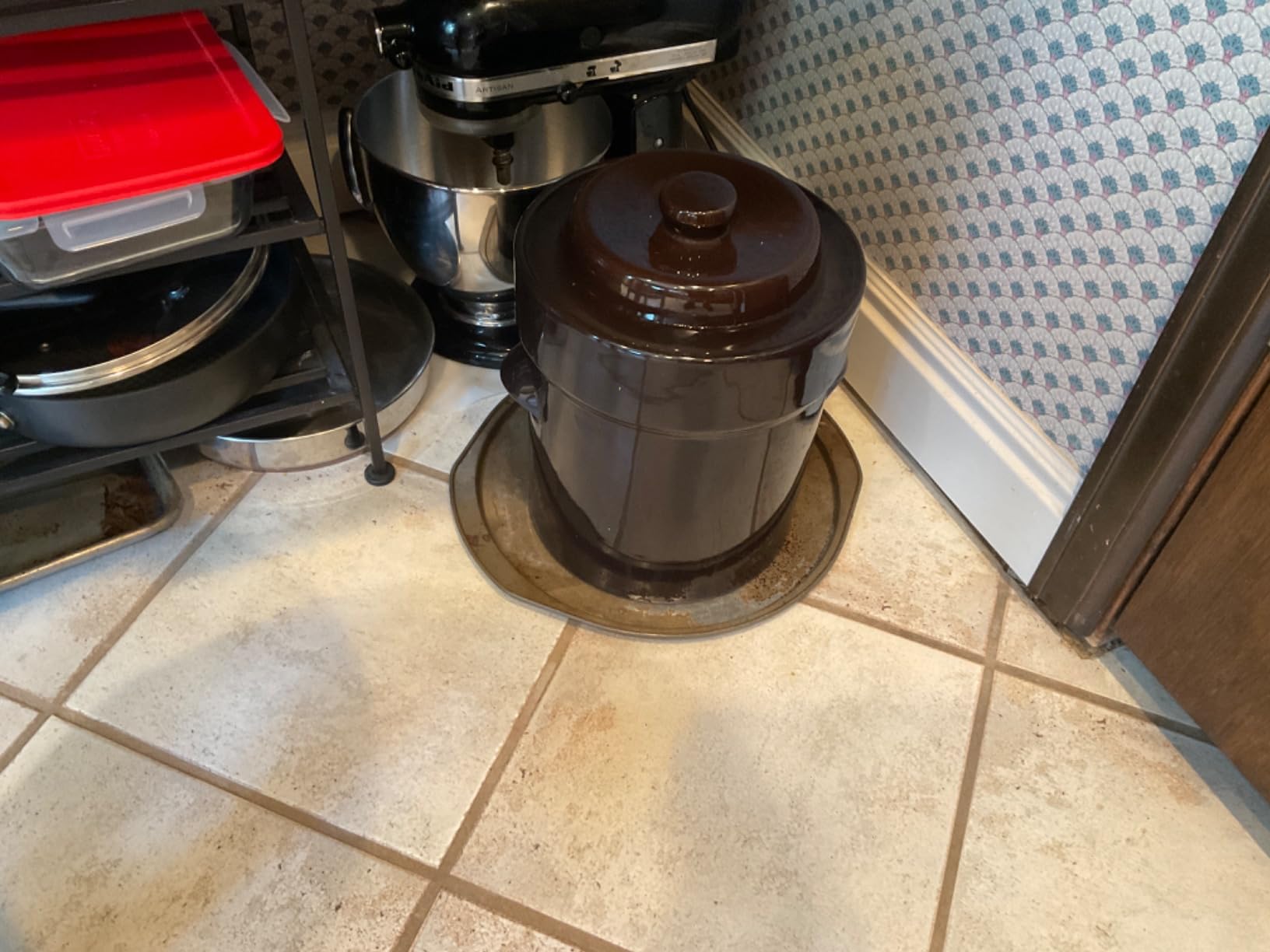
Same design language as the half gallon model, scaled to a batch you notice. This 1 gallon stoneware crock is rated at 5 to 6 pounds of vegetables, which is a realistic week of sauerkraut for a family of three or four, or a solid starter batch of kimchi before you scale up.
The listing specifies a food-safe ceramic coating that prevents oxidation and improves temperature stability, and marks the material as lead free. That stated lead-free claim is what we look for, because acidic brine is a slow solvent and the glaze is the surface doing the work.
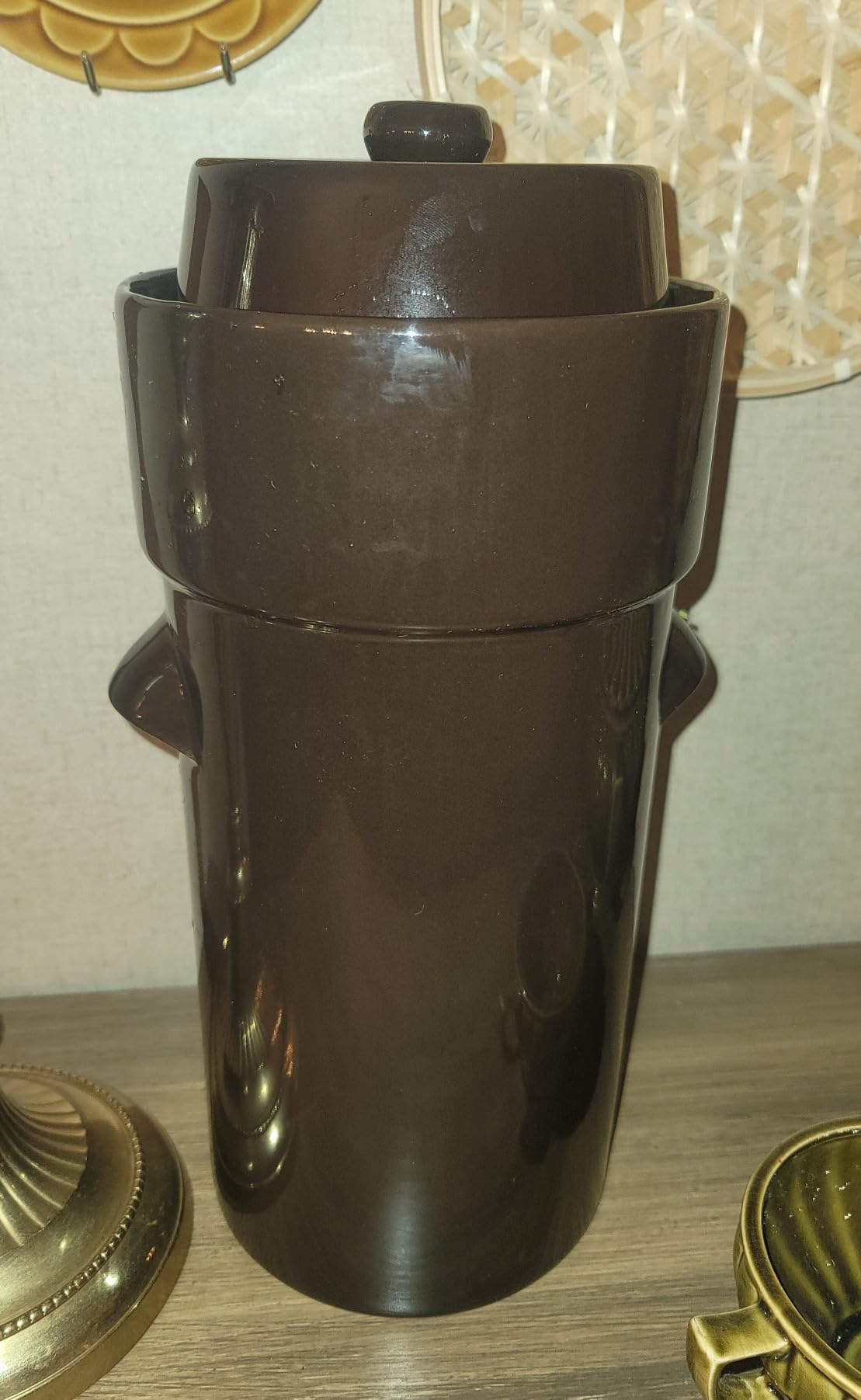
The kit contents are the part that wins this model its value tag: unglazed weighting stones and a beech wood pounder. The beech pounder is the right material for cabbage, since wood will not scratch a glaze and it has a broad enough face to press evenly. The stones are unglazed, which we will come back to in cleaning, because unglazed is exactly what makes them hold a kimchi smell for years.
Dimensions are 6 by 6 by 12 inches. The narrower footprint than the half gallon model is worth noting for narrow counters, since the listed figure describes the crock body rather than the handles.
Who this crock suits
This suits anyone who has decided to ferment weekly rather than experiment. It is the capacity where jars stop making sense: one jar is a trial batch, four jars is four lids to watch, and one 1 gallon crock is one seal with 5 to 6 pounds of cabbage under it.
It also suits people who want a small batch and a large batch in the same kitchen, pairing with the half gallon model without buying into the premium tier.
Where it falls short
Transit damage is the most common complaint across reviews, with buyers reporting chipped or cracked pieces on arrival. Inspect before you start a batch, and keep the packing material, because a replacement lid is not sold separately on every listing.
A few reviewers also voice doubts about the water groove design itself. We did not find a consistent failure pattern, but it is worth checking the groove holds water for a full day before you trust it with a five pound batch.
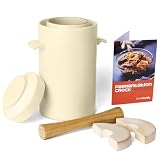
3. HomeBuddy 1 Gallon Fermentation Kit with Weights, Pounder and Recipe Book
HomeBuddy Ivory Fermentation Crock (1 Gallon) with Weights, Acacia Wood Pounder and Recipie Book – Sauerkraut Fermentation Kit, Onggi Kimchi Jar, Fermenting Crock for Pickling or Sourdough
1 gallon ceramic
Deeper water groove
Bundled weights pounder and recipe
Pros
- Deep groove keeps the seal consistent
- Complete kit with no second purchase needed
- Large handles for a full vessel
- Double glaze does not absorb odors
Cons
- Hand wash only so cleanup is less easy
- Recipe quantities are not matched to the crock
HomeBuddy builds the most complete box in this roundup. The 1 gallon ceramic crock ships with fermentation weights, a wide-base acacia wood pounder and a recipe book, and the listing is explicit that the pounder has a wide base. That detail matters, because a narrow tamper concentrates pressure in one spot and pushes cabbage to the sides instead of down.
The technical difference from the Kenley models is the water groove. This one is described as deeper, with an airtight water seal for consistent anaerobic fermentation. In practice, a deeper groove means the seal survives a hot week or a dry room without you reaching for a jug of water twice a day.
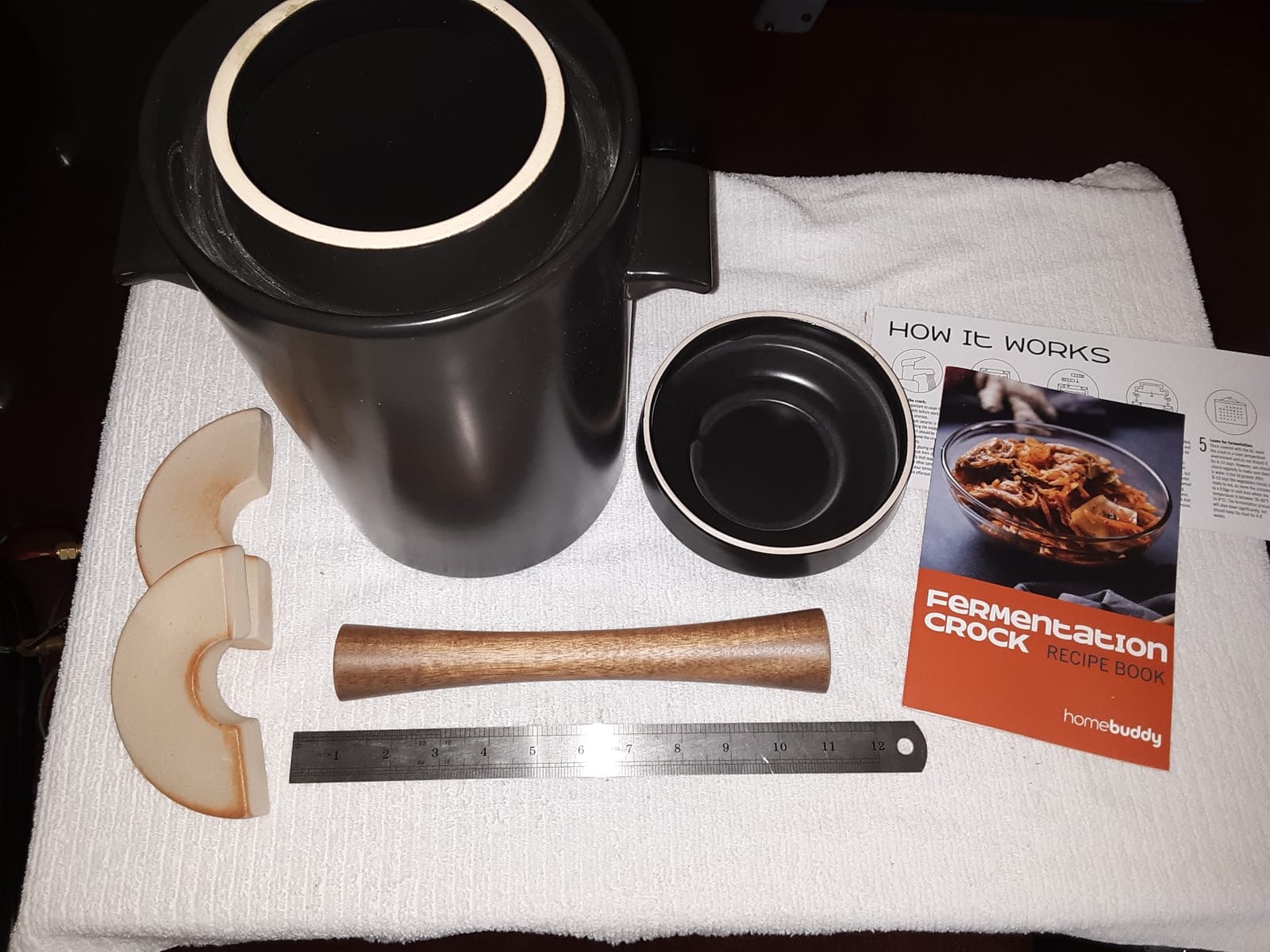
The body is double-glazed food-grade ceramic that the maker says will not absorb unwanted smells or tastes, available in black and ivory. Our pick is the ivory, which reads more like a serving piece than a fermenting bucket, which matters if it lives on a counter you eat on.
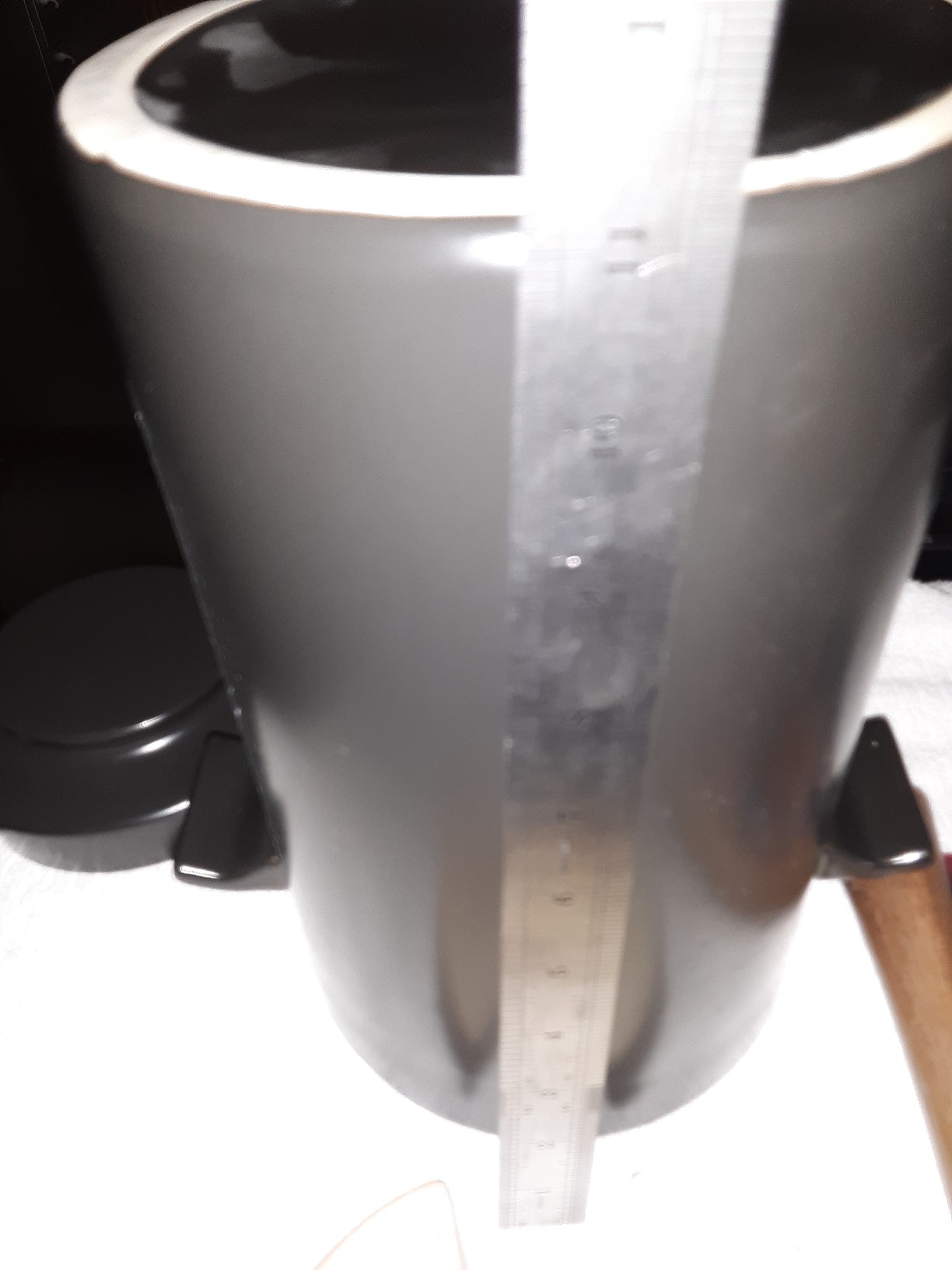
Dimensions are listed at 11.4 by 7.7 by 12.2 inches with large comfortable handles and a balanced weight for lifting and cleaning. The closure type is a seal rather than a snap, so check the lid seats evenly all the way round before your first pack.
Who this crock suits
This suits a first ferment who wants the accessories sorted in one purchase and does not want to research weights separately. It also suits anyone who cooks on a counter that doubles as a display surface, since the finish is designed to be seen.
Broader than that, it is a good fit for kimchi specifically, where a pounder and a seal you rarely need to top up both matter more than they do for sauerkraut.
Where it falls short
Care instructions say hand wash only. That is the correct advice for any glazed crock anyway, since dishwasher heat cycling is what produces crazing, but it does mean there is no shortcut on cleanup day.
Several buyers note the included recipe book uses quantities that do not match a 1 gallon crock. Plan on scaling everything by roughly a third rather than following the card, and taste rather than trust a printed timeline.
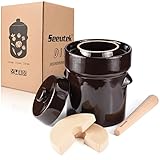
4. Seeutek 1.3 Gallon Fermentation Crock Jar
SEEUTEK Fermentation Crock Jar 1.3 Gallon for Sauerkraut Pickling Kimchi
1.3 gallon ceramic
Lead- and cadmium-free glaze
10.6 lb empty
Pros
- Lead- and cadmium-free glaze inside and out
- Weighing stones and pickle tamper included
- Smooth interior and wide mouth clean by hand
- Also offered in 2L and 10L sizes
Cons
- Thin walls chip more easily than German models
- Slanted hollow handles are hard to grip when full
- Weights are large on fuller batches
The Seeutek is the widest-fermenting generalist here at 1.3 gallons, and it carries the most explicit glaze claim in the roundup: lead- and cadmium-free on the crock surface and the interior, not just the outside you can see.
That claim is worth dwelling on. The interior is the surface that sits in contact with 2 percent salt brine for two weeks, and brine is mildly acidic. A stated interior glaze is the difference between a marketing line and something you can verify against the product page.
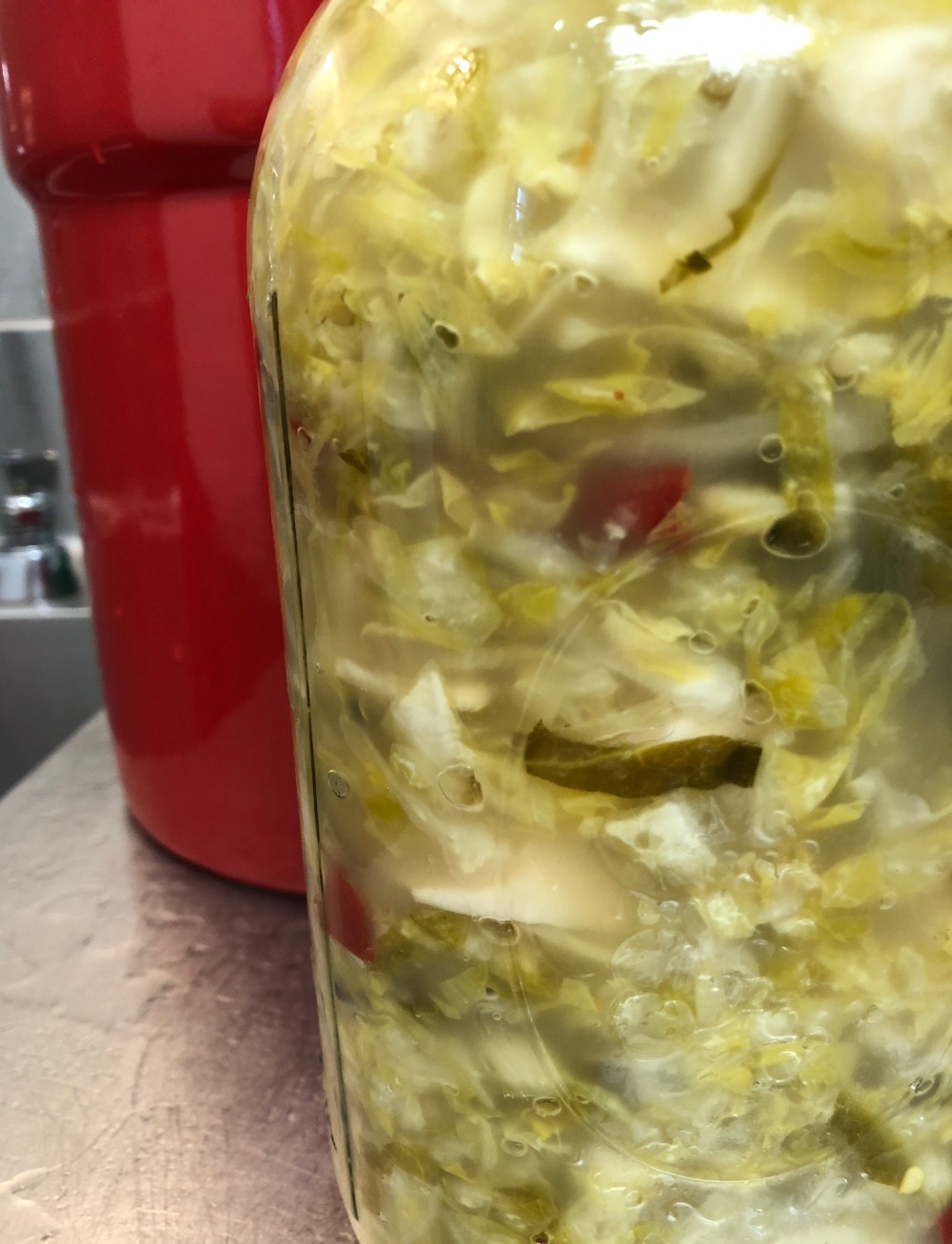
The lid is water-sealed, allowing fermentation gas to escape while keeping air out, and the kit includes weighting stones and a pickle tamper. The wide mouth and smooth glazed interior are both cleaning features, and the wide mouth genuinely matters since you can put a hand in and reach the bottom corners where cabbage leaves hide.
This model weighs 10.6 pounds empty and measures 10.63 by 10.63 by 11.82 inches. The same body is offered in 2 liter, 5 liter and 10 liter versions if you want to move up a size without changing brands.
Who this crock suits
This suits anyone who ferments more than one thing. Dill pickles and cucumbers sit differently from cabbage, and the wide mouth plus tamper handles the chunkier vegetables that a narrower pounder struggles with. The tamper is the better tool for cucumbers, the wood pounder for cabbage.
It also suits anyone who wants a size ladder from one brand, since the identical body is available in 2 liter, 5 liter and 10 liter.
Where it falls short
Build quality is the recurring theme in critical reviews. Thin ceramic walls make this more fragile than the heavier German-made models, and some buyers report chips or hairline cracks in the weights or in the lid glaze. If you drop a full crock, this is not the one you want to drop.
The handles are also the weak point. They slant outward as hollow forms, which is comfortable when empty and frustrating when full. And the weighting stones are large, so on a fuller batch they can sit awkwardly rather than sitting flat.
One further note: at the 10 liter size, buyers report the included weights as insufficient. At the 1.3 gallon size here they are adequate, but check coverage leaves nothing above the brine line.
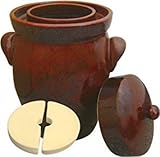
5. Kerazo F2 German Hand-Made Fermenting Crock, 7 Liter
7 L (1.9 Gal) K&K Keramik German Made Fermenting Crock Pot, Kerazo F2
7 liter / 1.9 gallon
Fired at 1260 C
10.3 lb empty
Pros
- Single-piece body with genuinely thick walls
- Deep lid gully blocks dust and air
- Lead- and cadmium-free German glaze
- Two side handles for lifting and transport
Cons
- Costs far more than imported alternatives
- Too heavy to carry while full
This is the one to buy if a crock is a ten-year object rather than a kitchen tool. The Kerazo F2 is hand-made in Germany, formed as a single piece with a 0.6 inch base and 0.4 inch walls, and fired at 1260 C, which is well into the vitrified range where the body stops being absorbent clay and becomes a non-porous ceramic.
That single-piece construction is the thing you feel rather than read. There is no seam between body and foot, so there is no crack line for brine to track into. Owners describe it as substantial in the hand, and at 10.3 pounds empty it reads as heirloom rather than equipment.
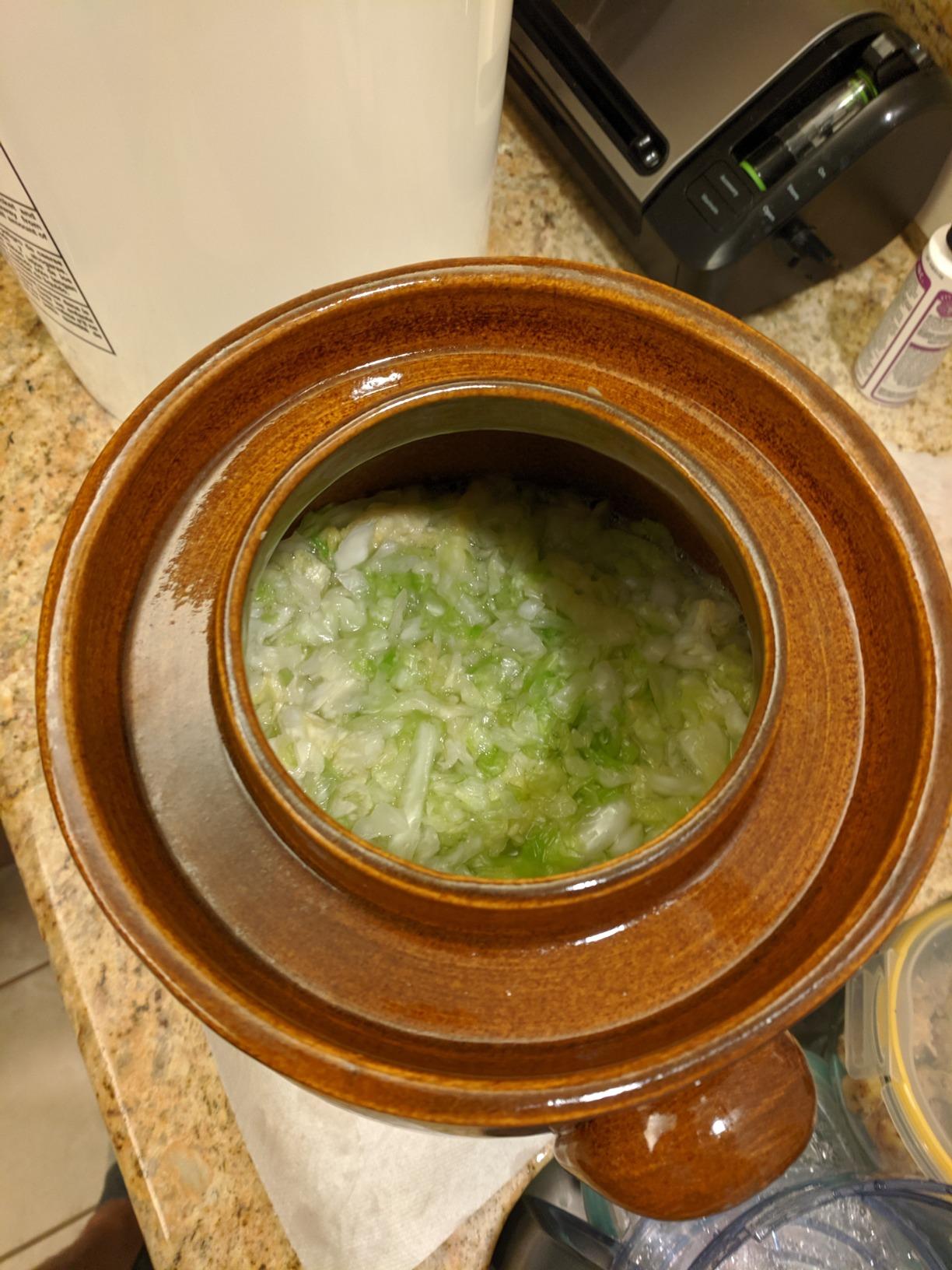
The seal design uses a deep gully in the lid that expels gas while keeping out dust and air. A gully is a channel rather than a groove, and the extra depth gives you more buffer before evaporation reaches the point where air can slip under the lid. The maker rates it at 5 liters of usable capacity for 3 to 4 people.
Glaze is lead-free and cadmium-free, finished in speckled earthen brown and copper with a smooth shine. Body dimensions are 9.1 inches square by 13.5 inches tall, with handles on two sides for lifting and transporting.
Who this crock suits
This suits a household that ferments enough to want one good vessel rather than several, and that cares where clay comes from. It is the answer to the question of which fermentation crocks are made in Germany, and the thickness is the reason: thin walls chip, thick walls do not.
It also suits anyone fermenting in a cold garage or a cool pantry, because a heavier body holds its own temperature more steadily as the room cools, and slower ferments produce a deeper flavor.
Where it falls short
The price is the drawback, plainly. It sits at the top of this roundup by a wide margin, and against that we would note that the review base of 329 is healthy but smaller than the imported models, so you are buying a smaller community of long-term owners.
Second, 10.3 pounds empty becomes something closer to 25 pounds full. The side handles are genuinely usable, but this is not a vessel one person moves while full, and it needs a counter with the footprint to take it.
6. Ohio Stoneware 5 Gallon Stoneware Pickling Crock
Gardener’s Supply Company 8587577 5-Gallon Stoneware Pickling Crock
5 gallon / 18.7 liter
Made in the USA
26 lb empty
Pros
- Handles a whole garden harvest in one batch
- Non-porous body with water-lock venting
- Dishwasher refrigerator and freezer safe
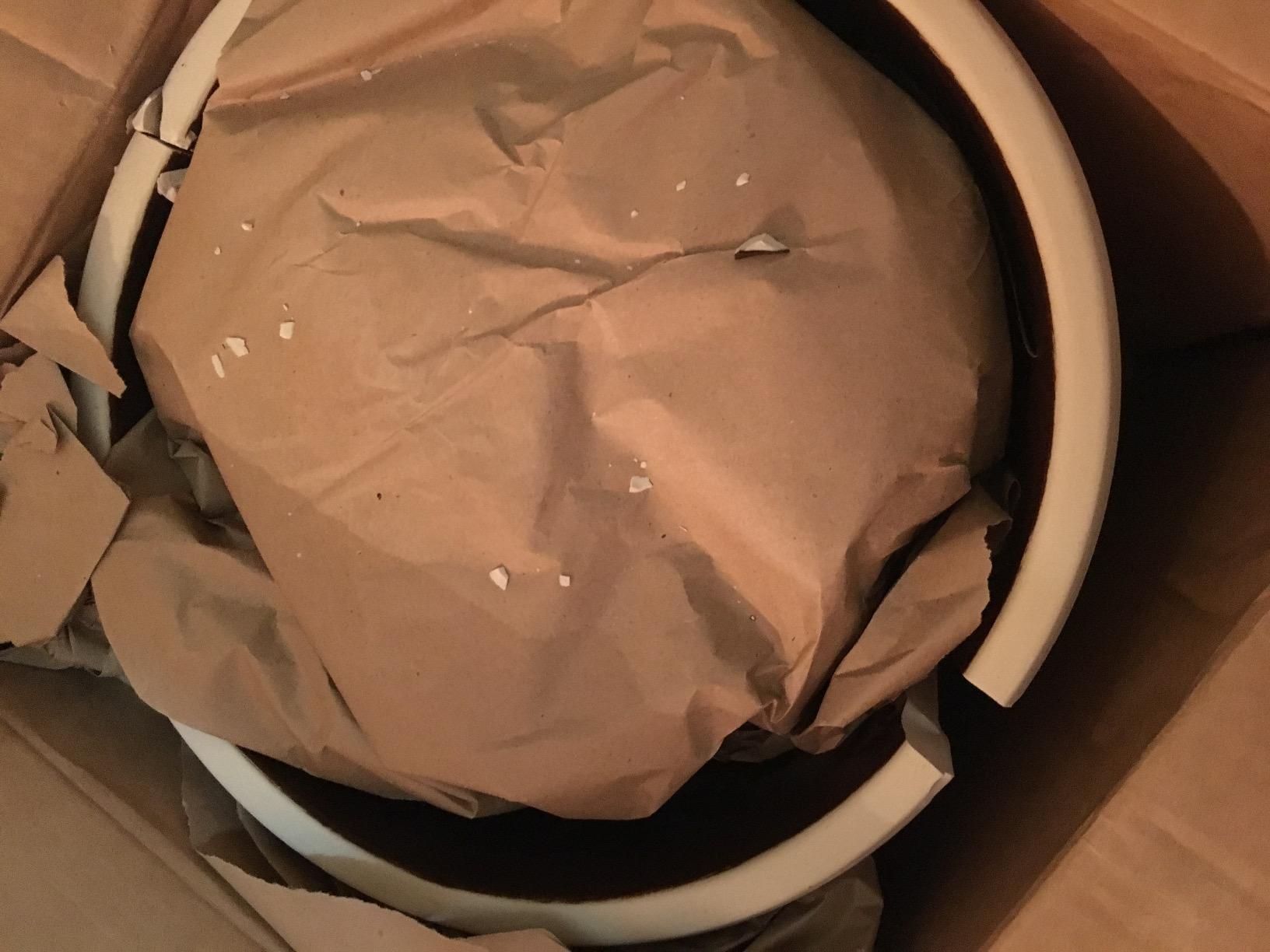
- Exceptionally protective packaging for its size
Cons
- 26 lb empty so a rolling stand helps
- Damage reported with some deliveries
Most people overestimate the crock they need and then underestimate the one they buy. This 5 gallon, 18.7 liter stoneware crock is the batch vessel for the end of a garden season, when the question is no longer what to ferment but how to get 20 pounds of cucumbers into brine this weekend.
It is manufactured in the United States from non-porous stoneware, with an airtight container, a lid and a water-lock venting system. The Bristol finish is the same matte glaze Ohio Stoneware has used for decades, and many owners use the empty crock for dry storage rather than retiring it to a shelf.
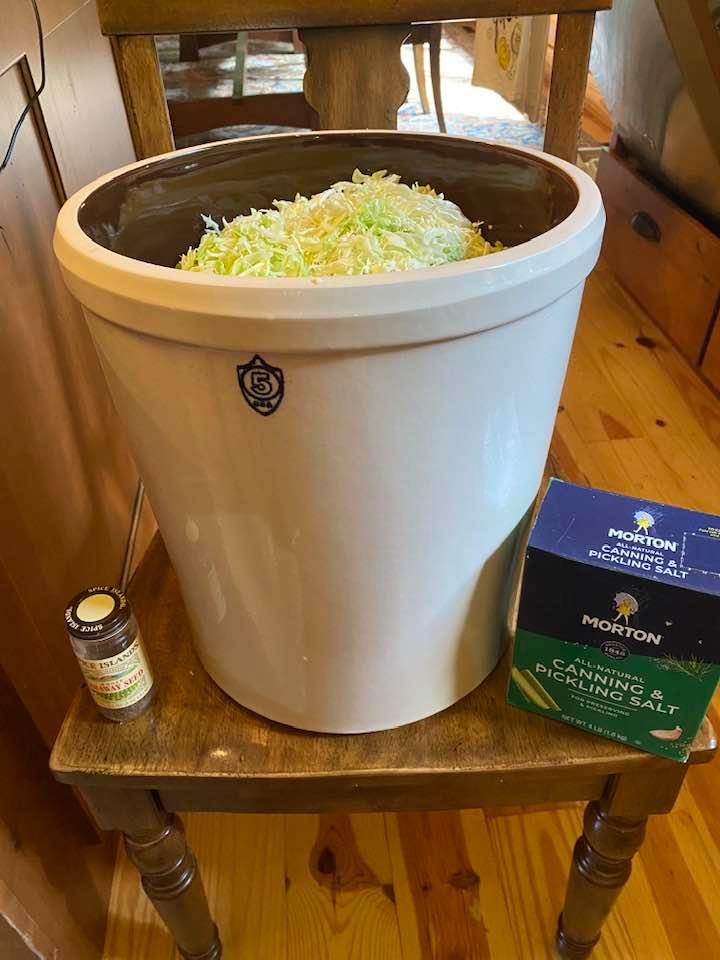
Care is unusually broad for a vessel this size. It is listed as dishwasher safe, refrigerator safe, freezer safe and microwave safe with caution, which means the same crock handles brining, cold storage and reheating without a separate container for each job.
The body is 13.3 by 12.3 by 14.3 inches and weighs 26 pounds empty. That figure is the single most important number in this section, because a full 5 gallon batch adds another 40 or so pounds of vegetables and brine.
Who this crock suits
This suits households preserving a real harvest: a small farm, a large garden, or a family that puts up 15 to 25 pounds of cucumbers and cabbage at once. Repeat orders across sizes are common with this maker, which tells you people start here and grow the collection.
It also suits anyone who wants a single vessel for several jobs, given the dishwasher, freezer and refrigerator ratings. A brining crock that can also be a storage crock is genuinely more useful than a display-only one.
Where it falls short
Weight is the real constraint. At 26 pounds empty, you cannot comfortably lift it full, and reviewers recommend a wheeled plant stand. Budget for a second counter or a low rolling cart before you commit, and test the route from the sink to the crock.
A small number of buyers report pieces arriving broken despite strong packaging, and some recommend ordering direct from the manufacturer. Inspect the lid water-lock channel carefully, since that channel is the one feature that cannot be repaired.
7. Gardener’s Supply 1 Gallon Stoneware Pickling Crock Kit
1-Gallon Stoneware Pickling Crock Complete Kit
1 gallon lead-free stoneware
Lid and weights included
15 x 14 x 13 in
Pros
- Smooth glaze with no crevices for bacteria
- Excellent packaging on a fragile item
- Handles pickles sauerkraut and kimchi
- Sized for a normal countertop
Cons
- Lid leaves a gap and is not a true water lock
- Heavy enough to scratch a counter
- Hand wash only
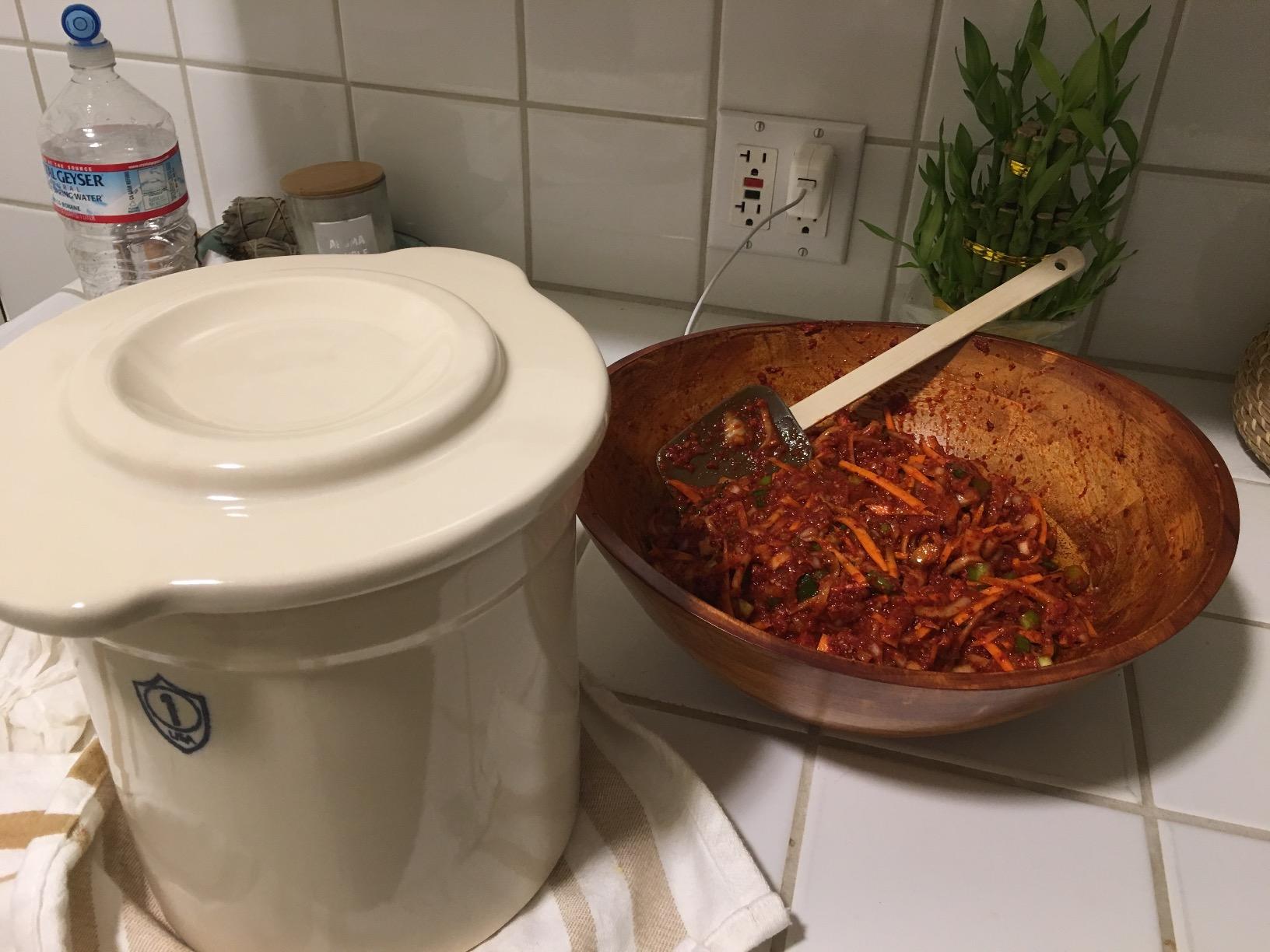
This kit is built around one idea: a glaze with no nooks or crannies for bacteria to hide. The listing describes a smooth, consistent lead-free stoneware glaze on the interior, and for a fermentation vessel that is the feature that actually matters long term. Every corner in a crock is somewhere brine sits longer than it should.
It is a lidded bowl design at 1 gallon, with the lid and weights included, aimed at small-batch fermenting of pickles, sauerkraut and kimchi. Measurements are 15 by 14 by 13 inches, which is a wide, low profile that sits flat on a standard counter rather than towering over the workspace.
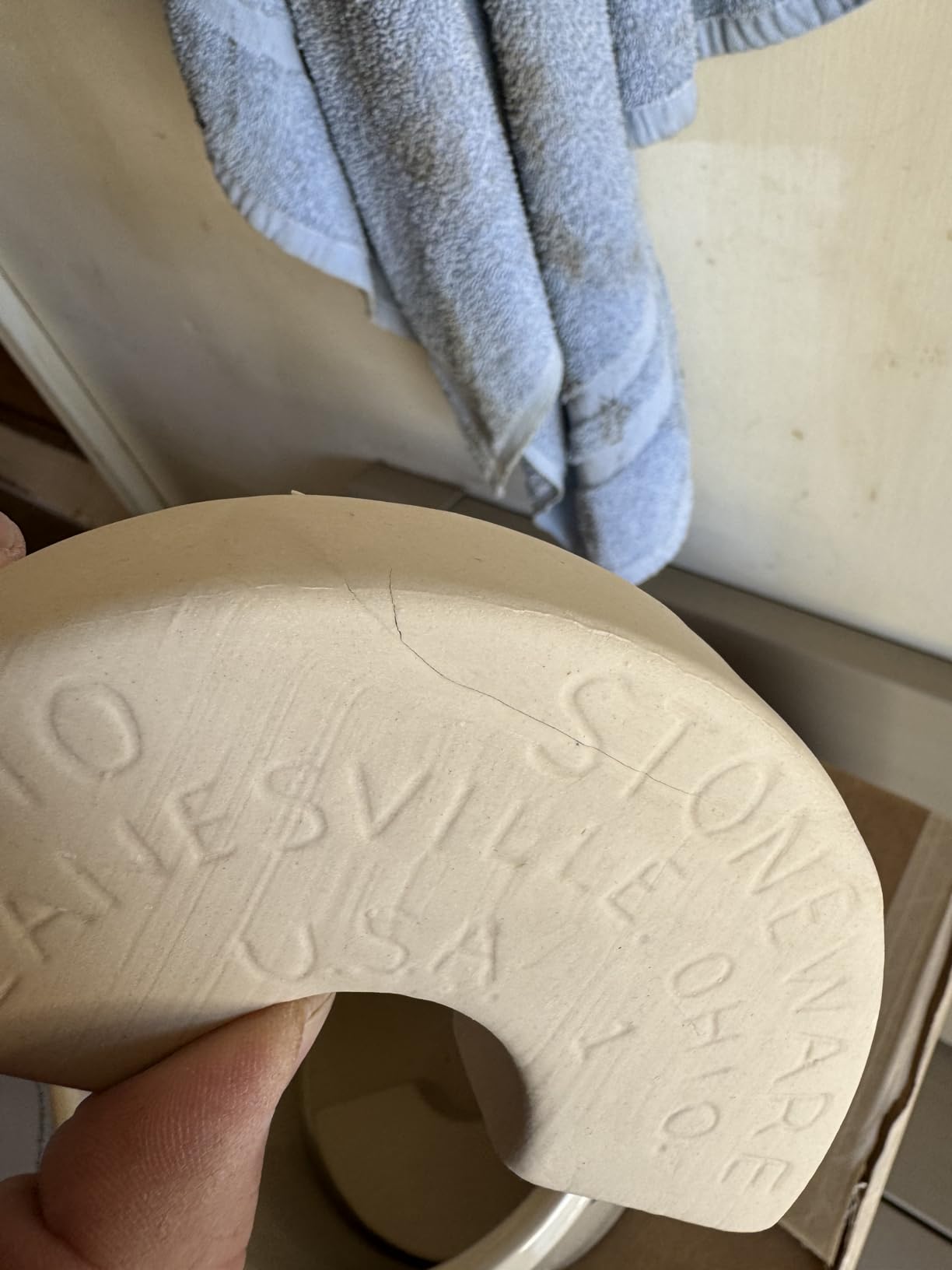
Packaging is repeatedly singled out in reviews, with multiple buyers reporting arrival in one piece. That is more than a nice-to-have, because a ceramic crock arriving intact is the single biggest factor in whether you enjoy the first month with it.
The maker is Gardener’s Supply Company, and the product is a lead-free stoneware piece with a classic vintage look rather than a matte modern finish. If you are matching existing kitchenware, this is the one in the roundup that looks like a serving bowl.
Who this crock suits
This suits a small kitchen with limited counter space, where a wide low bowl beats a tall narrow jar. It also suits anyone who ferments small batches often and wants a piece that can stay out rather than live in a cupboard.
It is a reasonable second vessel for someone who already has a tall water-seal crock and wants a separate vessel for cucumbers so the pickle brine does not season the kraut crock.
Where it falls short
The lid is the compromise. It leaves a small opening over the mouth and does not create a true water lock, so it is closer to a resting lid than an anaerobic seal. Some owners work around it with muslin under the lid. Expect a little more surface exposure than a full water-seal moat gives you.
It is heavy enough to scratch a countertop, so put a towel underneath. Care instructions say hand wash only, and 1 gallon is tight for full-volume pickling of cucumbers, so plan on two batches for a large harvest.
8. Ohio Stoneware 5 Gallon Fermentation and Preservation Crock Kit
Ohio Stoneware 5 Gallon Fermentation & Preservation Crock – Crock, Lid, Stones
5 gallon capacity
28 lb crock plus 6 lb stones
Stoneware, made in the USA
Pros
- Pressing stones hold cabbage down properly
- Made in the USA with lead-free glaze
- Oven microwave dishwasher and refrigerator safe
- Very protective packaging at this size
Cons
- Sealed lid has no water channel
- Empty set weighs close to 50 lb
- Some arrive in pieces via third-party sellers
This is the 5 gallon kit with the best weight set in the roundup, and that is what separates it from a plain large crock. It includes two pressing stones totalling 6 pounds, which is what actually keeps a 5 gallon batch of cabbage under the brine instead of letting a cabbage head float to the top and go soft.
Six pounds of weight across two stones is meaningful at this capacity. Light weights work in a 1 gallon crock and do almost nothing in a 5 gallon one, so if you are going large, the stones are not a bonus feature, they are the difference between an anaerobic batch and a floating one.
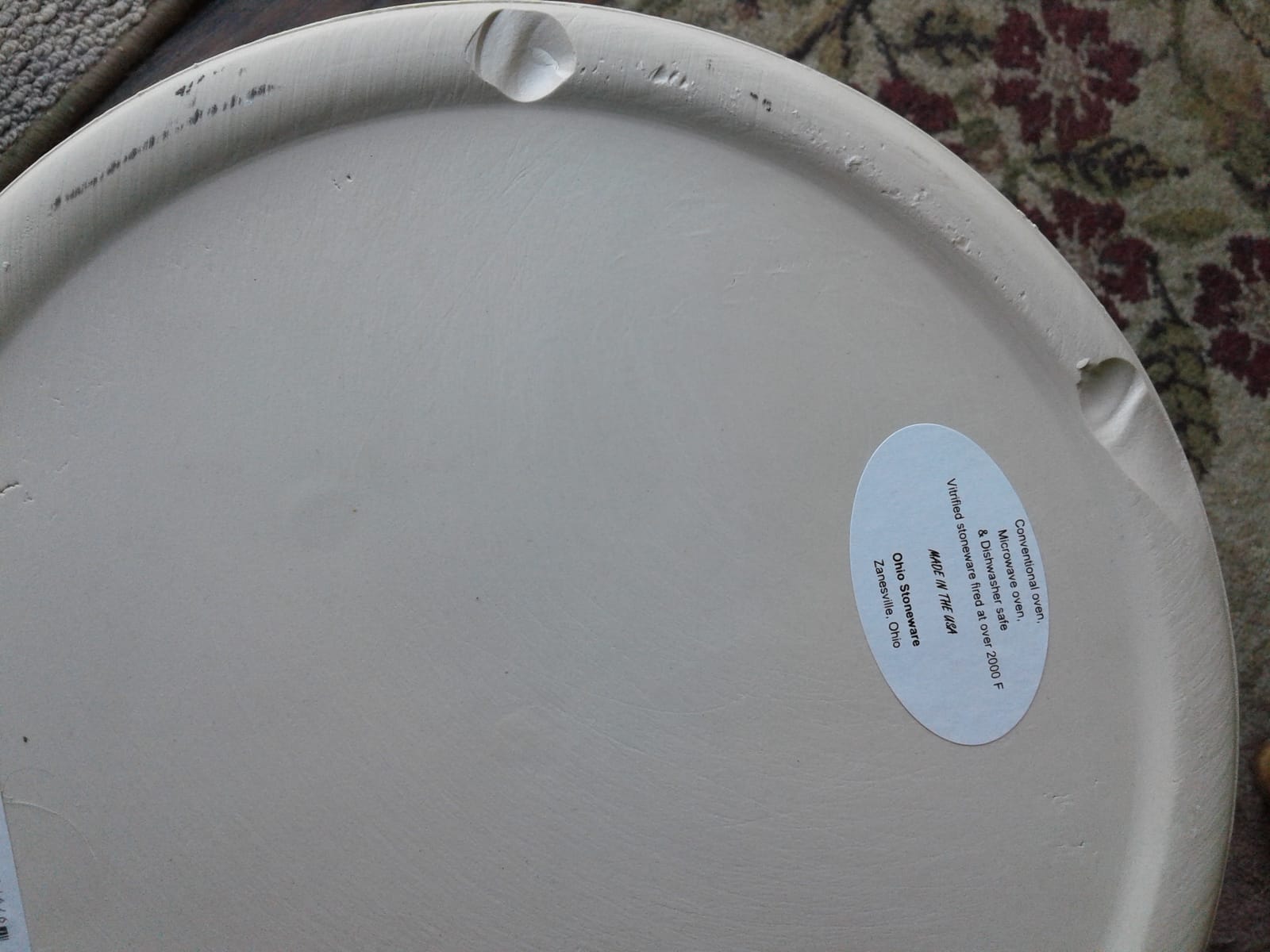
It is made in the USA with lead-free, food-safe materials and glazes, and is rated for oven, microwave, dishwasher and refrigerator use. Starter recipes are included, which is more useful here than with a 1 gallon model because the salt ratio for a 5 gallon batch is where most people go wrong.
The physical numbers are substantial: 28 pounds for the crock, 6 pounds for the two stones and 9.1 pounds for the lid. The closure is a screw top and the form is cylindrical, with a white and blue finish.
Who this crock suits
This suits anyone who is done experimenting and wants the finished sauerkraut. Full 5 gallon batches of kraut need weights that a smaller vessel simply does not require, and this is the pick if cabbage is the ferment rather than an occasional side project.
It also suits anyone who wants a vessel with a second life. Given the oven and microwave ratings, this same pot handles stock, beans and chili alongside fermentation, which spreads the cost of a very heavy piece of ceramic over years.
Where it falls short
There is a design detail that trips people up: the lid is a full seal covering the top of the crock with no water channel. Some documentation references a water gutter that this design does not have, and owners report that the sealed lid holds more of the fermentation smell in the kitchen. If a true water seal matters to you, this is not that crock.
Weight is the second issue. Empty, the set is close to 50 pounds, and a rolling plant stand is effectively part of the purchase. Some pieces also arrive broken when fulfilled by a third-party seller, so check the lid and stones on arrival.
9. Nik Schmitt Fermenting Crock Pot, 5 Liter
Nik Schmitt Fermenting Crock Pots 5 Liter
5.0 liter / 1.3 gallon
Handmade in Germany
Includes two stones
Pros
- Handmade German stoneware with a slip glaze
- Lead-free and cadmium-free finish
- Dishwasher proof and scratch proof
- Wide mouth makes loading vegetables easy
Cons
- Handles are small for a full crock
- Unglazed base can scratch a counter
- Water level needs a daily check
Capacity is 5 liters, or 1.3 gallons, and it is the smallest of the German-made vessels here. What you get for that is the second-oldest workshop style in the roundup, handcrafted in Germany from stoneware fired at 2300 F with a natural lead-free and cadmium-free slip glaze.
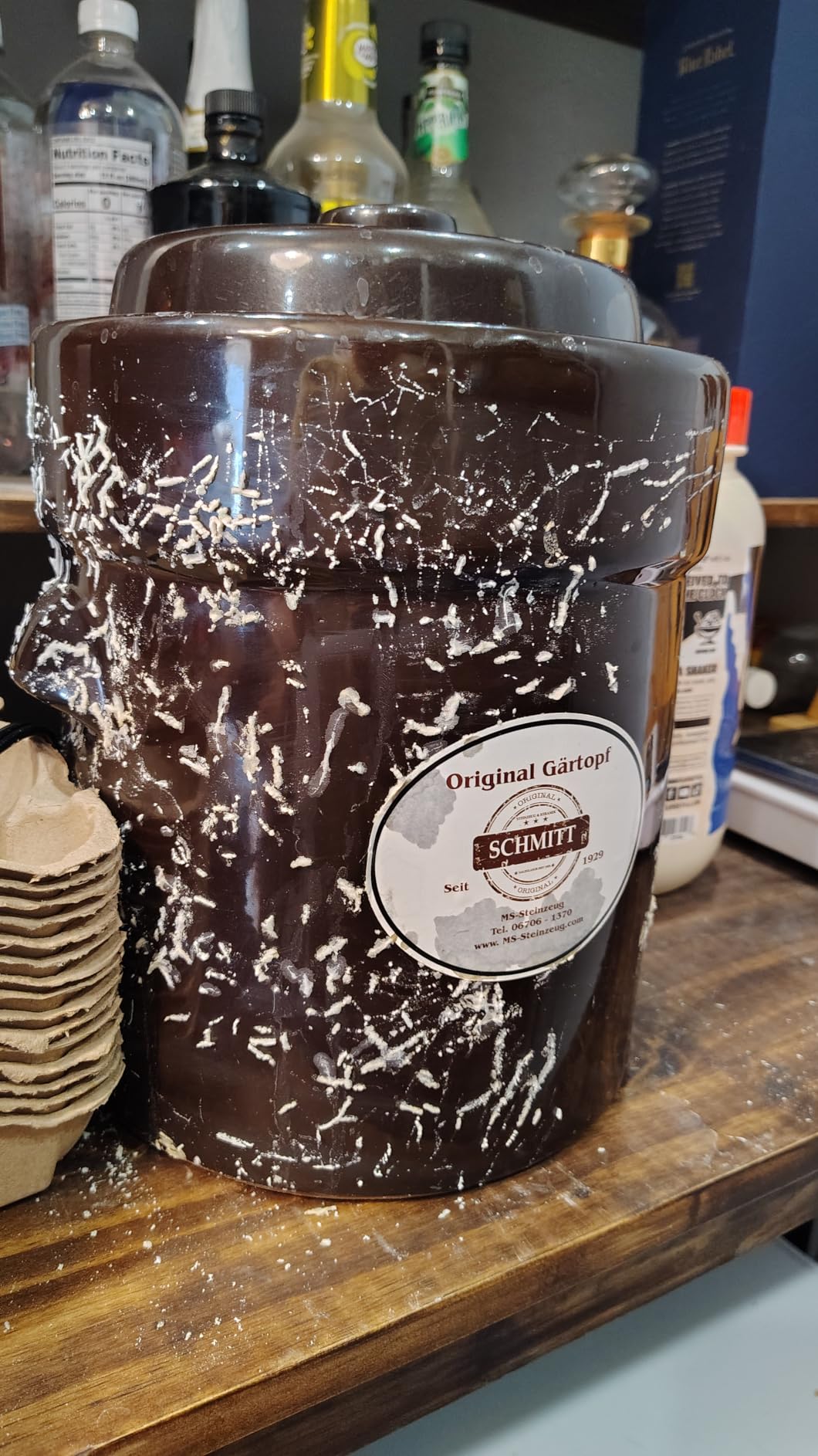
A slip glaze is applied as a thin layer over the body rather than a thick coating, which is why the finish looks slightly uneven and handmade next to a factory-dipped piece. It also means there is less glaze thickness to craze, which is one reason the crazing complaints in this category cluster around the cheaper coated crocks instead.
The lid groove takes water to form a seal while still releasing CO2, which is the correct balance and the part that matters most. Two fermenting stones are included and fit the crock well, providing the weight to hold vegetables under the brine. The wide mouth is designed for loading vegetables, which sounds obvious and is not universal.
The glaze is described as scratch proof, heat resistant and dishwasher proof, and care instructions list machine washing. Body footprint is 9 by 9 inches, and the fill material is listed as stones.
Who this crock suits
This suits someone who wants German handcraft at a smaller size than the Kerazo, and it works well for kimchi, which is what owners most often use it for. The 5 liter size is good for smaller batches rather than a full week of cabbage.
It also suits anyone who wants a dishwasher-safe crock. Several ceramic vessels in this roundup are hand wash only, and being able to put this through a machine removes a real weekly chore.
Where it falls short
The handles are the main complaint. Owners describe them as slightly small for gripping a full crock, and at 5 liters plus vegetables and brine this is a genuinely two-handed lift for most people.
The base is unglazed and can scratch the surface underneath, so felt pads are worth adding from day one. Owners also note the water level in the rim needs a daily check, and that the included recipes assume a much larger pot, so scale them down before you start. One owner reported glaze crazing that let brine leach through, which is a reminder to inspect any crock the day it arrives.
10. Ohio Stoneware 1 Gallon Preserving Crock
Ohio Stoneware 1 Gallon Preserving Crock
1 gallon heavyweight stoneware
Made in the USA
8 lb empty
Pros
- Heavyweight stoneware built to last
- Bristol finish doubles as utensil storage
- Good for kraut pickles and sour beets
- Usually arrives well wrapped
Cons
- No lid weights or pounder included
- Some pieces break in third-party shipping
This is the bare crock option, and it is worth understanding exactly what that means before you buy it. You get one 1 gallon heavyweight stoneware vessel in the classic Bristol finish. No lid, no weighting stones, no pounder. The listing lists a single food storage container and nothing else.
That makes it the cheapest way into stoneware of this weight class, and the vessel itself is a good one. Made in the USA, around 8 pounds empty, and described by owners as a keeper that lasts for years. Several people use the empty crock as countertop utensil storage, which is a fair second life.
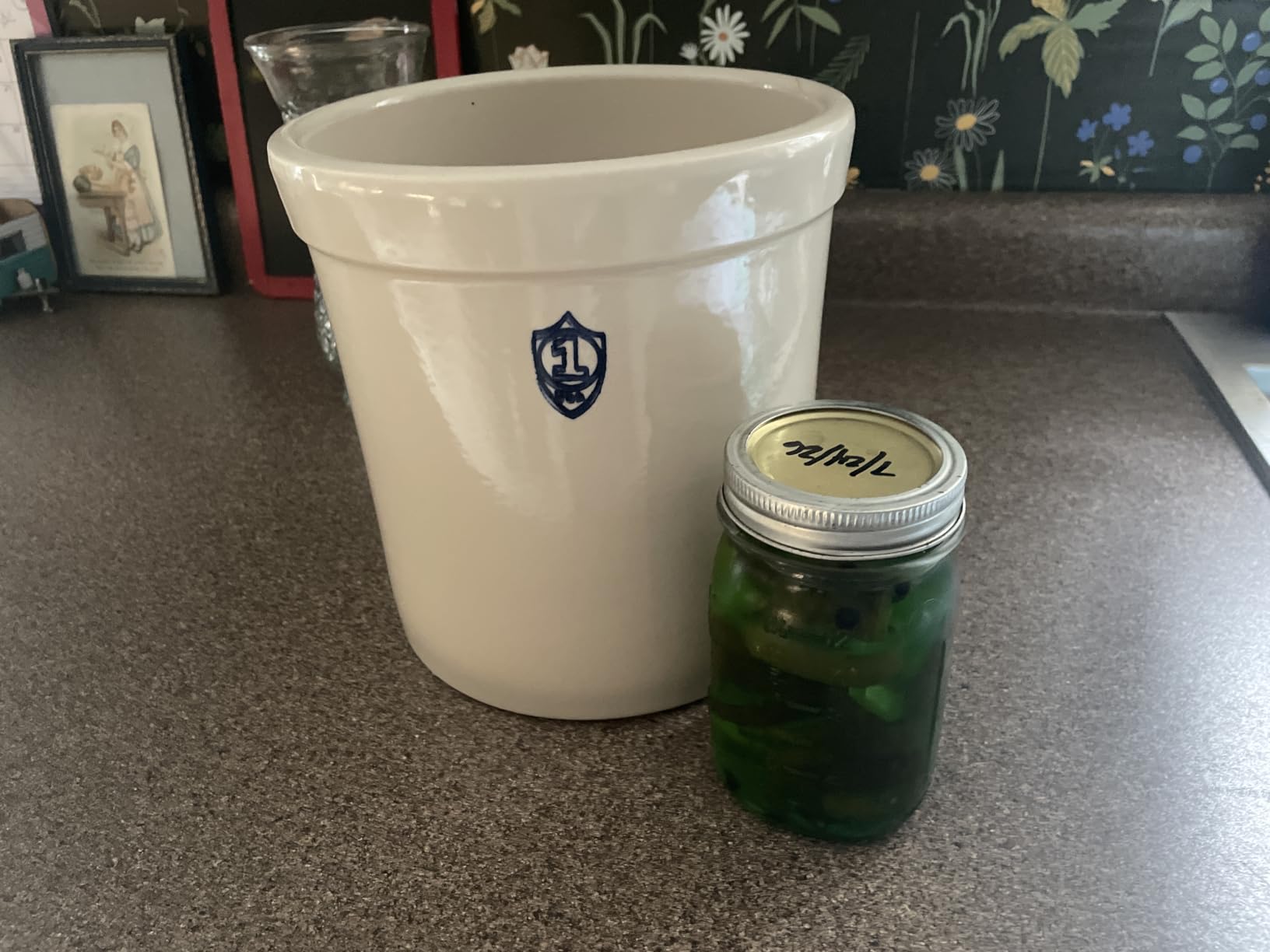
It is listed as suitable for pickling, sauerkraut and sour beets, and those are modest ferments that do not need a fancy seal. If your plan is a mixed-vegetable ferment with a water seal and tracked ferment time, buy a kit instead and skip this one.
Packaged dimensions are 11.38 by 8.23 by 8.07 inches, and the part number is 2429. It is an old, well-established listing, and the fit-and-finish reputation of Ohio Stoneware is the reason it earns a place on this list despite shipping empty-handed.
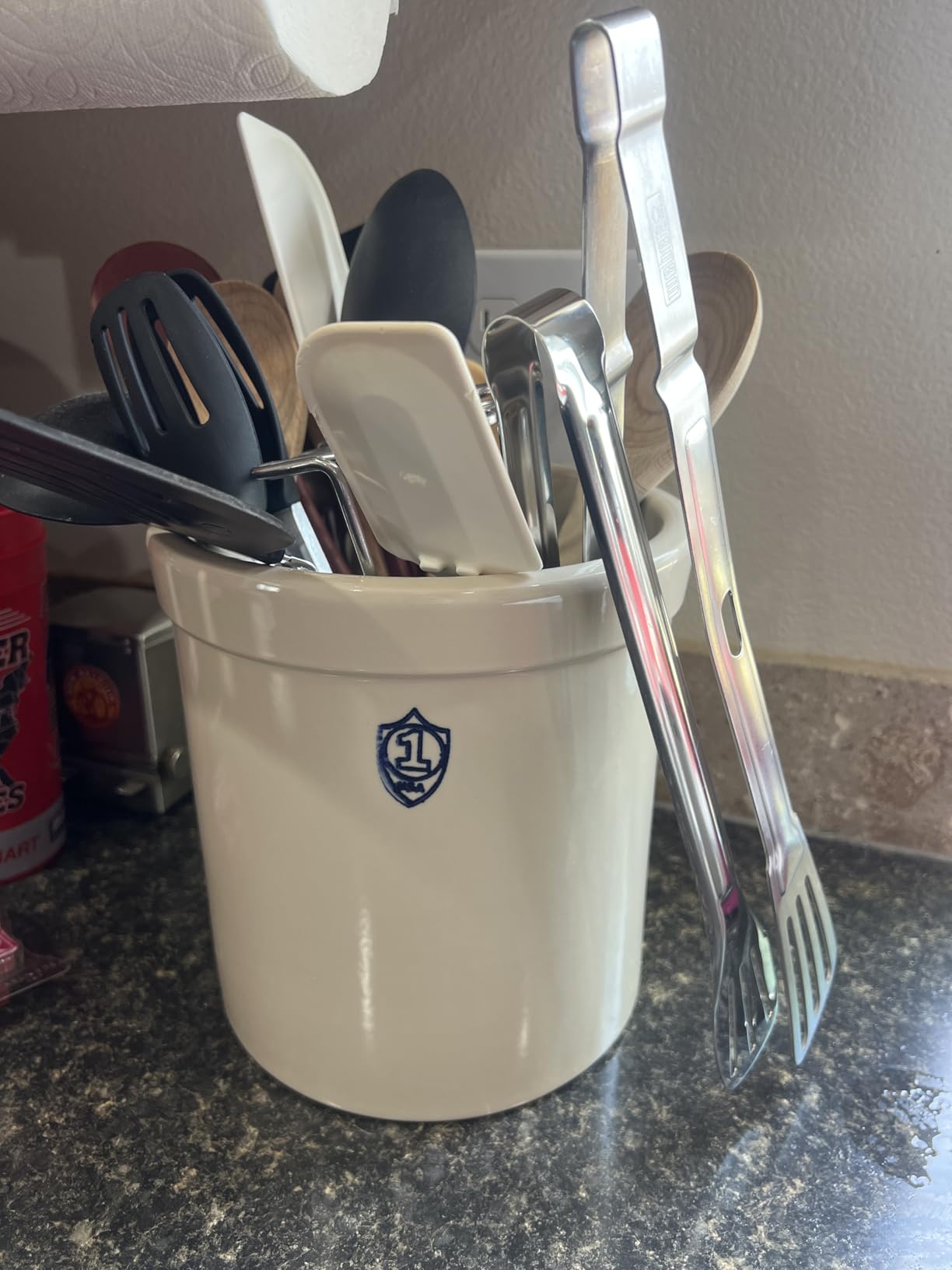
Who this crock suits
This suits someone who already has a lid, weights and a pounder, or who wants a second vessel for pickles and sour beets alongside a water-seal crock. Many owners buy it as a pair.
It also suits anyone who wants a cheap, heavy, American-made stoneware piece for a simple ferment and does not want to research accessories. Just budget for a separate lid and a set of weights before you pack anything.
Where it falls short
It is not a complete fermenting kit and should not be read as one. Without weights, vegetables float; without a lid, there is no water seal. Plan the accessory purchase before ordering produce.
Transit damage is the dominant complaint, with buyers reporting pieces broken because third-party sellers do not repack the original box. A few buyers also wished for a larger capacity. If the vessel arrives damaged, the real fix is ordering direct from the manufacturer rather than through a marketplace reseller.
Best Fermentation Crocks by Size
Pick your capacity by the weight of vegetables you expect to process at once, not by how ambitious you feel. A rule of thumb from our testing: 1 gallon holds roughly 5 to 6 pounds of vegetables, so a household eating sauerkraut a few times a week is served by 1 gallon, and a garden harvest needs 5.
0.5 gallon and under. The Kenley 2 liter model sits here. It is the starter option, rated at up to 3.2 pounds, and it is the right size for one to two people or for anyone testing a recipe before committing produce to a large crock.
1 to 1.3 gallons. The Kenley 1 gallon, HomeBuddy 1 gallon, Seeutek 1.3 gallon and Nik Schmitt 5 liter models all sit here. This is the everyday band and the busiest part of this roundup, because most home ferments live at this size.
1.9 gallons. The Kerazo F2 sits alone here, and it is a genuine step up in wall thickness and lid depth rather than just more volume.
5 gallons and up. Two picks: the Ohio Stoneware pickling crock at 18.7 liters with water-lock venting, and the Ohio Stoneware preservation kit with 6 pounds of pressing stones and no water channel. Choose the first for a working seal, the second for weight capacity on cabbage.
On cabbage volume specifically, a 5 gallon batch is roughly 30 to 35 pounds of shredded cabbage before salting, and that shrinks considerably by the time you pack it down under the stones.
Crock vs Mason Jar vs Airlock Jar
Mason jars with airlock lids are genuinely good, and the permies forum defends them well: brand new jars are inexpensive, they are impermeable, and there are no cracks for bacteria to hide in. That is a fair argument and we do not think a crock beats it on price or on visibility.
What the jar cannot do is volume. A quart jar holds roughly one pound of vegetables, so a 5 pound batch is five jars, five lids and five chances for one to be slightly off. A 1 gallon crock is one seal, one weight and one decision to make.
An airlock is also a different mechanism. A jar airlock is designed to let a small amount of gas out while drawing air in if pressure drops, so it is a one-way valve on a small vessel. A crock water seal is a barrier: water in the groove blocks outside air completely, and gas leaves through the gap under the loose lid.
Cost per ferment is where the comparison gets honest. A jar setup is cheaper for the first five or six batches. A crock is cheaper per pound from roughly the tenth batch onward, because you stop buying replacement airlock lids and stop throwing out a batch that went flat. For a seasonal gardener, the crock earns its place in a single autumn.
Our honest recommendation is to start with a jar if you have never fermented and want to learn on a small scale, then move to a 1 gallon crock once you know what you like. Buying a 5 gallon crock as a first experiment is how people end up with 15 pounds of sauerkraut they are not ready to eat.
How to Use and Maintain a Fermentation Crock
Five steps, and two of them are maintenance rather than setup. Skipping the water seal step is the single most common reason a fermentation crock disappoints people.
1. Pack and salt. Salt your shredded vegetables at roughly 2 percent by weight, then pack them into the crock in handfuls. Press each handful down with the pounder until brine rises to cover the vegetables. This is the step that matters most, because the lactic acid bacteria you want are anaerobic and everything else is not.
2. Weigh it down. Place the weights on top so nothing rises above the brine. If a cabbage leaf pokes out, that exposed leaf is where fuzzy mold starts. Users on r/fermentation report surface mold on vegetables that were not fully submerged, and the fix is almost always more weight, not more salt.
3. Fill the water seal. Pour water into the groove in the lid until it is roughly two-thirds full, then seat the lid. Do not press it down hard and do not clamp it. The seal must block air in while letting CO2 out, and an airtight crock will build pressure until the lid moves on its own.
4. Keep the seal wet. Check the moat daily for the first week. The top comment under the highest-ranking crock video on Google was someone realising after the fact that they needed to add water when it evaporated. On a shallow groove like the Kenley 0.5 gallon, that is a daily job. On the deeper grooves, it is a weekly glance.
5. Ferment and taste. Do not follow a calendar. Taste from week two onward with a clean fork, and stop when the acidity is where you want it. Sauerkraut is usually ready in 2 to 4 weeks at room temperature, longer in a cold cellar, and the ferment decides, not the date.
Opening the crock mid-ferment is fine. Use clean utensils, work quickly, and reseal with water in the groove, because every opening reintroduces oxygen. One practical note from the forums: keep pets out of reach of the moat water, which is salty, acidic, and sitting open on a counter for weeks.
On cleaning, hand wash everything with ordinary dish soap and dry fully. Never put a glazed crock in the dishwasher, since thermal cycling is the main cause of crazing. For unglazed weighting stones, soak them in a solution of warm water and baking soda for a day, then scrub, because unglazed stone is porous and holds smells. That specific complaint, porous weights that never lose their smell, is the most common one we found in the fermentation forums.
Fermentation Crock Troubleshooting
White film on the surface. Usually harmless. A flat, matte, off-white film with no fuzz is kahm yeast, a surface film that forms when oxygen gets in. Skim it and continue. Fuzzy growth, black, green or pink patches, or a rotten smell means discard the batch. The distinction is texture: smooth is kahm, fuzzy is mold.
The lid is not venting. If you feel pressure when you lift the lid, gas is trapped. Check that the lid is seated loosely rather than clamped, and confirm the groove has water. This is the one safety issue in this entire article, and it is also the reason to never seal a fermentation vessel airtight.
Brine level dropped or the seal failed. A dried-out moat is the single most common failure in this category. If vegetables were exposed to air, treat that batch cautiously, keep everything submerged, and check the groove twice a day until the ferment finishes.
Everything floats. You need more weight, not more salt. Add stones or a second tamper, and make sure nothing sits above the brine line.
Glaze looks spiderwebbed. Crazing is a network of fine cracks in the glaze surface. For a brand new crock, stop using it and return it, since crazing can allow liquid into the body. For a long-used crock, owners on r/fermentation report years of normal fermentation with crazed glaze, so it is often cosmetic. If the crock is old and heavily crazed, do not put acid vegetables in it, and move to a water-seal vessel for your next batch.
Bad smell, sour or slimy cabbage. This is a failed ferment, not a mold problem. Slimy texture and a rotten odor mean the batch is gone, and no amount of skimming rescues it. Discard, sanitize the crock, and check the salt ratio on the next batch.
Frequently Asked Questions
What is the best material for a fermentation crock?
Glazed stoneware or ceramic. It is fired at high heat into a non-porous body, holds an inert lead-free and cadmium-free glaze that resists acidic brine, and is heavy enough to keep vegetables pressed under the liquid. Glass is inert but light and breakable, and plastic can absorb odors over long ferments.
What size fermentation crock do I need?
About 1 gallon for a typical household, since that holds roughly 5 to 6 pounds of vegetables. Go to 5 gallons only if you are processing a garden harvest, and start smaller than you think you need. A 1 gallon crock suits most people, and under half gallon suits a first experiment.
Do fermentation crocks need to be airtight?
No, and this is the most important safety point in the article. A water seal blocks outside air while carbon dioxide escapes under the loose lid. Airtight pressure builds until the lid lifts or a seal fails. Never clamp or press a crock lid down hard.
How do I keep the water seal topped up?
Check the moat daily for the first week of a ferment. Water evaporates from the groove faster than most people expect, and a dry groove is a broken seal with no obvious warning. Deeper grooves such as the HomeBuddy need less frequent attention than shallow ones.
Is white mold okay in fermentation?
It depends on texture. A flat, matte, off-white film with no fuzz is kahm yeast and can be skimmed off. Fuzzy growth, black, green or pink patches, or a rotten smell means discard the batch. Smooth is harmless, fuzzy is not.
How long should sauerkraut ferment in a crock?
Taste instead of counting days. Sauerkraut is usually ready in 2 to 4 weeks at room temperature and takes longer in a cool cellar. Start tasting with a clean fork at week two and stop when the acidity tastes the way you want. The ferment decides, not the calendar.
How do I clean a fermentation crock?
Hand wash with ordinary dish soap and dry fully. Never use a dishwasher, since thermal cycling is the main cause of glaze crazing. For unglazed weighting stones, soak them in warm water with baking soda for a day and scrub hard, because porous stone holds odors that soap alone will not remove.
Is a crock better than mason jars?
Mason jars cost far less and let you see the ferment, so they are the better choice for small experimental batches. Crocks hold far more, need less day-to-day attention, and their water seal is more forgiving. Most people start with a jar and move to a 1 gallon crock once they ferment regularly.
Conclusion
The best fermentation crocks in 2026 come down to how much you ferment and how long you want the thing to last. Start with the Kenley 0.5 gallon if you are learning the water seal, move up to the Kenley 1 gallon or the HomeBuddy kit once you are fermenting weekly, and look at the Ohio Stoneware 5 gallon options only if a garden harvest is the reason you are here.
Our editor’s choice stays with the Kenley 0.5 gallon for one reason: it is the only small crock in this roundup that ships with everything you need, and 1086 reviews is the largest owner base here by some distance. Buy the crock that matches your produce, fill the moat, and taste instead of trusting a date.