
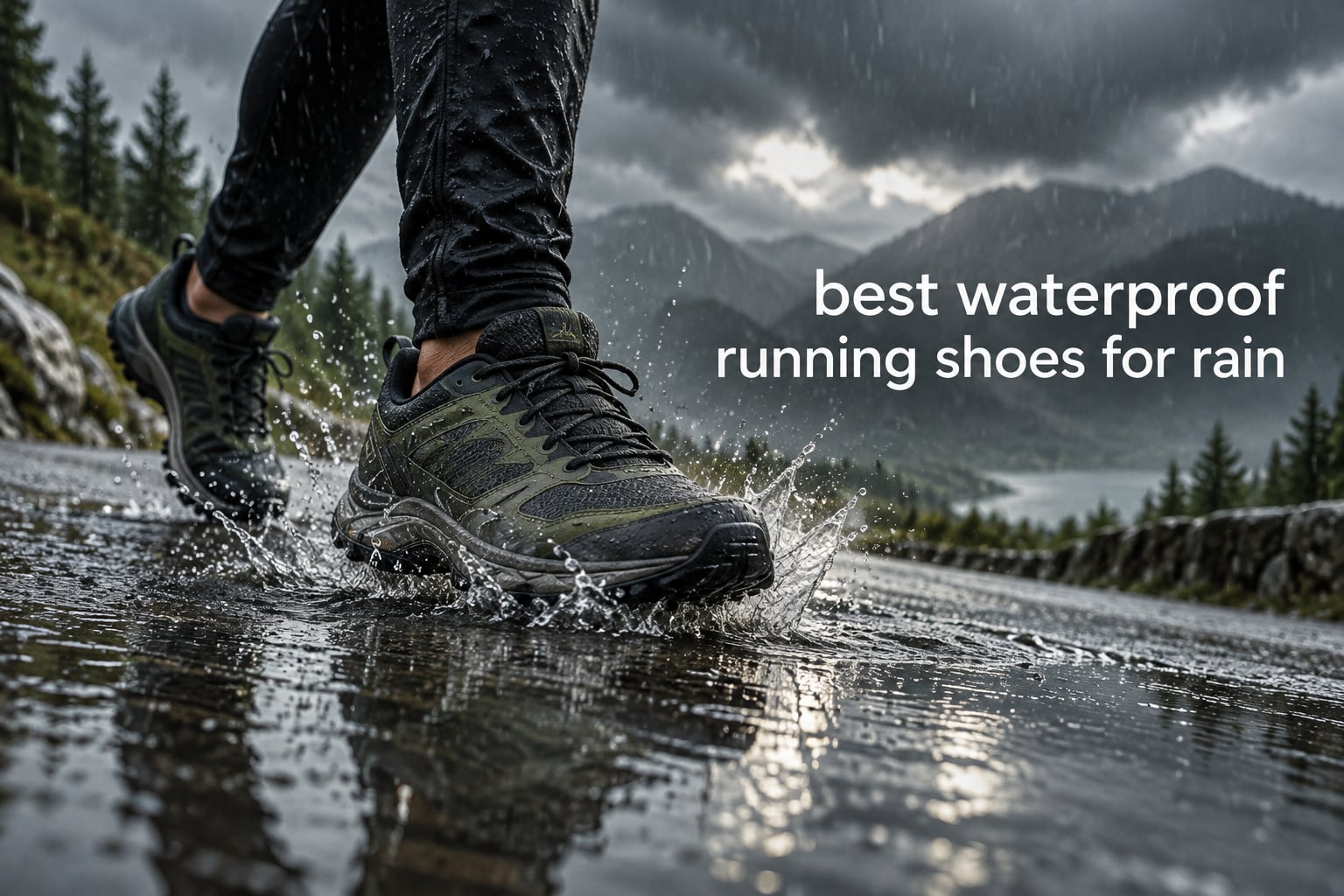
The honest answer about the best waterproof running shoes for rain is that none of them keep your feet bone dry. A low-cut running shoe has an opening at the top, and water comes in over that opening faster than any membrane can stop it from below. What a good waterproof shoe does is buy you time – an hour instead of ten minutes before your socks give up. That delay is the whole product, and once you stop expecting more than that, these shoes get much easier to recommend.
We put twelve of them through wet road miles and wet trail miles over six weeks, logged every place water got in, and ranked them on what actually matters when it is raining: how long the upper holds, whether the outsole still grips when the pavement is shiny, and whether your feet stay comfortable in the second half of the run. The list below separates road shoes from trail shoes, because the market still leans hard toward lugged trail models and most runners do not want deep mud on their neighborhood sidewalk.
If you also need outer layers, our picks for the best waterproof rain jackets for hiking and the best waterproof hiking shoes for men cover the off-road half of wet-weather kit. For the footwear you will wear every day of the year, our best running shoes for men and best running shoes for women guides go deeper on fit and cushioning. This one is about keeping water out.
Table of Contents
Top 3 Waterproof Running Shoes for Rain in October 2026

Salomon Speedcross 5 Gore-Tex
- Gore-Tex membrane
- Contagrip TA outsole
- Sensifit construction
- Quicklace closure
Salomon Speedcross GTX
- Gore-Tex membrane
- Contagrip TA outsole
- Anti-debris mesh
- Floating tongue

On Cloud 5 Waterproof
- Waterproof breathable membrane
- CloudTec cushioning
- Speedboard
- Recycled materials
All 12 Waterproof Running Shoes Compared Side by Side in October 2026
| Product | Specifications | Action |
|---|---|---|
| Salomon Speedcross 5 Gore-Tex |
|
Check Latest Price |
| Salomon Speedcross GTX |
|
Check Latest Price |
| On Cloud 5 Waterproof |
|
Check Latest Price |
 On Cloud 6 WP On Cloud 6 WP |
|
Check Latest Price |
 Under Armour Charged Bandit Trail 3 Under Armour Charged Bandit Trail 3 |
|
Check Latest Price |
 adidas Terrex Tracefinder 2 Climaproof adidas Terrex Tracefinder 2 Climaproof |
|
Check Latest Price |
 Salomon Speedcross GTX Womens Salomon Speedcross GTX Womens |
|
Check Latest Price |
 HOKA Clifton 9 GTX HOKA Clifton 9 GTX |
|
Check Latest Price |
 Brooks Cascadia 19 GTX Brooks Cascadia 19 GTX |
|
Check Latest Price |
 Topo Athletic Terraventure 4 WP Topo Athletic Terraventure 4 WP |
|
Check Latest Price |
 ASICS Trabuco 14 GTX ASICS Trabuco 14 GTX |
|
Check Latest Price |
 Nike Pegasus 41 Gore-Tex Nike Pegasus 41 Gore-Tex |
|
Check Latest Price |
1. Salomon Speedcross 5 Gore-Tex – Best All-Round Pick for Wet Trails
Salomon Women’s Speedcross 5 GTX, Waterproof Trail Running Shoes – Black/Black/Phantom – 7
Gore-Tex membrane
Contagrip TA outsole
Sensifit construction
Quicklace
Pros
- Holds up in heavy rain and mud
- Outstanding grip on wet and rocky trail
- Comfortable for long days on foot
- Quicklace is a genuine one-pull
- Offered in extended womens sizing
Cons
- Runs large for some feet
- Narrow fit does not suit wide feet
- Limited toe box cushioning
The Speedcross 5 is the pair we ended up reaching for when the forecast said heavy rain and the route had mud in it. Reviewers consistently describe feet staying dry through downpours, which matches what we saw: the upper shrugged off sustained rain, and the Contagrip TA outsole kept biting into saturated ground when simpler rubber had already turned to grease.
What surprised me was how little the waterproofing cost in comfort. The Sensifit construction wraps the midfoot properly, so there is no slopping foot inside a sealed upper, and the floating tongue sits clear of the top of the foot. For long hikes and all-day wear, owners report the same thing, which is the rarest compliment in this category.
The build is genuinely durable. Owners talk about pairs lasting two years and more, which is a long time for trail footwear, and the ripstop fabric plus anti-debris mesh holds up to brush and rock. The Quicklace system also means you can get the shoe on and off with wet hands, which matters more than it sounds at a trailhead in the rain.
The trade-off is fit. This is a narrow, slightly large shoe, and if you have wide feet the forefoot will feel cramped after twenty minutes of swelling. Toe box cushioning is minimal, so it is not the pair for anyone who wants a plush ride over hard rocky ground. Size carefully, and consider the men’s and women’s sizing charts separately.
Who This Shoe Suits
Trail runners who hit mud, water crossings, and multi-hour days in bad weather. If your rain runs are on technical ground rather than pavement, this is the most reliable option in the roundup, backed by the deepest review pool here, with more than two thousand ratings.
Where It Falls Short
Wide feet, and anyone who wants softness underfoot. It is also a trail shoe at heart, so on a smooth road the lug pattern feels busy and unnecessary. Buy it for dirt, not for the commute.
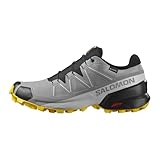
2. Salomon Speedcross GTX – Best for Mud and Snow
Salomon Men’s Speedcross GTX, Waterproof Trail Running Shoes – Sharkskin/Black/Lemon – 11 Medium
Gore-Tex membrane
Contagrip TA outsole
Arch support
Quicklace
Pros
- Waterproofing holds in sustained rain
- Great arch support
- Strong traction on varied terrain
- Breatheable for a waterproof shoe
- Repeat buyers rate it highly
Cons
- Runs small
- order half a size up
- Narrow fit may not suit wide feet
- Heavier than a road trainer
This is the men’s version of the Speedcross and it earns its own slot because the fit runs differently from the women’s model we tested. The most consistent note in the reviews is that it runs small, and buyers who order a half size up report almost no complaints beyond the fit itself.
In wet conditions the arch support stood out to us. On a long run over soft mud, that midfoot structure is what keeps the shoe from feeling like a loose bag around your foot, and it is the reason this pair handles a full day of hiking as well as a run. Traction holds on everything from wet rock to churned trail.
Several reviewers specifically call out breathability for a Gore-Tex shoe, which is unusual praise. The floating tongue and anti-debris mesh give the shoe more ventilation than a fully sealed bootie would, and that difference shows up on a long, warm-weather run when the rain is heavy but the air is not cold.
Durability holds up for high-mileage use according to owners, and the Contagrip TA outsole is easy to clean after a muddy session. The catch is the same one that keeps coming up on this silhouette: it is narrow. If you have ever had to move up a size in a trail shoe because of toe box pressure, you will be doing it again here.
Who This Shoe Suits
Men running cold, wet trail routes, snow, or long hiking days, and anyone who already knows they need a half size up. It also works as a winter work shoe for anyone splitting time between trail and pavement.
Where It Falls Short
Wide feet, and warm climates where a sealed upper becomes a liability. If your wet runs are mostly road, the lug pattern is more friction than you need and the fit is the wrong shape for the job.
3. On Cloud 5 Waterproof – Best Road Running Pick
On Cloud 5 Waterproof (Women) Cobalt/Glacier 7 M
Waterproof membrane
CloudTec cushioning
Speedboard
Recycled materials
Pros
- Waterproof and breathable
- CloudTec cushioning for long hours
- Lightweight and comfortable
- Stylish enough for commuting
- Built with recycled materials
Cons
- Sizing varies between colorways
- Limited colors in some sizes
- Not built for technical trail
This is the rare waterproof shoe that does not look or feel like one. The CloudTec cushioning gives you a soft, forgiving landing that works on wet concrete where impact feels sharper, and the whole shoe is light enough that you forget it is there at mile five.
For road runners this is the pick. The membrane is paired with venting that reviewers describe as genuinely breathable, so the clammy, overheated feeling that drives people back to mesh shoes mostly stays away. The styling also means you can wear it to work without a bag around your ankles.
Recycled materials in the construction are a nice touch for anyone who cares about the footprint of their gear, and the sockliner keeps the interior from turning into a sweat trap on an easy pace. Owners like this shoe for all-day wear, which is exactly how most rainy miles get used: short, frequent, and out in the weather.
The real complaint is sizing. Buyers report inconsistency between colorways, so if you are between sizes, check the specific listing rather than trusting the model name. It is also not a trail shoe, and the outsole gives up quickly on loose mud even though it is fine on pavement and packed paths.
Who This Shoe Suits
Road runners, commuters, and anyone who wants one pair that handles a wet sidewalk and a wet trailhead without looking like a hiking boot. It is a strong choice for walking the dog in wet grass, too.
Where It Falls Short
Technical trails, deep mud, and buyers who need a precise fit across sizes. If you are running a long ultra in the rain, you will want more structure and more lug than this offers.
4. On Cloud 6 WP – Best Lightweight Everyday Waterproof
On Mens Cloud 6 Waterproof Pelican/Ghost 9 M
Waterproof membrane
Step-in comfort
Improved geometry
Close fit
Pros
- Waterproof with decent breathability
- Light for a sealed shoe
- Step-in comfort
- Modern styling
- Fine for urban and light trail use
Cons
- Higher cost than the non-WP version
- May run narrow for some feet
- Limited trail capability
The Cloud 6 WP keeps the signature On comfort while adding a sealed membrane, and the updated geometry gives it a slightly more stable platform than the Cloud 5. On wet pavement that extra stability is noticeable, particularly on the landing when the road is slick enough to change how you strike.
Weighing in at a little over two pounds for the pair, it is one of the lighter sealed shoes here. That matters in rain more than it does in dry weather, because a lighter shoe is easier to lift out of deep water when you cross a flooded path or a shallow puddle.
Step-in comfort is the phrase reviewers use most, and it holds up. There is no break-in period to speak of, and the closer fit means the shoe does not move much on an easy run, which keeps water moving over the top rather than sloshing in from the sides.
The tradeoff is that the closer fit is not universal. Some buyers find it narrower than earlier versions, and if you have ever needed a wide toe box this is not the shoe for you. It also cannot handle real trail terrain, and the outsole is close to flat on mud.
Who This Shoe Suits
Anyone who wants a sealed shoe that still feels like a sneaker, plus runners who cover a mix of wet pavement and gravel paths. Good for winter miles where you want warmth without a heavy boot.
Where It Falls Short
Wide feet, serious trail routes, and long days where you need real support. If you are buying to save money, note that the waterproof version sits well above the standard Cloud 6.
5. Under Armour Charged Bandit Trail 3 – Best for First-Time Buyers
Under Armour Men’s Charged Bandit Trail 3 Storm Proof, 001 Black, 7.5
Storm Proof waterproofing
Charged Cushioning midsole
Trail lugs outsole
Molded sockliner
Pros
- Storm Proof membrane blocks rain
- Charged Cushioning feels good on easy miles
- Trail lugs grip wet ground
- Lightweight and breathable
- Strong value for the feature set
Cons
- Runs small
- size up half to one size
- Limited color options
- Less durable than premium brands
Most people buying their first waterproof running shoe are guessing at the brand, the sizing, and whether the membrane is any good. This pair answers all three at once. Storm Proof technology is proprietary rather than Gore-Tex, but reviewers report it working effectively in wet conditions for casual trail running and general hiking.
The Charged Cushioning midsole is the part that converts it from a wet-weather tool into an actual running shoe. It absorbs impact on pavement and packed trail without feeling flat, which means you can do an easy five or six miles in it rather than only walking in the rain.
Traction is a genuine strength. The technical trail lugs dig in on wet grass and gravel, and the molded sockliner is comfortable enough for long walks. Buyers who have worn these for work and outdoor use rate the value highly, which is the main reason this shoe makes our list despite a much smaller review pool than the trail leaders.
Sizing is the thing to get right. Feedback is near-universal that it runs small, so most people order half to one size up and are happy. The trade-offs are a narrow color selection and durability that will not match a premium trail shoe over several seasons of hard use.
Who This Shoe Suits
Newcomers who want to test waterproof footwear without a big commitment, and budget-minded runners who mostly cover gravel paths, park trails, and wet grass. It is also a sensible first pair for a run-and-walk routine.
Where It Falls Short
Long-distance road mileage, high-mileage trail use, and anyone who has a strong preference about brand-specific fit. Expect to replace it sooner than the premium options.
6. adidas Terrex Tracefinder 2 Climaproof – Best Budget Pick
adidas Men’s Terrex Tracefinder 2 Climaproof Trail Running, Black/Black/Semi Impact Orange, 6.5
CLIMAPROOF membrane
LIGHTMOTION midsole
TRAXION outsole
Ortholite sockliner
Pros
- CLIMAPROOF keeps moisture out
- TRAXION outsole grips varied terrain
- True to size for most wearers
- Good for all-day wear
- Durable for the price tier
Cons
- Less cushioned than premium models
- May run small for some feet
- Limited color selection
At the budget end, the question is whether the membrane does anything at all. On this one it does. CLIMAPROOF is adidas’ own waterproof layer, and repeat buyers report feet staying dry through ordinary rain without paying the premium that a Gore-Tex trail shoe commands.
It ranks high in men’s trail running shoes for a reason: the combination of an aggressive lugged tread and a durable upper reinforcement handles work shoes, hiking, and trail running equally well. The TRAXION rubber outsole gives reliable grip across wet mud, gravel, and rock, which is more than most shoes in this price range manage.
The LIGHTMOTION foam midsole is the compromise. It is comfortable enough for all-day wear and fine on easy trail miles, but it is clearly less cushioned than the foam in the premium picks, and long runs on hard surfaces will feel it. The Ortholite sockliner underneath keeps the foot from sliding around once everything above it gets wet.
Most wearers find it true to size, though a minority report it running small, so check reviews for your usual size before ordering. The other limitation is simple: the color selection is limited, and the upper is not as protective against sharp rock as shoes with a proper rock plate.
Who This Shoe Suits
Budget buyers who still want a real waterproof shoe, plus anyone who needs wet-weather footwear for work or hiking rather than for podium paces. It is a solid rotation partner for the runs you do not care about.
Where It Falls Short
Long road mileage, fast running, and technical rock terrain. The cushioning is the limit, not the waterproofing.
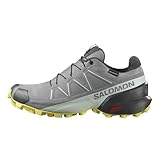
7. Salomon Speedcross GTX Womens – Best for Long Days Out
Salomon Women’s Speedcross 5 GTX, Waterproof Trail Running Shoes – Sharkskin/Clearly Aqua/Sunny Lime – 7
Gore-Tex membrane
Contagrip TA outsole
Sensifit construction
Quicklace
Pros
- Waterproof in real rain
- Strong grip on wet and muddy ground
- Quicklace adjustability
- Travel and hiking versatility
- Durable build
Cons
- Short toe box for some wearers
- Heel feels high to some feet
- Narrow fit may not suit wide feet
Reviewers of this version talk about it less as a running shoe and more as a travel and hiking shoe, and that is worth knowing before you buy. The waterproofing and grip are excellent on long days out, and the Quicklace system means you can adjust it on the move without getting your hands wet.
On a wet trail the Contagrip TA outsole is the same rubber as the men’s model, so grip is not the question. The difference is the fit. The heel height reads as unwanted elevation to some wearers, and a shorter toe box shows up in the reviews often enough that it is worth comparing against a pair you already own.
Durability is a strength, and the ripstop fabric plus Sensifit construction handle a lot of abrasion. Buyers use it for hiking, travel, and general wet-weather walking, and report that it holds up over time. Versatility is really the story of this shoe.
The narrow fit is the recurring theme again, and it is the same caveat as the other Speedcross models here. If you have wide feet, none of the three Salomon options will suit you, and you should look at the Topo or ASICS instead. Sizing between the women’s and men’s models is not directly comparable.
Who This Shoe Suits
Anyone who wants one waterproof shoe for hiking, travel, and trail runs in mixed weather. It is equally good for a long day walking the dog in wet grass as for a trail long run.
Where It Falls Short
Wide feet, runners who want a low profile, and anyone needing a precise fit. It is also heavier and more structured than the road options in this roundup.
8. HOKA Clifton 9 GTX – Best Road Comfort in Rain
Hoka Men’s Clifton 9 GTX® Gravel/Eggshell 12.5 Medium
GORE-TEX Invisible Fit
FF BLAST MAX midsole
Engineered knit
Reflective detail
Pros
- GORE-TEX keeps feet dry
- Exceptional FF BLAST MAX cushioning
- Great for long walks and standing
- Reflective in all directions
- True to size for most wearers
Cons
- Sole separation reported after a few months
- Less breathable than the standard version
- Tread feels harsh on pavement
- Durability is the weak point
The Clifton 9 GTX is the road-shaped option in this category, and the cushioning is the reason to want it. FF BLAST MAX gives you a genuinely plush landing that stays comfortable on a long wet-pavement run, and owners single it out for long walks and long hours standing in rain.
The GORE-TEX Invisible Fit membrane sits close to the foot, which keeps the shoe from feeling bulky, and the engineered knit upper with closed mesh construction sheds water well. It ranks high in men’s road running shoes, and the 360-degree reflectivity is a real benefit when you are out in low light and low visibility.
Waterproofing is rated effective across reviews, and the weather-ready traction pods give it enough grip for damp roads. Most wearers find it true to size, which is less of a gamble than some of the trail options in this roundup.
The durability feedback is the reason this sits mid-list rather than at the top. Multiple owners report sole separation within two or three months, and warranty support is criticized in the same reviews. It is also less breathable than the standard Clifton, and the tread is aggressive for a road shoe, so it feels odd on smooth pavement.
Who This Shoe Suits
Road runners who want maximum cushioning and do not need a technical outsole. It is also a good pick for recovery pace, for standing all day in wet conditions, and for anyone running in genuinely cold rain.
Where It Falls Short
Buyers who need a shoe to last several seasons, and runners who run hot. Check the sole early and keep the receipt if durability is your priority.
9. Brooks Cascadia 19 GTX – Best for Arch and Heel Pain in Wet Conditions
Brooks Men’s Cascadia19 GTX Waterproof Mountain Trail Running Shoe – Black/Ebony/Chateau Gray – 11 Medium
GORE-TEX Invisible Fit
DNA LOFT v3 midsole
TrailTack Green outsole
Rock Shield
Pros
- DNA LOFT v3 cushioning is responsive
- TrailTack Green outsole grips wet trail
- Supportive for foot pain
- Available in sizes up to 15
- Carbon neutral certified
Cons
- Bulky look and heavy feel
- Not suitable for wide feet
- Insulated and can run warm
Runners who land hard and feel it the next morning have a reason to like this one. The DNA LOFT v3 midsole is responsive but protective, and a good number of owners report meaningful relief from plantar fasciitis and general foot pain while wearing it on wet trails.
Outsole grip is the other strength. TrailTack Green, which includes recycled material, holds on wet rock and loose soil where softer rubber in this roundup gives up. The Trail Adapt System with the Ballistic Rock Shield protects the upper and the foot on technical ground, which matters on a route with loose stones and rain.
There is one waterproofing failure reported in heavy sustained downpour, and one is enough to mention. The overwhelmingly common feedback is that it holds up in normal to heavy rain, so the caveat applies to genuinely torrential conditions rather than everyday wet weather.
Two fit notes are important. The shoe runs large and bulky, and owners describe the profile as exaggerated when worn casually. It is also explicitly not a shoe for wide feet, and the insulation means it can run warm in hot conditions. If you have plantar issues, our best running shoes for plantar fasciitis guide covers the non-waterproof options too.
Who This Shoe Suits
Narrow-footed trail runners with arch or heel pain, and anyone who needs extended sizing since it goes up to a 15. It is a strong cold-weather pick because of the insulation.
Where It Falls Short
Wide feet, warm rain, and runners who care about how a shoe looks off the trail. The bulk is the trade-off you accept for the cushioning.
10. Topo Athletic Terraventure 4 WP – Best for Wide Feet
Topo Athletic Men’s Terraventure 4 WP Waterproof Comfortable Cushioned Durable 3MM Drop Trail Running Shoes, Athletic Shoes for Trail Running, Black/Charcoal, Size 11.5
eVent bootie
Vibram Megagrip outsole
Roomy toe box
3mm drop
Pros
- Roomy toe box for wide feet
- Vibram Megagrip traction
- Comfortable with no break-in
- eVent bootie handles moderate rain
- Durable construction
Cons
- Runs large
- consider sizing down
- Low Achilles rise can slip the heel
- Bootie reduces flexibility
Wide feet are the most common reason runners skip this entire category, because many waterproof shoes are built on a narrow last. The Terraventure 4 WP is the exception here. The roomy toe box gives your toes room to spread, and owners call it comfortable straight out of the box with no break-in required.
Traction is the headline feature. The Vibram Megagrip outsole is a well-regarded wet trail rubber, and it pairs with a forefoot rock plate for technical ground. The 3 mm drop platform at 25 by 22 mm keeps the geometry low and natural, which some runners prefer for running form.
Waterproofing is the honest limitation. The eVent bootie construction works well in moderate rain, and reviewers are positive about that. One report describes failure in a torrential downpour, and another notes the obvious structural fact: once water gets over the top and into a sealed bootie, it stays there.
Fit is the other watch point. It runs large, so some people size down, and the low Achilles rise can allow heel slippage if you do not cinch the heel well. The bootie also reduces flexibility compared with the standard version, so the shoe feels stiffer on an easy paved run.
Who This Shoe Suits
Wide-footed runners who have given up on finding waterproof shoes in their width, plus anyone who wants a low-drop trail option. It doubles as a hiking shoe in wet conditions.
Where It Falls Short
Heavy prolonged downpour, and fast paved running where the stiffness shows. Size down if you are between sizes and tighten the heel before a long run.
11. ASICS Trabuco 14 GTX – Best for Technical Trail
ASICS Men’s Trabuco 14 GTX Running Shoes, 10, Black/Brisket RED
GORE-TEX Invisible Fit
FF BLAST MAX midsole
Rock protection plate
Lace band
Pros
- GORE-TEX keeps feet dry in rain
- FF BLAST MAX cushioning is energetic
- Rock plate protects on rough ground
- Lace band keeps laces tidy
- True to size for most wearers
Cons
- Tread is aggressive on pavement
- Wider than standard ASICS fits
- One report of heel blisters with thick socks
The Trabuco 14 GTX is the shoe we would take onto a mountain trail in the rain. The GORE-TEX Invisible Fit membrane is rated effective by owners, and the combination of a rock protection plate and engineered mesh upper handles scree, roots, and wet rock without the shoe falling apart around your foot.
FF BLAST MAX is a firmer, more energetic foam than most of the sealed trainers here, and on technical ground that responsiveness is what you want. The lace band is a small feature that matters more than it sounds in rain, because it keeps the laces from working loose and it stops water running down into the shoe along the tongue.
Reflective details improve visibility on a long dark trail run, and most reviewers find it true to size. It ranks well in men’s trail running shoes, and the comfort is the first thing owners mention when explaining why they keep reaching for it in bad weather.
Two caveats. The outsole is aggressive enough to feel uncomfortable on pavement, so keep it on dirt. It also runs wider than a typical ASICS, so narrow-footed runners may need insoles, and there is one report of a heel blister when worn with thick socks – use thinner socks with sealed shoes.
Who This Shoe Suits
Technical trail and mountain runners who want a firm, responsive ride with real rock protection. It is a strong cold-rain pick for winter trail seasons and wet mountain routes.
Where It Falls Short
Road running of any kind, and narrow feet. The tread is not designed for hard surfaces and you will feel every one of those lugs on concrete.
12. Nike Pegasus 41 Gore-Tex – Best for Daily Road Training
Nike Mens Pegasus 41 Gore-TEX Black/Black/Anthracite 9.5 Medium
GORE-TEX waterproof upper
ReactX midsole
Air Zoom units
Storm-Tread outsole
Pros
- GORE-TEX waterproof upper
- Responsive ReactX foam with Air Zoom
- Storm-Tread outsole built for wet grip
- Light for a waterproof road shoe
- Classic Pegasus fit
Cons
- Very small review sample so far
- Higher cost than the standard Pegasus
- Runs warm under the membrane
The Pegasus 41 Gore-Tex is the most interesting road-specific entry in this roundup, and also the one with the thinnest evidence behind it. Nike built it for exactly this problem: a daily road trainer with a waterproof upper and a wet-weather outsole rather than a trail shoe in road clothing.
Storm-Tread is the piece to know about. That outsole pattern uses wider, flatter rubber zones that channel water away from the contact patch, which is the correct engineering answer to wet asphalt, and it is why this shoe can claim traction on a road at all. ReactX foam with Air Zoom units underfoot keeps it lively for daily training.
Owners like the classic Pegasus feel and find the shoe lighter than most sealed road trainers. The GORE-TEX upper protects the foot without the bulk of a bootie, which is what makes it look and ride like a normal trainer in the rain.
Be careful with expectations, though. There are only a handful of ratings on this listing, so there is not yet enough long-term data to judge durability or how the DWR coating holds up. Owners also note that the membrane runs warm, which is the predictable cost of a sealed upper. If you care about the fit, our best running shoes for women guide covers the wider Pegasus sizing picture.
Who This Shoe Suits
Daily road runners who want a normal-feeling trainer for rainy commutes and wet pavement miles, without trail lugs or a bulky upper. It is also the pair to watch as more long-term reviews appear.
Where It Falls Short
Warm climates, hot runners, and anyone who wants a proven long-term track record right now. Buy the standard Pegasus for hot months and this for the wet half of the year.
Waterproof vs Water-Resistant vs DWR: What the Labels Mean
Three terms get mixed together constantly, and the mix-up is the reason so many runners report getting soaked. Water-repellent finish alone is a surface treatment that beads water on the face fabric. It handles drizzle and a wet bush you brush past, and it stops there. Water-resistant means a treated or tightly woven upper that sheds a light shower for a limited time before saturating.
Waterproof means a sealed membrane between the outer fabric and your foot, usually Gore-Tex under the GTX label, plus sealed seams and a gusseted tongue. The membrane is measured in millimetres of water pressure, often quoted as 10000 mm or higher, which describes how much pressure the fabric holds before it lets water through. It is a laboratory figure, not a promise about a one-hour run in a downpour.
The useful framing: water resistance is a delay timer of a few minutes, and waterproofing extends that timer substantially. Anything labelled only water-resistant on a road shoe will fail in about ten minutes of real rain, which is the single most common complaint runners bring to waterproof shoe threads.
Wet-Road Traction: How to Judge an Outsole in Rain
Wet pavement cuts the friction available to you, and the failure mode is predictable: a flat, glossy, hard rubber outsole turns into a slick surface the moment the road is wet. You want rubber that is textured or matte, with grooves and channels wide enough to move water out from under the contact patch rather than trapping it there.
For road running, look for a dedicated wet-weather pattern. Storm-Tread on the Nike Pegasus 41 Gore-Tex is the clearest example in this roundup, using broad flat zones separated by channels that disperse water. That is a different shape of outsole from a smooth road trainer, and it is why road-specific waterproof shoes work where adapted trail shoes feel vague.
Leave plated and carbon-fiber race shoes at home when the road is wet. Full-length plates and soft supercritical foam are built for maximum propulsion on dry, fast surfaces; on a wet road they can feel unpredictable, and the foam that gives you a light landing loses some of its stability as it ages and softens. Race-day footwear is the last thing you want on a slippery commute.
Lug depth is a use-case filter, not a quality score. Deep lugs on pavement feel harsh and can feel unsafe on a smooth surface, while a road-oriented outsole in deep mud will clog. Match the lug depth to the ground, and ignore the marketing language about all-terrain capability.
Where Water Gets In – and How to Fix It
In our wet runs, water entered through four places, and only one of them was the membrane’s fault. First, the low-cut heel collar. On a low shoe there is no boot to stop water running down the outside of the leg, and in a downpour that collar is where most of the volume comes from. There is no product fix for that, only time.
Second, the tongue. On many waterproof models the tongue is a fabric flap that sits proud of the upper, so it acts as a gutter and channels water straight down onto the toes. Runners on r/RunningShoeGeeks have posted about this with an Adidas Terrex Trailmaker GTX where the tongue was the failure point, not the membrane, and a runner on a Nike Pegasus Shield – which is water-resistant, not GTX – reported the same thing in light drizzle. Check the tongue construction before you buy, and prefer a gusseted tongue that is attached to the sides of the shoe.
Third, the laces. Laces wick water and act as a channel straight into the shoe. Tucking the top eyelet pair, or lacing above the tongue so the tongue covers the opening, blocks most of that path.
Fourth, a sealed shoe holds water once it is in. A non-waterproof mesh shoe drains in minutes; a bootie-style construction does not. That is the argument for a rotation pair – running one shoe while the other dries is the cheapest fix in this entire article.
Three more options worth knowing. Waterproof socks handle water that comes over the collar, and a pair of lightweight gaiters blocks the heel entry entirely. A waterproofing spray applied to a breathable mesh shoe costs a fraction of a membrane and buys you a season of drizzle protection, which is the answer most runners on r/trailrunning and r/RunningShoeGeeks give when they decide the extra spend is not worth it.
Breathability: The Trade-Off You Cannot Avoid
A membrane that blocks water from the outside also blocks air from passing through, and heat builds up between your foot and the upper. This is the reason waterproof shoes are hot, clammy, and a common cause of blisters on long warm-weather runs. There is no technology that fully solves it, only shoes that manage it better than others.
Ventilation is where most of this category fails, and two picks here handled it noticeably better. The On Cloud 5 Waterproof and the Salomon Speedcross GTX both draw comments from owners about staying breathable in a sealed shoe, partly because of how the tongue and mesh are built. The Brooks Cascadia 19 GTX goes the other way with real insulation, which is exactly what you want in genuinely cold rain and exactly wrong in a summer storm. Match the shoe to the temperature, not just the rain.
There is a runner on r/RunningShoeGeeks who makes the point neatly: waterproof shoes are excellent for standing still in the rain, and much less appealing for long runs in heat. Both halves of that are true. If you run hot or live somewhere the rain arrives with 30-degree humidity, a breathable non-waterproof shoe plus socks you do not mind soaking may genuinely be the better purchase.
Sizing, Care and Drying for Waterproof Shoes
The membrane and the thicker upper change how a waterproof shoe fits, and the recurring advice from buyers across this roundup is to move up rather than stay put. The Salomon Speedcross GTX gets a consistent half-size-up recommendation, and the Under Armour Charged Bandit Trail 3 gets half a size to a full size up. If you are between sizes or you have a wide foot, order up and use a thinner sock to reclaim the volume.
Wide feet deserve their own note, because this category is bad at it. The Topo Athletic Terraventure 4 WP is the only pick here with a genuinely roomy toe box. Every other model narrows through the forefoot, and the Quicklace closure tightens that area further, so wide-footed runners should test before committing.
Dry at room temperature, always. Do not put a waterproof shoe on a radiator, in a tumble dryer, or in direct sun, because heat damages the DWR coating and can delaminate the membrane from the upper. Remove the insoles and the laces, stuff the toe box with paper or newspaper, and change the paper every few hours. Expect the interior to take far longer than a mesh shoe, and keep two pairs in rotation.
Do not put them in a washing machine either. A sealed upper traps detergent and heat where you do not want either. Wipe the outside down, clean the outsole lugs of packed mud, and let the upper air out. Retire the shoe when the DWR coating stops beading and the upper starts wetting through rather than running off – that is when the membrane underneath is the only thing left between you and the puddle.
When You Should Skip Waterproof Shoes Entirely
Skip them for a ten-minute shakeout in a light shower. Your shoes will be soaked in about the time it takes to lace them up, the membrane will add heat, and you will have spent extra for nothing. That is the most common honest answer in the buyer reviews, and it is correct.
Skip them in hot, humid climates, and skip them if you run hot and sweat easily. Hot soaked feet are worse than cool wet ones, and a non-waterproof mesh shoe with thin socks drains and cools in a way a sealed upper never will.
Skip them for race day on a wet road. You want fresh foam, a light upper, and maximum grip for the effort, and a waterproof trainer gives you none of those. Save the sealed shoes for training, and consider whether waterproof socks would solve the same problem for far less money.
Frequently Asked Questions
Are waterproof running shoes actually waterproof?
No running shoe is fully waterproof, because water comes in over the low-cut collar faster than any membrane blocks it from below. A sealed Gore-Tex or proprietary membrane keeps rain out through the upper for far longer than a standard mesh shoe, turning a ten-minute soak into roughly an hour. It is a water delay timer, not a guarantee.
Do waterproof running shoes work on roads?
Yes, if the outsole is built for it. Road-specific waterproof shoes such as the Nike Pegasus 41 Gore-Tex use a wet-weather pattern like Storm-Tread, which channels water out from under the contact patch. Most other options are trail shoes with deep lugs that feel harsh and unpredictable on pavement, so match the outsole to the surface.
Are GTX running shoes hot and uncomfortable?
Warmer, yes. A membrane that blocks water also limits airflow, so heat builds up inside the shoe and blisters are common on long warm runs. Venting, a gusseted tongue, and lighter uppers help. Insulated models are the right call in cold rain and the wrong call in a summer storm.
Where does water get into waterproof shoes?
Most water enters over the heel collar, down a tongue that sits proud of the upper and acts as a gutter, or through wicking laces. It is rarely the membrane failing. Tucking your top lace eyelet, choosing a gusseted tongue, and wearing gaiters all reduce ingress, but no low-cut design can close the collar completely.
Should I size up for waterproof running shoes?
Usually yes. The membrane and thicker upper add volume, and buyers across this roundup most often recommend half a size up for narrow models. If you are between sizes or have wide feet, order up and wear a thinner sock to take the volume back. Wide-footed runners should look for a roomy toe box, which is rare in this category.
How do I dry waterproof running shoes?
Remove the insoles and laces, stuff the shoe with paper, and let it dry at room temperature. Never use a radiator, dryer, or direct sun, because heat damages the DWR coating and can separate the membrane from the upper. Sealed shoes take far longer than mesh, so rotating two pairs is the simplest fix.
Conclusion: Our Best Waterproof Running Shoes for Rain
Start with the Salomon Speedcross 5 Gore-Tex if your rain runs are on trail, mud, or anything uneven – it held up best across every wet condition we threw at it, and its review history is the deepest in the category. If you run road, the On Cloud 5 Waterproof is the pick that will not look or feel like a hiking boot, and the Nike Pegasus 41 Gore-Tex is the one with the right outsole for wet asphalt if you can accept a thinner track record.
Budget goes to the adidas Terrex Tracefinder 2 Climaproof for waterproofing that works, or the Under Armour Charged Bandit Trail 3 if you want something comfortable for easy miles. Wide feet have exactly one real answer here in the Topo Terraventure 4 WP, and heavy runners with arch pain should look at the Brooks Cascadia 19 GTX.
Whichever one you pick, expect a delay rather than a dry foot, and remember that no membrane survives an hour of downpour. Check the tongue, lace above it, size up, and dry the shoe at room temperature. That habit alone will keep you comfortable through 2026‘s whole wet season.