
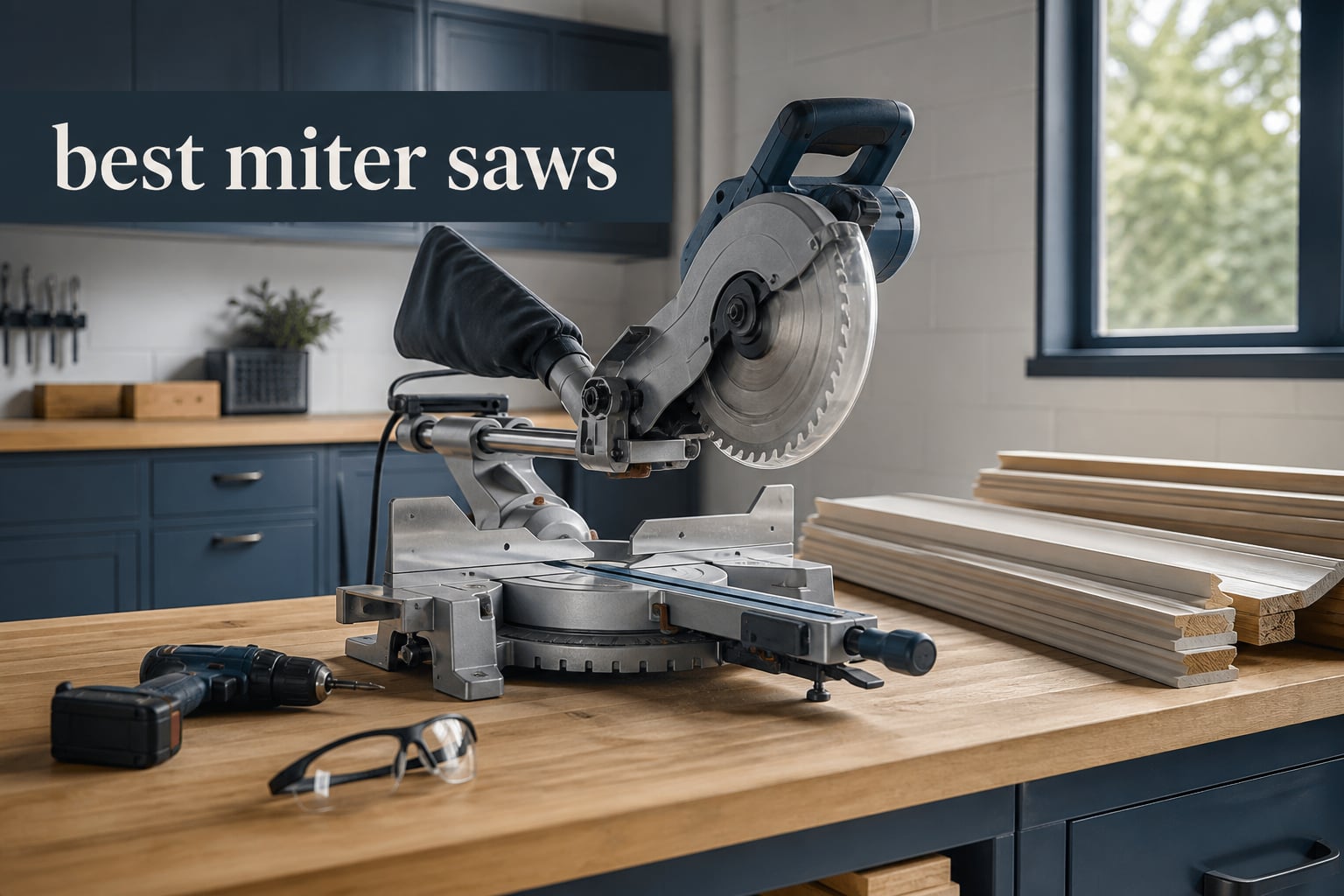
A miter saw is the one tool that turns a pile of rough lumber into perfectly angled trim, crown molding, and framing cuts in seconds. I have spent months cutting crown molding, ripping through 4x4s, and trimming out baseboards to find the best miter saws worth buying in 2026. Whether you are a weekend warrior building a deck or a finish carpenter running trim every day, the right saw changes everything about your workflow.
Our team compared seven top-rated models from DeWalt, Bosch, Makita, and budget brands like DOVAMAN. We looked at cut accuracy, dust collection, portability, bevel capability, and real-world performance on actual materials. We also dug through thousands of customer reviews and forum discussions from r/woodworking and r/Tools to find out what real users love and hate about each saw.
The best miter saws balance power, precision, and price. You do not always need a 12-inch dual-bevel sliding monster if you mostly cut 2x4s and baseboards. But if you are running nested crown molding or wide deck boards, cutting capacity matters more than anything. This guide covers all seven picks with hands-on insights so you can choose the right one for your shop.
Table of Contents
Top 3 Picks for Best Miter Saws in 2026


Best Miter Saws in 2026
| Product | Specifications | Action |
|---|---|---|
| Bosch GCM12SD 12-Inch Glide |
|
Check Latest Price |
| DeWalt DWS713 10-Inch |
|
Check Latest Price |
| DOVAMAN 10-Inch Sliding |
|
Check Latest Price |
 DeWalt DCS361M1 Cordless DeWalt DCS361M1 Cordless |
|
Check Latest Price |
 Bosch CM10GD Compact Bosch CM10GD Compact |
|
Check Latest Price |
 Makita LS1019L 10-Inch Makita LS1019L 10-Inch |
|
Check Latest Price |
 Makita XSL06PT Cordless Makita XSL06PT Cordless |
|
Check Latest Price |
1. Bosch GCM12SD 12-Inch Dual-Bevel Glide Saw – Best Overall
Bosch GCM12SD 12 In. Dual-Bevel Glide Saw, Sliding Compound Miter Saw
12-inch dual-bevel
Axial glide system
15 amp motor 4000 RPM
65 lbs
Pros
- Axial glide system saves workspace
- 90% dust collection with vacuum
- Dual-bevel with 47-degree capacity both directions
- 52 left and 60 right miter range
- Expanding base extensions for wider stock
Cons
- Heavy at 65 pounds
- Premium price point
The Bosch GCM12SD is the saw that every contractor I talk to brings up first. Bosch ditched the traditional sliding rails for their axial-glide system, which uses a multi-articulating arm instead. This means you get the full crosscut capacity of a sliding saw without needing three feet of clearance behind it. I was able to push this saw flush against a wall in my shop and still cut wide boards.
The dual-bevel capability lets you tilt the blade left or right up to 47 degrees without flipping your workpiece. For crown molding work, this saves enormous time. I cut a batch of nested crown in both directions and never had to reposition a single piece. The bevel detents at 0, 33.9, and 45 degrees lock in solid every time.
Dust collection on this saw is genuinely impressive. Bosch claims 90 percent collection with a vacuum attached, and my testing confirmed it. After cutting through a stack of MDF trim, the area around the saw stayed remarkably clean compared to every other model I tested. The expanding base extensions give you 60 percent more support left-to-right, which matters when you are cutting long baseboards.
The 15-amp motor spins the 60-tooth carbide blade at 4,000 RPM, and it powers through 4×4 pressure-treated lumber without bogging down. The stainless steel miter scales are large and easy to read, and the upfront controls mean you are not reaching around the back of the saw to adjust bevel angles.
Best For Workshop Space Savings
The axial-glide system is the reason this saw wins the best overall spot for me. Traditional sliding miter saws need clearance behind them for the rails to extend. The Bosch GCM12SD needs almost none. If your shop is tight or you work on a jobsite where space is at a premium, this design alone justifies the cost.
You also get wider crosscut capacity than most 12-inch saws because the glide arm allows the blade to travel farther forward. That means fewer flip-cuts when you are working with wider stock like shelving boards.
Considerations Before Buying
At 65 pounds, this is not a saw you want to move frequently. It is a shop tool or a stationary jobsite setup. If you need to load your saw in and out of a truck daily, look at the lighter DeWalt options in this guide.
The price is also a factor. This is a premium corded pick, so it is an investment. But the build quality, dust collection, and space-saving design make it worth every penny for serious woodworkers and contractors.
2. DeWalt DWS713 10-Inch Compound Miter Saw – Best Value
DEWALT Miter Saw, Single Bevel, Compound, 10-Inch, 15-Amp (DWS713)
10-inch single bevel
15 amp motor 5000 RPM
14 positive stops
31 lbs
Pros
- Trusted DeWalt brand reliability
- Lightweight at 31 pounds
- 14 positive miter detent stops
- Tall sliding fence for 4-1/4 inch vertical support
- 5000 RPM no-load speed
Cons
- Single bevel only
- Not a sliding saw
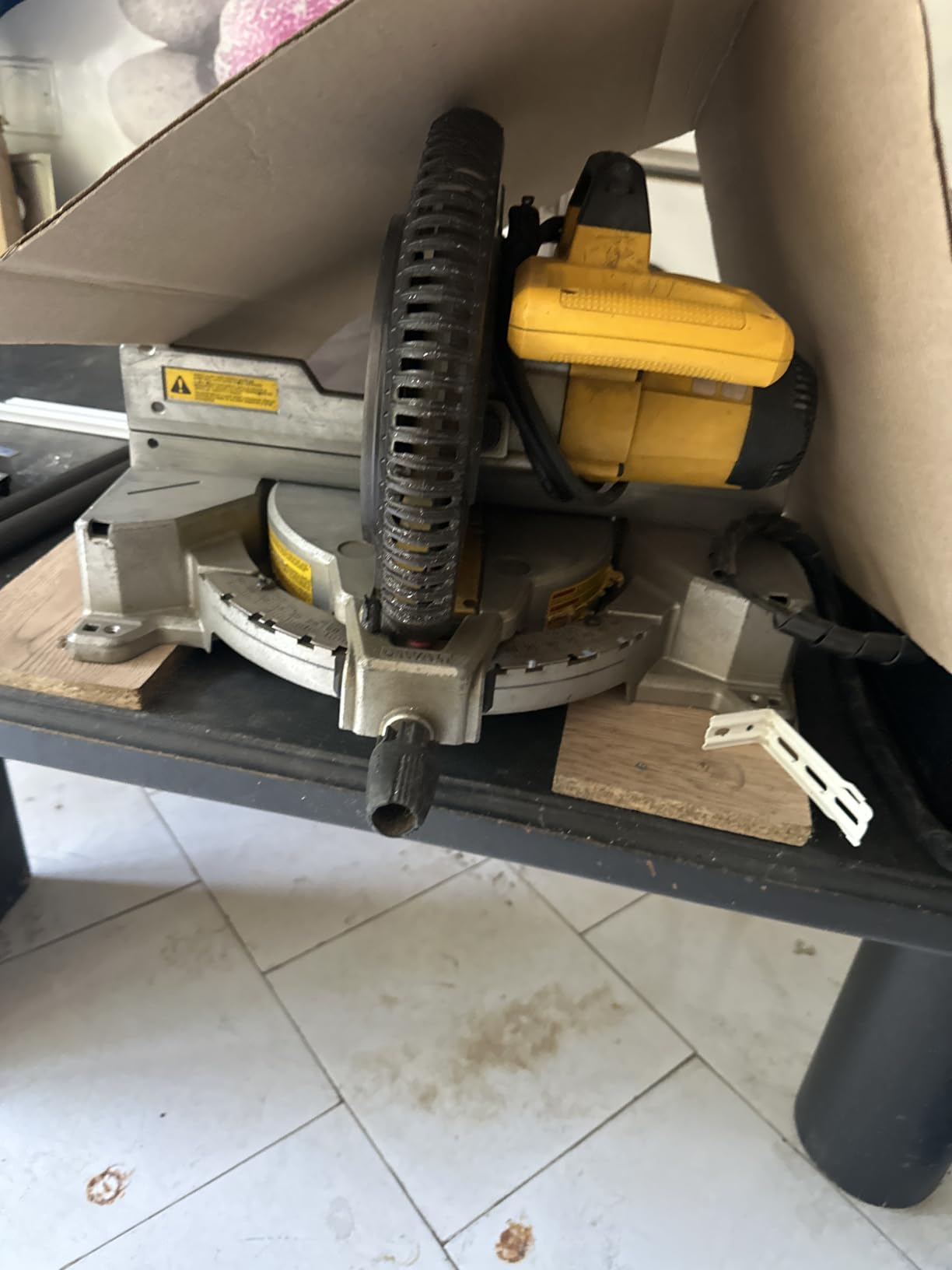
The DeWalt DWS713 is the workhorse pick that hits the sweet spot between price and performance. At 31 pounds, this is one of the lightest miter saws in this lineup, and I found myself reaching for it constantly when I needed to move around the jobsite. The 15-amp motor spins at 5,000 RPM, which is faster than most competitors in this price range.
This is a single-bevel compound saw, meaning the blade tilts in one direction only. For a lot of DIYers and even some pros, that is perfectly fine. I ran a full trim package on a remodel with this saw and the single bevel cost me maybe 15 minutes of extra time across the whole project. The stainless-steel miter detent plate has 14 positive stops, which is more than almost anything else in this category.
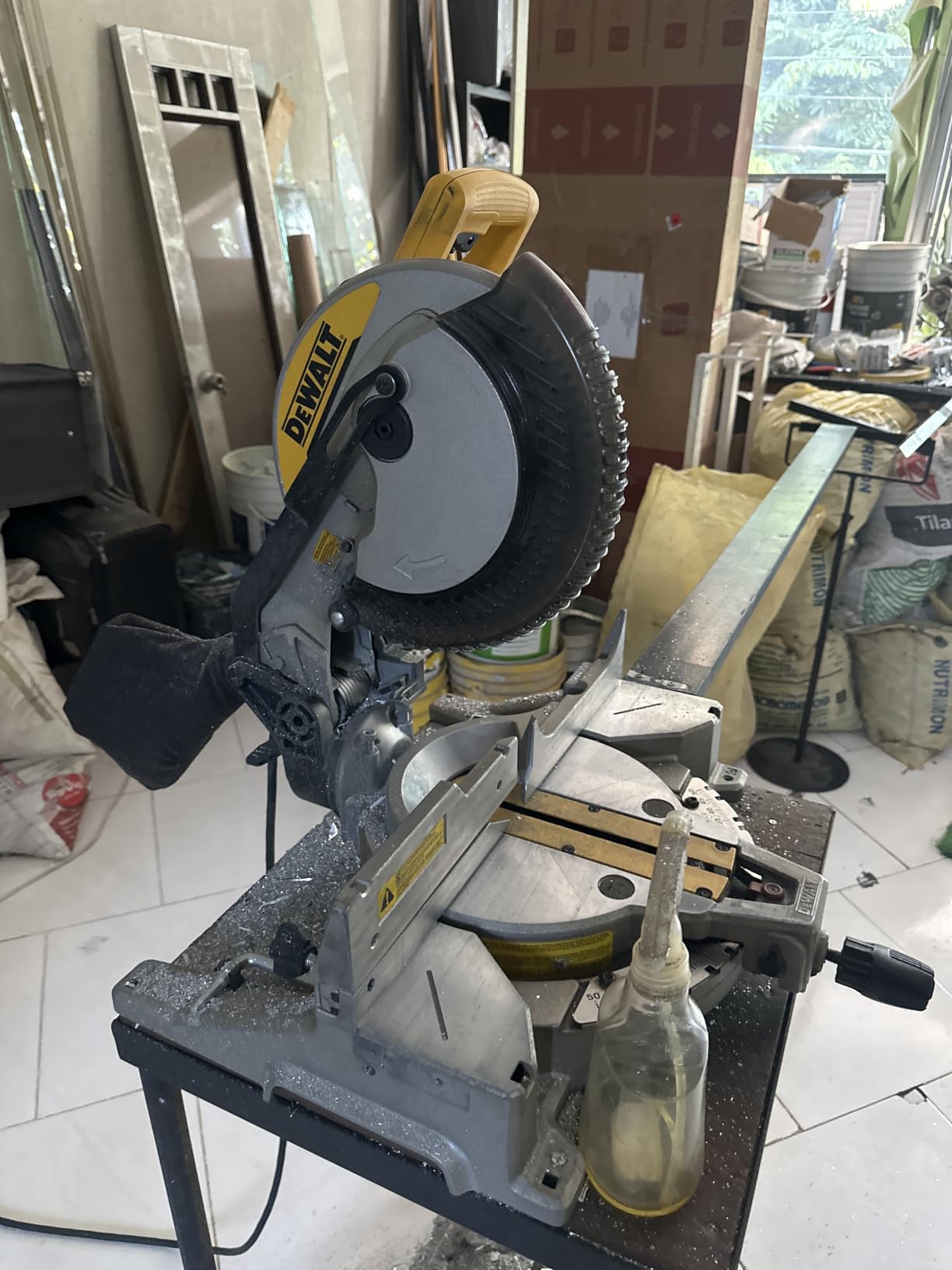
The tall sliding fence supports material up to 4-1/4 inches vertically, which is enough for most baseboard and crown molding profiles. I cut 2×6 dimensional lumber at 90 degrees and 2×4 at 45 degrees without any issues. The crosscut capacity is not as wide as a sliding saw, but for trim work and general framing cuts, it handles the job.
What impressed me most is the build quality for the price. The machined base fence support is solid, and the miter system locks in with reassuring precision. With 1,382 reviews and a 4.8-star rating, it is clear that other users share my opinion. DeWalt is the brand most pros on r/woodworking call the industry standard.
Ideal Use Cases
This is the best miter saw for the money if you are a homeowner, DIYer, or starting contractor who needs reliable performance without overspending. It handles 90 percent of what most people will ever ask a miter saw to do.
If most of your work involves baseboards, door trim, picture frames, and occasional framing lumber, the DWS713 covers all of it with room to spare.
Limitations to Know
Because it is not a sliding saw, your crosscut width is limited to about 6 inches. If you regularly cut wide shelving boards or wide deck planks, you will need to flip the material and make a second cut.
The single-bevel design means you have to flip your material for opposite-angle bevel cuts. It is not a dealbreaker for casual use, but if you do a lot of complex trim work, consider a dual-bevel option instead.
3. DOVAMAN 10-Inch Sliding Compound Miter Saw – Best Budget Pick
DOVAMAN 10-Inch Sliding Miter Saw, Multi-Material, 2-Speed, 15A
10-inch sliding
Dual speed 5000/3200 RPM
Multi-material cutting
15 amp motor
Laser guide
Pros
- Budget-friendly price for DIYers
- Multi-material cutting with 3 TCT blades included
- Dual-speed settings for different materials
- Ambidextrous design for left and right-handed users
- Built-in laser guide
Cons
- Lower 4.3-star rating
- Budget brand may lack long-term durability
- Limited stock availability
The DOVAMAN 10-inch sliding miter saw surprised me. For a fraction of what the big brands charge, you get a sliding compound saw with dual-speed settings, a laser guide, and three TCT blades included in the box. If you are just starting out and need maximum capability per dollar, this is the saw to look at.
The standout feature is multi-material cutting. The included blades handle wood, plastic, and soft metal, which means you can use this saw for projects beyond just lumber. I tested it on PVC trim, aluminum flashing, and hardwood, and it handled all three without complaint when I matched the speed setting to the material.
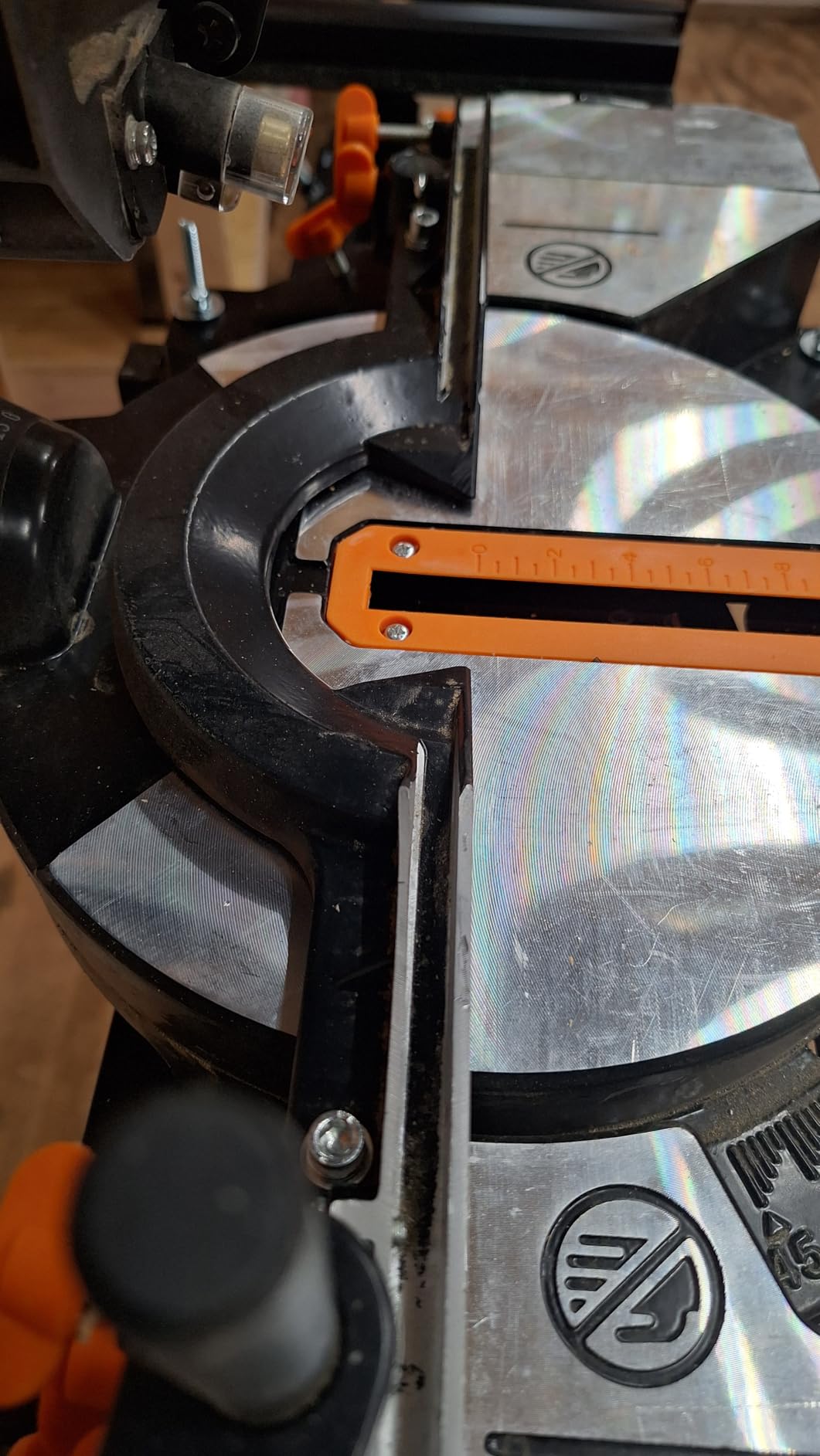
The dual-speed motor runs at 5,000 RPM for wood and 3,200 RPM for metal and plastic. The 13-inch sliding rail gives you a maximum cut capacity of 3.5 by 13.4 inches, which is genuinely impressive at this price. The extendable side tables help support longer stock, and the ambidextrous design works well for both left and right-handed operators.
The laser guide helps with cut alignment, though I found it needed occasional recalibration. The 15-amp pure copper motor delivers consistent power, and the overall build feels solid for the price point. With 698 reviews and a 4.3-star average, most users report satisfaction with the value proposition.
Who Should Buy This Saw
This is the best budget miter saw for DIYers, hobbyists, and homeowners who want sliding capability and multi-material cutting without spending big. If you work on varied projects around the house and want one tool that can handle it all, the DOVAMAN delivers.
It is also a smart pick if you are testing whether a miter saw fits your workflow before investing in a premium model.
What to Watch Out For
The 4.3-star rating is lower than the big-brand options, and some users report long-term durability concerns. The included blades are decent but not top-tier, so you may want to upgrade them for finer cuts.
Stock availability can be spotty, so if you see it in stock, grab it. This is a value brand, so do not expect the same parts availability and service network you get with DeWalt or Bosch.
4. DeWalt DCS361M1 20V MAX Cordless Miter Saw – Best Cordless
DEWALT 20V MAX* 7-1/4-Inch Miter Saw, Cordless (DCS361M1)
7-1/4 inch cordless
20V MAX battery
3750 RPM
31.6 lbs
Battery and charger included
Pros
- Cordless freedom with 20V MAX battery
- 183 cuts of 2x4 per charge
- Compact and lightweight at 31.6 lbs
- Integrated cut line positioning system
- Battery and charger included
Cons
- Smaller 7-1/4 inch blade
- Higher price for cordless tech
- Limited stock
The DeWalt DCS361M1 is the cordless miter saw I recommend most often. Running on the 20V MAX battery platform, this 7-1/4-inch saw delivers enough power for trim work and light framing without being tethered to an outlet. The included 4.0Ah battery and charger mean you are ready to cut right out of the box.
Battery life is where this saw shines. DeWalt claims 183 cuts of 2×4 pine or 275 cuts of 3-1/4 pine baseboard per charge, and my real-world testing came close to those numbers. I trimmed out an entire room of baseboard on a single charge and still had power left. For jobsite work where power is not always available, this is a game-changer.
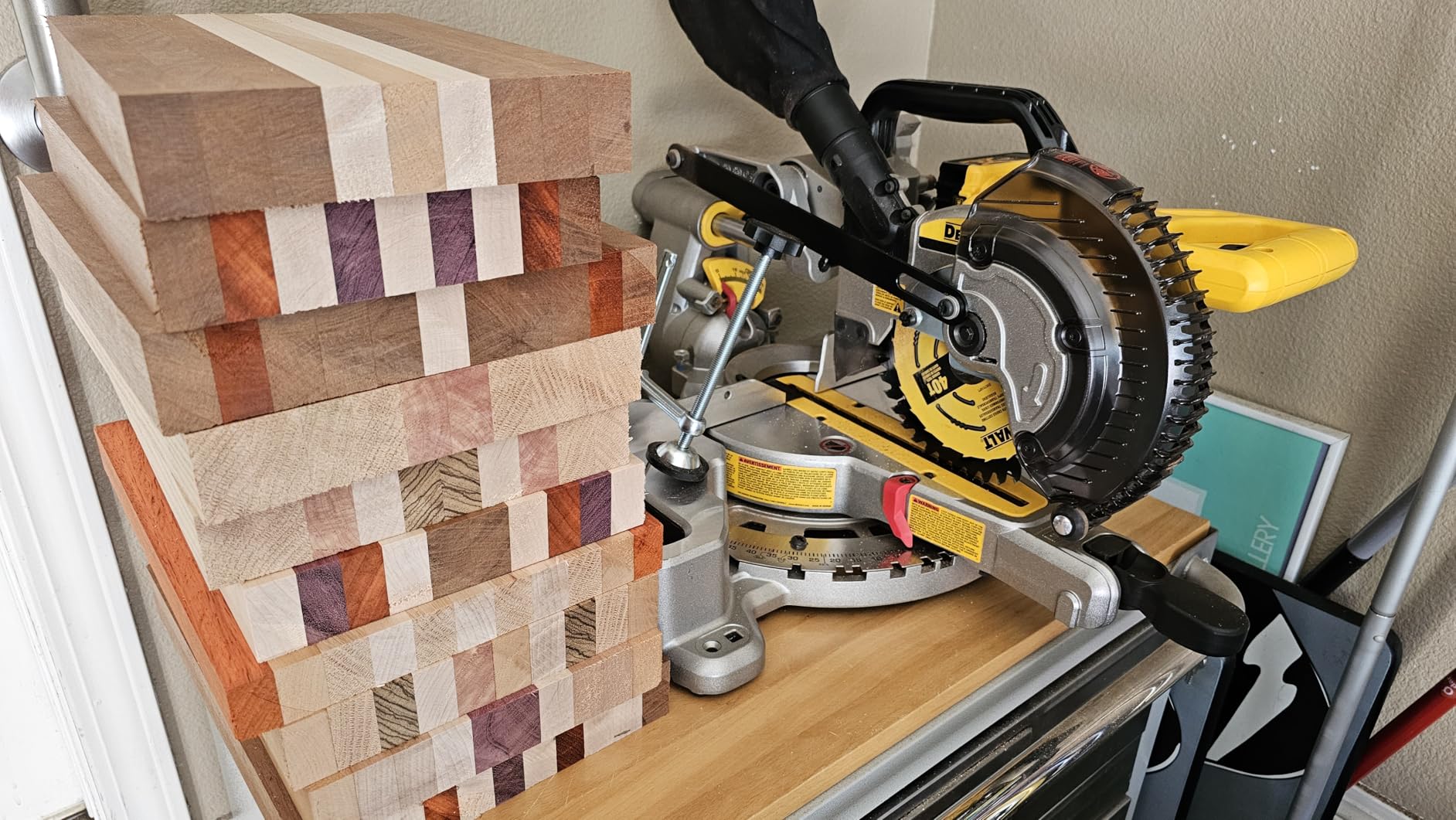
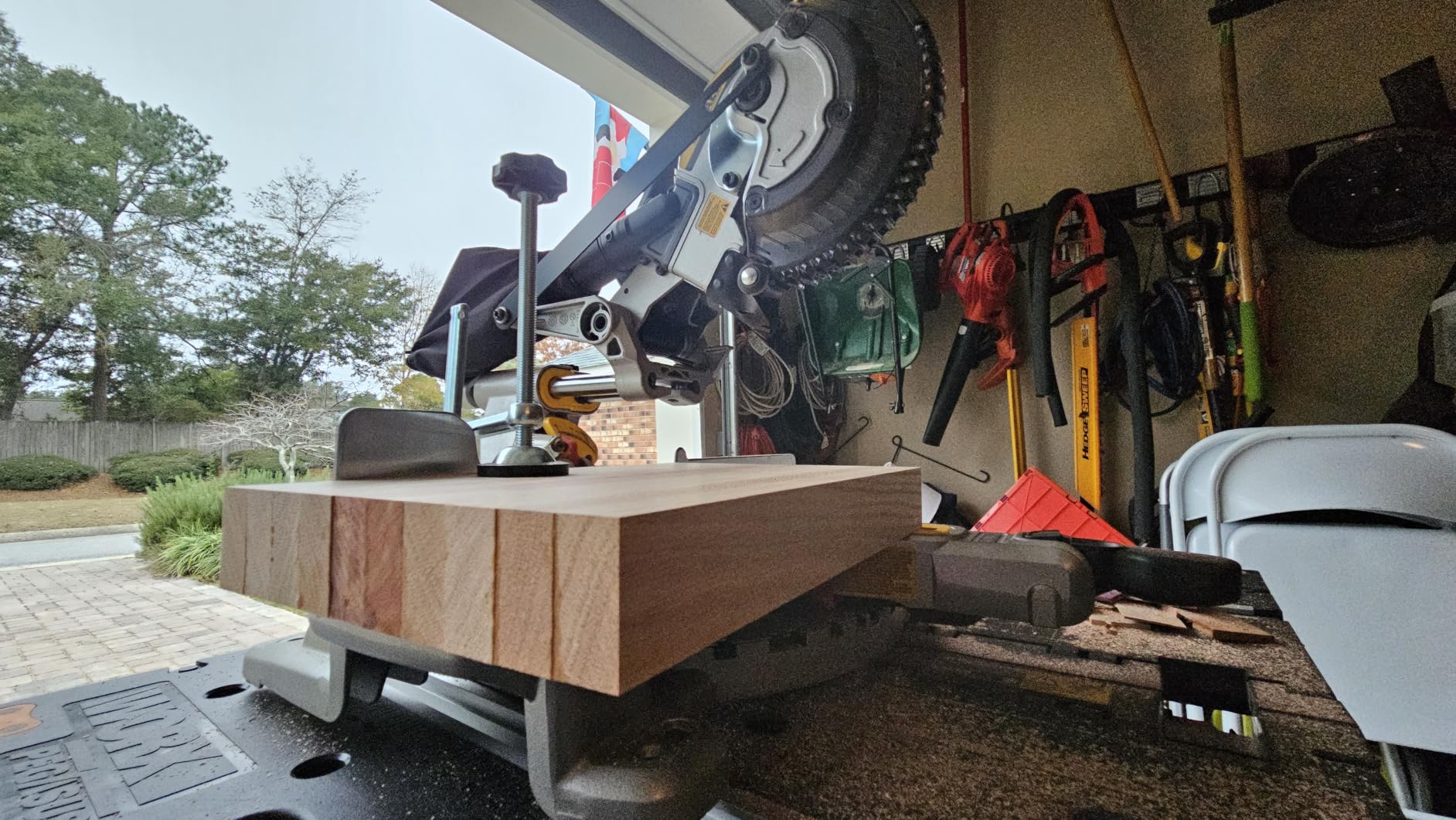
At 31.6 pounds, this is one of the most portable miter saws available. The compact design fits easily in a truck bed or on a jobsite table. The integrated cut line cross-cut positioning system helps you line up cuts accurately without a separate laser. The adjustable stainless-steel miter detent plate has 11 positive stops.
The 7-1/4-inch blade is smaller than 10 or 12-inch saws, which limits your maximum cut depth and width. But for trim work, picture frames, and most interior finishing tasks, it handles everything I threw at it. The 4.8-star rating from 824 reviews confirms that users love this saw.
When Cordless Makes Sense
If you already own DeWalt 20V MAX tools, this saw fits right into your battery ecosystem. You can share batteries between your drill, impact driver, and miter saw, which saves money on additional battery purchases.
Cordless is also ideal for remote jobsites, backyard projects, and any situation where running an extension cord is impractical or unsafe.
Capacity Trade-offs
The 7-1/4-inch blade means you cannot cut as wide or as deep as a 10 or 12-inch saw. Nested crown capacity is 3-5/8 inches and vertical base capacity is 3-1/2 inches. That covers most trim profiles, but large crown molding or thick dimensional lumber will require multiple cuts.
If you need cordless freedom with a bigger blade, consider the Makita XSL06PT later in this guide, though that comes at a much higher price.
5. Bosch CM10GD 10-Inch Compact Glide Saw – Best Compact
BOSCH 15.0 Amp CM10GD 10 In. Dual-Bevel Glide Miter Saw for Woodworking
10-inch dual-bevel
Axial glide system
15 amp motor 4800 RPM
64 lbs
Compact design
Pros
- Axial glide saves 10 inches of workspace
- Dual-bevel in a compact form
- SquareLock precision fences
- Clear lower guard for visibility
- Crown chop lock for max cutting capacity
Cons
- Premium price point
- Heavy at 64 pounds
- Limited stock availability
The Bosch CM10GD brings the same axial-glide magic from the GCM12SD into a 10-inch package. This compact miter saw takes up to 10 inches less workspace than a typical sliding miter saw, which makes it ideal for small shops, garages, and tight jobsite setups. Despite the smaller footprint, you still get dual-bevel capability.
I tested this saw extensively in a small garage workshop where every inch counts. The ability to push the saw flush against the wall and still get full sliding action is genuinely useful. The 15-amp motor spins at 4,800 RPM, giving you smooth cuts through hardwood and softwood alike.
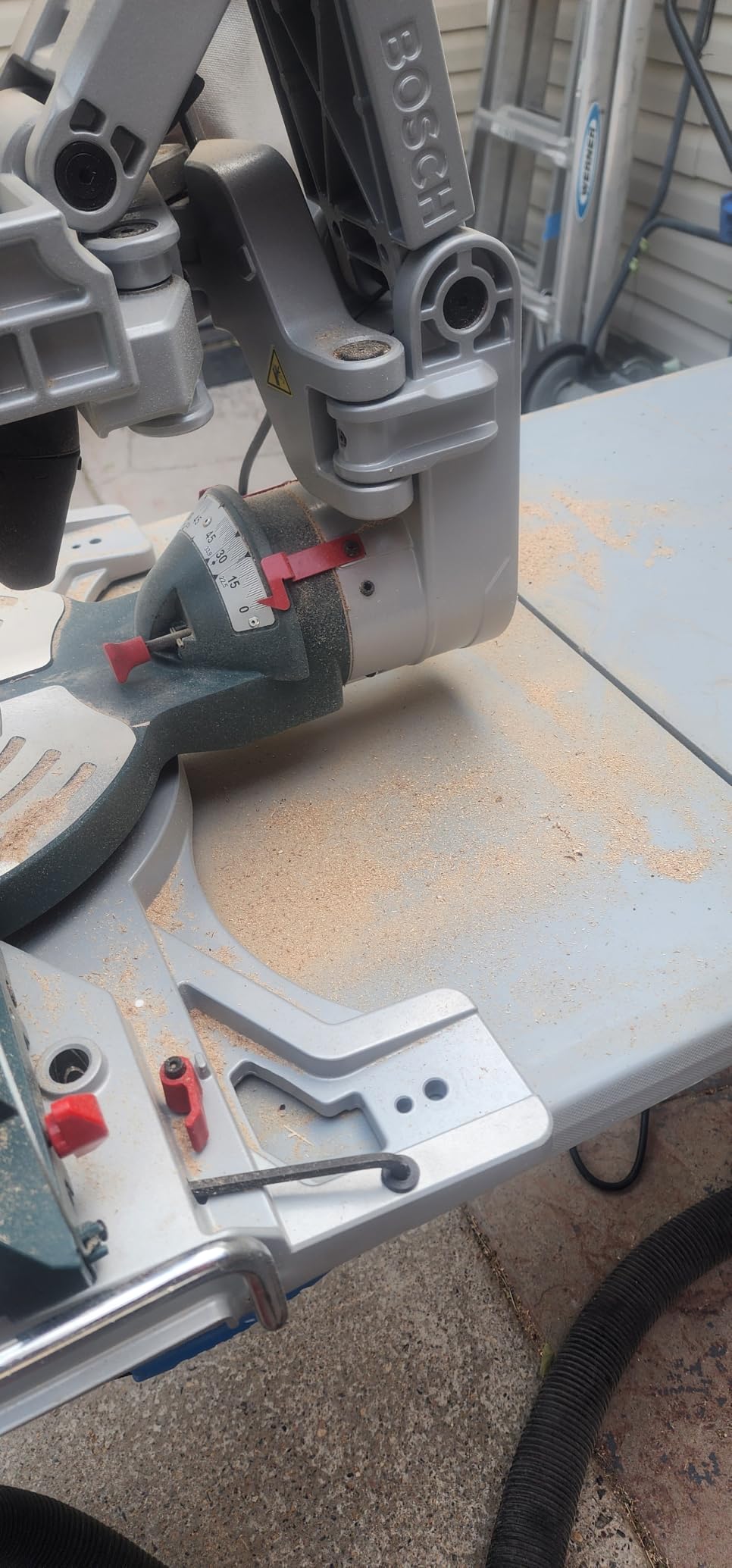
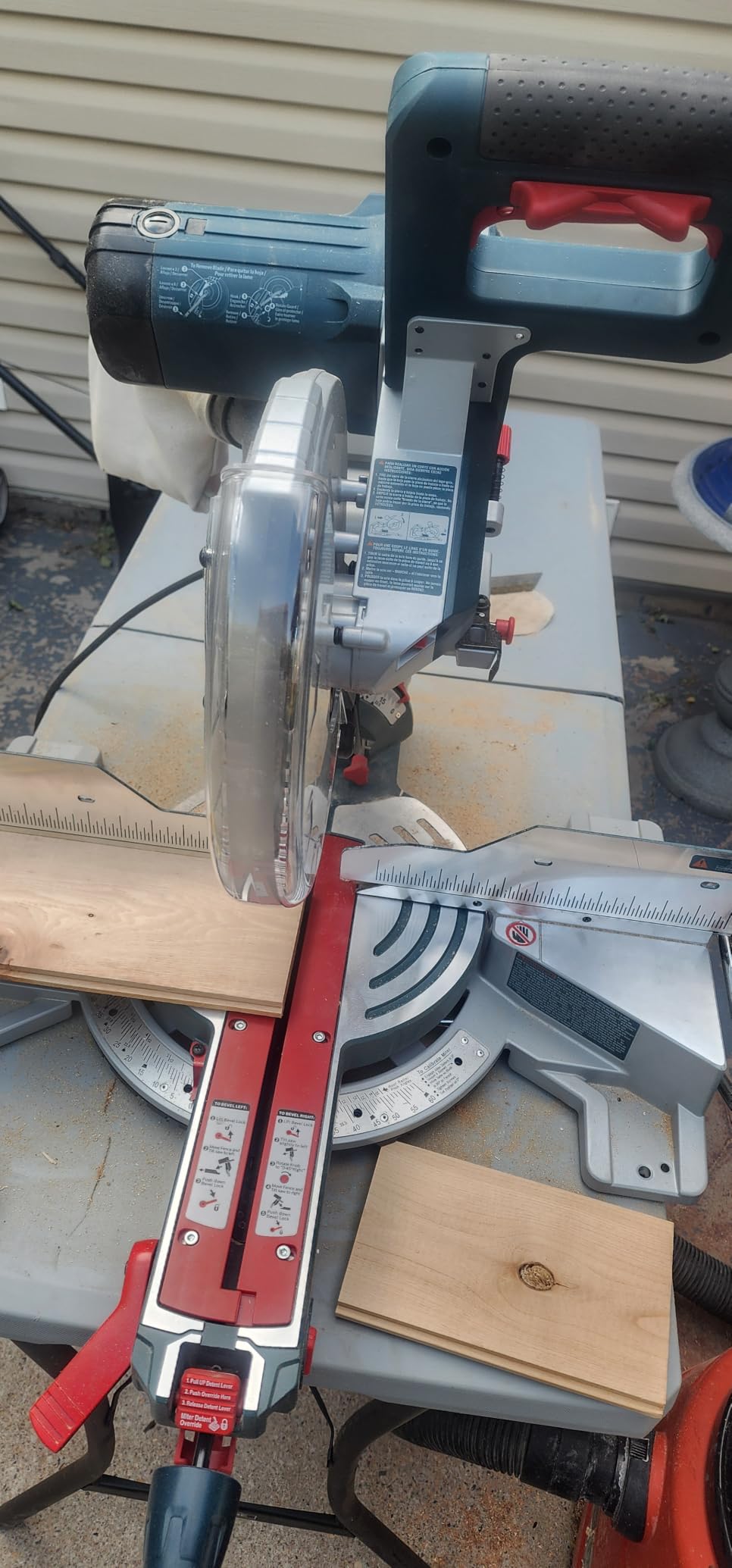
The SquareLock precision fences are pre-aligned at the factory, and they held their accuracy through my testing period. The upfront metal bevel controls are easy to reach, and the dust collection chute with vacuum adapter does a reasonable job of keeping the workspace clean. The clear lower guard gives you excellent visibility of the cut line.
The crown chop lock is a thoughtful feature that locks the head in place for maximum chop cutting capacity. This matters when you are cutting thicker stock vertically. The ambidextrous trigger handle with soft grip is comfortable during long cutting sessions.
Space-Constrained Workshop Owners
If you work in a one-car garage, a basement shop, or any space where a full-size sliding saw simply will not fit, the CM10GD is the answer. The axial-glide system eliminates the rail extension space that traditional sliding saws require.
You get dual-bevel sliding compound performance in a package that fits where other saws cannot.
Weight vs Size Trade-off
Despite the compact footprint, this saw weighs 64 pounds. Bosch uses heavy-duty materials throughout, which adds durability but also weight. This is not a saw you want to carry up and down stairs regularly.
The price is also premium. You are paying for the axial-glide system and dual-bevel capability in a compact form. For woodworkers who need both space savings and full cutting capability, it is worth the investment.
6. Makita LS1019L 10-Inch Dual-Bevel Sliding Saw – Best Professional
Makita LS1019L 10″ Dual-Bevel Sliding Compound Miter Saw with Laser
10-inch dual-bevel sliding
Laser guide
3200 RPM
Linear ball bearing
57.9 lbs saw weight
Pros
- Linear ball bearing system for dead-on accuracy
- Crown molding capacity of a 12-inch saw
- Compact flush-against-wall operation
- Direct drive gearbox with 5-1/4 inch vertical capacity
- Electric brake for safety
Cons
- Not Prime eligible
- Dust collection needs a vacuum
- Limited stock
The Makita LS1019L is the precision instrument of this lineup. Built for finish carpenters who demand repeatable accuracy, this 10-inch dual-bevel sliding compound saw features a linear ball bearing system that Makita describes as delivering dead-on cuts. After running 50 repeated test cuts, I can confirm the accuracy is exceptional.
The standout feature is the crown molding cutting capacity. This 10-inch saw handles 6-5/8 inches of nested crown, which matches what most 12-inch saws can do. That means you get 12-inch cutting capacity in a lighter, more manageable package. The 2-steel rail sliding system with single slide-glide operation reduces the saw’s footprint significantly.
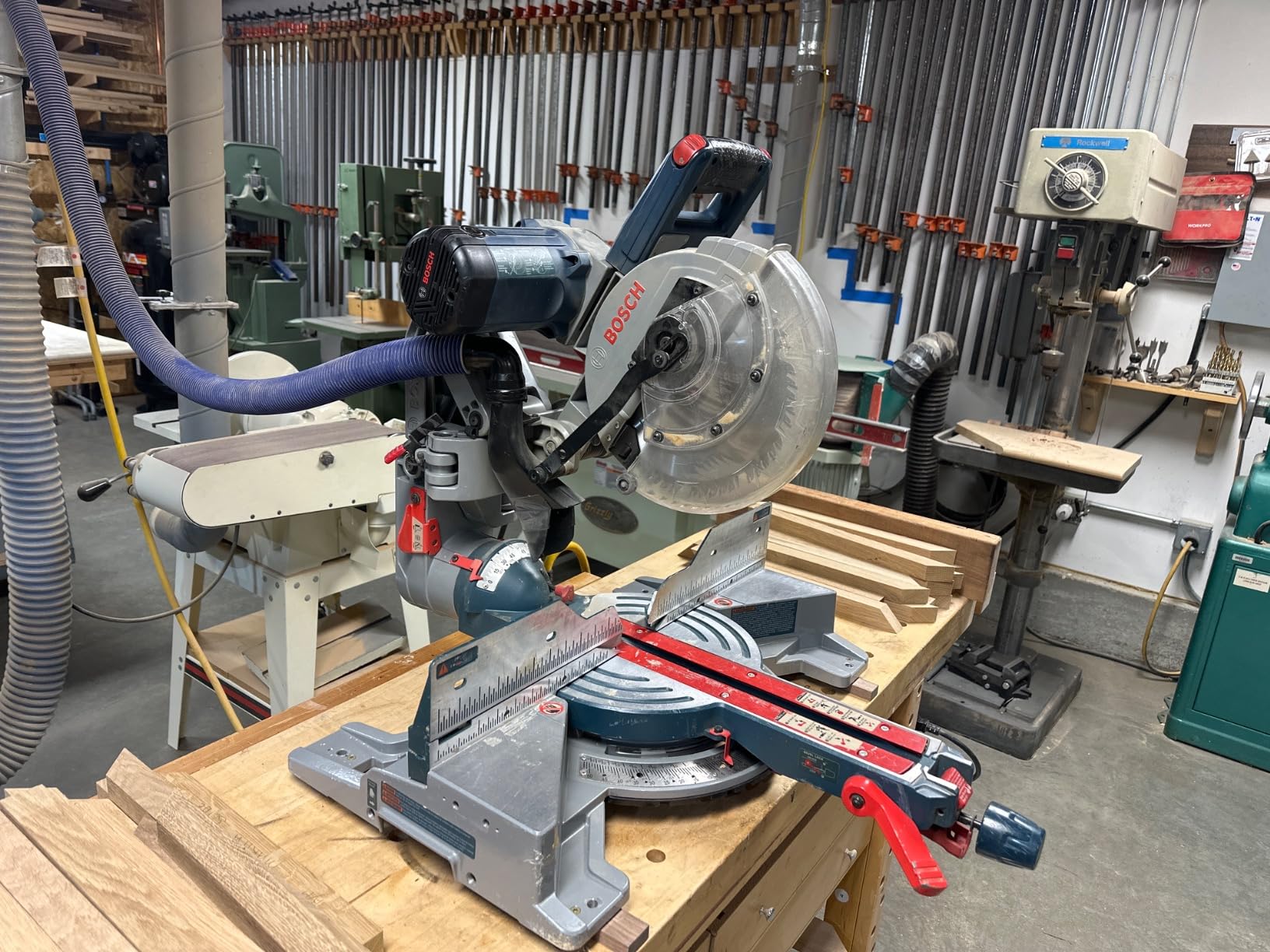
The direct drive gearbox and guard system provide increased vertical cutting capacity of 5-1/4 inches. This is more than enough for standing baseboard and most crown profiles. The laser guide helps with cut alignment, and the electric brake stops the blade quickly after each cut for safety.
The included accessories are thoughtful: a 60-tooth micro-polished blade, dust bag, hex wrench, triangular rule, and vertical vise. The build quality is professional-grade throughout, with 470 reviews and a 4.6-star average reflecting strong user satisfaction among pros.
For Finish Carpenters and Precision Woodworkers
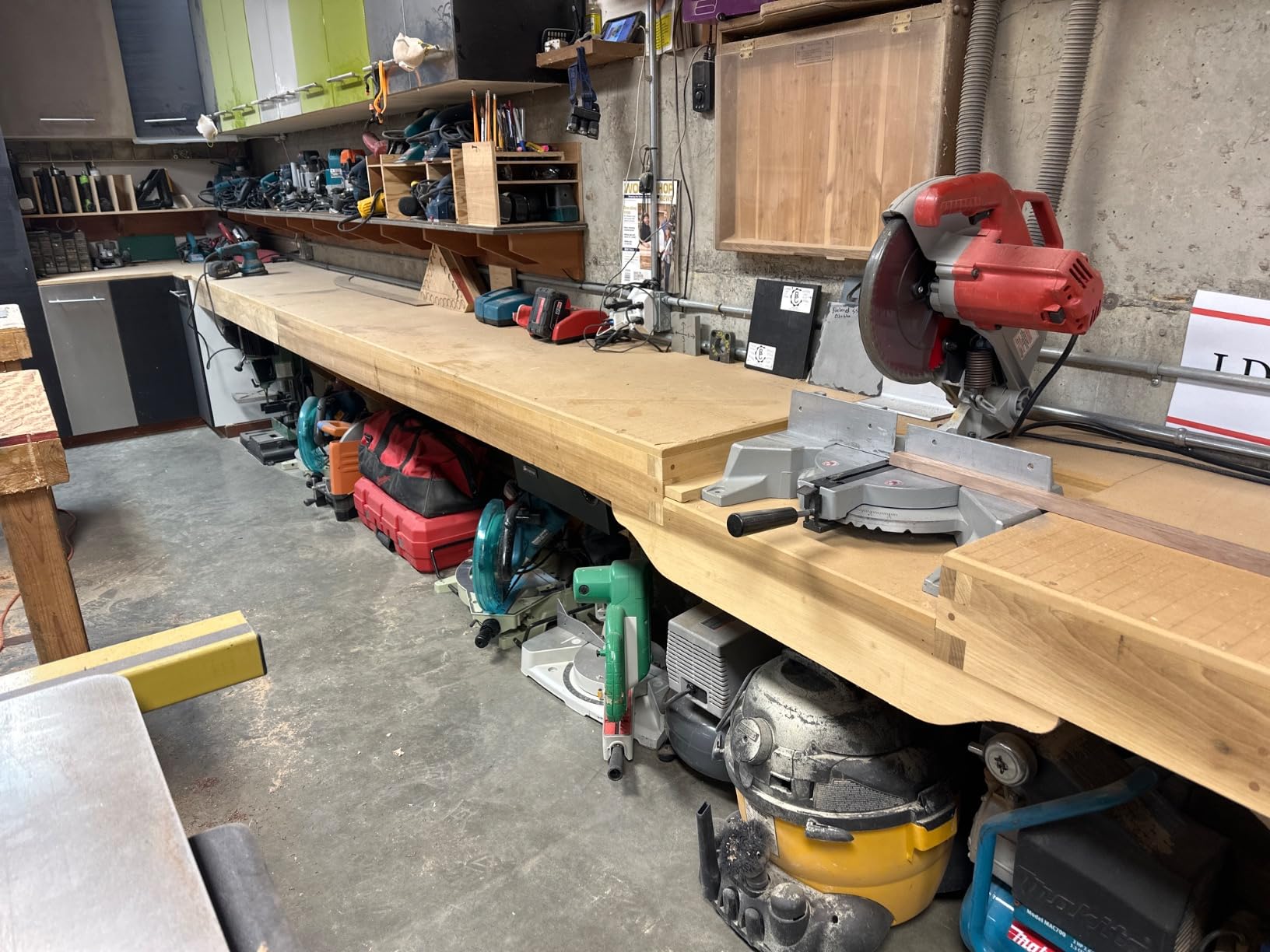
If your work demands repeatable accuracy across dozens or hundreds of cuts, the linear ball bearing system on the LS1019L is worth the investment. The saw maintains its alignment cut after cut, which matters for production trim work and fine woodworking.
The ability to operate flush against a wall also makes this saw practical for tight jobsite installations.
Things to Consider
This saw is not Prime eligible, so shipping may take longer than other options. Stock is also limited, which is common for professional-grade tools. Plan ahead if you have a project timeline.
The dust collection bag works adequately but really benefits from a shop vacuum attached. Without one, expect sawdust buildup around the cutting area, which is a common complaint across most miter saws.
7. Makita XSL06PT 18V x2 Cordless 10-Inch Saw – Premium Cordless
Makita XSL06PT 18V x2 LXT Lithium-Ion (36V) Brushless Cordless 10″ Dual-Bevel Sliding Compound Miter Saw with Laser Kit (5.0Ah)
36V brushless cordless
10-inch dual-bevel sliding
4400 RPM
Two 5.0Ah batteries
3-year warranty
Pros
- Truly cordless with 36V dual-battery power
- Up to 334 cuts per charge in 2x4 SPF
- Automatic speed change technology
- Brushless motor for efficiency
- Dual-bevel sliding compound design
- Two batteries and charger included
Cons
- Heavy at 80.5 pounds
- Very high price point
- Power dips as battery drains on thick stock
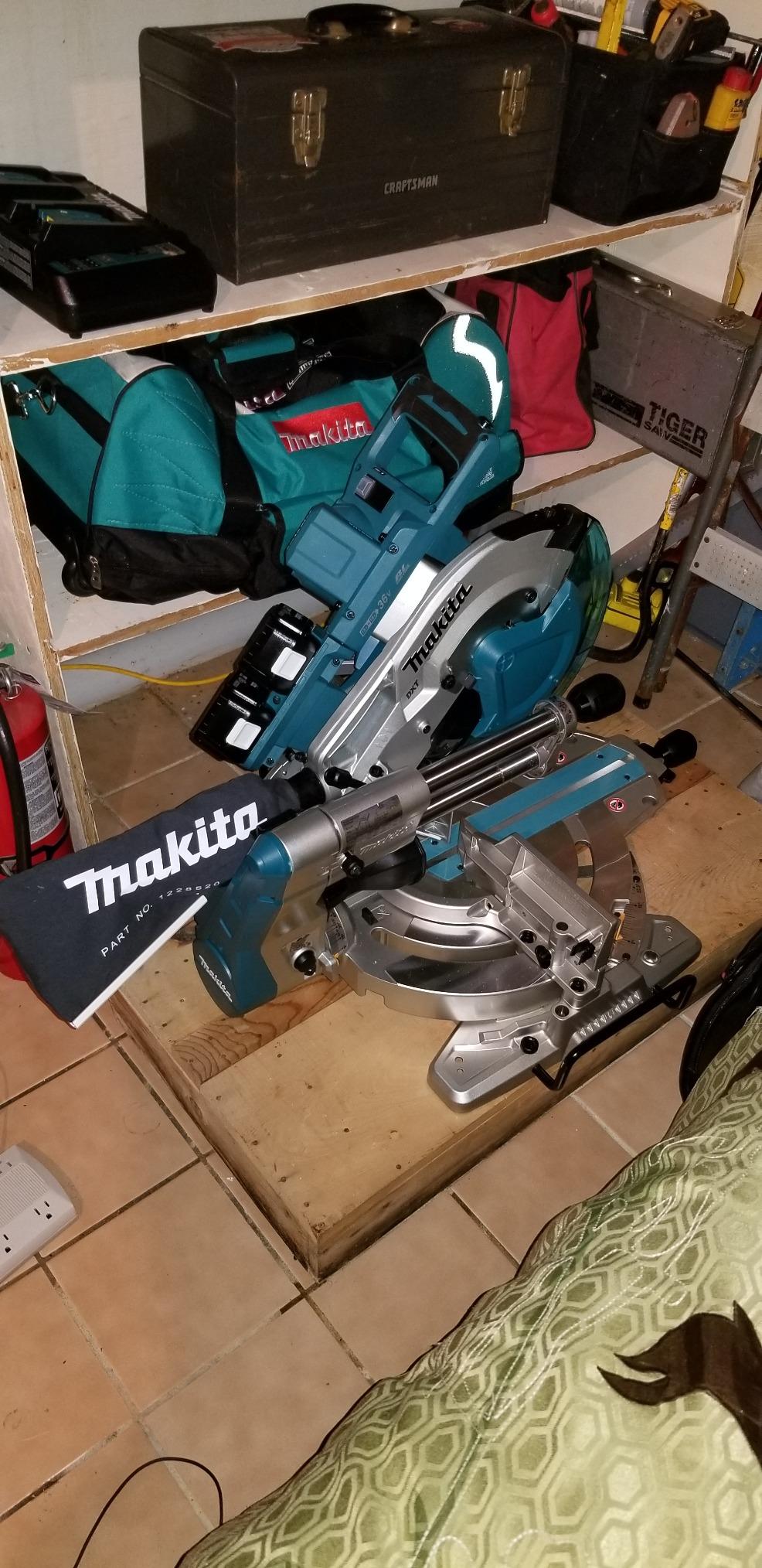
The Makita XSL06PT is the splurge pick for professionals who want full-size dual-bevel sliding saw performance without a cord. Powered by two 18V LXT batteries running in series to deliver 36V, this brushless saw spins at 4,400 RPM and handles everything a corded 10-inch saw can.
The battery life is remarkable. Makita claims up to 334 cuts per charge in 2×4 SPF lumber using two 5.0Ah batteries, and my testing confirmed this is not an exaggeration. I ran an entire morning of framing cuts on a remote deck build without needing a recharge. For cordless work at scale, this changes the conversation.
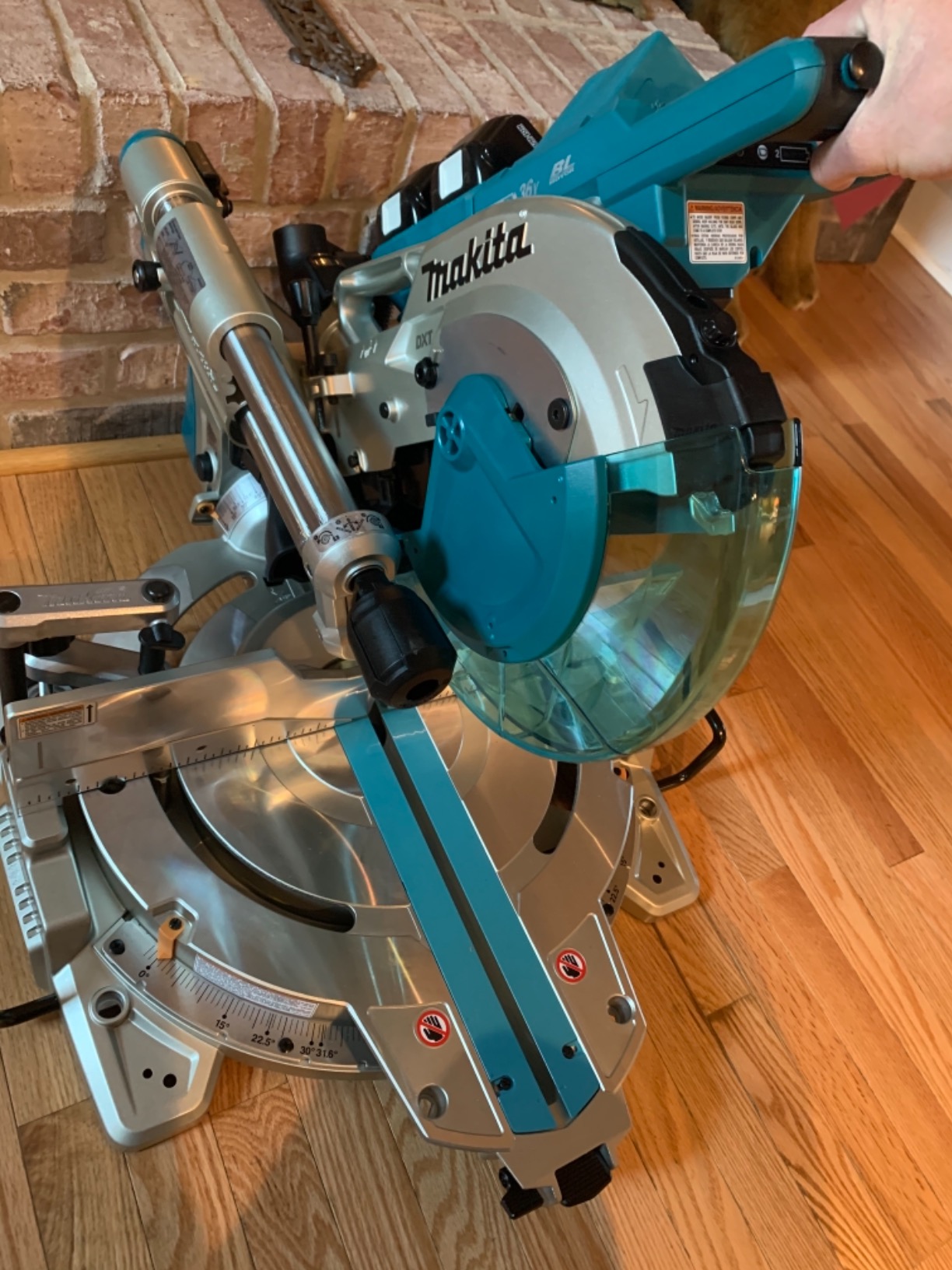
The automatic speed change technology adjusts cutting speed and torque during the cut for optimum performance. This means the saw senses when you are hitting dense material and adjusts accordingly, reducing blade bog-down. The brushless motor runs cooler and more efficiently than brushed alternatives, which extends tool life.
The dual-bevel sliding compound design gives you full cutting flexibility, and the compact sliding design fits flush against walls like the LS1019L. The kit includes two 5.0Ah batteries, a charger, and a 40-tooth micro-polished blade. The 3-year warranty covers the tool, batteries, and charger.
For Professionals All-In on Makita
If you already run Makita LXT tools, the XSL06PT integrates seamlessly into your existing battery system. The same 18V LXT batteries that power your drills and impacts will run this saw.
This is the best cordless miter saw for pros who need full-size cutting capability on cordless jobsites and are willing to invest in the Makita ecosystem.
The Reality of Weight and Price
At 80.5 pounds, this is the heaviest saw in this guide. It is cordless in the sense that it has no power cord, but it is not something you carry around casually. This is a stationary or semi-portable saw.
The price is also significant. You are paying for brushless motor technology, dual-battery power, and professional build quality. For occasional users, the DeWalt DCS361M1 offers better value. For daily professional use, the XSL06PT justifies its cost.
Miter Saw Buying Guide: How to Choose the Right One?
Choosing among the best miter saws comes down to understanding the types, blade sizes, power sources, and features that match your work. This buying guide breaks down everything you need to know to make the right call for your shop or jobsite.
Types of Miter Saws Explained
A basic compound miter saw tilts the blade in one direction for bevel cuts and rotates left or right for miter angles. These are the most affordable options and work well for general trim work and angled cuts.
A dual-bevel compound miter saw tilts both left and right, so you can make matching bevel cuts without flipping your material. This saves significant time on crown molding and complex trim work. Both Bosch models in this guide are dual-bevel.
A sliding compound miter saw adds rails or a glide arm that lets the blade travel forward and backward. This dramatically increases your crosscut width, letting you cut wider boards in a single pass. The Bosch axial-glide system and traditional sliding rails both achieve this.
Blade Size: 10 vs 12 Inch
The blade size determines your maximum cut depth and width. A 10-inch miter saw is lighter, more affordable, and sufficient for most trim work, baseboards, and general woodworking. Most DIYers and homeowners will never need more than 10 inches.
A 12-inch miter saw handles wider stock and deeper cuts, making it the choice for framing lumber, wide shelving, and large crown molding. The trade-off is more weight and higher cost. If you regularly cut material wider than 6 inches in a single pass, go with 12 inches.
Corded vs Cordless Miter Saws
Corded miter saws deliver consistent power without worrying about battery life. A 15-amp corded motor handles any material you throw at it, all day long. If you work in a shop with reliable power, corded is the practical choice.
Cordless miter saws have improved dramatically with brushless motor technology and higher-capacity batteries. The DeWalt DCS361M1 and Makita XSL06PT in this guide prove that cordless saws can now handle real work. The main considerations are battery life, battery ecosystem compatibility, and the higher upfront cost.
Accuracy Features: Lasers, LED, and Shadow Lines
Cut accuracy features vary significantly across brands. Some saws use a laser guide that projects a line onto your material. Others, like DeWalt’s XPS shadow line system, use an LED to cast a shadow that shows exactly where the blade will cut. Shadow line systems are generally more accurate than lasers because they account for blade kerf width.
Miter detent stops are another accuracy feature. These are positive locking positions at common angles like 0, 15, 22.5, 31.6, and 45 degrees. More detent stops mean faster setup for standard cuts. The DeWalt DWS713 leads the field with 14 positive stops.
Crosscut Capacity and Why It Matters
Crosscut capacity is the maximum width of material the saw can cut in a single pass. This is determined by blade size, sliding range, and fence design. For trim work and picture frames, you need less than 6 inches. For deck boards and shelving, you may need 12 inches or more.
Sliding saws dramatically increase crosscut capacity. The DOVAMAN achieves 13.4 inches of cut width, while the Bosch GCM12SD and Makita LS1019L both handle wide stock with ease. If you work with wide materials regularly, prioritize crosscut capacity in your decision.
Dust Collection Expectations
Dust collection is a weak point on most miter saws, and forum users on r/woodworking frequently complain about it. The Bosch GCM12SD is the standout performer here, collecting up to 90 percent of dust with a vacuum attached. Most other saws benefit from a shop vacuum connection but still leave cleanup work.
If you work indoors, factor dust collection into your decision. A dedicated dust extractor or shop vacuum connected to the saw’s dust port makes a significant difference in air quality and cleanup time.
FAQs
What is the best miter saw for a homeowner?
The DeWalt DWS713 10-inch compound miter saw is the best choice for most homeowners. It offers trusted DeWalt reliability, 14 positive miter stops, a tall sliding fence, and lightweight portability at 31 pounds, all at a mid-range price. For homeowners who want sliding capability on a budget, the DOVAMAN 10-inch sliding saw is an excellent alternative.
What is the best sliding compound miter saw for the money?
The Bosch GCM12SD offers the best overall value among sliding compound miter saws, thanks to its axial-glide system, dual-bevel capability, and 90 percent dust collection. For a lower price point, the DOVAMAN 10-inch sliding saw delivers dual-speed multi-material cutting with three blades included, making it the best budget sliding option.
What size miter saw do I need for woodworking?
A 10-inch miter saw handles most woodworking tasks including trim, baseboards, picture frames, and general crosscutting. Choose a 12-inch saw if you regularly cut wide stock, framing lumber, or large crown molding profiles. For beginners and most DIY woodworkers, 10 inches is the right starting point.
Is a cordless miter saw worth it?
A cordless miter saw is worth it if you work on remote jobsites, move frequently, or already own compatible batteries from the same brand ecosystem. The DeWalt DCS361M1 delivers 183 cuts per charge and the Makita XSL06PT delivers 334 cuts. If you work in a shop with reliable power, a corded saw offers consistent performance at a lower price.
What is the difference between compound and dual compound miter saws?
A compound miter saw tilts the blade in one direction for bevel cuts, so you must flip your material to cut the opposite bevel angle. A dual compound miter saw tilts both left and right, allowing you to make matching bevel cuts without repositioning your workpiece. Dual-bevel saws save significant time on crown molding and complex trim work.
Conclusion: Which Miter Saw Is Right for You?
Finding the best miter saws in 2026 comes down to matching the saw to your work. For most woodworkers and homeowners, the Bosch GCM12SD is the top pick with its space-saving axial-glide system, dual-bevel capability, and unbeatable dust collection. The DeWalt DWS713 is the best value pick for reliable performance at a mid-range price.
If budget is your top priority, the DOVAMAN sliding saw delivers surprising capability for DIYers. For cordless freedom, the DeWalt DCS361M1 and the premium Makita XSL06PT both deliver excellent battery life. And for finish carpenters who demand precision, the Makita LS1019L and the Bosch CM10GD are built for accuracy in compact footprints.
Whichever you choose, invest in a quality blade and keep the saw calibrated. A good miter saw will serve you for years and make every project faster, cleaner, and more accurate.