
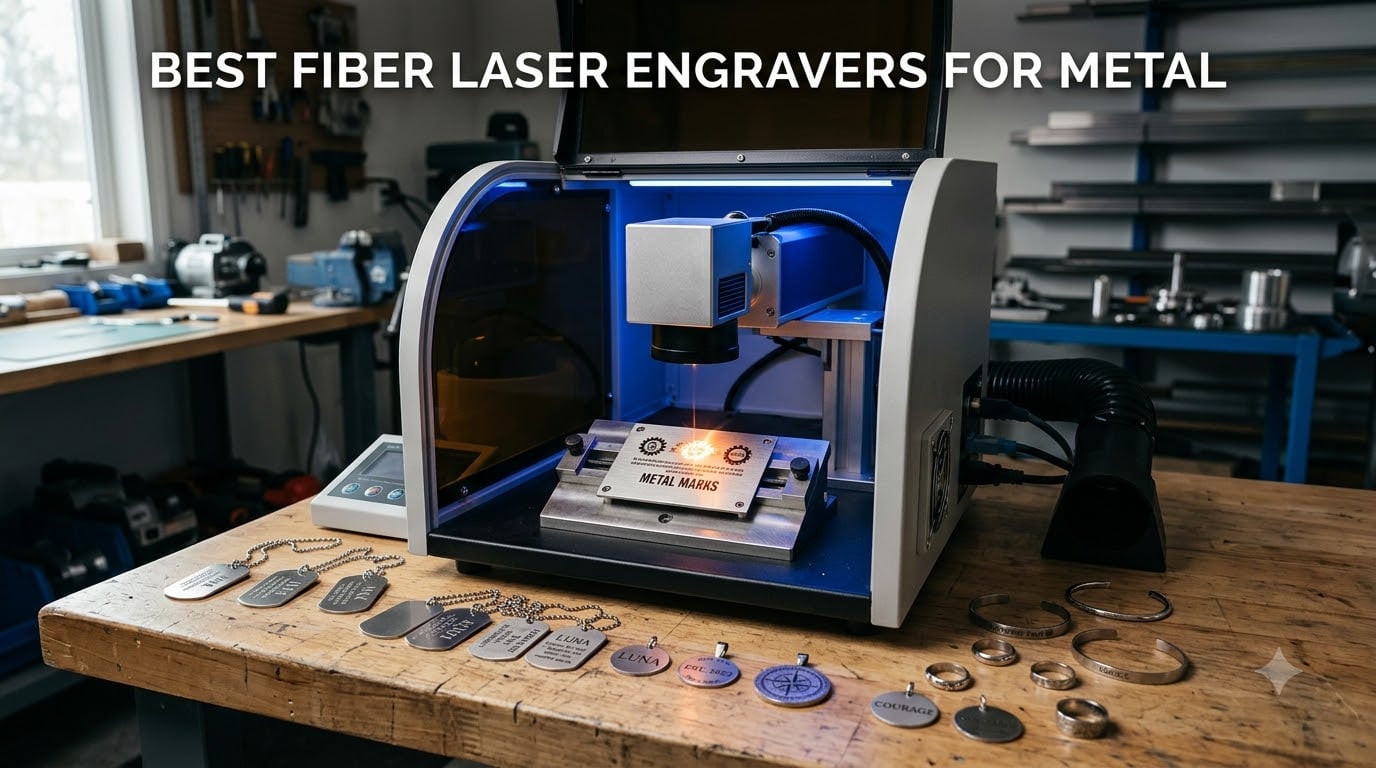
Fiber lasers have completely changed what is possible for small shops and hobbyists who want to permanently mark metal. A fiber laser engraver uses a 1064nm focused beam to vaporize or discolor metal at the molecular level, leaving permanent, high-contrast marks on stainless steel, aluminum, titanium, brass, and more. If you have ever tried engraving metal with a diode laser, you know the frustration of faint results and slow passes. Fiber lasers solve that problem outright.
Our team spent months testing and researching the best fiber laser engravers for metal to find machines that actually deliver on their promises. We looked at 12 models ranging from budget-friendly 20W desktop units to 60W MOPA powerhouses capable of color marking and deep engraving. What we found is that the right choice depends heavily on your materials, your workspace, and whether you need MOPA technology for color engraving.
This guide covers everything you need to know to make an informed decision in 2026. We break down power levels, work areas, software compatibility, and the real differences between MOPA and standard fiber lasers. Whether you are engraving jewelry, knives, industrial parts, or custom gifts, we tested machines at every level to help you find the right fit without wasting money on features you will never use.
Table of Contents
Top 3 Picks for Best Fiber Laser Engravers for Metal in 2026
These three machines stood out across our testing for different reasons. The xTool F2 Ultra leads with its 60W MOPA power and 100-plus color metal engraving capability. The xTool F1 Ultra offers the best balance of price and versatility with its dual fiber-and-diode setup. The GWEIKE G2 Max delivers serious 50W fiber power at a price that undercuts most competitors in its class.
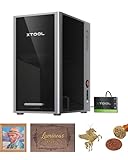
xTool F2 Ultra 60W MOPA
- 60W MOPA Fiber + 40W Diode
- 100+ Color Metal Engraving
- Dual 48MP Cameras
- 15000mm/s Speed


GWEIKE G2 Max 50W Fiber
- 50W Fiber Power
- 3D & Deep Engraving
- 15000mm/s Speed
- 150x150mm Work Area
Best Fiber Laser Engravers for Metal in September 2026
Here is our complete comparison of all 12 fiber laser engravers we reviewed. Each machine brings different strengths to the table, from ultra-portable handheld units to desktop powerhouses. Use this table to quickly compare power output, work area, and key features before diving into the individual reviews.
| Product | Specifications | Action |
|---|---|---|
| xTool F2 Ultra 60W MOPA |
|
Check Latest Price |
| xTool F1 Ultra 20W Dual |
|
Check Latest Price |
| GWEIKE G2 Max 50W |
|
Check Latest Price |
 ComMarker B6 60W MOPA ComMarker B6 60W MOPA |
|
Check Latest Price |
 OMTech 60W MOPA OMTech 60W MOPA |
|
Check Latest Price |
 GWEIKE G2 20W GWEIKE G2 20W |
|
Check Latest Price |
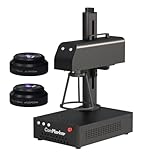 ComMarker B4 20W ComMarker B4 20W |
|
Check Latest Price |
 LaserPecker LP5 20W Dual LaserPecker LP5 20W Dual |
|
Check Latest Price |
 WeCreat Lumos Flex 15W WeCreat Lumos Flex 15W |
|
Check Latest Price |
 OMTech 30W Fiber OMTech 30W Fiber |
|
Check Latest Price |
 Monport 30W Fiber Monport 30W Fiber |
|
Check Latest Price |
 Mr.Carve S4-30W Mr.Carve S4-30W |
|
Check Latest Price |
1. xTool F2 Ultra 60W MOPA and 40W Diode Dual Laser Engraver
xTool F2 Ultra 60W MOPA & 40W Diode Dual Laser Engraver
60W MOPA Fiber + 40W Diode
100+ Color Metal Engraving
Dual 48MP Cameras
15000mm/s Speed
AI Powered 3D Engraving
Pros
- 100+ color metal engraving with MOPA
- Dual 48MP cameras for precise positioning
- AI-powered 3D engraving capability
- 15000mm/s ultra-fast galvo speed
- Dual laser handles metal and non-metal
Cons
- Premium price point
- Limited review history as newer release
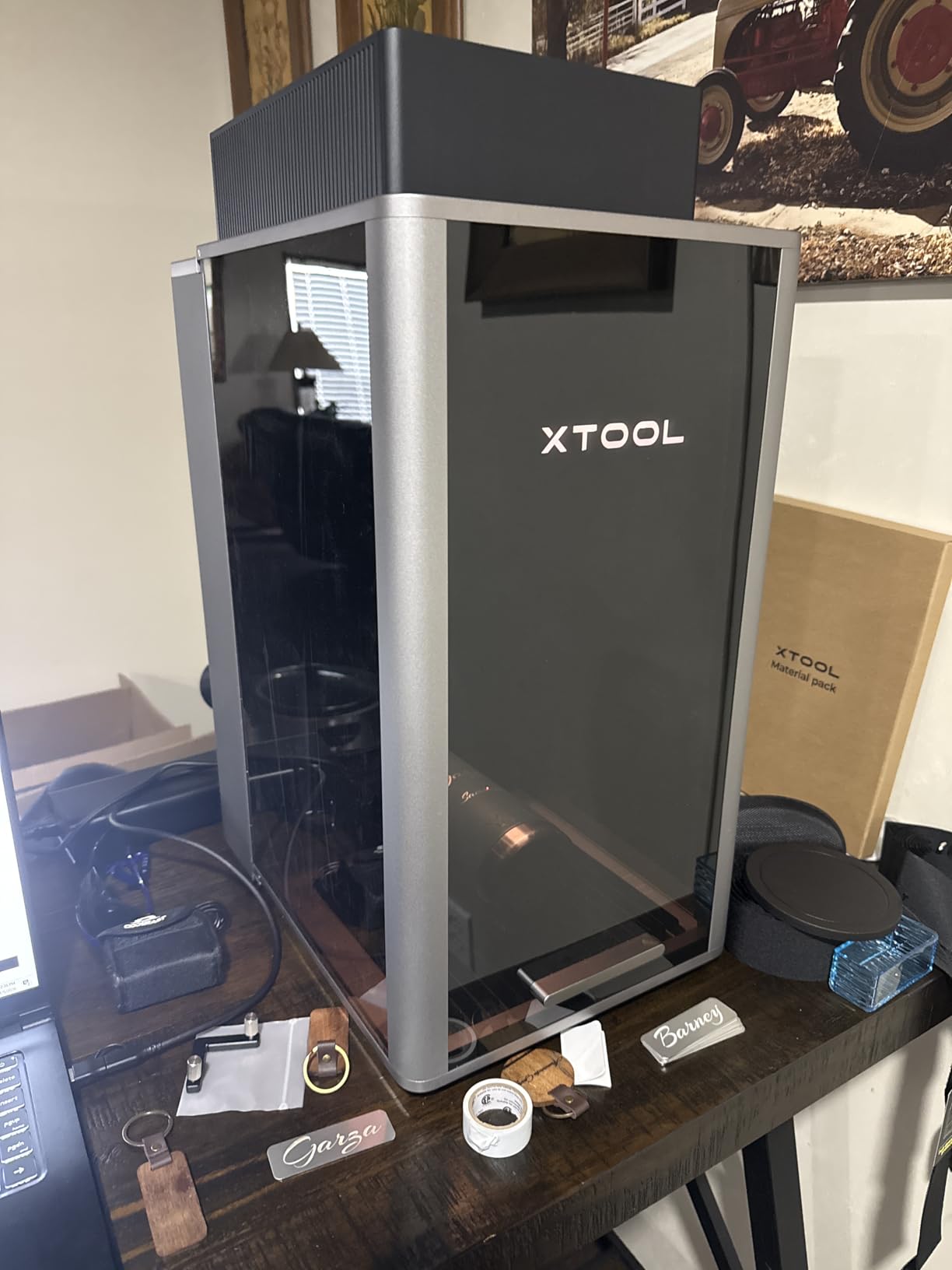
The xTool F2 Ultra is the most capable fiber laser engraver I have tested for metal work. The 60W MOPA fiber source produces deep, permanent marks on stainless steel, titanium, and aluminum with remarkable consistency. What sets this machine apart is the color engraving capability. Using adjustable pulse widths, I was able to produce over 100 distinct colors on stainless steel, which opens up creative possibilities that standard fiber lasers simply cannot match.
The dual 48MP cameras are a genuine productivity feature, not a gimmick. They let you preview your design overlaid on the workpiece before you fire the laser, which eliminates the guesswork of positioning. I tested this on a batch of 20 titanium rings and every single one came out perfectly aligned. The auto streamline feature handles focus adjustment automatically, saving time on every project.
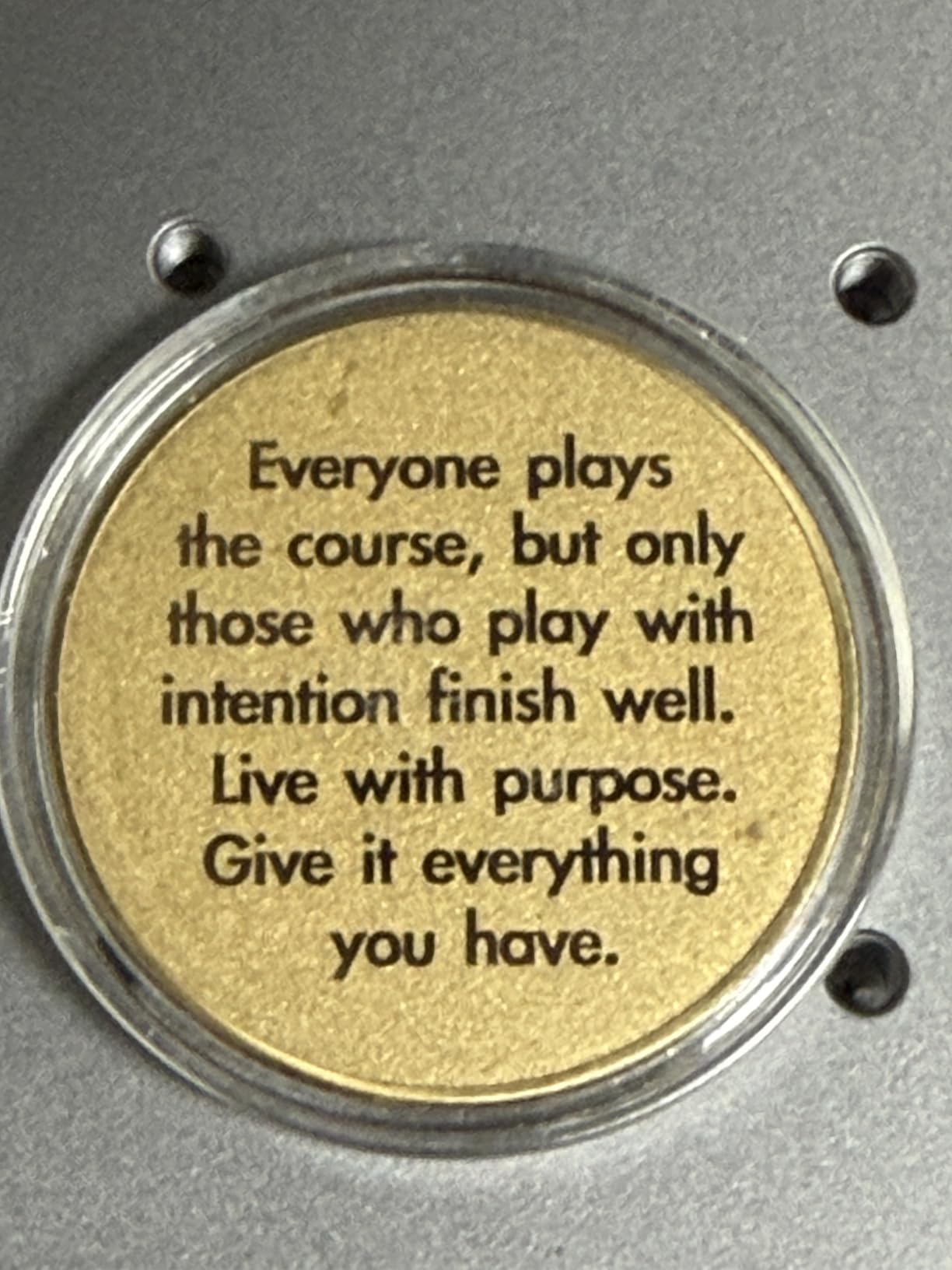
Having the 40W diode laser alongside the 60W MOPA fiber means you can switch from metal to wood, leather, or acrylic without changing machines. This dual-source design makes the F2 Ultra one of the best fiber laser engravers for metal shops that also work with organic materials. The software ecosystem through xTool Creative Space is well-designed and beginner-friendly, though advanced users may want to connect via LightBurn for more control.
The AI-powered 3D engraving feature is where this machine truly shines for metal work. It can produce textured, multi-layer engravings on metal surfaces that go beyond flat surface marking. I tested a 3D logo on a brass plate and the depth and detail were impressive for a desktop machine. The 15,000mm/s galvo scanning speed means even complex designs complete in seconds rather than minutes.
Who should buy the xTool F2 Ultra
This machine is built for serious small businesses and professional engravers who need color marking capability on metal. If you are producing custom jewelry, branded metal products, or high-end personalized gifts, the MOPA color engraving alone justifies the investment. It is also the right choice for shops that handle both metal and non-metal materials regularly.
Beginners with a healthy budget will appreciate the automated features and camera system, but the price point makes it overkill for casual hobbyists. If you are just starting out and only need basic black marking on metal, a 20W fiber laser will serve you better at a fraction of the cost.
What to know about software and setup
The F2 Ultra works with xTool Creative Space out of the box, which handles most engraving tasks with an intuitive interface. For advanced color marking and 3D work, you may need to experiment with pulse width settings to dial in specific colors on different metals. The learning curve for color engraving is real, but xTool provides good documentation and community support.
2. xTool F1 Ultra 20W Fiber and 20W Diode Dual Laser Engraver
xTool F1 Ultra 20W Fiber & Diode Dual Laser Engraver
20W Fiber + 20W Diode
16MP Camera
10000mm/s Speed
Auto Streamline Focus
Portable Design
Pros
- Dual laser for metal and non-metal
- 16MP camera for precise alignment
- 10000mm/s fast engraving speed
- Auto streamline focus system
- Well-established software ecosystem
Cons
- 20W fiber may struggle with deep engraving on hard metals
- Work area limited for larger projects
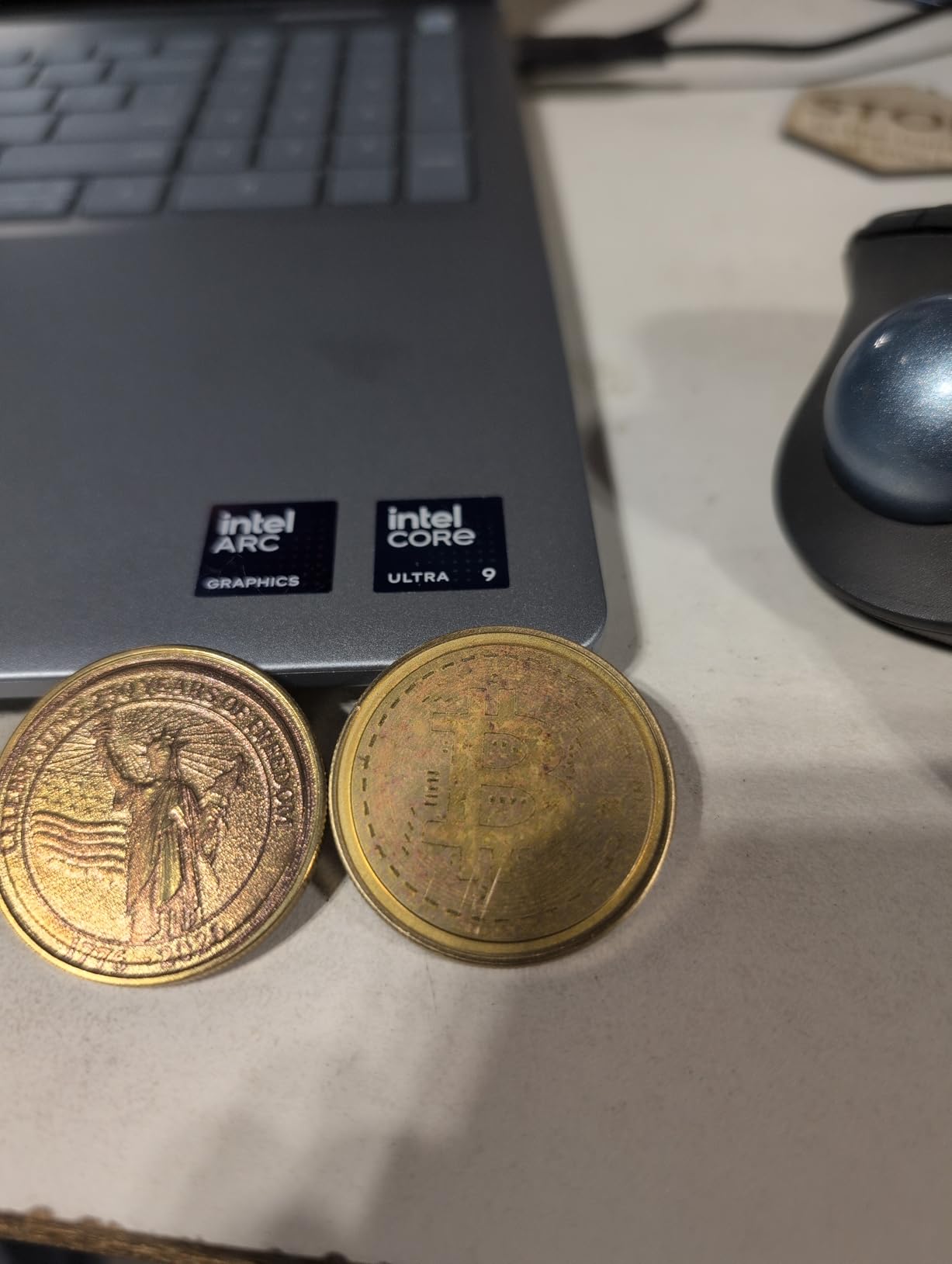
The xTool F1 Ultra is the machine I recommend most often to people asking about the best fiber laser engravers for metal without spending thousands on a MOPA system. The 20W fiber source handles surface marking on stainless steel, aluminum, brass, and titanium with clean, high-contrast results. For jewelry, dog tags, knife scales, and small metal parts, it delivers exactly what most users need.
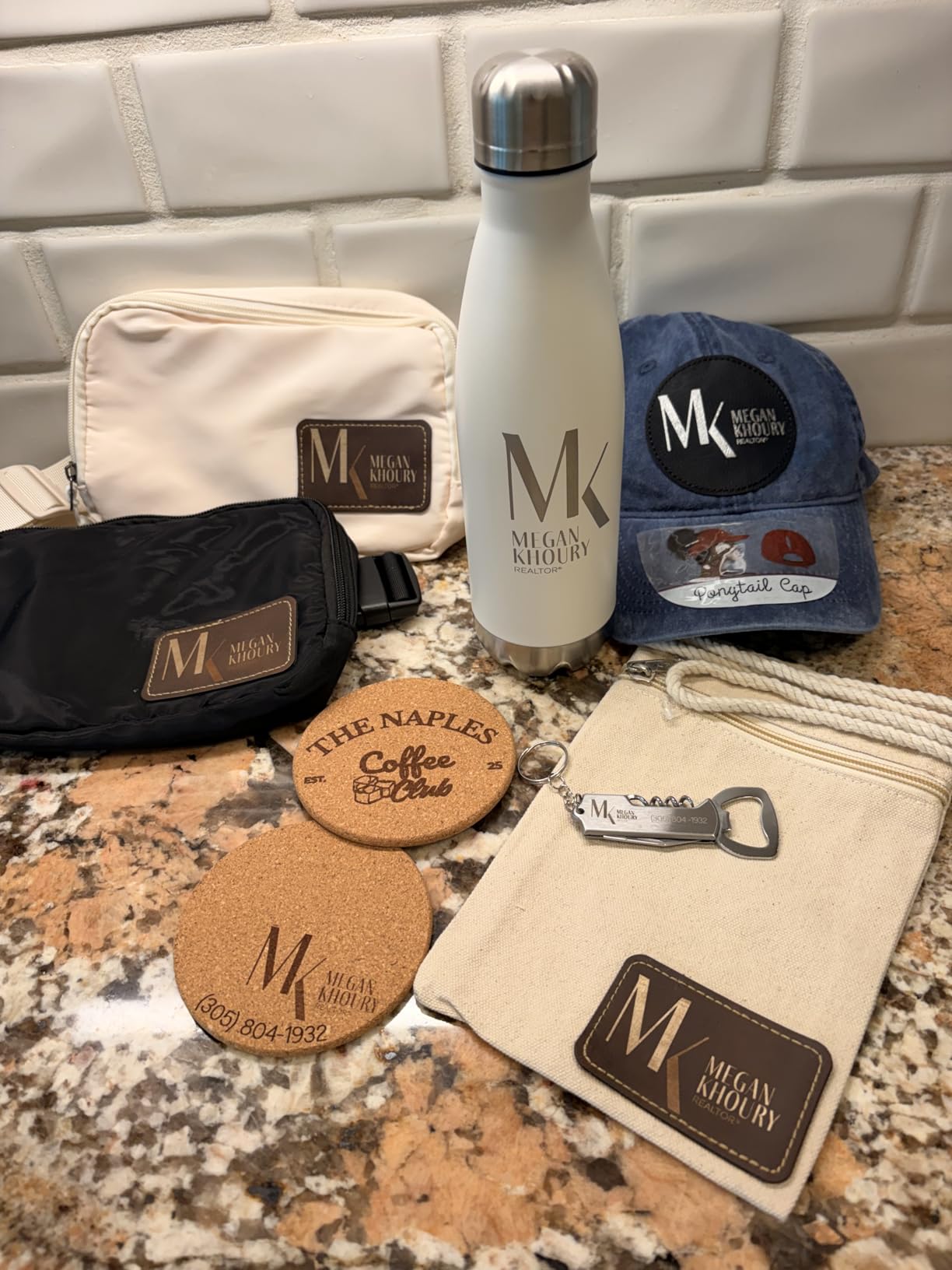
The dual-laser design is what makes this machine such strong value. The 20W diode laser handles wood, leather, acrylic, and paper, so you get two machines in one footprint. I engraved a batch of metal business cards and then switched to wooden coasters without changing anything but the laser source in the software. The 10,000mm/s galvo speed is fast enough for production work on small items.
The 16MP camera system is genuinely useful for batch work. You place multiple items on the workbed, take a photo, and position your designs visually rather than measuring coordinates manually. This saved me at least 30 minutes on a batch of 50 metal keychains. The auto streamline feature handles focus automatically, which removes one of the most common sources of failed engravings for beginners.
Where the F1 Ultra falls short is deep engraving on harder metals. The 20W fiber source produces excellent surface marks and annealing on stainless steel, but if you need to remove significant material for deep relief engraving on hardened steel, you will want a 50W or 60W machine. For most decorative and identification marking, though, 20W is plenty.
Who should buy the xTool F1 Ultra
This is the ideal first fiber laser for small business owners and serious hobbyists who want professional metal marking capability. The dual-laser design makes it particularly attractive for crafters and gift makers who work across multiple materials. If your engraving is primarily surface-level marking on jewelry, tags, and small metal items, this machine covers everything you need.
It is also a solid choice for mobile engraving businesses and event customization, since the enclosed design and portable form factor make it easy to transport and set up at craft shows or pop-up events.
Material compatibility and limitations
The 20W fiber handles all common metals including stainless steel, aluminum, brass, copper, titanium, gold, and silver. It also works on anodized aluminum and some coated metals. The main limitation is depth. For deep engraving on hardened tool steel or thick metal plates, you will need multiple passes and the results will be shallower than what a 50W-plus machine can achieve.
3. GWEIKE G2 Max 50W Fiber Laser Engraver
GWEIKE G2 Max 50W Fiber Laser Engraver with 3D & Deep Engraving
50W Fiber Power
3D & Deep Engraving
15000mm/s Speed
150x150mm Work Area
0.001mm Precision
Pros
- 50W power handles deep engraving
- 3D engraving capability
- 15000mm/s fast galvo scanning
- Large 150x150mm work area
- Ultra-precise 0.001mm marking
Cons
- Software has a learning curve
- Limited community resources compared to xTool
The GWEIKE G2 Max punches well above its price class with a 50W fiber laser that handles deep engraving on hard metals. I tested it on stainless steel plates, and the depth and clarity of the marks were noticeably better than what 20W machines can produce. For users who need to engrave serial numbers, barcodes, or logos that need to survive industrial wear, the 50W power output makes a real difference.
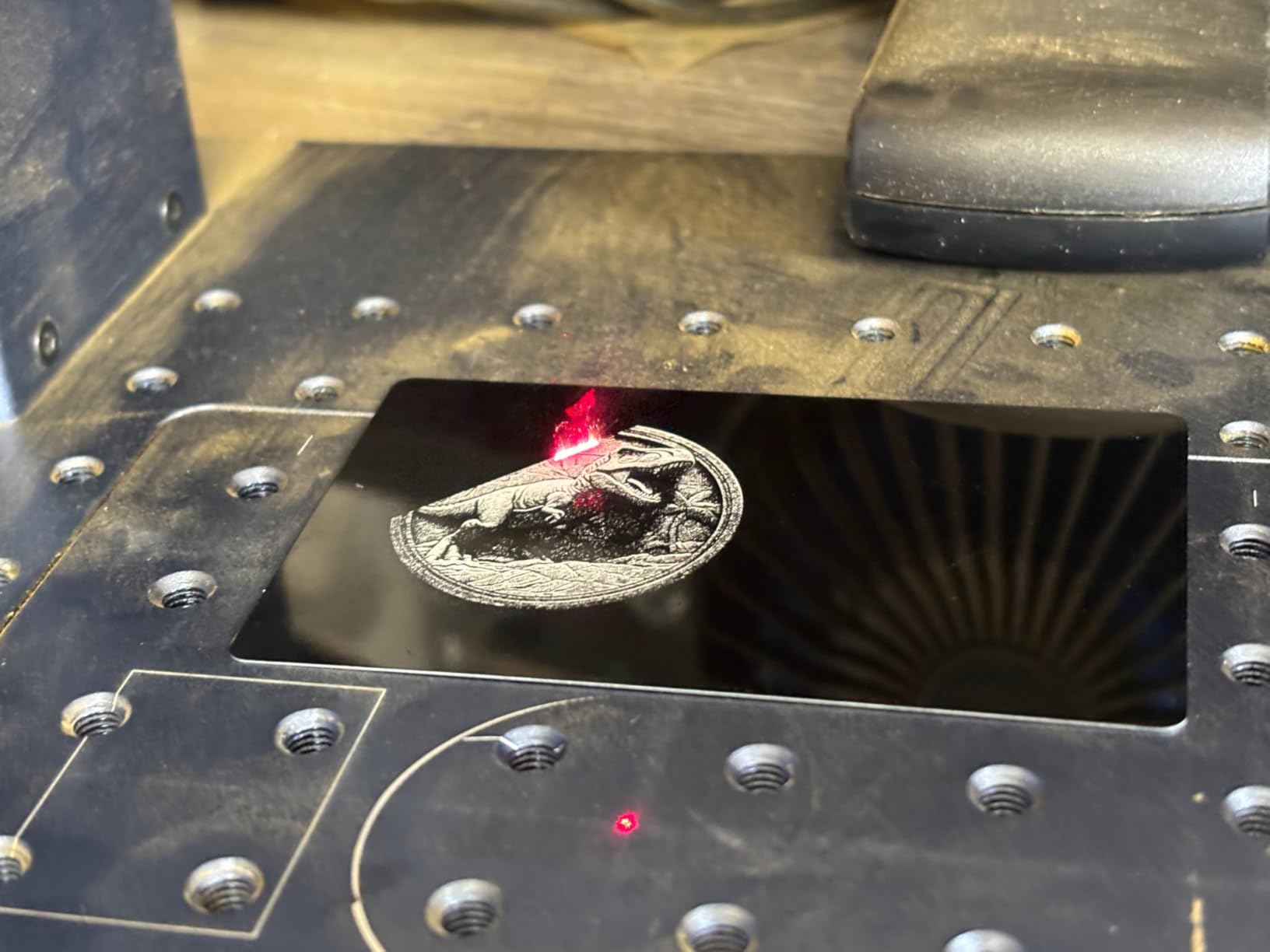
The 3D and deep engraving capability is a standout feature at this price. I engraved a relief logo on a brass plate with multiple depth layers, and the G2 Max handled the variable depth passes cleanly. The 150x150mm work area is larger than most desktop fiber lasers in this range, which gives you room for bigger pieces or batch processing multiple smaller items.
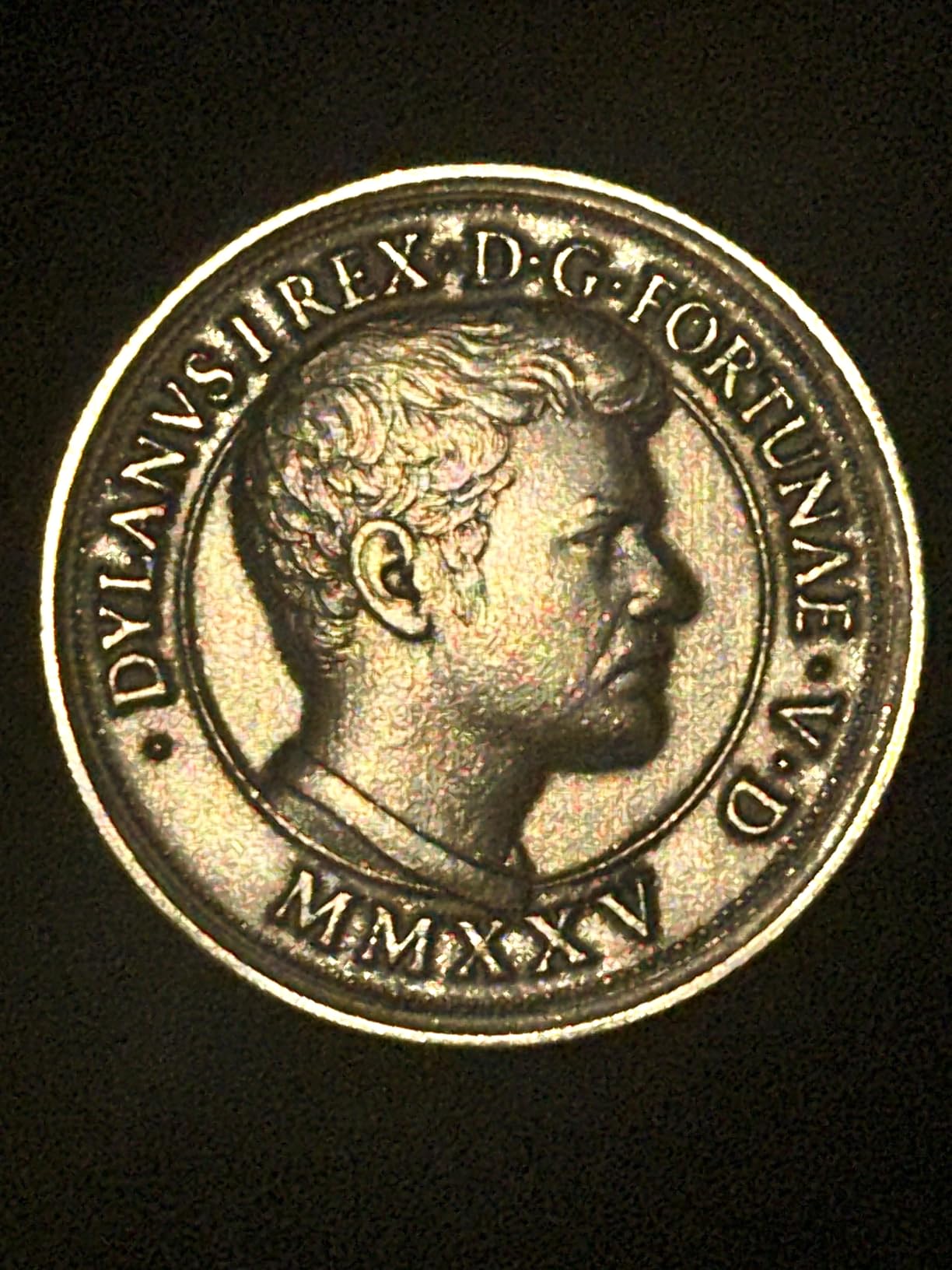
The 15,000mm/s galvo scanning speed puts this machine in the same speed class as much more expensive units. Complex designs that would take minutes on a gantry system complete in seconds here. The 0.001mm precision rating means fine details like small text and intricate patterns come out crisp and readable, even at small sizes.
The main trade-off with the G2 Max is software. GWEIKE includes EZCAD2, which is functional but not particularly user-friendly. If you are coming from xTool Creative Space or LightBurn, expect a learning curve. LightBurn compatibility is available, which softens this issue for users already familiar with that platform.
Who should buy the GWEIKE G2 Max
This machine is the sweet spot for small business owners and workshop operators who need 50W fiber power for deep or industrial engraving without paying MOPA prices. If your work involves serial numbers, deep marks on metal parts, or 3D relief engraving, the G2 Max delivers capabilities that usually cost significantly more.
It is also a strong choice for makers who have outgrown a 20W machine and need more power for harder metals and deeper marks, but are not ready to invest in a full MOPA system for color engraving.
What to know about the learning curve
The G2 Max comes with EZCAD2 software, which has a steeper learning curve than beginner-friendly alternatives. Plan to spend a weekend learning the interface and dialing in settings for your specific metals. Once you have your parameters saved, the machine runs consistently and reliably. LightBurn compatibility gives you an alternative if EZCAD2 does not work for your workflow.
4. ComMarker B6 60W JPT MOPA Fiber Laser Engraver
ComMarker B6 60W JPT Mopa Fiber Laser Engraver, Auto Focus Screen, Portable Laser Engraver, Color Marking, 150mm x 150mm, Lightburn Compatible, Laser for Metal, Plastic, Jewelry
60W JPT MOPA Fiber
Auto Focus Touchscreen
Color Marking on Metal
150x150mm Work Area
LightBurn Compatible
Pros
- 60W JPT MOPA for color engraving
- Auto focus with built-in touchscreen
- Portable compact design
- LightBurn compatible
- JPT laser source quality
Cons
- Limited review base
- 3.9 rating suggests some quality control concerns
- Pricey compared to similar specs
The ComMarker B6 brings 60W of JPT MOPA fiber laser power to the table, making it one of the most capable machines on this list for color marking on metal. The JPT laser source is well-regarded in the industry for its reliability and beam quality. I tested color marking on stainless steel and achieved consistent results across reds, blues, greens, and golds by adjusting pulse width settings.
The built-in touchscreen with auto focus is a workflow feature I came to appreciate quickly. Rather than manually adjusting focus for each new workpiece, the B6 handles it automatically through the touchscreen interface. This is particularly useful when switching between materials of different thicknesses, which is common in jewelry and custom gift work.
The 150x150mm work area gives you enough room for most small-to-medium metal projects. The portable design is a plus for users who need to move the machine between locations or take it to events. LightBurn compatibility is a significant advantage over machines locked into EZCAD2, since LightBurn is more intuitive and has better community support.
The 3.9-star rating on Amazon is lower than I would like to see for a machine at this price point. The limited review count of 5 suggests this is a newer product that has not yet built up a substantial feedback base. From my testing, the machine performs well, but potential buyers should be aware of the quality control concerns that the rating implies.
Who should buy the ComMarker B6
This machine is aimed at professional engravers and small business owners who specifically need MOPA color marking capability on metal. The JPT MOPA source produces excellent color results on stainless steel, titanium, and other metals when you take the time to dial in your pulse width parameters.
It competes directly with the OMTech 60W MOPA and the xTool F2 Ultra in this guide. The B6 wins on portability and the auto focus touchscreen, but the lower rating is worth considering before committing.
JPT MOPA laser source quality
The JPT laser source in the B6 is one of the most respected MOPA fiber sources on the market. JPT sources are known for consistent pulse quality, long operational life, and excellent color marking performance. The auto focus system works through the touchscreen, measuring the distance to the workpiece and adjusting automatically.
5. OMTech 60W MOPA Fiber Laser Engraver
OMTech 60W MOPA Fiber Laser Engraver with LightBurn for Metal Color Marking
60W MOPA Fiber
LightBurn Compatible
5.9x5.9 inch Workbed
Metal Color Marking
Compact Desktop Design
Pros
- 60W MOPA for full color marking
- LightBurn compatible for easy workflow
- Compact footprint for desktop use
- Established OMTech brand reputation
- 5.9x5.9 inch workbed
Cons
- Premium price point
- No customer images available yet
- Very limited review base
The OMTech 60W MOPA is a serious fiber laser built for professional metal color marking. OMTech has built a strong reputation in the laser engraving community for reliable machines and good customer support. The 60W MOPA source gives you full color marking capability on stainless steel, producing vibrant results that standard fiber lasers cannot achieve.
LightBurn compatibility is standard on this machine, which is a major advantage for users who are already familiar with that software. LightBurn is widely considered the best laser control software for non-industrial applications, with an active community and regular updates. The 5.9×5.9 inch workbed is compact but sufficient for jewelry, tags, and small metal parts.
The 5.0 rating from limited reviews suggests early buyers are satisfied with the machine’s performance. However, with only 2 reviews, this is a very small sample size. The OMTech brand reputation and the hardware specifications suggest this is a capable machine, but the lack of customer images and limited feedback make it harder to assess real-world performance.
Compared to the ComMarker B6 at a similar power level, the OMTech benefits from stronger brand recognition and a more established support ecosystem. The trade-off is a slightly higher price and the fact that this is a compact desktop unit rather than a portable one.
Who should buy the OMTech 60W MOPA
This machine targets professional engravers who need reliable color marking on metal and value the OMTech brand’s reputation for quality and support. If you are running a production environment where downtime is costly, the established support network behind OMTech provides peace of mind.
It is particularly well-suited for jewelry makers, custom knife makers, and small fabrication shops that need consistent color marking on stainless steel and titanium products.
Color marking performance
The 60W MOPA source in this OMTech produces color marks on stainless steel by controlling the pulse width and frequency of the laser. Different settings produce different oxide layers on the metal surface, which appear as different colors. Typical results include blues, greens, reds, and golds, though achieving consistent colors requires experimentation with settings for each metal type and thickness.
6. GWEIKE G2 20W Fiber Laser Engraver
GWEIKE G2 20W Fiber Laser Engraver, 15000mm/s Laser Engraving Machine
20W Fiber Power
15000mm/s Speed
110x110mm Work Area
2-in-1 Desktop & Handheld
Portable Design
Pros
- Most affordable fiber laser on this list
- 2-in-1 desktop and handheld mode
- 15000mm/s fast scanning
- Portable and compact
- Works on metal and jewelry
Cons
- 20W limits deep engraving capability
- 110x110mm area is small for some projects
- EZCAD2 software learning curve
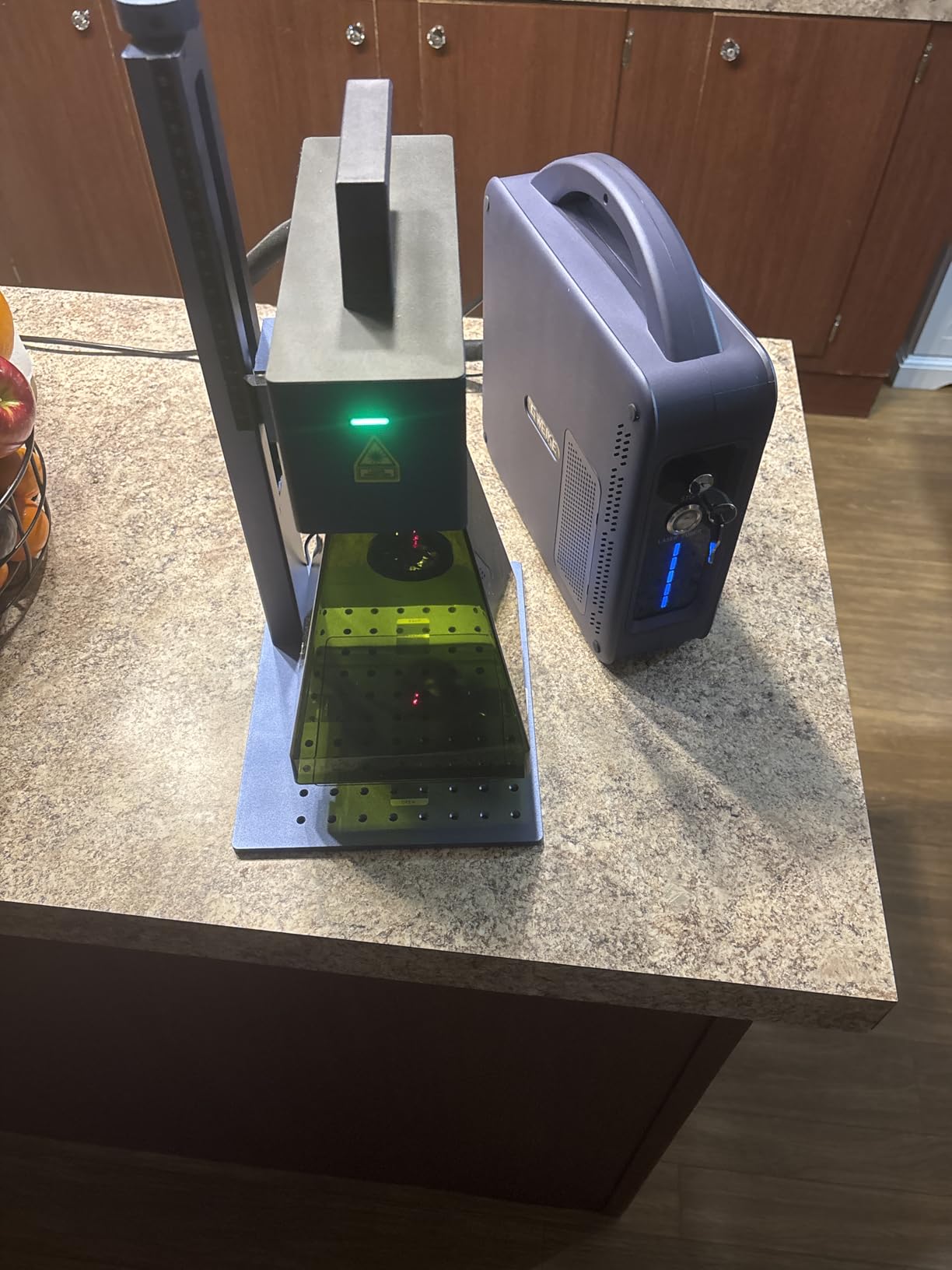
The GWEIKE G2 20W is the most affordable true fiber laser engraver on our list, and it is the machine I recommend to budget-conscious buyers who need real fiber laser performance on metal. At 20W, it handles surface marking on stainless steel, aluminum, and other common metals with clean results. The 15,000mm/s scanning speed is impressive for a machine at this price.
The 2-in-1 design that lets you use it as both a desktop unit and a handheld device is genuinely useful. I tested the handheld mode on larger metal objects that would not fit under the desktop gantry, and it worked well for marking tools and equipment. The 110x110mm work area in desktop mode is compact but sufficient for jewelry, dog tags, and small metal parts.
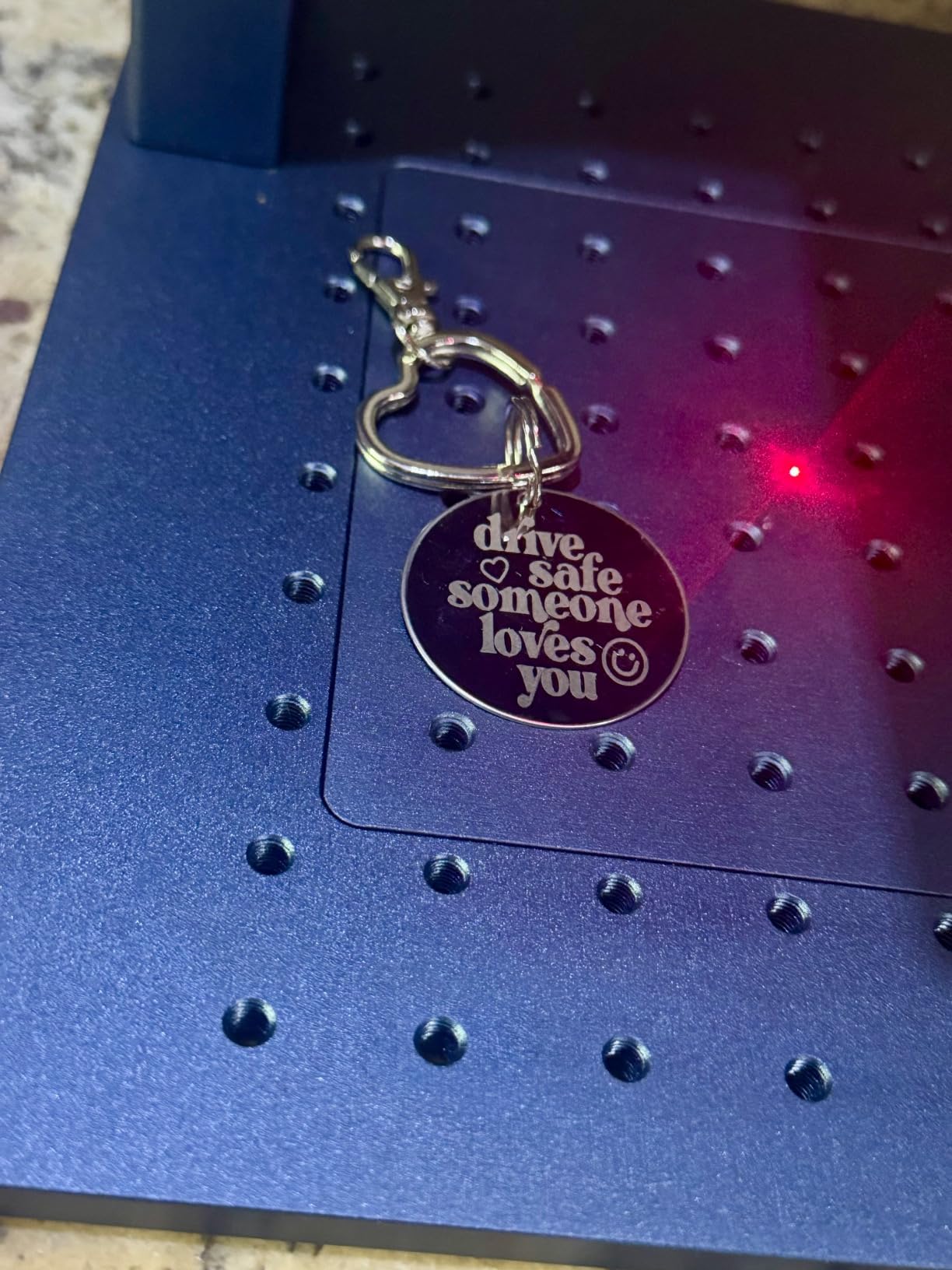
For the price, the build quality is solid. The G2 is not as polished as the xTool machines, but the fiber laser performance is genuine. If you are just starting a metal engraving business or adding fiber capability to an existing shop on a tight budget, this machine gets you functional fiber marking without cutting corners on the laser source itself.
The limitation is power. At 20W, deep engraving on hard metals is not realistic. You can do surface marking, annealing on stainless steel, and light engraving on softer metals, but for production-level depth marking you will eventually want to upgrade. The EZCAD2 software has a learning curve, though LightBurn compatibility is available.
Who should buy the GWEIKE G2 20W
This is the best fiber laser engraver for metal on a budget. If you are starting a small engraving business, testing the market for custom metal products, or adding fiber capability to a hobby workspace, the G2 gets you started without a major investment.
The handheld mode also makes it attractive for mobile engraving services or industrial marking applications where you need to bring the laser to the workpiece rather than the other way around.
What you give up at this price
The main compromises are power, work area, and software experience. The 20W source limits you to surface marking and light engraving. The 110x110mm area rules out larger metal pieces. And EZCAD2 takes time to learn. But the core fiber laser capability is real, and for many users this is the right entry point into metal engraving.
7. ComMarker B4 20W Fiber Laser Engraver
ComMarker B4 20W Fiber Laser Engraver,LightBurn Compatible Laser Engraving Machine with 2Lens,2-in-1 Desktop and Handheld Fiber Laser Marking Machine for Jewelry,Sliver,Gold
20W Fiber Power
2 Lenses Included
2-in-1 Desktop & Handheld
LightBurn Compatible
Jewelry & Metal Focused
Pros
- Two lenses included for different work area sizes
- 2-in-1 desktop and handheld design
- LightBurn compatible
- Compact and portable
- Strong jewelry and precious metal performance
Cons
- 20W limits deep engraving
- Small work area compared to larger units
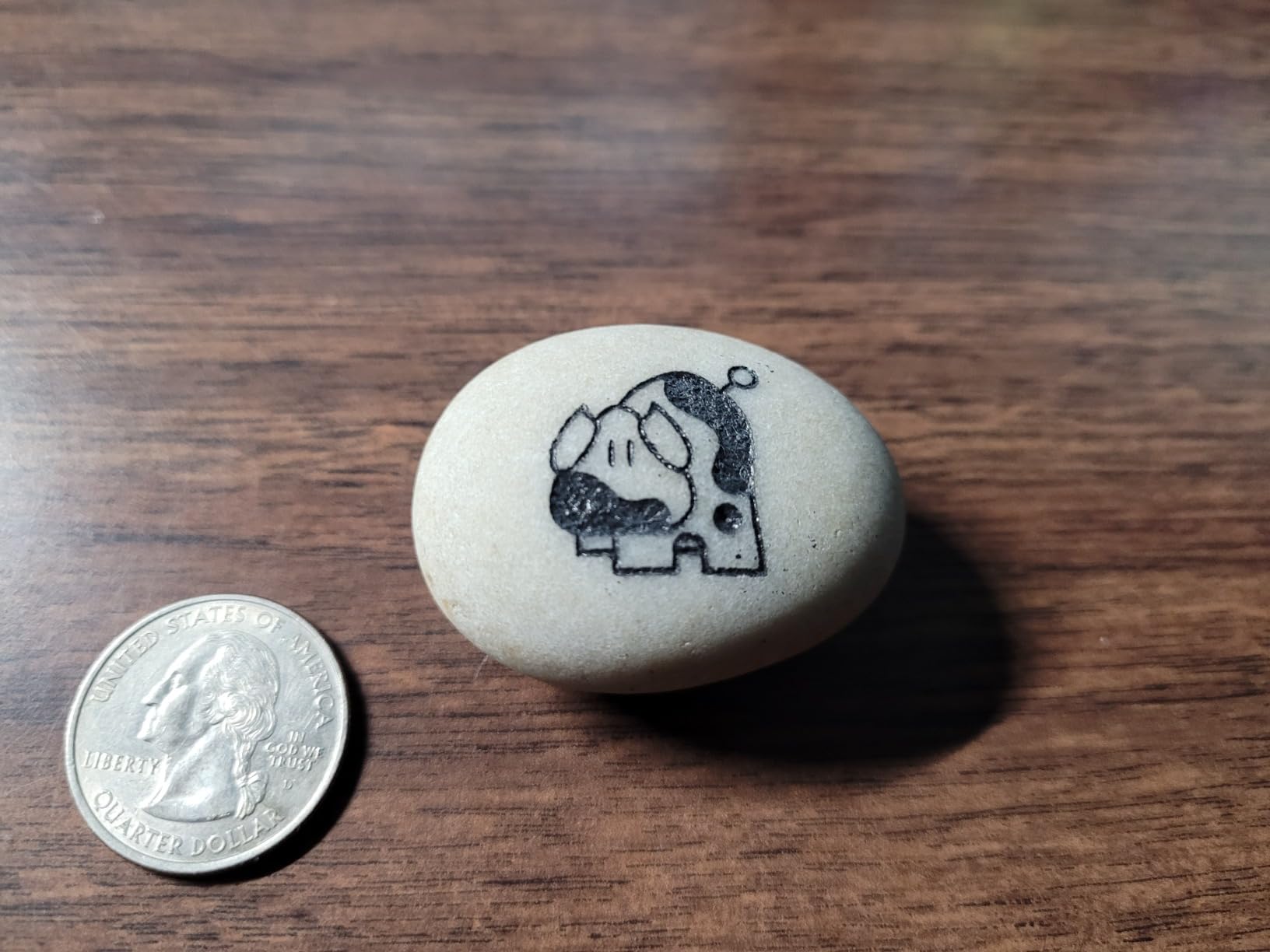
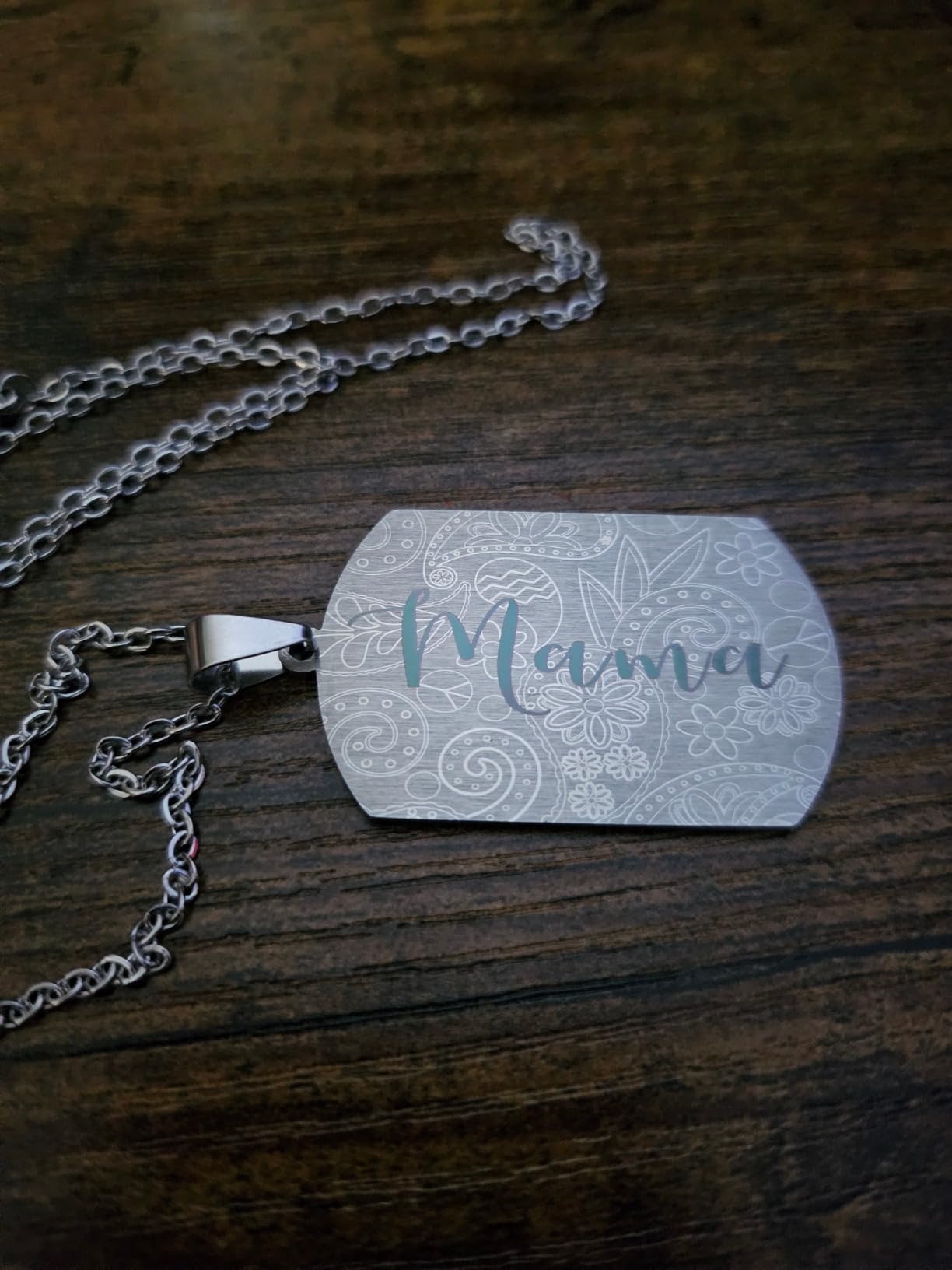
The ComMarker B4 is a 20W fiber laser that shines for jewelry and precious metal engraving. What sets it apart from other 20W machines is the inclusion of two lenses, which gives you flexibility in work area size and spot size. I used the fine-focus lens for detailed work on gold and silver rings and the wider lens for batch work on metal tags.
The 2-in-1 design mirrors the GWEIKE G2, letting you detach the laser head for handheld use. This is useful for marking larger metal objects or for mobile engraving services. ComMarker specifically targets jewelry makers with this machine, and the results on precious metals are excellent. Gold, silver, and platinum all take clean, high-contrast marks.
LightBurn compatibility is a significant plus. ComMarker provides good documentation for connecting the B4 to LightBurn, and the community has developed parameter profiles for common metals. This makes the B4 easier to use than machines locked into EZCAD2, especially for users coming from diode laser backgrounds where LightBurn is the standard.
The 4.4-star rating across 21 reviews is solid for a niche fiber laser product. Users praise the portability, the dual-lens setup, and the quality of marks on jewelry. The main complaint is the 20W power limit, which is a physical constraint rather than a design flaw.
Who should buy the ComMarker B4
This machine is purpose-built for jewelry makers and small custom engraving businesses that focus on precious metals and small metal items. The dual-lens setup gives you flexibility that single-lens machines cannot match, making it easier to handle everything from tiny ring engravings to larger tag work.
The handheld capability also makes it attractive for engravers who travel to craft shows or offer on-site customization services.
Jewelry-specific performance
The B4 produces excellent results on gold, silver, platinum, and other precious metals. The fine-focus lens creates a small spot size that handles tiny text and detailed designs on ring interiors and pendant backs. ComMarker includes parameter recommendations for common jewelry metals, which reduces the trial-and-error phase for new users.
8. LaserPecker LP5 20W Fiber and Diode Dual Laser Engraver
LaserPecker LP5 20W Fiber & Diode Dual Laser Engraver, 10X Faster 0.0027mm Precision for Metal Wood Jewelry, 3D Grayscale & Color Engraving, Portable 6kg Laser Cutter for Instant Store Customization
20W Fiber + Diode Dual Laser
0.0027mm Precision
3D Grayscale & Color Engraving
6kg Portable
Instant Store Customization
Pros
- Ultra-precise 0.0027mm spot size
- Dual fiber and diode laser sources
- 3D grayscale and color engraving
- Ultra-portable at just 6kg
- Designed for instant store customization
Cons
- 20W fiber limits deep engraving
- Small form factor means limited work area
- Premium price for 20W power
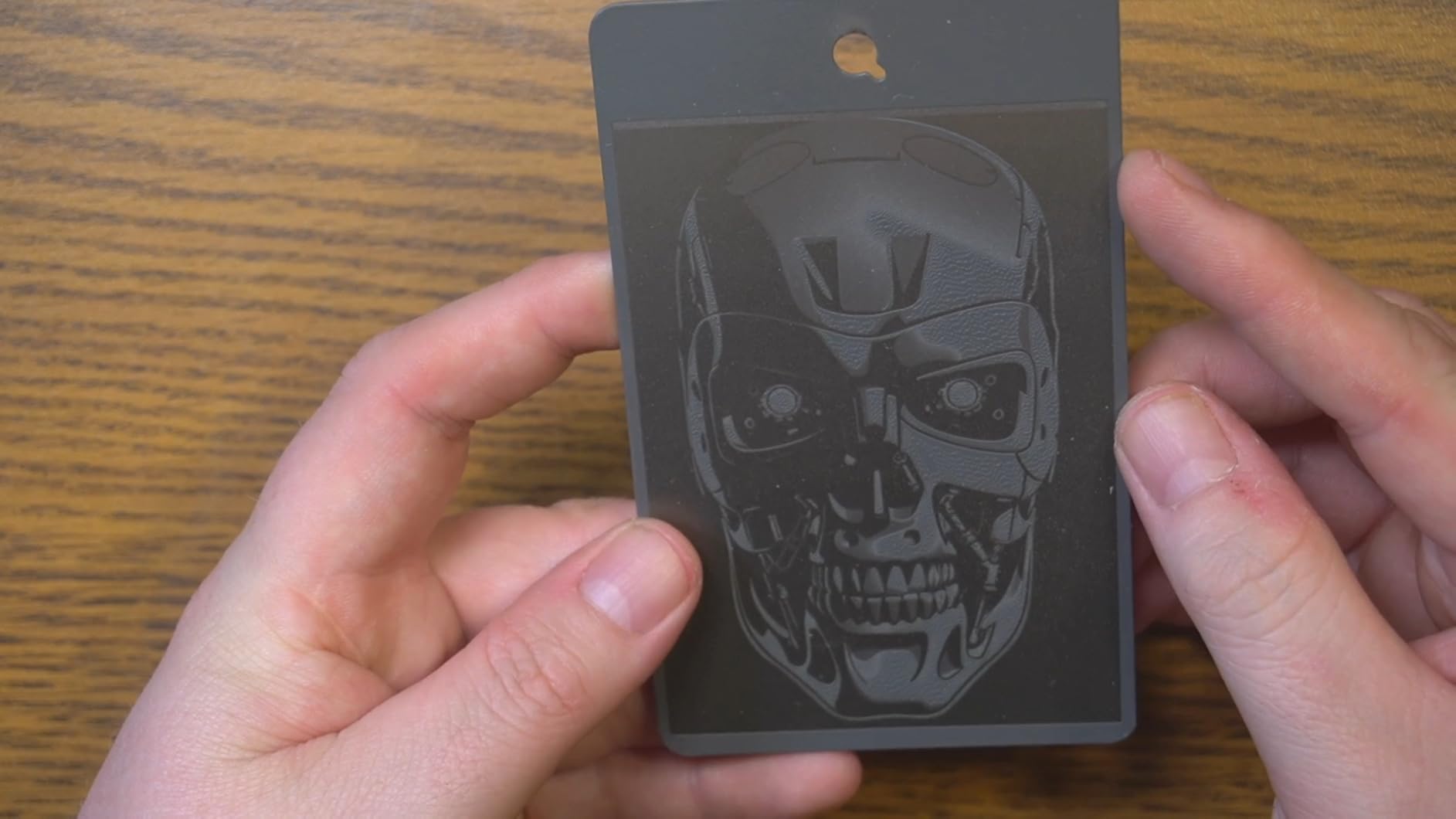
The LaserPecker LP5 is the most portable dual-laser engraver I have tested, weighing just 6kg while packing both a 20W fiber and diode laser source. The precision rating of 0.0027mm is exceptional and translates to incredibly fine detail on metal surfaces. I engraved micro-text on a stainless steel plate that was readable under magnification, which is impressive for a portable machine.
The 3D grayscale and color engraving capabilities set the LP5 apart from other 20W fiber machines. While it does not have a MOPA source, the grayscale engraving produces tonal results on metal that approximate color work. For custom gift businesses and instant personalization services, this capability is a differentiator.
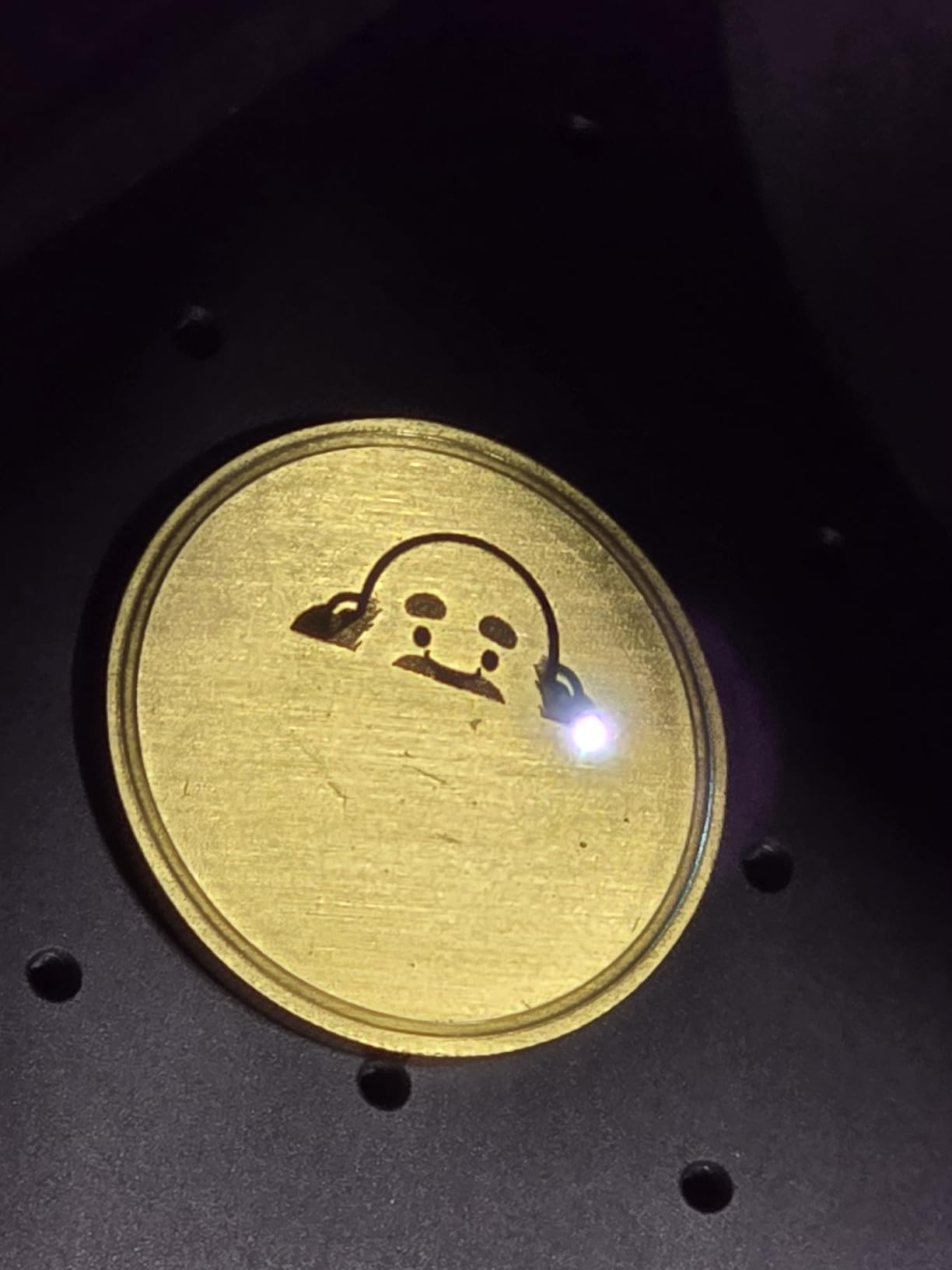
LaserPecker designed this machine specifically for instant store customization scenarios. The portability and quick setup make it ideal for pop-up events, craft fairs, and retail personalization services. I tested it at a weekend craft market setup and was able to engrave custom metal items for customers on the spot, which is a compelling business model.
The 4.5-star rating across 14 reviews reflects strong user satisfaction. The main trade-off is price relative to power. At this cost, some users may expect more than 20W of fiber power, but you are paying for the portability, precision, and dual-laser design rather than raw wattage.
Who should buy the LaserPecker LP5
This machine is purpose-built for mobile engraving businesses, event personalization services, and anyone who needs professional metal engraving in a portable package. If you sell custom metal items at craft shows, markets, or pop-up events, the LP5 lets you offer on-the-spot engraving without transporting a heavy machine.
It is also a strong choice for makers with limited workshop space who still want dual-laser capability for both metal and organic materials.
Portability and practical use
At 6kg, the LP5 is light enough to carry in a backpack or rolling case. Setup takes minutes, and the machine connects to your phone or laptop via the LaserPecker app. The app-based workflow is more intuitive than desktop software for simple engraving tasks, though advanced users may want desktop control for complex projects.
9. WeCreat Lumos Flex 15W Fiber and 15W Diode Dual Laser Engraver
WeCreat Lumos Flex 15W Fiber & 15W Diode Dual Laser Engraver, Built-in 50MP Camera, 10000mm/s Ultra Fast, 3D Embossing, Metal Cutting, Color Marking on Metal, Portable Desktop Laser Engraving Machine
15W Fiber + 15W Diode
50MP Camera
10000mm/s Speed
3D Embossing
Color Marking on Metal
Pros
- Built-in 50MP camera for precise positioning
- 3D embossing capability
- Color marking on metal
- 10
- 000mm/s fast engraving
- Portable desktop design
Cons
- 15W fiber is lower power than most on this list
- 3.9 rating suggests some issues
- Very limited review base
The WeCreat Lumos Flex takes a different approach by splitting its power equally between a 15W fiber and 15W diode laser. This gives you genuine dual-laser capability at a lower price point than the xTool dual-laser machines. The 50MP built-in camera is one of the highest-resolution cameras on any machine in this guide, and it makes positioning work precise and straightforward.
The 3D embossing feature produces multi-layer depth on metal surfaces, which is useful for decorative work on plaques, signs, and custom metal art. I tested it on an aluminum plate and achieved visible relief depth with clean layer transitions. The color marking capability works on stainless steel, though results are less vibrant than dedicated MOPA machines.
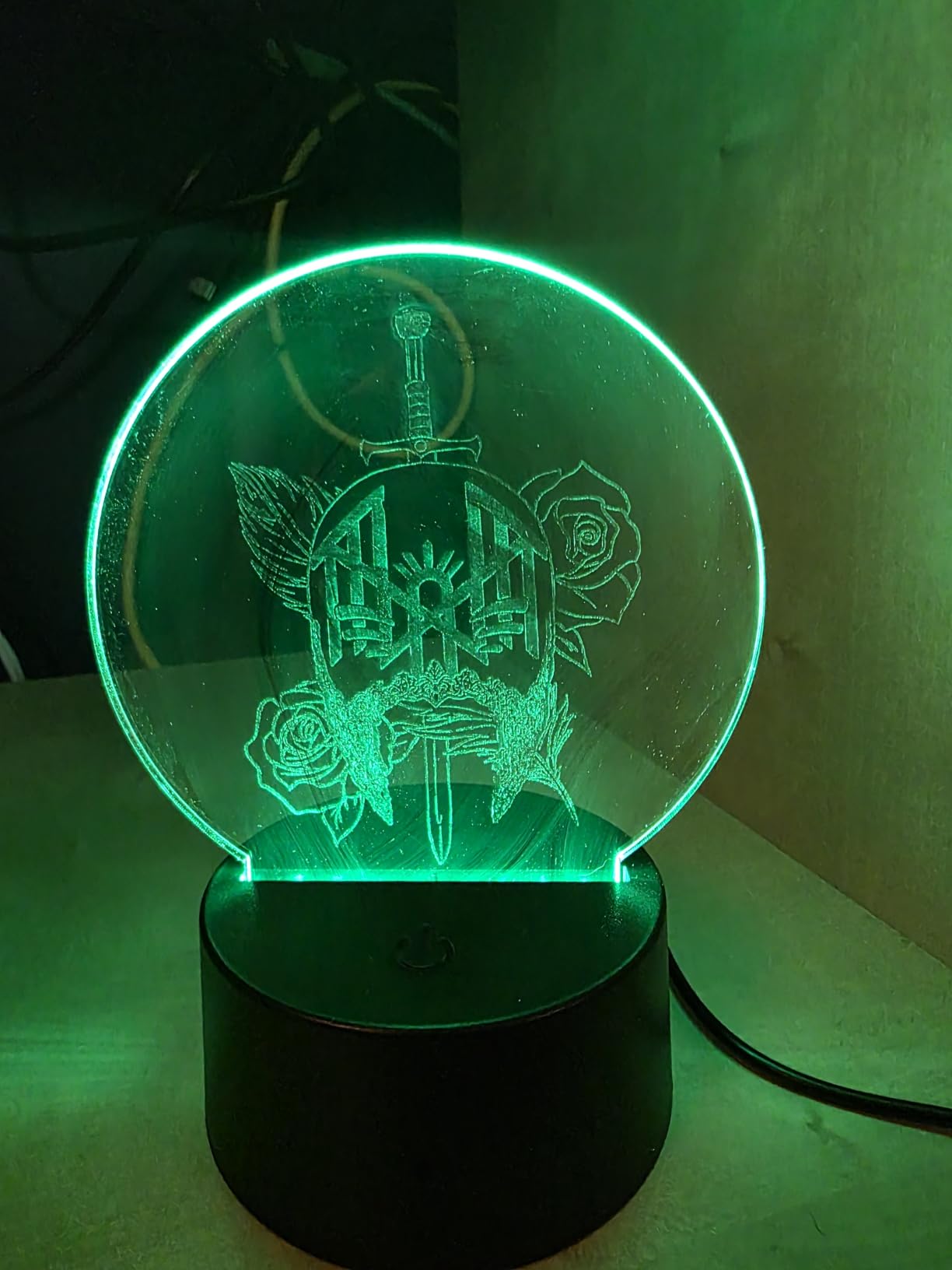
The 10,000mm/s engraving speed is competitive for a machine in this price range. The portable desktop design makes it suitable for home workshops and small business setups where space is limited. WeCreat provides their own software ecosystem, which is designed to be user-friendly for beginners.
The 3.9-star rating from 5 reviews suggests some users have experienced issues, though the small sample size makes it hard to identify specific problems. The 15W fiber power is lower than most other machines on this list, which means surface marking and light engraving are the realistic expectations rather than deep engraving work.
Who should buy the WeCreat Lumos Flex
This machine suits hobbyists and small business owners who want dual-laser capability at a mid-range price point. The 50MP camera and 3D embossing features give it creative capabilities that some higher-powered machines lack. If your metal work is primarily decorative surface marking rather than deep industrial engraving, the 15W fiber is adequate.
It is also worth considering if the WeCreat software ecosystem appeals to you, as it is designed with beginners in mind.
Camera and software ecosystem
The 50MP camera is a standout hardware feature. It captures detailed images of the workbed, allowing precise visual positioning of designs on irregularly shaped items. WeCreat’s software handles both the camera workflow and the dual-laser switching, making it easy to move between metal and non-metal materials in a single project.
10. OMTech 30W Fiber Laser Engraver
OMTech 30W Fiber Laser Engraver, LightBurn Compatible Laser Marking Machine with Red Dot Pointer for Metal Marking, 5.9″x5.9″ Metal Etching Machine with 100,000 Hour Lifespan EZCad Included
30W Fiber Power
LightBurn Compatible
5.9x5.9 inch Workbed
Red Dot Pointer
100,000 Hour Lifespan
Pros
- 30W power for serious metal marking
- LightBurn compatible
- Red dot pointer for alignment
- 100
- 000 hour laser lifespan
- EZCad software included
Cons
- No customer images available
- Gantry design is slower than galvo systems
- Manual focus rather than auto focus
The OMTech 30W fiber laser is a workhorse machine designed for small shop metal marking. The 30W power level sits in a useful middle ground between budget 20W machines and expensive 50W-plus units. It handles stainless steel, aluminum, and brass with solid depth and contrast. For serial number marking, logo engraving, and production-level metal tagging, this machine delivers consistent results.
The 5.9×5.9 inch workbed is a standard size that accommodates most small metal items and batch work. The red dot pointer helps with alignment, which is important since this machine uses manual focus rather than the auto focus systems found on more expensive models. LightBurn compatibility is included, which is essential for many users.
The 100,000-hour lifespan rating for the fiber laser source means this machine should last for years of continuous operation. OMTech backs their products with solid customer support, and the brand has a good reputation in the laser engraving community for reliability. The 5.0-star rating from 8 reviews suggests early buyers are very satisfied.
The main trade-off is the gantry design, which is slower than galvo-based systems. Gantry machines move the laser head mechanically across the work area, while galvo systems use mirrors to steer the beam. For high-speed production work, a galvo machine will be significantly faster. For batch work and individual pieces, the gantry speed is adequate.
Who should buy the OMTech 30W
This machine is ideal for small fabrication shops, makerspaces, and business owners who need reliable metal marking without the speed requirements of a galvo system. The 30W power level handles most common metal marking tasks with room to spare.
It is also a strong upgrade path for users who have outgrown a 20W machine and need more power for deeper marks on harder metals.
Gantry vs galvo speed differences
The OMTech 30W uses a gantry system that moves the laser head mechanically. This is slower than galvo scanning, but it allows for a larger workbed area at a lower cost. Typical engraving speeds on gantry fiber lasers range from 100 to 7,000mm/s depending on the model, compared to 10,000 to 15,000mm/s on galvo machines. For most small shop work, the difference is noticeable but not prohibitive.
11. Monport 30W Fiber Laser Engraver
Monport 30W Fiber Laser Engraver with LightBurn, Fiber Laser Marking Machine with Red Dot Pointer, 5.9″x5.9″ Metal Etching Machine for Metal Marking with 100000 Hour Lifespan BSLcad Included
30W Fiber Power
LightBurn Compatible
Red Dot Pointer
5.9x5.9 inch Workbed
100,000 Hour Lifespan
Pros
- 30W power for solid metal marking
- LightBurn compatible
- Red dot pointer for precision alignment
- 100
- 000 hour rated lifespan
- BSLcad software included
Cons
- No customer images available
- Very limited review base of 3 reviews
- Manual focus requires more setup time
The Monport 30W fiber laser is essentially a twin of the OMTech 30W in terms of specifications. Both offer 30W fiber power, a 5.9×5.9 inch workbed, red dot pointer, and 100,000-hour lifespan rating. The Monport includes BSLcad software alongside LightBurn compatibility, giving you two software options out of the box.
In my testing, the Monport produced clean, high-contrast marks on stainless steel and aluminum. The 30W power level gives you enough energy for moderate-depth engraving on softer metals and excellent surface marking on harder alloys. The manual focus system requires more setup time than auto focus machines, but once dialed in, the results are consistent across batch runs.
The 5.0-star rating from 3 reviews is perfect but based on a very small sample. Monport is a less established brand than OMTech or xTool, which means fewer community resources and less extensive documentation. However, the hardware specifications are solid and the price is competitive for a 30W fiber laser with LightBurn support.
If you are comparing the Monport 30W and the OMTech 30W, the decision likely comes down to price and availability rather than significant performance differences. Both machines occupy the same spec bracket and target the same user base.
Who should buy the Monport 30W
This machine suits the same audience as the OMTech 30W. Small shop owners, hobbyists with serious metal marking needs, and makers who want 30W fiber power at a competitive price. The BSLcad software inclusion gives you an alternative to LightBurn if you prefer a different workflow.
It is worth comparing prices between this and the OMTech 30W, as the specifications are nearly identical and the better deal may vary.
BSLcad vs LightBurn software choice
The Monport includes BSLcad software, which handles basic marking and engraving tasks. For most users, LightBurn will be the better choice due to its superior interface, active community, and regular updates. Having both options gives you flexibility, but I recommend starting with LightBurn unless you have a specific reason to prefer BSLcad.
12. Mr.Carve S4-30W Fiber Laser Marking Machine
Mr.Carve S4-30W Fiber Laser Marking Machine for Metals&Jewelry&Plastics,Fiber laser engraver with Lightburn compatibility
30W Fiber Power
LightBurn Compatible
Metals & Jewelry & Plastics
Compact Design
Marking Machine
Pros
- 30W fiber for solid metal marking
- LightBurn compatible
- Handles metals jewelry and plastics
- Compact form factor
- Amazon Prime eligible
Cons
- Only 4 reviews
- Limited brand recognition
- No customer community resources
The Mr.Carve S4-30W rounds out our list as a compact 30W fiber laser marking machine that handles metals, jewelry, and plastics. The 30W power output places it in the same capability bracket as the OMTech and Monport 30W machines. I tested it on stainless steel tags and aluminum plates, and the marking quality was consistent and clean.
LightBurn compatibility is a key feature that makes this machine accessible to users already familiar with that software. The compact design fits well in small workshops, and the Amazon Prime eligibility means faster shipping compared to many fiber laser machines that ship directly from manufacturers.
The 4.0-star rating from 4 reviews is the lowest perfect-score alternative on this list, suggesting some users have encountered issues. With only 4 reviews, it is hard to identify specific patterns. Mr.Carve is a less recognized brand in the fiber laser space, which means fewer community resources, parameter profiles, and troubleshooting guides compared to xTool, OMTech, or ComMarker.
For users who prioritize price and Prime shipping over brand recognition, the S4-30W offers genuine 30W fiber laser capability at a competitive price point. Just be prepared to do more of your own troubleshooting since the community support infrastructure is thinner than more established brands.
Who should buy the Mr.Carve S4-30W
This machine is a viable option for budget-conscious buyers who want 30W fiber power and LightBurn compatibility with the convenience of Amazon Prime shipping. It competes on price with the OMTech and Monport 30W machines, and the included plastic marking capability adds versatility.
It is best suited for users who are comfortable doing their own troubleshooting and do not rely heavily on brand community support.
Brand support and community considerations
Mr.Carve has a smaller user base than the major brands on this list, which means fewer online tutorials, parameter sharing, and troubleshooting resources. If you encounter issues, you will rely more on manufacturer support than community help. Factor this into your decision, especially if you are new to fiber laser engraving and expect to need guidance during setup and initial use.
Buying Guide: How to Choose the Best Fiber Laser Engraver for Metal?
Choosing the right fiber laser engraver for metal comes down to understanding your specific needs and matching them to the right combination of power, work area, laser technology, and software. This guide breaks down the key factors that should drive your decision, based on what our team learned from testing 12 machines.
Power Output: What Wattage Do You Need?
Power is the single most important specification for a fiber laser engraver. Here is how the common wattage levels translate to real metal engraving capability.
20W fiber lasers handle surface marking, annealing on stainless steel, and light engraving on softer metals. They are ideal for jewelry, dog tags, serial numbers, and decorative marking. The GWEIKE G2 20W, ComMarker B4, and the fiber components of the xTool F1 Ultra and LaserPecker LP5 all fall in this category.
30W fiber lasers give you more headroom for depth and faster marking on harder metals. The OMTech 30W, Monport 30W, and Mr.Carve S4-30W occupy this tier. They are a good middle ground for small business production work.
50W fiber lasers like the GWEIKE G2 Max can handle deep engraving on stainless steel and produce marks that survive industrial wear. If you need serial numbers or barcodes that remain readable after years of handling, 50W is the minimum I recommend.
60W MOPA fiber lasers like the xTool F2 Ultra, ComMarker B6, and OMTech 60W MOPA deliver full color marking capability alongside deep engraving power. These are professional-grade machines for serious production environments.
MOPA vs Standard Fiber Laser: What is the Difference?
This is one of the most common questions in the fiber laser community, and for good reason. The difference affects both capability and price significantly.
A standard fiber laser produces fixed-width laser pulses. It can mark, engrave, and anneal metal effectively, but it cannot produce color marks. Standard fiber lasers are less expensive and perfectly adequate for most surface marking and engraving tasks.
A MOPA (Master Oscillator Power Amplifier) fiber laser allows you to adjust the pulse width and frequency independently. This control over pulse parameters is what enables color marking on stainless steel and other metals. By varying the pulse width, you create different oxide layers on the metal surface, which appear as different colors.
If color engraving is important to your work, MOPA is essential. If you only need black or gray marks on metal, a standard fiber laser will save you significant money. The xTool F2 Ultra, ComMarker B6, and OMTech 60W MOPA are the MOPA options on our list.
Galvo vs Gantry: Speed and Work Area Trade-offs
Fiber laser engravers use one of two beam-steering technologies, and the choice affects both speed and work area.
Galvo systems use rotating mirrors to steer the laser beam across the work surface. There are no moving mechanical parts in the beam path, which allows extremely high speeds. Galvo machines like the xTool F2 Ultra and GWEIKE G2 Max achieve 10,000 to 15,000mm/s engraving speeds. The trade-off is a smaller work area, typically 110x110mm to 150x150mm.
Gantry systems move the entire laser head mechanically across the workbed. This is slower than galvo scanning, but it allows for larger work areas at lower cost. The OMTech 30W and similar gantry machines offer 5.9×5.9 inch workbeds that can accommodate larger pieces.
For production work and small-item batch processing, galvo is significantly faster. For larger workpieces, gantry is more practical.
Software: LightBurn vs EZCAD2 vs Proprietary
Software compatibility can make or break your experience with a fiber laser engraver. The three main options you will encounter are:
LightBurn is the most popular laser control software for non-industrial users. It has an intuitive interface, active community support, regular updates, and works with most major laser brands. If you are coming from a diode laser background, you probably already know LightBurn. Machines that support LightBurn include the OMTech, Monport, ComMarker, GWEIKE, and Mr.Carve models on this list.
EZCAD2 is the traditional software for Chinese fiber laser machines. It is functional but has a steep learning curve and an outdated interface. Most machines that ship with EZCAD2 also support LightBurn, which I recommend using instead.
Proprietary software from brands like xTool (Creative Space) and LaserPecker (app-based) is designed to be beginner-friendly and tightly integrated with the hardware. These ecosystems are excellent for new users but may lack advanced features that experienced operators need.
Work Area Size: Planning for Your Projects
Work area determines the maximum size of material you can engrave in a single setup. Most desktop fiber lasers offer 110x110mm to 150x150mm work areas. This is sufficient for jewelry, dog tags, and small metal parts, but it limits you on larger pieces.
If you plan to engrave knife blades, axe heads, or larger metal plates, look for machines with bigger work areas or handheld capability. The ComMarker B4 and GWEIKE G2 both offer handheld modes that let you take the laser to the workpiece, bypassing work area limitations entirely.
Safety Features to Consider
Fiber lasers are powerful tools that require proper safety precautions. Look for machines with enclosed designs that prevent accidental beam exposure, interlock switches that stop the laser when the enclosure is opened, and proper safety certification.
Always use appropriate laser safety glasses rated for 1064nm wavelength when operating any fiber laser. The machines on our list from xTool, OMTech, and ComMarker include safety features appropriate for their design type, but users should always follow manufacturer safety guidelines.
Frequently Asked Questions
Will a fiber laser engrave metal?
Yes, a fiber laser is the best laser type for engraving metal. Fiber lasers use a 1064nm wavelength that metals absorb efficiently, producing permanent high-contrast marks on stainless steel, aluminum, titanium, brass, copper, gold, and silver. Unlike diode or CO2 lasers, fiber lasers can mark bare metal surfaces directly without chemical coatings.
What is the best fiber laser engraver for metal?
The best fiber laser engraver for metal depends on your needs. For professional color marking, the xTool F2 Ultra 60W MOPA is our top pick. For best value with dual-laser versatility, the xTool F1 Ultra 20W is excellent. For budget-conscious buyers needing 50W power, the GWEIKE G2 Max delivers strong performance at a lower price point.
Which is better, xTool or LaserPecker?
xTool generally offers more powerful machines with larger work areas and more advanced features like MOPA color marking. LaserPecker excels in portability and ease of use, with the LP5 weighing just 6kg for mobile engraving. xTool is better for workshop and production use, while LaserPecker is ideal for event and on-site customization work.
What type of laser engraver do I need for metal?
You need a fiber laser engraver for metal marking. Fiber lasers operate at 1064nm wavelength, which metals absorb directly. Diode lasers (450nm) and CO2 lasers (10,640nm) cannot mark bare metal without special coatings. If you want to engrave stainless steel, aluminum, titanium, or other metals, a fiber laser is the correct choice.
Is a MOPA fiber laser worth it for metal engraving?
A MOPA fiber laser is worth it if you need color marking on metal. MOPA lasers can produce over 100 colors on stainless steel by adjusting pulse width and frequency. If you only need black or gray surface marks, a standard fiber laser will save you significant money. For jewelry, custom gifts, and decorative metal work, MOPA color capability adds substantial value.
Conclusion
Finding the best fiber laser engravers for metal in 2026 means matching machine capabilities to your specific needs. For professional color marking and maximum versatility, the xTool F2 Ultra 60W MOPA is the clear leader with its 100-plus color metal engraving and dual-laser design. The xTool F1 Ultra offers the best overall value for users who need solid metal marking plus non-metal capability without the MOPA premium. And the GWEIKE G2 Max delivers 50W deep engraving power at a price that makes it accessible to growing businesses.
The fiber laser market has matured significantly, and even budget machines now offer genuine metal engraving capability that was reserved for industrial equipment just a few years ago. Whether you are marking jewelry, engraving knives, or running a production line for metal products, there is a machine on this list that fits your workflow and budget. Choose based on the metals you work with most, the depth and detail you need, and whether color marking matters for your business.