
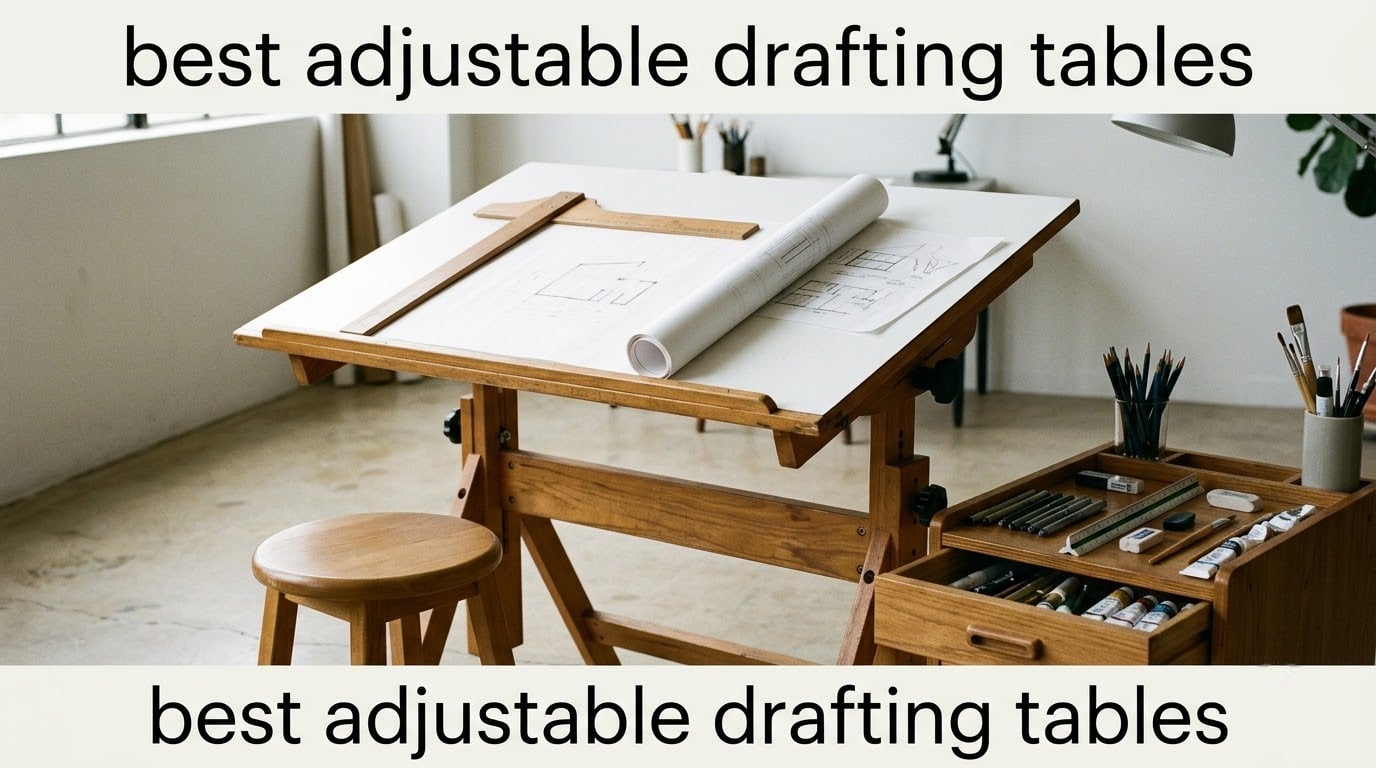
If you have spent any time drawing, you already know the problem. Your paper lies flat on a desk, you look down at it at an awkward slant, and after two hours your neck and shoulders are paying for it. The fix is an adjustable drafting table: a work surface whose top tilts through an angled range and, on most models, raises and lowers in height. That combination lets you lean into the paper, sight straight down your drawing line, and rotate between sitting and standing without owning two desks.
Do people still use drafting tables? Yes, and the buyer group is wider than the architects and engineers most roundups assume. Technical drafting students, illustrators, storyboard artists, calligraphers and hobby painters all use them, and so do people doing diamond painting, sewing and pattern making, or Cricut crafts for hours at a stretch. What has changed is the hardware. Modern adjustable drafting tables pair a tilt mechanism with a real height range, so the same table can move from a flat desk near 28 inches to a near-vertical easel above 38 inches.
We compared 12 adjustable drafting tables side by side, weighing tilt range, height range, load capacity, surface material, storage and how much wobble you get at full tilt. The short version: the Yaheetech Adjustable Drafting Table Art Desk is the one we would put in a studio, the ZENY is the strongest value, and the Yaheetech glass model is the pick if you trace or work on a light table. Below that, we explain what makes a drafting table adjustable, which specs actually matter, and which tables to skip entirely.
Table of Contents
Top 3 Best Adjustable Drafting Tables in September

Best Adjustable Drafting Tables in 2026 Quick Overview
All 12 tables in this roundup adjust either their tilt angle, their height, or both. The comparison below lists what each one changes and what it is built from, so you can rule out models that do not fit your paper size or your room.
| Product | Specifications | Action |
|---|---|---|
| Yaheetech Adjustable Drafting Table Art Desk |
|
Check Latest Price |
| ZENY Drafting Table Art Desk |
|
Check Latest Price |
| Yaheetech Glass Drafting Table |
|
Check Latest Price |
 Studio Designs Vintage Oak Drafting Table Studio Designs Vintage Oak Drafting Table |
|
Check Latest Price |
 NOVA Microdermabrasion Adjustable Height Drafting Desk NOVA Microdermabrasion Adjustable Height Drafting Desk |
|
Check Latest Price |
 MEEDEN Wood Adjustable Drafting Table MEEDEN Wood Adjustable Drafting Table |
|
Check Latest Price |
 Stand Up Desk Store Adjustable Drafting Table Stand Up Desk Store Adjustable Drafting Table |
|
Check Latest Price |
 BBBuy Adjustable Drafting Table BBBuy Adjustable Drafting Table |
|
Check Latest Price |
 JupiterForce Glass Drafting Table JupiterForce Glass Drafting Table |
|
Check Latest Price |
 JOY worker Electric Glass Standing Desk JOY worker Electric Glass Standing Desk |
|
Check Latest Price |
 VECELO Drafting Table Art Desk VECELO Drafting Table Art Desk |
|
Check Latest Price |
 FLEXISPOT Electric Drafting Table FLEXISPOT Electric Drafting Table |
|
Check Latest Price |
1. Yaheetech Adjustable Drafting Table Art Desk – Best Overall
Yaheetech Adjustable Drafting Table Art Desk,Storage Drawers & Stool,White
Tilt: 0-60 degrees
Load: 220 lb
Drawers: 2
Surface diagonal: 53.45 in
Pros
- Smooth 0-60 degree tilt
- slide-out side top
- detachable tray plus 2 drawers
- lockable pencil ledge
- 220 lb powder-coated frame
Cons
- Two-person assembly
- engineered wood rather than solid wood
We used the Yaheetech Adjustable Drafting Table Art Desk for a full month of technical drawing, figure sketching and reading, and it kept earning its place. The tabletop tilts from flat to 60 degrees with a simple lift-and-lower motion, and the locking mechanism holds an angle firmly enough that you can rest your forearm on the surface without the top creeping.
The slide-out side top is the feature we did not expect to use daily and then used constantly. It adds a 23.6 by 15 inch auxiliary surface for a laptop, a reference book or a second drawing, and it disappears underneath when you are not using it. Storage runs to a detachable side tray, two fabric drawers on ball-bearing glides, and an open shelf underneath.
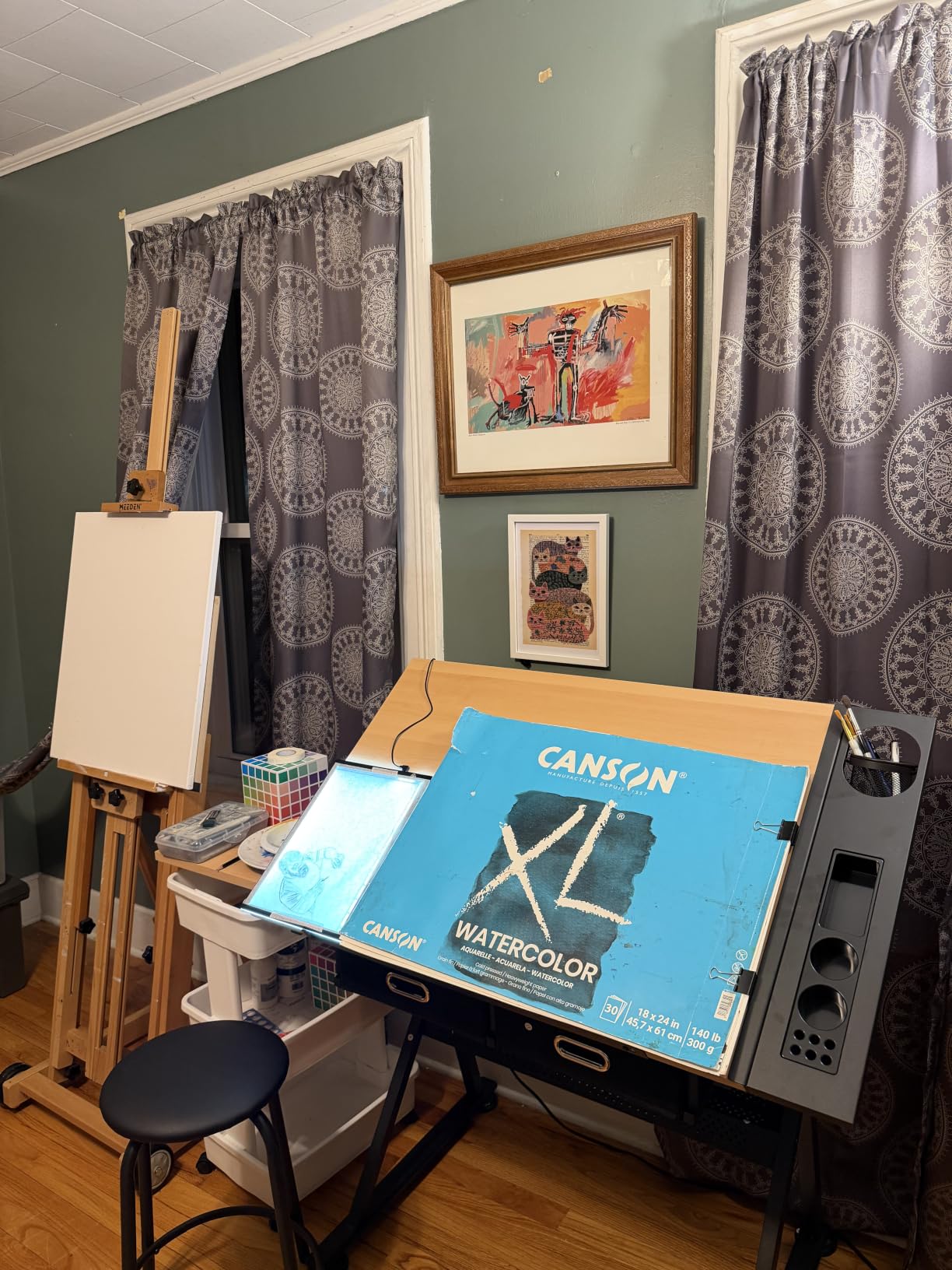
Specs worth knowing: the frame is powder-coated metal rated to 220 pounds, the top is engineered wood, and the overall footprint is 23.6 inches deep by 47.5 inches wide. The adjustable, lockable metal pencil ledge is the quiet hero. Without it, every pen and marker slides to the low corner the moment the top tilts past about 30 degrees.
The main drawback is assembly. Two people are recommended, and the frame is engineered wood and MDF rather than solid timber, so the edges will not survive a workshop the way a wood frame will. At 4.5 stars across 3680 reviews, it is the most heavily reviewed adjustable drafting table in our test group, and 75 percent of those reviews are five-star.
Who this table suits
This is the pick for a student or working artist who wants one table that handles both drafting and normal desk work. A 47.5 inch width covers ANSI B and 18 by 24 inch sheets with room to spare, and the 220 pound rating means you can lean on it while you draw without worrying about the frame.
It also works for anyone whose existing setup is a flat desk they have been fighting with. Turning the top up 30 to 40 degrees puts the paper nearer eye level and fixes most of the neck and shoulder strain that flat-desk drafting causes.
Who should skip it
Skip it if you plan to lay large canvases or heavy glass on the surface, or if you are under about five foot four and need a low minimum height, because the height here is not the star. It is also the wrong choice if you want solid wood joinery for a workshop, since this is a powder-coated steel and engineered wood build.
2. ZENY Drafting Table Art Desk – Best Value
ZENY Drafting Table Art Desk Drawing Table Height Adjustable Artist Table with Tilted Tabletop, Drafting Stool and Storage Drawer for Reading, Writing, Crafting, Painting Art
Height: 28-35.8 in
Tilt: 0-60 degrees
Drawers: 2
Surface: 47.4 x 23.6 in
Pros
- Height range of 28-35.8 inches
- 0-60 degree tilt
- slide-out side board
- 2 drawers plus pencil box
- stool included
Cons
- Picture-based assembly instructions
- firm included stool
- shallow accessory trays
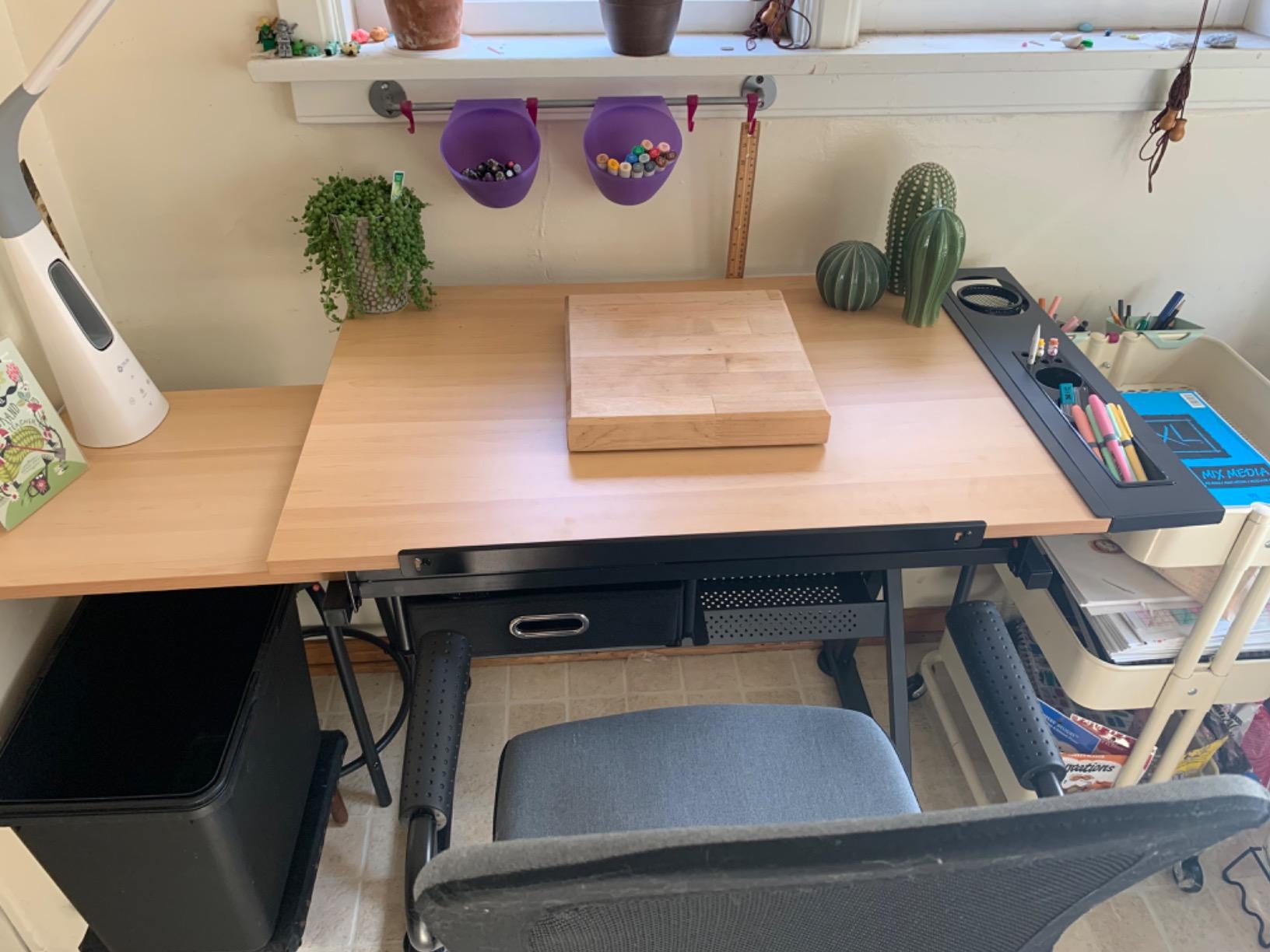
The ZENY Drafting Table Art Desk is the one we recommend to anyone who wants height adjustment and tilt without paying twice. It lifts from 28 to 35.8 inches and tilts the main surface to 60 degrees, which is a genuinely rare combination at this tier. Most cheaper craft stations adjust tilt only.
Working at it feels solid. The powder-coated steel frame sits on protective rubber feet, the tabletop is 0.7 inches thick, and the main surface measures 34 by 23.6 inches with a 15 by 23.6 inch slide-out board beside it.
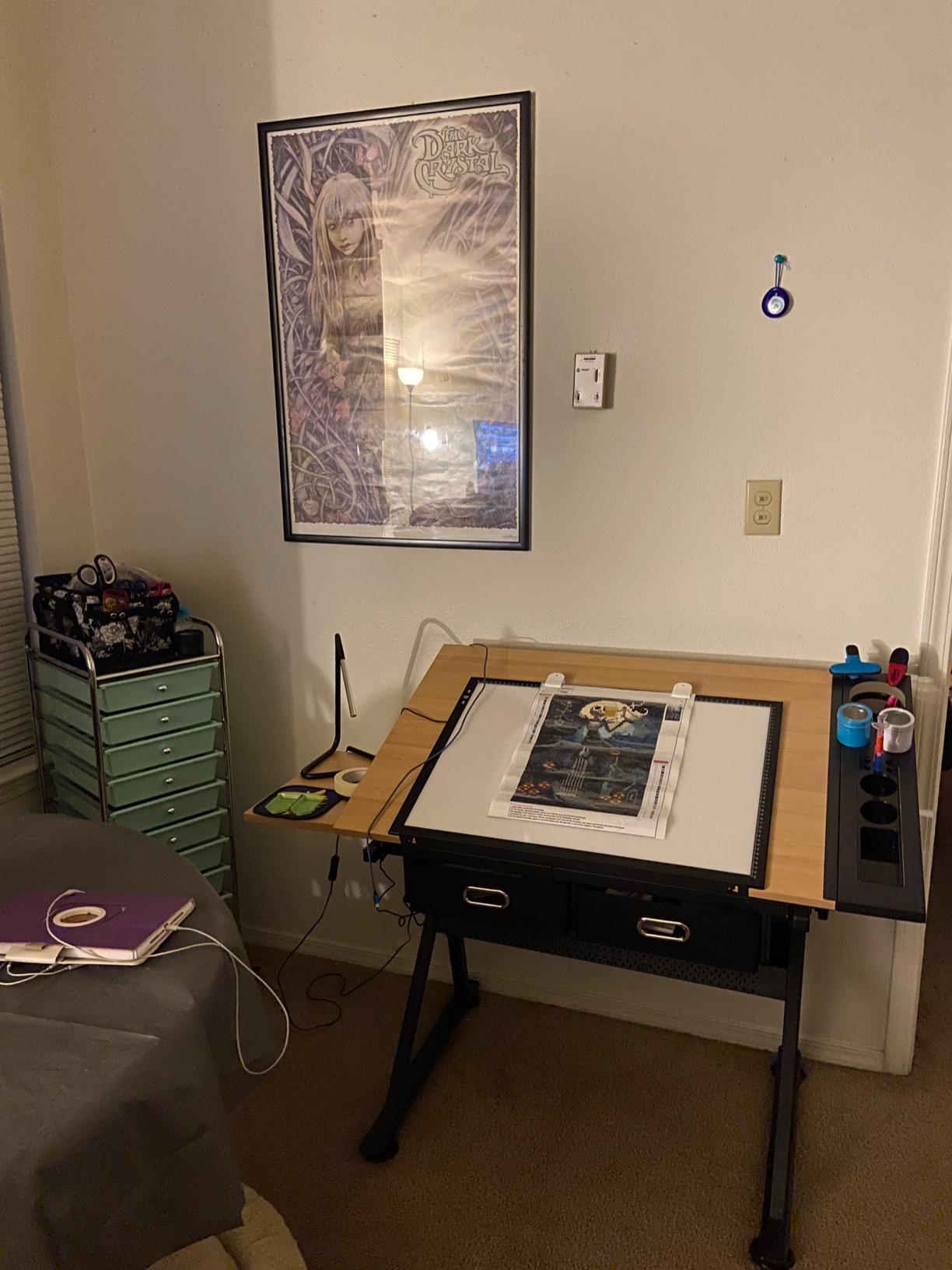
That height range is the reason it earns its place. A seated user can drop to 28 inches, and a standing user can reach 35.8 inches, which covers a lot of the sit-stand rotation without an electric motor. Two slide-out drawers, an under-shelf and a right-side pencil box round out the storage, a 20 inch stool is included, and the pencil ledge stops supplies migrating when the top is up at an angle.
The friction points are real but minor. Assembly instructions are almost entirely picture-based, and solo builders report one and a half to two hours. The included stool is firm and can wobble, and the stationery tray compartments are shallow enough that they hold thin tools and little else. Buyers rate it 4.6 across 3252 reviews, with 77 percent five-star.
Who this table suits
It suits first-time buyers, dorm rooms and shared studios, where a complete setup that includes a stool and two drawers matters more than premium materials. It is also a good fit for anyone who wants to alternate sitting and standing during long drawing sessions but does not want electric motors.
Calligraphy, lettering, sketching and study all benefit from a surface that swings between flat desk mode and a 45 to 60 degree angle. The slide-out board is useful when you need a laptop or a reference book next to the paper.
Who should skip it
Skip it if you are very short or very tall, since a 28 inch floor and a 35.8 inch ceiling cannot fully serve a 6 foot 4 user standing. Avoid it too if you dislike unclear assembly, or if you need a surface that takes heavy glass and thick board.
3. Yaheetech Glass Drafting Table – Best for Tracing
Yaheetech Glass Drafting Table with Storage, Adjustable Art Drawing Desk
Top: tempered glass
Tilt: 0-60 degrees
Load: 300 lb
Drawers: 2
Pros
- Glass top tilts 0-60 degrees and doubles as a light table
- 300 lb capacity
- swappable feet or casters
- 4 embedded tool trays
Cons
- Glass shows fingerprints
- light-duty fabric drawers
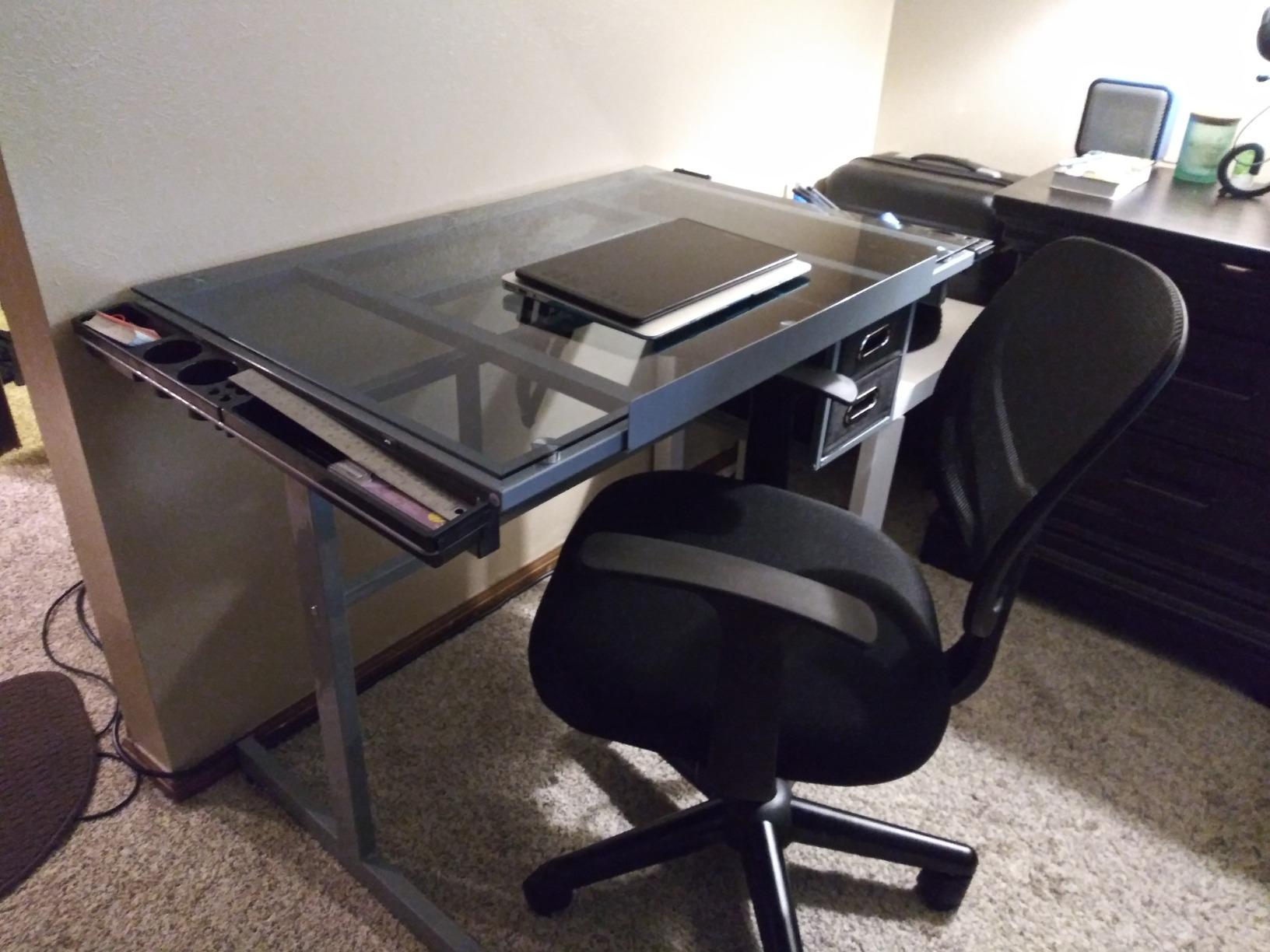
The Yaheetech Glass Drafting Table is the pick we reach for when the job involves tracing. A toughened glass top tilts from flat to 60 degrees and, with a lamp added underneath, becomes a light box. For architectural tracing, animation breakdowns and transferring a sketch, no wood model in this roundup does it as cleanly.
It is also the sturdiest frame here at 300 pounds, and the height range is unusually wide for a glass model, running from 31.5 to 49.2 inches. That puts a standing user comfortably at working height and a seated user at a usable drafting angle without craning.
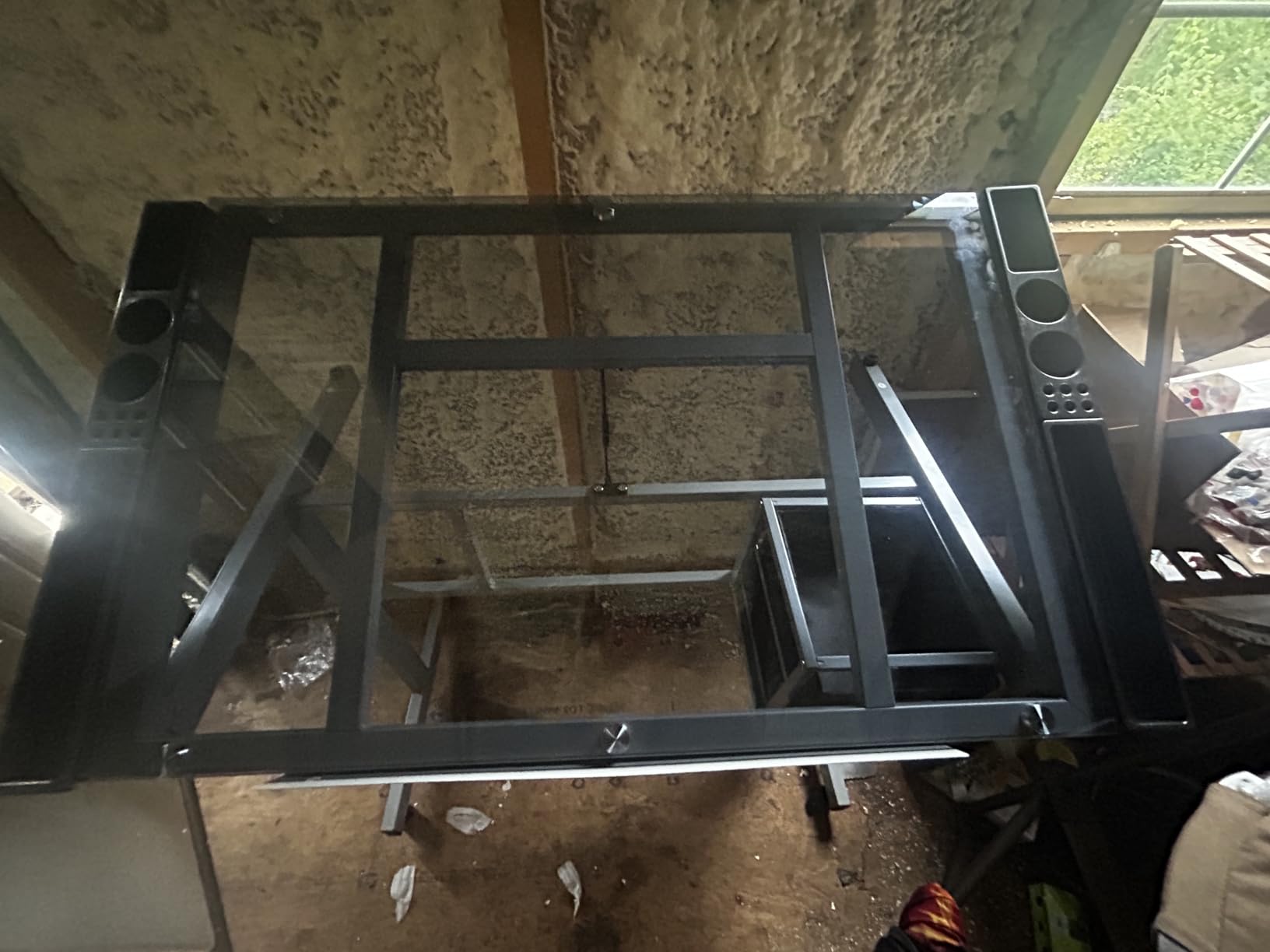
Storage is unusually well thought out. Four stationery trays are embedded into the top with honeycomb-shaped pen holes so nothing rolls, and two non-woven drawers sit underneath. The edges are filleted and the corners rounded, which matters on a glass surface in a busy studio, and at 38.6 pounds one person can move it if the path is clear.
One detail we like: the foot set is interchangeable. Screw-in flat feet give you maximum stability, and locking 360 degree casters let you roll the whole station to a window when the light is better. The drawback is glass care. It shows fingerprints and smudges, it needs a microfibre cloth, and the fabric drawers are light-duty. It holds a 4.6 rating across 2260 reviews with 78 percent five-star.
Who this table suits
Traceers, animators, students doing architectural work and anyone who draws with a light pad will get more from this table than from any wood model on the list. It is also a good fit for studios where the table needs to be repositioned often, thanks to the lockable casters.
If you work with ink, technical pens or fragile media, the glass surface wipes clean and does not hold stains the way a wood or melamine top can. The 300 pound rating also makes it forgiving when you rest your weight on the surface mid-drawing.
Who should skip it
Skip it if you work in charcoal, pastel or oil, because glass is unforgiving of debris and shows every smudge. It is also the wrong pick if you need a shallow storage volume, and you should think twice if you work in a busy room where the glass is a tipping risk around small children.
4. Studio Designs Vintage Oak Drafting Table – Best for Folding Away
Studio Designs Vintage Rustic Oak Drafting Table, Top Adjustable Drafting Table Craft Table Drawing Desk Hobby Table Writing Desk Studio Desk, 36”W x 24”D
Material: solid poplar
Tilt: flat to 90 degrees
Positions: 5
Size: 36 x 24 in
Pros
- Solid poplar with mortise-and-tenon joints
- 5 angle positions to 90 degrees
- folds flat for storage
- 10 year parts warranty
Cons
- Fixed height
- visual-only assembly diagrams
- bare wood top marks easily
The Studio Designs Vintage Oak Drafting Table stands apart in this roundup, and that is exactly why we like it. The top adjusts to flat, 23, 46, 70 and 90 degrees through friction knobs that hold position, which makes it the only table here that reaches fully vertical for figure drawing, life drawing and large-format work.
The build quality is a cut above. The frame is solid poplar joined with mortise and tenon, the top is 0.75 inches thick, and the whole thing weighs 27 pounds. When you are finished, the top folds down flat against the frame and the whole table becomes a 5 inch thick slab you can move between rooms by one handle.
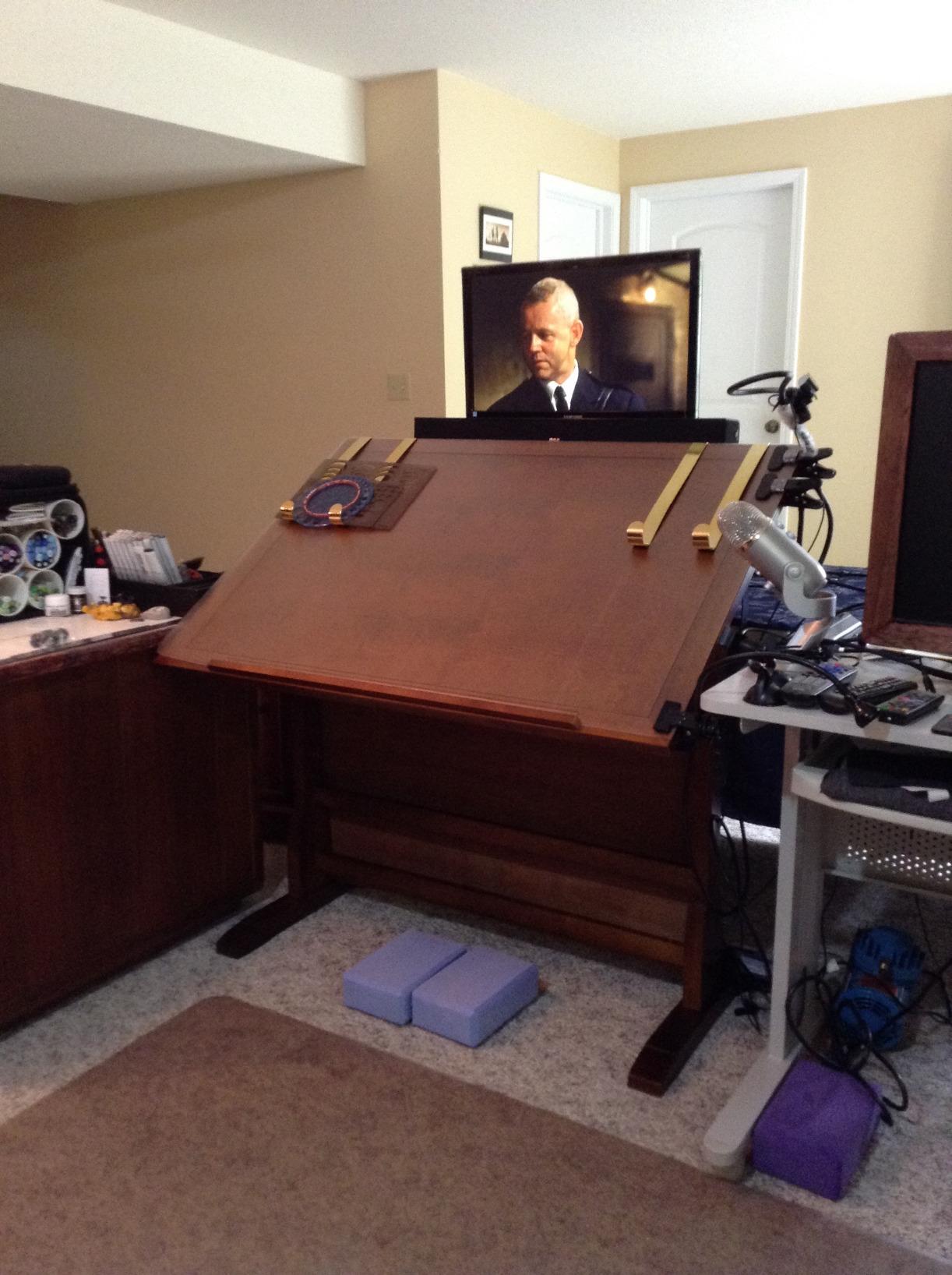
A built-in pencil groove runs along the lower edge and a 24 inch pencil ledge holds tools and small canvases. The two-leg design leaves a completely clear surface with no cross-brace or leg bump in the way, which matters if you use a T-square. A 42 by 30 inch version is also offered if your paper is larger than the 36 by 24 inch model.
The honest limitation is height. The top adjusts, the frame does not, so this is a seated drafting table. Forum users looking for standing work rule it out for that reason. Assembly is diagram-only with no written steps, the top is bare wood that marks without a mat, and the listed maximum load is only 25 pounds. It holds 4.5 stars across 1608 reviews.
Who this table suits
It suits life drawing students, illustrators working on large sheets, and anyone in a small apartment who needs the drafting surface to disappear when the work is done. The 90 degree position is the only true easel-angle option in this group.
It also rewards buyers who care about materials. Solid poplar with traditional joinery and a 10 year parts warranty is a different ownership experience from a particle board top, and the 25 pound limit is generous for paper, boards and light panel work.
Who should skip it
Skip it if you need to work standing, if you rotate between sitting and standing, or if you want to rest heavy glass or stacked board on the top. Anyone who wants a surface that resists dents from a workshop environment will also find bare wood a compromise.
5. NOVA Microdermabrasion Adjustable Height Drafting Desk – Best Starter Setup
NOVA MICRODERMABRASION Adjustable Height Drafting Desk Drawing Table Tiltable Tabletop for Reading, Writing Art Craft w/Stool and Drawers
Height: 27.95-35.83 in
Tilt: 0-45 degrees
Load: 220 lb
Drawers: 2
Pros
- 6 height positions from 27.95 to 35.83 inches
- one-hand 0-45 degree tilt
- slide-out side surface
- padded stool included
Cons
- Particle board top with plastic drawer tracks
- two people needed to change height
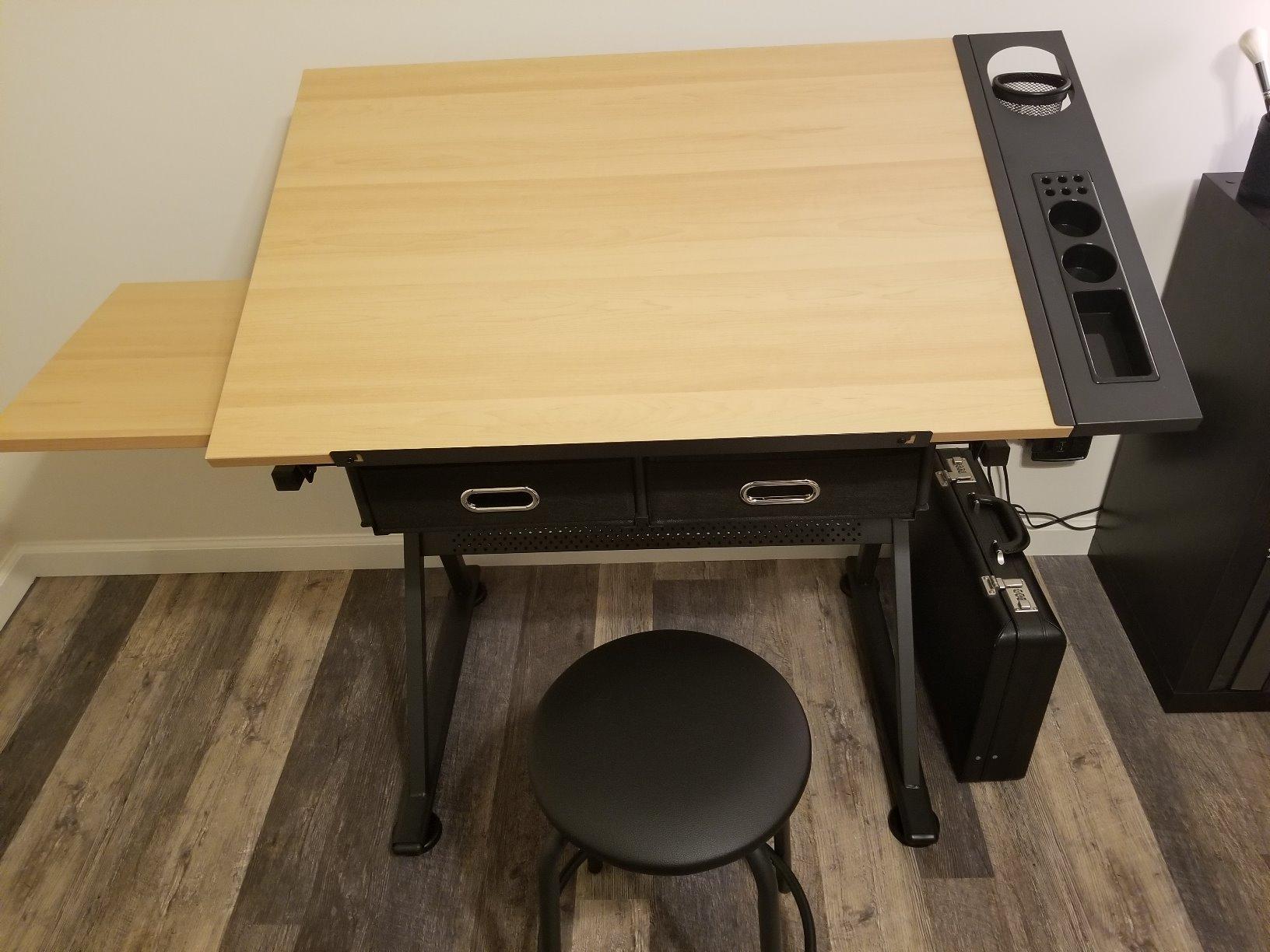
The NOVA Microdermabrasion Adjustable Height Drafting Desk is a good first adjustable drafting table, and it has been in our test group longer than its construction strictly suggests. Six discrete height positions from 27.95 to 35.83 inches plus a one-hand 0 to 45 degree tilt give you more adjustment range than most tables at this level.
It is built on a powder-coated alloy steel frame with oversized rubber footpads that protect wood floors, and it carries a stated 220 pound rating. Detachable side trays and a slide-out surface on the left give you room for a laptop or a reference, and two non-woven pull-out drawers sit under the top with a lockable pencil ledge above them.
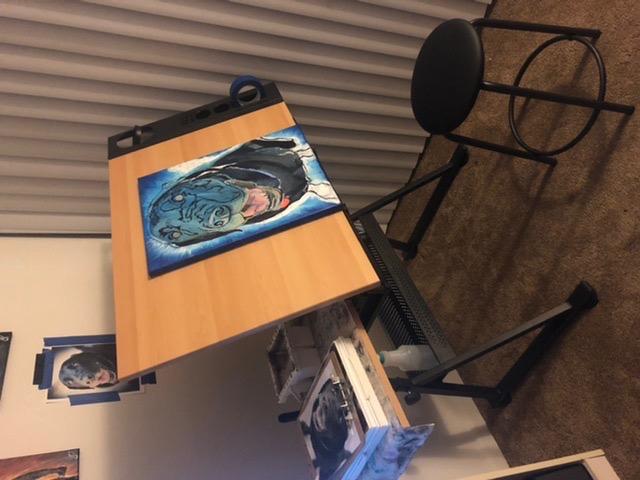
A padded drafting stool is included, which removes the most common budget surprise when people buy a drafting desk and then discover a stool costs extra. The working surface diagonal is listed at 60.7 inches, one of the larger figures in this group, and the tabletop is 0.7 inches thick.
The trade-offs are honest. The top is particle board, the drawer tracks are plastic, and changing height means two people lifting roughly 20 pounds of top while turning the screws. The swivel pen cup can tip during a height change and let pens roll under the top. It holds 4.6 stars across 1227 reviews with 79 percent five-star, so the value proposition holds up.
Who this table suits
It suits students, hobbyists and beginners setting up a first craft or study corner. Six height positions cover most adults, the included stool completes the set on day one, and the rubber footpads are kind to a dorm room or a hardwood floor.
For sketching, reading, writing and light craft work, the 45 degree tilt and the slide-out side surface are more than adequate. It is also a sensible second table for a shared household, since it covers both desk work and drafting.
Who should skip it
Skip it if you need serious tilt beyond 45 degrees for figure drawing, or if you are buying alone and expect to change height often, since it takes two people. Anyone needing a surface rated for heavy glass or thick panels should look at the 300 pound glass model instead.
6. MEEDEN Wood Adjustable Drafting Table – Best for Technical Drafting
MEEDEN Wood Adjustable Drafting Table: 35.5″ x 23.5″ Art Drawing Desk
Height: 29.7-38.4 in
Tilt: to 60 degrees
Load: 44 lb
Pencil ledge: 25 in
Pros
- Solid beech legs with cross-bracing that resist wobble
- 29.7-38.4 inch height range
- 24 inch T-square included
Cons
- 44 lb load limit
- particle board top
- two-person assembly
The MEEDEN Wood Adjustable Drafting Table is the most pleasant to draw on with a straightedge. Its cross-support design and solid beech legs are among the stiffest builds here at moderate tilt, and wobble is the complaint we heard most often about lighter frames. At full 60 degrees it barely moves when you lean in.
Height runs from 29.7 to 38.4 inches, which is a genuinely useful band for architecture school, where you spend hours leaning over a 24 by 36 inch sheet. The tilt reaches 60 degrees, and a built-in 25 inch pencil ledge holds the paper down along the lower edge.
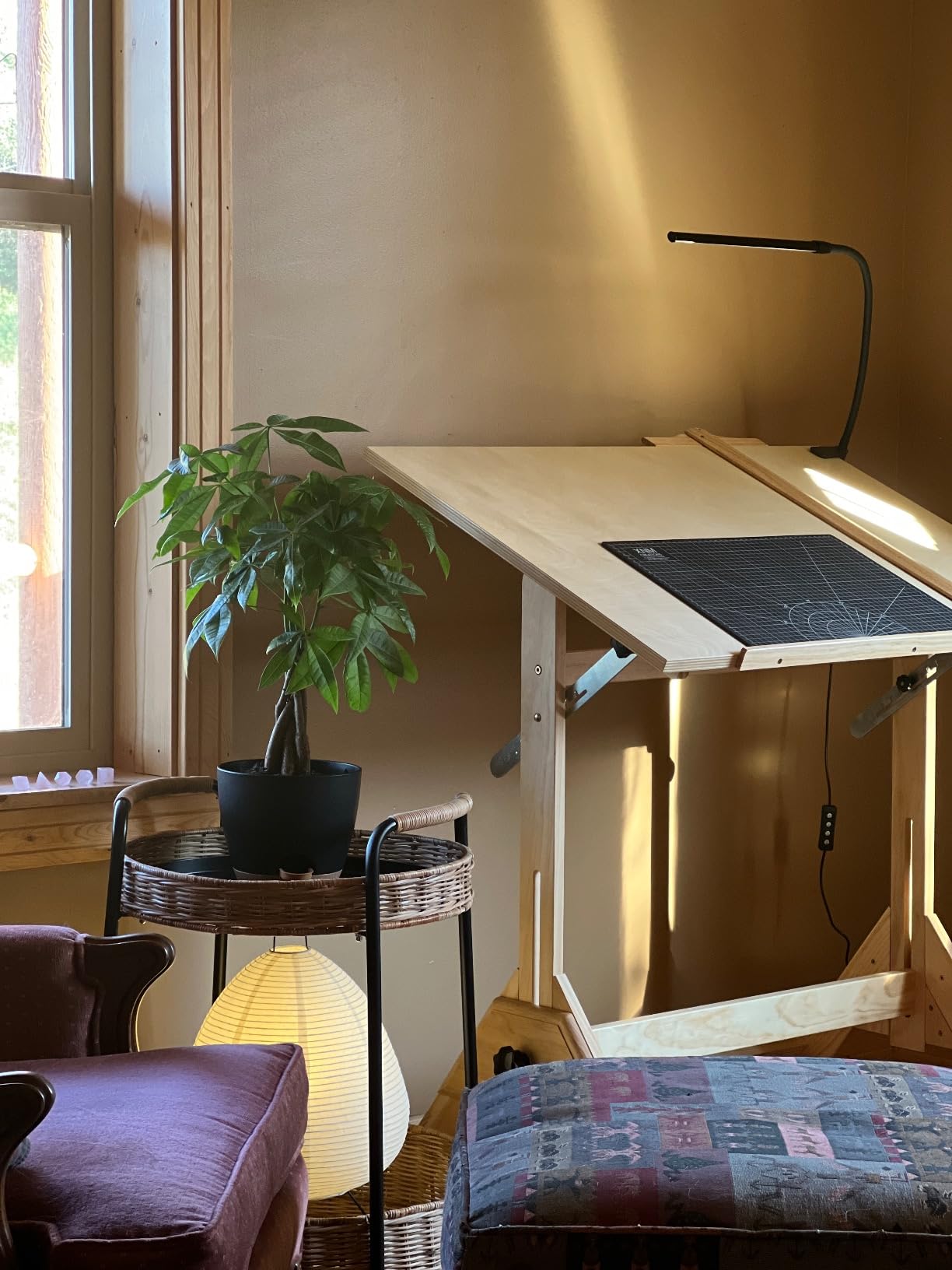
The standout accessory is a bonus 24 inch T-square with both inch and metric calibrations in the box. That single item costs more than most drafting tables in this roundup and removes the first purchase every technical drawing student makes. The top is 35.5 by 23.5 inches, which matches ANSI B and 18 by 24 inch paper exactly with a small border.
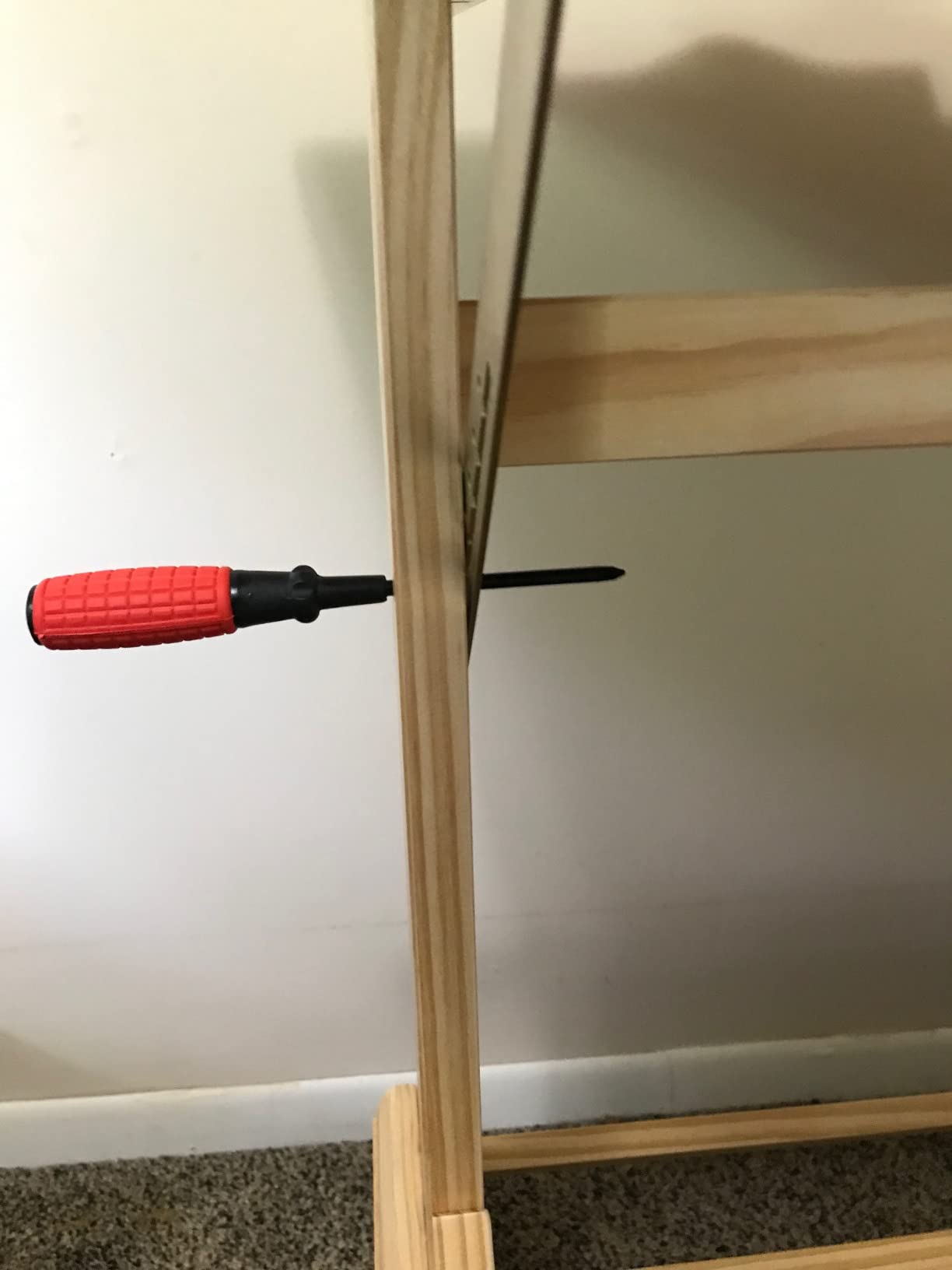
The limitation is capacity, and it is the number to check before you buy. The maximum load is 44 pounds, which is plenty for paper and light board but low for thick foam core, stacked reference books or a glass light box. The top is particle board with a wood finish, assembly takes about 20 minutes with two people, and it holds 4.6 stars across 900 reviews.
Who this table suits
It suits architecture and engineering students, technical illustrators, and anyone working with a T-square who wants a surface that does not shift under pressure. The included T-square means you can start drawing the day the box is open.
It also suits taller users better than most, since the 38.4 inch maximum height is among the higher figures in this group. The wood frame and beech legs mean it will warm up to a studio rather than feel like temporary furniture.
Who should skip it
Skip it if you work with heavy materials, oversized board, or a glass top of your own, because 44 pounds is a real ceiling. It is also a poor choice if you need a near-vertical easel angle or if you want a table that folds away for storage.
7. Stand Up Desk Store Adjustable Drafting Table – Best for Large Sheets
Stand Up Desk Store Adjustable Height and Angle Drafting Table Drawing Desk with Large Surface (Silver Frame/Birch Top, 40″ W X 26″ D)
Height: 26.5-38.5 in
Tilt: to 45 degrees
Load: 50 lb
Surface: 40 x 26 in
Pros
- Tool-free height changes in 2 inch increments
- 11 angle settings
- 40 x 26 inch surface
- BIFMA certified
- limited lifetime warranty
Cons
- 50 lb load rating
- manufactured birch top
- higher cost than similar feature sets
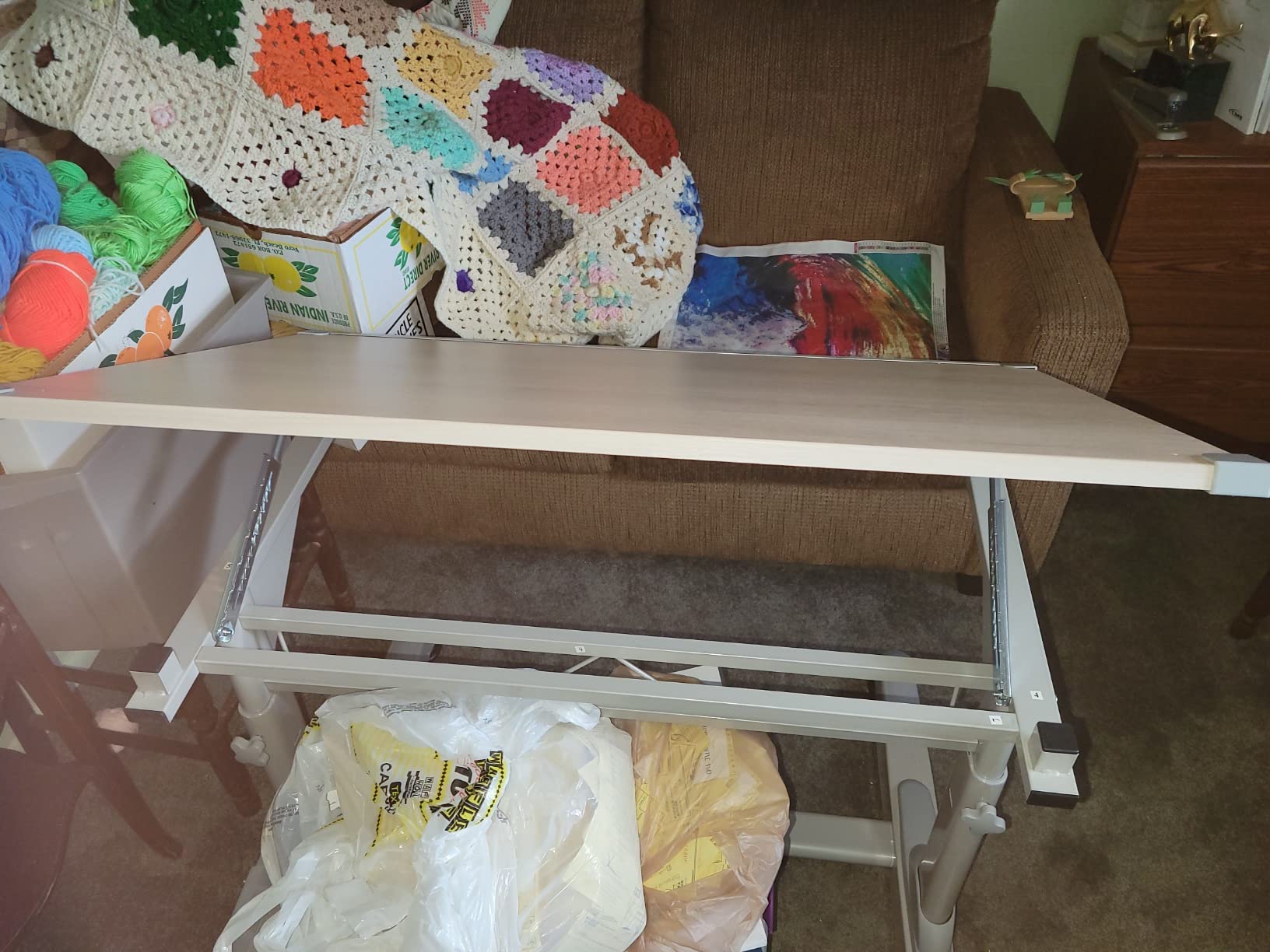
The Stand Up Desk Store drafting table is built for big sheets and for people who change position constantly. The work surface is 39.5 by 26 inches, among the larger main tops in this group, and height changes are tool-free in 2 inch increments from 26.5 to 38.5 inches. You pull a lever rather than hunt for a wrench.
Angle adjustment is even more granular. Eleven incremental settings take the top from flat to 45 degrees, so you can find the exact angle your line of sight needs rather than settling for whatever detent the mechanism offers. A full-length pencil tray spans the lower edge, and oversized rubber furniture feet grip hard floors.
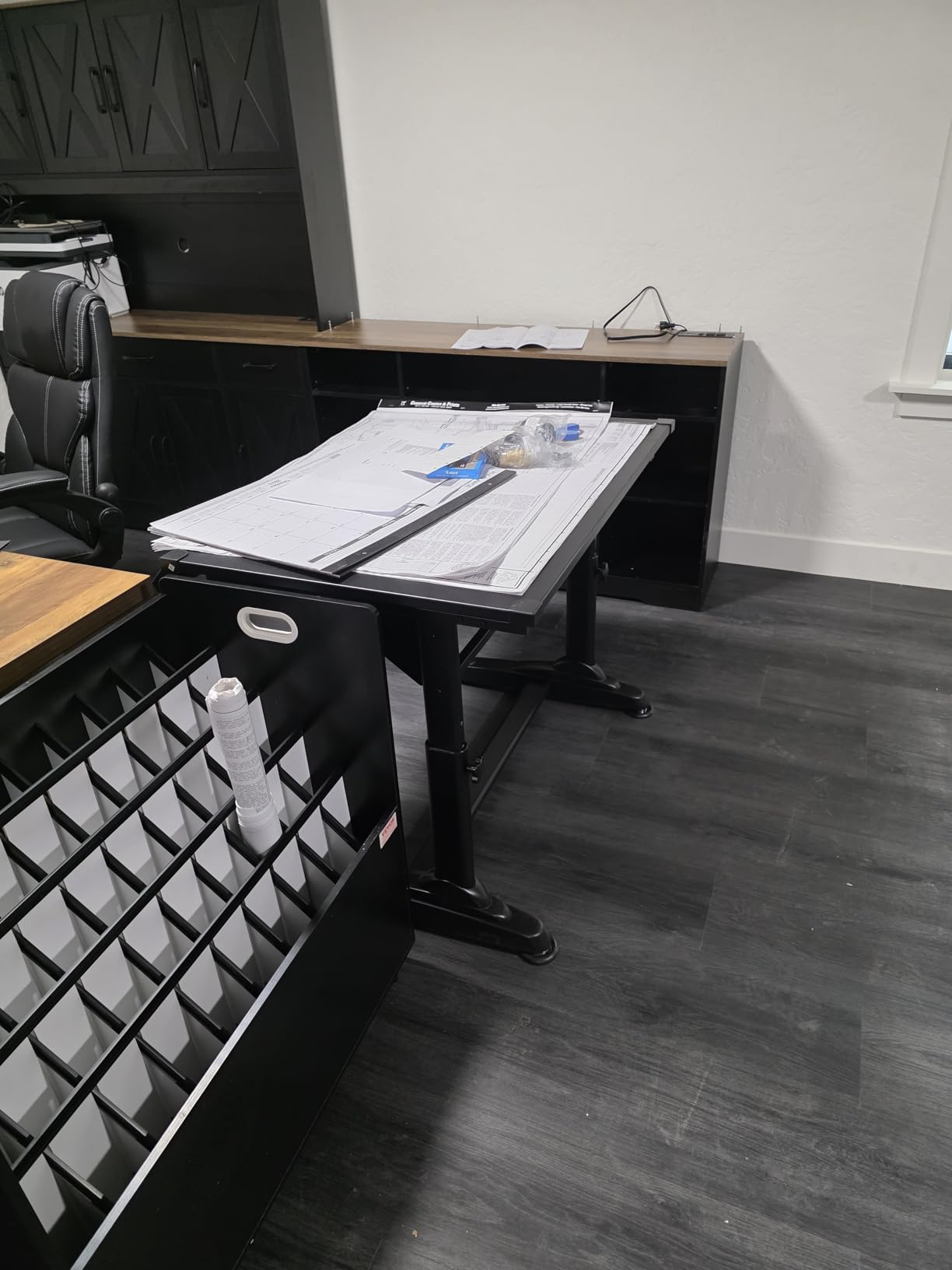
The frame is BIFMA certified powder-coated steel, which is the certification you actually want to see on a table you will lean on, and the company is US-based with a limited lifetime warranty against defects. It weighs 53 pounds, so it stays put once you position it.
Two trade-offs. The 50 pound load rating is modest once you add a laptop, a monitor arm and a stack of books, and the birch top is manufactured wood rather than solid timber. Buyers rate it 4.5 stars across 514 reviews with 75 percent five-star, and the general criticism is cost relative to the feature list rather than quality.
Who this table suits
It suits illustrators and architects working on 24 by 36 inch sheets, and it suits anyone who wants to rotate between seated drafting and standing work without tools. The 26.5 inch floor is the lowest in this roundup, which helps shorter users sit properly.
For home studios that double as offices, the tool-free mechanism means you can change position between a two-hour drawing session and a morning of paperwork without friction. BIFMA certification and a lifetime warranty also make it the safest long-term buy here.
Who should skip it
Skip it if you are working primarily in charcoal, pastel or oils, where the top will need protection. It is also the wrong choice if your budget is fixed at the entry tier, or if you need a tilt past 45 degrees for life drawing.
8. BBBuy Adjustable Drafting Table – Best for Kids and Beginners
BBBuy Drafting Table Drawing Desk Art&Craft Work Station Height Adjustable Tilting Tabletop Craft Table Desk w/Stool and 2 Storage Drawers for Home Office Study Room, Natural
Height: 28-35.8 in
Tilt: 0-60 degrees
Drawers: 2
Surface: 42.5 x 23.6 in
Pros
- One-hand 0-60 degree tilt
- 23.6 x 15 inch extension surface
- 2 drawers
- floor-protecting foot pads
- stool included
Cons
- Drawers reduce knee clearance
- two people needed for height changes
- occasional missing parts
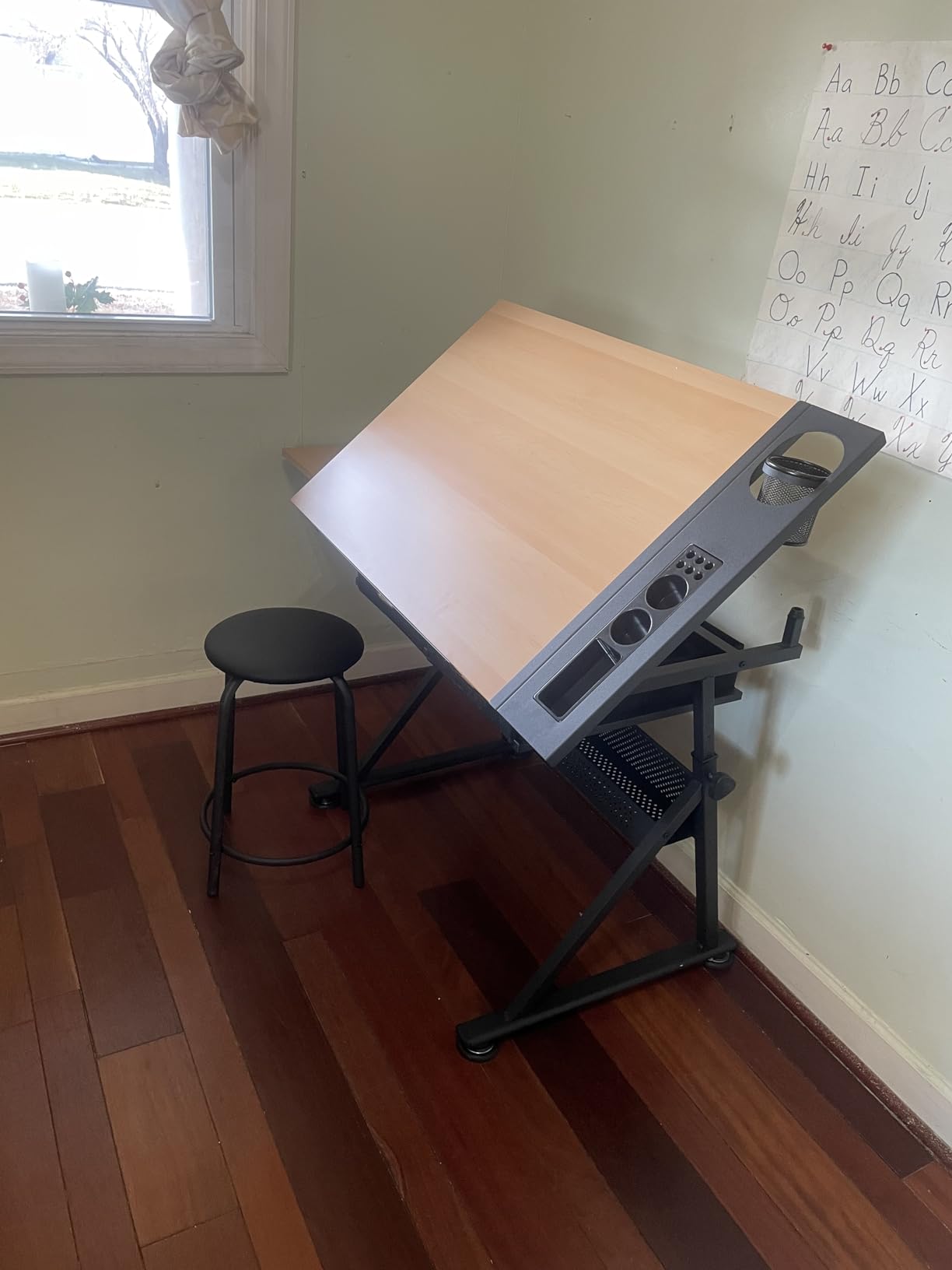
The BBBuy Adjustable Drafting Table is one of the most affordable complete setups we tested, and the compromises are in the right places. The MDF top carries a PVC finish on a powder-coated steel frame, the main surface tilts one-handed to 60 degrees through a ratcheting mechanism, and the height range runs from 28 to 35.8 inches.
You also get a 23.6 by 15 inch extension surface and a 23.6 inch slide-up pencil ledge, which together make the 42.5 by 23.6 inch footprint more useful than the dimensions suggest. Two non-woven drawers and a lower shelf cover storage, non-slip polypropylene foot pads protect wood floors, and a matching stool is in the box. All assembly tools are included.
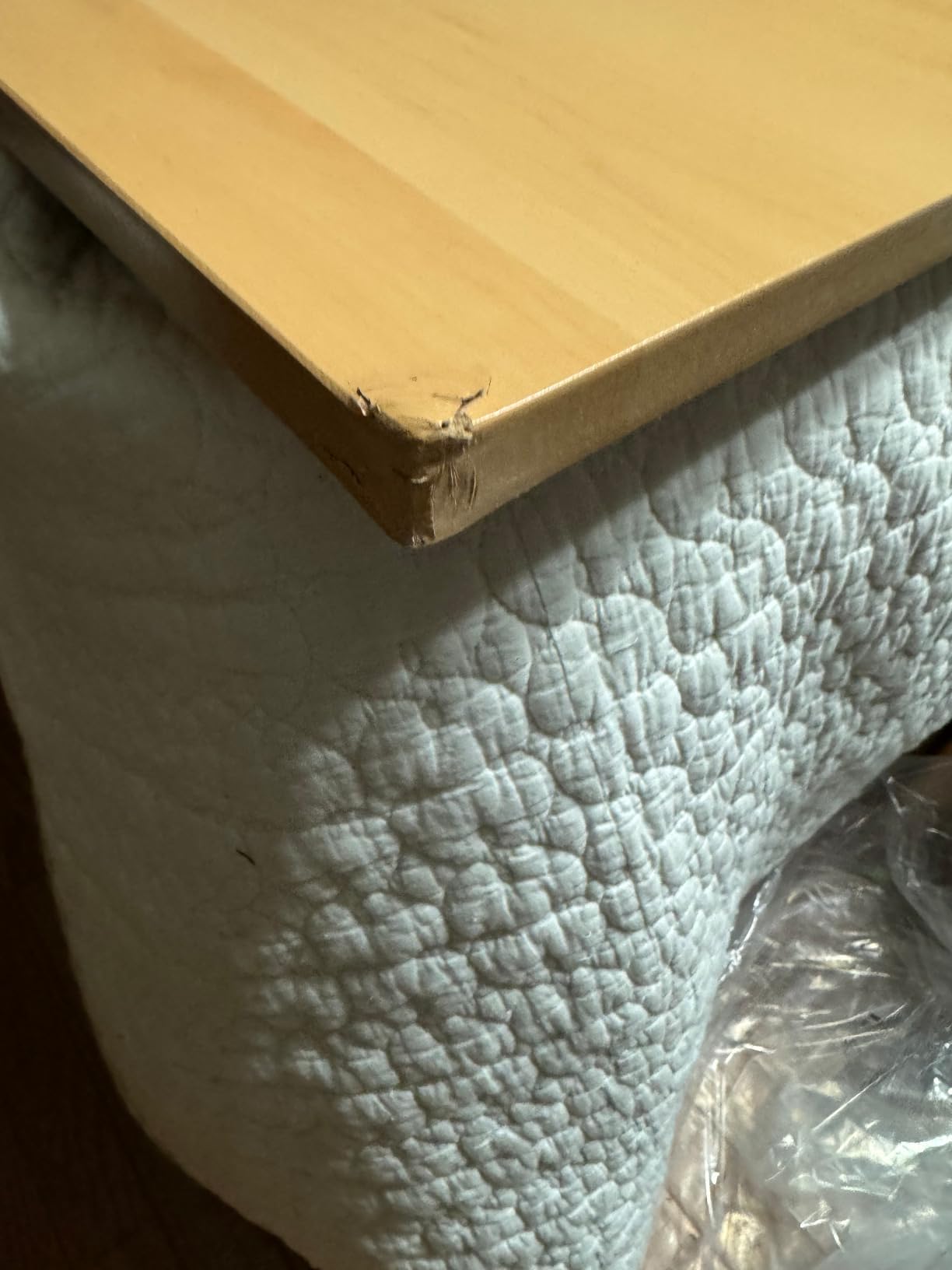
Where it falls down is the same place the other budget models fall down. Changing height means supporting roughly 20 pounds of top while turning the screws, so it is a two-person job. The drawers sit exactly where your knees go, which is a genuine problem for anyone who wants to sit closer in rather than perch at the edge.
Some units also arrive with warped or missing parts, and the instructions are picture-heavy with a few translation issues. Even so, it holds 4.6 stars across 475 reviews with 75 percent five-star, which is a good result for the entry tier. Compare it against the adjustable equipment we test in other categories and you will see the same pattern: the budget options cut materials, not mechanisms.
Who this table suits
It suits kids, students on a tight budget, and anyone setting up a first craft corner in a bedroom. A complete set with a stool for the least money is a hard combination to argue with, and the 60 degree tilt matches tables costing much more.
It is also fine for reading, writing, sketching and light craft work in a shared room, where the foot pads matter and the whole station can be moved. Treat it as a starter surface you can grow out of.
Who should skip it
Skip it if you sit for long sessions, because the drawers will press against your knees. It is also wrong for anyone working alone who expects to change height regularly, or for you if a wobbly surface ruins your line.
9. JupiterForce Glass Drafting Table – Best for Glass on a Budget
JupiterForce Adjustable Drafting Table Art Desk Drawing Table Versatile Art Craft Work Station Glass Tabletop w/2 Slide Drawers and Wheels for Reading, Writing, Painting Home Office
Top: tempered glass
Height: 31.5-49.5 in
Load: 130 lb
Casters: 4 with 2 locks
Pros
- Tempered glass tilts 0-60 degrees
- 31.5-49.5 inch height range
- 4 swivel casters with 2 locks
- 130 lb capacity
Cons
- Flimsy plastic caster wheels
- shallow side pockets
- 99 lb weight makes it a two-person move
The JupiterForce glass drafting table is the most affordable tempered-glass drafting surface in this roundup, and the height range is the surprise. It lifts from 31.5 to 49.5 inches, an 18 inch span, and that is enough to genuinely rotate from seated drafting to standing work.
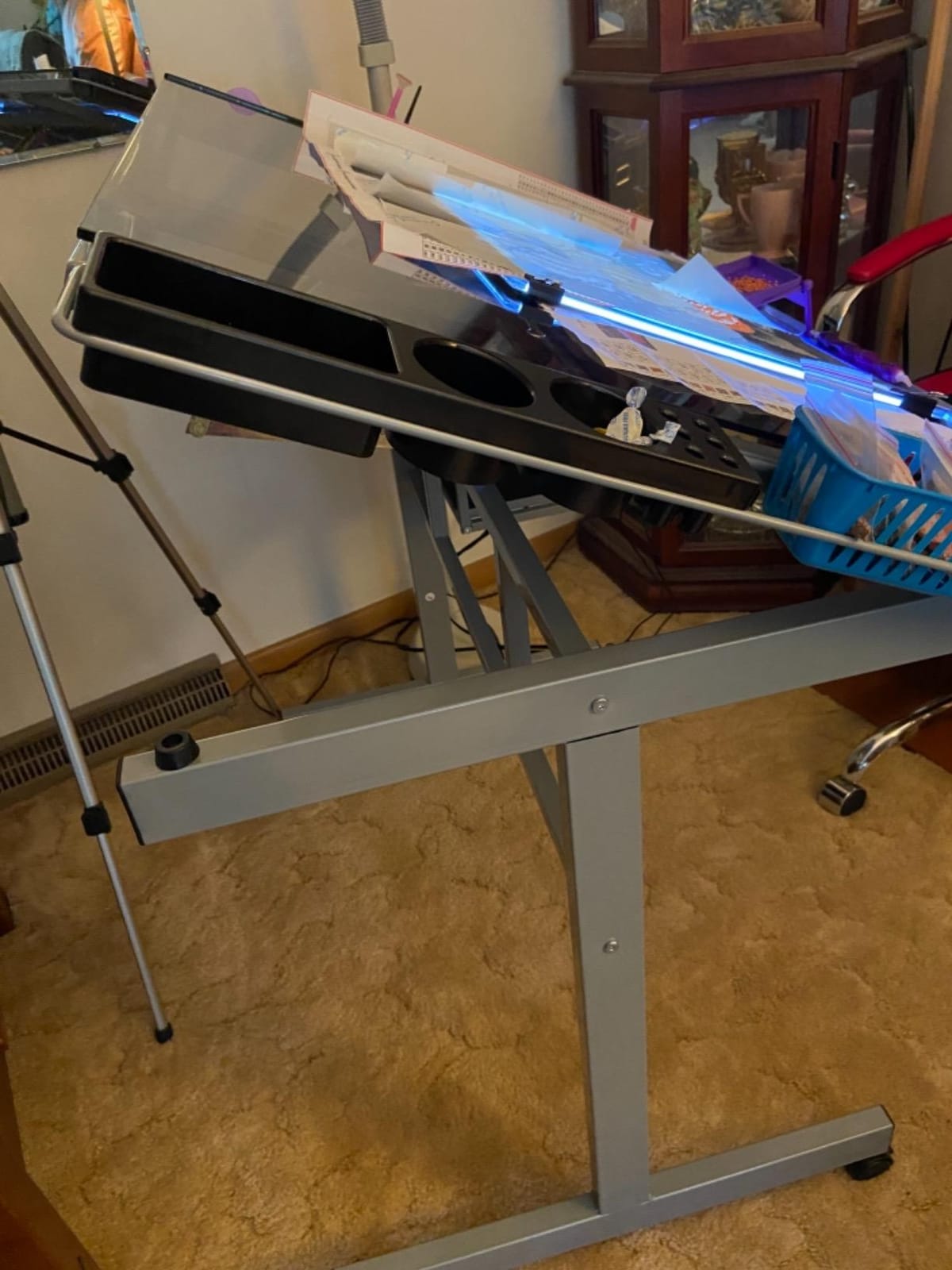
The top tilts from flat to 60 degrees and wipes clean in a way wood or melamine never will. Two drawers run on steel rollers, four removable single-slot supply trays sit under the top, and four 360 degree swivel casters with two locking wheels let you reposition the station around a room. A flat-foot set is included as a fallback.
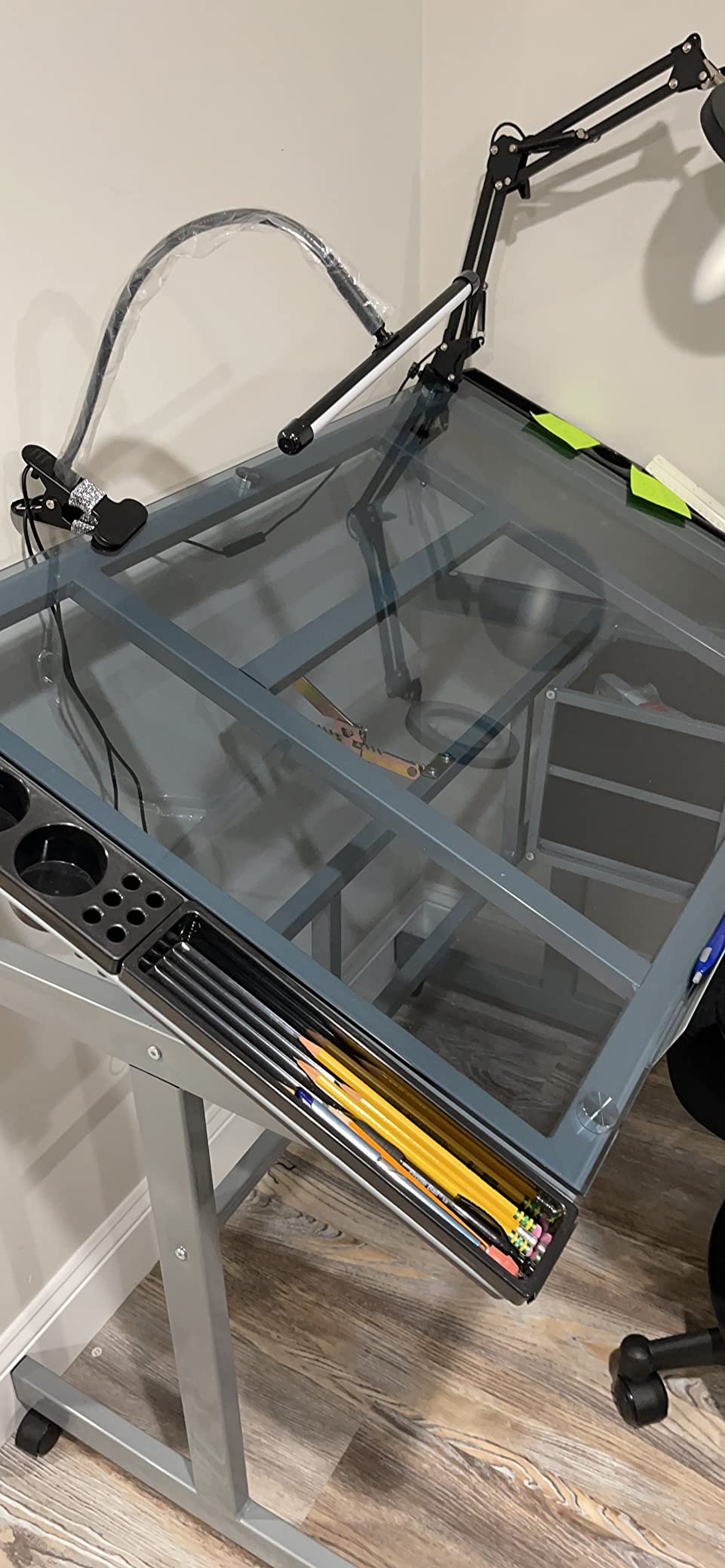
The frame is welded powder-coated alloy steel rated to 130 pounds, and the work surface is 41.25 by 24 inches, a good size for 18 by 24 inch paper plus a margin. It is not a light table, but the glass is thick enough to feel solid under a nib.
Two things to know before you commit. The plastic caster wheels are flimsy and can bend under load, which is why the flat feet are included, and the side pockets are too shallow to hold pens or brushes when the top is tilted. At 99 pounds it is a two-person move. It holds 4.6 stars across 458 reviews with 78 percent five-star.
Who this table suits
It suits illustrators who want glass at a lower cost than the 300 pound Yaheetech model, especially anyone who drafts both sitting and standing. The casters make it a good fit for a multi-use studio space.
If you rotate between ink work, watercolour and clean-up, a glass surface that wipes down in seconds changes the workflow. The 41.25 inch width also handles A3 and larger sheets comfortably.
Who should skip it
Skip it if you are in a hard-working studio where the casters will get kicked or overloaded, and swap to the flat feet from the start. It is also a poor fit for anyone who must move the table alone, and charcoal users will find the glass shows every speck.
10. JOY worker Electric Glass Standing Desk – Best for Small Spaces
JOY worker Electric Glass Standing Desk, 40″ Small Drafting Table on Wheels
Height: 28.3-46.5 in
Motor: electric 25mm/s
Noise: under 50 dB
Load: 176 lb
Pros
- Quiet electric lift from 28.3 to 46.5 inches
- 176 lb all-steel capacity
- 3 memory presets
- 20 inch depth suits tight rooms
Cons
- Surface does not tilt
- 20 inch depth is narrow for large sheets
- glass shows fingerprints
The JOY worker Electric Glass Standing Desk is built for small apartments and home offices, and the narrow footprint is the point. At 39.4 by 19.7 inches it is more than 4 inches shallower than most drafting tables, which is the difference between fitting a wall and not fitting a wall.
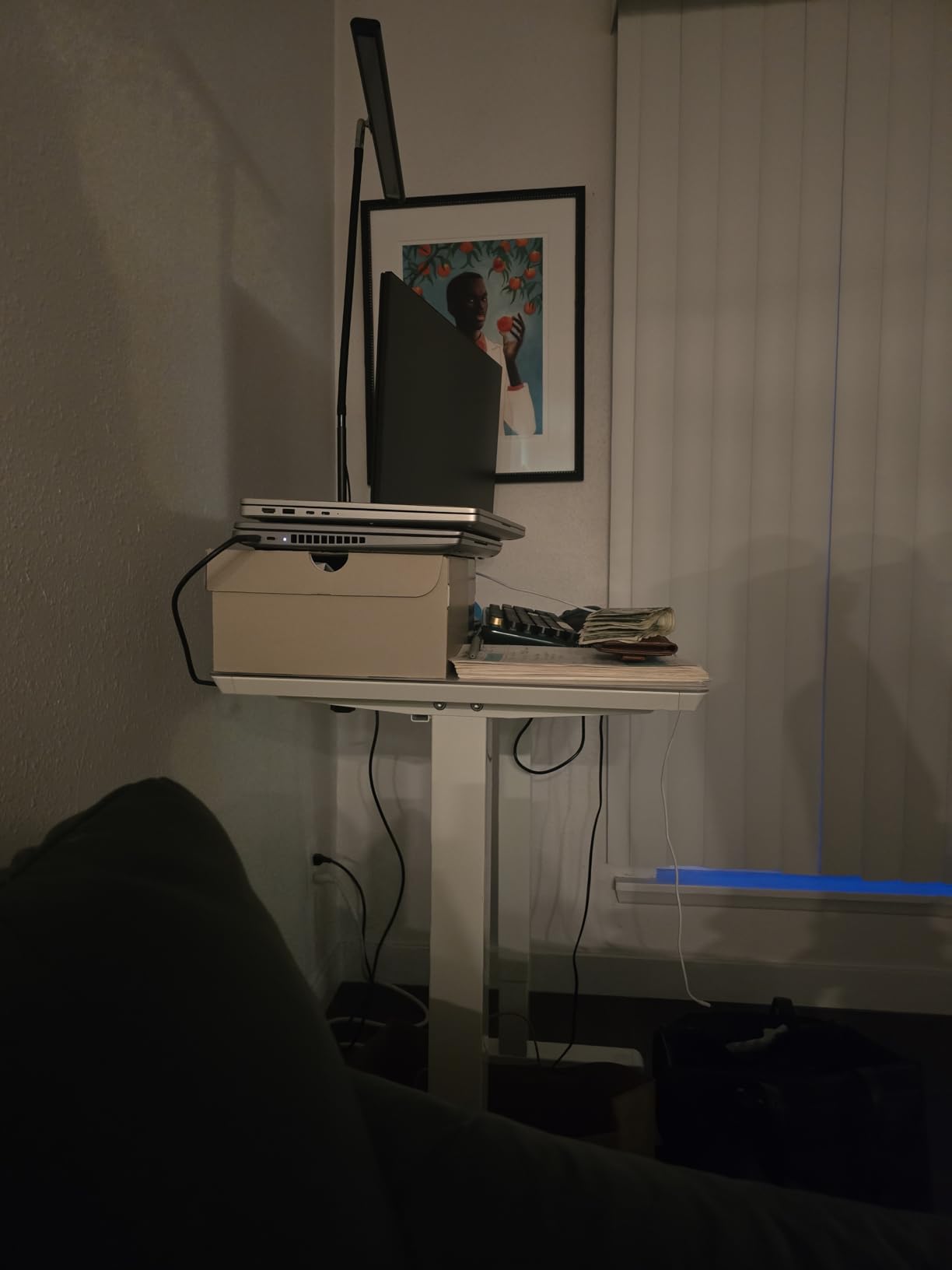
Height is electric, running from 28.3 to 46.5 inches at 25 mm per second with noise under 50 dB. That is quiet enough to use in a shared space, and three programmable memory presets mean you save your seated drafting height and your standing height once and forget about it.
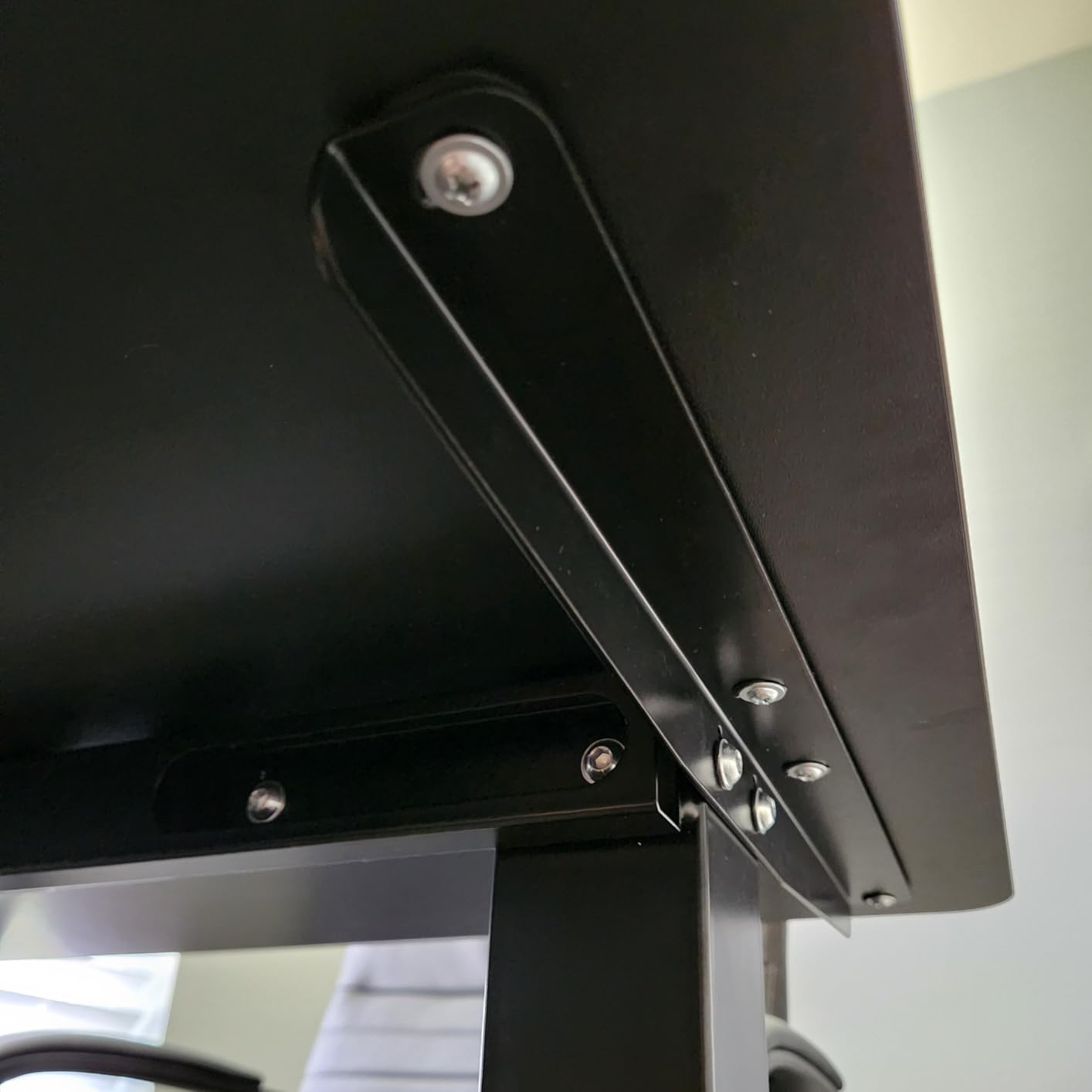
The seamless one-piece tempered glass top wipes clean and resists scratching, and the all-steel frame carries 176 pounds with either wheels or foot pads. Assembly takes about 15 minutes with the tools included, and there is a built-in USB port on the LED controller.
Be clear about what this is and is not. The surface does not tilt, so it is an electric sit-stand desk with a drafting-friendly size, not a true drafting table. A 20 inch depth is genuinely narrow for a 24 by 36 inch sheet, and the glass shows fingerprints. It holds 4.5 stars across 411 reviews with 77 percent five-star.
Who this table suits
It suits people in small home offices, dorms and studio flats where a 24 inch-deep drafting table simply will not fit. The electric presets suit shared households where two people work at completely different heights.
It is also the right call if you split your time between drafting on paper and working on a laptop or tablet, because the flat top and the 39.4 inch width handle both without a slide-out panel.
Who should skip it
Skip it if you need tilt for line-of-sight accuracy, or if you work on large architectural sheets that will overhang a 19.7 inch depth. Anyone who prefers a wood or laminate surface for charcoal or pastel should look elsewhere.
11. VECELO Drafting Table Art Desk – Best for Maximum Tilt
VECELO Drafting Table Art Desk Art Table Adjustable Drawing Table Tilted Tabletop with 2 Storage Drawers and Stool, Drawing Desk for Artist Painters Drawing, Crafting, Reading, Writing, Rustic Brown
Tilt: 0-65 degrees
Height: fixed 29.5 in
Top load: 55 lb
Stool: 20 in
Pros
- Tilt range of 0-65 degrees
- 12mm MDF top on triangular metal legs
- 2 drawers plus pencil box
- matching stool
Cons
- Fixed 29.5 inch height
- 55 lb top limit
- 4.4 star average across 290 reviews
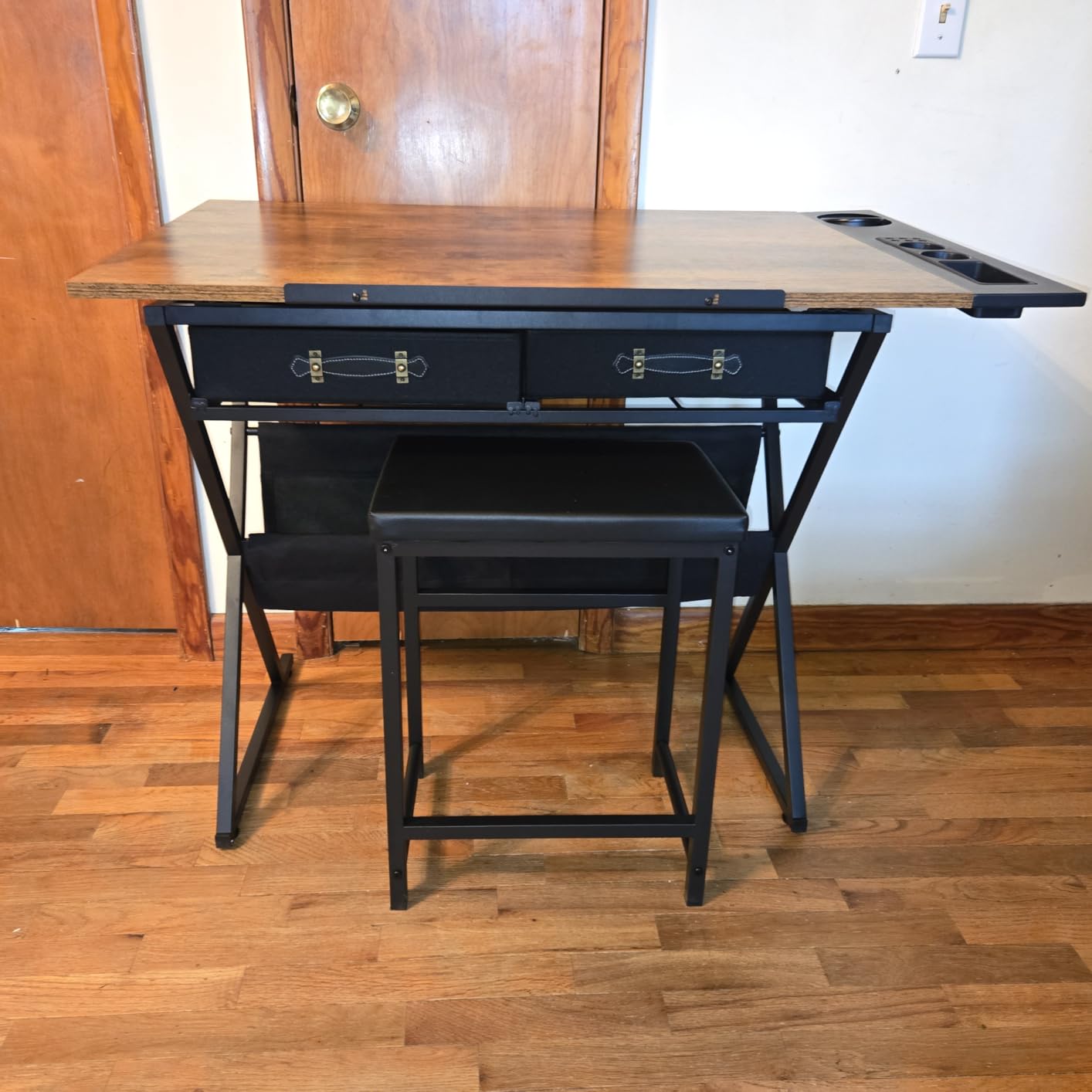
The VECELO Drafting Table Art Desk has a wider tilt range than most tables here, reaching 65 degrees. For illustrators and life drawing students that extra angle past the common 60 degree stop is meaningful, because it gets the surface closer to the angle your forearm naturally wants.
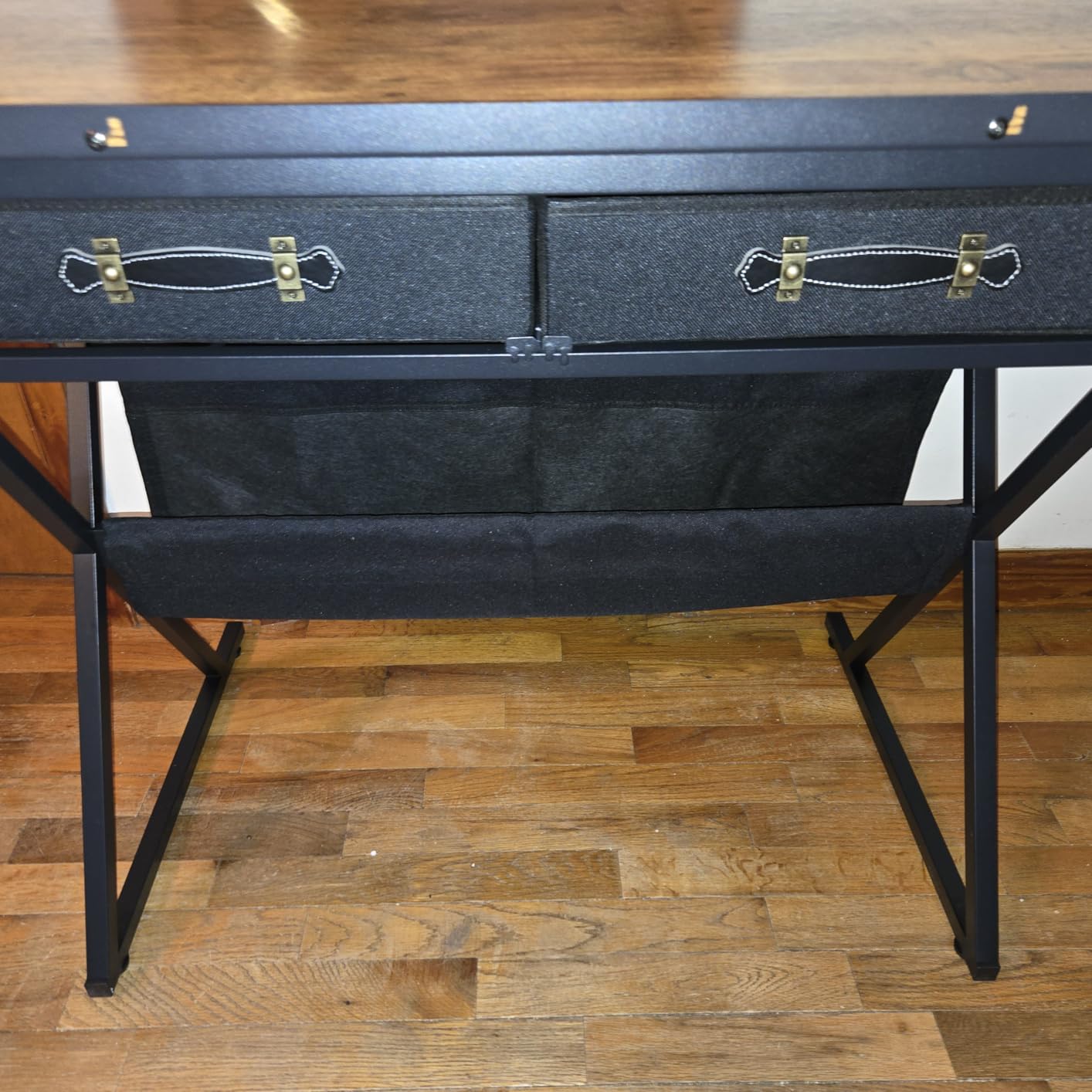
Build-wise it is a 12mm MDF top on a heavy-duty metal frame using a triangular leg design, which resists racking better than a simple four-leg arrangement. Storage includes two non-woven drawers, a fabric under-shelf and a right-side pencil box that holds tools when the surface is up. Four protective foot pads keep the legs off a finished floor.
A matching 20 inch stool with a PU seat and foam cushion is included and rated to 220 pounds, which is one of the more generous stool ratings in this group. The overall footprint is 40.2 by 23.7 inches, and the working surface diagonal is 49.1 inches, enough for ANSI C and A2 sheets.
The height is fixed at 29.5 inches with no adjustment at all, so this is a seated-only table and a low one. The top is rated to 55 pounds, and it carries the lowest average rating in the group at 4.4 stars across 290 reviews, with 73 percent five-star. Owners like the storage layout and the tilt; the fixed low height is the recurring trade-off.
Who this table suits
It suits seated illustrators, comic and anime artists, and anyone who wants more tilt than the standard 60 degree stop gives. The 40 inch width handles a full-size sheet with margin.
It is also a good match for children and teens who need a dedicated drawing station away from the household computer desk, and the included stool means nothing else needs buying.
Who should skip it
Skip it if you are tall or if you want to work standing, because 29.5 inches is fixed. It is also the wrong choice for heavy materials, and buyers who want the very highest-rated table in this group should look at the Yaheetech models instead.
12. FLEXISPOT Electric Drafting Table – Best for Sit-Stand Work
FLEXISPOT Electric Drafting Table Adjustable Height 47.2″x23.6″ Standing Drawing Desk Extendable Top Craft Workstation w/Tilting Tabletop, Storage Drawer for Study, Office, Studio, Art, Adult & Kid
Height: 28.7-48.4 in
Tilt: 0-40 degrees
Presets: 4
Warranty: 5 years
Pros
- Electric height with 4 presets
- tilts 0-40 degrees
- fold-away side extension
- storage drawer and cable tray
- 5 year warranty
Cons
- 40 degree tilt is shallower than most
- 92.6 lb weight
- 110 lb load capacity
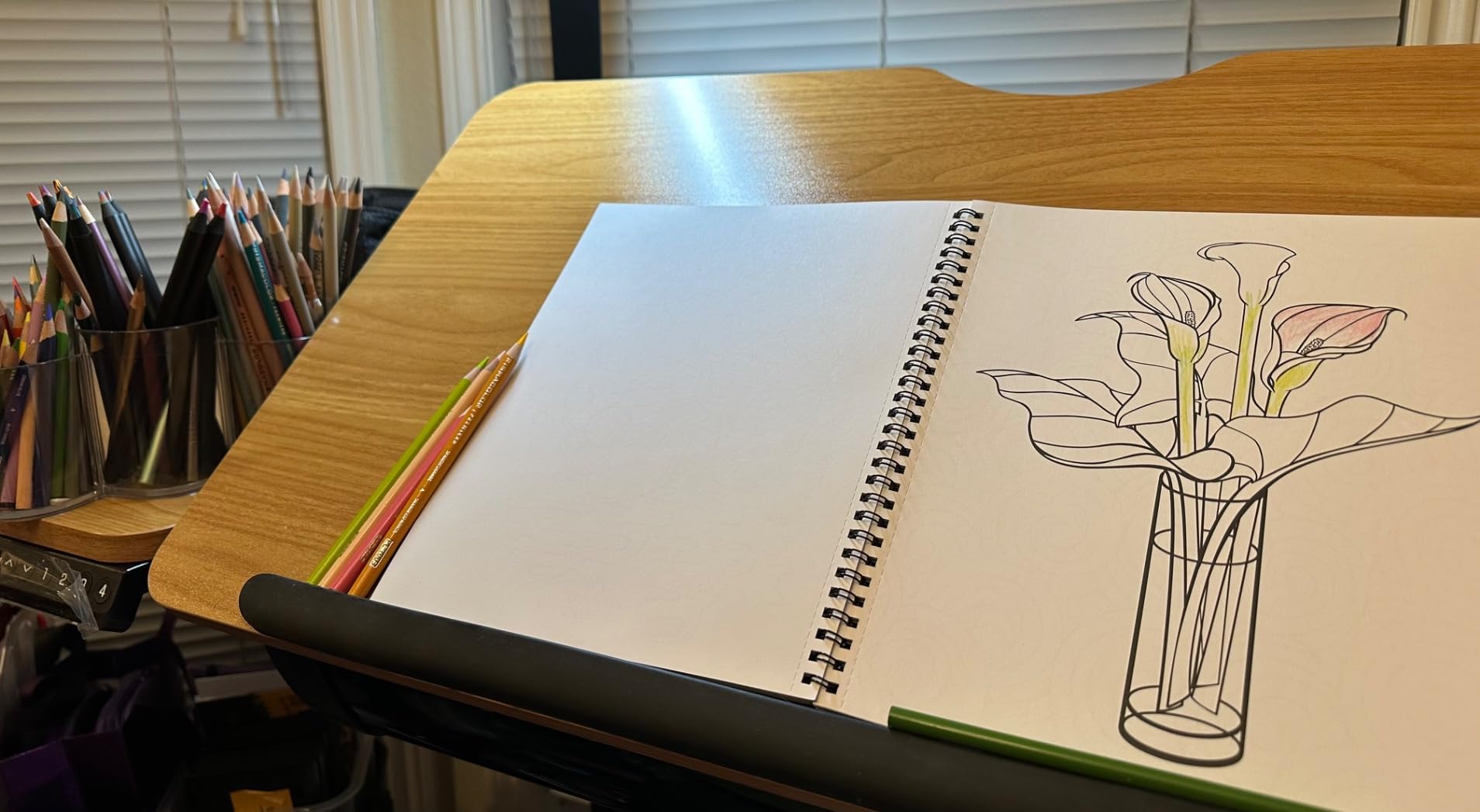
The FLEXISPOT Electric Drafting Table is the one to consider if you need both electric height and a tilting top in the same machine. Height moves from 28.7 to 48.4 inches at 1.0 inch per second, and four programmable presets store the heights different people in the same household need. The top tilts from flat to 40 degrees with suggested angles marked for writing, reading and drawing. A collapsible side extension adds workspace and folds away completely, which is what makes this workable in a small room. A storage drawer and a cable management tray handle the desk-side clutter that usually defeats a drafting table used for computer work.
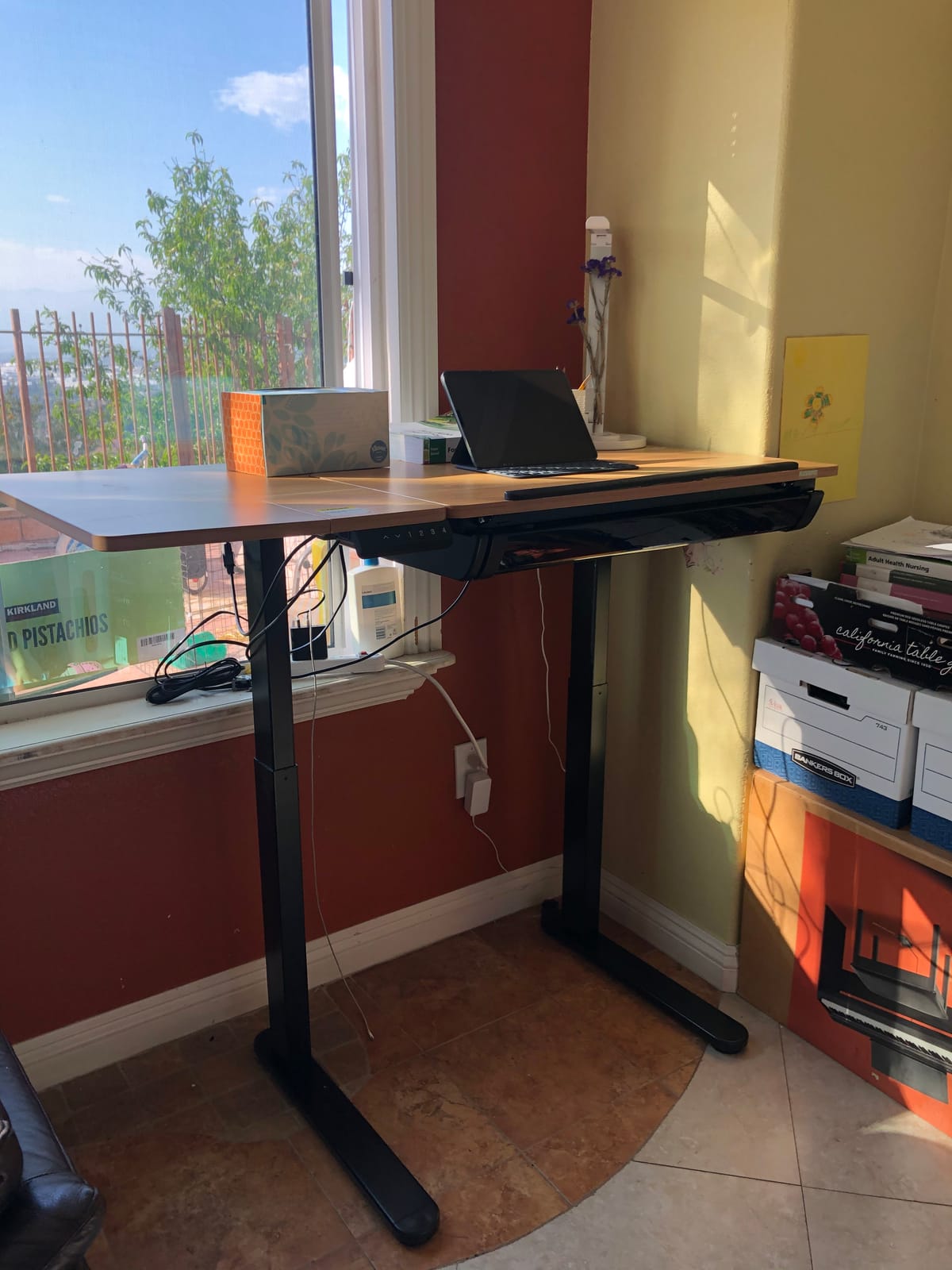
The 110 pound capacity and five year limited warranty are both solid, and the wood top on a powder-coated alloy steel frame is a step up from particle board. The main top is 31.5 by 23.6 inches.
Two limitations. Forty degrees is the shallowest tilt in this group, so it will not serve figure drawing that needs a steeper angle, and at 92.6 pounds it is a two-person assembly. It holds 4.5 stars across 134 reviews, the smallest review base here, so read the five-star share with that in mind.
Who this table suits
It suits home studios that double as offices, where one table has to handle paper drafting in the morning and computer work in the afternoon. The electric presets and cable tray are built for that dual use.
It is also the best fit for people following a standing rotation, because 28.7 to 48.4 inches covers seated drafting, seated typing and standing drawing without any manual effort. The fold-away extension keeps the footprint small in an apartment.
Who should skip it
Skip it if your work needs more than about 40 degrees of tilt, or if you want to assemble it solo. Anyone who only ever draws seated and never touches a computer will pay for electric hardware they rarely use.
What to Look for in an Adjustable Drafting Table
An adjustable drafting table is a work surface whose top tilts through an angled range and, on most models, also raises and lowers in height. Tilt is released through a lever, crank or thumb screws so the top pivots from flat to somewhere between 35 and 75 degrees; height changes by sliding the frame on thumb screws, a tool-free lever, a hand crank or an electric motor, then locking it so the surface stays rigid while you draw. Both adjustments matter, and they solve different problems.
These are the criteria we used to rank the 12 tables above, in the order we would check them.
Tilt range. For technical drafting and general sketching, 45 to 60 degrees is enough. For life drawing, figure work and near-vertical easel positioning, you want 70 to 90 degrees. Anything under 40 degrees is a craft station rather than a drafting table.
Height range. The spread matters more than the maximum. A table that goes from 28 to 35.8 inches serves seated work; a table that goes from 28 to 49 inches serves seated and standing. Forum users under five foot four report more trouble with minimum height than maximum, so check the low end first.
Surface size against paper size. A rule of thumb is one size larger than your paper. ANSI A and 18 by 24 inch sheets need roughly a 24 by 36 inch surface, A3 needs about 42 by 30 cm, and ANSI C or A2 sheets need a surface close to 36 by 48 inches. None of the 12 tables here reaches 48 inches wide, so full ANSI C work is worth checking a dedicated drafting board for.
Load capacity. Drafters lean into the surface to steady their hand, so capacity is not a formality. Between 130 and 300 pounds covers paper, board and light reference material. Below 50 pounds rules out heavy board and glass. Above 200 pounds you can rest your forearm and forearm-weight while drawing without checking the spec.
Surface material. Tempered glass wipes clean and doubles as a light table for tracing, at the cost of fingerprints. Solid wood takes a mat and gives warmth but marks. MDF and particle board are the budget default and are fine for paper work. Choose by medium: glass for ink and trace, wood for drafting, particle board for hobbies.
Frame and foot stability. Cross-braced legs and mortise-and-tenon wood joints resist the wobble that lighter frames show at full tilt. Wide rubber footpads grip hard floors. Lockable casters are useful but should be an option, not a requirement, because lighter plastic wheels bend over time.
Storage that stays out of the way. Drawers placed under the centre of the top can hit your knees, which is a common complaint on budget models. Side trays and removable supply trays are better because they stay clear of the drawing area.
Stool and accessories. A stool is often excluded. Several models here include a 20 inch stool, and the MEEDEN includes a 24 inch T-square with inch and metric scales, which saves a first purchase.
Ergonomics, Setup and Who Should Not Buy One
The ideal height for a drafting desk is a working number, not a guess. Sit upright, let your forearm rest flat on the surface, and measure from the floor to the underside of your elbow. That measurement is your seated drafting height, and it should sit near the middle of the table’s range rather than at either stop. For standing work, the same measurement taken from your elbow to the floor gives you the standing target.
Rotation is where most drafting tables earn their keep. The 20-8-2 rule for standing desks recommends 20 minutes standing, 8 minutes sitting and 2 minutes moving for every half hour, and an adjustable drafting table makes that rotation easy because height change is the whole point. Digital work often needs a flat top, so a table that tilts to flat and then lifts is more versatile than one that only tilts. If the standing rotation is really about how the rest of your day feels, our guides to the best adjustable dumbbells and the best adjustable beds cover the hours on either side of the desk.
On stability, the honest test is simple. Load your drawing hand onto the surface the way you would steady a line, and see whether the frame shifts. Lightweight mobile frames wobble most at full tilt, and drawers and trays that sit near the low edge can catch the top mid-adjustment. The MEEDEN and Yaheetech frames here were the least mobile; if you work on life drawing, weight the frame more heavily than you think you need to.
Setting up takes about 20 to 30 minutes for most models. Assemble the frame flat on the floor, fit the feet or casters before the top goes on, then bolt the top down and test the full tilt range empty before loading any paper. Set the angle that puts your drawing directly in your line of sight, adjust the pencil ledge last so it sits flush against the lower edge, and tighten the tilt friction knobs until the surface holds without creeping when you lean on it.
Some people should not buy an adjustable drafting table at all. If you work exclusively on a tablet, a monitor arm and a keyboard, you want a sit-stand desk rather than a drafting table, and the JOY worker model in this roundup is a reasonable middle ground. If your sheets never exceed A4 or letter size, a tilting board on an existing desk handles the job and leaves the floor space free. If you work in charcoal, pastel or oils, you want a flat washable surface with a large horizontal area, not a steep angle.
When you are weighing storage-heavy furniture for other rooms in the house, the same rule applies. Our guides to adjustable shelving units and adjustable bed bases come down to the same question: does the adjustment serve the way you actually work, or does it just sound flexible?
Frequently Asked Questions
Which drafting table is the best rated?
In our test group the highest-rated models are the ZENY Drafting Table Art Desk, the Yaheetech Glass Drafting Table and the NOVA Microdermabrasion drafting desk, each holding 4.6 stars across hundreds to thousands of reviews. For overall use we would still pick the Yaheetech Adjustable Drafting Table Art Desk, because 3680 reviews at 4.5 stars is a stronger signal of long-term reliability than a smaller sample.
Do people use drafting tables anymore?
Yes. Architecture and engineering students, technical illustrators, animators, storyboard artists, calligraphers and hobby painters all use them, and so do people doing diamond painting, sewing, pattern making and Cricut crafts for hours at a stretch. What has changed is the hardware: modern adjustable drafting tables pair tilt with a real height range, so one table covers seated drafting and standing work.
What are people saying about the MEEDEN drafting table?
Reviewers consistently praise the solid beech legs and cross-braced design for resisting wobble, the 29.7 to 38.4 inch height range, and the bonus 24 inch T-square with both inch and metric scales that comes in the box. The two constraints buyers mention most are the 44 pound maximum load, which is low for heavy board or glass, and a particle board top with a wood finish rather than solid timber.
What is the difference between a drafting table and a drawing desk?
A drafting table tilts its top through a meaningful angle and usually adjusts height, so you can sight straight down your drawing line and lean into the paper. A drawing desk is essentially a flat desk with a shallow tilt and a side panel, better for writing and reading than for precise line work. A drafting table has a lockable pencil ledge, a steeper tilt range and a stiffer frame; a drawing desk is lighter, cheaper and shallower.
Are drafting tables good for artists?
Yes, particularly for illustrators, comic and anime artists, life drawing students and anyone working on paper for long sessions. Tilting the surface reduces the neck and shoulder strain caused by looking down at a flat desk. Choose glass if you trace or work with ink, wood if you want a surface that takes a mat, and a steep tilt of 60 to 90 degrees if you draw standing figures.
What is the ideal height for a drafting desk?
Sit upright, rest your forearm flat on the surface and measure from the floor to the underside of your elbow. That number is your seated drafting height and should sit near the middle of the table’s range. For standing work, measure elbow to floor instead. Most users of short stature need a low minimum height more than they need a high maximum, so check the low end first.
What is the 20-8-2 rule for standing desks?
It is a rotation for reducing fatigue during a working day: for every half hour, spend 20 minutes standing, 8 minutes sitting and 2 minutes moving or changing position. An adjustable drafting table fits this pattern well because the same surface can tilt to flat for digital work and lift to standing height without a manual changeover.
What is the best desk for an artist?
It depends on medium and paper size. For technical drafting on large sheets, the MEEDEN with solid beech legs and an included T-square is the most stable. For tracing and ink work, the Yaheetech glass model doubles as a light table. For seated beginners, the ZENY includes a stool and two drawers. For a studio that also needs standing computer work, the FLEXISPOT electric model handles both.
Final Verdict
The best adjustable drafting table for most people is the Yaheetech Adjustable Drafting Table Art Desk. Its 0 to 60 degree tilt, 47.5 inch width, 220 pound frame and slide-out side top cover drafting, study and normal desk work without any weak point, and 3680 reviews at 4.5 stars make it the most proven pick in 2026.
Buy the ZENY if you want a complete setup with a stool and two drawers at the lowest sensible cost, the Yaheetech glass model if you trace or need a light table, and the FLEXISPOT electric model if your studio also has to do standing computer work. Whichever you choose, measure your forearm height first and set the table to the middle of its range rather than either stop.