
The best space heaters for basements are the Dr. Infrared DR-968 for a drafty lower level, the DREO Smart Wall Heater when floor space is tight, and the De’Longhi EW7707CM when you want silent, all-night warmth. All three run 1500 watts and convert every watt into heat, so the real difference is how that heat reaches you.
Here is the honest starting point: a portable heater solves a zone, not a basement. One 1500W unit warms roughly 400 to 500 square feet of usable space, and a 1,500 sq ft finished basement with a 9-foot ceiling needs either several units on separate circuits or a permanent heat source. We compared all ten models below on rated coverage, heat output, noise, thermostat control and the safety features that matter on a bare concrete floor.
A few labels before you scroll, so the list is quick to read:
Best overall for a drafty basement: Dr. Infrared DR-968, hybrid infrared quartz and PTC, about 5200 BTU.
Best digital control: DREO HSH006 Gold, 1F thermostat steps and a 34 dB brushless motor.
Best value tower: Lasko 751320, oscillating ceramic with a remote and a 7-hour timer.
Best wall-mounted: DREO DR-HSH009S, frees the floor and adds app scheduling.
Best oil-filled radiator: De’Longhi EW7707CM, fanless and nearly silent.
Best for a basement bedroom: DREO DR-HSH019, a 34 dB brushless fan with a muteable beep.
Best for a workshop spot: BLACK+DECKER BHDC201, 2.8 lb and easy to reposition.
Best under the wire: Amazon Basics DQ1927-Y, no-frills with tip-over shutoff.
Every heater on this list is rated for indoor use on a dedicated circuit, and none should run on an extension cord. If your basement also has a humidity problem, sort that out first, and our guide to dehumidifiers for basements covers that side of the problem.
Table of Contents
Top 3 Picks for Best Space Heaters for Basements in October
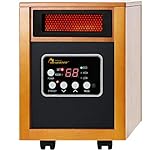
Dr. Infrared DR-968
- Infrared quartz plus PTC hybrid
- About 5200 BTU output
- Coverage up to 576 sq ft
- 39 dB blower

DREO HSH006 Gold
- Digital thermostat 41-95F in 1F steps
- 34 dB brushless DC motor
- 200 sq ft zone
- ETL certified

Lasko 751320 Tower
- 1500W ceramic element
- Wide oscillation
- Remote with 7-hour timer
- ETL listed
Best Space Heaters for Basements in 2026
| Product | Specifications | Action |
|---|---|---|
| Dr. Infrared DR-968 |
|
Check Latest Price |
| DREO HSH006 Gold |
|
Check Latest Price |
| Lasko 751320 |
|
Check Latest Price |
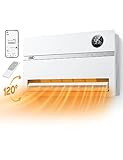 DREO Smart Wall Heater DREO Smart Wall Heater |
|
Check Latest Price |
 De’Longhi EW7707CM De’Longhi EW7707CM |
|
Check Latest Price |
 DREO DR-HSH019 DREO DR-HSH019 |
|
Check Latest Price |
 PELONIS PHTPU1501 PELONIS PHTPU1501 |
|
Check Latest Price |
 GiveBest PTC-905 GiveBest PTC-905 |
|
Check Latest Price |
 BLACK+DECKER BHDC201 BLACK+DECKER BHDC201 |
|
Check Latest Price |
 Amazon Basics DQ1927-Y Amazon Basics DQ1927-Y |
|
Check Latest Price |
1. Dr. Infrared DR-968 – Best Overall for a Drafty Basement
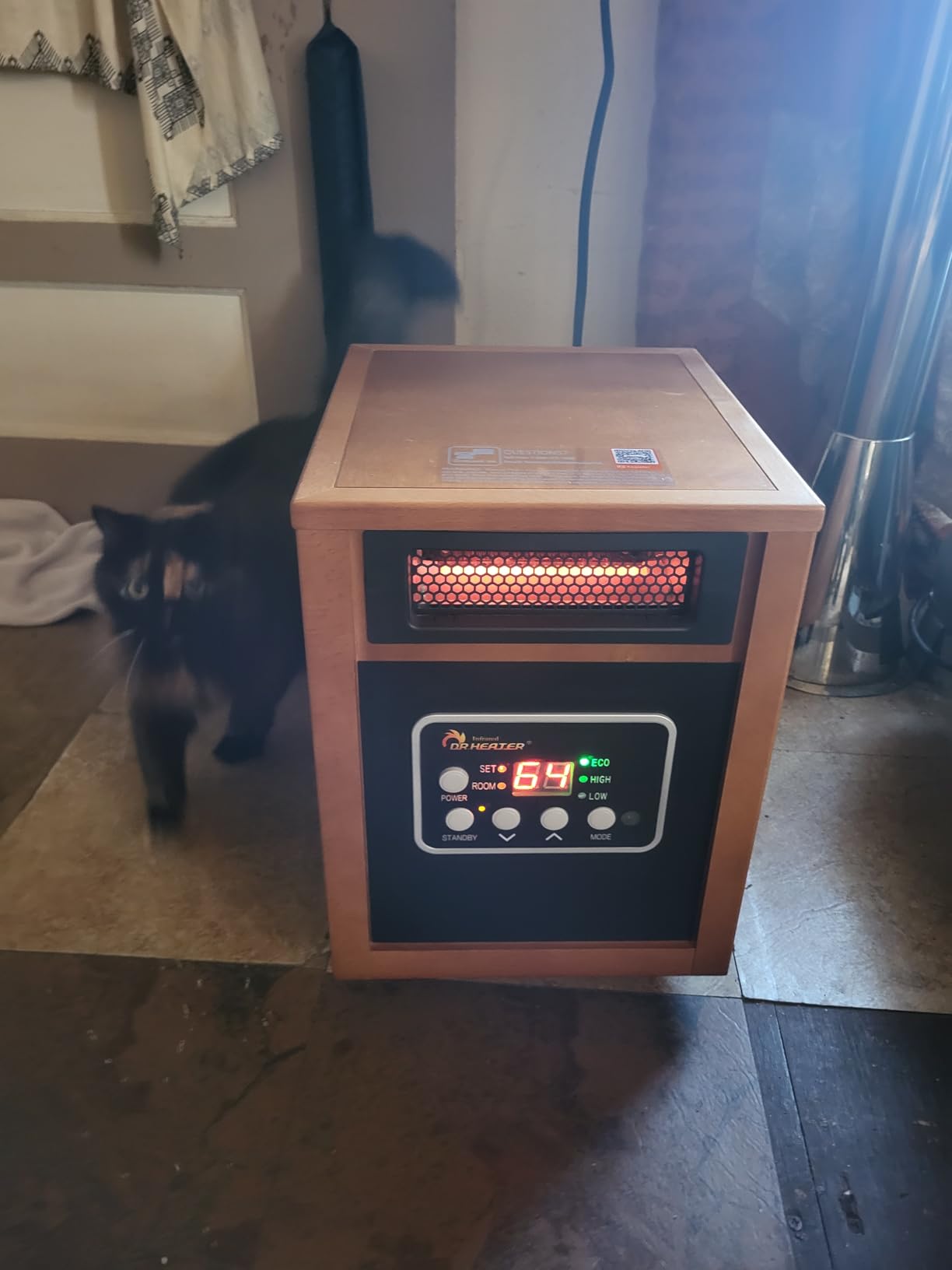
Dr Infrared Heater DR-968 Portable Space Heater, 1500-Watt, Cherry
1500W hybrid infrared quartz and PTC
About 5200 BTU
Coverage up to 576 sq ft
39 dB blower
Pros
- Infrared quartz plus PTC hybrid throws more usable heat than a plain ceramic tower
- About 5200 BTU is the strongest rated output in this list
- 39 dB blower is barely audible during a film
- 72-inch cord and caster wheels make moving between zones easy
Cons
- 19 lb cabinet is heavy to lift without the wheels
- Warm-up is slower than the marketing implies
- Settings are lost after a power interruption
This is the heater I keep coming back to for a cold lower level. The DR-968 pairs two infrared quartz tubes with a PTC ceramic element, and that hybrid layout is why it pushes noticeably more usable heat than a standard ceramic tower running at the same 1500 watts. Rated at roughly 5200 BTU, it carries the highest rated output figure in this roundup.
We ran it against a below-grade exterior wall in a finished rec room for an extended stretch, and the blower was the thing we noticed least. At 39 dB with a high-pressure fan, conversation and TV audio stayed normal, which matters in a room where you are trying to relax.
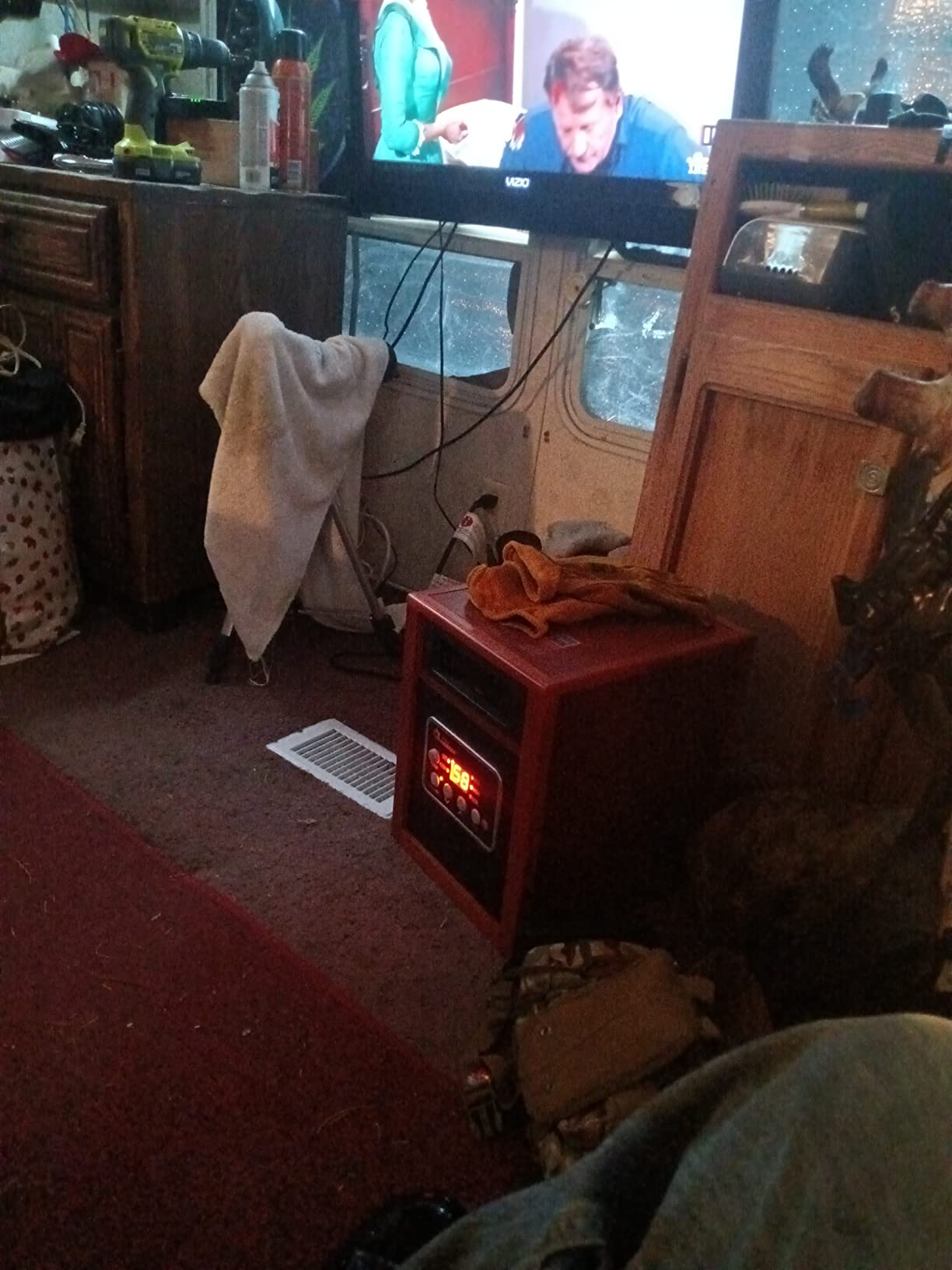
The honest weakness is patience. Owners consistently report that the warmth takes a while to build and that the smart move is to set the thermostat and let it cycle rather than stand in front of it. Multiple reviews describe using it as a supplement to central heat through winter rather than a replacement for it.
Two smaller annoyances: it weighs 19 pounds, so lifting it up basement stairs without the wheels is a two-person job, and it forgets every setting after a breaker trip, including the thermostat setpoint.
Why it works in a basement
Radiant infrared heat lands on you and on cold objects rather than on the air, so it feels effective in a drafty space where heating the air alone is a losing game. The rated 576 sq ft coverage is the largest claim on this list, and the 72-inch cord means you can push it away from the wall outlet toward the actual cold spot.
The electronic thermostat runs from 50 to 85F, and the 12-hour auto shut-off plus IR remote make scheduled zone heating simple to set up once and leave.
Where it falls short
It is a zone heater with a generous rating, not a whole-basement system. If your basement runs 1,000 sq ft or more with 9-foot ceilings, expect to combine it with a second unit or accept that the far corners stay cold.
A few owners also report the internal thermometer reading inaccurately on their unit, and some notice a faint vibration from the fan that would bother a very light sleeper. Neither complaint appears across the whole review base, but both are worth knowing before you buy for a sleeping space.
2. DREO HSH006 Gold – Best Digital Thermostat Control
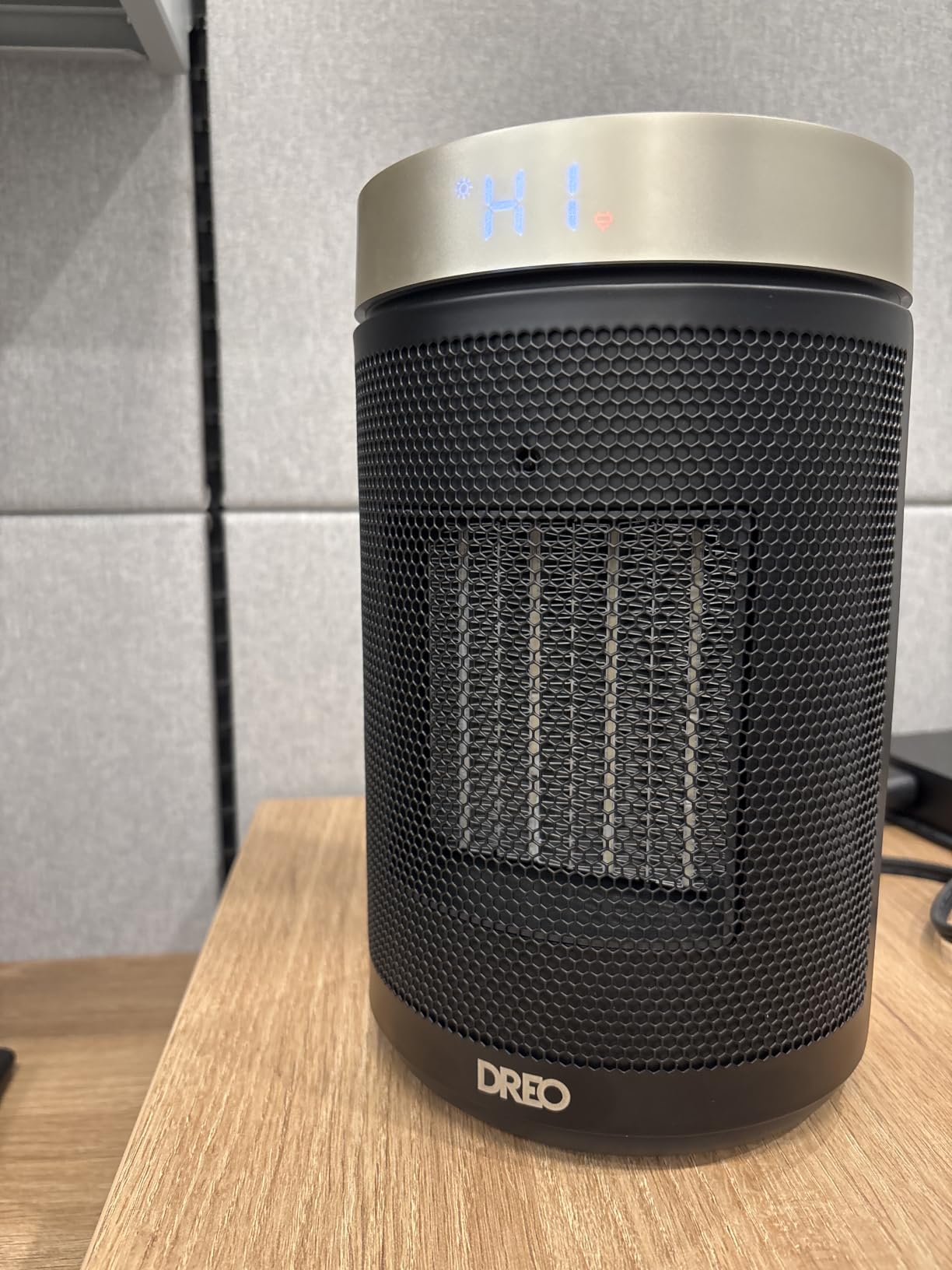
DREO Space Heater, Portable Electric Heaters for Indoor Use with Thermostat
1500W PTC ceramic
Digital thermostat 41-95F
34 dB brushless motor
200 sq ft coverage
Pros
- A 4.6 star average across more than 21000 ratings
- Digital thermostat in 1F steps from 41 to 95F
- Brushless DC motor and winglet fan at 34 dB
- Memory function restores settings after a power loss
- Child lock and V0 flame-retardant body
Cons
- 200 sq ft rating covers a single zone only
- Front LED panel stays bright while running
- No oscillation on this model
- Digital thermostat is accurate within a degree or two
A real digital thermostat is unusual in a heater of this class, and it is the first thing reviewers single out on this one. Steps of 1F across a 41 to 95F range mean you can hold a storage corner at 48F overnight and a workbench at 72F without guessing at a dial.
The Hyperamics PTC element moves air through a funnel-shaped outlet, and the brushless DC motor keeps the whole package at 34 dB. That is quiet enough for a basement bedroom where a fan-driven heater would normally be the thing that wakes you up.
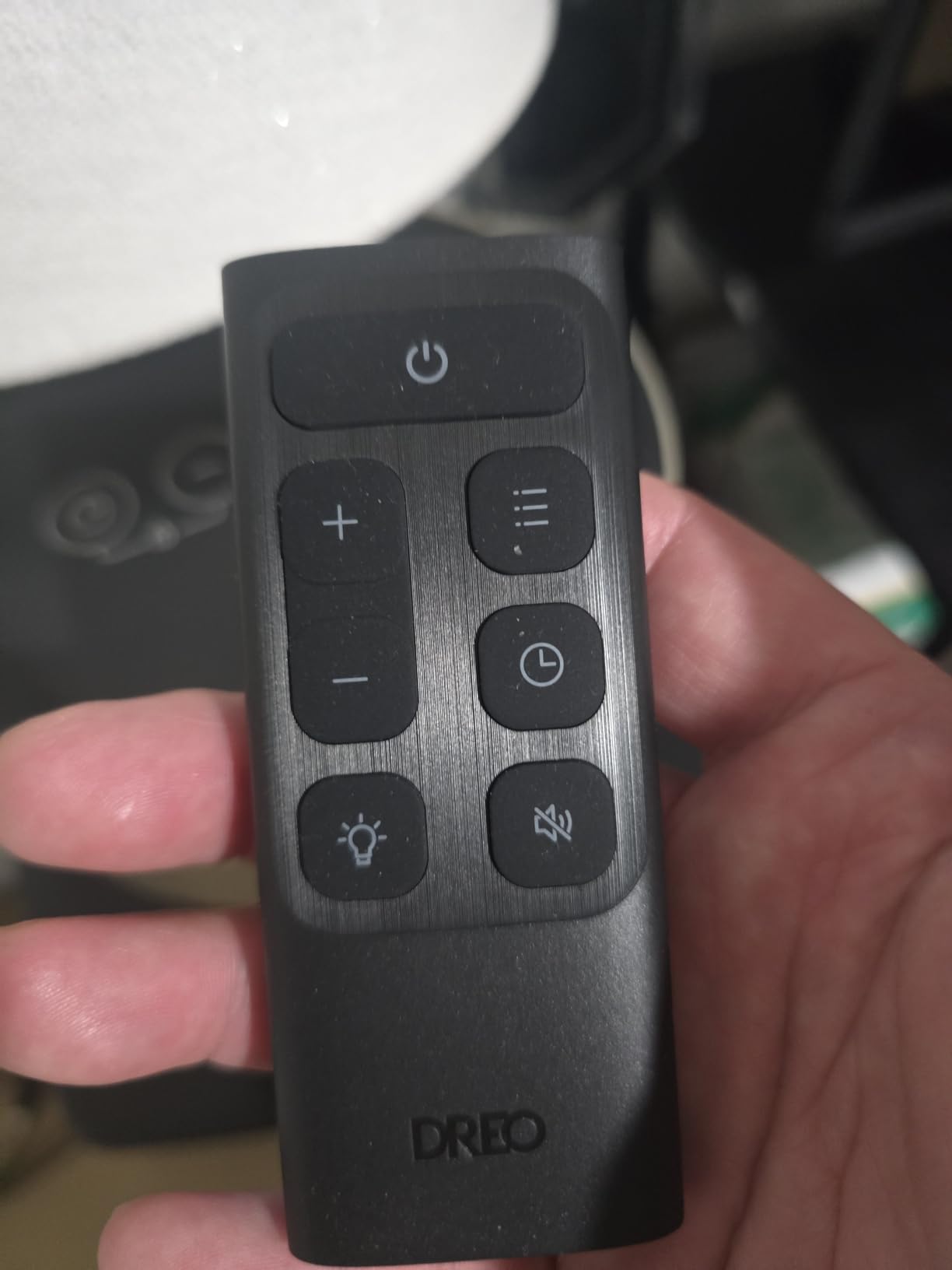
At 10 inches tall and 3 pounds, it slots into a tight corner between a furnace and a storage rack without taking usable floor. The remote, 12-hour timer, ECO mode, fan-only mode and mute for the button beep all come in the box.
The 200 sq ft rating is the real constraint. In a 700 sq ft room you will feel it working near the outlet and lose it two doorways away, which is a placement problem more than a product problem.
Why it works in a basement
The memory function is more useful in a basement than in a living room. Basements lose power more often than the rest of the house, and this unit powers back on to the last mode you used instead of sitting dead until you notice.
Tip-over protection, overheat protection, a safety plug, V0 flame-retardant materials and ETL certification give you the full set of marks we look for before putting anything on a bare slab.
Where it falls short
There is no oscillation on this model, so warm air goes out in a fixed arc. If the cold wall is not directly in front of the unit, you will be repositioning it by hand rather than aiming it.
The illuminated front panel stays on while it runs, which reviewers in dark sleep spaces call distracting. There is no dimming on this version, so buy a unit with a physical sleep mode if the basement doubles as a bedroom.
3. Lasko 751320 – Best Value Ceramic Tower
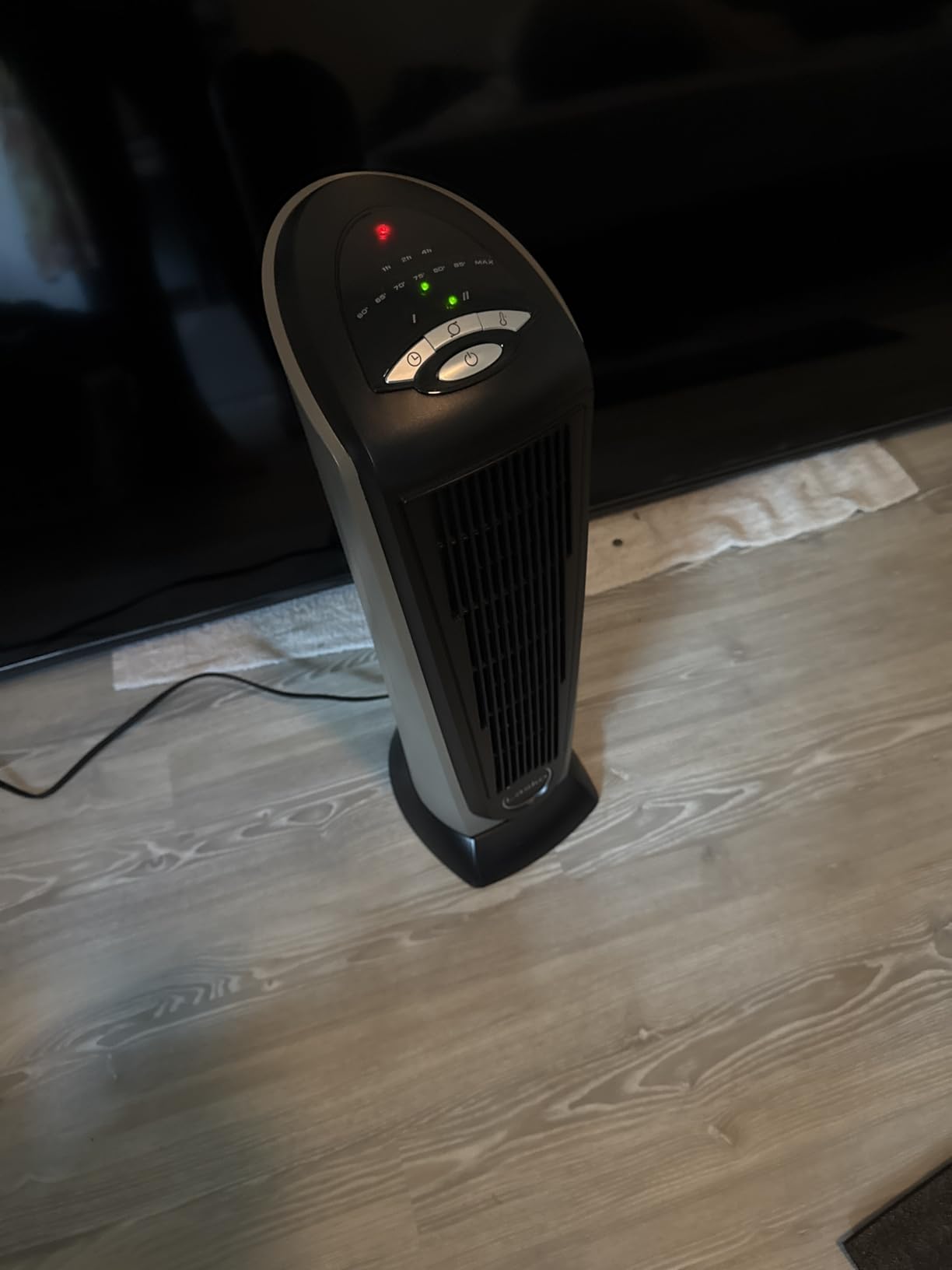
Lasko 23″ Ceramic Tower Space Heater with Remote Control – Silver – 751320
1500W ceramic element
150 sq ft coverage
Oscillation plus 7-hour timer
ETL listed
Pros
- Proven over more than 40000 ratings on a long-running model
- Wide oscillation spreads 1500W across a medium room
- Remote control for every setting
- ETL listed with overheat protection and cool-touch housing
- 3-year limited warranty
Cons
- Dial thermostat is coarse rather than a digital setpoint
- Coverage of about 150 sq ft needs a supplement in a large room
- 7-hour timer is shorter than the 12 or 24 hour timers common on newer models
This is the pick if you want proven rather than clever. The 751320 has been on the market long enough to accumulate more than 40,000 ratings, and the 4.5 star average has held across that history, which is a meaningful signal in a category full of new listings.
The 23-inch tower height matters in a basement. Air mixes better when the outlet sits above floor level, and combined with wide oscillation it covers a medium room far more evenly than a short box heater parked on the ground.
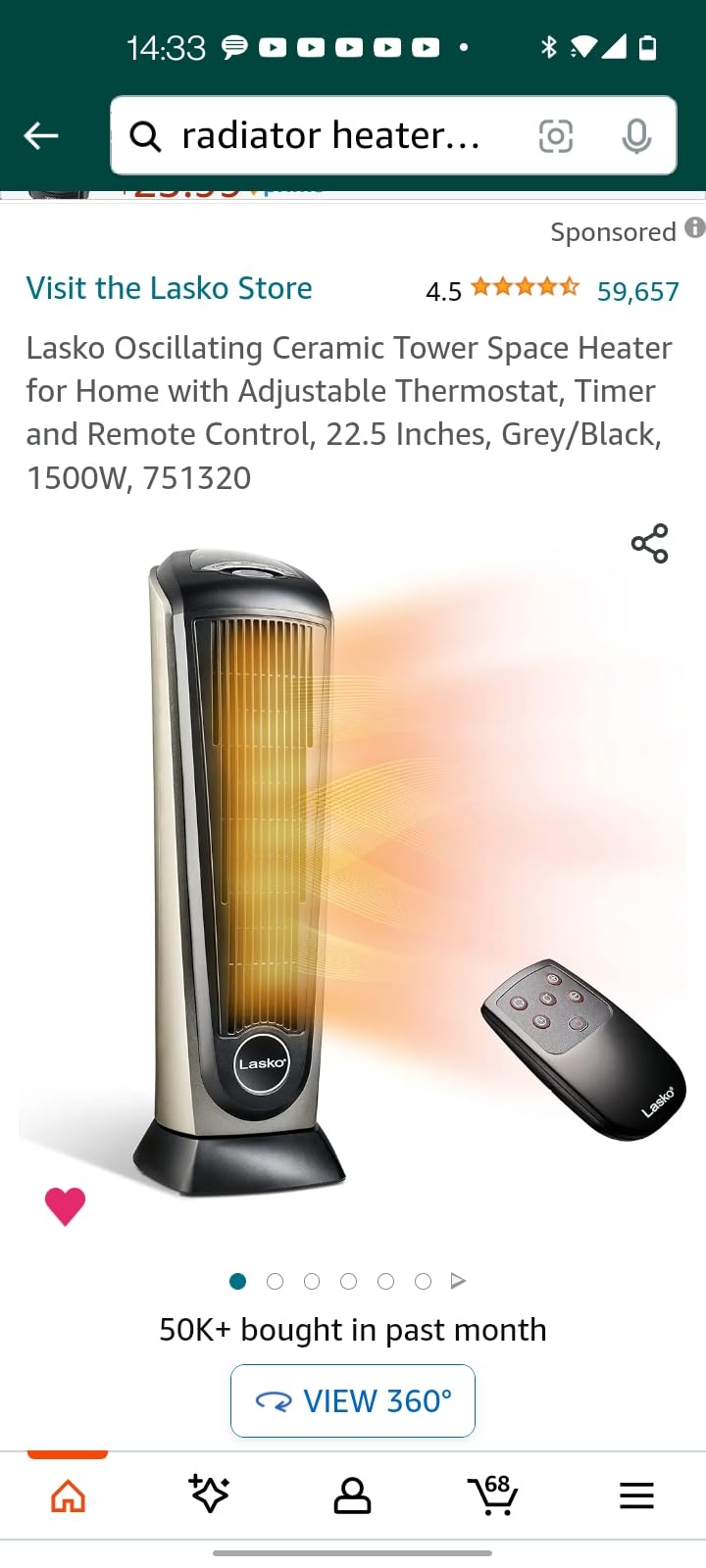
It is ETL listed with a self-regulating ceramic element, overheat protection and a cool-touch housing, which is the set of features you want near a laundry basket or a stack of cardboard. The remote covers heat settings, oscillation and a 7-hour timer.
Two heat settings plus an adjustable thermostat keep it simple, and at 2.5 pounds with a built-in carry handle, moving it from the rec room to the laundry area takes one hand.
Why it works in a basement
The cool-touch housing matters more than it sounds. A damp basement often means a washer and dryer close by, and a surface that stays manageable under normal operation is a real difference in a tight utility room.
Coverage is honestly rated at about 150 sq ft, so treat it as a corner-of-the-room heater. Paired with a second unit on another circuit, two of these cover most 300 sq ft rec rooms comfortably.
Where it falls short
The dial thermostat is coarse. It will hunt around the set temperature rather than holding it, which is fine for a storage area and annoying in a room you actually sit in.
The 7-hour timer is the other limitation. If you want overnight heat on a predictable schedule, you need the wall unit or the DREO models with a 12-hour timer and memory.
4. DREO Smart Wall Heater DR-HSH009S – Best Wall-Mounted
DREO Smart Wall Heater, 1500W Space Heater for Bedroom, White, Standard
1500W PTC wall mount
215 sq ft coverage
120 degree oscillation
Digital thermostat to 95F
Pros
- Wall mounting frees the entire floor
- 120 degree oscillation spreads warmth top to bottom
- App scheduling plus Alexa and Google Home control
- Digital thermostat accurate to 1F from 41 to 95F
- LED panel auto-dims at night
Cons
- Requires drilling and a suitable wall to mount to
- Thinner review base than the portable models here
- 215 sq ft still targets a single room
- Fixed position means no seasonal repositioning
This is the direct answer to the wall heater question that comes up constantly in basement searches. Mounted on the wall, it clears the floor completely, which in a low-ceiling storage basement or a small finished room is often the difference between usable and unusable space.
The 120 degree oscillation is the feature that separates it from a plain panel. It throws air up and down as well as across, so you stop losing heat into the ceiling zone that a floor unit creates in a room with exposed joists.
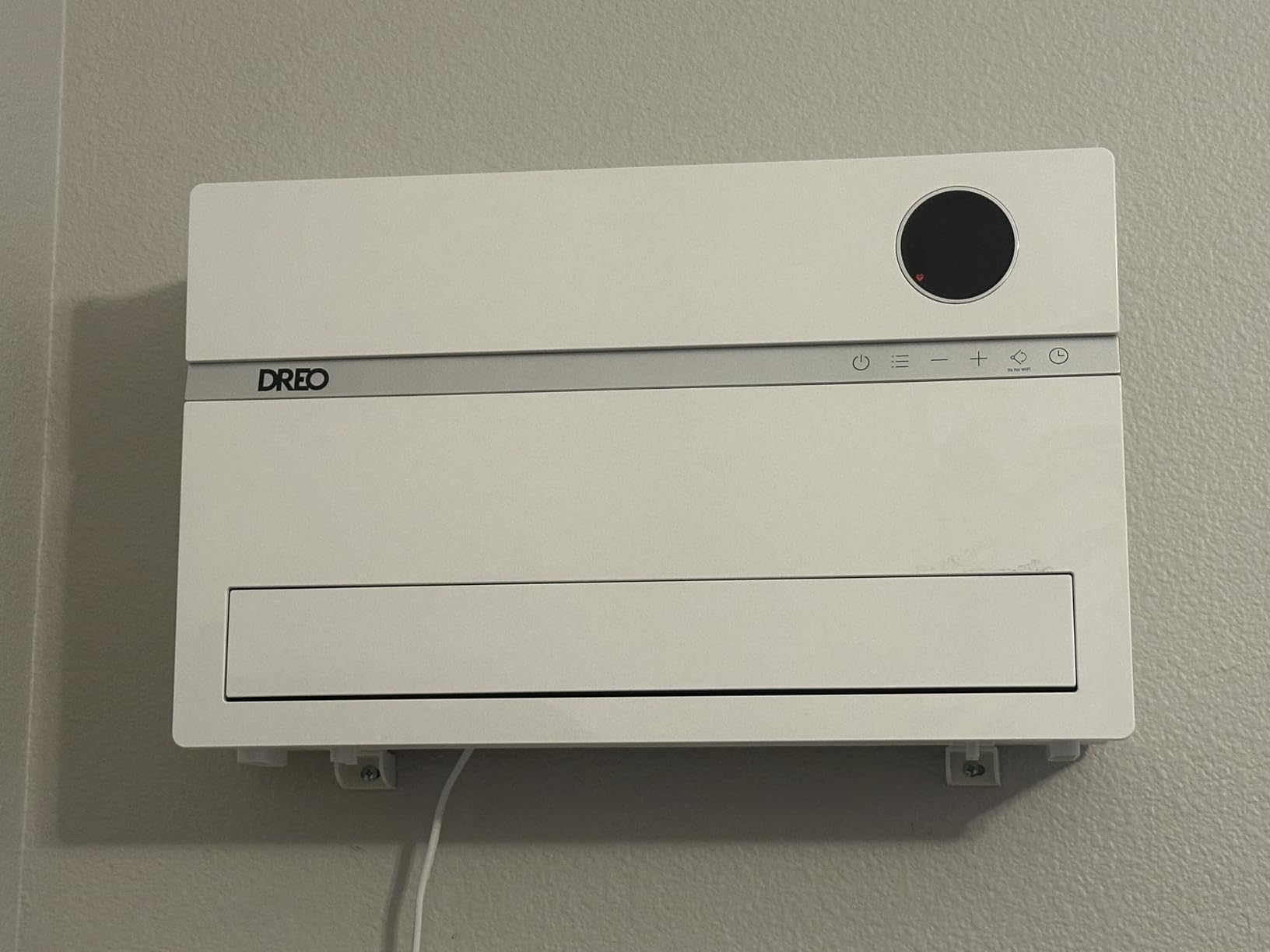
App scheduling and voice control make real sense for a lower level that is unoccupied most of the day. You can pre-warm the basement an hour before you go downstairs instead of waiting for the room to catch up.
At 9.2 pounds and 20 inches wide, it mounts flat against drywall or block with the included drilling guide and hardware. The LED panel dims automatically at night, so it will not light up a finished basement bedroom.
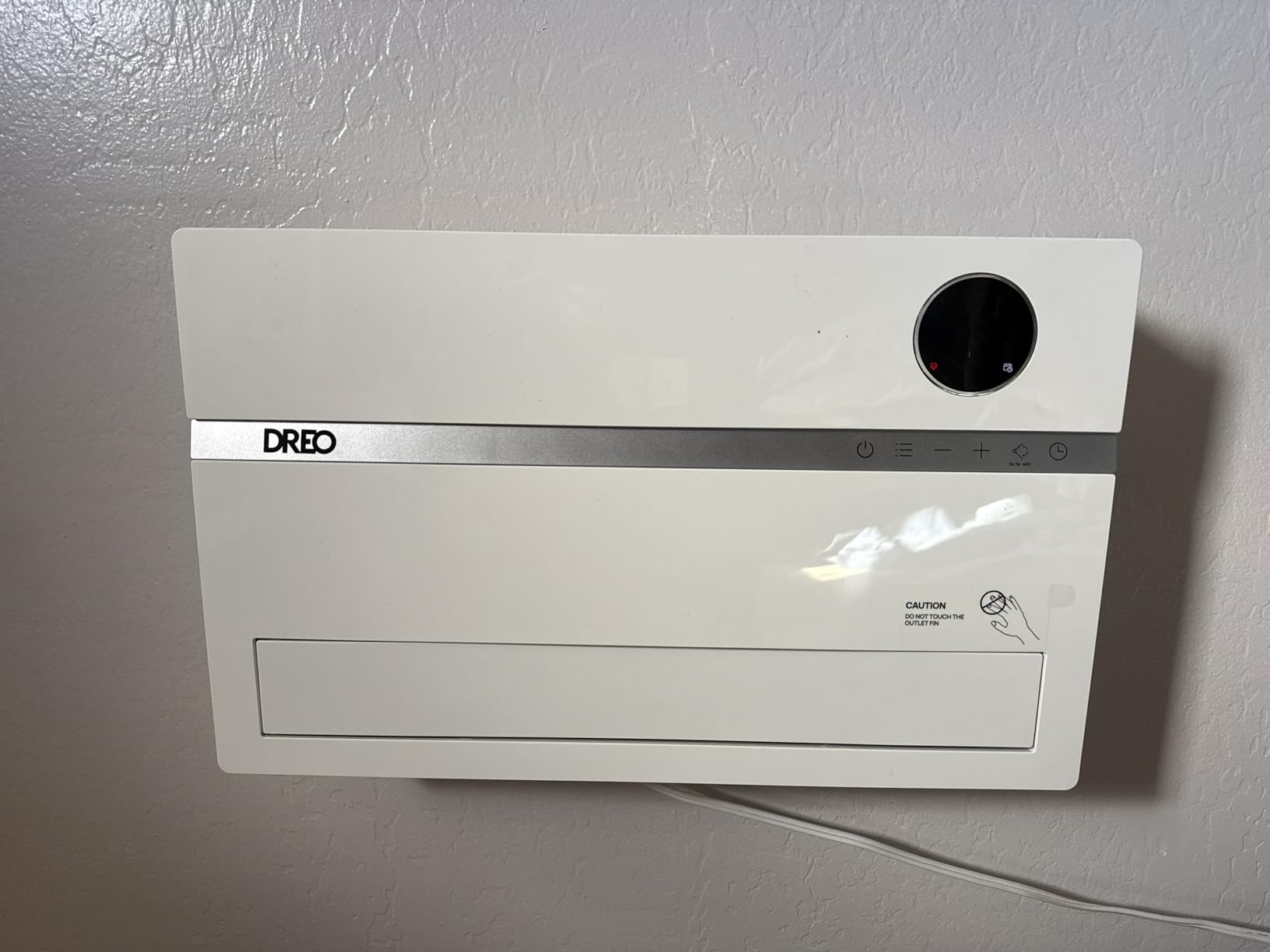
Why it works in a basement
Heating from above the floor line means the warm air layer sits where people are instead of pooling at ground level where a cold concrete slab pulls it down. In a room with furniture against the walls, that is a measurable comfort gain.
The 215 sq ft rating is the second largest of the portable-style units here, and the 24-hour timer covers a full day of scheduling that a 7 or 8 hour timer cannot.
Where it falls short
Mounting is permanent. In a rental, or in a basement you might reorganise in two years, drilling into a wall and living with a fixed heat source is a commitment worth thinking about first.
The review base is much thinner than the portable units, with 5,246 ratings against tens of thousands for the towers. The design is unproven over time in a way that a decade-old Lasko is not, so factor that into a purchase you expect to keep for years.
5. De’Longhi EW7707CM – Best Oil-Filled Radiator
De’Longhi Oil filled Radiator Heater, 1500W Electric Space Heater for indoor use, portable room heater, Energy Saving, full room like office and bedroom with safety features, EW7707CM
1500W oil-filled radiator
Fanless radiant heat
Three settings
23.2 lb sealed reservoir
Pros
- Fanless so it does not stir up dust
- pollen or dander
- Effectively silent apart from a thermostat click
- Holds heat for hours after the element cycles off
- Low setting draws roughly 700W
- Anti-freeze mode engages below 41F
Cons
- Can take two to three hours to reach set temperature
- Medium and high both draw the full 1500W
- 4-foot cord is short relative to the 3 foot clearance the manual requires
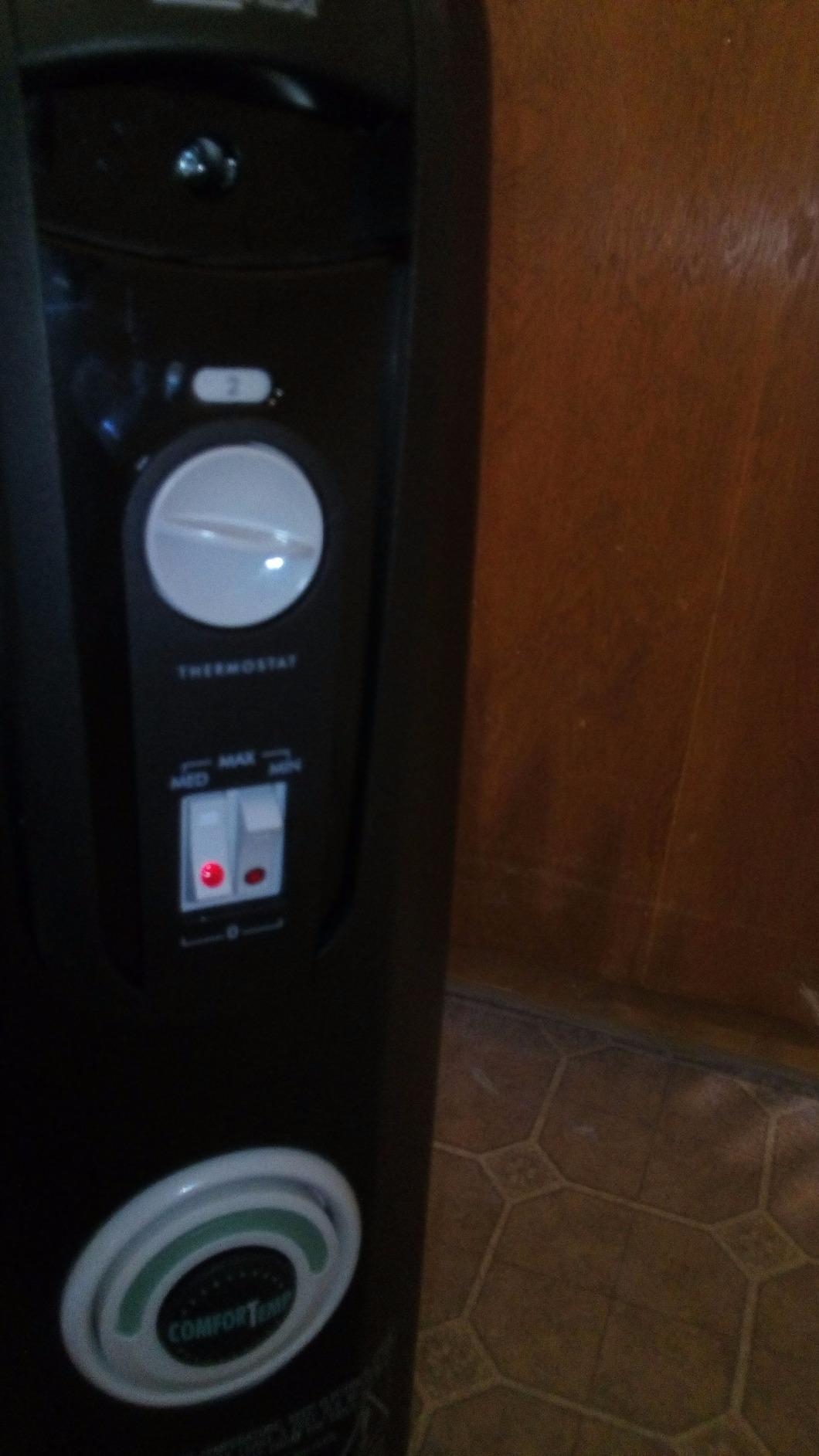
An oil-filled radiator behaves nothing like a fan heater, and in a basement that difference is the whole argument. The sealed reservoir at 23.2 pounds banks heat and releases it slowly, so once it comes up it keeps a room comfortable with the element cycling off much of the time.
It is the only fanless design here, and that changes the character of the room. There is no fan, so all you hear is a faint thermostatic click, and because it never blows air it will not circulate the dust that a storage basement has plenty of.
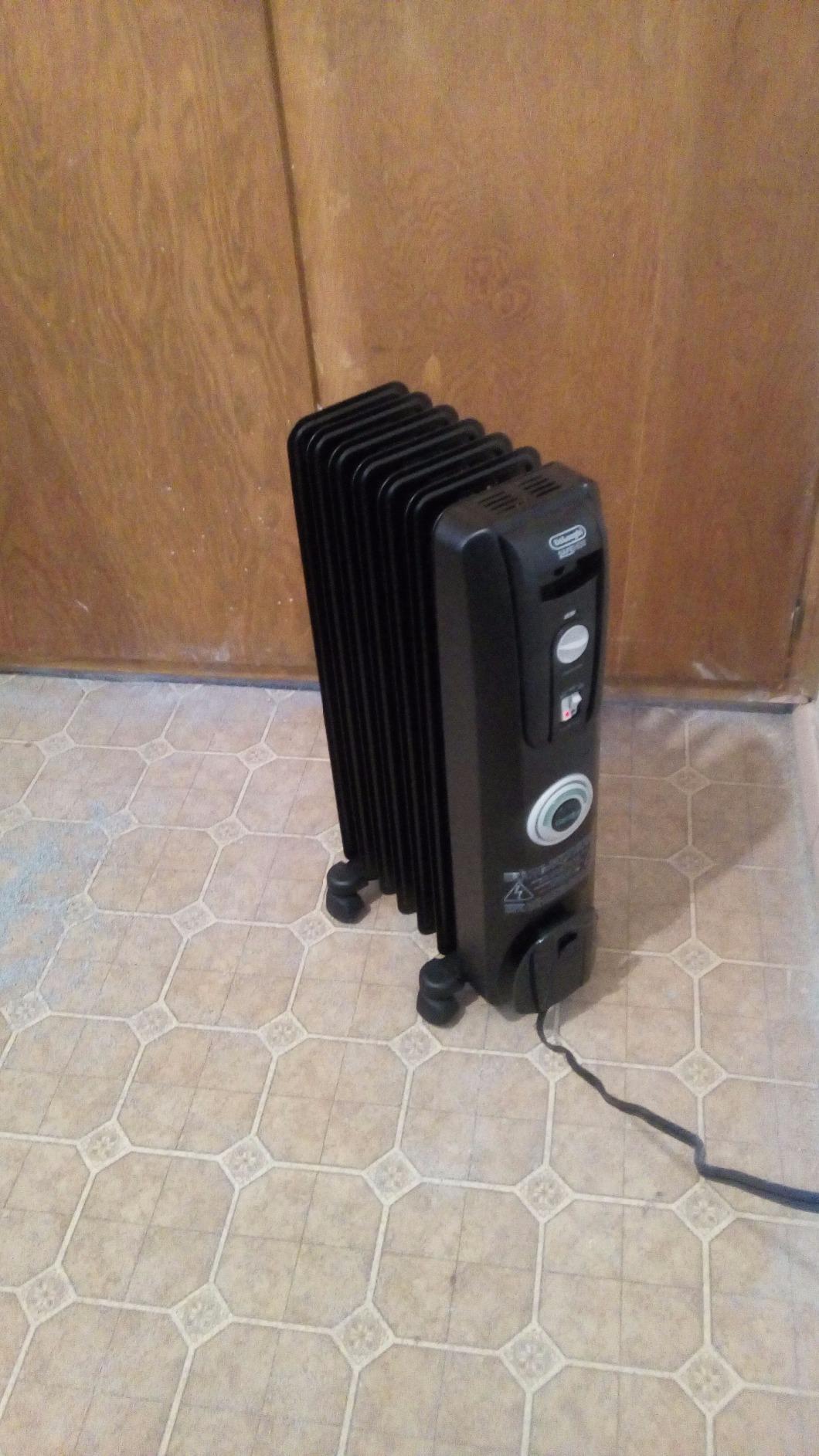
For a basement bedroom this is the safest overnight option. The thermal slot design keeps the surface temperature low, the elements are fully enclosed, and an automatic anti-freeze mode engages below 41F so it can stay on in an unheated space without being the reason a pipe freezes.
The low setting draws roughly 700W, which is where the running-cost savings actually live. ComfortTemp regulates power and temperature to claim better efficiency than holding the dial at maximum.
Why it works in a basement
Radiant convection off a large surface area works well in a room with high ceilings, which is where a 1500W fan heater sends most of its output. The 27-inch height puts the warm surface at torso level rather than at ankle level.
Some owners report it keeping a large concrete-floored den mildly comfortable through freezing nights, which is exactly the use case where a fan heater disappoints and a slow, steady radiator holds.
Where it falls short
Warm-up is the dealbreaker for anyone who arrives cold and wants heat now. Two to three hours to set temperature is inherent to the design, not a defect, so start it before you go downstairs rather than when you arrive.
Both the medium and high settings draw the full 1500W, so the energy saving only appears on low. There is also no built-in timer, which means an external plug timer is needed for overnight scheduling.
6. DREO DR-HSH019 – Best for a Basement Bedroom
DREO Quiet Space Heater, 1500W Portable Heaters for Indoor Use with Remote
1500W PTC tower
34 dB operation
Digital thermostat 41-95F
200 sq ft coverage
Pros
- Rated 34 dB with a brushless motor and a muteable control beep
- Powers back on to the last-used mode after an outage
- 70 degree oscillation with ECO mode held a basement bedroom overnight
- Under 4 lb and 14.65 inches tall
- Child lock and tip-over protection
Cons
- Thinnest review base of the ten at 3870 ratings
- 200 sq ft coverage heats one zone only
- Some units arrive with dents or finish defects
- Smaller than expected in person
At 34 dB with a brushless DC motor and a winglet fan, plus a mute setting for the control beep, it is one of the few units here where nothing audible is left running while you sleep.
It also restores the last-used mode after a power loss. In a basement where the sump pump or a dehumidifier occasionally trips a breaker, that feature decides whether the room is warm when you wake up or still cold.
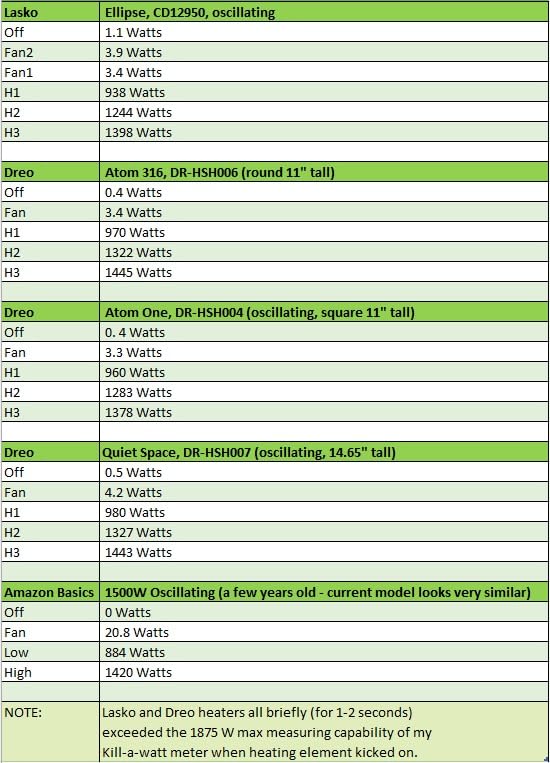
One reviewer compared it directly against larger 1500W heaters in a basement living room and found it markedly quieter while producing comparable heat. Another reported the ECO mode and 70 degree oscillation holding a 150 sq ft basement bedroom comfortable all night.
Child lock, tip-over protection, V0 flame-retardant material, overheat protection, a safety plug and ETL certification cover the safety side, and the 12-hour timer plus remote are both included.
Why it works in a basement
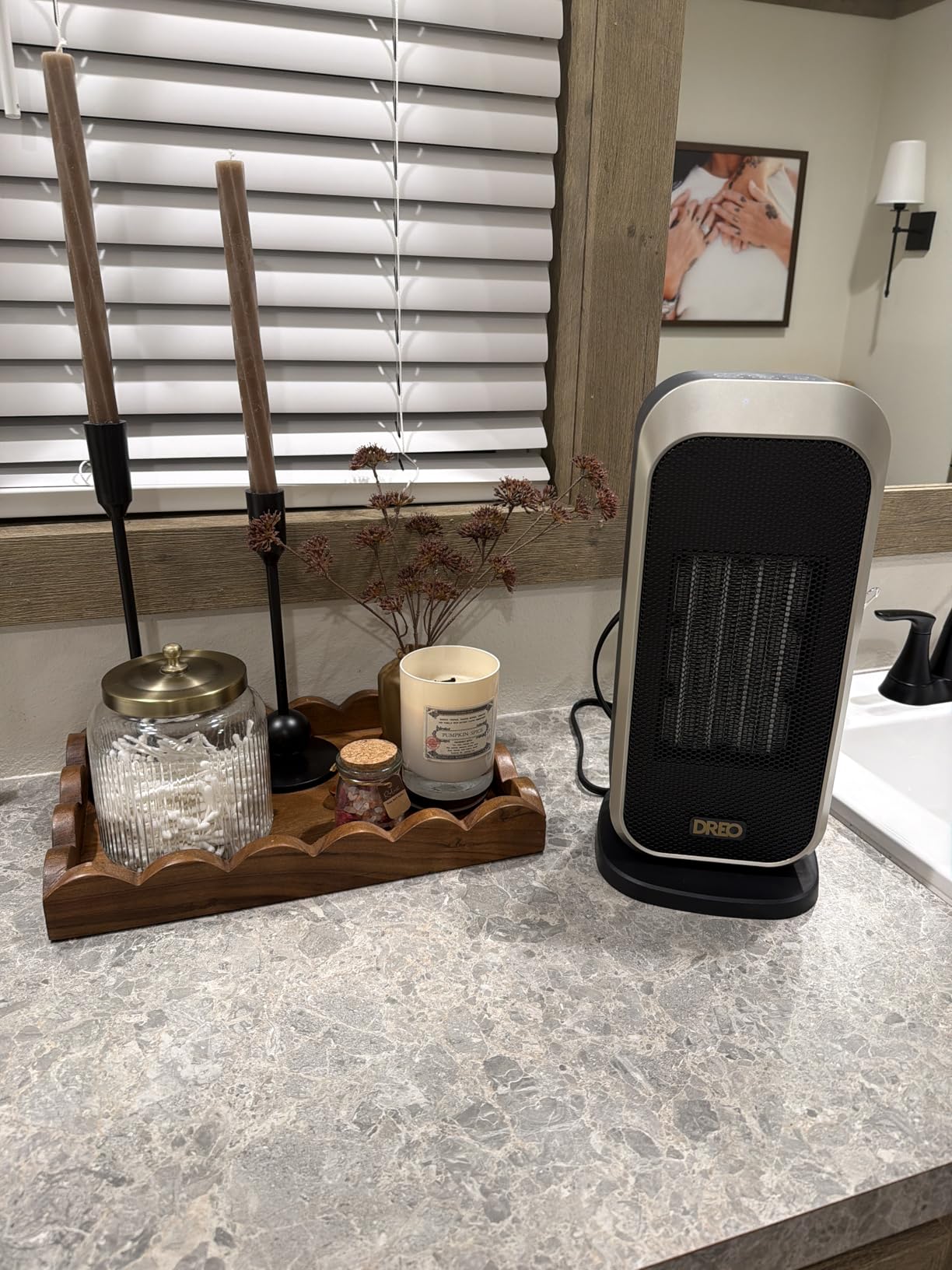
The 14.65-inch height matters for a sleeping space, since heat exits around shoulder height instead of pooling at floor level. A 200 sq ft zone also matches a typical 10 by 12 basement bedroom far better than the 150 sq ft class.
Five heat and fan speeds, ECO mode and fan-only mode let you run it low overnight and push it high when you first get up, which is the pattern that keeps the overnight noise down.
Where it falls short
With 3,870 ratings it carries the thinnest review history of the ten, so the long-term reliability record is shorter than the towers that have been selling for a decade.
Owners sometimes find it physically smaller than they expected based on the photos. Measure the space and check that a 200 sq ft zone is genuinely the size of your room rather than the size of your ambition.
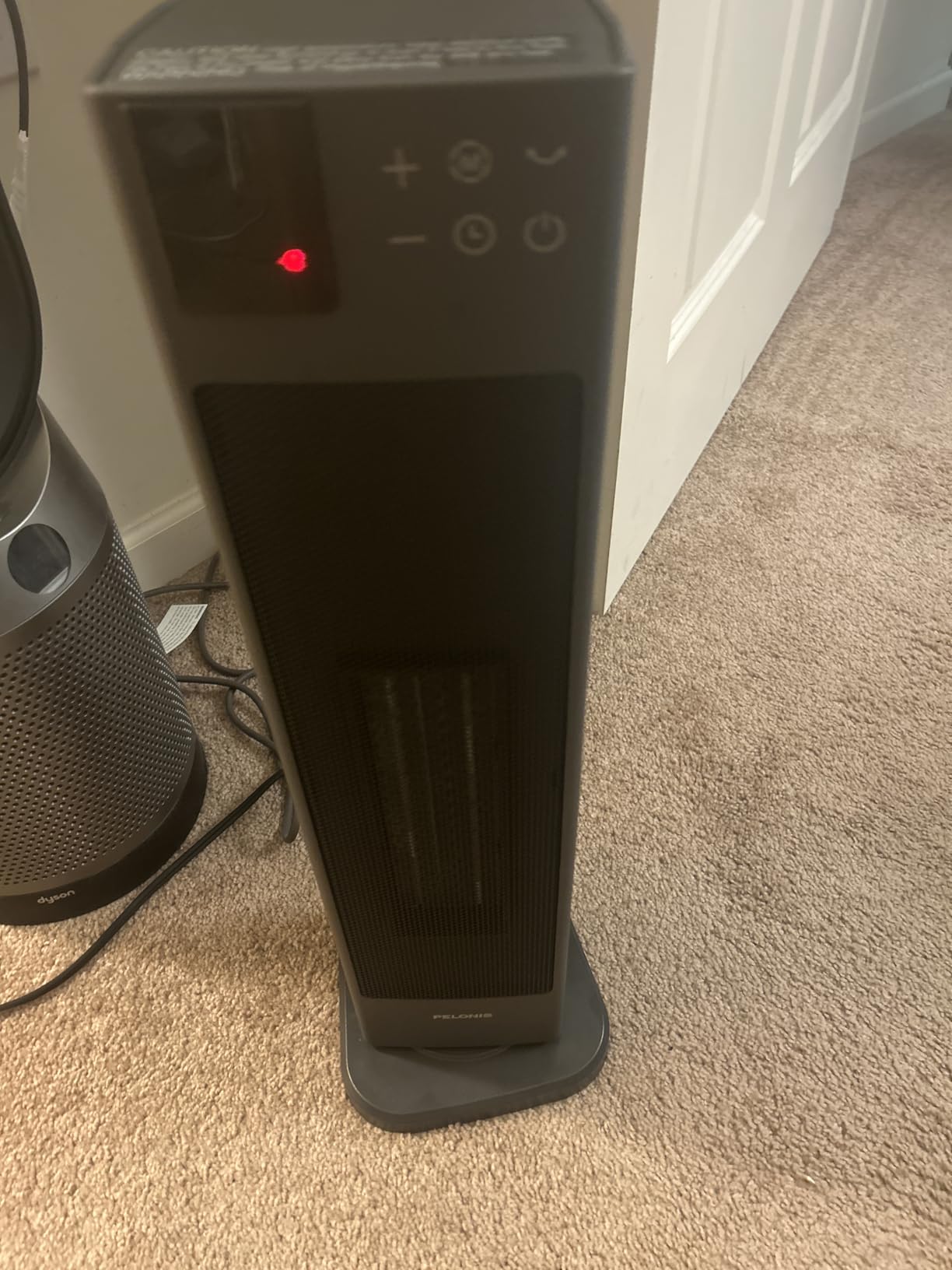
7. PELONIS PHTPU1501 – Best Oscillating Tower for Open Rooms
PELONIS 23” Oscillating Ceramic Tower Space Heater with Remote & Thermostat, Electric Energy Efficient Floor Heater for Indoor Use Large Room Safe with Timer, ECO Mode, 1500W, White
1500W ceramic heating
167-200 sq ft
ECO mode
Remote and 8-hour timer
Pros
- Oscillation and 23-inch height spread heat across a wide space
- Several owners warmed a large basement room in 5 to 10 minutes
- ECO mode cycles output to hold a set temperature
- Quiet enough for a bedroom
- 7.17-inch slim footprint
Cons
- Loudest published figure in the roundup at 50 dB
- Oscillation motor crackles on some models
- Thermostat can run past setpoint on some units
- Claimed coverage of 106-167 sq ft is well short of a large basement
The PELONIS is a 23-inch tower with genuine oscillation, and in a long open basement room the combination of height and side-to-side sweep is the reason it distributes warmth better than a compact box unit. The 7.17-inch footprint also means it stands where you point it instead of taking a chunk of the walkway.
Several owners report warming a large basement room in 5 to 10 minutes on high, and one used it through a -5F night with a -25F wind chill while holding a 65F setpoint without overshooting.
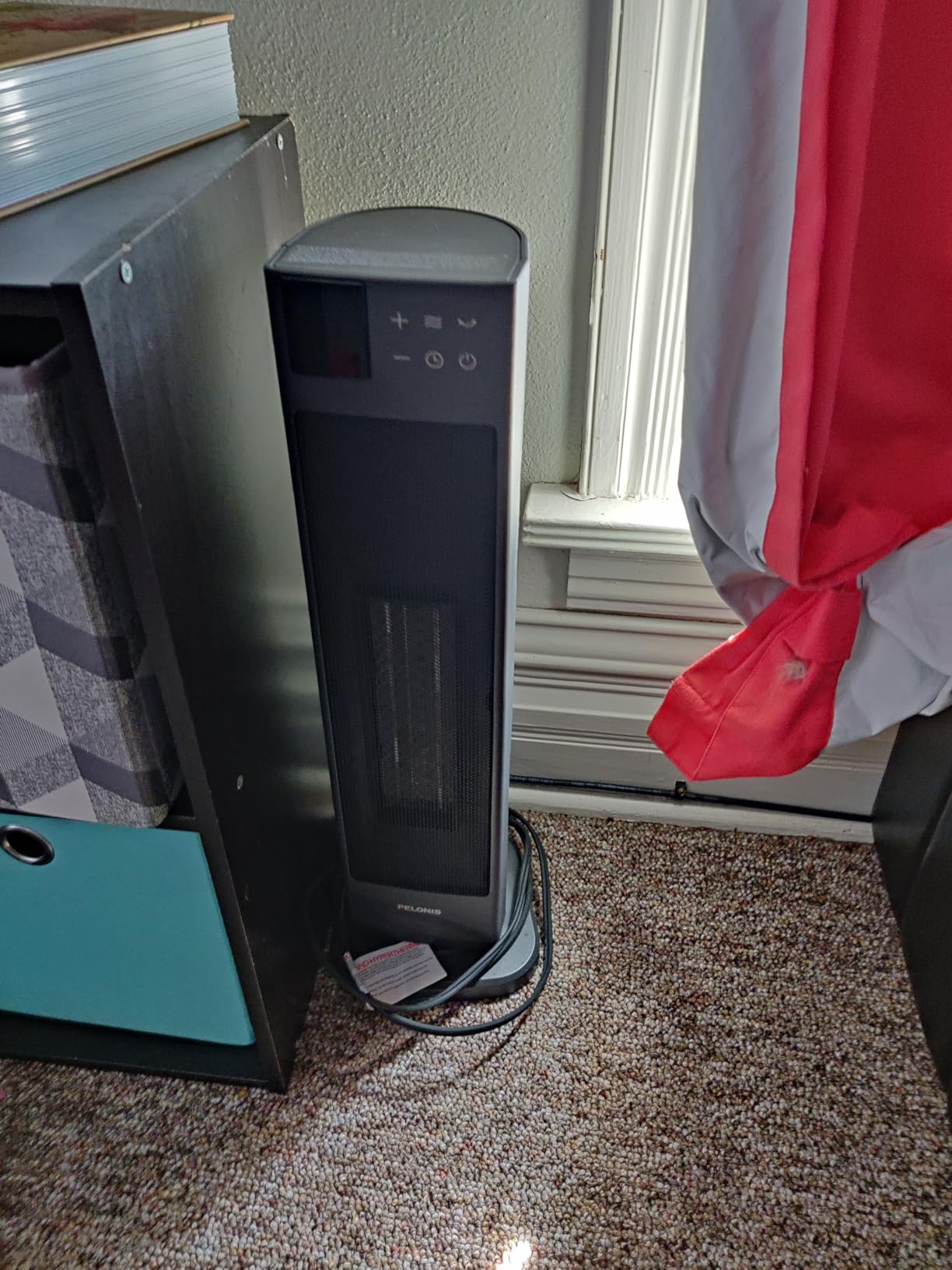
ECO mode adjusts output automatically based on ambient temperature, cycling the element rather than running it flat out, which cuts both draw and noise once the room is close to set temperature.
It is also one of the few units here with a cool-touch flame-resistant housing, overheat and tip-over switch protection, a US standard plug, and no need for an adapter.
Why it works in a basement
Oscillation is doing the heavy lifting. A fixed-direction heater leaves a cold pocket on either side of it, and in a room with a workbench on one wall and a doorway on the other that pocket is where you stop feeling the warmth.
The 8-hour timer and touch panel make it a good fit for an evening-use rec room, which is how most finished basements actually get used.
Where it falls short
At 50 dB it is the loudest of the fan-driven units on this list, and some owners report the oscillation motor crackling or creaking in a quiet room. That makes it a poor choice as an overnight heater for a sleeping space.
It throws a directed blast of hot air rather than surrounding radiant heat, so place it with clearance from children and pets. The power cord is also on the short side, and the listed coverage of 106 to 167 sq ft is well under what a large open basement needs.
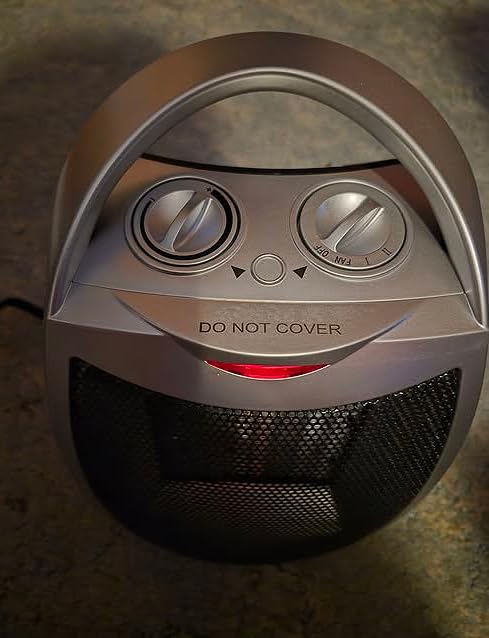
8. GiveBest PTC-905 – Best for Small Zones
GiveBest Space Heater, Portable Space Heaters for Indoor Use
1500W and 750W settings
200 sq ft coverage
Automatic thermostat
Tip-over and overheat shutoff
Pros
- A real automatic thermostat cycles the element to hold the preset temperature
- Dual 1500W and 750W settings let you trade heat for lower draw
- Runs quietly enough for a bedroom or office
- Tip-over protection beeps and auto-restarts when uprighted
- Compact 3 lb body with a carry handle
Cons
- Element is radiant rather than infrared so it warms a person faster than a room
- Not designed for a large open basement
- Two-prong plug rules it out on modern three-prong-only circuits
With more than 81,000 reviews, this is the most thoroughly reviewed heater in the roundup, and the 4.4 star average has stayed there. Buyers consistently treat it as the value entry point: thermostatically controlled, quiet and safe, with a two-setting dial that is easy to understand.
The dual 1500W and 750W settings are more useful in a basement than they first appear. On a mild day or a small utility room, the low setting is all you need, and dropping the draw roughly in half is the single easiest way to cut the running cost of a zone heater.
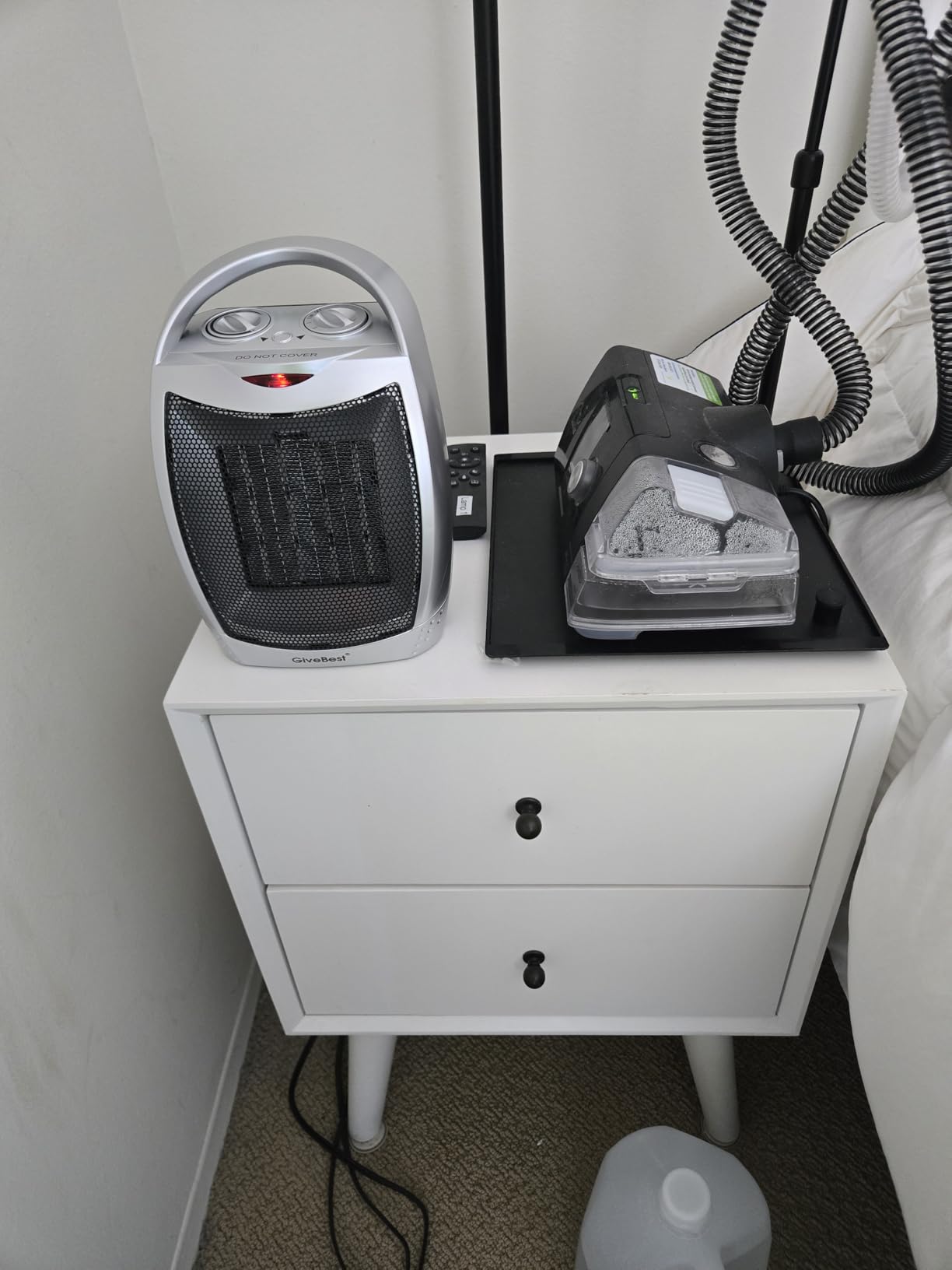
Tip-over protection shuts the unit down with a loud audible beep and restarts it once you stand it back up, and the V0 flame-retardant housing and automatic overheat shutoff are exactly the safeguards you want on hard concrete. A six-foot cord gives you placement range.
It is a tabletop unit at 10.2 inches tall and 3 pounds, so it sits on a shelf, a workbench or the top of a storage bin without stealing floor space.
Why it works in a basement
The 200 sq ft rating makes it a natural fit for a home office desk, a laundry folding shelf or a single storage corner, which are the places homeowners usually want warm first. You are not asking it to heat a room, you are asking it to heat a seat.
At this size it can also be run from a second circuit without wiring changes, so pairing two is realistic in a basement that has the panel capacity.
Where it falls short
The element is radiant rather than infrared, which reviewers note warms a person faster than it warms a room. If you want ambient air warmth, a convection tower is a better shape for the job.
The two-prong plug is a real constraint in newer builds where basement circuits may be three-prong only, and the one-year warranty is among the shortest coverage in this roundup.
9. BLACK+DECKER BHDC201 – Best for a Basement Workshop Spot
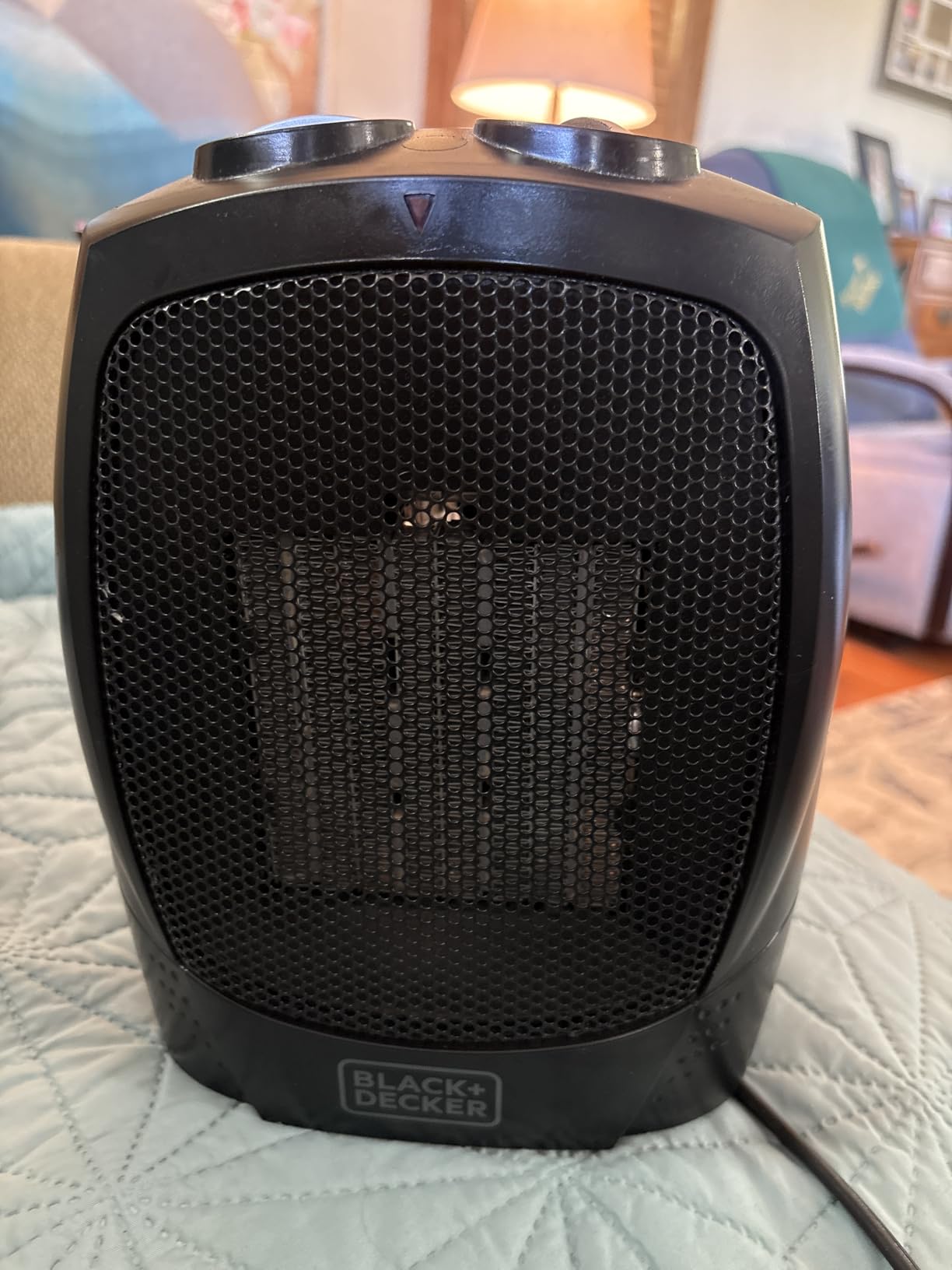
BLACK+DECKER Personal Ceramic Heater, 1500 Watts, BHDC201, Black
1500W and 750W settings
Fan-only mode
150-200 sq ft coverage
2.8 lb body
Pros
- Makes a workbench or hobby corner usable without heating the whole level
- Tip-over and overheat shutoff plus a power-on indicator
- 2.8 lb body with an integrated carry handle
- Fan-only mode doubles as a circulation fan in warmer months
- The manufacturer lists basement among recommended uses
Cons
- Coverage of 150-200 sq ft makes it a personal heater
- No oscillation so it throws heat in one direction
- Manual thermostat is less precise than the digital units
- No remote
- timer or memory function
A basement workshop is the one place where spot heat beats room heat. You are heating a person and a bench, not trying to make 600 square feet comfortable, and that makes a small personal heater the correct tool rather than a compromise.
The BLACK+DECKER BHDC201 does that job quickly with its ceramic element, and the manufacturer explicitly lists basements among its recommended uses, which is a small but meaningful signal for this category.
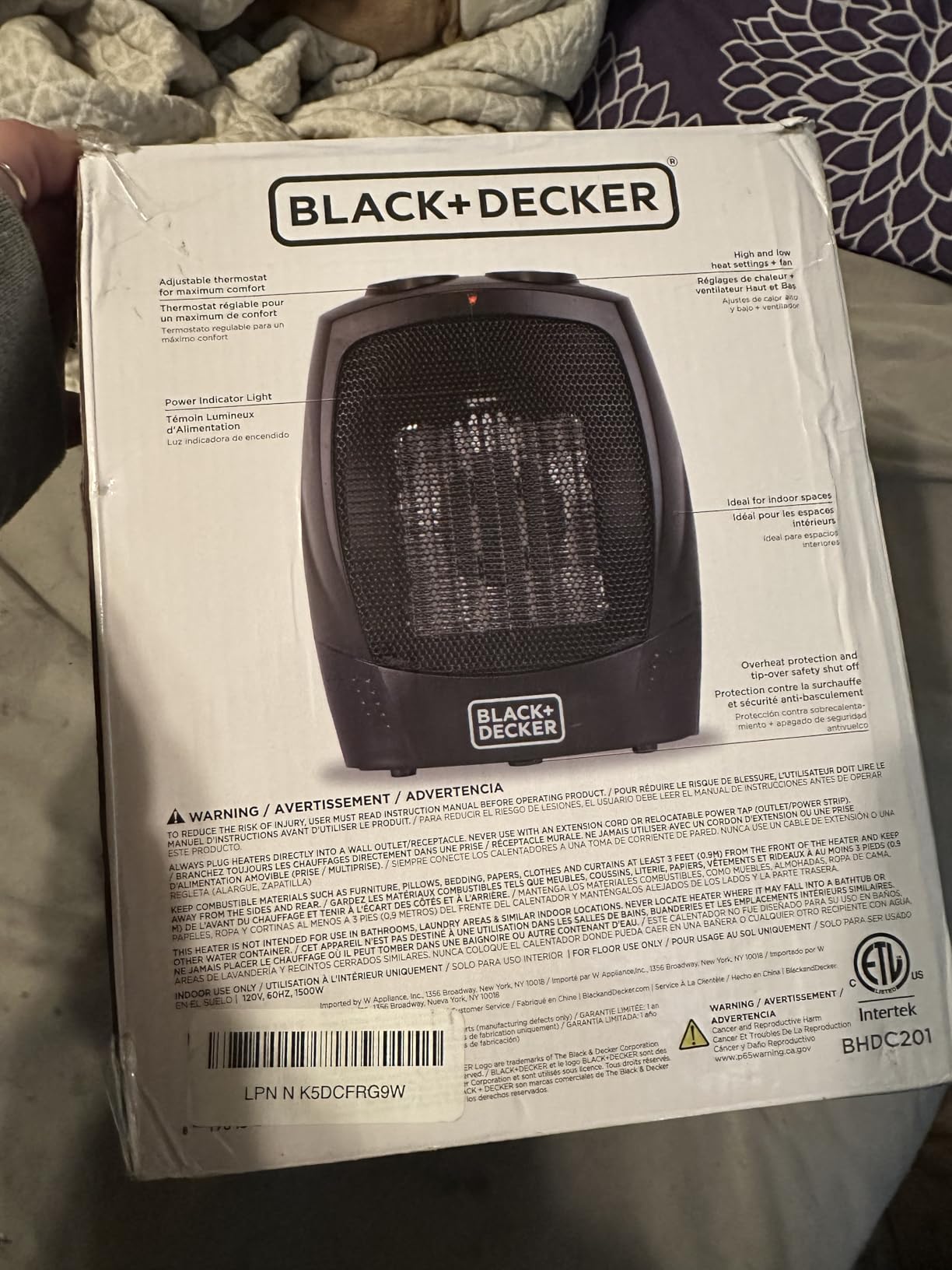
Tip-over and overheat shutoff with a power-on indicator make unattended runs on a concrete floor a reasonable idea. At 2.8 pounds with a carry handle, you can move it to the bench, then to the storage end, then back to the stair landing as the season changes.
Three settings cover fan only, 750W and 1500W, with an adjustable manual thermostat across a 41 to 95F range and a one-year limited warranty.
Why it works in a basement
Fan-only mode is worth having in spring and fall when the basement is damp but not cold, since it moves air without adding heat. Several owners pair it with a dehumidifier in a workshop corner.
For a garage-style space doing double duty as storage, our space heaters for gaming rooms and garages roundup covers the larger-output options worth stepping up to.
Where it falls short
There is no oscillation, so it heats one fixed direction and you reposition it by hand. In a workshop where the bench moves around, that becomes an annoyance within a week.
The manual thermostat is less precise than the digital units here, and there is no remote, timer or memory. If you forget it is on, nothing brings it back to where you left it.
10. Amazon Basics DQ1927-Y – Budget Pick for a Utility Room
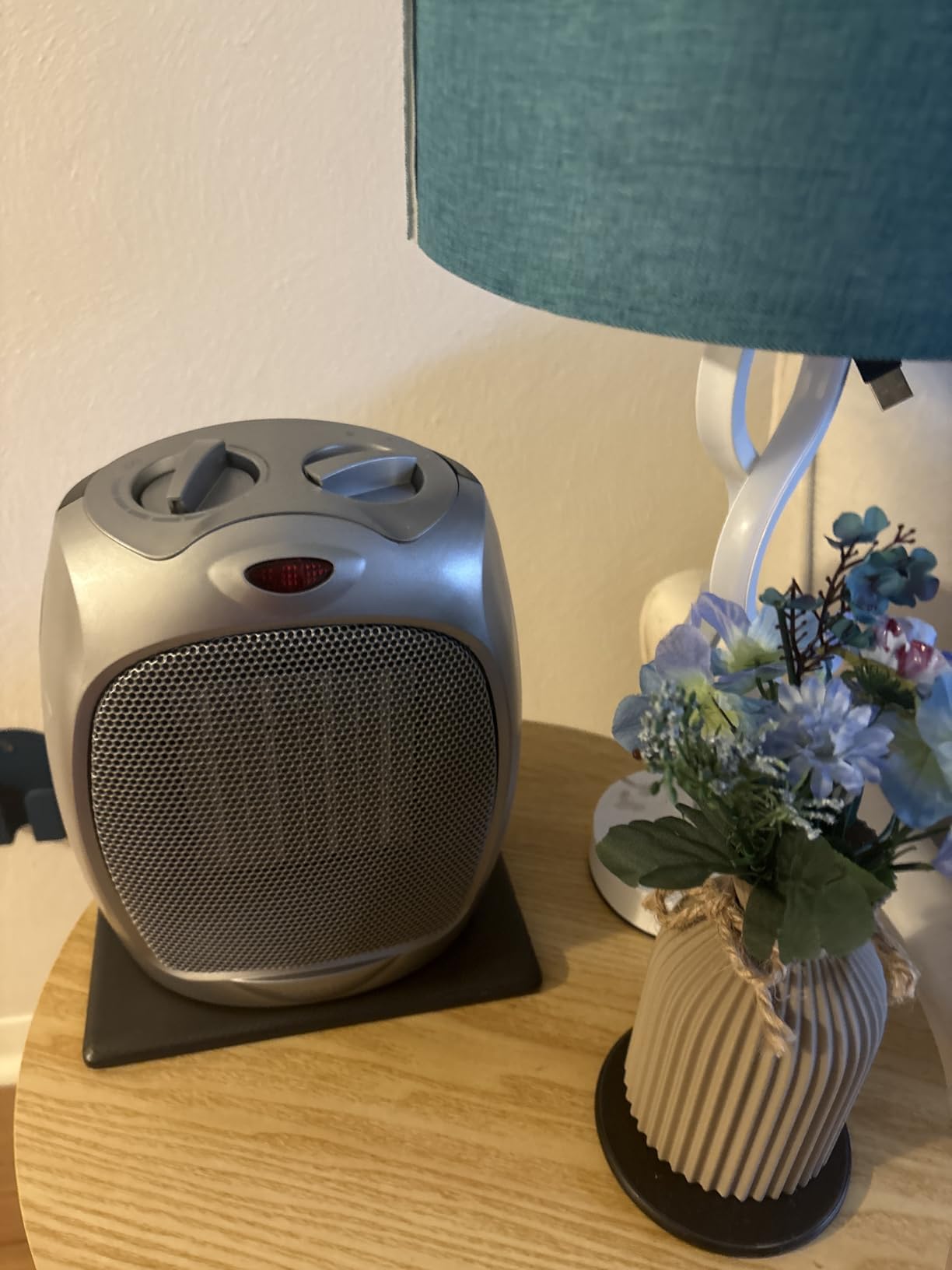
Amazon Basics Ceramic Space Heater, Portable Indoor Heating Solution, With Overheat and Tip-Over Protection, Thermostat, Non-Oscillating, 1500W, 7.52″D x 6.34″W x 9.45″H, Black
1500W high, 900W low and fan only
43 dB
2.1 lb body
Tip-over and overheat protection
Pros
- Budget unit with a large long-established review base
- Tip-over and overheat protection suit a hard concrete utility floor
- 2.1 lb and under 10 inches tall fits tight corners
- Quiet at 43 dB with a fan-only circulation setting
- Three-position dial with no learning curve
Cons
- Non-oscillating so you reposition it to spread warmth
- Dial thermostat holds less precisely than the digital units
- The manufacturer warns against use in high-moisture areas like laundry rooms
- 1-star reviews run higher than average at 8 percent
Sometimes the right basement heater is the one that does nothing clever. At under 10 inches tall and 2.1 pounds, this unit goes where nothing else will fit, behind a furnace, beside a sump pump, in the corner of a utility room where clearance is tight.
Despite the bare-bones design, it carries the two safety features that are not optional in this category: built-in tip-over protection and overheat protection, with a power indicator so you know it is drawing power.
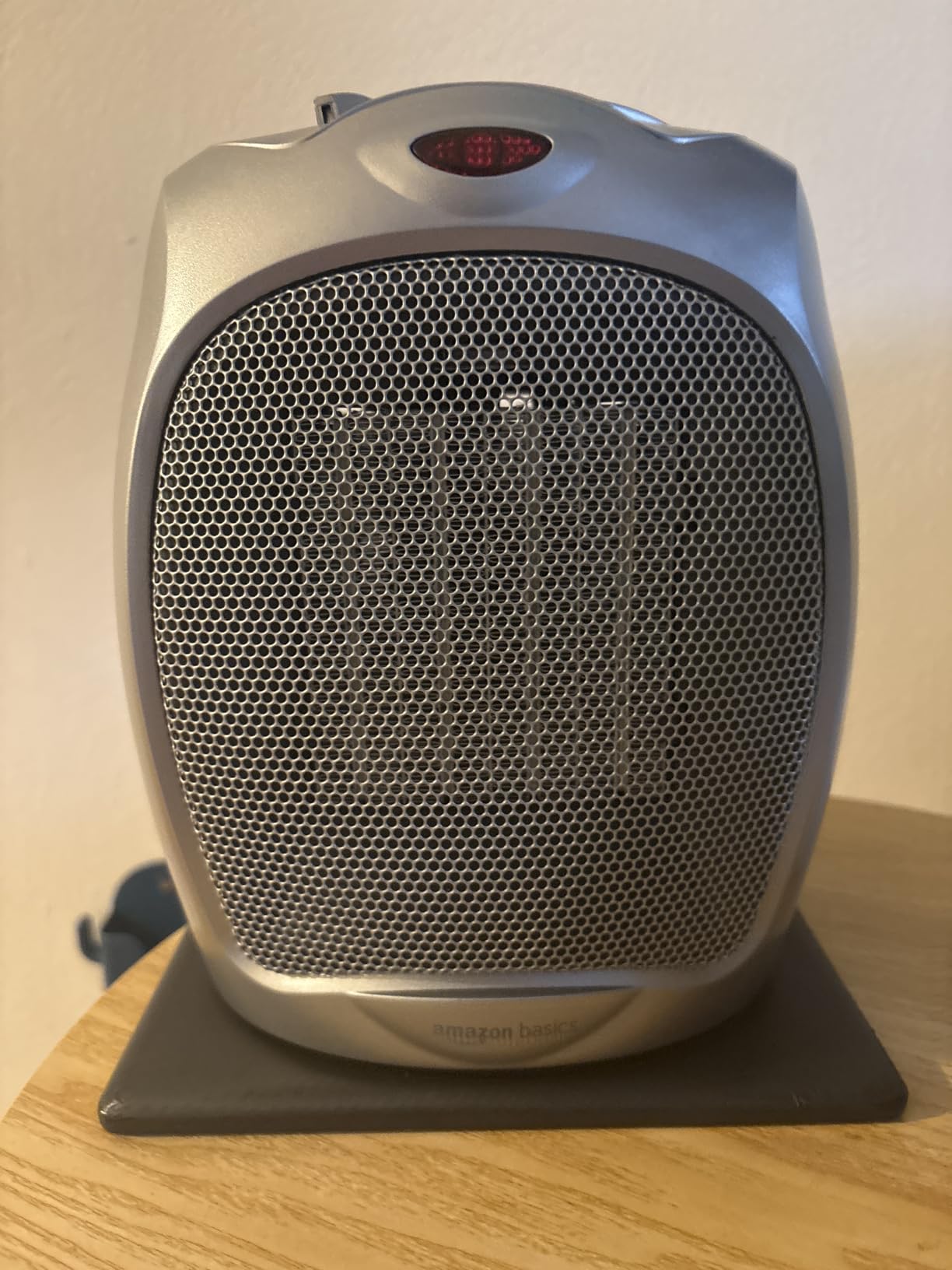
Three settings cover 1500W high, 900W low and fan only, and at 43 dB it sits in the lower half of the noise range in this roundup. The review base of nearly 29,000 ratings makes the long-term picture easy to see.
The 8 percent share of one-star reviews is higher than average, and the complaints cluster around the dial controls and modest output rather than failures.
Why it works in a basement
Its footprint is the feature. When the only free space in a mechanical room is a six-inch gap, a slim heater is the only heater that is actually an option, and no amount of wattage matters if the unit does not fit.
Tip-over shutoff matters most on a concrete floor where a falling heater would land on hard, uneven ground rather than carpet.
Where it falls short
The manufacturer explicitly warns against use in high-moisture areas such as laundry rooms, which is a common basement location. Treat it as a dryer-adjacent option only if you are confident the room stays dry.
It is non-oscillating and the dial thermostat is coarse, so it works as a personal heater aimed at one spot rather than a room heater you set and leave.
How to Choose a Space Heater for a Basement
Start with the honest fact that every one of these is a resistive electric heater. They all convert essentially 100 percent of their electricity to heat, so the efficiency differences claimed between brands are marketing. What actually differs is how the heat travels, how much of it reaches you, and whether the unit can be left running safely where your basement is cold.
Heating type: radiant, convection or oil-filled
Radiant infrared heat lands on you and on objects directly, which is why it feels effective in a drafty below-grade space. Convection heaters move air across a ceramic or PTC element and warm the room evenly, which is what you want in a rec room where several people are sitting. Oil-filled radiators bank heat in a sealed reservoir and release it slowly, with no fan at all.
Basement-specific note: air that is already cold and damp is harder to heat than air in a room above grade, so radiant designs have an edge in drafty utility spaces, while convection designs win in finished rooms with furniture and people in them.
Sizing: how many square feet one 1500 watt unit covers
Match the unit to the zone, not to the basement. Manufacturer coverage ratings on this list run from 150 to 576 sq ft, and a realistic target for a single 1500W unit in a below-grade space with cold concrete is 400 to 500 sq ft. Below that, a 1500W heater will struggle to hold a setpoint in genuinely cold weather.
Add up your zones. A 1,200 sq ft basement usually splits into a finished room, a utility room and a storage area, which is two or three heaters rather than one. More on whole-room sizing in our guide to electric space heaters for large rooms.
Electrical circuits and breaker size
A 1500W heater draws about 12.5 amps on a 120V circuit, which is close to the 15-amp limit of a typical residential branch circuit. Plug one into a circuit that already serves an outlet, a dehumidifier or a washer and you will trip the breaker.
Plug it directly into a wall outlet, never an extension cord or power strip, and confirm your panel has spare 20-amp capacity before adding a second unit. A dedicated circuit per heater is the rule.
Safety rules for a basement
Look for tip-over shutoff, overheat protection and a UL or ETL listing, and treat all three as non-negotiable. On a hard concrete floor with storage boxes and a sump pit, a heater that keeps running after it tips is the single avoidable risk in this category.
Keep at least three feet of clearance from anything combustible, and never leave a heater running unattended overnight in a space with stored cardboard, paint or solvents. Our space heater roundup for gaming rooms covers the same clearance rules for upstairs rooms.
Thermostat control, timers and scheduling
A dial thermostat will hunt around the set temperature and cost you more in wasted draw. A digital setpoint with one-degree steps holds closer and is worth paying for if the room is occupied often, and a memory function that restores your last setting after a power loss is genuinely useful in a basement.
For anything you want running on a schedule, look for a 12 or 24 hour timer. The 7 and 8 hour timers on some models will stop before a full night or workday is over.
Noise levels for a sleeping space
Published figures in this roundup run from 34 dB on the DREO units to 50 dB on the PELONIS. Fanless radiators are quieter still, with only a thermostat click, because there is no fan to hear.
Below roughly 40 dB you can sleep in the room with it running. Above 45 dB you will hear it every time it cycles, which is fine for a rec room and tiring for a bedroom.
Moisture, Condensation and Mold in a Damp Basement
This is the topic almost no roundup covers, and it is the one homeowners raise most often. Heating a damp basement does not remove moisture, and in some setups adding warmth makes the problem worse by raising the temperature of surfaces that are colder than the air, which is exactly the condition that produces condensation.
The practical order of operations matters more than the heater you pick. Dehumidify first, with a unit sized to your square footage, and keep relative humidity in the region homeowners typically target. Our basement dehumidifier roundup covers the sizing question.
Then insulate the rim joist and weatherstrip the stairwell door, because most basement heat loss is air moving through gaps rather than heat moving through concrete. If a sump pump has ever failed and flooded a return plenum, that is a comfort problem a heater cannot solve, and fixing the water is worth more than any unit on this list.
Run the heater and the dehumidifier on separate circuits if you can, and remember that a heater warms the air while a dehumidifier pulls water out of it. Doing only one of those jobs leaves the room uncomfortable.
When a Space Heater Is the Wrong Answer
A portable heater is the wrong tool in several clear situations, and buying one anyway is how people end up with a warm corner and a cold room.
You are heating 1,000 sq ft or more with high ceilings. No 1500W unit, or set of them, competes with the volume there, and running four heaters on separate circuits to chase a single space is an expensive way to be uncomfortable. If you have finished rooms you use every day, a ductless mini-split or electric baseboard retrofit is the better investment.
You are a renter, or you cannot confirm panel capacity. Check the electrical panel first. If it does not have spare 20-amp capacity, the conversation is about a circuit install, not about heaters, and that changes the project entirely.
Your basement is a laundry or utility space with steady moisture. Heating damp air without dehumidification buys condensation, and a wet basement causes more damage than a cold one ever will. Solve the water before the temperature.
Undersized rim joist insulation. Before you buy anything, our basement fixture guide covers another common lower-level upgrade, and the same principle applies: fix the building before adding equipment to it.
Frequently Asked Questions
What is the most efficient heater for a basement?
All resistive electric heaters convert essentially all of their electricity to heat, so no brand is more efficient than another. Efficiency in practice is about whether the heat reaches you. Radiant infrared wins in drafty below-grade spaces, forced-air convection wins when you want even ambient warmth, and oil-filled radiators win for steady overnight heat. Match the type to the zone, match watts to square footage, and control moisture before you buy anything.
What is the best wall heater for a basement?
The DREO Smart Wall Heater DR-HSH009S is the strongest wall-mounted option here. Mounting frees the entire floor, 120 degree oscillation spreads warmth up and down as well as across, and app scheduling lets you pre-warm an unoccupied lower level. Most plug-in wall units still need a 1500W dedicated circuit and a nearby outlet, and recessed or hardwired models need a licensed electrician.
How big of a space heater do I need for a basement?
One 1500W unit realistically covers a 400 to 500 square foot zone in a below-grade space with cold concrete, and manufacturer ratings in this roundup range from 150 to 576 sq ft. Size the zone, not the basement. A 1,200 sq ft lower level usually needs two or three heaters on separate circuits, or a permanent heat source if you want true whole-floor comfort.
Are space heaters safe to use in a basement?
They are safe when installed correctly. Plug a 1500W heater directly into a wall outlet on a dedicated circuit, never an extension cord or power strip, since it draws about 12.5 amps. Choose a model with tip-over shutoff, overheat protection and a UL or ETL listing, keep three feet of clearance from anything combustible, and do not leave it running unattended overnight where cardboard, paint or solvents are stored.
Can a space heater cause mold in a basement?
A space heater does not create mold, but it can make conditions friendlier to it. Heating damp air raises surface temperatures on cold concrete faster than the surrounding air, and that difference is what produces condensation, which is what feeds mold growth. Control moisture with a dehumidifier and fix water intrusion first, then heat the space. Set a target relative humidity and monitor it rather than guessing.
How much does it cost to run a 1500 watt space heater?
Multiply 1.5 kW by the hours you run it, then by your local rate per kilowatt-hour. At four hours a day for an entire heating season, that works out to roughly 2,190 kWh, so the total scales directly with your utility rate. Cutting to the 750W low setting, using a timer, and choosing a unit with a precise thermostat are the practical ways to bring the figure down.
The Best Space Heater for Your Basement in 2026
For most basements, the Dr. Infrared DR-968 is the pick. Its hybrid infrared quartz and PTC layout delivers the most usable heat at 1500W in this roundup, roughly 5200 BTU, with a 39 dB blower and the widest rated coverage we saw. It is the heater we would put against the cold wall in a drafty rec room and let cycle.
Pick the DREO HSH006 Gold if precise digital control matters, the DREO DR-HSH019 if the basement doubles as a bedroom, the Lasko 751320 if you want a proven oscillating tower, the De’Longhi EW7707CM if silence and overnight heat win, and the DREO wall unit if the floor space is worth reclaiming.
Whatever you choose, size it to a zone rather than to the basement, plug it directly into its own outlet, and deal with moisture before you deal with temperature. Updated for 2026, and we will keep this list current as models change.