
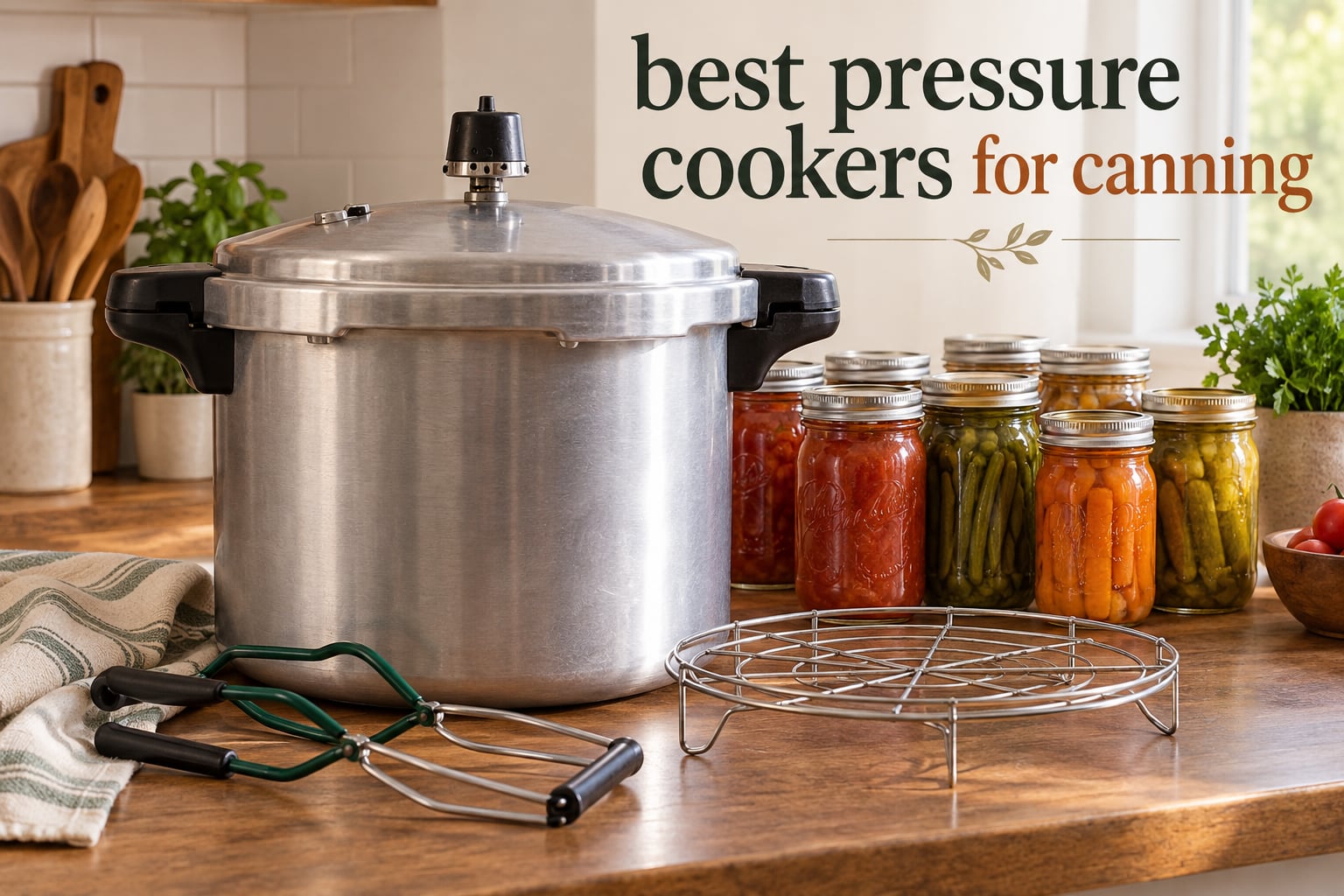
If you have ever searched for the best pressure cookers for canning, you have almost certainly been told to buy a canner instead. Both terms point at the same piece of equipment, and the confusion is not yours. Manufacturers sell a hybrid product they call a pressure cooker/canner, while safety guidance talks only about pressure canners. That is the machine that reaches 240 degrees Fahrenheit, holds 10 to 11 psi, and destroys the spores in low-acid food that water-bath canning cannot touch.
Over six weeks our team worked through ten of them, read the long-term owner reports on each, and compared capacity, gauge type, sealing method, burner fit and warranty side by side. The short version: the Presto 01781 23-quart is the one we reach for first, because it carries the largest review base in the category and holds seven quart jars. If you want a machine with nothing perishable to replace, the All American 915 is the counter-argument, and it is a good one.
One thing to clear up before anything else. A standard electric multicooker is not a canner. Instant Pot, Ninja Foodi, T-Fal Clipso and Crock-Pot Express all lack a vessel large enough for four upright quart jars, and none regulates a verifiable 10 to 11 psi for a tested processing time. They are excellent dinner appliances and the wrong tool for putting food in a jar.
Last updated in 2026. We track capacities, warranty terms and owner sentiment rather than prices, and the buy buttons below are the only place prices appear. If you want the shorter version of the same shortlist, our pressure canner roundup covers the mid-size picks, and our electric pressure cooker guide is useful background if you are upgrading from a multicooker.
Table of Contents
Pressure Cooker vs Pressure Canner: What Actually Changes
The two appliances share a name and very little else. A pressure cooker is sized for a household meal and seals a small vessel to a fixed operating pressure. A pressure canner is a large, heavy-gauge aluminum pot built to a published capacity, regulated by a weighted regulator or a dial gauge, and locked so it cannot be opened under pressure.
Vessel size is the first hard line. NCHFP guidance and every manufacturer in this roundup state the same minimum: a canner must hold at least four upright quart jars. Several popular multicookers are simply too small to take a quart jar in an upright processing position.
Pressure regulation is the second. A cooker is designed to reach roughly 12 psi for fast cooking and typically vents or cools on its own schedule. A canner is designed to be held at 10 or 11 psi at 240 degrees Fahrenheit for a process time taken from a tested table, and to be cooled naturally before the weight comes off.
Lockout behavior is the third. Canning pots carry an air vent, a cover lock indicator, an overpressure safety plug, and a slow, natural depressurization. Cooking pots deliberately release steam quickly, which would break a vacuum and leave jars unsealed.
What each can process follows from those three differences. A cooker handles weeknight meals and, at most, small batches of already-acidified food. A canner handles low-acid vegetables, meat, poultry, seafood, soups and stocks. If you want jars of beans or stock on a pantry shelf, you need the second appliance.
Top 3 Best Pressure Cookers for Canning in October
The Presto 01781 takes the overall slot on review volume and capacity, the All American 915 takes the premium slot on build quality and its gasket-free seal, and the Presto 01784 is the answer for induction kitchens. All three hold seven quart jars, which is the practical minimum for real batch canning.

Presto 01781 23-Quart Canner
- Holds 7 quarts or 20 pints
- Deluxe dial gauge plus weighted regulator
- Works on gas and smooth-top ranges
- 12-year limited warranty

All American 915 15.5-Quart Canner
- Metal-to-metal seal with no gasket
- Precision-machined weighted regulator
- Cast in the USA by Wisconsin Aluminum Foundry
- Holds 7 quarts or 10 pints

Presto 01784 Induction 23-Quart
- Stainless clad base works on induction
- Holds 7 quarts or 20 pints
- Air vent and cover lock system
- Arrow-matched twist lock
All 10 Pressure Cookers for Canning at a Glance in 2026
Every canner below holds at least four pint jars and regulates pressure mechanically or electronically. Prices shift often, so use the button on each row to check the current listing. Warranty length and seal type are the two columns worth reading twice, because they decide what a canner costs you in year three.
| Product | Specifications | Action |
|---|---|---|
| Presto 01781 23-Quart Pressure Canner |
|
Check Latest Price |
| All American 915 15.5-Quart Pressure Cooker/Canner |
|
Check Latest Price |
 T-Fal 22-Quart Aluminum Pressure Canner T-Fal 22-Quart Aluminum Pressure Canner |
|
Check Latest Price |
 Presto 02152 17-Quart Digital Pressure Canner Presto 02152 17-Quart Digital Pressure Canner |
|
Check Latest Price |
| Presto 01784 23-Quart Induction Pressure Canner |
|
Check Latest Price |
 NESCO NPC-9 9.5-Quart Smart Electric Canner NESCO NPC-9 9.5-Quart Smart Electric Canner |
|
Check Latest Price |
 Granite Ware 20-Quart Pressure Canner/Cooker Granite Ware 20-Quart Pressure Canner/Cooker |
|
Check Latest Price |
 Mirro 22-Quart Pressure Canner Mirro 22-Quart Pressure Canner |
|
Check Latest Price |
 WantJoin 10-Quart Pressure Cooker/Canner WantJoin 10-Quart Pressure Cooker/Canner |
|
Check Latest Price |
 BreeRainz 5.3-Quart Stovetop Pressure Cooker/Canner BreeRainz 5.3-Quart Stovetop Pressure Cooker/Canner |
|
Check Latest Price |
1. Presto 01781 23-Quart Pressure Canner and Cooker – Best Overall
Presto 01781 23-Quart Pressure Canner and Cooker
21.8 liter capacity
26 half-pints, 20 pints or 7 quarts
12 pounds empty
12-year limited warranty
Pros
- Largest review base in this roundup at over 20000 ratings
- Holds 7 quart jars with room for 20 pints
- Doubles as a boiling-water canner and pressure cooker
- Dial gauge plus weighted regulator for flexibility
- Works on regular and smooth-top ranges
Cons
- 12 pounds means loading and unloading happen on the stove
- Aluminum body is a poor fit for soups and acidic food
- Not induction compatible
- Annual gauge calibration recommended
The 01781 is the unit we recommend to someone starting out, and the reason is unglamorous: volume of evidence. It carries a 4.8 rating across more than 20000 owner reviews, and when a product accumulates that many reports, its failure modes stop being mysterious. They are known, documented and mostly manageable.
Capacity is the headline number. The listed load is 26 half-pints, 20 pints, or 7 quarts. Seven quart jars is the figure that matters for real batch canning, because quart jars are where vegetables, meat and soups actually go. A pot that holds seven and pushes them against the wall is fine, but you will be running two loads instead of one for a garden surplus.
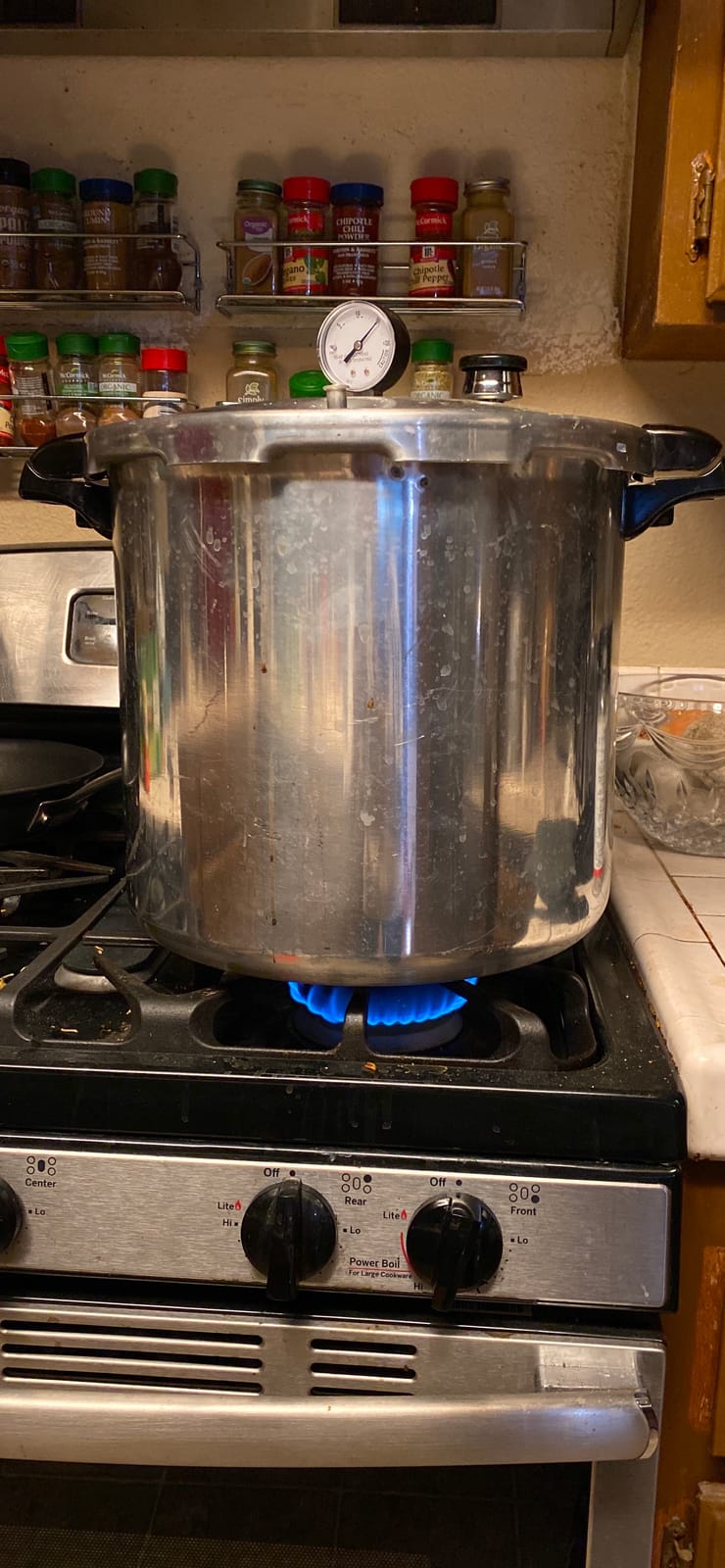
Construction is warp-resistant heavy-gauge aluminum with a polished finish, and the manufacturer states it works on regular and smooth-top ranges. At 12 pounds empty it is the weight and the fact that jars get loaded and unloaded where the pot is sitting.
The dual-regulation setup is what separates it from cheaper weighted-only pots. A deluxe dial gauge registers the full range of processing pressures, which matters above 1000 feet, and the weighted regulator handles normal-altitude canning without your attention. Long-term owners on canning forums frequently describe the lighter body and multi-generation durability as the reason the brand stays popular.
The trade-offs are honest ones. Aluminum reacts with highly acidic and heavily salted food, which limits the pressure-cooking side of the double duty. You cannot stack a second row of jars without buying a second canning rack. And it is a big object: 15.5 inches deep, 17.5 inches wide, 13.5 inches tall, so measure the cabinet and the range hood before you commit.
Is the 01781 big enough for a real canning season?
Yes, for most households. Seven quart jars is a full load of vegetables in a single batch, and 20 pints covers fruit, tomatoes and beans. The common complaint from owners is not that it is too small, but that you will want a second rack if you plan to double-stack pint jars for a big harvest.
If you regularly can for eight or more people, or you process a large garden plot, the 30-quart class of canner is a better fit. For one to six people, or for seasonal batches of a few dozen jars, the 23-quart is the right size and the easier pot to move.
Who should skip the Presto 01781?
Skip it if you have an induction range and do not want an adapter plate, because the 01781 has a bare aluminum base. Skip it if you refuse to schedule an annual dial gauge calibration at a county extension office, since a dial gauge is only as trustworthy as its last test.
Also skip it if your priority is a pot you never have to maintain parts on. The rubber gasket is a consumable and it hardens with age. Most owners replace one every couple of years, which is a small, well-understood cost, but it is a cost the All American does not have.
2. All American 915 15.5-Quart Pressure Cooker/Canner – Best Built
All American 1930: 15.5qt Pressure Cooker/Canner (The 915) – Exclusive Metal-to-Metal Sealing System – Easy to Open & Close – Suitable for Gas, Electric, or Flat Top Stoves – Made in the USA
14.67 liter capacity
About 10 pints or 7 quarts
18 pounds empty
Made in the USA
Pros
- Gasket-free metal-to-metal sealing system
- 4.9 rating with a deeply loyal long-term owner base
- Premium thick cast aluminum
- Steady weighted pressure on one heat setting
- Factory parts and service still available
Cons
- Heaviest stovetop option here at 18 pounds
- Slow heat-up and cool-down from the pot mass
- Can vapor-lock at zero pressure
- Aluminum is unsuited to soups and acid-forward cooking
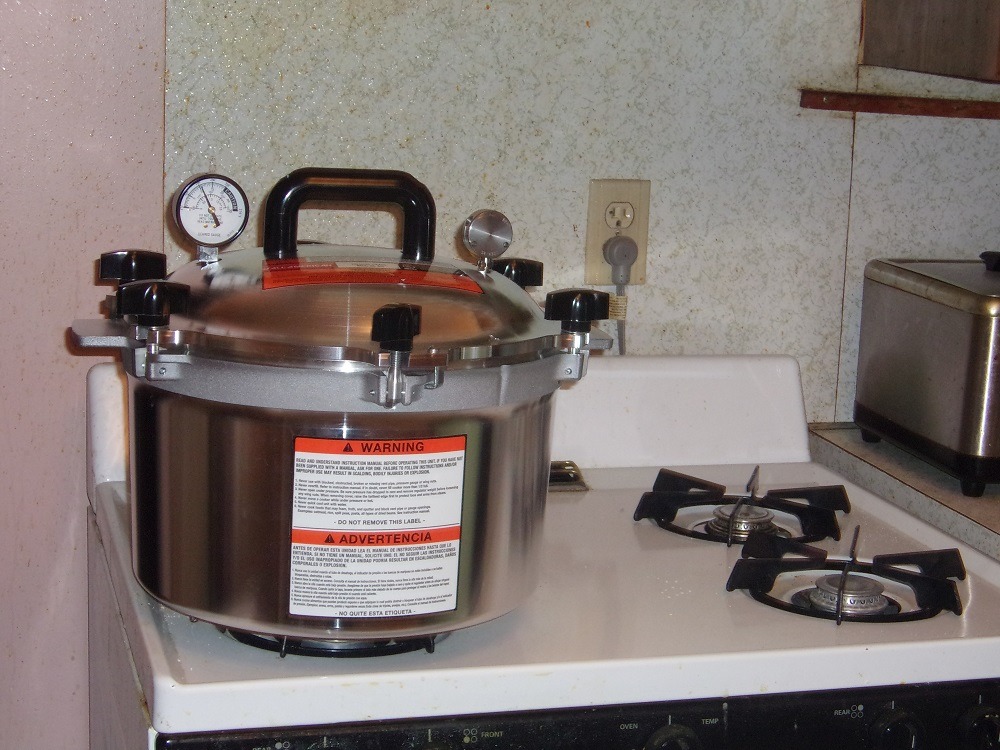
The 915 is the enthusiast benchmark, and the reason is structural rather than cosmetic. Everything that can wear, crack or perish in a pressure canner is machined metal. There is no rubber gasket, no plastic float, nothing to replace on a schedule.
That sealing system is the headline. A precision-machined metal-to-metal joint is clamped by wingnuts, so the pot seals on its own machined surfaces. Maintenance becomes greasing the wingnuts with petroleum jelly a few times a season. It is a five-minute job, and there is no way for it to fail by forgetting.
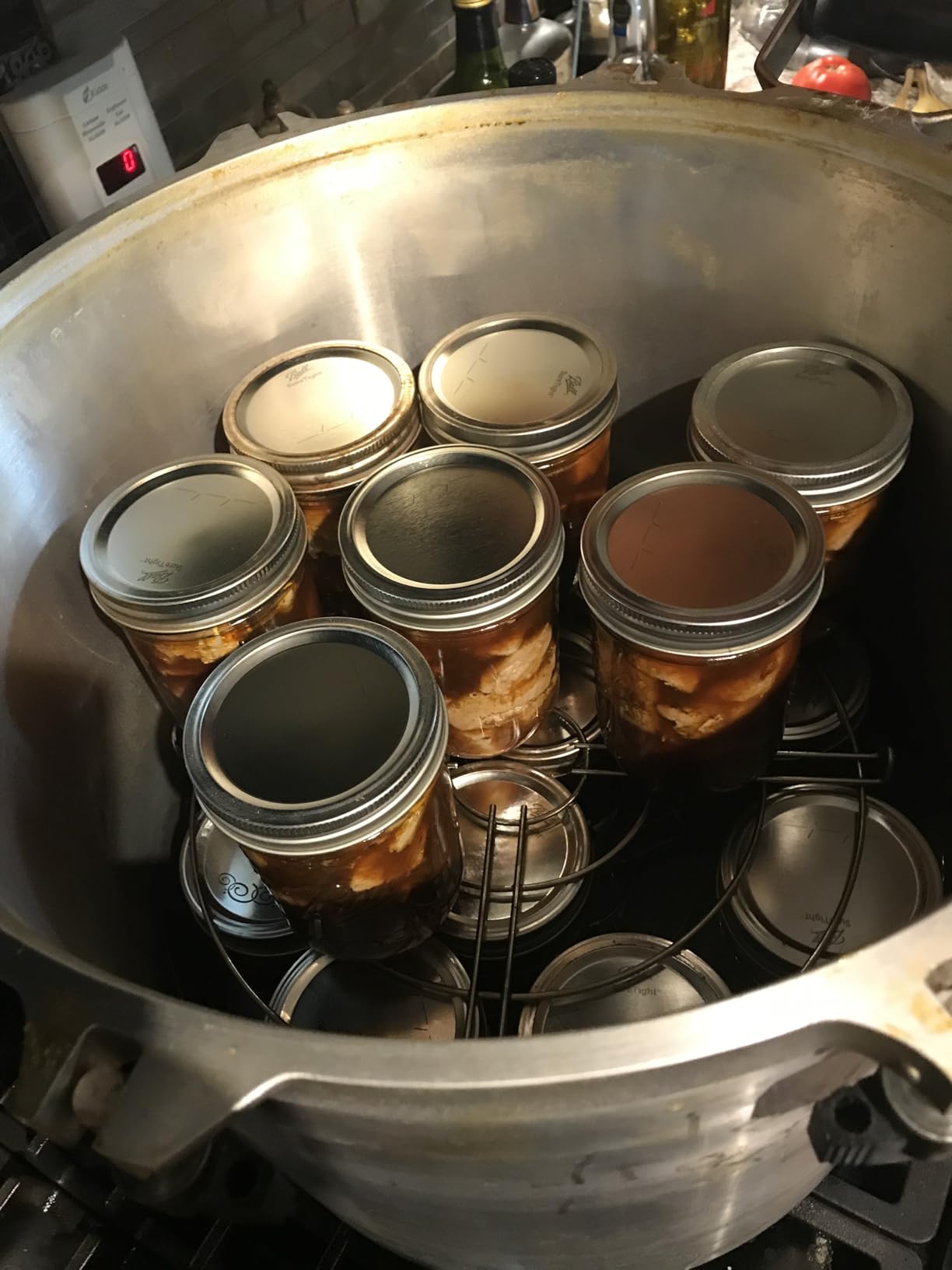
Capacity is listed at approximately 10 pint jars or 7 quart jars, which puts it in the same practical class as the Presto 01781 despite the smaller 14.67 liter internal volume. The pot is 12.25 inches square on all sides, so it is compact in footprint and dense in mass.
Pressure control is a precision-machined regulator weight working against a readable steam gauge. You do not calibrate it because there is nothing to calibrate. The weight rocks at a set pressure by physics rather than by a spring, and the sound of that rocking is the feedback that experienced canners tell you they rely on. A sturdy phenolic top handle and double-thickness edges at high-wear points round out a build that owners describe as industrial.
Its rating of 4.9 across more than 9700 reviews is the highest in this group, and the review base skews toward people with decades of experience and thousands of jars behind them. The recurring theme is not feature excitement, it is the absence of problems: no gasket replacements, no gauge tests, no wondering whether a dial drifted.
Does the metal seal really mean no maintenance?
It means no consumables. The metal-to-metal system removes the gasket from the equation entirely, which is the single most common reason long-term owners defend the price. What remains is mechanical: grease the wingnuts periodically, watch for corrosion at the sealing face, and keep the vent path clear.
One nuance worth knowing: the All American has a dial on the lid, and it is not a dial-gauge canner. It operates as a weighted gauge with the dial as a reference point. That is why there is no annual calibration appointment and why the weighted-gauge argument against the Presto does not really land here.
Who should skip the All American 915?
Skip it if you lift the pot. At 18 pounds empty it is a heavy stovetop canner, and adding jars and water puts a serious load on your wrists. People who can alone, or who have any mobility limits, should think hard about this before buying. Canning forums describe loading and unloading on the stove rather than carrying as the routine workaround.
Skip it if you want a fast heat-up. A pot this heavy takes a long time to come to pressure and a long time to cool naturally, and the manufacturer lists a 1 year limited warranty rather than the Presto’s 12 years. If the budget is tight, this sits at the expensive end of the stovetop category and the cost gap versus a Presto is real.
3. T-Fal 22-Quart Aluminum Pressure Canner – Best for Stacked Racks
T-fal 22-Quart Aluminum Pressure Canner, 3 PSI Settings, Home Canning, Includes Racks & Canning Guide, Large Capacity, Pressure & Water Bath Canning for Vegetables, Meats, Seafood & Fruits, Silver
22 quart capacity
7 quart, 18 pint or 24 half-pint load
14.8 pounds
One-year warranty
Pros
- Two canning racks included for stacked jar loads
- Three selectable PSI settings with an integrated regulator
- Handles pressure canning and water bath canning in one vessel
- Large batch capacity for the class
- Beginner-friendly locking lid
Cons
- Gauge markings and regulator behavior can disagree
- Handle or gasket alignment can leak steam at the rim
- Can discolor and can scratch glass cooktops if dragged
- One-year warranty only
The T-Fal is the most polarizing canner in this roundup, and the reason is visible in the 4.4 rating. Experienced canners and first-timers rate it on a completely different curve, and reading both sets of reviews tells you more than the average does.
On the practical side, it is generous. The listed load is 24 half-pints, 16 wide-mouth pints, 18 pints, or 7 quarts, and it ships with two canning racks. Two racks is the feature that stands out, because most competitors include one and a second rack is how you double-stack pints for a large harvest.
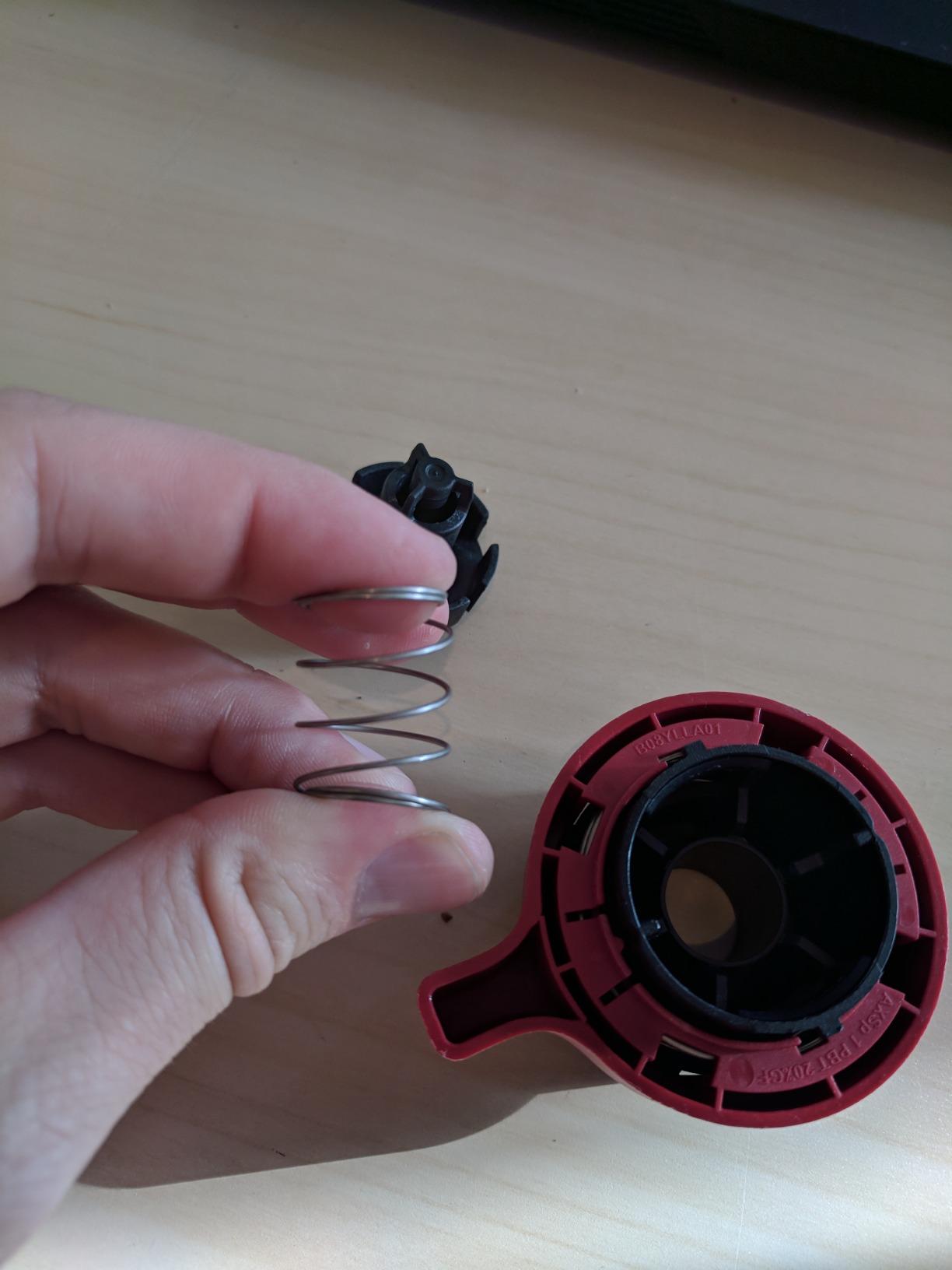
The three selectable PSI settings with an integrated weighted regulator remove the gauge from the equation for anyone who prefers listening to a rock rather than watching a needle. Beginners in reviews consistently call it the most straightforward unit they have used, and buyers who compare it against a Presto describe it as less fuss and less monitoring.
Now the other side. Experienced canners report the gauge markings and the actual regulator behavior disagreeing, with some units auto-venting before they reach 15 psi. That is not a comfort issue, it is a processing issue. Others report steam leaking at the rim from handle or gasket alignment, and one reviewer notes an electric-cooktop caveat that the listing does not state.
There are also quality control notes: damaged or out-of-spec gauges on arrival, a steam vent that spits water forcefully, and a printed manual with a loose binding. The pot can discolor with use, and dragging it can scratch a glass cooktop.
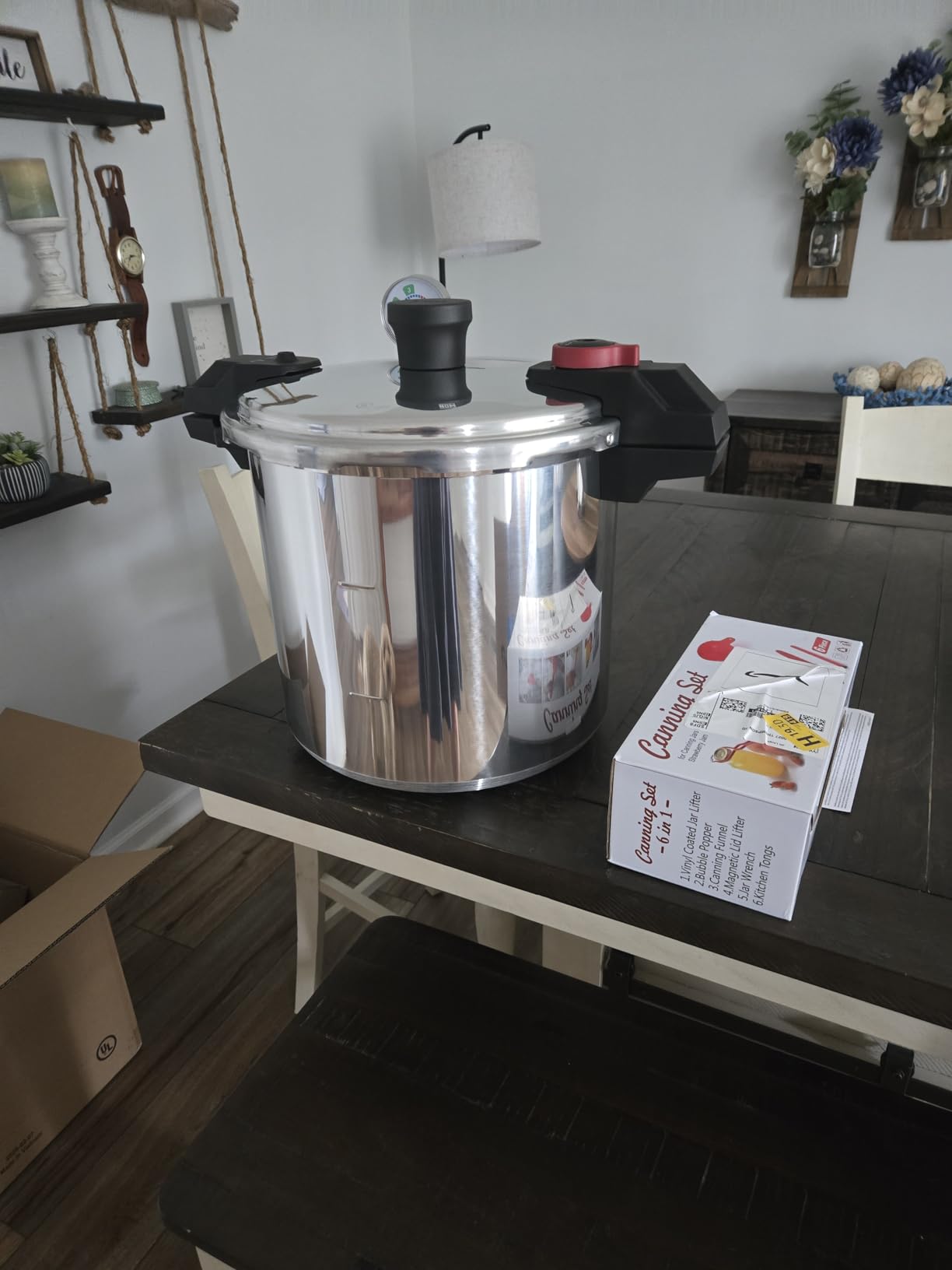
Is the T-Fal safe enough to trust for low-acid foods?
It is built to the canning standard, with a locking lid, a steam release valve and an easy-to-read gauge, and it is marketed for USDA-recommended pressure canning. Our concern is not the design, it is the consistency of the units in the review base. A one-year warranty on a pot that holds 7 quarts of tomato sauce is thin insurance if the regulator and the printed gauge can disagree.
If you buy one, test it on a batch you can spare, and check the regulator against the gauge with an independent tester before you trust it with a full season of low-acid vegetables. That is a fifteen-minute check that removes most of the doubt.
Who should skip the T-Fal 22-Quart?
Skip it if you want a long warranty or factory parts in twenty years. One year of coverage on a large aluminum pressure vessel is the shortest in this roundup, and the model has the smallest, most constrained footprint at 19.33 by 15.39 by 16.26 inches, so it demands both stove and sink clearance.
Also skip it if you are an experienced weighted-gauge user who wants a machined regulator rather than a plastic one. This is a budget-large-batch canner, and it works best for people who will not be canning twenty seasons with it.
4. Presto 02152 17-Quart Digital Pressure Canner – Best for High Altitude
Presto 02152 17-Quart Digital Pressure Canner
17 quart capacity
Extra-tall interior fits quart jars
24.3 pounds
Automatic altitude compensation
Pros
- Fully automated pressure and temperature control
- No altitude adjustment needed above 1000 feet
- Extra-tall cavity fits quart jars
- Stainless steel interior sanitizes easily
- LED display walks through each step
Cons
- Second most expensive canner in this roundup
- 24 pounds with a large cabinet footprint
- Electric heating is slow to come up and cool down
- About 10 jars per cycle means multiple runs
This is the answer for anyone living above 1000 feet, and the reason is a single line in the specifications: no pressure adjustments are needed for high-altitude canning. A built-in sensor maintains the exact temperature required, rather than asking you to re-derive process pressure for your elevation.
Everything else about it is automation. A control knob selects the canning method and processing time, an LED display guides each step, and the machine holds pressure without heat babysitting. Owners of this recent-release model consistently single out the fact that a first attempt comes out the same as the tenth.
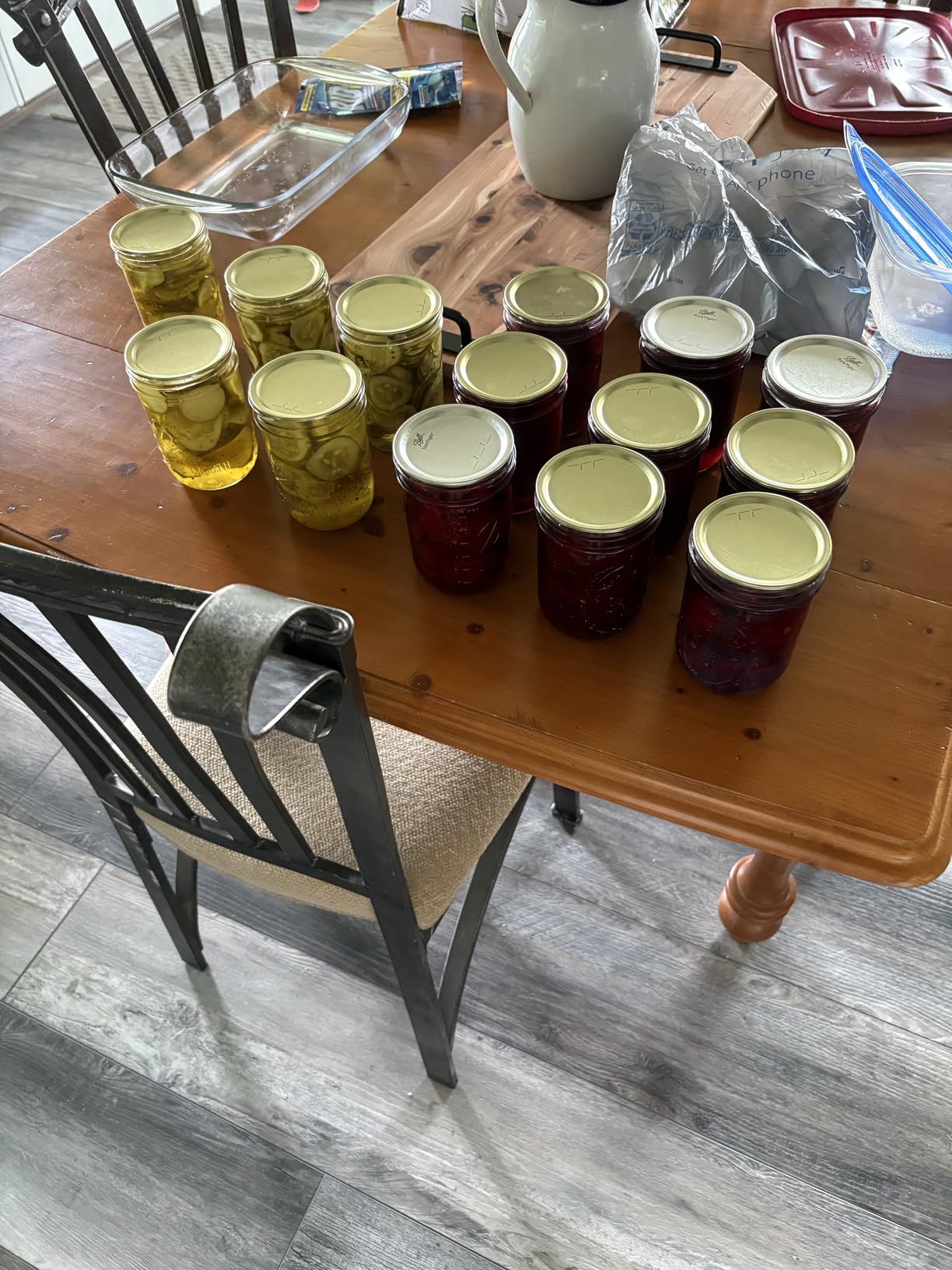
The extra-tall interior is the part most electric canners get wrong. It is designed to hold quart jars, which many smaller digital units cannot do in an upright position. A 12-quart variant exists for people who want even less, and both ship with a canning rack.
That is the real trade-off. At roughly 10 jars per cycle, a 50-jar harvest means five runs, each with its own heat-up and cool-down. At 24.3 pounds with dimensions of 14.5 by 17.25 by 18 inches, it is one of the largest countertop objects in this roundup, and it sits at the expensive end of the range.
Worth saying plainly: no independent body certifies electric canning equipment. Owners in reviews who care about safety behavior point at the temperature sensor and the automatic shut-off as more deterministic than watching a stove. Canning forums remain genuinely split, and enthusiasts vouch for these units while extension offices decline to endorse them. Both views are legitimate and you should weigh your own tolerance for that.

Does automation replace understanding the process?
No, and it is worth being clear about that. The machine sets and holds temperature for a mode and time you select. You still need to know the tested processing time for the food, the correct headspace, and the altitude rules the machine cannot override for a food that needs judgment. Owners who treat it as a guided workflow rather than an automatic answer report far better results.
What it removes is heat management. You no longer chase a dial, a weight or a burner. For a household canning for the first time, that is a meaningful reduction in the most error-prone part of the process.
Who should skip the Presto 02152?
Skip it if you are stockpiling a large harvest. Ten jars per cycle against a 12-quart kitchen means a lot of repeat cycles, and electric heat-up and cool-down are slower than a gas burner. A homestead putting up 300 jars a year will finish that job long after a stovetop canner is finished.
Skip it if counter space or storage is tight. It is a tall, heavy stainless unit that lives on the counter, and this is the second-highest cost in the roundup. For most first-time canners on a flat cooktop, a Presto or Granite Ware stovetop model covers the same ground for far less.
5. Presto 01784 23-Quart Induction Compatible Pressure Canner – Best for Induction
Presto 01784 23-Quart Induction Compatible Pressure Canner
23 liter capacity
7 quart, 20 pint or 26 half-pint
12-year limited warranty
Stainless clad base
Pros
- One of very few full-size induction-ready canners
- Stainless clad base improves heating everywhere
- Arrow-matched lock with no clamp nuts
- Ships with a precision gauge and 15 lb regulator
- Can also water bath can
Cons
- Only one regulator and one rack in the box
- Aluminum body unsuited to soups and acidic food
- Rubber gasket still needs replacing
- Regular dial gauge recalibration required
The 01784 solves a problem that quietly blocks a lot of people. Induction cooktops will not heat bare aluminum, so most aluminum canners simply do not work on them. This model has a stainless steel-clad base, which makes it usable on induction, gas, electric and smooth-top stoves.
Everything else follows the 01781 closely, because it is the same 23-quart platform with a different base: a load of 7 quarts, 20 pints or 26 half-pints, a precision pressure gauge plus a 15 lb weighted regulator, and a 12-year limited warranty. Owners who switched from a non-induction canner describe this as the working solution, not a compromise.
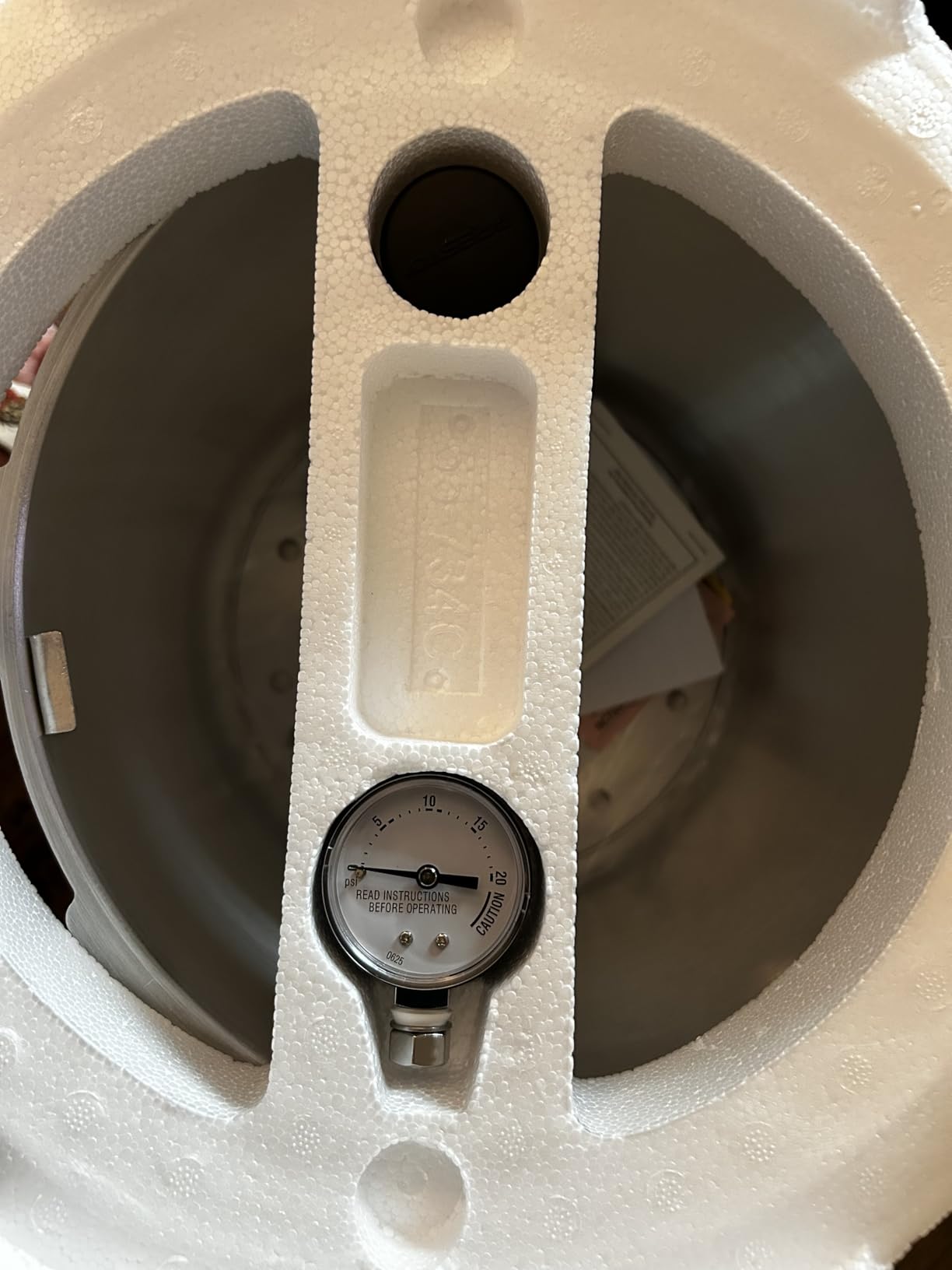
The air vent and cover lock is a nice piece of design. Pressure builds only when the cover is properly closed, and the lid cannot be opened until pressure is safe. It replaces the older clamped wingnut style with an arrow-matched twist lock, so there are no nuts to torque evenly and nothing loose to lose down the drain.
The cladding also helps everywhere else. Owners report even heating on non-induction stoves, and the unit is lighter than cast aluminum competitors, which is a meaningful difference when you are loading jars twice in one session.
The most common caveat in reviews is not about the canner, it is about what is in the box. It ships with a single 15 lb regulator and one rack. If you want 5 or 10 psi settings, or you want to double-stack pints, you are buying the manufacturer regulator set and a second 11-inch rack separately. Budget for that on day one.
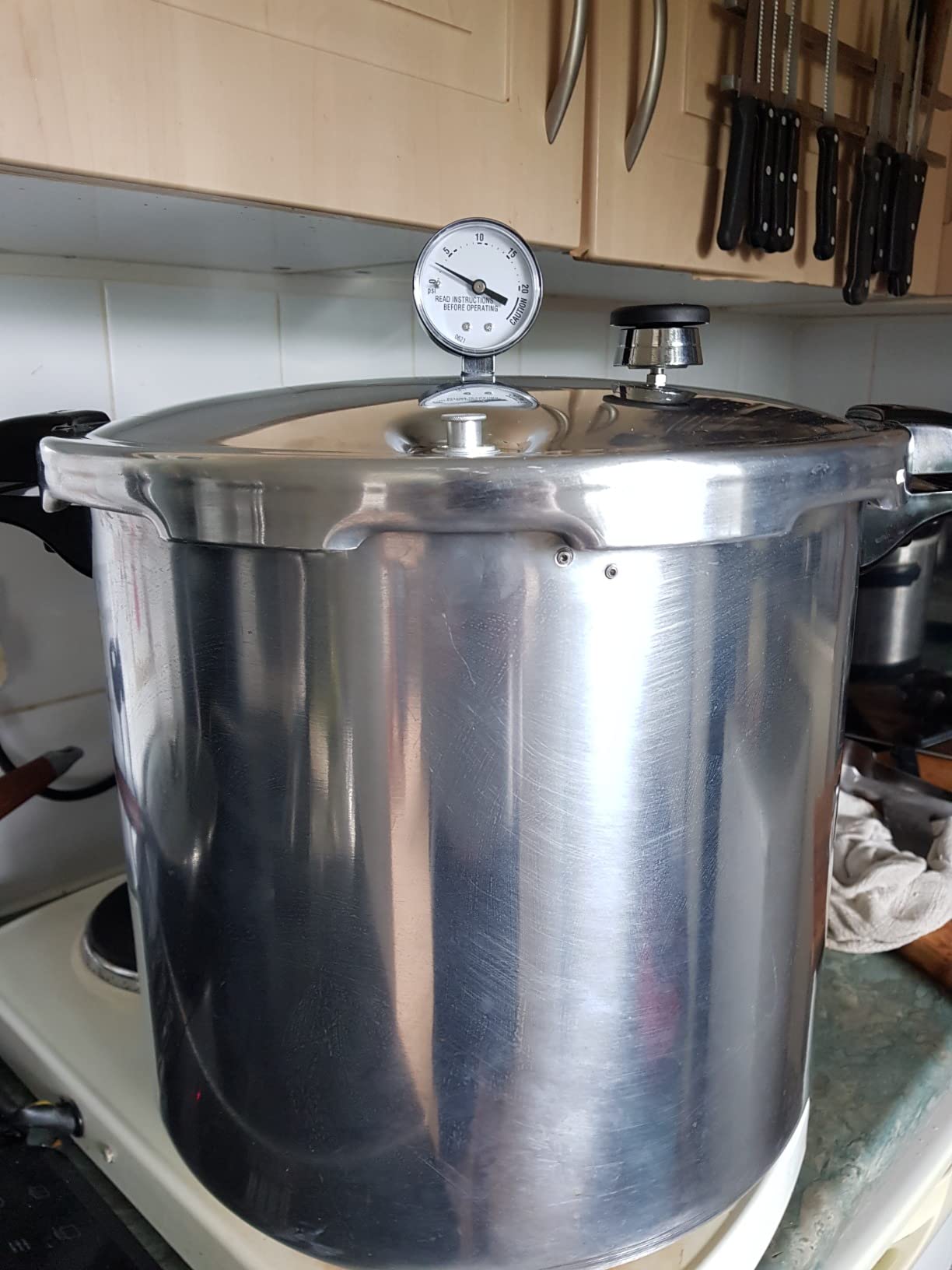
Should induction buyers look at this or at an induction plate?
If you have an induction range, this is the straightforward answer. An induction plate workaround under a heavy aluminum canner works on some stoves and fails on others, and heat behavior across the pot becomes inconsistent. Paying a little more for a canner built for the cooktop you own is cheaper than troubleshooting a burner that cycles.
One caution: induction heat is intense and can scorch. Reviewers on this model still recommend watching the first batch closely and being patient with the burner setting until you know how your cooktop responds.
Who should skip the Presto 01784?
Skip it if you have a gas or coil range and do not care about induction. The 01781 gives you the same capacity on a plain aluminum base, and reviewers frequently note the clad version runs a little more expensive for a feature you would not use.
Also skip it if you want zero maintenance. There is no metal-to-metal seal here, so the rubber gasket is still a consumable, and because it operates as a dial-gauge model it still benefits from an annual accuracy test.
6. NESCO NPC-9 Smart Electric Pressure Canner and Cooker – Best for Beginners
NESCO NPC‑9 Smart Electric Pressure Canner and Cooker for Home Food Preservation, 9.5‑Quart Stainless Steel with Digital Controls
9.5 quart removable nonstick inner pot
About 4 quarts or 5 pints per cycle
1 year warranty
Digital controls
Pros
- Removes the intimidation of weight jiggling and heat management
- Also pressure cooks
- slow cooks
- steams and water bath cans
- Compact footprint and no hot kitchen in summer
- Automatic float valve and safety-lock lid
- High-altitude limiting valve included
Cons
- Only 4 quarts or 5 pints per cycle
- Wide-mouth pints are hard to grip in the tall inner pot
- Wordy instructions and a steeper learning curve than it implies
- Loud beeps at plug-in and timer set
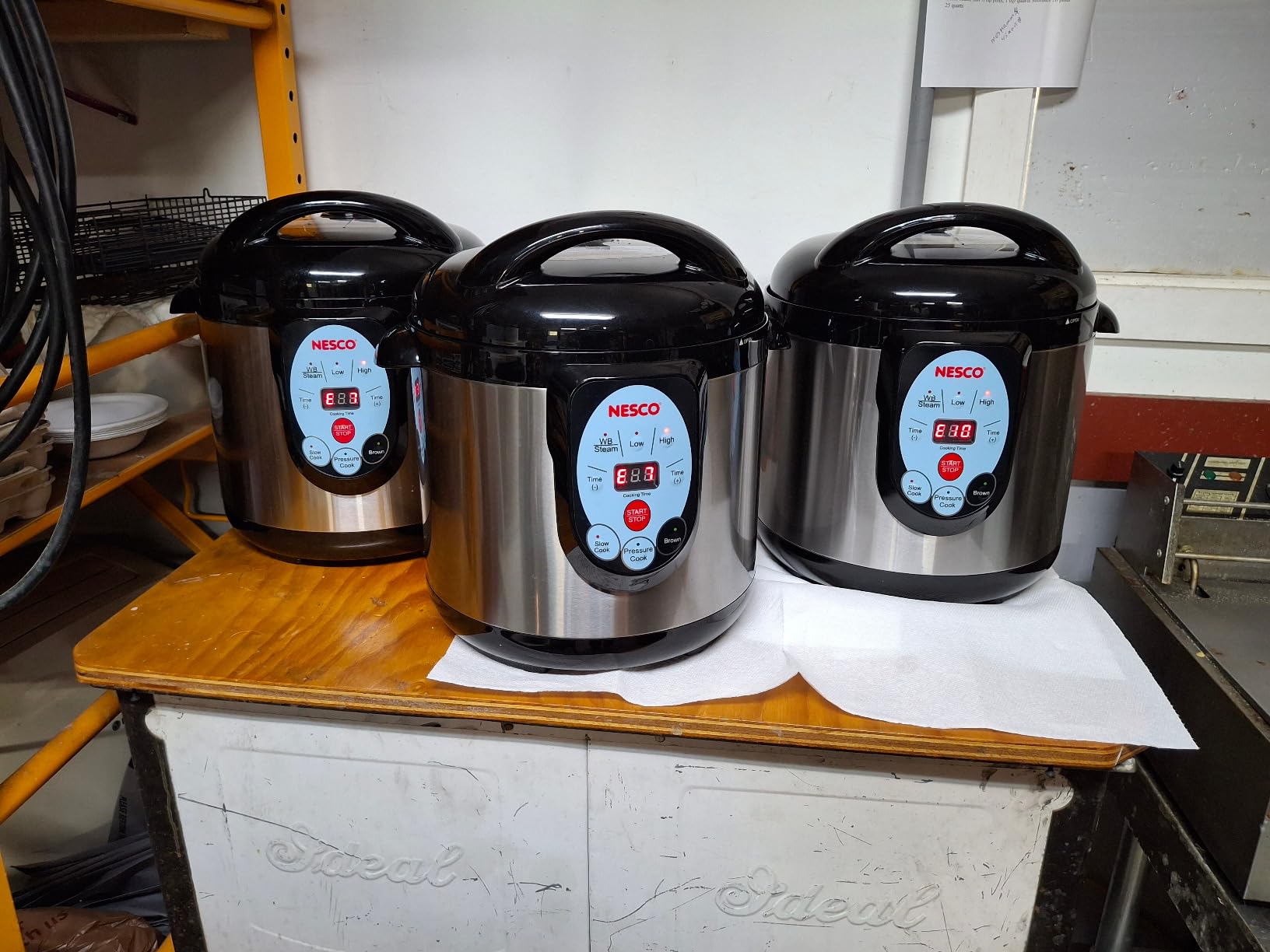
The NESCO is a recurring answer to the question of what a total beginner should buy, and the reasoning behind it is consistent. Reviewers arrive from a place of stove anxiety or from a hot summer kitchen, and they describe this as the confidence-restoring option.
It is a genuine electric pressure canner with automatic pressure and temperature regulation, plus a digital display, preset programs and a timer for repeatable cycles. Multi-function modes cover pressure cooking, slow cooking, steaming and water bath canning, so a single unit covers a starter kitchen’s whole preserving and cooking workload.
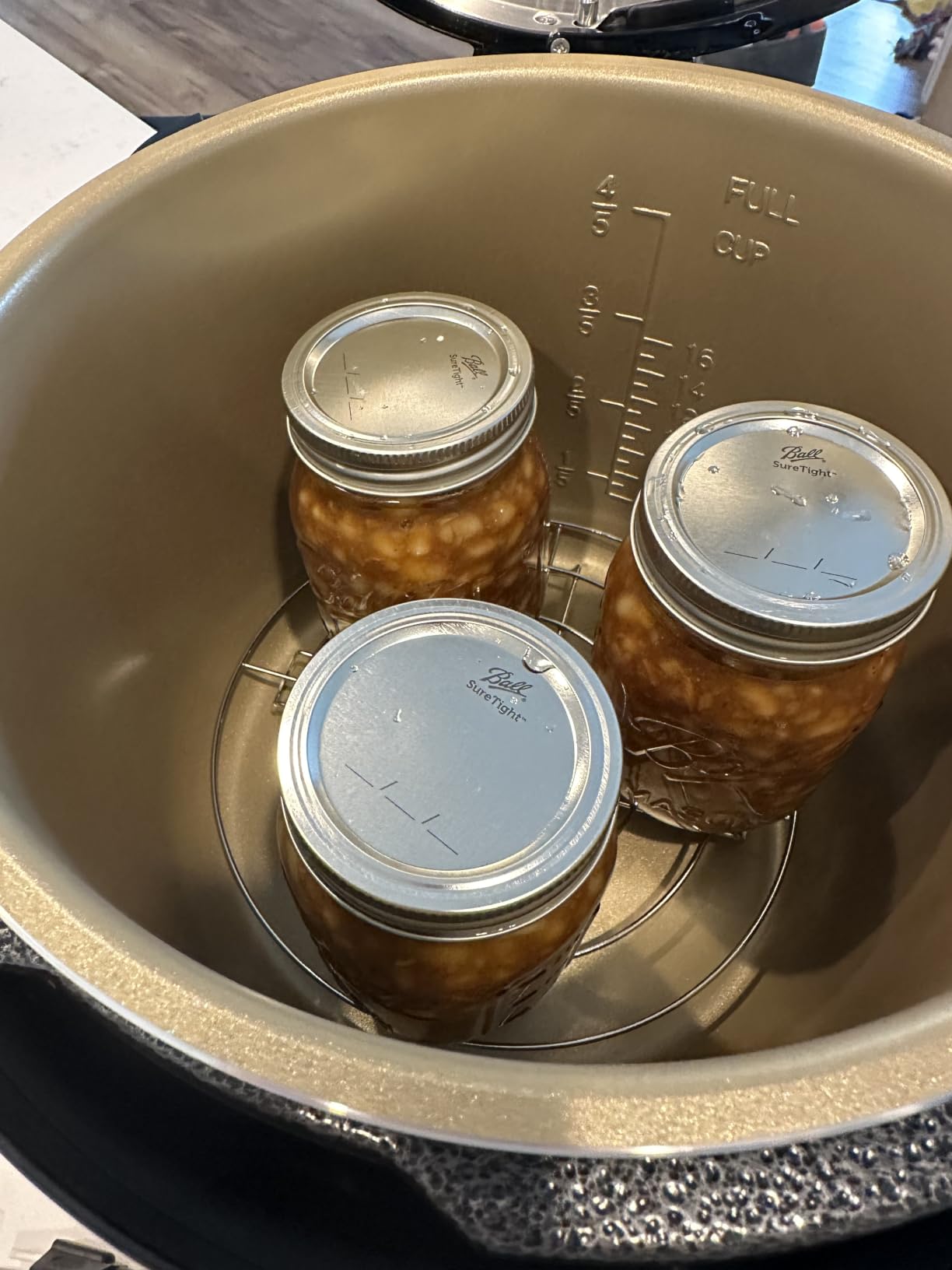
Safety hardware is unusually complete for an electric unit: a safety-lock lid, an automatic float valve, a pressure regulation system, and a high-altitude limiting valve in the box. The removable nonstick inner pot and a condensation catcher make cleanup straightforward, and the rack set covers canning and steaming.
Owners report reliable repeat performance for sauce, peppers, beans and meat, and long-term users say it still performs after years of seasonal use. It also does not heat the kitchen, which matters if you are canning in July.
Capacity is the deal. At 9.5 quarts it holds 4 quarts or 5 pints per cycle, and the tall narrow inner pot makes wide-mouth pint jars genuinely difficult to grip and remove. The instructions are wordy, the beeps are startling, and you still need to be present in the room until it comes up to pressure.
Is an electric pressure canner safe for low-acid food?
The honest answer is that it depends on how much manufacturer trust you are willing to extend. No independent body certifies electric canning equipment, and enthusiasts and extension offices are split on the same products. What the equipment does have is a temperature sensor, an automatic float valve, a safety-lock lid, and a high-altitude limiting valve, which removes the human error element of gauge watching.
For a beginner who would otherwise abandon canning out of fear, that tradeoff often works out well. For someone putting up hundreds of jars a year, the same tradeoff usually does not.
Who should skip the NESCO NPC-9?
Skip it if you can a season’s worth of vegetables at once. Four quarts per cycle is a starter-size batch, and a good harvest will take dozens of runs. Skip it if you can wide-mouth pints regularly, because extracting them from a tall inner pot is the most common complaint in the reviews.
Also skip it if you already own a large stovetop canner. This is a second appliance for a small kitchen, not a replacement for a 23-quart pot, and it carries only a 1 year warranty.
7. Granite Ware 20-Quart Pressure Canner/Cooker/Steamer – Best for Cooking and Canning
Granite Ware Pressure Canner/Cooker/Steamer, 20-Quart
20 quart capacity
Hard-anodized aluminum
10.5 pounds empty
3-piece regulator at 5, 10 and 15 PSI
Pros
- Hard-anodized surface resists rust and staining
- 3-piece adjustable regulator gives 5
- 10 and 15 PSI
- Cans
- cooks and steams in one vessel
- Light at 10.5 pounds for a 20-quart pot
- Consistent pressure with minimal heat adjustment
Cons
- Small review base and a very low sales rank
- Aluminum still reacts with acidic and high-salt food
- Manual regulator needs constant monitoring
- Not induction compatible
The Granite Ware is the most genuinely dual-purpose unit in this roundup. It is sold and specified as a pressure canner, a pressure cooker and a steamer in one 20-quart vessel, and if you want one pot to do all three, this is the design that takes it seriously.
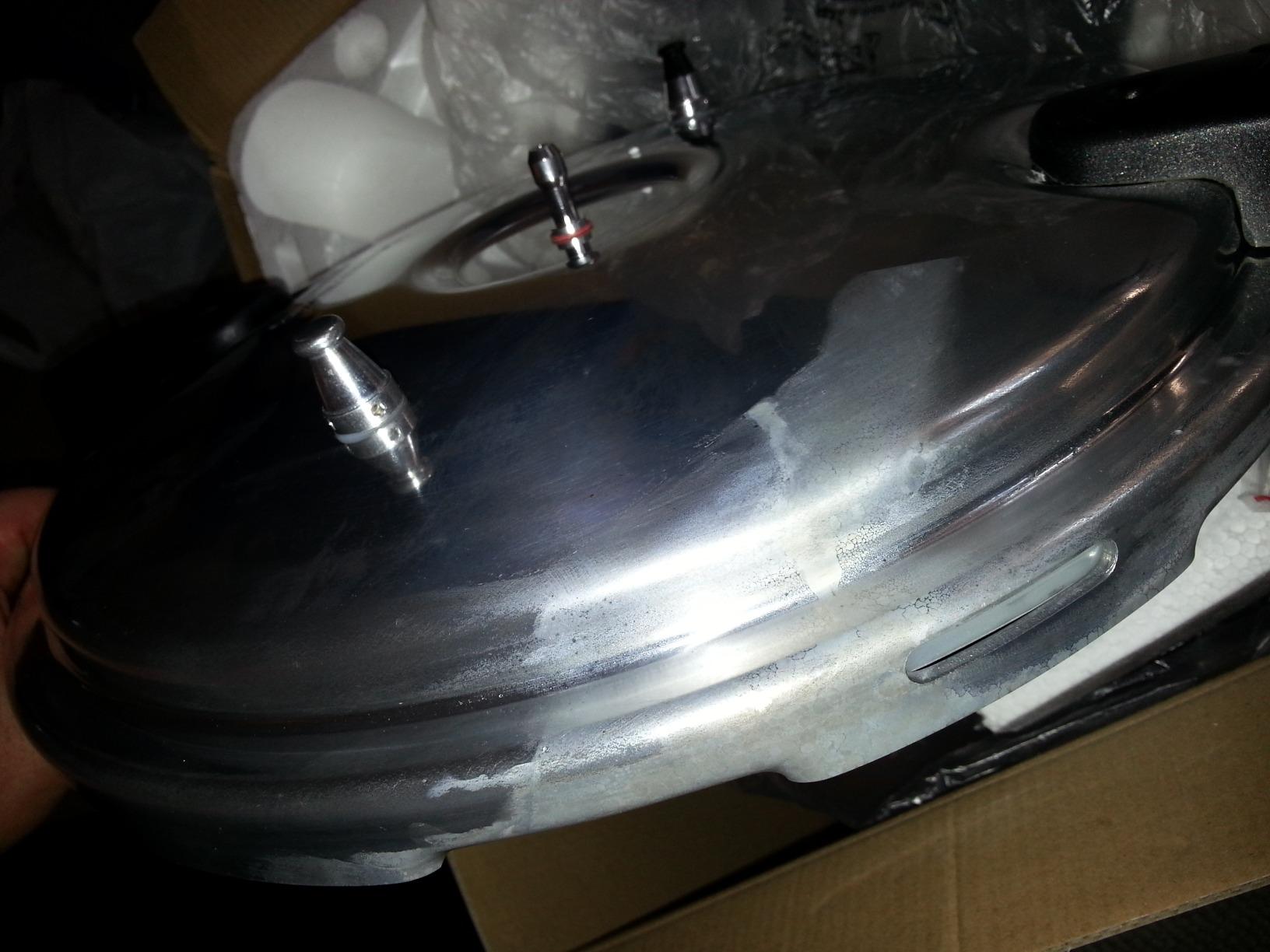
Hard-anodized aluminum is the material story. It is heavier than plain sheet aluminum in feel but far more resistant to rust and staining, and owners with long-term reports specifically credit the surface for holding up. Long-term owners in the review base describe it as a sturdier unit than comparable bare-aluminum models.
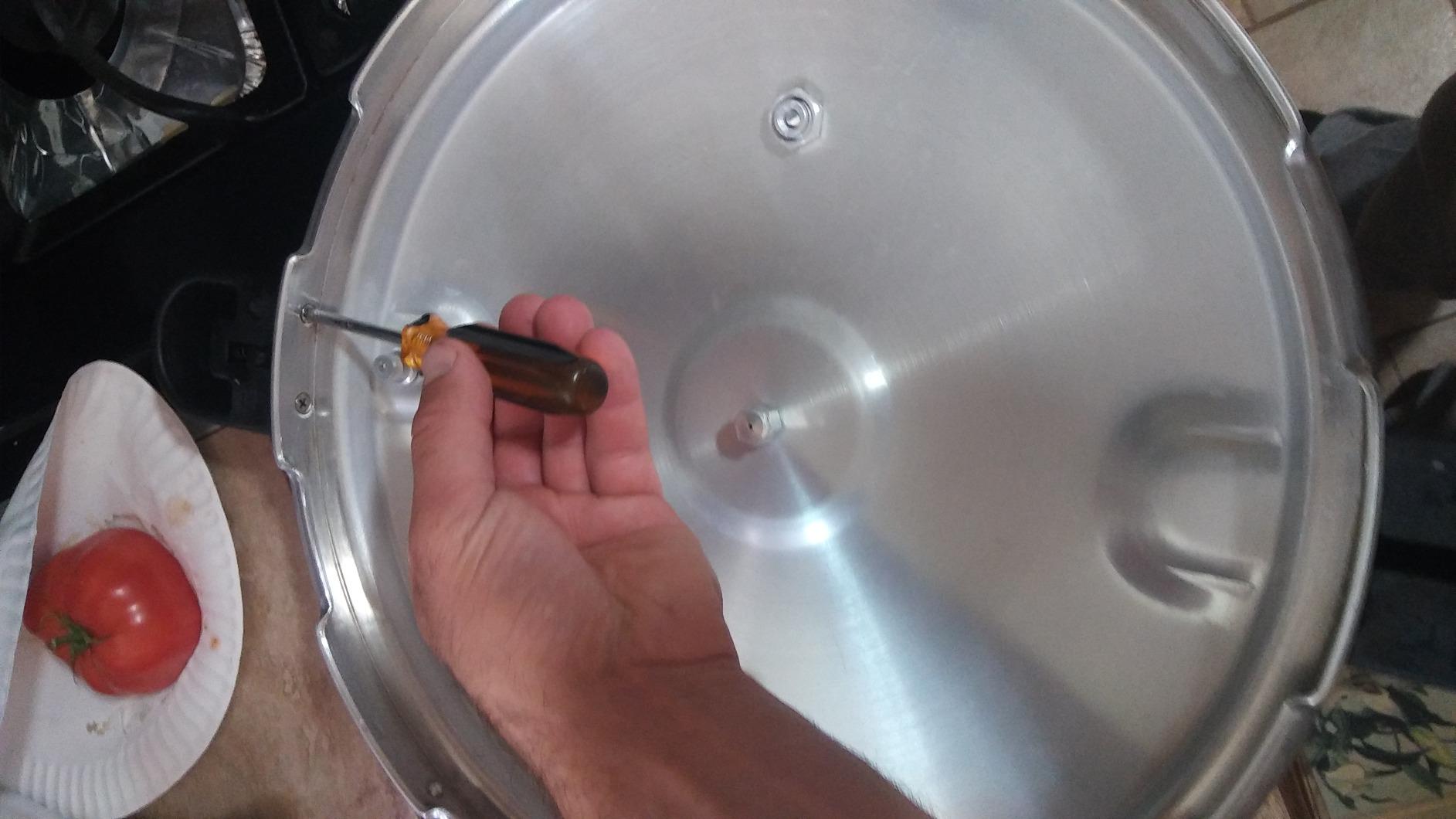
The regulator is the other differentiator. A 3-piece adjustable system calibrated at 5, 10 and 15 psi comes in the box, which covers low, standard and high-altitude processing without hunting for a separate weight. For a manual weighted canner, having all three pressures as standard equipment is genuinely useful.
At 10.5 pounds empty, it is a light pot for a 20-quart vessel, and 20 quarts is a workable middle capacity. Owners report consistent pressure holding with minimal heat adjustment once the burner is dialed in.
What gives us pause is the evidence base. With 801 reviews and a very low sales rank, there is simply less field history than the Presto or All American, and few long-horizon reports. The dual inner and outer lid closure is a slightly more complex seal to keep clean and aligned than a single outer lid.
Is hard-anodized aluminum safe for canning?
Yes. Hard-anodizing changes the surface chemistry of the aluminum without changing the fact that the pot is aluminum, and pressure canning low-acid vegetables, meat, poultry and seafood is the method the manufacturer specifies. The coating simply resists corrosion and staining better over a decade of use.
It does not change the usual rule about acidic food. Tomato sauce, vinegar-heavy pickles and heavily salted brines still want stainless or an enameled pot for cooking. Plan to use the canner side for canning and buy a separate pot for the acid work.
Who should skip the Granite Ware?
Skip it if you want a dial gauge. This is a manual weighted design, so you are watching and listening rather than reading a needle. Plenty of experienced canners prefer exactly that, and plenty of beginners do not.
Skip it if you have an induction cooktop, since the base is plain aluminum. And skip it if buying into a category where you want a deep pool of replacement parts and reviews to draw on, because the review base here is a fraction of the Presto’s.
8. Mirro 22-Quart Aluminum Pressure Canner – Best for Weighted Gauge Users
MIRRO 22 Qt Aluminum Pressure Canner with 3 Regulators, 5, 10 & 15 PSI
22 quart capacity
5, 10 and 15 PSI regulators included
6.21 kg
Glossy aluminum
Pros
- All three regulators ship in the box
- Heats quickly and holds a steady temperature
- Consistently seals jars with little siphoning
- No gauge to watch
- Two racks and dual cool-touch handles
Cons
- Rust-colored staining around the steam vent
- Regulator must be pushed firmly to seat with two pops
- Some owners avoid glass cooktops
- Aluminum durability complaints from a minority
The Mirro appeals to a specific and confident group: canners who deliberately chose it over a dial-gauge Presto because they do not want to watch a needle. Nearly every review in this set is written by someone who already knows what they are doing, and the ratings reflect experienced operation rather than first-time use.
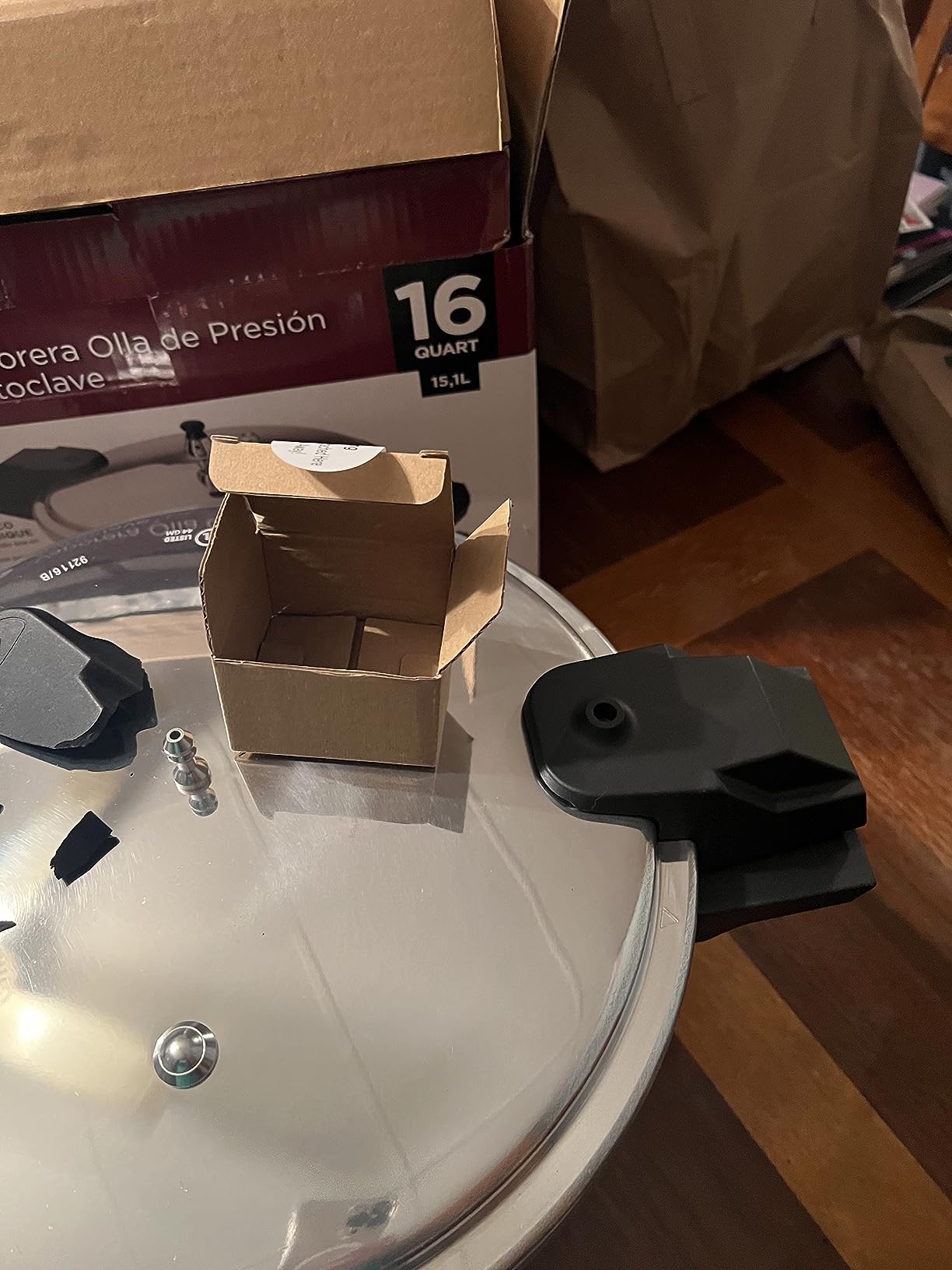
Its distinguishing feature is generous. Three pressure regulators at 5, 10 and 15 psi are included as standard, which is uncommon. Most competitors ship one weight and sell the others separately, and a 16-quart variant exists alongside this 22-quart.
At 22 quarts the listed capability is large-batch canning of vegetables, meats, poultry and seafood, and the package includes two racks plus dual cool-touch handles. Owners praise that it heats quickly and holds a steady temperature with little heat adjustment, and they report consistent jar sealing with virtually no siphoning.
The dual cool-touch handles matter more than they sound. They let you lift a loaded pot with two hands instead of tipping it, which reduces the chance of jar breakage and of hot water slopping on a cooktop.
The complaints are mostly cosmetic, which is a good sign on a pressure vessel. Weighted regulators can leave a rust-colored stain around the steam vent, and the regulator must be pushed firmly onto the stem until it seats with two audible pops. A minority report aluminum durability problems, and some owners avoid glass cooktops with it.
Are weighted-gauge canners as safe as dial-gauge ones?
A weighted regulator is simpler and less fallible in one specific way: it does not need calibration, because it regulates by mass rather than by a spring. A dial gauge is more precise and adjustable, but it is only accurate if somebody tested it, and that means an annual trip to a county extension office or a test kitchen.
Neither is inherently better. Weighted gauges are easier to reason about and need no annual appointment. Dial gauges give you a readable process pressure and an altitude reference in the same lid. The Mirro is a clean, well-built example of the first philosophy.
Who should skip the Mirro 22-Quart?
Skip it if you want to know your exact process pressure. There is no dial to read, and a first-time canner who wants feedback beyond a sound may find a gauged model more reassuring.
Also skip it if the faintest cosmetic marking bothers you, because the vent staining is recurring and permanent. And if you plan to buy the 16-quart version, note that it does not include the stacking rack that the 22-quart has.
9. WantJoin 10-Quart Pressure Cooker/Canner – Budget Pick
WantJoin 10Qt Aluminum Pressure Cooker w/Release Valve & Multiple Protective Devices,Pressure Canner Compatible with Gas & Induction Cooker,Canner Rack Included
10 quart capacity
3.7 pounds empty
Induction, gas and electric compatible
8 safety devices
Pros
- One of the lowest-cost ways into pressure canning
- Induction-compatible base
- Very light at 3.7 pounds for easy handling
- Eight separate safety devices
- Sizes from 4 to 23 quarts across the line
Cons
- Included rack sits mid-pot instead of the base
- Factory stickers are difficult to remove
- Light aluminum does not retain heat as steadily
- Relief valve snaps on and can lose its clip
The WantJoin is the cheapest way into pressure canning, and it is genuinely the lightest canner in this roundup at 3.7 pounds. If you have never canned before and you are not sure you will do it again, the cost of finding out is low.
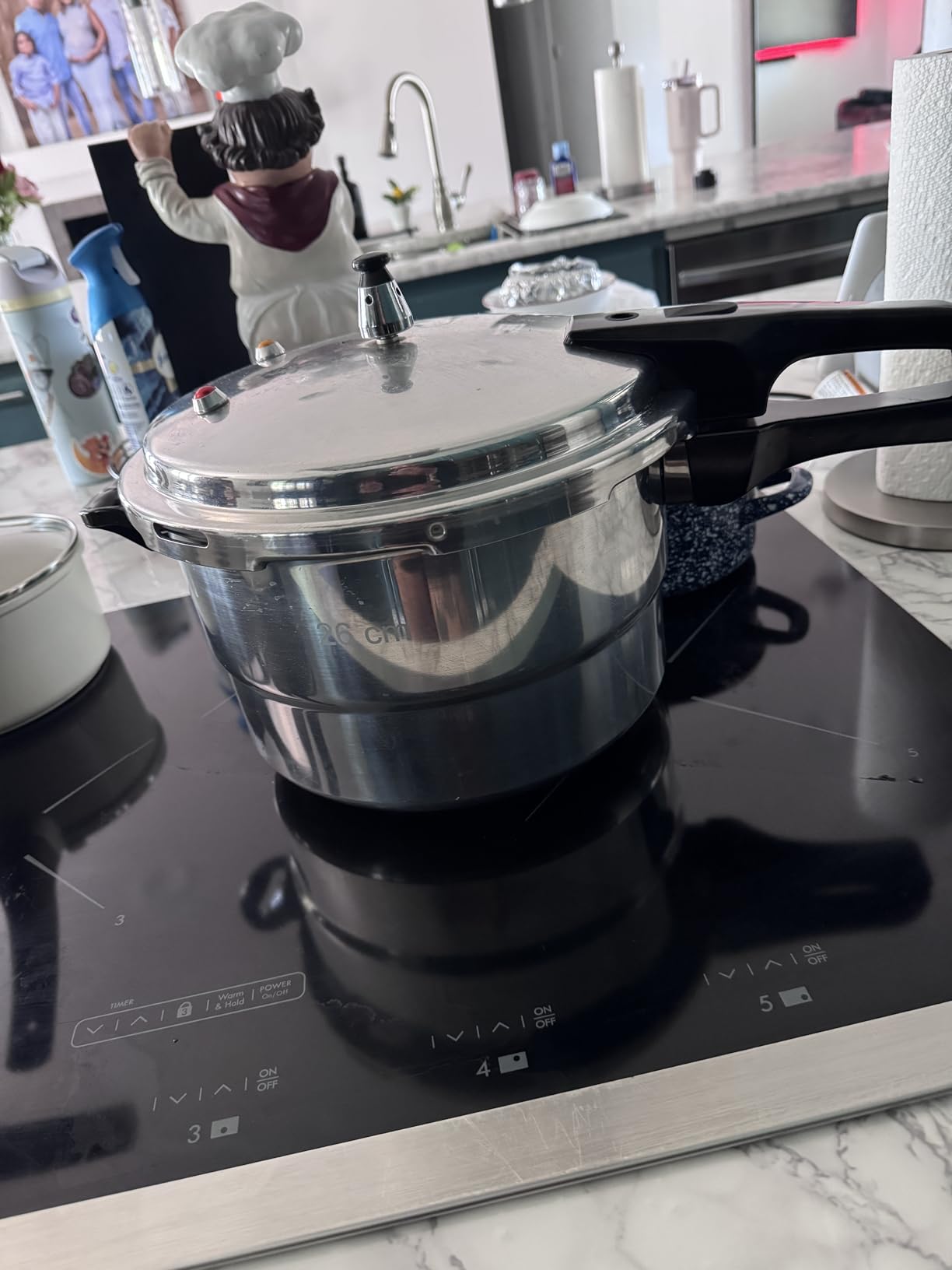
On paper the safety story is strong for the money. The unit lists eight safety features including a self-locking valve, a limit valve, an anti-blocking lid, a safety valve and a pressure release window, and the included weight is reported to reach a 15 psi rock suitable for canning. Buyers report adequate 15 psi pressure for canning in their reviews.
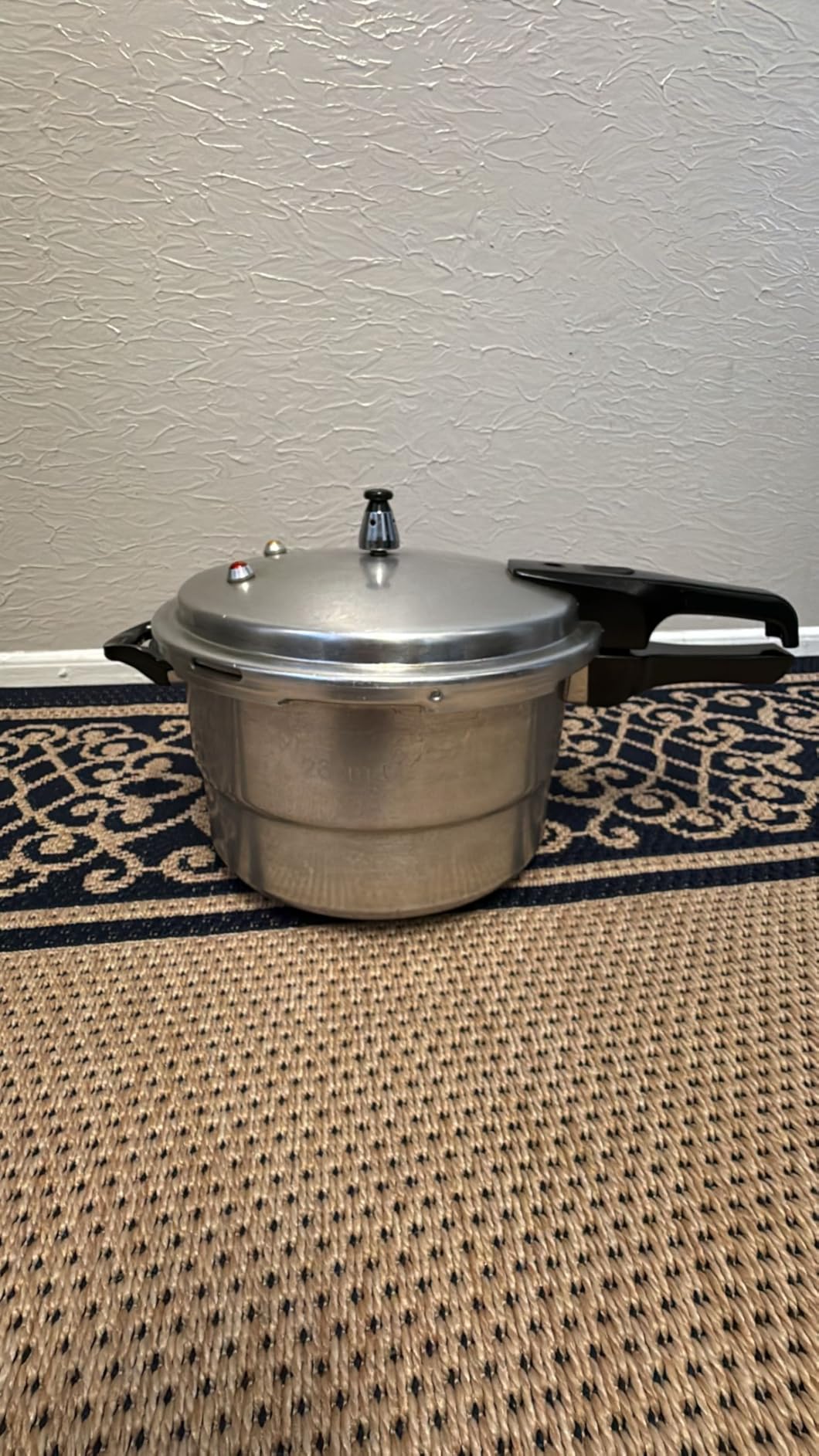
It is also induction compatible, which almost nothing else at this cost level is. The line runs from 4 quarts to 23 quarts, so if you outgrow the 10-quart you do not have to change brands.
The practical problems are concrete. The included rack mounts mid-pot on an internal lip rather than sitting at the bottom, so a second rack is needed to keep jars off the canner base, and off the base is where the canning process requires them to be. Factory stickers are difficult to remove and can scratch the pan if you scrape them. Light-gauge aluminum does not hold heat as steadily as heavier walls, which means more heat babysitting.
One detail worth flagging for anyone who owns one: the relief valve snaps on rather than threading, so forcing it can pop the retaining clip. And support has been unresponsive to at least one buyer inquiry, which is a real consideration for a product at this tier.
Is a budget canner okay for low-acid food?
It reports 15 psi rock and it is sold for canning, and owners do use it that way successfully. The concern is not the pressure, it is consistency. Lighter aluminum walls and a snap-on relief valve are both things that can behave differently from season to season, and a canner is a machine you want boring and repeatable.
If you buy one, verify the included weight against an independent gauge tester, use a proper bottom rack, and start with a food you are willing to lose. If it performs consistently, that is a good outcome. If it does not, you have lost jars, not money.
Who should skip the WantJoin 10-Quart?
Skip it if you plan to can a serious volume. This is a 10-quart vessel, so a good harvest means many cycles, and a lighter pot means longer heat-ups each time. Skip it if you want long-term brand support or a deep pool of owner reports, because 774 reviews is a small base for a kitchen appliance you hope to keep for a decade.
Skip it if you are canning for a household that eats what you put up. For a trial, a gift, or a small household preserving a few jars a season, it is a reasonable way in.
10. BreeRainz 5.3-Quart Stovetop Pressure Cooker and Canner – Best for Apartment Kitchens
BreeRainz 5.3 Qt Stovetop Pressure Cooker & Canner, 10 PSI Induction Compatible Aluminum Pressure Canning Pot, Fast Cooking 70% Faster, Safe Triple Valve System, for Home & Small Kitchens
5.3 quart capacity
Stable 10 PSI
Induction compatible base
Triple valve system
Pros
- Compact size for apartments and small households
- Triple protection with regulator valve
- safety valve and self-locking lid
- Induction
- gas
- electric and ceramic compatible
- No electronics to fail
- Replaceable gaskets and detachable seals
Cons
- Only about four pints per load
- Interlinking handles must be installed and can feel loose
- No automatic regulation or altitude compensation
- Smallest review base in this roundup
The BreeRainz is a small stovetop canner built for a specific situation: a couple, a single person, or an apartment kitchen with a ceramic or induction burner and no room for a 23-quart pot. At 5.3 quarts it is the smallest unit here, and it is also one of the cheapest.
The design is deliberately simple. High-pressure steam raises the boiling point to 240 degrees Fahrenheit, and the pot maintains a stable 10 psi for food preservation. There is no digital component to fail, the sealing pieces detach for cleaning, and the gaskets are replaceable rather than sealed into the lid.
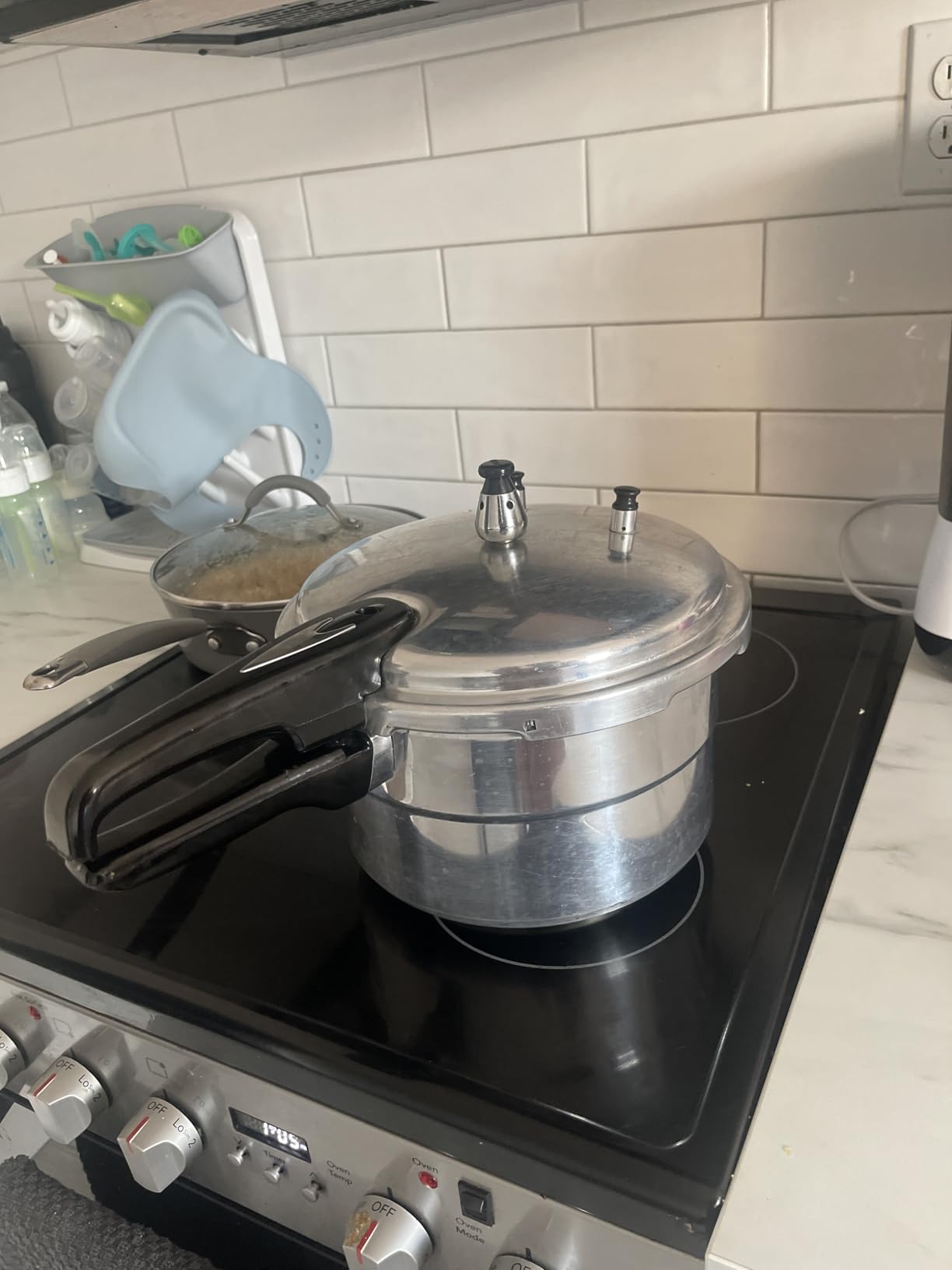
It works across almost every cooktop. A heavy-gauge aluminum body with a stainless steel-clad base is compatible with gas, electric, ceramic and induction, which is broader coverage than most canners in this roundup can claim. Triple protection covers a pressure regulator valve, a safety valve and a self-locking lid, and a rack for steaming and canning is included.
The concern the most critical reviewers raise is build feel. The two main interlinking handles have to be installed, and a number of owners found they do not engage firmly, which left at least one buyer feeling unsafe under pressure. That is a specific, fixable problem, but on a pressure vessel it is the one you should check first out of the box.
Capacity is the other limit. Roughly four pints per load means a large season takes many cycles, and with no electronics there is no altitude compensation, so high-elevation users need to account for pressure manually.
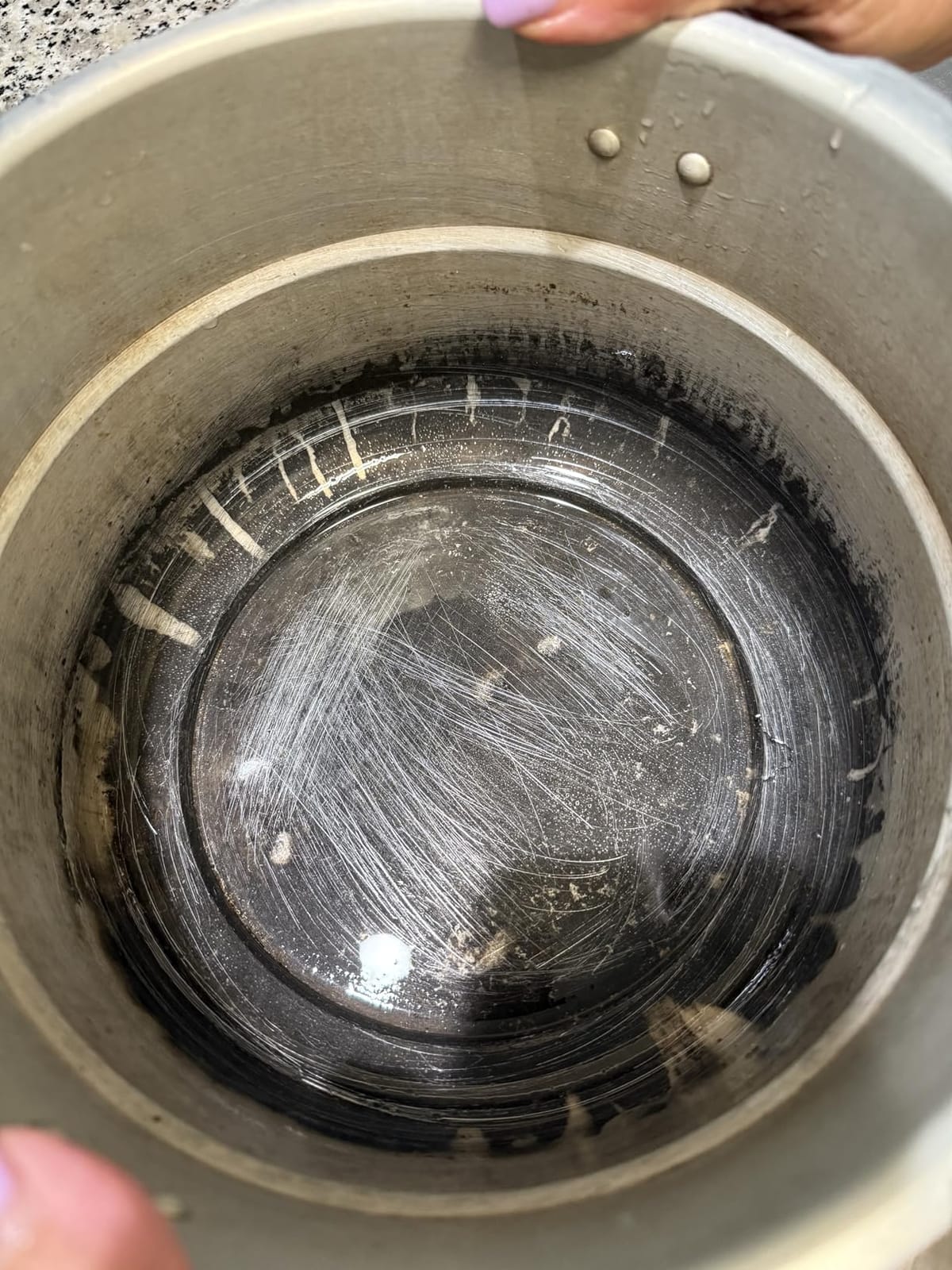
Can a 5.3-quart canner safely hold 10 psi?
Owners report yes, and the triple valve system plus self-locking lid is a reasonable safety architecture for a pot this size. The vessel is small enough that a good burner reaches pressure quickly, and the stainless clad base works on the induction hobs that dominate small modern kitchens.
What you give up is capacity and refinement. Four pints is a single-meal-scale batch, and without electronics there is no self-correction if your burner runs hot. Check the handle engagement before the first load, and replace the gaskets on the manufacturer’s interval rather than when they feel worn.
Who should skip the BreeRainz 5.3-Quart?
Skip it if you can vegetables in quantity. Four pints per load turns a garden harvest into a week of canning. Skip it if you live above 1000 feet, because there is no altitude compensation and you will be calculating process pressure yourself.
Also skip it if you want an established support network. At 179 reviews it has the smallest evidence base in this roundup, and units have arrived with extra loose screws in the packaging. For a first canner in a small kitchen it is a sensible, low-commitment purchase. For a household pantry, it is not.
How to Choose a Pressure Canner Before You Buy
Spend ten minutes on these five decisions and you will avoid the two mistakes that cost beginners the most: a pot that will not heat on your stove, and a pot too small to be worth owning.
Size and capacity: how many jars do you actually need
Buy the smallest canner that holds at least four upright quart jars, which is the stated minimum for pressure canning and the threshold every manufacturer in this roundup is built around. A 16-quart class pot handles 4 quarts or about 8 pints. A 20 to 23-quart pot, which is where most people land, handles 7 quarts or 18 to 20 pints. A 30-quart class pot exists for large families and homesteads and is not an upgrade, it is just bigger.
Bigger is not automatically better. A larger pot of hot water takes longer to heat and longer to cool, and a full 23-quart pot of boiling water is genuinely heavy to lift. Match the pot to the number of jars you will realistically process in one session, not to the size of your ambition. Our beginner canner guide walks through the arithmetic if you want the full breakdown.
Dial gauge vs weighted gauge
A weighted gauge is a machined weight that regulates pressure by mass. It is mechanical, needs no calibration, and tells you what is happening through sound and visible rocking. It cannot be adjusted to a different pressure without changing weights, though multi-weight regulators handle 5, 10 and 15 psi in one assembly.
A dial gauge reads actual pressure on a numbered face. It is more precise, it gives you an altitude reference, and it is the only option that tells you a number rather than a sensation. The cost is an annual accuracy test, usually free or cheap through a county extension office, plus a small risk of a gauge that has drifted and nobody checked.
The nuance that confuses people: the All American has a dial on its lid and is not a dial-gauge canner. It runs on a weighted regulator, and the dial is a reference gauge. Buyers who assume a dial means annual calibration are wrong about that machine.
Gasket vs metal-to-metal seal
A gasket canner seals with a rubber ring. It is cheap to build, light, and it works well when the rubber is new. Rubber hardens, flattens and cracks with age and heat cycles, so it is a scheduled replacement, typically every couple of years depending on use. Model number matters enormously here, because a gasket ordered for the wrong canner will not fit even if it looks close.
A metal-to-metal canner seals on machined surfaces clamped by wingnuts, with no rubber at all. The All American 1930 line uses this approach, and maintenance becomes greasing the wingnuts with petroleum jelly periodically. There is no consumable to forget. The trade is weight, cost and slower heat-up, because a gasket-free pot has to be thick and heavy to seal that way.
Stovetop compatibility: gas, coil, glass top and induction
Match the material to the burner. Most canners in this roundup are aluminum, which works on gas, coil and most smooth-top and glass cooktops but never on induction. A few have a stainless clad base that changes that: the Presto 01784, the WantJoin and the BreeRainz. The NESCO and Presto digital units are electric, so the question does not apply to them.
Two cautions specific to modern kitchens. A heavy aluminum pot dragged across a glass cooktop can scratch or crack it, so use the handles and never slide the base. And measure your range hood before buying a tall double-stack model, because a canner that does not clear the hood is a canner you will not use in August.
On burner output, a canner needs a burner with enough BTU to bring several gallons of water to a sustained boil. A small burner under a large pot will eventually get there, but it will take a long time and it will be harder to hold pressure steadily.
Altitude, maintenance and buying a secondhand canner
Above 1000 feet, water boils below 240 degrees Fahrenheit, so processing pressure has to be increased to compensate. A dial-gauge canner gives you the reference you need, and a multi-weight regulator lets you step up to 15 psi. Above 3000 feet the increase is larger still, and an electric canner with automatic altitude compensation removes the calculation entirely.
Maintenance is simple if you know the interval. Check the gasket for hardening, cracking or flattening every season and replace it on the manufacturer’s schedule. Send a dial gauge out for accuracy testing annually. Keep the vent pipe and air vent clear of debris, every time, and never force-cool a canner by running cold water on the lid.
If you are buying used or inherited, the inspection list is short. Read the model number stamped on the base so you can order the right parts later. Check the body for dents, warping or a flat bottom. Look at the gasket for brittleness and cracking. Confirm the regulator weights or gauge are present and not bent. And send any dial gauge for testing before you trust it, because an untested gauge on an older canner is a guess. Many families report a hand-me-down canner still working after a gasket swap decades later, but that is luck plus a fresh seal, not a validated gauge.
Troubleshooting: Weight Not Rocking, Gaskets and Jars
Three problems account for nearly every canning forum thread. All three are usually resolved by checking one simple thing before you change anything about your process.
Why is my weight not rocking?
Work through these in order rather than turning up the heat first. Forum consensus is consistent on the sequence.
1. Confirm the air vent piece is clear and seated correctly. A blocked or misassembled air vent is the single most reported cause, and it is the most commonly missed check.
2. Confirm you vented for a full 10 minutes at a steady steam exhaust before the weight went on. Air trapped in the pot suppresses the pressure the weight can register.
3. If your canner has a dial, verify the dial reading against the weight. On a weighted canner the dial can read differently from the actual weighted pressure, and the weight is the authority.
4. Adjust heat until the weight rocks one to four times per minute. That is a gentle, steady jiggle, not a hard clatter.
5. Never remove the weight to speed up cooling. A canner under pressure with the weight lifted is a burn and a broken-jar risk.
My pressure canner gasket is not sealing
1. Check the gasket for hardening, cracking or flattening. Run a finger along it and compare it to a new one; a flattened cross-section will not recover.
2. Verify the model number stamped on the bottom of the canner before you order a replacement. This is the most common reason a new gasket seems the wrong size, and it appears in forum threads over and over.
3. Confirm the lid is aligned to the arrows and twisted fully into the locked position. Steam escaping at the rim usually means misalignment, not a bad gasket.
4. Check that the gasket is seated flat in its channel and free of crumbs or dried food debris.
5. If you see a slight leak while venting, fix the lid alignment before the weight goes on. Once pressure is up, do not try to reseat the lid.
Why are my jars not sealing?
1. Check headspace against the tested process for that specific food. Too much or too little headspace both cause failures.
2. Confirm the process time and pressure were actually reached, and that the vent was open for the full venting period beforehand.
3. Use new flat tin lids every time. Flat tin lids are single-use; reusing them is the most common self-inflicted sealing failure.
4. Confirm the vent pipe was clear, because a partially blocked vent changes pressure behavior inside the pot.
5. Let the canner cool naturally and completely before removing jars, then check that the lid is still down and the seal is flat. Siphoning, or a bubbling headspace, usually traces back to forcing the cool-down or opening too early.
Frequently Asked Questions
Can any pressure cooker be used as a canner?
No. A standard pressure cooker or multicooker cannot safely can low-acid food. Instant Pot, Ninja Foodi, T-Fal Clipso and Crock-Pot Express models lack a vessel large enough to hold at least four upright quart jars, and they release pressure on a cooking schedule rather than holding a verified 10 to 11 psi at 240 degrees Fahrenheit for a tested processing time. Use a pressure canner for vegetables, meat, poultry, seafood and soups.
What is the difference between a pressure cooker and a canning pressure cooker?
A pressure cooker is sized for meals, seals a small vessel, and vents quickly to finish cooking. A pressure canner is a large heavy-gauge aluminum pot that holds at least four upright quart jars, regulates 10 to 11 psi through a weighted regulator or dial gauge, locks against opening under pressure, and cools naturally so jars form a vacuum seal. Only the canner can process low-acid foods safely.
What size pressure cooker do you need for canning?
The minimum is a canner that holds at least four upright quart jars. A 16-quart class pot handles about 4 quarts or 8 pints, while a 20 to 23-quart pot handles 7 quarts or 18 to 20 pints and is the sweet spot for most households. Very large gardens and big families may need a 30-quart class canner, but a bigger pot is slower to heat and heavier to lift.
Is there a pressure canner that does not require a gasket?
Yes. The All American 1930 line uses a precision-machined metal-to-metal sealing system clamped with wingnuts, so there is no rubber gasket to replace. Maintenance instead means greasing the wingnuts with petroleum jelly periodically. Gasket-based canners from Presto and its competitors work very well when the rubber is new, but the seal is a consumable that hardens with age.
Is the All American pressure canner worth the money?
It is worth it if you plan to can for many seasons and want zero consumable parts. The All American removes gasket replacement and annual gauge calibration entirely, and its rating is the highest in this roundup. The reasons to pass are weight, slower heat-up and cool-down, and a much higher upfront cost. If you are starting out or canning a few jars a year, a Presto is the better value.
What are the key differences between a Presto and an All American pressure canner?
The main differences are sealing method, weight and price band. Presto uses a replaceable rubber gasket, weighs about 12 pounds, and pairs a dial gauge with a weighted regulator. All American uses a gasket-free metal-to-metal seal, weighs about 18 pounds, and runs on a machined weighted regulator with a reference dial. All American costs several times more and carries a 1 year warranty against Presto’s 12 years.
Why is my pressure canner weight not rocking?
Check the air vent piece first, because a blocked or misassembled vent is the most common cause. Next confirm you vented for a full 10 minutes before the weight went on, since trapped air suppresses the pressure. Then verify the dial reading against the weight if your canner has both, and adjust heat until the weight rocks one to four times per minute. Never lift the weight to force cooling.
What is the best pressure canner for a beginner?
For a beginner, a stovetop canner that holds at least four quart jars, fits your cooktop, and uses a gauge type you are comfortable monitoring is the right answer. Our pick is the Presto 01781 23-quart, which holds 7 quart jars and has the largest review base in the category. If a hot kitchen or stove anxiety is your real barrier, the NESCO NPC-9 electric canner is the confidence-restoring alternative.
The Best Pressure Cookers for Canning in 2026
The best pressure cookers for canning are the Presto 01781 23-quart for most people, the All American 915 for anyone who wants nothing perishable to replace, and the Presto 01784 if you cook on induction. All three hold 7 quart jars, which is the practical floor for real batch canning.
Beyond those: the T-Fal 22-quart is the one with two racks in the box, the Presto 02152 digital unit is the answer above 1000 feet, and the NESCO NPC-9 is the small-batch option for a first canner or a summer kitchen. The Granite Ware and Mirro both ship with 5, 10 and 15 psi regulators if you would rather not hunt for weights later. The WantJoin and BreeRainz are low-commitment ways to find out whether canning suits your household.
Whichever you pick, buy the smallest one that holds four upright quart jars, check the vent path every single time, and follow a tested process rather than one you worked out yourself. If you want a second opinion on sizing, our full pressure canner roundup goes deeper on every model above.