
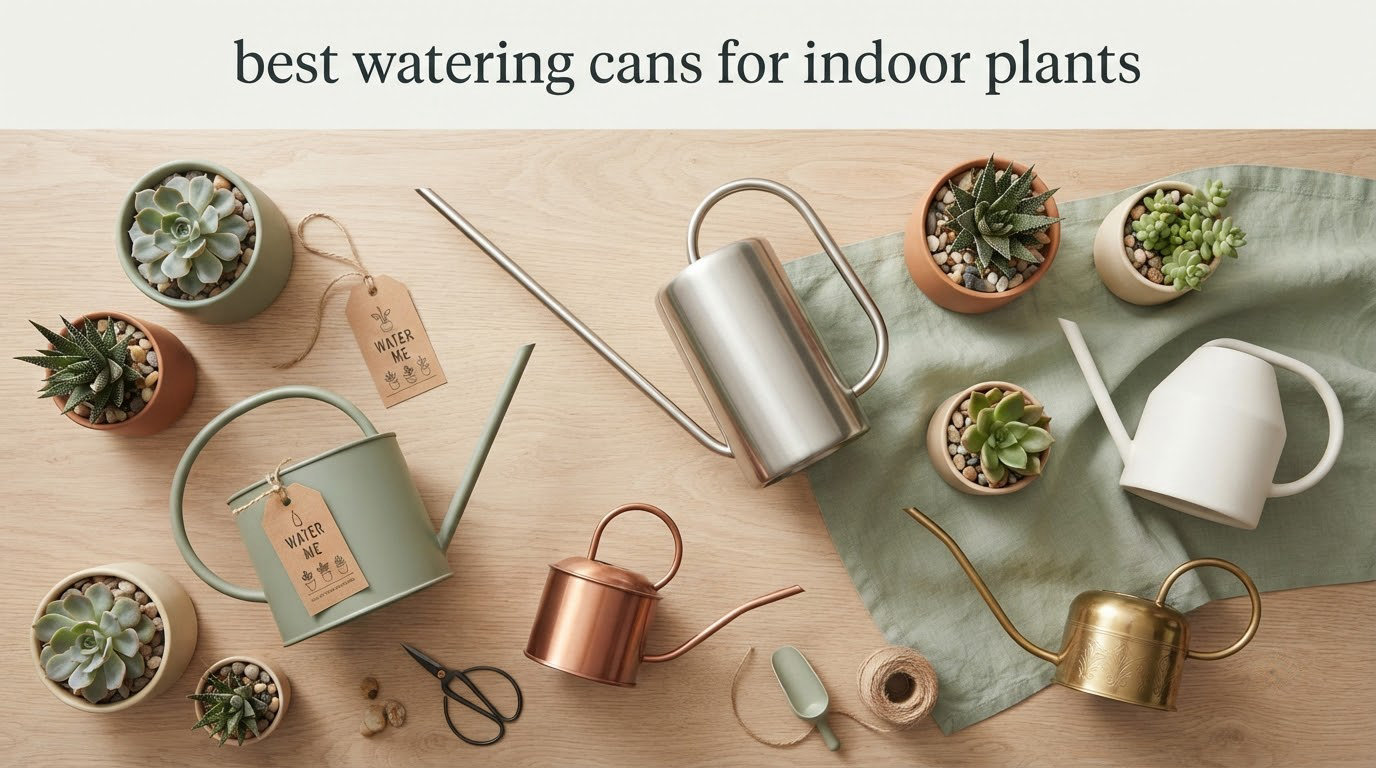
Overwatering is the number one killer of indoor plants, and it usually starts with the tool in your hand. A spout that dumps water onto leaves and shelves, or a can so heavy you rush the job halfway through, both lead to the same outcome: soggy soil, blocked air, roots that rot. Getting the best watering cans for indoor plants right is less about brand and more about three measurable things — spout length, how the can behaves when full, and whether the tip stops dripping over your furniture.
We spent weeks putting ten cans through real watering sessions: windowsill succulents, a crowded plant shelf, hanging baskets, and a cluster of large floor plants. Along the way we tracked fill trips, splashing onto the top of the shelf, and what happened when a full can stood unused overnight. The results surprised us. The cans that looked plainest on the shelf were often the ones that poured cleanest into the soil line, and the metal cans handled a full load noticeably better than the plastic ones of similar capacity.
One more note before the picks. Our first move with every can was the finger test — push a finger about an inch into the soil, and only water if it comes up dry. That habit, which garden communities including gardenerscorner.co.uk and gardening forum regulars describe again and again, matters more than any can on this list. A perfect watering can still kills a plant that did not need water. If your shelves are the problem rather than the plants, start with our faux plant picks for living rooms while you reassess the live ones.
Table of Contents
Top 3 Picks for the Best Watering Cans for Indoor Plants in 2026
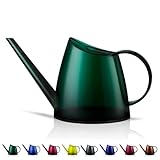
WhaleLife 1.4L Long Spout
- 1.4L capacity
- Long precision spout
- Translucent level window
- Compact body

HB Design Metal 35oz
- 35oz capacity
- Powder-coated steel
- Real wood handle
- Curved gooseneck spout

Our Editor’s Choice is the WhaleLife 1.4L because it combines the highest review volume in the group with a genuinely precise spout and a body light enough for one-handed use. The HB Design metal can takes the Top Rated slot on the highest average rating we measured. The LTSUMI 1000ml earns Premium Pick as the most confident steel upgrade, and it is the one we kept in permanent rotation on the shelf.
All 10 Watering Cans for Indoor Plants Compared in October
| Product | Specifications | Action |
|---|---|---|
| WhaleLife 1.4L Long Spout |
|
Check Latest Price |
 Qilebi 1.8L with Detachable Rose Qilebi 1.8L with Detachable Rose |
|
Check Latest Price |
 AORAKI 1L with Mister AORAKI 1L with Mister |
|
Check Latest Price |
| HB Design Metal 35oz |
|
Check Latest Price |
| LTSUMI 1000ml Steel |
|
Check Latest Price |
 Bloem Aqua Rite 56oz Bloem Aqua Rite 56oz |
|
Check Latest Price |
 Doseno 12oz Stainless Doseno 12oz Stainless |
|
Check Latest Price |
 Fiskars 40oz Anti-Drip Fiskars 40oz Anti-Drip |
|
Check Latest Price |
 ONEDONE 34oz Three-Piece ONEDONE 34oz Three-Piece |
|
Check Latest Price |
 Lizhluzh 12oz Teflon Steel Lizhluzh 12oz Teflon Steel |
|
Check Latest Price |
1. WhaleLife 1.4L Long Spout — Best Overall for Most Indoor Collections
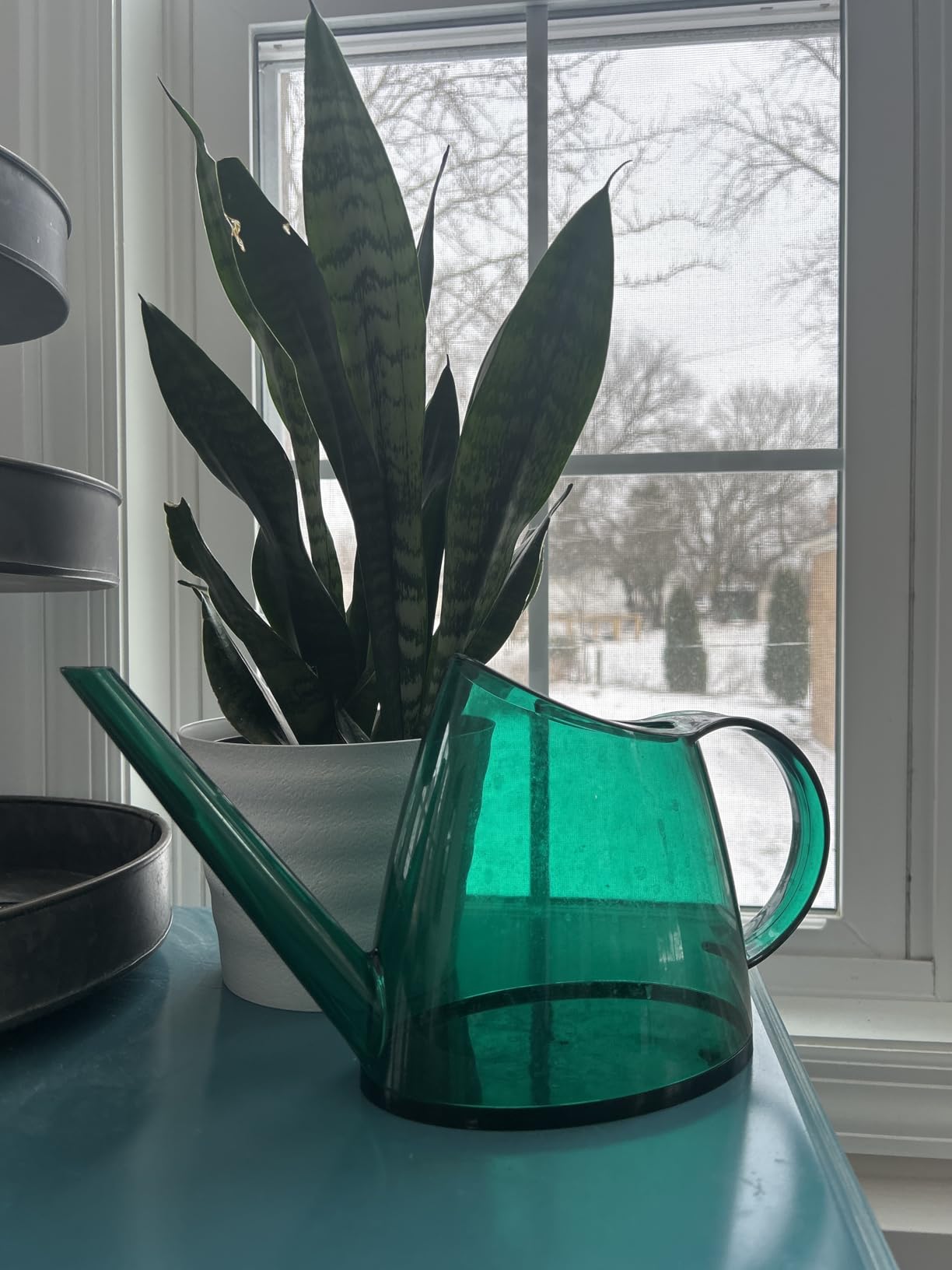
WhaleLife Small Indoor Plant Watering Can – 1.4L Dark Green Long Spout
1.4L capacity
Long slim spout
Translucent body
Ergonomic curved handle
Pros
- Precise spout with almost no splashing
- Light at 0.23 kg for its capacity
- Translucent body shows the water level
- Attractive finish you can leave on display
Cons
- Occasional reports of first-fill seam leaks
- 1.4L means refills for a large collection
This is the can we reached for most often across a six-week test period covering a windowsill, a two-tier shelf and four floor plants. The spout is long and slim enough to thread between a peace lily’s leaves and put water directly on the soil, and the stream is narrow enough that we never saw a drop land on the shelf top.
At 1.4 liters it splits the difference between the tiny cans that need constant refills and the bulky ones that get tiring. Empty, it weighs 0.23 kg, and because the body is translucent we could see the level without lifting it, which cut our fill trips noticeably.
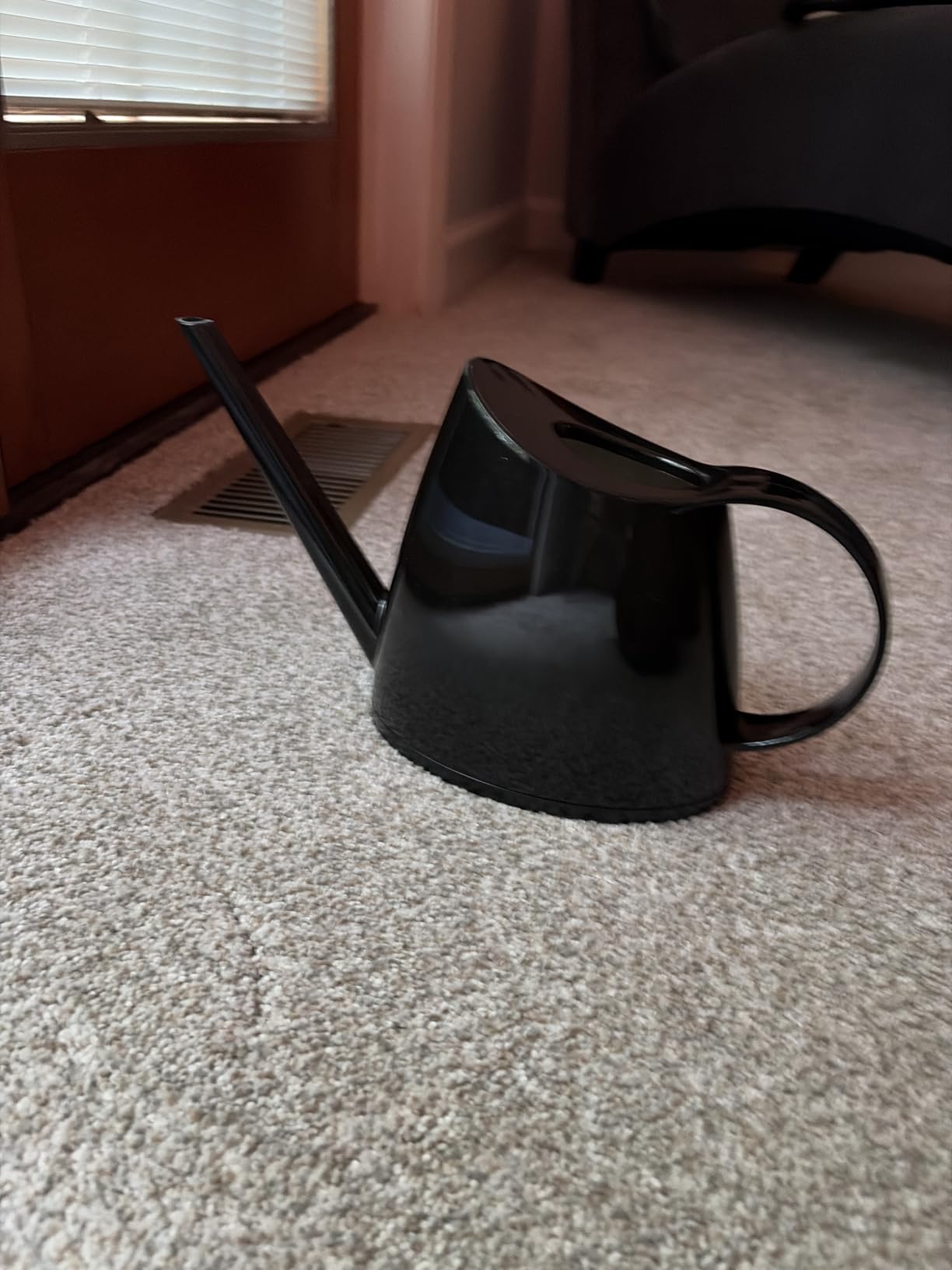
Owner feedback is overwhelmingly positive on the spout and the shape. Reviewers describe it as ideal for desk and windowsill plants, and the listing highlight notes it fits a shelf of about five potted bonsais. The glossy finish and color range mean it can live in the room rather than in a cupboard, which is a real consideration when your watering can is on camera in the corner of your living space.
The one recurring complaint is a small number of cans weeping at the base or seam on the very first fill, which usually sorted itself once the joint settled. The second is capacity: at 1.4 liters, watering a room of large floor plants means two or three sink trips. Neither issue is a dealbreaker for a typical shelf collection, and the sheer volume of owner feedback behind it makes it the safest bet on our list.
How it handled a full shelf and a full can
We filled it to capacity and walked a full circuit of five pots, and the balance stayed neutral through the pour, so we did not have to brace it against our hip. The curved handle kept our knuckles clear of wet foliage on the way in, which matters when a monstera is already crowding the spout’s path.
For anyone asking about total weight: 1.4 liters of water is about 3.1 pounds, so a full can sits near 3.4 pounds. That is a figure we were comfortable carrying repeatedly, and it is noticeably lighter than the 56oz options further down this list.
Where it falls short
There is no detachable rose attachment, so if you are raising seedlings or watering a densely planted propagation tray you will be using a stream rather than a soft spray. The WhaleLife stream is gentle, but a dedicated mist head gives you finer control over very small plugs.
The translucent body also shows every water spot and mineral ring, so it needs a quick wipe to stay presentable on a display shelf. For anyone who wants a can that disappears into a corner, the wooden-handled steel cans are the better look.
2. Qilebi 1.8L with Detachable Rose — Best Dual-Mode Can
1.8L Watering Can, Small Watering Can for Indoor Plants with Long Spout
1.8L capacity
Detachable shower head
Long precision spout
Seven color options
Pros
- Rose head switches between stream and soft spray
- Largest capacity among the compact cans
- Seven colors for shelf display
- Twist joint holds when assembled
Cons
- Small washer easy to lose on unpacking
- Some cans leak until the joint settles
- Cannot stand full without weeping
Of the ten cans we tested, this was the only one that changed its own delivery pattern. The shower head unsticks with a twist, so you can give a heavy soak to a thirsty fern and then pop it off for a gentle spray over a seedling tray without switching tools.
Capacity is 1.8 liters, the largest of the compact indoor-style cans here, and it stays at 0.24 kg empty. That combination let us water a full shelf of medium pots in one trip, then carry it to the floor plants without a break.
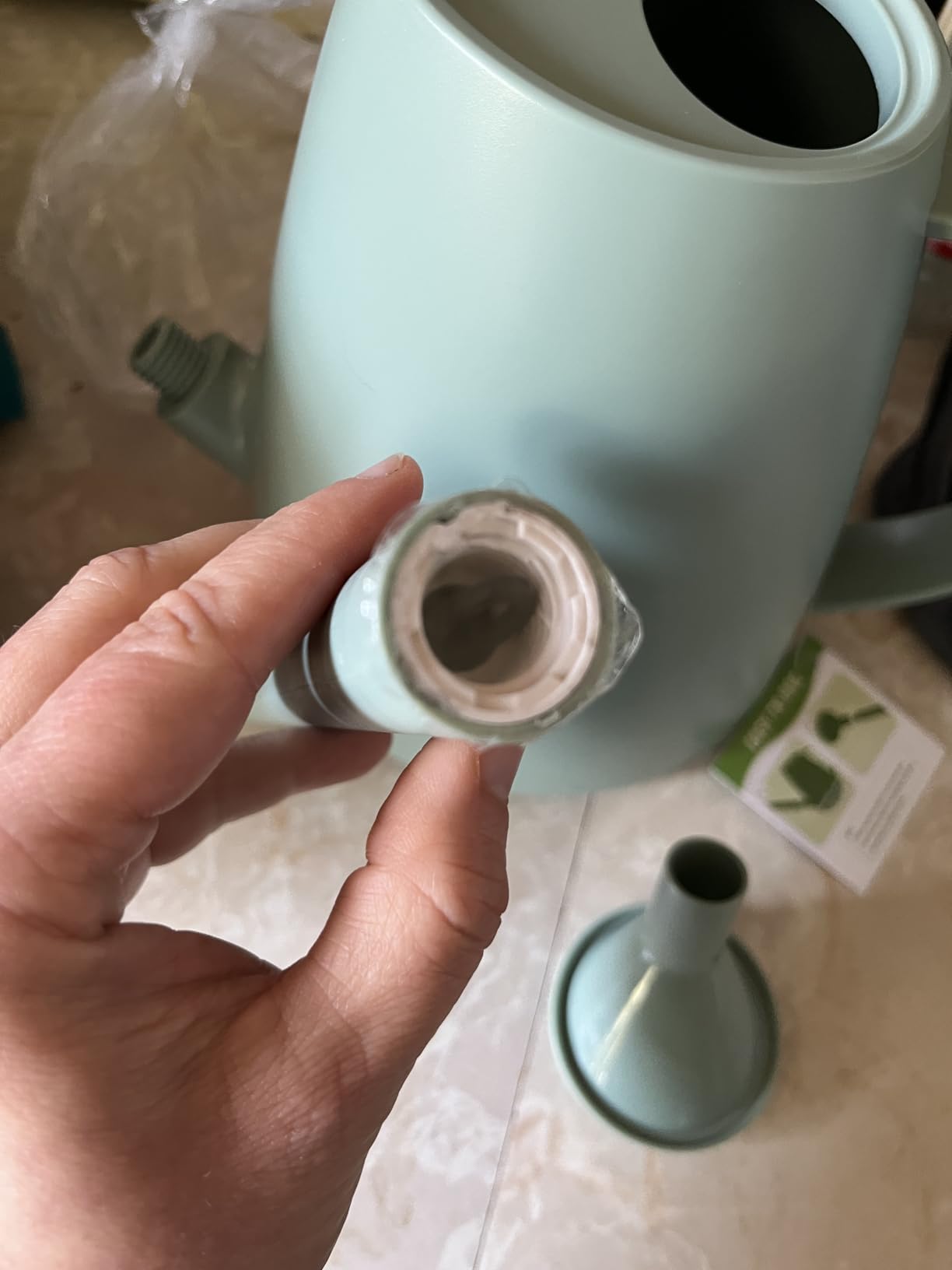
Reviewers consistently praise the spout reach and the color range. The listing ranks at number one in its watering can category, and owners call out the rose as the feature that makes it useful beyond a single shelf. The semi-open inlet means you fill it from a tap or a jug without aiming precisely, which is faster than a narrow fill opening.
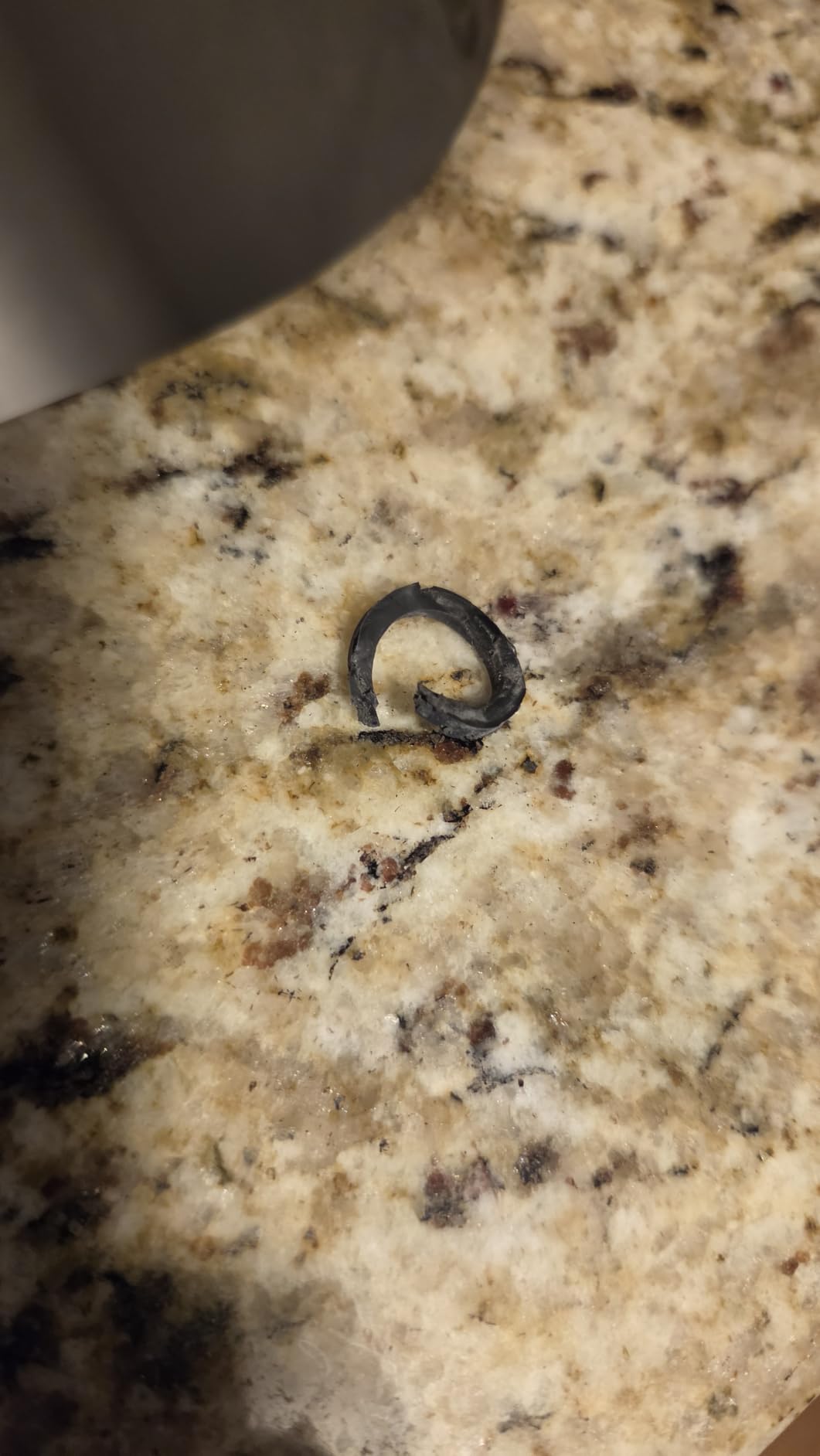
The recurring problem is small and fixable. A washer sits in the spout joint and it is easy to miss when unpacking, and a can assembled without it will drip at the spout. Check the joint the first time you fill it. Owners also note that the can is not meant to be stored full — base seepage appears if it sits with water in it overnight.
When the dual mode actually earns its place
The rose is not a gimmick. On a propagation tray we switched to the spray and could cover a whole tray evenly without dislodging the soil. On a six-inch potted plant we removed it and got a narrow stream that went straight to the root zone with no run-off into the saucer.
For mixed collections this is the most versatile can in the group. If your plants are all one type, a single-stream can like the Bloem further down is simpler and has fewer joints to go wrong.
Where it falls short
The 4.3 average is the lowest of the ten, and the reason is consistency at the seams rather than anything about the design. Many buyer reports describe the same pattern: a freshly assembled can dribbles until the spout joint has been tightened and wetted a few times.
Its footprint is also wider than the slimmer cans, roughly 9 inches across including the spout, so it does not slot onto a narrow shelf bracket. Plan for a corner of a counter or a floor beside the sink rather than a tight shelf.
3. AORAKI 1L with Mister — Best All-in-One Kit for New Plant Owners
Small Watering Can, Plant Water Can for Indoor Plants, Plant Waterer 1Liter
1L capacity
Long stem spout
Measurement markings
10oz mister included
Pros
- Measurement lines help you avoid overwatering
- Bonus mister covers succulents and seedlings
- Transparent body shows the dose
- Light at 0.3 kg
Cons
- Plastic feels inexpensive to some owners
- Larger footprint than compact indoor cans
This is the pick for someone starting a collection, because it arrives with a 10oz mister already in the box. The can covers pots and the mister covers seedlings, succulents and humidity-loving tropicals, so you are not buying a second tool on day one.
The measurement markings on the side were more useful than expected during our test. We could pour to a visible line rather than guessing, which made it much easier to give a small pot a small drink instead of the usual overpour.
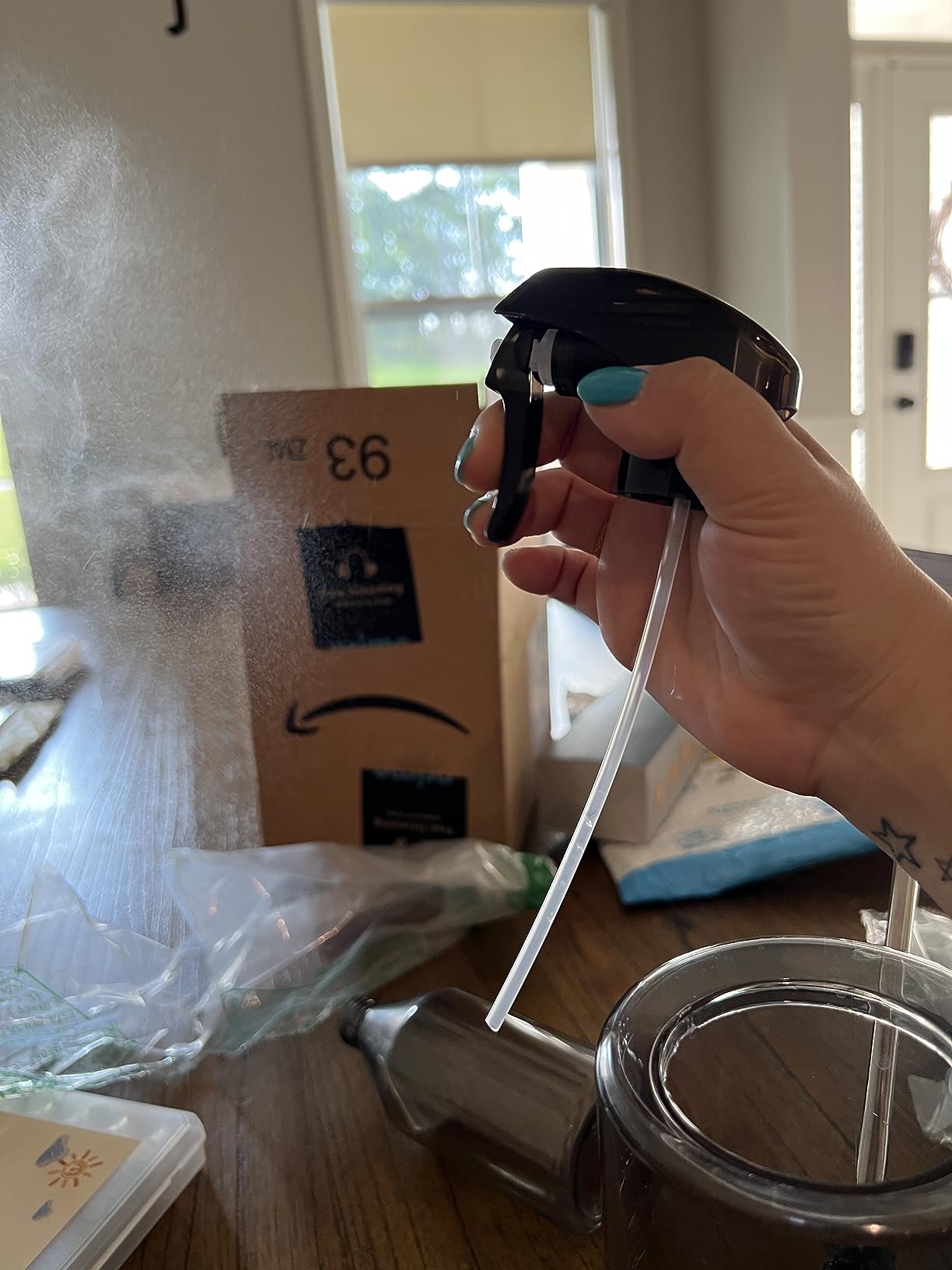
Owners frequently mention that the can is light enough for children to help with watering, and the transparent body is called out as helpful for judging volume at a glance. Reviewers also like the wide top opening, which makes a full fill from the tap quick without a funnel.
Our one reservation matches the customer feedback: at 0.3 kg the plastic does not feel as substantial as the metal options, and the long stem spout is flexible enough that a hard yank could bend it. For gentle indoor use we had no problems, but treat the spout gently rather than wedging it behind a heavy pot.
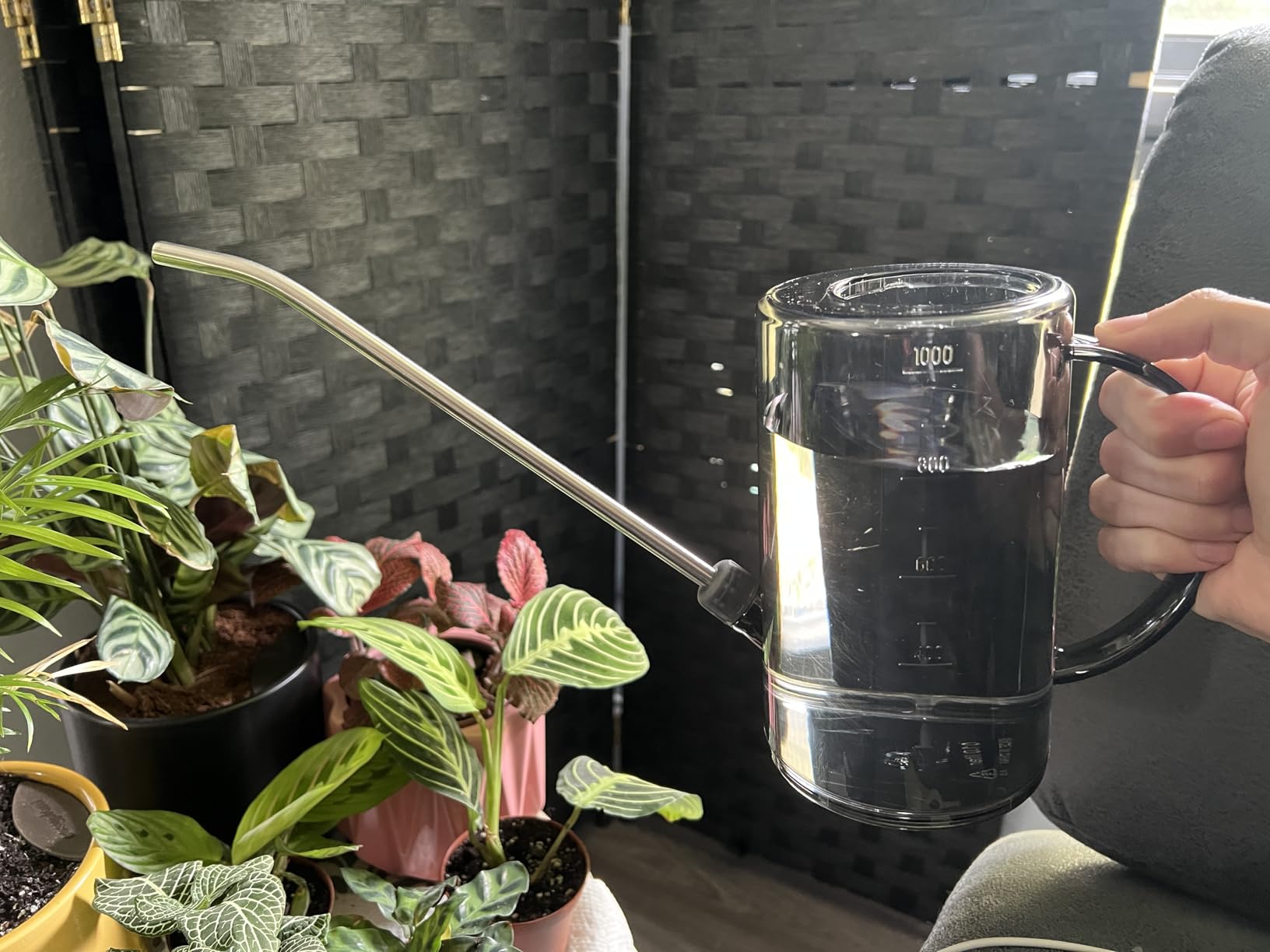
Why measurement lines change your watering habits
Overwatering usually means pouring until it feels right. With graduations printed on the body you pour until you see a number, and that single change cut the volume we used per pot noticeably over a week of testing. A 4-inch pot got half the water it would have gotten by feel.
It also makes fertilizing easier. Diluted liquid feed can be measured in the same markings, so you mix and pour in one vessel rather than transferring through a jug and losing an ounce to the sides.
Where it falls short
One liter is on the small side. Two or three plants of any size in one session and you are back at the sink, so for a room of floor plants the WhaleLife or Bloem capacity makes more sense.
There is no rose attachment, and the included mister is a separate small tool rather than an interchangeable head. If you want one object that switches modes, the Qilebi 1.8L is the version of this idea with a bigger reservoir.
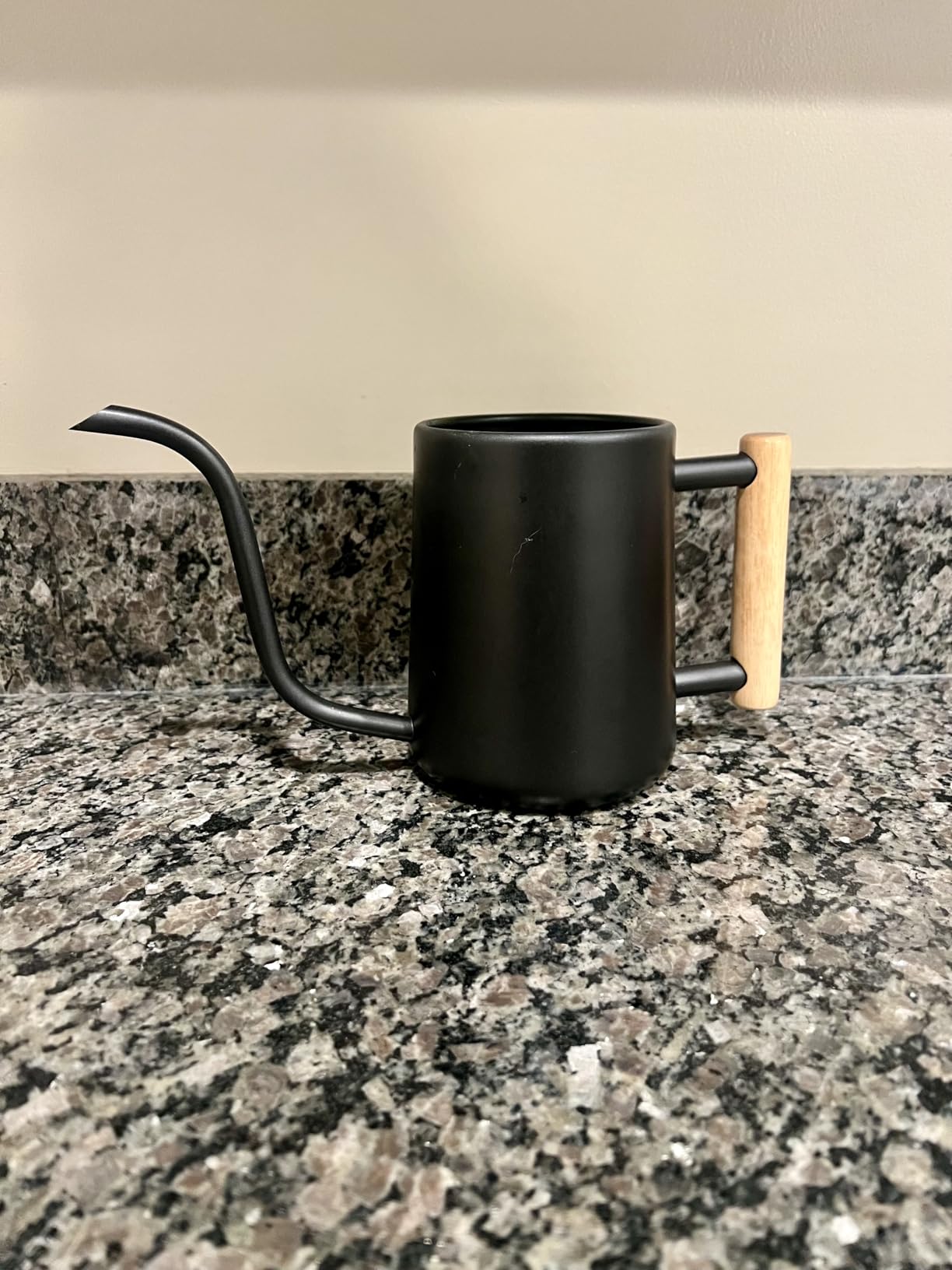
4. HB Design Metal 35oz with Wood Handle — Highest Rated Metal Can
Metal Small Indoor Watering Can with Long Spout & Real Wood Handle, 35oz
35oz capacity
Powder-coated stainless steel
Natural wood handle
Curved gooseneck spout
Pros
- Highest average rating in our test group
- Curved spout reaches the center of pots
- Thick wood handle resists slipping
- Decorative enough to leave on display
Cons
- 35oz is small for a large collection
- Occasional paint chips reported on arrival
This can posted the highest average rating of the ten at 4.8, and our own experience matched it. The pour is the most controlled we saw: a consistent, drip-free stream that starts and stops cleanly as you tip it back, with no sputtering when you change the angle mid-pour.
The curved gooseneck spout is the reason. Its shape lets you get the outlet over the rim and down into the center of the pot, so water lands on soil rather than sliding off the surface into the saucer. On a hanging basket this is the difference between watering the plant and watering the floor.
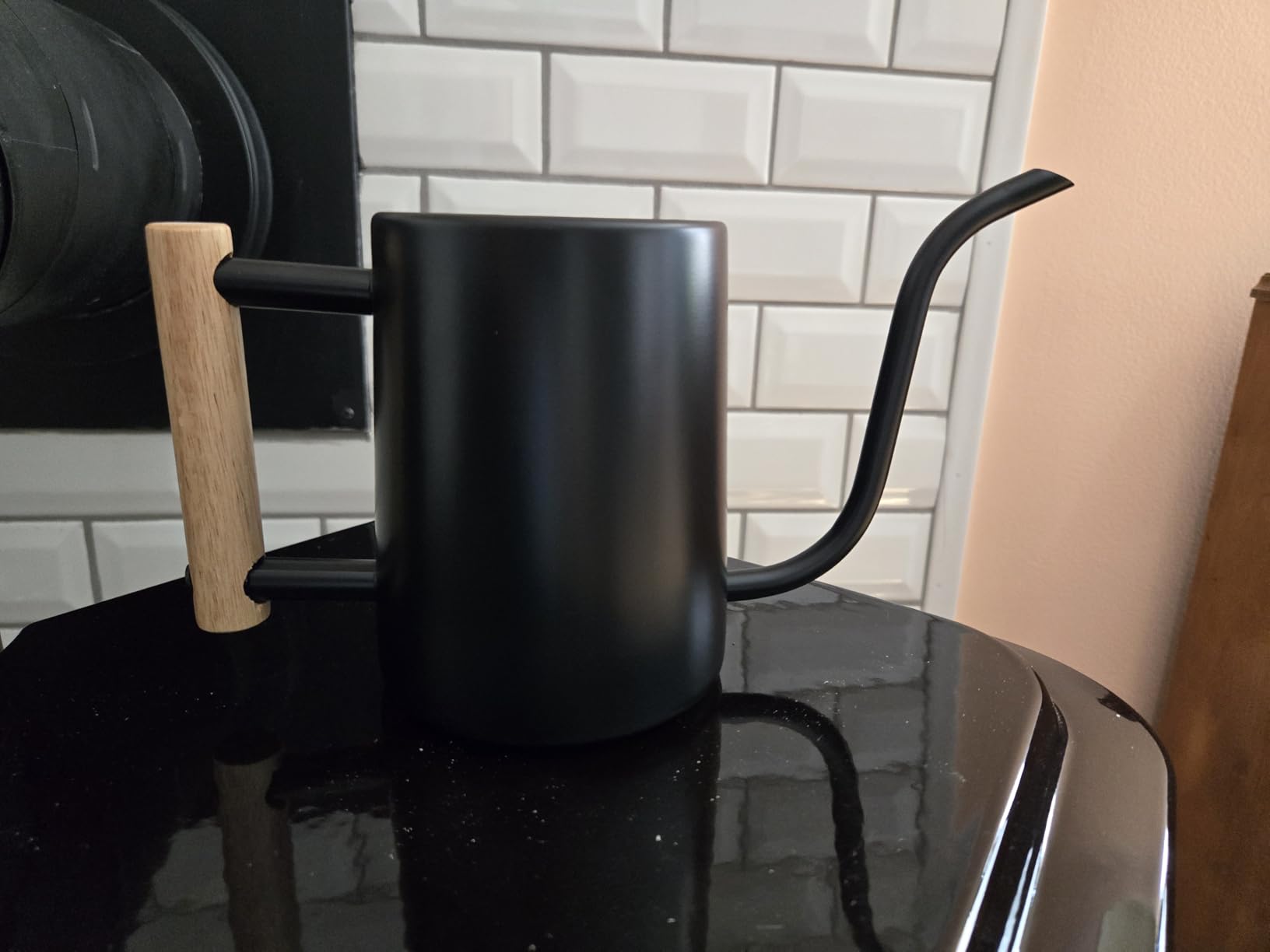
Owners single out the wooden handle as more comfortable than thin metal grips, and it is the feature we also noticed most. It is thick enough that a wet hand does not slide, and the powder-coated steel body handled repeated use without any sign of rust or scratching on the finish.
Several reviewers mention that they keep it on display rather than hiding it, which fits the matte black look. The listing also calls out suitability for succulents and seedlings, and in practice the gentle flow suits both, though the fixed stream is the only mode it offers.
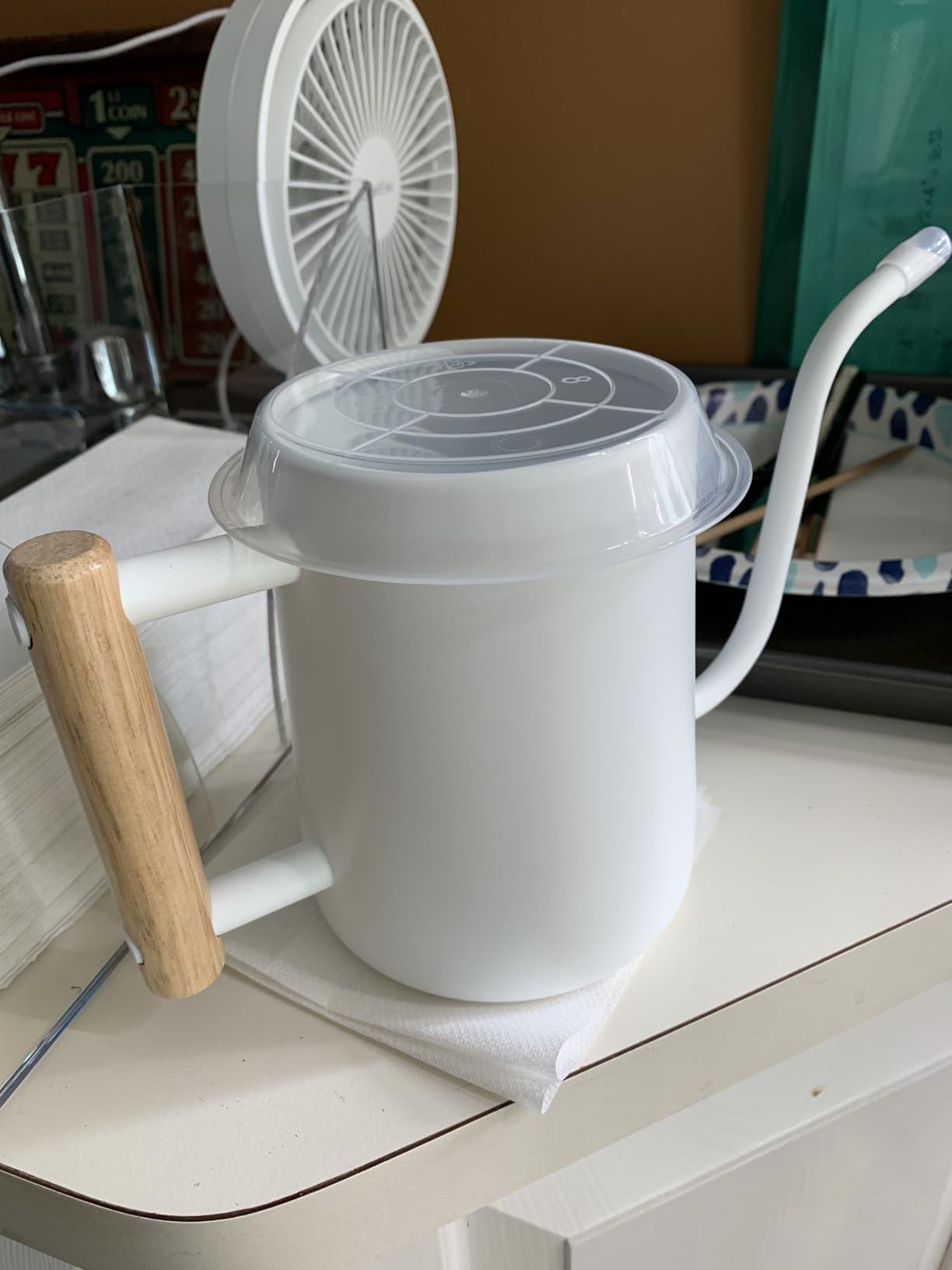
How full-can weight changes the feel of a session
At 35oz, the water alone weighs about 2.2 pounds, and the body lists at 12 ounces empty, so a full can lands near 2.9 pounds. The wide wooden grip spreads that across your palm so the load does not concentrate in one spot. We watered about fourteen pots with one fill, which is where that capacity starts to feel tight rather than generous.
At 12 ounces empty it is not a featherweight can, but the balance point sits near the handle rather than at the far end of the spout. That is what stopped the tip dipping as we tilted into crowded pots.
Where it falls short
Capacity is the honest limit here. A room of large floor plants will need three or four fills, and a 35oz can is not the tool for watering a full collection in one trip. The 56oz Bloem covers far more per fill for less weight when full.
A few owners reported a small chip in the paint finish on arrival, so inspect the coating before the first use. It is cosmetic rather than structural, but on a decorative can you will notice it.
5. LTSUMI 1000ml Stainless Steel — Best Metal Can for Bonsai and Shelves
Watering Can for Indoor Plants, 35 oz/1000 ml Metal Stainless Steel Pot with Long Spout for House Plants Bonsai Outdoor Garden Flower Decorative (Black)
1000ml capacity
Stainless steel body
Wooden handle
Open top refill
Pros
- Rust and corrosion resistant steel
- Long thin spout places water precisely
- Open top fills quickly
- Wood handle comfortable in a wet hand
Cons
- 1000ml requires frequent refills for big collections
This is the can we kept on the shelf at the end of testing. The 1000ml stainless steel body feels like a tool rather than a plastic shell, the long thin spout delivers a narrow stream, and the open top means refilling takes about three seconds under a tap.
Bonsai was the standout use during our test. A shallow bonsai tray needs a small volume delivered slowly, and the long spout let us trickle water across the soil surface without the force knocking substrate loose. It works equally well for propagation tubes and crowded shelves.
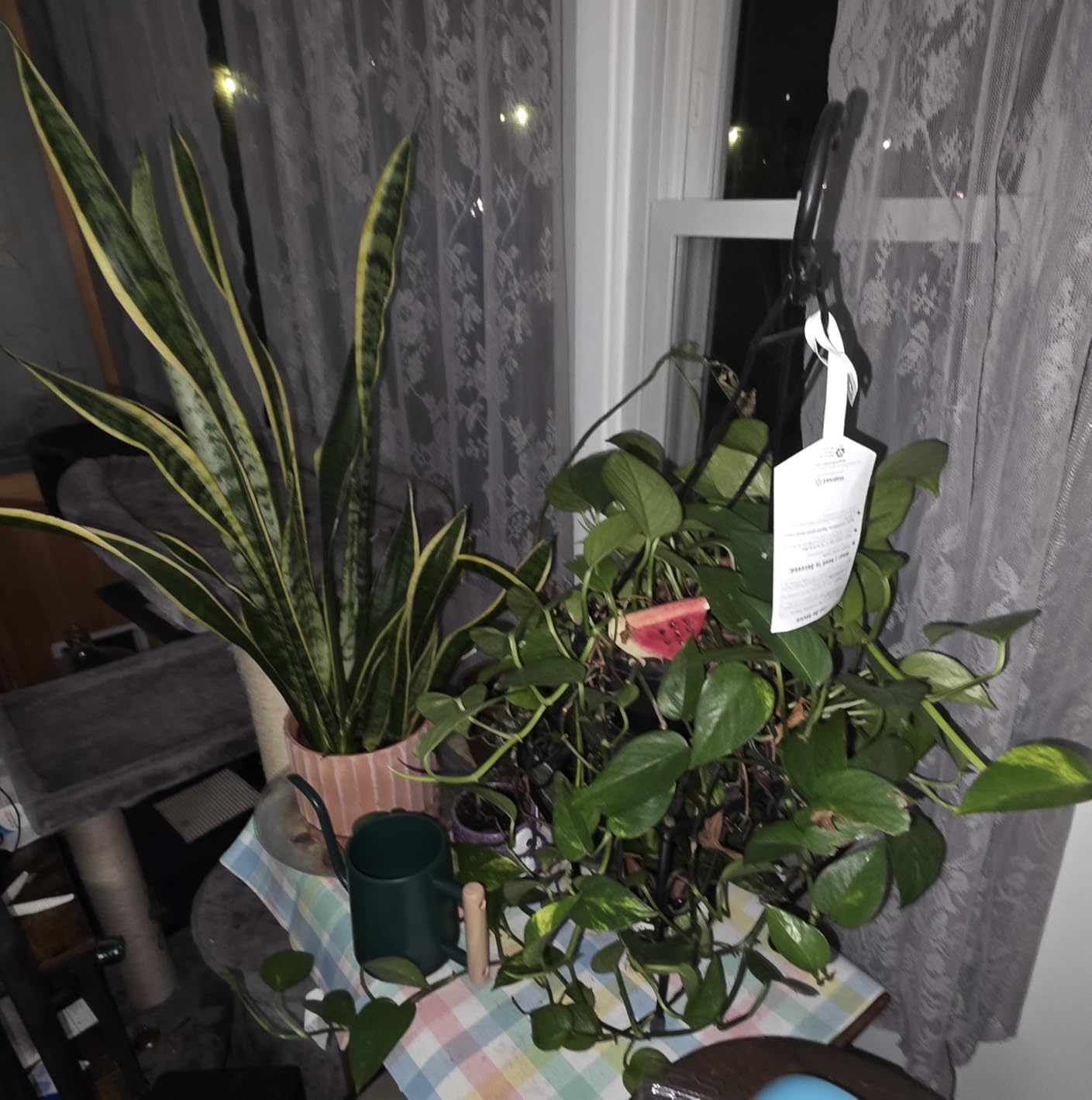
Reviewers highlight the durable steel body and note that the finish works as a decorative piece as well as a tool. The round wooden handle is easy to grip with one hand, which matters when the other hand is holding a pot you just repotted.
Owners are split on one point, and we agree with them: 1000ml is genuinely small. For a desk, a windowsill or a shelf of small pots it is a single fill, but for anything larger you will be making several trips.
Steel versus plastic in daily use
Steel does not flex, does not dent, and does not fog or stain. Over six weeks we used this can alongside two plastic ones of similar size and the plastic cans picked up water spots and a slight flex in the spout joint, while the steel body showed neither.
The trade is weight. A full 1000ml can runs about 3.4 pounds, so a large metal can at a large capacity is the heaviest option on this list. Match the steel look you want to a capacity you can actually carry repeatedly.
Where it falls short
There is no rose attachment, so everything gets the same stream. Seedling trays that need an even shower are better served by a can with a detachable head, and there is no visible water level in an opaque steel body, which means you judge the remaining volume by weight.
If your priority is a single can for a large collection rather than a display piece, the capacity figures further down this list will serve you better.
6. Bloem Aqua Rite 56oz — Best Value for Large Collections
Bloem Aqua Rite Watering Can: 56 Oz – Classic Blue – Large Capacity, Extra Long Spout, Durable Plastic, One Piece Construction, for Indoor & Outdoor Use, Gardening
56oz capacity
Extra long spout
One-piece construction
Wide top opening
Pros
- One-piece body removes leak points
- Spout pours from the bottom of the can
- Extra long reach for hanging baskets
- Made from plastic codes 2 and 5
Cons
- Thin plastic dents with handling
- Light body can tip if set down quickly
- Capacity may feel small for very large collections
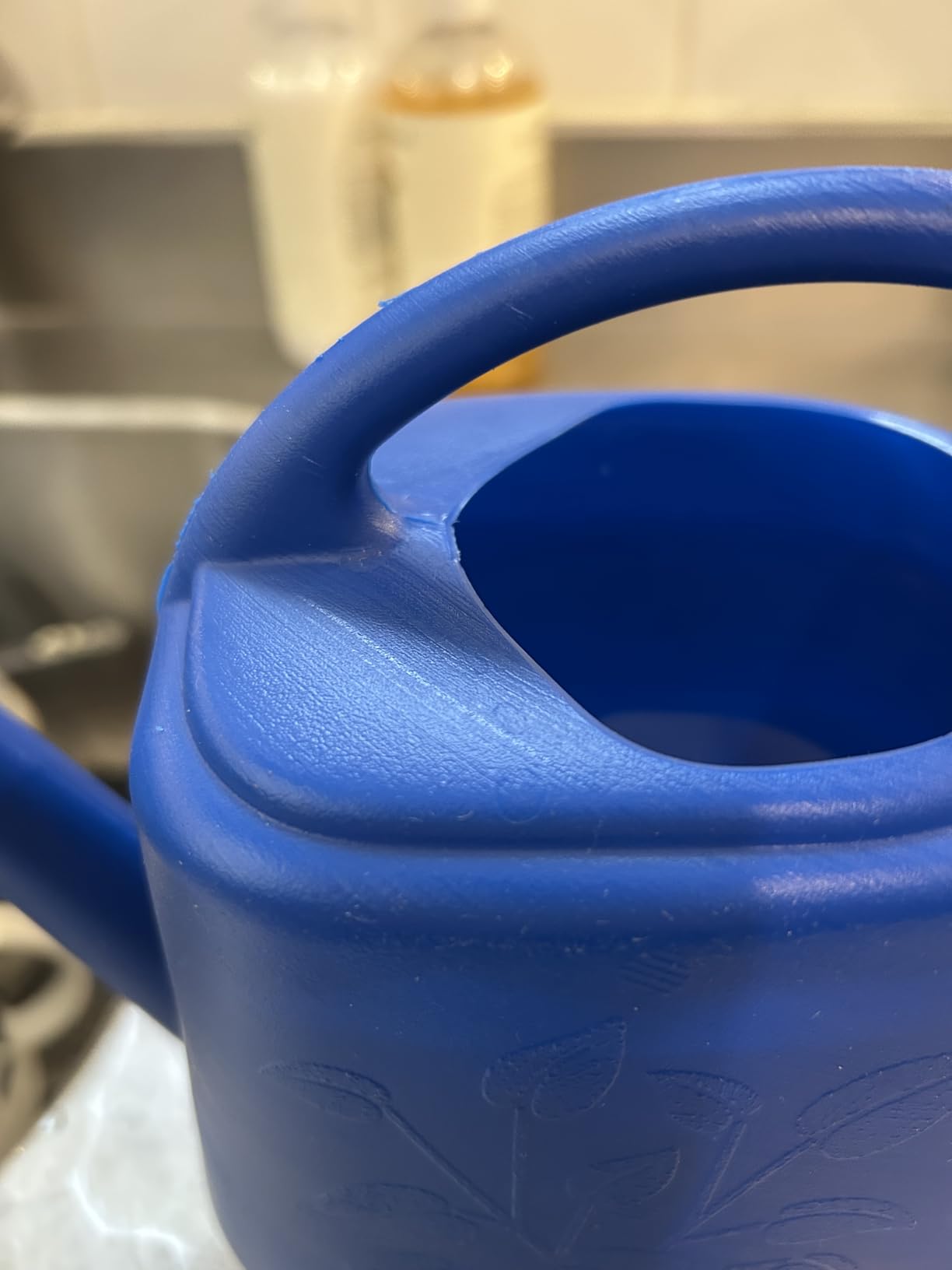
This is the one to buy if you have floor plants. At 56oz it holds the most water of any indoor-focused can we tested, so a room of large pots takes a single fill instead of three, and because there is no seam in the body there is nowhere for a leak to start.
The spout is the longest on the list, which is what makes hanging baskets workable. It is positioned to pour from the bottom of the can, so you can hold a high basket and still fill the pot without your shoulder taking the full load of the water.
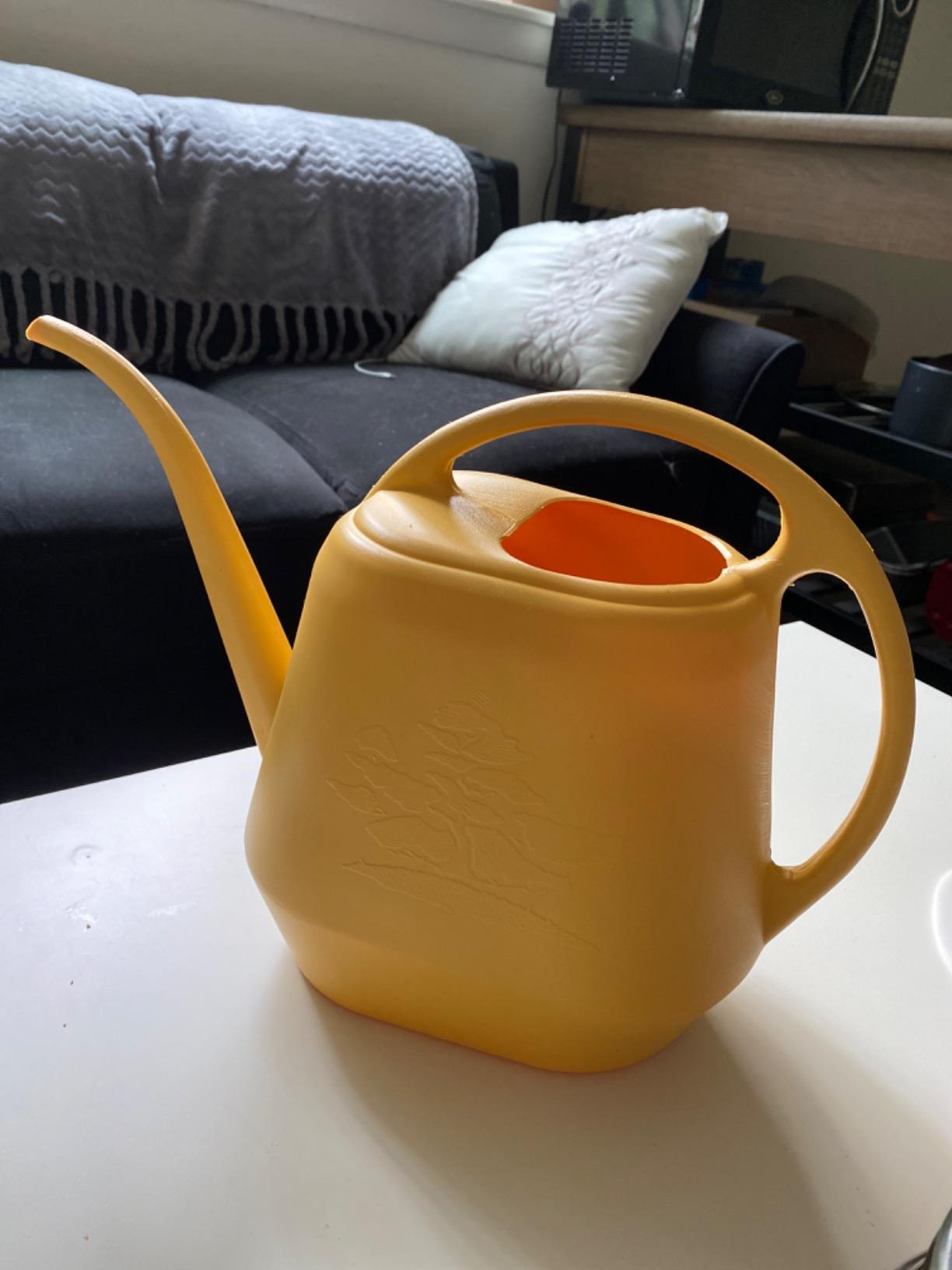
Customer feedback is consistent on the value of the capacity for the money and on the leak-free one-piece build. Reviewers also value that it is a single stream rather than a rose, so foliage stays dry and water goes where the roots are.
The criticism we saw most often was physical rather than functional. The plastic is thin, so a knock against a shelf edge leaves a dent, and at this size the empty body is light enough that setting it down too briskly on a hard surface can tip it. Treat it as a working tool rather than a display piece.
How much a 56oz can really weighs
56oz of water is about 3.5 pounds, and this can adds almost nothing to that, so a full load is around 3.6 pounds spread across a long body. That is lighter than most metal cans of the same capacity, which is the opposite of what buyers tend to assume.
For a collection of twenty-five plants or more, one full can usually covers a whole watering session. The trade is a 12-inch body that will not hide in a cupboard, so find it a permanent spot beside the sink or in a utility corner.
Where it falls short
It is the least decorative option here. If your can lives in view of a sofa, the matte black metal cans or the colored plastic cans will suit the room better.
There is also no spray mode, so very fine seedlings need a separate mister, and the long narrow spout makes the can awkward to use for wide, shallow trays where you would want a broad pour.
7. Doseno 12oz Stainless Steel — Best for Succulents and Cacti
Doseno Small Watering Can for Indoor Plants, Plant Watering Can, 12 oz
12oz / 350ml capacity
304 stainless steel
Long spout
Ergonomic handle
Pros
- 304 stainless steel resists rust
- Long spout reaches under foliage
- Light enough for one-handed control
- Doubles as a vase or humidifier filler
Cons
- Very small capacity suits only a few plants
- Narrow opening is hard to clean by hand
- Hard water leaves mineral deposits inside
Twelve ounces sounds like almost nothing, and for a monstera it is nothing. For succulents, cacti and seed-starting work it is close to ideal, because the whole point is delivering a small amount slowly and accurately rather than flooding a pot.
The 304 stainless steel body is the draw here. It does not dent, it does not absorb water into a surface layer the way cheaper plastic can, and at 0.2 kg it is light enough to hold one-handed while you steady a pot with the other.
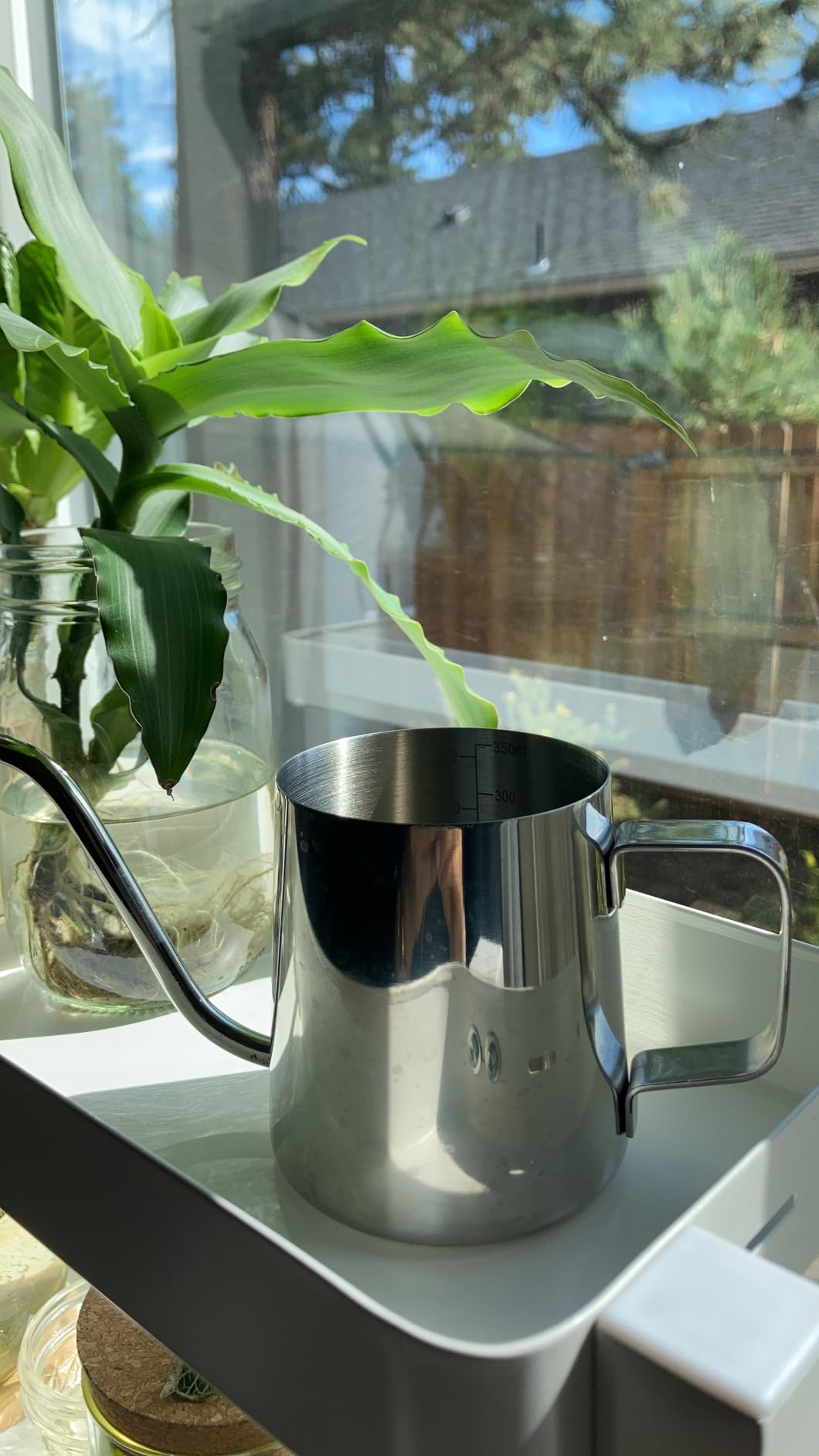
Owners describe it as a small, well-made can that pours precisely at the soil line, and several mention using it for vases, humidifiers and filter coffee as well as plants. The long spout reaches under overlapping foliage, which is exactly what a crowded cactus shelf needs.
The complaints are all about size and upkeep rather than performance. The capacity is smaller than some buyers expect, and hard water leaves visible mineral deposits inside the steel, so an occasional rinse matters if you want it to stay presentable.
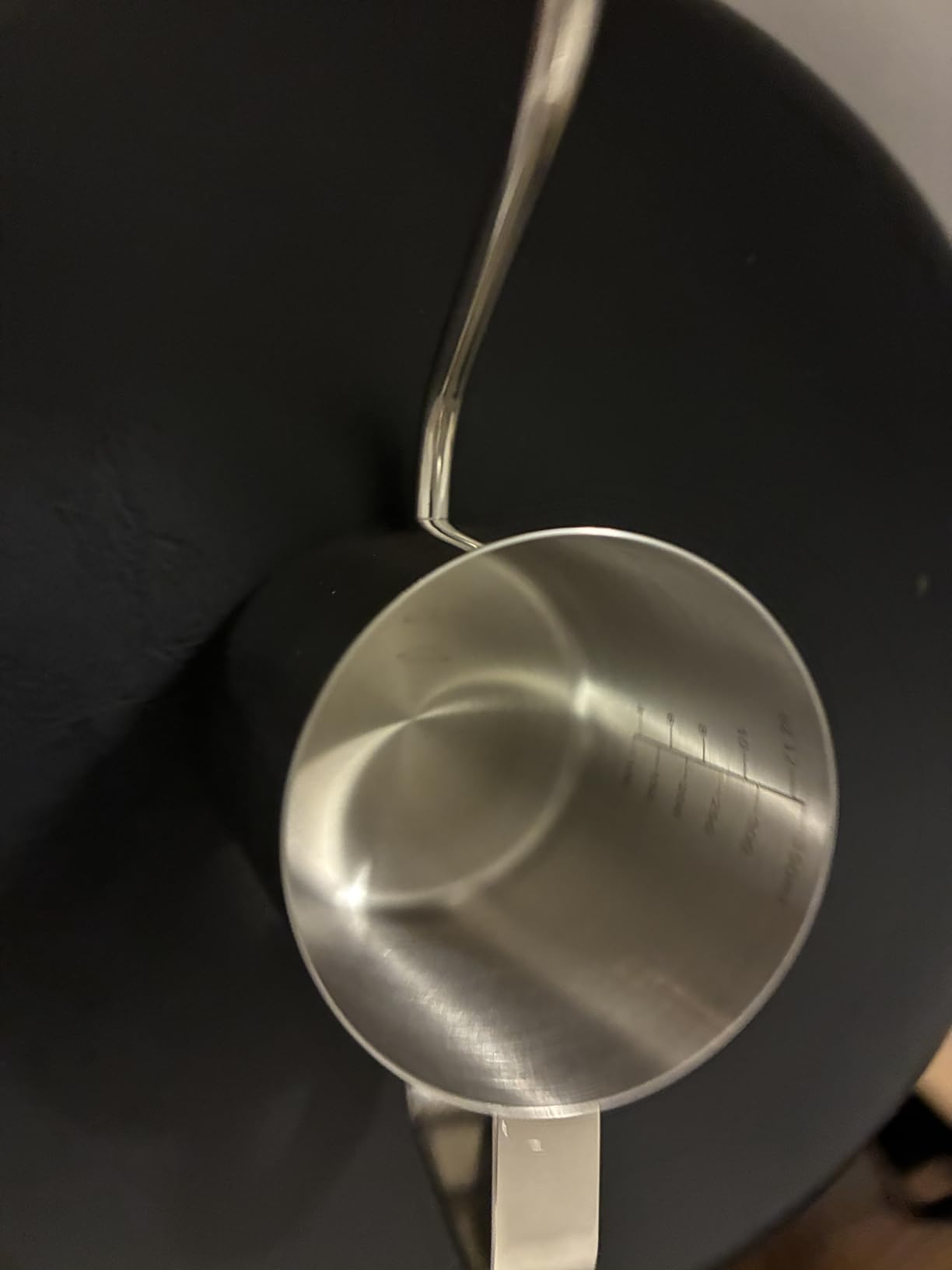
Small can versus small pot
Matching capacity to the plant is the whole trick. A 12oz can lets you pour a measured-looking amount over a 2-inch cactus pot without the flood you get from tipping a larger can, and the slow stream is less likely to wash gravel or grit out of a succulent pot.
It also stores almost anywhere, which is why we recommend it as a second can rather than a first. A large can for the floor plants, one of these on the desk, and you are not carrying a full load across the room for a single pot.
Where it falls short
It is not a whole-collection tool. Two or three medium pots and you are refilling, and the fill opening is narrow enough that a small hand or a narrow sink sprayer fits awkwardly.
Cleaning is the other limitation. Reviewers note that interior cleaning by hand is fiddly, and with hard water you will need to soak it periodically rather than giving it a quick rinse.
8. Fiskars 40oz with Anti-Drip Nozzle — Best Anti-Drip Tip for Furniture Safety
Fiskars 40oz Indoor Watering Can, Long Reach Spout, Anti-Drip Nozzle
40oz capacity
Anti-drip nozzle
Volume markings on tip
30% recycled plastic body
Pros
- Anti-drip tip keeps floors and shelves dry
- Volume markings on the nozzle aid dosing
- Contoured body stays comfortable when full
- Refill cap stays attached while filling
Cons
- 40oz means refills for a large collection
- Nozzle can be tricky to refit after cleaning
- Some orders arrive without the lid
Anti-drip is the feature indoor plant owners ask about most, and this is the can built around it. The specially formed tip stops the stream the moment you level the can, so moving between pots does not leave a line of drips across a shelf or a windowsill.
Volume markings on the translucent nozzle were the second thing we noticed. You can see the dose leaving the tip, which makes it easy to give a small pot a small drink rather than pouring until the soil looks dark.
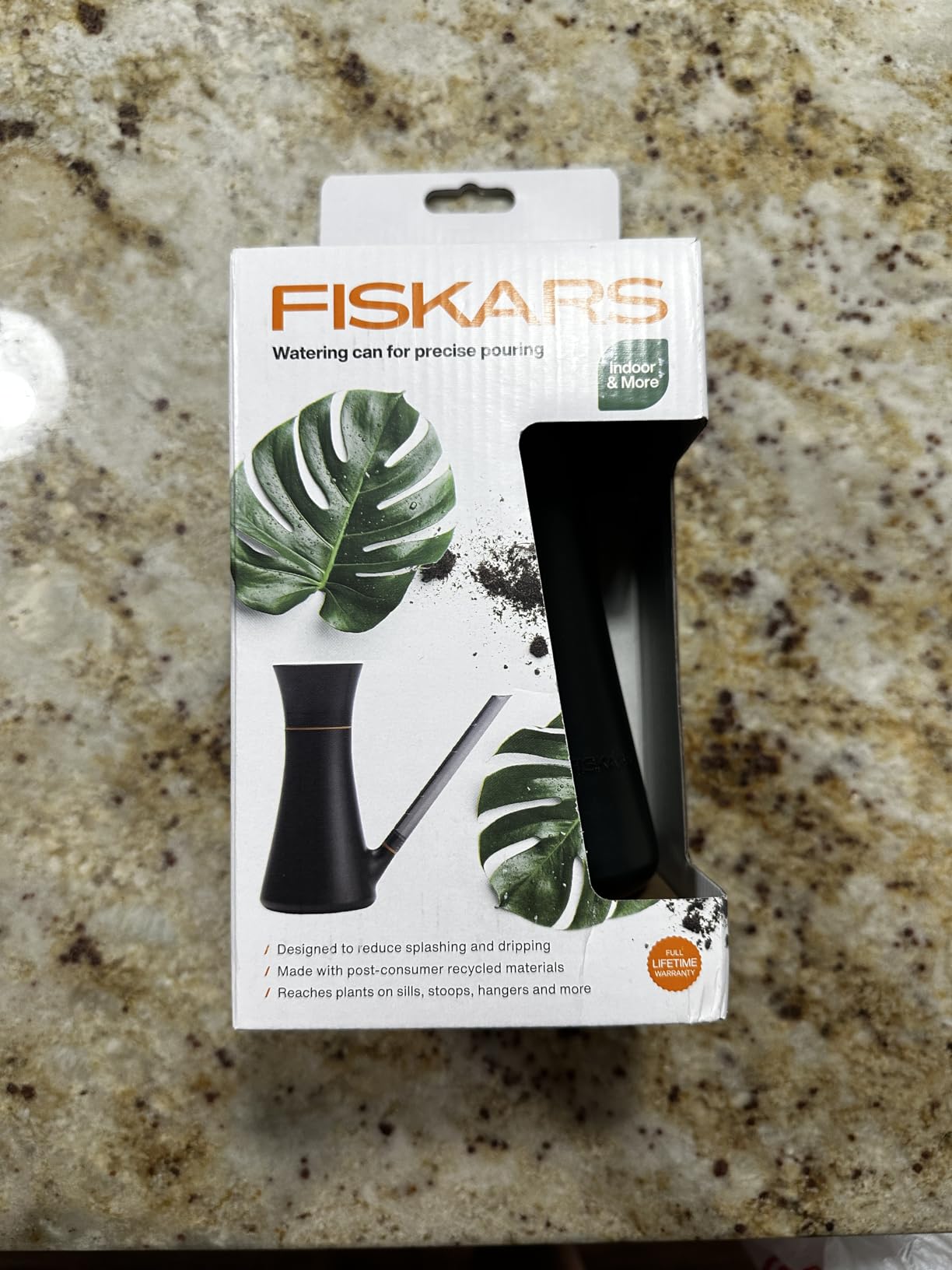
Reviewers consistently call out the precision dosing, the anti-drip tip and the modern look, and several mention leaving it beside the plants because it does not need hiding. The contoured body is comfortable to hold even when full, which we confirmed on a full 40oz load.
Owner complaints cluster around capacity and parts. Forty ounces is a moderate size, so a large collection means refills. The nozzle is also fiddly to remove and refit when you want to wash it, and a few buyers reported a missing lid on arrival.
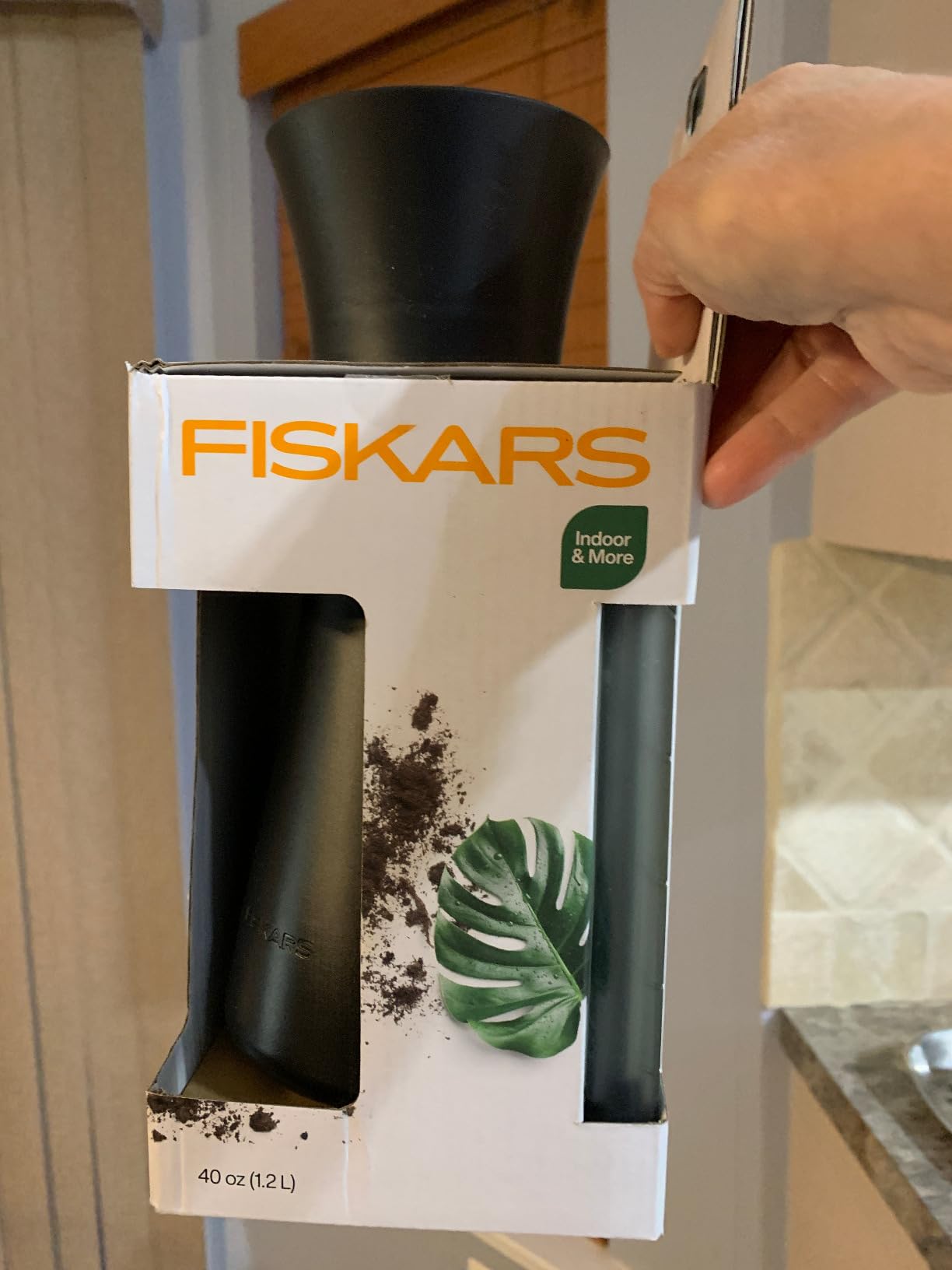
Why drip control matters more indoors than outdoors
Outdoors, a drip is lost water. Indoors, a drip is water on a shelf, a windowsill, a book or a floor that then has to be dried. During our test the difference was obvious: with a standard tip we mopped up after every pot, and with the anti-drip tip we did not.
The body is made from 30% post-consumer recycled plastic and carries a lifetime warranty, so this is also the pick if sustainability claims matter to you and you want a brand that stands behind the material.
Where it falls short
At 40oz it sits between the compact cans and the Bloem, so if your plants are all large and floor-based you will still make multiple trips. For those plants, capacity beats drip control every time.
There is no rose attachment and no removable spout, so this is a single-purpose stream can. If you raise seedlings, the Qilebi dual-mode design covers more ground with one tool.
9. ONEDONE 34oz Three-Piece Set — Best for Compact Storage and Small Plants
ONEDONE Watering Can Indoor Plants – Plant Watering Can 34 OZ, Long Spout Small Watering Can for House Plants Garden Potted Flowers with Spray Bottle, Squeeze Bottle Green
34oz / 1L capacity
Detachable stainless spout
Measurement marks
Two extra bottles included
Pros
- Detachable spout allows compact storage
- 34oz covers several plants per fill
- 1.96 inch opening makes filling and cleaning easy
- Includes spray and squeeze bottles for small plants
Cons
- Spout joint leaks if the seal is missing
- Body can crack if dropped
- Base seepage reported after a few months
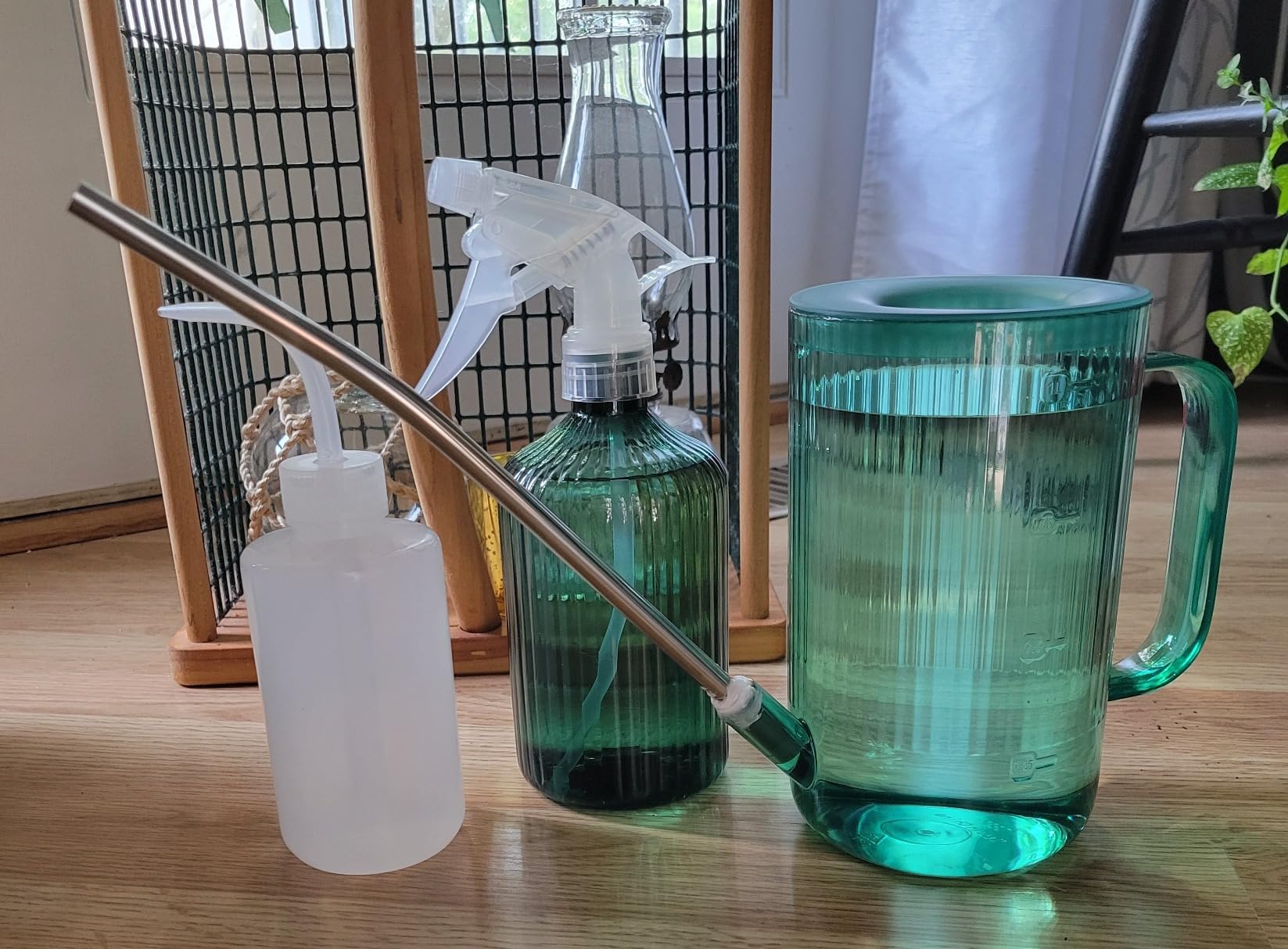
The detachable spout is the reason to buy this set. Twist it off and the can becomes a short, round container that fits a shelf it could never have reached with a 7-inch spout attached, and the extra bottles cover the small-plant end of the job.
At 34oz it sits in the middle of the capacity range, enough for several medium indoor plants in a single pass, and the wide 1.96 inch opening made filling, cleaning and adding diluted fertilizer noticeably easier than the narrow-top cans we tested.
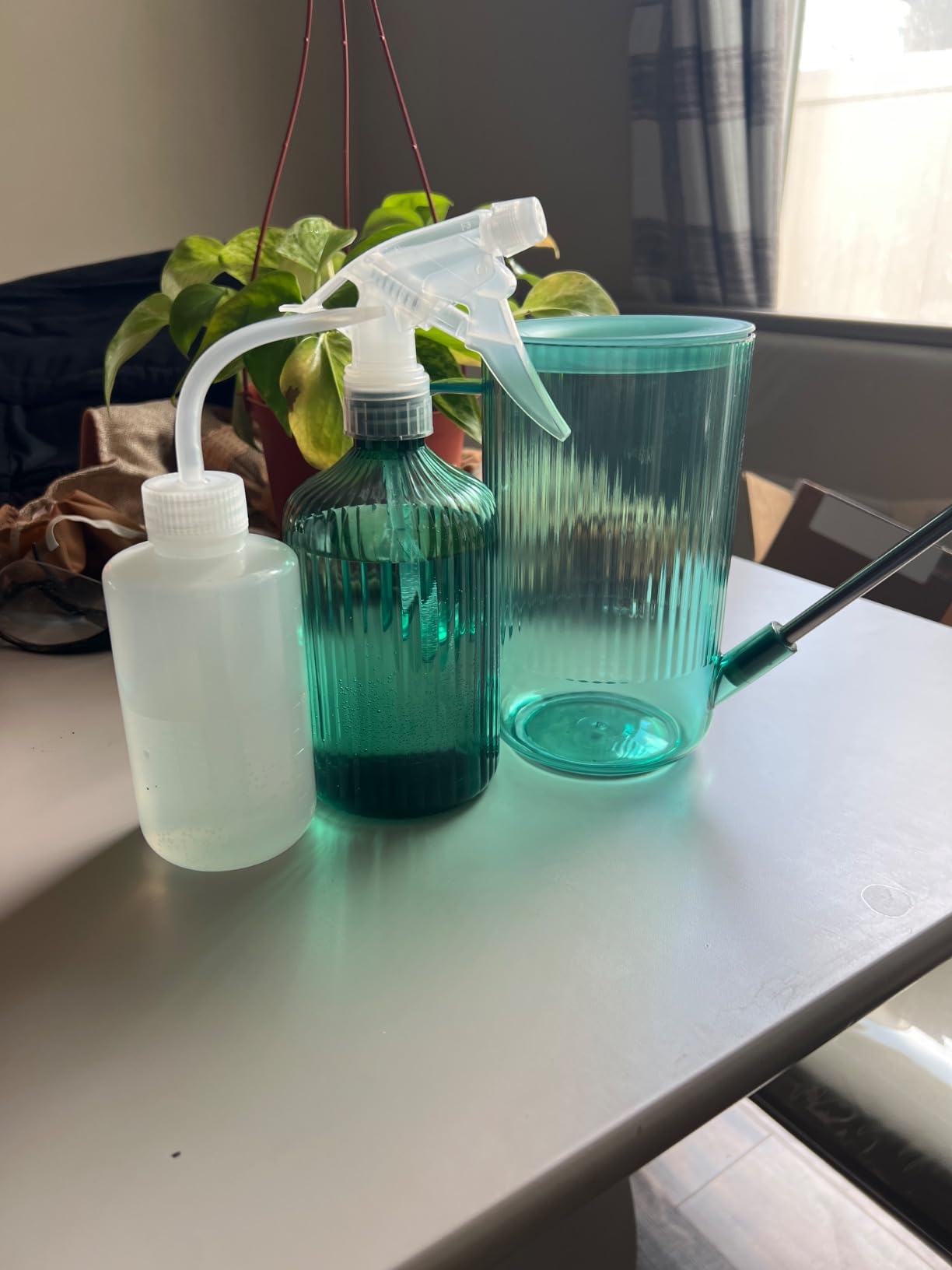
Owners like the three-piece arrangement, especially the 8oz squeeze bottle for succulents and the mister for tropicals. The measurement marks on the translucent body help you avoid overwatering, which is the exact failure mode we are trying to prevent in the first place.
Leakage is the dominant complaint in the reviews, and it traces to one cause: the metal spout joint leaks when its seal is absent or not seated. Seller replacements resolved it for the buyers who reported it, but check the seal on the first assembly.
When a detachable spout changes the storage maths
Shelf depth is the constraint nobody thinks about until a can arrives. With the spout off, this can stores in roughly half the depth, which means it fits a slim bookcase or a wall shelf where a fixed long-spout can simply will not go.
It is also easier to rinse out. A wide removable spout can be held under a running tap or soaked separately, which matters for anyone dealing with hard water and mineral film.
Where it falls short
More parts means more failure points. The spout joint, the seal and the base are all places where a leak can appear, and reviews mention base seepage developing after a few months on a number of cans.
Reviewers also warn that the body can crack if dropped, so avoid setting it down on hard tile while your hands are wet. The Bloem one-piece design has fewer places for that to go wrong.
10. Lizhluzh 12oz Teflon-Coated Steel — Best for Bonsai and Propagation Work
Lizhluzh Watering Can Indoor Plants, Small Plant Watering Can, 12 oz, Black
12oz / 350ml capacity
Stainless steel with Teflon coating
Long narrow spout
Wide mouth opening
Pros
- Teflon coating adds rust resistance
- Long spout fits under overlapping foliage
- Sturdy handle for its small size
- Attractive enough for a display shelf
Cons
- Very small capacity means several sink trips
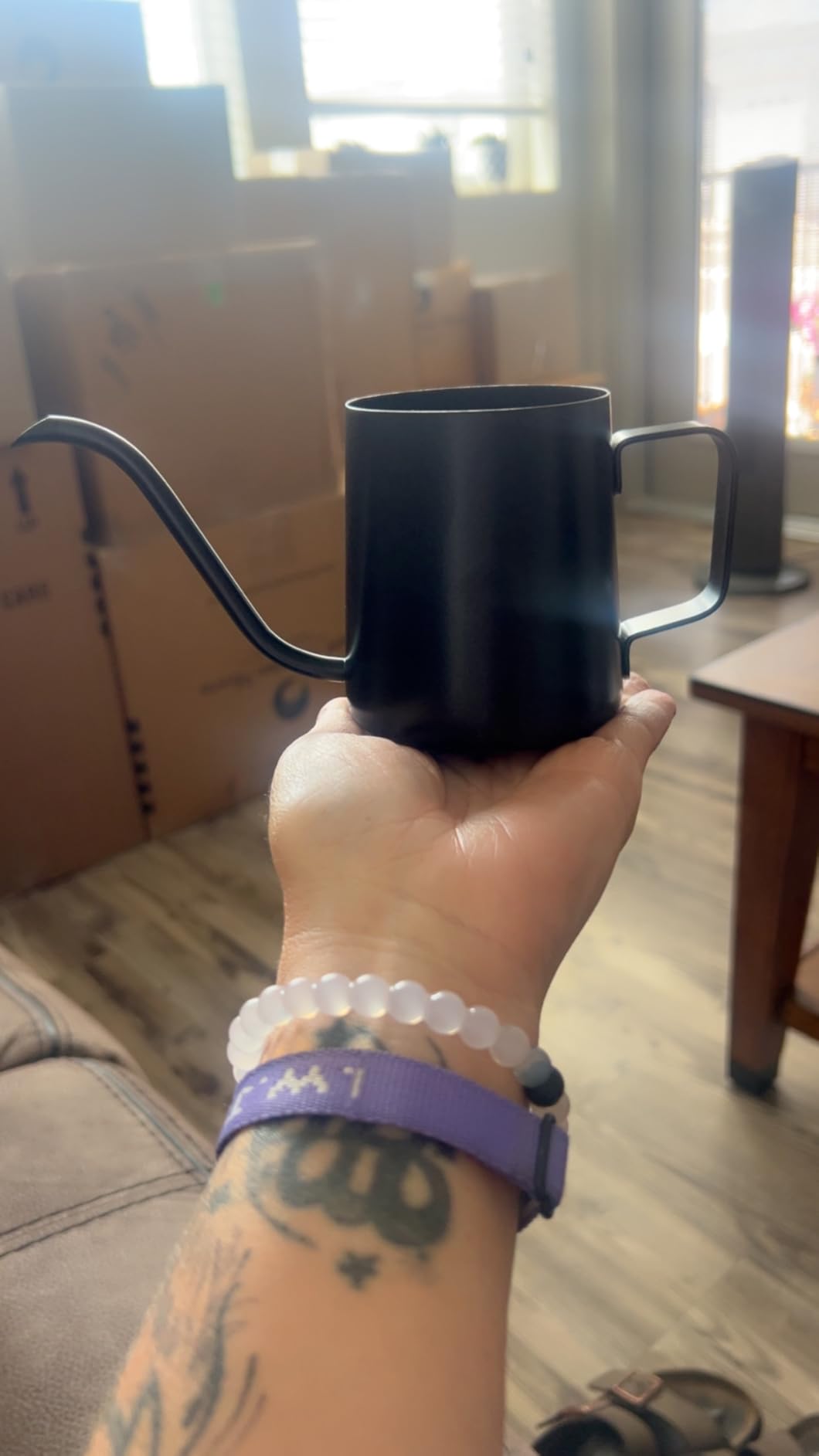
This is the smallest can we tested and the one with the most specific job. At 12oz it is built for bonsai, propagation tubes, seedling cells and small pots where the correct dose is measured in tablespoons rather than pints.
The Teflon coating inside and out is a real difference from the bare steel cans here. Coating is what makes the interior wipe down easily and resist the staining that hard water leaves behind, so it is the small can we would keep over time.
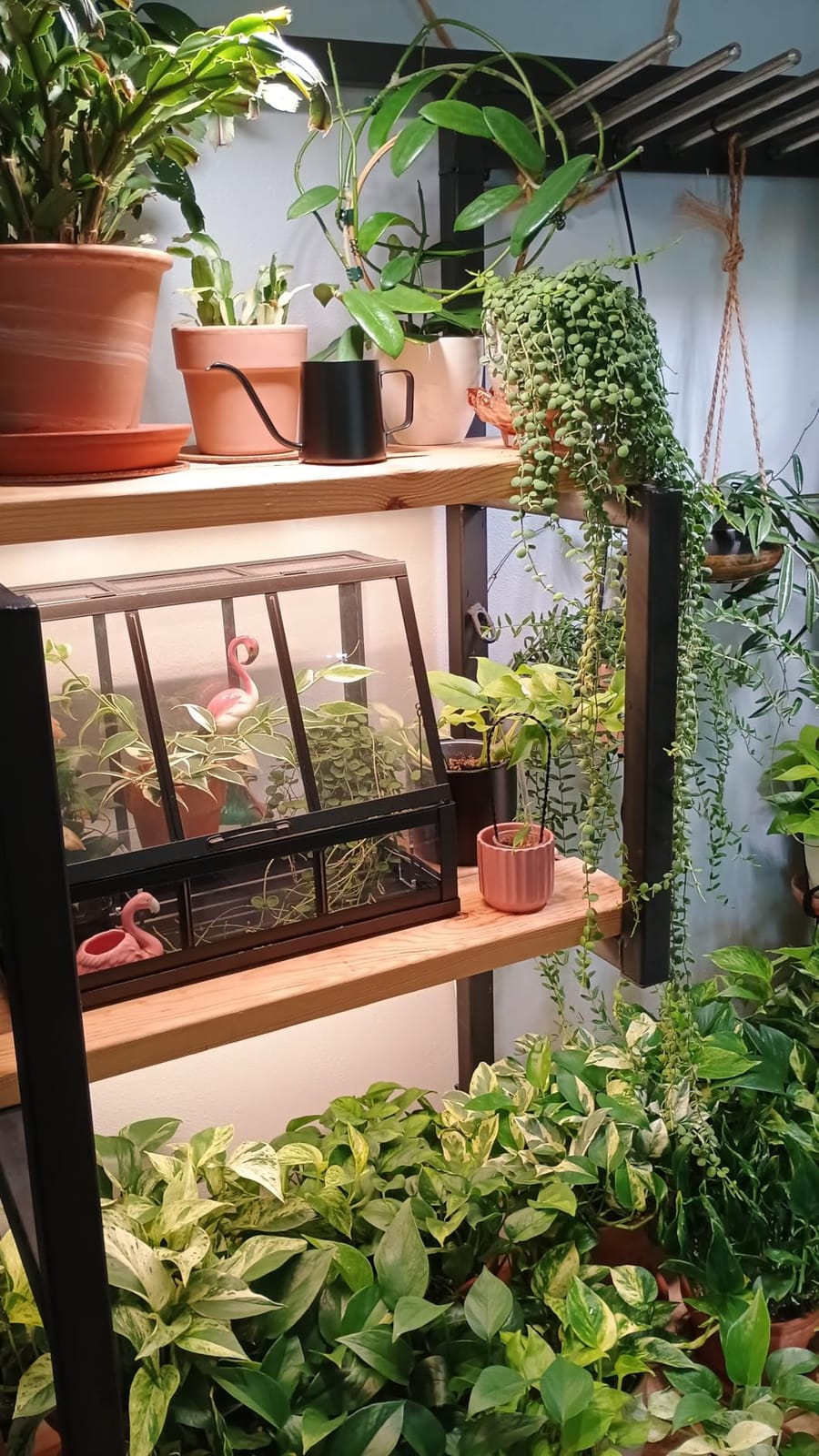
Owners describe it as a solid little can rather than a flimsy one, and several note the handle is sturdy despite the size. The long narrow spout reaches roots under overlapping foliage, and the gentle flow suits delicate work where a heavier stream would wash soil out of a shallow tray.
The single recurring complaint is capacity, and it is the obvious one. Several owners say it is smaller than they expected, so treat it as a specialist tool that lives next to the propagation setup rather than the can you use for everything.
Precision versus speed on small plants
On a tray of thirty seedlings we found this can faster than we expected, because the narrow spout puts water exactly between cells without disturbing them. A larger can needs a controlled tilt and a lot of patience to avoid flattening a tray, which is where wrist effort and mistakes both climb.
The wide mouth is the detail that saves time on a refilled small can. You can pour in a batch from a jug or swish it under the tap without trying to thread a narrow opening with a filling spout.
Where it falls short
Twelve ounces covers two or three small pots. For anything beyond a windowsill of succulents or a propagation shelf, you will refill constantly, and that is the practical limit of this design.
It also has no measurement markings and no spray mode, so dosing relies on your own judgement. For measured doses, the AORAKI 1L with markings and an included mister covers similar ground in a larger body.
How to Choose a Watering Can for Indoor Plants: 5 Decisions That Matter
1. Spout length and tip shape come first. Indoors, the spout matters more than the reservoir. A long, narrow spout lets you thread water between leaves and deliver it to the soil line, which is the only way to avoid wetting foliage, overfilling saucers and puddling your shelves. Anything at or above 10 inches total body length handles hanging baskets and dense shelving.
2. Match capacity to plant count, not to storage space. Roughly, a collection of under 10 small plants is served by a 12oz to 1L can. Between 10 and 25 plants, aim for 1.4L to 2L. Above 25 plants or with large floor specimens, you want close to 56oz so one fill covers a session.
3. Check the full weight, not the empty weight. Water weighs about 1 pound per 16oz. A 56oz can holds roughly 3.5 pounds of water; a 1.8L can holds closer to 4.4 pounds. That is the number forum users care about, and it is the one product listings rarely show. Wide handles and grips centred near the body spread the load better than a thin metal loop.
4. Match material to how you treat the can. Stainless steel and powder-coated steel outlast plastic, resist rust, and look good on display, but they are the heaviest and they show water spots on the finish. BPA-free plastic is lighter and cheaper, and it is the right choice if the can may be knocked around or stored in a utility space. Plastic is also fine for diluted fertilizer; steel handles it too, provided you rinse the can afterward.
5. Look for anti-drip and decide on a rose attachment. An anti-drip tip is the single most valued feature for indoor use, because it stops the drips that happen while you move between pots. A detachable rose, as on the Qilebi, is worth paying for only if you raise seedlings or propagate; for established plants a plain stream is faster and easier to control.
One more thing no list covers: what happens when the can is full and sitting still. We found that some plastic cans weep at the base if stored with water inside, so empty yours after each session. For anyone whose plants live near wood flooring, an expandable garden hose for patio watering is a better idea than an indoor can with a leaky base.
Watering Can vs Self-Watering Planter: Which System Actually Wins
For most indoor plant owners, a good manual can wins. Watering deeply and letting the soil dry between sessions is what forum consensus on deep container watering repeatedly converges on, and that is exactly what a can lets you do. A can also lets you water each pot on its own schedule, which a shared reservoir cannot do.
Self-watering planters and reservoir globes solve a different problem: travel. If you leave the house for two weeks, a wicking reservoir or a slow-release globe keeps root-zone moisture steady without a neighbour dropping by. The trade is control, and for most indoor plants it is control that prevents root rot, since a constant reservoir keeps soil wet for weeks at a time.
Moisture-sensing devices and hydrospikes draw mixed reports in plant communities. Users tend to describe them as solving the wrong problem, because the plants usually died from overwatering rather than from drought, and a device removes the finger check that would have caught it.
Our practical answer: use a can for daily care, and a reservoir only for the weeks you are away. If you are planning an automated setup for a larger space, our guide to smart garden watering systems covers the options that are worth automating and the ones that are not. Climbing plants get their own watering logic, so our picks for garden arbors for climbing plants is worth a read if that is your setup.
Frequently Asked Questions
What size watering can is best for indoor plants?
Most indoor collections are best served by a 1L to 1.8L can. Under 10 small plants, 12oz to 1L is plenty. Between 10 and 25 plants, aim for 1.4L to 2L. For 25 or more plants, or large floor specimens, a 56oz can covers a full session in one fill.
What is the best type of watering can for indoor plants?
A can with a long, narrow spout and an anti-drip tip is the best type for indoor plants, because it delivers water to the soil line instead of the foliage and stops drips over shelves. A detachable rose attachment is worth having only if you raise seedlings or propagate.
Are metal watering cans better than plastic for plants?
Metal wins on durability. Stainless steel and powder-coated steel outlast plastic, resist rust and dents, and look good enough to leave on display. Plastic wins on weight and price, and is the better choice for a can that gets knocked around or stored in a utility space.
What is a good very small watering can for indoor plants?
A 12oz stainless steel can is the best very small option. Our Doseno 12oz pick uses 304 stainless steel with a long spout for succulents, cacti and small pots, while the Lizhluzh 12oz adds a Teflon coating that resists staining from hard water. Both are better suited to small plants than to a full collection.
Is it a good idea to use watering cans to water plants?
Yes. A watering can gives you the control to soak the root zone deeply and then let the soil dry out, which is what most indoor plants need. Check the soil with a finger pushed about an inch down first, and only water when it feels dry.
What store-bought water is best for house plants?
Room-temperature tap water is fine for most house plants, and it is what you will use most often. Let it stand if your tap runs very cold, and use filtered or rainwater if you notice a white mineral crust forming on pots or soil, since that signals hard water.
The Verdict: Which Watering Can Should You Buy in 2026?
Buy the WhaleLife 1.4L if you want one can that handles a mixed indoor collection without fuss. Its long slim spout places water at the soil line, the translucent body tells you the level at a glance, and 19k owners have already tested that claim.
If your plants are all metal-can material, go one better: the HB Design 35oz rated highest in our group and pours with almost no dribble, while the LTSUMI 1000ml is the one to leave on display. For a large room of floor plants, the Bloem 56oz finishes a session in a single fill. Whatever you pick, store it empty, check the soil with your finger first, and water less often than you think you should.