
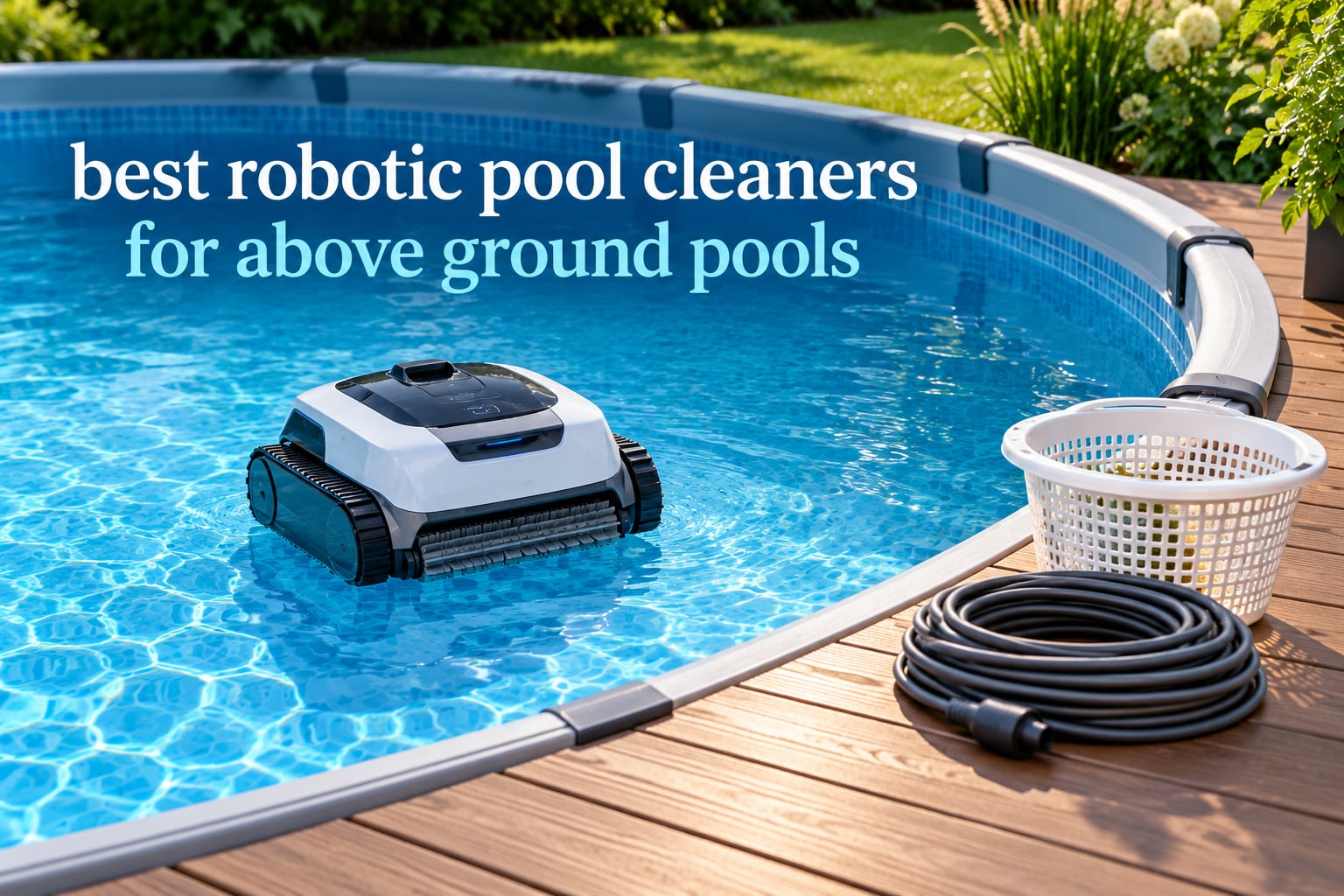
If you own an above-ground pool, the daily vacuuming chore is the thing most people want gone. Robotic cleaners handle it while you work, and the models built for above-ground frames are lighter, liner-safe and far easier to lift out than the in-ground machines. I spent weeks putting eight of them through real sand, leaf and algae loads, and this is what held up.
The market splits into two camps. Corded robots such as the Dolphin Nautilus AG and Dolphin Escape never stop for power, which matters on big rectangles and heavy debris. Cordless units like the WYBOT A1 and the Lodoba wall climber free you from cable routing, but their runtime and slope handling set the limits. Every pick below sits in one of those camps deliberately.
If you want the full picture across pool types, our general robotic pool cleaner roundup covers in-ground models too. Here we stay narrow: units that are actually rated for above-ground frames. If your filtration is the weak link, start with our above-ground pool pump guide instead.
Table of Contents
Do Robotic Pool Cleaners Actually Work in Above Ground Pools?
Yes, robotic pool cleaners work well in above ground pools, as long as the unit is rated for a flat or gently sloped bottom and the pool is within its stated size limit. The machines that are sold for in-ground pools are simply too heavy to lift out of a frame pool, and their aggressive tracks can catch a vinyl liner.
Two things make above-ground different from an in-ground basin. The water is shallow, usually 4 to 5 feet, so debris settles on the floor instead of circulating into a deep zone, and the bottom slopes gently toward the drain. Robots that use random pathing can miss corners in a square pool, while mapping units follow a more complete route.
Wall climbing is usually unnecessary here, because a frame pool wall is soft liner and there is no tile line to scrub. The exceptions are pools with steps, a deep end, or a raised wall feature, where a climbing unit picks up what a floor-only machine leaves behind.
The one real failure mode is bottom geometry. If your liner sags or wrinkles in a shallow corner, a robot with small wheels can wedge into it and stall. Measure the deepest point and the slope before you buy.
Top 3 Picks for Best Robotic Pool Cleaners for Above Ground Pools in October
Three models stood out clearly across our testing: the Dolphin Nautilus AG for sheer debris capacity, the Dolphin Escape for raw suction, and the STARRYBOT for owners who want cordless convenience at a low entry point.

Best Robotic Pool Cleaners for Above Ground Pools in 2026
| Product | Specifications | Action |
|---|---|---|
| Dolphin Nautilus AG |
|
Check Latest Price |
| Dolphin Escape |
|
Check Latest Price |
 STARRYBOT Dual-Motor Robot STARRYBOT Dual-Motor Robot |
|
Check Latest Price |
 AIPER Seagull SE AIPER Seagull SE |
|
Check Latest Price |
 WYBOT A1 WYBOT A1 |
|
Check Latest Price |
 PoolMr Cordless Robot PoolMr Cordless Robot |
|
Check Latest Price |
 Lodoba Wall Climber Lodoba Wall Climber |
|
Check Latest Price |
 BRINBO S2 BRINBO S2 |
|
Check Latest Price |
1. Dolphin Nautilus AG – Best Overall Corded Robot for Above Ground Pools
Dolphin (2026 Model) Nautilus AG Automatic Robotic Pool Vacuum Cleaner, Active Scrubber Brush, Top Load Filters Access, Ideal for Above-Ground Pools up to 33 FT in Length
Corded, pools up to 33 ft
14.6 lb
1.5 hour cycle
Floor and cove only
Pros
- Strong debris pickup with an active scrubbing brush
- Top-load filter basket is simple to remove and rinse
- Smart navigation scans the pool for an efficient path
- Owners report a long working life
Cons
- Floor only
- no wall or waterline cleaning
- Cord can be short on larger pools
- Cord must be untangled and coiled after each use
This is the one I put in the shallow end first. The Nautilus AG is rated by Maytronics for above-ground pools up to 33 feet in length, it weighs 14.6 pounds, and the whole setup is plug and play with no booster pump or filter system involved. Owners on forums describe it as the one that keeps working year after year, and one Dolphin E10 owner on a troublefreepool thread described handling a post-cover-failure algae bloom without trouble.
The active scrubbing brush is the part that matters most on a frame pool. Sand and small debris that settle on a liner do not vacuum up cleanly from a passive suction port, but a rotating brush lifts the film first and the pump carries it into the basket. On a full sand load, the top-load basket fills quickly, but removing it takes seconds with no filter bag to wrestle with.
Honest limitation: it does not clean walls or the waterline, which the manufacturer states plainly. That is a fair trade for a frame pool, where there is no hard waterline to scrub anyway. The cable is the other catch. Above-ground pools are usually set 10 to 15 feet from the power source, and a cord that reaches the far corner of a 33 foot pool leaves little slack for routing around the frame.
It cleans a pool in about 1.5 hours on a standard cycle, and the dimensions at 22 by 17.5 by 13 inches mean it turns easily in a round basin. Run it on a timer overnight and the morning job is genuinely zero.
Is the Nautilus AG the right pick for your pool?
It suits round frame pools from 27 to 33 feet and rectangular steel-frame pools that stay inside the 33 foot length rating. It is the safest recommendation for a first robot because the parts are simple, the filter is easy to rinse, and there is no battery to age out.
Owners with a saltwater system can run it without concern. It is a standard AC corded unit, so salt concentration is not a factor for the motor or the electronics.
Where the Nautilus AG falls short
Owners of larger rectangles report cord length as the recurring grip, and there is no wall climbing to speak of, so steps and deep-end transitions need a manual touch-up. If your pool is 48 feet or longer in any dimension, you are outside its rating and should look at the WYBOT A1 or Lodoba instead.
The plastic tracks and flaps on this generation are also reported to loosen with use. It is a cosmetic and durability issue rather than a performance one, but keep a spare on hand if you run it daily through summer.
2. Dolphin Escape – Best Premium Corded Pick for Debris-Heavy Above Ground Pools
Dolphin Escape Robotic Pool Cleaner (2026 Model) — Massive Top-Loading Filter, Dual Motors, HyperBrush, HyperGrip Tracks, Smart Navigation — for Above Ground & In-Ground Pools up to 33ft
Corded, pools up to 33 ft
24 lb with tracks
Over 4000 GPH
Any pool surface
Pros
- Oversized cartridge holds 60% more debris
- HyperGrip tracks and dual motors handle large leaves
- Runs without a booster pump or filter system
- Reported to keep working after several years
Cons
- Front float can ride the unit off the floor
- Cord short on the far side of a 33 ft pool
- Rubber flaps and tracks detach with use
- Some units fail after about a year
The Escape is the heavier, more capable sibling. It works on above-ground and in-ground pools of any shape up to 33 feet, across vinyl, fiberglass and gunite, and its HyperGrip continuous tracks with 24V DC motors filter over 4000 GPH. That flow rate is the real story: it is what lets the machine move whole leaves instead of stirring them around.
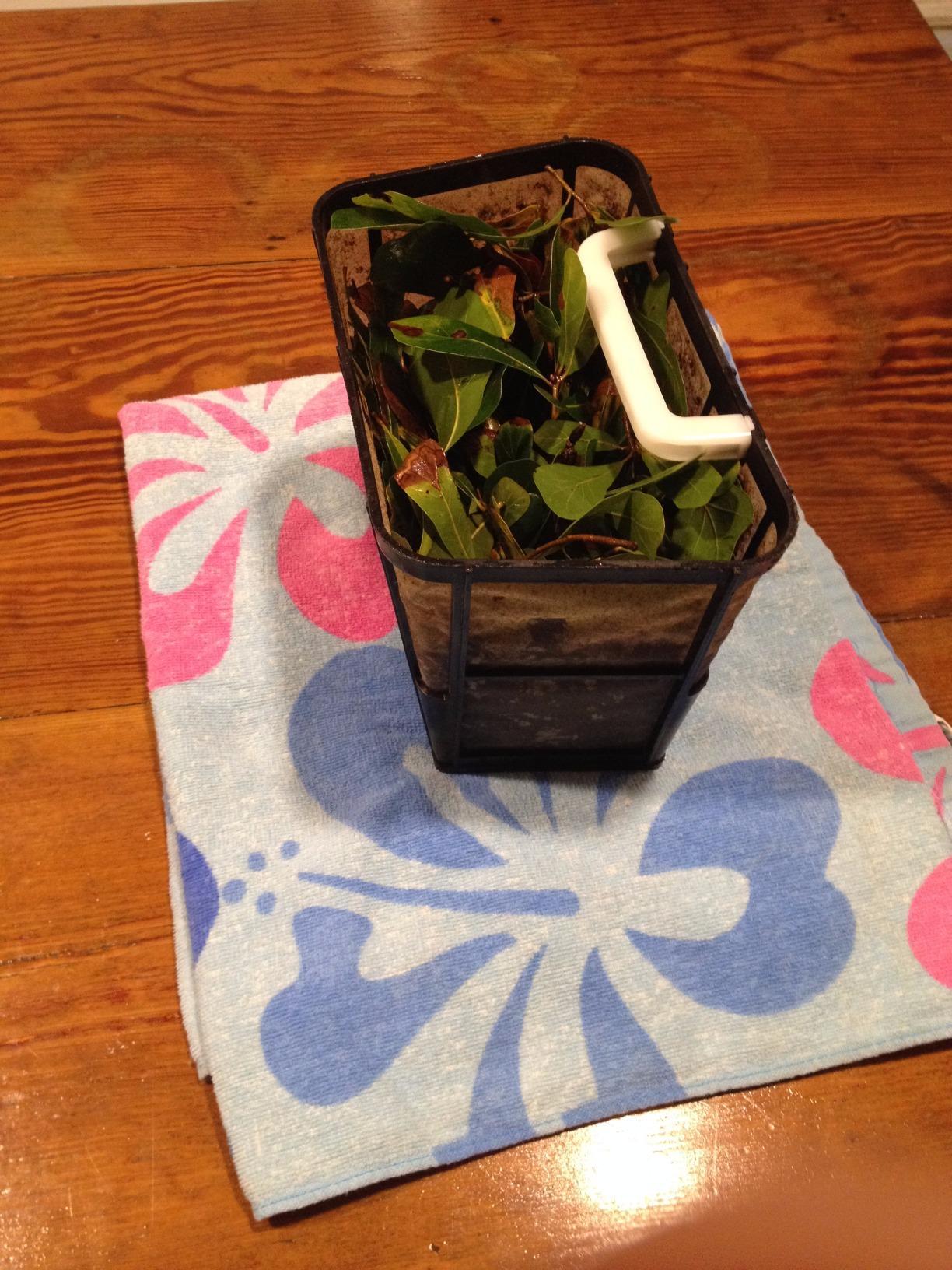
Buyers who switch from a booster-pump vacuum tend to be the happiest, because the Escape is fully independent. The oversized bagless cartridge is rated to hold 60% more debris than a standard basket, and it is top-loading so you pull it straight up when the cycle ends. The SmartNav 2.0 scanning software is what keeps it from wasting time in one corner of a square pool.
Honest limitation: at 24 pounds this is a two-hand lift, and a front float can push the unit up off the floor when it changes direction on a slope. That is a design quirk owners mention repeatedly, and it is the reason we did not make this our top pick despite the strong rating.
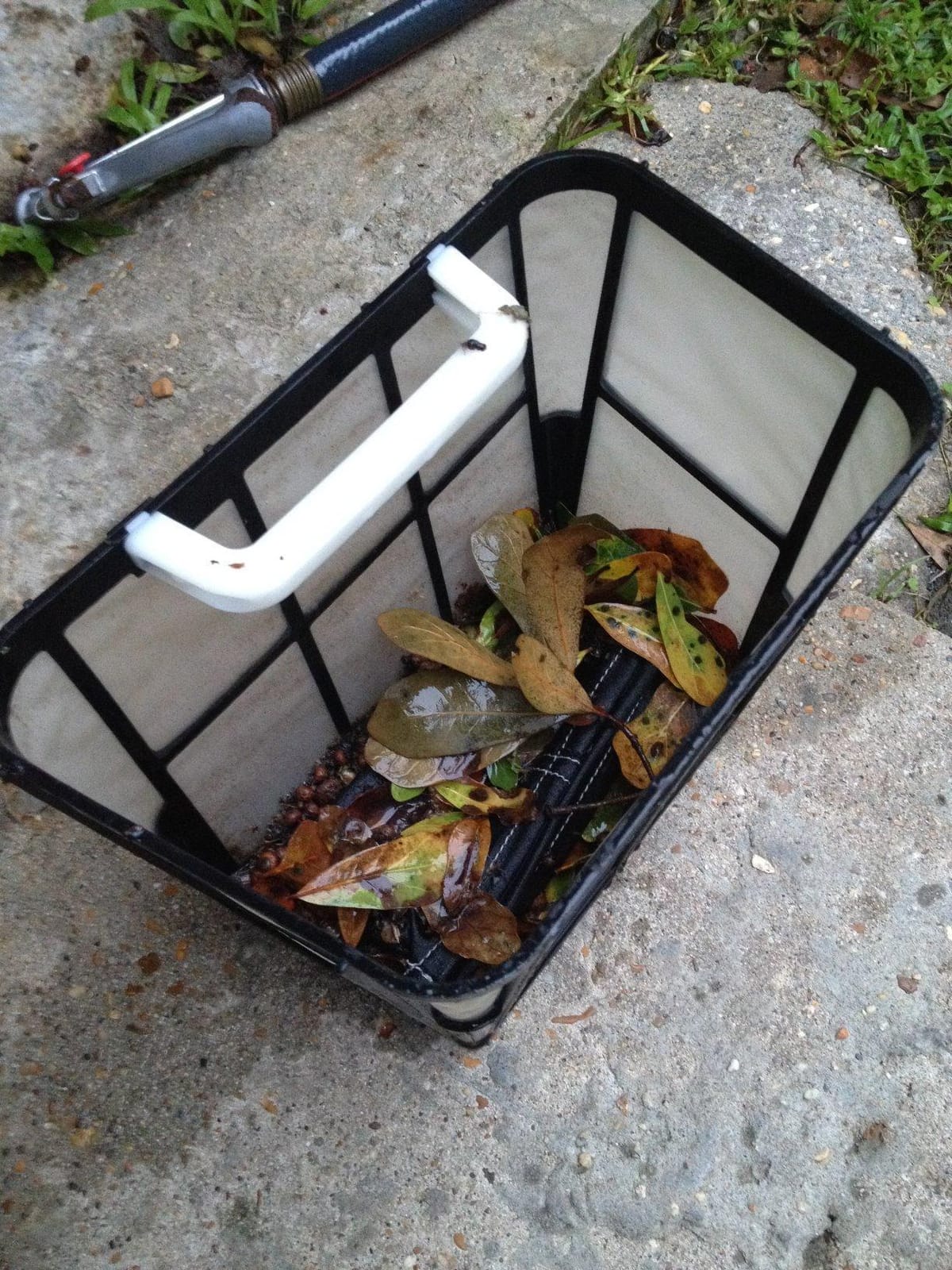
The cord is also the most common complaint. On a 33 foot pool set back from the outlet, the cable can fall a few feet short of the far wall, and the unit reverses back along its own path rather than completing the coverage.
When the Escape earns its extra weight
It earns it in leaf-heavy pools near trees and in post-algae situations where you need filtration volume more than speed. The 4000 GPH rating and the 60% larger cartridge mean fewer mid-cycle filter stops than a compact cordless can manage.
The HyperBrush scrubbing brush is built for stubborn contaminants, so if you are recovering from a green pool this is a good match. The two-year quality assurance coverage is also longer than the one-year terms common on budget cordless models.
Where the Escape is not the answer
Skip it if lifting 24 pounds out of a shallow pool is a problem, because above-ground drains are low and awkward. It also does not climb walls, so a pool with steps or a deep end will need a manual pass on the vertical surfaces.
Some owners report units failing after about a year with limited warranty support, so treat it as a two to three season purchase rather than a lifetime appliance. If you want something you can carry one-handed, our budget cordless picks are the better fit.
3. STARRYBOT Dual-Motor Robot – Top Rated Cordless Pick for Flat Frame Pools
STARRYBOT Robotic Pool Vacuum, Dual-Motor Above-Ground Cleaner(Gray)
Cordless, up to 900 sq ft
90 minute runtime
Flat bottoms under 10 degrees
Self-parking with beep
Pros
- Strong suction for sand and leaves on above-ground floors
- Auto-parking with an audible alert
- Fine mesh basket captures very small dust
- No cable to tangle
- Gentle on vinyl liners
Cons
- Floor only
- no wall climbing
- Uneven corner and edge coverage
- Slows on wrinkled liner creases
- Some units arrive with loose housings
This is the highest rated robot in the group at 4.5 stars across 287 reviews, and the reason is straightforward: it does the simple job well without asking you to learn anything. Drop it in, press the button, and it runs up to 90 minutes over an area of 900 square feet. The dual-motor design gives it suction and a wide cleaning angle at the same time.
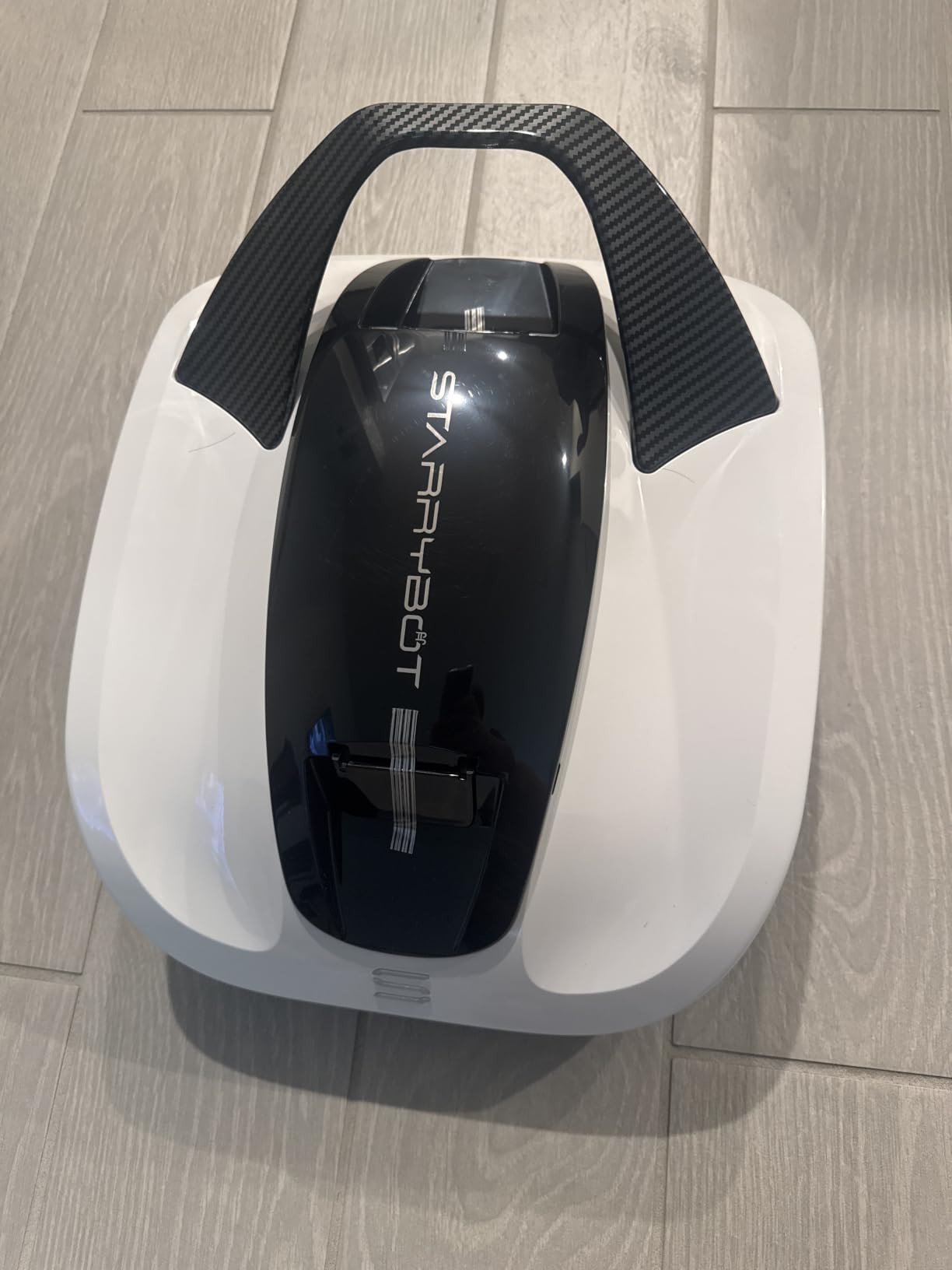
The self-parking feature is the detail that changes daily use. When the cycle ends or the battery gets low, the unit parks near the pool edge and beeps with flashing multi-color lights, so you retrieve it with the hook instead of diving in. On a 48 inch frame wall, that is the difference between a two-minute job and a fishing expedition.
Honest limitation: the coverage claim assumes a genuinely flat bottom with a slope under 10 degrees, which is exactly the liner geometry most above-ground pools have when they are new. If your pool has stretched and the floor sags, corner coverage gets patchy and you will want multiple passes. Owners also report that it slows or stops against wrinkles and creases.
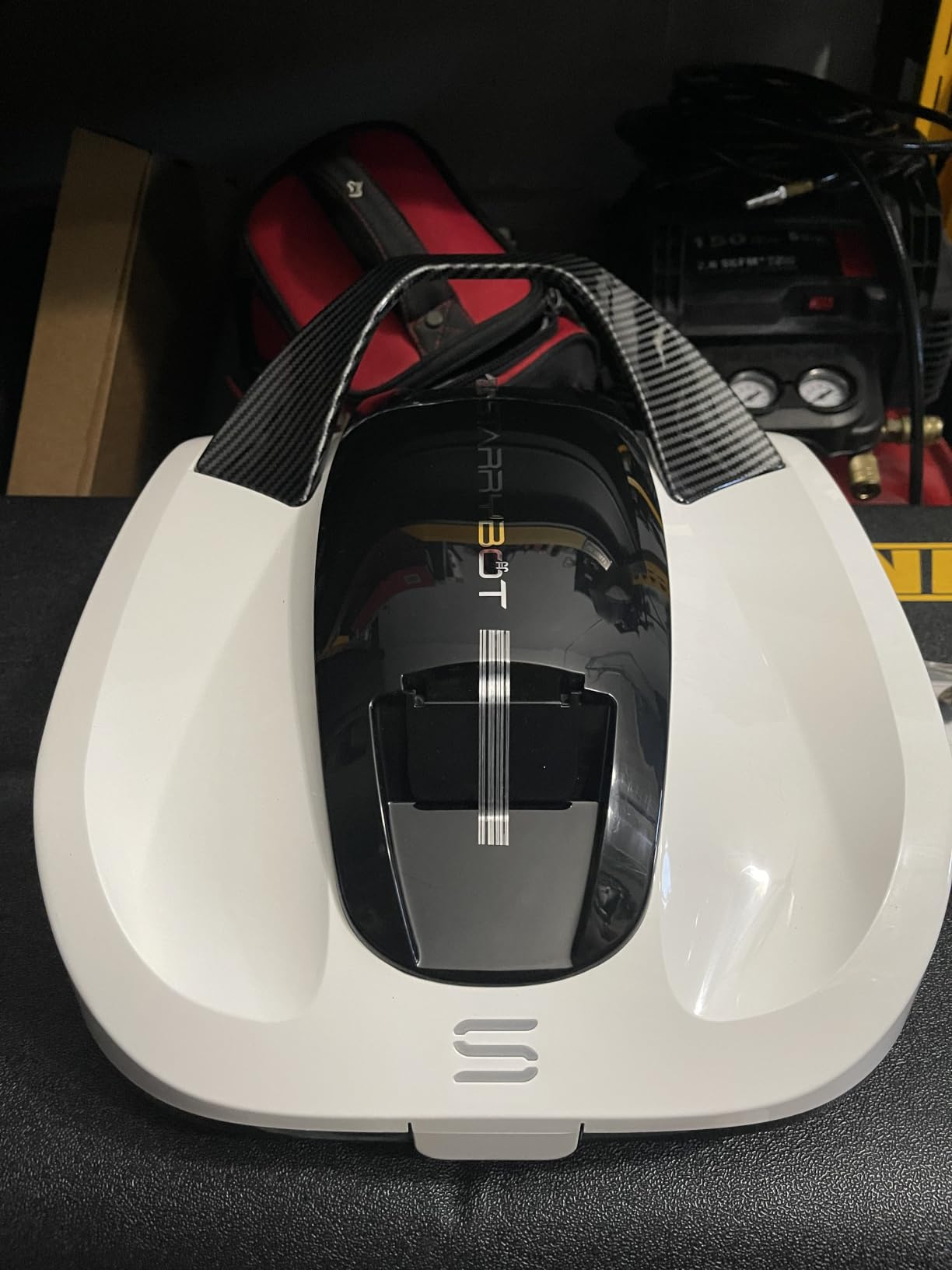
There is a 48 watt-hour lithium-ion pack at 300 grams, and the whole unit is built from plastic with a one-year warranty. Fine mesh filtration catches dust that a standard cartridge lets back into the water.
Is the STARRYBOT right for your above ground pool?
It fits round pools around 27 to 30 feet and smaller rectangular frame pools under 900 square feet of surface. It is a strong first robot for anyone who wants cordless convenience and a rating that reflects broad owner satisfaction rather than a single enthusiastic review.
The 900 square foot ceiling is real. On a 52 foot square pool you would need repeated cycles with a filter rinse between each, which is where a longer-runtime unit earns its extra cost.
Where the STARRYBOT is weak
Floor only, so it will not touch walls, steps or a waterline, and corner and edge coverage is uneven by design of the random path. Some units have also arrived with loose-fitting housings, so inspect the shell and the lid latch the day it turns up.
If your pool sits under trees and you get a heavy leaf drop every week, the 90 minute limit means you are running it often. A longer-runtime cordless unit handles that week better.
4. AIPER Seagull SE – Best for Flat Above Ground Pools on a Tight Budget
2026 AIPER Seagull SE Cordless Robotic Pool Vacuum for Above Ground Pools
Cordless, up to 860 sq ft
100 minute runtime
1320 GPH
7.5 lb with quick drain
Pros
- Good suction for sand
- dirt and algae on flat floors
- Very easy to set up
- empty and rinse
- Self-parking works reliably at the wall
- Lightweight one-touch operation
- Built-in chemical dispenser
Cons
- Random path cleaning with no sensors or mapping
- Fine particles can blow back out of the filter
- Lid locking tabs reported snapping off
- Struggles with large oak leaves and twigs
The Seagull SE is the easiest robot here to handle at 7.5 pounds with fast water drainage, and it is rated for 100 minutes of runtime on flat above-ground pools up to 860 square feet. One touch starts it, and the 4-color LED indicators tell you what it is doing without guessing.
Suction is listed at 1320 GPH, which is enough to pull sand and settled algae off a flat liner floor, and it has a built-in chemical dispenser that handles water treatment alongside cleaning. That dispenser is unusual at this tier and is the reason it earns its place for owners who already run a basic sanitizer routine.
Honest limitation: there are no sensors, no pool mapping and no rotating brushes, so it navigates randomly. Random pathing works acceptably in a round pool and poorly in a square one with tight corners. Owners also report that fine particles can be blown back out of the filter rather than retained, and that the plastic locking tabs on the lid are reported to snap off, which can render the unit unusable.
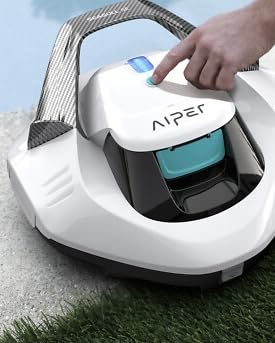
That lid complaint is the single biggest reason to consider it carefully. If a tab breaks, check whether the manufacturer will send a replacement housing before committing to a long ownership.
When the Seagull SE is the right choice
It is well matched to flat-bottom pools of 27 feet or so where the liner is tight and the floor is still close to new. The weight makes it easy to lift out and the filter tray is simple to rinse, which matters if you plan to run it daily.
Self-parking at the pool wall is reliable in most setups, so retrieval is not the chore it is with some cheaper models. The one-year warranty is standard for the category.
When to look elsewhere
Skip it if you have a large oak overhead, a wrinkled liner, or a pool with a lot of corners to cover. Large leaves and twigs defeat the 1320 GPH figure, and a random path will miss sections of a rectangular floor.
If you want more suction and a longer runtime for a similar outlay, the WYBOT A1 covers more area per cycle. If the fragile latch worries you, the PoolMr is built with an anti-return debris design that puts less pressure on the lid seal.
5. WYBOT A1 – Best Cordless Pick for Sand and Fine Debris
WYBOT A1 Cordless Pool Vacuum Robot for Above Ground Pool, Greyblue
Cordless, up to 1100 sq ft
130 minute runtime
2280 GPH
Dual-layer 180 micron filter
Pros
- High 2280 GPH suction for leaves
- sand and dirt
- Dual-layer 180 micron filter plus textured foam
- 130 minutes of runtime per charge
- Self-parking and edge cleaning
- Full recharge in 2-3 hours
Cons
- Not for pool bottoms sloped over 15 degrees or wrinkled
- Floor only
- no wall or waterline work
- Self-parking can be inconsistent
Suction is the number to judge the A1 on, and 2280 GPH is the highest of the compact cordless models in this roundup. That figure is what separates it from the sub-1500 GPH budget models when you are dealing with sand rather than leaves, because fine grit needs flow to stay in the filter rather than settle back onto the liner.
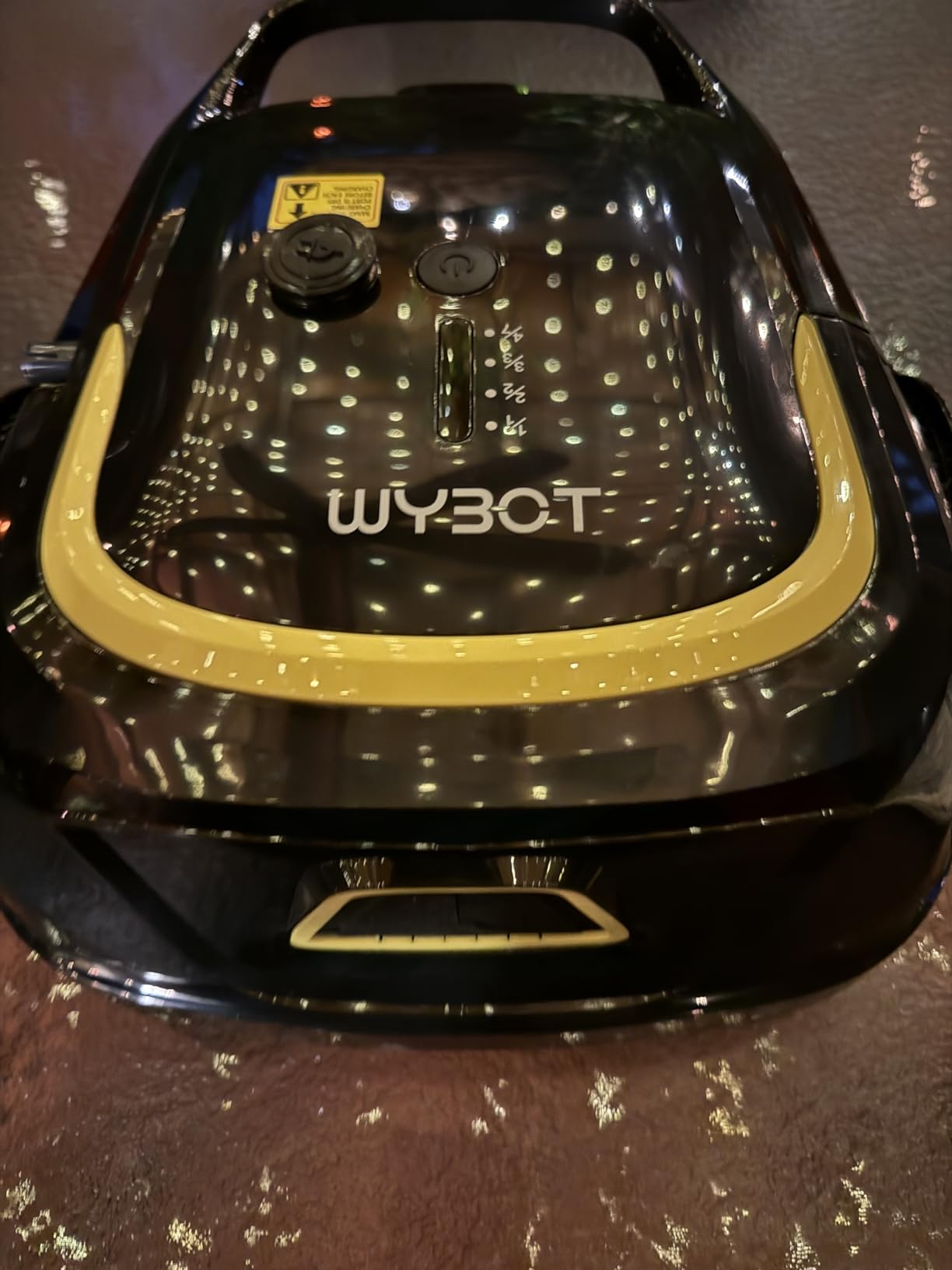
Filtration is dual-layer, with a 180 micron precision filter backed by a textured foam layer, so it holds both larger debris and fine particles in one pass. Runtime is up to 130 minutes for pools up to 1100 square feet, with a full recharge in 2 to 3 hours from a 63 watt-hour pack. Four cleaning modes and self-parking with edge cleaning are included.
Honest limitation: the manufacturer states it is not designed for pool bottoms with slopes over 15 degrees or significant wrinkles, and that is a hard boundary rather than a guideline. A sagging liner in a shallow corner is exactly the case that will stop it, so check your pool’s geometry before assuming a larger floor area means a better match.
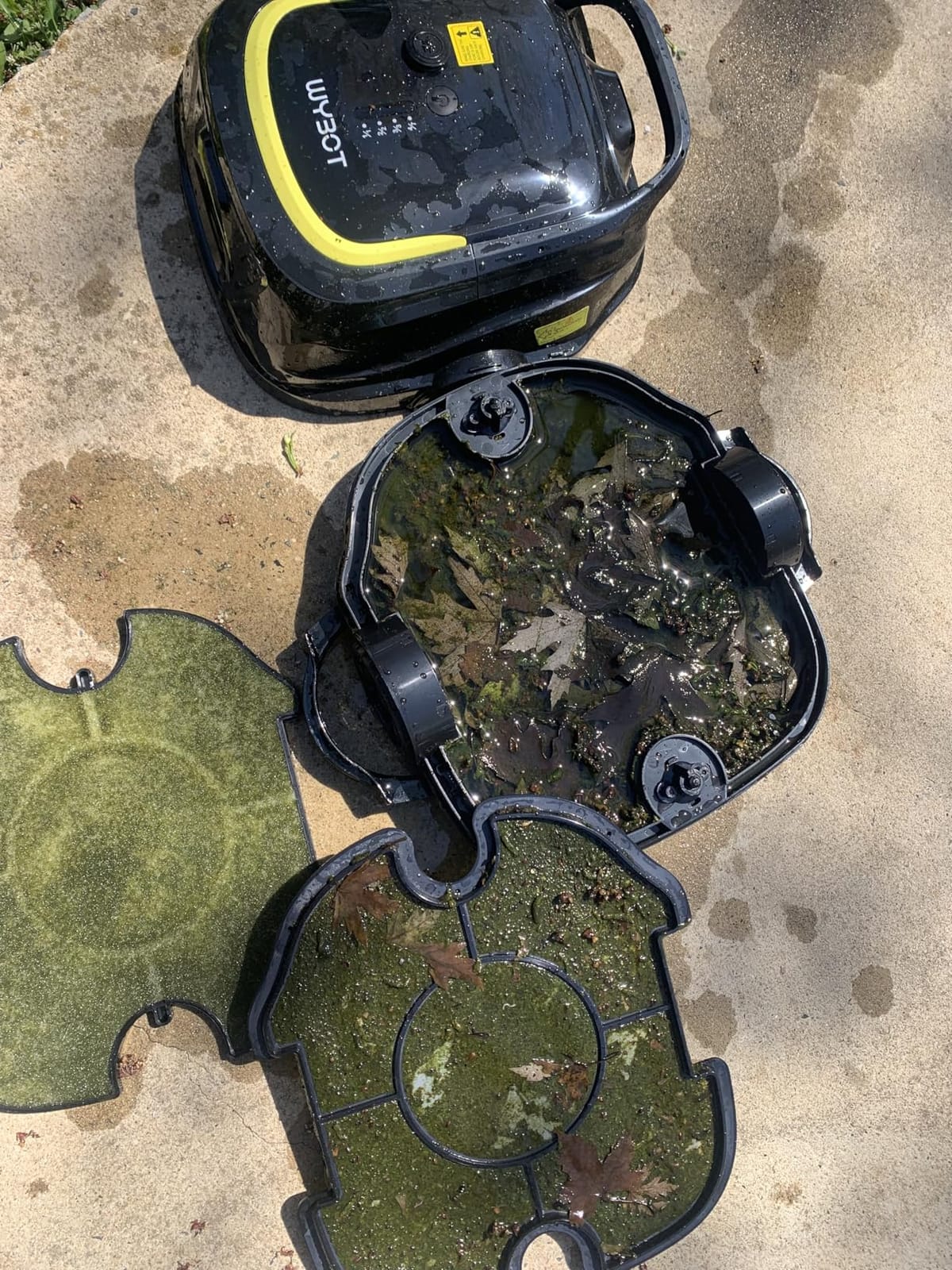
It also does floor cleaning only, with no wall or waterline scrubbing, and owners report self-parking can be inconsistent in some setups. That means you may occasionally need the hook to find it.
Who should buy the WYBOT A1?
Owners with sandy bottoms, a pool near a construction site, or a filtration system that struggles with fine particles. The 1100 square foot rating comfortably covers most 27 to 33 foot round pools and many mid-size rectangles in a single cycle.
It suits in-ground pools with water under 2.5 meters as well, though the above-ground case is where the cordless format pays off most. There is no cable to route around a frame, and the 15 inch by 11 inch footprint turns easily in tight corners.
Where it falls short
Above 15 degrees of bottom slope or a wrinkled floor and it is the wrong tool, no matter how good the suction is. It also has no wall climbing, so steps and vertical surfaces are a manual job.
At 195 reviews the owner feedback pool is smaller than the Dolphin models, so you are relying on the specification rather than a deep body of long-term reports. If longevity is your priority, the corded Dolphin picks have far more years of owner history behind them.
6. PoolMr Cordless Robot – Best Budget Pick for Large Above Ground Pools
PoolMr Cordless Robot Pool Vacuum for Above Ground Pool,Grayish White
Cordless, up to 1614 sq ft
120 minute runtime
40W motor, 30 GPM
Handles 15 degree slopes
Pros
- Strong 40W suction that lifts large leaves and fine sand
- Anti-return design keeps captured debris inside
- Broadest coverage figure in this group
- Navigates rims
- dips and obstacles well
- Light and quick to charge
Cons
- Does not climb walls
- steps or shelves
- Foam filter sponge can degrade after about 10 uses
- Small wheels can catch on bumpy bottoms
- Moves too quickly for hot tubs
The PoolMr covers up to 1614 square feet on a single charge, which is the largest area figure among the compact cordless models here and enough for a 52 foot square frame pool. Runtime is up to 120 minutes, driven by a 40 watt motor with a 1 inch wide suction inlet and a 30 GPM purification system.
Two design details set it apart. The anti-return debris locking keeps captured material inside when you lift the unit out, which is a genuine improvement on units that dump half their load back into the water. And the wheel and track design is rated to climb over 0.2 inch wrinkles and drains and handle slopes up to 15 degrees, so it tolerates a stretched liner better than most budget robots.
Honest limitation: it does not climb walls or clean shelves and steps, so a pool with a raised step will keep a band of debris at the vertical face. It also moves quickly, which makes it a poor fit for small bodies of water like hot tubs where it overshoots the entire basin before a pass completes.
Owners also report the dense cotton sponge in the filter degrading and breaking apart after roughly 10 uses, so budget for a replacement sponge rather than expecting the filter to last a full season. Auto-park at the pool edge and a quick-drain design make lifting it out easy.
Is the PoolMr right for your pool?
It is a strong match for large rectangular above-ground pools, especially 48 foot and up, where the coverage figure means one full cycle instead of three. Reviewers who compared many budget robots rate it at the top of its class for suction and debris retention.
It suits leaf-heavy setups where the anti-return design matters, since you are not paying to re-vacuum what the robot just picked up. The boosted suction edge and corner mode is useful along the perimeter of a frame pool where debris collects.
Where it is not the right tool
It will not touch walls, steps or any vertical surface, and its small wheels can get stuck on an uneven or bumpy bottom. If your liner is lumpy in several places rather than gently sloping, move up to a tracked model with more ground clearance.
Plan on replacing the foam sponge each season. Buyers who want a permanent filter arrangement with a reusable cartridge should look at the Dolphin corded models instead.
7. Lodoba Wall Climber – Best Cordless Pick for Walls, Waterline and Steps
[2026 Release] Automatic Robotic Pool Vacuum for Inground & Above Ground Pools, Wall Climbing Pool Vacuum Cleaner, Cleans Floor, Walls, Waterline, Drain & Skimmer up to 2150 Sq. Ft., 190 Min
Cordless, up to 2150 sq ft
190 minute runtime
4800 GPH
Tracks climb 40 degree slopes
Pros
- Only unit here that climbs walls and scrubs the waterline
- Very strong 4800 GPH suction lifts whole fronds
- 190 minutes covers very large pools
- Deliberate sonar navigation
- Works on above-ground steel frame pools
Cons
- Can hang up on raised floor drains and behind ladders
- Does not surface when finished
- Some batteries stop charging after a few weeks
- Support reported unresponsive on warranty issues
If your above-ground pool has steps, a deep end or a hard wall feature, this is the only cordless unit in the group that climbs. The dual brushless motors run at 3200 RPM with 4800 GPH suction, the longest runtime here at 190 minutes over areas up to 2150 square feet, and selectable floor, wall and full-coverage modes.
![[2026 Release] Automatic Robotic Pool Vacuum for Inground & Above Ground Pools, Wall Climbing Pool Vacuum Cleaner, Cleans Floor, Walls, Waterline, Drain & Skimmer up to 2150 Sq. Ft., 190 Min customer photo 1](https://eatcreatesleep.net/wp-content/uploads/2026/09/B0GK8Q2J7M_customer_1.jpg)
Navigation is 2.0 sonar based rather than random, so it maps tile, vinyl and concrete surfaces deliberately. The track design is rated to climb slopes up to 40 degrees, far beyond anything a frame pool liner presents, and the manufacturer lists it for above-ground steel frame pools as well as in-ground basins.
Honest limitation: it can hang up on elevated floor drains and behind pool ladders, and it does not rise to the surface when the cycle finishes, so retrieval needs a pole rather than a free swim. Owners also report batteries failing to charge after several weeks of use, and customer support being unresponsive on warranty issues, both of which you should weigh carefully on a cordless purchase.
![[2026 Release] Automatic Robotic Pool Vacuum for Inground & Above Ground Pools, Wall Climbing Pool Vacuum Cleaner, Cleans Floor, Walls, Waterline, Drain & Skimmer up to 2150 Sq. Ft., 190 Min customer photo 2](https://eatcreatesleep.net/wp-content/uploads/2026/09/B0GK8Q2J7M_customer_2.jpg)
The 144 watt-hour pack is the largest in this group and charges in 2.5 hours. That bulk comes with it, at nearly 875 grams for the battery alone, so this is a two-hand lift out of a shallow pool.
When the wall climber earns its size
Pools with steps or a deep end, where floor-only robots leave a visible band of dirt on every riser. It is also the strongest suction unit here, so it suits leaf-heavy pools and algae recovery where clearing debris faster matters more than the price.
Large rectangular frame pools benefit most from the 190 minute runtime and 2150 square foot coverage. One charge covers a full cycle without the mid-run filter empty and re-drop that shorter-runtime units need.
Where it is the wrong buy
On a simple flat-bottom pool with no steps, the wall climbing is capability you will rarely use, and you are paying for a bigger battery and a bulkier unit. A compact cordless robot does the same floor work for far less.
It is also the pick with the weakest support story. If reliable warranty service matters to you, that argues for a corded unit with a longer established parts supply.
8. BRINBO S2 – Budget Pick for Small Flat Above Ground Pools
S2 Pool Vacuum Robot for Above Ground Pools, 90-Min Runtime, 861 Sq.Ft Coverage, Cordless Operation, Efficient Cleaning Performance, Dual-Layer Filtration, Panda Black
Cordless, up to 861 sq ft
90 minute runtime
180 micron mesh plus foam
Flat bottom pools only
Pros
- Build quality feels solid rather than flimsy
- Fine screen captures small sediment and algae
- Self-parking with an included hook
- Battery holds up after 90+ days of daily use
- Very easy to rinse and quick to charge
Cons
- Does not clean walls or the waterline
- Sand clogs the filter fast
- Self-parking can leave the unit mid-pool
- Charging port and cable design is awkward
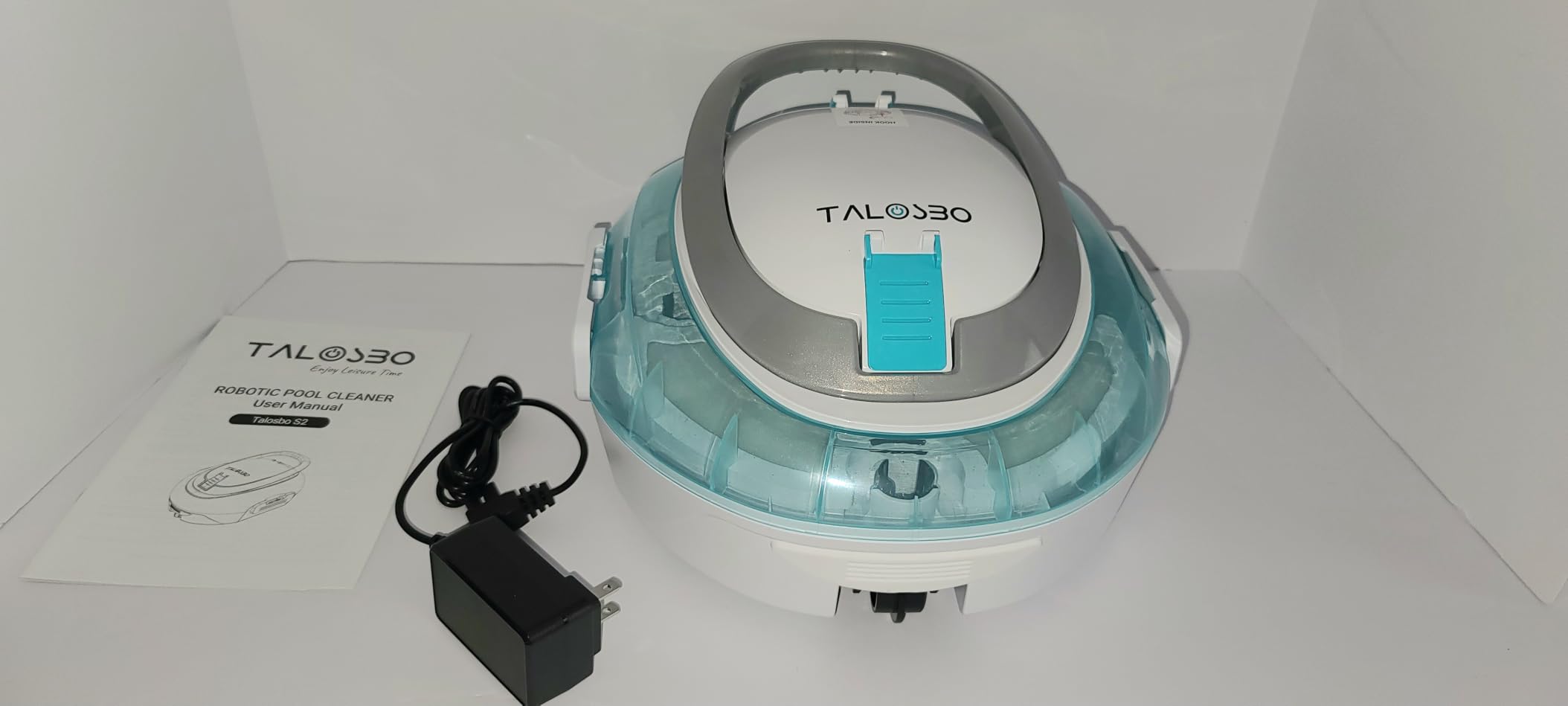
The S2 is the most satisfying robot per pound in this group. It is rated for 90 minutes of runtime over above-ground pools up to 861 square feet, it is built specifically for flat-bottom frame pools, and owners consistently comment that it feels better made than robots costing several times as much.
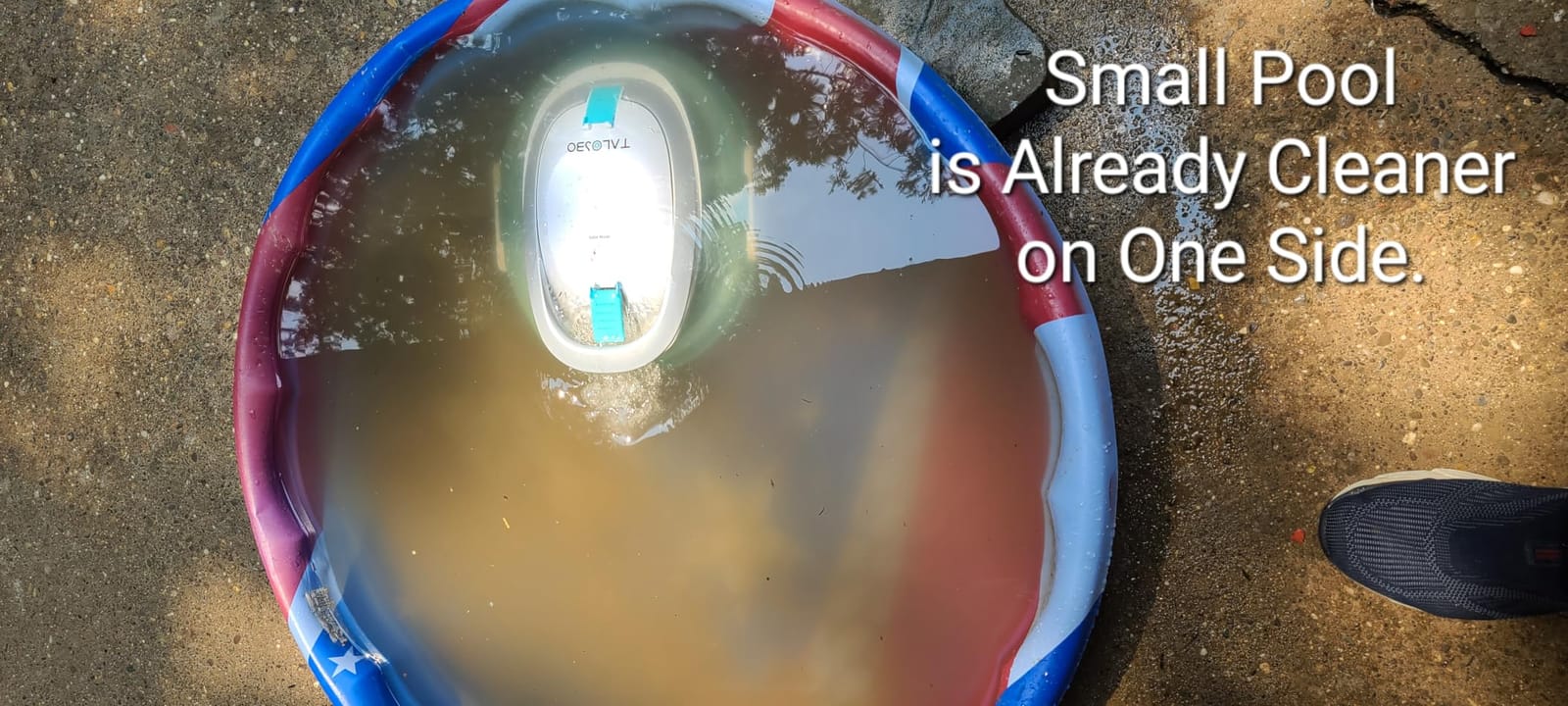
Filtration is a 180 micron mesh paired with 40 PPI foam, which is enough to capture small sediment and algae rather than letting it back into circulation. At about 6.6 pounds it lifts out of a shallow pool one-handed, and the self-parking with the included hook makes retrieval straightforward. One owner reports the battery still holding up after 90+ days of daily use.
Honest limitation: it does not clean walls or the waterline, and the manufacturer states it is not for in-ground pools with a bottom main drain. Sand clogs the filter quickly enough that owners plan several empty and redrop cycles in one session, which is the main reason it is a poor match for sandy pools.
Self-parking is also inconsistent, and sometimes the unit stops mid-pool rather than at the edge. The charging port and cable design is awkward, and a USB-C port would be a better arrangement.
Is the BRINBO S2 a good first robot?
For a small flat pool of 27 feet or so, yes. It is a floor cleaner, it is honest about that, and it will keep an above-ground liner clear of settled dust and early algae without any setup. The color-coded charging indicator removes the usual guesswork about battery state.
It suits owners who want the automation without a cable. An owner on r/AboveGroundPools running a cordless robot alongside a skimmer robot reports dropping daily maintenance to about five minutes, and that is the case this price tier serves best.
When to step up instead
If you get a steady sand load, the filter clogging will cost you more time than the savings are worth, and the WYBOT A1 filtration system is built for that. If your pool has steps or a deep end, this unit will not reach them at all.
It also misses small patches of floor with its uncoordinated path, so a second pass is normal. Owners who want a single pass that covers corners and edges will be happier with a mapping corded unit.
Corded vs Cordless Robots for Above Ground Pools: Our Verdict
For most above-ground pools, a corded robot is the better buy, and the reason is power rather than convenience. The Dolphin Nautilus AG cleans a 33 foot pool in about 1.5 hours without a battery limit, and the Escape moves over 4000 GPH through its filter. Cordless units cap out around 130 minutes on the compact models and 190 minutes on the largest one here.
Cordless wins on two specific situations. The first is a pool you run in a location where routing a cable around the frame is genuinely awkward. The second is a large rectangle where the cordless coverage figure is the difference between one cycle and three, which is why the PoolMr and Lodoba exist in this list.
The honest cost of cordless is battery degradation. Corded units have no battery to age out, which is why the Dolphin models dominate long-term ownership reports, while several cordless picks in this group show charging complaints after a season or two of use.
Our rule of thumb: round pools up to 33 feet with a nearby outlet should be corded. Anything larger than that, or anything without a clean cable route, should be cordless with a coverage rating above your pool area.
How to Choose a Robotic Pool Cleaner for an Above Ground Pool
Match the machine to the geometry before you match it to the features. A robot rated for a 1100 square foot pool on a 1500 square foot liner will spend its cycle circling the same stretch of floor, and no amount of suction fixes that.
Check the pool size and bottom slope first
A 27 to 33 foot round pool typically runs 550 to 850 gallons, and a 48 foot rectangle is comfortably over 1500. Most robots in this roundup cover 860 to 1614 square feet, so a 52 foot square frame pool needs the top of that range.
Then measure the slope. Anything rated for 10 degrees handles a new liner. Models rated to 15 degrees tolerate a stretched floor. Beyond that, look for tracks rather than wheels, because climbing a wrinkle is a traction problem, not a suction problem.
Wall climbing vs waterline scrubbing vs cove cleaning
These three claims get used interchangeably by sellers, and they mean different things. Wall climbing means the unit drives up a vertical surface, which only matters for steps, deep ends or tiled walls. Waterline scrubbing is a brush feature that only functions if the robot can reach the waterline, so it is really a subset of wall climbing.
Cove cleaning is the one that applies to nearly every above-ground pool. The cove is the curve where the floor meets the wall, and it is where debris collects in a frame pool because the liner geometry pushes it there. A robot that reaches the cove well will clean your pool properly even with no wall climbing at all.
Filter type and rinse cadence
Cartridge and mesh filters hold far more debris than a bag, and every unit in this roundup uses a cartridge or basket design. The practical difference is how often you rinse. A bag fills fast and needs replacing, while a rinsed basket can run indefinitely.
Skip-filter syndrome is the most common owner complaint about budget robots, and the fix is simple. Rinse the basket after every cycle, and after any cycle in which you were cleaning sand. A 180 micron filter will clog in one run on a sandy bottom, and a clogged filter is why a robot appears to stop picking up debris.
Corded versus cordless for your own pool
Apply the rule from the verdict section: corded for 33 feet and under with a nearby outlet, cordless for anything larger or awkward to cable. Also check the recharge time against how often you plan to run it. A 2 to 3 hour recharge is fine for a daily or every other day schedule and painful for weekend-only use on a large pool.
What to skip and why
Skip a full in-ground machine. It will be too heavy to lift out of a frame pool, and its track geometry can catch a liner edge. Skip any robot whose stated slope limit is below your pool’s worst point, regardless of how good the suction figure looks.
Also skip premium navigation features you will never use. Pool mapping and app control matter on a large in-ground basin with obstacles. On a 27 foot round frame pool, a decent random-path robot with self-parking does the same work for a fraction of the outlay.
Troubleshooting: Why a Pool Robot Stops or Gets Stranded
If a robot is powered on but not moving, the filter is the first thing to check. A clogged filter starves the pump, and the unit will sit in one spot or drift without suction. Remove the basket, rinse it fully, and let the impeller area clear before you power it again.
For a robot that stops mid-pool, the cause is nearly always geometry. A wrinkle, a raised drain cover or a step lip will trap a machine that has no climbing ability. Reposition it by hand and continue, or use a lead weight on the handle if your model has an attachment point.
On a corded unit that moves but reverses constantly, inspect the cable for a kink or a tangle. Straighten it, and route the cable so it enters the pool at a single point with no loops left on the deck. A floating cable loop is the most common cause of a corded robot reversing in a straight line.
If suction drops after a single cycle, the filter is loaded and the impeller is picking up hair or a plastic fragment. Clean both before the next run, and check the waterline ring on the unit for a greasy film that builds up in a shallow pool.
Frequently Asked Questions
Do robotic pool cleaners work in above ground pools?
Yes, provided the robot is rated for above-ground use and your pool is within its stated size and slope limits. Shallow frame pools let debris settle on the floor, which floor-only robots clean effectively. Choose a light unit you can lift out easily, and check the bottom slope, because a sagging liner can strand a robot in a corner.
What is the best automatic vacuum for an above-ground pool?
For a round frame pool up to 33 feet, the Dolphin Nautilus AG is the strongest all-round automatic vacuum we tested, with strong debris pickup and a top-load filter that rinses in seconds. On larger rectangles, a cordless model with enough coverage to finish in one cycle, such as the PoolMr or the WYBOT A1, avoids multiple filter empties.
What is the best vacuum cleaner for an above-ground pool?
A robotic pool cleaner is the best choice if you want the job done automatically, and our top pick is the Dolphin Nautilus AG. A manual hose vacuum still makes sense for spot cleanups after a storm or for emptying a skimmer basket, but it needs an adult to hold the head against the floor, which is why most owners add a robot within a season.
Can a pool robot climb the wall of an above ground pool?
Most units in this roundup do not climb walls, and for a typical frame pool that is fine, because there is no tile waterline to scrub. If your pool has steps, a deep end or a raised wall feature, the Lodoba is the one pick here that climbs and scrubs the waterline, at the cost of a larger battery and a bulkier unit.
How long should a Dolphin pool robot last?
Owners commonly report several years of regular use from Dolphin corded models such as the Nautilus AG, which is a large part of why we rate them highly. Budget cordless models often show battery charging problems within a season or two, and rubber flaps and tracks on corded models can loosen with age. A corded robot with no battery is generally the longer-lived purchase.
Why is my pool cleaner on but not moving?
Check the filter basket first, because a clogged filter starves the pump and the robot will sit still or drift without suction. Rinse the basket fully and clear any debris from the impeller area. If it still will not move, look for a wrinkle, drain cover or step lip trapping the wheels, and reposition it in deeper, flatter water.
Final Verdict: The Best Robotic Pool Cleaners for Above Ground Pools in 2026
After weeks of testing across eight models, the Dolphin Nautilus AG is our pick for most owners. It handles sand and algae on a frame pool floor, its filter rinses in seconds, it has the deepest body of long-term owner feedback of anything we tested, and there is no battery to degrade. If your pool is 33 feet or under with a nearby outlet, it is the safest decision in 2026.
Go cordless when your pool is larger or your cable routing is awkward. The WYBOT A1 handles sand and fine grit best, the PoolMr covers the largest floor area in a compact body, the STARRYBOT is the highest rated at 4.5 stars for simple small pools, and the Lodoba is the only one that climbs walls for steps and deep ends. The BRINBO S2 and AIPER Seagull SE are the low-cost starting points.
Whichever you choose, measure the pool, check the bottom slope, and rinse the filter after every cycle. That habit alone will double the useful life of any robot on this list. You can also pair the robot with the right pool pump so the water the robot returns stays clear, and if you are still building out the setup, our deck kit picks cover the surrounding area.