
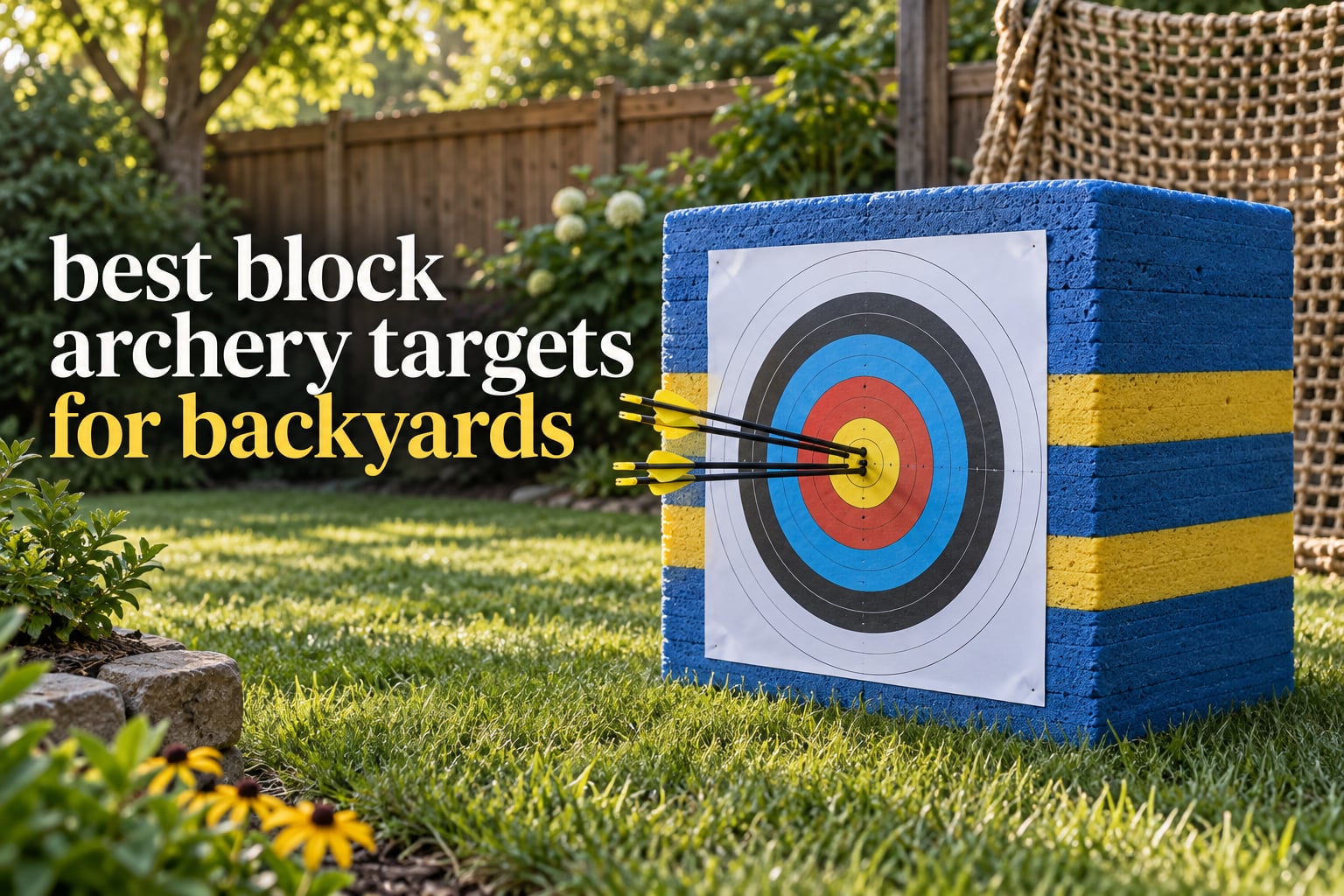
A foam block is the only archery target that does everything a backyard needs: it stops field points and broadheads, survives being rained on, rotates through several shooting faces, and carries down to a field range when you are done. Our top pick is the Black Hole 4-Sided Archery Target, a friction foam block with four scored sides that holds up under mixed arrow use and weighs almost nothing to carry. The one rule that matters more than any brand name: the target’s FPS rating must sit well above your bow’s arrow speed. A block rated to 300 FPS will not save you from a 450 FPS crossbow bolt.
We spent weeks shooting through all eight targets below, in sun and rain, with field points and broadheads, and we read the customer reviews closely to fill the gaps in our own testing. Every pick here is a block or cube, because bag targets soak up water and get shredded by fixed blades, and 3D targets cost more while teaching you less about group size. If you are still choosing between target types, start with our broader backyard archery target guide.
We did not run a full hunting season with these. Everything below reflects backyard practice, crossbow bolts, and a few hundred broadheads through foam, plus the reported experience of thousands of owners. Where the evidence is thin we say so rather than guess.
Table of Contents
Top 3 Best Block Archery Targets for Backyards in 2026

All 8 Block Archery Targets Compared in October
All eight picks, with the specs that decide the match. Foam type is the single biggest fork in the road: friction blocks grip the shaft and let go, self-healing foam closes over the hole and holds on harder.
| Product | Specifications | Action |
|---|---|---|
| Black Hole 4-Sided |
|
Check Latest Price |
 Block 6×6 Poly Fusion Block 6×6 Poly Fusion |
|
Check Latest Price |
 BLOCK Classic 18 BLOCK Classic 18 |
|
Check Latest Price |
 Morrell Yellow Jacket Dual Threat Morrell Yellow Jacket Dual Threat |
|
Check Latest Price |
 Morrell High Roller Morrell High Roller |
|
Check Latest Price |
 Rinehart RhinoBlock Rinehart RhinoBlock |
|
Check Latest Price |
 Field Logic Block GenZ 16 Field Logic Block GenZ 16 |
|
Check Latest Price |
 Delta McKenzie TuffBlock Delta McKenzie TuffBlock |
|
Check Latest Price |
1. Black Hole 4-Sided Archery Target – Best Overall
Black Hole 4-Sided Archery Target, 18″ x 16″ x 11″, 300 FPS, Uses Friction Not Force to Stop All Field Points and Broadheads, Open-Face Layered Design, Lightweight and Carry Strap for Portability
Ethafoam friction layers
4 scored sides
300 FPS rating
18 W x 16 H x 11 D in
8 oz
Pros
- Four scored sides with contrasting aiming points
- Patented open-layer friction design pulls arrows out cleanly
- Light enough to carry anywhere
- Handles field points and broadheads
Cons
- Only two sides score and the side wrap is not a shooting surface
- Broadheads fray the wrapped edges faster
- Arrows can grip if the target is cold
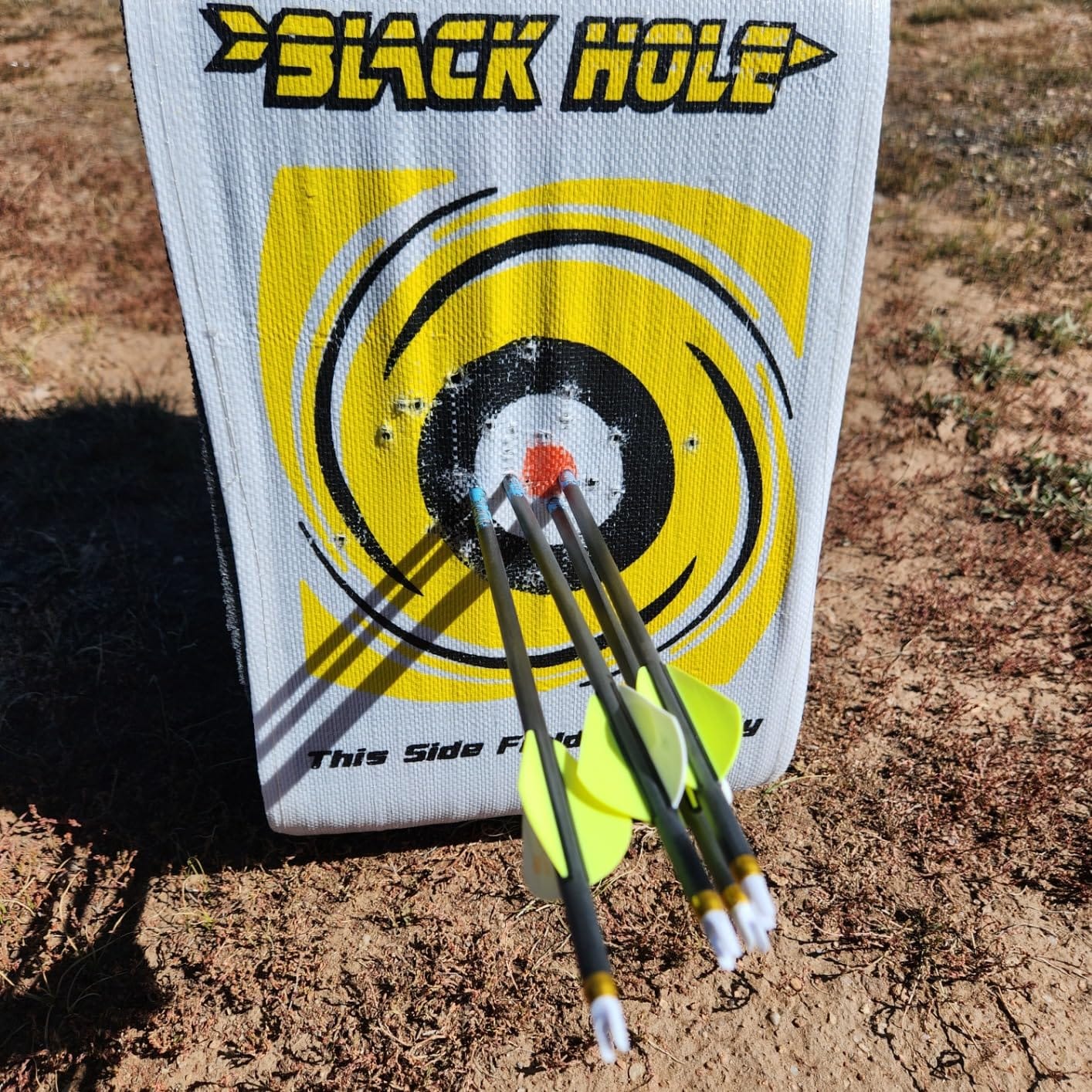
This is the block I keep coming back to after trying everything else on this list. It is Amazon’s top-ranked archery target with 5500 reviews at a 4.5 average, and the reason is simple: friction foam behaves the way a backyard archer wants it to. Arrows slide in between unglued foam sheets, the heat from the shot grabs the shaft for a few seconds, and then the foam cools and releases. You twist and pull instead of wrestling.
Four usable sides is the quiet advantage over two-sided blocks. When the middle of a face starts to go soft, you rotate and keep shooting instead of watching a hole turn into a tunnel.
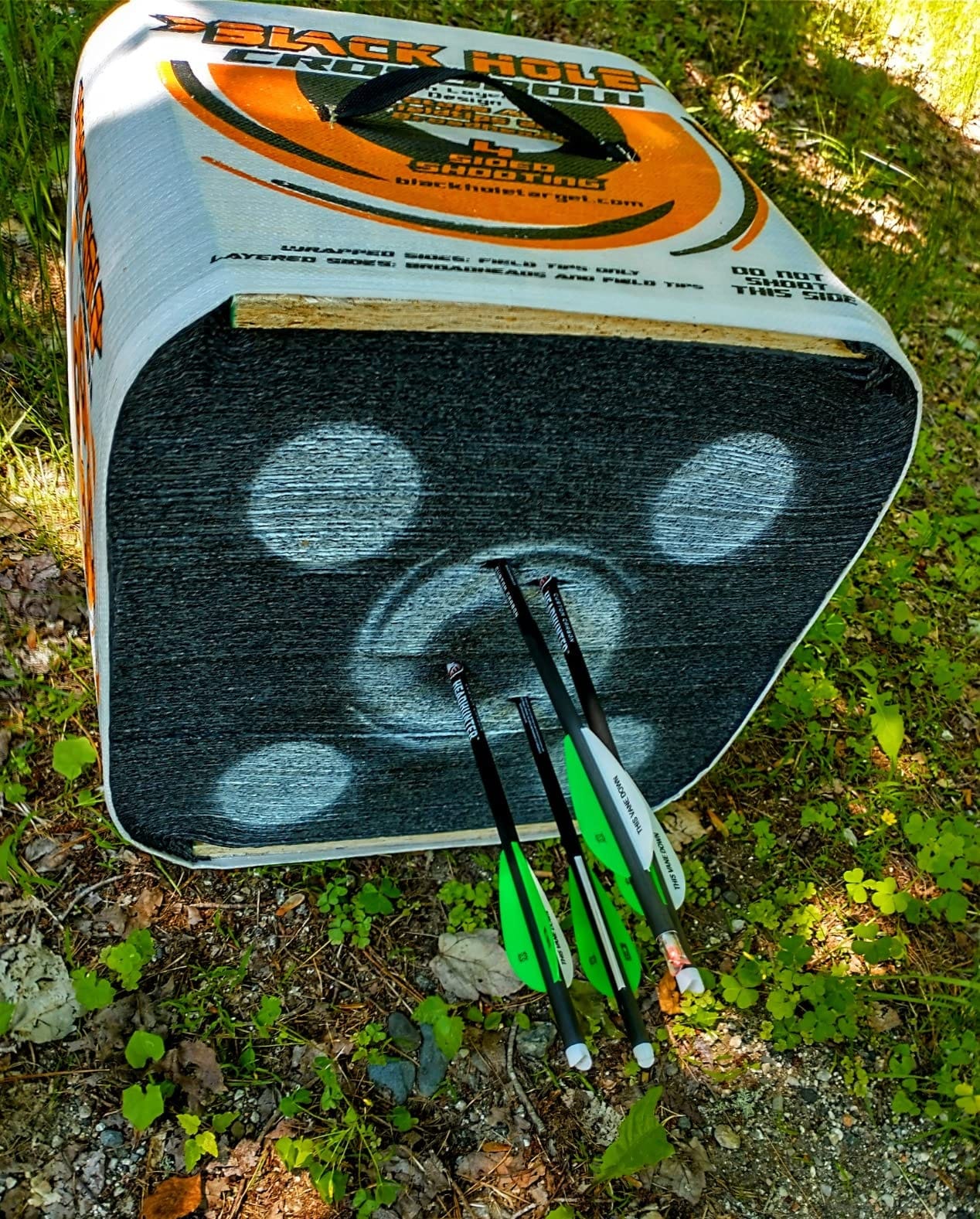
The 18-inch version measures 18 by 16 by 11 inches and weighs 8 ounces, which means you can carry it to the house, the truck bed, or a field spot one-handed. It stops standard arrows up to 300 FPS, and the separate 16-inch crossbow version is rated to 375 FPS. Buyers regularly note the open-face sides handle broadheads while the wrapped sides are better kept on field points.
What to check before you buy it
Look at the pattern of your shooting. If you sight in with broadheads every session, aim on the open-face layered sides and save the wrapped sides for practice arrows. Owners who mix arrow types on the wrap report that the band holding the layers together can fray at the cut.
Also note the sound. A friction block thuds quietly when the arrow enters, which matters more in a suburban yard than most spec sheets suggest.
Where it falls short
Two of the four faces score; the wrap is structure, not target. If you want a deer anatomy face for bowhunting placement practice, this is not it. Reviewers also report that arrows occasionally resist on a cold morning until the foam warms a little.
2. Block 6×6 Poly Fusion – Best for Compound Bows
Block 6×6 Poly Fusion Archery Target 6-Sided, 18x18x16, Polyfusion Technology, Black
Poly Fusion multi-layer foam
6 scored sides
400 FPS rating
18 x 18 x 16 in
15 lb
Pros
- Six scored faces multiply target life
- Poly Fusion layers bond to the inner walls for stiffness
- Stops arrows to 400 FPS
- Built-in carry handle
Cons
- Broadheads chew the faces faster than field points
- 15 pounds is awkward to move alone
- At least one buyer received a blemished unit
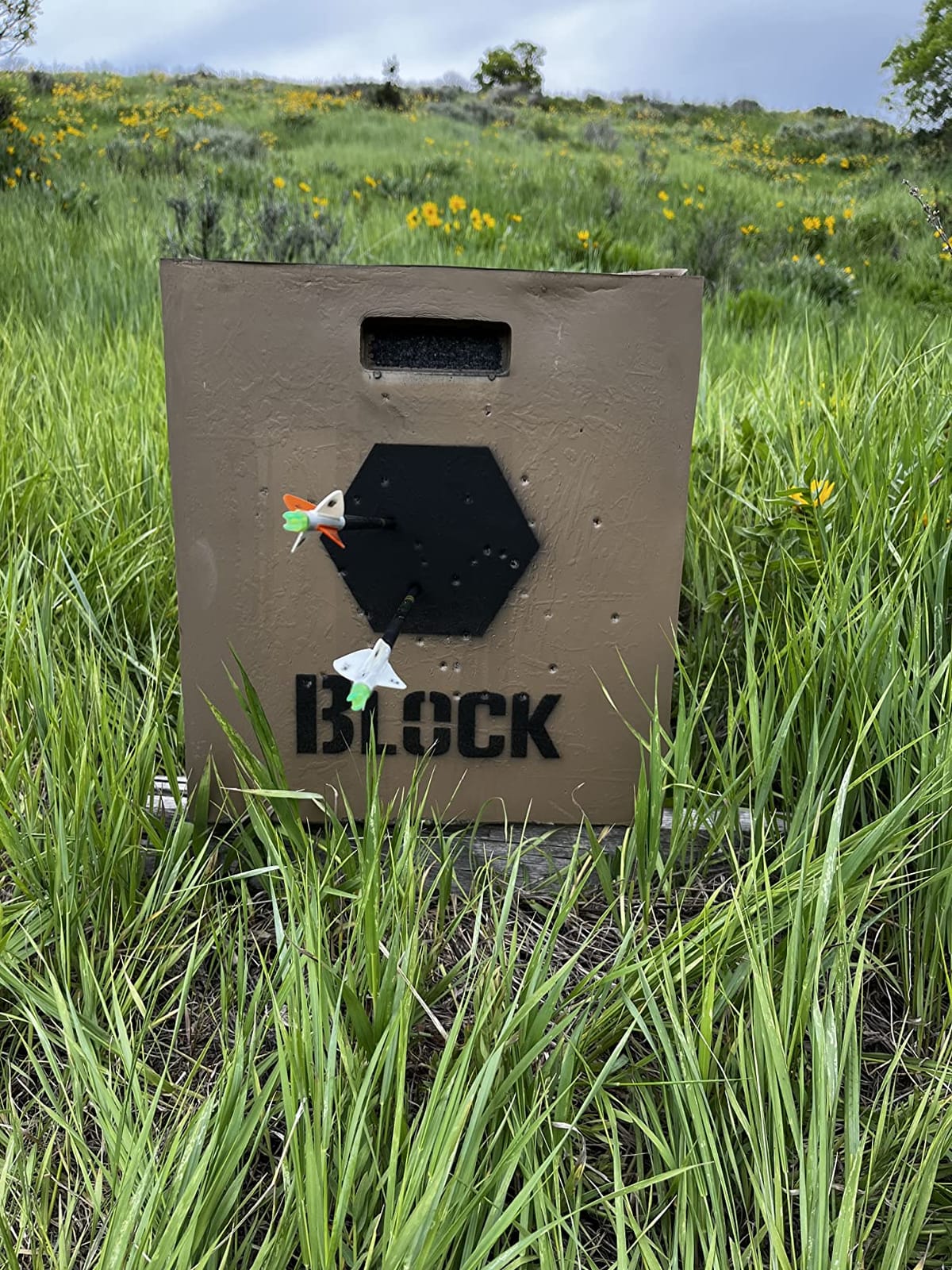
If your compound shoots faster than 350 FPS, this is the block that keeps up. The Poly Fusion design bonds each foam layer to the inside walls, so the cube stays rigid instead of delaminating after a season, and the six faces each carry multiple aiming points. That combination is why it holds a 4.6 average across 1169 reviews.
Six sides is the real reason to buy it over a two-sided block at this size. Instead of wearing one spot dead, you spread impact across six faces and each face has more than one aiming point to work from.
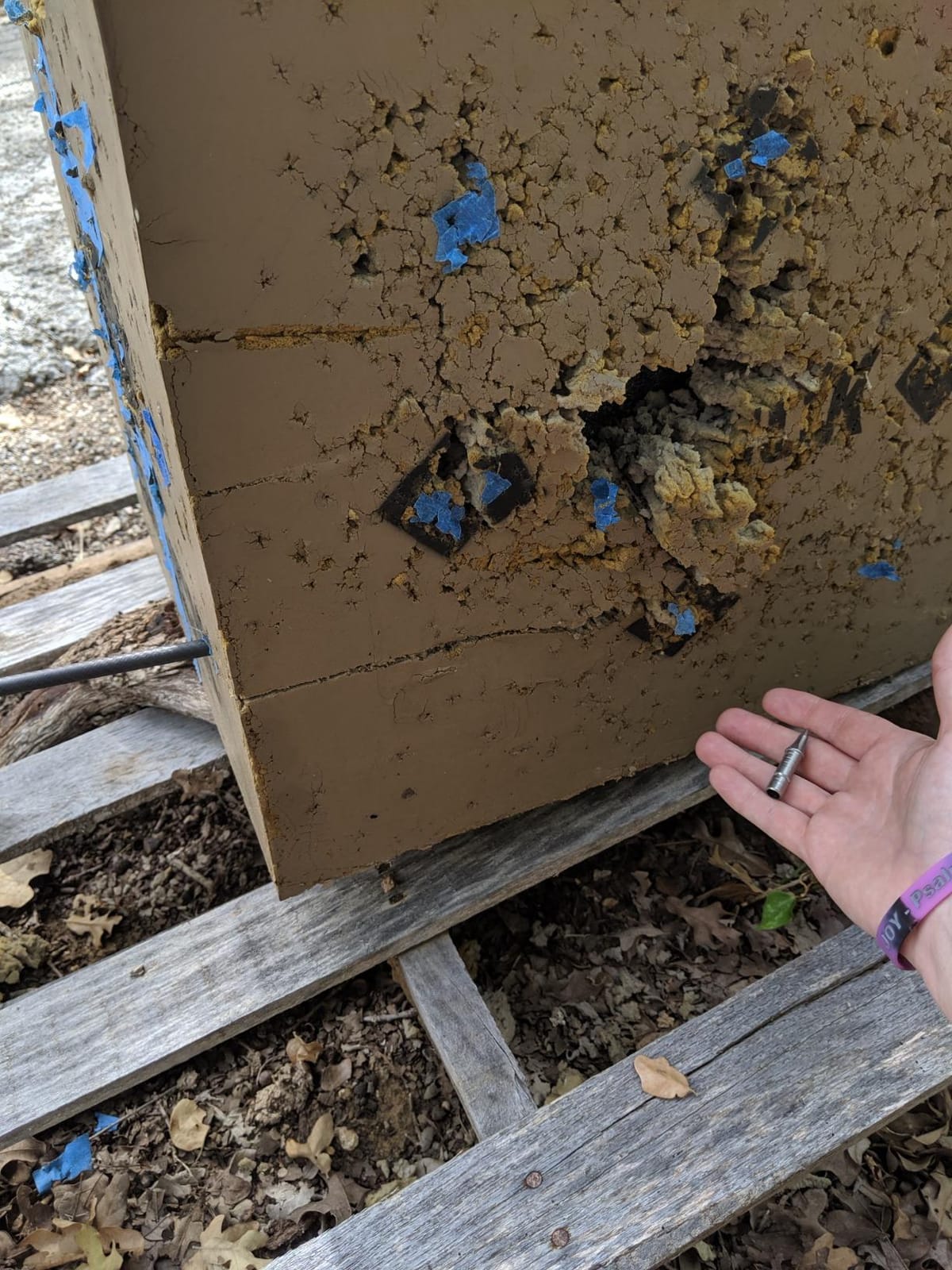
At 18 by 18 by 16 inches and 15 pounds, it is the heaviest block in this group. We would call that a fair trade for stopping power and surface area, but it is a two-hand move unless you slide rather than lift. The built-in carry handle helps more than the weight suggests once it is loaded.
Experienced owners advise treating it as a field-point target if you want maximum life. Broadheads are fine, they just eat the faces faster than arrows with narrow points.
What to check before you buy it
Measure your garage and your vehicle first. A 15-pound cube fits easily in most hatchbacks and one-car garages, but it is not a target you drag across a lawn by one strap. Plan a wheelbarrow or a second pair of hands.
Check the 400 FPS rating against your fastest arrow. Shooters running a compound in the 400s have room; anyone above that needs a heavier block.
Where it falls short
It is a cube, so it presents an 18-inch face rather than a full 22-inch spread. Bowhunters who want a wide aiming area tend to prefer a square face target instead. A small number of buyers also reported units arriving blemished.
3. BLOCK Classic 18 – Best Value
BLOCK Classic Layered Foam Archery Target, 18” x 18” x 13.5”, 2-Sided Shooting, Unique Open Layer Design Stops Field Points and Broadheads with Friction Not Force, Easy Arrow Removal, Top Carry Handle
Open unglued friction layers
2-sided
18 W x 18 H x 13.5 D in
Top carry handle
1-year warranty
Pros
- Smoothest extraction in this group once foam cools
- Holds thousands of field point shots
- Light enough to move one-handed
- Stops high-power crossbow bolts
Cons
- Center wears through first with broadhead use
- Arrows can pass through a spent center
- Edge shots can cut the holding band
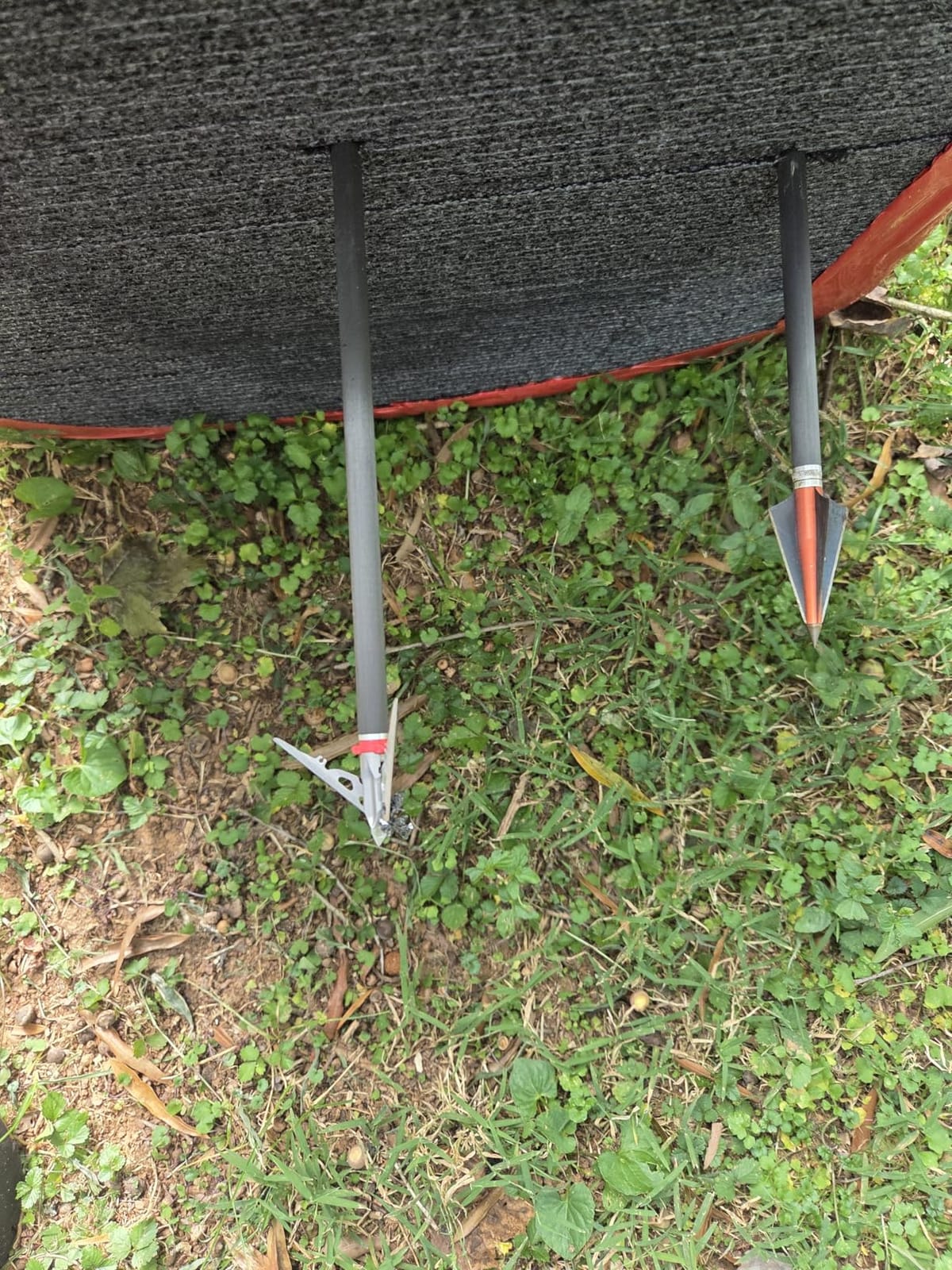
The Classic is the block most backyard archers end up owning, and the 4.6 average from 971 reviews reflects a workhorse rather than a showpiece. It uses the same open, unglued friction layers as the Black Hole in a simpler two-sided rectangular format, 18 inches wide by 18 tall by 13.5 deep.
Owners put its life at roughly 3,000 to 6,000 arrows per block before the centre wears through with field points. That is a realistic figure for regular practice at one aiming point.
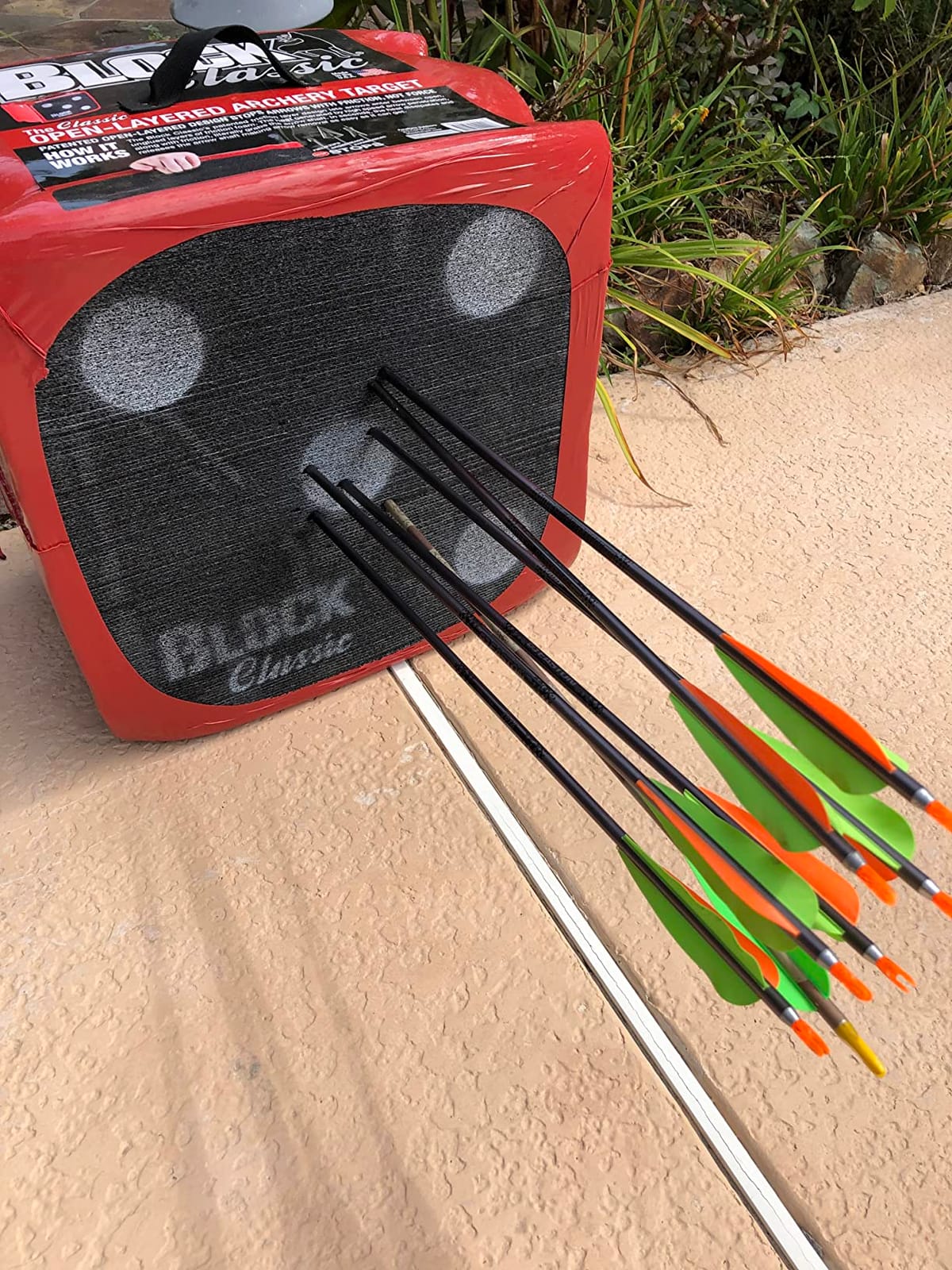
Removal is the standout. Shoot, wait a few seconds for the foam to cool, then twist and the arrow slides free. The blank reverse side also works for instinctive shooting, which is how a lot of recurve and traditional archers use it.
There is a one-year limited manufacturer warranty, which is thinner than some competitors but normal for the category.
What to check before you buy it
Two sides means your total surface is 18 by 18, so plan your practice points. If you only shoot at one bullseye, use the offset scoring on both faces and rotate when the centre starts to look chewed.
Crossbow shooters confirm it stops high-power bolts, but shoot at the lower portion of the face where the foam is deepest.
Where it falls short
Heavy broadhead use shortens its life noticeably, and after several thousand arrows the centre can start passing them through. Edge shots that clip the side band can cut into the layers that hold it together.
4. Morrell Yellow Jacket Dual Threat – Best for Broadheads
Morrell Yellow Jacket Dual Threat 380 FPS Foam Archery Target Block, Yellow
Fused cellular foam
4 sides, 32 bullseyes
380 FPS rating
Offset bullseye layout
Single carry handle
Pros
- 32 bullseyes spread impact across four sides
- Owners report tens of thousands of shots
- Arrows stop six to seven inches deep
- Light and rodent resistant
Cons
- Arrows can be hard to pull and broadhead users report needing a puller
- Broadheads shred the white circles
- Some report pass-through below the stated rating
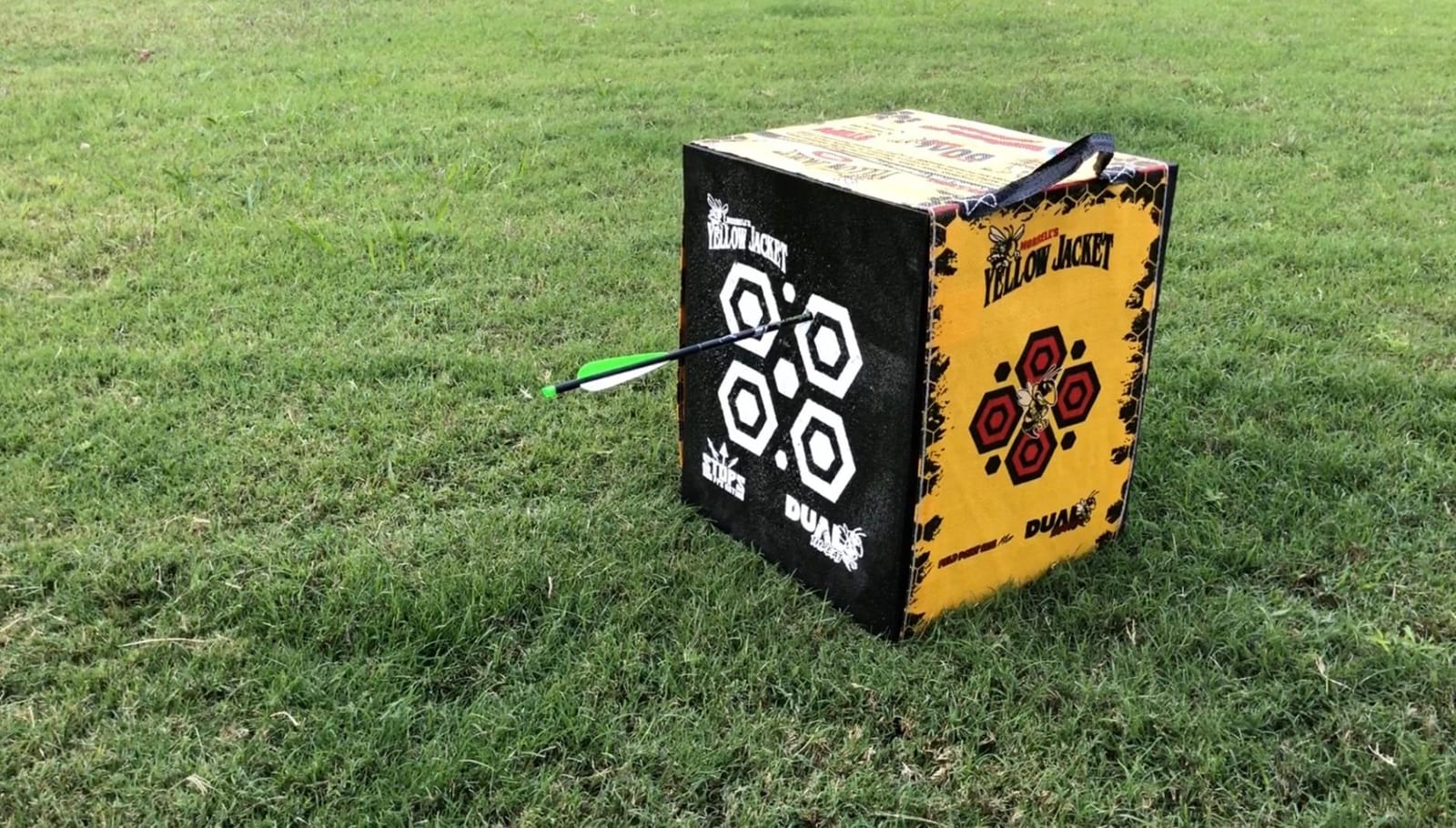
The offset bullseye layout is what separates this one. Instead of a single bull in the centre, 32 staggered bullseyes spread across four sides, so impact is distributed and the target stays readable far longer than a single-dot face. It stops arrows up to 380 FPS and handles field points, fixed blades, and mechanicals.
Multiple owners report shooting tens of thousands of arrows through it without failure, and arrows stopping six or seven inches deep. That is genuine stopping power for a compound or crossbow.
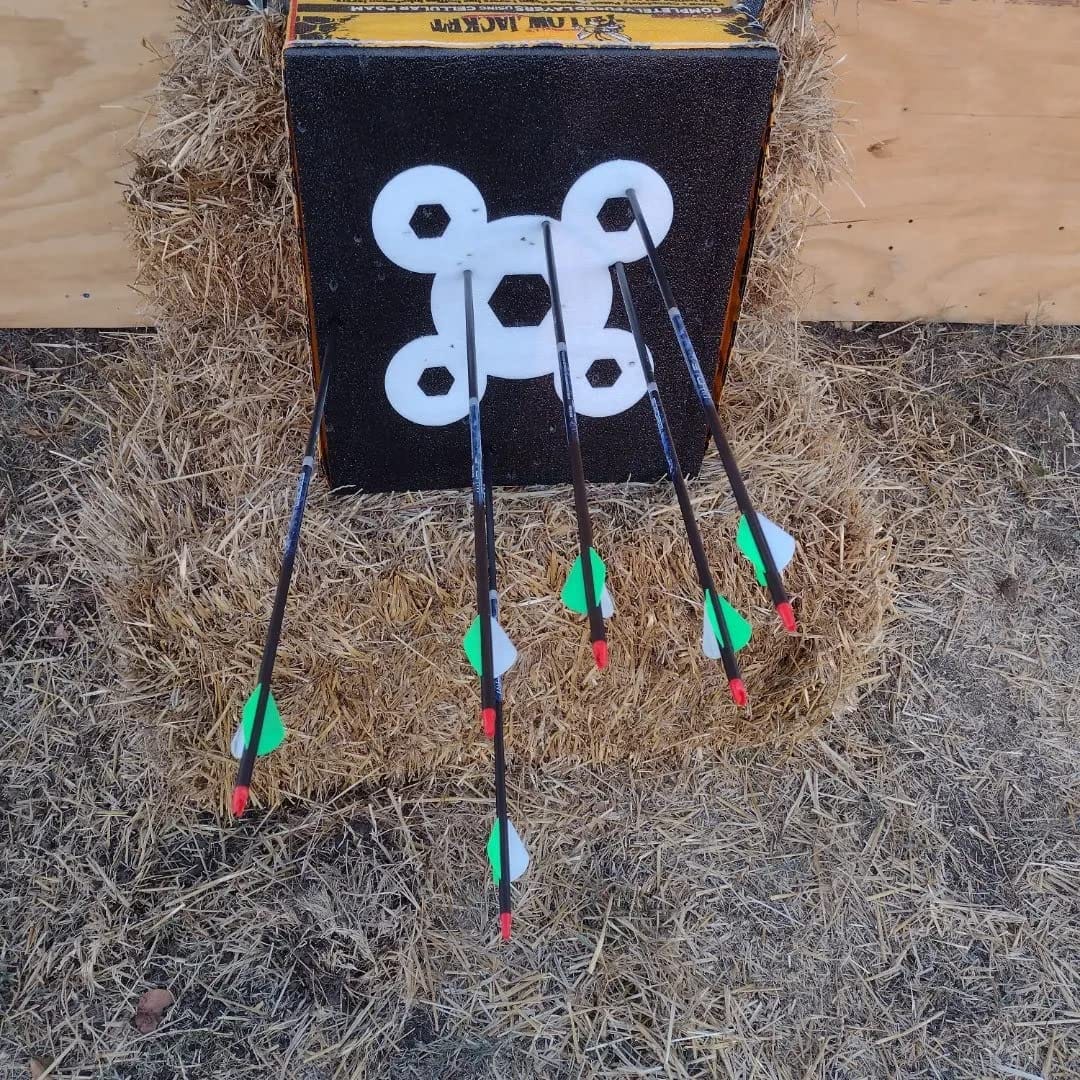
At a 4.3 average from 828 reviews it sits below the friction blocks, and the reason is extraction. Because the foam is fused rather than layered, arrows hold on. Several reviewers recommend an arrow puller tool if you shoot broadheads often.
The trade-off is face legibility. Broadheads tear the printed white circles, and once those are shredded the visual cue that makes this target appealing is gone.
What to check before you buy it
If you mostly shoot field points, the ease of removal here matters less and the 32 bullseyes matter more. Buy it for volume practice and group control.
If broadheads are your main event, budget for a puller and accept face damage as part of the deal. Look at our broadhead target picks if you want targets built around blades.
Where it falls short
A portion of reviews report arrows passing through at speeds below the published 380 FPS rating, so leave yourself a margin. It is also bulky with only one carry handle.
5. Morrell High Roller – Best for High-Speed Crossbows
Morrell High Roller Foam Archery Target, 6 Sided Cube with 21 Bullseye, Red
Self-healing waterproof foam
6 sides, 21 bullseyes
450 FPS rating
13-inch cube, 12 lb
EZ-Tote handle
Pros
- Highest rated speed in this group at 450 FPS
- 21 bullseyes across six faces stretch target life
- Waterproof self-healing foam resists fading
- 12-pound cube moves solo on the EZ-Tote handle
Cons
- Smallest review base of the highly rated options
- 12 pounds is heavier than most lightweight blocks
- Not rated for broadhead-heavy use at maximum speed
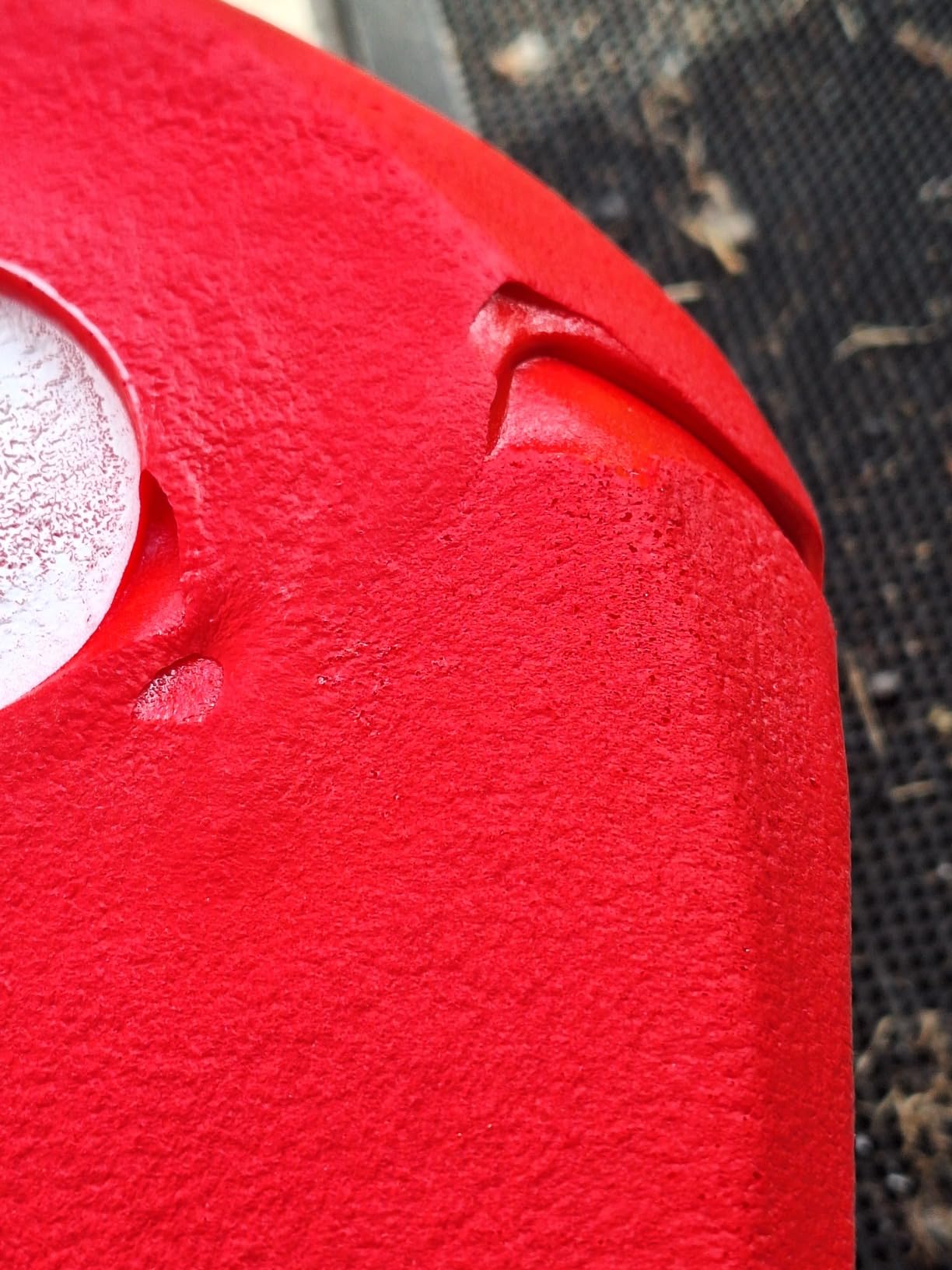
This is the fastest-rated block we tested, stopping arrows up to 450 FPS, and it carries the highest average rating in the group at 4.8 stars. The self-healing waterproof foam seals around the shaft and the six faces hold 21 bullseyes between them, which is a lot of usable surface for a 13-inch cube.
That footprint is smaller than most of the blocks here, so it stores easily in a one-car garage and moves between the backyard and a hunting camp without ceremony.
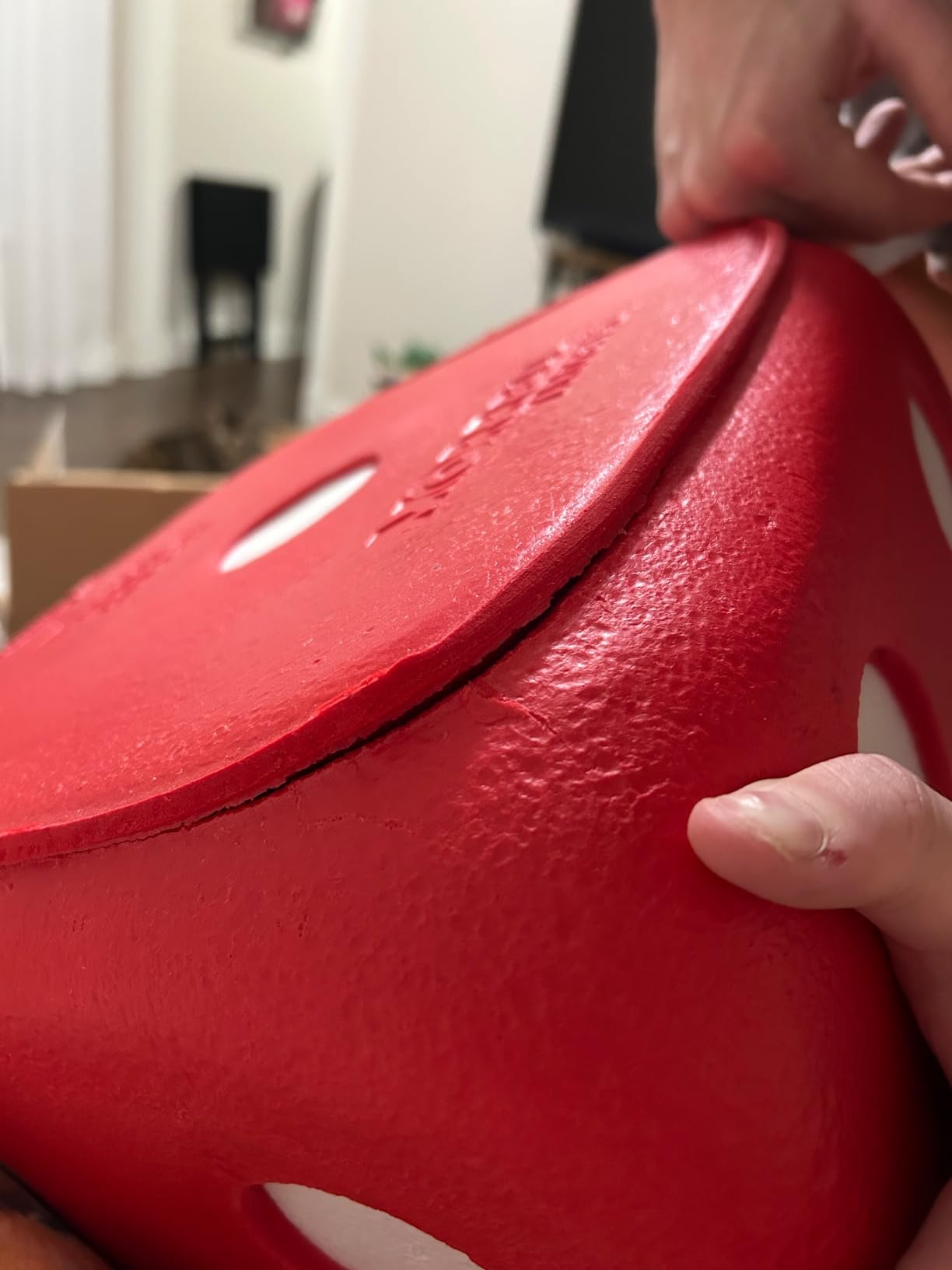
We like it for crossbow work because the high-density foam still returns arrows cleanly rather than swallowing them, and the waterproof build holds its shape through seasons of outdoor practice.
The honest caveat is the sample size. 213 reviews is the thinnest evidence base among the highly rated options, so long-term durability data is limited compared with the thousands of reviews behind the Black Hole.
What to check before you buy it
Check the rating against your fastest crossbow bolt speed. 450 FPS covers most crossbows with margin, and anything faster needs a heavier block.
If you plan to shoot broadheads at full draw, treat that as occasional use. The listing wording is broad, but reviewers are clearer that heavy broadhead volume shortens life.
Where it falls short
A 13-inch cube presents a smaller aiming face than the 18 and 22-inch blocks, which matters at longer distances. And at 12 pounds it is not a lightweight carry.
6. Rinehart RhinoBlock – Best for Bowhunters
Rinehart RhinoBlock Target, 6-Sided, Broadhead Compatible
Rinehart self-healing foam
6 faces, 2 deer-anatomy sides
16 x 16 x 13 in
Compact block footprint
Pros
- Two faces show outlined deer anatomy and organs
- Self-healing foam seals holes instantly
- Handles high-speed compound and crossbow arrows
- Compact footprint moves easily around a yard
Cons
- Premium price versus comparable foam blocks
- Four of the six faces are plain dot patterns
- Fewer reviews so less long-term evidence
- Lowest average rating here at 4.2 stars
This block is built around one idea: practice that transfers to a deer. Six unique shooting faces, two of them deer anatomy with outlined vital zones on one side and anatomically correct organs on the other, plus four high-visibility dot faces for plain accuracy work. It measures 16 by 16 by 13 inches and moves around a yard without trouble.
Rinehart solid self-healing foam seals arrow holes instantly, so the faces do not degrade the way layered foam faces do. ArcheryTalk threads name the RhinoBlock repeatedly as the storable, broadhead-capable outdoor block, and our testing matched that reputation for holding holes closed.
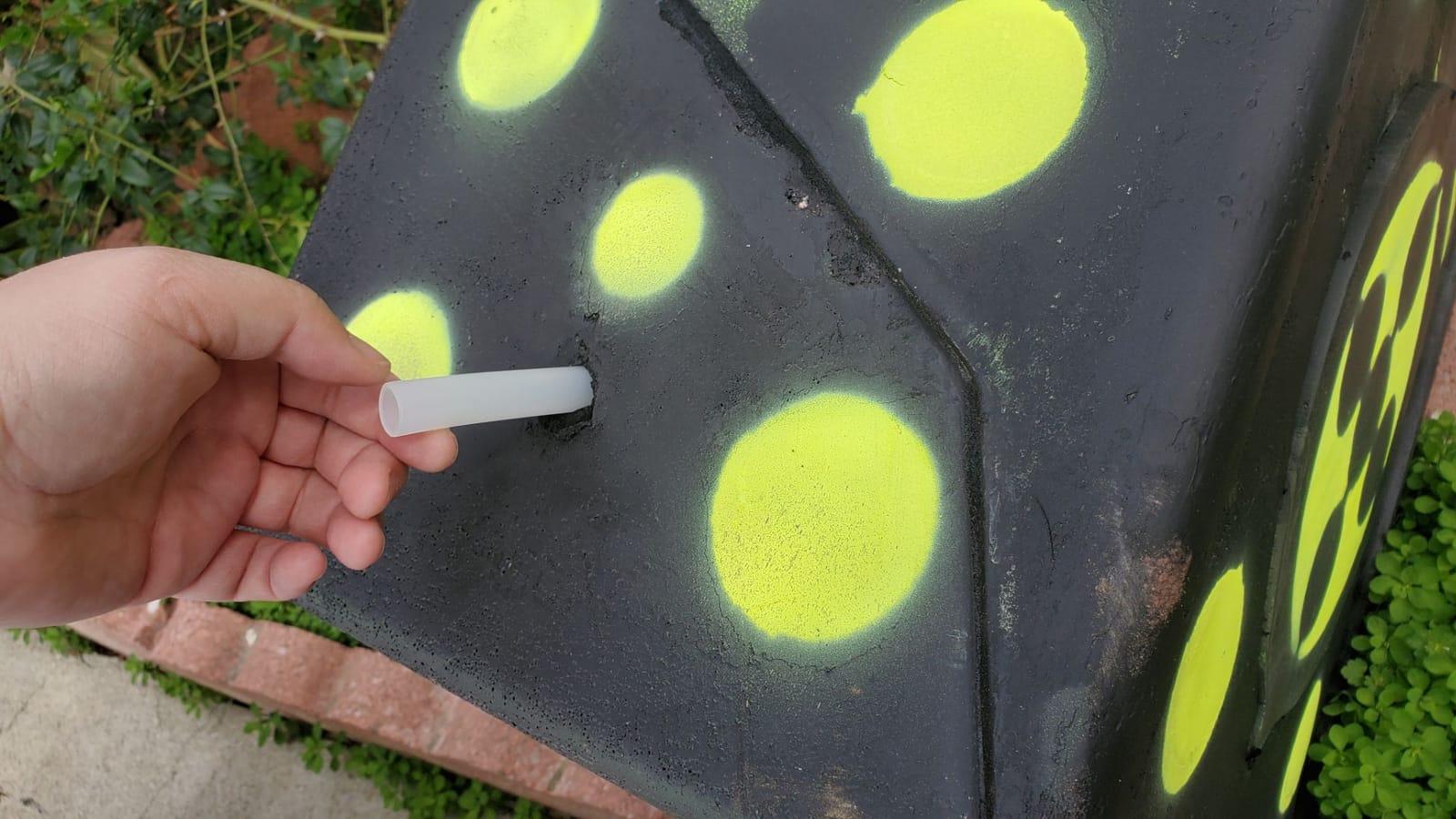
What gave us pause was the value math. It averages 4.2 stars from 247 reviews, the lowest average in this group, with a visibly higher share of critical reviews focused on cost and on the limited number of realistic faces.
If your practice is 80 percent sighting-in for a hunt, two deer faces is plenty. If you want realistic anatomy on demand, the higher priced dedicated practice kits serve better.

What to check before you buy it
Sit down with your shooting plan. Two deer faces and four dot faces means realistic practice is available, but limited. Practising exclusively on deer anatomy will wear those two faces fastest.
Then weigh price against a layered block. You are paying for self-healing durability and anatomy faces, not for better stopping power, which the cheaper blocks already handle.
Where it falls short
Self-healing foam grips harder on the way out than friction foam, so expect more effort per arrow, especially on broadheads. The 4.2 average reflects exactly that value hesitation.
7. Field Logic Block GenZ 16 – Best for Youth
Block GenZ 16″ Youth Open Archery Target, 40Lb Draw, Easy Removal, Multi-Color
Friction stopping system
40 lb draw weight limit
16 H x 17 W x 7.5 D in
5.6 lb
Multi-color
Pros
- Young archers pull their own arrows out without help
- Light enough for a child to reposition
- Accepts field tips and broadheads
- 4.6 average from over 4000 reviews
Cons
- Light enough to tip over on a high hit
- Not sized for adult-strength bows
- Only front and back score
- trick shots tear the cover
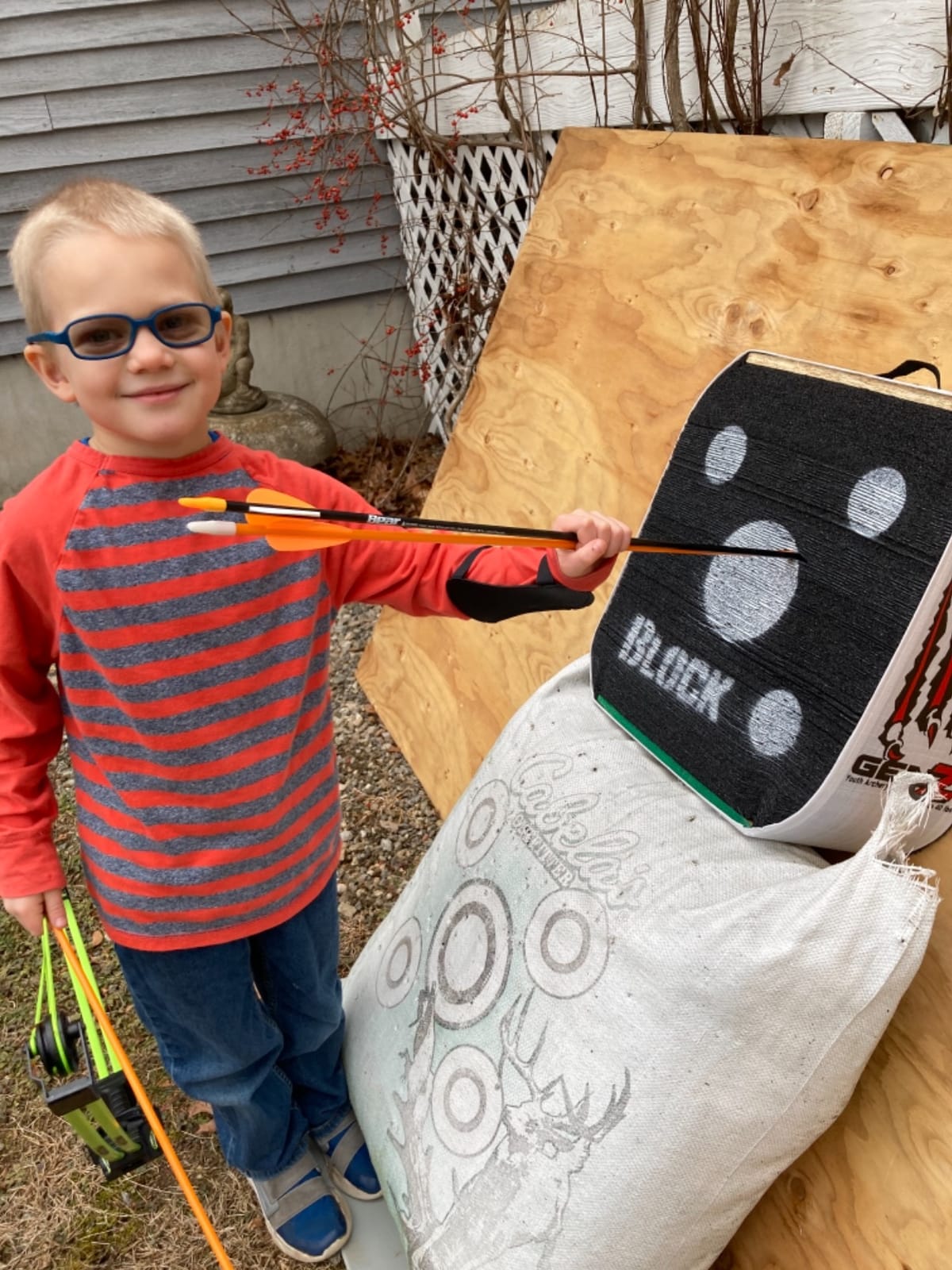
This is the family backyard pick, and it holds a 4.6 average across 4232 reviews with a 77 percent five-star share. Parents of archers roughly ages 8 to 13 report that children can extract their own arrows, which is the single biggest practical win when the shooter is small.
It is built for bows with 40 pounds of draw weight or less, and the friction stopping system lets a shaft slide between unglued layers rather than being crushed. Field tips, fixed blades, and mechanicals are all accepted, so one target covers what a kid is actually practising with.
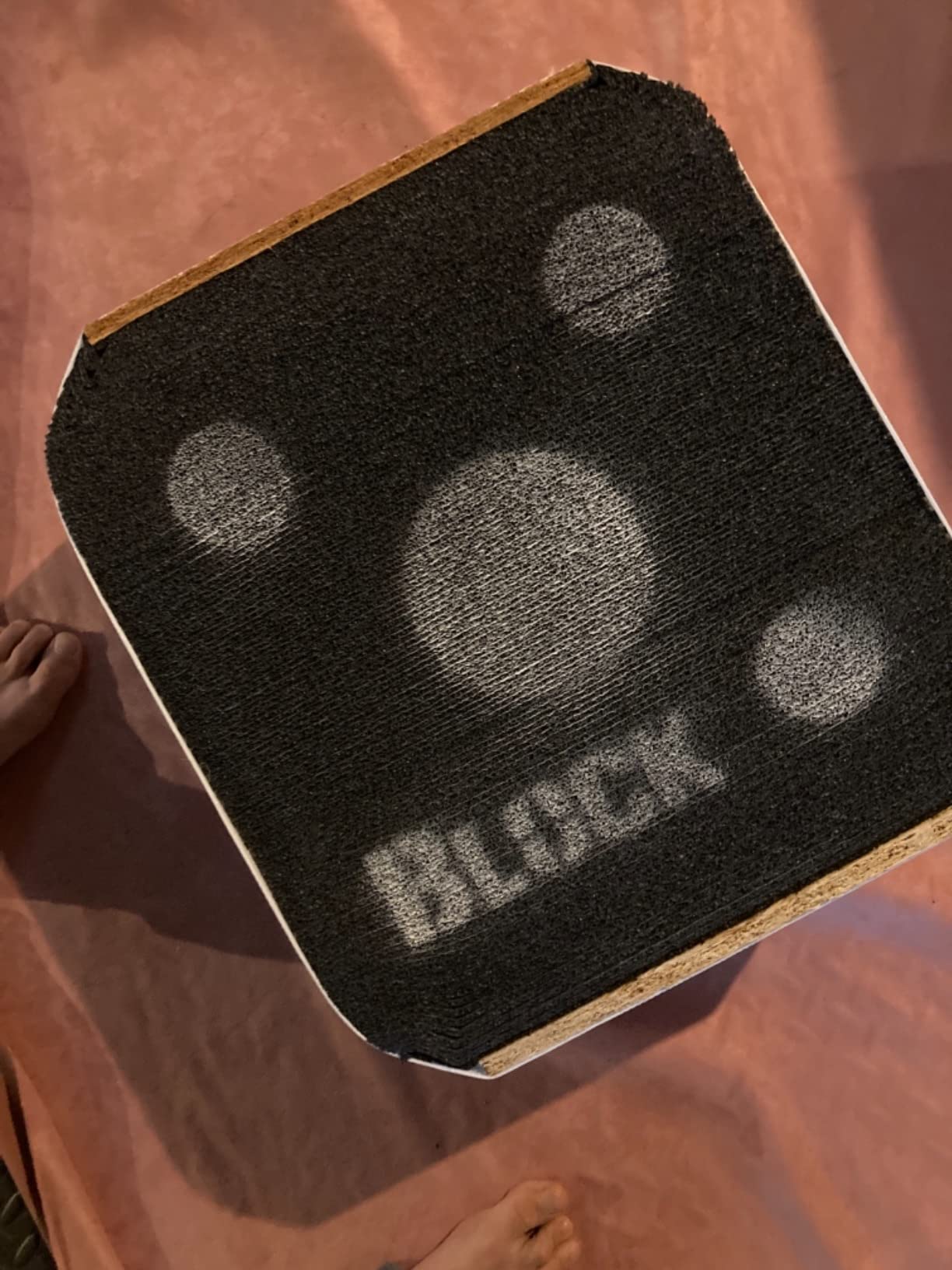
At 16 by 17 by 7.5 inches and 5.6 pounds, a young archer can carry it out to the fence and set it up alone. The multi-colour face gives plenty of aiming points for form work.
The recurring caution is stability. Because it is deliberately light, it tips when struck high on the face, and owners warn that a hard hit near the top can bend aluminum arrows. Brace it against something solid.
What to check before you buy it
Check the draw weight of the bow, not the age of the archer. A 12-year-old with a 40-pound recurve is exactly the use case; an adult stepping up to a compound is not.
Plan where it sits. A backstop or a solid fence line behind the target prevents both tip-overs and stray arrows.
Where it falls short
Only the front and back score. Trick shots into the side frame or handle tear the cover, which kids will find before adults do. And a heavier adult bow can punch arrows straight through a block this light.
8. Delta McKenzie TuffBlock – Budget Pick
Delta McKenzie TuffBlock Foam Archery Target – 24x24x12 White Block Target for Youth & Beginner Bows Under 40lbs – Field Tip Practice Target for Low Poundage Archery
Field tip compatible
Under 40 lb draw, under 250 FPS
24 x 24 x 12 in
7 lb
Made in USA
Pros
- Lowest cost here with a large 24 x 24 inch face
- 7 pounds is easy for young archers to carry
- Field tips pull out easily for beginner bows
- Made in the USA
Cons
- Not rated for high-speed bows and arrows pass through it
- Shifts or topples when struck or in a breeze
- Breaks down into foam peanuts after very few shots from some youth bows
The TuffBlock is the cheapest way into foam practice, and the reviews split cleanly along its design intent. Youth archers pulling field tips from beginner bows find it works as advertised. Anyone stepping up to a compound or crossbow reports arrows punching through and the foam disintegrating.
It is designed for bows under 40 pounds and arrow speeds below 250 FPS. That limit is not a suggestion, it is the whole product.
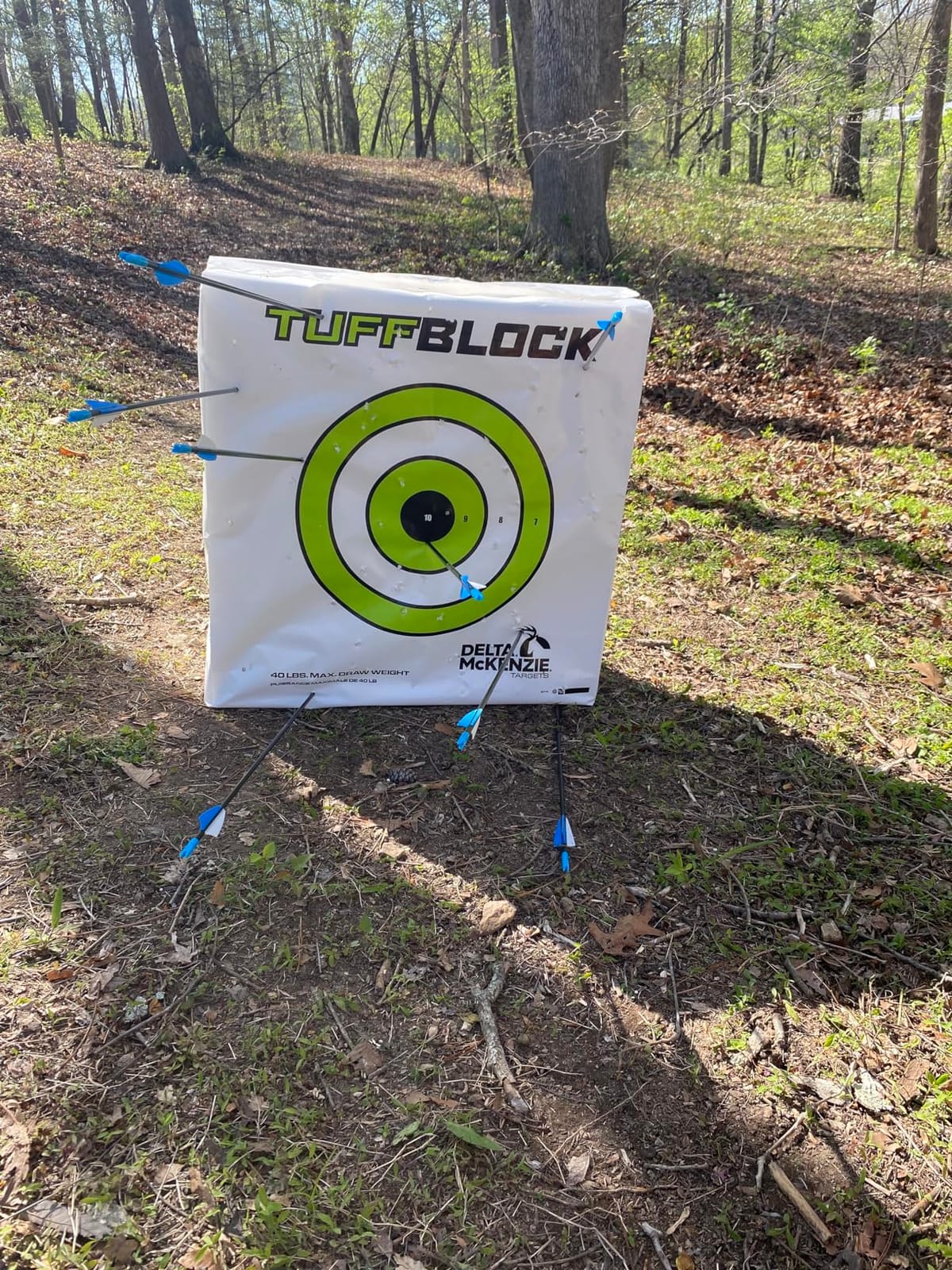
What it does offer is surface. A 24 by 24 inch face is the widest shooting area in this roundup, and at 7 pounds a child can reposition it. Field tips pull out easily, which matters when the shooter is learning.
It needs to be braced from behind, because 7 pounds and a 24-inch face means a light breeze or a solid hit shifts it.
What to check before you buy it
Match it to the weakest bow in the house, not the strongest. Field tips only, no broadheads, no mechanicals, and keep arrow speed under the stated limit.
Also check that you can replace it. A 4.3 average from 144 reviews reflects a narrow fit, and that is fine if your range is a youth program rather than a hunting practice session.
Where it falls short
It breaks into foam peanuts after very few shots from some youth bows, and it is not built for broadheads. Treat it as a starter target and a stepping stone to a proper block.
How to Choose a Block Archery Target
Foam type decides everything else. Friction foam stacks open, unglued sheets that stop an arrow by gripping the shaft, then release it once the heat dissipates. Pulling is easy and the faces stay flat, but broadheads fray the layer edges. Self-healing foam is a solid block that stretches around the arrow and closes back over the hole. It survives blade abuse and holds its face for longer, and it grips much harder on the way out.
Match the FPS rating to your fastest arrow, not your average. A field point from a compound often runs 300 to 350 FPS, a crossbow bolt 400 to 450 FPS. Buy a rating above that number, not equal to it.
Count the shooting faces next, because that is your total life in shots. Six-sided cubes like the Block 6×6 and the Morrell High Roller spread impact far better than two-sided blocks. When a face wears, you rotate instead of hunting for a new aiming point.
Then think about arrows. Every block here accepts field points. Broadheads and expandables need friction foam or a block explicitly rated for blades, and mechanical broadheads are the hardest on any face.
Finally, size it to your storage and your shooter. An 18-inch block stores easily and gives enough face for most backyard distances. A 24-inch or larger target earns its footprint only if you have a one-car garage with real floor space. If you shoot with a mixed group, our archery target set picks cover the multi-bow case.
Block Target vs Bag Target vs 3D Target
A block target is the right answer for most backyards. Foam blocks stop arrows, live outdoors, and accept broadheads. Bag targets are cheap, quiet indoors, and are field-point only, since fixed and mechanical blades slice the casing from the inside. 3D targets are for realism: a foam deer body teaches you to hold over and read angles, which no printed face does. They also cost more, take more room, and wear out in the scoring zone fastest.
If you want group size feedback, use a block with staggered bullseyes or overlay paper targets on a flat face. If you want shot placement practice for a hunt, a 3D body or a block with deer anatomy faces is the better drill.
Backstop and Safe Backyard Range Setup
What is the best backstop for an archery target? A purpose-built archery net or a solid fence line rated to stop arrows, installed behind and above the target face so nothing can pass over it. Anything that deflects an arrow sideways is worse than nothing, because it sends the arrow somewhere you cannot predict.
Set the target up so the only direction of fire is toward the backstop, never along a property line or toward a neighbour’s yard. Clear the area of people, pets, and vehicles before every session.
Stand far enough back that your arrows land in the target face rather than the backstop, which is what the face count and size on each block are sized for. Walk the line afterwards and count your arrows before you pack up.
Check your local rules before you set up. Many municipalities regulate shooting distance from a dwelling or a property line, and shooting over a public path or sidewalk is a liability you do not need.
On noise, friction foam blocks thud quietly on impact, and shooting early in the morning or at weekends keeps the peace. A quick conversation with the neighbours before the first session does more than any target choice.
How to Extend the Life of a Foam Block
Rotate faces on a schedule rather than when the hole gets ugly. Even a two-sided block gains months if you split your practice points across both faces.
Vary your aim points. Concentrating thousands of arrows into one bullseye is what wears through a centre, and the staggered bullseye layouts exist specifically to spread that damage.
Pull arrows by twisting, not yanking. Hold the shaft at the target and rotate it a quarter turn while pulling straight back, which clears the shaft without tearing the foam edge.
Store it dry and covered when you are not shooting. Foam that sits in standing water or bakes in full sun all season ages faster than foam you put under a deck or in a shed. Our full backyard target guide covers weather and storage in more detail.
Frequently Asked Questions
What is the best broadhead block target?
The BLOCK 6×6 Poly Fusion is our pick for broadheads because it has six scored faces, so blade damage spreads instead of destroying one spot, and it stops arrows to 400 FPS. Friction foam blocks like the Black Hole 4-Sided also work well and pull out easier, but broadheads fray the layer edges over time.
What is the best backstop for an archery target?
A purpose-built archery backstop net or a solid fence line rated to stop arrows, installed behind and above the target so nothing can pass over it. Never use anything that deflects arrows sideways, and always point the range away from neighbouring property.
Are Rinehart targets worth the money?
They are worth it if your practice is bowhunting focused. The RhinoBlock uses self-healing foam that seals holes instantly and carries two deer anatomy faces alongside four dot faces. For plain accuracy work at a low poundage bow, a layered friction block gives more surface for far less.
What’s the best target for a crossbow?
The Morrell High Roller is rated to 450 FPS, the highest figure in our roundup, with a waterproof self-healing foam body and 21 bullseyes across six faces. The Black Hole crossbow-sized version is the quieter and lighter option at a 375 FPS rating.
How do I remove arrows stuck in a foam block target?
Twist the shaft rather than pulling straight. Hold the shaft at the target face, rotate it a quarter turn, and pull back along the entry angle. On friction foam the arrow releases once the heat from the shot dissipates. On self-healing foam you will need more effort and sometimes an arrow puller.
Who makes the best archery target?
Morrell, Rinehart Targets, Black Hole, and Block Targets all build foam blocks with the strongest owner feedback online. Which one suits you depends on your bow speed and arrow type rather than the brand, since the FPS rating has to exceed your arrow speed with margin.
Final Verdict
The Black Hole 4-Sided Archery Target is the best block archery target for most backyards in 2026: four scored sides, a 300 FPS rating, friction foam that releases arrows cleanly, and a weight you can carry anywhere. Go with the Block 6×6 Poly Fusion if your compound runs faster, the Morrell High Roller if you shoot a crossbow hard, and the Rinehart RhinoBlock if your practice is aimed at a deer.
Match the FPS rating to your fastest arrow, brace the target, and put a backstop behind it before the first shot.