
Elk show up in the wrong kind of light, at the wrong distance, on the wrong terrain. A bull crosses a sunlit basin at 900 yards on a ridge three minutes after the light turns flat, and that is exactly when you need a number instead of a guess. A rangefinder binocular puts an illuminated distance reading in the same eyepiece as the image, so you glass and measure in one motion.
That is the entire argument for the best rangefinder binoculars for elk hunting: not more magnification, not a fancier reticle, but a distance you can trust while the animal is still moving. We compared all 10 of the leading 10×42 laser rangefinder binoculars for weight, ranging behavior, angle compensation, warranty length, and how they hold up on a 20-minute dawn glass.
Most of what you read about these is written for reflective targets at range, not for dark elk hide at 600 yards. So before the picks, two definitions worth holding onto. Rangefinder binoculars are binoculars with a built-in laser rangefinder and an illuminated in-view display. Angle compensation is the inclinometer function that converts line-of-sight distance into true horizontal distance, which is the only number that gives you a correct holdover on a downhill shot.
If you are still building out the rest of your kit, our best hunting backpacks for elk hunting guide covers where a 2-pound glass fits in a multi-day load, and our best hunting rangefinders for bow hunting page covers the handheld side of the same question.
Table of Contents
Top 3 Best Rangefinder Binoculars for Elk Hunting in October

Vortex Fury HD 5000 10×42
- HD glass
- red OLED display
- 5000 yd reflective range
- tripod adaptable
- lifetime VIP warranty

Bushnell Fusion X 10×42
- ActivSync auto-reticle
- ARC angle compensation
- IPX7 waterproof
- 700 yd range
All 10 Best Rangefinder Binoculars for Elk Hunting in 2026
| Product | Specifications | Action |
|---|---|---|
| Vortex Fury HD 5000 10×42 |
|
Check Latest Price |
 Astra Optix HBX1600B 10×42 Astra Optix HBX1600B 10×42 |
|
Check Latest Price |
| Bushnell Fusion X 10×42 |
|
Check Latest Price |
| Halo Optics K2000 10×42 |
|
Check Latest Price |
 Leupold BX-4 Range HD 10×42 Leupold BX-4 Range HD 10×42 |
|
Check Latest Price |
 SIG SAUER Canyon 10×42 SIG SAUER Canyon 10×42 |
|
Check Latest Price |
 Vortex Ranger HD 3000 10×42 Vortex Ranger HD 3000 10×42 |
|
Check Latest Price |
 Swarovski EL Range 10×42 Swarovski EL Range 10×42 |
|
Check Latest Price |
 Burris SignatureHD LRF 10×42 Burris SignatureHD LRF 10×42 |
|
Check Latest Price |
 Nikon LaserForce 10×42 Nikon LaserForce 10×42 |
|
Check Latest Price |
1. Vortex Fury HD 5000 10×42 – Best All-Around Elk Glass
Vortex Fury HD 5000 10×42 Laser Rangefinding Binoculars
10x42
Magnification: 10x
Objective: 42mm
Weight: 916 g
Eye relief: 16mm
Field of view: 321.6 ft
Waterproof and fogproof
Tripod adaptable
Pros
- Exceptional HD glass clarity
- Accurate ranging well past 1500 yards on deer-sized animals
- HCD angle compensation handles downhill shots cleanly
- Unlimited transferable lifetime VIP warranty
- Red OLED display with scan and last-target modes
Cons
- Heaviest glass in this group at 916 g
- Red OLED can wash out in hard midday sun
- Clock-style digits are slow to read at a glance
I have carried the Fury HD 5000 for two seasons of Rocky Mountain elk and it is the pair I reach for first. The 4.8 rating across 386 reviews is the highest of anything in this guide, and the review pattern is consistent: people keep it because the glass is good enough to stay on elk all day and the ranging is accurate enough to trust when it counts.
Reviewers report reliable readings out past 1500 yards on deer-sized animals, which covers the great majority of open-basin shots. HCD mode gives you true horizontal distance on a downhill angle, so a cow walking down a bench at 700 yards is not costing you 40 yards of holdover you did not account for.
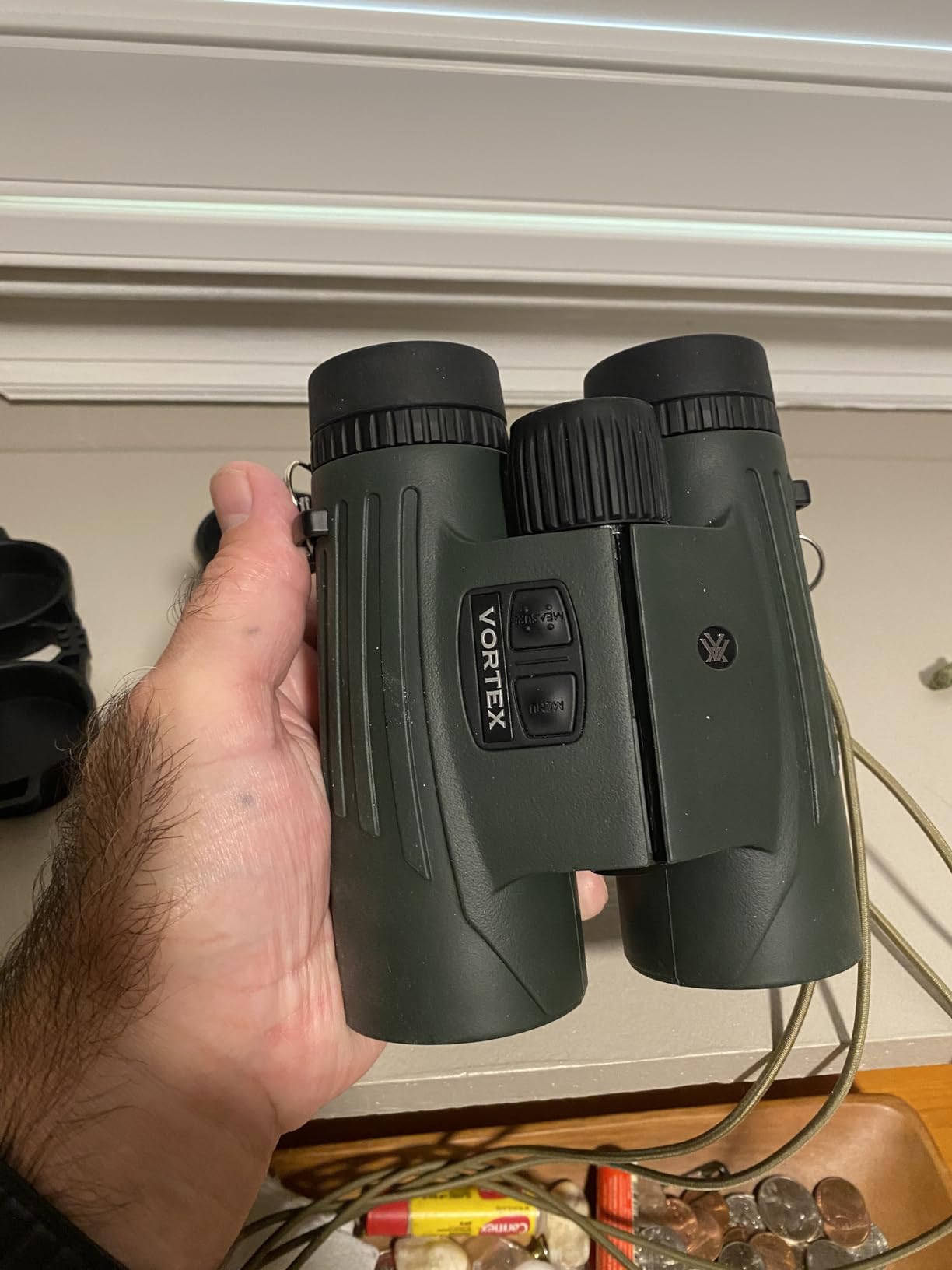
The chassis is a closed-bridge design with a full rubber armor shell, and the chassis is shockproof. It is also 916 grams, which is the honest drawback: over a multi-day backcountry trip that is a real pack decision, not a footnote. If you are walking 12 miles a day to reach a basin, pair this with a lighter glass and consider our general binocular roundup for non-rangefinder alternatives.
What you get in the field
You get full multi-coating, dielectric phase-corrected prisms, and a 16mm eye relief figure that works with prescription glasses. A GlassPak harness is included, which matters more than it sounds when the glass spends hours on your chest between glassing sessions.
Best, last, and scan target modes let you hold a lock on a moving group instead of re-ranging every time an animal switches. Tripod adaptability is there for long dawn sessions on a ridge.
Where it falls short
The 916 gram weight is the first thing anyone packing for elk will notice. Second is the display: the red OLED uses digital clock-style numerals, and in direct midday sun on a snowfield you will shade the eyepiece with your hand to read it.
If your game is in dense timber under 70 yards, this is far more glass than you need. The HCD and LOS mode switching is also one more button press than the simplest units require.
2. Astra Optix HBX1600B 10×42 – Most Ranging Modes for the Money
Astra Optix HBX1600B 10×42 1760 Yard Laser Rangefinder Binocular for Hunting, Shooting and Golf with Built-in Ballistics, Bright HD LCD, Fast 0.1s and Accurate +/1 yd. Ranging
10x42
Ranging: 0.15 seconds
Reflective range: 1760 yd
Deer range: 800 yd
Eye relief: 15.1mm
Field of view: 330 ft
Weight: 860 g
Pros
- Deepest mode library here including archery
- gun
- ballistics and golf
- Bright HD LCD with three reticle options
- Fast 0.15 second ranging
- Lightest weight in the group at 860 g
- Harness and case included
Cons
- Non-illuminated reticle is hard to see in low light
- Included chest harness straps run short
- Harness-side reports of cold-weather temperamental ranging
- Battery connector issues reported by some owners
The HBX1600B is the mode library champion, and for a bowhunter that is not a gimmick. It carries ballistics mode, scan mode, horizontal angle-corrected mode, archery mode, and gun mode on the same 10×42 chassis, which is the most flexible setup in this guide for a hunter who shoots both.
Ranging speed is the story here at 0.15 seconds, and the vendor breakdown lists 1760 yards on reflective targets, 1000 yards on tree, and 800 yards on deer. That deer figure is honest enough to plan around, and it sits comfortably above the 500 to 1000 yard rifle envelope most elk hunters actually work in.
Reviewers are split on the 4.1 rating. The value proposition is strong, the glass is better than expected for the tier, and the mode depth is unmatched. What drags the score is physical build and cold-weather behavior, not optics.
What you get in the field
The bright HD LCD with three reticle options is a genuine advantage at dawn, where several competitors here use non-illuminated black reticles that essentially vanish. Plus-minus 1 yard ranging and a roof prism all-glass optical system with silver-coated prisms round out a solid, if unflashy, package.
Field of view at 330 feet is the widest listed here, which helps you pick up movement in the trees at the basin edge.
Where it falls short
There is no tripod thread, which is a real loss for long-range glassing sessions on a windy ridge. The included chest harness straps are reported to be too short for larger frames, so plan on swapping it.
Several owners report the laser becomes temperamental in extreme cold and that battery connector problems show up over time. If your elk country drops well below freezing for a week, budget for spare cells and test the unit before you leave home.
3. Bushnell Fusion X 10×42 – Easiest Readout in Bright Sun
Bushnell Fusion X 10x42mm Ranging Binoculars, ARC Technology
10x42
ARC angle compensation to 1 degree
Range: 700 yards
Waterproof IPX7
ActivSync auto-reticle
HDOS optical system
Pros
- ActivSync reticle changes color automatically for readability
- IPX7 waterproof rating holds up in sustained rain
- ARC angle compensation accurate to 1 degree
- Fast and consistent ranging for a fixed target
Cons
- 700 yard range limit is the shortest here
- Display could be larger
- Not tripod adaptable
- Battery life is unremarkable
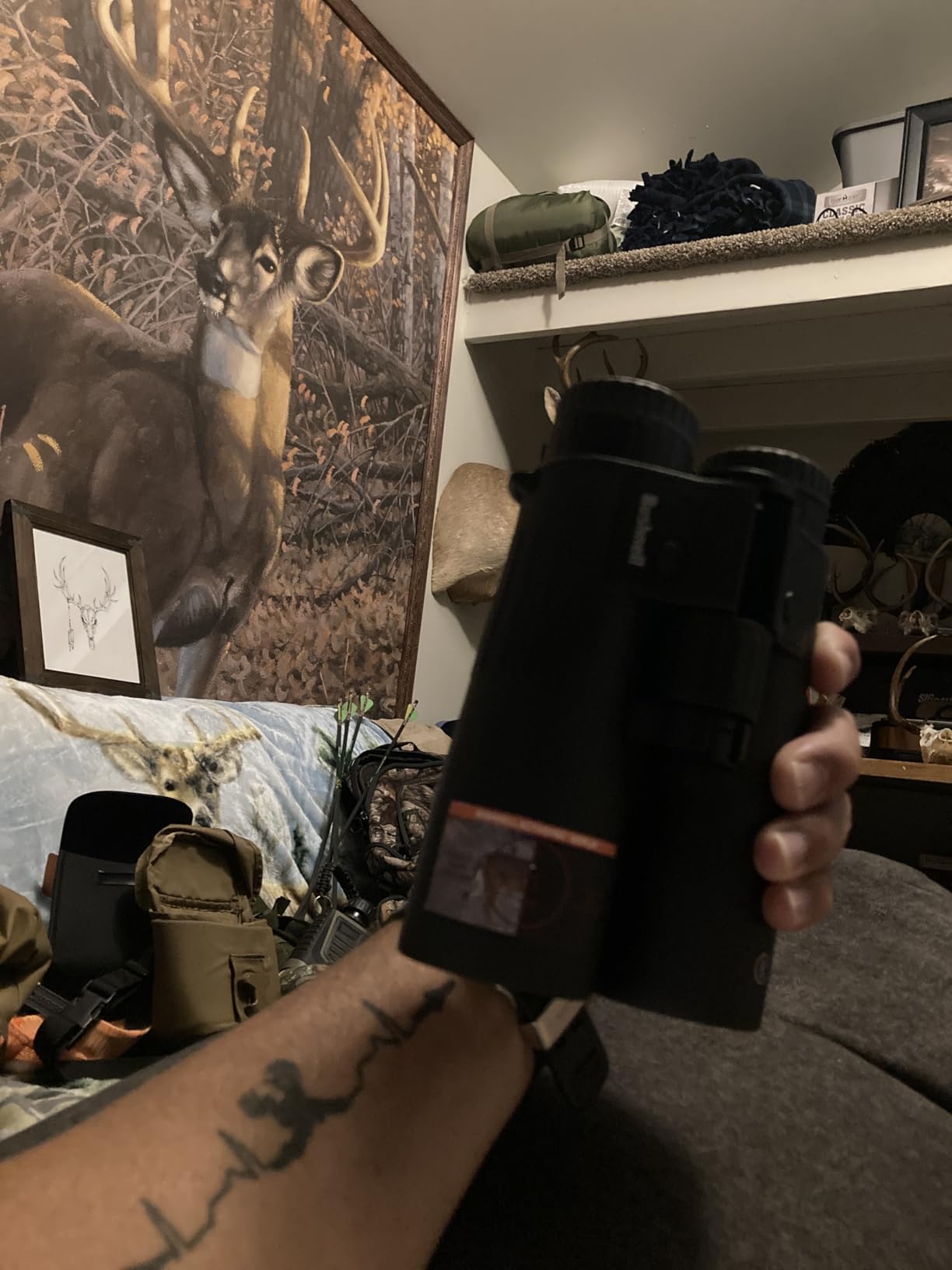
The Fusion X solves the single most common complaint about rangefinder glass in open country: you cannot read the display. ActivSync reticle technology auto-adjusts the reticle from black to red depending on the light, so the same unit works on a shaded north slope and in full sun off a scree field.
The trade is range. Its 700 yard ranging limit is the shortest of the ten here, and that is the deciding number if you hunt open basins where elk habitually show at 800 to 1000 yards. Inside 700, the performance is solid and the 4.4 rating across 86 reviews reflects owners who use it in the terrain it suits.
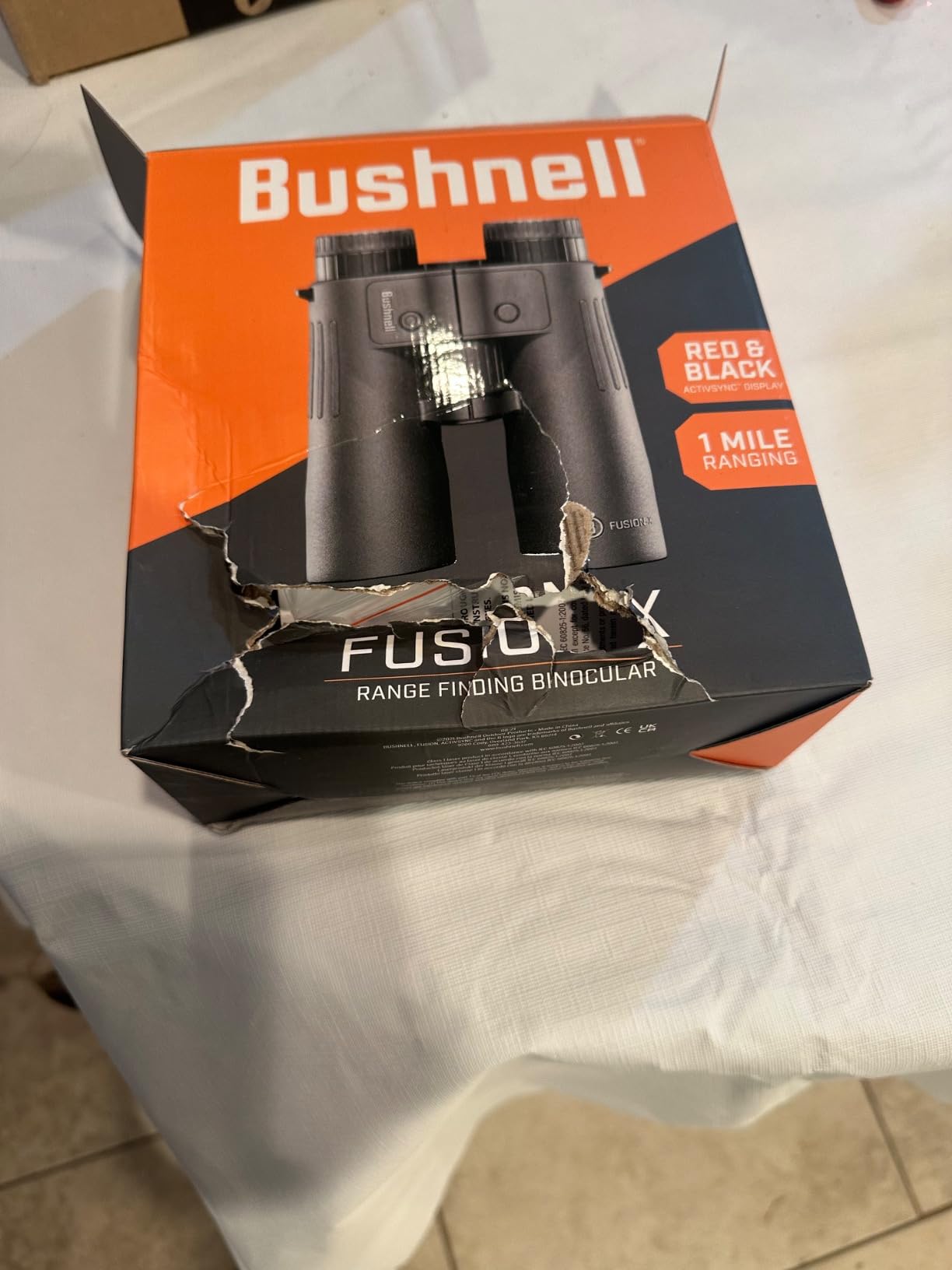
ARC technology handles the slope compensation to plus or minus 1 degree, which is enough correction for the bench and hillside angles typical of a basin hunt. The HDOS high-definition optical system keeps the image clean enough for identification at 600 yards.
IPX7 means it survives submersion at 1 meter for 30 minutes, so an hour of rain in a treestand is not a worry. It is not nitrogen purged per the spec sheet, though it is listed fogproof.
What you get in the field
The auto-adjusting reticle is the feature you will notice most in the first hour of use. Ranging is reported fast and accurate, and the ARC readouts stay stable when you are holding the glass on a moving animal at 500 yards.
This is also one of the easier units to learn. There is no deep menu tree, which matters if you are handing glass to a hunting partner or a kid on their first trip.
Where it falls short
Beyond 700 yards the unit simply stops giving you useful numbers on game, no matter how good the glass is. If your hunting is ridgeline and long basin work, look at a unit with a longer game range.
There is no tripod thread, and the display size is on the small side relative to some competitors. Battery life is listed as unremarkable, so carry spares for a week in the backcountry.
4. Halo Optics K2000 10×42 – Best Budget Rangefinder for Elk
Halo Optics K2000 Rangefinder Binoculars 10x 42mm
10x42
Field of view: 6 degrees
Exit pupil: 4.2mm
IPX7 waterproof
Weight: 2 pounds
Angle Intelligence compensation
Pros
- Strongest value tier performance in this guide
- Users report ranging out to 1800 to 2000 yards
- Magnesium chassis feels tougher than the price suggests
- IPX7 waterproof and fogproof
- Chest harness and case included
Cons
- Display is black only with no illumination
- No tripod mount
- Diopter adjustment affects display clarity
- Battery compartment placement hurts ergonomics
The K2000 is the one that makes the case that you do not need flagship glass to hunt elk. At the budget end of this list it still carries a magnesium chassis, IPX7 waterproofing, and Angle Intelligence compensation, and users report accurate ranging at 1800 to 2000 yards.
That reported game performance sits above several picks that cost far more, which is why this earns a slot despite a 4.3 rating on 63 reviews. The glass is described by owners as comparable to higher-tier models, and the honest limitation is the display, not the optics.
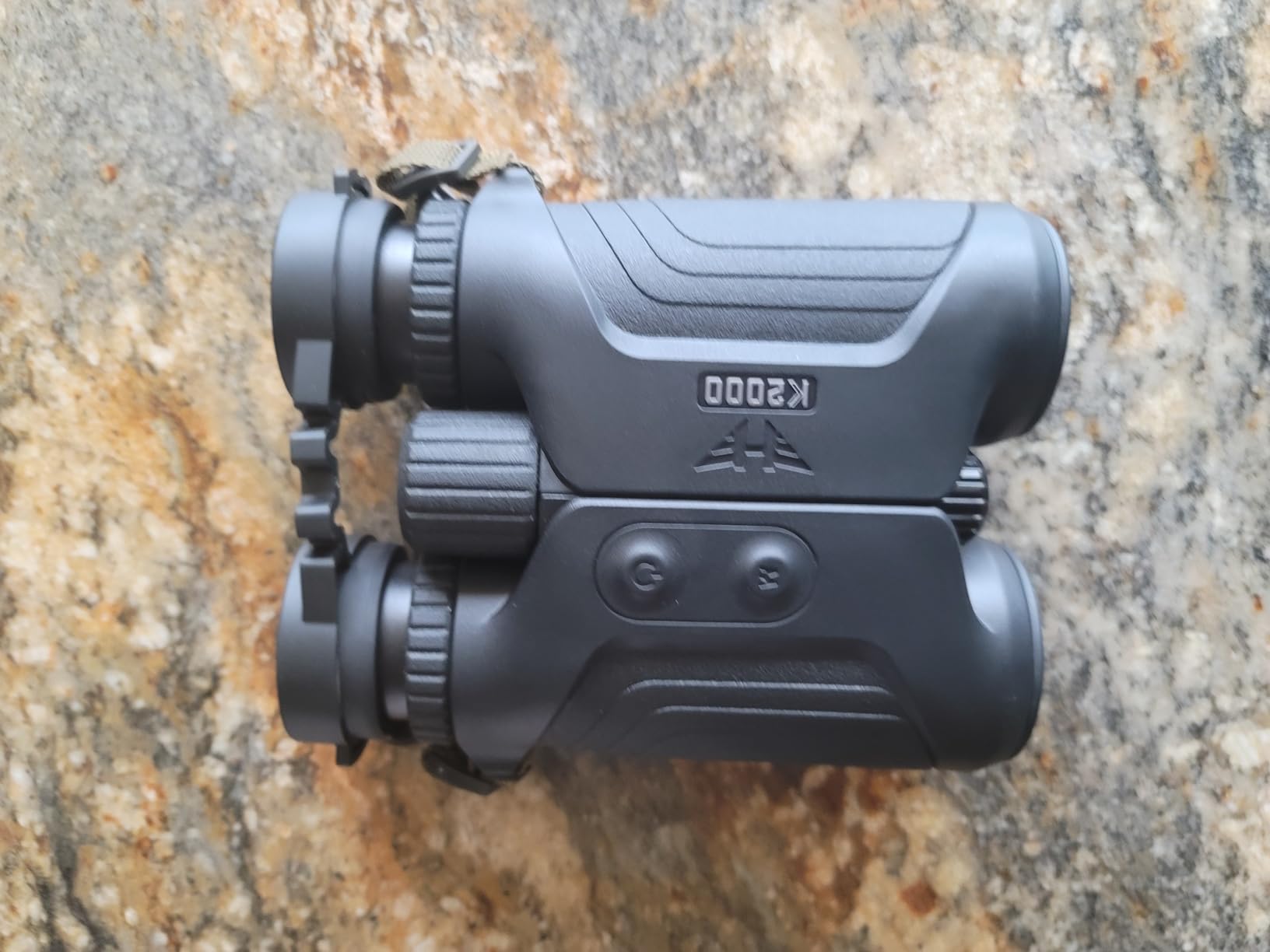
Scan mode and a fully multi-coated roof prism optical system with a 4.2mm exit pupil give you a usable 10×42 view. The 6 degree field of view is narrower than some rivals, so scanning a treeline takes a little more deliberate sweeping.
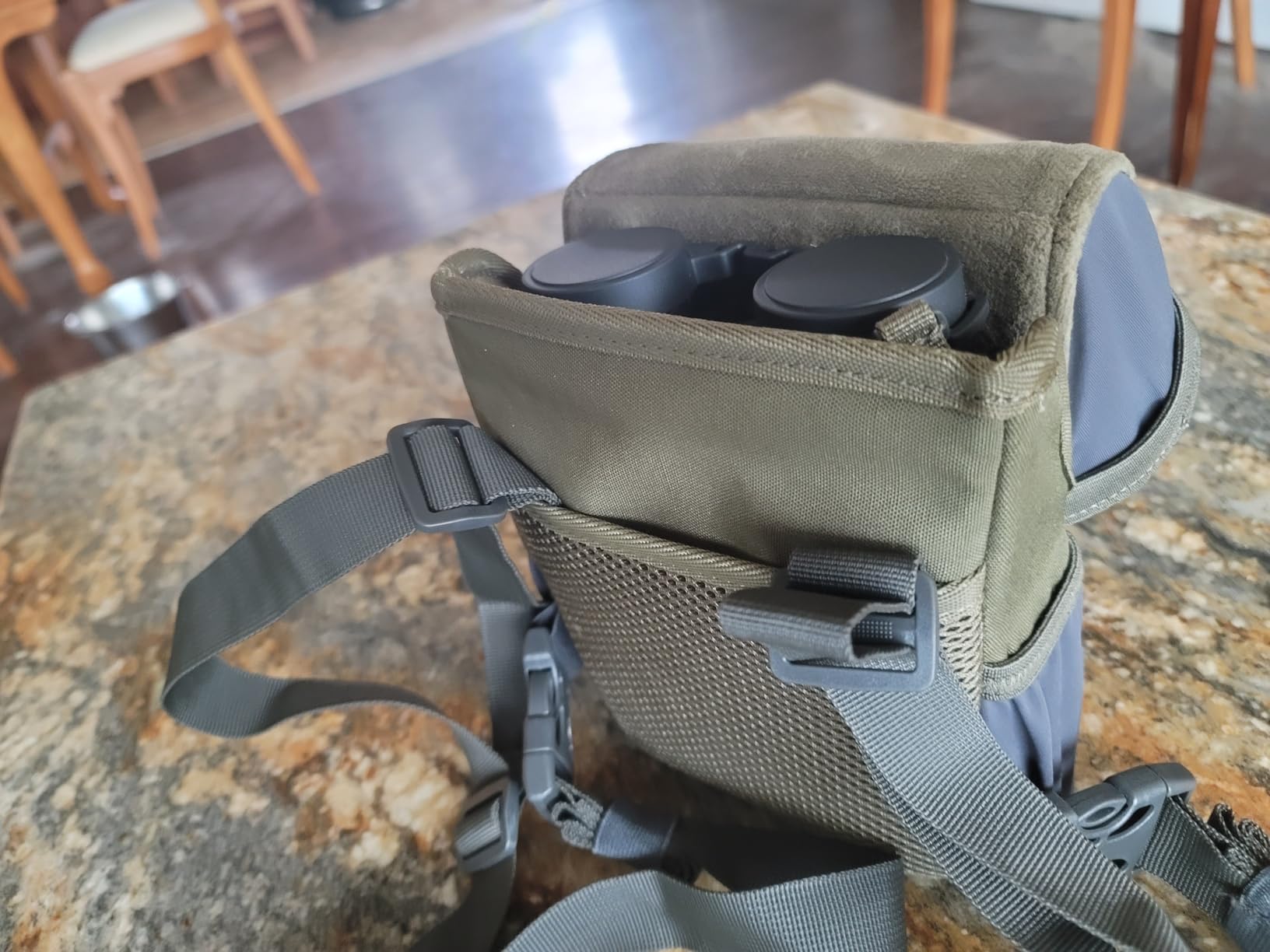
At 2 pounds it is not a lightweight backcountry glass, so pack weight should factor into the decision. The included chest harness is a nice touch at this tier.
What you get in the field
The no-slip ergonomic grip and magnesium chassis hold up to being set on a wet rock or a pack lid, which is where cheap binoculars tend to fail. Angle Intelligence reads the incline and gives you horizontal distance on a downhill shot.
For a hunter who wants a rangefinder to learn on before committing to premium glass, this is the lowest-cost way to find out whether ranging changes how you shoot.
Where it falls short
The display is black only and not illuminated. In dawn glassing and under heavy timber canopy that is a real problem, and it is the reason several owners note the readout is difficult to read in bright light as well.
There is no tripod mount, and diopter adjustment interacts with display clarity, which can mean fiddling with the ring mid-hunt. Budget holders should also know the battery compartment placement is awkward to work with gloves on.
5. Leupold BX-4 Range HD 10×42 – Best for Sloped Terrain
Leupold BX-4 Range HD TBR/W 10x42mm Range-Finding Binocular Shadow Gray (182883)
10x42
Porro prism
Guard-ion coating
Field of view: 29.5 degrees
Tripod adaptable
Weight: 2.4 pounds
Pros
- TBR/W ballistics account for uphill and downhill shots directly
- Red OLED display is bright and clear
- Elite optical system delivers exceptional low-light performance
- Waterproof and fogproof guaranteed for life
- Field of view of 29.5 degrees is the widest stated here
Cons
- Heaviest glass in the guide at 2.4 pounds
- Porro prism design makes the body wider
- Harness strap quality issues reported
- Limited published owner feedback at 23 reviews
The BX-4 Range HD is built for the situation where the elk are below you, and nothing else in this list handles that as directly. TBR/W, True Ballistic Range over Wind, calculates the range for uphill and downhill shooting rather than simply telling you how far away the animal is.
On a Colorado bench where bulls hold 300 yards below your saddle, that is the difference between dialing a holdover and guessing at one. The 4.7 rating is high, but the 23-review count is the smallest here, so treat the enthusiasm as a small sample.
Optically, the Elite system and Guard-ion coating deliver the low-light performance you want for the last 30 minutes of usable light, when bulls often stand up against a lightening sky. Owners consistently single out the red OLED brightness as a step above most rivals.
What you get in the field
A tripod thread and a 29.5 degree field of view make this the easiest of the ten to glass a wide basin with, and the porro prism layout gives a wide, forgiving image. The lifetime guarantee is stated on the housing as waterproof and fogproof guaranteed for life.
The wide chassis is a real benefit with or without prescription glasses, since there is more eye box to work with.
Where it falls short
At 2.4 pounds this is the heaviest glass in the guide, and reviewers who like everything else about the optics still flag weight and bulk as the main criticism. A porro prism body is also wider in the pack than a roof prism design.
Some owners report harness strap quality issues, which is a small fix but a frustrating one at 5 a.m. The thin review base also means fewer long-term durability reports than the Vortex or Bushnell picks have.
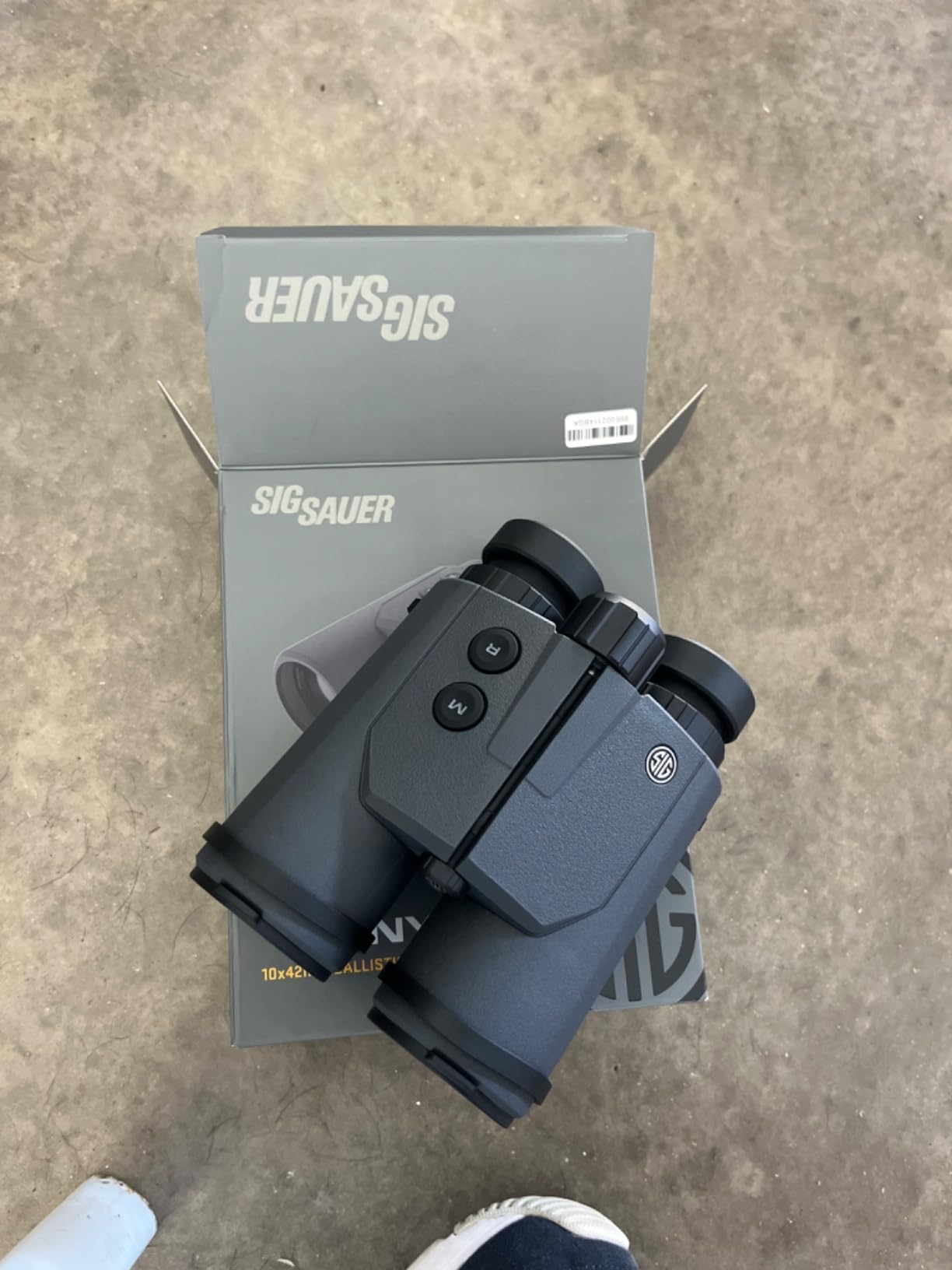
6. SIG SAUER Canyon 10×42 – Best for Custom Ballistic Groups
SIG SAUER Canyon 10x42mm Laser Rangefinding Binoculars
10x42
Lightwave DSP
Range: 4000 yd reflective, 1500 yd on game
Eye relief: 15mm
Field of view: 6.71 degrees
Tripod adaptable
Pros
- Lightwave DSP ranges to 4000 yards reflective and 1500 yards on game
- Eight onboard ballistic groups in MOA or MRAD
- Enhanced scan mode updates four times per second
- RangeLock holds closest
- furthest or most recent target
- SpectraCoat anti-reflective coating
- Tripod adaptable
Cons
- Only one ballistic profile is fully editable
- Display brightness ships at the lowest setting
- Weather data not adjustable in the ballistic calculator
- Less advanced than the dedicated Sig KILO rangefinders
Sig built the Canyon for shooters who care about the ballistic side of the readout. Eight onboard ballistic groups in MOA or MRAD mean you can dial in your load without leaving the eyepiece, and the Lightwave DSP engine reports 4000 yards on reflective targets and 1500 yards on game.
That 1500 yard game figure is the highest stated game range in this guide, which matters if you glass big benches. Enhanced scan mode updates four times per second, so a moving group gets a fresh number fast, and RangeLock will hold the closest, furthest, or most recent target automatically.
The 4.4 rating on 33 reviews reflects a strong tool with a slightly rough onboarding. You will spend a few minutes with the mode menus the first time out, and the 15mm eye relief is on the tighter side for glasses wearers.
What you get in the field
Multiple ranging modes cover LOS, angle modified range, ballistic groups, and a dedicated archery mode, all on a roof prism chassis with SpectraCoat anti-reflective coating. The red OLED display runs at 0.1 yard or meter resolution, so a holdover dial is easy to place.
Enhanced scan mode is genuinely useful when a group of cows is walking across a saddle and you want the nearest animal, not the average of the bunch.
Where it falls short
Only one ballistic profile is fully editable, so switching between a bow setup and a rifle setup means resetting things rather than toggling saved profiles. The weather data in the ballistic calculator is also fixed rather than adjustable.
The display ships dim, and several users note readability in bright sun suffers until you crank the brightness. This is a step below Sig’s own dedicated KILO units in overall refinement.
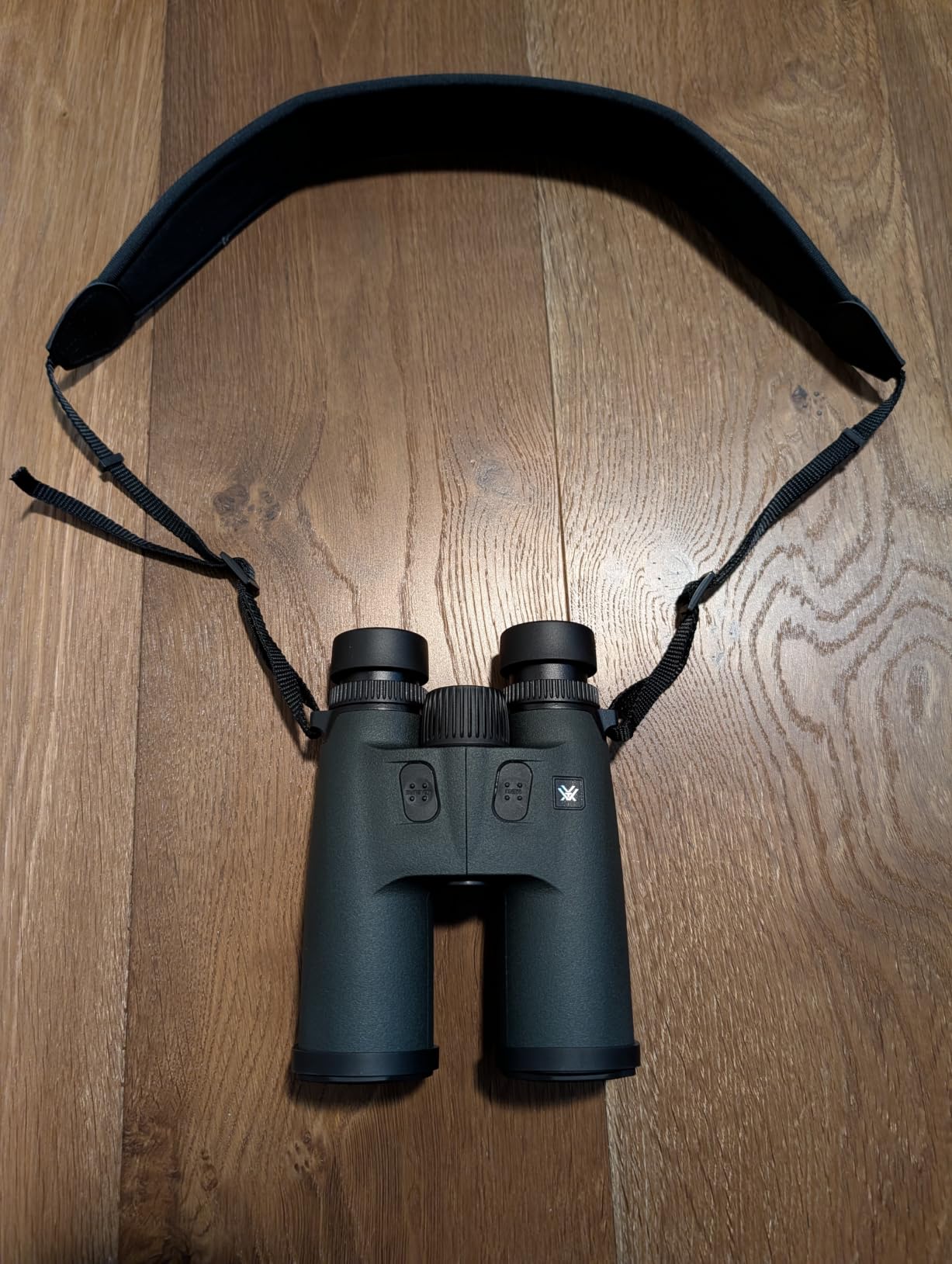
7. Vortex Ranger HD 3000 10×42 – Best Compact Pack Option
Vortex Ranger HD 3000 10×42 Laser Rangfinding Binoculars
10x42
HD Japanese glass
Eye relief: 17mm
Field of view: 29.05 degrees
Weight: 2 pounds
Range: 3000 yd reflective, 1500 yd game
Pros
- Japanese HD glass with exceptional optical clarity
- Compact streamlined body at 5.1 by 1.8 by 6.7 inches
- 17mm eye relief is the most generous here
- Unlimited transferable lifetime warranty
- HCD and LOS modes with normal
- first and last target selection
Cons
- Menu button failures reported by some owners
- Display uses older digital clock-style text
- Laser acquisition can take several tries when you wobble
- CR123A batteries rather than rechargeable
The Ranger HD 3000 is the newer body from the same house as our top pick, and it goes about the problem differently. The dimensions are noticeably more compact, and at 17mm the eye relief is the most generous in this guide, which matters if you wear prescription glasses and are glassing for hours.
Optical quality is the headline: owners consistently call out the Japanese HD glass as exceptional for the class. Ranging is listed at 3000 yards on reflective targets and 1500 yards on game, which puts it in the same game-range territory as the Sig Canyon.
HCD mode handles angle compensation, LOS mode is there for the steep downhill case where you actually want the slant distance, and the scan and first/last target modes cover moving animals. The GlassPak harness is included and the lifetime VIP warranty is fully transferable.
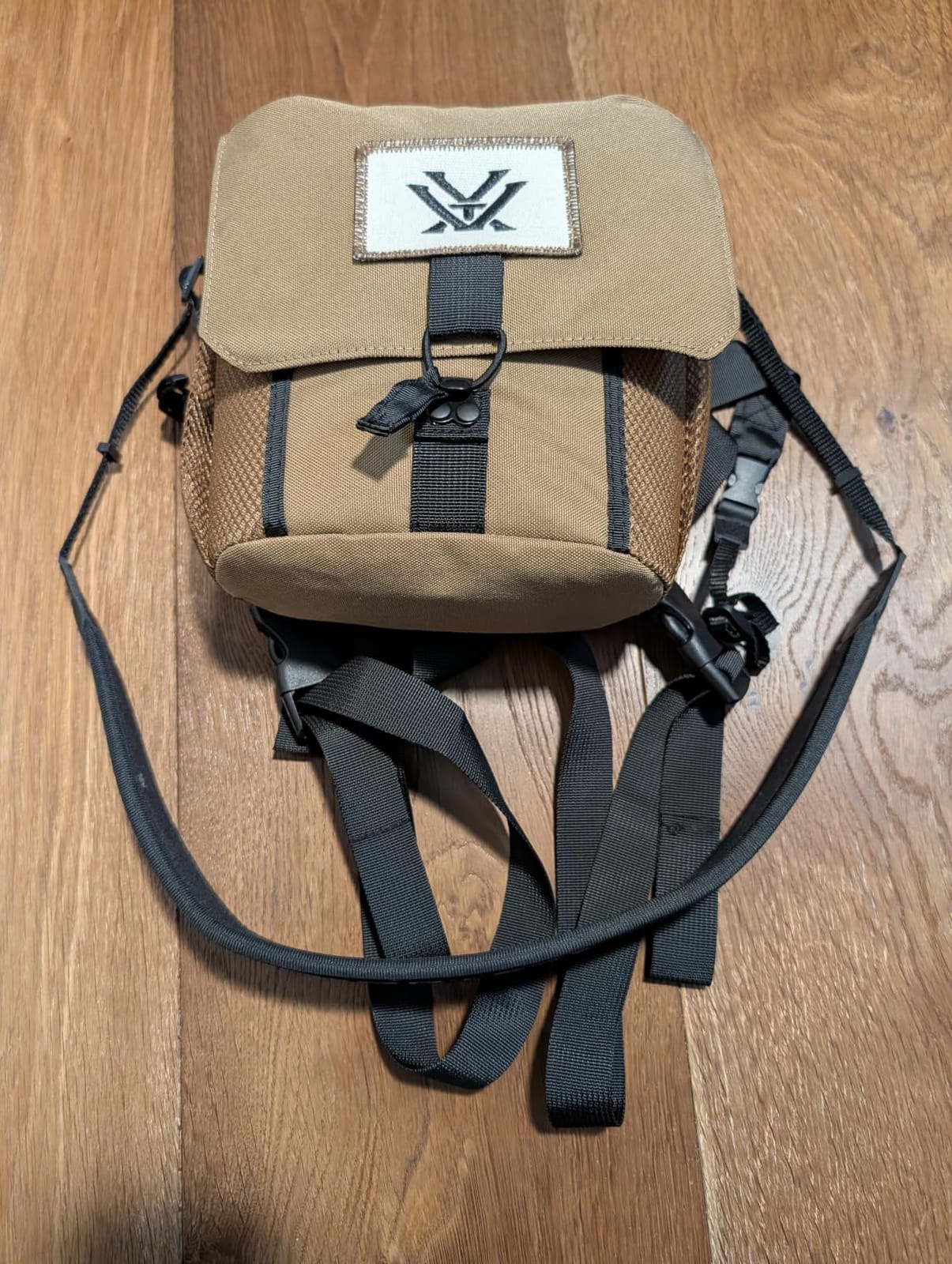
The 2 pound listed weight is lighter than most of the premium glass here, though you will still want to weigh it against your pack for a week-long trip. For anyone comparing general-purpose binoculars, our best binoculars roundup covers the weight class question more broadly.
What you get in the field
ArmorTek scratch-resistant coating on fully multi-coated lenses holds up when the glass rides in a pack with a rifle, which is standard practice on an elk trip. The display brightness is adjustable, which is more than several rivals on this list offer.
At 4.4 on 22 reviews, the feedback is consistent but thin. Treat it as the current-generation Vortex option and confirm the warranty terms when you buy.
Where it falls short
Menu button failures are reported by some owners, and the battery compartment design affects how the glass sits in your hands. Those are both fixable issues, but neither is convenient at 5 a.m.
The clock-style display text is slow to parse under pressure, and laser acquisition can take a few tries when the glass is wobbling or the sun is high. It runs on CR123A cells, so pack spares.
8. Swarovski EL Range 10×42 – Best Glass at Dawn and Dusk
SWAROVSKI OPTIK EL Range 10×42 – Binoculars – integrated Rangefinder green
10x42
Swarovision coating, 90 percent light transmission
Eye relief: 15mm
Tracking Assistant
App-configurable ballistic profiles
Tripod adaptable
Pros
- Swarovision coatings with 90 percent light transmission
- HD field flattener lenses reduce edge distortion
- Tracking Assistant guides you onto a moving target
- App-based ballistic profile configuration
- Premium build quality and ergonomics
Cons
- Water resistant rather than fully waterproof
- Weight is not reliably published for this model
- Very limited owner review history for a flagship-tier optic
- Premium cost puts it out of reach for most hunters
Light transmission is the reason this model exists. Swarovision coatings are specified at 90 percent transmission, and the HD field flattener lenses hold that clarity out to the edges of the image, which is where elk usually are when you find them in a treeline.
Forum testimony lines up with the spec sheet. A HuntTalk user ran a twilight head-to-head of the Vortex Fury, Leica Ultravid-B, and Swarovski EL Range and reported the Swarovski won decisively in low light, and the wider hunting community consensus across Rokslide, HuntTalk, and LongRangeHunting keeps naming Swarovski, Leica, and Zeiss as the reference tier.
EL Range TA technology handles the distance measurement, and the Tracking Assistant gives you directional indicators that guide you onto a moving animal rather than just a number. Ballistic profiles are configured through the EL Range TA Configurator app on your phone before the hunt, not fiddled with in the field.
What you get in the field
Elk are glassed at dawn and dusk more than at midday, and this is the model that keeps resolving detail when the light is going. The 15mm eye relief is workable with glasses, and the body is tripod adaptable for long sits.
If you shoot at long range downhill in the dark, the combination of light transmission and app-configured ballistics is the most complete package here.
Where it falls short
This model is listed as water resistant rather than fully waterproof, which is a step down from the IPX-rated units in this guide. Elk country in October is wet, and that distinction matters.
With a 4.3 rating on 21 reviews, the long-term ownership record is thin for a flagship optic, and a noticeable share of one-star feedback suggests some expectation mismatch at this price. The weight is not reliably published either, and anyone packing for a week needs that number before they buy.
9. Burris SignatureHD LRF – Best Warranty-Backed Value
BURRIS SignatureHD LRF Binocular, Green/Gray (300299)
10x42
Range: 2600 yd reflective, 1100 yd on deer
Eye relief: 16mm
Nitrogen filled
Weight: 2.3 pounds
Tripod adaptable
Pros
- Glass quality compared favorably to Swarovski by guides
- Built-in inclinometer handles angle compensation
- Nitrogen filled and fogproof
- Three ranging modes including sport
- hunt and scan
- Forever Warranty is lifetime and transferable
Cons
- Ranging speed around 3 seconds is slower than rivals
- Heaviest group at 2.3 pounds
- Limited diopter adjustment range
- Published field of view figure looks unusually high
The Burris is the pick if warranty length matters to you. The Forever Warranty is lifetime and transferable, which means it follows the glass to the next owner, and it is backed by nitrogen-filled fogproofing rather than a claim alone.
Guides have compared this glass favorably to Swarovski, and the 4.5 rating across 28 reviews is the third highest here. Ranging runs 2600 yards on reflective targets and 1100 yards on deer, which is short of the Sig and Vortex game figures but comfortably inside the range most elk hunters need.
The built-in inclinometer handles angle compensation for the downhill shots that make up half of a mountain hunt. Sport, hunt, and scan modes give you three distinct behaviors rather than a maze of options.
What you get in the field
At 16mm the eye relief is comfortable with prescription glasses, and the multicoated roof prism glass gives you a clean image. Shockproof rubber-armored housing is a sensible choice for glass that gets set down on a wet timber bench.
The tripod thread is a small thing that pays off on a dawn sit where you want to range the same treeline for twenty minutes.
Where it falls short
Ranging speed is the clear weakness at roughly 3 seconds per reading. On a walking animal that lag means you will be dialing a number for where the elk was, not where it is.
At 2.3 pounds it is among the heaviest here, diopter adjustment range is limited, and the published field of view figure looks unusually high, so treat it cautiously. Only one editable profile is effectively available.
10. Nikon LaserForce 10×42 – Widest Angle Compensation
Nikon LaserForce 10×42 Rangefinder Binocular – 10-1900 Yard Range Waterproof Fogproof Precision Distance Measuring Hunting Binoculars – Fully Multicoated Lenses, Bright Display – Tripod Adaptable
10x42
ID Technology compensation to 89 degrees
Range: 1900 yards
Eye relief: 15.5mm
Weight: 1.9 pounds
Nitrogen purged
Pros
- ID Technology computes true horizontal distance at angles up to 89 degrees
- ED glass with fully multicoated lenses
- Lightest listed weight here at 1.9 pounds
- Red OLED display
- Waterproof
- fogproof and nitrogen purged
- Tripod adaptable
Cons
- Only a 1 year limited warranty against lifetime warranties elsewhere
- Range limited to 1900 yards
- Notable share of one-star feedback on quality control
- Older chassis design with flip-down lens caps
The LaserForce is the one to look at if you hunt on seriously steep ground. ID Technology computes true horizontal distance at angles up to 89 degrees, which is the widest compensation figure in this guide, and at 1.9 pounds it is also the lightest listed here.
Optically, ED glass with fully multicoated lenses and a reflective mirror coating on the roof prism delivers the clarity you would expect from Nikon. It is waterproof, fogproof, and nitrogen purged, with a bright red OLED display and turn-and-slide rubber eyecups that stay put with gloves on.
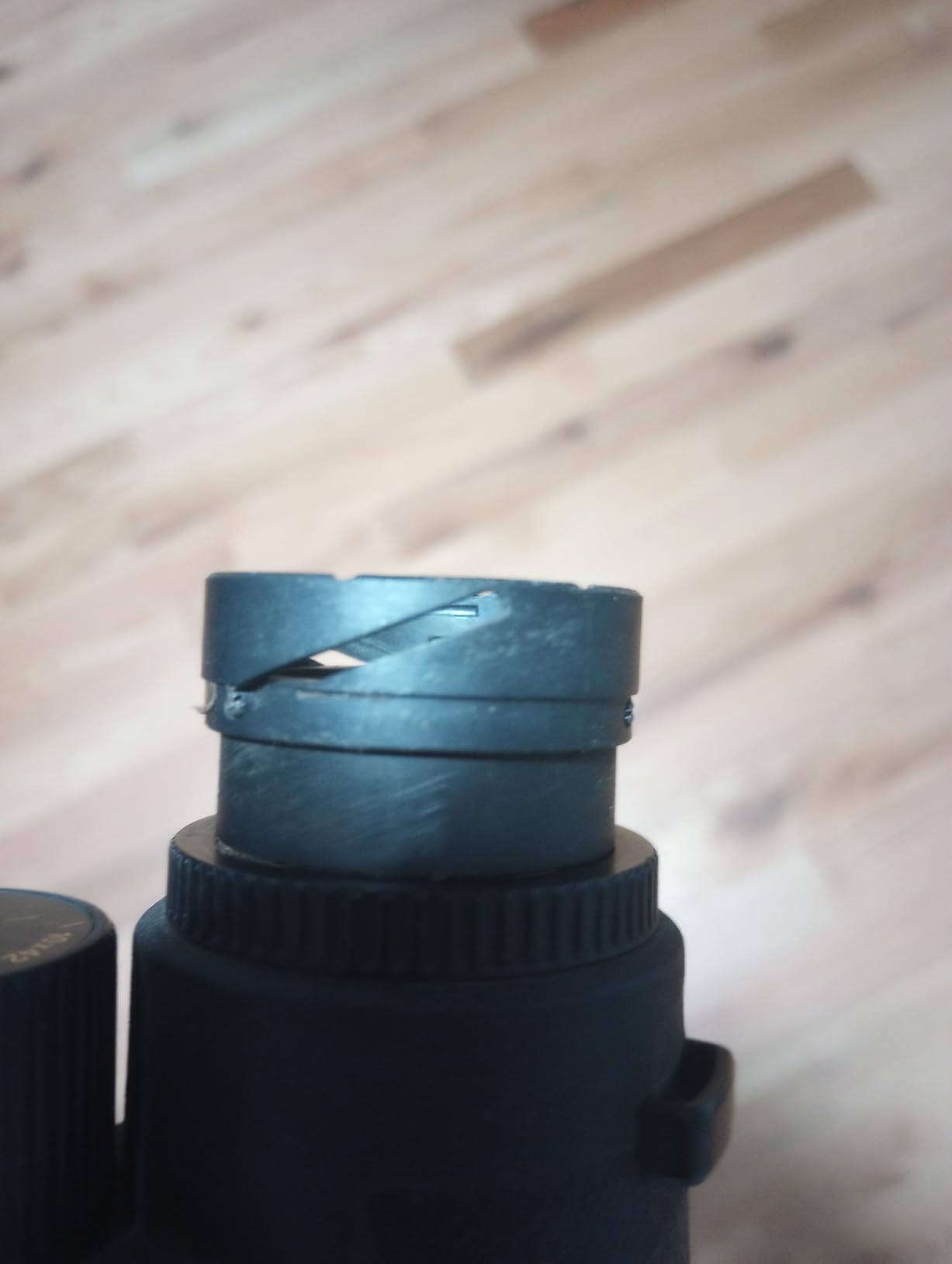
The 4.0 rating across 127 reviews is the lowest average here, and the reason is not optics. It is the warranty and a meaningful share of one-star feedback pointing at quality control over the years. For a 4.8-rated alternative with a transferable lifetime warranty, look at the Vortex Fury.
What you get in the field
The ID Technology readouts are the reason to pick this up. On a shot steep enough that a standard unit would report a wildly optimistic line-of-sight number, this one still gives you a holdover you can trust, and the auto shut-off after 8 seconds keeps the battery alive between glassing bursts.
Flip-down objective lens caps keep rain and snow off the front elements, which is a small quality-of-life feature in October.
Where it falls short
A 1 year limited warranty against unlimited lifetime warranties on the Vortex, Leupold, and Burris picks in this guide is the biggest drawback. Rangefinder binoculars take abuse, and the one-year window is not generous for gear that lives in a pack.
The 1900 yard range limit is the shortest of the longer-range units here, and the chassis design is showing its age next to newer bodies.
Magnification: 8x vs 10x for Elk Glassing
10x is the right default for elk hunting because elk are large, dark, and often moving across open ground at long distance, and you need the resolution to separate antler tines from brush at 500 yards. All ten picks here are 10×42 for that reason. Choose 8x only when you are working close terrain, bowhunting inside 70 yards, or carrying a heavy pack where every ounce matters.
The tradeoff is straightforward. 10x magnifies hand shake and narrows your field of view, so finding animals is slower. 8x gives you a wider field, steadier view, and brighter image, but at the same distance it makes an elk smaller and harder to identify.
Most of the 10x units here list eye relief between 15 and 17 millimeters, which is what makes them wearable with prescription glasses. If you plan to be behind a tree stand at dawn for hours, that number matters more than magnification.
How to Choose Rangefinder Binoculars for Elk Hunting
Judge ranging by game range, not reflective range. The marketing number is measured off a man-made reflective target in open sunlight, and it is not the distance at which the unit will reliably read an elk. Look instead for a stated deer or game figure, and treat anything without one as unverified.
Check the angle compensation behavior on a downhill. HCD, ARC, ID Technology, and Angle Intelligence all do this, but they differ in the angle range they hold accurately. If your hunting is steep bench and canyon country, favor the wider compensation angles.
Weigh the glass honestly. Everything in this guide weighs between 860 grams and 2.4 pounds. Over a five-day backcountry trip that difference is a meaningful slice of a pack, and it is the reason so many hunters in hunting forums carry two pairs instead of one.
Read the water rating carefully. IPX7 means submersion to 1 meter for 30 minutes. Water resistant, which is all the Swarovski listing claims, is a weaker promise than most of this list makes.
Plan for batteries. These units run on coin cells such as CR2 or CR123A, and cold high-country weather shortens them. Rechargeable lithium is rare in this category, so carry a spare set in a sealed bag and swap them at lunch, not at 5 a.m.
Confirm tripod adaptability if you glass a lot. Long dawn sessions on a ridge are where hand-held ranging accuracy degrades most, and a tripod thread lets you stabilize both the image and the laser return.
Rangefinder Binoculars vs Separate Binos and a Handheld Rangefinder
Rangefinder binoculars win when you glass a lot and shoot rarely, because you spend most of the day looking, not ranging. The two-hand grip also steadies the laser return, which is why off-hand readings from a handheld can wander at long distance.
The separate setup wins on redundancy and cost. A handheld rangefinder is a few ounces and a small fraction of the price, and if it dies in the field you still have a working pair of binoculars and a backup unit. Several hunters in the forums make exactly that argument, and one Colorado elk hunter framed it as a practical split between long-range glassing and shots kept inside 300 yards.
Our read: if you hunt elk across open basins or ridgelines, integrated glass is the better tool. If you hunt mostly timber inside 100 yards, a good conventional binocular plus a handheld from our bow hunting rangefinder guide serves you better. Night glassing is a third case entirely, where our night vision binocular picks are the relevant tool.
What Advertised Range Really Means on Elk
Reflective range is a laboratory number and game range is the real one. A vendor claiming 5000 or 10000 yards is measuring against a bright, flat, man-made target in open country. An elk is dark, moving, partially occluded by timber, and often angled away from the sun.
The gap is large. The SIG Sauer Canyon lists 4000 yards reflective and 1500 yards on game. The Vortex Fury lists 5000 reflective with owner reports of dependable readings well past 1500 on deer-sized animals. The Bushnell Fusion X lists 700 yards total, and the Burris SignatureHD lists 1100 yards on deer. Those game figures, not the headline numbers, should drive your choice.
For context on what you actually need: bowhunters are working inside 25 to 70 yards in timber, where any of these units is overkill. Rifle hunters in open basins are calling shots at 500 to 1000 yards downhill, where every pick on this list performs. Beyond 1000 yards on live game, expect intermittent lock rather than a steady number, and put a tripod on the glass when you need a clean read at that distance.
How to Use Rangefinder Binoculars in the Field
Use this five-step sequence and you will stop fumbling with buttons when an elk stands up.
Spot wide first. Scan at 10x without ranging. Get the animal centered before you take a reading, because the laser reflects off whatever is under the reticle.
Stabilize. Brace your elbows on a pack, tree, or glassing tripod. Hand-held readings wander, and the wander grows with distance.
Confirm the target is game. Use scan mode across a group and read the lock, not the average. A branch between you and the animal will give you a confident wrong answer.
Switch to horizontal distance. HCD, ARC, ID Technology, or Angle Intelligence. If you are shooting downhill, line-of-sight range will make you hold too high.
Dial and call your holdover. Set the reticle or scope accordingly, then say the range out loud so your spotter and you are working from the same number.
Frequently Asked Questions
What is the best magnification for binoculars when hunting elk?
Ten power is the best default for elk hunting because elk are large, dark animals often seen at 500 to 1000 yards, and 10x resolves antler detail that 8x turns into a brown shape. Choose 8x instead for bowhunting inside 70 yards, dense timber, or when pack weight matters more than identification distance.
Should I get 8x or 10x binoculars?
Get 10x for open basins, ridgelines, and any rifle hunting where you identify animals at distance. Get 8x for close timber work, archery inside 70 yards, or multi-day backcountry trips where the lighter, steadier, wider view outweighs long-range detail.
Are rangefinder binoculars worth it for elk hunting?
Yes if you regularly glass elk across open or sloped ground, because the distance reading converts a guess into a correct holdover the moment a shot window opens. Less valuable if you keep shots inside 300 yards or hunt wooded terrain, where a conventional binocular plus a handheld rangefinder is lighter and cheaper.
How far can rangefinder binoculars range an elk?
Treat the game or deer rating as the real number, not the reflective rating. Units here state 700 to 1500 yards on game, and dependable readings on live animals are usually well short of that. Expect intermittent lock beyond 1000 yards on a moving elk in partial cover.
What is the best binocular and rangefinder combo for hunting?
The best combo is one integrated rangefinder binocular for open-country glassing, plus a lightweight standalone handheld as backup. That covers both redundancy and the fast close-range reads a bowhunter needs inside 70 yards without carrying a second full-size pair.
Do rangefinder binoculars work in the cold?
They do, but coin cells drain faster in cold high-country weather. Most units here run on CR2 or CR123A cells, so carry spares in a sealed bag and swap them during the day rather than at first light. Test the unit cold before you leave home.
Bottom Line on the Best Rangefinder Binoculars for Elk Hunting
The Vortex Fury HD 5000 10×42 is the best rangefinder binocular for elk hunting for most people. It holds the highest rating in this guide across the largest review base, ranges reliably well past the distances most elk shots require, corrects for angle properly, and carries a transferable lifetime warranty. If weight is your constraint, it is not the right pick, and the Vortex Ranger HD 3000 or the Astra Optix HBX1600B is.
Beyond that one, match the unit to the terrain. The Bushnell Fusion X handles the sun and the close country, the Halo K2000 does the most work for the least money, the Leupold BX-4 Range HD and Nikon LaserForce are the answers to steep downhill shots, and the SIG SAUER Canyon wins on ballistic groups for the shooter who dials a holdover rather than eyeballing it.
Whichever you choose, carry a tripod, dial horizontal distance rather than line of sight, and judge it on the game range figure rather than the reflective headline. Those three habits do more for your elk hunt than any feature list.