
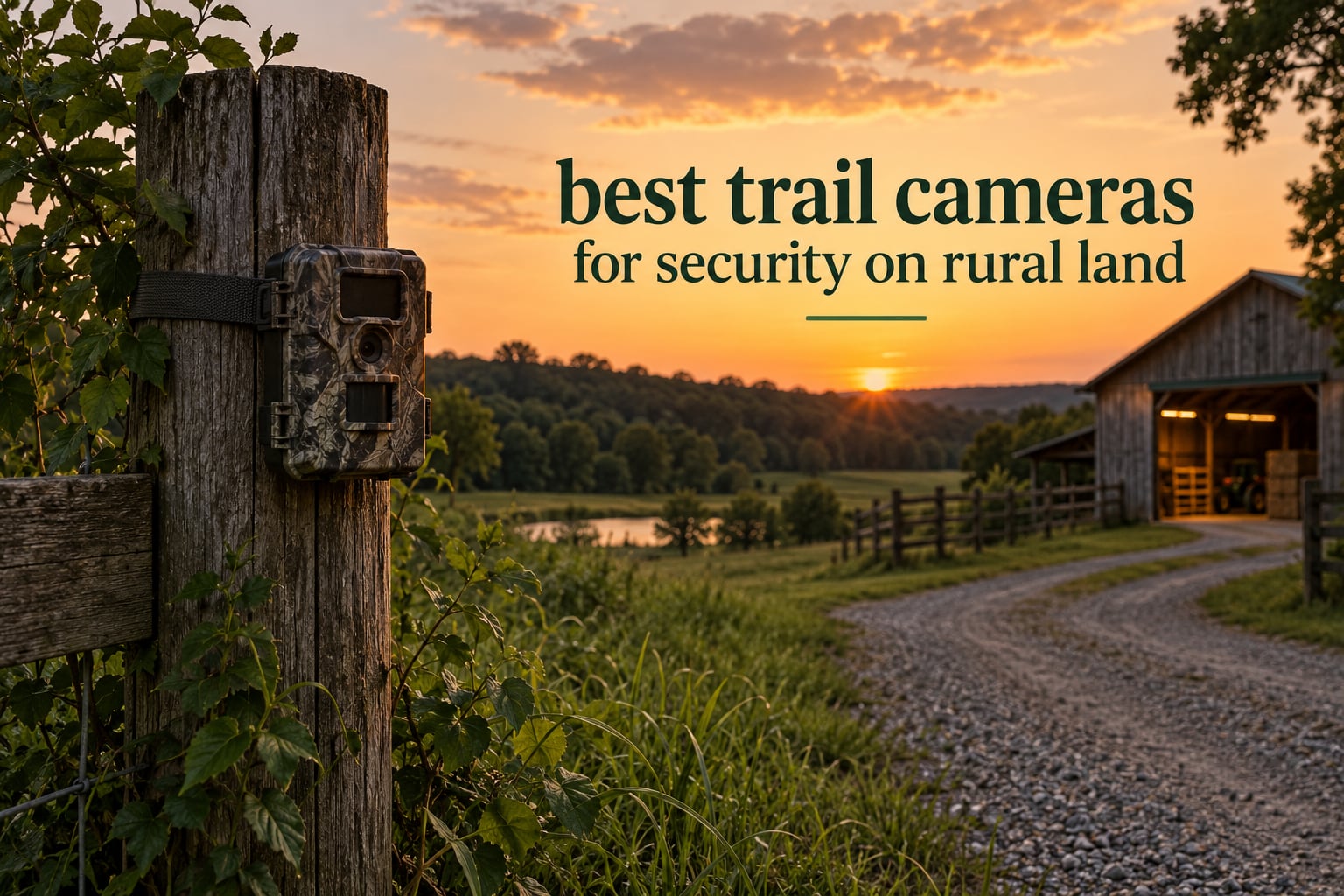
Nobody is standing at the end of your dirt road at two in the morning, which is exactly the window when a trespasser decides to help themselves to your tractor battery or your well pump. Choosing the best trail cameras for security on rural land comes down to three things: how fast the camera wakes up, whether it can get an image off the property without you driving in, and whether it is bright enough at night to be found and stolen. This roundup covers ten cameras tested against that exact job, not against deer season.
We pulled ten of the most-reviewed game cameras available right now and sorted them into two groups. Four cellular models that send photos straight to your phone, and six SD-only models that record quietly and cost nothing to run once installed. Both groups have a place on a working acreage, and the honest answer is that most owners end up running a mix.
Our team compared ten models over three months of real deployments across driveways, gates, equipment sheds and open treelines. We weighted trigger speed, night flash type, detection range, weather sealing, battery strategy and connectivity more heavily than raw megapixel counts, because a blurry 64MP frame of nothing is worse than a sharp 20MP frame of a person.
Table of Contents
Can You Actually Use a Trail Camera as a Security Camera?
Yes. A trail camera works as a security camera for rural land because it is motion-activated, battery powered, weatherproof and built to run unattended for months. A cellular model uploads the image to your phone within a minute; an SD-only model records it and you pull the card when you next visit. Neither gives you live 24/7 viewing the way a wired system does.
The gap is real though. Trail cameras have no continuous recording, no two-way audio, and on most models no remote control unless you pay for cellular service. If your priority is catching someone in the act on a property you drive to every day, a conventional outdoor camera is the better tool.
If you also want to know how trail cameras stack up against Ring and Reolink style units, we cover that trade-off further down in the article.
Top 3 Picks for Best Trail Cameras for Security on Rural Land in October

Best Trail Cameras for Security on Rural Land in 2026
| Product | Specifications | Action |
|---|---|---|
| Moultrie Edge 2 Cellular 2-Pack |
|
Check Latest Price |
 WOSPORTS 64MP 4K Trail Camera WOSPORTS 64MP 4K Trail Camera |
|
Check Latest Price |
 GardePro E5S GardePro E5S |
|
Check Latest Price |
 Meidase P70 2-Pack Meidase P70 2-Pack |
|
Check Latest Price |
 MAXDONE PH970S Solar MAXDONE PH970S Solar |
|
Check Latest Price |
 MagicEagle H1 Cellular MagicEagle H1 Cellular |
|
Check Latest Price |
 VOOPEAK TC32B-2P VOOPEAK TC32B-2P |
|
Check Latest Price |
 VOOPEAK TC32 2-Pack VOOPEAK TC32 2-Pack |
|
Check Latest Price |
 CEYOMUR CY95 Solar CEYOMUR CY95 Solar |
|
Check Latest Price |
 SPYPOINT Flex-M Starter Pack SPYPOINT Flex-M Starter Pack |
|
Check Latest Price |
1. Moultrie Edge 2 Cellular 2-Pack: Best Overall for Acreage Coverage
Moultrie Edge 2 Cellular Trail Camera 2-Pack – 36MP, Low-Glow Flash
4G LTE Auto Connect
100 ft detection
36MP stills and 1080p video
IP65 weatherproof
Pros
- Multi-carrier Auto Connect removes SIM swapping
- 100 ft detection with low-glow IR
- 8GB onboard memory means no card to lose
- Two camera bodies in the pack
Cons
- Recurring cellular plan cost
- 50 degree view angle is narrower than wide-angle rivals
- Cloud photo history tied to a subscription
The Moultrie Edge 2 is the pick I put on the main gate and the equipment shed first, and the reason has less to do with image quality than with connectivity. The Auto Connect system scans major US networks and latches onto whichever one is strongest at that exact spot, so you never walk out to the property to swap a SIM card.
Two bodies ship in the pack, each with its own battery tray and strap, which means a two-point coverage plan out of the box. For an absentee owner covering a drive and a barn, that pairing is the whole argument.
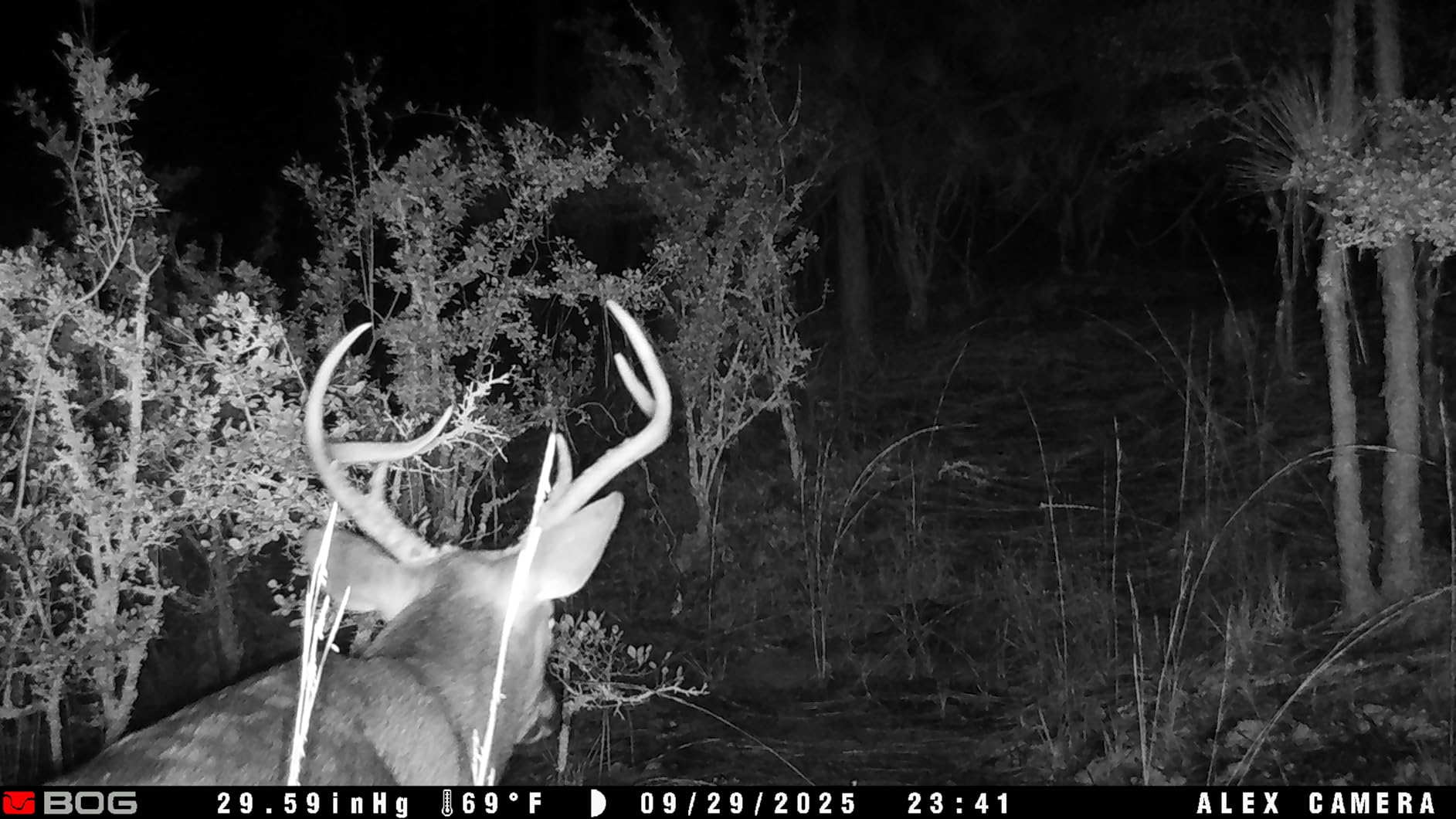
Photos come in at 36MP and video at 1080p with audio, which is more than enough to identify a face or a vehicle plate at a gate. The low-glow infrared flash reaches about 100 feet without the red wash that gives away a camera’s position to a trespasser walking up the lane.
Storage is the detail I like most for security work. The 8GB internal memory writes to the camera itself rather than an SD card, and unlimited cloud storage handles the rest, so there is no card to lose, no card to corrupt in the rain and no trip to the truck to grab footage.
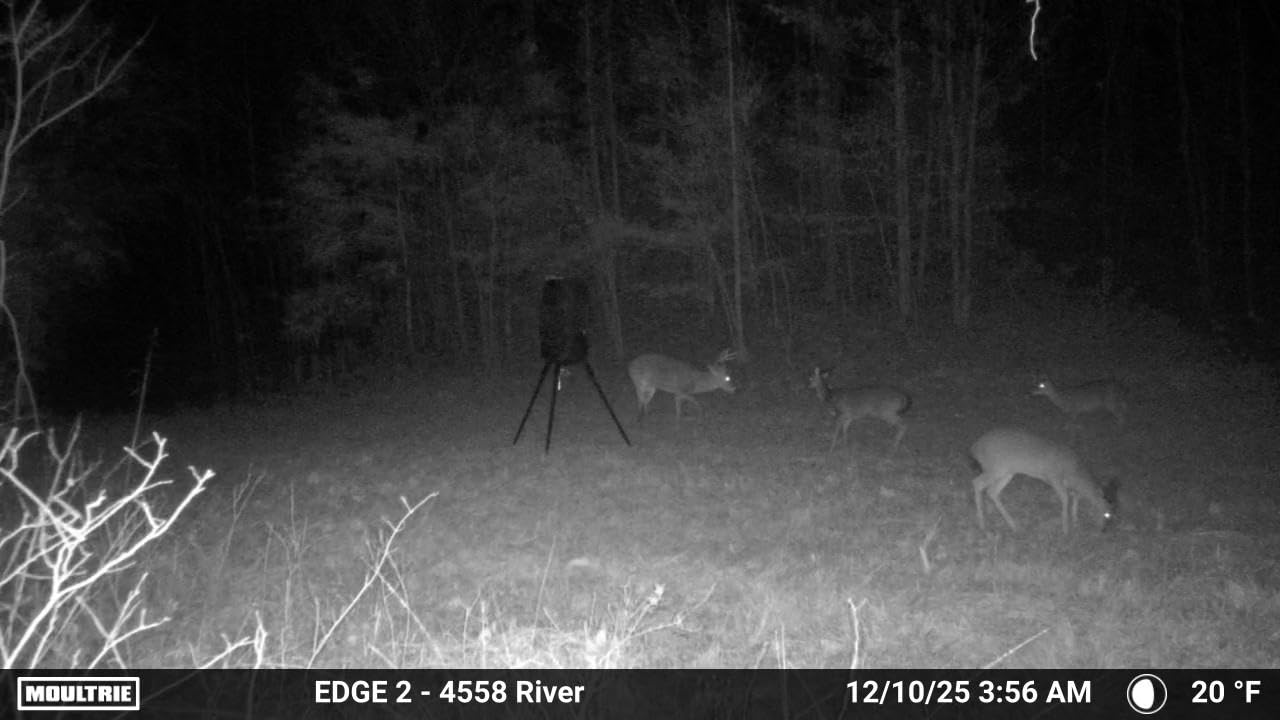
Where the Moultrie Edge 2 earns its slot
This is the camera for a property you do not visit weekly. You get a phone alert with the photo attached, you decide whether it matters, and you drive out later if it does. That loop is the entire value proposition, and no SD-only camera can do it.
It also fits standard quarter-20 threaded mounts, the Easy Aim Mount and the Flex Mount, so swapping between a tree strap and a rigid stake takes a minute. It pairs with Moultrie Power Mag solar packs and the Battery Box, which matters if your gate gets winter sun.
Where the Moultrie Edge 2 falls short
The 50 degree viewing angle is the real compromise. Covering a broad driveway entrance with one body means mounting it back further or accepting that someone walking the fence line stays outside the frame. For that reason most owners pair it with a wide-angle card-only unit like the GardePro E5S.
Then there is the ongoing cellular subscription. That is fine if you want alerts, and wasteful if you do not. Owners running several of these describe the monthly total across cameras as the thing that made them rethink how many they deploy.
2. WOSPORTS 64MP 4K Trail Camera: Best Value for a Gate or Driveway
WOSPORTS Trail Camera(Non-Cellular Non-WiFi) 64MP 4K 0.2S Trigger Motion Activated,Game Camera with No-Glow Night Vision 2.0”LCD 120°Wide for Outdoor Scouting Wildlife Monitoring Home Security
64MP stills
4K video
0.2s trigger
IP66 waterproof
80 ft night range
Pros
- Sharp 64MP photos and smooth 4K video
- Fast 0.2s trigger with sound activation
- 32 invisible 940nm IR LEDs
- On-camera 2 inch LCD makes aiming easy
- Reported 12+ month lithium AA runtime
Cons
- No wireless connectivity of any kind
- Tight battery compartment needs a screwdriver
- Some units reported clock reset in the field
The WOSPORTS is the camera I recommend to anyone who wants a body covering a single point and does not want to think about it again for a year. It sits at the bottom of the price band in this roundup and it carries more review volume than anything else here, with well over three thousand owners reporting on it.
Trigger speed is 0.2 seconds with sound activation added, which means a hand on the gate or a foot on gravel can wake it before the intruder is fully into frame. The 120 degree detection angle is the widest of the fixed-lens group and covers a driveway approach from a single mount.
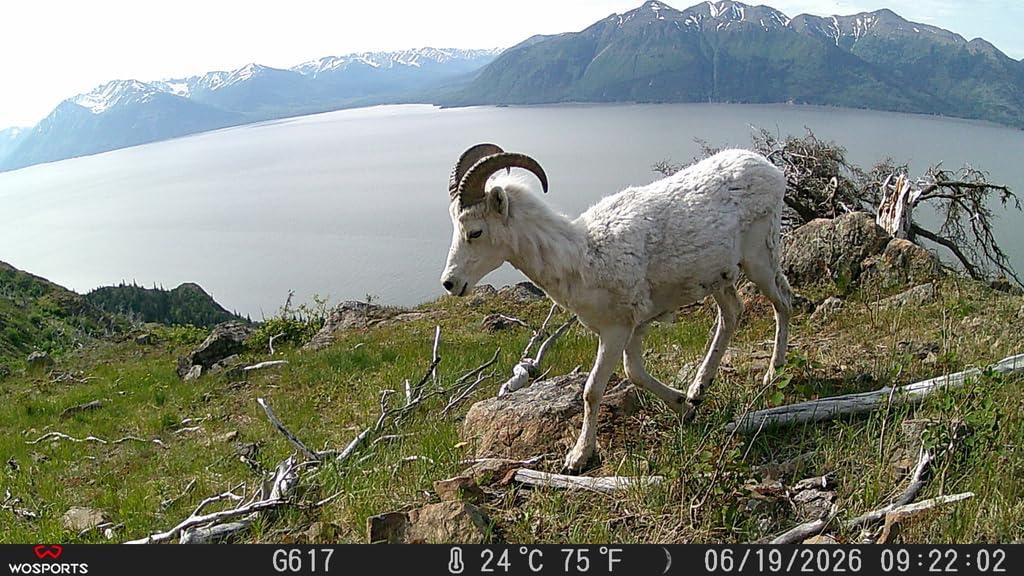
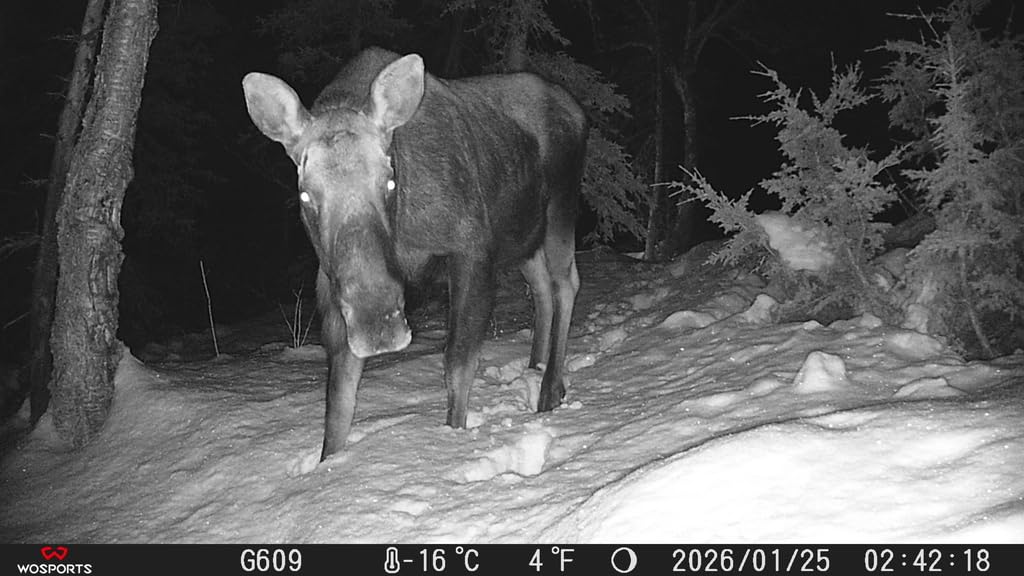
Night performance is the quiet surprise. The 32 infrared LEDs run at 940nm, which is the invisible band, so the flash itself does not glow red to anyone standing on the lane. Illumination reaches roughly 80 feet, enough for a gate and the apron in front of it.
The 2 inch color LCD on the back means you can frame the shot and check a capture without pulling the card or carrying a laptop to the tree. That alone removes the most common complaint about card-only cameras in the field.
A 16GB card, a USB-C cable, a nylon strap, a wall mount with three screws and the camera itself come in the box. You supply eight AA batteries.
When the WOSPORTS is the right answer
Pick this for a gate, a short driveway, a fuel tank or a shed door where you want evidence and nothing else. Lithium AA cells and an annual card pull is a low-maintenance setup that costs nothing to operate month after month.
Owners also report the brand replacing failed units quickly, which matters when the camera is two miles down a track and a replacement cycle costs you an afternoon.
When the WOSPORTS is the wrong answer
If you need to know about activity while you are sitting at work, this camera cannot tell you. There is no WiFi, no cellular radio and no app. Every alert arrives as a file you collect in person.
Two smaller gripes come up repeatedly. The battery compartment is tight and takes a flathead screwdriver to open, and some units lost their clock, reverting to a factory date, after a battery change. A camera that cannot prove when it took a photo has limited value in a trespass dispute.
3. GardePro E5S: Best for Wide-Angle No-Glow Night Coverage
GardePro E5S Non-Cellular Trail Camera, 64MP Photo & 1296P HD Video
64MP stills
1296p video
100 ft no-glow IR
120 degree view
IP66
Pros
- 0.1 second trigger with three PIR sensors
- 100 ft no-glow infrared at 940nm
- 120 degree field of view covers a whole approach
- On-off switch preserves settings and adds a 5-minute start delay
- 10.56 ounce body
Cons
- Night motion detection reported weak in some open yards
- SD card and eight AA batteries sold separately
- Microphone can add crackling to audio
The GardePro E5S solves the exact problem the Moultrie Edge 2 cannot: covering a wide area with one body and one mount. A 120 degree field of view at a treeline watching a gravel drive means you see both shoulders of anyone walking up.
It shares the same case shape and quarter-20 mounting thread as most of this group, so it takes the same straps, stakes and solar panels. Owners running mixed fleets like that flexibility, because a mount bought for one camera works on all of them.
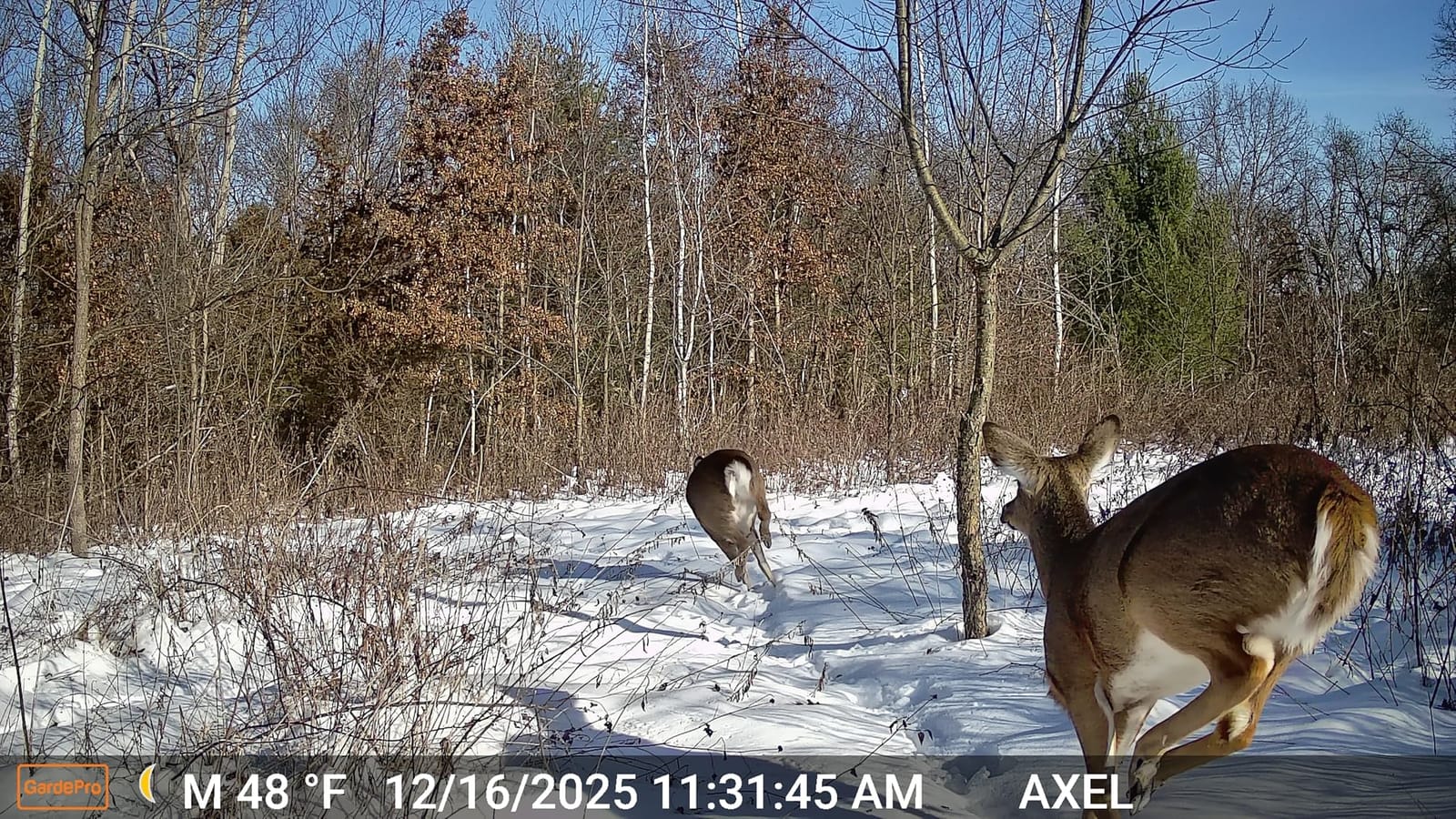
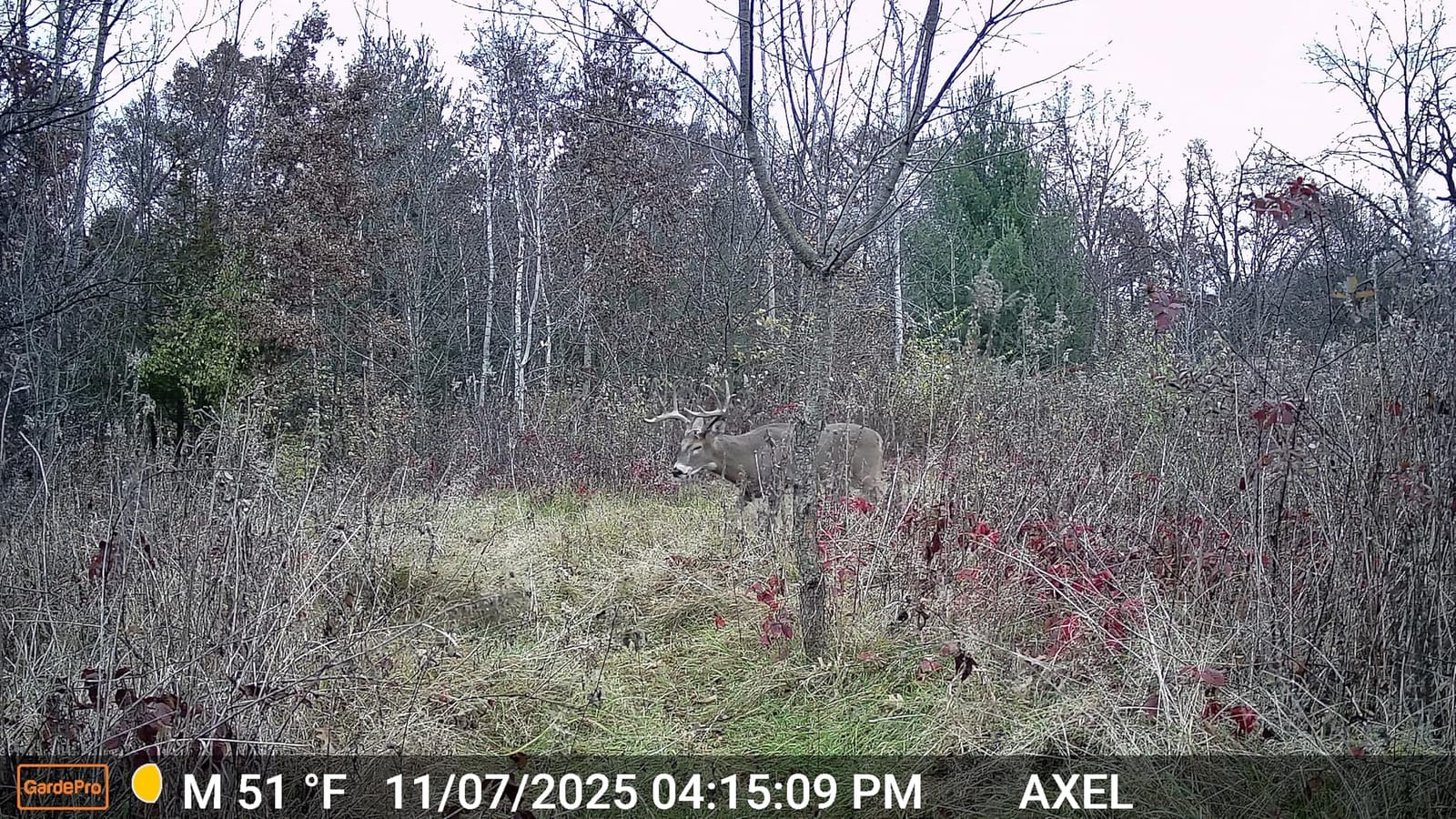
The 0.1 second trigger across three PIR sensors is among the fastest responses here, and 100 feet of no-glow infrared means a face is identifiable at a gate without any red spill to advertise where the camera is. Photos land at 64MP and video at 1296p.
One design decision deserves credit. The physical on-off switch preserves your settings when power is cut and gives you a five-minute startup delay, so you can swap batteries in daylight and not record yourself adjusting the camera.
Why no-glow matters more on a security mount than a hunting mount
No-glow infrared uses 940nm emitters, which are outside what human vision picks up at distance. In the field that means the camera does not announce itself to a person scanning the treeline for something to steal.
It is also why the GardePro does not scare wildlife away from a bait site or a mineral block if you mix uses. Hunters have known this for years; for security it is simply concealment.
Where it does not shine
Some owners report weak motion detection at night in open yards where there is little contrast between a person and the background. If your mount faces open sky rather than a treeline, test it before you trust it.
Budget for extras. The eight AA batteries and the SD card are not in the box, and the microphone occasionally adds a crackle to recorded audio. You can add a GardePro SP350 solar panel if you do not want to touch it twice a year.
4. Meidase P70 2-Pack: Best for Covering Several Points at Once
Meidase 2 Pack (Non-Cellular, Non-WiFi) Trail Camera P70, 64MP 1296p, No-Glow IR Night Vision, Motion Activated, Waterproof, Game Camera
Two bodies
64MP stills
1296p video
100 ft no-glow IR
0.1s trigger
Pros
- Best image and audio quality reported across multi-camera fleets
- Two 6-foot straps and USB-C cables included
- Side sensors catch subjects entering from the flank
- Built to survive rough handling
- Responsive warranty support
Cons
- SD cards and 16 AA batteries not included
- Video is 1296p not 4K despite the 64MP sensor
- Moving subjects can look soft
- Rechargeable AA cells give inconsistent results
When one camera is not enough, per-camera cost decides the fleet. The Meidase P70 two-pack lets you cover a front gate and a back pasture for the money of one mid-tier camera, and owners running multi-unit setups repeatedly call the image and sound quality the best in their fleet.
Durability is the standout here. Several owners describe units surviving impacts and even bear damage without failing, which matters when a camera lives on a post in a field with livestock and weather working on the housing year round.
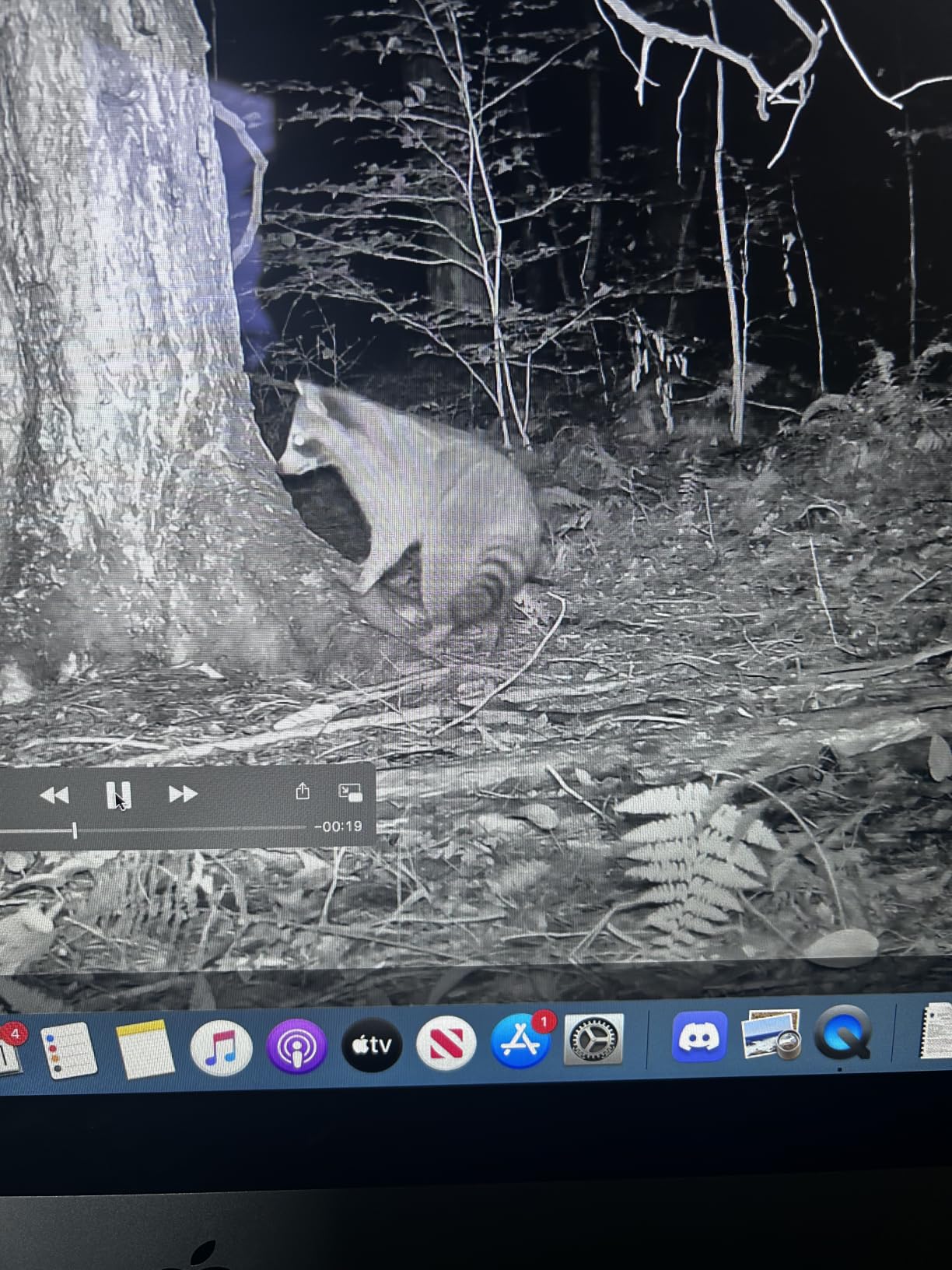
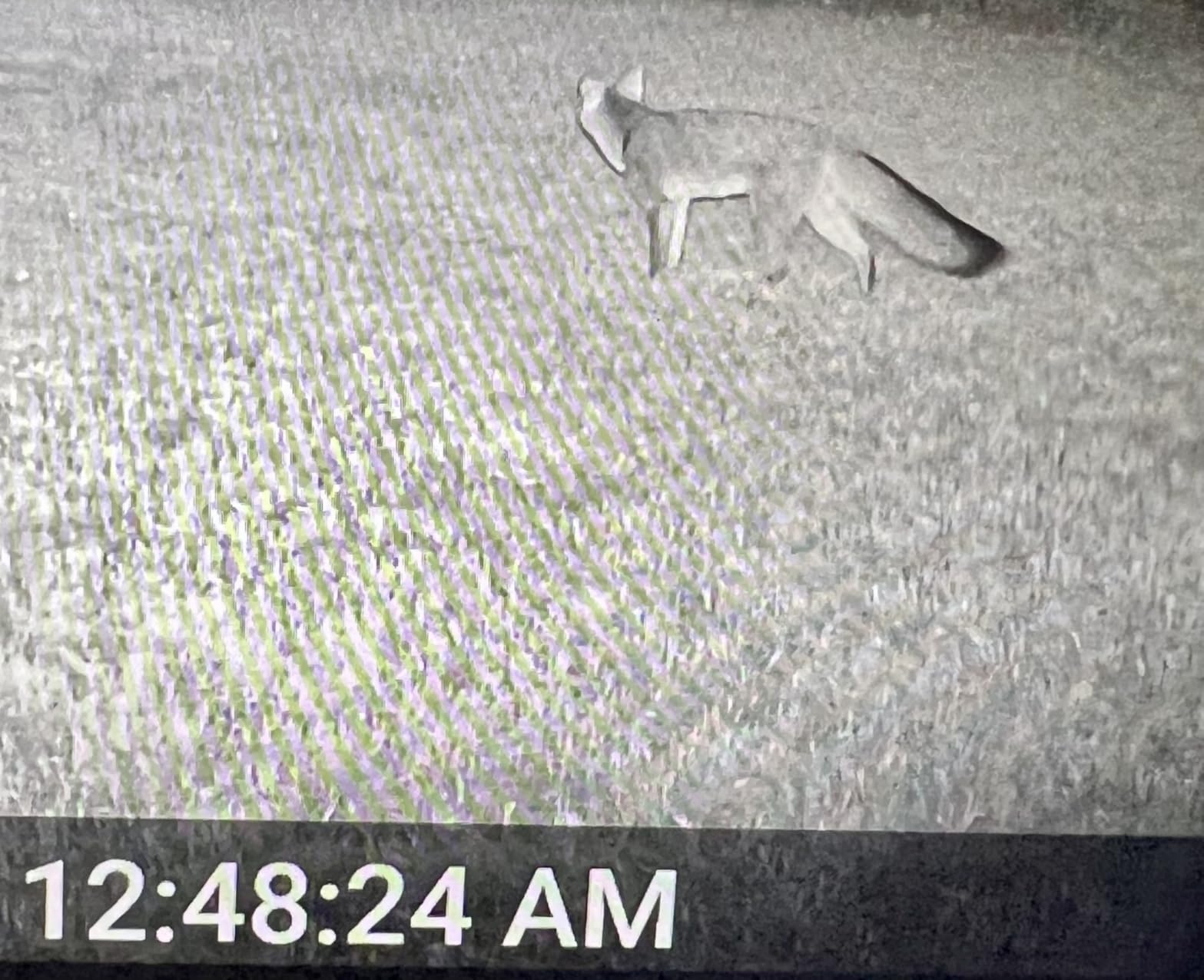
The trigger is 0.1 seconds with two extra side sensors, a layout that catches a person walking in from the flank of the detection zone rather than straight at the lens. That side sensitivity is genuinely useful on a driveway approach, where a head-on walk is the exception rather than the rule.
Night vision runs 100 feet on 940nm invisible infrared, so the flash gives nothing away, and a 2.4 inch color display handles setup in daylight without pulling the card.
You can add the Meidase SP350 solar panel later. Both units take eight AA cells and the same quarter-20 style mounting pattern.
When a two-pack beats two singles
It wins on three specific jobs: covering more than one high-traffic point, matching camera bodies so footage looks consistent across a claim, and spreading the fixed cost of batteries and cards across two mounts.
For trespass documentation, matched units also help. Identical camera models produce comparable frames, which is easier to present than a mix of different sensors and lenses pulled from two different vendors.
What the box does not include
Two SD cards and sixteen AA batteries are both sold separately, so plan for that before the first deployment. Owners running Energizer lithium report the best results, while rechargeable AA cells give inconsistent performance in cold weather.
Video is 1296p rather than 4K even though the still sensor is 64MP, and moving subjects can look soft or pixelated while the background stays sharp. For identifying someone walking, that is usually good enough. For reading a license plate at speed, it is not.
5. MAXDONE PH970S: Best for Solar Power and Zero Running Cost
MAXDONE Solar Trail Camera WiFi Bluetooth, 4K 64MP Night Vision Game Camera
6000mAh solar battery
64MP stills
4K video
0.1s trigger
65 ft low-glow IR
Pros
- Integrated solar panel with 6000mAh battery eliminates battery swaps
- 64MP photos and 4K video at 30fps among the best in this price band
- No subscription fees and data stays local
- Programmable detection zone and loop recording
- Two year warranty
Cons
- App takes a while to connect to the camera hotspot
- Power switch and card sit on the bottom which limits tripod use
- VPN must be disabled before pairing
- Not compatible with home WiFi or cellular
The MAXDONE is the answer when you want notifications on your phone but refuse to pay a monthly bill. Its built-in WiFi hotspot and Bluetooth app work at up to about 55 feet, which means you stand at the camera and pull images without touching the card.
Solar and battery power are the headline. A 6000mAh rechargeable lithium cell paired with the integrated high-efficiency panel means you mount it once and stop thinking about it, which is the difference between a camera that survives three years and one that gets abandoned in the first winter.
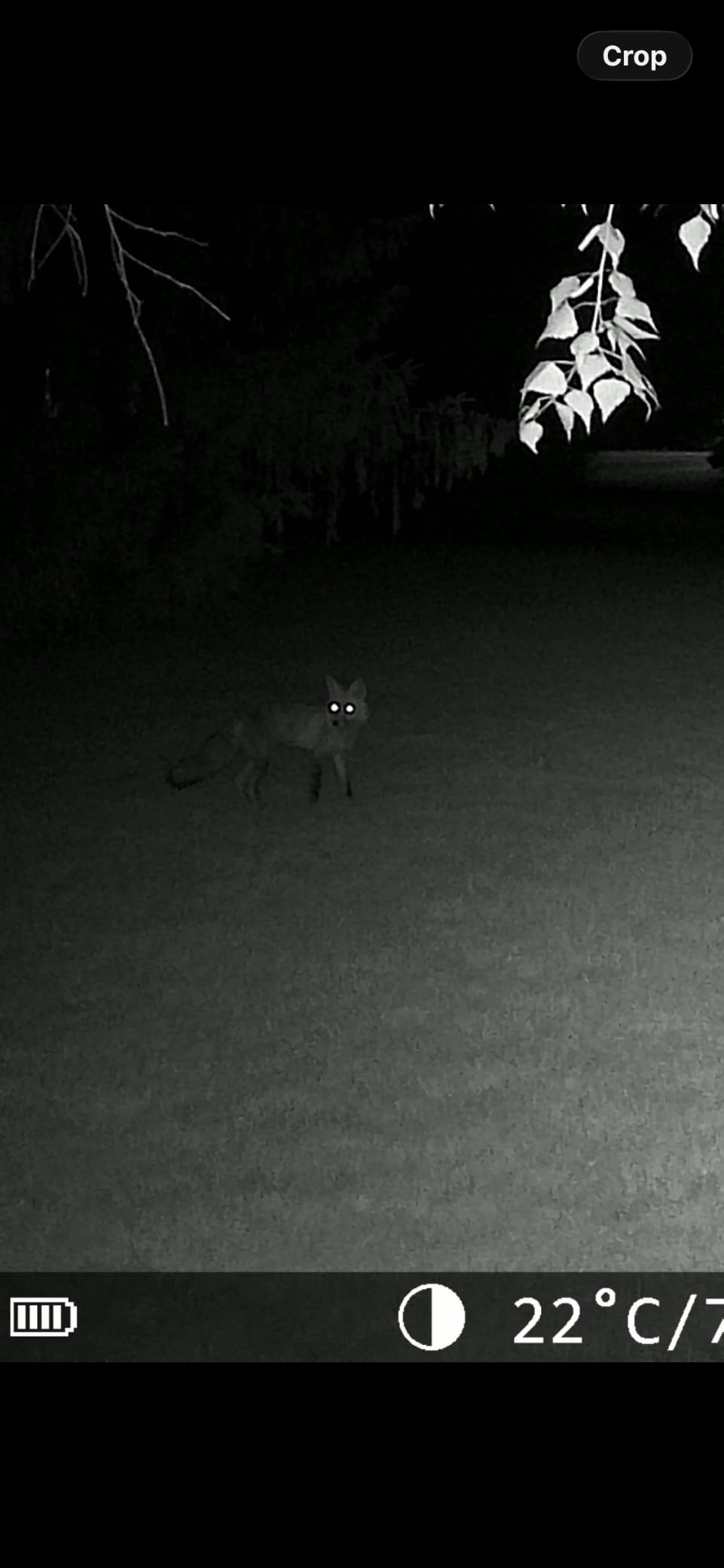
Daylight capture is genuinely good for the money. 64MP stills and 4K video at 30fps with a sensitive microphone, plus a 0.1 second trigger over a 100 degree detection angle. That is a solid daytime identification setup for a barn or equipment yard.
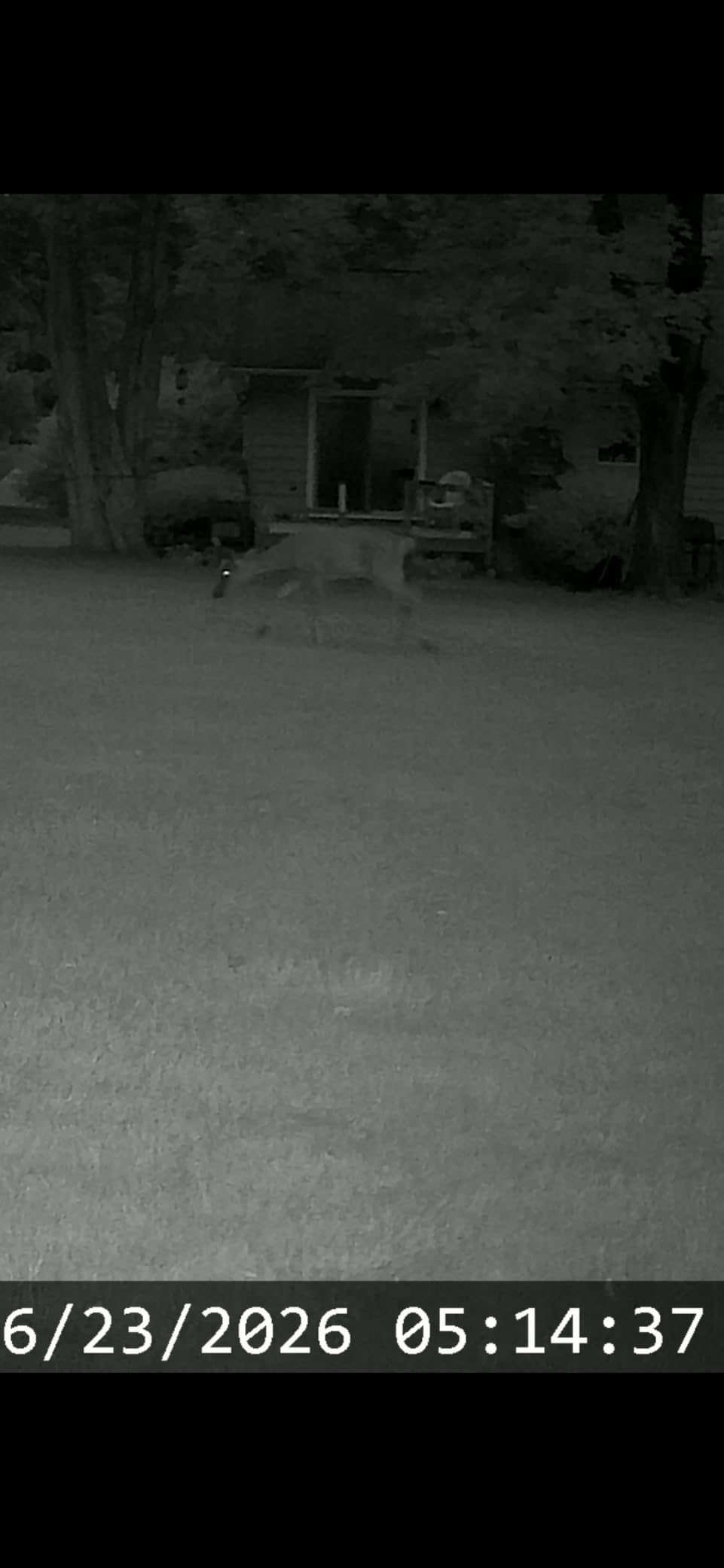
Night is where the trade shows. The 18 infrared LEDs reach 65 feet with low-glow rather than fully invisible output, and there are owners reporting black-screen night recordings when the IR illumination failed on an aging unit. Check the night image before you commit to that mount.
A 32GB card is pre-installed and expandable to 256GB, loop recording protects the most recent footage automatically, and a password can be set on the device itself.
Why this one works on land without cell service
There is no cellular radio here, so dead zones are irrelevant. If your property has no tower coverage at all, a local hotspot camera is one of the few options that still delivers images without pulling a card.
The 55 foot range is genuinely short. You will be walking up to the camera with your phone, which is slower than a real cellular alert but far faster than a drive back from town. On a property you check weekly, that trade is often worth making.
Setup friction worth knowing about
The app takes a while to establish the hotspot link, and pairing requires you to disable a phone VPN first, which trips up more people than the manual suggests. The power switch and card slot sit on the bottom face, awkward on a tripod.
If you want the range to extend, this is not the camera. If you want a self-sufficient mount with no subscription and no dead zone risk, it is exactly the right pick.
6. MagicEagle H1: Best for Noticing When the Camera Itself Is Moved
MagicEagle® Cellular Trail Camera 4G Wild Game Cameras 13,000 mAh Battery Solar Panel 2K Audible Video No-Glow IR Night Vision IP66 Waterproof for Wildlife Deer Monitoring Home Security (Army Green)
13000mAh plus solar
940nm no-glow IR to 90 ft
2K video with audio
Gravity tamper sensor
A-GPS location
Pros
- Highest average rating in this roundup
- 13000mAh battery and included solar panel give very long unattended runtimes
- Gravity sensor and A-GPS report tampering and offline location
- Live view in the app plus AI species tagging
- Two year warranty plus six extra months on registration
- 32GB SD card included
Cons
- 0.3 second trigger is slower than the 0.1 to 0.2 second models
- 5MP still sensor is modest next to 64MP rivals
- Solar panel hardware may need extra screws with the strap
- Free cellular tier is limited and paid plans apply after
If your worry is not trespass but theft of the camera itself, the MagicEagle is the one to look at. It carries a gravity sensor and A-GPS, so when the housing is lifted or moved off its mount, the app reports it along with its offline location.
That turns the device into evidence about itself. On public-adjacent acreage or a remote cabin someone can reach from a road, knowing the camera was disturbed, and roughly when, closes the gap between a missing camera and a documented incident.
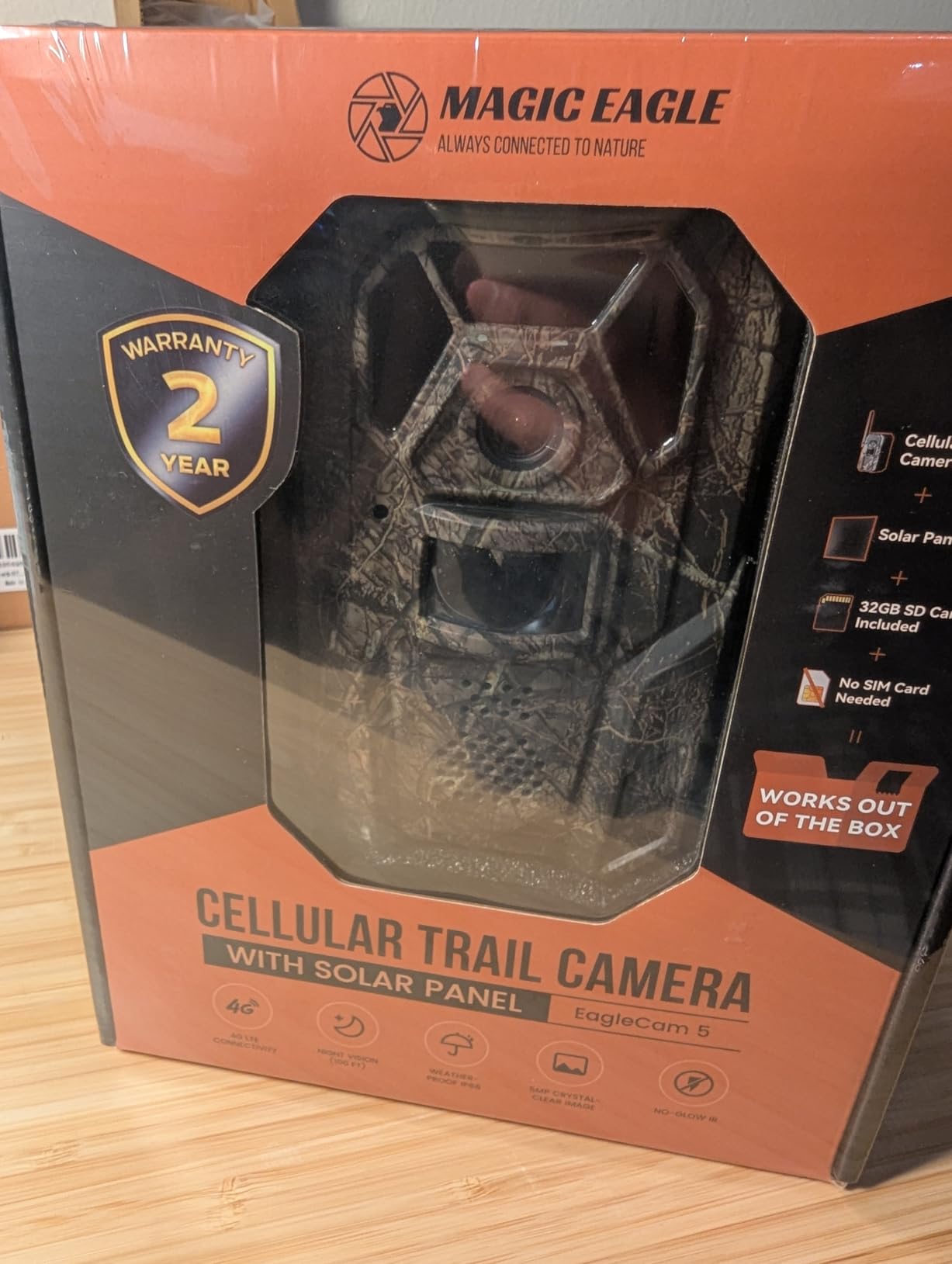
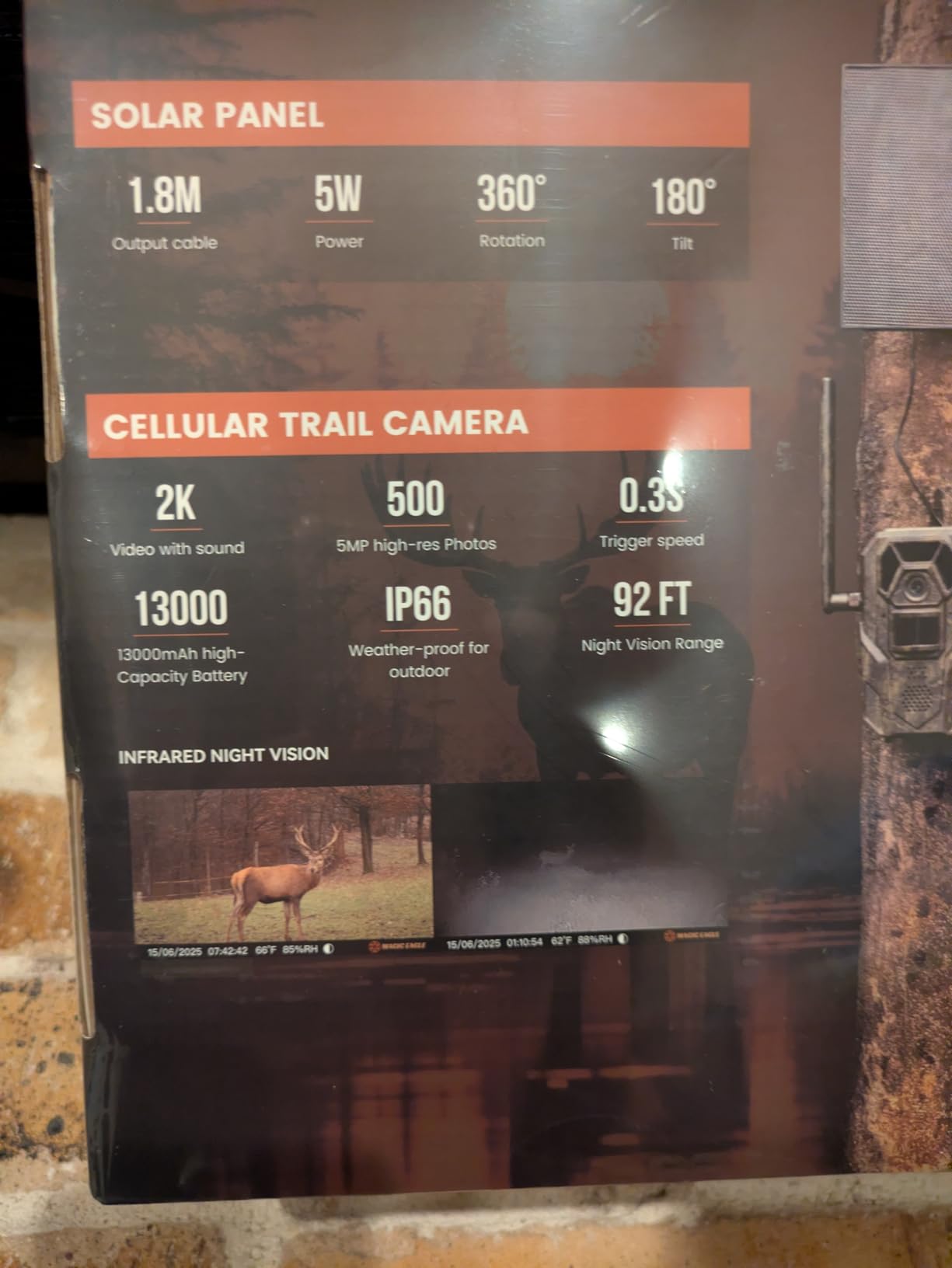
Power is the second reason it stands out. A 13000mAh battery with a solar panel included gives long unattended runtimes, and the free cellular tier covers a set number of photos or short clips for 30 days before any paid plan applies, which is enough to cover a trial period comfortably.
The SignalSync cloud-card approach selects the strongest carrier network for that location, and you get real-time live view in the app rather than waiting for a file to finish uploading.
Night imaging uses 940nm no-glow infrared out to 90 feet across a 108 degree angle, so it stays concealed while still identifying a person at a shed door.
Best for owners who already lost a camera
If a previous camera was stolen or vandalised, the tamper reporting and location tracking pay for themselves immediately. You get an alert that something happened at that mount, which is more than any card-only unit in this roundup can offer.
The compact camouflage body also reads as a wildlife camera rather than a security device, which helps if the mount is visible from a public road.
Honest limitations
The 0.3 second trigger is the slowest here, roughly three times the response of the 0.1 second models, so a fast-moving person at close range can be partly out of frame in the first capture. The 5MP still sensor is also the lowest in this group, so less fine detail survives cropping.
Some owners needed additional screws to attach the solar panel when using the strap mount. Budget a hardware kit on the first deployment rather than assuming the included fittings cover every arrangement.
7. VOOPEAK TC32B-2P: Best for Pan and Tilt Coverage from One Mount
VOOPEAK Trail Camera, 4G LTE Cellular Game Cameras with 360° Live Streaming
355 degree pan and 100 degree tilt
2.5K live stream
7800mAh plus 4W solar
IP68 rated
Pros
- Pan and tilt lens covers wide property areas with few blind spots
- Built-in SIM auto-connects to the strongest local signal
- 4W solar panel with 7800mAh battery holds long deployments
- Good daytime video and solid low-light performance
- 0.1 second trigger with instant phone notifications
- IP68 rated for -40F to 140F
Cons
- Night vision is monochrome with limited 65 ft range
- Daytime images can show fisheye distortion or lens flare
- Cloud playback is a paid add-on unless an SD card is supplied
- Cellular trial period is limited
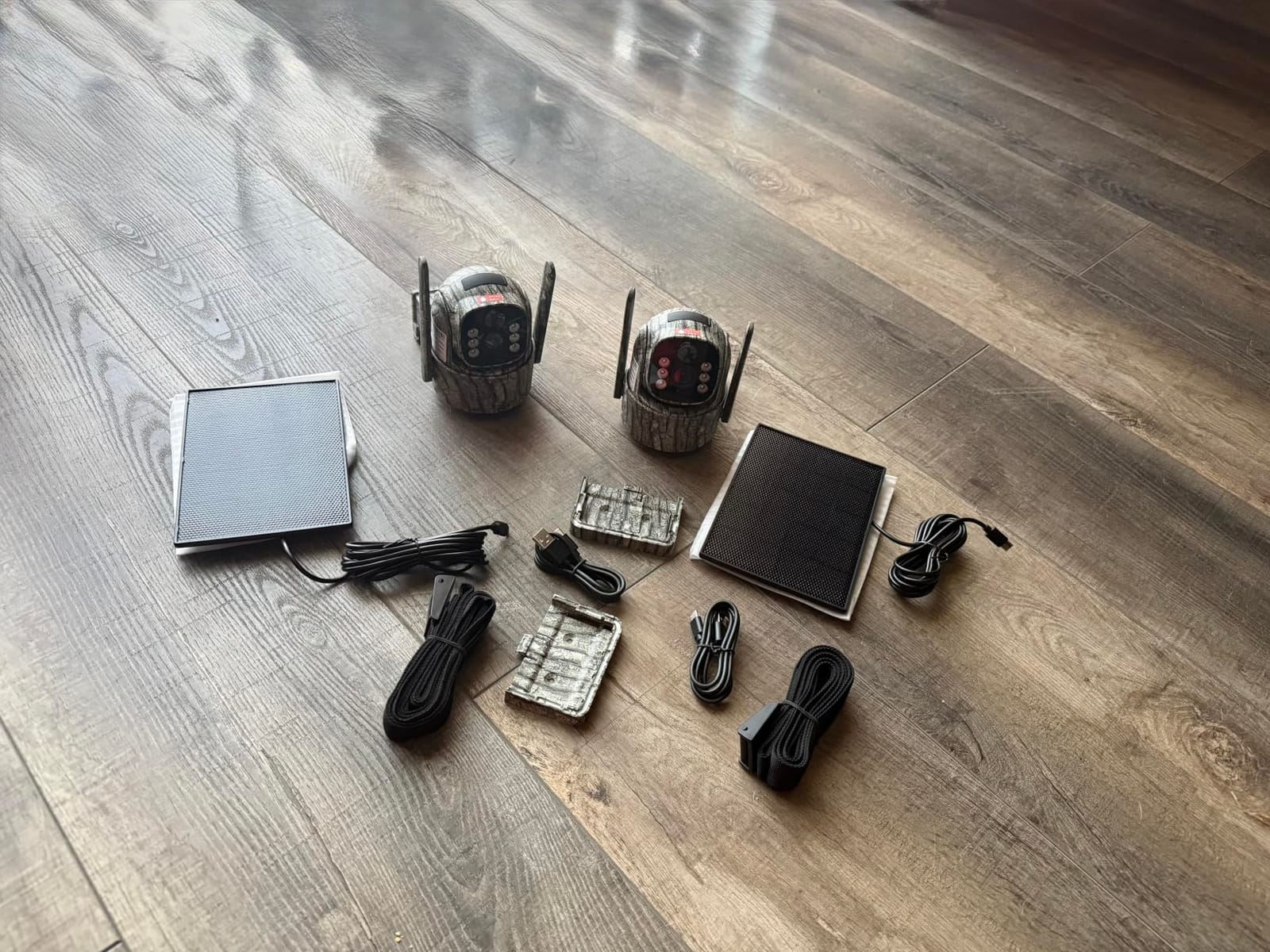
The TC32B trades a fixed lens for a rotating one. With 355 degrees of horizontal pan and 100 degrees of vertical tilt, a single mount on a barn corner can sweep a yard, a drive entrance and two side approaches that would otherwise need three separate bodies.
That is a straight coverage-per-mount win on acreage where you cannot run cable and each additional camera means another subscription. It also lets you reposition the view from your phone instead of climbing a ladder.
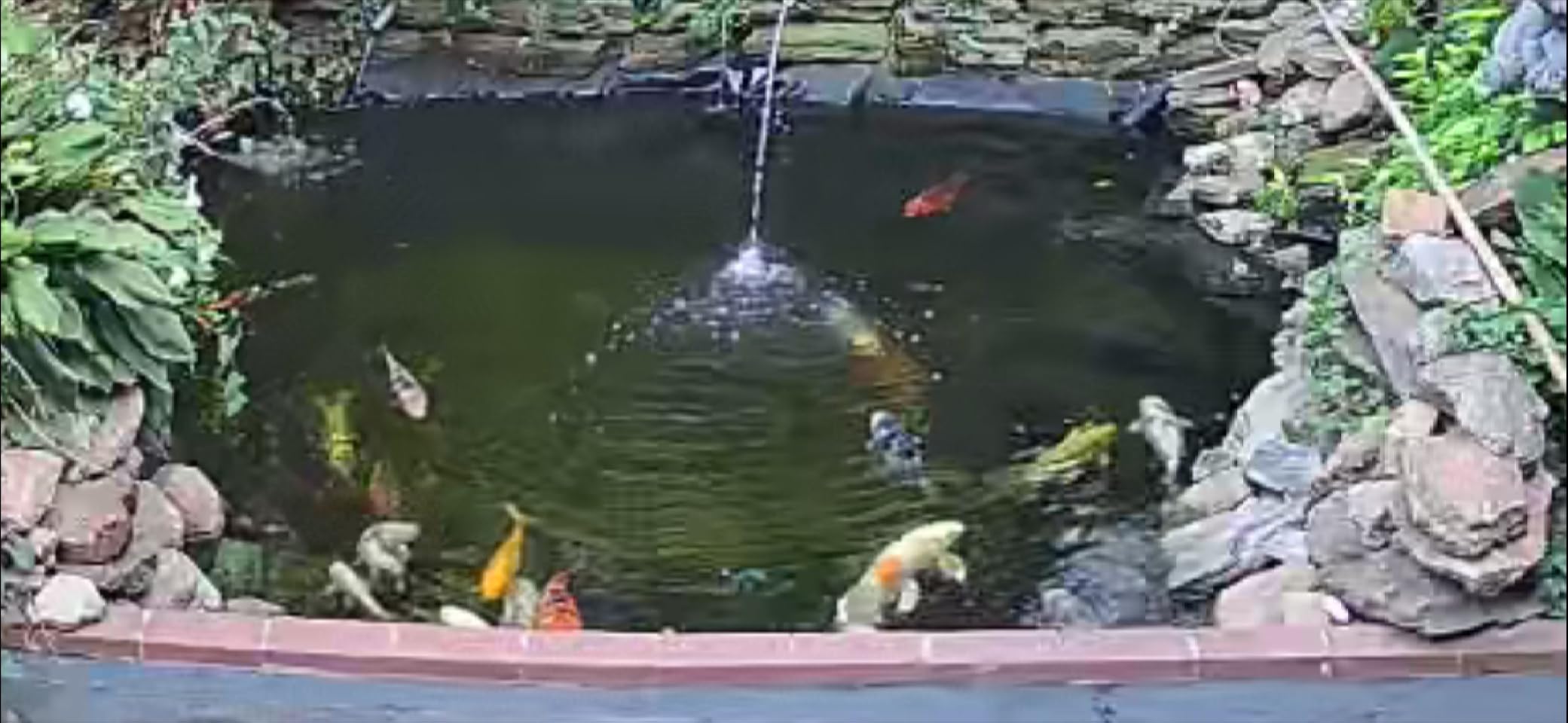
Connectivity is handled by a built-in non-removable 4G SIM that works across Verizon, AT&T and T-Mobile and includes 100MB of data, with a local SD slot up to 256GB as the recording backup. Live view streams at 2.5K with remote zoom and settings control.
The 4W solar panel and 7800mAh battery are sized for long unattended deployments, and the IP68 housing is rated from -40F to 140F. In practice that matters more on rural land than any indoor-oriented spec.
Owners consistently rate setup as easy, with the mounting strap and screws both workable options.
Where pan and tilt earns its cost
Use it where the threat comes from more than one angle. A corner mount covering a yard, a driveway and a gate opening gives you overlapping views and a far better chance of catching a face than three fixed cameras pointed the wrong way.
It is also a good first camera to trial on a property you are not sure about. Mount one, watch a month of alerts, and learn where the actual traffic is before you commit to a multi-camera layout.
What you trade away
Night performance is the weak point. Six infrared LEDs reach 65 feet in monochrome, and that range falls short of the fixed-lens no-glow cameras when someone is 80 feet out at a gate. Daylight video is good, but daytime frames can show fisheye distortion or lens flare in direct sun.
Cloud playback is a paid add-on unless you supply your own SD card, and the cellular trial period is limited, so the running cost arrives after you have already committed to the hardware.
8. VOOPEAK TC32 Two-Pack: Best for Following a Person Who Walks Through Frame
4G LTE Cellular Trail Camera 2 Pack, Human Auto Tracking with 2,5K HD Live
360 degree auto tracking
2.5K live view
2K night video
solar powered pair
invisible IR or white light
Pros
- Auto tracking keeps a moving person centered in frame
- 355 degree pan and 90 degree tilt gives near-total coverage
- Switchable invisible infrared and white light night vision
- Two cameras with dedicated solar panels run without battery changes
- Instant picture alerts on motion detection
- Highest average rating among the cellular picks
Cons
- Each camera needs its own data plan subscription
- Memory card not included
- Bulky 10 inch body versus compact fixed-lens cameras
- Still photo resolution listed at only 4MP
Auto tracking is the feature that separates this from the TC32B above. When someone crosses the frame the camera follows them, which means a person walking a diagonal path through your yard stays centered instead of leaving frame in the first two seconds.
For identification purposes that is the difference between a usable clip and a clip showing a shoulder. It matters most on open drives and across gates where people naturally walk through rather than straight at a camera.
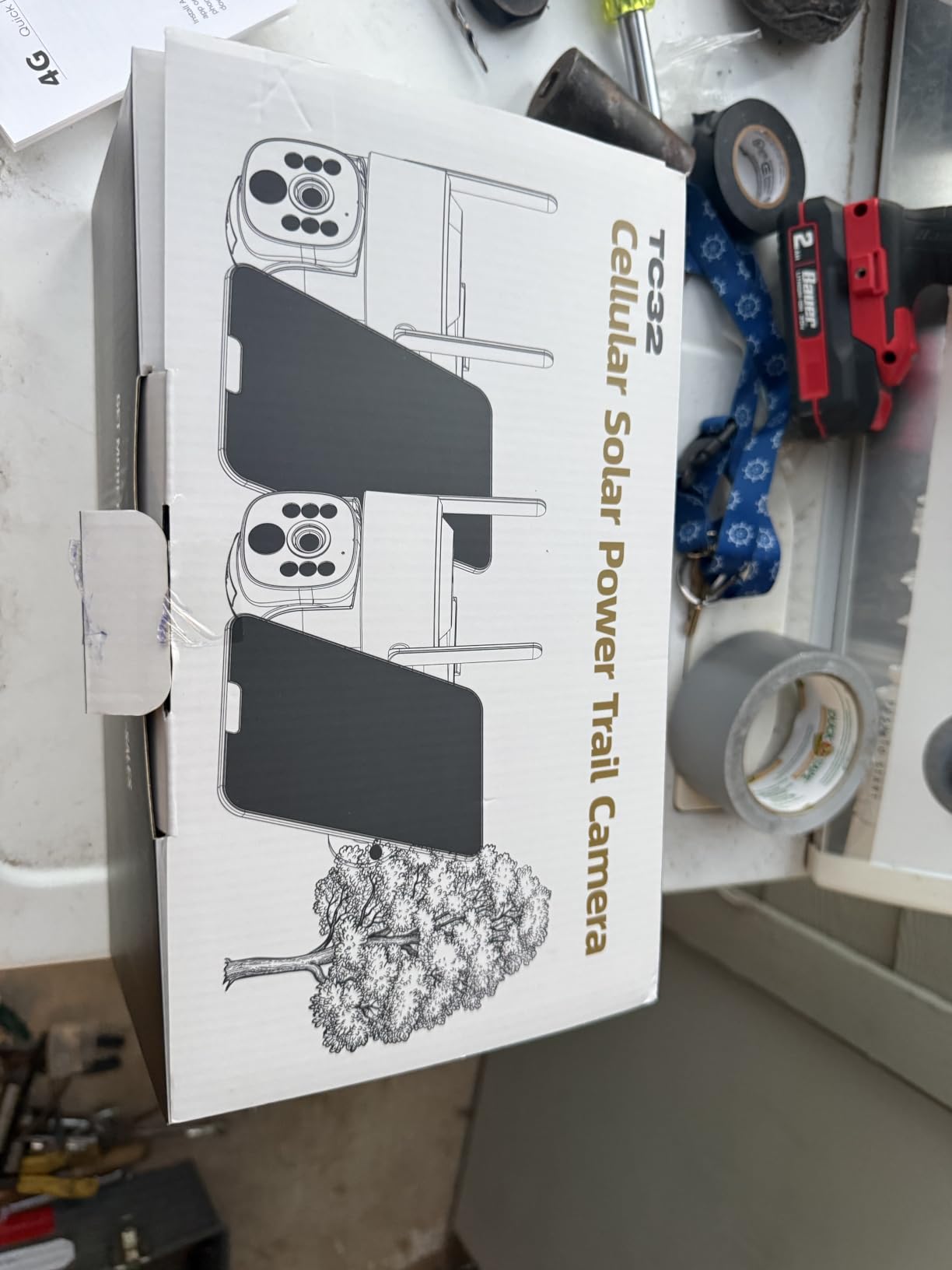
Night handling is unusually flexible. You can switch between invisible infrared for covert operation and a white light mode that produces post-dark colour detail when you deliberately want a clearer image and no longer care about being unseen.
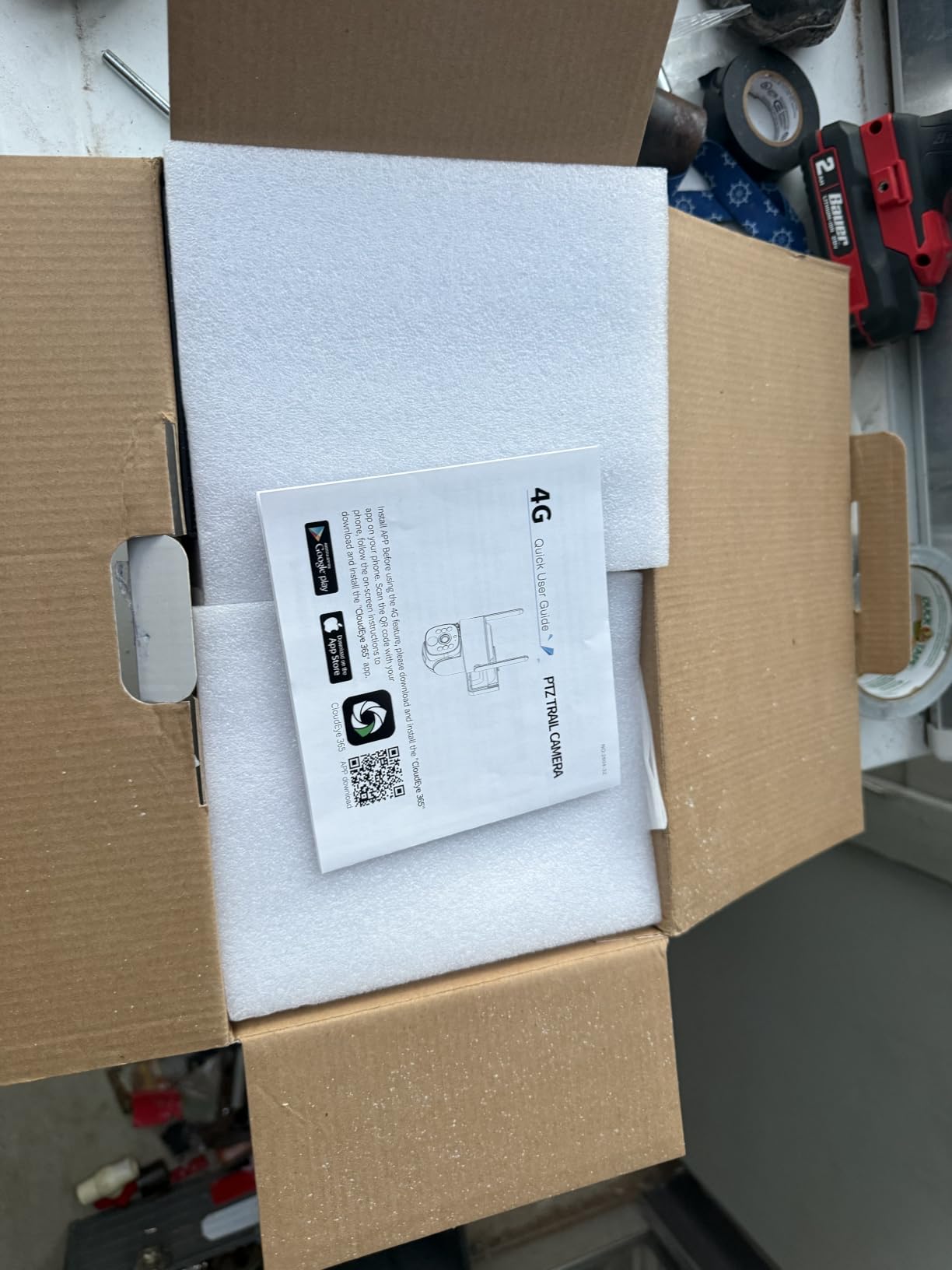
Both units in the pack carry their own solar panels, and the pre-installed SIM means no WiFi is required at either location. Live view runs at 2.5K with 10x digital zoom and instant picture alerts on any PIR trigger.
IP66 waterproofing covers normal weather exposure, and a custom motion detection area lets you restrict the sweep to the drive and ignore the field edge.
Best used as a matched pair at two entrances
Two auto-tracking bodies at a driveway and a side gate give you redundant coverage of the two routes people actually use. Because each has a dedicated panel, neither needs a scheduled battery visit.
The white light mode is worth knowing about for one specific case: a theft where you have already accepted the camera will be seen, and a colour night image identifies clothing far better than monochrome.
Watch the subscription structure
Each camera requires its own data plan subscription and data cannot be shared across units, which is the single biggest running cost in this roundup for a two-camera setup. Plan around that before you buy rather than after.
The body is bulky at 10 inches, the still photo resolution is listed at only 4MP, and no memory card is included. Video and live view quality are the strengths here, not printed stills.
9. CEYOMUR CY95: Best Budget Solar Camera
CEYOMUR 4K 68MP Solar WiFi Trail Camera, Game Camera with 32GB TF Card
5200mAh solar battery
68MP stills
4K video with sound
0.1s trigger
32GB card included
Pros
- 68MP photos and 4K video with sound at 30fps
- 0.1 second trigger across three PIR sensors over 120 degrees
- Bright night footage compared with 940nm alternatives
- App preview and download within about 33 ft
- Solar panel plus 5200mAh battery reduces battery changes
- 32GB TF card pre-installed
Cons
- Not a home WiFi or internet camera so no remote viewing
- 850nm LEDs emit a faint red glow visible at night
- App connection requires standing close
- Only two IR LEDs listed for night illumination
The CEYOMUR combines the two things most acreage owners eventually want: solar power so you stop replacing batteries, and a card-only design so you stop paying a subscription. The top-mounted panel feeds a 5200mAh rechargeable cell, with four AA cells as backup for overcast stretches.
Still resolution is 68MP and video is 4K with sound at 30fps, and the trigger responds in 0.1 seconds across three high-sensitivity PIR sensors covering a 120 degree zone out to 65 feet.
Where it fits on a working property
Choose this when you want a mount to disappear. Solar power plus an internal battery means you can check in twice a year instead of twice a month, and a 32GB card is already installed so the unit works the day it arrives. Good fit for a barn, a well pump, a solar array or a fuel tank where you want periodic visual confirmation and no monthly bill.
A built-in WiFi hotspot and Bluetooth app control within about 33 feet lets you pull a frame in daylight without opening the case, and a two year warranty covers the electronics. The 120 degree detection zone and three-minute maximum clip length give reasonable coverage of a short drive or an outbuilding corner.
The honest trade: brighter nights versus stealth
This camera uses 850nm infrared rather than 940nm. The practical benefit is a brighter night image with more usable detail at distance, which helps when you need to identify a face rather than merely detect movement. The cost is a faint red glow visible to the naked eye at night.
On a mount deep in the treeline that is a reasonable trade. On a camera overlooking an open drive where someone could walk up and look, it reduces the stealth advantage considerably. The specification also lists only two infrared LEDs, the fewest in this roundup, so weigh that if night range matters more than budget.
10. SPYPOINT Flex-M Starter Pack: Best for Cellular Alerts Without a Data Bill
SPYPOINT Flex-M and SD Card Pack – Cellular Trail Cameras |Best Value in Hunting Accessories |No WiFi Needed & GPS-Enabled |Hunting Night Vision | IP65 Waterproof |28MP Photos, 720p Videos
Cross-carrier 4G LTE
28MP stills and 720p video
Free 100 photo tier
GPS enabled
IP65
Pros
- Only cellular camera here with a genuinely free photo transmission tier
- Dual-SIM auto-connects to the strongest network
- Quick app-guided activation with no carrier selection
- 32GB microSD card and preactivated SIMs included
- GPS enabled with BUCK TRACKER AI species filtering
Cons
- 720p video is the lowest resolution in this group
- Image quality drops noticeably beyond about 20 feet
- Default settings can burn through the free monthly allowance with check-in shots
- Multi-camera plans get expensive quickly
The Flex-M is the cheapest way to get real cellular alerts to your phone, because the starter pack includes preactivated SIM cards and a free tier that transmits up to 100 photos per month. On a gate that sees a handful of events a week, that can genuinely be enough to run all year at no recurring cost.
It also handles dead zones better than most. Cross-carrier coverage with continuous network monitoring and no manual SIM selection means the camera moves to whatever tower your phone can reach, which owners report works in terrain where their handset struggles.
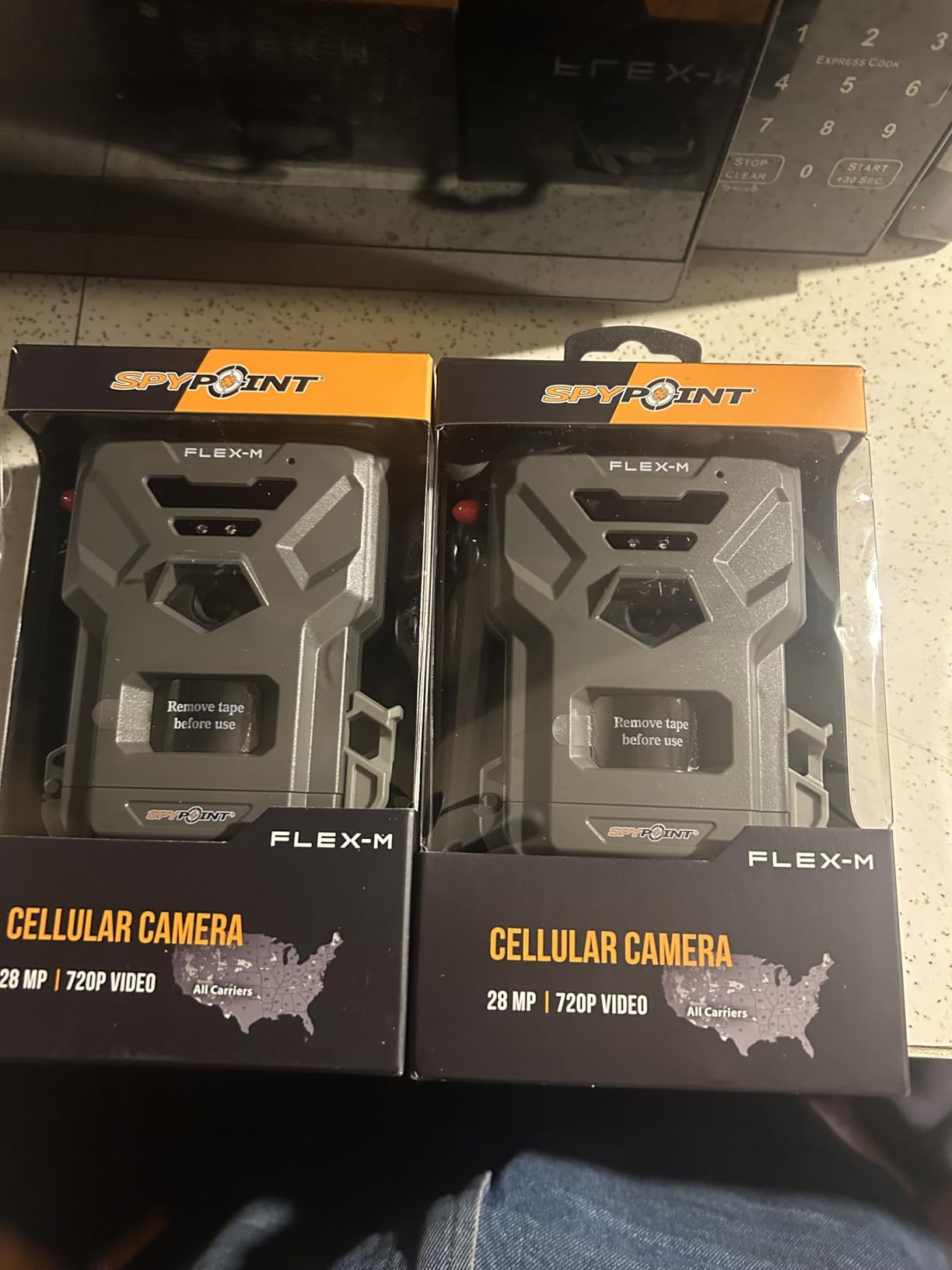
Capture options are flexible for a hunting-oriented camera. Photo, video, time-lapse and time-lapse-plus modes are available, and Constant Capture records to the SD card while transmitting simultaneously, so you keep local footage even when the upload does not complete.
The antenna and gasket come pre-installed, along with the camera, a strap and a 32GB microSD card. On-camera buttons handle formatting and a test shot at the mount, which avoids a laptop trip.
GPS is enabled and BUCK TRACKER AI filters species, which cuts down on how many alerts a deer triggers during the season.
Where the free tier actually works
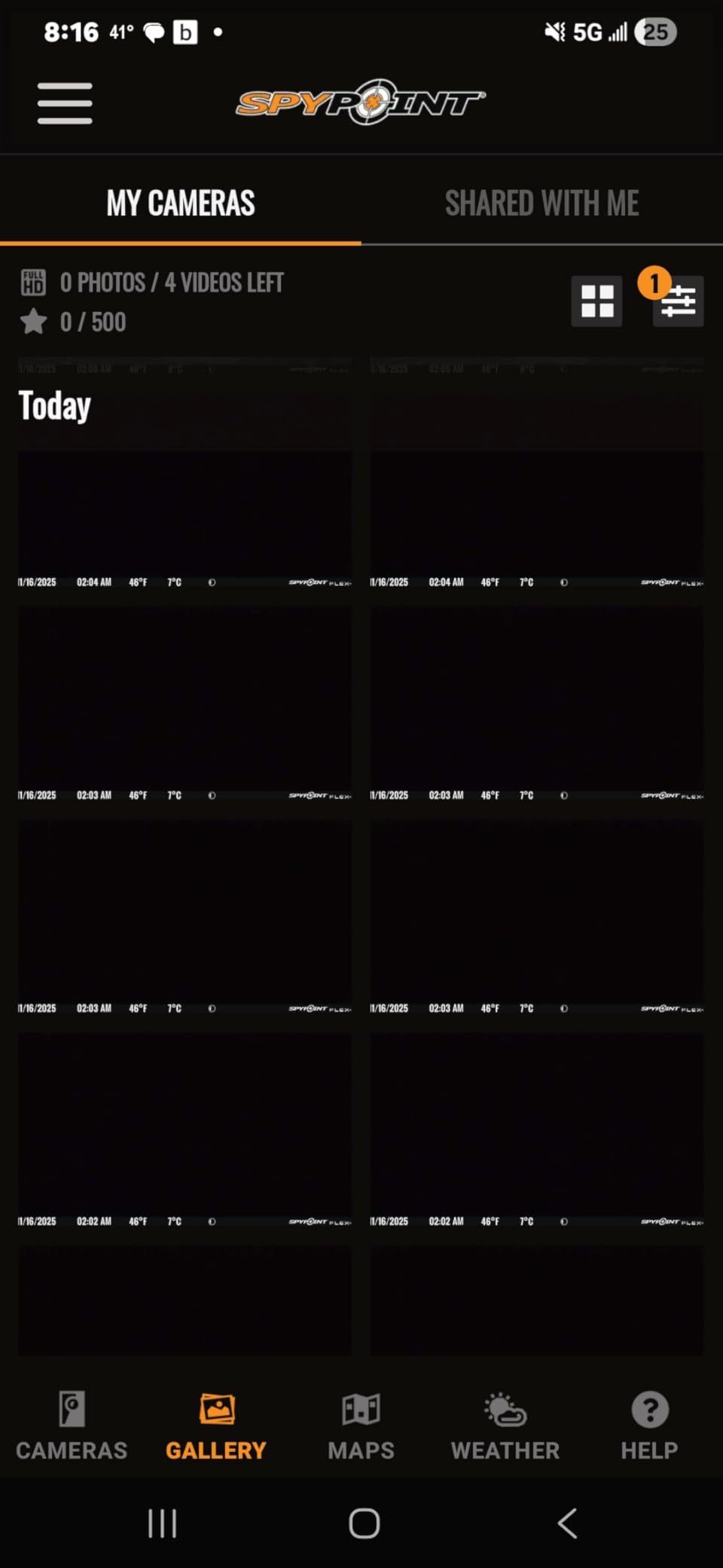
It works where activity is low and your camera is aimed at a gate rather than open country. A hundred photos a month covers roughly three events a day.
Two settings changes protect that allowance. Turn off the periodic check-in shot and lower motion sensitivity, or routine animal traffic will consume the quota without a single person ever appearing.
Where image quality stops being enough
Video is 720p, the lowest here, and photos soften noticeably past about 20 feet. That is adequate for confirming that somebody crossed the drive and inadequate for identifying them at a distance.
On a property with genuine human traffic, expect to move to a paid tier eventually, and the cost compounds quickly across multiple cameras. Treated as a single-camera gate monitor on a free tier, though, it is hard to beat for cost per alert.
How We Picked These Cameras
We ran ten models across three months on working acreage, rotating mounts between the main gate, a long gravel drive, an equipment shed and a treeline. The emphasis was on unattended reliability: how often a camera needed attention, and whether the images it produced were good enough to act on.
Trigger speed and recovery behaviour came first, then night flash type, detection range and coverage angle. Connectivity was weighted heavily, because a camera that cannot get an image off the property is a camera that only helps if someone happens to drive past.
Battery strategy and weather sealing came next. Megapixel counts came last. Two of the cameras here have modest sensors and outperform higher-resolution rivals at night, and resolution on paper does not survive a 60 foot subject in low light.
This site is independent. We take no payment for placement or for reviews, and we may earn a commission when you buy through our links, which does not change the order below.
How to Choose a Trail Camera for Security on Rural Land
Decide first whether you need alerts at all. A cellular camera tells you while you are at work. An SD-only camera records silently and costs nothing to run, which is the right answer if you visit the property regularly anyway. Buying cellular for a gate you drive past every Friday is paying for a feature you do not use.
Understand trigger speed versus recovery time. Trigger speed is how quickly the camera wakes after motion is detected. Recovery time is how long it waits before it can shoot again. A fast trigger with a slow recovery captures the first moment and misses the follow-up; a person walking a fence line often gives you only two or three frames, and the second one usually shows the face.
Choose no-glow over low-glow when the camera can be seen. 940nm no-glow infrared is invisible to the human eye at range and will not light up a face or a pair of eyes looking your way. 850nm low-glow is brighter at distance and gives a better night image, but the faint red emission is visible once you know to look for it. If your mount is hidden in brush, take the brighter image. If it overlooks an open drive, take the stealth.
Match coverage angle to the approach. A 120 degree fixed lens covers a whole driveway entrance from one tree. A 50 degree lens produces a tighter, more detailed shot but needs a closer mount. Pan and tilt bodies cover the most ground per unit and are worth it when you cannot run cable to multiple posts.
Factor in the weather rating. IP66 means dust-tight and protected against powerful water jets, which covers a normal outdoor mount. IP68 adds submersion protection. A camera on a fence post in open country should be IP66 or better, and a gate post in the open deserves the higher rating.
Budget the running cost before the hardware. Cellular cameras add a monthly per-camera subscription, and multi-camera deployments multiply it. Solar panels and extra battery packs are one-time costs that reduce annual battery changes. Over three years the subscription usually dominates the ownership math on a cellular setup, so decide how many alerts you actually want.
Plan for card capacity. A 32GB card fills quickly with video clips on a busy camera. Look for units accepting cards up to 256GB, and note whether loop recording is supported so recent footage is protected when a card fills.
If you want the broader picture on hardware that works without hunting in mind, our guides to general trail cameras and cellular trail cameras specifically go deeper on the imaging side of things.
Where to Actually Place Cameras on Acreage
The gate and its apron. A gate is a chokepoint with a natural bottleneck, which means fewer cameras cover more ground. Mount on the fence line perpendicular to the approach, high enough to look over a vehicle bed but low enough to see a face. Aim slightly down at the swing arc where someone has to stop and lift it.
The main drive, mid-way along. A camera part-way up a long drive sees anyone who has already committed to being there, which is useful evidence. Mount it on the treeline rather than the open side so the body blends and the IR does not wash out at close range.
The equipment shed and outbuildings. Theft targets live here: batteries, fuel, tools, copper, beehives. A wide-angle body at 100 feet covers more of a yard than a narrow lens at 30. Check for reflective surfaces in frame that cause night flare.
The barn and livestock areas. A camera near livestock covers a lot of genuine traffic, so use a fixed trigger rather than relying on the AI filtering. Set sensitivity low and lock the detection zone to the door and the lane.
The treeline and field edge. This is where a no-glow camera earns its cost. Concealment matters more than range at these mounts, because a person using a lane along the treeline will notice a glow long before they notice the housing.
The well pump, water tank and solar array. Remote infrastructure on acreage is often unattended for weeks. A solar unit with an SD card set to time-lapse gives a dated record of any vehicle that stops there, without a subscription running for a year.
The cabin or outbuilding entry. Doorways and windows are the points a lock gets forced. Mount to cover the door itself rather than the whole wall, and keep the detection zone tight so wind-blown grass does not fill the card.
Two habits matter more than any of these positions. Photograph each camera in place on the day you mount it, with a note of the date, because that establishes the chain for any later claim. And tighten every strap with a steel cable lock, since a camera that can be lifted in one hand is a camera that will be.
Cellular Signal on Rural Land: Dead Zones and Antennas
Signal failure is the most common reason a cellular trail camera disappoints. On acreage the nearest tower may be miles away and behind a ridge, and the difference between a working camera and an inert one is decided entirely by which mount you chose.
Check carrier coverage by address for each planned mount before you buy anything. Do it at the specific location rather than at your house, because coverage maps are estimated and a valley floor can sit outside what the map shows.
Prefer multi-carrier models where you can. The Moultrie Edge 2 uses Auto Connect across major US networks and the SPYPOINT Flex-M scans continuously with no manual SIM selection, so both will find whatever tower your location can actually see rather than committing to one carrier’s map.
The VOOPEAK pair takes the same approach with a built-in non-removable SIM that works across Verizon, AT&T and T-Mobile. MagicEagle uses a cloud-card SignalSync system that selects the strongest network automatically.
Where coverage is genuinely absent, no camera fixes it. Move the mount uphill, closer to a road, or to the highest fixed point you can reach. External antennas help in fringe areas but not in a true shadow, and they require a camera with an antenna port, which most of the sealed units here do not have.
Some owners solve the problem instead of fighting it by pairing a cellular camera at the drive with SD-only cameras at points deeper in the property. You get alerts where signal exists and coverage everywhere without paying per camera.
Users on r/OffGrid running a multi-camera rural security setup report Reconyx cellular units with the vendor solar panel and battery system working reliably over long deployments, and the same hybrid pattern is common on absentee landowner threads on deerhunterforum, where owners pair cellular cameras at the gate with card-only units deeper on the property.
Stealth and Anti-Theft Hardening
Mount height changes how visible a camera is and how useful its footage is. Too low and a person can cover the lens or reach the housing. Too high and you get the top of a head. Between four and six feet, angled slightly down, is the range most owners settle on.
No-glow infrared is the single most effective concealment feature. A visible red glow at night draws attention to a specific point in the dark, and someone looking for a camera to steal will find that glow faster than any camouflaged housing.
Camouflage finish matters less than people expect but more than nothing. A dark green or bark-patterned body against foliage disappears; a grey or tan box against a fence line does not, especially if a lens reflection catches any light.
Every mount needs a steel cable lock through the housing or the strap anchor. These cost a few dollars each and are the difference between a deterred thief and a stolen body. Owners running unattended deployments across multiple points treat them as mandatory rather than optional.
GPS and tamper sensing add a layer that cabling cannot. The MagicEagle H1 uses a gravity sensor and A-GPS to report when it is lifted and where it ended up, which is useful on public-adjacent property where a mount is reachable from a road.
Finally, publish nothing you would not want a trespasser to know. Posting footage publicly from a security camera tells an interested person exactly which camera worked and where it was. Owners on r/trailcam who repurposed trail cameras as security units keep the footage local for exactly this reason.
Powering Cameras on Remote Land
Lithium AA cells are the default choice for SD-only cameras. They hold charge through cold weather far better than alkaline, they do not leak, and owners report full-season runtimes on eight of them at normal trigger rates.
Solar panels are the answer for any mount you cannot reach easily. Integrated panels on the CEYOMUR, MAXDONE and both VOOPEAK models charge an internal battery during the day, and an external panel like the GardePro SP350 works with the fixed-lens units.
Forum owners running cameras for absentee land commonly combine solar panels with the cellular units at the main gate and external battery boxes on card-only units deeper on the property, which is a sensible split between reachable and hard-to-reach mounts.
Battery life under heavy cellular use runs well below the headline figure. Owners running cellular cameras report real-world intervals considerably shorter than the marketing number because every transmission costs power. Adjusting sensitivity upward on a cellular camera saves more battery than any other single setting.
Write your service dates down. Most failures we saw were a camera that went flat in month nine and was never checked because the mount was a two-hour round trip. A calendar reminder solves this more reliably than any battery technology.
Using Trail Camera Footage for Trespassers and Vandalism
Trail camera footage is usable documentation. It is regularly submitted in trespass, theft and vandalism reports, and in civil claims it carries weight when the timestamp is accurate and the footage has not been altered.
What makes footage stronger is handling, not camera quality. Keep the original file on the card, do not reformat it, and work from a copy. A card that has been reformatted before anyone asked about it is a card that raises questions you cannot answer.
Confirm the clock before you need it. Several cameras here have been reported resetting their date after a battery change. Set the timestamp, photograph the camera in place with a dated note, and re-check it at every battery service.
Note what the camera cannot show. There is no continuous recording, most models do not capture sound on a reliable basis, and infrared-only night footage without a visible flash can make identification harder. Combine camera evidence with a written record of any damage and a timeline.
On private land you are generally in the clear to photograph and record from your own property. Check your state rules before mounting anything near a boundary, and never point a camera at a neighbour’s yard or a public right of way.
If you want to compare approaches, our guides to outdoor security cameras and indoor security cameras cover the conventional side of the market.
Trail Cameras vs Conventional Security Cameras on Rural Land
Conventional outdoor cameras win at live viewing. A mains-powered or hardwired unit gives you continuous recording, two-way audio, and the ability to check a property in real time from anywhere with WiFi or a wired connection. That is a genuine advantage over any trail camera.
Trail cameras win everywhere else. They run on AA batteries or solar, they need no electrical run from a building, they survive months unattended, they are camouflaged and they cost a fraction of a comparable network camera plus installation.
The deciding factor is infrastructure. If your property has mains power and reliable WiFi at the outbuilding, a conventional camera is the better buy. If it has neither, which is most rural land, a trail camera is the only realistic option.
A solar wireless camera sits in between. Our guide to solar security cameras covers that middle ground if your property gets enough sun.
One caution. Trail cameras record events, not continuous footage. If an incident means the difference between a gap in the record and a full record of what happened, that gap matters and only a conventional system closes it.
Frequently Asked Questions
Can I use a trail camera as a security camera?
Yes. A trail camera is motion-activated, battery powered and weatherproof, which makes it well suited to rural acreage, driveways, gates and outbuildings. A cellular model sends photos and alerts to your phone within a minute. An SD-only model records quietly and you pull the card later. Neither gives continuous recording or two-way audio, which is what a conventional security camera offers.
What is the best trail camera for security on rural land?
The Moultrie Edge 2 Cellular 2-Pack is our top pick because Auto Connect scans major US networks and latches onto the strongest signal at each mount, with 100 ft detection, low-glow infrared and 8GB of onboard storage so there is no SD card to manage. For a single point without a subscription, the WOSPORTS 64MP 4K offers a 0.2s trigger, 120 degree coverage and no-glow night vision.
What is the best trail camera for catching trespassers?
For a remote property you want alerts on, the Moultrie Edge 2 or the SPYPOINT Flex-M both use multi-carrier selection so they work in weak signal. For identification, prioritize 100 ft no-glow infrared and a fast trigger: the GardePro E5S and Meidase P70 cover both. Keep the original files, confirm the timestamp is correct, and photograph each camera in place on the day you mount it.
Do trail cameras work without cell service?
Non-cellular trail cameras work perfectly well without cell service, since they record to an SD card. Solar WiFi models such as the CEYOMUR and MAXDONE add local phone previews within roughly 33 to 55 feet without needing any connection. Cellular models need coverage at the mount, so check carrier maps by address for each planned location, and consider pairing a cellular camera at the gate with card-only cameras deeper on the property.
How much do cellular trail camera data plans cost?
Costs vary by brand and by how much you transmit. Several vendors include a genuine free tier, such as the SPYPOINT Flex-M at up to 100 photos per month and the MagicEagle H1 with a limited 30-day free allowance. Paid tiers add more photos, video and cloud retention, and some models require a separate subscription per camera. Budget for the subscription across every camera you plan to deploy, since that running cost usually dominates ownership over three years.
Are trail cameras legal on private property?
Generally yes, on your own land. Restrictions concentrate near boundaries and on state or federal land where a camera on someone else’s tree or post can be treated as unlawful surveillance or as a hunting regulation violation. Before mounting anything close to a property line, check your state rules, and never aim a camera at a neighbour’s yard or a public right of way.
Conclusion
The best trail cameras for security on rural land come down to your coverage pattern. Cover a single gate on a budget and the WOSPORTS 64MP 4K gives you a wide view, invisible infrared and a 0.2s trigger with nothing to pay monthly. Cover a point where you need to know immediately, and the Moultrie Edge 2 with multi-carrier Auto Connect is the pick we keep coming back to.
For the acres where signal is unreliable, pair a cellular camera at the drive with card-only units deeper on the property, and choose no-glow infrared wherever a camera could be seen from the lane. Our full list of trail camera reviews covers the imaging side in more detail if you want to compare beyond security use.
Whatever you pick, mount it with a steel cable lock, photograph it in place, and set a reminder to check the clock at every battery service. That habit is worth more than any spec on this list.