
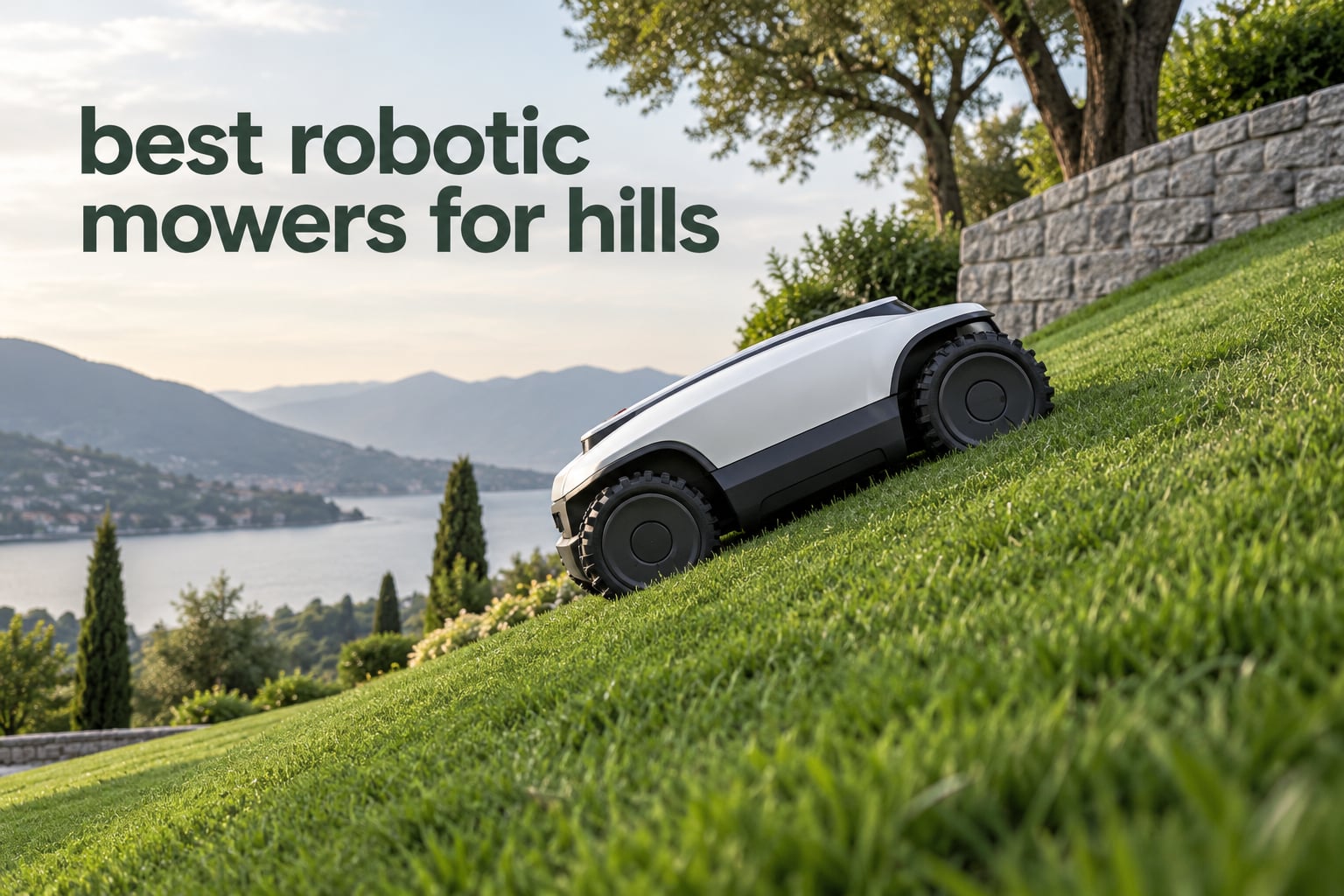
Most robotic mowers are designed for a billiard table. The moment a yard tilts, traction collapses, the chassis starts to slide sideways, and a machine rated for a 20 percent grade ends up parked at the bottom of a 25 percent bank waiting for a push mower to rescue it. Hills are the single most common reason these machines come back.
That is why picking the best robotic mowers for hills is not a spec-sheet exercise. A hill-capable robot needs driven wheels on every corner, a published maximum slope above the steepest point of your lawn, and a sensing stack that still knows where it is when trees block the sky. Get any one of those wrong and you will be out there with a string trimmer every Sunday.
We spent weeks comparing eleven slope-capable robot mowers against each other, reading the review data line by line and sorting every machine by the hill problem it actually solves. The picks below are grouped by terrain rather than ranked on a flat list, because no single mower handles every yard. Before the recommendations, there is a measurement method you can do in ten minutes with a board and a tape, and it will tell you more than any manufacturer’s brochure.
Table of Contents
Top 3 Picks for Best Robotic Mowers for Hills in 2026

Mammotion LUBA 2 AWD 5000HX
- 80% slope rating
- All-wheel drive 165W motors
- RTK plus AI vision
- 1.25 acre coverage
Mammotion LUBA mini 2 AWD 1500H
- 80% slope rating
- 360 LiDAR plus dual cameras
- 0.37 acre coverage
- DropMow mode

Sunseeker X5 AWD
- Slopes up to 30 degrees
- RTK plus VSLAM plus vision
- Floating 8.7 inch deck
- 0.5 acre coverage
Best Robotic Mowers for Hills in October Quick Snapshot
Every mower below is listed with the figure that actually matters on a slope. Slope numbers are manufacturer-published, so treat them as the ceiling rather than the promise.
| Product | Specifications | Action |
|---|---|---|
| Mammotion LUBA 2 AWD 5000HX |
|
Check Latest Price |
 WORX WR342 4WD WORX WR342 4WD |
|
Check Latest Price |
 Dreame A3 AWD 2000 Dreame A3 AWD 2000 |
|
Check Latest Price |
| Sunseeker X5 AWD |
|
Check Latest Price |
 Mammotion LUBA 3 AWD 3000 Mammotion LUBA 3 AWD 3000 |
|
Check Latest Price |
| Mammotion LUBA mini 2 AWD 1500H |
|
Check Latest Price |
 MOVA LiDAX Ultra 1000 MOVA LiDAX Ultra 1000 |
|
Check Latest Price |
 Segway Navimow i215 LiDAR Segway Navimow i215 LiDAR |
|
Check Latest Price |
 ANTHBOT M5 ANTHBOT M5 |
|
Check Latest Price |
 roborock RockNeo Q110H roborock RockNeo Q110H |
|
Check Latest Price |
 Husqvarna 410iQ Husqvarna 410iQ |
|
Check Latest Price |
1. Mammotion LUBA 2 AWD 5000HX – Best Overall for Severe Banks and Large Hilly Lawns
Mammotion LUBA 2 AWD 5000HX Robot Lawn Mower with 4G, Reception 1.25 Acres, Max. 1.48 Acres, All-Wheel-Drive for 80% Slope, UltraSense AI Vision & RTK Automatic Edge Mapping, 2.2″-4.0″ Cutting Height
80 percent slope rated
15.7 inch cut width
1.25 acres
41 pounds
Pros
- Handles steep and off-road terrain without stalling
- RTK plus vision mows reliably under tree cover
- Up to 50 mowing zones with no-go areas
- Very quiet in practice
Cons
- Narrow deck means long cycle times
- Right-angle turns can tear grass on tight corners
- App zone editing is awkward
This is the machine we keep coming back to. Four independently driven 165W motors, a published ceiling of 80 percent grade, and 481 owner reviews describing exactly the hilly, uneven, multi-zone situation most buyers are in. It weighs 41 pounds and cuts a 15.7 inch swath, which is unusually wide for a slope-capable machine.
The navigation story is the part that matters on a hill. UltraSense AI vision works alongside RTK, so when the tree canopy swallows the satellite signal halfway up a bank, the camera system carries the position instead of the mower giving up. That combination is what separates it from cheaper RTK-only machines that stall and wait on shaded ground.
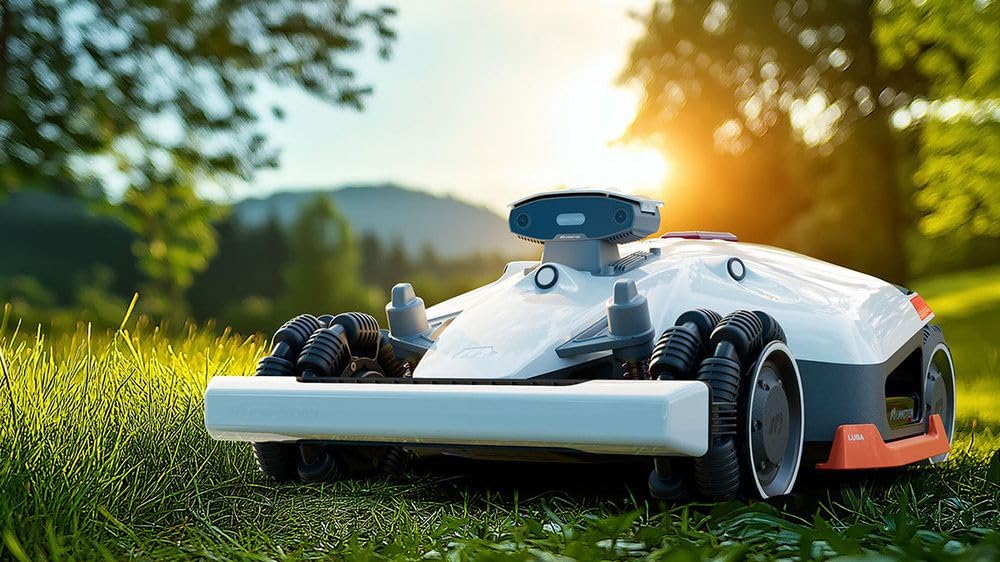
It also manages up to 50 mowing areas with no-go zones, and the obstacle system recognises 200 plus object types. On a property where the hill runs past a tree line and a bed of shrubs, that matters more than any headline slope number, because the machine can simply be told to leave that ground alone instead of grinding into it.
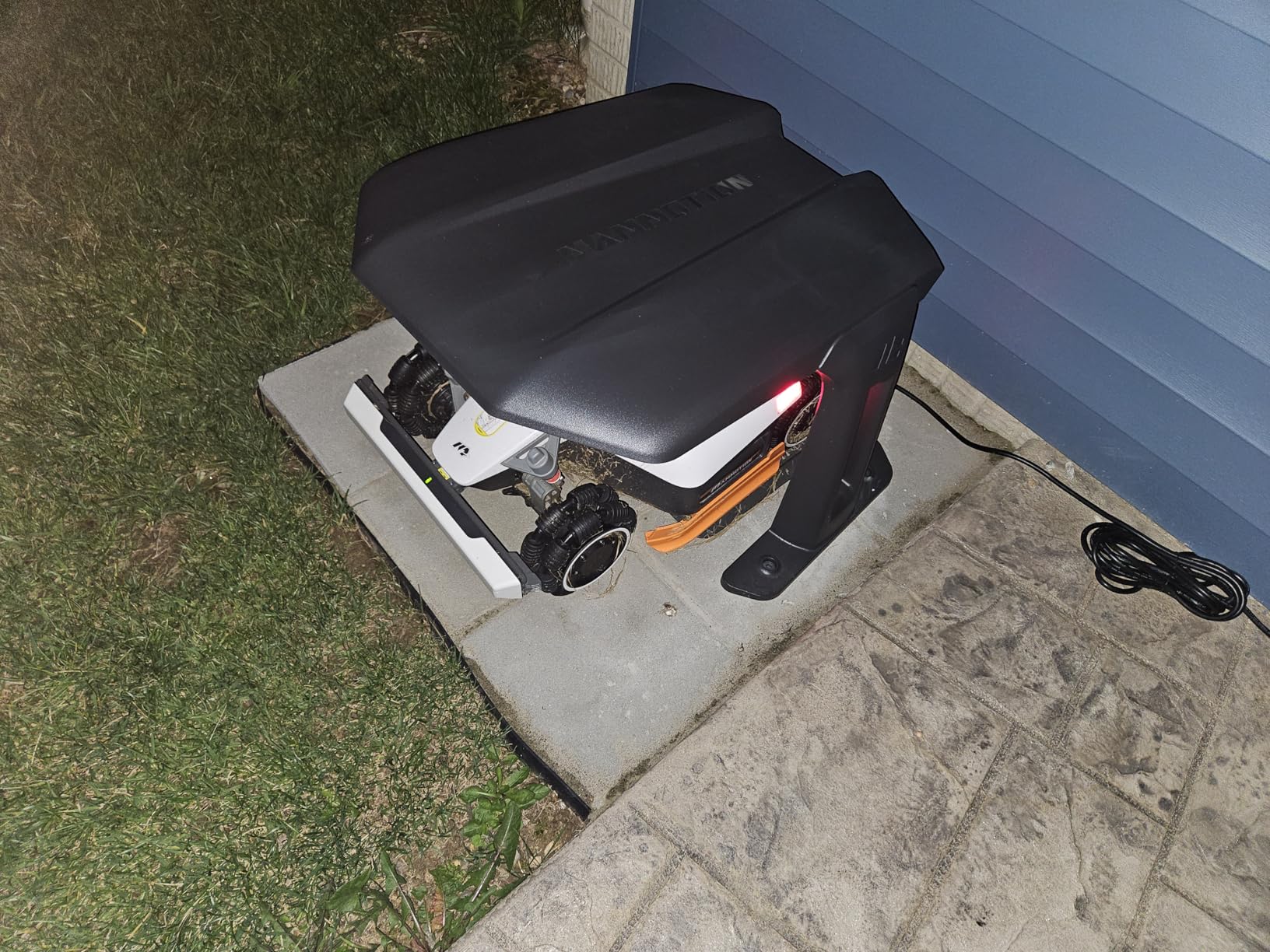
The honest weakness is cycle time. A 15.7 inch deck is small for a machine covering more than an acre, so a full lawn can take most of a day including recharges, and the right-angle programmed turns have been reported tearing grass on tight corners. Owners also describe the app as functional but clunky, with error messages that rarely explain the actual fault.
Why it earns the top spot on a real hillside
It is the only machine in this group where the drivetrain, the sensing stack and the coverage are all genuinely strong at the same time. The 5000HX model handles 13000 square feet per charge and offers an 18 position cutting height adjustment from 2.2 to 4.0 inches, which gives you room to raise the deck on soft wet ground and lower it on dry summer slopes.
GPS tracking and anti-theft protection are built in, and 4G, WiFi and Bluetooth connectivity mean you can watch a cycle from work. For most households with a real hill, that combination of climbing ability and mapped, zone-based control is the whole purchase decision.
Where it will disappoint you
It does not mulch or collect leaves, so autumn cleanup stays a manual job. The front tires can also catch on wires and thin posts near the lawn edge, which is a common trip hazard on properties that have irrigation lines just under the turf.
If your hill is a single 20 percent roll on a small lot, this machine is more than you need. Over-speccing is real: a smaller chassis with the same 80 percent rating will handle the same slope and finish the job several times faster.
2. WORX WR342 4WD – Best for the Steepest Measured Grade
WORX Robot Lawn Mower 4WD for 1/2 Acre, No Perimeter Wire, WR342
84 percent slope rated
4WD traction
RTK Cloud navigation
0.5 acre
Pros
- Highest published slope rating in the group
- True front-wheel steering avoids tearing turf
- RTK Cloud needs no local antenna
- Very quiet during operation
Cons
- Maps cannot be edited after mapping
- Manual remote controls are clumsy
- Firmware updates are not pushed clearly
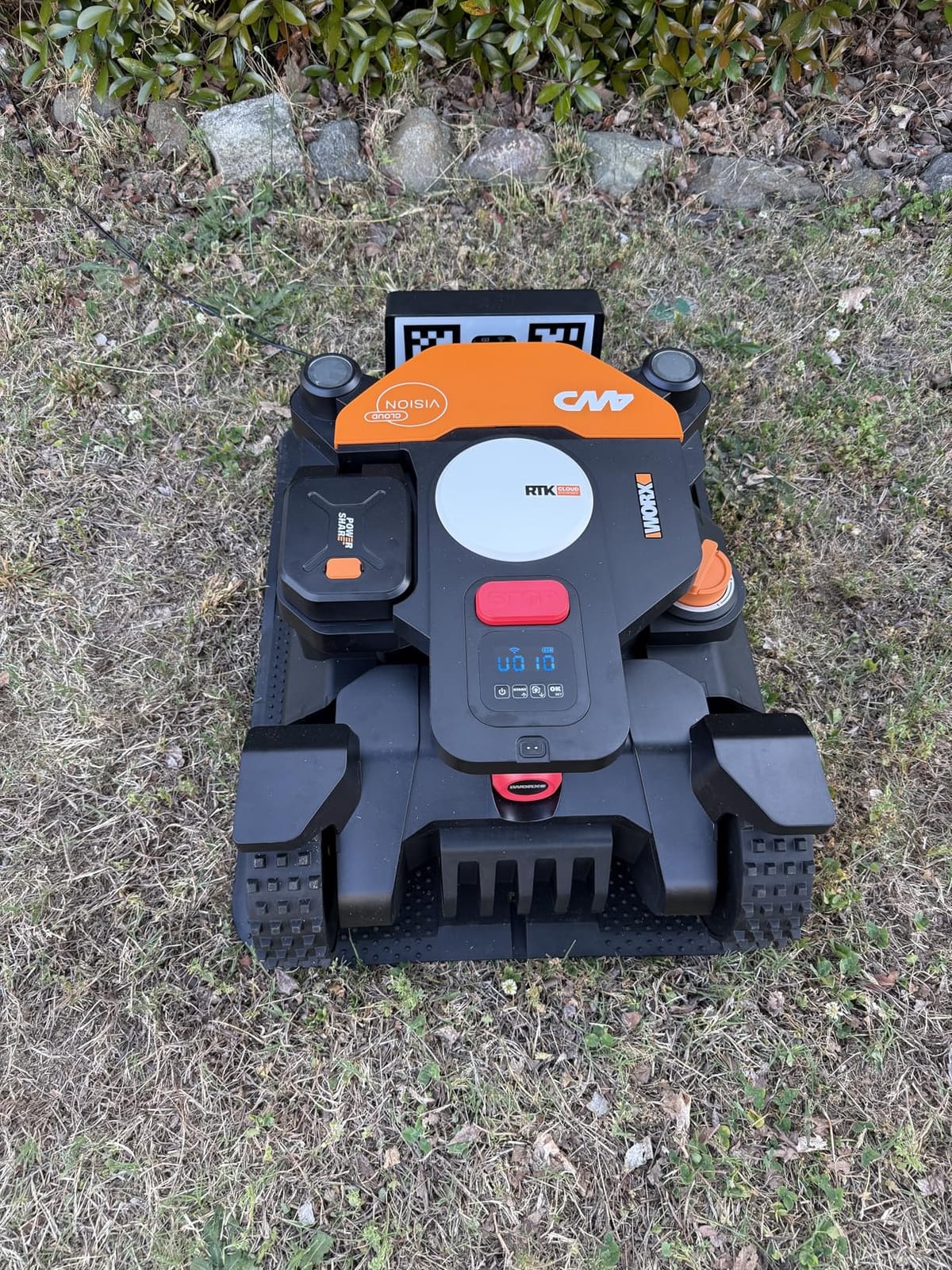
The WR342 carries an 84 percent slope figure, about 40 degrees, which is the highest number we found in this group. The drive system is four-wheel with a terrain-adaptive chassis, and unlike skid-steer designs, it uses true front-wheel steering. On a hillside that detail is worth more than you would think, because a skid-steer turn pivots the whole machine and grinds the turf at the turn point.
Positioning comes from RTK Cloud, which means no antenna to mount on the house and no subscription fee, with V-SLAM sensor fusion taking over in shade where the satellite signal weakens. A Cut-to-Zero offset blade handles the boundary pass, and unlimited zones with custom pathways are configurable from the app.
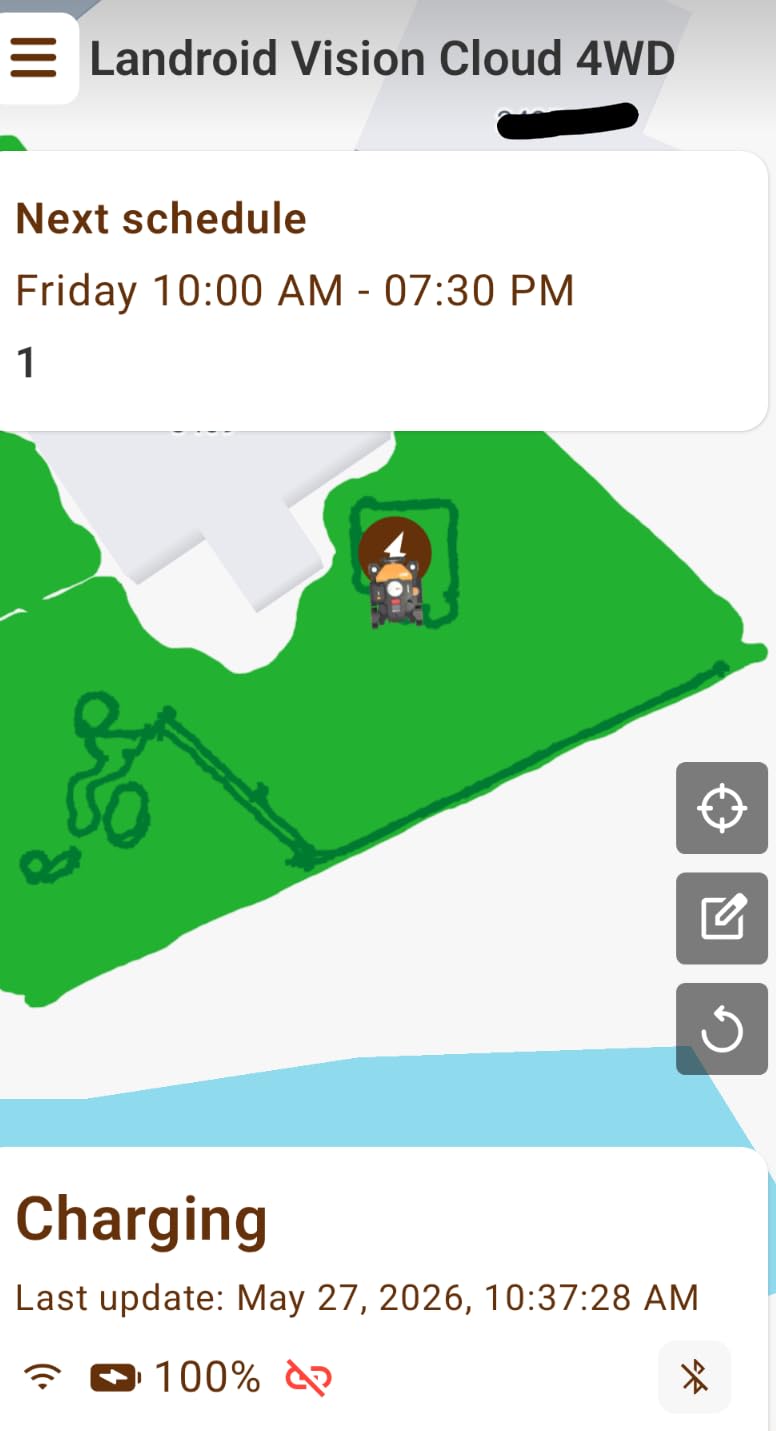
Owners who invest the setup time report the machine running hands-off for a full week without intervention, and the striping comes out straight and evenly spaced with Parallel, Checkerboard or Diamond patterns. The build also feels more substantial than plastic-heavy competitors, with solid rubber parts rather than thin trim.
The caveat is the software, and it is a real one. The map cannot be modified after the initial drive, so every zone has to be planned before you start, which is unforgiving if you discover a problem on day two. Manual remote steering is also awkward, and firmware updates are not pushed clearly enough that the mower may refuse to run until a second update is found.
Why it climbs better than its rating suggests
That front-wheel steering geometry keeps the tyres rolling rather than scrubbing, and it is the reason the machine can hold a line on an off-camber slope instead of drifting diagonally downhill. Vision AI is used for obstacle understanding, and the Cut-to-Zero blade reduces how much string trimming you do afterward.
A three-year manufacturer warranty is included, and Find My Landroid GPS tracking with cellular connectivity gives you theft alerts rather than just a PIN lock. For a steep yard where getting stuck is the fear, this is the spec sheet that answers it most directly.
Where it will disappoint you
Vision treats tall weeds such as dandelions as obstacles, so the mower circles them and leaves rings of long grass behind. On a hillside that already grows unevenly, plan on mowing often enough that this never becomes an issue.
The review pool is also the thinnest of the top tier at 17 reviews, so long-term durability is less well documented than for the Mammotion models. It also cannot stand upright for storage, which matters if your garage shelf situation is tight.
3. Dreame A3 AWD 2000 – Early-Comer Pick for Steep Ground
(Upgraded) DREAME A3 AWD 2000 LiDAR Robot Lawn Mower, 45-Min Fast Charge
80 percent slope rated
45 minute fast charge
2.17 inch obstacle clearance
3 year warranty
Pros
- 80 percent slope with AWD hub motors
- No RTK station or antenna required
- 45 minute recharge cuts downtime
- Three year warranty with a year of 4G service
Cons
- Only one customer review so far
- Very low sales rank shows an early listing
- Reliability is unproven
We include this one with a clear label. The A3 AWD 2000 has genuinely impressive hardware on paper: AWD hub motors rated for 80 percent grade, 2.17 inch obstacle clearance, 360 degree LiDAR fused with binocular vision, and no RTK station to install anywhere on your property.
The 45 minute fast charge is the feature that would matter most on a hill. Downtime is what kills slope productivity, because a machine that spends an hour charging on a steep lawn loses the uphill half of the run, and the fast recharge gives it a chance to finish the grade while conditions are good.
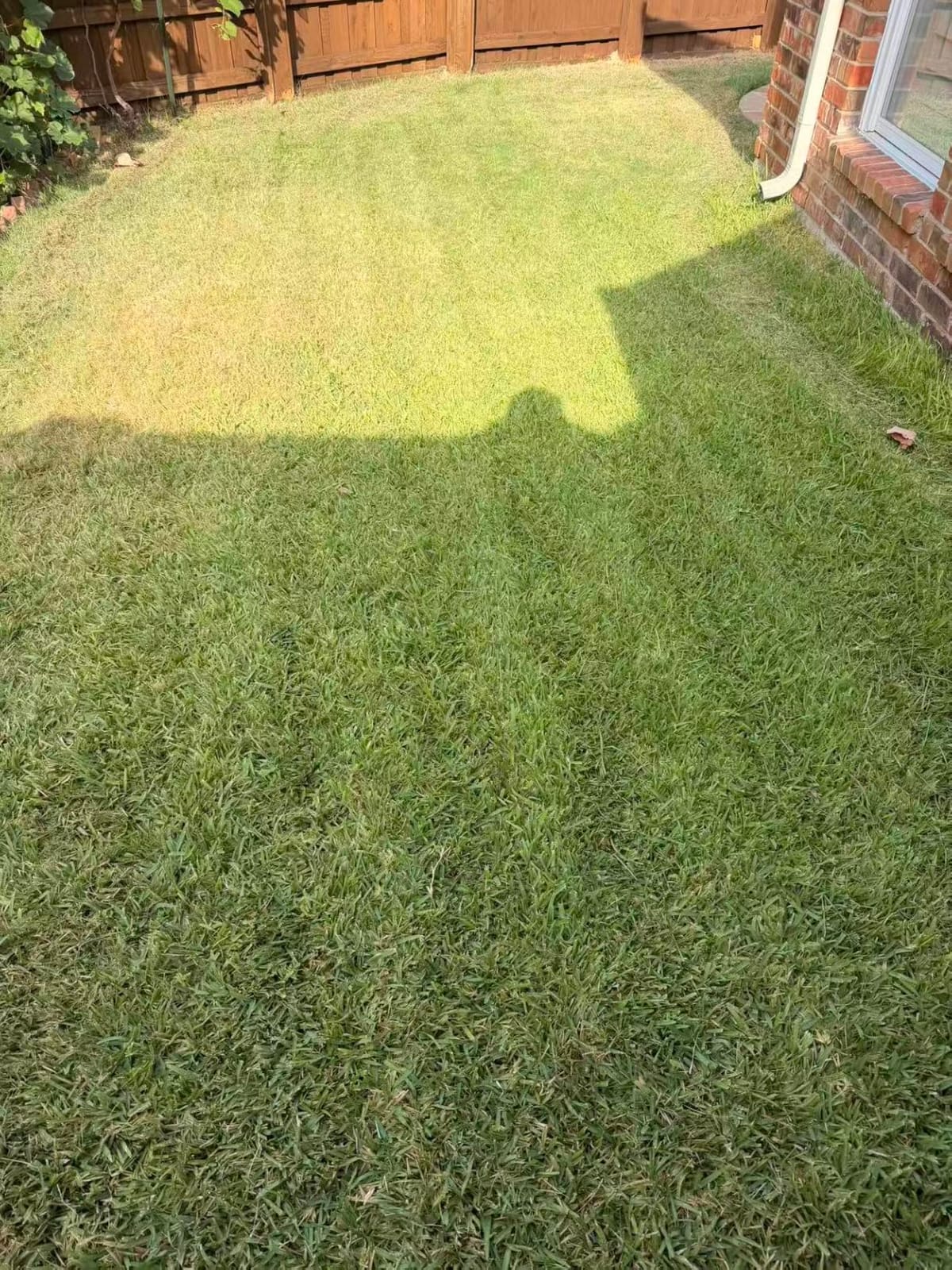
OmniSense 3.0 navigation and EdgeMaster 2.0 hold edges within about 1.97 inches, with an optional trimmer module narrowing that to under 1.18 inches. The chassis is anodized aluminium and stainless steel rather than all-plastic, at 26.4 pounds, and a built-in 4G module with an HDR camera provides monitoring and theft protection.
Here is the honest part. There is exactly one customer review behind the 5 star rating, and the listing sits at a very low sales rank. A single report is not evidence, so treat this as a watch item rather than a recommendation, and buy it only if you are comfortable being an early adopter on unfamiliar hardware.
Why the hardware is worth watching
The combination of 80 percent climb, 2.17 inch obstacle clearance and a 45 minute charge would put it near the front of the market on any measured test. Obstacle clearance of that size matters on a hillside full of roots and buried irrigation lines, where a lower machine would simply stall.
A three-year warranty and a year of free 4G service soften the risk somewhat, and the machine skips the RTK base station entirely, which removes one common installation problem on sloped properties where a level mounting spot is hard to find.
Where it will disappoint you
You are buying an untested product. The single review reports easy setup, effective LiDAR mapping and good all-wheel performance on sloped and uneven ground, which is encouraging but far too small a sample to bank on.
There is no established owner community to search for long-term problems yet, so if something goes wrong in month eight you will not find a thread discussing the fix. That absence of history is the real cost of buying early.
4. Sunseeker X5 AWD – Best for Rolling Lawns and Uneven Backyards
Sunseeker X5 AWD Robot Lawn Mower, RTK, Vision AI, 0.5 Acre, Wire-Free
Slopes up to 30 degrees
8.7 inch floating deck
0.5 acre
60 dB
Pros
- AWD traction clearly better than two-wheel drive on rough ground
- Holds position under tree cover
- Very straight striping with pattern options
- Quiet enough that the loudest noise is body creak
Cons
- Boundaries set wide so up to 18 inches needs string trimming
- Can catch on small bumps between grass and sidewalk
- Needs WiFi extenders for full yard reach
The X5 is built around a floating 8.7 inch cutting deck that follows ground contours rather than fighting them, and that is the feature that defines it. On a rolling lawn with no single dramatic incline, a floating deck keeps the cut height consistent across rises and dips, which is exactly the failure mode a fixed-deck machine has.
All-wheel drive with rugged tyres and independent front suspension handles slopes up to 30 degrees, or 60 percent grade. Navigation triples up RTK, VSLAM and vision AI, and owners specifically report that it holds position under tree cover and in shaded areas without dropping the connection.
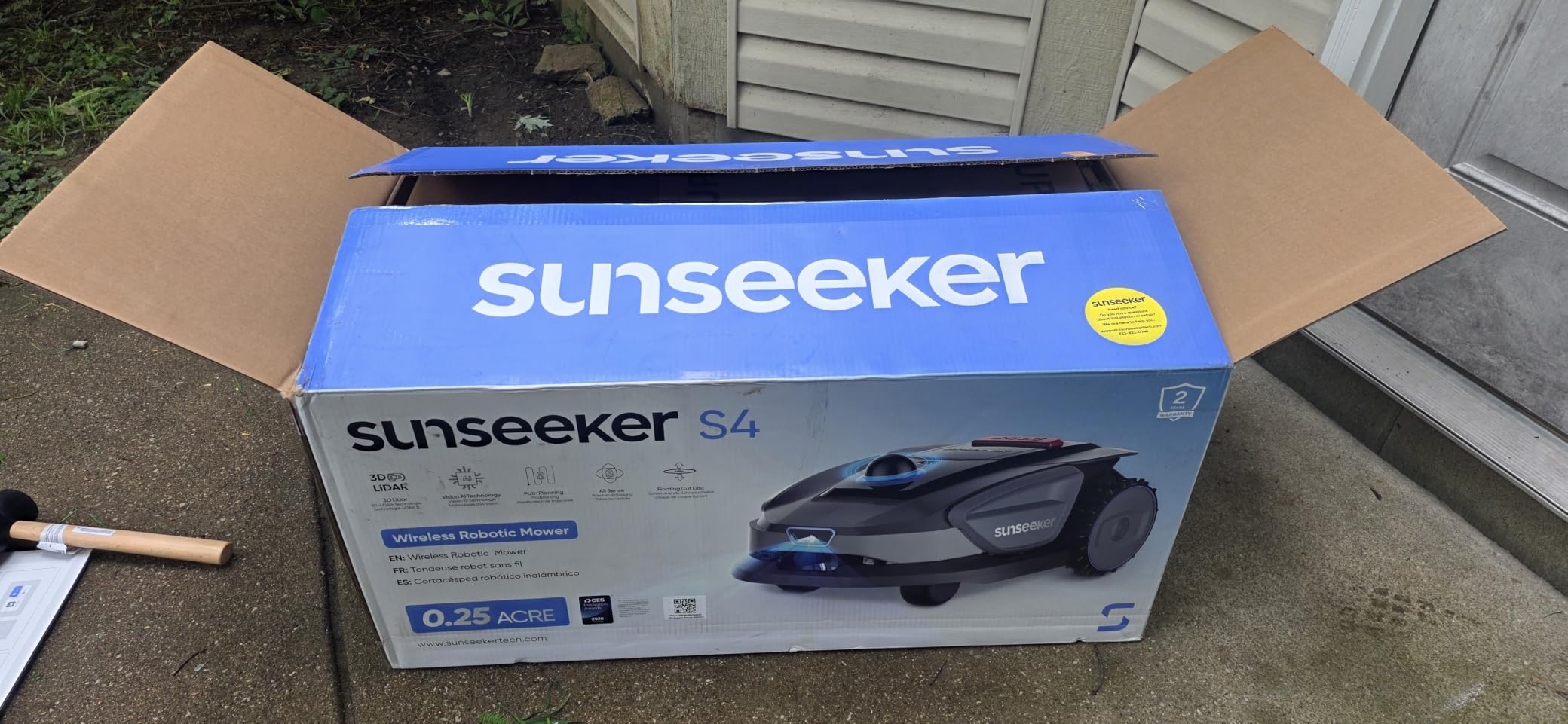
It handles passages as narrow as 31.5 inches, which opens up the tight routes between a house and a fence line, and it supports up to five separate maps with smart zones and no-go areas. Operating noise is 60 dB, and a two-year warranty with US-based support is included.
The recurring complaint is the conservative boundary logic. Owners have to set the working edge well back from fences and walls, which leaves as much as 18 inches that still needs a string trimmer. It can also catch on small elevation changes such as the transition from grass to a sidewalk, and tall grass is treated as an obstacle so mowing frequency has to stay high.
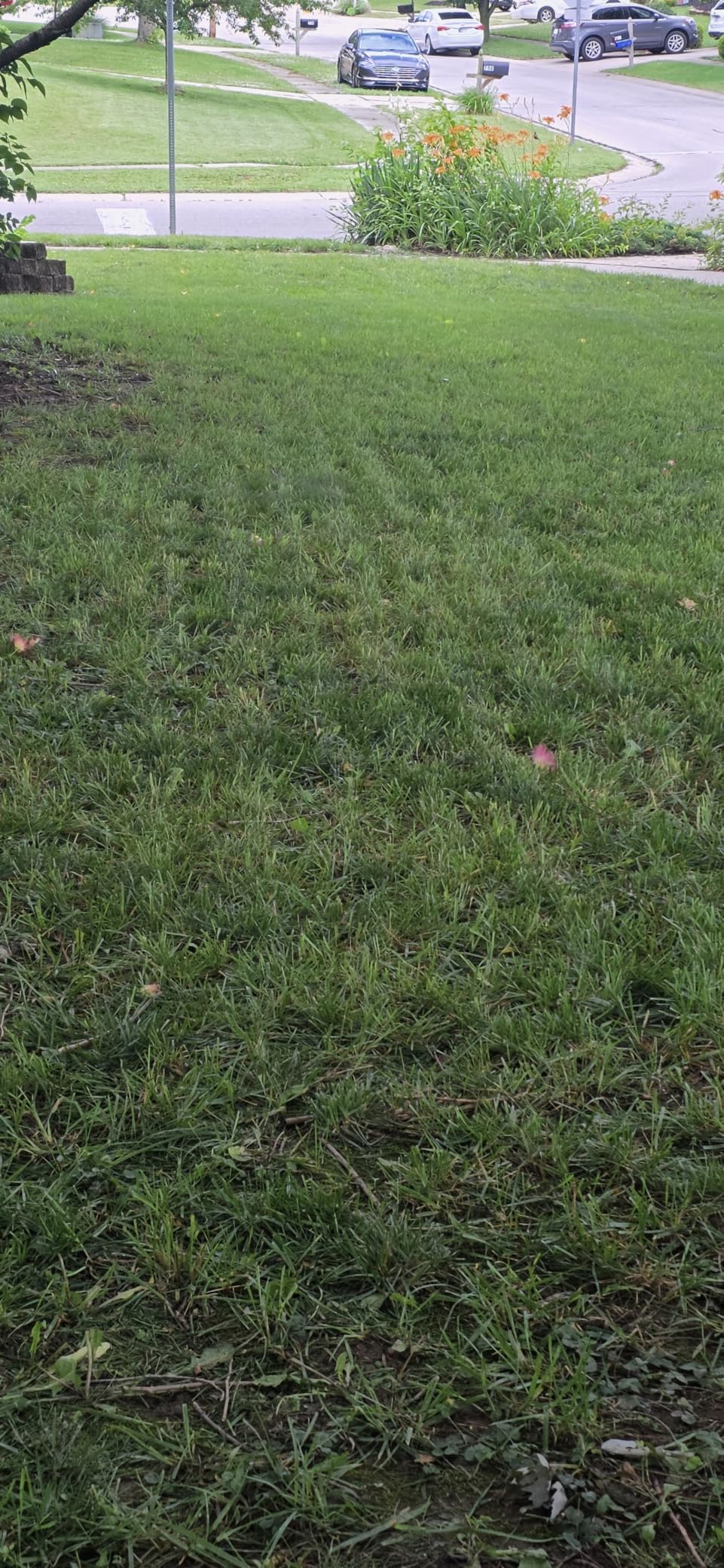
Why it suits uneven ground specifically
Independent front suspension and a deck that tracks the terrain are the pair that keep the blade at a constant height across a crest. On a lawn that undulates, that is the difference between an even cut and a patchwork of short and long stripes running across every rise.
The stacking of three navigation systems is also deliberate rather than redundant. RTK handles open ground with centimetre accuracy, VSLAM bridges the gaps, and vision handles the trees. On a wooded property that combination is more forgiving than relying on satellites alone.
Where it will disappoint you
The 18 inch edge margin is the dealbreaker for anyone who hates string trimming. If your lawn is hemmed in by a wall or a fence, you will be finishing the boundary by hand every few weeks no matter how well the machine handles the hill.
WiFi reach is also limited without extenders, and one review describes app programming as difficult and unreliable. With 29 reviews behind it, the field history is thinner than the Mammotion machines but the owner sentiment is consistently positive.
5. Mammotion LUBA 3 AWD 3000 – Premium Pick for Large Acreage and Thick Turf
Mammotion LUBA 3 AWD 3000 Robot Lawn Mower with Cleaning Stand (Ship Separately), 360° LiDAR+NetRTK+AI Vision, AWD for 80% Slopes, 5400 sq.ft/h, Cutting Height 1.0″-2.7″
80 percent slope rated
500 square meters per hour
15.7 inch cut
1.0 to 2.7 inch height
Pros
- AWD handles thick coarse turf and irregular ground
- LiDAR has never lost position for some owners
- Extremely quiet to run
- 15.7 inch deck covers ground quickly
Cons
- Battery may not finish a quarter acre on one charge
- Coverage lags the drivetrain promise
- App is hard to use for mapping in daylight
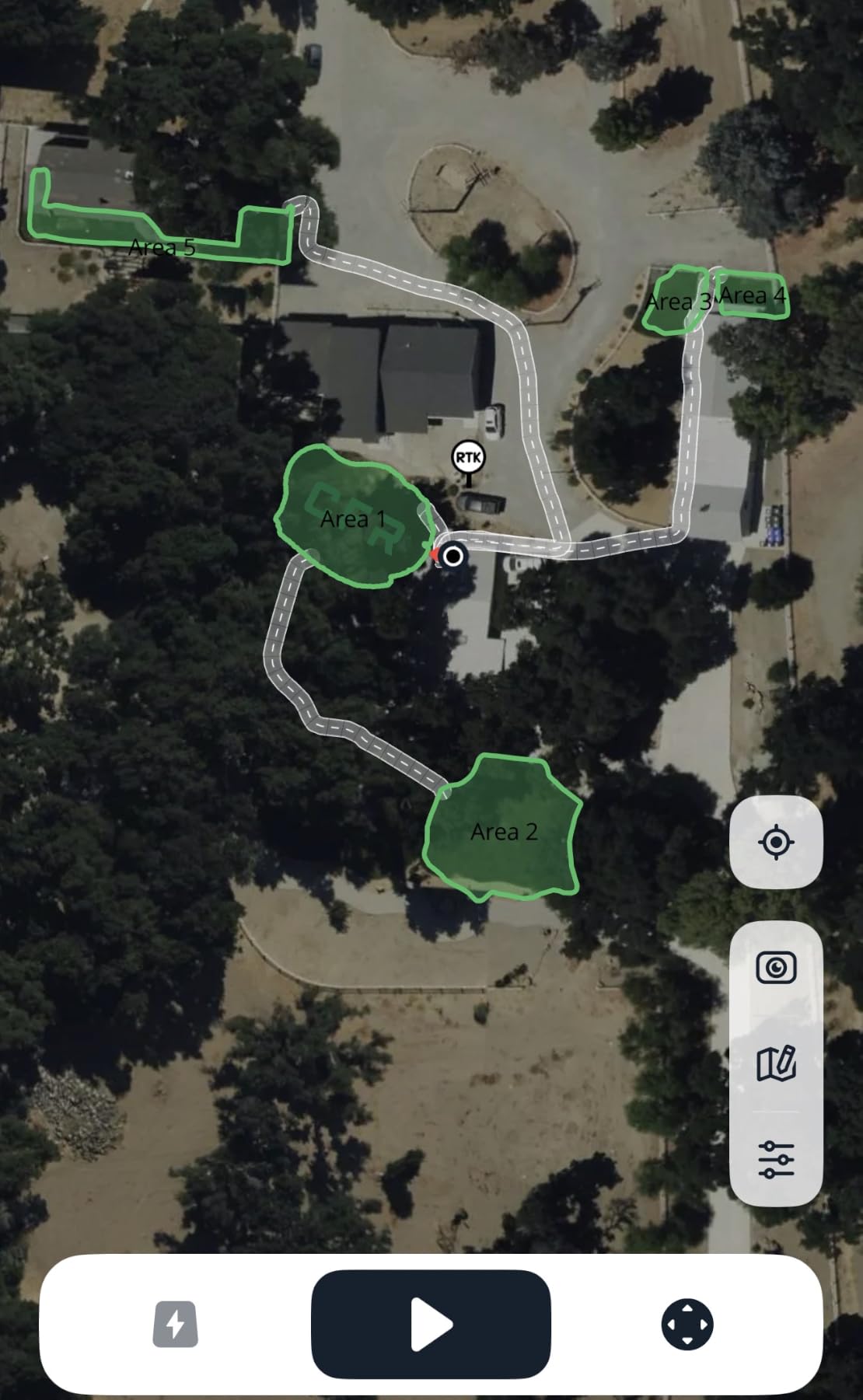
This is the model to look at if your hill sits on a large property with coarse, thick turf. Four independent motors are rated for 80 percent grade, and the tri-fusion navigation stack of 360 degree LiDAR, NetRTK and dual-camera AI vision is the most complete sensing package here. The LiDAR reaches up to 230 feet with a 59 degree vertical field of view.
Adaptive suspension clears curbs, roots and thresholds up to 50mm, and the AI processor identifies more than 300 obstacle types. Two 165W high-torque motors drive 6-blade discs rated at up to 175 minutes per charge and roughly 500 square meters of lawn per hour, which is the highest throughput figure in this group.
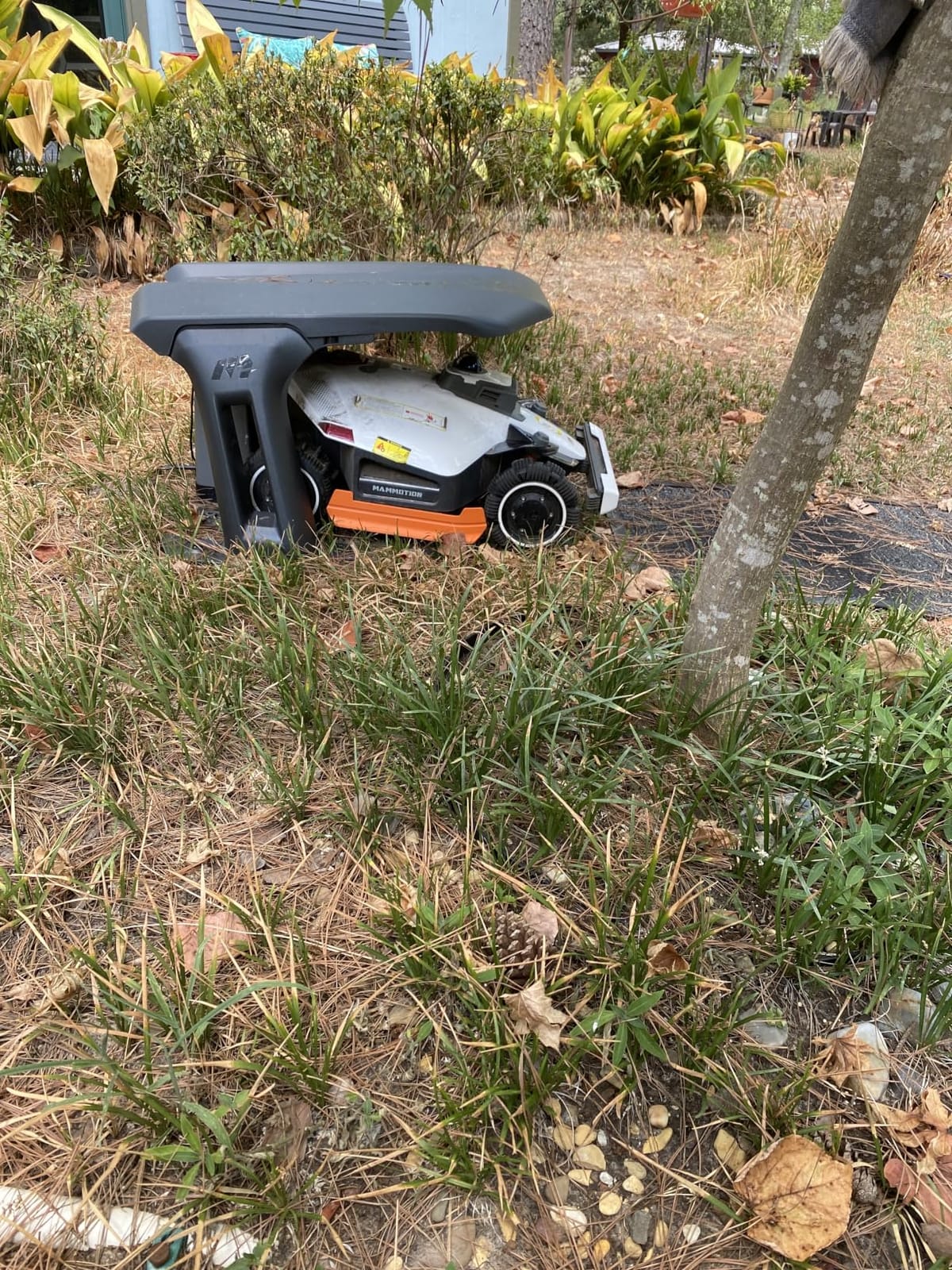
Owners rate it highly for build quality and for cutting accurately at night with built-in lighting, and several report that the LiDAR has never once lost position on their property, with no RTK antenna needed at all. It also runs quietly enough that operating cost and noise are rarely discussed as problems.
Coverage is the gap. Several users report that the battery cannot finish a quarter-acre yard on one charge with adjusted settings, and that the edge finish from LiDAR-to-border is not as tight as robot-vacuum rivals manage. Three perimeter passes are needed for clean borders, and the blade stops during turns, which leaves a visible pattern on slopes.
Why the throughput figure matters on a big lot
On a property where the lawn is measured in acres, the difference between finishing in one long cycle and finishing after three recharge stops is the difference between mowing in the morning and mowing at night. The 6-blade discs and high-torque motors are built for that workload rather than for a quarter-acre suburban lot.
Up to 30 mowing zones with no-go areas and corridor channels let you separate the steep bank from the flat play area, and the cleaning stand keeps the machine off the wet ground. A cutting height range of 1.0 to 2.7 inches gives a genuine low cut for warm-season turf.
Where it will disappoint you
The drivetrain outruns everything else. Strong climbing ability is not much use if the machine cannot cover the lawn, and the battery limitation means you may be scheduling two sessions a day on a property that looks modest on paper.
Mapping in bright daylight through the phone app is reported as difficult, the battery pack is not user-replaceable, and some owners note WiFi dropouts and inconsistent gate traversal that require manual restarts. WiFi stability is worth testing on your own property before committing.
6. Mammotion LUBA mini 2 AWD 1500H – Best Value for Compact Steep Hillsides
(2026 NEW) Mammotion LUBA mini 2 AWD 1500H Robot Lawn Mower, for 0.37 Acres, 360° LiDAR+Dual-Camera AI Vision, 80% Slope, DropMow, 20 Multi-Zone Management
80 percent slope rated
7.9 inch cut
0.37 acre
360 LiDAR
Pros
- AWD handles very steep ditches and hills
- No GPS tower or RTK antenna required
- Quick app-based setup
- Very quiet and self-charging
Cons
- 0.37 acre is a hard mapping ceiling
- 7.9 inch deck means long cycle times
- Charge from 13 to 100 percent takes hours
If your hilly yard is under half an acre, this is the pick that makes the most sense. It shares the 80 percent climb rating of its larger siblings, which is remarkable for a machine this small, and it uses two independently driven 88W motors to get there.
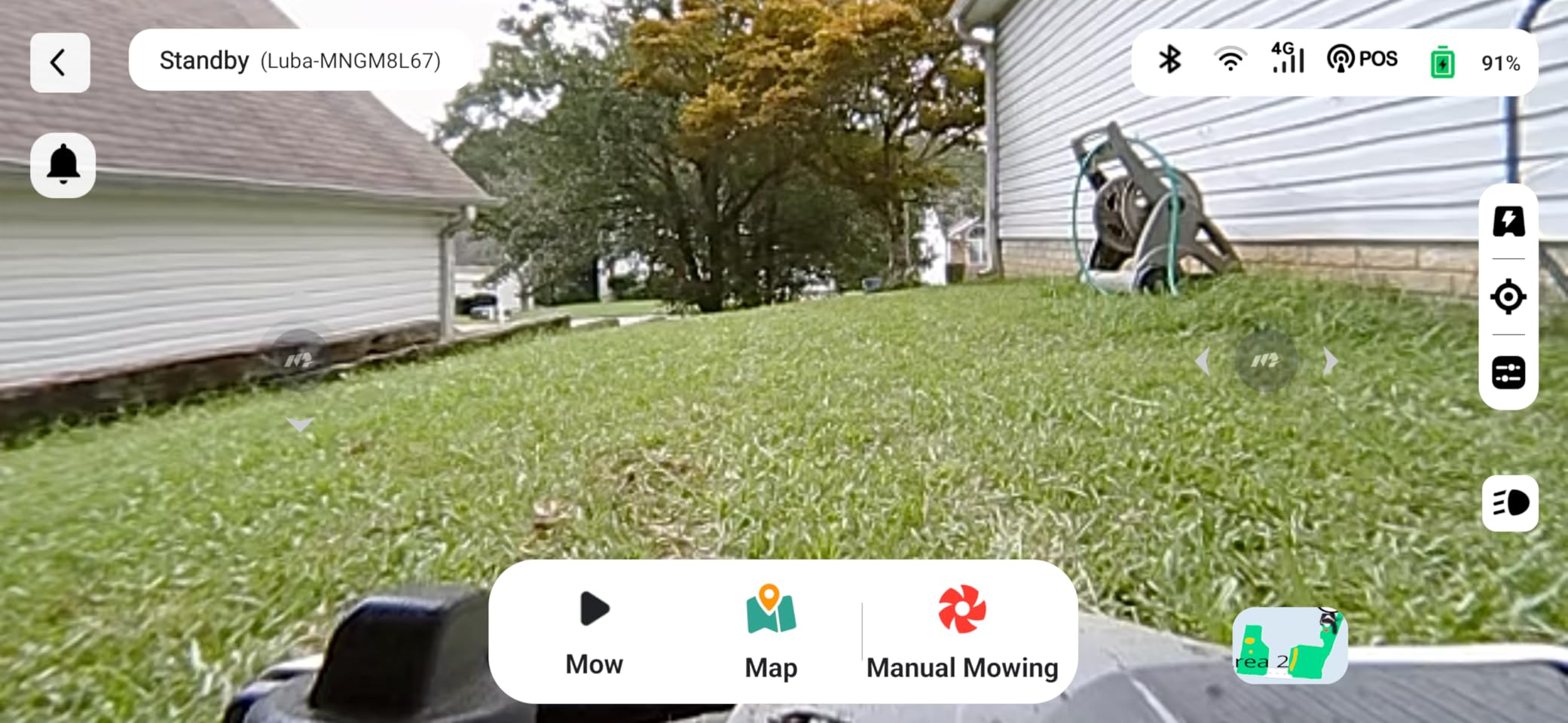
Sensing is 360 degree LiDAR with a 45 degree field of view plus dual-camera AI vision, so the redundant setup handles both shade and obstacle detection without an RTK antenna or a base station anywhere on the property. Setup is a ten-minute app job rather than a weekend project.
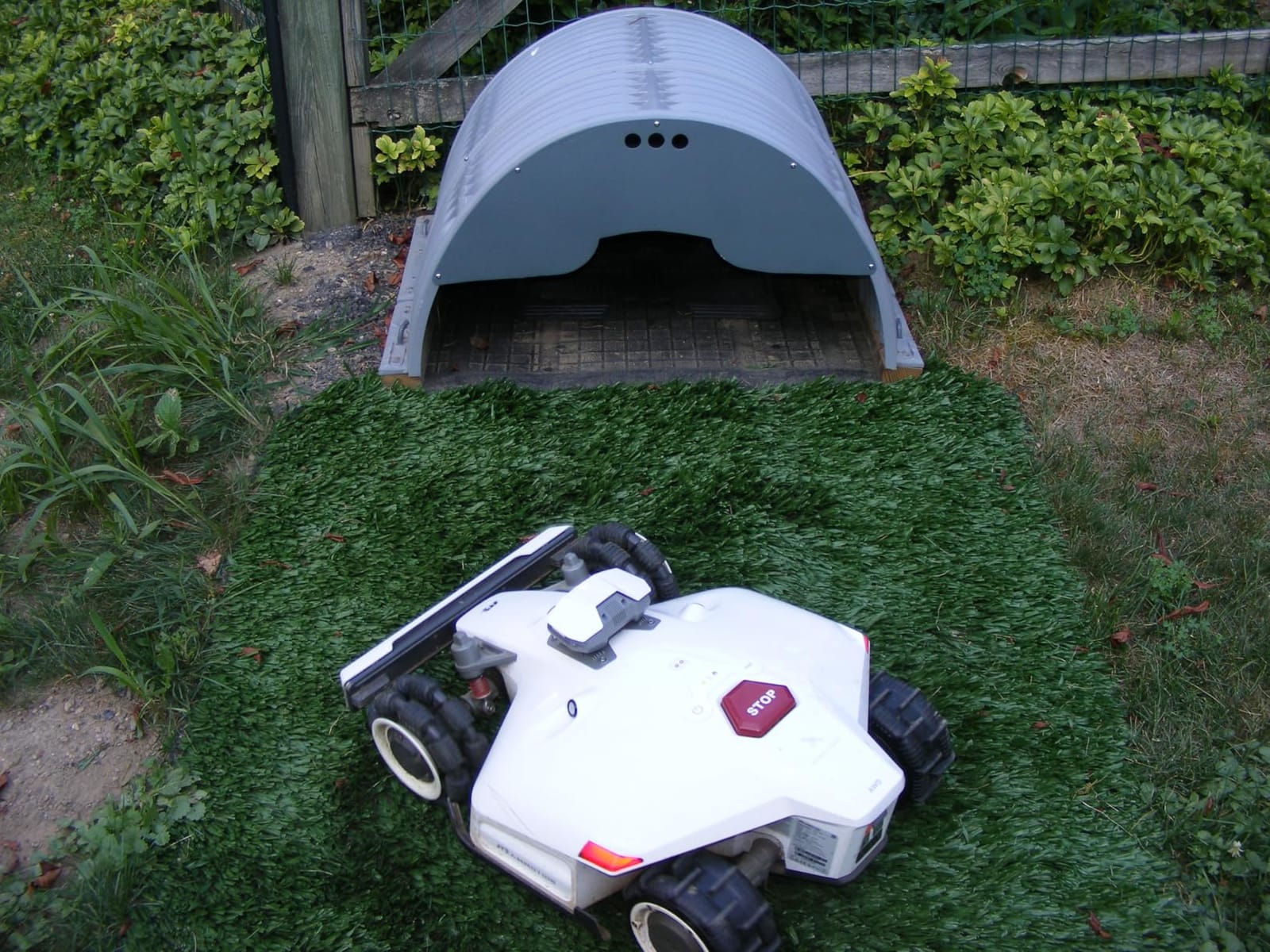
Adaptive suspension steps over curbs, roots and thresholds up to 45mm, and the omni-wheel pivot lets the machine climb obstacles that would stop a conventional chassis. DropMow mode handles one-time jobs without mapping, and up to 20 independent mowing zones with custom charge limits and off-peak scheduling are all configurable.
Reviewers treat it as capable on slopes and rough ground, describing steep ditches and banks that stalled other robots, with a consistently neat, carpet-like cut and durable razor blades. The catch is scale. The 0.37 acre figure is a hard ceiling in the app that will not let you exceed it, and a 7.9 inch deck is narrow enough that even a quarter acre can take half a day.
Why climb capability is disproportionate to its size
That 80 percent rating is measured on the drivetrain, and at under 0.37 acre the machine spends its whole cycle on the difficult part of the lawn rather than crossing flat ground. For a small yard with a genuine bank, you get flagship traction without flagship running costs.
The dual cutting discs with automatic height adjustment and a dedicated edge blade give it a finish closer to the larger machines than the deck width suggests. Coverage is 350 square meters per charge, which suits a property where the mower is out for one or two sessions rather than all day.
Where it will disappoint you
Map editing in the software is awkward and rarely accurate enough without re-driving the boundary lines, which is the single most common complaint in the reviews. Edge cut also does not fully replace manual trimming.
Charging from 13 percent to 100 percent can take two to three hours, and with a 7.9 inch deck that downtime compounds quickly. If your property is larger than a third of an acre, buy the larger LUBA instead of planning your week around this one.
7. MOVA LiDAX Ultra 1000 – Best Wire-Free Choice for a Quarter-Acre Hillside
MOVA LiDAX Ultra 1000 Robot Lawn Mower Wire Free for 1/4 Acre, RTK-Free+360° 3D LiDAR+AI Vision Auto Mapping, Zero-Edge Cutting, Cutting Height 1.2″-3.9″, 45% Slope, Up to 150 Managed Zones Dual Maps
45 percent slope rated
8 inch cut
1.2 to 3.9 inch height
150 zones
Pros
- RTK-free auto-mapping needs no base station
- Off-road wheels handle 45 percent grades
- Edge cut stays within about 2 inches
- Dual maps with up to 150 managed zones
Cons
- Smaller review pool than the Mammotion models
- 8 inch blade keeps cycle times up
- Some owners rescue it manually from rough spots
The LiDAX Ultra 1000 covers a quarter acre and its defining choice is dropping RTK entirely. Auto-mapping runs on 360 degree 3D LiDAR with AI vision, so there is no antenna, no base station and no subscription, and on a hillside that removes an installation problem you would rather not have.
Drive is rear-wheel with off-road wheels, rated for 45 percent grades and 1.6 inch obstacles. The UltraTrim 1.0 movable disc cuts within about 2 inches of walls and hedges, which is the tightest edge figure in this group, and AI vision detects more than 300 obstacle types from the 3D point cloud data.
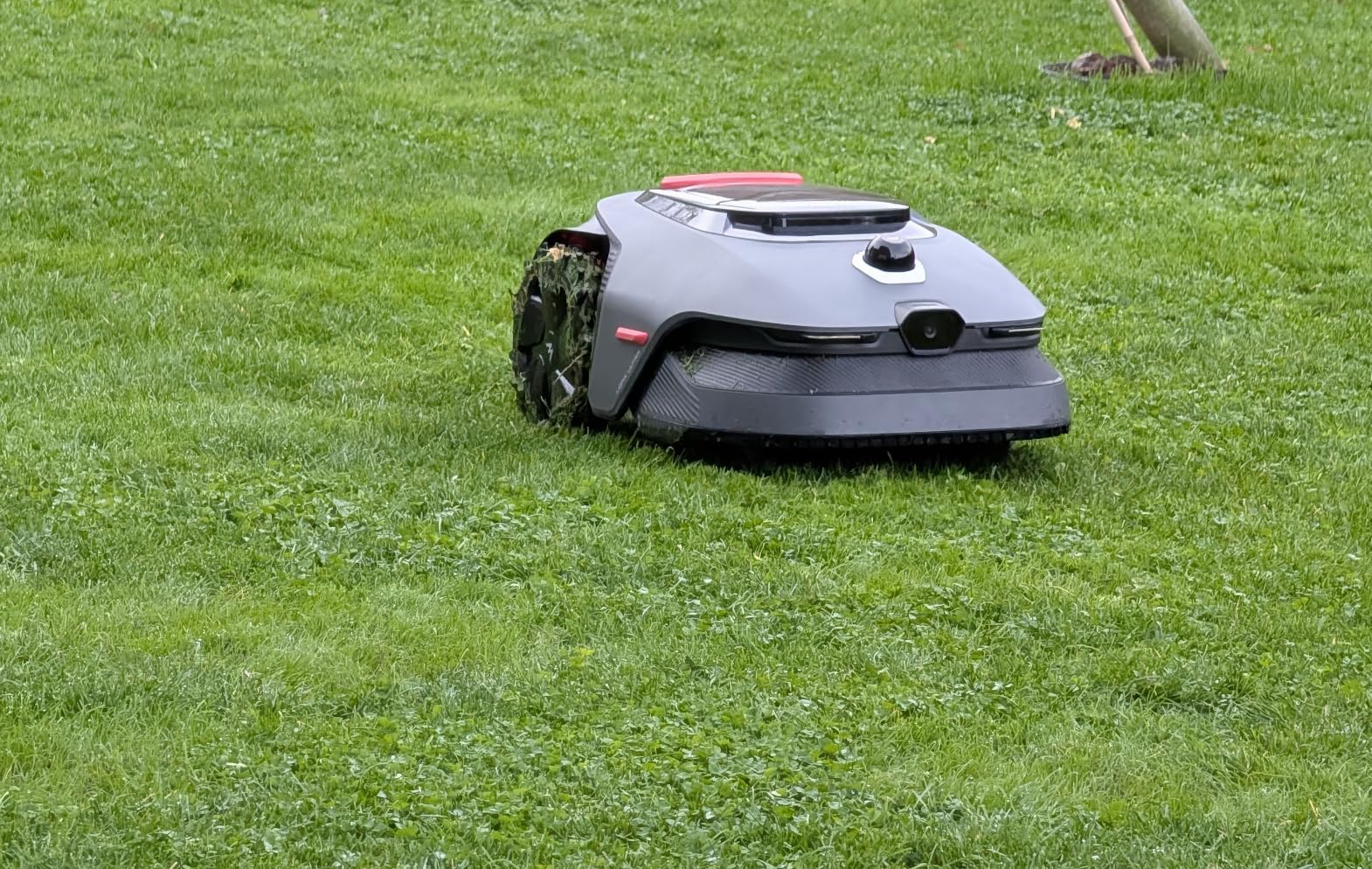
The zone system is unusually capable for its size. Dual maps let you run separate front and back yard layouts, with up to 150 managed zones, and the cutting height spans 1.2 to 3.9 inches, the widest range on a small machine here. A three-year manufacturer warranty is included along with TrueGuard anti-theft tracking.
Owners highlight the convenience of the RTK-free map and reliable 45 percent traction, and the review pool is smaller at 74, so long-term reliability is less well documented. The 8 inch blade keeps cycle times up on a quarter acre, and some owners report needing to rescue it manually from steep or rough spots.
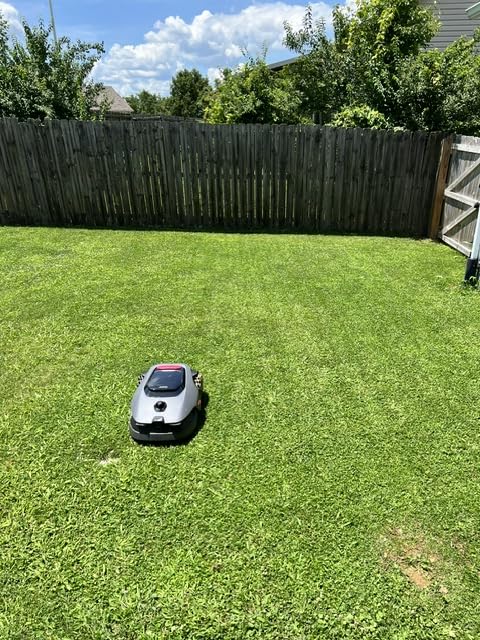
Why the zone count is the standout here
Fifteen managed zones on a quarter-acre machine is far more than the lawn needs, which is the point. It means you can isolate the steep bank into its own zone with its own direction, and let the flat section run a different pattern without touching the mower.
U-shaped path planning with automatic return and resume means a slope interruption does not send the machine back to base. TrueGuard with a link module and real-time tracking handles theft, which matters more on a property where the mower spends hours out of sight on a back bank.
Where it will disappoint you
Rear-wheel drive is the reason it is not our pick for a genuine hill, and several owners describe manual rescues from steep or rough ground despite the 45 percent rating. If your steepest point is above 30 percent, look at an all-wheel-drive machine instead.
At 30 pounds and 34 inches deep, it is also physically larger than the sub-quarter-acre competition. Budget the time for a full day of mowing rather than an evening cycle.
8. Segway Navimow i215 LiDAR – Quietest Option for Yards Close to the House
Segway Navimow i215 LiDAR Robot Lawn Mower, Wire Free Robotic Lawn Mower for 0.37 Acre, LiDAR & Vision Dual Fusion, Auto Mapping, Off-Road Wheels for 45% Slopes, Quiet 59 dB(A) Mowing
45 percent slope rated
59 dB(A)
8.66 inch cut
20 zones
Pros
- Wire-free setup with one-tap auto mapping
- LiDAR and vision fusion works day or night
- Off-road wheels with stability control for 45 percent
- Very quiet at 59 dB(A)
Cons
- Small review base means limited long-term data
- 7.1 inch cutting width keeps mowing time up
- Edge module options vary by package
The i215 LiDAR is the one to consider if your property sits close to neighbours or a bedroom window. Its published operating noise is 59 dB(A), and combined with a solid-state LiDAR and onboard vision system for satellite-free navigation, it is a machine designed to run early and often without becoming the reason someone complains.
Off-road wheels work with Electronic Stability Control for 45 percent grades, and that stability layer is the hill-specific feature here. ESC is about resisting roll and lateral slide on uneven ground rather than only raw grip, which is what keeps the machine tracking a line across an off-camber section.
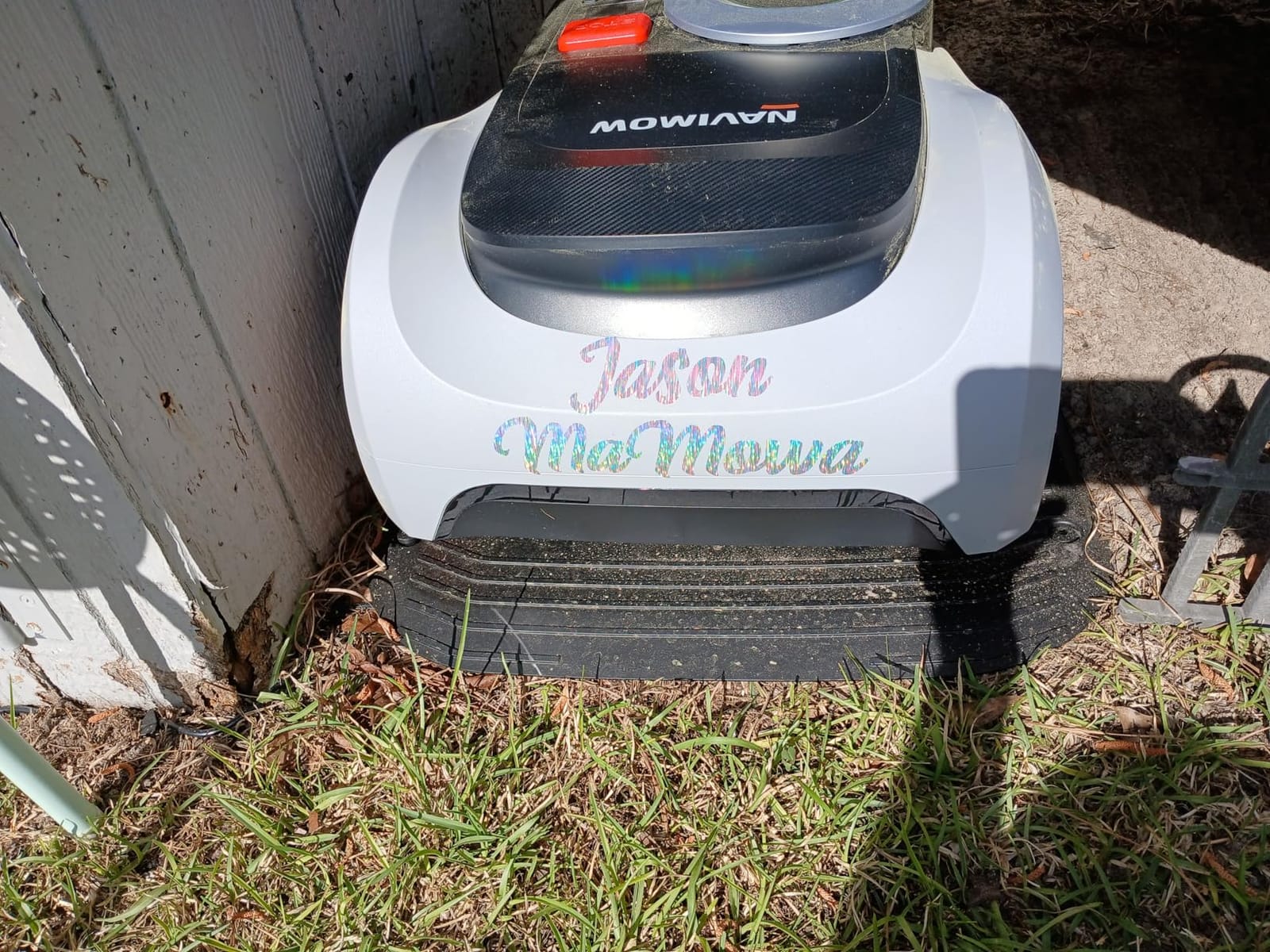
AI VisionFence detects more than 200 obstacle types at 0.4 inch accuracy, GeoSketch precision editing handles up to 20 mowing zones, and the 100W motor drives a 6-blade disc with a 2 to 4 inch cutting height. The security package includes GPS, a geo-fence, lift detection and Apple Find My alerts.
The limiting factors are coverage and evidence. It handles 0.37 acres with a 7.1 inch cutting width, so mowing time adds up, and the 46-review pool is small enough that two-season reliability is not yet documented. Edge module options vary by package and are not included by default.
Why noise matters more on a slope than anywhere else
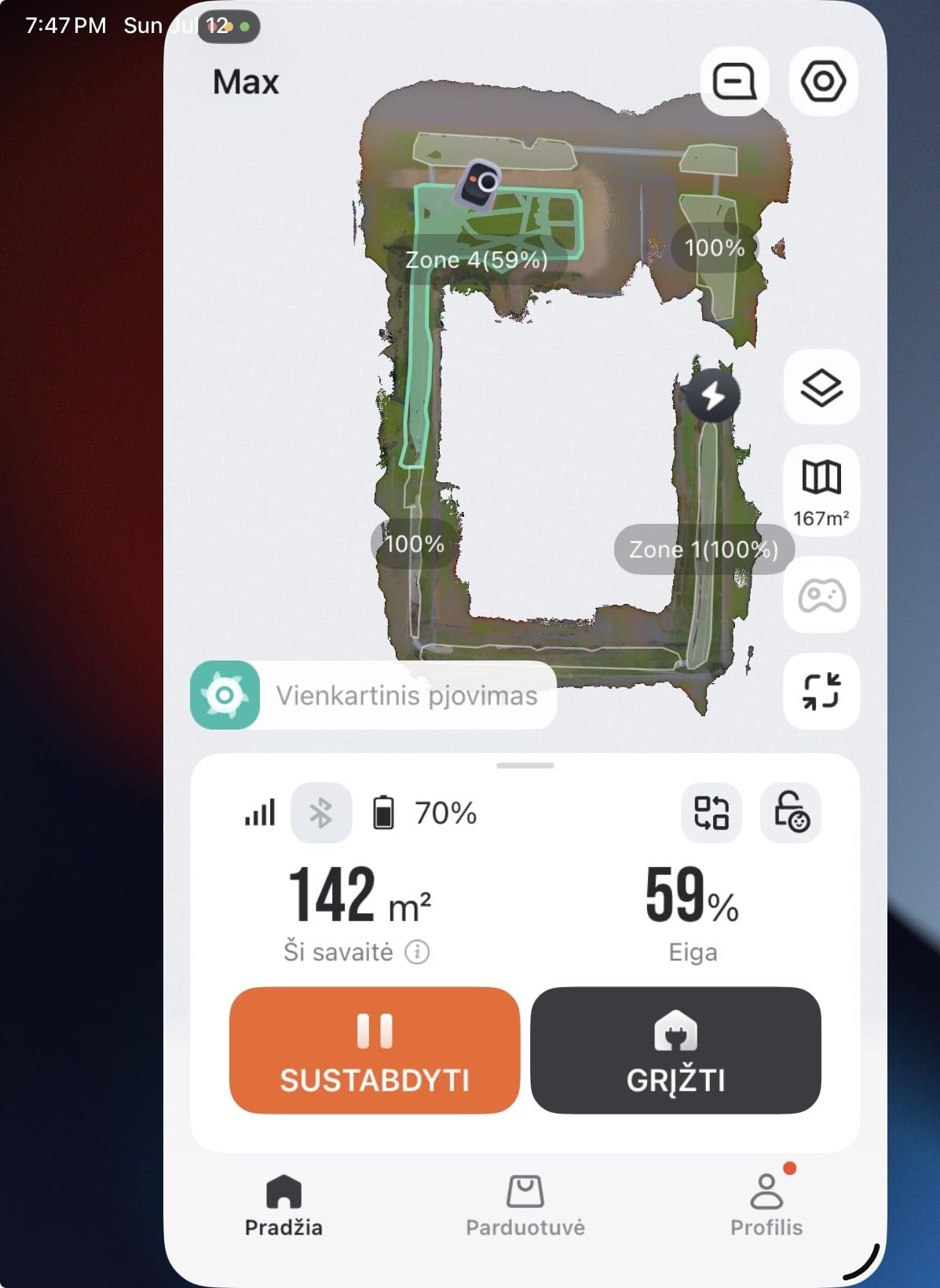
A steeper yard means more mowing time, because the machine works the same area more often to compensate for uneven growth on a bank. That turns a 60 dB machine into an all-day neighbour, and it is why we treat quiet operation as a hill feature rather than a comfort feature.
Electronic Stability Control is also worth understanding before you buy. Rather than only adding torque to slipping wheels, it corrects the vehicle’s attitude on uneven ground, which is the mechanism that stops a mower from slowly crabbing downhill during a cross-slope pass.
Where it will disappoint you
The 0.37 acre ceiling and the 7.1 inch deck mean a slow morning even on a small lot. If your hill property is larger than a third of an acre, you will be watching it work rather than enjoying the quiet.
With 46 reviews, the long-term picture is thin. Alexa and Google Home voice control is a nice extra, but check that the edge module you want is actually in the box before you commit.
9. ANTHBOT M5 – Most Versatile for Gentle to Moderate Slopes
ANTHBOT M5 Robot Lawn Mower 1/8 Acre, Dual Vision+Full-Band RTK Robotic Lawnmower, No Perimeter Wire, App Control Obstacle Avoidance, 45% Slope, Cutting Height, Multi-Zone Mapping
45 percent slope rated
7.9 inch cut
58 dB
1/8 acre
Pros
- No perimeter wire and app-guided fast setup
- RTK plus vision handles slopes and grass edges
- Very affordable entry to wire-free mowing
- Quiet enough to be nearly inaudible indoors
Cons
- Needs about three passes for an even cut
- Poor overlap leaves uncut strips
- Cannot handle overgrown or tall lawns
The M5 covers an eighth of an acre and is the most straightforward way into wire-free robotic mowing on sloping ground. Adaptive Cruise Control works alongside full-band RTK positioning and dual 150-degree HDR cameras, and the virtual map builds itself in about ten minutes without you driving the mower around the perimeter.
The slope rating is 45 percent, which covers most residential hill situations short of a real bank, and the obstacle system recognises more than 1,000 garden object types. Operating noise is 58 dB, and you get up to 20 work zones with no-go zones and connecting paths.
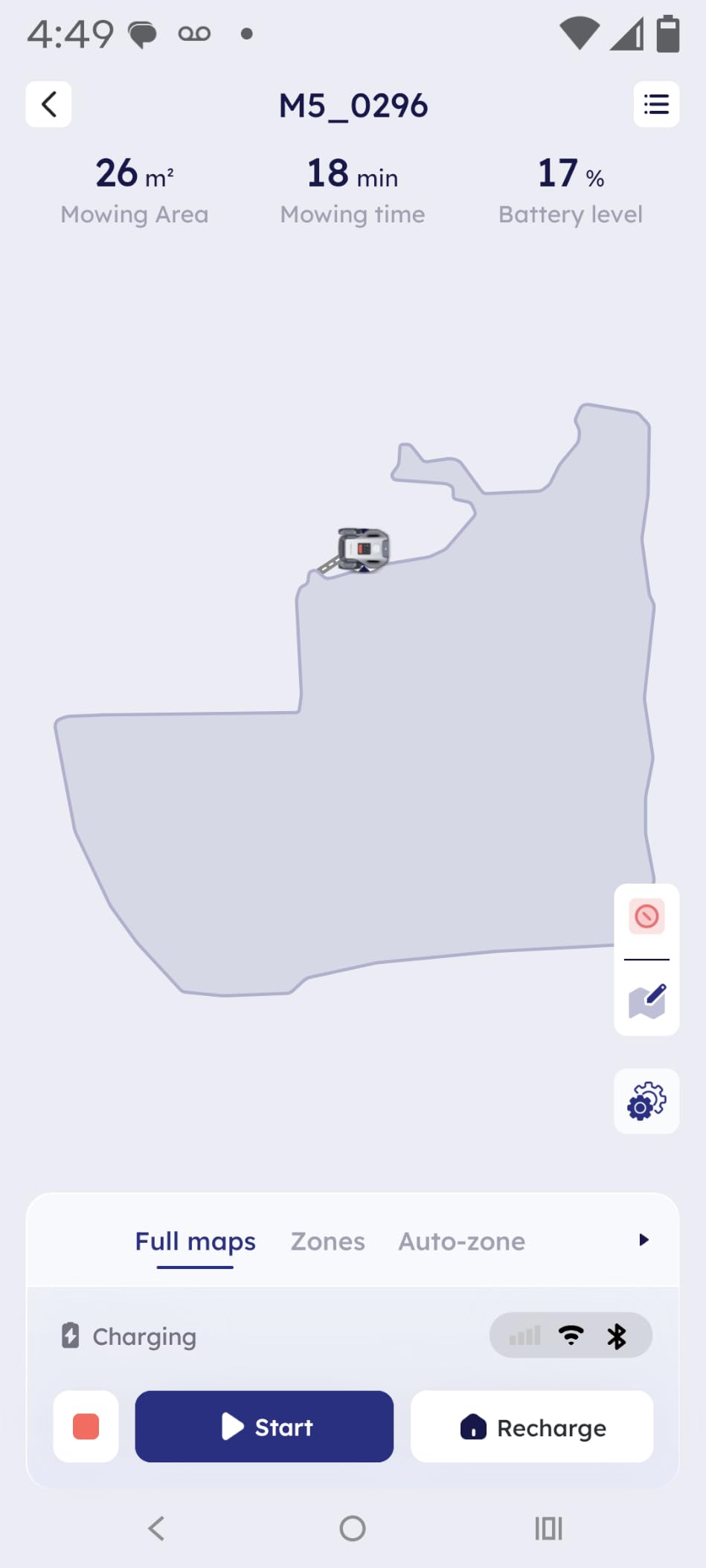
Owners like the fast app-guided setup, the absence of any wire to install, and reliable auto-return and resume. The 1.2 to 2.7 inch cutting height adjustment across five free-rotating blades is workable, and 370 reviews make this the second-best documented machine in the group.
The problem is cut quality. It needs about three passes to mow a lawn evenly because the overlap between runs is poor, which leaves uncut strips, and the 7.9 inch width means mowing takes longer than expected. It cannot handle overgrown or very tall lawns, treats weeds as obstacles, and edge finishing still needs manual touch-up roughly monthly.
Why it is a sensible first robotic mower
Full-band RTK at this level is unusual, and combined with the cameras it holds position on sloped and awkward grass edges without a wire, base station or subscription. The five-minute-per-zone setup and auto-generated map mean you can be mowing within an hour of unboxing.
It is one of the more affordable ways to find out whether robotic mowing suits your household at all. For a gentle roll of 20 to 25 percent on a small lot, its 45 percent ceiling leaves plenty of margin, and the no-go zone system lets you fence off the steepest corner as a permanent mowing area.
Where it will disappoint you
Three passes and poor overlap is a real quality difference you will see every week. If your grass is a thick warm-season variety that grows fast on a slope, the mower may never keep up, and tall grass being treated as an obstacle makes things worse rather than better.
Some bundles have also arrived without the garage shelter that was advertised, which matters if you plan to store it outside. The eighth-acre limit is also strict, so measure your hillside lot before choosing this one.
10. roborock RockNeo Q110H – Lowest-Cost Wire-Free Starter for Simple Yards
Roborock RockNeo Q110H Robot Lawn Mower, Wire-Free Robotic Lawn Mower with Full-Band RTK + VSLAM Navigation, Auto Mapping, AI Vision Obstacle Avoidance, App Control, 45% Slope, Covers Up to 1/4 Acre
45 percent slope rated
Floating cutting deck
8.7 inch cut
1/4 acre
Pros
- Very quiet with headlights for night mowing
- Handles hilly yards full of obstacles
- Manual app boundary mapping is simple and accurate
- Cuts in straight lines on slopes
Cons
- Conservative boundaries leave wide uncut margins
- Will not attempt narrow gate openings
- Vision-only sensing is confused by tall weeds
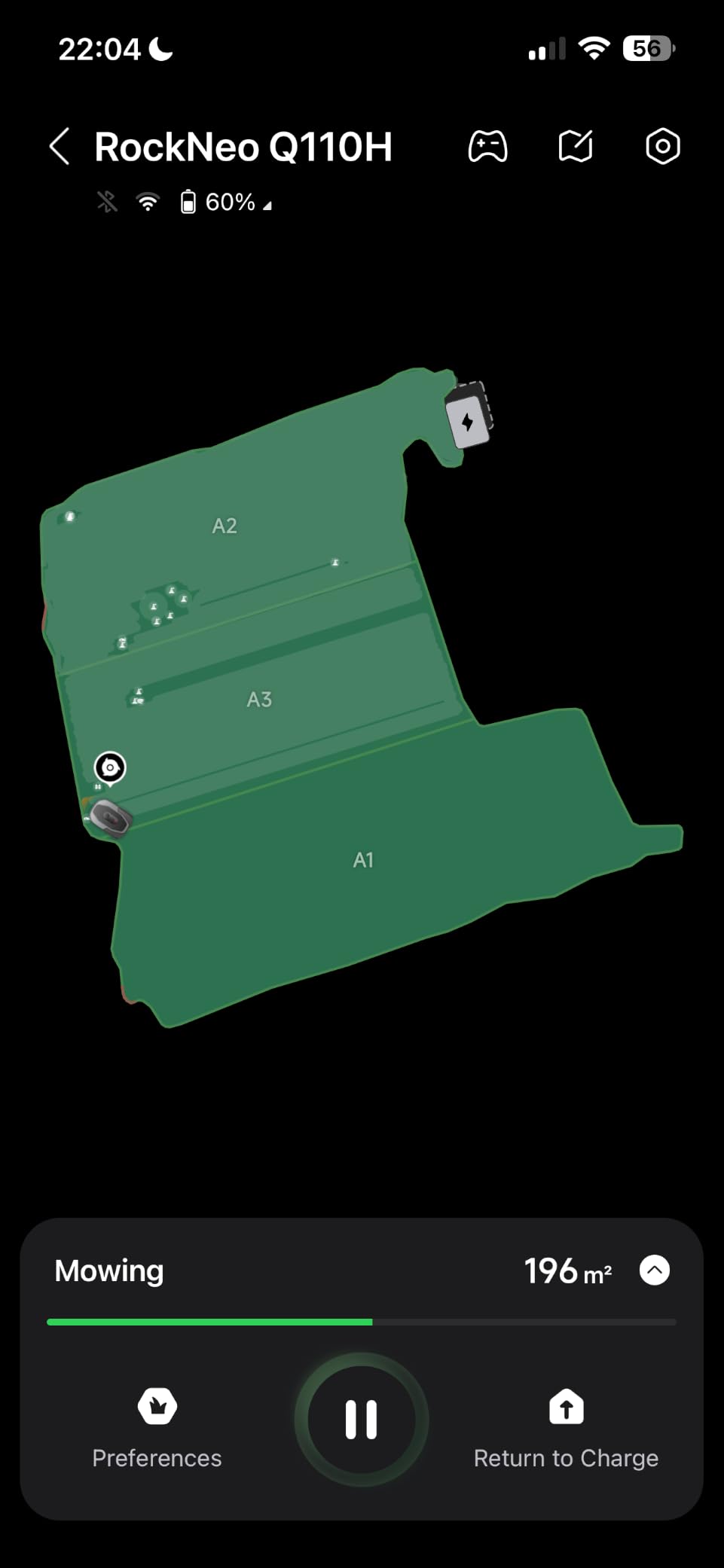
It is also an affordable entry into wire-free robotic mowing, and it uses the app most people already have. The Roborock interface is carried over from their robot vacuums, and manual boundary mapping is genuinely simple to drive, which is a benefit if you find auto-mapping fiddly.
Full-band RTK runs alongside VSLAM for navigation, with dual-camera AI vision handling obstacles, and the floating cutting deck adapts to ground contours. It handles 45 percent grades and 1.57 inch obstacles, and it can pass through corridors as narrow as 2.3 feet, which is narrower than most competitors manage.
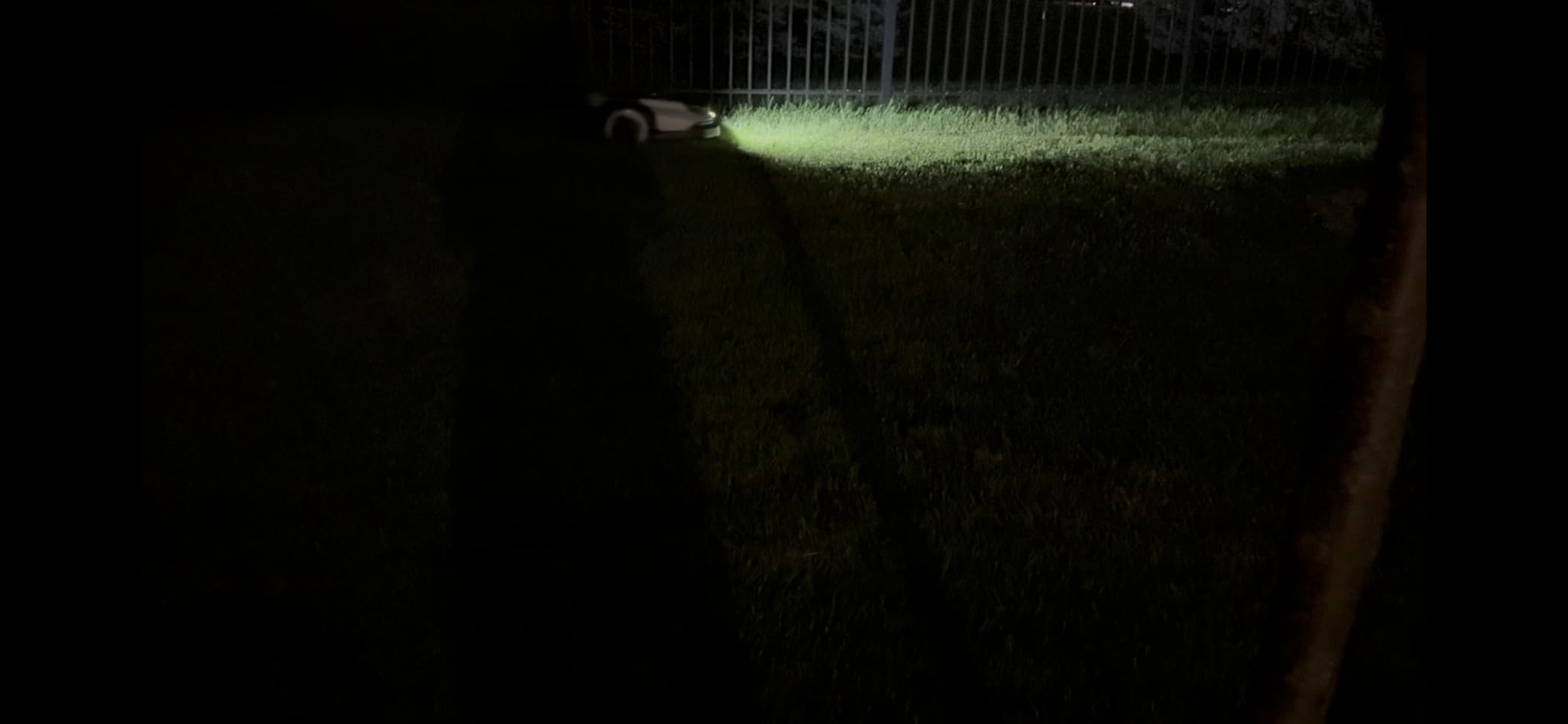
Owners report straight, even cuts on slopes, very quiet operation, and headlights that allow safe night mowing. PIN lockout, a high-decibel alarm and a Wildlife-Friendly mode round out the security side, with an optional 4G anti-theft module.
Its 3.8 star rating is the second lowest in this group, ahead of only the Husqvarna 410iQ. The boundary logic is overly conservative, leaving wide uncut strips along edges, fences and obstacles, and it will not attempt narrow openings such as gates even when clearance allows. There is no LiDAR on this model, so vision-only sensing gets confused by taller weeds, and maps cannot be edited without re-driving the mower.
Why the narrow passage rating is genuinely useful
Two point three feet of corridor clearance opens up the routes between a house and a fence, or through a gate to a back slope, that most machines refuse. Combined with a floating deck, that is a sensible pairing for a small property with awkward access.
For a straightforward yard with a moderate roll, the honest trade is this: you get a straightforward entry into wire-free mowing and straight slope cuts, and you accept manual edge finishing. Nothing in the specification suggests this is a machine for a serious bank.
Where it will disappoint you
Wide uncut margins are the headline issue and owners do reach for the push mower because of them. Traction wheels are also described as weak on thick St Augustine turf, where they trigger spurious lift alerts and the machine stops for no reason.
Partial-zone mowing is unavailable and maps cannot be edited without re-driving. The optional edge cutting module is not available in the US market, so treat this as a machine for open lawn rather than a tidy, fully self-sufficient system.
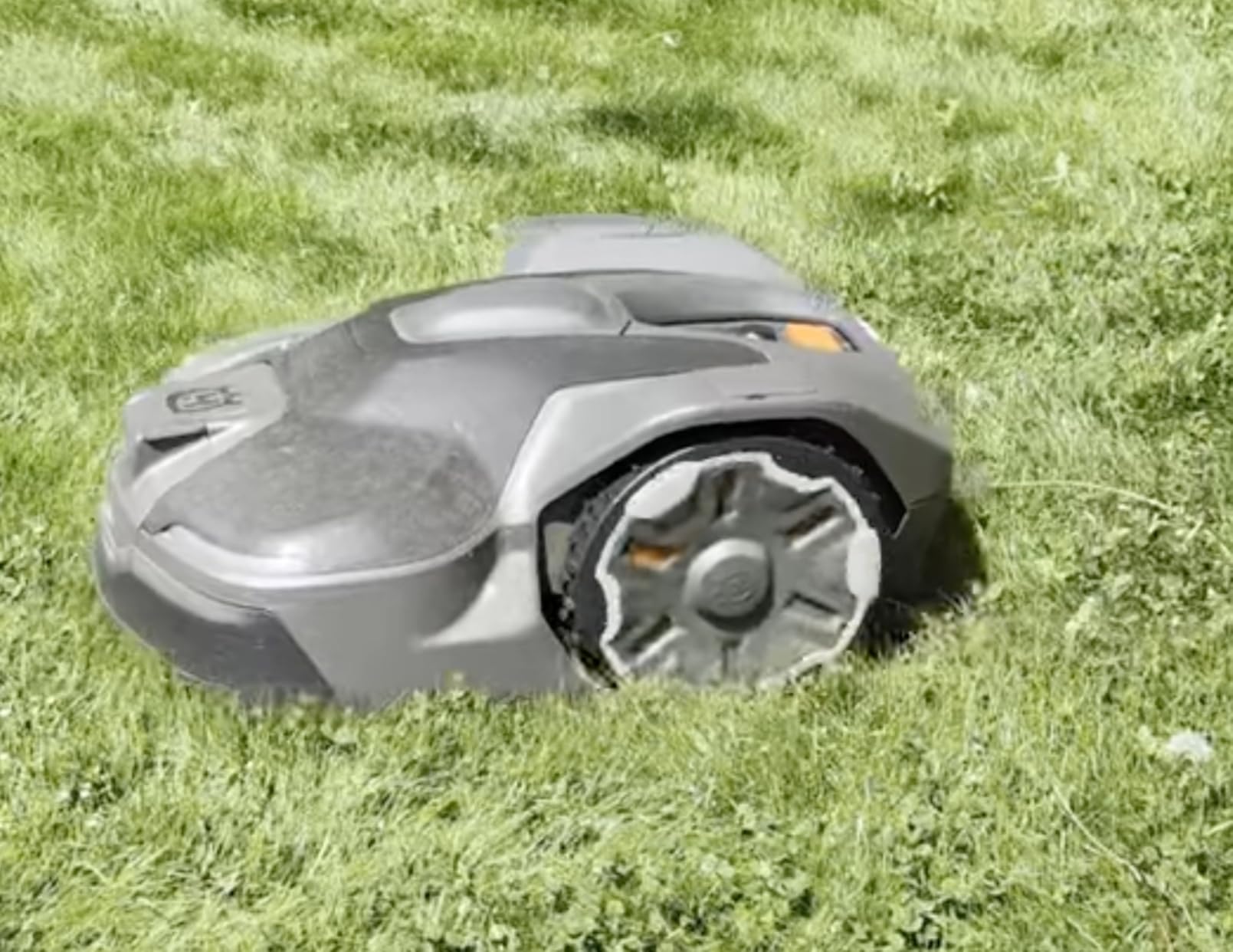
11. Husqvarna 410iQ – Best Dealer-Backed Pick With a Four-Year Warranty
Husqvarna 410iQ ½ Acre Wire-Free, 45% Slope, app Based, Robot Lawn Mower
45 percent slope rated
1 to 4 inch cut height
1/2 acre
4 year warranty
Pros
- Four-year warranty with a year of free blades
- EPOS holds centimeter accuracy on slopes
- Widest cut height range at 1 to 4 inches
- Hose-washable and easy to clean
Cons
- Heaviest unit here at 59 pounds
- Lowest customer rating in the group
- Connect app reliability issues
The 410iQ is the pick when support matters more than headline specs. It comes with a four-year warranty and a year of free replacement blades, and the brand has an established dealer network, which is the single most decisive factor for buyers who do not want to ship a broken machine across the country.
Navigation is EPOS, the Exact Positioning Operating System, which holds centimetre-accurate location data, plus onboard radar for obstacle detection. Installation is wire-free through the app, with a virtual map, mowing areas and stay-out zones, and it handles 45 percent slopes with up to half an acre of capacity.
The 1 to 4 inch cutting height range is the widest in this group, and at 9.4 inches the cutting width is also the second widest. Larger wheels and a durable bumper let it cross paths and driveways without the stall that stops lighter machines, and the chassis is hose-washable for cleanup.
It also carries the most complaints. It is the heaviest unit here at 59 pounds, which is awkward to lift manually, and it has the lowest customer rating in the group with roughly a quarter of ratings at one star, mostly around Connect app reliability and support. It is also not all-wheel drive, so its 45 percent rating sits below the Mammotion and WORX machines.
Why the warranty changes the maths
A four-year warranty on a machine that spends its life on rough, inclined ground is not a small detail. Blades, wheels and drive motors take the most abuse on a hillside, and owners who stay with this machine point to durable construction and accurate EPOS positioning on slopes as what justifies it.
The radar-based obstacle detection is also a different approach from cameras alone. Radar does not care about lighting, so dawn mowing and shaded lower slopes behave the same as midday open ground, which is a genuine advantage on a property with long tree shadows.
Where it will disappoint you
Being two-wheel drive on a 45 percent rating means it sits at the bottom of the hill performance tier, and the heavy chassis works against it on soft wet ground where a lighter machine would float rather than dig in.
The app complaints are consistent enough that you should test connectivity on your own property before buying. If your lawn is over half an acre, this is also the wrong size, and the 59 pound weight means any manual repositioning is a two-person job.
Why All-Wheel Drive Is the Dividing Line on a Hill
Traction is the whole story. A two-wheel-drive mower puts all of its torque through the rear axle and leans its weight forward over the drive wheels, which works fine on a flat lawn. On an incline the same machine has a rear tyre that is already loaded, and the moment the grass is wet or the ground is soft, the available grip falls below what the grade demands.
All-wheel drive distributes torque across four independently driven motors. That means every wheel contributes, the chassis does not have to fight a single overloaded tyre, and the machine can hold a straight line up a bank instead of crabbing sideways. Where traction genuinely fails is not the open face of a slope but the transition points: the lip between a flat lawn and an incline, or the pass beside a wall where one side lifts.
There is a second mechanism beyond raw grip. A skid-steer chassis pivots in place to turn, and on a slope that pivot grinds the turf at the turn point. A chassis with true front-wheel steering rolls through the turn instead, which is why the WORX WR342 specification reads so differently from a comparable 4WD machine that pivots.
Direction of travel matters too. Mowing straight up and down a hill keeps the machine’s weight stacked in the direction of travel, while mowing across the hill puts gravity working sideways the entire time. Owners on the steepest sections of their yards consistently report the same fix: give the slope its own zone and force a straight up-and-down pattern.
Reading a Slope Rating Honestly Before You Buy
A published maximum slope is a laboratory figure measured on dry, healthy, closely mown turf on a machine running at its best moment. Real spring conditions knock several points off that number, and the gap between a rating and your experience is usually a function of grass height, moisture and how long the machine spends climbing.
Boundary limits are the second trap. Many manufacturers state maximum slope for open-area travel, and a much lower limit near the perimeter, where the mower is turning and where a wheel can drop off a lip. A virtual boundary is not the same as the working edge, and on a yard that falls away past the fence, the working edge is often well inside the boundary.
Third, cross-slope travel behaves differently from direct uphill travel. A machine that climbs 45 percent in a straight line may lose position moving sideways across the same grade, and on an off-camber section the perceived steepness is higher than the measured grade because gravity is acting across the drive direction.
Finally, watch for over-speccing. The highest number on the page is not automatically the right buy. A compact lot with one 30 percent corner does not need a machine built for a 4 acre property, and the bigger machine will be slower, harder to lift and more expensive to run for exactly the same slope performance.
Mapping and Positioning on a Tree-Lined Hill
Every wire-free mower on this list is satellite-free, and they split into two camps on how they know where they are. RTK systems read the position from a base station or a cloud correction service, which is accurate to centimetres but weak under heavy canopy. LiDAR and vision systems build the map themselves and keep working when the sky disappears.
On a wooded hillside, that distinction is the difference between a clean cut and a machine that sits at the bottom of the bank waiting for signal. The Mammotion LUBA 2 AWD 5000HX pairs RTK with UltraSense vision, the LUBA 3 AWD 3000 layers NetRTK with 230 feet of LiDAR range, and the Sunseeker X5 AWD runs RTK, VSLAM and vision together for the same reason.
Signal drift under tree cover is the most commonly reported hill-specific navigation complaint, and it is why fusion stacks have become standard on this class of machine. If your slope is shaded for most of the day, prioritise a mower whose spec sheet names a second sensing method rather than one that lists RTK alone.
Do robot mowers need a perimeter wire on slopes? No, not any of the eleven here. Wire-free mapping is now the default in this category, and our guide to the best robotic lawn mowers without perimeter wire covers the setup in more detail. What wire-free cannot solve is a physical drop-off, which is a boundary problem rather than a signal problem.
What Grass Type Changes About Hill Mowing
Turf is the variable most buyers forget, and it changes how much damage a slope shows. Bermuda and zoysia are warm-season grasses with strong rhizome networks, so a scuffed turn point or a small dug-in track will grow back within weeks and is largely invisible a month later. Fescue and other cool-season blends are the opposite. A skid-steer pivot on a wet fescue slope leaves a visible brown mark that can persist until spring.
This is the practical argument for a chassis with true steering rather than skid-steer turning on a cool-season lawn. It is also the argument for raising the cutting height on slopes in wet conditions, which reduces the load on the drive wheels and therefore the wheelspin that causes the damage in the first place.
Height also affects sensing. Several machines in this group treat tall grass as an obstacle and will circle it, leaving rings of uncut lawn, so on a hill that grows fast between visits, mowing frequency is part of the slope equation rather than a separate decision.
If you are still working out which machine suits a normal flat yard first, our general robotic lawn mower roundup covers the basics. For a property where the hill is only part of a large lawn, the large yard picks are the better reference.
Buying Guide: What Actually Matters on a Hillside
Pass the traction test. Check that all four wheels are driven, and check the published slope rating against your measured grade plus five to ten points of margin. Then verify the rating is for the direction you will actually mow, since cross-slope travel is harder than direct climbing.
Pass the navigation test. On a shaded or tree-lined hill, a machine with only RTK will lose its position. Look for LiDAR, VSLAM or vision listed alongside it, and if the lawn is under a fifth of an acre, prefer a battery that can be returned to a base station without crossing the slope repeatedly.
Pass the safety-margin test. Set no-go zones around anything the virtual boundary cannot protect: retaining walls, ponds, ditches, steps, gravel beds and exposed tree roots. Owners report that widening no-go zones solved most repeated getting-stuck incidents, which means configuration matters as much as hardware.
Three settings make a measurable difference on a hill. Raise the cutting height when the grass is wet, because less blade load means less wheelspin. Give the steepest section its own mowing zone with a forced up-and-down direction. And use rain detection rather than trying to schedule around the weather, since traction on a wet slope is the single biggest cause of damage.
On running costs, the running total is not just the machine. Budget for replacement blades, and a battery pack if one is not user replaceable, which the LUBA 3 AWD 3000 is not. Account for any base station or 4G module, and for dealer installation labour if you buy a dealer-backed machine rather than a direct one.
Finally, be honest about what the machine will not do. No robotic mower mows leaves, none handles an overgrown lawn on the first pass, and all of them leave some boundary margin for a string trimmer. The reviews that matter most are long-term ones from owners with a hill, because a machine that looks brilliant in week one tells you very little about month six.
Frequently Asked Questions
What is the maximum slope a robot mower can handle?
The highest published maximum in the current market is 84 percent grade, about 40 degrees, on the WORX WR342. Most mainstream wire-free models top out at 45 percent, around 24 degrees, and the top of the field sits at 80 percent, roughly 39 degrees. Buy a machine rated 5 to 10 points above your measured steepest grade, because real conditions reduce published performance.
Do robot mowers work on steep slopes?
They do, with the right hardware. Slope ratings are a traction problem, and two-wheel-drive machines generally top out around 20 to 30 percent grade. All-wheel-drive or four-wheel-drive models with published ratings of 45 to 80 percent handle most residential hills, provided you set no-go zones around drop-offs and raise the cutting height on wet ground to reduce wheelspin.
Do I need all-wheel drive for a sloped lawn?
For anything past a gentle 25 percent roll, yes. All-wheel drive spreads torque across four independently driven motors so no single tyre is overloaded, which is what lets the machine climb without sliding sideways. A true front-wheel-steering chassis also avoids the skid-steer turn that grinds turf on cool-season grass. Two-wheel drive is fine on a flat lot with occasional bumps.
How do I measure the slope of my yard?
Find the steepest point, lay a straight board across it and hold one end level using a bubble level or a level app. Measure the vertical gap under the raised end and the horizontal distance the board spans. Divide the rise by the run and multiply by 100 for the grade percentage. As a reference, 15 percent is about 8.5 degrees and 45 percent is about 24 degrees.
Will a robot mower damage my lawn on a slope?
It can, but the damage is usually recoverable and usually avoidable. Wheelspin on wet grass digs in tracks, and skid-steer turning scuffs turf at the turn point. Warm-season grasses such as bermuda and zoysia self-repair within weeks, while fescue shows the marks far longer. Set a higher cutting height in wet conditions, use no-go zones on trouble spots, and mow straight up and down rather than across.
Why does my robot mower get stuck on the hill?
Almost always one of four things. Your measured grade is above the machine’s rating, the grass is wet and grip has collapsed, the mower is climbing a lip or transition rather than an open slope face, or the area is simply too narrow for it to recover. Widen the no-go zones, raise the cutting height, restrict that section to up-and-down travel, and check the no-go zone settings before blaming the hardware.
Which Robotic Mower Should You Buy for Your Hills?
Measure your steepest grade first, then buy five to ten points above it and insist on all-wheel drive. For most households with a genuine bank, the Mammotion LUBA 2 AWD 5000HX is the strongest all-round buy, with 80 percent climb, RTK reinforced by vision for shaded ground, and 481 owner reviews describing the same hilly problems you have. On a smaller lot, the LUBA mini 2 AWD 1500H does the same job for a fraction of the coverage requirement, and it is our best value pick.
If your hill is the steepest thing in the yard rather than the whole story, the WORX WR342 carries the highest published rating at 84 percent and steers without tearing turf. Rolling, uneven lawns suit the Sunseeker X5 AWD and its floating deck. And if support and a four-year warranty matter more than slope headroom, the Husqvarna 410iQ is the pick that comes with a dealer behind it.
Whichever one you choose, set your no-go zones, raise the deck in wet conditions, and give the bank its own mowing direction before the first full cut. That configuration work does more for a hillside lawn than any spec sheet.