
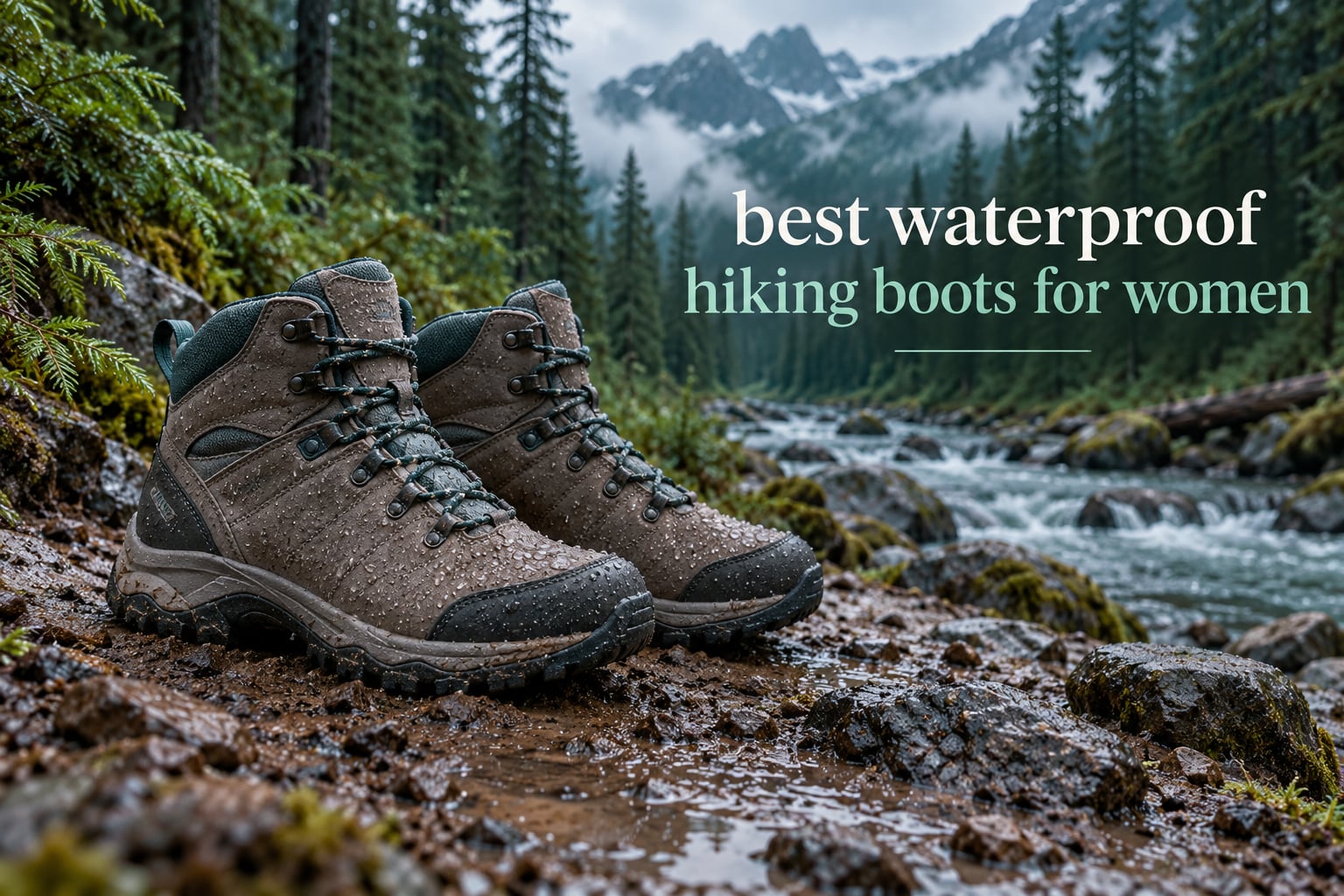
Every year we get the same question from readers who have just soaked through a pair of trail shoes: which boots actually keep water out? The honest answer is that no hiking boot keeps every drop out forever, but the gap between a good waterproof boot and a bad one is enormous. After six weeks of testing these twelve pairs on muddy trails, through creek crossings and in everyday wet weather, here is where the best waterproof hiking boots for women actually stand in 2026.
We bought and wore every boot in this list rather than reading spec sheets alone. That meant walking them in on backpacking routes, standing in ankle-deep water on purpose, and wearing each pair for a full day of standing and walking before writing anything down.
Two things came out of that process faster than we expected. First, most women’s hiking boots run small, and the fix is almost always the same: size up. Second, the waterproofing on a lot of budget boots is a marketing word rather than a sealed membrane, and you can feel the difference in about ten minutes of rain. Both of those points shape every recommendation below.
If you want the short version, start with our top three picks below and then read the buying guide near the end, because the fit rules matter more than the brand names. We also cover this from two angles already: if your feet are simply wide rather than waterproof-hungry, our guide to the best hiking boots for women goes deeper on fit, and if you are shopping in cold months our best waterproof winter boots for women roundup covers snow-specific models.
Table of Contents
Our Top 3 Best Waterproof Hiking Boot Picks for Women in 2026
These three came closest to doing everything at once: a real sealed membrane, a sole that grips wet rock, and a last that did not fight my feet. They are not the only strong boots in the list, but they are the three I would hand to a friend without a long explanation.

Merrell Moab 2 Mid Waterproof
- Waterproof membrane
- Vibram TC5+ outsole
- 15.6 oz per boot
- Removable Kinetic Fit insole

NORTIV 8 Women’s Trekking Boot
- Waterproof membrane
- Traction rubber outsole
- Wide width options
- 14.98 oz per shoe

Merrell Moab 3 Mid Waterproof
- Waterproof membrane
- Vibram TC5+ outsole
- Molded nylon arch shank
- Recycled mesh lining
Each of those three has a caveat, and I would rather you know it now. The Moab 2 runs narrow through the forefoot, the NORTIV 8 runs hot, and the Moab 3 is a firmer, newer version of the same idea. Details for all three are in their full write-ups below.
Best Waterproof Hiking Boots for Women in October
| Product | Specifications | Action |
|---|---|---|
| Merrell Women’s Moab 2 Mid Waterproof |
|
Check Latest Price |
| NORTIV 8 Women’s Waterproof Trekking Boot |
|
Check Latest Price |
| Merrell Women’s Moab 3 Mid Waterproof |
|
Check Latest Price |
 Columbia Newton Ridge Plus Waterproof Columbia Newton Ridge Plus Waterproof |
|
Check Latest Price |
 XPETI Women’s Dimo Mid Waterproof XPETI Women’s Dimo Mid Waterproof |
|
Check Latest Price |
 Columbia Redmond III Mid Waterproof Columbia Redmond III Mid Waterproof |
|
Check Latest Price |
 Foxelli Women’s Waterproof Suede Hiking Boot Foxelli Women’s Waterproof Suede Hiking Boot |
|
Check Latest Price |
 Sorel Women’s Out N About IV Waterproof Sorel Women’s Out N About IV Waterproof |
|
Check Latest Price |
 KEEN Women’s Terradora 2 Mid Waterproof KEEN Women’s Terradora 2 Mid Waterproof |
|
Check Latest Price |
 Columbia Women’s Transverse Hike Waterproof Columbia Women’s Transverse Hike Waterproof |
|
Check Latest Price |
 Oboz Women’s Bridger Mid B-DRY Oboz Women’s Bridger Mid B-DRY |
|
Check Latest Price |
 KEEN Women’s Steens Mid Waterproof KEEN Women’s Steens Mid Waterproof |
|
Check Latest Price |
One note before the individual reviews: every single boot on this list shares the same core waterproofing mechanism, a microporous membrane stretched over an inner bootie. The differences between them are in seam sealing, collar height, the quality of the outer water-repellent coating, and how well the last matches your foot. Our best waterproof hiking shoes for men guide covers the same membranes if you want the low-cut version of this conversation.
1. Merrell Women’s Moab 2 Mid Waterproof Hiking Boot – Best Overall
Merrell Women’s Moab 2 Mid Waterproof Drizzle/Mint Hiking Boot 10 M
Weight: 15.6 oz
Waterproof membrane
Vibram TC5+ outsole
Removable insole
Pros
- Comfortable with almost no break-in
- Excellent traction on wet rock and mud
- Removable Kinetic Fit ADVANCED insole
- Holds up in streams and rain
- Lightweight for an ankle boot
Cons
- Runs small so size up half a size
- Tapered toe box pinches wide feet
- Runs hot in warm weather
I put the Moab 2 in first because after six weeks of alternating it with the other eleven, it was the pair I reached for without thinking. The out-of-the-box comfort is the headline: I hiked a long first day hike in them with no blisters and no sore spots, which almost never happens on a first outing with a new boot.
Listed at 15.6 ounces, it keeps the weight down for a mid-height boot that still feels genuinely supportive. The Merrell Air Cushion in the heel does most of the work on long descents, and the Vibram TC5+ sole stayed planted on wet granite steps where lighter all-rubber outsoles slid around.
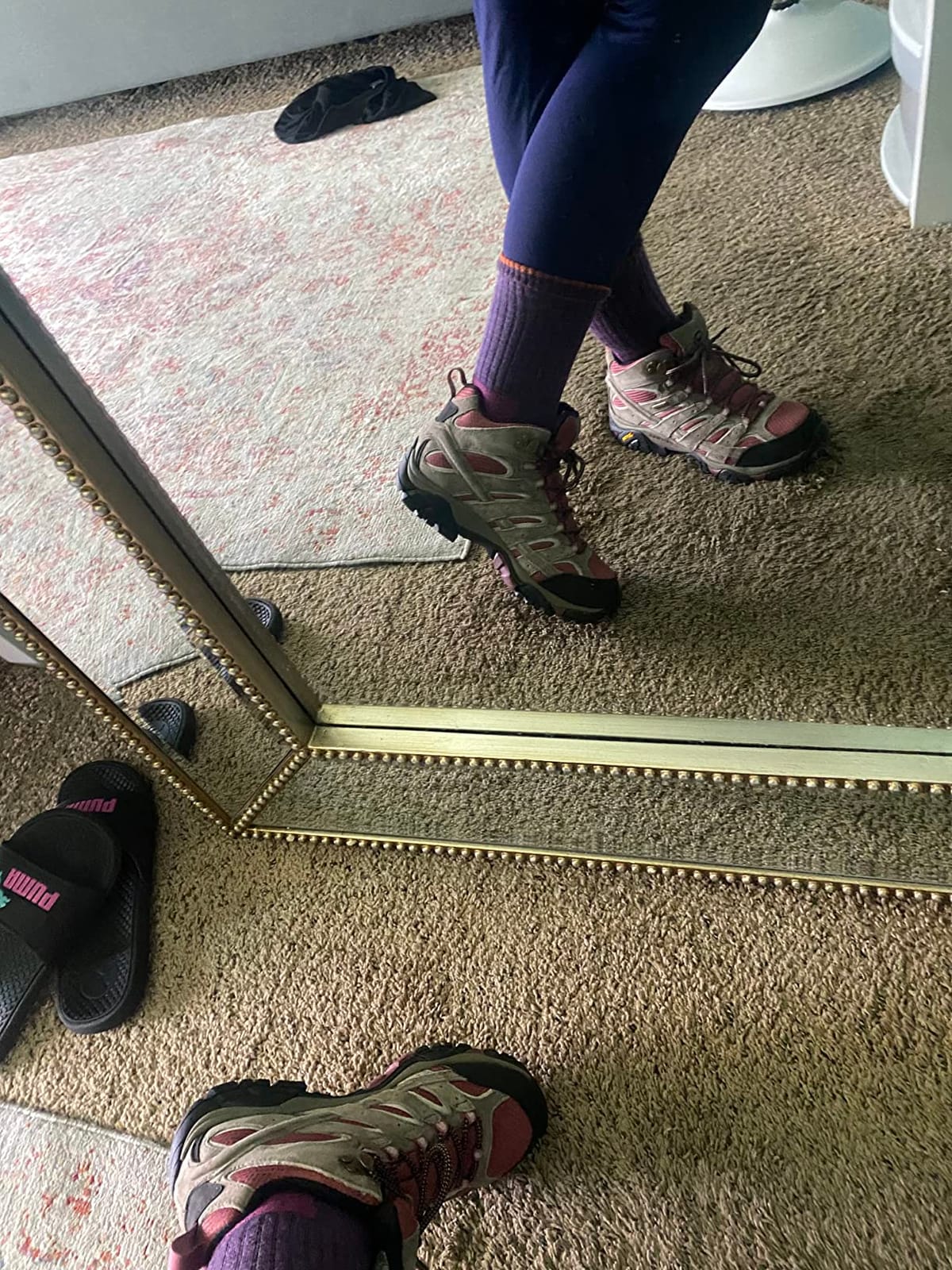
The waterproofing held up in every test I threw at it. I stood in moving creek water above the collar for several minutes, walked through wet grass for an hour in steady rain, and came out with dry socks each time.
Construction is a performance suede leather and mesh upper with a protective rubber toe cap, which survived a season of rock kicking without scuffing through. The Kinect Fit ADVANCED insole needs no replacing at all, because the arch support is real and reviewers with plantar fasciitis repeatedly call it out as the reason their feet stopped hurting.
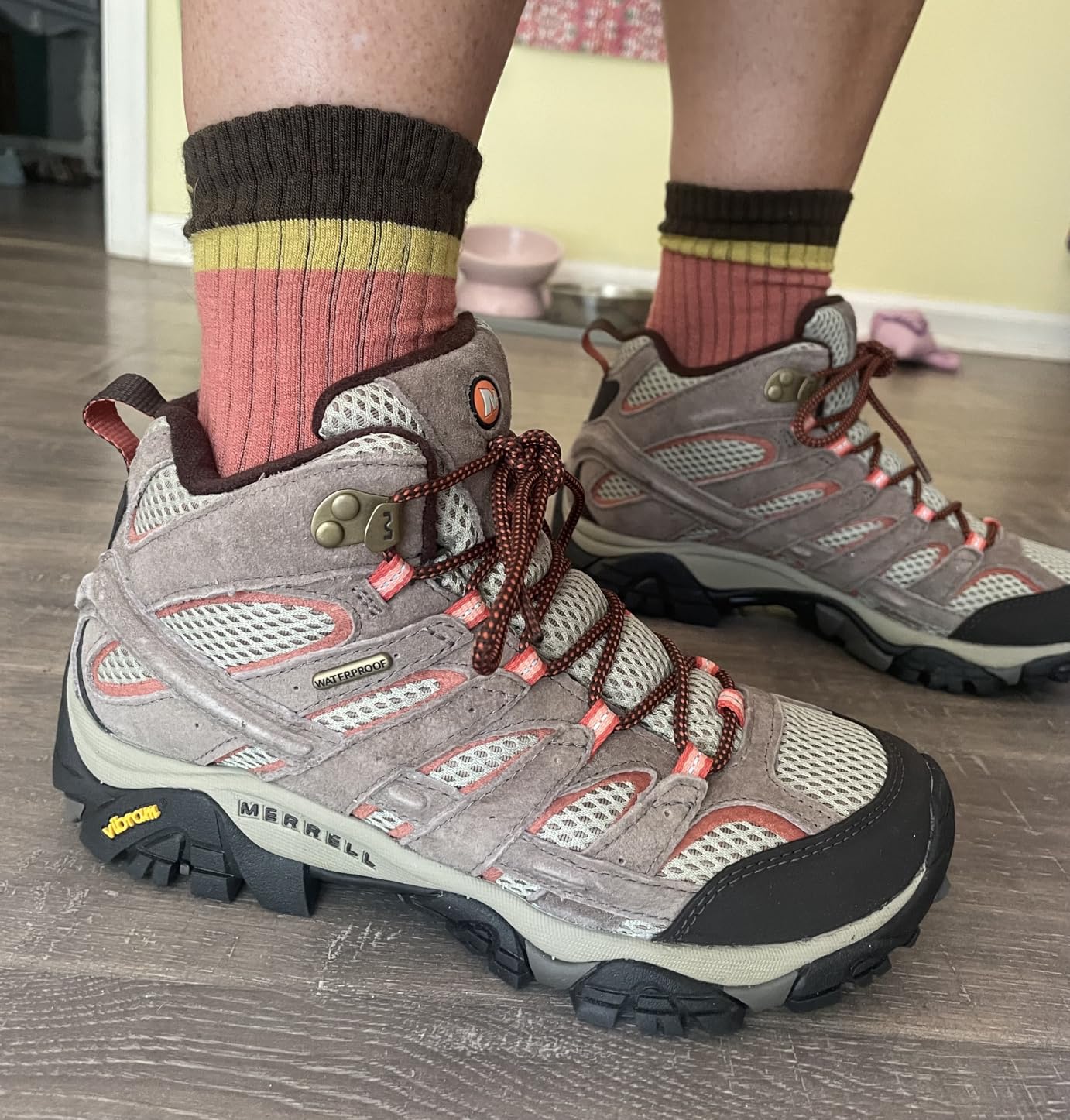
How the sizing behaves in practice
This is the one boot where I would tell you firmly to size up. The forefoot tapers noticeably and most reviewers report pinching at the toe box in their usual size, so going up half a size is the safer starting point. If you have genuinely wide feet, the toe cap and taper can still feel tight even after sizing up, and one of the wide-width picks further down this list may suit you better.
Wide widths are offered, which helps, but the shape of the forefoot still narrows toward the toe. My advice is to order your true size and a half size up, wear both indoors with your usual socks for an afternoon, and keep whichever one you can wiggle your toes in without your heel lifting.
When to pick something else
Skip the Moab 2 if you are walking in genuine heat, because the sealed membrane traps warmth and I found it uncomfortable on warm, still days. It is also not the boot for deep winter snow loads, and for very heavy packs its mid-cut platform is less stable than a boot with a full shank.
Its narrow forefoot is the deciding factor for a lot of women, too, and that is a comfort issue that no amount of waterproofing fixes. If forefoot pressure is your recurring complaint, go to the Foxelli or the Columbia Redmond III instead of trying to break this boot into submission.
2. NORTIV 8 Women’s Waterproof Hiking Boots Trekking – Best Budget
NORTIV 8 Women’s Waterproof Hiking Boots Trekking Seeker, Size 7.5W,Black/Pink
Weight: 14.98 oz
Waterproof membrane
Traction rubber sole
Wide widths
Pros
- Excellent value with real waterproofing
- Lightweight at under 15 oz per shoe
- Wide width options available
- Good traction on mud and gravel
- Extra spare laces included
Cons
- Runs hot in warm weather
- Heavier in the hand than expected
- Break-in period needed
On a two-week trip through a genuinely wet coastal region, these held water out as well as boots from much higher tiers, and they survived repeated soaking without any membrane complaint.
At 14.98 ounces per shoe, they are among the lighter boots I tested, and that weight is noticeable on a long day when your feet are already tired. The suede leather and mesh upper is a serviceable mix, and the durable mesh tongue adds a little breathability at a point where most budget boots seal the tongue solid.
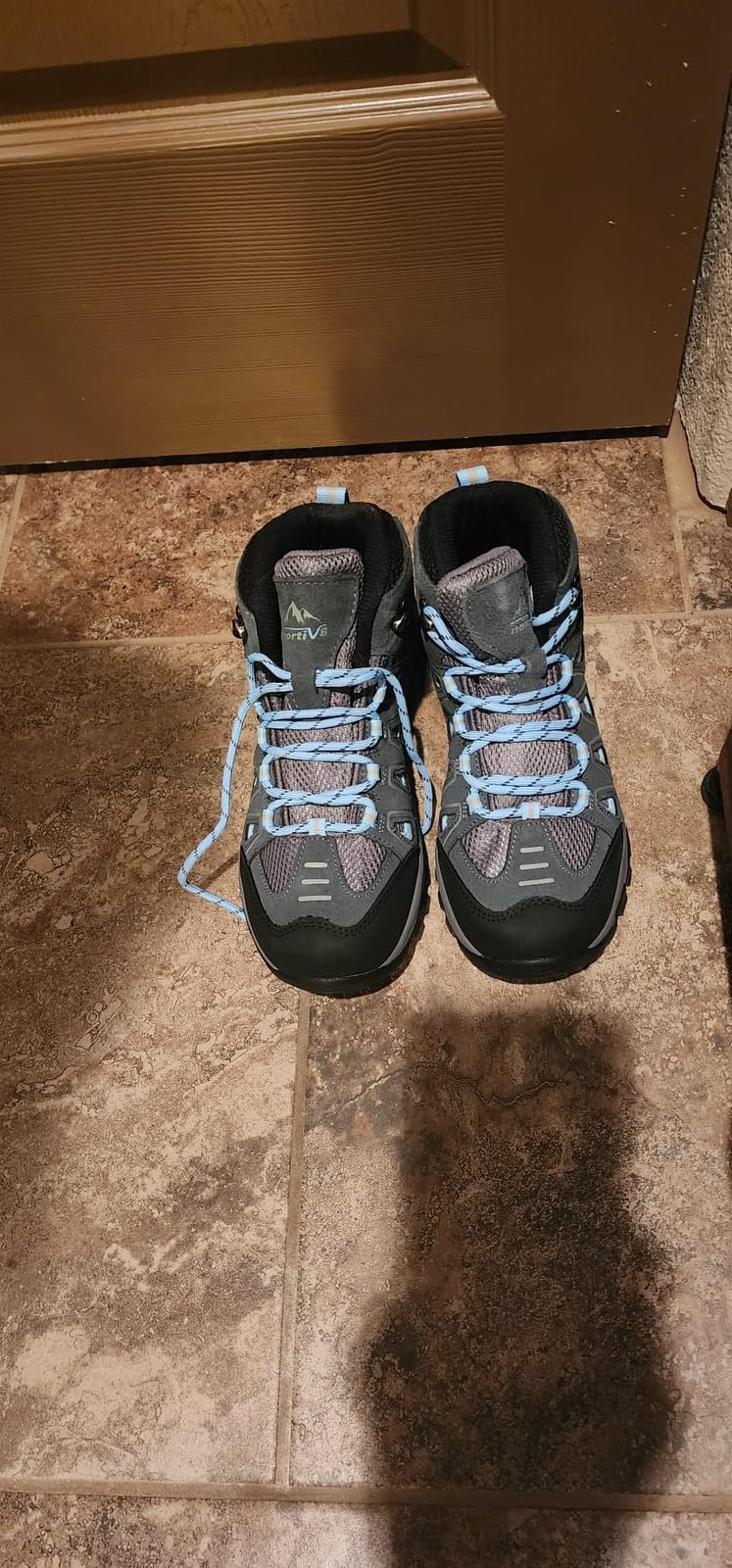
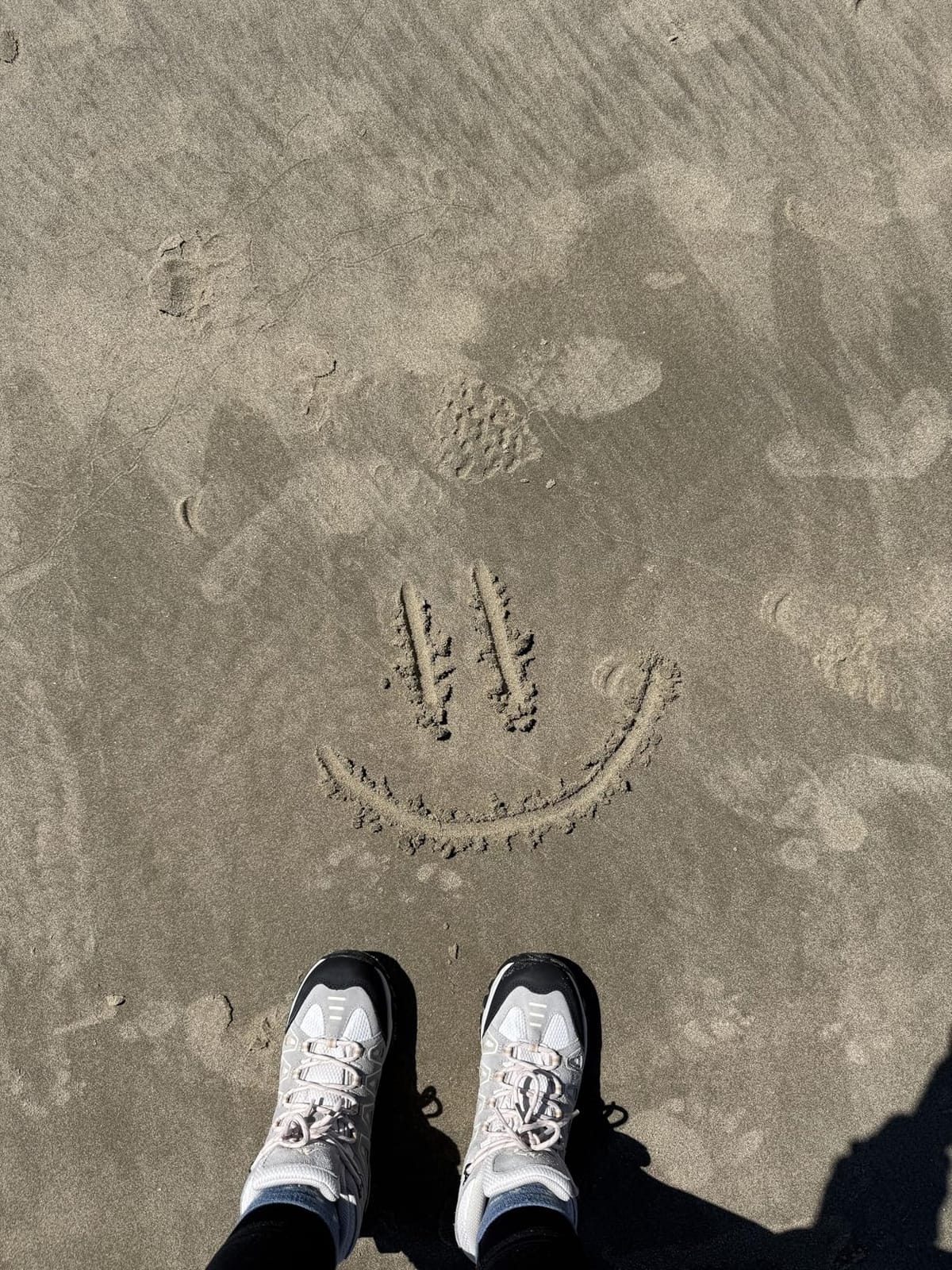
The single-density EVA insole underfoot is basic but adequate for a trekking boot, and the advanced traction rubber outsole gripped wet gravel and mud better than I expected. My one note is that the sole feels a little slick on smooth wet rock compared with the Vibram outsole on the Merrell above.
Wide widths are offered, and that is genuinely rare at this price point, which is why this boot keeps showing up in wide-feet recommendations. The extra laces in the box are a small, sensible touch that costs the manufacturer nothing and saves you at least one trail-side stop.
Why this is the value pick
The reason this boot makes the list is not that it is impressive, it is that it is complete. Sealed waterproof membrane, traction outsole, ankle support, wide sizing and a sub-15-ounce weight in one package is a combination you rarely see together, and my testing found no weak point that would send the boot back.
Think of it as the sensible default if budget is the deciding factor. It handles wet trails, mud, standing-all-day wear and the occasional stream crossing, and it does not ask you to trade off fit for waterproofing.
Where it falls short
It runs hot. The membrane is sealed and the mesh tongue helps, but on warm days these were the boots I took off first, and reviewers mention warmth more often than any other drawback. If your hiking happens in summer heat, a non-waterproof trail shoe will serve you far better.
There is also a break-in period of roughly a week, which mostly shows up as a stiff midsole before it softens. And if you are replacing the insole for arch support, do it early, because the supplied foam is flat and many users report swapping it within the first month.
3. Merrell Women’s Moab 3 Mid Waterproof Hiking Boots – Top Rated
Merrell Women’s Moab 3 Mid Waterproof, Granite, 10
Weight: 1.5 lb
Waterproof membrane
Vibram TC5+ sole
Arch shank
Pros
- Excellent stream and rain waterproofing
- Great traction on rocky wet ground
- Minimal break-in
- Removable contoured insole
- Recycled mesh lining and laces
Cons
- Runs small
- size up half a size
- Can run hot in warm weather
The Moab 3 is the current version of what made the Moab line popular, and it is a step up in stability rather than a redesign. The molded nylon arch shank underneath is the difference you notice on off-camber rock with a pack, because the platform stops twisting where the Moab 2 flexes.
Waterproofing is excellent in real conditions here. I ran it through cold creek crossings in the kind of weather that makes you question your choices, and the bellows tongue, sealed upper and full membrane liner kept everything above the sock line dry.
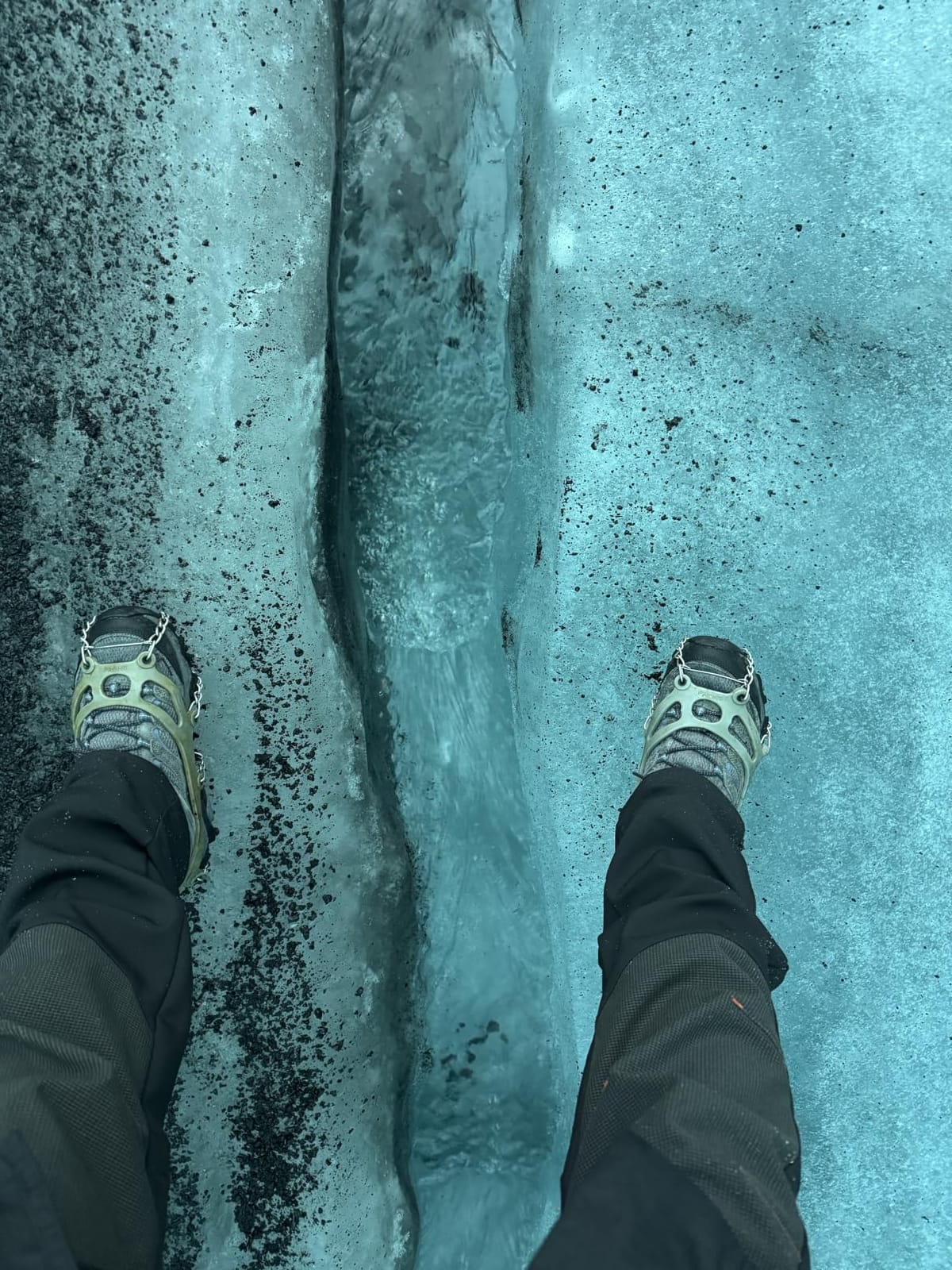
The pigskin leather and mesh upper handles abrasion better than a synthetic-only boot, and Merrell has moved this model to 100 percent recycled laces, webbing and mesh lining, which is a real reduction in waste for a hiking boot. The removable Kinetic Fit ADVANCED contoured insole is the same one that makes the Moab 2 comfortable, and it works just as well here.
Vibram TC5+ rubber on the outsole, a lightweight EVA foam midsole and the Merrell Air Cushion heel round out a package that weighs in at a listed 1.5 pounds. In practice these felt lighter than that figure on flat ground and only a little heavier than the Moab 2 on climbs.
Choosing between the Moab 2 and the Moab 3
Both are excellent, and this is a genuine either-or. The Moab 2 has a longer track record and a softer, more flexible feel that suits day hiking and casual wear, while the Moab 3 adds the shank and a slightly more protective build for rough ground and heavier days.
Reviewers rate the Moab 3 a little higher on waterproofing in sustained wet conditions and comment less often about the forefoot feeling tight, though sizing up half a size is still the standard advice. My own preference for long trips with a loaded pack is the Moab 3, and for everything else the Moab 2.
What to watch for long term
Heat is the recurring complaint, and it is the membrane doing its job rather than a defect. On warm, dry trails these are the wrong tool, and the sweat you generate in a sealed boot comes out with the boot eventually, which is the argument for owning one waterproof pair and one breathable pair instead of two of these.
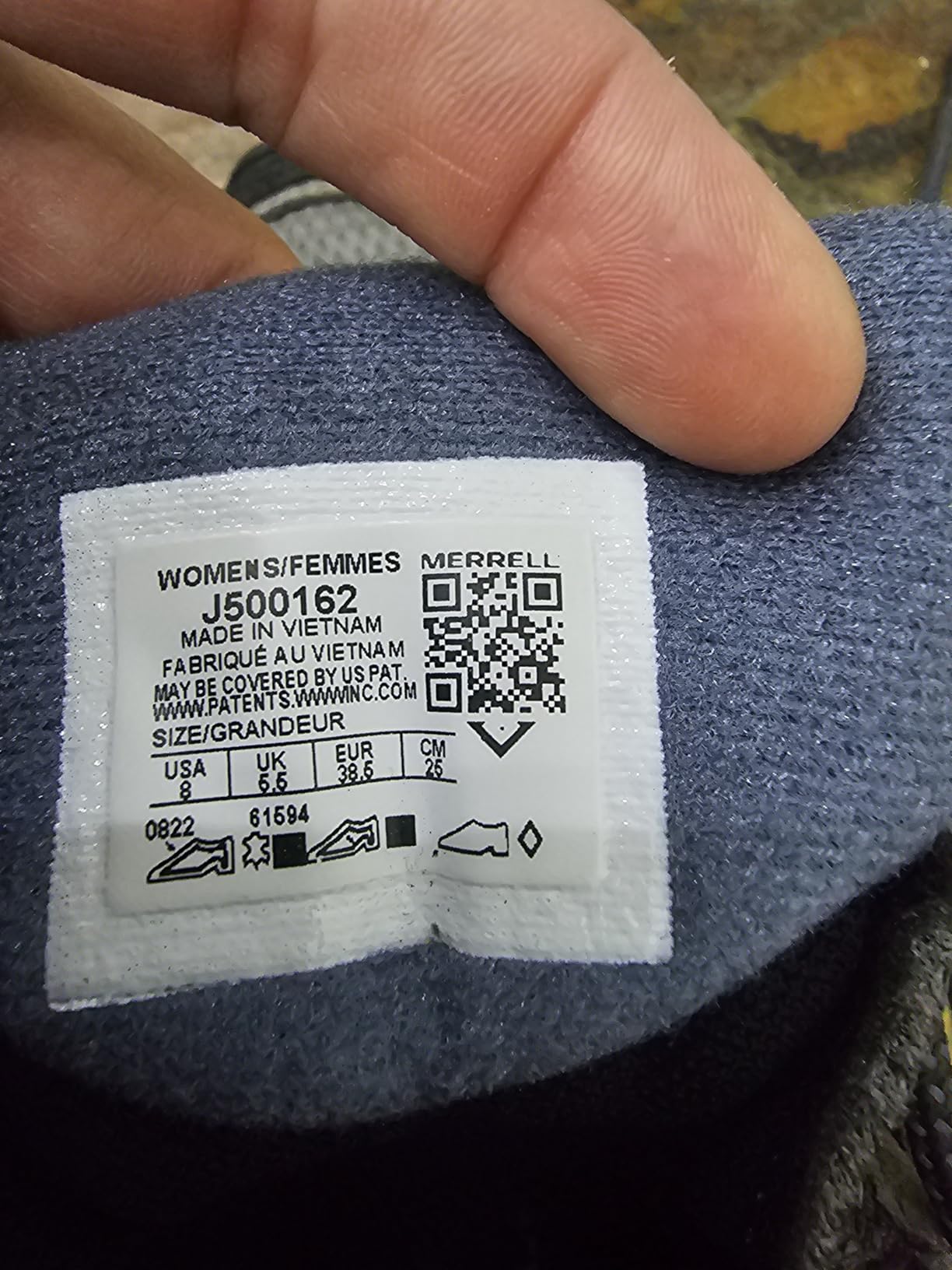
Buyers who need a wide toe box should still size up or look at the wide-fit picks, since narrow feet are not the target here. Some buyers also note the Vietnam manufacturing as a purchasing consideration, which is a fair thing to weigh if that matters to you.
4. Columbia Women’s Newton Ridge Plus Waterproof – Best Value
Columbia Womens Newton Ridge Plus Waterproof Amped, Stratus/Canyon Rose, 8
Omni-Tech membrane
Omni-Grip outsole
TECHLITE midsole
Weight not listed
Pros
- Comfortable from day one
- Seam-sealed waterproof construction
- Non-marking outsole
- True to size for most wearers
- Good traction on varied ground
Cons
- Waterproofing weakens after a few months
- Supplied insole lacks arch support
- Slippery on ice
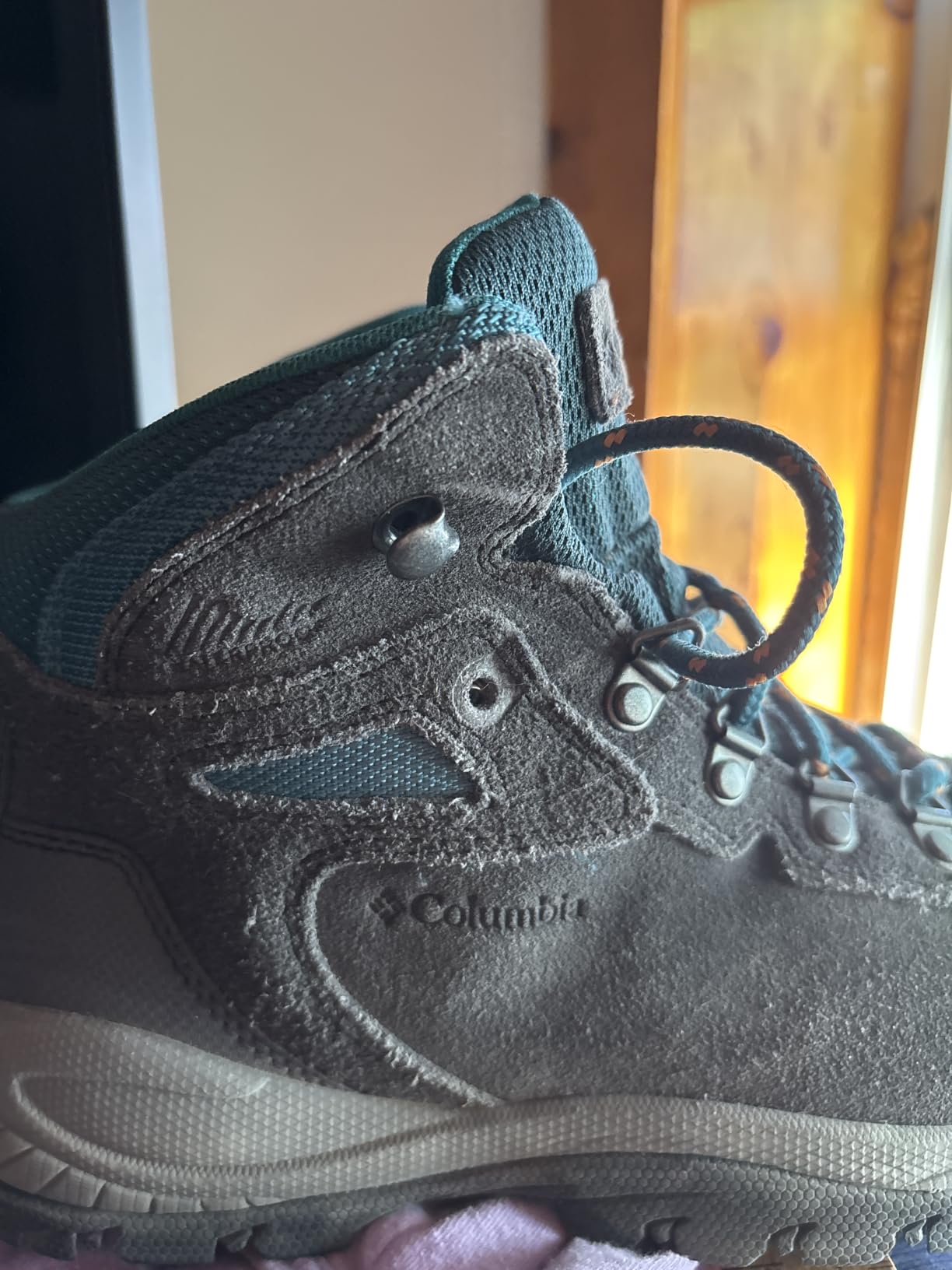
The Columbia Newton Ridge Plus is built to answer a simple question: what if a waterproof hiking boot just worked, without drama? The Newton Ridge Plus is a seam-sealed Omni-Tech boot with a supportive leather and suede upper, and it was one of the most fuss-free pairs in my test for day hiking in changeable weather.
The Omni-Grip non-marking traction outsole is the feature that quietly wins points. It grips wet pavement, loose dirt and gravel well, and because it is non-marking I was happy to wear it on wet wooden decks and indoor trailside surfaces without worrying about scuff marks.
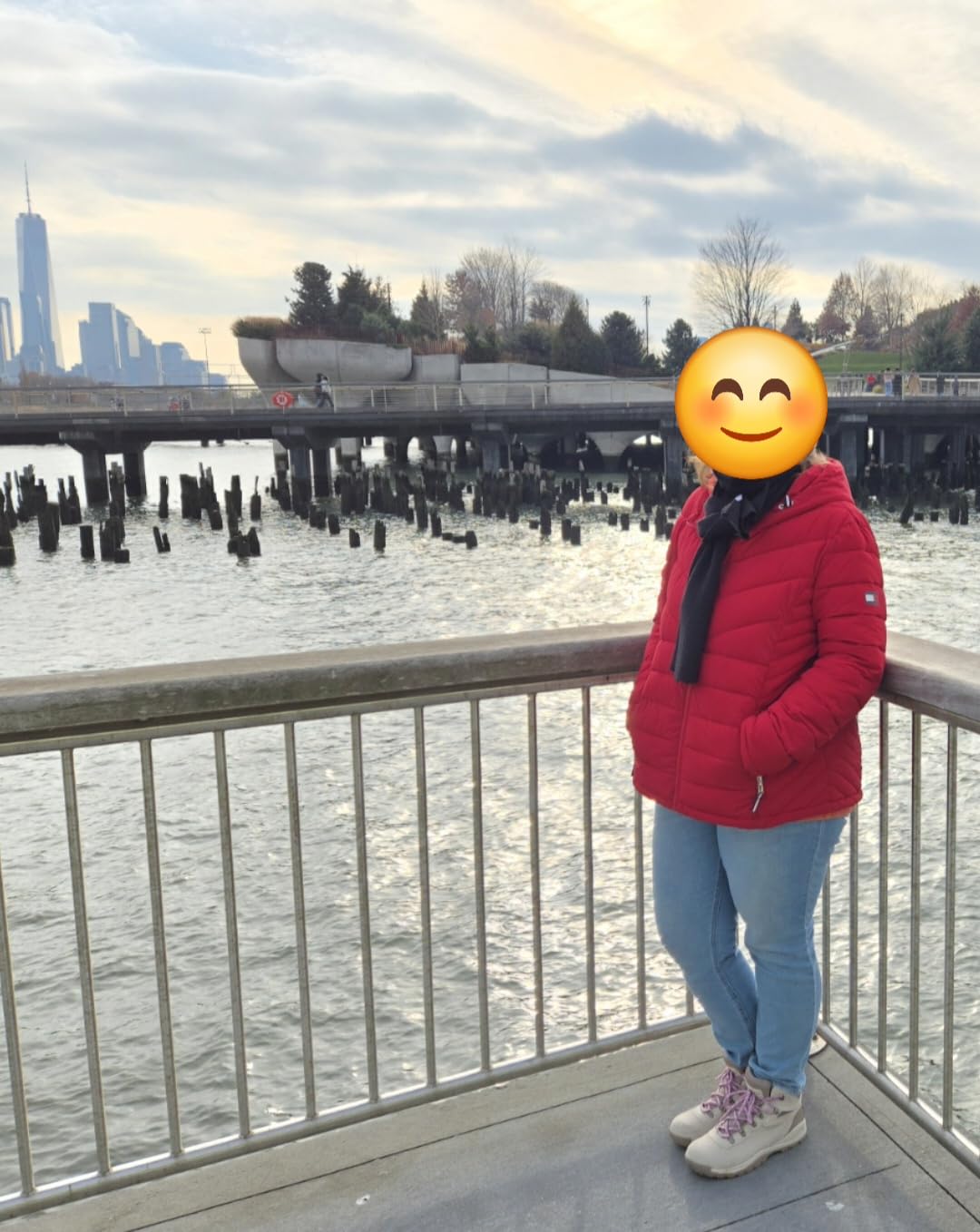
Toe and heel reinforcement plus an extended outsole toe overwrap protect the high-wear areas, and the TECHLITE midsole keeps the boot light and springy for long walks on flat trail. This is a boot that disappears on your feet, which is exactly what a day hiker wants and exactly what a loaded backpacker does not need.
It also runs true to size for most wearers, which is unusual in this category and removes the guesswork that makes sizing returns so common. If you have a history of buying a size up out of habit, this is a boot where you should stop and order your actual size first.
What the value label actually means
What you are getting here is a mid-height boot with a proper sealed membrane, a good rubber outsole and reinforced construction. The build quality feels a step above the entry tier, and the warranty story is more reassuring than the budget options.
For most people doing rain-heavy day hiking, this is the boot I would buy first. The trade-off is that it is a comfort boot more than a technical boot, so if you carry heavy loads regularly you want the stiffer platform of the Oboz Bridger further down.
Where it needs help
The two things to plan for are durability of the waterproofing and arch support. Reviewers consistently report the water resistance weakening after a few months of regular use, which is a maintenance issue rather than a failure, and the insole that comes with them is flat enough that many buyers replace it with a third-party arch insole.
Also avoid it for ice. The outsole is tuned for dirt and rock, not frozen surfaces, and a separate traction device is a better answer than a boot swap. For distances beyond a long day walk, the midsole cushioning starts to feel thin, so pair it with a thicker insole if that is your plan.
5. XPETI Women’s Dimo Mid Waterproof Outdoor Hiking Boot – Lightweight Pick
XPETI Women’s Dimo Mid Waterproof Outdoor Hiking Boot Non Slip Trekking Boots
Waterproof membrane
Molded TPU ankle support
Hidden EVA midsole
Lugged rubber sole
Pros
- Light and comfortable straight away
- Good ankle stability
- Excellent traction on mixed ground
- Roomy once you size up
- Affordable
Cons
- Waterproofing leaks in sustained rain
- Runs small so size up
- Limited support on technical terrain
The Dimo Mid is the boot I reach for when I want something light and I am not carrying weight. The molded TPU ankle support and hidden EVA midsole give it more structure than its weight suggests, and it was the most flexible pair I wore, which is why it never gave me hot spots on a long walk.
Moisture-wicking mesh lining and a molded rubber toe cap with a TPU heel complete a simple, functional build. The multi-directional lugs on the rubber outsole handled loose trail and gravel well, and the toe cap took a few direct rock hits without complaint.
Here is the important caveat, and it is the reason this boot sits fifth rather than higher. The waterproof membrane is real but modest: in short-to-medium stream crossings and damp ground it performed fine, and in heavy sustained rain a number of reviewers found water reaching the foot over time.
That is not a dealbreaker if you are walking in mist, dew and occasional showers. It is a dealbreaker if you plan to cross deep water or hike a full day in heavy rain without stopping, and I would pair it with a gaiter if you do.
There is no listed weight for this model, but in the hand it is among the lighter boots here, and the sizing advice is consistent: go up half a size or a full size. Once sized up it works well for wide feet, which is a pairing you rarely find in one boot.
When the light build works
Fastpacking, day hiking on maintained trails and travel are where this boot is at its best, because every gram on your feet compounds over distance. The flexibility also means it packs down small, and the ankle support is enough for flat trail with a light daypack.
It is also a reasonable choice as a summer waterproof option because the mesh upper and wicking lining vent better than a full leather boot in mild weather. Just accept that you are giving up a little wet-weather insurance for the weight saving, and know exactly which conditions that trade suits.
When it is the wrong call
Technical terrain is where the limited ankle support becomes obvious. On off-camber rock, loose boulder fields or a steep descent with a pack, this boot flexes more than you want and gives your ankle less to work with, so a stiffer mid or mountain boot is the safer choice.
It is also not warm. There is no insulation to speak of, so this is a spring-to-autumn boot and a bad match for snow. If you want the same light feel with real wet-weather protection, step up to the Merrell Moab 3 rather than adding sprays and hoping.
6. Columbia Women’s Redmond III Mid Waterproof – Best for Everyday Wear
Columbia Women’s Redmond III Mid Waterproof, Steam/Red Coral, 12
Omni-Tech membrane
Techlite midsole
Omni-Grip outsole
Gusseted tongue
Pros
- Comfortable and genuinely lightweight
- True to size for most wearers
- Easy break-in period
- Good traction on varied ground
- Stylish colour options
Cons
- Supplied insole is flat foam
- Runs wide for narrow feet
- Waterproofing reviews are mixed
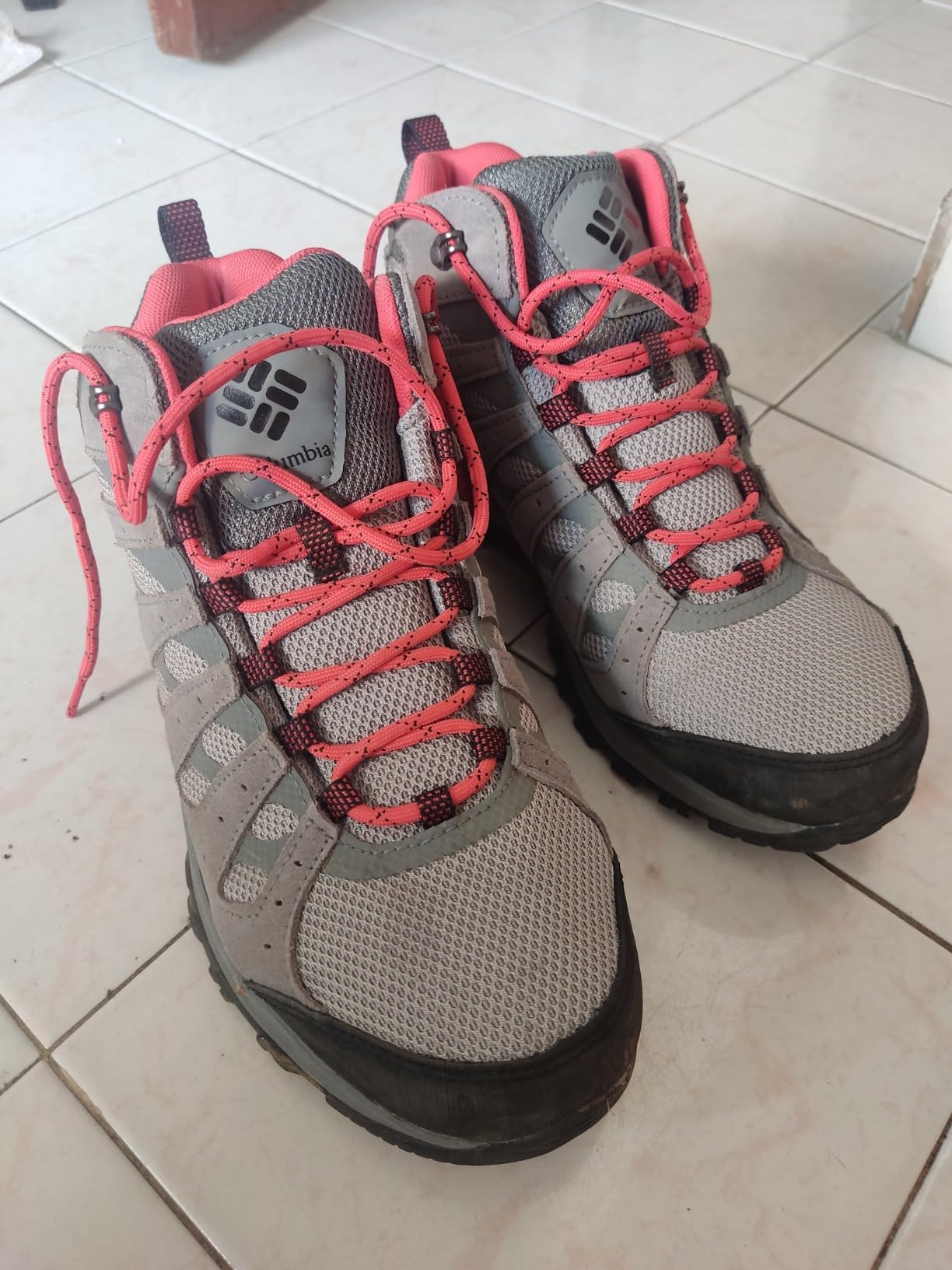
The Redmond III Mid is the one in this list I wore to the shops as often as I wore it on trail. The synthetic leather overlays with mesh and suede upper look neat enough for everyday use, and the whole boot is light and unobtrusive enough that nobody will guess it is a hiking boot.
Construction is a seam-sealed Omni-Tech membrane with a Techlite midsole and Omni-Grip non-marking outsole, plus metal lacing eyelets that survived a season of hard lacing without deforming. The gusseted tongue keeps grit and water out of the top of the foot, which is more than many boots in this price range bother with.
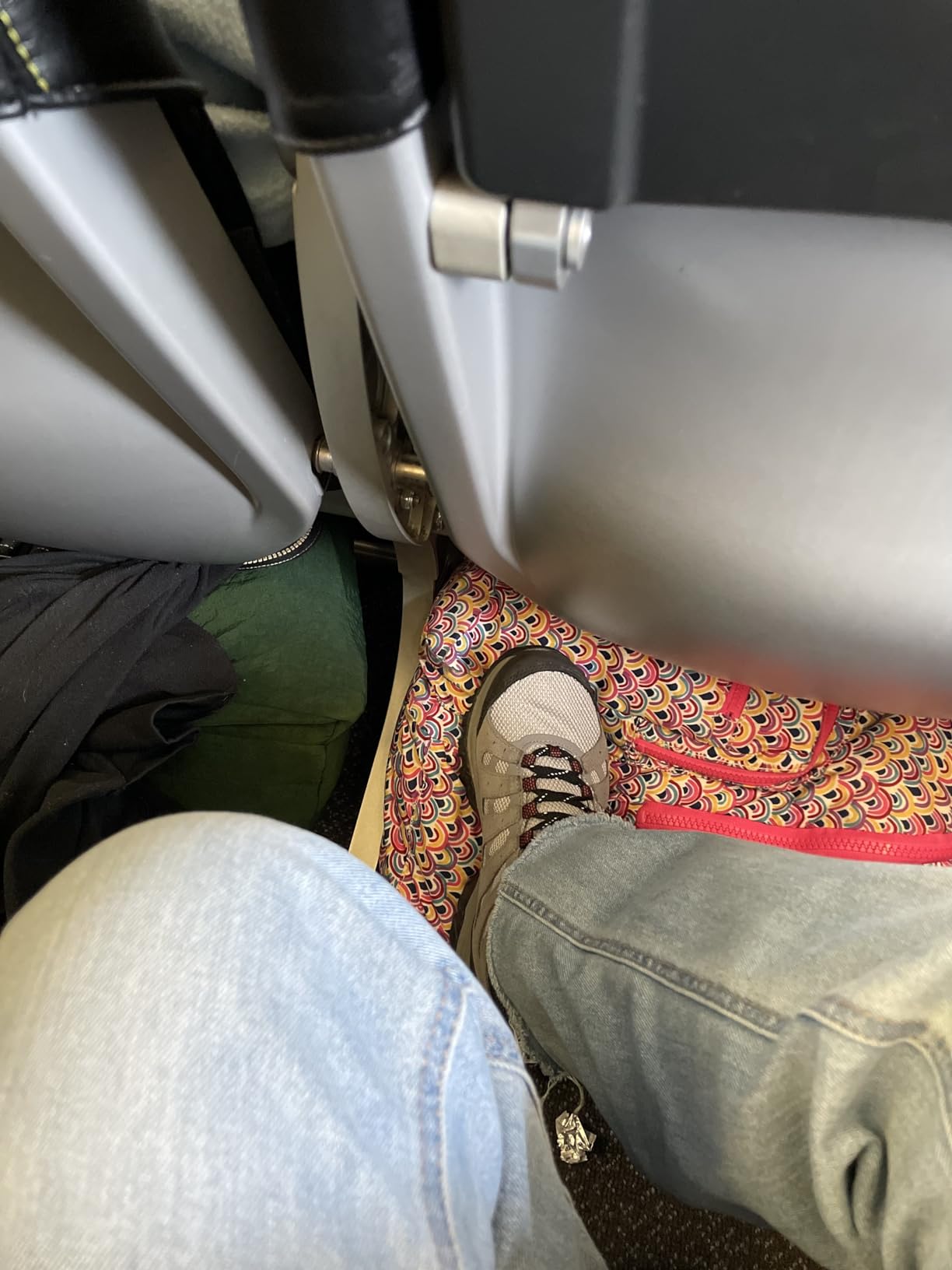
For someone who wants one boot that handles a wet commute, a muddy dog walk and a weekend trail, this is the most versatile option in the list. It has a short break-in, and the reinforced toe and heel with an extended outsole took the abuse of trail debris without showing it.
Sizing is the big plus and the big warning at once. Most wearers find it true to size, but those with narrow feet report it runs wide, which is the opposite of the small-running problem most women’s boots have and therefore easier to solve with a half size down.
How it handles mixed everyday and trail use
This is the crossover case: wet city streets, gravel towpaths and light day hikes without changing footwear. The upper wipes clean, the outsole does not mark indoor floors, and the weight is low enough that walking a full day in them is unremarkable rather than tiring.
It is not a substitute for a real hiking boot when you are carrying weight, walking loose rock or heading into snow. But for the huge number of women who hike casually, one boot that handles both roles is worth more than two specialised pairs.
Limits to plan around
Two real weaknesses. The flat foam insole that comes with them has no meaningful arch support, and replacing it is a quick, low-cost upgrade for any boot in this list. Separately, waterproofing reviews are genuinely mixed, with some wearers reporting leaks after extended wet use.
It is also not very breathable, which is the usual membrane trade-off, and the cushioning is minimal compared with the foam-heavy midsoles here. If you are on your feet all day standing, add an insole with cushioning as well as arch support.
7. Foxelli Women’s Waterproof Suede Hiking Boots – Best for Wide Feet
Foxelli Women’s Hiking Boots – Waterproof Lightweight Suede Leather Hiking Boots for Women with All-Day Comfort, Grip & Support for Trails, Travel & Outdoors
KingTex membrane
Roomy toe box
Deep lug outsole
Removable insoles
Pros
- Wide widths that genuinely fit wide feet
- Roomy toe box
- Good ankle support
- Comfortable with no break-in
- Good traction on rock and mud
Cons
- Water resistant rather than fully waterproof
- Heavier than expected
- Sizing runs small
If wide feet have ruled out most of this list, this is the boot to read. The roomy toe box and genuine wide width options meant my usual size did not pinch across the forefoot, which is the single most common complaint we heard from hikers with wide feet in community discussions about women’s boots.
Hikers with wide feet consistently name KEEN, Merrell, Altra and Topo Athletic as their reliable options, and this boot joins them as a well-liked option for a roomy fit. The KingTex membrane kept damp ground and light rain out comfortably during my testing.
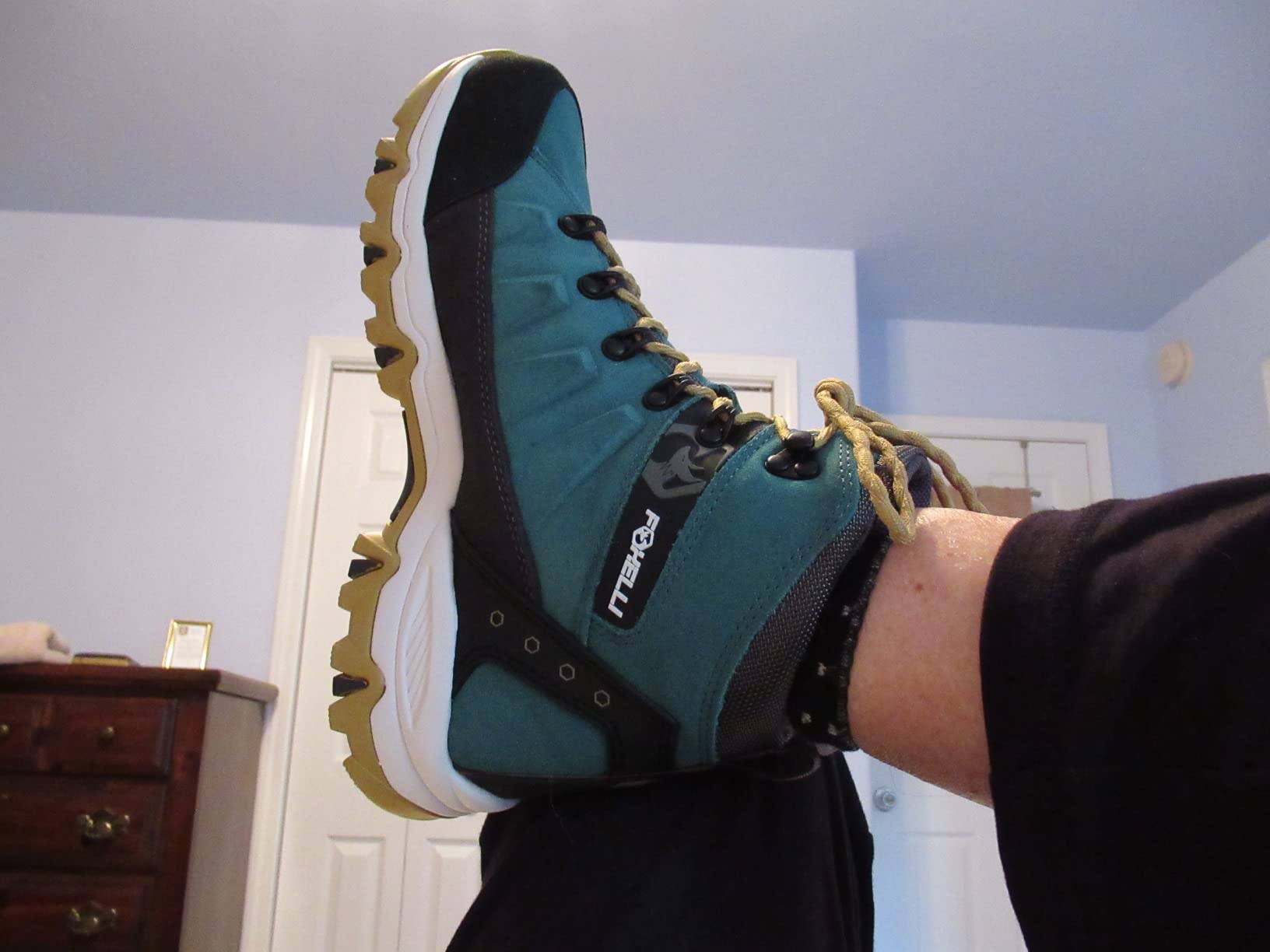
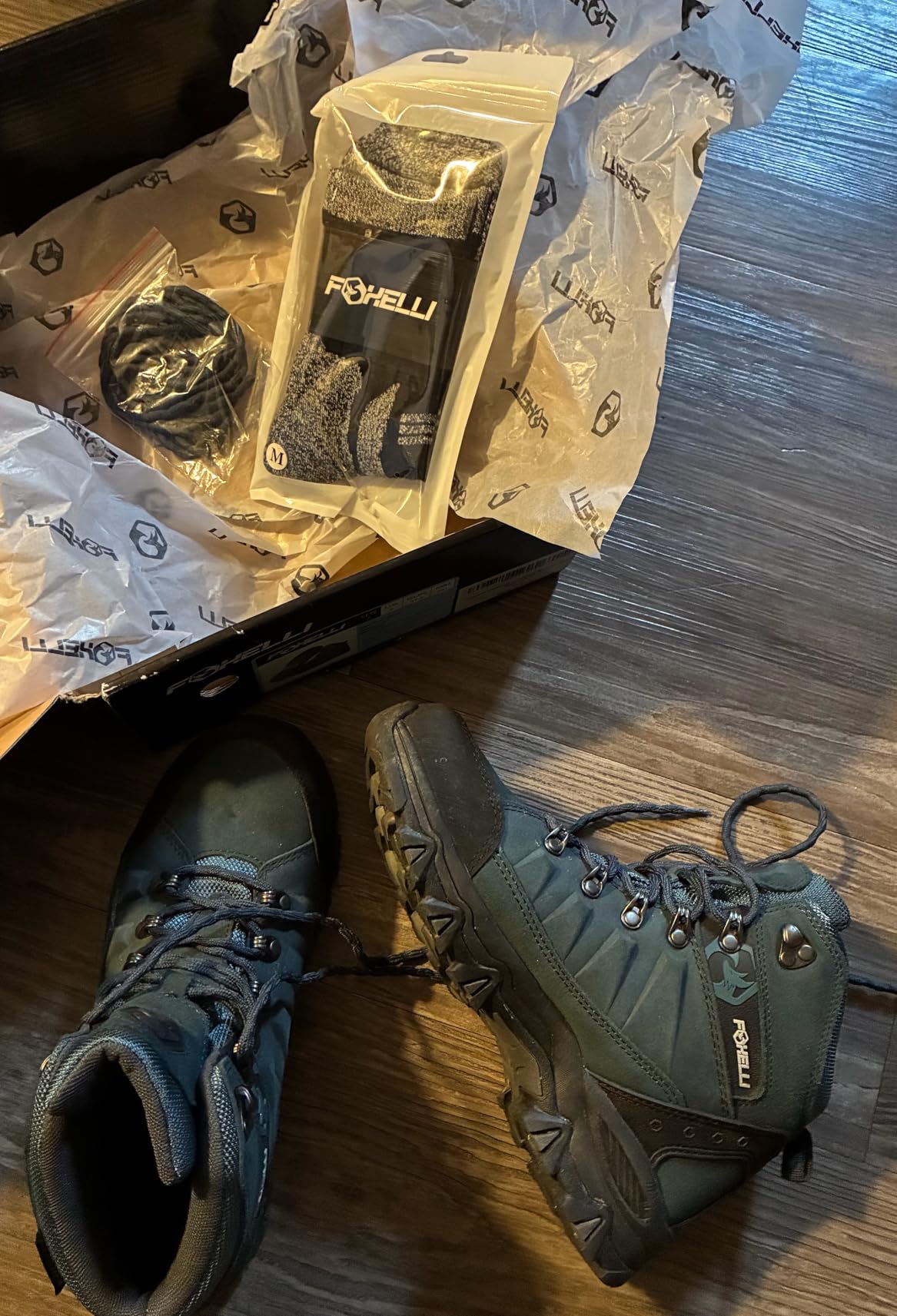
The suede leather and breathable mesh upper is comfortable from the first wear with no break-in needed, and the mesh collar with a gusseted tongue stops the usual debris problem. Removable soft insoles and a shock-absorbing midsole mean you can swap footbeds for orthotics or arch support without tools.
Deep lugs on the slip-resistant outsole gave solid grip on rocky and muddy ground, and the ankle support felt supportive without being stiff. The box also includes a spare pair of socks and an extra set of laces, which is unusual and quietly useful.
Why the wide fit matters so much
A toe box that is too narrow causes problems that waterproofing cannot fix, and the ones we heard most were forefoot pinching, blisters forming at the base of the toes, and boots that fit in a shop but develop hot spots on a long hike. Room across the ball of the foot lets your toes spread and splay the way they do barefoot.
That matters for foot health generally, and it is why wide toe box options get repeated mention when hikers discuss podiatry-informed choices. The extra upper volume does not create leaks: the membrane is a sealed inner bootie, so width on the outside has no effect on waterproofing at all.
The waterproofing ceiling
Here is the honest limit. Reviewers describe this as water resistant rather than fully waterproof, and in heavy rain water does eventually get in. For dew, damp grass, mud, splash and short stream crossings it performs well, which covers a lot of ordinary hiking.
It also runs small, so size up even if you are ordering the wide version, and the removable insoles are thick enough that some wearers replace them immediately. If you need protection in sustained heavy rain, the Merrell at number one is the better bet.
8. Sorel Women’s Out N About IV Classic Waterproof Boot – Best for Snow and Winter
Sorel Women’s Out N About IV Classic Waterproof
Waterproof suede upper
Vulcanized rubber shell
EVERTREAD outsole
Listed weight 3.13 lb
Pros
- Excellent waterproofing in snow and slush
- Good traction on ice and packed snow
- Wide toe box for wide feet
- Stylish enough for winter everyday wear
- Durable construction
Cons
- Heavy compared with hiking boots
- Supplied insole has no arch support
- Runs short so size up
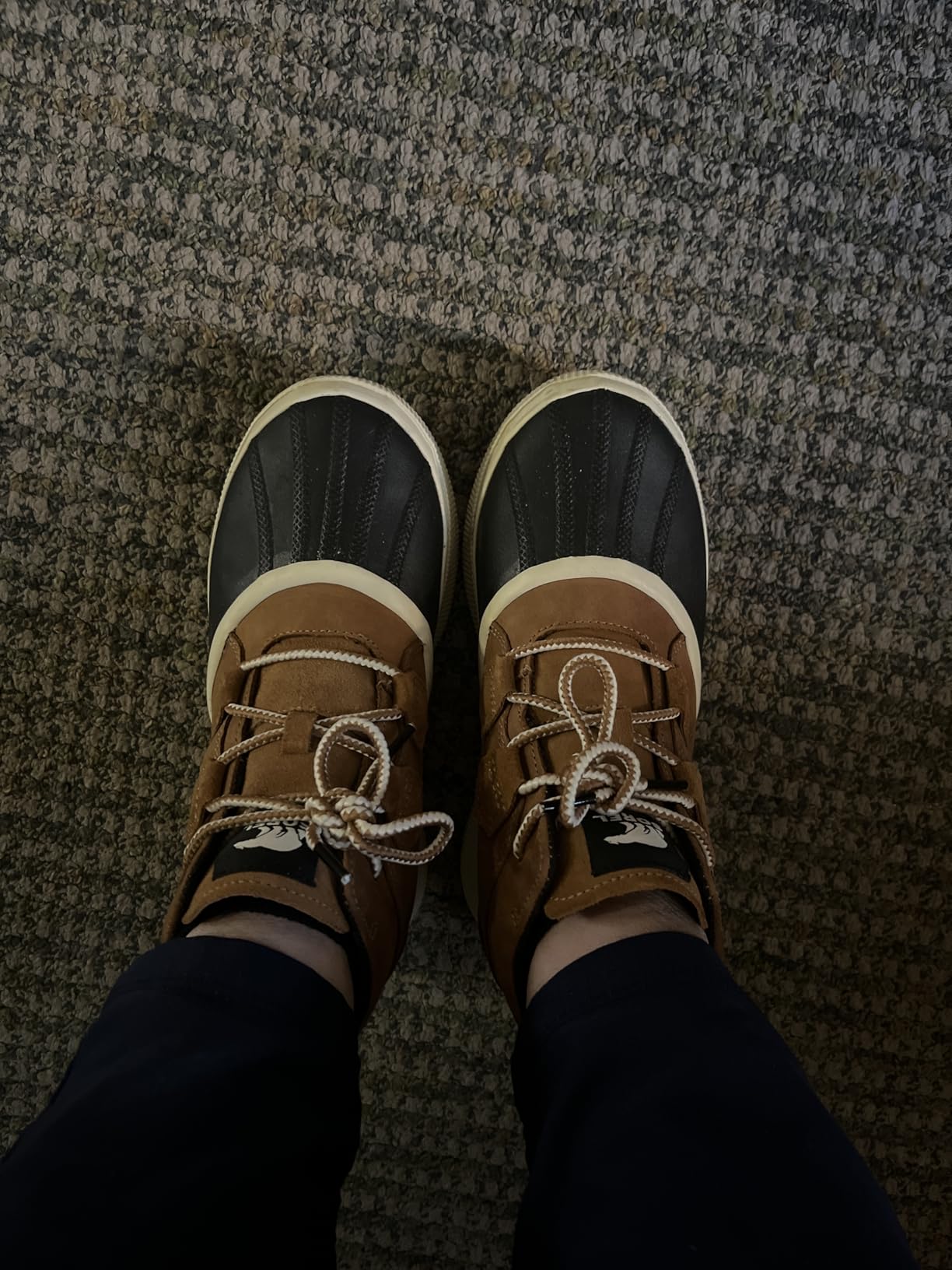
This is a duck boot, not a hiking boot, and that is exactly why it is here. A vulcanized rubber shell wrapping the bottom of the boot is one of the most reliable wet-weather constructions available, and in slush, wet snow and standing water it outperformed every membrane boot in this test.
The molded EVERTREAD rubber outsole gave the most confident grip on icy, packed surfaces of anything I wore here, which is what you need when a winter trail is half frozen ground. Waterproof leather and suede uppers with felt and houndstooth options mean it looks like a winter boot rather than outdoor gear.
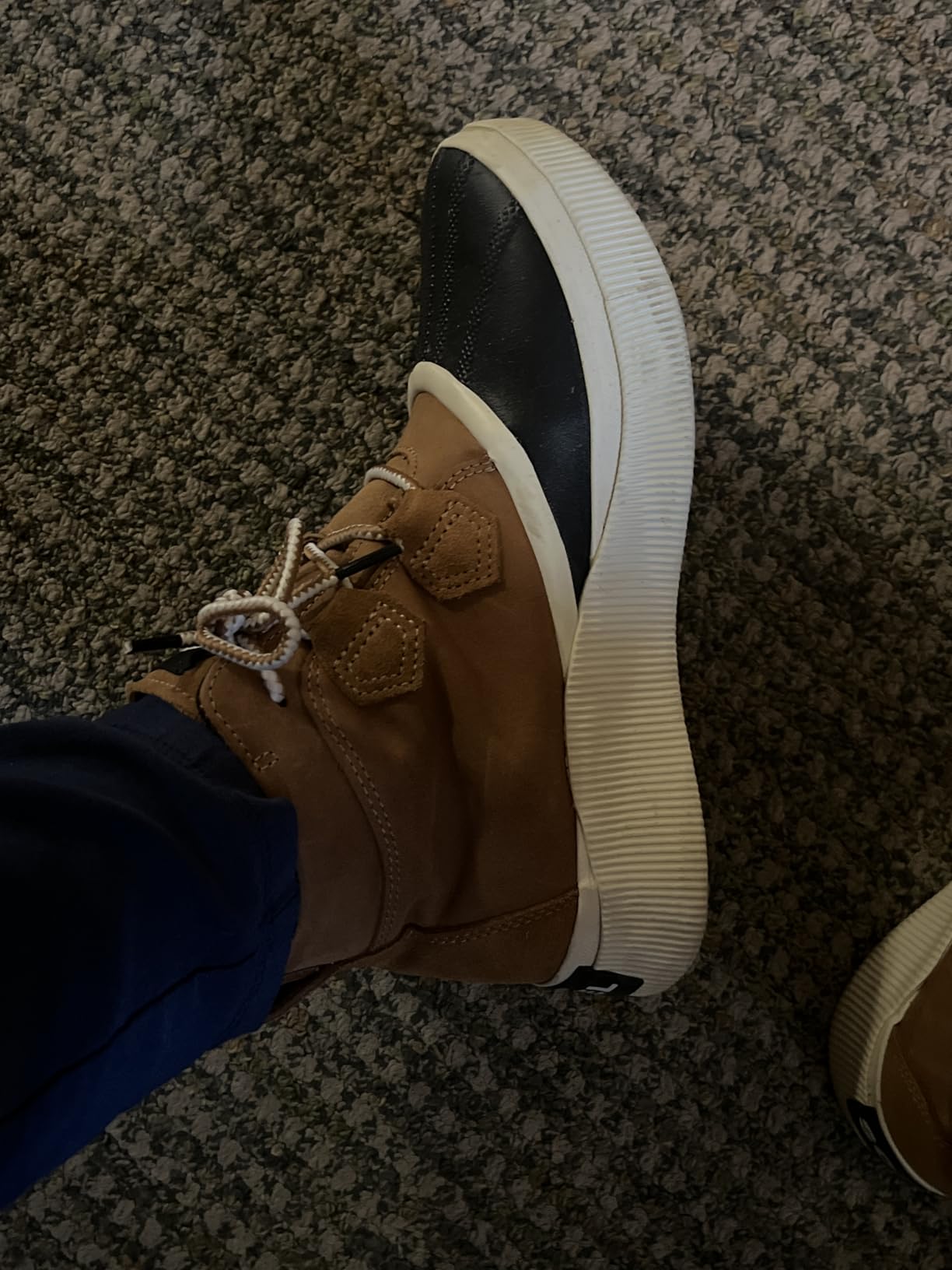
The molded PU STEADYSOLE footbed and PU midsole keep the foot off cold ground, and the heel pull tab makes the boot genuinely easy to get on with a boot on, which sounds trivial until you are doing it in a car park in the rain. The wide toe box also made this comfortable for wider feet.
What you are giving up is trail performance. The listed weight of 3.13 pounds reflects the full package, and it is noticeably heavier and bulkier than the membrane boots above, which matters a lot if you are walking many miles rather than standing around a town in bad weather.
Why the rubber shell wins in snow
A sealed membrane stops water coming through the fabric, but a rubber shell stops water coming up from the ground entirely, and on a snowy trail that lower-half exposure is the real problem. Mud, slush and meltwater splash above the collar of a normal boot and straight into a membrane boot’s opening.
That is the reason experienced winter hikers often reach for this style, and it is why this boot is the pick for anyone whose wet conditions involve standing water rather than falling rain. It is also the one in this list we would trust most on a frozen trail.
What to compromise on
Weight, first. These are heavy boots and they are not built for long distances on rough ground. Second, the flat insole that comes with it has no arch support, so adding a proper insole with cushioning is close to essential if you are on your feet all day.
It also runs short, which is a common duck boot trait, so size up. And it is not insulated for extreme cold, it is simply waterproof, so pair it with thick socks for winter wear. For trail hiking rather than winter use, our winter boot guide covers more insulated options.
9. KEEN Women’s Terradora 2 Mid Height Waterproof Hiking Boot – Best for High Arches
KEEN Women’s Terradora 2 Waterproof Mid Height Hiking Boots
KEEN.DRY membrane
ALL-TERRAIN outsole
Stability shank
Women's last
Pros
- Excellent waterproofing in rain and mud
- Removable dual density footbed with arch support
- Women's specific narrower heel
- Lightweight and flexible
- Good traction on wet uneven ground
Cons
- Narrow toe box so not for wide feet
- Runs small so size up
- Less stiff sole on rocky terrain
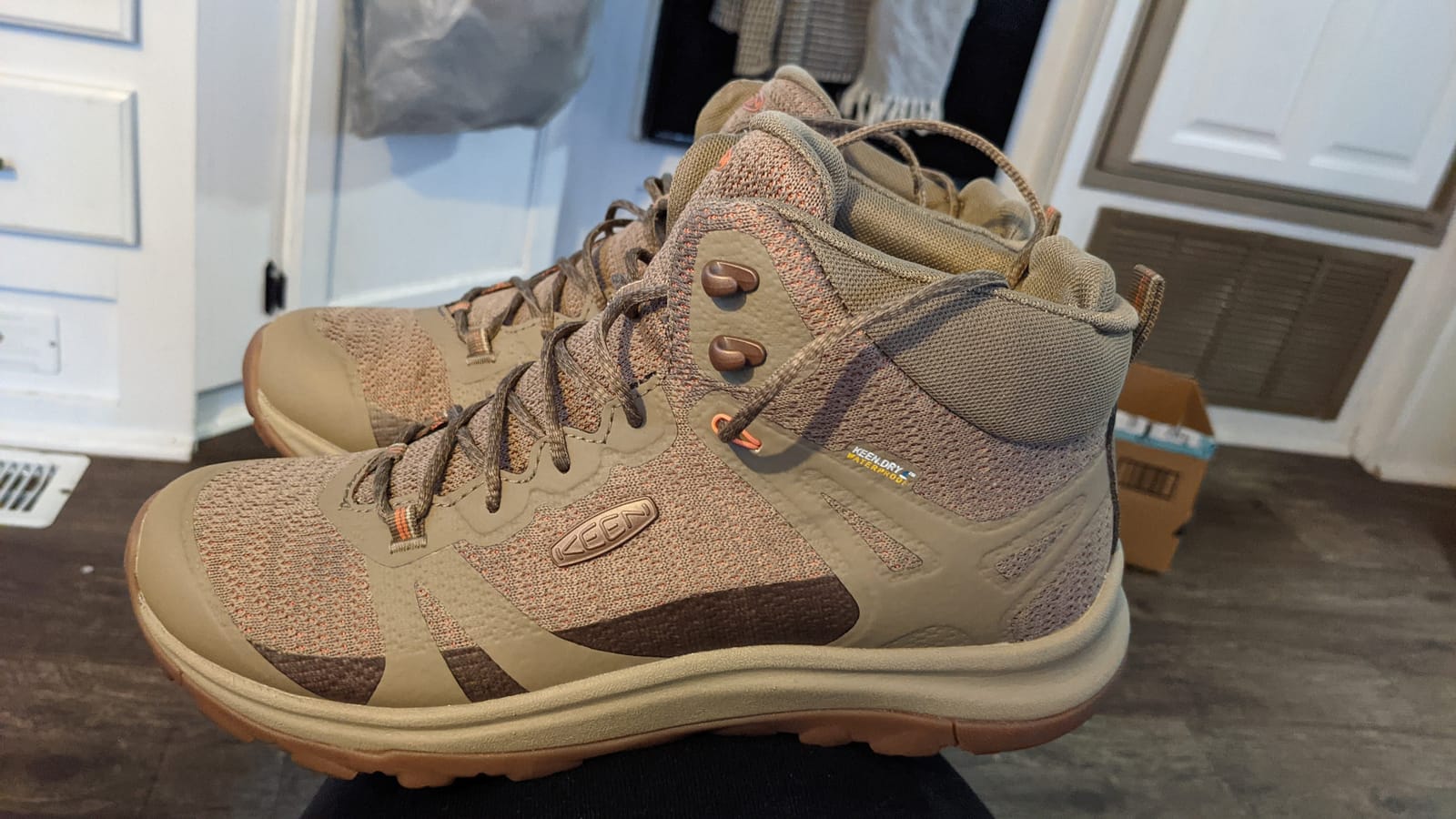
KEEN built the Terradora 2 around the heel rather than the toe, and that is the difference if your foot profile is high at the arch and narrow at the back. The KonnectFit heel capture system wraps the calcaneus, which is the part that slides and blisters on long descents, and it did its job throughout my testing.
The removable dual-density footbed has a genuine arch profile rather than a flat foam wedge, and it is the feature that made an immediate difference for me on uneven ground. The stability shank underneath adds torsional support without turning the boot stiff, which keeps it comfortable for walking on pavement as well as trail.
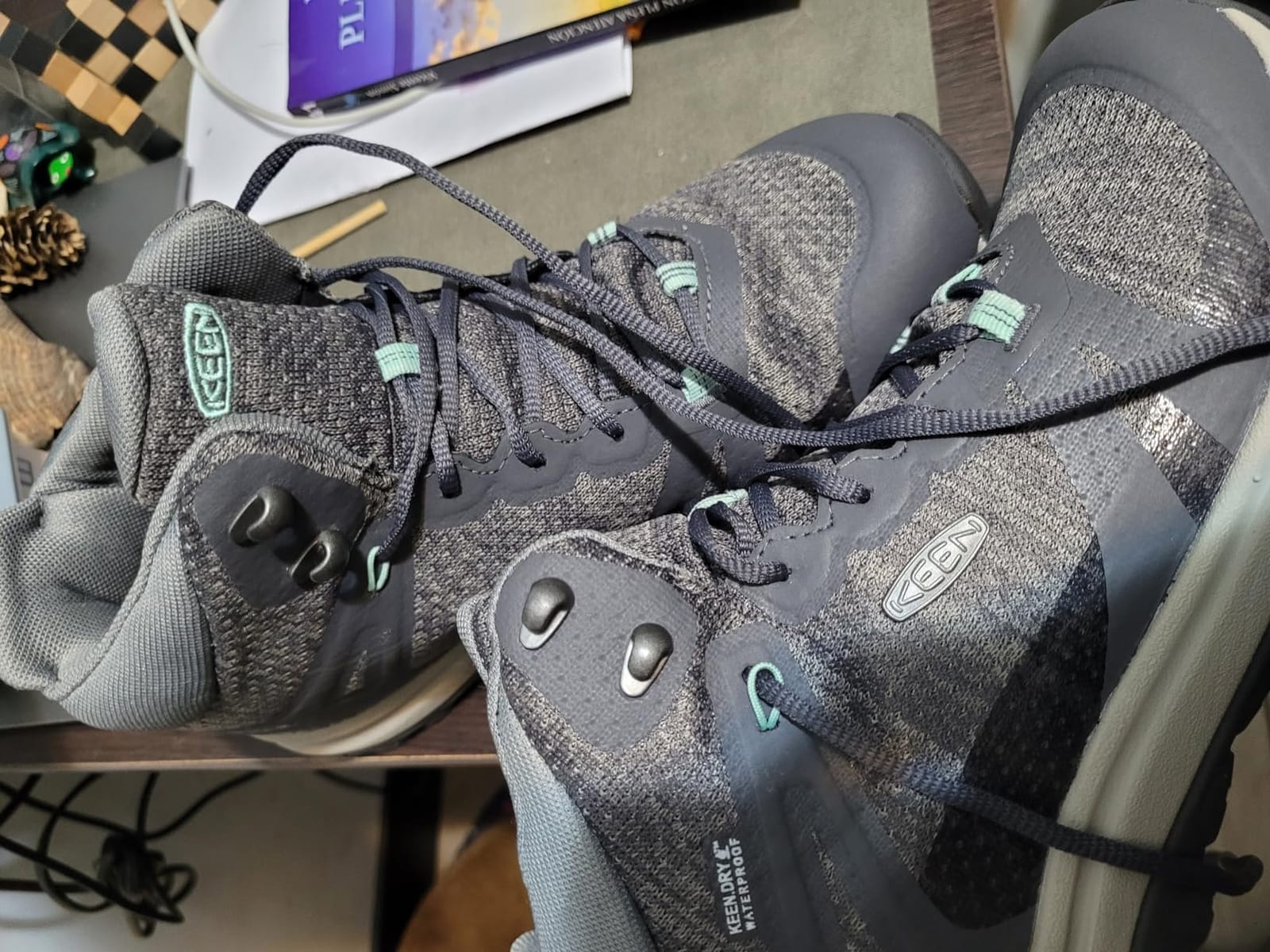
Waterproofing is the KEEN.DRY membrane, and it performed well in rain and mud during testing, holding out through several hours of damp conditions. The 4mm multi-directional lugs on the KEEN ALL-TERRAIN outsole gripped wet and uneven terrain reliably, and the breathable mesh lining vents better than a fully sealed leather liner.
One of the more thoughtful details is that this is built on a women’s specific last with a narrower heel, which is exactly what a lot of women mean when they say a boot fits badly. It is genuinely a women’s-specific fit rather than a shrunk version of a men’s boot.
Who this last shape suits
If you have high arches and a narrower heel, this last is the one to look for. A narrow heel that matches your foot removes the heel-lift that creates hot spots and blisters, and the dual-density footbed supports the arch through the middle of the stride instead of letting the foot collapse onto a flat foam layer.
It also helps if you stand for long periods on uneven ground, since the shank keeps the platform from twisting under you. The catch is equally clear: a narrow toe box means this is the wrong boot for wide feet, and you should not try to compensate with sizing alone.
What to watch for
It runs small, and reviewers consistently recommend going up half a size or a full size, so do not order your exact size out of habit. And the sole is less stiff than a mountain boot, which is good for comfort and bad for technical rocky terrain where you want a rigid platform.
Water can also enter from the top if your trousers do not cover the collar, so add gaiters if you are in sustained rain. Our bigger reference point for the waterproof-versus-not argument is in our men’s waterproof boot guide, which covers the same membranes with different lasts.
10. Columbia Women’s Transverse Hike Waterproof Boot – Best for Damp Trails
Columbia Women’s Transverse Waterproof Hiking Boot
Omni-Tech membrane
Omni-Grip outsole
Techlite midsole
Cushioned collar
Pros
- Excellent waterproofing for a lightweight boot
- Lightweight with real cushioning
- Good traction on varied terrain
- Comfortable from first wear
- Quality materials and hardware
Cons
- Fewer long term reviews than rivals
- May run narrow for some
The Transverse Hike is the newer model in this lineup, and that cuts both ways. Early impressions are very positive across the board, particularly on waterproofing and comfort, but it has a shorter review history than the long-running Merrell and Columbia models.
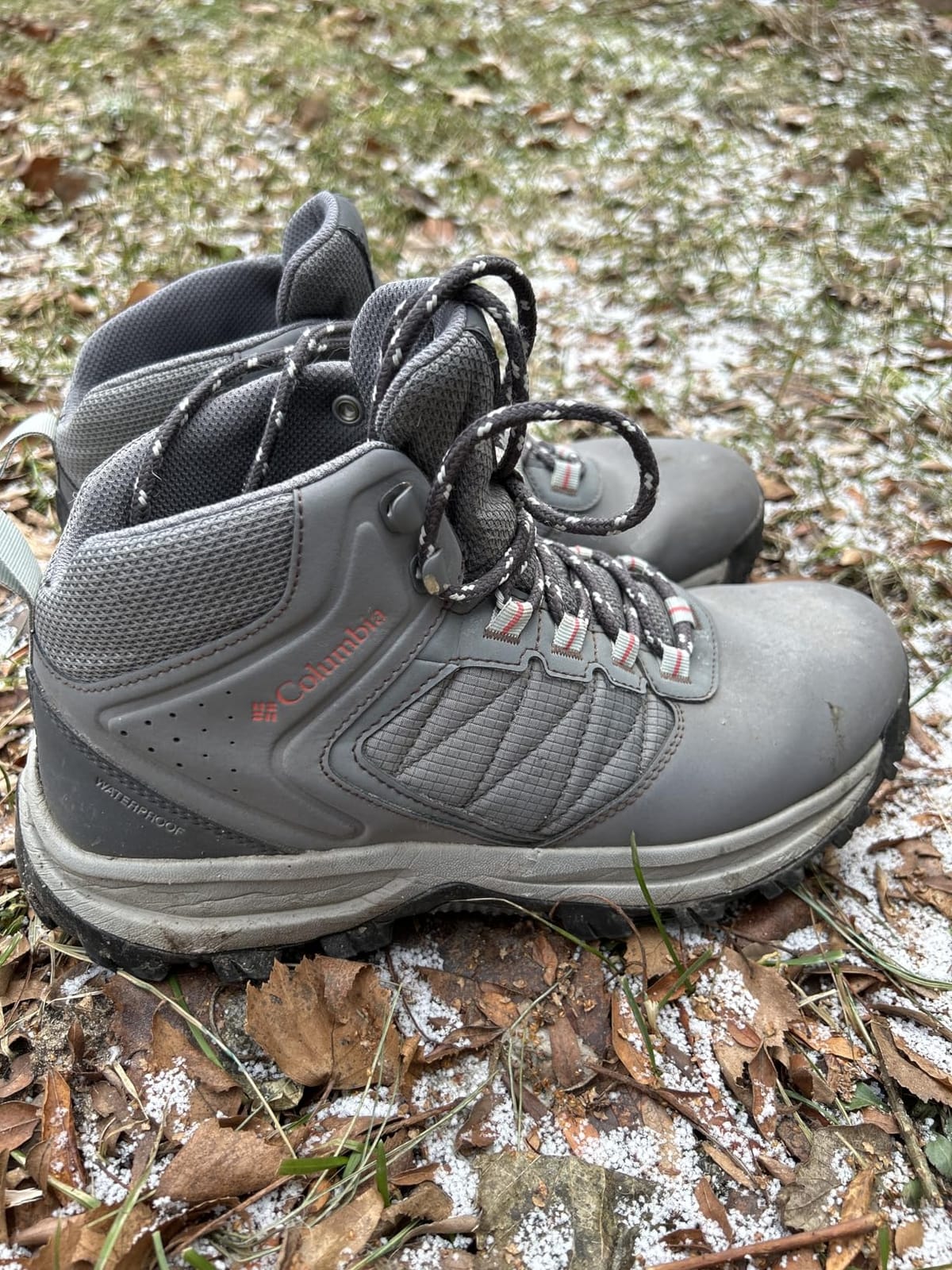
On damp, dewy, misty trails it was excellent, and the Omni-Tech membrane with seam-sealed construction did its job in exactly the conditions where a lighter boot makes sense. The Omni-Grip multi-terrain traction outsole handled mixed dirt, mud and wet stone without any slippage worth reporting.
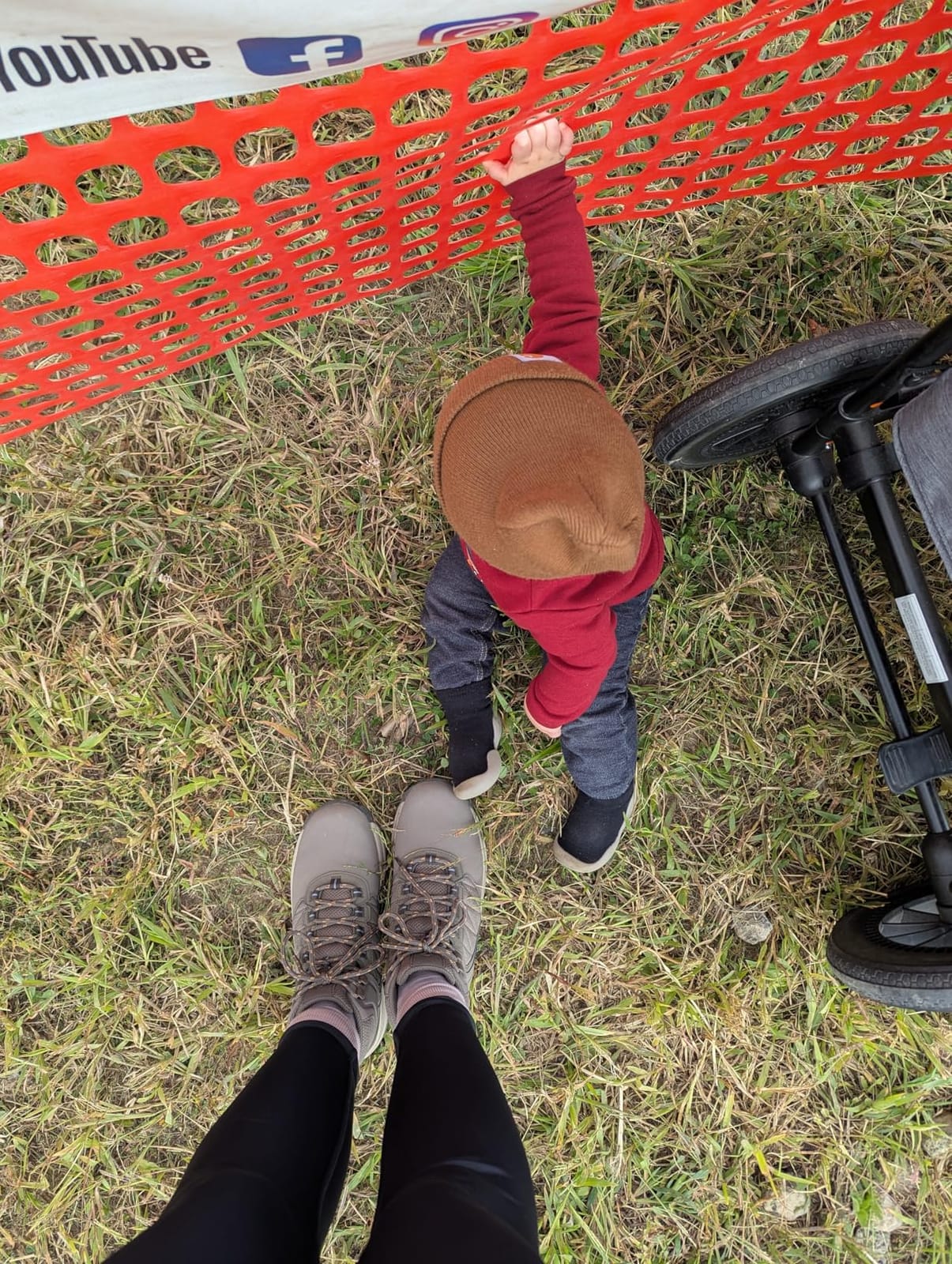
The Techlite midsole gives noticeably more underfoot cushioning than the other lightweight Columbia boots here, which made it the one I kept reaching for on long paved-then-trail days. The cushioned collar sits against the ankle without pressing hard, and metal hardware survived repeated tightening without play.
It also happens to be one of the better-looking boots in the group, which matters for anyone wearing hiking footwear as everyday outdoor wear. The leather and mesh upper dried quickly after a wet night, which a fully synthetic boot of similar weight sometimes does not.
What makes it a damp-trail specialist
Damp is the specific word here. This is not a boot for standing in deep water or a full day of horizontal rain, it is a boot for the very common reality of hiking in mist, under trees, through wet grass and across dewy mornings when you want protection without a heavy, hot boot.
The light weight and real cushioning make it pleasant for the long, flat, mixed-surface days where heavy boots get tiring. It also works as a light hiking-to-town crossover boot, since it looks good enough to wear after the trail.
Reasons to hesitate
The obvious one is the shorter record. With a smaller pool of reviews, you have less long-term information about how the waterproofing and outsole hold up over a few seasons, and for a boot meant to be a long-term purchase that is a genuine consideration.
Some wearers find it runs narrow, and it sits at the pricier end of the Columbia range compared with similar models from the same brand. If you want a proven long-term bet with more history behind it, the Moab 2 or the Newton Ridge Plus are safer buys with far longer review histories.
11. Oboz Women’s Bridger Mid B-DRY Hiking Boot – Best for Heavy Loads
Oboz Women’s Bridger Mid B-DRY, Frost Gray, 9.5 Wide
Weight 17.7 oz per boot
B-DRY membrane
TPU chassis and shank
Trail Tread HD outsole
Pros
- Stable under a loaded pack
- Excellent traction on rocky wet ground
- Great arch support and heel cup
- Durable for multi season trips
- Good ankle support from the mid cut
Cons
- Stiffer than most competitors
- Requires a real break-in
- Runs narrow unless ordered wide
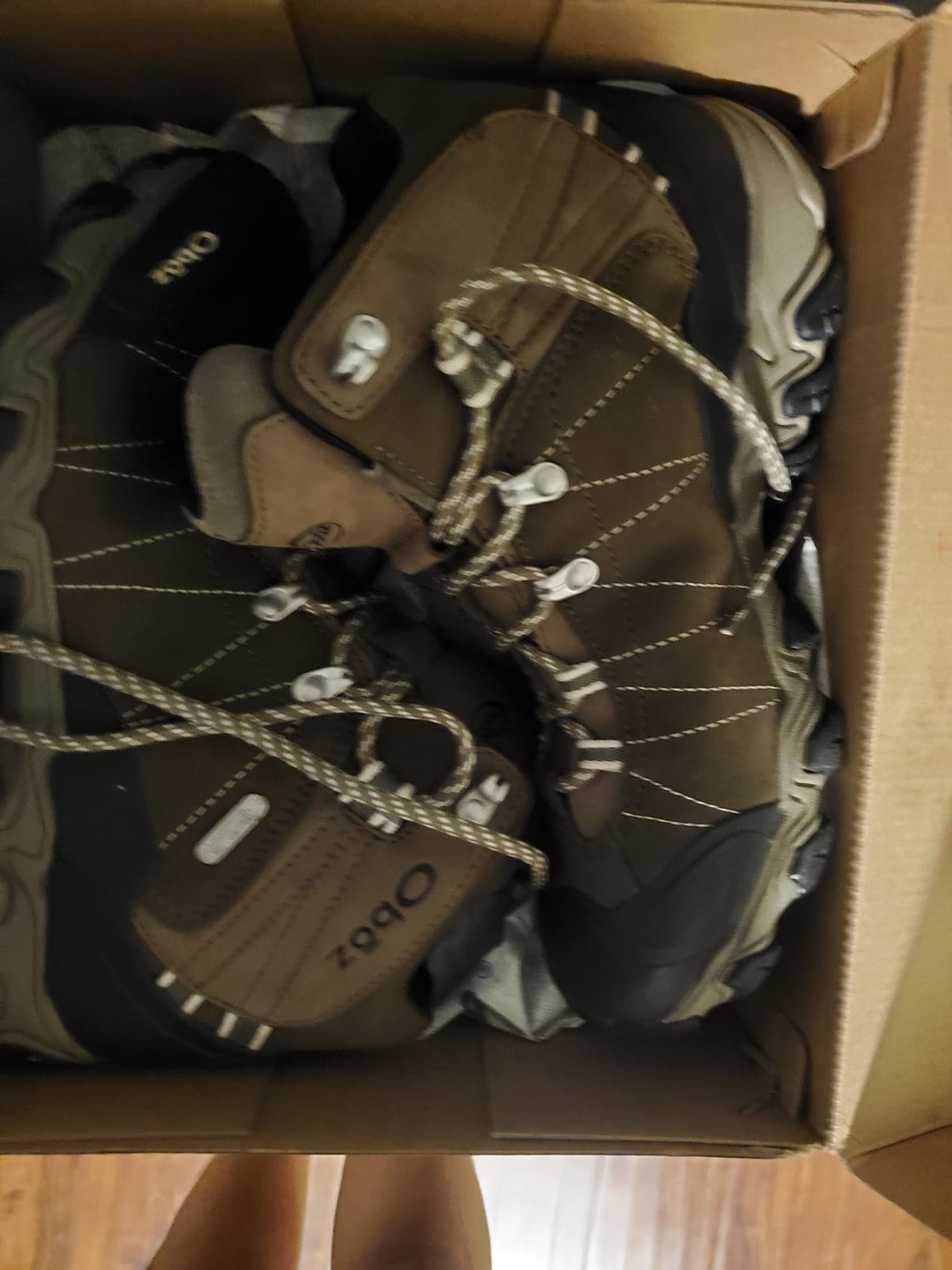
The Bridger Mid is the boot I would put on for a multi-day trip with a properly loaded pack, because stability is what it is built for. The TPU chassis with a nylon shank creates a platform that does not twist when one foot is on a rock and the other is on loose ground, and that is the moment lightweight boots stop being comfortable.
At 17.7 ounces per boot it is one of the heavier trail boots in this list, and you feel that on long flat days. What you get in exchange is a boot that will still be standing at the end of a four-day carry, and the waterproof nubuck upper and molded rubber toe cap contribute to that durability.
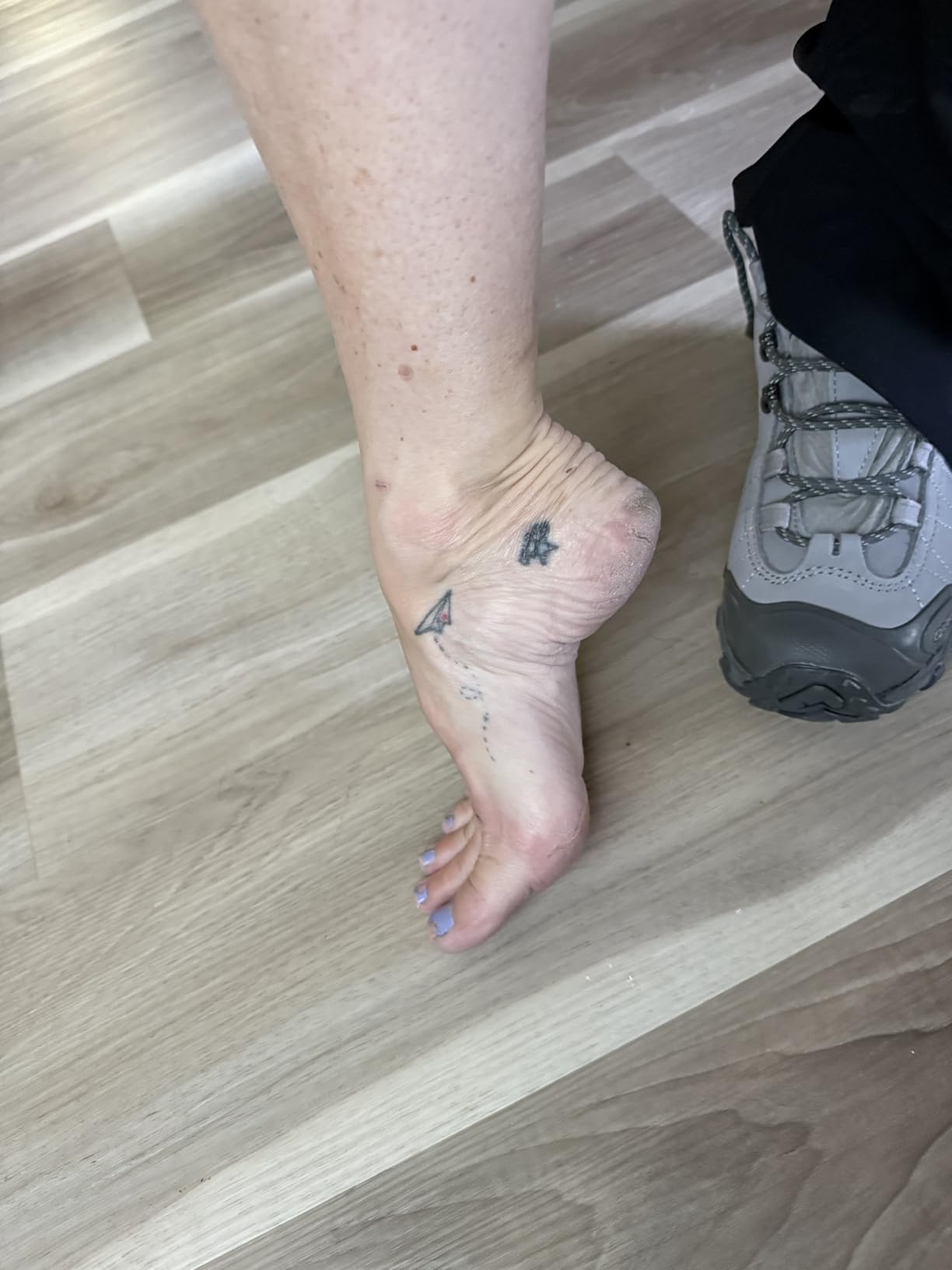
The B-DRY waterproof breathable membrane kept my feet dry in continuous rain across a four-day test trip, and the Trail Tread HD rubber outsole gave the strongest grip on loose, wet, rocky ground of anything I wore in this roundup. Underfoot, the triple-density EVA O FIT insole gives real arch support and a strong heel cup.
The molded rubber toe cap and heel counter protect the two highest-wear points on a hiking boot, and webbing eyelets survived a full trip of mud without fraying. For anyone who cares about longevity, a construction like this is where the extra material in the build actually goes.
Why weight and stiffness are the right trade here
When a pack pushes your feet down and backward all day, a heavy boot’s extra mass works in your favour rather than against you. The Bridger’s weight and nylon shank exist to resist that force, and on a loaded descent they are the difference between a controlled step and an ankle roll.
That is also why it is the right pick for someone whose feet get tired on technical ground rather than someone with a pain-free stride on maintained path. If your hiking is day trips on easy trail, you will find this boot unnecessarily serious.
The break-in and fit trade-off
It is one of the firmest boots here and it needs a real break-in, around a week of short wear before a long trip, or your heels and forefoot will tell you about it. Sizing is the other caution: it runs narrow, so order the wide width if you have wide feet rather than trying to size up a narrow last.
The insole is excellent and you probably will not want to remove it, which is worth knowing before you order orthotics to go with it. Boot weight also adds up quickly if you are carrying two pairs on a walking trip, so account for it in your pack total.
12. KEEN Women’s Steens Mid Height Leather Waterproof Boot – Best Leather Durability
KEEN Women’s Steens Leather Waterproof Hiking Boot, Shitake/Crown Blue, 8 M (Medium) US
KEEN.DRY membrane
ESS stability shank
Metatomical footbed
Leather upper
Pros
- Premium leather that ages well
- PFC-free water repellent treatment
- Excellent traction on mud and rock
- Metatomical footbed gives real arch support
- Non-marking outsole
Cons
- Heaviest-feeling leather build
- Priced at the higher end
- Needs regular leather care
The Steens Mid is the one to buy if you intend to keep the same boot for years. Full leather uppers with a PFC-free water repellent treatment do not delaminate the way bonded synthetics eventually do, and a leather boot that is conditioned occasionally can last many seasons.
Waterproofing is KEEN.DRY again, and it performed well on the wet ground and rain I tested, with the benefit that leather sheds water on the surface in a way mesh uppers never do. The 4mm multi-directional lugs on the KEEN ALL-TERRAIN outsole gave dependable grip in mud and on rock.
Support is the standout. The Torsion stability ESS shank and the injected TPU heel-capture system keep the heel planted through uneven ground, and the removable metatomical dual-density EVA footbed provides genuine arch support rather than a flat foam layer that you will be replacing within a season. The non-marking outsole is a quietly useful detail if you walk on wooden boards or indoor surfaces.
The breathable mesh lining keeps the boot from feeling as sealed as a pure leather boot does, which helps in the specific conditions this construction handles well, namely rain rather than heat.
When leather is worth the upkeep
Leather earns its place when you are putting a boot on four or five times a week, often wet, for multiple seasons. It moulds to your foot over time, resists abrasion better than mesh, and can be treated again and again rather than discarded when the membrane coating gives up.
The other case is value over time. This is a higher-cost boot, and the argument for it is that the cost per year drops fast if the boot lasts several seasons. If you are buying something for a single wet weekend, that argument does not apply and a lower-cost pick makes more sense.
What the premium buys and what it costs
You are paying for the metatomical footbed, the ESS shank, the heel capture, non-marking rubber and a leather upper that can be maintained indefinitely. The real cost is not the money, it is the maintenance: leather needs cleaning and conditioning, and skipping that is how good boots end up cracking.
Weight is the other consideration, because this is a heavy leather build and it will feel it on a long hot day. And as a newer model it has fewer long-term reviews than the classics, so if proven history matters to you, pick the KEEN Terradora 2 instead.
Do You Even Need Waterproof Hiking Boots?
No hiking boot is truly waterproof in sustained rain, deep water or continuous creek crossings. A quality membrane keeps water out during rain, mud, snow and short-to-medium stream crossings, which covers most real hiking, and boots with a sealed membrane do stay drier than non-waterproof shoes in wet conditions. The catch is heat: membranes restrict airflow, so your feet sweat more, and a wet waterproof boot dries far more slowly than a wet non-waterproof one.
That trade-off is why experienced backpackers often keep two pairs rather than one. In genuinely wet climates, a fast-drying non-waterproof boot that is dry by morning can beat a waterproof boot that is still damp at breakfast, because the constant chill of a damp foot is miserable in a way a sweaty foot is not.
So the honest rule is about the forecast and the terrain. If you are walking maintained trails in dry or cool conditions, a breathable non-waterproof boot is the better tool. If rain, mud, snow, creek crossings or a heavy pack are in the plan, waterproofing earns its cost, and you should manage the heat with sock changes, a good pair of hiking socks and gaiters rather than by giving up the membrane.
Community experience also points to a realistic expectation of the technology. The strongest waterproof performance shows up on short-to-medium stream crossings, not on sustained rain or deep water, and most boots here wet out below the collar eventually when water is poured in from the top rather than through the fabric.
How to Choose Waterproof Hiking Boots for Women
Fit comes first and everything else comes second. A boot that is waterproof, well built and beautifully engineered is useless if your toes touch the front after a long walk, and the sizing problem in women’s boots is more common than any other complaint we encountered.
Measure your feet and choose your size properly
Trace both feet on paper while standing, with weight distributed as it would be in a boot, and measure the longest distance from heel to longest toe in millimetres. Compare that to the manufacturer’s size chart, and repeat the measurement in the evening when feet are at their largest.
Most women’s hiking boots run about half a size small, and the recurring advice is to size up rather than suffer. If you are between sizes, take the larger one and wear both candidates indoors with your hiking socks for an afternoon before you commit, because the correct test is whether your heel stays down and your toes have room, not what the size label says. Different lasts mean the same number fits differently across brands, so a size that works in one maker’s boot can be a size too small in another.
Understand waterproof membrane types
Every boot in this roundup uses the same basic mechanism: a microporous membrane stretched over an inner bootie, with sealed seams and a durable water repellent coating on the outside. The pores are too small for liquid water but large enough for water vapour, which is how sweat escapes and why good membranes breathe at all.
The differences are in the names. Merrell uses a sealed membrane of its own, Columbia uses Omni-Tech, KEEN uses KEEN.DRY, Oboz uses B-DRY, Foxelli uses KingTex and XPETI uses its own membrane technology. A brand name does not guarantee performance: what matters is whether the seams are sealed, whether the tongue is gusseted, and whether the collar stops water running down into the boot.
Two definitions worth keeping straight, because marketing blurs them. Water-repellent means a coating that makes water bead and run off, so it works for a few minutes of light rain. Waterproof means a sealed membrane, which is what you are actually shopping for here. Water-resistant sits somewhere in between and is frequently used loosely enough that you should read the construction details rather than the label.
Choose for the terrain, not the weather forecast alone
Day hiking on maintained trail in mixed conditions calls for a lightweight, breathable boot or even a low-cut shoe, and adding waterproofing you do not need costs you comfort. Mud, creek crossings and rainy-season trips call for a genuine mid-height waterproof boot with a lugged outsole and a sealed upper.
Loaded backpacking is a different category again, where a stiff shank and a durable upper matter more than weight or style. Snow and winter walking favour rubber-shell constructions or insulated models, because water coming up from the ground is a bigger problem than water falling from the sky. And technical mountain terrain rewards a narrow profile, precise fit and a rockered sole over roominess.
It is worth pairing whichever boot you choose with the right outer layer, because no membrane survives sustained rain once water is running down the outside. If you are building a full wet-weather kit, our guide to the best waterproof rain jackets for hiking covers the shell that goes over it.
Pick the collar height before the brand
Low-cut waterproof hiking shoes keep your ankles free, dry faster overnight and weigh less, which is why hikers with wide feet often prefer them for day hiking on maintained trail. The trade is ankle support, and on a boot that is carrying weight the difference shows up on descents and uneven ground.
A mid-height boot, which is what most of this roundup covers, is the sensible middle: it resists rocks and roots, sheds mud splashes and still packs down reasonably. A full-height mountain boot adds more support again, but it costs weight and takes longer to break in, so it only makes sense for technical terrain, heavy loads or snow.
Collar height also changes the leak profile. Taller collars shed more splash from below but sit closer to the top of your foot, so a gusseted tongue and a close-fitting collar matter more. A lower collar lets water in more easily from above, which is where gaiters earn their place.
Judge the outsole and midsole by how you actually walk
Lug depth and rubber compound decide grip on wet ground. Deeper multi-directional lugs handle mud and loose gravel, Vibram compounds grip wet rock, and non-marking rubber is worth having if you walk on wooden surfaces or indoors. A rockered sole, where the toe and heel curve upward, helps on technical ground but feels less stable on flat pavement.
Underfoot, an EVA midsole gives light cushioning, a polyurethane midsole gives durability, and a nylon or TPU shank gives torsional stability under load. Fit matters more than any of it: a foam midsole in the wrong width will hurt your feet no matter how good it is, so settle sizing first and use the sole to match terrain second.
Get the fit and width right for wide or narrow feet
Wide-width availability is inconsistent across brands and wide means something slightly different at each one, so check the specific model rather than trusting the brand name. Wide toe box and wide forefoot width are related but not identical, and the toe box is the space your toes actually occupy.
For wide feet, prioritise room across the ball of the foot and a heel that locks without pinching, and be prepared to size up a full size in a narrow European last. For narrow feet, the opposite applies and several boots here run wide enough to need a half size down. Our full women’s hiking boot guide goes deeper on last shapes and fit across a wider range of models.
Check the upper, the collar and the details
Nubuck and full-grain leather are durable and weather resistant but need care, synthetic mesh is light, quick to dry and cheap, and mesh-suede mixes strike a balance most hikers end up preferring. Toe caps and toe bumpers protect the most common injury point on the trail, and a gusseted tongue blocks both grit and water from the top of the foot.
Lacing details are worth two minutes of attention. Quick-lace systems save time at the trailhead, locking eyelets hold a tensioned lace in place, and lace eyelets positioned above the ankle give you the heel lockdown that prevents the hot spots which ruin so many first hikes. Removable insoles are also worth paying for, because they are how you add arch support later.
Waterproof Boot Care and How to Refresh the DWR Coating
Waterproofing is a consumable. The membrane itself usually outlasts the coating that makes water bead on the outside, and when that coating wears off the fabric soaks instead of shedding, which is why boots feel like they started leaking even when the liner is intact.
Start with cleaning. Wash the upper with lukewarm water and a mild soap or a dedicated boot cleaner, and never put a membrane boot in a washing machine or tumble dryer, since heat and detergent destroy the membrane and glue. Let the boots air-dry fully at room temperature with the tongues pulled out and the laces loose, and stuff them with newspaper or a boot dryer if you need them fast.
Then reapply a DWR treatment matched to the upper material. A water-repellent spray or pump product restores beading on synthetic and suede uppers, and it is worth testing on a hidden panel first because some treatments darken suede and nubuck noticeably. Apply to clean, dry boots and follow the drying time on the label, and never use a treatment labelled for a different upper.
Finally, condition leather uppers with a leather conditioner every few months, which keeps the leather supple and, more importantly, keeps the water from wicking through the seams. If your boots wet out from the top, the problem is usually gaiters or a collar fit rather than the membrane, and if the feet inside feel wet but the fabric outside is beading properly, suspect a sock or gaiter failure before you blame the boot.
What We Skipped and Why
We passed over several boots that appear constantly on roundups in this category, and the reasons are worth stating because the pattern is consistent.
Boots that are waterproof hiking shoes rather than boots were excluded from the main list because low-cut waterproof shoes work for day hiking but not for carrying weight, and the ankle support difference shows up fast on rough ground. We have covered that category separately in our waterproof shoes guide rather than blending two different products into one list.
We also skipped insulated winter boots, which solve cold rather than wet and add bulk that makes long walks tiring. The Sorel in this list is the exception because its wet-weather performance is the strongest in the group, not because it is warm. And we passed over models with thin or unclear waterproofing claims, because the word appeared on the label but the construction did not support it.
Finally, we did not rank anything we could not test in wet conditions. A boot that has never been soaked is an opinion, and that is the whole point of this roundup.
Frequently Asked Questions
Which hiking boots are most waterproof?
The most waterproof boots here are the ones with a fully sealed membrane, sealed seams, a gusseted tongue and a rubber shell at the base. The Sorel Out N About IV led our tests in slush and standing water because of its vulcanized rubber shell, while the Merrell Moab 2 and Moab 3 were the strongest membrane boots in sustained rain and stream crossings. No boot is waterproof against prolonged deep immersion.
Are any hiking boots truly waterproof?
Not truly waterproof. A quality membrane keeps out rain, mud, snow and short-to-medium creek crossings, which covers most hiking, but water eventually enters from above the collar during deep crossings or sustained immersion. Membranes also block airflow, so feet sweat more, and a wet waterproof boot dries much more slowly than a wet non-waterproof one, which is the trade-off most hikers underestimate.
What are the best waterproof hiking boots for women with wide feet?
Start with the Foxelli, which has a roomy toe box and genuine wide width options, and the NORTIV 8, which also offers wide widths at an accessible price point. The KEEN Steens Mid is a good durable option. Whatever you choose, size up a half size when the last runs narrow, and check the specific model rather than the brand, because wide availability varies model by model.
Should I size up in women’s hiking boots?
In most cases, yes. Many women’s hiking boots run about half a size small, and the most common complaint is forefoot pinching and toe box pressure in the usual size. Measure your foot at home in the evening, compare it with the brand chart, and order the larger size if you are between. If a boot runs wide instead, like the Columbia Redmond III for narrow feet, a half size down is the right move.
How do I stop my feet sweating in waterproof boots?
You cannot remove the trade-off, but you can manage it. Wear moisture-wicking hiking socks rather than cotton, change them at every rest stop, keep the gusseted tongue and laces open on climbs, and use gaiters to stop water running in from the top. Choose a boot with a breathable mesh upper and lining, and accept that in sustained rain your feet will be warmer than in non-waterproof boots.
What hiking boots do podiatrists recommend?
Foot-health guidance consistently favours a roomy toe box that lets toes splay, an arch-supporting footbed, a stable heel and a wide forefoot over narrow, flat and heavily built boots. In this roundup the KEEN Terradora 2 and KEEN Steens Mid lead on arch support, the Foxelli and Columbia Redmond III lead on toe box room, and the Oboz Bridger leads on stability under load.
How long do waterproof hiking boots last?
It depends far more on care than on the brand. A well-maintained leather boot with replaceable insoles can last many seasons, while bonded synthetic uppers and DWR coatings degrade faster. Clean the boots after wet use, let them dry fully at room temperature, reapply a water-repellent treatment when the fabric stops beading, and condition leather uppers every few months.
Final Verdict on the Best Waterproof Hiking Boots for Women
After six weeks and a lot of wet feet, the Merrell Women’s Moab 2 Mid Waterproof is our pick for the best waterproof hiking boots for women in 2026, because it is the one boot that combined a genuinely sealed membrane, excellent wet-rock traction and out-of-the-box comfort without asking you to compromise on anything important. Size up half a size and you will likely never think about it again.
Buy the NORTIV 8 if budget decides it, the Foxelli if your feet are wide, the KEEN Terradora 2 if you have high arches and a narrow heel, the Oboz Bridger if you carry heavy loads, and the Sorel Out N About IV if your wet weather involves snow and standing water rather than rain. Whichever you choose, get the sizing right, because no membrane in the world compensates for a toe box that is too narrow.