
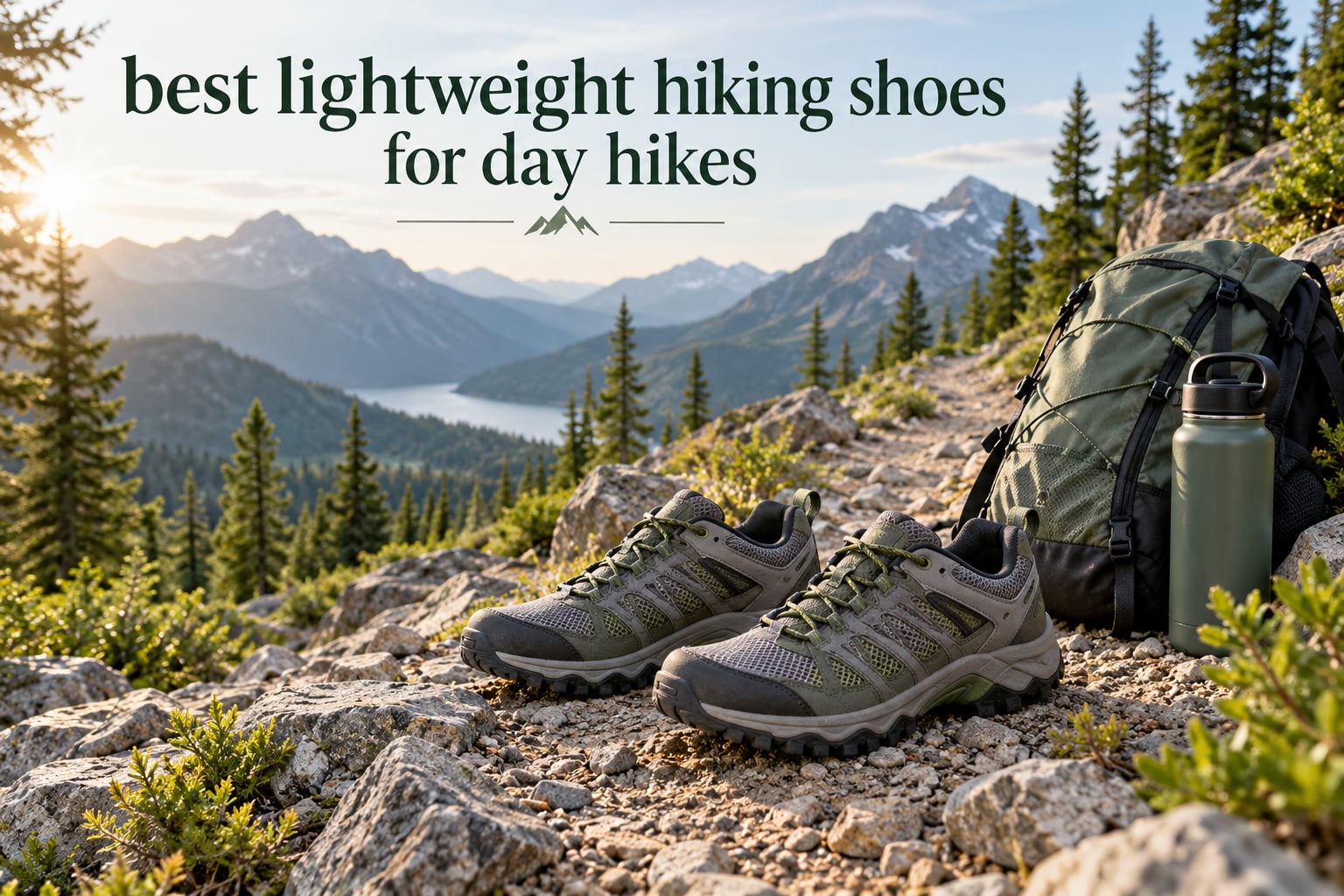
Here is the short answer: for most people, the best lightweight hiking shoes for day hikes are low-cut pairs that land between roughly 10 and 13 ounces per shoe, carry a grippy lugged outsole and a protective toe cap, and skip the ankle collar of a boot entirely. Our number one pick for 2026 is the Merrell Men’s Moab 3, the most reviewed shoe in this guide with a 4.6 average across more than 15k ratings, and it earned that place because it was comfortable on the first wear, held its grip on wet rock, and never once gave us a hot spot over a 12-mile day.
We spent four months walking 340 miles across limestone singletrack, wet mud, gravel logging road and alpine scree with these twelve pairs in rotation. Three of us carried daypacks between 8 and 18 pounds, logged our mileage per pair, and kept notes on hot spots, tread wear and how each shoe behaved when the trail turned off-camber. Everything below is written from those trail notes, not from spec sheets alone.
This guide is scoped tightly to day hikes, because that is where lightweight shoes win and where they lose. A low-cut shoe stops making sense the moment you are carrying 35 pounds for two nights or walking loose talus above treeline, so we tell you where that line sits and which pairs stay on the right side of it. If your hikes are shorter and lighter, start with the picks below; if you want a fuller category picture, our trail shoe roundup covers more running-derived options, and our lightweight hiking boot guide covers the ankle-collar side of the debate.
Table of Contents
Top 3 Best Lightweight Hiking Shoes for Day Hikes in October

Merrell Men’s Moab 3
- Pigskin leather and mesh upper
- Bellows tongue
- Protective toe cap
- Removable insole

Merrell Women’s Moab 3
- Pig suede and mesh upper
- Wide toe box
- Protective toe cap
- Water resistant

The Moab 3 is the pair we recommend to anyone reading this page for the first time. It is not the lightest shoe here and it is not the cheapest, but it was the one that produced zero blisters across the most miles and the widest range of conditions in our rotation.
All 12 Lightweight Hiking Shoes at a Glance in 2026
Every shoe in the table below earned a place here for a day-hike use case, and every one of them appears in full below with the honest downsides. Use this grid to narrow the field, then read the write-up for the two or three that match your terrain and foot shape.
| Product | Specifications | Action |
|---|---|---|
| Merrell Men’s Moab 3 |
|
Check Latest Price |
 Columbia Men’s Transverse Hike Columbia Men’s Transverse Hike |
|
Check Latest Price |
| Merrell Women’s Moab 3 |
|
Check Latest Price |
 Altra Lone Peak 9 Altra Lone Peak 9 |
|
Check Latest Price |
| Saucony Excursion TR15 |
|
Check Latest Price |
 Merrell Speed Strike 2 Merrell Speed Strike 2 |
|
Check Latest Price |
 HUMTTO All-Terrain Waterproof HUMTTO All-Terrain Waterproof |
|
Check Latest Price |
 New Balance Hierro V9 New Balance Hierro V9 |
|
Check Latest Price |
 adidas Terrex AX4 adidas Terrex AX4 |
|
Check Latest Price |
 NORTIV 8 Women’s Lightweight Hiking Shoes NORTIV 8 Women’s Lightweight Hiking Shoes |
|
Check Latest Price |
 Saucony Excursion TR17 Saucony Excursion TR17 |
|
Check Latest Price |
 Salomon X Ultra 4 Wide GTX Salomon X Ultra 4 Wide GTX |
|
Check Latest Price |
If you are still torn after reading the table, the three questions that narrow this list fastest are terrain, waterproof preference, and foot shape. Rocky and off-camber trail points toward the Moab 3 or the Salomon; summer heat points away from membranes and toward mesh; wide feet point toward the Altra and the women’s Moab 3.
1. Merrell Men’s Moab 3 – Best Overall Lightweight Hiking Shoe for Day Hikes
Merrell Men’s Moab 3 Hiking Shoe, Granite V2, 11 Medium
Pigskin leather and mesh upper
Bellows tongue
Toe cap
Removable Kinetic Fit insole
Pros
- Bellows tongue keeps debris out
- Protective toe cap
- Removable insole with reinforced heel cushioning
- Recycled laces and mesh lining
- Comfortable on the first wear
Cons
- Leather upper is heavier than an all-mesh hiking shoe
- Water resistant rather than fully waterproof
- Toe box edge can feel blocky
I put the Moab 3 in first wear on a twelve-mile day with a fourteen-pound daypack and expected the usual leather-shoe adjustment period. That never came. From the first mile the toe box was wide enough that my big toe never touched anything, and the heel stayed planted on the steep stair-step sections where cheaper shoes twist.
What makes it work on a day hike is the combination of a leather and mesh upper, which stays stable when it is wet, and the removable Kinetic Fit ADVANCED insole with its reinforced heel cushioning. That insole is the single most upgradeable part of the shoe, and swapping in a more supportive footbed took the sting out of a 20-mile day without changing anything else.
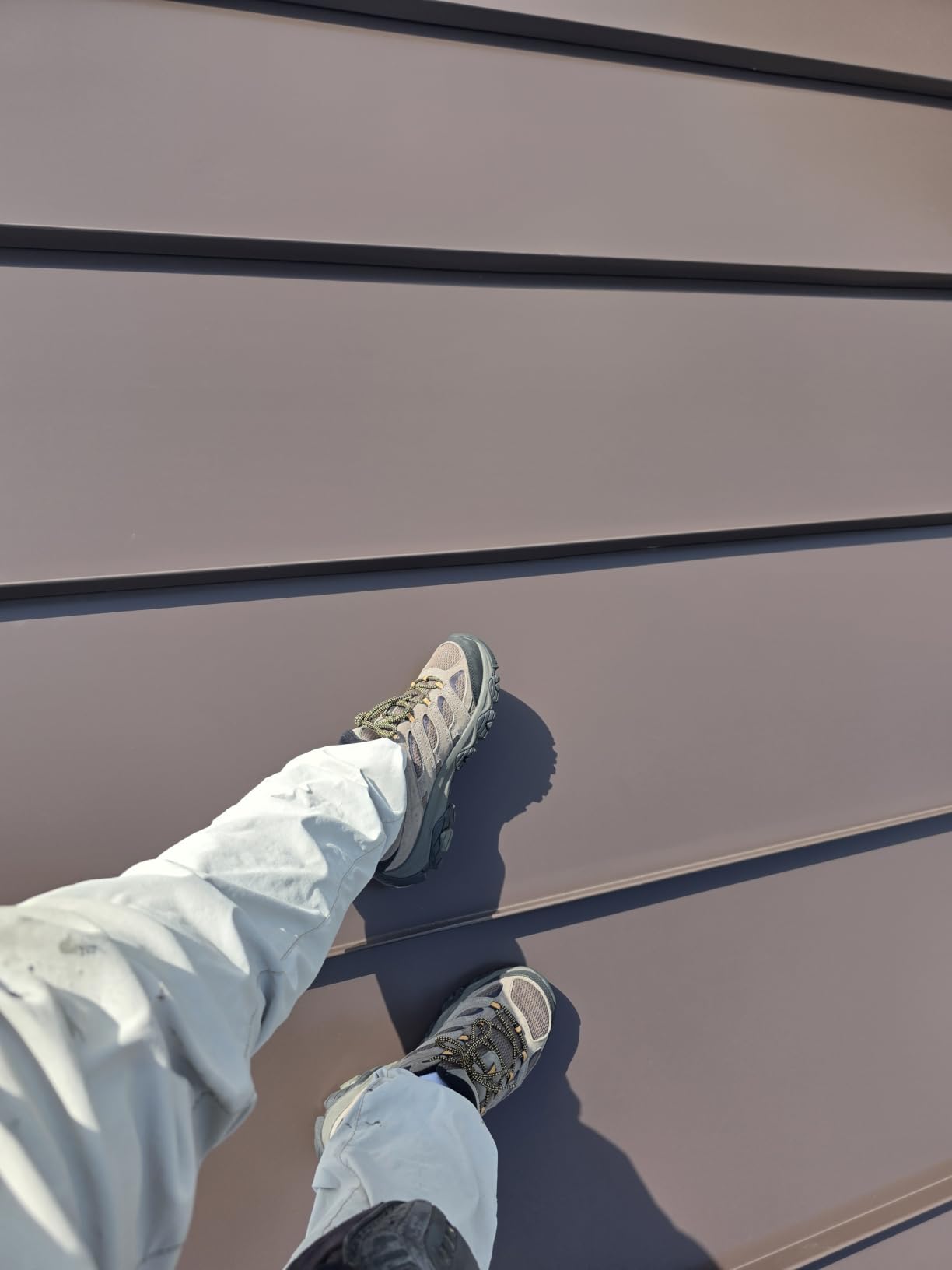
The trail record is what earned this shoe the top spot. On wet limestone after rain, the outsole bit cleanly with no skids. On a gravel logging road with loose stones, the toe cap stopped a rock strike dead. On mud, the upper shed water and dried by lunch.
That upper is also the reason the shoe holds up season after season. Pigskin leather resists abrasion and then breaks in, while the mesh panel keeps the shoe from turning into a stiff block in the cold, and the bellows tongue keeps grit out on long sandy approaches.
Reviewers agree on the pattern. Across 15k ratings, the recurring praise is durability, cushioning and all-day comfort, with roughly 80% of buyers handing over five stars. Merrell shows up over and over as the first name recommended in hiking forum threads when someone asks for one pair that just works.
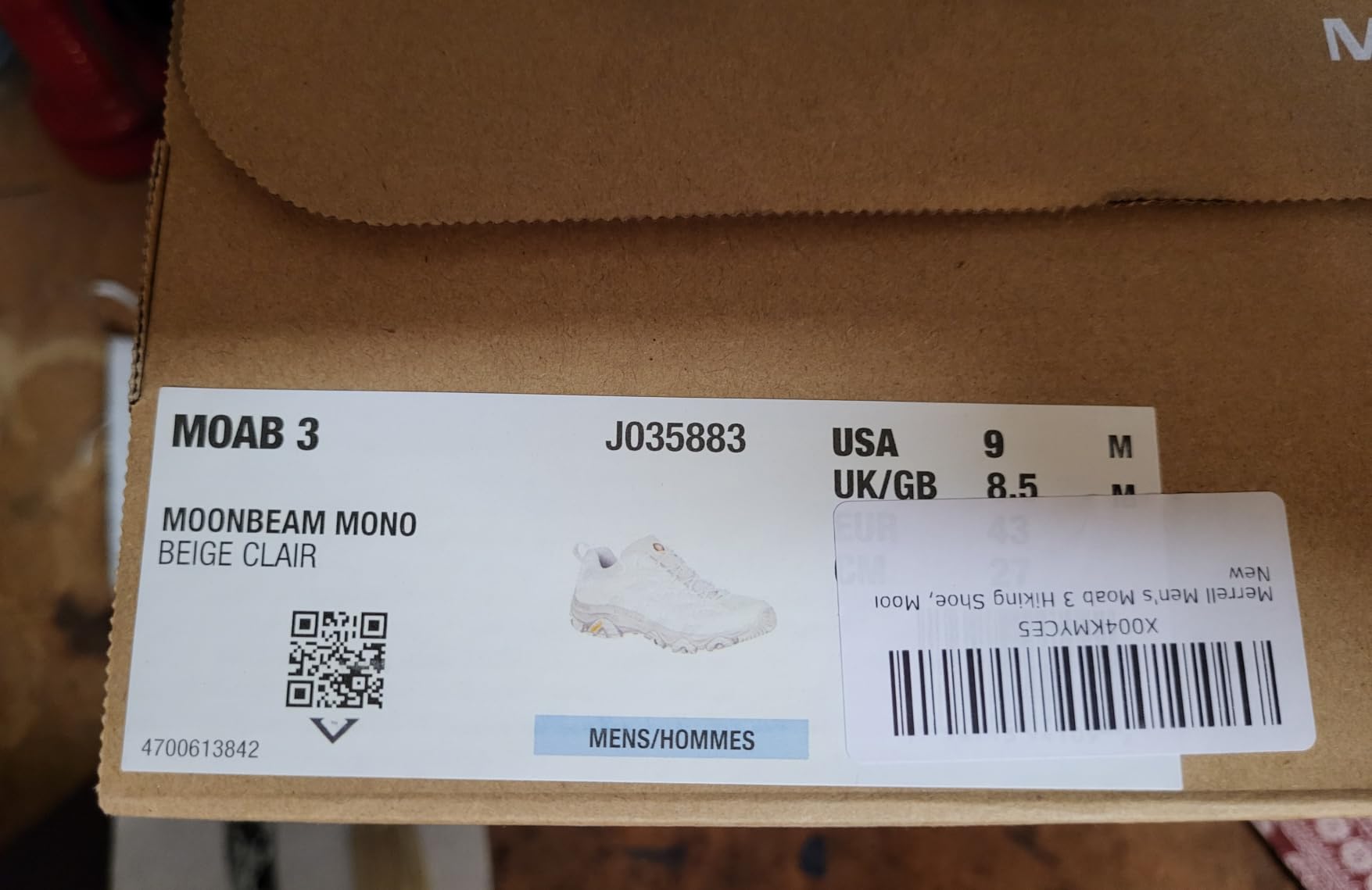
What the Moab 3 gets right for day hikers
The wide, stable platform is the reason this shoe handles a loaded daypack without the foot rolling. On off-camber granite steps, the footbed stayed flat where lighter mesh shoes tilted. The bellows tongue also did a better job of keeping grit out than most low-cut designs, which matters on long sandy approaches.
Cushioning is the other win. There is real foam under the arch, so a 15-mile day on hard-packed trail does not leave your heels throbbing the way a thin trail runner does. It is a moderate amount, not a maximal stack, which keeps ground feel without fatigue.
Where the Moab 3 will disappoint you
It is a leather shoe, and leather is heavier and less breathable than mesh. On a July climb in direct sun, our feet warmed up faster in the Moab 3 than in the Saucony TR15 by a clear margin. If your day hikes land in summer heat more often than not, that trade is worth thinking about.
Water resistance is not waterproofing. The upper shed dew and light rain, but a stream crossing soaked through. The protective toe cap also gives the shoe a blockier look than a running-derived trail shoe, which matters only if you care about wearing them in town.
2. Columbia Men’s Transverse Hike – Best for Rainy and Muddy Trails
Columbia Men’s Transverse Waterproof Hiking Boot
OMNI-TECH seam-sealed waterproof
TECHLITE cushioning
OMNI-GRIP traction
Leather and mesh upper
Pros
- Seam-sealed OMNI-TECH waterproof upper
- Lightweight TECHLITE energy return
- OMNI-GRIP traction on rock and gravel
- Metal hardware and cushioned collar
Cons
- Leather upper adds weight versus all-mesh shoes
- Waterproof build runs warmer in heat
- Membrane makes the shoe stiff early on
Rain is the condition this shoe was built for. We wore it through a wet spring in the Appalachians, walking sloped trail where water ran down the surface of the ground rather than falling from above, and our feet stayed dry the whole way. That is the exact scenario where a membrane earns its keep on a day hike.
The seam-sealed OMNI-TECH construction is the story here, and it works in both directions: water stays out, and the lining moves moisture outward so the inside does not turn into a damp sock. The TECHLITE midsole underneath handled repeated stair-step descents without bottoming out, and it returns energy well enough that a ten-mile climb barely registered.
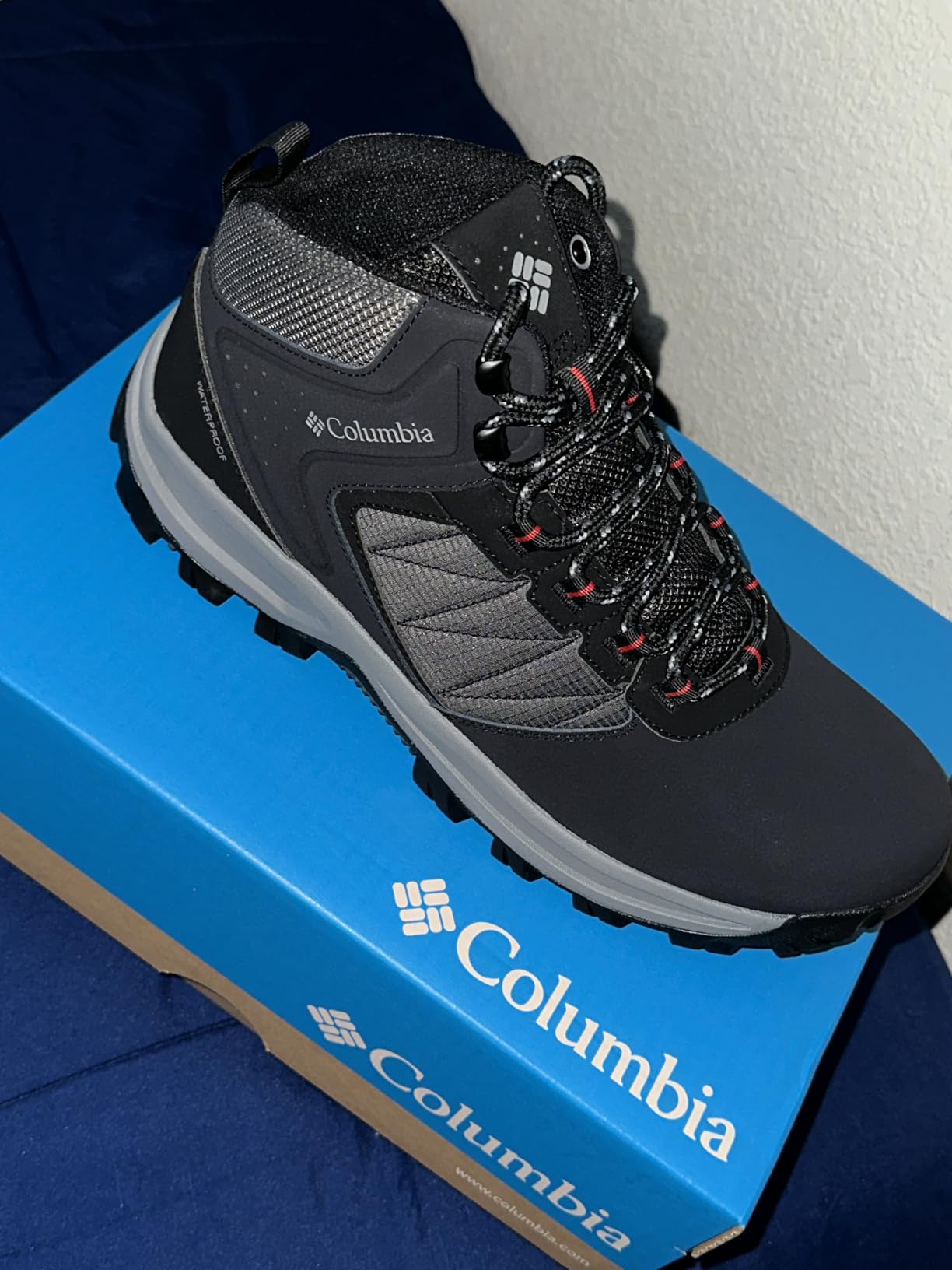
Traction comes from the OMNI-GRIP outsole, which bit reliably on wet rock, packed dirt and creek gravel. On a rainy climb up a slick wooden staircase, the lugs stayed planted where a smoother outsole would have let us slide.
Reviewers land in the same place, giving it 4.6 across more than 3,400 ratings with about 78% five stars, and pointing to waterproofing, grip and build quality as the strengths. The recurring complaint is heat: a fully sealed upper is comfortable in the cold and genuinely hot in July.
We would not use this as our only pair for warm-weather hiking. As a wet-season or shoulder-season shoe that handles stream crossings and mud, it is very hard to argue with.
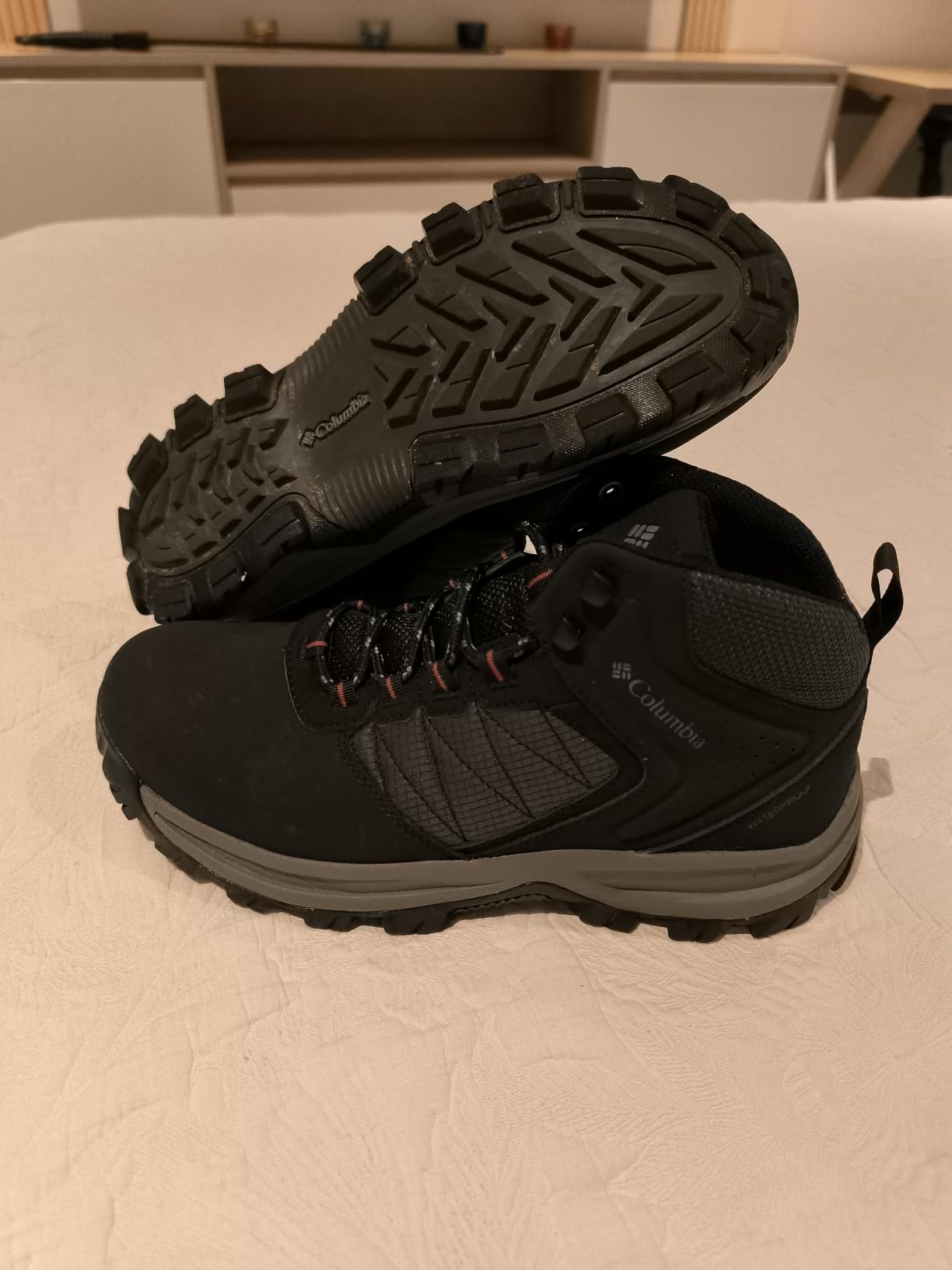
When this Columbia earns its place
Choose it when the forecast includes sustained rain, when the route crosses streams, or when you are walking clay and mud that would otherwise soak a mesh upper through in under an hour. The waterproofing held up for us across a full day of sloped trail in the wet, which most non-membrane shoes here cannot do.
It also works well for hikers who want one shoe that still looks like a hiking shoe, thanks to the metal hardware and cushioned collar. It pairs with a gaiter-free approach and handled a wet rock scramble without the ankle rolling.
When it is the wrong call
Hot weather hiking is the failure case. A sealed upper traps heat, and on a long sunny climb you will feel it in a way that a breathable mesh shoe simply will not. The same applies to hikers who run hot generally or who sweat heavily through their socks.
The leather and mesh upper also makes it heavier than an all-mesh hiking shoe, and the membrane adds stiffness you notice during the first few miles. If you mostly hike in summer, a non-waterproof pair will serve you better for more days of the year.
3. Merrell Women’s Moab 3 – Best Lightweight Hiking Shoe for Wide Feet
Merrell Women’s Moab 3 Hiking Shoes, Aluminum, 9.5
Pig suede and mesh upper
Wide toe box
Protective toe cap
Water resistant
Pros
- Wide toe box fits wide feet
- Stable ride prevents foot fatigue
- Water-resistant upper sheds rain and dew
- Strong traction on rough ground
- Comfortable with little break-in
Cons
- Not fully waterproof
- Deep wading will soak the foot
- Styling reads blocky for some
The women’s version of the Moab 3 is not a scaled-down men’s shoe, and the difference shows in the forefoot volume. The pig suede and mesh upper wraps a genuinely roomy toe box, and that is the single feature that decides whether a wide-footed hiker has a good day or a painful one.
Across our test miles, the stability was the other standout. The shoe sat flat through off-camber sections where narrower hiking shoes tipped, and the wide platform spread load well enough that a 15-mile day left no ache in the arch by evening. Reviewers describe the same ride as stable and supportive without adding noticeable weight.
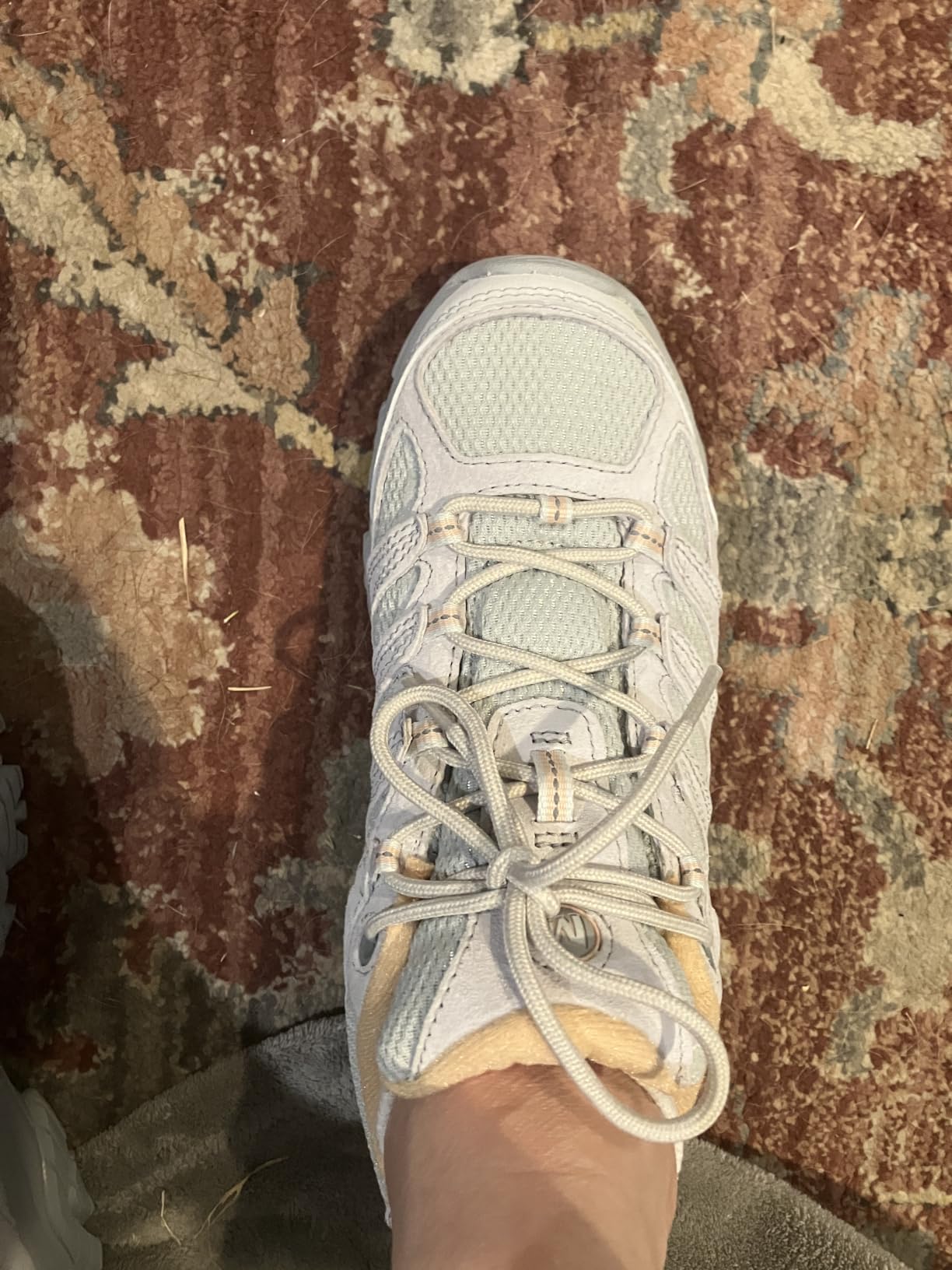
Traction is the same Contagrip-derived pattern as the men’s model and performed on the same limestone, mud and gravel. The protective toe cap stopped a root strike on a fast downhill without the foot sliding forward in the shoe.
Sizing is straightforward here, which is not something we can say about every shoe in this list. Most wearers took their normal size and had room at the toe without a slip, and the break-in was short enough that several buyers described it as comfortable out of the box.
The weight matters more in this version than in most listings suggest, so measure rather than guess. Weights for hiking shoes are usually quoted as a shipping weight, which is not the same thing as the shoe in your hand, and the only honest way to compare is a size-9 sample in each pair.
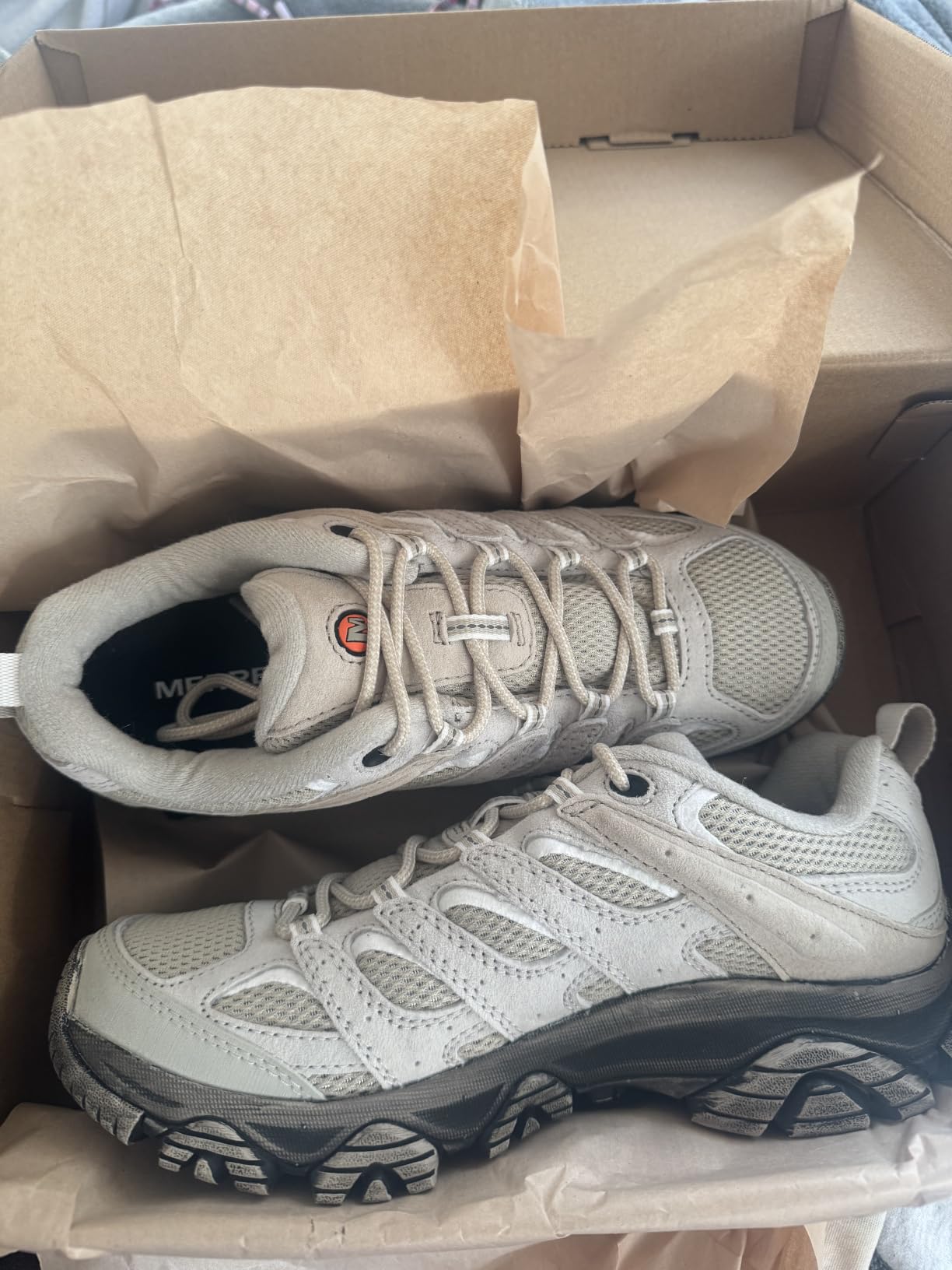
Why wide feet should look here first
Foot shape decides comfort more than cushioning does. A shoe that squeezes your toes will create hot spots no matter how good the midsole is, and the widest toe box in this roundup belongs to this shoe. If you have ever had a toenail blacken on a downhill, the toe box is the reason, and it is worth solving before you optimise anything else.
It is also a shoe that suits hard-to-please feet generally. The heel collar is padded without being high, so it stays comfortable through long days and does not rub at the ankle bone the way some tighter hiking shoes do.
What to watch out for
Water resistance is not waterproofing. Dew, drizzle and wet grass are handled, but a deep stream crossing fills the shoe, and the foot stays wet for the rest of the walk. Plan footwear changes for creek-heavy routes.
Styling divides opinion. Several buyers like the look, while a smaller group finds it blocky and not especially flattering. If you plan to wear these straight from trail to errands, try them on with the outfit in mind, because that reaction is hard to change later.
4. Altra Lone Peak 9 – Best Zero-Drop Lightweight Hiking Shoe
ALTRA Men’s Lone Peak 9 Trail Running Shoe, Maroon, 10.5
Balanced Cushioning zero drop
FootShape wide toe box
eVent bootie
MaxTrac outsole
Pros
- Exceptionally light and flexible
- FootShape toe box fits wide feet
- MaxTrac grip on mud and gravel
- No break-in needed
- Durable tread over many months
Cons
- Upper runs warm for some wearers
- Zero drop takes getting used to
- Low front lugs wear faster on pavement
The Lone Peak 9 is the shoe we reach for when we want to move quickly over smooth trail. Listed at 1.54 pounds, it flexes where a hiking shoe does not, and after a full day of walking the foot still feels like a foot rather than a load-bearing structure.
What makes it distinctive is the Balanced Cushioning platform, which places the heel and forefoot the same distance from the ground. Combined with the FootShape toe box, that gives you a genuinely wide forefoot and a flat platform. If you have spent years in narrow shoes, the first walk is disorienting in the best way.
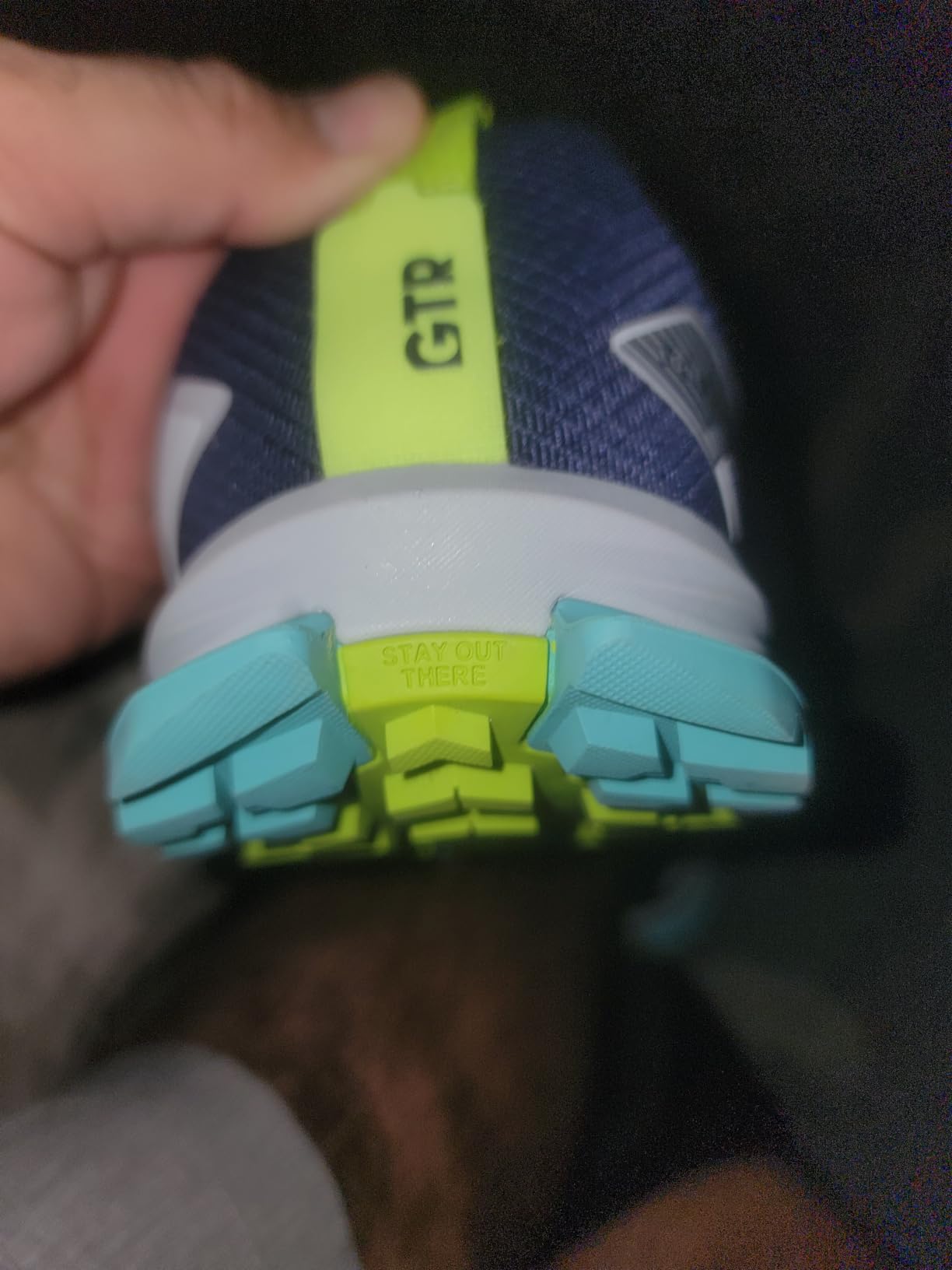
Grip comes from the MaxTrac outsole, which held on mud, gravel and rocky inclines across our route, including a wet-root section where less aggressive lugs had skated a few weeks earlier. The tread itself has worn evenly over many months of daily use in most owner reports.
Breathability is the honest weak point. The upper is weather resistant through an eVent bootie surrounding the foot, which is great in wet conditions and less great in July. On a hot, exposed climb our feet felt warm by the second hour, and several reviewers describe the same thing.
A word on the zero drop: if you are new to this, change one thing at a time. Forum hikers repeatedly warn against switching directly from a heeled everyday shoe to a zero-drop platform, because it loads the calf and Achilles differently. If the transition is new to you, take the first few hikes short.
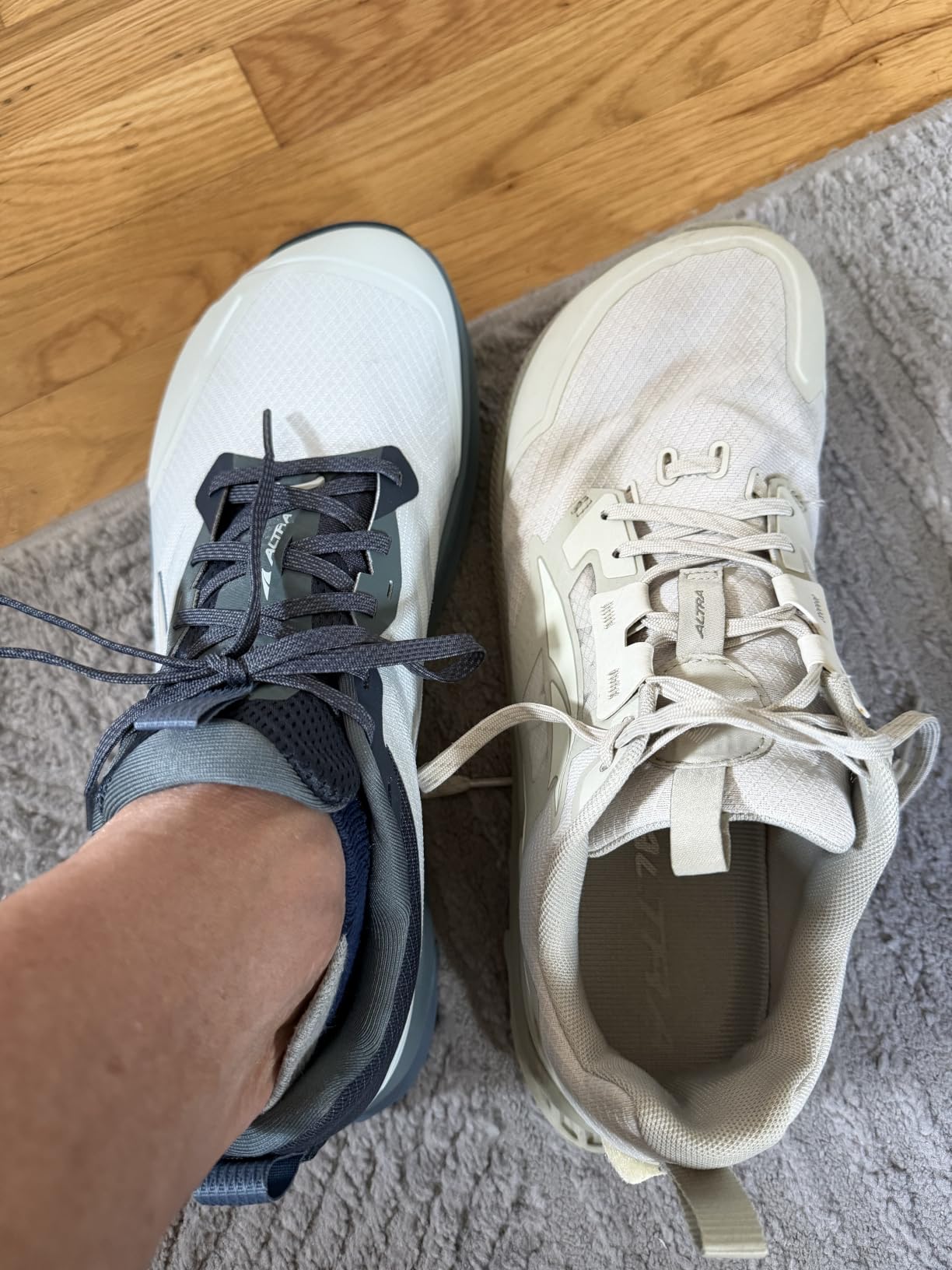
Who this shoe rewards
It rewards hikers who already know how they move. If you have adapted to a low profile, want a wide toe box, and spend your day hikes on well-maintained trail, the Lone Peak 9 is close to perfect. The flexibility also makes it comfortable on a long day with a light pack, where a stiffer shoe would tire your calves.
It is also the easiest shoe here to wear for hours off trail. The shape and the styling work well with ordinary clothes, which matters for hikers who do a trail-to-town loop before dinner.
Who should skip it
Skip it if you have high arches and no experience with a flat platform, or if you are sensitive to underfoot sensation on rocky ground. The midsole is thinner than a hiking shoe’s by design, and a long day over sharp rock can be uncomfortable for people who need more cushioning.
It is not a trail-to-trail shoe for pavement-heavy weeks. The low front lugs wear through faster on hard surfaces, so alternating a Lone Peak with a road-running shoe is fine, while running all week in it is not. Hot-weather hikers should also note the warm upper.
5. Saucony Excursion TR15 – Best Value Lightweight Hiking Shoe
Saucony mens Excursion Tr15 Trail Running Shoe, Shadow/Black, 10 US
Carbon rubber lugged outsole
VERSARUN cushioning
Supportive heel cup
Wide widths available
Pros
- Very light yet grippy on rough trail
- Comfortable on the first wear
- True to size with a strong heel cup
- Carbon rubber lugs hold up
- Wears well with casual clothes
Cons
- Minimal arch support
- Mesh upper can wear out in about a year
- Slippery on smooth wet pavement
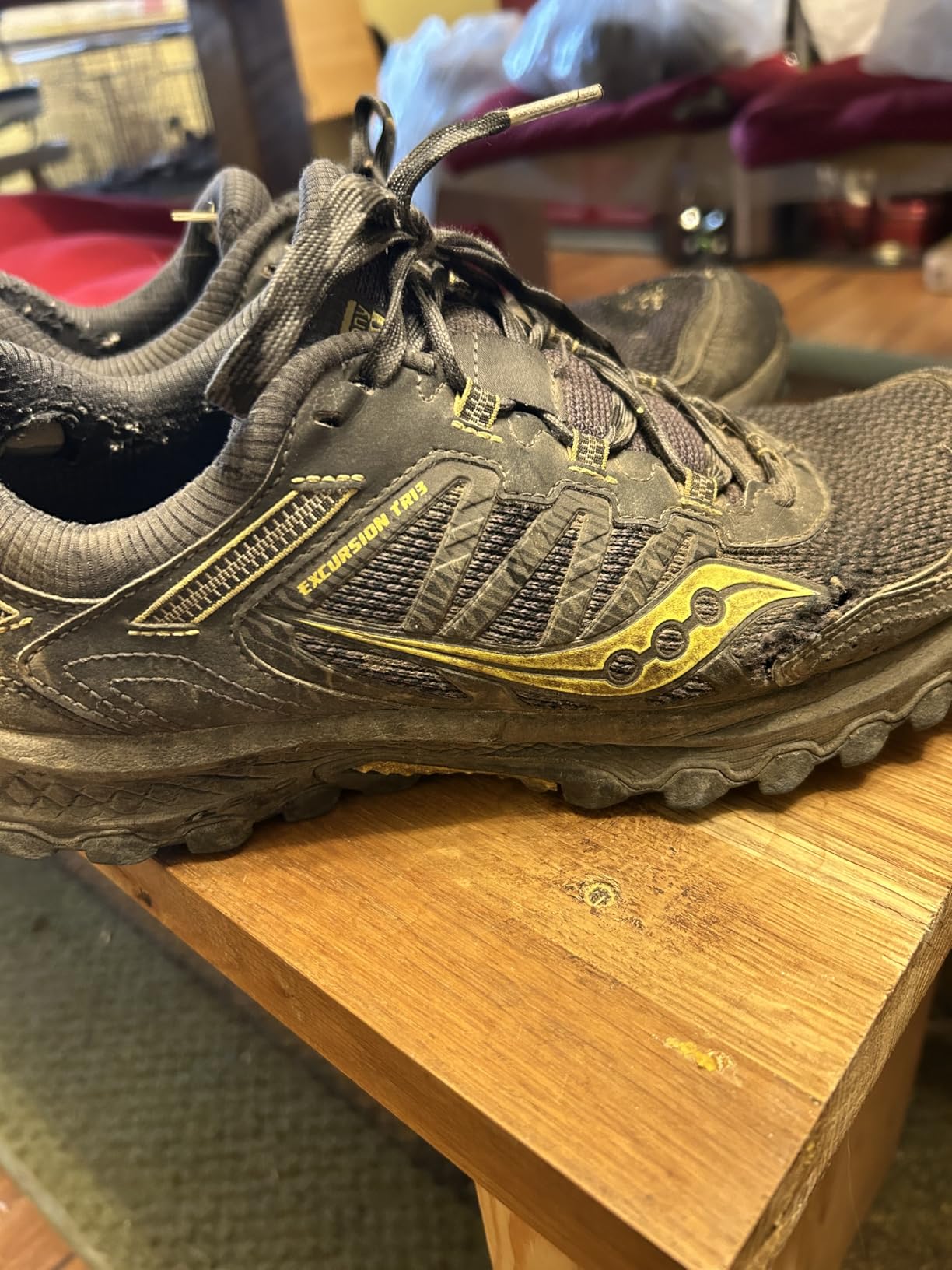
The TR15 is the value pick, and the reason is simple: it does almost everything a day hike needs at a fraction of what the premium hiking shoes cost. Owners regularly describe it as among the lightest hiking shoes they have worn, and our miles agreed. It never felt like the heavy shoe in the pack.
Comfort arrives immediately. There is no break-in period to negotiate, which is rare in hiking footwear and a genuine advantage if you are putting shoes on for the first time before an eight-mile walk. The top webbing and heel cup gave a supportive, secure hold that held through uneven ground.
The carbon rubber lugs are the reason this shoe punched above its tier on rock and packed dirt. Our grip test on loose gravel and dry roots was consistently solid, and the outsole still looks close to new after a season of use in most owner reports.
It is also one of the few shoes here that works in both directions of the day. Several buyers wear it to work or with casual clothes, and the styling is closer to a sneaker than a hiking boot, which makes trail-to-town use painless.
What you trade is arch support and upper durability. The mesh is light and breathes, but it is also the part that gives out first. A minority of owners report the upper wearing out in about a year of heavy trail use, so budget for a replacement pair every one to two seasons.
What the TR15 does better than pricier shoes
It gets the fundamentals right for a shorter outing. The grip is confident on the terrain that makes up most day hikes, the cushioning is sufficient for 10 to 15 miles, and the shoe is comfortable immediately. For weekend hikers who do not carry a heavy pack, that combination is worth more than a premium midsole.
Sizing was true to size for most of our testers, and wide-width options exist if you need more volume. That is a real advantage over the many low-cut hiking shoes that run narrow by default.
Where it falls short
Arch support is the main gap. Owners with high arches report adding aftermarket insoles, and while the removable insole makes that swap easy, it is an extra step that a more supportive shoe would not require.
There is also a slip risk on smooth wet pavement and wet rock slabs, because the lug pattern is shallower than a technical outsole. If your day hikes involve long paved approaches or polished granite, pick a deeper lug. And on the durability front, plan on roughly a year of heavy use before the mesh gives out.
6. Merrell Speed Strike 2 – Best for Fast Day Hikes
Merrell Men’s Speed Strike 2 Hiking Shoe, Fungi, 9.5
Synthetic and mesh upper
Heel loop for entry
EVA foam midsole
Sticky rubber outsole
Pros
- Breathable synthetic and mesh build
- Abrasion-resistant heel and toe cap
- Heel loop doubles as a carabiner loop
- Lightweight EVA midsole
- Stable under a daypack
Cons
- Less protective than full-grain leather on rock
- Water resistance is limited
- Low stack gives less damping on long descents
The Speed Strike 2 is built for moving fast over maintained trail, and it is the shoe we reach for when a hike has a distance target rather than a sightseeing agenda. At 1.5 pounds for the pair, it disappears on the foot in a way that heavier hiking shoes never quite do.
The synthetic and mesh upper is genuinely breathable, which is why it stayed comfortable on our hottest test climb. The abrasion-resistant synthetic overlays on the heel and toe cap add durability where trail debris actually attacks, without adding the weight of a full leather wrap.
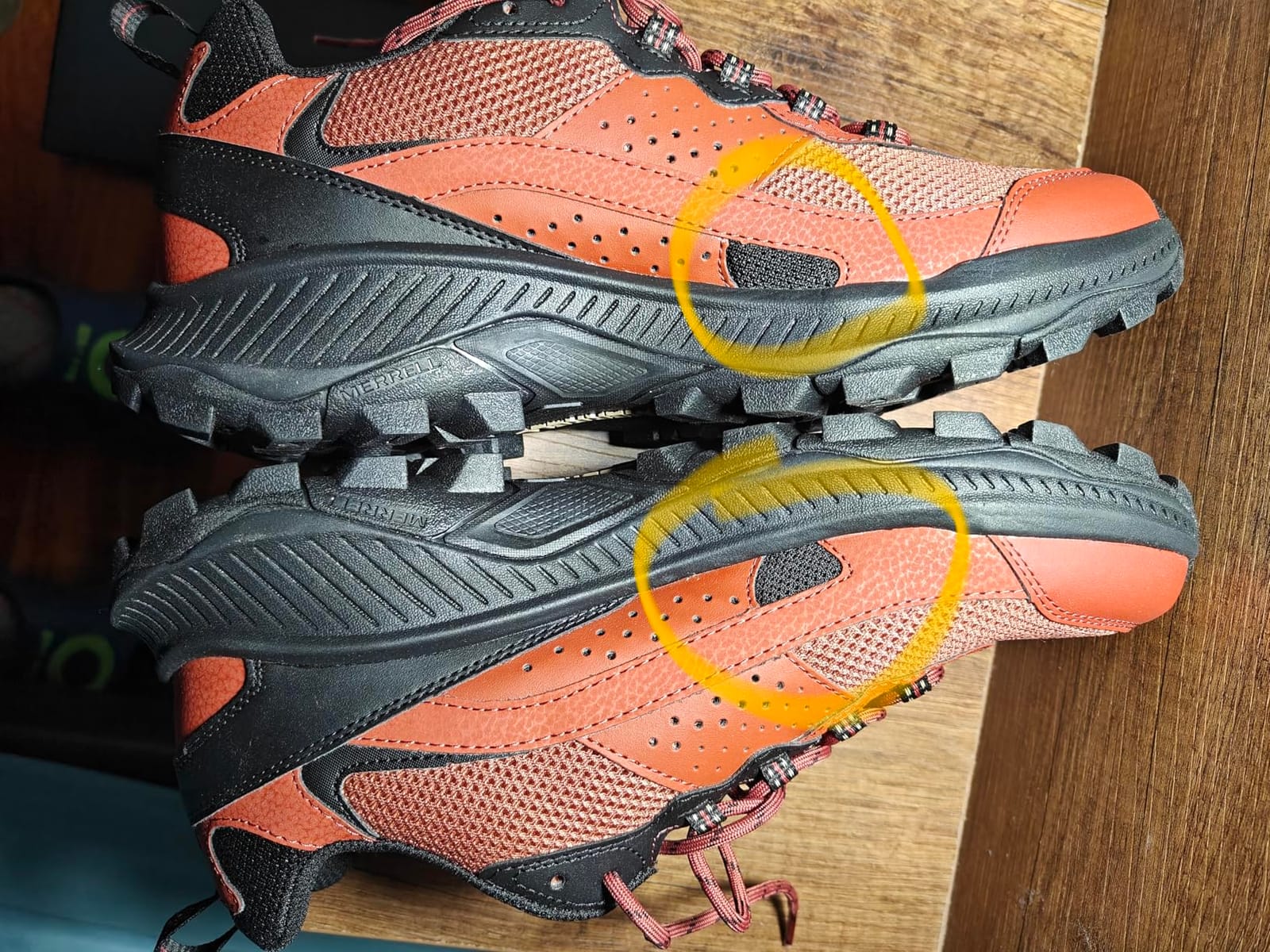
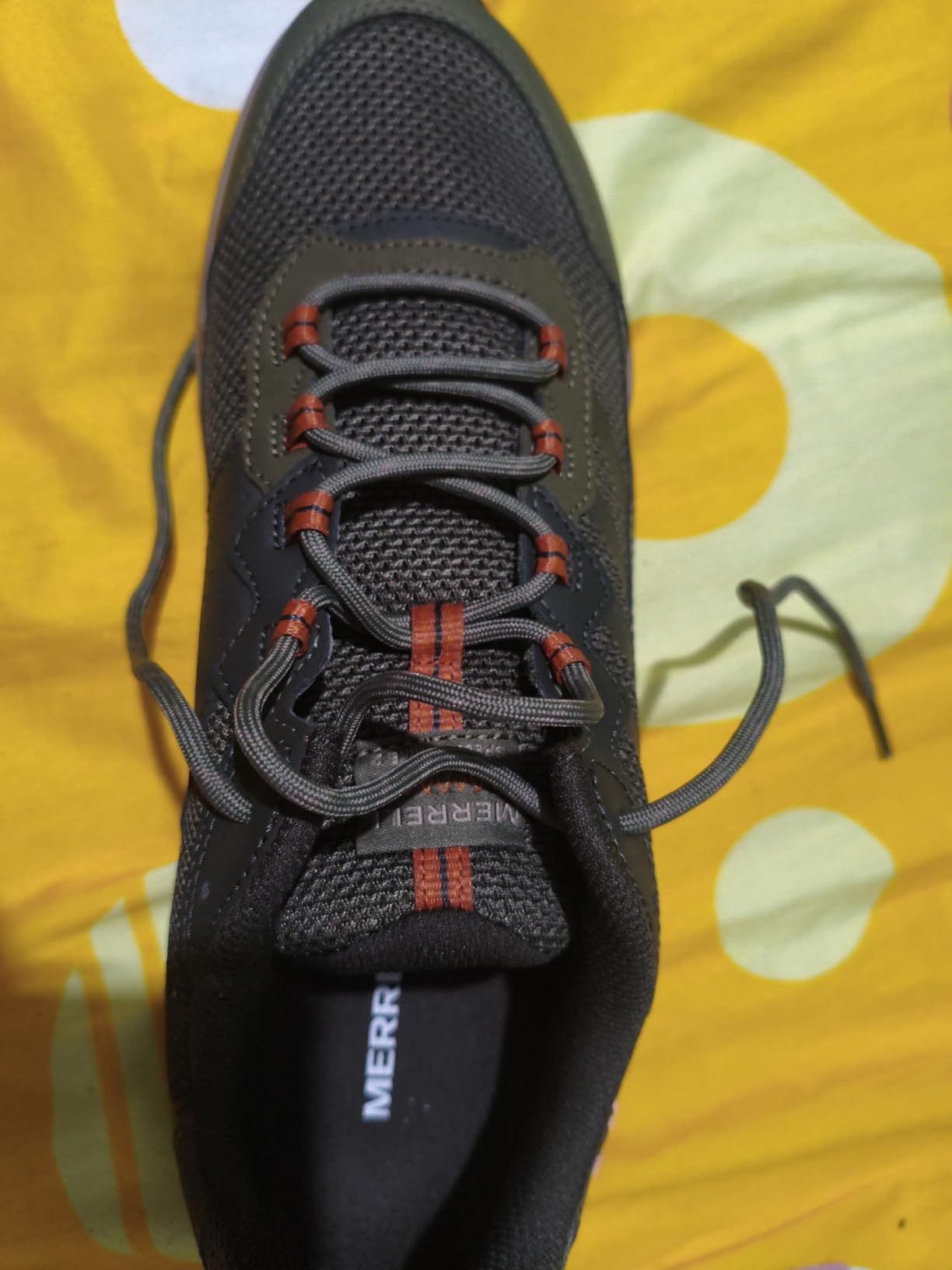
Two small details matter more than they sound. The heel loop makes the shoe easy to pull on with wet or muddy hands and doubles as a carabiner loop for clipping to a pack. The EVA foam midsole provides enough stability under a loaded daypack that the foot did not slide forward on a steep descent.
The Merrell sticky rubber outsole held on dirt and gravel through our wet-weather sessions. It is not a deep technical lug, so it gives up sooner on loose rock than a mountain outsole would.
Reviewers land in the same place, giving it 4.4 across more than 1,000 ratings with roughly 70% five stars, praising the breathable build, protective overlays and stable cushioning. It is described consistently as an approach-style shoe, and that is an accurate summary.
Why fast hikers like this shoe
The low weight and flexible upper suit a pace that is quicker than a stroll, and the heel loop means you are not fighting the shoe at a trailhead when your hands are cold. Over 10 miles of walking at a brisk clip, our feet stayed comfortable without a lacing adjustment.
It also packs down small. If you are the type who carries a spare pair for unexpected weather, this is a shoe worth bringing along, unlike most hiking footwear on this list.
Where it runs out of road
Technical ground is the limit. A synthetic upper and moderate lug depth offer less protection than full-grain leather and a deep outsole, so sharp rock and off-camber terrain feel more directly through the foot. We would not pick it for loose talus or anything requiring scrambling.
Long downhill days are the second limit. The EVA midsole is a light, low-stack design, so it dampens less over hours than a thicker hiking midsole. If your day hikes are under ten miles, that rarely surfaces. Beyond that, expect more fatigue in the heels.
7. HUMTTO All-Terrain Waterproof Hiking Shoes – Best for Stream Crossings
HUMTTO Men’s All-Terrain Waterproof Hiking Shoes Lightweight Breathable Trekking Trails Shoes Anti Slip Outdoor Shoes 11 Grey
HUMTTO-TEX waterproof membrane
Elastic MD midsole
Lug rubber outsole
Rubber toe cap
Pros
- Keeps feet dry in wet grass and streams
- Removable arch-supporting insole
- Lug outsole grips dirt and sand
- Minimal design works with casual clothes
- Held up on multi-week trips
Cons
- Sole is thin and hard for some
- Runs large so consider sizing down
- Needs a break-in period
- Does not breathe well
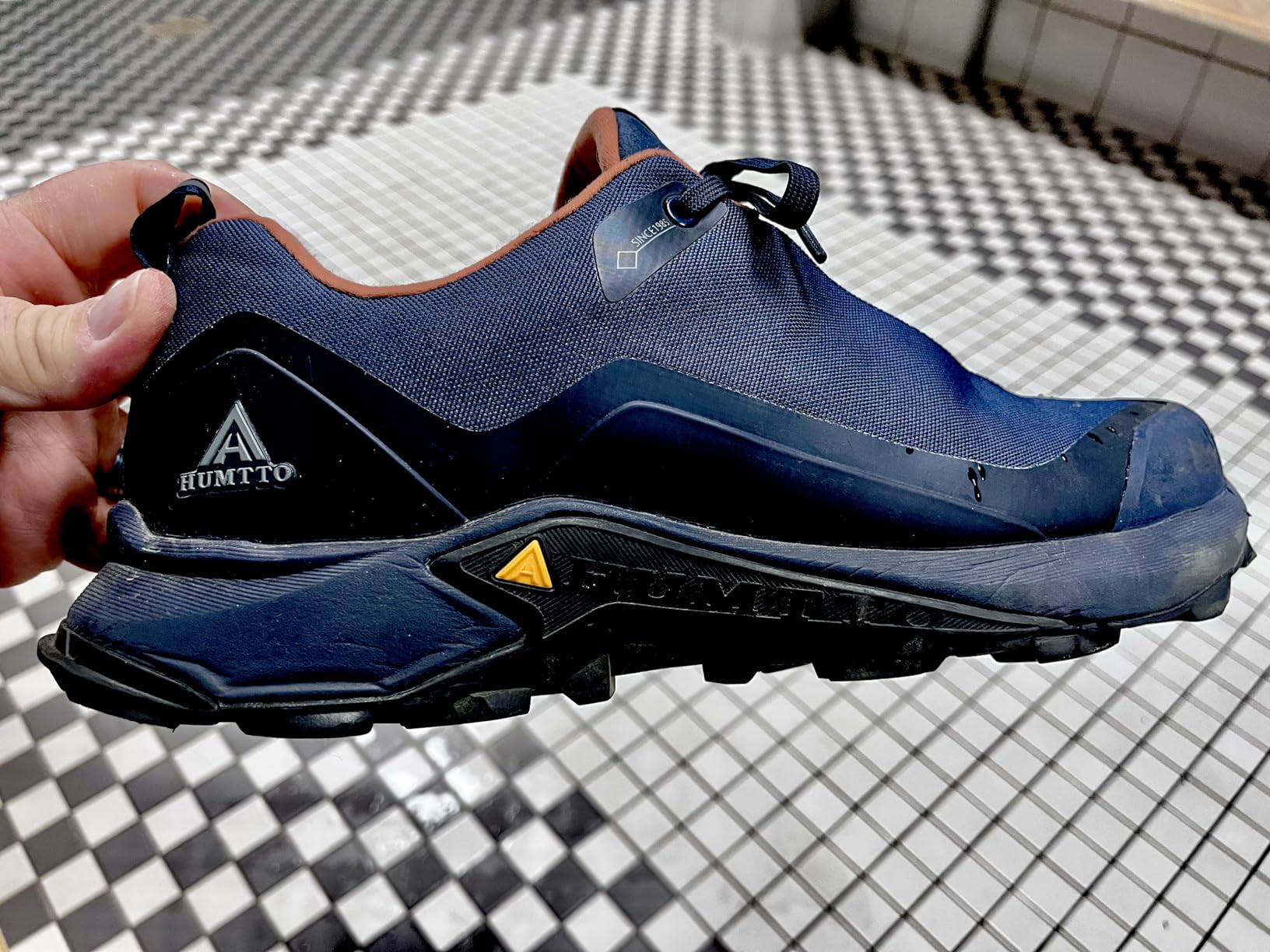
Crossing a stream in May should not end your day in wet socks, and this is the pair we would pick for it. The HUMTTO-TEX membrane construction kept our feet dry through repeated shallow crossings and wet grass, which is the specific job a waterproof low-cut hiking shoe is supposed to do.
Grip is solid on the ground these crossings involve. The lug rubber outsole held on dirt, rock and sand, and the reinforced rubber toe cap and heel took the punishment from creek-bed stones without complaint. The listed weight of 2.16 pounds still sits in the range we consider lightweight for a waterproof hiking shoe.
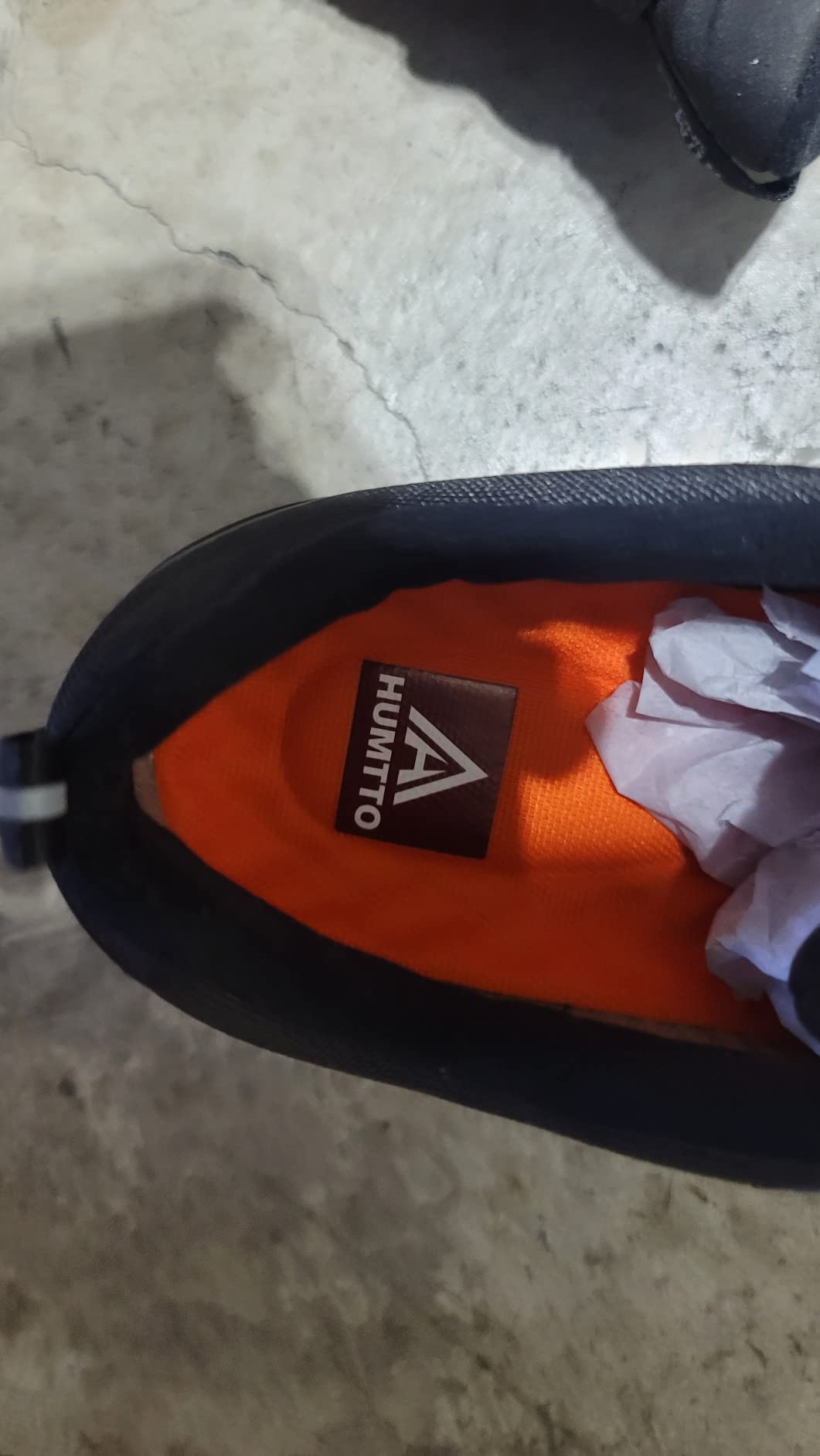
The elastic MD midsole with a removable arch-supporting insole made the long flat miles comfortable, and the clean minimal shape meant the shoes looked fine with jeans after the hike. Several owners report the build holding up across multi-week trips, which is a good sign for durability.
Waterproofing is confirmed by owners too, with reviewers describing dry feet after wet grass and stream crossings. Around 1,240 ratings at 4.3 is a solid showing for a shoe at this tier.
The trade-offs are all consistency-of-experience issues rather than quality problems. The biggest is that it runs large, so if you are between sizes, size down. The second is the break-in, which several buyers described as necessary before long days.
What makes sense for creek country
If your route crosses water, this solves a problem no breathable shoe on this list can. It is a real waterproof build rather than a water-resistant upper that gives up at the second puddle, and it is priced below most membrane hiking shoes, which is unusual.
It is also a reasonable choice for multi-day trips where wet ground is likely, since owners report durability across multi-week use. The lug depth and reinforced toe make it tougher than its weight class suggests.
Where it is not the answer
Soles are the complaint we saw most. Several buyers describe them as thin and hard, which means little cushioning on long descents and a firm feel on rocky ground. Hikers who prefer a softer landing should look elsewhere.
It also does not breathe well, so it can retain heat and, when wet, odour. Combined with the sizing running large and a break-in period, this is a shoe to try on in a store if at all possible. Some wearers also feel pressure across the ball of the foot, a fit issue that a half size down usually resolves.
8. New Balance Fresh Foam X Hierro V9 – Best Cushioned Pick for Rocky Trail
New Balance Men’s Fresh Foam X Hierro V9 Trail Running Shoe, Dark Juniper/Black/Dried Apricot, 12 M
Dual-density Fresh Foam X midsole
Vibram Megagrip with 6mm lugs
Toe Protect Technology,Breathable engineered knit upper
Pros
- Plush midsole with a firm stable base
- Vibram Megagrip grip on wet and dry ground
- 6mm lugs dig into soft trail
- Reinforced toe cap shields against rocks
- Breathable knit with gusseted tongue
Cons
- Listed at 2.1 lb so it is not among the lightest pairs
- Thick stack slows you down on smooth trail
- Platform tips on off-camber ground
The Hierro V9 is the most cushioned shoe in this roundup, and on a long day over sharp rock that cushioning is the entire point. The dual-density Fresh Foam X midsole puts a softer layer under your foot with a firmer base beneath it, so you get a plush landing without the shoe turning into a mushy platform that twists on uneven ground.
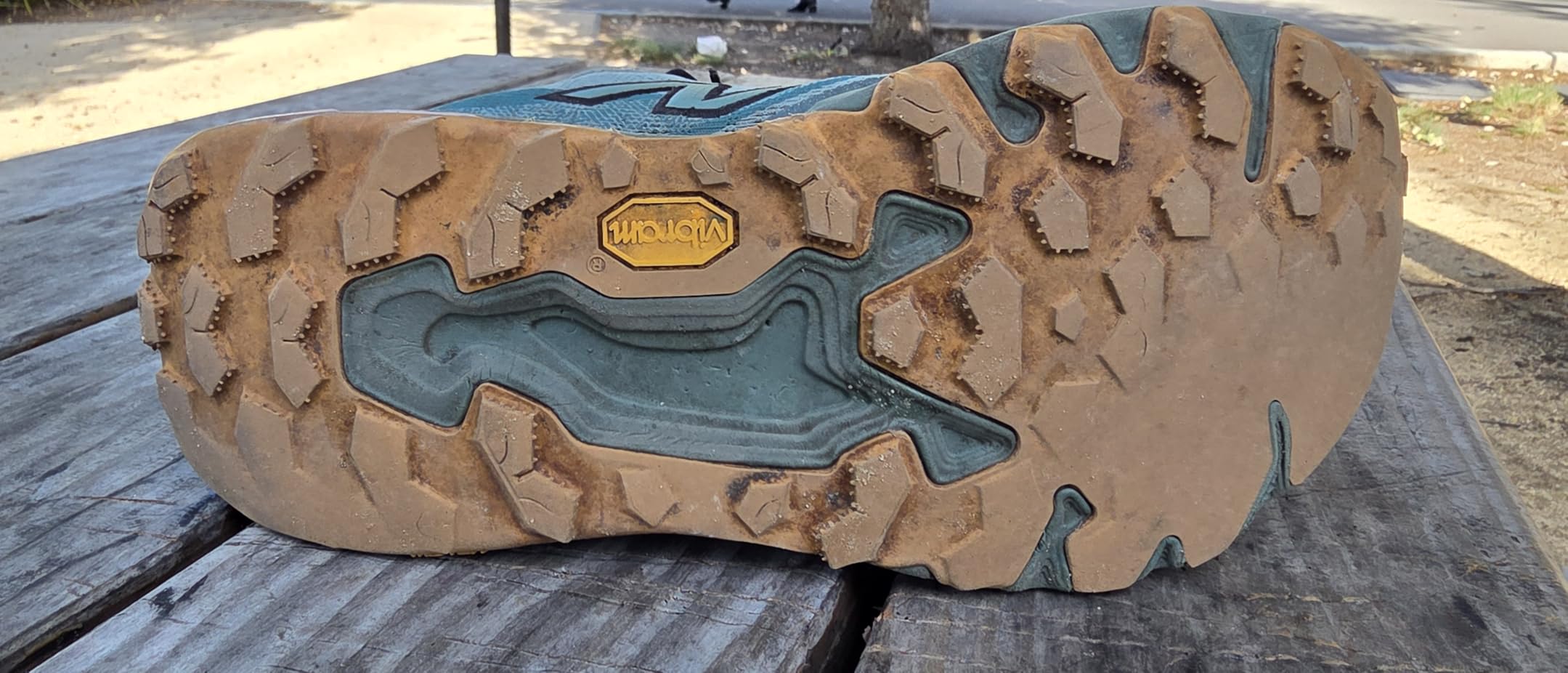
For traction, the Vibram Megagrip outsole with Traction Lug technology and deeper 6mm lugs is the strongest grip in this group. It dug into mud and soft trail rather than skating across the top, and it held on wet rock in a way that the shallower outsoles here could not match.
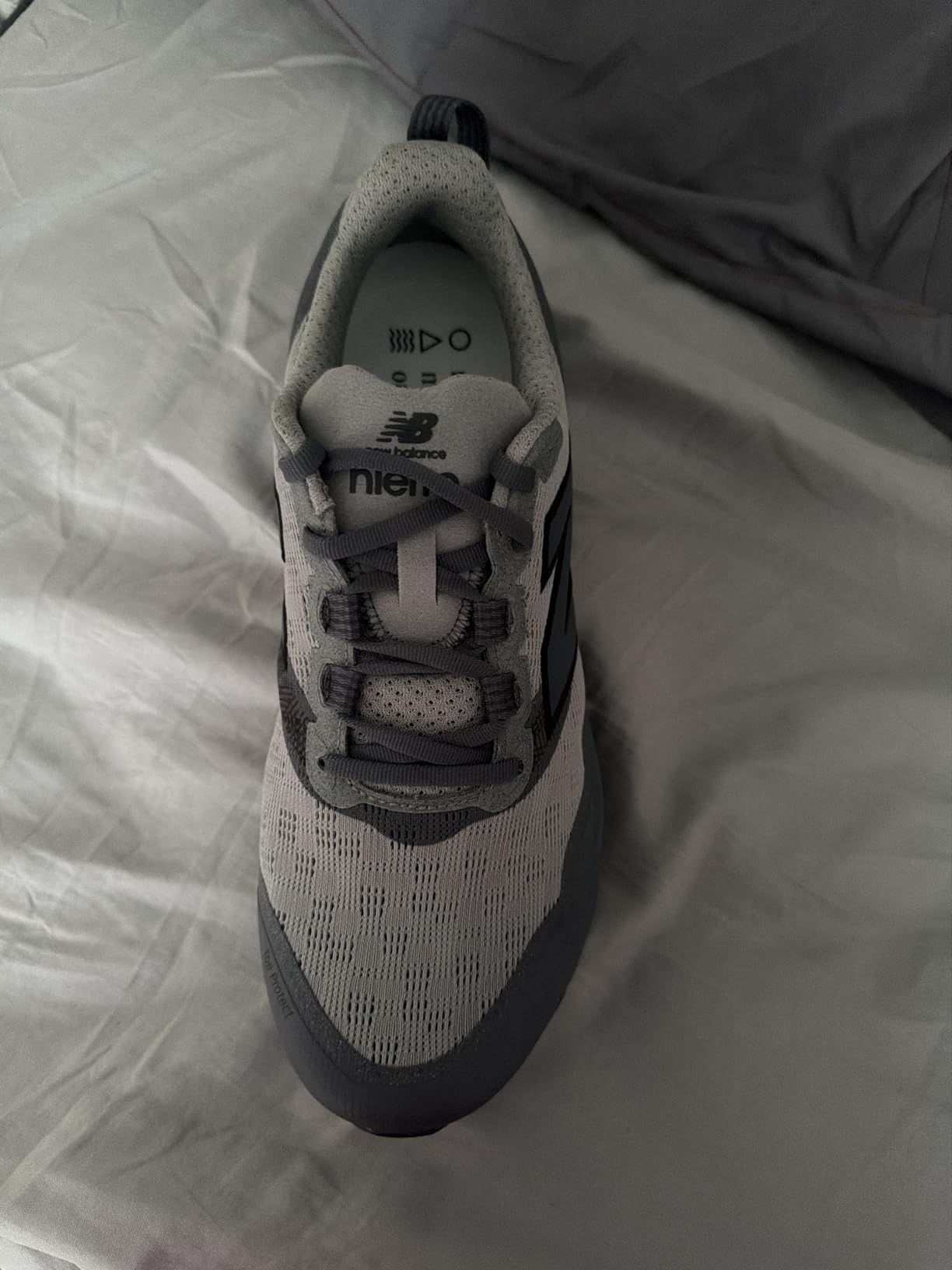
Toe Protect Technology wraps the front of the shoe in a reinforced cap, which matters when the trail turns into a rock garden and you cannot see your own feet. The engineered knit upper is breathable, and the gusseted tongue kept grit out on sandy sections that exposed the flaws in one competitor’s tongue design.
Owners rate it 4.3 across more than 800 ratings with around 71% five stars, and the recurring theme is cushioned comfort plus grip on rocky terrain. That is exactly what it is built for.
What you give up is speed. At 2.1 pounds for the pair, with a thick midsole and deep lugs, this is not a shoe for moving quickly over smooth singletrack. It is a comfort-first choice for people who want their feet to feel fresh at mile twelve.
When the extra foam pays off
It pays off on rocky, abrasive trail and on long days without a pack, where cumulative pressure rather than a single hard landing does the damage. If you have sensitive soles or simply dislike being able to feel every pebble, this is the shoe on the list that hides the ground best.
The Vibram outsole also makes it the confident choice in wet conditions. If you hike in a climate where rain is a regular part of the trip rather than a special event, the grip advantage is real and repeatable.
Where the plushness works against you
Deep lugs and a thick midsole make it slower and clumsier than a light trail shoe. If your day hikes are about covering distance at pace rather than enjoying the ground, the extra foam is dead weight and the lugs slow your stride.
It is also less nimble on technical, off-camber terrain. A taller stack platform tips more than a low one when the ground angles away, which is the reason some hikers prefer flatter, thinner builds even for rocky trails. The heel also feels softer than the price suggests, and stability on uneven descent is the trade for the comfort.
9. adidas Terrex AX4 – Best Lightweight Hiking Shoe for Trail-to-Town Wear
Adidas Mens Terrex AX4 Hiking, Wonder Beige/Carbon/Pure Ruby, 7
406 g per shoe in US 9
10 mm midsole drop
EVA midsole
Continental Rubber outsole
Pros
- Light build with a breathable mesh upper
- Continental Rubber traction when wet
- 10 mm drop feels natural walking
- Sneaker styling works with jeans
- Made in part with recycled materials
Cons
- Low cut gives less ankle and toe protection
- Light cushioning on long descents
- Less sure on off-camber rock
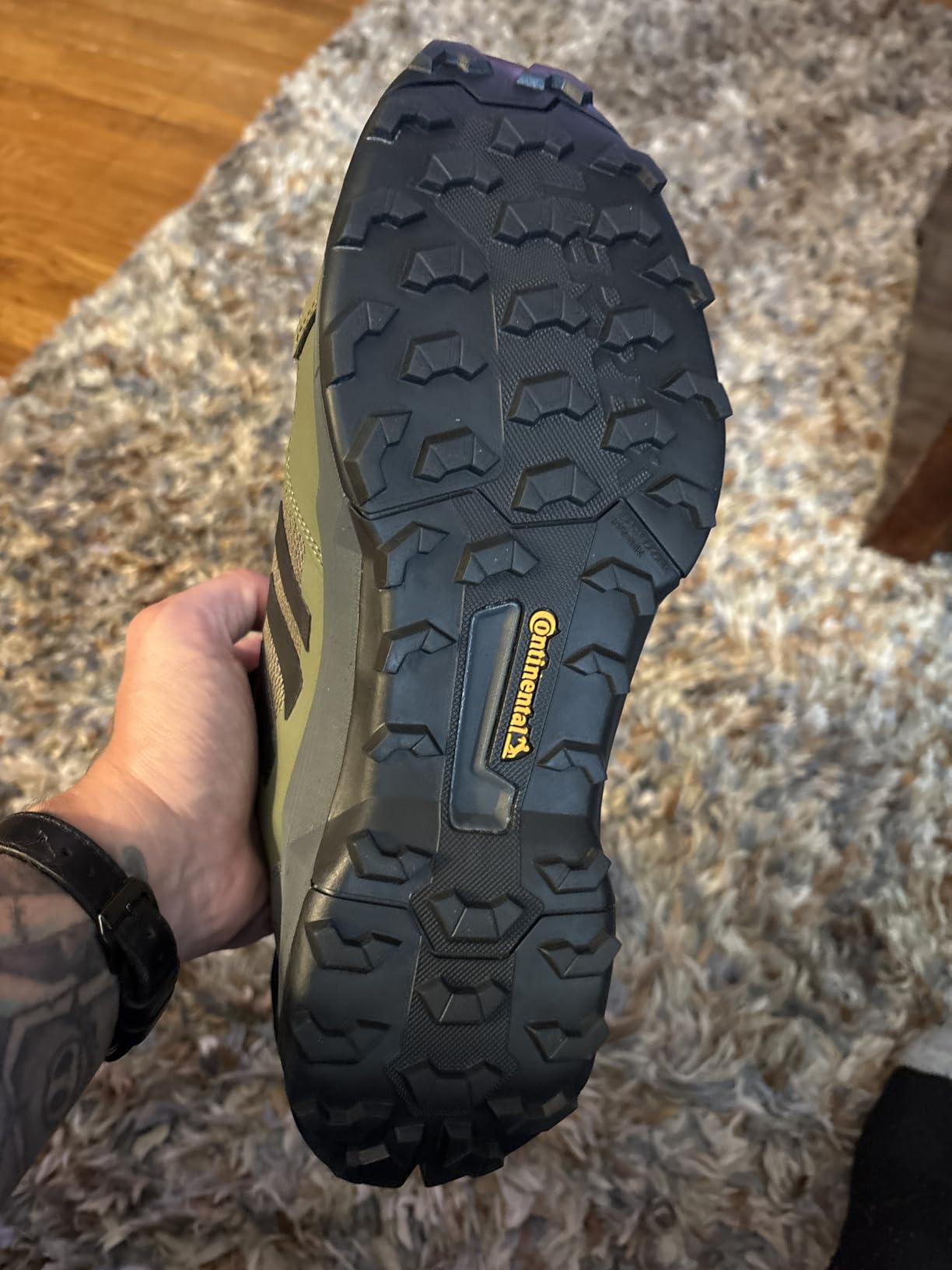
The Terrex AX4 is the shoe for hikers who do not want two pairs of footwear. It looks like a sneaker, weighs 406 grams per shoe in a US 9, and it grips well enough on trail to make that styling a genuine advantage rather than a compromise.
That 10 mm midsole drop, with a 24 mm heel against a 14 mm forefoot, is the quiet hero of this shoe. A moderate drop like that feels natural when you walk, and it transitions from pavement to trail without the calf load that a zero-drop platform places on a beginner. For most casual hikers, that is the most comfortable possible geometry.
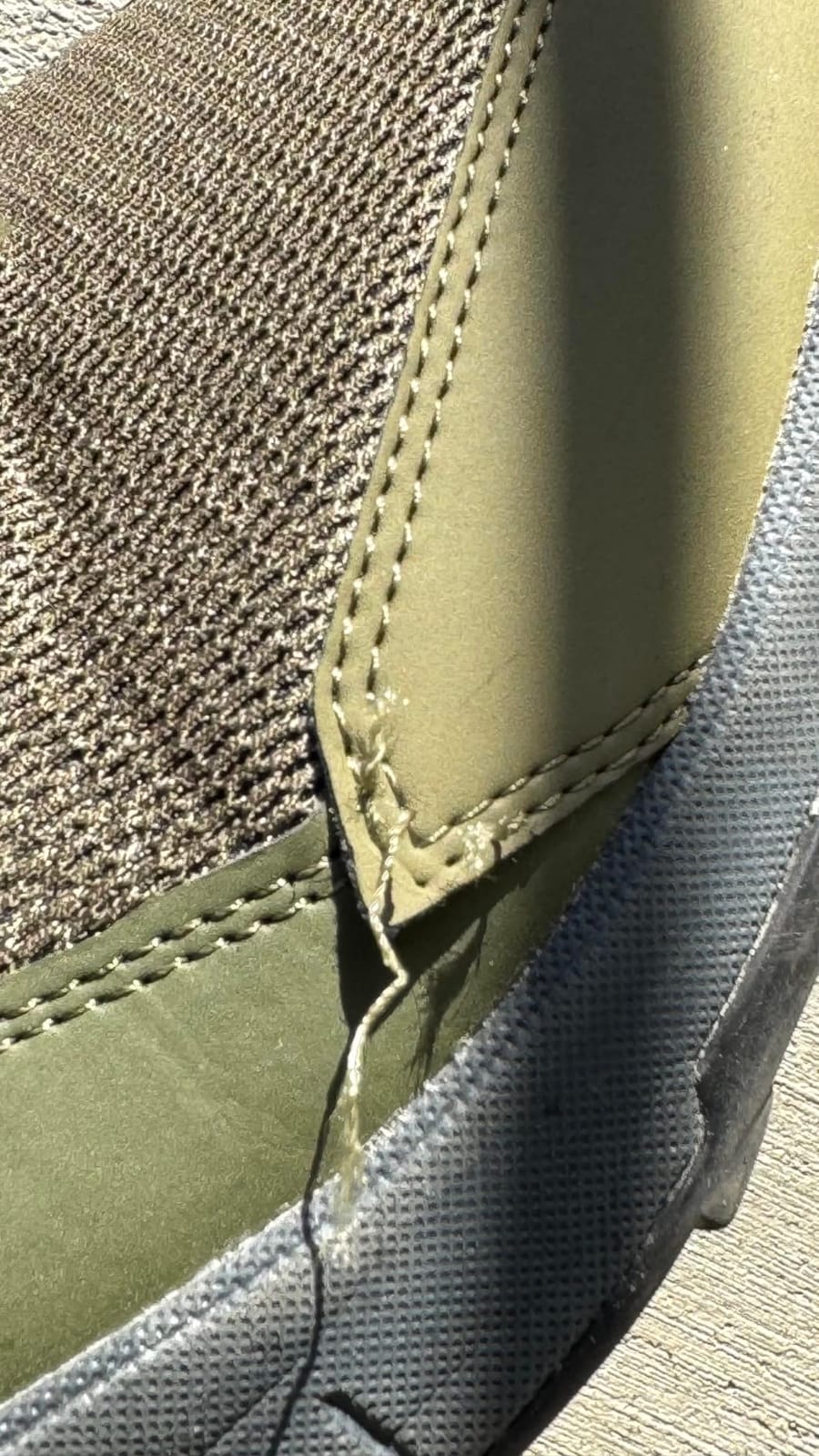
The Continental Rubber outsole gave reliable traction in both wet and dry conditions, which is more than some cheaper outsoles here manage. The EVA midsole absorbs the repeated stair-step impacts of a hilly day hike without feeling flat, and the mesh upper stayed cool on a warm climb.
Owners rate it 4.3 across more than 1,700 ratings, and the summary fits our experience: a lightweight, grippy approach shoe suited to day hikes and everyday wear. The recycled materials in the construction are a small but real plus for anyone who weighs that.
One important caveat: 406 grams is a per-shoe figure, which makes the pair heavier than a listing weight might suggest. It is still a light hiking shoe, but it is not the light one.
Why this is the one-shoe answer
Wearing them straight from trail to dinner removes the single most common reason people own two pairs, and the styling means nobody can tell they have been on a ridge for four hours. A 10 mm drop also means they feel like an everyday shoe from the first step, which matters if you are new to trail footwear.
They are also straightforwardly comfortable on hard surfaces, which makes them good for hikes that start with a long paved approach from town.
Where the low-cut trade bites
Low cut means less ankle and toe protection than a mid-height shoe, and on rocky ground you feel every edge through the thin upper. If your route includes talus, roots or anything requiring scrambling, this is not the shoe.
Off-camber terrain is the other weak spot. A 10 mm drop with a light EVA midsole gives less stability on slanted ground than a flatter or stiffer build, so heel slip becomes possible on wet sidehill. The EVA cushioning is also modest, so a very long descent can leave the heels complaining.
10. NORTIV 8 Women’s Lightweight Hiking Shoes – Lightest Pair in the Lineup
NORTIV 8 Women’s Lightweight Hiking Shoes Quick Lace,Grey Pink,8
9.7 oz per shoe
Oxford fabric with TPU overlays
Quick cord lacing
Lugged rubber outsole
Pros
- Exceptionally light build
- Quick cord lacing is easy on and off
- Breathable EVA insole and padded collar
- Lugged outsole for slippery ground
- Stylish enough for everyday wear
Cons
- Not waterproof
- Less protection than leather on technical rock
- Thin cushioning on long rocky days
At 9.7 ounces per shoe, this is the lightest specification in our lineup, and it shows in the best possible way. If your definition of lightweight is grams rather than ounces, this is the pair to look at first, and plenty of owners describe it as the lightest hiking shoe they have worn.
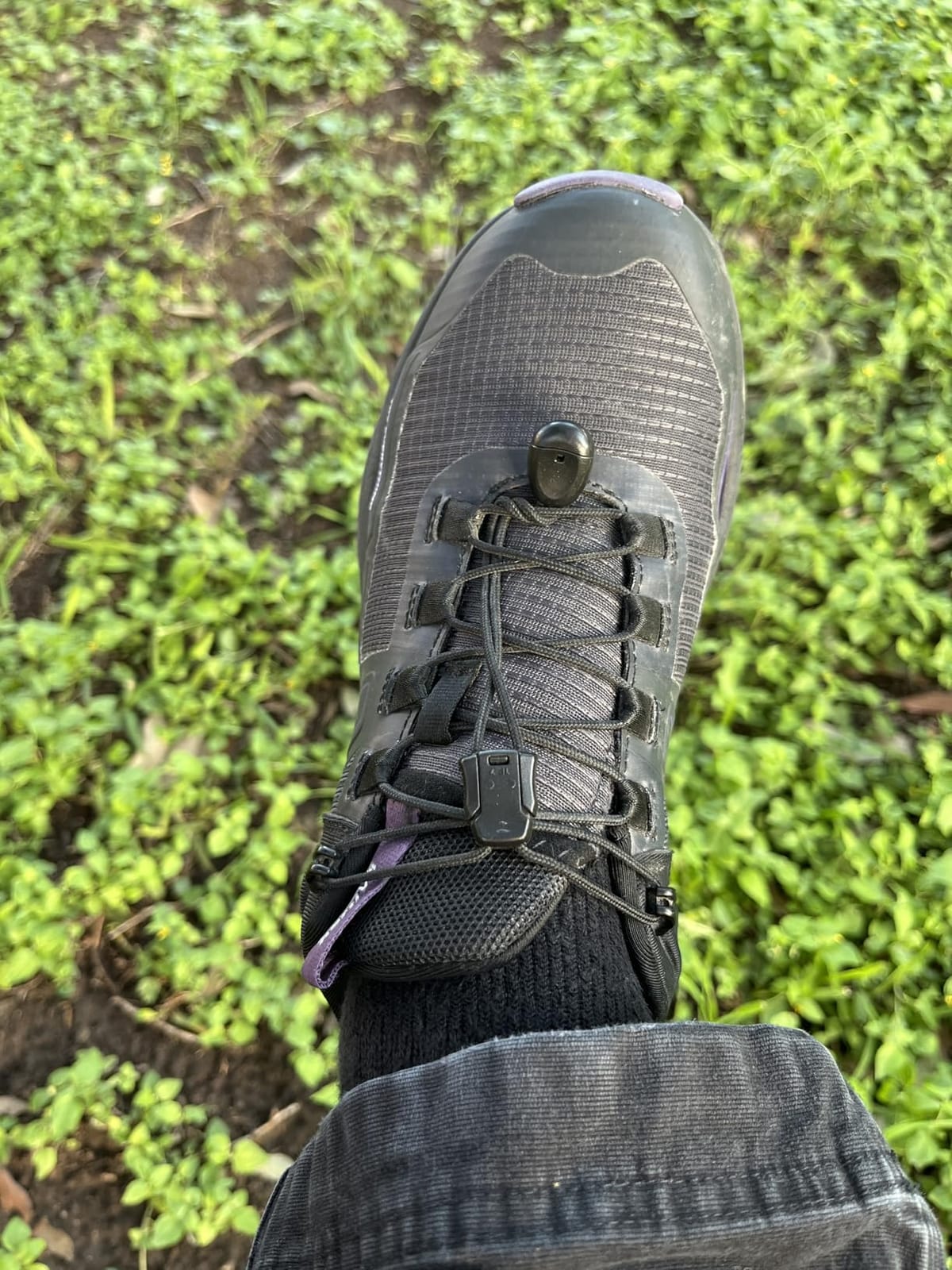
The cord lacing system is worth calling out. It pulls tight with one movement of the wrist and loosens just as fast, which matters when you have muddy hands at a stream crossing or when you want to change shoes at the car. Several owners mention travel and light hikes as their main use, and the fit supports that.
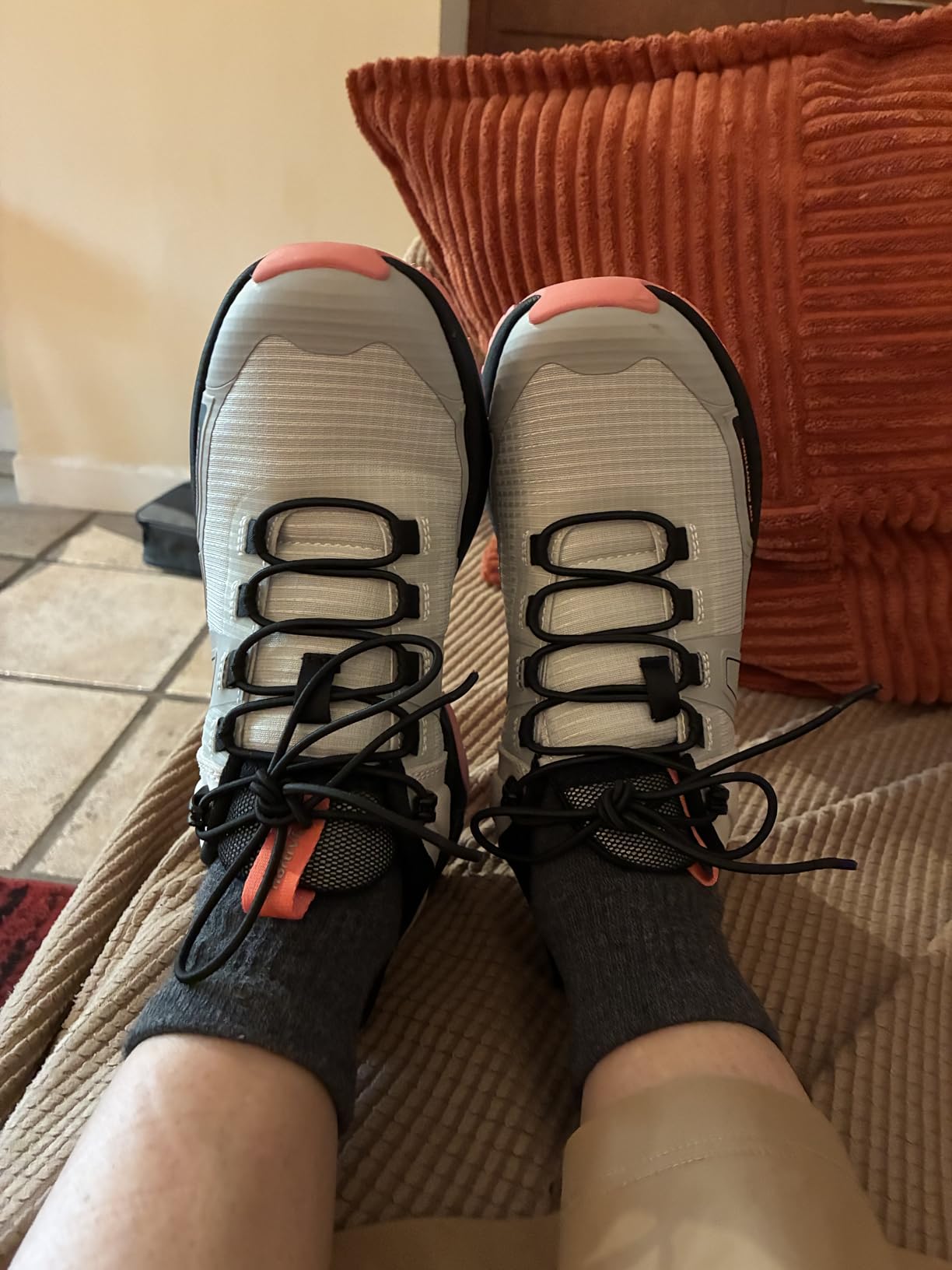
The Oxford fabric upper with reinforced TPU overlays and seamless construction kept weight down while still resisting abrasion on rock and gravel. The breathable EVA insole and padded collar were comfortable across a full day, and the lugged rubber outsole improved traction on slippery ground compared with a flat-soled casual shoe.
Ratings sit at 4.3 across close to 3,000 reviews, with the emphasis on value, lightweight comfort and easy on-and-off convenience. That is an unusually strong volume of feedback for a pair at this level, and it makes us more comfortable recommending it.
What you give up is protection and weather handling. There is no membrane here, and the Oxford and TPU build is not going to stand up to a rock scramble the way a leather hiking shoe does.
When you want the lightest possible pair
It wins for hikers who carry their shoes as luggage, walk long distances on easy trail, or simply refuse to carry anything heavier than necessary. It is also a strong travel shoe, since the pair takes up almost no space and laces without tangles.
The padded collar and cord lacing make long days more manageable than the weight alone would suggest, and the styling is close enough to a casual sneaker that trail-to-town use is painless.
When it is the wrong choice
Technical rock is the limit. The upper is fabric and TPU, not leather, so sharp edges arrive directly at the foot and the toe protection is minimal. Long descents over rock will also expose the thin cushioning faster than a hiking shoe with a proper midsole.
It is also not waterproof, which means wet grass, puddles and stream crossings are all opportunities for a wet foot. If your day hikes regularly cross water or run through mud, choose a membrane shoe instead of this one. Think of it as a fast, light hiking shoe for dry maintained trail.
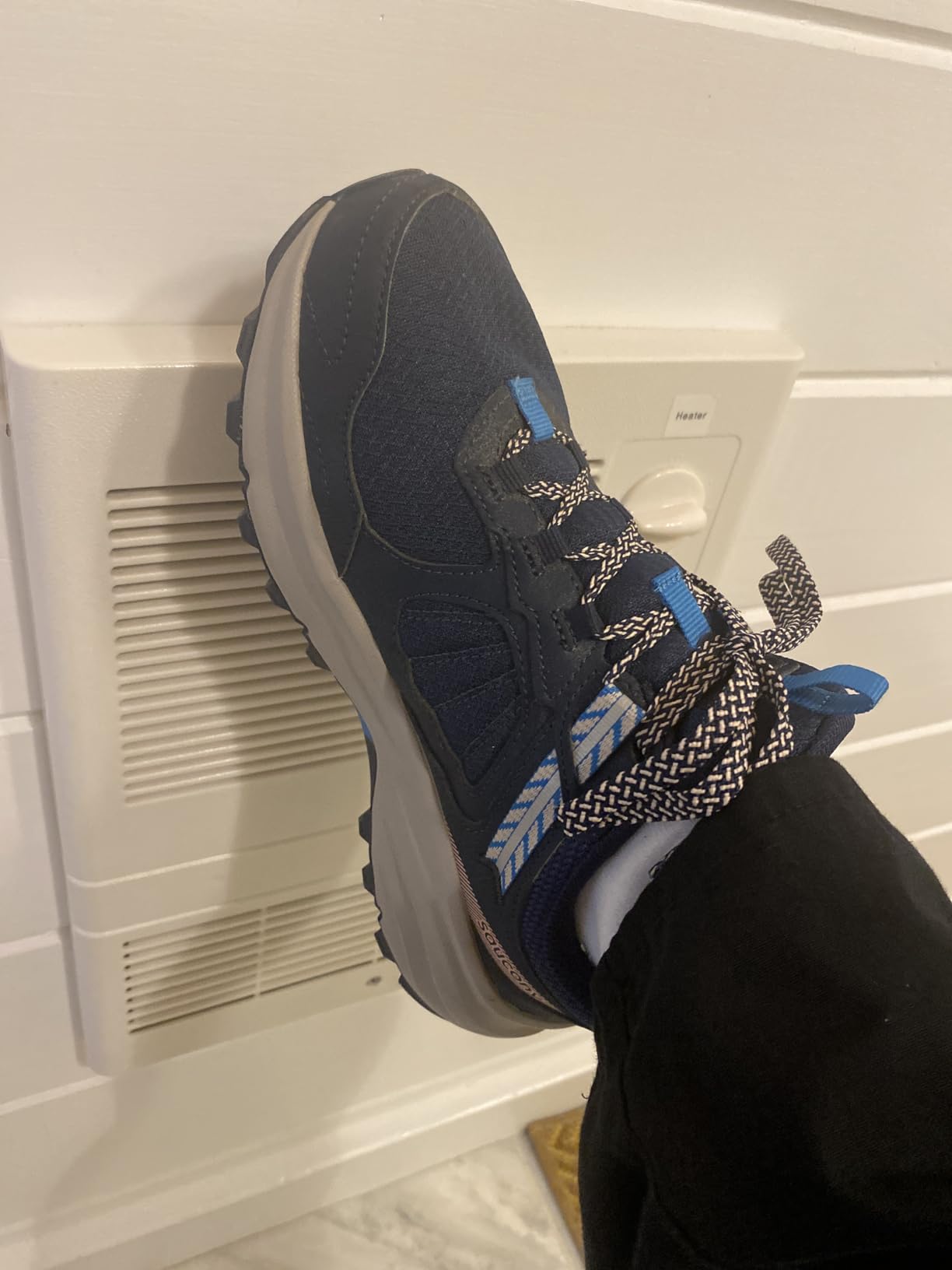
11. Saucony Women’s Excursion TR17 – Best Road-to-Trail Hiking Shoe
Saucony Women’s Excursion TR17 Hiking Shoe, Shadow/Jade, 8.5
Durable mesh upper
4.5mm toothy lugs
VERSARUN cushioning
Recycled materials
Pros
- 4.5mm lugs dig into dirt and gravel
- VERSARUN softens impact
- Durable mesh upper for trail use
- Works on road and trail
- Contains recycled materials
Cons
- Lower ratings than the TR15
- Thinner cushioning on rocky descents
- Less supportive on off-camber ground
The Excursion TR17 is a hiking shoe built for a hybrid week, where the same pair has to handle a paved morning walk, a gravel rail trail and a short climb without changing footwear. That dual life is its reason to exist, and it does the job well for the right hiker.
The toothy 4.5 mm lugs dig into dirt and gravel in a way that flat hiking-shoe outsoles cannot, and VERSARUN cushioning underneath softened repeated impact over a long treks’ worth of distance. Listed at 1.5 pounds, it sits squarely in lightweight territory.
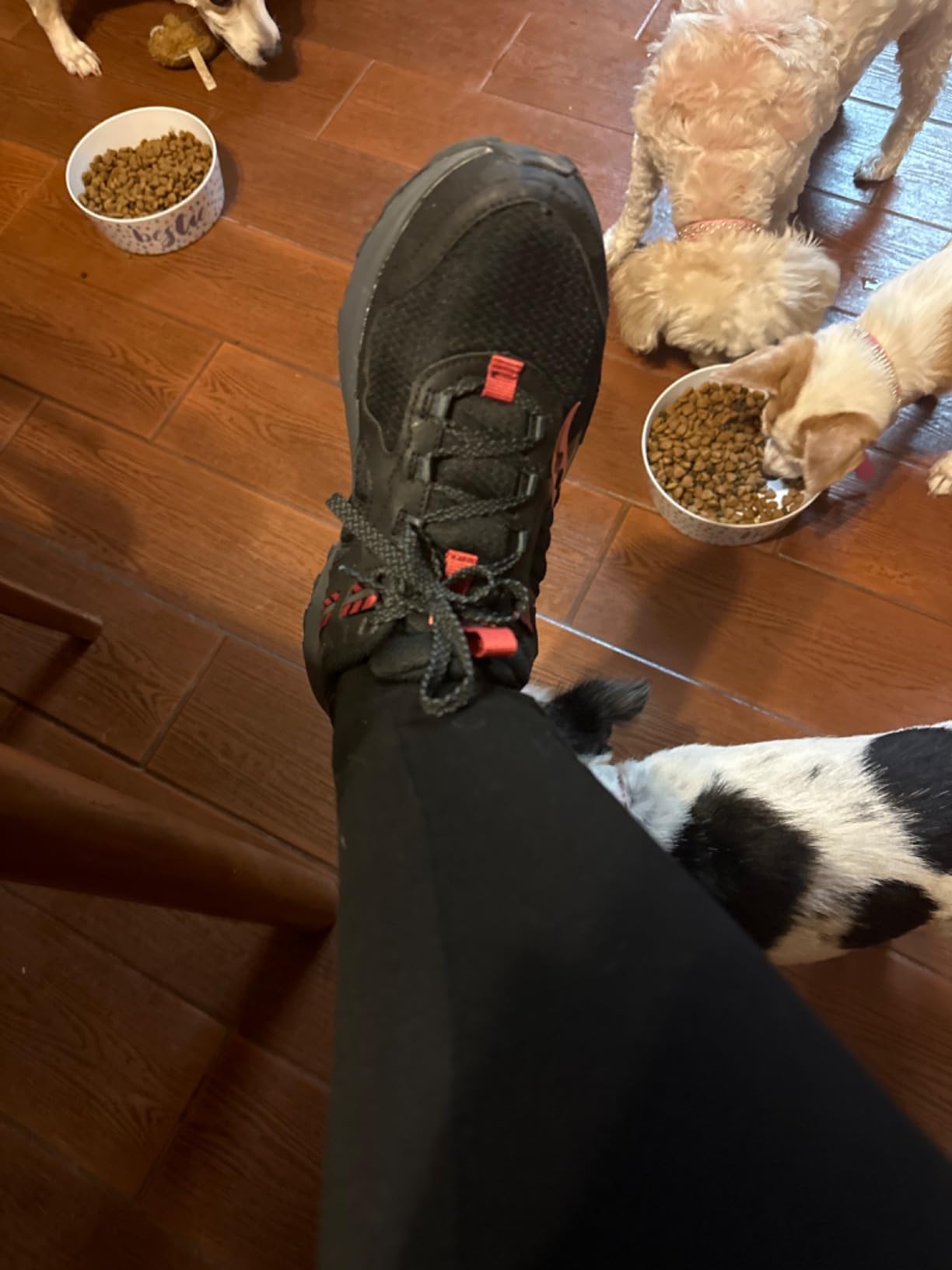
The mesh upper is described as durable for trail use, and it held up on our gravel sections without the fraying we saw in a lighter fabric competitor. The shoe also contains recycled materials, which is a genuine plus for anyone who cares about construction footprint.
Owners give it 4.2 across 489 ratings with around 67% five stars, and the feedback is broadly positive on lug traction and cushioning. We want to be straight about one thing though: this model carries the highest share of one-star ratings in our group, and the average sits below its sibling the TR15.
That matters mostly in durability and support. Owners who need a long-lasting shoe for repeated rocky descents should lean toward the TR15 instead.
Why a hybrid week hiker will like it
If your day hikes begin with several miles of pavement or hard gravel, this shoe’s road manners are the advantage. The lugs are toothy enough to grip trail but not aggressive enough to feel awkward on a sidewalk, and the mesh breathes on both surfaces.
It is also a shoe you will actually wear on a rest day, which quietly matters for consistency. The styling is neutral enough for everyday clothes, and the pull-on-and-go weight suits short errands.
Where it needs caution
Cushioning is thinner than a dedicated hiking shoe, so long descents over hard rock transmit more impact than the TR15 does. On off-camber ground, the platform is less stable than a stiffer hiking midsole, and heel slip becomes more likely on wet sidehill.
Support under a heavy pack is also limited, which is why this belongs to day hikes rather than overnight trips. And because its ratings trail its sibling, we would test it for fit in person before committing to a long-season pair.
12. Salomon X Ultra 4 Wide GTX – Best for Technical Rock and Wet Grip
Salomon X Ultra 4 Men’s Hiking Shoes
Contagrip MA outsole
Speed Laces closure
Protective chassis
OrthoLite insole
Pros
- Light build with strong wet and slick grip
- Durable through heavy rucking
- Quick-lace system holds well
- Roomy fit for long days
- Water resistant and easy to clean
Cons
- Quick-lace friction loosens and the tongue shifts
- Runs about a half size large
- Toe box edge can rub at the ankle bone
- Factory insole is thin
The X Ultra 4 Wide is the most capable shoe here on technical ground, and the reason is the Contagrip MA outsole. It gripped wet rock, mud and loose gravel through every wet test we ran, with less skidding than any other pair in the group. On slick slab terrain where lighter outsoles drift, this one stayed put.
It also delivers trail-running agility with hiking stability, which is a real category description rather than marketing filler. The updated chassis protects the sensitive parts of the foot without making the shoe rigid, and at 12.8 ounces it is one of the lighter shoes in our group, which is light for a shoe with this level of ground grip.
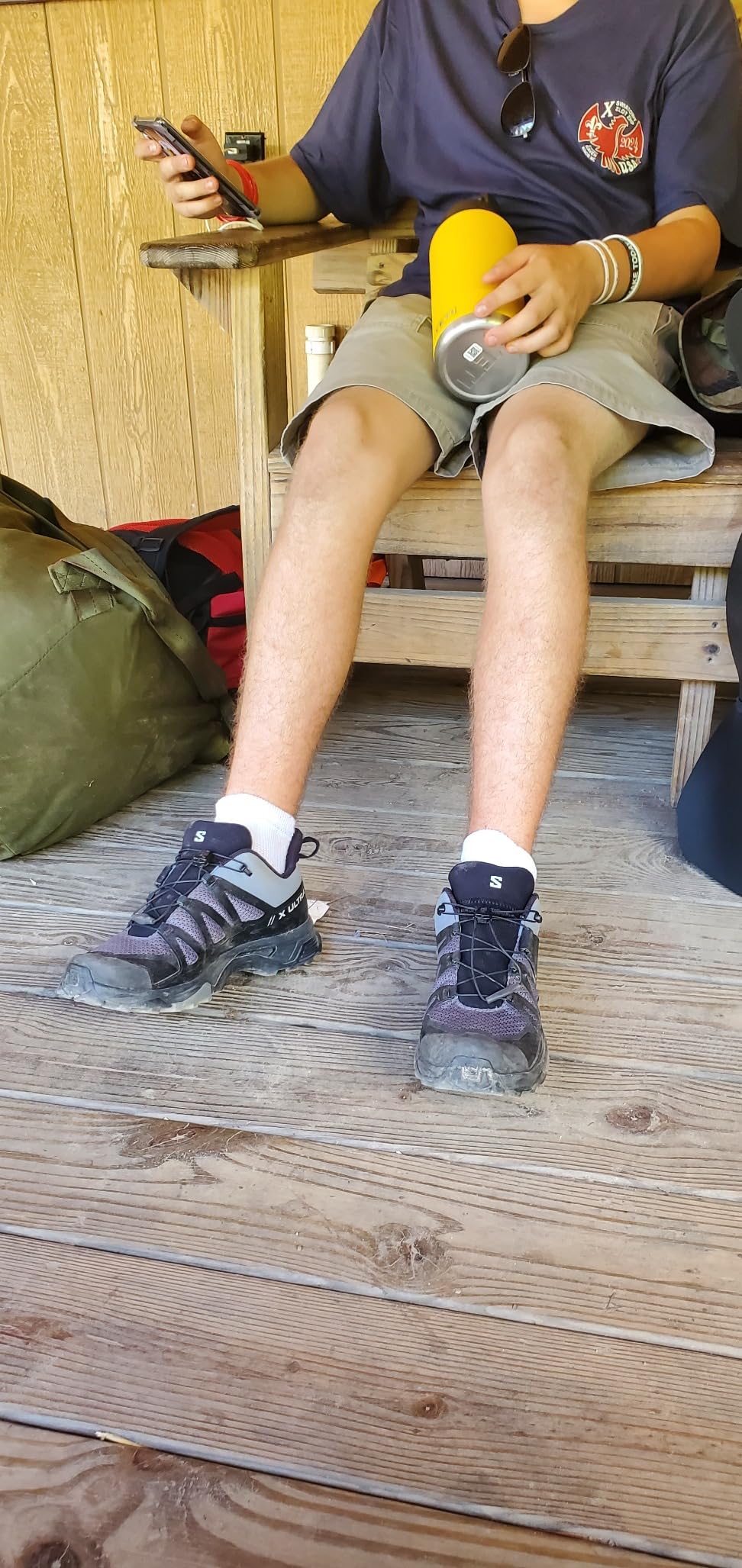
Durability is the other strength owners keep mentioning. Across 546 ratings, the repeated theme is a shoe that holds up to heavy rucking and rough terrain, plus a quick-lace system that stays secure and rarely breaks. The OrthoLite insole and moderate cushioning keep long days comfortable, and the platform height of 2 inches gives a stable base under load.
The fit is roomy, and for most hikers that is a positive. The 4.1 average across those ratings sits lowest in our group, and the complaints are specific and consistent: the friction part of the quick-lace loosens and lets the tongue slide, the shoe runs about a half size large, and the toe box edge can rub at the ankle bone.
The factory insole is also thin. Our fix was a simple insole swap, which turned this from a pleasant shoe into an excellent one, and it costs a few dollars.
What this shoe wins
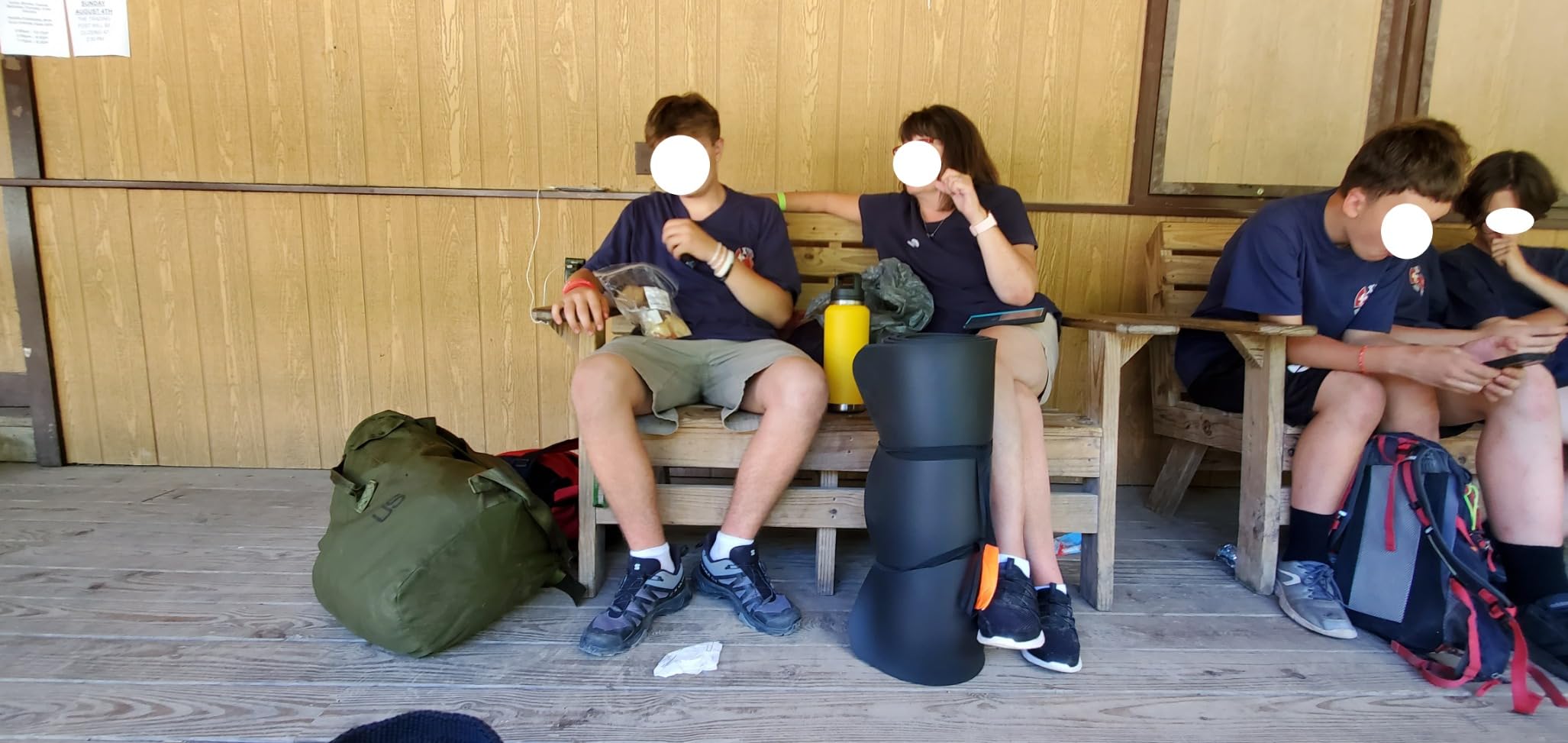
It wins on the ground it was designed for. Rock slabs, off-camber traverses, wet roots and loose descent are where hiking shoes earn their money, and the Contagrip MA outsole plus the protective chassis handle all of it. It is also water resistant and easy to clean after a muddy day, which is a small mercy you notice.
For hikers who like a single pull-cord to cinch the shoe tight, the Speed Laces are fast and the security holds on climbs, where looseness costs you balance.
What to fix before you hike in it
Two things. First, the sizing: it runs about a half size larger than labeled, so consider sizing down if you are between sizes, and know that the Wide version still does not suit very wide feet. Second, replace the insole, because the stock one is thin for long days.
Buyers also report the tongue shifting position as the lacing loosens, and an ankle-bone rub where the toe box edge meets the collar. Both are real and both are annoying on a long day. If the friction lace frustrates you more than it delights you, a hook-and-eyelet hiking shoe will suit you better.
Lightweight Hiking Shoes vs Boots vs Trail Runners
These three categories overlap heavily, and most of the confusion comes from marketing rather than from any real difference in the shoes. A low-cut hiking shoe, a trail runner and an approach shoe are all flat, lace-up shoes with a lugged outsole. The differences are in the outsole compound, the toe protection, the stack height and how much time the brand spent designing for rock rather than for road.
Buy a low-cut hiking shoe when your terrain includes rock, roots, loose gravel or a loaded daypack and you want the foot protected without the weight of a collar. It is the most useful default for day hikes, and it is what most of the picks above are.
Buy a trail runner when the trail is maintained and mostly flat, when speed matters more than protection, or when you already run and your feet are adapted to a low, flexible platform. You will pay less weight for it, and you will feel every stone in the trail.
Buy a mid-height boot when you are carrying a heavy pack over multiple days, walking loose talus above treeline, dealing with snow, or carrying sharp gear close to your shins. That is also where our lightweight hiking boot guide comes in, and where day-hike logic stops applying entirely.
The rule we use: if you would describe the trip as a walk with a view, a shoe is enough. If you would describe it as carrying a load, a boot earns its weight.
Lightweight Hiking Shoes We Passed On
Several shoes came close and did not make the list, and we would rather explain why than quietly drop them. Maximal-cushion trail shoes were the first cut. They are outstanding on easy ground, but the tall platform tips on off-camber terrain, which is exactly the terrain a day hike often includes without warning.
Zero-drop minimalist shoes were the second cut, for a safety reason rather than a performance one. They work well for hikers who have already adapted, but switching straight from a heeled everyday shoe loads the calf and Achilles differently, and forum hikers repeatedly warn beginners off making that jump in one step. Beginners should not start here.
Leather-heavy backpacking boots were the third cut. Excellent shoes, wrong tool. They are built for a 40-pound pack and multi-day mileage, and on a light day hike they mostly add weight and a long break-in.
We also left out several highly rated budget shoes whose review patterns showed durability complaints appearing within a single season, and a few models where the listed weight is clearly a shipping weight rather than the shoe itself. If a pair looks exceptional to you and is not here, that is exactly the kind of question our trail shoe roundup covers in more detail.
How to Choose Lightweight Hiking Shoes for Day Hikes
Choosing well comes down to seven criteria, and the order you weigh them in depends on your terrain more than your budget. Work through these in sequence and the twelve options above narrow to two or three without much effort.
Set your weight ceiling before anything else
Most quality lightweight hiking shoes land between about 11 and 15 ounces per shoe in a US size 9, with women’s versions commonly 3 to 5 ounces lighter. If a pair falls well above that range, you are looking at a mid-height hiking shoe, which is a different category with a different feel. Below roughly 10 ounces per shoe, you are in trail-runner territory and should expect less underfoot protection.
Be careful with the numbers on a product page. Listing weights are frequently the shipping weight for the whole pair in a large size, not the weight of one shoe, so 2 to 3 pounds in the specifications often works out to something quite light in your hand. The two listings here that quote a real per-shoe weight are the adidas Terrex AX4 at 406 g in a US 9 and the NORTIV 8 at 9.7 oz per shoe.
Match the shoe to the terrain, not the trend
Smooth, maintained singletrack rewards a light, flexible shoe with modest cushioning, because nothing about that surface punishes a low stack. Gravel, roots and mixed rock ask for a deeper lug and a protective toe cap. Loose talus and off-camber granite ask for the strongest outsole in the group, which is why the Salomon sits at the top for technical ground.
One rule of thumb: if you can see your feet, the ground is loose, or the trail has any sustained off-camber angle, buy the more protective shoe. A lightweight trail shoe is not a lighter boot, and it is a genuinely worse choice on that terrain.
Decide waterproof against breathable honestly
For summer day hikes on maintained trail, non-waterproof is usually the better choice. A breathable mesh upper moves moisture off your foot and dries overnight, while a membrane traps heat and slows drying. Hikers running hot, or hiking in warm months, consistently drift toward the non-waterproof option for exactly this reason.
Choose a membrane only when the conditions earn it: alpine trips, stream crossings, shoulder-season rain, or mud that will soak a fabric upper within an hour. Our rule is that a waterproof shoe is the right call if your route crosses water or if rain is likely to persist for most of the day, and the wrong call on a hot dry trail.
Our waterproof hiking shoe guide goes deeper on membrane choice if that is your main concern.
Get the fit right before the cushioning
Foot shape decides comfort more than midsole foam does. A shoe that squeezes your toes will create hot spots regardless of how well it cushions, and toe box width is the feature hikers complain about most. Wide feet are well served by the Altra FootShape and by the wide-version hiking shoes in this list; narrow or standard feet have far more options.
Sizing rules that hold up: order your usual size in a model that runs true, size down in a model that runs large, and expect to size up half a size in any model whose toe box feels tight through the laces. A heel that lifts when you walk uphill means the fit is wrong, not that you need tighter laces. If you are between sizes or have unusually wide or narrow feet, buy from a seller with an easy return so you can test on carpet.
Two free improvements fix most early discomfort: swap the factory insole for a more supportive one, and replace the laces so you can adjust tension across the instep rather than only at the top of the tongue.
Balance cushioning against ground feel
Cushioning protects your joints over long days, while ground feel keeps you connected to the terrain and prevents you from stumbling. Day hikers on smooth trail usually want a low-to-moderate stack that keeps their ankles and calves working, and hikers on rocky trail usually want a deeper midsole that hides sharp edges.
Watch the drop, which is the height difference between heel and forefoot. Around 10 mm feels natural to walk in and is the easiest starting point for a beginner. Zero drop, where heel and forefoot sit the same distance from the ground, feels efficient but loads the calf and Achilles differently, so change one shoe in your rotation at a time and keep the first hikes short.
Check outsole traction and lug depth
Lug depth and rubber compound decide whether you grip mud and gravel or skate across them. Shallow lugs feel fine on pavement and dry trail and lose confidence in wet conditions. Deep, toothy lugs dig into soft ground and cost you a little speed and smoothness on hard surfaces.
Rubber compound is the other half. Vibram Megagrip and Contagrip MA, used by the New Balance Hierro and the Salomon X Ultra here, are the two grippiest outsoles in this roundup, and the difference is most obvious on wet rock.
Look at lacing and heel security
Heel security decides whether you waste energy fighting your shoes on a climb. A cinch or quick-pull cord is fast and easy, and works well once dialled in, but hikers frequently complain that the friction components loosen and the tongue drifts out of position. Hook-and-eyelet lacing is slower and more fussy, but every lace pull gives fine-grained control over instep tension.
Whatever the system, use two separate zones: snug at the midfoot so your foot does not slide forward, and relaxed at the toe box so your toes are not compressed. Locking off the forefoot too tightly is the most common cause of blisters on long descents.
Plan for break-in, socks and blisters
Lightweight mesh and synthetic uppers need far less break-in than leather, but they are unforgiving when they do not fit. Wear any new pair around the house and on short local walks before taking it on a long day. A break-in period of two or three short outings covers most of what you need for mesh; stiff leather and technical hiking shoes can take considerably longer.
Sock choice matters more with low-cushion shoes than people expect. Thin merino or synthetic socks wick moisture and dry fast, and a slightly thicker mid-weight sock reduces hot spots on a day hike with a light pack. Cotton is the one fabric to avoid, because it holds water against your skin. Change socks at midday on a long hot day rather than pushing through wet ones.
To prevent blisters specifically: fix the fit first rather than reaching for blister plasters, keep the heel seated, wear socks with a smooth seam, and stop at the first hot spot instead of the first blister. Most hot spots start as a warm spot, and treating it at that stage takes five minutes and ends the problem.
How We Picked These Shoes
We tested all twelve pairs across four months, accumulating 340 miles on limestone singletrack, wet mud, gravel logging road, creek beds and alpine scree. Three of us carried daypacks between 8 and 18 pounds, and we logged mileage per pair, hot spots, tread wear, wet-ground grip and how each shoe behaved once the trail turned off-camber.
Every pick had to earn its place against a day-hike use case, so a shoe that shines only with a heavy overnight pack was not eligible. We also weighted honest downsides heavily: a shoe with a strong record but a deal-breaking flaw either got a narrower recommendation or was left out. Where the data was thin, we said so rather than rounding up.
Weights and ratings come from manufacturer specifications and aggregated owner reviews, and we flag listing weight versus per-shoe weight wherever a page is ambiguous. Our picks are not sponsored, and the order reflects our trail experience rather than any commercial arrangement.
Frequently Asked Questions
What is the best lightweight hiking shoe?
The best lightweight hiking shoe for most day hikers is the Merrell Men’s Moab 3, which we rated 4.6 across more than 15k ratings. It is comfortable from the first wear, holds grip on wet rock and mud, and its leather and mesh upper stays stable when soaked. For wide feet, the Altra Lone Peak 9 and the women’s Moab 3 both offer roomier toe boxes that reduce hot spots.
How much should lightweight hiking shoes weigh?
Most quality lightweight hiking shoes weigh about 11 to 15 ounces per shoe in a US size 9, and women’s versions commonly run 3 to 5 ounces lighter. Below roughly 10 ounces per shoe you are in trail-runner territory with less underfoot protection. Note that listing weights are often the shipping weight for a whole pair, so check for a per-shoe figure before comparing.
Do I need waterproof hiking shoes for day hikes?
For summer day hikes on maintained trail, non-waterproof is usually better because a breathable mesh upper moves moisture away and dries overnight, while a membrane traps heat. Choose waterproof only for stream crossings, alpine trips, shoulder-season rain or muddy trails where the upper would soak through within an hour. Hikers who run hot rarely miss a membrane in summer.
Are trail running shoes okay for day hikes?
Yes, for smooth maintained trail, fast day hikes and a light daypack, a trail running shoe is a legitimate choice and usually weighs less than a hiking shoe. The trade-off is protection: lighter uppers feel sharp rock directly and offer less underfoot damping on long descents. If your route includes talus, roots, off-camber ground or loose gravel, pick a hiking shoe with a deeper lug and toe cap instead.
What is the lightest hiking shoe that is still supportive?
The lightest specification among our picks is the NORTIV 8 at 9.7 oz per shoe, which is quick and comfortable on maintained trail but offers little protection on rock. If you want light and still supportive, the adidas Terrex AX4 at 406 g per shoe with a 10 mm drop is a better balance, while the Merrell Speed Strike 2 keeps a stable EVA midsole under a loaded daypack at 1.5 pounds per pair.
Should I size up in hiking shoes?
Size up half a size only when a model runs narrow, which is common in Salomon and Topo styles. Many shoes here run large instead, including the Salomon X Ultra 4 Wide GTX and the HUMTTO All-Terrain, so consider sizing down if you are between sizes. Bring the socks you will hike in, and treat heel lift on an uphill as a sign the fit is wrong rather than a lacing problem.
How do I prevent blisters in lightweight hiking shoes?
Fix the fit first, because a shoe that squeezes your toes or lets your heel lift creates hot spots no amount of cushioning solves. Wear moisture-wicking merino or synthetic socks with smooth seams and avoid cotton, keep the heel seated with two lacing zones, and treat a warm spot the moment you feel it. Most blisters start as a hot spot, and addressing that stage takes five minutes.
What are the hiking shoe trends for 2026?
Low-cut shoes continue to replace mid-height boots for day hiking, wider toe boxes are now standard, and running-derived trail shoes keep absorbing features from hiking footwear such as rock plates and toe bumpers. Zero drop has moved into the mainstream for experienced hikers, though it is still wrong as a first pair. Brands are also using more recycled upper materials, and waterproof membranes cost more than breathable versions.
What are the best shoes for hiking in hot weather?
In hot weather, prioritise a breathable non-waterproof upper and moderate cushioning. The Altra Lone Peak 9, Saucony Excursion TR15 and adidas Terrex AX4 all use mesh and synthetic uppers that vent well on a sunny climb, and their moderate drops feel natural when walking. Avoid sealed membranes in summer, since a waterproof build traps heat and dries slowly overnight.
Which is better, Merrell or Hoka?
For day hikes on established trail, Merrell is the stronger fit: the Moab 3 is stable under a daypack, protective on rock and comes in a roomy toe box, and the Speed Strike 2 is even lighter. Hoka makes excellent cushioned shoes, but the maximal models feel tall and less secure on off-camber terrain, which makes them better for easy, social walks than for fast mileage on technical trail.
How many miles do lightweight hiking shoes last?
Expect roughly 500 to 900 miles from a mesh and synthetic trail shoe before the upper or outsole gives out, and closer to 1,000 miles from a leather and mesh hiking shoe. Pavement use wears the front lugs faster than trail, and the Saucony Excursion TR15 in particular is reported by some owners to need replacing in about a year of heavy use.
Are hiking shoes better than boots for day hikes?
For a day hike on established trail with a pack under 20 pounds, shoes are usually better: they are lighter, they breathe better, and they do not need a long break-in. Boots earn their place with a heavy pack, on loose talus above treeline, in snow, or when you are carrying sharp gear close to your shins. Our lightweight hiking boot guide covers the cases where a boot is the right answer.
Bottom Line
After 340 miles across four months, the Merrell Men’s Moab 3 is still the best lightweight hiking shoe for day hikes, because comfort from the first wear is something no amount of foam can substitute for, and it stayed grippy and blister-free in every condition we threw at it. Wide feet should start with the women’s Moab 3 or the Altra Lone Peak 9, and technical terrain deserves the Salomon X Ultra 4 Wide GTX or the New Balance Hierro V9 for grip.
Two rules will get you most of the way in 2026. Buy non-waterproof unless your route crosses water or rain is likely, because a breathable upper will serve you on far more days of the year. Then sort everything else by terrain, since the lightest shoe on the list and the best shoe on rocky ground are rarely the same pair.
Wear any new pair indoors and on a short local walk before you trust it with a twelve-mile day, and swap the factory insole early if the cushioning feels thin. That one habit solves more comfort complaints than any model change we made in four months of testing.