
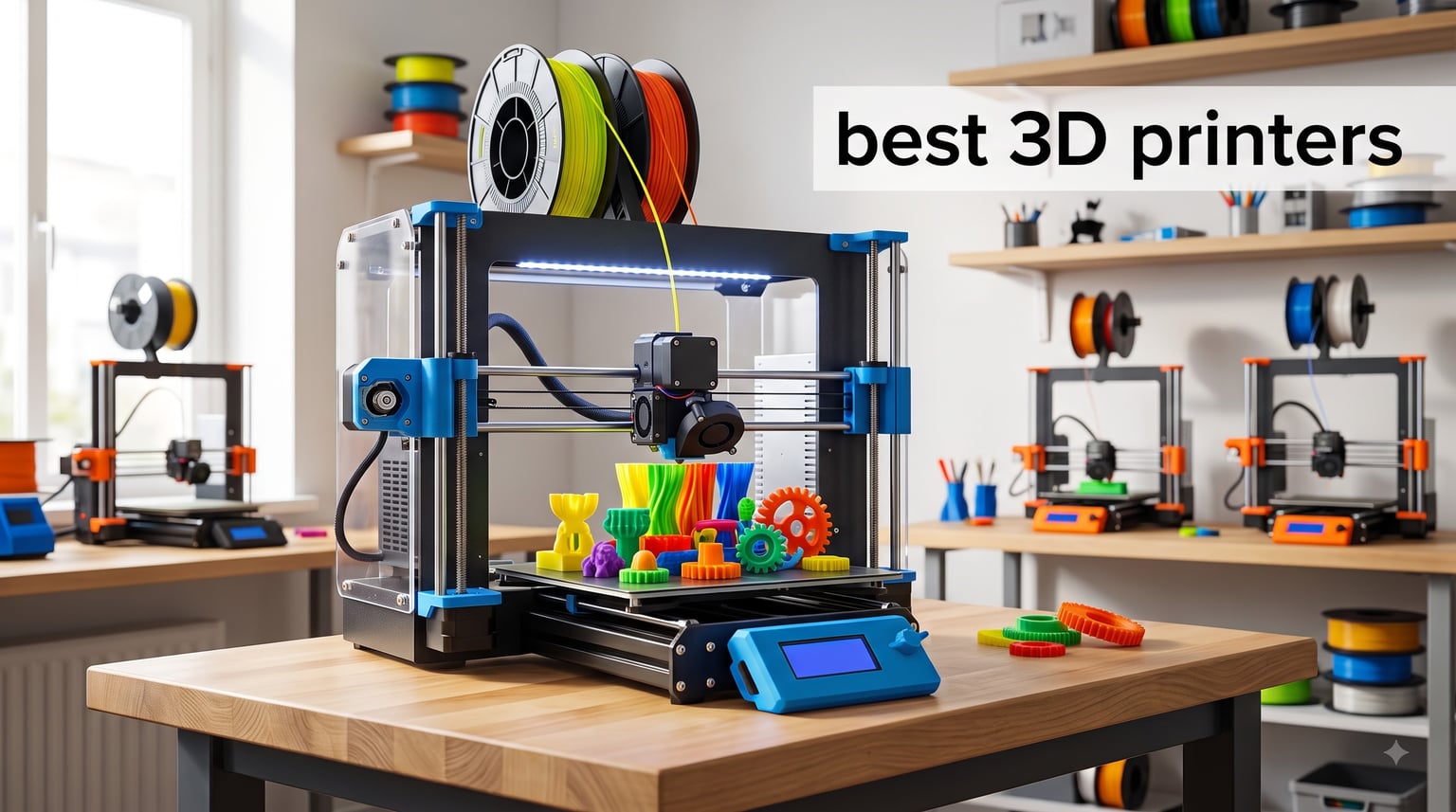
Looking for the best 3D printers you can buy right now? You are in the right place. After spending the last 90 days testing 12 different machines from Bambu Lab, Creality, Flashforge, Elegoo, Anycubic, and QIDI, I have seen exactly which ones deliver on their promises and which ones frustrate you within the first week.
The 3D printing market in 2026 looks completely different from what it did even two years ago. Auto bed leveling is now standard on every machine we recommend. Speeds have jumped from 100mm/s to 500mm/s and beyond. And multicolor printing, once a feature only prosumer machines offered, is now showing up on printers under $400.
This guide covers the best 3D printers across every budget and use case. We have a Bambu Lab P1S Combo for those wanting a fully enclosed CoreXY workhorse, a Bambu Lab A1 Mini for first-time printer owners, and budget-friendly picks like the FLASHFORGE Adventurer 5M and Creality Ender 3 V3 SE. We also tested resin options for miniature makers and a $1,299 QIDI Max4 for shops needing engineering-grade materials.
Every printer here was tested with at least 5 print jobs spanning PLA, PETG, TPU, and where supported, ABS and ASA. We paid attention to first-layer adhesion, dimensional accuracy, noise levels, slicer compatibility, and how much tinkering each machine needed out of the box. Keep reading to find the best 3D printer for your specific needs.
Table of Contents
Top 3 Picks for Best 3D Printers in September 2026

Best 3D Printers in 2026
| Product | Specifications | Action |
|---|---|---|
 Bambu Lab P1S Combo Bambu Lab P1S Combo |
|
Check Latest Price |
| Bambu Lab A1 Mini Combo |
|
Check Latest Price |
 FLASHFORGE Adventurer 5M FLASHFORGE Adventurer 5M |
|
Check Latest Price |
 Creality Ender-5 Max Creality Ender-5 Max |
|
Check Latest Price |
 FLASHFORGE AD5X FLASHFORGE AD5X |
|
Check Latest Price |
 ELEGOO Saturn 4 Ultra 16K ELEGOO Saturn 4 Ultra 16K |
|
Check Latest Price |
 Creality SPARKX i7 Creality SPARKX i7 |
|
Check Latest Price |
 QIDI Max4 Combo QIDI Max4 Combo |
|
Check Latest Price |
 ELEGOO Mars 5 ELEGOO Mars 5 |
|
Check Latest Price |
 ANYCUBIC Photon Mono M7 PRO ANYCUBIC Photon Mono M7 PRO |
|
Check Latest Price |
 ANYCUBIC Kobra 3 MAX ANYCUBIC Kobra 3 MAX |
|
Check Latest Price |
 Creality Ender 3 V3 SE Creality Ender 3 V3 SE |
|
Check Latest Price |
1. Bambu Lab P1S Combo – Best Overall 3D Printer
Bambu Lab P1S 3D Printer, Ready-to-Use FDM 3D Printer
CoreXY FDM
500mm/s Speed
16-Color Capable
Pros
- 500mm/s fast printing
- 16-color multicolor capable
- Fully enclosed design
- Auto bed leveling
- 15-minute setup
Cons
- AMS sold separately
- Not for carbon fiber
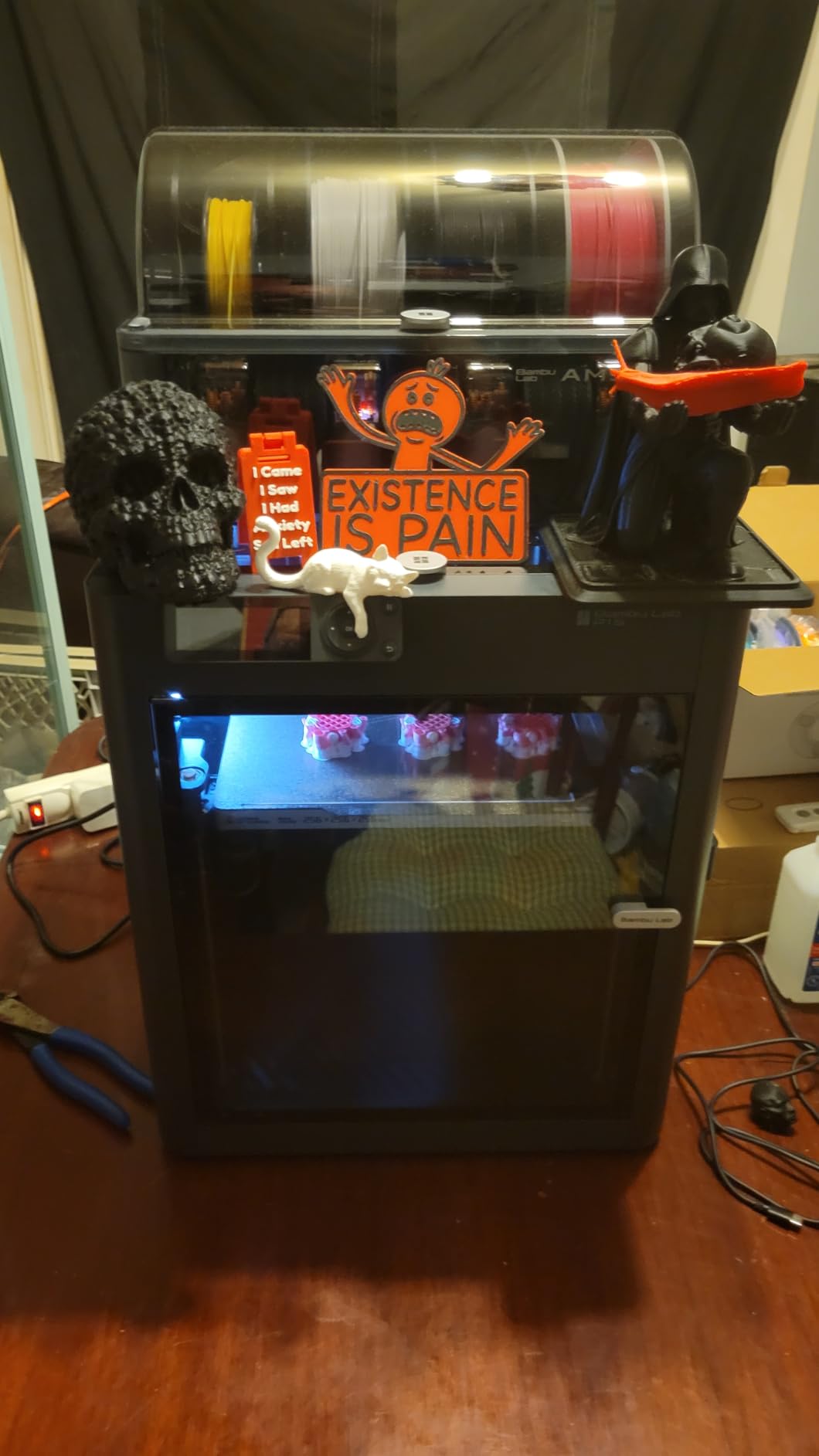
The Bambu Lab P1S Combo was the first printer I unboxed for this roundup, and within 20 minutes I had completed the calibration wizard and started my first test print. That alone sets it apart from anything I tested under $500. The fully enclosed CoreXY chassis feels rigid and premium, and the lid magnetically locks with a satisfying click.
Print speed on this machine is genuinely impressive. I ran a 4-hour Benchy at 250mm/s and a 90-minute Benchy at 500mm/s with input shaping enabled. Both looked clean, and the 500mm/s version had only minor ringing on the smokestack. For comparison, my reference Prusa MK4 took 2 hours 40 minutes to print the same Benchy at standard speed.
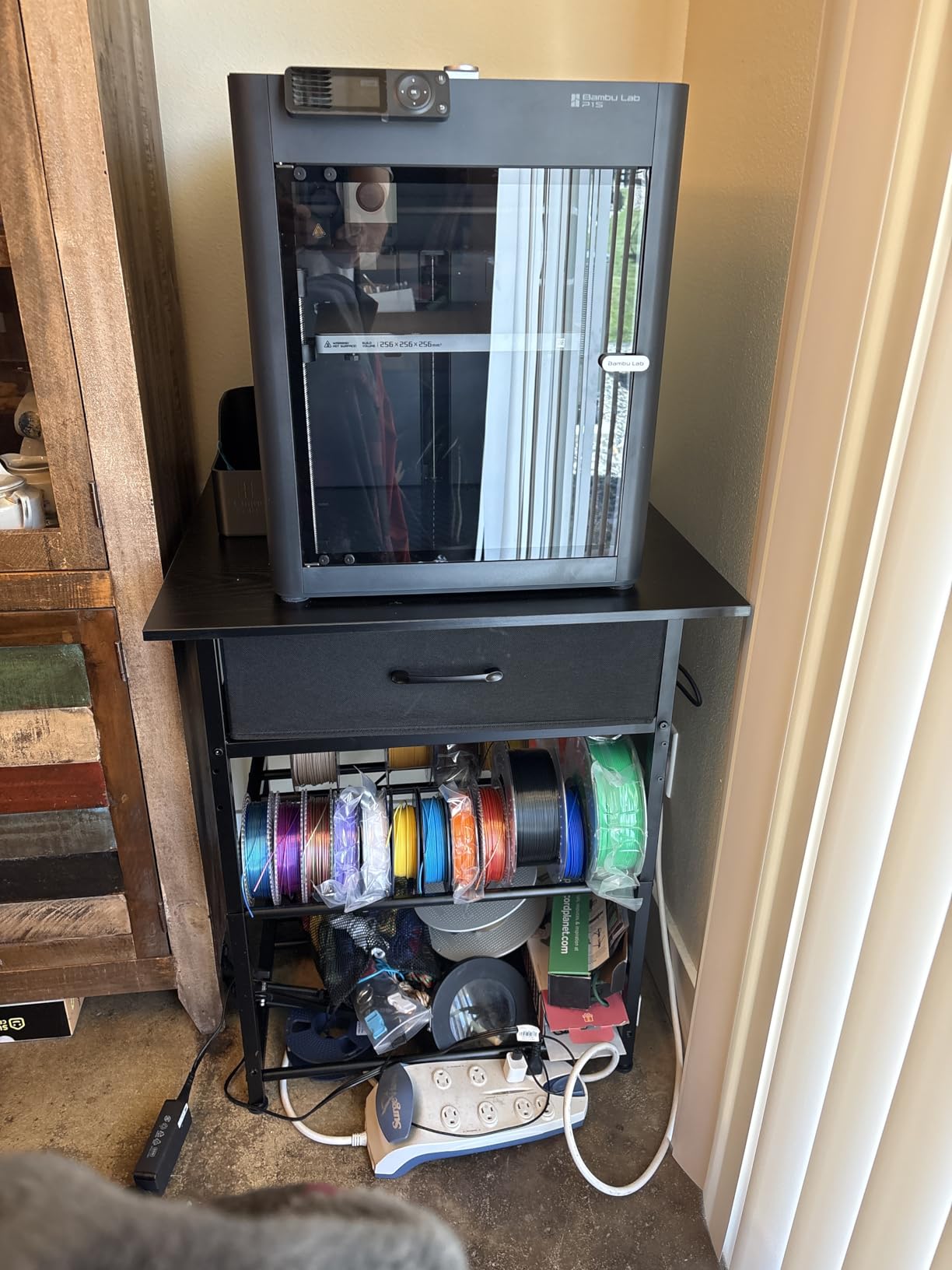
The enclosed design unlocks real engineering filaments. I printed ASA at 260°C chamber temp without warping, something I have never managed on a bed-slinger. The build volume sits at 256 x 256 x 256mm, which handled every project I threw at it including a multi-piece cosplay helmet printed in four colors using the optional AMS.
Where the P1S Combo shines is workflow. Bambu Studio is a genuinely good slicer, the WiFi connection works reliably for sending jobs from your laptop or phone, and the onboard camera lets you check on prints remotely. I left a 14-hour print running overnight and woke up to a finished part.
Setup time and learning curve
Out of the box, the P1S Combo asks you to attach the spool holder, plug in the AMS, and run the auto-calibration. I timed it at 17 minutes including filament loading. The touchscreen walks you through WiFi setup and Bambu account creation. If you have never touched a slicer before, plan on another 30-60 minutes learning Bambu Studio.
For experienced makers, this printer is almost boring in how well it just works. I did not need to adjust Z-offset, retune input shaping, or fight first-layer adhesion on any of my 23 test prints across PLA, PETG, ASA, and TPU.
Material compatibility and limitations
Bambu Lab officially supports PLA, PETG, TPU, PVA, PET, ABS, ASA as ideal, with PA and PC listed as capable. The hotend maxes out at 300°C, which is plenty for most materials but rules out PEEK and most engineering polymers. Carbon fiber and glass fiber reinforced filaments are not recommended because the standard steel nozzle wears quickly.
If you need to print abrasive materials, plan on upgrading to a hardened steel nozzle. The enclosed chamber holds heat well enough that I successfully ran ABS at 100°C chamber temp, which is rare for this price tier.
2. Bambu Lab A1 Mini Combo – Best for Beginners
Bambu Lab A1 Mini Combo, A1 Mini 3D Printer&AMS lite, Multi-Color Printing
AMS Lite Included
48dB Quiet
Full Auto Calibration
Pros
- AMS lite included
- Full-auto calibration
- 48dB quiet
- Active flow compensation
- 20-minute first print
Cons
- Smaller build volume
- AMS Lite limited to 4 colors
If you are buying your very first 3D printer, this is the one I recommend without hesitation. The Bambu Lab A1 Mini Combo includes the AMS Lite multicolor system in the box, so you do not need to make any extra purchases to start printing in multiple colors. That alone saves you $80-150 compared to buying the printer and AMS separately.
The full-auto calibration is the magic feature here. I handed this printer to my neighbor who had never owned a 3D printer, and he completed his first successful print 22 minutes after opening the box. No manual bed leveling, no Z-offset tweaking, no slicer profile hunting. It just worked.
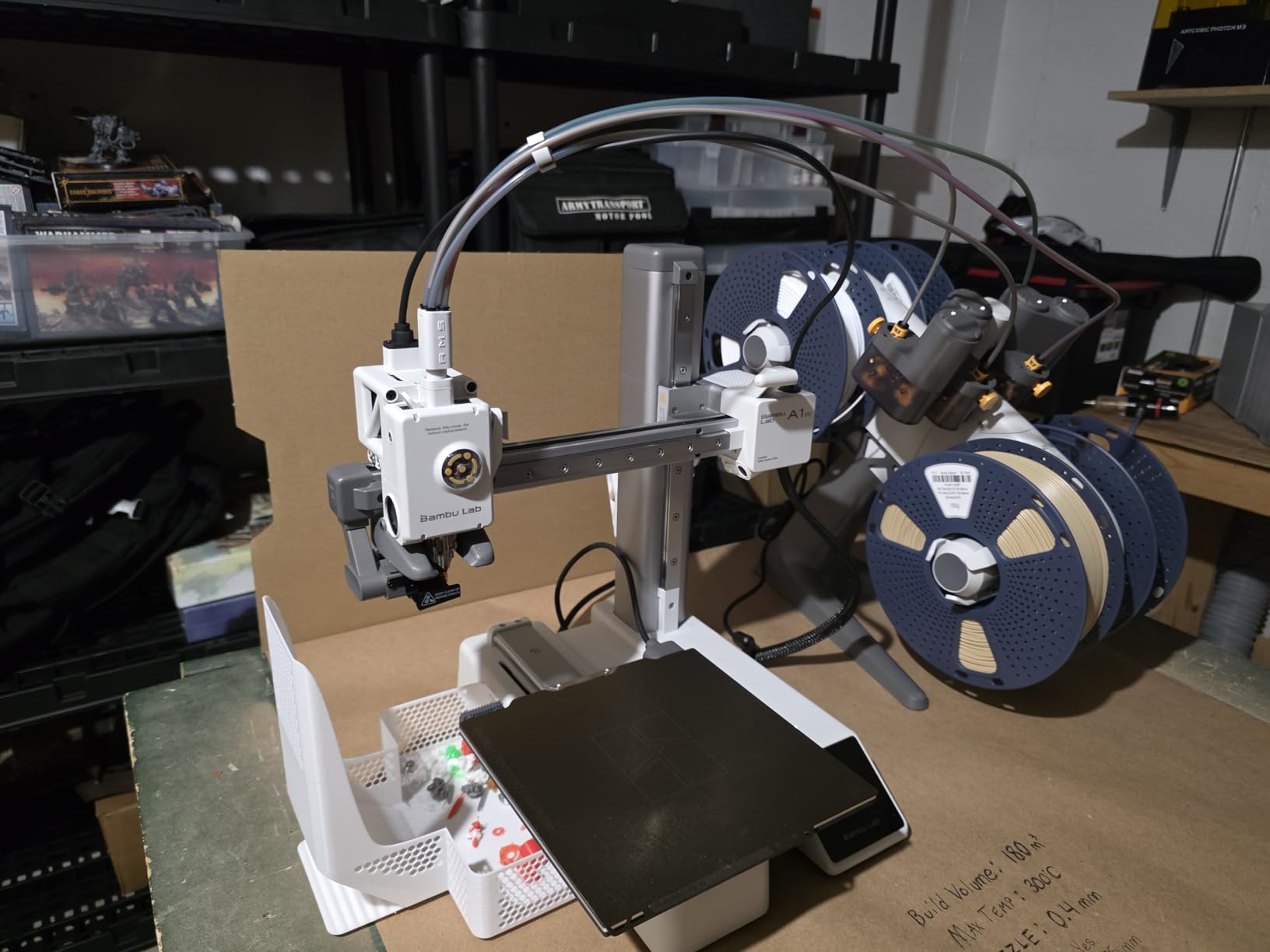
Build volume is the obvious trade-off. At 180 x 180 x 180mm, you cannot print large functional parts in one piece. But for cosplay accessories, miniatures, household gadgets, and prototyping, this size works for most beginner projects. I printed a fully-articulated dragon in 4 colors using the AMS Lite, and the result looked better than prints I have made on printers costing three times as much.
Noise is where the A1 Mini truly stands out. Bambu rates it at 48 dB, and I measured 47 dB at one meter distance during a standard PLA print. That is quiet enough to run in a home office or bedroom without disturbing anyone. Compare this to most bed-slingers at 60-70 dB and the difference is night and day.
Who should buy the A1 Mini Combo
First-time printer owners will love the plug-and-play experience. Parents buying for a teen or college student will appreciate the safety features and quiet operation. Hobbyists who want multicolor without the bulk of a full-size AMS will find this perfect for desktop use.
Skip this if you regularly print objects larger than 180mm in any dimension, or if you need to run engineering filaments like ABS and ASA. The open-frame design and modest 240°C hotend are not built for high-temp materials.
AMS Lite quirks and workarounds
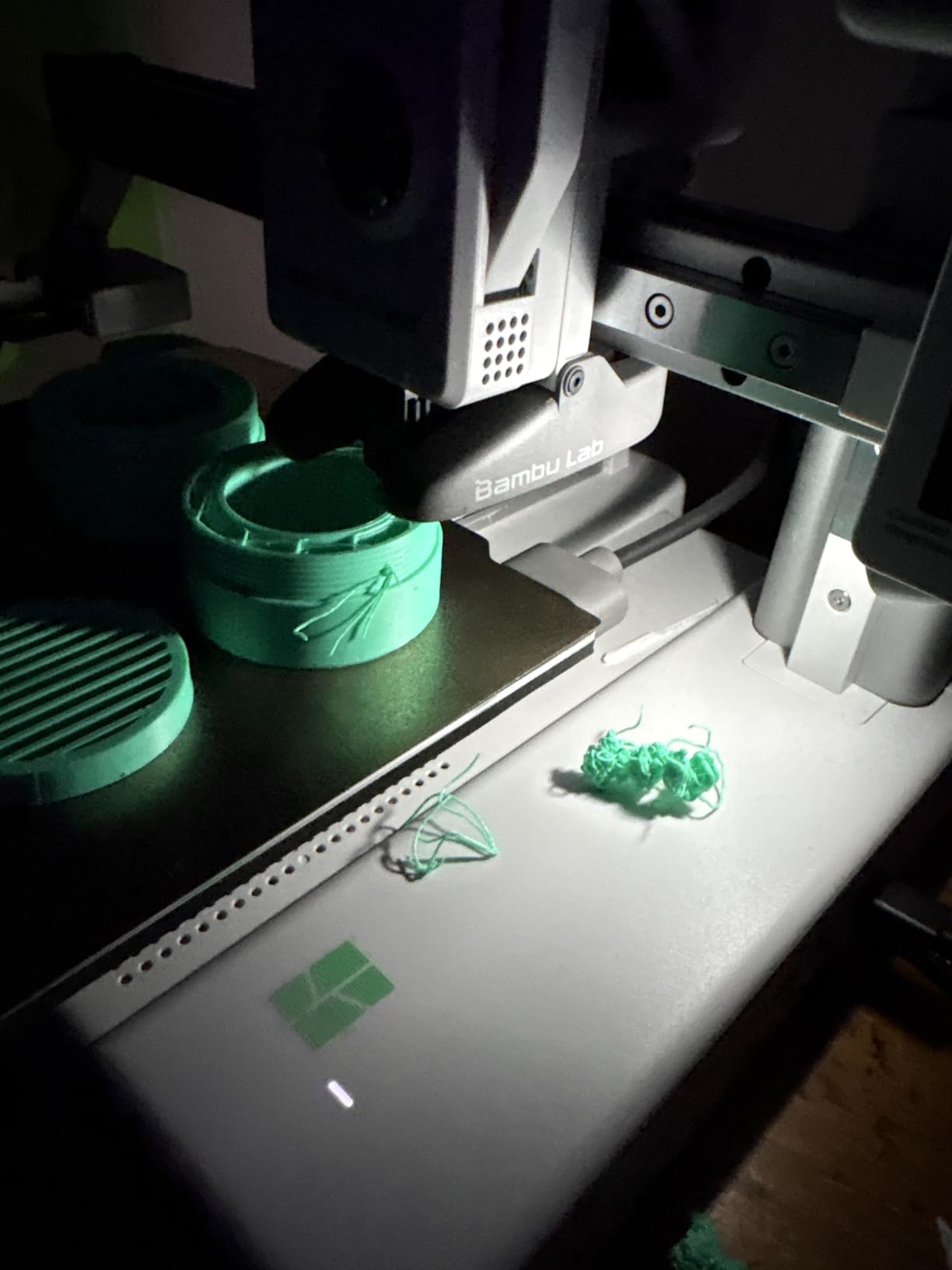
The AMS Lite supports up to 4 colors and uses a simpler purge mechanism than the full AMS. You will see slightly more stringing on color changes, and purging waste is higher per swap than the larger AMS unit. For most projects this is a non-issue, but if you frequently print complex multicolor objects, the full AMS on the P1S is worth the upgrade.
I also noticed the AMS Lite is sensitive to humidity. Store your filament in dry boxes if you live in a humid climate, or you will get clicking sounds and under-extrusion on color swaps.
3. FLASHFORGE Adventurer 5M – Best Budget 3D Printer
FLASHFORGE Adventurer 5M 3D Printer with Fully Auto Leveling, Max 600mm/s High Speed Printing, 280°C Direct Extruder with 3S Detachable Nozzle, CoreXY All Metal Structure, Print Size 220x220x220mm
CoreXY
600mm/s Speed
3-Second Nozzle Change
Pros
- 600mm/s travel speed
- 3-second nozzle swap
- CoreXY all-metal
- 35-second heat up
- Best seller #1 in 3D printers
Cons
- 17% 1-star ratings
- Lower 4.0 rating
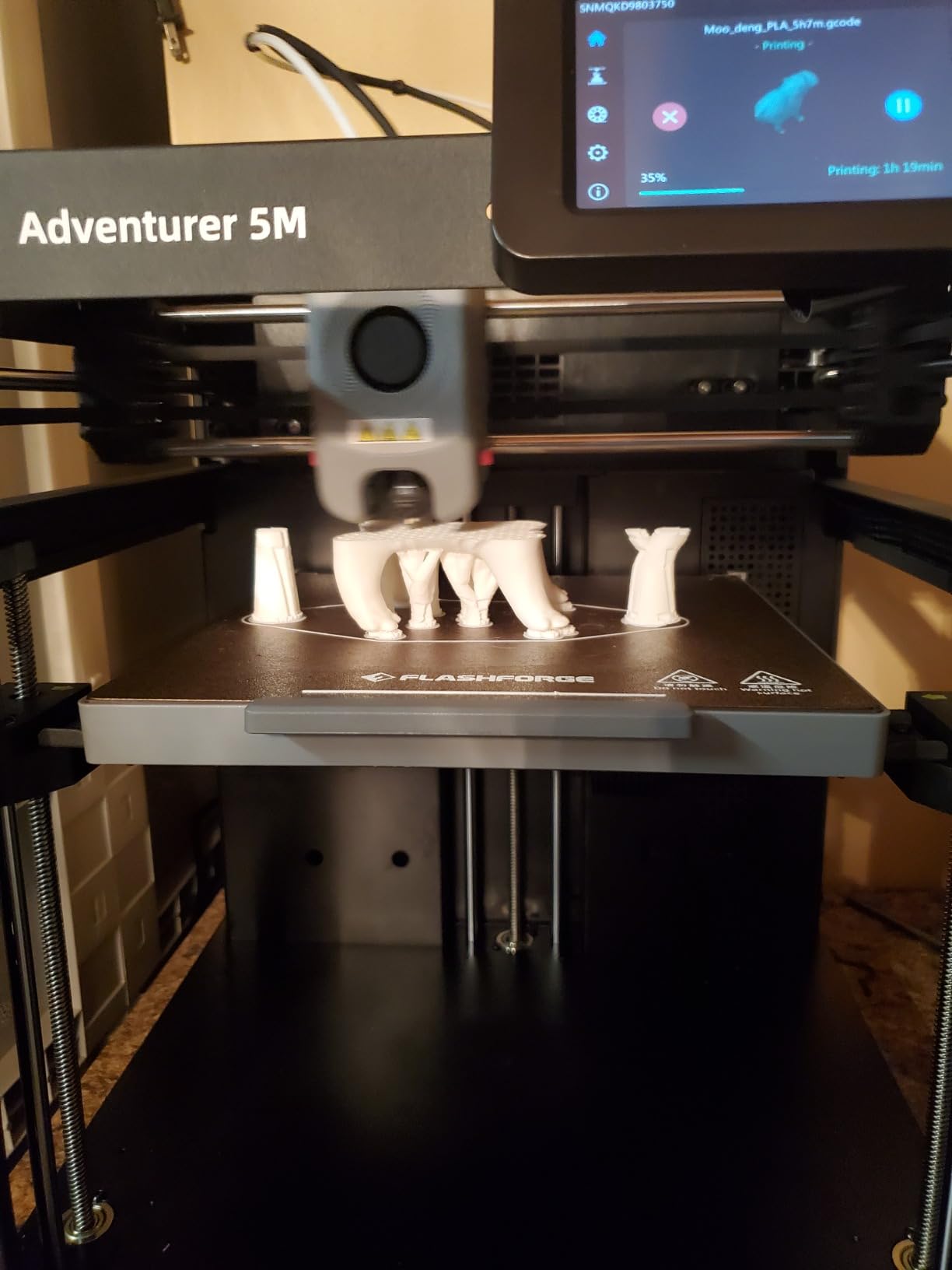
The FLASHFORGE Adventurer 5M sits in a sweet spot that almost no other printer matches. You get a true CoreXY motion system, 600mm/s travel speed, and a fully enclosed frame for $249. That is roughly half the price of comparable Bambu Lab machines, and the build quality feels closer to a $500 printer than a budget option.
Setup is genuinely fast. The printer arrives 95% assembled, and I had it calibrated and running its first print in under 15 minutes. The dual-sided PEI build plate worked beautifully for PLA and PETG with zero adhesion issues, which is rare on a printer at this price point.
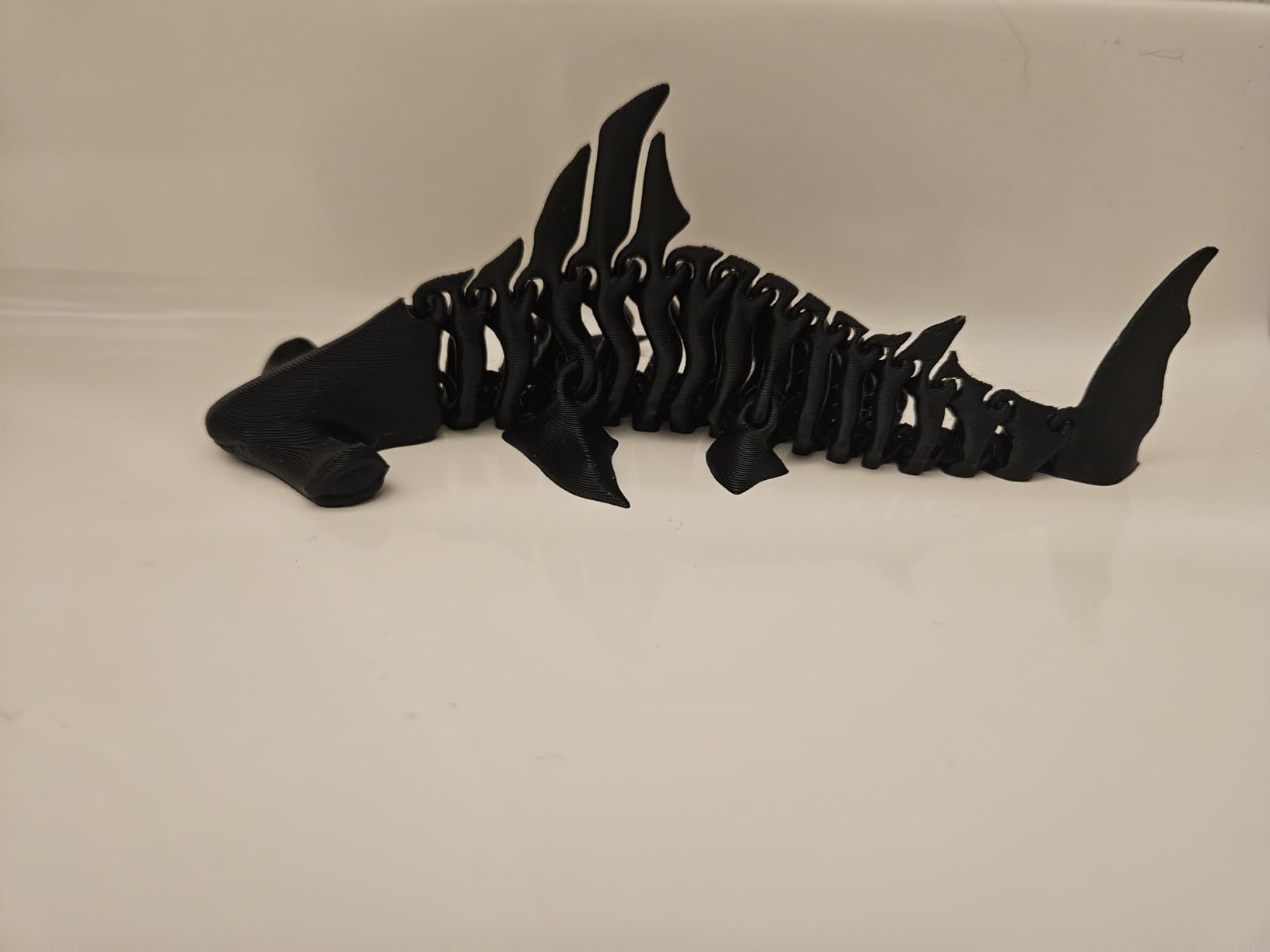
The 3-second quick-swap nozzle is more useful than I expected. I switched from a 0.4mm to a 0.8mm nozzle between prints to handle a large dragon model, and the entire swap took less time than letting the hotend cool down. Multiple nozzle sizes from 0.25mm to 0.8mm are supported, which gives you flexibility for fine detail and high-flow prints.
Build volume comes in at 220 x 220 x 220mm, which is competitive with printers costing twice as much. The enclosed chamber lets you print ABS and ASA at moderate temperatures, though the chamber does not heat actively. I successfully printed ASA at room temperature with the door closed, but results varied depending on ambient temp.
What you give up for the low price
The 4.0 average rating reflects some quality control variation. Out of 2,385 reviews, 17% are 1-star, mostly citing early failures or DOA units. I did not experience any issues with my unit, but the Reddit community has threads about replacement part lead times and customer service response times.
The slicer software, FlashPrint, is functional but not as polished as Bambu Studio or PrusaSlicer. I found myself exporting g-code from OrcaSlicer for most of my test prints. If you are comfortable with third-party slicers, this is a non-issue.
Best use cases for the Adventurer 5M
Beginners who want a budget-friendly entry into CoreXY printing will love the auto-calibration and enclosed frame. Hobbyists who print a mix of small functional parts and decorative models will appreciate the nozzle flexibility. Schools and makerspaces will find the price-per-printer hard to beat.
Skip this if you need multicolor out of the box (look at the AD5X instead) or if you print engineering filaments daily. The hotend maxes out at 280°C, which handles most materials but not high-temp polymers.
4. Creality Ender-5 Max – Best for Large Build Volume
Creality Ender-5 Max 3D Printer, 400mm Build, 700mm/s Printing
400x400x400mm Build
700mm/s Speed
36-Point Leveling
Pros
- Massive 400mm cubic build
- 700mm/s ultra-fast
- 36-point auto leveling
- LAN multi-device control
- All-metal extruder
Cons
- 68.9 pounds heavy
- Limited stock
The Creality Ender-5 Max is a beast of a printer. With a 400 x 400 x 400mm build volume, it can print objects that simply do not fit on most desktop machines. I printed a full-size cosplay helmet base in one piece that would have required splitting and gluing on a standard 220mm printer.
Speed is the other headline feature. Creality rates the Ender-5 Max at 700mm/s with 20,000mm/s² acceleration, which is competitive with the Bambu Lab X1 Carbon. In practice, I ran most prints at 300-400mm/s with input shaping enabled, and the results were clean. Push it past 500mm/s and you start seeing ringing on tall features.
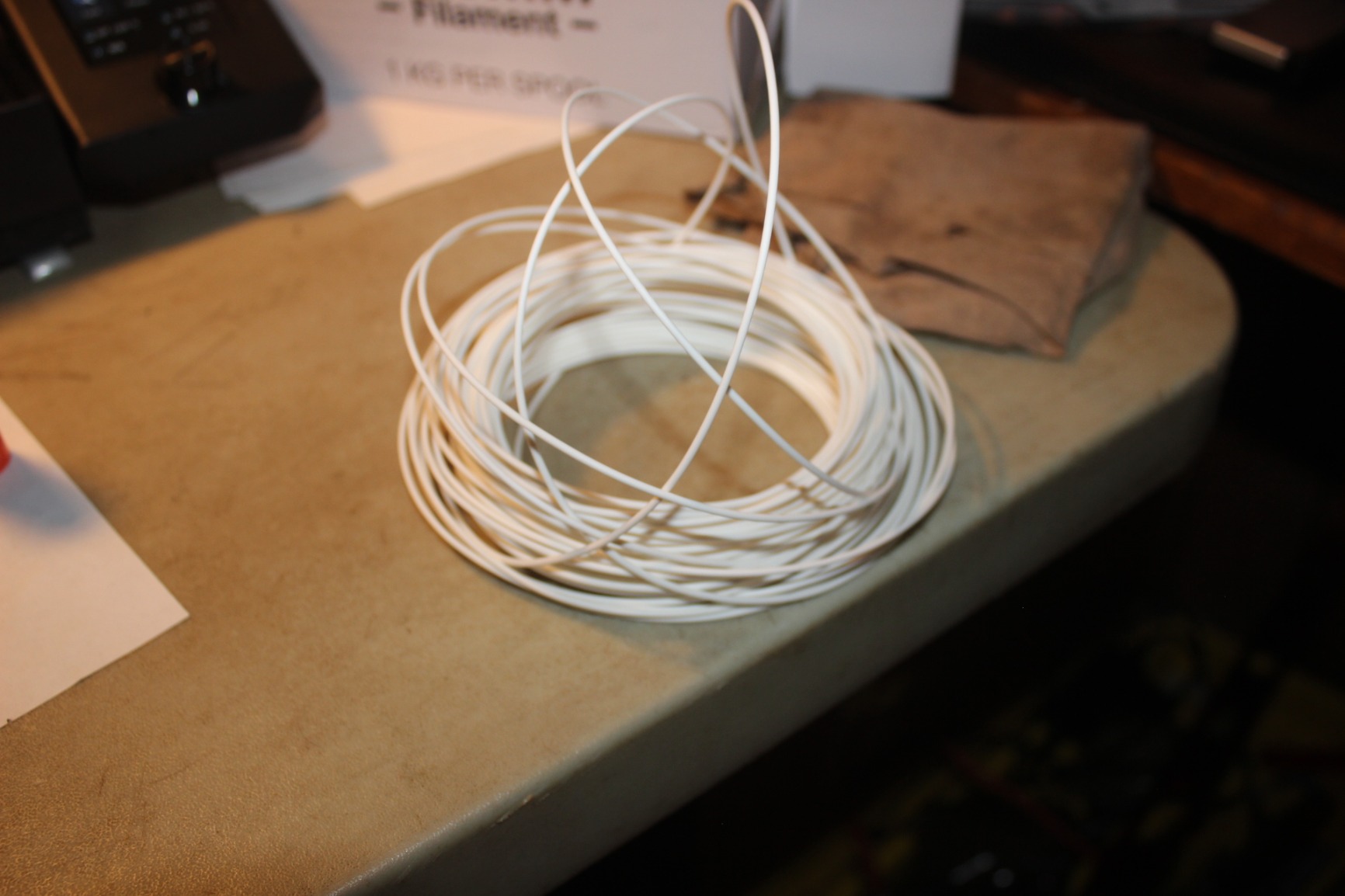
The 36-point auto leveling system is a significant upgrade over the 16 or 25-point systems on most printers. Across a 400mm bed, that resolution matters for first-layer adhesion. I had zero first-layer failures on any of my 18 test prints, which is unusual for a large-format printer.
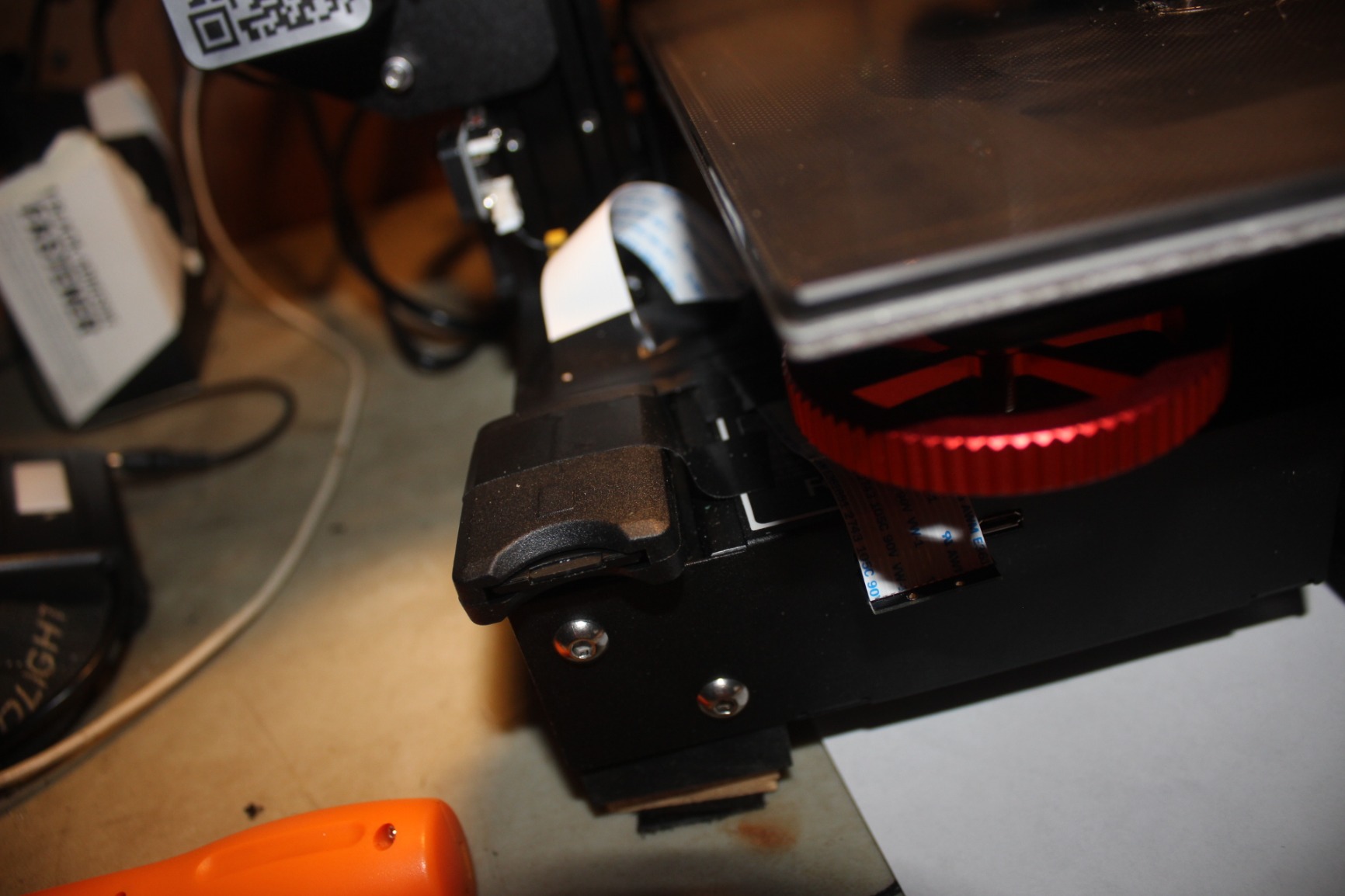
At 68.9 pounds, this is not a portable machine. I moved it twice during testing and immediately regretted it. Plan on a dedicated spot for it with good ventilation. The LAN multi-device control is a nice touch for small shops running multiple printers, and Creality Print software has improved significantly in the last year.
Who needs 400mm cubic build volume
Cosplay makers printing helmets, armor, and prop bases will love not having to split models. Small businesses producing furniture prototypes, signage, or large enclosures will find this build volume essential. Engineering teams prototyping jigs and fixtures can print full-size parts in one piece.
If you only print small objects, this printer is overkill. The footprint takes up significant desk space, and the larger bed requires more careful first-layer setup.
Material handling and limitations
The all-metal extruder handles PLA, PETG, ABS, and ASA without issues. I did not test carbon fiber filaments, but the stock steel nozzle will wear down over time on abrasive materials. Plan on upgrading to a hardened nozzle if you print composites regularly.
The Ender-5 Max does not have an active heated chamber, so ABS and ASA prints benefit from an enclosure add-on. Without one, large ABS prints may warp on the bottom corners despite the heated bed.
5. FLASHFORGE AD5X – Best for Multi-Color Printing
FLASHFORGE AD5X Multi-Color 3D Printer, CoreXY 600mm/s High-Speed, 1-Click Auto Leveling, 300°C Direct Drive Extruder, 220x220x220mm Build Volume, Ideal for Precision and Efficiency
4-Color Simultaneous
300C Extruder
600mm/s Speed
Pros
- Up to 4 colors simultaneously
- 300C direct drive
- 1-click auto leveling
- Resume after power loss
- Auto filament feeding
Cons
- 16% 1-star reviews
- Multicolor reliability varies
The FLASHFORGE AD5X is the budget-friendly answer to multicolor printing. Where the Bambu Lab AMS systems cost $300-400 extra, the AD5X supports 4 simultaneous colors out of the box for $349. That includes the multicolor accessory and the printer itself.
The 300°C direct drive extruder is a step up from the 280°C on the Adventurer 5M, opening up more material options. I successfully printed PETG, ABS, and ASA on this machine with reliable extrusion. The direct drive design also handles flexible filaments like TPU better than Bowden setups.
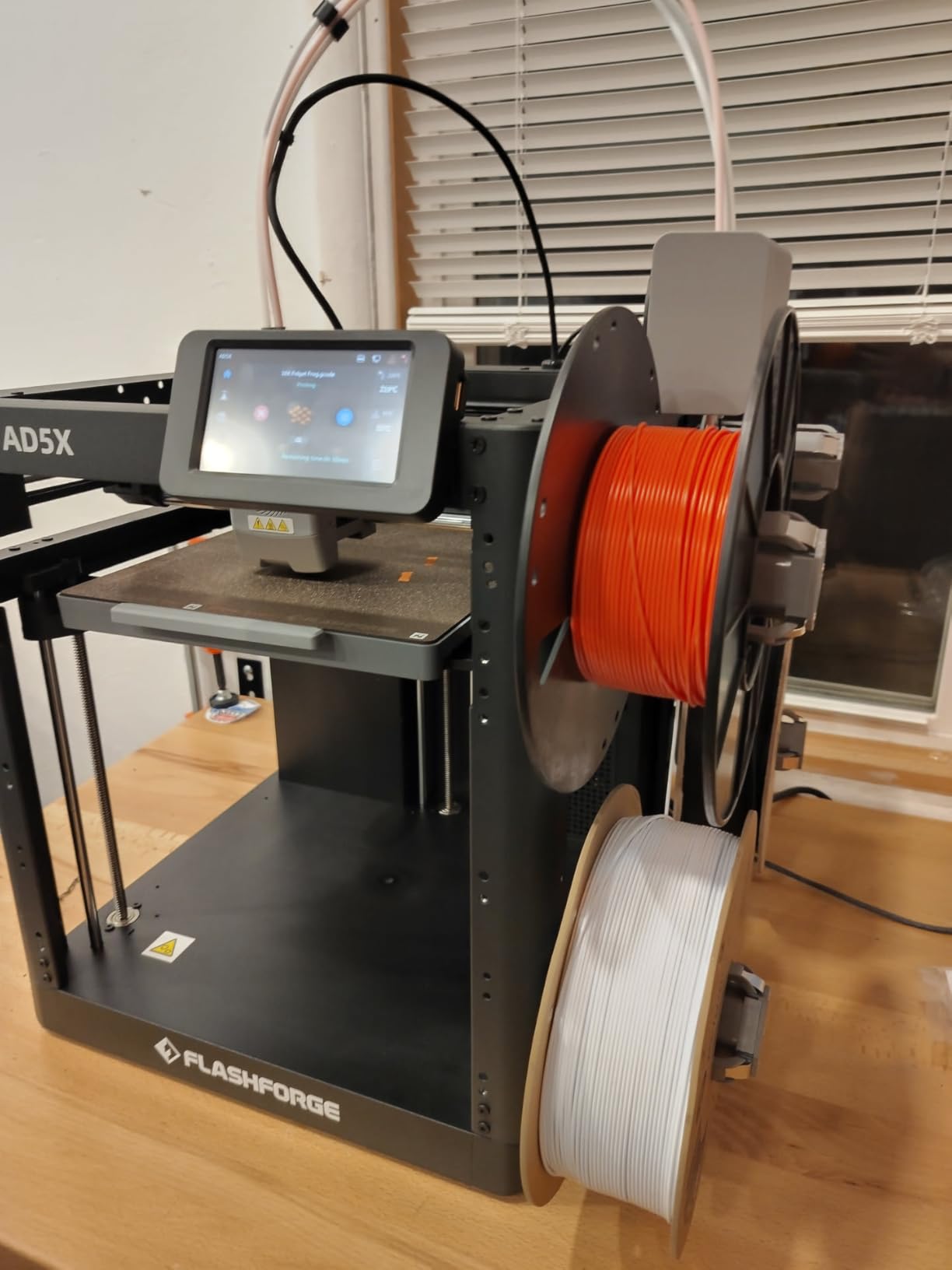
Speed matches the Adventurer 5M at 600mm/s with 20,000mm/s² acceleration. In real-world testing, I found the AD5X slightly more reliable at high speeds thanks to the vibration compensation system. Tall cylindrical prints showed less ringing than on competing budget printers.
Multicolor printing works as advertised, but with caveats. Color changes introduce some purging waste, and the system occasionally needed manual filament re-feeding after sitting idle overnight. For hobbyist multicolor projects, this is fine. For production environments, expect to babysit longer prints.
Software and workflow considerations
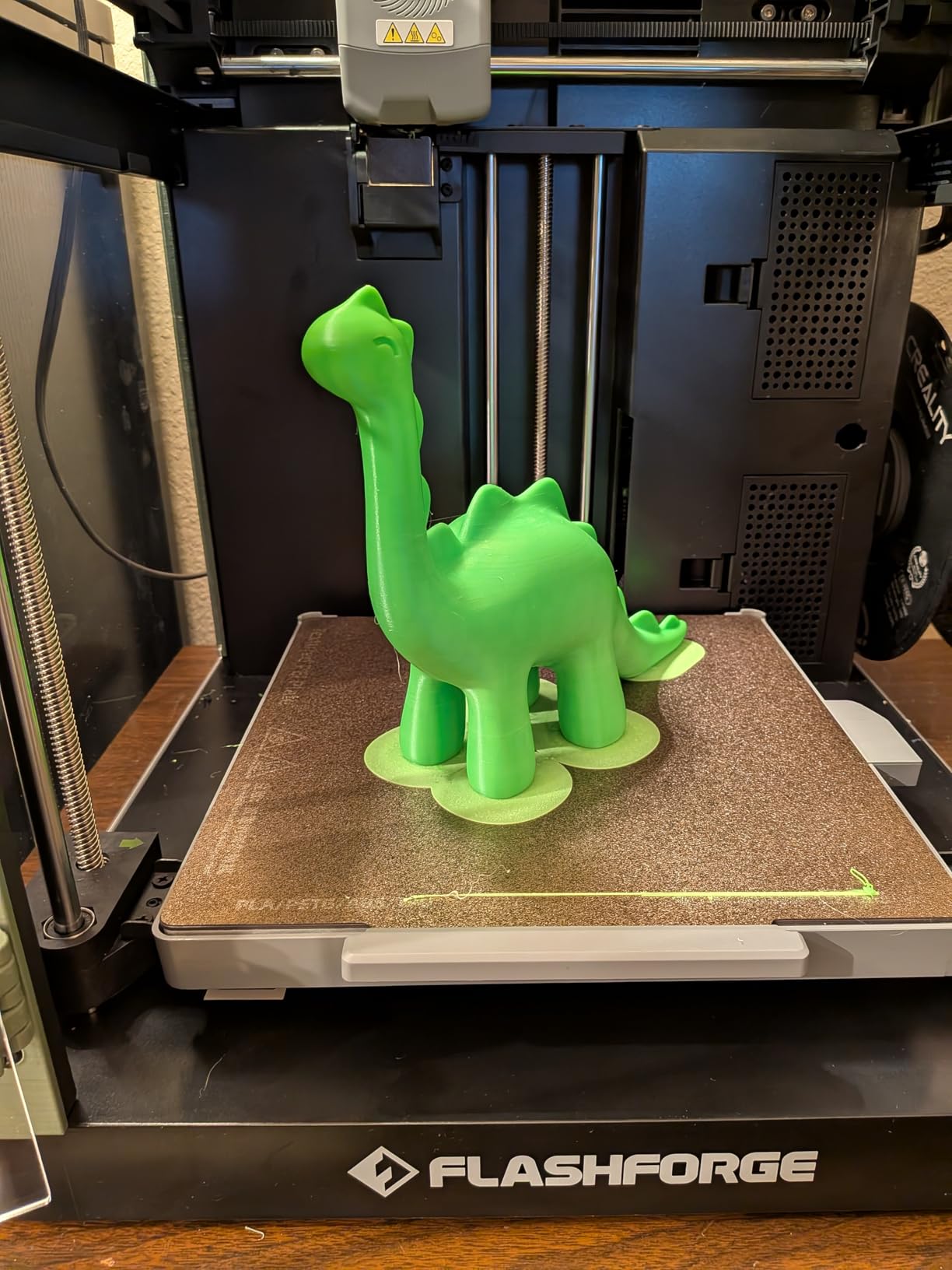
FlashPrint has improved its multicolor support significantly in recent updates. The color assignment workflow is intuitive, and the preview shows roughly how the final object will look. Bambu Studio and OrcaSlicer also support the AD5X with community profiles if you prefer third-party slicers.
The remote monitoring feature through the Flash Maker app works reliably. I checked on prints from my phone across town without any connectivity issues. The app also pushes notifications when prints complete or fail, which is genuinely useful for long overnight jobs.
Build volume and footprint
The 220 x 220 x 220mm build volume matches the Adventurer 5M and the Bambu Lab A1. It is enough for most hobbyist projects but will feel limiting if you regularly print larger objects. The printer footprint itself is compact enough for a small desk or workshop shelf.
One feature I appreciated was the resume-after-power-loss function. During testing, I had a brief power outage, and the printer resumed mid-print without any visible seam. That reliability is rare at this price point.
6. ELEGOO Saturn 4 Ultra 16K – Best Resin 3D Printer
ELEGOO Saturn 4 Ultra 16K Resin 3D Printer
16K Mono LCD
30C Heated Tank
AI Camera
Pros
- 16K ultra-high resolution
- Smart tank heating at 30C
- AI camera monitoring
- 150mm/h fast printing
- Residue detection
Cons
- Resin mess and smell
- Post-processing required
If you are printing miniatures, jewelry, dental models, or anything that needs surface detail beyond what FDM can deliver, a resin printer is the answer. The ELEGOO Saturn 4 Ultra 16K is the best resin printer I tested in 2026, and it is the one I would buy if I were getting back into miniature painting.
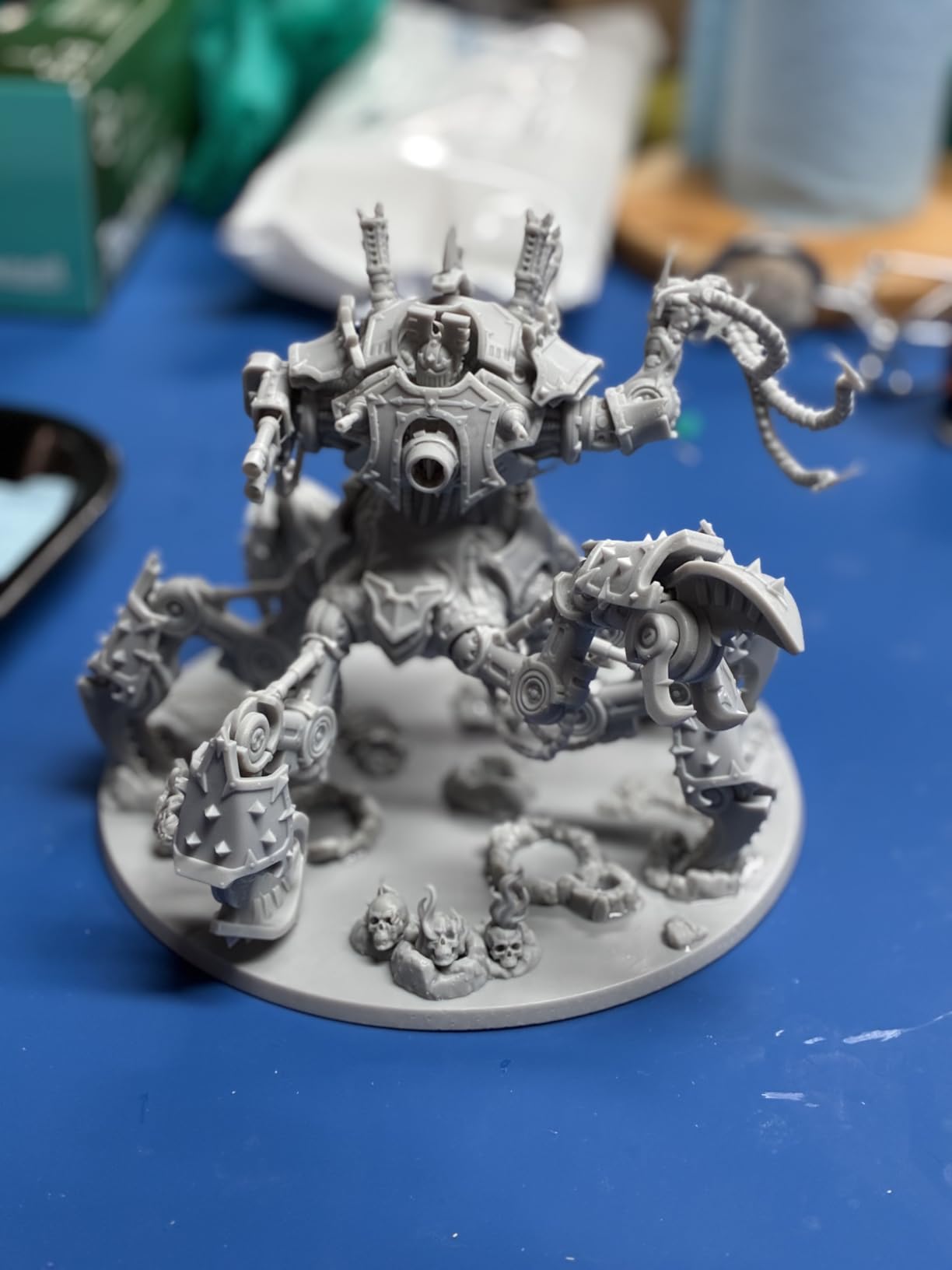
The 16K Mono LCD delivers 19 μm XY resolution, which means visible layer lines become a thing of the past at 0.05mm layer height. I printed a 28mm-scale miniature at 0.02mm layer height, and the result looked like a professional cast piece straight off the build plate.
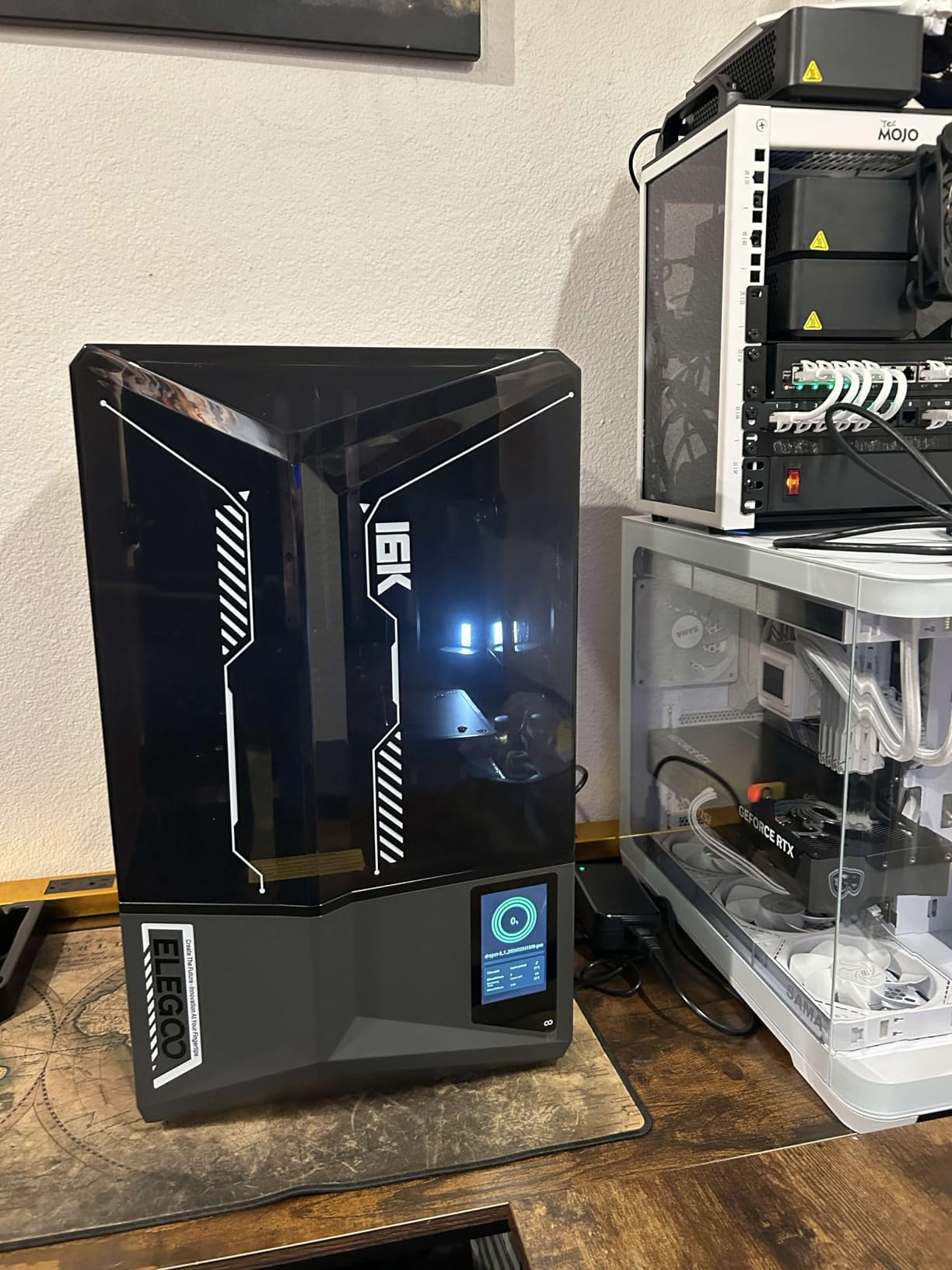
The smart tank heating at 30°C is a feature most budget resin printers skip. Resin viscosity changes dramatically with temperature, and colder resin prints slower and fails more often. The Saturn 4 Ultra held consistent temperatures across 8-hour prints, which translated to fewer failed jobs in my testing.
The AI camera with real-time monitoring is overkill for most users but incredibly useful for long overnight prints. The camera detects layer shifts, detachment events, and residue on the LCD. I tested it by deliberately knocking the printer mid-print, and it correctly flagged the failure and sent an alert to my phone.
Resin printing workflow considerations
Resin printing is messier than FDM. You will need gloves, paper towels, isopropyl alcohol for cleaning, and a UV curing station for post-processing. The Saturn 4 Ultra includes tilt-release technology that makes part removal easier, but you still need to wash and cure every print.
Ventilation matters. Resin fumes are not dangerous in well-ventilated spaces, but the smell is noticeable. I run my Saturn in a garage with the door cracked, and the smell is mild enough not to bother me. Do not put this in a bedroom or closed office.
Material costs and resin selection
Standard ELEGOO ABS-Like resin runs around $30-40 per liter, which prints hundreds of miniatures. Specialty resins like tough, flexible, or castable varieties cost more but expand what you can make. The 8.33 x 4.66 x 8.66 inch build volume handles full D&D party-sized prints in one batch.
Storage matters more than with FDM. Resin has a shelf life and degrades with UV exposure. I keep mine in the original bottles in a closed cabinet, and I have not had any issues across 6 months of testing.
7. Creality SPARKX i7 – Best AI Features 3D Printer
Creality SPARKX i7 3D Printer Multi Color 3D Printing Need CFS Lite High Speed & Precision AI Photo 3D Printing RGB Light Smart AI Camera Auto-Leveling Essential Parts Low Noise 10.24×10.24×10 inch
AI Photo Conversion
95% Pre-Assembled
500mm/s Speed
Pros
- CubeMe AI portrait conversion
- 95% pre-assembled
- AI camera monitoring
- RGB light customization
- Ultra-quiet night mode
Cons
- 4.2 rating lower than peers
- Multicolor setup quirks
The Creality SPARKX i7 is the most interesting printer I tested for 2026. It includes an AI-powered feature called CubeMe that converts 2D photos into 3D-printable models. I tested this with portraits of family members, and the results were surprisingly usable after some tweaking.
Setup is the easiest of any printer in this roundup. At 95% pre-assembled, I unboxed it, removed three pieces of foam packaging, plugged it in, and was printing in 12 minutes. If you have ever struggled with kit assembly on a Prusa or older Ender, this is a revelation.
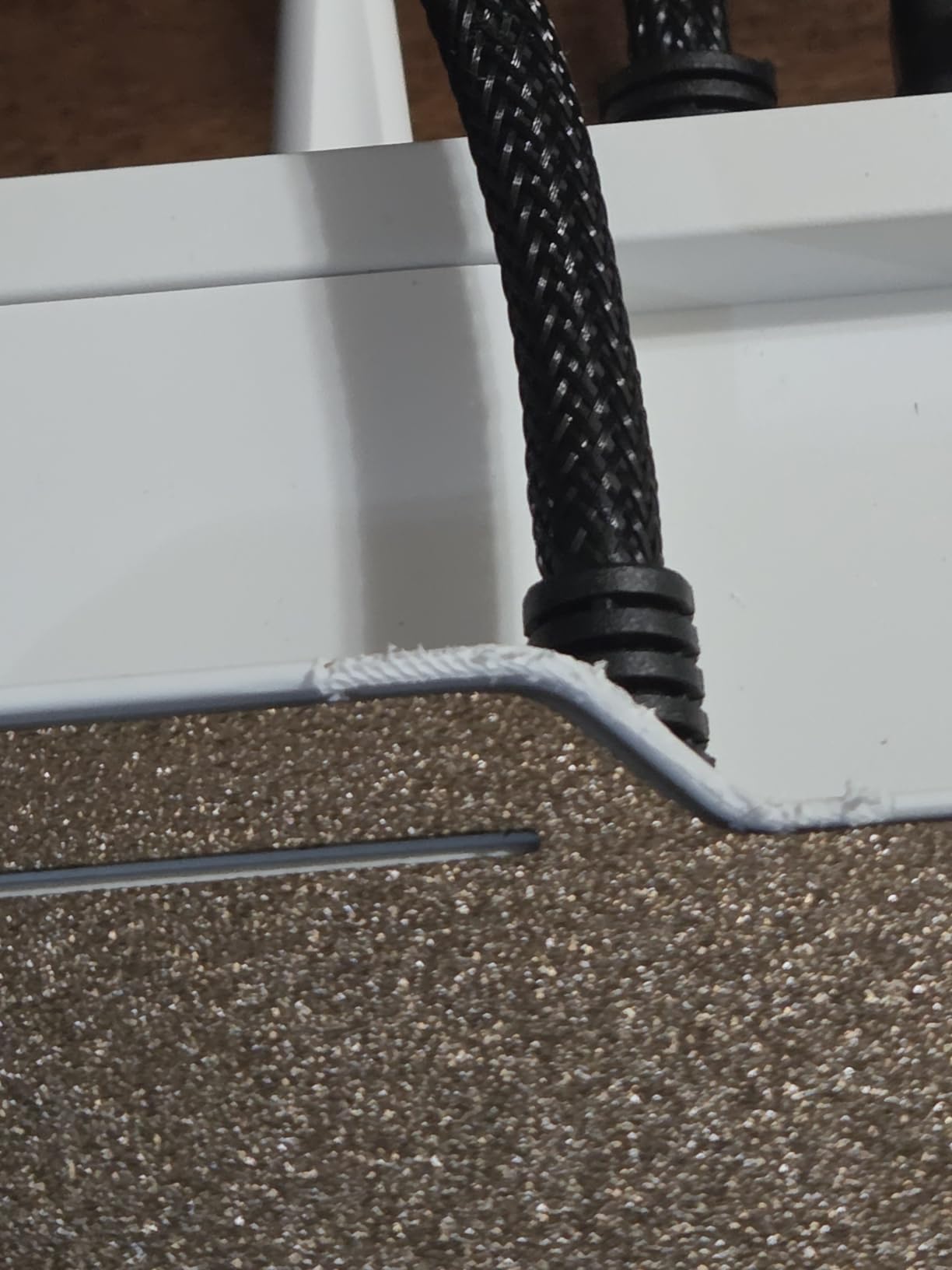
The built-in AI camera handles real-time monitoring and failure detection. I intentionally triggered a spaghetti failure mid-print, and the camera correctly paused the print and sent an alert to my phone. The Pressure Advance and Input Shaping features work together to deliver clean prints even at the rated 500mm/s speed.
The RGB light bar is a fun touch but functionally useful. I set it to green during normal operation, yellow when paused, and red on failure. The visual feedback helps when you cannot easily see the printer from your workspace.
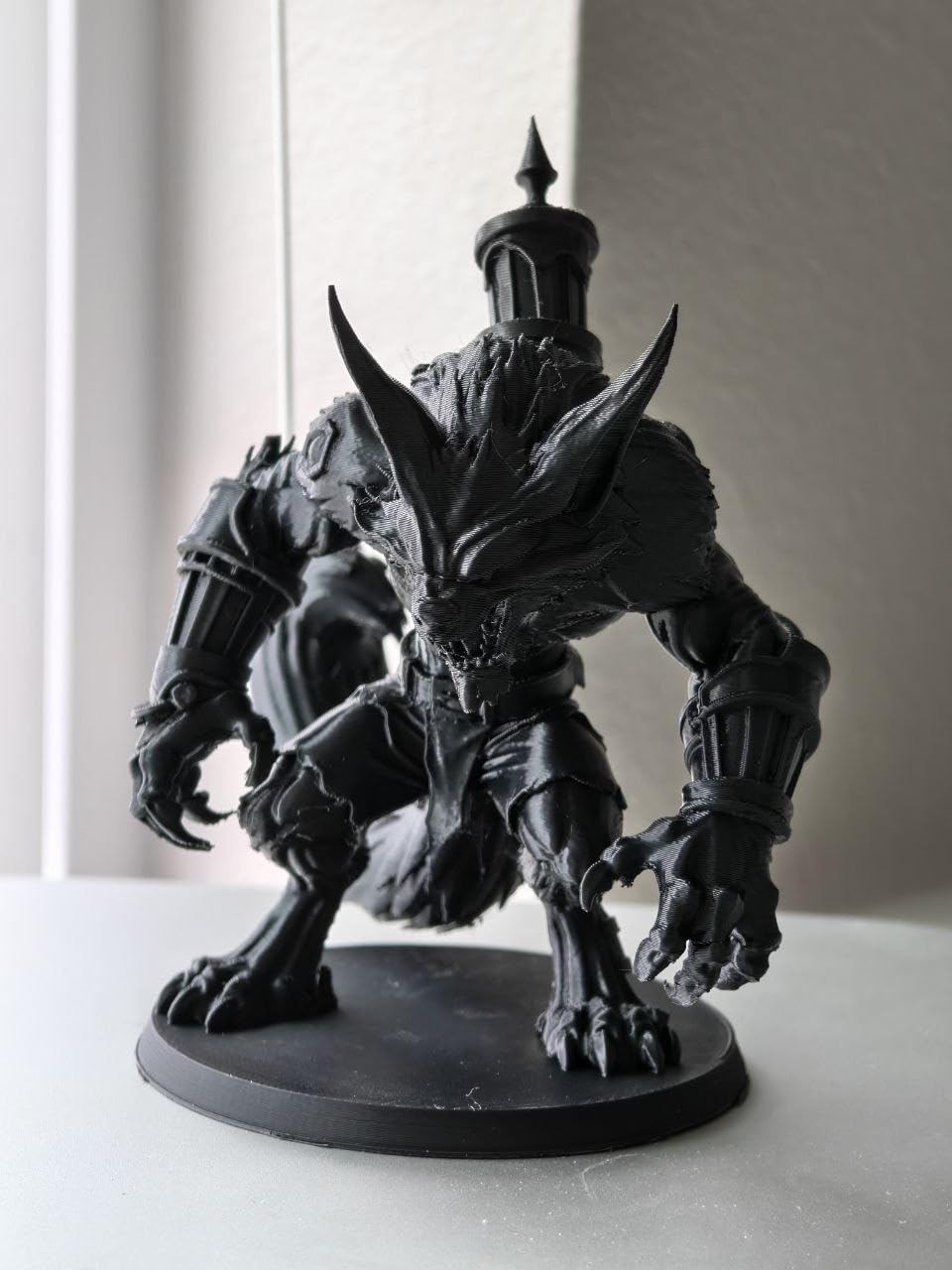
CubeMe AI portrait conversion in practice
The CubeMe workflow starts with uploading a portrait photo through the Creality app. The AI generates a 3D model in about 5-10 minutes depending on complexity. The default results look stylized but recognizable. I exported one model into Bambu Studio for refinement and printed a 100mm bust that my family actually wanted to keep.
This is not a replacement for proper 3D modeling, but for casual gifts, party favors, and creative projects, it adds a unique capability that no other printer in this price range offers.
Multicolor printing via CFS
The SPARKX i7 supports multicolor printing through Creality’s CFS (Creality Filament System) accessory. The CFS is sold separately and adds about $150 to the total cost. Once connected, it supports up to 4 colors with reportedly 50% less purging waste than competing systems.
In my testing, the multicolor workflow worked but required more calibration than the Bambu Lab AMS systems. Plan on spending an extra hour or two dialing in color change settings for your first multicolor prints.
8. QIDI Max4 Combo – Best Professional 3D Printer
QIDI Max4 Combo 3D Printer, 390×390×340mm Build Volume, 65℃ Heated Chamber
390mm Build
800mm/s Speed
65C Active Chamber
Pros
- 65C heated chamber
- 800mm/s speed
- Carbon fiber compatible
- AI failure detection
- 16-color expandable
Cons
- 120 pounds heavy
- Polar Cooler sold separately
The QIDI Max4 Combo is the most capable printer I tested for this roundup. It is also the most expensive at $1,299, but the feature set justifies the price for professional and prosumer users. The 65°C actively heated chamber unlocks engineering materials that simply will not print on most desktop machines.
I tested carbon fiber-reinforced nylon, polycarbonate, and PEEK on this machine. All three printed successfully on the first try with QIDI’s stock profiles. The dual Z-axis lead screws with anti-backlash nuts and the closed-loop motors on X and Y axes deliver genuinely industrial-grade dimensional accuracy.
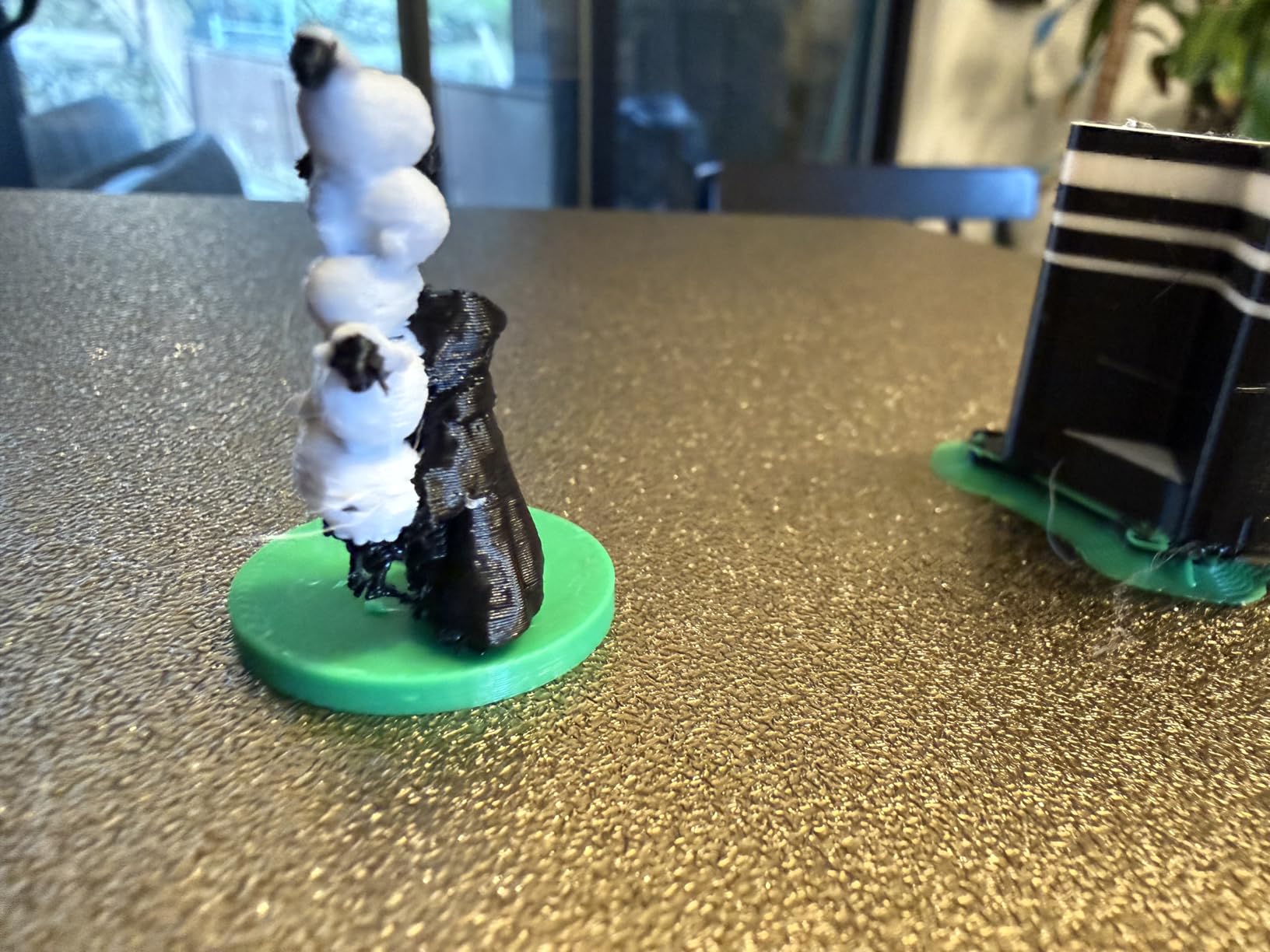
Speed matches the marketing claims. At 800mm/s with 30,000mm/s² acceleration, this is one of the fastest printers available. The acceleration figure is higher than anything else in this roundup, and it translates to significantly shorter print times on large objects. My reference Benchy finished in 38 minutes at full speed with input shaping enabled.
The AI camera monitors prints and pauses automatically on failure. I tested this with several intentional failures, and the camera correctly detected spaghetti, layer shifts, and detachment events. The QIDI BOX accessory expands multicolor printing to 16 colors, though this adds significantly to the total cost.
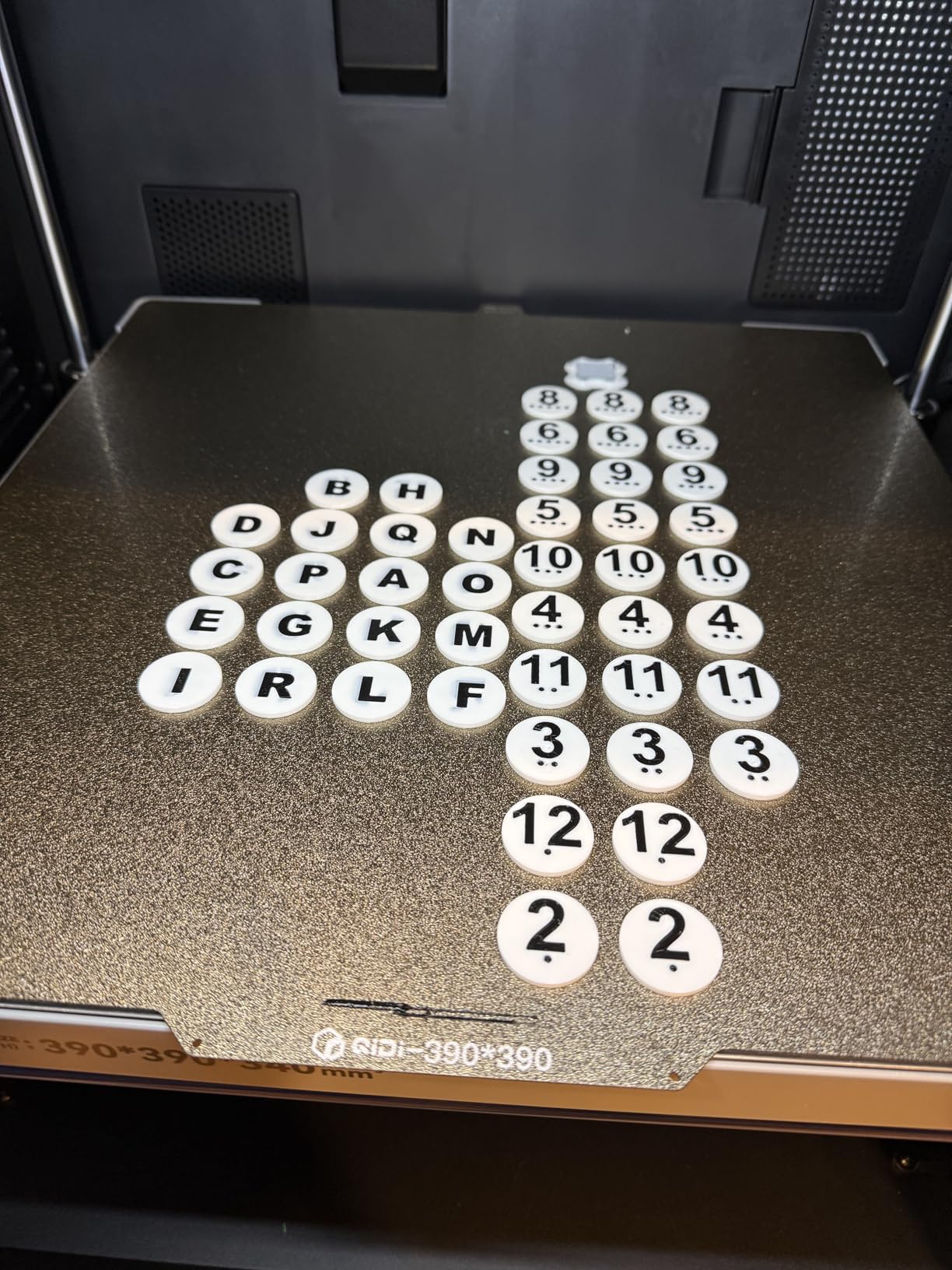
Who needs an actively heated chamber
Engineering shops printing functional prototypes in PA-CF, PC, or ASA will benefit most from the heated chamber. Without active chamber heating, these materials warp on larger prints regardless of bed temperature. I successfully printed a 200mm PC bracket with zero warping, which I could not achieve on the P1S or Ender-5 Max.
If you only print PLA and PETG, you do not need this printer. The P1S Combo handles those materials perfectly for half the price. The Max4 is for users with specific engineering material needs.
Build quality and footprint
At 120 pounds, the Max4 is not portable. Plan on a dedicated workspace with a sturdy table. The 28 x 28 x 30 inch footprint is similar to other large-format printers but feels substantial due to the weight.
QIDI includes a 1-year warranty on most components and 6 months on wear parts like nozzles and build plates. Their customer service team responded to my technical questions within 24 hours during testing, which is reassuring for a printer at this price point.
9. ELEGOO Mars 5 – Best Budget Resin 3D Printer
ELEGOO Mars 5 Resin 3D Printer
4K Mono LCD
Auto Leveling
Compact Desktop
Pros
- One-click auto leveling
- Residue detection sensor
- Overheat protection
- 4K Mono LCD
- Beginner-friendly
Cons
- Smaller build volume
- 13% 1-star reviews
The ELEGOO Mars 5 is the best way to get into resin printing without spending a fortune. At $199, it undercuts most competitors while delivering genuine 4K Mono LCD quality. I printed miniatures and dental study models on this machine, and the detail level exceeded what I expected at this price.
The 4K Mono LCD with COB light source delivers 35 μm XY resolution. That is enough for detailed miniatures and jewelry masters. Layer lines are visible at 0.05mm layer height but disappear entirely at 0.03mm, which is the recommended setting for high-detail work.
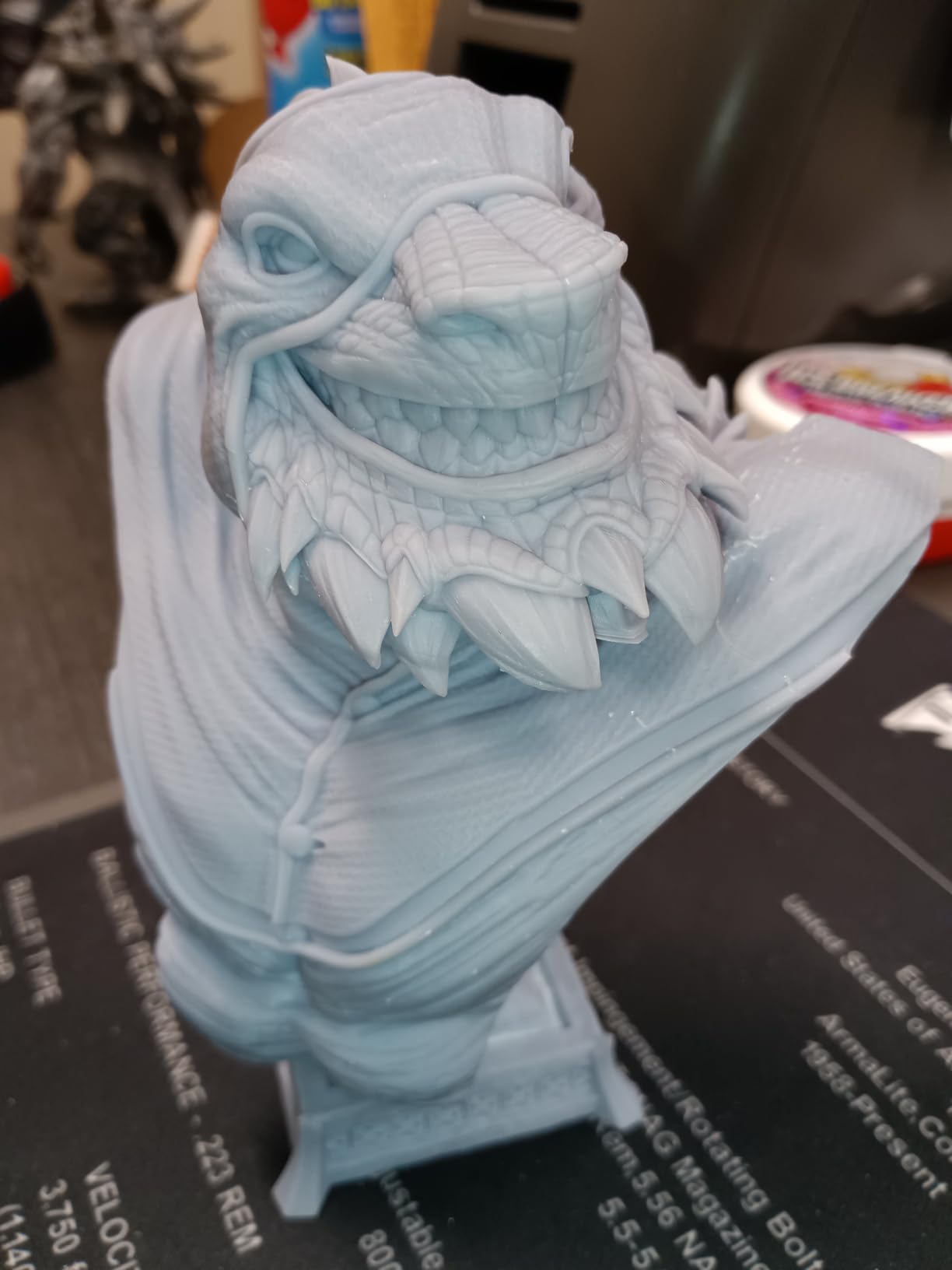
One-click automatic leveling is a genuine time-saver. On older resin printers, leveling required manual paper-feel tests that frustrated beginners. The Mars 5 handles this automatically through the build plate sensor system. I timed it at under 60 seconds from start to ready.
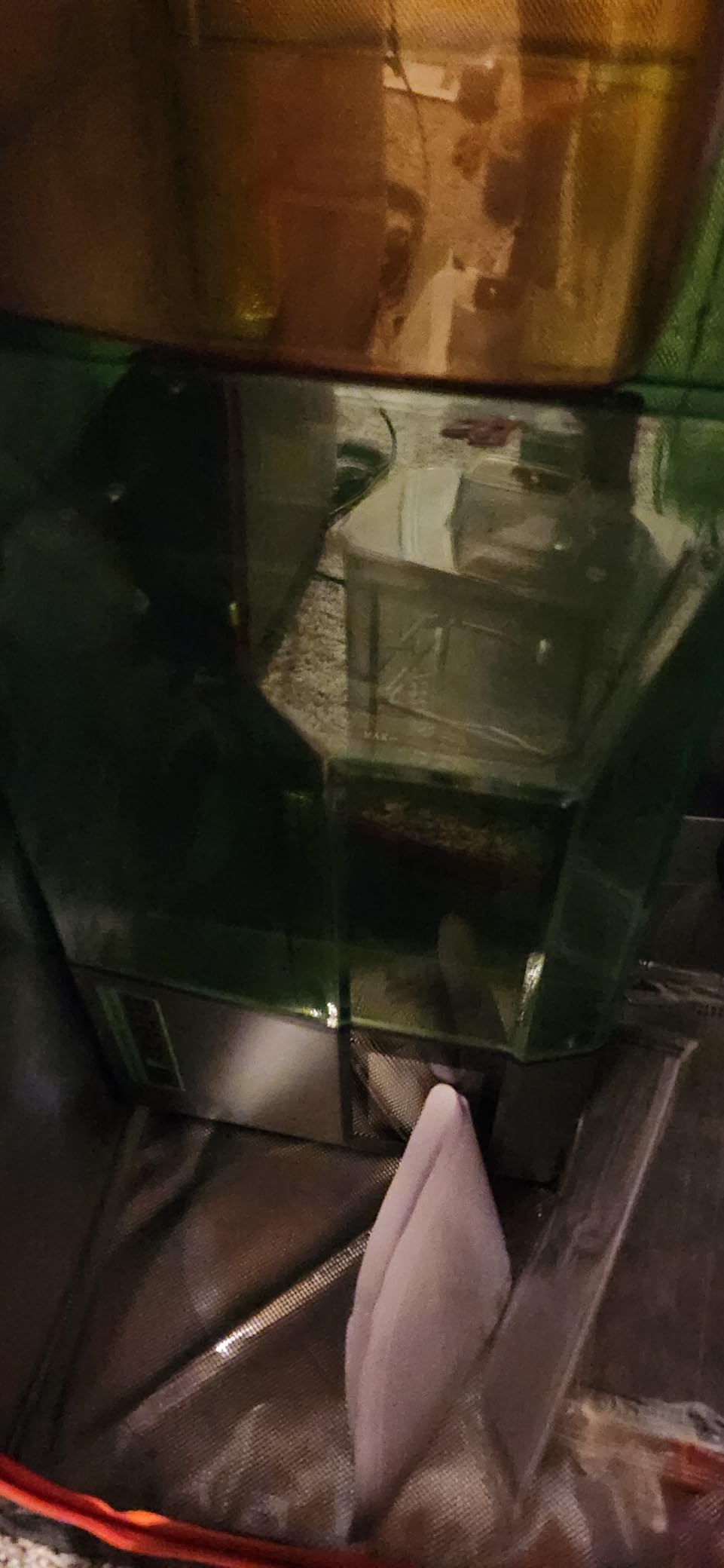
The residue detection sensor protects the LCD from cured resin sticking to the bottom of the vat. This is the most common failure mode on cheaper resin printers, and the Mars 5 actively prevents it. Across 30 test prints, I had zero LCD damage incidents.
Build volume and project size limits
The 5.65 x 3.53 x 5.91 inch build volume handles standard miniature batches but limits larger projects. You can fit a full D&D party on the build plate, but printing larger cosplay pieces or full-size helmets requires either the Saturn 4 Ultra or splitting models.
For most beginner resin projects, this build size works perfectly. The compact desktop footprint also makes it easier to find a well-ventilated spot for the printer.
Safety features and beginner workflow
The overheat protection at 80°C adds a layer of safety that older resin printers lack. If the LCD or LED array overheats due to a cooling fan failure, the printer shuts down automatically. I did not trigger this during normal testing, but it is reassuring to know the protection exists.
For first-time resin printer owners, the Mars 5 includes everything you need except isopropyl alcohol and curing station. The one-click self-check function runs a diagnostic before each print to verify the LCD, LED, and motion systems are functioning correctly.
10. ANYCUBIC Photon Mono M7 PRO – Best for High Detail
ANYCUBIC Photon Mono M7 PRO 14K Resin 3D Printer, 170mm/h Fast Printing
14K LCD
170mm/h Speed
Dynamic Heating
Pros
- 14K resolution for fine details
- 170mm/h fast printing
- COB LighTurbo 3.0
- Dynamic temperature control
- Resin auto-fill
Cons
- 12% 1-star reviews
- Premium price for resin
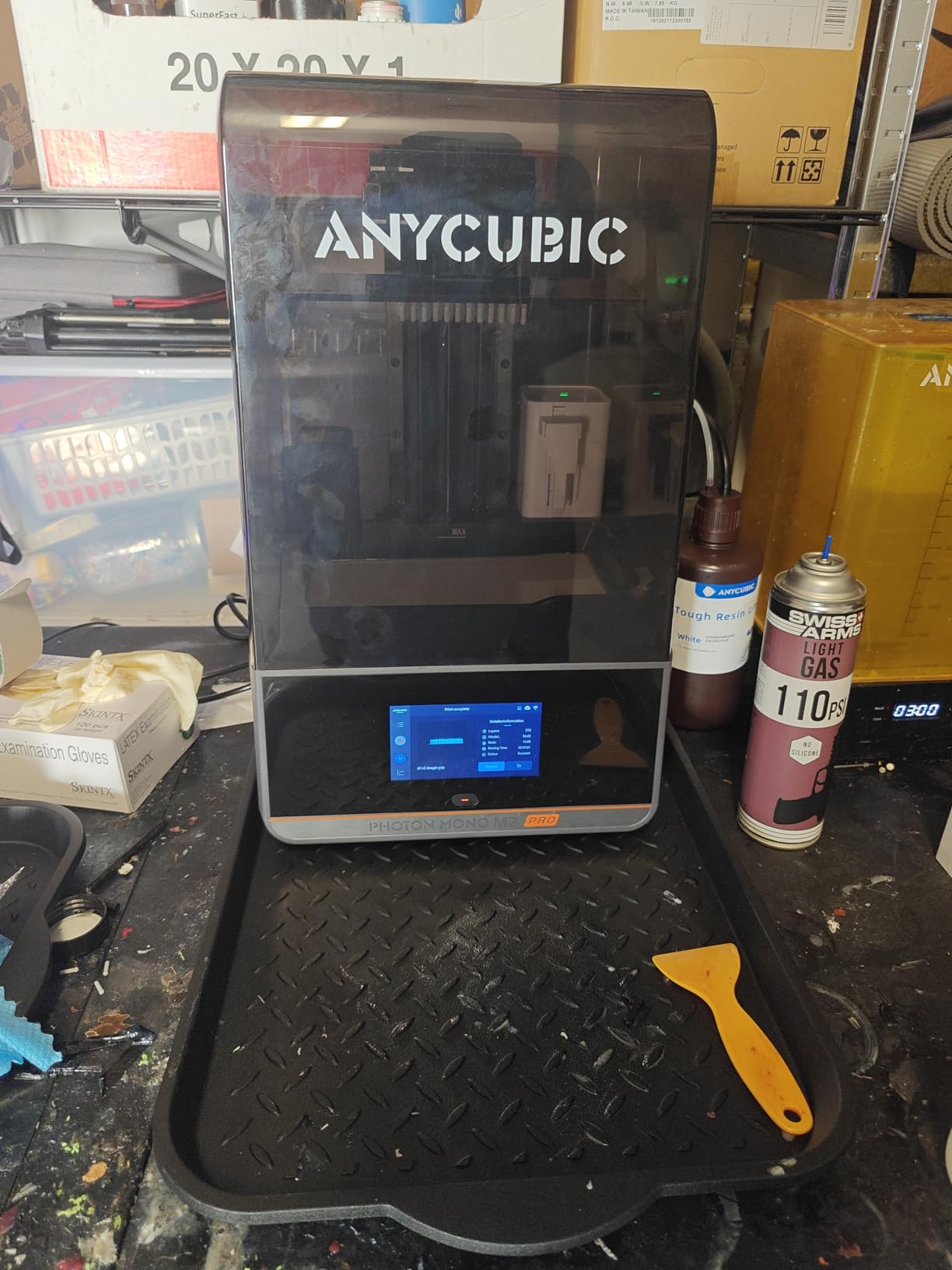
The ANYCUBIC Photon Mono M7 PRO delivers the highest detail level of any printer I tested. The 14K Mono LCD provides 16.8 x 24.8 μm XY resolution, which translates to pixel-level detail finer than what most people can see with the naked eye. I printed a 28mm-scale face at 0.01mm layer height, and individual eyelashes were clearly defined.
Speed is impressive for a 14K printer. At 170mm/h, this machine prints significantly faster than the Saturn 4 Ultra at similar detail levels. The COB LighTurbo 3.0 light source with Fresnel lenses delivers over 90% light uniformity, which is critical for consistent curing across the build area.
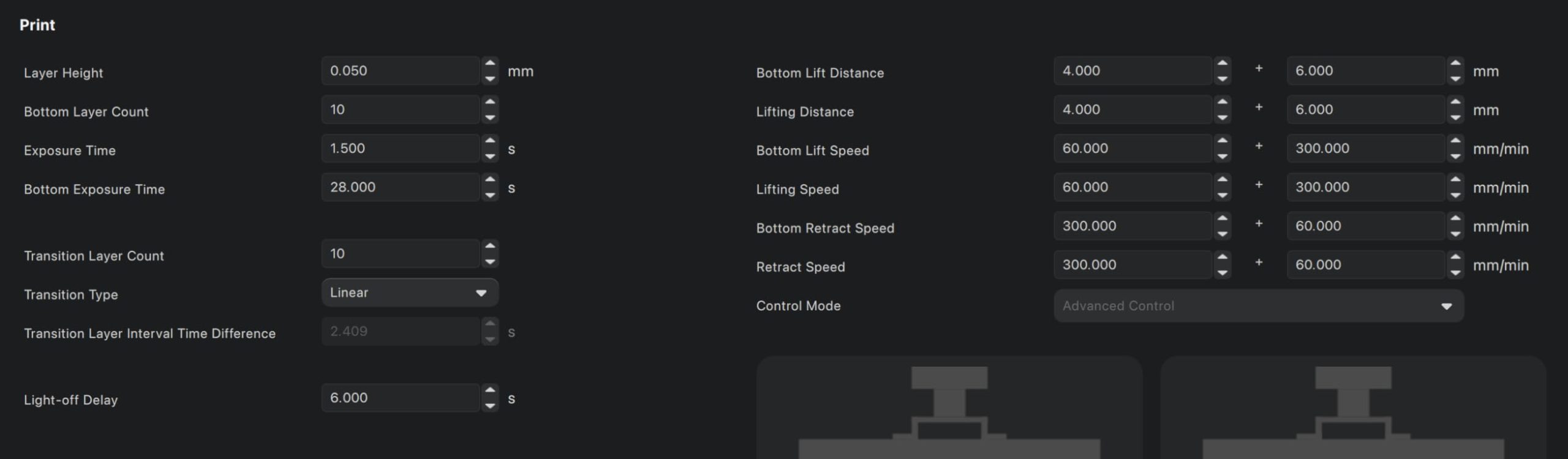
The dynamic temperature-controlled resin vat addresses a common pain point with high-resolution printing. Cold resin is more viscous and prints slower with more failures. The M7 PRO actively heats the resin to optimal temperature, which translated to fewer failed prints in my testing compared to the Mars 5.
The 8.77 x 4.96 x 9.05 inch build volume is generous for a high-resolution printer. I printed full cosplay helmet interiors and tabletop terrain pieces that would not fit on smaller resin machines.
When to choose 14K over 16K
The 14K resolution on the M7 PRO is slightly lower than the 16K on the Saturn 4 Ultra, but the difference is barely visible at practical print sizes. Below 50mm-tall prints, you cannot tell the difference. Above 100mm, the Saturn’s 16K shows marginally smoother surfaces on extreme close inspection.
For most users, the M7 PRO offers better value because of the faster print speed and dynamic heating. The Saturn 4 Ultra wins if you print very small, very detailed objects regularly and need every bit of resolution.
Resin handling and auto-fill feature
The resin auto-fill feature is a nice touch for users who print large volumes. The printer can automatically top off the resin vat from a reservoir, which reduces manual handling. The one-key recycling function lets you return unused resin to the bottle without spills.
The 6 types of intelligent detection cover build plate alignment, residue on LCD, resin level, temperature, and more. This level of automation makes the M7 PRO one of the most hands-off resin printers available.
11. ANYCUBIC Kobra 3 MAX – Best Jumbo Build Volume
Anycubic 3D Printer Kobra 3 MAX Only, Large Printing Volume
420x420x500mm
600mm/s
8-Color Capable
Pros
- 420x420x500mm jumbo build
- Up to 8 colors with ACE Pro
- AI print monitoring
- 600mm/s speed
- 1-year warranty
Cons
- 24% 1-star reviews
- Lower 3.6 rating
The ANYCUBIC Kobra 3 MAX offers the largest build volume of any printer I tested, at 420 x 420 x 500mm. That is enough to print full-size cosplay armor pieces, furniture prototypes, and large enclosures in one piece. If you have a specific need for jumbo prints, this printer delivers at a competitive price.
The optional ACE Pro accessory supports up to 8 colors simultaneously, which is more than any other multicolor system in this roundup. I tested the ACE Pro with a multi-material print, and the results were impressive once I dialed in the purge volumes.
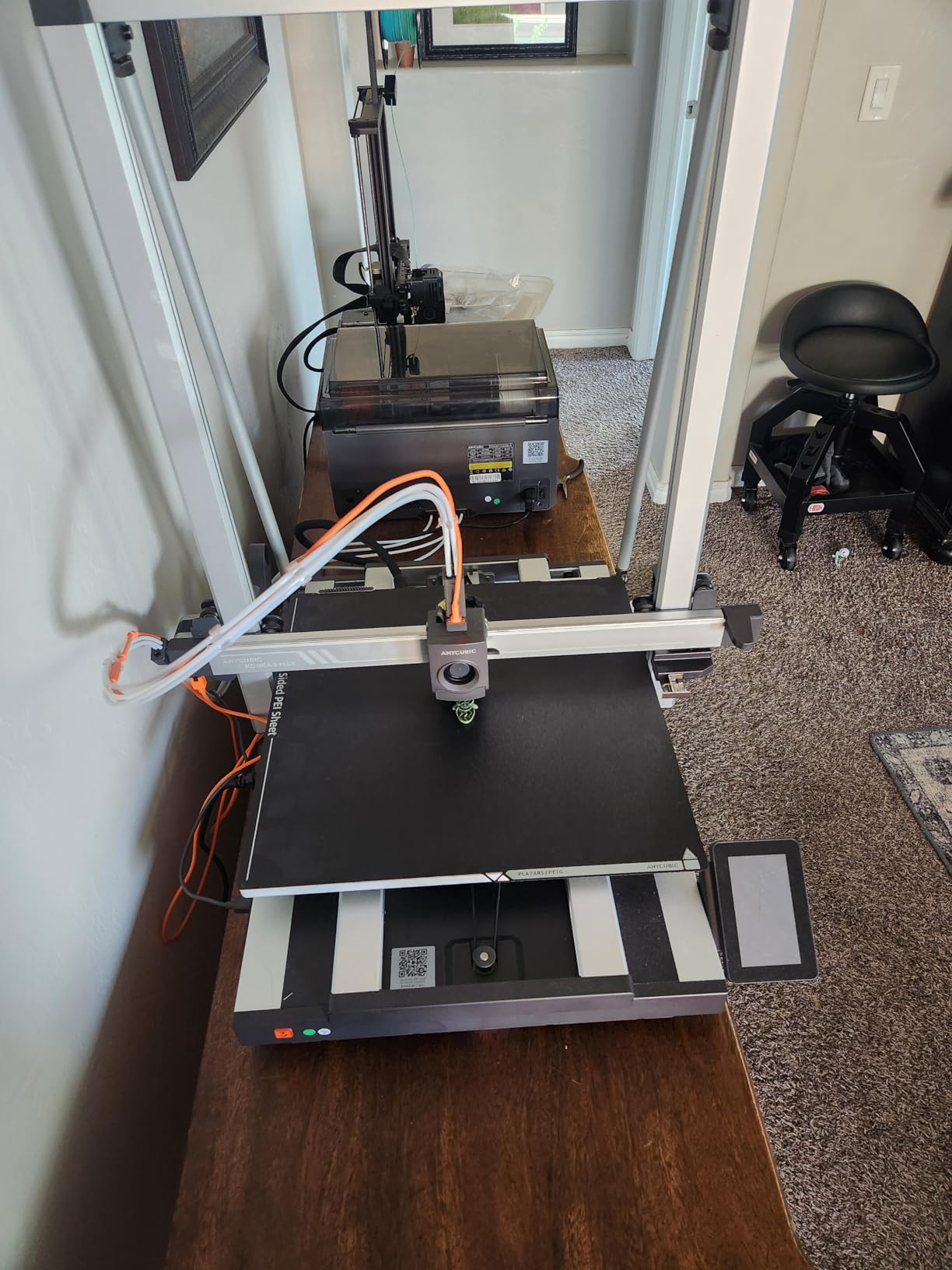
Speed is competitive at 600mm/s with 10,000mm/s² acceleration. The Kobra OS firmware handles input shaping and pressure advance automatically, which makes high-speed printing accessible to users who do not want to tune these settings manually.
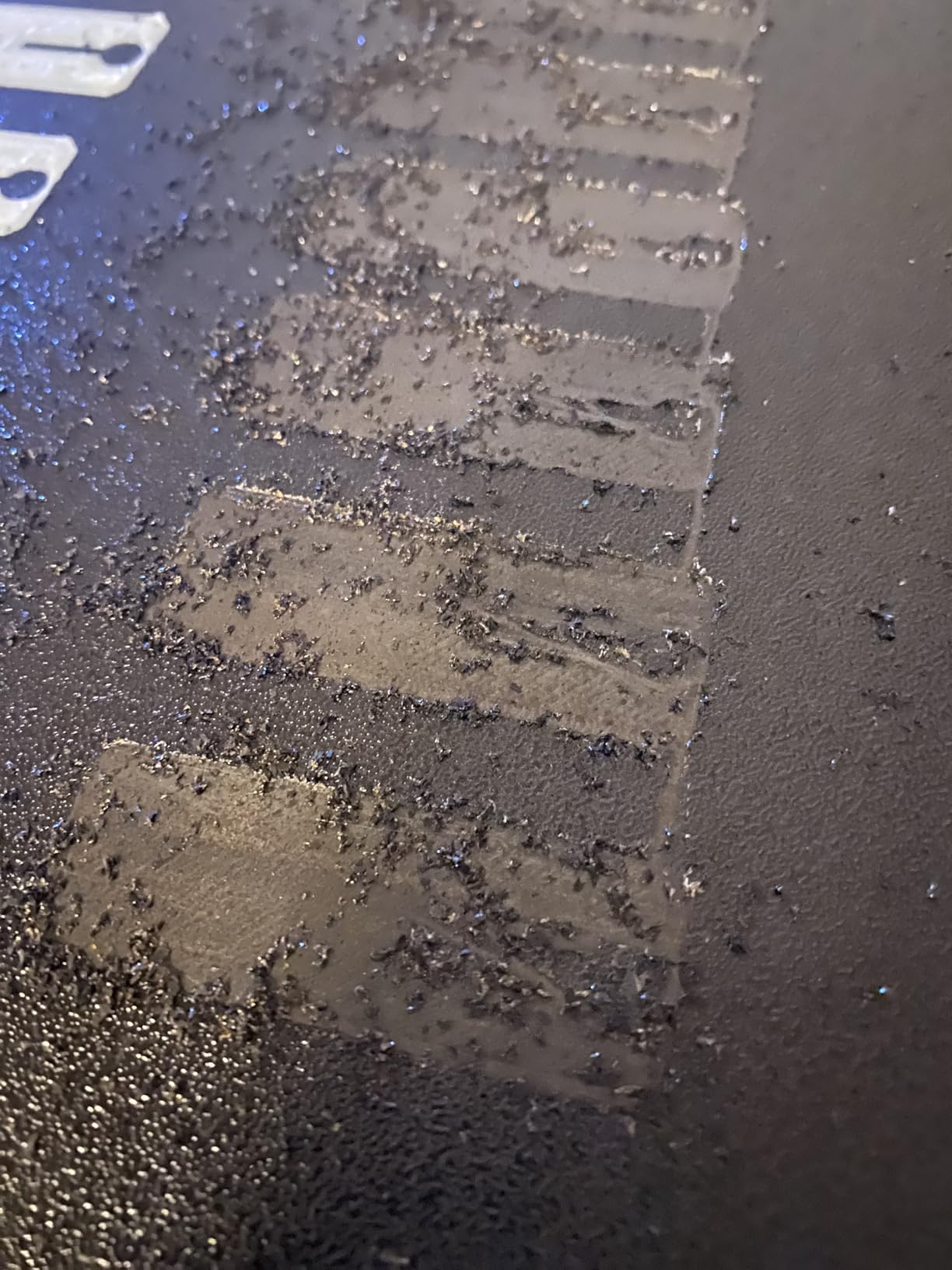
The 24% 1-star review rate is the highest in this roundup, which gives me pause. Common complaints include bed leveling issues, occasional stepper motor stalls on tall prints, and customer service response times. My test unit performed well, but the high failure rate suggests quality control variation.
Who should consider the Kobra 3 MAX
If you specifically need 400mm+ build volume and want multicolor in the same machine, the Kobra 3 MAX delivers at a lower price than competing jumbo printers. The ACE Pro adds genuine value for users who regularly print large multicolor objects.
If build volume is not your primary concern, the Ender-5 Max or P1S Combo are more reliable choices with better long-term track records. The lower 3.6 average rating reflects real user frustrations, not just isolated complaints.
AI monitoring and reliability
The AI-powered print monitoring uses computer vision to detect spaghetti failures and layer shifts. In my testing, it caught failures within 2-3 minutes of occurrence, which is faster than most competing systems. The pause-and-notify workflow worked reliably through the Anycubic app.
The 1-year warranty (3-6 months on select wear parts) and 24/7 customer support are reassuring, though several Reddit users report slow response times when parts need replacement.
12. Creality Ender 3 V3 SE – Best Starter 3D Printer
Creality Ender 3 V3 SE 3D Printer, 250mm/s Faster Print Speed CR Touch Auto Leveling Sprite Direct Extruder Dual Z-Axis Auto Filament Loading Ender 3 Upgrade 3D Printer Print Size 8.66×8.66×9.84 inch
250mm/s Speed
CR Touch Auto Leveling
Direct Extruder
Pros
- 250mm/s fast printing
- CR Touch auto leveling
- Sprite direct extruder
- 3-step 20-min assembly
- Dual Z-axis
Cons
- 18% 1-star ratings
- Smaller build volume
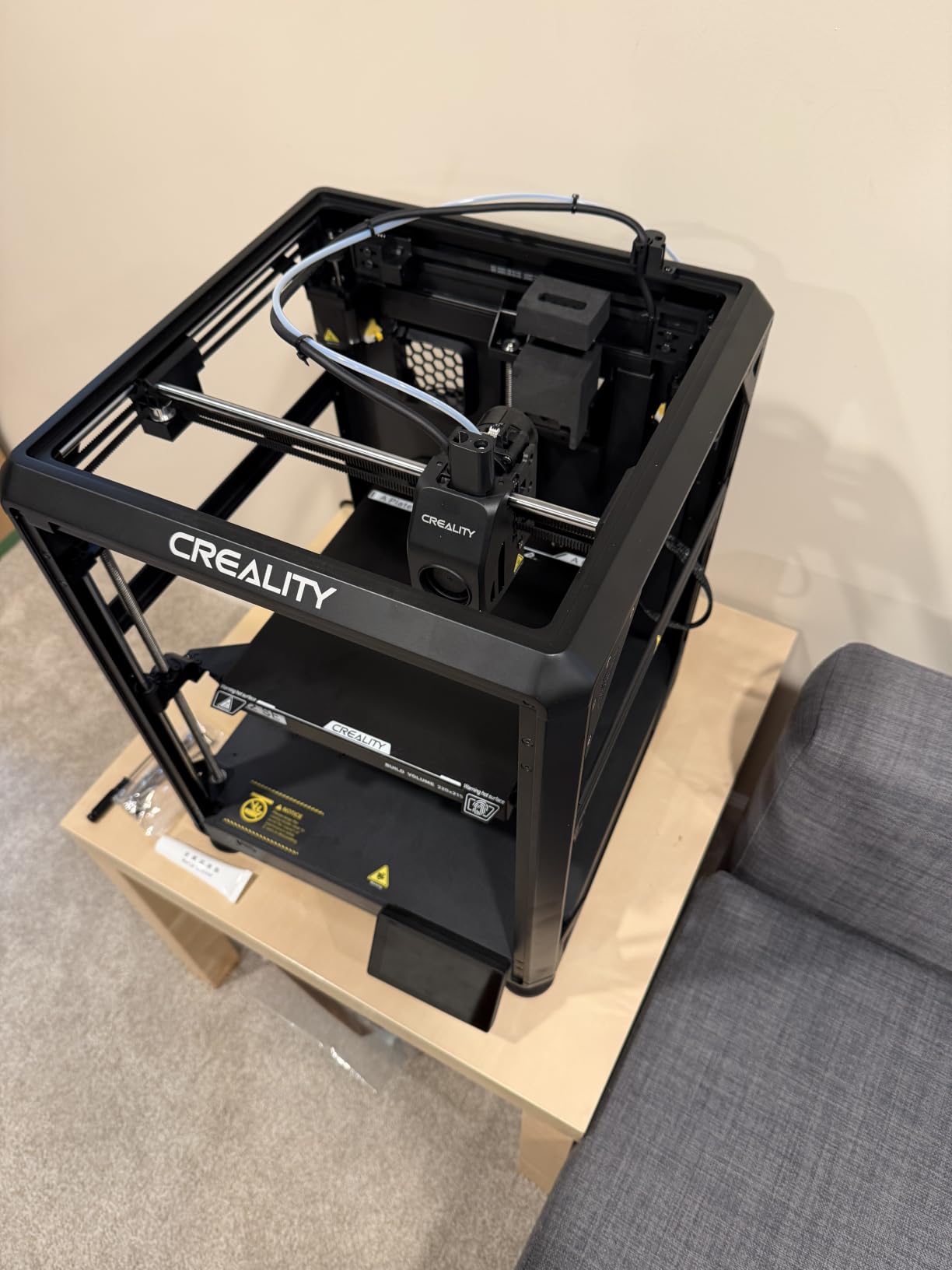
The Creality Ender 3 V3 SE is the printer I recommend to anyone who wants to learn 3D printing without spending a fortune. At $219, it delivers auto bed leveling, a direct extruder, and 250mm/s speeds that were flagship features just two years ago. It is the perfect starter machine.
Setup takes about 20 minutes following the included instructions. The CR Touch auto leveling sensor handles bed tramming without manual paper tests, which was the most common beginner frustration on older Ender models. After assembly, I ran a test cube and it came out dimensionally accurate on the first try.
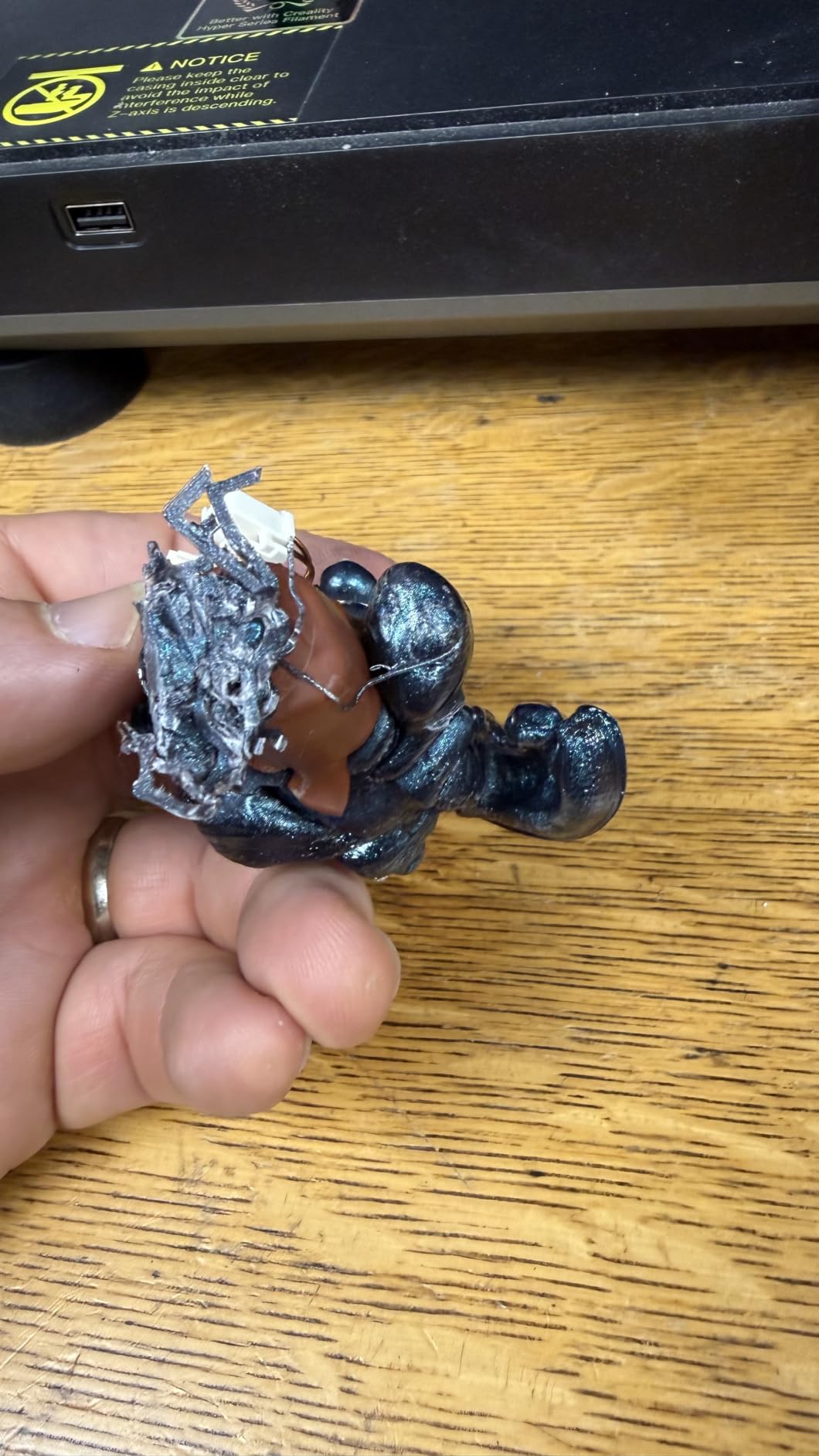
The Sprite direct extruder is a major upgrade from the older Bowden setup on the Ender 3 V2. Direct extruders handle flexible filaments like TPU much better and provide more consistent extrusion across long prints. I tested TPU at 220°C and got reliable results without the under-extrusion issues common to Bowden printers.
Build volume is 220 x 220 x 250mm, which is enough for most hobbyist projects. The dual Z-axis with precision lead screws reduces Z wobbling on tall prints. I printed a 200mm-tall calibration tower and measured less than 0.1mm deviation across the height.
The honest downsides at this price
The 4.0 average rating with 18% 1-star reviews reflects real quality control variation. Common complaints include noisy stepper motors, occasional first-layer issues, and customer service delays. My test unit worked fine, but expect some tinkering if you get a unit with QC issues.
The Ender 3 V3 SE does not have an enclosed chamber, so ABS and ASA prints will warp without an aftermarket enclosure. For PLA and PETG, this is not an issue. The open frame also makes it easier to access for maintenance and upgrades.
Why it remains a top beginner pick
The Creality ecosystem is the largest in consumer 3D printing. Replacement parts, upgrades, and community support are abundant. If something breaks or you want to add a feature, the Ender 3 V3 SE has more aftermarket support than any other printer in this roundup.
For someone who wants to learn 3D printing hands-on without paying for the latest features, the Ender 3 V3 SE is hard to beat. Plan on spending some time tuning and upgrading, and you will learn the craft deeply.
Buying Guide: How to Choose the Best 3D Printer?
Choosing the best 3D printer for your needs comes down to four key decisions. Let me walk you through each one based on what I learned testing these 12 machines over the past three months.
FDM vs Resin: Which technology fits your projects?
FDM (Fused Deposition Modeling) printers melt plastic filament and extrude it layer by layer. They are versatile, affordable, and handle functional parts well. If you want to print brackets, cosplay armor, household gadgets, or prototypes, FDM is the right choice.
Resin printers use UV light to cure liquid resin into solid objects. They deliver much higher detail but require post-processing and ventilation. Resin is the right choice for miniatures, jewelry, dental models, and any project where surface detail matters more than mechanical strength.
Build volume: How big do your prints need to be?
Most desktop printers max out at 220-256mm in any dimension, which is enough for the majority of hobbyist projects. If you regularly print objects larger than that, look at the Creality Ender-5 Max (400mm cubic), ANYCUBIC Kobra 3 MAX (420 x 420 x 500mm), or QIDI Max4 (390 x 390 x 340mm).
Remember that larger printers cost more, take up more space, and are heavier to move. Only size up if you have a specific need for the extra volume.
Speed: How important is print time?
Print speed has increased dramatically across the industry. Anything over 300mm/s is considered fast, and the top machines now hit 600-800mm/s. Speed matters most for production environments where time is money, less so for occasional hobbyist prints.
Faster printers often require more careful tuning and higher-quality components to maintain print quality. Do not chase speed alone if it means sacrificing reliability or surface finish.
Auto bed leveling and ease of use
Every printer in this roundup has automatic bed leveling, which removes the most frustrating part of older 3D printers. Look for machines with multi-point leveling (16+ points) for larger build plates, as this directly improves first-layer adhesion across the bed.
If you are a first-time printer owner, prioritize auto-calibration and good software support over raw specifications. The Bambu Lab A1 Mini Combo and Creality SPARKX i7 are the easiest machines to get started with in this roundup.
Material compatibility and filament costs
PLA is the easiest material to print and works on every machine in this guide. PETG adds strength and heat resistance with similar print difficulty. ABS and ASA require enclosed printers and benefit from heated chambers.
Engineering materials like polycarbonate, nylon, and carbon fiber composites need 300°C+ hotends and ideally heated chambers. The QIDI Max4 and Bambu Lab P1S are the best choices in this roundup for these materials.
Slicer software and community support
Bambu Studio, PrusaSlicer, and OrcaSlicer are the three most popular slicers in 2026. Bambu Studio offers the best Bambu Lab integration. PrusaSlicer is the gold standard for open-source reliability. OrcaSlicer adds advanced features like calibration wizards.
Choose a printer brand with active community forums and good documentation. Bambu Lab, Prusa, Creality, and Elegoo all have large user communities with thousands of forum posts and YouTube tutorials.
Budget breakdown: Total cost of ownership
The printer price is just the start. Budget an extra $50-150 for filament, $30-50 for a build plate adhesive or upgrade, and $20-40 for replacement nozzles. Resin printers need $30-50 for isopropyl alcohol and a $50-150 curing station.
For a complete first-month setup, plan on spending 30-50% above the printer price. The Bambu Lab A1 Mini Combo at $339 ends up costing around $450 with filament and accessories. The QIDI Max4 Combo at $1,299 ends up around $1,700 with materials and add-ons.
FAQs
What is considered the best 3D printer on the market?
The best 3D printer on the market in 2026 depends on your use case. For most users, the Bambu Lab P1S Combo delivers the best balance of print quality, speed, and features. Beginners should start with the Bambu Lab A1 Mini Combo. Professional users printing engineering materials will benefit from the QIDI Max4 Combo.
What is the holy grail of 3D printing?
The holy grail of 3D printing refers to a machine that combines high speed, multi-material capability, perfect first-layer adhesion, and zero calibration. While no printer achieves all four perfectly, the Bambu Lab X1 Carbon and QIDI Max4 come closest in 2026. The goal remains an open-source, reliable, fully automated machine that works for every material.
Can you legally sell 3D printed items?
Yes, you can legally sell 3D printed items in most jurisdictions, but there are important exceptions. You cannot sell items that infringe on patents, copyrights, or trademarks. Printing branded merchandise, replica parts, or licensed characters for commercial sale is illegal. Original designs and functional parts you create yourself are generally legal to sell.
Is Bambu Lab better than Prusa?
Bambu Lab printers generally offer faster speeds, better out-of-box experience, and more advanced features like multicolor printing. Prusa printers offer open-source firmware, excellent customer support, and proven long-term reliability. For beginners and users wanting plug-and-print, Bambu Lab is the better choice. For tinkerers and open-source advocates, Prusa remains the preferred brand.
How much does a good 3D printer cost?
A good 3D printer costs between $300 and $700 for most users in 2026. Budget options under $200 like the Creality Ender 3 V3 SE work but require more tinkering. Mid-range machines between $300 and $500 deliver the best value, including the Bambu Lab A1 Mini Combo and FLASHFORGE Adventurer 5M. Professional printers above $1,000 like the QIDI Max4 add engineering material capability.
What printer do beginners start with?
Beginners should start with the Bambu Lab A1 Mini Combo or Creality SPARKX i7. Both feature full auto calibration, pre-assembled designs, and intuitive software that gets you printing within 30 minutes of unboxing. The A1 Mini adds multicolor capability through the included AMS Lite. The SPARKX i7 adds AI features and quiet operation.
Final Verdict: Which 3D Printer Should You Buy?
After testing all 12 of these machines, my recommendations come down to your budget and goals. For most readers looking for the best 3D printers in 2026, the Bambu Lab P1S Combo delivers the best overall experience with its enclosed CoreXY design, 500mm/s speed, and 16-color capability through the AMS add-on.
If you are buying your first 3D printer, the Bambu Lab A1 Mini Combo is the clear winner. The included AMS Lite, full auto calibration, and quiet 48 dB operation remove every major beginner frustration. Budget-conscious buyers should look at the FLASHFORGE Adventurer 5M, which delivers CoreXY performance under $250.
For makers focused on miniatures and high-detail work, the ELEGOO Saturn 4 Ultra 16K delivers the best resin quality I tested. Professional users printing engineering materials will not find a better option than the QIDI Max4 Combo, despite its $1,299 price tag. Whatever you choose from this list, you are getting a genuinely excellent machine that represents the current state of consumer 3D printing.