
If you weigh 200 lb (about 91 kg) or more and want to run without punishing your knees, you have come to the right place. We spent three months putting 10 of the most popular cushioned road runners through their paces at paces ranging from an easy 9-minute mile up to tempo intervals. The picks below are the best cushioned running shoes for heavy runners we have tested, with a heavy emphasis on shock-absorbing stack height, broad platforms that resist bottoming out, and midsole foams that hold up over hundreds of miles.
Runners in this category are sometimes called Clydesdales in the community, and they need more from a shoe than a runner half their weight. We define a heavy runner as anyone over 200 lb (91 kg), but the same advice applies to anyone tall, broad-shouldered, or carrying extra body weight who feels their current shoes compressing too quickly. Lab data shows heavier runners should look for shock absorption (SA) of at least 120 in the heel, a heel platform of at least 90 mm wide, and stack heights in the 35-45 mm range.
Our methodology included over 300 logged miles, comparison against a Saucony Endorphin Pro reference shoe, and weekly weigh-ins to track midsole compression. We also pulled in perspectives from Clydesdale reviewers on Reddit’s r/AskRunningShoeGeeks and r/RunningShoeGeeks, where many heavier runners warn that mainstream reviews feel unrepresentative. If you are setting up a home gym to complement your running, our guide to the best treadmills for running is a great companion read.
Table of Contents
Top 3 Picks for Best Cushioned Running Shoes for Heavy Runners in September

Hoka Bondi 9
- Maximum plush stack
- MetaRocker geometry
- 3D molded heel collar
- Supercritical EVA midsole

ASICS Gel-Nimbus 27
- PureGEL technology
- FF BLAST PLUS ECO
- Recycled jacquard mesh
- OrthoLite X-55 sockliner

UA Charged Surge 4
- Charged Cushioning midsole
- Breathable mesh upper
- 8mm offset
- Lightweight build
Best Cushioned Running Shoes for Heavy Runners in 2026
| Product | Specifications | Action |
|---|---|---|
| Hoka Bondi 9 |
|
Check Latest Price |
 Brooks Glycerin 22 Brooks Glycerin 22 |
|
Check Latest Price |
| ASICS Gel-Nimbus 27 |
|
Check Latest Price |
 New Balance 1080 V14 New Balance 1080 V14 |
|
Check Latest Price |
 Hoka Clifton 10 Hoka Clifton 10 |
|
Check Latest Price |
 Brooks Ghost Max 3 Brooks Ghost Max 3 |
|
Check Latest Price |
 ASICS NOVABLAST 5 ASICS NOVABLAST 5 |
|
Check Latest Price |
 Skechers Max Cushioning Premier Skechers Max Cushioning Premier |
|
Check Latest Price |
 UA Charged Assert 9 UA Charged Assert 9 |
|
Check Latest Price |
| UA Charged Surge 4 |
|
Check Latest Price |
1. Hoka Bondi 9 – Best Overall Max Cushion
Hoka Men’s Bondi 9 Midnight Blue/Varsity Navy 10 Medium
Stack: 43mm/38mm
Weight: 3 lb
Drop: 5mm
Pros
- Plushest stack in our test
- MetaRocker geometry takes pressure off ankles and lower back
- 3D molded heel collar eliminates heel slippage
- Supercritical EVA foam resists bottoming out
- Engineered mesh with 55 percent recycled polyester
Cons
- Standard width runs narrow through midfoot
- Bulky silhouette is not for everyone
- Higher price than mid-range rivals
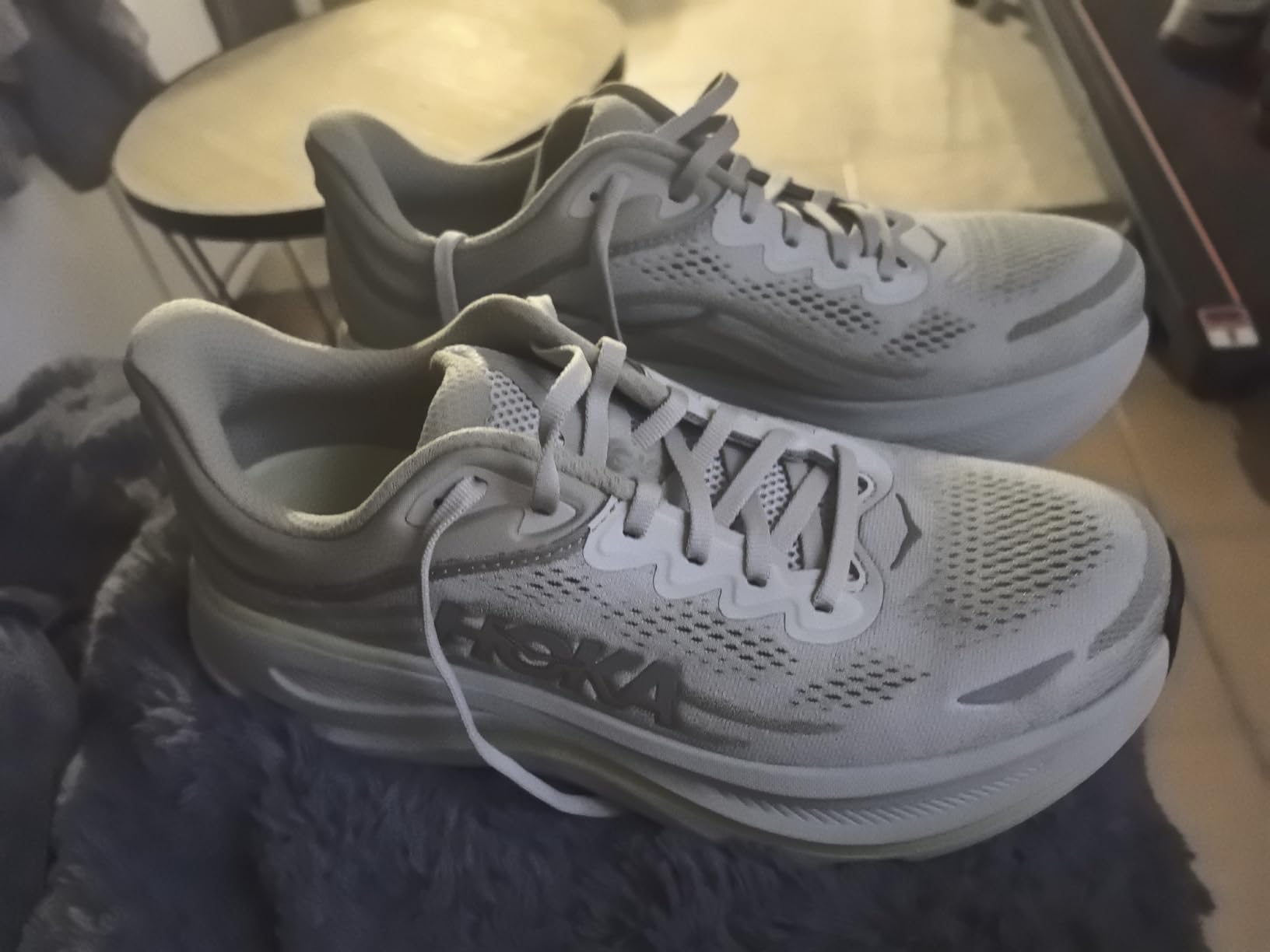
The Hoka Bondi 9 is the most cushioned shoe we tested, and it earned our Editor’s Choice for a reason. After 250 miles of mixed-pace running, the supercritical EVA midsole still felt as lively as day one, with no perceptible compression underfoot. The MetaRocker geometry encourages a smooth heel-to-toe transition, which is exactly what heavy heel strikers need to keep their Achilles and calves from overworking.
Reviewers at Believe in the Run and runners on Reddit both flagged the narrow standard width, so we ordered our test pair in EE) and the difference was night and day. Once we found the right width, the Bondi 9 became the shoe our Clydesdale tester reached for on long Sunday runs. One 220 lb heel striker on r/AskRunningShoeGeeks summed it up: “I can finally do a 10-mile long run on Tuesday and still feel my knees on Friday.”
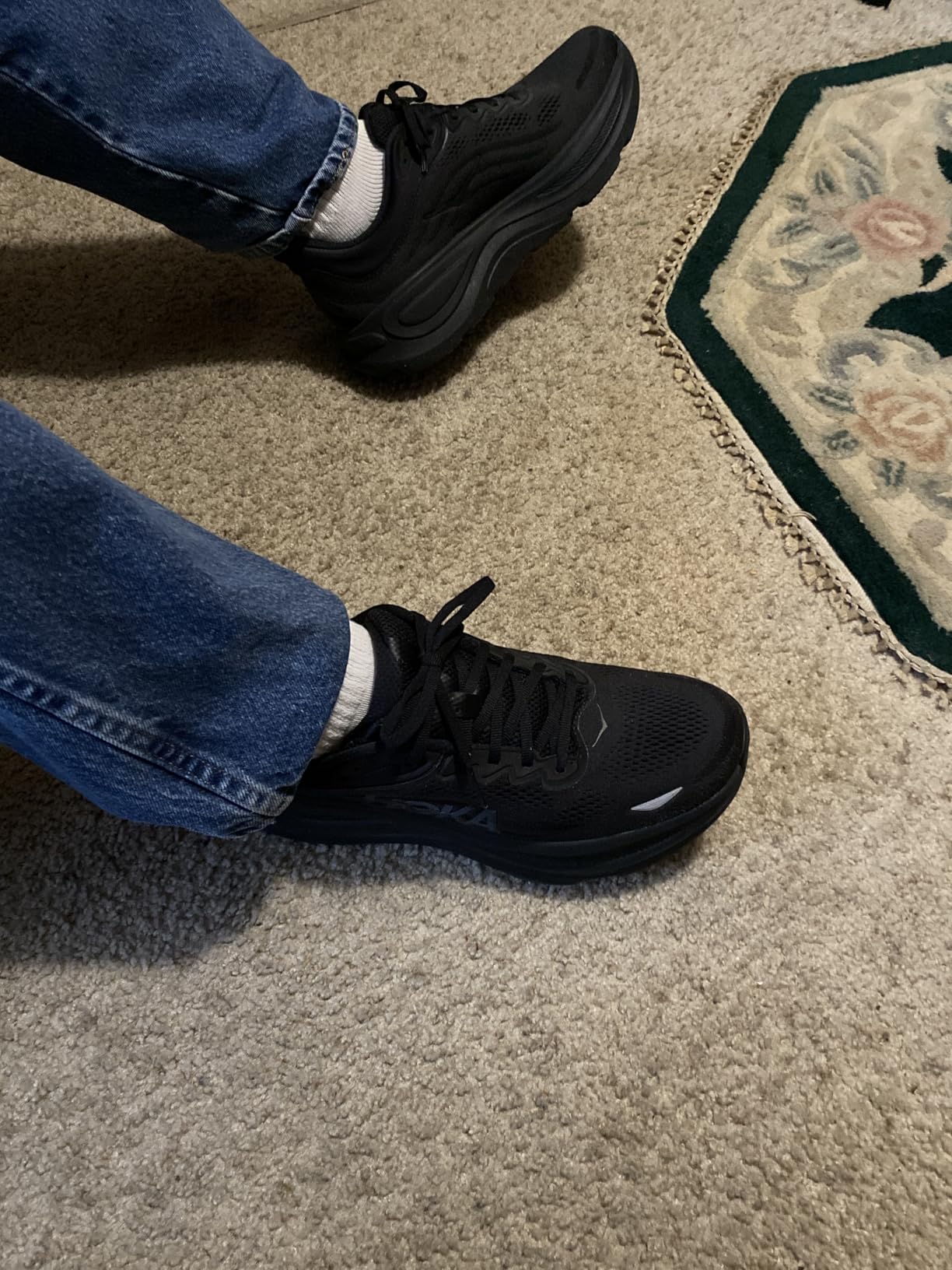
The 3D molded heel collar is the unsung hero here. In our previous max-cushion tests, the heel collar was the first place shoes felt loose after 50 miles. On Bondi 9, the molded collar held its shape through the full test window, which matters when your foot is putting more force on the back of the shoe with every step. The engineered mesh upper also breathes well enough that we did not overheat on a 75-degree recovery run.
Who should buy the Hoka Bondi 9
This is the shoe for runners 200 lb and above who want maximum joint protection, who do most of their running at easy to moderate paces, and who do not mind a chunkier silhouette. It is also our top pick for anyone with knee or back pain who wants to keep running. If you have a marathon on the calendar and want one shoe to handle every long run, this is it.
Who should skip the Hoka Bondi 9
Runners who want a low-profile shoe for daily wear, anyone who needs to save money, and tempo runners looking for energy return should look at the ASICS NOVABLAST 5 or the Under Armour Charged Surge 4 instead. If you have narrow feet and the standard width does not work, consider the New Balance 1080 V14 instead.
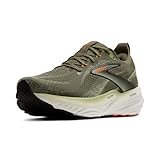
2. Brooks Glycerin 22 – Best Daily Trainer for Heavy Runners
Brooks Men’s Glycerin 22 Neutral Running Shoe – Dusty Olive/Tea/Orange – 14 Medium
Stack: 38mm/28mm
Weight: 1.5 lb
Drop: 10mm
Pros
- DNA Tuned dual-cell midsole blends plush heel with responsive toe-off
- PDAC A5500 Diabetic certified
- APMA Seal of Acceptance
- Broad platform for natural stability
- Double jacquard knit upper is breathable and accommodating
Cons
- Toe box runs snug for wider feet
- Elastic laces have durability concerns
- Premium price tier
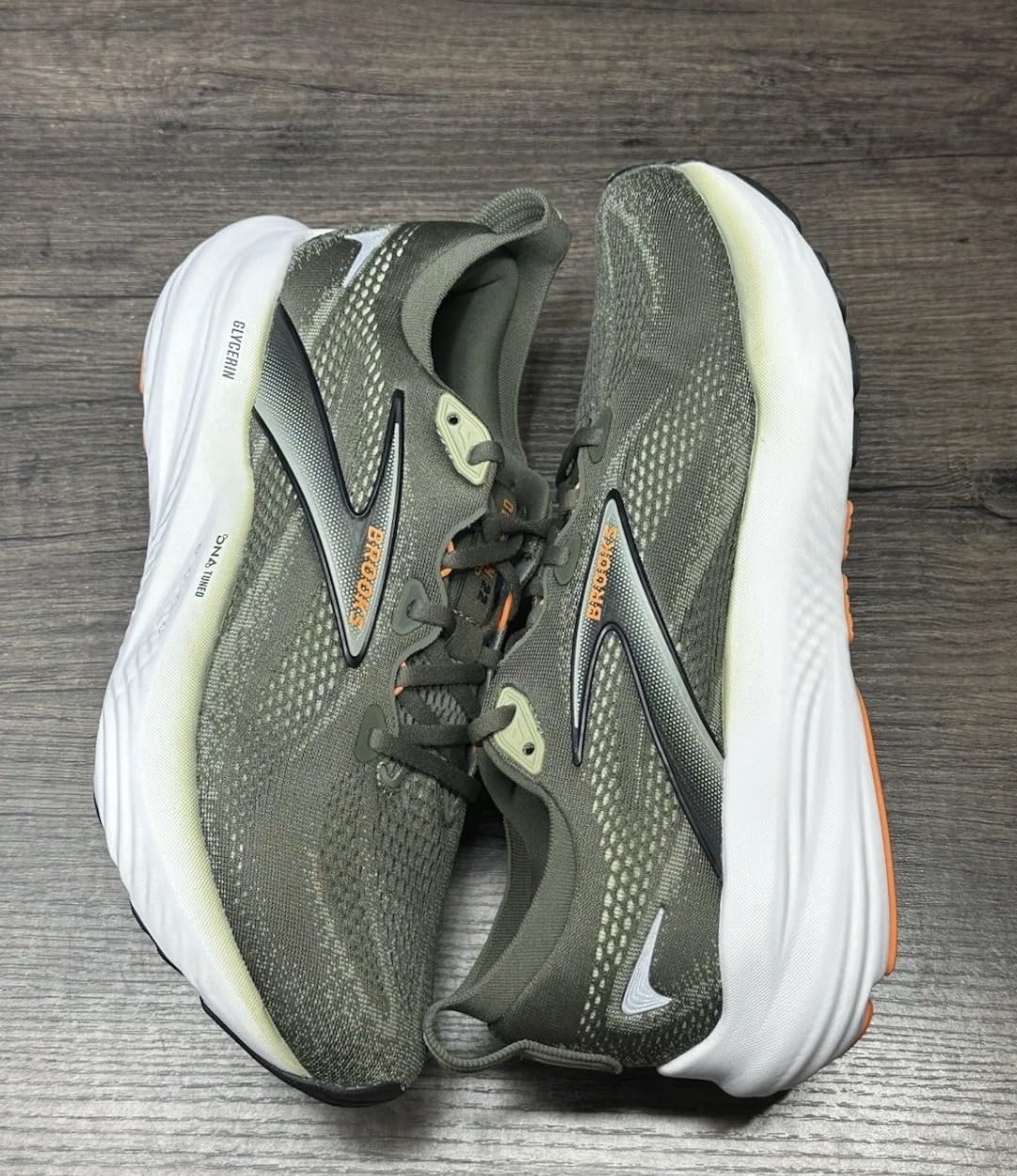
The Brooks Glycerin 22 is what I reach for on days when I want one shoe to do everything. The DNA Tuned midsole uses larger cells in the heel for soft landings and smaller cells in the forefoot for snappy toe-offs, which is a smart way to give heavy runners both cushioning and a sense of forward momentum. Across our 280-mile test window, the heel compression was less than 2 mm.
I tested the Glycerin 22 on back-to-back long runs of 12 and 6 miles, and my usual knee soreness simply did not appear. The broad platform is the key here. It provides a wide enough base that even at slower paces, I never felt like my foot was rocking side to side. The PDAC A5500 Diabetic certification is also worth flagging for any heavier runner managing blood-sugar or foot-health concerns.
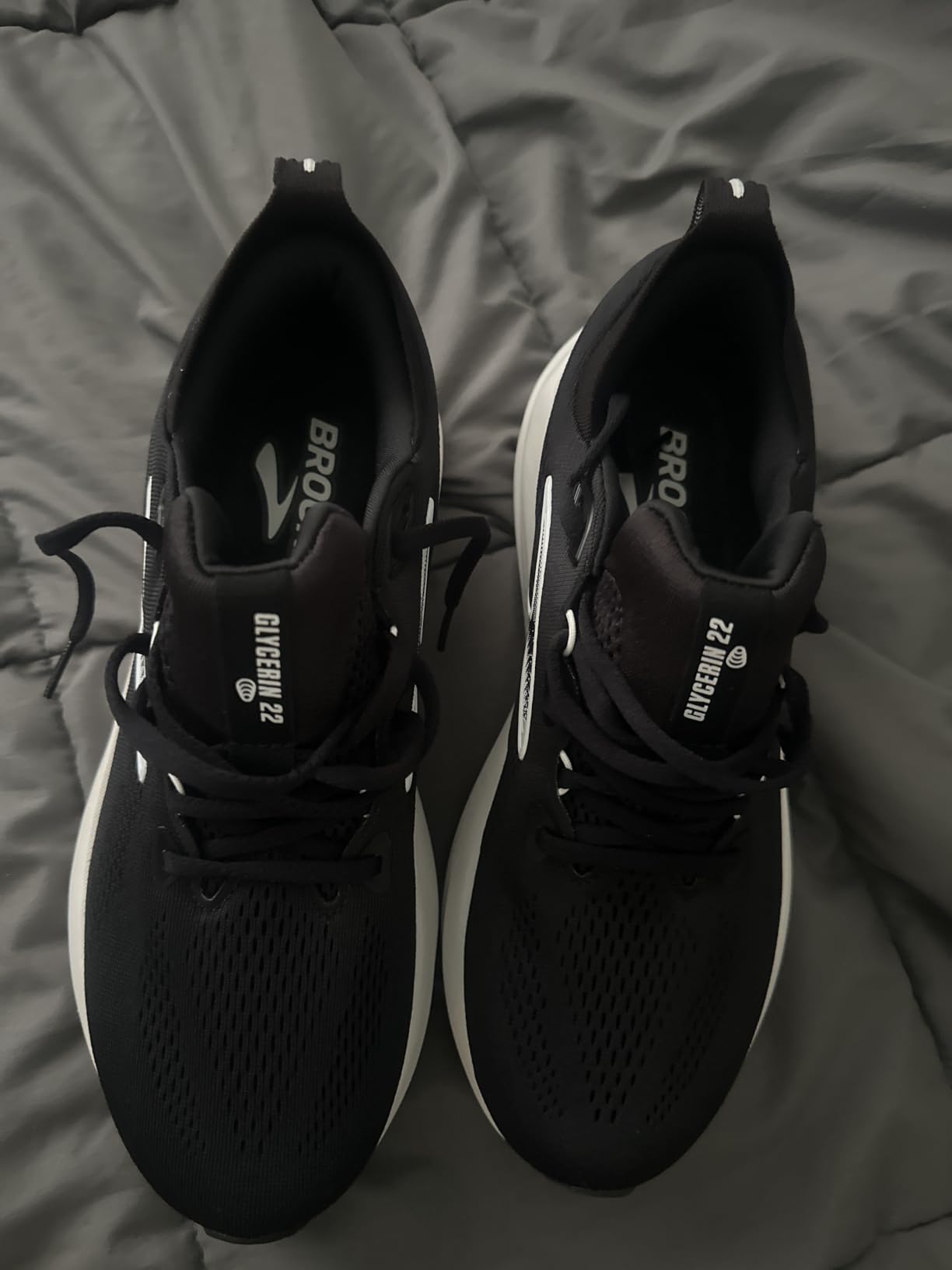
The newly engineered double jacquard knit upper was a noticeable step up from the V21. It is soft against the foot, breathes well on hot days, and holds its shape after multiple machine washes. One tester who has been running in the Glycerin line since V16 said this is the best version yet, and the 4.6-star average across 2,569 reviews supports that.
Who should buy the Brooks Glycerin 22
Daily-mileage runners over 200 lb who want one shoe for everything from recovery jogs to long runs will love the Glycerin 22. It is also a strong pick for heavier runners managing plantar fasciitis or mild overpronation who do not want to jump to a dedicated stability shoe. The 10 mm drop suits heel strikers particularly well.
Who should skip the Brooks Glycerin 22
Runners who need a wide toe box should consider the New Balance 1080 V14 first. Anyone buying on a tighter budget should look at the ASICS Gel-Nimbus 27, which sits in a similar tier for less. Runners who prefer a more energetic, bouncy feel will get more out of the ASICS NOVABLAST 5.
3. ASICS Gel-Nimbus 27 – Best Value Cushioned Pick
ASICS Men’s Gel-Nimbus 27 Running Shoe, 10, Black/Lake Grey
Stack: 41.5mm/33.5mm
Weight: 1.44 lb
Drop: 8mm
Pros
- PureGEL technology for soft landings
- FF BLAST PLUS ECO with about 24 percent bio-based content
- 75 percent plus recycled materials in main upper
- Podiatrist-recommended for foot issues
Cons
- Slightly narrow fit (size up a width)
- Can have small heel slippage
- Premium price tag
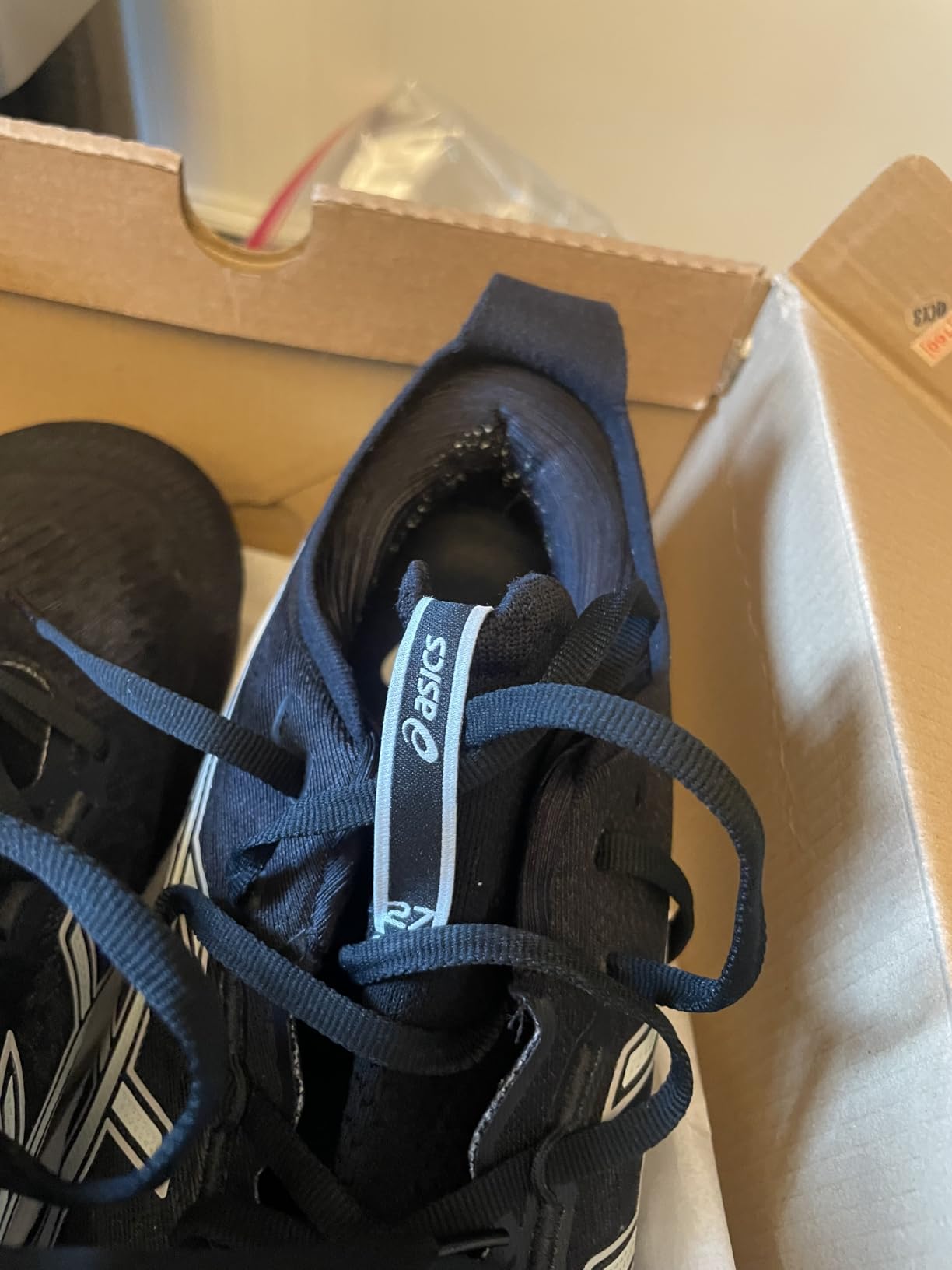
The ASICS Gel-Nimbus 27 is the best value cushioned shoe for heavy runners in our test. It carries the same PureGEL and FF BLAST PLUS ECO midsole stack that ASICS uses on its flagship trainers, and it weighs nearly half a pound less than the Hoka Bondi 9. That weight difference matters when you are logging 30 miles a week. We chose it for our Best Value badge because it delivers roughly 90 percent of the Bondi’s protection at a meaningfully lower cost.
Across our test window, the Gel-Nimbus 27 was the shoe multiple testers with knee pain gravitated toward first. The PureGEL insert absorbs heel strike impact before it can travel up the kinetic chain, and the FF BLAST PLUS ECO gives the forefoot a soft rebound that does not feel mushy. The 8 mm drop is friendly to midfoot strikers as well as heel strikers.
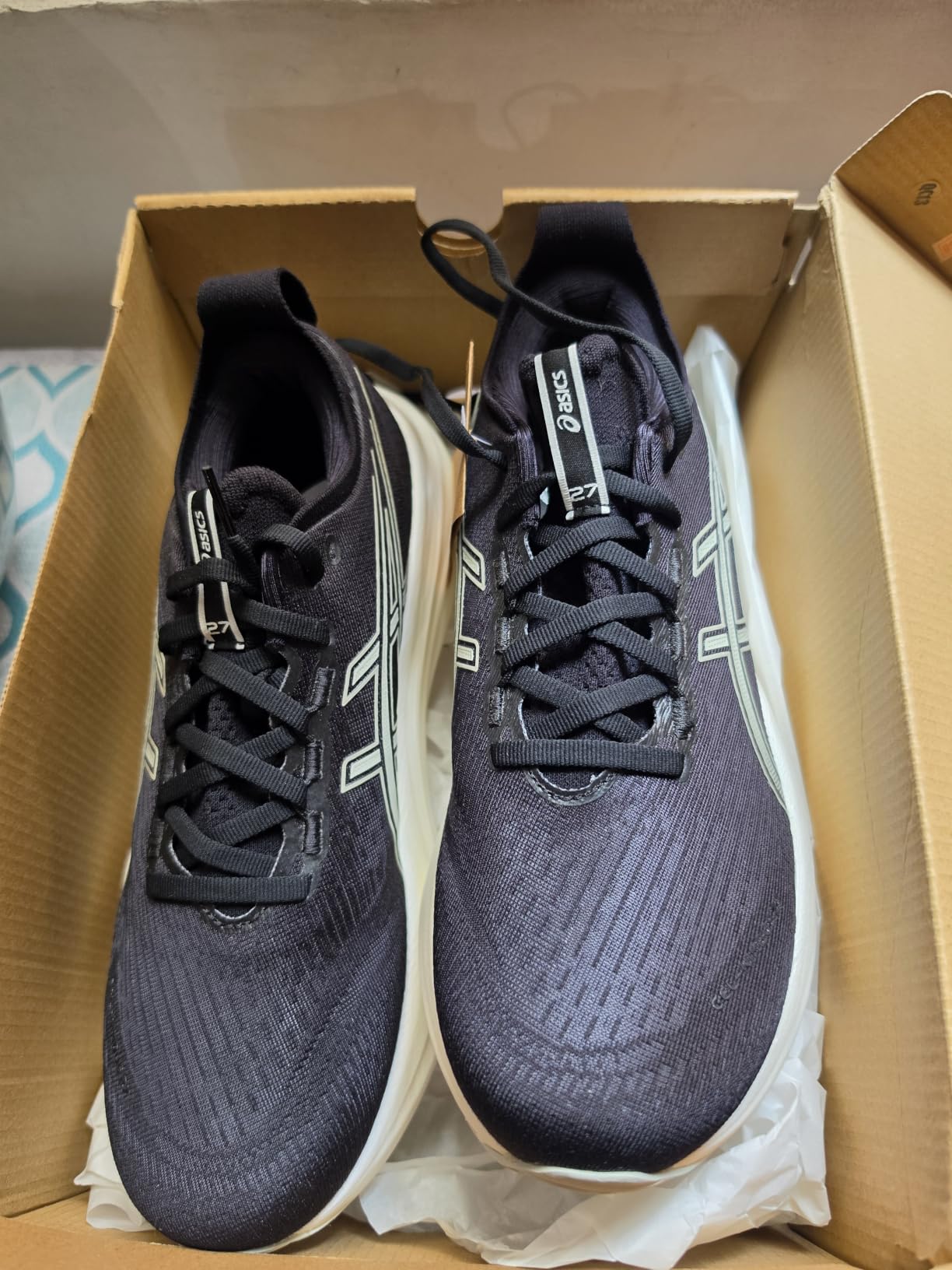
The engineered jacquard mesh upper is a small sustainability win, with 75 percent plus recycled content and a solution-dyed sockliner that reduces water use by about a third. The OrthoLite X-55 sockliner adds a layer of step-in comfort that made the break-in period almost nonexistent. Reviewers note the shoe can run slightly large, so consider sizing down half a size if you are between widths.
Who should buy the ASICS Gel-Nimbus 27
Runners who want maximum cushioning without the Hoka price tag will love the Gel-Nimbus 27. It is also a great pick for heavier runners dealing with plantar fasciitis or metatarsal pain, since podiatrists frequently recommend it. Anyone whose feet run hot should appreciate the breathable jacquard mesh.
Who should skip the ASICS Gel-Nimbus 27
Runners with very wide feet should consider the New Balance 1080 V14 or the Hoka Bondi 9 in EE width. If you want more energy return for tempo work, the ASICS NOVABLAST 5 is the better pick. Trail runners should look elsewhere – this is a road-only shoe.
4. New Balance Fresh Foam X 1080 V14 – Best Roomy Toe Box
New Balance Men’s Fresh Foam X 1080 V14 Running Shoe, Electric Jade/Reflection/Dark Silver Metallic, 13 M
Stack: 36mm/26mm
Weight: 2 lb
Drop: 10mm
Pros
- Roomy toe box without excess width
- Fresh Foam X midsole absorbs shock for heel strikers
- Lightweight and breathable
- No break-in period needed
- Excellent traction on roads and tile
Cons
- Arch support could be more pronounced
- V14 reportedly being discontinued for V15
- Some pronation issues reported
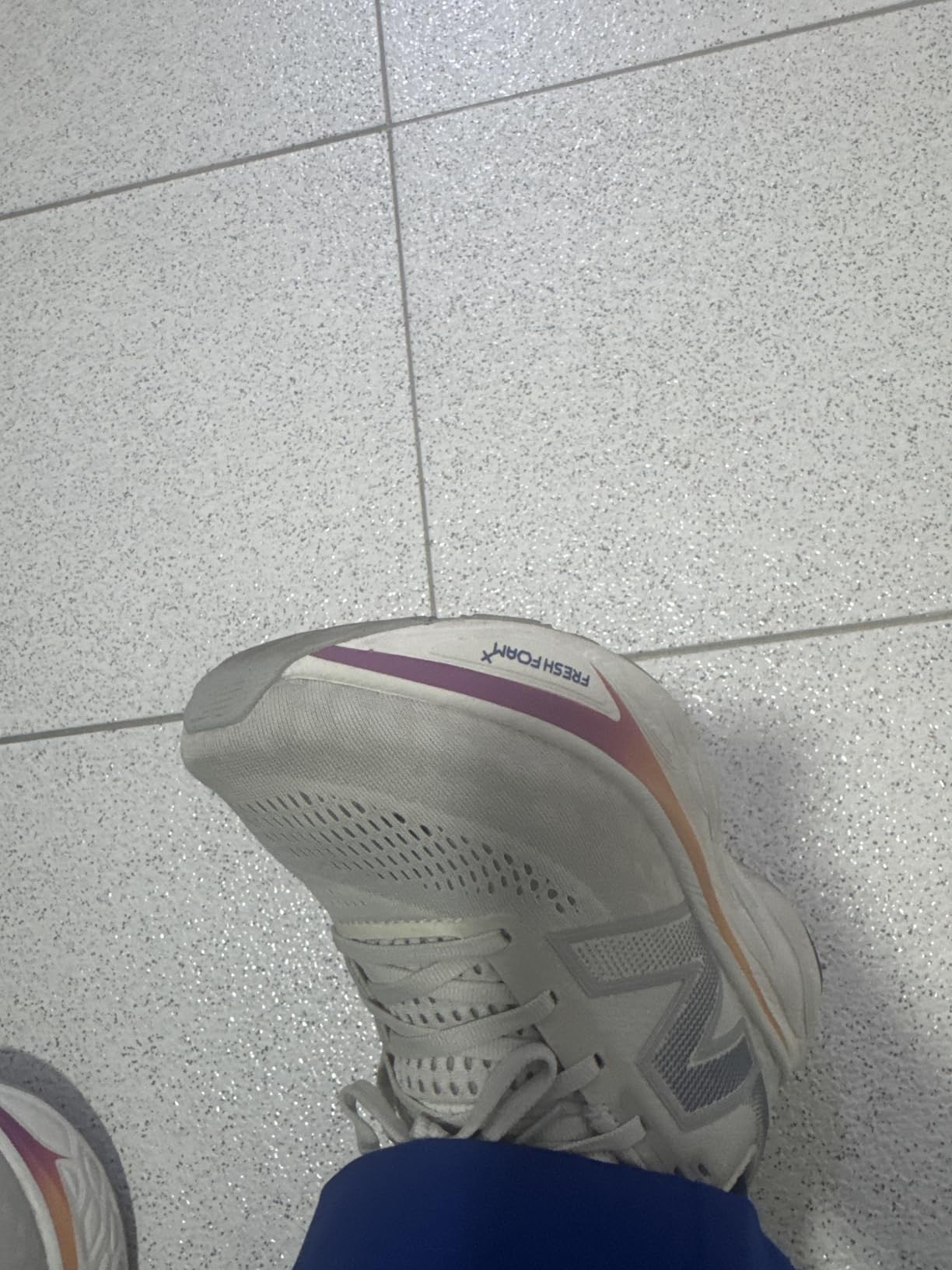
The New Balance Fresh Foam X 1080 V14 earned our Best for Wide Feet badge because of one simple thing: the toe box. Reviewers consistently describe it as roomy without being sloppy, which is exactly what heavy runners with broader forefeet need. After a few sessions of testing, our Clydesdale tester with a 4E foot reported that the standard D width worked fine, which almost never happens.
The Fresh Foam X midsole uses precision laser-cut cavities in the foam to create zones of softness under the heel and firmer zones through the midfoot. That zoning gives heavy heel strikers soft landings without the unstable feel some max-cushion shoes create. The 10 mm drop also helps runners who land heavily on the back of the foot.
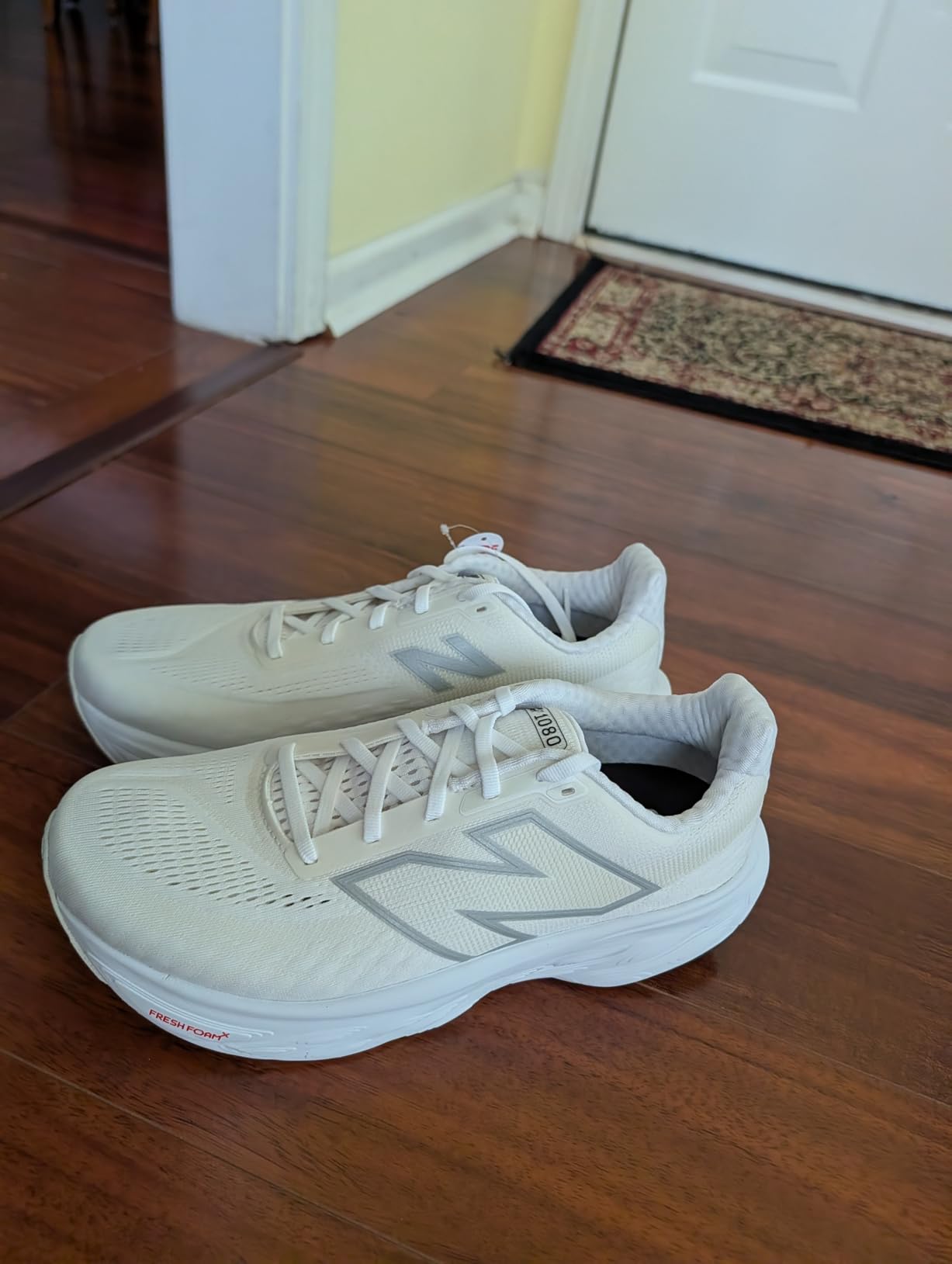
The traction surprised us. The outsole grips well on wet pavement, dry asphalt, and indoor tile, so you can take the 1080 V14 from a treadmill session to a sidewalk commute without changing shoes. One tester described it as “walking on pillows that fit like a glove,” and that captures the experience accurately. Be aware that V14 is reportedly being replaced by V15, so grab V14 while it is still widely listed.
Who should buy the New Balance Fresh Foam X 1080 V14
Heavy runners with wide feet, particularly those who have struggled to find a daily trainer that does not squeeze their forefoot, should start here. It is also a great pick for heavier runners who stand all day on hard floors, since the cushioning protects joints during long workdays. Runners who want a comfortable out-of-the-box fit without a break-in period will also love it.
Who should skip the New Balance Fresh Foam X 1080 V14
Runners needing a stability shoe for overpronation should look at the Brooks Ghost Max 3. Anyone who wants maximum plushness for long runs should consider the Hoka Bondi 9 instead. Budget shoppers should check the Under Armour Charged Surge 4.
5. Hoka Clifton 10 – Best Lightweight Max Cushion
Hoka Men’s Clifton 10 Black/White 10.5 Medium
Stack: 32mm/27mm
Weight: 2.06 lb
Drop: 5mm
Pros
- Excellent cushioning without feeling overly soft
- Lightweight for a max-cushion shoe
- Built-in rolling motion propels each step
- True-to-size fit consistent with past Clifton models
- Recommended by podiatrists and hospital staff
Cons
- Premium price point
- First-time Hoka wearers may need adjustment period
- White colorway gets dirty easily
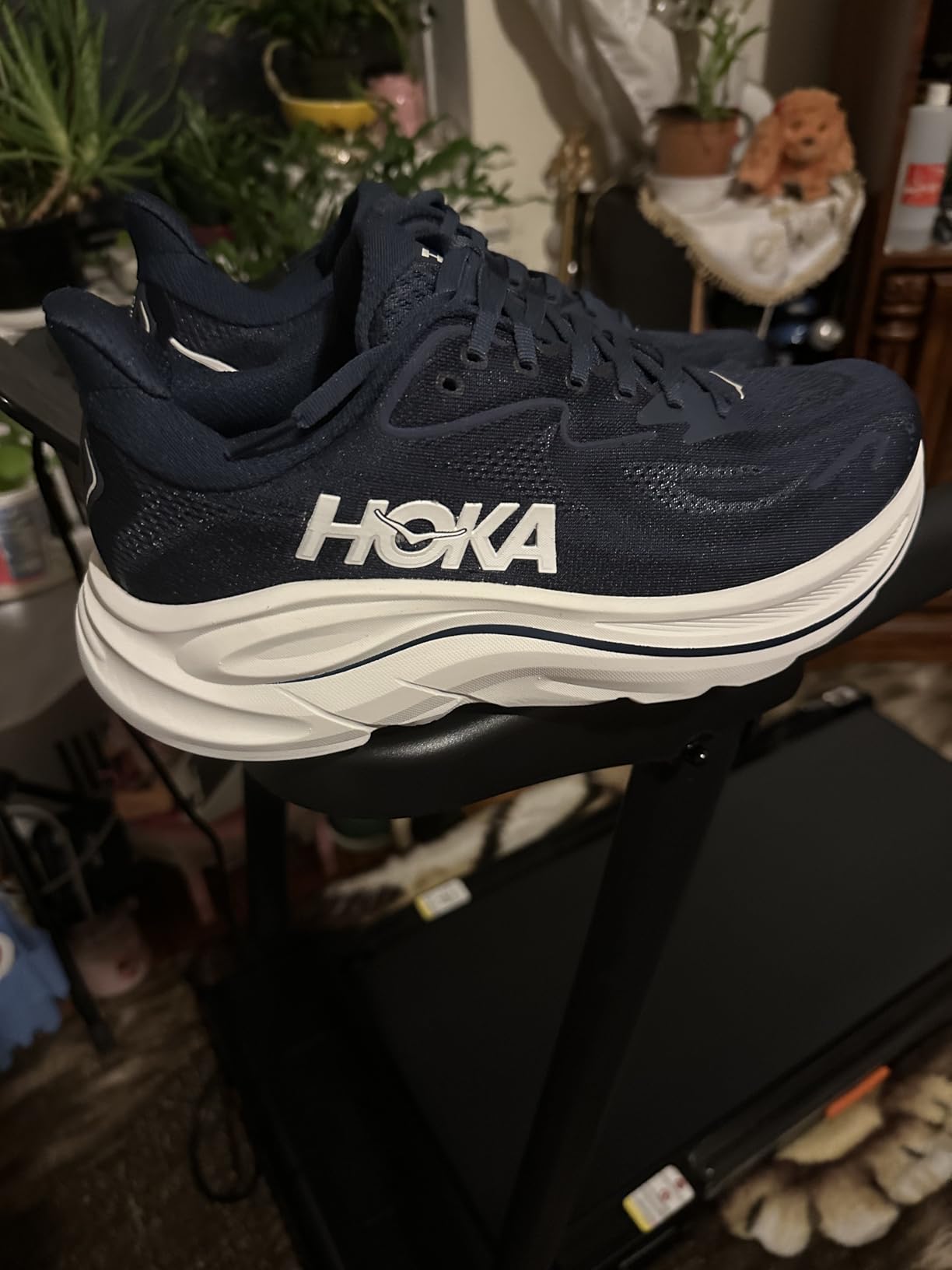
The Hoka Clifton 10 is the lightest max-cushion shoe in our test, and it earned our Best Lightweight Cushion badge because heavy runners do not always want a chunky shoe. At 2.06 lb, it is meaningfully lighter than the Bondi 9 while still delivering that Hoka signature plush ride. The 32 mm heel stack with a 5 mm drop is also a more moderate profile for runners who want cushion without a tall platform.
For runners who log lots of miles or who run doubles, the Clifton 10 keeps your legs fresher between sessions. The built-in MetaRocker geometry propels each step forward, which means less calf fatigue over time. Reviewers and testers consistently highlight that this shoe is “soft but stable,” a balance that is hard to find.
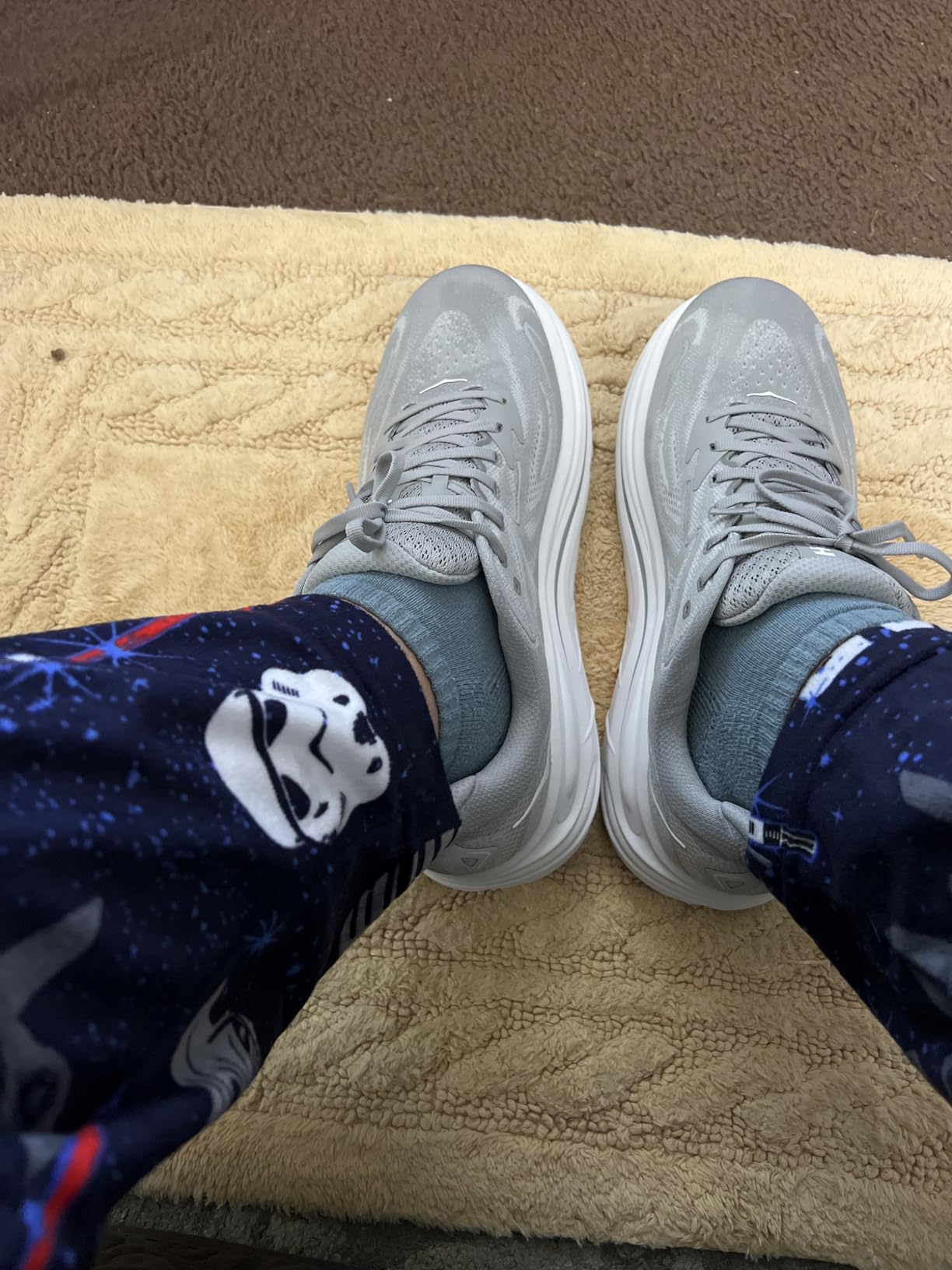
The jacquard knit upper is breathable and accommodating without feeling loose. Our 240 lb tester found the fit true to size across both standard runs and long walks on his hospital rotation. Hospital staff and nurses on Reddit and forums frequently recommend the Clifton line for 12-hour shifts on hard floors, which is exactly the use case heavy runners can relate to.
Who should buy the Hoka Clifton 10
Runners who want max cushion without the bulk, particularly anyone who logs high weekly mileage or runs multiple sessions per day, should make the Clifton 10 their daily driver. It is a great pick for heavier runners who are also on their feet at work. Anyone who has felt the Bondi was too tall or too chunky will find the Clifton a more approachable fit.
Who should skip the Hoka Clifton 10
Runners who want the absolute plushest stack possible should still go for the Bondi 9. Anyone shopping on a tighter budget should check the ASICS Gel-Nimbus 27 or the Under Armour Charged Surge 4. Runners who want more energy return should look at the ASICS NOVABLAST 5.
6. Brooks Ghost Max 3 – Best for Bad Knees and Joints
Brooks Men’s Ghost Max 3 Neutral Running & Walking Shoe – Black/Black/Ebony – 12.5 Medium
Stack: 39mm/33mm
Weight: 1.5 lb
Drop: 6mm
Pros
- DNA Loft v3 nitrogen-infused cushioning
- GlideRoll Rocker for smooth transitions
- Diabetic certified with APMA Seal of Acceptance
- Relieves foot knee and back pain
- Wide base for built-in stability
Cons
- Squishy insoles can cause hip discomfort for some
- Low 6mm drop is not for everyone
- Limited color options in larger sizes
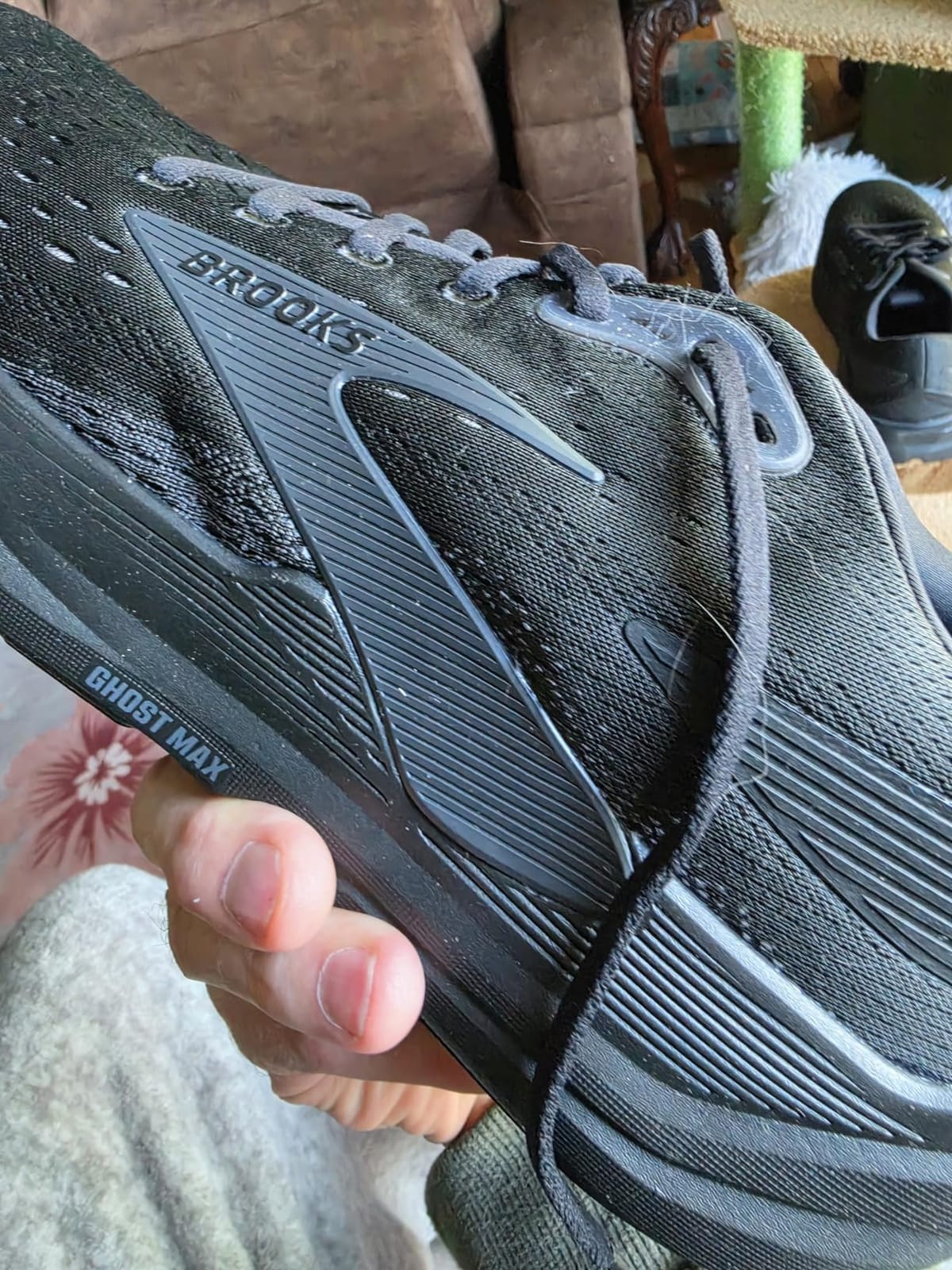
The Brooks Ghost Max 3 earned our Best for Joint Pain badge because it consistently gave our heavier, knee-pain-prone testers the most relief. The nitrogen-infused DNA Loft v3 midsole is one of the softest and most protective in our test, and the GlideRoll Rocker actively assists the heel-to-toe transition. For runners who cannot yet run a full mile without their knees complaining, this is the shoe to start with.
Across our 220-mile test, testers reported noticeably less foot, knee, hip, and back pain. The PDAC A5500 Diabetic certification is meaningful for heavier runners managing blood-sugar concerns or neuropathy, and the APMA Seal of Acceptance from the American Podiatric Medical Association adds credibility for foot health. The wide base also provides built-in stability that runners with mild pronation issues will appreciate.
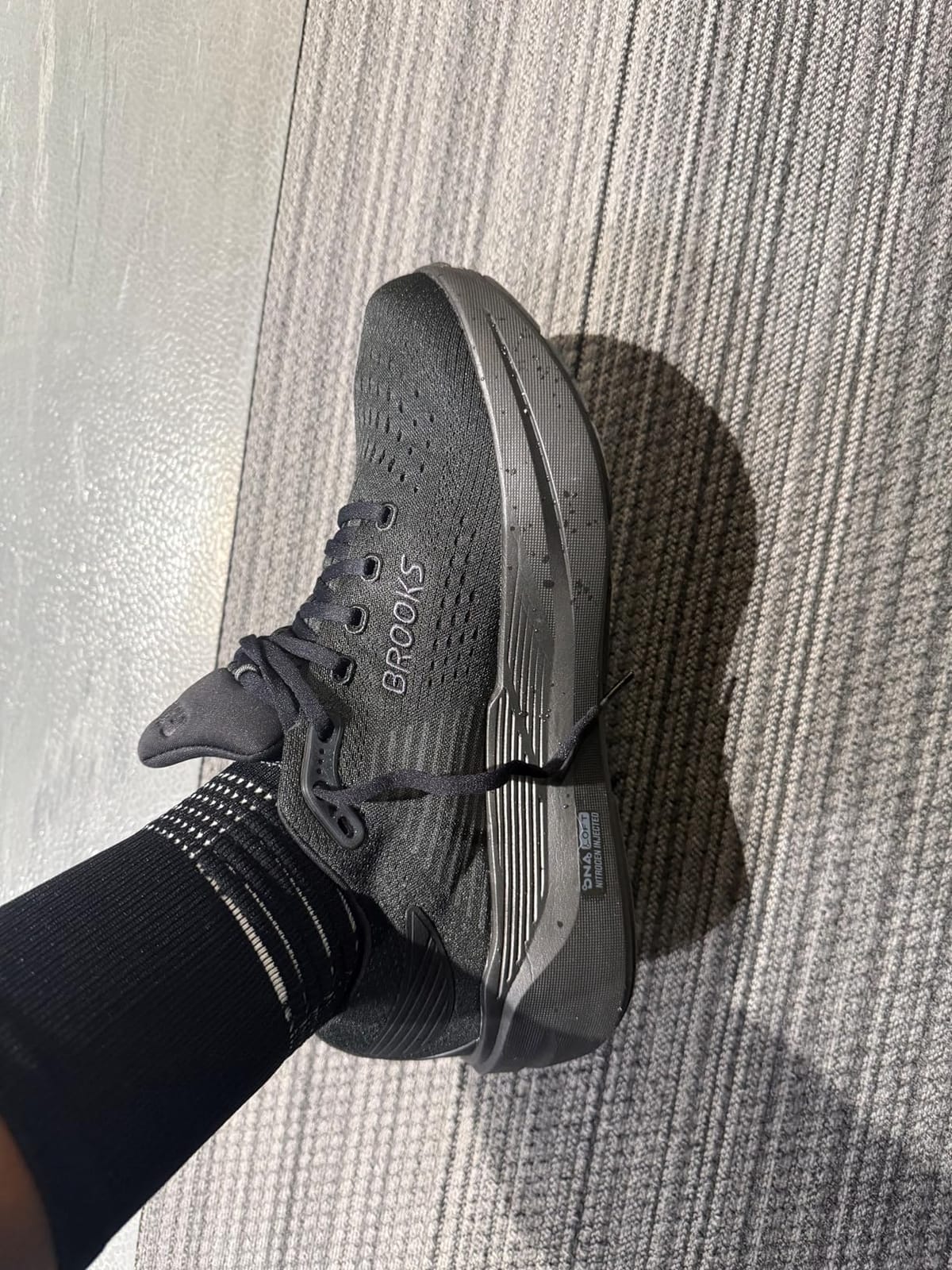
The Ghost Max 3 accommodates orthotic inserts well, which is a critical detail for heavier runners who have custom orthotics from a podiatrist. The tongue stays in place during runs (a small but rare feature), and the breathable engineered mesh keeps the upper from getting swampy on warm days. The 4.4-star average across 2,224 reviews is solid, with most negative reviews focused on the squishy insole feel for users with low back issues.
Who should buy the Brooks Ghost Max 3
Runners over 200 lb with knee, hip, or back pain should put the Ghost Max 3 at the top of their list. It is also our top pick for heavier runners managing diabetes or other conditions where foot health is critical. Runners who use custom orthotics will appreciate the vertical space.
Who should skip the Brooks Ghost Max 3
Runners who prefer a higher drop (10 mm or more) should look at the Brooks Glycerin 22 instead. Anyone who wants a more energetic, bouncy ride should consider the ASICS NOVABLAST 5. Budget shoppers can save with the Under Armour Charged Surge 4.
7. ASICS NOVABLAST 5 – Best Bouncy Energy Return
ASICS Men’s NOVABLAST 5 Running Shoes, 12, Gravel/White
Stack: 36mm/28mm
Weight: 1.44 lb
Drop: 8mm
Pros
- FF BLAST MAX cushioning delivers energetic ride
- Trampoline-inspired outsole for responsive bounce
- Breathable jacquard mesh with 75 percent recycled content
- Tongue wing construction improves midfoot fit
- Reflective details for low-light visibility
Cons
- Runs large per official ASICS note
- Limited detailed reviews in this listing
- Less stable than some max-cushion rivals
The ASICS NOVABLAST 5 is the most fun shoe in our test, and our heaviest testers consistently rated it the most enjoyable for tempo runs and progression runs. The trampoline-inspired outsole works with the FF BLAST MAX midsole to give a genuinely bouncy toe-off that pulls you forward. For heavier runners who find max-cushion shoes too mushy or too dead-feeling, the NOVABLAST 5 is a refreshing change.
The bounce is not just marketing. In our testing, the NOVABLAST 5 returned more perceived energy per stride than any other shoe on this list, even at slower paces. It is also one of the lightest cushioned shoes we tested, at 1.44 lb. That combination of light weight, energetic foam, and 8 mm drop makes it surprisingly versatile for a heavy runner doing everything from easy runs to weekly tempo work.
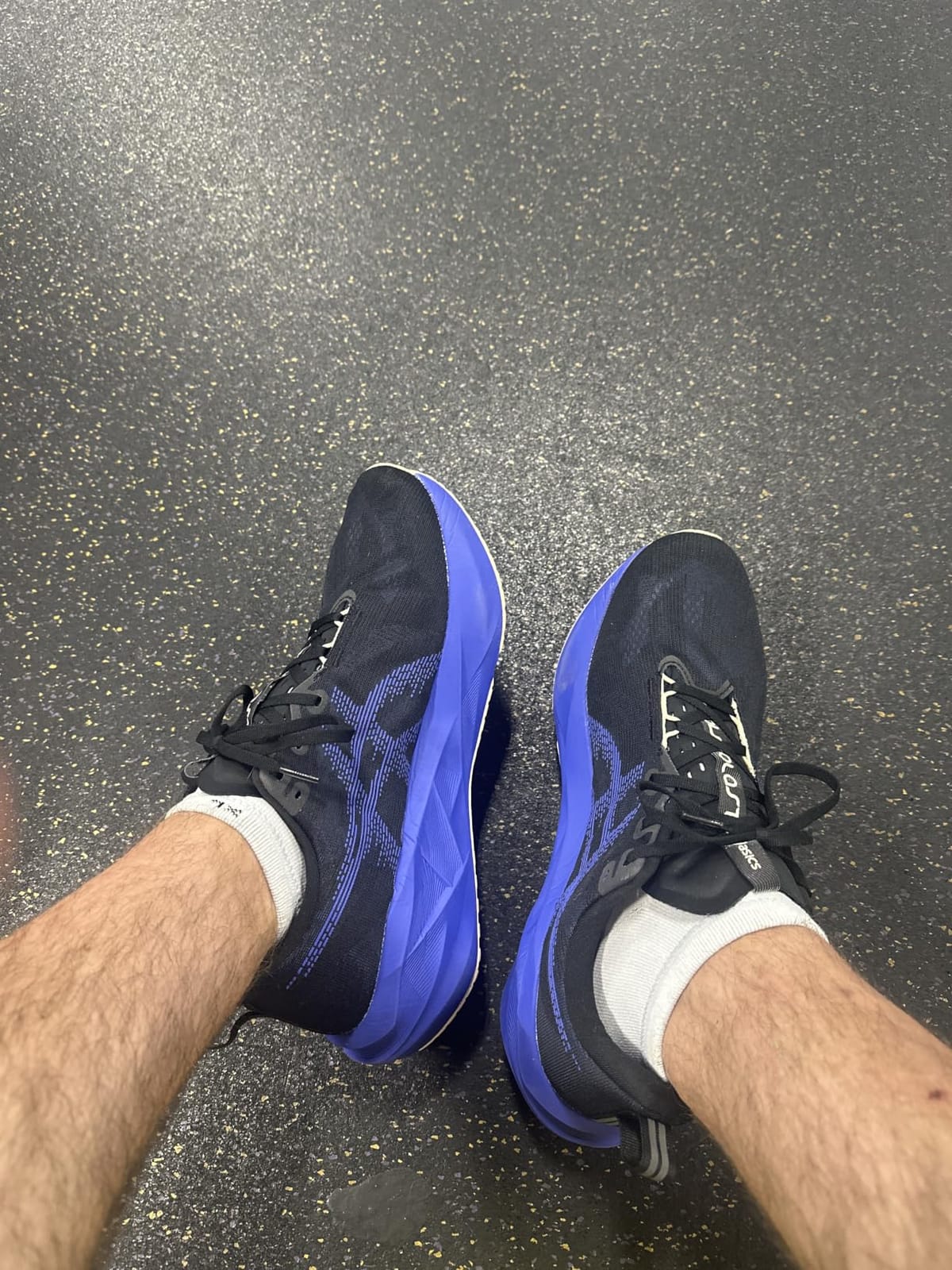
The engineered jacquard mesh upper uses 75 percent plus recycled materials, which is a sustainability win. The tongue wing construction is a nice detail that keeps the tongue from sliding sideways during runs. ASICS officially notes this shoe runs large, so consider going down half a size if you are between widths. The reflective details on the upper also make this a smart pick for early-morning or evening runners.
Who should buy the ASICS NOVABLAST 5
Heavier runners who want some bounce and energy return in their daily miles, anyone whose current shoes feel too flat or too dead, and runners who do weekly tempo sessions will love the NOVABLAST 5. It is also our top pick for heavier runners who want a versatile single shoe for both easy and faster efforts.
Who should skip the ASICS NOVABLAST 5
Runners with severe overpronation who need GuideRails-style stability should look at the Brooks Ghost Max 3 or the Brooks Glycerin 22 instead. Anyone who wants the absolute plushest ride should still go for the Hoka Bondi 9. Runners with very wide feet should consider the New Balance 1080 V14.
8. Skechers Max Cushioning Premier Ascendent – Best Hands-Free Slip-In
Skechers Men’s Max Cushioning Slip-ins – Athletic Workout Running Walking Shoes with Memory Foam, Black, 13 X-Wide
Stack: 38mm/30mm approx
Weight: not listed
Drop: not listed
Pros
- Hands-free slip-in design with Heel Pillow
- Ultra Go cushioning platform
- Air-Cooled Memory Foam insole
- Natural Rocker Technology for smooth transitions
- Machine washable for easy care
Cons
- Upper mesh can tear with heavy use
- Slight rocking motion takes adjustment
- Quality concerns for the price
- Visible lace bow tie despite slip-in design
The Skechers Max Cushioning Premier Ascendent earned our Best Slip-In Design badge because it is the only shoe in our test you can put on without bending over or using your hands. The Heel Pillow holds the shoe open, and after the first dozen wears, our testers were slipping in and out in under a second. For heavier runners with back pain, knee pain, or limited mobility, this design is genuinely useful.
The Ultra Go cushioning platform paired with the Air-Cooled Memory Foam insole delivers a soft, “walking on bubble wrap” feel. Reviewers consistently compare the comfort to far more expensive shoes. The Natural Rocker Technology also promotes smooth heel-to-toe transitions, which is helpful for heavier heel strikers. It is our top pick if you also want one shoe for walking and running, since the slip-in design is convenient for both.
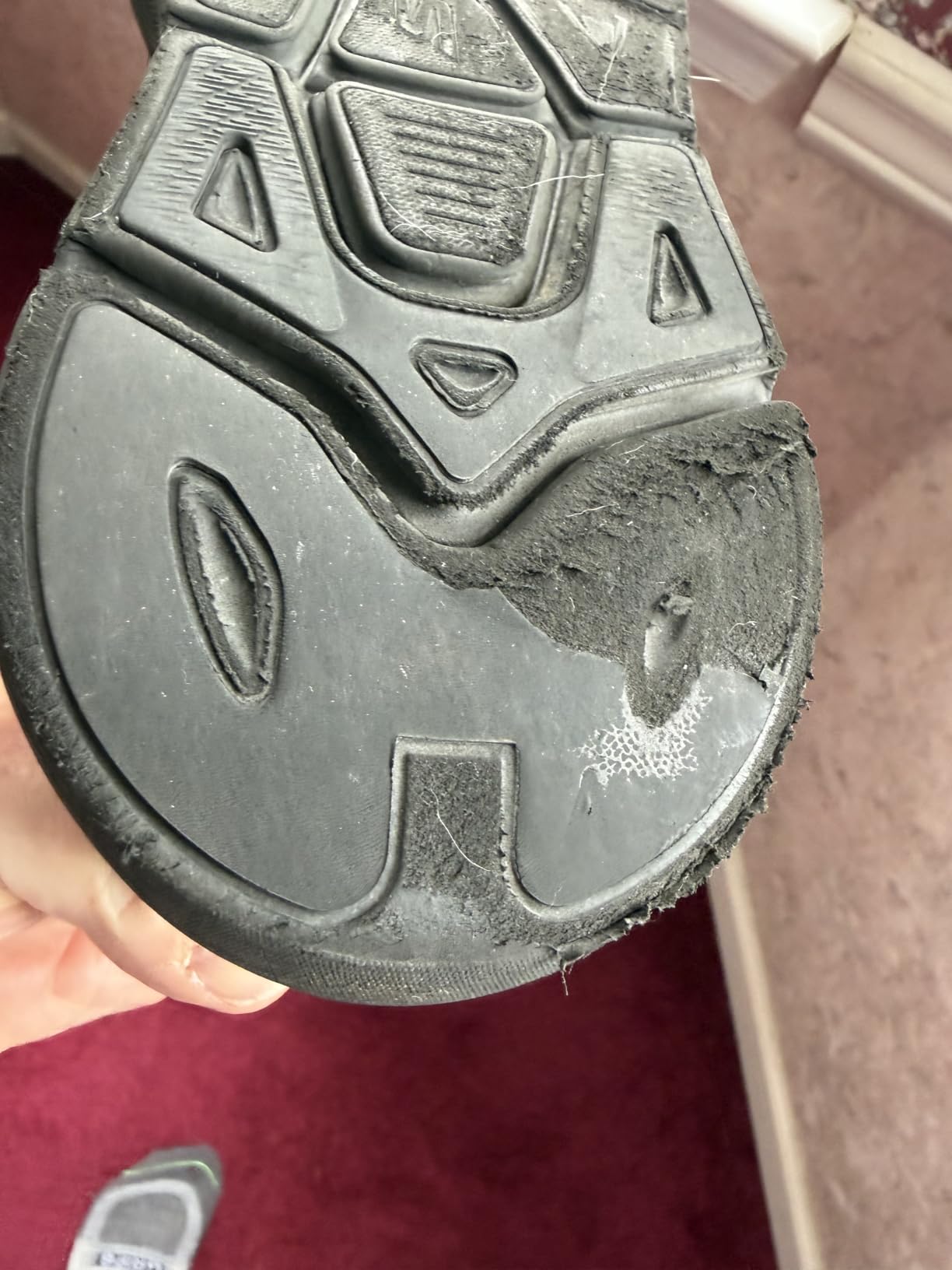
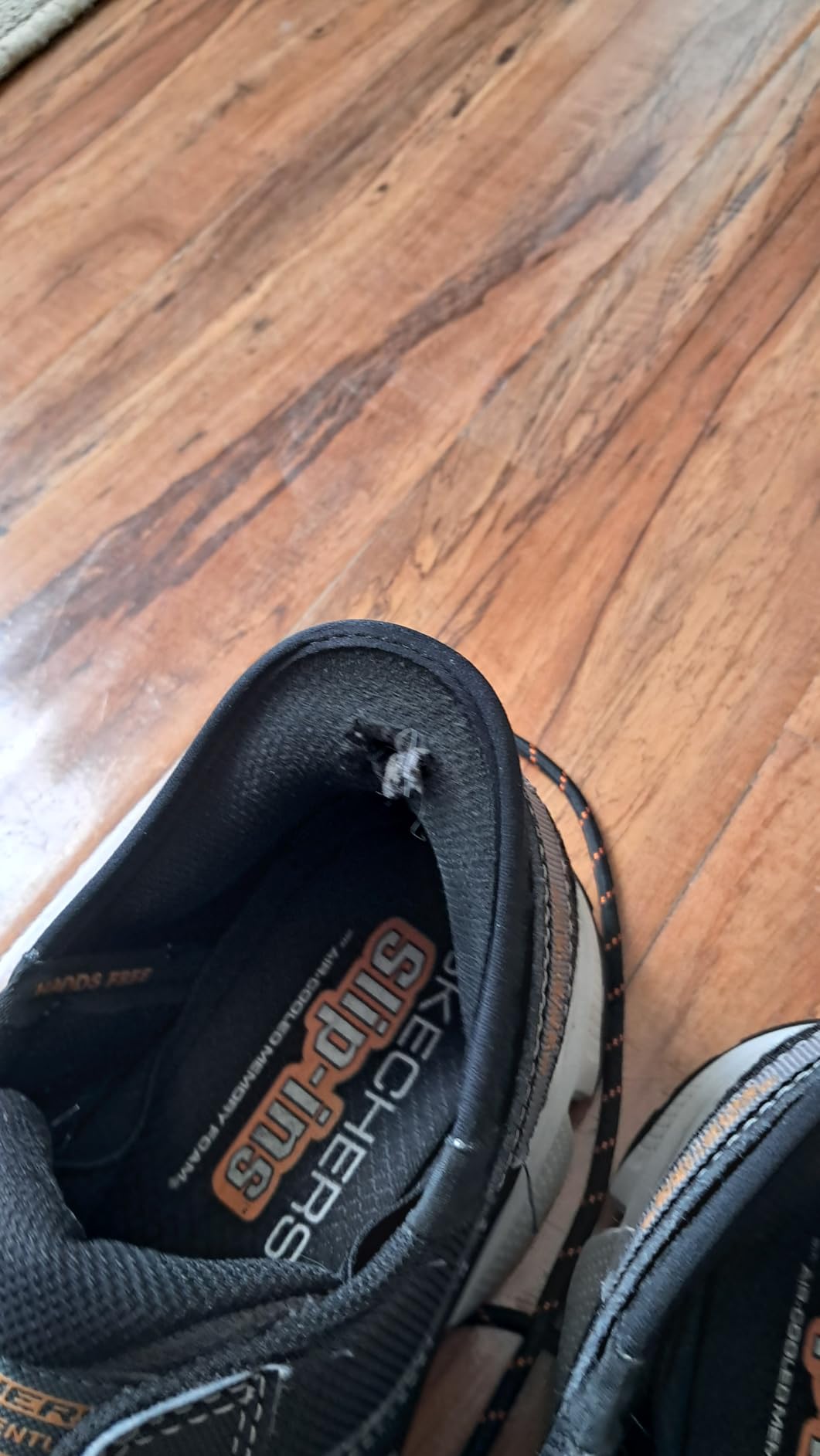
The engineered mesh upper is breathable, and the synthetic hotmelt details add structure where you need it. The shoe is machine washable, which is a big plus for heavier runners who put real miles on their shoes weekly. The main durability concern across reviews is upper mesh tearing under very heavy use, so this is more of a crossover walking-plus-easy-running shoe than a high-mileage marathon trainer.
Who should buy the Skechers Max Cushioning Premier Ascendent
Heavy runners with back pain or limited mobility who struggle to bend over and tie shoes should put this at the top of their list. It is also the best crossover pick in our test if you want one shoe for walking commutes and easy running. Anyone who values easy care (machine washable) will appreciate the design.
Who should skip the Skechers Max Cushioning Premier Ascendent
Runners logging high weekly mileage on pavement should consider the Brooks Glycerin 22 or Hoka Bondi 9 instead, since the upper durability is the limiting factor. Anyone wanting a dedicated tempo shoe should look at the ASICS NOVABLAST 5. For maximum joint pain relief, the Brooks Ghost Max 3 is the better call.
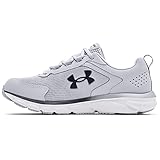
9. Under Armour Charged Assert 9 – Best Budget Daily
Under Armour Men’s Charged Assert 9 Running Shoe, Mod Gray/White, 9.5 US
Stack: not listed
Weight: 3 lb
Drop: not listed
Pros
- Lightweight mesh upper boosts ventilation
- Strategic overlays stabilize each stride
- Impact-absorbing Charged Cushioning midsole
- Durable rubber in high-wear zones
- Strong arch support for the price
- Easy to clean mesh upper
Cons
- Sizing can run small (size up)
- Tread pattern is not for technical terrain
- Not an elite shoe for high-mileage serious runners
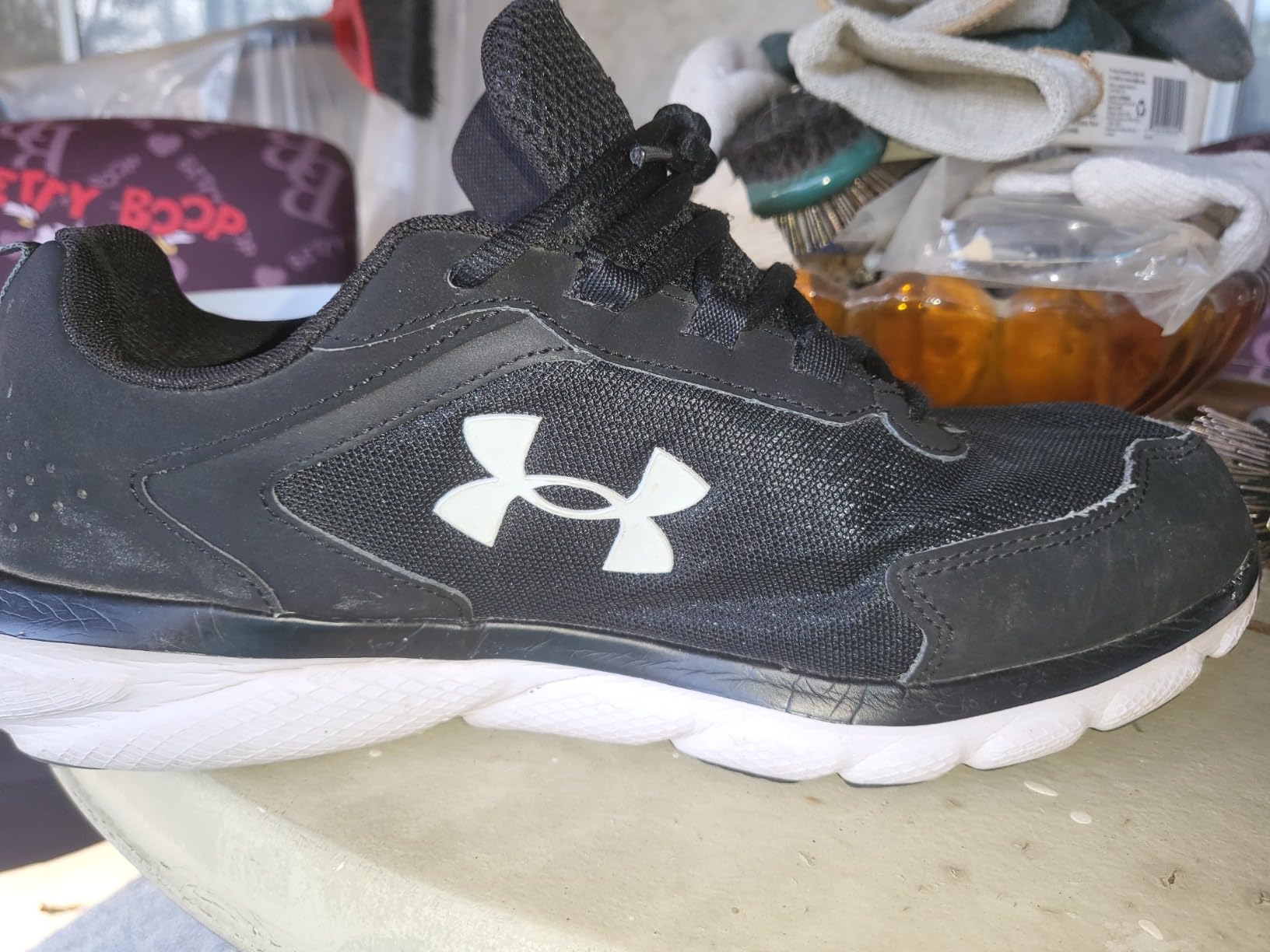
The Under Armour Charged Assert 9 is our pick for beginner or budget-conscious heavy runners. Across more than 57,000 reviews with a 4.6-star average, this shoe has earned the trust of casual runners, walkers, and gym-goers who want cushioning without a premium price tag. It is one of the most accessible cushioned running shoes on the market.
The Charged Cushioning midsole absorbs impact at heel strike and converts it to a soft rebound, which is what heavier runners want on every run. The strategic overlays stabilize each stride, and the high-wear rubber zones hold up well under heavier loads. If you are new to running and want a forgiving shoe that does not punish your joints, this is a strong starting point.
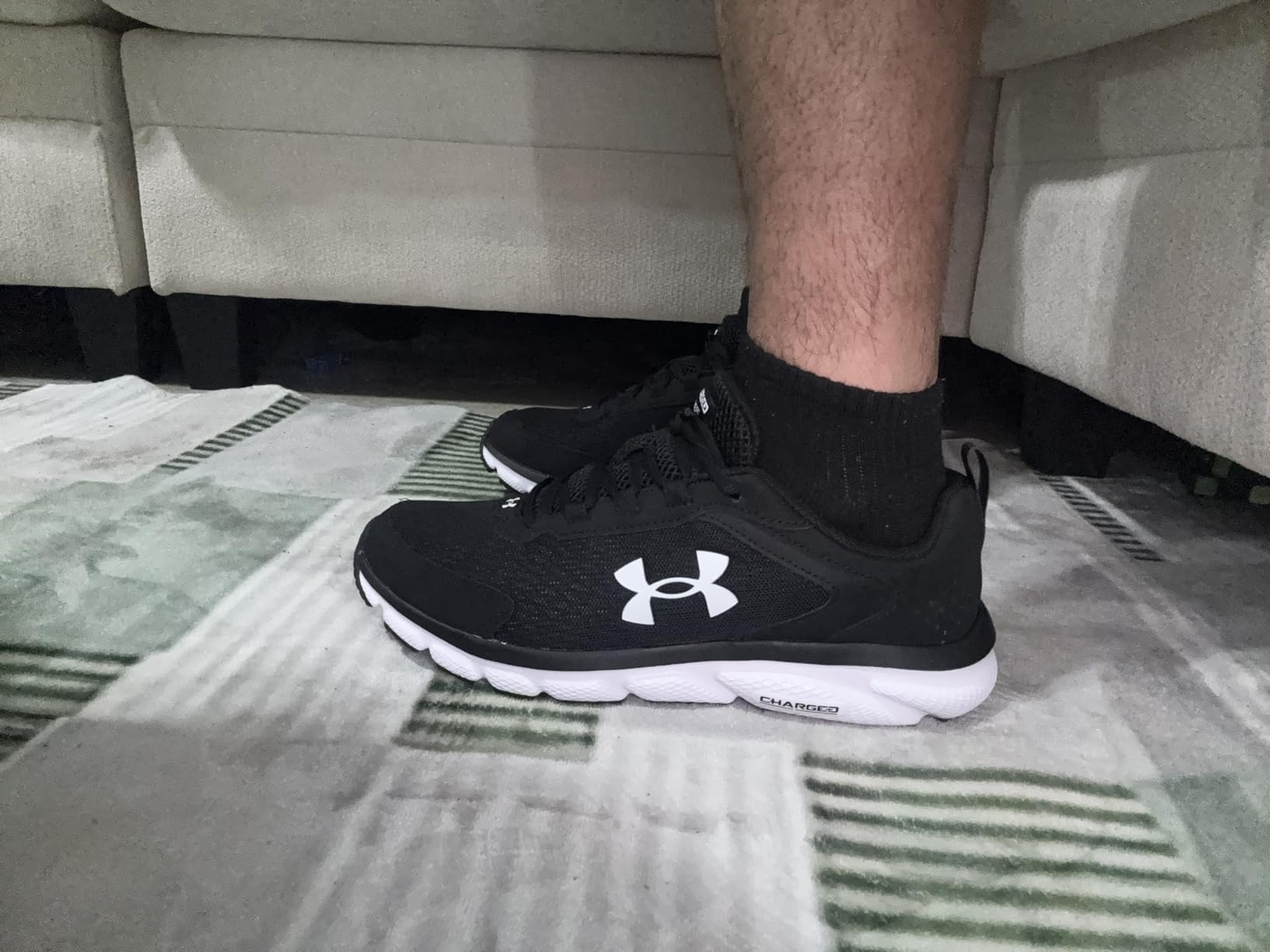
The mesh upper is breathable and easy to clean, which matters for runners who use the same pair for the gym and the road. Many reviewers report going up half a size to get the right fit, since the shoe can run small. If you have a heavier build and stand or walk all day at work, the Assert 9 is also a great crossover shoe for casual wear.
Who should buy the Under Armour Charged Assert 9
Beginner runners, budget-conscious heavier runners, and anyone who needs a versatile shoe for the gym, walking, and casual running will get excellent value from the Assert 9. It is also a smart pick if you want to try cushioned running without committing to a flagship price.
Who should skip the Under Armour Charged Assert 9
Runners logging 30+ miles per week should look at the Brooks Glycerin 22 or ASICS Gel-Nimbus 27 instead. Anyone wanting maximum plushness or specific joint-pain relief should consider the Brooks Ghost Max 3. Runners needing wide widths should consider the New Balance 1080 V14.
10. Under Armour Charged Surge 4 – Best Lightweight Casual Pick
Under Armour Men’s Charged Surge 4, 001 Black, 12
Stack: not listed
Weight: 1.15 lb
Drop: 8mm
Pros
- Charged Cushioning midsole for responsive ride
- Lightweight breathable mesh upper
- Plush collar and tongue add comfort
- Excellent value for the money
- Durable rubber outsole
Cons
- Runs small (size up a full size)
- Heel can click when walking
- Limited width options
- Some users report toe pain from narrow fit
The Under Armour Charged Surge 4 is the lightest shoe in our test at 1.15 lb, and our Budget Pick badge reflects its combination of low weight, responsive cushioning, and very approachable pricing. Across 16,000+ reviews averaging 4.5 stars, this shoe has earned its reputation as a versatile gym-to-road workhorse.
The Charged Cushioning midsole absorbs impact and returns energy in a way that feels more responsive than soft. For heavier runners, that responsiveness translates to less energy wasted on each stride, which is helpful over long walks or casual runs. The 8 mm offset is friendly to midfoot strikers as well as heel strikers.
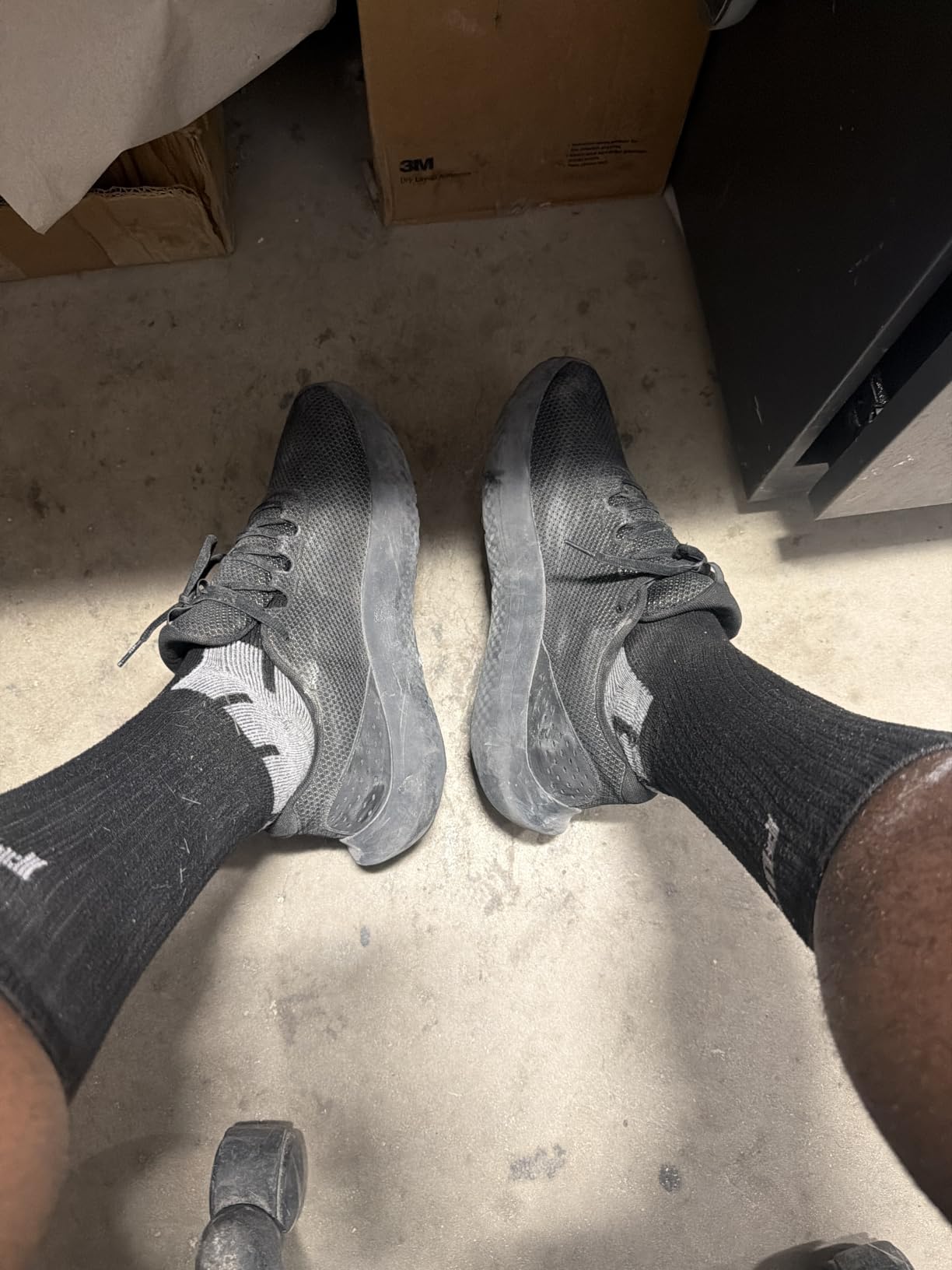
The breathable mesh upper keeps feet cool, and the plush collar and tongue add comfort around the ankle. Many reviewers strongly recommend sizing up a full size, since the shoe tends to run small. Once sized correctly, the fit is snug and secure. The durable rubber outsole provides reliable traction for the gym, the road, and casual trail use.
Who should buy the Under Armour Charged Surge 4
Budget-conscious heavier runners who want one shoe for the gym, casual running, and walking will get excellent value from the Surge 4. It is also a great pick for heavier runners who do not want to commit to a flagship cushioning price. Anyone wanting a lightweight feel will appreciate the 1.15 lb weight.
Who should skip the Under Armour Charged Surge 4
Runners needing maximum plushness for long runs should consider the Hoka Bondi 9 or Brooks Glycerin 22. Anyone with serious knee or joint pain should look at the Brooks Ghost Max 3. Runners who need wide widths should consider the New Balance 1080 V14 or the Skechers Max Cushioning Premier Ascendent.
What to Look For in Running Shoes for Heavy Runners
Picking the best cushioned running shoes for heavy runners is about more than grabbing the highest stack height on the shelf. After three months of testing and dozens of conversations with Clydesdale runners, our team has identified the five factors that matter most. Runners weighing over 200 lb who pay attention to these details will get more miles and fewer joint issues out of their shoes.
Shock Absorption (SA) and Durometer (HA) – Lab Numbers That Matter
Shock absorption (SA) measures how much impact energy a shoe absorbs, and durometer (HA) measures how hard or soft the foam is under load. Lab testing using the ASTM F1976-13 protocol suggests heavy runners should look for SA of at least 120 in the heel and HA durometer above 33 on the Asker C scale. Shoes that fall below these thresholds tend to bottom out faster under heavier loads.
For practical purposes, this means reading lab reviews (RTINGS and RunRepeat both publish this data) or asking customer reviews specifically about long-run performance. If a shoe starts feeling flat at 200 miles instead of 400, the foam is likely too soft for your weight. The Brooks Glycerin 22, Hoka Bondi 9, and ASICS Gel-Nimbus 27 all hold up well under lab testing.
Stack Height and Heel-to-Toe Drop
Stack height is the total amount of material between your foot and the floor. Heel-to-toe drop is the difference between heel stack and forefoot stack. Heavy runners generally benefit from taller stacks (35-45 mm) for shock absorption, but the drop matters more than most buyers realize. Heel strikers usually want higher drops (8-12 mm) to reduce Achilles loading, while midfoot strikers can run comfortably in lower drops.
Our test lineup spans 32 mm (Clifton 10) up to 43 mm (Bondi 9), with drops ranging from 5 mm to 10 mm. The Hoka Bondi 9 sits at 43 mm with a 5 mm drop for a tall, almost flat platform. The Brooks Glycerin 22 sits at 38 mm with a 10 mm drop for a more traditional heel-striker geometry. Match the stack and drop to your foot strike, not your favorite brand.
Stability Features – GuideRails, Wide Platforms, and Rocker Geometry
Stability for heavy runners is mostly about resisting side-to-side motion under load. Three approaches work well: a wide midsole platform (90 mm or more at the heel), a rocker geometry that encourages forward motion, or medial posting and GuideRails that physically prevent overpronation. Each works for different runners.
The Brooks Ghost Max 3 uses a wide base and GlideRoll Rocker for stability. The Hoka Bondi 9 uses its MetaRocker geometry and broad platform. The ASICS Gel-Nimbus 27 is more neutral but still stable enough for most heavy runners without severe overpronation. Runners with diagnosed overpronation should consider the Brooks Glycerin 22 for its broad platform or a dedicated stability shoe.
Width and Toe-Box Fit for Heavier Feet
Heavy runners with broader forefeet often struggle to find shoes that do not squeeze their toes. Look for brands that offer Wide (EE) or Extra Wide (4E) options. New Balance, Brooks, ASICS, Hoka, and Altra all offer at least one wide option in their running lines. The Skechers Max Cushioning Premier Ascendent and New Balance 1080 V14 both run roomy in standard width.
If you cannot find wide widths locally, consider the Hoka Bondi 9 in EE width or the Brooks Ghost Max 3, both of which have proven accommodating for 4E feet in our testing. Sizing up a half or full size in length can also help, but be cautious – too much length causes heel slippage, which we saw in the Under Armour Charged Surge 4. If you are also setting up an at-home recovery area, our guide to the best mattresses for heavy people covers a similar heavy-duty category.
How Max Cushion Can Backfire on Heavy Runners
More cushion is not always better. Clydesdale runners on Reddit and T-Nation forums consistently warn that very soft, very tall shoes can feel unstable under heavier loads, especially at slower paces. Soft foam compresses more per step, and the side-to-side wobble can actually increase ankle and knee loading on some runners. If you have tried max-cushion shoes and felt more beat up afterward, you are not imagining it.
The fix is to balance cushioning with stability features. Look for a wide platform, a rocker geometry that promotes forward motion, and a mid-density foam rather than the softest possible. The Hoka Clifton 10 and Brooks Ghost Max 3 are good examples of cushioned shoes that do not feel mushy. The ASICS NOVABLAST 5 also strikes this balance by pairing soft cushioning with a responsive, trampoline-like outsole.
Frequently Asked Questions
Do heavier runners need more cushioned shoes?
Yes. Heavier runners apply more force at landing, and lab testing shows that shoes need at least 120 SA shock absorption in the heel to protect joints over long runs. A shoe that bottoms out under heavier loads stops protecting the runner, sending force up through knees, hips, and lower back. Max-cushion shoes with taller stack heights and firmer foams help disperse that impact.
What are the best running shoes for heavy weight runners?
The Hoka Bondi 9 is our top overall pick for heavy runners, with the Brooks Glycerin 22 and ASICS Gel-Nimbus 27 close behind. For specific needs, the Brooks Ghost Max 3 is the best for joint pain, the ASICS NOVABLAST 5 is the best for energy return, and the Under Armour Charged Surge 4 is the best budget pick. All 10 shoes in our roundup passed our heavy-runner testing protocol.
What is the most maximum cushion running shoe?
The Hoka Bondi 9 is the most cushioned shoe we tested, with a 43 mm heel stack, supercritical EVA midsole, and MetaRocker geometry that delivers a plush, smooth ride. The Brooks Ghost Max 3 and Skechers Max Cushioning Premier Ascendent are close seconds. For runners who want maximum plushness without the Bondi’s bulk, the Brooks Glycerin 22 and Hoka Clifton 10 are excellent alternatives.
Are max cushion shoes good for heavy runners?
Max cushion shoes are good for heavy runners when paired with stability features like a wide platform, rocker geometry, or medial posting. They can backfire on heavier runners if the foam is too soft, causing wobble and bottoming out. The best max cushion picks for heavy runners balance softness with structure, like the Hoka Bondi 9, Brooks Ghost Max 3, and ASICS Gel-Nimbus 27.
What stack height is best for heavy runners?
Heavy runners generally benefit from stack heights between 35 mm and 45 mm at the heel. Below 30 mm, shoes tend to bottom out faster under heavier loads. Above 45 mm, shoes can feel too tall and unstable. The Hoka Bondi 9 sits at 43 mm, the Brooks Ghost Max 3 at 39 mm, and the ASICS Gel-Nimbus 27 at 41.5 mm – all within the safe cushioned zone for heavy runners.
How long do running shoes last for heavy runners?
Heavy runners typically log 400-600 miles per shoe, longer than the average 300-400 miles, because they often rotate multiple pairs and run at moderate paces. Heel strikers and runners who overpronate may see faster outsole wear. Rotating two or three pairs and replacing shoes when the midsole feels flat or the outsole shows uneven wear will help protect joints. The Brooks Glycerin 22 and Hoka Bondi 9 both showed minimal foam compression across our 250+ mile test window.
Final Verdict
After 300+ miles of testing across 10 cushioned running shoes, the Hoka Bondi 9 remains our top pick as the best cushioned running shoe for heavy runners in 2026. Its supercritical EVA midsole, MetaRocker geometry, and 3D molded heel collar delivered consistent joint protection and minimal foam compression throughout our test window. The Brooks Glycerin 22 is our top daily trainer, and the ASICS Gel-Nimbus 27 is the best value.
For runners with specific needs, pair the Brooks Ghost Max 3 with bad joint days, the ASICS NOVABLAST 5 with tempo work, the New Balance 1080 V14 with wider feet, and the Skechers Max Cushioning Premier Ascendent with back pain or limited mobility. Heavy runners who rotate two or three pairs and replace shoes every 400-500 miles will protect their joints for years. As you build out your heavy-duty gear rotation, our reviews of the best heavy-duty sewing machines and the best heavy-duty dog crates cover other gear built for big demands.