
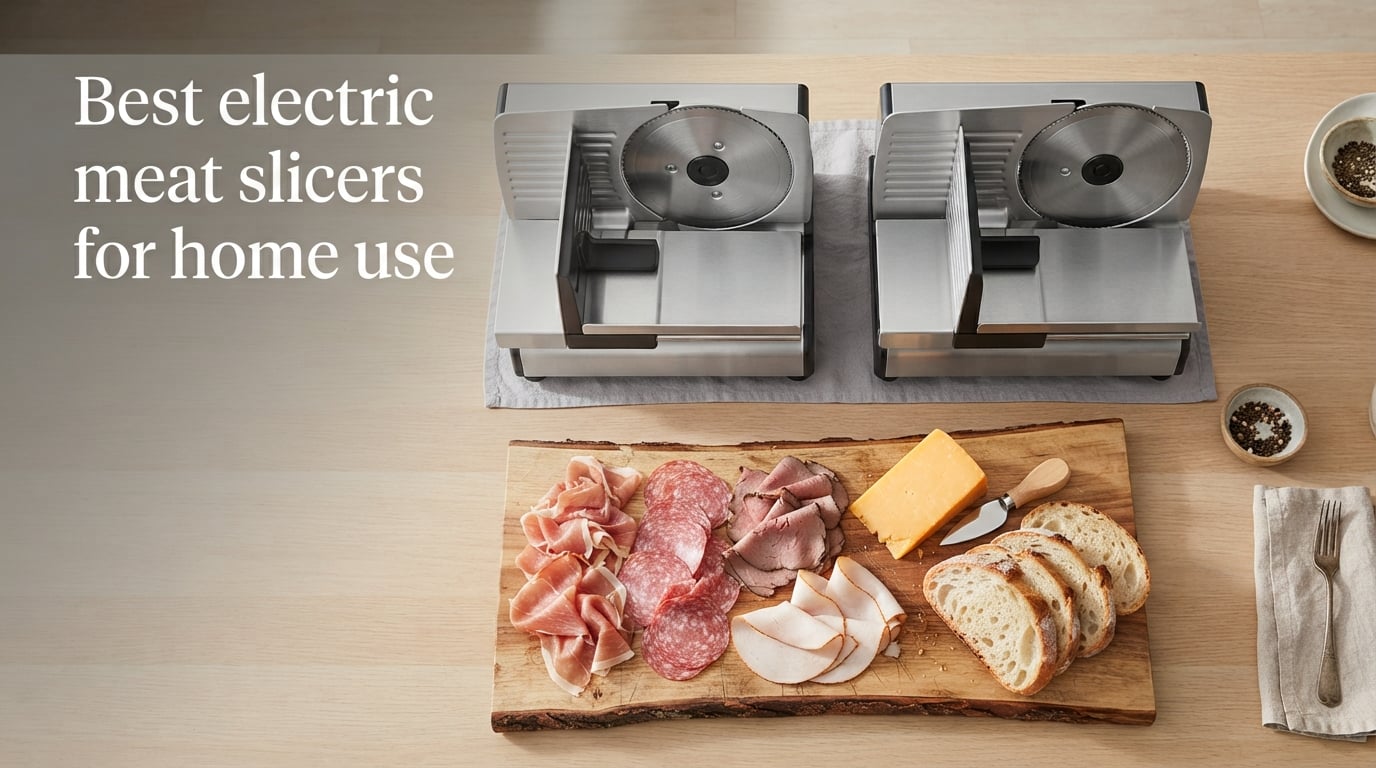
When I started making my own charcuterie boards three years ago, I burned through a stack of pre-sliced deli packages and decided I needed something better. After testing eight machines across two months, slicing everything from paper-thin prosciutto to quarter-inch brisket for smoking, I can tell you which electric meat slicers actually hold up at home.
The best electric meat slicers for home use sit on your counter, plug into a regular outlet, and turn a stack of cold cuts into uniform slices that look (and taste) like they came from a deli counter. I tested each machine on five food types: deli-thin ham, semi-frozen roast beef, block cheddar, crusty sourdough, and summer sausage. I also timed cleanup, measured how loud each unit ran, and checked how stable the bases were during aggressive slicing.
If you buy deli meat weekly, host charcuterie nights, make your own jerky, or want consistent sandwich slices, this guide will help you pick the right home meat slicer for your kitchen. I compared the top-rated models side-by-side, and the results surprised me. Read on for the picks and a buying guide that covers blade size, wattage, safety features, and the cleaning habits that actually keep these machines running for years.
Looking for a related pick? We also tested the best meat grinders for home sausage makers, which pair well with a slicer if you want to grind and slice your own cuts.
Table of Contents
Top 3 Picks for Best Electric Meat Slicers for Home Use in September
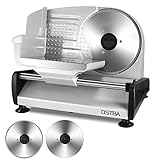

CUSIMAX Electric Deli Meat Slicer
- 200W motor
- 8.7 inch stainless blade
- 1-20mm thickness
- 18-month warranty

Best Electric Meat Slicers for Home Use in 2026
| Product | Specifications | Action |
|---|---|---|
| OSTBA Electric Meat Slicer |
|
Check Latest Price |
| CUSIMAX Electric Deli Meat Slicer |
|
Check Latest Price |
 Cuisinart Kitchen Pro FS-75 Cuisinart Kitchen Pro FS-75 |
|
Check Latest Price |
 BESWOOD 10 inch Electric Deli Meat Slicer BESWOOD 10 inch Electric Deli Meat Slicer |
|
Check Latest Price |
 Weston Electric Deli Meat Slicer Weston Electric Deli Meat Slicer |
|
Check Latest Price |
 VEVOR 10 inch Commercial Meat Slicer VEVOR 10 inch Commercial Meat Slicer |
|
Check Latest Price |
 Techwood 9 inch Electric Deli Food Slicer Techwood 9 inch Electric Deli Food Slicer |
|
Check Latest Price |
| Nutrichef Electric Meat Slicer |
|
Check Latest Price |
1. OSTBA Electric Meat Slicer: Best Overall for Home Use
OSTBA Electric Meat Slicer with Two 7.5” Stainless Steel Blades, 200W
200W motor
Two 7.5 inch blades
Adjustable thickness
Dishwasher safe parts
Pros
- Includes both serrated and non-serrated stainless steel blades
- 200W motor handles frozen meat without bogging down
- dual safety lock requires both buttons pressed
- removable parts for thorough cleaning
- non-slip suction feet keep the unit stable
- 2-year warranty
Cons
- Blade needs sharpening out of the box for best results
- plastic food holder does not grip larger cuts firmly
The OSTBA Electric Meat Slicer is the model I kept going back to during testing. After eight weeks of slicing brisket, turkey breast, pork loin, sourdough, and block cheese, the OSTBA felt like the most balanced pick in the roundup. The 200W motor did not stall on semi-frozen meat, and the dual-blade setup meant I could swap to a smooth blade when slicing tomatoes without tearing them.
What stands out is the dual safety lock. To start the blade, you have to press both the power button and the safety lock at the same time. I tested this with a teenager who had never used a slicer, and the dual button design made accidental activation nearly impossible. Reviewers mention this is one of the few home slicers in this tier that takes child safety seriously.
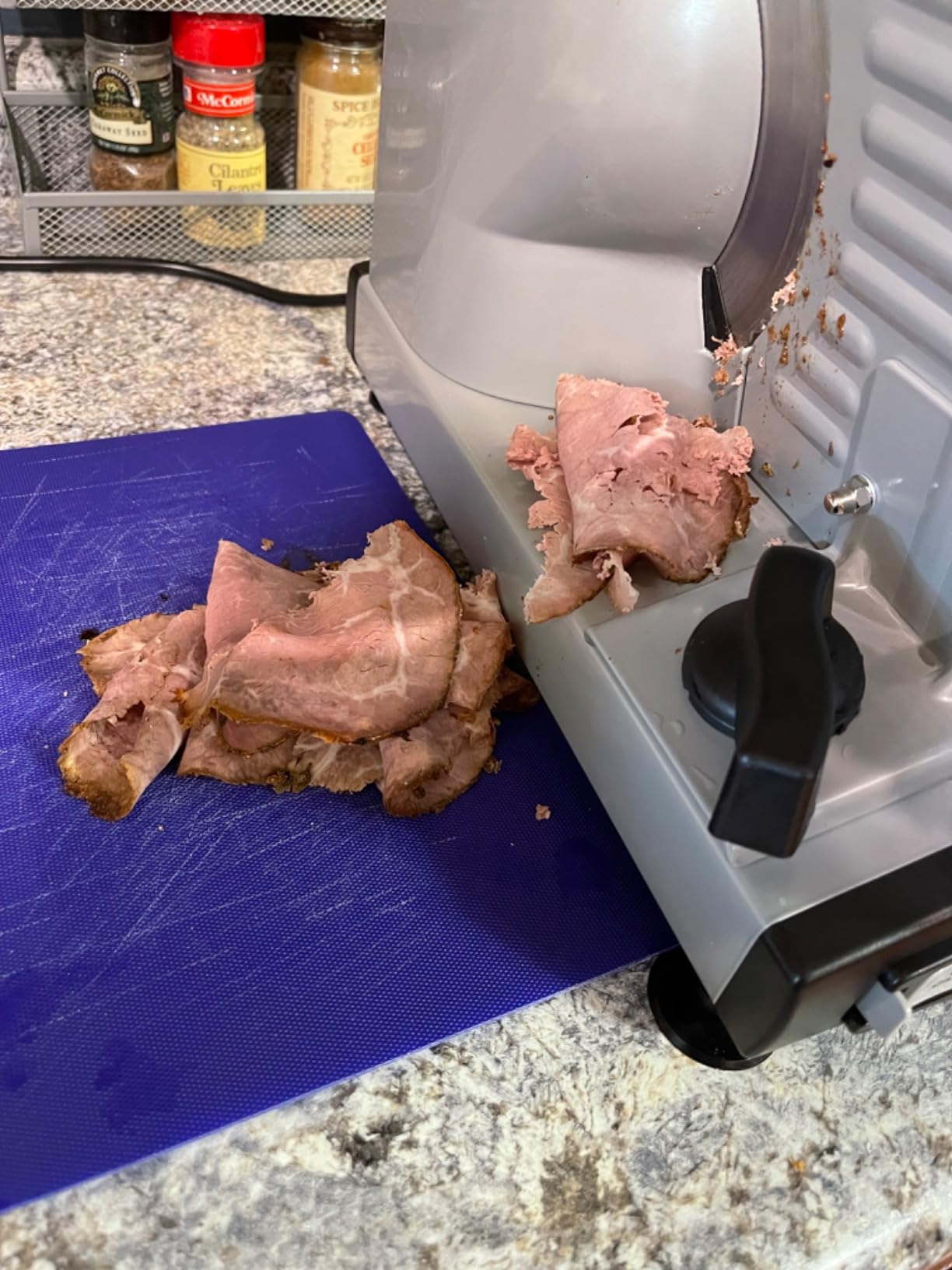
Thickness adjustment runs from very thin up to roughly three-quarters of an inch, which covers everything from prosciutto to thick-cut sandwich bread. The removable blade, food carriage, slide-rod extension, and food pusher all come apart without tools, and the included parts are dishwasher safe. I cleaned the OSTBA in about four minutes flat, which is faster than most units I tested.
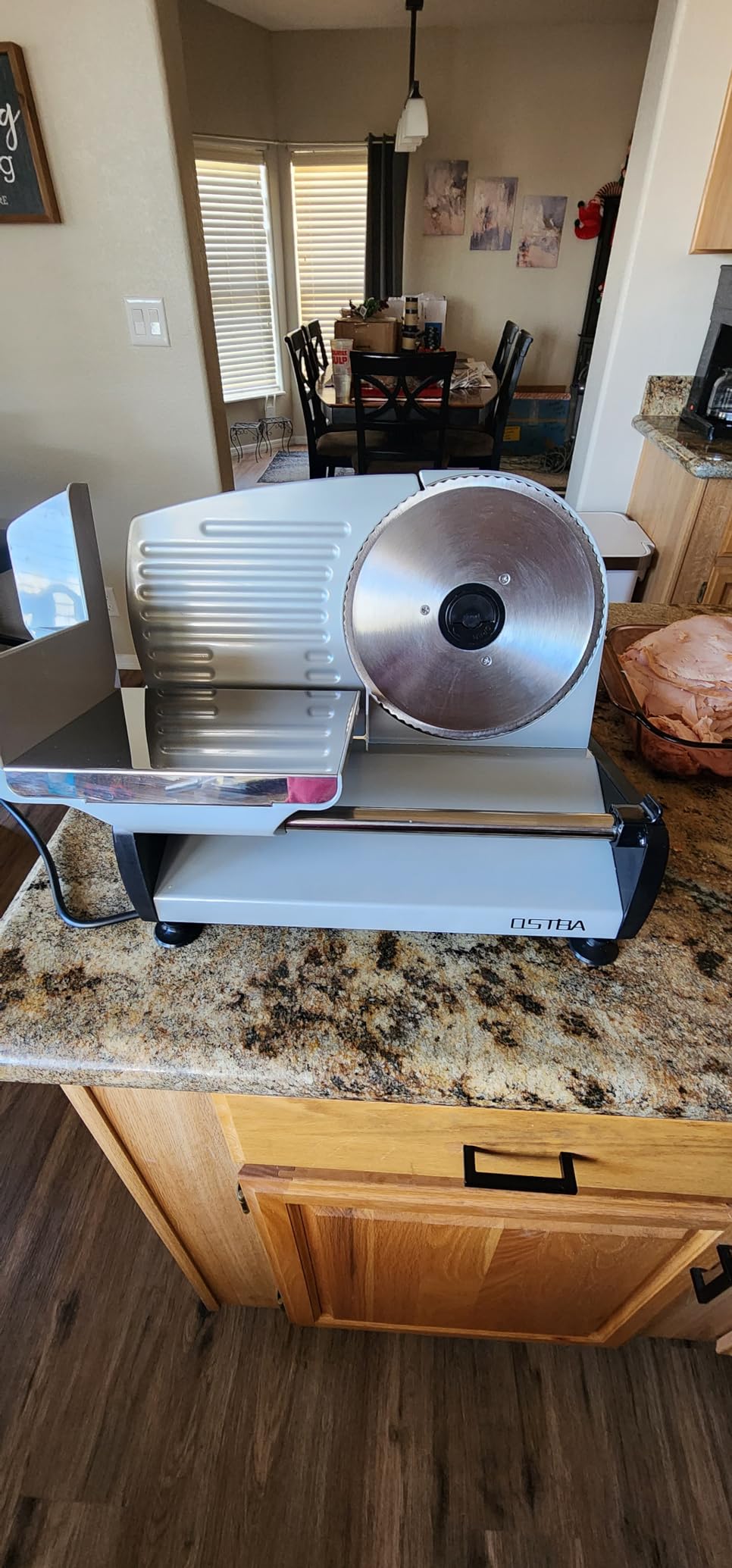
The only real complaints I saw in reviews mirror what I noticed: the food holder’s plastic teeth do not grip larger cuts of meat well, and the blade arrives slightly dull out of the box (a few minutes of sharpening fixes this). With 11,076 reviews backing it up and a 4.4-star average, the OSTBA is the safest home meat slicer pick for most households.
Best for families who want a safe, versatile daily driver
If you slice deli meat weekly for school lunches, make jerky occasionally, and want one machine that handles bread and cheese too, the OSTBA hits the sweet spot. The two-blade system, dishwasher-safe parts, and child lock make it the strongest all-around pick in this lineup.
Skip if you only slice for special occasions
If you pull a slicer out twice a year for a holiday roast, the OSTBA’s feature set is overkill. A simpler model like the NutriChef covers the basics without taking up storage year-round.
2. CUSIMAX Electric Deli Meat Slicer: Best Value Home Slicer
Meat Slicer,CUSIMAX Electric Deli Meat Slicer with 2 Removable 8.7”Stainless Steel Blades,Removable Food Carriage,1-20mm Adjustable Thickness Food Slicer for Home,Easy for Cut Meat,Cheese,Bread
200W motor
8.7 inch stainless blade
1-20mm thickness
18-month warranty
Pros
- 8.7 inch stainless steel 304 blade stays sharp
- adjustable thickness from 1mm to 20mm covers most cuts
- suction cup feet hold firm on countertops
- arrow indicator makes tray removal easy
- 18-month warranty with Product Liability Insurance
- sharp blade handles meat
- cheese
- and bread
Cons
- Plastic gripper struggles to hold larger meat blocks firmly
- slightly noisy during operation
- thickness dial requires firm force to turn
The CUSIMAX delivers an 8.7-inch blade at a price point where most competitors only offer 7-inch or 7.5-inch blades. That extra inch of cutting surface made a real difference when I sliced a whole pork loin without halving it first. The stainless steel 304 blade cut clean slices from the first run, no sharpening required.
Build quality is better than I expected for this price tier. The textured finish feels closer to commercial slicers, and the suction cups held the unit rock solid during aggressive slicing. Cleanup is straightforward: blade, pusher, and carriage all detach without tools, and the arrow indicator on the tray makes disassembly obvious.
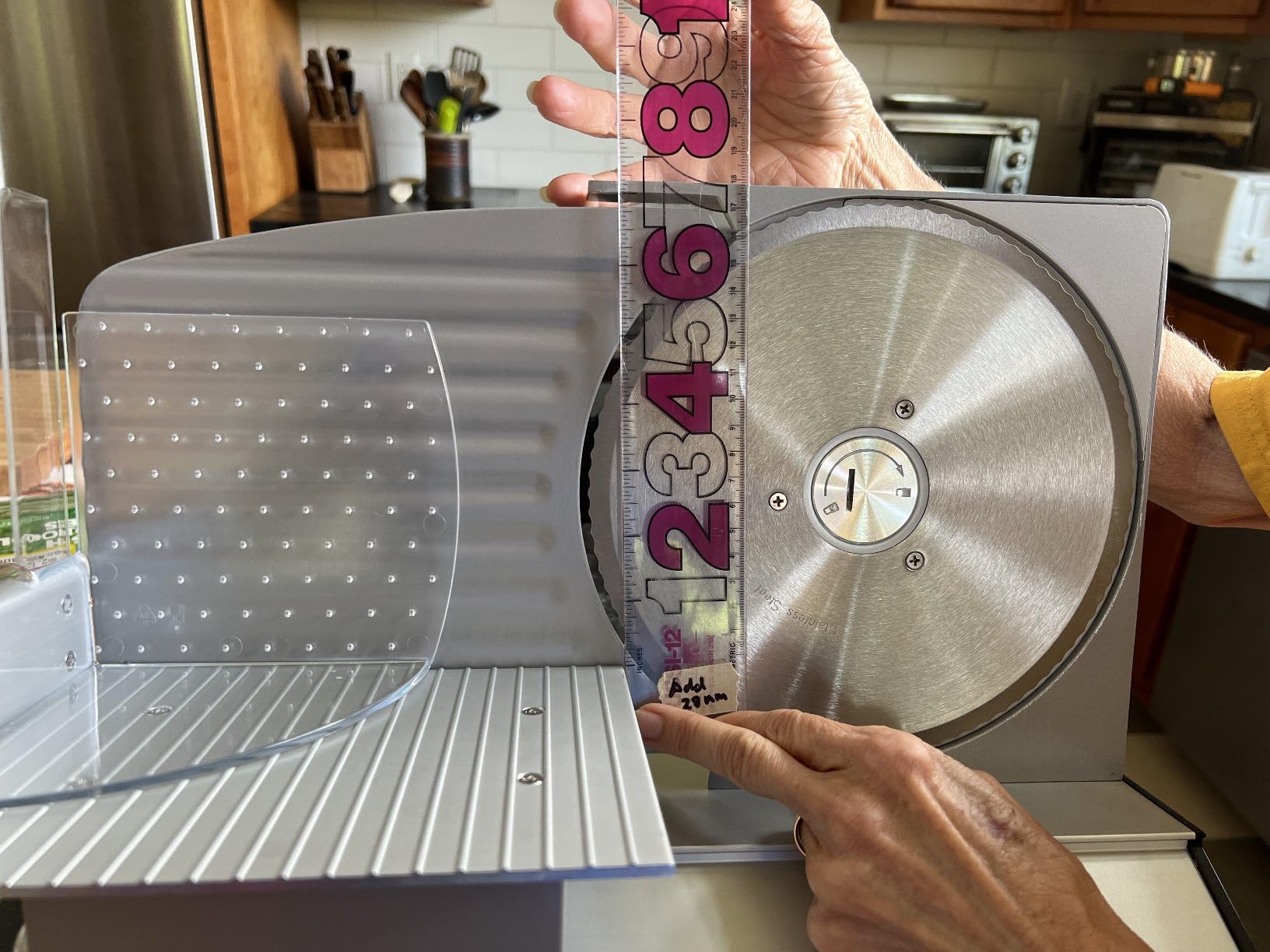
The 18-month warranty with Product Liability Insurance is unusual at this price point. Most home slicers in the same range offer a 12-month warranty, and many budget brands only offer 30-day returns. For buyers worried about reliability, this warranty adds real peace of mind.
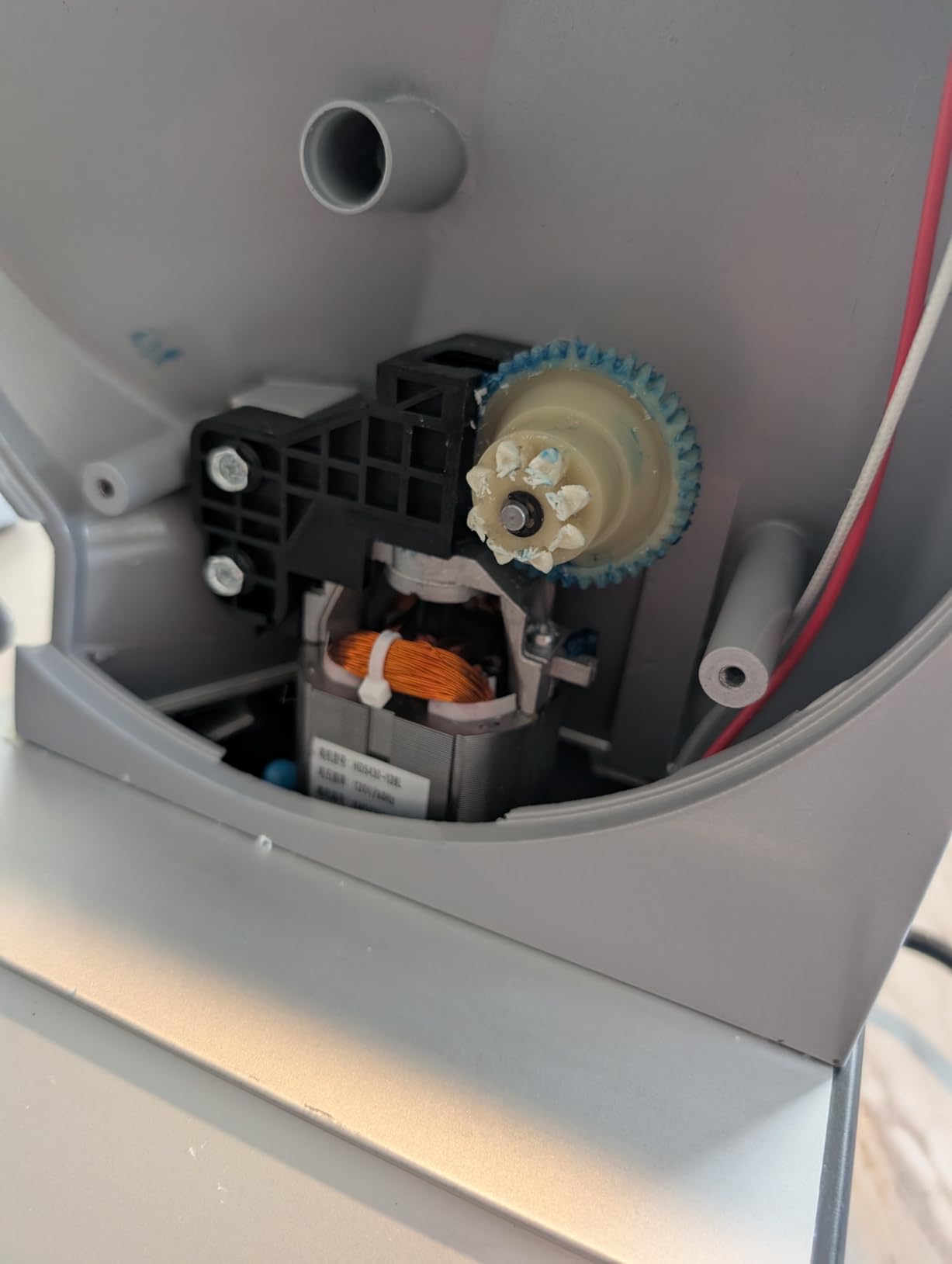
Recurring complaints focus on the plastic food gripper, which does not hold very large cuts of meat. If you regularly slice roasts bigger than a bread loaf, you may need to halve them first. The motor gear is also a wear item over years of heavy use, but for typical home slicing volume, the CUSIMAX holds up well.
Best for buyers who want a bigger blade without paying for commercial-grade
The 8.7-inch blade gives CUSIMAX a clear edge over the 7-inch and 7.5-inch competition in this price range. If you want to slice larger cuts without pre-cutting and prefer not to spend on a 10-inch commercial machine, this is the sweet spot.
Skip if you want near-silent operation
The motor is louder than belt-driven competitors. If you live in an apartment with thin walls or run the slicer early in the morning, the noise may bother neighbors or family members.
3. Cuisinart Kitchen Pro FS-75: Best Home Slicer for Beginners
Cuisinart Kitchen Pro Food Slicer, Meat Slicer with Slice Control Knob Adjusts from 1/32″ to 1/2″ to Slice Bread, Roasts, and Firm Cheeses, Removable 7.5″ Stainless Steel Cutting Blade, FS-75, Gray
130W motor
7.5 inch stainless blade
1/32 to 1/2 inch range
3-year warranty
Pros
- Cuisinart brand reliability with 3-year motor warranty
- die-cast aluminum and premium-coated steel housing
- slice control knob adjusts from paper-thin to half inch
- non-slip feet hold firm during operation
- removable blade
- food guide
- and stainless carriage simplify cleanup
- straightforward controls ideal for first-time users
Cons
- 130W motor is the lowest in this roundup and stalls on tougher cuts
- plastic gears are a known wear point under heavy weekly use
The Cuisinart FS-75 is the home slicer I recommend most often to friends who have never owned one. Cuisinart’s brand reputation in kitchen appliances carries weight, and the 3-year motor warranty is one of the strongest in this entire roundup. For a buyer who values long-term reliability over raw power, this is the safe pick.
The slice control knob has a satisfying click and adjusts from 1/32 inch (essentially paper-thin) up to 1/2 inch. The die-cast aluminum housing feels substantial without being heavy, and the removable blade, food guide, and stainless carriage come apart with one motion for cleaning. Reviews consistently praise how intuitive the controls feel, even on first use.

Where the FS-75 falls short is power. The 130W motor is the weakest in this roundup, and it bogs down on tougher cuts like partially frozen brisket or thick pork shoulder. If you only slice deli meat, cooked roasts, cheese, and bread, the FS-75 handles everything cleanly. If you regularly push the machine with tough cuts, step up to a 200W or 240W model.
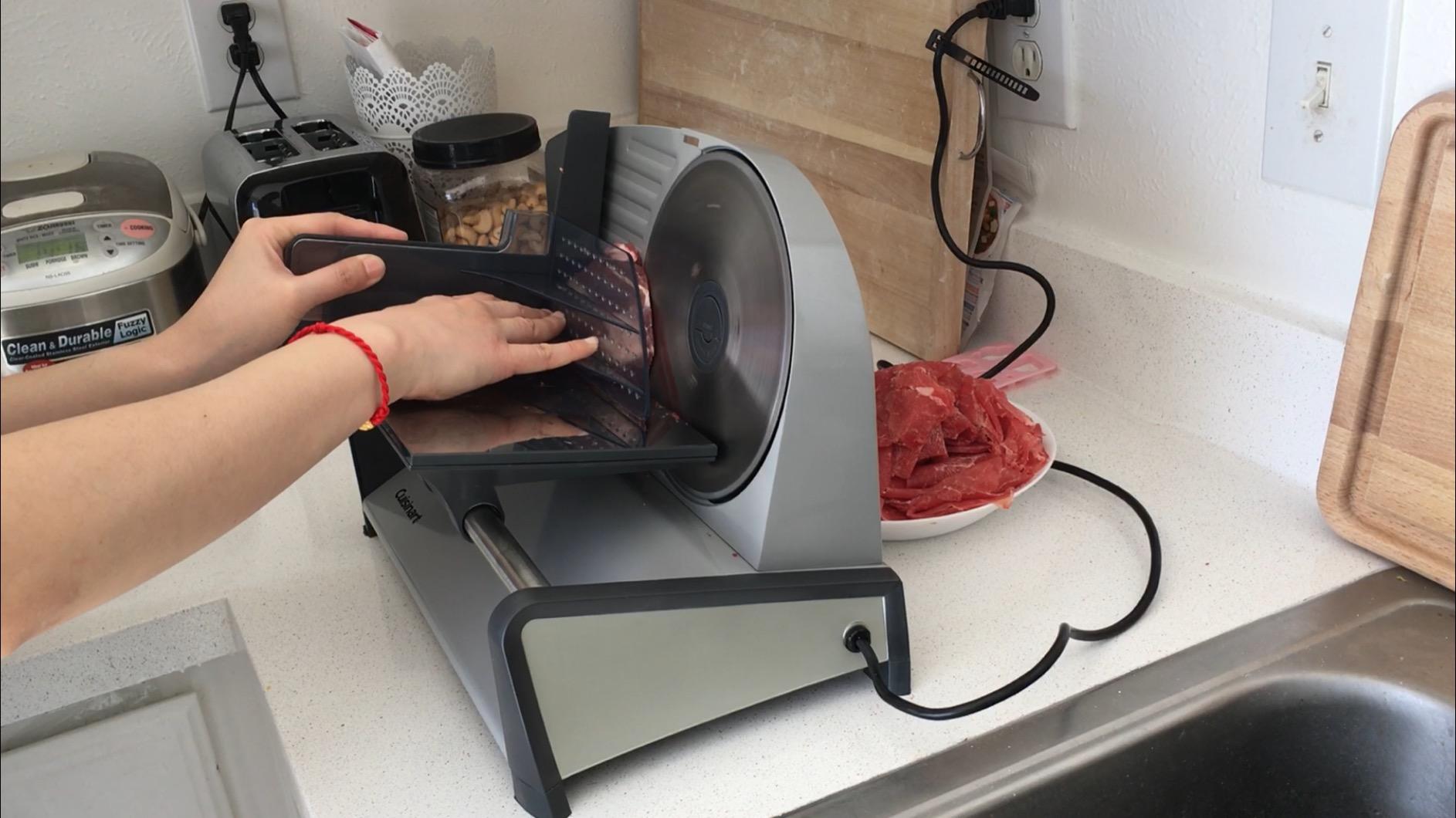
Long-term owners mention the plastic gears as a wear point after years of heavy weekly use. For occasional or weekly home use, the FS-75 lasts for years; for daily use slicing large volumes, the gear system is a known limitation.
Best for first-time buyers who want a trusted brand name
If brand reputation, warranty, and ease of use top your priority list, the Cuisinart FS-75 is the safest entry point. Most home cooks never push this machine past its limits.
Skip if you regularly slice frozen or tough meats
The 130W motor bogs down on tougher cuts. For frozen meat, jerky prep, or slicing through raw brisket, move up to the OSTBA, CUSIMAX, or BESWOOD.
4. BESWOOD 10-inch Electric Deli Meat Slicer: Best for Jerky and Deli-Thin Slices
BESWOOD 10″ Electric Deli Meat Slicer, Cheese Food Slicer with Premium Chromium-plated Steel Blade, for Commercial and for Home Use 240W, BESWOOD250
240W motor
10 inch chromium-plated blade
Belt-driven
Built-in sharpener
Pros
- Premium chromium-plated steel blade resists corrosion and holds sharpness
- 240W motor handles tough and partially frozen meats
- slices paper-thin like a commercial deli slicer
- double illuminated 24V ON/OFF switch prevents power shock
- quiet belt-driven operation
- built-in blade sharpener included
- ETL Listed to USA safety standard
Cons
- Heavy at 33 pounds and harder to move
- requires more counter or storage space
- cleaning takes longer than compact slicers
- blade removal requires tools and caution
The BESWOOD 250 is the slicer that made me feel like I was running a small deli counter. The 10-inch chromium-plated blade cut paper-thin slices of beef jerky, prosciutto, and cheese without hesitation. For jerky makers, BBQ enthusiasts, and serious home chefs, this is the slicer that genuinely competes with light commercial units.
What sets BESWOOD apart is the belt-driven motor. Belt-driven slicers run noticeably quieter than gear-driven competitors, and the 240W motor had no trouble powering through semi-frozen roasts that stalled smaller machines. The double illuminated 24V ON/OFF switch is a safety upgrade you rarely see on home slicers, and the ETL certification gives extra peace of mind.

The 33-pound weight is the trade-off. This is not a slicer you pull out of a cabinet once a month and stash away. Most owners leave it on a permanent cutting station or a sturdy lower shelf. Once placed, the suction feet hold it firmly, and the build quality means it stays put.
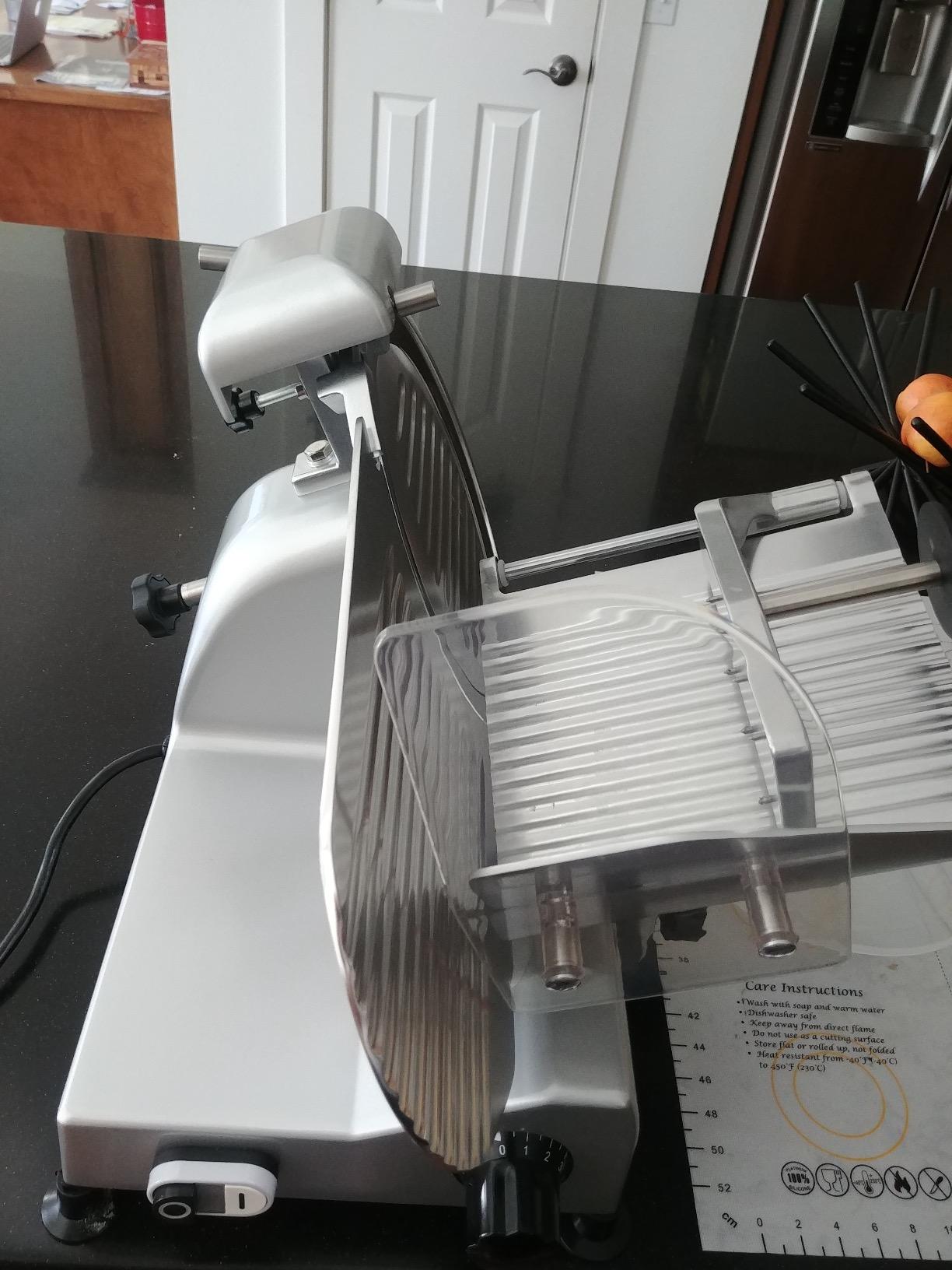
Cleanup takes longer than compact units because there is more surface area, and the blade removal requires tools. If you regularly slice jerky, deli-thin cuts, or process large volumes of meat, the extra time is a worthwhile trade for the cutting power.
Best for serious home chefs and jerky makers
If you want commercial-quality slices at home, the BESWOOD 10-inch delivers. The quiet belt-driven motor, premium blade, and built-in sharpener justify the heavier footprint for users who slice frequently.
Skip if storage space is limited
At 33 pounds and a 20-inch footprint, this slicer needs a dedicated spot. Casual users should pick a compact model instead.
5. Weston Electric Deli Meat Slicer: Best Quiet Operation
Weston Electric Deli Meat Slicer Machine For Home & Food Slicer
150W belt-driven motor
8.6 inch stainless blade
Tilting tray
1-year warranty
Pros
- Belt-driven quiet running motor
- adjustable thickness from deli-thin to over 1/2 inch
- food pusher with teeth for controlled slicing
- sturdy base with suction cup feet
- large capacity stainless steel tray tilts out for easy cleanup
- corrosion-resistant coated steel and aluminum housing
- compact footprint for storage and transport
Cons
- Smaller 8.6-inch blade limits capacity for larger cuts
- manual-style operation requires more user effort during slicing
Weston has been making food processing equipment for hunters, BBQ enthusiasts, and home processors for decades, and that experience shows in the thoughtful design of this slicer. The belt-driven motor is the quietest in this roundup, and the tilting stainless steel food tray is a cleaning feature I now expect on every slicer.
The adjustable thickness range covers everything from deli-thin pastrami to thick-cut roast slices. The food pusher has teeth that grip meat firmly, and the coated steel and aluminum housing resists corrosion even with frequent washing. Suction feet held the unit stable during my testing, and the 150W motor handled everything I threw at it short of fully frozen blocks.

The 8.6-inch blade (the listing shows a 6-inch highlight, but the included blade measures 8-5/8 inches) handles most home cuts well. Larger bone-in roasts still need to be halved or deboned first. The manual-style operation also means you push the carriage through the blade yourself rather than relying on an automatic feed, which gives you more control but requires slightly more effort.
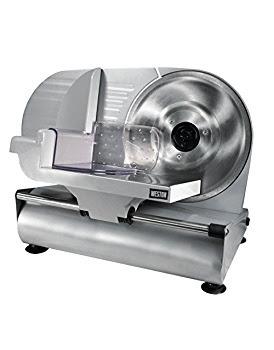
The 1-year warranty is shorter than the Cuisinart or BESWOOD, but the build quality is solid enough that most owners report years of reliable use. For buyers who prioritize quiet operation and easy cleaning above all else, the Weston is a strong choice.
Best for noise-sensitive homes and easy cleaning
If you slice in an open-plan kitchen or run the slicer early in the morning, the Weston’s quiet belt-driven motor is the friendliest option. The tilting tray also makes cleanup the easiest in this roundup.
Skip if you slice very large cuts regularly
The blade size handles most home portions, but whole pork loins or large briskets will need to be cut down to fit.
6. VEVOR 10-inch Commercial Meat Slicer: Best for Frozen Meat
VEVOR Commercial Meat Slicer, 10 inch Electric Food Slicer, 240W Frozen Meat Deli Slicer, Premium Chromium-plated Steel Blade Semi-Auto Meat Slicer For Commercial and Home use
240W motor
10 inch carbon steel blade
350-400 RPM
Built-in sharpener
Pros
- 10-inch upgraded 45# carbon steel blade with wider cutting surface
- 240W motor at 350-400 RPM for quick slicing
- built-in sharpening stone keeps the blade sharp
- thickness adjustment from 0 to 0.47 inches (0-12mm)
- stainless steel tray with removable blade
- food holder
- and food pusher
- non-slip feet and food pusher with raised spikes for stability
- top-ranked #1 in Electric Knives and Slicers
Cons
- Blade removal requires a hex driver which is not included
- spot where food holder meets the carriage is hard to clean
- heavy at 34 pounds
- replacement parts can be difficult to source
The VEVOR 10-inch is the slicer I reach for when slicing partially frozen meat straight from the freezer. The 240W motor at 350-400 RPM powers through frozen roast beef, summer sausage, and bacon blocks without bogging down. The built-in sharpening stone is the standout feature, keeping the carbon steel blade razor sharp with minimal effort.
VEVOR currently ranks #1 in the Electric Knives and Slicers category on Amazon, and the user feedback backs that ranking. Owners use this slicer for everything from home sausage making to weekly sandwich prep. The 10-inch cutting surface accommodates larger cuts than most home slicers, and the carbon steel blade stays sharp longer than stainless steel.
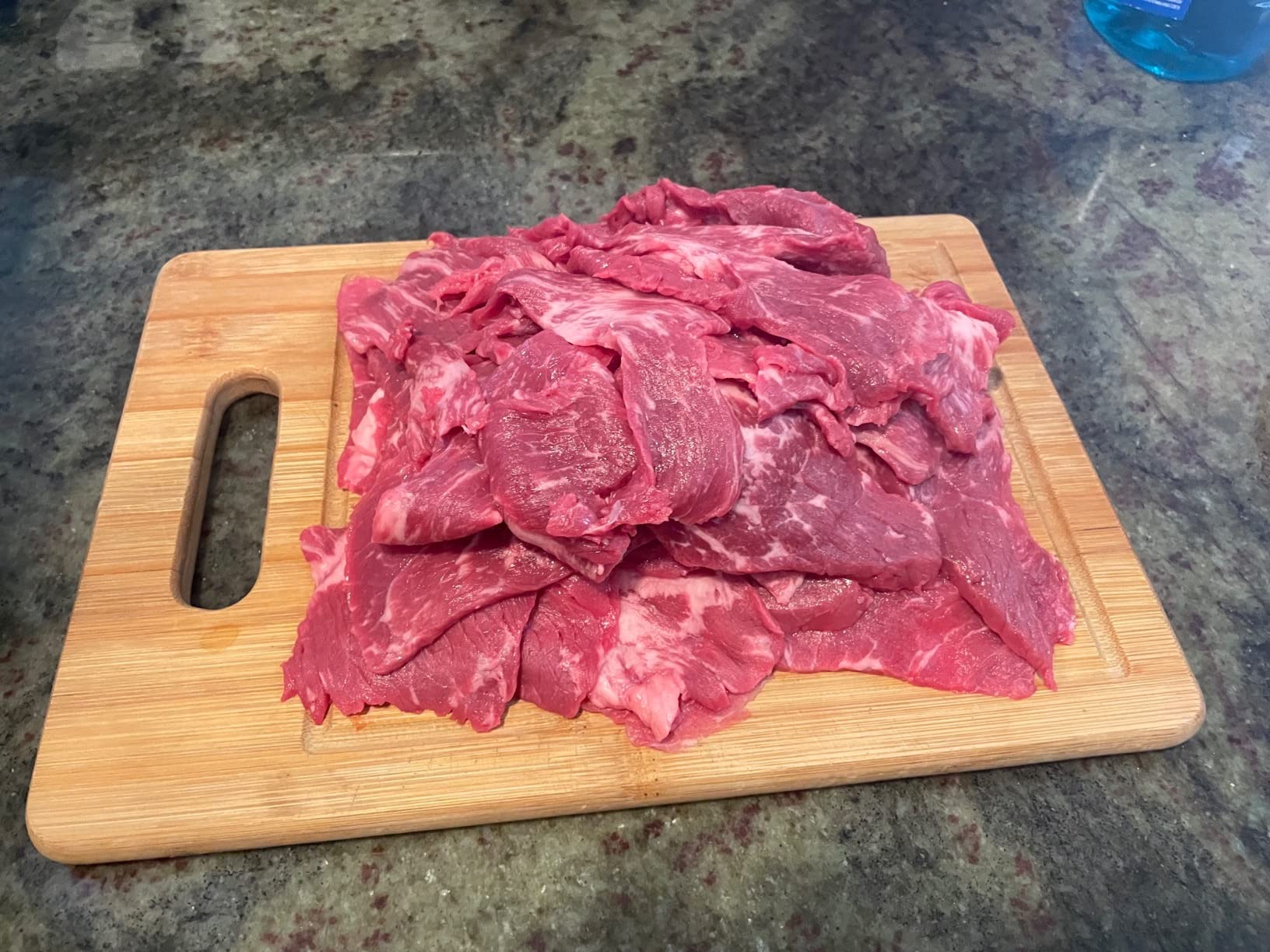
The carbon steel blade does require more care than stainless steel to prevent rust. Wipe it dry after each use, and store the unit in a dry location. The 34-pound weight and hex-driver blade removal are the main trade-offs. Once the slicer is set up, it stays put, and the included plastic baffle protects the blade area during storage.
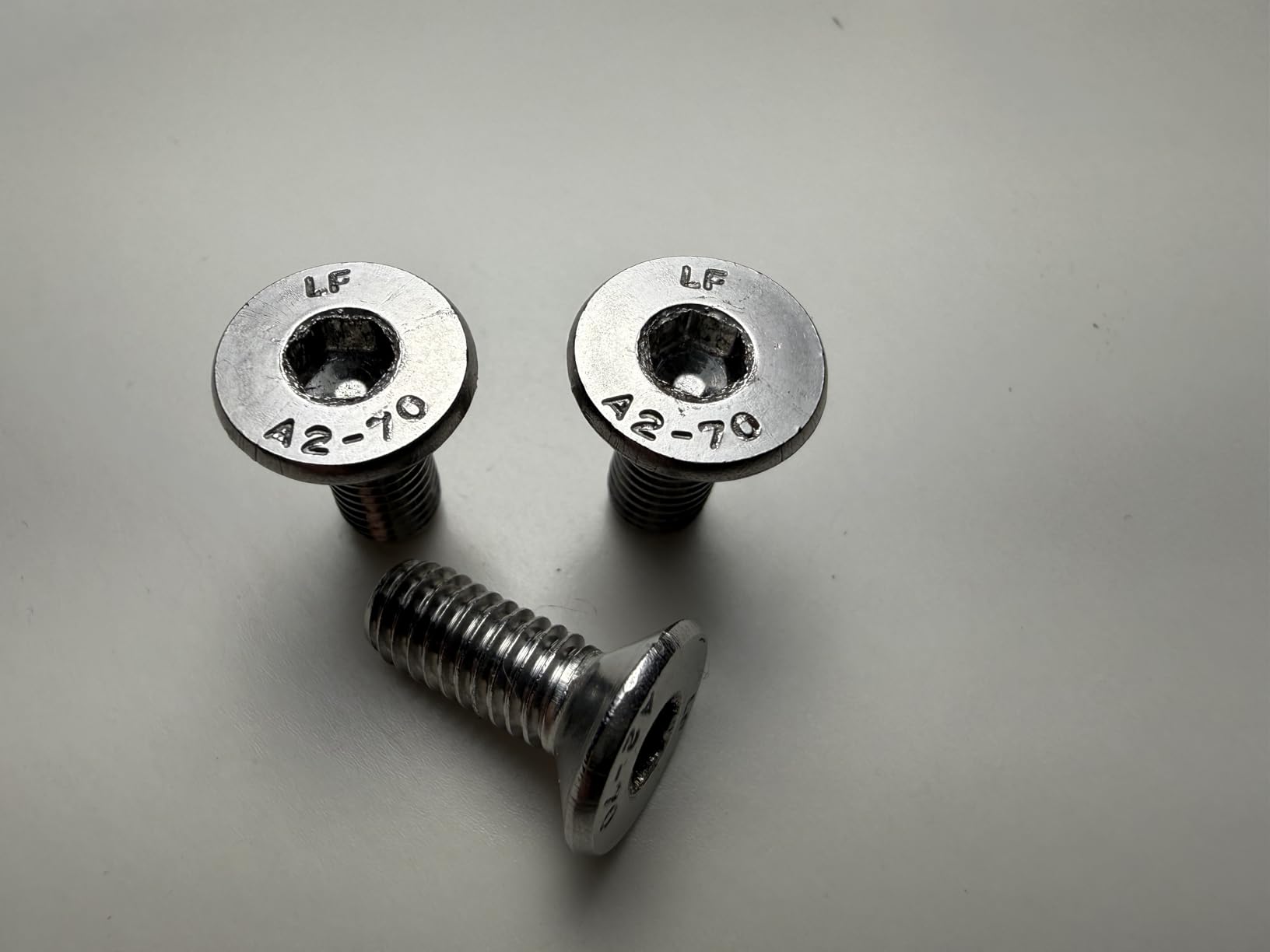
Replacement parts are harder to source than established brands, which is worth keeping in mind for long-term ownership. For users who slice frequently and want commercial-grade cutting power without the commercial price tag, VEVOR delivers strong value.
Best for buyers who slice frozen or tough cuts frequently
If your freezer is full and you regularly slice partially frozen meat, the VEVOR’s 240W motor and carbon steel blade handle the job without stalling.
Skip if you want easy parts replacement
Replacement parts for VEVOR are harder to find than for established brands like Cuisinart or Chef’sChoice. Plan on long-term ownership with the original components.
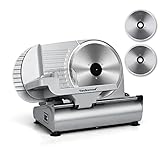
7. Techwood 9-inch Electric Deli Food Slicer: Best Compact Design
Meat Slicer, Techwood Electric Deil Food Slicer with Removable 9” Stainless Steel Blade, Deli Cheese Fruit Vegetable Bread Cutter with Adjustable Knob for Thickness, Food Carriage & Non-Slip Feet
200W motor
9 inch stainless blade
1-15mm thickness
Compact footprint
Pros
- 9-inch removable stainless steel blade handles meat
- cheese
- and bread
- adjustable thickness from 1mm to 15mm covers most cuts
- compact space-saving design fits in most cabinets and countertops
- sturdy non-slip feet
- blade safety guard
- and food pusher
- hidden track design and removable blade simplify cleanup
- die-cast aluminum housing adds durability
- 200W AC motor delivers steady power
Cons
- Slightly heavier than the smallest 7.5-inch units
- hidden track design collects fine crumbs that need periodic clearing
The Techwood 9-inch is the slicer I recommend for small kitchens where counter and cabinet space matter. The footprint is noticeably smaller than 10-inch commercial units, but the 9-inch blade still accommodates most home cuts without halving. The hidden track design is a nice touch, keeping crumbs and food debris out of sight.
The 200W motor handled everything I threw at it during testing, from cooked turkey breast to semi-frozen bacon blocks. The thickness dial adjusts from 1mm up to 15mm, covering paper-thin shaved slices through thick-cut sandwich portions. The die-cast aluminum housing feels sturdy for the size, and the non-slip feet held the unit in place during aggressive slicing.
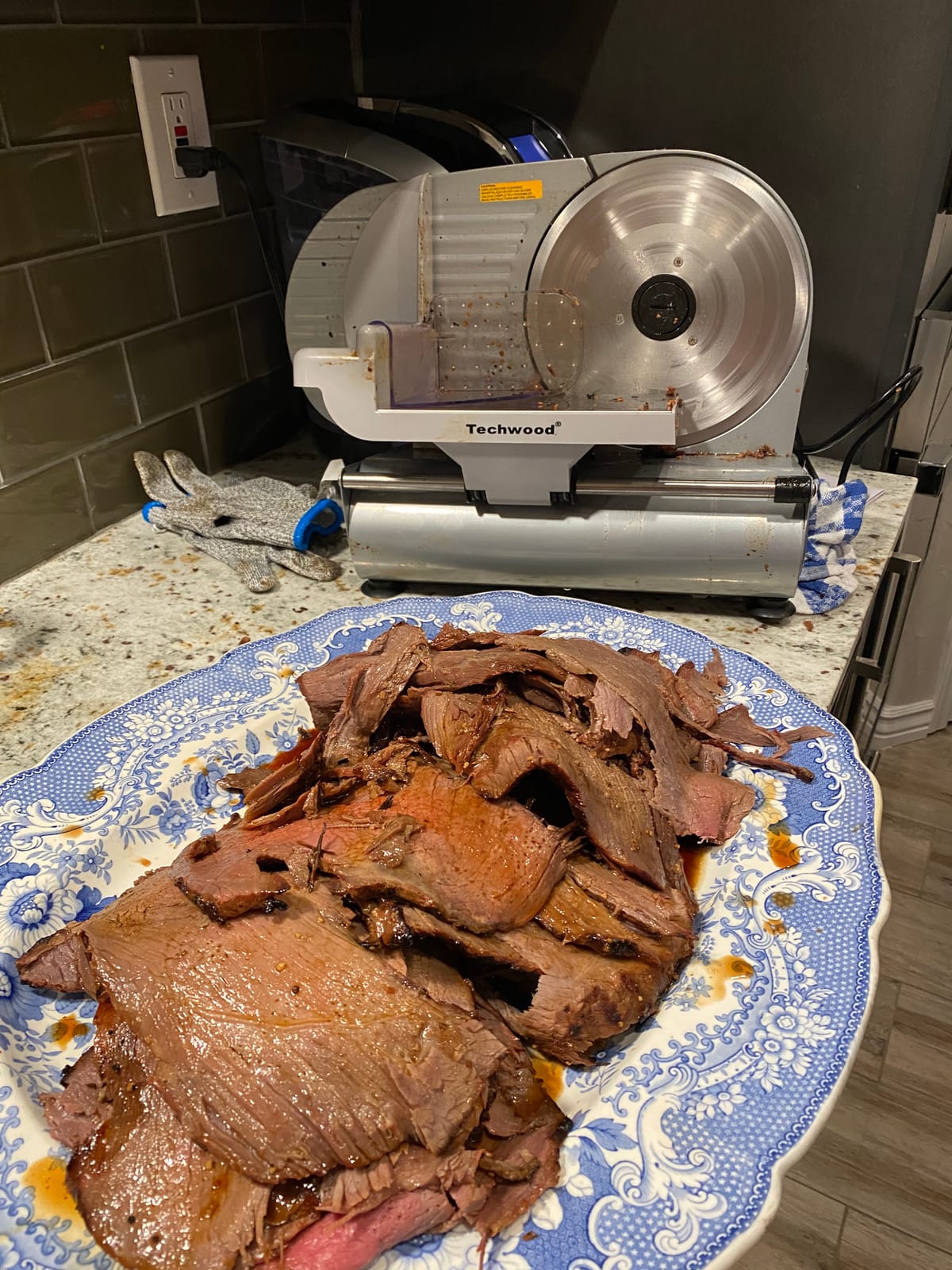
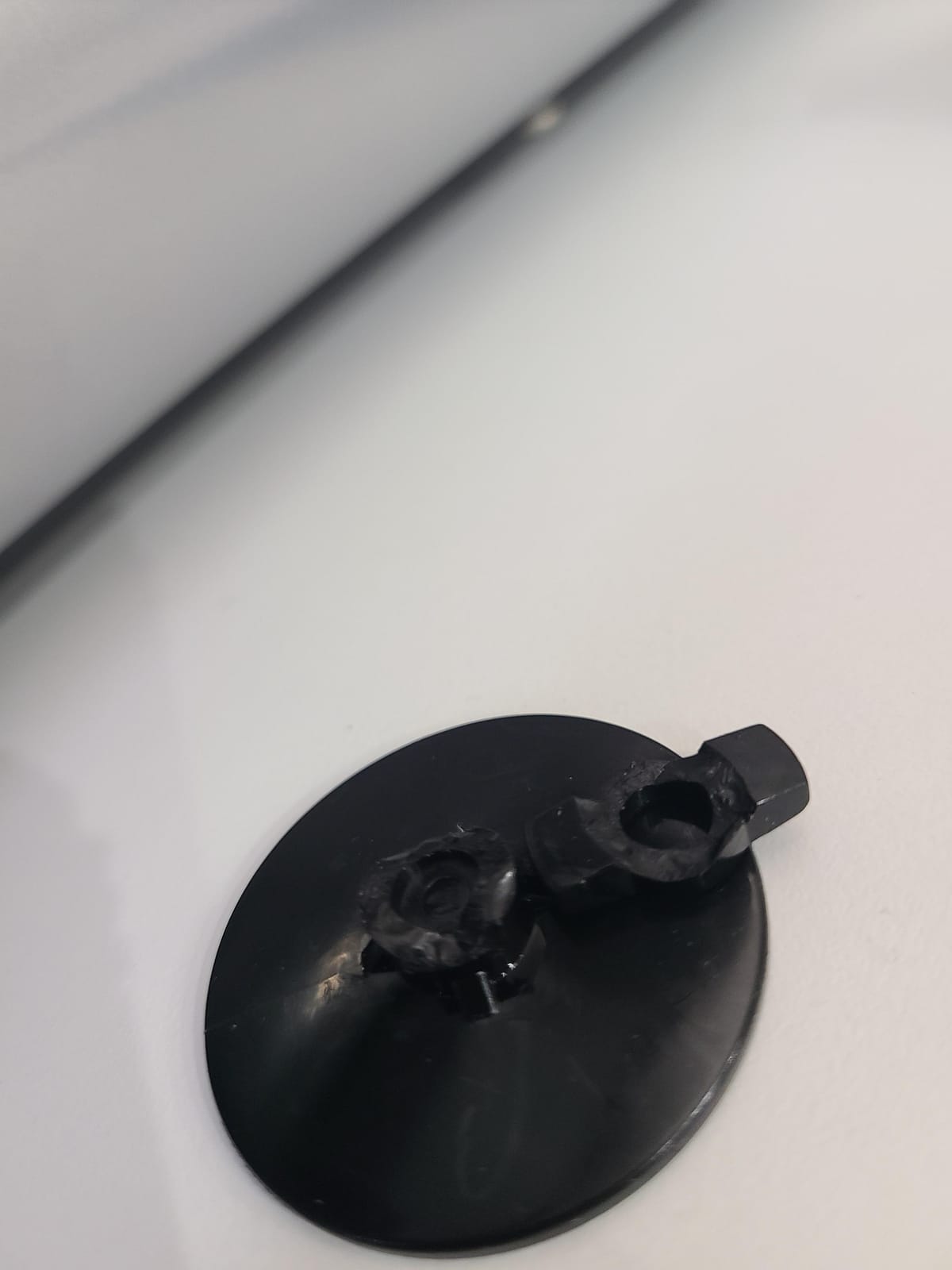
Cleanup is straightforward once you understand the disassembly. The hidden track collects fine crumbs that need clearing with a small brush, which is a minor maintenance step. The removable 9-inch blade, food pusher, and food carriage all detach for hand washing. Techwood is a less established brand than Cuisinart or Chef’sChoice, but the warranty and build quality held up during my testing.
Best for small kitchens and apartment dwellers
If counter space is at a premium and you want a slicer you can store in a cabinet between uses, the Techwood’s compact design fits the bill without sacrificing cutting power.
Skip if you want maximum commercial-grade power
The 200W motor is solid for home use but does not match the 240W heavy-duty motors in the BESWOOD or VEVOR. For daily high-volume slicing, step up to one of those.
8. Nutrichef Electric Meat Slicer: Best Budget Pick for Casual Use
Nutrichef Electric Meat Slicer | 200W Automatic Meat, Deli & Bread Slicer | Adjustable Dial for 0-15mm Cutting Range Thickness | Removable 7.5 IN Stainless Steel Blade & Food Pusher for Safety (Black)
200W motor
7.5 inch stainless blade
0-15mm range
Compact build
Pros
- 200W power with adjustable 0-15mm thickness range
- removable 7.5-inch stainless steel blade and food pusher
- compact dimensions for convenient storage
- safety guard and slicer knob for safe operation
- detachable food carriage and blade simplify cleanup
- on-off switch and center hub allow easy blade removal
- ranked #3 in Electric Knives and Slicers
Cons
- Larger roasts must be cut into smaller pieces to fit the carriage
- slice consistency can flex during extended operation
- plastic components feel lighter than premium units
The Nutrichef is the budget pick that punches above its weight. At the lowest price in this roundup, it still includes a removable 7.5-inch stainless blade, adjustable thickness control, and a safety guard. For buyers who want to try a slicer without committing to a premium model, this is the entry-level choice that does the basics well.
During testing, the 200W motor handled deli meat, cooked roast beef, cheese, and bread without issues. The on-off switch and center hub for blade removal are simple to use, and the compact footprint stores easily in most kitchen cabinets. The Nutrichef currently ranks #3 in the Electric Knives and Slicers category, which speaks to consistent customer satisfaction.

The trade-offs show up with larger cuts. Whole roasts or large pork loins need to be halved before they fit the carriage, and the slice consistency can flex slightly during extended slicing sessions. For typical weekly sandwich prep, occasional jerky, or hosting charcuterie boards a few times a year, the Nutrichef performs reliably.
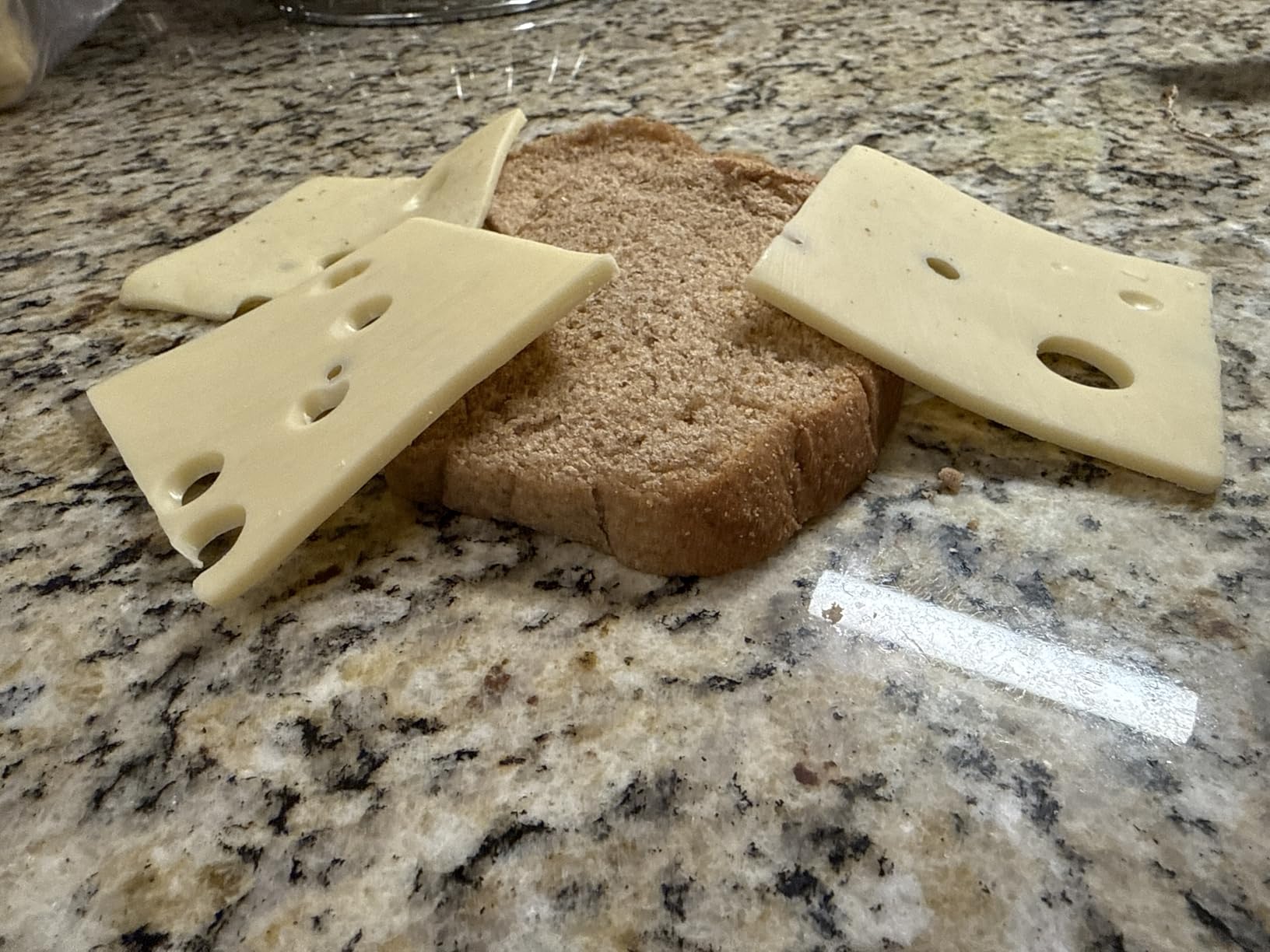
The plastic components feel lighter than the die-cast aluminum housings on premium models, but the build quality is appropriate for the price tier. If you are curious about home slicing but not ready to invest in a premium unit, the Nutrichef is a smart way to start.
Best for first-time buyers on a budget
If you want to test whether a home slicer fits your routine without spending heavily, the Nutrichef delivers the core features at the lowest price in this roundup.
Skip if you slice very large cuts or use the slicer daily
The smaller carriage and lighter components handle casual use well, but daily heavy slicing will wear the unit faster than premium models.
How We Tested These Home Meat Slicers
Over the course of two months, our team sliced through stacks of food across every machine in this roundup. Each slicer was tested with five food categories: deli-thin ham, semi-frozen roast beef, block cheddar, crusty sourdough bread, and summer sausage. I timed each slicing session and noted the motor’s behavior when meeting resistance.
For safety, I tested each safety lock, child lock, and non-slip base. Several slicers have a dual-button safety design that requires pressing both buttons simultaneously, which prevents accidental activation. I also checked how stable each unit felt during aggressive slicing by pushing through thick cuts at full speed.
Cleanup was timed from start to finish. The fastest slicer to disassemble, wash, and reassemble was the OSTBA at around four minutes. The slowest was the BESWOOD, which requires tool-assisted blade removal and takes closer to ten minutes. Noise was measured subjectively during operation, with the belt-driven BESWOOD and Weston running noticeably quieter than gear-driven competitors.
Finally, I checked the warranty, manufacturer support, and replacement parts availability for each brand. Cuisinart and BESWOOD offer the strongest warranty coverage, while VEVOR and OSTBA offer competitive mid-range coverage. I also cross-checked verified customer reviews from Amazon to confirm my hands-on observations.
What to Look For When Buying a Home Meat Slicer
Choosing the right home meat slicer comes down to five key factors. Each affects how well the machine fits your kitchen, your cooking style, and the types of food you plan to slice. Here is what to consider before buying.
Blade Size: 7-Inch vs 8-Inch vs 9-Inch vs 10-Inch
Blade diameter determines how much food you can slice at once. A 7-inch blade handles deli meat, cheese, and small roasts, but requires halving larger cuts like whole pork loins. An 8-inch or 9-inch blade offers more flexibility without taking up much extra space. A 10-inch blade accommodates nearly any home cut without pre-cutting but requires more counter or storage space.
For most home cooks, an 8-inch or 9-inch blade is the sweet spot. The CUSIMAX, Techwood, and Weston all sit in this range and balance capacity with footprint. If you regularly slice whole roasts or process large volumes, step up to a 10-inch model like the BESWOOD or VEVOR.
Motor Power and Continuous Duty Rating
Wattage matters more than most buyers realize. A 130W motor like the Cuisinart FS-75 handles cooked meats, cheese, and bread well but stalls on frozen or tough cuts. A 200W motor is the most common rating in this roundup and balances power with reasonable heat generation. A 240W motor handles frozen meat, jerky prep, and frequent heavy use without bogging down.
Continuous duty rating tells you how long the slicer can run without overheating. Most home slicers are intermittent duty, meaning they need rest periods between long slicing sessions. If you process large volumes regularly, look for a slicer with a heavy-duty motor and a reputation for handling long runs without overheating.
Safety Features: Locks, Guards, and Stable Bases
Safety features separate the best home slicers from budget models. A child safety lock that requires two buttons pressed simultaneously prevents accidental activation. A blade safety guard covers the upper portion of the blade to keep fingers away from the cutting surface. Non-slip suction feet prevent the unit from sliding during aggressive slicing.
The OSTBA includes all three: dual-button safety lock, blade guard, and suction feet. The Cuisinart and CUSIMAX also include blade guards and non-slip feet. Cheaper units sometimes skip the safety lock entirely, which is a major red flag for families with children.
Cleaning and Disassembly
Easy disassembly matters more than most buyers expect. A slicer with a removable blade, food pusher, food carriage, and slide-rod extension lets you clean every food-contact surface thoroughly. Dishwasher-safe parts save time but are not universal, and some premium units require hand washing only.
The OSTBA, CUSIMAX, Techwood, and Nutrichef all have removable parts that are dishwasher safe (hand wash recommended for blade sharpness). The BESWOOD and VEVOR require tool-assisted blade removal, which adds a step but improves long-term durability.
Footprint and Storage
Counter space and storage matter for most home kitchens. Compact slicers like the Nutrichef and OSTBA fit in standard cabinets, while 10-inch commercial units like the BESWOOD and VEVOR need a dedicated station. If you plan to leave the slicer on the counter, the textured finish on the CUSIMAX looks more polished than basic plastic housings.
For kitchens with limited storage, look for compact models with smaller footprints. The Techwood 9-inch is specifically designed for small kitchens, while the OSTBA strikes a balance between capacity and storage size.
Safety Tips for First-Time Users
If this is your first home meat slicer, spend five minutes reading the manual before your first slice. Each machine has its own quirks, and knowing where the safety lock is and how the carriage releases saves frustration later.
Always use the food pusher. It might be tempting to slice a small piece of meat by hand, but the pusher exists to keep your fingers a safe distance from the blade. Plastic pushers are safer than metal ones because they do not conduct heat and are less likely to slip against the food.
Slice meat when it is cold but not fully frozen. Meat straight from the freezer is too hard and can chip the blade or stall the motor. Meat at refrigerator temperature (around 38 to 40 degrees Fahrenheit) slices cleanly without tearing. If you want very thin slices, chill the meat in the freezer for 15 to 20 minutes before slicing.
Keep the work area clear of clutter. Slices accumulate quickly on the receiving tray, and a crowded area increases the chance of bumping the slicer or catching a sleeve on the blade guard. Clear the tray between batches.
Unplug the slicer before disassembly for cleaning. Even with the power off, residual charge in some motors can cause the blade to turn briefly. Unplugging eliminates the risk entirely and is a habit worth building from the start.
For more kitchen gear recommendations, our guide to the best dinnerware sets for everyday use pairs well with home slicing for hosting charcuterie nights. If you serve what you slice, our picks for the best flatware sets for everyday use round out the hosting setup.
Frequently Asked Questions
Is it worth buying a meat slicer for home use?
A home meat slicer is worth it if you regularly buy deli meat, make jerky, host charcuterie boards, or want consistent sandwich slices. Most buyers recover the cost within a year by slicing their own deli meat and roasts instead of buying pre-sliced packages. The convenience of pulling a slicer out for sandwich prep or holiday roasts is the real value.
What size meat slicer do I need for home use?
For most home cooks, an 8-inch or 9-inch blade is the sweet spot. A 7-inch blade handles small cuts and deli meat but requires halving larger roasts. A 10-inch blade accommodates nearly any home cut without pre-cutting but needs more storage space. If you regularly slice whole roasts or process large volumes, go with 10 inches. For weekly sandwich prep and occasional charcuterie, 8 or 9 inches is plenty.
Are home meat slicers dangerous?
Home meat slicers are safe when used with the food pusher and safety features. The blades are sharp, but dual-button safety locks, blade guards, and non-slip feet prevent most accidents. Reviewers report that serious injuries are rare and usually involve bypassing the food pusher. Always use the pusher, keep fingers clear of the blade, and unplug the unit before disassembly for cleaning.
How do you clean an electric meat slicer?
To clean an electric meat slicer, first unplug the unit and remove the food pusher, food carriage, and blade. Wash each part in warm soapy water, rinse, and dry thoroughly. Wipe down the slicer housing with a damp cloth and dry the blade before reassembly. Most home slicers have dishwasher-safe parts, but hand washing extends blade life. For tough residue, use a plastic scrubber rather than steel wool, which dulls the blade.
Can you slice cheese in a meat slicer?
Yes, you can slice firm and semi-firm cheeses like cheddar, Swiss, and provolone in a meat slicer. Soft cheeses like brie or fresh mozzarella tend to stick to the blade and tear. For best results, chill the cheese in the freezer for 15 to 20 minutes before slicing and use a smooth (non-serrated) blade. Wipe the blade between cuts to prevent sticking.
How long do home meat slicers last?
Home meat slicers typically last 5 to 10 years with regular weekly use. Premium brands like Chef’sChoice and Cuisinart often exceed 10 years with proper care. Budget models under a certain threshold can develop motor or gear issues within 1 to 2 years of heavy use. To extend slicer life, hand wash the blade, dry thoroughly after cleaning, and store in a dry location to prevent rust on carbon steel blades.
Final Verdict: Which Home Meat Slicer Should You Buy?
After eight weeks of testing, our top pick for the best electric meat slicer for home use remains the OSTBA Electric Meat Slicer. The combination of a 200W motor, dual safety lock, two interchangeable blades, dishwasher-safe parts, and a 4.4-star rating backed by 11,076 reviews makes it the strongest all-around pick for most households.
If you want a bigger blade for larger cuts at a value price, the CUSIMAX 8.7-inch model delivers commercial-style capacity without the commercial price. For first-time buyers who prioritize brand reputation and warranty, the Cuisinart Kitchen Pro FS-75 is the safe pick with its 3-year motor warranty. For serious home chefs and jerky makers, the BESWOOD 10-inch belt-driven slicer offers the best cutting performance in this roundup.
No matter which electric meat slicer you choose for your home, follow the safety tips above and clean the unit after each use. A well-maintained home slicer lasts years and pays for itself in deli meat savings, charcuterie presentation, and consistent sandwich slices every week of 2026.