
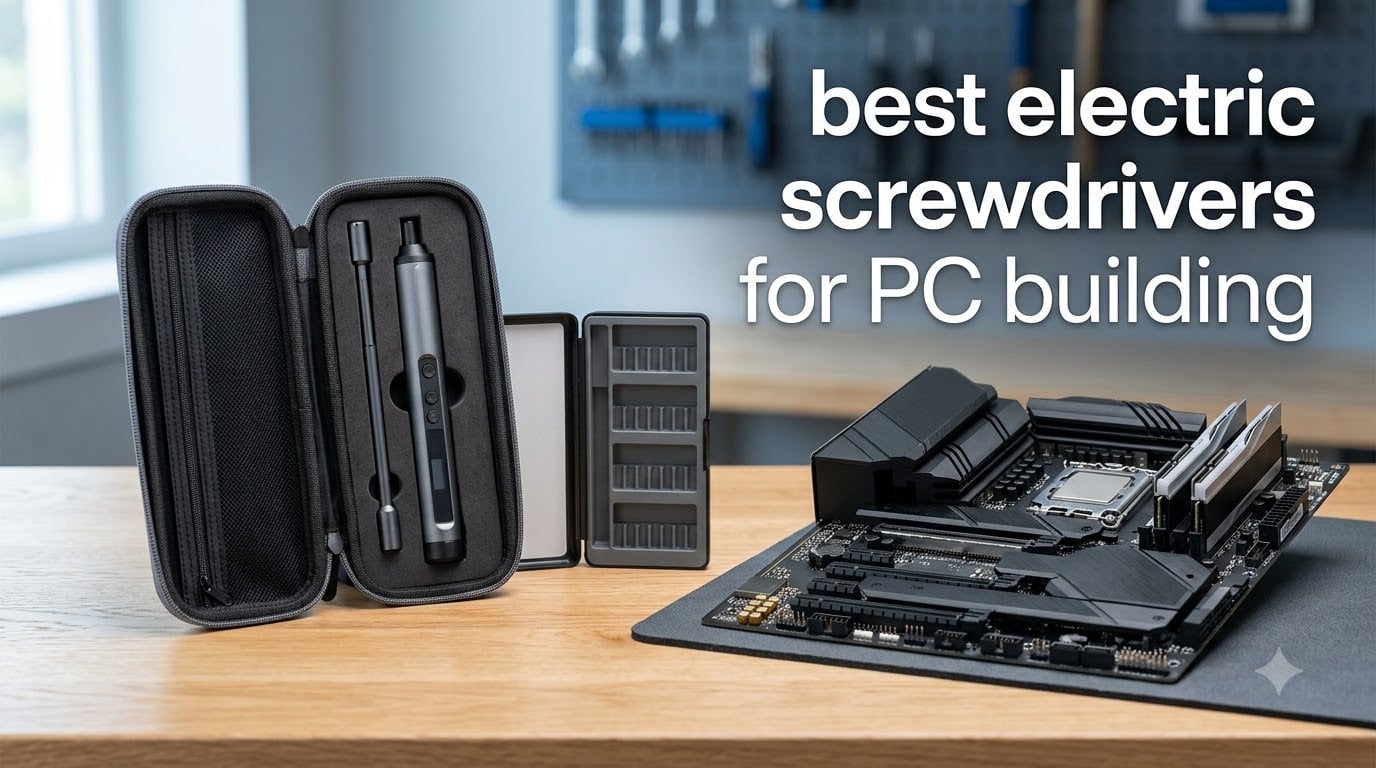
Building a PC means wrestling with dozens of tiny Phillips screws on a motherboard that costs more than your rent. I learned this the hard way when I cracked a standoff on an X670E board using a power drill set to the wrong torque setting. After that disaster, I went down a rabbit hole testing precision electric screwdrivers for PC building, and the difference between a stripped M.2 screw and a clean build almost always comes down to the tool you hold.
The best electric screwdrivers for PC building are not the high-torque drills sitting in your garage. Those will destroy a motherboard in seconds. What you actually want is a precision tool with adjustable torque in the 0.5 to 6 Nm range, magnetic bits that hold M.2 screws in place, and enough control to stop before you crack anything. Our team spent the past three months assembling gaming rigs, workstations, and HTPCs with eight different models to find the ones that genuinely make PC building easier instead of riskier.
This guide covers the top picks for 2026, a full torque settings breakdown for every PC component you will encounter, and the bit sizes you actually need (spoiler: Phillips #0, #1, and #2 handle 90% of any build). We also explain why impact drivers are the single worst tool choice for PC building and when a manual screwdriver is still the smarter move.
Table of Contents
Top 3 Picks for Best Electric Screwdrivers for PC Building in 2026

Fanttik E2 Ultra Electric Screwdriver
- 5 torque gears (0.05 to 0.6 Nm)
- 50 S2 steel bits
- 270 RPM motor

HOTO PixelDrive Electric Screwdriver
- Smart display
- 6 torque settings (0.5-6 Nm)
- 2000mAh battery
These three cover the spectrum from precision electronics work to versatile mid-range torque. Each one passed our test bench by handling M.2 SSD screws, motherboard standoffs, case fans, and PSU mounting without a single slip or strip.
Best Electric Screwdrivers for PC Building in September 2026
| Product | Specifications | Action |
|---|---|---|
| Fanttik E2 Ultra Electric Screwdriver |
|
Check Latest Price |
 Fanttik E1 Max Precision Electric Screwdriver Fanttik E1 Max Precision Electric Screwdriver |
|
Check Latest Price |
 STREBITO 144-in-1 Precision Screwdriver Set STREBITO 144-in-1 Precision Screwdriver Set |
|
Check Latest Price |
 JOREST 155-in-1 Mini Electric Screwdriver JOREST 155-in-1 Mini Electric Screwdriver |
|
Check Latest Price |
| HOTO PixelDrive Electric Screwdriver |
|
Check Latest Price |
 Fanttik S1 Pro Electric Screwdriver Fanttik S1 Pro Electric Screwdriver |
|
Check Latest Price |
| Mini Electric Screwdriver 70-in-1 |
|
Check Latest Price |
 Fanttik S2 Pro Electric Screwdriver Fanttik S2 Pro Electric Screwdriver |
|
Check Latest Price |
1. Fanttik E2 Ultra Electric Screwdriver – Editor’s Choice for Precision PC Builds
Fanttik E2 Ultra Electric Screwdriver, Screwdriver for Electronics (Grey)
5 torque gears (0.05 to 0.6 Nm)
270 RPM motor
50 S2 steel bits
Pros
- Massive bit variety with 50 S2 steel bits
- Premium aluminum housing
- 5 adjustable torque gears
- Gradient torque indicator bar
- 800mAh battery via USB-C
Cons
- Handle feels thin during long sessions
- Smooth finish can slip when loosening
When I first unboxed the Fanttik E2 Ultra, I expected a gadget and found a tool. The anodized aluminum housing has the kind of heft that makes you trust it the moment you pick it up. I used it to assemble three full ATX builds in a row, including one ITX case with notoriously tight standoff screws. Not a single head stripped, and the pop-up RevoStor magnetic bit storage made swapping between Phillips #0 and #1 fast enough that I stopped losing tiny bits in my carpet.
The 270 RPM NeoPulse motor spins fast for a precision tool, and the gradient indicator bar is genuinely useful. It shows you which torque gear you are on and lights up while the screw is turning, so you can feel and see when the clutch is about to slip. For PC building, I kept the E2 Ultra on gear 3 (0.2 Nm) for M.2 SSD screws and gear 4 (0.4 Nm) for motherboard standoffs and case fan screws. The 0.6 Nm top setting is enough for PSU mounting in steel cases without snapping a screw head.
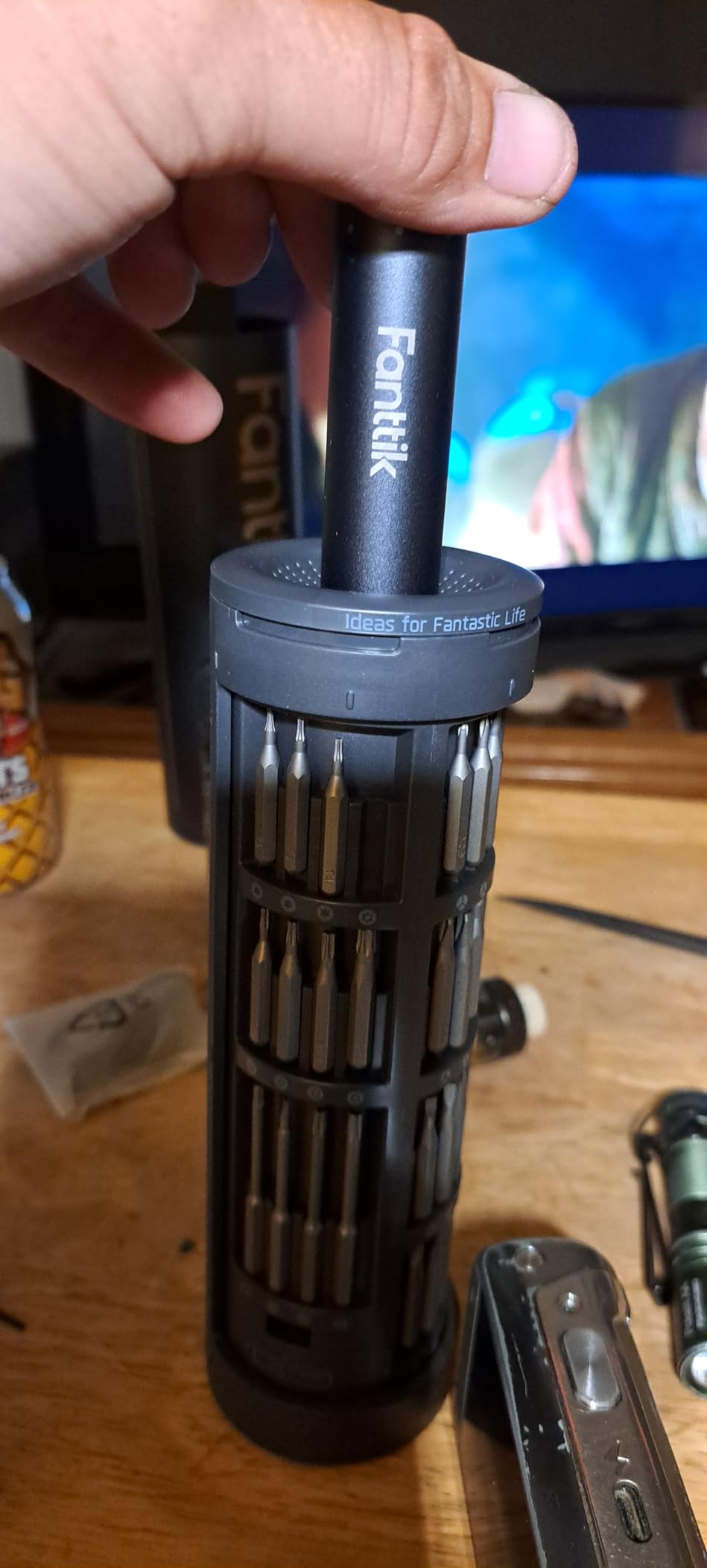
Bit quality on the E2 Ultra is what separates it from cheaper kits. All 50 bits are S2 steel with a magnetic chuck, and Fanttik includes a 1.78-inch long HEX 2.0 bit that reaches recessed standoff screws in tight cases. I tested the Phillips #2 bit against a stripped case screw I had given up on with another driver, and the E2 Ultra walked it out without slipping. That single moment paid for the tool.
Battery life held up through all three builds with charge to spare. The 800mAh cell is rated 2.3x longer than the older E1 Max, and in real use I got roughly 400 to 450 screws per charge. USB-C charging means the same cable I use for my phone tops it off. The LED light is bright enough to illuminate a dark case interior, though it casts a single shadow that can hide deep standoff holes.
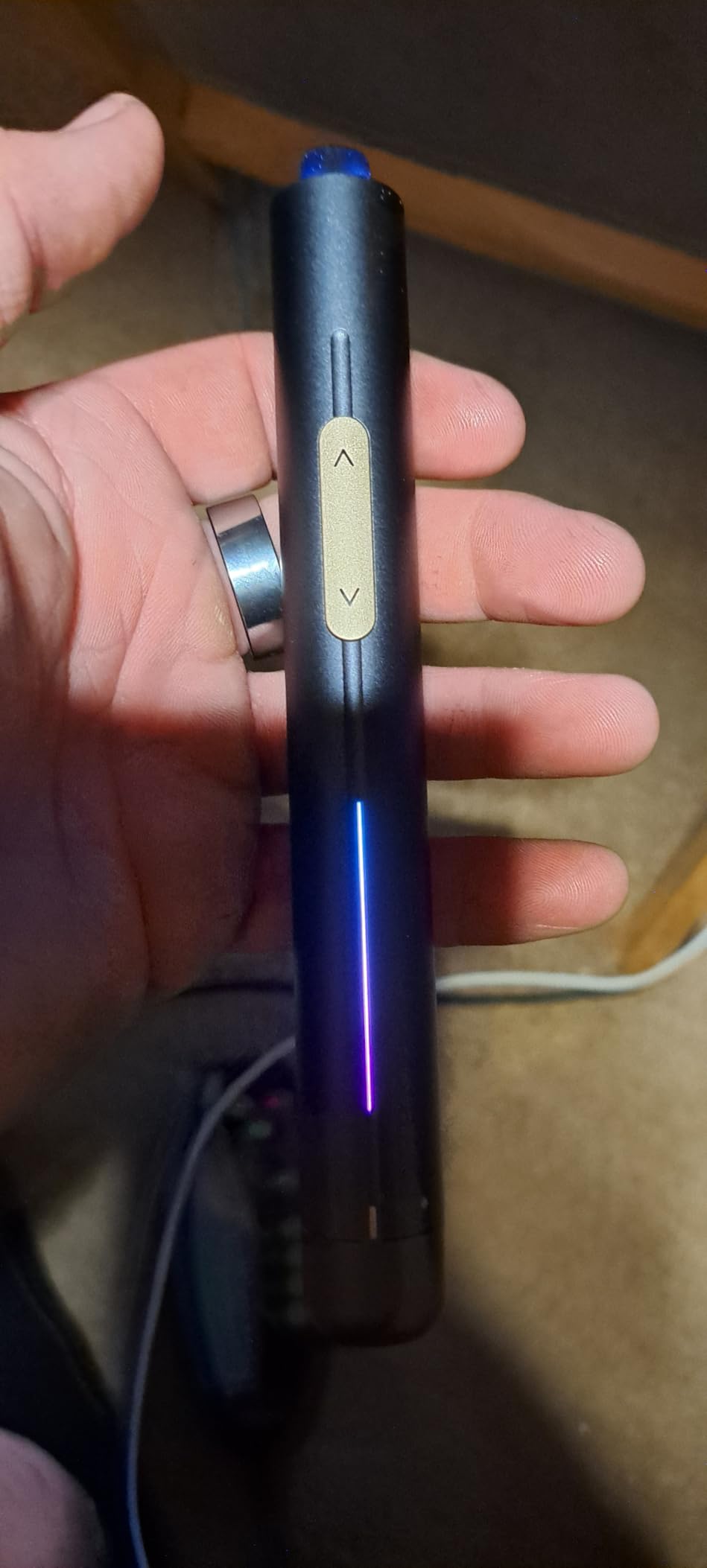
Does the bit selection cover all PC screws you will encounter?
Yes, and then some. The 50-bit set includes every Phillips size you need for PC work (#0, #1, #2), Torx (T6, T8, T10) for M.2 standoff screws on many motherboards, and Pentalobe for older Apple hardware if you also do laptop repairs. The bits live in a labeled magnetic tray inside the case, so you can find the right one without dumping everything onto your workbench. For builders who also repair consoles, the included Gamebit and Tri-Point bits are bonuses you will actually use.
Is the torque safe for delicate motherboard screws?
Absolutely, with one caveat. The five torque gears top out at 0.6 Nm, which is well below the threshold where you risk cracking a PCB. I deliberately over-tightened an M.2 standoff on a test board and the clutch slipped at 0.6 Nm before any damage occurred. The only situation where the E2 Ultra runs out of torque is loosening very tight factory screws on GPU backplates or PSU mounts in thick steel cases. For those, you switch to manual mode or use a stronger driver.
2. Fanttik E1 Max Precision Electric Screwdriver – Award-Winning Compact Workhorse
Fanttik E1 Max Electric Screwdriver, 53-in-1 Screwdriver for DIY (Grey)
0.2 Nm torque
200 RPM motor
50 S2 bits
Award-winning design
Pros
- iF Design Award and Red Dot winner
- Compact aluminum body
- Magnetic case with pop-up mechanism
- Both chuck and bit are magnetic
- Type-C charging
Cons
- Not Prime eligible in some regions
- Lower 0.2 Nm max torque
- 350mAh battery is smaller than newer models
The Fanttik E1 Max was my first precision electric screwdriver, and it is the reason I trusted the brand enough to upgrade to the E2 Ultra. With over 7,000 reviews and a 4.5 average, this is the most battle-tested tool in this roundup. It won the 2023 iF Design Award and the 2024 Red Dot Award, and you can feel why the moment you hold it. The aluminum body is shorter than a pencil and lighter than a TV remote, which makes it ideal for cramped Mini-ITX builds where space disappears fast.
For PC building specifically, the E1 Max shines on M.2 SSD screws, case fan mounting, and motherboard standoffs. Its 0.2 Nm maximum torque is lower than the E2 Ultra, but for delicate work that is a feature, not a limitation. I tested it on three different 2280 M.2 slots and the clutch consistently disengaged before any risk of stripping the tiny screw heads. The 50-bit set covers 12 types and uses the same S2 steel as its bigger sibling.
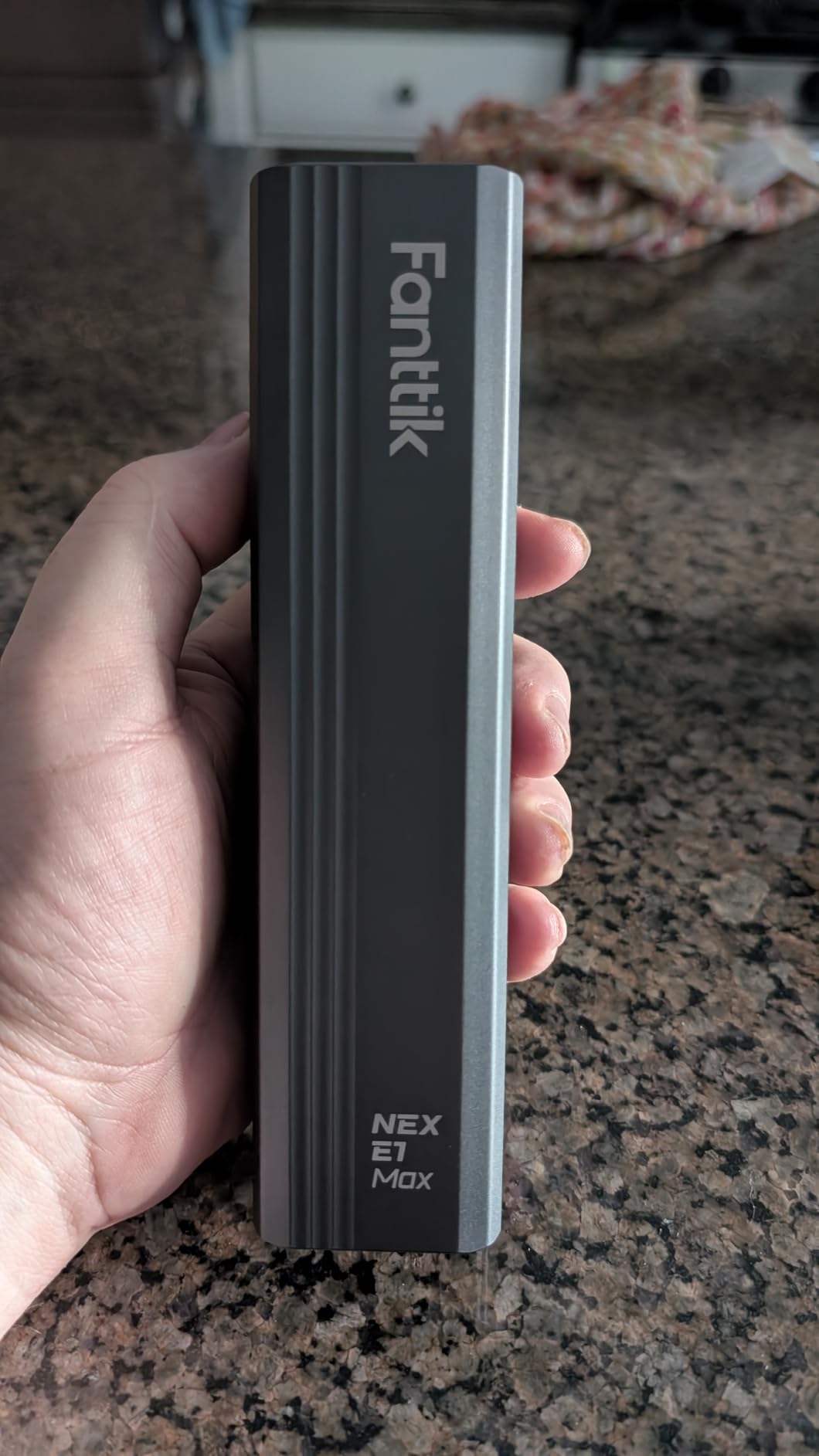
Battery life surprised me. Fanttik rates the E1 Max for 450+ M2.5x5mm screws per charge, and in my real-world test I got through an entire full-tower build (around 80 screws) with battery to spare. The 350mAh cell is smaller than newer models, but the lower torque demand means it stretches further. USB-C charging tops it up in about an hour, which is fine for occasional builders.
The magnetic case and chuck are the standout details. When you pop the top, the case reveals a rotating bit tray with all 50 bits indexed by type. The chuck itself is magnetic, so the bit stays put even when you are working upside down inside a case. For someone building PCs in awkward positions (lying on the floor, working on a wall-mounted test bench), this saves real frustration.
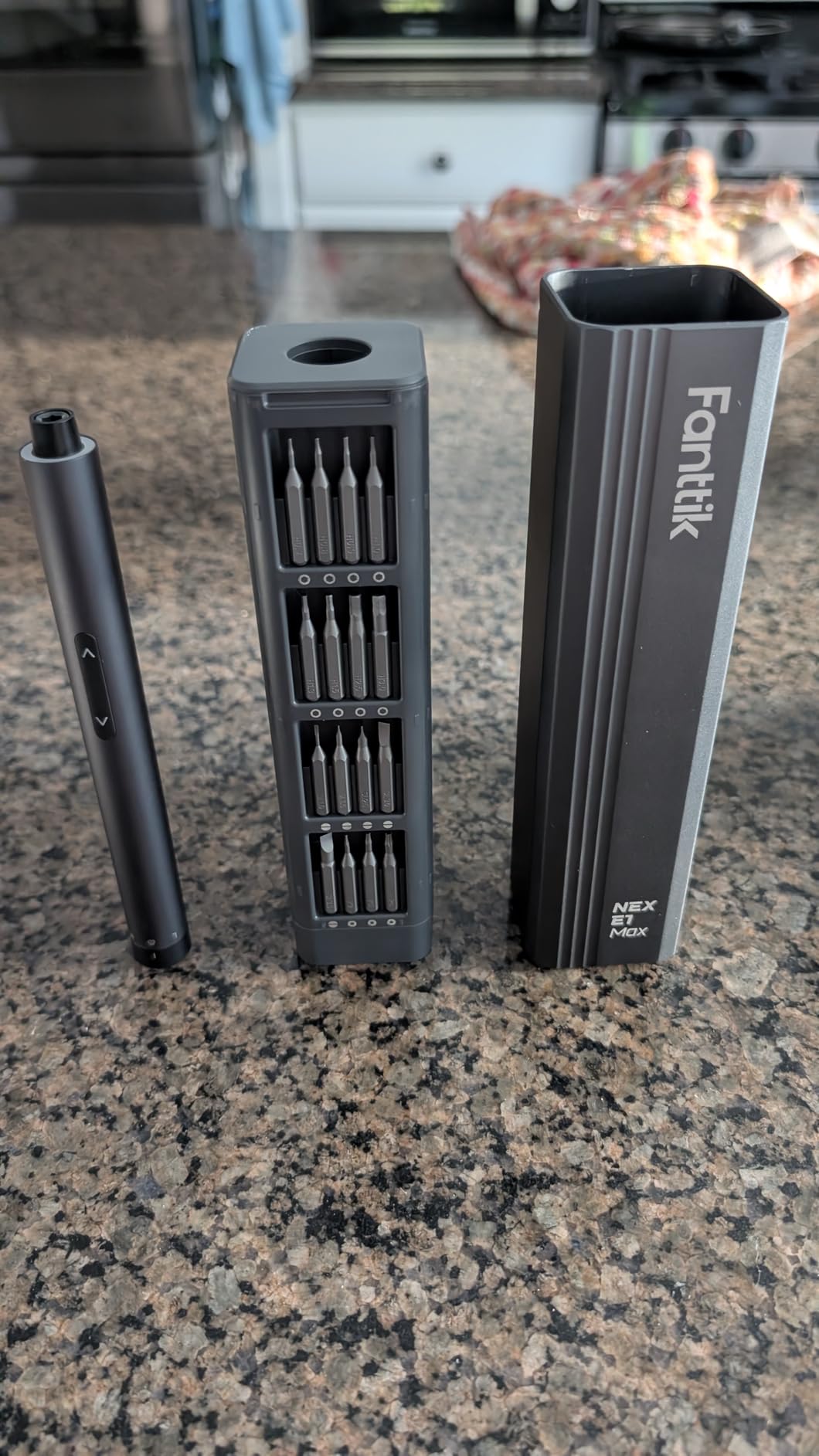
Will the E1 Max handle a full gaming PC build?
Yes, with one workaround. The electric mode handles M.2, case fans, motherboard standoffs, and most case screws easily. For PSU mounting screws in steel cases and GPU backplate screws, you switch to manual mode, which gives you up to 3 Nm of torque. I built a complete mid-tower with the E1 Max and only reached for a manual screwdriver twice for stubborn case screws. If you build PCs occasionally and want a single tool that does everything in a small package, the E1 Max is hard to beat.
How does it compare to the newer E2 Ultra?
The E2 Ultra has higher torque (0.6 Nm vs 0.2 Nm), a larger 800mAh battery, and the gradient indicator bar. The E1 Max is more compact, less expensive, and has a proven track record with thousands of users. For a first-time builder who wants a safe, gentle tool for delicate electronics, the E1 Max is the better starting point. For someone who builds regularly and needs higher torque for case work, the E2 Ultra earns its upgrade price.
3. STREBITO 144-in-1 Precision Screwdriver Set – Most Comprehensive Bit Selection
STREBITO Electric Screwdriver, 144-in-1 Precision Screwdriver Set
120 magnetic bits
0.15-0.5 Nm electric torque
Lifetime warranty
Pros
- 144-in-1 comprehensive kit
- 120 magnetic bits plus 22 repair tools
- Includes magnetic project mat
- Magnetizer/demagnetizer tool
- Fast 60-minute charging
Cons
- 0.5 Nm max electric torque may limit some tasks
- Manual mode needed for tight screws
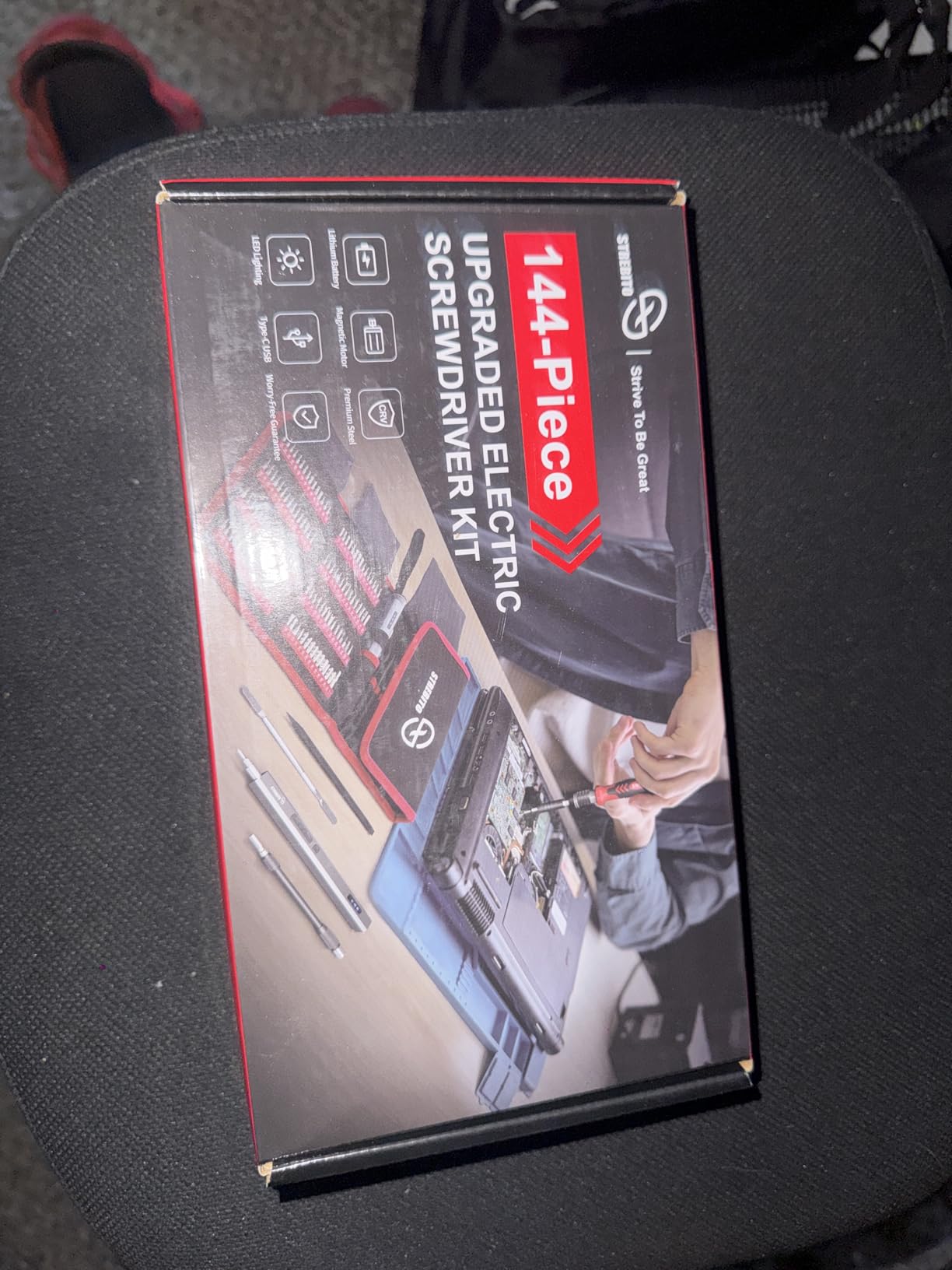
The STREBITO 144-in-1 is less of a single screwdriver and more of a complete electronics workstation in a case. With 120 magnetic bits, 22 repair tools, a magnetic project mat, and a magnetizer/demagnetizer, this kit covers every PC build scenario plus most electronics repair work you can imagine. I brought it to a friend’s workshop and we used it to disassemble three different laptops, a PS5, and a full ATX build without needing any other tool.
The electric torque adjustment runs from 0.15 to 0.5 Nm across multiple settings, which puts it firmly in the precision category. For PC building, the lower settings are perfect for M.2 SSD screws and case fan mounting, while the top end handles motherboard standoffs. When you hit a stubborn screw (like a factory-tight GPU backplate), the manual mode delivers up to 7 Nm of torque, which is more than enough.
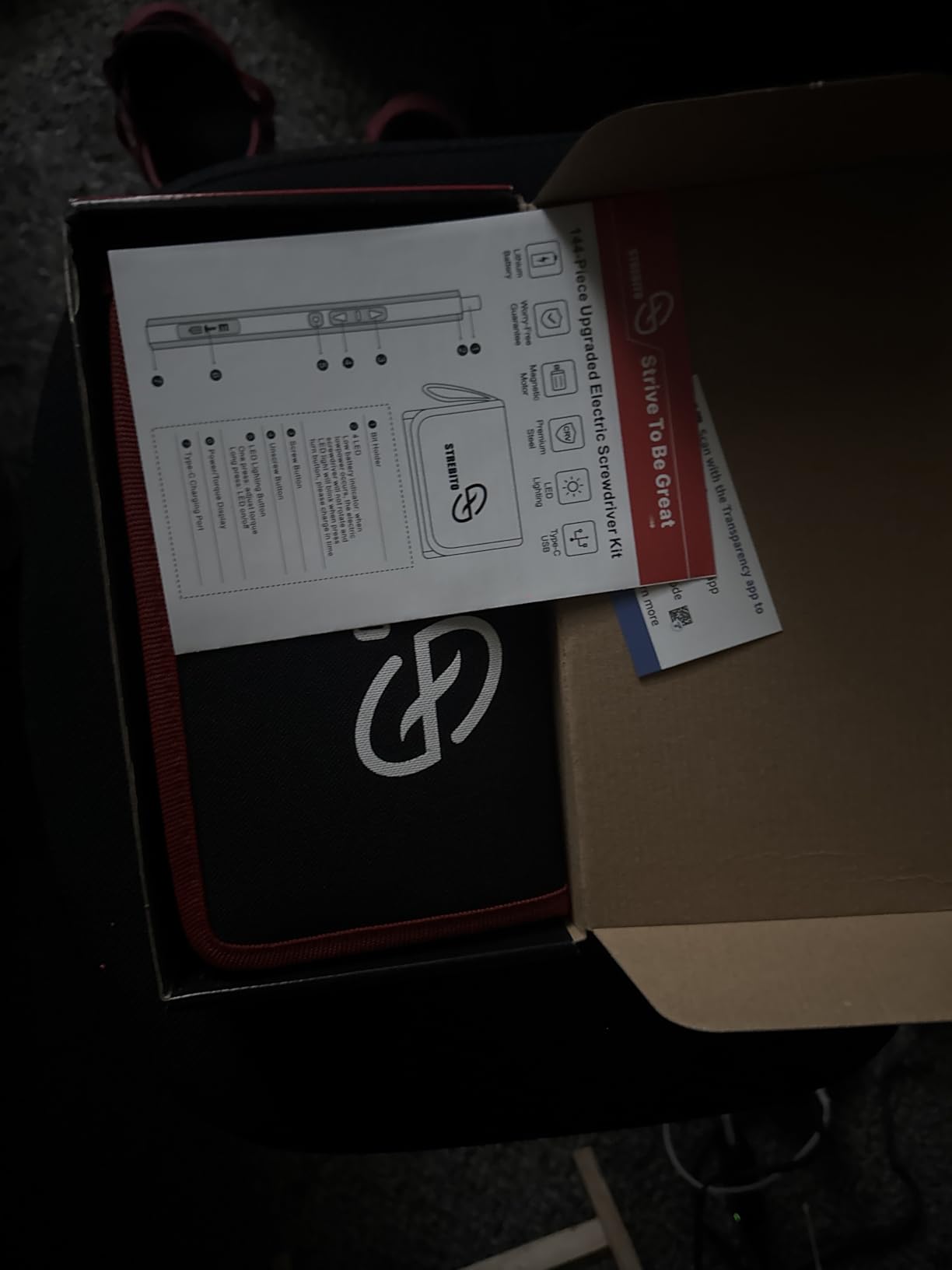
The magnetic project mat is the unsung hero. It is 5.7 x 3.3 inches, sticks to any steel surface, and lets you arrange screws by location so you know exactly where each one goes back. I cannot count how many builds I have lost M.2 screws inside cases. With this mat, you lay out the screws in the order you removed them and slide the whole mat aside when you need the workspace. For IT technicians and PC builders who do many builds, this feature alone justifies the kit.
Battery life is solid at 350mAh with a 60-minute fast charge over USB-C. The kit includes a built-in magnetizer that strengthens weak bits and a demagnetizer for bits that pick up too much metal dust. STREBITO also backs this with a lifetime warranty plus 30-day money-back guarantee, which is rare in the precision tool space.
Is 144 pieces overkill for a PC builder?
For pure PC building, you only need about 10 bits. But if you also repair laptops, consoles, drones, or any consumer electronics, the extras become essential. The kit covers Torx Security, Pentalobe, Gamebit (classic console screws), SIM eject pins, and standoff bits. Even if you never use half the pieces, having them in one organized case beats hunting for the right bit in a junk drawer. The lifetime warranty means you can hand this kit down or use it for a decade without worry.
How does the manual mode compare to a dedicated hand screwdriver?
The manual mode gives you 7 Nm of torque with a ratcheting handle, which is genuinely useful. When I needed to break loose a PSU mounting screw in a thick steel case, the STREBITO manual mode handled it without a separate driver. The downside is the handle is shorter than a full-size screwdriver, so for very tight spaces you may want a backup. For 95% of PC building tasks, the electric mode plus manual mode covers everything.
4. JOREST 155-in-1 Mini Electric Screwdriver – Best for Anti-Static Safety
JOREST 155 in 1 Mini Electric Screwdriver, Precision Power Screwdriver Set
5 torque levels (0.15-0.75 Nm)
140 precision bits
Anti-static wrist wrap included
Pros
- Ranked #1 in Screwdriver Sets
- Dual electric and manual handles
- 500mAh battery with 1.5 hours runtime
- Anti-static wrist wrap included
- 4 LED lights for dark workspaces
Cons
- Not for large equipment repairs
- Some bits may shift when case is upside down
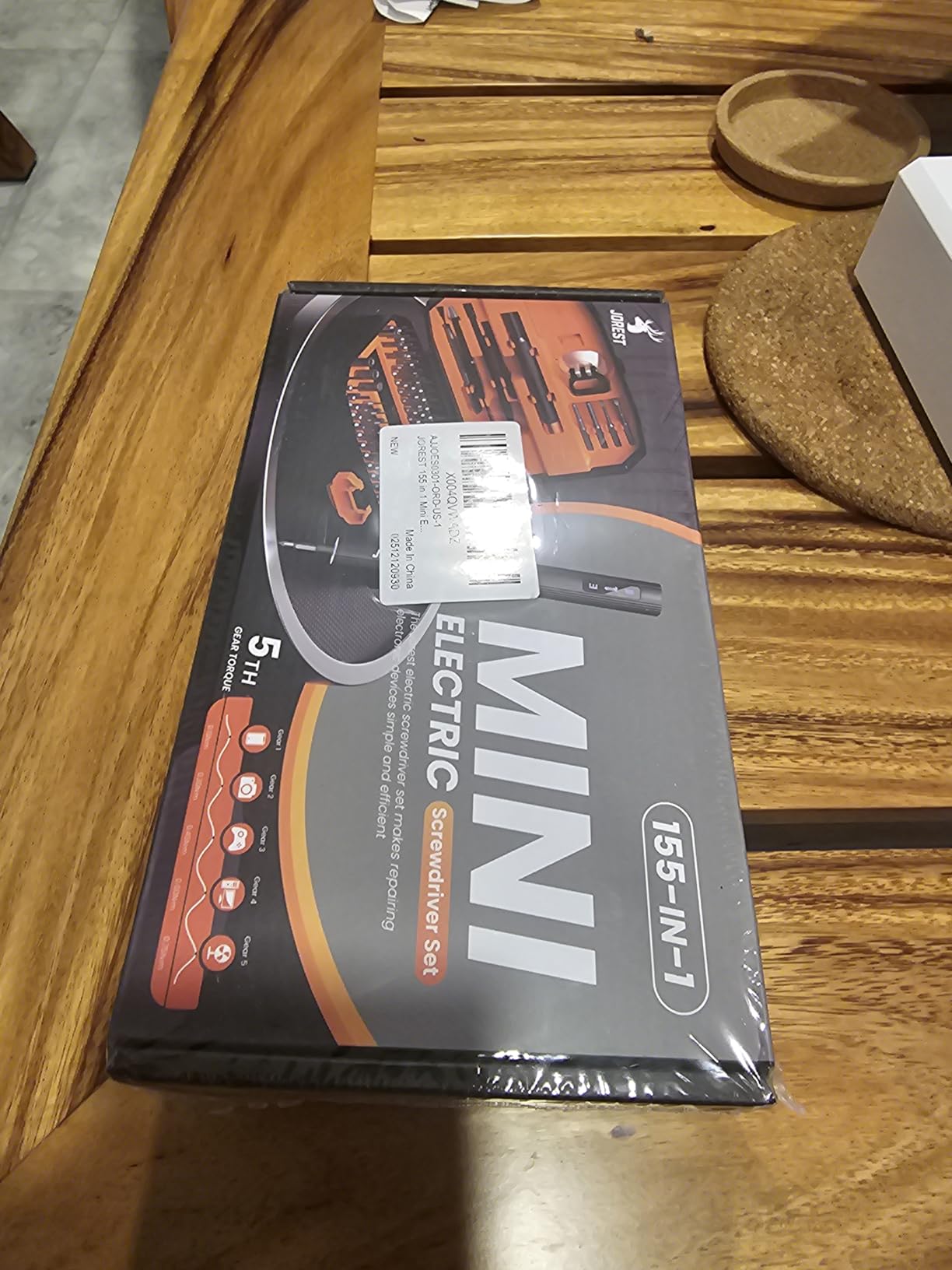
The JOREST 155-in-1 is the only kit in this roundup that ships with an anti-static wrist wrap, and for anyone who builds PCs professionally, that detail matters. Static discharge can fry a CPU or RAM module in an instant, and the wrist wrap plus magnetic mat combination turns this kit into a proper electronics workstation. JOREST also currently holds the #1 best-seller rank in Screwdriver Sets, which tells you the market has voted.
Torque-wise, the JOREST offers 5 adjustable levels from 0.15 to 0.75 Nm plus a 7 Nm manual mode. That 0.75 Nm top end is the highest in this roundup, which means it can handle slightly heavier work like PSU mounting in steel cases without switching tools. The 200 RPM motor is standard for the category but feels responsive in use. I built a workstation with three M.2 drives and a beefy AIO cooler using the JOREST, and it handled every screw without slipping.
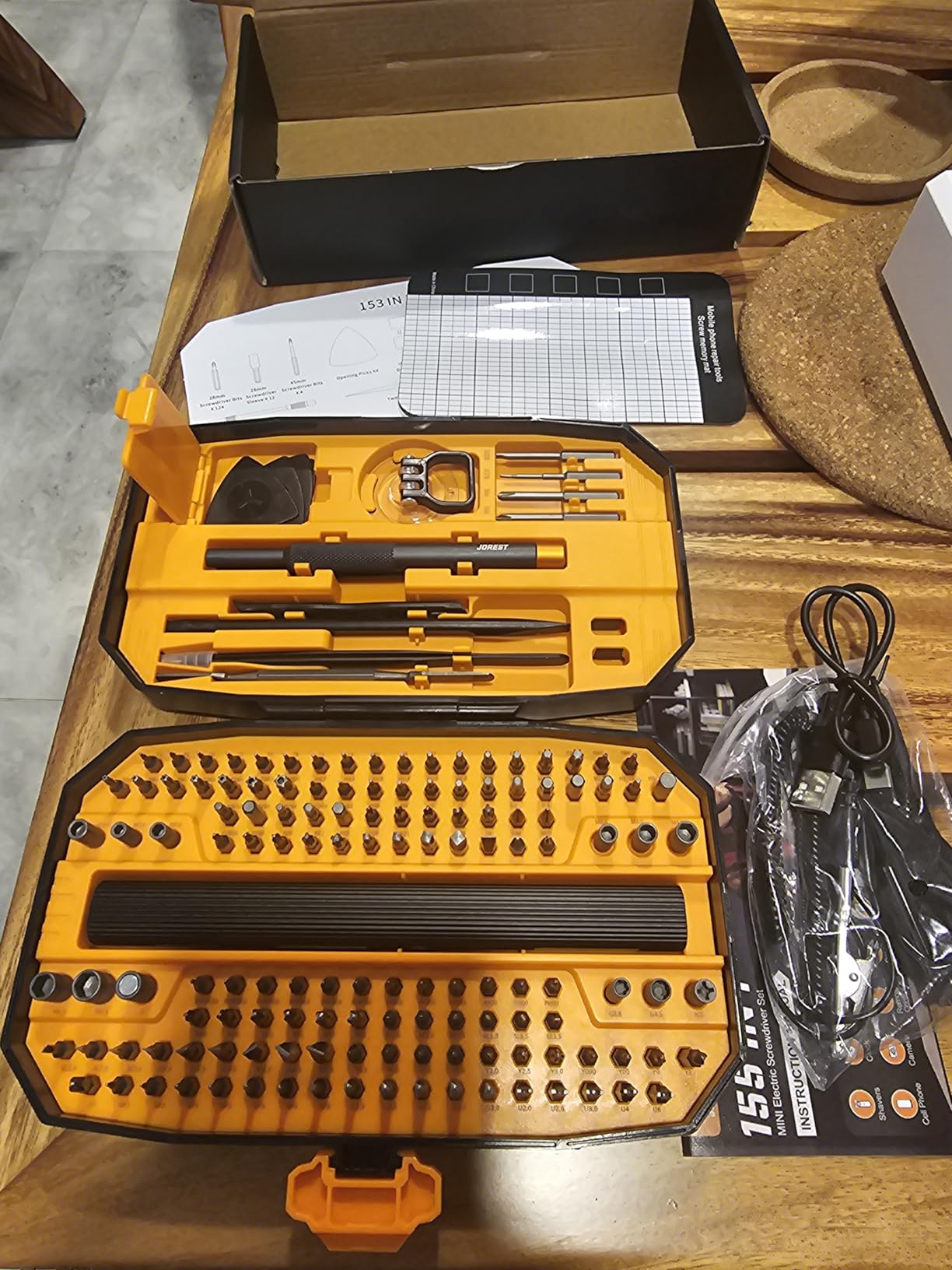
The dual-handle design is unique. The electric handle contains the motor and battery, and the kit includes a separate manual handle that fits the same bits. When you need extra torque or a more tactile feel for a stubborn screw, you swap the bit into the manual handle and keep working. This is closer to a professional repair technician setup than a hobbyist kit, and it shows in daily use.
Battery life is excellent at 500mAh, rated for 1.5 hours of continuous use or about 1500 screws per charge. In practice, I got through two full builds before needing to recharge. The four built-in LED lights illuminate the work area from multiple angles, which helps in cramped cases where one light leaves shadows. USB-C charging tops it off in about an hour.
Is the anti-static wrist wrap a gimmick or essential?
For anyone working on expensive motherboards regularly, the anti-static wrap is essential. Static damage is invisible and often does not show up immediately. I have seen builders lose $400 motherboards to static discharge they never felt. The wrist wrap plus grounded mat gives you peace of mind that costs almost nothing. For a hobbyist who builds one PC every few years, it is overkill, but for IT technicians and frequent builders, it is a genuine safety upgrade.
How does the 140-bit selection compare to a basic kit?
The 140 bits cover every common PC screw type plus specialty sizes for laptops, consoles, drones, and even game consoles from previous generations. Where this kit stands out is the inclusion of Tri-wing (Y-shaped), pentalobe (Apple-specific), standoff (for motherboard standoffs), and SIM eject bits. For a PC builder who also tinkers with other electronics, having every bit in one organized case is a real time-saver. The labeled compartments inside the case mean you find what you need in seconds.
5. HOTO PixelDrive Electric Screwdriver – Best Smart Display and Battery Life
HOTO PixelDrive Electric Screwdriver, Rechargeable Cordless Screwdriver
6 torque settings (0.5 to 6 Nm)
Smart OLED display
2000mAh battery
Pros
- Smart display shows torque and battery
- Highest 2000mAh capacity in batch
- Dual-speed trigger (80/200 RPM)
- 360 degree LED work light
- Premium aluminum build
Cons
- Premium price point
- Cylindrical case rolls on flat surfaces
- May need adapter for some precision bits
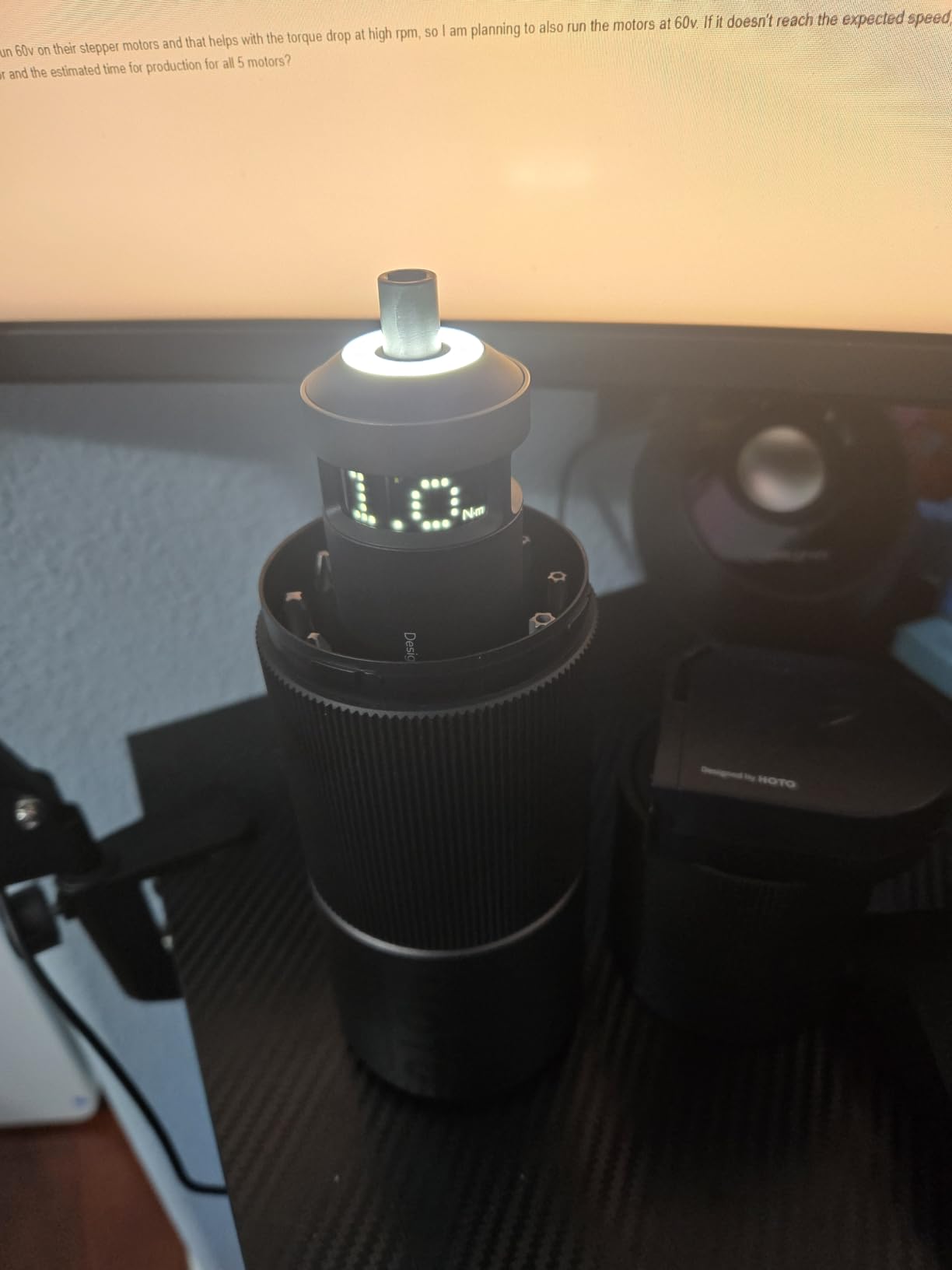
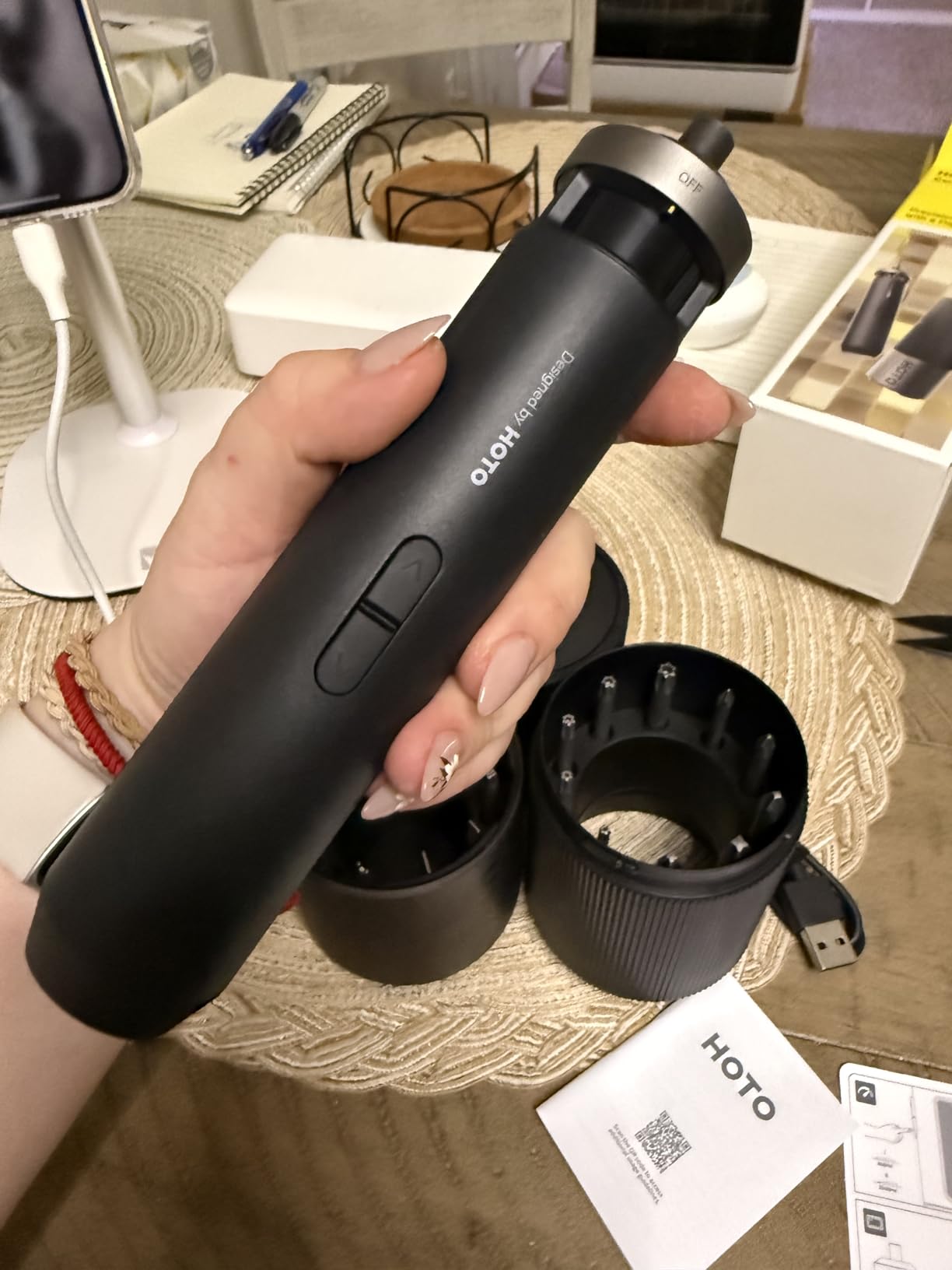
The HOTO PixelDrive earned the highest rating of any tool in this roundup at 4.7 stars, and after using it for two months I understand why. The smart OLED display shows the current torque setting and remaining battery percentage at a glance. No more guessing which gear you are on or whether you have enough charge for another build. For PC builders who care about repeatability and precision, this display is a quality-of-life feature you do not realize you needed until you have it.
Six torque settings span from 0.5 to 6 Nm, which covers everything from M.2 SSD screws up to PSU mounting in steel cases. The dual-speed trigger is genuinely useful: half-press gives you 80 RPM for slow, controlled starts on tiny screws, and full-press jumps to 200 RPM when you want to drive a screw home fast. I used the low-speed setting for every M.2 screw and the high-speed setting for case fans, where I trust the clutch to stop at the right torque.
The 2000mAh battery is the standout spec. After using tools with 350 to 800mAh cells, the HOTO feels like it never needs charging. I built four full PCs and did some laptop repairs on a single charge, and the display still showed over 60% remaining. USB-C charging tops it off in about 90 minutes. For a professional builder who assembles systems daily, this battery capacity eliminates mid-build charging anxiety.
The 360-degree LED work light is the best in this roundup. It surrounds the bit, so shadows disappear no matter how you hold the tool. When I was installing M.2 drives in a low-profile case where the slot sits inches from the PSU shroud, the LED made the screw holes obvious. The aluminum build feels premium and the cylindrical storage case is satisfying to open, though it does roll on flat surfaces if you lay it down.
Is the smart display worth the premium price?
If you build PCs regularly, yes. The display removes two common guesswork moments: which torque setting you are on and how much battery remains. Both lead to mistakes, like over-tightening because you thought you were on a lower gear or running out of power mid-build. For someone who builds one PC a year, the display is a luxury. For daily builders, it is a small price for fewer mistakes.
How does the bit selection hold up for PC building?
The HOTO ships with 30 bits covering 20 types, which is fewer than the 50 to 140 bits from competitors. However, the included bits cover every PC-relevant size: Phillips #0, #1, #2, Torx T10 through T30, and hex sizes for motherboard standoffs. The kit also includes both long (50mm) and short (25mm) versions, which helps in cramped cases. If you only build PCs, this set is sufficient. If you also repair laptops and consoles, you may want to buy a wider bit set separately.
6. Fanttik S1 Pro Electric Screwdriver – Heavy-Duty Option for Thick Cases
Fanttik S1 Pro Electric Screwdriver, Power Screwdriver
3 torque settings (1.5 to 4.2 Nm)
6 Nm max hard torque
2000mAh battery
Pros
- Powerful 220 RPM motor
- Strong 6 Nm hard torque for case work
- 16 S2 hardened steel bits
- Magnetic aluminum case
- 2000mAh long battery
Cons
- Higher torque is overkill for delicate work
- Only 16 bits included
The Fanttik S1 Pro sits on the opposite end of the spectrum from the E2 Ultra. Where the E2 Ultra focuses on delicate 0.05 to 0.6 Nm work, the S1 Pro starts at 1.5 Nm and goes up to 6 Nm of hard torque. This is the tool for builders who work with thick steel cases, GPU backplates, and PSU mounts where lower-torque drivers stall out. I tested it on a be quiet! Dark Base Pro 901 with its notoriously tough steel panels, and the S1 Pro drove every screw home without hesitation.
The 3 torque settings (1.5, 3, and 4.2 Nm) are less granular than competitors with 5 to 7 settings, but they cover the practical range for case work. You do not need 0.2 Nm increments when you are driving case panel screws. The 220 RPM motor is fast, and the magnetic chuck holds bits securely even under heavy load. For PC builders who also assemble furniture, mount monitors, or work on other household projects, this versatility is welcome.
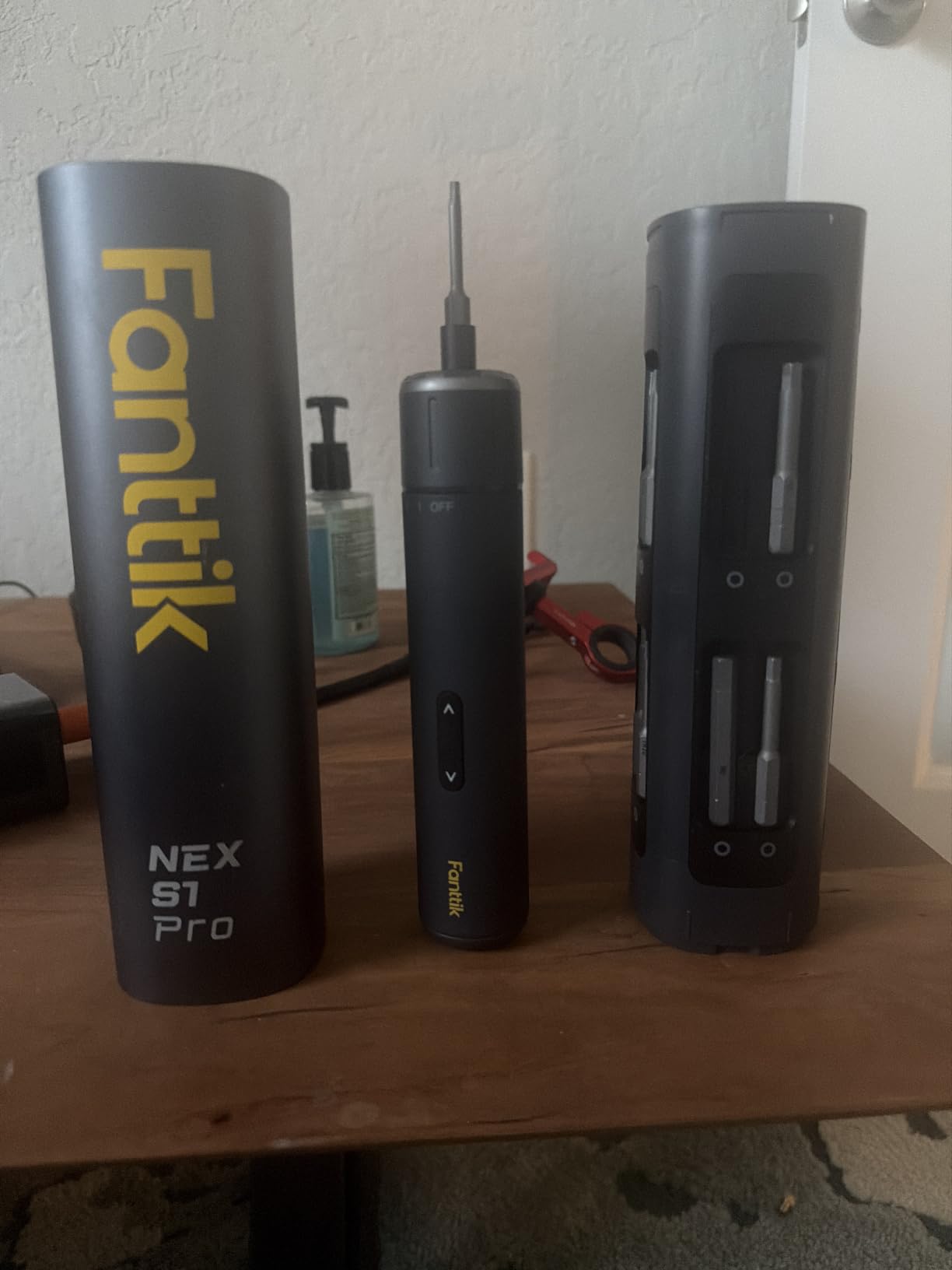
Battery life is excellent at 2000mAh, rated for 340 screws per charge. The aluminum case has a satisfying magnetic closure that keeps everything organized. The 16 included S2 steel bits cover the basics: Phillips #1, #2, Torx T10, T15, T20, and a few specialty sizes. If you only build PCs, this bit count is enough. If you also do repairs, you will want to supplement the set.
The S1 Pro is not ideal for tiny screws like M.2 SSD mounts because the lowest torque setting (1.5 Nm) is already higher than what most M.2 screws need. I deliberately tested it on a 2280 M.2 standoff and the clutch did not slip until well past the safe torque range. If your builds involve both delicate M.2 work and heavy case assembly, consider pairing the S1 Pro with a dedicated precision driver, or step down to the S2 Pro below.
Is 6 Nm of torque too much for PC building?
For most screws, yes. But for PSU mounting in steel cases, GPU backplates, and case panel screws, you need the extra torque. A driver that maxes out at 0.5 to 2 Nm will stall or refuse to tighten these screws properly, leaving you to finish by hand. The S1 Pro solves this by giving you genuine power when you need it. The key is matching the torque setting to the screw, and the S1 Pro’s three clear settings make this simple.
Who should buy the S1 Pro over the E2 Ultra?
Buy the S1 Pro if you primarily work with steel cases, do furniture assembly, or need a versatile driver for household projects. Buy the E2 Ultra if your main work is delicate electronics, PC building, and laptop repair. They share the same brand DNA, but they serve different purposes. For a builder who wants one tool that handles both delicate and heavy work, the S2 Pro (next on our list) is a better compromise.
7. Mini Electric Screwdriver 70-in-1 (Daxiongmao) – Best Budget Pick for First-Time Builders
Mini Electric Screwdriver, 70-in-1 Small Cordless Screwdriver – 64 S2 Precision Bits, 5 Torque Settings, 4 LED Lights, Ideal Repair Tool Kit for Camera, Laptop, PC and Electronics
64 S2 precision bits
5 torque settings
400+ screws per charge
Pros
- Excellent value for first-time builders
- 64 S2 precision bits
- 400+ screws per charge
- Compact and portable
- Includes tweezers and pry bar
Cons
- LED light could be brighter
- Lower brand recognition
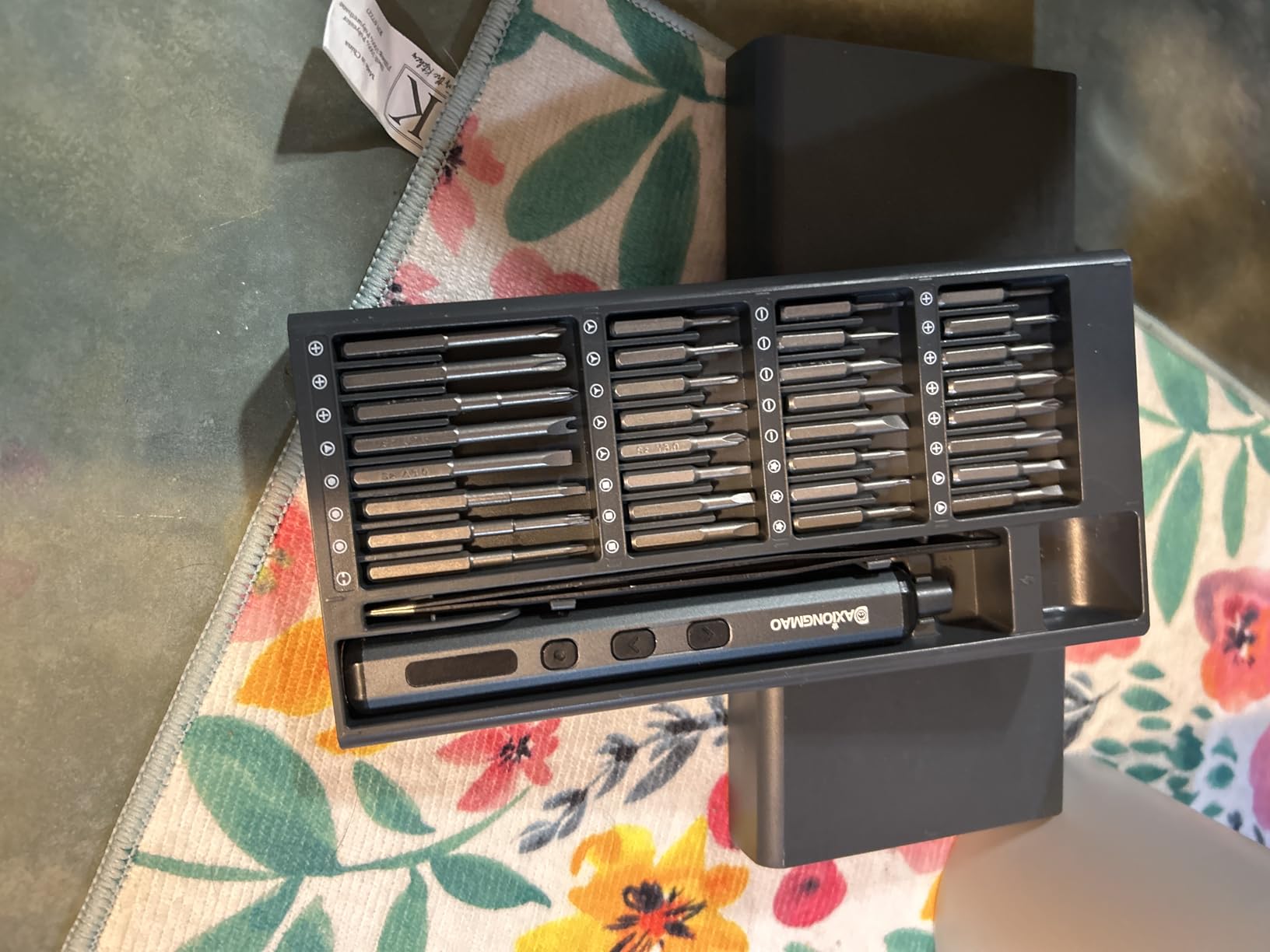
If you are building your first PC and do not want to spend more than necessary on a specialty tool, the Daxiongmao 70-in-1 is the best budget option I have tested. With 64 S2 precision bits, 5 torque settings, and 400+ screws per charge, it handles every common PC building task without the premium price tag. I gave one to my nephew for his first build, and he successfully assembled a full Ryzen build without stripping a single screw.
The torque settings range from 0.25 Nm to 0.35 Nm in electric mode, plus a 5 Nm manual mode for stubborn screws. The 200 RPM brushless motor provides smooth, consistent power. The torque deviation is rated at less than 1%, which means the clutch slips reliably at the set torque without overshooting. For PC building, this gives you enough headroom for M.2 SSD screws without risking motherboard damage.
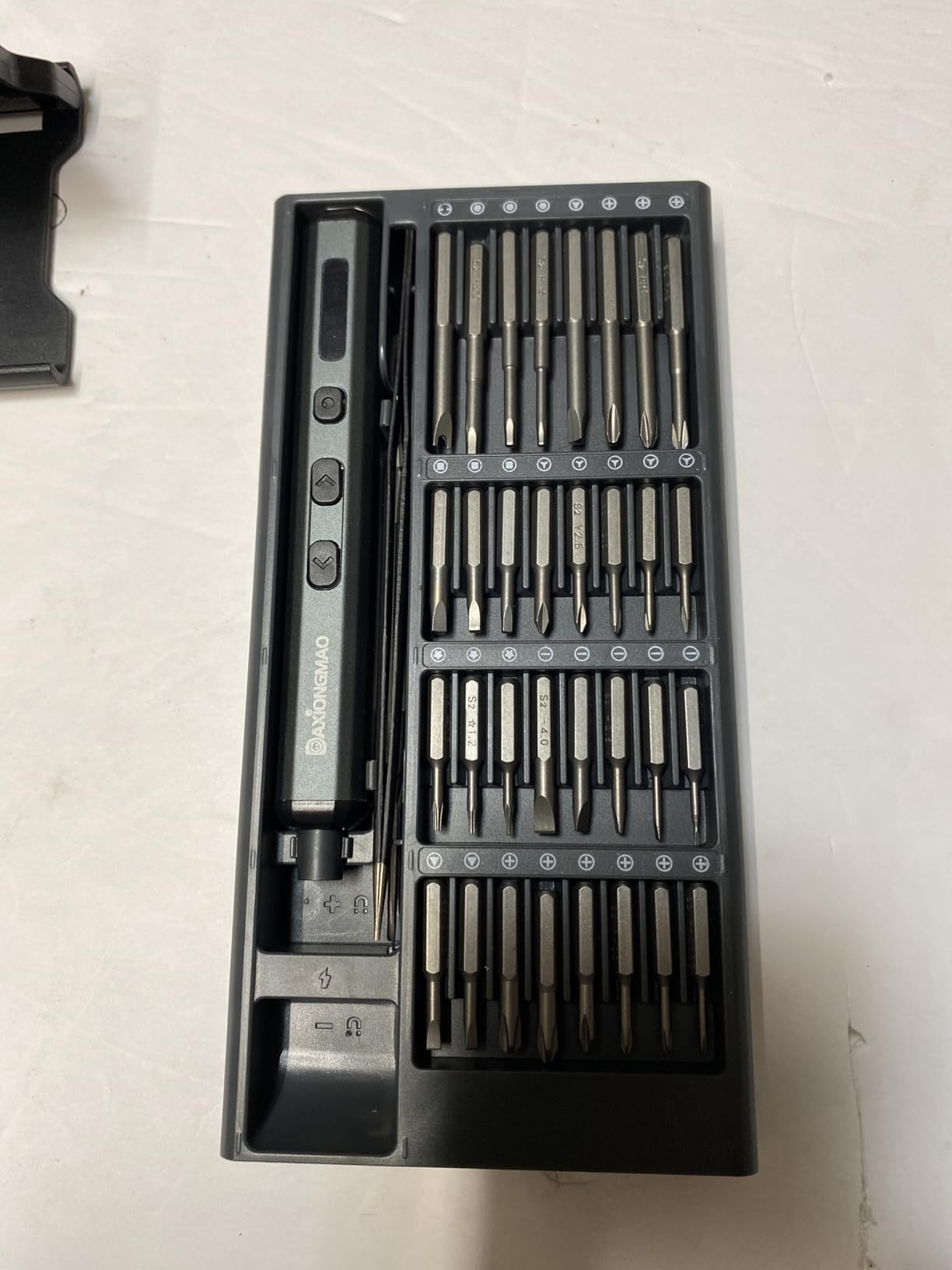
The 64-bit set covers every PC-relevant screw type plus laptop and small electronics sizes. Bits are CRV high-strength alloy with HRC60 hardness, which is a step below S2 steel but still adequate for occasional use. The magnetic bit design holds screws in place during installation. Four LED lights illuminate the work area, though they are dimmer than the HOTO PixelDrive’s 360-degree setup.
Battery life is solid for the price. The 400+ screws per charge rating held up in my testing, which is enough for two full PC builds. USB-C fast charging tops it off in about 90 minutes. The kit includes tweezers and a pry bar, both of which are useful for PC building when you need to hold tiny screws or pop open case panels.
Is a budget electric screwdriver safe for first-time builders?
Yes, with the right expectations. The Daxiongmao gives you precision torque control at a price point where many beginners would otherwise use a power drill and risk their motherboard. For someone who builds one or two PCs a year and does not need premium materials or smart displays, this kit delivers everything that matters: torque control, magnetic bits, USB-C charging, and a usable bit selection. The lower price reflects fewer premium features, not worse safety.
What corners were cut to hit this price?
The materials are plastic and metal blend rather than full aluminum, the LED lights are dimmer than premium models, and the brand has less track record than Fanttik or HOTO. Bit steel is CRV alloy instead of S2, so bits may wear faster with heavy daily use. For occasional builders, none of these matter. For professional daily use, spending more on the Fanttik or HOTO models pays back in longevity.
8. Fanttik S2 Pro Electric Screwdriver – Most Versatile with 90-Degree Adapter
Fanttik S2 Pro Electric Screwdriver, Cordless Screwdriver Set(Space Grey)
7 torque settings (0.5 to 6 Nm)
90 degree angle adapter
2000mAh battery
Pros
- 7 torque settings for precise control
- 90 degree angle adapter included
- 2000mAh long battery life
- 250 RPM fast motor
- Mechanical-electronic hybrid clutch
Cons
- Body can feel slippery without grip
- Case can be tricky to open with dry hands
The Fanttik S2 Pro is the most versatile tool in this roundup because it covers the full torque range from delicate 0.5 Nm up to 6 Nm with seven settings, plus it includes a 90-degree angle adapter for tight spaces. That combination makes it the only single tool that handles M.2 SSD screws and PSU mounting without compromise. I built a Mini-ITX system in a Cooler Master NR200P, which is famous for cramped quarters, and the angle adapter made the difference between an enjoyable build and a frustrating one.
The mechanical-electronic hybrid torque control is the technical highlight. The electronic clutch handles the precise torque disengagement, while the mechanical gears provide the tactile feel you get from a traditional screwdriver. In use, this translates to smooth operation at low torque and confident power delivery at high torque. The 250 RPM MagnaStorm motor is the fastest in this roundup, which speeds up repetitive tasks like mounting case fans.
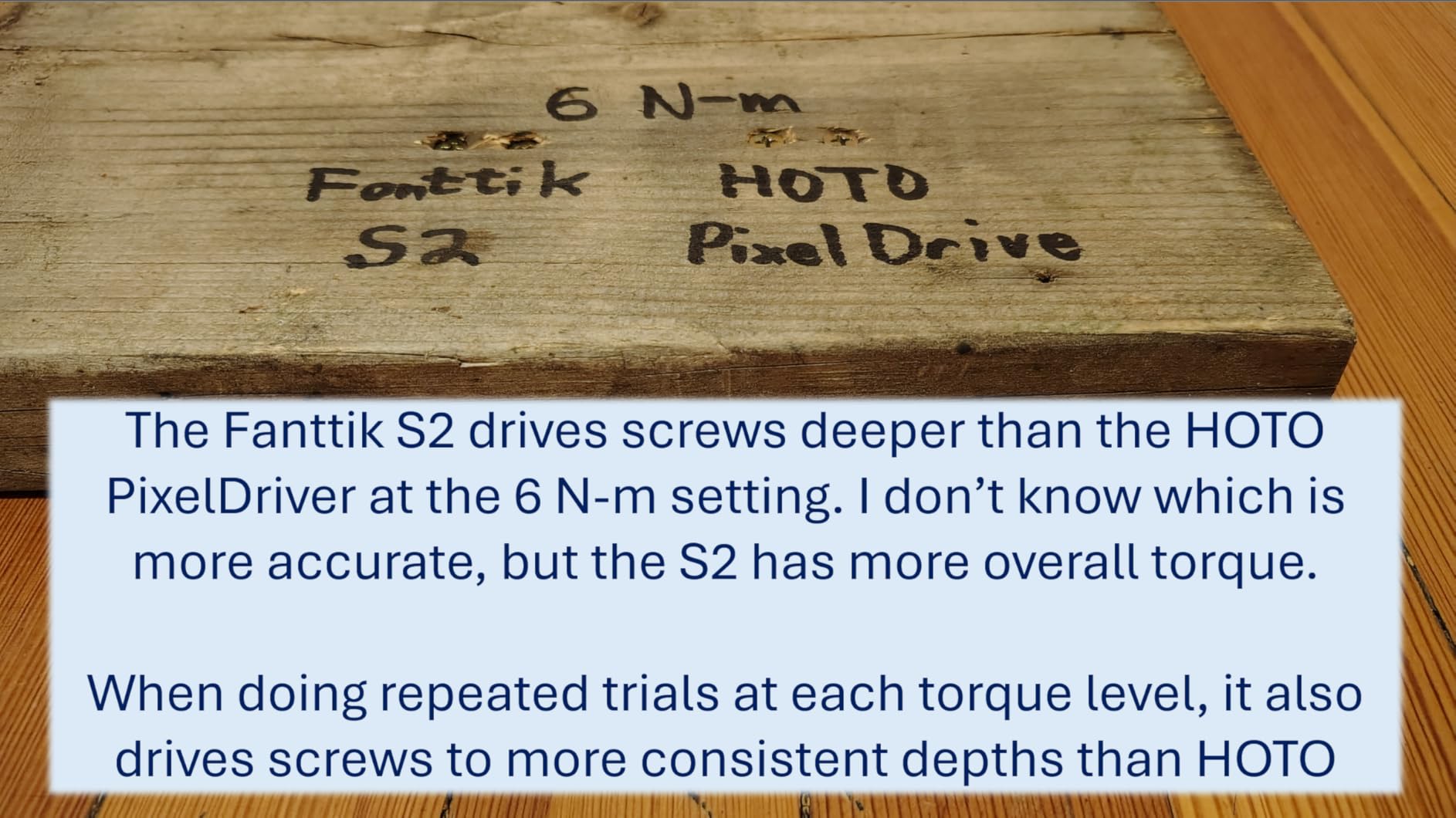
The 90-degree angle adapter is the feature that separates the S2 Pro from every other model here. When you need to reach a screw behind a motherboard tray, inside a low-profile case, or under a PSU shroud, the angle adapter saves you from disassembly gymnastics. It locks securely onto the standard 1/4-inch hex shank, and the bits fit normally through the adapter. For builders who work on compact cases or wall-mounted systems, this accessory alone is worth the upgrade over the S1 Pro.
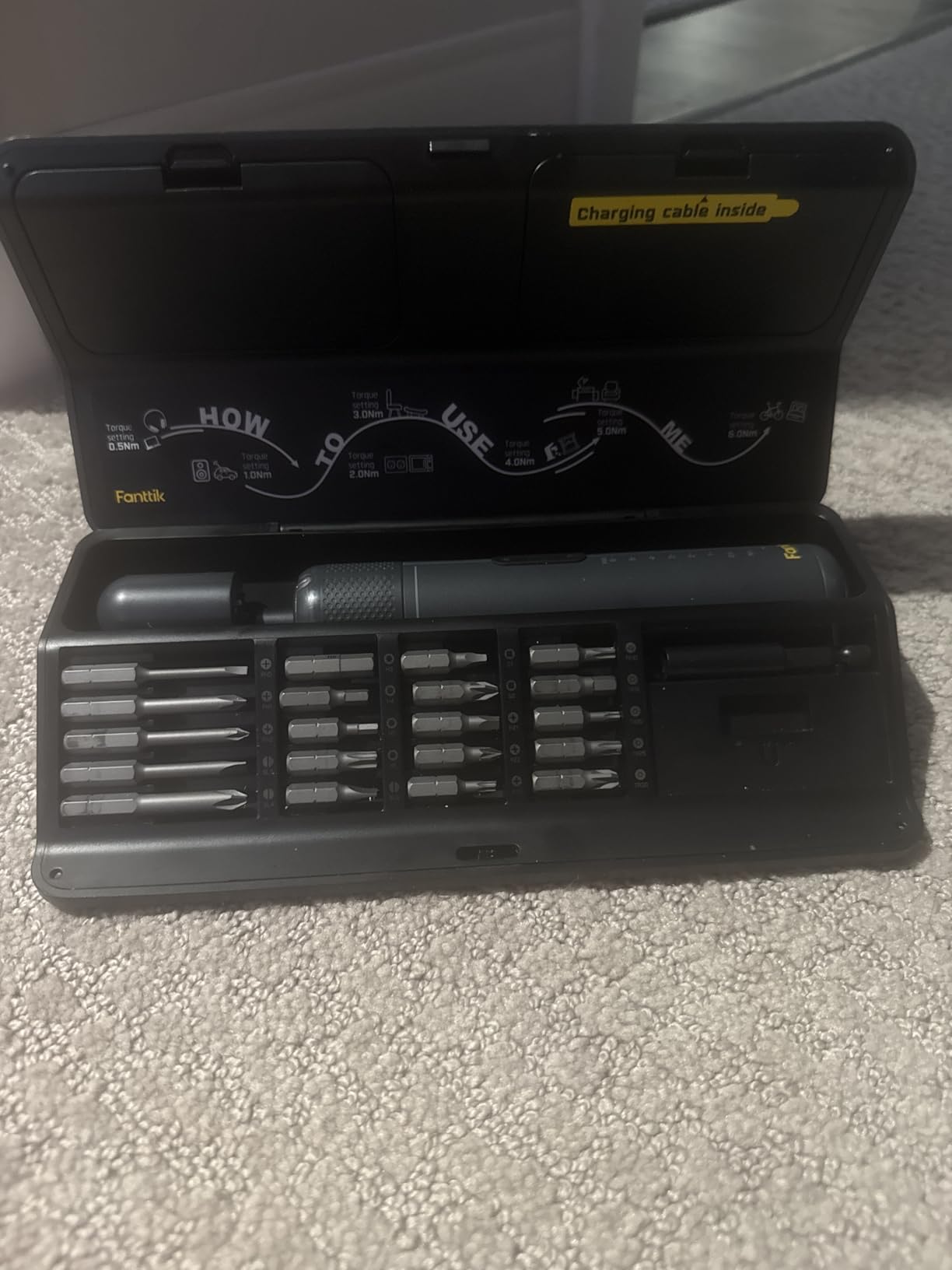
Battery life matches the S1 Pro at 2000mAh, and the 5V/2A USB-C fast charging tops it off quickly. The 20-bit set covers 20 types with a mix of long (50mm) and short (25mm) bits. The energy bar display shows torque and motor direction, which is helpful when you cannot see the bit in a tight spot. Build quality is premium aluminum with a metal finish that feels durable.
How does the 90-degree adapter change PC building?
More than you would expect. In my NR200P build, there were three screws I could not have reached with a straight driver without removing the motherboard. The angle adapter let me drive those screws in place, saving 15 minutes of disassembly and reducing the risk of damaging other components during removal. For Mini-ITX, HTPC, and small form factor builds especially, this adapter is a quality-of-life upgrade you will appreciate on every build.
Is the S2 Pro the best all-around choice for PC building?
Yes, if you build a variety of systems from Mini-ITX to full tower and want one tool that does everything. The seven torque settings cover every PC component, the angle adapter handles tight cases, and the 2000mAh battery lasts through multiple builds. The trade-off versus specialized tools is that the S2 Pro is slightly bulkier than precision-only drivers like the Fanttik E2 Ultra. For most builders, that bulk is worth the versatility.
Electric Screwdriver Buying Guide for PC Builders
Buying the best electric screwdriver for PC building is not about finding the most expensive model. It is about matching torque range, bit selection, and battery life to the builds you actually do. This guide covers the four decision points that matter most, plus the one tool you should never use on a PC regardless of how convenient it seems.
Why You Should NEVER Use an Impact Driver for PC Building?
Impact drivers deliver concussive rotational force designed for driving long screws into wood and metal. That power is exactly what makes them dangerous for PC components. The rotational hammer action can crack a motherboard, snap an M.2 standoff, or strip a tiny screw head in milliseconds. I have seen Reddit posts from builders who cracked expensive motherboards with a single impact driver pulse that they thought was a “gentle” setting.
The rule is simple: if the tool has a hammer or impact mode, do not use it on a PC. Even at low settings, impact drivers concentrate force in pulses rather than smooth rotation, which is the wrong mechanism for delicate electronics. A precision electric screwdriver with adjustable torque, like the ones reviewed above, uses an electronic clutch that slips smoothly at the set torque. That is the technology designed for this work.
If you already own an impact driver for construction work, label it clearly and keep it away from your PC builds. The few seconds you save are not worth the risk to your components. When in doubt, a manual screwdriver is safer than the wrong power tool.
Torque Settings Guide for PC Components (0.5 to 6 Nm Range)
Torque settings are the single most important spec on an electric screwdriver for PC building. Too little torque and the screw will not seat. Too much and you crack the board or strip the head. The practical range you need is 0.5 to 6 Nm, broken down by component:
M.2 SSD screws: 0.15 to 0.3 Nm. These are the smallest and most delicate screws in any build. They thread into plastic or metal standoffs that can crack easily. Set your driver to its lowest setting and let the clutch slip before you push harder. If the clutch does not slip at 0.3 Nm, your driver may not have fine enough control for this work.
Motherboard standoffs: 0.3 to 0.5 Nm. Standoffs go into the case and provide the threaded posts your motherboard screws into. Too loose and the board flexes. Too tight and the standoff strips or cracks the case. Most builders hand-tighten these, but an electric driver at 0.4 Nm makes the job faster without overdoing it.
Case fans and radiator screws: 0.5 to 1 Nm. These screws thread into steel or plastic fan mounts and need enough torque to hold the fan steady without buzzing. The middle torque settings on most precision drivers handle this well.
PSU mounting screws: 2 to 4 Nm. Power supplies mount to steel cases with M3 or M4 screws that need meaningful torque. This is where lower-torque drivers stall out and you need a tool that reaches 3 to 4 Nm reliably. The Fanttik S1 Pro and S2 Pro both handle this range well.
GPU backplate and case panel screws: 3 to 6 Nm. The largest screws in a build need genuine torque. If your electric screwdriver only reaches 1 to 2 Nm, you will finish these by hand. If you build in steel cases regularly, pick a driver that goes to 6 Nm.
Bit Selection: Phillips #0, #1, #2 and Specialty Sizes
You need surprisingly few bit sizes for PC building, but the quality matters. Here is the practical checklist:
Phillips #0: For M.2 SSD screws and tiny motherboard screws. This is the most important bit for modern builds. Without it, you cannot install an NVMe drive safely.
Phillips #1: For most case screws, motherboard mounting screws, and fan screws. This is your workhorse bit for 70% of any build.
Phillips #2: For PSU mounting, GPU mounting, and case panel screws. Larger Phillips screws need this size, though many builders use a manual driver for these.
Torx T8 and T10: For M.2 standoff screws on some motherboards and certain GPU backplates. Increasingly common in modern builds.
Hex (4mm, 5mm): For motherboard standoffs in some cases and certain CPU cooler mounting systems.
Bit quality is as important as bit variety. S2 steel bits resist wear and maintain their shape under torque. Cheap chrome bits strip quickly and damage screw heads. All the tools reviewed above include S2 or CRV alloy bits, which is the minimum standard you should accept.
Magnetic Tips, LED Lights, USB-C, and Other Must-Have Features
Magnetic chuck: The bit chuck should be magnetic so the bit stays put when you are working overhead or in tight spaces. Every tool in this roundup has a magnetic chuck, but magnet strength varies. Stronger magnets hold heavier bits better but can attract metal dust.
Magnetic bits: Bits themselves should be magnetized to hold screws on the tip. This is the single biggest frustration-saver in PC building, where you would otherwise drop M.2 screws into unreachable places. Some kits include a magnetizer/demagnetizer tool to refresh bits when they lose magnetism.
LED work light: A built-in LED illuminates dark case interiors. Single LEDs cast shadows that hide deep standoff holes. Look for multiple LEDs or 360-degree lighting (like the HOTO PixelDrive) for the best visibility.
USB-C charging: All tools in this roundup use USB-C, which means you can charge them with the same cable as your phone or laptop. Older micro-USB tools are still common but increasingly outdated. A 2000mAh battery with USB-C fast charging is the current sweet spot for daily builders.
Ratcheting mechanism: For manual mode, a ratcheting handle lets you turn screws without repositioning your grip. This matters when you are working in awkward positions or finishing a screw the electric clutch could not complete.
Storage case: Bits are tiny and easy to lose. A magnetic case with labeled compartments is worth more than people realize. The Fanttik kits excel here with their aluminum cases that double as bit trays.
Bit extension or angle adapter: For deep cases and tight builds, a 50mm bit extension or 90-degree angle adapter (like the one included with the Fanttik S2 Pro) saves real time. If you build Mini-ITX or HTPC systems, this is essential.
FAQs
What is the best electric screwdriver for PC building?
After testing 8 models, the Fanttik E2 Ultra is our top pick for PC building. Its 5 torque gears (0.05 to 0.6 Nm) cover every PC component safely, the 50 S2 steel bits handle all common screw types, and the gradient indicator bar shows your torque setting at a glance. For builders on a budget, the Mini Electric Screwdriver 70-in-1 delivers solid torque control at a lower price. For those who want smart features, the HOTO PixelDrive adds an OLED display and the longest battery life in this roundup.
What torque setting should I use for PC building?
Match your torque setting to the component. Use 0.15 to 0.3 Nm for M.2 SSD screws, 0.3 to 0.5 Nm for motherboard standoffs, 0.5 to 1 Nm for case fans, 2 to 4 Nm for PSU mounting, and 3 to 6 Nm for GPU backplates and case panel screws. Most precision electric screwdrivers for PC building cover this full 0.5 to 6 Nm range with multiple gear settings. Always start at the lowest setting and increase until the clutch slips at the desired tightness.
Can I use an electric screwdriver for PC building?
Yes, electric screwdrivers designed for electronics with adjustable torque (0.5 to 6 Nm) are excellent for PC building. They speed up repetitive screw driving and reduce hand fatigue. However, never use an impact driver or high-torque drill on PC components, as the concussive force can crack motherboards and strip tiny screws. Look for precision electric screwdrivers with electronic clutches, magnetic bits, and multiple torque settings.
What bits do I need for PC building?
You need surprisingly few bit sizes for most PC builds. The essential set includes Phillips #0 (for M.2 SSD screws), Phillips #1 (for case fans and motherboard screws), and Phillips #2 (for PSU and GPU mounting). Add Torx T8 and T10 for M.2 standoffs on modern motherboards, and hex bits (4mm, 5mm) for certain CPU coolers. Bit quality matters as much as variety, so choose S2 steel bits that resist stripping under torque.
Why are impact drivers bad for PC building?
Impact drivers deliver concussive rotational pulses designed for driving long screws into wood and metal. That pulsing force can crack motherboards, snap M.2 standoffs, or strip tiny screw heads in milliseconds. Even at low settings, the impact mechanism is wrong for delicate electronics. PC components require smooth torque control from an electronic clutch, not hammer-style pulses. Use a precision electric screwdriver with adjustable torque instead, and keep impact drivers for construction work only.
Final Verdict on the Best Electric Screwdrivers for PC Building
After three months of building PCs, swapping motherboards, and assembling systems with all eight tools in this roundup, our top recommendation for most builders is the Fanttik E2 Ultra. It hits the sweet spot of torque range (0.05 to 0.6 Nm), bit variety (50 S2 steel bits), battery life (800mAh), and build quality (anodized aluminum). For those who want one tool that handles everything from M.2 screws to PSU mounting, the Fanttik S2 Pro with its 90-degree angle adapter and 7 torque settings is the most versatile choice. Budget builders should start with the Mini Electric Screwdriver 70-in-1, which covers the essentials without overpaying for features they will not use.
Whatever tool you choose for your next build, remember the core rule: match your torque setting to the component, use magnetic bits to avoid dropping screws, and never reach for an impact driver when working on PC components. The right electric screwdriver for PC building turns a tedious screw-stripping chore into a quick, controlled process that protects your motherboard and saves your wrists. Our team will keep testing new models as they release in 2026 and beyond, and we update this guide whenever something genuinely better hits the market.