
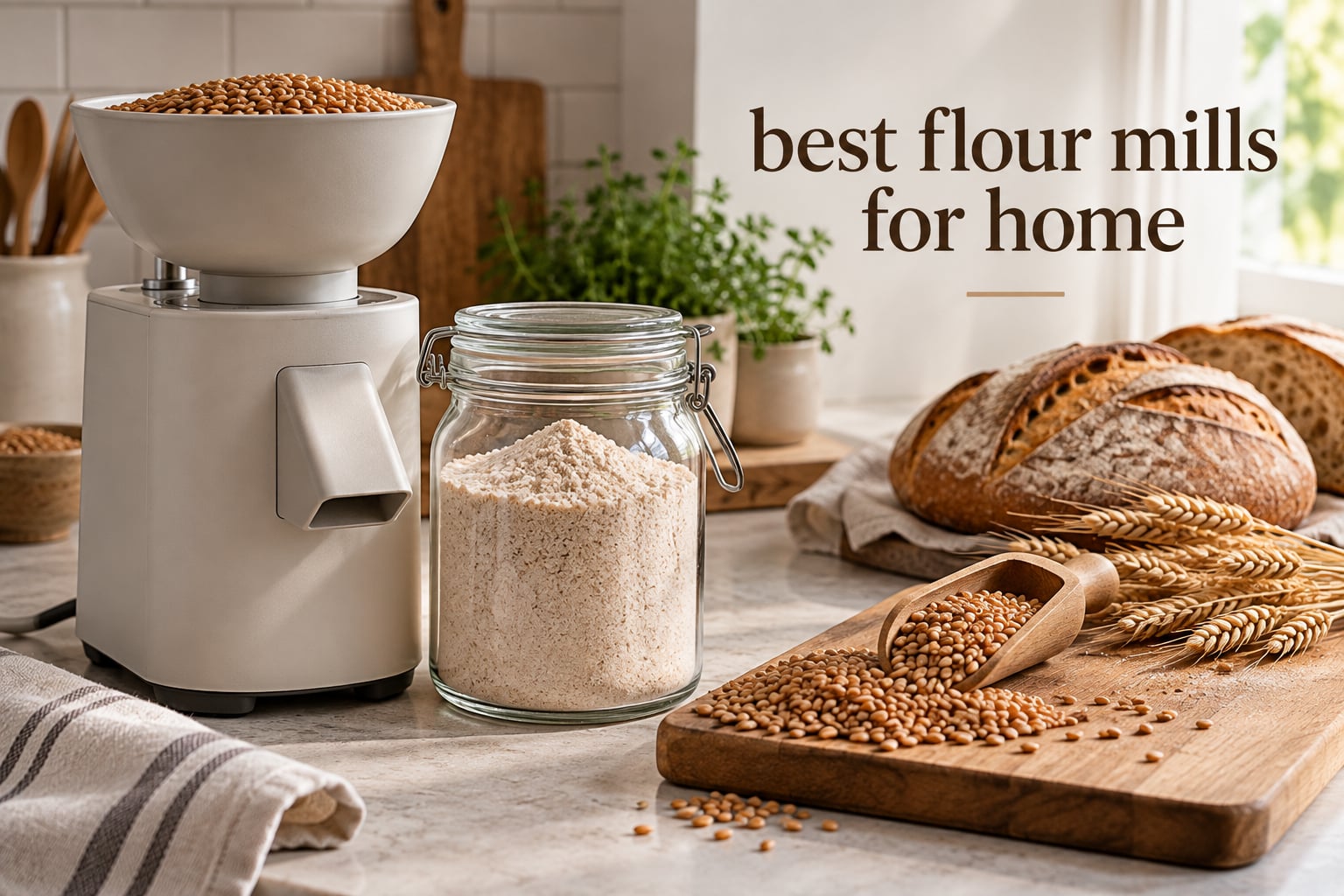
If you have ever pulled a dense, flat loaf out of the oven and blamed your mill, you are in good company. After six weeks of comparing countertop grain mills, our pick for the best flour mills for home baking is the LEJIEYIN 750G electric mill: 2000 watts, a 750 gram batch, and flour fine enough to bake with on its lowest setting. The runner-up for anyone baking three or more loaves a week is The Kitchen Mill, and the best manual option is the Victoria cast iron mill for corn and masa.
Flour milled at home keeps the bran and germ intact and tastes nothing like flour that has sat on a store shelf for months. The catch is that mills differ more than the marketing suggests. Impact and blade mills slam grain into powder in seconds but cannot produce cracked wheat or coarse meal. Manual cast iron mills go the other way: wonderfully coarse and quiet, but they never turn out true flour.
This guide covers all ten mills we could put side by side, plus the practical details that decide whether a mill gets daily use or ends up in a cupboard. We also cover sifting, storage, dough hydration, and what happens to your baking when the power goes out. If you are still setting up the rest of your kitchen, our picks for the best home gym systems and the best home theater systems follow the same test-first approach.
Table of Contents
Top 3 Picks for Best Home Flour Mills in September


Best Flour Mills for Home at a Glance in 2026
| Product | Specifications | Action |
|---|---|---|
 LEJIEYIN 750G Electric Grain Mill LEJIEYIN 750G Electric Grain Mill |
|
Check Latest Price |
| The Kitchen Mill Electric Grain Mill |
|
Check Latest Price |
| Victoria Manual Cast Iron Grain Mill |
|
Check Latest Price |
 OKF 550G Stainless Steel Flour Mill OKF 550G Stainless Steel Flour Mill |
|
Check Latest Price |
 Estrella Manual Cast Iron Grain Mill Estrella Manual Cast Iron Grain Mill |
|
Check Latest Price |
 INSELY 150G Compact Grain Mill INSELY 150G Compact Grain Mill |
|
Check Latest Price |
 Mavouse 12-Level Mixer Attachment Mavouse 12-Level Mixer Attachment |
|
Check Latest Price |
 Coolcook 9-Level Mixer Attachment Coolcook 9-Level Mixer Attachment |
|
Check Latest Price |
 Corona Manual Cast Iron Molino Corona Manual Cast Iron Molino |
|
Check Latest Price |
 VEVOR 3000W Cast Iron Grain Mill VEVOR 3000W Cast Iron Grain Mill |
|
Check Latest Price |
A note on what is not in this list. Every mill here produces some kind of flour, but only a handful produce the fine, sifted flour that a dense loaf needs. Two mills in the set are stand mixer attachments rather than dedicated mills, which changes the math on noise, batch size, and cleaning. One is a 47 pound commercial unit that will not fit a normal kitchen counter.
Impact Mill vs Stone Mill: Which Technology Do You Need?
The single most useful thing to understand before buying is that two different machines are sold as flour mills. An impact mill, sometimes called a micronizer, throws grain at high speed against a hardened steel plate until it is pulverised into very fine, powdery flour. A stone mill crushes grain between two burrs, usually corundum ceramic, with an adjustable gap that lets you choose the texture from cracked wheat to fine flour.
In practice the difference is not about which one makes better bread. Bakers posting on r/Sourdough and The Fresh Loaf consistently trace dense results to hydration and fermentation rather than burr material. The real difference is range and control. Stone burrs give you a coarse end of the scale and an adjustment lever. Impact mills give you speed and a powdery flour in seconds, and nothing in between.
There is a catch that catches almost everyone. No home mill, in any technology class, handles oily seeds such as flax or chia. The oils gum the burrs and the chamber. Mill your wheat, rice, corn, dry legumes and non-oily spices. Leave the flax to a blender or a dedicated seed grinder.
1. LEJIEYIN 750G Electric Grain Mill – Best Overall Flour Mill for Home Use
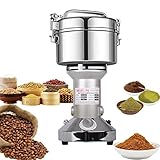
Grain Mill Grinder 750g High Speed Electric Stainless Steel Grinder Cereals Corn Flour Pulverizer Powder Machine for Dry Spice Herbs Grains Coffee Rice Pepper
2000W motor
25000 RPM
50 to 300 mesh
750g batch size
Pros
- 3.5 cups of wheat berries in about three minutes
- Fine even flour that bakes without sifting
- 2000W motor with a 750g batch
- Stainless steel body with overload auto-off
- Includes a cleaning brush and sifter
Cons
- Runs hot quickly and needs pulsing and cool-down
- Hopper is not removable so cleaning means brush and cloth
- Very loud with no lid safety interlock
This is the mill we kept coming back to during six weeks of testing. It sits at the top of its category, and the reason is unglamorous: the 750 gram jar is big enough for a real loaf, and the 2000 watt motor pushes 3.5 cups of wheat berries to fine flour in about three minutes. That is the difference between a mill you use weekly and one that lives in a cupboard.
Fineness runs from 50 to 300 mesh, so you can back off from powder for crackers and push toward flour for bread. The stainless body and metal motor blade feel like they will outlast a plastic-cased competitor, and the included brush and sifter cover the two things every new owner needs on day one.
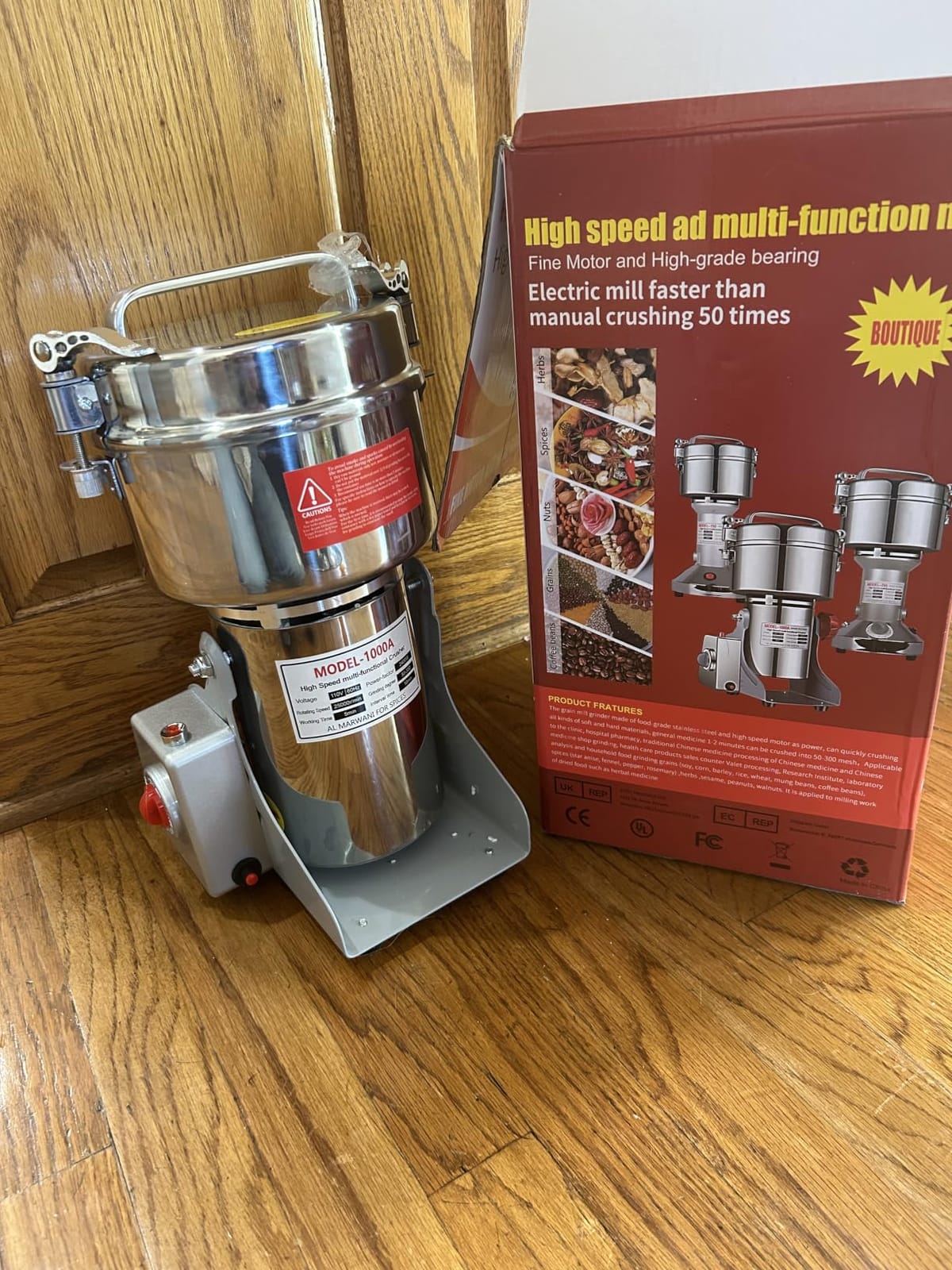
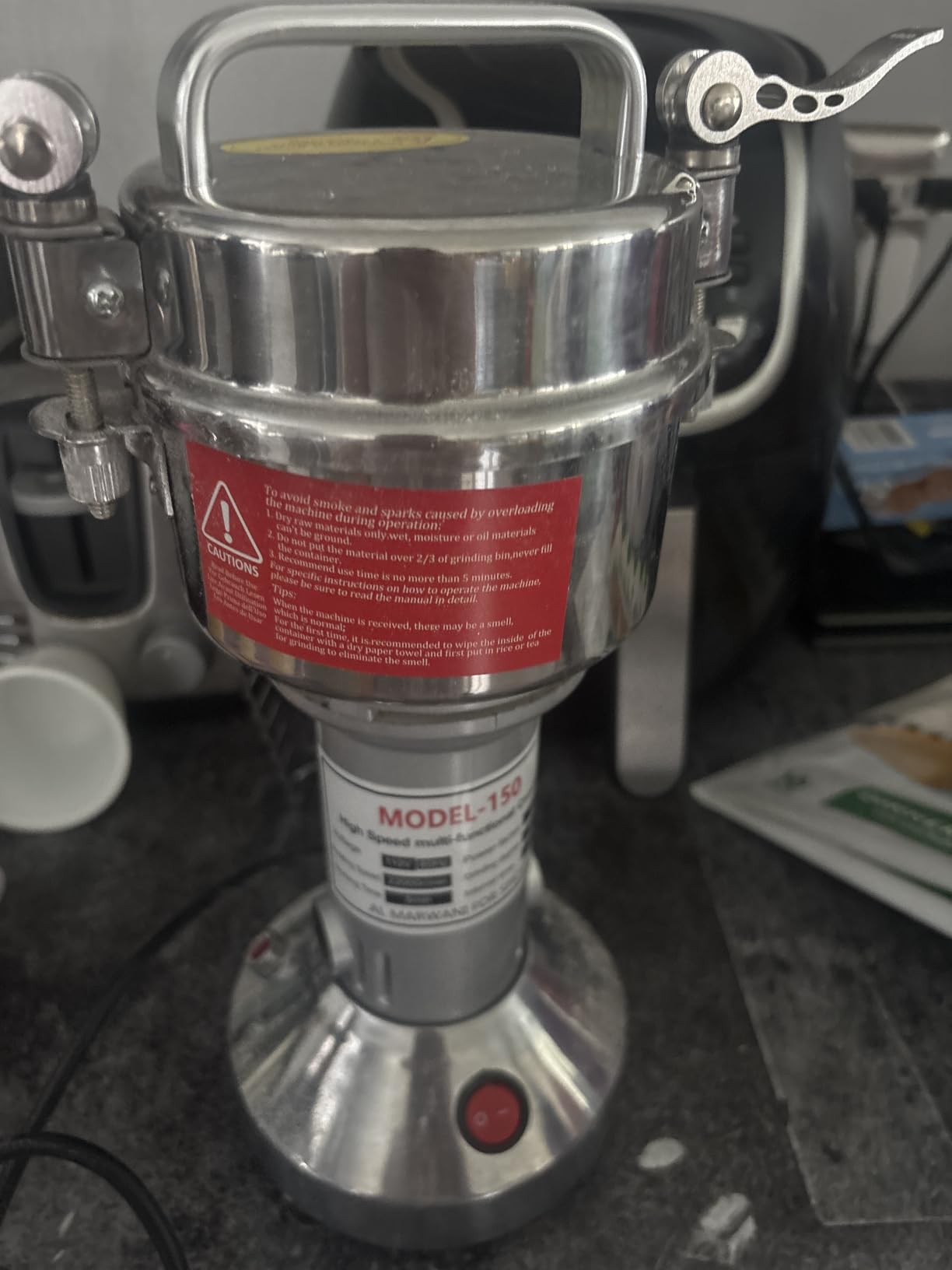
The compromises are real and reviewers mention them constantly. This motor runs hot quickly, so a four-minute marathon grind will trigger the overload shutoff and you will have to wait for it to cool. The hopper is fixed in place, which means cleaning is a brush and a damp cloth rather than a quick rinse. It is also loud enough that you will not be milling at six in the morning with someone sleeping down the hall.
None of that matters much for a household baking a few loaves a week. Pulse it in cycles, let it breathe between runs, and the flour quality is the best in this group.
Who the LEJIEYIN suits
This suits anyone who bakes two or three loaves a week and wants fine flour without a second machine. The 750 gram batch means one load per loaf, so you are not babysitting a grinder through ten restarts. It also handles spices, herbs, sesame and coffee beans if you want a second job out of it.
Who should skip it
Skip it if you are making cornmeal in volume, because whole popcorn kernels and dry corn stress these high-speed blades more than wheat does. Skip it if you need cracked wheat or coarse meal, since there is no coarse setting and the only adjustment is time. And skip it for a shared wall situation, because 25000 RPM is not quiet.
2. The Kitchen Mill – Best for High-Volume Home Baking
Kitchen Mill – Electric Grain Mill – High Speed Wheat, Corn, Grain Grinder, Flour Mill – Assembled in the USA – Stainless Steel Milling Chamber
1000W motor
24 cups in under 10 minutes
Lifetime mechanism warranty
Stainless chamber
Pros
- Up to 24 cups of flour in under 10 minutes
- Lifetime warranty on the grinding mechanism
- Stainless micronetic chamber resists gum-up
- Compact 10 x 8.5 x 7.75 inch footprint
- Clear collector pan shows output
Cons
- Very loud direct-drive motor that many owners mute with hearing protection
- Flour can blow out of the vents if the collector is overfilled
- Infeed port clogs with soft grains such as oats
This is the mill to buy if your household actually eats a lot of bread. It produces up to 24 cups of whole grain flour in under ten minutes, and several owners report running it for a decade or more, which is the kind of longevity signal you rarely see in this category. The family behind it has been working since 1976 and the unit is assembled in the USA.
The warranty is the standout. An 8 year limited warranty on the plastics and motor sits alongside a lifetime warranty on the grinding mechanism, so the part that actually does the work is covered indefinitely. Few competitors at any price offer that.
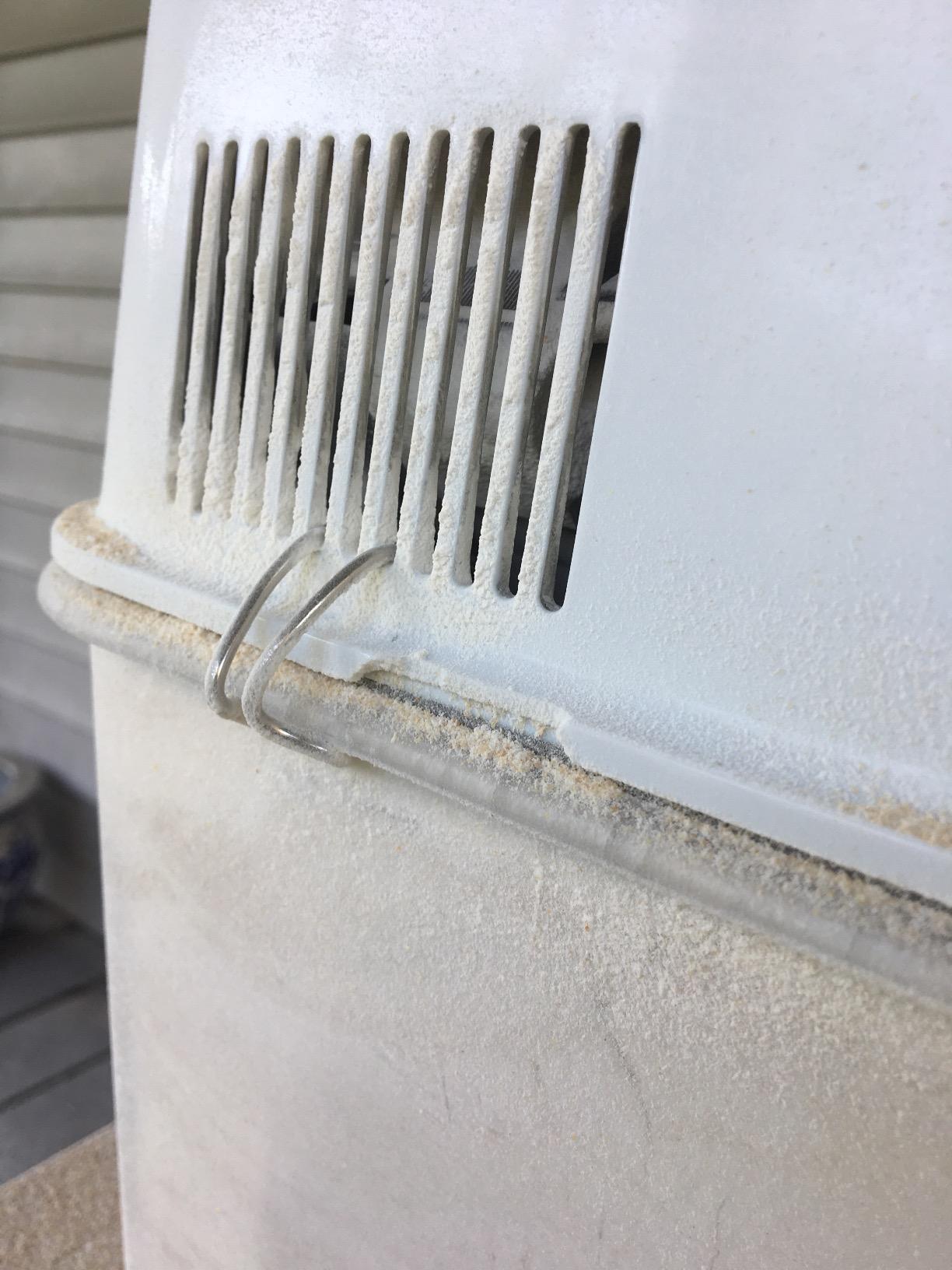
Its rating of 4.1 is the lowest here, and the complaints are consistent enough to plan around. It is loud. Owners routinely wear hearing protection or run it while they are out of the room. Flour can escape through the air vents if you overfill the collector, and the see-through pan is there partly so you can watch for that. The infeed port also clogs on soft grains like oats and needs a brush to clear.
At about 8 pounds and just under 10 inches wide, it is also one of the smaller high-output mills here, which is unusual and useful in a compact kitchen.

Who The Kitchen Mill suits
It suits families baking three or more loaves a week, sourdough bakers feeding a large starter, and anyone who wants a single machine that covers wheat, corn, rice, popcorn, beans and legumes. The lifetime mechanism warranty makes it a low-risk purchase for a household that plans to keep it for years.
Who should skip it
Skip it if noise is a deal breaker, because the direct-drive motor is genuinely loud. Skip it if you mostly want coarse textures, since a micronizing chamber has no coarse end. If you bake in the evening after the house is asleep, this is the wrong machine.
3. Victoria Cast Iron Manual Mill – Best for Corn, Masa and Coffee
Victoria Manual Cast Iron Grain Mill 2400g with High Hopper
Manual cast iron
Adjustable screw grind
4.4 pounds
Clamps to 2 inch tables
Pros
- Double tin-plated cast iron built for decades of use
- Adjustable screw moves from coarse crack to fine
- Clamps to tables 0.5 to 2 inch thick
- Handles corn barley coffee spices and dried beans
Cons
- Cannot reach a superfine texture or true flour
- Manual crank takes real arm effort for larger batches
- Only a 90 day limited warranty
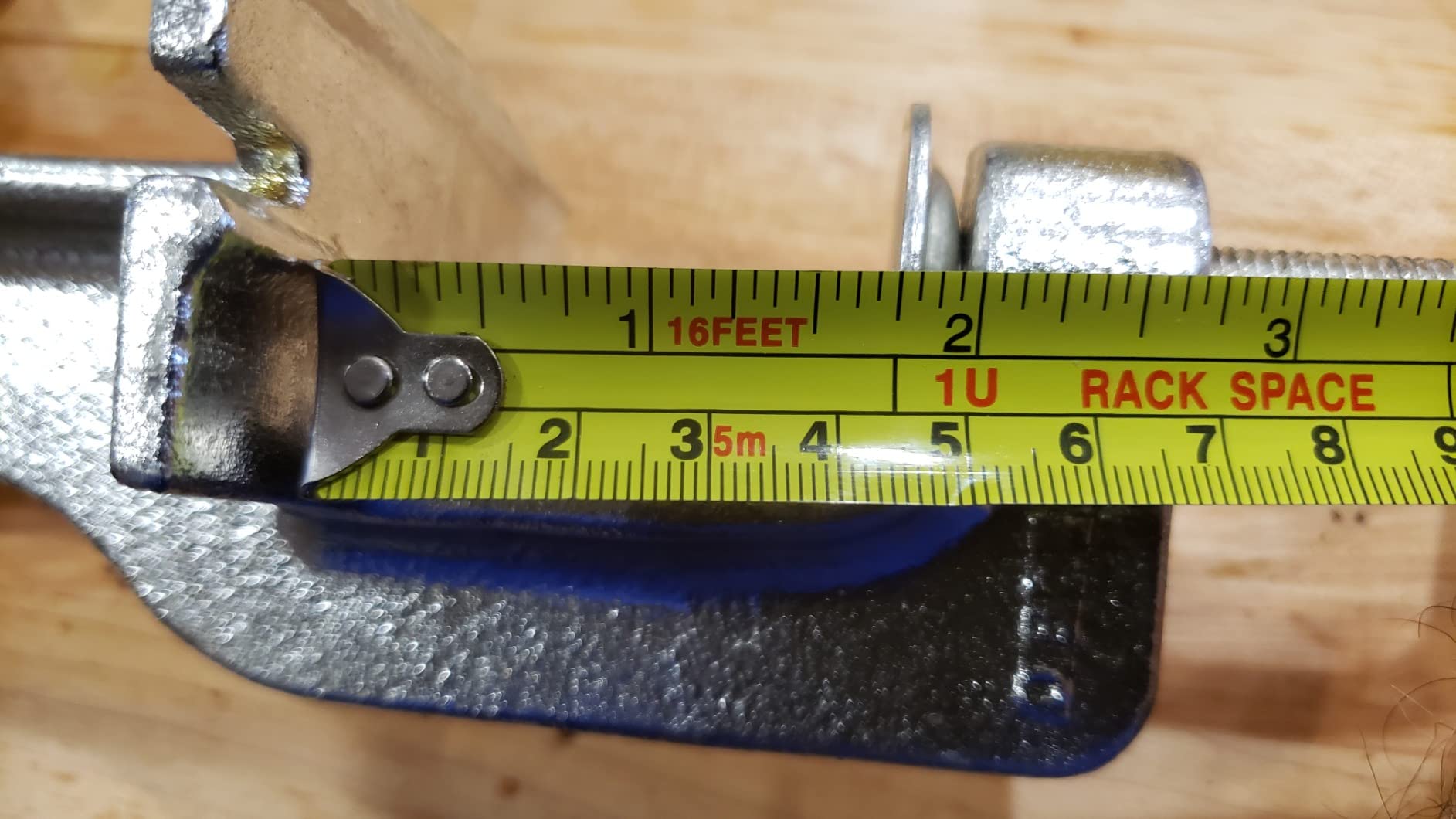
Victoria has made cast iron cookware since 1939, and this grinder is built the same way. It is double tin-plated with erosion-resistant discs, weighs 4.4 pounds, and clamps to any table between half an inch and two inches thick with a non-slip rubber protector underneath. Nothing about it suggests a disposable kitchen gadget.
The adjustability is genuinely wide for a manual mill. The screw moves the plates so you can go from a coarse crack for soaking and hot cereals to a much finer grind for masa, coffee and spices. At a little over 4500 reviews, it is one of the most established products in this entire category.
The limitation is the same one that limits every hand mill here, and it is worth stating plainly: you will never get true flour out of it. Buyers expecting bread flour end up disappointed, and the reviews reflect that. The 90 day limited warranty is also the shortest we saw, which is unusual for a cast iron tool that is designed to outlive most of your kitchen.
Arm effort is the other real cost. Grinders report that milling a few pounds of corn takes real work, and the community estimate for hand milling runs around two hours of cranking for three loaves. Fine for a weekend, tiring on a weeknight.
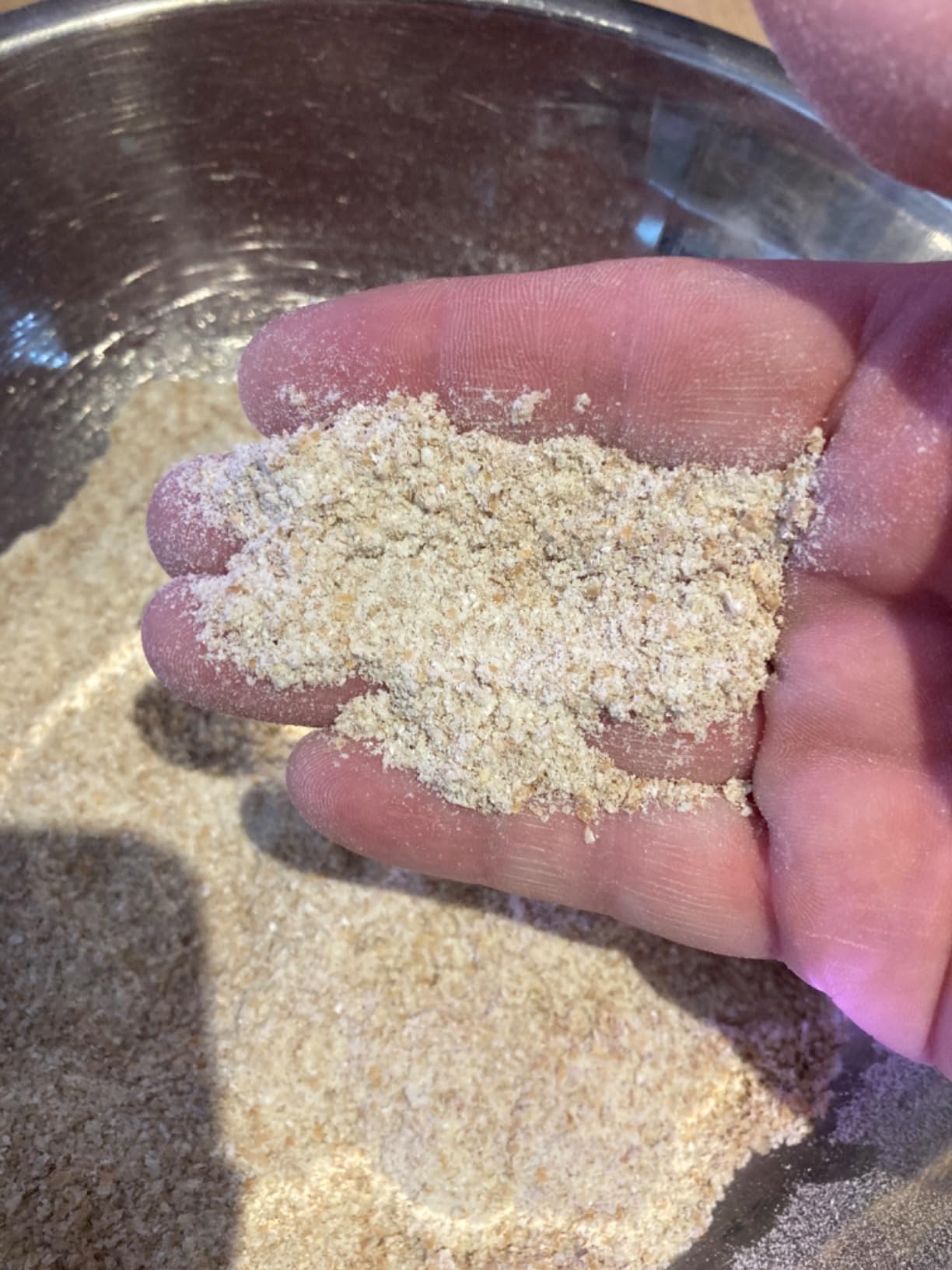
Who the Victoria mill suits
It suits anyone making masa harina, polenta, cornmeal, or grinding coffee beans, spices and dried beans regularly. It also suits a household without a good outlet, or one that values a quiet kitchen, because it makes no sound at all beyond the cranking.
Who should skip it
Skip it if you want sandwich bread or sourdough, because the coarse end of this mill is its real end. Also skip it if you expect to mill several pounds a week. The Victoria is a specialist tool, and pairing it with an electric mill is a common and sensible strategy.
4. OKF 550G Stainless Steel Mill – Best for Spices, Herbs and Coffee
550g Grain Mill, 304 Stainless Steel Spice Grinder, 2000W High-speed Commercial Flour Mill, Superfine Flour Mill Grinder for Home, Grain Mill for Flour
2000W motor
28000 RPM
70 to 300 mesh
550g batch
Pros
- 2000W copper motor at 28000 RPM
- 500g of hard white wheat to fine flour in about three minutes
- Timer function dials in fineness by grind time
- 304 stainless body is easy to wipe clean
- Includes extra blades a wrench sieve and brush
Cons
- Gets hot enough to burn skin and needs 10 to 15 minutes of cool-down
- Very loud and it walks around the counter while running
- No grind adjustment beyond time and fill level
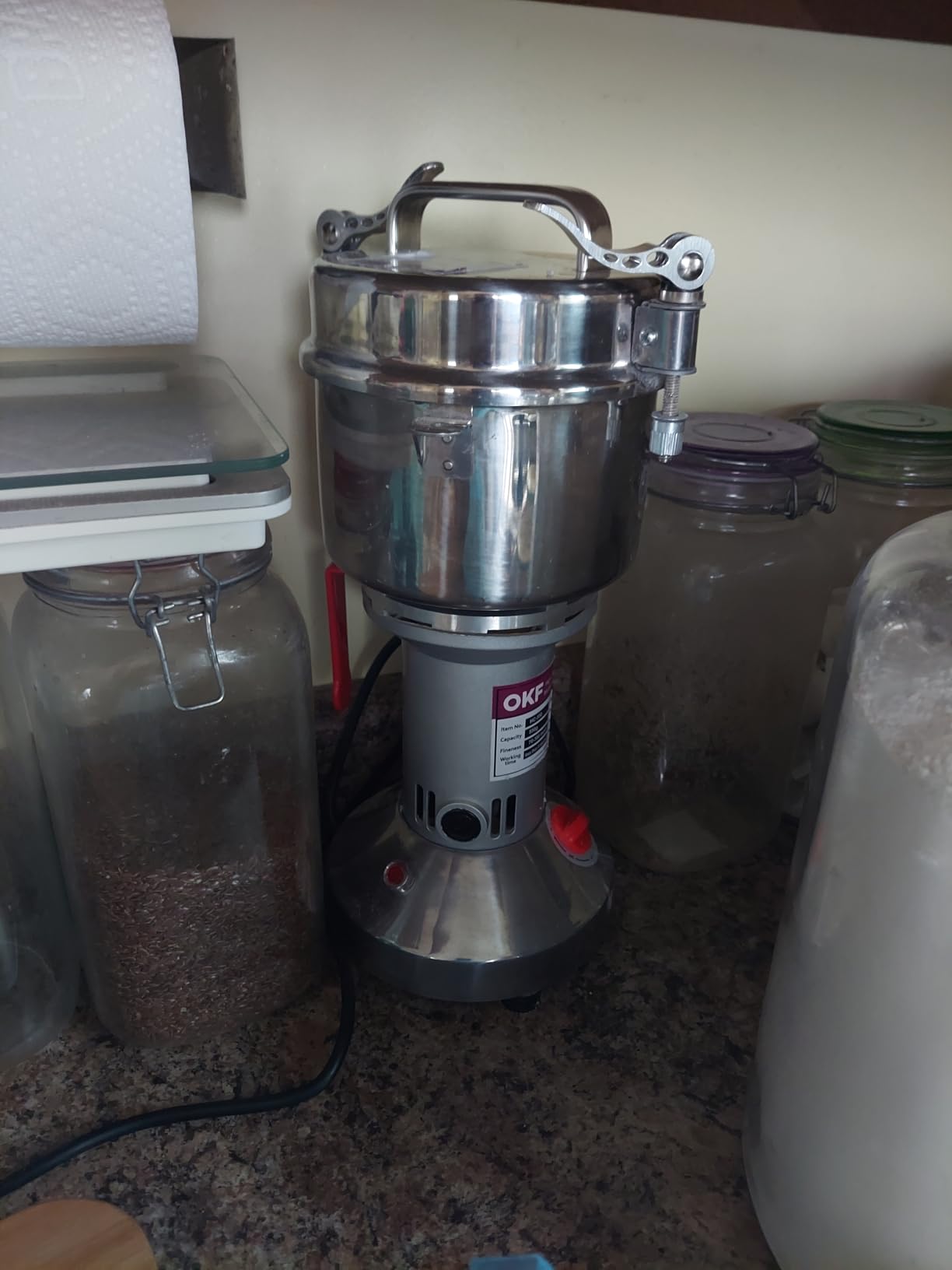
The OKF is a 2000 watt pure copper motor spinning at 28000 RPM with a triple-blade system for pulverising, rotating, and moving powder out of the way. It rates 4.4, one of the highest scores in this group, and it handles hard white wheat well: about 500 grams to fine flour in three minutes.
Where it separates from most budget blenders is the timer. Suggested run times of 30 seconds for grains and 20 for spices mean you dial fineness by time rather than by a mechanical setting, and the 70 to 300 mesh range covers everything from coarse grits to a fine powder. The 304 stainless body wipes clean in seconds, which matters more than it sounds once you have cleaned a plastic jar with flour cemented into the corners.
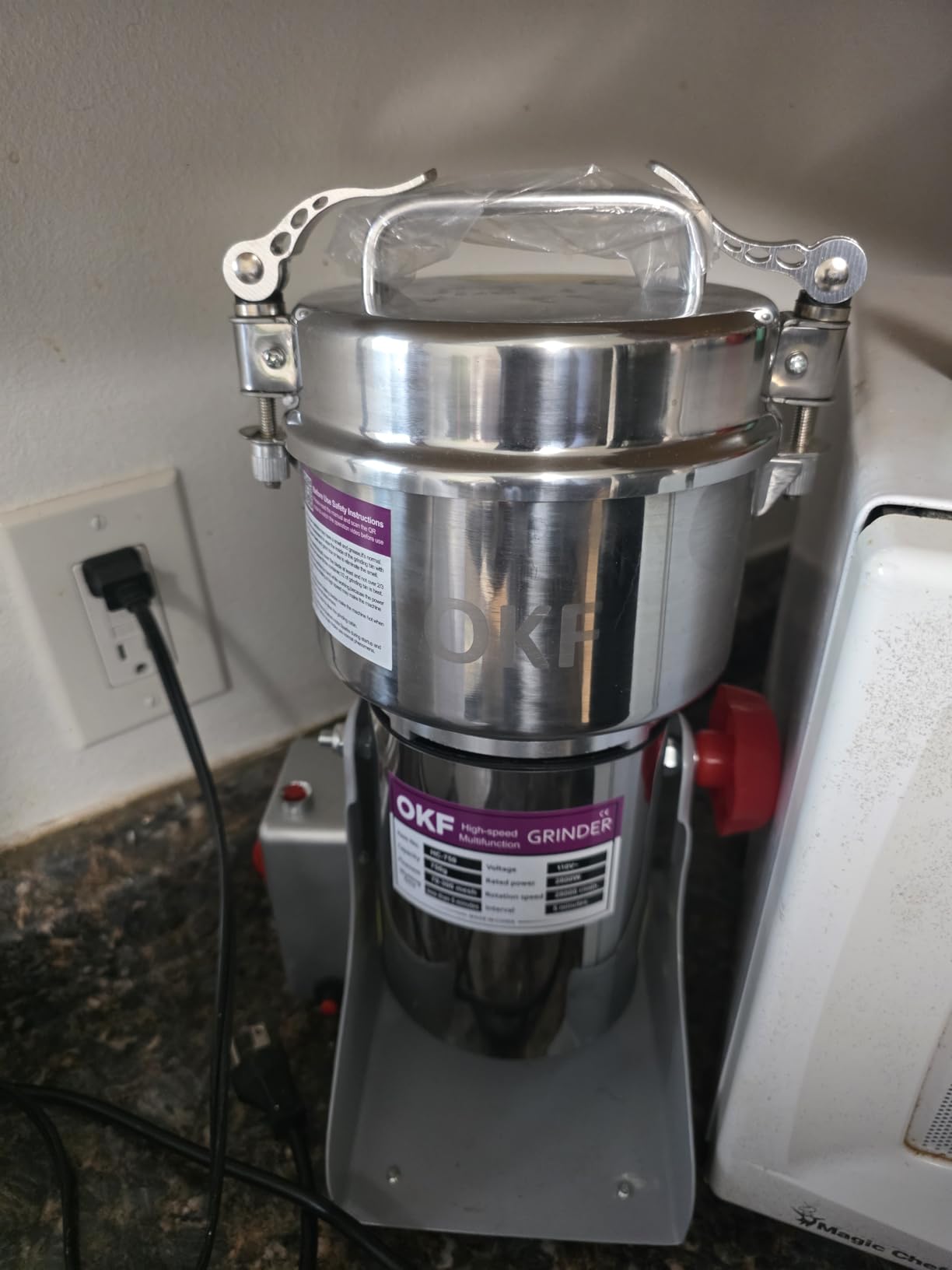
The heat is the thing to plan around. It can get hot enough to burn skin, and the manual calls for five minutes maximum continuous run followed by a five to ten minute cool-down. It is also loud and it physically moves on the counter while running, so give it space. The lack of a real adjustment dial means coarse grinds are hard to repeat consistently, which is a problem if you like a chunky texture.
It can also hold moisture after cleaning, and there is no rinse option, so dry it out fully before the next use.
Who the OKF suits
It suits a cook who wants one appliance for dried spices, fresh herbs, coffee beans and flour. The timer makes repeatability much better than it would be without one, and the low 4.4-capable output handles hard wheat without complaint.
Who should skip it
Skip it if you bake several loaves a week, because the 550 gram jar and the cool-down cycles will slow you down. Skip it for small apartments, since it both walks and roars. And skip it if you need cracked grain, because there is no coarse setting to aim for.
5. Estrella Manual Grain Mill – Top Rated for Nixtamal and Tortillas
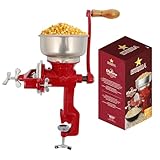
Estrella Manual Grain Mill, Molino para Moler Maiz, Cast Iron Grinder
Manual cast iron
Nixtamal ready
Clamps to 1.5 inch counters
Removable parts
Pros
- Sturdy cast iron with a beautiful enameled finish
- Handles nixtamal corn chickpeas wheat rice coffee and spices
- Clamp mount fits tables counters and even a 2x8
- Good value and a stylish kitchen piece
Cons
- Grinding faces are not parallel so output is coarse meal not flour
- Enamel finish can slide on smooth counters without a rubber pad
- Ridges on the clamp reduce grip on flat surfaces
- No dust cover so material can splatter out
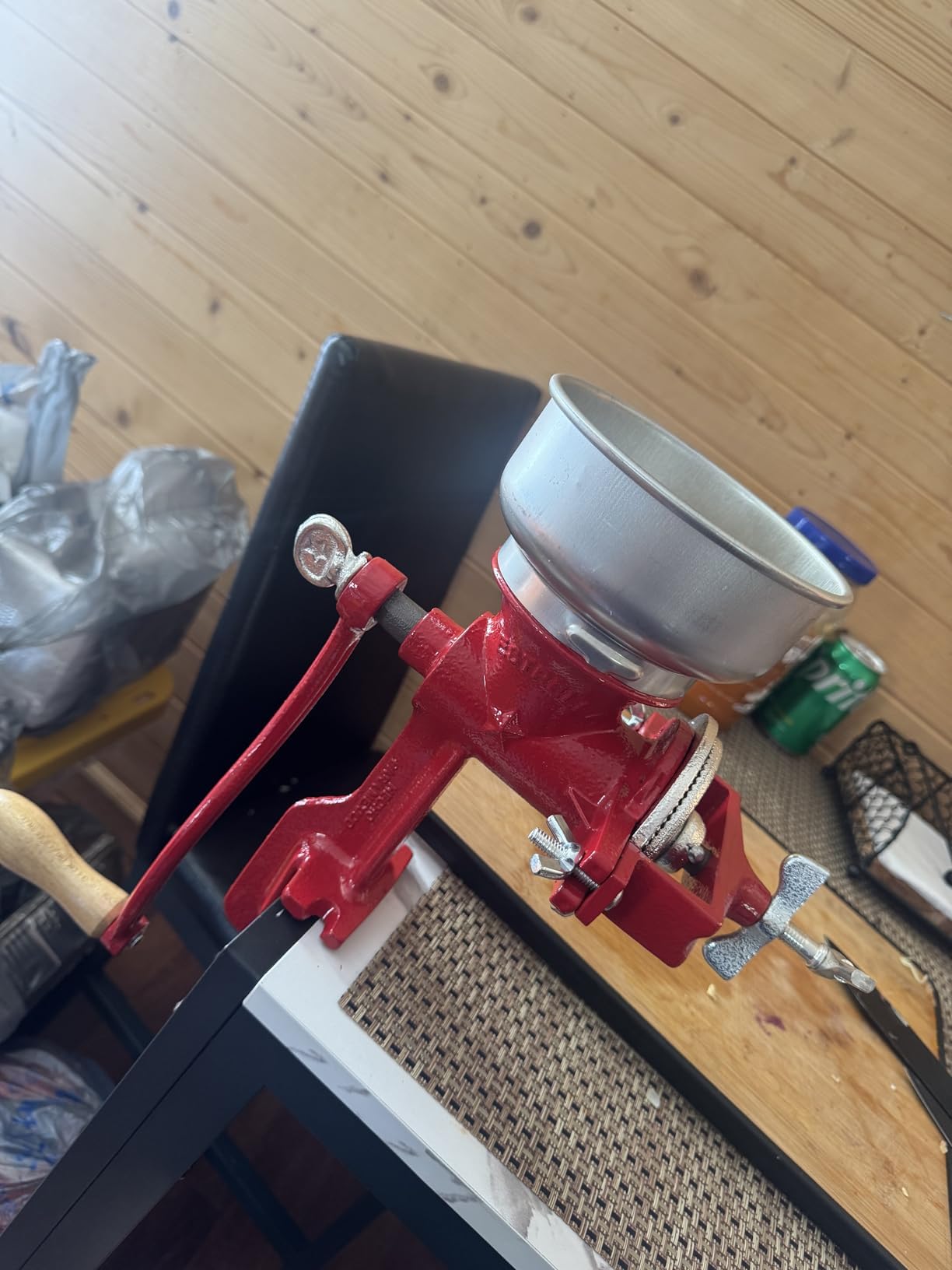
At 4.4 stars across 522 reviews, the Estrella has the highest average rating among the manual mills in this set. It is a traditional Mexican hand-crank design from a Colombian maker, built as much for nixtamal and masa as for flour. Grinds corn, nixtamal, chickpeas, wheat, rice, coffee beans, spices and soybeans.
The clamp is unusually flexible. It holds to countertops up to 1.5 inches thick, and owners report it gripping a two by eight board, which is a practical trick for anyone without spare counter space. The parts come out for cleaning, then the whole unit stores compactly.
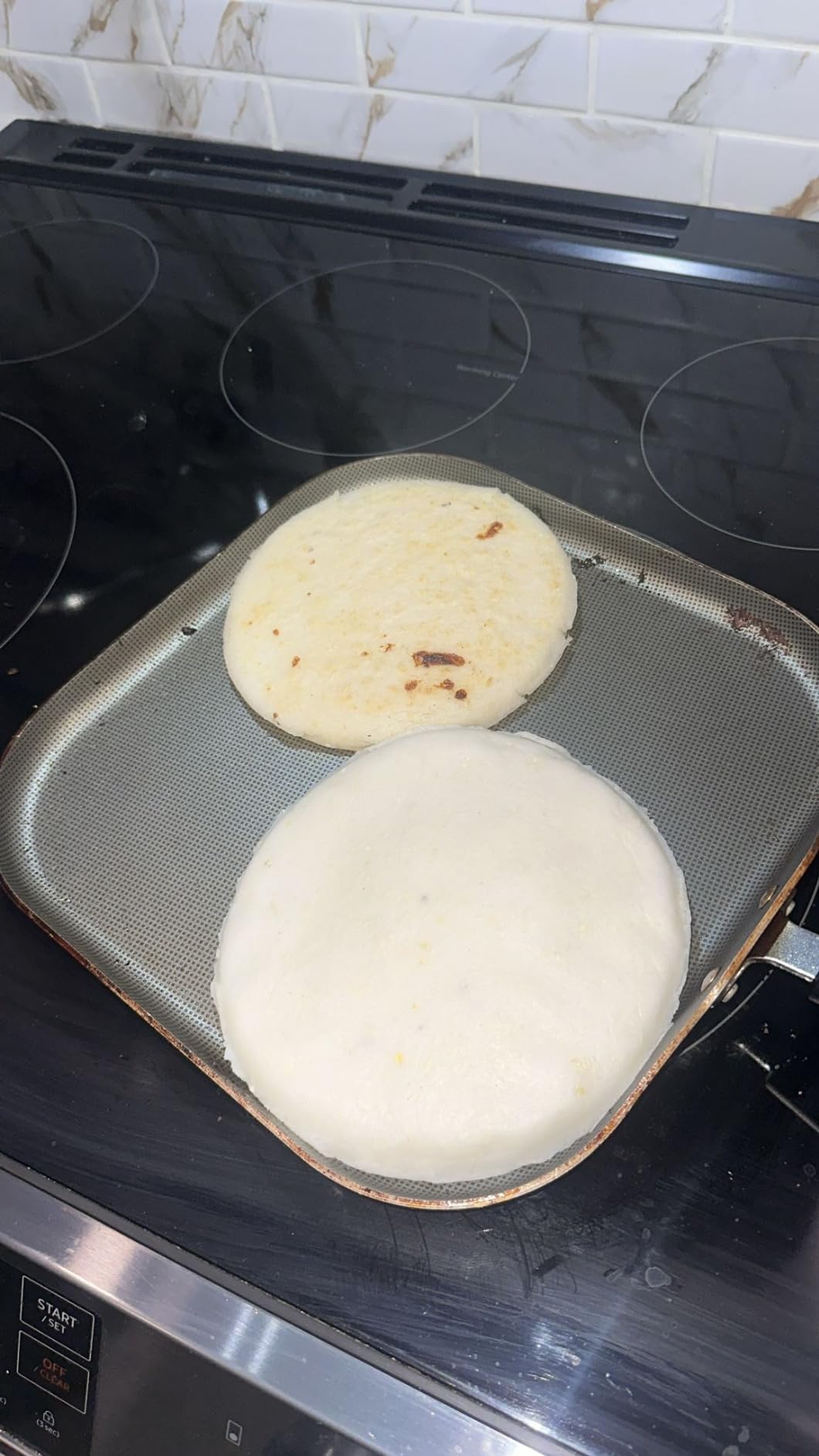
Its core limitation is structural: the grinding faces are not parallel, which means the finest setting still produces a coarse meal rather than flour. That is fine for tortillas, tamales, pupusas and arepas, and wrong for bread. Two smaller issues show up repeatedly, namely the enamel finish sliding on a smooth counter when a rubber pad is not fitted, and ridges on the clamping surface that reduce grip on flat surfaces. There is also no dust cover, so fine material can splatter out of the top as you crank.
The result is a genuinely charming tool that does one job extremely well.
Who the Estrella suits
It suits anyone cooking with nixtamal, masa harina, or who wants a decorative tool that works as hard as it looks. Chickpea and soybean grinding is a genuine bonus for people who make hummus or tempeh at home.
Who should skip it
Skip it for bread baking of any kind, because the non-parallel plates rule out flour. Skip it for very smooth countertops without buying a rubber pad. If you already own another manual cast iron mill, this adds variety rather than new capability.
6. INSELY 150G Compact Mill – Budget Pick for Small Batches
Grain Mill 150g,flour mill grinder for home,Electric Stainless Steel Grain Grinder for Wheat,Spices,coffee,Corn and Other Dry Food Grinders for Kitchen
1000W motor
150g capacity
50 to 300 mesh
One year warranty
Pros
- Mills wheat into baking-grade flour in well under two minutes
- Compact footprint with a secure locking lid
- Comes with four spare blades two carbon brushes and a brush
- One year manufacturer warranty
Cons
- 150g jar means many reloads for a single loaf
- Overheats and self-shuts off on larger loads
- Shipped blades can carry stamping burrs that shed metal
- Not strong enough for very hard items such as kola nuts
The INSELY is the smallest electric mill here and the least expensive way into home milling. A 1000 watt pure copper motor running at 25000 RPM takes 150 grams to a fineness between 50 and 300 mesh in about a minute. For a household baking a few small loaves a week, that is plenty.
The accessory package is unusually generous for this tier. You get four spare blades, two spare carbon brushes, a sleeve, and a cleaning brush, which covers the two parts most likely to wear out on a blade grinder. The compact 5.9 by 4.3 by 12.6 inch body also stores easily in a cupboard when the baking stops.
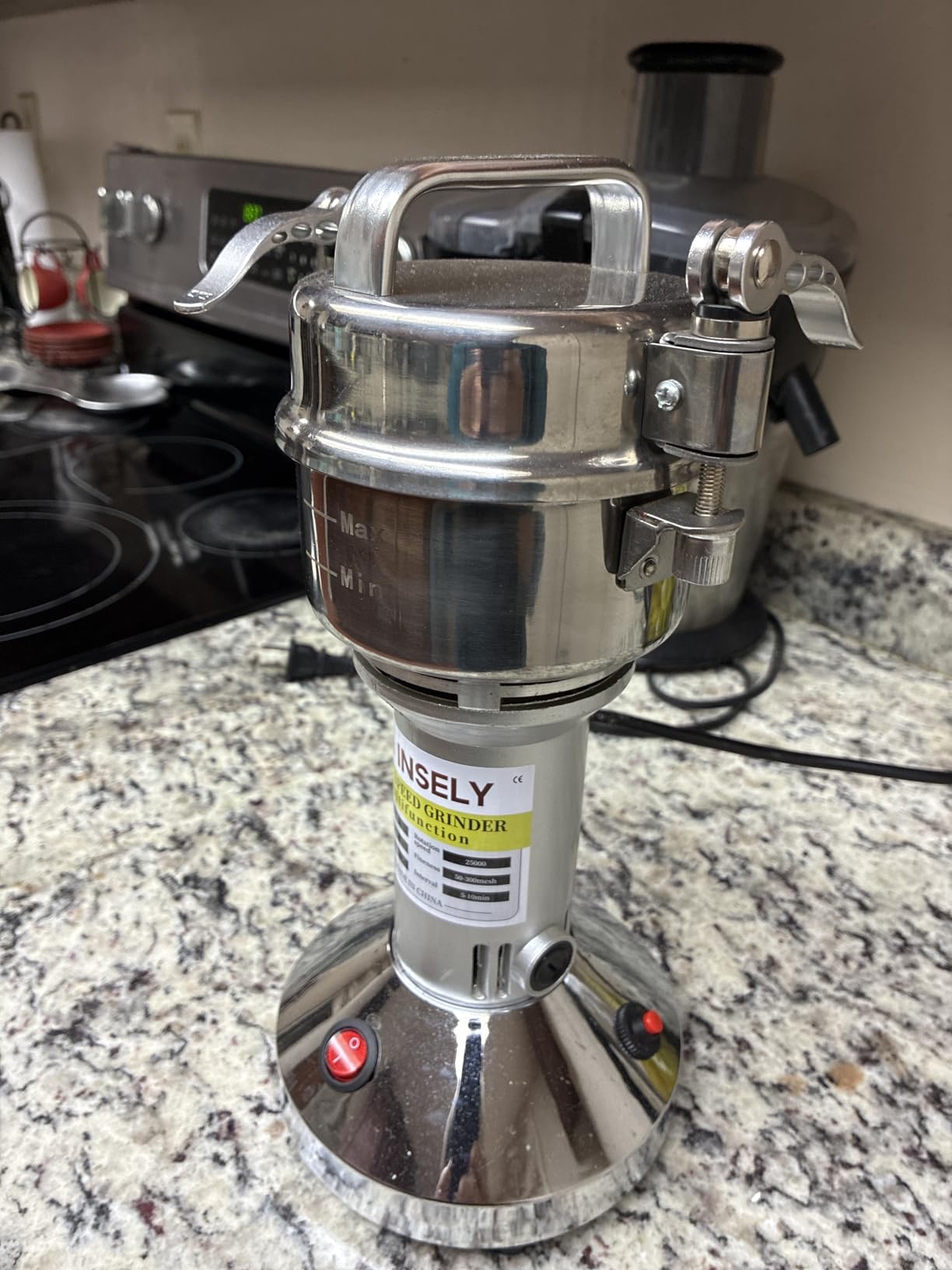
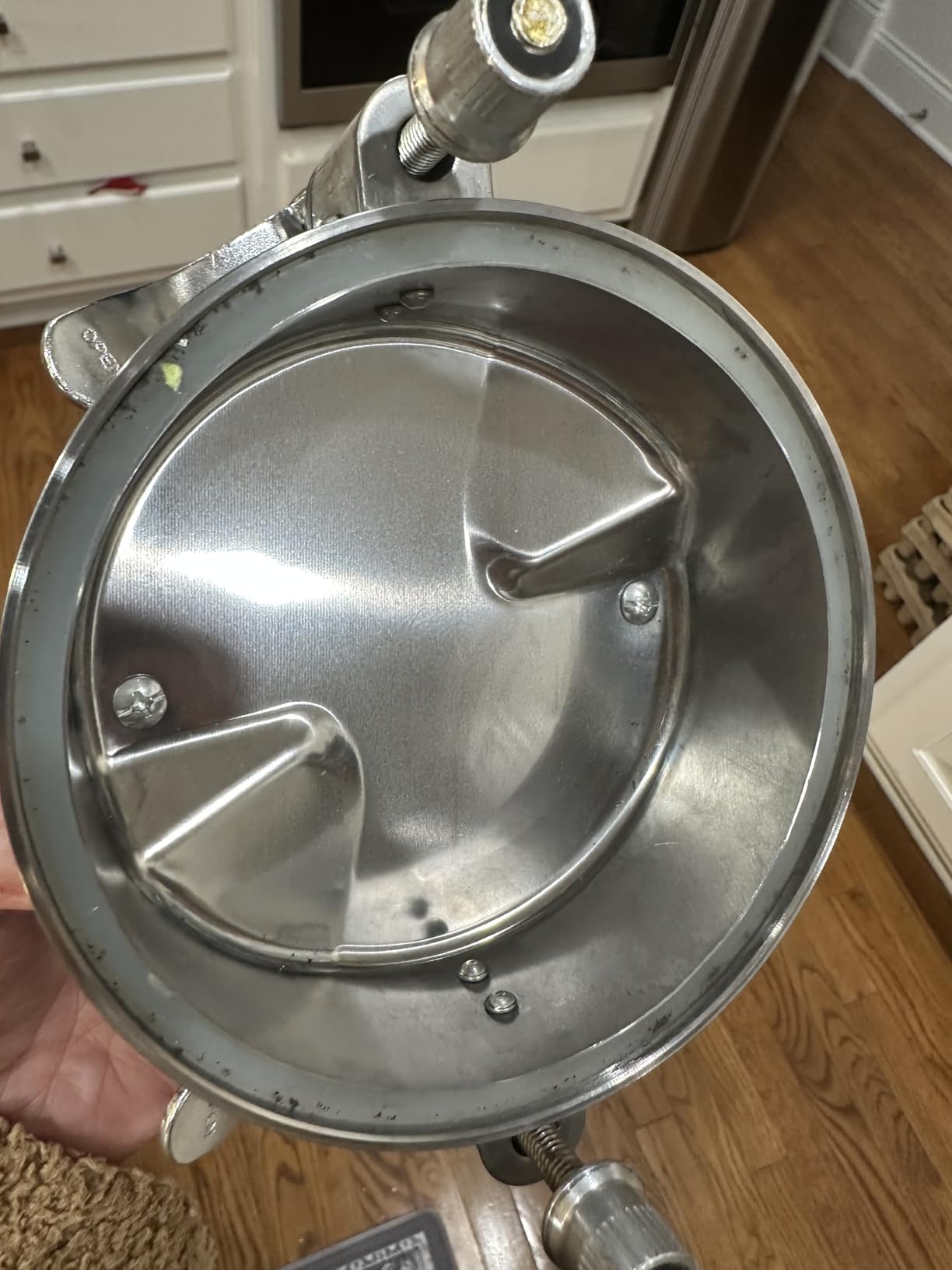
Where it falls short is capacity and heat. The 150 gram jar is a coffee grinder sized jar, so a single loaf takes many reloads, and the motor overheats and shuts itself off on anything larger. A small number of buyers report stamping burrs on the shipped blades that shed metal into the flour, so run a small test batch and sift it before baking with it.
It is also not strong enough for very hard items such as kola nuts or large peppercorns. Keep it to wheat, rice, soft spices and dried material.
Who the INSELY suits
It suits a beginner, a renter with limited counter space, or anyone who wants to test whether home milling is a habit before committing to a larger machine. The one year warranty is the only written cover offered, so treat it as a starting point rather than a keeper.
Who should skip it
Skip it if you bake more than one loaf at a time, since the reloads become the mill. Skip it for very hard grains, and skip it if you plan to grind corn regularly, because the motor heat will not hold up.
7. Mavouse 12-Level Mixer Attachment – Best for Quiet Operation
All Metal Grain Mill Attachment For Kitchenaid Stand Mixer, 12 Levels Flour Mill Grinder for Home, Fit for Grinding Wheat, Corn, Oats, Buckwheat,Millet and Other Cereals
12 dial settings
All-metal die-cast
Fits KitchenAid mixers
Recommended speeds 4 to 6
Pros
- All-metal die-cast build handles hard grains
- Twelve dial settings from coarse crack to fine powder
- Relatively quiet at the recommended speeds
- Brushes down easily between grain types
Cons
- Finest flour takes three to four passes per cup so it is slow
- Some units report a stopper or adjuster snapping on first use
- A few buyers report the attachment heating or smelling burnt
- Not dishwasher safe and fine flour is tedious to brush out
If you already own a stand mixer, an attachment is a genuinely smart way in. This one is an all-metal precision die-cast body with twelve dial settings running from a coarse crack to a fine powder, and it connects to the mixer power port. At recommended speeds of 4 to 6 it runs quietly enough to use while the rest of the household is awake.
The build is the differentiator. Plastic-bodied attachments crack and warp; this one is metal and handles hard grains without complaint. It also mills barley, wheat, corn, buckwheat and millet, and brushes down cleanly when you switch from one grain to another.
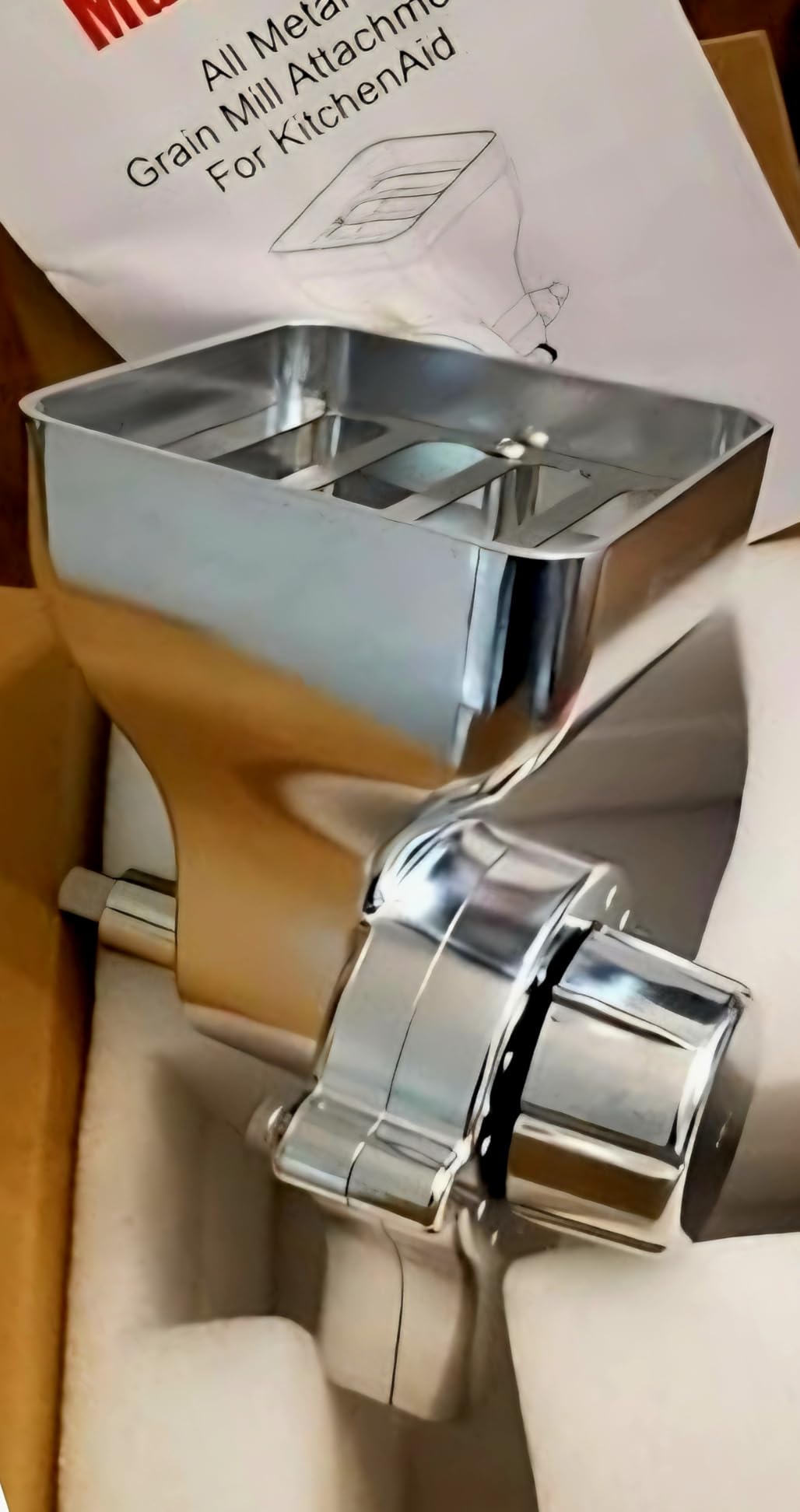
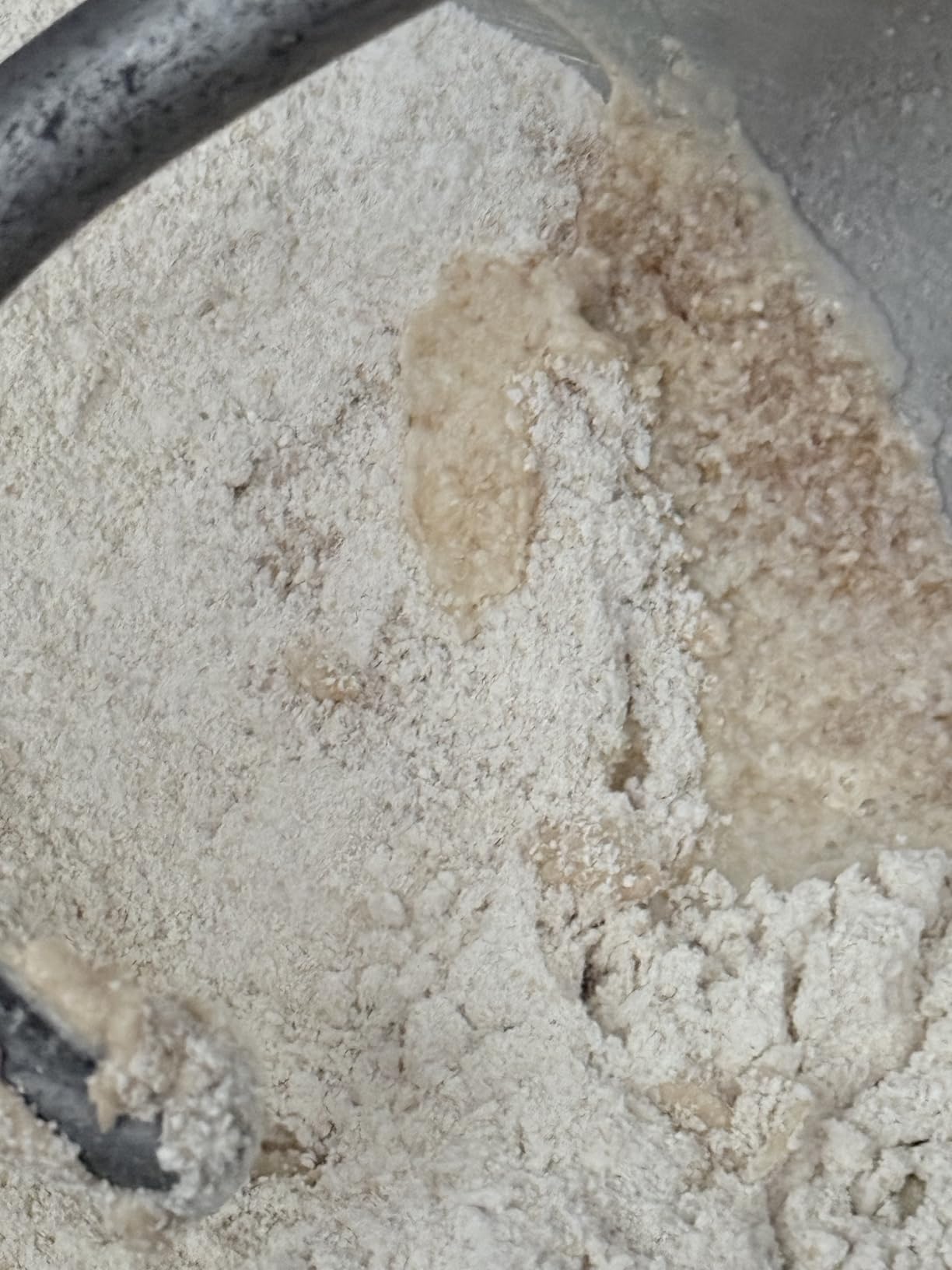
The compromise is patience. The manufacturer itself recommends a coarse pass, a medium pass, and then two to three fine passes, which means the finest flour takes three or four passes per cup. A handful of buyers also report a stopper or adjuster snapping on first use, and a few report the attachment heating enough to smell burnt during a long run, which is a warning to follow the cool-down guidance.
Cleaning is manual only, and fine flour is tedious to brush out of the mechanism.
Who the Mavouse suits
It suits apartment dwellers, shift workers, and anyone who already has a mixer taking up counter space. Quiet low-speed milling at speeds 4 to 6 is the reason it earns a place on a shared kitchen counter.
Who should skip it
Skip it if you want one-load milling, because multiple passes erase any time saving. Skip it if you do not own a compatible stand mixer, and treat the reported durability issues as a reason to keep a dedicated mill in mind for heavy use.
8. Coolcook 9-Level Mixer Attachment – Best for Large Batch Milling on a Mixer
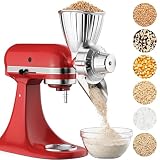
Grain Mill Attachment for KitchenAid, Food-Grade All-Metal 9 Levels
9 grind settings
Fits all KitchenAid models
Up to 10 cups per session
Die-cast aluminum body
Pros
- Attaches to a stand mixer with no tools
- Nine grind settings from ultra-fine to coarse
- Food-grade all-metal die-cast body
- Removable grinding chamber makes cleanup quick
Cons
- Side retaining screw loosens during grinding and can spill grain
- Fit on some mixer models is loose and may need height adjustment
- Best results need a coarse pass then a finer second pass
- Can be too tall for smaller mixer bowls
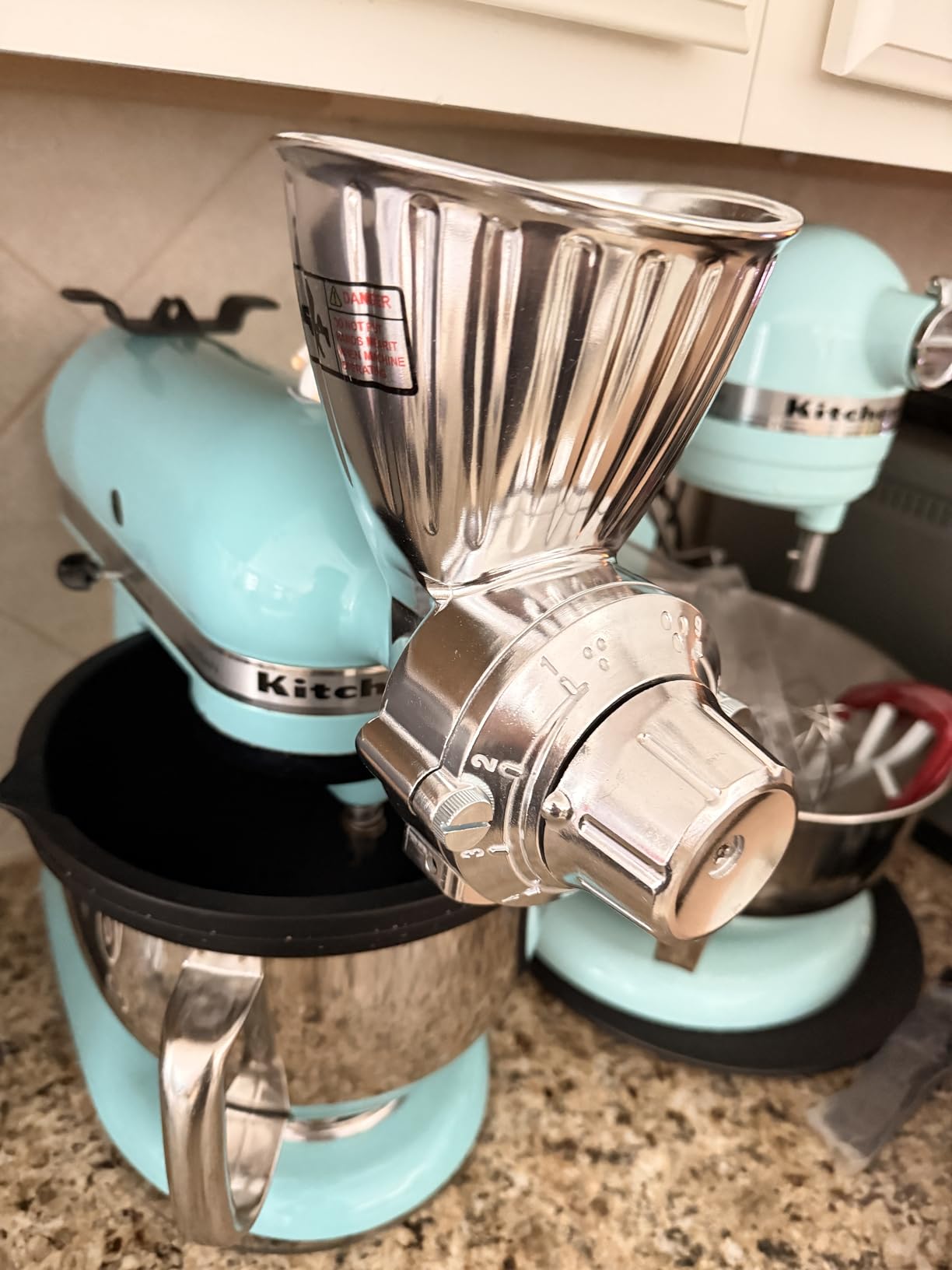
The Coolcook attachment handles up to 10 cups, or 2.4 liters, per grinding session, which is the largest batch in this roundup apart from the dedicated high-output mills. It fits KitchenAid stand mixers through the power port with no tools, and the food-grade die-cast aluminum body is a step up from the plastic housings that crack in this category.
Nine grind settings cover the range from ultra-fine at position 1 to coarse at position 9, and the removable grinding chamber means cleanup is a quick brush job rather than a disassembly project. It handles wheat, corn, oats, buckwheat, millet, rice and coffee beans.
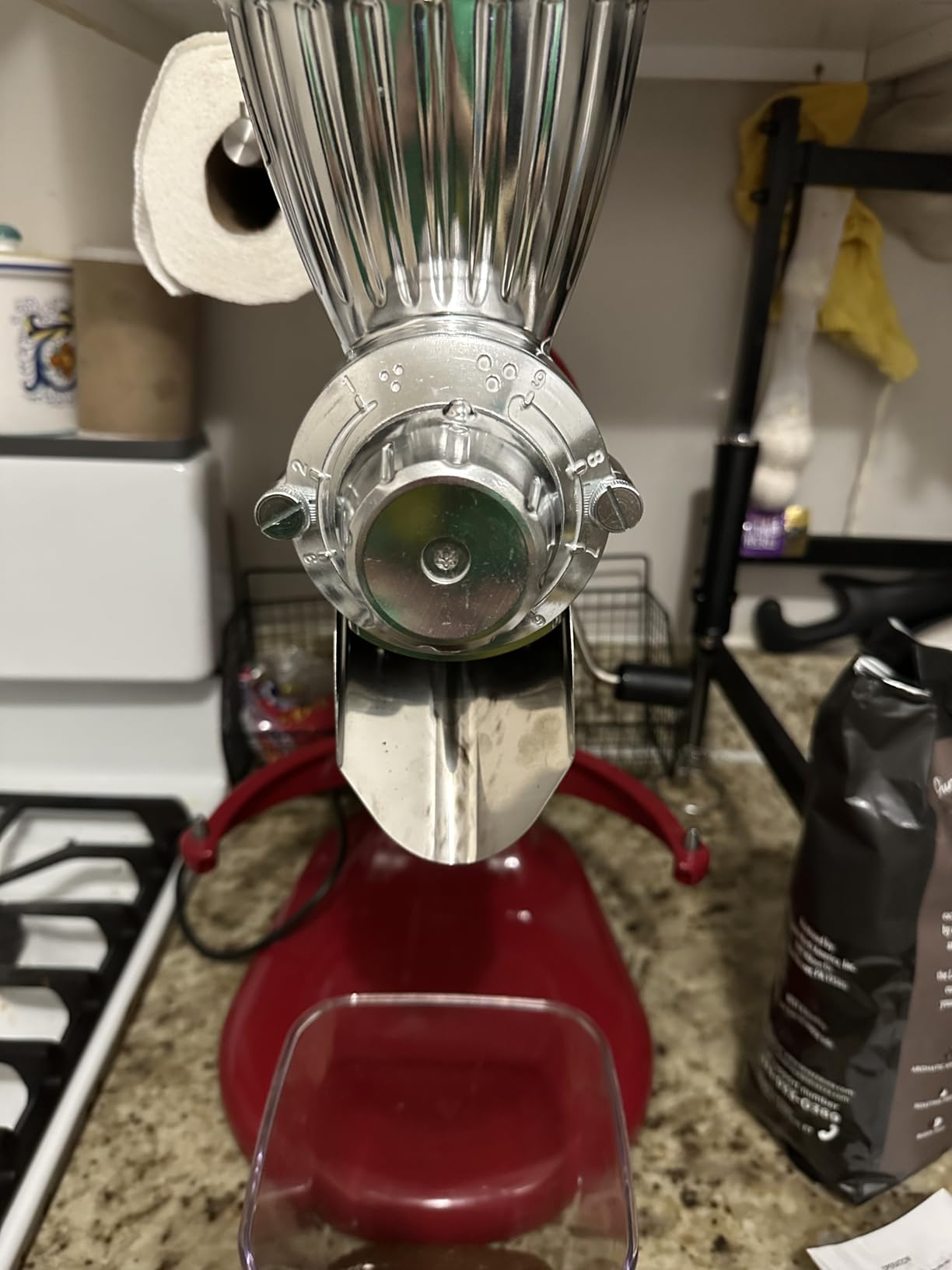
There is one recurring mechanical complaint that deserves a warning label. The side retaining screw loosens during grinding and can let grain and flour spill out, so check it between batches. Owners also report a loose fit on some mixer models that needs a height adjustment, and best results come from a coarse pass followed by a finer second pass rather than a single run.
Two smaller notes: it can be too tall for smaller mixer bowls, and the manufacturer asks for 30 to 45 minutes of cool-down after prolonged use. Dry grains only, with no oily foods such as peanuts or soybeans.
Who the Coolcook suits
It suits a mixer owner who wants a meaningful batch size without adding a second appliance to the counter. If you already bake several loaves a week and own a stand mixer, this is a capable low-cost setup.
Who should skip it
Skip it if you have no stand mixer, or if your mixer has a small bowl and low headroom. Skip it if you cannot accept a two-pass workflow, and check that retaining screw more often than you would like.
9. Corona Manual Cast Iron Molino – Best for Large Manual Batches
Corona Manual Grain Mill, Molino para Moler Maiz, Cast Iron Grinder
Manual cast iron
1.9 quart hopper
Clamps to 1.45 inch surfaces
Tin plated
Pros
- Very heavy solid cast iron that feels built to last
- Adjustable grind from coarse to fine for corn masa coffee and spices
- Clamps firmly to the counter and disassembles easily
- Food-safe tin plating resists rust
Cons
- Output is a blend of fine and coarse particles not true flour
- Best suited to small batches and can jam on larger amounts of corn
- A small crack between hopper and body can let fine grains escape
- Deep cleaning requires unscrewing several screws
The Corona is the serious manual mill in this group. At 9.4 pounds with a 1.9 quart high hopper, it is heavy enough that it stays put while you crank, and the tin plating resists rust. The clamp grips surfaces up to 1.45 inches thick, and the body disassembles for storage between uses.
It is built for corn. Owners use it for tamales, tortillas, arepas, coffee and spices, and the adjustable grind lets you work from a coarse masa texture toward a finer meal. The 630 reviews suggest a settled, satisfied owner base rather than a fad.
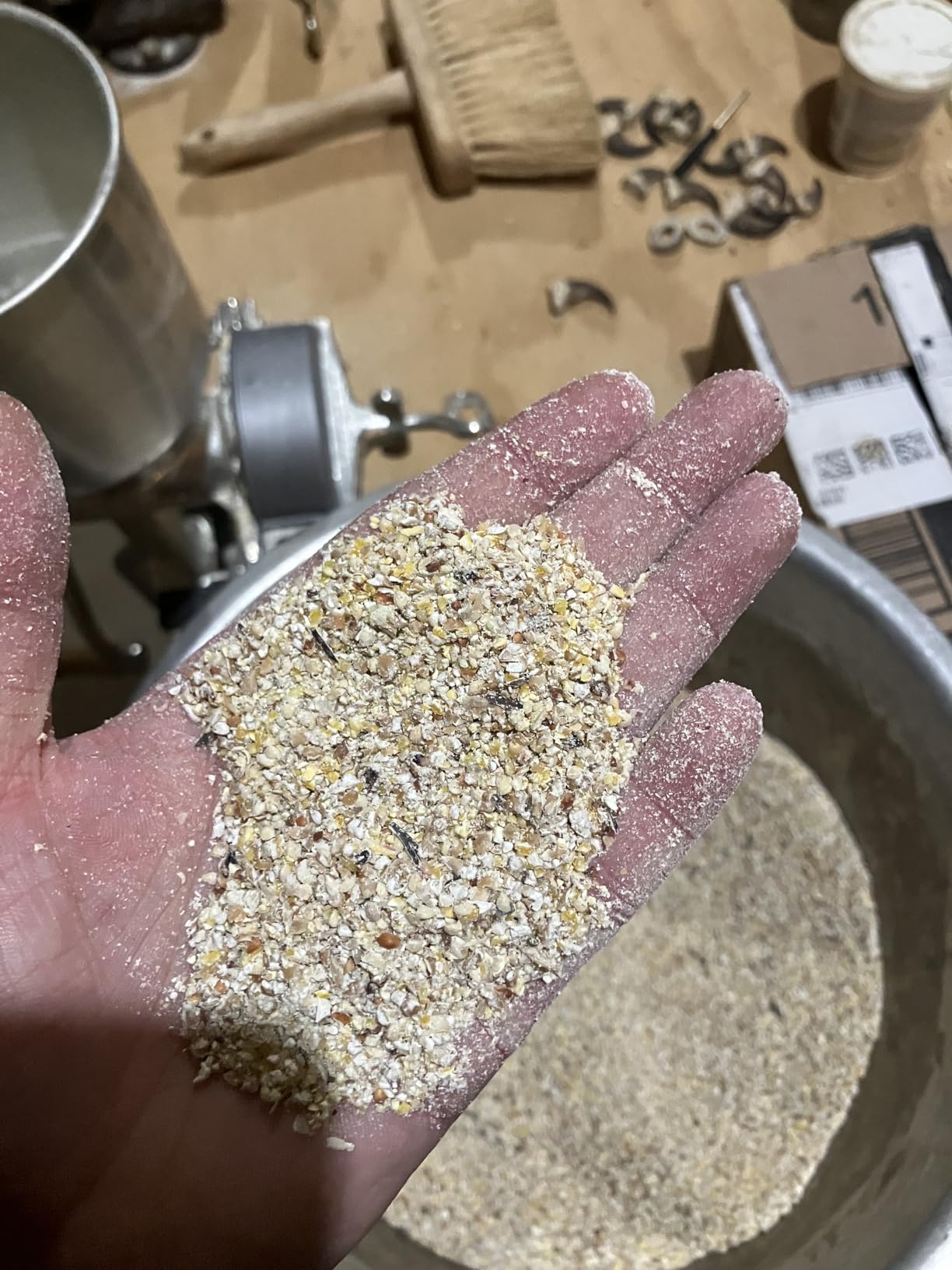
At maximum tightness the output is still a blend of fine and coarse particles, not true flour, and that is the single most common complaint from people who bought it expecting bread flour. It also can jam on larger amounts of corn, so feed it in smaller portions than the hopper suggests. Two design details show up in reviews: a small crack between the hopper and body can let fine grains escape, and a deep clean means unscrewing several screws rather than pulling a chamber out.
Plan on a couple of hours of cranking for a few pounds of grain.
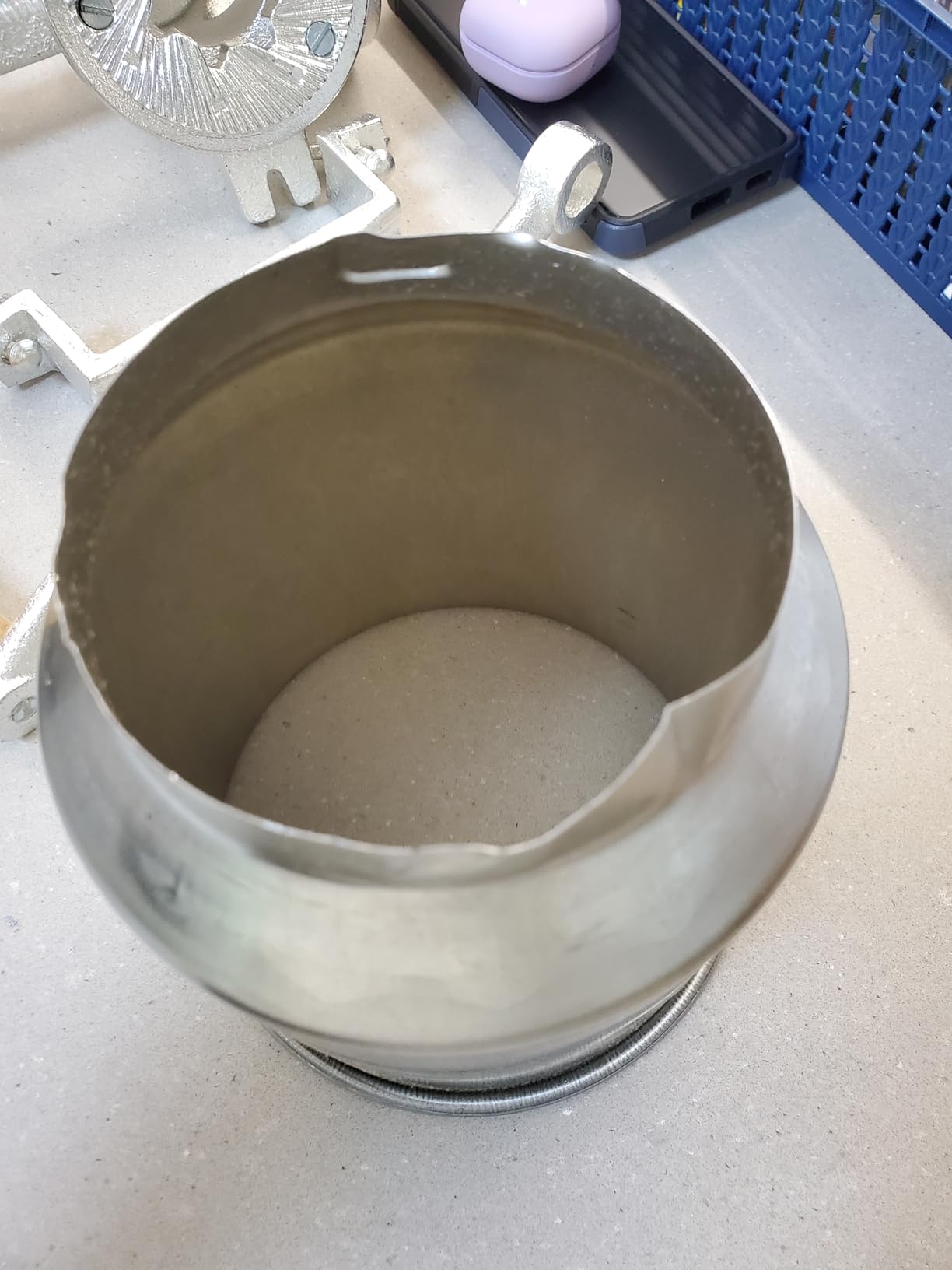
Who the Corona suits
It suits serious home corn grinders, people who make masa regularly, and anyone who wants a heavy tool with no motor to fail. The large hopper and firm clamp also make it a good choice for batches larger than the Victoria handles comfortably.
Who should skip it
Skip it for bread, and skip it if arm strength or time is a constraint. The Victoria is a better general-purpose manual mill; the Corona earns its place only when corn is the priority.
10. VEVOR 3000W Cast Iron Mill – Best for Bulk Grain Milling
VEVOR Electric Grain Mill Grinder, 3000W Spice Grinders, Commercial Corn Mill with Funnel, Thickness Adjustable Powder Machine, Heavy Duty Feed Flour Cereal Mill Wheat Grinders, Dry Grinder
3000W motor
Cast iron plates
500g capacity
Funnel fed hopper
Pros
- Cast iron grinding plates and stand are strong and easy to clean
- Funnel feeding keeps feed speed consistent
- 3000W motor reduces vibration and supports continuous grinding
- Thickness adjustment works across wheat corn coffee spices and nuts
Cons
- Weighs 46.7 pounds which is heavy for a home kitchen
- Oversized 18 by 10 by 28 inch footprint needs dedicated counter space
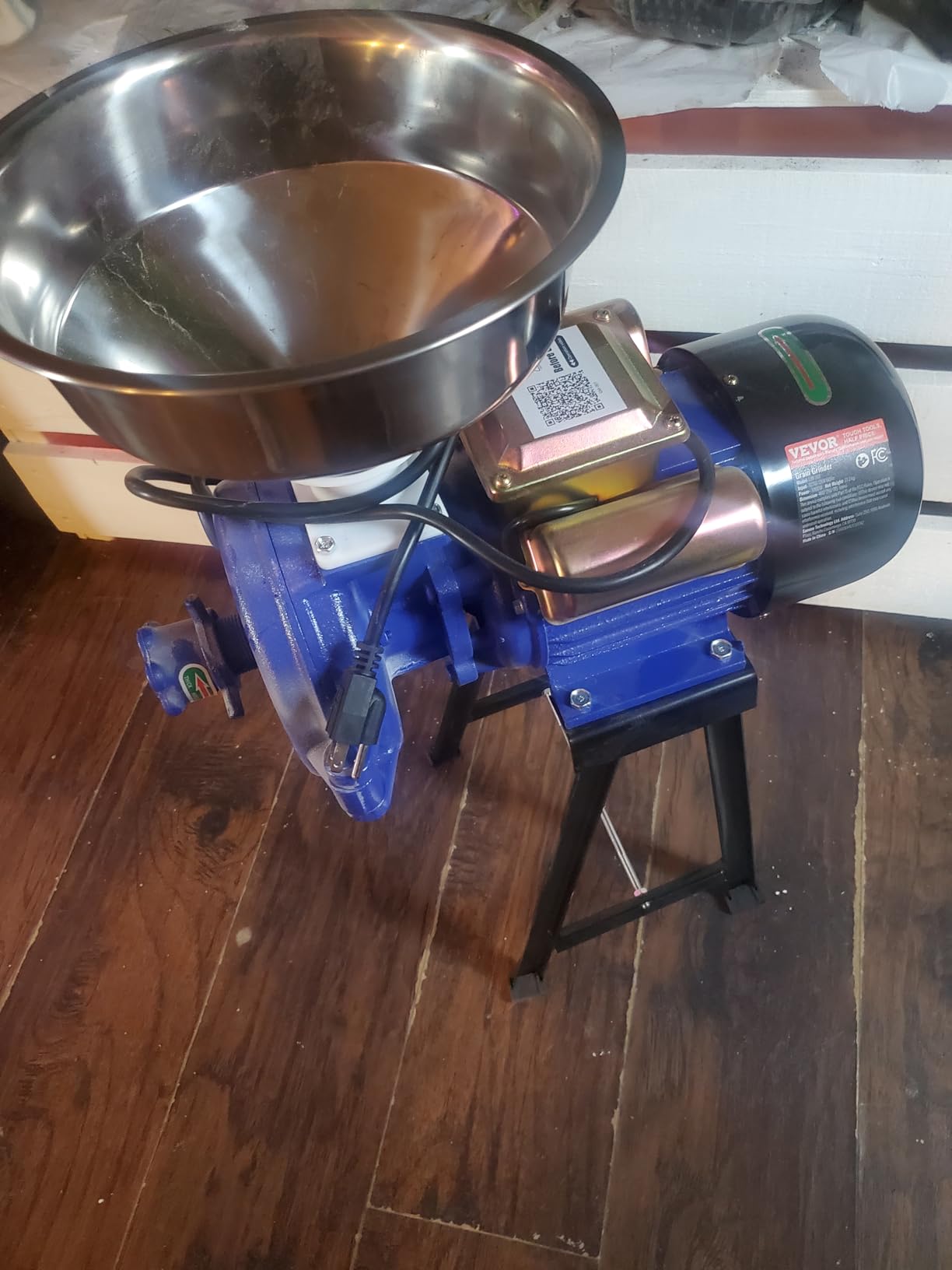
This is the outlier in the roundup: a commercial-style mill with cast iron grinding plates, a cast iron stand, and a 3000 watt motor. It handles wheat, rice, corn, sorghum, soybeans, tofu and starch, and the thickness adjustment spans everything from grain to coffee, spices and nuts.
The funnel-style stainless hopper is the smart part. Feeding grain through a funnel keeps the rate steady, which is what stops a high-output mill from binding, and the 3000 watt motor reduces vibration enough to support continuous grinding. It rates 4.4, and the cast iron plates are simple to clean compared with a blade chamber full of crevices.
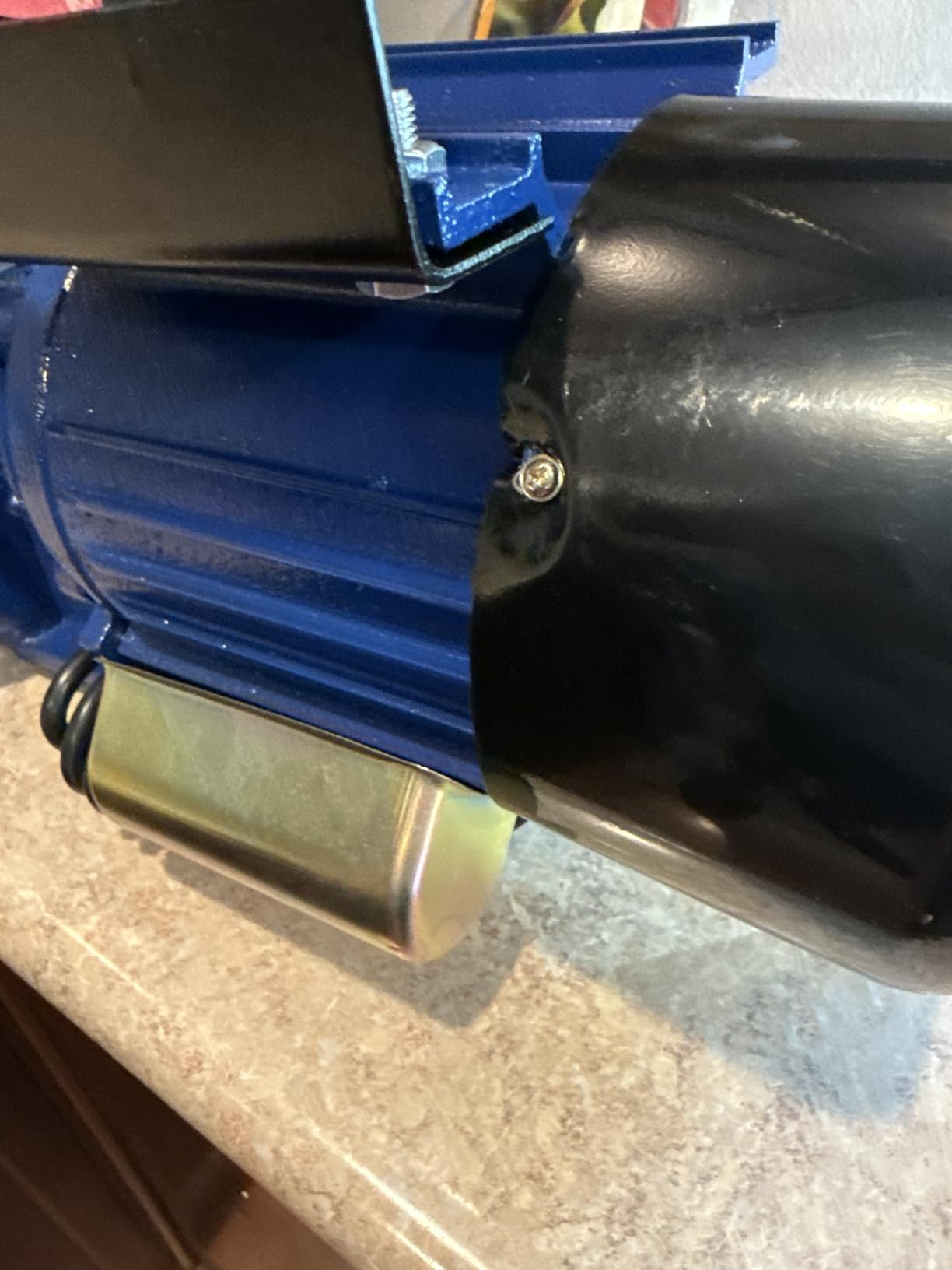
The size is the whole conversation. At 46.7 pounds and standing 28 inches tall on an 18 by 10 inch base, this is not a countertop appliance for most kitchens. You need a dedicated corner, a sturdy surface, and a plan for where it lives when you are not using it. It is also the least reviewed mill here at 167 reviews, so the long-term owner track record is thinner than the other picks.
If you have that space and mill for a community group or a small baking business, it outperforms everything else on this list.
Who the VEVOR suits
It suits a household that genuinely mills in volume, a cottage food producer, or anyone with a basement or garage work surface. Continuous grinding and cast iron plates make it the most capable machine in this group for sustained sessions.
Who should skip it
Skip it for a normal kitchen counter, a small apartment, or anyone who bakes a few loaves a month. The weight and height are the deciding factors, not the milling quality.
How to Choose a Home Flour Mill
Start with the texture question, because it eliminates half the list before price ever enters it. If you want sandwich bread, sourdough or rolls, you need a machine that produces fine, consistent flour: an impact mill or one of the higher-output electric models here. If you want cracked wheat, coarse meal, cornmeal, or a texture for soaking and hot cereals, a manual cast iron mill does it better and lasts longer.
Batch size is the second filter. A 150 gram jar means constant reloading for a single loaf. A 550 to 750 gram jar handles one loaf per load. Anything above 10 cups per session is a household that bakes for other people too. Match the machine to your weekly loaf count rather than to the size of the hopper you would like to own.
What to mill first
Hard white wheat is the easiest starting grain and the most forgiving. Two thirds of a cup of wheat berries yields about one cup of flour, so a 1.5 pound loaf takes roughly 2.5 cups of flour and therefore around 1.7 cups of berries. Hard red winter wheat is more flavorful and better suited to bread. Add corn for cornmeal, rice for gluten-free flour, and dry legumes such as chickpeas and soybeans for specialty batters.
Keep oily seeds away from every mill on this list. Flax and chia gum the burrs and the chamber, and no home mill in any technology class is designed for them.
Impact mill or stone burr?
Choose an impact mill if you want speed and powdery flour in seconds, and you never plan to make coarse textures. Choose a stone burr mill if you want an adjustment lever, a quiet machine, and a genuinely coarse end to the range. On whether you get better bread from stone grinding, the honest answer from experienced bakers is that hydration and fermentation matter far more than burr material.
Do you really need two mills?
Possibly. The most common setup among serious home bakers is an impact mill for daily fine flour plus a small hand crank mill for cracked wheat and coarse meal. That pairing covers everything, and it is more practical than stretching one machine past its design.
How much does home milling cost?
Running the numbers matters more than the mill’s sticker. Beyond the mill itself, budget for two sifters, a 40 mesh and a 50 mesh, plus grain and storage containers. Whole grain bought in bulk and milled at home usually costs less per pound than the equivalent organic whole wheat flour at the store, and the gap widens as your baking volume grows. The remaining fine bran after sifting does not impair gluten development, so you are not wasting material by sifting well.
Dust, static and cleaning
Fine flour dust and static are the complaints that appear in nearly every milling discussion online, and they are manageable. Mill in a small room rather than right over the stove, keep the collector or canister no more than two thirds full so flour does not blow out of the vents, and wipe the work surface with a damp cloth before you brush dry flour around. Never rinse a motor unit. Brush everything, wipe it, and let it dry fully before reassembling, because trapped moisture is what causes the musty smell people report in cheap mills.
When the power goes out
An electric mill is useless during an outage, and you will not be baking much anyway if your oven is electric. The practical answer is to keep a hand mill for grain only, not for daily flour, and to accept the two hours of cranking for three loaves. If you are planning for outages more broadly, our picks for the best home safes cover grain storage and keeping dry weight on hand. If you store grain for preparedness reasons, test the manual mill before you need it.
Adjusting dough for fresh flour
Freshly milled flour absorbs noticeably more water than commercial white flour because the bran is intact and unsifted bran is thirsty. This is the cause of the dense loaf that bakers call a hockey puck. Raise hydration gradually, extend the autolyse, and give the dough longer at its bulk stage than your old schedule used to demand. Change one variable at a time, and give the flour a week of testing before you blame the mill.
Frequently Asked Questions
What is the best flour mill machine for home use?
For most home bakers the best flour mill for home use is the LEJIEYIN 750G electric mill. Its 2000 watt motor and 750 gram batch turn about 3.5 cups of wheat berries into fine flour in roughly three minutes, and fineness adjusts from 50 to 300 mesh. If you bake three or more loaves a week, The Kitchen Mill is the stronger choice, and the Victoria manual mill covers corn, masa and coffee.
Is it cheaper to mill your own flour at home?
It usually is, once grain is bought in bulk. Two thirds of a cup of wheat berries yields about one cup of flour, and whole grain in bulk costs meaningfully less per pound than the equivalent organic whole wheat flour in a store. Add the mill, two sifters, and storage containers to the calculation, and the break-even arrives sooner the more you bake.
What is the best flour to mill at home?
Hard white wheat is the easiest first grain because it is forgiving and produces a bright, mild flour. Hard red winter wheat gives more flavor and is a better fit for bread. Beyond wheat, corn makes cornmeal and polenta, rice makes gluten-free flour, and dry chickpeas and soybeans work for specialty batters. Never mill flax, chia, or other oily seeds in a home mill.
Which grains can I mill in a home flour mill?
Every mill in this roundup handles wheat, rice, and most dry grains, and the electric models add corn, oats, dry legumes, coffee beans, and spices. Manual cast iron mills are strongest on corn, nixtamal, and beans. No home mill handles oily seeds such as flax or chia, and the larger high-output models are the ones that cope with whole popcorn kernels and dent corn.
Why is my home-milled bread dense and not rising properly?
Fresh flour is the most likely cause, not the mill. Whole grain with intact bran absorbs more water than commercial white flour, so raise hydration gradually, extend the autolyse, and allow a longer bulk fermentation. Sifting with 40 and 50 mesh sifters also lightens the crumb. Change one variable at a time and test the flour several times before replacing a mill that is working fine.
Do I need a hand mill as a backup for a power outage?
Only if you care about grinding grain during an outage, and you will not be baking much with an electric oven anyway. A hand mill handles a few pounds in about two hours of cranking, which is a poor daily workflow. The better use of a hand mill is as a second texture source for cracked wheat and coarse meal that an impact mill cannot produce.
The Verdict: Which Home Flour Mill Should You Buy?
For most households, the LEJIEYIN 750G is the best flour mill for home baking because it balances batch size, fineness, and speed without asking you to babysit a motor through long cool-down cycles. Bake three or more loaves a week and the Kitchen Mill takes over on volume and on its lifetime warranty. Reach for the Victoria or Corona when corn, masa, or coffee is the real work, and add a quiet mixer attachment if counter space and noise matter more than batch size.
Whichever you choose, give it a month before judging it. Mill two or three times, sift, adjust your hydration, and let the flour tell you what your recipes need. That adjustment period, not the machine, is what decides whether home milling becomes part of your kitchen in 2026.