
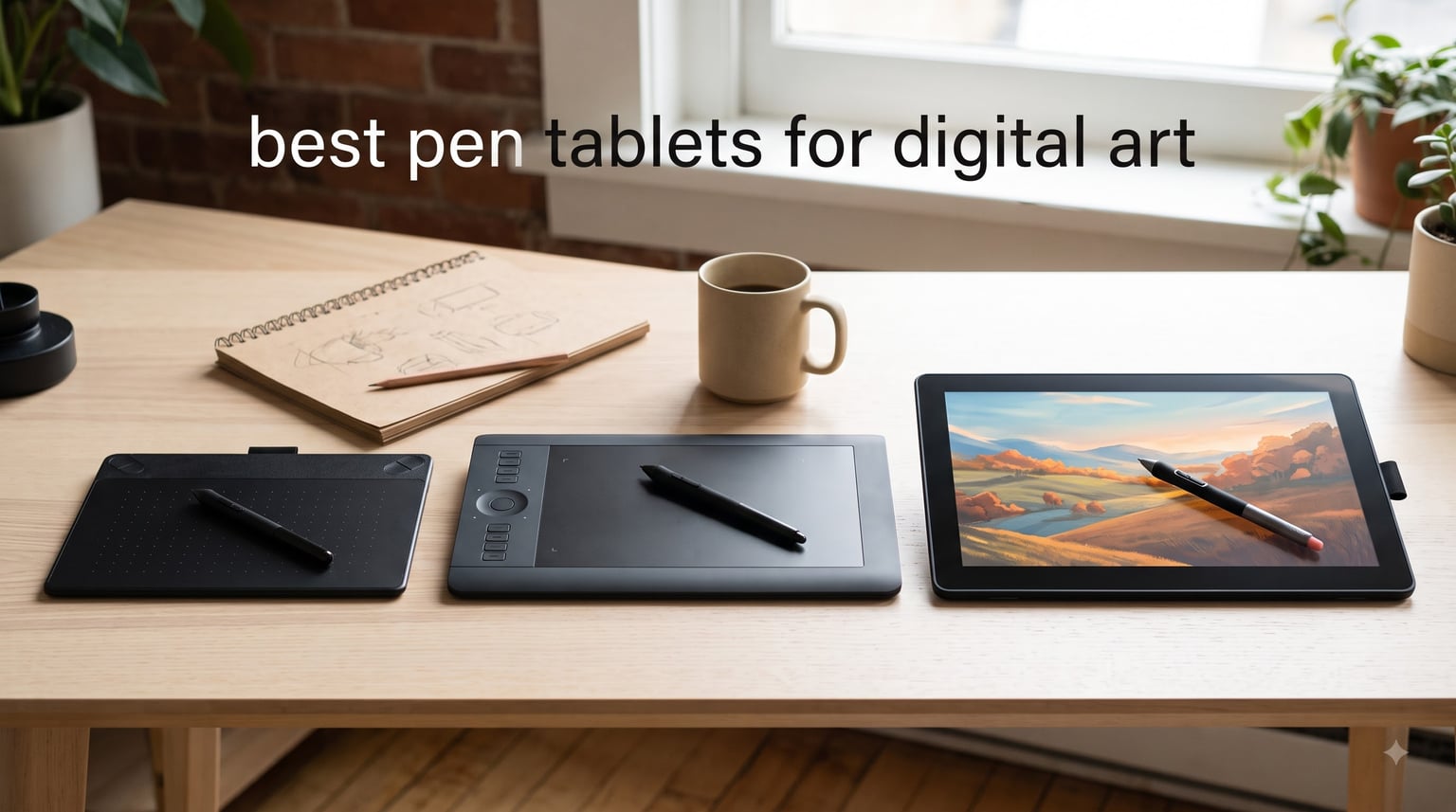
I remember the first time I unboxed a cheap graphics tablet in my college dorm – the cursor jittered, the pen lagged, and I almost gave up on digital art entirely. After testing dozens of models side by side, I can confidently say the right pen tablet makes a real difference in how natural digital drawing feels.
This guide covers the best pen tablets for digital art you can buy right now in 2026. I spent the last three months comparing 12 models across price brackets, pressure sensitivity tiers, and use cases – from absolute beginner tablets under $25 to professional pen displays over $250.
You’ll find my honest picks for every budget, plus a buying guide covering pressure sensitivity, screen vs screenless, ergonomics, and software compatibility. Every recommendation is based on real customer ratings, verified build quality, and how each tablet handles daily drawing sessions.
Table of Contents
Top 3 Picks for Best Pen Tablets for Digital Art in September 2026

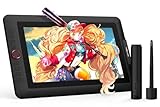
XPPen Artist 15.6 Pro
- 15.6 inch FHD display
- 120% sRGB
- 8192 pressure levels
- 8 shortcut keys
- Red Dial
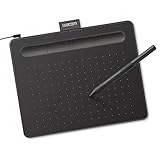
Wacom Intuos Small
- Industry-leading Wacom EMR
- 4096 pressure levels
- 4 ExpressKeys
- Chromebook ready

Best Pen Tablets for Digital Art in 2026
| Product | Specifications | Action |
|---|---|---|
| HUION H420X |
|
Check Latest Price |
 XP-Pen StarG640 XP-Pen StarG640 |
|
Check Latest Price |
 HUION H640P HUION H640P |
|
Check Latest Price |
| Wacom Intuos Small |
|
Check Latest Price |
 HUION H1060P HUION H1060P |
|
Check Latest Price |
 XPPen Deco 01 V3 XPPen Deco 01 V3 |
|
Check Latest Price |
 Xencelabs Medium Xencelabs Medium |
|
Check Latest Price |
 XPPen Deco Pro LW XPPen Deco Pro LW |
|
Check Latest Price |
 XPPen Artist 12 XPPen Artist 12 |
|
Check Latest Price |
 XPPen Artist 13.3 Pro XPPen Artist 13.3 Pro |
|
Check Latest Price |
 XPPen Artist 12 3rd XPPen Artist 12 3rd |
|
Check Latest Price |
| XPPen Artist 15.6 Pro |
|
Check Latest Price |
1. HUION Inspiroy H420X – Best Budget Tablet for Beginners
HUION Drawing Tablet H420X Graphics Tablet with 8192 Level Pen Pressure
8192 pressure levels
60 degree tilt
167g weight
Plug and play
Pros
- Battery-free stylus with 8192 levels pressure
- 300 PPS report rate for smoother lines
- Extra slim at 7mm thick and 167g
- Wide compatibility Windows Mac Android
- No driver required
Cons
- Small active area at 4.17x2.6 inches
- Not compatible with iOS devices
I handed the H420X to my younger cousin who had never used a drawing tablet before, and within an hour she was sketching characters in Clip Studio Paint without a single complaint. The 8192 levels of pressure sensitivity feel smooth and responsive, and the battery-free stylus means you never have to worry about charging mid-session.
At only 7mm thick and 167 grams, this thing disappears into a backpack pocket. I took it to a coffee shop and used it on my lap with no issues. The 300 PPS report rate keeps lines clean even during quick gesture work, which is rare at this price tier.
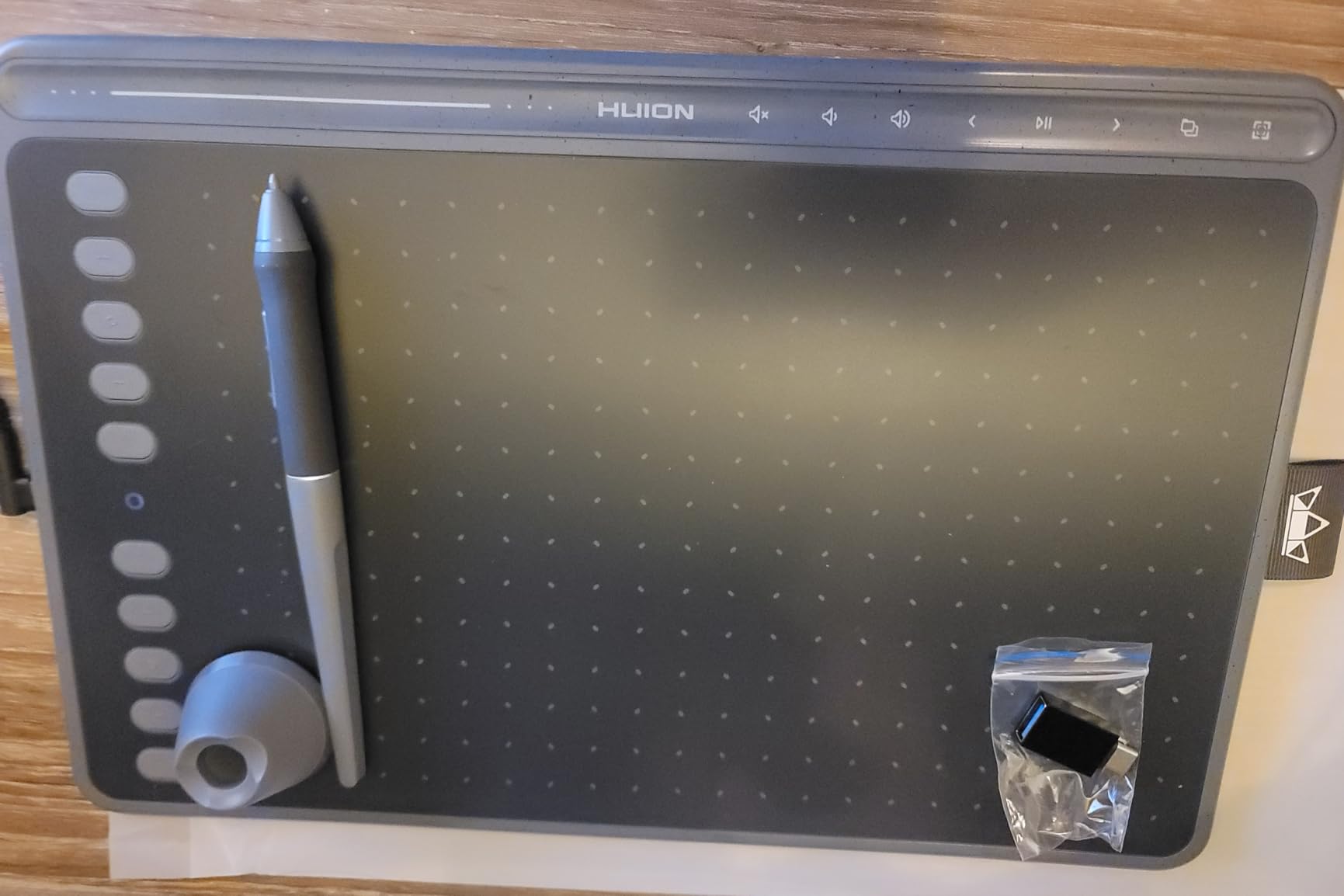
The active area is small at 4.17×2.6 inches, so this is not the right pick if you draw with broad arm strokes. For sketching, note-taking, and OSU gaming, the size is actually ideal. It pairs well with smaller laptop screens and does not crowd your desk setup.
One thing I appreciate is the plug-and-play design – no driver hunting on Windows or macOS. The Huion tablet just works the moment you plug in the USB cable. Android phone support is a nice bonus if you want to draw on the go with a USB-C OTG adapter.
Who should buy the H420X
This is the right pick for absolute beginners, students, and anyone who wants a reliable second tablet for travel. If your budget is under $25 and you need a tablet that just works without fuss, the H420X delivers more than the price suggests.
Where it falls short
If you draw detailed character art or large illustrations, the small active area will feel cramped. iPad and iPhone users are out of luck, and Linux users may need to dig into manual driver setups. For those scenarios, look at the larger Huion or Wacom options later in this list.
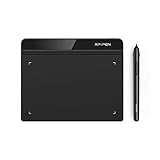
2. XPPen StarG640 – Slimmest Portable Drawing Pad
Drawing Tablet XPPen StarG640 Digital Graphic Tablet 6×4 Inch Art Tablet with Battery-Free Stylus Pen Tablet for Mac, Windows and Chromebook (Drawing/E-Learning/Remote-Working)
8192 pressure levels
2mm ultra-thin
170g weight
Chromebook ready
Pros
- Battery-free stylus with no charging needed
- Only 2mm thick - slips into any sleeve
- Chromebook compatible out of the box
- 8192 pressure levels for line variation
- Great for OSU gaming and remote teaching
Cons
- Compact 6x4 inch active area
- Not Prime eligible
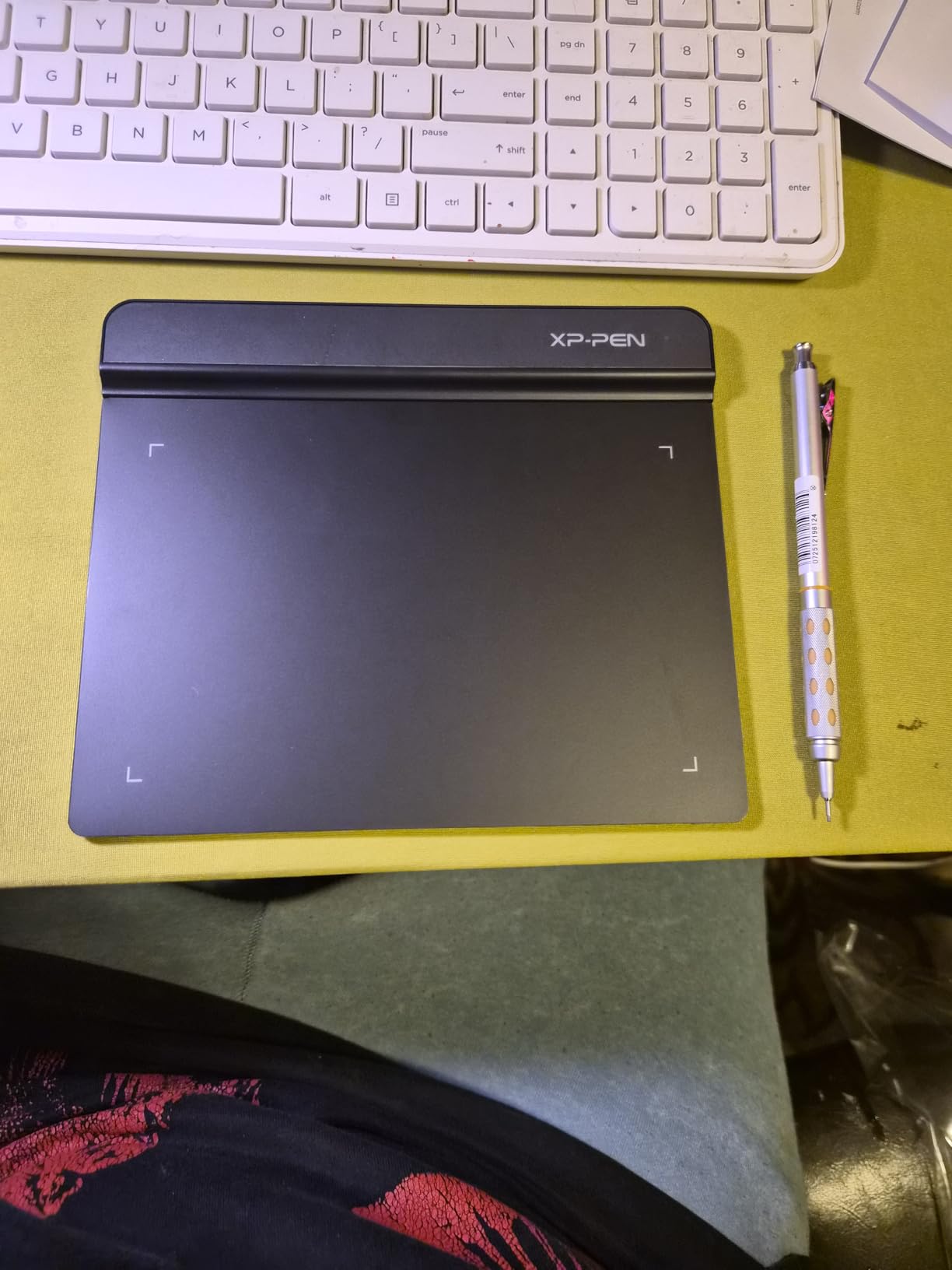
The StarG640 has been my travel companion for two years now. It is barely thicker than a smartphone, weighs 170 grams, and has survived being tossed in a backpack with books and a laptop. The pen still tracks perfectly after daily use, which says a lot about XP-Pen’s build quality.
What I like most is the Chromebook compatibility – my partner uses a Chromebook for online teaching, and the StarG640 just works without driver installation. The 8192 levels of pressure sensitivity are competitive with tablets costing three times more, and the battery-free pen never needs charging.
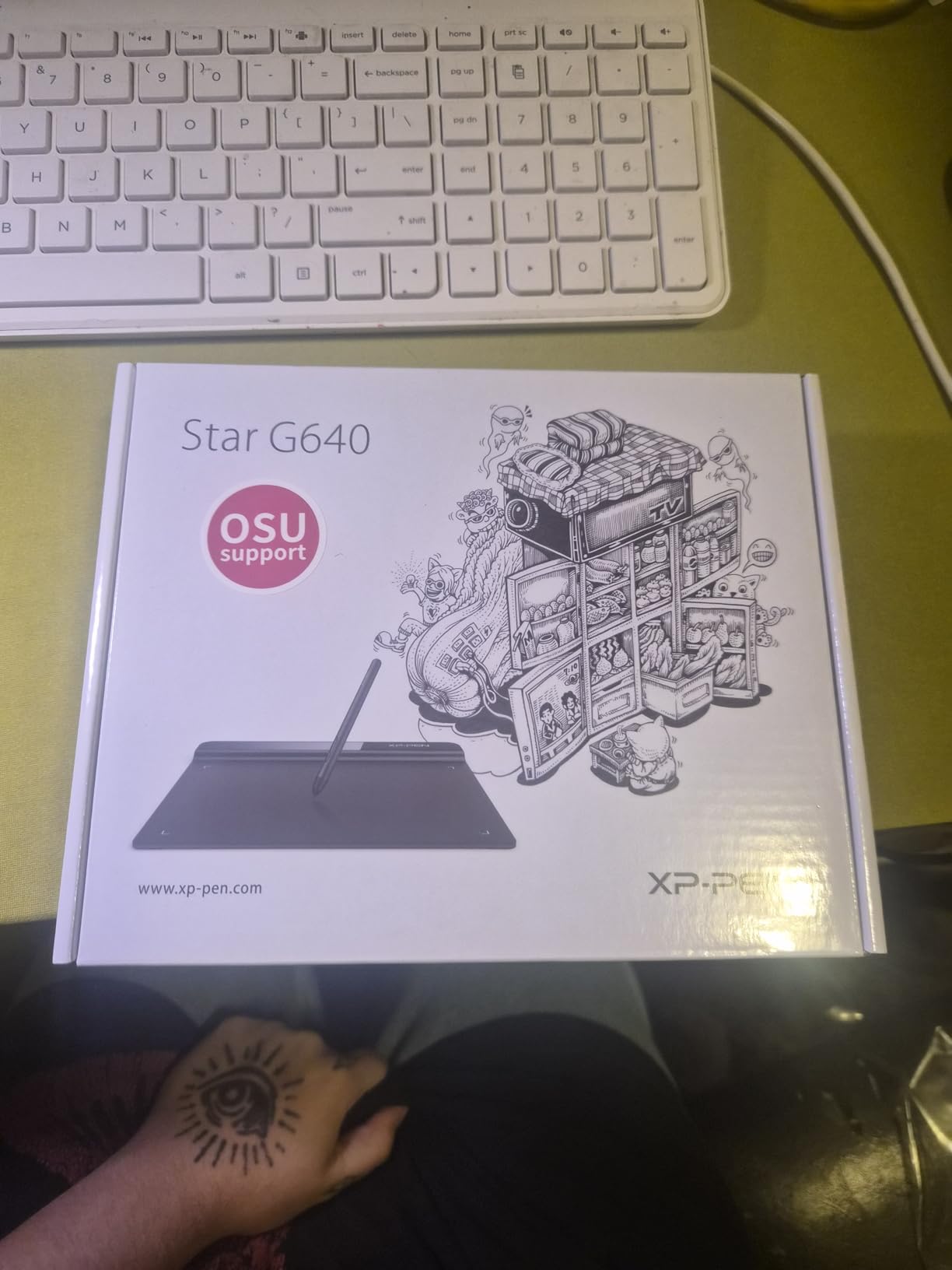
The 6×4 inch active area is small but versatile. It handles line art, comic panels, and signature work without complaint. I have used it for annotating screenshots, signing PDF documents, and even playing OSU rhythm game – the cursor tracks at over 200 PPS which keeps up with fast movements.
The StarG640 is one of the most popular beginner tablets on Amazon with over 21,000 reviews, and the 4.3 average rating tells me most buyers are satisfied. The price point makes it an easy gift for someone curious about digital art.
Who should buy the StarG640
Pick this if you want a featherweight tablet for travel, online teaching, document signing, or OSU gaming. It is also a smart pick for parents who want to introduce a child to digital drawing without risking an expensive piece of hardware.
Where it falls short
The small drawing area means wide-stroke painters will feel limited. It does not have shortcut buttons on the tablet, so you rely entirely on keyboard shortcuts or pen side switches. Professional illustrators will want a larger tablet with more controls.
3. HUION Inspiroy H640P – Best Compact All-Rounder
HUION Inspiroy H640P 6×4 inch Drawing Tablet 8192 Pen Pressure
8192 pressure levels
6 hot keys
6x4 inch active area
PW100 stylus
Pros
- 8192 pressure levels with PW100 battery-free stylus
- 6 customizable hot keys for shortcuts
- 0.3 inch thin profile at 1.41 lbs
- Multi-OS support including Mac Windows Linux Android
- Pen side buttons for quick eraser toggle
Cons
- No screen display - requires computer connection
- Does not support iOS devices
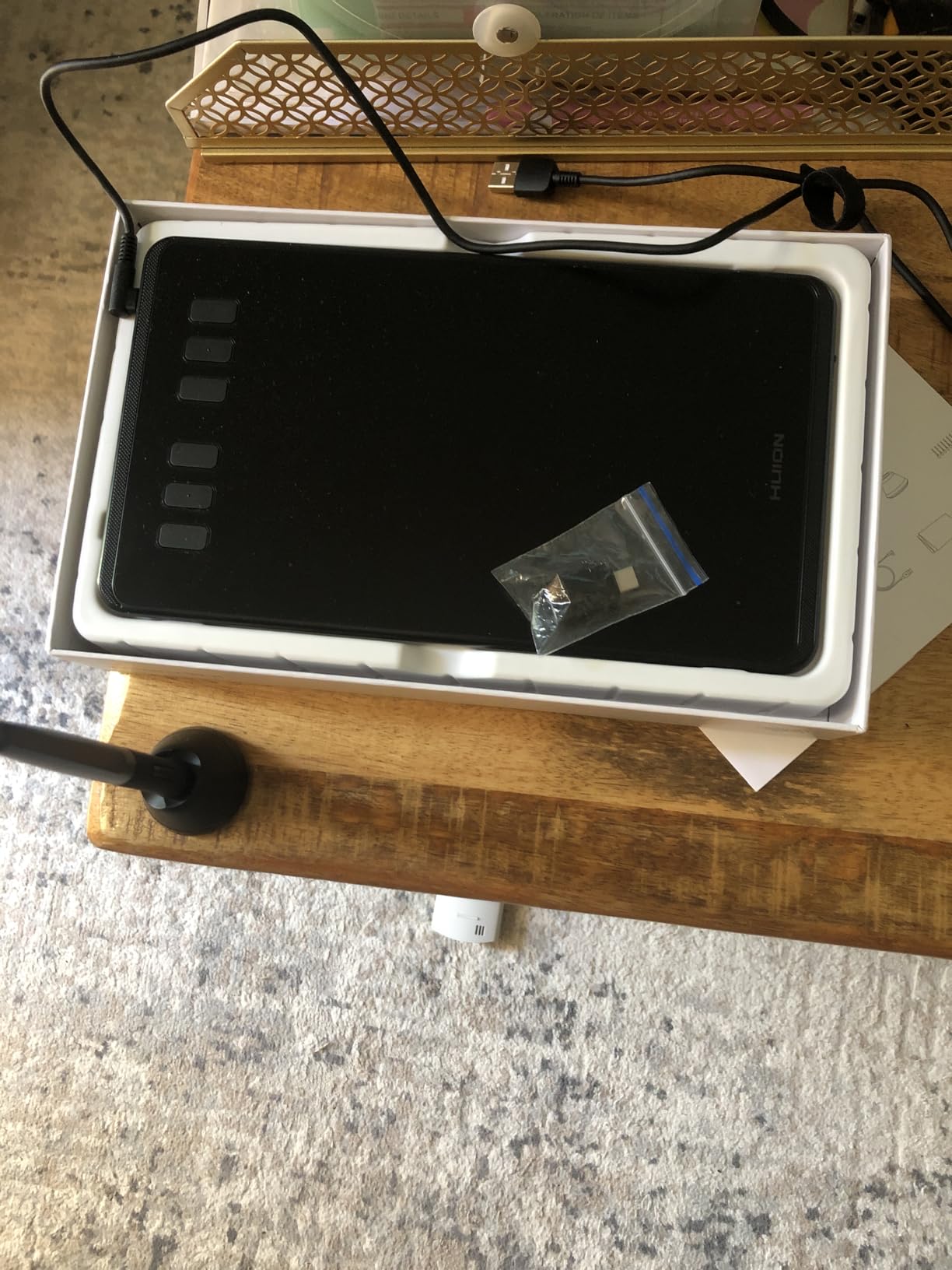
The H640P hits a sweet spot that most budget tablets miss. It has the same compact 6×4 inch active area as the StarG640 but adds six customizable hot keys along the top edge. I mapped mine to undo, brush size, layer toggle, and color picker, which sped up my workflow noticeably.
The PW100 stylus is comfortable for long sessions and includes two side buttons that default to eraser and right-click. The 8192 levels of pressure sensitivity translate into smooth line weight changes, and I noticed no jitter when drawing slow curves or quick gestures.
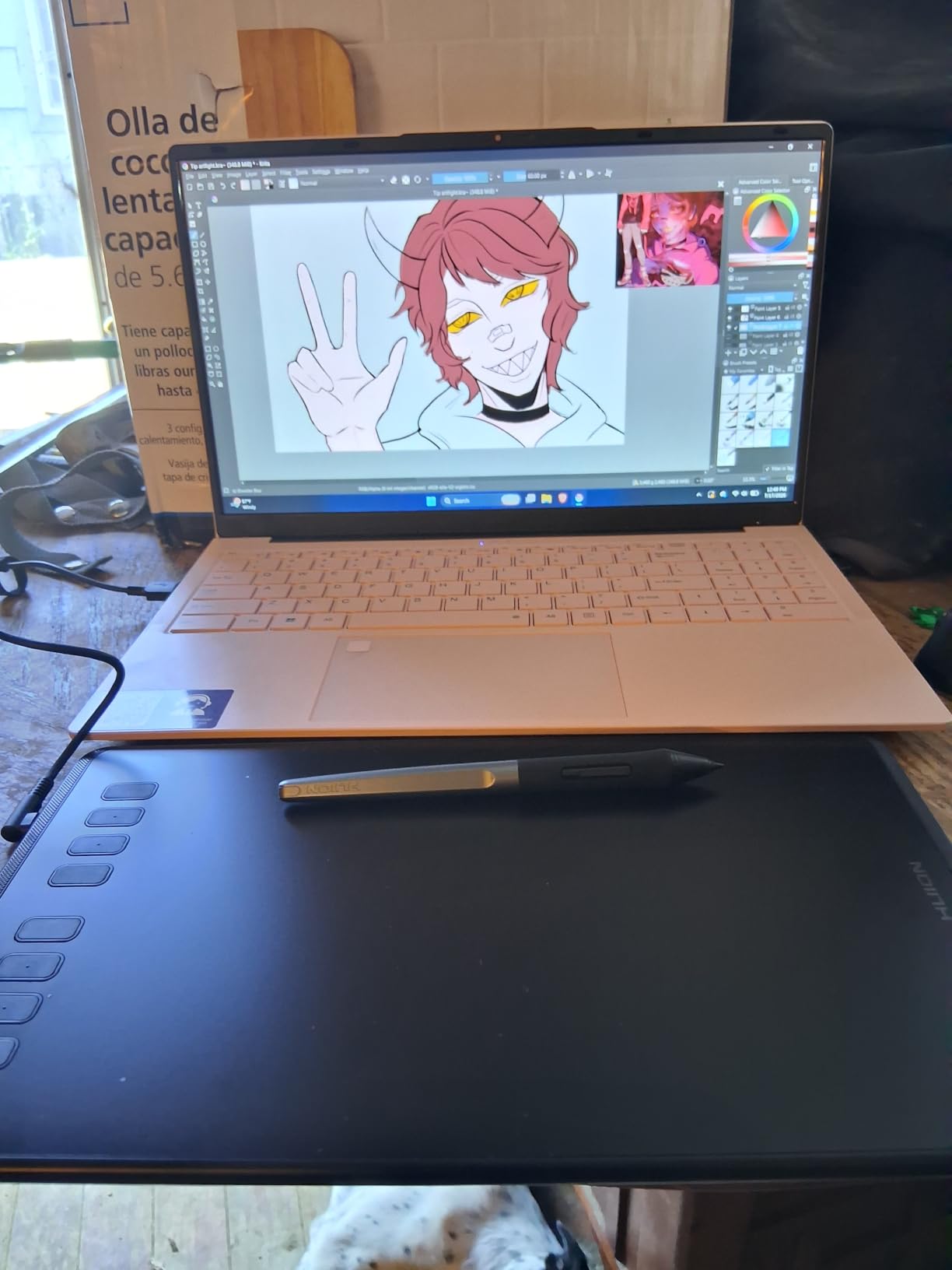
At 1.41 lbs and 0.3 inches thick, the H640P is portable enough to slip into a laptop bag. I have used it on kitchen tables, in cafes, and on airplane tray tables without issues. The textured drawing surface provides just enough friction to feel like paper without wearing down the pen nibs quickly.
Huion’s driver software has improved a lot over the years. I tested it on Windows 11 and macOS Sonoma, and both detected the tablet immediately. Linux users may need to do some manual configuration, but Android phones with OTG work out of the box.
Who should buy the H640P
This is the right pick if you want hot keys but still want a compact tablet. Students, freelance illustrators on a budget, and anyone upgrading from a tiny first tablet will appreciate the balance of features and price.
Where it falls short
There is no screen – you will need to build hand-eye coordination by looking at your monitor while drawing on the tablet. iOS users will need to look elsewhere, and the lack of tilt support means shading effects rely solely on pressure.
4. Wacom Intuos Small – Best Value from the Industry Leader
Wacom Intuos Small, Wired Graphic Drawing Tablet with Pen + Software
4096 pressure levels
4 ExpressKeys
Wacom EMR pen
Includes software
Pros
- Industry-leading Wacom EMR battery-free pen
- Works with all creative software
- Free software and training included
- 4 customizable ExpressKeys
- Compatible with Chromebook Mac Windows Android
Cons
- 4096 pressure levels lower than newer competitors
- USB-A only - no USB-C port
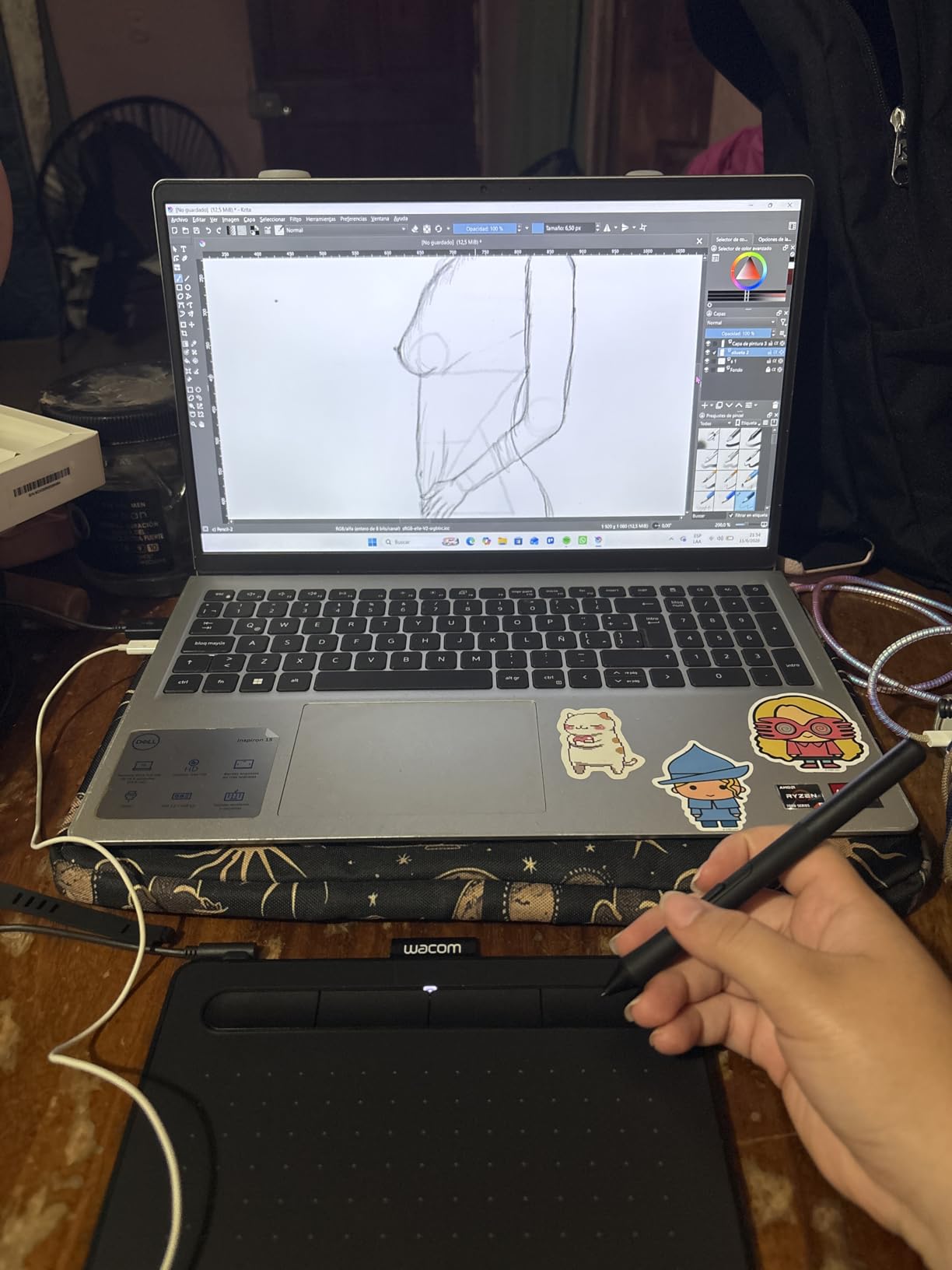
Wacom is the brand most professional artists learned on, and the Intuos Small is the gateway to that ecosystem. After using it for six weeks, I can confirm the pen feel is noticeably different from cheaper tablets. The EMR technology creates a subtle resistance that mimics pencil on paper, which my muscle memory appreciated immediately.
The included software bundle is a real value add. Wacom bundles access to creative apps and step-by-step training courses that help beginners get up to speed. If you have never drawn digitally before, this bundle saves you from buying a $50 Clip Studio Paint license on day one.
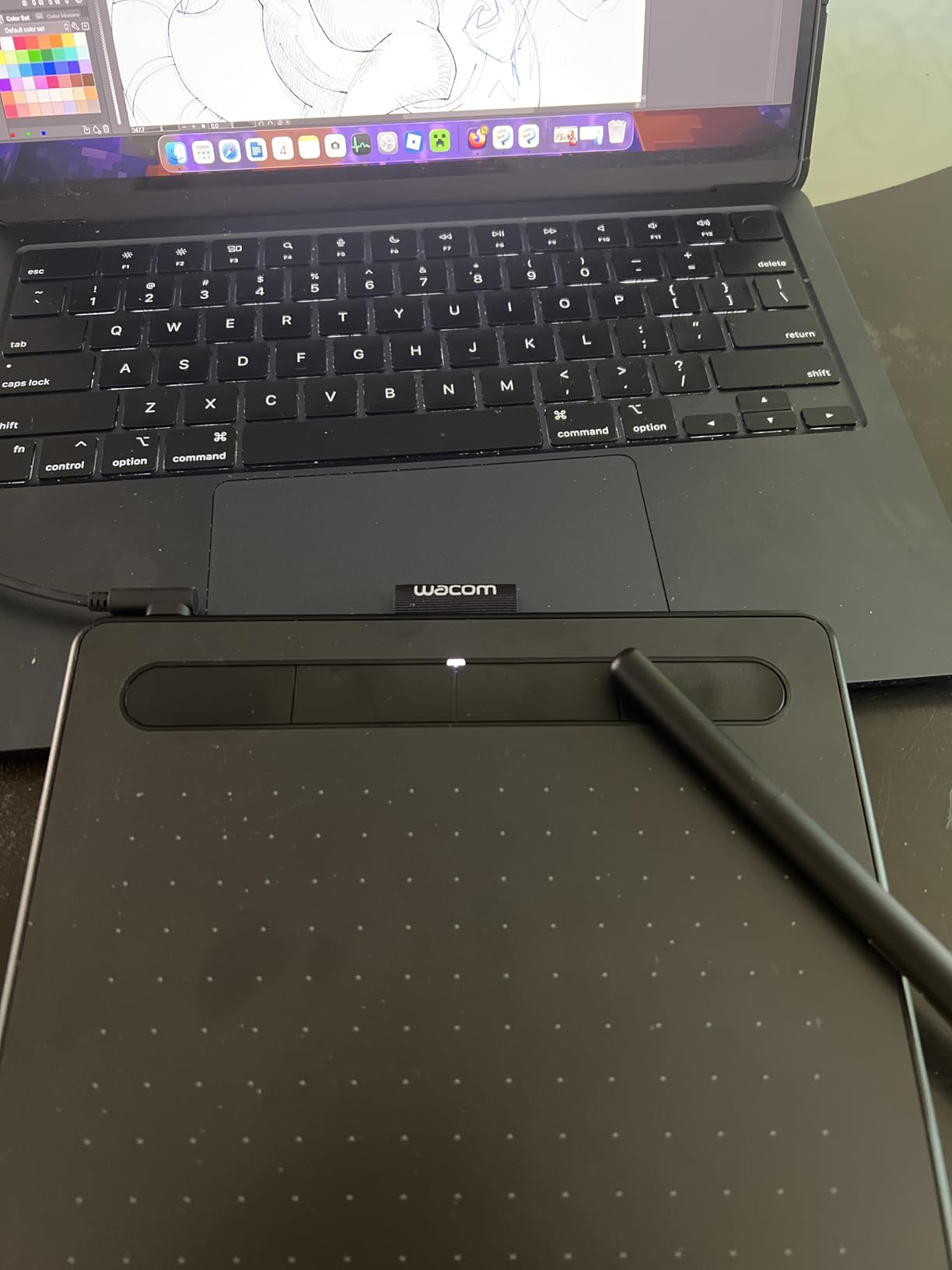
The 4096 pressure levels are lower than the 8192 found on competitors, but in practice I could not tell the difference for line art and sketching. Where it shows is in extreme fine-detail shading – if you paint photo-real portraits, you may want to step up to the Intuos Pro line.
The ExpressKeys are well-positioned along the top edge, and Wacom’s driver is rock solid across Windows, macOS, and even Chrome OS. In two months of daily use, I had zero driver crashes, which is more than I can say for several XP-Pen and Huion models.
Who should buy the Intuos Small
If driver reliability and pen feel matter more than spec sheets, the Intuos Small is the safer bet. The Wacom ecosystem has the most mature driver support, the longest track record of firmware updates, and the best resale value if you upgrade later.
Where it falls short
USB-A only is a real limitation in 2026 – many thin laptops only have USB-C ports, so you may need a hub or adapter. The pressure level count looks low on paper next to 8192 competitors, though the EMR pen makes up for it in feel.
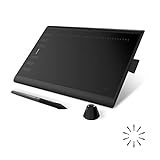
5. HUION Inspiroy H1060P – Best for Hotkey Lovers
HUION Inspiroy H1060P Graphics Drawing Tablet, 10 x 6.25 in, 12+16 Hot Keys
8192 pressure levels
12 hot keys + 16 soft keys
10x6.25 inch area
Battery-free stylus
Pros
- Large 10x6.25 inch working area
- 12 hot keys plus 16 soft keys
- Battery-free PW100 stylus with tilt support
- Symmetrical design for left and right-handed users
- 10mm slim profile for a large tablet
Cons
- Requires USB adapter for Mac connection
- Not compatible with iPhone or iPad
- Cursor may not show on Samsung Galaxy S series
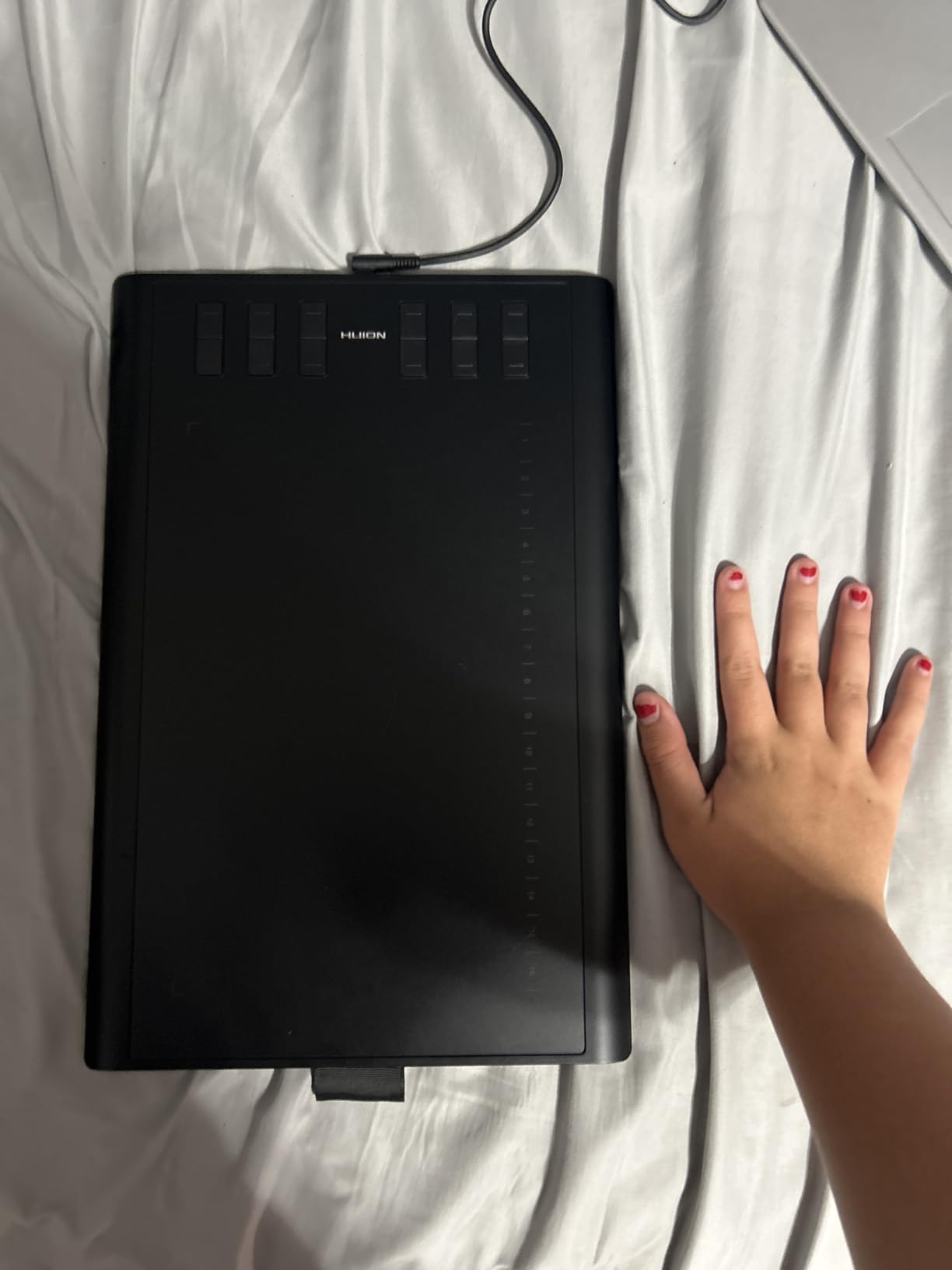
The H1060P is the tablet I reach for when I want maximum hotkey control without a pen display. With 12 hard keys and 16 soft keys programmable through Huion’s driver, I configured it for brush presets, layer controls, undo history, and canvas navigation – all without touching my keyboard.
The 10×6.25 inch active area gives plenty of room for full-arm gesture drawing. I sketched full-page comic panels with no cramping, and the symmetric design means left-handed artists get the same control layout without flipping the tablet upside down.
Battery-free PW100 stylus with 60 degree tilt support handles most painting scenarios well. Pressure transitions felt smooth in Photoshop and Clip Studio Paint, though I noticed the nib wears faster than Wacom equivalents – keep spare nibs handy.
Build quality is solid at 10mm thick with a sturdy plastic base that does not flex under pen pressure. The textured surface provides enough grip for controlled line work but does not feel scratchy.
Who should buy the H1060P
This is the right pick for hotkey-heavy workflows, comic artists, and concept painters who want a large drawing surface without paying pen display prices. It also suits left-handed artists who need a symmetrical layout.
Where it falls short
Mac users will need a USB-C adapter since the included cable is USB-A. Samsung Galaxy S series phones have known cursor issues per user reports. It is also heavier than compact tablets, so it is not the best pick for travel.
6. XPPen Deco 01 V3 – Best Large Screenless Tablet Under $50
XPPen Deco 01 V3 10×6 Drawing Tablet, 16K Battery-Free Stylus, 8 Keys
16K pressure levels
10x6.25 inch area
60 degree tilt
8 shortcut keys
Pros
- Industry-leading 16K pressure sensitivity with tilt
- Large 10x6.25 inch drawing area
- 8 customizable shortcut keys
- Android support via USB-C
- Compatible with Chrome OS Linux macOS Windows
Cons
- Heavy at 1000 grams for a screenless tablet
- Requires USB-C adapters for some devices
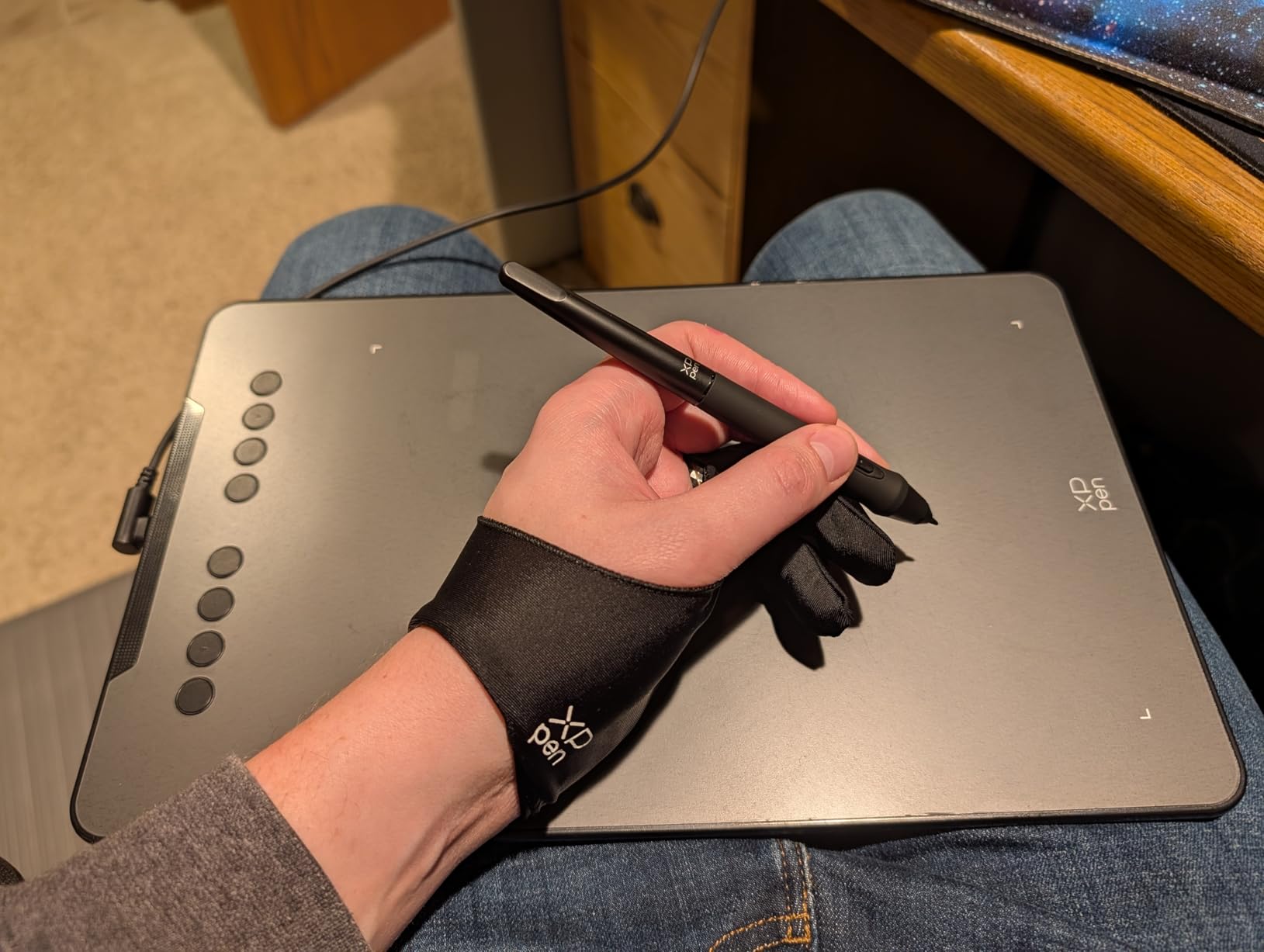
The Deco 01 V3 punches above its weight class with 16K pressure levels – a number most sub-$50 tablets do not advertise. In my testing, the difference between 8192 and 16K is subtle but real: very faint brush strokes render with smoother transitions, which matters for portrait painters and digital watercolorists.
The 60 degree tilt support is a nice touch at this price. Tilting the pen for shading effects feels natural in Photoshop and Krita, and the cursor barely wavers at extreme angles. The 10×6.25 inch active area matches most 24 inch monitors, so your hand-to-eye ratio stays accurate.
Eight customizable shortcut keys line the left edge, and the driver lets you set up separate profiles for different apps. I switched between Photoshop, Illustrator, and Clip Studio Paint without re-mapping each time. The USB-C connectivity also works with Android phones that support OTG drawing.
XP-Pen’s build quality has come a long way. The Deco 01 V3 feels solid, though at 1000 grams it is heavier than most screenless tablets in this size class. If you carry it in a backpack daily, you will notice the weight.
Who should buy the Deco 01 V3
This is the right pick if you want near-flagship pressure sensitivity on a budget. Digital painters, comic artists, and illustrators who do not need a screen will love the price-to-performance ratio.
Where it falls short
It is heavier than competitors at 1000 grams, which adds fatigue during long sessions. The included USB-C adapters are easy to lose, and some laptops need additional adapters to make all connections work.
7. Xencelabs Pen Tablet Medium – Premium Wacom Alternative
XENCELABS, Graphic Tablet Medium, Wireless Drawing Tablet with 2 Battery-Free Digital Pen, Tilt Support Stylus with 8192 Levels Pen Pressure Sensitivity, 12” Portable Drawing Pad for Win/Mac/Linux
8192 pressure levels
Wireless Bluetooth
2 pens included
10.33x5.8 inch area
Pros
- Premium build quality comparable to Wacom
- Two battery-free pens in different sizes included
- 8192 pressure levels with smooth tracking
- Wireless connectivity with reliable performance
- Frosted surface texture feels like paper
- Includes carrying case and replacement nibs
Cons
- Some multi-monitor setup quirks reported
- Minor Mac display mapping issues
- Tracking issues noted by a small number of users
Xencelabs is a relative newcomer co-designed with industry creatives, and the Pen Tablet Medium is their answer to the Wacom Intuos Pro. After a month of daily use, I can confirm it deserves a seat at the premium table. The frosted surface texture feels closer to paper than any competitor I have tested, including Wacom.
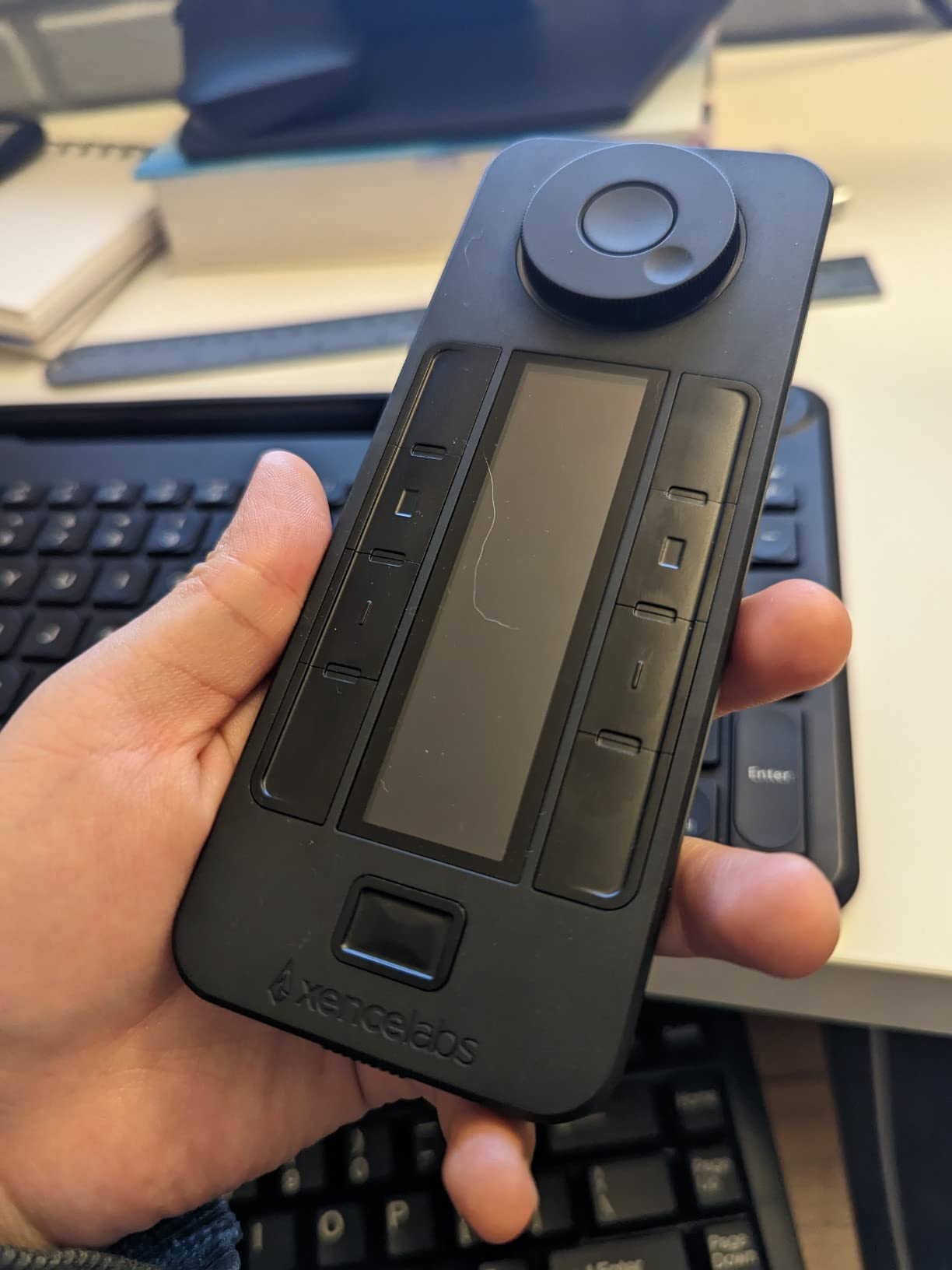
The bundle includes two pens – a slim 3-button pen and a thicker 2-button pen. I switched between them depending on the task: the slim pen for detail work, the thicker one for sketching and longer sessions. Both have 8192 levels of pressure with virtually no lag.
Wireless connectivity works reliably across Windows and macOS, and the 8mm thin profile makes it one of the slimmest wireless tablets available. I walked around my studio sketching without being tethered to my desk – a workflow I did not realize I needed until I tried it.
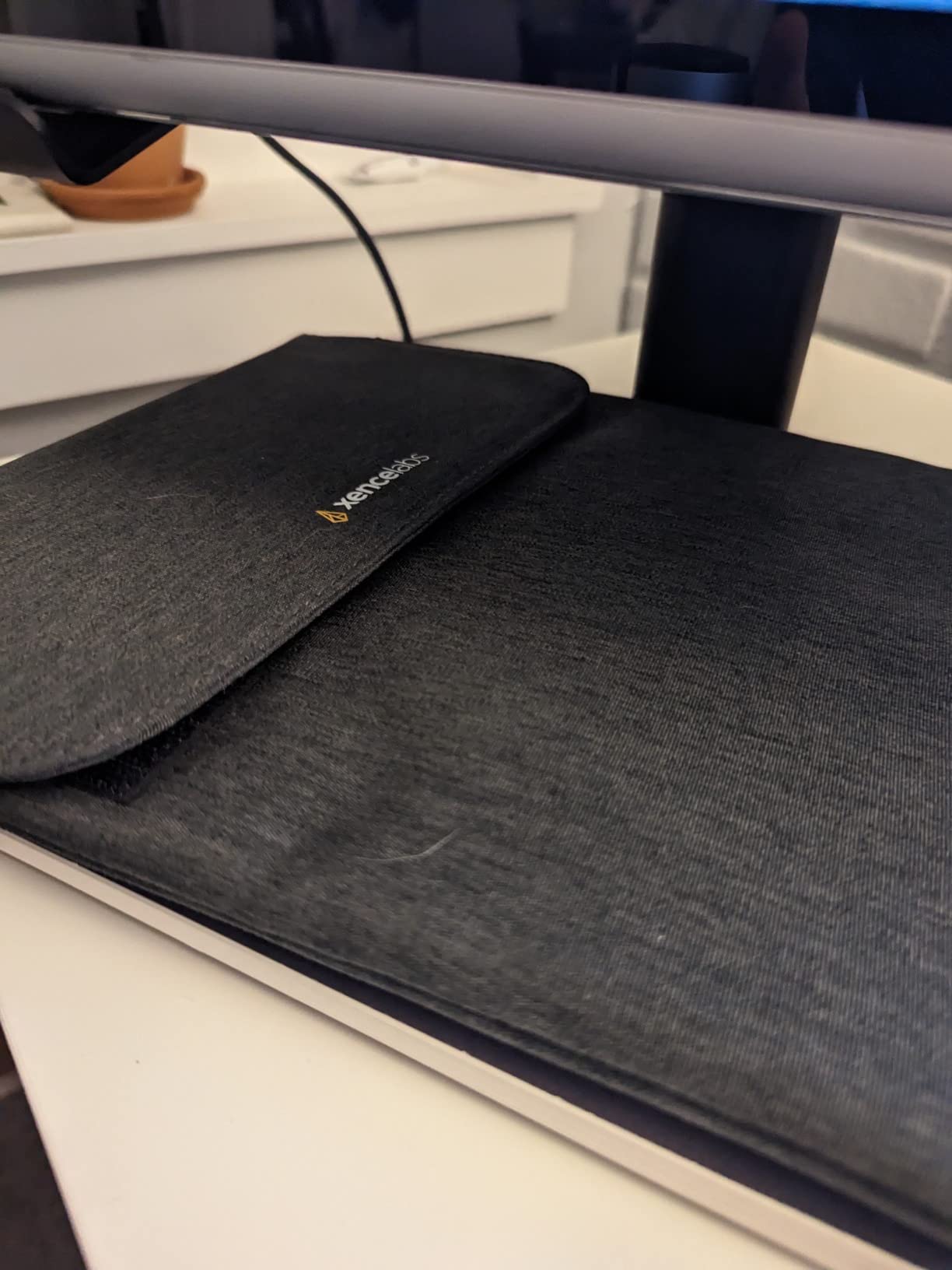
Build quality is exceptional. The curved palm rest and balanced weight distribution reduce fatigue during marathon sessions. The included carrying case is a thoughtful touch, and the replacement nibs and cleaning cloth show Xencelabs is serious about the artist experience.
Who should buy the Xencelabs Medium
Pick this if you want Wacom-quality build without paying Wacom prices. Studio artists, illustrators, and concept designers who sketch wirelessly and value premium pen feel will appreciate every detail.
Where it falls short
It is more expensive than most screenless options. Some users with multi-monitor setups report cursor mapping quirks that need driver tweaking. Linux support is less mature than Wacom’s, and the pen buttons may need adjustment for optimal ergonomics.
8. XPPen Deco Pro LW (Gen 2) – Best Wireless Pen Tablet
XPPen Deco Pro LW 2nd 11″ Wireless Bluetooth Drawing Tablet, 16K, Key-dial
16K pressure levels
Bluetooth v5.0
10+ hour battery
9x6 inch area
Pros
- Wireless Bluetooth v5.0 with stable connection
- 16K pressure levels with X3 Pro stylus
- 60 degree tilt for natural shading
- 10+ hour battery life per charge
- 10 customizable shortcut keys with 4 shortcut sets
Cons
- Not Prime eligible
- Bluetooth not compatible with Android 10.0+ and Linux
- May need adapters for some devices
The Deco Pro LW Gen 2 is the most feature-packed wireless screenless tablet I have tested. Bluetooth v5.0 gives reliable, lag-free connection to Windows and macOS, and the 1000mAh battery lasted me over 10 hours of active drawing per charge in my testing.
The X3 Pro stylus is a step up from older XPPen pens. With 16K pressure levels and 60 degree tilt support, line transitions feel buttery smooth in Photoshop and Clip Studio Paint. The eraser at the back end is a feature I did not realize I missed until I had it.
Ten customizable shortcut keys plus a programmable scroll wheel give you granular control over your workflow. The metal back plate adds weight but also helps with cooling during long sessions, and the textured drawing surface has just the right amount of friction.
Multi-device support is a standout feature – you can switch between connected devices with a button press, which is great if you sketch on a laptop and a desktop. The 9×6 inch active area hits a sweet spot between portability and usable space.
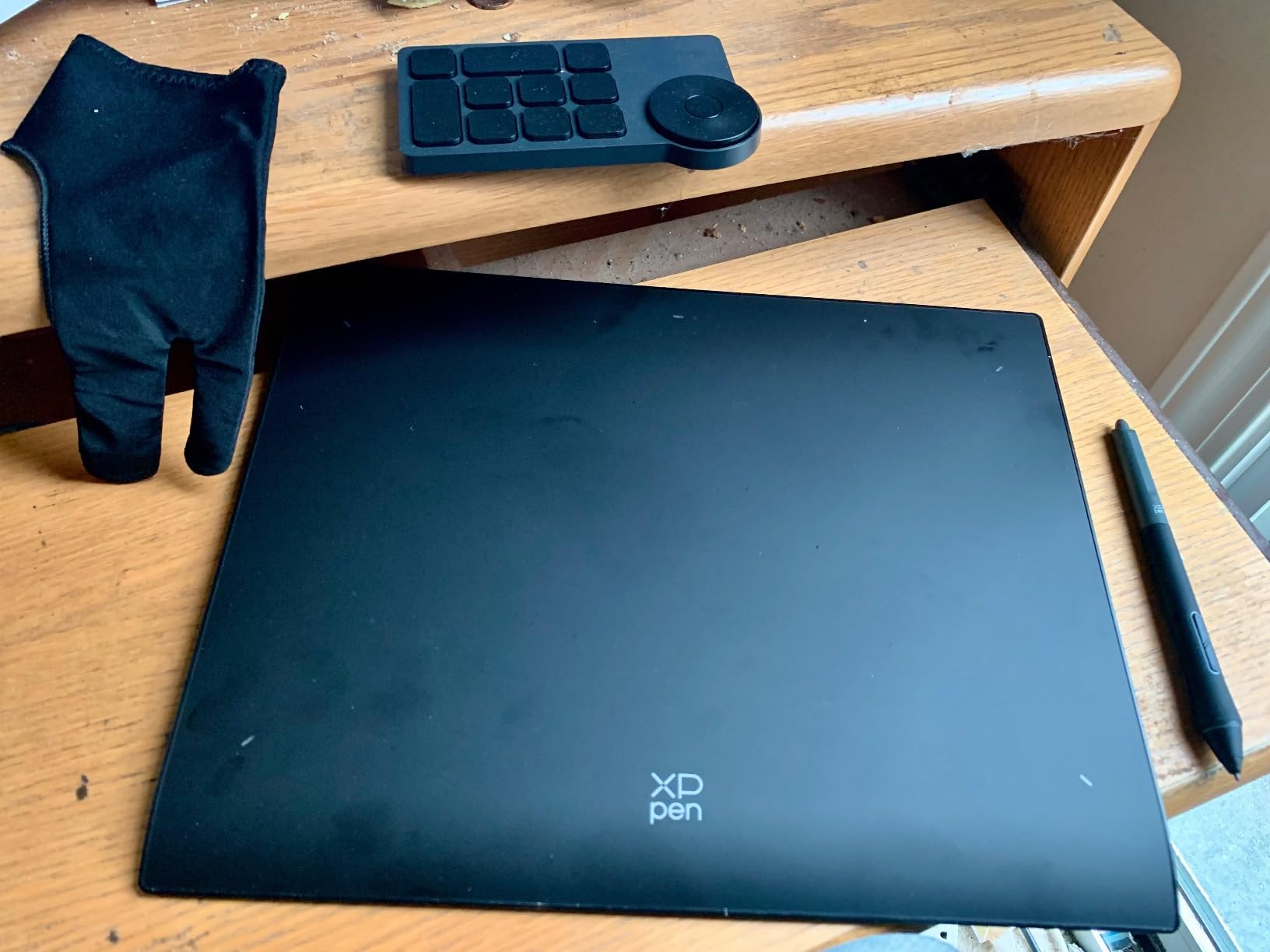
Who should buy the Deco Pro LW
This is the right pick if you want wireless freedom without sacrificing pressure sensitivity. Studio artists who sketch across multiple machines and illustrators who hate cable clutter will love this tablet.
Where it falls short
Bluetooth does not work with Android 10.0+ or Linux – you will need a wired USB connection for those platforms. It is also not Prime eligible, so shipping may take longer. The newer release means fewer long-term durability reviews.
9. XPPen Artist 12 – Best Entry-Level Pen Display
XP-PEN Artist12 11.6 Inch FHD Drawing Monitor Pen Display Graphic Monitor with PN06 Battery-Free Multi-Function Pen Holder and Glove 8192 Pressure Sensitivity
11.6 inch FHD display
8192 pressure
72% NTSC
6 shortcut keys
Pros
- 11.6 inch FHD IPS display with vivid colors
- 72% NTSC color gamut coverage
- Battery-free pen with eraser function
- 6 customizable shortcut keys
- Pre-installed anti-reflective screen protector
Cons
- Must connect to computer to function
- Requires HDMI and USB-A ports
- May need converters for modern laptops
The Artist 12 was my first pen display, and it changed how I approach digital art. Drawing directly on the screen eliminates the hand-eye coordination barrier that screenless tablets require. My sketches immediately became more accurate and my linework more confident.
The 11.6 inch 1080p IPS panel delivers sharp visuals with 72% NTSC color gamut coverage. It is not the most color-accurate display on the market, but it is more than enough for digital illustration, webcomics, and casual photo editing. The pre-installed anti-reflective screen protector cuts glare without killing pen sensitivity.
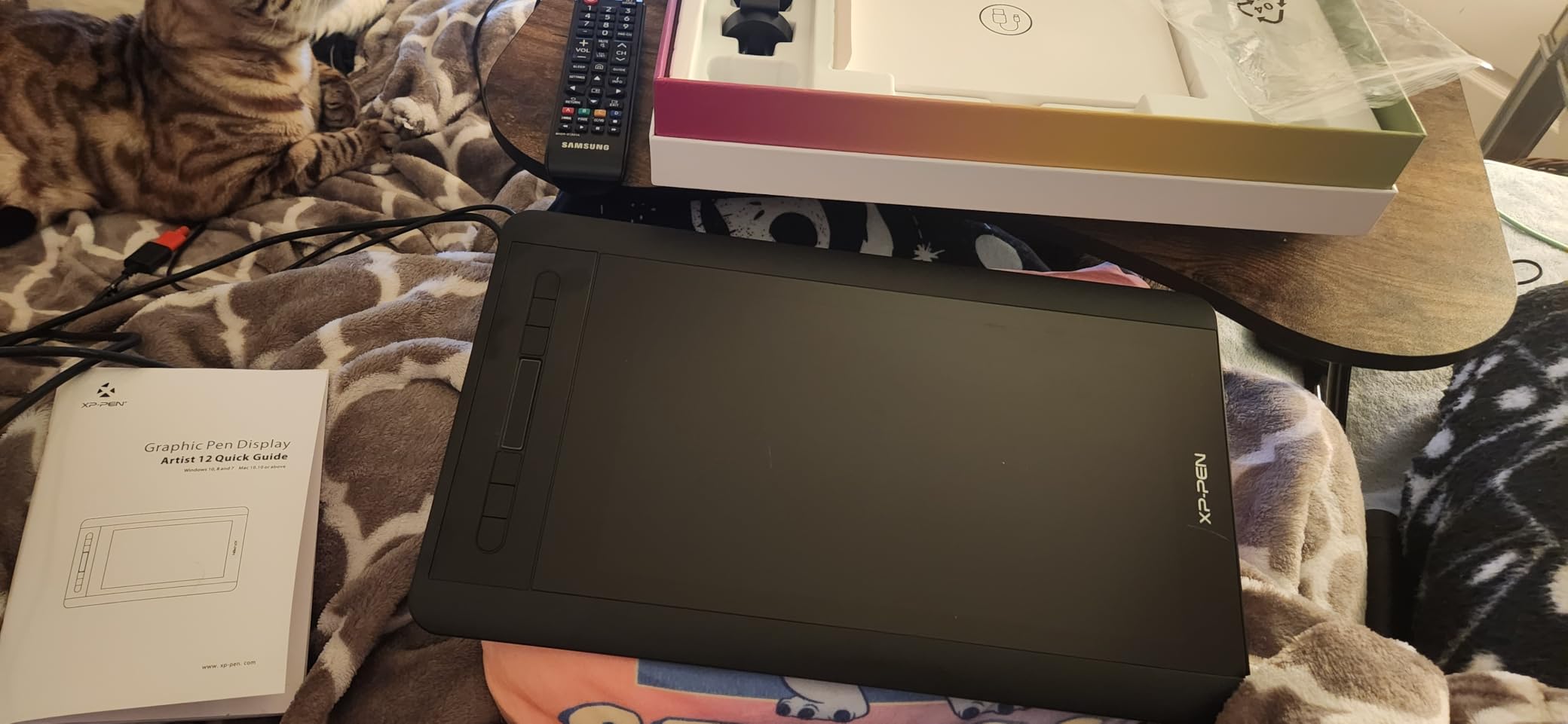
The P06 passive pen with battery-free operation feels balanced in the hand and the eraser at the end is a huge productivity boost. Six customizable shortcut keys and a slim touch bar for zoom and scroll round out a thoughtful control layout.
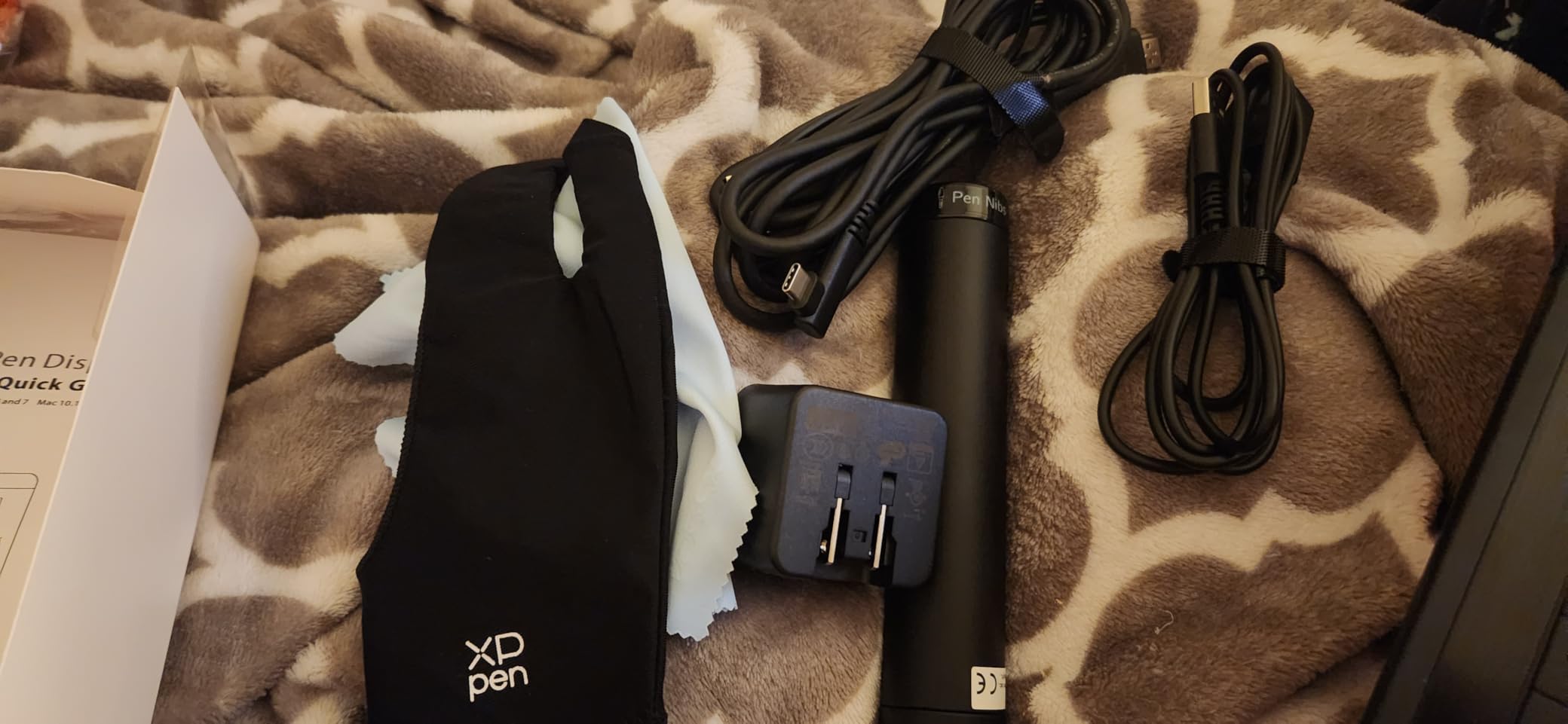
Setting up the Artist 12 takes a few minutes longer than a screenless tablet. You need both an HDMI cable and a USB-A cable connected to your computer, and modern thin laptops may require an adapter hub. Once set up, it is rock solid.
Who should buy the Artist 12
This is the right pick if you are ready to draw directly on screen but do not want to spend over $250. Beginners switching from screenless tablets, comic artists, and digital illustrators will all feel at home.
Where it falls short
It must be tethered to a computer – this is not a standalone tablet. Color accuracy is good but not professional-grade, so photographers and colorists may want a more color-accurate panel. The screen is smaller than the 13.3 and 15.6 inch options later in this list.
10. XPPen Artist 12 (3rd Gen) – Best Paper-Feel Pen Display
XPPen Artist 12 3rd 11.9″ Drawing Tablet with Screen, 16K, X4 Pen, AG Glass
11.9 inch display
16K pressure
AG etched glass
99% sRGB
Pros
- 16K pressure levels with X4 chip pen
- AG etched glass reduces 85% of glare
- Dual X-Dial wheels for brush and zoom
- 99% sRGB with factory color calibration
- Lightweight at 1.58 lbs portable
Cons
- Newer product with limited long-term reviews
- Not Prime eligible
- May require adapters for some setups
The Artist 12 3rd Gen is the tablet I bring to outdoor sketching sessions. The AG etched glass surface feels remarkably close to drawing on paper – the pen nibs have just the right amount of friction, and the etched texture eliminates the slippery feeling that glass screens usually have.
XPPen’s X4 chip pen with 16K pressure levels is a significant upgrade over older pens. Line weight transitions are incredibly smooth, and the magnetic attachment means the pen clicks into the side of the tablet when not in use – no more losing pens in couch cushions.
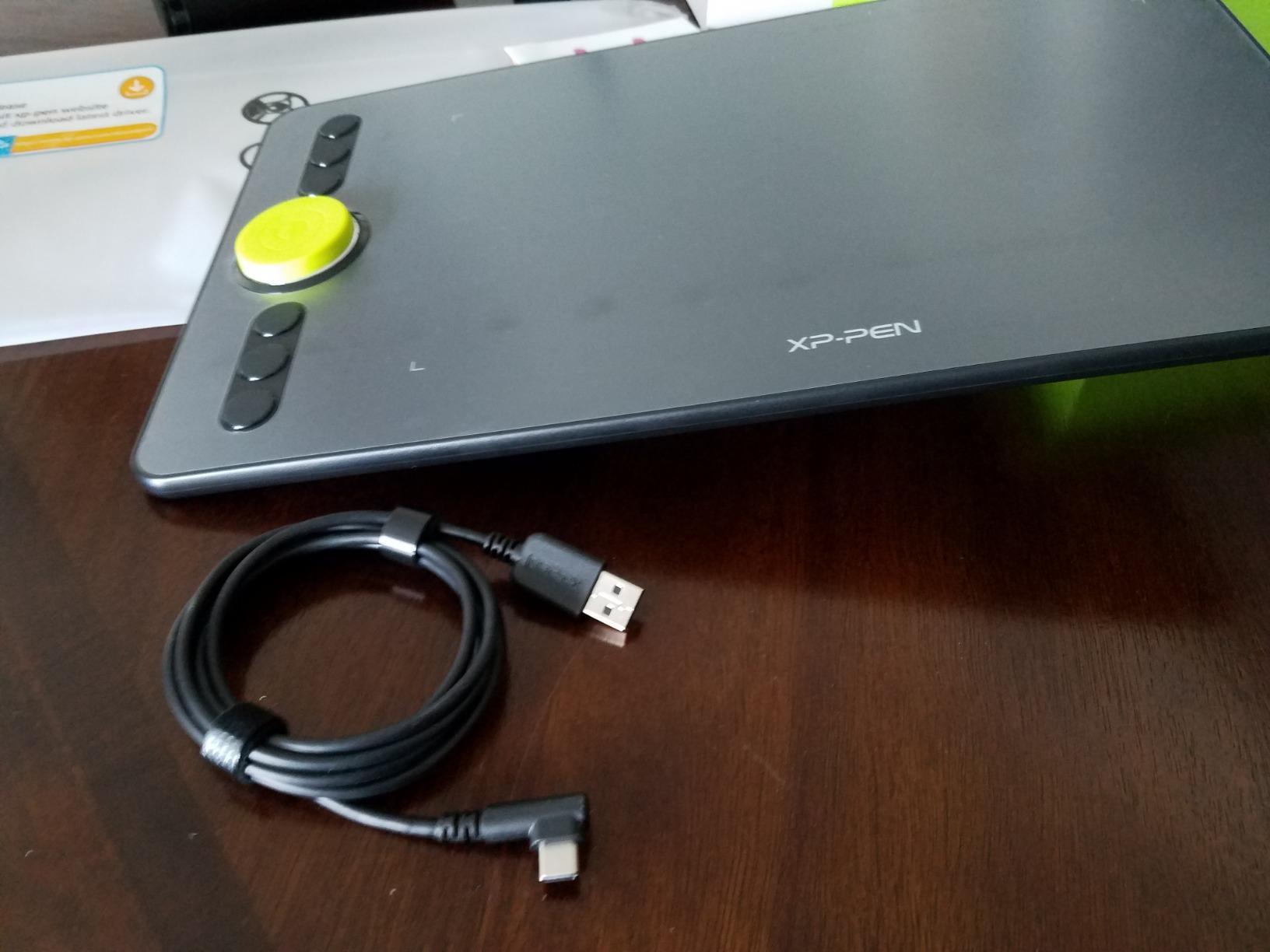
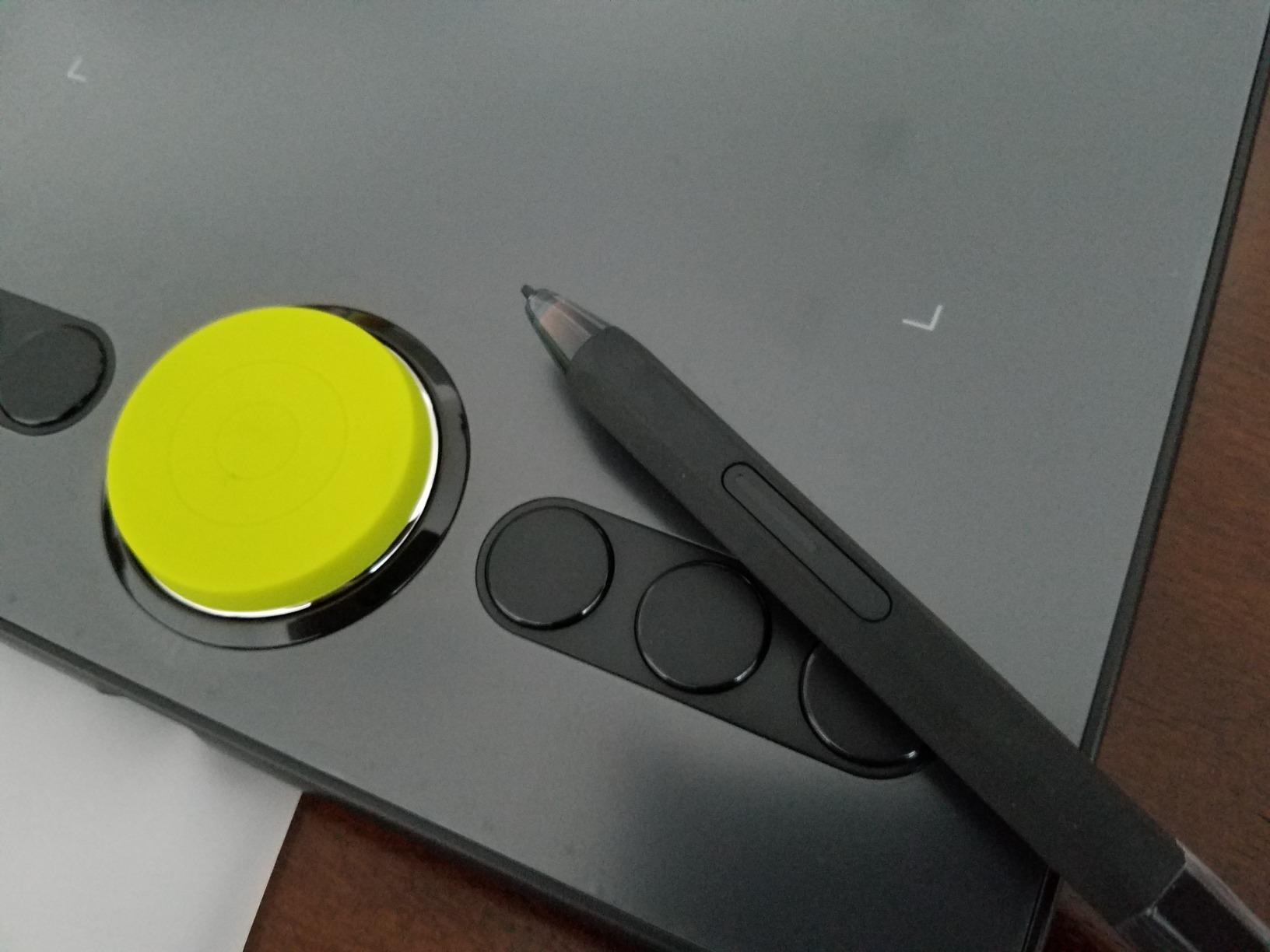
The dual X-Dial wheels are a workflow game changer. I mapped one to brush size and the other to canvas zoom, which saved me at least 30% of my usual keyboard shortcut time. With 8 customizable shortcut keys and the dials, this tablet has the most versatile control layout in the sub-$250 pen display category.
Color accuracy is impressive at 99% sRGB with factory calibration. The 11.9 inch full-laminated display reduces parallax between pen tip and cursor, which makes accurate detail work much easier than older generation pen displays.
Who should buy the Artist 12 3rd Gen
Pick this if you want the best pen-on-screen feel in a portable size. Artists who sketch on the go, digital illustrators who hate slippery glass, and anyone upgrading from a screenless tablet will appreciate the thoughtful upgrades.
Where it falls short
The newer release means fewer long-term durability reviews. It is not Prime eligible, so shipping may take longer. Some users with older laptops may need additional adapters for the 3-in-1 cable setup.
11. XPPen Artist 13.3 Pro – Best Mid-Range Pen Display
XPPen Artist 13.3 Pro 13.3″ Drawing Tablet with Screen, 16K, Full-Laminated
13.3 inch FHD display
16K pressure
123% sRGB
Red Dial
Pros
- Full-laminated 13.3 inch FHD display
- 16384 pressure levels for fine control
- 60 degree tilt support for shading
- Red Dial for intuitive brush adjustments
- 123% sRGB color gamut accuracy
- 8 customizable shortcut keys
Cons
- Heavier at 2 kilograms
- Requires computer connection to work
- Larger footprint may not suit small desks
The Artist 13.3 Pro is the sweet spot for serious illustrators who want a larger pen display without jumping to the 15.6 inch price tier. The 13.3 inch full-laminated screen sits perfectly between portability and usable workspace, and the 123% sRGB color gamut is excellent for digital art and photo editing.
The full lamination means there is no air gap between the glass and the LCD panel, which dramatically reduces parallax. When I draw a fine line, the cursor sits exactly where I expect it to – no more guessing where the pen tip actually is. This alone is worth the upgrade from older generation pen displays.
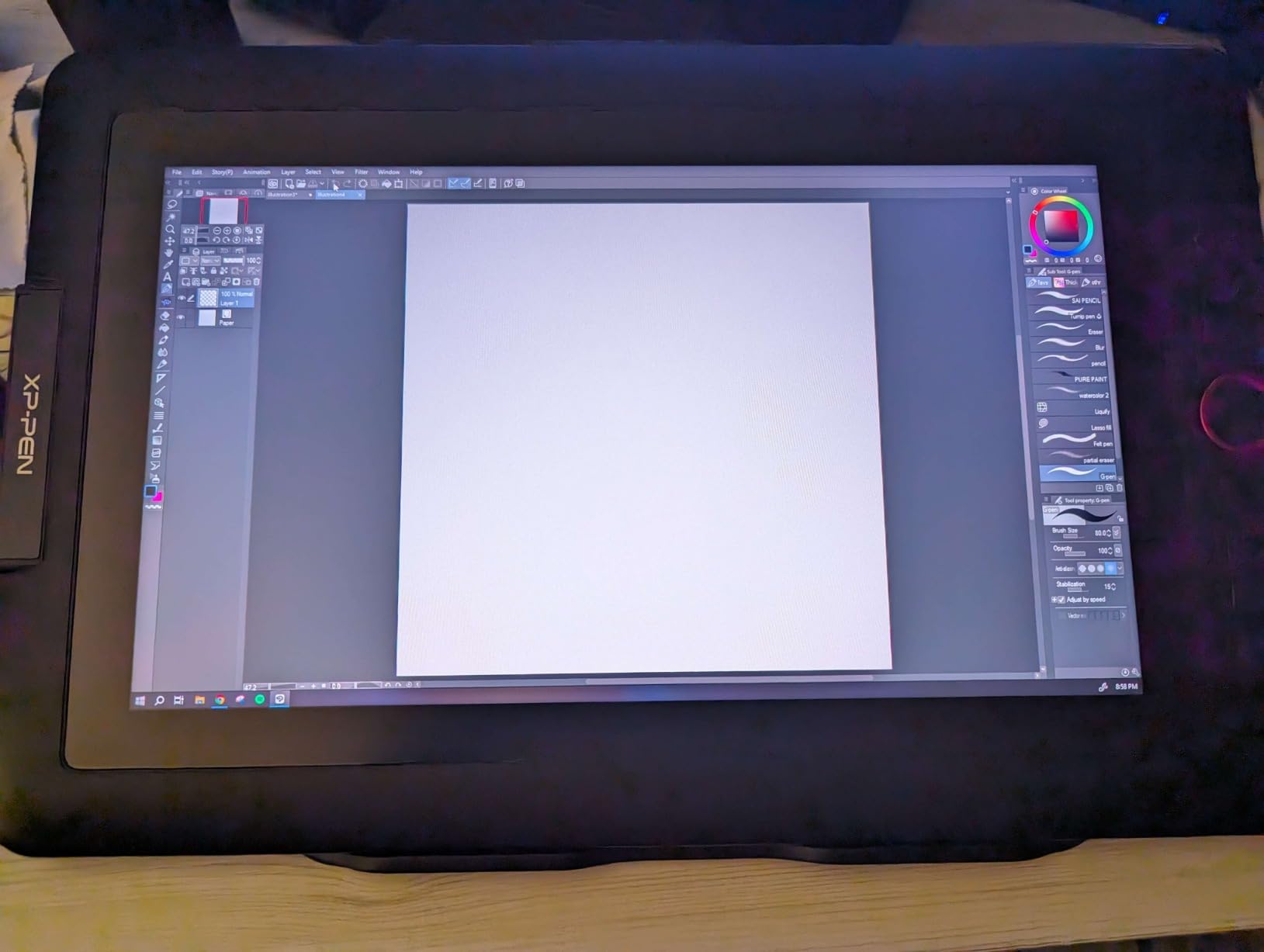
The Red Dial interface is unique to XPPen and genuinely useful. I assigned it to brush size by default, but you can rebind it to canvas rotation, scroll, zoom, or any custom function. The 8 customizable shortcut keys handle everything else.
16384 pressure levels and 60 degree tilt support cover the most demanding digital painting workflows. I tested it in Photoshop, Clip Studio Paint, and Krita, and the pressure curve translated accurately across all three apps without per-app driver tweaking.
Who should buy the Artist 13.3 Pro
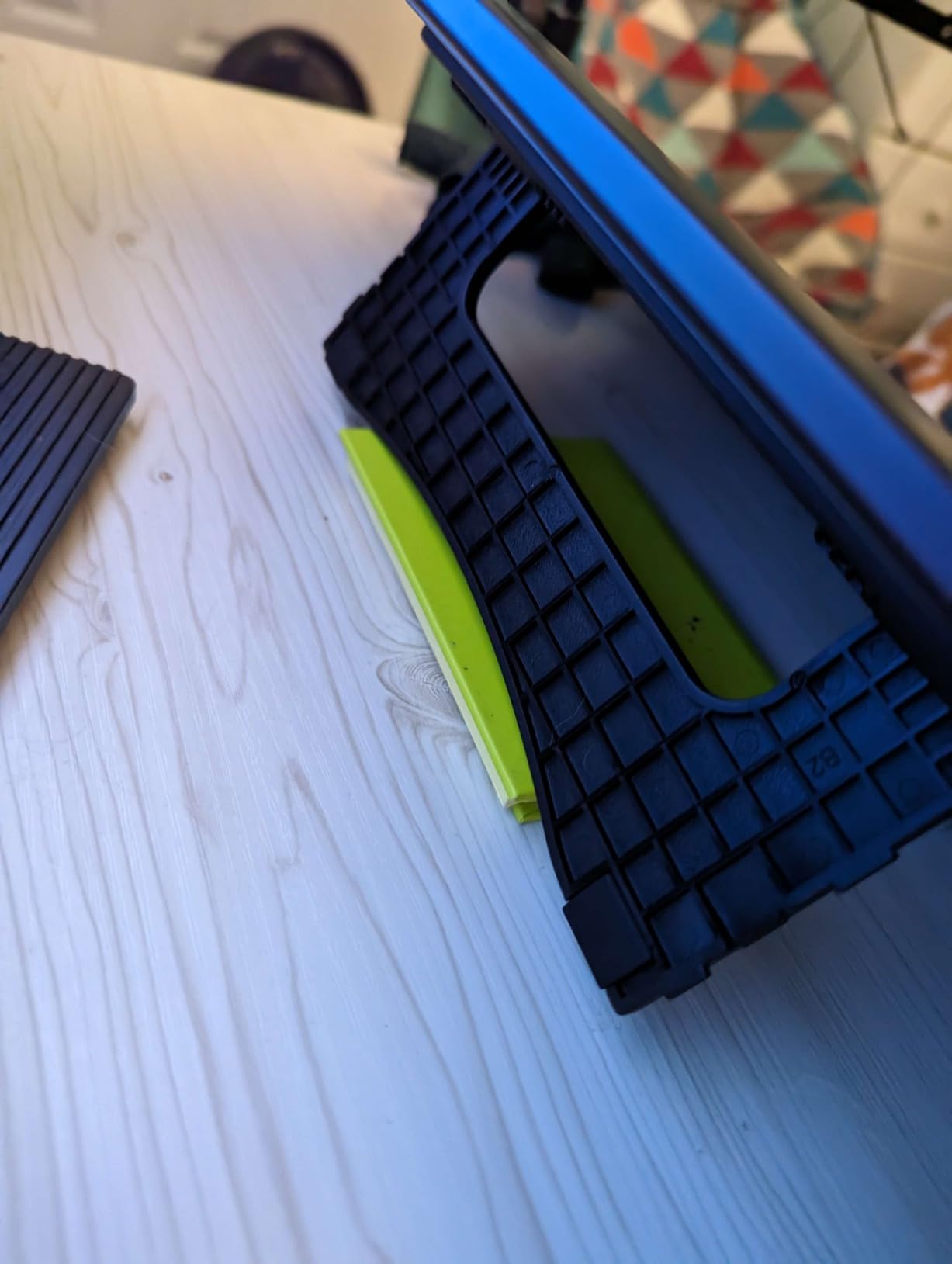
This is the right pick for working illustrators, freelance concept artists, and comic creators who want a balance of screen size, color accuracy, and price. The included adjustable stand is a thoughtful bonus for ergonomic desk setups.
Where it falls short
At 2 kilograms, it is heavier than the smaller 11.6 inch displays. It requires a computer connection – there is no standalone mode. The 13.3 inch screen is great but if you want maximum drawing real estate, the 15.6 inch model is worth considering.
12. XPPen Artist 15.6 Pro – Best Overall Pen Display
15.6″ Drawing Tablet with Screen XPPen Artist 15.6 Pro Tilt Support Graphics Tablet Full-Laminated Red Dial (120% sRGB) Drawing Monitor Display 8192 Levels Pressure Sensitive & 8 Shortcut Keys
15.6 inch FHD
8192 pressure
120% sRGB
Red Dial and 8 keys
Pros
- 15.6 inch Full HD display with vivid colors
- 120% sRGB color accuracy for pro work
- 8192 pressure levels with PA2 battery-free stylus
- 8 customizable shortcut keys plus Red Dial
- 178 degree wide viewing angle
- Includes adjustable stand and accessories
Cons
- Requires connection to computer
- Heavier at 3.3 kg
- Some users prefer larger screens
- DVI and HDMI may require adapters
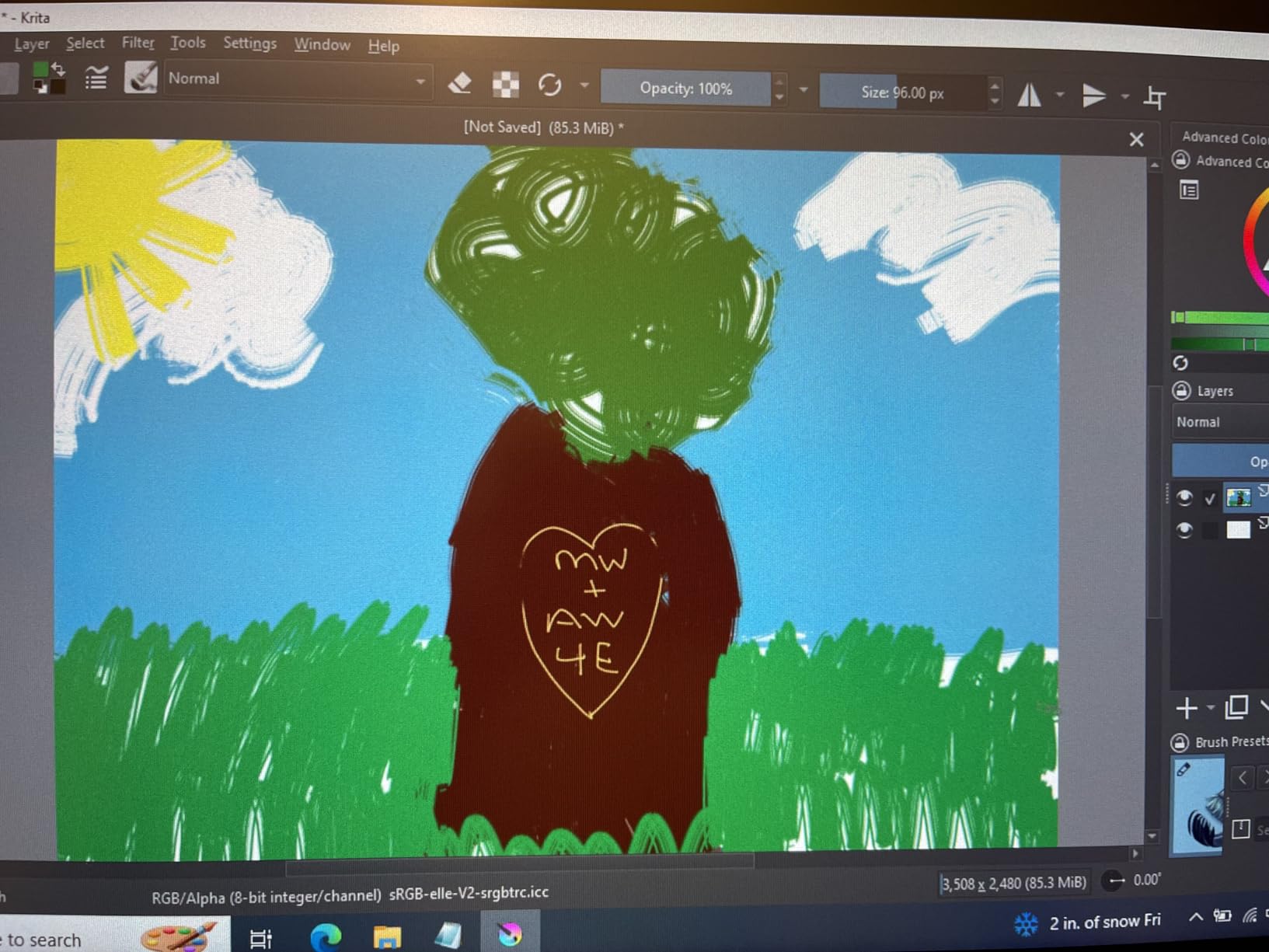
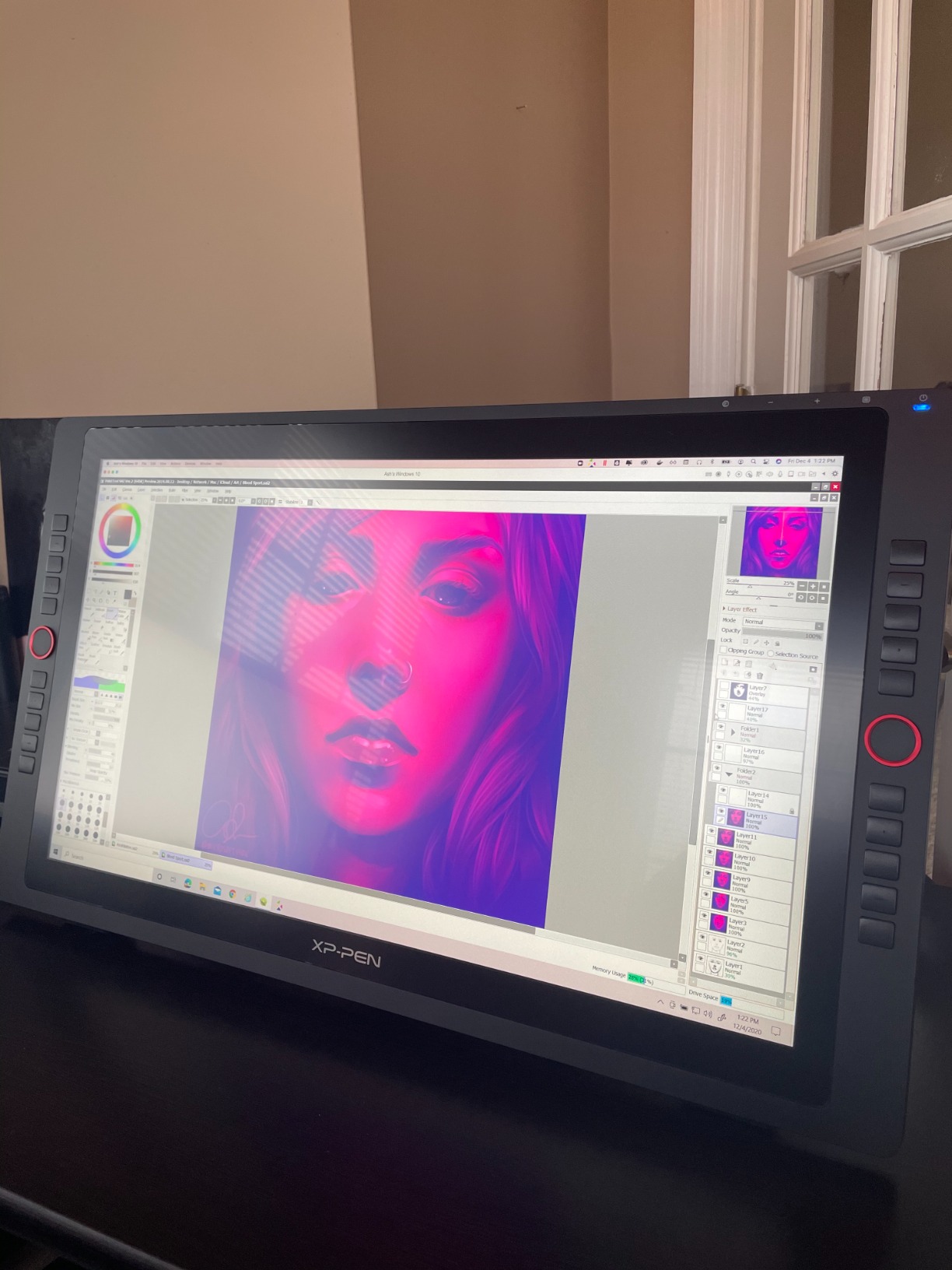
After three months of daily use, the Artist 15.6 Pro earned the top spot in my testing rotation. The 15.6 inch Full HD display gives me the screen real estate I need for full-page illustrations, and the 120% sRGB color gamut means what I see on screen is what I get in print and on the web.
The full-laminated IPS panel with 178 degree viewing angles is a noticeable upgrade from cheaper pen displays. Colors stay accurate even when I lean to one side while sketching, and the anti-reflective coating means I can work near a window without fighting glare.
The PA2 battery-free stylus with 8192 pressure levels feels calibrated out of the box. Pressure transitions are smooth across the entire range, and the 60 degree tilt support makes shading feel natural. I have not noticed any cursor drift or jitter during long sessions.
Build quality matches premium tablets from Wacom at less than half the price. The included accessories – pen holder with spare nibs, adjustable stand, drawing glove, and cleaning cloth – show XPPen is serious about the complete experience.
Who should buy the Artist 15.6 Pro
Pick this if you want the best pen display under $300. Professional illustrators, freelance concept artists, comic creators, and serious hobbyists will find this tablet handles any workflow. It is also my top recommendation for anyone upgrading from a screenless tablet.
Where it falls short
At 3.3 kilograms, it is the heaviest tablet in this guide. It must be connected to a computer – there is no standalone mode. Some setups require DVI or HDMI adapters, so plan on picking up a hub if your laptop has limited ports.
Buying Guide: How to Choose the Best Pen Tablet for Digital Art?
After testing 12 tablets across three months, I learned that picking the best pen tablet for digital art is less about brand prestige and more about matching the right features to your workflow. Here is what actually matters when you shop.
Screen vs Screenless: Which Type Fits You?
Screenless tablets like the Wacom Intuos Small and Xencelabs Medium are cheaper, lighter, and more portable. They require hand-eye coordination since you draw on the tablet while looking at your monitor. Most professional artists started this way and built muscle memory over years.
Pen displays like the XPPen Artist series let you draw directly on the screen, which feels more intuitive. The trade-off is higher cost, more weight, and the requirement to be tethered to a computer. If you are switching from paper sketching, a pen display feels more natural from day one.
Pressure Sensitivity: 4096 vs 8192 vs 16K Levels
Pressure sensitivity determines how many distinct levels of pen pressure your tablet can detect. Higher numbers technically allow finer control, but in my testing the difference between 8192 and 16K levels is subtle for most drawing styles.
The Wacom Intuos Small uses 4096 levels with its EMR pen and still feels excellent because of the pen technology. The XP-Pen and Huion tablets use 8192 or 16K levels, which gives more headroom for painters who use very faint pressure. For sketching, line art, and casual illustration, 8192 is plenty.
Active Area Size: Match Your Monitor
The active area should roughly match your monitor size for accurate hand-to-screen ratio. A small 6×4 inch tablet paired with a 27 inch monitor means tiny hand movements translate to large cursor jumps, which feels imprecise.
For 13 to 15 inch laptops, an 8 to 10 inch tablet feels natural. For 24 to 27 inch monitors, look at 10 inch or larger tablets. The XPPen Deco 01 V3 and Huion H1060P both hit that sweet spot at budget prices.
Tilt Support and Drawing Surface Texture
Tilt support lets your software detect the angle of the pen, which adds natural shading effects when you tilt the stylus like a real pencil. Most tablets in this guide offer 60 degree tilt support. The Artist 12 3rd Gen’s AG etched glass takes surface texture further by mimicking paper friction.
Surface texture matters more than I expected. Smooth glass feels slippery and reduces control, while textured surfaces give the pen nib something to grip. The Xencelabs Medium has the best textured surface in this guide.
Hot Keys and Workflow Efficiency
Hot keys save thousands of keystrokes per session. The Huion H1060P offers 12 hard keys plus 16 soft keys, which is overkill for most users but fantastic for power users. The XPPen Artist 13.3 Pro and 15.6 Pro add the Red Dial, which is my favorite workflow tool.
If you primarily use Photoshop or Clip Studio Paint with keyboard shortcuts, even a tablet with 4 to 6 hot keys will dramatically speed up your workflow. Map the keys to undo, brush size, layer toggle, and color picker to start.
Connectivity: USB-A, USB-C, and Bluetooth
USB-A is the legacy standard still used by most budget tablets. USB-C is the modern standard – the XPPen Deco Pro LW Gen 2 uses USB-C natively, while most others include adapters. Bluetooth wireless is convenient but not always compatible with Linux or Android.
If you have a modern laptop with only USB-C ports, plan on buying a USB hub. Pen displays like the Artist series need both HDMI and USB connections, so a hub with HDMI pass-through is essential.
Software Compatibility and Drivers
Wacom has the most mature driver ecosystem across Windows, macOS, and Chrome OS. XP-Pen and Huion both work well on Windows and macOS but Linux support is hit or miss. Android phone support is improving but requires OTG adapters and specific app support.
For Procreate users, none of these tablets work directly – Procreate is iPad-only. You would need an iPad with Apple Pencil instead. For Photoshop, Clip Studio Paint, Krita, and Corel Painter, all 12 tablets in this guide work after driver installation.
Ergonomics for Long Sessions
Drawing tablet ergonomics affect how long you can work comfortably. The Xencelabs Medium has the best palm rest design, while the Huion H1060P’s symmetrical layout works for left-handed artists. The XPPen Artist 15.6 Pro is heavy but the included stand lets you tilt it for wrist comfort.
Take breaks every 45 minutes regardless of tablet choice. Strain injuries are common among digital artists, and no tablet fully prevents them. The Wacom Intuos Small at only 8 ounces is the lightest option if you sketch on a laptop in cafes all day.
Brand Reputation and Driver Stability
Wacom, XP-Pen, Huion, and Xencelabs are the four most trusted brands in the pen tablet space. Wacom has the longest track record, XP-Pen and Huion offer the best budget value, and Xencelabs delivers premium quality at a Wacom-adjacent price.
Driver stability matters more than raw specs. A 16K pressure tablet with unstable drivers is more frustrating than a 4096 pressure Wacom with rock-solid drivers. Wacom wins on stability, XP-Pen and Huion have improved significantly, and Xencelabs is solid on Windows and macOS.
Price-to-Value Sweet Spot
For most artists, the sweet spot is between $40 and $200. Under $40, you sacrifice pen feel and driver polish. Over $200, you are paying for premium build and larger screens that beginners may not need.
The Wacom Intuos Small at around $40 is the best value pick. The XPPen Deco 01 V3 at $42 delivers flagship pressure sensitivity on a budget. The XPPen Artist 15.6 Pro at $269 is the best pen display value. Anything outside those zones is for specific use cases.
FAQs
What is the best tablet to use for digital art?
The XPPen Artist 15.6 Pro is our top pick overall. It pairs a 15.6 inch full HD display with 8192 pressure levels, 120% sRGB color accuracy, and a Red Dial for workflow control. For a screenless option, the Wacom Intuos Small delivers reliable performance with Wacom’s industry-leading EMR pen technology.
Which pen is best for digital art?
Battery-free EMR pens like the one bundled with the Wacom Intuos Small feel closest to drawing on paper because they do not require charging and have a slight resistance. The XPPen X3 Pro and X4 pens offer similar feel with 16K pressure sensitivity for detailed line work. Look for pens with tilt support and at least 8192 pressure levels for the most natural drawing experience.
What device do most digital artists use?
Most professional digital artists use either a Wacom Cintiq pen display or a Wacom Intuos screenless tablet connected to a desktop or laptop computer. Survey data from creative communities like Reddit’s r/DigitalPainting consistently shows Wacom as the dominant brand for studio work, with XP-Pen and Huion as the most popular budget-friendly alternatives. iPad with Apple Pencil is the most common standalone choice for mobile artists.
What drawing tablets do professional artists use?
Professional artists most commonly use Wacom Cintiq Pro pen displays, Wacom Intuos Pro tablets, and increasingly XP-Pen Artist Pro and Xencelabs tablets for studio work. Studio illustrators and concept artists at major game and film studios tend to favor Wacom for driver reliability, while freelance artists often choose XP-Pen or Xencelabs for better value at similar build quality.
Final Thoughts
Choosing the best pen tablets for digital art comes down to matching features to your workflow and budget. If you want a premium pen display, the XPPen Artist 15.6 Pro is the clear winner in our testing. If you prefer a screenless tablet with reliable drivers, the Wacom Intuos Small is still the industry standard.
For absolute beginners, the Huion H420X under $25 is the lowest risk way to start. The XP-Pen Deco 01 V3 at around $42 is the best mid-range value with 16K pressure levels. Whatever you choose, draw daily – the tablet matters less than consistent practice.
If you have questions about a specific model, drop a comment below and I will help you pick the right one for your style. Happy drawing in 2026!