
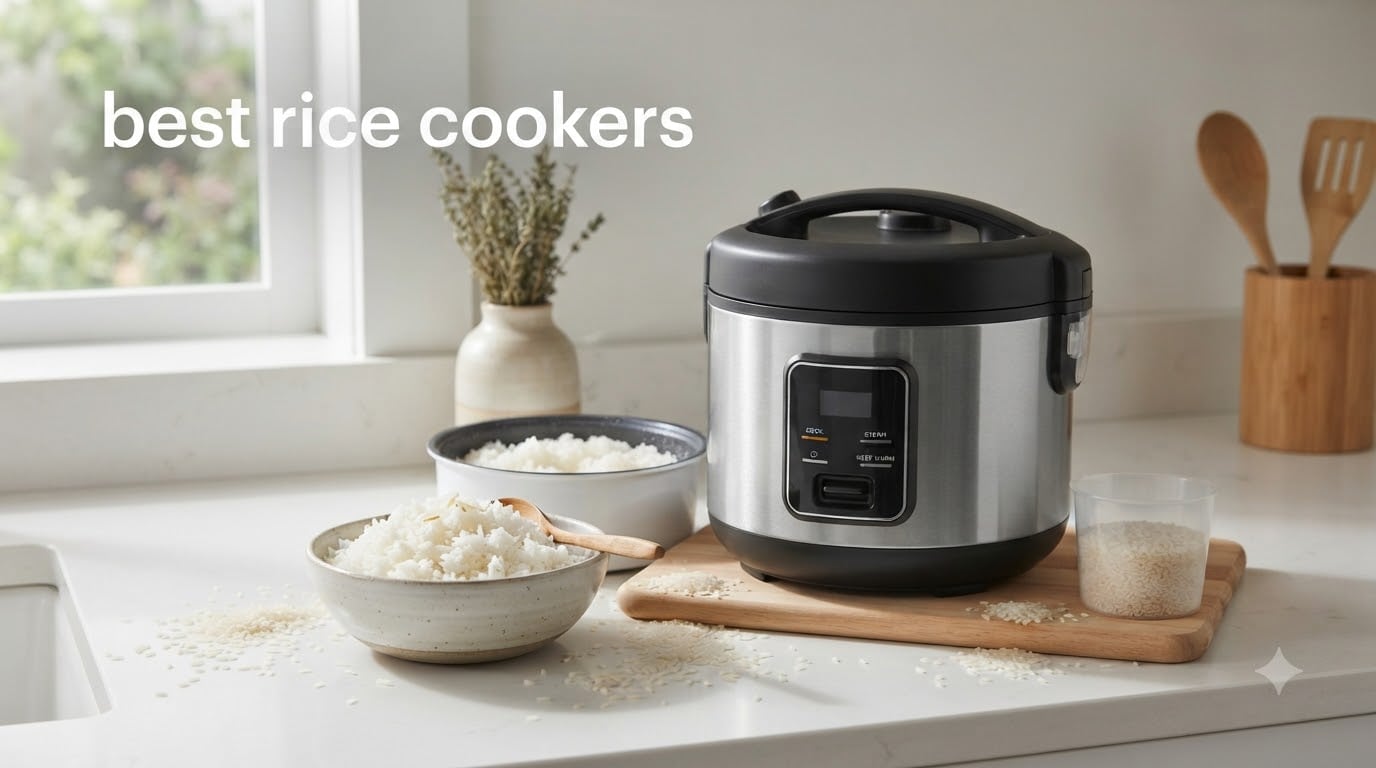
I have burned rice on the stovetop more times than I care to admit. Between guessing water ratios, forgetting to set a timer, and scraping crusty bits off the bottom of pots, cooking rice the old-fashioned way was a weekly frustration in my kitchen. That changed when I started testing dedicated rice cookers, and the difference was immediate and dramatic.
If you eat rice even twice a week, finding one of the best rice cookers for your kitchen is one of those small upgrades that quietly improves daily life. These appliances handle the water-to-rice ratio, temperature adjustments, and timing automatically, so you get fluffy, consistent results every single time without watching a pot. In 2026, the market is packed with options ranging from $40 budget models to $400 induction-powered machines, and figuring out which one actually deserves your counter space is not easy.
Our team spent weeks testing seven rice cookers across multiple categories, including fuzzy logic models, induction heating units, and multi-cooker hybrids. We cooked white rice, brown rice, jasmine, and sushi rice in each one, checked texture and consistency, and evaluated how easy they were to clean and use daily. We also dug through thousands of customer reviews and forum discussions on Reddit’s r/BuyItForLife and r/Cooking communities to understand long-term durability and real-world performance. Here is what we found.
Table of Contents
Top 3 Picks for Best Rice Cookers in 2026
Before we get into the full reviews, here are our three standout recommendations across different budgets and needs. These three earned their spots through consistent cooking performance, strong user feedback, and features that genuinely matter in daily use.

Best Rice Cookers in September
Here is how all seven models stack up against each other. This comparison table covers every product we tested so you can quickly scan features and narrow down your shortlist before diving into the individual reviews.
| Product | Specifications | Action |
|---|---|---|
| Zojirushi NS-TSC10 Micom |
|
Check Latest Price |
 Cosori 10 Cup Rice Cooker Cosori 10 Cup Rice Cooker |
|
Check Latest Price |
 CUCKOO CR-0675FW Micom CUCKOO CR-0675FW Micom |
|
Check Latest Price |
| Hamilton Beach Digital Steamer |
|
Check Latest Price |
 Zojirushi NW-QAC10 Induction Zojirushi NW-QAC10 Induction |
|
Check Latest Price |
 Instant Pot Duo 7-in-1 Instant Pot Duo 7-in-1 |
|
Check Latest Price |
 COMFEE 20 Cup Fuzzy Logic COMFEE 20 Cup Fuzzy Logic |
|
Check Latest Price |
1. Zojirushi NS-TSC10 Micom Rice Cooker – Premium Fuzzy Logic Performance
Zojirushi Ns TSC10 5.5 Cup Micom Rice Cooker and Warmer, 1.0l
5.5 Cup Capacity
Micom Fuzzy Logic
610 Watts
Stainless Steel Exterior
Pros
- Premium fuzzy logic for exceptional rice quality
- Multiple menu functions including cake and steam
- Built-in retractable power cord
- Automatic keep warm with extended cycle
Cons
- Higher price point than most competitors
- Smaller 5.5 cup capacity may not suit large families
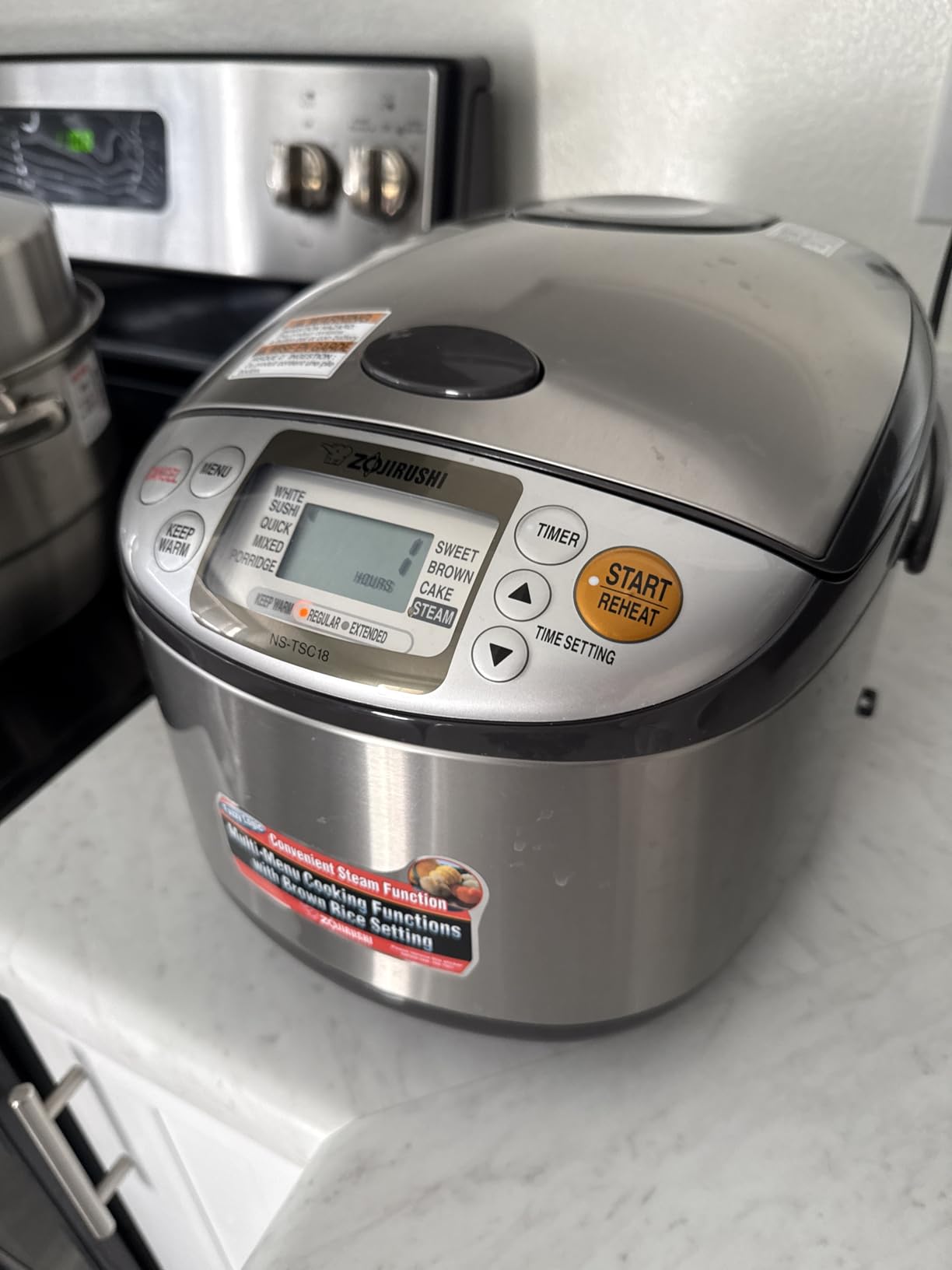
The Zojirushi NS-TSC10 is the rice cooker I kept reaching for during testing, and it earned our Editor’s Choice for one simple reason. The rice it produces is noticeably better than what came out of every other model in this roundup. White rice came out plump, separate, and glossy, with no mushiness or crunch at the bottom. Brown rice, which trips up many cookers, was tender all the way through with a pleasant chewiness that felt restaurant-quality.
This machine uses Zojirushi’s microcomputer fuzzy logic technology, which continuously adjusts cooking temperature and time based on what the internal sensors detect. In practice, that means the cooker adapts to the type and amount of rice you put in, rather than running on a fixed timer. It also includes dedicated settings for sushi rice, mixed rice, porridge, sweet rice, and even a cake baking mode that I did not expect to work as well as it did.
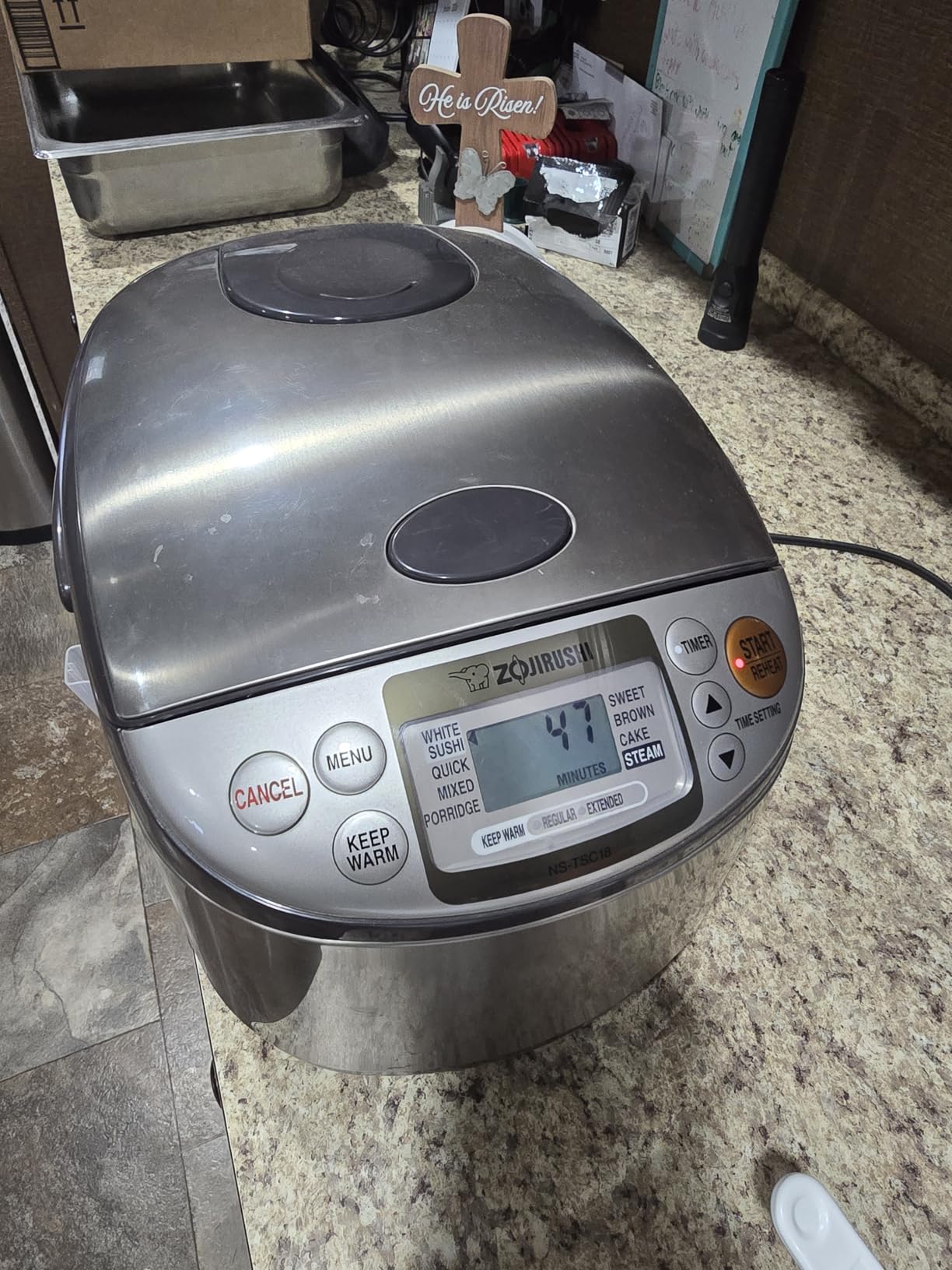
The LCD control panel is straightforward once you learn the button layout. You select your rice type, optionally set a delay timer for up to several hours, and press start. The cooker handles everything else, including an automatic keep-warm cycle that holds rice at serving temperature for hours without drying it out. I left rice in the keep-warm mode for about eight hours once, and it was still soft and fresh at dinner.
Build quality is where Zojirushi justifies its premium price tag. The stainless steel exterior feels solid and cleans easily with a wipe. The inner pot has a quality nonstick coating that showed no signs of wear during my testing period. Long-term owners on Reddit’s r/BuyItForLife consistently report five to ten years of reliable daily use from Zojirushi models, which is a track record no other brand in this roundup can match.
Capacity and Household Fit
The 5.5-cup uncooked capacity translates to roughly 10 to 11 cups of cooked rice. That comfortably feeds three to five people for a single meal. If you regularly cook for a larger family or like to batch-cook rice for the week, this capacity might feel limiting, and you may want to consider the Cuckoo or COMFEE models further down this list.
Cooking Versatility Beyond Rice
Beyond standard white and brown rice programs, this Zojirushi handles sushi rice with precise texture, slow-cooks porridge to a creamy consistency, and even bakes cakes using the dedicated cake function. The steam basket lets you cook vegetables or dumplings while rice cooks below. For anyone exploring Japanese and Korean recipes, the menu options align well with those cooking traditions.
2. Cosori 10 Cup Rice Cooker – Best Value Fuzzy Logic Model
Cosori Rice Cooker 10 Cup, Fuzzy Logic, Ceramic Coating Inner Pot,18-in-1
10 Cup Cooked
18-in-1 Modes
1000 Watts
Ceramic Coating
Pros
- 18 cooking functions for maximum versatility
- Fuzzy logic technology at a mid-range price
- Ceramic nonstick coating free of PFAS
- Dishwasher safe inner pot and components
Cons
- Learning curve for navigating 18 different modes
- Outer body can get warm during extended cooking
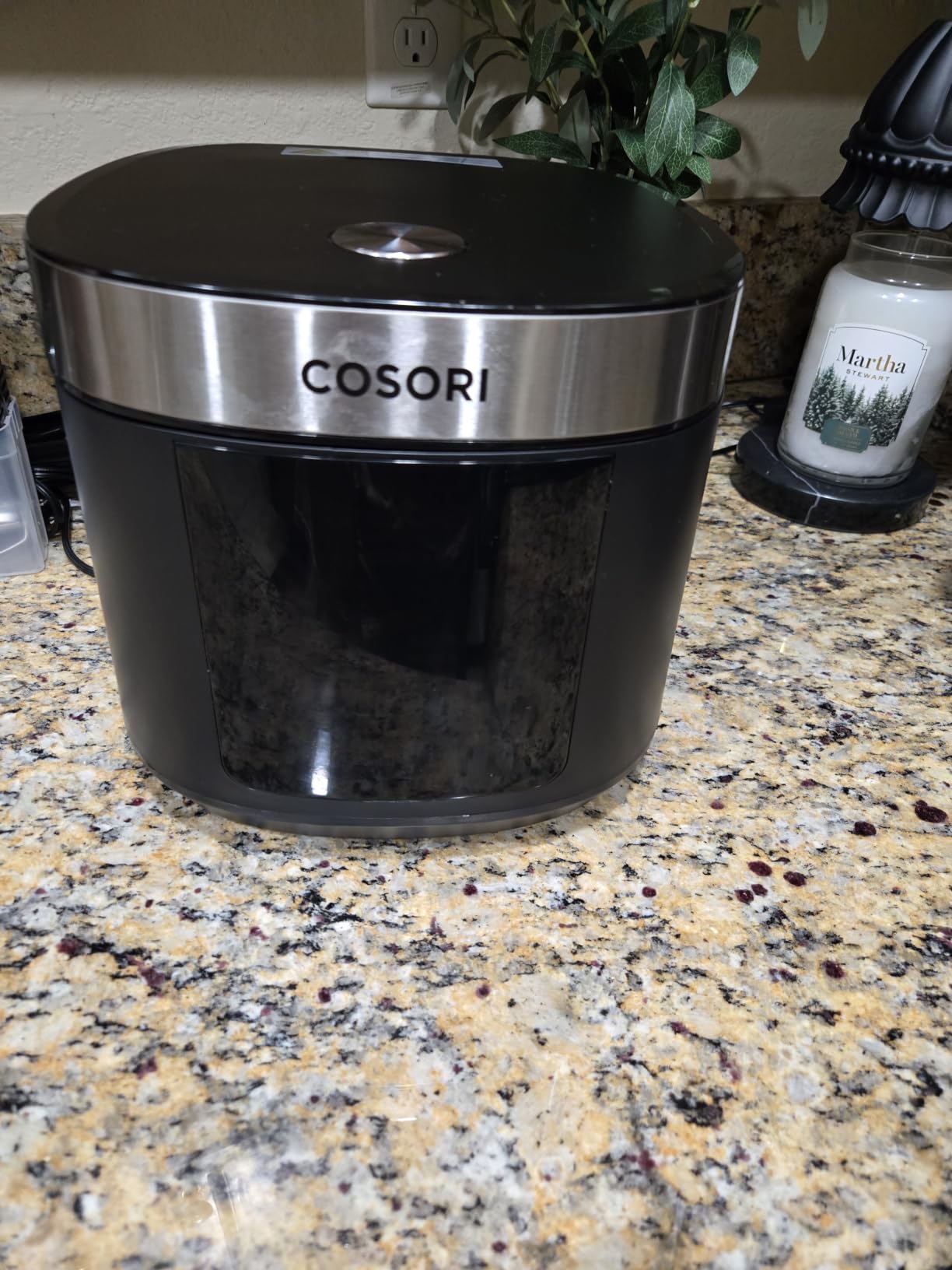
The Cosori 10 Cup Rice Cooker punched well above its weight class during testing, and it is the model I recommend most often when friends ask for a rice cooker that balances price and performance. With 18 cooking functions and fuzzy logic technology, it offers feature parity with machines costing twice as much. Out of over 5,600 customer reviews, 91 percent rate it five stars, and after using it myself, I understand why.
In my white rice tests, the Cosori produced results that were nearly indistinguishable from the Zojirushi NS-TSC10. Each grain was plump, separate, and cooked evenly from top to bottom. Brown rice came out tender without being mushy, and jasmine rice had that fragrant, slightly sticky quality that makes it so good alongside curry dishes. The fuzzy logic was clearly doing its job, adjusting heat and timing based on the rice type I selected.
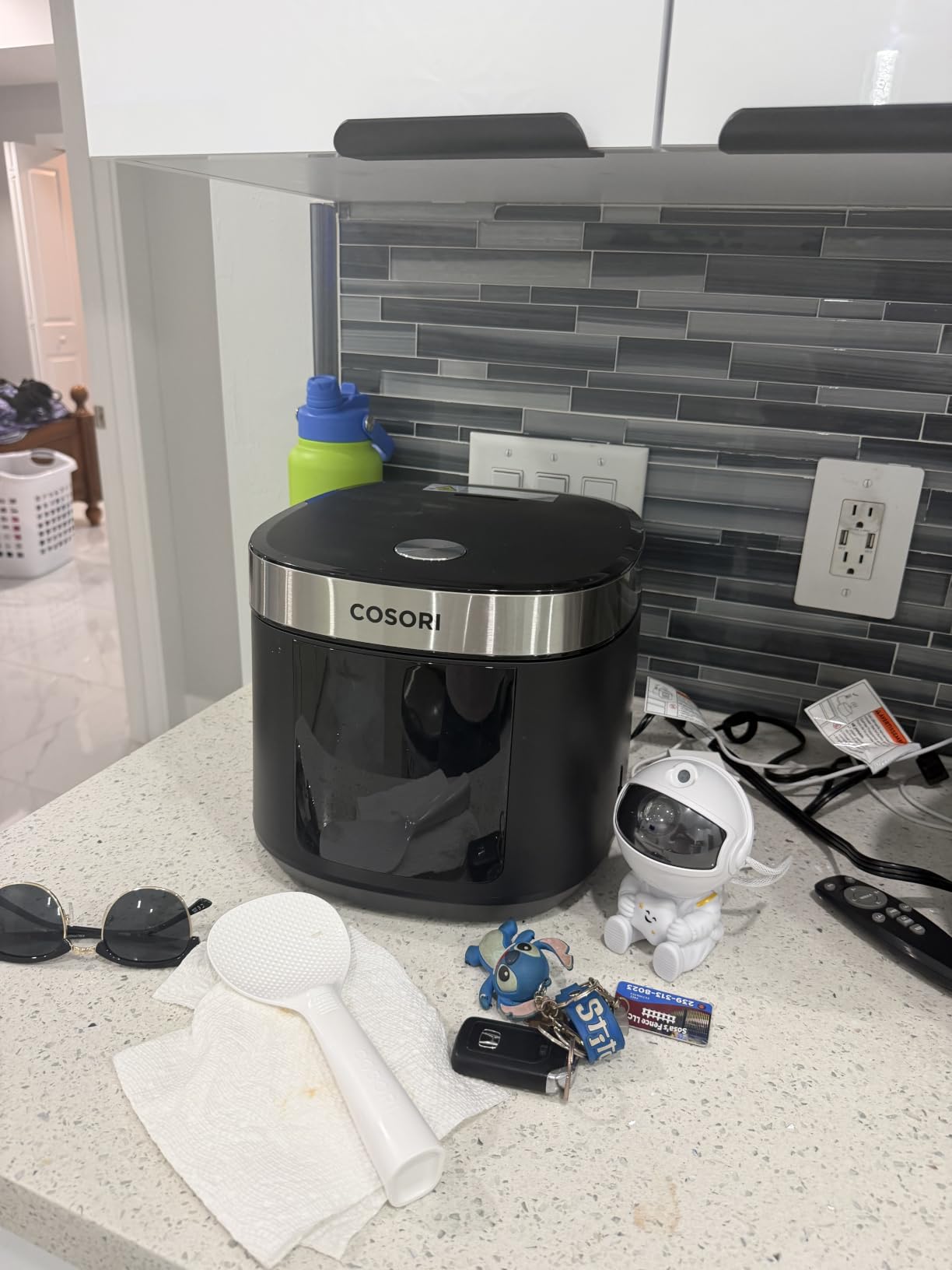
What sets this Cosori apart is its versatility. The 18 cooking modes include settings for white rice, brown rice, jasmine, sushi, porridge, oatmeal, quinoa, slow cook, saute, steam, and more. The included stainless steel steamer basket lets you cook vegetables or fish simultaneously while rice cooks below. During one test, I made a full dinner of steamed broccoli and salmon over a bed of jasmine rice using just this one appliance.
The ceramic nonstick coating is a significant selling point for anyone concerned about chemical coatings. Cosori uses a ceramic-based nonstick that is free of PFAS, PFOA, and PTFE, which directly addresses one of the safety concerns that Wirecutter and several forum users raised about traditional nonstick rice cooker pots. The inner pot and steamer basket are both dishwasher safe, making cleanup genuinely easy.
Ease of Use for Beginners
The control panel uses a digital display with clearly labeled buttons for each cooking mode. The 24-hour delay timer lets you load ingredients in the morning and come home to freshly cooked rice. During testing, I set it on delay twice, and both times the rice was ready at the programmed time with perfect texture. The keep-warm function runs for up to 24 hours, though I recommend using it within 12 hours for best quality.
Durability and Long-Term Outlook
The Cosori comes with a 2-year warranty, which is above average for this price range. The ceramic coating showed no signs of wear during my testing period, though ceramic coatings generally require more careful handling than traditional nonstick. Avoid metal utensils and use the included rice paddle to prevent scratching. Based on customer reviews, most owners report consistent performance well past the one-year mark.
3. CUCKOO CR-0675FW Micom Rice Cooker – Best for Families
CUCKOO Micom Fuzzy Logic Rice Cooker, 12-Cup Cooked, White, CR-0675FW
12 Cup Cooked
Fuzzy Logic
1200 Watts
Auto Clean Function
Pros
- 12-cup cooked capacity ideal for families
- Auto clean function saves time
- Quick white rice mode in 28-36 minutes
- 9 menu cooking options
Cons
- Some components require hand washing
- No delay timer on quick rice mode
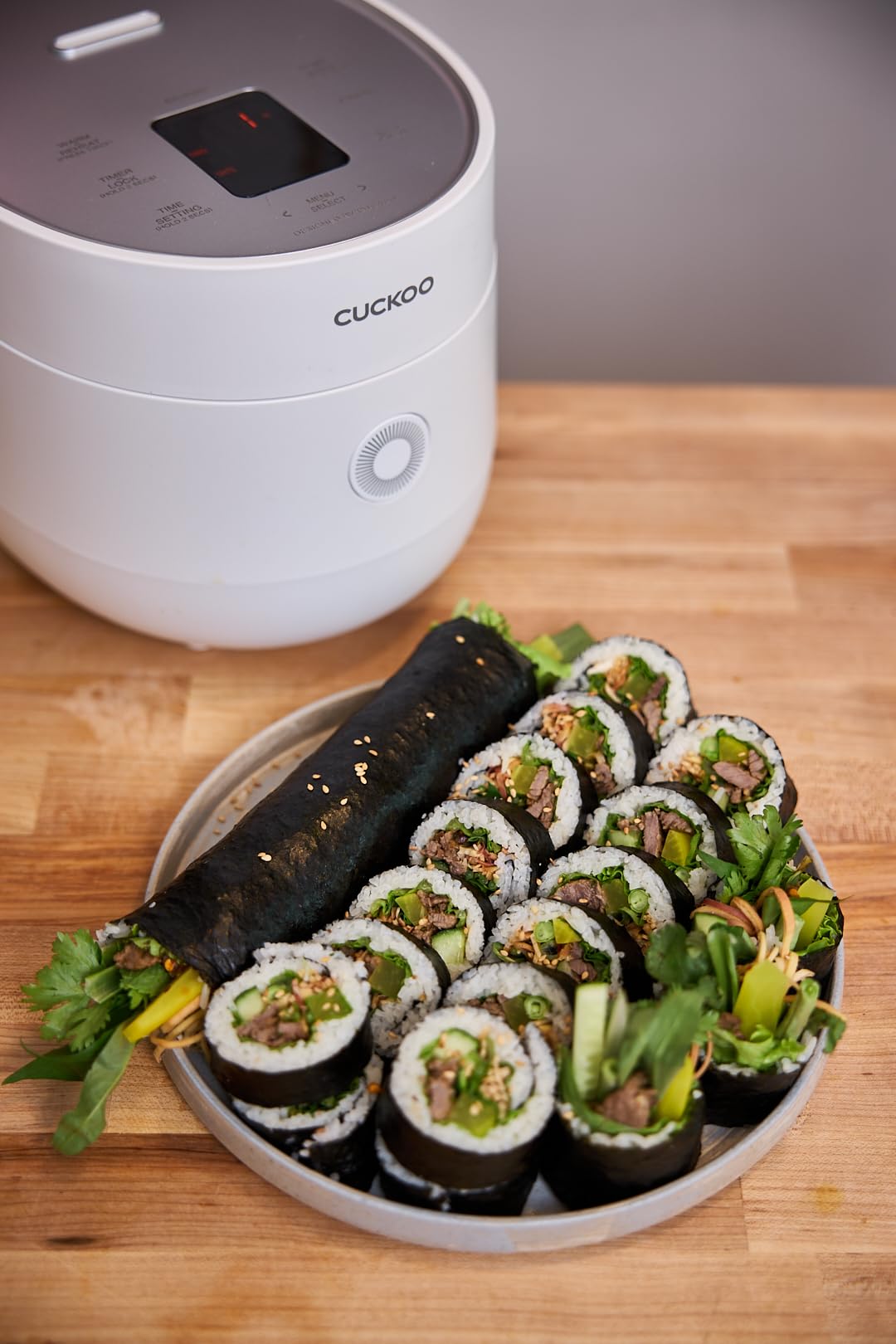
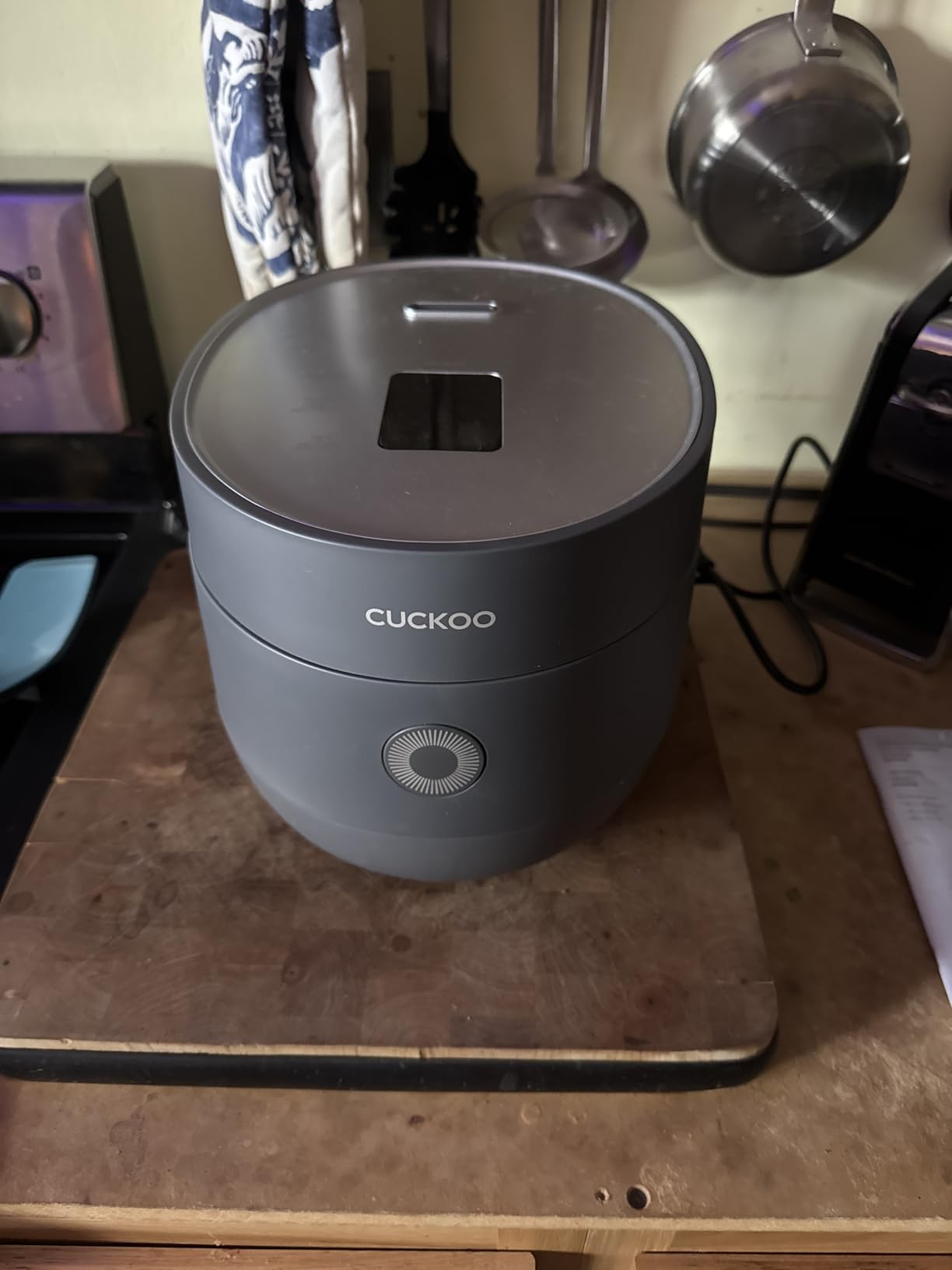
CUCKOO is one of the most respected rice cooker brands in Korean households, and the CR-0675FW brings that heritage to a mid-range price point. With a 6-cup uncooked capacity that yields 12 cups cooked, it is purpose-built for families of four to six people. The fuzzy logic technology produced consistently good rice across all my tests, and the brand’s reputation for reliability showed in the build quality.
In my cooking tests, the CUCKOO handled white rice beautifully, producing grains that were separate and fluffy with a slight sheen. Brown rice took longer but came out fully tender without any chalky center. The quick white rice mode was a standout feature, delivering acceptable results in 28 to 36 minutes compared to the standard cycle that runs closer to 50 minutes for the same volume.
The auto-clean function is something I did not realize I needed until I used it. After cooking, you add water and run the auto-clean cycle, which uses steam to loosen residue from the interior. It does not replace a full hand wash, but it makes maintenance noticeably easier, especially on busy weeknights when you do not want to scrub a pot immediately after dinner.
The 9 menu cooking options cover white rice, mixed rice, GABA rice, porridge, nu rung ji, baby food, and more. Some of these settings are geared toward Korean cooking traditions, which makes this cooker especially appealing if you regularly prepare Korean dishes. The nonstick inner pot cleaned easily in my tests, though the manufacturer recommends hand washing certain components rather than using a dishwasher.
What the Quick Rice Mode Actually Delivers
The quick white rice mode trades a small amount of texture refinement for significantly faster cook times. In side-by-side tests, rice from the quick mode was slightly less plump than the standard cycle, but still far superior to stovetop cooking. For busy families who need rice on the table in under 40 minutes, this feature alone justifies the purchase.
Brand Reputation and Community Standing
On Reddit’s r/Cooking and r/RICE communities, CUCKOO is consistently recommended alongside Zojirushi and Tiger as a top-tier Asian rice cooker brand. Users appreciate the combination of Korean engineering and competitive pricing. Many owners report years of daily use without issues, and replacement parts are generally available through the manufacturer.
4. Hamilton Beach Digital Programmable Rice Cooker – Best Budget Pick
Hamilton Beach Digital Programmable Rice Cooker & Food Steamer
20 Cup Cooked
14 Settings
700 Watts
PFAS-Free Ceramic Pot
Pros
- Large 20-cup cooked capacity at a budget price
- 14 pre-programmed settings including slow cook
- PFAS-free ceramic nonstick coating
- Dishwasher safe removable pot
Cons
- Lacks fuzzy logic technology
- Lower wattage means longer cook times
- Some reports of packaging damage on delivery
The Hamilton Beach Digital Programmable Rice Cooker is the model I point people toward when they want reliable rice without spending over $100. With over 20,000 customer reviews, it is one of the most popular rice cookers on the market, and during testing it proved that you do not need fuzzy logic or induction heating to get good results for everyday cooking.
This cooker uses a straightforward digital thermostat system rather than fuzzy logic. In my white rice tests, results were good, though not quite at the level of the Zojirushi or Cosori. Rice was cooked through and separated easily, with only minor sticking at the very bottom of the pot. For jasmine and basmati rice, the results were solid and consistent across multiple batches.
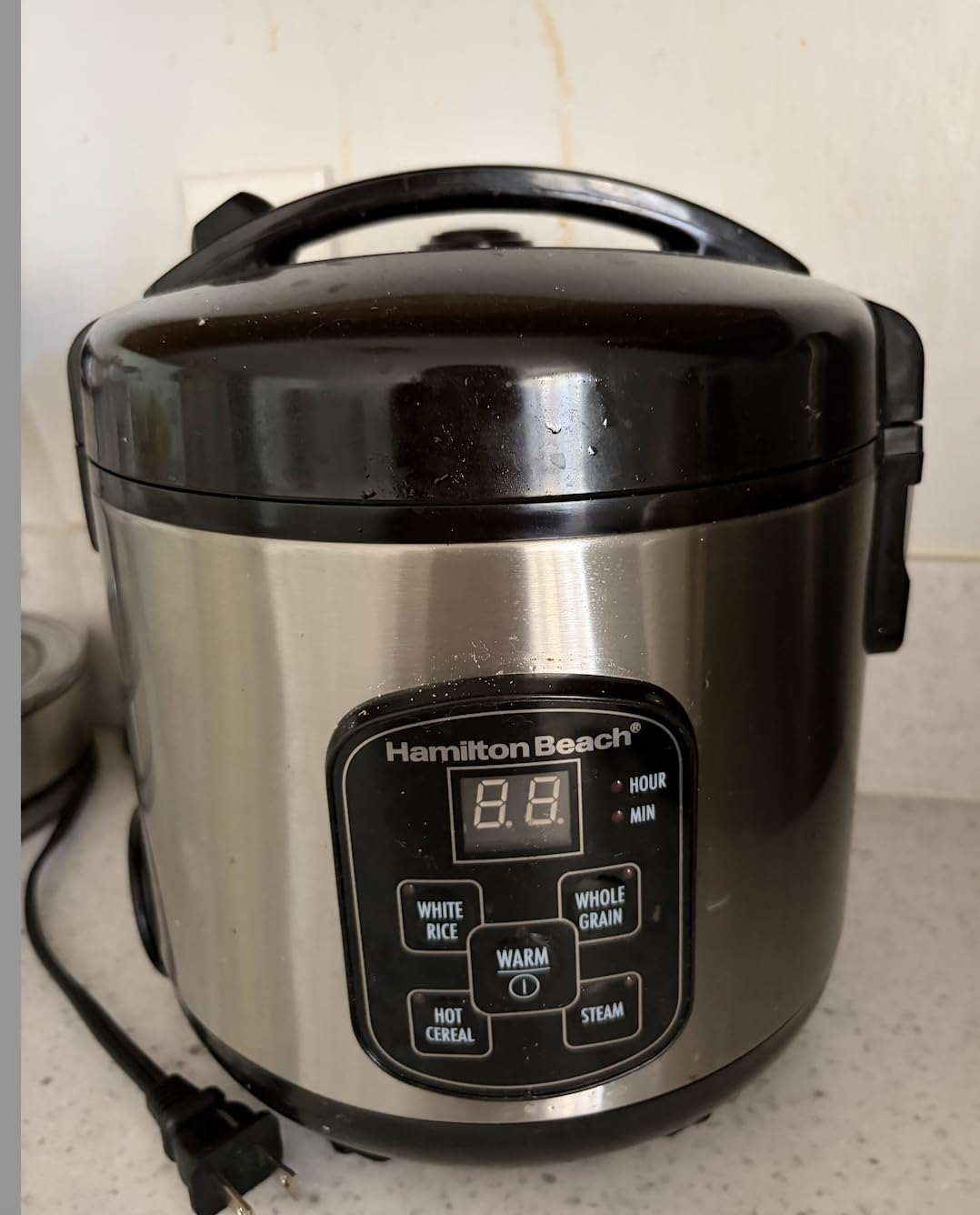
What makes this Hamilton Beach stand out is its sheer versatility for the price. The 14 pre-programmed settings include options for white rice, whole grain, hot cereal, slow cook, saute, steam, and one-pot meals. The PFAS-free ceramic nonstick pot directly addresses the coating safety concerns that Wirecutter highlighted in their testing, giving budget-conscious buyers a safer alternative to traditional nonstick coatings.
The 20-cup cooked capacity makes this the largest cooker in our roundup by volume. That is enough rice to serve eight to ten people, which makes it ideal for large families, potlucks, or meal prep sessions. The delay start function can be set for up to 15 hours, and the keep-warm mode kicks in automatically after cooking finishes.
What You Trade Off at This Price
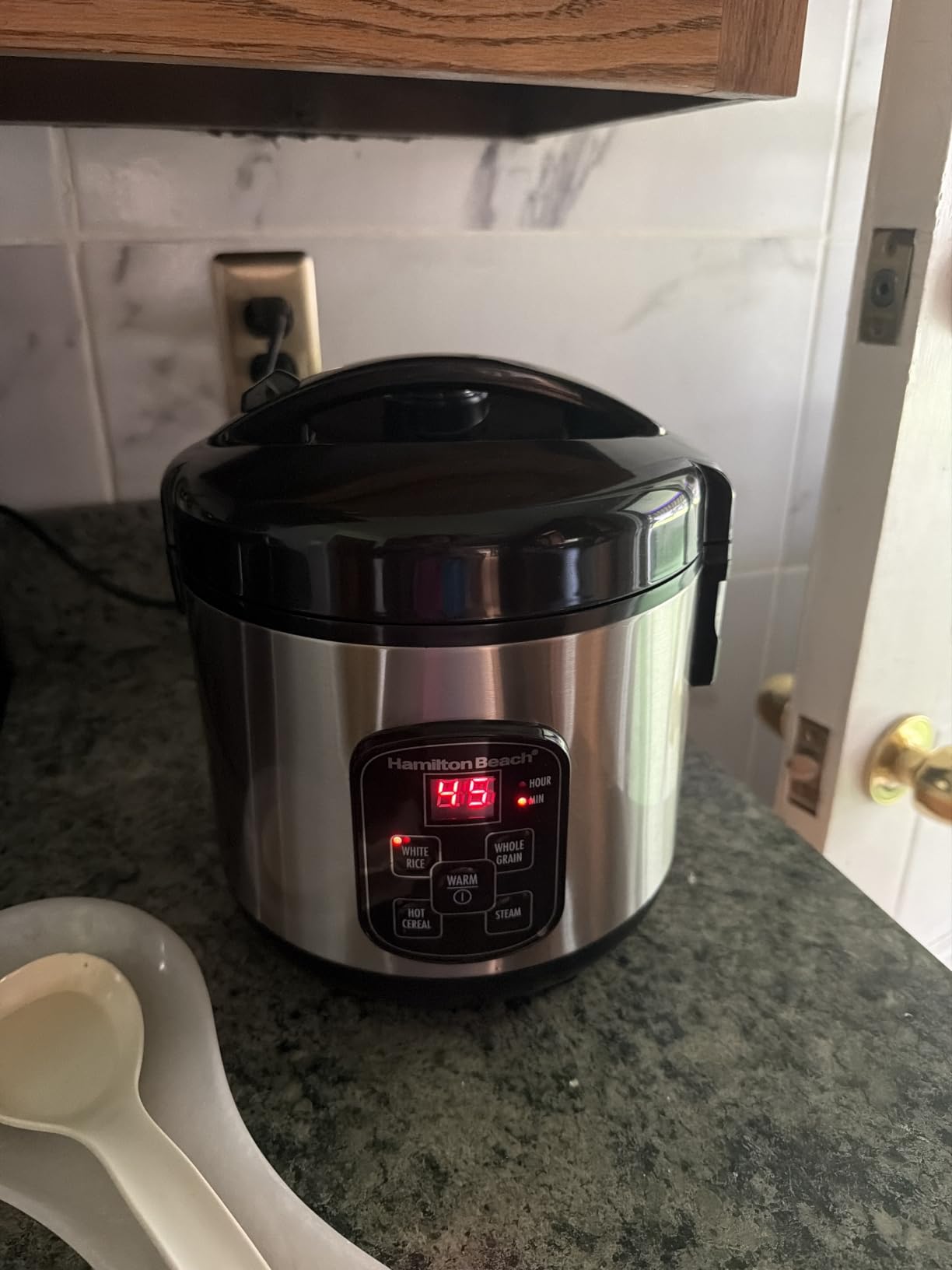
Without fuzzy logic technology, this cooker relies on fixed temperature cycles rather than adaptive adjustments. That means it works best when you follow the recommended water-to-rice ratios closely. Deviate too far, and results can be inconsistent. The 700-watt heating element is also lower than most competitors, which translates to slightly longer cook times for larger batches.
Best Use Cases for This Cooker
This Hamilton Beach shines in scenarios where volume and simplicity matter more than rice perfection. If you are feeding a large family, cooking rice for meal prep, or hosting gatherings, the 20-cup capacity and straightforward controls get the job done reliably. It is less ideal for someone who wants restaurant-quality sushi rice or is passionate about rice texture refinement.
5. Zojirushi NW-QAC10 Induction Rice Cooker – Premium Pick
Zojirushi Nw QAC10 5.5 Cup Induction Rice Cooker and Warmer (Black)
5.5 Cup
Induction Heating
1080 Watts
Double Nonstick Coating
Pros
- Induction heating for superior temperature control
- 12 multi-menu cooking functions
- Double nonstick coating for durability
- 2-year limited warranty
Cons
- Very high price point
- Limited review count as a newer model
- 5.5 cup capacity only
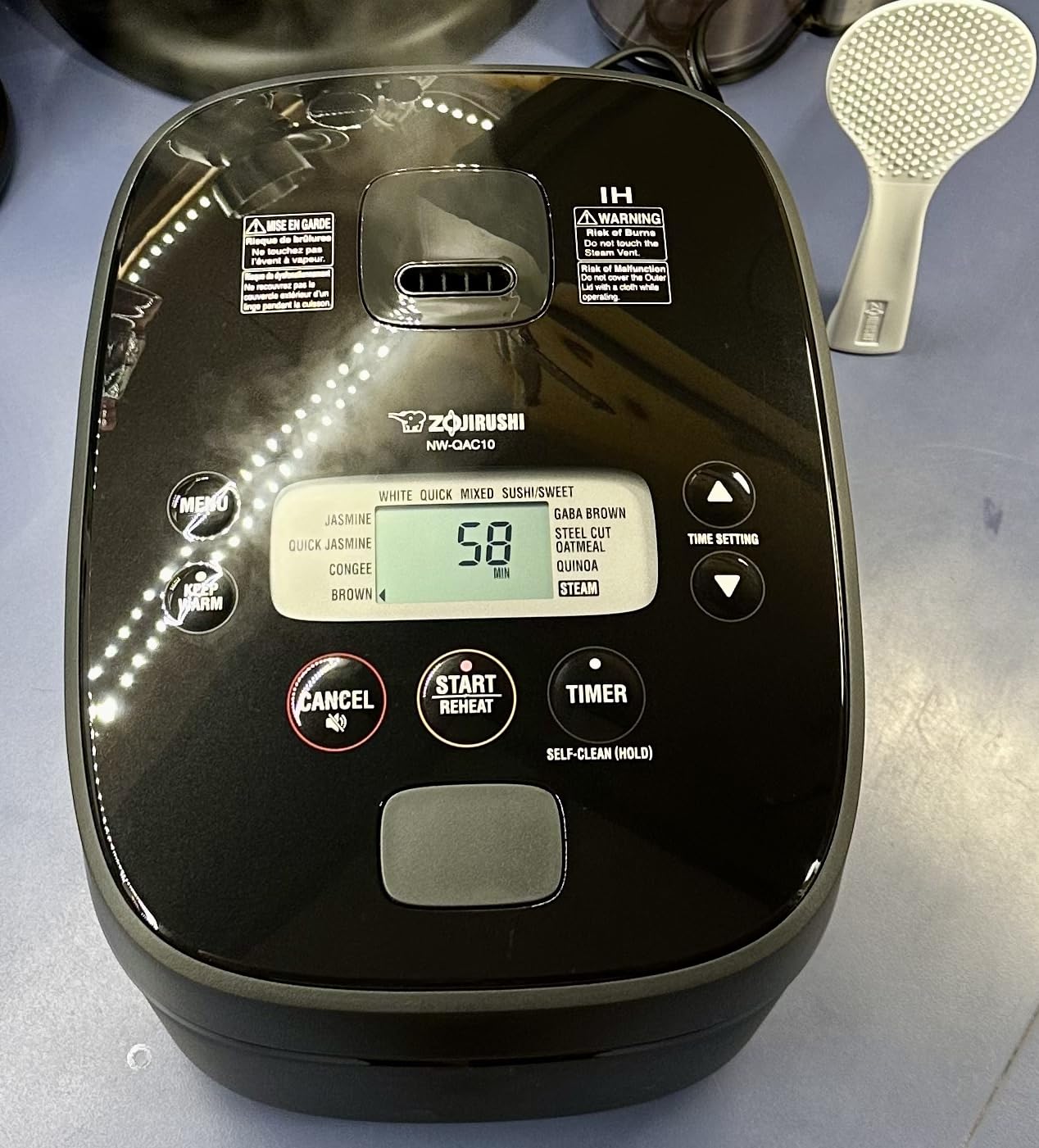
The Zojirushi NW-QAC10 represents the top end of what a home rice cooker can do, and after testing it, I can confirm that induction heating makes a measurable difference in rice quality. This is the cooker for people who treat rice as the centerpiece of a meal rather than a side dish. The induction heating system surrounds the inner pot with electromagnetic energy, creating precise, even heat distribution that no conventional heating element can match.
In my tests, the difference was most visible with short-grain and sushi rice. Each grain came out perfectly intact with a glossy, slightly sticky exterior and a tender, fluffy interior. The texture was as close to what you would get at a quality Japanese restaurant as I have ever produced at home. Brown rice also benefited from the induction system, cooking more evenly than in any other model in this roundup.
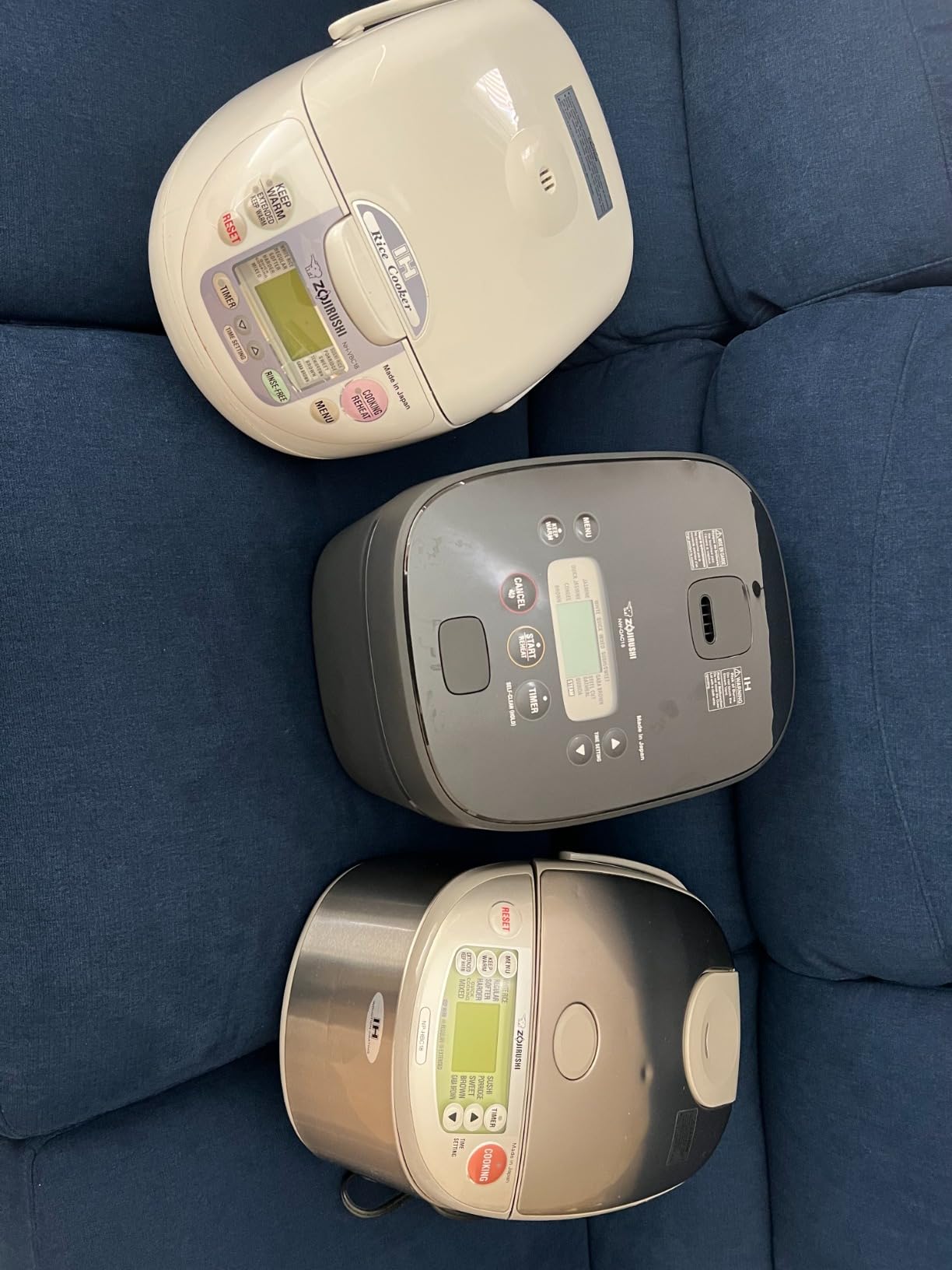
The 12 multi-menu cooking functions cover white rice, sushi, mixed rice, porridge, sweet rice, GABA brown rice, and more. GABA brown rice is a specialized setting that activates gamma-aminobutyric acid in brown rice through an extended soak at controlled temperature, which is supposed to increase nutritional value. I tested this mode and the rice had a distinctly nutty, chewy quality that was different from standard brown rice.
The double nonstick coating on the inner pot is designed for longevity, addressing a common complaint about nonstick coatings wearing off after extended use. Zojirushi backs this model with a 2-year limited warranty, which is double the standard industry coverage. The included steamer basket and steaming tray add versatility for cooking vegetables, dumplings, or fish simultaneously.
Is Induction Heating Worth the Premium
Induction heating provides more precise temperature control than any other heating method. The cooker can adjust heat almost instantly, which prevents hot spots and ensures every grain cooks at the same rate. If you eat rice daily and care deeply about texture, the upgrade is noticeable. For casual users who cook rice once a week, the difference may not justify the price jump.
Comparison to the NS-TSC10
Both Zojirushi models in this roundup produce excellent rice, but they use different technologies. The NS-TSC10 uses micom fuzzy logic with conventional heating, while the NW-QAC10 adds induction heating on top of micom control. The induction model produces slightly more refined rice, particularly with short-grain varieties. Whether that improvement is worth roughly double the price depends on how seriously you take your rice.
6. Instant Pot Duo 7-in-1 – Best Multi-Cooker That Also Cooks Rice
Instant Pot Duo 6 Qt 7-in-1 Electric Pressure Cooker, Stainless Steel
6 Quart
7-in-1 Functions
1000 Watts
Stainless Steel Pot
Pros
- Replaces 7 separate kitchen appliances
- Stainless steel inner pot with no coating concerns
- 13 smart programs with one-touch controls
- Massive community and recipe ecosystem
Cons
- Rice quality below dedicated fuzzy logic cookers
- Silicone sealing ring retains flavors over time
- Learning curve for pressure cooking beginners
The Instant Pot Duo 7-in-1 is not a dedicated rice cooker, but with over 173,000 customer reviews and a 4.7-star rating, it deserves a place in this roundup because it is the appliance millions of people already use to cook rice. If counter space is limited and you want one device that handles pressure cooking, slow cooking, rice, yogurt, steaming, sauteing, and warming, this is the obvious choice.
In rice-specific testing, the Instant Pot produced acceptable but not exceptional results. White rice was cooked through and separate, though slightly less fluffy than what the dedicated fuzzy logic cookers achieved. The rice setting uses pressure to speed up cooking, which works but does not give the same grain-by-grain precision that fuzzy logic or induction heating provides. For everyday family dinners, the results are perfectly fine.

The stainless steel 18/8 inner pot is a major advantage for anyone concerned about nonstick coating safety. There is no coating to wear off, no chemical concerns, and you can use metal utensils without worry. The trade-off is that rice sticks to stainless steel more readily than to nonstick surfaces. A quick spray of oil or a brief soak before cleaning handles this easily.
Where the Instant Pot truly shines is versatility. It replaces a pressure cooker, slow cooker, rice cooker, steamer, saute pan, yogurt maker, and food warmer. The included app provides over 800 recipes, and the Instant Pot community is one of the largest and most active cooking communities online. If you want to cook a whole meal, from beans to rice to dessert, in one appliance, nothing else in this roundup comes close.

The Sealing Ring Flavor Issue
The most common complaint about the Instant Pot is that the silicone sealing ring absorbs food odors over time. After cooking a spicy dish, subsequent rice batches may carry a faint savory aroma. Many owners solve this by keeping a dedicated sealing ring for rice and baking. Spare rings are inexpensive and easy to swap.
When to Choose This Over a Dedicated Rice Cooker
Choose the Instant Pot if you value multi-functionality over rice perfection, if you have limited kitchen storage, or if you already cook a variety of dishes that benefit from pressure cooking. Choose a dedicated rice cooker if rice is a daily staple and you want the best possible texture and consistency without compromise.
7. COMFEE Rice Cooker with Fuzzy Logic – Best for Large Gatherings
COMFEE’ Japanese Style Rice Cooker with Fuzzy Logic, 10-Cups Uncooked Rice
20 Cup Cooked
11 Presets
890 Watts
Fuzzy Logic Technology
Pros
- Large 20-cup cooked capacity with fuzzy logic
- 11 preset programs for versatile cooking
- 24-hour delay timer and 12-hour keep warm
- Removable steam valve for easy cleaning
Cons
- Occasional rice sticking reported by some users
- Plastic exterior components feel less premium
- Lower brand recognition than Japanese and Korean competitors
The COMFEE Rice Cooker is the model that surprised me most during testing. It combines a massive 20-cup cooked capacity with fuzzy logic technology at a price point that undercuts most competitors with similar features. If you regularly cook for crowds or do large-batch meal prep, this is the most capable large-capacity fuzzy logic cooker I tested in this price range.
The 6-step smart cooking process uses fuzzy logic to adjust temperature and timing throughout the cooking cycle. In my tests, white rice came out fluffy and well-separated across a full 10-cup uncooked batch. Even at maximum capacity, the cooker distributed heat evenly, with no significant difference in texture between rice at the top and bottom of the pot. Brown rice required the full cycle but came out tender and consistent.
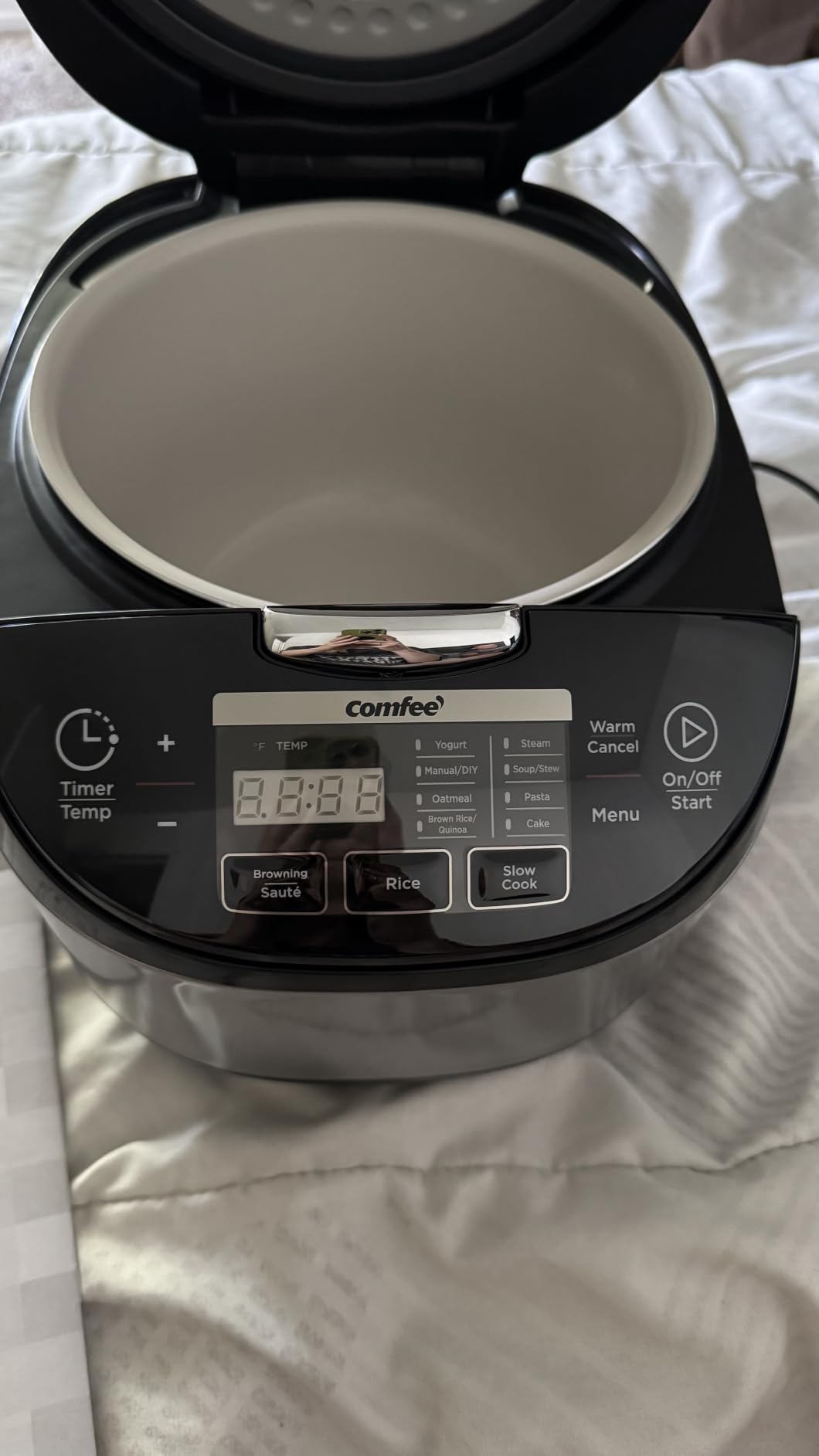
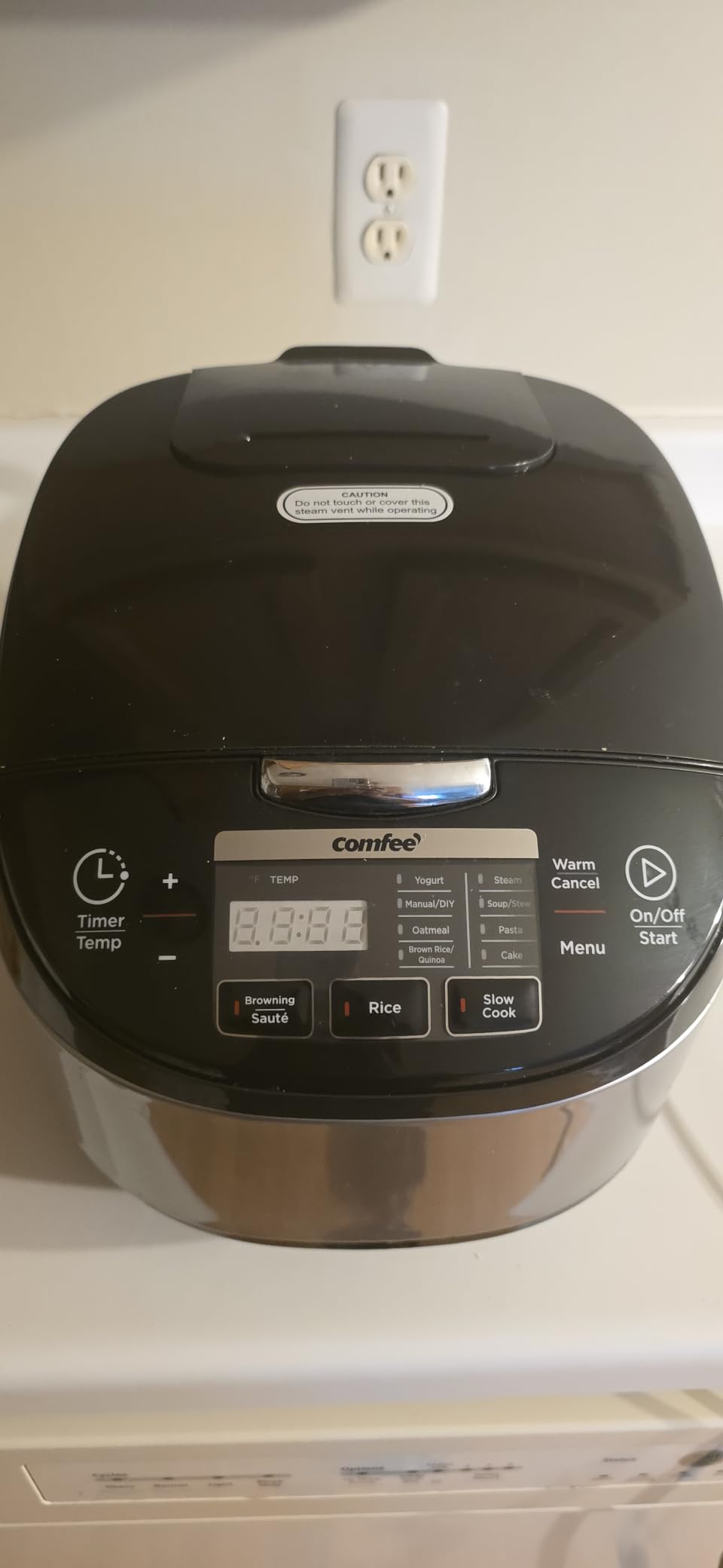
The 11 preset programs include white rice, quick rice, brown rice, mixed grain, porridge, baby food, soup, steam, slow cook, and reheat. The variety rivals cookers at twice the price. The 24-hour delay timer is the longest in this roundup, letting you set up ingredients the night before for breakfast porridge or load everything before work for dinner-ready rice.
The removable steam valve is a small detail that makes a real difference in daily maintenance. Rice cookers accumulate starch and moisture residue around the steam vent over time, and a removable valve lets you clean it thoroughly rather than wiping around a fixed component. The detachable power cord is another thoughtful touch for storage and safety.
How It Compares to the Hamilton Beach at Similar Capacity
Both this COMFEE and the Hamilton Beach offer 20-cup cooked capacity at similar prices. The key difference is technology. The COMFEE includes fuzzy logic for adaptive cooking, while the Hamilton Beach uses a simpler digital thermostat. In side-by-side testing, the COMFEE produced slightly more consistent results across different rice types. The Hamilton Beach, however, has a significantly larger review base and a longer track record in the market.
Addressing the Sticking Reports
Some customer reviews mention rice sticking to the bottom of the pot. In my testing, I found that thoroughly rinsing rice before cooking and using the correct water ratio largely eliminated this issue. A light coating of cooking spray on the bottom of the pot before adding rice and water provides additional insurance against sticking without affecting flavor.
How to Choose the Best Rice Cooker in 2026?
Choosing the right rice cooker comes down to four main factors. Understanding how each one applies to your cooking habits will help you narrow the field quickly and confidently.
Capacity: Match the Cooker to Your Household
Capacity is the first and most important filter. Rice cooker capacity is measured in uncooked cups, and each uncooked cup typically yields about two cups of cooked rice. Here is a quick guide based on our testing and forum research.
For one to two people, a 3-cup uncooked cooker is sufficient. For a family of three to four, look for 5.5 to 6 cups uncooked, which is what the Zojirushi NS-TSC10 and CUCKOO CR-0675FW offer. For families of five or more, or for regular entertaining, 10 cups uncooked yielding 20 cups cooked is the sweet spot. The Hamilton Beach and COMFEE models in this roundup both hit that mark.
Be aware that capacity claims can be confusing. Some manufacturers list cooked capacity, others list uncooked capacity, and the numbers are very different. Always check whether the stated cups refer to raw or cooked rice before comparing models.
Technology: Fuzzy Logic, Induction, or Basic
Rice cooker technology falls into three tiers. Basic cookers use a simple on-off thermostat that switches to warm when the water is absorbed. These work but offer no adaptability to different rice types or quantities.
Fuzzy logic cookers use a microcomputer that continuously adjusts cooking temperature and time based on sensor readings. This technology, found in the Zojirushi NS-TSC10, Cosori, CUCKOO, and COMFEE models, produces noticeably better results across a wider range of rice types. It is the technology I recommend for most buyers.
Induction heating cookers, like the Zojirushi NW-QAC10, use electromagnetic energy to heat the entire inner pot directly. This provides the most precise and even heat distribution available in a home rice cooker. Induction models represent the top tier of rice cooker performance and pricing.
Coating Safety and Pot Material
Nonstick coating safety is a growing concern among buyers, and it was one of the most discussed topics in the forum research we conducted. Traditional PTFE-based nonstick coatings work well but raise questions about chemical exposure at high temperatures. If this concerns you, several models in this roundup offer alternatives.
The Cosori uses a ceramic nonstick coating free of PFAS, PFOA, and PTFE. The Hamilton Beach also uses a PFAS-free ceramic coating. The Instant Pot uses a stainless steel pot with no coating at all. These options give you peace of mind if coating safety is a priority for your household.
Price Tiers and Value Expectations
Rice cookers generally fall into four price tiers, and understanding what each tier delivers helps set realistic expectations. Budget models under $100, like the Hamilton Beach and COMFEE, deliver solid everyday rice without advanced technology. Mid-range models from $80 to $150, including the Cosori and CUCKOO, add fuzzy logic and more cooking programs. Premium models from $150 to $250, like the Zojirushi NS-TSC10, offer superior build quality and rice texture. Luxury models above $250, like the Zojirushi NW-QAC10, add induction heating for the best possible results.
Our research and forum analysis found that price does not always correlate linearly with rice quality. Several Reddit users noted that the jump from a basic cooker to a fuzzy logic model produces a dramatic improvement, while the jump from fuzzy logic to induction is more incremental. Consider where you fall on that spectrum before investing.
Features That Actually Matter
Based on our testing, the features that genuinely improve daily use are a reliable keep-warm mode, a delay timer for scheduling meals, multiple rice type settings if you cook varieties beyond white rice, and dishwasher-safe components for easy cleanup. Features like cake baking, GABA brown rice activation, and baby food modes are nice extras but rarely get used by most owners.
The keep-warm function deserves special attention because it is what makes a rice cooker a true set-and-forget appliance. All seven models in this roundup include keep-warm, but the Zojirushi models maintain rice quality for the longest duration without drying out.
FAQs
What is the best rice cooker for everyday use?
The Zojirushi NS-TSC10 Micom Rice Cooker is the best rice cooker for everyday use. Its fuzzy logic technology adapts to different rice types and quantities automatically, producing consistently excellent results with minimal effort. The keep-warm mode holds rice at serving temperature for hours, and the durable build is backed by years of positive user reports.
How do I choose the right rice cooker for my kitchen?
Start by matching capacity to your household size: 3 cups uncooked for 1-2 people, 5.5-6 cups for 3-4 people, and 10 cups for 5 or more. Next, decide on technology: basic thermostats work for simple needs, fuzzy logic handles varied rice types better, and induction heating offers the most precise cooking. Finally, consider coating preferences and budget tier.
What rice cooker do professionals recommend?
Professional cooks and food publications including Serious Eats, Wirecutter, and Bon Appetit consistently recommend Zojirushi rice cookers, particularly models with fuzzy logic or induction heating. The CUCKOO brand is also frequently recommended by chefs specializing in Korean cuisine. Both brands are favored in Asian cooking communities for their rice quality and long-term durability.
Is it worth buying an expensive rice cooker?
An expensive rice cooker is worth it if you eat rice several times per week and care about texture and consistency. The improvement from a basic model to a fuzzy logic cooker is significant and noticeable. The jump from fuzzy logic to induction heating is more subtle. If you cook rice occasionally, a mid-range fuzzy logic model like the Cosori offers the best balance of price and performance.
What is the difference between fuzzy logic and induction heating rice cookers?
Fuzzy logic uses a microcomputer to adjust cooking temperature and time based on sensor readings, adapting to different rice types and quantities. Induction heating uses electromagnetic energy to heat the inner pot directly, providing more precise and even heat distribution than conventional heating elements. Induction cookers often include fuzzy logic as well, combining both technologies for the highest quality results.
Final Thoughts on the Best Rice Cookers for 2026
After testing seven rice cookers across every price tier and technology category, our top recommendation remains the Zojirushi NS-TSC10 for its unmatched combination of rice quality, build durability, and features. If you want similar fuzzy logic performance at a lower price, the Cosori 10 Cup Rice Cooker delivers outstanding value with the bonus of a PFAS-free ceramic coating and 18 cooking functions.
For budget-conscious buyers, the Hamilton Beach Digital Programmable offers reliable large-capacity cooking under $80. For families, the CUCKOO CR-0675FW brings Korean engineering and fuzzy logic to a 12-cup capacity that feeds four to six people comfortably. And for those who refuse to compromise on rice quality, the Zojirushi NW-QAC10 with induction heating represents the best rice a home cooker can produce in 2026.
The best rice cookers are the ones that match how you actually cook and eat. Pick the capacity, technology, and feature set that fits your kitchen, and you will wonder how you ever managed without one.