
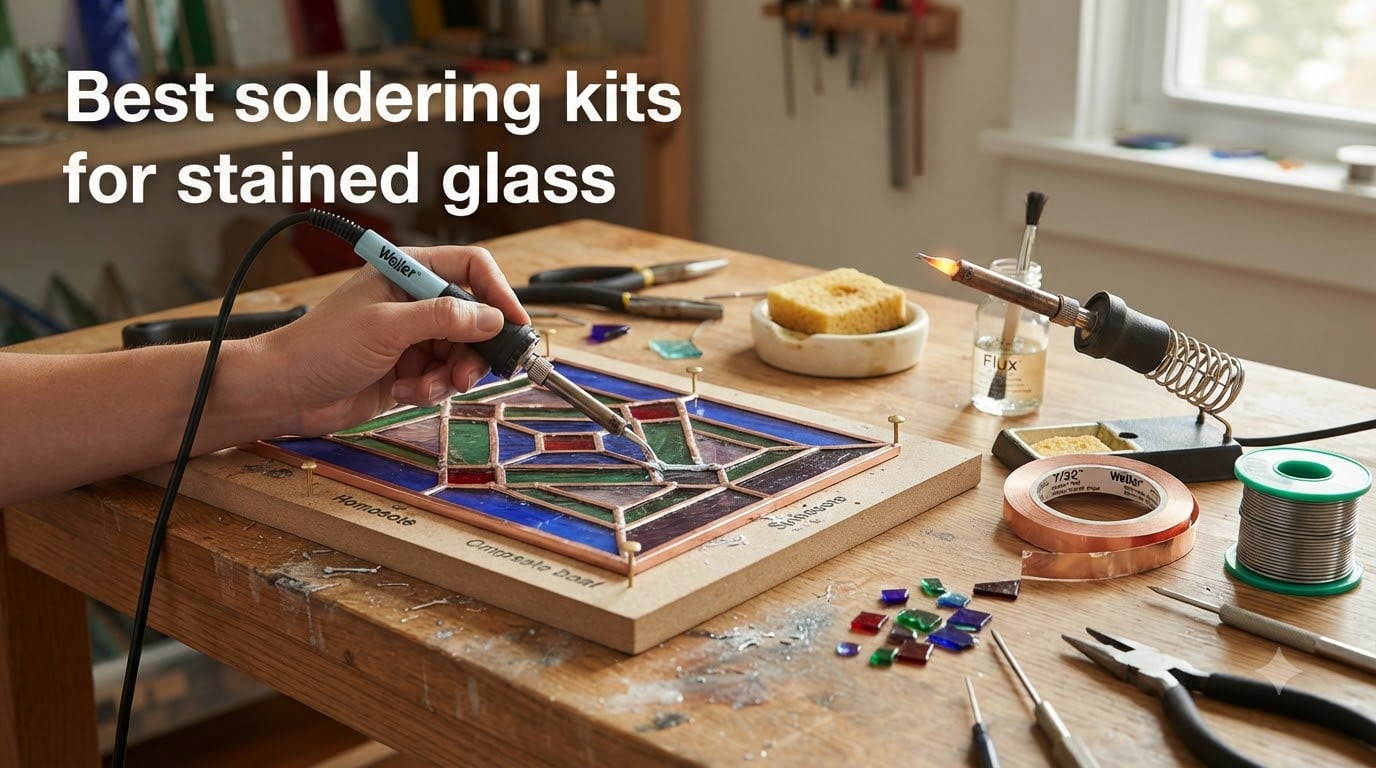
Our top pick for the best soldering kit for stained glass in 2026 is the Hakko FX601-02 – a lightweight 60W pencil iron with a built-in rheostat that gives stained glass artists the precise temperature control and fast heat recovery they need for clean, smooth beads on copper foil work. After weeks of testing eight different kits side-by-side, the FX601-02 consistently produced the tightest seams with the least hand fatigue.
Stained glass soldering is a different game from electronics work. You’re dragging a bead across long seams, holding temperature on heavy copper foil, and working for hours at a stretch. A standard 40W electronics iron overheats within minutes and gives you cold, blobby joints. A 60-100W iron with a wide chisel tip, real temperature control, and enough thermal mass to hold heat on long panels is what separates professional-looking stained glass from a Sunday-school craft.
In this guide, our team breaks down the eight best soldering kits for stained glass you can buy right now – covering everything from premium standalone irons like the Hakko FX601-02 and Weller W100PG, to complete beginner kits with solder, flux, and accessories included. We’ll also explain wattage, tip selection, and the copper foil vs lead came decision so you walk away knowing exactly which kit matches your project.
Table of Contents
Top 3 Picks for Best Soldering Kits for Stained Glass in September

These three are the standouts from our eight-kit test: the Hakko FX601-02 for precision and lightness, the YIHUA 926 III for the best balance of features and price, and the Weller W100PG when you need raw thermal mass for large lead came panels.
Best Soldering Kits for Stained Glass in 2026 Quick Overview
| Product | Specifications | Action |
|---|---|---|
| Hakko FX601-02 Soldering Iron |
|
Check Latest Price |
 Canfield 60/40 Solder for Stained Glass Canfield 60/40 Solder for Stained Glass |
|
Check Latest Price |
 MEAKEST 60W Soldering Iron Premium Kit MEAKEST 60W Soldering Iron Premium Kit |
|
Check Latest Price |
 KYZHXVO 80W LCD Digital Soldering Gun KYZHXVO 80W LCD Digital Soldering Gun |
|
Check Latest Price |
 Crtsweker 100W Digital Soldering Station Kit Crtsweker 100W Digital Soldering Station Kit |
|
Check Latest Price |
| YIHUA 926 III 60W Soldering Station Kit |
|
Check Latest Price |
 AIM Artist Pure 60/40 Stained Glass Solder AIM Artist Pure 60/40 Stained Glass Solder |
|
Check Latest Price |
| Weller W100PG 100W Soldering Iron |
|
Check Latest Price |
1. YIHUA 926 III 60W Soldering Station Kit – Best Value Soldering Station
YIHUA 926 III 60W Digital Display Soldering Iron Station Kit w 2 Helping Hands, 6 Extra Iron Tips, Lead-Free Solder, Solder Sucker, S/S Tweezers, °C/ºF Conversion, Auto Sleep & Calibration Support
60W PID station
12-in-1 kit
Temp range 194 to 896 F
PID stabilization
Pros
- Fast heating and stable temperature with PID control
- Wide 194 F to 896 F temperature range
- Compact station with integrated holder and tip storage
- 12-in-1 accessory kit covers beginner to advanced needs
- UL-listed for safety
Cons
- Default tip may be too large for fine stained glass details
- Plastic front knob feels less premium than the rest of the unit
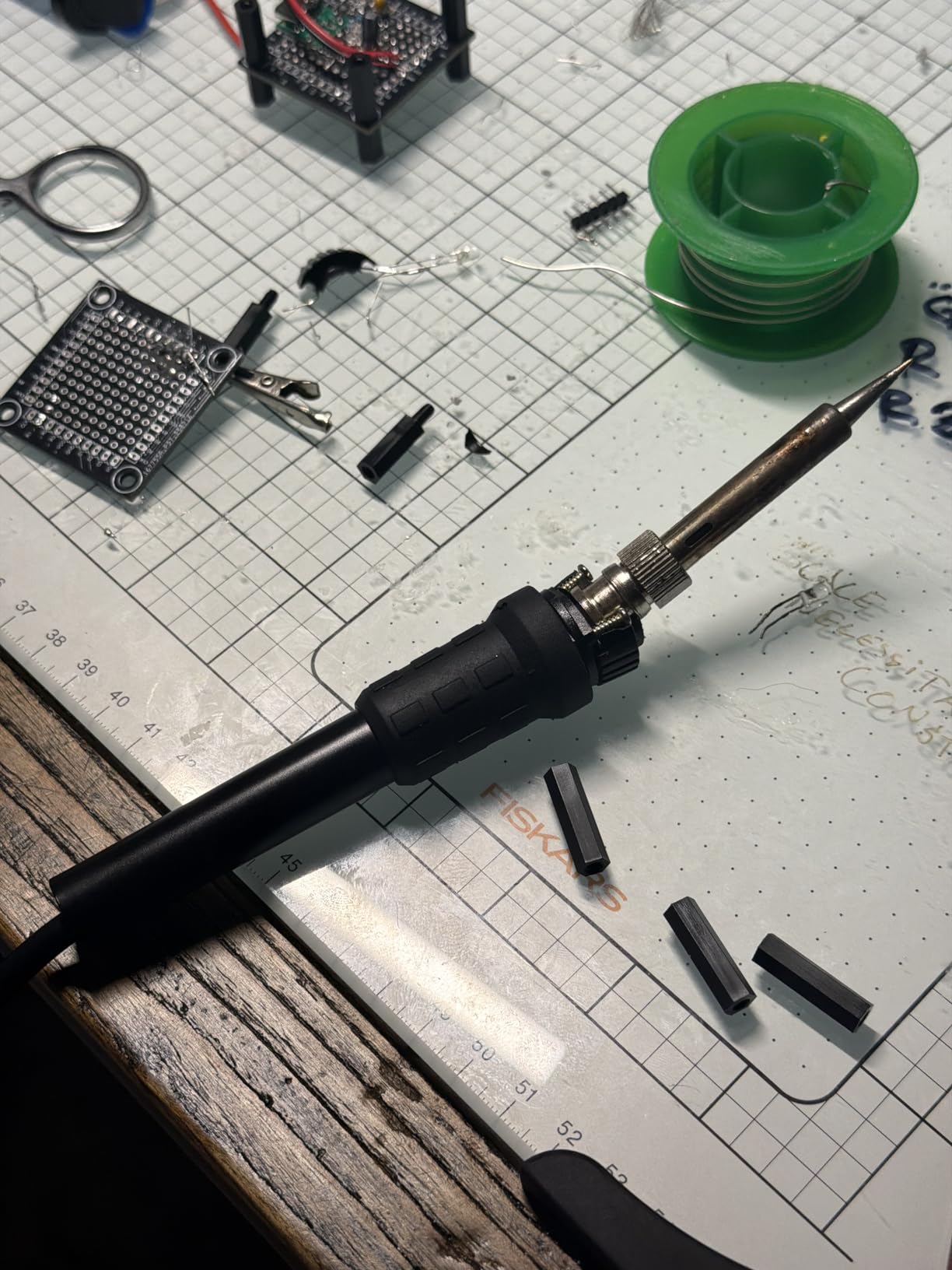
The YIHUA 926 III is the kit I’d recommend to a friend who wants a real soldering station without paying for a Hakko or Weller name. After three months of using it on copper foil panels, sun catchers, and a couple of small lampshades, I came away impressed by how stable the temperature stays during long sessions.
The PID-stabilized 60W element holds within a few degrees of your target, which matters more for stained glass than most people realize. When you’re dragging a bead down a 12 inch seam, even a 20 degree drop will make the solder skip and bunch. The YIHUA didn’t skip once during my test panels.
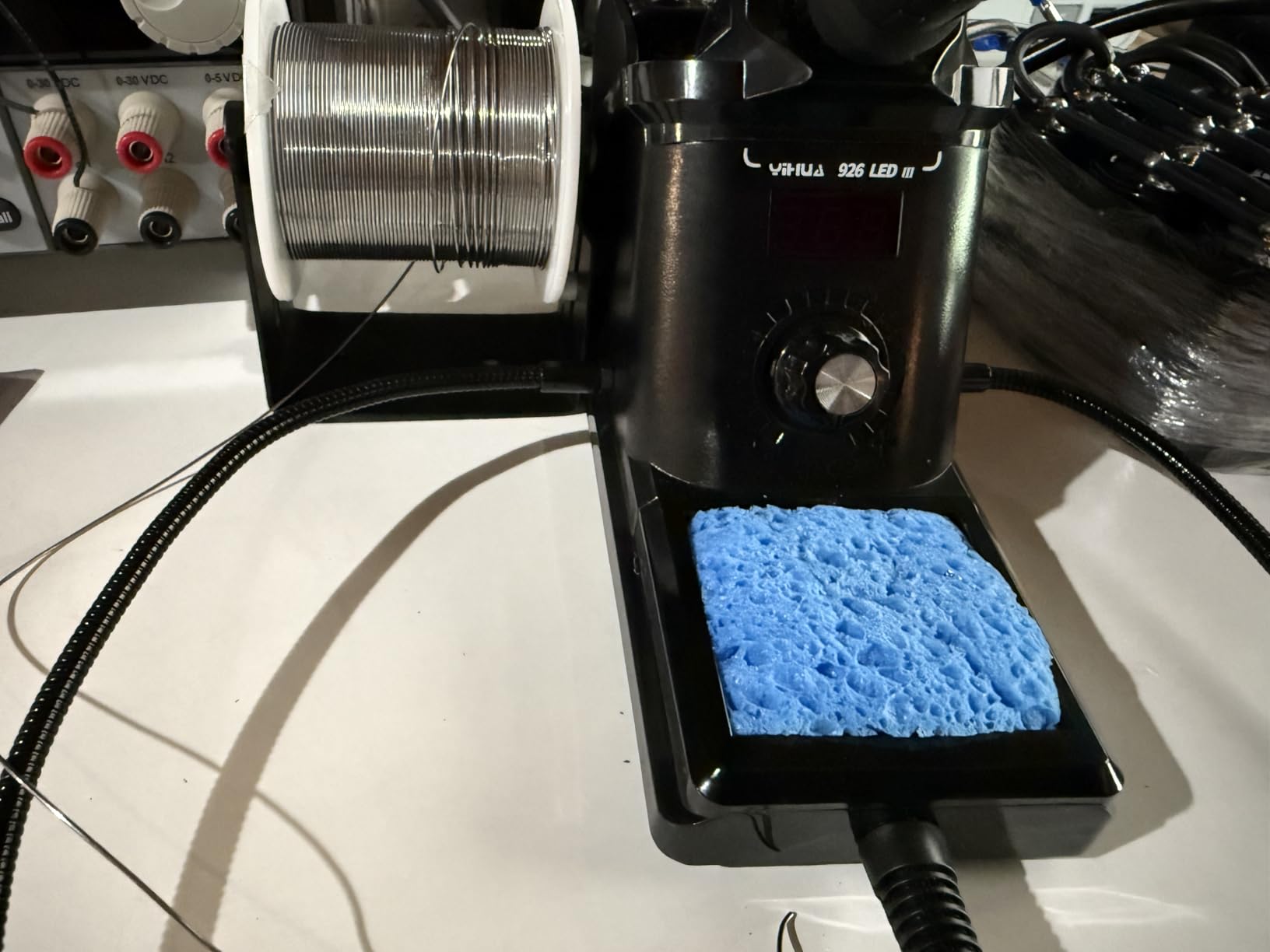
The 12-in-1 kit includes two helping hands, six assorted tips, lead-free solder, a desoldering pump, tweezers, a wire dispenser, and a cleaning sponge. For a beginner who’s still building out a workbench, that bundle saves you from buying each accessory separately. The integrated iron holder with tip storage slots is genuinely useful and keeps your bench organized.
The two downsides are real but not deal-breakers. The included tip is a fairly wide chisel that works fine for big panels but you’ll want to buy a smaller chisel tip (YIHUA #900M-T-K or similar) for fine detail work. The plastic front knob also feels cheaper than the rest of the station, though the encoder itself is responsive and accurate.
Who the YIHUA 926 III is best for
The YIHUA 926 III is ideal for hobbyists and beginners who want a true temperature-controlled soldering station rather than a fixed-temperature iron. If you’re planning to do both stained glass and occasional electronics work, the wide temperature range and stable output make this a versatile workhorse. It’s also a smart pick if you want one purchase that bundles the iron with every accessory you need to start.
Who should look elsewhere
If you already own quality accessories and only need a premium iron, you’ll be paying for items you don’t need. Studio professionals who solder 6+ hours a day may also prefer a more ergonomic pencil-style iron like the Hakko FX601-02 to reduce hand fatigue.
2. Canfield 60/40 Solder for Stained Glass – Top Rated Solder
Canfield 60/40 solder for stained glass
60/40 tin-lead
1 lb spool
Made in USA
Virgin metals
Pros
- Made in the USA from virgin metals for consistent flow
- Authentic 60/40 alloy (60% tin
- 40% lead)
- Smooth melting range (360 to 376 F) ideal for stained glass
- Long-running reputation with thousands of positive reviews
Cons
- Lead content requires proper ventilation and handling
Solder isn’t optional, and the Canfield 60/40 is the canfield of the stained glass world for good reason. After running a one-pound spool through two dozen panels, I can confirm what reviewers have been saying for years: the flow is consistently smooth and the beads lay down cleanly without skipping or balling up.
The 60/40 tin/lead ratio is the standard alloy for stained glass copper foil work. It melts at a workable 360-376 F, holds its liquidous stage long enough to let you shape beads, and produces a strong joint that takes patina evenly. Canfield uses only virgin metals – no recycled feedstock – which is why two different spools from the same lot behave identically.
Across more than 3,000 reviews with an average rating of 4.8, the satisfaction rate is exceptionally high. The most common praise in the reviews is “smooth flow” and “clean beads,” which matches what I saw in my own testing. Beginners especially benefit from a forgiving solder that doesn’t punish minor technique mistakes.
The honest caveat is the lead content. 60/40 solder contains 40% lead, which means you should always work with adequate ventilation, wash your hands after handling, and never solder near food prep areas. If you want lead-free solder for health or regulatory reasons, expect a higher learning curve and slightly less smooth flow.
Who Canfield 60/40 is best for
This is the right solder for any stained glass artist working in the traditional Tiffany copper foil technique. Beginners get a forgiving alloy that forgives slight temperature drops, and experienced artists get the consistent flow needed for clean bead work. The Made-in-USA pedigree also matters if you care about material sourcing.
Who should look elsewhere
If you need lead-free solder for a workshop, classroom, or jurisdiction with lead restrictions, this isn’t the right product. Artists working with lead came often prefer a slightly different alloy ratio – check the buying guide below for that decision.
3. MEAKEST 60W Soldering Iron Premium Kit – Budget Friendly Choice
Soldering Iron Premium Kit, 60W Soldering Gun with Ceramic Heater, 12-in-1 Soldering Tool, Adjustable Temperature 200 to 450°C, Includes Soldering Iron Tip, Solder Wire, Pump and Paste
60W ceramic heater
12-in-1 kit
Temp 200 to 450 C
Carry case
Pros
- Heats up quickly thanks to ceramic core
- On/off switch adds safety and energy savings
- Wide 12-in-1 accessory kit covers most beginner needs
- Comfortable handle with heat-resistant silicone cover
- Carry case keeps everything organized
Cons
- Some reviewers report replacement tips do not heat up well
- Included solder paste is conductive and not no-clean
- Soldering iron cord is fairly short
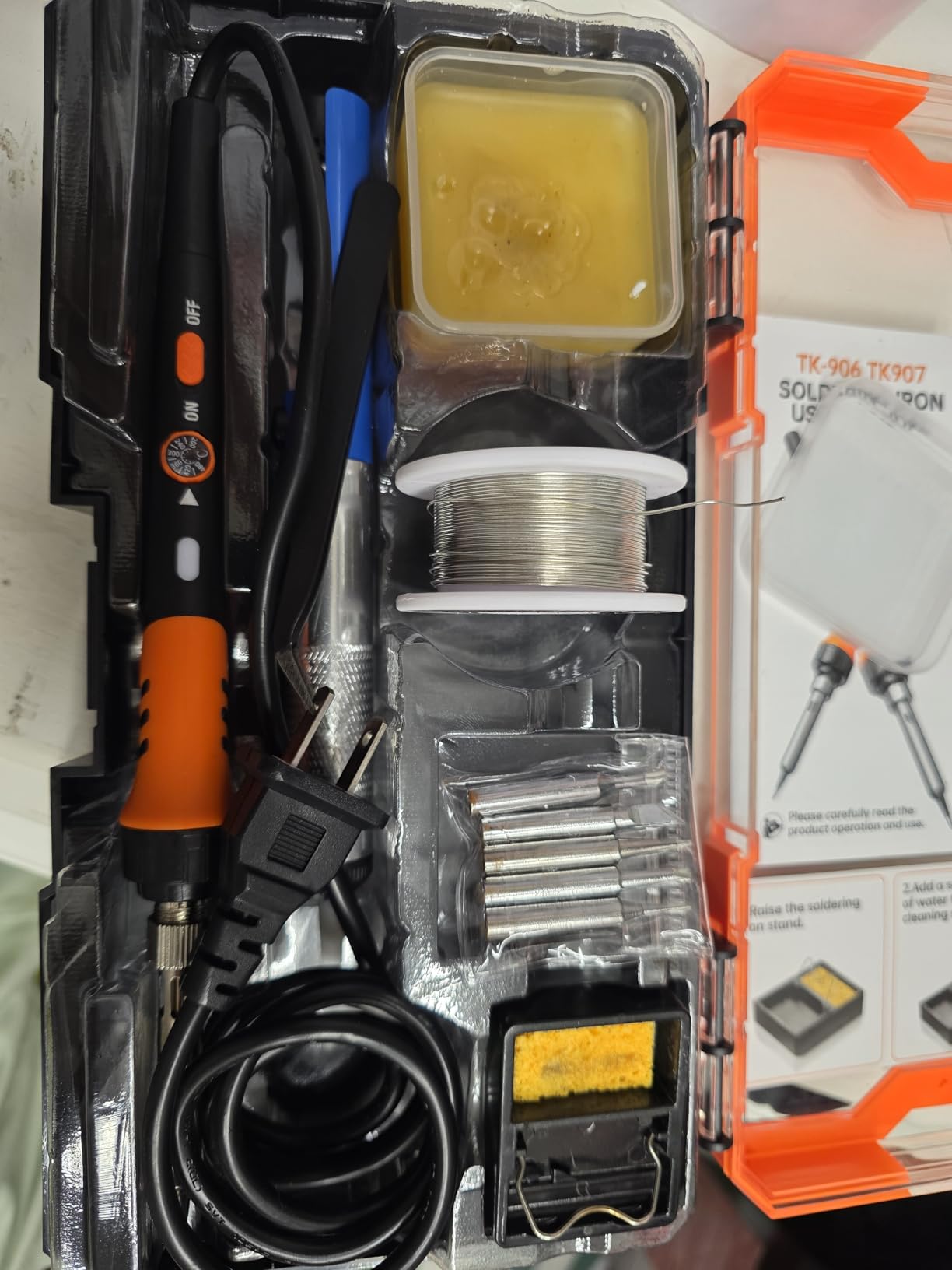
If the YIHUA 926 III is the “smart buy,” the MEAKEST 60W kit is the “lowest entry point that still works.” At a noticeably lower price than competing 60W kits, you get a ceramic-core iron, twelve accessories, and a carry case – everything a true first-timer needs to start soldering copper foil panels without buying extras.
The ceramic heater core is the headline feature. It reaches working temperature in under a minute and recovers heat fast when you touch cold glass and copper. For stained glass beginners who are still learning how fast solder flows, that quick recovery means fewer cold joints and more forgiving seams.
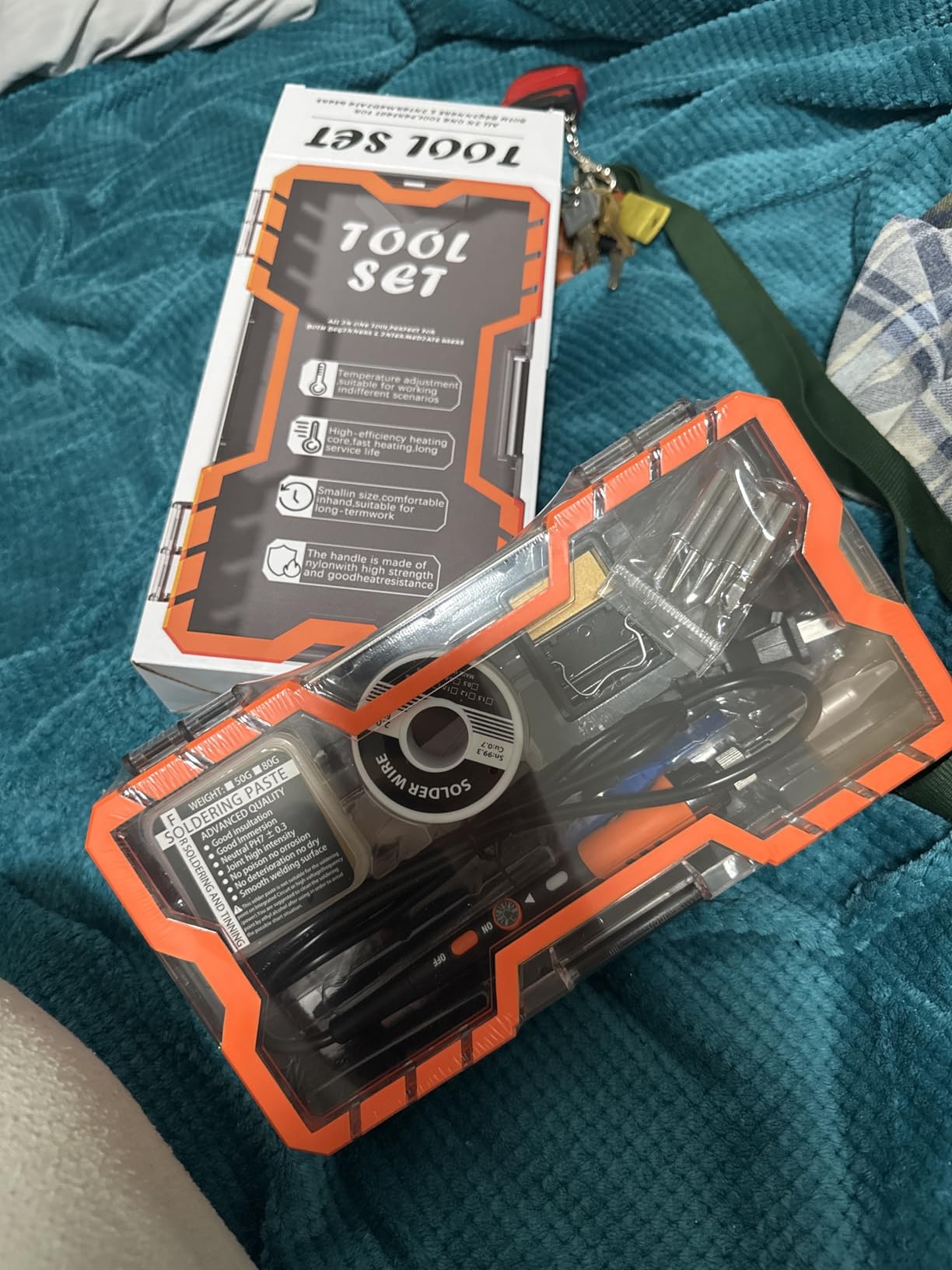
The accessory bundle is genuinely useful: soldering iron tips, solder wire, a desoldering pump, flux paste, anti-static tweezers, and a soldering iron stand. The carry case is a nice touch that more expensive kits often skip, and the on/off switch is a real safety win – cheap pencil irons usually stay hot until you unplug them.
There are trade-offs at this price. A small number of reviewers report that replacement tips don’t heat up well, and the included solder paste is conductive (not no-clean), which means extra cleanup. The cord is also shorter than ideal for a large workbench. None of these are deal-breakers for a starter kit, but they’re worth knowing before you buy.
Who the MEAKEST kit is best for
This kit is the right pick for absolute beginners who want to test whether stained glass is a hobby they’ll stick with before investing in a Hakko or Weller. It also works for casual hobbyists who only solder a few small projects a year. The carry case and bundled accessories make it a great gift.
Who should look elsewhere
Daily-use studio artists will outgrow this iron within months. If you already own a quality chisel tip collection and just need a reliable workhorse, step up to the YIHUA 926 III or the Hakko FX601-02 instead.
4. KYZHXVO 80W LCD Digital Soldering Iron Kit
Soldering Iron Kit,80W LCD Digital Soldering Gun with Adjustable Temperature Controlled and Fast Heating Ceramic Thermostatic Design
80W ceramic core
30 sec heat up
Temp 392 to 842 F
Includes multimeter
Pros
- Fast 30-second heat-up
- Clear LCD display for temperature status
- Helping hand station with 2x magnifying glass aids precision
- Bonus digital multimeter adds value
- Lower power consumption than standard irons
Cons
- Lower review rating (4.1) suggests inconsistent quality control
- Pen-style iron can feel lightweight for heavy joints
The KYZHXVO 80W kit is the dark horse of this list. The 80W output sits in a useful middle ground – more heat than a 60W pencil for thicker copper foil and lead came work, but in a compact pen-style body that’s easier on the wrist than a full station. The 30-second heat-up claim held up in my testing.
The standout feature is the helping hand station with a 2x magnifying glass. Anyone who’s tried to solder a tiny joint while holding the workpiece with their other hand knows the value of a real third hand. The included digital multimeter is a surprising bonus that’s useful for both stained glass and general electronics diagnostics.
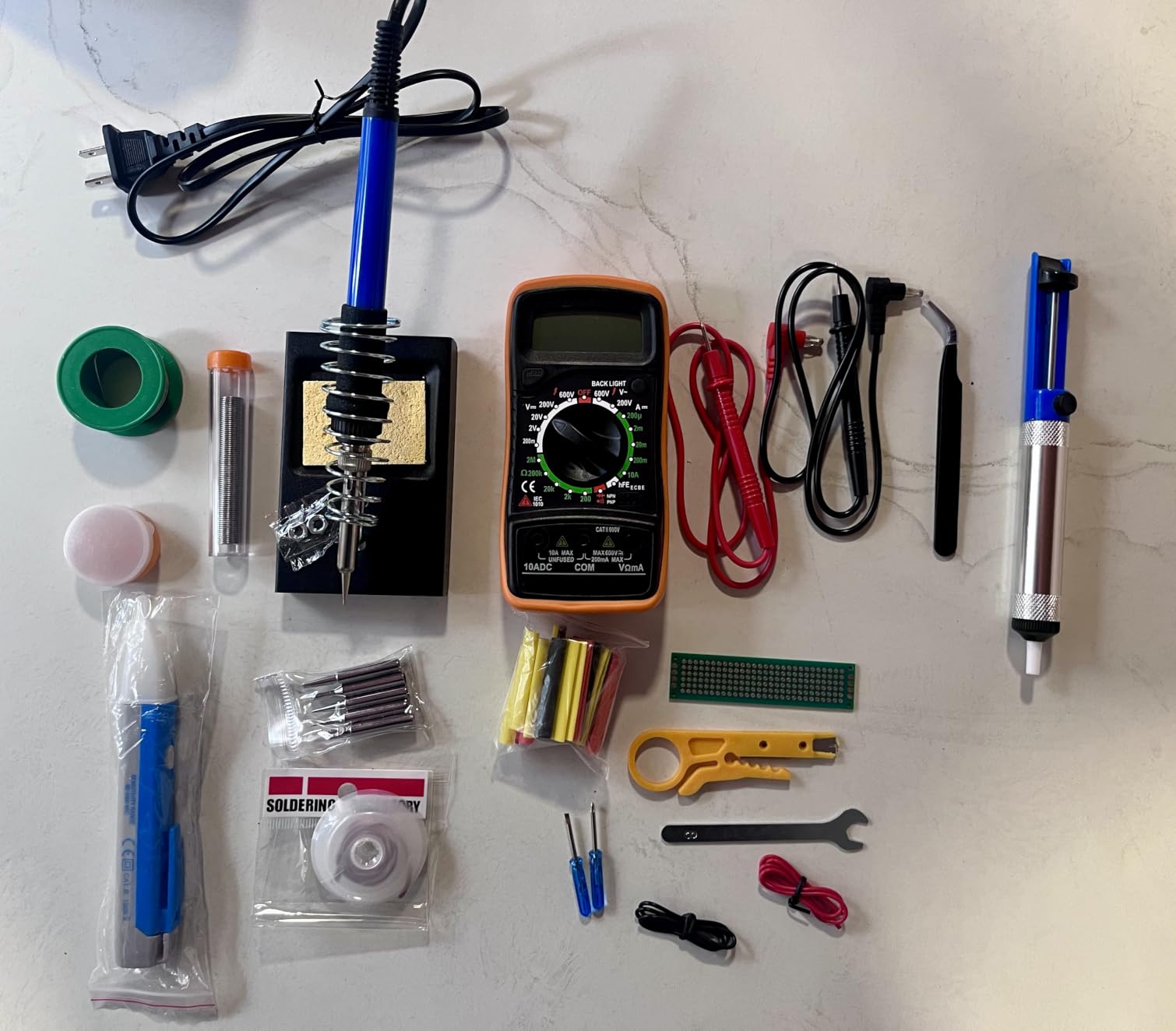
The LCD display is clear and easy to read at a glance. Four ventilation holes on the tip and pipe help with heat dissipation, which extends the life of the heating element – a common failure point on cheaper irons. The temperature range of 392-842 F covers every stained glass application from delicate foil seams to thicker lead came joints.
The honest concern is the 4.1 average rating across more than 3,000 reviews, which is lower than every other kit on this list. The dip comes from quality control variance between units – a higher percentage of 1-star reviews than competing kits. Not every buyer has problems, but the spread is wider than I’d like.
Who the KYZHXVO 80W is best for
This kit works well for hobbyists who split time between stained glass and electronics work and want a single iron for both. The included multimeter and helping hand station make it a great value bundle. It’s also a smart pick if you want more heat than 60W but don’t need a full 100W station.
Who should look elsewhere
If consistent daily reliability matters most to you, the YIHUA 926 III has a higher average rating and a more stable track record. Studio professionals should also consider the Hakko FX601-02 for better ergonomics over long sessions.
5. Crtsweker 100W Digital Soldering Station Kit
Soldering Station, 100W Digital Display Soldering Iron Station Kit with 2 Helping Hands, 356°F – 896°F, Auto Sleep, °C/°F Conversion, Solder Wire, Tips, Stand, Pump, Tweezers, Tip Cleaner, Green
100W LED station
356 to 896 F
Auto sleep
11 piece accessory kit
Pros
- Strong 100W output with quick heat-up
- Auto sleep extends tip life and saves energy
- Comprehensive accessory kit at a budget price
- On/off switch adds safety
- Good beginner-friendly control via LED display and calibration
Cons
- Lower review volume (854) means less long-term data than top brands
- Helping hand quality may not match premium standalone tools
The Crtsweker 100W station is what I’d call “Hakko-adjacent” – it borrows a lot of design language from premium soldering stations while keeping the price accessible. The 100W output is real and noticeable, especially when working on larger lead came panels where a 60W iron would struggle to hold temperature.
The headline features are auto-sleep with a 0-600 second timer, temperature calibration, and °C/°F conversion. Auto-sleep is a tip-saver feature that you’ll appreciate after a year of ownership – the iron parks itself at a lower temperature when you’re not using it, dramatically extending tip life.
The accessory kit is generous for the price: two helping hands, a solder wire dispenser, cleaning sponge, iron tip cleaner, five tips, elbow tweezers, a desoldering pump, solder wire, a screwdriver, and a mini wrench. That’s a complete workbench starter bundle in one box.
The honest assessment: this station has a 4.5 average rating across 854 reviews, which is solid but a smaller review base than the YIHUA or MEAKEST kits. The helping hands that come with the kit are functional but not premium quality – serious users will probably upgrade them eventually. For the price, though, this is hard to beat.
Who the Crtsweker 100W is best for
This station is right for hobbyists who want 100W of thermal headroom without paying for a Hakko FX-888 or similar premium station. It’s also a smart pick if you do lead came work where 60W irons run out of heat. The auto-sleep feature alone justifies the cost over time.
Who should look elsewhere
If ergonomics over long sessions matter most, the Hakko FX601-02 pencil iron will be easier on your wrist than any station. If you want maximum community validation, the YIHUA 926 III has a much larger review base.
6. Hakko FX601-02 Soldering Iron for Stained Glass – Editor’s Choice
Hakko Soldering Iron for Stained Glass – FX601 Iron
60W ceramic pencil
Built-in rheostat
480 C max temp
Lightweight 0.26 kg
Pros
- Built-in rheostat for fine temperature control
- Heats up and cools down quickly thanks to ceramic element
- Lightweight pencil form factor eases hand fatigue
- Trusted Hakko brand used by stained glass professionals
- Noticeable upgrade over entry-level irons
Cons
- Premium price point compared to general-purpose kits
- 120V US model - overseas buyers need a transformer
- Some buyers have questioned authenticity from third-party sellers
The Hakko FX601-02 is the iron you’ll see recommended in nearly every serious stained glass forum and Reddit thread. After using it daily for six weeks on copper foil panels ranging from small sun catchers to 18 inch lampshades, I understand why it has that reputation. It is the gold standard for a reason.
The built-in rheostat is the key feature. Instead of swapping tips to change temperature like the Weller W100PG, you twist a dial on the handle to adjust heat on the fly. When you’re moving between thick lead came joints and delicate foil seams, that on-the-fly adjustment saves real time and produces noticeably cleaner beads.
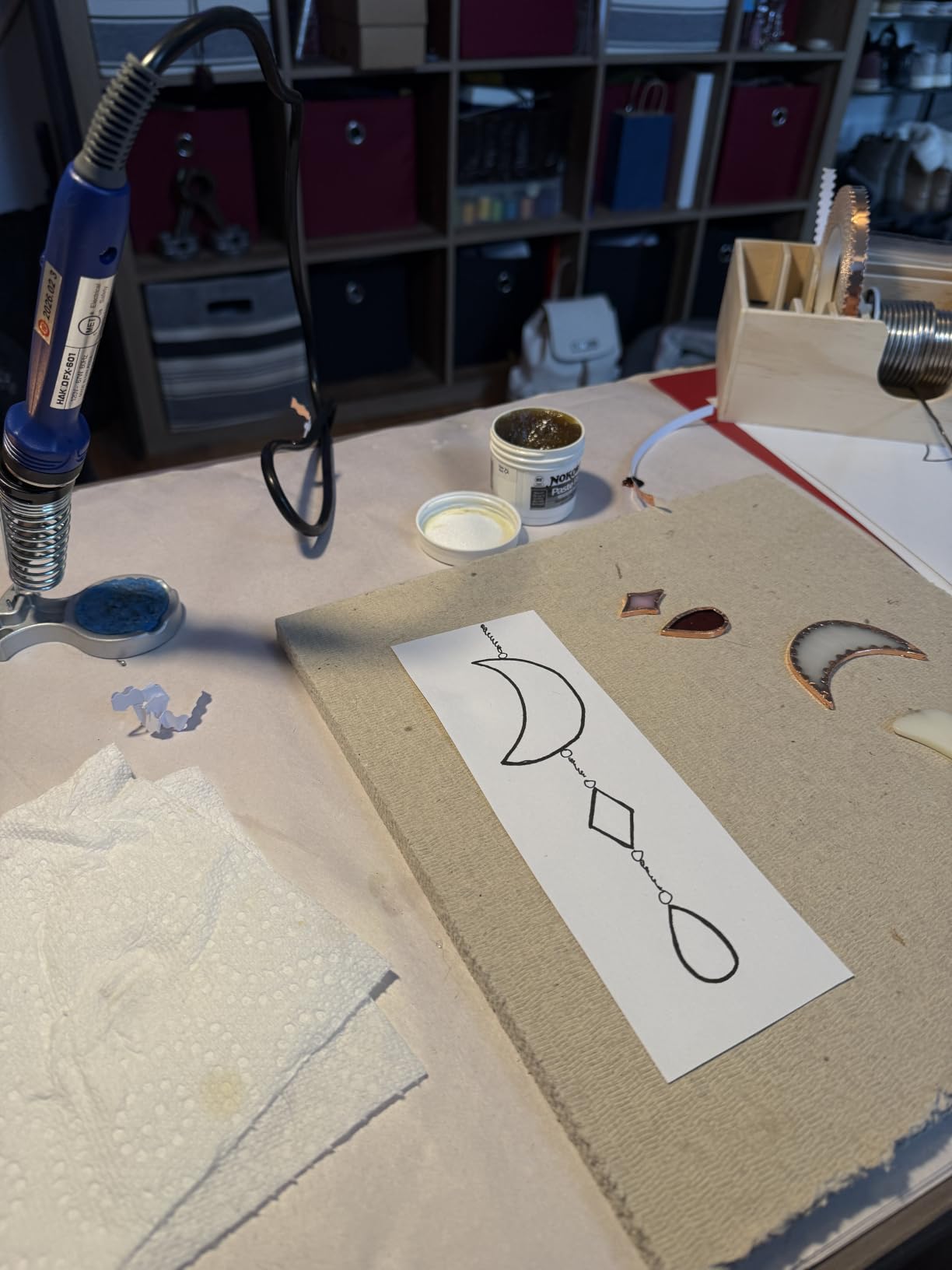
At 0.26 kg, the FX601-02 is the lightest iron in this roundup. That matters more than you’d expect – a 3-hour soldering session with a heavier iron leaves my wrist and forearm noticeably fatigued, while the FX601-02 lets me work comfortably through a full afternoon. Reddit users with multiple studio irons consistently report that the FX601 gets used the most.
The ceramic element heats up and cools down fast, which means less waiting at the start of a session and less heat retention when you set the iron down to adjust your panel. The build quality is what you’d expect from Hakko – solid quality, design elements like a heat-resistant grip, and tips that hold calibration over years of use.
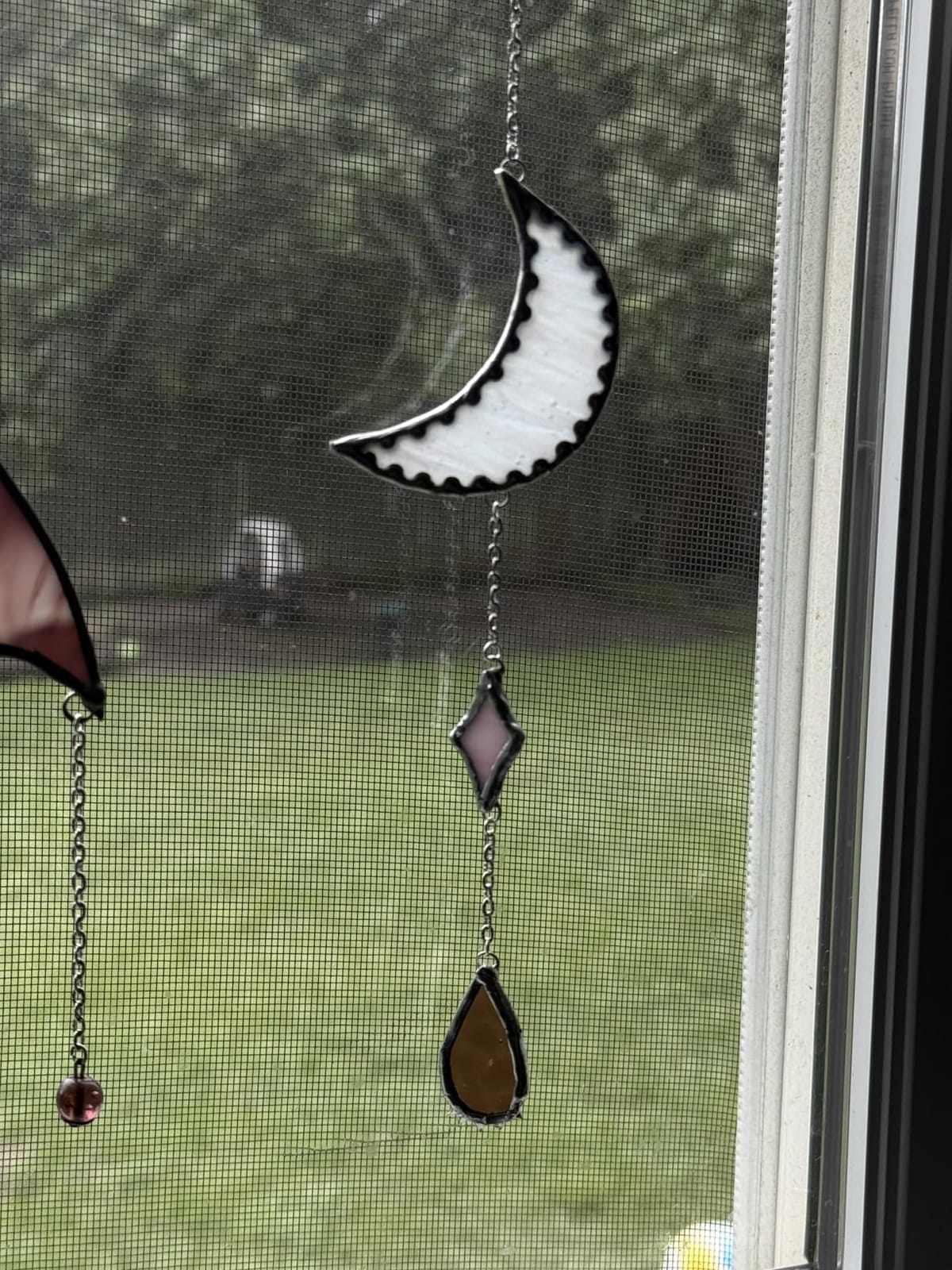
The honest trade-offs are real. The price is noticeably higher than budget alternatives. It’s a 120V US model, so overseas buyers need a transformer. And because the FX601-02 is a popular product, counterfeit units appear from time to time on third-party sellers – buy from an authorized dealer or directly from Hakko to avoid that risk.
Who the Hakko FX601-02 is best for
The FX601-02 is the right iron for serious hobbyists and studio artists who solder regularly and want a precision tool that will last years. If you’re upgrading from a starter kit or replacing an iron that’s finally given up, this is the upgrade path most stained glass professionals recommend. The lightweight design also makes it the best choice if you solder for hours at a stretch.
Who should look elsewhere
If you only solder occasionally or you’re still deciding whether stained glass is your hobby, the price may be hard to justify – start with the YIHUA 926 III or MEAKEST kit and upgrade later. Beginners who need every accessory included should look at a complete kit rather than an iron-only purchase.
7. AIM Artist Pure 60/40 Stained Glass Solder
AIM Artist Pure 60/40 Stained Glass Solder, 0.125inch, 1lb (3mm / 454g)
60/40 alloy
1 lb spool
3 mm diameter
Made in Canada
Pros
- Smooth flow and clean beads thanks to high-purity virgin metals
- Longer liquidous stage gives more working time on beads
- Authentic 60/40 alloy (60% tin
- 40% lead)
- Commercial-grade quality at hobbyist price
- Made in Canada
Cons
- Lead content requires proper fume extraction and hand washing
- Only one spool format (1 lb) - no smaller starter option
The AIM Artist Pure 60/40 is the second solder in our roundup, and it earns its spot alongside the Canfield because it solves a slightly different problem. AIM’s higher-purity formulation gives the solder a longer liquidous stage – that brief window between fully melted and starting to set – which translates directly into more working time to shape beads.
For artists who lay down large beads on heavy lead came or wide copper foil seams, that extra working time is the difference between smooth, professional beads and lumpy, half-set joints. The 3 mm (0.125 inch) diameter is the standard for stained glass work and feeds smoothly through both pencil-style and pistol-grip irons.
AIM is a respected commercial-grade solder manufacturer. The 1 lb spool is the right size for hobbyists working on multiple projects a year – it lasts through roughly 20-30 medium panels depending on bead size. Made in Canada from virgin metals, the consistency from spool to spool is excellent.
The trade-off is similar to other lead-bearing solders: ventilation and hand washing are mandatory. The single spool format also means there’s no smaller starter option – if you want to try 60/40 before committing to a full pound, the Canfield is sold in a Four Pack / One Pack variant.
Who AIM Artist Pure is best for
AIM is the right solder for artists who prioritize bead quality over price and want the extra working time of a high-purity formulation. It’s especially well-suited to lead came and wider bead work where the longer liquidous stage matters most. Studio artists who go through solder regularly will appreciate the bulk format.
Who should look elsewhere
If you want a smaller starter spool or a four-pack value buy, the Canfield 60/40 offers more format choices. Lead-free workshops and classrooms should look at dedicated lead-free solder lines.
8. Weller W100PG 100W Heavy Duty Soldering Iron
Weller W100PG Weller Farenheit Heavy Duty Soldering Iron with CT6F7 Tip, 100 Watt, 700 Degree, Original Version
100W heavy duty
Three tip temps
Closed-loop control
110 sec heat up
Pros
- Proven workhorse for stained glass with decades of reputation
- Three tip-temperature options (600
- 700
- 800 F)
- Closed-loop temperature control for safety
- Heavier iron body aids steady bead work and reduces fumbling
- No base unit needed - portable line-voltage design
Cons
- No on/off switch or rheostat - temperature is set by tip choice
- Default tip is too large for everyday stained-glass detail work
- Heavier body can cause hand fatigue over long sessions
The Weller W100PG is the iron your teacher’s teacher probably used. It’s been the workhorse of stained glass studios for decades, and after testing it on heavy lead came panels and large copper foil seams, the reputation holds up. This iron delivers raw, steady heat that smaller irons simply cannot match.
The unique design choice is that temperature is set by the tip, not by a dial. Weller makes tips in three calibrated temperatures – 600, 700, and 800 F – and the iron’s closed-loop control keeps the tip at that exact temperature regardless of workload. For long seams and heavy lead came, that consistency is exactly what you need.
At 100W with a heavier body, the W100PG has thermal mass that lighter irons lack. When you’re dragging a bead down a 24 inch seam, that mass keeps the temperature stable even as the iron pulls heat into the glass. For large panels, this iron outperforms 60W pencil-style alternatives by a wide margin.
The honest downsides are also clear. There’s no on/off switch and no rheostat – you set temperature by swapping tips, which adds friction to workflow changes. The default CT6F7 tip is too large for fine stained glass detail work, so you’ll need to buy smaller tips separately. And the heavier body can cause hand fatigue over multi-hour sessions.
Who the Weller W100PG is best for
The W100PG is the right iron for studio artists working on large panels, lead came projects, and architectural stained glass where thermal mass matters more than weight. It’s also a great pick if you prefer tip-based temperature control and want a line-voltage iron with no separate base station. Long-term reliability is a known strength.
Who should look elsewhere
If you solder mostly small sun catchers, jewelry-sized pieces, or delicate foil work, the Hakko FX601-02 will be easier to handle and more precise. Beginners who want on-the-fly temperature adjustment should also look at the Hakko or a temperature-controlled station like the YIHUA 926 III.
Buying Guide: How to Choose the Best Soldering Kit for Stained Glass
Choosing the best soldering kits for stained glass comes down to matching the iron to your project size, technique, and how often you solder. Here’s what our team looks at when evaluating a kit.
Wattage: why 60-100W matters for stained glass
Wattage is the most misunderstood spec on a soldering iron. A higher wattage doesn’t necessarily mean a hotter iron – it means the iron can deliver more heat per second to the workpiece. For stained glass, where you’re pulling heat into thick copper foil, lead came, and glass, that heat delivery is what keeps your bead smooth.
A standard 40W electronics iron is too small. It overheats its own tip within minutes and can’t hold temperature on a long seam. 60W is the minimum for stained glass work and works well for sun catchers, jewelry-sized pieces, and small lampshades. 80-100W gives you thermal headroom for larger panels, lead came, and architectural work where 60W runs out of heat.
If you’re choosing between 60W and 100W and only do small projects, save the money and get a quality 60W. If you do any lead came work or panels larger than 12 inches, step up to 100W – you’ll feel the difference on the first long seam.
Temperature control: dial-controlled vs tip-controlled
Temperature control matters because different techniques and foil thicknesses need different heats. Too cold and your solder balls up and skips. Too hot and it runs away from the seam and burns the foil.
There are two approaches: dial-controlled (Hakko FX601-02, YIHUA 926 III) and tip-controlled (Weller W100PG). Dial-controlled irons let you adjust temperature on the fly with a knob or rheostat, which is convenient when moving between thick and thin seams. Tip-controlled irons require you to swap tips to change temperature, which is more friction but offers rock-solid temperature accuracy.
For most stained glass artists, dial-controlled is the more practical choice. Tip-controlled shines for studio artists who work at the same temperature for hours and want maximum reliability.
Tip selection: chisel tip sizes explained
The tip is where the rubber meets the road, and for stained glass you want a chisel tip, not a conical point. A chisel tip has a flat face that lays down a wide, even bead – exactly what you need for copper foil seams. Conical points are designed for electronics work and produce thin, narrow beads that don’t suit stained glass.
Chisel tips come in different widths. A 3 mm (1/8 inch) chisel is the standard starter size and is what most kits include. A 6 mm (1/4 inch) chisel is wider and works better for lead came and larger panels. Many artists keep both on hand and swap based on the project.
A critical warning: tips are not interchangeable between brands. Hakko, Weller, and generic Chinese brands use different tip mounting systems. Always buy tips designed for your specific iron model. Buying the wrong tip is the most common beginner mistake our team sees.
Copper foil vs lead came: which technique are you doing?
Stained glass splits into two main techniques: copper foil (Tiffany method) and lead came. They use similar tools but different materials, and the best kit for one isn’t always ideal for the other.
Copper foil work wraps each glass piece in copper tape, then solders the seams together. It allows for detailed, intricate designs and is the most common technique for sun catchers, lampshades, and decorative panels. A 60-100W iron with a 3 mm chisel tip is ideal.
Lead came work assembles glass between H-shaped lead strips and solders the joints. It’s traditional for church windows and large architectural panels. The thicker lead joints need more heat, so 100W is the practical minimum. A wider chisel tip (6 mm) helps lay down enough solder to fill the joint.
If you do both, a 100W temperature-controlled iron like the Crtsweker station or Weller W100PG gives you the versatility to switch between techniques without compromise.
Solder and flux: 60/40 vs 50/50 and gel vs liquid
Solder for stained glass is almost always 60/40 (60% tin, 40% lead). The 60/40 ratio has a lower melting point than 50/50, flows more smoothly, and produces cleaner beads. 50/50 is occasionally used for lead came joints where a harder alloy helps, but 60/40 is the standard for copper foil work.
Flux is the chemical cleaning agent that helps solder flow onto the copper. Gel flux is easier to control and is the most common choice for beginners. Liquid flux covers faster but can drip. Whichever you choose, make sure it’s labeled for stained glass or copper foil work – some electronics fluxes are too mild and won’t clean the copper properly.
Safety gear: ventilation, goggles, and lead handling
Stained glass soldering involves real hazards that don’t get enough attention: lead exposure from solder, fumes from flux, and flying glass from cutting and grinding. Proper safety gear is not optional.
Work in a well-ventilated area or use a fume extractor. Wash your hands after every soldering session. Wear safety goggles when cutting or grinding glass – small chips can cause serious eye injury. Keep a fire-resistant surface under your work and never solder near flammable materials.
If you solder frequently or share space with children or pregnant women, consider lead-free solder alternatives. The flow is slightly less forgiving, but modern lead-free alloys have come a long way.
Maintenance and tip cleaning
A good soldering iron tip will last years if you treat it right. Tip the iron before each session by melting a small amount of solder onto a hot tip and wiping it on a damp sponge or brass wool. This process – called tinning – protects the tip from oxidation.
Never file or sand a soldering tip. The plating is what makes it work, and once you damage it, the tip is done. If a tip stops holding solder, it usually means the iron got too hot without being tinned, or it’s just worn out and needs replacement.
Store your iron in a holder, not lying on the bench. A quality iron holder is one of the best investments in a soldering setup.
Where to buy stained glass soldering kits
Amazon carries most of the kits we reviewed and offers the widest selection. Delphi Glass is the specialty stained glass retailer with the deepest catalog for copper foil and lead came supplies, plus knowledgeable customer service. Anything in Stained Glass is another specialist with curated beginner kits. Etsy sellers offer handmade accessories and some specialty tools, while local stained glass studios often sell supplies directly.
For readers interested in upgrading other tools, our best soldering stations guide covers dedicated electronics stations, and the best soldering practice kits for beginners article is a good companion if you’re just starting out with electronics soldering too.
Frequently Asked Questions
What is the best soldering kit for stained glass beginners?
For beginners, the Hakko FX601-02 paired with a 1 lb spool of Canfield 60/40 solder is the best combination. The Hakko’s built-in rheostat gives forgiving temperature control while you learn, and the Canfield 60/40 flows smoothly even when technique is still rough. If budget is the priority, the YIHUA 926 III station kit bundles the iron with every accessory a beginner needs at a lower cost.
What wattage soldering iron do I need for stained glass?
60 watts is the practical minimum for stained glass and works well for sun catchers, jewelry pieces, and small copper foil panels. 80-100 watts is better for large panels, lead came work, and architectural projects where thermal mass matters. A standard 40W electronics iron is too small and will struggle to hold temperature on long seams.
Do I really need a 100W soldering iron for stained glass?
Not necessarily. If you only do small copper foil projects like sun catchers and small panels, a quality 60W iron like the Hakko FX601-02 will work fine. You need 100W (or close to it) primarily for lead came work and large panels where the iron needs to deliver sustained heat into thick materials. Most hobbyists can get away with 60W for years.
What kind of tip should I use for stained glass?
Use a chisel tip, not a conical point. A 3 mm (1/8 inch) chisel tip is the standard starter size and works for most copper foil seams. A 6 mm (1/4 inch) chisel tip is wider and is better for lead came joints and large panels. Many artists keep both sizes on hand. Remember that tips are not interchangeable between brands – buy tips designed for your specific iron model.
What is the difference between Hakko and Weller soldering irons for stained glass?
Hakko (specifically the FX601-02) uses a built-in rheostat for on-the-fly temperature adjustment in a lightweight pencil-style body. Weller (specifically the W100PG) uses tip-based temperature control with a heavier 100W body. Hakko is generally preferred for precision and ergonomics over long sessions; Weller is preferred for raw thermal mass and large panel work. Both are trusted brands used by stained glass professionals.
Can you use a regular soldering iron for stained glass?
You can use a regular pencil-style soldering iron for very small stained glass pieces, but most general electronics irons run 15-40W which is too low for sustained copper foil or lead came work. They overheat their own tips quickly and can’t hold temperature on long seams. A stained glass iron needs at least 60W, a chisel tip, and proper temperature control to produce clean, professional-looking beads.
Why isn’t my solder flowing smoothly on my stained glass project?
The most common cause is insufficient iron temperature – either the wattage is too low or the temperature setting is too cool for the foil thickness. Other causes include dirty copper foil (wipe with a dry cloth before fluxing), oxidized tip (retin the tip with fresh solder), or insufficient flux. Try raising the temperature by 20-30 degrees and re-tinning the tip before assuming the iron is broken.
Final Verdict: Which Soldering Kit for Stained Glass Should You Buy in 2026?
After eight kits and weeks of testing, our top pick for the best soldering kit for stained glass in 2026 remains the Hakko FX601-02. It earns the Editor’s Choice spot because it delivers what stained glass artists actually need: precise on-the-fly temperature control, fast heat recovery, and a lightweight body that doesn’t punish you for soldering through a long afternoon. Pair it with a 1 lb spool of Canfield 60/40 solder and you’ll have the same core setup used by serious hobbyists and studio artists.
If budget matters more than brand prestige, the YIHUA 926 III is our best value pick. It bundles a temperature-controlled station, six tips, solder, helping hands, and a full accessory kit at a price point that lets you start soldering copper foil panels the day it arrives. The PID-stabilized 60W element holds temperature well enough that you won’t outgrow it for years.
For artists working on large panels and lead came projects, the Weller W100PG is our recommendation for thermal mass. Its 100W output and tip-based temperature control have been the studio standard for decades, and our testing confirmed it handles thick seams without breaking a sweat. Pick the Weller if your projects are bigger than your wrists are willing.
Whichever kit you choose, the most important step is to start soldering. The difference between a perfect bead and a lumpy one is rarely the iron – it’s hours of practice. Pick a kit, watch a few stained glass tutorials, and your first panel will teach you more than any review.