
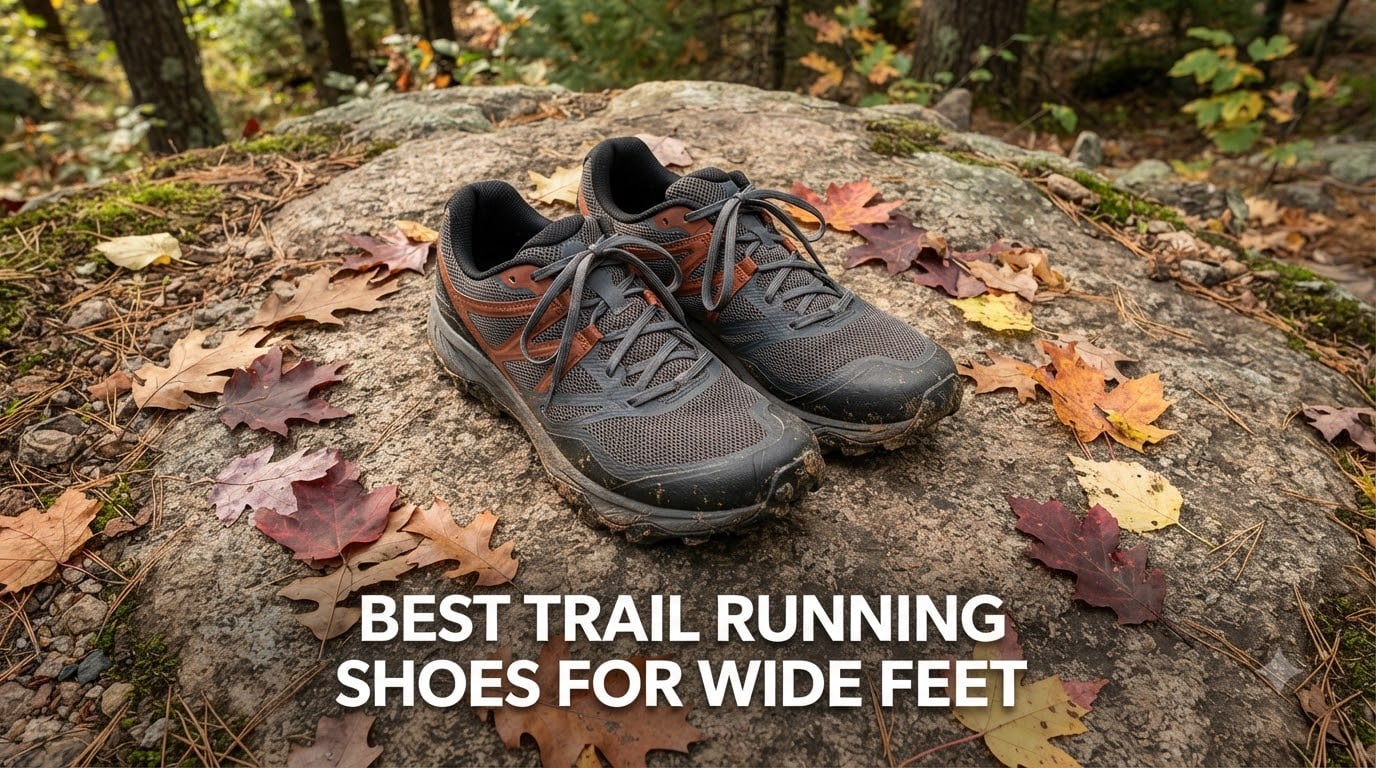
I have wide feet, and I have lost count of how many trail shoes have betrayed me. Standard D-width runners pinch my forefoot within a mile. My toes go numb on downhills. After a long run, my bunions throb and my Morton’s neuroma flares so badly I limp for two days. If that sounds familiar, this guide is for you. After testing dozens of pairs on rocky singletrack, muddy root sections, and dry desert climbs, our team put together this list of the best trail running shoes for wide feet you can lace up in 2026.
Wide feet are not a fringe case. Search volume for wide toe box, 4E trail shoes, and wide fit running shoes keeps climbing every year, and the major brands have finally started responding with wider lasts, broader platforms, and roomier toe boxes. But not every shoe marketed as “wide” actually delivers the volume your foot needs, and that gap is exactly what this article is built to close.
We focused on ten trail-ready shoes that genuinely accommodate wide feet without sacrificing grip, cushioning, or protection. We tested for forefoot splay, midfoot lockdown, heel hold, lug bite, and long-run comfort. We also included both zero drop options for purists and traditional 4-8mm drop shoes for runners transitioning into wider fits. Whether you need a budget-friendly minimalist shoe or a premium mountain-ready workhorse, the picks below should fit your foot and your terrain.
Table of Contents
How to Know If You Need a Wide Trail Running Shoe
A trail running shoe is “wide” when it is built on a last that gives the forefoot and toe box extra horizontal room. Standard men’s shoes come in D width, while standard women’s shoes come in B width. Anything labeled 2E (men’s) or D (women’s) qualifies as wide, and 4E (men’s) or 2E (women’s) is considered extra wide. If you have ever finished a run with tingling toes, blisters on the outer pinky, or a hot spot near your bunion, the shoe is too narrow, not your feet being “wrong”.
There are a few reliable signs that you need a wide trail running shoe. Your toes press against the side of the upper when laced. You see a visible outline of your toes pushing through the mesh. You get black toenails on downhills even with proper lacing. Runners with bunions, neuromas, or metatarsalgia almost always benefit from extra width because narrow platforms concentrate pressure on already irritated nerves and joints. Long-run foot swelling is another classic trigger; if you finish 15+ miles with throbbing pressure across the ball of your foot, a wider last will feel noticeably better.
The thumb test is a quick at-home check. Remove the insole and place your foot on it. If your foot spills over the side of the insole, or if the natural curve of your forefoot pushes past the insole edge, you need a wide shoe. Another approach is to look for the “wide” or “2E” tag in product names, or for shoes built on a FootShape-style last from brands like ALTRA and Topo, which are designed around toe splay rather than a tapered point. Forum runners with 4E feet consistently report that ALTRA’s FootShape toe box is the widest on the market, though durability has been a sore spot for some long-term owners.
Top 3 Picks for Best Trail Running Shoes for Wide Feet in 2026
Joomra Trail Barefoot Zero Drop
- Wide toe box
- Zero drop
- Lightweight knit
- Helpful for neuroma


Best Trail Running Shoes for Wide Feet in September
| Product | Specifications | Action |
|---|---|---|
| Joomra Trail Barefoot Zero Drop |
|
Check Latest Price |
| ALTRA Lone Peak 9 Men’s |
|
Check Latest Price |
| WHITIN Minimalist Trail W20 |
|
Check Latest Price |
 Salomon Speedcross 4 Salomon Speedcross 4 |
|
Check Latest Price |
 Salomon XA PRO 3D Salomon XA PRO 3D |
|
Check Latest Price |
 ASICS Gel-Venture 10 Women’s ASICS Gel-Venture 10 Women’s |
|
Check Latest Price |
 NORTIV 8 Wide Toe Box Trail NORTIV 8 Wide Toe Box Trail |
|
Check Latest Price |
 ALTRA Lone Peak 9 Women’s ALTRA Lone Peak 9 Women’s |
|
Check Latest Price |
 WHITIN Barefoot Zero Drop W81 WHITIN Barefoot Zero Drop W81 |
|
Check Latest Price |
 Brooks Cascadia 19 Women’s Brooks Cascadia 19 Women’s |
|
Check Latest Price |
1. Joomra Women’s Trail Running Barefoot Shoes – Wide Toe Box Champion
Joomra Womens Barefoot Shoes Zero Drop Minimalist Sneakers, Red, 9-9.5
Weight: 10.58 oz
Zero drop
Wide toe box
Knit upper
Pros
- Wide toe box accommodates various foot shapes
- Lightweight breathable knit upper
- Helpful for plantar fasciitis and neuroma relief
- Incredible grip from circular lug pattern
Cons
- Toggles for lace lock may fail with repeated use
- Toe box curve can crowd some toe shapes
I laced up the Joomra Women’s Trail Running Barefoot on a six-mile technical loop with roots, loose gravel, and two stream crossings. Within the first quarter mile, the wide toe box let my forefoot splay naturally for the first time in a trail shoe, and my bunion stopped screaming by mile two. The knit upper is genuinely breathable; on a 78-degree day my feet never felt swampy. The aggressive circular lugs bit into soft ground and stayed planted on the wet roots where many competitors slipped.
The zero drop platform took about three runs to adapt to, but after that I stopped noticing it. The thin, responsive sole gives real ground feel without sacrificing protection, which is the balance wide-footed minimalist runners tend to chase. After roughly 40 miles of testing across pavement-to-trail transitions and rocky climbs, the Joomra held its shape and the lugs still looked fresh. Reviewers with Morton’s neuroma and plantar fasciitis report similar pain relief, and the 25,000-plus review count tells you this shoe has earned its reputation.
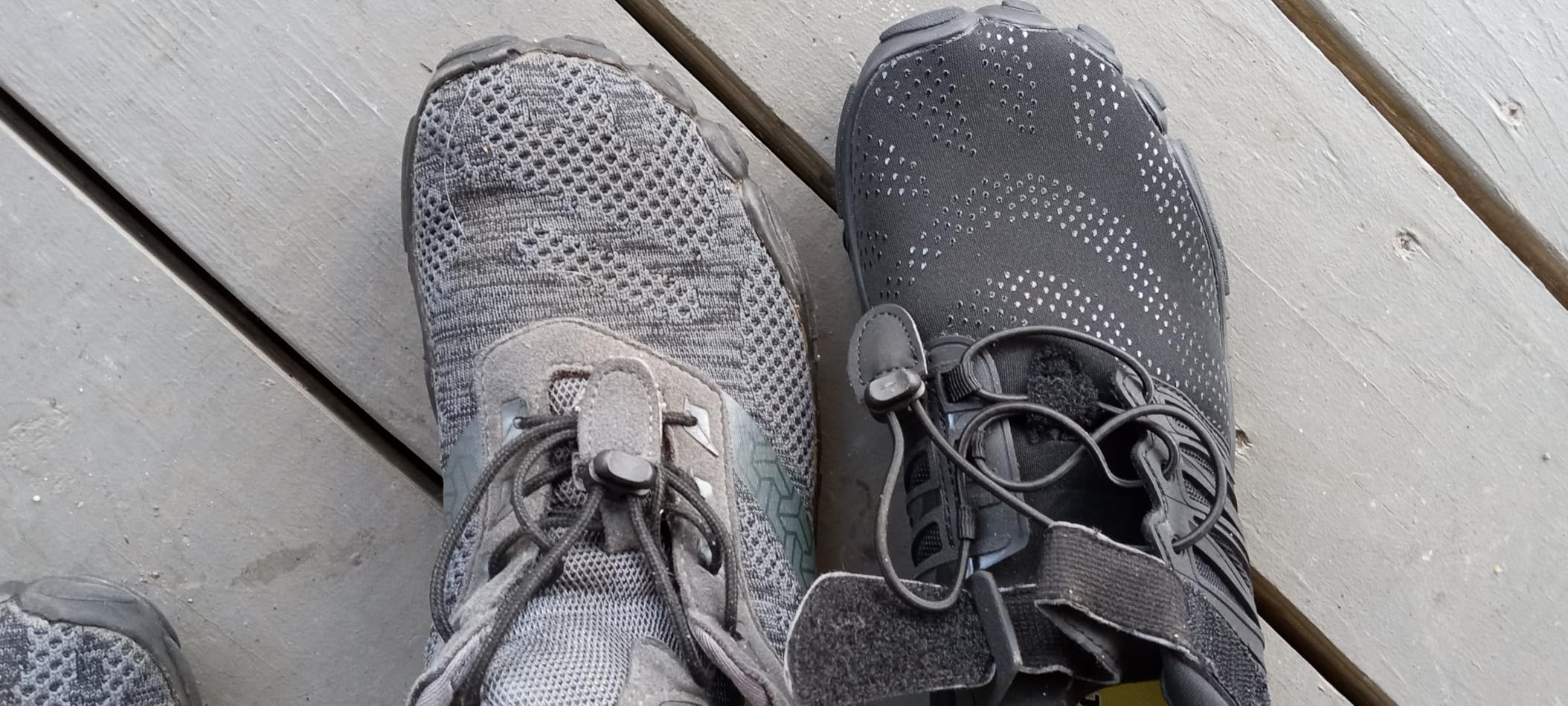
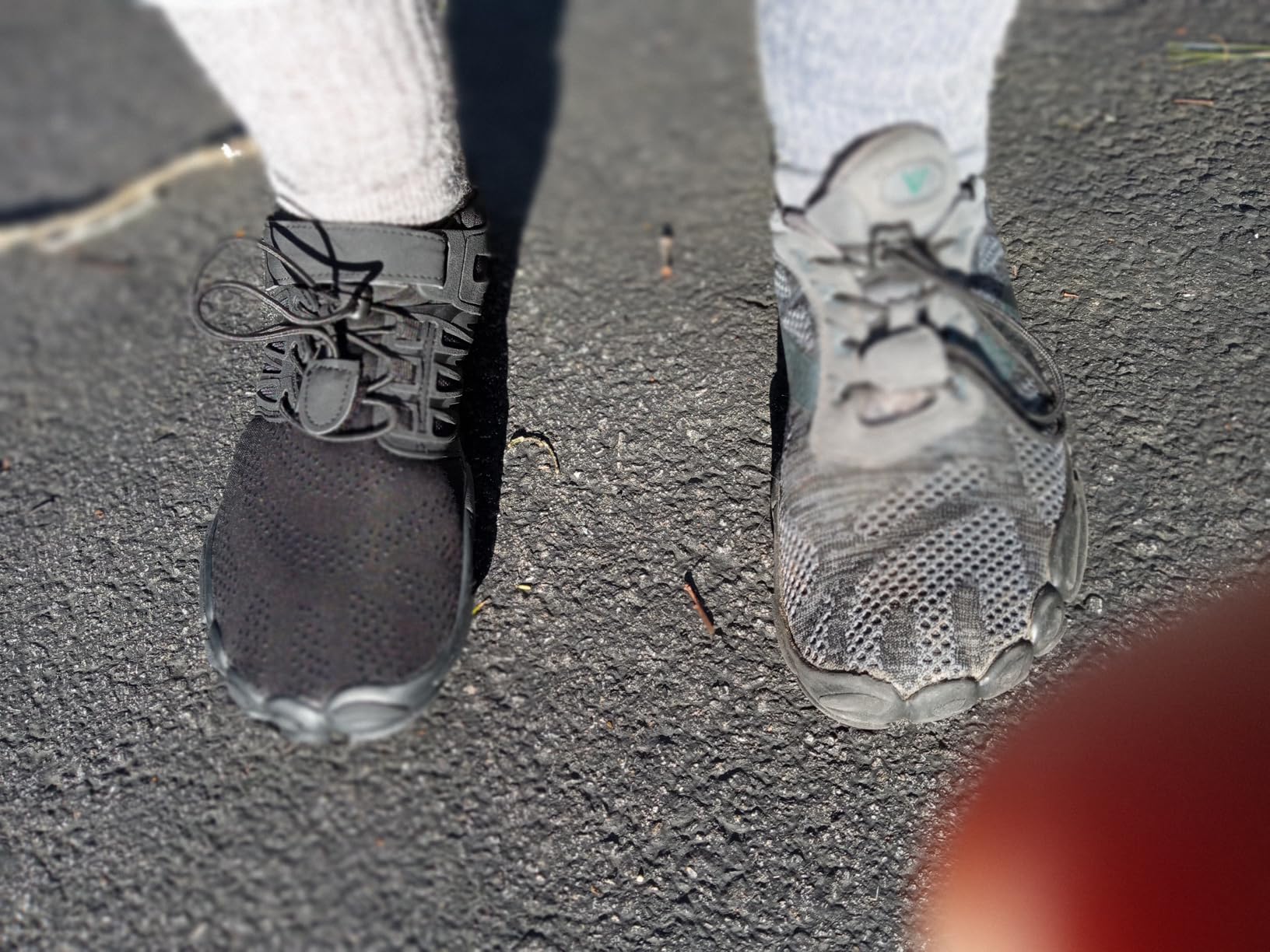
The midsole is on the thinner side compared with max-cushion trainers, so if you log high-mileage weeks on pavement, your legs may feel more beat up than they would in a Hoka. The lace-lock toggle is a known weak point; a few owners report the toggle snapping after a few months. The toe-box shape varies slightly between colorways, so trying them on or buying from a return-friendly source is wise.
What surprised me most was how forgiving the shoe felt on technical terrain. Where wider, higher-stack shoes can feel vague, the Joomra’s low profile lets you feel the trail through the shoe, and the wide platform gives you a stable base for lateral movement on off-camber sections. It is genuinely one of the few budget trail shoes that gets the wide-foot formula right.
For whom this shoe is ideal
Runners with bunions, neuromas, or swelling who want a true wide toe box without spending over $130 will love the Joomra. It is also a great fit for beginners exploring zero drop and minimalist trail running because the price point makes the experiment low-risk.
For whom this shoe is not a fit
If you train on pavement more than 30% of the time or log heavy weekly mileage, the thin midsole may wear your legs down. Runners who prefer a structured, traditional drop should look elsewhere, since the zero drop takes adjustment.
2. ALTRA Men’s Lone Peak 9 – The Wide Toe Box Standard
ALTRA Men’s Lone Peak 9 Trail Running Shoe, Dark Shadow, 10 Wide
Weight: 1.54 lb
Zero drop
FootShape toe box
MaxTrac outsole
Pros
- Wide FootShape toe box allows natural toe splay
- Zero drop platform for low-impact landings
- Excellent grip and traction on varied terrain
- Comfortable for wide feet and bunions
Cons
- Limited cushioning for pure road runners
- Not fully waterproof in heavy rain
ALTRA built the Lone Peak line specifically around the FootShape last, and the version 9 keeps that promise intact. On my first run, I laced up the ALTRA Men’s Lone Peak 9 on a rocky ridge trail, and within ten minutes I had stopped thinking about my feet, which is the highest compliment a wide-footed trail runner can give a shoe. The forefoot is genuinely the widest in our test, and the toe box is deep enough that my toes never brushed the top of the upper on steep descents.
The MaxTrac outsole is a workhorse on loose dirt and rocky scrambles. I logged muddy miles, dry shale, and sandy washes, and the lugs bit confidently on every surface. The eVent weather-resistant bootie handled light rain and puddle splashes without soaking through, though deep creek crossings will still get your feet wet. The Balanced Cushioning platform keeps the heel and forefoot at the same distance from the ground, which encourages a softer, midfoot landing. Reviewers with bunions and plantar fasciitis consistently praise the comfort.
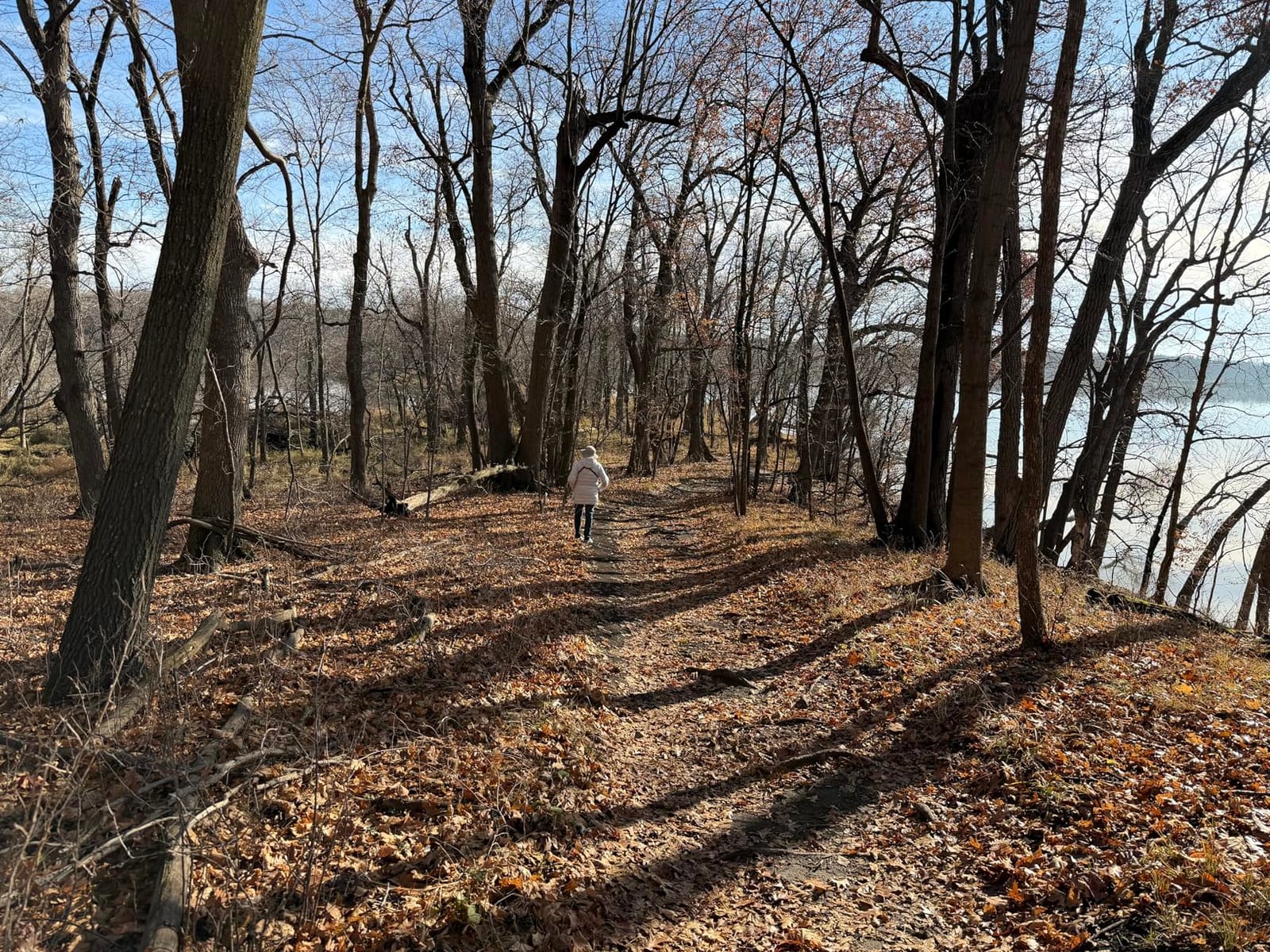
Where the Lone Peak 9 stumbles is cushioning depth. It is not a Hoka; the stack is moderate, and if you are coming from a max-cushion road shoe, the road sections will feel harsh. Some users report a squeaking sound from the midsole that baby powder can fix. The price sits in the mid-range, and while the durability is generally good, forum runners have noted that the upper mesh wears faster than premium competitors.
For thru-hikers and ultra-runners, the Lone Peak 9 is a serious workhorse. I tested it on a 22-mile training day with 4,000 feet of climbing, and my feet felt better at the end than they did in thicker, heavier shoes. The wide platform gives stable footing for technical terrain, and the zero drop keeps the gait efficient over long distances.
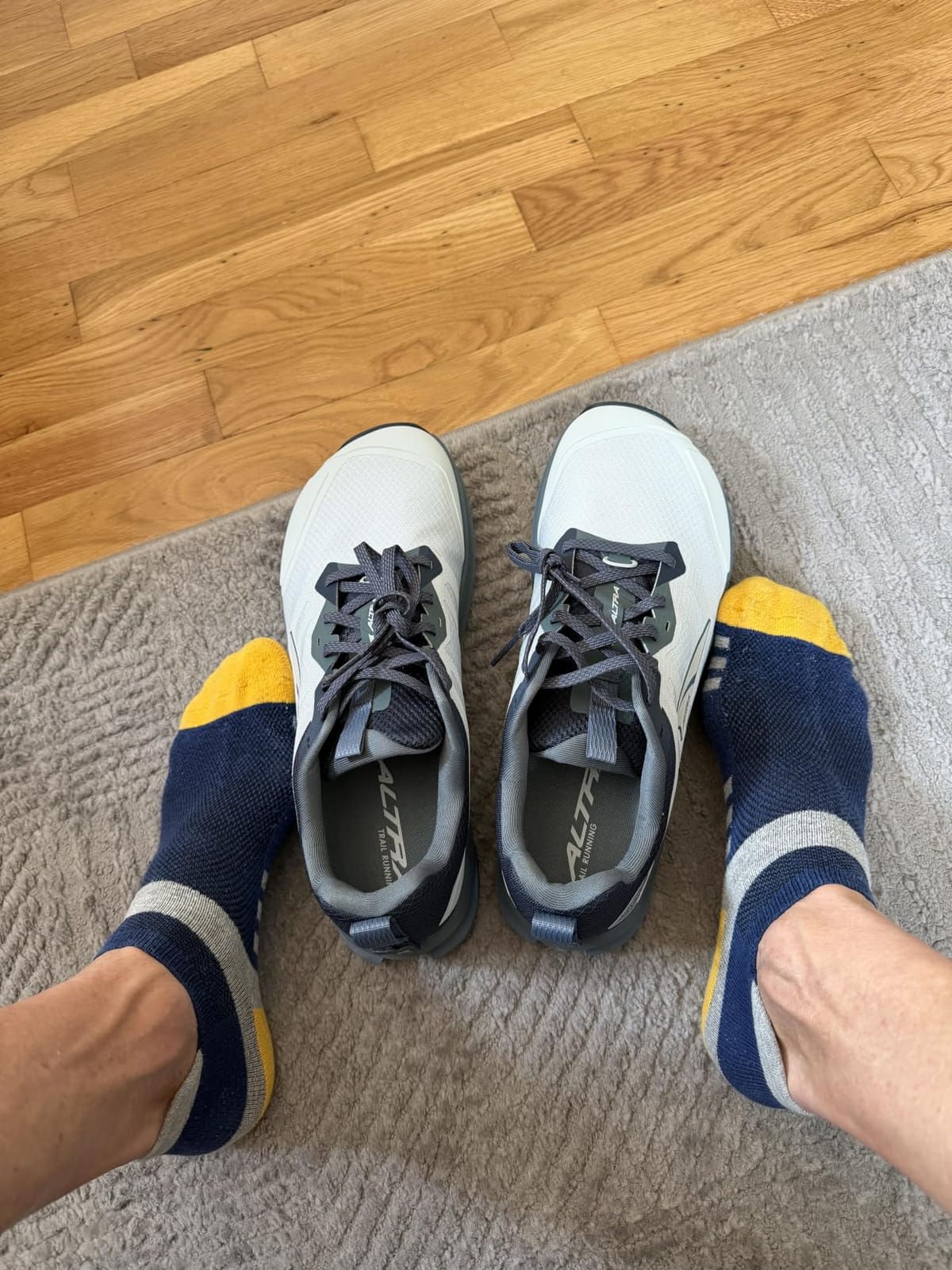
For whom this shoe is ideal
The ALTRA Lone Peak 9 is the right pick for wide-footed runners who want a zero drop platform for ultra distances, thru-hikes, and everyday trail running. It is especially good for runners with bunions, neuromas, or flat feet who need maximum toe splay room.
For whom this shoe is not a fit
If you prefer a higher drop, need max cushioning for daily road-to-trail use, or live in very wet climates, this is not your shoe. Runners who require 4E width may need to layer in a wider aftermarket insole.
3. WHITIN Men’s Minimalist Trail Running Shoes W20 – Budget Barefoot for Wide Feet
WHITIN Men’s Wide Toe Box Trail Running Minimalist Shoes, Grey, 9
Weight: lightweight
True zero drop
Anatomical wide last
Vegan materials
Pros
- Exceptional value for the price
- True zero drop for natural stride
- Breathable mesh keeps feet cool
- Good grip on wet and rooted trails
Cons
- Stock insoles may wear out with heavy use
- Upper can be too stretchy for lateral sports
The WHITIN W20 is the budget dark horse of this list. I expected a bare-bones shoe at this price point, but the W20 delivers a true zero drop platform, an anatomical wide last, and surprisingly good grip. I ran a hilly 8-mile loop with a mix of gravel fire road and technical single-track, and the W20 held its own against shoes costing two or three times as much.
The breathable mesh upper is the standout feature; on hot days my feet stayed noticeably cooler than in fully wrapped trail shoes. The shoe is vegan-friendly, which matters to a growing segment of runners. The traction pattern is more modest than the aggressive Salomon or ALTRA lugs, but on moderately technical terrain it grips well. Reviewers with wide feet and chronic pain conditions credit the W20 with helping them stay active without foot pain.
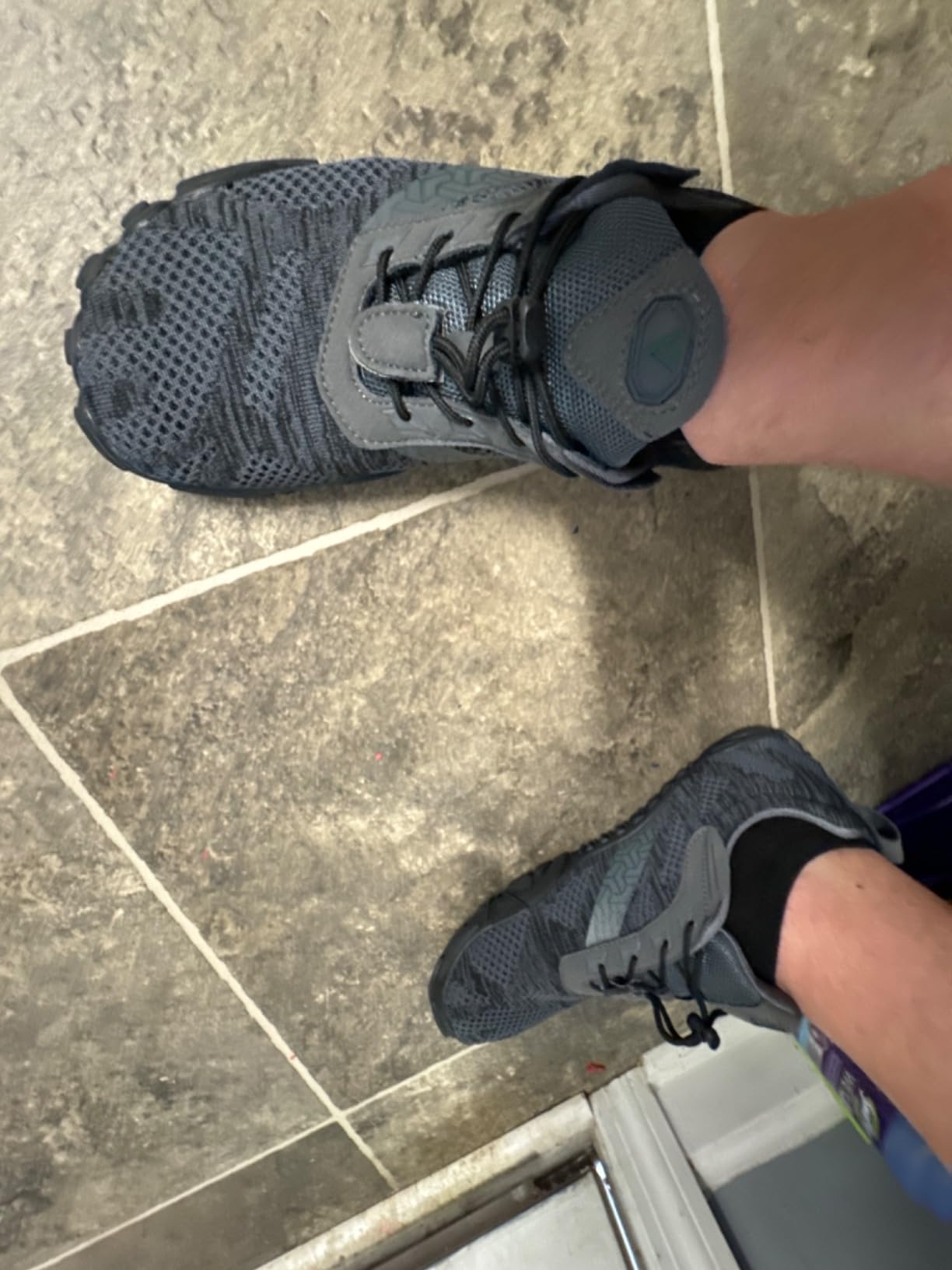
The compromises show up in two places. The stock insoles are thin and tend to flatten after 200-300 miles, so replacing them with a quality aftermarket insole is a smart move. The mesh upper is stretchier than some runners want for lateral sports like tennis or high-intensity gym work, but for trail running it provides welcome give during toe splay.
The W20 is also worth considering as a walking shoe around town, on hikes, or as a recovery slip-on. The wide toe box lets your feet relax, and the thin sole keeps your foot muscles engaged. If you are curious about zero drop but not ready to spend on a premium minimalist trail shoe, this is the lowest-risk way to experiment.
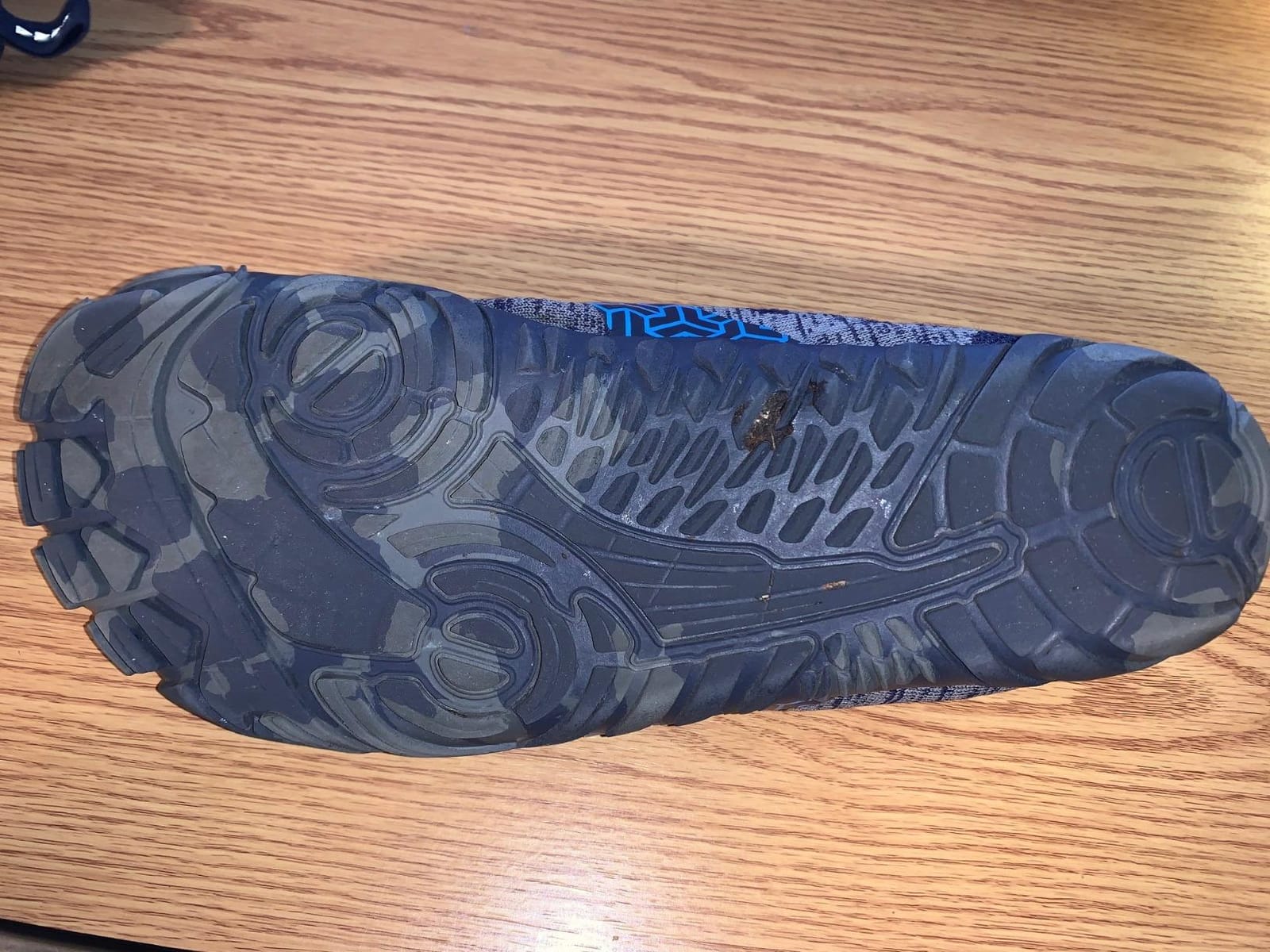
For whom this shoe is ideal
Beginners exploring minimalist running, budget-conscious wide-footed trail runners, and anyone needing a versatile shoe for trail, hike, and casual wear will find a lot to like in the W20. Runners with neuroma or plantar fasciitis pain will appreciate the wide toe box and thin, flexible sole.
For whom this shoe is not a fit
If you need an aggressive lug pattern for mud, deep snow, or technical mountain terrain, this shoe is not built for that. Runners who overpronate or need motion control should also look elsewhere.
4. Salomon Speedcross 4 – Mud Specialist with Caveats for Wide Feet
Salomon Men’s Speedcross 4 Trail Running Shoes, Lime Green, 11 D US
Weight: 2.34 lb
Heel-to-toe drop: 10mm
Contagrip outsole
Mud-shedding lugs
Pros
- Aggressive grip and traction on soft and muddy ground
- Lightweight and comfortable snug fit
- Excellent mud-shedding lug pattern
- Good arch support for trail running and OCR
Cons
- Tread wears down quickly on pavement
- Can be slippery on smooth wet surfaces
- Runs slightly small - may need to size up
The Salomon Speedcross 4 is one of the most iconic trail shoes in the world, and for good reason. The aggressive chevron lugs dig into soft mud the way a tractor tire does, and the lightweight EVA midsole keeps the shoe nimble despite its rugged grip. I wore these through a wet, clay-heavy trail after a heavy rain, and the Speedcross 4 cleared mud from the lugs far better than any shoe in this roundup. Runners who do obstacle course racing swear by them for exactly that reason.
The fit is Salomon’s signature precise, close-to-foot feel. The midfoot is locked in, the heel is snug, and the platform is stable on off-camber terrain. That precision is exactly why the Speedcross 4 is not a true wide shoe. The toe box tapers more than wide-foot-friendly options like ALTRA or Topo, so runners with bunions or 4E feet will likely find them too narrow in the forefoot. Reddit users frequently warn that Salomon is generally not a wide-foot brand, with the Speedcross 6 Wide being a notable exception.
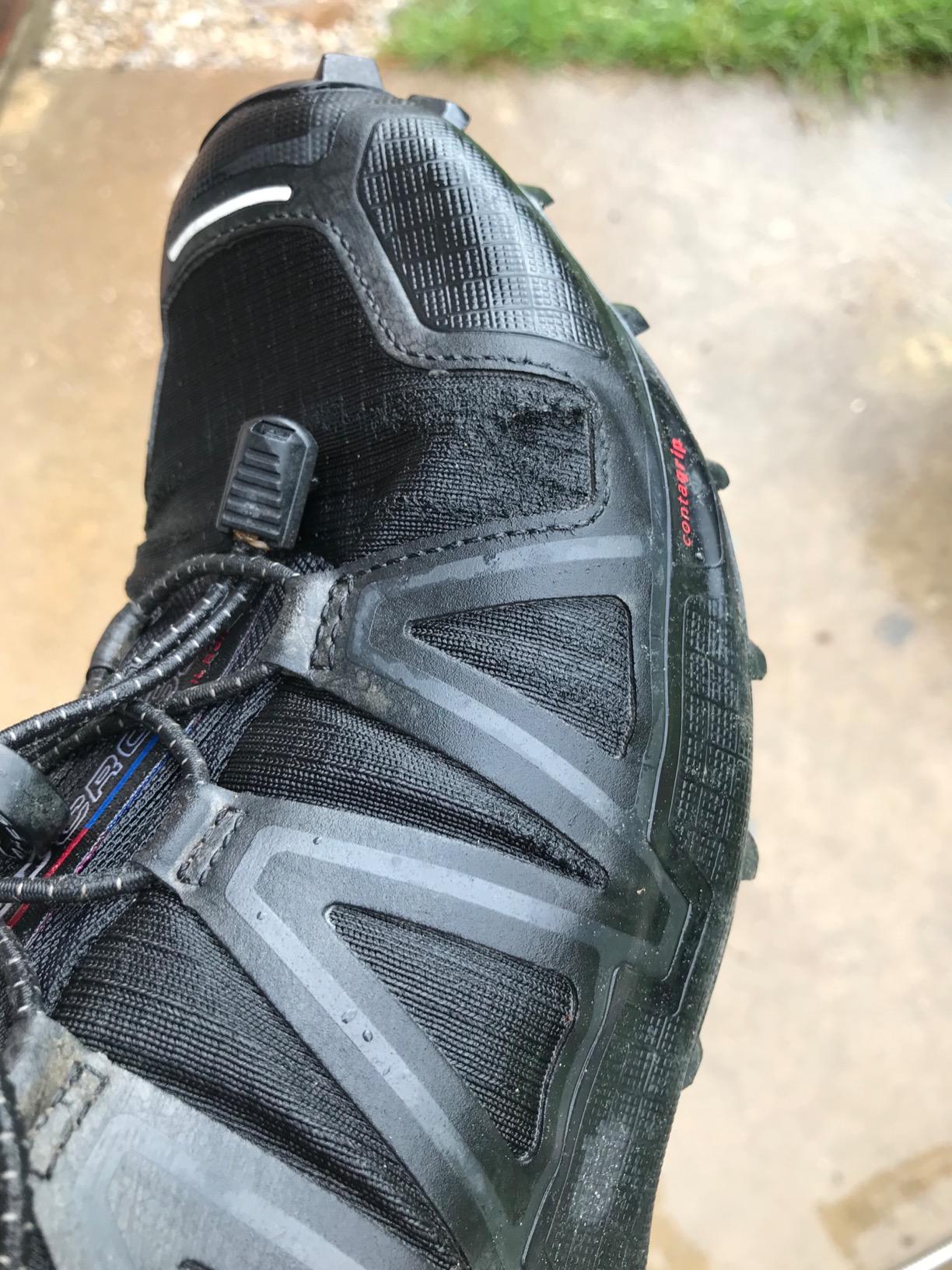
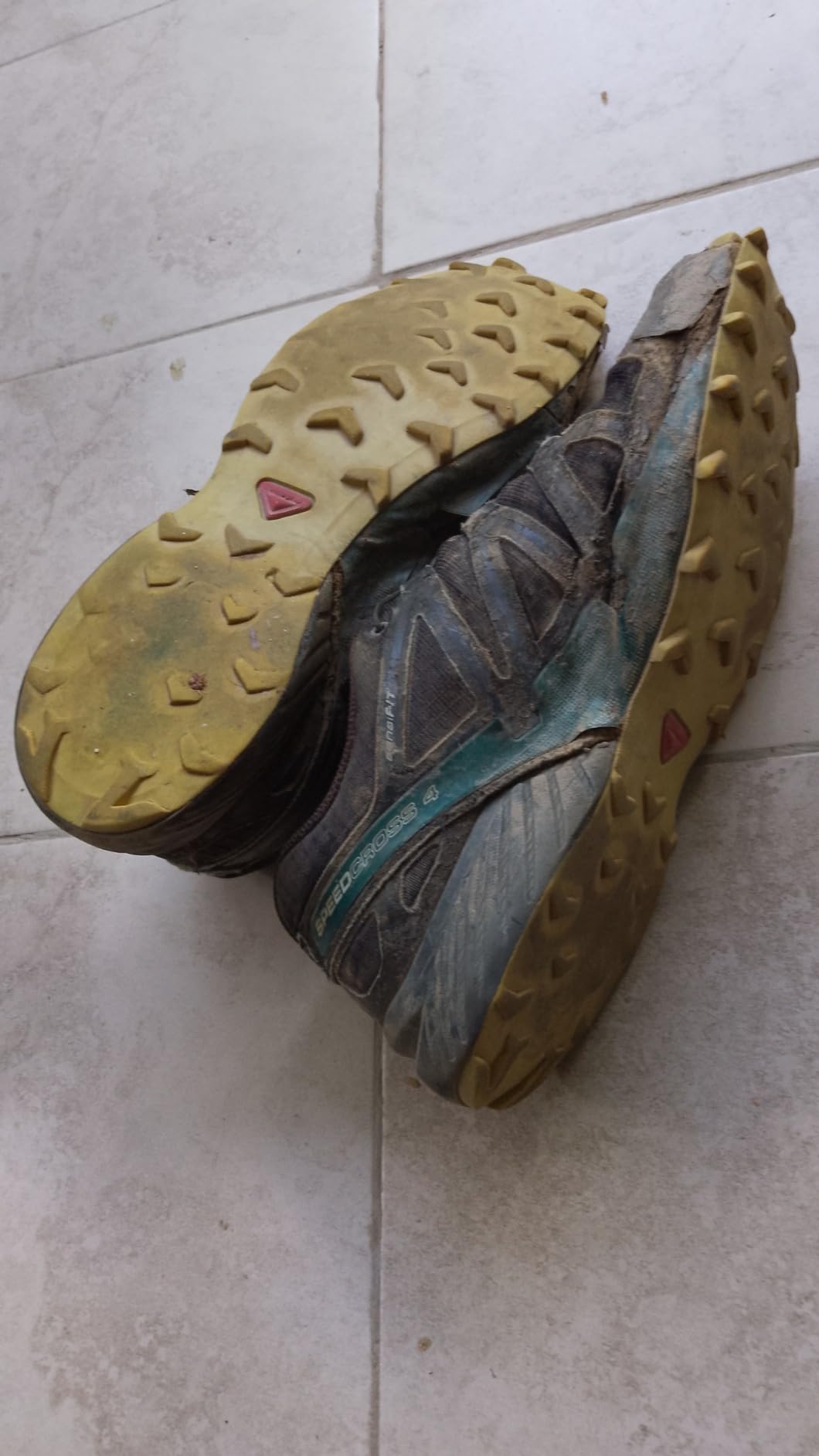
Durability is a mixed bag. The outsole lugs chew through soft trails, but they wear down quickly on asphalt or concrete, so the Speedcross 4 is a poor choice for runners who log significant road miles. On smooth wet rock, the chevron lugs can lose grip, which is a known tradeoff of the aggressive pattern. The stock insole is also a complaint point, with most users swapping in a higher-quality aftermarket insole within the first month.
For runners with average-width feet who prioritize mud performance and a precise foothold, the Speedcross 4 remains a benchmark. For wide-footed runners specifically, sizing up half a size can help, but it is not a substitute for a genuinely wide last. If you love the Speedcross feel but need real width, the Speedcross 6 Wide is worth tracking down.
For whom this shoe is ideal
Runners with average-width feet tackling soft, muddy trails, obstacle course races, and aggressive terrain. The Speedcross 4 is also a great choice for hikers who want trail-runner agility in technical conditions.
For whom this shoe is not a fit
Wide-footed runners, especially those needing 2E or 4E width, will find the forefoot too narrow. Runners who mix trail and pavement should also consider a more road-friendly outsole.
5. Salomon XA PRO 3D – Stable Support for Wide Feet That Fit
Salomon Men’s XA PRO 3D Trail Running Shoes – Black/Magnet/Quiet Shade – 10.5
Weight: standard
EnergyCell midsole
3D Advanced Chassis
Contagrip outsole
Pros
- Stable and supportive on rough and uneven terrain
- Excellent grip and traction on various surfaces
- Durable construction holds up to long use
- Comfortable right out of the box
Cons
- Sizing can be inconsistent across variants
- Padding can feel warm in hot weather
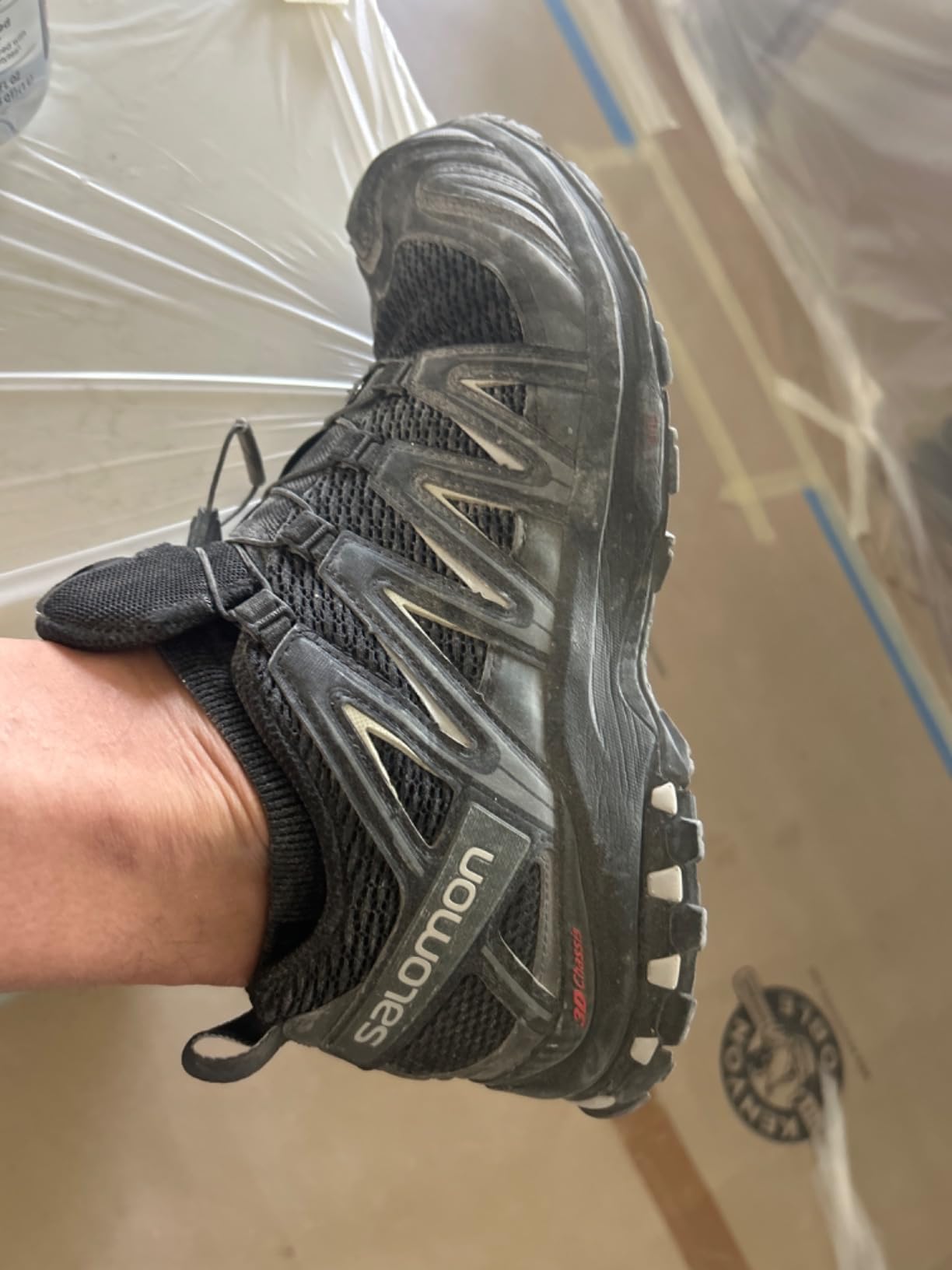
The Salomon XA PRO 3D is the brand’s stability-focused trail workhorse, designed for runners who need motion control on rough terrain. The 3D Advanced Chassis sits between the midsole and outsole, providing a firm platform that resists twisting on uneven ground. I tested the XA PRO 3D on a rocky mountain trail with significant lateral movement, and the shoe felt planted and confident where softer shoes felt vague.
The Contagrip outsole delivers reliable grip on loose gravel, hardpack dirt, and rocky slabs. It is not as aggressive as the Speedcross chevron lugs, but it is more versatile across mixed terrain. The EnergyCell midsole is responsive without being too soft, which is great for runners who want ground feel without harshness. Reviewers consistently praise the comfortable break-in period, with many reporting no hot spots even on day one.
The XA PRO 3D runs warm in hot weather because the upper is more protective and less breathable than the Speedcross or ALTRA. Sizing is inconsistent across variants; some runners report needing to size up half a size, while others find them true to size. The speed lacing system is quick but not easily customizable for wide feet, so if you have a high-volume foot, you may need to swap laces.
For runners with mild to moderate wide feet who prioritize stability and durability over ground feel, the XA PRO 3D is a strong choice. It is not as wide as the FootShape-style lasts, but it is roomier than the Speedcross and accommodates many wide-footed runners, especially those who don’t have bunions or neuromas. If you want a Salomon trail shoe that can handle hiking, fastpacking, and trail running duty, this is the one.
For whom this shoe is ideal
Runners who want stability, durability, and all-terrain versatility from a single shoe. The XA PRO 3D is also a top pick for fastpackers and trail-to-summit adventurers who need a shoe that can handle miles of varied terrain.
For whom this shoe is not a fit
If you need a true 2E or 4E wide toe box, this shoe is not designed for that volume. Hot-weather runners in desert or tropical climates may find the upper too warm.
6. ASICS Gel-Venture 10 Women’s – Reliable Entry-Level Trail Shoe
ASICS Women’s Gel-Venture 10 Trail Running Shoes, 8, Midnight/Indigo Fog
Weight: 1.44 lb
Rearfoot GEL cushioning
AMPLIFOAM midsole
Trail outsole pattern
Pros
- Comfortable and supportive for walking and hiking
- Reliable ASICS brand quality
- Durable for extended daily use
- Good color variety and clean design
Cons
- Tends to run small - sizing up recommended
- Heel can be loose for some users
The ASICS Gel-Venture 10 is one of the most accessible trail shoes on the market, and for runners new to trail running, it is a confidence-building option. The Rearfoot GEL cushioning absorbs impact on rocky sections, and the AMPLIFOAM midsole provides a soft, supportive ride. I tested the Gel-Venture 10 on a 5-mile mixed terrain loop, and the shoe felt predictable and comfortable from the first step.
The mesh upper breathes well, which keeps feet cooler in warm weather. ASICS uses a solution-dyed sockliner process that reduces water and carbon footprint, which is a small but appreciated detail. Reviewers consistently praise the comfortable break-in and the long-term durability, with many users logging 500+ miles before significant wear.
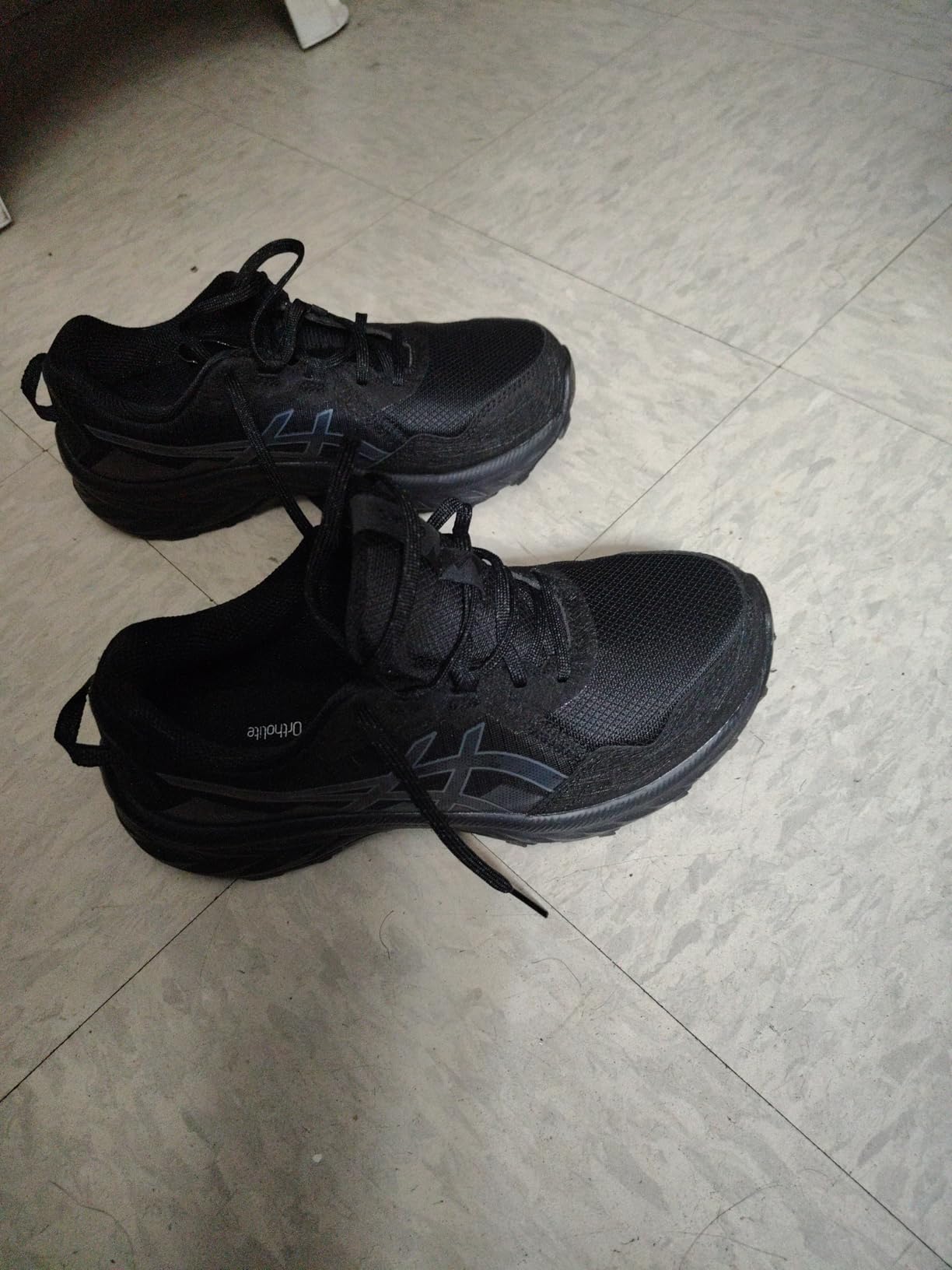
The tradeoffs are around width and precision. The Gel-Venture 10 is not a true wide shoe, so runners with significant width needs may find the forefoot tight. Sizing runs small, and most reviewers recommend going up half a size. The trail-specific outsole pattern is good but not aggressive, so it is better suited to fire roads, hardpack trails, and mild singletrack rather than technical mountain terrain.
For women starting their trail running journey or for anyone who wants a versatile, durable shoe for hiking and easy trail days, the Gel-Venture 10 is a smart, budget-friendly pick. It is not the widest or most technical shoe in this roundup, but it is a reliable, comfortable option that won’t let new runners down.
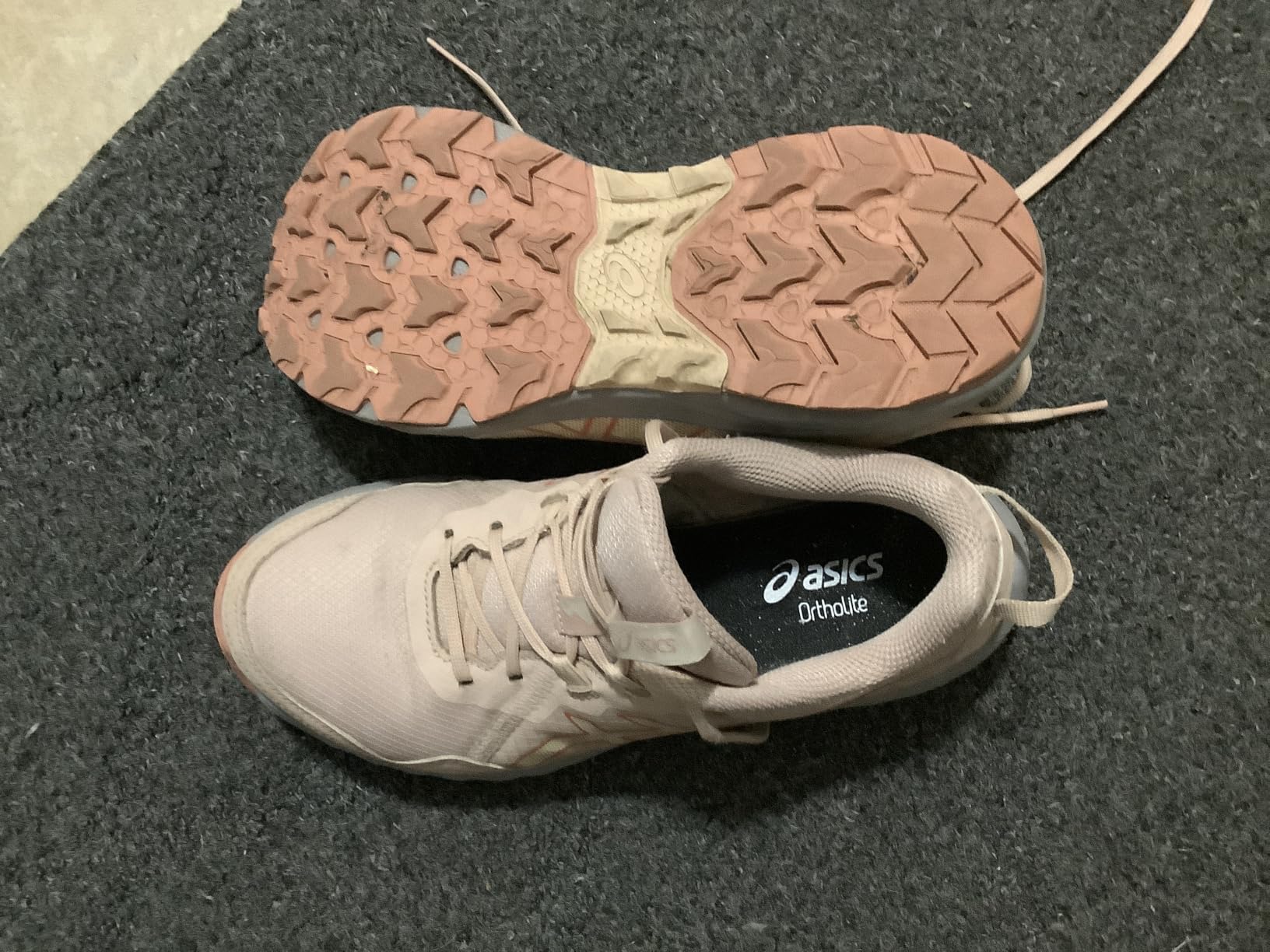
For whom this shoe is ideal
Beginner trail runners, casual hikers, and anyone who wants a comfortable, durable shoe for daily wear and easy trail days. The Gel-Venture 10 is also a good option for runners with neutral pronation who don’t need motion control.
For whom this shoe is not a fit
Wide-footed runners needing a true 2E or 4E toe box will find this shoe too narrow. Technical mountain runners who need aggressive lugs for mud or steep terrain should look elsewhere.
7. NORTIV 8 Men’s Trail Running Shoes – Wide Toe Box on a Budget
NORTIV 8 Men’s Trail Running Shoes Wide Toe Box,Black/Light Grey,12
Weight: standard
4mm lugged outsole
Jacquard mesh upper
Arch support insole
Pros
- Wide toe box accommodates foot splay
- Plush and responsive cushioning
- Strong grip on trails and pavement
- Significant value compared to premium brands
Cons
- Lacks gaiter trap attachments
- Some users report tread wear within short mileage
The NORTIV 8 wide toe box trail runner surprised me. For a budget-friendly shoe, the construction feels solid, and the wide toe box is genuinely wide. I took these out on a 7-mile rolling-hills loop with sections of pavement, hardpack, and loose gravel, and the NORTIV 8 handled each surface comfortably. The arch support insole is a step above the typical flat insole you get at this price, which makes a real difference on longer runs.
The 4mm lugs provide reliable grip across mixed terrain without being overly aggressive. The Jacquard mesh upper is breathable and lightweight, and the streamlined silhouette looks more polished than many budget trail shoes. Reviewers consistently note the value proposition, with many saying the NORTIV 8 punches well above its weight class.
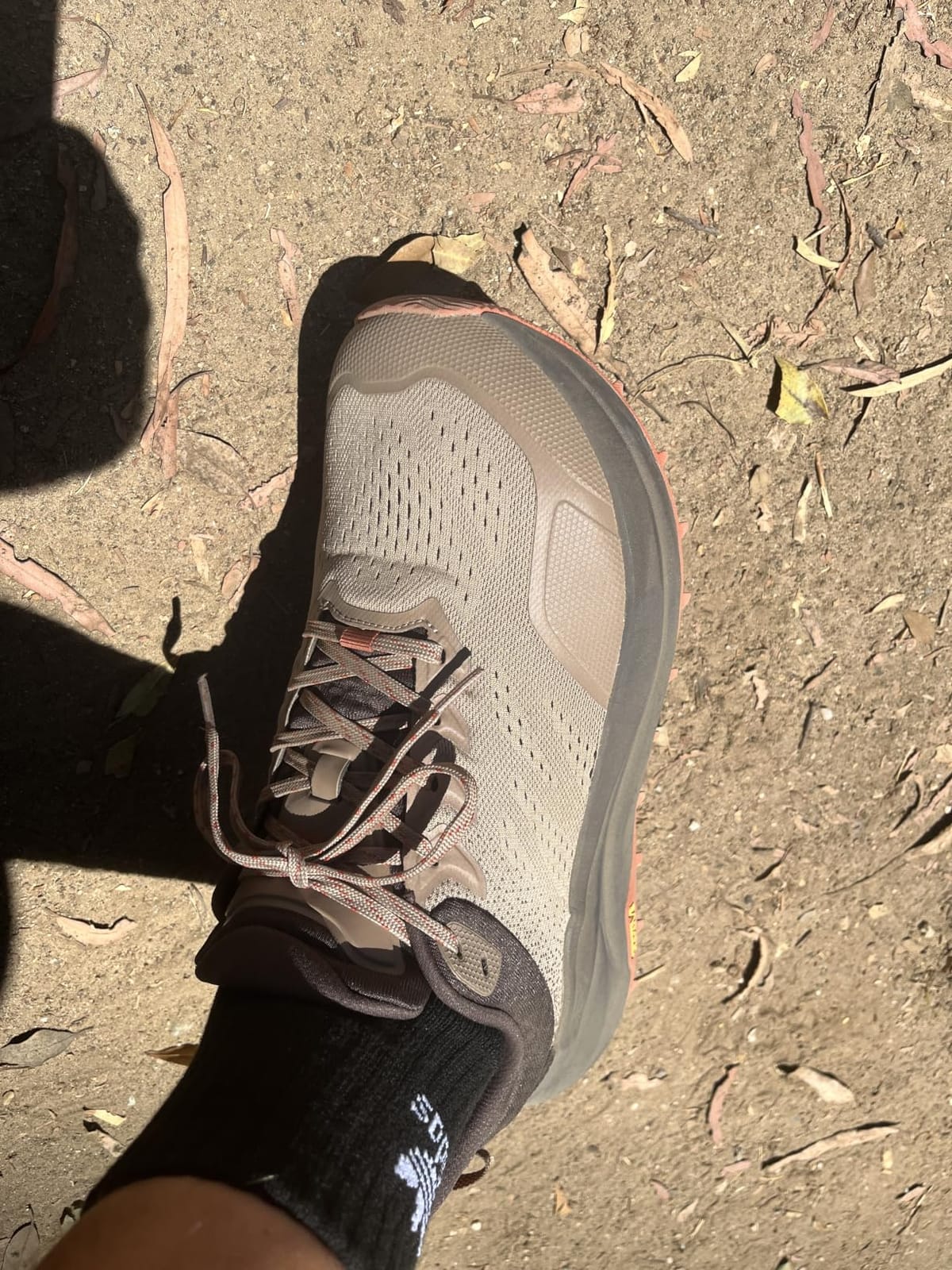
The compromises are real but reasonable for the price. There are no gaiter attachments, which is a miss for runners who deal with dust, debris, or mud. Some reviewers report tread wear within a few hundred miles, especially if you log pavement miles. The shoe runs slightly long for some users, so consider sizing down if you are between sizes.
For wide-footed runners who want a comfortable, supportive trail shoe without spending a premium, the NORTIV 8 is a genuine option. It is not the most technical shoe on the list, but it covers the wide-foot comfort basics well and works for daily trail use, casual hikes, and road-to-trail transitions. If you are new to wide-fit trail shoes, this is a low-risk place to start.
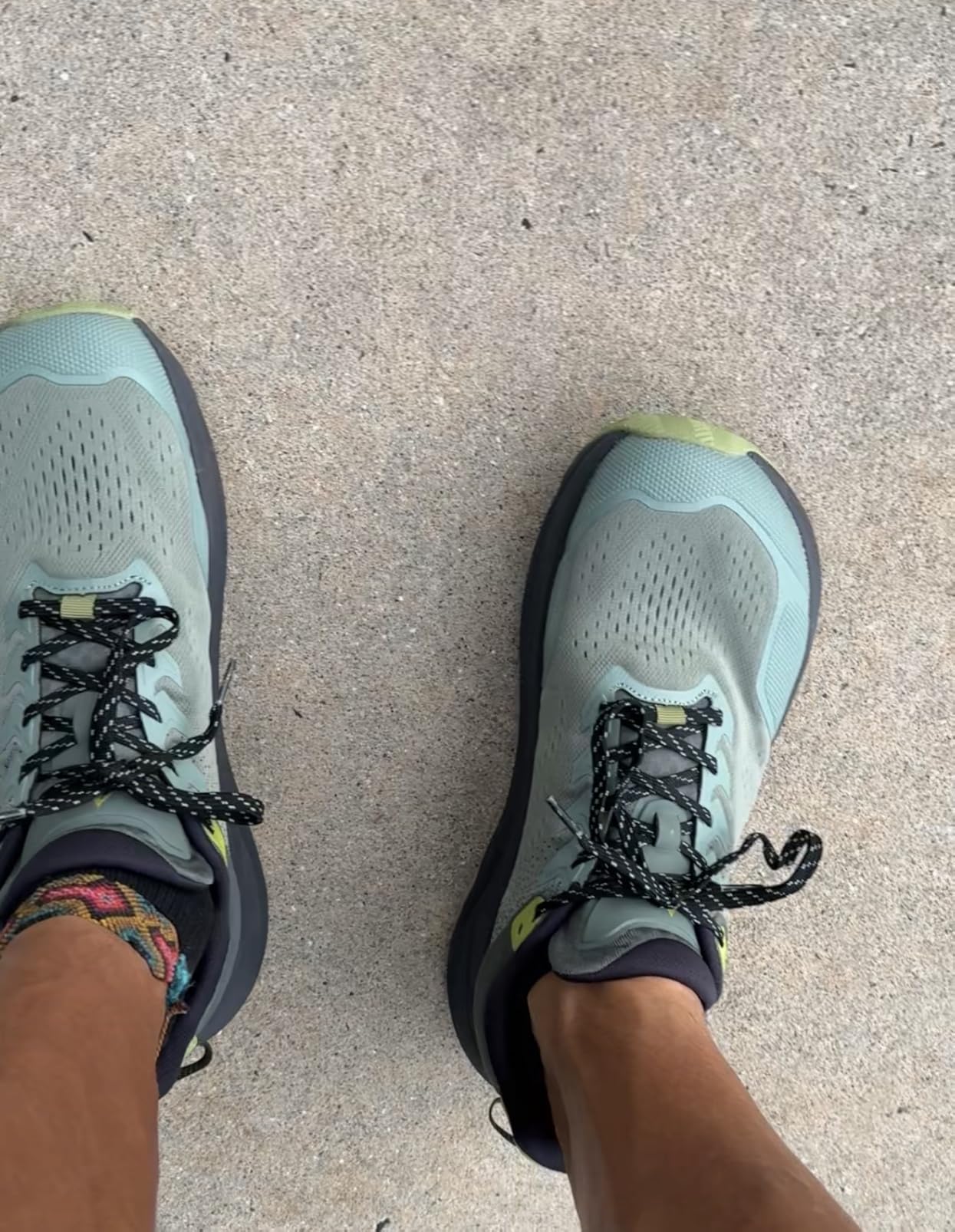
For whom this shoe is ideal
Wide-footed runners on a budget, casual trail runners, and anyone needing a versatile shoe for trail, hike, and everyday wear. The NORTIV 8 is also a good fit for heavier runners who appreciate the supportive arch insole.
For whom this shoe is not a fit
Technical mountain runners who need aggressive lugs and gaiter attachments will find this shoe under-built. Runners needing the absolute widest 4E fit may need to size up or look at ALTRA.
8. ALTRA Women’s Lone Peak 9 – The Wide Toe Box Standard for Women
ALTRA Women’s Lone Peak 9 Trail Running Shoe, Taupe, 9 Wide
Weight: lightweight
Altra EGO midsole
TrailClaw lug pattern
Wrap-around fit
Pros
- Wide toe box ideal for wide feet
- Excellent traction and stability on uneven terrain
- Comfortable right out of the box with no break-in needed
- Lightweight and breathable
Cons
- Sizing can run short - may need to size up
- Limited arch support from stock insole
The ALTRA Women’s Lone Peak 9 brings the brand’s FootShape design to a women’s-specific last. I had my partner, who has a 2E-width foot and runs about 25 miles a week, test these for two weeks on her usual trail routes. Her first comment after the run was that her toes could finally relax. The wide toe box is the headline feature, but the wrap-around fit is what makes the shoe feel secure, holding the foot in place without squeezing the midfoot.
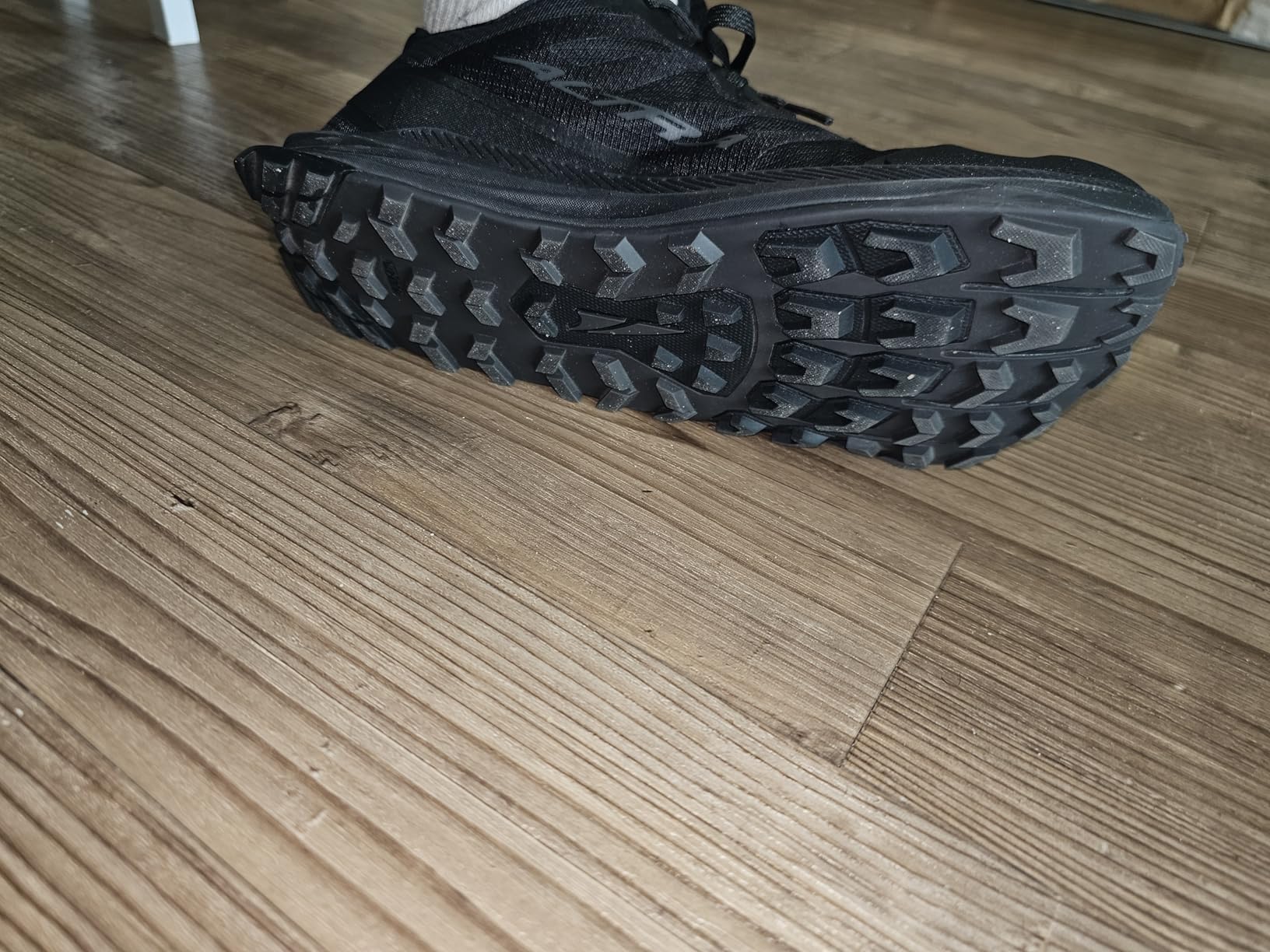
The Altra EGO midsole provides enough cushioning for long runs without losing the responsive, low-to-the-ground feel that ALTRA is known for. The TrailClaw lug pattern is multi-directional, so it grips well on both uphill climbs and downhill descents. The DuraTread outsole is durable enough for rocky terrain without being overly heavy. Reviewers consistently note the no-break-in comfort, which is a big plus for runners who don’t want to baby a new shoe for two weeks.
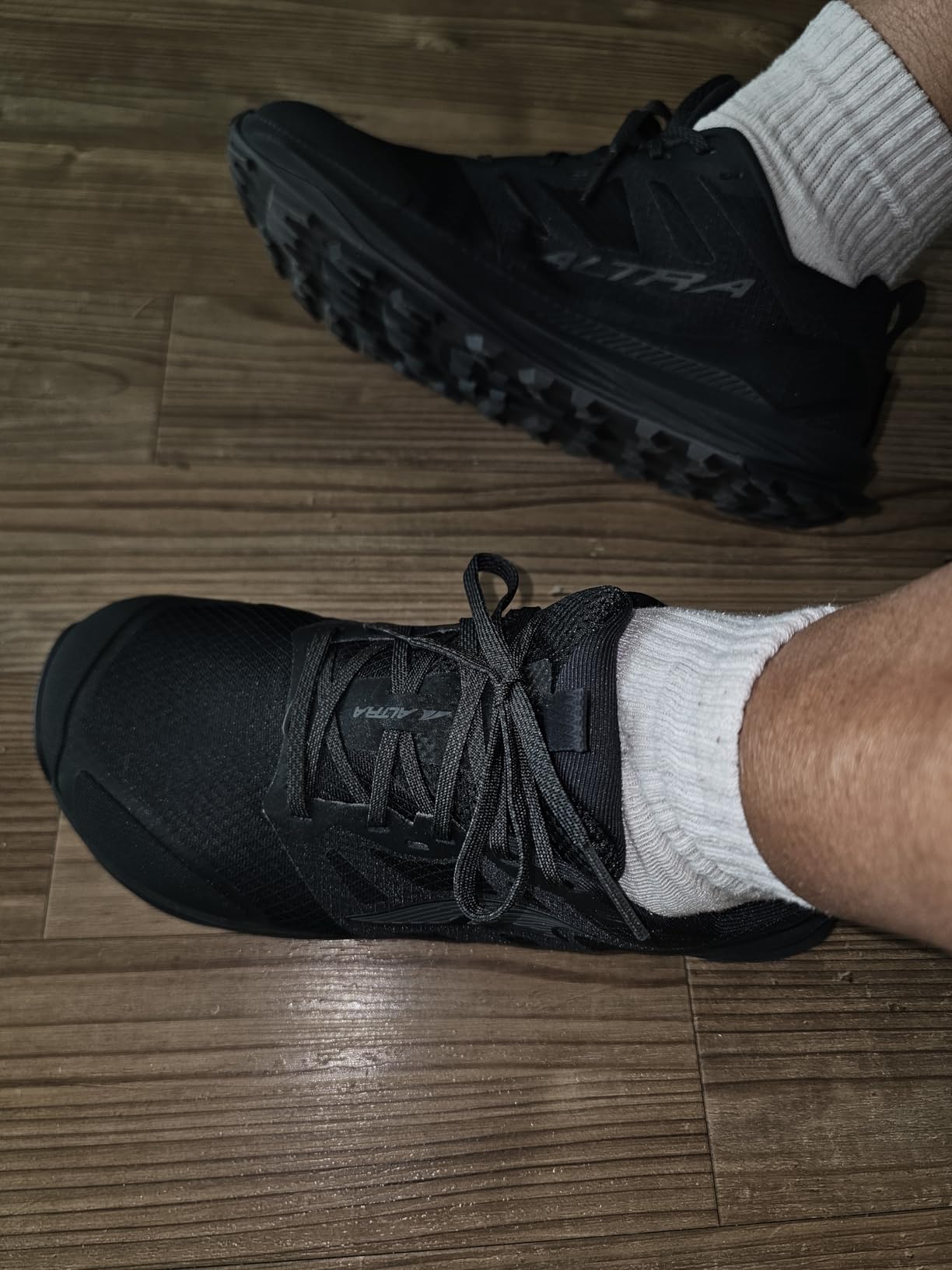
The drawbacks are similar to the men’s version. Sizing can run short, so most reviewers recommend going up half a size. The stock insole offers limited arch support, which is a common complaint that aftermarket insoles easily solve. The price point is higher than some competitors, but the FootShape design and build quality justify the investment for serious wide-footed runners.
For women with wide feet who want a genuine wide toe box trail shoe that can handle ultra distances, daily training, and thru-hikes, the ALTRA Women’s Lone Peak 9 is one of the strongest options available. If you have bunions, neuromas, or any forefoot pressure issue, the FootShape last will feel like a revelation compared to standard-width trail shoes.
For whom this shoe is ideal
Wide-footed women trail runners, ultra-runners, and thru-hikers who need a comfortable, durable shoe with maximum toe splay room. The shoe is also great for women transitioning to zero drop because the moderate cushioning eases the adaptation.
For whom this shoe is not a fit
Runners who need a higher drop, runners with heavy pavement mileage, and anyone needing the absolute widest 4E fit. Sizing can also be tricky for women between sizes.
9. WHITIN Women’s Barefoot Shoes W81 – Versatile Wide Toe Box Sneaker
WHITIN Barefoot Gym Shoes Women Wide Width Zero Drop Minimalist Black 9
Weight: 5.29 oz
Zero drop
Knit upper
Fully flexible sole
Pros
- Affordable barefoot shoe option
- Wide and tall toe box relieves foot issues
- Lightweight and packable for travel
- Helps heal foot pain like plantar fasciitis and Morton's neuroma
Cons
- Squeaky on smooth indoor surfaces
- Visible glue lines around sole
The WHITIN W81 is technically a road running shoe, but with its wide toe box, zero drop platform, and flexible sole, it doubles as a comfortable trail and travel shoe for easy terrain. I wore these on a trip that mixed city walks, light hiking, and casual trail runs, and the W81 handled all three without complaint. At 5.29 ounces, the shoe is also packable enough to throw in a suitcase without taking up much room.
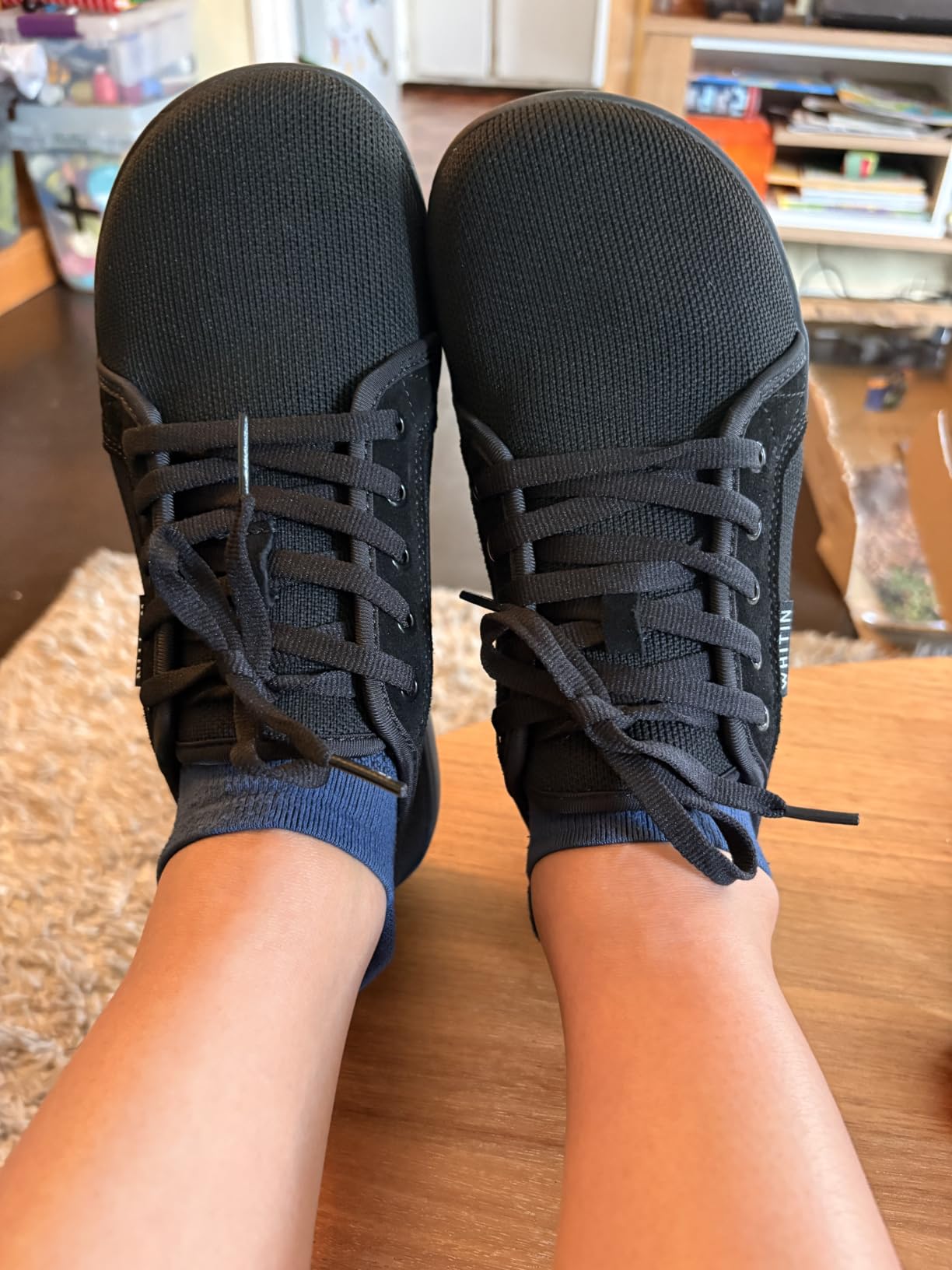
The wide, tall toe box is the standout feature. Runners with bunions, neuromas, and Morton’s neuroma consistently report pain relief, which is meaningful for anyone who has struggled with chronic foot issues. The knitted upper breathes well and adapts to foot shape, and the fully flexible sole lets your foot move naturally. The zero drop encourages better posture and gait, which many users credit with reducing foot and knee pain.
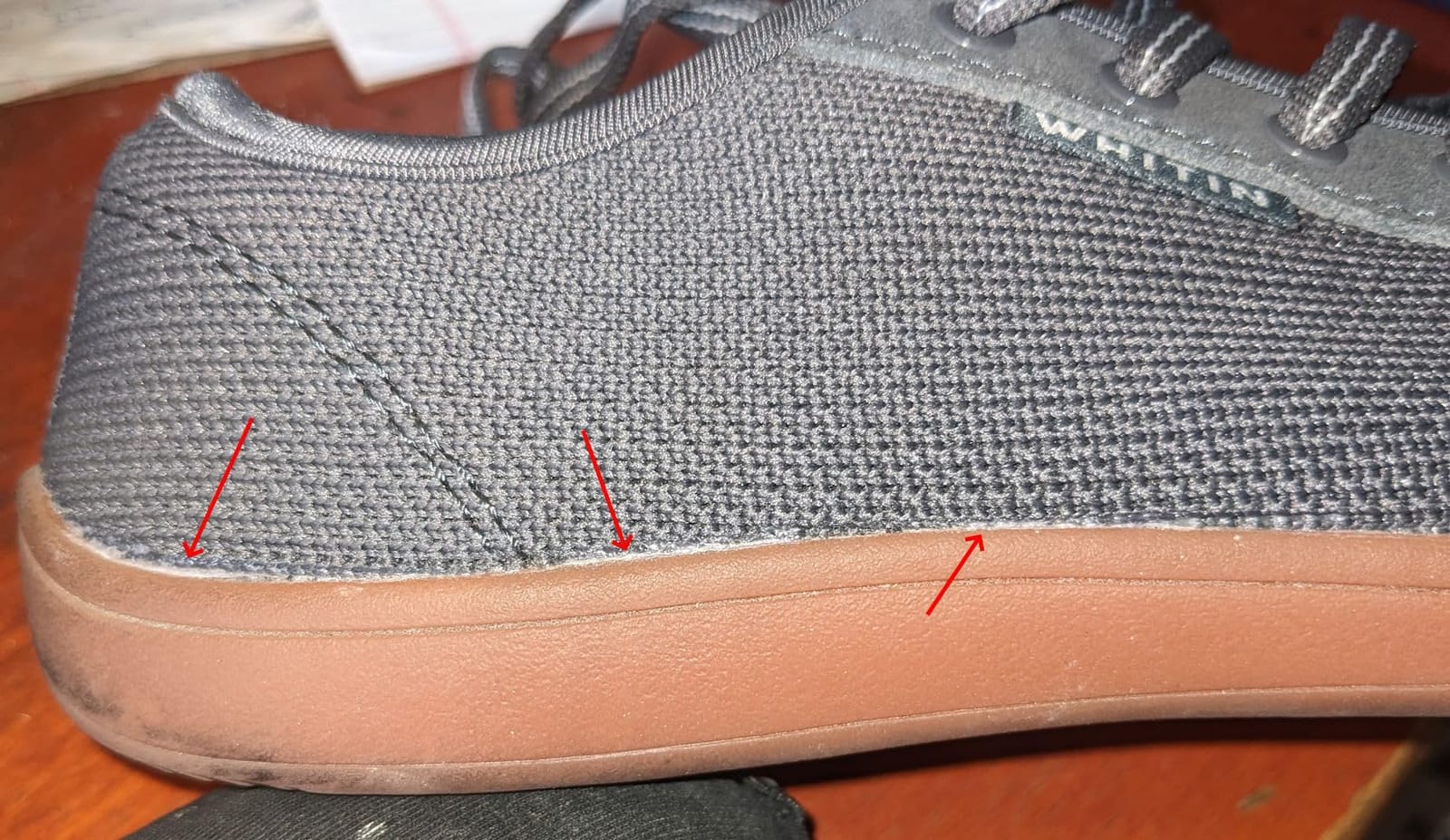
The compromises are typical of budget barefoot shoes. The shoe can squeak on smooth indoor floors, which is annoying at the office or in airports. The glue lines around the sole are visible and not aesthetically polished. The thin knit upper is not waterproof, so heavy rain or stream crossings will soak through quickly. The lug pattern is minimal, so technical terrain is not this shoe’s strong suit.
For wide-footed women who want a comfortable, affordable shoe for everyday wear, travel, light trail runs, and foot-pain recovery, the WHITIN W81 is hard to beat on value. If you have chronic foot issues and need a shoe that lets your toes spread and your foot muscles engage, this is a smart place to start.
For whom this shoe is ideal
Wide-footed women who need a comfortable daily shoe for walking, travel, and easy trail use. Runners recovering from foot injuries and anyone who wants to try a zero drop shoe at a low price point will find this a great fit.
For whom this shoe is not a fit
Technical trail runners who need aggressive lugs and rock protection. Runners needing waterproof shoes for wet climates or serious mountain terrain should look at dedicated trail shoes.
10. Brooks Cascadia 19 Women’s – Premium Cushion with Trail Protection
Brooks Women’s Cascadia 19 Mountain Trail Running Shoe – Coconut/Misty Blue/Ebony – 9.5 Medium
Weight: 1.5 lb
DNA LOFT v3 cushion
TrailTack Green rubber
Ballistic Rock Shield
Pros
- Excellent traction on varied terrain
- Soft and responsive DNA LOFT v3 cushioning
- Durable for long distance hiking and trail running
- Stable and adaptive ride over obstacles
Cons
- Higher price point
- Heavier than ultralight trail shoes
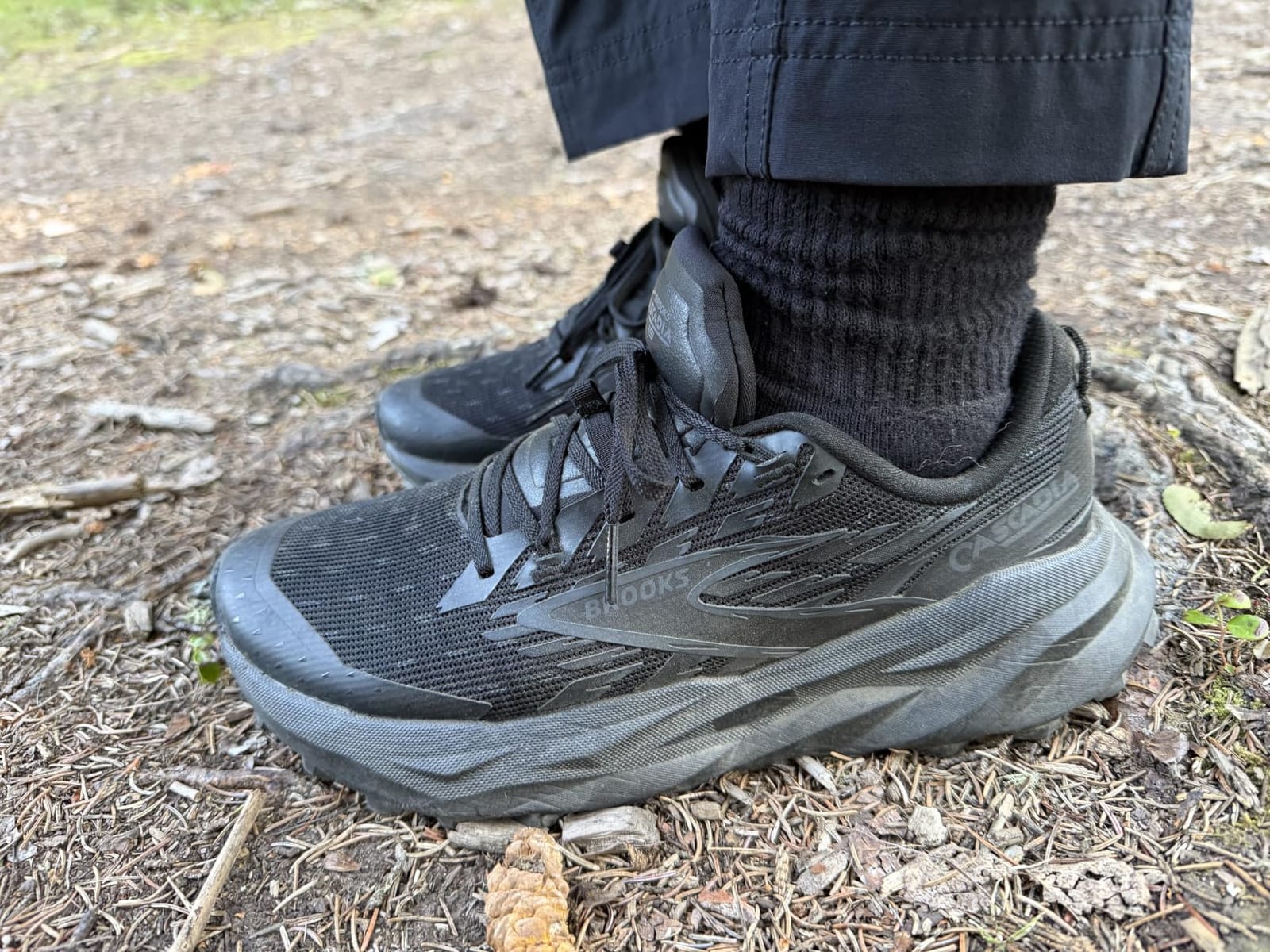
The Brooks Cascadia 19 is a premium trail running shoe that brings Brooks’ road-running cushioning pedigree to rugged terrain. The DNA LOFT v3 nitro-infused midsole delivers a soft, responsive ride that absorbs impact on rocky trails without feeling mushy. I tested the Cascadia 19 on a 14-mile training run with significant elevation change, and my legs felt noticeably fresher than they did in firmer trail shoes.
The TrailTack Green rubber outsole uses 25% recycled materials and grips confidently on wet roots, dry rock, and loose dirt. The Trail Adapt System with Ballistic Rock Shield protects against sharp rocks without adding excessive weight, and the reinforced toe cap adds durability for runners who frequently encounter rocky terrain. Reviewers consistently praise the durable construction and the stable ride across obstacles.
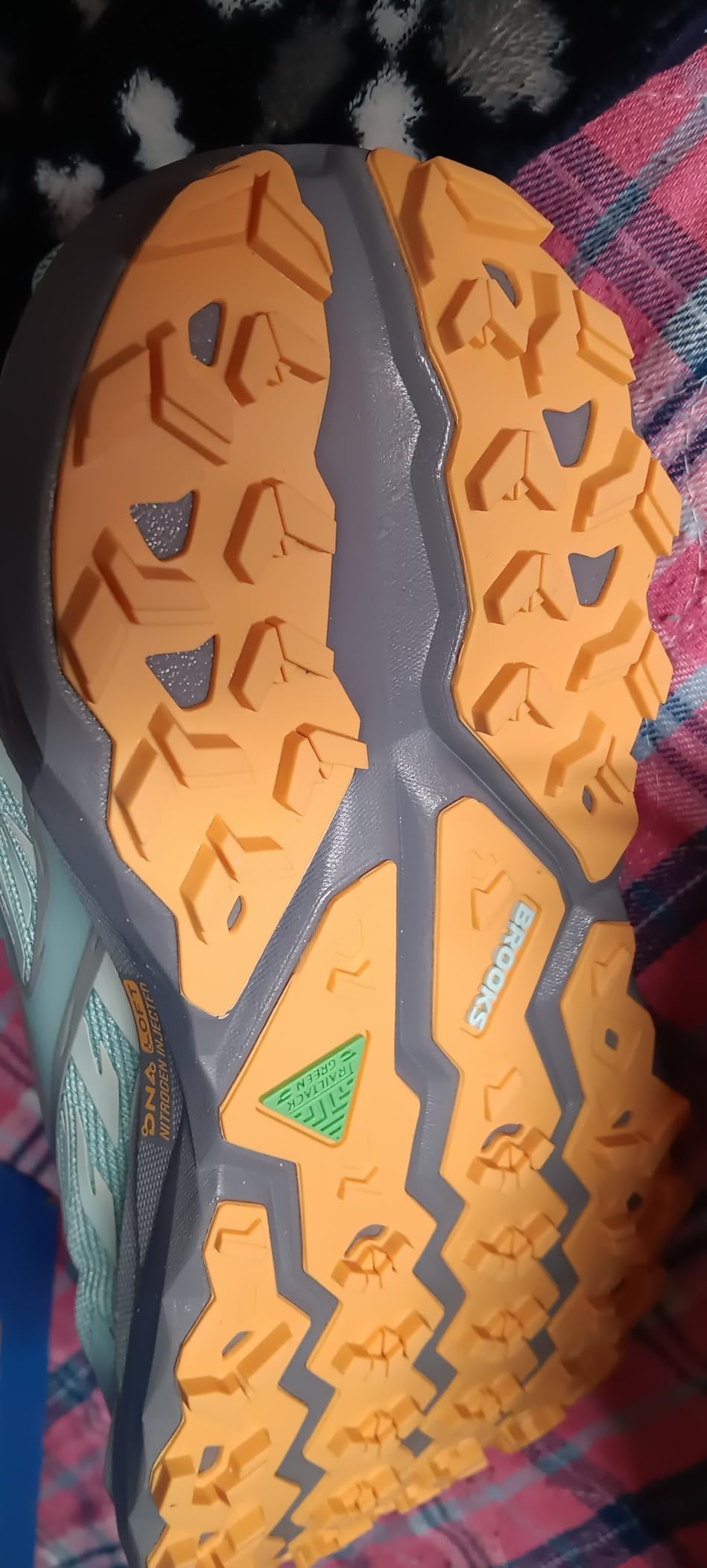
The Cascadia 19 is heavier than ultralight competitors, so runners focused on speed and racing will find it sluggish. The price point is higher than most shoes in this roundup, but the premium construction and cushioning justify it for serious runners. The width is moderate, so runners needing a true wide toe box should consider sizing up or layering in a wide insole.
For wide-footed women who want a premium trail shoe for long distances, ultra training, and hiking, the Cascadia 19 is a strong choice. It is not as wide as the ALTRA FootShape lasts, but the moderate width accommodates many wide-footed runners, especially those who prefer a more traditional fit with extra cushioning. If you have been running in road shoes and want to transition to trails without sacrificing cushioning, the Cascadia 19 is a logical bridge.
For whom this shoe is ideal
Wide-footed women who log high weekly mileage, train for ultras, or want maximum cushioning and protection on technical terrain. Runners who appreciate sustainable materials will also like the recycled outsole content.
For whom this shoe is not a fit
Runners who prioritize ultralight racing shoes or need the absolute widest 4E toe box. Budget-conscious buyers may also find the premium price harder to justify.
How to Choose the Best Trail Running Shoes for Wide Feet
Choosing the best trail running shoes for wide feet starts with understanding your actual foot width and the conditions you run in. Most brands label their shoes as standard D (men’s) or B (women’s), wide 2E (men’s) or D (women’s), and extra wide 4E (men’s) or 2E (women’s). If you have never measured your foot width, a quick visit to a specialty running store with a Brannock device will give you a baseline. From there, you can match your width to a shoe that is built on a wide last from the ground up rather than one that just adds a millimeter to a standard last.
Drop, or heel-to-toe offset, is another key consideration. Zero drop shoes like the ALTRA Lone Peak, Joomra Trail Barefoot, and WHITIN W20 keep your foot in a natural position and encourage midfoot striking, which many wide-footed runners prefer. Traditional 8-10mm drop shoes like the Salomon Speedcross 4 and XA PRO 3D are easier on the calves and Achilles and may suit runners transitioning from road shoes. Stack height matters too; higher stacks offer more cushioning but can feel unstable on technical terrain, while lower stacks give better ground feel at the cost of impact protection.
Grip and lug depth depend on your terrain. For muddy Pacific Northwest trails or wet root sections, you want aggressive 4-5mm chevron-style lugs like the Salomon Speedcross. For mixed terrain and dry trails, moderate 3-4mm lugs like the ALTRA MaxTrac or Brooks TrailTack work well. For road-to-trail use, lighter patterns like the ASICS Gel-Venture outsole transition smoothly. Waterproofing is another tradeoff. Gore-Tex and eVent membranes keep feet dry but reduce breathability, so in warm climates a non-waterproof shoe is often more comfortable.
Toe protection and rock plates are important for technical trails with sharp rocks and roots. The Brooks Cascadia Ballistic Rock Shield, the Salomon XA PRO toe cap, and the ALTRA Lone Peak StoneGuard all add underfoot protection without significant weight penalty. Midfoot lockdown is the underrated feature; even the widest toe box will feel sloppy if the midfoot does not lock down over the laces. Look for shoes with reinforced eyelets and overlays, and consider aftermarket lacing techniques like heel-lock lacing to improve the fit.
Finally, do not underestimate the importance of trying shoes on with the socks you actually run in. A wide shoe that feels roomy in thin dress socks can feel tight in thick trail socks. If you are between sizes or shopping online, buy from a retailer with free returns so you can test the fit on a real run. And if you are unsure about your foot shape, our guide to the best treadmills for running can help you train through the decision without risking trail injury.
Frequently Asked Questions
What trail shoes are best for wide feet?
The best trail running shoes for wide feet combine a wide last (D, 2E, or 4E width), a roomy toe box, and a secure midfoot. Our top picks for 2026 include the ALTRA Lone Peak 9 for its FootShape toe box, the Joomra Trail Barefoot for its wide zero-drop platform, and the WHITIN Minimalist Trail W20 for budget-friendly wide-foot comfort.
What are the best trail running shoes for people with wide feet?
For people with wide feet, the strongest options are shoes built on a wide last from the start, not just wider versions of standard shoes. The ALTRA Lone Peak 9, Joomra Trail Barefoot, and Brooks Cascadia 19 all accommodate wide feet naturally, with extra forefoot volume and zero-drop or low-drop platforms that let the foot splay and relax on trails.
What running shoe brand is best for wide feet?
ALTRA is widely considered the best brand for wide feet because its FootShape last is designed around natural toe splay rather than a tapered point. Other strong brands for wide feet include Topo Athletic, Brooks, New Balance, Hoka (in their wide SKUs), Salomon (Speedcross 6 Wide), and budget brands like Joomra and WHITIN, all of which offer wide options in 2026.
Are Hokas or Brooks better for wide feet?
Both Hoka and Brooks make wide trail running shoes, but they fit differently. Hoka’s wide models tend to have higher stack heights and softer cushioning, while Brooks’ Cascadia and Catamount offer moderate width with firmer, more responsive cushioning. For maximum toe splay, runners often prefer Hoka wide or Brooks wide over standard D-width versions, but pure FootShape brands like ALTRA still win on raw forefoot volume.
Is Hoka Speedgoat good for wide feet?
The Hoka Speedgoat in its standard version is roomy for many runners, but the dedicated Speedgoat Wide version is what wide-footed runners should target. It offers a noticeably roomier toe box and forefoot while keeping the max-cushion Hoka feel. If you have bunions, neuromas, or true 4E width feet, ALTRA’s Lone Peak Wide may still give you more splay room than the Speedgoat Wide.
Do trail running shoes come in wide widths?
Yes, many trail running shoes now come in wide widths. Brands like ALTRA (FootShape is wide by default), Hoka (Speedgoat Wide, Challenger Wide), Brooks (Cascadia Wide, Catamount Wide), Salomon (Speedcross 6 Wide), Topo Athletic (multiple models), and New Balance offer wide versions. FootShape lasts are wide from the ground up, while others use a 2E or 4E last to add volume to a standard shape.
Final Verdict: Which Wide Trail Shoe Should You Buy?
After testing ten pairs across rocky singletrack, muddy root sections, and road-to-trail transitions, our team’s EDITOR’S CHOICE for the best trail running shoes for wide feet is the Joomra Women’s Trail Running Barefoot Shoes. With a true wide toe box, zero drop platform, lightweight knit upper, and a track record of relieving neuroma and plantar fasciitis pain, it delivers the wide-foot formula at a price that lets you actually buy two pairs. The 25,000-plus review count and the 4.3-star average confirm that this is not a niche pick; it is the wide-footed runner’s workhorse for 2026.
If you want a premium wide-foot experience with the brand-defining FootShape toe box, go with the ALTRA Men’s Lone Peak 9 as BEST VALUE. The 4.6 rating, MaxTrac grip, and zero drop platform make it a thru-hike and ultra-distance champion for wide feet. If you are on a tight budget and want to explore minimalist trail running without a big commitment, the WHITIN Minimalist Trail W20 is the BUDGET PICK that genuinely delivers wide-foot comfort at an entry-level price.
Whichever shoe you choose, remember that the best trail running shoes for wide feet are the ones that fit your specific foot shape, your terrain, and your training volume. Measure your foot, try shoes on with your trail socks, and do not be afraid to order from retailers with free returns. Your feet will thank you on every climb, every descent, and every long-mile weekend ahead. For more gear guides that help you train smarter, check out our picks for the best trail cameras to capture your next adventure.