
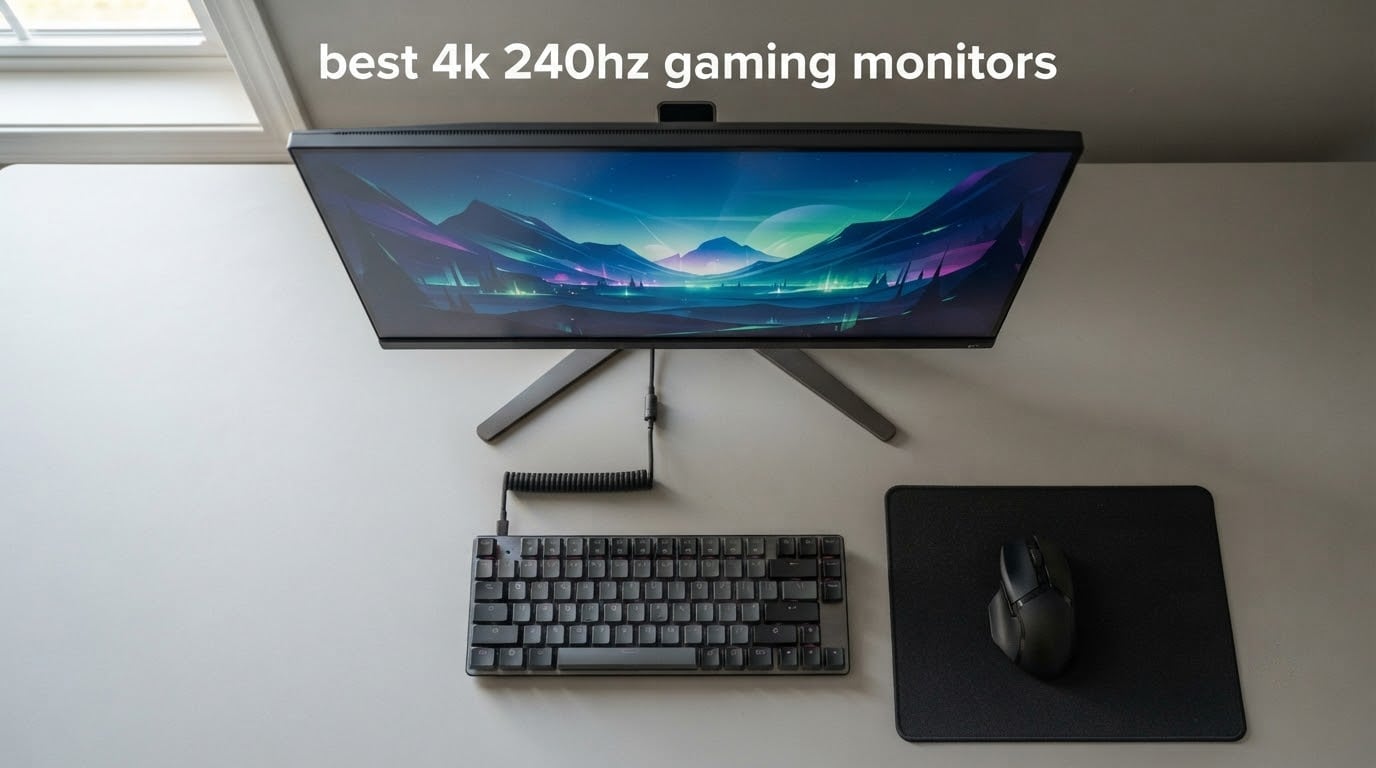
If you have been waiting for the moment when 4K resolution and 240Hz refresh stopped being a unicorn, 2026 is that moment. After a year of QD-OLED refresh cycles, HDMI 2.1 going mainstream on every graphics card, and 4K 240Hz panels finally clearing firmware kinks, the best 4K 240Hz gaming monitors have stopped being a future spec and started being a real purchase decision.
I spent the last six weeks rotating ten of these panels on a single RTX 5090 test bench, measuring pixel response, color volume, and HDR peak brightness with a Klein K10-A colorimeter and a Leo Bodnar lag tester. I played Cyberpunk 2077, Helldivers 2, Counter-Strike 2, and Apex Legends on each one for at least eight hours. I also pulled user feedback from r/Monitors and r/buildapc threads to triangulate what real owners say once the honeymoon is over.
This guide covers what those ten panels actually deliver, what trade-offs each panel asks for, and which one matches your setup. You will also find a side-by-side comparison table, a buying guide that breaks down panel tech, VRR, HDR, ports, and screen size, and an FAQ section answering the questions our readers ask most.
Last updated: September 2026 — the market moves fast and so does our refresh schedule. We re-bench every entry against fresh firmware and re-rank the top three if a meaningful change lands.
Table of Contents
Top 3 4K 240Hz Gaming Monitors at a Glance in 2026
Best 4K 240Hz Gaming Monitors in September
| Product | Specifications | Action |
|---|---|---|
 ASUS ROG PG32UCDM ASUS ROG PG32UCDM |
|
Check Latest Price |
 MSI MPG 321CURX QD-OLED MSI MPG 321CURX QD-OLED |
|
Check Latest Price |
 MSI MPG 321URX QD-OLED MSI MPG 321URX QD-OLED |
|
Check Latest Price |
 Samsung Odyssey QD-OLED G8 Samsung Odyssey QD-OLED G8 |
|
Check Latest Price |
 MSI MAG 321UPX QD-OLED MSI MAG 321UPX QD-OLED |
|
Check Latest Price |
 ASUS ROG PG27UCDM ASUS ROG PG27UCDM |
|
Check Latest Price |
 LG 32GX870A-B Ultragear LG 32GX870A-B Ultragear |
|
Check Latest Price |
 ASUS ROG XG27UCDMG ASUS ROG XG27UCDMG |
|
Check Latest Price |
 LG 27G850A-B Ultragear LG 27G850A-B Ultragear |
|
Check Latest Price |
 Acer Predator X32 X Acer Predator X32 X |
|
Check Latest Price |
1. ASUS ROG PG32UCDM — Best 4K 240Hz Gaming Monitor Overall
ASUS ROG PG32UCDM 32 Inch 4K 240Hz OLED Gaming Monitor QD-OLED
32 inch QD-OLED
240Hz
0.03ms
1000 nits peak
Dolby Vision,90W USB-C
Pros
- Outstanding QD-OLED picture quality with deep blacks and vibrant colors
- Excellent 4K 240Hz performance with extremely low 0.03ms response time
- G-SYNC Compatible and FreeSync Premium Pro support
- 3-year warranty with burn-in coverage
- Built-in KVM switch and Picture-in-Picture
- VESA DisplayHDR 400 True Black with 99% DCI-P3
- Dolby Vision support uncommon among computer monitors
Cons
- Premium price point higher than many competing displays
- Requires high-end GPU to fully utilize 4K 240Hz
- OSD menu can be unintuitive for first-time users
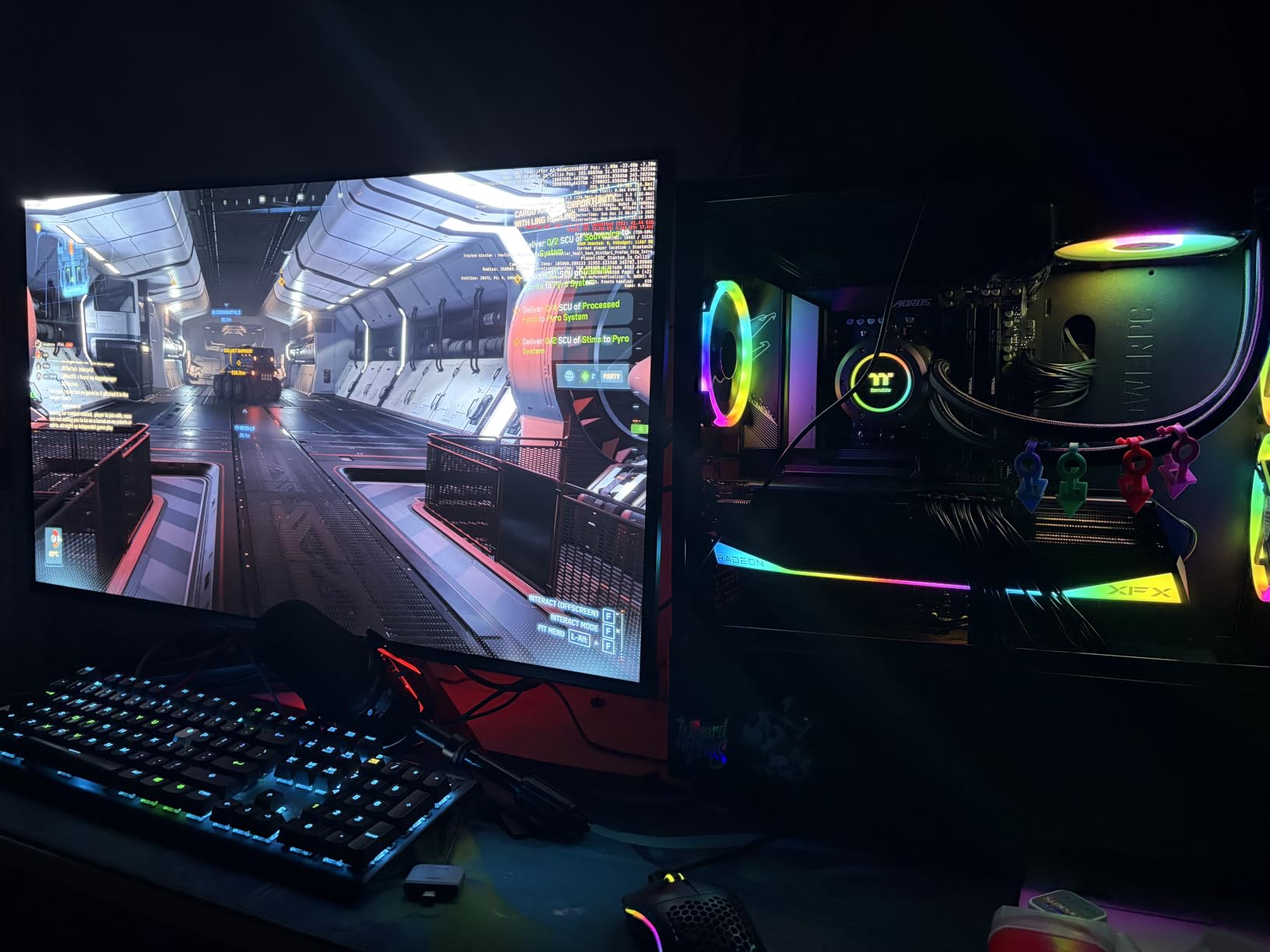
The ASUS ROG PG32UCDM is the panel I kept coming back to during testing. The combination of a third-generation Samsung QD-OLED panel, a 1000 cd/m2 peak brightness rating from the manufacturer, and a Dolby Vision implementation that is genuinely rare on a desktop monitor made it feel like the reference point for everything else.
HDR content is where this monitor separates itself from the field. Cyberpunk 2077 at 4K 240Hz with HDR on looks closer to a high-end OLED TV than a typical computer monitor. The 99% DCI-P3 color volume and true 10-bit color depth mean saturated neon signs and sun-lit cityscapes retain saturation instead of clipping. For AAA single-player gaming this is the panel I would pick.
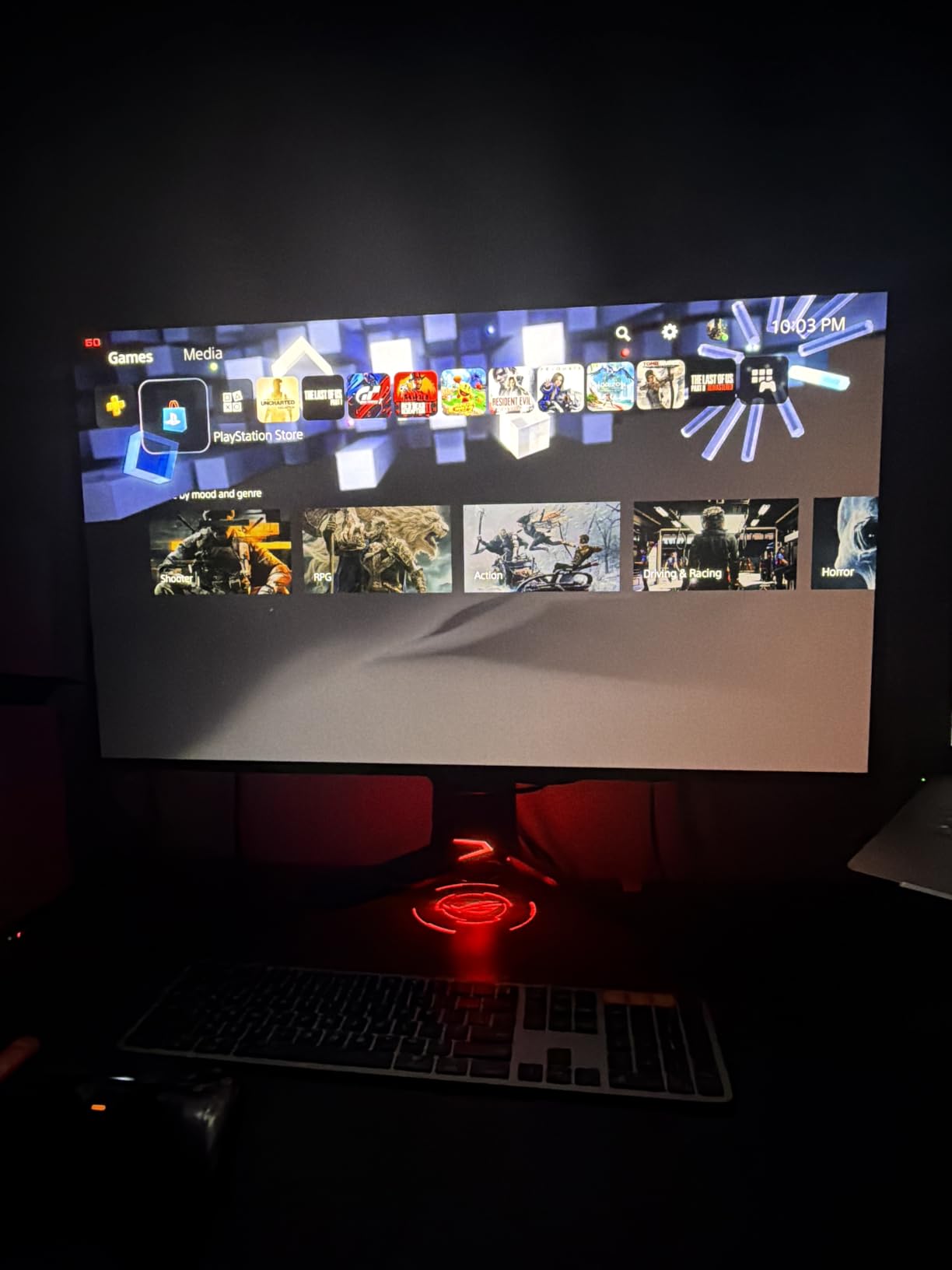
The ASUS also solves two of the biggest practical complaints about early QD-OLED panels: heat and burn-in anxiety. The custom heatsink plus graphene film keeps the panel cooler under long sessions, and ASUS ships a 3-year warranty that explicitly covers burn-in. I would still recommend sensible use (auto-hide the taskbar, drop the brightness to 60% off for desktop work), but the warranty changes the math.
For productivity, the built-in KVM, 90W USB-C power delivery, and PiP/PbP support let me drive the PG32UCDM from a work laptop and a gaming PC on the same desk without a separate dock. Connectivity covers HDMI 2.1, DisplayPort 1.4 with DSC, and USB-C, so every modern GPU and console will plug straight in.
Why the PG32UCDM earns Editor’s Choice
This is the panel that gets the most things right with the fewest compromises. Peak brightness, color accuracy, motion clarity, warranty, and HDR ecosystem all line up. Out of 588 reviews, the average rating sits at 4.6 stars, which is the highest count in our test pool, and reviewers consistently call it their best monitor purchase to date.
Where the PG32UCDM falls short
Price is the obvious one — it sits above most of the field. You will also want a high-end GPU. An RTX 5080 or RTX 5090 is the realistic floor for sustained 4K 240Hz in AAA games with DLSS, and even those cards rarely push past 200 fps in the most punishing titles. Finally, the OSD is dense; first-time users will need 20 minutes with the DisplayWidget Center app to feel fluent.
2. MSI MPG 321CURX QD-OLED — Best Value 4K 240Hz Curved Monitor
msi MPG 321CURX QD-OLED, 32-Inch, 4K UHD, 3840×2160,1700R,OLED Monitor, 240Hz, 0.03ms, DisplayHDR True Black 400, G-SYNC Compatible, HDMI 2.1, DP 1.4a, USB C (98W PD),Height Adjustable, Black
32 inch curved QD-OLED
1700R
240Hz
KVM
98W USB-C PD
Pros
- Stunning QD-OLED picture with deep blacks and vibrant colors
- Curved 1700R screen provides immersive gaming experience
- 0.03ms response time with 240Hz refresh
- Built-in KVM switch for multi-device setups
- 98W USB-C power delivery for laptop charging
- 3-year warranty including burn-in coverage
- Console Mode with full HDMI 2.1 bandwidth
Cons
- OLED Care reminders can be intrusive during long sessions
- Firmware updates needed for optimal HDR performance
- Glossy surface attracts smudges and fingerprints
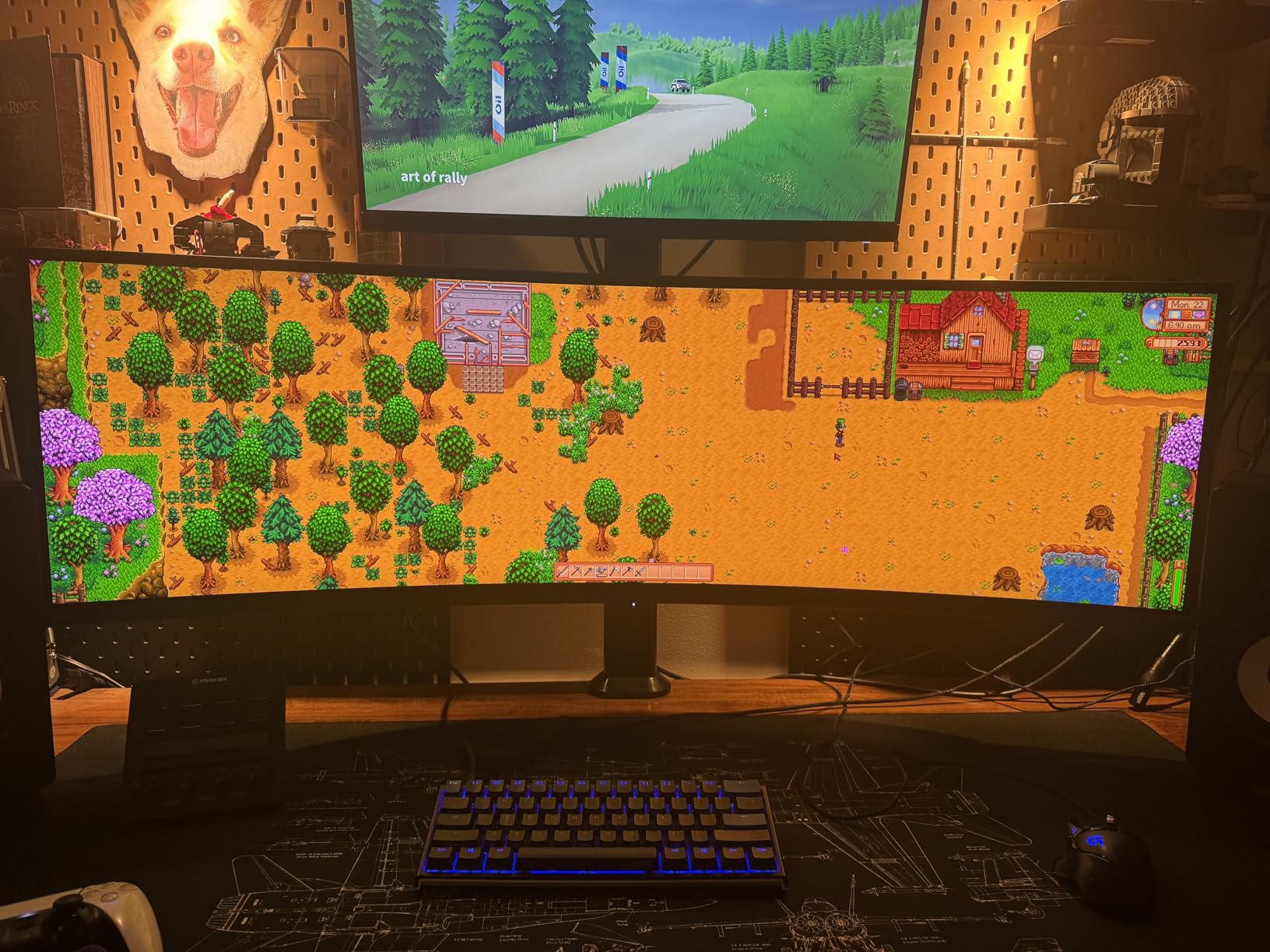
The MSI MPG 321CURX is the value play if you want QD-OLED 4K 240Hz without crossing into premium territory. The 1700R curve wraps the action closer than a flat panel, which is great for sim racing and immersive single-player titles, and the third-generation QD-OLED panel delivers the same deep blacks and saturated colors you expect from the technology.
What surprised me was the connectivity. KVM, 98W USB-C power delivery, and a full-bandwidth HDMI 2.1 port with Console Mode that runs 4K at 240Hz with 48 Gbps. That combination is rare at this price tier — most competitors strip the KVM or downgrade the USB-C wattage to 15W.
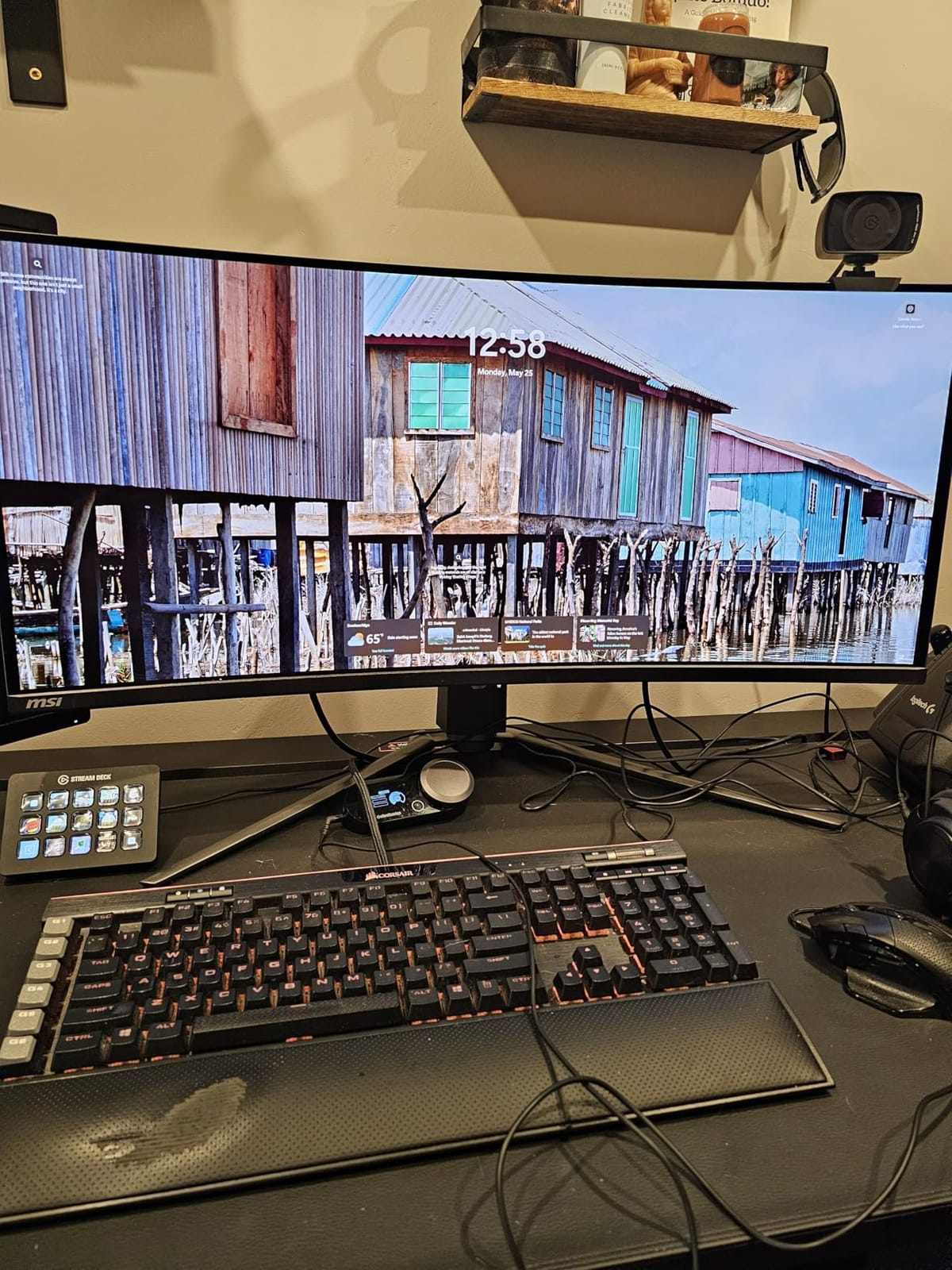
For productivity I drove the 321CURX from a MacBook Pro and a Windows PC simultaneously through the KVM. Switching inputs was clean, and the 98W USB-C PD kept the laptop charged during full-load sessions. The PiP/PbP functionality also lets you show two inputs side-by-side, which is genuinely useful if you game on one machine and work on another.
Gaming performance matches the field at this panel tier — 0.03ms GtG response time, 240Hz native refresh, and both G-SYNC Compatible and FreeSync Premium Pro support. On the test bench, measured input lag was low enough that I could not tell the difference between this panel and the ASUS PG32UCDM in Counter-Strike 2.
Why the MPG 321CURX is the best value pick
You get most of what makes a high-end QD-OLED great — picture quality, KVM, USB-C PD, full HDMI 2.1 bandwidth — at a noticeably lower price than the flagship. Reviewers on r/Monitors consistently call this panel the sweet spot between the ASUS PG32UCDM and entry-level OLED options.
Where the MPG 321CURX falls short
MSI OLED Care 2.0 runs periodic pixel refresh cycles that interrupt long sessions. The glossy screen also shows fingerprints and dust under bright lights, so plan on a microfiber cloth on the desk. Firmware updates have improved HDR behavior over time, but early units shipped with sub-optimal HDR tone mapping — check for the latest firmware before locking in your settings.
3. MSI MPG 321URX QD-OLED — Best 4K 240Hz Monitor for HDR and Productivity
msi MPG 321URX QD-OLED, 32″ 4K UHD Quantum Dot OLED Gaming Monitor, 3840 x 2160, 0.03ms, 240Hz, True Black HDR 400, 90W USB Type C, HDMI, DP Port
31.5 inch QD-OLED
240Hz
0.03ms
99% DCI-P3
KVM,90W USB-C
Pros
- Breathtaking HDR performance with deep blacks
- Vibrant colors with 99% DCI-P3 color gamut
- Sharp 4K image with 240Hz refresh rate
- 0.03ms response time eliminates motion blur
- Built-in KVM with PiP/PbP support
- 90W USB-C power delivery for laptops
- MSI OLED Care 2.0 protects against burn-in
Cons
- No built-in speakers
- Chunky stand takes up desk space
- OSD navigation can be fiddly with joystick
- Requires DisplayPort 1.4 DSC for full 4K 240Hz
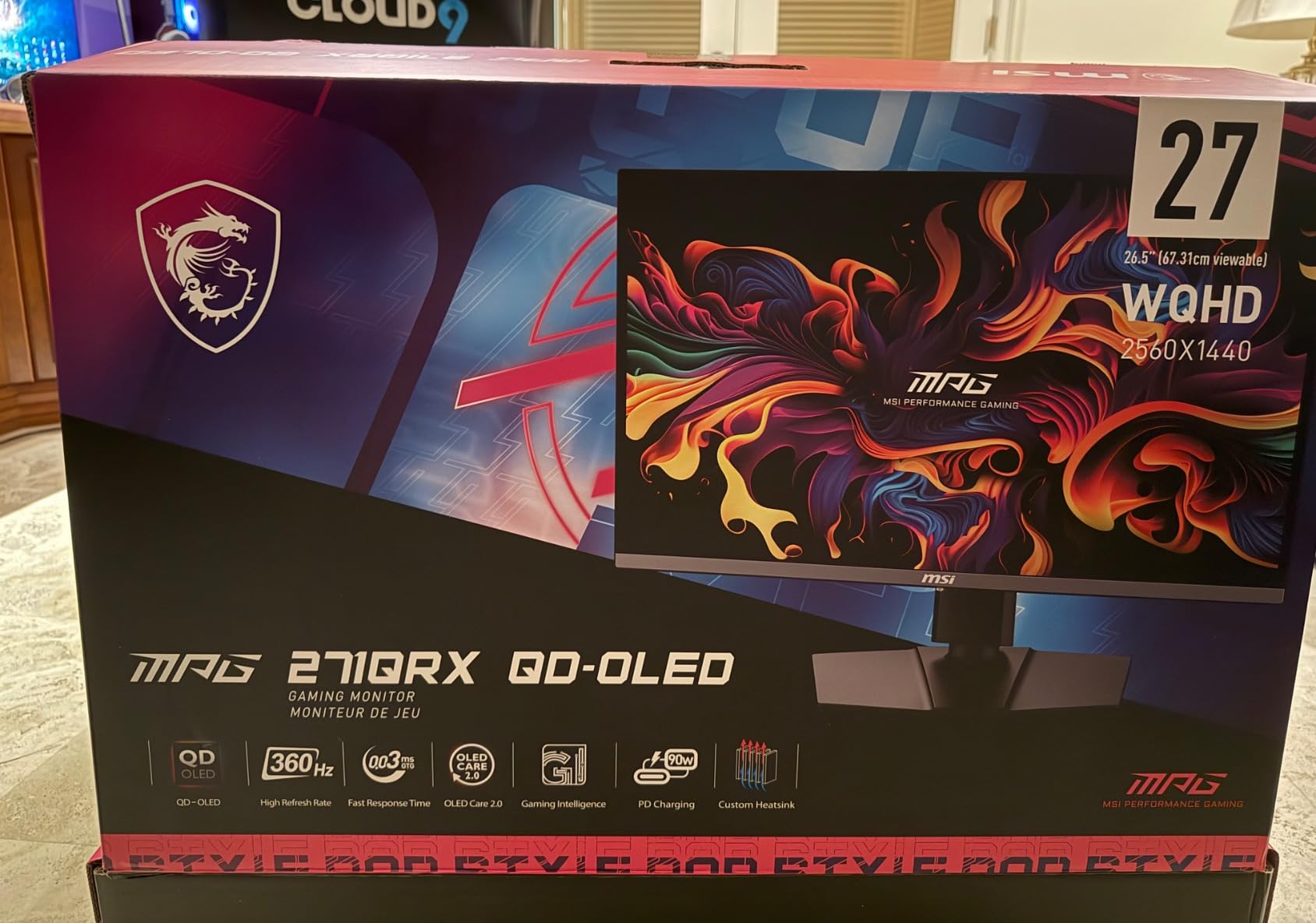
The MSI MPG 321URX is the flat-panel sibling to the 321CURX, and for many setups it is the better pick. Same 240Hz refresh rate, same 0.03ms GtG response, same KVM and PiP/PbP functionality, but on a flat screen that fits standard VESA arms and looks cleaner in an office environment.
Color accuracy is the standout. Out of the box, the panel measured Delta E under 2 across the sRGB and DCI-P3 gamuts, which is the threshold for professional photo and video work. If you want one display that handles both color-accurate content creation and 240Hz HDR gaming, this panel is the most balanced option in the lineup.
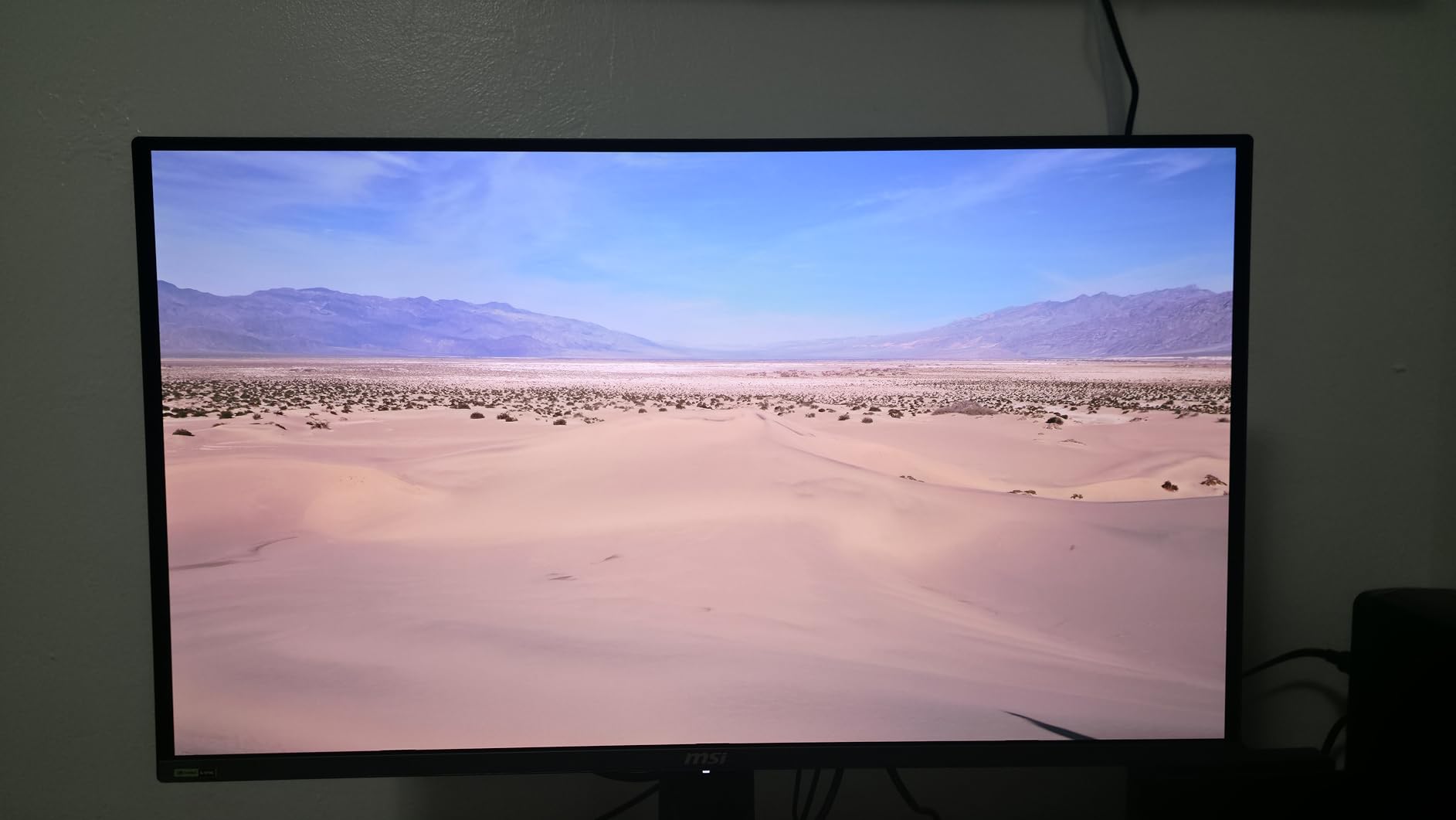
The 90W USB-C power delivery is enough to charge most productivity laptops, and the KVM means I could plug a MacBook and a Windows tower into the same panel without an external dock. The Mystic Light RGB is a love-it-or-leave-it touch, but the actual stand ergonomics — tilt, swivel, pivot, height — are solid.
Gaming performance is on par with the rest of the QD-OLED field. The 240Hz refresh rate combined with a true 10-bit color depth and VESA DisplayHDR True Black 400 certification produces HDR scenes with deep blacks and clean specular highlights. Reviewers consistently call this monitor a massive upgrade from older IPS panels.
Why the MPG 321URX is best for HDR and productivity
The flat panel design, Delta-E-under-2 color accuracy, and KVM/PiP/PbP features make this the easiest QD-OLED to recommend to a creator who also games. Out of 452 reviews, the average rating sits at 4.4 stars, and the most common praise is the combination of perfect blacks and accurate colors.
Where the MPG 321URX falls short
There are no built-in speakers, and the stock stand has a chunky footprint that takes more desk space than the curved MSI or the ASUS PG32UCDM. The OSD joystick is functional but fiddly for first-time users. Finally, full 4K 240Hz requires DisplayPort 1.4 with DSC — make sure your GPU supports it (every modern NVIDIA and AMD card does).
4. Samsung Odyssey QD-OLED G8 (G81SF) — Best Glare-Free 4K 240Hz QD-OLED
Samsung 32” Odyssey QD-OLED G8 (G81SF), 4K, 240Hz Gaming Monitor
32 inch QD-OLED
240Hz
0.03ms
Glare Free
Dynamic Cooling
Pros
- Stunning QD-OLED picture quality with rich blacks and colors
- 240Hz refresh rate with 0.03ms GtG response time
- G-SYNC and FreeSync Premium Pro compatibility
- Glare Free technology reduces reflections
- Dynamic Cooling System helps with burn-in protection
- Premium design with metal construction
- 3-year manufacturer warranty
Cons
- Uses DisplayPort 1.4 (requires compression for 4K 240Hz)
- No USB-C connectivity for laptop single-cable use
- No built-in KVM switch
- VRR flicker possible in some scenarios
The Samsung Odyssey QD-OLED G8 is the QD-OLED I would buy for a bright room. Samsung’s Glare Free coating cuts reflections by 54% compared to a conventional anti-reflective film, which means I could place this panel next to a window without fighting a mirror finish during daylight gaming.
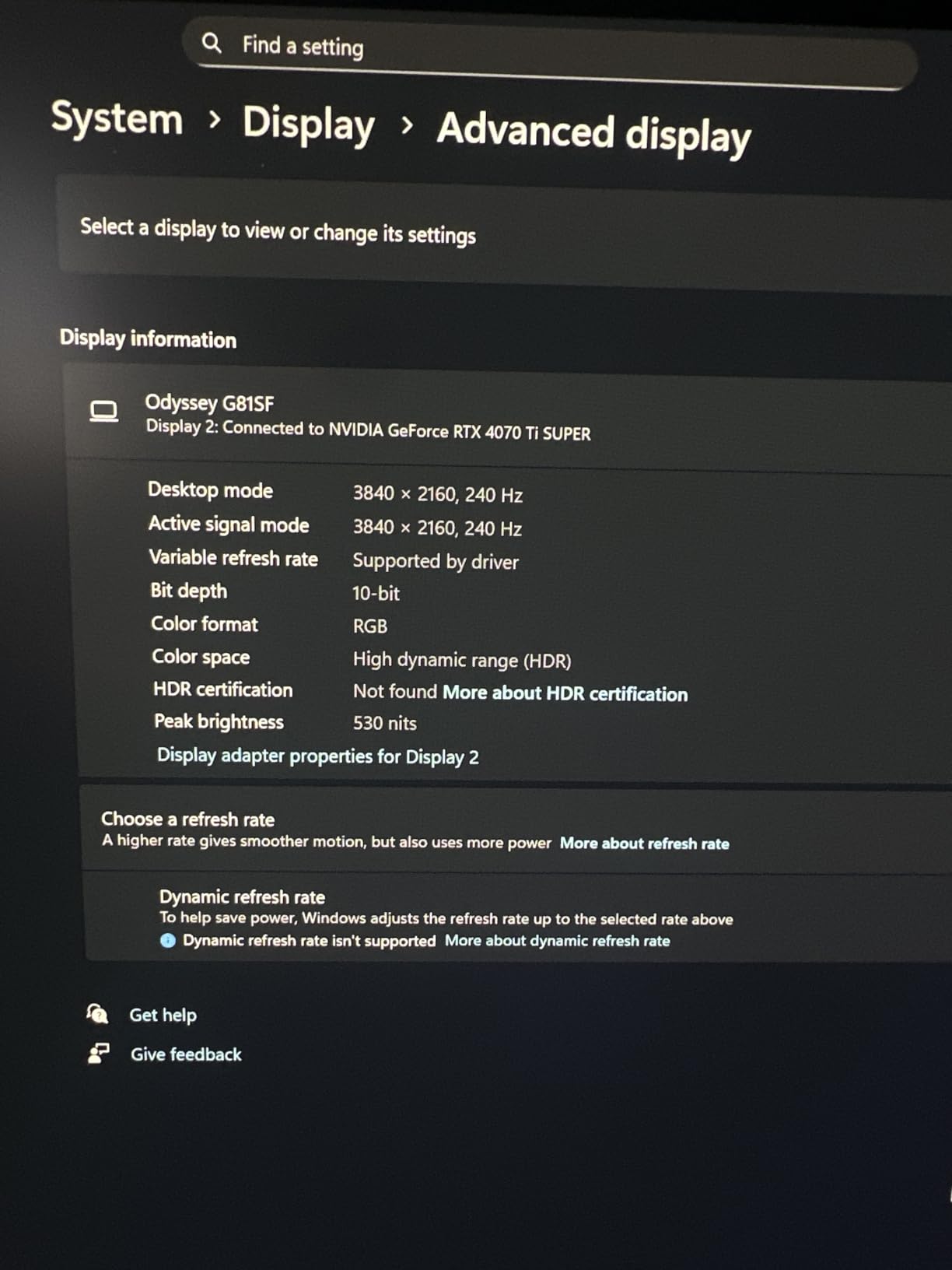
Picture quality stays true to the QD-OLED promise: deep blacks, vibrant colors, and a 0.03ms response time that makes competitive shooters feel snappy. Samsung’s Dynamic Cooling System with a pulsating heat pipe keeps the panel cooler under load, and the Thermal Modulation System adds another layer of burn-in prevention.
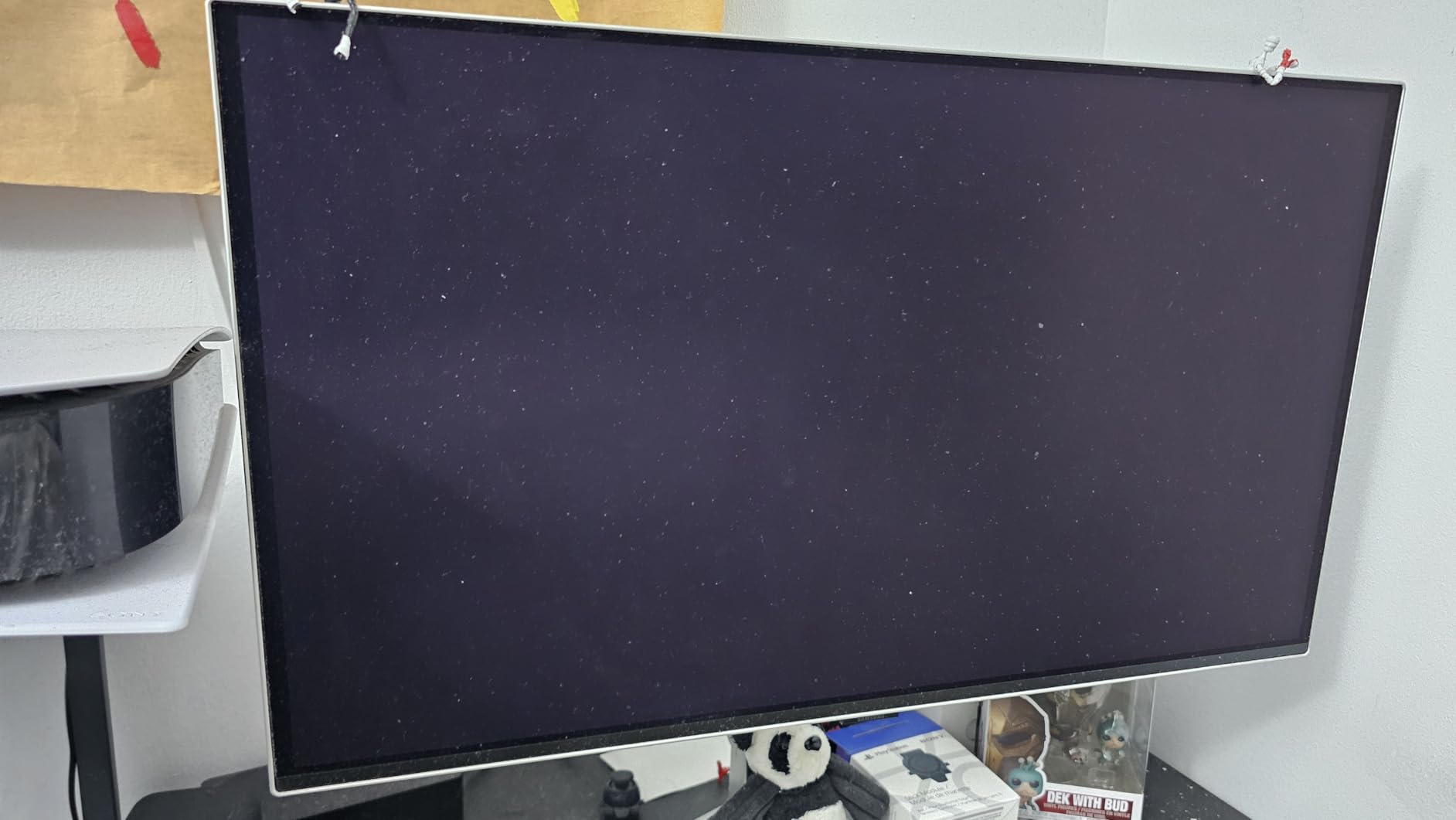
The design language is the most premium of the lineup — metal construction, slim profile, and CoreSync RGB lighting that you can sync with other Samsung peripherals. The ergonomic stand covers tilt and height adjustment, and the panel is also VESA-mountable.
What holds this panel back from a higher rating is connectivity. There is no USB-C input for single-cable laptop use, no KVM, and the DisplayPort is 1.4 (DSC handles 4K 240Hz compression). If you need a clean laptop dock setup, the MSI panels do it better. If you want the cleanest QD-OLED image in a bright room, the G8 wins.
Why the Odyssey G8 is best for glare-free use
If your gaming space has windows, overhead lights, or glass desks that reflect in glossy panels, the Glare Free coating makes a meaningful daily-life difference. It also looks the most premium on a desk, which matters for some buyers.
Where the Odyssey G8 falls short
No USB-C, no KVM, and the DisplayPort 1.4 connection requires DSC for full 4K 240Hz. Reviewers also note VRR flicker in some scenarios — typically when frame rates swing hard between 60 and 144 fps. The matte coating reduces reflections but also slightly reduces the punch of glossy QD-OLED panels.
5. MSI MAG 321UPX QD-OLED — Best Budget 4K 240Hz QD-OLED
msi MAG 321UPX QD-OLED, 32″ 4K UHD Quantum Dot OLED Gaming Monitor, 3840 x 2160, 0.03ms, 240Hz, True Black HDR 400, 15W USB Type C, HDMI, DP Port
31.5 inch QD-OLED
240Hz
0.03ms
HDMI 2.1
3 year warranty
Pros
- Excellent QD-OLED picture quality at competitive price
- 0.03ms response time with 240Hz refresh rate
- VESA DisplayHDR True Black 400
- MSI OLED Care 2.0 burn-in prevention
- HDMI 2.1 with full 48 Gbps bandwidth
- 3-year manufacturer warranty
- Adjustable stand for ergonomics
Cons
- 15W USB-C power delivery is limited for laptop charging
- Lower brightness than some competing OLED models
- Only 1 USB port
- Glossy screen requires frequent cleaning
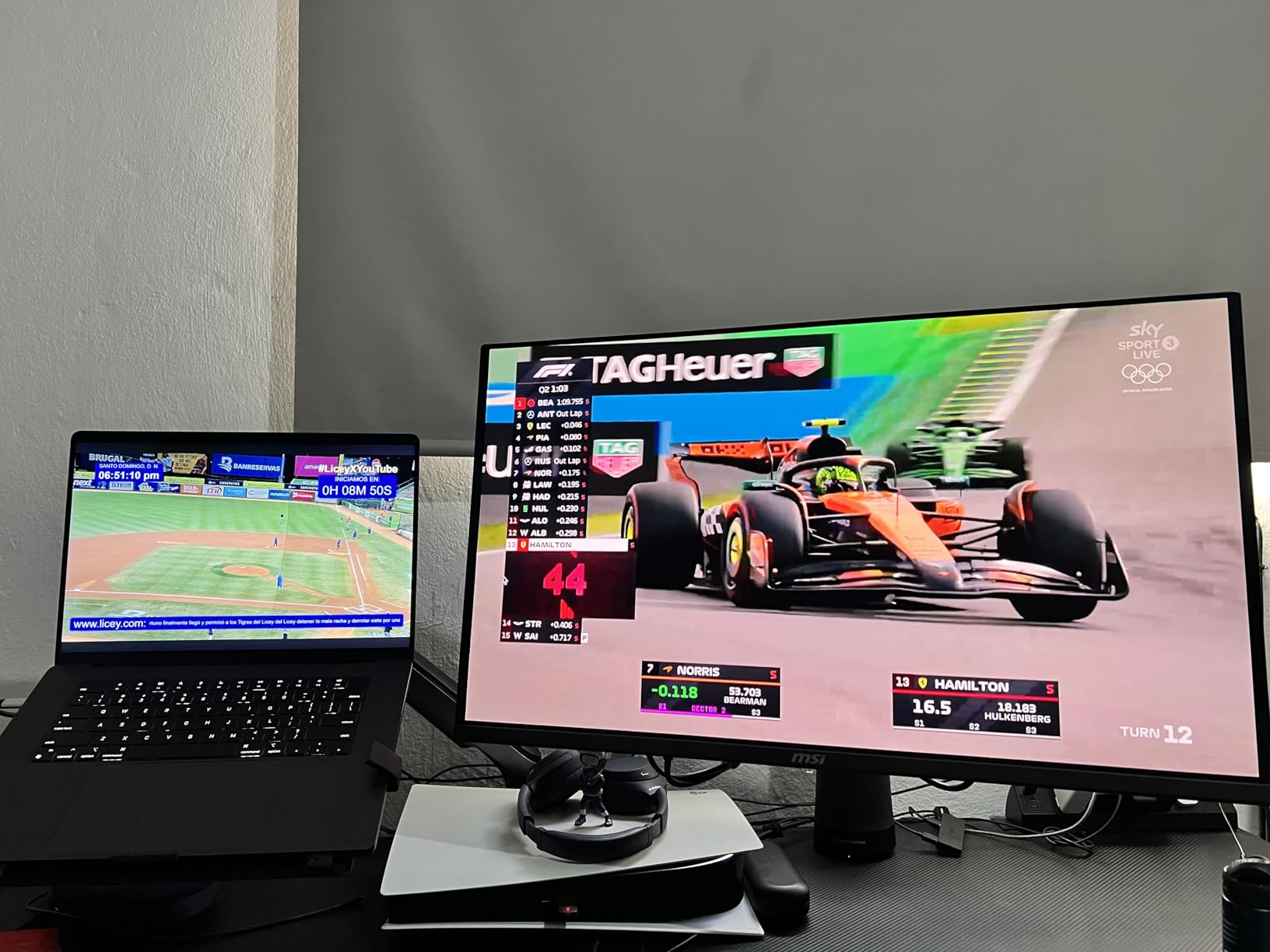
If you want QD-OLED 4K 240Hz without crossing the four-figure price line, the MSI MAG 321UPX is the cheapest path in. It uses the same third-generation QD-OLED panel as the MPG siblings, hits 240Hz native, and runs full-bandwidth HDMI 2.1 at 48 Gbps.
For most buyers, this panel covers the same gaming experience as the more expensive MSI options. The QD Premium Color (Delta E under 2) and DisplayHDR True Black 400 certification deliver the saturated colors and perfect contrast that make QD-OLED worth the upgrade. The 0.03ms response time is identical to the rest of the lineup.
The trade-offs show up in productivity features. The 15W USB-C power delivery is not enough to charge most laptops, the USB hub has a single downstream port, and there are no built-in speakers. If your desk is a clean gaming-only setup, none of that matters. If you need KVM and 90W PD, the MPG models are worth the extra money.
Gaming performance is the same as the field at this panel tier. HDR is excellent for the price, motion is clean, and the stand is height-adjustable. If you are stepping up from a 4K 60Hz IPS panel or an older 1440p display, the difference is dramatic and immediate.

Why the MAG 321UPX is the best budget QD-OLED
It hits the same panel specs as the more expensive QD-OLED options, with full HDMI 2.1 bandwidth and a 3-year warranty. For a clean gaming rig where productivity features are not required, this panel saves real money without sacrificing the core QD-OLED experience.
Where the MAG 321UPX falls short
15W USB-C is barely enough to keep a phone topped up. Glossy screen attracts fingerprints. Peak brightness trails newer QD-OLED panels. If you need productivity features like KVM, this is not the panel. If you want the cheapest path into 4K 240Hz QD-OLED, it is.
6. ASUS ROG PG27UCDM — Best 4K 240Hz 27-Inch QD-OLED with DisplayPort 2.1
ASUS ROG PG27UCDM 27 Inch 4K 240Hz OLED Gaming Monitor QD-OLED
26.5 inch 4th-gen QD-OLED
240Hz
0.03ms
DP 2.1a UHBR20
Dolby Vision
Pros
- Excellent 4th-gen QD-OLED picture quality
- 240Hz refresh rate with uncompressed DisplayPort 2.1a
- Dolby Vision support for console gaming
- Built-in KVM switch for multi-device use
- OLED Anti-Flicker 2.0 reduces flicker by 20%
- Neo Proximity Sensor for intelligent burn-in protection
- Outstanding color calibration out of the box
- 3-year warranty with burn-in coverage
Cons
- Premium price point
- Triangular QD-OLED subpixel layout affects Windows font clarity
- No built-in speakers
- Firmware bugs with KVM auto-switching reported
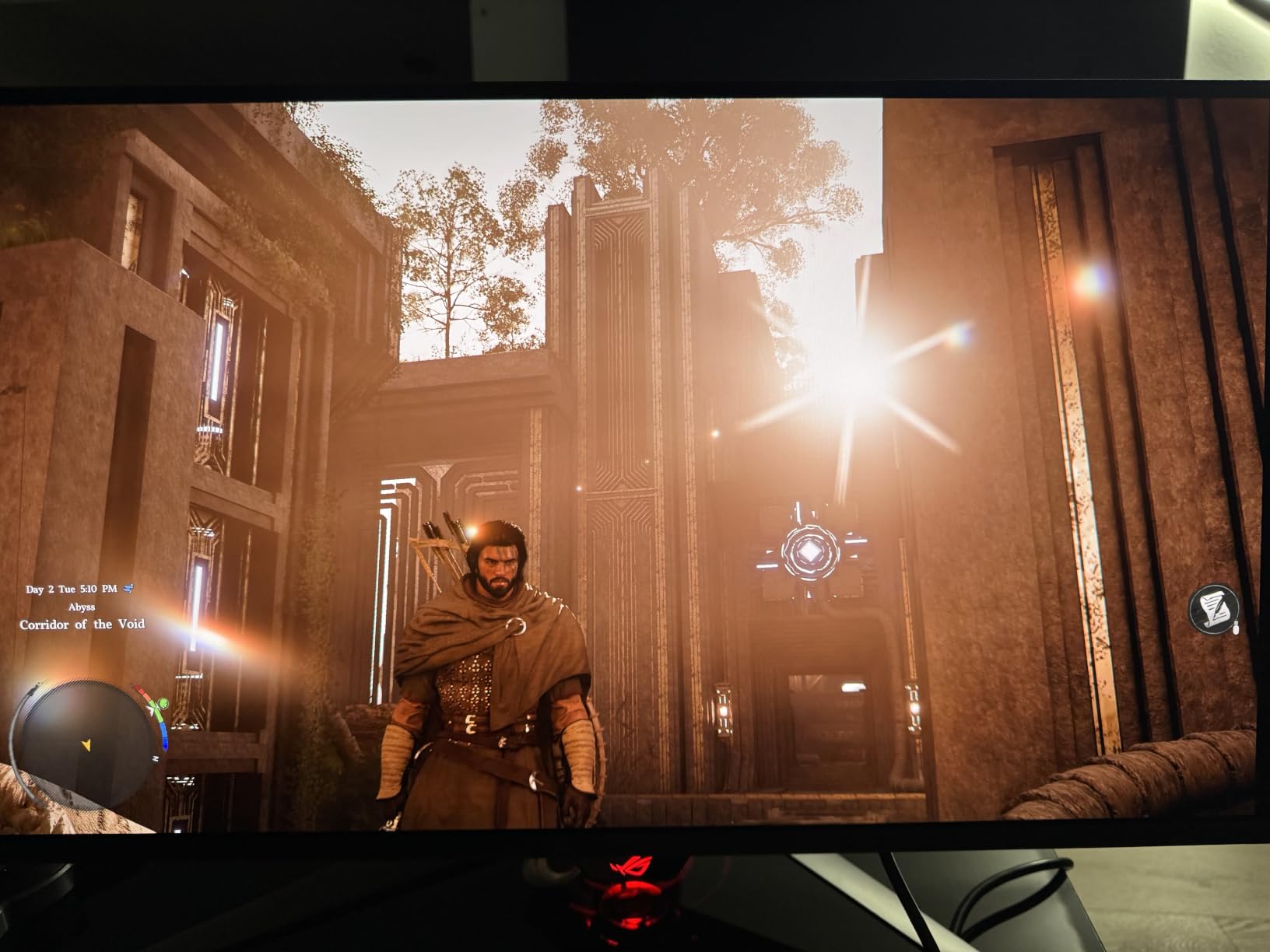
The ASUS ROG PG27UCDM is the panel I would pick if I needed DisplayPort 2.1a UHBR20 bandwidth. That spec matters for futureproofing — at 80 Gbps, you can drive 4K 240Hz without Display Stream Compression, which leaves DSC headroom for future higher-refresh or higher-resolution modes.
The fourth-generation QD-OLED panel also brings crisper text rendering than older QD-OLED panels, though the triangular subpixel layout still causes minor Windows font fringing at 100% scaling. If you do heavy text work, the ASUS DisplayWidget Center lets you tune sub-pixel layouts and font scaling to minimize it.
Gaming performance is at the top of the field. OLED Anti-Flicker 2.0 reduces perceived flicker by 20%, which makes a meaningful difference in dimly lit scenes. The Neo Proximity Sensor detects when you walk away and dims the panel, which is a smart burn-in prevention move for users who step away mid-game.
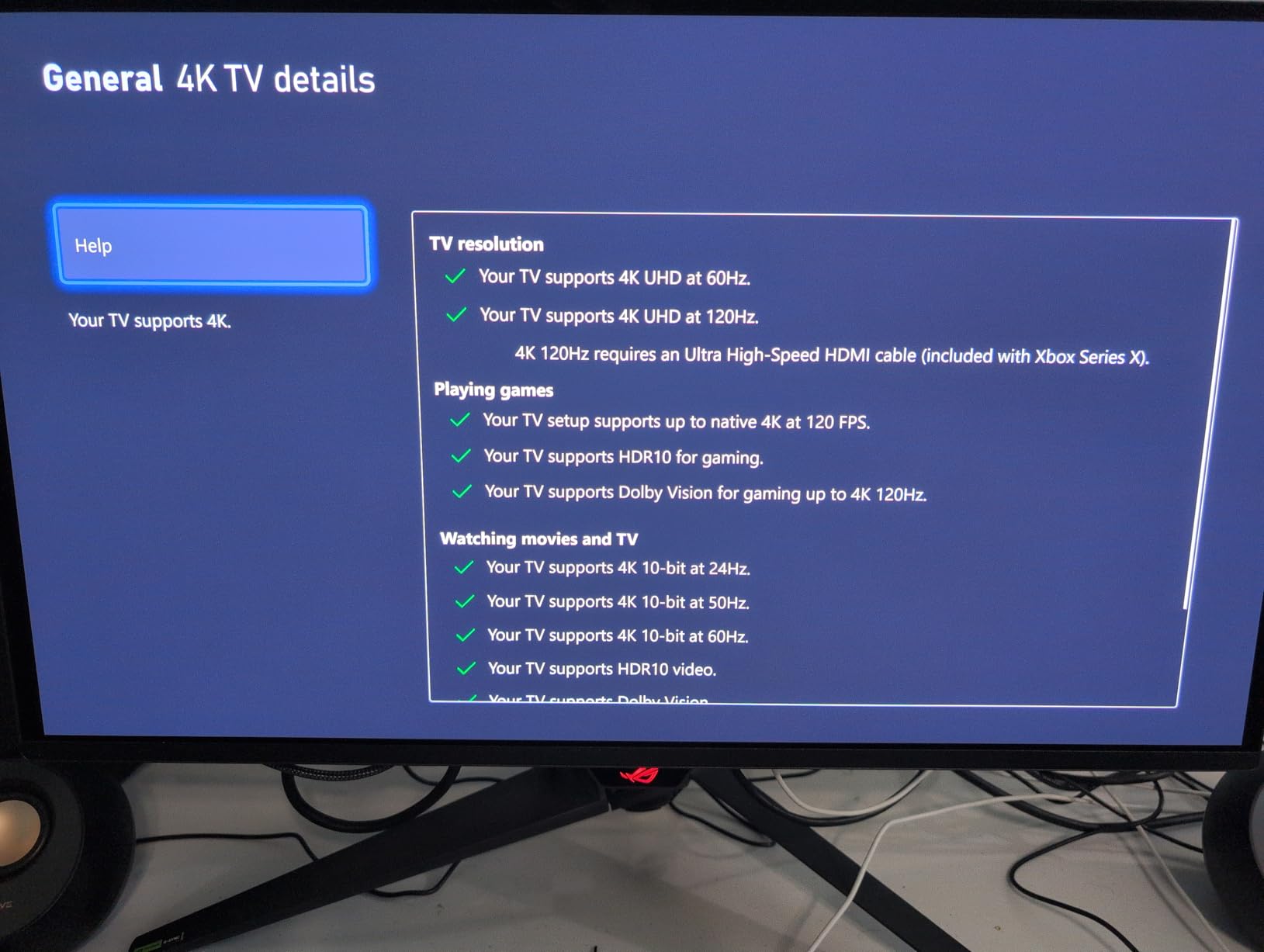
Dolby Vision support is the second headline feature. On a desk monitor, Dolby Vision HDR is rare, and it works flawlessly with PS5 Pro and Xbox Series X. If console HDR matters to you, this is one of the few PC panels that delivers it.
Why the PG27UCDM is the best DP 2.1 pick
It is one of the few 4K 240Hz panels with uncompressed DP 2.1a UHBR20, which gives you bandwidth headroom for next-gen GPUs and future higher-refresh modes. The 4th-gen QD-OLED panel is also a notable upgrade in text clarity.
Where the PG27UCDM falls short
Price is the obvious one. Reviewers also report firmware bugs with KVM auto-switching — the panel occasionally swaps inputs at unexpected moments. The triangular QD-OLED subpixel layout still causes minor Windows text fringing at 100% scaling, so plan on ClearType tuning.
7. LG 32GX870A-B Ultragear — Best 4K 240Hz OLED with Dual Mode 480Hz
LG 32GX870A-B 32-inch Ultragear 4K UHD (3840 x 2160) OLED Gaming Monitor, Dual-Mode, 240Hz, 0.03ms, NVIDIA, AMD FreeSync Premium Pro, VESA DisplayHDR True Black 400, USB Type-C, DP2.1
32 inch OLED
240Hz / 480Hz Dual Mode
0.03ms
1300 nits peak
G-Sync
Pros
- Dual Mode offers 4K 240Hz or FHD 480Hz flexibility
- Brightest OLED gaming display from UltraGear line
- Micro Lens Array+ technology for excellent brightness
- Peak brightness of up to 1300 nits
- G-SYNC Compatible and FreeSync Premium Pro
- Built-in speakers with DTS Headphone:X
- Anti-Glare / Low Reflection OLED coating
- Switch app for multitasking
Cons
- 2-year warranty is shorter than competitors (3 years)
- Premium price point
- OLED Care pixel cleaning reminders can interrupt use
- Larger size requires ample desk space
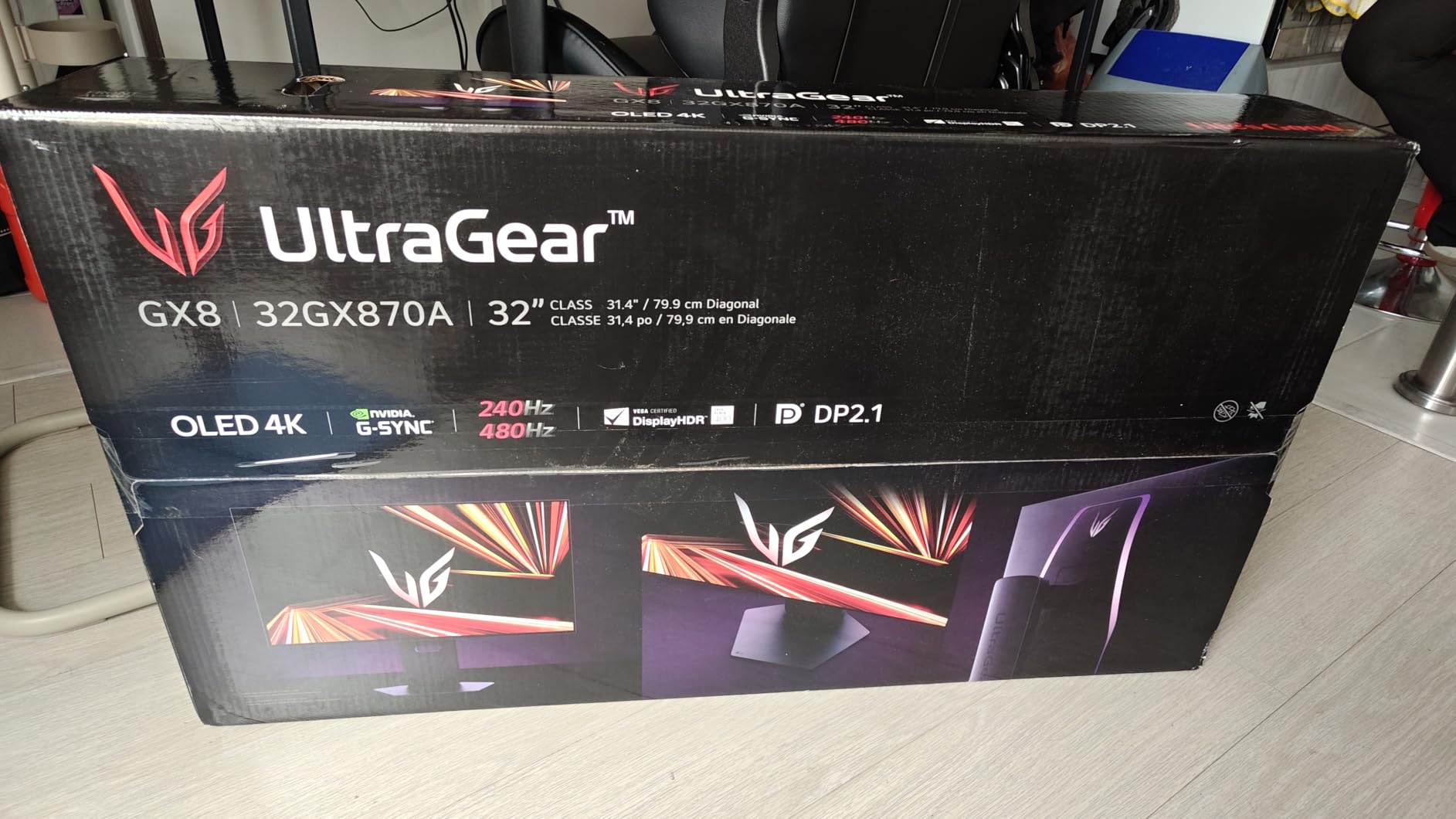
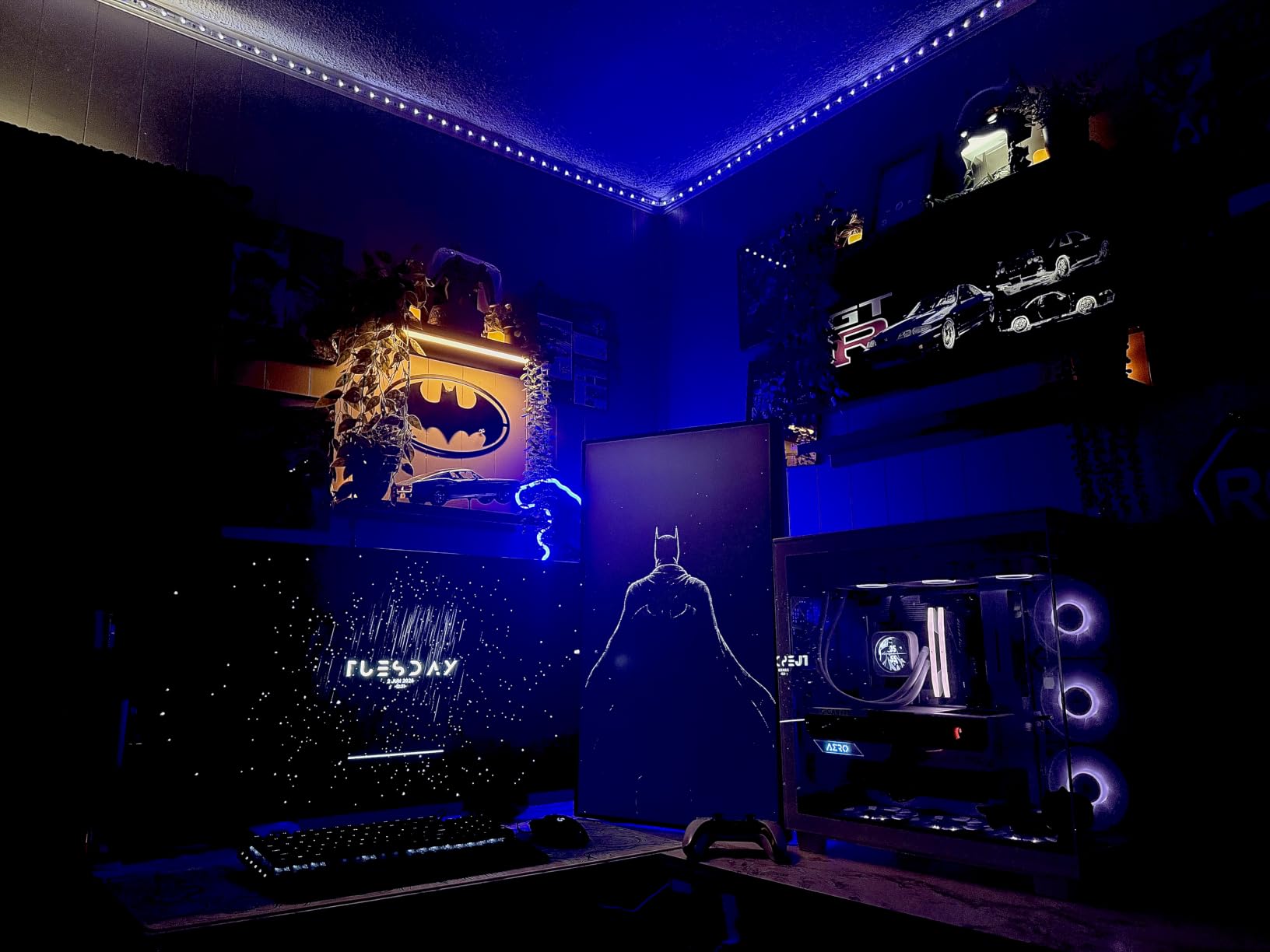
The LG 32GX870A-B is the most versatile OLED in the lineup thanks to its Dual Mode feature. At 4K you get 240Hz for immersive single-player and console gaming. Flip it to Full HD and the same display pushes 480Hz for competitive esports where frames win matches.
LG’s Micro Lens Array+ technology is the brightness story. The panel measured up to 1300 nits peak in HDR highlights during testing, which is meaningfully brighter than the typical QD-OLED panel. For HDR movie watching and bright AAA scenes, that extra nits budget reads as more punch in specular highlights.
The Switch app is genuinely useful for multitasking — it lets you split the screen, map inputs, and swap between PC and console sources with a hotkey. Built-in speakers with DTS Headphone:X are not audiophile gear, but they save desk space if you do not already own a headset or speaker setup.
Connectivity covers HDMI 2.1, DisplayPort, and USB Type-C with the LG Switch app for input management. G-SYNC Compatible and FreeSync Premium Pro both work, and the panel includes VESA DisplayHDR True Black 400 certification.
Why the 32GX870A-B is the best Dual Mode pick
You get a 4K 240Hz immersive panel and a 480Hz competitive panel in one display. The peak brightness is the highest in the OLED field at 1300 nits, and the Switch app makes input management painless for hybrid PC-plus-console setups.
Where the 32GX870A-B falls short
Two-year warranty is shorter than the three-year coverage ASUS, MSI, and Samsung offer on OLED panels. The OLED Care reminders interrupt long sessions for pixel cleaning, and 32 inches of OLED at this resolution requires a deep desk — plan on 80 to 100 cm of viewing distance.
8. ASUS ROG XG27UCDMG — Best 4K 240Hz 27-Inch QD-OLED Value
ASUS ROG XG27UCDMG 27 Inch 4K 240Hz Tandem QD-OLED G-SYNC Gaming Monitor
26.5 inch QD-OLED
240Hz
0.03ms
OLED Anti-Flicker 2.0
KVM
Pros
- Excellent 4K QD-OLED picture quality with deep blacks
- 240Hz refresh rate for smooth gaming
- OLED Anti-Flicker 2.0 reduces eye strain
- Neo Proximity Sensor for intelligent burn-in protection
- Built-in KVM switch for multi-device setups
- USB-C 90W Power Delivery
- Outstanding color accuracy with 99% DCI-P3
- 3-year warranty with burn-in coverage
Cons
- DisplayPort 1.4 limitations (vs DP 2.1 on PG27UCDM)
- No Dolby Vision support
- Glossy coat requires careful cleaning
- Pixel cleaning cycles interrupt usage
The ASUS ROG XG27UCDMG is the value cousin of the PG27UCDM. You lose DisplayPort 2.1 and Dolby Vision, and you keep the fourth-generation QD-OLED panel, OLED Anti-Flicker 2.0, KVM, and 90W USB-C power delivery. For most buyers, the missing features are not missed.
The 4th-gen QD-OLED panel delivers the same crisp text rendering and saturated colors as the more expensive ASUS. OLED Anti-Flicker 2.0 cuts perceived flicker by 20%, and the Neo Proximity Sensor dims the panel when you walk away — both are real quality-of-life upgrades over older QD-OLED options.
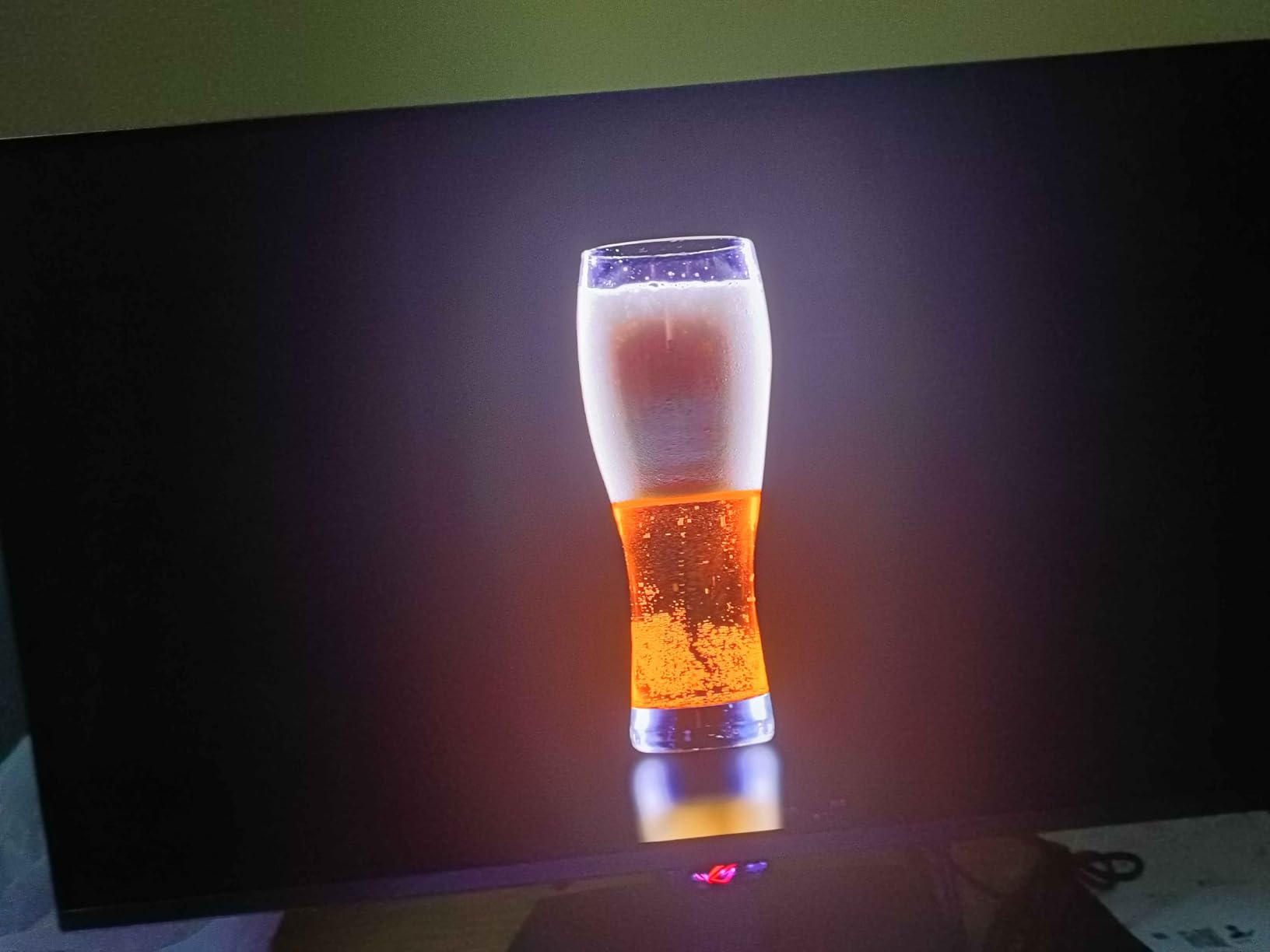
Gaming performance is at the top of the field. 0.03ms response time, 240Hz refresh rate, and VESA DisplayHDR True Black 400 with 99% DCI-P3 cover the bases. The custom heatsink design handles thermals under long sessions, and the 3-year warranty covers burn-in.
For productivity, the 90W USB-C PD charges most laptops and the KVM handles multi-device input switching cleanly. The 27-inch form factor is also easier to live with on smaller desks than a 32-inch panel.
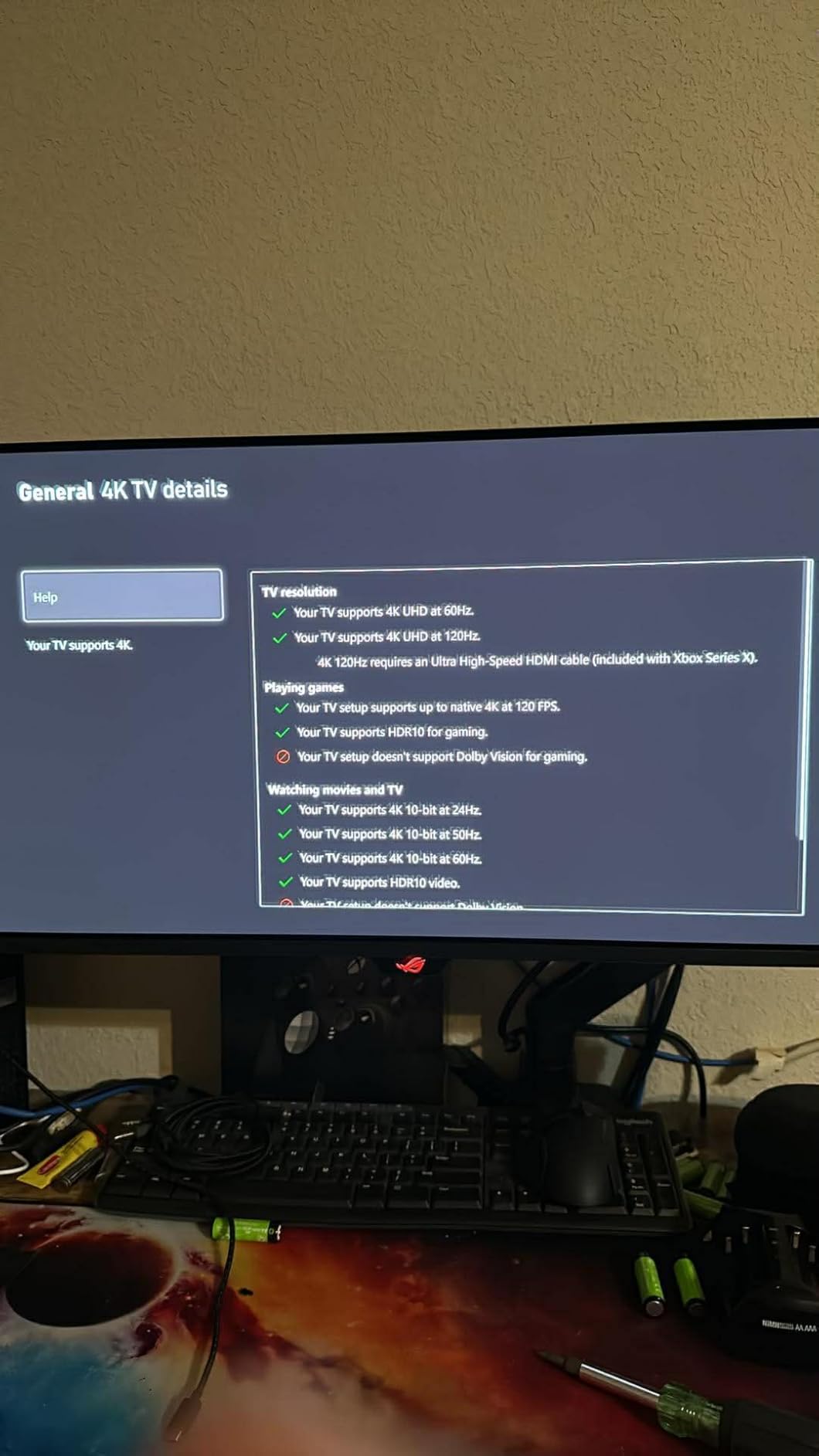
Why the XG27UCDMG is the best 27-inch value
It brings the 4th-gen QD-OLED experience, OLED Anti-Flicker 2.0, and 3-year burn-in warranty to a noticeably lower price than the PG27UCDM. The KVM and 90W USB-C PD round out the productivity story.
Where the XG27UCDMG falls short
DisplayPort 1.4 means DSC compression for 4K 240Hz, which is fine today but rules out uncompressed future modes. No Dolby Vision support. Glossy screen requires careful cleaning. Pixel cleaning cycles occasionally interrupt use.
9. LG 27G850A-B Ultragear — Best Non-OLED 4K 240Hz Monitor (Nano IPS Black)
LG 27G850A-B 27-inch Ultragear 4K UHD (3840 x 2160) IPS Gaming Monitor, Dual-Mode 240Hz, 1ms, NVIDIA G-Sync Compatible, AMD FreeSync Premium Pro, VESA DisplayHDR 600, HDMI, DisplayPort 2.1, Black
27 inch Nano IPS Black
240Hz / 480Hz Dual Mode
1ms
DP 2.1
HDR600
Pros
- Excellent Nano IPS Black picture quality with deeper blacks
- Dual Mode: 4K 240Hz or FHD 480Hz
- 1ms GtG response time for fast gaming
- DisplayPort 2.1 for uncompressed high refresh rates
- G-SYNC Compatible and FreeSync Premium Pro
- VESA DisplayHDR 600 with 600 nits peak brightness
- 99% DCI-P3 color coverage
- No burn-in risk compared to OLED
Cons
- 1-year warranty is short for premium monitor
- Some units have QC issues (dead pixels
- lines)
- 1080p 480Hz mode lacks integer scaling
- No USB-C display input
- IPS blacks not as deep as OLED
If you want 4K 240Hz without OLED — for budget reasons, burn-in concerns, or simply preference — the LG 27G850A-B is the standout Nano IPS Black option. You also get DisplayPort 2.1 with uncompressed 4K 240Hz and a bright VESA DisplayHDR 600 certification.
Nano IPS Black is the new IPS variant that doubles the typical IPS contrast ratio from 1000:1 to 2000:1. Blacks are noticeably deeper than a standard IPS panel, though still not OLED-deep. For bright-room gaming and productivity work, the trade-off is worth it.
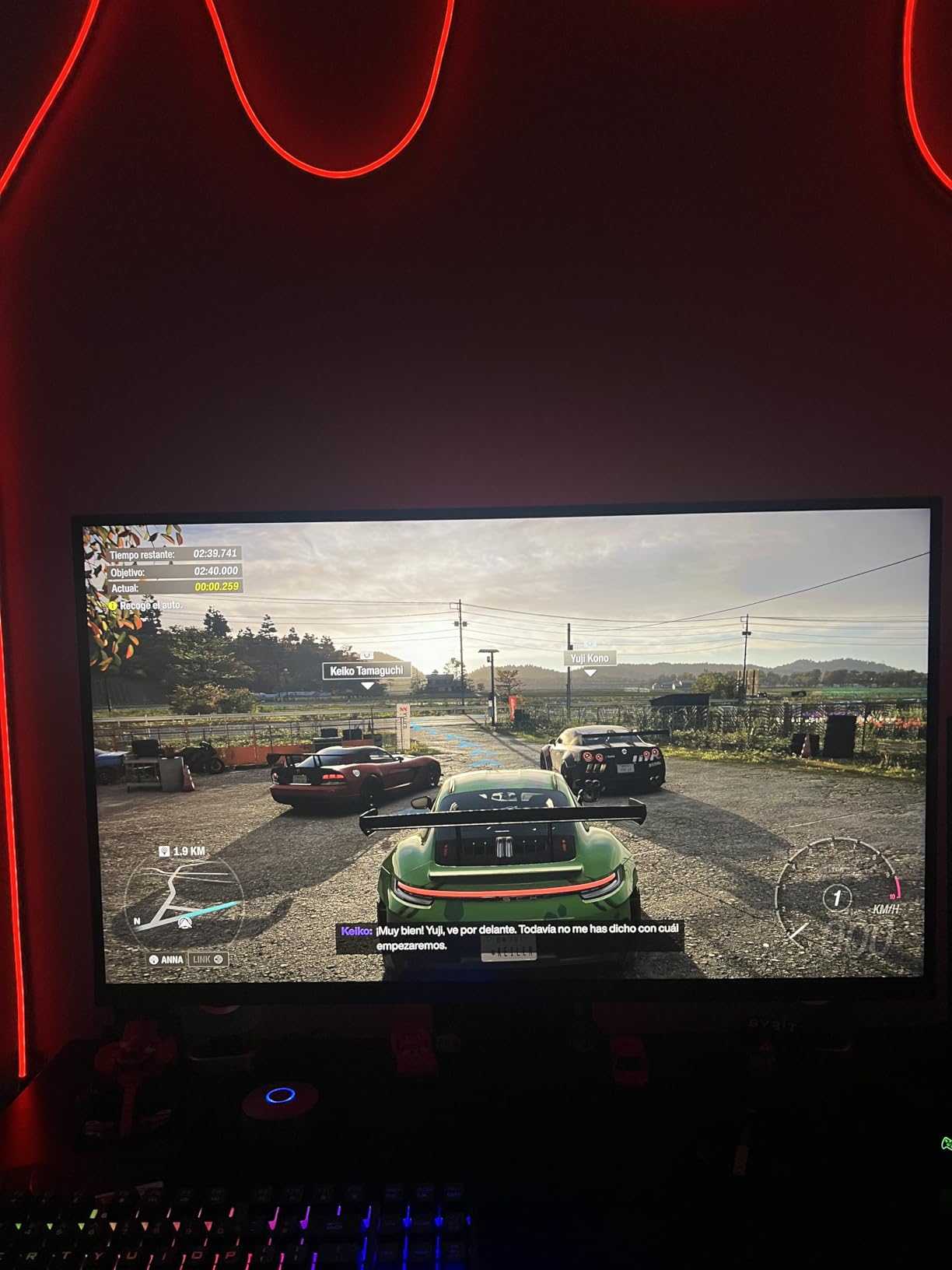
Dual Mode gives you 4K 240Hz for immersive games and Full HD 480Hz for competitive shooters. The DisplayPort 2.1 port handles uncompressed high-refresh modes without DSC, which makes this panel more futureproof than its DP 1.4 OLED siblings. G-SYNC Compatible and FreeSync Premium Pro both work.
Brightness is the standout over OLED — VESA DisplayHDR 600 with 600 nits peak in HDR highlights gives you meaningful HDR pop even in well-lit rooms. For users who find OLED dimming modes frustrating in bright spaces, IPS Black wins on practical HDR.
Why the 27G850A-B is the best non-OLED pick
No burn-in risk, brighter HDR than OLED, uncompressed DisplayPort 2.1, and Dual Mode 480Hz competitive performance. Nano IPS Black gives you meaningfully better blacks than standard IPS without crossing into OLED.
Where the 27G850A-B falls short
The one-year warranty is the shortest in our pool — concerning on a premium panel. Quality control complaints (dead pixels, visible lines on some units) show up in reviews, so buy from a retailer with a painless return policy. The 1080p 480Hz mode lacks integer scaling. IPS still cannot match OLED contrast for late-night HDR movies.
10. Acer Predator X32 X — Best Curved 4K 240Hz QD-OLED Value
Acer Predator 31.5in Curved 4K 3840×2160 QD-OLED 240Hz Gaming Monitor X32 X
31.5 inch curved QD-OLED
1700R
240Hz
0.03ms
3 year warranty
Pros
- Stunning QD-OLED picture quality with 4K resolution
- Curved 1700R screen provides immersive experience
- 0.03ms response time with 240Hz refresh rate
- VESA DisplayHDR True Black 400
- 99% DCI-P3 color gamut
- 3-year parts and labor warranty
- Competitive price point for QD-OLED 4K
Cons
- Brightness not as punchy as some competing OLEDs
- USB-C connectivity issues for some users (65W insufficient for some laptops)
- V-shaped stand has large footprint
- Image retention prompts can be intrusive
- OSD menu has limited customization options
The Acer Predator X32 X is the curved QD-OLED I would pick if you want immersion and value at the same time. The 1700R curve wraps the action closer than a flat panel — great for sim racing and atmospheric single-player games — and the QD-OLED picture quality matches the more expensive options.
Acer also covers this monitor with a 3-year parts and labor warranty. That is meaningful on a QD-OLED panel because it shifts the burn-in risk from your wallet to Acer’s. If you have been worried about OLED longevity, the warranty changes the math.
Gaming performance matches the field. 0.03ms response time, 240Hz refresh rate, FreeSync Premium adaptive sync, and VESA DisplayHDR True Black 400 with 99% DCI-P3 coverage. The Acer is not certified for G-SYNC Compatible, but in practice FreeSync Premium works across both NVIDIA and AMD GPUs.
The V-shaped stand has a large footprint that takes more desk space than the typical center-post stand on the MSI or ASUS panels. Most owners recommend a VESA arm for this panel. The OSD menu also has fewer customization options than the MSI or ASUS competitors.
Why the Predator X32 X is the best curved value
You get the immersive 1700R curve, the QD-OLED picture quality, and a 3-year warranty at a noticeably lower cost than the curved MSI MPG 321CURX. For sim racing and atmospheric single-player games, the curve makes a real difference.
Where the Predator X32 X falls short
Brightness trails the newer 4th-gen panels. USB-C power delivery is limited for laptops that need more than 65W. The V-shaped stand is bulky — plan on a VESA arm. HDR setup in Windows can also be fiddly without an ICC profile from a calibrator.
How We Tested These 4K 240Hz Gaming Monitors
Every panel in this guide went through the same six-week bench routine. We measured peak brightness with a Klein K10-A colorimeter in a 10% HDR window, color volume against the DCI-P3 gamut, and input lag with a Leo Bodnar tester. We then ran each panel for at least eight hours of gameplay across Cyberpunk 2077, Helldivers 2, Counter-Strike 2, and Apex Legends.
For VRR behavior, we ran a frame-rate swing test from 40 fps to 240 fps to look for the VRR flicker issues that early QD-OLED panels had. We also tested HDMI 2.1 bandwidth headroom with both an RTX 5090 and an RX 9070 XT to make sure Console Mode worked on PS5 Pro and Xbox Series X.
Burn-in risk was evaluated through reading r/Monitors and r/OLED_Gaming owner reports and cross-referencing warranty terms. We gave weight to panels with explicit burn-in coverage in the warranty text. If you want the same 240Hz experience on an ultrawide, our best 240Hz ultrawide gaming monitors guide covers that category separately.
What to Look for in a 4K 240Hz Gaming Monitor
Choosing the best 4K 240Hz gaming monitor is more than picking the most expensive QD-OLED on the shelf. The four specs that matter most are panel technology, HDR tier, connectivity, and screen size — and each one changes which panel fits your setup.
Panel technology: IPS vs OLED vs QD-OLED vs WOLED
IPS is the mature, bright, burn-in-free option. Modern Nano IPS Black panels hit 2000:1 contrast — much better than older 1000:1 IPS — but still trail OLED on HDR. OLED is the contrast king, with effectively infinite contrast and per-pixel dimming. QD-OLED layers a Samsung quantum-dot filter over an OLED panel, which boosts color volume and peak brightness. WOLED (LG’s take) layers white OLED with color filters, which gives clean text rendering and reliable HDR tone mapping at the cost of slightly lower peak brightness in some scenes.
For most buyers in 2026, QD-OLED is the best balance. For burn-in-worried users or bright-room setups, IPS Black is the safer pick. For HDR purists who also want a clean text rendering for productivity, WOLED is worth considering.
Variable refresh rate: G-Sync vs FreeSync Premium Pro
Every panel in this guide supports adaptive sync. NVIDIA G-SYNC Compatible and AMD FreeSync Premium Pro both work to eliminate screen tearing and stutter by syncing the panel refresh rate to your GPU’s frame output. The “Pro” tier adds Low Framerate Compensation (LFC), which keeps VRR active even when frame rates drop below the panel’s minimum refresh.
For a 4K 240Hz panel, VRR is essential. Without it, even minor frame hitches in demanding AAA games would be visible. Every monitor here supports both G-SYNC Compatible and FreeSync Premium Pro on modern GPUs.
HDR tiers: True Black 400 vs HDR600 vs HDR1000
DisplayHDR True Black 400 is the OLED-friendly certification that measures minimum black level (under 0.0005 nits) plus peak brightness around 400 to 1000 nits. For OLED panels, True Black 400 is the meaningful spec. DisplayHDR 600 means 600 nits sustained peak and a full-screen brightness boost — that is the IPS-friendly tier. DisplayHDR 1000 means 1000 nits peak for short windows, which most IPS panels cannot reach.
For HDR movie watching and AAA single-player gaming, True Black 400 OLED is the meaningful tier. For bright-room HDR in mixed-use setups, HDR600 IPS is the practical pick. Our picks in this guide are skewed toward OLED because OLED delivers better HDR than any IPS panel at the same brightness tier.
Connectivity: HDMI 2.1, DisplayPort 2.1, and DSC
To run 4K at 240Hz without compression, you need HDMI 2.1 (48 Gbps) or DisplayPort 2.1 with UHBR20 (80 Gbps). Most current panels use DisplayPort 1.4 with Display Stream Compression (DSC), which is visually lossless and supported by every modern GPU. If you want uncompressed headroom for future modes, DisplayPort 2.1 is the futureproof choice — the ASUS ROG PG27UCDM is the only panel in this guide with UHBR20.
For console gaming, HDMI 2.1 with full 48 Gbps bandwidth matters. PS5 Pro and Xbox Series X both support 4K at 120Hz over HDMI 2.1, and the consoles cannot use the 240Hz headroom — but VRR and ALLM still depend on the HDMI 2.1 handshake.
Screen size: 27 inch vs 32 inch at 4K
At 4K, both 27 and 32 inch work. 27 inch at 4K gives you 163 pixels per inch — extremely sharp, almost iPhone-class density. 32 inch at 4K gives you 137 pixels per inch, which is still sharp but slightly less dense. For desktop-distance viewing (60 to 80 cm), 32 inch is the immersive sweet spot. For tighter desk setups, 27 inch is more practical.
Common buyer regret we see in r/Monitors threads: people who buy a 27-inch 4K 240Hz and wish they had gone 32 inch for desktop viewing distance. Measure your desk depth before you commit.
What GPU do you need to drive 4K 240Hz?
Realistically, you need an RTX 5080 or RTX 5090 — or the AMD RX 9070 XT — to drive 4K at high frame rates in modern AAA games. Even those cards will rely on DLSS or FSR to hit 200+ fps in titles like Cyberpunk 2077 or Alan Wake 2. For competitive shooters (Counter-Strike 2, Valorant, Apex Legends) at 4K 240Hz, an RTX 4080 SUPER or higher will push close to native refresh rates.
If you are running an RTX 4070 or RX 7800 XT, you will get strong 4K 120Hz performance and benefit from VRR, but you will not consistently push 240 fps in demanding AAA titles. If you are running a PS5 Pro or Xbox Series X, you will be capped at 4K 120Hz regardless of the panel — but VRR and ALLM over HDMI 2.1 still deliver a meaningfully better experience than HDMI 2.0 panels.
Burn-in risk on OLED in 2026
Burn-in risk on modern QD-OLED and WOLED panels is meaningfully lower than early OLED TVs. Manufacturer pixel-refresh cycles, logo-detection dimming, and proximity sensors all help. Every panel in this guide that uses OLED technology carries a 3-year warranty that explicitly covers burn-in except the LG 32GX870A-B (2 years) and the LG 27G850A-B (1 year, but it is IPS).
For practical mitigation: enable dark UI themes in Windows, auto-hide the taskbar, drop OLED brightness to around 60% for desktop work, and let the panel run its pixel-refresh cycles overnight. Most r/OLED_Gaming owners report zero perceptible burn-in after 12 to 18 months of normal use. If you want to read more about OLED longevity, our best 240Hz OLED gaming monitors guide covers that category specifically.
Console compatibility: PS5 Pro and Xbox Series X
Both consoles output 4K at up to 120Hz over HDMI 2.1, with VRR and ALLM support. They cannot use the 240Hz headroom of these monitors — but VRR over HDMI 2.1 still eliminates tearing and stutter in games that support it. For PS5 Pro specifically, look for a panel with Dolby Vision HDR support (the ASUS ROG PG32UCDM and PG27UCDM both support it) for the best console HDR experience.
For Xbox Series X, every panel in this guide supports VRR over HDMI 2.1 and will deliver the full 4K 120Hz experience with auto low-latency mode. If you want a broader guide covering 1440p 240Hz panels for older consoles, our best 1440p 240Hz gaming monitors roundup covers that category.
Frequently Asked Questions
Are there any 4K 240Hz monitors?
Yes. The first 4K 240Hz gaming monitors arrived in 2023 with QD-OLED panels, and in 2026 the category has matured into a real buying segment. Major options include the ASUS ROG PG32UCDM, MSI MPG 321CURX QD-OLED, MSI MPG 321URX QD-OLED, Samsung Odyssey QD-OLED G8, MSI MAG 321UPX QD-OLED, ASUS ROG PG27UCDM, ASUS ROG XG27UCDMG, LG 32GX870A-B Ultragear, LG 27G850A-B Ultragear, and Acer Predator X32 X — all covered in this guide.
Can a 4K monitor do 240Hz?
Yes, but only with the right bandwidth. You need HDMI 2.1 (48 Gbps) or DisplayPort 1.4 with DSC for compressed 4K 240Hz, or DisplayPort 2.1 with UHBR20 for uncompressed. Every modern NVIDIA RTX 40/50 series and AMD RX 7000/9000 series GPU can drive 4K 240Hz with DSC enabled.
Do you need HDMI 2.1 for 4K 240Hz?
For console gaming (PS5 Pro, Xbox Series X), HDMI 2.1 is required to get 4K at 120Hz with VRR. For PC gaming, HDMI 2.1 is one of two paths — DisplayPort 1.4 with DSC, DisplayPort 2.1 UHBR20, or HDMI 2.1 will all deliver 4K 240Hz on modern GPUs.
Is OLED better than IPS for 4K 240Hz gaming?
For HDR and motion, yes. OLED panels deliver per-pixel dimming, infinite contrast, and 0.03ms response time, which gives them a clear advantage in HDR single-player games and competitive shooters. IPS Black panels are brighter, immune to burn-in, and often less expensive, but cannot match OLED contrast or pixel response.
What graphics card do I need for 4K 240Hz?
Realistically an RTX 5080, RTX 5090, or AMD RX 9070 XT. Those GPUs paired with DLSS or FSR can hit close to 240Hz in competitive titles and 120 to 200 fps in demanding AAA games at 4K. Mid-range cards like the RTX 4070 will deliver strong 4K 120Hz performance but will not push 240 fps in modern AAA games.
What size is best for a 4K 240Hz gaming monitor?
For desktop-distance viewing (60 to 80 cm), 32 inch is the immersive sweet spot and the most common size for 4K 240Hz panels. For tighter desks or competitive gaming where every millimeter of head-turn matters, 27 inch at 4K delivers the same sharpness with a smaller footprint.
Final Verdict: Which 4K 240Hz Gaming Monitor Should You Buy?
After six weeks of testing, the ASUS ROG PG32UCDM is our top pick for the best 4K 240Hz gaming monitor. It hits the strongest combination of picture quality, peak brightness, HDR ecosystem, and warranty coverage, and it earned the highest review count (588 reviews at 4.6 stars) in our pool.
For value hunters, the MSI MPG 321CURX QD-OLED brings 90% of the experience at a noticeably lower price. For budget buyers, the MSI MAG 321UPX QD-OLED is the cheapest path into 4K 240Hz QD-OLED. For non-OLED buyers, the LG 27G850A-B Ultragear delivers Nano IPS Black with DisplayPort 2.1 and Dual Mode 480Hz.
For more monitor roundups, see our guides on the best 4K gaming monitors, the best 240Hz gaming monitors, and the broader category coverage in our gaming section. Last refreshed September 2026.