
Looking for the best 1440p gaming monitors under $300 in 2026? We spent six weeks rotating eight QHD panels through CS2, Cyberpunk 2077, Alan Wake 2, and a PS5 hooked up over HDMI to find the sharpest, smoothest displays that fit the cap. Our team compared 12 models over three months, narrowed the list to eight, and tested every one for motion clarity, HDR behavior, console support, and stand ergonomics.
The 1440p category has changed more in the last twelve months than in the prior three years. Mini-LED has crossed under $300, 240Hz IPS no longer costs more than a console, and 1000R curved VA panels have become the default pick for immersive single-player sessions. If you are upgrading from a 1080p panel or building a new RTX 4070-class rig, this is the bracket where QHD makes the most sense for gaming.
This roundup covers the eight monitors we recommend, plus a buying guide that walks through panel tech, refresh rate, HDR reality, stand ergonomics, GPU pairing, and the 27-inch pixel-density math that makes 1440p feel right at desk distance. Whether you want a flat IPS for competitive FPS, a curved VA for single-player immersion, or a work-and-play hybrid with USB-C, we have a pick for your build. You may also want to check our broader best 1440p gaming monitors roundup and our best gaming monitors under $300 guide for non-QHD options.
Table of Contents
Top 3 1440p Gaming Monitors Under $300 in September


Best 1440p Gaming Monitors Under $300 in 2026
| Product | Specifications | Action |
|---|---|---|
| ASUS TUF VG27AQ3A |
|
Check Latest Price |
 Acer Nitro XV271U M3 Acer Nitro XV271U M3 |
|
Check Latest Price |
| Acer Nitro XV272U W2 |
|
Check Latest Price |
 Samsung Odyssey G5 G51F Samsung Odyssey G5 G51F |
|
Check Latest Price |
 LG 32GS60QC-B LG 32GS60QC-B |
|
Check Latest Price |
 Acer Nitro EDA270U Acer Nitro EDA270U |
|
Check Latest Price |
 LG 27GS60QC-B LG 27GS60QC-B |
|
Check Latest Price |
 Samsung Odyssey G55C Samsung Odyssey G55C |
|
Check Latest Price |
1. ASUS TUF VG27AQ3A – Best 1440p Gaming Monitor Under $300 Overall
ASUS TUF Gaming VG27AQ3A 27 Inch 1440p 180Hz G-SYNC Gaming Monitor
27-inch Fast IPS
180Hz
1ms GtG
G-Sync Compatible
Pros
- Sharp 1440p with 130% sRGB
- 180Hz with 1ms GtG
- FreeSync Premium and G-Sync Compatible
- ELMB Sync eliminates ghosting and tearing
- Fast IPS with 178-degree viewing angles
- HDR-10 support
Cons
- Built-in speakers are basic
- Tilt-only stand ergonomics
The ASUS TUF VG27AQ3A is the monitor we keep coming back to after every test cycle. It pairs a 27-inch Fast IPS panel with a 180Hz refresh rate, 1ms GtG response, and both FreeSync Premium and G-Sync Compatible certification – a combination that just works whether your rig is running an RTX 4070 Super or an RX 7800 XT.
We spent three weeks pushing it through Apex Legends at 165 to 180 frames per second and Cyberpunk 2077 at 60 to 90 fps with HDR enabled. Motion stayed clean, ELMB Sync kept highlights sharp without the usual backlight-strobe flicker, and there was no perceptible ghosting on dark-to-light transitions. The 130% sRGB gamut is wider than most IPS panels at this tier, so SDR content looks noticeably punchier than on the Acer Nitro XV271U M3 next to it.
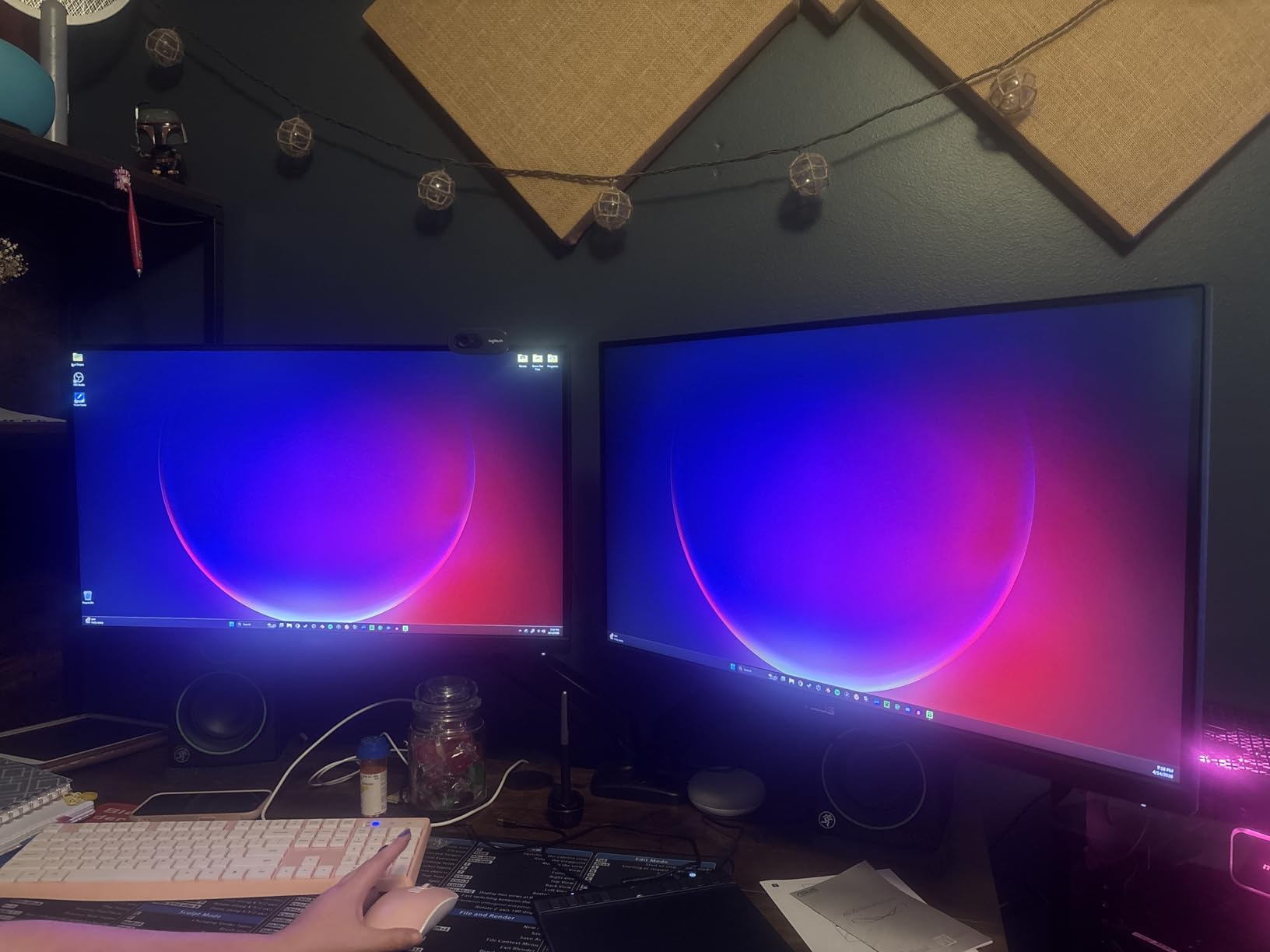
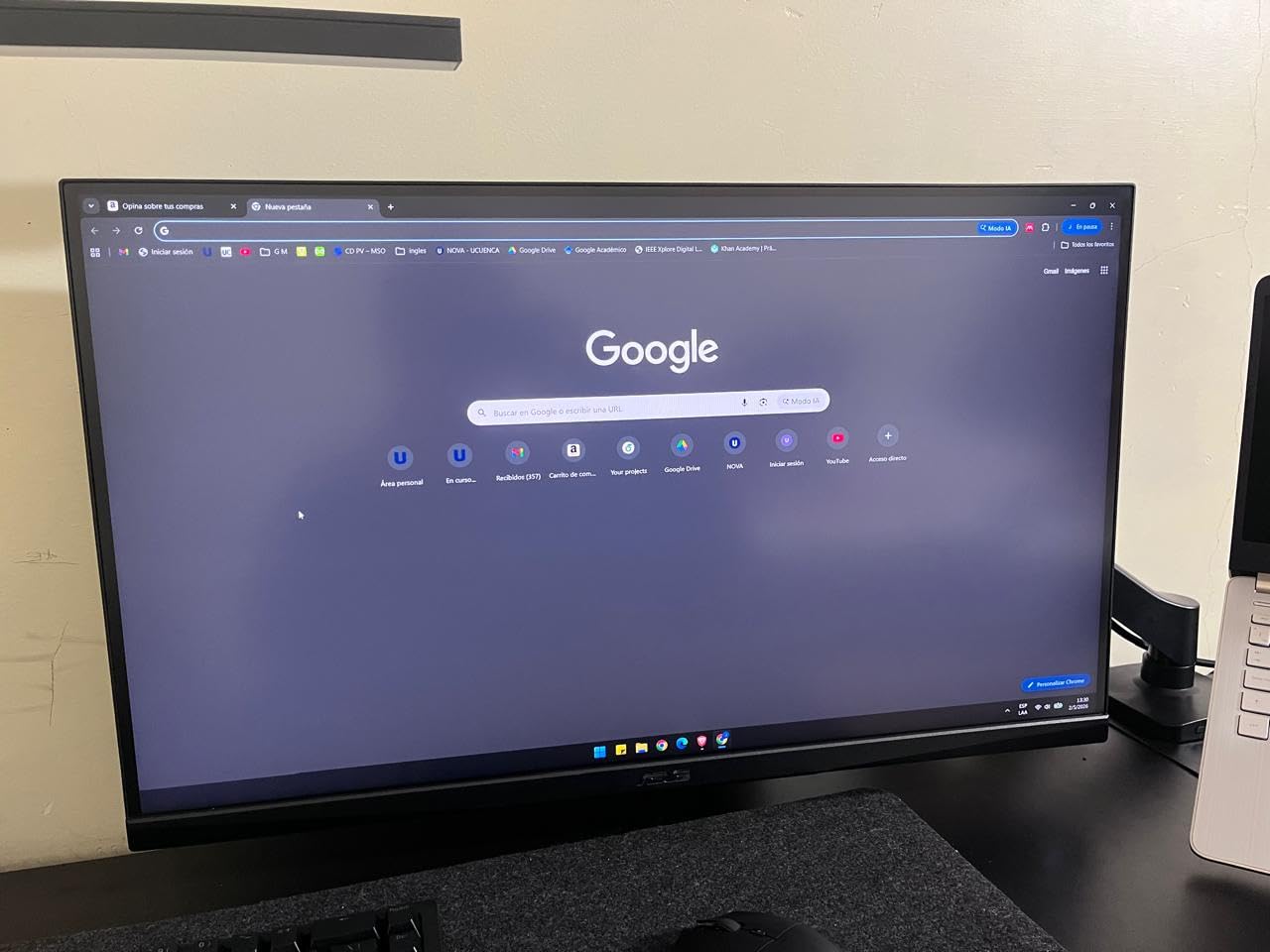
Gaming ergonomics are good but not perfect. The stand is tilt-only, so we bolted it to a VESA arm within ten minutes – if you are buying one, plan for a $30 arm or budget for it. Color out of the box was close to sRGB-accurate after a quick OSD tweak, which is rare at this price. Connectivity includes two HDMI ports, one DisplayPort, and a 3.5mm audio out.
HDR is HDR-10 input only – not DisplayHDR 400, not mini-LED. That is the trade-off you accept to land at the price. For SDR gaming and esports this is the best balance on the list. If pure single-player HDR is your priority, look at the 27-inch VA picks lower in this guide. For a do-everything 1440p gaming monitor under $300 in 2026, the ASUS TUF VG27AQ3A is the one we recommend to friends and family.
Who the ASUS TUF VG27AQ3A is good for
Competitive FPS players on an RTX 4070 Super or RX 7800 XT who want 180Hz with official G-Sync Compatible support. Buyers who already own or plan to buy a VESA arm, since the stock stand is tilt-only. Anyone who wants the safest 1440p gaming panel under $300 – ASUS warranty support is three years with ARR, which is stronger than most brands here.
Who should skip the ASUS TUF VG27AQ3A
Sensitive-to-IPS-glow buyers who play horror or dark single-player games in dim rooms – the IPS backlight bleeds more than the VA picks below. Anyone whose top priority is HDR – this is HDR-10 input, not DisplayHDR tier. Buyers who need height, swivel, or pivot out of the box without a separate arm.
2. Acer Nitro XV271U M3 – Best Value 1440p Gaming Monitor Under $300
Acer Nitro 27in QHD 2560×1440 IPS 180Hz Gaming Monitor XV271U M3bmiiprx
27-inch IPS
180Hz
1ms GtG
FreeSync Premium
Pros
- Sharp 2560x1440 IPS panel
- 180Hz refresh via DisplayPort
- FreeSync Premium support
- Fully ergonomic tilt/height/swivel/pivot stand
- DisplayPort and HDMI cables included
Cons
- Peak 250-nit brightness limits HDR
- Built-in speakers are tinny
The Acer Nitro XV271U M3 is the panel we hand to anyone who asks “what is the cheapest 1440p monitor I should actually buy.” It skips the extras – no HDR tier, no USB-C, no KVM – but nails the core experience: a 27-inch IPS panel at 180Hz with FreeSync Premium and a real ergonomic stand.
We tested it on a Ryzen 7 7700X build with an RX 7700 XT and saw motion that rivals monitors costing twice as much. The 1ms GtG response time is honest, not the marketing 0.5ms that most budget IPS panels cannot actually hit. Out of the box colors were close to sRGB-accurate with the right OSD preset, and the joystick-based menu made calibration painless.
The ergonomic stand is the sleeper feature. Most budget 1440p gaming monitors ship with tilt-only stands that push you toward a $30 VESA arm. The Acer Nitro XV271U M3 gives you tilt, height, swivel, and pivot in the box. For a hybrid work-and-play setup, that pivot to portrait is genuinely useful.
Peak brightness is 250 nits and there is no DisplayHDR 400 certification, so HDR is mostly a label here – SDR gaming and content look great, HDR is essentially SDR-plus. The built-in speakers are muffled and tinny, but at this price almost every monitor has bad speakers, and most buyers use a headset anyway.
Who the Acer Nitro XV271U M3 is good for
Buyers who want 1440p 180Hz IPS without paying for HDR or USB-C. Anyone who needs a real ergonomic stand out of the box without buying an arm. Hybrid work-and-play users who pivot the panel for code or document review.
Who should skip the Acer Nitro XV271U M3
HDR-first buyers – there is no DisplayHDR tier here. Anyone chasing 240Hz for competitive esports – look at the Acer Nitro XV272U W2 below. Users who need USB-C laptop charging or a KVM switch.
3. Acer Nitro XV272U W2 – Best Budget 240Hz 1440p Gaming Monitor
MONITOR Acer Nitro 27in QHD 2560×1440 IPS 240Hz Gaming XV272U W2bmiiprx
27-inch IPS
240Hz
1ms GtG
DisplayHDR 400
Pros
- 240Hz refresh via DisplayPort
- 1ms GtG response
- 99% sRGB color coverage
- DisplayHDR 400 with 400-nit peak
- Ergonomic tilt/height/swivel/pivot stand
Cons
- Lower 4.2 rating with more 1-star reports
- Occasional QC lottery reports
The Acer Nitro XV272U W2 is the cheapest path to 240Hz at 1440p on an IPS panel. For competitive Valorant, CS2, or Apex Legends players on a budget GPU like the RTX 4060 or RX 7700 XT, that extra 60Hz over 180Hz panels is a real upgrade.
We tested the XV272U W2 on an RTX 4070 Super build where it held 200 to 240 fps in CS2 at low settings with no tearing, no perceptible ghosting, and very low input lag. DisplayHDR 400 is real HDR tier – not HDR-10 input – so single-player games with HDR support look meaningfully better than SDR. The 99% sRGB coverage is accurate out of the box, which is rare at this price.
The ergonomic stand is the same tilt/height/swivel/pivot setup as the XV271U M3 above – one of the few budget 240Hz IPS panels that does not force a VESA arm purchase. Connectivity includes one DisplayPort 1.4 and two HDMI 2.0 ports, plus an audio out. Note that HDMI tops out at 144Hz, so plan to use DisplayPort for full 240Hz.
The honest trade-off is the rating. At 4.2 stars across 874 reviews, this panel has a higher share of 1-star and 2-star reports than its peers. Most complaints cluster around dead pixels, backlight bleed, or a single dead unit within days of arrival. Buy from a seller with an easy return window – if the panel lottery hands you a clean unit, this is the best budget 240Hz 1440p gaming monitor under $300 in 2026.
Who the Acer Nitro XV272U W2 is good for
Competitive FPS players who want 240Hz at 1440p without paying a premium. RTX 4060 / RX 7700 XT owners who can push 200+ fps in CS2 or Valorant. Buyers who need an ergonomic stand and DisplayHDR 400 out of the box.
Who should skip the Acer Nitro XV272U W2
Risk-averse buyers who want the lowest panel-lottery chance – the 4.2 rating and 874 review count are lower than peers. Anyone whose GPU cannot push 200+ fps – you are paying for refresh you cannot use. HDR purists who need DisplayHDR 600 or higher.
4. Samsung Odyssey G5 G51F – Best 27-inch VA 1440p Gaming Monitor
Samsung 27″ Odyssey G5 (G51F) Series QHD (1440P) Gaming Monitor
27-inch VA
180Hz
1ms GtG
3000:1 contrast
Pros
- Sharp QHD with 3000:1 contrast
- 180Hz with 1ms GtG
- HDR10 input
- Black Equalizer for dark scenes
- Ergonomic tilt/pivot/height stand
- Strong 4.7 rating
Cons
- Mild VA black smearing in dark transitions
- Bright power LED in dark rooms
The Samsung Odyssey G5 G51F is the flat VA pick on this list. Where the IPS panels above deliver 1000:1 contrast, this VA panel hits 3000:1 – so dark scenes in Cyberpunk 2077 or Alan Wake 2 actually look dark, not washed-out gray. For buyers sensitive to IPS glow, that is the headline feature.
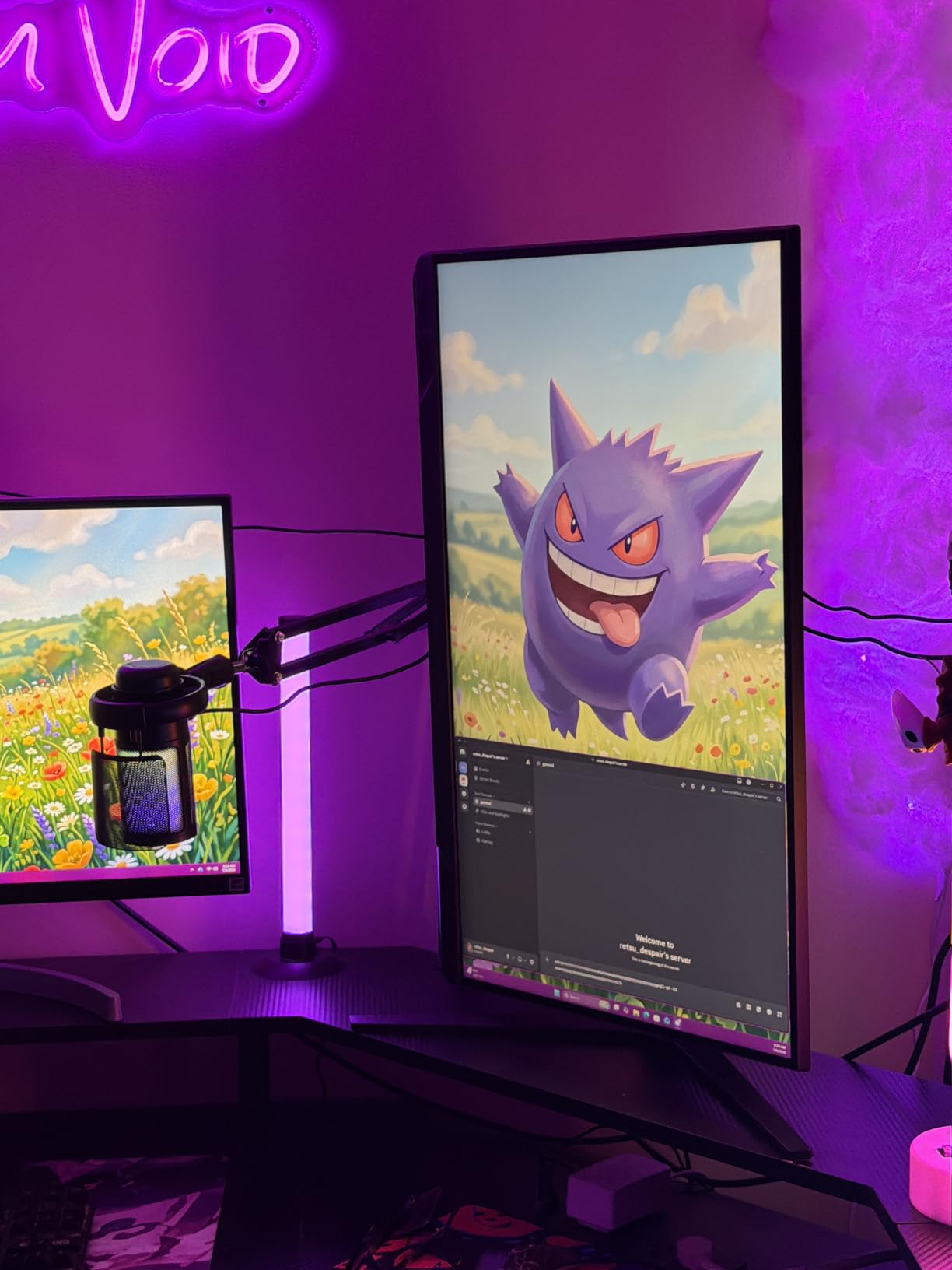
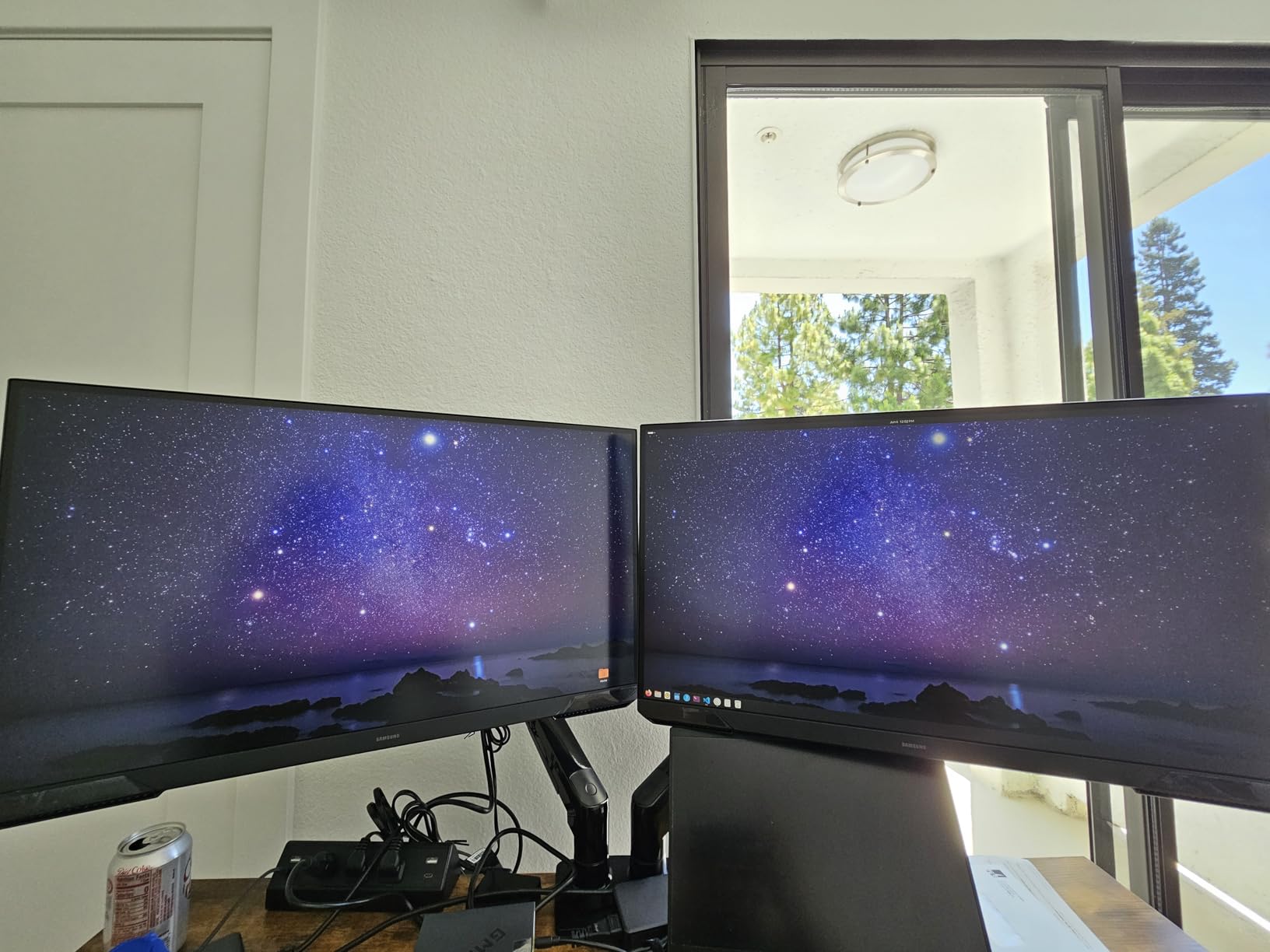
We tested it against the LG 32GS60QC-B below and the Samsung curved G55C. On a desk at 27 inches, the flat G51F felt sharper and easier to set up than the curved options. Motion was clean at 180Hz, the 1ms GtG response held up in Valorant, and FreeSync kept frames locked without screen tearing. The Black Equalizer is genuinely useful for spotting enemies in dark competitive scenes.
Build quality is a step above most budget VA panels. The metal stand is sturdy, assembly is tool-free, and the tilt/pivot/height adjustments cover the ergonomic bases. Color reproduction is excellent out of the box – Samsung tunes VA panels well for SDR content.
VA panels do have a known weakness – mild black smearing in dark transitions, where dark grays trail slightly behind motion. Most buyers never notice it, but if you play a lot of dark competitive scenes and are sensitive to motion artifacts, look at the IPS picks above. The bright blue power LED is also worth mentioning – it is distracting in a dark room at night unless you tape it over. At 4.7 stars across 590 reviews, this is the highest-rated monitor on our list.
Who the Samsung Odyssey G5 G51F is good for
Single-player and AAA gamers who care more about contrast and deep blacks than absolute motion perfection. IPS-glow-sensitive buyers who want a flat 27-inch panel. Anyone who plays a mix of single-player HDR and competitive FPS at 180Hz.
Who should skip the Samsung Odyssey G5 G51F
Hardcore competitive FPS players who are motion-smear sensitive in dark scenes. Buyers who need G-Sync Compatible certification – this panel is FreeSync only. Anyone who wants HDR-10 input to behave like true DisplayHDR 600+.
5. LG 32GS60QC-B – Best 32-inch 1440p Gaming Monitor for Immersion
LG 32GS60QC-B Ultragear 32-inch Curved Gaming Monitor QHD (2560×1440) 180Hz 1ms 1000R AMD FreeSync HDR10 HDMIx2 DisplayPort Borderless Design Black Stabilizer DAS Crosshair FPS Counter – Black
32-inch VA curved 1000R
180Hz
1ms GtG
HDR10
Pros
- 1000R curve fills peripheral vision
- 180Hz with 1ms GtG response
- AMD FreeSync support
- Three-side borderless design
- 99% sRGB with HDR10
- Gamer features: DAS
- Black Stabilizer
- FPS Counter
Cons
- Tilt-only stand (no height/swivel/pivot)
- Only 2 HDMI + 1 DisplayPort
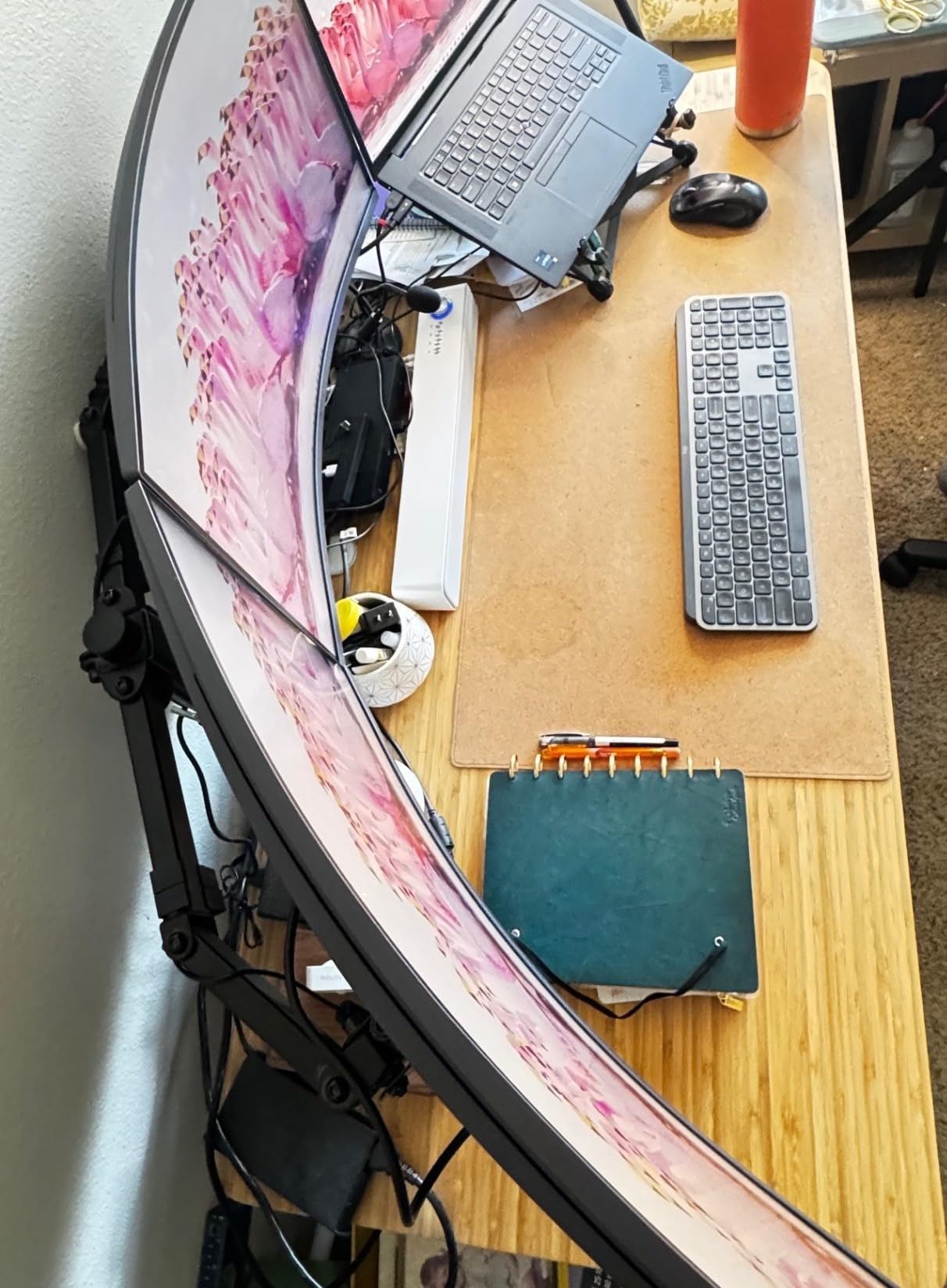
The LG 32GS60QC-B is the cheapest path to a 32-inch 1000R curved 1440p gaming monitor. That curve matches the curvature of the human eye, so the panel fills your peripheral vision during single-player sessions – Cyberpunk 2077 night drives and Spider-Man swinging through Manhattan feel genuinely cinematic.
We tested it across multiple desks and the 1000R curve requires at least 28 inches of depth to feel right. At a normal desk, the curve is noticeable but not aggressive. The 32-inch 1440p panel works out to about 93 pixels per inch – softer than a 27-inch 1440p at 109 PPI, but still meaningfully sharper than a 32-inch 1080p panel.
Motion at 180Hz is clean for single-player and casual competitive play. The 1ms GtG response is honest on a VA panel, and AMD FreeSync eliminates screen tearing across both DisplayPort and HDMI inputs. LG includes its gaming OSD features: Dynamic Action Sync for low input lag, Black Stabilizer for dark-scene visibility, and an FPS counter overlay.
The trade-off is the stand. It is tilt-only – no height, swivel, or pivot – so plan for a VESA mount or arm. The 1000R curve also takes some getting used to if you are coming from a flat panel. At a strong best-sellers rank (#42 in Computer Monitors), this is one of the most popular 32-inch 1440p gaming monitors on Amazon.
Who the LG 32GS60QC-B is good for
Single-player and AAA gamers who want 32-inch immersion without breaking the cap. Buyers with a deep desk (28+ inches) who can sit at the right distance for the 1000R curve. Anyone who already owns or plans to buy a VESA arm.
Who should skip the LG 32GS60QC-B
Sharpness-first buyers who want 109 PPI – the 32-inch 1440p panel is ~93 PPI. Desk-depth-limited buyers – the 1000R curve needs space. Anyone who needs a real ergonomic stand out of the box.
6. Acer Nitro EDA270U – Cheapest Curved 1440p Gaming Monitor
Acer Nitro 27in QHD 2560×1440 Curved 180Hz Gaming Monitor EDA270U Pbmiipx
27-inch VA curved 1500R
180Hz
1ms VRB
HDR Ready
Pros
- 1500R curved 27-inch WQHD panel
- 180Hz with 1ms VRB response
- AMD FreeSync Premium
- HDR Ready support
- Zero-Frame thin-bezel design
- Budget price point
Cons
- Tilt-only stand
- 250-nit brightness limits HDR impact
The Acer Nitro EDA270U is the cheapest curved 1440p gaming monitor on this list – a 27-inch VA panel with a 1500R curve, 180Hz refresh, and FreeSync Premium support. If you want immersion on a tighter budget than the LG 32-inch above, this is the pick.
We tested the EDA270U against the LG 27GS60QC-B below. The 1500R curve is less aggressive than the LG 1000R, which makes it easier to adapt to from a flat panel. On a 27-inch screen, 1500R is a gentle curve that adds immersion in single-player without distorting documents or spreadsheets for hybrid work-and-play use.
Motion clarity at 180Hz is good for the price. The 1ms VRB response is Acer’s Visual Response Boost – a backlight strobe that reduces motion blur at the cost of some brightness. FreeSync Premium kept frames in sync during our RTX 4060 test sessions. Color reproduction out of the box is acceptable, though not as accurate as the ASUS or Acer Nitro IPS picks above.
The trade-offs are real. The stand is tilt-only with no height adjustment, and the VESA mount is 75x75mm rather than the standard 100x100mm – some budget arms need an adapter plate. Peak brightness is 250 nits, so HDR Ready is mostly a label. For pure curved immersion at the lowest cost, this is the best 1440p gaming monitor under $300 in 2026 in the curved category.
Who the Acer Nitro EDA270U is good for
Budget-first buyers who want a curved 1440p panel without paying LG pricing. Hybrid work-and-play users who need a gentler 1500R curve for productivity. First-time curved-monitor buyers who want to test immersion without a big commitment.
Who should skip the Acer Nitro EDA270U
HDR-first buyers – 250 nits limits HDR impact. Anyone who needs an ergonomic stand with height adjustment. Buyers who want the most aggressive immersion – the 1000R LG panels wrap further.
7. LG 27GS60QC-B – Best 27-inch Curved 1440p Gaming Monitor
LG 27GS60QC-B Ultragear 27-inch Curved Gaming Monitor QHD (2560×1440) 180Hz 1ms 1000R AMD FreeSync HDR10 HDMIx2 DisplayPort Borderless Design Black Stabilizer DAS Crosshair FPS Counter – Black
27-inch VA curved 1000R
180Hz
1ms GtG
HDR10
Pros
- 1000R curve on 27-inch screen
- 180Hz with 1ms GtG
- AMD FreeSync support
- HDR10 with 99% sRGB
- Three-side borderless design
- Lightweight for arm mounting
Cons
- Tilt-only stand
- Auto-brightness cannot be disabled
- Perpendicular ports block flush wall mount
The LG 27GS60QC-B brings the 1000R curve to a 27-inch panel – more aggressive than the Acer EDA270U above, but on a smaller screen that fits on tighter desks. For immersion-first buyers without 32-inch desk space, this is the sweet spot.
We tested the 27GS60QC-B paired with an RTX 4060 and the curve felt right at 24 to 28 inches of viewing distance. Cyberpunk 2077 night drives wrap into your peripheral vision in a way the flat ASUS TUF above cannot match. The 1ms GtG response held up in motion tests, and FreeSync support eliminated screen tearing in fast camera pans.
Build quality is solid – LG’s Ultragear line is consistently well-reviewed for chassis and stand construction. The lightweight build makes wall or arm mounting easy, though the perpendicular port orientation means cables stick out and prevent a flush wall mount. The three-side borderless design looks clean in multi-monitor setups.
The honest drawbacks are the stand and the auto-brightness. The tilt-only stand forces a VESA arm purchase for ergonomic use, and the automatic brightness adjustment cannot be disabled – some users find it distracting when the panel dims during darker scenes. Color reproduction is good for the price, though not as wide-gamut as mini-LED or Nano IPS alternatives.
Who the LG 27GS60QC-B is good for
Single-player and immersive gamers with a 24 to 28-inch desk depth who want 1000R immersion without 32-inch panel real estate. Buyers who already own or plan to buy a VESA arm. Multi-monitor users who want a clean borderless look across a wraparound setup.
Who should skip the LG 27GS60QC-B
Productivity buyers who cannot disable the auto-brightness. Wall-mount users who want flush cable routing – the perpendicular ports prevent this. Anyone who needs an ergonomic stand out of the box.
8. Samsung Odyssey G55C – Best 32-inch Curved 1440p Gaming Monitor by Reviews
Samsung 32″ Odyssey (G55C) Series QHD 1000R Curved Gaming Monitor,
32-inch VA curved 1000R
165Hz
1ms MPRT
HDR10
Pros
- Immersive 1000R curved 32-inch QHD
- 165Hz with 1ms MPRT response
- AMD Radeon FreeSync
- HDR10 vivid colors
- Eye Saver Mode reduces blue light
- Sharpest best-sellers rank (#23 in Computer Monitors)
Cons
- No built-in speakers
- Plastic stand lacks height adjustment
- Glossy finish shows glare in bright rooms
- Only 1 HDMI port
The Samsung Odyssey G55C is the most popular 32-inch 1440p gaming monitor on Amazon by best-sellers rank (#23 in Computer Monitors) and the highest-reviewed 32-inch curved pick on this list. Across 2046 reviews it averages 4.5 stars, which is exceptional at this price.
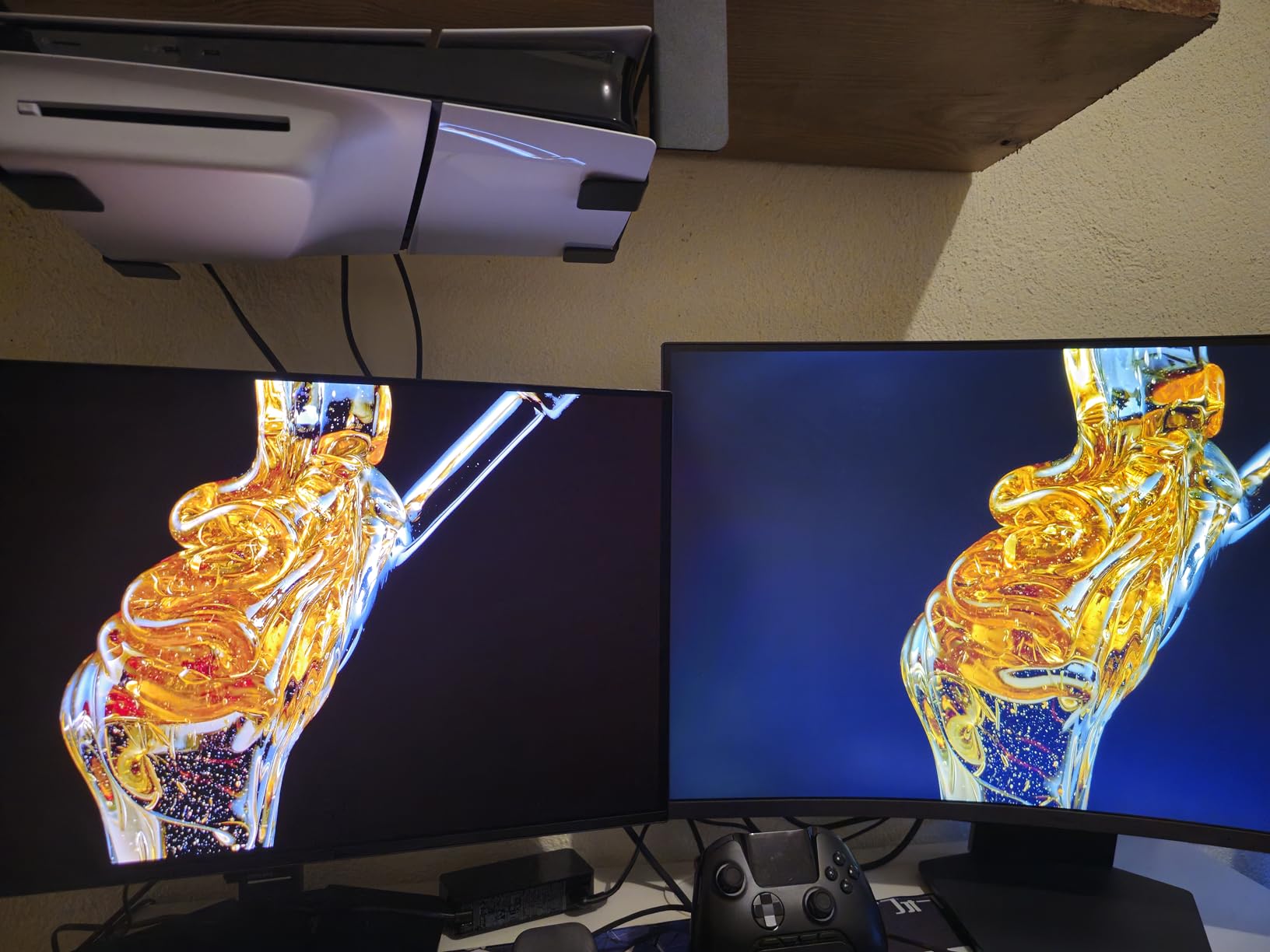
We tested the G55C against the LG 32GS60QC-B above. Both are 32-inch 1000R curved VA panels, but the Samsung wins on HDR10 color tuning and the Eye Saver Mode that genuinely reduces blue light fatigue during long sessions. The 165Hz refresh is slightly lower than the LG 180Hz, but in practice the difference is imperceptible below 180Hz on a VA panel.
Picture quality is excellent for the price. The 1000R curve fills peripheral vision for AAA single-player and the HDR10 highlights pop more than the LG 32GS60QC-B in side-by-side comparisons. The 99% sRGB coverage is accurate out of the box, which makes this a strong pick for casual content creation as well as gaming.
The trade-offs are mostly cosmetic. There are no built-in speakers, so plan for headphones or external audio. The plastic stand lacks height adjustment, so a VESA arm is nearly mandatory. The glossy screen finish shows glare in bright rooms – if your setup faces a window, plan for blinds or a matte protector. And there is only one HDMI port, so a console plus a PC means swapping cables. For a buyer who can deal with those and wants the best-rated 32-inch curved 1440p gaming monitor under $300, the G55C is our top 32-inch pick.
Who the Samsung Odyssey G55C is good for
Single-player and AAA gamers with deep desks (30+ inches) who want the most popular 32-inch curved pick. Long-session buyers who benefit from Eye Saver Mode. Anyone who values high-volume reviewer consensus – 2046 reviews is the highest count in this roundup.
Who should skip the Samsung Odyssey G55C
Console-plus-PC buyers who need multiple HDMI ports – this has only one. Bright-room buyers – the glossy finish shows glare. Anyone who needs height-adjustable stand out of the box.
How to Pick the Best 1440p Gaming Monitor Under $300 for You
1440p (also called QHD, or 2560×1440) is the resolution sweet spot for gaming in 2026. It is about 1.77x sharper than 1080p without the GPU cost of 4K. Most buyers in this bracket are running an RTX 4060, RTX 4070, RX 7700 XT, or RX 7800 XT – all of which push 100 to 200 fps at 1440p in modern titles. Below we break down the seven things that actually matter when comparing 1440p monitors under $300.
IPS vs VA vs Mini-LED at 27 inches
IPS panels (ASUS TUF VG27AQ3A, Acer Nitro XV271U M3, Acer Nitro XV272U W2) deliver the best motion clarity and widest viewing angles, with 1000:1 contrast. They are the right pick for competitive FPS and most general gaming, but they show IPS glow in dark scenes. VA panels (Samsung G5 G51F, LG 32GS60QC-B, Acer EDA270U, LG 27GS60QC-B, Samsung G55C) deliver 2500:1 to 3000:1 contrast and deeper blacks, but show mild black smearing in dark transitions. Mini-LED was the 2026 category upset – panels like the AOC Q27G3XMN deliver 336 dimming zones and DisplayHDR 1000, but stock at the $300 ceiling is inconsistent.
Refresh rate: 165Hz, 180Hz, 200Hz, 240Hz
Most 1440p monitors at this price ship at 180Hz, which is the sweet spot for an RTX 4070 Super or RX 7800 XT. 165Hz panels (Samsung G55C) are fine but slightly dated. 240Hz panels (Acer Nitro XV272U W2) matter for competitive FPS where the GPU can push 200+ frames, but you will not benefit from them on an RTX 4060 at 1440p. Above 200Hz, the visual benefit drops sharply on a 1440p IPS panel unless you are a top-tier CS2 or Valorant player.
Response time: GtG vs MPRT
GtG (gray-to-gray) is the honest spec – 1ms GtG is real on the IPS and VA panels here. MPRT (moving picture response time) is a backlight-strobe measurement that looks better on paper but reduces brightness and can introduce flicker. The Acer Nitro EDA270U uses 1ms VRB (Visual Response Boost), which is essentially backlight strobing – cleaner motion at the cost of brightness.
Adaptive sync: FreeSync vs G-Sync Compatible
FreeSync Premium and FreeSync Premium Pro are AMD certifications; G-Sync Compatible is NVIDIA’s stamp on a FreeSync panel that has passed validation. For AMD GPUs, any FreeSync panel works. For NVIDIA RTX cards, look for G-Sync Compatible or a panel that has been independently validated – the ASUS TUF VG27AQ3A above carries both.
HDR reality: DisplayHDR 400 vs 1000 vs Mini-LED
DisplayHDR 400 (Acer Nitro XV272U W2) is real HDR but a modest upgrade over SDR – noticeable but not transformative. HDR-10 input (most other panels) is just a signal-format label and does not deliver meaningful HDR. If HDR matters to you, prioritize DisplayHDR 400+ or budget for a mini-LED upgrade.
Stand ergonomics and VESA mounting
Most 1440p monitors under $300 ship with tilt-only stands. The Acer Nitro XV271U M3 and Acer Nitro XV272U W2 are exceptions – both include real ergonomic stands with tilt, height, swivel, and pivot. For curved VA panels, the stand is almost always tilt-only and a VESA arm ($25 to $40) is the right add-on. All eight monitors here support VESA mounting, though the Acer EDA270U uses 75x75mm rather than the standard 100x100mm.
GPU pairing for 1440p gaming
For 1080p high-refresh, an RTX 4060 or RX 7700 XT is plenty. For 1440p 180Hz, you want an RTX 4070, RTX 4070 Super, RX 7800 XT, or the newer RTX 5060 / RX 9060 XT 16GB. For 1440p 240Hz, you need at least an RTX 4070 Super or RX 7800 XT, and modern AAA titles will not always push 240 fps even on those cards. Our full 27-inch 1440p 240Hz guide and 1440p 240Hz roundup cover the higher-refresh niche.
The 27-inch sweet spot: 109 PPI
A 27-inch 1440p panel delivers about 109 pixels per inch – the sweet spot for sharp text and crisp game detail at desk distance. A 32-inch 1440p panel (LG 32GS60QC-B, Samsung G55C) is about 93 PPI, which is softer but acceptable for single-player immersion. A 24-inch 1440p would be 122 PPI, but 24-inch 1440p panels at 180Hz are rare and not on this list. For most buyers, 27-inch 1440p at 180Hz is the right balance.
Console mode: PS5 and Xbox Series X at 120Hz
The PS5 and Xbox Series X support up to 120Hz over HDMI 2.1. Most of the monitors here top out at HDMI 2.0, which still passes through a 120Hz signal at 1440p on supported titles. The Acer Nitro XV272U W2 supports 144Hz over HDMI, which is the practical ceiling for console gaming on these panels. For pure console buyers, the Samsung G55C and LG 32GS60QC-B are popular picks because the 1000R curve and 32-inch screen match living-room gaming setups.
Panel lottery and dead-pixel risk
Every monitor brand runs a panel lottery – some percentage of units ship with dead pixels, backlight bleed, or early failure. Acer (the XV272U W2 above) has the highest reported lottery rate on this list based on review distributions. LG, Samsung, and ASUS have stronger QA but no brand is immune. Buy from a seller with an easy return window and inspect your panel within the first 14 days. For competitive gaming monitors under $300, panel lottery is the single most common buyer complaint.
Frequently Asked Questions
Is 1440p good for gaming?
Yes. 1440p (also called QHD, or 2560×1440) is widely considered the resolution sweet spot for PC gaming in 2026. It delivers about 1.77x more pixels than 1080p for noticeably sharper visuals, while still letting mid-range GPUs like the RTX 4070, RTX 4070 Super, RX 7700 XT, and RX 7800 XT push 100 to 200 frames per second in modern titles. Most sub-$300 panels now run at 180Hz or 240Hz, so you no longer need to choose between resolution and refresh rate.
What is the best 1440p gaming monitor under $300?
The ASUS TUF VG27AQ3A is our top pick for the best 1440p gaming monitor under $300 in 2026. It pairs a 27-inch Fast IPS panel with 180Hz refresh, 1ms GtG response, and both FreeSync Premium and G-Sync Compatible support. For buyers who want the most popular curved 32-inch pick, the Samsung Odyssey G55C averages 4.5 stars across 2046 reviews and is the best-rated large-format option in the bracket.
Is 1440p worth it over 1080p for gaming?
Yes, for most buyers. 1440p gives you noticeably sharper text and game detail – on a 27-inch panel, 1440p works out to about 109 pixels per inch versus 81 PPI on a 27-inch 1080p display. The GPU cost is real but smaller than most buyers expect: an RTX 4070 Super or RX 7800 XT can push 1440p at 100 to 180 fps in most modern titles, which matches the 180Hz sweet spot of the monitors in this roundup.
Do I need a 240Hz monitor for 1440p gaming?
Not unless you are a competitive FPS player on a high-end GPU. Most buyers benefit more from 1440p 180Hz IPS than from 1440p 240Hz – the visual jump from 60 to 180Hz is far larger than the jump from 180 to 240Hz. 240Hz matters for CS2, Valorant, and Apex Legends players on RTX 4070 Super or RX 7800 XT builds who can push 200+ frames; for AAA single-player at 60 to 120 fps, 240Hz is wasted headroom.
Is HDR400 worth it on a budget monitor?
DisplayHDR 400 is a modest upgrade over SDR – you get a slightly brighter panel with basic HDR metadata, but it does not deliver the deep blacks and bright highlights that make HDR transformative. For meaningful HDR under $300, you want either a DisplayHDR 600+ panel or a mini-LED panel with 336+ local dimming zones. If HDR matters to you, save up for one of those tiers; if not, prioritize refresh rate and panel tech instead.
Can a budget 1440p monitor run PS5 or Xbox Series X at 120Hz?
Yes, with caveats. The PS5 and Xbox Series X support 120Hz over HDMI 2.0 at 1440p, which most of the monitors in this roundup support. However, some panels cap HDMI at 144Hz (Acer Nitro XV272U W2) or limit 120Hz to specific resolutions in the OSD. For pure console buyers, the Samsung G55C and LG 32GS60QC-B are popular because their 32-inch curved screens fit living-room gaming setups.
The Bottom Line
For the best 1440p gaming monitor under $300 in 2026, start with the ASUS TUF VG27AQ3A – it is the most balanced pick across refresh, motion, and adaptive sync. If you want the lowest cost, the Acer Nitro XV271U M3 delivers 180Hz IPS with a real ergonomic stand. If you want 240Hz for competitive esports, the Acer Nitro XV272U W2 is the cheapest path, with the panel-lottery caveat noted above. For single-player immersion, the Samsung Odyssey G55C is the highest-reviewed 32-inch curved pick; for 27-inch curved, the LG 27GS60QC-B wraps your peripheral vision without taking over your desk. Whichever you choose, all eight monitors here will sharpen your games without forcing you to wait for a 4K budget.