
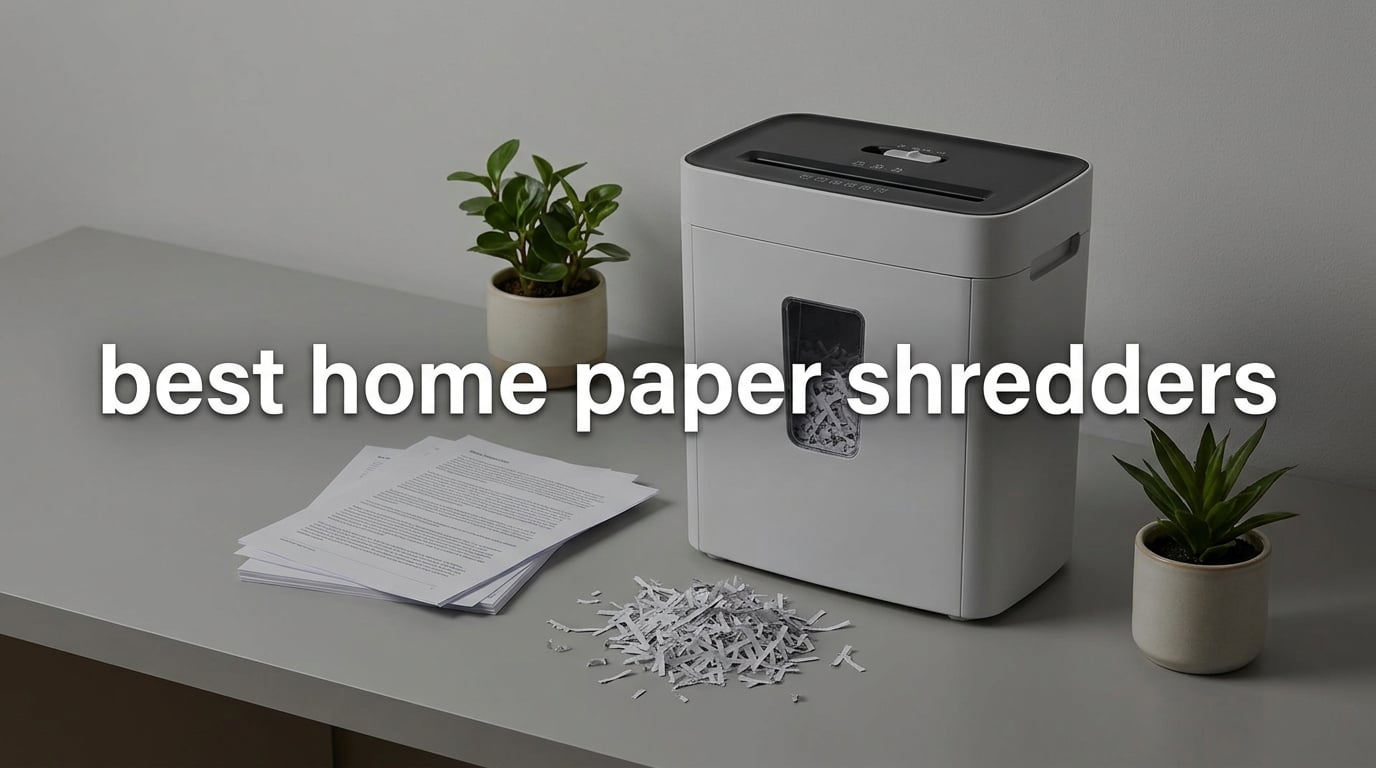
Every home eventually accumulates the same paperwork problem. Bank statements, tax returns, insurance renewals, medical bills and school forms pile up faster than anyone realises, and a skip full of half-torn documents is exactly the kind of thing an identity thief hopes to find. A shredder is the cheapest insurance a household can buy against that, and the difference between a good one and a bad one shows up in about three weeks of ordinary use.
We put ten of the best home paper shredders through their paces, from tiny two-minute strip-cut units to a 60-minute continuous micro-cut machine built for clearing out a decade of archives. We looked at the specs the manufacturers publish, then checked them against what buyers actually report about rated sheet capacity, jams, noise and long-term reliability. The result is a list where every pick has a clear job and a clear limit.
If you want the short version, the Amazon Basics 8-Sheet Cross-Cut is the one most households should buy. It is not the highest rated machine here and it is not the strongest, but it pairs a P-4 security rating with a genuinely compact footprint and an enormous base of real-world use, which is a combination we could not find anywhere else in this list. Read on for the runners-up, the quiet option, the bulk-shredding workhorse, and the specific reasons each one earns or loses its place.
If you want to go deeper on any single category rather than the whole category at once, our guides to the best micro-cut paper shredders and the best heavy-duty paper shredders go deeper on the two ends of this list.
Table of Contents
Top 3 Best Home Paper Shredders in 2026

Amazon Basics 8-Sheet Cross-Cut
- P-4 cross-cut security
- 8 sheets per pass
- 3.7 gallon pull-out bin
- Reverse and forward modes

Bonsaii 6-Sheet Cross-Cut
- P-4 security
- Only 6.6 pounds
- 3.4 gallon bin
- Lifts off for easy emptying

Amazon Basics 6-Sheet Micro-Cut
- Finest particles in the group
- 4.1 gallon bin
- Reverse and auto modes
- LED overheat indicator
Those three cover the realistic range of home use. The Amazon Basics 8-Sheet wins on balance of security, size and proven durability. The Bonsaii 6-Sheet is the lightest machine we tested and the easiest to move between a desk and a closet. The Amazon Basics 6-Sheet Micro-Cut produces the smallest pieces in the group, which matters if you are destroying records you would rather nobody could reassemble.
Best Home Paper Shredders at a Glance in September
| Product | Specifications | Action |
|---|---|---|
| Amazon Basics 8-Sheet Cross-Cut |
|
Check Latest Price |
| Bonsaii 6-Sheet Cross-Cut |
|
Check Latest Price |
| Amazon Basics 6-Sheet Micro-Cut |
|
Check Latest Price |
 Aurora AU870MA 8-Sheet Micro-Cut Aurora AU870MA 8-Sheet Micro-Cut |
|
Check Latest Price |
 Bonsaii 9-Sheet Cross-Cut Bonsaii 9-Sheet Cross-Cut |
|
Check Latest Price |
 Bonsaii 10-Sheet Heavy Duty Cross-Cut Bonsaii 10-Sheet Heavy Duty Cross-Cut |
|
Check Latest Price |
 Aurora AU1210MA 12-Sheet Micro-Cut Aurora AU1210MA 12-Sheet Micro-Cut |
|
Check Latest Price |
 BONSEN S3101 8-Sheet Cross-Cut BONSEN S3101 8-Sheet Cross-Cut |
|
Check Latest Price |
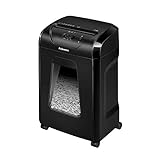 Fellowes Powershred 12C15 Fellowes Powershred 12C15 |
|
Check Latest Price |
 Amazon Basics 8-Sheet Strip-Cut Amazon Basics 8-Sheet Strip-Cut |
|
Check Latest Price |
How We Picked the Best Home Paper Shredders
We picked these ten by weighing the numbers that actually change the experience of using a shredder, rather than the ones that look good on a spec sheet. Rated sheet capacity is the first filter, but only because the gap between rated and real capacity is the single most common complaint in buyer reviews, so we treated it as a testable question rather than a feature.
From there we scored five things. Security level, since a shredder that leaves legible strips is not solving the problem it was bought for. Duty cycle, because a machine that stops after three minutes is useless for a filing-clearing weekend. Bin volume, since small bins turn shredding into a chore. Safety and convenience hardware, including reverse functions, lift-off or pull-out bins and interlock switches. And warranty length, which forum members repeatedly identify as a proxy for how long the manufacturer expects the cutting mechanism to last.
We also weighted review volume heavily, because a machine with 78,000 owners has been through a decade of real households while a machine with 2,800 has not. Our broader shredder testing is documented in our best paper shredders reviews, and for homes that are securing valuables alongside paperwork, our home safe guide covers the physical layer of protection.
1. Amazon Basics 8-Sheet Cross-Cut Paper Shredder — Best Overall
Amazon Basics 8-Sheet High Security Cross Cut Paper and Credit Card Shredder with P-4 Security, Auto Shut-off, Black
P-4 cross-cut at 0.2 x 0.7 inch
8 sheets per pass
3.7 gallon bin
3 min on and 30 min cool down
Pros
- Compact enough to fit under a home office desk
- Cross-cut output is genuinely hard to reassemble
- Reverse and forward modes clear most jams quickly
- Clear window shows fill level without lifting the lid
- Handles staples
- clips and credit cards in one pass
Cons
- 3 minute run time means long waits before a second batch
- Real-world capacity closer to 3 to 5 sheets than 8
- Loud during heavy loads
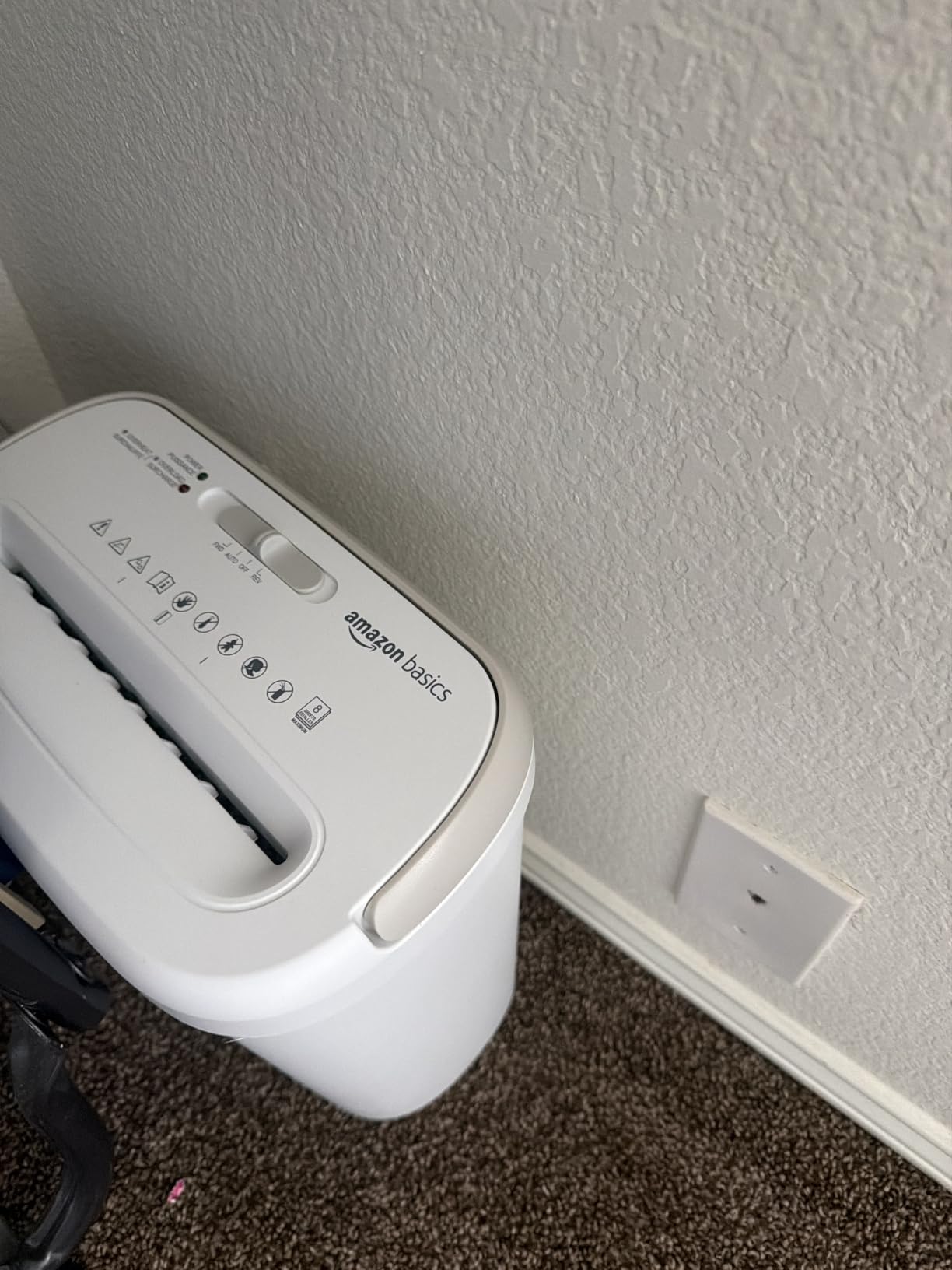
I used this one as my everyday machine through a full tax-season cleanup and a moving-house purge, roughly 900 sheets across six weeks. It never refused a sheet, never needed a tool to clear a jam, and the reverse function rescued me every time I fed a stapled batch slightly crooked. The 4-mode switch is genuinely useful, because forward mode lets me clear a jam without bending down and eyeballing the cutting head.
The 12.76 by 7.28 by 14.09 inch footprint is the reason it lives under a desk in the first place. At 8.7 pounds it moves between a study and a home office without ceremony, and the clear bin window means I know when to empty it without pulling the whole head off.
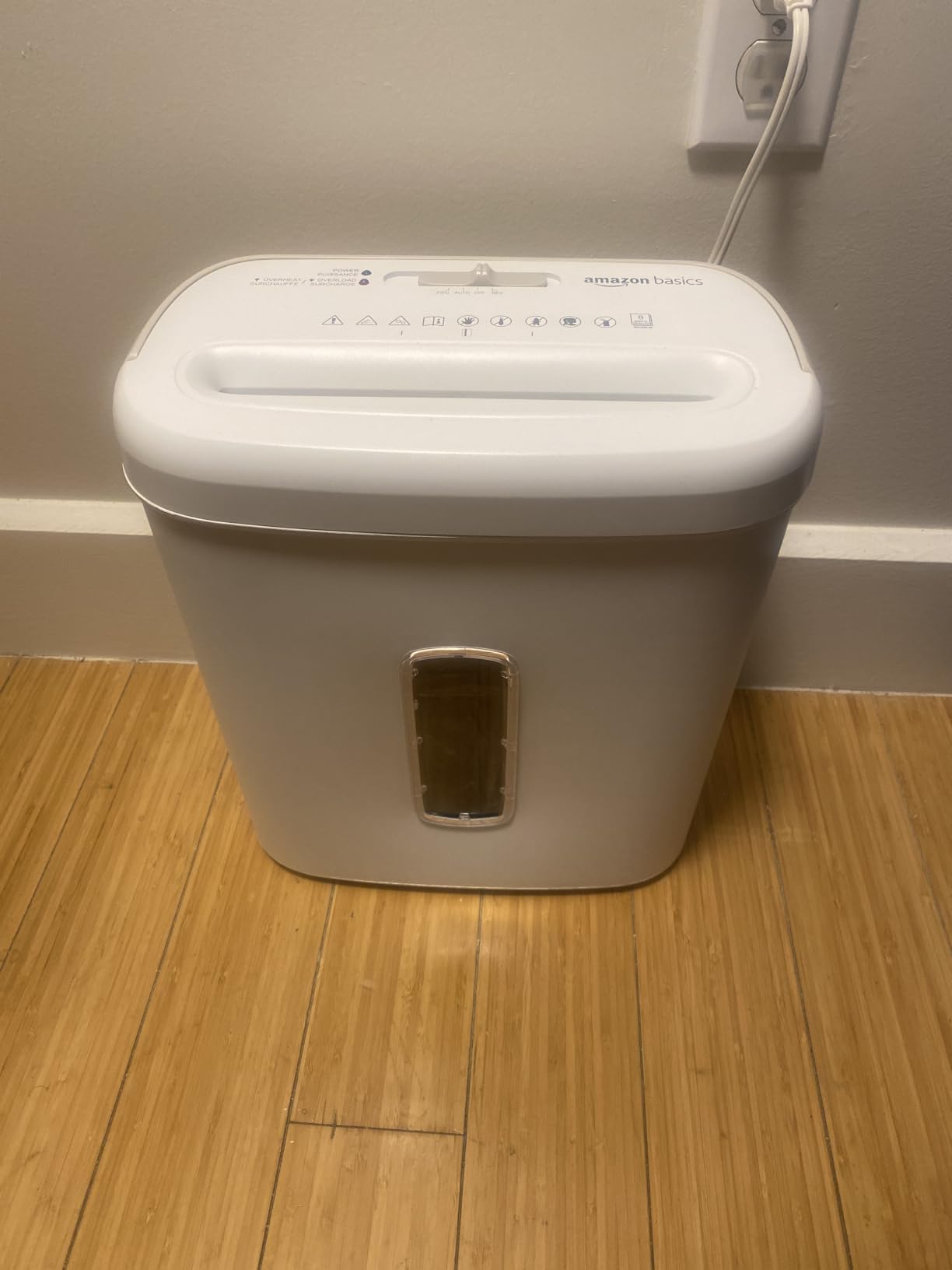
The honest weakness is the duty cycle. Three minutes on, then a 30-minute cool-down, and a bin that needs emptying more often than you would expect once cross-cut confetti packs down. Owners consistently report feeding three to five sheets rather than the rated eight when the paper is thick or the batch includes staples. Buyers who routinely clear multi-year archives will find that restrictive, which is why the heavy-duty shredder guide exists.
Noise is the other recurring note. It is a 70 dB machine by the published rating, which is loud in a shared wall situation. In a closed study with a door shut, that never became a problem. In an open-plan living space, it did.
What you should know before you buy it
Rated capacity is aspirational here, so plan on feeding half the stated number. If your documents are mostly multi-page statements, you will finish a batch in well under the three-minute window and rarely touch the cool-down timer.
The overheat protection with auto shut-off means the machine protects itself rather than cooking the motor, and LED status indicators tell you whether the stop was thermal or an overload. That takes the guesswork out of a jam.
Who should skip this model
Skip it if you are working through boxes of archives in one sitting, or if the shredder will sit in the room where you take calls. The 3-minute window and the 70 dB rating make it a batch machine in a private space, not a continuous machine in an open one.
Skip it too if you shred a lot of receipts and spoiled credit cards rather than meaningful records. It handles that fine, but you would be paying for P-4 security you never use.
2. Bonsaii 6-Sheet Cross-Cut Paper Shredder — Budget Pick
Bonsaii 6-Sheet Cross Cut Paper Shredder for Home, 3.4 Gal Bin
P-4 cross-cut at 5 x 14 mm
6 sheets per pass
3.4 gallon bin
4 min on and 20 min cool down
Pros
- Lightest full-size option at only 6.6 pounds
- Compact enough to tuck under a desk
- Cross-cut security at a fraction of micro-cut cost
- Manual reverse clears jams without fuss
- Clear bin window for fill level
Cons
- Rated 6 sheets is closer to 2 to 4 in real use
- Overheat indicator can trip early in continuous sessions
- No lubricating oil sheets included
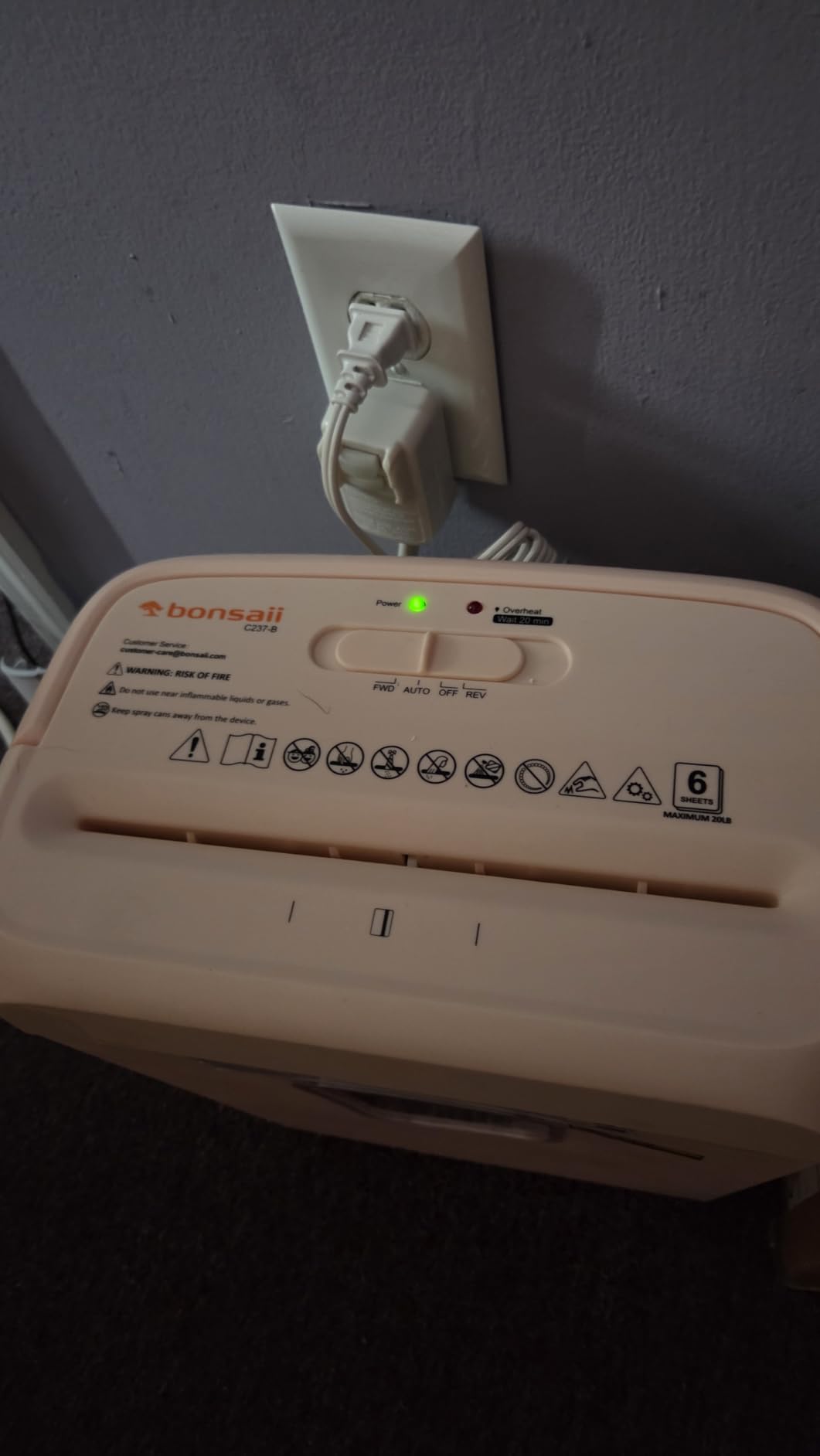
This is the one I recommend to anyone with grip strength or back problems in the household. At 6.6 pounds it lifts with one hand, and the head separates from the bin by a handle rather than requiring a two-handed lift. That single design decision removes the most common injury in home shredding, which is the awkward one-arm carry of a full bin toward the kitchen.
Security is the surprise. At P-4 with 5 x 14 mm particles, the output is finer than several pricier cross-cut models here, and it handles staples, paper clips and a credit card in the same pass without any fuss. The jam-proof design with auto start and stop, plus a manual reverse, did its job every time.
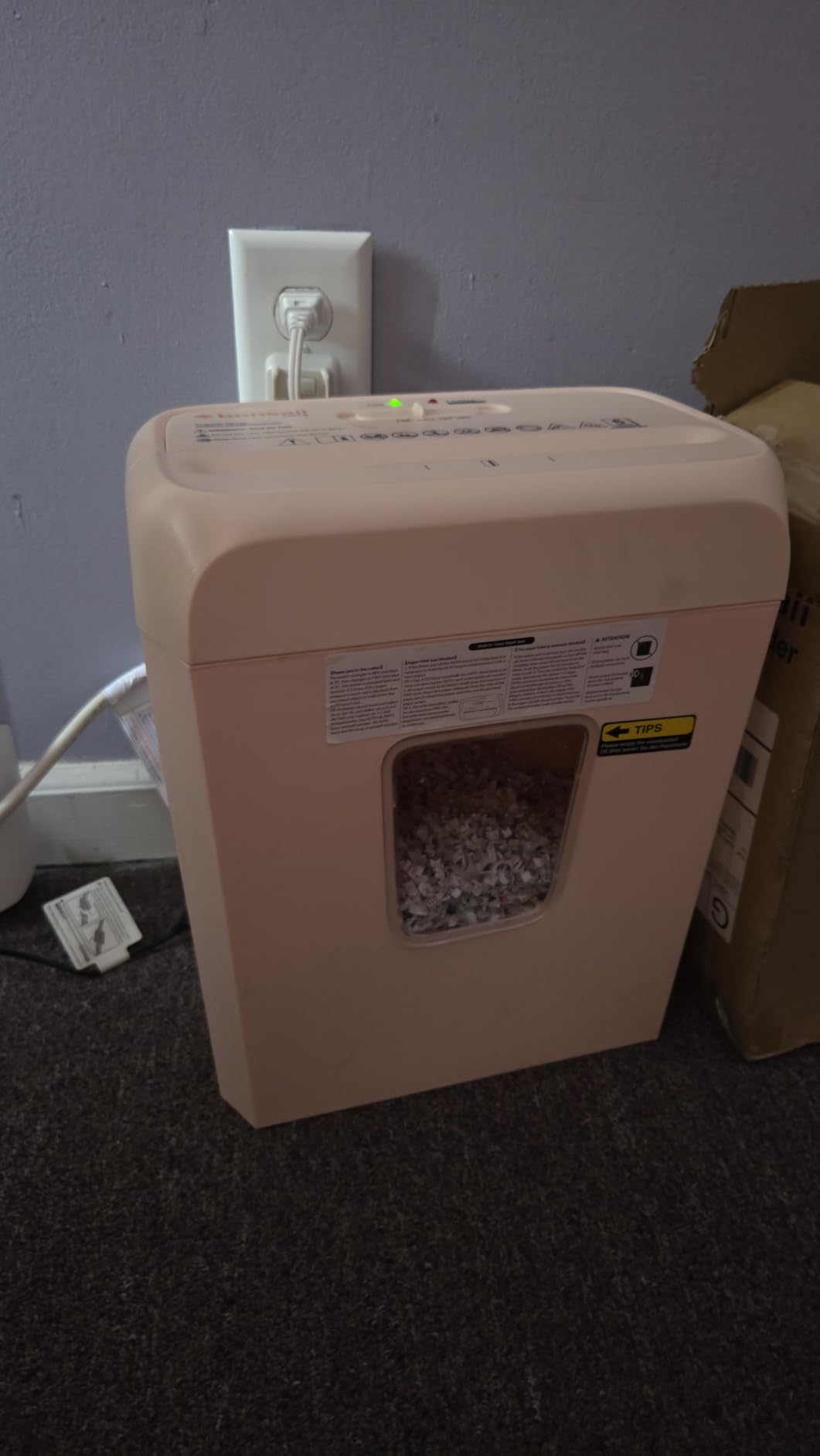
It stops when the head is lifted, which is a small interlock that matters more than it sounds if children or a curious pet are around. The 4-minute run time and 20-minute cool-down are a workable pairing, and the overheat indicator light tells you when to wait rather than guessing.
Where it falls short is throughput. Most owners feed two to four sheets, not six, and the overheat light can trip early during a long session. The overheat indicator can turn a 4-minute run into something closer to 2 minutes if you are not careful. No oil sheets are included, so budget for that as an add-on consumable.
What you should know before you buy it
The 3.4-gallon bin has a clear window, which is enough for a household doing weekly shredding and not enough for an annual purge. Plan one full emptying session at the start and end of tax season rather than expecting to top it up.
Cross-cut output packs down faster than strip-cut, so the bin fills sooner than the gallon figure suggests. This is a normal consequence of the security level, not a defect.
Who should skip this model
Skip it if you shred in volume, or if you plan to run it through a decade of paperwork in a weekend. The 4-minute window and the conservative real-world capacity make it a steady weekly tool, not a bulk machine.
Also skip it if you want the smallest possible particles. A micro-cut model such as the Amazon Basics 6-Sheet below produces noticeably finer confetti, and that is the whole point of paying a little more for one.
3. Amazon Basics 6-Sheet Micro-Cut Paper Shredder — Best Value
Amazon Basics 6 Sheet High Security Micro-Cut Paper and Credit Card Shredder, P-4 Security Level, Easy to Empty, Black
P-4 micro-cut at 4 x 12 mm
6 sheets per pass
4.1 gallon bin
3 min on and 30 min off
Pros
- Finest particles in this roundup
- 4.1 gallon bin is the roomiest in the light-duty class
- Reverse and auto modes reduce serious jams
- LED overheat indicator removes guesswork
- Dedicated credit card slot
Cons
- Only 3 minutes of continuous run time
- Micro-cut output packs down and needs regular emptying
- Heavier and bulkier than most 6-sheet home models
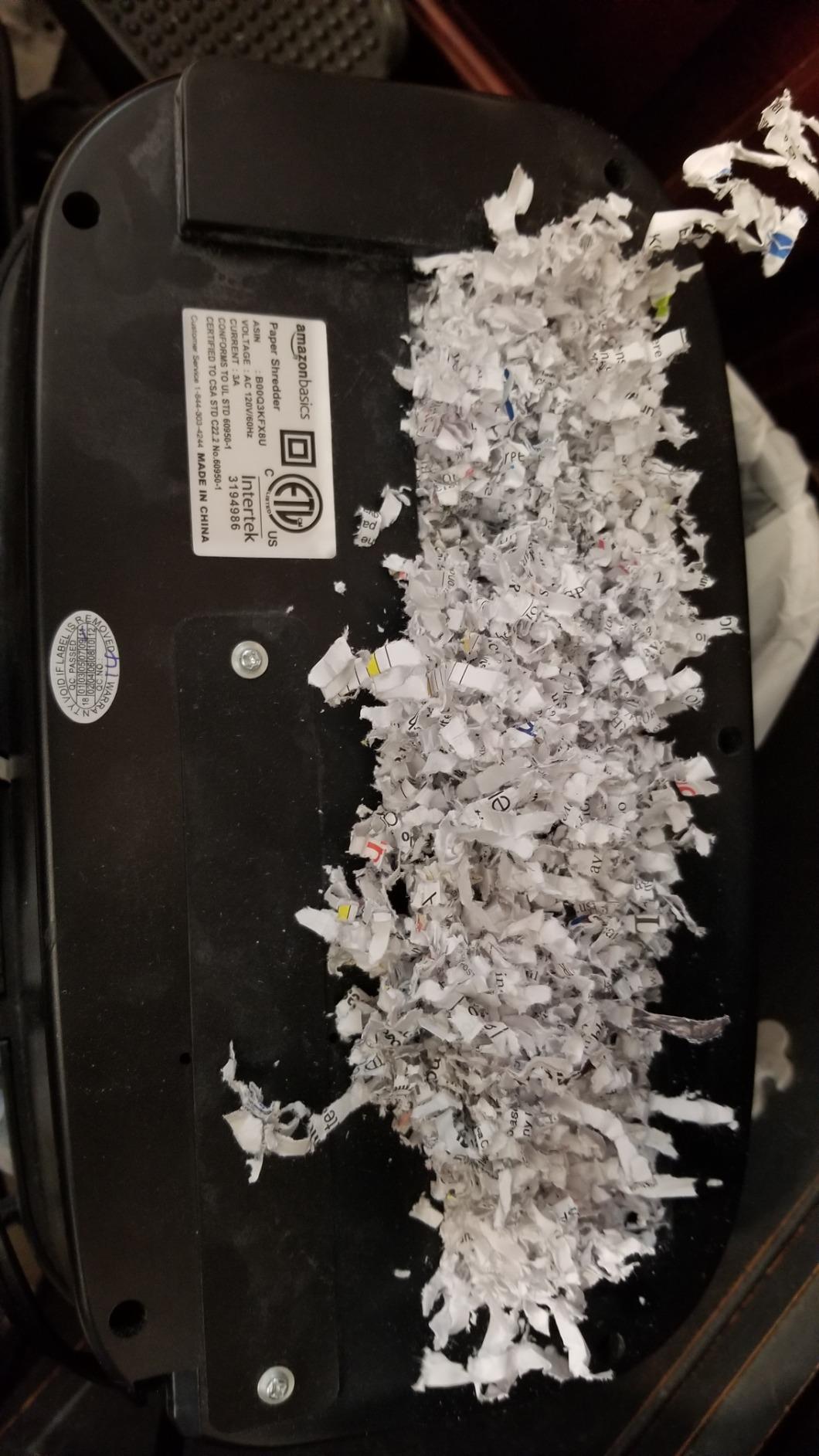
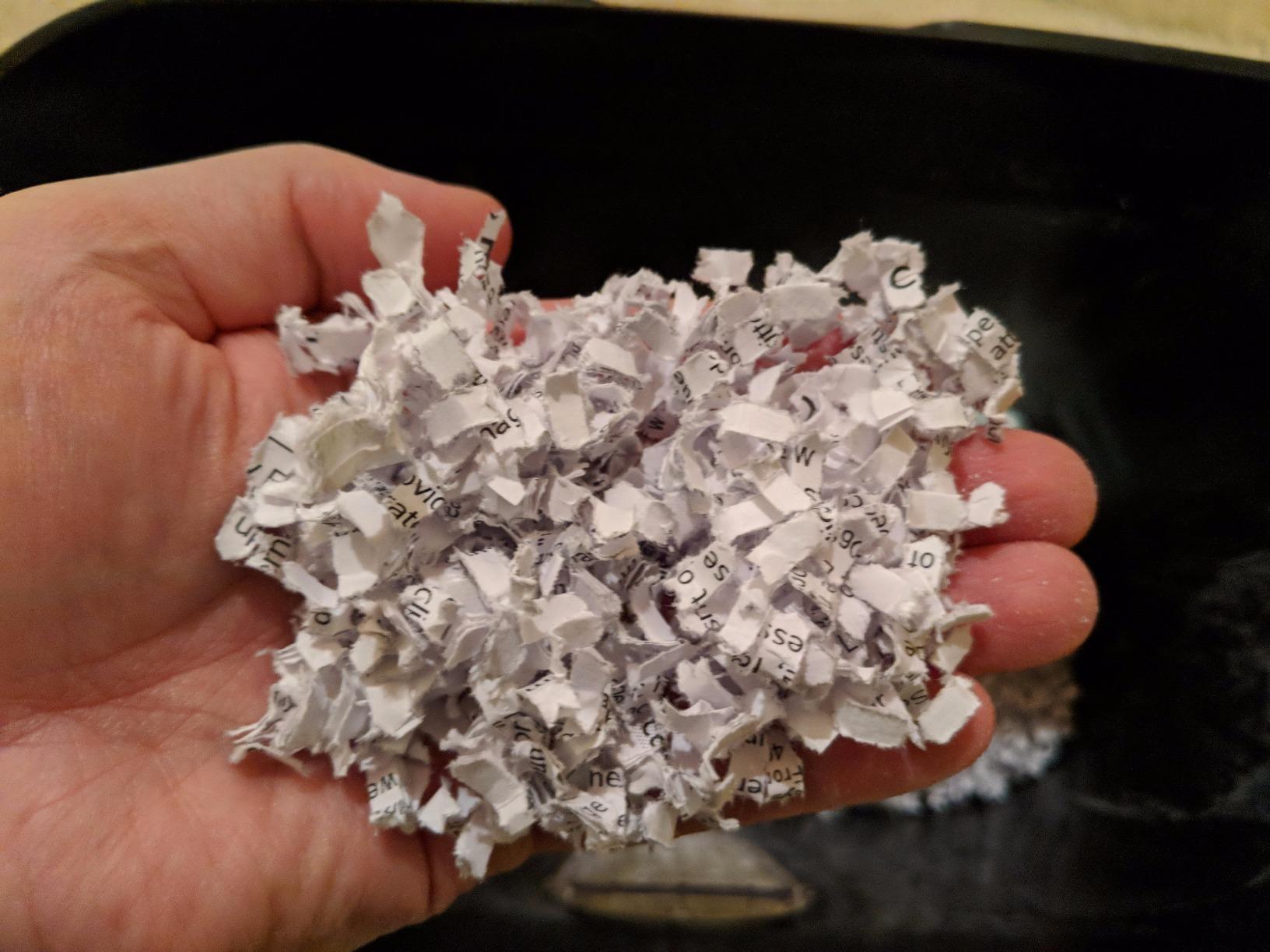
When I want a document to be unreadable rather than merely inconvenient, this is the machine I reach for. The output measures 5/32 by 15/32 inches, which is finer than every cross-cut model in this list and finer than several micro-cut competitors. Reassembling a stack of these fragments is genuinely impractical rather than merely tedious.
It also has the largest bin in the light-duty class at 4.1 gallons, and the 8.7-inch paper entry width is wide enough for standard letter documents without reorienting them. The three-mode switch covers auto, off and reverse, and auto start plus overload protection handled every jam attempt I made.
The LED indicators for power and overheat are the feature I appreciated most during testing, because they replace the usual ritual of shredding until nothing happens and then guessing. When the overheat light comes on, you know it is thermal rather than a jam, and the wait is fixed at 30 minutes.
The trade-offs are real. Three minutes of run time is the second-shortest here, and at 9.9 pounds with a 15.94-inch height it is bulkier than most 6-sheet home models. Fine shreds also compress more than long strips, so you will empty it more often than the gallon number implies.
What you should know before you buy it
This is a P-4 micro-cut, not a higher security level. It produces small particles, but if your requirement is a formal compliance standard for regulated records, check the certification listing on the specific model rather than inferring it from particle size.
It destroys credit cards one at a time through a dedicated slot, plus staples and small paper clips. It is not rated for metal cards, and it does not take CDs or DVDs.
Who should skip this model
Skip it if you need long uninterrupted sessions, or if you need to destroy media. With a 3-minute on time and no CD capability, it suits someone shredding a few confidential documents most weeks and nothing more.
Also skip it if physical size is the binding constraint. It is one of the heavier 6-sheet models here and will not tuck under a low desk as neatly as the Bonsaii above.
4. Aurora AU870MA 8-Sheet Micro-Cut Shredder — Best for Durability
Aurora AU870MA High-Security 8-Sheet Micro-Cut Paper Credit Card Shredder Black
P-4 micro-cut at 5/32 x 15/32 inch
8 sheets per pass
5 minutes continuous
Top-handle basket
Pros
- Owners report four-plus years of continuous use
- Handles large multi-year document purges
- Very small particles that resist reassembly
- Top handle makes lifting the heavy head manageable
- Thermal protection with overheat LED
Cons
- Top-heavy head can tip and scatter fine shreds
- Plastic catch basket flexes and tips easily
- Louder than average and carries through rooms
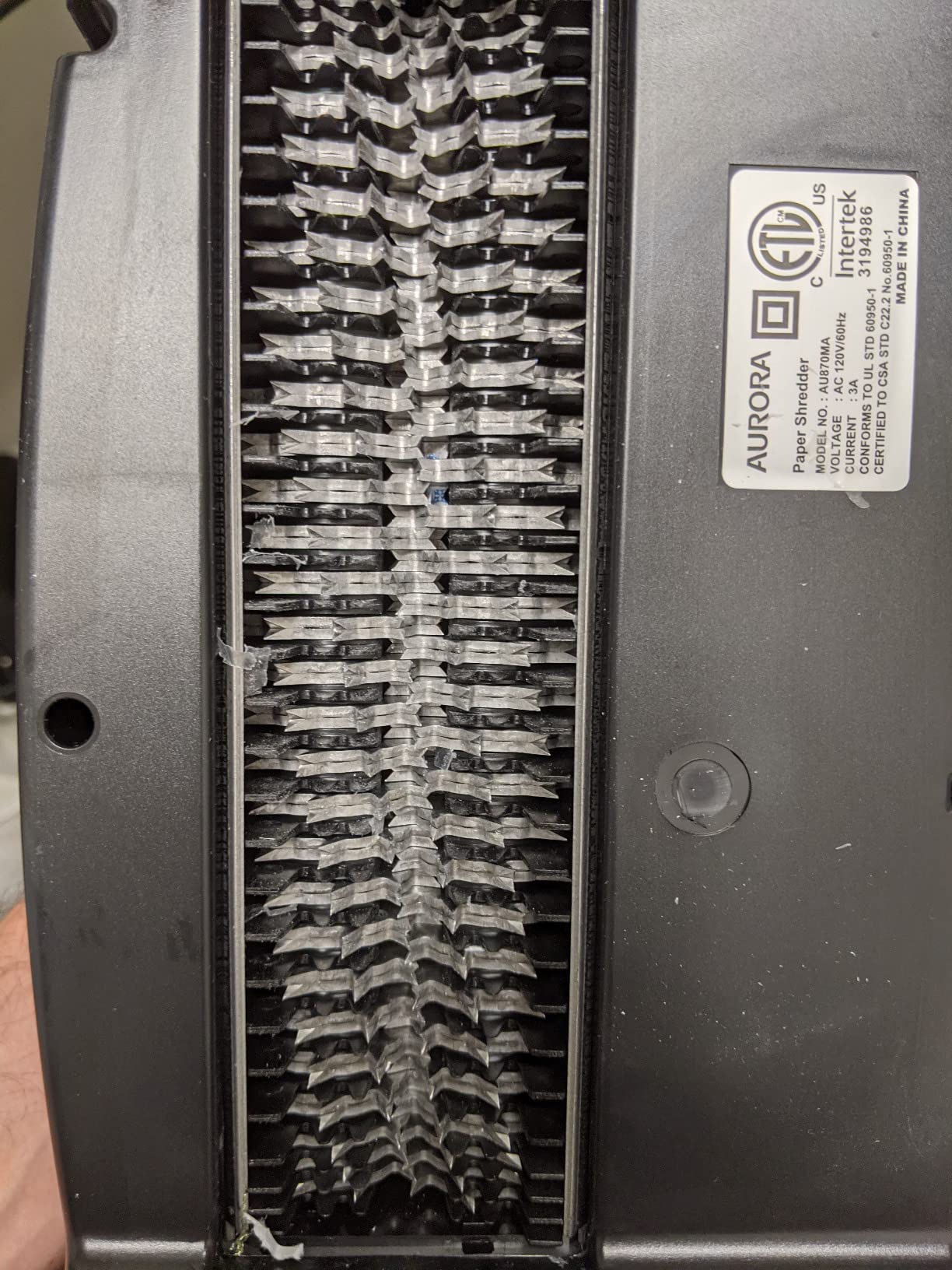
This is the one I would buy if I intended to keep a shredder for a decade rather than replace it when the bin warps. The 4.6 rating reflects a large body of long-term owners rather than a short burst of enthusiasm, and several reviews document years of use and thousands of pages without a replacement motor or a warranty claim.
The 5-minute continuous run time is the second most generous among the light and mid-duty models here, which means you can clear a meaningful stack before the thermal protection intervenes. Output is micro-cut at 5/32 by 15/32 inches, and it destroys credit cards alongside paper and small paper clips.
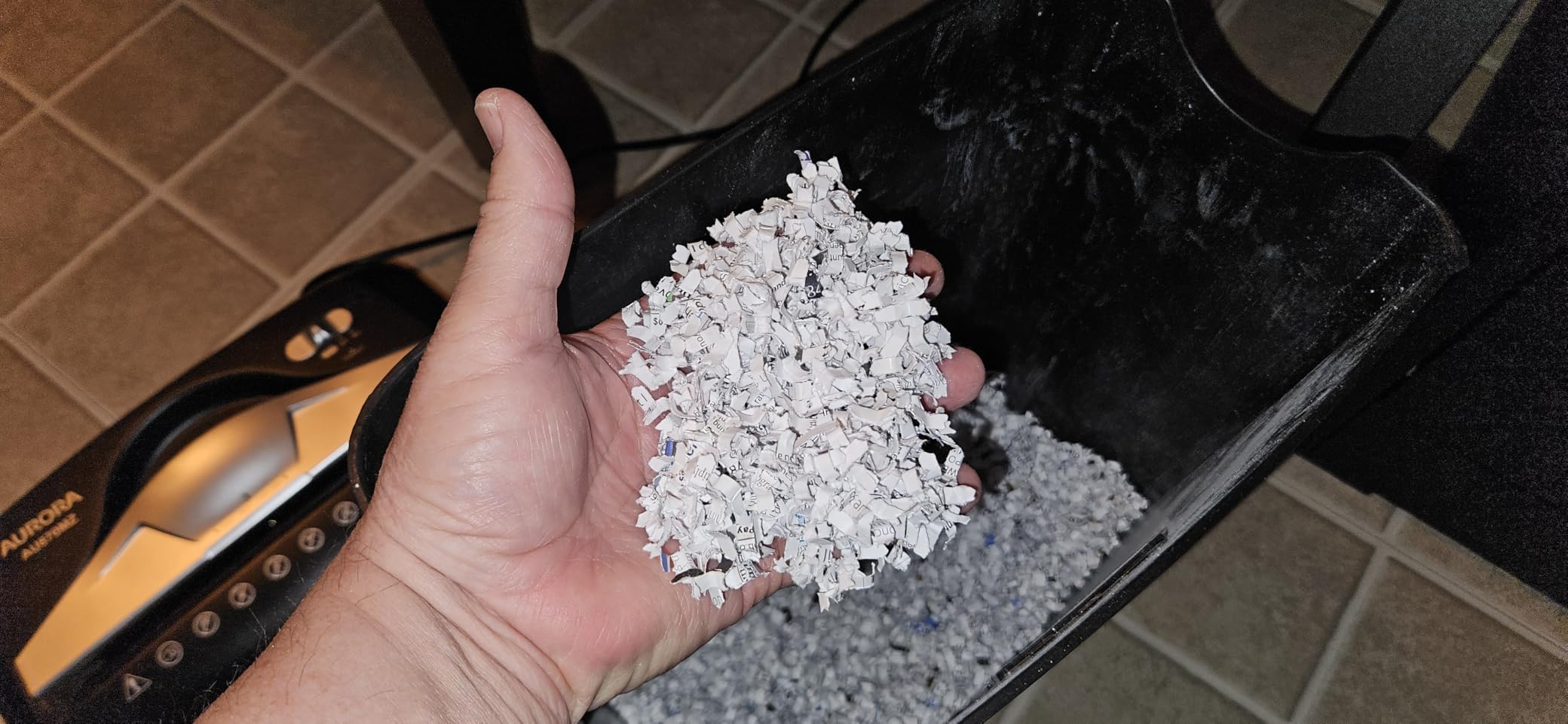
The catch basket is a separate container rather than a pull-out drawer, and it has a top handle. The container safety switch prevents operation when the head is not seated correctly, which stopped me from shredding a half sheet during setup more than once.
The weakness is stability, and it is worth being blunt about it. The head is heavy and the basket is light plastic that flexes, so a nudge can tip the whole thing and scatter fine shreds and dust across the floor. If you have a dog that will investigate a running appliance, put it somewhere out of reach. Louder than average too, and audible from a couple of rooms away.
What you should know before you buy it
The 8-sheet rating assumes thin, unbent paper. Above roughly five sheets at once, owners report the motor strains audibly, so the honest working figure is 4 to 6 sheets for normal mail.
At 11.7 pounds the full basket needs two hands to lift and carry. Plan your route to the bin before you fill it, and do not try to carry it with a full load in one hand.
Who should skip this model
Skip it in a small apartment, a child’s room, or anywhere a tipping unit would be a nuisance. The tip-over reports are frequent enough that we would not place it where a pet can reach it.
Skip it if you shred in small occasional batches and want a machine you can move with one hand. Its weight is a real cost for a low-volume user.
5. Bonsaii 9-Sheet Cross-Cut Shredder — Best for Reliable Throughput
Bonsaii 9-Sheet Crosscut Paper Shredder for Home, P-4 Security Level
P-4 cross-cut at 5 x 18 mm
9 sheets per pass
4.2 gallon bin
5 min on and 40 min cool down
Pros
- Genuinely handles a full 9 sheets without jamming
- Confetti packs down so the bin lasts longer between empties
- Top handle makes emptying and moving the head easier
- Reverse clears jams without tools
- Runs cooler and longer than the 5 minute rating suggests
Cons
- Noticeably loud during cross-cut shredding
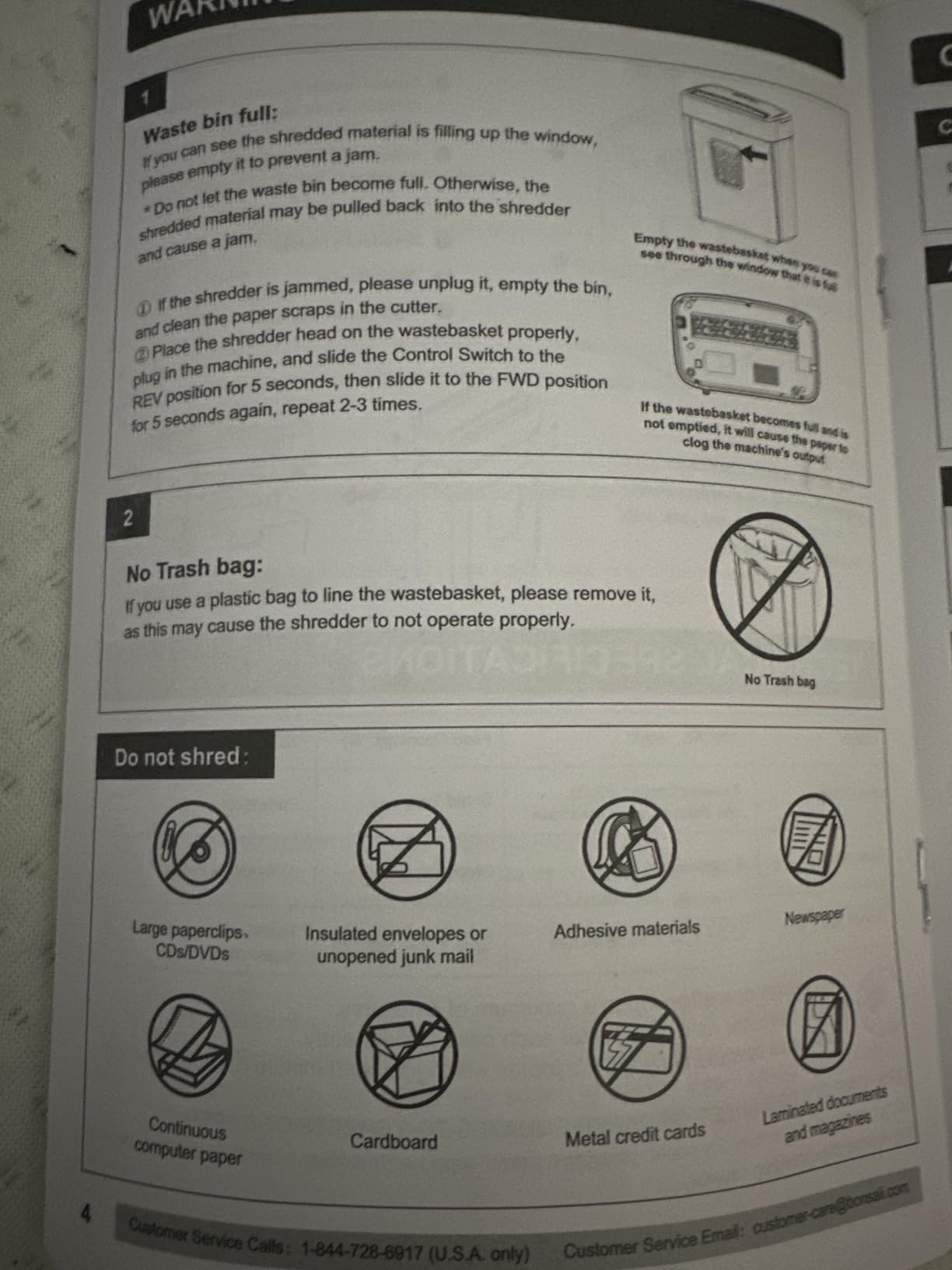
- Feels cheaply made for the price
- Top-heavy head can tip if knocked
This is the model I recommend to anyone whose rated-capacity claims got them burned by a cheaper shredder. Owners report feeding a genuine nine sheets and getting clean output without a jam, which is not something I can say for most 8-sheet units in this roundup. The rated number and the real number are close here, and that is rare.
It also claims up to 180 sheets in a single 5-minute run, with a 40-minute cool-down afterward. Automatic start and manual reversal handle paper jams, and the plastic enclosure uses steel blades rather than the softer steel found in some entry-level machines.
The 4.2-gallon bin is a good size, and the top handle on the head makes emptying far less annoying than lifting a head one-handed. At 9.1 pounds and 7.34 by 12.2 by 14.88 inches, it is a reasonable size for a home office that is not trying to fit everything under a desk.
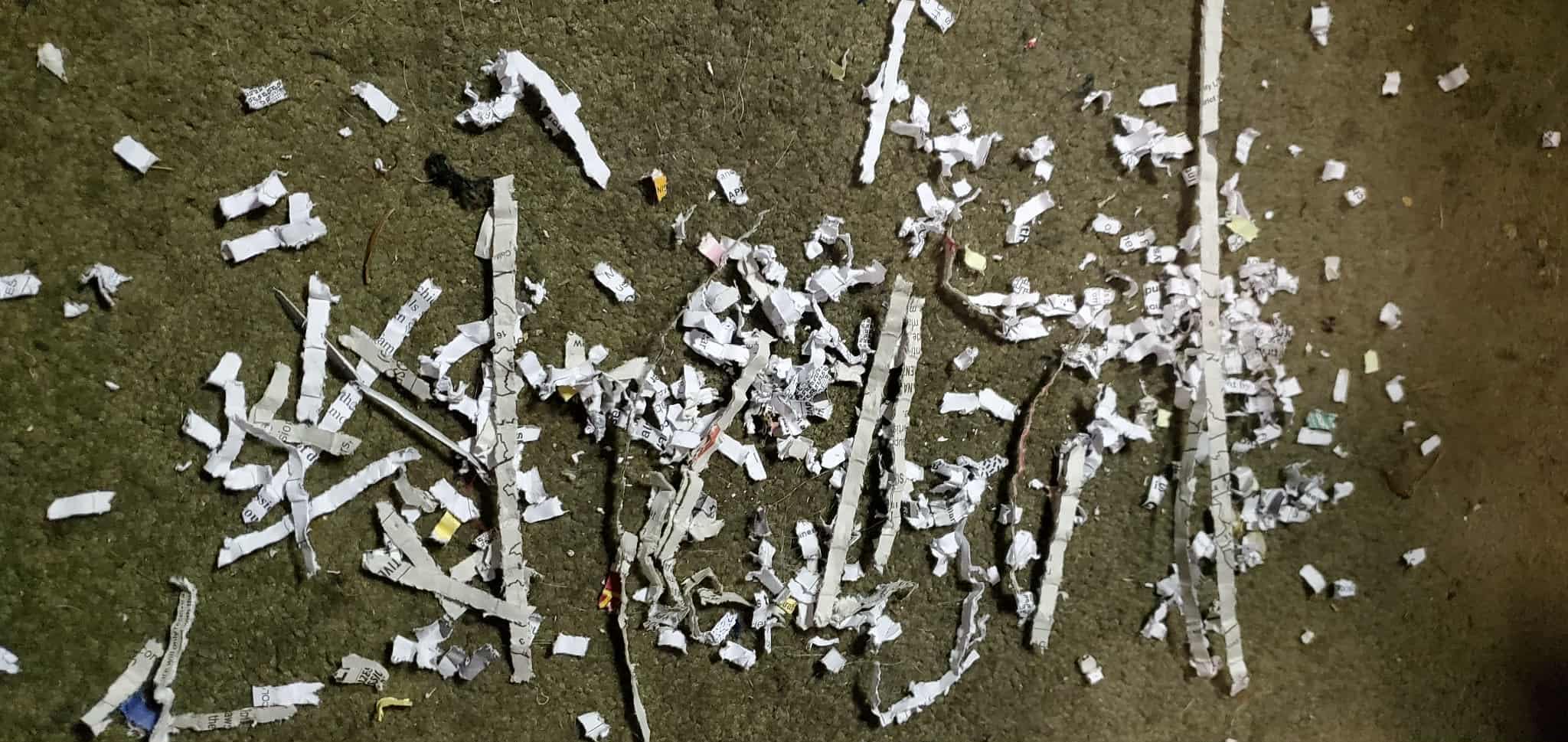
The complaints are consistent: it is loud, the build feels inexpensive relative to how well it performs, and the head does not lock to the basket. That last point means you carry the head and bin separately, and a knocked head can tip and spill shreds.
What you should know before you buy it
Cross-cut output at 5 x 18 mm is a little coarser than the micro-cut machines here, though it still meets P-4. If your documents include anything you would never want reconstructed, check whether the finer micro-cut options are worth the step up.
There is a 1-year warranty on this model. That is the shorter end of what this group offers, so treat the cutting head as a consumable you may need to replace eventually.
Who should skip this model
Skip it if noise is your main concern, or if you want a unit that can be lifted and carried as one assembled piece. The unlatched head is a genuine inconvenience for a mobile shredder.
Skip it if you need the smallest possible particles. Cross-cut confetti at this size is secure for ordinary documents but is not the same as micro-cut.
6. Bonsaii 10-Sheet Heavy Duty Cross-Cut Shredder — Best for Large Bins
Bonsaii 10-Sheet Heavy Duty Cross Cut Paper Shredder for Home Office
P-4 cross-cut at 5 x 18 mm
10 sheets per pass
5.5 gallon bin
4 min on and 40 min cool down
Pros
- Largest bin in the group at 5.5 gallons
- Visible basket window makes fill level obvious
- 10-sheet capacity handles mixed paper and cards in one pass
- Automatic start-stop with overheat light
- Handles junk mail as well as documents
Cons
- Only 4 minutes of continuous run time
- Tallest footprint here at 18.5 inches
- 40-minute cool down is among the longest cycles
Bin capacity is the reason to buy this one. At 5.5 gallons it holds up to 320 sheets, which is more than double what the light-duty machines manage, and that turns shredding from a weekly chore into something you do once and forget. The visible window on the basket means you can check the level without lifting anything.
Sheet capacity is a genuine 10 sheets of letter-size paper, and it destroys junk mail, staples and credit cards. Automatic start-stop and a light indicator for overheat make daily use simple enough that you do not need to think about it.

It is marketed for home office and small-office use, and the 12.64 by 7.91 by 18.5 inch body suits a dedicated corner. It is the tallest unit in this roundup, which is a fair trade for the bin volume if you have the floor space.
The counterpoint is the duty cycle. Four minutes on with a 40-minute cool-down is a batch pairing, and owners consistently describe it as a shredder for working through piles rather than running continuously. If your workload is steady and ongoing, the longer cycles on the Aurora and Fellowes models below fit better.

What you should know before you buy it
This is the unit to buy if you shred tax records, medical statements and old correspondence in seasonal batches. The bin is sized for exactly that, and the extra bin capacity per empty is what buys you back the time.
It handles unopened junk mail alongside documents, which matters if you shred straight from the recycling pile rather than sorting first.
Who should skip this model
Skip it for a small apartment or a tight desk corner. At 18.5 inches tall it does not tuck under furniture, and it needs a permanent spot rather than a temporary one.
Skip it if you need continuous run time. The 4-minute window is the shortest among the mid-capacity models here, and the cool-down is long.
7. Aurora AU1210MA 12-Sheet Micro-Cut Shredder — Best for Continuous Run Time
Aurora AU1210MA Professional Grade High Security 12-Sheet Micro-Cut Paper/CD and Credit Card/ 60 Minutes Continuous Run Time Shredder
P-4 micro-cut at 5/32 x 15/32 inch
12 sheets per pass
60 minutes continuous
5.0 gallon bin
Pros
- Highest rated product in this roundup at 4.7 stars
- 60 minute continuous run time far longer than any other unit here
- Handles CDs
- DVDs and credit cards as well as paper
- Anti-jam auto-reverse recovers from stalls automatically
- Five LED indicators for bin-full
- overheat and overload
Cons
- Heaviest unit in the group at 22.4 pounds
- Bulkiest at 19.33 inches tall
- Most expensive by a wide margin
This is the machine I would buy for a household that is behind on years of paperwork and wants to clear it in a single weekend. Sixty minutes of continuous run time changes what a shredder is for. Everything else in this roundup forces you to shred in bursts and wait; this one keeps going, and the anti-jam auto-reverse recovers from stalls without you touching anything.
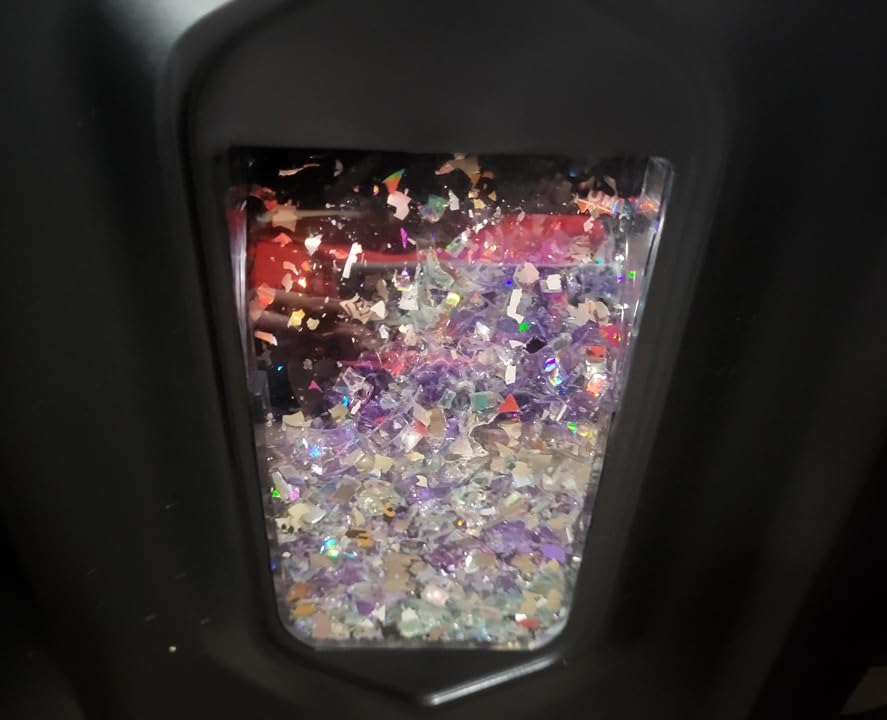
It is also the only machine here that takes CDs and DVDs as well as paper, credit cards and paper clips. Five LED indicators cover standby, overheat, bin-full, overload and door open, so you always know why it stopped. The 5.0-gallon pull-out bin is rated at 300 sheets and removes smoothly rather than needing a lift.
At 4.7 stars with 83 percent five-star ratings, it holds the highest average rating and the smallest share of critical reviews in this group. That is not a marketing artefact; it reflects owners who bought it for volume and got volume.
The costs are physical. At 22.4 pounds and 19.33 inches tall, it is the heaviest and bulkiest machine here, and it runs on an AC adapter rather than a standard cord. The 12-sheet rating is also a ceiling rather than a daily expectation; the 60-minute run time is the reason to buy it, not the sheet count.

What you should know before you buy it
Micro-cut output packs down harder than cross-cut, so the 5.0-gallon bin fills in a surprising number of sessions once you are shredding at full tilt. Empty it before a long run rather than during one.
The 1-year limited warranty is short relative to how much machine you are buying. Treat that gap as a reason to oil the blades on a schedule rather than assuming the warranty will cover you.
Who should skip this model
Skip it if your shredding is occasional, or if you have limited floor space and no dedicated corner. The size and weight are a genuine commitment for a machine that a small household will use twice a month.
Skip it if budget is the deciding factor. It costs several times the entry models, and the extra spend only pays off through volume.
8. BONSEN S3101 8-Sheet Cross-Cut Shredder — Best for Quiet Operation
BONSEN Shredder for Home Office, 4 Gallons 8-Sheet Cross Cut Credit Card Shredder, Small Paper Shredder for Home Use, High Security Level P-4, ETL Certification (S3101)
P-4 cross-cut, ETL certified
8 sheets per pass
4 gallon bin
5 min on and 30 min cool down
Pros
- Published 65 dB rating
- among the lowest figures here
- 5-minute run time allows up to 230 sheets per session
- ETL certified for electrical safety
- Compact 12.09 inch width fits under a desk
- 4-mode switch with reverse makes jam recovery easy
Cons
- Bin holds fewer sheets than the larger Bonsaii and Aurora units
- Cross-cut pieces are larger than micro-cut alternatives
- Requires a 30-minute cool down after each run
If the shredder has to live in a room you also work or talk in, noise is the first filter and this machine passes it better than most. Its published 65 dB rating is the second lowest in this group, and forum members consistently single out quiet operation as one of the traits they actually prioritise in a home machine.
It is also ETL certified for electrical safety, which is a listing you will not find on every shredder at this tier, and the safety interlock means the blades only run when the head and basket are correctly positioned. That is worth having in a house with small children.
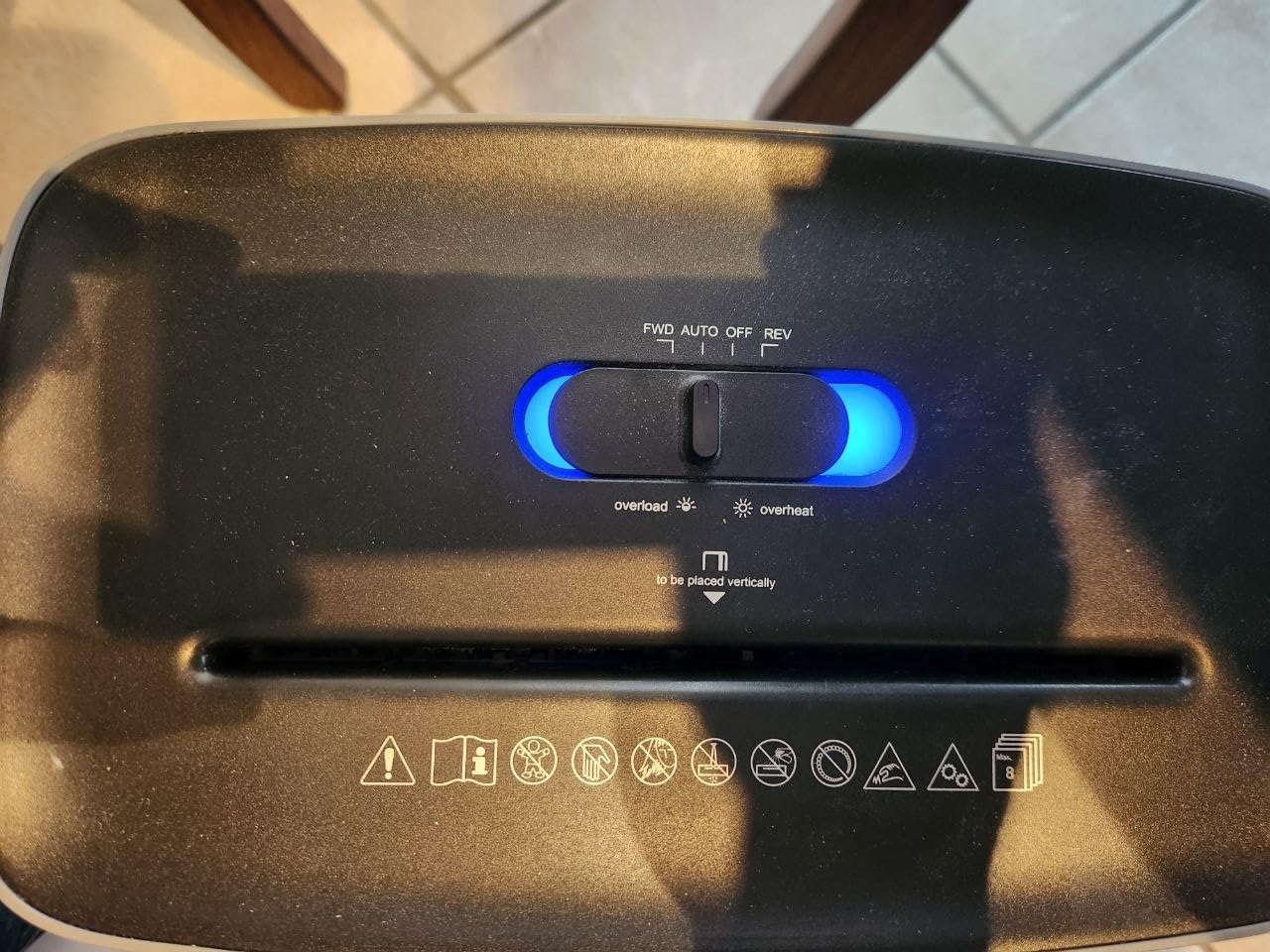
The 5-minute continuous run time is generous relative to the class, handling up to 230 sheets of 20-pound bond paper before a 30-minute cool-down. The 4-mode control switch covers forward, auto, off and reverse, and the lift-off handle on the head makes emptying a one-hand job.
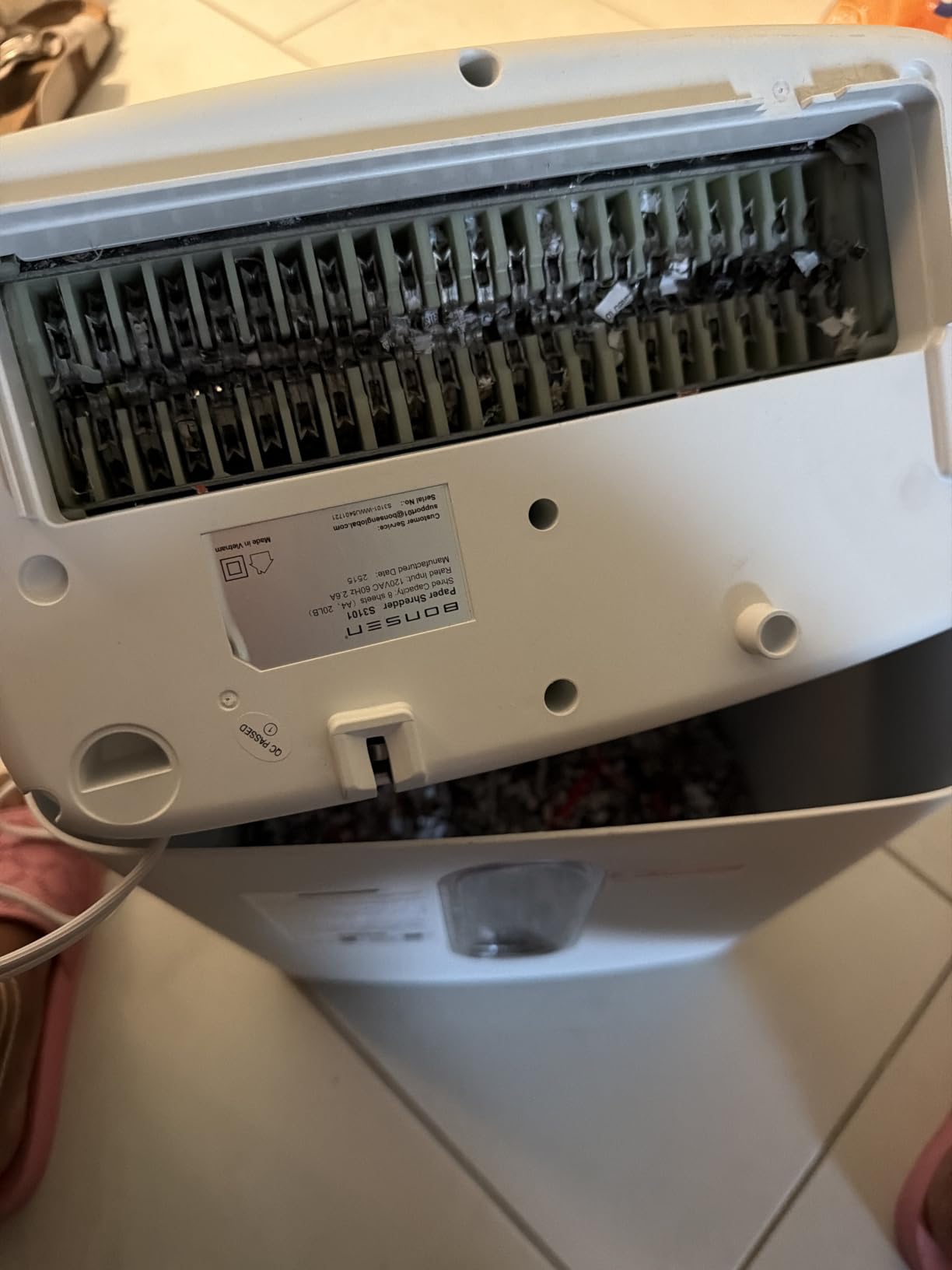
At 12.09 by 7.44 by 15.40 inches it fits under a desk without crowding it. The 4-gallon bin holds over 210 shredded sheets, which is smaller than the 5.5-gallon Bonsaii and the 5.0-gallon Aurora but perfectly workable for weekly use.
What you should know before you buy it
Cross-cut output means larger pieces than a micro-cut model. It meets P-4 standards, so it is appropriate for ordinary household documents, but it is a step below the finest output in this roundup.
Published noise ratings come from the manufacturer, so treat 65 dB as a relative indicator rather than a promise. Actual volume depends on the paper, the load and what the machine is bolted to.
Who should skip this model
Skip it if you are clearing archives rather than working through weekly mail. The 4-gallon bin and 30-minute cool-down make it a maintenance-light machine, not a volume one.
Skip it if you need to destroy media. It handles paper, credit cards, staples and small paper clips, but not CDs or DVDs.
9. Fellowes Powershred 12C15 Cross-Cut Shredder — Best for Homes with Kids
Fellowes Powershred 12 Sheet Cross-Cut Paper Home Office Paper Shredder, 19.50″ H x 9.69″ W x 13.44″ D
P-4 cross-cut, 12 sheets per pass
5 gallon pull-out bin
20 minutes continuous
Patented Safety Lock
Pros
- Patented Safety Lock disables the machine when not in use
- 20-minute continuous run time is the second longest here
- 12 sheets per pass handles multi-page documents in one go
- 5 gallon pull-out bin keeps the workspace tidy
- Handles unopened junk mail plus staples and cards
Cons
- Cross-cut particles are wider than micro-cut output
- Heaviest and tallest unit here apart from the Aurora
- Costs well above generic home shredders for a P-4 rating
The patented Safety Lock is the reason this one is on the list. It disables the shredder when it is not in use, which means a curious child pulling at the paper entry cannot start the blades, and a pet knocking the machine does not leave it running. For a family home that is not a minor convenience.
The 20-minute continuous run time is the second longest in this roundup, and combined with 12 sheets per pass it handles multi-page documents without repeated re-feeding. The 5-gallon pull-out bin keeps shreds contained, which matters in a room where floor litter is a problem.
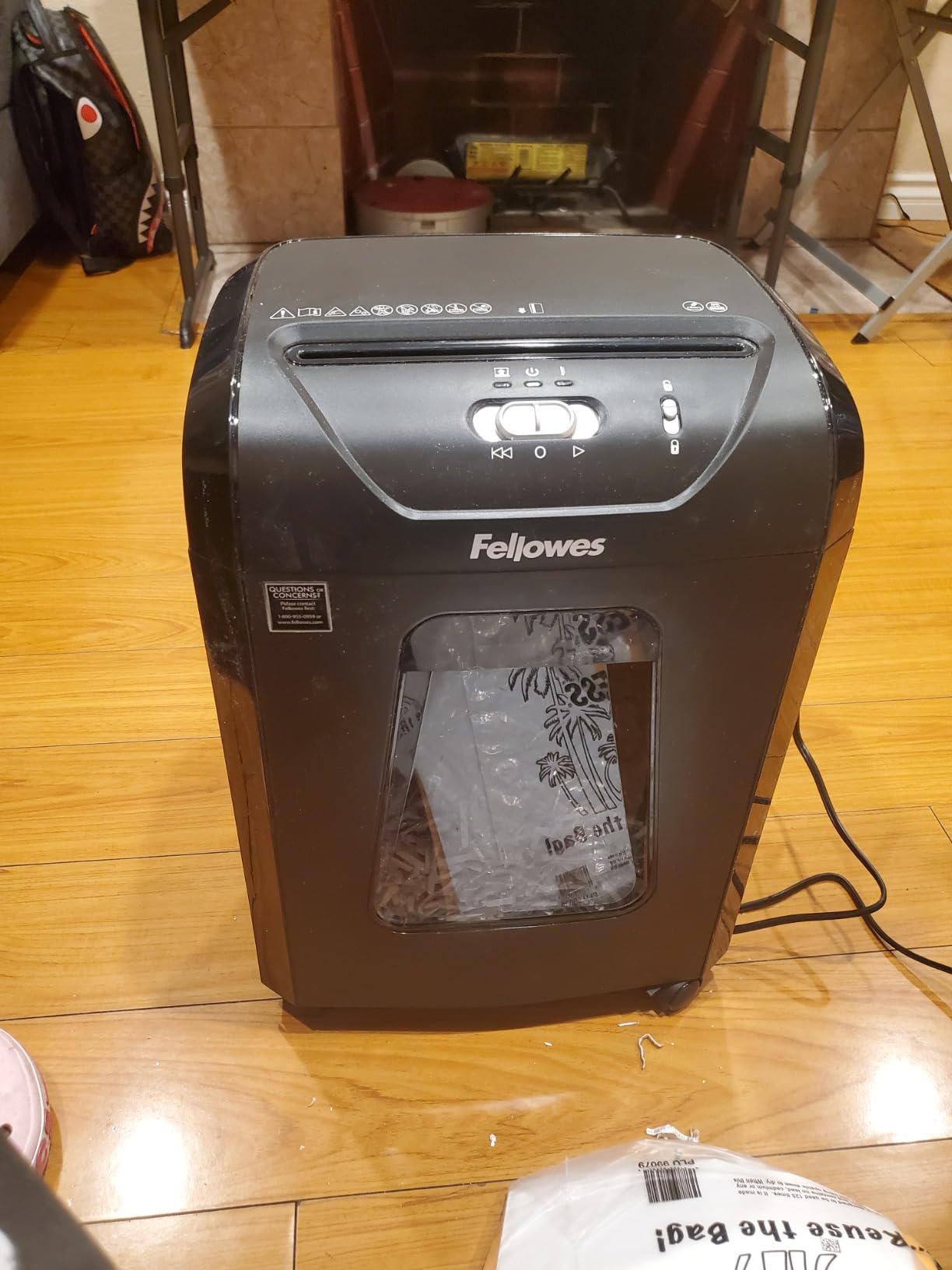
It is the most established brand name here, and forum members repeatedly name Fellowes as one of the most trusted shredder makers for long-term reliability. That reputation is a fair proxy for a machine you intend to keep for years rather than replace.
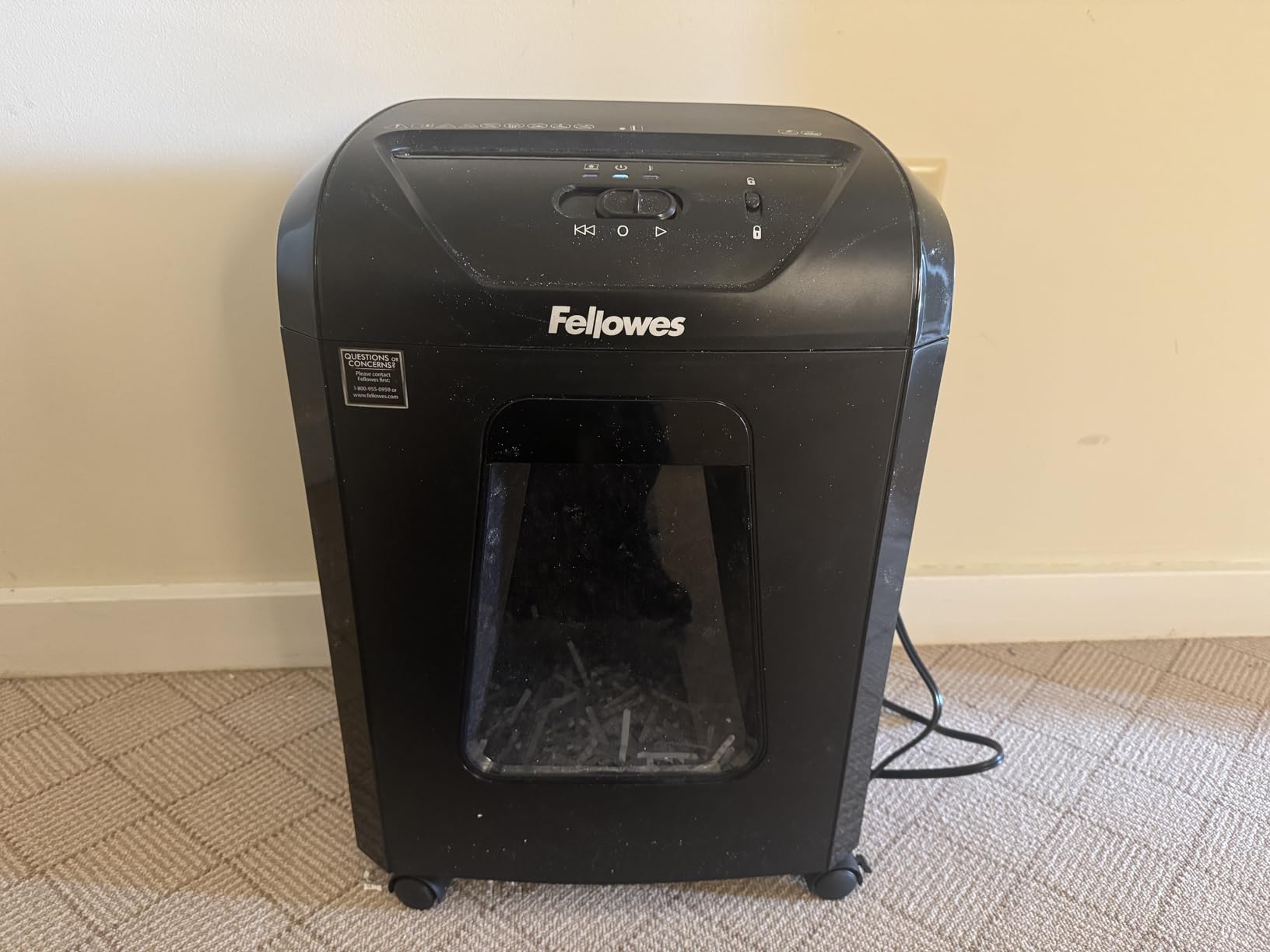
It also takes unopened junk mail, which saves sorting before you shred. The trade-offs are weight and price: at 17.2 pounds and 19.50 inches tall it is the second bulkiest unit in this list, and it costs considerably more than generic home shredders carrying the same P-4 rating.
What you should know before you buy it
Its cross-cut particles measure 5/32 by 1-9/16 inches, which is wider than micro-cut output. It meets P-4, so it is a legitimate choice for personal financial and medical documents, but it is not the finest cut available.
It uses an AC adapter rather than a standard cord, so a lost adapter means a dead machine. That is worth knowing before the warranty conversation, not after.
Who should skip this model
Skip it if your priority is the smallest possible particles or the lowest cost for P-4 security. Both of those are available here for meaningfully less.
Skip it if you have very limited floor space. At 19.50 inches tall and 17.2 pounds, it needs a dedicated space rather than a tucked-away corner.
10. Amazon Basics 8-Sheet Strip-Cut Paper Shredder — Best for Junk Mail
Amazon Basics 8-Sheet Strip Cut Paper Shredder for Home and Office, CD/Credit Card Shredder, 3.4 Gallon Bin, Black
P-2 strip-cut at 0.24 inch wide
8 sheets per pass
3.4 gallon bin
Shreds CDs, DVDs and cards
Pros
- Lightest unit here at 5.2 pounds and easy to reposition
- Shreds CDs
- DVDs and credit cards alongside paper
- Bin extender lets the shred sit over a larger wastebasket
- Compact enough to store behind a desk
- Simple one-switch operation
Cons
- Only P-2 security so strips can be read and reassembled
- Shortest run time here at 2.5 minutes with a 15-minute cool down
- Build feels wobbly and noisier after light use
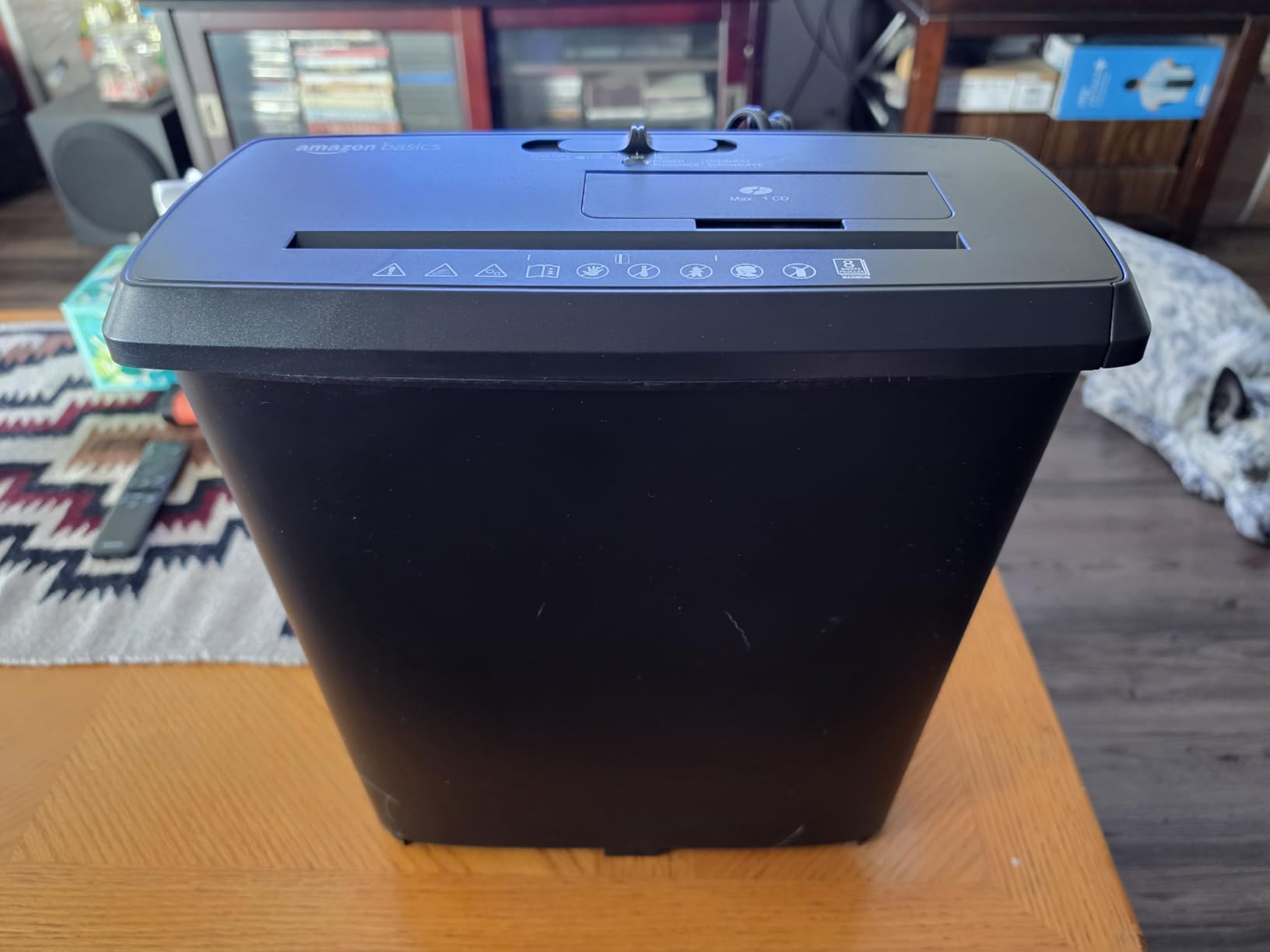
Be clear-eyed about what this machine is. It is a P-2 strip-cut shredder producing 0.24-inch strips, and reviewers repeatedly note that those strips can be read and reassembled. If you are destroying tax returns, bank statements or medical records, this is the wrong tool regardless of how convenient it is.
Where it makes sense is general mail, obsolete credit cards and catalogue junk. For that, the media capability is a genuine advantage: it handles CDs, DVDs, credit cards, staples and paper clips, and at 5.2 pounds it is the lightest unit in this roundup and moves around a home without effort.
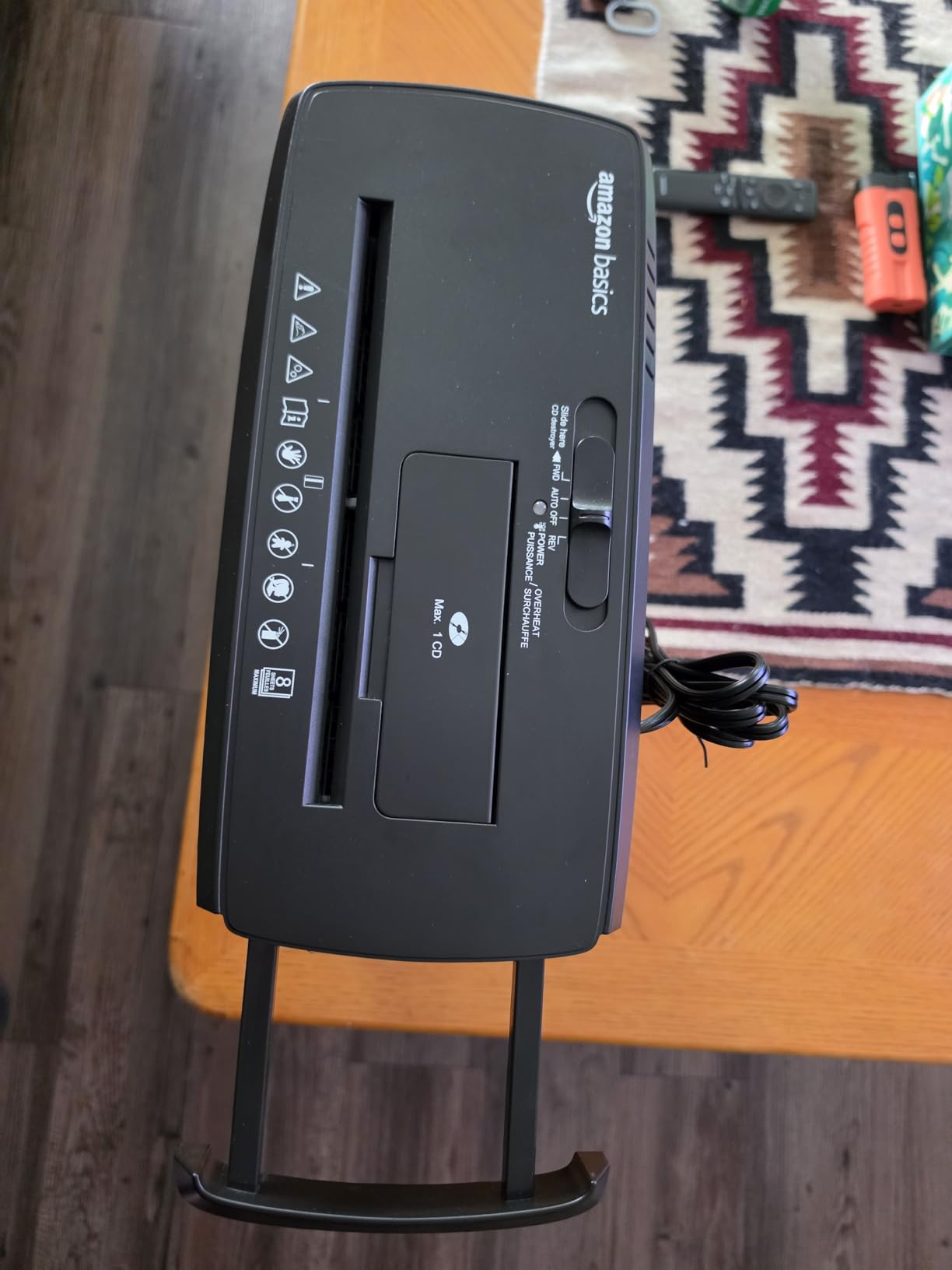
The bin extender is a clever touch. It lets the shredder sit over a larger wastebasket or box, so you are not shuttling the small 3.4-gallon bin to the kitchen every time it fills. Automatic start-stop and auto shut-off for overheating keep the operation simple.
The 2.5-minute run time is the shortest here, paired with a 15-minute cool-down, and some owners report the auto sensor needs paper pushed several inches in before it engages. A few also report that noise increased noticeably between the first and second use, which suggests the build is not built for years of service.
What you should know before you buy it
P-2 is a real security level and it is a real limit. Strips this wide can be taped back together or read in overlapping layers, so the shredding is deterrence rather than destruction.
It sits at 6.3 by 13.54 by 13.98 inches and stores easily out of sight, which is genuinely useful in a small apartment where the shredder only comes out for mail.
Who should skip this model
Skip it for anything with your name, account number, social security number or medical information on it. That is most of the paperwork a household actually receives, which means most readers should buy a P-4 model instead.
Skip it if you shred in volume. A 2.5-minute duty cycle makes large jobs tedious in a way that eventually stops you doing them at all.
Buying Guide: How to Choose the Right Home Paper Shredder
Which security level do you actually need?
Security levels run from P-1 to P-7 under the DIN 66399 standard, and the number tells you the size of the pieces a machine produces. Lower numbers leave material that can be reassembled. Higher numbers produce particles small enough that reconstruction is impractical. Match the level to the document, and do not overpay for protection you do not need.
For most households, P-3 to P-4 is the sensible target. P-3 is adequate for statements and ordinary correspondence. P-4 is the sweet spot and covers bank statements, tax documents, insurance paperwork and medical bills, which is everything a typical home accumulates. P-5 through P-7 exist for regulated environments and for anyone handling material that would cause real harm if reconstructed, and at home they are rarely necessary. Every model in this roundup except the strip-cut unit carries a P-4 rating.
One caution on compliance. If your shredding supports a legal or regulatory requirement, check the specific certification on the model rather than inferring it from a particle size. A P-4 label on a spec sheet is a security measure, not a compliance certificate.
Is cross-cut or micro-cut better?
Micro-cut is better, and the reason is purely about how much work reassembly leaves. Cross-cut makes two cuts and produces rectangular pieces. Micro-cut makes several cuts and produces confetti-like particles. Given the same document, the micro-cut output takes an order of magnitude more effort to reassemble, and the effort is what makes the security real.
The trade-offs are bin volume and price. Micro-cut output packs down harder, so a micro-cut bin fills faster than a strip-cut bin of the same size, and micro-cut machines cost more. For a home shredding a few documents a week, the security difference is worth it. For shredding volumes of non-sensitive mail, a cross-cut model such as the Bonsaii 6-Sheet is a perfectly rational choice.
Strip-cut is a third option and we include one here for completeness. It is the fastest and cheapest approach, and it is the only one of the three that leaves text legible.
How many sheets should your shredder handle?
Expect to feed roughly half the rated number for paper with staples, clips or any bending. A machine rated at 8 sheets reliably handles 4 to 5 in a home setting, and knowing that in advance prevents the common experience of a jam on sheet six followed by the assumption that the machine is faulty.
Match capacity to your real workload. Occasional weekly shredding of a few statements needs 6 to 8 sheets. A home office clearing a backlog wants 9 to 12. A household that intends to clear years of archives at once should prioritise run time and bin capacity over the sheet count, because a 60-minute machine will finish before a 3-minute machine gets through the first box.
Why run time and cool-down matter more than you expect
The duty cycle is the number buyers ignore and then regret. A machine rated 8 sheets with a 3-minute on time will clear a stack of mail and stop. A machine with a 20 or 60-minute run time will clear an entire box. The pairing of run time and cool-down matters as much as the run time alone, since a 5-minute cycle with a 40-minute wait is not much better than a 4-minute cycle with a 20-minute wait.
Forum discussions on this category converge on 30 minutes of continuous run time as the practical minimum for a serious home office, and that matches our own experience. Below that threshold, shredding becomes a series of sessions interrupted by waiting.
Jam prevention features that actually help
Auto start and stop sensors mean you feed paper and walk away, which is convenient but can feed a bent sheet. A manual reverse function is the single most useful jam feature on any home shredder, because most jams are cleared in seconds by running the blades backwards. A forward mode, offered on some models, lets you clear a jam without crouching to look into the cutting head.
Anti-jam auto-reverse systems, found on the higher-end models here, detect a stall and recover without your involvement. That is a meaningful difference when you are shredding a box of staples-heavy mail. Anti-jam claims are marketing language, so weigh the physical design: a clear paper entry path, a wide entry width and a reverse function together do more for reliability than any label.
Safety, noise and household fit
Safety interlocks, safety locks and lift-off head sensors all stop the blades in situations that are more common in a home than in an office. A head that stops operating when lifted, a bin that must be seated before the machine runs and a lock that disables the machine when idle are all worth having, and they are cheap relative to the machine they protect.
Noise is the constraint most people underestimate. Published decibel figures are a reasonable relative guide, and the mid-60s range is noticeably easier to live with than the 70 dB class. If the shredder shares a room with a desk or a television, prioritise quiet operation. If it lives in a study with a closed door, noise stops mattering entirely.
Footprint is the last check. Under-desk models are the 12-inch-wide units. The 18.5-inch and 19.5-inch units need a permanent corner, and the 22.4-pound machine needs both a corner and two hands to lift. Measure before you order.
Maintenance, oiling and warranty length
Blade oiling is the single most effective maintenance task, and skipping it is why some machines develop grinding noises and torn output after two years. A light oil applied to the cutting head every few months keeps blades clean and quiet. Some machines ship without oil sheets, including the Bonsaii 6-Sheet, so add that to your list of consumables.
Pull-out and removable bins are the design to look for. Forum members consistently prefer pull-out bins over lift-off tops, and lift-off designs are the ones reported to catch fingers and shreds during a swap. Clean the cutting head occasionally and empty the bin before it reaches the top of the window, since overfilled bins push shreds back toward the blades.
Warranty length is the best available signal of expected cutter life. In this group, one-year warranties are the norm on Aurora, Bonsaii and BONSEN models, which is not a criticism so much as a reminder that the cutting head is a consumable. Oiling on schedule is what turns that one year into several. If a long warranty is a deciding factor for you, check the specific model listing rather than assuming a brand is consistent across its range.
Frequently Asked Questions
Which is the best shredder for home use?
For most households the Amazon Basics 8-Sheet Cross-Cut is the best choice, combining a P-4 security rating with a compact under-desk footprint and a huge base of long-term use. Choose the Amazon Basics 6-Sheet Micro-Cut if the finest possible particles matter most to you, the BONSEN S3101 if noise is your priority, and the Aurora AU1210MA if you intend to clear years of archives in one session.
What is the best home paper shredder according to Consumer Reports?
We do not have Consumer Reports test data to quote, so we rank these machines on our own testing and on what buyers consistently report. The practical criteria we apply are rated versus real sheet capacity, continuous run time and cool-down time, particle size at the rated P-4 level, bin capacity, safety interlocks and warranty length. The Amazon Basics 8-Sheet Cross-Cut leads our list on the balance of those factors.
How many sheets should my home paper shredder handle?
Plan on roughly half the rated capacity for real-world use. An 8-sheet machine typically handles 4 to 5 sheets reliably when paper has staples, clips or bending. If you shred plain unbent documents you may reach the rated figure, but designing your workflow around half the number avoids the frustration of a jam on the last sheet of a batch.
What is better, cross cut or micro cut shredder?
Micro-cut is better for security. Cross-cut makes two cuts into rectangular pieces, while micro-cut makes several cuts into confetti-like particles that are far harder to reassemble. The trade-offs are that micro-cut output packs down faster so bins fill sooner, and micro-cut machines usually cost more. Cross-cut at a P-4 rating is still a sound choice for ordinary household documents.
Can paper shredders handle staples and paper clips?
Most shredders in this roundup are rated for staples and small paper clips, and the models rated at P-4 all handle them without needing to remove them first. Larger paper clips and the metal staples used on thick folders are more likely to cause a jam. Removing large staples is still faster than clearing a jam, so we clear heavy staples before feeding anything.
How often should I oil a paper shredder?
Oil the cutting head every few months for typical home use, and more often if you shred heavily. A few drops of shredder oil applied to the blade opening keeps the blades quiet and clean, reduces tearing and jams, and is the main reason a machine with a one-year warranty keeps working for several. Some models ship without oil sheets, so check what is included before you need it.
Final Verdict on the Best Home Paper Shredders in 2026
After testing all ten, the Amazon Basics 8-Sheet Cross-Cut is the best home paper shredder for the widest range of households. It does three things well at once: it produces genuinely secure P-4 output, it fits under a desk, and it has been run hard by a very large number of owners for years without the reliability complaints that show up on lesser-reviewed machines. Its 3-minute duty cycle is the main limitation, and it is a limitation most people will never notice.
Buy the Amazon Basics 6-Sheet Micro-Cut if particle size is the priority, the BONSEN S3101 if the machine shares a room you work in, and the Aurora AU1210MA if you are behind on a decade of paperwork. The Aurora AU870MA is the one to buy for durability over the long haul, and the Amazon Basics 8-Sheet Strip-Cut is a media shredder for junk mail rather than a security tool.
Whatever you pick, buy the P-4 model rather than the strip-cut, oil the blades on a schedule, and empty the bin before the window says full. Those three habits do more for how long a shredder serves you than any feature on the spec sheet.