
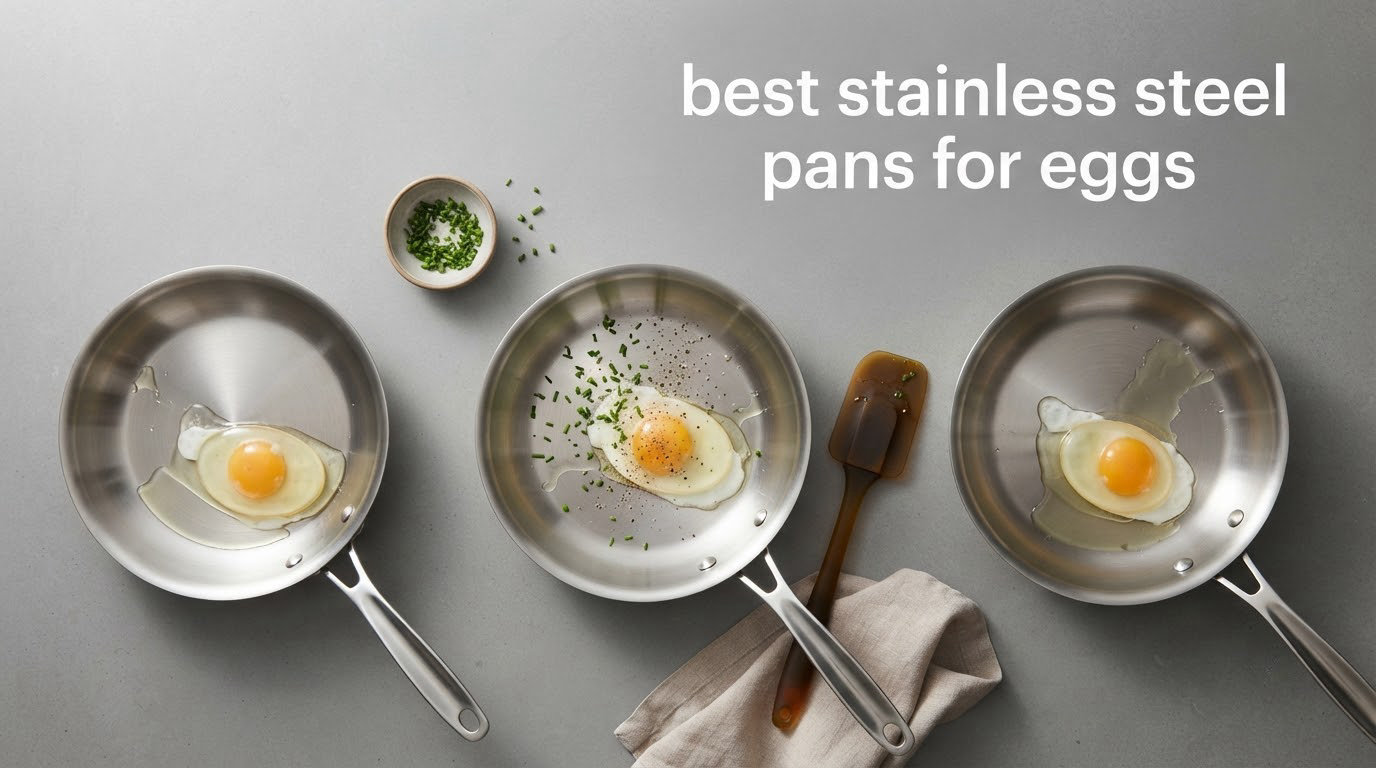
Short answer: the All-Clad D3 10-inch Fry Pan is the best stainless steel pan for eggs in 2026. Its fully bonded tri-ply build spreads heat evenly across the whole base, the 10-inch surface fits a full batch without crowding, and it carries a 4.6 rating across more than 2,000 reviews.
That verdict matters because stainless steel punishes lazy technique in a way nonstick never does. There is no coating to rescue a cold pan, so the egg either releases cleanly or welds itself to the metal. Getting the sequence right matters more than the brand name, which is why this guide ranks the ten best stainless steel pans for eggs on the specs that actually control an egg: flat surface area, weight, heat response, and how much of the pan the burner can reach.
We spent several weeks cooking eggs in every pan on this list, mostly on a gas range with one small burner and one large, plus a couple of pans on an induction cooktop. We ran fried eggs, over-easy, soft scrambled eggs, omelettes, and a frittata in each one, and we paid attention to the boring stuff too: how long the pan takes to respond when you turn the knob down, whether the base dishes when the flame is wide and the pan is cold, and what happens to a burnt protein ring overnight.
If you are outfitting a whole kitchen rather than a single pan, our guide to the best stainless steel cookware sets covers the same construction questions at a set level.
Table of Contents
Top 3 Best Stainless Steel Pans for Eggs in October
All-Clad D3 10-Inch Fry Pan
- Fully bonded tri-ply construction
- 10-inch surface fits a full egg batch
- Oven and broiler safe to 600 degrees
- Includes a matching stainless lid

CAROTE 10-Inch Tri-Ply Pan
- Tri-ply bonded base to rim
- Stay-cool hollow handle
- Dishwasher safe
- 600 degree oven limit

Made In 8-Inch 5-Ply Frying Pan
- Five-ply clad made in Italy
- 5-inch cooking surface
- 430 steel exterior for induction
- Oven safe to 800 degrees
The All-Clad takes the top spot because it is the only pan here that solves two egg problems at once: a wide enough surface for a weekend batch and a heavy enough base to hold a controlled temperature once the flame is on. The CAROTE earns the value slot because a fully bonded tri-ply pan with a 600 degree oven limit and a dishwasher-safe finish is not a compromise for egg work, it is genuinely capable. The Made In 8-inch is the premium single-egg answer, with five bonded layers and a 5-inch cooking surface that is unusually honest about its footprint.
Every Stainless Steel Pan We Tested in 2026
| Product | Specifications | Action |
|---|---|---|
| All-Clad D3 10-Inch Fry Pan with Lid |
|
Check Latest Price |
| CAROTE 10-Inch Tri-Ply Frying Pan |
|
Check Latest Price |
| Made In 8-Inch 5-Ply Frying Pan |
|
Check Latest Price |
 Cuisinart 8-Inch Open Skillet Cuisinart 8-Inch Open Skillet |
|
Check Latest Price |
 Tramontina Signature 8-Inch Tri-Ply Pan Tramontina Signature 8-Inch Tri-Ply Pan |
|
Check Latest Price |
 Calphalon Triply 8-Inch Omelette Pan Calphalon Triply 8-Inch Omelette Pan |
|
Check Latest Price |
 DELARLO Tri-Ply 8-Inch Skillet DELARLO Tri-Ply 8-Inch Skillet |
|
Check Latest Price |
 Yeksum Tri-Ply 8-Inch Frying Pan Yeksum Tri-Ply 8-Inch Frying Pan |
|
Check Latest Price |
 IMEEA 4.7-Inch Ultra Small Egg Pan IMEEA 4.7-Inch Ultra Small Egg Pan |
|
Check Latest Price |
 KOCH SYSTEME CS 10-Inch Pan KOCH SYSTEME CS 10-Inch Pan |
|
Check Latest Price |
A few patterns jump out immediately. Six of the ten are 8-inch pans, which is the size most home cooks reach for first, and only three are listed as broiler safe for finishing an omelette with direct top heat. Two of the ten are built specifically around a single egg rather than a batch. Read those rows as a map of the trade-offs you are making: size for storage, oven limit for finishing, and base thickness for heat control.
1. All-Clad D3 10-Inch Fry Pan with Lid: Best Overall Stainless Steel Pan for Eggs
All-Clad D3® Stainless Steel 10″ Fry Pan with Lid, Made in the USA
Fully bonded tri-ply
10 inch diameter
3.5 pounds
Oven and broiler safe to 600F
Pros
- Even heat from the bonded aluminum core
- 10-inch surface fits a full batch without crowding
- Included lid traps heat for finishing eggs
- Balanced riveted handle with a classic underhand grip
- Made in the USA with a limited lifetime warranty
Cons
- Hand wash only rather than dishwasher safe
- Heavier than budget stainless at 3.5 pounds
- Requires proper preheating and fat to prevent sticking
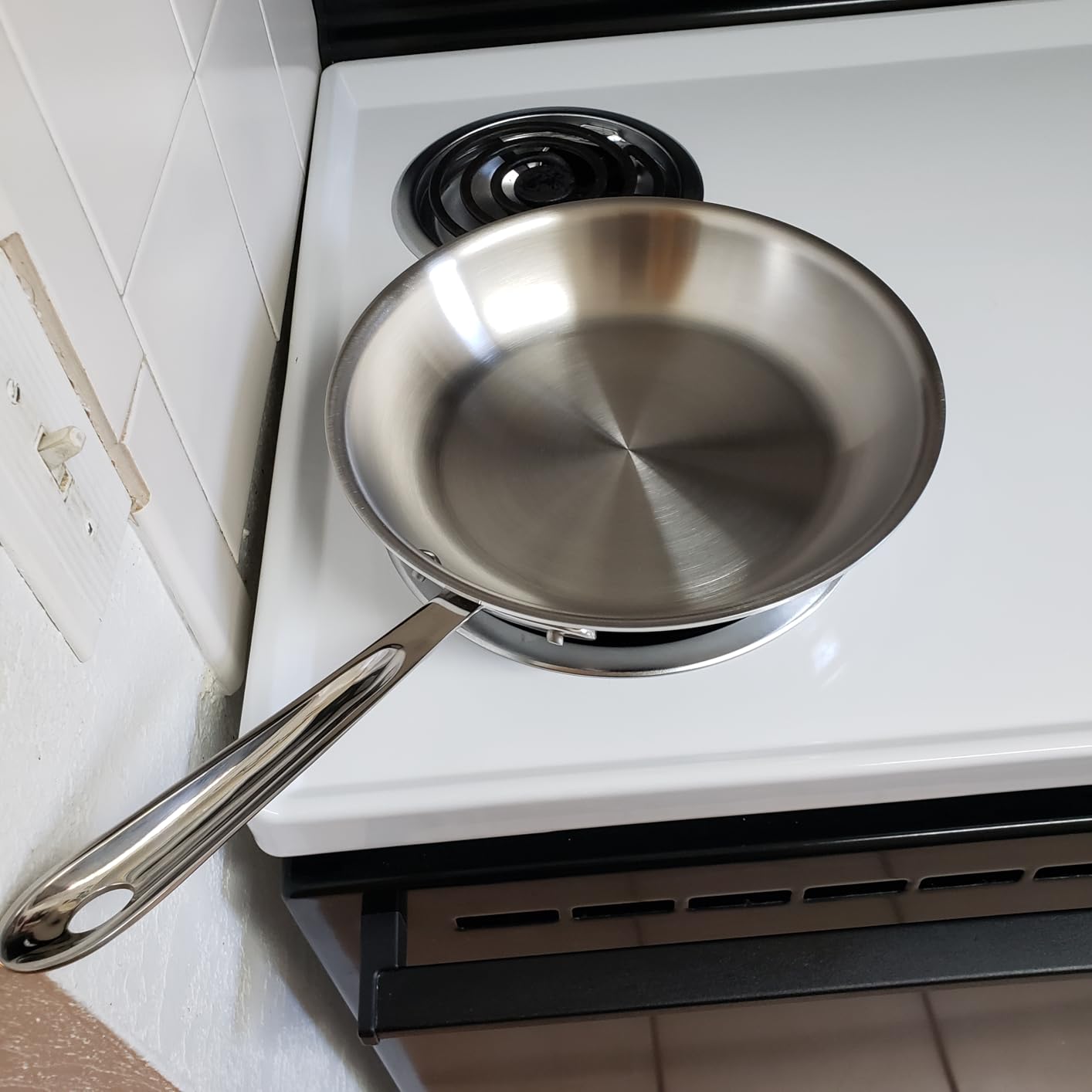
This is the pan we reach for when the answer has to work for both a single over-easy egg and a four-egg omelette in the same morning. The aluminum core is bonded from base to rim, so the walls heat at nearly the same rate as the base, and that is what keeps a soft scrambled egg from setting unevenly as it folds down the side.
Heat response is the standout. Turn the flame to medium-low and the pan settles almost immediately, which is the difference between sliding an egg and tearing it. The 3.5-pound weight is a genuine tradeoff, because a full pan plus a whisk plus your wrist is a real load, but the mass is why the temperature stays steady while you are busy at the counter.
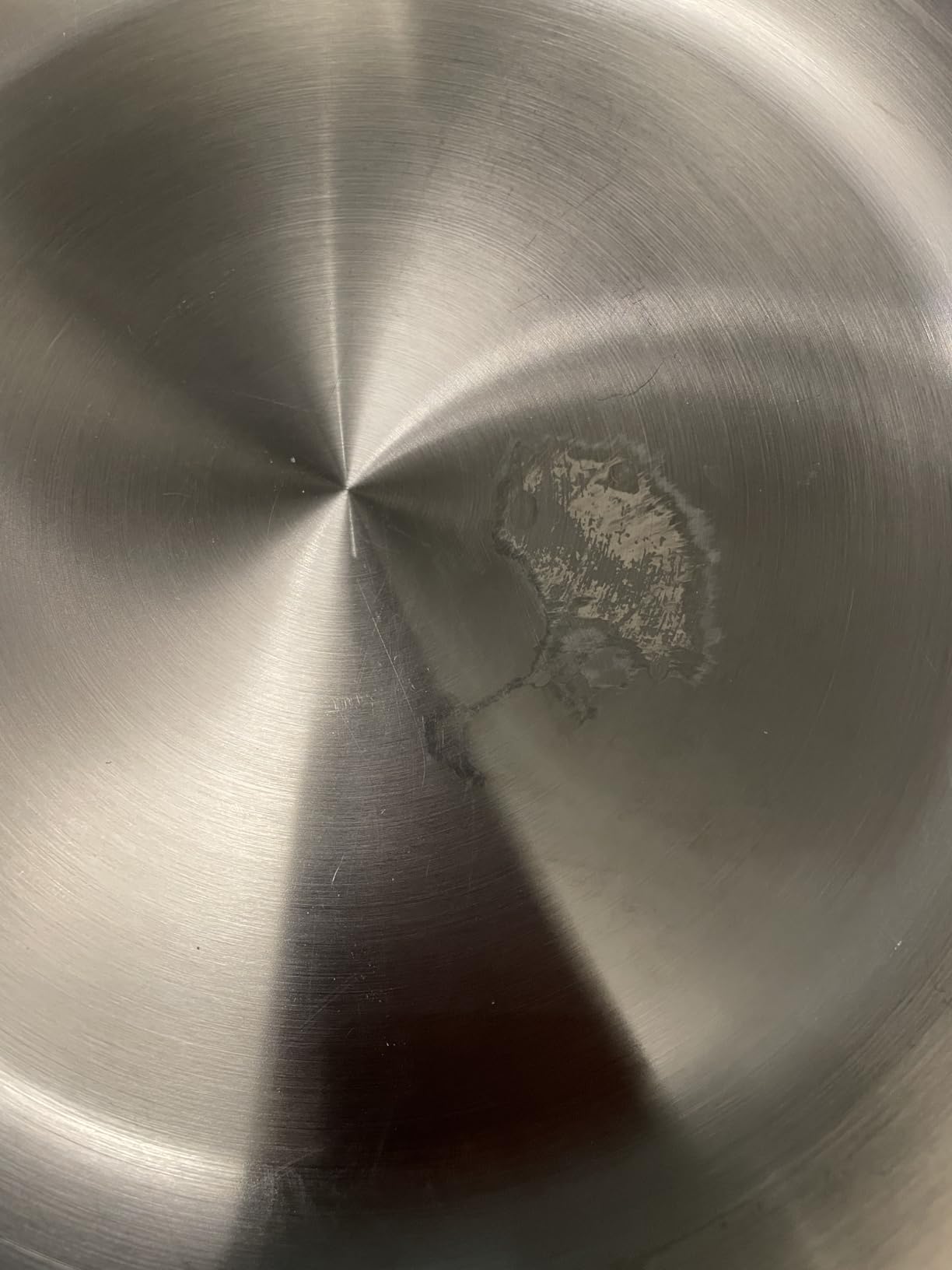
The included lid is more useful for eggs than most buyers expect. Put it on for the last thirty seconds of a soft scramble and the trapped steam finishes the whites without pushing the surface temperature any higher. It also works for a frittata that needs a few minutes in the oven at 350 degrees, which this pan handles without any concern about the riveted handle.
Flared rims give you a clean pour for a pan sauce made from the fond left behind after searing, which is the other half of why a stainless egg pan is worth owning. The construction is Made in the USA in Pennsylvania with global components, and it is backed by a limited lifetime warranty rather than a fixed term.
Who the All-Clad D3 10-Inch suits
It suits anyone cooking eggs two or more mornings a week who will also use the pan for meat, vegetables, and sauces. A 10-inch surface gives a fried egg enough room to set without the edges steaming against the wall, which is the mistake that turns a sunny side up rubbery in the middle.
If you have a gas range with a small front burner, this pan still behaves, because the fully bonded walls mean the egg is heated by the side flame as well as the base. That is exactly the situation where a cheap disc-base pan leaves you with a set ring and a raw center.
Who should skip it
Skip it if hand washing is a genuine barrier for you. The finish and the bonded layers are not dishwasher hostile, but the maker specifies hand wash only, and reviewers consistently report that as the main drawback. If you will not hand wash, the CAROTE and the Cuisinart are both dishwasher safe and both hold a tri-ply or encapsulated base.
Also skip it if your storage space is genuinely tight and you only ever cook one egg. At 3.5 pounds and 10 inches, this is a substantial object to own for a single serving.
2. CAROTE 10-Inch Tri-Ply Frying Pan: Best Value Tri-Ply Pan for Eggs
CAROTE 10″ Tri-Ply Stainless Steel Frying Pan, Non-Toxic Egg Pan Omelet Pan, Oven Safe, Induction, Ceramic and Gas Cooktops Compatible, Polished Silver
3-ply fully bonded
10 inch diameter
Oven and broiler safe to 600F
Dishwasher safe
Pros
- Scrambled eggs and omelettes slide out with little or no oil
- Even heat with no hot spots across the base
- Stays cool and secure in the hand while cooking
- Dishwasher safe and easy to keep bright
- Holds its polished finish over years of daily use
Cons
- Actual cooking surface runs slightly larger than the stated 10 inches
- Food still sticks if the pan is not preheated and oiled
- Lightweight next to heavier premium clad pans
The single most useful thing about this pan is that the tri-ply construction runs from the base to the rim rather than stopping at a disc. Eggs do not only touch the floor. When the white runs up the side to set, it is setting against a wall that is heating at the same rate, and that is the difference between an evenly cooked omelette and one with a cooked streak.
Owners consistently describe eggs releasing with little or no oil once the pan is properly preheated, which is the outcome we care about. The 600 degree oven and broiler limit is higher than most of the pans in this list, and combined with the dishwasher-safe polished surface it makes this the easiest tri-ply to keep in daily rotation.
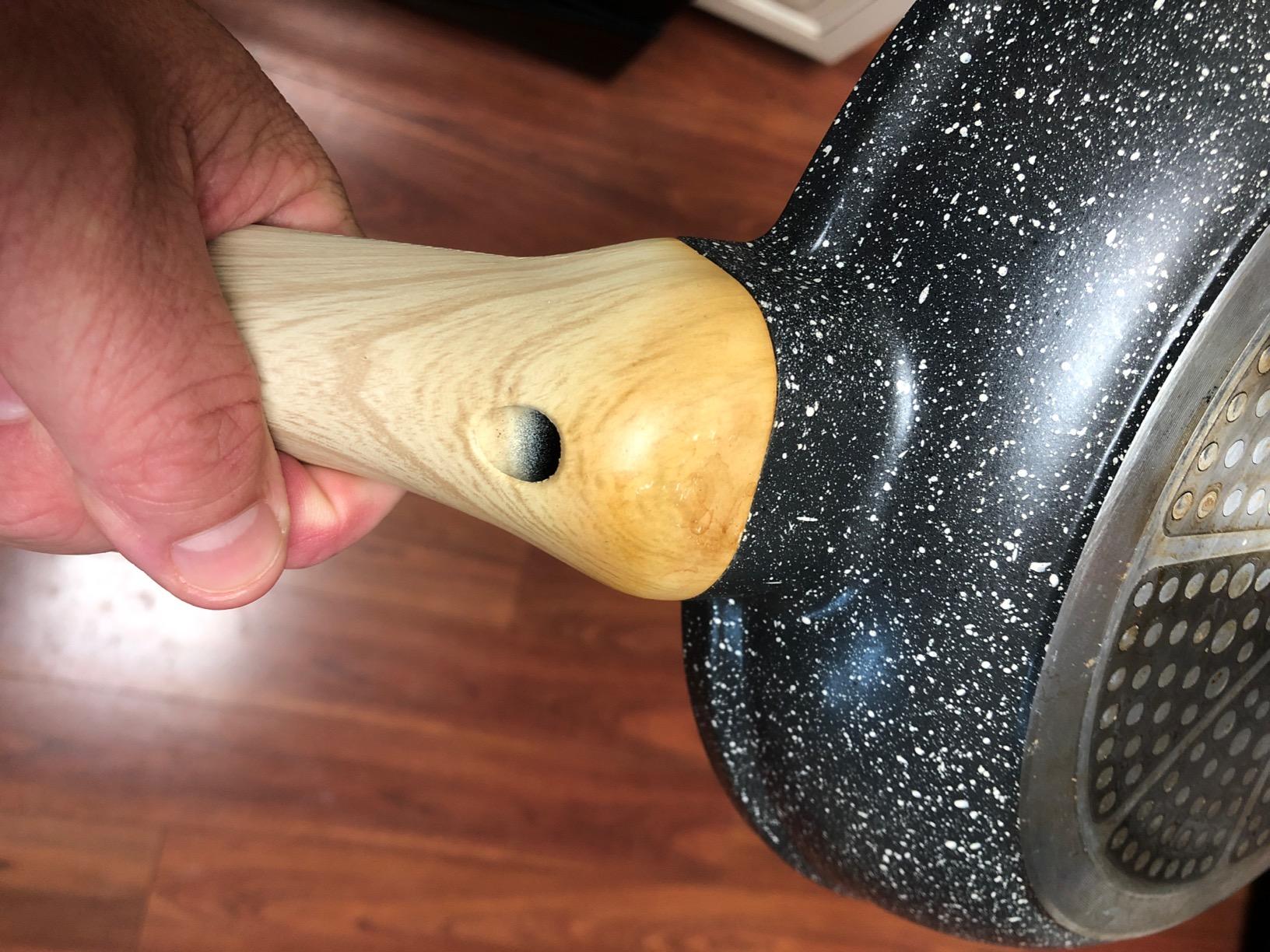
Two caveats come up often. First, the listed 10 inch size measures a little larger on the cooking surface than you would expect, so plan your burner spacing accordingly. Second, it is noticeably lighter than the heavier clad pans, which is a pro for one-handed work and a con if you like the inertia of a heavy pan holding temperature steady while you are whisking.
For a Sunday omelette made from four eggs, the surface area is generous and the walls are shallow enough to roll the omelette out onto a plate without a spatula fight.
Who the CAROTE 10-Inch suits
It suits cooks moving off nonstick who want a proper tri-ply pan without the premium-tier commitment, and it suits anyone who wants the dishwasher in the egg workflow. There is no coating to degrade and no glue line between a surface and a pan body, so the only thing that ages is the shine on the exterior.
It is also a good choice for a first induction pan, since it is listed as compatible with electric coil, gas, smooth-surface induction, and smooth-surface non-induction cooktops.
Who should skip it
Skip it if you want a lot of mass in the pan. Owners who like to slide an egg by tilting the pan away from the flame report that this one is lighter and requires a faster wrist. If the slide-and-flip method appeals to you, a heavier 5-ply option gives you more control.
Skip it too if you need a lid. There is no matching cover included, which matters if you are finishing a soft scramble under trapped steam.
3. Made In 8-Inch 5-Ply Stainless Clad Frying Pan: Best Premium Pan for a Single Egg
Made In Cookware – 8-Inch Stainless Steel Frying Pan – 5 Ply Stainless Clad – Professional Cookware – Crafted in Italy – Induction Compatible
5-ply clad
8.5 inch total diameter
5 inch cooking surface
Oven safe to 800F
Pros
- Exceptional even heating and instant response to flame changes
- Builds excellent fond for pan sauces
- Handle stays cool and the pan is balanced
- No warping after heavy daily use
- Handles eggs and crepes well once you learn the preheat
Cons
- Genuine learning curve if the pan is not preheated and oiled
- Exterior base scratches easily with metal utensils
- Hand wash only
- Some buyers report mineral spotting on induction
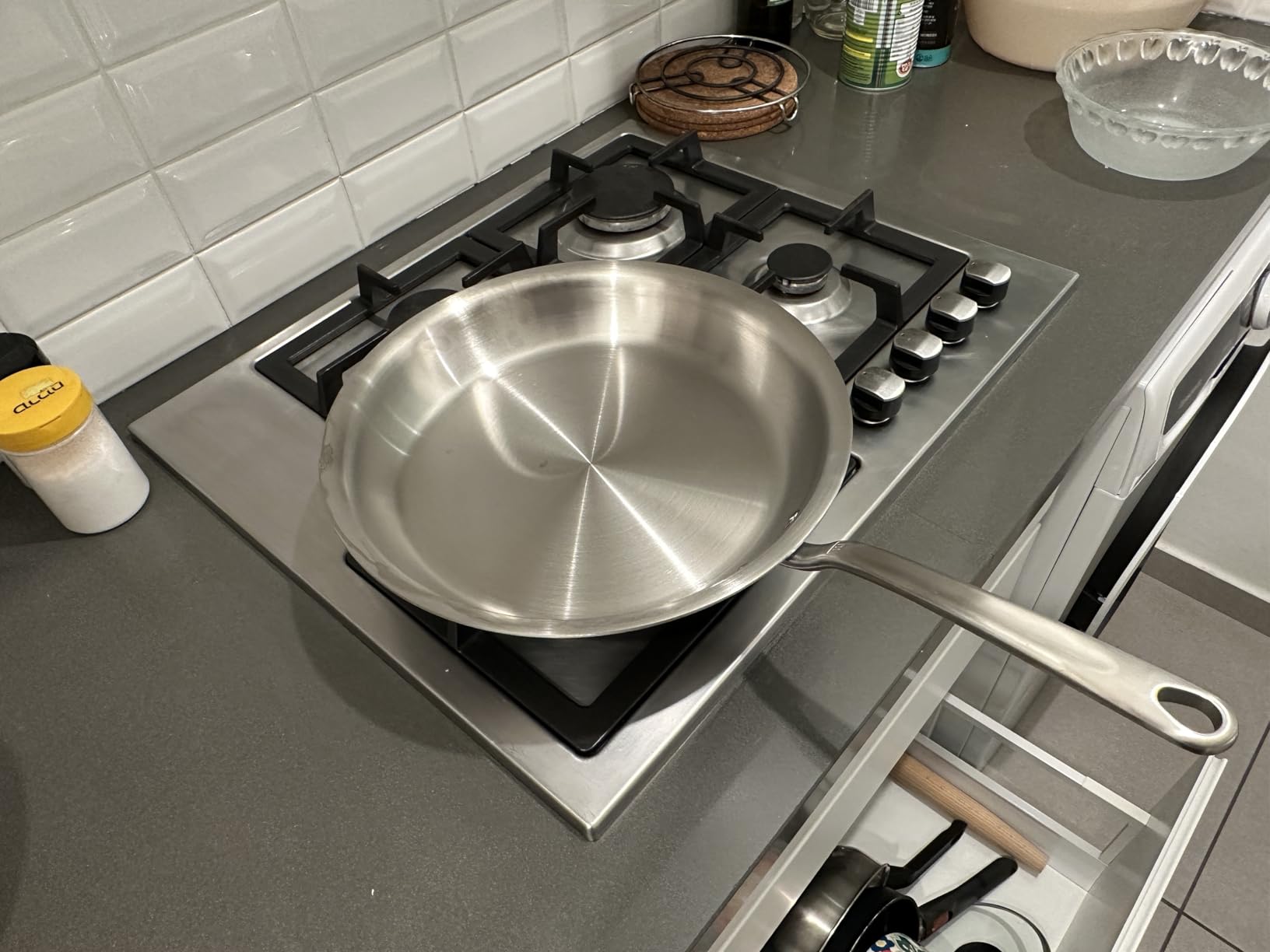
This is the most precisely described pan in the group, and the specs matter. Total diameter is 8.5 inches, the cooking surface is 5 inches, depth is 1.75 inches, and the height with the handle is 2.75 inches. A 5-inch flat surface is exactly the footprint of one large omelette or two fried eggs, which makes this the single most honest answer to the most common question in egg forums, which is how big does it need to be.
Five bonded layers with an aluminum core respond faster to a flame change than anything else here, and the 430 stainless outer layer keeps it compatible with induction. The 800 degree oven limit is the highest on this list by a wide margin, so finishing under the broiler is not a compromise.
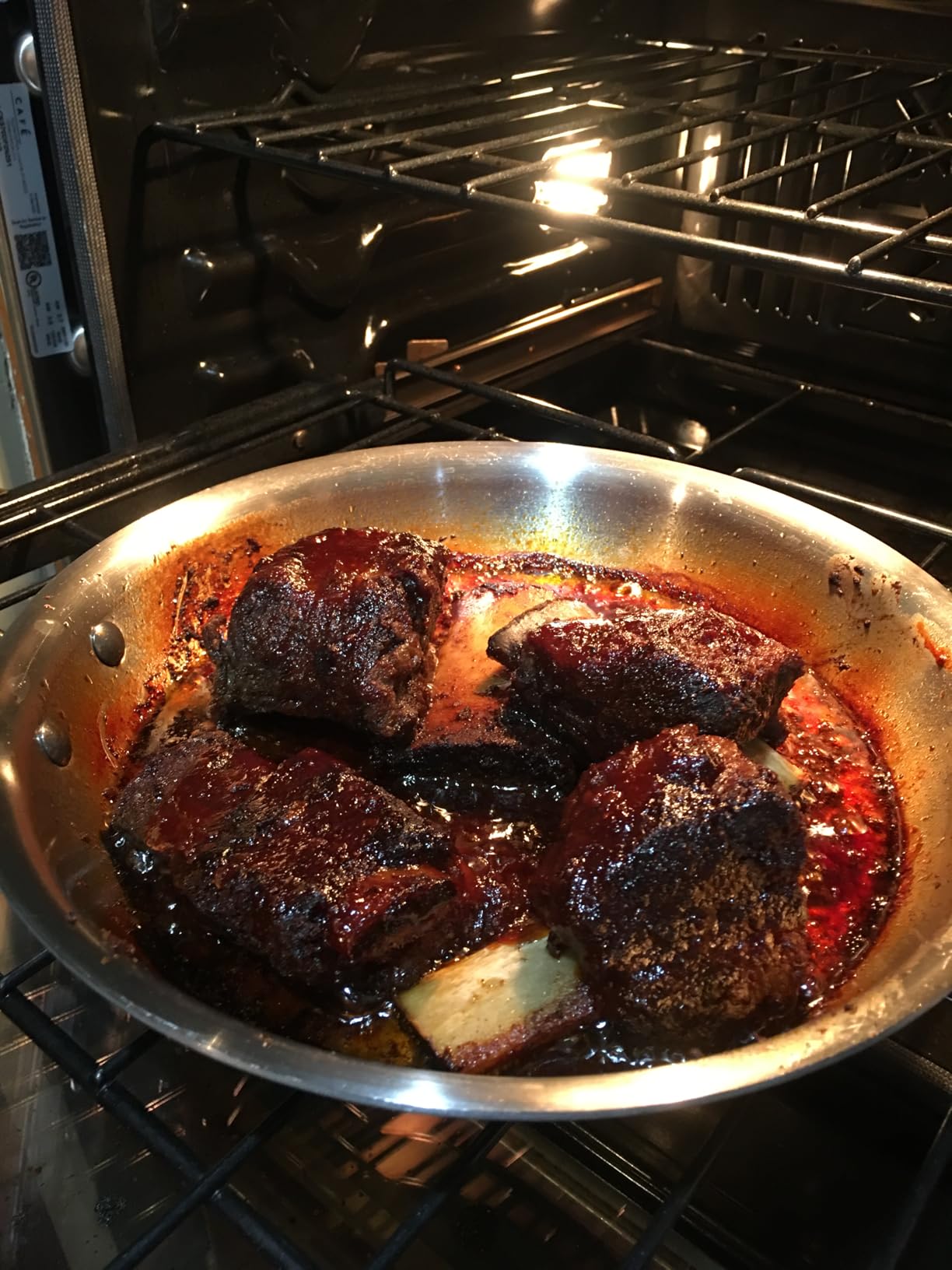
Experienced cooks who own this pan point to the fond it produces as the real advantage, because the browned bits from a properly preheated surface are what make a pan sauce after the eggs are gone. For egg work specifically, the tight surface area means the egg fills the pan without a wide cold ring, so the edges do not overcook while the center sets.
There is a real learning curve, and it is the same curve every bare stainless pan has. Follow the preheat-then-fat sequence, and this pan behaves as well as anything in this guide. Skip the preheat, and the protein welds itself to the surface.
Who the Made In 8-Inch suits
It suits cooks who are deliberate about technique and want the control that comes from a fast-responding, high-mass pan. The riveted stainless handle stays cool on the stove, and the pan is balanced enough to hold one-handed while you shake it.
It also suits anyone who wants a single pan to carry eggs in the morning and pan sauces in the evening. The combination of a responsive core, a cool handle, and an 800 degree oven limit means one piece covers both jobs well.
Who should skip it
Skip it if you want a big surface. A 5-inch cooking surface is a single-serve footprint, and a four-egg omelette will not fit. It is also hand wash only, and a small number of buyers report mineral spotting or occasional warping after long use on induction.
Skip it if you are squeamish about scratching. The exterior base marks easily against metal utensils, so the cosmetic finish will not stay perfect if you work roughly.
4. Cuisinart 8-Inch Open Skillet: Best Stainless Steel Pan for Beginners
Cuisinart 8-Inch Open Skillet, Stainless Steel Skillet, Large Kitchen Pan, Dishwasher Safe, Compatible with Induction, Electric, Gas Cooktops, Oven Safe Saucepan, Cool Grip Handles
Aluminum encapsulated base
8 inch diameter
16 ounces
Oven safe to 500F
Pros
- Fast even heating with no hot spots
- 8 inch size suits one or two eggs
- Dishwasher safe and cleans with a short soak
- Induction electric and gas compatible
- Made in the USA with a lifetime warranty
Cons
- Food sticks if the pan is not preheated and oiled
- Exposed rivet head inside the cooking surface
- Can click as bonded layers expand and contract
- Finish can show discoloration and heat staining
With more than 10,900 reviews, this is the most thoroughly owner-tested pan on the list, and the pattern in those reviews is remarkably consistent. People buy it as a first stainless skillet, find that eggs release once they stop cooking cold, and keep it for years. At 16 ounces it is the lightest full-size option here, which makes it the least tiring pan to move in and out of a cabinet.
The base is aluminum encapsulated rather than a full tri-ply stack, so the floor heats quickly and spreads heat without a single harsh hot spot. That is genuinely good for eggs, because the risk with a thin stainless pan is a scorched ring where the flame sits and a raw center out at the wall.
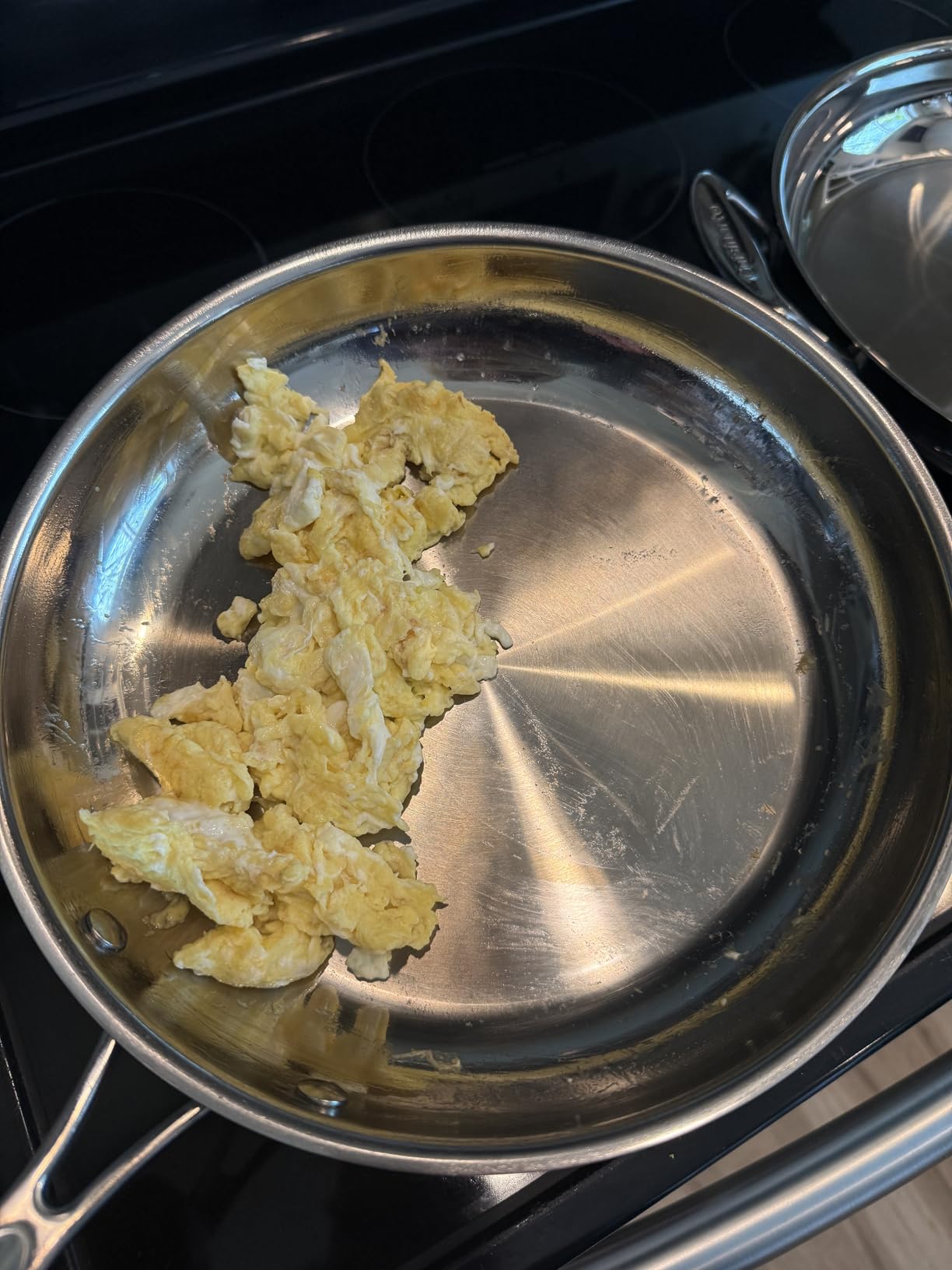
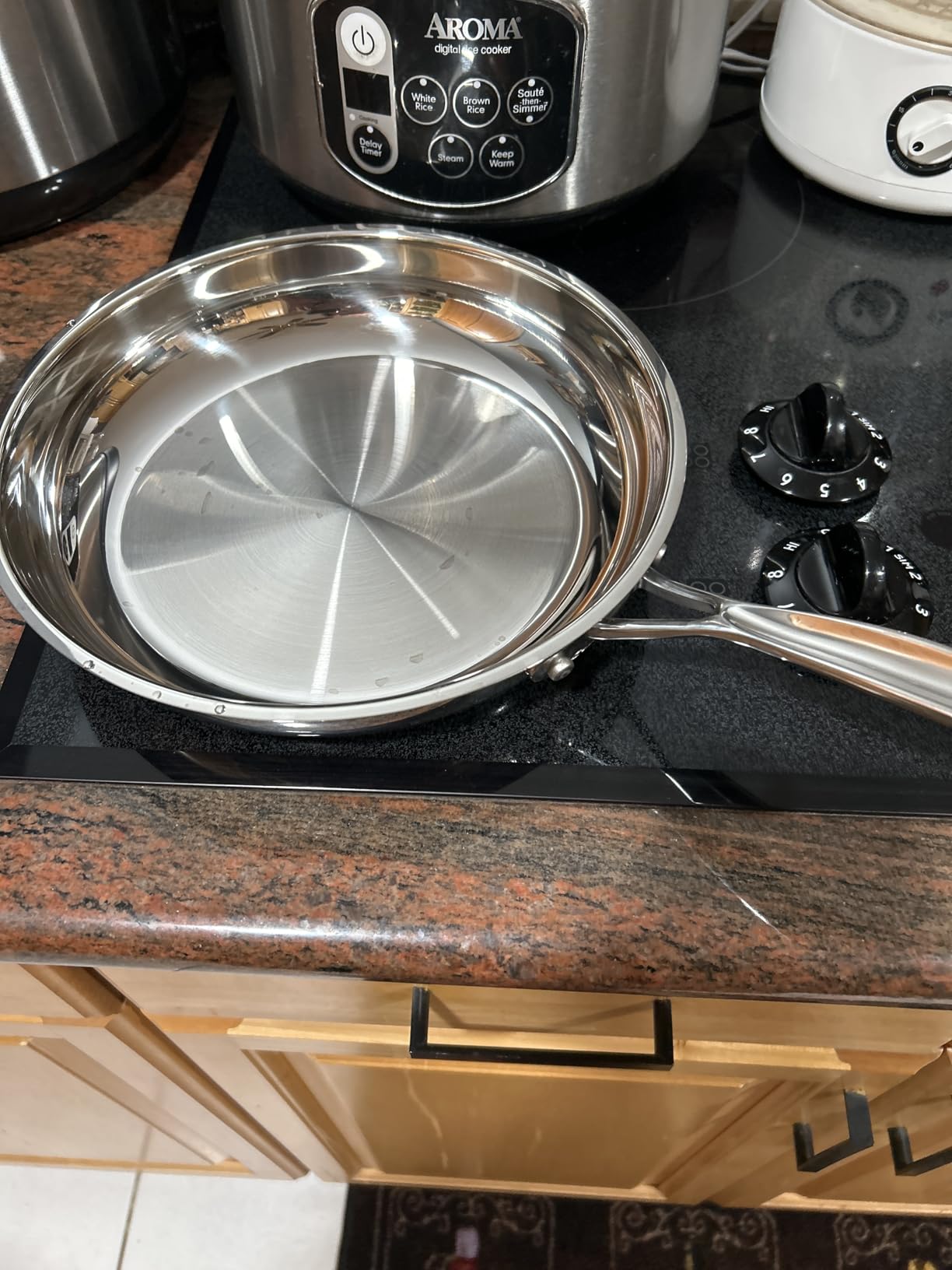
Two honest drawbacks. The riveted handle leaves an exposed rivet head inside the cooking surface, which is a small crevice that catches dried egg white, and owners mention that the bonded layers can click audibly as they expand and contract with heat. Neither affects cooking, but both are things you notice at 6 a.m.
The polished finish also picks up heat staining over years of high-heat use, unless you periodically run a stainless cleaner. Budget a few minutes a month for that if appearance matters to you.
Who the Cuisinart 8-Inch suits
It suits a cook moving from nonstick who wants the lowest-friction first step: a light pan, a dishwasher-safe finish, and a lifetime warranty. The 8-inch size is genuinely good for one egg or two-egg portions, and it stores easily in a small kitchen.
It suits anyone on a tight budget who wants induction compatibility without paying a premium-tier number. Electric coil, gas, smooth-surface induction, and smooth-surface non-induction are all listed as supported.
Who should skip it
Skip it if you cook four-egg omelettes. An 8-inch pan with a shallow floor gives you roughly one and a half eggs of comfortable space. For a batch brunch you want a 10-inch surface.
Skip it if you are sensitive to nonstick coatings. The bare stainless surface does not discolor, react with food, or alter flavors, and it is BPA free, but it also has zero slip release, so every egg depends on your preheat.
5. Tramontina Signature Tri-Ply 8-Inch Pan: Best Lightweight Pan for Small Kitchens
Tramontina Signature Tri-Ply Clad Stainless Steel 8-Inch Small Frying Pan
Tri-ply clad
8 inch diameter with a 5.5 inch surface
1.6 pounds
Oven safe to 500F
Pros
- Eggs release easily with proper preheating
- Comfortable hollow riveted handle that stays cool
- Light enough for one-handed work and easy storage
- NSF-certified for professional safety standards
- Dishwasher safe with a lifetime warranty
Cons
- About 5.5 inches of cooking surface means small batches
- Bottom finish can be uneven out of the box
- Thinner core than premium pans which shows on gas burners
- Takes more effort to clean than nonstick
The reason this pan exists for egg work is weight. At 1.6 pounds it is the second-lightest full-size option in this guide, and for cooks with limited upper body strength, or anyone working on a cramped gas cooktop with an awkward reach, that is a real daily-use advantage rather than a rounding error.
The build is tri-ply clad with an aluminum core and an 18/10 stainless interior and exterior, which is the same basic architecture as the pricier pans at a fraction of the mass. Owners report that scrambled eggs and sunny-side-up eggs release well once the pan is hot and the fat has been added.
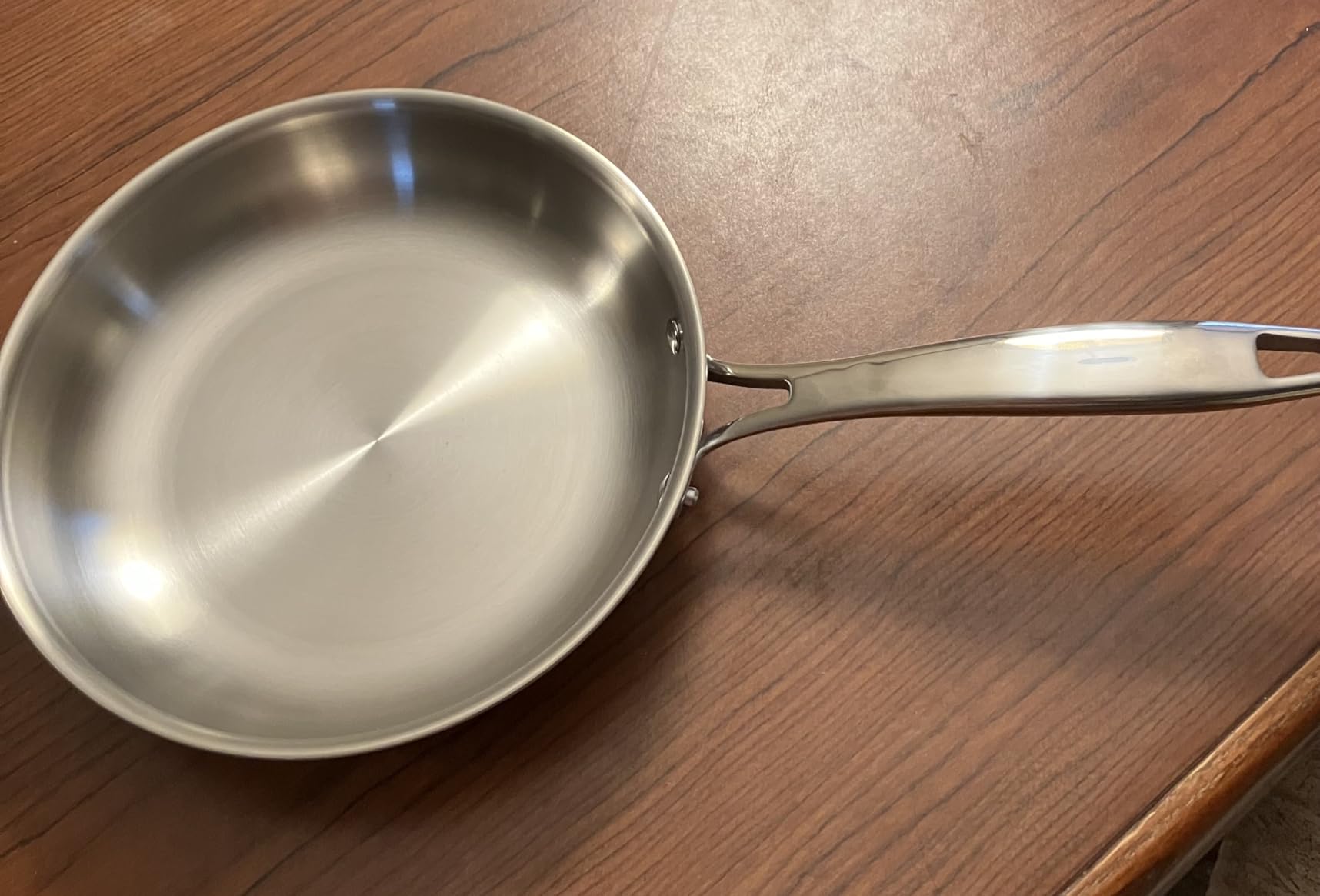
The honest limitation is the cooking surface, at roughly 5.5 inches. That is a two-egg maximum, so a family brunch means running batches. The core is also thinner than the premium clad pans, and a few owners feel that on a wide gas burner the pan takes longer to recover when you turn the flame down.
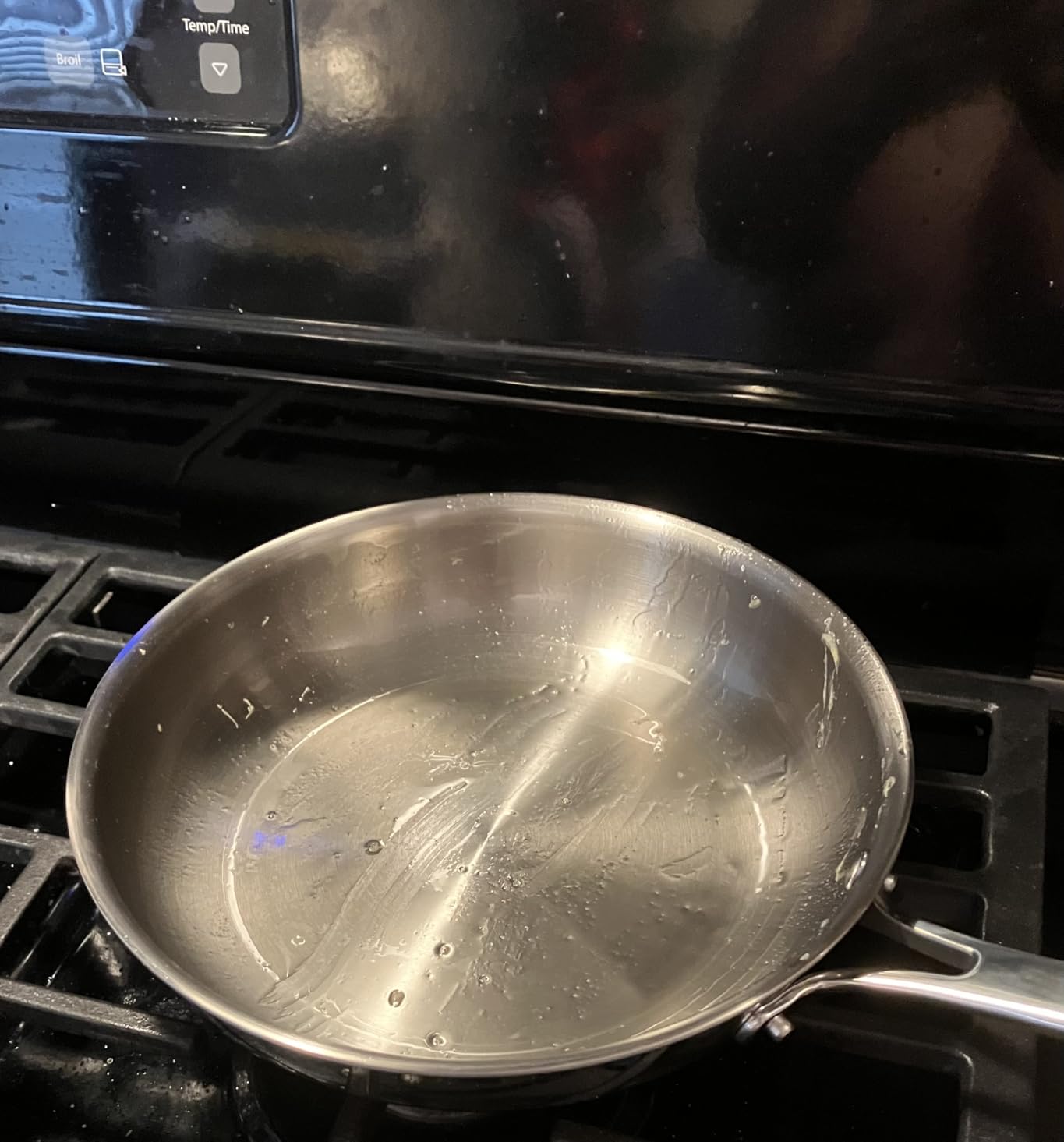
The bottom finish is not always smooth straight out of the box, which can sit slightly uneven on a flat glass cooktop. It settles with use, but it is worth checking before your first meal.
Who the Tramontina 8-Inch suits
It suits small kitchens, first apartments, and anyone who wants a stainless egg pan that is easy to lift. The 8-inch footprint stores in a shallow drawer, and the handle stays cool on the stove even during a long cook.
It also suits people who want NSF-certified cookware without a premium-tier spend, and it is made in Brazil with a lifetime warranty behind it.
Who should skip it
Skip it if you cook for more than two at a time, and skip it if you run a high-output gas burner and expect restaurant-level recovery. It also requires more scrubbing discipline than a coated pan, because there is no nonstick layer doing the work for you.
6. Calphalon Triply 8-Inch Omelette Fry Pan: Best Stainless Steel Pan for Omelettes
Calphalon Triply Stainless Steel 8-Inch Omelette Fry Pan
Tri-ply bonded
8 inch diameter
2 pounds
Oven and broiler safe
Pros
- Wide flat bottom gives even heat under a full omelette
- Sloped sides make rolling and flipping eggs easier
- Brushed exterior goes straight from oven to table
- Cool-V handle stays cool on the stovetop
- Dishwasher safe with a lifetime limited warranty
Cons
- Lid not included
- Requires oil and proper preheating to prevent sticking
- Reflective surface makes it harder to judge doneness by color
Omelette technique depends on two things: a wide, flat, evenly heated base, and low sidewalls you can roll the set egg over. This pan was designed around the second one. The sloped sides are not decorative, they are the feature that lets you tip, shake, and roll a three-egg omelette out onto a plate in one motion instead of folding it in half and hoping it holds.
The flat wide bottom spreads heat evenly enough that the whole omelette cooks at the same rate, which is what stops you from getting a browned underside with a raw top. The non-porous surface is safe with any utensil, so a silicone or metal turner makes no difference to the surface over time.
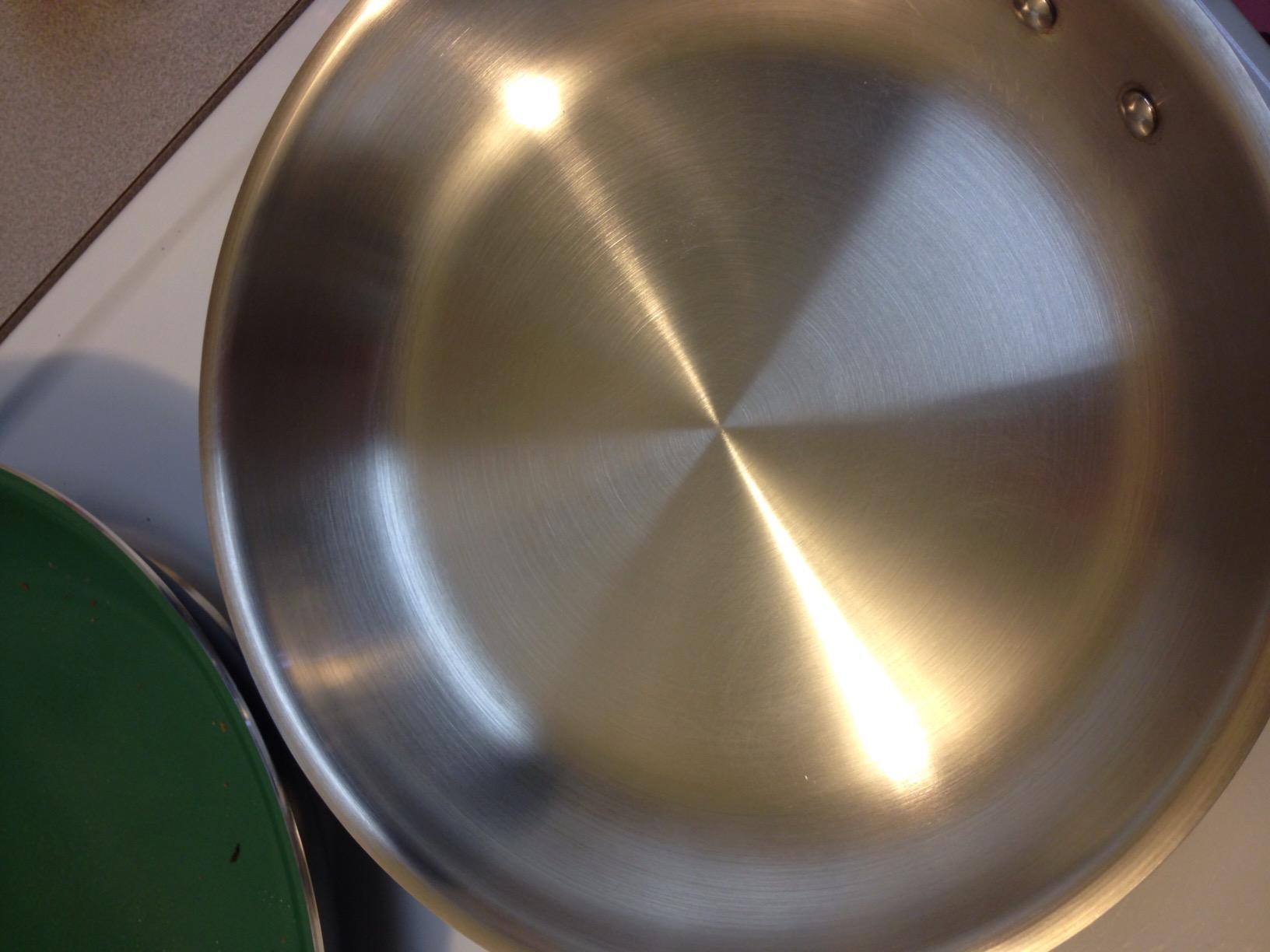
It works on gas, electric, halogen, ceramic, and induction, and it is oven and broiler safe, so a frittata in the same pan is realistic. Gas, electric, halogen, ceramic, and induction tops are all listed, and the brushed exterior means you can carry it to the table without a trivet in between.
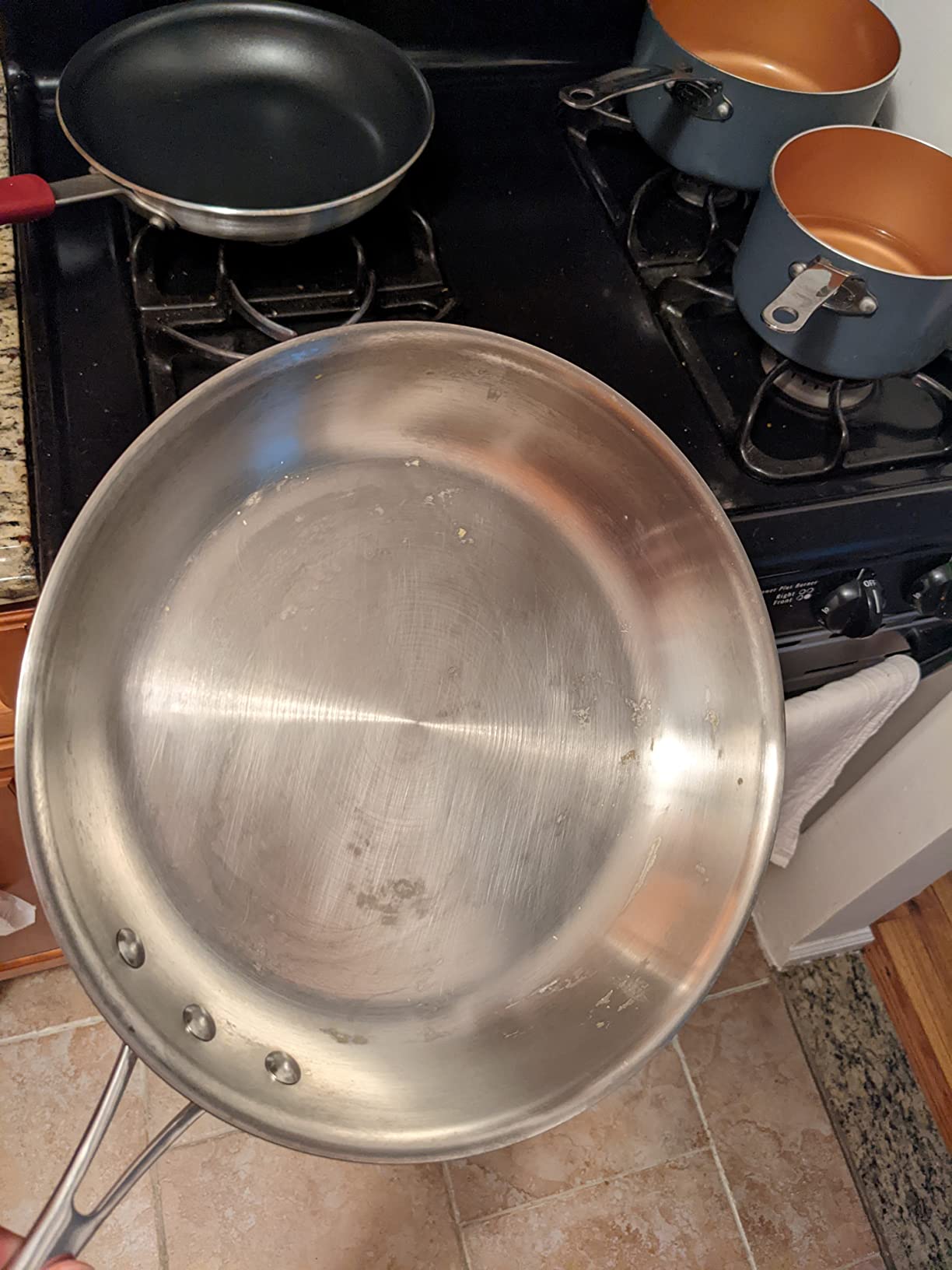
The lid is the notable gap, sold separately, so finishing a soft scramble under trapped steam takes another plan. The reflective interior also works against you when you are judging doneness by looking at the whites through the pan rather than by touch.
Who the Calphalon Omelette Pan suits
It suits cooks who make omelettes and French-style eggs at least once a week and want a pan built for the roll. At 2 pounds it is light enough to shake confidently, which matters more for omelette work than raw weight.
It also suits anyone who wants oven-to-table service, since the brushed finish is designed to be carried while still hot.
Who should skip it
Skip it if you want the included-lid workflow or a very high oven limit. It also will not solve sticking for you: like every bare stainless pan, it needs oil and a proper preheat, and reviewers say so directly.
7. DELARLO Tri-Ply 8-Inch Skillet: Best Budget Tri-Ply Stainless Pan
DELARLO Tri-Ply Stainless Steel Frying Pan 8″ kitchen skillet
Tri-ply with aluminum core
8 inch diameter
2 pounds
Oven safe to 500F
Pros
- Low-cost way into a coated-free tri-ply pan
- No synthetic coating that can flake or degrade
- Induction compatible
- Dishwasher and oven safe for easy cleanup
- Sloped sides help move food
Cons
- Thinner aluminum core than premium pans
- No lid included
- Needs oil and preheating to reduce sticking
If your goal is simply to learn stainless technique without spending a premium-tier number on the lesson, this is the most direct route. It is a tri-ply pan with an aluminum core, it is induction compatible, it is dishwasher safe, and it carries no coating of any kind, which means there is nothing to flake into your eggs after a year of daily use.
The sloped sides are useful for egg work because they let you push a fried egg up and out without a spatula chasing it. At 2 pounds it is easy to tilt, which is exactly the motion you want for a slide-and-flip.
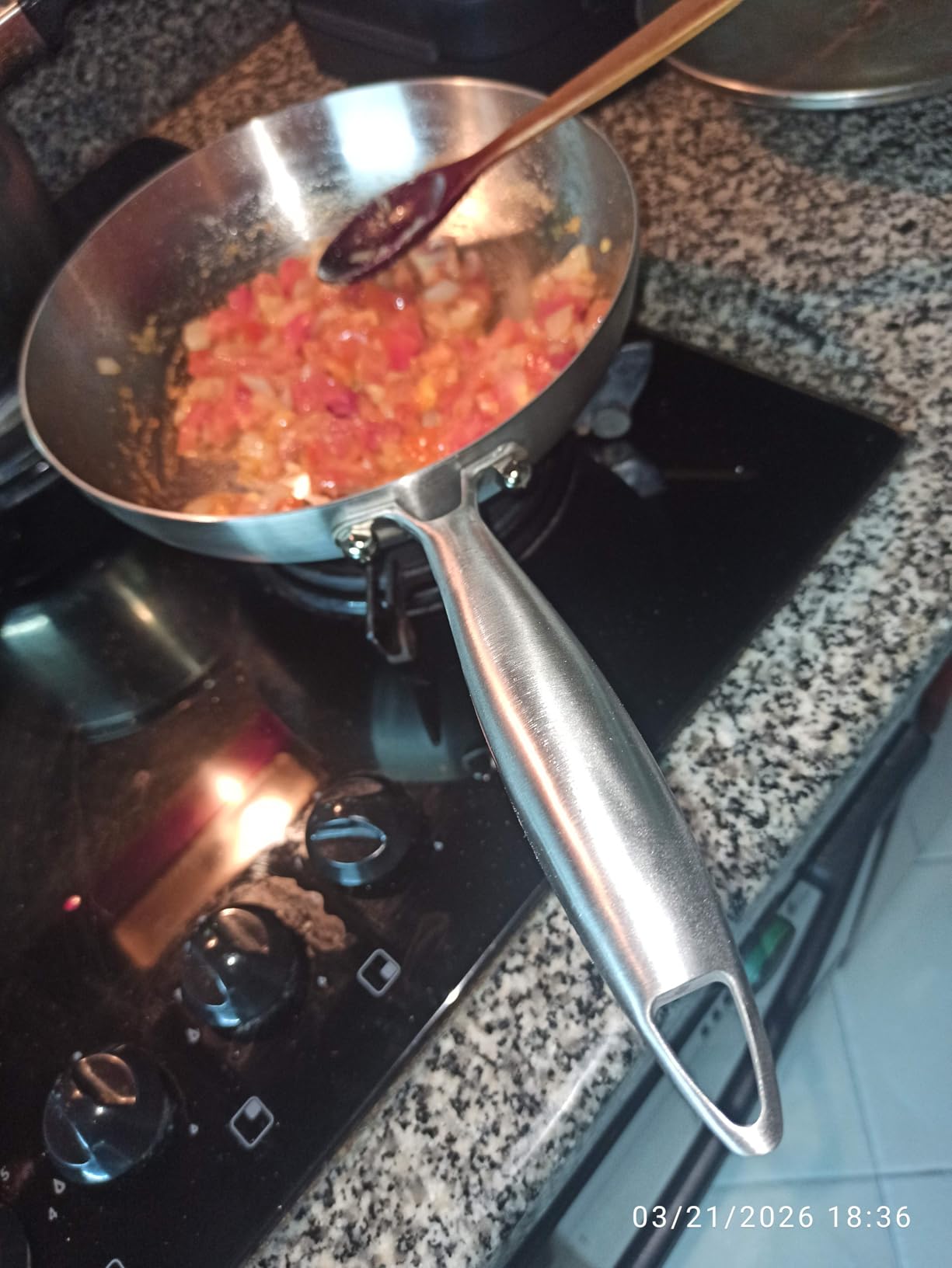
The trade-off is the core. Owners consistently note it is thinner than what you get in premium brands, so this pan needs moderate heat and a slower preheat ramp. Crank it to high and the base will outrun the surface, and you will get a scorched ring under a single egg.
It also has a 500 degree oven limit and no lid, so it is a stovetop pan first and an oven pan second. For finishing a frittata you would need to preheat the pan gently rather than blasting it.
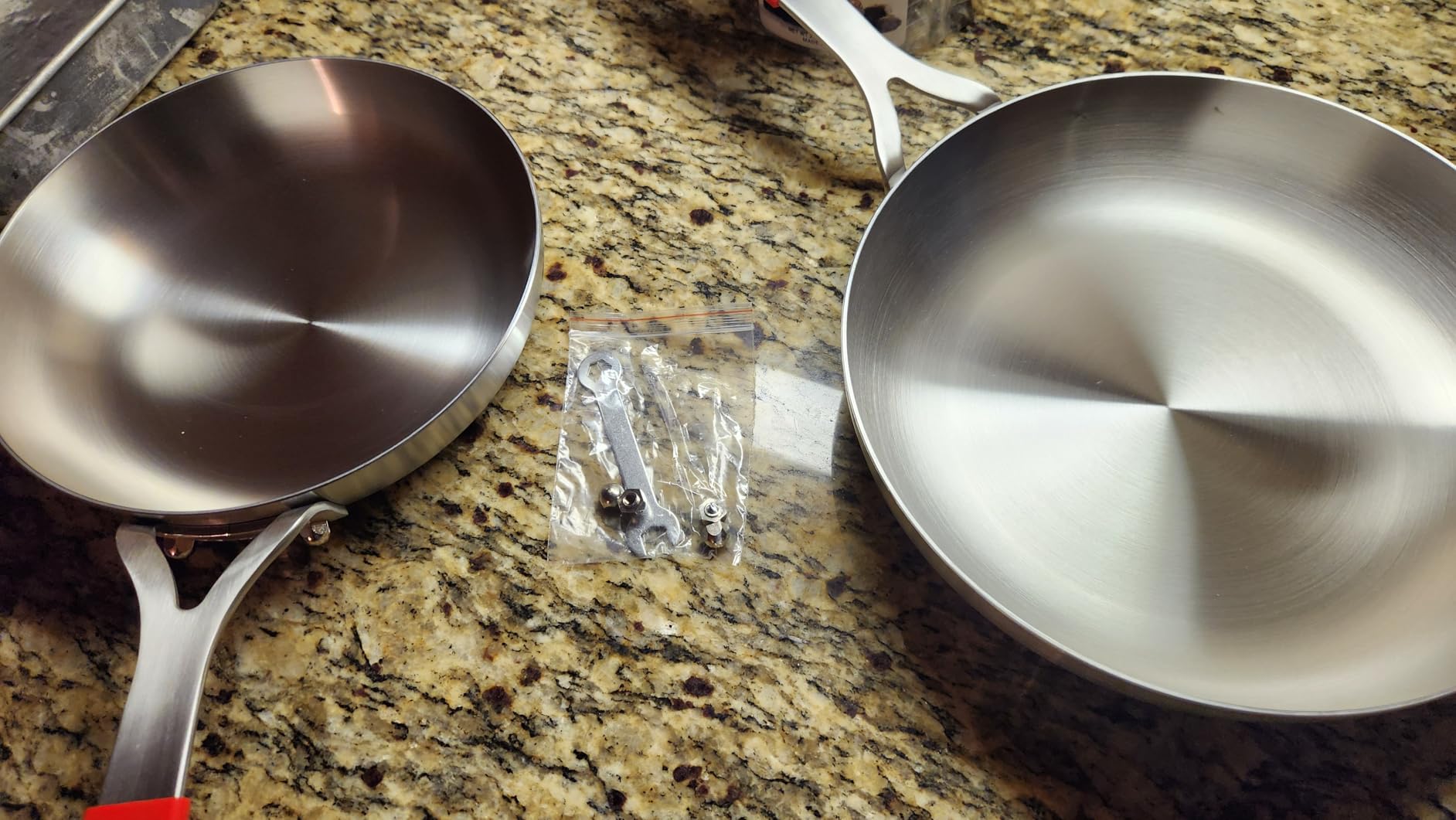
Who the DELARLO 8-Inch suits
It suits first-time stainless cooks who want to practice the technique on something forgiving, and it suits buyers who want a bare coating-free surface at the lowest entry point on this list. The 2-quart capacity is enough for two eggs and toast.
It also suits induction households that need a second or third pan without a second large purchase.
Who should skip it
Skip it if you sear at high heat regularly. A thin core has less thermal mass, so recovery after you drop the flame is slower, and a crispy browned egg edge is much harder to achieve. For high-heat work, spend up for a heavier core.
8. Yeksum Tri-Ply Fully Bonded 8-Inch Frying Pan: Best Everyday Tri-Ply Pan
Yeksum Tri-Ply Fully Bonded Stainless Steel 8inch Frying Pan, Omelette Pans, Egg Pan Durable Chef’s Pan, Kitchen Skillets 8in, Induction Pan for Steak,Egg, Compatible with All Cooktops, Up to 600℉
Fully bonded tri-ply
8 inch diameter
1.7 pounds
Oven safe to 600F
Pros
- Fast even heat from the bonded aluminum core
- 18/8 food grade stainless interior with no coating
- Works on induction gas electric halogen glass and ceramic
- Hollow handle reduces heat transfer
- Good size for a single omelette or egg
Cons
- Hand wash only per the care instructions
- Some light heat spotting appears on the polished surface
- Coating-free surface needs oil and preheating to minimize sticking
The spec sheet here is the most thorough in the budget group. The interior is 18/8 food grade stainless, tested by SGS in the US to meet FDA requirements, and the exterior is 18/0 magnetic stainless, which is what makes it work on every cooktop type. The core is fully bonded, so the base and the walls heat together rather than in sequence.
At 1.7 pounds it sits in the same light-but-stable zone as the Tramontina, and the hollow handle is designed specifically to cut heat transfer, so you can hold it for a long cook without swapping hands. The hanging hole is a small thing that matters in a small kitchen.
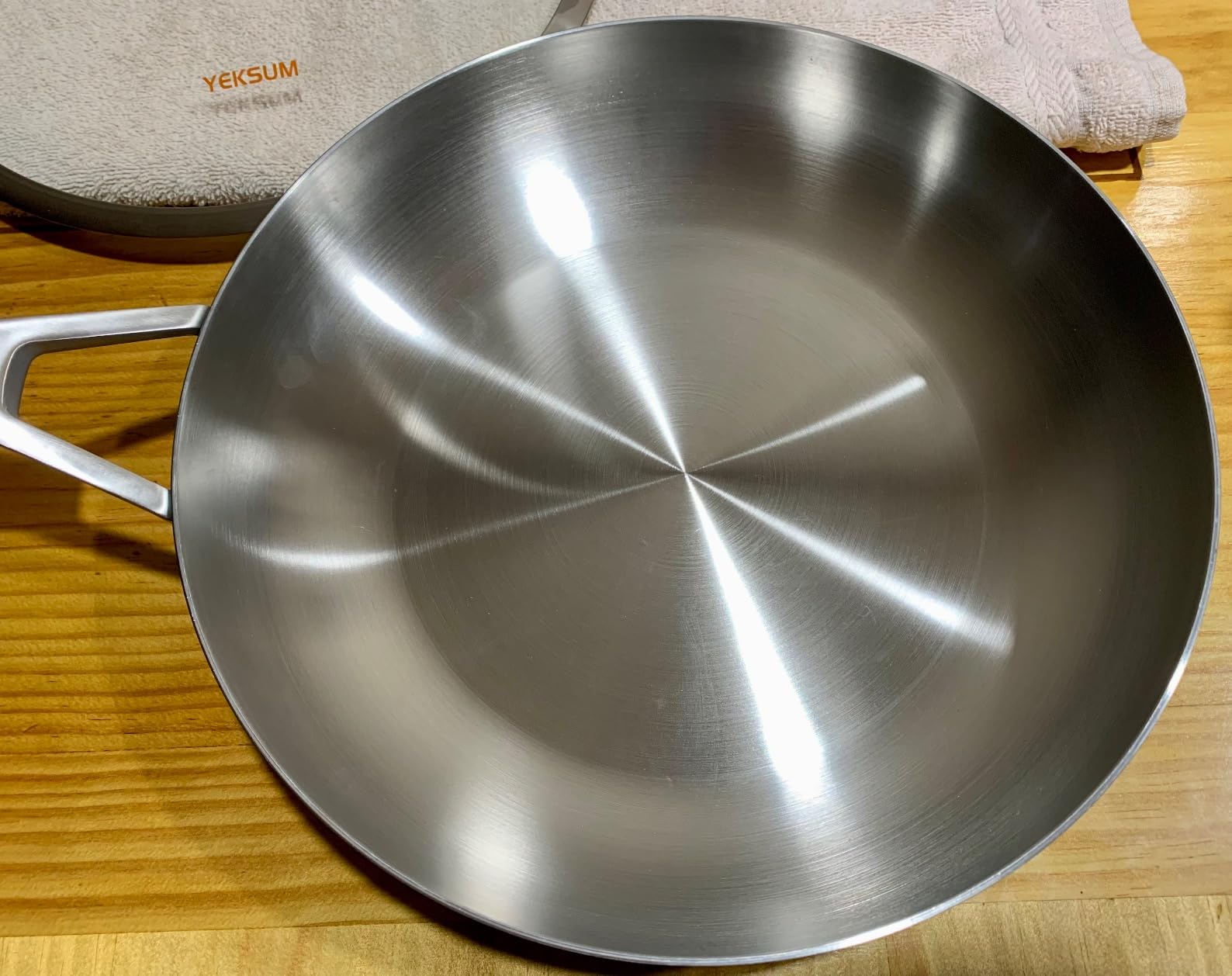
Owners describe it as a capable everyday egg and omelette pan, and the recurring positives are the durable bonded build and the cool handle. The recurring negatives are the expected stainless ones: a coating-free surface needs fat and a proper preheat, and the polished finish shows light heat spotting over time.
The 600 degree oven limit is higher than most of the 8-inch pans here, so a frittata in the oven is realistic even though the care instructions say hand wash only. Hand washing is not hard on a bare stainless surface, but it does rule out the dishwasher in your weeknight routine.
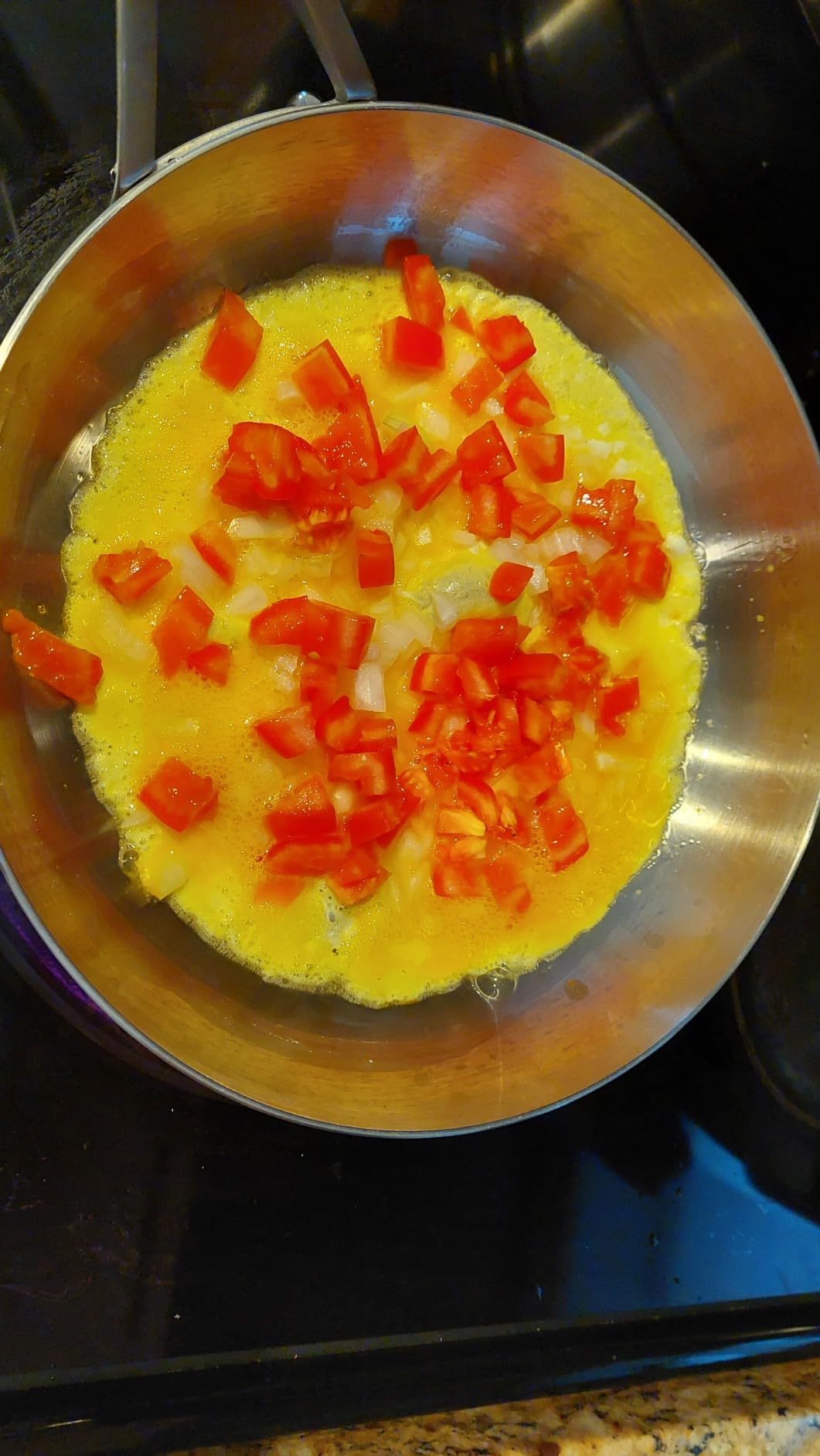
Who the Yeksum 8-Inch suits
It suits cooks who want tri-ply performance across every cooktop they might encounter, including a halogen or glass-ceramic unit. It also suits anyone who cares about what touches their food and prefers a certified food grade interior with no chemical coating.
It suits smaller hands and weaker wrists, because 1.7 pounds plus a hollow handle is one of the friendliest combinations in this guide.
Who should skip it
Skip it if dishwasher cleanup is non-negotiable in your household, and skip it if you need a large batch surface. The listed capacity is one quart, which is a single-serving footprint, and some light spotting shows on the polished surface with regular high-heat use.
9. IMEEA 4.7-Inch Ultra Small Egg Pan: Best Pan for Cooking One Egg
IMEEA 4.7” Ultra Small Egg Frying Pan 304 Stainless Steel 1 Egg Frying Pan
4.7 inch diameter with a 3.4 inch base
304 stainless with aluminum core
Dishwasher safe
Pros
- Purpose-built single-egg size that avoids overcooking
- Even heating in a tiny body thanks to the aluminum core
- Compact and easy to store in a small kitchen
- Dishwasher safe 304 stainless construction
- Tied for the highest rating here
Cons
- Only holds one egg at a time so batches are impossible
- The 3.4 inch base may not be detected by some induction cooktops
- Too small for anything beyond one egg or a mini omelet
This pan exists because of a specific, oddly common problem: cooking one egg in a 12-inch skillet means the white spreads thin, the edges crisp before the center finishes, and you end up with something that is neither a sunny side up nor a proper over-easy. At 4.7 inches with a 3.4-inch base, the egg fills the pan the way it fills a real egg pan.
It carries a 4.6 average rating, tied for the highest in this guide, and the reason for that score is obvious. There is no cold perimeter stealing heat from the center because there is almost no perimeter. Owners who want one egg at a time rate it very highly and note that even heating holds up despite the tiny footprint, thanks to the aluminum core between the 304 stainless interior and the 430 exterior.
The limitation is stated plainly in the product data and repeated in reviews: some induction cooktops and large burners will not detect or properly heat a base this small. If you are on induction, test it on your smallest zone first, and expect to use a medium burner on gas rather than a large one.
Maximum capacity is 8.5 ounces, or 250 milliliters, which also makes this a useful little pan for butter, a single sauce, or a warmed crepe. It is dishwasher safe, so cleanup for a daily single-egg routine is genuinely fast.
Who the IMEEA 4.7-Inch suits
It suits cooks who eat one egg most mornings, and it suits anyone with very limited storage who wants a dedicated egg tool that occupies almost no space. The 300 gram weight is negligible even in a full drawer.
It also suits people learning egg technique who want the simplest possible surface to read, since a small pan makes the water drop test visual obvious.
Who should skip it
Skip it if you ever cook more than one egg at a time. Batches are physically impossible, and if you are feeding more than one person on a regular morning you will run this in rotation while the rest of the pan stays cold. Induction users on large hobs should test detection before committing.
10. KOCH SYSTEME CS 10-Inch Stainless Steel Pan: Best Pan for a Coating-Free 10-Inch Surface
KOCH SYSTEME CS Stainless Steel Pan 10 Inch, Stainless Steel Frying Pan for Professional Cooking, PFAS-Free Steel Skillet with Tri-ply Bottom, Induction Compatible Skillet, Oven Safe
10 inch diameter
Triple-bottom aluminum core
Oven safe to 450F
PFAS-free 18/10 surface
Pros
- PFAS-free coating-free 18/10 cooking surface
- Triple-bottom aluminum core heats quickly and evenly
- Works on induction gas electric and ceramic
- Dishwasher safe with flared rims
- Two-rivet handle with a hanging loop
Cons
- Lowest oven limit in this group at 450F
- Needs oil and preheating to reduce sticking
- Heat spotting and staining shows over time
- Less refined finish than premium clad brands
This is the entry for cooks whose main objection to coated cookware is the coating itself. The surface is food grade 18/10 stainless with no chemical coating of any kind, so there is nothing to flake, degrade, or worry about over a decade of service. The triple-bottom aluminum core is described as delivering fast, even heat and solid heat retention, which is the pair of properties that decide whether an egg browns evenly.
It is a 10-inch pan, so a batch of eggs fits comfortably, and it works on induction, gas, electric, and ceramic. The flared rims are a genuinely useful detail for egg work, because they let you pour off excess butter or a finished egg white without a trail down the side of the pan.
The 450 degree oven limit is the lowest in this group, and it is the practical catch. You can finish an omelette in the oven, but you are not broiling anything in this pan, and a frittata that needs a hard sear on top under the broiler is out of reach.
The 4.2 rating reflects exactly that: people like the surface, the core, and the dishwasher-safe cleanup, while noting the oven ceiling, the expected sticking without technique, and cosmetic heat spotting that shows up over time.
Who the KOCH SYSTEME CS 10-Inch suits
It suits cooks who want a large bare stainless surface and refuse to buy coated cookware of any kind. At 10 inches it handles two to three eggs comfortably, and the hanging loop on the handle makes it easy to keep within reach.
It also suits anyone who wants a pan that survives the dishwasher several times a week without any concern about a coating degrading.
Who should skip it
Skip it if you finish eggs under the broiler or bake at temperatures above 450 degrees. Skip it if you care about a fine finish, because the exterior is less refined than the premium clad options and picks up spotting faster.
How to Cook Eggs in Stainless Steel So They Never Stick
Bare stainless has no built-in release layer. The only thing standing between your egg and the metal is a thin film of fat heated to the point where it vaporizes, creating a microscopic cushion of gas between the egg and the surface. That is the Leidenfrost effect, and once you feel fat move freely across the pan like rain on a windshield, the egg will slide.
Here is the five-step sequence that works. It takes about ninety seconds of pan time and it is the same method the community on DiscussCooking describes as heat the pan, add the oil, add the egg.
Heat the pan dry on medium. Not high, not low. Medium gives the bonded layers time to bring the whole surface up together instead of cooking a ring at the point of contact with the flame.
Run the water drop test. A single drop of water should sizzle, spread into a sheet, and skate across the surface rather than sit in a bead. That is your temperature signal.
Add the fat and watch it move. Butter, olive oil, avocado oil, or clarified butter. When the fat visibly shimmers and forms a thin film instead of a puddle, the surface is ready.
Lower the heat to medium-low and add the egg. The residual heat in the pan does most of the work. This is the step people skip, and it is the reason their edges scorch.
Wait before you move it. Let the white set for 20 to 30 seconds, then use a thin spatula or the shake-and-slide motion. A cooked egg releases; a half-set one tears.
On the fat, butter at a lower flame is the most commonly cited winning combination among home cooks, and it produces the best flavor for a fried egg. Olive oil handles higher heat better, avocado oil has the highest smoke point of the options here, and cooking spray is the weakest choice because the propellant leaves behind a residue that fights the release mechanism.
One dissenting view deserves a mention, because it comes up repeatedly. Some cooks argue that the water drop test is unnecessary and even counterproductive for eggs, since the test itself is a source of mineral deposits and the pan does not need to be that hot for a gentle fried egg. They are not entirely wrong. If your flame runs hot, you can skip the test and simply heat until a drop of fat moves on its own. Treat the test as a diagnostic, not a ritual.
What to Look for in a Stainless Steel Pan for Eggs
Flat cooking surface versus rim-to-rim diameter. Manufacturers quote the rim-to-rim number, but the flat base is the only part that touches the burner. The Tramontina is an 8-inch pan with roughly a 5.5-inch cooking surface, and the Made In is listed at 8.5 inches total with a 5-inch cooking surface. Read the second number whenever you can, because it determines how many eggs fit without crowding.
Pan size matched to egg count. A 4.7-inch pan is a single-egg tool. An 8-inch pan comfortably holds two fried eggs or one omelette. A 10-inch pan handles three eggs side by side or a four-egg omelette with room to roll. Anything larger than 12 inches is for bacon and a full breakfast, not for a weekday egg.
Weight and tiltability. A heavier pan holds temperature more steadily and makes the shake-and-slide motion forgiving. A lighter pan is easier on your wrist and easier to store. Neither is correct, but you should decide which matters more, because it is the main difference between the Cuisinart at 16 ounces and the All-Clad at 3.5 pounds.
Layer construction. Tri-ply and 5-ply both mean an aluminum or similar core bonded between stainless layers. The number of layers matters less than how far the bonding extends. A pan bonded from base to rim heats the walls with the floor, which is what lets an egg white that has run up the side set at the same rate as the center. A disc base bonded only at the bottom leaves cold walls.
Oven temperature. Finishing a frittata or a soft scramble under the broiler needs headroom. Pans here range from 450 degrees up to 800 degrees. If you only fry eggs, this barely matters. If you bake in your skillet, it matters a lot.
Stovetop compatibility. Every pan on this list is listed for induction compatibility except the IMEEA, whose 3.4-inch base may not be detected by some hobs. On a gas range, match the base diameter to the size of your burner. An oversized pan on a small flame will never get properly hot, which is the most common cause of sticking on gas.
Handle design. A hollow or stay-cool handle matters when you are holding the pan over a low flame to finish eggs. So does a riveted connection, though be aware that a riveted handle leaves an exposed rivet head on the cooking surface, which is where dried egg white collects.
On safety. A bare stainless cooking surface contains no coating, so there is nothing to flake into your eggs. The interior grades listed across this group are 18/10 and 304, both of which are non-porous and do not react with acidic foods. If your priority is a pan that will not degrade chemically over time, every stainless option here meets it.
On buying secondhand. A used tri-ply or fully clad stainless pan performs essentially the same as a new one, because there is no seasoning layer to lose. What you are actually checking is flatness. Set the base on a flat counter and press gently around the rim; a pan that rocks needs light pressure to correct, and one that stays warped will never heat evenly. Check the handle rivets for looseness and the surface for pitting, particularly around the rivets where egg protein hides.
On cleaning egg residue. Bare stainless is not porous, so egg residue is a surface problem, not a seasoning problem. Deglaze with a splash of water and a wooden spatula while the pan is still warm, then wash with hot soapy water and dry on the burner for a minute to flash off moisture. For a carbonized ring, boil a small amount of water in the pan for a few minutes and the protein lifts. Avoid steel wool on a polished surface, and avoid the dishwasher if your pan is specified hand wash only.
Stainless steel is a whole-kitchen material, not just a pan material, and if you are outfitting the rest of the room at the same time you are choosing a pan, the same questions come up on the table. Our picks for the best stainless steel flatware sets for families and the best stainless steel dinnerware sets for camping cover the table side, and our best stainless steel kitchen sinks guide covers the other end of the counter.
Frequently Asked Questions
Is it good to cook eggs in a stainless steel pan?
Yes. A stainless steel pan gives excellent control over heat and lets you crisp the edges of an egg while keeping the center soft, something coated pans do not do as easily. The tradeoff is that bare stainless has no release layer, so an egg only releases when the pan is hot enough to vaporize a thin film of fat. Preheat on medium, add butter or oil, lower the heat, then add the egg.
What is the best stainless steel pan for eggs?
The All-Clad D3 10-inch Fry Pan is the best overall option because its fully bonded tri-ply construction spreads heat evenly across the base and walls, the 10-inch surface fits a full batch without crowding, and it includes a lid for finishing eggs under trapped steam. The CAROTE 10-inch tri-ply is the best value choice, and the Made In 8-inch 5-ply is the best premium option for a single large omelette.
What’s the healthiest pan to cook eggs in?
A bare stainless steel pan has no chemical coating, so there is no coating to flake into food or degrade with heat. The cooking surfaces listed in this guide are 18/10 or 304 stainless, both non-porous and non-reactive with acidic foods. If you want the highest cooking-surface grade, titanium-reinforced stainless adds corrosion resistance, though for eggs alone the difference is minimal.
What do professional chefs use to cook eggs?
Professional kitchens use fully clad tri-ply or five-ply stainless with an aluminum core, because clad construction responds immediately to a flame change and survives high-heat burner work. For softer egg work like omelettes and soft scrambles, a low heat, butter or oil first, and a thin spatula matter more than the brand. The All-Clad D3 and the Made In 5-ply are the same construction category used in restaurant kitchens.
What size stainless steel pan should I use for eggs?
A 4.7-inch pan is built for exactly one egg. An 8-inch pan comfortably fits two fried eggs or one omelette, with about 5.5 inches of usable flat surface. A 10-inch pan handles three eggs side by side or a four-egg omelette with room to roll. Always check the flat cooking surface diameter rather than the rim-to-rim number, because the base is the only part the burner reaches.
Final Verdict: The Best Stainless Steel Pans for Eggs in 2026
The best stainless steel pans for eggs are the ones with a bonded core that reaches the rim, a flat surface big enough for the number of eggs you actually cook, and a base weight you can control. The All-Clad D3 10-inch is our pick because it does all three and adds a lid, which earns its place every Sunday morning.
Cook one egg at a time and the IMEEA 4.7-inch is hard to argue with. Rolling omelettes and want sloped walls? The Calphalon Triply. Learning the technique on a budget and moving off nonstick? The Cuisinart 8-inch is the easiest first step, and it is dishwasher safe.
Whatever you choose, preheat on medium, add fat, lower the heat, and wait for the white to set before you move anything. The pan gets you 80 percent of the way; the last 20 percent is the sequence.