
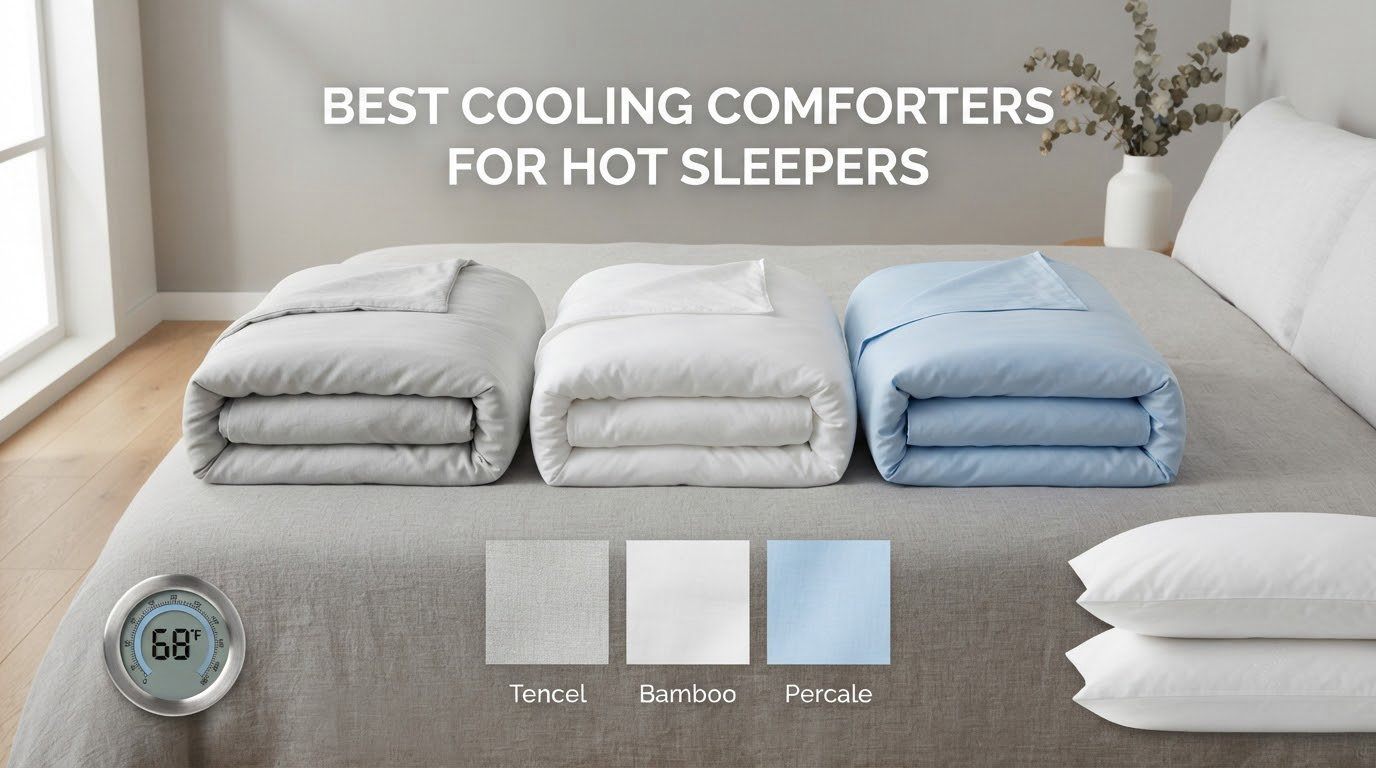
The National Sleep Foundation puts the ideal bedroom temperature at 60 to 67 degrees, and for a hot sleeper that number is not decoration. Your core temperature has to drop before you fall asleep, and bedding that traps heat stops that drop from happening, which is why you can wake up tired after eight hours. The fix is rarely a better mattress. It is the layer you put on top of it.
We went through ten of the most-reviewed cooling comforters on the market, pulled the shell fabric and fill for each one, and graded how strong their cooling claim actually is. The results surprised us. Most of these products are not magic, but the mechanisms behind them are real, and the best cooling comforters for hot sleepers are often not the ones with the loudest marketing. This guide covers everything from a low-loft bamboo insert to a high-conductivity nylon comforter that is measurably cooler than silk on contact.
Two things we will keep repeating. First, bedding cannot make you cooler than the room is, so these products work alongside a cool bedroom rather than replacing one. Second, no comforter will stop night sweats that have a medical cause. If you are soaked rather than simply warm, read the night sweats section further down before you spend anything.
If you are still building out the rest of the bed, start with our picks for cooling sheets for hot sleepers and cooling pillows, then come back here for the comforter that ties them together.
Table of Contents
Top 3 Best Cooling Comforters for Hot Sleepers in October
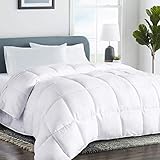
COHOME All-Season Cooling Comforter
- Whole-piece polyfill stays fluffy
- Machine washable
- Works as duvet insert or stand-alone

REST Evercool Cooling Comforter
- Evercool nylon shell
- TENCEL lyocell and Sorona fill
- Machine and dryer safe

Cozy Bliss Cooling Comforter Queen
- Q-Max above 0.45 shell
- Down-alternative fill
- OEKO-TEX certified
All 10 Cooling Comforters for Hot Sleepers at a Glance in 2026
| Product | Specifications | Action |
|---|---|---|
| COHOME All-Season Cooling Comforter |
|
Check Latest Price |
| REST Evercool Cooling Comforter |
|
Check Latest Price |
| Cozy Bliss Cooling Comforter Queen |
|
Check Latest Price |
 HOMBYS Lightweight Bamboo Comforter HOMBYS Lightweight Bamboo Comforter |
|
Check Latest Price |
 Globon Summer Down Comforter King Globon Summer Down Comforter King |
|
Check Latest Price |
 HOMFINE Cooling Comforter Queen HOMFINE Cooling Comforter Queen |
|
Check Latest Price |
 Bedsure Cooling Comforter All Season Bedsure Cooling Comforter All Season |
|
Check Latest Price |
 Mellow Marshmellow Comforter Mellow Marshmellow Comforter |
|
Check Latest Price |
 DOWNCOOL Cooling Comforter Queen DOWNCOOL Cooling Comforter Queen |
|
Check Latest Price |
 Olive + Crate Bamboo Comforter Olive + Crate Bamboo Comforter |
|
Check Latest Price |
Do Cooling Comforters Actually Work?
Yes, but not for the reason most marketing implies. A cooling comforter moves heat and moisture away from your body instead of letting them sit against your skin. It does not lower your core temperature below what the room already allows.
Four mechanisms do the work, and only two of them matter most. Moisture wicking is the big one. Lyocell, TENCEL, bamboo viscose and merino wool pull sweat off your skin and spread it across the outer surface of the comforter, where it evaporates instead of sitting on you. Conductive cool-to-touch is the second. High-conductivity nylon and spandex blends feel distinctly cool the instant they touch bare skin, then warm to body temperature within minutes. That instant reaction is measurable, and the scale used to measure it is called Q-Max.
Q-Max is the term the shopping engines keep pointing at, so here is the plain-language version. A Q-Max rating describes how much heat a fabric pulls away from your skin in the first seconds of contact. A higher number means a bigger initial cooling jolt. Anything above 0.4 is in the range where owners report noticing a difference. Q-Max measures that first-contact reaction only, which is why a high Q-Max fabric and a hot room can still be an uncomfortable combination.
The two mechanisms you will read about constantly and rarely get are phase-change material, a wax-like coating developed for NASA that absorbs your body heat as you warm up and releases it as you cool down, and engineered airflow weaves that trap still air in sealed baffles. Phase-change material is genuinely interesting, and readers are right to be skeptical of the NASA framing around it. None of the ten comforters in this guide use it.
Here is the objection that shows up at the top of every bedding forum thread, so we will answer it directly: cooling is not a thing. It is partly true and partly wrong. A comforter cannot chill a hot room, and the word cooling covers everything from a measurable fabric property to a vague feeling. But the thermal physics of moving sweat off skin and drawing heat out of skin through a conductive fibre is real. The grading we apply to each pick below uses three levels. Strong means a named mechanism with a measurable number behind it. Moderate means the cooling comes mostly from breathability and moisture management, which is real but slower. Marketing-heavy means the word cooling is doing more work than the material.
What is genuinely worth believing on the forums is the part about natural fibres. Wool and cotton are excellent temperature regulators, and the strongest pro-tip in the threads is to get polyester out of the direct-contact layer entirely. The catch is that most all-season comforters, including four of ours, are polyester through the fill. If that bothers you, the two bamboo picks are the closest thing to that philosophy in a comforter form.
1. COHOME All-Season Cooling Comforter – Best Balanced Everyday Pick
COHOME All-Season Queen Size Cooling Comforter Duvet Insert – White
Polyester shell
Whole-piece polyfill fill
88 x 88 inch queen
3.06 kg
Pros
- Highest review count in the roundup
- Whole-piece fill resists clumping
- Doubles as a duvet insert
- Machine washable and recovers loft
Cons
- Needs hours of drying to fluff after unpacking
- Cooling comes from lightness rather than cooling fabric
- All-white styling limits decor options
We put this one first because it is the comforter we would hand to a friend who just wants to stop sweating at 3am without changing anything else about their bed. It is a conventional all-season polyfill comforter, and at a 4.6 average across more than 20k ratings it has the most owner history of anything in this roundup by a wide margin. That history matters in bedding, because a comforter that looks good in a photograph tells you nothing about what it looks like after a year of washes.
The design detail that separates it from cheaper inserts is the whole-piece fill. Instead of loose fiber chopped into separate strands, the filling is spun in one continuous piece and then box-stitched, so it stays distributed instead of migrating to the corners. In practice that means the comforter still looks like a comforter in February, not a flat sheet with a quilted border.
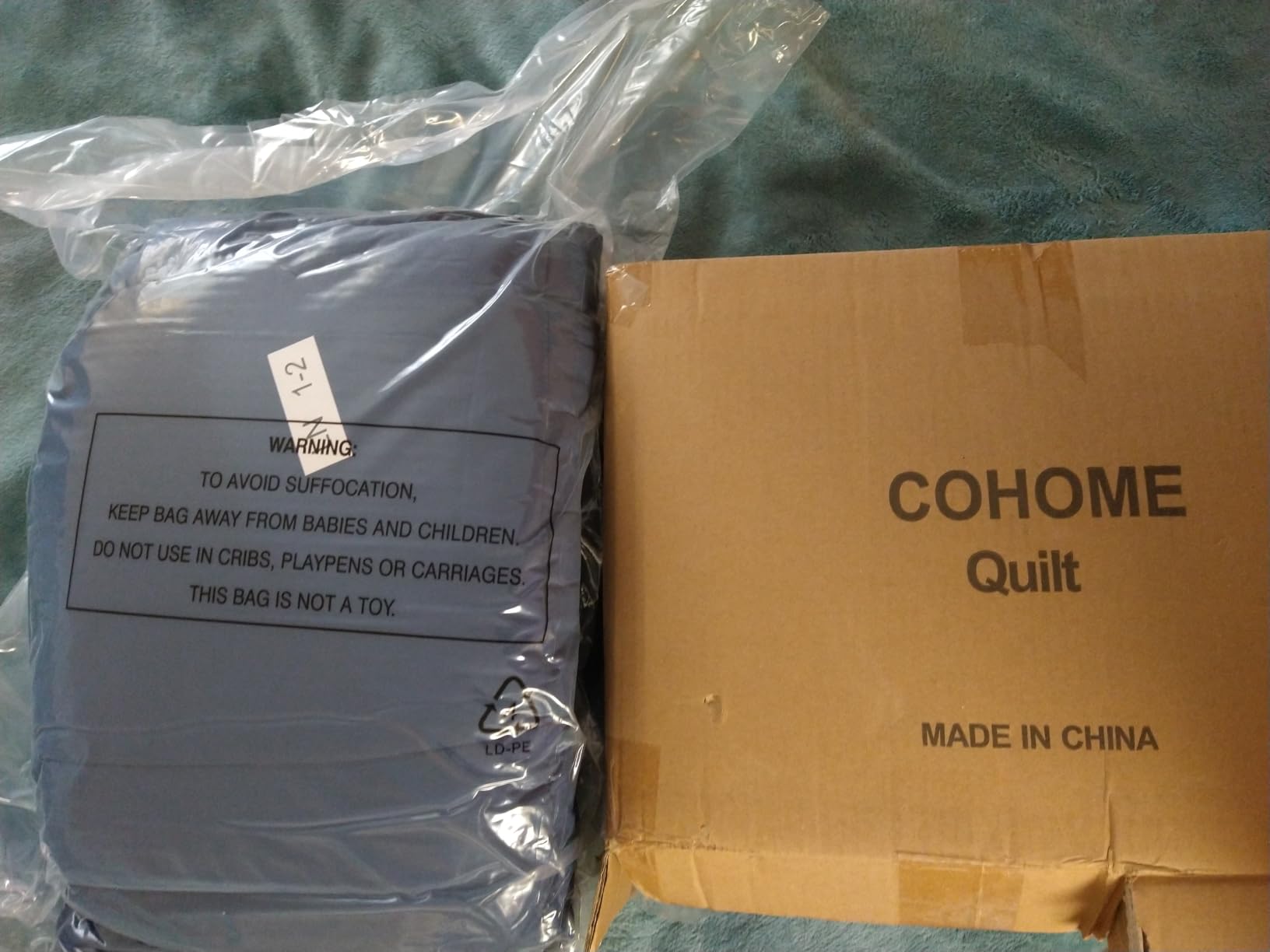
The only real friction point is the first hour. It arrives vacuum-compressed, and the loft takes 24 to 48 hours of drying or direct sun to come back. Owners who skip that step and judge it on day one consistently rate it lower than the 4.6 the longer-term buyers report. Tumble dry low and give it a full cycle before you decide anything.
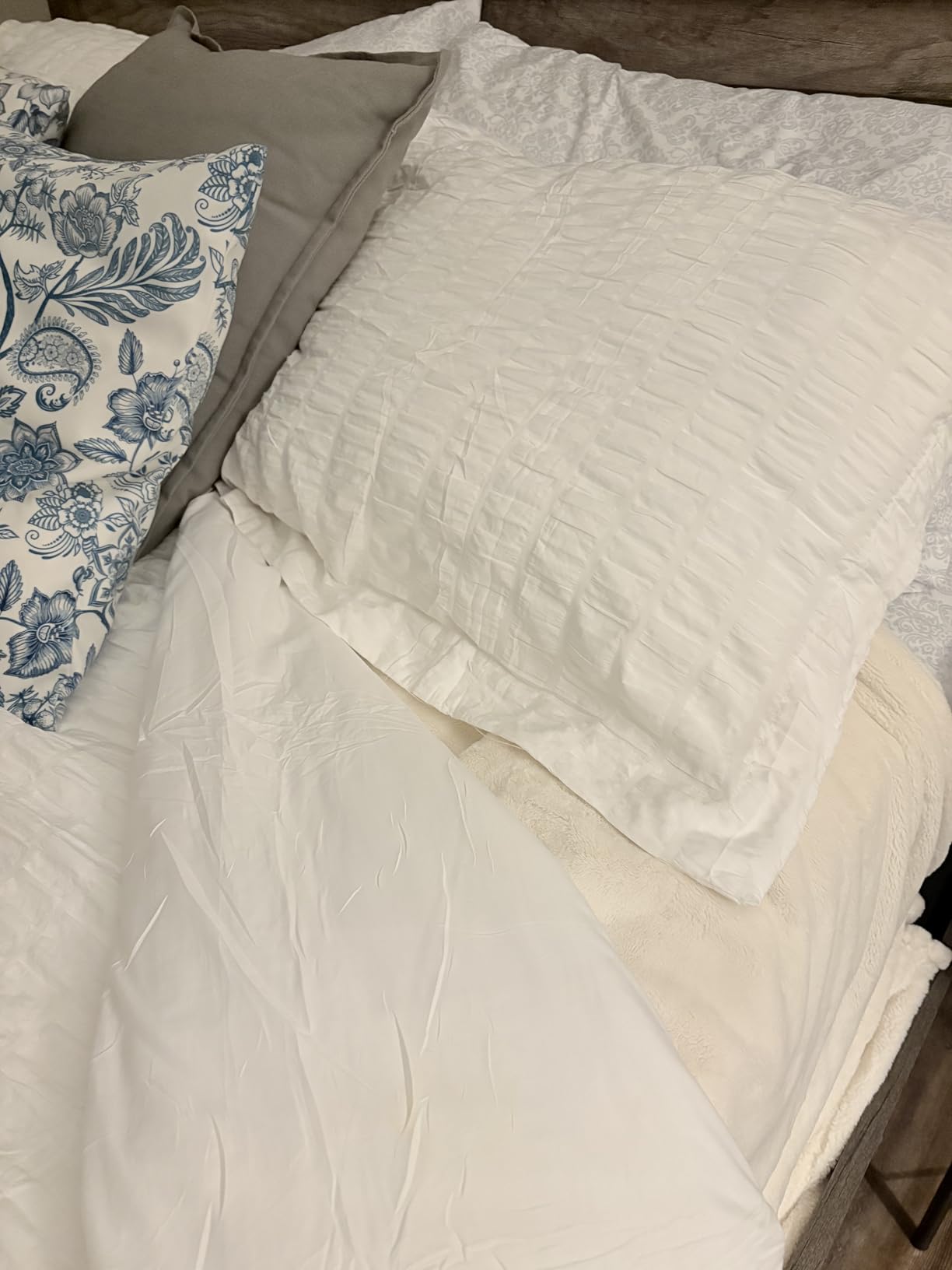
It also works as a duvet insert, which makes it the flexible pick here. Pair it with a breathable cover in spring and you have a comforter; use it alone in summer and you have exactly what a hot sleeper needs.
Who this comforter suits
Anyone who wants a normal-weight comforter that is not a summer blanket. Couples who disagree about temperature do well with this one, because the 3.06 kg weight is substantial enough to feel like a comforter on a cool night without holding a layer of trapped air against the body. It is also the safest pick for a kid’s or teen’s bed, since a full white piece is easy to replace and easy to wash.
Where it will disappoint you
If you are shopping for a cooling comforter because you have read that cooling fabric lowers skin temperature by several degrees, this is not that product. The cooling here is a function of low loft and polyester breathability, which I would grade as moderate on the claim scale. Cold sleepers in genuinely cold rooms will find it insufficient, and anyone who reacts to polyester against their skin should skip to the bamboo options.
2. REST Evercool Cooling Comforter – Best for Cool-to-the-Touch Feel
REST® Evercool® Cooling Comforter Blanket for Hot Sleepers, Full/Queen
90 percent cooling nylon shell
TENCEL lyocell and Sorona fill
90 x 90 inch
2 inch thick
Pros
- Strongest documented first-contact cooling
- Silky knitted feel
- Machine washable and dryer safe
- Resists snags pilling and pet hair
Cons
- Runs warmer than a dedicated summer quilt once it warms
- Cooling effect is mainly at initial touch
- Full and queen size only
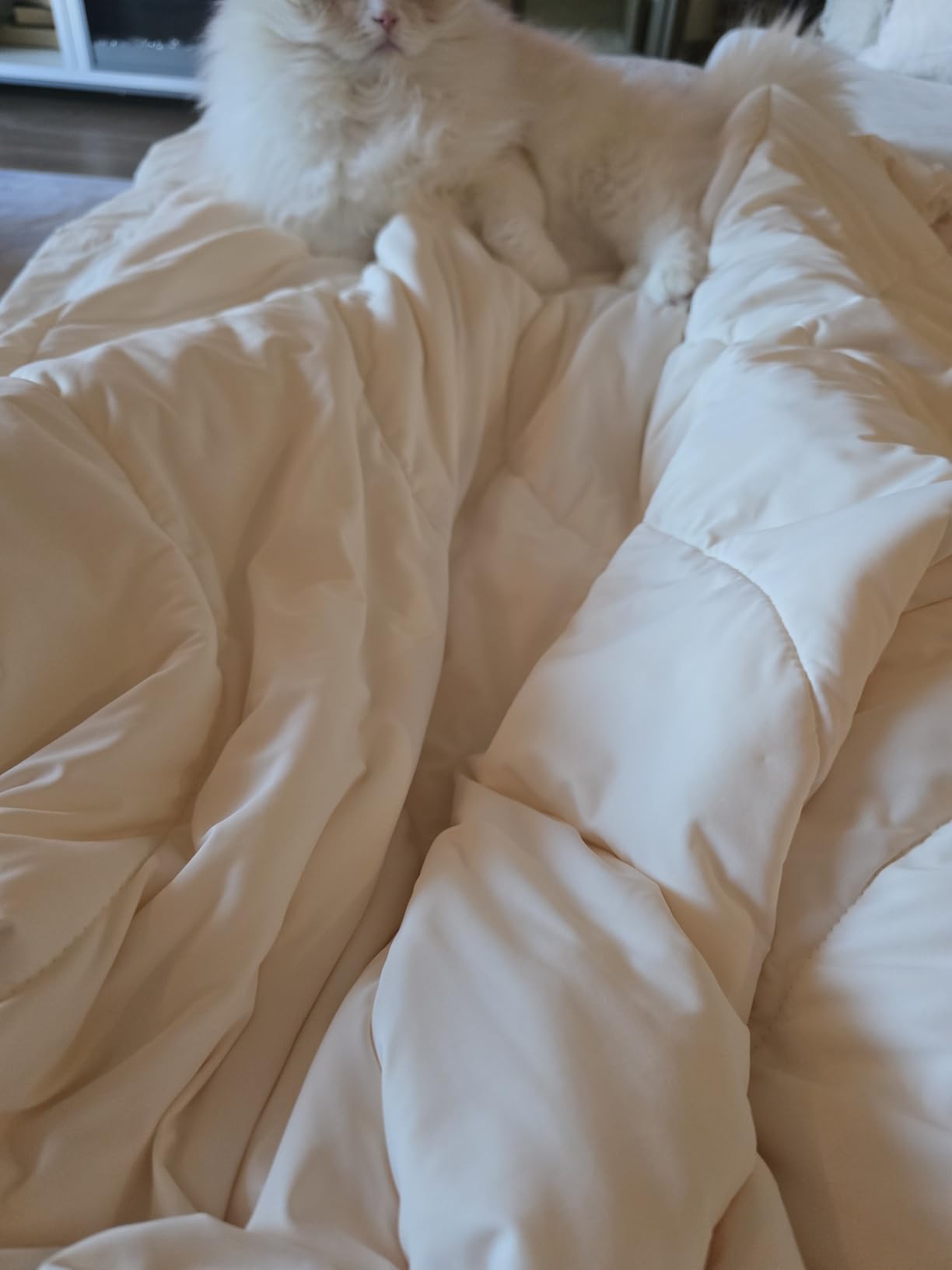
This is the comforter that most directly answers the question of whether a cooling fabric can measurably feel different from cotton. The shell is 90 percent cooling nylon blended with 10 percent spandex, knitted into fibres the brand describes as several times thinner and stronger than silk. The brand states lab testing puts it at roughly twice as cool as silk on first contact, and it has picked up a Best Bedding Award from Good Housekeeping four years running. The owner reviews back that up, with most people describing the first minute on the fabric as noticeably cold against bare legs.
The fill is where this one surprises people. Instead of pure polyester it uses TENCEL lyocell blended with Sorona AURA fibre, and that combination gives it a cloud-like hand that holds loft better than a standard down alternative. It is a 2-inch thick piece, which is substantial for a cooling comforter and explains why it works as an all-season layer rather than a strictly summer one.
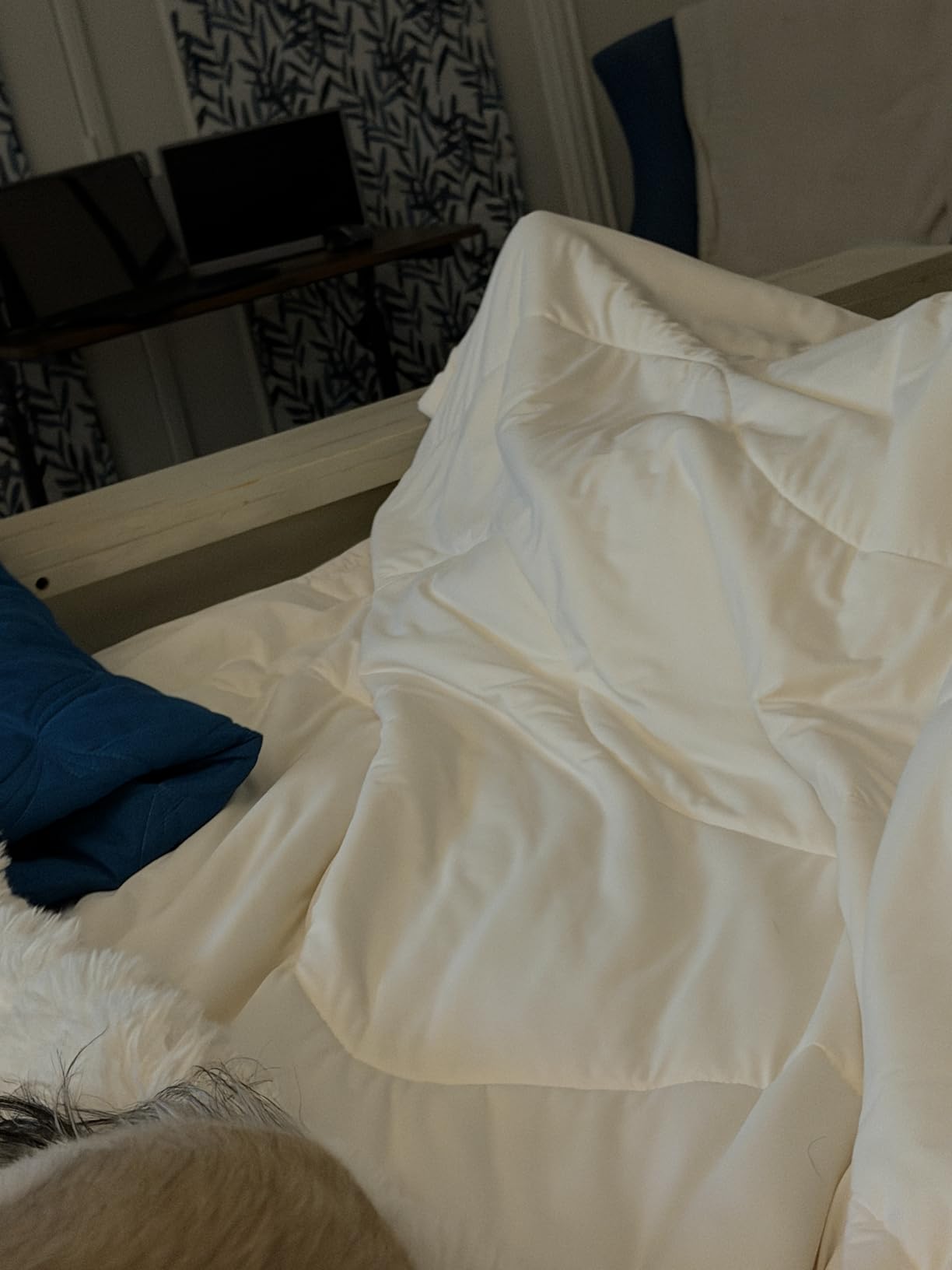
Here is the honest limitation, and it is the same one that applies to every conductive cooling fabric. The cold feeling is a first-contact effect. Once the fabric reaches your skin temperature it behaves like any other comforter, and a steady stream of reviewers describe waking up warmer than they expected on genuinely hot nights. If your overheating is constant rather than occasional, this will not be enough on its own.
Care is refreshingly simple. Cold water, low spin, low alkaline or neutral detergent, then tumble dry low or line dry. No bleach, no ironing, no dry cleaning, and you can put it straight back on a low dryer cycle after a sweaty night.
What you should check before buying
Size is the thing to get right. This one is listed at 90 by 90 inches and is marketed as a full and queen piece, so a king bed needs two. Check that before anything else. The second check is whether you want a cooling jolt or sustained dryness, because this delivers the former far better than the latter.
Where it will disappoint you
It will not rescue you in an un-air-conditioned room in July, and owners who expect a permanently cold comforter describe it as warmer than a dedicated summer quilt. The 2-inch loft that makes it so comfortable in autumn is the same thing that makes it too warm for peak summer. Treat it as the best all-season cooling comforter rather than the lightest one.
3. Cozy Bliss Cooling Comforter – Best Value
Cozy Bliss Cooling Comforter Queen Size, Cooling Blankets for Hot Sleepers and Night Sweats, Dark Light Gray Summer Comforter for Queen Size Bed, Breathable Soft Lightweight Silk Smooth
90 percent nylon 10 percent spandex shell
Down-alternative fill
90 x 90 inch
Q-Max above 0.45
Pros
- Published Q-Max rating above 0.45
- OEKO-TEX certified shell
- Single-needle stitching resists clumping
- Machine washable without fading
Cons
- Thinner than a traditional comforter
- Works more as a summer blanket than a year-round piece
- Pillowcases not included
This is the pick that gets named repeatedly in bedding forums when people ask what is actually worth buying, and the reason is straightforward: it publishes a cooling number instead of just using the word. The shell carries a stated Q-Max rating above 0.45, which puts it in the range where first-contact cooling is reliably noticeable, and the brand claims a 2 to 5 degree reduction in skin temperature. Whether the number is exactly at the top of that range depends on conditions, but owners broadly agree the fabric does feel cold on contact.
The fill is 100 percent poly down-alternative with a 3D hollow structure, which gives it the lofty, floating quality that cheaper flat polyfill misses. The shell is OEKO-TEX certified, which matters if you have sensitive skin or eczema and want to know there is no chemical finish in contact with you.
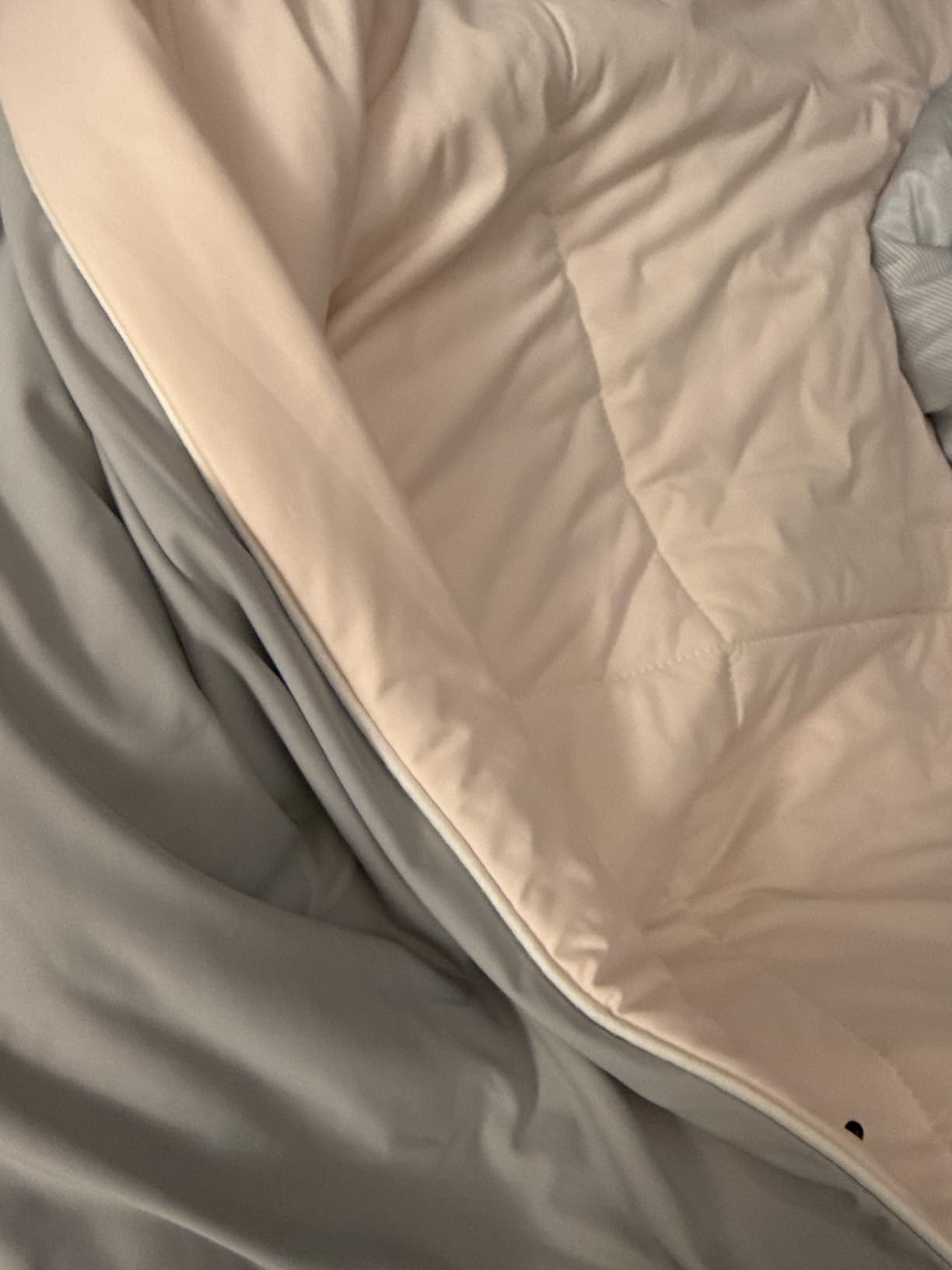
It is stitched with a single-needle pattern rather than the box stitching used on heavier pieces. That keeps it flat and light, and reviewers confirm the fill stays put through repeated washes rather than migrating into clumps. It is machine washable and does not fade or shrink, which for a cooling comforter is the single most practical feature you can have, because hot sleepers wash their bedding far more often than average.
The compromise is thickness. This is a genuinely light piece, closer to a summer blanket or an air-conditioning comforter than a traditional comforter. If you want something substantial in January, look elsewhere. If you have a thermostat and a summer problem, this is exactly right.
Why this is the value pick
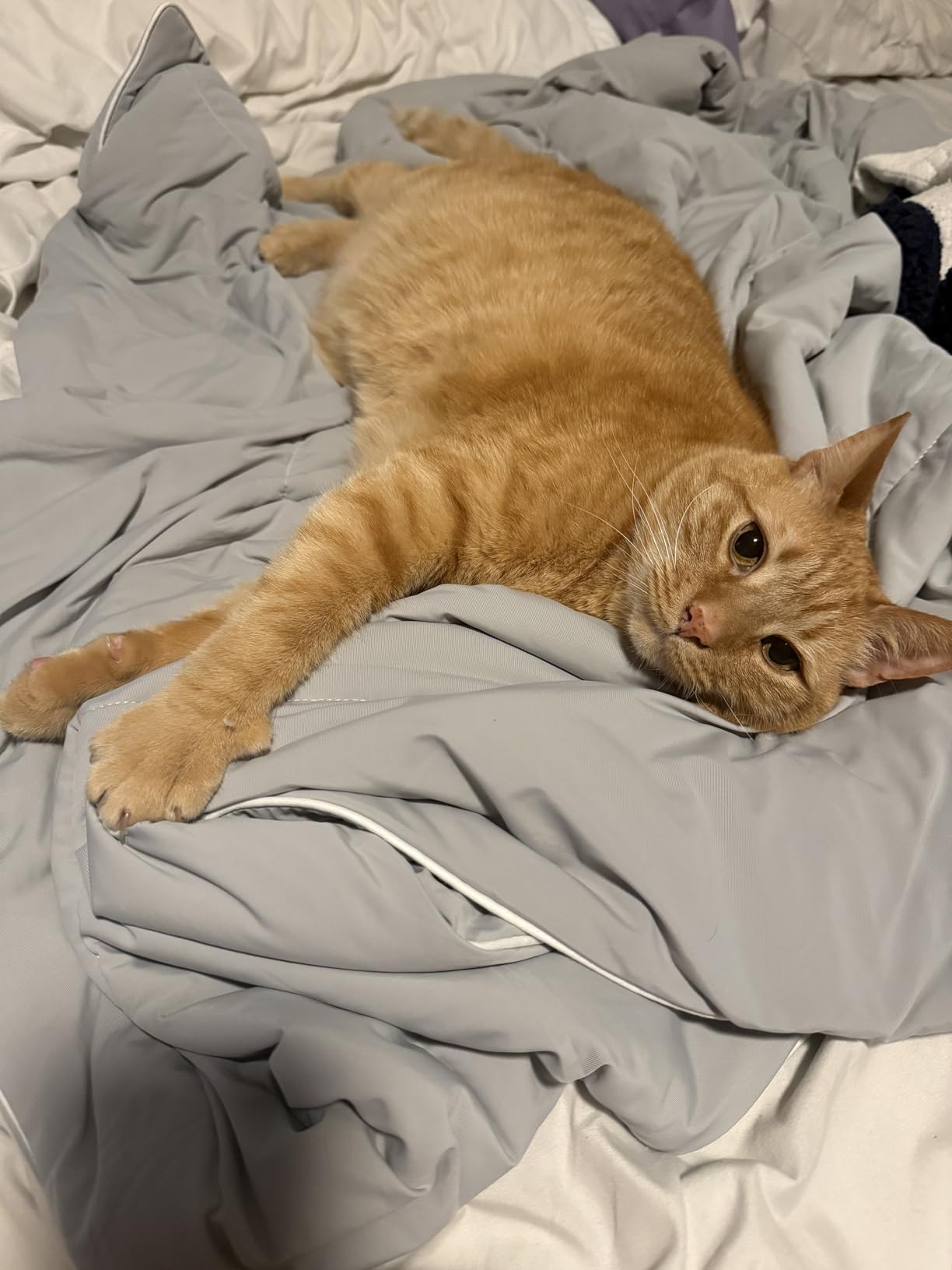
It is the only piece in this roundup that pairs a published Q-Max figure with a certified shell at a price point that undercuts the premium cooling brands by a wide margin. You also get a wider range of use than a pure summer blanket, because it works for reading, napping and outdoor use as well as sleeping. For most people shopping their first cooling comforter, this is where we would start.
Where it will disappoint you
Cold sleepers will find it nowhere near enough, and anyone who needs real weight in winter will find it thin. The 2 to 5 degree figure is also a controlled measurement, not something you will feel identically on a hot, humid night. And it arrives as a comforter only, no pillowcases in the box, so budget for a separate set if you are starting from scratch.
4. HOMBYS Lightweight Bamboo Comforter – Best Bamboo Option
HOMBYS Lightweight Cooling Comforter Cal King Size,100% Viscose Derived from Bamboo Shell Down Alternative Duvet Insert,White Soft All Season Comforter for Hot Sleepers,8 Corner Tabs
Bamboo viscose shell
7-hole hollow microfiber fill
Cal king 108 x 98 inch
8 corner tabs
Pros
- Bamboo shell genuinely absorbs body heat
- Silent fabric with no crinkling or odor
- Moisture-wicking and quick-drying
- OEKO-TEX and BSCI certified
Cons
- Thin out of the box and needs days of airing
- Arrives heavily wrinkled
- Not as cool as cooling-fibre comforters
This is the pick for the sleeper who thinks cooling is fake. There is no Q-Max number and no conductive nylon here. What there is, is a 100 percent viscose shell derived from bamboo, and bamboo viscose is a genuinely good moisture-wicking fibre. It pulls sweat off skin and holds it at the surface where it dries, which is the mechanism that actually matters over a full night.
The fill is a 7-hole hollow microfiber designed to move sweat and trap still air at the same time. Owners who switched to this alongside bamboo sheets specifically to fight night sweats and hot flashes report waking up less damp, and the fabric is silent, with none of the crinkling or synthetic smell that reviewers complain about in most down alternatives.
Is bamboo actually cooler than cotton?
Not dramatically, and the honest answer is that it depends on your skin. Bamboo viscose absorbs and releases moisture faster than cotton and stays smoother through repeated washes, which makes it a better long-term choice for someone who sweats. But it is not a cool-to-the-touch fabric. You will not feel a jolt on contact the way you do with the cooling nylon picks. The win is dryness over eight hours, not a cold first minute.
Certification is a genuine strength here. It carries OEKO-TEX STANDARD 100 and BSCI certification, so you know the shell has no harmful chemical finishes and the factory has been audited. That is worth something for eczema-prone skin. Eight corner tabs secure it inside a duvet cover, which makes swapping it seasonally painless.
Where it will disappoint you
It arrives compressed and wrinkled and needs several days of airing before it puffs properly. Long-term owners have reported bamboo fibres escaping the shell after months of wear, which is rare but real. It is also less cool than any of the Q-Max pieces on this list, so if your overheating is severe, this manages moisture without solving heat.
5. Globon Summer Down Comforter – Best for Real Down
Globon Summer Down Comforter King Size,Extra Lightweight Duvet Insert,White
68 percent cotton 32 percent polyester shell
75 percent down 25 percent feather
106 x 90 inch king
12 ounces
Pros
- Genuine down and feather loft
- Extra-lightweight for summer
- Quiet moisture-wicking shell
- OEKO-TEX and DOWNPASS certified
Cons
- Down and feather wash less easily than synthetic fill
- Crisp cotton shell is not silky
- Too thin for cold-weather insulation
If your objection to cooling comforters is that polyester is not real bedding, this is the genuine article. The fill is 75 percent down with 25 percent feather, which is the classic ratio that gives down its loft without clumping, and at 12 ounces it is genuinely extra lightweight. Down traps air rather than heat when it is used at low weight, so a summer-weight down comforter behaves very differently from the heavy winter one most people picture.
The shell is 68 percent cotton and 32 percent polyester, which makes it quiet and moisture-wicking. Reviews repeatedly note that it does not rustle, and that matters more than it sounds when you are trying to sleep beside a partner. It carries OEKO-TEX and DOWNPASS certification, so the down is traceable and the fabric is free of harmful substances.
Why down works here when it usually does not
Weight is the variable that decides everything with down. A heavy winter down comforter traps your heat because there is a lot of loft between you and the room. At summer weight that same loft is thin enough for air to move through it, so heat escapes instead of accumulating. If you own a down comforter and it makes you hot, the fix is often not a different comforter but the summer version of the one you already have.
Where it will disappoint you
Down and feather is the least washable fill in this roundup, and that is a real problem for a hot sleeper who needs to launder weekly. The crisp cotton shell also feels nothing like the silky hand of the cooling nylon or bamboo options, so if texture is what keeps you in bed, adjust your expectations. This is a king-size piece at 106 by 90 inches, so a queen sleeper needs a different size option.
6. HOMFINE Cooling Comforter – Best for Night Sweats
HOMFINE Cooling Comforter for Hot Sleepers Queen, Gray 90″x90″
Japanese cooling nylon-spandex shell
Polyester fill
90 x 90 inch queen
Double-sided Q-Max
Pros
- Double-sided Q-Max above 0.45 cooling fibre
- Claimed skin temperature reduction that lasts all night
- Static-free and silky
- Single-needle quilting survives washing
Cons
- Less noticeable cooling than the marketing suggests for some
- Thin enough that most people layer it
- Understated appearance
This is the one we would point someone toward when they describe waking up with damp sheets rather than just being too warm. Unlike most cooling fabric where the effect is strictly a first-contact phenomenon, owners of this double-sided Japanese cooling fibre report a temperature reduction that holds through the night. The shell is Q-Max rated above 0.45 on both faces, so it works whichever side you end up against.
The claimed 2 to 5 degree skin temperature reduction is a brand figure, and a minority of buyers say they notice less than they expected. The more consistent pattern in the reviews is that people wake up less sweaty than they did with their previous down comforters, which is a lower bar to clear but a far more useful one for someone whose real problem is moisture.
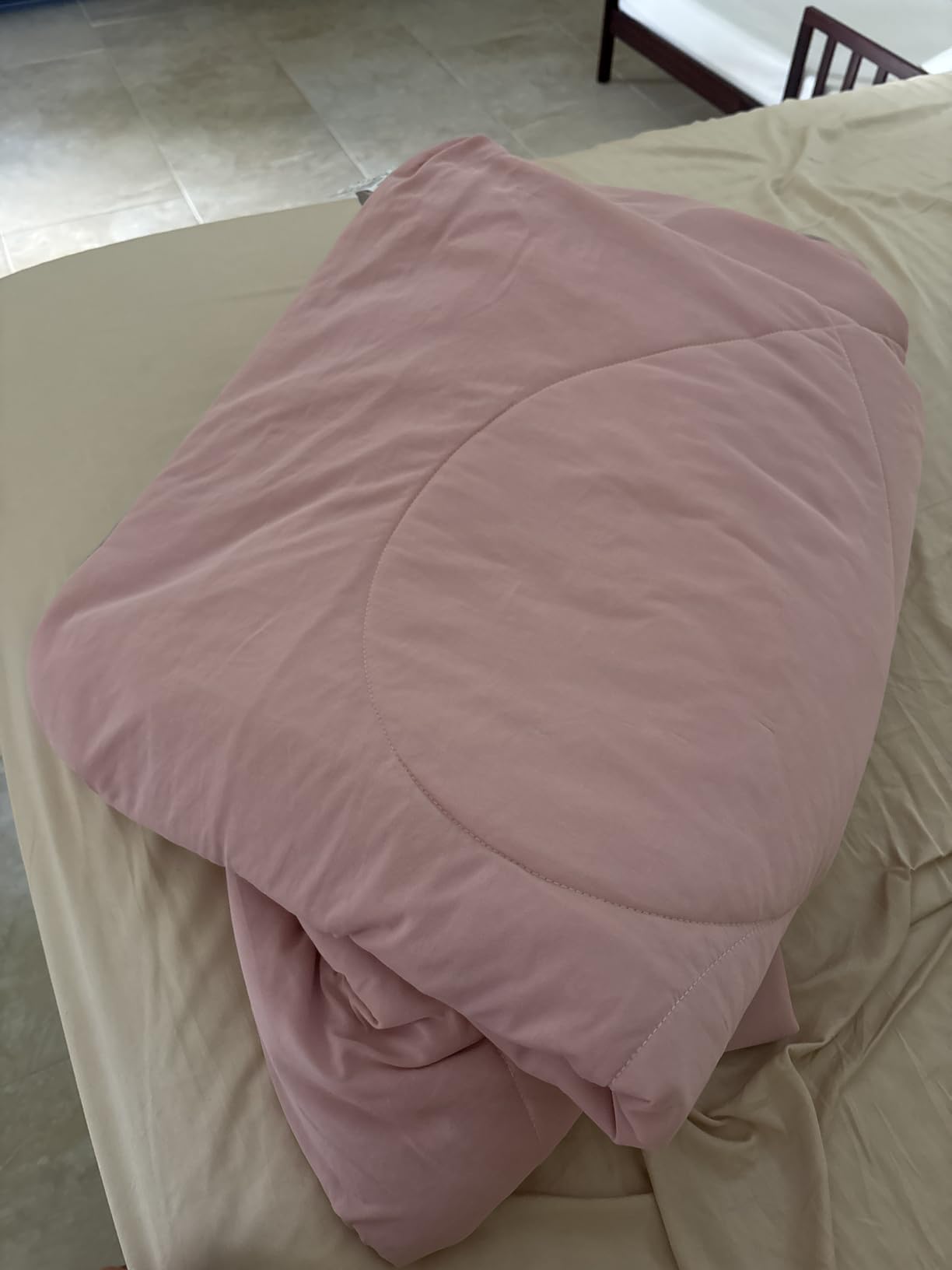
Construction details are solid. Single-needle quilting holds the fill in place through repeated washes, and the fabric is static-free and silky, which is unusual in a nylon shell and a real benefit in dry winter air. It is available in twin, queen and king, with several color options, so it is one of the easier ones to size for an odd-shaped bed.
Care is straightforward: cold gentle cycle, low tumble dry, no bleach, no ironing, no dry cleaning. A minority of owners put it in a laundry bag on the cold cycle, which is a sensible precaution for a fine nylon shell.
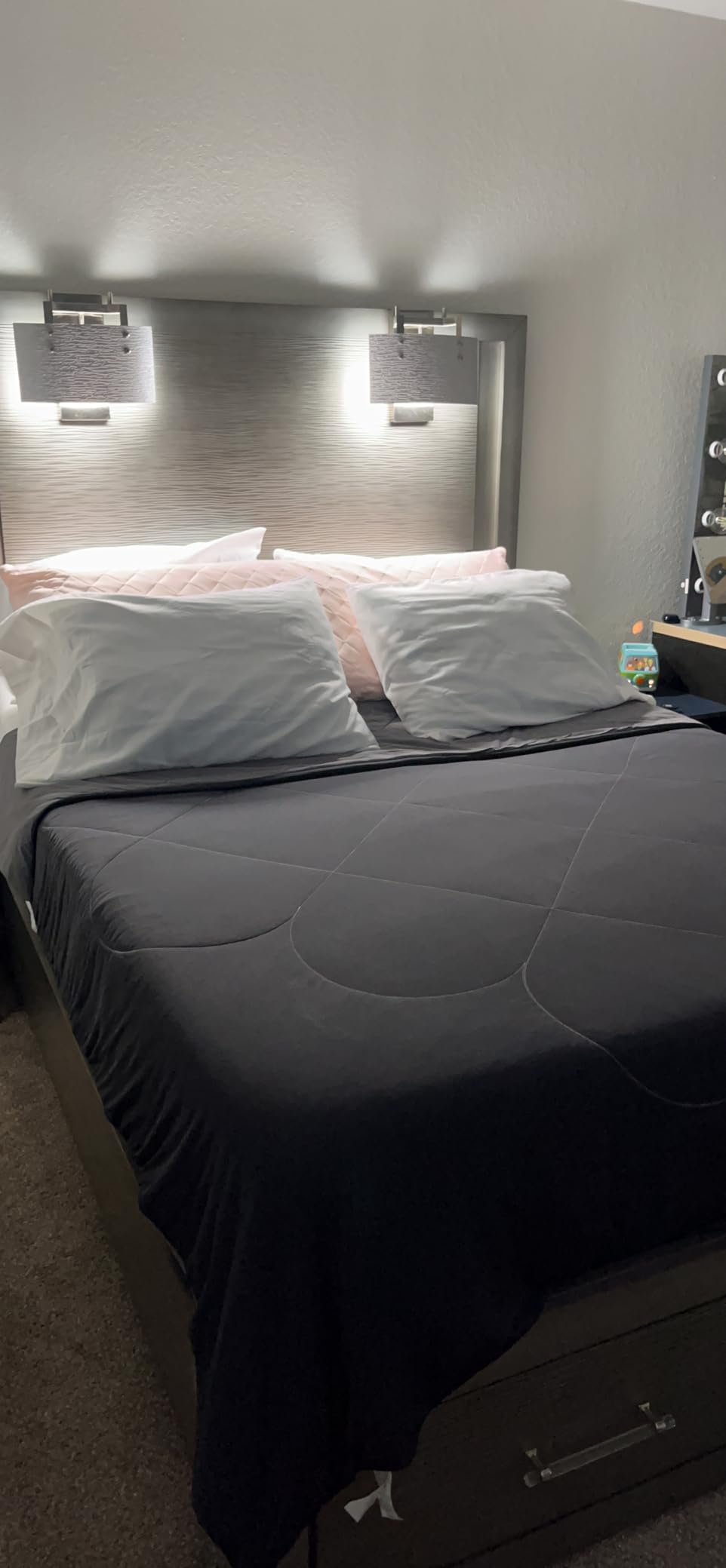
How to check whether it is working for you
Give it a full week. Conductive cooling fabrics make their strongest impression in the first few minutes, and if you judge on night one you may write off something that needs a week to evaluate. Track how damp your sheets are in the morning rather than how cold the fabric feels, because that is the outcome that matters for night sweats.
Where it will disappoint you
It is fairly thin, and a lot of owners layer it inside a duvet cover rather than using it alone, so plan for that. One reviewer noted their partner could not feel a difference at all, which is worth saying plainly: two people in the same bed do not always respond to the same fabric. The look is also deliberately understated, and if you want something decorative on the bed, this is not it.
7. Bedsure Cooling Comforter – Best for Couples Who Run Hot
Bedsure Cooling Comforter Blankets for Hot Sleepers, All Season, Queen
Nylon elastane shell
Polyester and bamboo rayon fill
88 x 88 inch queen
2.73 kg
Pros
- Q-Max 0.4 plus double-sided cooling fabric
- OEKO-TEX certified ultra-fine shell
- Four corner rings for duvet cover use
- Anti-pilling and antistatic
Cons
- Very thin at 0.1 inch thickness
- Runs smaller than a standard queen
- Sizing up is recommended for full coverage
Two people with different sleep temperatures is the problem this roundup solves least well, and this is the piece that comes closest. The reason is size coverage. At 88 by 88 inches on a queen frame there is enough surface for two people to lie under it without fighting over the same patch, and the four corner rings let you secure it inside a duvet cover so it does not get dragged to one side overnight.
Cooling comes from a double-sided fabric with a Q-Max of 0.4 plus, described as up to 10 times more breathable and absorbent than cotton. The fill blends 95 percent polyester with 5 percent rayon derived from bamboo, and that small bamboo fraction is doing real work: reviewers specifically note improved airflow and moisture wicking across the whole piece rather than just at the surface.
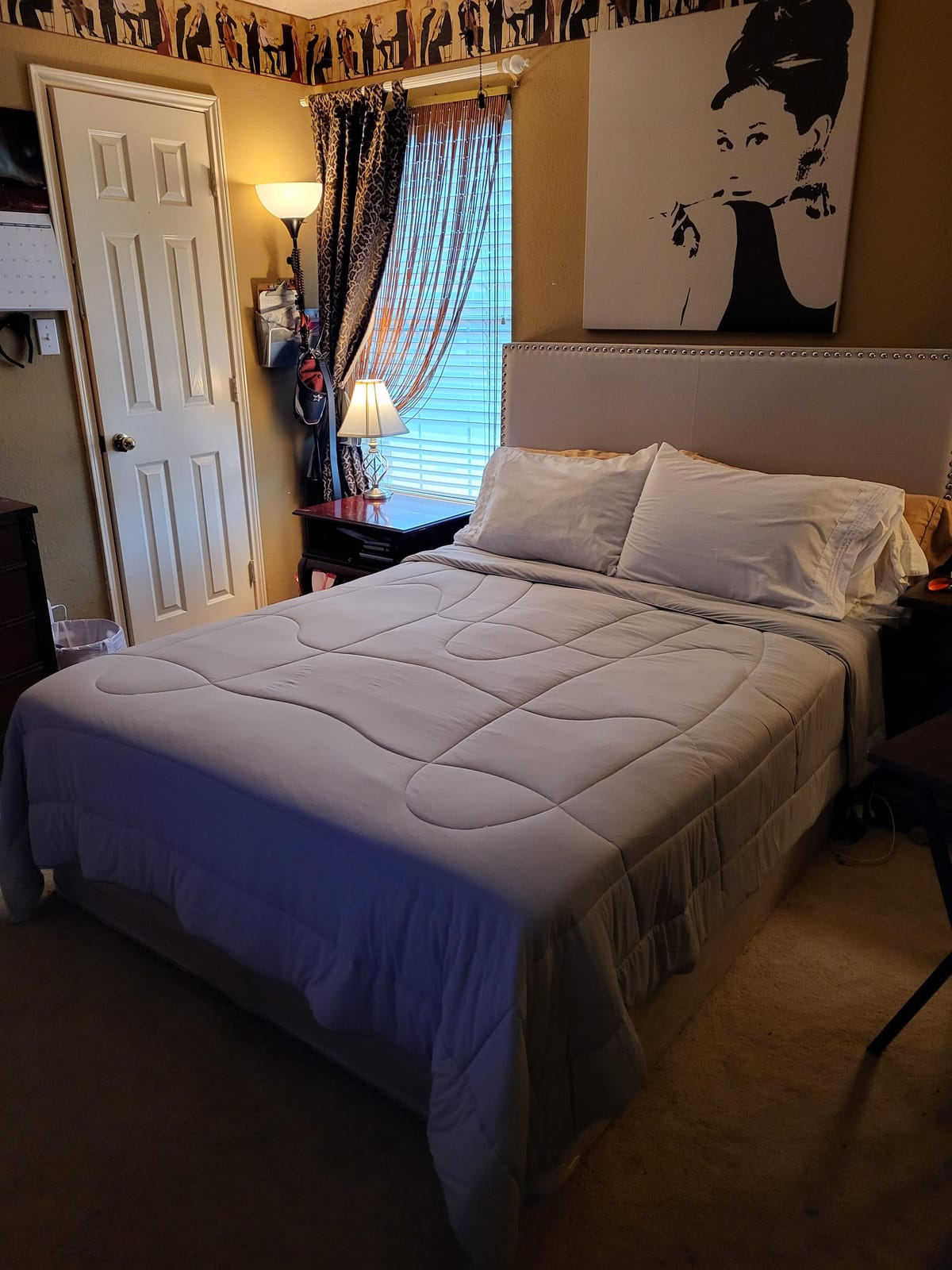
The shell is OEKO-TEX STANDARD 100 certified, and the listed features include anti-pilling, antistatic and tear resistance, which together make it the most durable-sounding option in this roundup. It is machine washable on a cold gentle cycle without shrinking or losing shape.
There is one sizing instruction you should not skip. Owners repeatedly recommend sizing up, because at queen it sits tighter than a standard queen and a couple sharing a queen bed will not both be covered properly. Buying the larger size and accepting the overhang is the common fix, and the corner rings make it stay put.
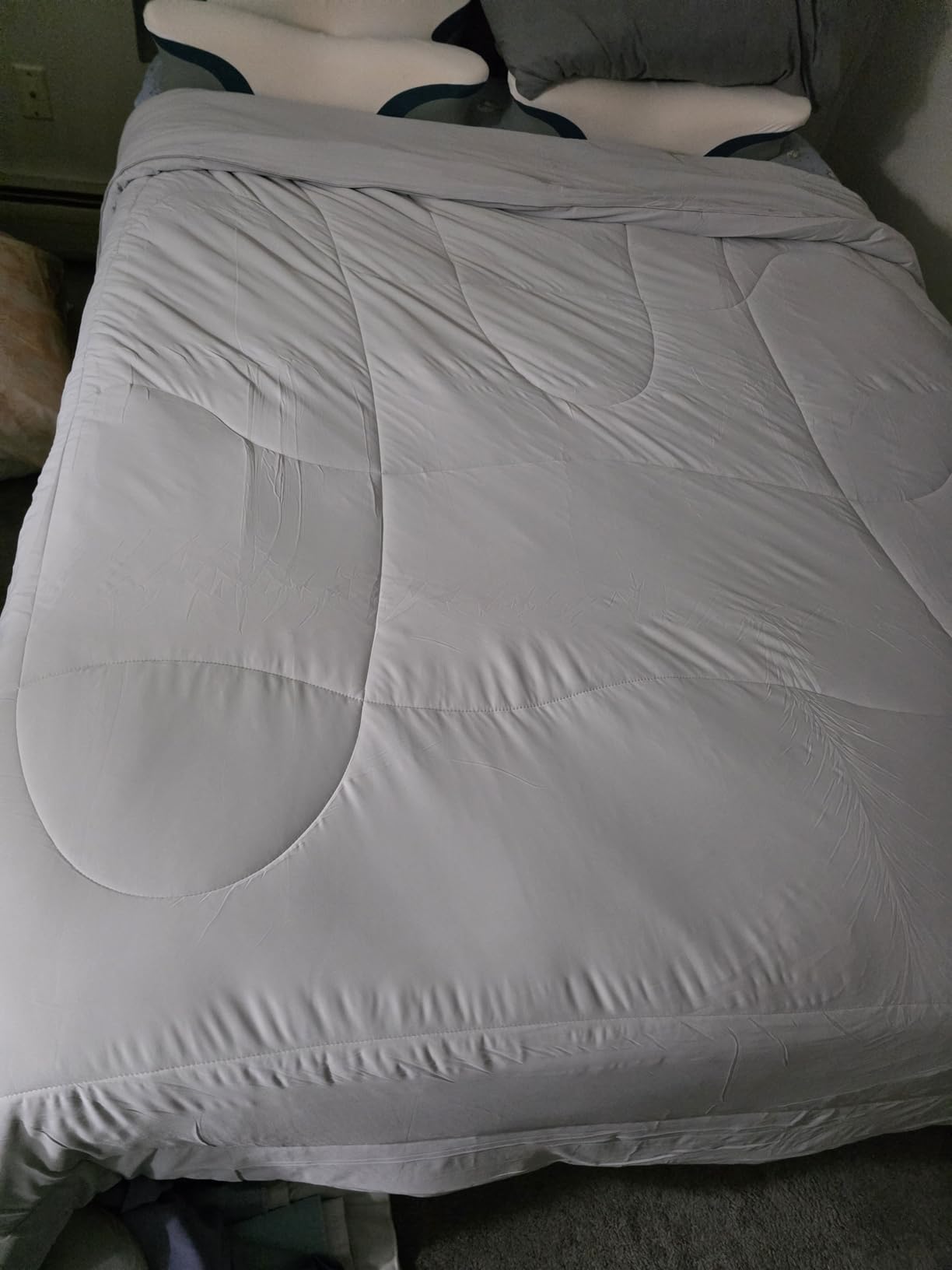
How to handle a bed where one of you runs hot
The honest advice from people who have solved this is to stop trying to find one comforter that suits both of you. Two thinner comforters on one bed, so each of you can take a layer on and off independently, beats one compromise layer that leaves one person too warm and the other too cold. A piece like this is light enough to be one half of that setup. Split bedding is also the only approach that genuinely works when one partner sleeps with a fan and the other does not.
Where it will disappoint you
At 0.1 inch thick this is the thinnest piece in the roundup, and it is a summer or air-conditioning comforter rather than anything you would use alone in cold weather. The cooling is also most pronounced at first touch and fades as the fabric warms, and the run-small sizing means you must read the size chart carefully rather than ordering your usual number.
8. Mellow Marshmellow Comforter – Best for Plush Loft
Mellow Marshmellow Comforter Full/Queen, All-Season Temperature Control
Microfiber shell
Double-stuffed down-alternative fill
Full and queen size
OEKO-TEX Class I
Pros
- Fullest double-stuffed loft in the roundup
- Stays comfortable in warm climates
- Generous overhang coverage
- No feathers or quills poking through
Cons
- Flattens over time and needs weekly fluffing
- Can feel warmer than a dedicated summer comforter
- Photos show richer loft than delivery
Most cooling comforters ask you to give up something. This one asks you to give up almost nothing. It is a double-stuffed down-alternative with an OEKO-TEX Class I microfiber shell, and the reason it appears in this roundup is that a good number of owners who live in warm climates report it avoids nighttime overheating while still feeling like a substantial comforter. That is a harder balance than it sounds.
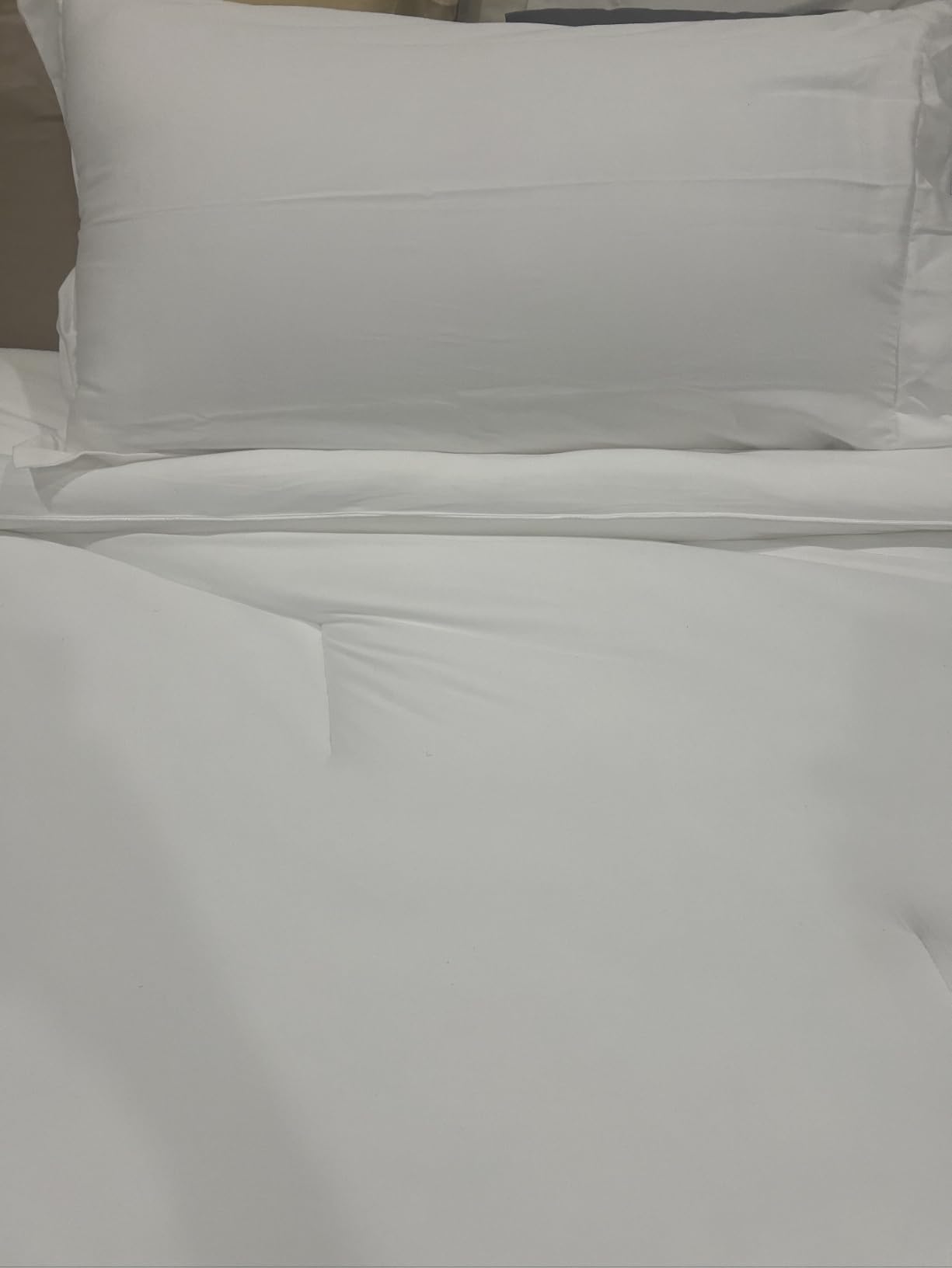
It is the plushest piece here. Several owners describe it as looking fuller in person than the product photos suggest, with enough coverage on a king or California king to hang well over the mattress sides. There are no feathers or quills poking through, which is a common complaint with down alternative blends and a genuine advantage if you share a bed.
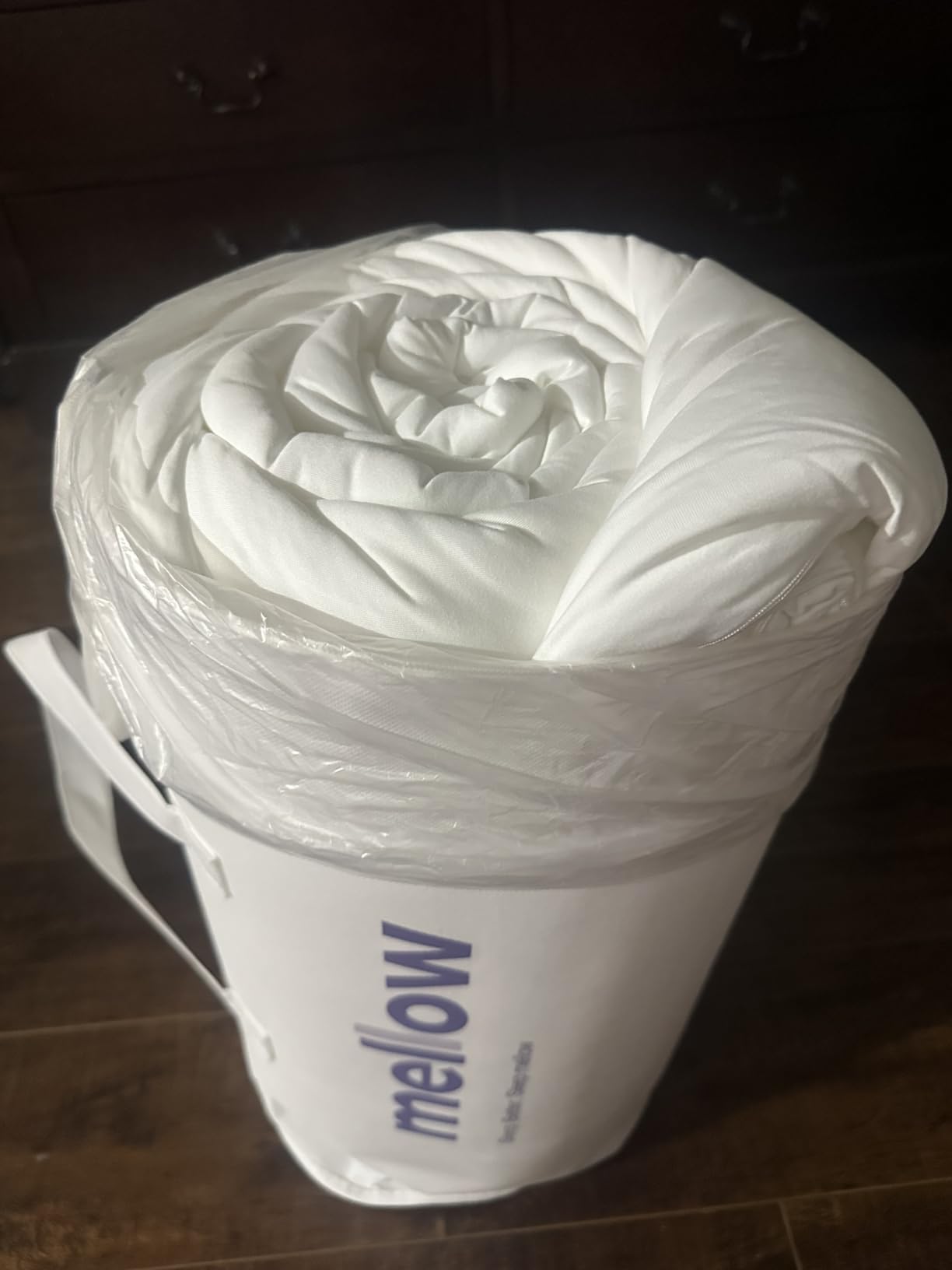
The recurring note across reviews is loft maintenance. The comforter gradually flattens with use and looks noticeably less pillowy until it is refluffed, and owners describe doing this roughly weekly, whether by hand or in the dryer. If you want bedding that stays looking like the photograph without effort, this is not the one.
It is machine washable, and box-stitch construction keeps the fill evenly distributed through that process. Available in white, gray, sand and pink across twin, twin XL, full, queen, king and California king, so the size range is the most complete in the roundup.
Who should buy this instead of a cooling-fibre comforter
Buy this if you are a hot sleeper who hates the idea of sleeping under a sheet-thin blanket. The double-stuffed loft gives you something to tuck around your shoulders, and the microfiber shell breathes better than the heavy polyester shells that make down alternatives stuffy. For warm climates without air conditioning, several owners specifically say it works all year without a seasonal swap.
Where it will disappoint you
This is marketing-heavy by our grading, since the temperature control is a property of lightness and shell rather than any named cooling technology. It can still feel warmer than a dedicated summer comforter on a hot night, and the weekly fluffing is a real ongoing chore that buyers do not always expect.
9. DOWNCOOL Cooling Comforter – Budget Pick
DOWNCOOL Cooling Comforter Queen Size,Grey Cooling Blanket for Hot Sleeper
100 percent cooling nylon shell
Polyester fill
90 x 90 inch
2.1 kg
Pros
- Q-Max above 0.4 on both sides
- Holds cooling performance through repeated washes
- OEKO-TEX certified shell
- Anti-static and lint resistant
Cons
- Slippery shell lets it slide off the bed
- Runs narrow and does not drape down the sides
- Needs tucking in at the foot
This is the cheapest way into the category and, unusually, it does not feel like a compromise. The shell is 100 percent cooling nylon with a stated Q-Max above 0.4 on both sides and a claimed 3 to 5 degree skin temperature drop. At 4.4 across 880 ratings, the owner satisfaction is on par with pieces costing three times as much.
The detail that surprised us most is durability. Long-term owners confirm the cooling performance and softness hold up after many washes, and the anti-clump honeycomb quilting keeps the polyester fill evenly distributed instead of balling up. For a hot sleeper who washes weekly, that is the feature that decides whether a comforter is still worth having a year later.
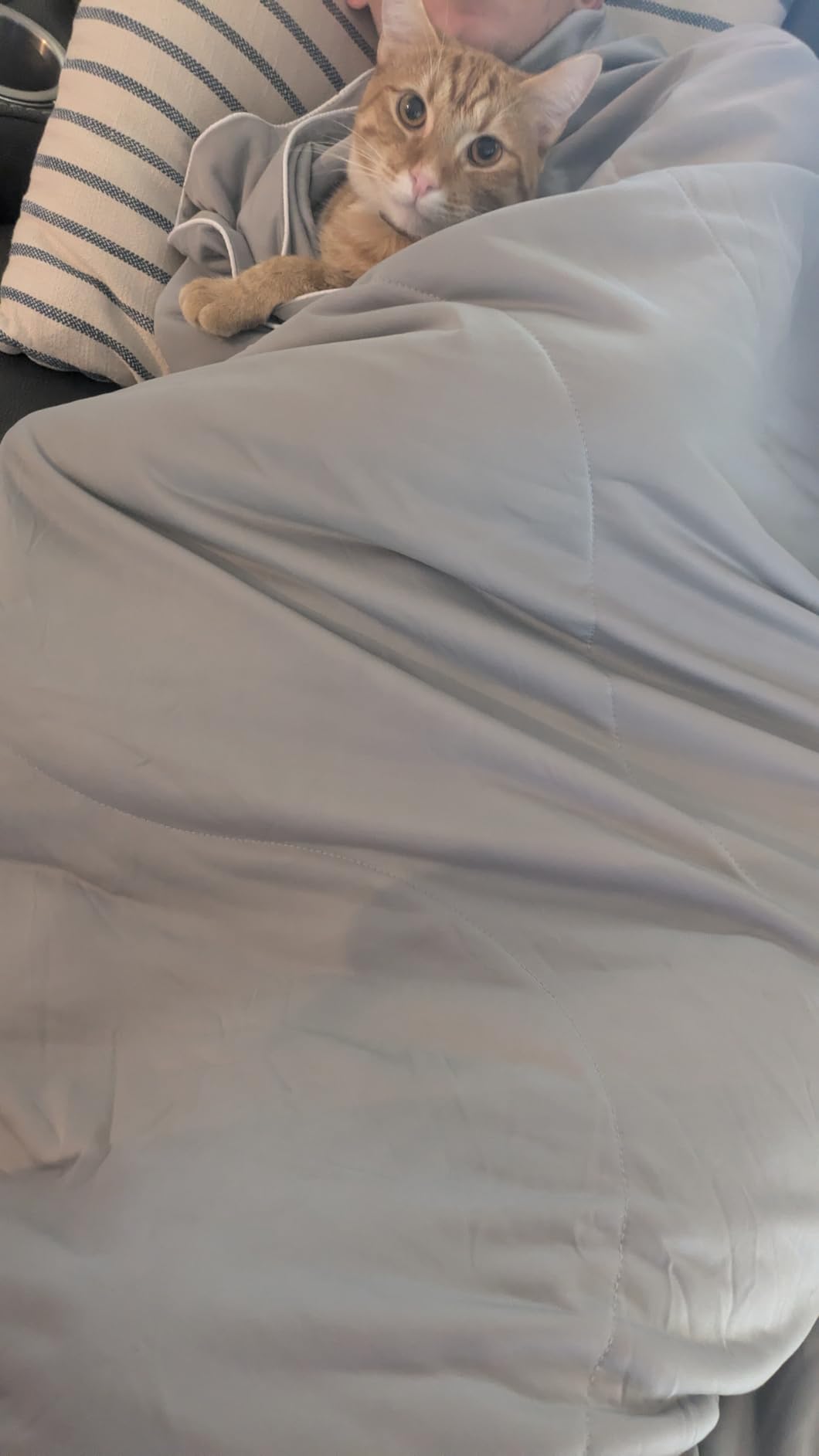
It is also the lightest piece here at 2.1 kg, which makes it genuinely portable for travel, camping or napping, and the fabric is described as soft with a light weighted feel rather than papery.
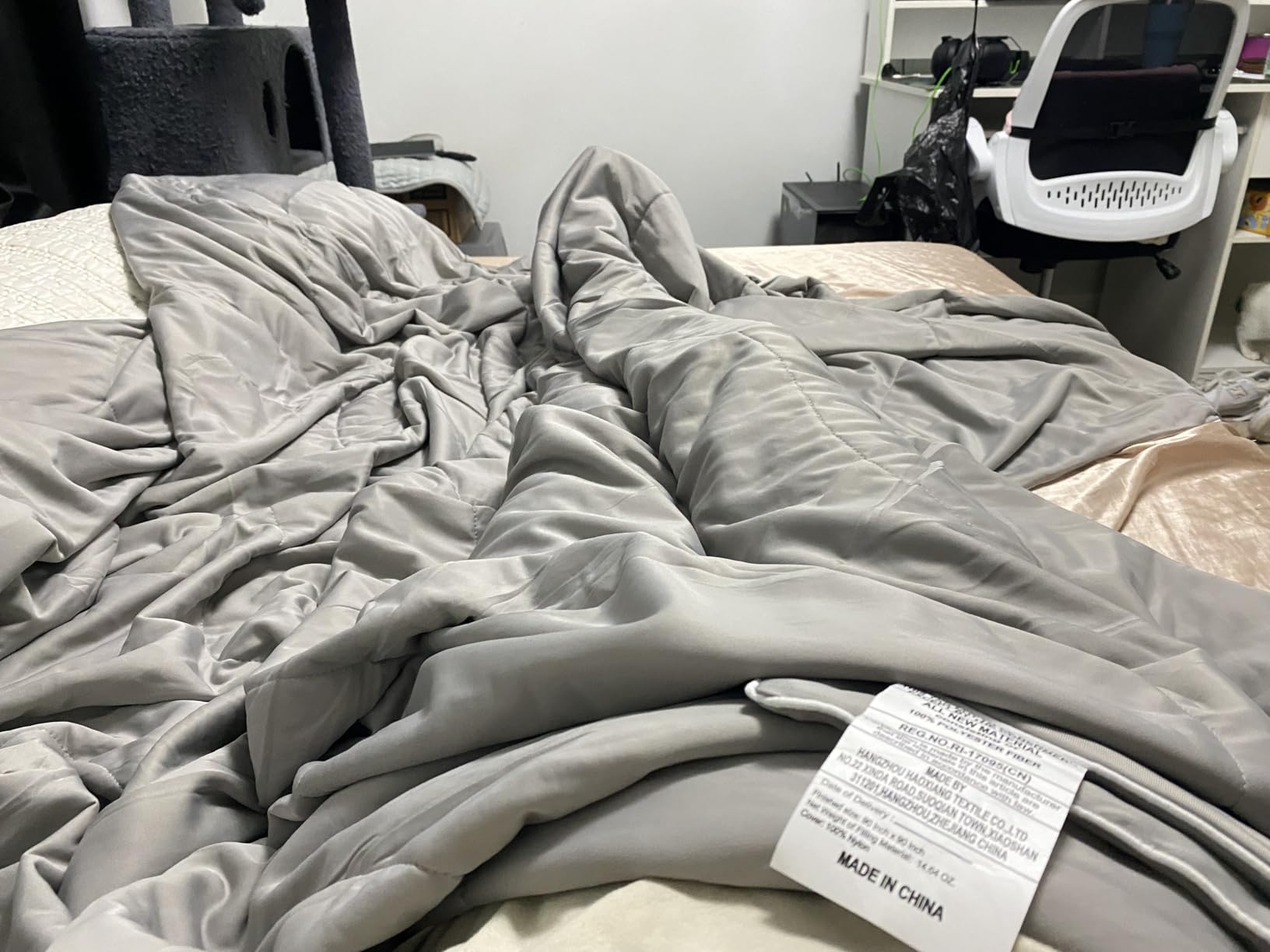
The one consistent complaint is physical, not thermal. The nylon shell is slick, and several owners report the comforter migrating off the bed during the night unless it is tucked in at the foot. If you move a lot in your sleep or do not want to make your bed every morning, budget a duvet cover to pin it in place.
Why this is the budget pick rather than the cheap one
What separates it from the very cheapest bedding is that the cooling number is published, the shell is OEKO-TEX certified, and the quilting is designed to survive repeated laundering. A cheap comforter that feels cold once and then pills and flattens is a worse deal than a slightly pricier one you still like in year two. Hot sleepers launder more than anyone, so durability is the metric that decides real cost here.
Where it will disappoint you
It runs narrow and does not drape down the mattress sides, so coverage is minimal for its nominal size. The slide-off issue is real and recurs across reviews. It is also a very light piece, so anyone who wants winter insulation will find it irrelevant outside summer.
10. Olive + Crate Bamboo Comforter – Best for Sensitive Skin
Olive + Crate Bamboo Comforter – Queen Size Duvet Insert, 88″x90″
Bamboo viscose shell
Recycled polyester and bamboo fill
90 x 88 inch
300 thread count
Pros
- Genuinely breathable bamboo shell
- Hypoallergenic and soft for eczema-prone skin
- Holds softness after months of washing
- Partly recycled fill and OEKO-TEX certified
Cons
- Too warm and heavy for very hot sleepers
- Vacuum packaging smell needs several washes
- Wrinkles readily and does not drape
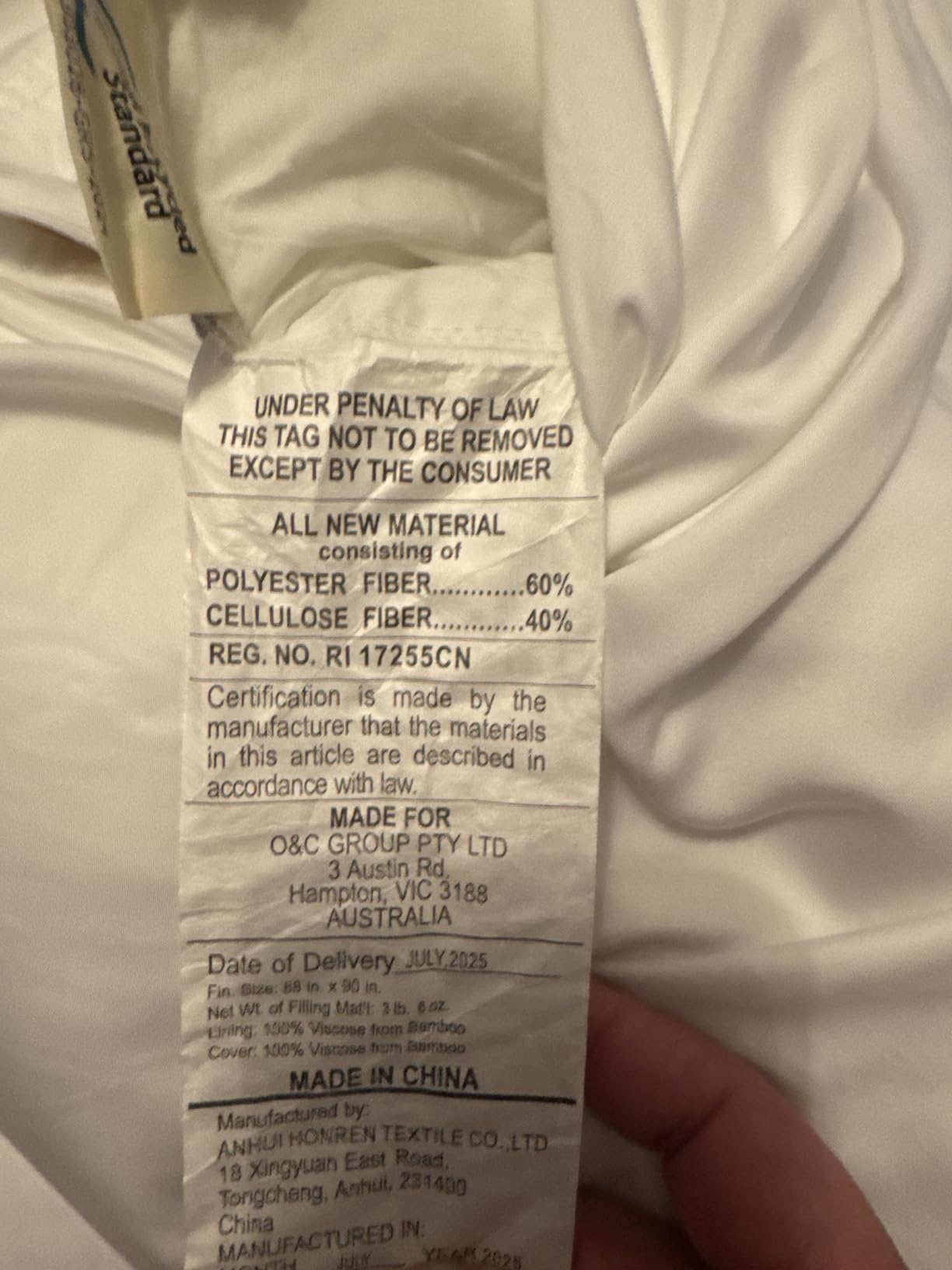
This is the pick for anyone whose skin reacts to synthetic finishes. The outer shell is 100 percent viscose derived from bamboo, listed as hypoallergenic, moisture-wicking, antistatic and odour-resistant, and owners with eczema-prone skin single out the softness as the reason they kept it. The 300 thread count is a plain weave, which means less surface area to trap heat than a dense sateen.
It is also the most thoughtfully made of the natural-fibre options. Box stitching, corner fastening loops and German piping give it a hotel-style finish that most bamboo inserts at this level skip. The fill is 60 percent recycled polyester blended with 40 percent bamboo viscose, so you are not paying a premium for an all-lyocell construction, and it is OEKO-TEX 100 certified.
Durability is a genuine strength. Owners report it holds softness and shape after months of regular washing, which is the opposite of what bamboo bedding often does. It works as a breathable summer layer or as a year-round piece with added bedding underneath, and it is available in queen, king, California king, oversized king and twin XL.
There is an off-gassing problem worth preparing for. The vacuum-sealed packaging produces a strong chemical-like smell, and several buyers say it took three wash cycles to clear. That is an unpleasant first impression, not a defect, but do not judge it before washing it a few times.
Why the natural-fibre route is worth the extra effort
The strongest advice in the bedding forums is that if you sleep hot, the fibre touching your skin matters more than the marketing on the box. Wool, cotton, linen and silk with no polyester in the contact layer is the common recommendation, and this comforter is the closest a mass-market comforter gets to that philosophy. Bamboo viscose wicks moisture faster than cotton, stays smooth through washes, and does not generate the static that makes some people avoid synthetic bedding.
Where it will disappoint you
A minority of owners, including some who specifically bought it to sleep cool, find it too warm and heavy. It wrinkles readily and does not drape over the mattress sides the way the product photos suggest. And the colour selection is narrower than several competitors, so check that the shade works in your room before you commit.
How to Choose a Cooling Comforter Without Guessing
Six criteria decide almost everything, and they matter in this order. First, the cooling mechanism and whether it is measured. A published Q-Max number is a real specification; the word cooling on its own is not. Second, shell and fill material, because the fabric touching your skin does more work than anything else. Third, weight versus thinness, which is a trade-off rather than a scale, because a thicker comforter feels more like a comforter and holds more heat. Fourth, washability, which for a hot sleeper is not a nicety. Fifth, trial and return length, since a cooling fabric takes a week to evaluate properly and a short window is not enough. Sixth, size availability, and whether the piece is large enough for two people.
On the trade-off nobody explains well: if you sleep hot but still want a substantial, huggable comforter, do not buy the lightest available option. Choose a medium-weight lyocell, bamboo or wool piece instead and accept slightly higher retention in exchange for feeling like you are under a comforter rather than a sheet. If night sweats are the actual problem, go light and add a cotton percale or linen sheet set underneath so the moisture has somewhere to go. A duvet cover is worth considering here too, because it lets you swap the whole layer seasonally without replacing anything.
For night sweats specifically, bedding buys you comfort but it is not a diagnosis. Persistent drenching sweats can be connected to menopause and hot flashes, hyperhidrosis, anxiety, thyroid conditions or medication side effects, and a doctor should rule out a cause rather than let you keep buying comforters. Please treat this section as a reason to get checked, not a reason to try harder with bedding.
On care, the pattern across all ten is the same. Cold water, gentle cycle, low tumble dry, no bleach and no fabric softener, since softener coats the fibre and reduces its wicking. Wash weekly if you sweat heavily, which is more often than most guidance suggests. Down and feather fills are the exception, since they are far harder to launder without damage. If the cooling is a conductive shell, expect the first-contact effect to weaken slightly with use, but owners of the picks above report the fabric itself holding up through many wash cycles.
Finally, if a comforter is the wrong format for you, the alternatives are worth a look. A cooling sheet set changes the layer closest to your skin and pairs well with any of the picks here, and a mattress pad addresses heat coming up from below rather than down from above. We have separate roundups on both, including our cooling mattress picks for hot sleepers, if you want to build out a full setup rather than swapping one piece.
Frequently Asked Questions
Do cooling comforters actually work?
Yes, but through mechanisms rather than magic. The two that matter are moisture wicking, where lyocell, TENCEL, bamboo viscose and wool pull sweat off your skin so it evaporates instead of sitting on you, and conductive cool-to-touch, where high-conductivity nylon and spandex fabrics feel cold on contact and are measured on the Q-Max scale. Bedding cannot cool you below the temperature of your room, so a comforter works alongside a cool bedroom rather than replacing one.
What type of comforter is best to keep you cool?
Answer by shell and fill rather than by brand. Best overall for moisture management is lyocell or TENCEL in a low-loft construction. Best for the strongest instant cool-to-touch feeling is a high-conductivity cooling fibre with a Q-Max rating above 0.4. Best if you want real down is a low fill power at 600 or below, which is light enough for air to move through. Best for heavy night sweats is a double-sided cooling fibre. Worst choice is a thick, dense polyester loft, which traps heat and builds static.
What type of bedding is best for people who sweat at night?
Start with a washable, low-loft comforter in lyocell or a cooling nylon, and put a cotton percale or linen sheet set underneath so sweat has a surface to move into. Keep the whole setup machine washable and wash it weekly, since sweat left in fabric is what causes odour. Persistent night sweats can also signal menopause, hyperhidrosis, anxiety, thyroid conditions or medication side effects, so talk to a doctor rather than only replacing bedding.
What type of bedding is most comfortable for hot sleepers?
Comfort and cool are a real trade-off and the answer depends on whether you want weight or air. If you sleep hot but still want a substantial, huggable comforter, choose a medium-weight bamboo, lyocell or wool piece rather than the lightest option available. If night sweats are the problem, go light. If you share a bed with someone at a different temperature, two thinner comforters on one bed work far better than one compromise layer.
What is Q-Max in bedding?
Q-Max is a scale that measures how cool a fabric feels the instant it touches skin, based on how quickly it draws heat away on first contact. A higher number means a bigger initial cooling sensation, and anything above 0.4 is generally in the range where people notice a difference. It does not measure how cool a comforter stays over eight hours, so a high Q-Max fabric is strongest at the start and behaves normally once it reaches body temperature.
How do you wash a cooling comforter?
Wash on a cold gentle cycle with a neutral or low alkaline detergent, then tumble dry low or line dry. Skip bleach, fabric softener and high spin, since softener coats the fibre and reduces its moisture wicking. Check the care label first, because down and feather fills tolerate machine washing far less well than synthetic or lyocell ones. Air it out between washes and wash weekly if you sweat heavily, which is more often than standard care guidance suggests.
The Bottom Line on Cooling Comforters for Hot Sleepers
If you want one comforter that solves the most problems for the most people, take the COHOME All-Season piece. It is the best reviewed in the roundup, the fill stays fluffy through years of washing, and it works as both a stand-alone comforter and a duvet insert. If your problem is a hot partner or a specific bed size, the Bedsure piece is built for that. If you are simply too warm on contact, the REST Evercool is the strongest performer there.
For night sweats, the HOMFINE double-sided cooling fibre is the one I would test first. For moisture over a full night, the HOMBYS bamboo comforter is the most honest option and the least hyped. For sensitive skin, the Olive + Crate bamboo piece wins on shell feel and certifications. And if you want the cheapest way to test whether cooling bedding works for you at all, the DOWNCOOL piece does the job for very little.
Whatever you choose, give it a full week, keep the bedroom in the 60 to 67 degree range, and pair it with a breathable sheet set. You can work through our general comforter roundup if your needs are seasonal rather than temperature-driven, or our mattress picks for hot sleepers if heat is rising from below the comforter.