
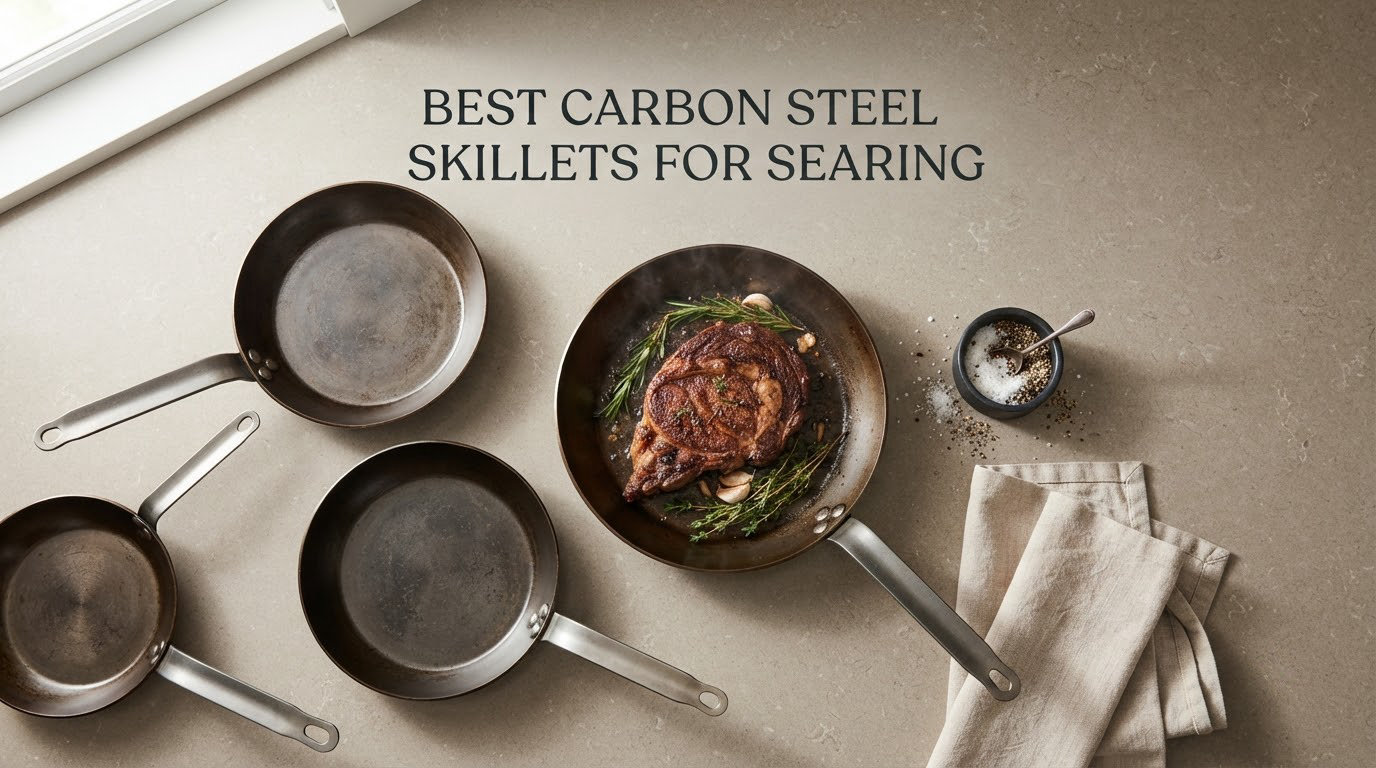
Carbon steel is a lightweight, high-carbon steel alloy that is stamped or spun into a pan shape, which makes it roughly a third the weight of cast iron while heating faster and responding more sharply to a burner change. Seasoning is the process of polymerizing a thin layer of cooking oil onto hot steel, creating a hard patina that resists sticking. For searing, that combination of fast heat response and a stable high surface temperature is exactly what you want.
So which pan wins? The de Buyer MINERAL B 12.5-inch is the best carbon steel skillet for searing overall, thanks to a 9-inch cooking surface, induction compatibility and a lifetime warranty. The Matfer Bourgeat Black 11-5/8-inch is the pick if you want a traditional uncoated pan that can take a hard preheat, and the Merten and Storck 12-inch is the one to buy if you want the most searing surface for the least money.
We put twelve carbon steel skillets through a searing-specific evaluation rather than a general cooking one. Every pan here was judged on how fast it climbs to searing temperature, how evenly it holds that temperature across the cooking surface, how large that surface actually is, and how safely you can hold the handle when the pan is at full blast. That last point matters more than most roundups admit: a pan that scorches the food but burns your hand is not a searing pan.
Two definitions before we start. Carbon steel is roughly 99 percent steel and 1 percent carbon, formed from a flat sheet rather than cast. Nitrided carbon steel is steel treated with nitrogen gas to create a harder, more rust-resistant surface, though it is not nonstick. If you are weighing carbon steel against cast iron in your collection, our cast iron skillet guide covers where the two overlap.
Table of Contents
Top 3 Best Carbon Steel Skillets for Searing in 2026

de Buyer MINERAL B 12.5 Inch
- 9 inch cooking surface
- Induction ready
- Lifetime warranty
- Made in France
Matfer Bourgeat Black 11-5/8 Inch
- Rivet-less welded handle
- Oven safe to 800F
- Uncoated single-piece steel
- Grill and open flame ready

Merten and Storck 12 Inch
- Largest value surface
- Factory seasoned
- 1.5 kg
- Induction and campfire safe
All 12 Skillets at a Glance in October
| Product | Specifications | Action |
|---|---|---|
| de Buyer MINERAL B 12.5 Inch |
|
Check Latest Price |
| Matfer Bourgeat Black 11-5/8 Inch |
|
Check Latest Price |
 Lodge Pre-Seasoned 8 Inch Skillet Lodge Pre-Seasoned 8 Inch Skillet |
|
Check Latest Price |
| Merten and Storck 12 Inch Pre-Seasoned |
|
Check Latest Price |
 Mauviel M’Steel Black 11 Inch Mauviel M’Steel Black 11 Inch |
|
Check Latest Price |
 Yonida 12 Inch Pre-Seasoned Pan Yonida 12 Inch Pre-Seasoned Pan |
|
Check Latest Price |
 YOSUKATA 11.8 Inch Pre-Seasoned Pan YOSUKATA 11.8 Inch Pre-Seasoned Pan |
|
Check Latest Price |
 Tramontina 12 Inch Carbon Steel Tramontina 12 Inch Carbon Steel |
|
Check Latest Price |
 OXO Outdoor 12 Inch Skillet OXO Outdoor 12 Inch Skillet |
|
Check Latest Price |
 Winco 8-5/8 Inch French-Style Fry Pan Winco 8-5/8 Inch French-Style Fry Pan |
|
Check Latest Price |
 American Metalcraft 10 Inch Fry Pan American Metalcraft 10 Inch Fry Pan |
|
Check Latest Price |
 STRATA Carbon Clad 12.5 Inch STRATA Carbon Clad 12.5 Inch |
|
Check Latest Price |
How We Scored These Skillets for Searing
Searing is a heat transfer problem before it is a food problem. A crust forms when the pan surface holds a high temperature long enough for the surface of the meat to brown past roughly 300F and dry out. Pans that climb fast but stall, or that run a hot ring in the middle and cool corners, produce a patchy sear at best.
We scored each pan on six things, using the manufacturer specifications, the cooking surface dimensions and the patterns described across thousands of buyer reviews.
Heat response. How quickly the pan follows a burner change. This is the single biggest reason to choose carbon steel over cast iron, and it is the reason a lighter pan can out-sear a heavier one.
Surface temperature stability. A pan with more mass holds its temperature when you add cold protein, which protects the crust while the center of the steak catches up. Multi-ply designs and thicker single-ply pans score well here.
Usable cooking surface. The listed diameter is the outer rim, not the flat cooking area. Two pans with the same 12-inch label can differ by more than an inch of usable surface, and that is the surface that has to hold the steak.
Weight and balance. We treated weight as a tradeoff rather than a virtue. A heavier pan holds heat better but makes one-handed tilting, basting and tossing harder, and a hot handle on a heavy pan is a real burn risk.
Seasoning state on arrival. Factory-seasoned pans let you sear on the first meal. Traditional pans need the wax or protective coating stripped and a seasoning cycle before the surface behaves.
Oven ceiling and cooktop fit. A pan rated to 500F is a stovetop searing tool. A pan rated to 660F or higher can finish a seared steak under the broiler or take a reverse-sear into a hot oven.
1. de Buyer MINERAL B 12.5 Inch Fry Pan – Best Overall for Searing
de Buyer MINERAL B Carbon Steel Fry Pan – 12.5” Diameter, 9” Cooking Surface – Ideal for Searing, Sauteing & Reheating – Naturally Non-Stick Finish – Made in France
12.5 inch pan with 9 inch surface
Lifetime warranty
Induction ready
Made in France
Pros
- 9 inch cooking surface is large for the outer diameter
- Heats faster and responds better than cast iron
- Works on every cooktop including induction
- The most owner-proven pick here with over 15000 ratings
Cons
- Arrives with a beeswax coating that must be stripped first
- Oven ceiling of 400F is low for finishing a sear
- Hand wash only with no dishwasher option
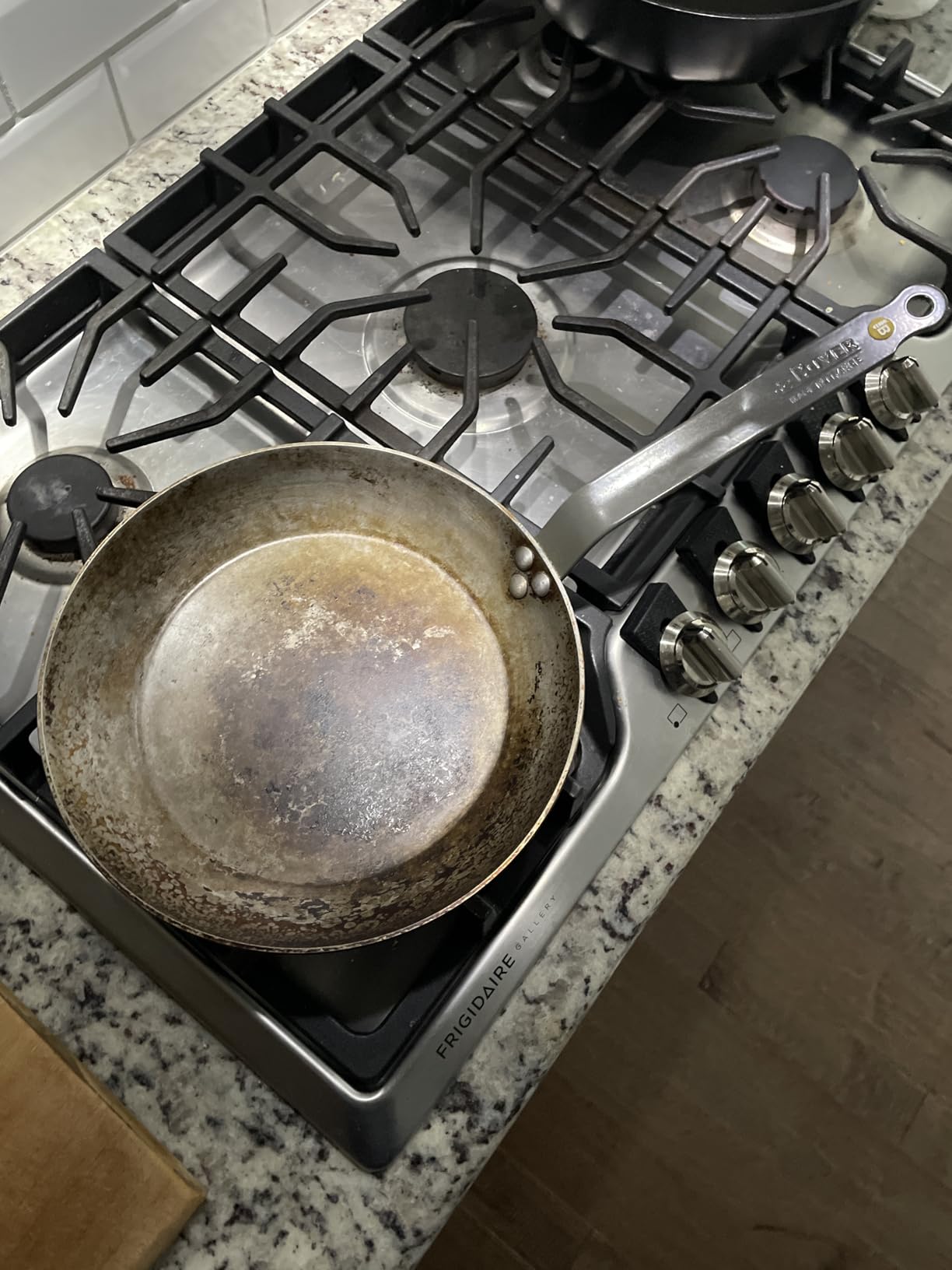
This is the pan I keep reaching for when the goal is a crust and nothing else. The 12.5-inch outer diameter gives you a 9-inch flat cooking surface, which is unusual at this size and means a thick steak or a pair of chicken thighs sit on metal instead of hanging over the wall.
Weighing in at 2.88 kg, it is heavy enough to hold temperature through a cold protein without being punishing to lift. Buyers consistently describe it as lighter and more responsive than cast iron, and the maker’s own guidance is that it is better adapted to high heat than stainless steel. That is the exact positioning a searing pan needs.
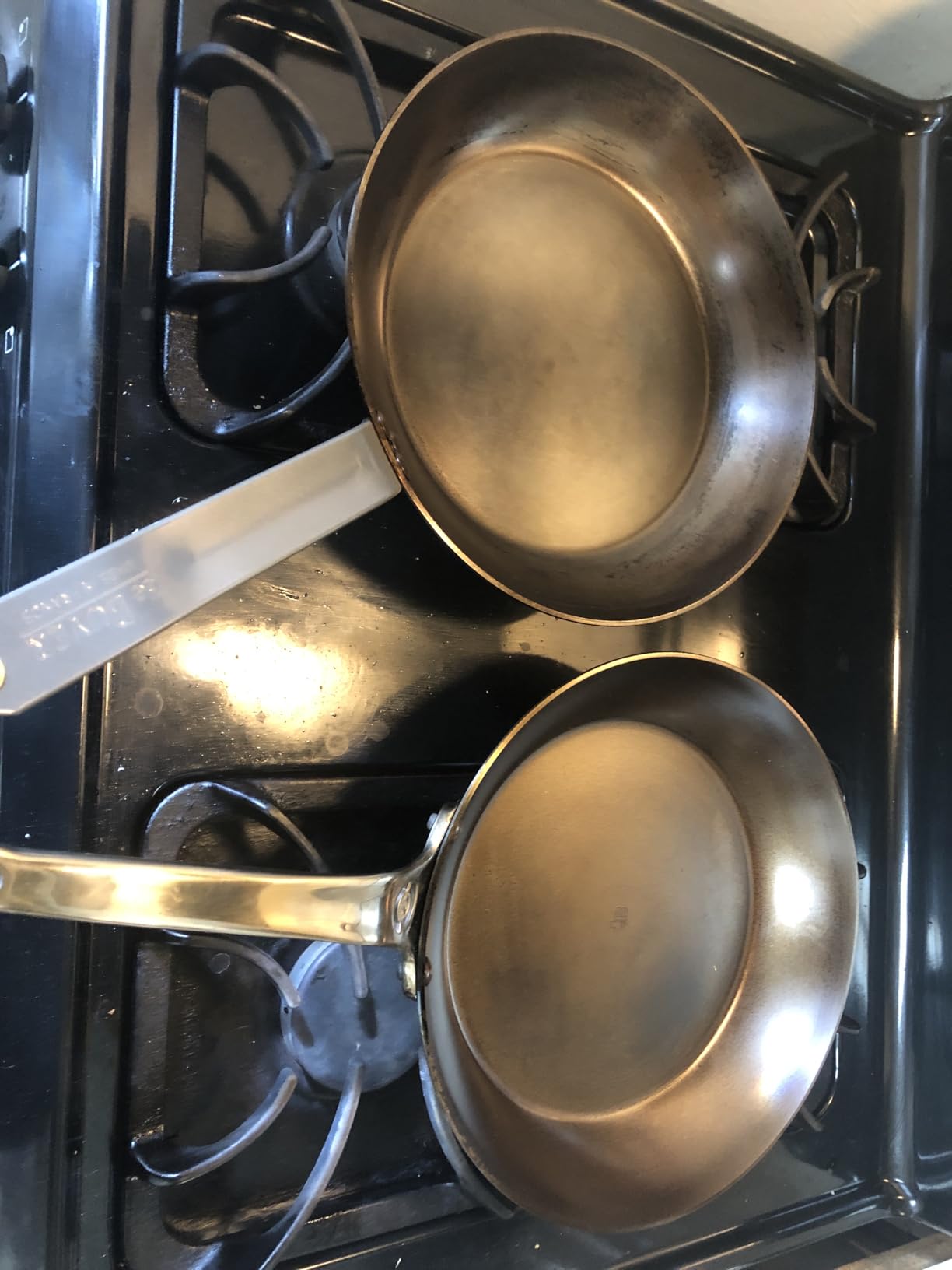
The one real annoyance is the beeswax. It exists to stop rust in transit, and it has to come off with hot soapy water before the first seasoning coat goes on. Skipping that step is the number one reason people decide a carbon steel pan does not work for them.
Induction compatibility is the quiet advantage here. Most of this list works on gas or electric only, and buyers with induction tops report the MINERAL B is the pan they actually use. At 4.4 stars across more than 15,000 ratings with 75 percent five-star, it is also the most proven pick in the group.
Who this pan suits
Cooks who sear two to four portions at a time and want surface area under the food. It is also the safest choice if you cook on induction, since the flat base sits flat and the surface does not drop off toward the edges.
Anyone willing to strip a wax coating once. The brand’s instructions are simple: wash, dry, heat gradually to medium-high, and wipe on a thin film of high smoke point oil.
Who should skip it
If your searing plan includes finishing a steak under the broiler, the 400F oven limit rules this pan out. Buy something rated to 660F or above instead.
Anyone who wants a dishwasher. This is a hand-wash-only pan for life, and so is every carbon steel skillet on this list.
2. Matfer Bourgeat Black Carbon Steel 11-5/8 Inch – Best Traditional Pan for High Heat
Matfer Bourgeat Black Carbon Steel Frying Pan, 11 5/8″
11-5/8 inch uncoated carbon steel
Oven safe to 800F
4.1 pounds
Rivet-less welded handle
Pros
- Single-piece uncoated high-carbon steel with no PTFE or PFOA
- Rivet-less welded handle avoids rust traps
- Works on induction gas grill and open flame
- Highest oven rating in this group at 800F
Cons
- Factory protective coating can take hours of scrubbing
- Handle is bare steel and gets hot
- Not suited to long acidic cooking such as tomato sauce
The Matfer Bourgeat is the purist’s answer. It is a single piece of uncoated high-carbon steel with a handle welded to the body, which means there are no rivets for rust or grease to build a nest around. Nothing is coated, and the specification lists no PTFE or PFOA anywhere in the pan.
At 4.1 pounds it is on the heavy side, and that is deliberate. The mass is what lets it sit at searing temperature while a cold steak hits the surface, so the crust keeps forming instead of stalling. It also carries the highest maximum temperature in this group at 800F, which makes it the natural choice for a reverse sear or a broiler finish.
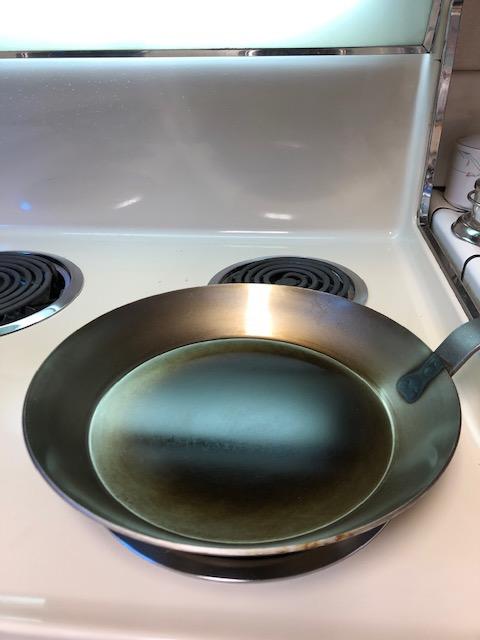
It is also the most demanding pan on the list. The factory protective coating is the most stubborn one we saw described in reviews, and it arrives unseasoned. Buyers who push through that report near-total release once the seasoning is established, and describe the pan as heirloom grade.
With 4.4 stars across more than 8,000 ratings and 73 percent five-star, the long-term satisfaction here is well documented. If you like restaurant-style pans and do not mind the setup, this is the traditional pick.
Who this pan suits
Cooks doing high-volume searing, reverse sears, or anything where a hot oven finish matters. The 800F rating gives real flexibility that none of the lighter pans here can match.
People with a grill, a griddle, or an open fire. It is explicitly compatible with induction, gas, electric, ovens and open flame.
Who should skip it
First-time carbon steel owners. The scrub-down on arrival is genuinely the hardest of any pan in this roundup, and the handle is bare steel that heats with the pan.
Anyone who wants to simmer a long tomato or wine reduction. Acid works at the seasoning layer, and this pan has no protective enamel to shrug it off.
3. Lodge Pre-Seasoned Carbon Steel Skillet 8 Inch – Best Lightweight Starter Pan
Lodge Pre-Seasoned Carbon Steel Skillet, Long Handle, 8 Inches
8 inch pre-seasoned carbon steel
2.1 pounds
Oven safe to 500F
Lifetime limited warranty
Pros
- Arrives pre-seasoned and ready to cook
- Lightest listed weight among the full-size pans here at 2.1 pounds
- Long handle stays cool and gives good leverage
- Made in the USA with a lifetime limited warranty
Cons
- 8 inch surface is small for family portions
- Hand wash and ongoing oiling required
- Not dishwasher safe
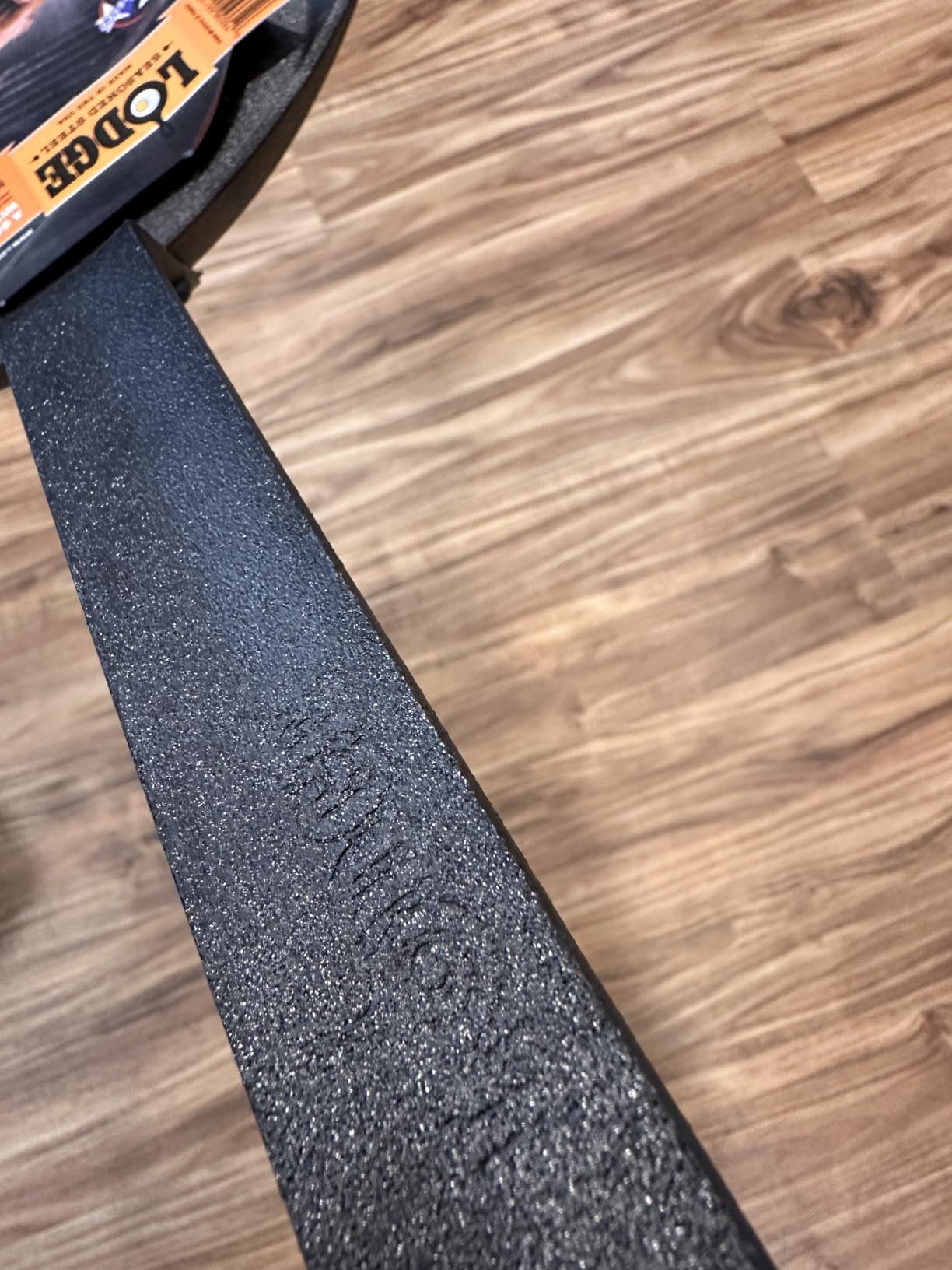
Lodge built this pan for people moving over from cast iron who do not want to wait. It arrives seasoned with vegetable oil, so the first steak can go on tonight. No stovetop seasoning cycle, no wax to strip, no oven run at 500F before you start.
At 2.1 pounds it is the most maneuverable full-size pan in the roundup. That is not just comfort: a light pan is one you can lift, tilt and move quickly, which is how you control the sear when fat renders and the pan needs to be pulled off the burner for a second.
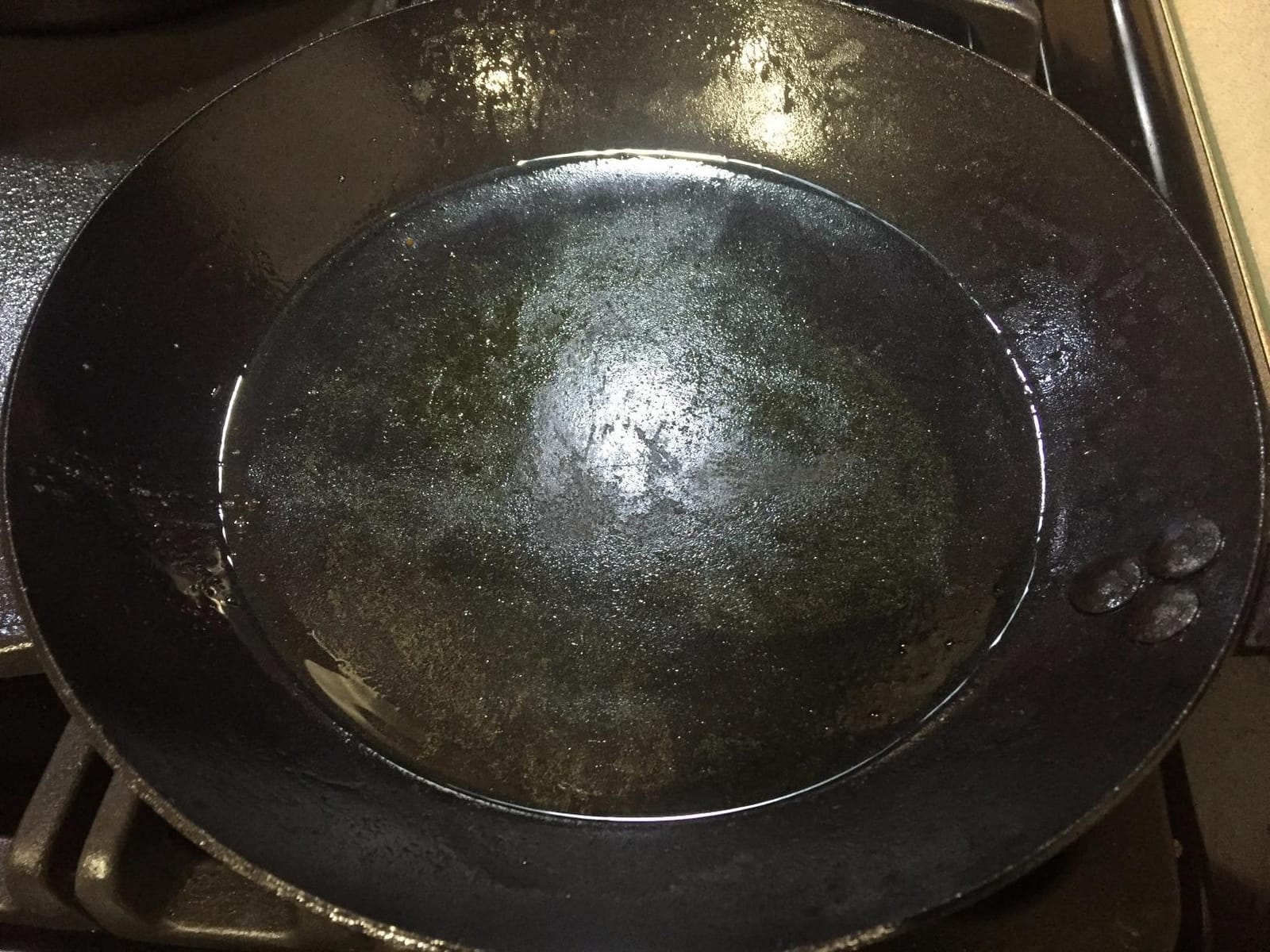
The finish is made with only carbon steel and vegetable oil, with no PTFE or PFOA. Buyers coming from cast iron describe the same reaction every time: noticeably lighter, heats faster, and once seasoned it has the same release potential as a cast iron pan that took years to build up.
Ratings sit at 4.3 with close to 7,800 reviews and 67 percent five-star. The size is the dividing line. For a single person, two eggs, or a single steak, the 8-inch surface is generous. For a family dinner it is tight.
Who this pan suits
New carbon steel owners, full stop. No seasoning project, no learning curve on day one, and a long handle that stays cool enough to hold during a hard preheat.
Single-person households and anyone cooking eggs, which is where an 8-inch pan with sloped sides is genuinely easier to work with than a 12-inch.
Who should skip it
Anyone searing for more than two people. A 12-inch steak does not fit the surface, and a second round of protein means the pan never gets fully hot again.
Broiler users. The 500F ceiling is a stovetop number, and the plastic handle rules out a broiler finish entirely.
4. Merten and Storck 12 Inch Pre-Seasoned Pan – Best Value for Everyday Searing
Merten & Storck 12″ Pre-Seasoned Carbon Steel Frying Pan Skillet
12 inch pre-seasoned carbon steel
1.5 kg
4 cup capacity
Oven safe to 600F
Pros
- Very light at 1.5 kg for a 12 inch pan
- Factory seasoning works right out of the box
- Triple-riveted steel handle stays cool on the stovetop
- Metal utensils and induction cooktops both fine
Cons
- Thin steel can warp on glass or ceramic tops
- Shipping wax can smoke heavily if not removed
- Low thermal mass for long high-heat sears
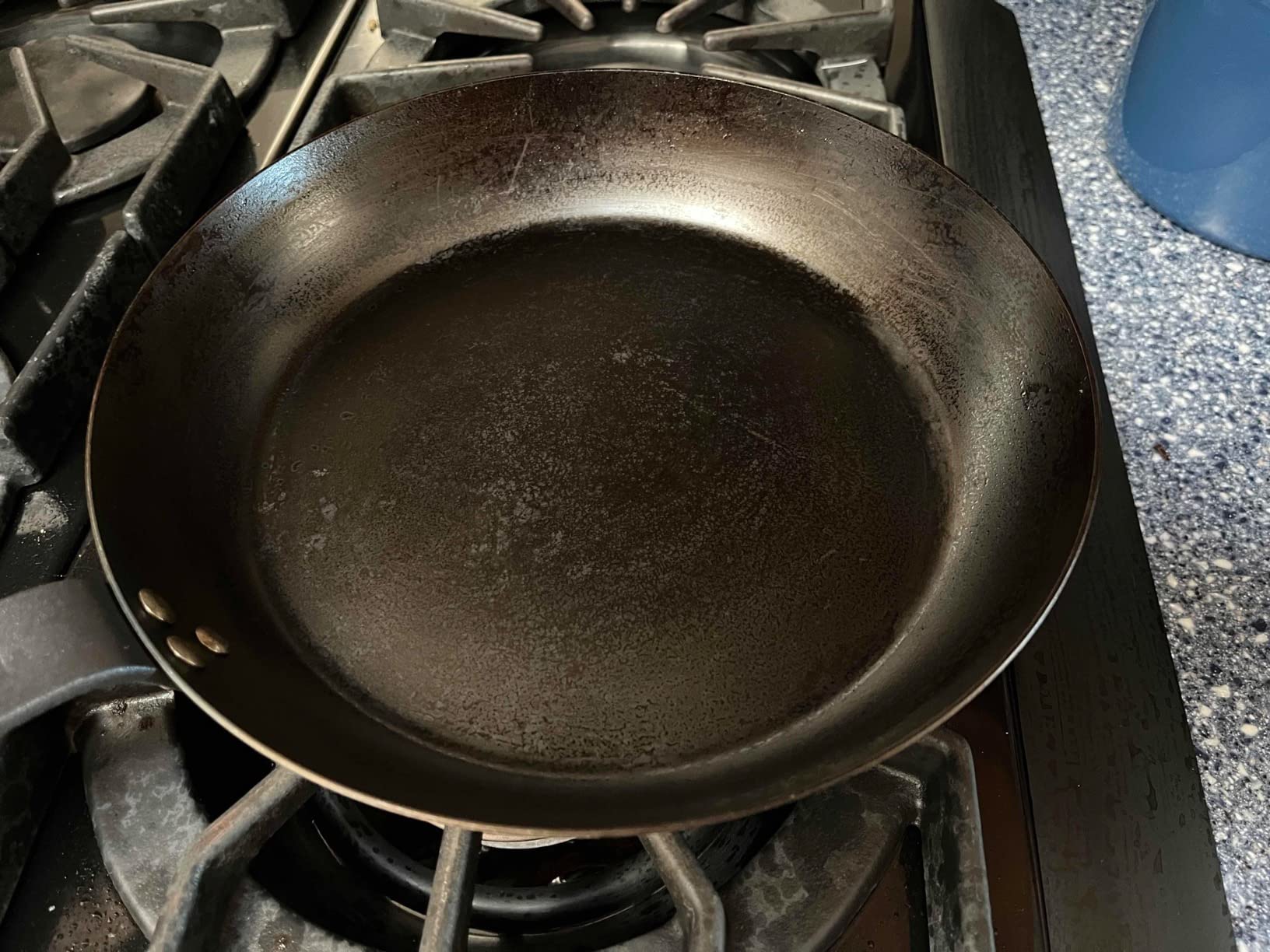
This is the pan we recommend to someone who wants to start searing without spending heavily. At 1.5 kg it is one of the lightest large carbon steel pans available, and the 12-inch diameter means a whole chicken thigh or a thick-cut steak has room to sit on flat steel.
It arrives pre-seasoned, and owners report the surface gets slicker the more they use it. The break-in period is short. That combination of size, low weight and immediate usability is why it takes the value slot in this roundup.
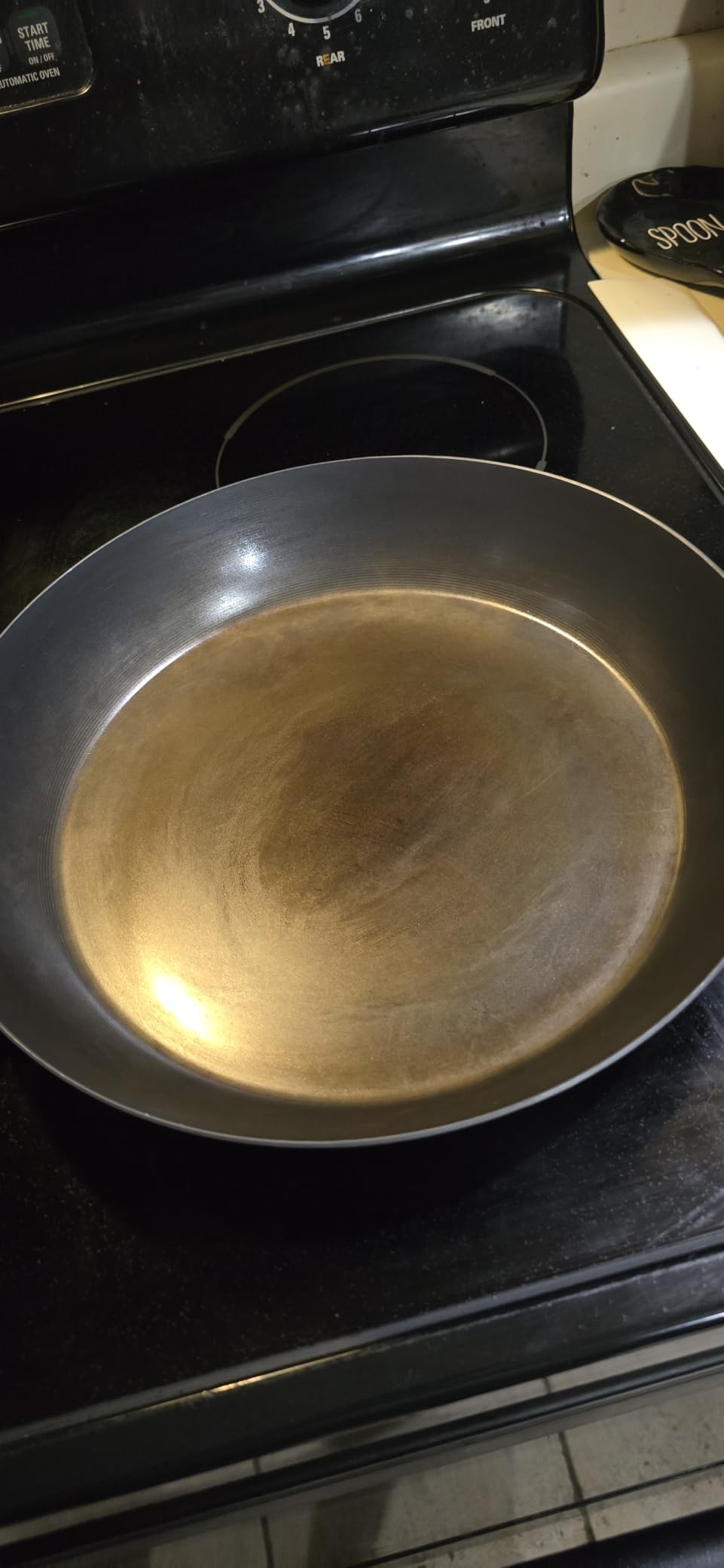
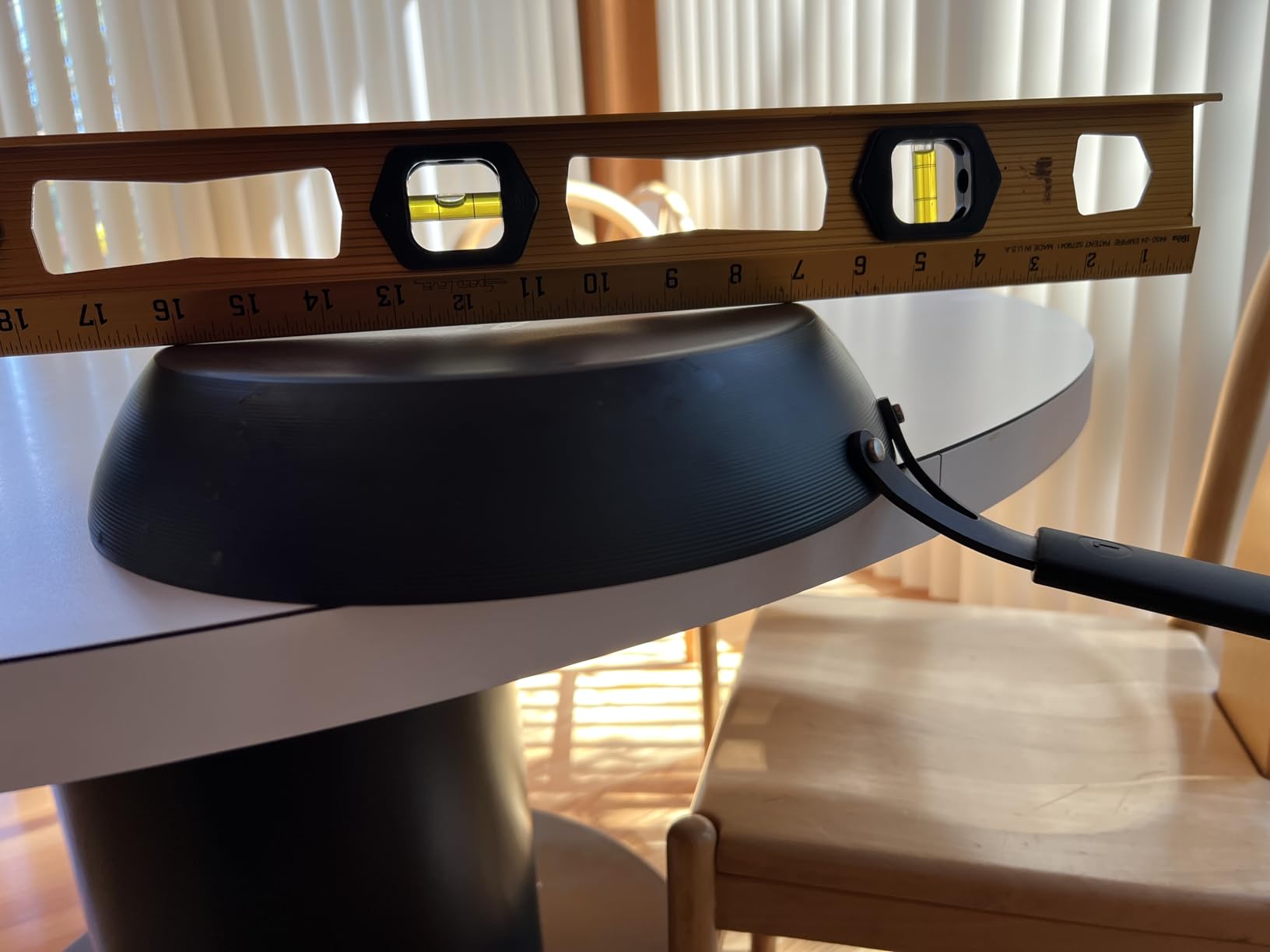
Two cautions come up repeatedly in the reviews. The first is the shipping wax, which can smoke up a kitchen if you heat the pan before removing it. The second is warping on flat glass and ceramic cooktops, which several owners report after heating too fast from cold.
Ratings are 4.2 across more than 5,500 reviews with 67 percent five-star. The recurring theme is that the pan becomes more useful every month, and many reviewers report successfully re-leveling it after a warp.
Who this pan suits
Everyday searing on a real budget, especially for someone who wants to toss the pan one-handed. A 1.5 kg pan moves easily from burner to counter with a full load of food.
Campfire and grill cooking, which the manufacturer lists among the compatible heat sources alongside induction, gas, electric and oven.
Who should skip it
Cooks who sear for long stretches at maximum heat. Low thermal mass means the temperature drops noticeably when a large cold piece of protein hits the surface, which costs you crust.
Anyone on a flat-top ceramic or glass range who heats aggressively. Start it on medium and let it come up slowly.
5. Mauviel M’Steel Black 11 Inch – Best for Even Heat Across the Surface
Mauviel M’Steel Black Carbon Natural Nonstick Frying Pan With Iron Handle, 11-in, Suitable For All Cooking Surfaces, Made in France
11 inch pan with 8.4 inch surface
Oven safe to 680F
2 kg
Iron handle
Pros
- Exceptionally even heat distribution across the cooking surface
- Large flat cooking area for the overall pan size
- Iron handle makes it the one to finish a sear in the oven
- Works on every cooktop including induction
Cons
- Beeswax coating needs boiling water or a 300F oven to remove
- Thinner and lighter than most so it holds less heat
- Can warp on electric or induction tops if preheated cold
- No repair offered for a warped pan
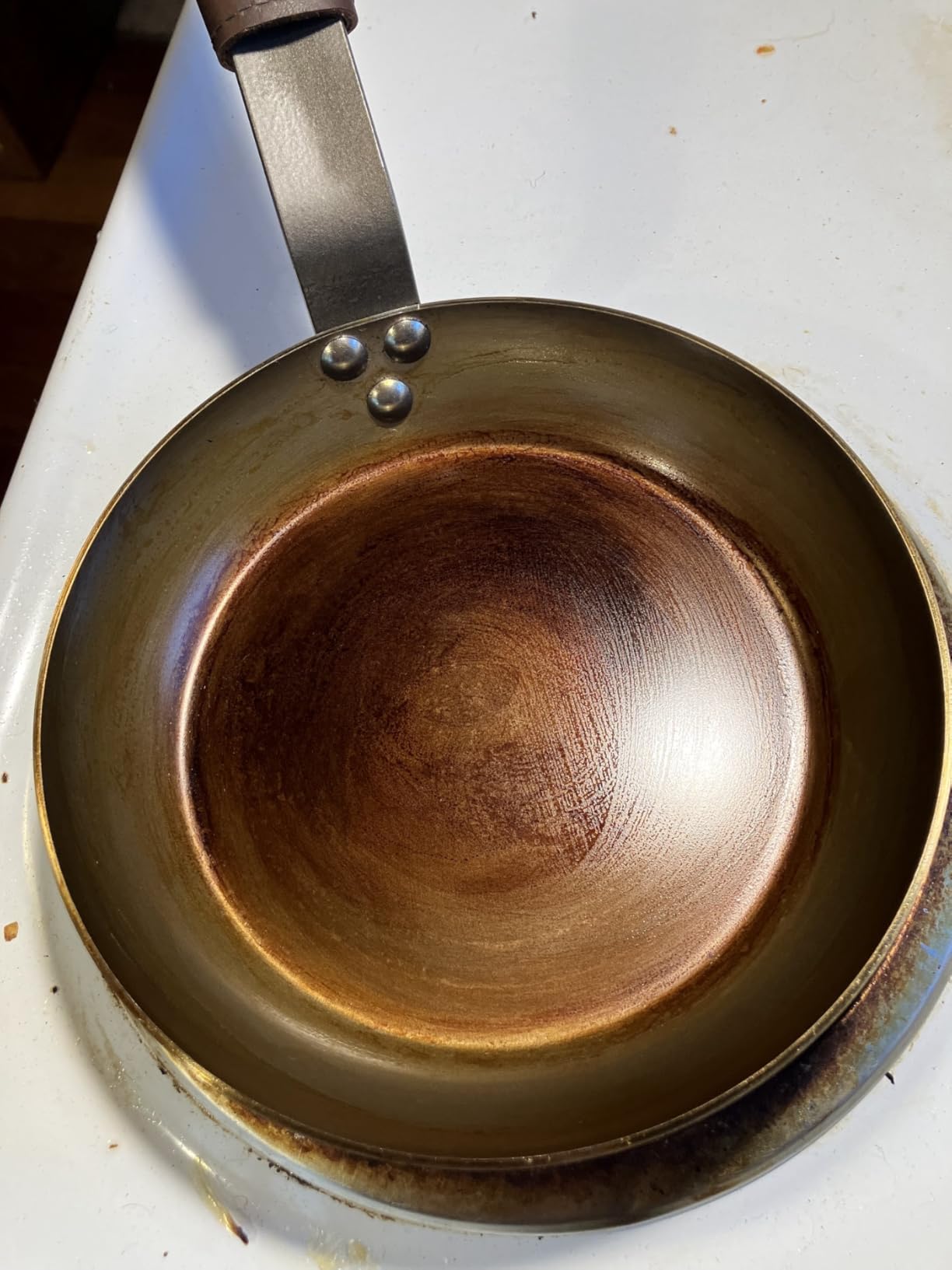
The M’Steel is the pan to pick if hot spots are your recurring problem. The extra-thick black steel construction, with a large flat cooking area relative to the overall pan, is designed specifically to spread heat without a hot ring in the middle.
It also has an iron handle rather than a steel one, which is why it is oven safe to 680F. That makes it the practical choice for a sear-then-finish method where the steak starts on the burner and finishes in a hot oven.
At 2 kg it is responsive rather than heavy, and reviewers who put in the seasoning work describe a bronze, genuinely non-stick surface after a few cycles. Around 1,000 ratings at 4.3 with 71 percent five-star, the feedback is consistent.
The beeswax is the recurring complaint. It needs very hot water, or ten minutes in a 300F oven, before the first seasoning coat. Warping on electric and induction tops is the second issue, and the manufacturer does not offer repair for a warped pan.
Who this pan suits
Cooks who sear multiple pieces in a batch and need the whole surface at one temperature. Even distribution means four chicken thighs brown at the same rate instead of two of them scorching.
Anyone doing a sear-then-oven finish. The iron handle plus the 680F rating is the combination you want for that technique.
Who should skip it
Cooks who want a pan to slam onto a hard preheat. The thinner steel holds less heat, and the manufacturer specifically advises heating up slowly to avoid warping.
Impatient strippers of wax. If the beeswax removal feels like a chore, pick a pre-seasoned pan instead.
6. Yonida 12 Inch Pre-Seasoned Pan – Best for Campfire and Grill
Yonida Carbon Steel Pan, 12 Inch Nonstick Frying Pan Skillet
12 inch pre-seasoned carbon steel
2 liter capacity
Oven safe to 600F
Removable silicone holder
Pros
- Removable silicone handle holder stays cool and comes off for the oven
- Pre-seasoned with natural oil so it is ready to cook
- Works on home stoves campfires and grills
- 2 liter capacity suits family portions
Cons
- Thin bottom warps on flat ceramic and induction tops
- Seasoning instructions differ between the card and the packaging
- Heavier than expected once loaded
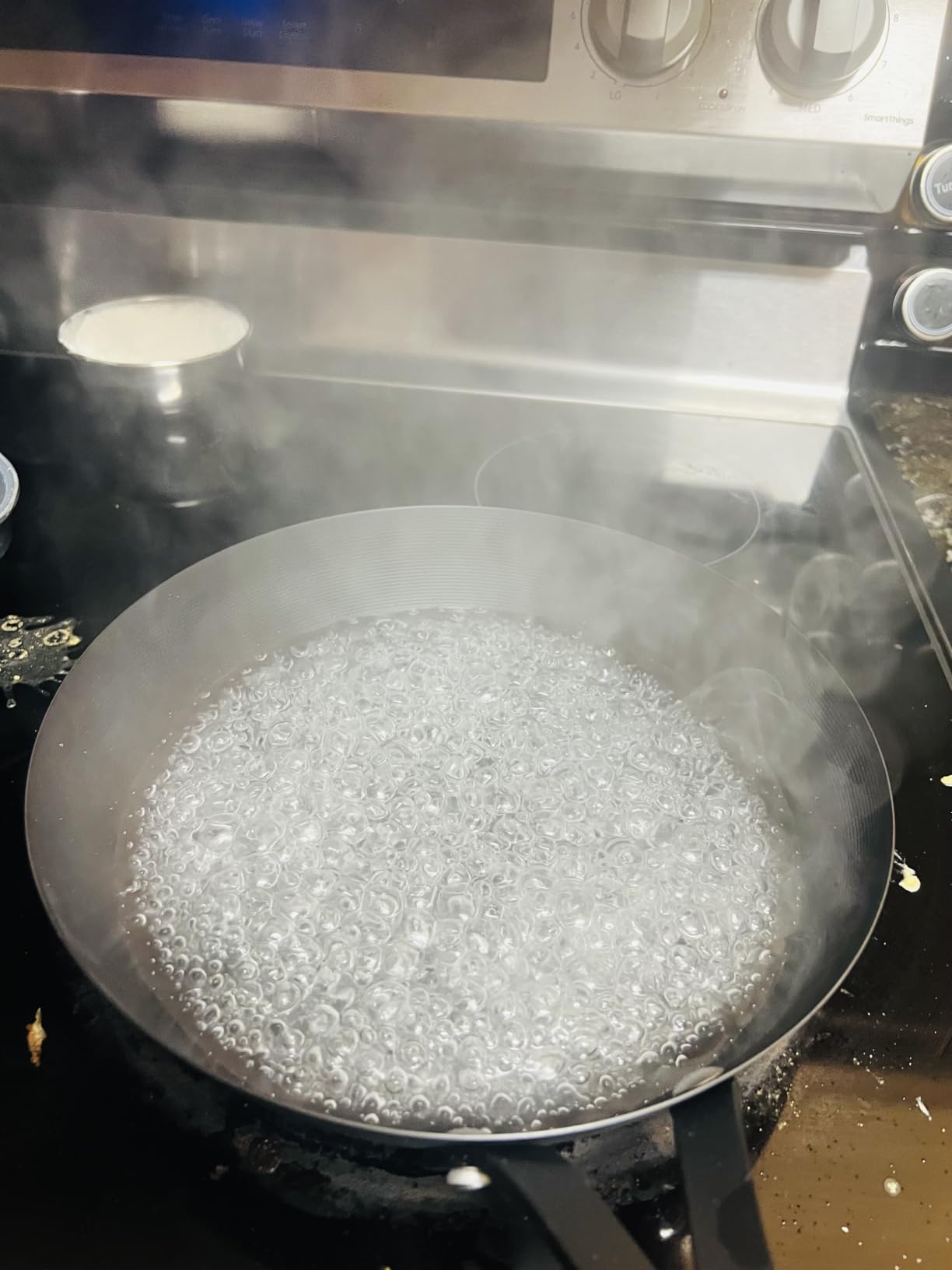
This is the outdoor pick. The removable silicone handle holder stays cool to the touch on a campfire or grill and pops off entirely for oven roasting or broiling, which solves the handle problem that stops most people cooking over a fire.
It arrives pre-seasoned with natural oil, so there is no stovetop burn-in before a trip. The listed heat sources cover home stoves, campfires and grills, and the 2 liter capacity is generous for a 12-inch pan.
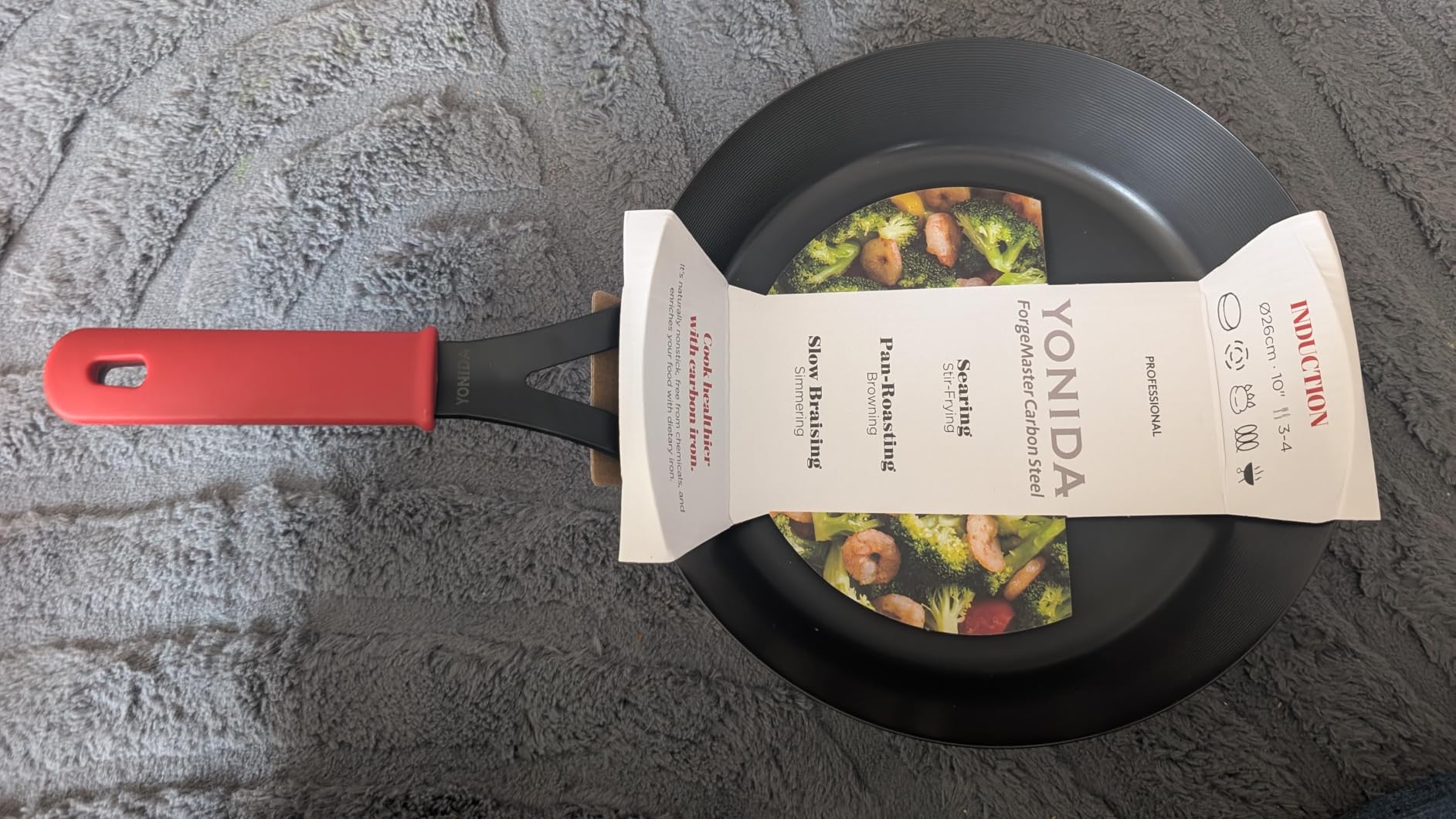
Reviews are thin compared to the rest of this list, with around 150 ratings at 4.3 and 71 percent five-star, so there is less long-term evidence here. What those reviews do agree on is quick, even heating and an easy-to-hold handle.
The dominant complaint is warping. Multiple reviewers report the pan wobbling on a flat cooktop after brief use on medium heat, and a few note that the printed seasoning instructions differ between the insert card and the outer packaging, which is worth watching for.
Who this pan suits
Campfire, grill and fish-out-of-the-bag cooks. The detachable cool-touch holder is the single feature that makes this pan practical over an open fire, and the 600F rating covers a hot oven finish once you remove it.
Anyone who wants a 12-inch pan they can genuinely carry with one hand and a pack of dry wood.
Who should skip it
Cooks on flat ceramic or induction surfaces who want a rigid base. The thin bottom is the weak point, and the review pattern on wobbling is consistent.
Buyers who want a heavily reviewed, long-proven pan. With 152 ratings there is much less evidence about how this one ages.
7. YOSUKATA 11.8 Inch Pre-Seasoned Pan – Best for Shallow Tossing
YOSUKATA 11.8″ Pre-Seasoned Carbon Steel Frying Pan
11.8 inch pre-seasoned carbon steel
1.54 kg
3.8 quart capacity
Oven safe to 600F
Pros
- Shallow wok-style sides make tossing vegetables easy
- Detachable wooden handle stays cool and comes off for the oven
- Light at 1.54 kg for an 11.8 inch pan
- Works on gas electric induction grill and open flame
Cons
- Lowest average rating in the group at 4.0 stars
- Wooden handle is not suited to broiling or very high oven heat
- Food release is harder early in the seasoning life
The YOSUKATA is shaped closer to a shallow wok than a skillet, and that is the entire point. Shallow sloped walls let you lift and toss vegetables or small cuts of meat without a spatula, which is the fastest way to keep a sear on small pieces over a high flame.
It is also light, at 1.54 kg, and the detachable wooden handle stays cool on the stovetop and comes off for oven use. Compatibility is broad: gas, electric, induction, grill, barbecue and open flame are all listed.
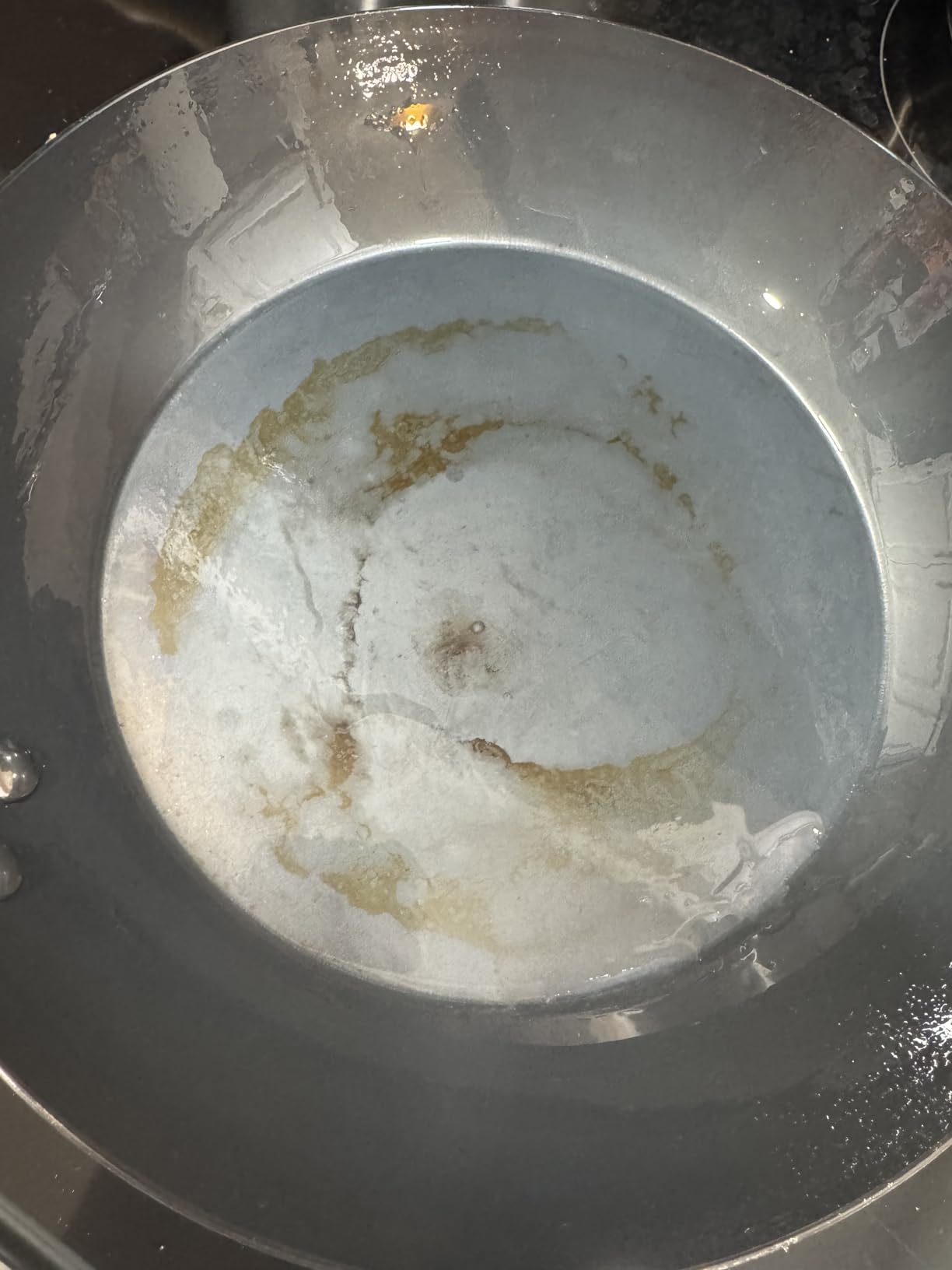
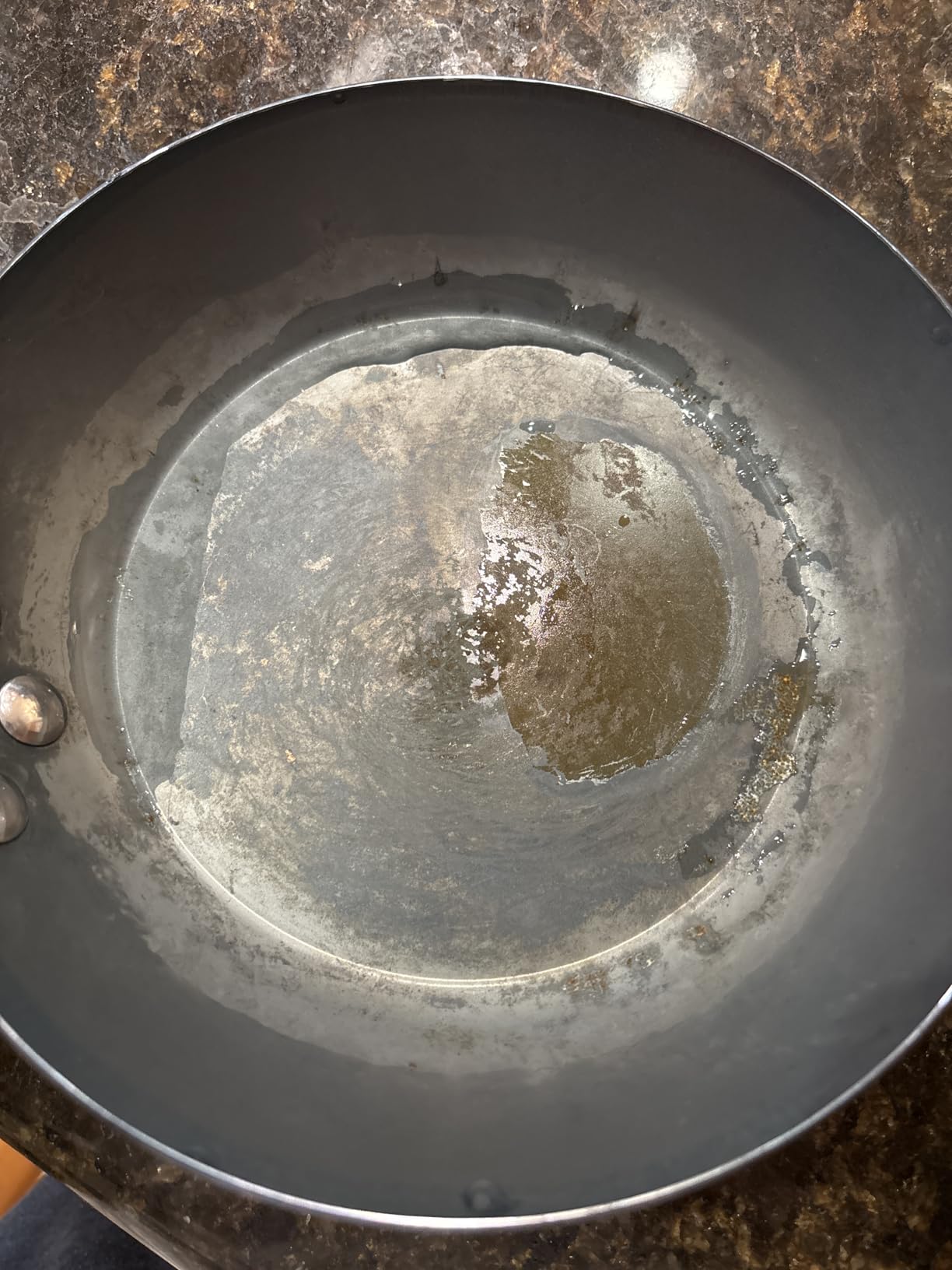
Be aware of the numbers here. This is the lowest-rated pan in our group at 4.0 stars across 389 reviews, with 12 percent one-star ratings. Critics report more difficulty getting food to release early in the seasoning life than they do with the heavier pans in the roundup.
That early sticking is the normal arc for any carbon steel pan, and it is shorter on pans that arrive pre-seasoned. Cook fatty foods first and the surface turns on quickly.
Who this pan suits
Cooks who work in small pieces. Stir-frying, shallow sautéing and tossing cut vegetables in a hot pan is what this shape was built for, and the 3.8 quart capacity gives you room to move food around.
Anyone cooking over a grill or open flame who wants a pan that handles heat from a side burner without a bare-steel handle.
Who should skip it
Broiler users and anyone roasting at very high oven temperatures. The wooden handle has a lower ceiling than a steel one.
Cooks who want the most consistent release from the very first meal. Plan to build the patina rather than expecting release on day one.
8. Tramontina 12 Inch Carbon Steel – Best for Heavy Heat Retention
Tramontina Carbon Steel 12-Inch Large Frying Pan with Silicone Grip
12 inch carbon steel with silicone sleeve
5.6 pounds
Nitro carbonized finish
Lifetime warranty
Pros
- Second-heaviest pan here so it holds searing heat through cold protein
- Nitro carbonized surface builds a natural non-stick finish with use
- Removable silicone sleeve gives a cool grip and pops off for the oven
- NSF certified with a lifetime warranty
Cons
- Heaviest in the group at 5.6 pounds and tiring one-handed
- Induction compatibility is inconsistent in the product description
- Some sizes dome downward when heated
Heat retention is the argument for the Tramontina. At 5.6 pounds it is the second-heaviest pan in this roundup, behind the de Buyer, and that mass is what keeps the surface at searing temperature when you drop a cold, thick steak onto it. The surface does not crash and recover.
The finish is nitro carbonized with a natural oil that improves with use, and the bead-blasted cooking surface is reported to make seasoning easy to build. The removable silicone sleeve means you can hold the pan during a hard preheat and still take it into the oven.
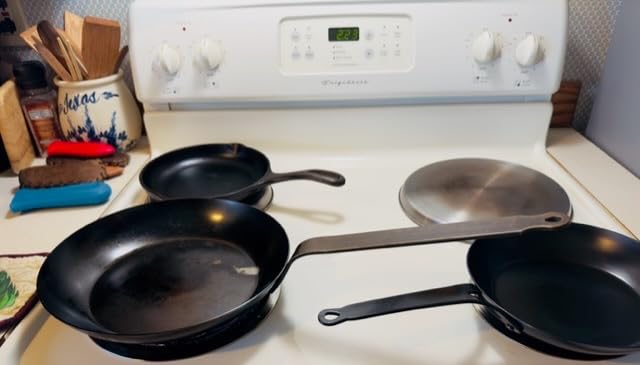
Ratings are 4.1 across 258 reviews with 66 percent five-star. Buyers frequently praise the fit and finish, the cool sleeve and a flat, stable base. Weight is the near-universal complaint, with multiple reviewers noting the 12-inch model is not a lightweight cast iron replacement.
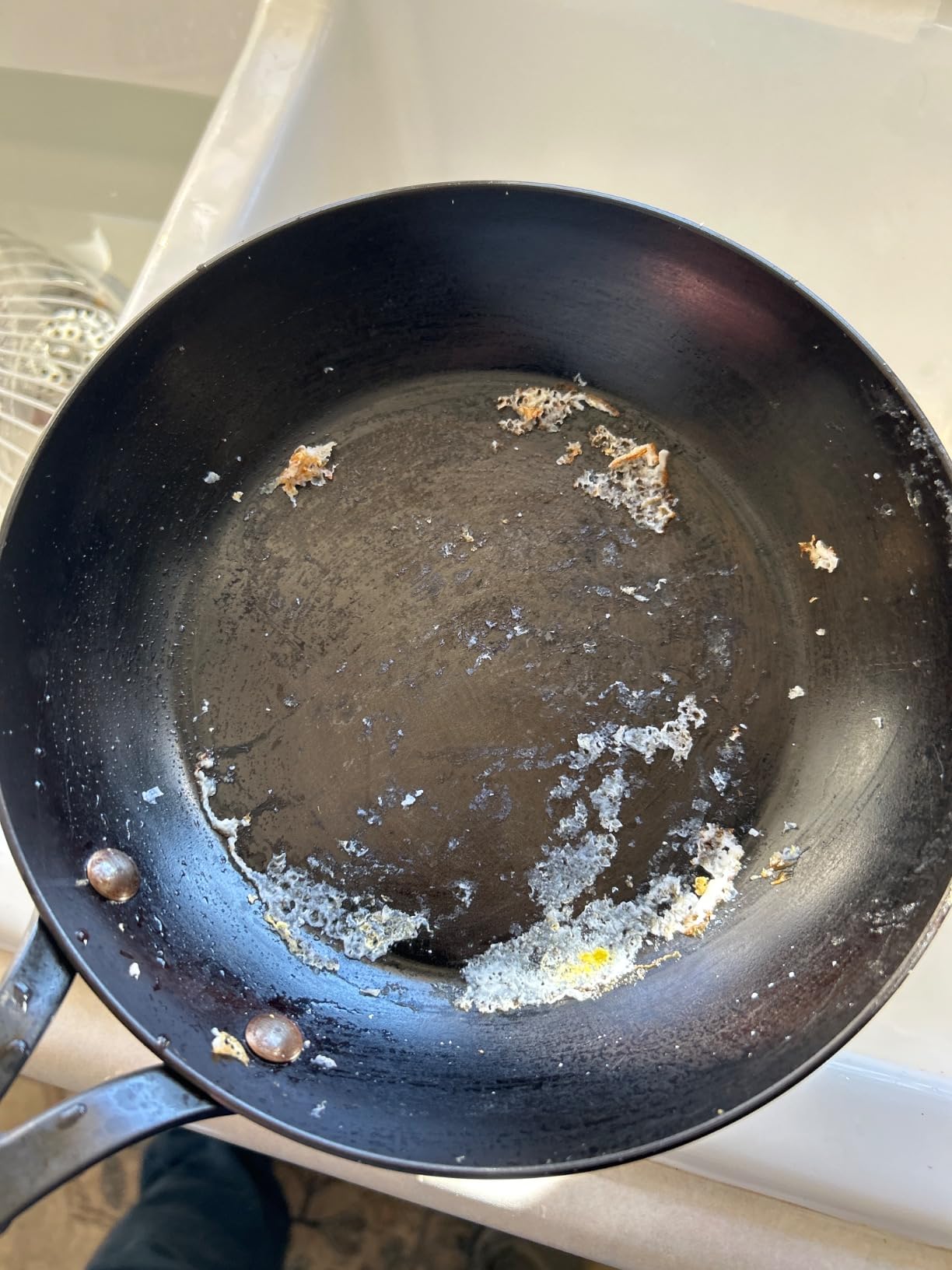
Two other things to know. Induction compatibility is listed in the features but not in the product description, so check before committing if you cook on induction. A few owners also report pitting and chipping after roughly seven months of careful use.
Who this pan suits
Cooks who sear one or two very thick, very cold cuts at a time and want the surface temperature to barely move. This is the pan for a two-inch steak or a frozen hamburger pressed hard.
Anyone who found that lighter pans lost their crust on a large piece and wants the opposite tradeoff.
Who should skip it
Cooks who toss, baste or move the pan constantly. At 5.6 pounds one-handed handling over a long cook is genuinely tiring, and the wrist knows it.
Induction-only kitchens until you confirm compatibility. The listing is inconsistent, and a pan that rocks on a flat top is the fastest way to lose an even sear.
9. OXO Outdoor 12 Inch Pre-Seasoned Skillet – Best for Travel and Storage
OXO Outdoor Pre-Seasoned Carbon Steel 12″ Frying Pan Skillet, Detachable Handle for Easy Storage, Indoor Use, Nonstick with Use, Induction Suitable,Oven & Broiler Safe,Browning, Grill,Sear,Saute,Black
12 inch pre-seasoned carbon steel
1.65 kg
Oven safe to 660F
Removable clip-on handle
Pros
- Arrives pre-seasoned so no seasoning process is required
- Light at 1.65 kg for a 12 inch pan
- Detachable clip-on handle reverses for compact storage
- One of the higher oven limits here at 660F
- Metal utensil safe and induction compatible
Cons
- Hand wash only
- Non-stick performance builds gradually rather than appearing immediately
- Small review base so limited long-term evidence
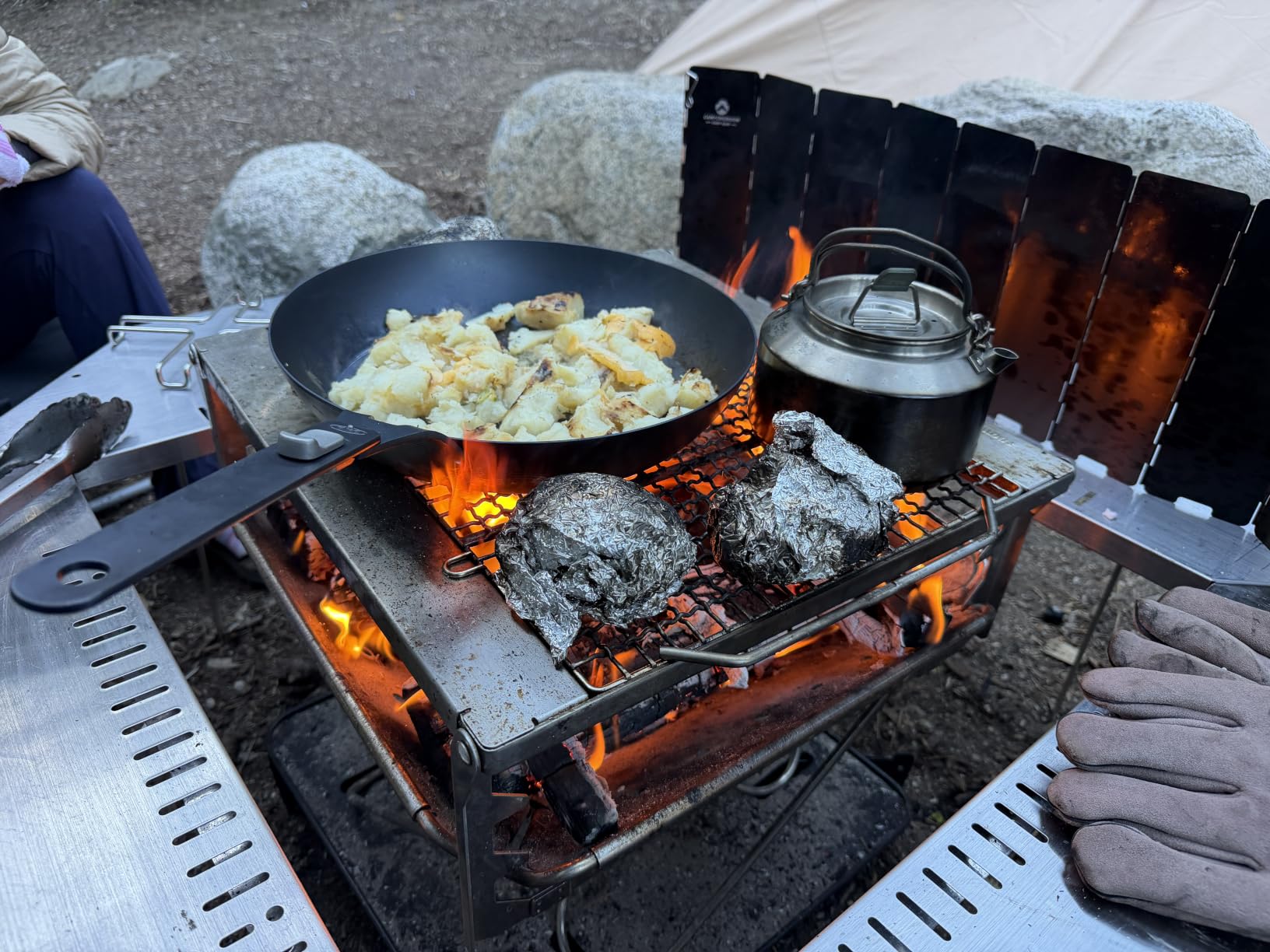
The OXO takes a different approach to the handle problem. Instead of a sleeve or a wooden grip, the handle detaches entirely and reverses for storage, so the pan packs flat in a bag or a cabinet without a handle sticking out into the walkway.
It arrives pre-seasoned, and the instruction is simply wash and start cooking. At 1.65 kg for a 12-inch pan, it is one of the lighter large carbon steel options here, which helps in the situations where you are carrying it somewhere rather than cooking on a fixed range.
The 660F oven rating is among the higher limits in this group, and the pan is induction compatible and metal utensil safe. That combination is useful for a reverse sear, where the crust forms on the burner and the finish happens in a hot oven.
The evidence base is small at 87 ratings and 4.2 stars with 69 percent five-star, so treat the long-term picture as unproven. What those reviews do praise is the ready-to-cook factory seasoning, the low weight and the storage-friendly handle design.
Who this pan suits
Anyone with a small kitchen, a crowded cabinet, or a habit of cooking on a camping trip or a boat. The reversing handle is the reason to buy this one over an otherwise similar fixed-handle pan.
Cooks who want to broil. At 660F this has one of the higher ceilings among the lighter pans here.
Who should skip it
Buyers who want a heavily reviewed, long-proven pan. Eighty-seven ratings is not much evidence about seasoning durability after several years.
Dishwasher users, like every other pan in this roundup.
10. Winco 8-5/8 Inch French-Style Fry Pan – Best Small Pan for Eggs and Single Portions
Winco 8 5/8″ Carbon Steel Fry Pan French
8-5/8 inch French-style carbon steel
1.6 ounces listed weight
Oven seasonable
8.6 inch overall length
Pros
- Very affordable way to start cooking in real carbon steel
- Light and easy to move and toss
- Seasons well with an oven seasoning cycle
- Best rating-to-cost ratio among the picks here
Cons
- Factory wax is hard to remove and leaves spots that resist seasoning
- Handle paint can melt under broiler heat
- Low side walls make it awkward for large cuts
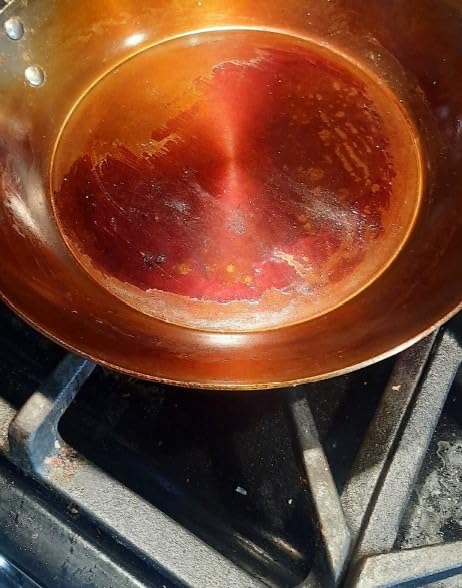
The Winco is the low-cost on-ramp into carbon steel. It is a genuine single-ply French-style carbon steel fry pan with no coating gimmick, and it holds a solid, satisfying weight in the hand that has nothing to do with the price.
Its shape is the differentiator. The 8-5/8-inch pan has low side walls, which means food slides out easily and a fried egg or a single portion releases without a fight. That is the same geometry that makes shallow pans good for searing small pieces.
Ratings are 4.4 across 192 reviews with 73 percent five-star, which is the best rating-to-cost relationship in the roundup. Buyers arriving from cast iron are regularly surprised by how light and responsive it is.
Two issues recur. The factory wax resists scrubbing and leaves spots that seasoning will not cover evenly, and the painted handle can melt under broiler heat, so keep it off the broiler. The French handle shape also divides cooks, and it is not a design most people have held before.
Who this pan suits
Cooks working with eggs, one portion, or a small fillet. The low walls make release easy and cleanup quick, and the pan is light enough to move with a wrist flick.
Anyone who wants to test whether they enjoy cooking on carbon steel before committing to a large traditional pan.
Who should skip it
Broiler users. Painted handles and broiler heat do not mix.
Cooks who want a deep pan for large cuts. The walls are too low to hold a thick steak upright or contain a splashy sauce.
11. American Metalcraft 10 Inch Fry Pan – Best for Restaurant-Style Searing
American Metalcraft CSFP10 Fry Pan, Carbon Steel, 10″ Dia.
10 inch carbon steel fry pan
3.4 pounds
Foodservice-grade construction
High-heat browning
Pros
- Highest average rating in the roundup at 4.5 stars
- Foodservice-grade construction built for service use
- Weight and gauge well suited to high-heat searing and browning
- Only 2 percent one-star ratings among reviewers
Cons
- Very small review base at 38 ratings
- Minimal product detail in the listing
- Lack of long-term ownership feedback
The American Metalcraft is a foodservice pan, and it shows in the numbers that matter for searing. At 3.4 pounds for a 10-inch diameter, it has the mass of a classic restaurant fry pan, which is exactly the balance you want for a hard preheat and a fast service cook.
It is a plain, uncoated carbon steel fry pan with no gimmicks, which also means no synthetic finish to interfere with seasoning. Owners consistently report strong browning behavior and a flat, stable base that does not rock on the range.
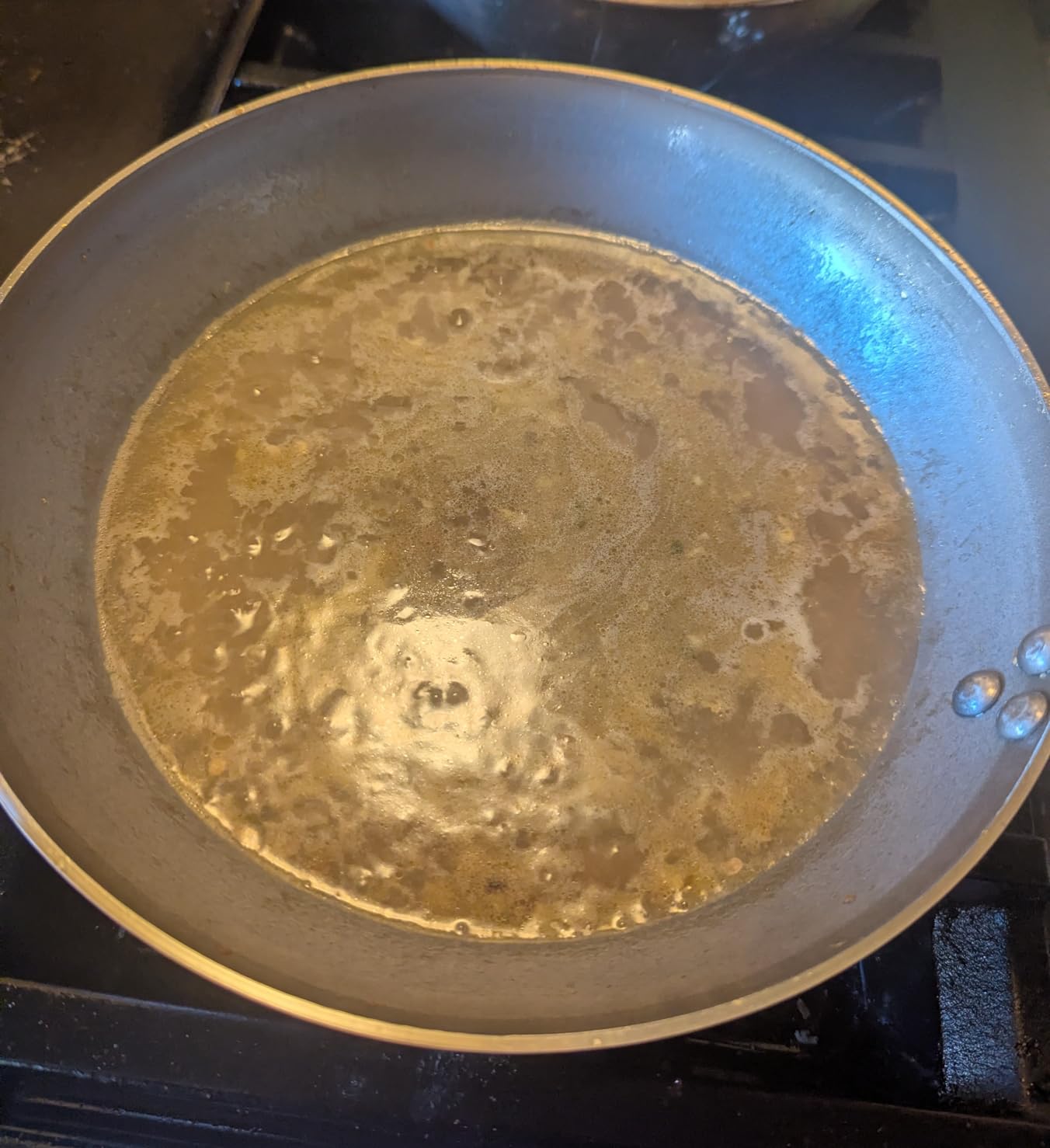
The rating is the standout. At 4.5 stars with 72 percent five-star and only 2 percent one-star, it is the highest-rated pan in our group, and the feedback that exists is uniformly positive on build quality and heat performance.
The caveat is volume. Thirty-eight ratings is a small base, so there is very little evidence about how the seasoning holds up over years. It is a well-built pan with an unproven long-term record, and that distinction matters.
Who this pan suits
Cooks who want a restaurant-style pan without a restaurant budget. The 10-inch size and 3.4-pound weight are a proven combination for high-volume searing in commercial kitchens.
Anyone who wants a straight uncoated steel surface with nothing added to it, and who is comfortable doing their own oven seasoning.
Who should skip it
Buyers who want to read a long ownership history before committing. Thirty-eight reviews is thin evidence, and there is very little product detail in the listing to fall back on.
Cooks who need a pre-seasoned pan or an oven-safe handle rating. Neither is documented for this one.
12. STRATA Carbon Clad 12.5 Inch – Best Multi-Ply Design for Even Heating
STRATA 12.5″ Carbon Clad® Classic – Carbon Steel Frying Pan – Gen 1
12.5 inch 3-ply carbon steel
4.3 pounds
3.4 quart capacity
Oven and induction safe to 600F
Pros
- Three-ply construction with an aluminum core eliminates hot spots
- Unusually light for a 12.5 inch carbon steel pan
- Cast stainless handle designed to stay cool
- No PTFE or PFOA and metal utensil safe
Cons
- Arrives unseasoned and needs 10 to 30 cooks for full stick resistance
- Highest cost in this roundup
- Ratings include 11 percent one-star reviews
The STRATA is the only multi-ply pan here. Instead of a single sheet of steel, it layers an aluminum core between steel skins, and the stated effect is fast, even heating with no hot spots. That is the direct answer to the most common complaint about carbon steel, which is uneven browning across the surface.
It is also light for its size, which the manufacturer frames as roughly half the weight of a traditional carbon steel pan of the same diameter. The cast stainless handle is designed to minimize heat transfer, and the pan works on gas, electric, induction and in the oven to 600F.
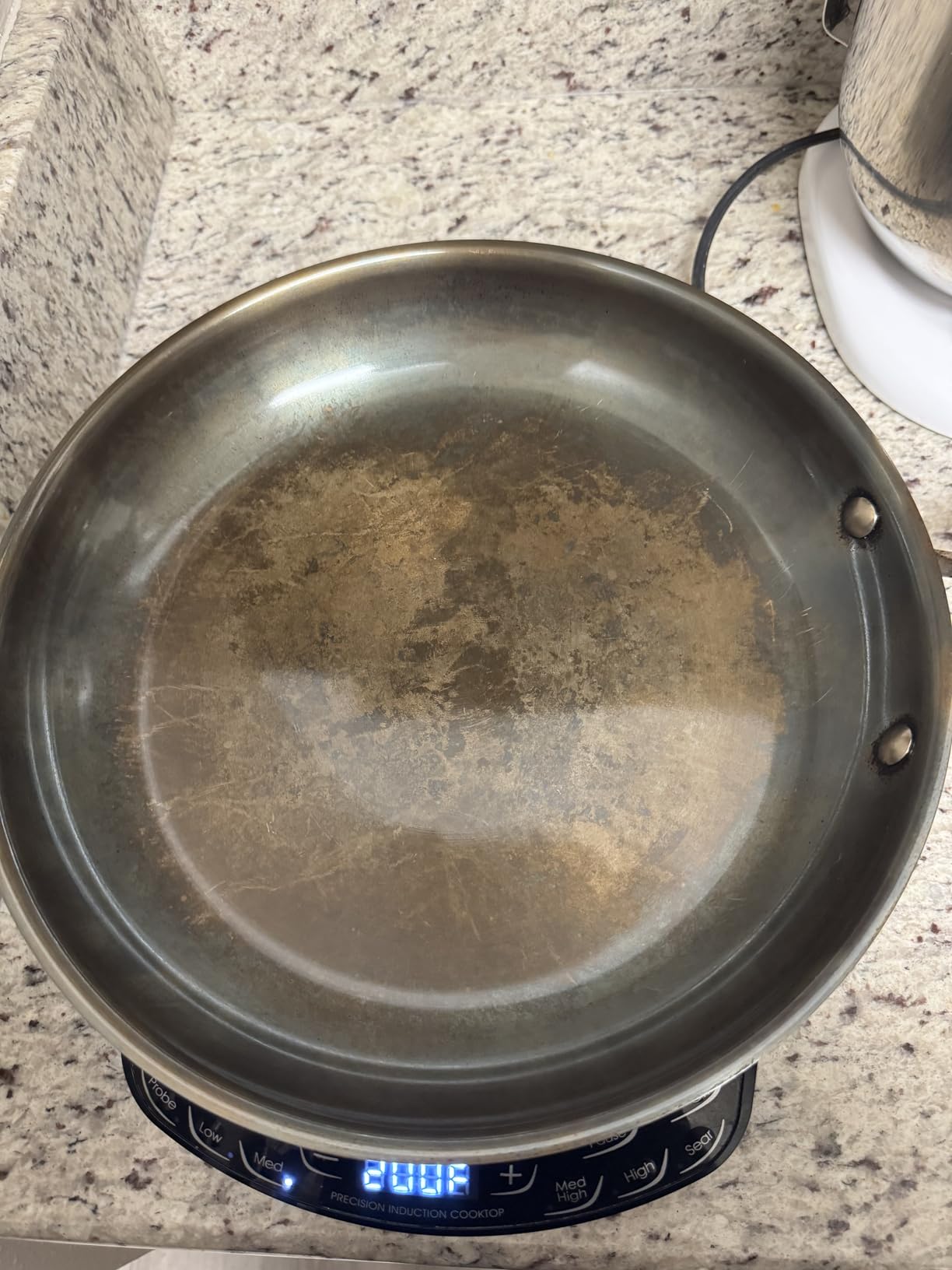
The trade-off is arrival condition. This pan comes unseasoned, and the manufacturer is direct about it: expect 10 to 30 cooks before you reach high-performing stick resistance. For a searing-focused cook that is a real commitment, and it is why this is not our top pick despite the appealing design.
Reviews sit at 4.1 with 87 ratings, 69 percent five-star and 11 percent one-star. Reviewers who commit to the seasoning process like the even, hot-spot-free heating and the unusually low weight. Buyers who do not tend to describe an extended sticking period.
Who this pan suits
Cooks who sear in batches and need every square inch at the same temperature. The aluminum core is the reason a hot ring in the center is not a factor here.
Anyone who wants a large pan that is still light enough to move one-handed, and who enjoys the process of building a patina from raw steel.
Who should skip it
Cooks who want to sear tonight. Starting unseasoned means the first several cooks are a bonding exercise, not a crust.
Budget buyers. It is the most expensive pan in this roundup, and the least proven by review volume.
What to Look for in a Carbon Steel Skillet for Searing
Weight is a tradeoff, not a ranking. Among the full-size pans here, weight runs from the Lodge at 2.1 pounds to the de Buyer at 2.88 kg. The heavier end holds temperature best and the lighter end is easiest to move. Neither is better. The right question is whether you sear one thick cut for four minutes, or you move food around for twelve. Buyers on r/carbonsteel and r/Cooking consistently frame it the same way, with heavy pans described as solid and light pans described as user friendly.
Measure the cooking surface, not the pan. This is the number people skip. The de Buyer is a 12.5-inch pan with a 9-inch cooking surface. The Mauviel is an 11-inch pan with an 8.4-inch cooking surface. Those two numbers decide whether a thick-cut steak sits on metal or perches on the wall.
Decide pre-seasoned versus traditional. A pre-seasoned pan can sear on the first meal, which matters if you only cook steak a few times a month. A traditional pan asks you to strip a coating and run a seasoning cycle first, then often a dozen more cooks. Owners on forums are nearly unanimous that seasoning it yourself gives you better long-term control, but that is only true if you will actually do it.
Check the oven ceiling against your cooking plan. Pans in this roundup run from 400F to 800F. If you want to sear on the burner and finish under the broiler, anything under 600F is not going to work. If you only ever sear on the stovetop, the oven rating is irrelevant and you can spend that money on surface area instead.
Look at the handle, seriously. A bare steel handle on a 4-pound pan is a genuine hazard during a hard preheat. Options here include a cool-touch plastic handle, a removable silicone sleeve, a detachable wooden handle, a clip-on handle that reverses for storage, and a cast stainless handle designed to stay cooler. Pick the one that matches your grip and your tolerance for a hot handle.
Confirm your cooktop. Gas and electric accept almost everything on this list. Induction is narrower. The de Buyer and Matfer are explicitly induction ready, the Merten and Storck, YOSUKATA, OXO and STRATA all list induction compatibility, and the Tramontina listing is inconsistent, so verify before buying for an induction range.
Expect it to run hot. The most common complaint in buyer reviews is not sticking, it is scorching. Carbon steel reaches searing temperature faster than most people expect, and a burner setting that would be right for stainless can burn a thin cut before the center cooks. Start one notch lower than you think you need.
Carbon Steel vs Cast Iron vs Stainless Steel for Searing
Carbon steel beats cast iron on heat response. It reaches searing temperature in seconds rather than minutes, which means a thinner cut browns before the heat soaks all the way through. It also weighs roughly a third as much, so you can tilt and baste one-handed. What cast steel gives up is raw heat capacity, and for one very thick, very cold steak that matters. Our cast iron skillet picks make more sense if you are cooking low and slow or baking cornbread rather than searing.
Carbon steel beats stainless steel on sticking and on tolerance of heat. Stainless has almost no thermal mass, so it scorches thin cuts and requires careful heat management, and it will not take a hard preheat without food in the pan. Carbon steel can go into a hot pan empty, which is the whole technique. In exchange, stainless releases food more reliably once cooked, and it does not need a seasoning layer to worry about.
Neither competes with nonstick for a fried egg, and neither is a good choice for a long tomato or wine reduction. Carbon steel is a searing tool first and a general pan second, and buying it for the wrong job is the most common regret reported on cooking forums.
How to Season, Care For, and Fix a Carbon Steel Skillet
Seasoning on the stovetop. Wash the pan and strip any factory wax with hot soapy water, then dry it fully on the burner. Heat it gradually to medium-high, which matters more than it sounds because a cold pan shocked to full heat can warp. Wipe a very thin film of high smoke point oil over the entire surface, inside and outside, then wipe most of it back off. Let it smoke, cool, and repeat three or four times.
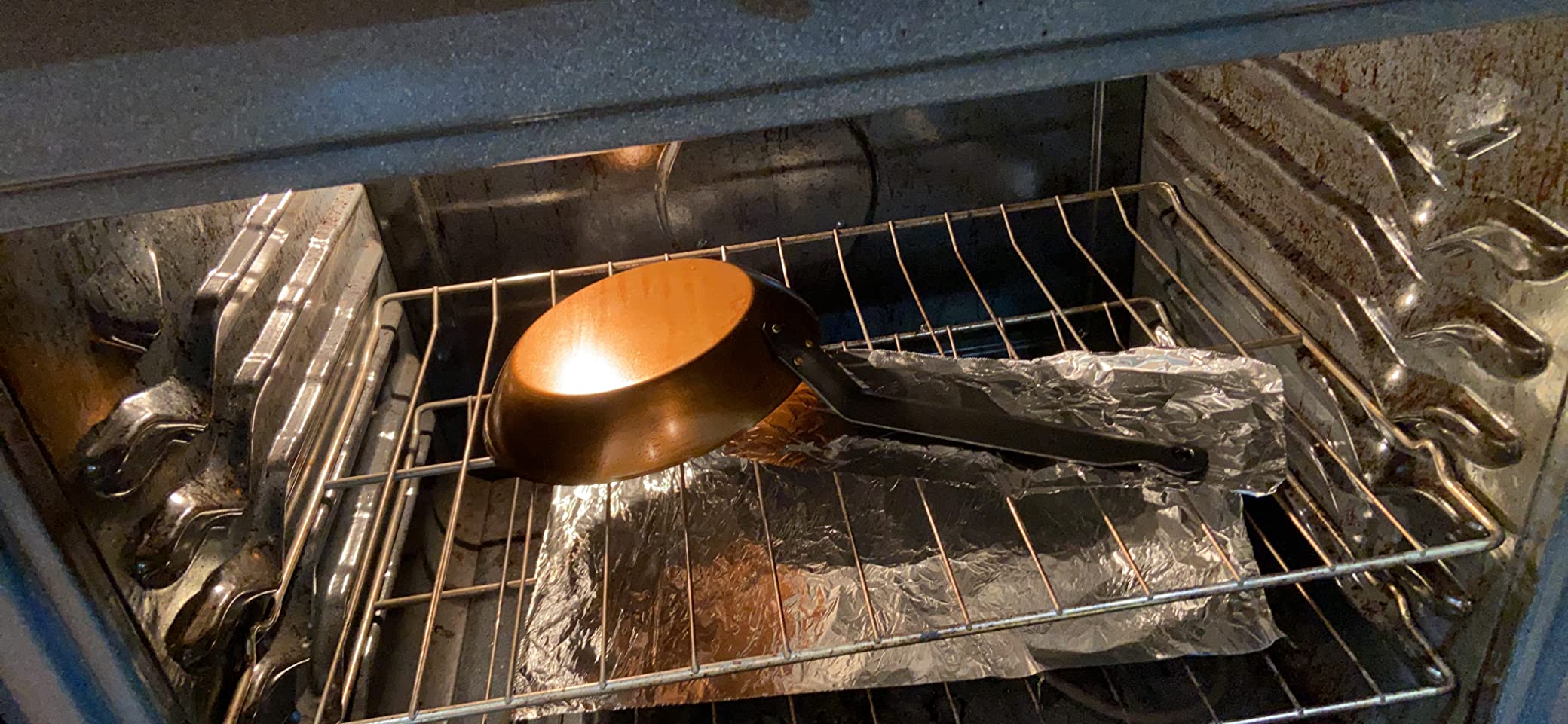
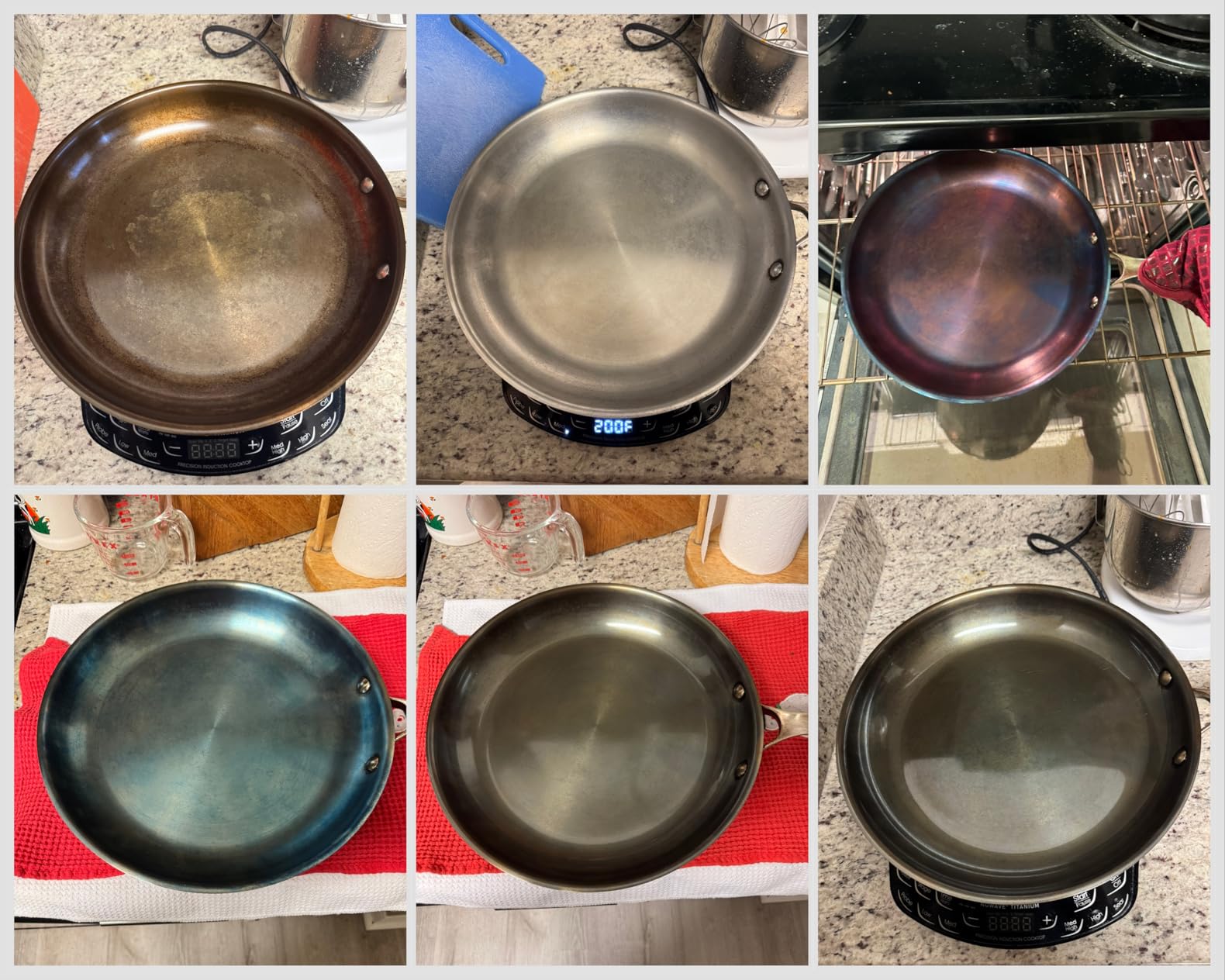
Seasoning in the oven. Place the pan upside down on a rack at 450F for an hour. Remove it, cool slightly, add a thin oil layer, and return it for another hour. Repeat two or three cycles. Overnight is gentler on the seasoning layer and is the version to use if you are not in a hurry.
On oil choice. Avocado, grapeseed, canola and refined peanut all work. Olive oil works too, but forum cooks are split because its smoke point is lower and it can polymerize into a sticky layer if you use too much. Whichever you choose, use very little. A greasy pan is not a seasoned pan.
Building a searing-grade patina in the first five cooks. Cook fatty foods first: thick-cut bacon, then a fatty steak, then skin-on chicken thighs. High-fat early cooks are the fastest route to a release surface. Avoid acidic food and avoid tomato during this period entirely.
If it sticks while searing. Heat the empty pan first, then add oil, then add food, and keep a hand on the handle so you can move it the moment the release starts. One user on the tdpri forum put it simply: let the pan get hot before adding oil, which helps a lot. The other common cause is a burner set too high, so try dropping one notch.
After every use. While the pan is still warm, wipe it out, wash it in warm water, dry it on the burner, and put a very small amount of oil on the surface. That takes about thirty seconds and it is what keeps rust away. You do not need to re-season it fully after every meal.
On dish soap. Cooks are divided, and the two camps both cite forum experience. The advice on ChefTalk is that you can wash with soap as long as you do not scour, then renew the seasoning with a little oil each time you wash and dry. The dishwasher is a harder no for every pan on this list. A cycle strips the seasoning and leaves you with a rusty pan.
When it rusts. Scrub the spot with coarse salt and a little oil, rinse, dry immediately, and do a short stovetop re-season. A rust spot is a five-minute fix, not a reason to replace the pan.
Frequently Asked Questions
What brand makes the best carbon steel pans?
For searing, the de Buyer MINERAL B is the strongest all-round choice: a 9-inch cooking surface inside a 12.5-inch pan, induction compatibility and a lifetime warranty. The Matfer Bourgeat Black is the best traditional uncoated pan for hard preheats and broiler finishes, rated to 800F. The Merten and Storck 12-inch is the best value pick for everyday searing.
Which pans are best for searing?
Carbon steel is the best material for searing because it heats faster than cast iron, holds a high surface temperature and tolerates being preheated empty. Among these twelve, the de Buyer MINERAL B 12.5-inch, the Matfer Bourgeat Black 11-5/8-inch and the Merten and Storck 12-inch stand out for surface area, heat control and weight balance.
Can I use olive oil to season my carbon steel pan?
Yes, olive oil will season a carbon steel pan, but use it sparingly. Its smoke point is lower than refined oils such as avocado, grapeseed or canola, and using too much can polymerize into a gummy layer rather than a hard one. For a searing surface specifically, a high smoke point oil gives you a cleaner, tougher seasoning layer.
What are the downsides of carbon steel pans?
Carbon steel pans are hand wash only, run hotter than most people expect, and need a wipe-down and light oiling after most cooks. They can stick during the first few uses while the patina builds, they rust if left wet, and they are a poor choice for long acidic sauces like tomato or wine reductions. You also cannot put them in the dishwasher.
How to best season a carbon steel pan?
Strip any factory wax with hot soapy water and dry the pan fully. Heat it gradually to medium-high, wipe on a very thin film of high smoke point oil, and let it smoke before wiping most of the oil back off. Repeat three or four times. A slow oven method at 450F for an hour per cycle produces a more even layer if you are not in a hurry.
Should you season a carbon steel pan after every use?
No, a full re-seasoning after every use is not necessary. What is necessary is a very small amount of oil on the surface after each wash, applied while the pan is still warm, then drying it on the burner. A full seasoning cycle is a maintenance step for when the patina looks thin or patchy.
What should my carbon steel pan look like after seasoning?
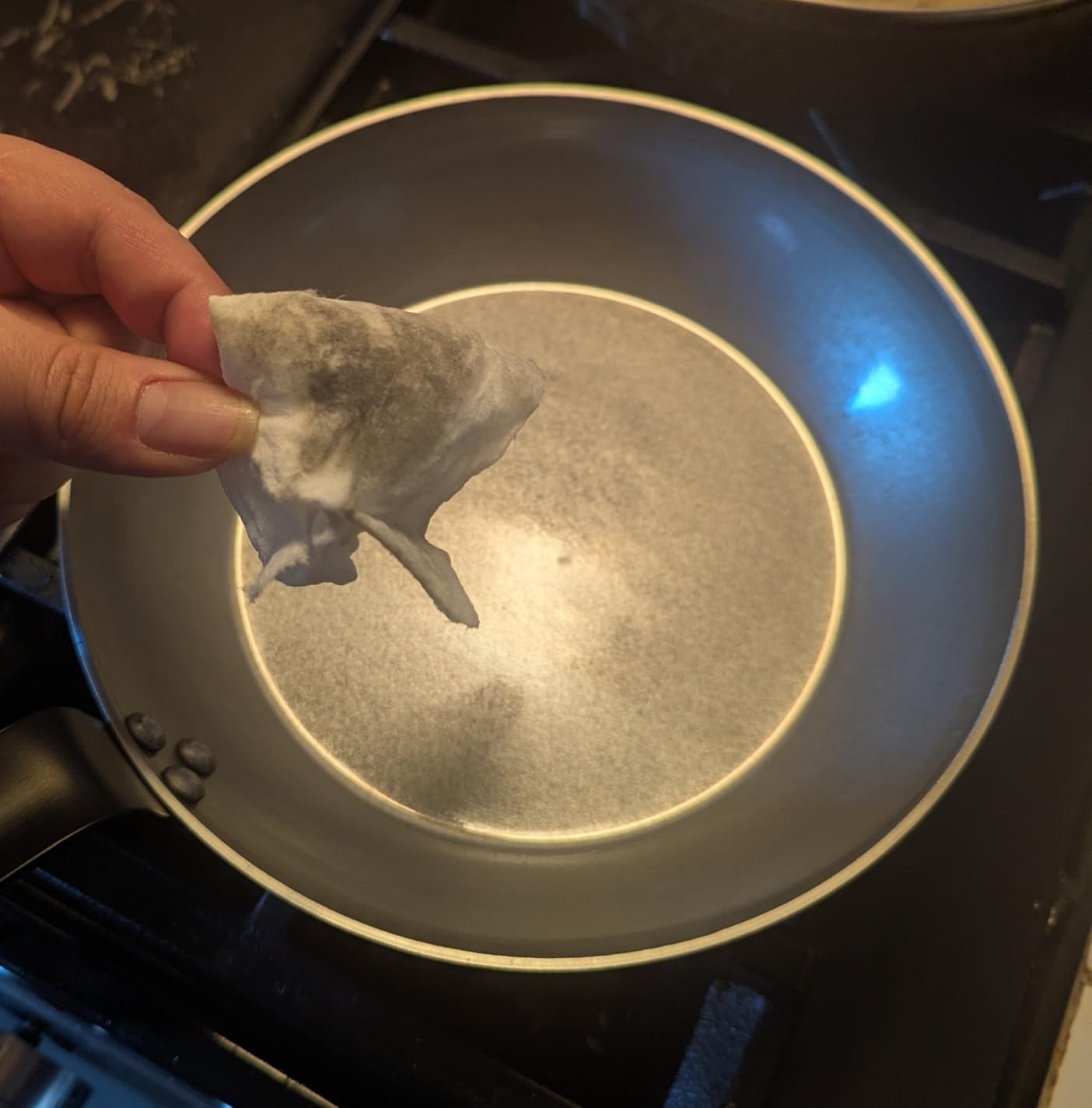
A well-seasoned carbon steel pan looks dark bronze to near-black with a slightly mottled, satin sheen rather than a uniform glossy coat. It should not look greasy or sticky, and it should not look like bare grey metal either. If it wipes clean with a dry paper towel, that is the sign the polymerized layer is thin and even.
Is carbon steel better than cast iron for searing?
Yes for most home cooks. Carbon steel is roughly a third the weight of cast iron, heats up far faster, and responds immediately to burner changes, so you get a crust before the heat soaks through the meat. Cast iron keeps more heat, which helps with one very thick cold cut, but it is slower to preheat and far heavier to maneuver. Many owners use one for each job.
Which carbon steel skillet did America’s Test Kitchen recommend as the best?
America’s Test Kitchen has covered carbon steel pans across different shows and years, and the pick has shifted as new models and coatings have appeared. Rather than point to a single episode, judge on the searing criteria that do not change: cooking surface diameter, weight, seasoning state on arrival and oven rating. Our picks follow those criteria, and every one includes a full specification list you can check against.
Do I need to season a pre-seasoned carbon steel pan?
A pre-seasoned pan can be used right away, but a light re-seasoning after the first wash is a reasonable habit if you want a deeper layer. The bigger factor is that pre-seasoned pans still stick for the first few cooks while the factory coating settles into a working patina. Cook fatty foods first and it turns on quickly.
The Verdict: Which Carbon Steel Skillet Should You Buy in 2026
The de Buyer MINERAL B 12.5-inch is the best carbon steel skillet for searing in 2026. It gives you a 9-inch cooking surface in a 12.5-inch pan, works on induction, and carries a lifetime warranty from a maker that has been making pans in France since 1830. Strip the beeswax, run one seasoning cycle, and it is ready.
If you want a traditional uncoated pan that can take a hard preheat and finish under the broiler, take the Matfer Bourgeat Black 11-5/8-inch and accept the wax-stripping effort. If you want the same searing behavior for less money, buy the Merten and Storck 12-inch, which is pre-seasoned, weighs 1.5 kg and is ready for the first steak tonight.
Whichever one you choose, give it five fatty cooks before you judge it. The first few meals are the learning curve that every carbon steel owner describes, and once the patina turns on, the pan is one you will keep for decades.