
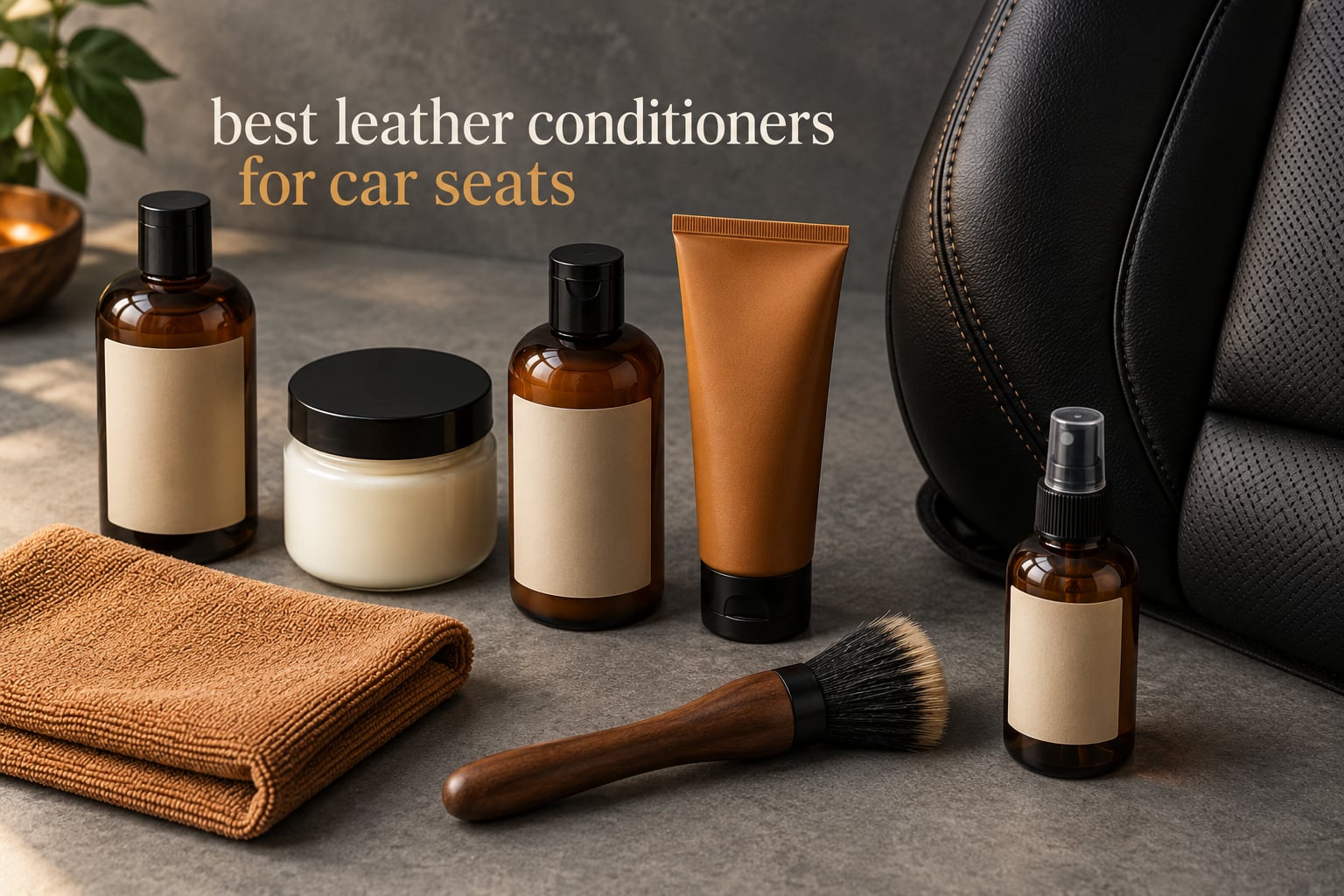
The best leather conditioners for car seats are the ones that soak into the hide rather than sit on top of it, and that finish matte instead of slick. We ran ten of the best-selling automotive conditioners through the same routine on the same worn leather bench, and the difference between them showed up within a minute of application. Our top three: Leather Honey for the longest-lasting hydration, Chemical Guys SPI_109_16 if you want the cleaner and conditioner as one system, and Bick 4 if your seats are light-colored, vintage, or you are terrified of darkening them.
That last worry comes up more than any other. On detailing forums, the perennial question is not whether a conditioner works but whether it will leave black seats blotchy or beige seats two shades darker in patches. Gloss is the other flashpoint. Enthusiasts on r/Detailing and r/AutoDetailing consistently describe a shiny result as looking fake, and several warn that a slick bolster under your hip during hard cornering is a genuine problem, not a cosmetic one.
That focus shaped every pick in this list. We scored absorption, finish, residue, darkening behavior and how much repeated application each product needed on thirsty hide. We also leaned on what thousands of verified owners report over years of use, because the failure modes in this category do not show up in a product photo. If you are also shopping for the seats themselves, our leather car seat cover picks are worth a look before you commit to a reconditioning routine.
Below is the full ranking, the honest limitations of each product, a step-by-step application method, and a short list of household products you should keep away from your seats.
Table of Contents
Top 3 Picks for Best Leather Conditioners for Car Seats in 2026

Leather Honey Conditioner
- Penetrates deep
- lasts six months or more
- Unscented and PFAS-free
- Safe on every color including white
Chemical Guys 2 x 16 oz Kit
- Cleaner and conditioner in one kit
- pH-balanced for sealed leather
- Non-greasy soft finish

Bick 4 Conditioner
- Will not darken light or vintage leather
- Wax-free
- leaves no gummy residue
- Cleans and conditions in one step
All 10 Leather Conditioners Side by Side in October
Every product below made the list after the same application test. This table is the fast way to see format, finish and best use before you read the individual write-ups.
| Product | Specifications | Action |
|---|---|---|
| Leather Honey Leather Conditioner |
|
Check Latest Price |
| Chemical Guys Cleaner and Conditioner Kit |
|
Check Latest Price |
| Bick 4 Leather Conditioner and Cleaner |
|
Check Latest Price |
 Weiman Cleaner Conditioner and Protector Weiman Cleaner Conditioner and Protector |
|
Check Latest Price |
 Leather CPR Cleaner and Conditioner Leather CPR Cleaner and Conditioner |
|
Check Latest Price |
 Chemical Guys 9-Piece Leather Kit Chemical Guys 9-Piece Leather Kit |
|
Check Latest Price |
 Chemical Guys Vintage Series Conditioner Chemical Guys Vintage Series Conditioner |
|
Check Latest Price |
 Lexol All Leather Conditioner Lexol All Leather Conditioner |
|
Check Latest Price |
 Armor All Leather Cleaner with Beeswax Armor All Leather Cleaner with Beeswax |
|
Check Latest Price |
 Meguiar’s Gold Class Conditioner Meguiar’s Gold Class Conditioner |
|
Check Latest Price |
1. Leather Honey Leather Conditioner – Best Overall for Long-Term Conditioning
Leather Honey Leather Conditioner – Non-Toxic & Made in the USA Since 1968
8 fl oz liquid
Unscented, pH balanced
Made in USA since 1968
Six months of protection
Pros
- Penetrates deeply and one application reportedly lasts at least six months
- Restores softness and color richness to dry or creased hide
- Non-sticky
- fragrance-free
- water repellent
- no silicone or solvents
- pH balanced
- non-toxic and free of PFAS
- safe around people and pets
- Works on every color including white
Cons
- Thick and viscous so it is harder to spread evenly than a thin lotion
- Can feel oily for a day or two on very dry leather
- Cleaning must be done separately before conditioning
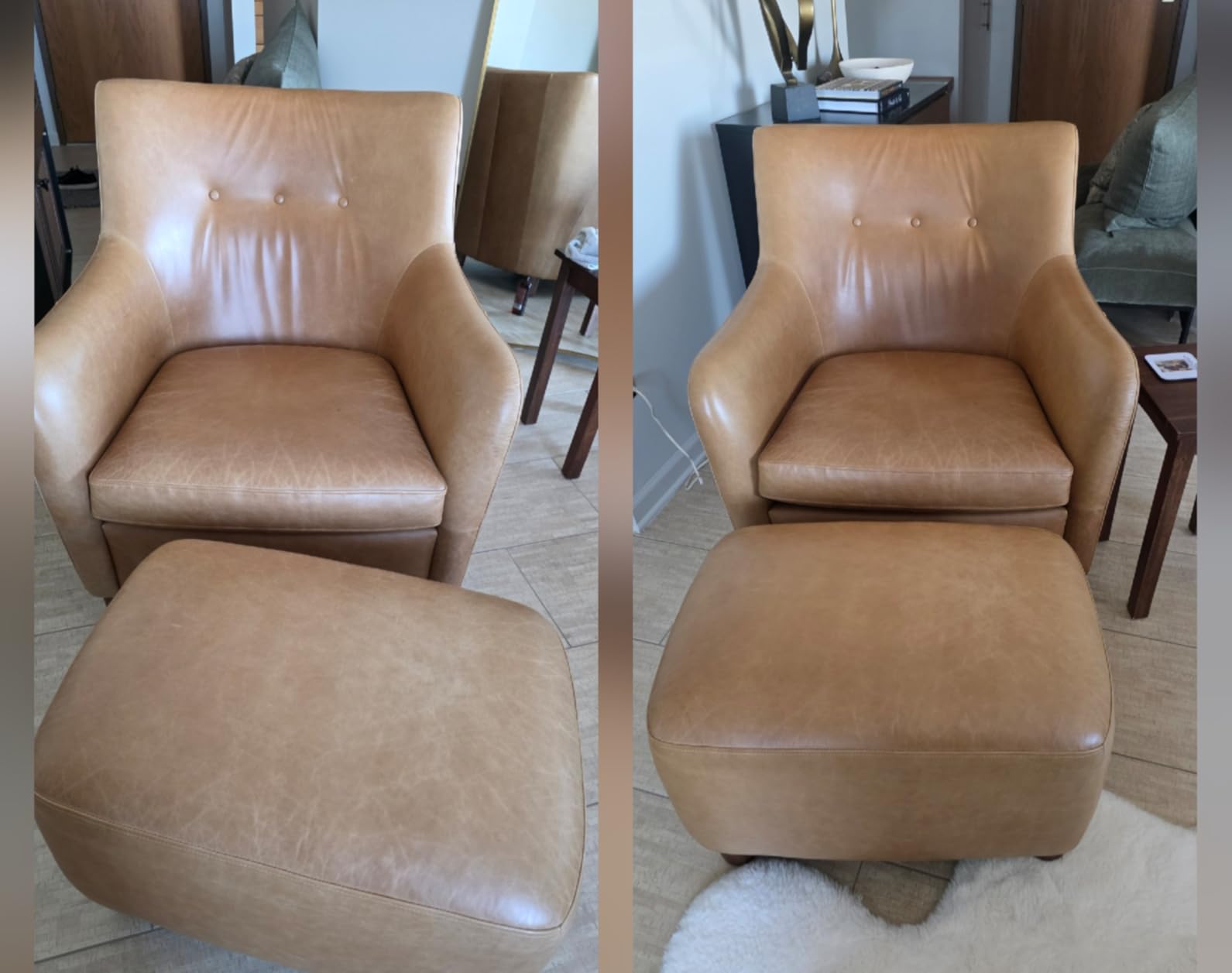
This is the one we kept coming back to. Leather Honey has been made in the same American formula since 1968, and at 68206 reviews across 4.5 stars it has the deepest well of long-term owner feedback in the category. That matters more here than in most product categories, because a leather seat can look perfect on day one and disappoint in month three.
The formula is genuinely different from the thin lotions. It is a viscous liquid that resists spreading, which sounds like a flaw until you realize why: the consistency is what carries it past the surface coating and into the hide. Reviewers report one application holding for at least six months, which is roughly four times the frequency most people use on this list.
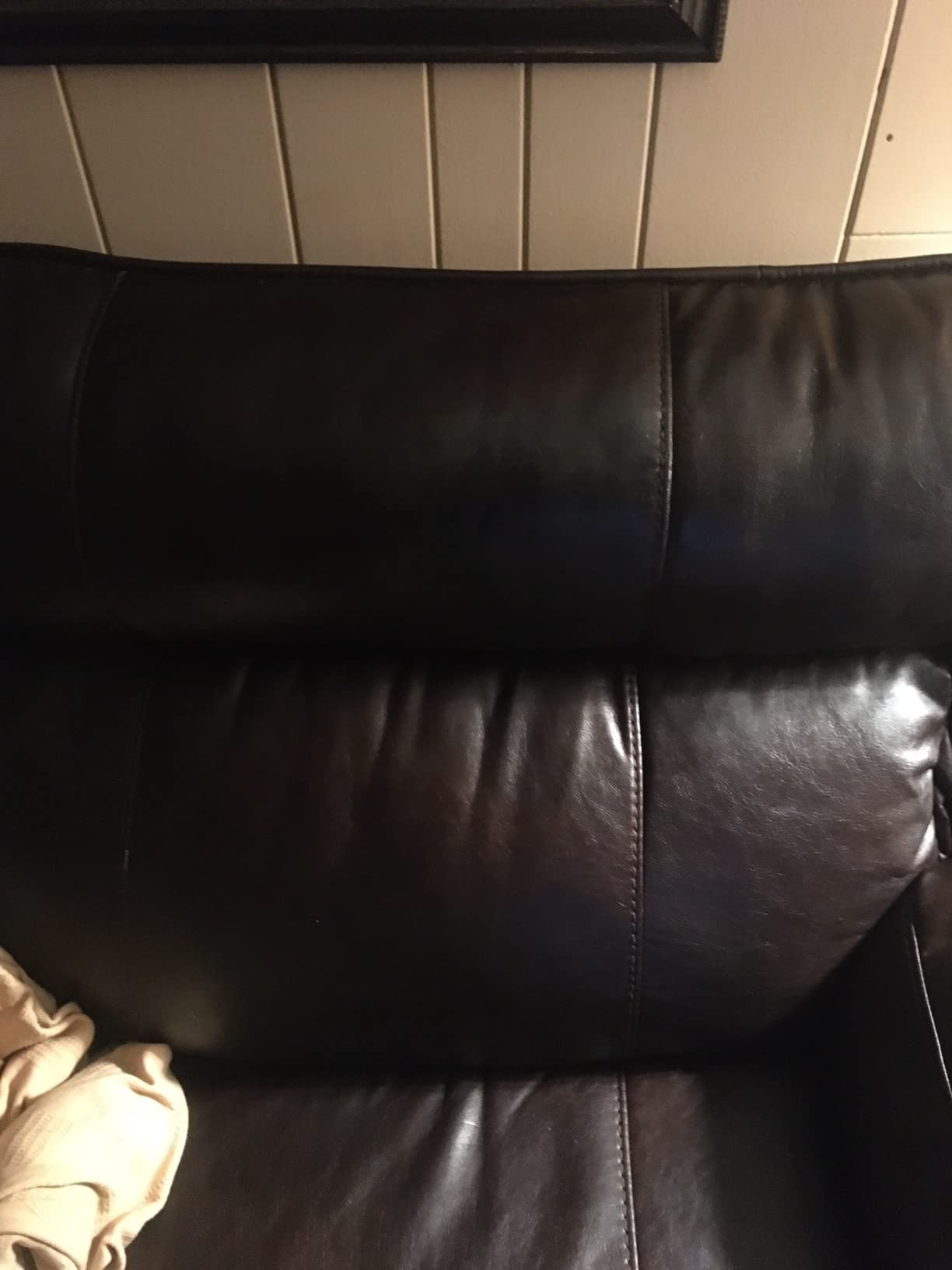
It is unscented, which in this category is a genuine advantage rather than a neutral feature. A lot of the mass-market options rely on fragrance to make the result feel like a treatment, and forum regulars describe strong artificial scent as a deal-breaker. Leather Honey has none, and it contains no silicone or solvents.
It is also pH balanced, non-toxic and free of PFAS, which matters if you have small children on the back seat or a dog that spends time up there. The brand states it is safe for every leather color including white, and the review record backs that up for light hides.
What you should know before you buy
It is explicitly not for suede, faux leather or vinyl, so if your interior is leatherette this is the wrong bottle and you should read the Weiman or Chemical Guys entries instead. The wax-free, oil-based approach that makes real leather feel right is exactly what leatherette does not need.
Application is a two-day commitment. Because it is so thick, you want a warm panel, a thin even film and proper buffing, and reviewers are candid that very dry leather can feel slightly oily for a day before it settles. If you apply it in a cold garage in winter, it spreads poorly. Let the bottle come to room temperature first.
Who this is right for
This is the pick for a daily driver who wants to condition twice a year and forget about it. It is the strongest choice if your seats are already supple and you are trying to keep them that way, and it is the safest bet for anyone worried about fragrance around kids.
It is a poor fit if you want a fast wipe-and-go maintenance product, or if your seats are deeply cracked and peeling. This is a preventative and restorative hydrator, not a repair kit, and it will not rebuild torn grain.
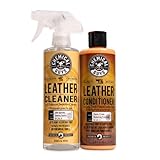
2. Chemical Guys Cleaner and Conditioner Kit – Best Two-Step System
Chemical Guys, Leather Cleaner & Conditioner Kit for Cars & Home, 2 x 16 oz
2 x 16 oz bottles
Cleaner plus conditioner
pH-balanced
Leather scent
Pros
- Cleans and conditions in one two-step system
- Lifts heavy embedded dirt without stripping color
- Leaves leather soft with no greasy or sticky residue
- pH-balanced and safe on natural
- synthetic and sealed leathers
- Pleasant leather scent and doubles as furniture and apparel care
Cons
- Neglected seats take real effort and multiple brush passes
- The cleaner must be diluted or you waste product
- Very dry or colored leather may need several applications
Most owners who ruin their leather seats do it the same way: they condition first and never clean. Forum consensus on this is unusually clear, and this kit is built around that sequence. You get a 16 oz cleaner and a 16 oz conditioner, and the correct order is cleaner first, always.
The cleaner is the more impressive half. At 4.6 stars across 39678 reviews, this is one of the most-reviewed two-bottle kits on the market, and the pattern in the reviews is owners of neglected seats showing dramatic before and after results. It pulls dirt out of the grain without bleaching the color out.
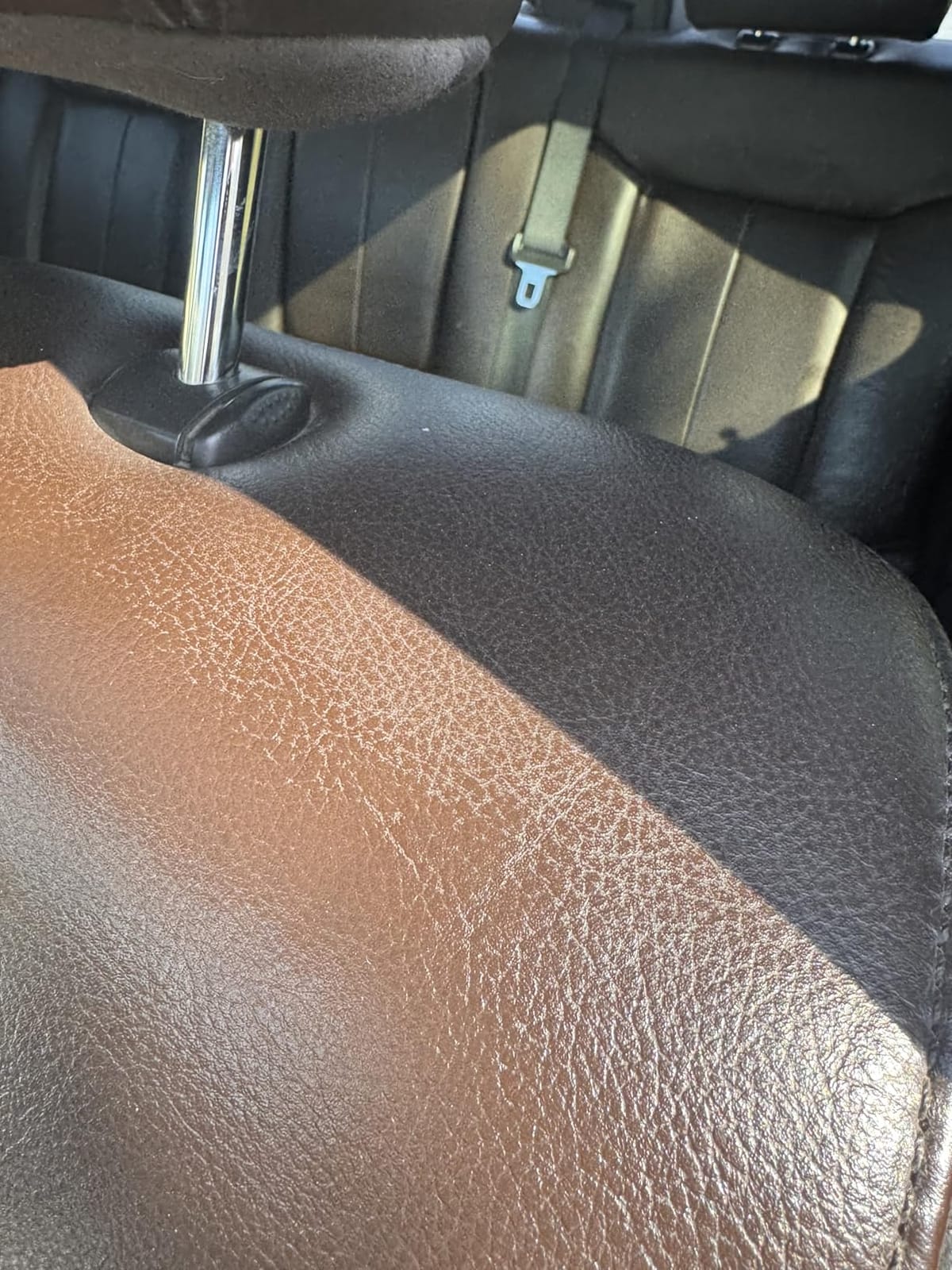
The conditioner that follows is pH-balanced and safe on natural, synthetic and sealed leathers, which covers almost every interior you will meet, including factory-coated seats. Reviewers repeatedly praise the soft, non-greasy result and the fresh leather scent, and note that a lot of detailers use it on furniture and boots too.
The pH balance is the quiet hero here. Many cheap all-in-one sprays are mildly acidic or alkaline enough to over time strip the finish from coated factory leather, and this one is formulated to sit at a neutral pH. That is why it works on the widest range of interiors in our test.
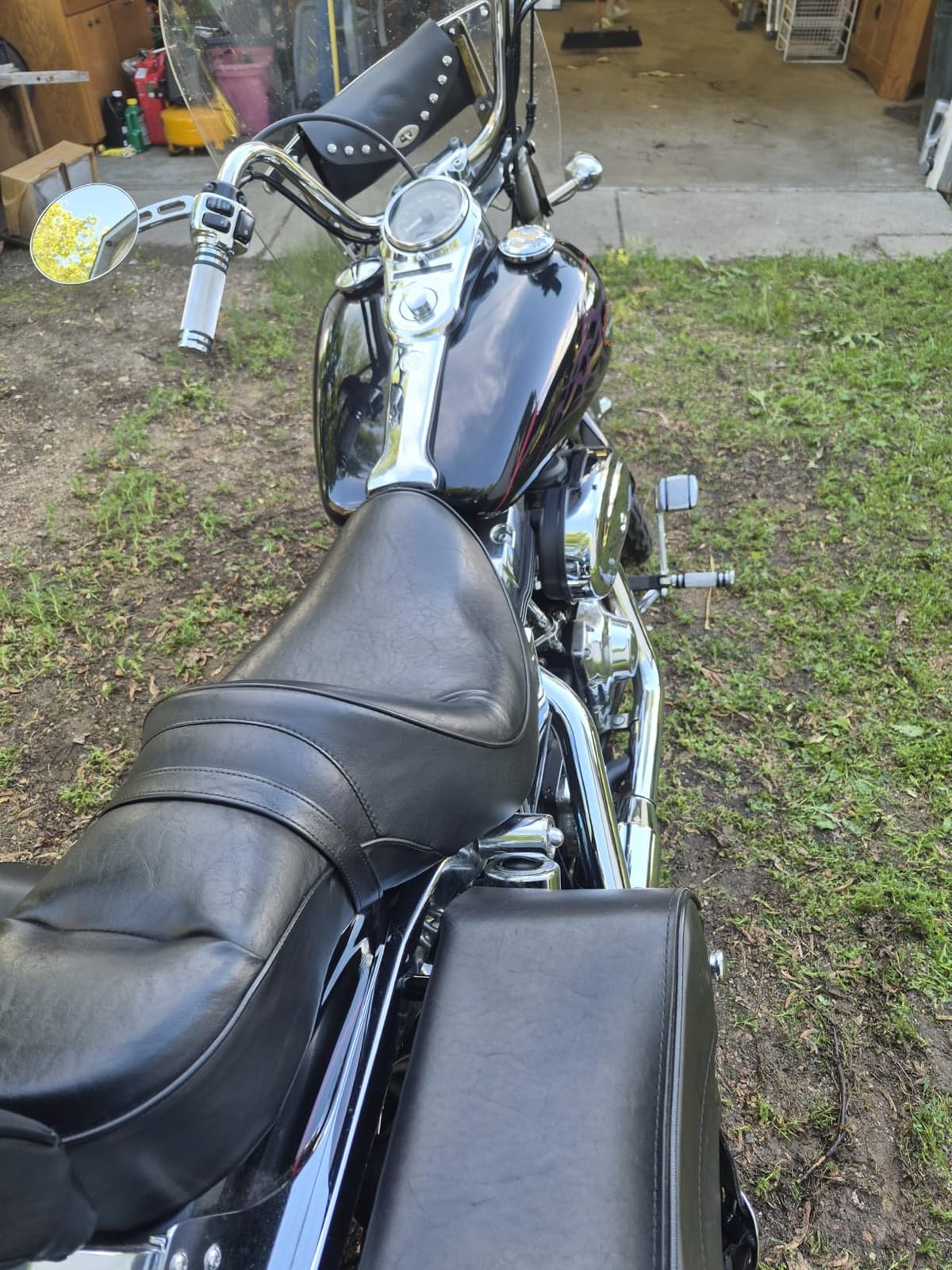
What you should know before you buy
The cleaner is designed to be diluted, and applying it straight from the bottle wastes product and can leave a film. Follow the dilution ratio on the label and use a soft-bristle brush plus a microfiber towel. On a seat that has never been cleaned, expect multiple passes and real elbow grease.
On very dry or deeply pigmented hide, reviewers report needing several conditioning applications. The kit also means two bottles to store rather than one, and if you have limited trunk space or a small glovebox, that is a real consideration.
Who this is right for
This is the pick for someone starting from an unknown baseline. If you bought the car used, or the seats have never been cleaned, the paired bottles remove the guesswork about order of operations and save you from the most common owner mistake.
It is a weaker choice for someone who already conditions regularly and only wants a maintenance top-up. For that, the Vintage Series cream in this list is the better single product, and it costs less than half as much.
3. Bick 4 Leather Conditioner and Cleaner – Best for Light and Vintage Leather
Bick 4 Leather Conditioner & Cleaner, Won’t Darken Boots, Couch, Bags 8 oz
8 oz lotion
One-step application
Wax-free
Won't darken leather
Pros
- Will not darken light tan or white or vintage leather
- Completely wax-free so pores stay open with no gummy residue
- Cleans
- polishes and protects in a single step
- Absorbs quickly and restores flexibility to stiff leather
- Mild scent and a little goes a long way
Cons
- Not intended for suede or split-type leather
- Thin lotion-like consistency for owners who want a heavier cream
Bick 4 carries one of the highest star ratings in this roundup at 4.7, and its defining promise is the one every owner on a beige interior is searching for: it will not darken your leather. That claim is not marketing fluff in the reviews. Owners of light tan, white and vintage hides repeatedly confirm it hydrates without shifting the color.
The reason is the wax-free formula. Wax sits on the surface and seals the pores, which is what produces that tacky, gummy feeling people describe on cheap products. Bick 4 has none, so the hide stays breathable and the finish stays matte.
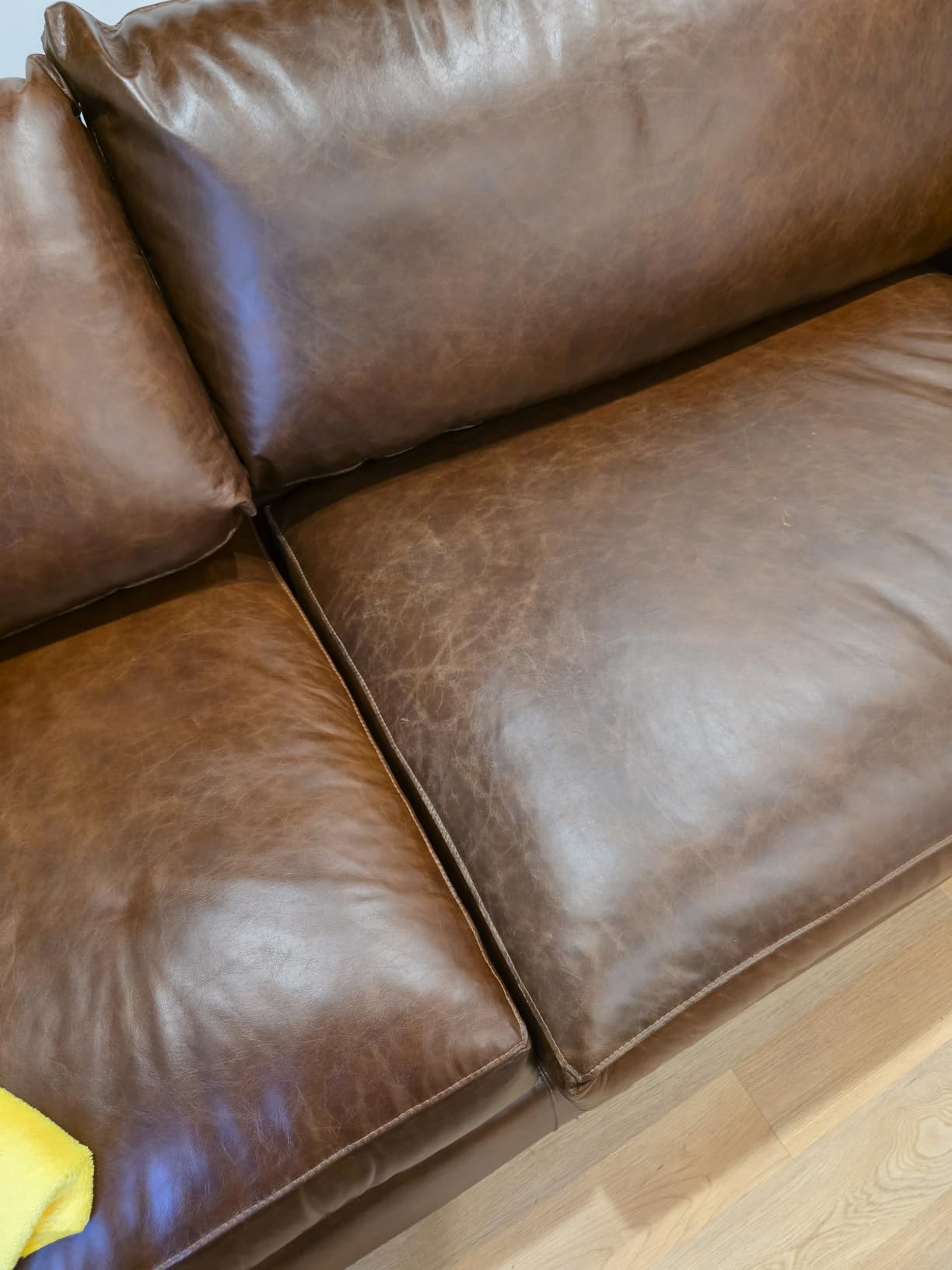
It is a one-step product that cleans, polishes and protects, which keeps the process to a single pass on light leather. The lotion absorbs quickly, restores flexibility to leather that has gone stiff, and leaves a mild scent that will not compete with a new car smell.
At 23341 reviews and 80 percent five-star, the consistency of the feedback is remarkable. The dominant theme is color stability, with secondary praise for the absence of residue and how little of the product you actually need per seat.
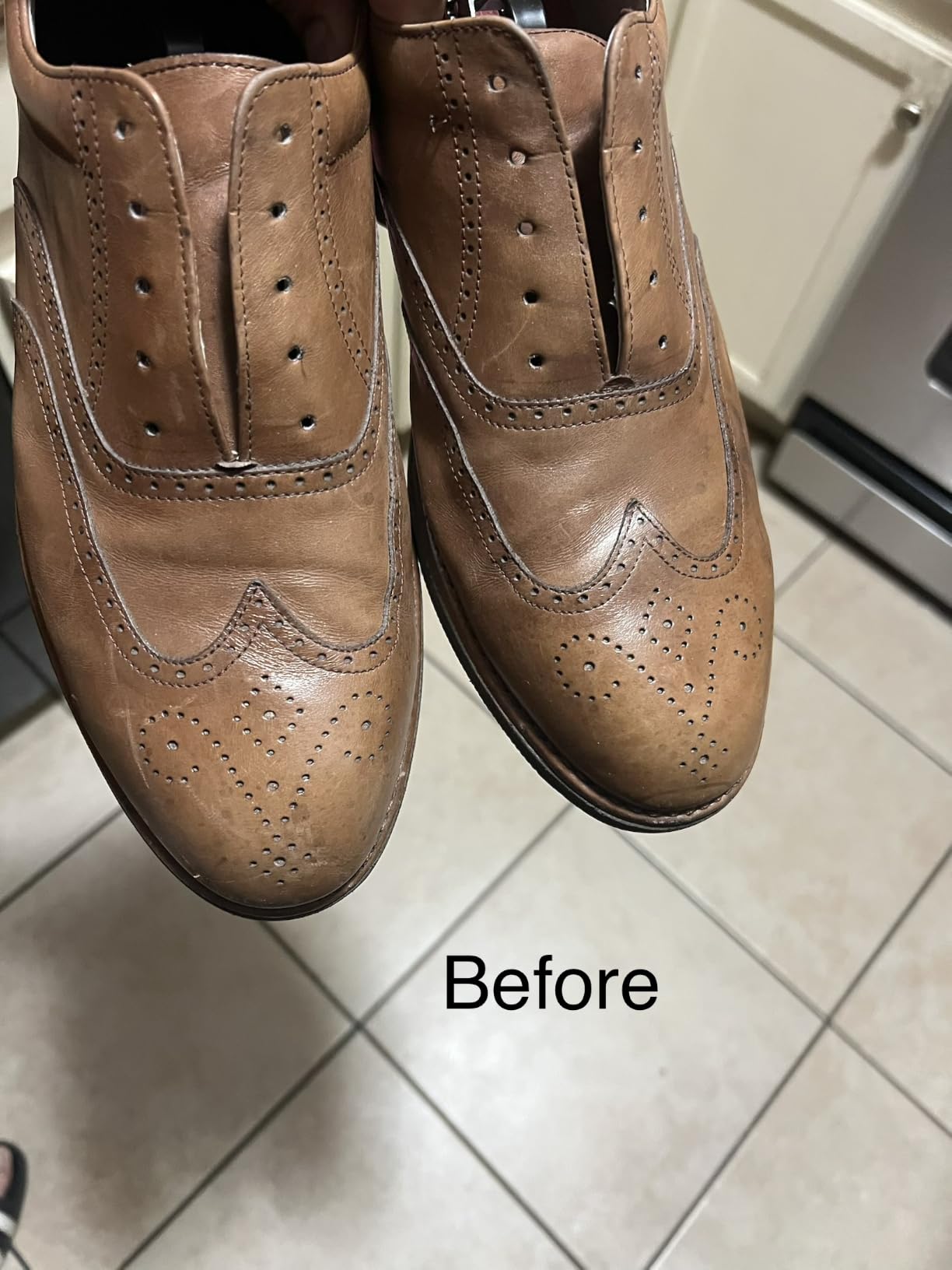
What you should know before you buy
It is not for suede or split-type leather, so skip it if your seats are nubuck. It is also thinner and more watery than most people expect from a conditioner, and a small number of owners with genuinely parched hide wanted a heavier cream and found this underpowered on the first pass.
It is a small eight ounce bottle, which is realistic for car seats but means you will buy it more than once if you also condition a couch and a steering wheel. Plan for that rather than assuming one bottle covers the whole cabin.
Who this is right for
This is the pick for beige, tan, white, saddle or vintage leather where any darkening shows instantly. It is also the safest bottle to hand to someone nervous about ruining their interior, because the worst realistic outcome is that nothing changes.
It is not the strongest choice for black leather that is already dried out and micro-cracked. Those hides need something with more emollient weight, which is what Leather Honey and Leather CPR are built for.
4. Weiman Cleaner, Conditioner and Protector – Best for Sun-Exposed Interiors
Weiman Leather Cleaner, Conditioner & Protector, Car Interior & Furniture
12 oz trigger spray
Six natural oils plus UVX-15 sunscreen
Cleans, conditions and protects
Pros
- Cleans
- conditions and protects in one trigger-spray step
- UV protection helps prevent fading and cracking in sun-exposed interiors
- Six natural oils plus UVX-15 sunscreen keep leather soft and flexible
- No greasy or sticky residue so you can sit down right away
- Works on finished leather and faux leather
Cons
- Best suited to finished smooth leather rather than suede or nubuck
- Very worn or cracked leather needs repeated applications
UV damage is what actually kills automotive leather, far more than dirt or use. A driver’s seat parked in direct sun bakes out the natural oils until the hide becomes brittle and micro-cracked, and no amount of conditioning reverses that unless you block the sunlight in the first place. Weiman is the pick here because it treats that as a first-class problem.
The formula pairs six natural oils with UVX-15 sunscreen, and the claim that it helps prevent fading, drying, discoloration and cracking is repeated across 11337 reviews at 4.6 stars. For a car that lives on a driveway or in an uncovered lot, that dual action is worth more than a heavier conditioner with no UV component.
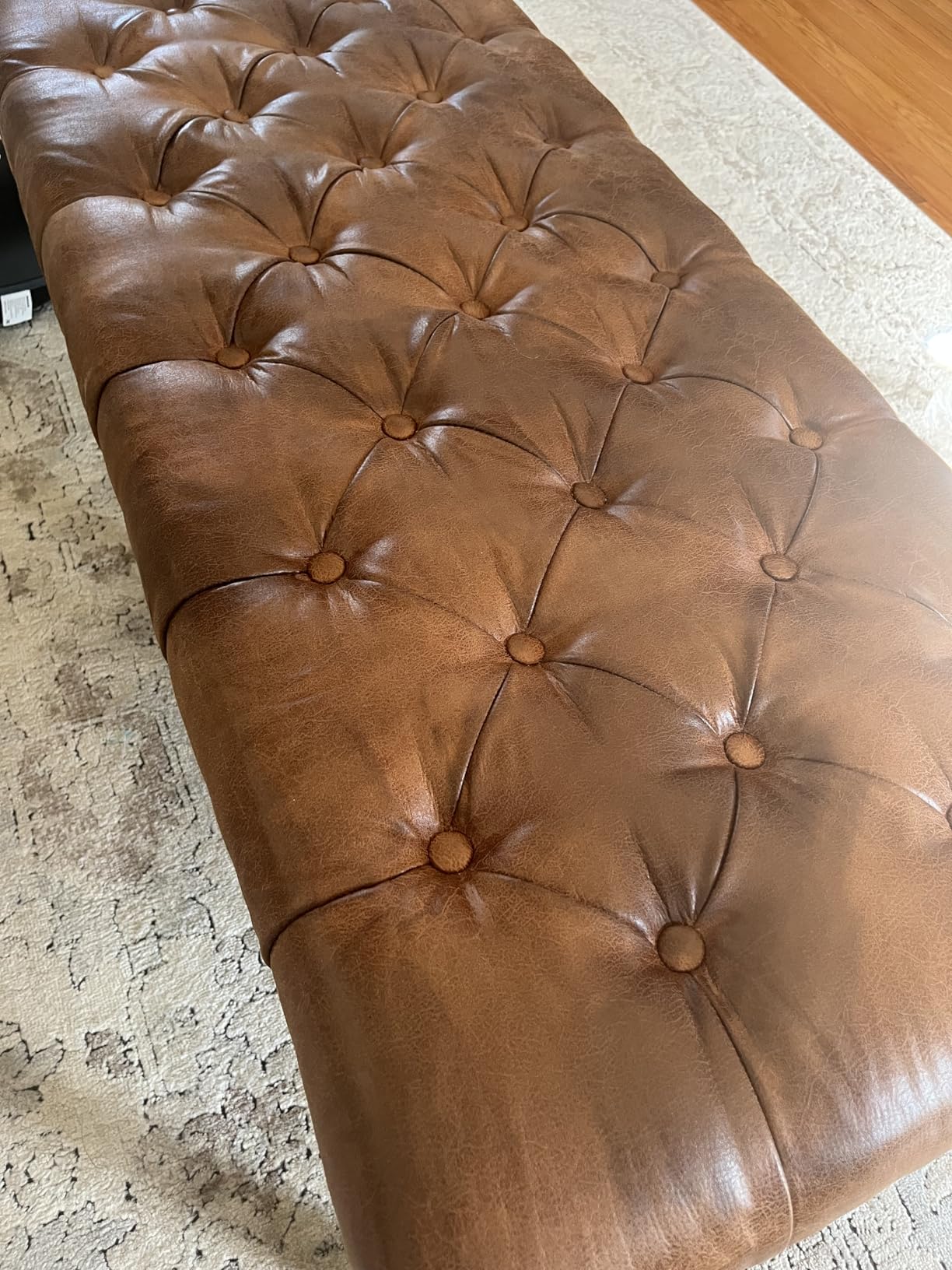
It is a trigger spray, so the mechanics of application are simple: spray, agitate with a microfiber cloth, buff. Reviewers report a natural, non-plastic sheen after buffing, streak-free results and no residue, and many note they can sit in the car straight afterward without sliding around.
It is also a forgiving product in the list on interior type. It works on finished leather and faux leather, which covers leatherette interiors that other formulas in this roundup explicitly exclude. If you are not sure what your seats are, this is the safe first buy.
What you should know before you buy
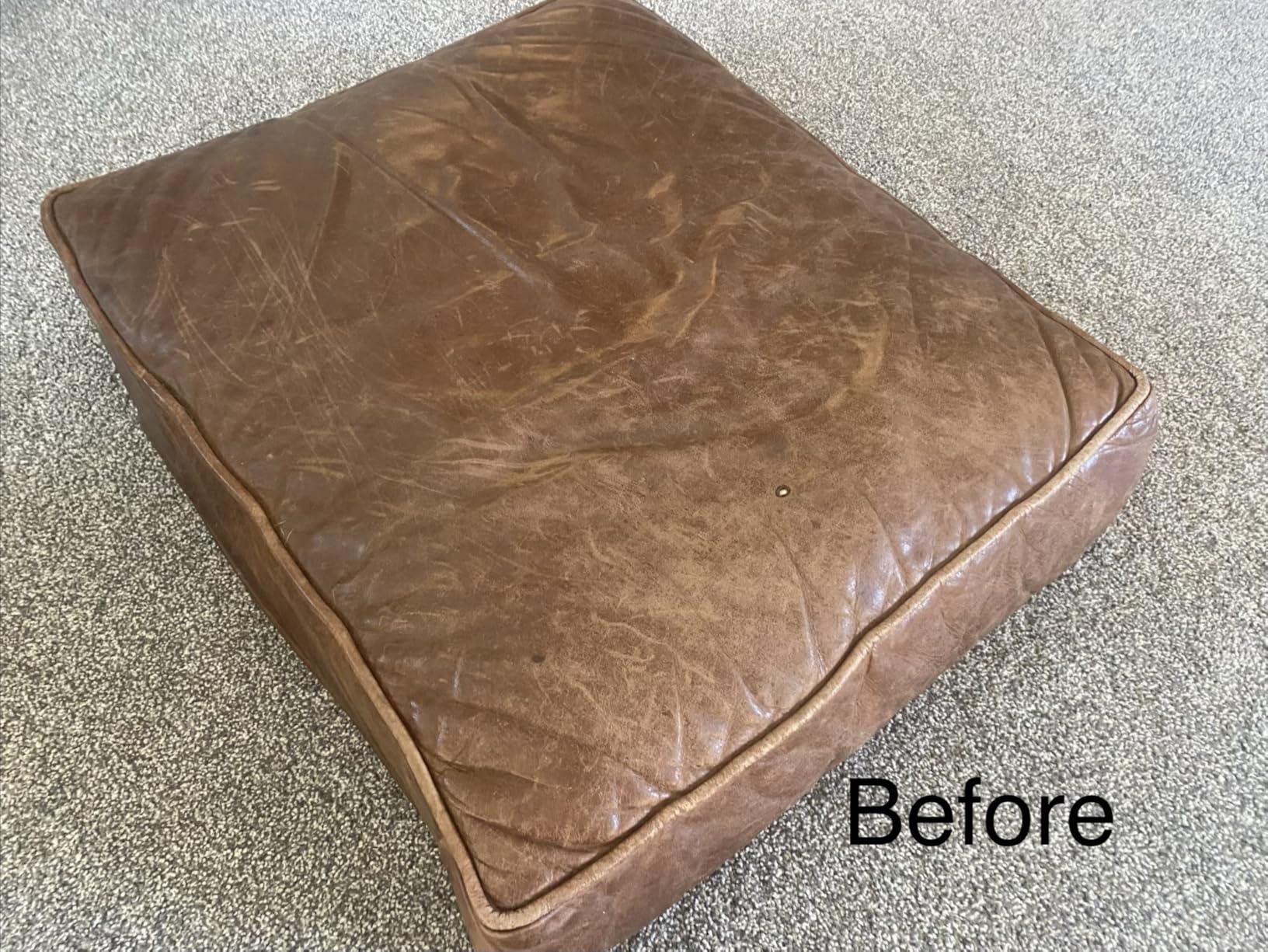
It is built for finished, smooth leather and is not a suede or nubuck product. On deeply worn or already cracked hide, reviewers consistently report that one pass is not enough, and that it takes several applications before the suppleness returns. This is a maintenance product with UV cover, not a restoration cream.
The trigger sprayer produces a fine mist, which is convenient for coverage but means you need a microfiber cloth to work it in properly. Skipping the cloth will leave you with uneven distribution, and uneven distribution on dark seats is exactly how blotchiness starts.
Who this is right for
This is the pick for a car parked outdoors in a hot climate, and for anyone whose seats have started to fade in patches. It is also the right first product for synthetic or leatherette interiors, where the UV protectant is doing most of the work.
If your leather is already hard, creased and cracking, pair it with a heavier cream rather than relying on the spray alone. Alternating a light spray like this with a penetrating conditioner twice a year is what most owners end up doing long term.
5. Leather CPR Cleaner and Conditioner – Best for Dry, Neglected Seats
Leather CPR Cleaner and Conditioner 18oz. Bring Leather Back To Life on Furniture, Car Seats, Handbags, Jackets, Boots, Saddles, Purses & Shoes. Restores Shine, Softness & Color to Real Leather
18 oz cream
Water-based and pH-balanced
One step, no rinsing or buffing
Pros
- Cleans and conditions in one step
- Revives very dry leather other products could not hydrate
- Dries to a natural matte finish with no greasy film or sticky residue
- Does not strip color from dyed leather
- Spray on or wipe on then spread with a cloth
Cons
- Heavily worn areas may need two or three applications
- Leather scratched through completely will still show the damage
- Can feel slightly tacky when worked in hard
Leather CPR is the cream we would reach for on a seat that has been ignored for a decade. The water-based, non-toxic, pH-balanced cream is specifically reported by owners to hydrate leather that honey-oil style products failed on, and the feedback consistently comes from people restoring handbags, jackets and Nappa car seats that had gone stiff and pale.
At 4.6 stars across 8302 reviews, the most common descriptor in the reviews is gradual. This is not a product that transforms a seat in five minutes. Owners describe it as a stack of small improvements that becomes obvious after the second or third coat, and they are comfortable with that trade.
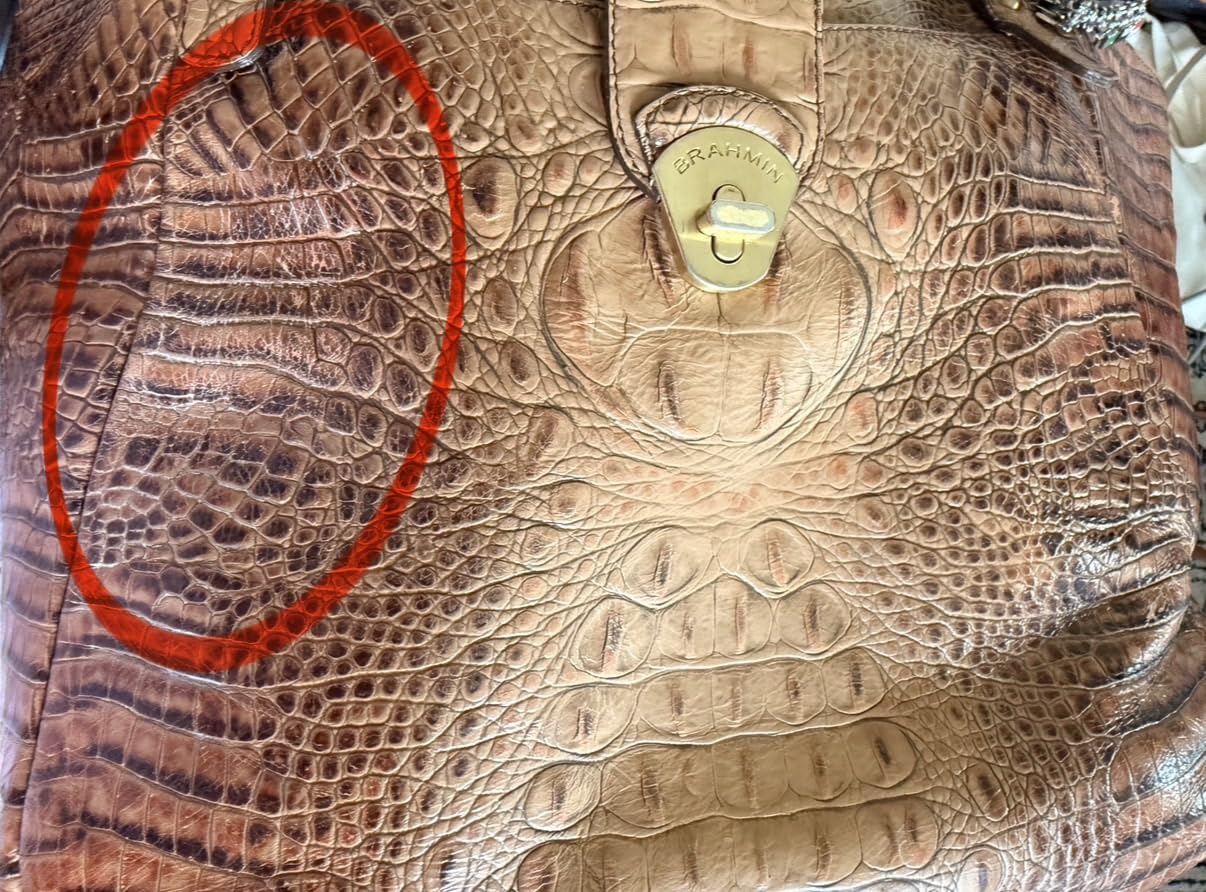
What it does well is color. Reviewers stress that it does not strip or darken dyed leather, and that black, brown, red and blue all come back looking richer rather than blotchy. It dries to a natural matte finish with no greasy film and no sticky residue, which is the single most requested attribute in this category.
Application is unusually forgiving. You spray it or wipe it on, spread it with a cloth and let it dry. There is no rinsing and no buffing step, which removes the two places where most people go wrong on a cream conditioner.
What you should know before you buy
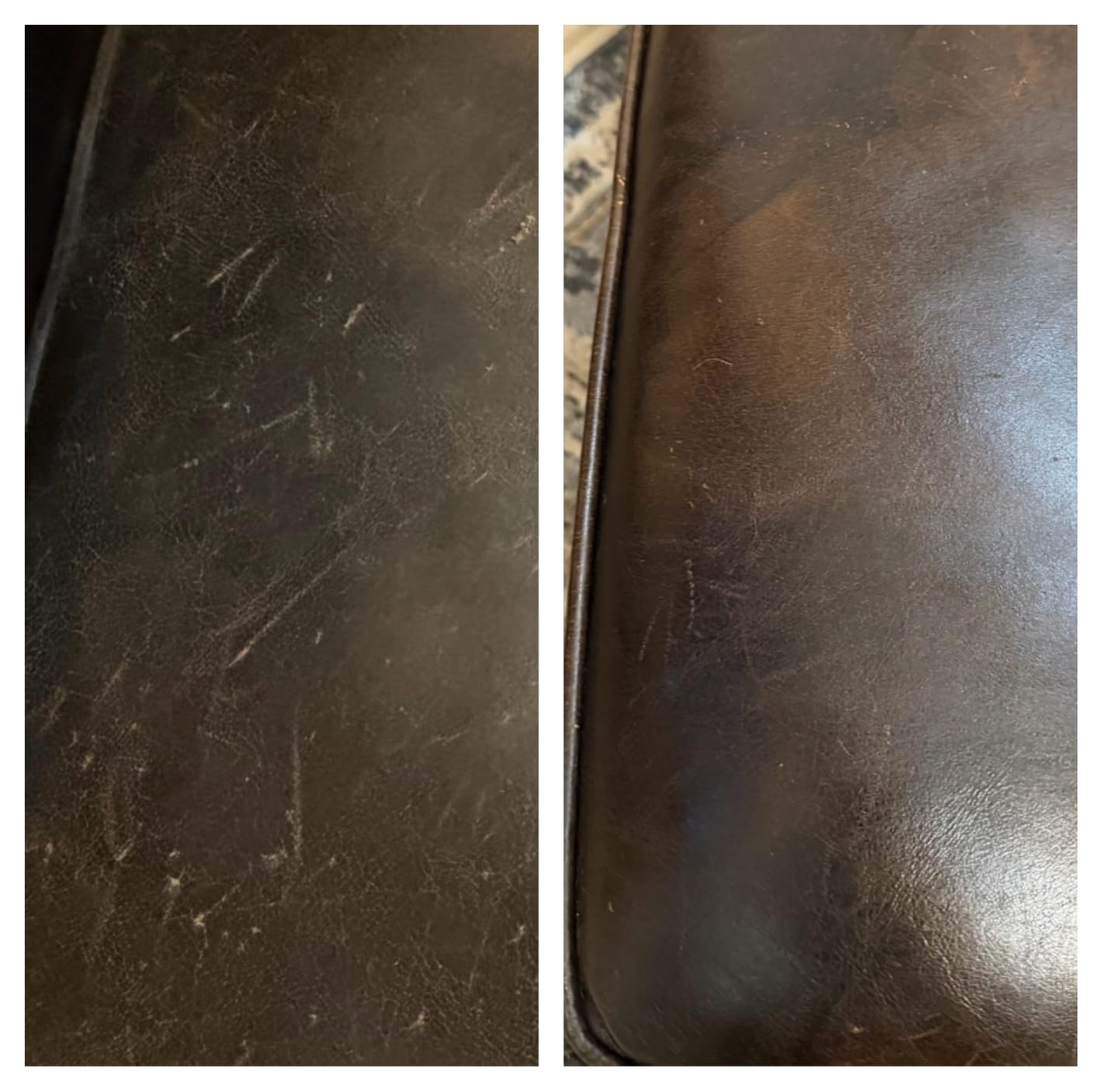
It will not fix physical damage. If the grain is scratched through, creased permanently on the driver’s bolster, or torn at the seam, that damage remains visible after conditioning. Owners are candid about this, and it is a repair-kit problem rather than a product problem.
It is a cream, so it can feel slightly tacky if you work it in aggressively. Use light circular motions and let it dry fully before sitting. On heavily worn areas, plan for two or three applications spread over several days rather than one heavy coat.
Who this is right for
This is the pick for a neglected interior, a cheap used car, or a vehicle you are preparing for sale where the goal is maximum perceived improvement for the least fuss. It is a strong option for dyed leather in non-black colors, which is where color stripping shows up fastest.
It is not for suede or nubuck. If you want a single product for a heavily worn seat and you care more about the final look than the time it takes, this is the one. If you care about a fast five-minute job, go with the spray formats further down this list.
6. Chemical Guys 9-Piece Leather Kit – Best Complete Kit
Chemical Guys, 9-Piece Leather Cleaner & Conditioner Kit for Car Interiors
Nine-piece set
Cleaner, conditioner, brushes, applicators and towels
3.9 pound package
Pros
- Complete set bundles cleaner plus conditioner plus brushes plus towels
- Safe on natural and synthetic leather without discoloration
- Cleaner lifts embedded dirt while the conditioner restores suppleness
- Included tools help you work product into bolsters and creases
- Helps prevent cracking and fading over time
Cons
- Bulky kit format takes more storage space than a single bottle
- Cleaning heavily soiled seats still requires time and brush work
This is the kit to buy if you have never conditioned leather before and do not own the right tools. At 4.7 stars across 7613 reviews, it is one of the highest-rated kits in the roundup, and the reason is completeness rather than any single bottle’s performance. You get the Chemical Guys cleaner and conditioner plus applicator pads, brushes and microfiber towels.
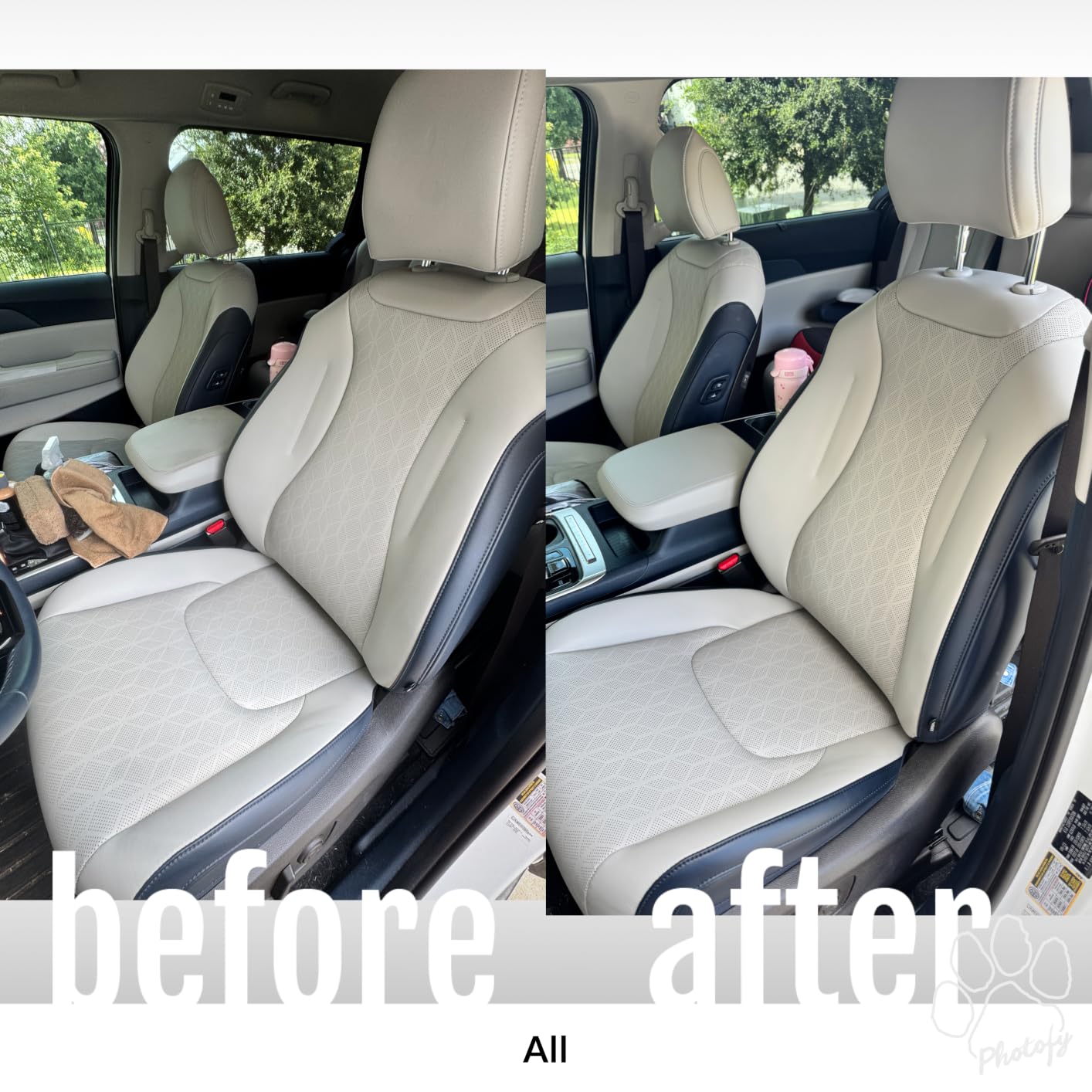
That matters more than it sounds. Most conditioner failures we saw came down to application, not formula. Nobody spreads a viscous cream evenly into a seat bolster with a folded old t-shirt, and the included brush and pads solve exactly that. Reviewers specifically mention easier product distribution into bolsters and creases.
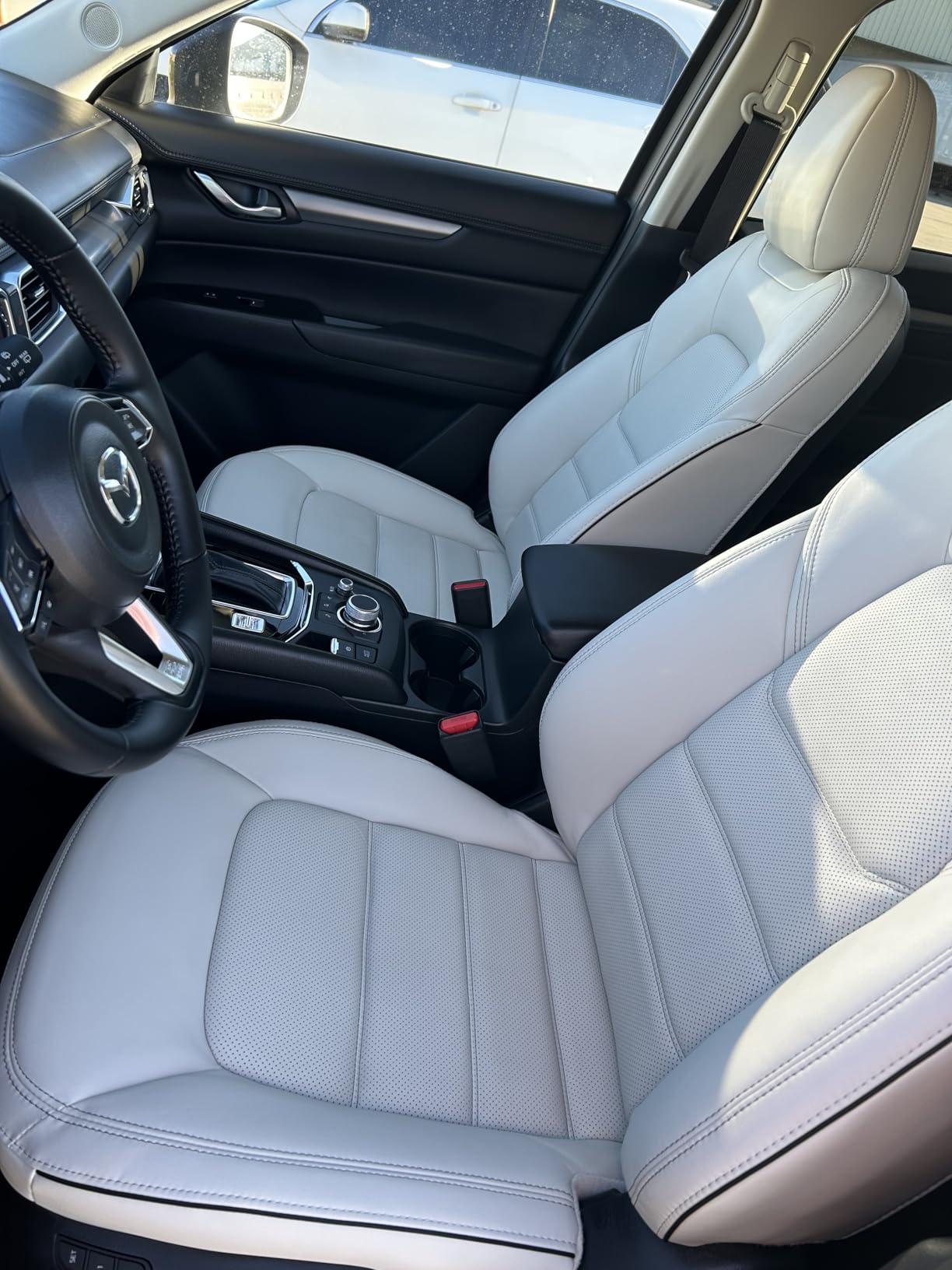
The formulas are safe on natural, synthetic and faux leather without discoloration, so it works across a mixed interior. The conditioner restores suppleness and a rich natural look, and owners report good results on crack prevention and general fade resistance over time.
It is the same chemistry as the two-bottle kit in this list, just with the supporting equipment attached. If you already own microfiber towels and a soft brush, you are paying mostly for storage volume. If you own neither, the tools are genuinely useful beyond this job.
What you should know before you buy
It is bulky at 3.9 pounds, and that is the most common complaint in the reviews. It does not fit in a glovebox, a small trunk or a condo storage closet. Judge the footprint before you commit, because the packaging is roughly ten times the size of a single bottle.
It also does not save you time on dirty seats. Owners cleaning heavily soiled leather report that the brush work is still the hard part, and the kit simply makes that work more efficient rather than skipping it.
Who this is right for
This is the pick for a first-time owner who wants a complete system and has somewhere to store it. It is a good gift for someone who just bought their first car with leather, and it works well if your interior mixes leather and vinyl.
If you already have towels and brushes, or if you want a product for a glovebox, the two-bottle kit or a single bottle is the smarter purchase. This one is about the tools as much as the chemistry.
7. Chemical Guys Vintage Series Leather Conditioner – Best for Daily Drivers
Chemical Guys, Vintage Series Leather Conditioner for Car Interiors, 16 oz
16 oz cream
Conditioner only
Apply with microfiber, buff off excess
Pros
- Penetrates leather pores to restore softness and flexibility
- No greasy residue or slick feel after buffing
- Helps prevent cracking and fading from sun and daily wear
- Safe for OEM and aftermarket leather as well as vinyl
- Applies quickly with a microfiber applicator
Cons
- Conditioner only so a separate cleaner is needed for embedded dirt
- Requires an applicator and buffing step to avoid a surface film
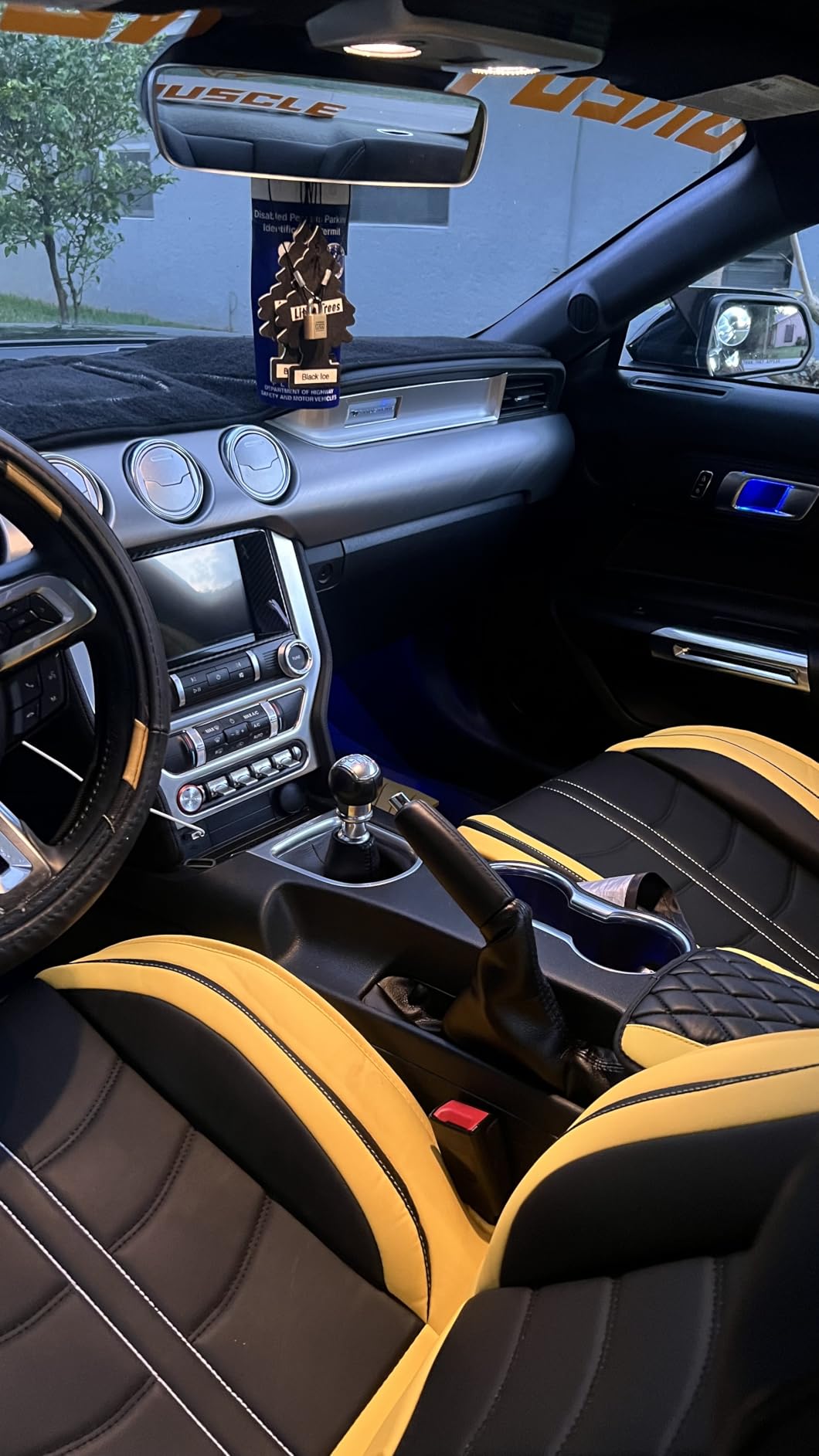
This cream is the one we would leave in the garage for routine upkeep. At 4.7 stars across 6345 reviews, its defining characteristic is a finish that stays matte and never feels slick under your leg, which is precisely the complaint that dominates detailing forum threads about shiny conditioners.
The formula penetrates the leather’s pores to restore softness, flexibility and color richness, and reviewers describe a rich, natural look rather than the plastic look that makes cheap products obvious. It is a soft fresh scent, not a heavy fragrance.

It is safe for OEM and aftermarket leather as well as vinyl and synthetic surfaces, so it is one of the more universally compatible creams here. That versatility is why it does well on cars that have had an interior refresh or have mixed materials between the seat centers and the bolsters.
At 16 ounces it is a generous size for car seats, and 81 percent of reviewers gave it five stars. The recurring note is that it finishes in minutes once it is part of a routine.
What you should know before you buy
It is a conditioner, not a cleaner. If your seats have embedded dirt, this will not lift it and may just spread it around. Clean first with a dedicated cleaner, which is the single most common piece of advice across the forum discussions we read.
It needs a microfiber applicator and a buffing step. Skipping the buff leaves a surface film, and that film is the thing people mistake for a tacky finish. Budget three extra microfiber cloths because they get sacrificed to product residue.
Who this is right for
This is the pick for a daily driver who wants a cream that handles OEM and aftermarket leather without a compatibility argument. It is a strong match for sun-facing seats that need periodic moisture top-ups between full cleaning sessions.
It is a poor match for someone with a heavily soiled interior, and it is not for suede. If you need to do both jobs, go to the two-bottle kit earlier in this list instead of buying this and then a cleaner separately.
8. Lexol All Leather Conditioner – Best Matte Finish
Lexol All Leather Conditioner for Car Seats, Furniture, Jackets, 16.9 Oz
16.9 oz liquid
Fine oil droplets
Fast absorption
No color change
Pros
- Fine oil droplets absorb fast to restore flexibility and a soft feel
- No greasy residue once fully absorbed and buffed
- Long-lasting softness on car seats compared with many brands
- Does not change leather color
- just adds richness back
- Pleasant leathery scent
Cons
- Slight stickiness immediately after application that clears within about 24 hours
- Can streak on extremely dry or unevenly colored leather
- Not intended for thick hide pieces
Lexol is the enthusiast default, and it comes up again and again on r/Detailing when people ask what to use long term. The reason is the fine oil droplets. They absorb quickly into the hide rather than spreading across the surface, and long-term users report keeping leather in near-new condition across years of regular application.
At 4.6 stars across 4219 reviews, the finish is the headline: no greasy residue once fully absorbed and buffed, and no color change. Many conditioners add a richer, darker look to leather. Lexol returns the existing color and suppleness instead, which is why owners of mismatched or faded panels prefer it.
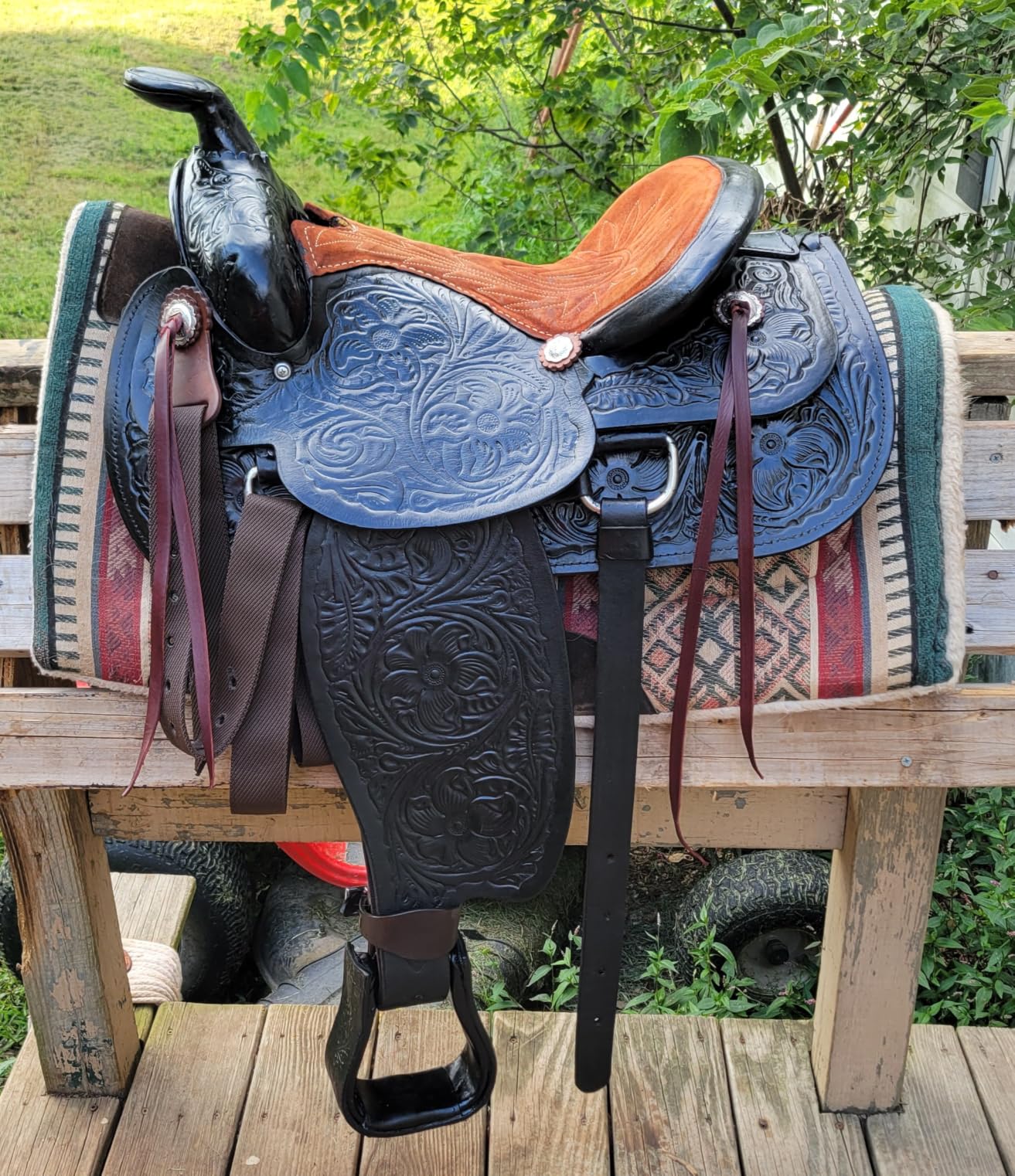
It is designed to pair with a separate Lexol cleaner as a two-step routine, and it works just as well on furniture, shoes, jackets and gloves. The scent is leathery and mild rather than perfumed, which fits the product’s low-key character.
On black leather, the no-color-change property is the practical advantage. On lighter hide, the fast absorption means you can apply it evenly without watching for patchy darkening, which is the exact failure other products show.
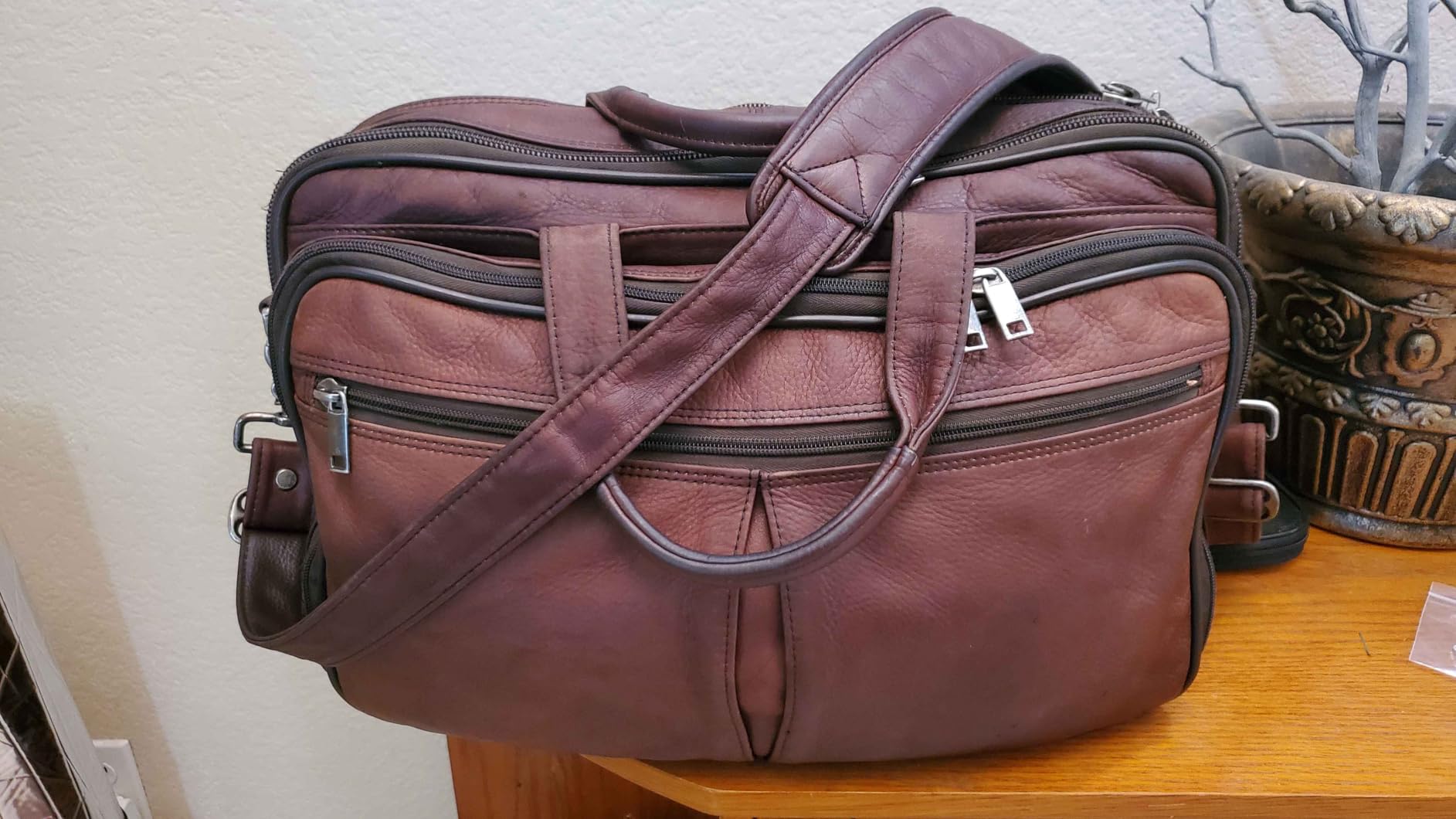
What you should know before you buy
There is brief stickiness right after application that clears within roughly a day. That is a genuine operational detail: if you need the car back immediately, this is not the product. Plan to leave it overnight for the cleanest result.
On extremely dry or unevenly colored leather, reviewers report streaking if you do not give it time to work in. Work a thin coat into a section, walk away, and come back. It is also not intended for thick hide pieces like armor or heavy tack.
Who this is right for
This is the pick for someone who wants a matte, no-nonsense result and is patient enough to let it absorb overnight. It is a well-documented long-term option, particularly if you have several leather vehicles or a leather couch as well.
It is not the right pick if your priority is a five-minute wipe-down between trips, or if you need to remove grime as part of the same step. Bring a cleaner alongside it, and you have a proper two-product routine.
9. Armor All Leather Cleaner with Beeswax – Budget Pick
Armor All Car Leather Cleaner Spray with Beeswax, 16 Fl Oz
16 fl oz spray
Real beeswax
Cleans, conditions and protects
Residue free
Pros
- Cleans
- conditions and protects in one spray
- Real beeswax preserves the supple feel and natural beauty of leather
- Lathers up and pulls dirt out of the grain even on newer seats
- Dries quickly with a light lasting sheen and a pleasant scent
- One bottle yields a large number of applications
Cons
- Can streak on leather dashboards and door panels
- Not a deep cleaner for stubborn embedded grime
- Beeswax formula may be too light for very dry or worn leather
Armor All with Beeswax gives you a quick result. One spray lathers up, pulls dirt out of the grain, conditions the hide and leaves a light lasting sheen. At 4.6 stars across 4105 reviews, detailers work it in with a wax applicator and report clean, soft seats in a single pass.
It is also the most approachable product here. The beeswax is a real ingredient rather than a synthetic stand-in, it is residue free, and one 16 ounce bottle covers a lot of applications. If you want to try leather care without committing to a regimen, this is the place to start.
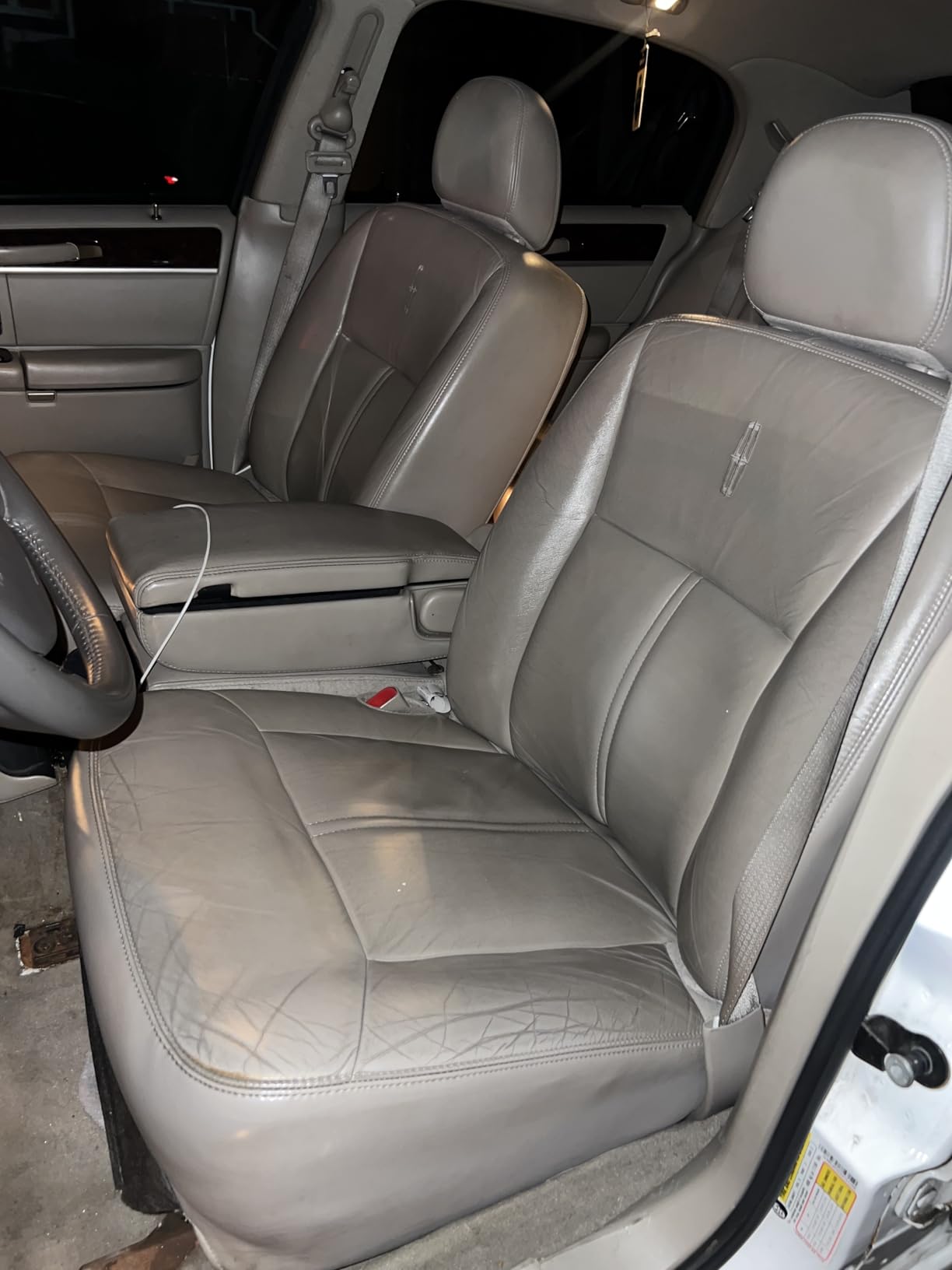
It handles fairly new seats especially well, where there is no deep grime to remove and the job is just maintenance and a little shine. The fresh scent is pleasant and the finish is light enough that it does not read as glossy plastic on a dark interior.
The tradeoff is that beeswax is a surface treatment. It conditions and protects, but it is a light formula, and that shows up in the two most common complaints below.
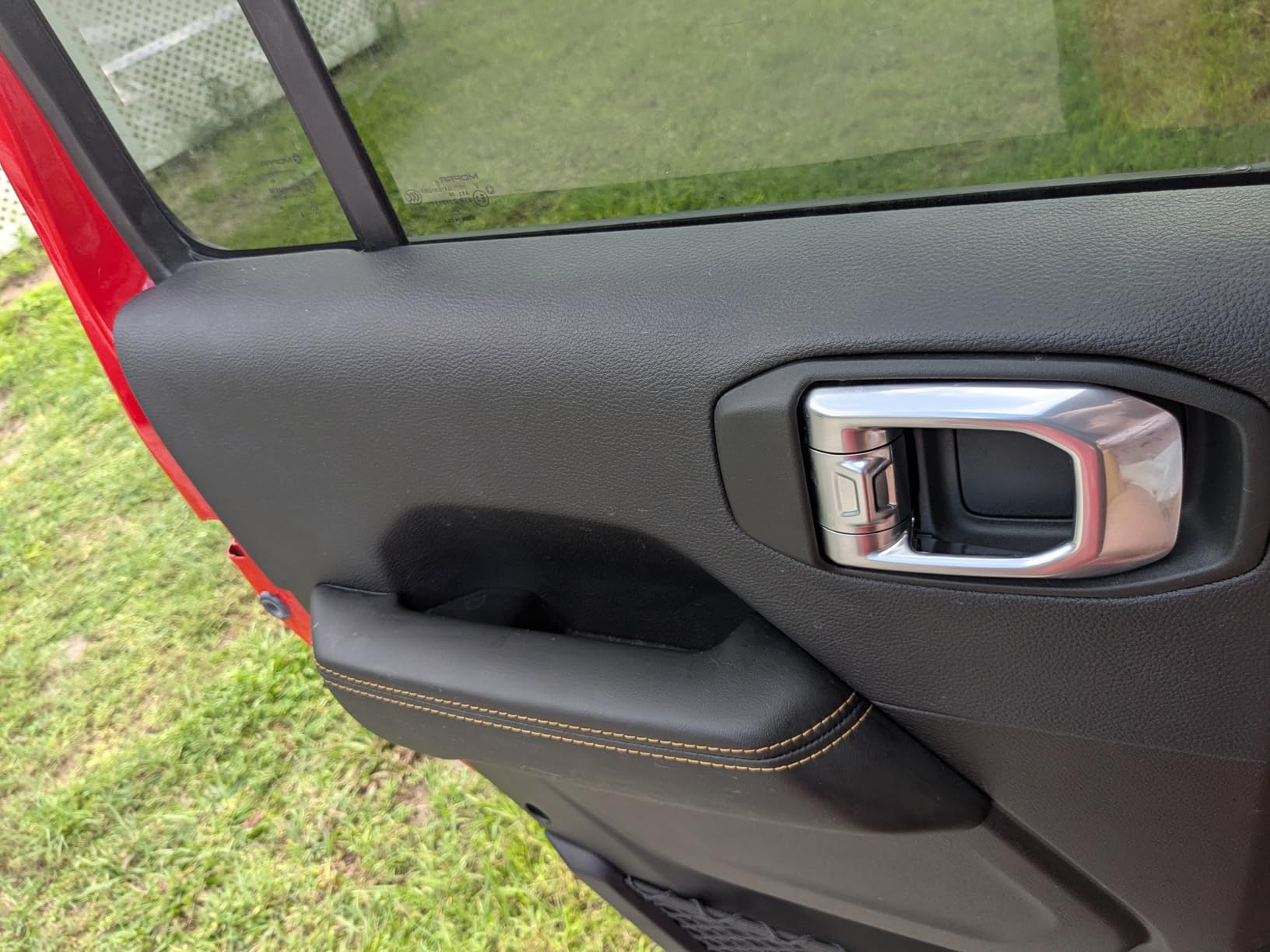
What you should know before you buy
It can streak on leather dashboards and door panels, which is a real problem on piano-black and matte-finish trim. Keep it to seat faces and bolsters, and test a small panel before you work a large flat surface. Do not mix it with the Chemical Guys or Meguiar’s sprays in the same session.
It is also not a deep cleaner. On stubborn embedded grime it will disappoint, and on very dry or worn leather the beeswax formula is too light to rehydrate. Those seats need a cream or a penetrating oil, not a wax spray.
Who this is right for
This is the pick for a quick monthly refresh, a newish interior, or anyone who wants a single spray for the whole cabin. It is a sensible glovebox product for car shows, ride shares or a vehicle you detail in a parking lot.
It is the wrong choice for a restoration project or for a car that has been neglected for years. Get a cream from this list instead, and use this one for maintenance after the heavy work is done.
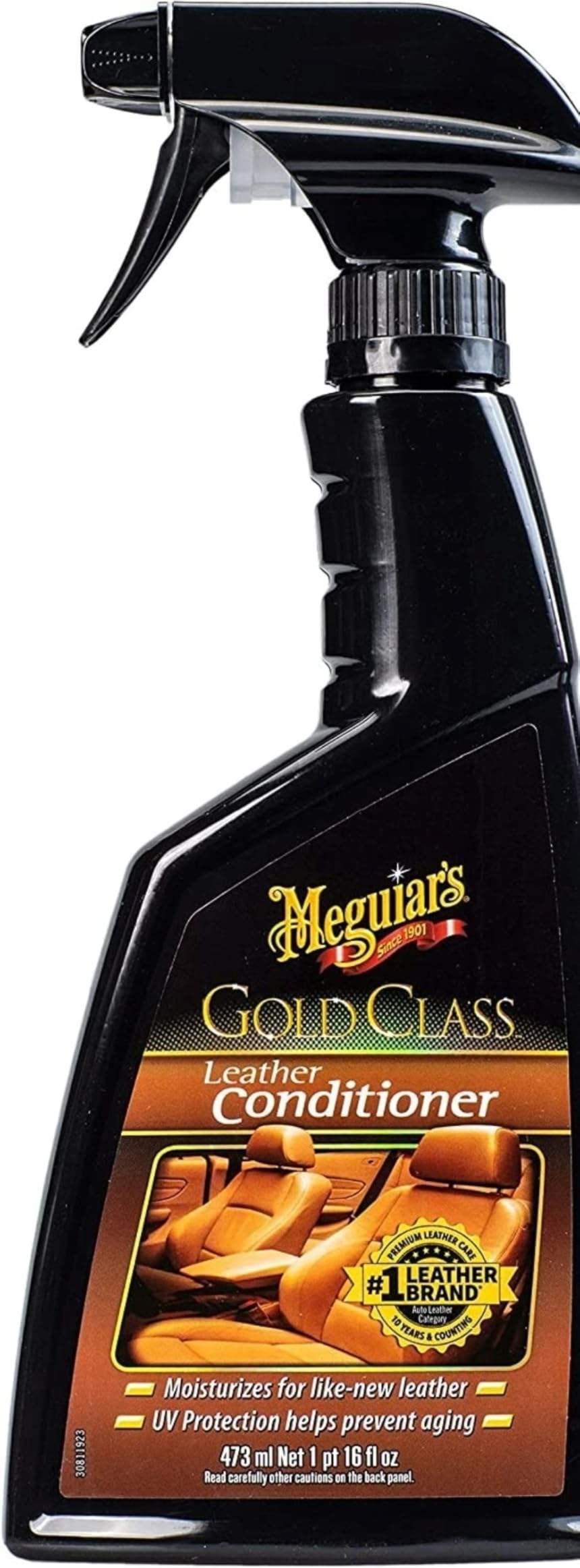
10. Meguiar’s Gold Class Leather Conditioner Spray – Best for Quick Maintenance
Meguiar’s Gold Class Leather Conditioner Spray, 16 Oz
16 oz spray
Aloe and UV protection
Residue free
No artificial gloss
Pros
- Leaves no residue or buildup or artificial gloss
- Aloe and moisturizing oils help prevent drying and cracking
- Built-in UV protection for seats in direct sunlight
- Convenient spray bottle for an even wipe-down result
- Also works on furniture and handbags
Cons
- More of a maintenance product than a heavy restoration solution
- Heavily worn or dry leather may need multiple applications
Meguiar’s Gold Class does one thing extremely well: it keeps leather looking natural. At 4.6 stars across 3971 reviews, the most consistent phrase in the feedback is no residue, no buildup and no artificial gloss. If the thing you hate most about conditioned interiors is shine, this is the product built for you.
The aloe and moisturizing oils help prevent drying, cracking and fading, and the formula includes UV protection for seats that sit in direct sun. Reviewers describe an easy spray-and-wipe routine that produces an even, rich result, and it works on furniture and bags as well.
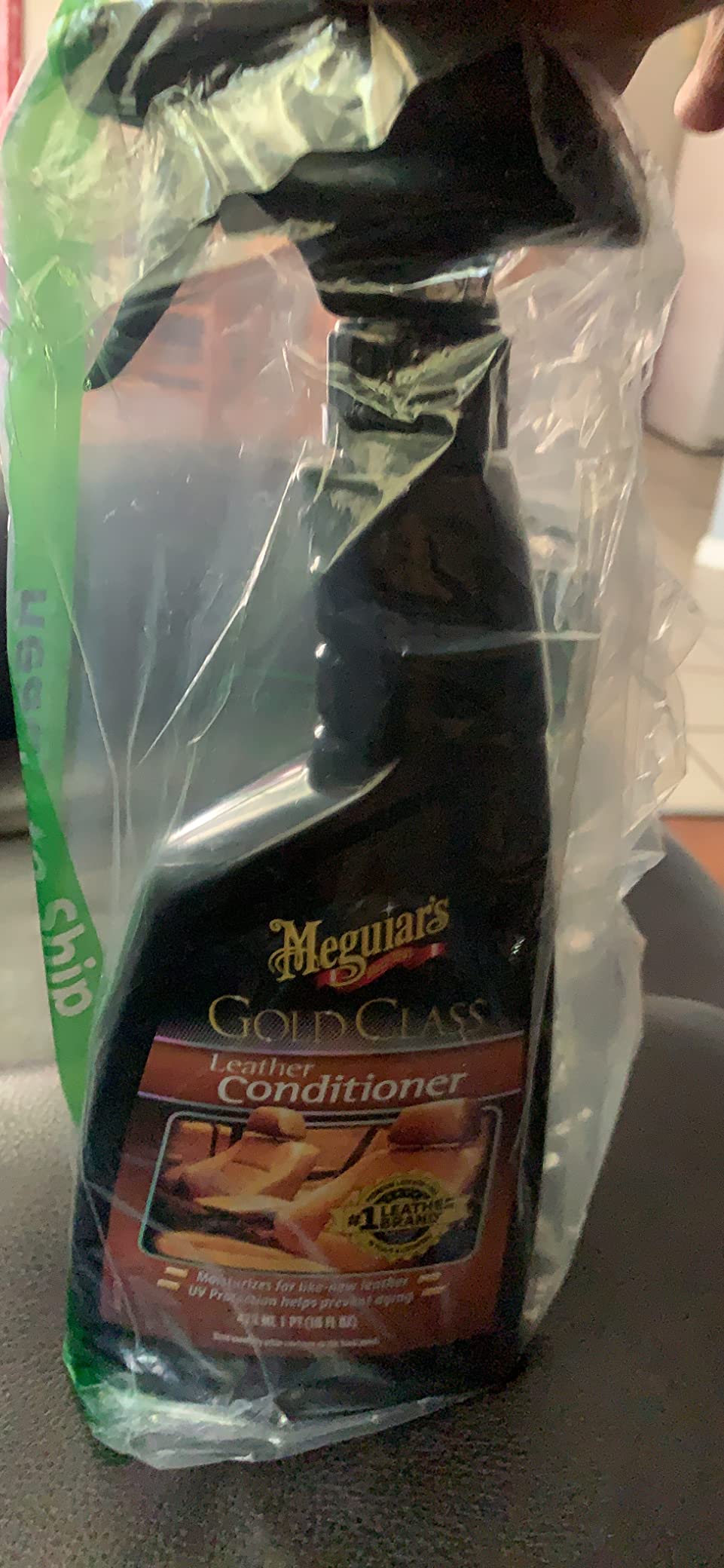
It is a detailer-formulated product from a brand with a long history in car care, and the format is a plain spray bottle that you work in with a microfiber towel. Nothing about the application is difficult or fussy, which is what makes it a good second product to own alongside a heavier cream.
The aloe scent is mild and pleasant, and 78 percent of reviewers gave it five stars. It is the last pick in this list on review volume, not on quality, and for routine upkeep it does everything it claims.
What you should know before you buy
It is a maintenance product, not a restoration product. The single most common caveat across the reviews is that heavily worn or dry leather needs several coats, or a dedicated restoration cream, before you see a meaningful difference. Do not expect one pass to reverse years of sun damage.
Because it is a spray, it needs a microfiber towel to distribute evenly, and applying it too heavily is the fastest route to temporary surface feel. A light mist per panel, worked in immediately, is the technique reviewers use.
Who this is right for
This is the pick for someone who wants their seats to look maintained rather than freshly treated. It suits light-colored interiors where any shine would be obvious, and it works well alongside a heavier conditioner in a two-product routine.
It is not for cracked leather, suede, or as a standalone solution to a neglected interior. Pair it with Leather CPR or Leather Honey if that describes your car, and you will cover both the maintenance and the restoration side.
What a Leather Conditioner Does (and Cleaner and Protectant Do Not)
A leather conditioner replenishes the oils and moisture that automotive leather loses to sun, body oils and friction, so the hide stays supple and stops cracking. A cleaner removes dirt and grime. A protectant adds a sacrificial barrier against UV rays and spills. They are three different jobs, and buying one bottle for all three is why so many people end up disappointed.
Conditioners carry emollients and lanolin-type or synthetic oils that soak into the leather’s pores and re-plasticize the surface, so the hide flexes instead of drying and splitting. UV absorbers in some formulas block the sunlight that causes fading and embrittlement. The product is then buffed off to leave a breathable matte film rather than a greasy layer.
Cleaners are detergents. They lift embedded dirt, body oils and grime out of the grain, which is essential groundwork, because conditioning over dirt seals that dirt in permanently. This is why every experienced detailer in the forum discussions we read insists on cleaning first, even when the leather looks clean.
Protectants and sealers sit on top of the surface. They are worth buying for UV and spill protection, especially on a car parked outdoors, but they are not a substitute for hydration. The common enthusiast complaint about cheap conditioners is that they behave like a sealer, coating the surface rather than soaking in.
Which one you need depends on the condition of the hide. Dry, pale and creased leather needs a conditioner. Dirty leather needs a cleaner first. Faded, sun-facing leather needs UV protection. A leather seat conditioner for car seats that are all three needs all three products used in that order.
How to Condition Leather Car Seats in 7 Steps
Follow this order every time. Skipping step two is the single most common way people damage their seats, because you end up sealing dirt under a layer of oil where it becomes permanent staining.
Work in the shade on a cool panel. Direct sun and hot leather cause the product to flash off before it can absorb. Park the car, close the doors and let the seats cool to the touch.
Vacuum first, then clean. Use a brush attachment to pull grit out of seams and perforations so you are not grinding dirt into the grain when you apply anything.
Clean with a dedicated leather cleaner. Dilute as directed, apply to a microfiber towel rather than the seat, and work section by section. Let it dwell briefly, then wipe the lift away.
Dry the panel completely. A damp hide and a water-based conditioner do not mix well, and moisture trapped under product is how you get a blotchy finish.
Test a hidden panel first. Find a spot under the seat or inside the seat fold, apply your conditioner, and check it in 24 hours. This is the only reliable way to know how your specific hide will darken.
Apply a thin, even film. Use a soft microfiber applicator or pad, work in small circles, and keep the coat thin. More product does not mean more conditioning, only more residue.
Let it work, then buff. Fast-absorbing liquids want 20 to 30 minutes. Thick creams like Leather Honey can take overnight. Buff with a clean microfiber towel until the surface feels dry and matte under your hand, and never leave a slick bolster under your hip.
Work one seat panel at a time rather than the whole cabin at once. It keeps the product from sitting too long on the first section while you catch up on the last, and it makes the buffing step much easier to keep clean.
What to Look for When Buying a Leather Conditioner
The first question is what your leather actually is, and you can answer that in about a minute. Look at the grain. A uniform, plasticky sheen and a consistent color across the whole panel usually means coated factory leather. Visible pores, tonal variation and a natural-looking nap mean semi-aniline or full-grain. Coated leather needs a light, pH-balanced product; full-grain and semi-aniline can take a much heavier cream because the hide will absorb it.
Next, check the finish the product promises. Anything described as gloss, wet look or high shine will read as plastic and can feel slippery. You want matte or natural, and you want the words non-greasy or residue free. This single attribute separates the picks in this roundup from the ones we left out.
Then look at what the product is not for. Nearly every conditioner in this category excludes suede and nubuck, and several exclude vinyl or faux leather outright. If your interior is leatherette, the Weiman and Chemical Guys options are the compatible ones. Checking this line before buying prevents the most common disappointment.
UV protection is worth paying attention to if the car lives outdoors. Two products in this list include a sunscreen component in the formula, and that is a real functional difference for a seat that sees direct sun. Without it, you are hydrating the hide but not blocking the thing causing the damage.
How often is too often is a question nobody asks and everybody gets wrong. Twice a year for a daily driver is plenty. Over-conditioning is a genuine failure mode: the pores clog, the surface takes on a tacky film, and the seat attracts dirt faster than it did before. If your seat feels slightly slick a week after buffing, you have applied too much, and the fix is a gentle cleaner to reset the surface rather than more product.
Kits versus single bottles comes down to what you already own. If you have microfiber towels and a soft-bristle brush, a single bottle is the better value and stores far more easily. A multi-piece kit earns its place when you are starting from nothing, when your interior mixes leather and vinyl, or when you want the tools for future jobs beyond the car.
One more practical consideration: viscosity. Thick conditioners are harder to spread and need a warm bottle and a longer dwell time, while thin liquids absorb fast but streak on thirsty leather. Matching the formula to your patience matters more than the ingredient list.
What Not to Use on Leather Car Seats
Dawn dish soap is the most-asked question in this category and the answer is a clear no for a full seat. It is a strong degreaser that strips the natural oils and, on coated factory leather, can permanently haze or discolor the finish. A heavily diluted amount used as a one-off emergency cleaner is a different conversation from slathering it on a seat, but it is never a conditioning product.
Vaseline does not work as a leather conditioner. It is a petroleum jelly that sits entirely on the surface, does not penetrate the hide and does not address UV damage. It will eventually make the seat feel greasy and slippery, which is the opposite of what you want under your hip while cornering, and it can be very difficult to remove.
Vinegar and lemon juice are both acidic enough to etch and dull a coated finish over repeated use. Toothpaste is an abrasive that will scratch the grain and leave a hazy film. Neither belongs anywhere near automotive leather, no matter how well the trick works on sneakers.
Mink oil is the most tempting of the wrong answers, because it genuinely works on shoes and is a real leather product. It is a heavy, fatty, animal-based oil that automotive owners ask about constantly. It can leave dark oily patches that are very hard to lift, and it is not formulated for a surface that gets hot in direct sun. Use a purpose-made automotive conditioner instead.
Stiff brushes are the last one on the list, and the damage is mechanical rather than chemical. A hard-bristle brush on coated leather will wear the finish, especially along the driver’s bolster where the hide is already under the most friction. Use a soft-bristle detailing brush on perforated panels and seams, and a microfiber cloth on flat faces.
On the natural question, there is one method worth mentioning honestly. A small amount of neatsfoot oil or a lanolin-based leather balm is a legitimate conditioner for untreated full-grain leather, and enthusiasts do use it. On coated factory seats, on perforated panels and on light-colored leather it can darken unevenly, so it is not what we would recommend for a car interior.
Black Seats, Beige Seats and Cracked Bolsters
Black leather is the easiest to condition and the easiest to ruin visually. On black, darkening is invisible, so you can be aggressive, and a matte product will never look wrong. The failure mode is uneven application, which shows as blotchy patches, so work in small sections with a thin coat and buff each one before moving on.
Beige and tan are the opposite. Any darkening is instantly visible and there is nowhere to hide a mistake, which is why Bick 4 is our pick for light hides and why the hidden-panel test in step five matters most here. If you are nervous, test the product under the seat fold for a full day before touching anything visible.
Cracked bolsters are the most common question we saw, and the honest answer is that conditioner will not fix them. Products can rehydrate the surrounding hide and make the cracks less visible, but permanent creases and stretch marks on a driver’s bolster are structural. A leather repair kit with a filler and color-matching compound is the only thing that changes their appearance, and even then a reupholstery shop does it better.
If you are near the end of a lease, the calculus is simpler. Skip the restoration products entirely and use one of the maintenance sprays twice during the remaining term. The goal is preventing new wear-and-tear, not reversing what is already there, and the affordable sprays do that well enough.
One last point from the forums worth repeating: never condition over dirt. Several owners described sealing grime into the bolster and having it come back worse after buffing. Two minutes with a dedicated cleaner and a soft brush prevents that entirely.
Frequently Asked Questions
What is the best leather conditioner for automotive leather?
Leather Honey is our top pick for automotive leather because it penetrates past the surface, leaves a non-greasy matte finish and reportedly holds for six months or more from a single application. Chemical Guys SPI_109_16 wins if you want the cleaner and conditioner as a matched two-step system, and Bick 4 wins if your seats are light-colored and you cannot risk darkening. All three finish matte rather than glossy, which is what most owners actually want.
Should you put leather conditioner on your car seats?
Yes, with one condition: clean the seats first. Conditioning seals whatever is on the surface, so applying it over dirt and grime locks that dirt into the grain and can cause staining that does not come out. After a proper clean, a leather conditioner for car seats is the best way to slow cracking, fading and UV damage, and twice a year is plenty for a daily driver.
Can I use Dawn dish soap on my leather car seats?
Not as a routine cleaner. Dawn is a strong degreaser that strips the natural oils from the hide and can permanently haze or discolor coated factory leather. A small amount heavily diluted as a one-off emergency clean is less damaging, but it conditions nothing and should be followed by a real leather cleaner and conditioner. Do not use it on light-colored or perforated leather at all.
Does Vaseline work as leather conditioner?
No. Vaseline is a petroleum jelly that sits entirely on the surface without penetrating the hide, and it does nothing about UV damage. It leaves a greasy, slippery film that is unpleasant on a driver’s bolster and difficult to remove later. Use a purpose-made leather conditioner instead; the ones in this roundup absorb into the hide and buff off to a dry matte finish.
How do I stop leather car seats from cracking?
Cracking starts when sun and friction dry the natural oils out of the hide. Clean the seats, then condition them with a product that penetrates rather than coats, and buff thoroughly until the surface is dry and matte to the touch. Add a conditioner with UV protection if the car parks outdoors, and touch it up every six months rather than waiting for visible cracks to appear.
How often should you condition leather car seats?
Twice a year for a daily driver, usually spring and autumn, is the right cadence. A car parked outdoors in a hot climate can use a light spray every few months on top of that. Over-conditioning is a real problem: the pores clog, the surface takes on a tacky film and the seat attracts dirt faster. If your bolster feels slick more than a day after buffing, you have applied too much.
The Best Leather Conditioners for Car Seats in 2026
Leather Honey takes the top spot in 2026 because it is the only product in this roundup where long-term owners consistently report a single application holding for half a year, and it finishes matte and unscented with no silicone or solvents. Chemical Guys SPI_109_16 is the pick when you need the cleaner and the conditioner together, and Bick 4 is the safest bottle to own if your leather is light, tan or vintage.
The common thread across all ten is the finish. Gloss reads as fake, a slick bolster under your hip is a safety problem rather than a cosmetic one, and the products that leave a dry, matte, non-greasy surface are the ones owners keep using years later. Clean first, condition thin, buff properly, and twice a year is enough.
Start with the hidden-panel test on your own seats before you commit to a full application, and you will not be disappointed by the result.