
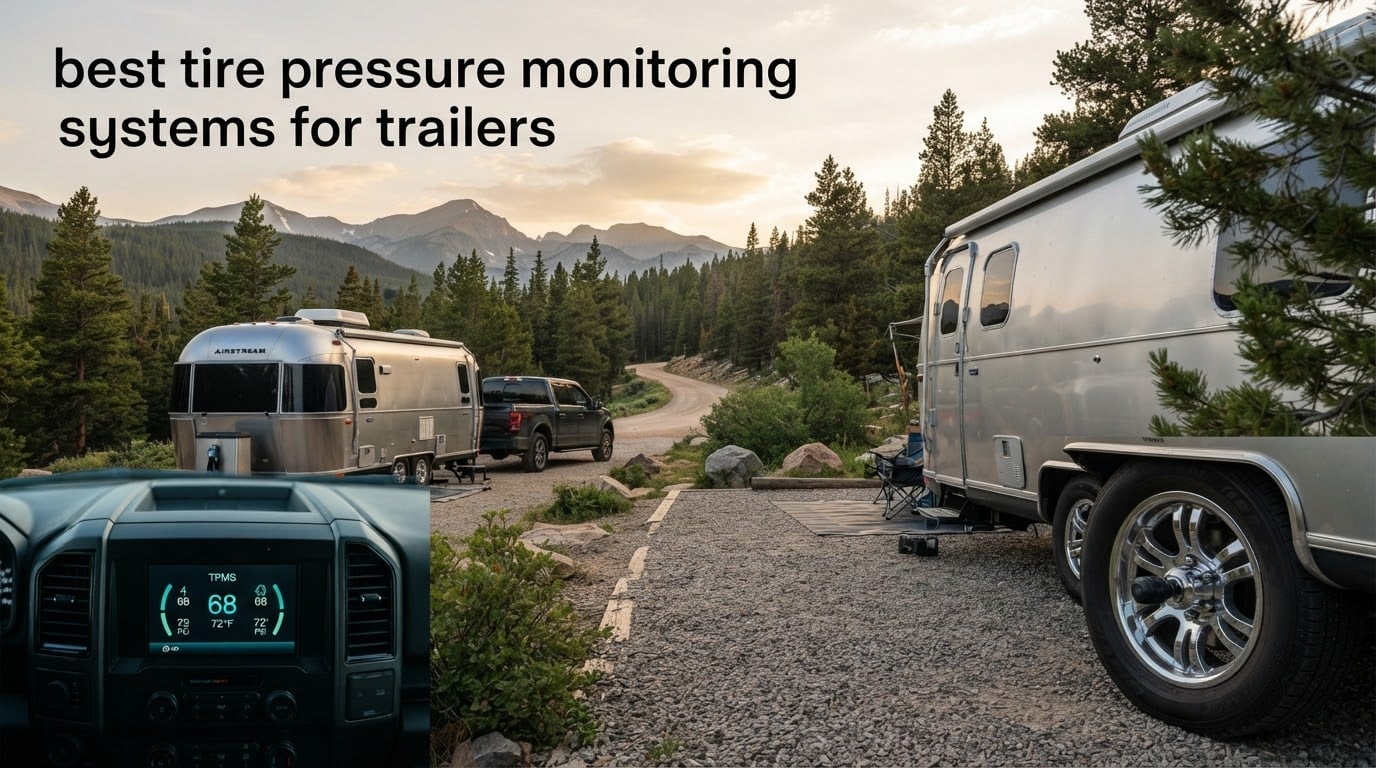
A trailer tire can lose a third of its pressure between two fuel stops and still look, feel and steer completely normal. Nothing goes thump, nothing visibly squashes, and by the time you notice a soft sidewall at the next stop the tire has already started cooking itself apart from the inside. That is the quiet failure mode that makes a tire pressure monitoring system worth owning, and it is why the best tire pressure monitoring systems for trailers have moved from gadget territory into basic safety equipment.
So what exactly is a trailer TPMS? It is a set of wireless sensors that screw onto your trailer’s valve stems, sample pressure and temperature on a fixed cycle, and beam those readings to a display in the tow vehicle’s cab. The monitor shows every tire at once and sounds an alarm when a reading crosses a threshold you set, commonly plus 25 percent above and minus 15 percent below your reference pressure. That covers slow leaks, rapid leaks, over-inflation, under-inflation, high tire temperature from a failing hub bearing, dead sensor batteries and lost signal.
We spent the last several weeks working through the systems RV owners actually argue about on iRV2, AirForums and the RV brand forums, then lined the twelve finalists up side by side. The honest framing matters here, because the loudest skeptic argument on those forums is that a two-dollar pencil gauge beats an electronic system outright. That argument has real merit for a small trailer you walk around at every stop. It stops holding the moment you own a tandem-axle rig where checking the inside duals means kneeling in a gravel driveway, or a fifth wheel where the far tires are behind aluminum siding and floor insulation that eats radio signals.
What follows is our full comparison, including the ugly parts: drifting readings, sensors that need resets, batteries that drain a stored coach, and displays that go invisible in direct sun. If you want a companion guide for topping off tires at the campground, our portable tire inflator roundup covers the hardware side. And if your rig is a boat trailer rather than an RV, the weight and launch math is different enough that you should read our kayak trailer guide first.
Table of Contents
Top 3 Best Tire Pressure Monitoring Systems for Trailers in 2026

Tymate TM7 RV TPMS, 4 Sensors
- 0-144 PSI range
- plus or minus 1.5 PSI accuracy
- Six alarm modes
- Color LCD with adjustable backlight

TST 507 Series TPMS with 8 Cap Sensors
- 3.5-inch color display
- Rechargeable monitor battery
- CR2032 replaceable sensor cells
- Repeater included

TireMinder i10 RV TPMS with 4 Transmitters
- 0-199 PSI range
- plus or minus 1 PSI accuracy
- Six-second scan cycle
- Rhino signal booster included
Every Trailer TPMS We Reviewed at a Glance in October
The full spec lineup, so you can cross off sensor count, pressure ceiling, alert modes and whether a booster is in the box before you read a single review.
| Product | Specifications | Action |
|---|---|---|
| Tymate TM7 RV TPMS, 4 Sensors |
|
Check Latest Price |
| TireMinder i10 RV TPMS with 4 Transmitters |
|
Check Latest Price |
 TireMinder Smart TPMS with 4 Transmitters TireMinder Smart TPMS with 4 Transmitters |
|
Check Latest Price |
| TST 507 Series TPMS with 8 Cap Sensors |
|
Check Latest Price |
 Masoll M13 Solar TPMS with 4 Sensors Masoll M13 Solar TPMS with 4 Sensors |
|
Check Latest Price |
 GUTA GT30 Trailer TPMS with 10 Sensors GUTA GT30 Trailer TPMS with 10 Sensors |
|
Check Latest Price |
 LETOURWM M12-3 TPMS with 6 Sensors LETOURWM M12-3 TPMS with 6 Sensors |
|
Check Latest Price |
 Flydew 6-Wheel RV TPMS Flydew 6-Wheel RV TPMS |
|
Check Latest Price |
 GUTA GT80 TPMS with 10 Flow-Thru Sensors GUTA GT80 TPMS with 10 Flow-Thru Sensors |
|
Check Latest Price |
 Taimster M-10 TPMS with 10 Sensors Taimster M-10 TPMS with 10 Sensors |
|
Check Latest Price |
 B-Qtech Solar TPMS with 8 Flow-Thru Sensors B-Qtech Solar TPMS with 8 Flow-Thru Sensors |
|
Check Latest Price |
 Lippert Tire Linc PRO 4-Tire Bundle Lippert Tire Linc PRO 4-Tire Bundle |
|
Check Latest Price |
How We Picked and Tested These Systems
We ranked every system against six things we could actually verify: published accuracy figures, how many alert modes fire and what they catch, how the manufacturer handles signal distance, how the monitor is powered, what the valve stem situation is, and whether the brand will replace a failed sensor.
Accuracy claims were checked against the manufacturer’s published specification rather than against our own gauge, since we did not instrument a live trailer axle with a calibrated reference. The credible range across this group is plus or minus 1 PSI to plus or minus 1.5 PSI, and anything outside that band you should treat with suspicion. One kit in this roundup reports owner-measured readings in the 3-5 PSI band, which we note explicitly where it applies.
Signal handling mattered more than we expected. Aluminum siding, floor insulation, a steel-belted spare and a fifth wheel kingpin plate all eat radio signal, and the difference between a system that works to 36 ft and one that drops sensors at 30 ft is the difference between a safety device and a decoration. We weighted included boosters heavily.
We also weighted what happens after a year. Coin-cell sensor batteries you can replace yourself, a monitor you can charge, and a manufacturer who ships a replacement sensor instead of arguing are worth more than two extra alarm modes. That is the pattern long-term owners on the RV forums describe when they say a system has been in service for four years with a battery swap every other year.
1. Tymate TM7 RV Tire Pressure Monitoring System — Best All-Round Trailer TPMS
Tymate TM7 RV Tire Pressure Monitoring System, TPMS Set of 4 Sensors
0-144 PSI range
Plus or minus 1.5 PSI accuracy
Six alarm modes
Color LCD with adjustable backlight
Pros
- Accuracy verified by owners against handheld gauges
- 0-144 PSI range suits RVs and travel trailers
- Five-minute plug-and-play setup with no wiring
- Dual USB outlets on the monitor
- CR1632 sensor batteries are user-replaceable and four are included
Cons
- A Tymate repeater is suggested for trailers 36 ft or longer
- Manufacturer recommends a metal valve stem for sensor stability
This is the kit that showed up most often in our research for a reason: it is the one people keep because it keeps working. The TM7 covers four tires, reads from 0 to 144 PSI at plus or minus 1.5 PSI accuracy, and refreshes in real time with both pressure and temperature on screen at the same time.
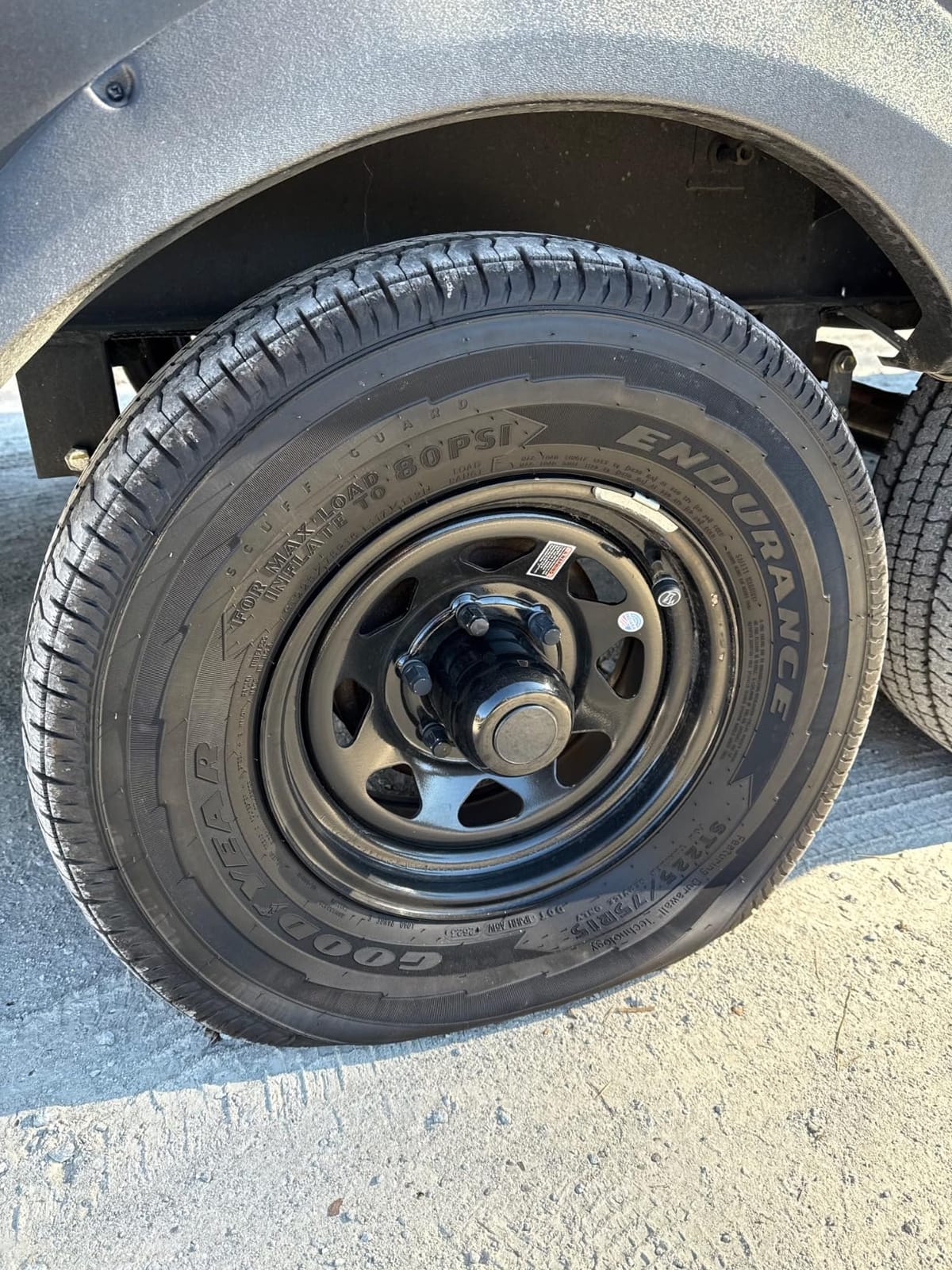
The six alarm modes cover high pressure, low pressure, fast leakage, high temperature, low sensor battery and lost sensor signal. In practice the fast-leak and high-temperature channels are the ones that earn their keep, since a slow leak never trips a low-pressure threshold until you are already well below target.
Power comes from a plug into the 12V socket with no wiring anywhere near the trailer, and the color LCD has an adjustable backlight so it stays readable both at midnight in a rest area and at full sun in an open parking lot. Setup takes about five minutes, which we consider a genuine feature when you are kneeling in a gravel lot at dusk.
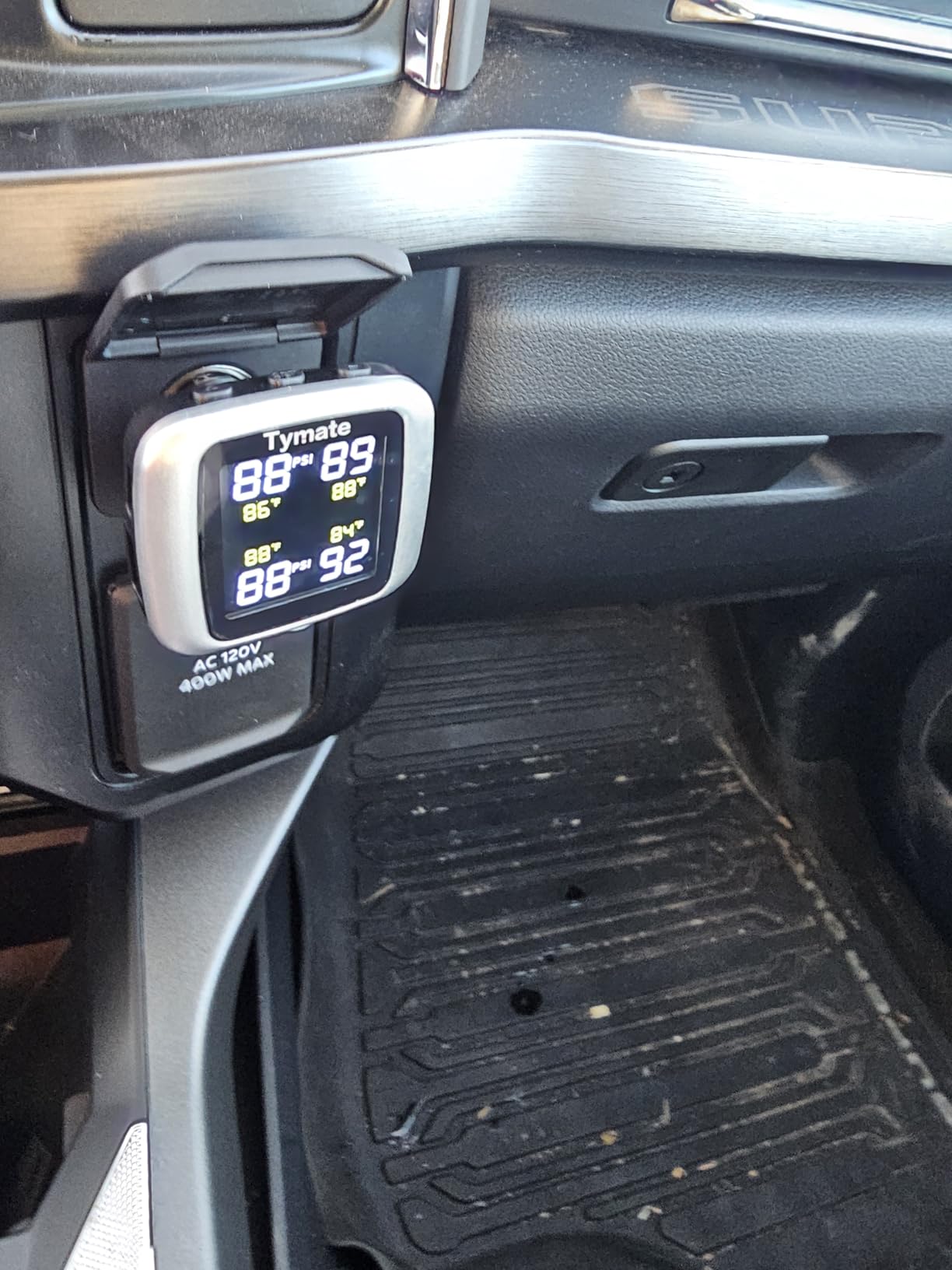
The spec sheet recommends trailers 36 ft and under without a repeater, and that number is the single most important thing to know before you buy. Sit on a 40 ft fifth wheel without buying the repeater and you are gambling on radio signal through an aluminum nose.
Sensors take CR1632 coin cells, four are included, and you can replace them yourself with a screwdriver rather than paying someone to service the system. The monitor body is small at 2.28 by 1.97 by 3.15 inches and weighs 6.3 ounces, so it stays put on a dash without needing tape.
Who the Tymate TM7 suits best
Owners of travel trailers up to about 36 ft with four monitored tires who want a dedicated display and are willing to run the plug-in power. It is also the strongest choice if you tow a boat trailer or a pop-up that fits inside a truck bed, where the run from the last tire to the cab is short.
The 0-144 PSI ceiling covers the pressure range that most trailer tires actually run at, including higher-load setups on tandem axles, without wasting headroom. And with the largest review base in this group at over 2,500 ratings, you have a deep pool of real-world feedback to draw on when something does not behave.
Where the Tymate TM7 falls short
Long trailers are the failure point. If your rig is 36 ft or longer, budget for the repeater from the start, because retrofitting one after a weekend of dropped readings is how owners end up distrusting the whole display.
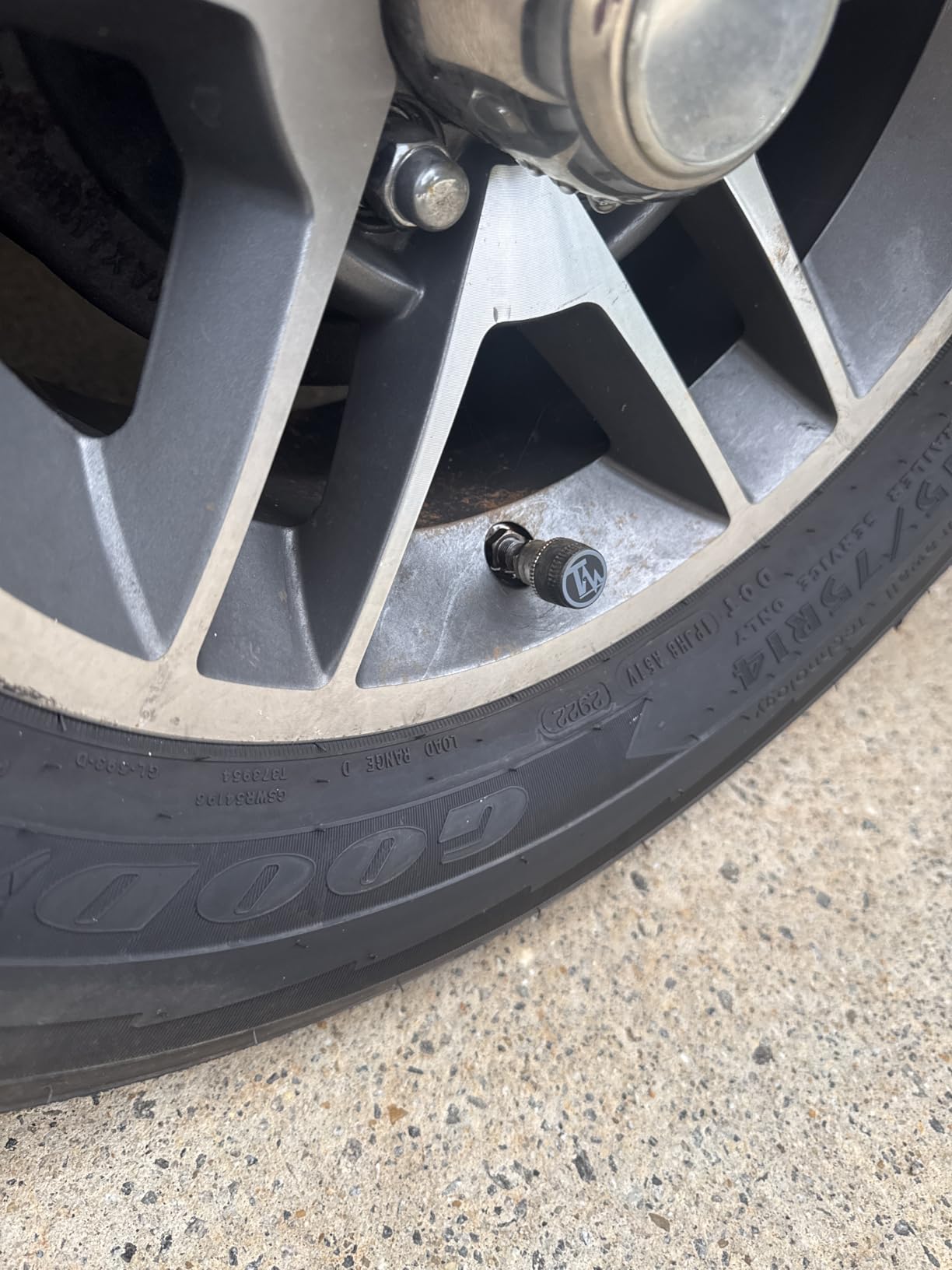
The manufacturer also recommends a metal valve stem for sensor stability. If your trailer ships with rubber or composite stems, budget for replacing them with metal before install, otherwise you are threading a sensitive transmitter onto a stem that can move and leak.
The 12 percent share of one-star reviews is worth noting. Most of those trace back to signal loss on a long trailer or to the metal-stem requirement, not to failed electronics.
2. TireMinder i10 RV TPMS with 4 Transmitters — Best Dedicated Dash Display
TireMinder i10 RV TPMS with 4 Transmitters, Black
0-199 PSI range
Plus or minus 1 PSI accuracy
Up to 40 tires
3.15-inch color LCD
Pros
- Largest screen in its class at 3.15 inches
- Six-second scan interval catches leaks quickly
- Scales to as many as 40 tires
- Rhino signal booster included in the kit
- Plus or minus 1 PSI accuracy over a 0-199 PSI range
Cons
- Four transmitters only cover a single axle group out of the box
- Adding sensors for a tow vehicle or tag-along means another purchase
The i10 is the system we recommend when you want the whole rig on one screen and you do not want to touch your phone while driving. Its 3.15-inch color LCD shows simultaneous pressure and temperature for every monitored tire, and it checks the whole set every six seconds.
Six seconds is fast enough to catch a real puncture rather than merely report the aftermath. If you lose air on a highway, the alarm sounds while you still have road left to pull over, not after you have walked back around the trailer to find the culprit.
The pressure ceiling of 199 PSI and plus or minus 1 PSI accuracy put this at the sharp end of the group for spec-conscious buyers. The system scales to as many as 40 tires, so a dually tow vehicle, a travel trailer and a tag-along can all live on the same display.
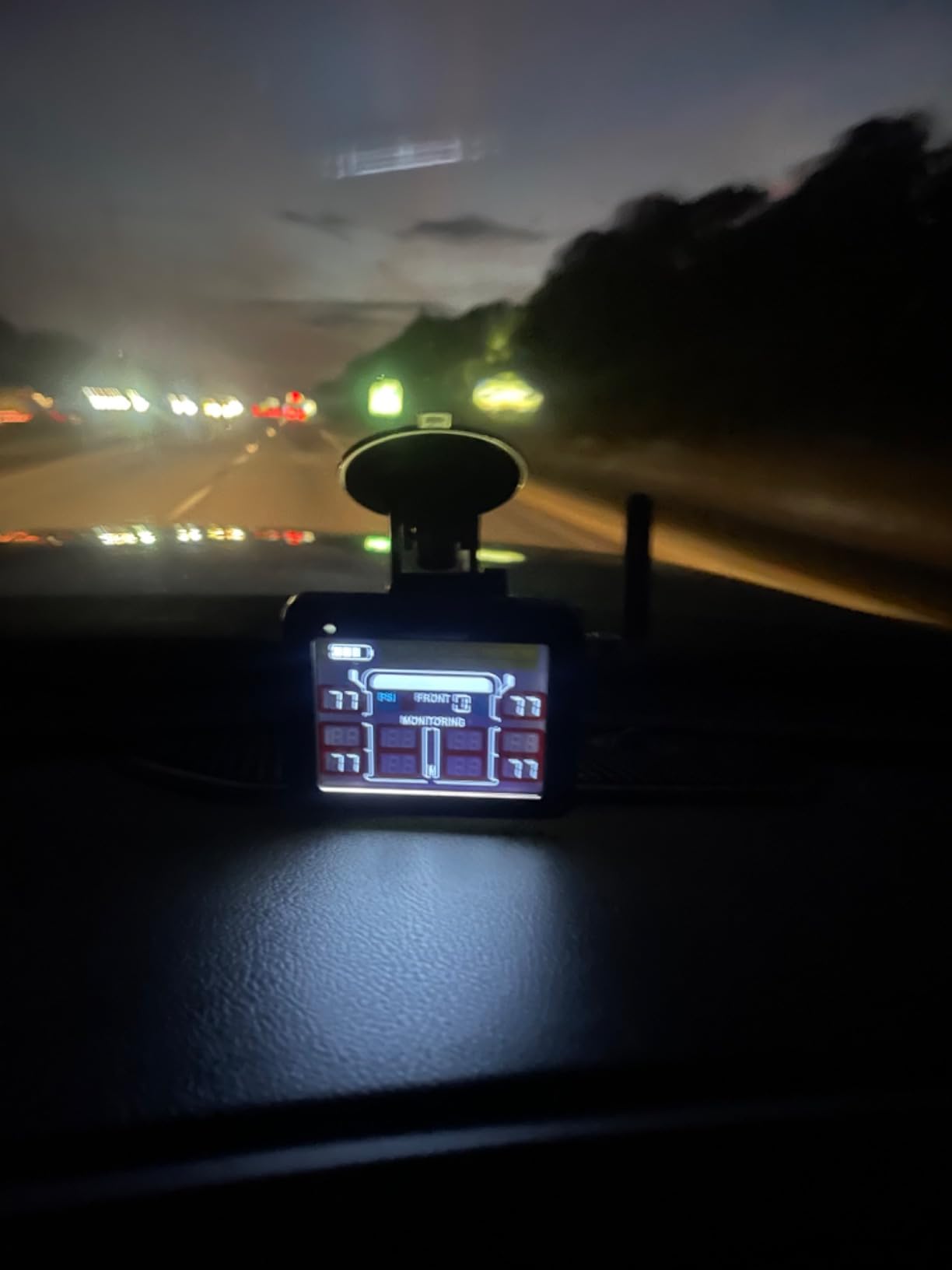
The Rhino signal booster is included rather than sold as an add-on, which is the detail that separates this from most kits in the category. Owners running long rigs specifically mention that the booster is why their readings stay stable rather than dropping a sensor at every state line.
Eight lithium metal batteries are included and the whole unit weighs 1.8 pounds, so it mounts on the dash without a bracket that will rattle loose on rough pavement.
Who the TireMinder i10 suits best
Owners running a dually plus trailer combination, or anyone who wants a single screen that can grow with the rig. Forty tire positions is far more headroom than most people need today and exactly enough for a motorhome towing a trailer behind it.
It is also the pick for drivers who dislike digging out a phone at highway speed. The display is dedicated, always on and always in the same place, which removes a whole category of distraction and confusion.
Where the TireMinder i10 falls short
Four transmitters covers four tires. A tandem-axle trailer has eight, and covering that plus a dually tow vehicle means buying additional transmitters, so budget for expansion if you know you need it on day one.
There is also the recurring forum complaint that a TireMinder Bluetooth adapter can drop connection and start beeping. That complaint is aimed at the app-based sibling rather than this monitor, but it is worth knowing that some owners have moved to the TST after false alarms trained them to ignore alerts.
3. TireMinder Smart TPMS with 4 Transmitters — Best for Phone-Based Monitoring
TireMinder Smart TPMS with 4 Transmitters for RVs, MotorHomes, 5th Wheels, Motor Coaches and Trailers
0-232 PSI range
Up to 22 tires
Bluetooth adapter and Rhino booster included
Requires iOS or Android
Pros
- No separate dash monitor to mount or power
- Highest PSI ceiling in this group at 232
- Bluetooth 4.0 works with iPhone
- iPad and Android
- Rhino booster included for long trailers
- Also offered in 6 and 10 transmitter versions
Cons
- Requires a compatible smartphone or tablet with Bluetooth 4.0
- Older devices may not support the app
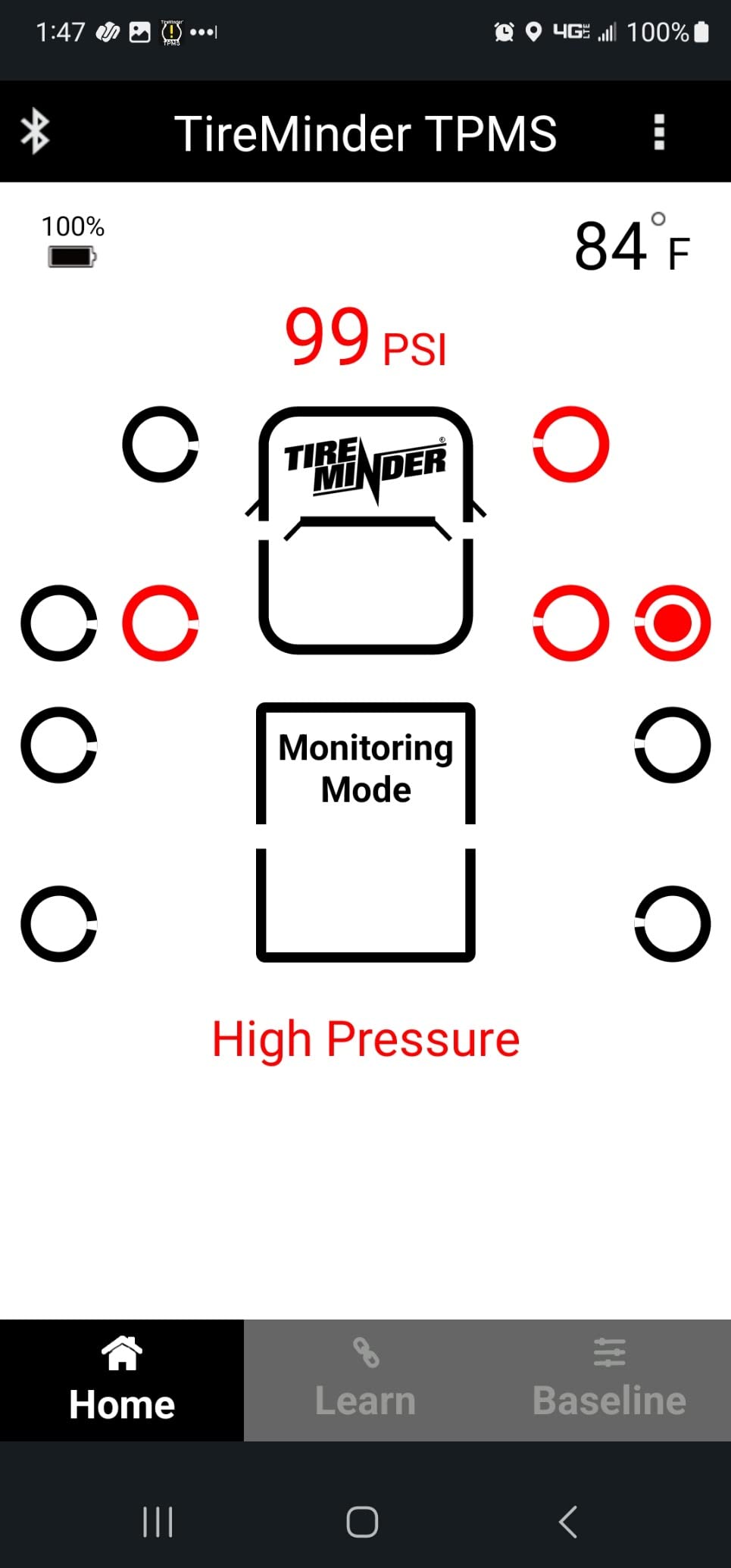
This is the version of the TireMinder idea that skips the dash screen entirely and reports to your phone. The Bluetooth adapter plugs into the 12V socket and your phone or tablet becomes the display, which means no extra hardware on the dash and no separate charging routine to remember.
The pressure range of 0-232 PSI is the highest ceiling in this roundup, and it monitors up to 22 tires with simultaneous pressure and temperature. That headroom covers tandem trailers, a dually, and a spare without any math on your part.
Constant monitoring covers high and low pressure, slow leak, rapid leak, high temperature and blowouts. Auto-scroll, auto-search and a two-part disconnect function handle the practical annoyance of switching between trailer and tow vehicle without a menu dive.
Compatibility is iOS 7 or Android 4.4 and up with Bluetooth 4.0, so if you are on an older phone or tablet you should check before buying. The unit weighs 16 ounces and measures 6.02 by 0.6 by 2.4 inches.
Variants exist with 6 and 10 transmitters, so if you are covering a tandem axle trailer you can step up rather than buying sensors separately later.
Who the TireMinder Smart TPMS suits best
Owners who already mount their phone in the cab and want alerts in the same place as navigation and traffic. It is a clean fit for a motorhome toter who does not want a second screen bolted to the dash and who values being able to check pressures from bed.
The 22-tire ceiling and the very high PSI range make it a good match for heavy trailer loads and for owners running a tag-along behind a fifth wheel.
Where the TireMinder Smart TPMS falls short
The dependency on a phone is real. If the phone dies, gets wet, or runs out of battery at a rest stop, you have no readings at all until you charge something. That is a genuine safety regression against a dedicated display.
Bluetooth dropouts are the most commonly reported complaint for this approach, producing repeated beeps that train owners to ignore the sound. Some adapters also power themselves down when left plugged into a USB port, which is frustrating on a stored vehicle.
4. TST 507 Series TPMS with 8 Cap Sensors — Best Premium System for Long-Term Owners
TST 507 Series TPMS – RV Tire Pressure Monitoring System with 8 Cap Sensors & Color Display Monitor for Travel Trailers, Campers and Motorhomes
3.5-inch color display
Expandable to truck plus four towables
CR2032 replaceable sensor batteries
Three-year warranty
Pros
- Rock-solid signal reported over long trips and 45-foot campers
- Accurate pressure and temperature matched against tire shop gauges
- Alerts caught slow leaks and unseated valve stems before a trip
- Covers 8 tires out of the box
- Expandable to the tow truck plus up to four towables
- Three-year warranty with USA-based live support
Cons
- Repeater wiring uses simple positive and negative leads with no switch
- creating small constant battery draw when parked
- Sensor syncing and programming can take longer than expected
The TST 507 is the one that shows up in the longest field-history threads on the RV forums, with owners reporting years of continuous service rather than a season of enthusiasm. That longevity claim is the whole pitch: this is a system people keep because they stop thinking about it.
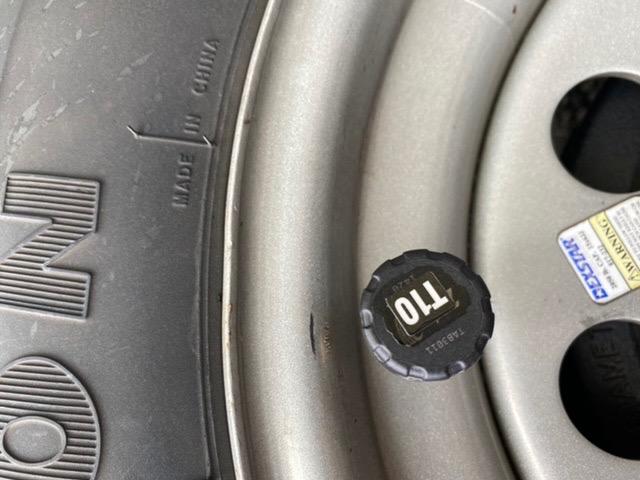
Eight cap sensors cover a tandem-axle trailer out of the box, and the system expands to the tow truck plus up to four towable vehicles. That means a dually, a fifth wheel and a tag-along can all report into one display, and you can reassign tire locations after a rotation.
The 3.5-inch color display runs on its own rechargeable battery with a micro-USB charger, and the kit includes a suction cup and rubber dash mounts so it stays put. Audible and visual alerts fire on low pressure, high pressure, fast leaks and high temperature, and the display auto-locks onto the tire causing the problem.
Sensor batteries are user-replaceable CR2032 cells with low-battery alerts, which is the single best long-term ownership signal in this category. Nothing needs professional servicing, and you can carry spares for every tire in the trailer.
What the display catches in practice is what convinced us. Owners report the system alerting them to a developing leak and to a valve stem that was not seated properly before a trip, both of which are failures a gauge at the campground would have missed entirely.
Who the TST 507 suits best
Owners with a tandem-axle trailer or a fifth wheel who intend to keep the trailer for years. The eight-sensor bundle means you are covered on day one without a second purchase, and the replaceable coin cells mean year three is a two-minute fix rather than a repair order.
It is also the choice for anyone towing behind an aluminum-sided coach where signal dropouts are the deciding factor. Long-trip owners consistently report no lost connections on large campers, and that reliability is exactly what a safety device has to deliver.
Where the TST 507 falls short
The repeater wiring is the recurring complaint. It uses simple positive and negative wire leads with no battery clamps and no switch, so a stored RV sits with a small constant battery draw. Owners solve it with an inline switch or battery clamps, which is easy once you know, but it is an avoidable design flaw.
Some users also report a longer than expected sensor syncing and programming step. The sensors must be paired to the monitor before installation, and on a full eight-sensor trailer that initial setup is the longest part of the whole process.
5. Masoll M13 Solar TPMS with 4 Sensors — Best Budget Four-Sensor Kit
Masoll M13 Tire Pressure Monitoring System, RV/Trailer TPMS with 4 Sensors
0-87 PSI range
Plus or minus 1.5 PSI accuracy
Solar panel charging
Auto reference calibration
Pros
- Automatic reference-pressure calibration removes manual threshold setup
- Solar panel keeps the monitor charged without plugging in
- Anti-reflective color LCD with auto backlight
- Five-minute setup on 4-tire RVs and travel trailers
Cons
- 0-87 PSI range is lower than most competing trailer systems
- Trailers over 38 ft need an additional Masoll signal booster
The Masoll M13 is the cheapest way to get real coverage on four trailer tires, and the feature that separates it from generic kits is automatic calibration. It sets the alarm values itself, firing at 25 percent above and 15 percent below whatever reference pressure you confirm, so there is no threshold programming to get wrong on a dark driveway.
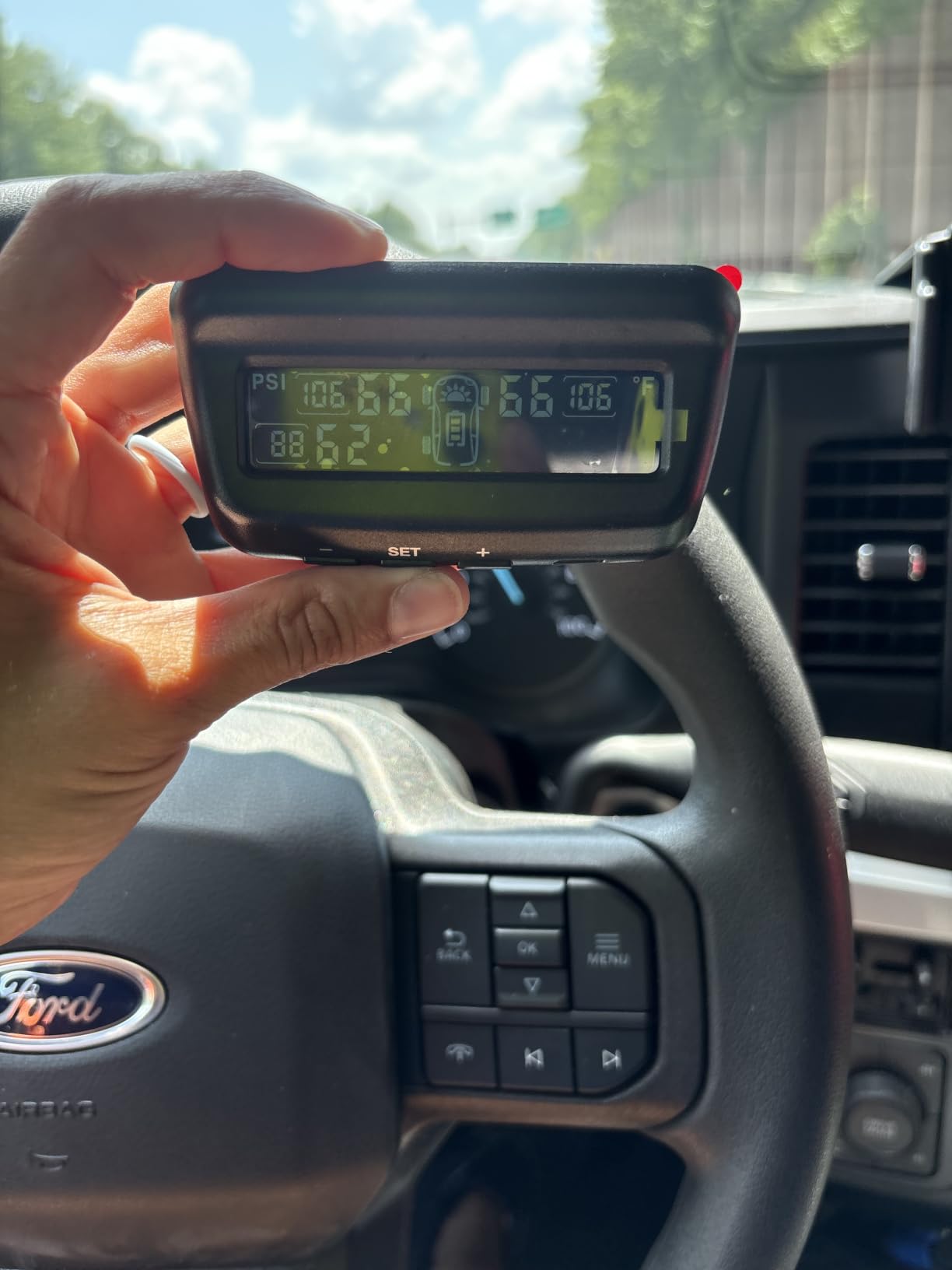
Solar panel charging with overheat and overcharge protection means the monitor is not another thing to plug in before every departure. Auto wake-up and sleep handle the power management, and the anti-reflective color LCD with automatic backlight stays readable in strong light.
Sensor accuracy is 1.5 PSI, which is competitive, and the kit includes the display, four sensors and mounting accessories. It is built for 4-tire vehicles across sedans, pickups, RVs and travel trailers under 38 ft.
The warranty runs one year on the monitor and six months on the sensors, which is the shortest coverage in this roundup. That is the price of the low entry point, and it is worth weighing against a system with a three-year warranty if you plan to keep the trailer a long time.
Sensor batteries are also not the replaceable CR2032 type that the premium systems use, so battery service is not a DIY job on this kit.
Who the Masoll M13 suits best
First-time buyers, and owners of a short travel trailer or a truck camper who want four monitored tires and reliable alarms without a learning curve. The auto-calibration means you can install it and be driving without reading a manual.
It is a strong choice as a second monitor for a boat trailer or a non-towed vehicle, where a full trailer system would be paying for capacity you never use.
Where the Masoll M13 falls short
The 0-87 PSI ceiling is the binding constraint. Trailer tires loaded for highway travel can run well above that, and a system that cannot read the pressure is worse than no system because it looks like it is working.
Past 38 ft you need an additional Masoll signal booster. Know your trailer length before buying, because a kit that works flawlessly on a 30 ft trailer and drops sensors on a 42 ft one is a frustrating way to find out.
6. GUTA GT30 Trailer TPMS with 10 Sensors — Best for Ten-Tire Rigs
GUTA GT30 Trailer Tire Pressure Monitoring System, RV TPMS with 10 Sensors
0-188 PSI range
Up to 185 F
10 tires per page
Wireless sensor programming
Pros
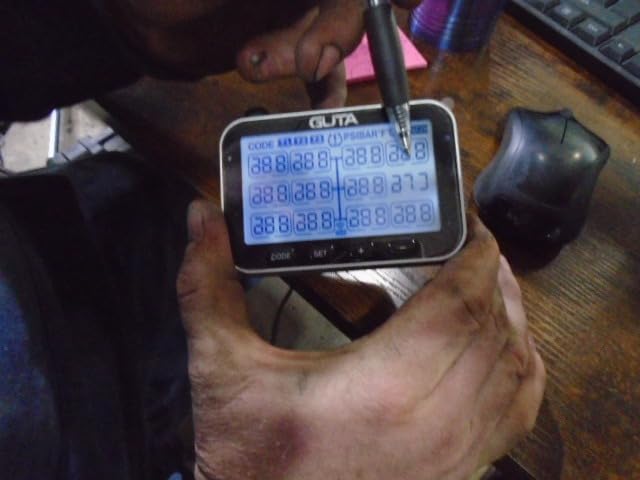
- Large display shows 10 tires on a single page with auto section switching
- Handles 188 PSI and 185 degrees F for heavy trailer use
- Wireless programming lets sensors be assigned before mounting
- CR2032 sensor batteries last up to four years and are replaceable
- Monitor battery runs 12-14 days after a four-hour charge
Cons
- Signal booster may be needed for long trailers or heavy interference
- Rubber valve stems are not recommended with the cap sensors
Ten sensors is the number most people underestimate. If you tow a dually plus a tandem trailer you are already at ten tires before counting a spare, and this is one of the few kits in the group where you do not have to figure out which four tires to leave unmonitored.
The large display shows up to 10 tires on one page and auto-switches between trailer and rear sections, and it can view up to 46 tires without pressing a button. Pressure handling goes to 188 PSI and temperature to 185 degrees F, which comfortably covers heavy loads.
Wireless sensor programming is the feature that changes the install. Instead of mounting first and pairing afterward, you assign each sensor to a location before it goes on the valve stem, so the layout on the screen matches the trailer when you are done.
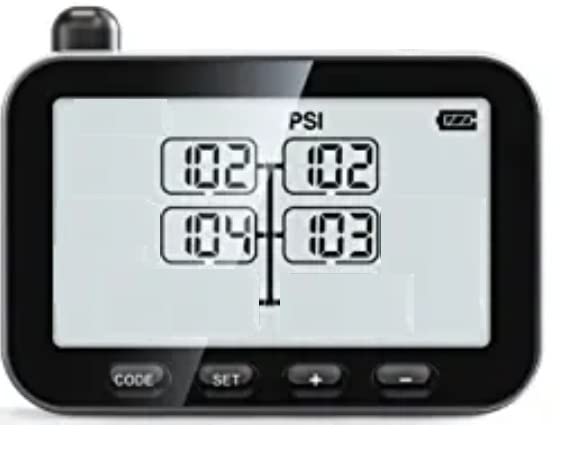
The monitor has a built-in rechargeable lithium battery that lasts 12-14 days after a four-hour charge and auto-saves power after 15 minutes without motion or vibration. Sensor batteries are replaceable CR2032 cells rated for up to four years of service.
Alerts cover high and low pressure, high temperature, fast leak, missing sensor signal and low sensor battery, with an alarm range of plus 25 percent to minus 15 percent of reference pressure. Other sensor-count variants exist from four up to twelve.
Who the GUTA GT30 suits best
Dually owners towing a fifth wheel, and anyone running a tandem trailer plus a tag-along where the tire count exceeds what a four or six sensor kit can cover. Ten sensors on one page means you read the whole rig at a glance rather than switching groups.
The 188 PSI ceiling also makes it a good fit for heavy trailer work, where loaded tire pressures run higher than the placard’s cold recommendation and you want headroom to read the real number.
Where the GUTA GT30 falls short
The booster is optional here rather than included, and on a long trailer behind aluminum siding you will almost certainly want it. That is an add-on cost and an extra wire to run, and it is the most common upgrade owners make after the first trip.
The cap sensors are best on metal valve stems, and rubber stems are specifically not recommended. On trailers that shipped with composite valves, replacing them is a prerequisite rather than a preference.
7. LETOURWM M12-3 TPMS with 6 Sensors — Best Six-Sensor Starter Kit
RV Tire Pressure Monitoring System -TPMS Tire Pressure Monitor with 6 Sensors,M12-3 TPMS Solar Charge & USB Color LCD Display, 0-9.9BAR/144PSI Range, 6 Alarm Modes for RV/Trailer/Truck IP67
0-144 PSI range
Solar plus USB charging
IP67 rated
65-foot sensing distance
Pros
- Low entry cost for a six-sensor trailer kit
- Color LCD stays readable in sunlight unlike many monochrome displays
- Solar plus USB dual charging keeps it powered on long trips
- Includes jam nuts and a small wrench for a clean install
- Voice broadcasting alerts so the driver does not need to look at the screen
Cons
- No connection indicator
- so it is hard to tell if a sensor is reporting live data
- Some sensors need frequent resets to re-link with the monitor
Six sensors covers a single-axle trailer plus two spare tires, or a tag-along arrangement, and at this entry point it is the cheapest way to cover more than four wheels. The kit installs in about two minutes by screwing sensors onto the valve stems, with no wiring and no tire removal.
The 0-9.9 BAR, or 144 PSI, detection range is right for trailer use. Six alarm modes cover high and low pressure, high temperature, rapid and slow leaks, sensor failure and low battery, and the voice broadcasting means you hear the alert without taking your eyes off the highway.
Solar plus USB dual charging gives you two ways to keep it alive on a trip, and the IP67 rating on the electronics handles weather. A small wrench and jam nuts are included so you can tighten everything properly.
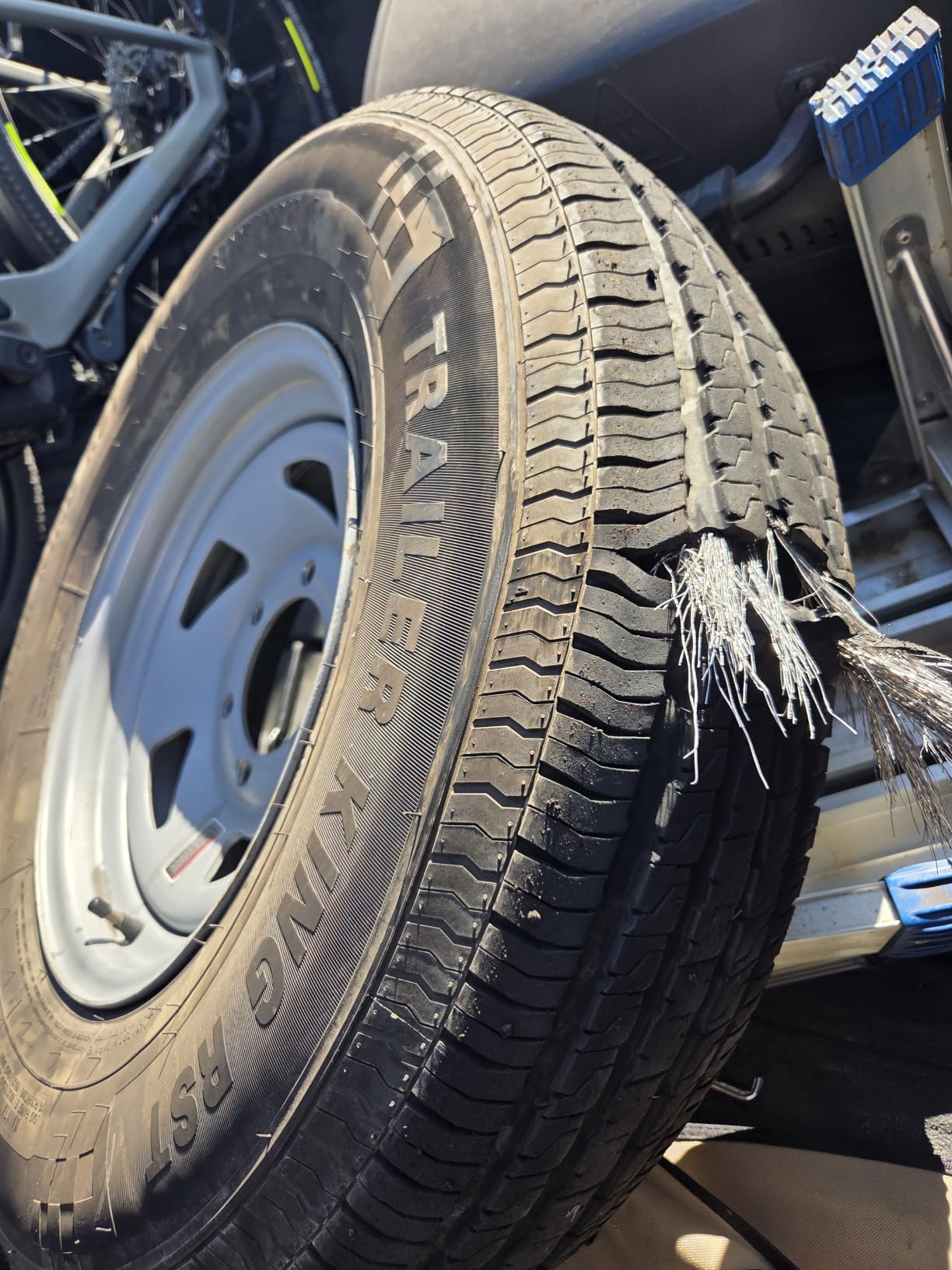
The 65-foot sensing distance is the honest limit here, and it is shorter than the 100-plus-foot reach of the systems with repeaters. That is fine for a short trailer and a truck, and marginal for anything much longer, so check your rig length against it.
Owner-reported reading accuracy in the 3-5 PSI range is meaningfully looser than the plus or minus 1 to 1.5 PSI that the mid-tier systems publish. That is fine for catching a leak and useless for chasing a two-PSI difference, which is worth knowing before you start adjusting air pressure to match the screen.
Who the LETOURWM M12-3 suits best
Owners of a short single-axle trailer, a pop-up, or a boat trailer who want more than four sensors without a large system. It also works as an add-on monitor for a second trailer if your tow vehicle has two 12V sockets.
If your primary goal is an audible warning that something is losing air, this does that well for very little money. The voice broadcasting is genuinely useful when the display is not in your line of sight.
Where the LETOURWM M12-3 falls short
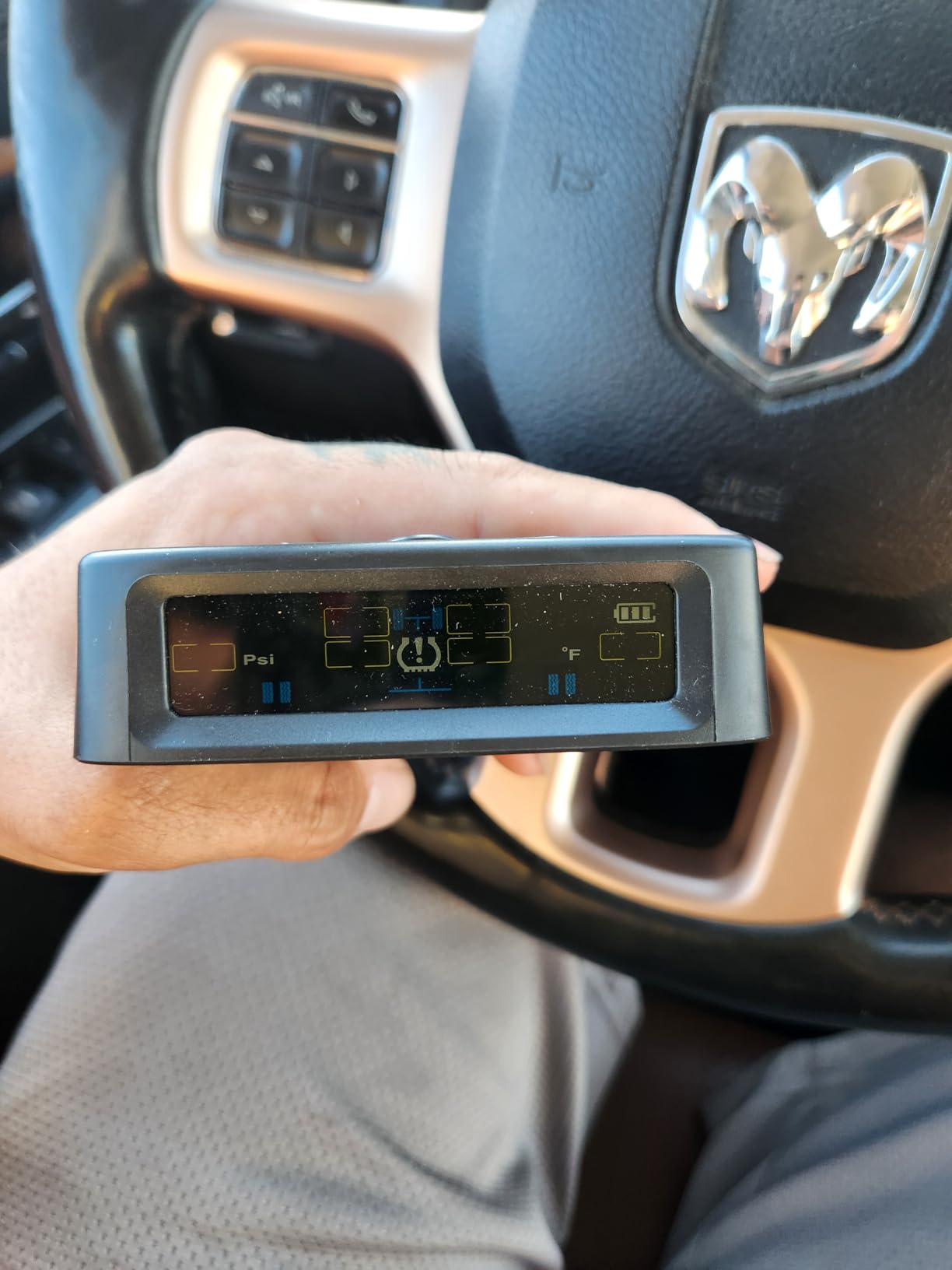
There is no connection indicator, so when a sensor stops reporting you may not know whether it has dropped out or is simply sitting at its last value. On a safety device, that ambiguity is the problem.
Some sensors need frequent resets to re-link with the monitor, and one owner reported every sensor dropping out during sustained rain until the sensors dried. The instructions are also widely reported as difficult to follow, which will make alarm setup a frustrating first afternoon.
8. Flydew 6-Wheel RV TPMS — Best for Adjustable PSI Thresholds
Flydew 6-Wheel RV TPMS with Custom Pressure Alerts, 0-144 PSI
Plus or minus 1.5 PSI accuracy
0-144 PSI range
Fully adjustable thresholds
Solar plus USB-C charging
Pros
- Fully user-adjustable PSI thresholds instead of fixed percentage bands
- Sensors update in 0.3 seconds with a six-second display refresh
- Pre-coded sensors and supplied hex nuts for a vibration-proof seal
- Solar plus USB-C charging suits long trips and stored vehicles
Cons
- Smaller customer review base than the established trailer TPMS brands
Most systems alarm at a percentage of your reference pressure, which means a 5 percent swing and a 20 percent swing both trigger the same relative threshold. The Flydew lets you set actual PSI values, so you can decide that a left-front tire warning at 85 PSI matters and a right-rear warning at 82 does not.
That precision is useful if you tow heavy or run a dually where tires sit at different pressures by design. It is also helpful when you know a specific tire tends to run a little lower and you do not want the alarm crying wolf.
Accuracy is plus or minus 1.5 PSI across a 0-144 PSI range, sensors update data in 0.3 seconds, and the LCD refreshes every six seconds. Alarm types include high and low pressure, high temperature, sensor disconnect, low battery, rapid air leak and sensor fault.
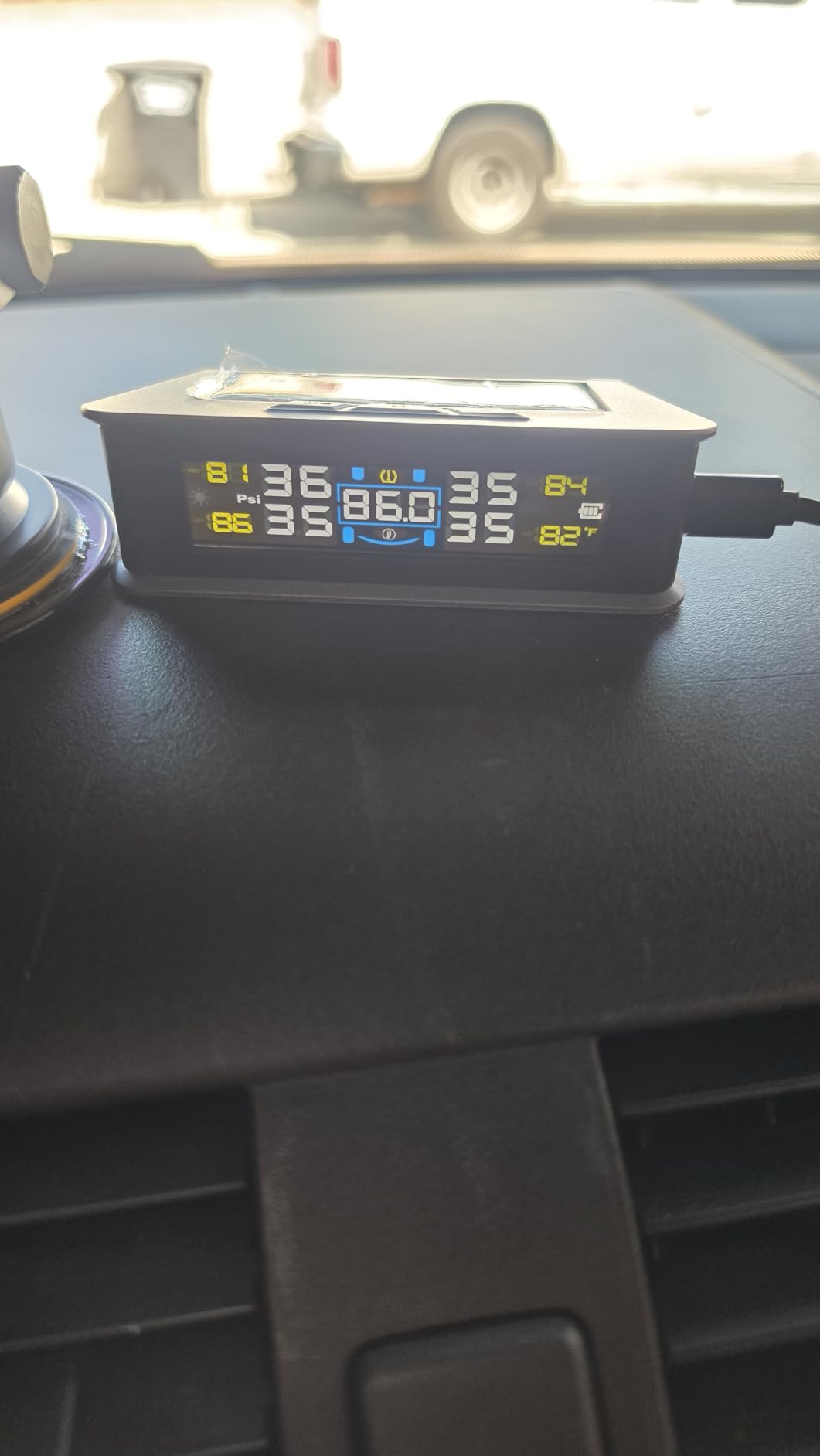
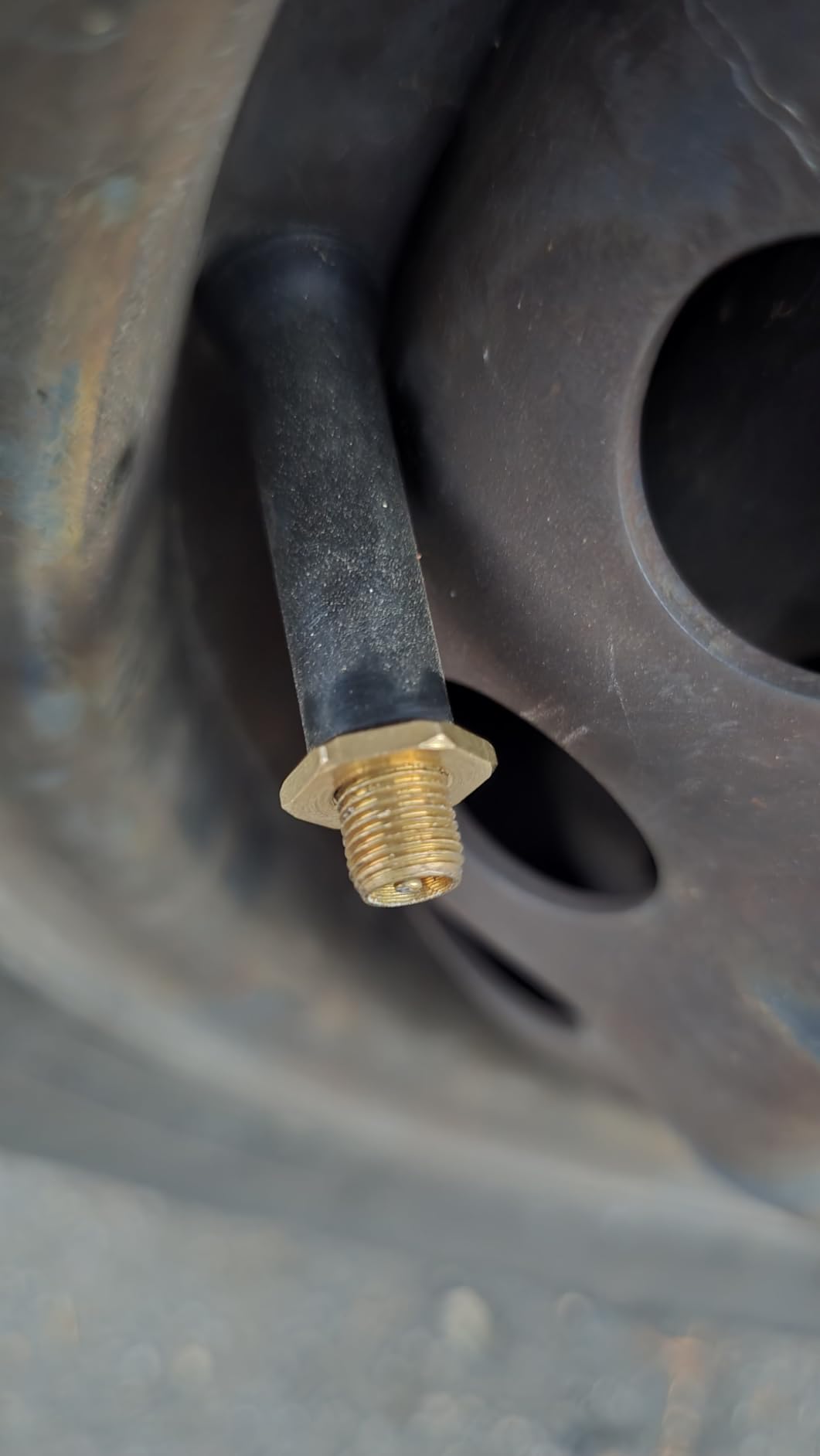
The pre-coded sensors numbered 1 through 6 come with supplied hex nuts, and that is a detail worth more than it sounds. A hex nut gives you a proper, vibration-resistant seal on the valve stem instead of a hand-tightened cap, which is where most slow leaks at the valve originate.
Solar panel with USB-C backup charging, replaceable CR1632 sensor batteries and a three-year warranty round out a well-specified package. The color LCD auto-dims for both daylight and night driving.
Who the Flydew 6-Wheel TPMS suits best
Owners who want alarms calibrated to real numbers rather than percentages, and who understand their rig well enough to set meaningful thresholds per position. It is a natural fit for a tandem setup where left and right axles run at different pressures.
Anyone who cares about the valve seal should also like this kit, because the included hex nuts are the cleanest mounting solution in this group.
Where the Flydew 6-Wheel TPMS falls short
The review base is the smallest in this roundup at 109 ratings, which means less long-term owner evidence. A three-year warranty is reassuring, but we cannot tell you from the data how year-four reliability compares with the systems that have thousands of ratings behind them.
Six sensors covers a single axle group and a bit more. If you need tandem coverage plus a tow vehicle, you are looking at a larger variant or a different system entirely.
9. GUTA GT80 RV TPMS with 10 Flow-Through Sensors — Best for Flow-Through Sensor Convenience
GUTA GT80 RV Tire Pressure Monitoring System, 10 Flow-Thru Sensors TPMS
Flow-through sensors
0-188 PSI range
Vertical color touchscreen
Booster included to 164 feet
Pros
- Flow-through sensors let you inflate without removing the sensor
- Sensors ship factory pre-paired and labeled with matching ID stickers
- Large vertical color touchscreen reads well from the driver's seat
- Includes a battery-powered repeater with no 12V wiring needed
Cons
- Flow-through bodies are bulkier and cost more than cap sensors
- Booster is a separate add-on
The GT80 solves the single most irritating practical problem in trailer TPMS ownership. Cap sensors have to come off to inflate the tire, and on inner dual wheels that means pulling a heavy wheel out in a parking lot. Flow-through sensors let you put air in with the sensor still mounted.
All ten sensors arrive factory pre-paired and labeled with matching adhesive ID stickers, so installation is screw-on-and-go rather than a programming session. The kit includes jam lock nuts, a small wrench and o-rings to prevent leaks at the stem.
The large vertical full-color LCD touchscreen gives touch and sound feedback and monitors up to 22 tires on one page. Pressure and temperature monitoring runs from 0 to 188 PSI across six alarm modes covering high and low pressure, high temperature, fast leak, missing signal and low sensor battery.
The signal booster is included with the kit and extends connectivity up to 164 feet, which is the longest rated reach in this roundup. Crucially it runs on its own battery with no 12V wiring, so unlike some competitors there is no constant draw on a stored coach.
Operating temperature ranges are wide, from -40 to 176 degrees F for the sensors and repeater and -4 to 176 F for the display, so hot summer road surfaces and cold northern campgrounds are both covered. Firmware updates are released through the manufacturer’s website.
Vibratory wake-up means the sensors report even on a stationary spare tire, and trailer tires automatically reappear on the display when you reconnect.
Who the GUTA GT80 suits best
Owners with inner duals who hate the idea of pulling a wheel to add air, and anyone whose trailer spends time stored between trips where a wiring-free repeater matters. The 164-foot reach also makes it the safest choice for a 40 ft-plus rig behind aluminum siding.
The touchscreen suits drivers who prefer tapping a tire position to see its detail over scrolling through menus on a small screen.
Where the GUTA GT80 falls short
Flow-through sensor bodies are bulkier and cost more than cap sensors, so the price per sensor is higher. That is money you are paying for convenience you may only appreciate at inflation time, though most owners come around quickly once they have used one.
One owner reported the inner two rear tires dropping out over rough interstate expansion joints before slowly recovering, and the booster is listed as an add-on for full range rather than bundled in every configuration.
10. Taimster M-10 TPMS with 10 Sensors — Best for Per-Axle Custom Alarms
Taimster Trailer Tire Pressure Monitoring System 10 Sensors,0-188PSI RV TPMS with 4.5″ Large Solar Monitor 6 Alerts, Signal Booster for Truck/Camper/Motor Homes,Long Sensing Distance
0-188 PSI range
Error under 1 PSI
Per-axle custom alarms
4.5-inch display
Pros
- Large 4.5-inch display readable in direct sunlight while towing
- Customizable high and low alarm values set per axle
- 0-188 PSI range with error under 1 PSI
- Sensors link to the screen in five to ten minutes
- Booster included for long sensing distance
Cons
- Screen brightness is low when powered from a port in direct daylight
- Not recommended for short or rubber valve stems
The M-10’s distinguishing feature is per-axle alarm thresholds. You set custom high and low values for each axle rather than one setting for the whole trailer, which matters on rigs where a tag-along legitimately runs at a different pressure from the main trailer.
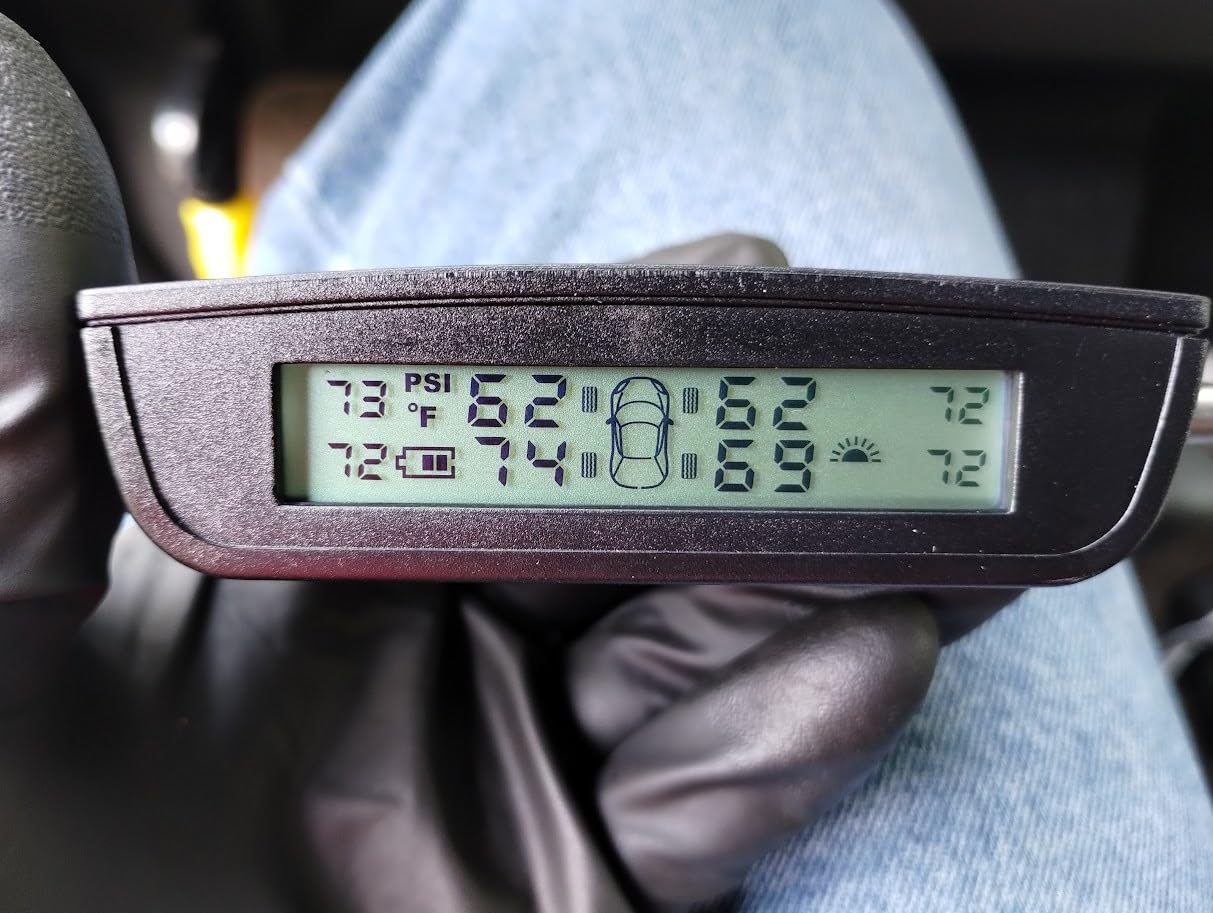
Pressure accuracy is under 1 PSI error across a 0-188 PSI range, and the 4.5-inch display shows four to fourteen tires at a glance. Owners report fast updates with no false alerts, which is the outcome that separates a monitor you trust from one you mute.
Solar plus Type-C dual charging gives up to 15 days of maintenance-free use between charges. Auto sleep fires after five minutes parked and vibration wakes it back up, and the operating range is -4 to 185 degrees F.
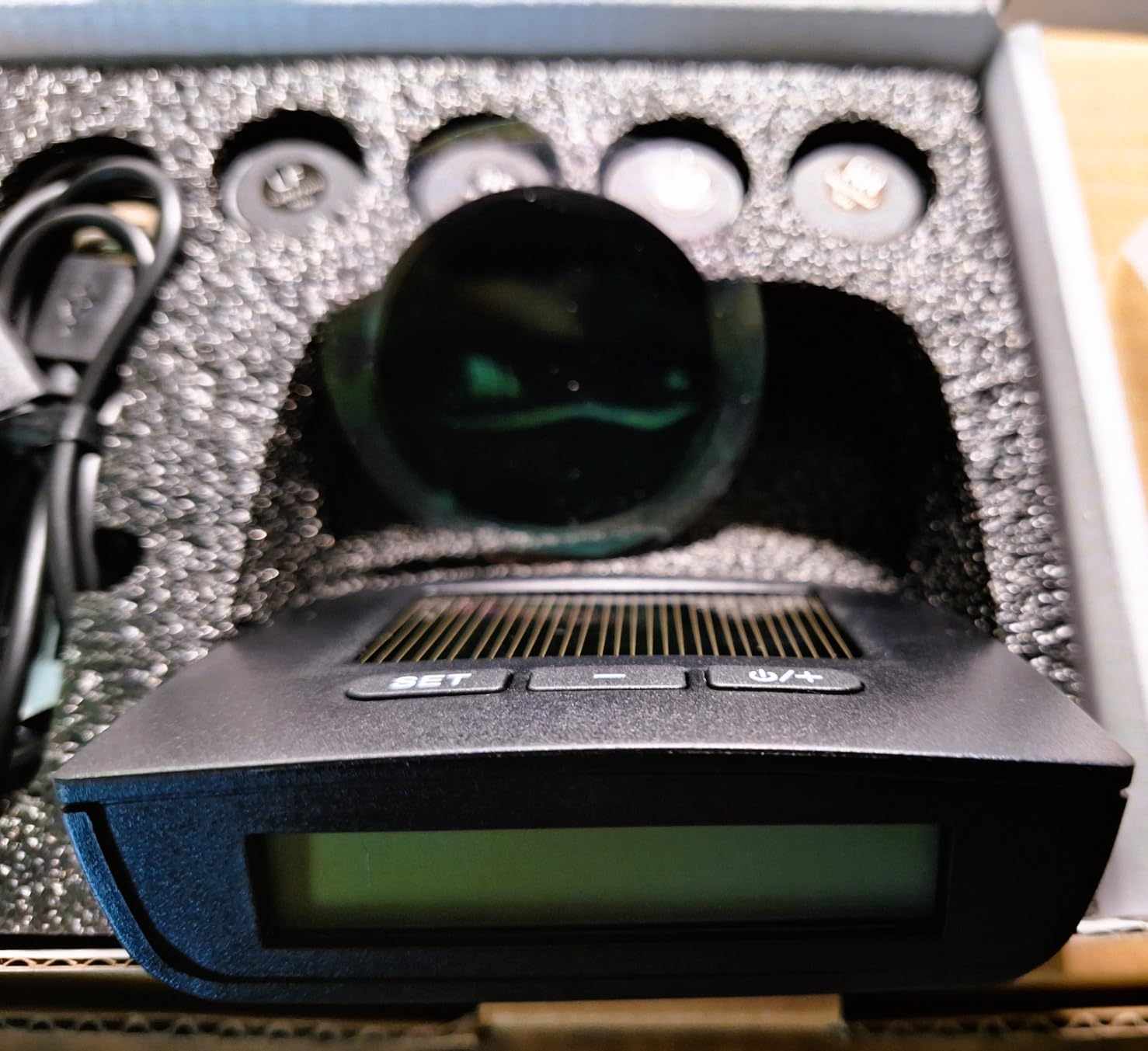
IP67 waterproof and dustproof sensors come with anti-theft locking nuts, and the tire layout map is customizable with straightforward sensor coding. The display covers 4-14 tires, so ten sensors leaves room for a spare or a tag-along position.
Sensor counts from six up to 22 are available, and the manufacturer has been prompt about shipping replacement sensors when units fail, which is a trust signal worth more than a spec sheet.
Who the Taimster M-10 suits best
Owners whose rig runs at different pressures on different axles, including fifth wheel and tag-along combinations where a single global threshold would produce constant false alarms. Per-axle thresholds solve that properly.
Drivers who want a large screen and sub-1-PSI accuracy without moving up to a full touchscreen system will find that balance here.
Where the Taimster M-10 falls short
Screen brightness is the most repeated complaint, and it is a strange one because the display is physically large. On port power it can be hard to read in direct daylight, which is exactly the condition where you would glance at it after a blowout.
Short or rubber valve stems are not recommended, and sensors will not register a reading until they are actually screwed onto a stem, which is not obvious from the manual. One owner received a unit without any manual at all, making alarm setup impossible.
11. B-Qtech Solar TPMS with 8 Flow-Through Sensors — Best for Seven Alert Modes and Long Ranges
B-Qtech Tire Pressure Monitoring System Solar TPMS for RV/Trailer 0-199 PSI
0-199 PSI range
Seven alert modes
Flow-through sensors with booster included
Supports rigs to 98 ft
Pros
- Seven alert modes give the broadest alert coverage in this group
- Included repeater supports campers and multi-trailer setups up to 98 ft
- Flow-through sensors allow inflation without sensor removal
- IP67 sensors with brass nozzles for metal valve stems
- Replaceable CR1632 batteries avoid professional servicing
Cons
- Smallest review base in this roundup
The B-Qtech covers the most ground on paper in this group: 0-199 PSI, eight flow-through sensors, a dedicated signal repeater rated for campers and multi-trailer setups up to 98 ft, and seven alert modes covering high and low pressure, tire overheating, rapid air loss, sensor and monitor low battery, and sensor malfunction.
Flow-through sensors with brass nozzles mean you can inflate without removing the sensor, and the brass construction is rated for heat, wear and high pressure, which is the right material choice for trailer service.
A 2200mAh explosion-proof lithium battery runs off a high-efficiency solar panel with USB backup, and a German Infenion chip refreshes data every three seconds. Units convert between PSI and BAR and Celsius and Fahrenheit, which is a small thing until you meet a Canadian neighbour.
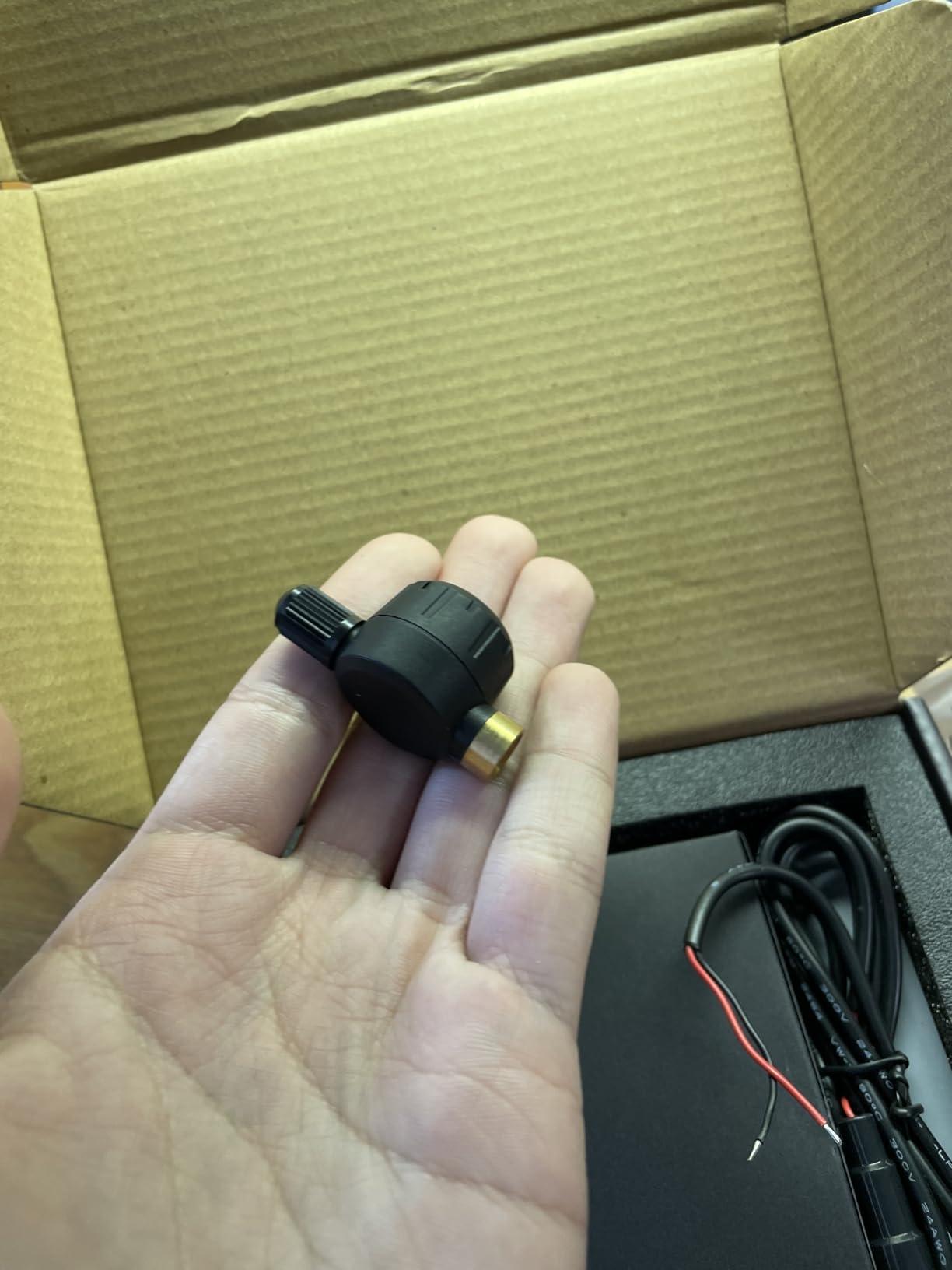
Sensor batteries are user-replaceable CR1632 cells, so a dead battery on trip four is a roadside fix rather than a service appointment. Smart auto-wake and sleep after 15 minutes parked handle the rest.
Variants exist with four, six or eight sensors, and the package is built for RVs, campers and multi-trailer configurations rather than a single small trailer.
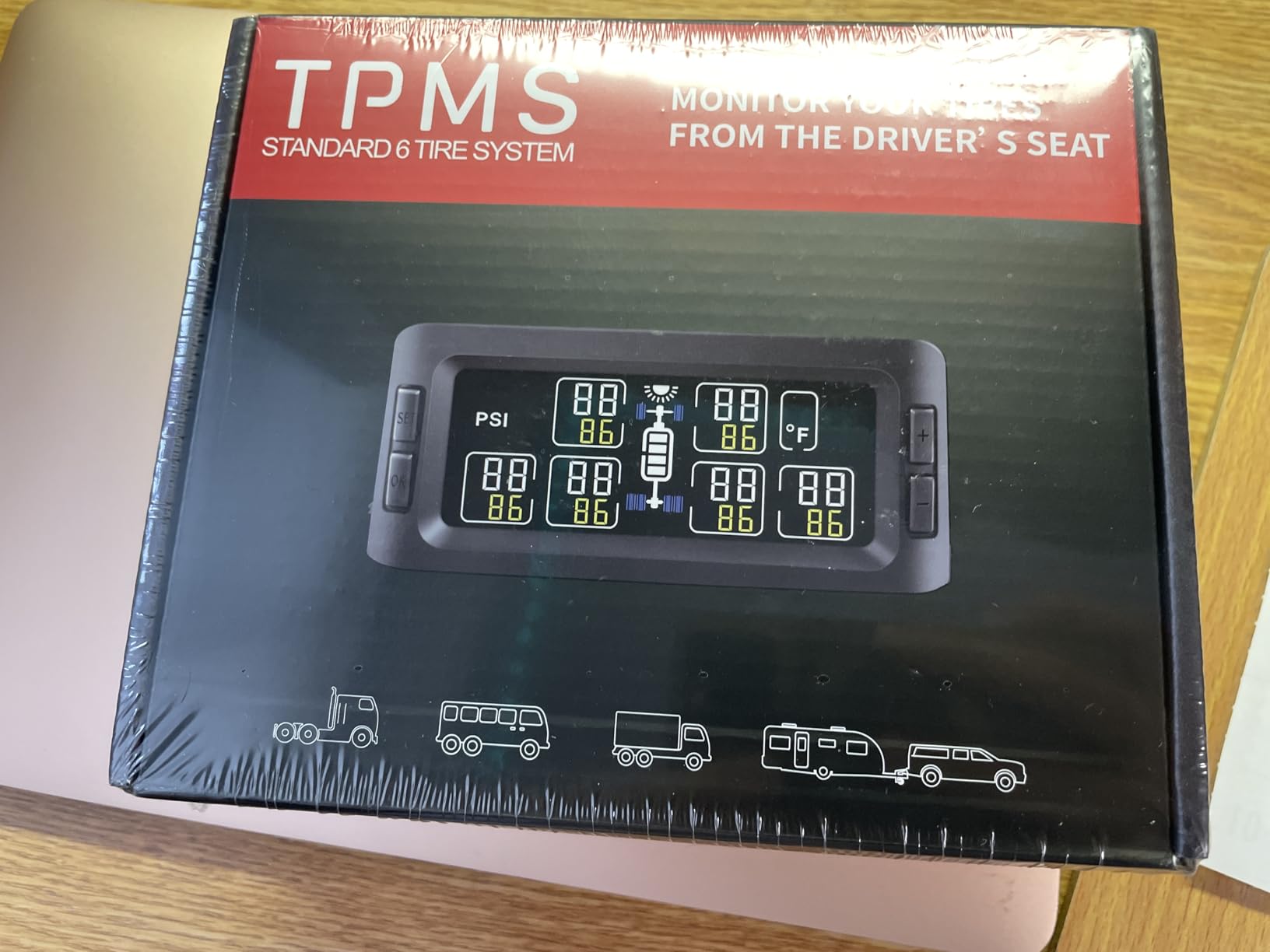
Who the B-Qtech Solar TPMS suits best
Owners of a camper or combination rig longer than most competitors comfortably reach who want flow-through convenience and a booster in the box, without buying a repeater separately afterward. The 98 ft support figure covers large setups that would otherwise need a second trailer-specific system.
If your priority is alarm coverage rather than display size, seven alert modes including sensor malfunction monitoring is the most complete alert set here.
Where the B-Qtech Solar TPMS falls short
This has the smallest review base in the roundup at 55 ratings, and it carries a 16 percent one-star share, the highest of any system here. That combination tells you the early-owner experience has been uneven, and there is no long-term reliability history to lean on.
The sensors need metal valve stems, so composite-stem trailers need a hardware fix before install. Treat this as a promising feature set with a thinner support record than the established brands.
12. Lippert Tire Linc PRO 4-Tire Bundle — Best for Using Your Existing CarPlay Screen
Lippert Tire LINC PRO RV Tire Pressure/Temperature Monitoring System (TPMS) 4-Tire Bundle with External Stem Sensors, Repeater, and Dock #2024115889
4-tire bundle with external stem sensors
CarPlay and Android Auto display
Repeater and dock included
Scales with more sensors
Pros
- Live tire data appears on the vehicle's existing CarPlay or Android Auto screen
- No separate monitor to mount
- power or charge
- Reporting frequency reduces while parked to conserve battery
- Scales with additional sensors for a towed vehicle or more tires
Cons
- Requires a compatible CarPlay or Android Auto head unit
- Shortest warranty of the premium systems
The Tire Linc PRO takes a completely different route. Rather than giving you a screen to mount, it sends live tire pressure and temperature to the infotainment display you already have through Apple CarPlay or Android Auto. For owners of a newer tow vehicle, that means zero extra hardware on the dash.
The 4-tire bundle includes external stem sensors, a repeater and a dock. Continuous real-time tracking with instant alerts covers pressure and temperature, and reporting frequency drops while the RV is parked to conserve battery, which is a thoughtful touch for a stored vehicle.
Installation is described as quick and flexible, and the system scales with additional sensors, so the same base can grow to cover a towed vehicle or extra tires on a busier rig.
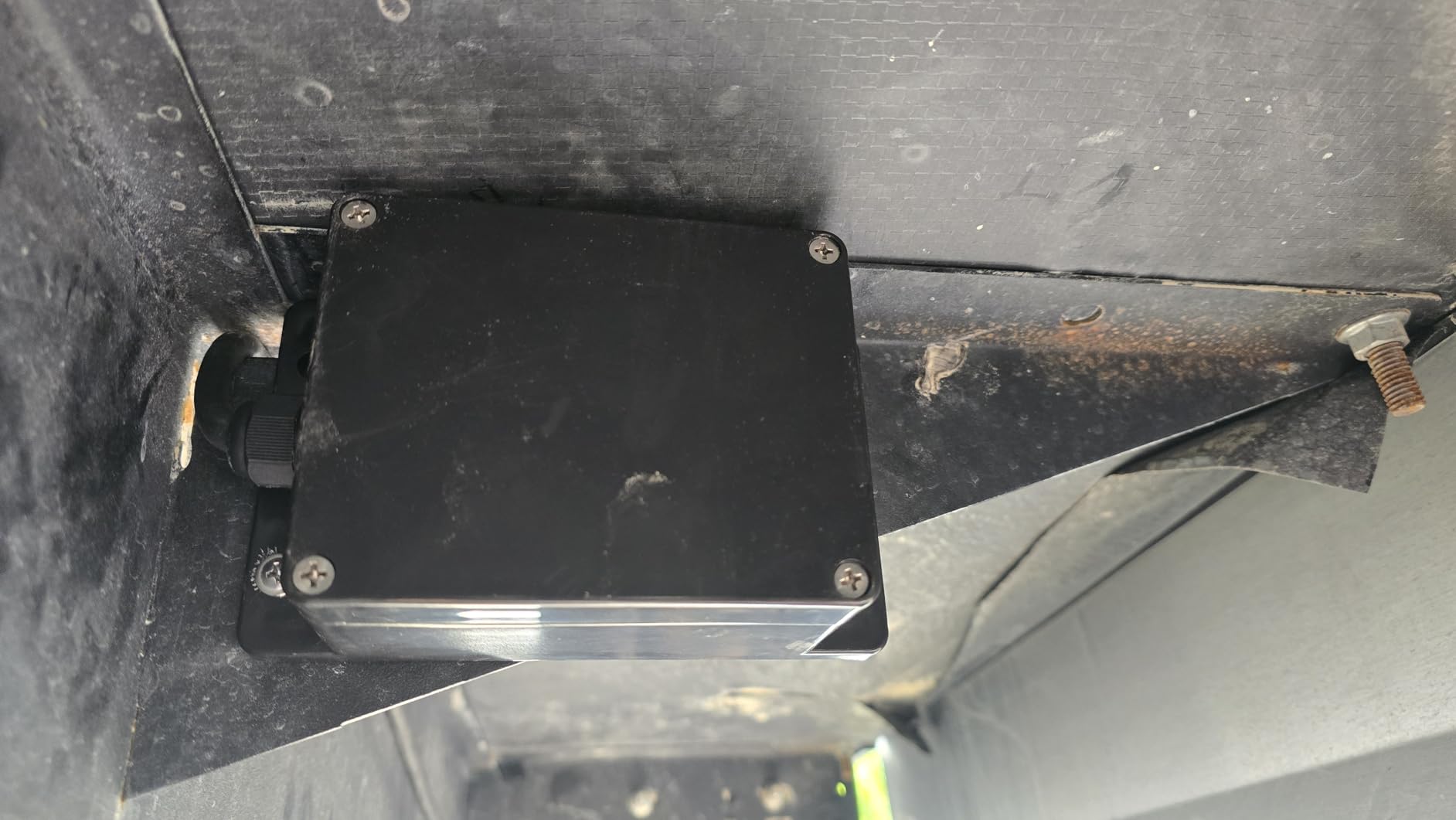
As an RV-manufacturer brand, Lippert built this around how RVs are already equipped, which is why it integrates rather than competes with the vehicle’s screen. Two-tire and six-tire kits are also offered.
The bundle weighs 10.9 ounces and the repeater is included, so the signal range question is at least partly handled from the start rather than being your problem on a long rig.
Who the Lippert Tire Linc PRO suits best
Owners of a recent tow vehicle with a compatible CarPlay or Android Auto head unit who would rather not add another display to an already crowded dash. It also suits people who swap monitors between vehicles and want the tire readouts to come along with the factory screen.
Anyone who wants to cover a towed vehicle or extra tires on an existing setup can add sensors rather than replace the system, since the architecture scales.
Where the Lippert Tire Linc PRO falls short
The requirement for a compatible CarPlay or Android Auto head unit is absolute. If your tow vehicle predates those platforms, or has an aftermarket stereo, this system does nothing for you without replacing the head unit, which is a far bigger job than mounting a monitor.
The external stem sensors carry the same metal valve stem requirement as the rest of the category, and this is a newer platform with 61 ratings, so the long-term owner record is still short compared with the systems that have been in service for years.
How to Choose a Trailer Tire Pressure Monitoring System
Matching the system to your trailer matters more than which brand has the longest feature list. These are the five decisions that actually determine whether you are protected or irritated.
Trailer length and signal range: when a repeater is not optional
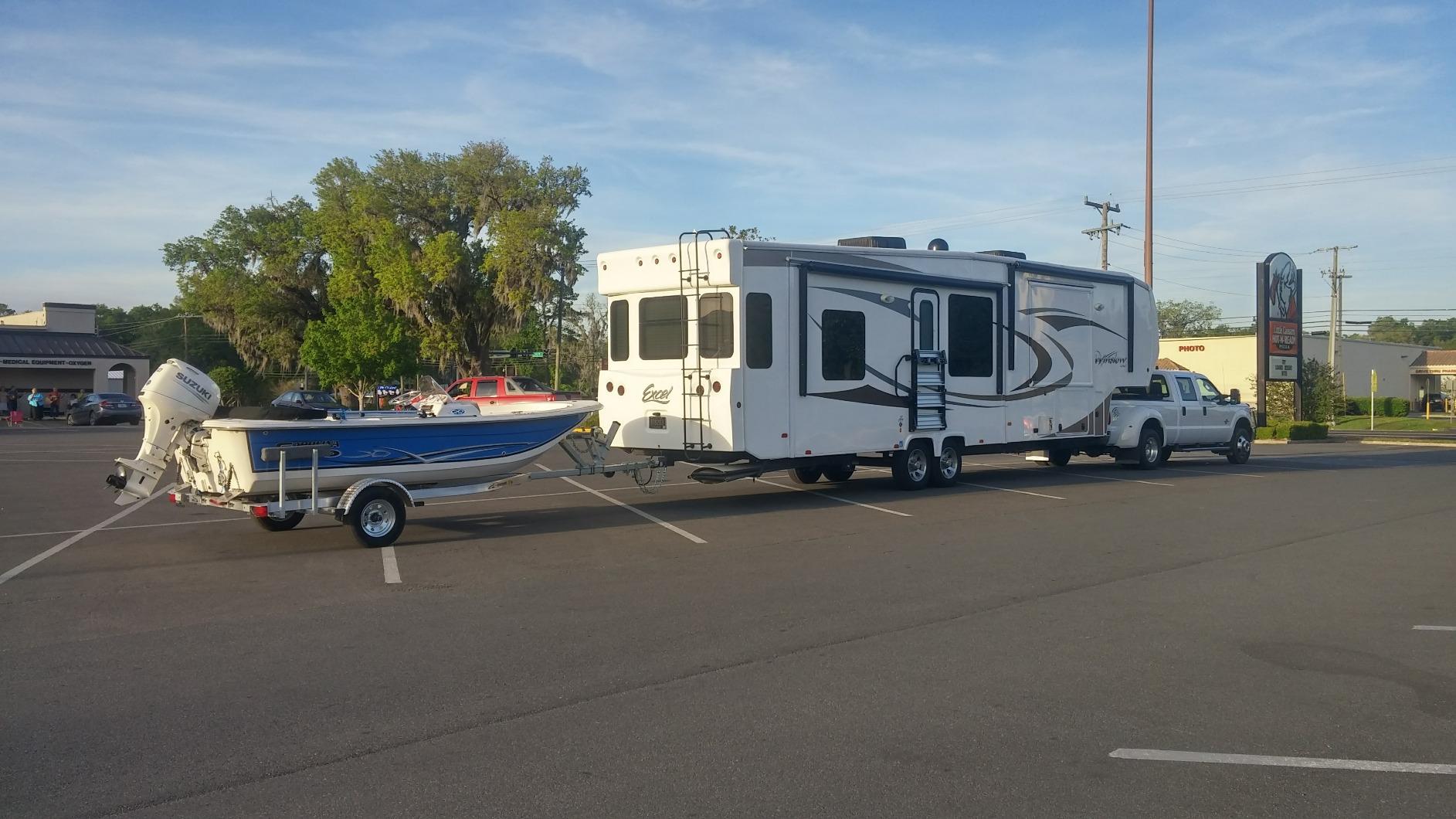
Radio signal is the number one failure mode in this category, and it is almost entirely a function of trailer length and construction. Systems without a booster typically hold up well to about 30 ft and get marginal past 36 ft. Aluminum siding, insulated floors and a steel-belted spare all reduce range further, and fifth wheel slides make it worse again.
Rule of thumb: up to 26 ft you are usually fine with no booster. From 30 ft to 36 ft, buy one. Beyond 38 ft, treat it as mandatory. Look for a booster rated in the 100 ft to 164 ft range and mount it mid-trailer, away from large metal panels and the steel frame rails, since those are exactly what was blocking your signal in the first place.
Cap, flow-through and internal sensors: what are the two types of TPMS?
There are two main types of TPMS sensor, and a third option that most roundups skip. Cap sensors screw onto the valve stem and must be removed to inflate. Flow-through sensors are longer, cost more, and let you add air without taking anything off. Internal sensors mount inside the tire cavity itself, hidden from view, and are the choice owners who dislike external sensors on their rims tend to seek out.
Cap sensors are the cheapest and most common. Flow-through is worth it if you have inner duals or hate pulling a wheel in a parking lot. Internal sensors avoid the valve stem problem entirely but cost more and mean the tire must be dismounted to service them.
Valve stem compatibility: the check that blocks most purchases
Almost every cap and flow-through sensor in this category requires a metal valve stem. Most trailer tires are tubeless and many ship with rubber or composite stems, which cannot hold the sensor reliably and can leak at the seat. Before you buy anything, check what your trailer has and replace composite stems with metal if needed. It is a cheap fix that prevents a frustrating afternoon.
Alarm modes and per-axle thresholds
Look for at least five modes. High and low pressure are table stakes. What separates a good system is fast leak detection, high temperature alarm, lost signal and low sensor battery. High temperature is the one people underestimate, because a failing hub bearing or brake can show climbing temperature while pressure stays stable, and that is a roadside failure you want hours of warning on.
Per-axle thresholds matter on rigs where different axles legitimately run different pressures. Without them you get constant false alarms, and an alarm you learn to ignore is worse than no alarm at all.
Pressure range and the PSI your trailer actually runs
So is 65 PSI normal for a trailer tire? It can be. Most travel trailer tires are rated for a range printed on the sidewall, and many run in the 50 to 65 PSI range cold, with heavier tandem setups higher. Some pickup and truck campers run well above 80.
The practical rule is to set cold pressures to the placard value, not the sidewall maximum. Check them cold, before driving, since heat from the highway adds several PSI. Then set your monitor’s reference pressure from those cold readings and let the system alarm relative to that. A 0-87 PSI system will simply be unable to read a tire running 90, so match the ceiling to your rig rather than to the price tier.
Power options and how long you are away from a socket
Three approaches dominate. Plug-in 12V socket power never runs out but needs a live outlet in the cab. Solar panels with USB backup are the most common on modern kits, with monitor runtimes ranging from about 15 hours to 15 days between charges. Built-in rechargeable monitor batteries free you from both.
For owners who store the trailer for months, a monitor with an auto-sleep mode and a wireless booster is worth the extra attention, because any permanently wired repeater will put a small constant draw on the coach battery.
Sensor count math and how many you actually need
Count every tire you want covered, not every tire on the property. A single-axle trailer is four. A tandem-axle travel trailer is eight. Add four for a dually tow vehicle, and four more for a tag-along, and a busy rig lands at sixteen or more. Round up to the next available sensor count rather than stretching a four-sensor kit across eight positions.
Can your truck’s own TPMS read trailer tires?
No, and this is the most common unanswered question on the RV forums. Factory TPMS on a truck or SUV monitors the truck’s own wheels and, on some models, trailer tires only through the trailer’s own factory system via a gateway. An aftermarket trailer TPMS does not feed into a Ford or Chevrolet TPMS display. If you want trailer readings in the truck’s screen, you need a system that explicitly supports CarPlay or Android Auto, which is why the Lippert approach is worth a look if your head unit is compatible.
Winter storage and sensor battery care
Before a trailer goes into storage, pull the monitor’s rechargeable battery to about half charge if it is a lithium pack, and note which sensors go on which tire. Coin cells such as CR2032 and CR1632 drain slowly in stored vehicles, and replacing them on a two-year cycle is far cheaper than replacing sealed sensors.
Check pressures every few months during storage, since cold and heat cycling moves pressure more than most owners expect. Re-inflate to the placard value before the first trip of the season, not the day you leave.
Frequently Asked Questions
What is the best tire pressure monitoring system for trailers?
For most trailers up to 36 ft, the Tymate TM7 is the best overall pick: four sensors, a 0-144 PSI range, plus or minus 1.5 PSI accuracy, six alarm modes and a color LCD. Owners running a tandem trailer or a longer rig should consider the TST 507 with eight cap sensors, which expands to the tow truck plus four towables.
Do trailers have TPMS sensors?
Most trailers do not have factory TPMS, only the tow vehicle does. You install an aftermarket system yourself, which typically takes five minutes. A single-axle trailer needs four sensors, a tandem-axle trailer needs eight, and adding a dually tow vehicle means four more.
Can I install TPMS aftermarket?
Yes, installation is a five-minute job on most systems. Sensors screw onto the valve stems, the monitor plugs into the 12V socket, and you pair sensors wirelessly before mounting. One prerequisite: most cap and flow-through sensors require metal valve stems, so replace composite stems first.
What are the two types of TPMS systems?
The two main types are cap sensors and flow-through sensors. Cap sensors screw onto the valve stem and must be removed to inflate the tire. Flow-through sensors are longer, cost more, and let you add air without removing anything. A third option, internal sensors, mounts inside the tire cavity.
Is 65 PSI normal for a trailer tire?
It can be. Most travel trailer tires run in the 50 to 65 PSI range cold, and tandem or heavy setups run higher. Check the placard value while the tire is cold rather than the sidewall maximum, and make sure your monitor reads above that figure. A system capped at 87 PSI cannot read a tire running 90.
Why is my trailer TPMS losing signal?
Signal loss is almost always a trailer length or construction problem. Metal siding, insulated floors and a steel-belted spare all reduce radio range. Past about 30 ft you want a booster, and past 38 ft it is mandatory. Mount the repeater mid-trailer away from metal panels and the frame rails.
Which is better, the TireMinder i10 or the TST 507?
The i10 offers a 0-199 PSI range, plus or minus 1 PSI accuracy and a 3.15-inch color display that scales to 40 tires, with the Rhino booster included. The TST 507 covers eight tires out of the box, uses user-replaceable CR2032 cells, and expands to the tow truck plus four towables. Pick the i10 for screen size and tire capacity, the TST for sensor coverage and battery serviceability.
Which Trailer TPMS Should You Buy?
For most trailer owners, the Tymate TM7 is the best tire pressure monitoring system for trailers you can buy: proven accuracy, a usable color display, six alarm modes and a five-minute install, backed by the largest owner base in this group. Add the repeater if you are past 36 ft.
If you tow a tandem axle or want the option to grow into a dually and a tag-along, the TST 507 gives you eight sensors today and room to expand, with sensor batteries you can replace yourself. For the biggest screen and the most tire positions, the TireMinder i10 is the pick, and the Rhino booster comes in the box.
Whatever you choose, check the two things that ruin most installs: a booster for the trailer length you actually own, and metal valve stems on every tire you want covered. Get those right in 2026 and your TPMS will still be telling you what your tires are doing three years from now.