
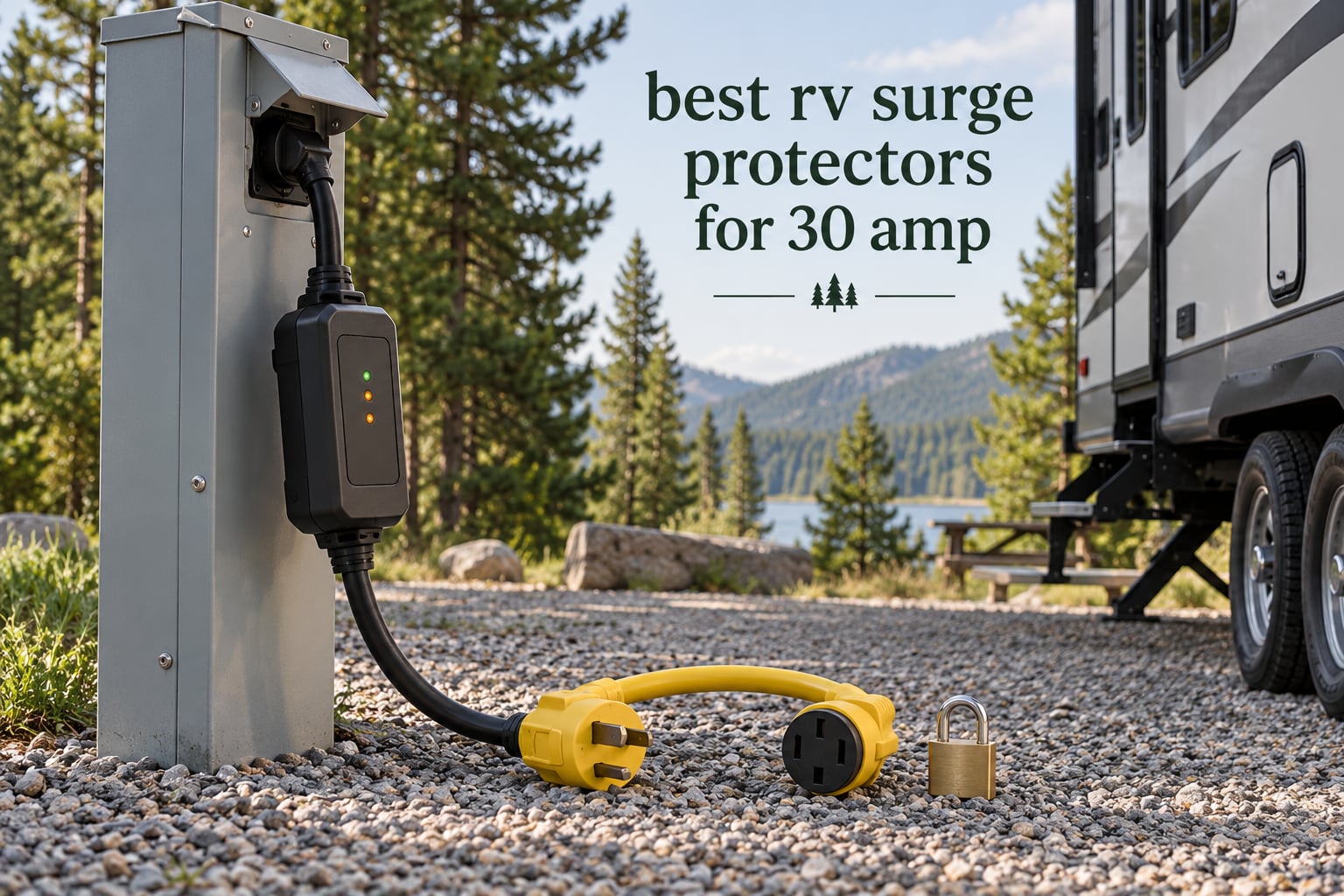
The best RV surge protector for a 30 amp camper is the Progressive Industries SSP-30XL for most owners, with the Power Watchdog PWD30 as the pick if you want live readings on your phone. Both handle 30 amp and 120 volt service, both warn you about a miswired campground pedestal before you energize the coach, and both come from brands that RV owners have recommended across iRV2, Forest River, Good Sam, Thor, T@B and Airstream forums for years.
Almost every competing list mixes 30 amp and 50 amp models together, and a 50 amp protector is a different purchase with different math. If you are shopping for a 50 amp rig, our 50 amp surge protector picks make more sense. For everyone running a travel trailer, fifth wheel or small motorhome on a single hot leg, everything below applies directly.
Across eight models we compared specifications, fault-detection behavior, physical design, warranty length and thousands of owner reviews. Three things separated the good products from the disappointing ones: whether the device actually tests the pedestal wiring, whether the diagnostic lights are readable in daylight, and how long the warranty runs when a surge does get absorbed. We also pulled field reports from RV forums on burned protectors, chewed cords, stolen portables and devices that tripped constantly, because that is where the spec sheets stop helping you.
Table of Contents
Top 3 Picks for Best RV Surge Protectors for 30 Amp in 2026

Progressive SSP-30XL
- 825 joules
- 30A / 120V fault detection
- lifetime warranty
- weather shield

Power Watchdog PWD30
- 3000 joules
- Bluetooth app monitoring
- live voltage and wattage
- 3 year warranty

GEARGO 30A Analyzer
- IP68 waterproof housing
- full wiring fault chart
- 3 year warranty
- grip handles
Best 30 Amp RV Surge Protectors at a Glance (October 2026)
The table below is the short version. Every product listed here is rated for 30 amp and 120 volt service, and every one carries an anti-theft or locking provision except where the review data says otherwise. Note the joule spread: it runs from 825 joules on the Progressive to 13,000 joules on two budget models, and that gap is the single most misunderstood number in this category.
| Product | Specifications | Action |
|---|---|---|
| Progressive Industries SSP-30XL |
|
Check Latest Price |
| Power Watchdog PWD30 |
|
Check Latest Price |
| GEARGO 30 Amp Circuit Analyzer |
|
Check Latest Price |
 Southwire Surge Guard 44280 Southwire Surge Guard 44280 |
|
Check Latest Price |
 CARMTEK 30 Amp Analyzer CARMTEK 30 Amp Analyzer |
|
Check Latest Price |
 Kohree KR6491A Kohree KR6491A |
|
Check Latest Price |
 CRTBETLIF 30 Amp 13000J CRTBETLIF 30 Amp 13000J |
|
Check Latest Price |
 MILLIONHOME DF-01 MILLIONHOME DF-01 |
|
Check Latest Price |
1. Progressive Industries SSP-30XL – Best Overall 30 Amp Surge Protector
Progressive Industries SSP-30XL Portable RV Smart Surge Protector, Black, 30 Amp
30A / 120V, 3,600 W capacity
825 joules surge rating
Fault detection LEDs
Lifetime warranty
Pros
- Detects and warns on miswired pedestals before damage occurs
- LED indicators read easily in low light
- Locking security ring lets you chain the model to the pedestal
- Lifetime warranty with responsive replacement service
- Absorbed real surges for owners across Florida and Arizona conditions
Cons
- Weather shield assembly needs a small Phillips screwdriver
- Heavier and larger than compact analyzers
- 825 joules is modest next to 12000 and 13000 joule rivals
This is the model I keep in the front storage bay of my own trailer, and it is the one I hand to friends who ask a single question: which one should I buy. At two pounds and 14 by 5.25 inches it is a slab, not a cube, which means it slides into a pass-through without rolling around. The NEMA TT-30 male plug goes straight into the pedestal, and the female receptacle on the far side takes your shore cord.
What sets it apart is the fault detection list: over and under voltage, open ground, open neutral, reverse polarity, surge failure and AC frequency issues. Progressive markets this as a smart surge protector rather than a disconnecting EMS, so think of it as a tester that refuses to be fooled plus a surge path, not as something that physically cuts power mid-fault. For most hookups that distinction matters less than people think, because the whole point is catching the bad pedestal before the coach is exposed.
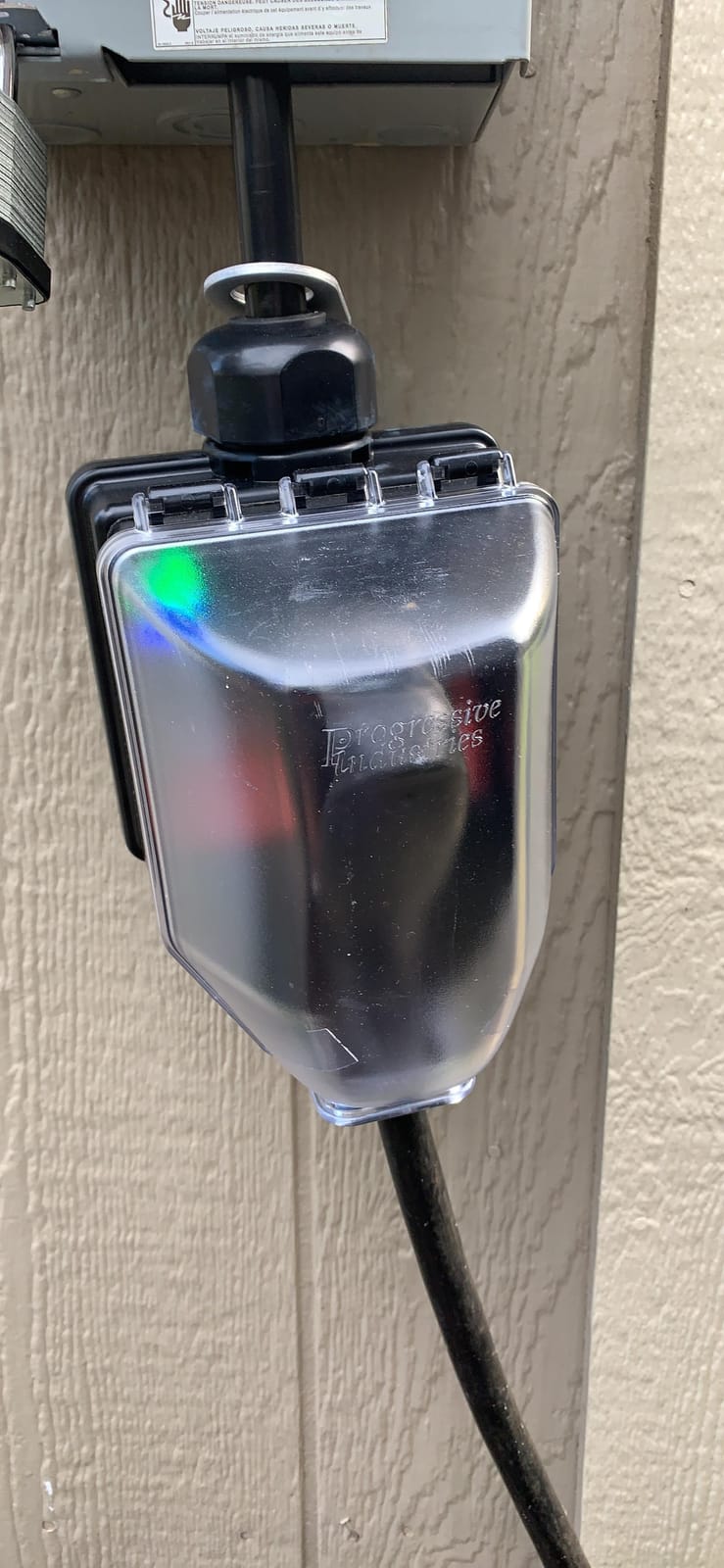
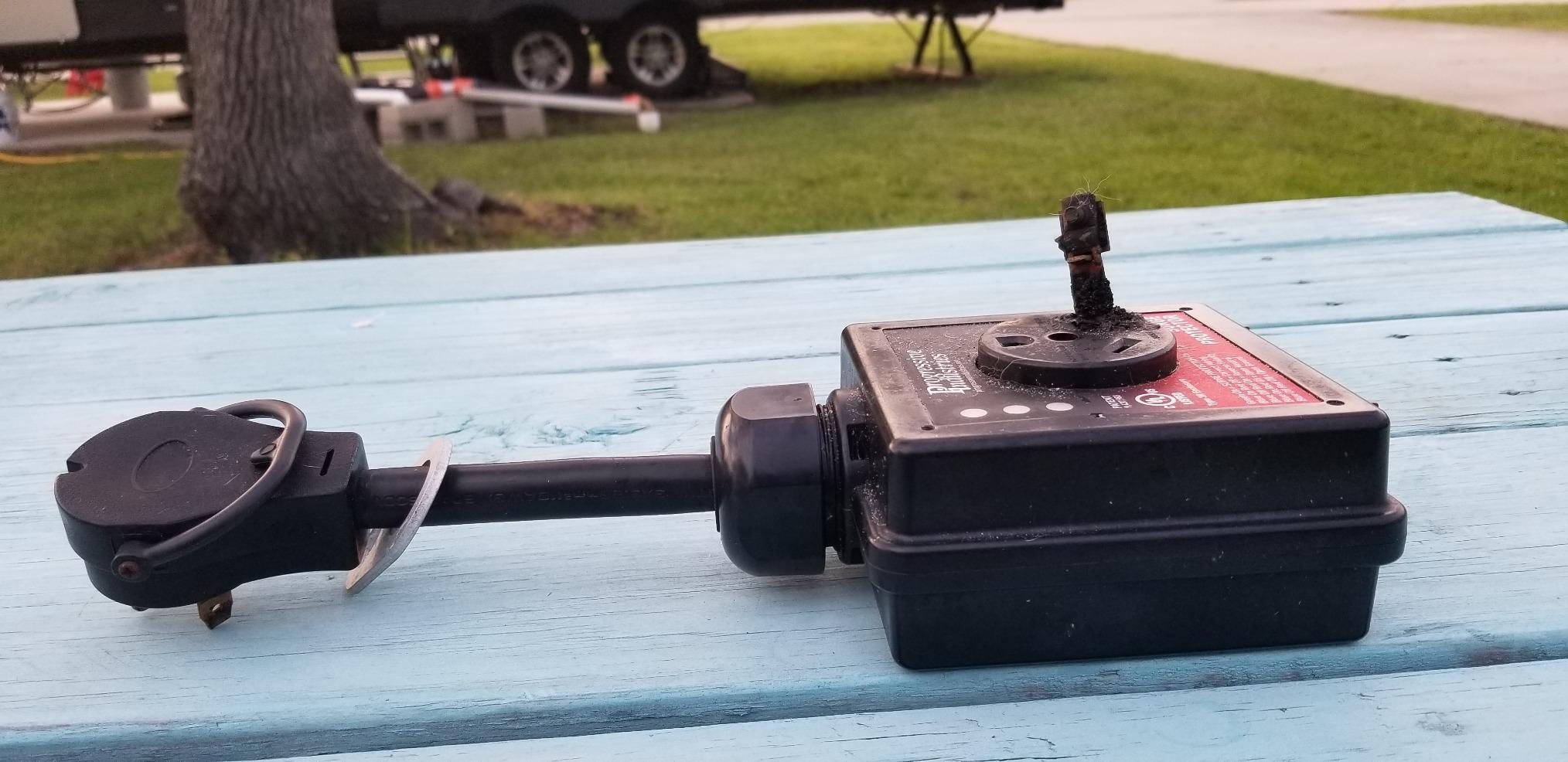
The Lexan housing, LED indicators and included all-weather shield are what earn the praise in the reviews. Owners describe running it through Florida thunderstorm season and Arizona summer heat, and several describe it absorbing real surges and sacrificial-ing itself rather than passing damage downstream. The technical details also list thermal protection, which matters more than it sounds, because forum reports include a protector that ran hot enough to scorch the floor beneath it.
The friction point that shows up again and again is trivial: putting the weather shield together takes a small Phillips screwdriver, and a few owners have called it a one-time annoyance rather than a defect. The locking bracket and cover are included in the box, so you have a way to chain it, and the lifetime warranty excludes only the weather shield. Across 5,686 reviews at a 4.7 average, that is the largest review base of any model in this roundup.
Best For: Owners Who Want Fault Warnings and a Lifetime Warranty
If your main worry is walking up to a pedestal and finding out the wiring is wrong, the LED fault indicators do that job clearly and in the dark. The lifetime warranty is the other reason this is the default recommendation in RV owner communities, where brand reputation inside the RV world counts for more than a generic review count.
It is also the easiest model here to justify as a first purchase, because the brand is made in the USA and the replacement service is responsive when a surge does take it out.
Skip It If: You Want Maximum Surge Headroom
825 joules is a modest absorption budget, and the reviews themselves flag it against models rated above 2,000 joules. If you camp in open country, under tall trees, or anywhere with frequent storms, a higher-joule unit gives you more margin before the MOV bank is spent.
It is also a plug-and-hold device rather than a monitoring device. If you want to see amps and watts while you run the air conditioner, this is not the tool for that job.
2. Power Watchdog PWD30 – Best App-Connected 30 Amp Protector
Power Watchdog PWD30 Bluetooth Surge Protector, 30A, Portable, 14 Inch
3000 joules surge rating
Bluetooth app monitoring
30A NEMA TT-30 plug
3 year manufacturer warranty
Pros
- App shows live voltage
- amperage and wattage from inside the coach
- Customizable alert thresholds for your own safe range
- Wireless fault alerts for hazardous park power
- 3000 joules is strong for the portable 30A class
- Lightweight with easy grip handles
Cons
- Bluetooth monitoring requires a compatible phone and the vendor app
- 14 inch body is long and bulky for small storage bays
- Three year warranty trails the lifetime coverage on some rivals
The PWD30 is the only model in this group that tells you what your campsite is doing while you are inside the trailer. Pair it with the free mobile app and it streams live voltage, amperage and wattage, which turns power management from guesswork into a number you can watch. When I want to know whether the pedestal is sagging under the air conditioner, that readout is the whole reason to buy it.
Surge capacity is 3,000 joules, which is a genuinely useful figure for a portable 30 amp protector and sits well above the Progressive’s 825 joules. The diagnostics are full LED park power testing, and the app adds wireless fault alerts plus customizable alert thresholds, so you decide what voltage range triggers a notification instead of accepting the factory default.
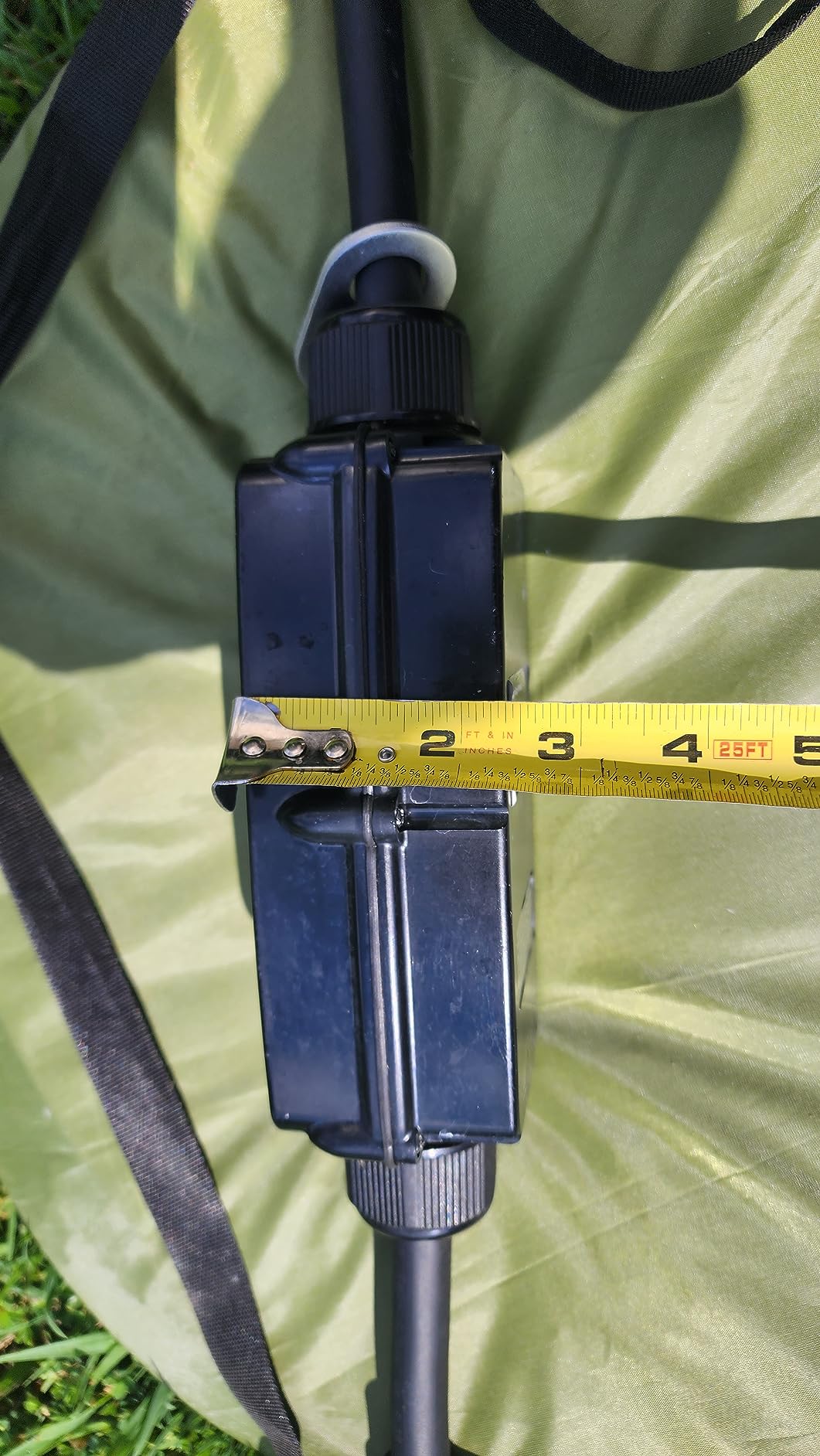
The physical design is where the complaints live. At 14 inches and three pounds it is the longest body in the roundup, and owners describe it lying on the ground beside the pedestal rather than hanging on it, which is how it ends up in a puddle or under a vehicle tire. The three-year manufacturer warranty is solid, though it is not the lifetime coverage Progressive and CARMTEK offer.
The reviews make clear that the app, not the surge path, is the deciding factor. Across 2,515 reviews at 4.8, people who connect their phone tend to rate it very highly, and the recurring downside is the same one every app-dependent device has: it is only as good as the phone you left on the counter.
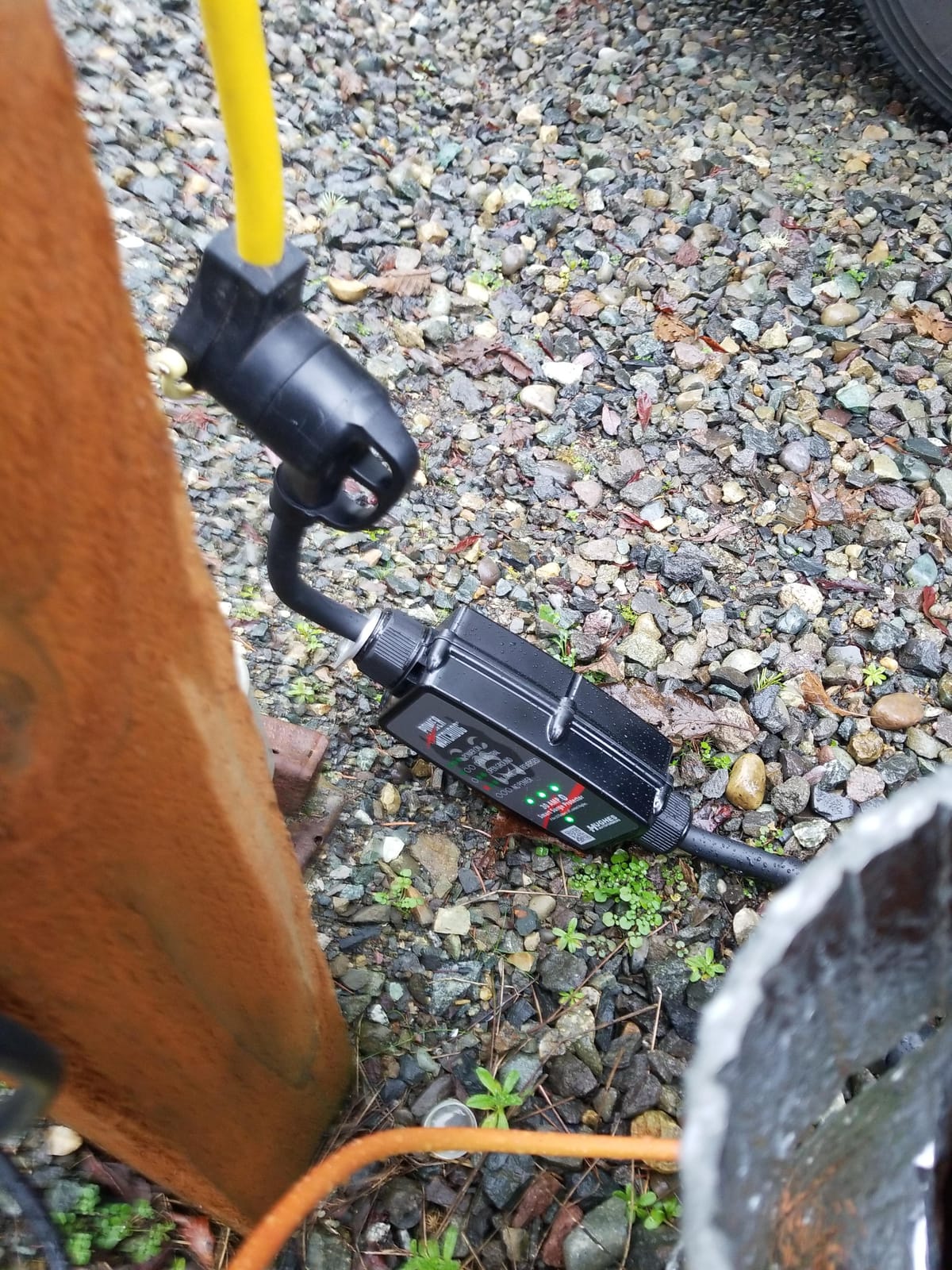
Best For: Owners Who Want to See Watts While They Run the Air Conditioner
If your pain point is the breaker tripping when the air conditioner compressor kicks in, this is the model that answers the question. Watching amperage climb in real time is how you learn which appliances you have to sequence rather than guess at it.
It is also the choice for full-time RVers and anyone who wants a phone notification instead of walking out to a blinking light in the rain at midnight.
Skip It If: Storage Is Tight or You Travel Solo Without a Phone
The 14 inch length is awkward in a small pass-through, and the weight is noticeable when you are carrying it across a gravel site in the dark. Owners describe wrestling with a heavy 30 amp plug on a long body, which is not a one-handed operation.
If you camp with a group and the phone stays in the truck, the monitoring advantage disappears and you are carrying a longer, heavier box than you need.
3. GEARGO 30 Amp Circuit Analyzer – Best Value With IP68 Weatherproofing
GEARGO RV Surge Protectors 30 Amp RV Circuit Analyzer, [𝟐𝟎𝟐𝟔 𝐍𝐞𝐰 𝐔𝐩𝐠𝐫𝐚𝐝𝐞𝐝 & 𝐆𝐞𝐧𝟐] Full Protection, RV Adapter Plug for Camper(Orange)
30A / 120V circuit analyzer
IP68 waterproof housing
Full wiring fault chart
3 year warranty
Pros
- Analyzer identifies faulty campground wiring before hookup
- IP68 waterproof housing and cover handle harsh weather
- Ergonomic grip handles make plugging and unplugging straightforward
- Right-angle connector reduces cord strain and bending
- Rated 4.8 across more than 2400 reviews
Cons
- Joule rating varies by color-coded variant so the exact model matters
- Diagnostics cover wiring faults but not deeper voltage-threshold monitoring
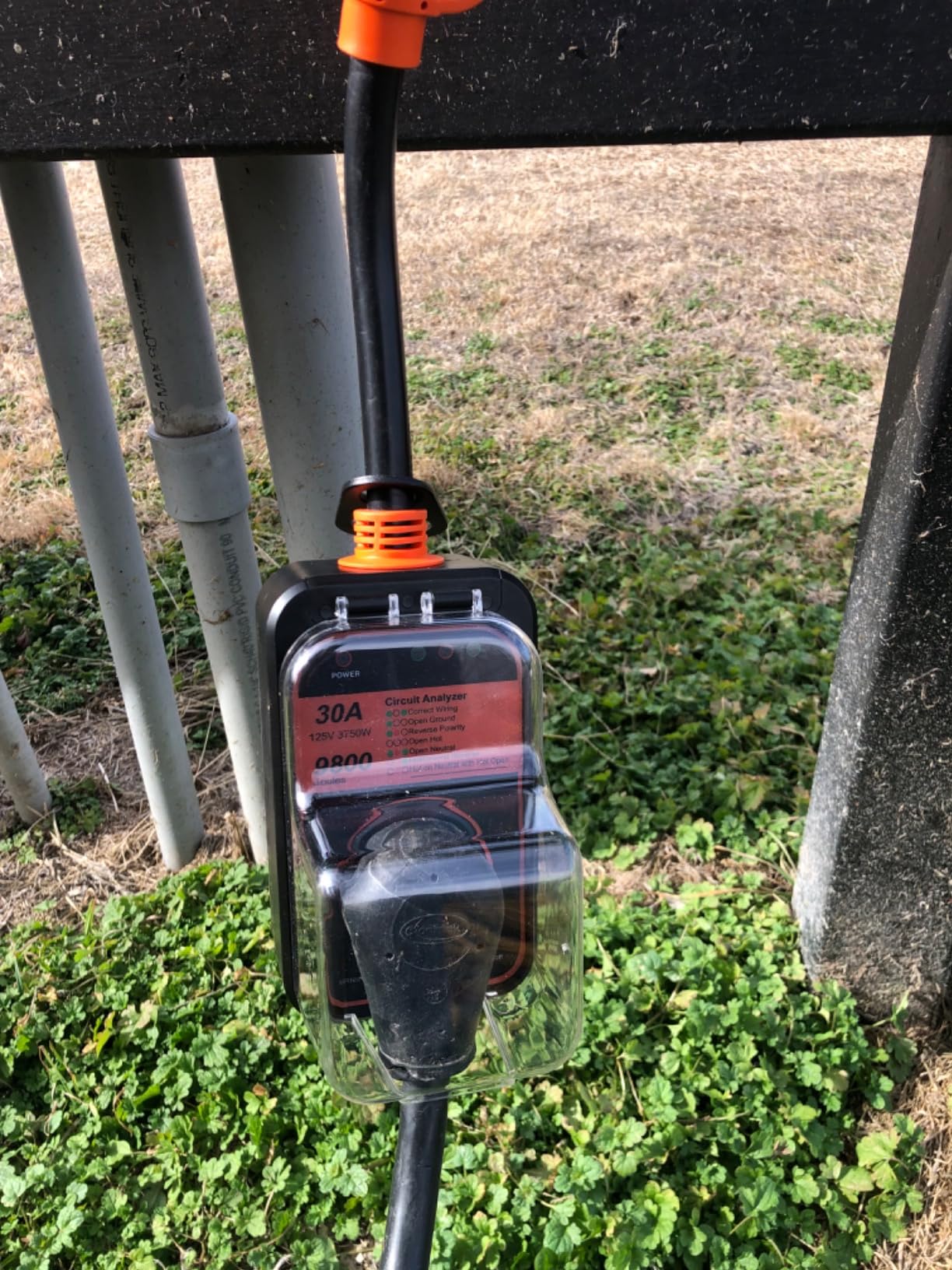
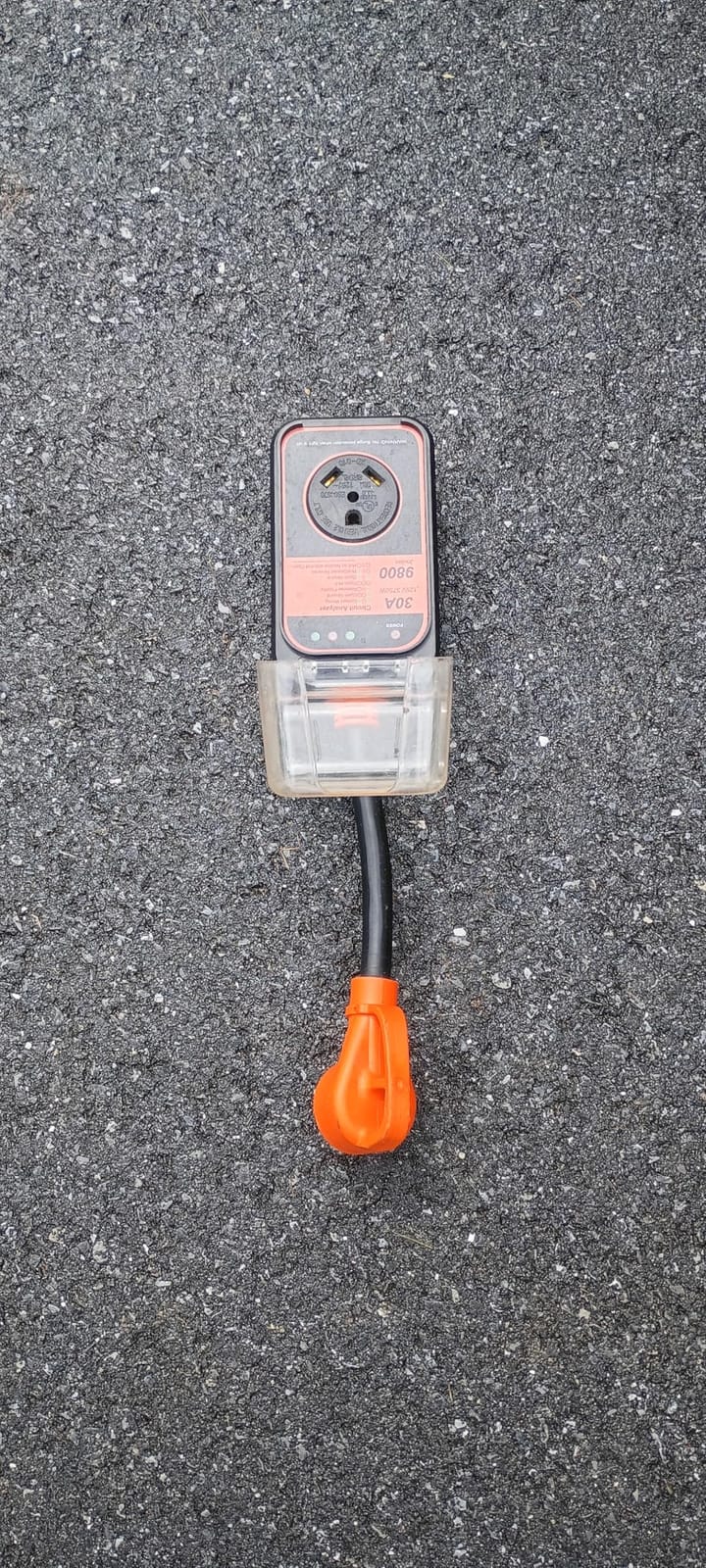
The GEARGO listing sits at the number one position in RV plugs, inlets and receptacles, and the reason is the fault chart. It tests for correct wiring, open ground, open neutral, reverse polarity, hot and ground reversed, and no power, all before you commit the coach. That is the entire job of a pre-hookup test, and it does it with LEDs on a bright orange body you can find in a gravel lot at dusk.
Water resistance is the differentiator here. The housing is rated IP68 with a protective cover for rain, wind and sandstorm, and the materials are V-1 flame retardant. For anyone camping in the Southwest or anywhere with a driving rain habit, that rating is more meaningful than a few extra hundred joules.
![GEARGO RV Surge Protectors 30 Amp RV Circuit Analyzer, [𝟐𝟎𝟐𝟔 𝐍𝐞𝐰 𝐔𝐩𝐠𝐫𝐚𝐝𝐞𝐝 & 𝐆𝐞𝐧𝟐] Full Protection, RV Adapter Plug for Camper(Orange) customer photo 1](https://eatcreatesleep.net/wp-content/uploads/2026/10/B0B38DJ5Z9_customer_1.jpg)
Physical design details are unusually well thought out for this tier. Ergonomic power grip handles and a right-angle male connector reduce the bending moment on your shore cord, which is exactly where 30 amp connections get fatigued. It weighs two pounds and measures 11 by 5 by 5 inches, so it stores more easily than the 14 inch PWD30.
One thing to know before you buy: the surge figure on this listing is not straightforward. The feature copy advertises 8,000 joules, while the color-coded variant in this listing is marked as a 1200 joule class model, and the reviews themselves flag that joule capacity differs across the color variants in the range. Read the model you actually receive, not the range headline.
![GEARGO RV Surge Protectors 30 Amp RV Circuit Analyzer, [𝟐𝟎𝟐𝟔 𝐍𝐞𝐰 𝐔𝐩𝐠𝐫𝐚𝐝𝐞𝐝 & 𝐆𝐞𝐧𝟐] Full Protection, RV Adapter Plug for Camper(Orange) customer photo 2](https://eatcreatesleep.net/wp-content/uploads/2026/10/B0B38DJ5Z9_customer_2.jpg)
Best For: Rain, Dust and Campgrounds With Questionable Wiring
The IP68 housing and full diagnostic chart cover the two most common real-world problems: water exposure and a pedestal somebody wired incorrectly. A three-year warranty is respectable for this class.
The right-angle connector and grip handles also make it the least annoying one to pull apart, which matters more than most spec sheets admit.
Skip It If: You Need Voltage Threshold Cutoff or App Monitoring
This is a circuit analyzer with a surge path, not a full electrical management system. It will tell you a pedestal is miswired, and it will absorb spikes, but it does not watch voltage over time and cut power when the sag gets dangerous.
Verify the joule rating of the exact color variant you receive before treating this as your surge protection, since that number changes across the range.
4. Southwire Surge Guard 44280 – Best for Sunny, Readable Diagnostics
Southwire Surge Guard™ 30 Amp Portable RV Surge Protector with Enhanced Diagnostics, 2100 Joules, 44280
2100 joules surge rating
Enhanced LED wiring diagnostics
Anti-theft lock ring
Limited lifetime warranty
Pros
- LED indicators stay readable in direct sunlight
- Compact enough to store without taking up much space
- Thicker receptacle brass reduces heat at the connection
- Limited lifetime warranty from an established electrical brand
- Anti-theft lock ring on the cord included
Cons
- Internal protection components degrade with age over the years
- No remote display or Bluetooth monitoring on this model
- 2100 joules is modest against the highest-rated models
The 44280 solves a problem that rarely appears in spec lists: reading the diagnostics at midday in full sun. Owners single out the LED layout as the clearest in the portable 30 amp class, and at 1.5 pounds in a nylon housing it is the easiest of these models to keep in a compartment without it shifting around.
Surge capacity is 2,100 joules, which is a sensible middle ground for portable use. The construction details that matter under load are in there too: increased receptacle brass thickness to reduce heat at the connection, and an Easy-T-Pull handle with an integrated receptacle that gives you something to hold when you need to pull a heavy 30 amp plug free.
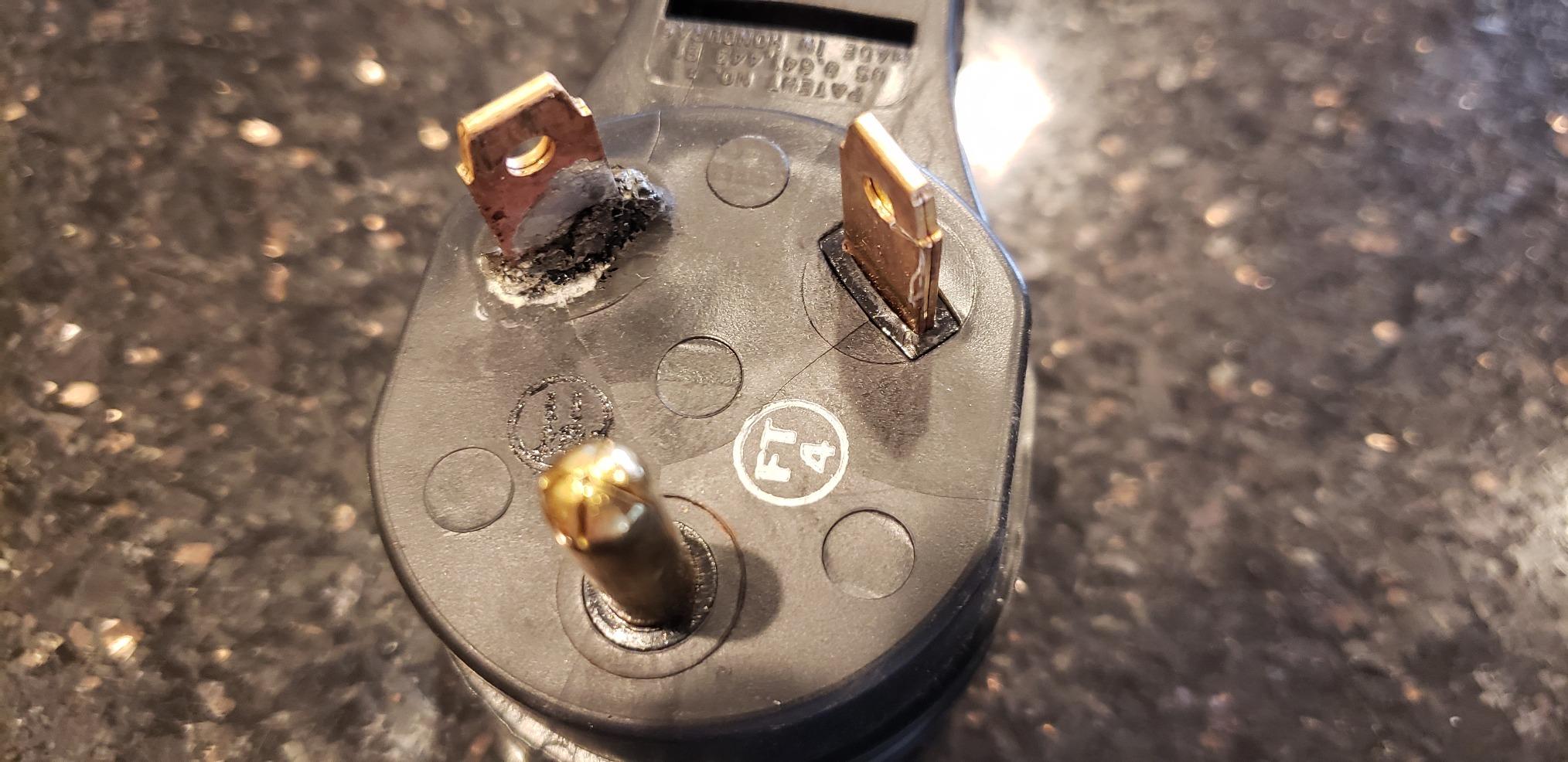
There is an anti-theft lock ring on the cord, which matters because portable theft is a real and repeated problem in RV parks. Combined with the limited lifetime warranty from a long-established electrical brand, this is a model that ages well on paper.
The honest weakness is that reviewers with long timelines say the internal protection components degrade as it ages, and a few advise replacing it after several years of service. Southwire builds to a specified absorption capacity, and that capacity does not come back once a storm has spent it. Treat the lifetime warranty as a repair path, not as a claim that the joule budget is eternal.
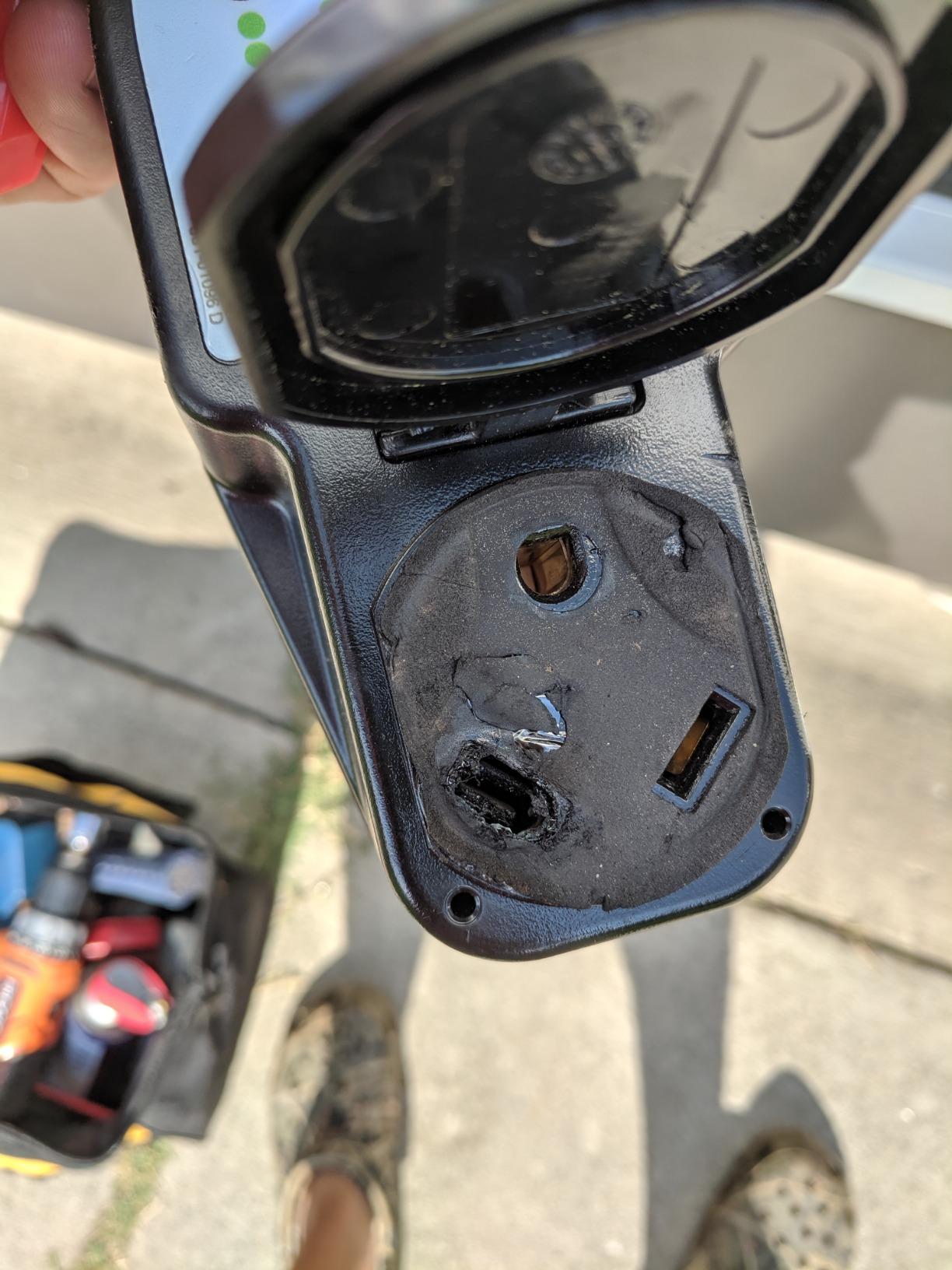
Best For: Owners Who Diagnose in Direct Sunlight
If you have ever squinted at a row of tiny LEDs on a pedestal in Arizona or Florida, the readable display here is a genuine quality-of-life upgrade. The 1.5 pound weight and compact footprint make it the easiest model in the roundup to carry one-handed.
The thicker receptacle brass and integrated pull handle address two failure points that show up repeatedly in owner reports: heat at the connection and a plug that is hard to extract.
Skip It If: You Want Live Monitoring or a Warranty Beyond Years
There is no numeric display, no remote readout and no app on this model. It will tell you the pedestal is wired wrong, and then you decide what to do about it.
If you keep a trailer for a decade, plan on a replacement discussion around year eight, because the surge components inside do not recover from storm events.
5. CARMTEK 30 Amp Analyzer – Best UL-Listed Option
CARMTEK RV Surge Protector 30 Amp – RV Circuit Analyzer with Integrated Smart 30 Amp Surge Voltage Protection with Grip Handles
UL listed, 2100 joules
30A / 125V / 3750W / 50-60Hz
Operating range -35C to +110C
Lifetime warranty
Pros
- Clear fault indication caught a 40-amp circuit miswired at a residence
- UL listed with flame-retardant and thermally protected housing
- Same-day support and fast warranty replacement
- Simple to use with no app or account
- Works from -35C to +110C for four-season camping
Cons
- The 30A plug can be hard to pull even with the grip handle
- Some plugs do not stay snug in the pedestal and can slip if bumped
- No included metal clamp for theft deterrence
UL listing is the reason this model earns its place on a list where most competitors are not certified to a recognized standard. The ratings are explicit too: 30 amp, 125 volt, 3,750 watts, 50 to 60 hertz, with NEMA TT-30P male and TT-30R female connectors and an operating range from minus 35 to plus 110 degrees Celsius. That temperature span is not marketing, and it is what lets the same model work in a Minnesota winter and a Death Valley summer.
The circuit analyzer tests for correct wiring, open ground, open neutral, reverse polarity, hot and ground reversed, and no power. One reviewer describes the fault indication catching a 40 amp circuit that had been miswired at a residence they were about to plug into, which is the kind of story that explains a 4.8 average across 1,221 reviews.
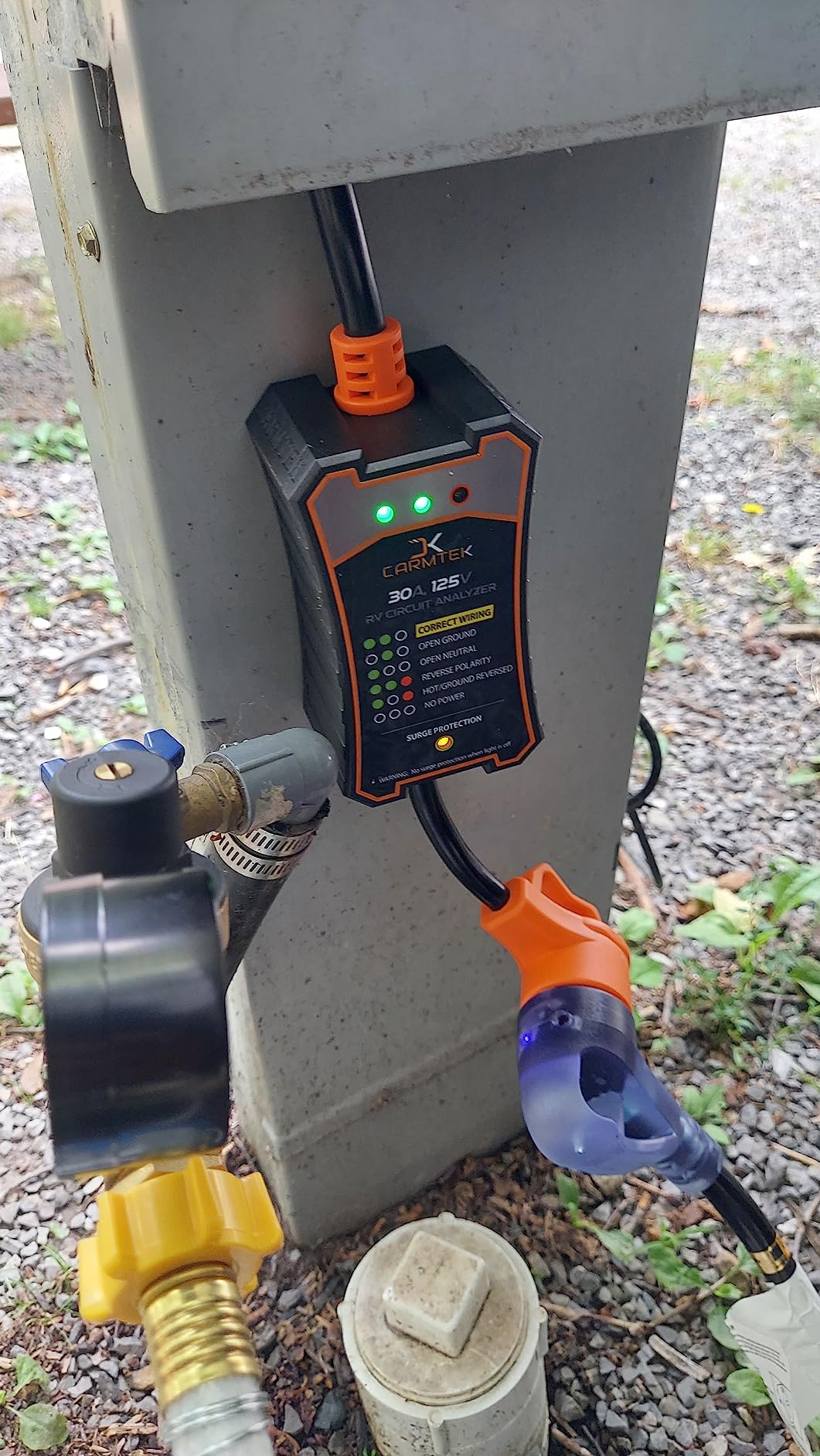
Support is a genuine strength here. Owners report same-day responses and a separate replacement unit arriving quickly under the lifetime warranty, which is a materially different experience from a one-year policy. The housing is flame-retardant, weather resistant and thermally protected, and the right-angle connector plus ergonomic grips keep the cord from taking a bend every time you plug in.
Fit is where it stumbles. Several owners report the plug is difficult to extract even with the built-in grip handle, and a portion of the products do not stay snug in the pedestal and can slip if bumped. That is a connector tolerance issue, and it is the one complaint worth factoring in if your pedestal receptacles are worn.
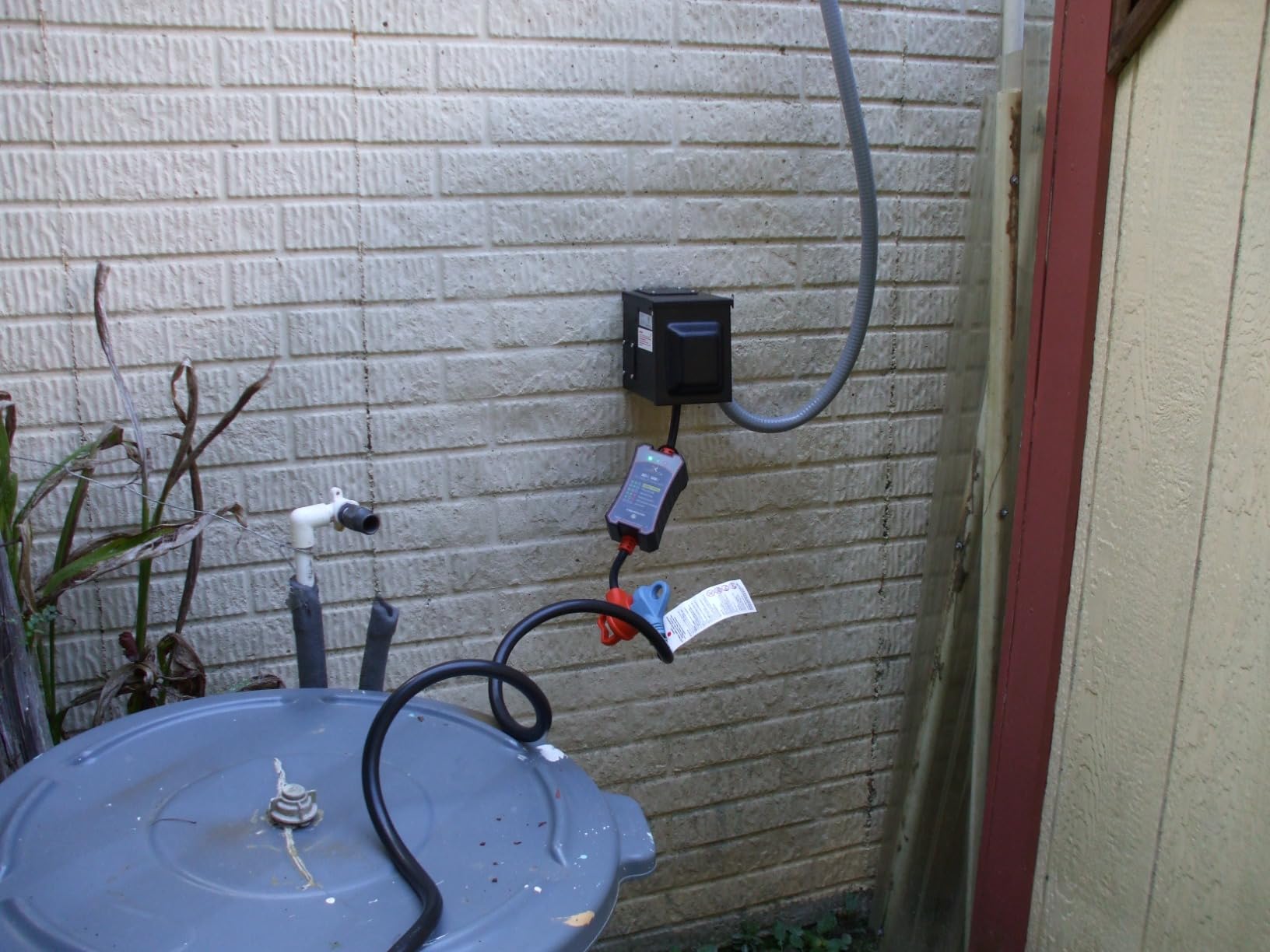
Best For: Owners Who Want Certification and Four-Season Range
UL listing and a published operating range from minus 35 to plus 110 degrees Celsius are specs you can actually verify, which matters when you are buying the same model for a Colorado winter and a summer in the desert.
The lifetime warranty with responsive replacement service is the strongest support story in this roundup, and the diagnostic layout is clear without any app or account setup.
Skip It If: Your Pedestal Receptacles Are Worn or Theft Is a Concern
Reviewers report two fit problems: a plug that resists extraction even with the grip handle, and a connection that can slip loose in a loose pedestal receptacle. On a worn pedestal, neither is what you want to discover in the rain.
There is no included metal clamp, so you will need your own chain or cable lock if you plan to leave it connected overnight.
6. Kohree KR6491A – Best High-Joule Budget Backup
Kohree RV Surge Protector 30 Amp, Power Surge Voltage Protection 12000J
12000 joules surge rating
1 ns spike response
IP67 waterproof cover
1 year warranty
Pros
- 12000 joule rating in the budget tier
- Diagnostic LEDs flagged a reverse-polarity outlet and a burned wire for one owner
- IP67 waterproof cover keeps rain and dust off
- Easy to plug
- use and store
- Pure copper contacts and high-strength PVC housing
Cons
- Only a 1 year warranty
- shorter than most competitors here
- LED-only diagnostics with no numeric voltage or amperage readout
- Surge path is hard to verify without a real surge event
The Kohree listing is where joule ratings stop being believable as a differentiator, because 12000 joules sits in the budget tier next to models rated above 2,000 joules that cost several times more. The response time is listed at 1 nanosecond, the housing is flame-retardant with pure copper contacts and high-strength PVC, and the design is protected by US design patents.
What you are actually buying is a second line of defense. The diagnostic LED chart covers correct wiring, open ground, open neutral, reverse polarity, open hot, hot and ground reversed, and hot on neutral with hot open, which is a thorough pre-hookup test at a glance. One owner describes the LEDs flagging a reverse-polarity outlet and surfacing a burned wire before energizing, which is the correct outcome.
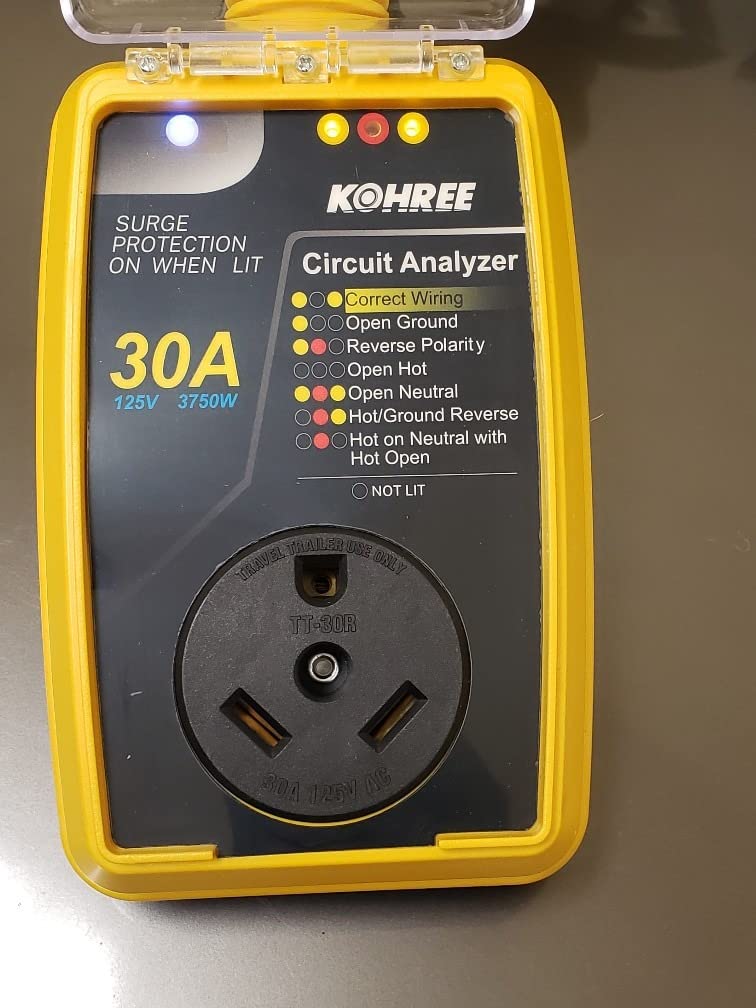
Water protection is IP67 with an enlarged cover that accommodates most RV power plugs, so it handles rain, snow, wind and dust. A wide range of 30 amp and 50 amp color-coded variants means the design is shared across amperages, which is a good sign that the enclosure is a real product and not a one-off.
The two drawbacks are specific. The warranty is one year, the shortest in this roundup, and the diagnostics are LEDs only, with no numeric voltage or amperage readout anywhere. Several reviewers also say candidly that they have no way to confirm the surge path works without an actual surge event, and that is an honest statement you should weigh.
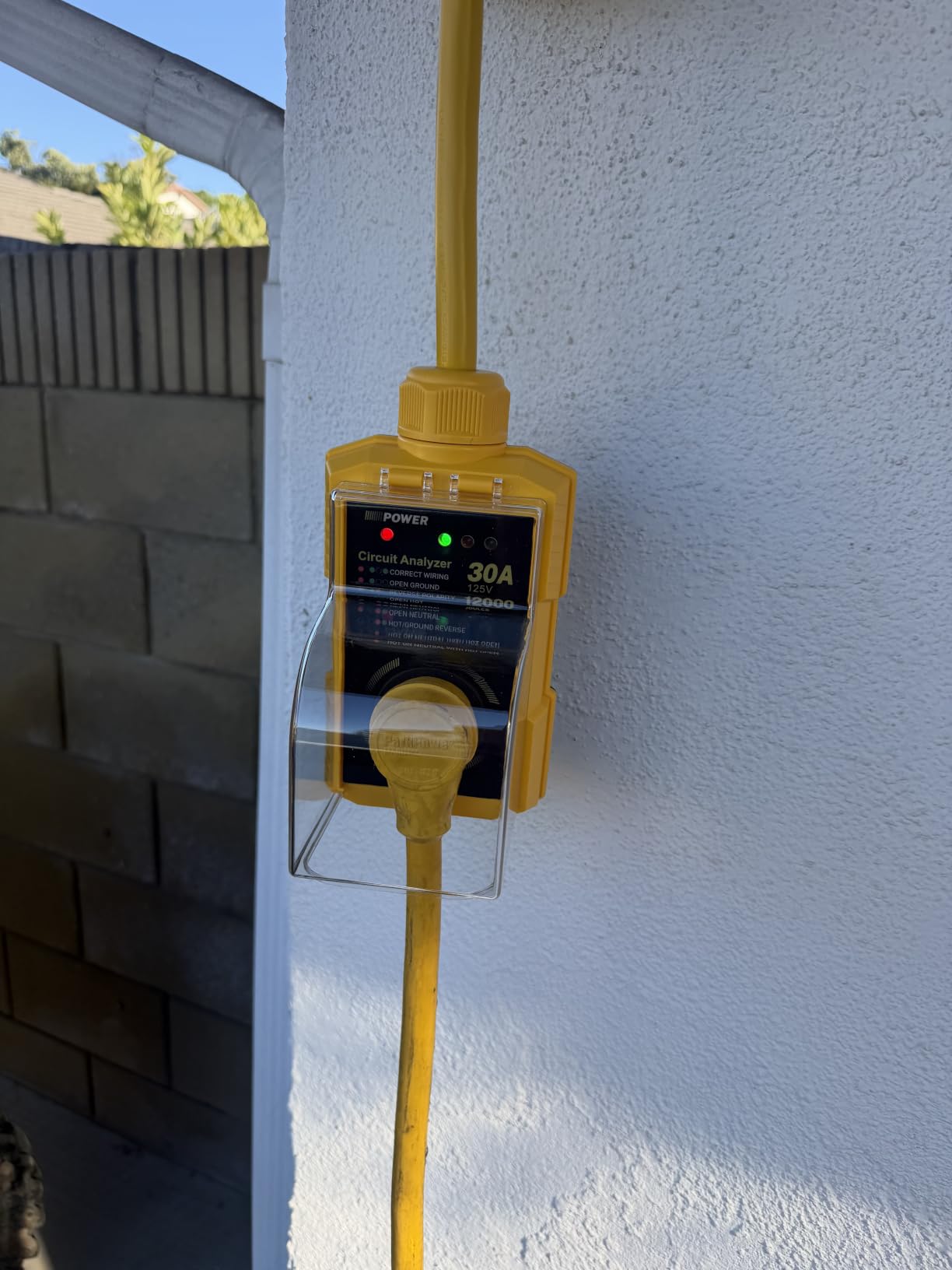
Best For: Keeping a Second Protector as Campground Insurance
A high joule rating in a sealed IP67 housing is a sensible pairing to keep in the storage bay, so you always have a spare analyzer-plus-surge model when the primary one is on the pedestal or in for service.
The diagnostic chart is thorough enough to use as a pre-hookup test on its own, and the copper contacts and PVC housing hold up well in wet conditions.
Skip It If: Warranty Length or Numbers on a Screen Matter to You
A one-year warranty is the shortest here, and surge components are consumables. If the protector takes a real hit, the replacement path is short and you are buying again.
With LED-only diagnostics you learn whether the pedestal is wired correctly and nothing about how the voltage is behaving over time.
7. CRTBETLIF 30 Amp 13000J – Highest Joule Rating in the Group
CRTBETLIF RV Surge Protector 30 amp, 13000J Surge Protection
13000 joules surge rating
8 mode diagnostic chart
Weatherproof housing and cover
4 year support
Pros
- 13000 joules
- tied for the highest rating in this group
- One owner reports it absorbed a surge on the first evening of use
- Weatherproof housing and cover hold up outdoors
- 8 mode diagnostic chart shows clear connection status
- 4 year support period is longer than the budget-tier norm
Cons
- Lowest average rating here at 4.6 with a 5 percent one-star share
- LED-only diagnostics with no display or app monitoring
- Reviewers cannot verify the surge path without a real surge
Thirteen thousand joules is the headline number here, tied with one other model in this roundup and far above anything in the 2,000 joule class. If your criteria are simply maximum absorption per dollar spent, this is the one to buy. The technical details also list continuous monitoring of the power connection status and an ergonomic grip handle with a right-angle plug.
The eight-mode diagnostic chart is the broadest list in the group: correct wiring, open ground, open hot, reverse polarity, open reverse, hot and ground reversed, hot on neutral with hot open, and power. Housing is weatherproof with a protective cover, which is what you want if it spends a season sitting out during a rain cycle.
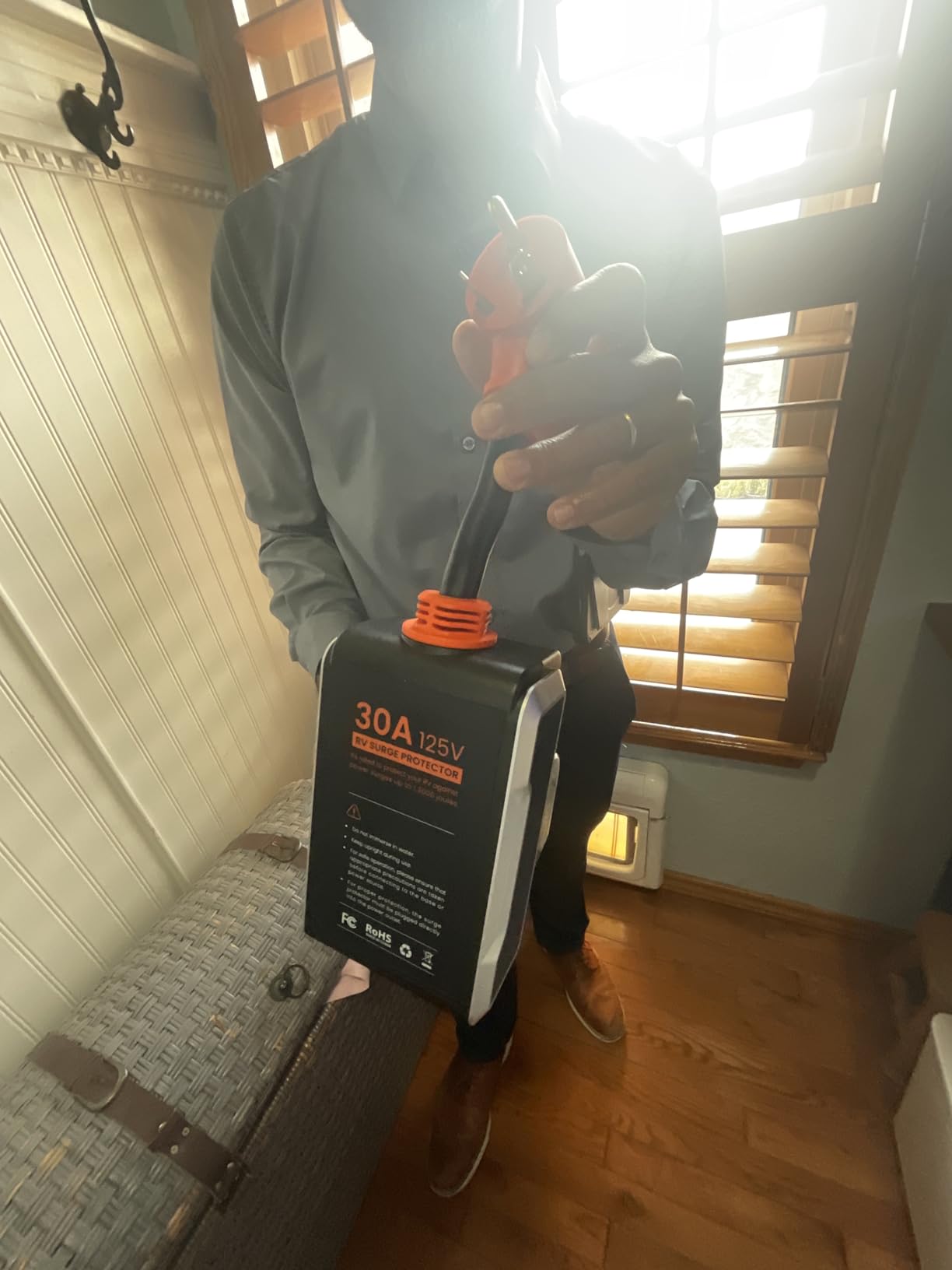
Real-world reports include one owner whose protector absorbed a surge on the first evening of use, and another who replaced a failed higher-end system with this one. That second story is a caution as much as an endorsement, since it suggests the reason it was available was a hardware failure somewhere upstream.
Be aware of the rating spread in the reviews. At 4.6 from 697 reviews this is the lowest average in the roundup, with a 5 percent one-star share against 1 to 2 percent for most of the field. The four-year support period is a real strength for the tier, and better than the one-year policy on the Kohree.
Best For: Maximizing Absorption Per Dollar
Nothing else in this roundup pairs a 13,000 joule rating with a four-year support window at a budget price point. If storms are the main reason you own a surge protector, the raw capacity is the argument.
The eight-mode chart gives you a full read on pedestal wiring before you energize, and the weatherproof cover handles a model that stays out through a season.
Skip It If: You Want Reliability Consistency or Any Monitoring
A 4.6 average with a 5 percent one-star share is a wider spread than the rest of the field, so expect more variance from copy to copy than you would from a brand with a decade of the same enclosure.
There is no display and no app. The diagnostics are lights only, and several reviewers state plainly that they cannot verify the surge path without an actual surge event.
8. MILLIONHOME DF-01 – Best Compact Budget Protector
MILLIONHOME RV Surge Protector 30 Amp, 𝟐𝟎𝟐𝟔 𝐍𝐞𝐰 𝐔𝐩𝐠𝐫𝐚𝐝𝐞𝐝 Voltage Protection RV Power Surge Protectors Waterproof, RV Adapter Plug for Camper, Circuit Analyzer for Travel Trailers
13000 joule protection level
30A maximum load
1.5 pounds and 16.1 inches tall
24 hour after-sales support
Pros
- 13000 joule level at a budget price point
- Simple plug and play with no learning curve
- Lights clearly show whether campground ground and wiring are correct
- Compact and portable at 1.5 pounds
- Flame-retardant and waterproof housing
Cons
- Plastic weather cover hinge is flimsy and can break off
- Maximum load is capped at 30A so it cannot sit on a 50A pedestal
- Warranty terms are less established than the category leaders
The DF-01 is the simplest model here, and that is the point. It is a 30 amp plug-and-play design rated at 13,000 joules, with grounding safety for the RV equipment and high-power appliances behind it. The lights tell you whether the campground ground and wiring are correct so you can move sites rather than troubleshoot at dusk.
At 1.5 pounds and 5 by 5 by 16.1 inches it is a slim vertical stick, which is the easiest shape to wedge into a pass-through or a wet locker. The housing is flame-retardant and waterproof for rain, wind and sandstorms, and support is listed as 24 hour after-sales customer service.
The flaw that shows up in the reviews is small but real. The plastic weather cover hinge is flimsy, and at least one owner reported it breaking off within three months of use, with a welded hinge as the fix. That is a single reported failure rather than a pattern, but it is the kind of detail that decides whether the cover is still doing its job in month eight. One buyer was simply surprised by how solid the enclosure feels for the tier.
Two other limits are worth stating plainly. Maximum load capacity is capped at 30 amp and must not be exceeded, so this model has no use on a 50 amp pedestal. And compared with the lifetime and limited lifetime warranties in this roundup, the warranty terms here are less established.
Best For: First-Time Owners Who Want Simple Site Testing
No app, no account, no menu. You plug it in and read the lights, which is exactly what you want when you are pulling into an unfamiliar park after dark and need to know whether to move.
The 1.5 pound weight and slim profile make it the easiest model here to carry one-handed while managing a heavy 30 amp plug.
Skip It If: You Need Flexibility Across Amperages or a Long Warranty
With a hard 30 amp ceiling, this model is useless if you ever move up to a 50 amp coach or want to run a 50 amp pedestal through an adapter.
The cover hinge is the weak point, and the warranty is the least established of the eight, so treat it as a backup tester rather than your sole protection.
Buying Guide: Choosing a 30 Amp RV Surge Protector in 2026
How many joules do you actually need on 30 amp?
For a 30 amp RV, treat 2,000 joules as a reasonable working minimum and anything in the 10,000 to 13,000 joule range as generous headroom. A joule is simply the amount of energy the protector can absorb and dissipate before its metal-oxide varistors degrade, so a higher number means more protection across multiple moderate events rather than one dramatic strike.
The practical advice is to match the number to your exposure, not to a marketing table. A travel trailer at a well-maintained park with mature trees gets less direct strike risk than a metal-roofed coach on an exposed site, and a model that has absorbed a big event should be treated as spent even if it still lights up.
Surge protector or full EMS? The distinction matters
A basic surge protector absorbs spikes. An electrical management system does that and adds a microcontroller plus a disconnect relay that continuously tests the pedestal and cuts power when voltage is too high, too low, or when the wiring is wrong, then re-energizes after a delay.
That relay is the dividing line. Without it, a device can tell you a fault exists but cannot stop power flowing, so the coach is still exposed to a low-voltage event for as long as you leave it connected. Several products in this roundup are testers with surge paths rather than disconnecting systems, and that is a perfectly reasonable purchase for a weekend trailer at a good park. It is a weaker purchase for full-time living on questionable power. For comparison, our whole house surge protector guide covers the fixed-installation side of the same question.
Open ground, open neutral and reverse polarity in plain English
Open ground means the pedestal has no working ground path back to its breaker. The hot and neutral conductors still carry power, so your RV believes it is grounded when it is not, and a surge that should have traveled safely to earth can instead route through your electronics. Most of the damage reports in RV forums trace back to exactly this fault.
Open neutral is the more dangerous one. If the neutral connection breaks, the hot line can rise to a higher potential relative to the RV frame and chassis, which is how a normal hookup turns into a burned distribution panel or a melted component board.
Reverse polarity means hot and neutral are swapped at the pedestal. The immediate symptom is that GFCI-protected receptacles will not reset and some electronics run hotter than they should, but the deeper problem is that surge protection no longer has a correct path to follow. Every model in this roundup tests for these faults before energizing, which is the single most valuable thing any of them does.
Portable piggyback versus hardwired
Every product reviewed here is portable and plugs in line between your shore cord and the pedestal. Hardwired models mount inside the coach behind the power center, which removes the theft problem entirely and means you can never forget the protector when you break camp. The trade-off is installation cost and the fact that a hardwired protector has to be swapped by a technician.
Owners on Airstream and T@B forums tend to favor hardwired or split installs precisely because of theft and because there is nothing to carry. Everyone else weighs a portable model against the very real problem of premium portables disappearing from pedestals overnight.
Can a 50 amp protector protect a 30 amp RV?
Yes, for detection and surge absorption, as long as you connect through a proper 50 amp to 30 amp dogbone adapter and your RV’s own 30 amp breaker is intact. The protector’s sensing and its surge path do not care which amperage the RV is rated for, and a larger model run at 30 amp is still measuring voltage and checking wiring correctly.
What does not transfer is headroom. A 50 amp protector will not keep you from overloading your own 30 amp service, and it will not stop a 30 amp breaker from tripping when the compressor and the microwave run together. The adapter is the compatibility answer, not an amp-budget answer. For a 50 amp rig, the 50 amp roundup covers the larger class properly.
Display, weatherproofing, theft and warranty
LED indicators that are readable in direct sunlight beat a fancier display you cannot see at noon, and IP67 or IP68 housings are worth paying attention to in climates with real rain or blowing dust. For theft, look for a locking ring or integrated bracket on the cord, and treat the GEARGO and CRTBETLIF models as needing your own chain.
Warranty length is the axis most lists ignore. A lifetime warranty from Progressive or CARMTEK, or the limited lifetime warranty from Southwire, changes the ownership math on a product whose surge path is consumable. Replacing a storm-dead protector is the moment the warranty pays for itself.
The 3,600 watt budget is the real 30 amp problem
Your 30 amp service delivers 3,600 watts at 120 volt, and that number, not the surge rating, is what limits your campground life. A 1,200 watt microwave running with a 1,500 watt air conditioner compressor and a refrigerator cycling will trip the breaker, and the surge protector cannot prevent that because it is not an amp limiter.
Watch the wattage on the PWD30 app while the compressor starts and you will immediately see which appliances overlap. The practical fix is sequencing rather than buying a bigger protector, and if you need a hard number for what runs together, our surge protector fundamentals guide covers how clamping and joule ratings work.
First hookup, and what to do when a protector refuses to energize
Before you plug the coach in, connect the protector alone and read the lights. Correct wiring means you are safe to continue. Open ground, open neutral, reverse polarity or no power means do not energize the RV; try another pedestal, and if the fault repeats, tell the campground host so someone can look at the pedestal rather than your electronics.
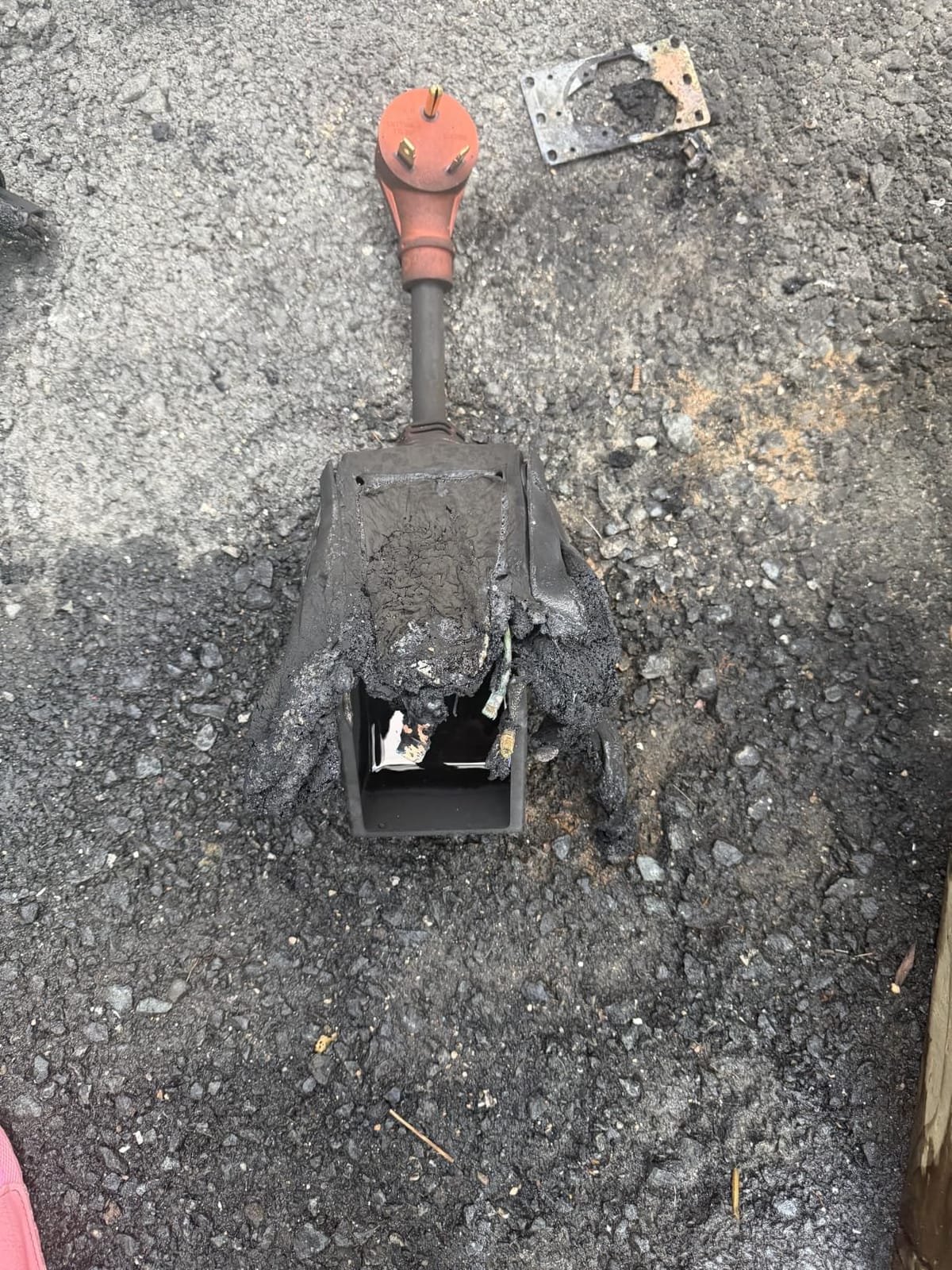
If a protector will not energize after a fault, unplug it completely and wait before retrying, because the internal capacitors and the safety delay need to reset. Confirm the pedestal is live from another known-good device, check that the plug is fully seated, and if the fault code returns immediately, the pedestal is the problem. If the protector itself ran unusually hot during the event, replace it rather than trusting it, since a scorched housing means the internals were already compromised.
How We Researched These 8 Protectors
Each of the eight products was compared on published specifications including amperage, voltage, joule rating, connector type, diagnostic coverage, warranty length and physical dimensions. Owner reviews were read in volume, with attention to recurring complaints rather than isolated comments, and forum threads on RV owner communities were used to identify field failure modes that do not appear in spec sheets.
Products were ranked on fault-detection coverage first, then build and weather resistance, then warranty, then surge capacity. Joule ratings were treated as one input rather than the ranking criterion, because the numbers in this category vary by an order of magnitude without a corresponding difference in real-world outcome for most campers. No product was included unless it is rated for 30 amp and 120 volt service.
Frequently Asked Questions
What is the best brand of RV surge protector?
Progressive Industries is the most consistently recommended brand across RV owner forums, with the SSP-30XL portable model standing out for fault detection, a lifetime warranty and the largest review base in the 30 amp class. Power Watchdog is the other name RV owners raise most often, favored when you want Bluetooth monitoring and a higher surge rating. Southwire and CARMTEK are respected for build quality and warranty length.
How many joules should a 30 amp RV surge protector have?
For a 30 amp RV, 2,000 joules is a reasonable working minimum for spike absorption, and 10,000 to 13,000 joules gives you far more margin across repeated moderate events rather than one dramatic event. The Progressive SSP-30XL at 825 joules sits below that line, while the Kohree and CRTBETLIF models sit well above it. Treat any surge path as consumed after a real hit.
Will a 50-amp surge protector protect a 30-amp RV?
Yes, for fault detection and surge absorption, as long as you connect through a proper 50 amp to 30 amp dogbone adapter and your RV’s own 30 amp breaker is healthy. The protector still measures voltage and checks pedestal wiring correctly regardless of amperage. What it does not do is add wattage headroom, so your 3,600 watt 30 amp limit still applies and can still trip.
Do I really need an expensive surge protector for my RV?
You need one, and you do not need the most expensive one. A protector that detects open ground, open neutral, reverse polarity and bad voltage before you energize prevents the majority of real RV damage, and several of those checks cost very little. Spend more for higher joule ratings, app monitoring, UL listing or a lifetime warranty only if your camping sites or your rig’s electronics justify it.
Is Southwire a good RV surge protector?
Southwire is one of the most established names in RV surge protection, and the 44280 model carries 2,100 joules, enhanced LED diagnostics, thicker receptacle brass, an integrated pull handle, an anti-theft lock ring and a limited lifetime warranty. Owners especially like that the indicators stay readable in direct sunlight. The main caution from long-term owners is that internal protection components degrade with age.
Why does my RV surge protector keep tripping?
Repeated tripping usually means the pedestal voltage is outside the protector’s safe range, most often a low-voltage condition or a neutral fault. On 30 amp service, a tripped breaker is a different problem and is almost always an amp budget issue, such as the air conditioner compressor starting while the microwave runs. Unplug the protector, let it reset, and test the pedestal before energizing the coach again.
Conclusion: The Best RV Surge Protectors for 30 Amp Campers
For most 30 amp campers, the Progressive Industries SSP-30XL is the best RV surge protector for 30 amp service: it tests the pedestal wiring before you energize, reads clearly in the dark, chains to the pedestal and carries a lifetime warranty. If you want to watch amperage and wattage while the air conditioner runs, the Power Watchdog PWD30 earns its place with 3,000 joules and app-based monitoring. The GEARGO analyzer is the value pick, with an IP68 housing and the most complete wiring fault chart at the low end of the range.
The rest of the field is worth knowing about: Southwire for readable diagnostics in sunlight, CARMTEK for UL listing and four-season temperature range, and the Kohree, CRTBETLIF and MILLIONHOME models if you want maximum absorption per dollar. Whatever you choose, test the pedestal before you plug the coach in, and treat any protector that takes a real surge as spent.