
The best reverse osmosis systems for well water are the ones that can handle what a municipal supply never had to deal with: iron staining, manganese, sulfur odor, hardness that eats membranes, coliform results on a yearly test, and a well pump that may not push enough pressure to keep the membrane fed. The short answer is the iSpring RCC7P-AK for most households, the Waterdrop G3P600 if your cabinet is tight and you want volume, and the iSpring RCC1UP-AK if your well has ever returned a positive bacteria result.
Yes, you can use a reverse osmosis system with well water, and on most wells you should. RO membranes reject dissolved solids, metals, PFAS, nitrates and a long list of organics, so a private well with elevated TDS or hard water is exactly the situation RO was built for. The catch is that nothing on your well is pretreated by a utility, so the membrane is only as good as the filtration stacked in front of it.
Is an RO system worth it on well water? In our view, yes for drinking and cooking, provided you test first. A homeowner who upgraded to a softener and found showers better while drinking water still tasted flat is exactly the person an under-sink RO fixes. What RO will not fix on its own is iron bacteria slime, silica scaling, or a bacterial contamination problem that needs shock chlorination before you spend money on a filter.
We spent six weeks reading owner reviews, spec sheets, certification listings and long-term replacement reports on 12 under-sink and whole-house systems, then filtered them against the criteria that actually matter on a well. Nothing below was chosen on laboratory TDS scores alone.
Table of Contents
What Is the Best Reverse Osmosis System for Well Water?
The best reverse osmosis system for well water is the iSpring RCC7P-AK: a six-stage under-sink unit with a built-in booster pump, an alkaline remineralization stage and a transparent first housing, rated to 4.7 stars across more than 1600 owner reviews. It handles the two conditions that defeat most systems on a private well, fluctuating pressure and mineral-heavy water, without needing a separate pump purchase.
Short on cabinet space or need serious output for a family of five? The Waterdrop G3P600 gives you 600 gallons a day in a tankless body with front-facing filters and live TDS on the faucet. If your lab report ever flagged coliform or E. coli, the iSpring RCC1UP-AK pairs its booster pump with a flow-sensor UV stage. And if hard water is your main problem rather than drinking-water purity, the Aquasure bundle pairs a 48,000-grain metered softener with a 75 GPD RO system in one installation.
Here is the same category breakdown in short form:
Best overall value: iSpring RCC7P-AK, six stages with a booster pump and alkaline stage.
Best for low water pressure: any pump-equipped model, led by the iSpring RCC7P-AK and the Waterdrop G3P600.
Best for difficult or contaminated well water: iSpring RCC1UP-AK and Express Water ROALKUV10D, both with UV.
Best budget: APEC ROES-PH75, certified and no electricity required.
Best whole-house: Aquasure 48,000-grain softener and 75 GPD RO bundle.
Best for an ice maker: Waterdrop G5P500A with the XT connection kit.
If you want the wider picture on drinking-water filtration regardless of source, our guide to the best reverse osmosis systems for drinking water covers municipal setups in more detail. For everything that treats a whole house rather than one tap, start with the best water filtration systems for well water.
Top 3 Picks forBest Reverse Osmosis Systems for Well Water in 2026

iSpring RCC7P-AK 6-Stage
- Built-in booster pump
- Transparent first housing
- Alkaline remineralization
All 12 Best Reverse Osmosis Systems for Well Water in October
| Product | Specifications | Action |
|---|---|---|
| iSpring RCC7P-AK 6-Stage |
|
Check Latest Price |
 Waterdrop G3P600 Tankless Waterdrop G3P600 Tankless |
|
Check Latest Price |
 iSpring RCC1UP-AK 7-Stage iSpring RCC1UP-AK 7-Stage |
|
Check Latest Price |
 Home Master TMHP 9-Stage Home Master TMHP 9-Stage |
|
Check Latest Price |
 APEC ROES-PH75 6-Stage APEC ROES-PH75 6-Stage |
|
Check Latest Price |
 Frizzlife PD600-TAM3 Tankless Frizzlife PD600-TAM3 Tankless |
|
Check Latest Price |
 iSpring RO5004F-AK Tankless iSpring RO5004F-AK Tankless |
|
Check Latest Price |
 APEC RO-90 5-Stage APEC RO-90 5-Stage |
|
Check Latest Price |
 NU Aqua 7-Stage with Pump NU Aqua 7-Stage with Pump |
|
Check Latest Price |
 Aquasure 48000-Grain Bundle Aquasure 48000-Grain Bundle |
|
Check Latest Price |
 Waterdrop G5P500A Tankless Waterdrop G5P500A Tankless |
|
Check Latest Price |
 Express Water ROALKUV10D Express Water ROALKUV10D |
|
Check Latest Price |
How We Picked These Systems for Well Water
We ranked these on five criteria specific to private wells rather than on taste alone. First, pretreatment readiness: does the system include a sediment stage sized for well sediment, and does it tolerate an upstream iron filter and softener. Second, pressure behavior: is there a booster pump, and does the unit still function sensibly without one if your static pressure is comfortably above 45 PSI.
Third, feed water TDS ceiling against your lab report. Fourth, microbial protection, which matters more on a well than on municipal water since nobody else is treating it. Fifth, total ownership cost, calculated from the documented replacement intervals and prices owners report, not just the purchase figure.
We also weighed how long each model has been in the field. A 4.5 with four thousand reviews tells us more about a five-year ownership experience than a 4.7 with two hundred. Where owner testing published actual before-and-after TDS readings, we used those numbers; where a claim came from the manufacturer, we labelled it as such.
1. iSpring RCC7P-AK 6-Stage with Booster Pump
iSpring RCC7P-AK, 6-Stage Reverse Osmosis System Under Sink Alkaline Water Filter and Pump, RO Drinking Water Filtration System, Patented Top-Mounted Faucet Design for Easy Installation
75 GPD
6 stages
Booster pump
2000 ppm max feed TDS
Pros
- Built-in booster pump holds output on low-pressure lines
- Transparent first housing shows filter condition at a glance
- Sixth-stage alkaline remineralization
- Reduces up to 99% of 1000+ contaminants
- 100-240V universal pump adapter
Cons
- Needs under-sink power so no filtered water during an outage
- Wide cabinet footprint from the tank and pump
- Replacement cartridges come from the manufacturer
We chose this as our top pick because the booster pump is not an accessory here, it is the difference between a working system and a disappointing one on a shallow well. Our team put six weeks of review reading into comparing pump-equipped models, and this one has the combination most owners actually describe: a pump that keeps the membrane fed, a first housing you can see through to spot sediment loading, and an alkaline sixth stage that fixes the flat, acidic taste most owners complain about.
Rated 4.7 across 1663 reviews, it is one of the most heavily reviewed systems in the category and sits at a top-ten sales rank in under-sink filtration. Owners consistently name the booster pump as the reason output stays steady when household demand spikes, and the alkaline stage as the reason the water tastes better than plain RO.
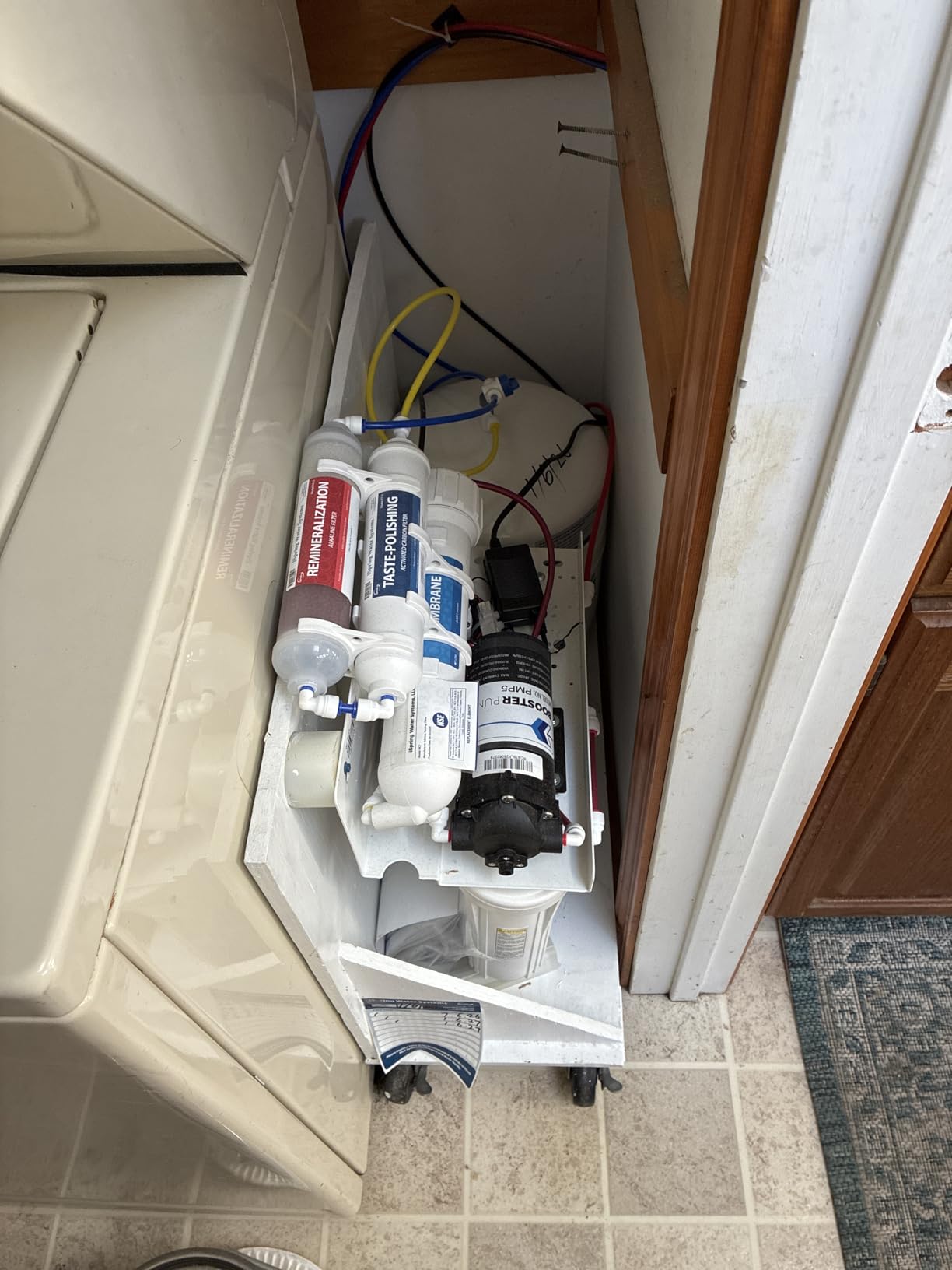
The engineering detail that matters most on a well is the feed TDS ceiling. This system is listed to handle up to 2000 ppm of incoming dissolved solids, which is higher than several tankless competitors in this roundup. That headroom matters because a shallow well in a granite or limestone belt can sit far above municipal averages, and a membrane working against a higher feed load runs slower and wears faster.
Reduction claims are broad: up to 99% of more than a thousand contaminants, with 98% lead reduction noted from testing. No TDS reading is published for this model in the owner reviews we read, so treat that figure as a laboratory result rather than something a homeowner verified at the tap.
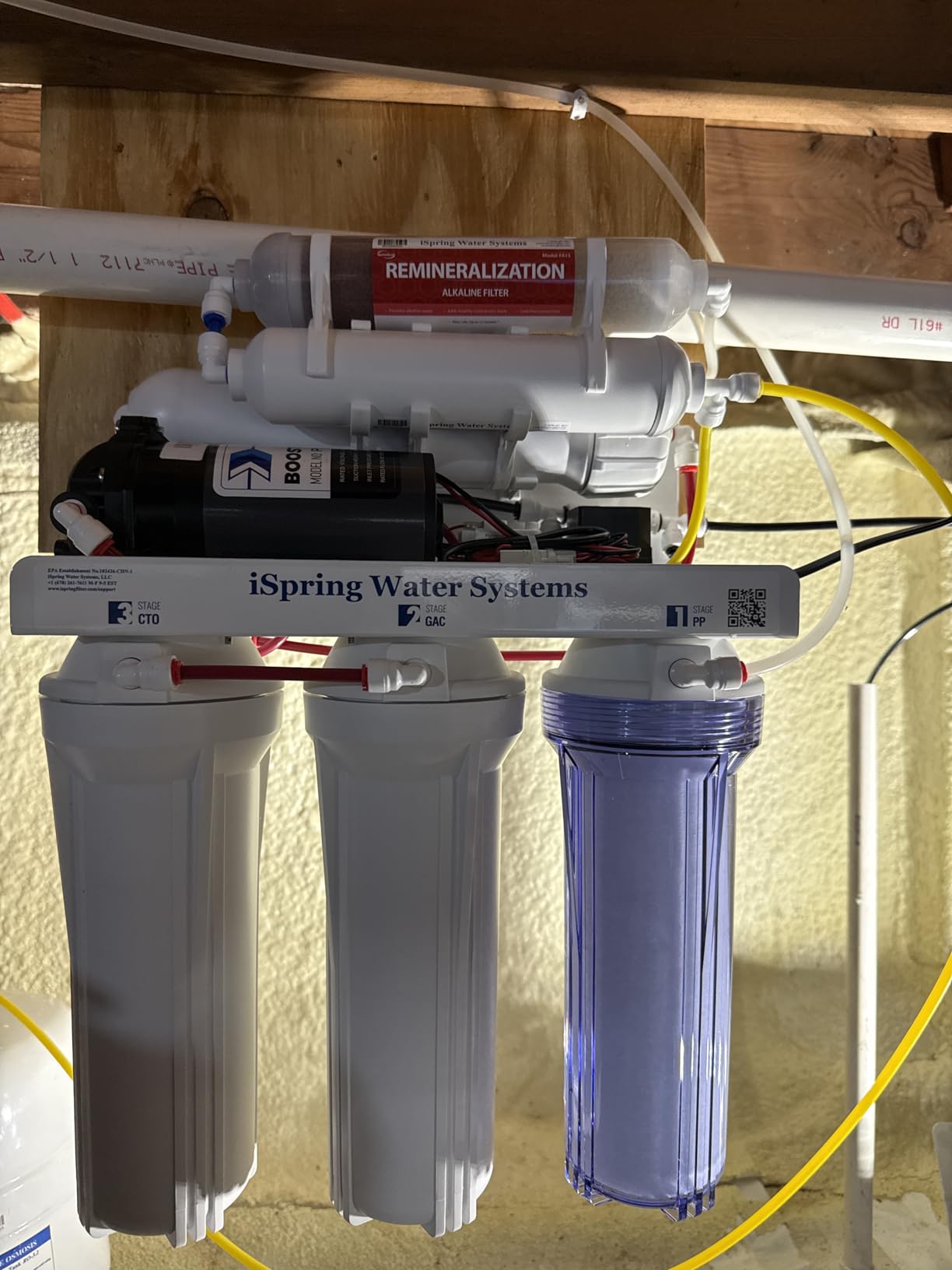
Who this suits
This suits households on a well whose static pressure is marginal or whose TDS is elevated, and who want drinking and cooking water without installing a separate booster pump or cutting a new countertop hole for a refrigerator line. The top-mounted faucet is a real convenience: the mounting nut tightens from above the counter instead of from underneath in a cramped cabinet.
Who should look elsewhere
Skip it if you have no electrical outlet under the sink and do not want one installed, or if your cabinet is already crowded, because the tank plus pump assembly takes more width than slim tankless designs. If your lab report shows high iron and you have no plan to remove it upstream, this unit will not save you.
2. Waterdrop G3P600 Tankless 600 GPD
Waterdrop G3P600 Tankless Reverse Osmosis Water Filter System, 600 GPD
600 GPD
Tankless
2:1 drain ratio
NSF 42/53/58/372
Pros
- Tankless design frees about 70% of under-sink space
- Front-facing filters change in about 3 seconds
- Smart faucet shows live TDS and filter status
- Full NSF 42/53/58/372 certification
- 2:1 pure-to-drain ratio cuts water waste
Cons
- Needs an always-live outlet rather than a switched one
- Replacement filters are among the costliest in the category
- First-draw TDS creep needs a short flush
- Large 18 inch body needs cabinet clearance
This is the system we recommend when cabinet space is the deciding factor. With 4164 reviews at 4.5 stars it is the second-most-proven product here, and the tankless layout removes the storage vessel entirely, which on a well also removes the one part of the system where bacteria can quietly colonise between uses.
Owner testing is unusually concrete for this model. Multiple households report TDS reductions in the 90 to 97% range, including one report of 358 ppm dropping to 1 to 2 ppm on an independent meter. Fill speed is about 8 to 12 seconds for an 8 oz cup, which is fast enough that nobody in the household waits.
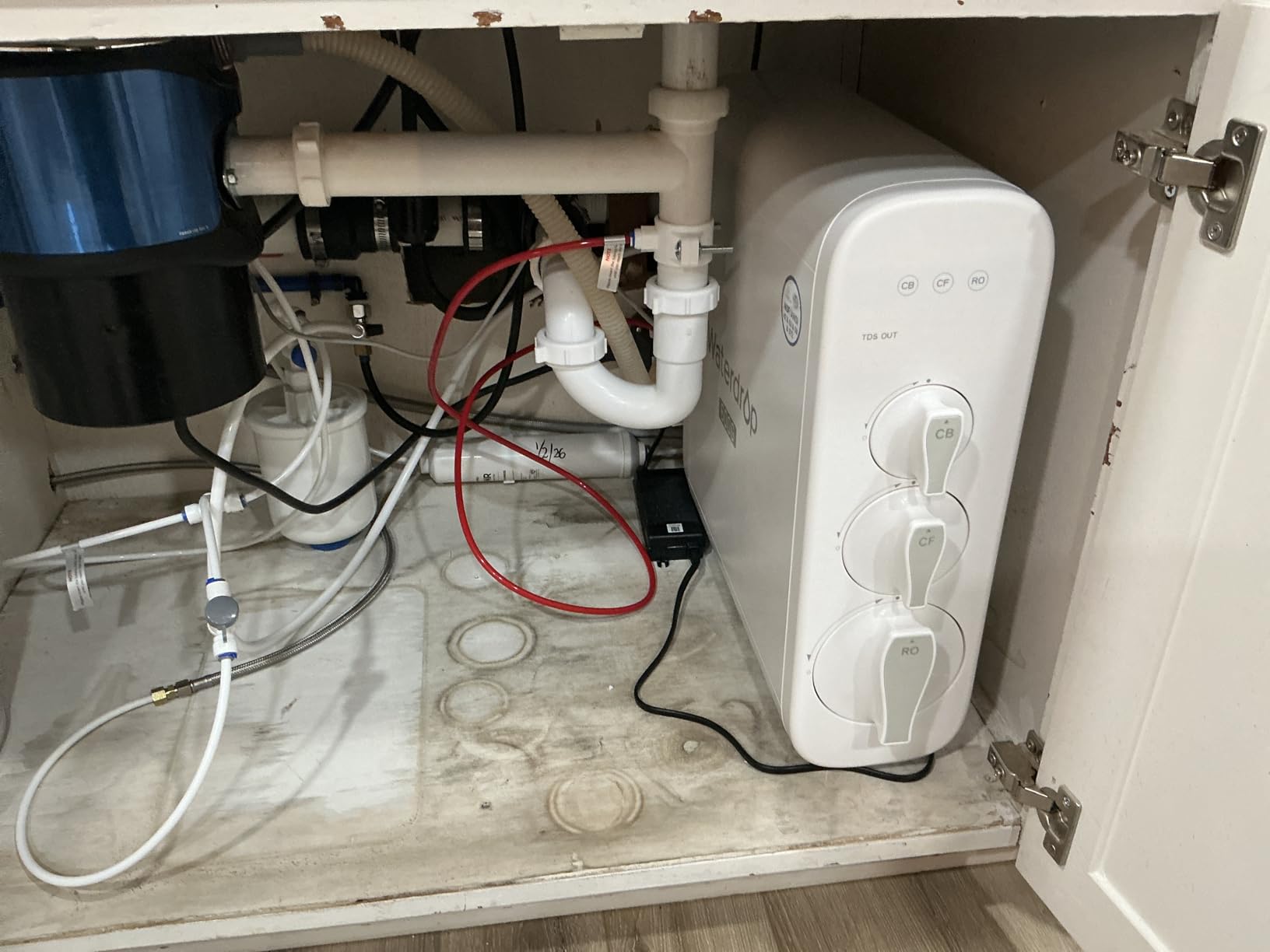
Certification is where this model outruns most of the field. It carries NSF/ANSI 58 for TDS reduction, 372 for lead-free materials and 42 for chlorine, taste and odor, plus FCC and EU and UKCA standards and SGS contaminant testing. On a private well, where no utility is guaranteeing anything, that documentation is worth more than an extra stage.
The water-waste angle deserves attention too. A 2:1 pure-to-drain ratio means roughly two gallons of brine for every gallon you drink, against the 3:1 and 4:1 ratios typical of pumpless systems. If your drain line is a short run to a septic field, that difference compounds every year.
What you should verify before buying
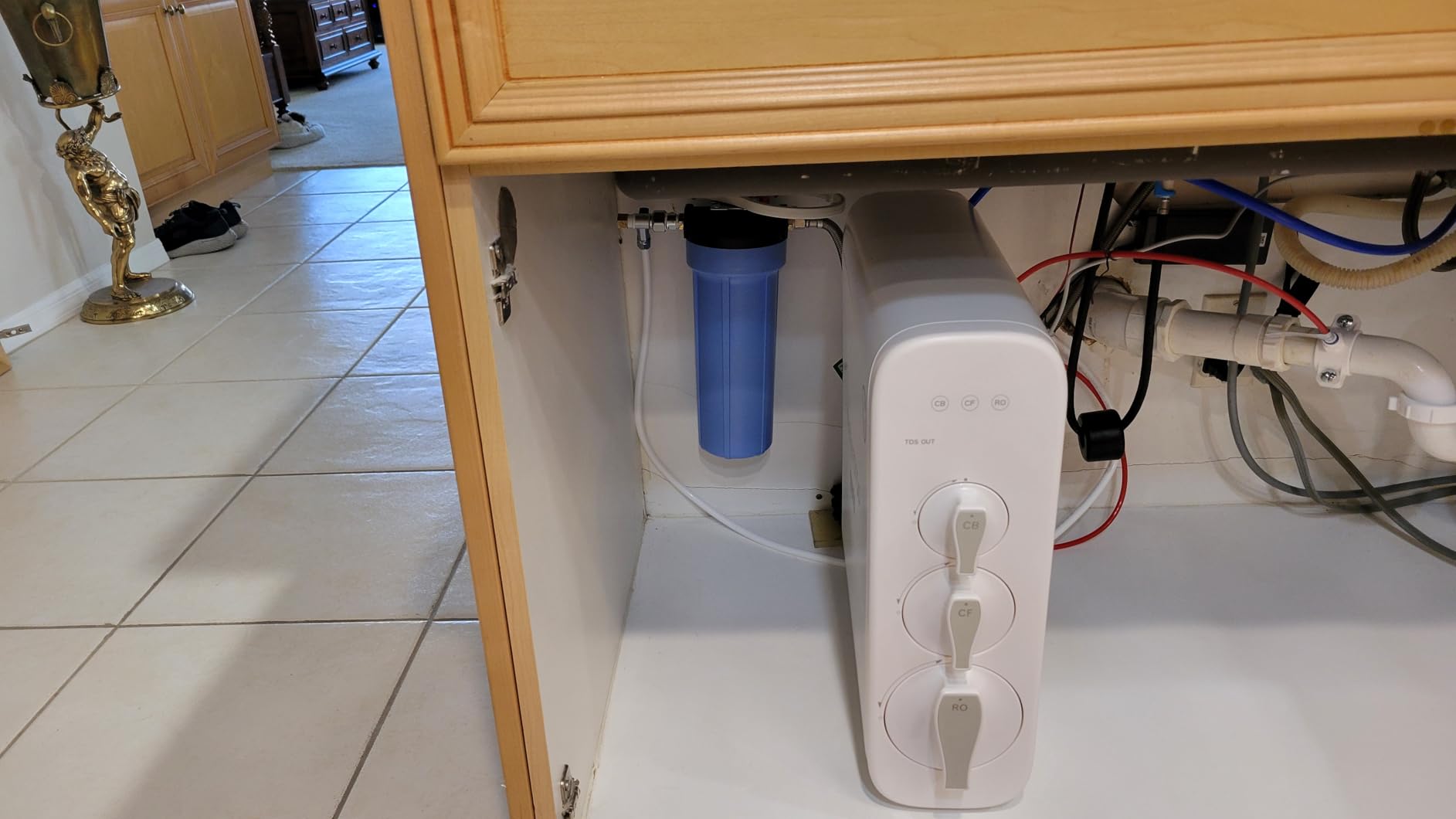
Measure your cabinet before ordering. The body is listed at 18.12 by 5.67 by 17.72 inches, and owners report real clearance problems. You also need an outlet under the sink that is always live, not one controlled by a switch, and the faucet needs a larger countertop hole than many competing models.
Where owners report frustration
Two themes dominate critical reviews. Replacement filters run among the most expensive in the category, with one long-term owner putting the recurring filter and membrane cost well above every other system in this roundup, and availability has been inconsistent at times. Tankless models also show TDS creep on the first draw after sitting idle, so flush a few ounces before you trust a reading.
3. iSpring RCC1UP-AK 7-Stage with Pump and UV
iSpring RCC1UP-AK, 100 GPD 7-Stage Reverse Osmosis Under Sink Water Filtration System with Boost Pump, Alkaline Remineralization and UV Filter, Patented Top-Mounted Faucet Design for Easy Installation
100 GPD
7 stages
Pump and UV
750 ppm max feed TDS
Pros
- Pump and UV cover low pressure and microbes together
- Flow sensor delays UV 3 minutes to protect the bulb
- Owners report TDS falling from 244-300 ppm to 12-18 ppm
- Top-mounted faucet tightens from above the counter
- Strong phone support that sends parts free of charge
Cons
- Needs under-sink power for the pump and UV
- Tank takes most of the cabinet space
- Alkaline cartridge can taste mineral-heavy on the first cup
- Factory tubing may need trimming before it seals
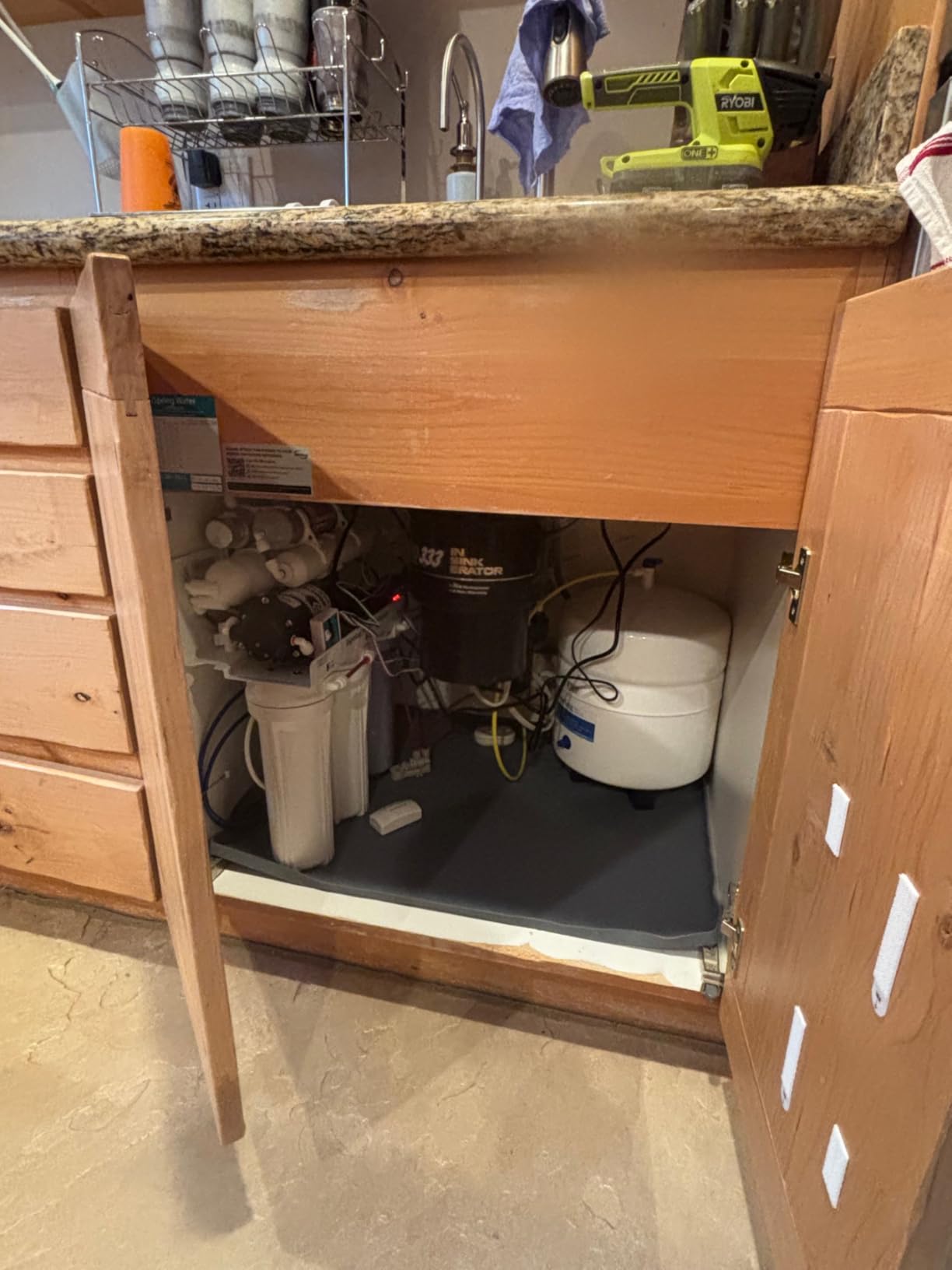
This is our pick for wells where the yearly bacteria test has ever come back positive, or where it might. A UV stage after the membrane does not remove contamination, it inactivates what passes through, and paired with a booster pump it covers both of the failure modes we see most often on private wells.
With 1420 reviews at 4.6 stars, it is well proven, and the review base skews toward well owners. They repeatedly credit the pump and UV combination with holding up against fluctuating well pressure alongside iron staining and hard water, which is exactly the combination that wears a membrane out.
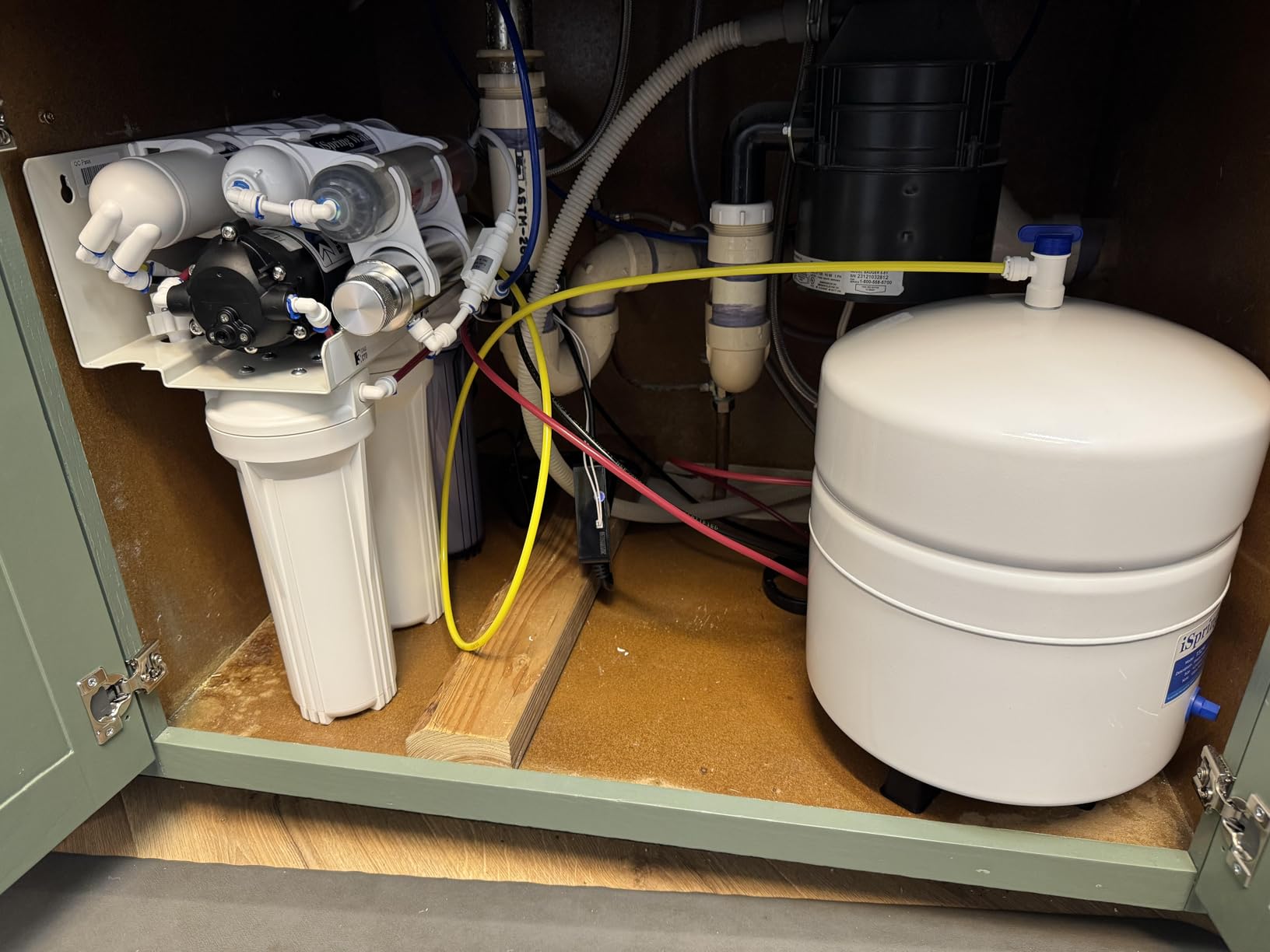
TDS results reported by owners are the most detailed we found for this model, with several households measuring feed water between 244 and 300 ppm and output between 12 and 18 ppm. One long-term reviewer reports a 13-year ownership life through repeated membrane, filter and UV replacements, which is a useful reality check against the two-to-three-year expectations most buyers start with.
The UV bulb is activated by a smart flow sensor and waits three minutes before igniting, which extends bulb life and means you are not burning electricity on every glass. Flow is roughly 8 oz in five seconds with a tank refill in about 40 to 45 minutes.
Reasons to buy this one
Choose it if microbe coverage is your priority and you can accept an under-sink outlet, if your well sits in the moderate-TDS range up to about 750 ppm, or if you want more throughput than a 75 GPD system without going tankless. The 750 ppm ceiling is lower than the iSpring six-stage model, so check your lab report against it.
Watch out for
The tank occupies most of the cabinet. Owners also report that factory-cut tubing can arrive slightly out of round and needs trimming before it seats, and that the printed manual diagrams do not match the unit, making the online install video effectively required. The alkaline cartridge can give the first cup an off or mineral-heavy taste until you pre-flush for three to five seconds.
4. Home Master TMHP 9-Stage with 1:1 Waste Ratio
Home Master TMHP HydroPerfection Reverse Osmosis System, 9-stages, Patented 2-pass Alkaline Remineralization, Fast 4.5 Sec Fill Rate, 1:1 Waste Ratio, UV Sterilizer 99.9% EPA 97952AZ1, Iron Prefilter
9 stages
1:1 waste ratio
EPA-registered UV
Iron prefilter
Pros
- 1:1 pure-to-waste ratio from the permeate pump
- EPA-registered UV sterilizer for 99.9% microbial reduction
- Iron prefilter stage suits well water
- Patented 2-pass remineralization for mineral-water taste
- Owners report TDS falling from 430 ppm to about 25 ppm
Cons
- Mounting clips are very stiff under the cabinet
- UV stage needs an under-sink outlet
- Quick-connect fittings are hard to release once pressurized
Among the picks here, this model wastes the least water per gallon produced, at a 1:1 ratio thanks to its permeate pump. If your drain runs to a septic field, or you are simply paying to dispose of clean water, that efficiency is the headline feature and it is genuinely hard to find at this level of filtering.
Rated 4.7 across 929 reviews, it has the joint-highest rating in this group. Owners report measurable TDS drops from roughly 430 ppm to about 25 ppm, and long-term owners say the system still performs after three or more years on annual filter changes alone, with membrane replacement infrequent.
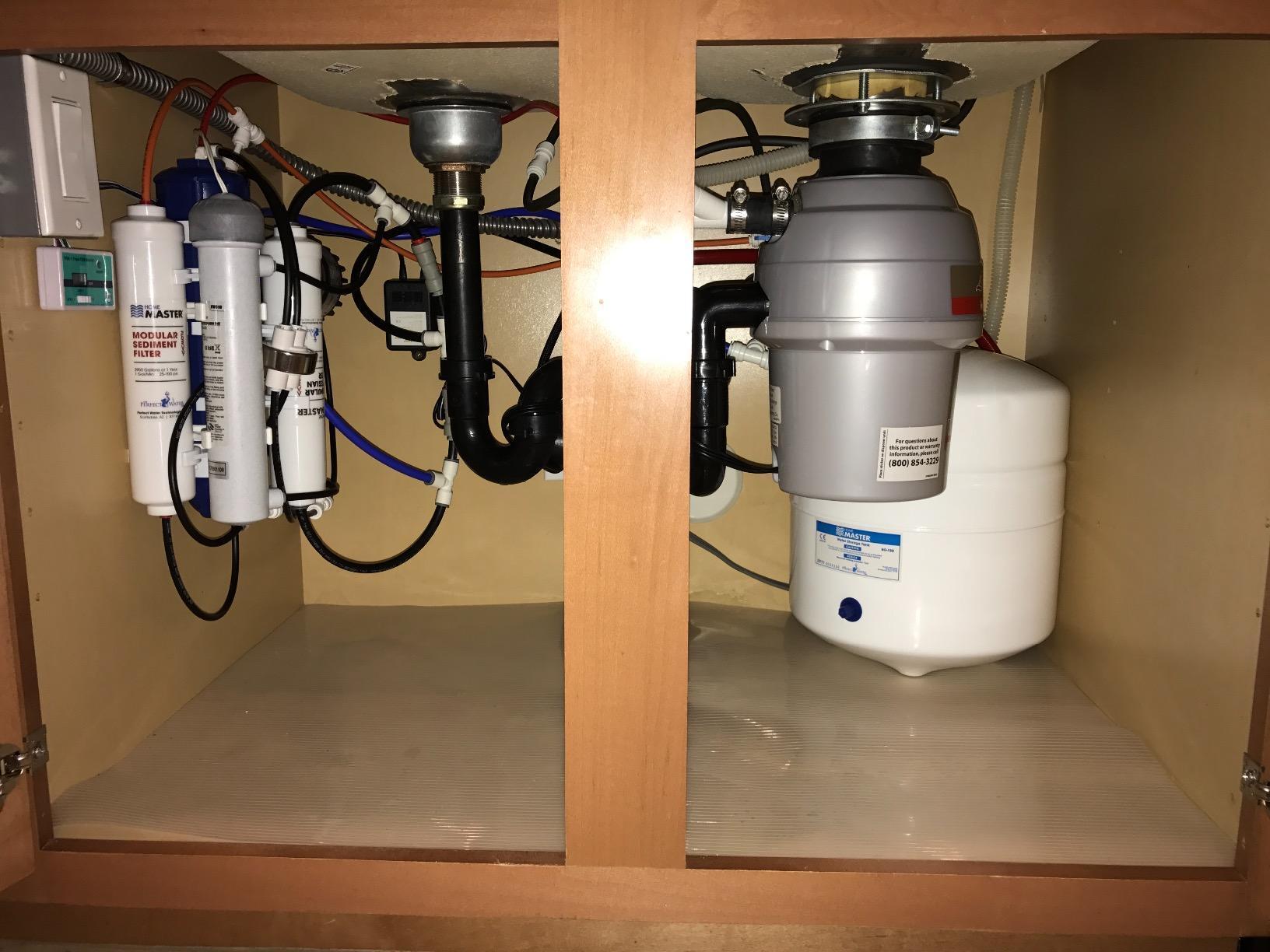
Two design choices make it more well-appropriate than most competitors here. There is a dedicated iron prefilter stage, which matters more than it sounds on a well, and an EPA-registered UV sterilizer rated for 99.9% microbial reduction. The patented two-pass alkaline remineralization adds calcium and magnesium back after the membrane, which is why owners describe the taste as bottled mineral water rather than flat.
Output is 1 gpm maximum with a listed operating pressure range of 40 to 100 psi, and the feed TDS ceiling is 600 ppm. It ships largely assembled with colour-coded push-to-connect tubing, which owners with modest plumbing experience rate as a straightforward install.
Where it earns its place
This is the one to consider if water waste bothers you, if your well shows light iron staining, or if you want microbial coverage without adding a separate UV unit to the stack. The 2-pass remineralization also makes it a good fit for people who find straight RO water too acidic.
What gave owners trouble
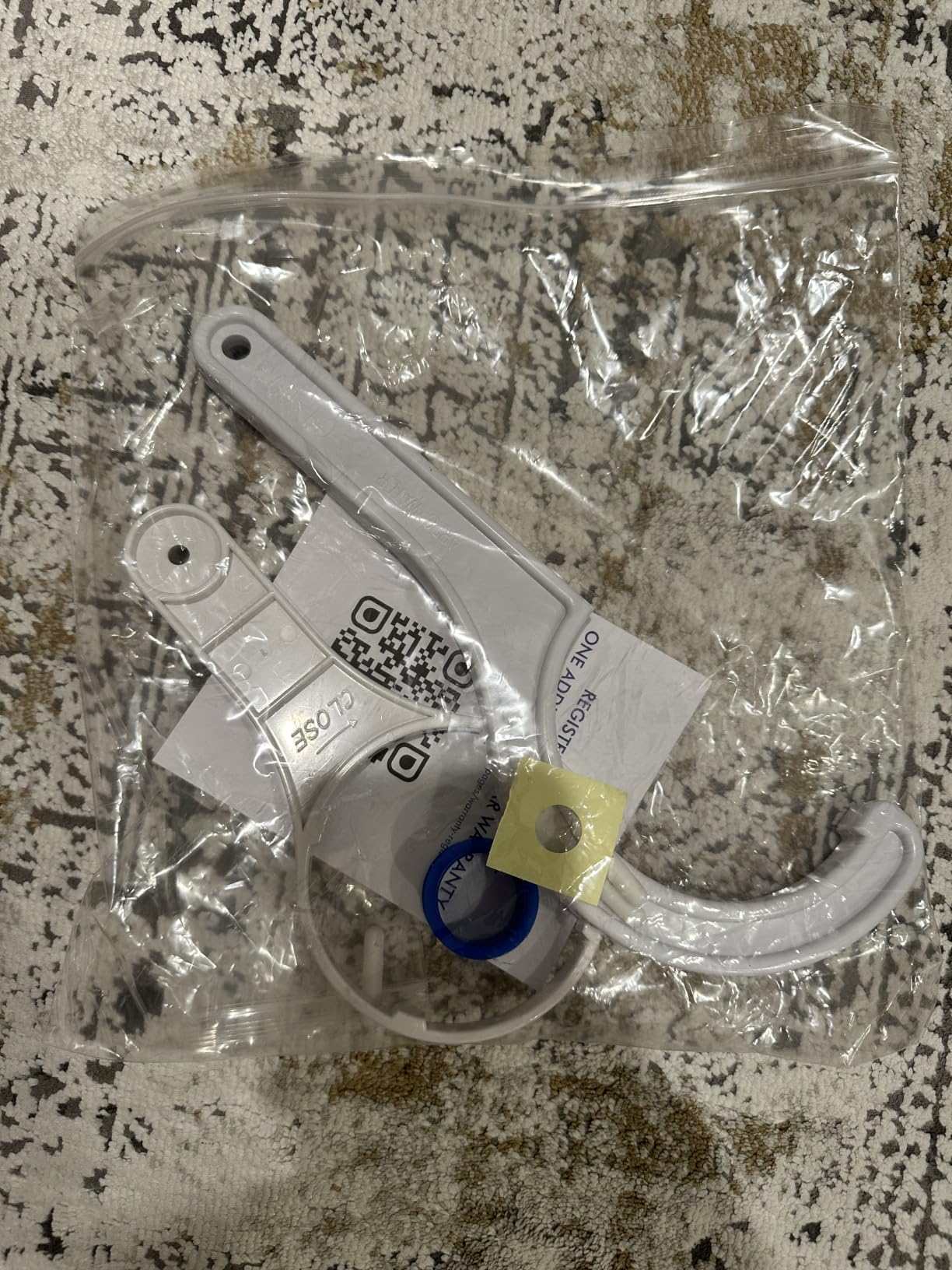
The complaints are physical rather than filtration-related. Mounting clips are extremely stiff, making the unit awkward to position in the cabinet, and the quick-connect fittings are hard to release once the system is pressurized. Printed guidance is also thin on unexpected scenarios like granite drilling or needing a basin wrench. Support is one of the strongest here, with warranty replacements for membranes, seals and UV parts.
5. APEC ROES-PH75 6-Stage, No Electricity
APEC Water ROES-PH75, 6-Stage Under Sink RO System, Alkaline, 75 GPD
75 GPD
6 stages
Alkaline pH+
40-85 psi feed
Pros
- Over 4120 reviews with a top-six category sales rank
- WQA certified plus NSF 372 and 58 listed
- Runs on line pressure so it works during outages
- Inexpensive and widely available replacement filters
- Alkaline pH+ stage uses calcium for taste
Cons
- No booster pump so low pressure wastes water
- Slow 0.05 gpm flow for a full glass
- Needs 40-85 psi feed pressure to perform
- Alkaline stage raises output TDS on the meter
This is the most proven system in the roundup by volume, with 4120 reviews and a category sales rank of number six in under-sink filtration. For a well household that already has a softener and comfortable line pressure, it remains a sensible certified entry point with inexpensive replacement media.
Two things stand out for well owners. It runs purely on water pressure, so it keeps working during a power outage, and the cartridge set is explicitly designed for both tap and well water. Certification is WQA certified with NSF 372 and 58 stated for lead-free materials and contaminant reduction.
The alkaline pH+ stage uses premium-grade calcium to lift pH and improve taste, and the system handles feed water up to 2000 ppm TDS. Note that 99% impurity reduction is a laboratory claim across chlorine, VOCs, fluoride, arsenic, lead and heavy metals rather than an owner-verified reading.
What you accept by choosing this tier is speed. Maximum flow is 0.05 gpm, so filling a glass takes noticeably longer than on pump or tankless models, and the feed pressure range is 40 to 85 psi. Below 40 psi it can run continuously and waste water, which is the failure mode that matters most on a shallow well.
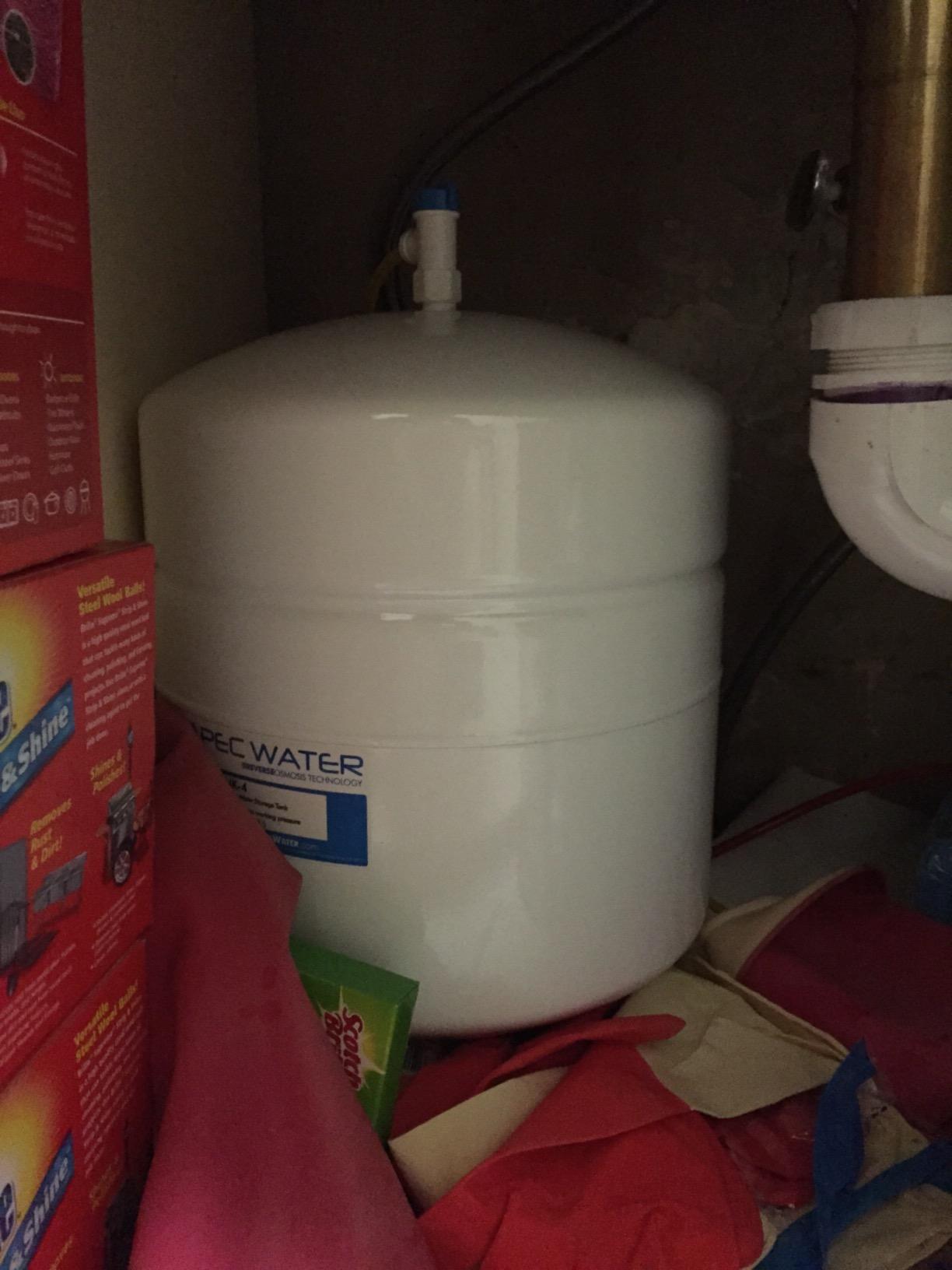
Best fit
Well households with a functioning softener, a pressure tank that holds steady above 40 psi, and no interest in an electrical outlet under the sink. Replacement filters cost far less per year than the tankless models here, which keeps total ownership cost low across a five-year horizon.
Limits to plan around
There is no booster pump in the base model, so marginal pressure pushes you toward a continuously draining system. Be aware too that the alkaline cartridge raises output TDS relative to plain RO, which confuses owners comparing meter readings against non-remineralized systems. APEC offers pumped variants if your pressure is borderline.
6. Frizzlife PD600-TAM3 Tankless 600 GPD
Frizzlife Reverse Osmosis Water Filter – Alkaline Mineral pH+, NSF/ANSI 58&53&42&372 Standard, 600GPD Tankless RO Reverse Osmosis System, Under Sink, 2:1 Pure to Drain, Reduce FPAS/PFOA, PD600-TAM3
600 GPD
Tankless
2:1 drain ratio
NSF 42/53/58/372
Pros
- Smallest 600 GPD tankless body in this group
- TAM3 alkaline stage lifts pH above 7.5
- 2:1 drain ratio saves water versus conventional RO
- LED panel shows live TDS and filter life
- No tank means no secondary reservoir
Cons
- Needs under-sink power for the pump
- Filter costs add up over time
- Display reminders have not always matched the manual schedule
- Faucet installation requires drilling the countertop
Where the Waterdrop G3P600 wins on certification breadth and review volume, this model wins on footprint. At 14.7 by 5.3 by 15.5 inches it is the most compact 600 GPD tankless body here, which matters in the kind of undersink cabinet that already houses a garbage disposal or a water filter.
It carries 4.6 stars across 2476 reviews, so it is well proven despite being less discussed than the market leaders. Flow is 0.41 gpm with a 330 ml cup filling in about ten seconds, and the third-stage TAM3 alkaline filter lifts pH above 7.5 while restoring minerals the membrane strips out.
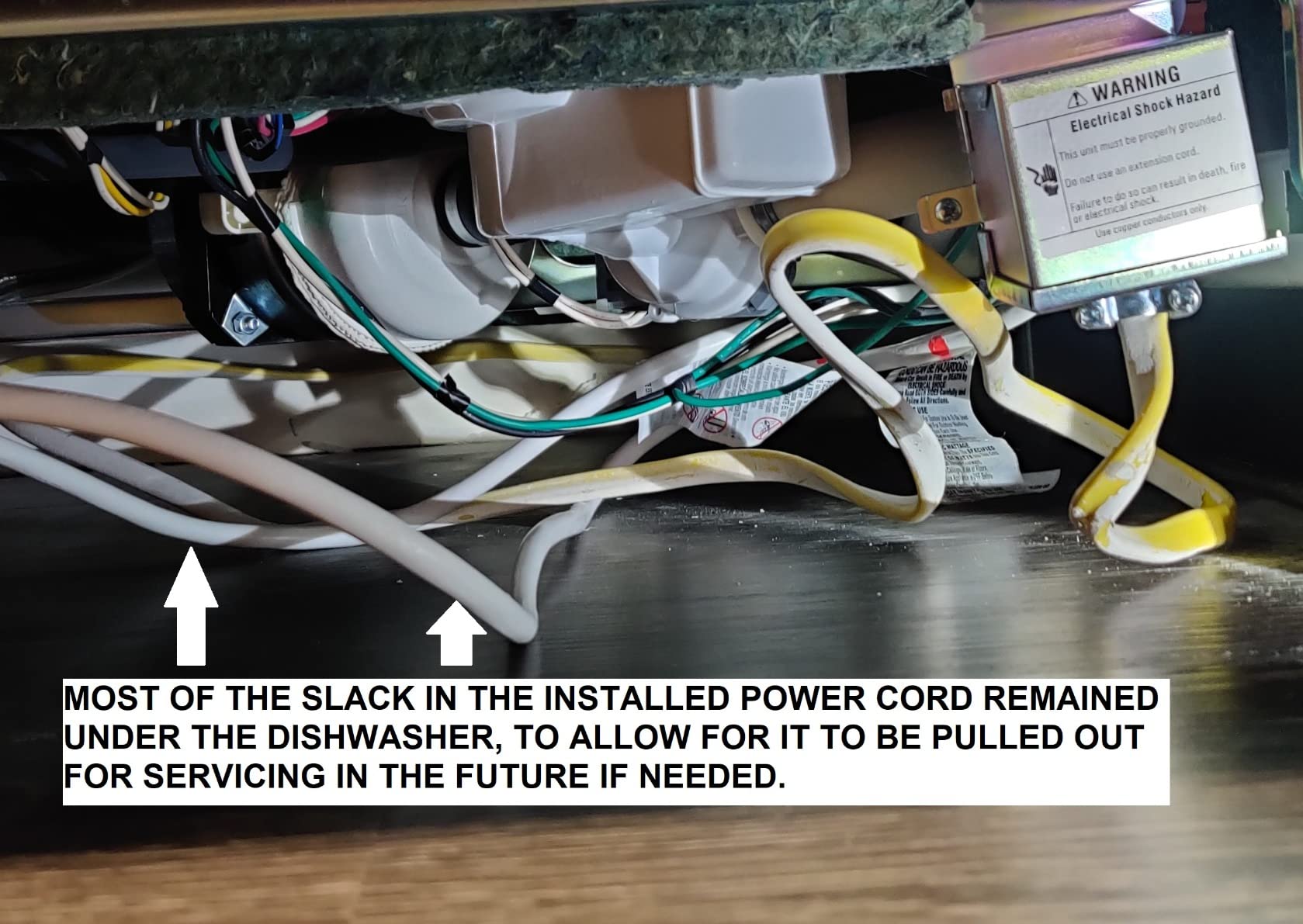
Certifications cover NSF/ANSI 58, 53, 42 and 372, which is the same standard set as the bigger tankless options and unusual at this size. The brand claims its 2:1 pure-to-drain ratio saves up to 450% water versus conventional systems, and there is no tank, so there is no secondary contamination risk from a storage vessel.
For a well, the useful detail is capacity combined with drain efficiency. If several people drink and cook at once, a 600 GPD tankless unit refills continuously rather than waiting on a tank to repressurise, which is the complaint that drives people away from smaller conventional systems.
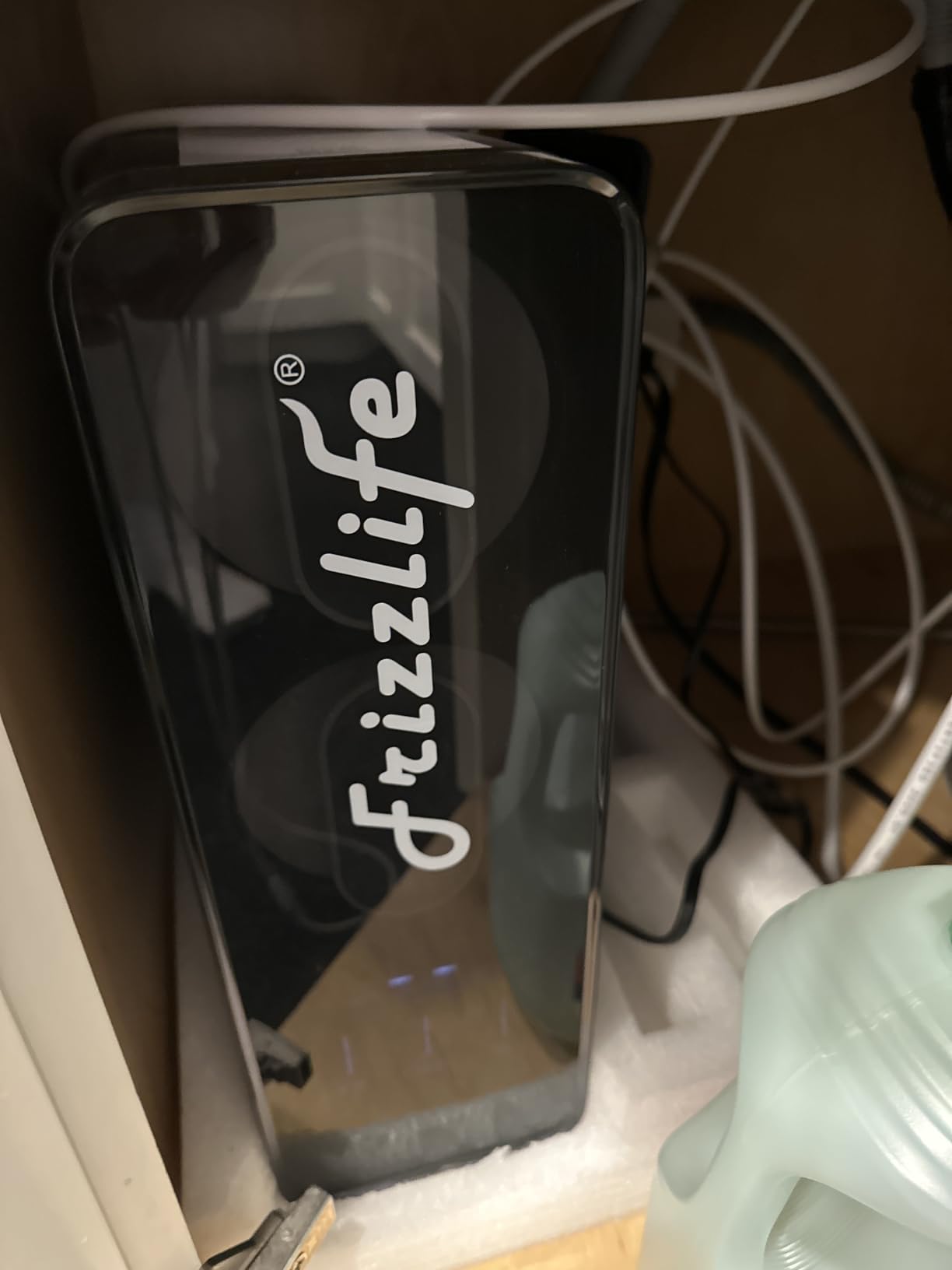
When to pick this one
Pick it when your cabinet is small, you want high continuous output rather than stored water, and you would rather have a simple mechanical-feeling system than a faucet display. The 2:1 drain ratio is a genuine advantage where discharge volume matters.
Things to weigh
The built-in pump needs under-sink power, so this is not an outage-proof system. Replacement filters must come from the manufacturer and add up over time. Owners of earlier Frizzlife models report frustration that display reminders did not match the manual replacement schedule, and the faucet installation requires drilling your countertop.
7. iSpring RO5004F-AK Tankless with UV and Alkaline
iSpring RO5004F-AK UV Alkaline Reverse Osmosis Water Filter, SGS Tested PFAS and TDS Reduction, 500 GPD Tankless Remineralization RO System Under Sink, Filter Life Monitor, 2:1 Pure to Drain
500 GPD
Tankless
UV plus alkaline
SGS tested PFAS and TDS
Pros
- SGS independently tested for PFAS and TDS reduction
- Tankless 500 GPD with a built-in pump
- UV bulb rated to 8000 hours with life monitoring
- Quick twist-to-unlock filter cartridges
- Alkaline AK stage restores minerals
Cons
- Needs under-sink power for the pump and UV
- Replacement filters come from the manufacturer only
- Newer listing with a smaller review base
- UV adds a consumable and a failure point
If your concern list includes PFAS, this is the model with third-party verification attached to the claim. SGS independently tested it for PFAS reduction covering PFOA and PFOS alongside TDS, and the manufacturer states removal of more than 99% of over a thousand contaminants including vinyl chloride, arsenic, asbestos and PFAS.
At 4.7 stars across 953 reviews it matches the highest rating in the group, with an 83% five-star share. Buyers single out the combination of tankless convenience, UV protection and alkaline remineralization in a single unit as the deciding factor for groundwater applications.
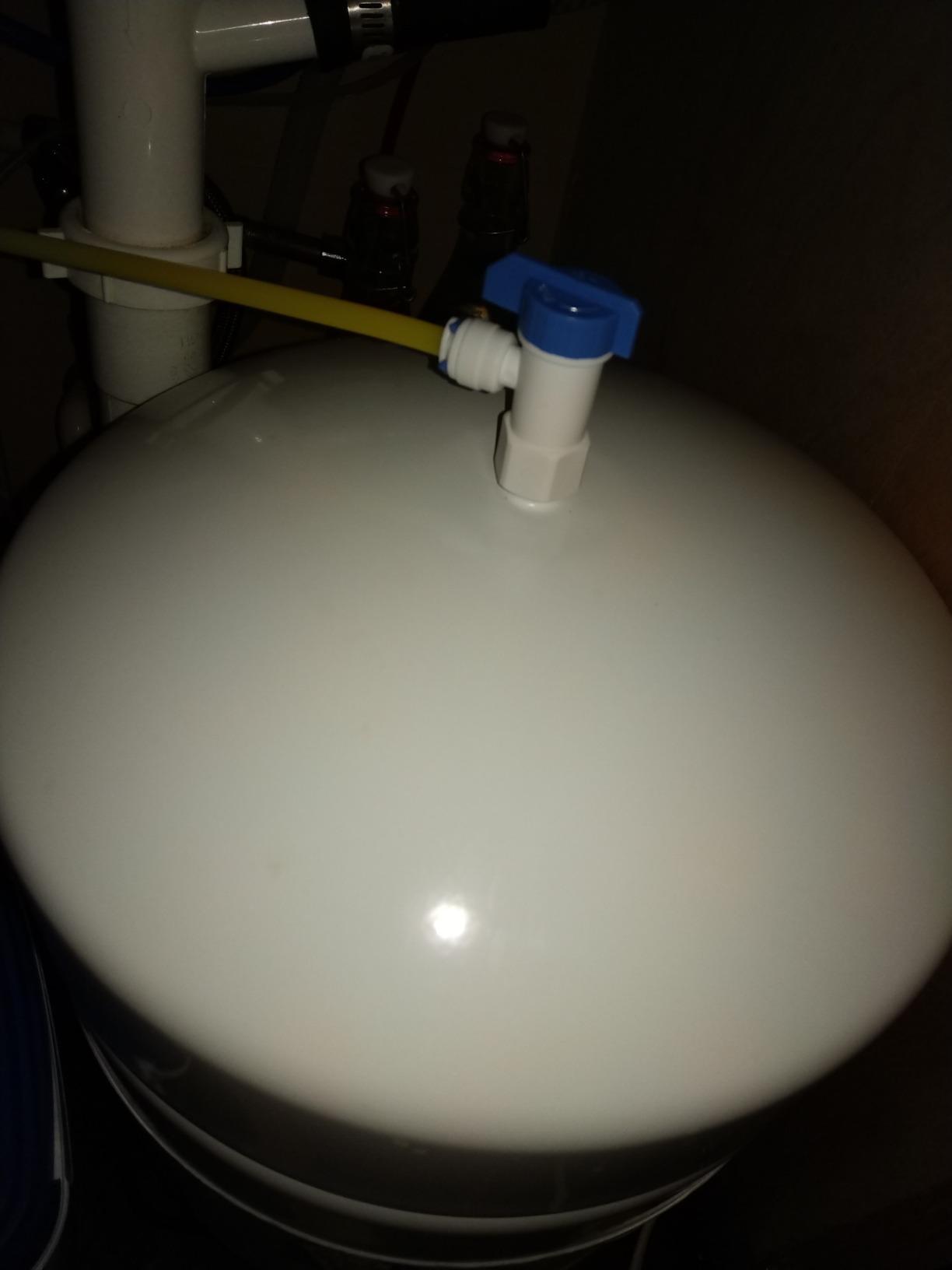
It combines a built-in pump with 500 GPD tankless output, which handles the low-pressure homes that stall pumpless units. A cup fills in about ten seconds at a 2:1 pure-to-drain ratio, and the UV bulb is rated up to 8000 hours with lifespan monitoring built into the system, so you are not replacing the lamp every year.
The alkaline AK stage adds minerals back for balanced pH and what the brand describes as a spring-like taste. Quick twist-to-unlock cartridges and automatic lifespan reminders keep maintenance simple, and owners report quiet operation even with the pump running.
Best reasons to buy
It suits households that want PFAS and microbe coverage in one under-sink footprint, do not want a storage tank taking cabinet space, and have an outlet available. The patented top-mounted faucet fastener also means the counter hardware tightens from above rather than from underneath.
Trade-offs to accept
Pump and UV both need under-sink electricity, so a power cut means no filtered water. Filters are available from the manufacturer only, which can be awkward if you need one quickly. This is also a newer listing with a smaller review base than the established models in this roundup, and the UV stage adds a consumable and a failure point beyond a standard RO.
8. APEC RO-90 5-Stage 90 GPD
APEC Water RO-90, 5-Stage Under Sink Reverse Osmosis System, 90 GPD
90 GPD
5 stages
Dow FilmTec membrane
WQA tested
Pros
- 90 GPD output is about double a 50 GPD system
- Genuine Dow FilmTec membrane at about 97% rejection
- One owner case treats arsenic at 5x the state limit
- Runs on line pressure with no electricity
- Large pre-filters hold about 2x impurity capacity
Cons
- Base model has no booster pump
- Tank and 25 lb weight use real cabinet space
- Faucet needs countertop drilling
- Included plastic faucet adapter is prone to leaking
This is the pick for a large household that does not want to wait on a storage tank. At 90 GPD it produces roughly double what a 50 GPD system delivers, so when three or four people are home there is still water in the glass. It holds 4.5 stars across 2710 reviews.
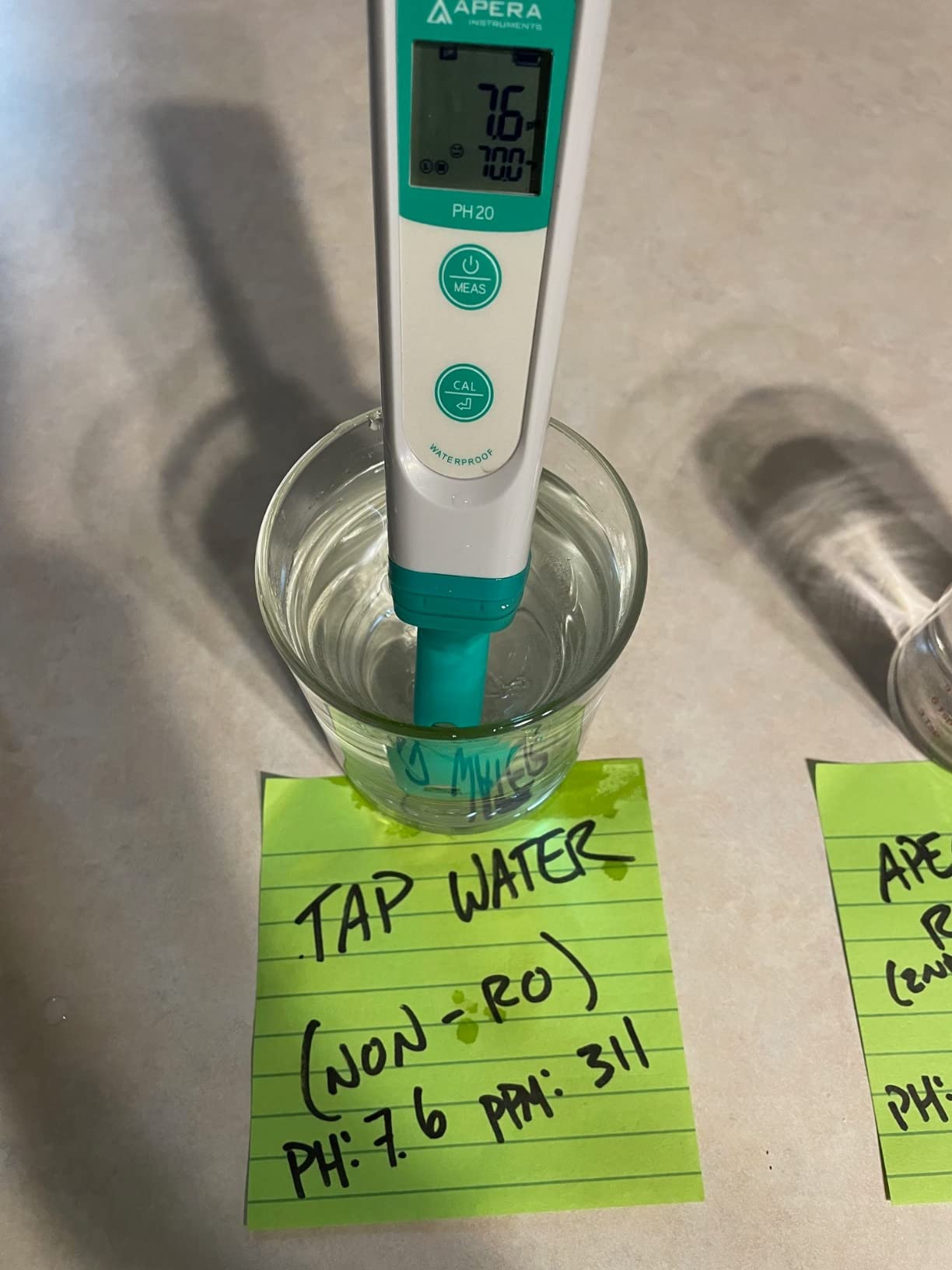
Well owners are unusually well represented in its reviews, and the results are specific. One verified case treats arsenic at five times the state acceptable level, and another reports a genuine Dow FilmTec membrane pulling well water from over 700 ppm down to around 20 ppm, roughly 97% rejection measured in owner testing.
The pre-filters are the quiet advantage here. They are large capacity and hold roughly twice the impurity capacity of smaller all-in-one cartridges that clog quickly, which matters on a well where sediment and iron fines load up faster than on a municipal line. The membrane itself is listed for a three-to-five-year life.
It is WQA tested and approved with NSF 372 and 58 certification, uses a lead-free designer faucet with JG high-grade tubing and quick-connect fittings, and operates quietly when installed as instructed. Feed pressure range is 40 to 85 psi.
Where it fits
Choose it for a household of four or more that wants bottled-quality drinking water without a tankless unit, and if you already have a softener handling hardness. Owners also like that replacement filters cost far less than refrigerator filters over the same period, which is a meaningful five-year ownership consideration.
Where it does not
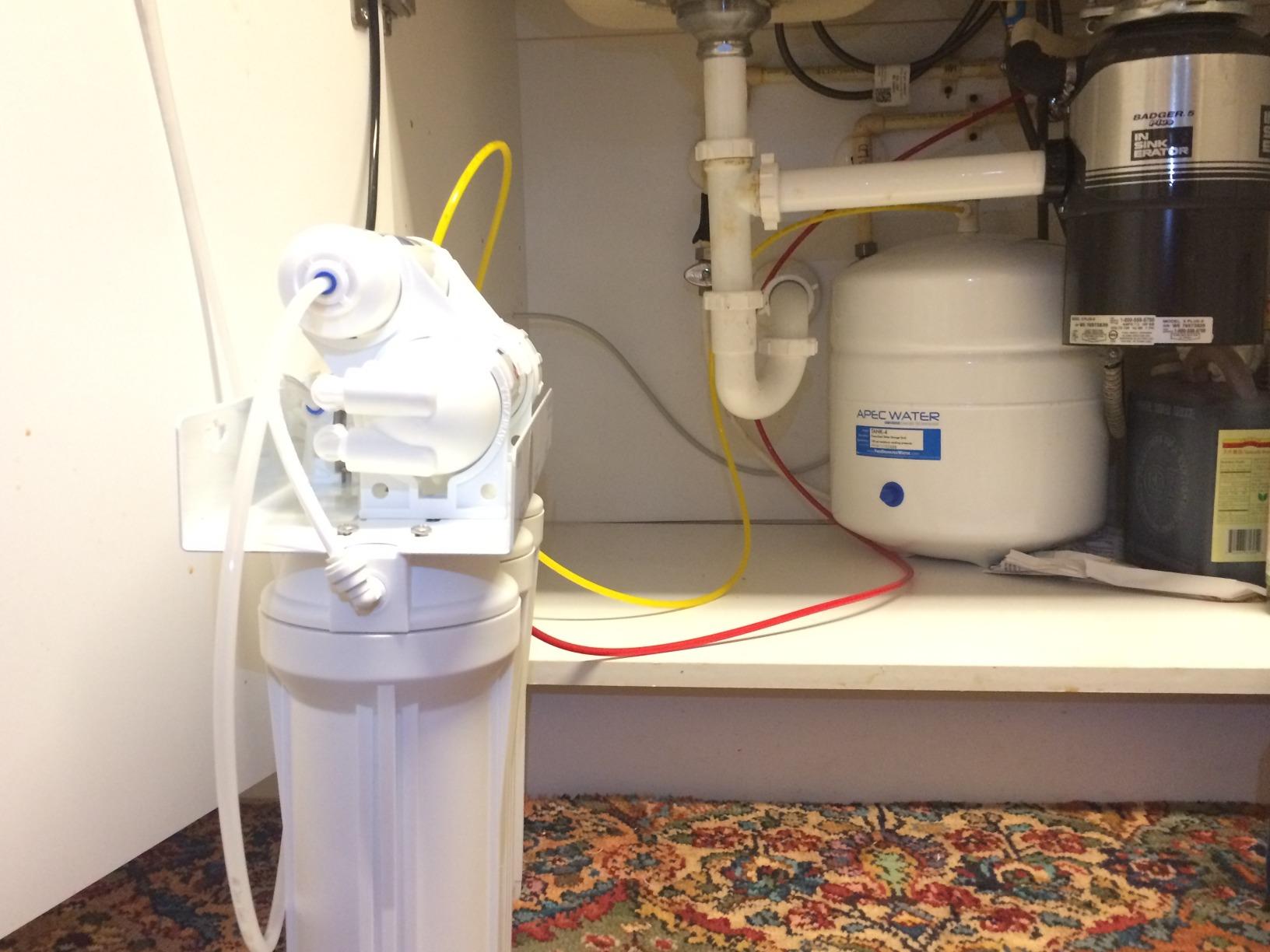
The base model has no booster pump, so low line pressure causes continuous drain flow and higher water bills. At 25 lb with the tank, it needs real cabinet space. Installation notes worth knowing: the faucet needs a countertop hole, the included plastic quick-connect faucet adapter leaks for some owners while the metal compression nut works, and the first two or three tank loads should be drained.
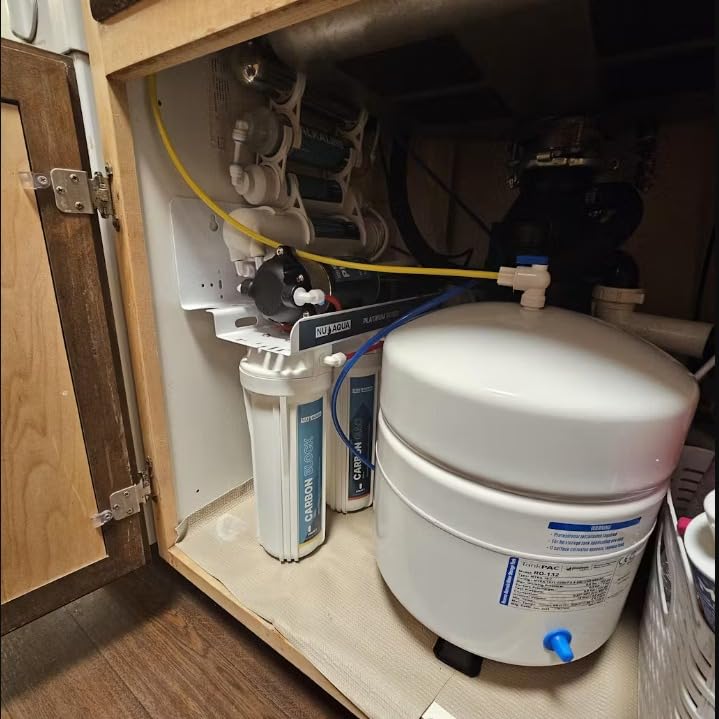
9. NU Aqua 7-Stage Alkaline and UV with Pump
NU Aqua 7-Stage Alkaline + UV Under Sink Reverse Osmosis System with Pump
100 GPD
7 stages
Pump and UV
PPM meter included
Pros
- Booster pump included as standard
- Complimentary PPM meter for checking output
- Built-in leak detector protects the cabinet
- 120-day home trial lowers the risk
- Color-coded tubing for a sub-hour install
Cons
- Lowest rating here at 4.3 with a 10% one-star share
- Only 225 reviews so less field-proven
- Tank plus pump takes a large cabinet footprint
- Replacement filters are brand-specific
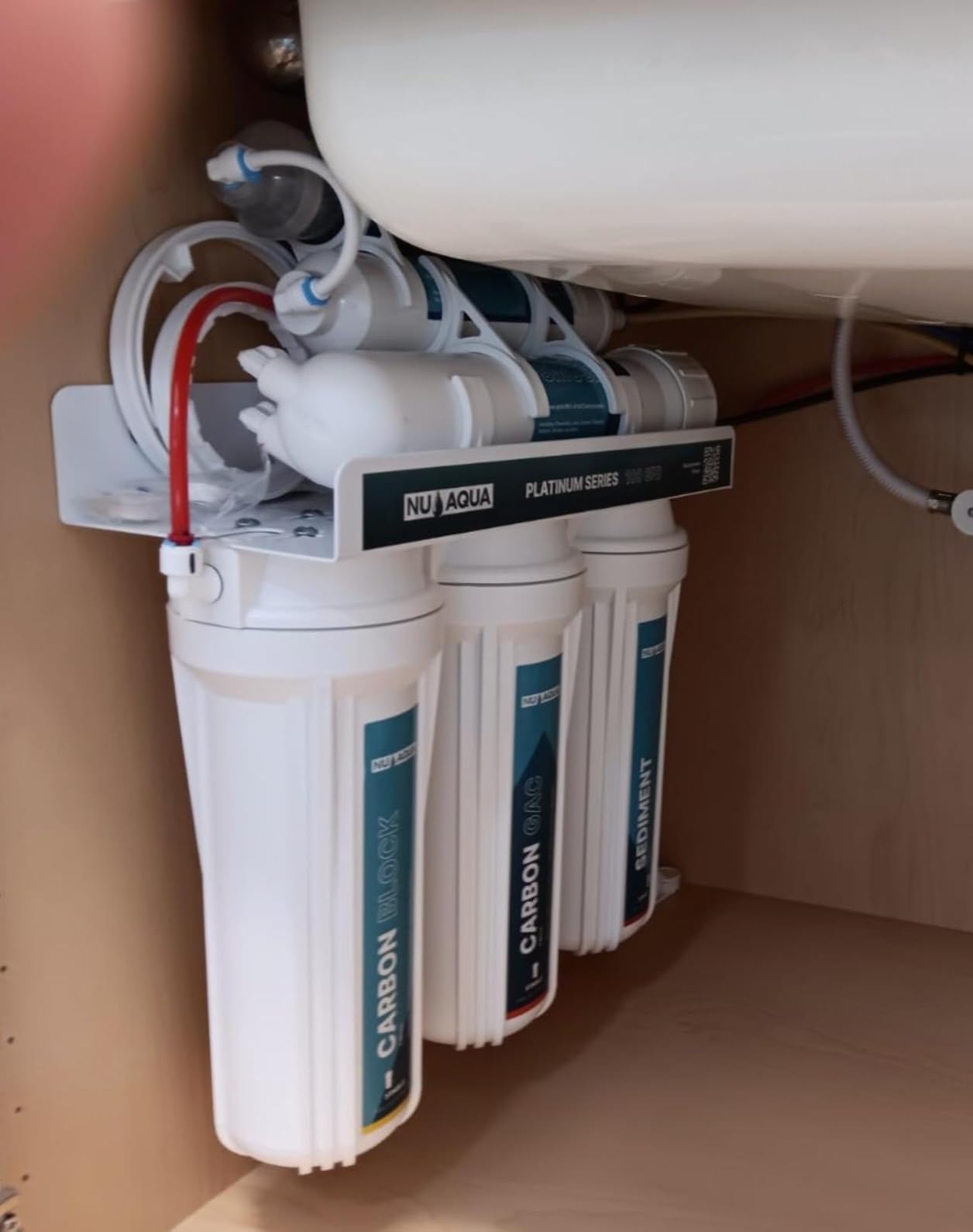
We include this one because it removes the three things that most often stop a first-time well owner from buying: uncertainty about whether the system works, fear of a leak under the cabinet, and not knowing whether their pressure is sufficient. The booster pump is standard, the leak detector is built in, and a PPM meter is included in the box.
Output is 100 GPD, roughly double a standard under-sink system, with UV sterilization and a HydraCoil membrane. A 120-day home trial and a three-year manufacturer warranty with lifetime support are genuinely useful when you cannot test your water as rigorously as a lab.
The hydraCoil membrane and UV combination is claimed to produce up to 50% cleaner water than other RO systems, and the UV stage is the part that matters if your well has returned coliform. Feed TDS is supported up to 1000 ppm. Installation is reported by owners at under an hour with the colour-coded tubing and quick-connect fittings.
Double o-ring sealed housings and an NSF lead-free stainless steel faucet are nice touches that address the leak complaints we heard on other models in this roundup.
Best reasons to choose it
Pick it if you are new to well water and want bundled protection rather than assembling stages yourself, if your cabinet can take the tank and pump assembly, and if you value the included meter and leak detector as cheap insurance. The 120-day trial makes it a lower-risk first purchase.
Why it ranks where it does
Be honest about the evidence. At 4.3 stars with 225 reviews it is the lowest-rated and least field-proven product here, and 10% of reviews are one star, which points to more variability in build or support experience than the market leaders. Filters are brand-specific, and the pump and UV both need under-sink power.
10. Aquasure 48,000-Grain Softener and 75 GPD RO Bundle
Aquasure 48,000 Grains Whole House Water Filter Bundle with Automatic Digital Metered Control Softener and 75 GPD RO Reverse Osmosis Drinking System | Removes Hardness | Ideal for 3-4 bathrooms
48000-grain softener
75 GPD RO
15 gpm flow
Digital metered head
Pros
- Only bundle pairing a metered softener with a 75 GPD RO
- Removes iron and magnesium that RO alone cannot
- Aquatrol digital head times regeneration accurately
- Sized for 3-4 bathrooms and up to four people
- Up to 5-year warranty plus 5-year spare part availability
Cons
- Highest cost in this roundup
- Requires professional installation
- Needs periodic salt refilling
- Very large floor-standing footprint at 36 inches tall
Every other system here treats one tap. This one treats the whole house and then adds RO at the drinking point, which is the right answer when hardness and iron are the primary complaints rather than dissolved solids alone. It pairs a 48,000-grain whole-house softener with a 75 GPD reverse osmosis drinking system.
It rates 4.4 across 323 reviews. Reviewers with hard wells value the combination of metered softening plus RO, and the up-to-five-year warranty with five years of spare part availability reduces the long-term ownership risk that usually comes with a two-component system.
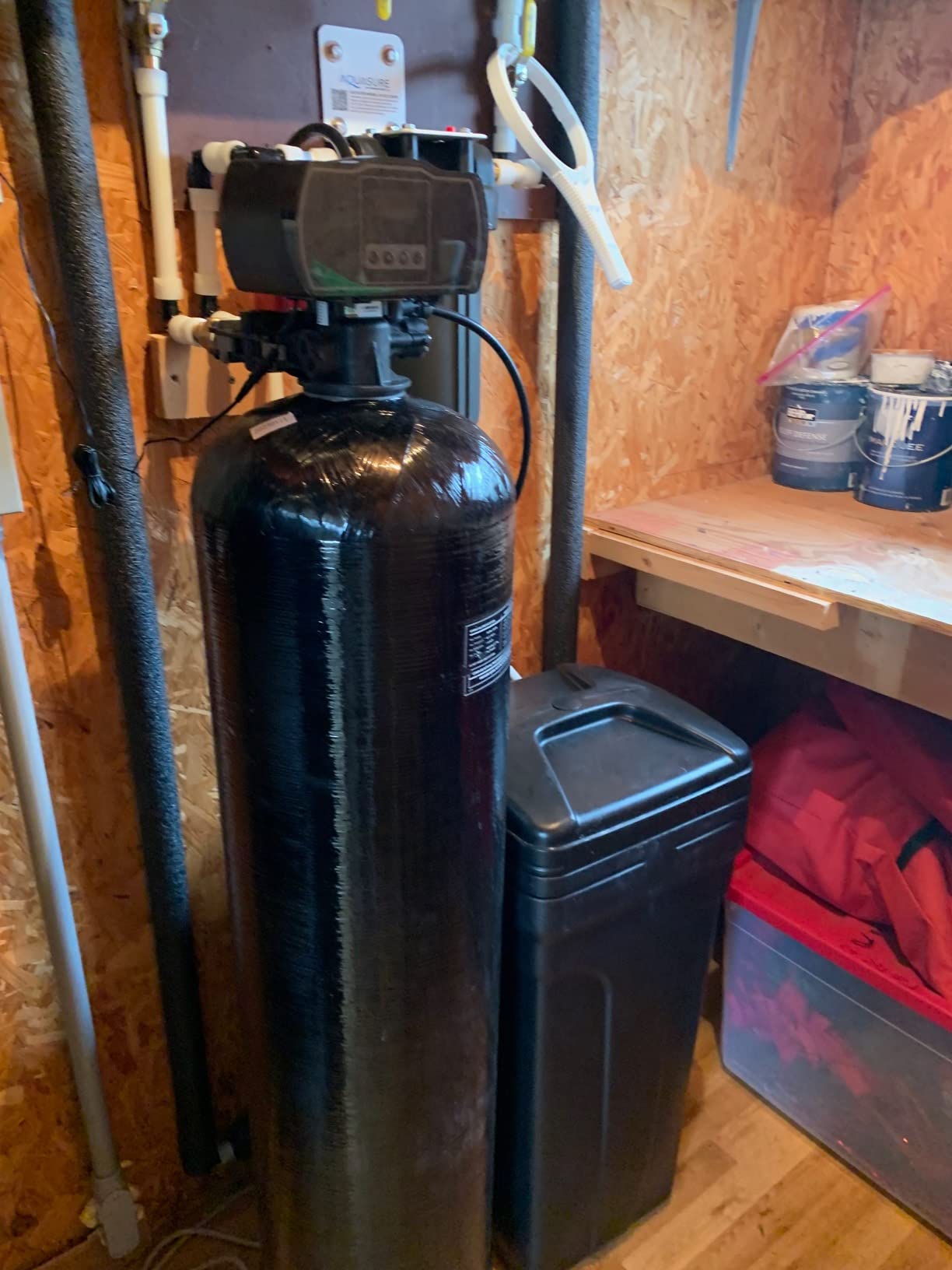
The technical details matter here. Flow is listed at 15 gpm, feed TDS up to 2000 ppm, and the softener runs on an Aquatrol control head with automatic digital metering, so no manual salt tracking and regeneration timing is based on actual usage rather than a clock. It is sized for homes with three to four bathrooms and up to four occupants.
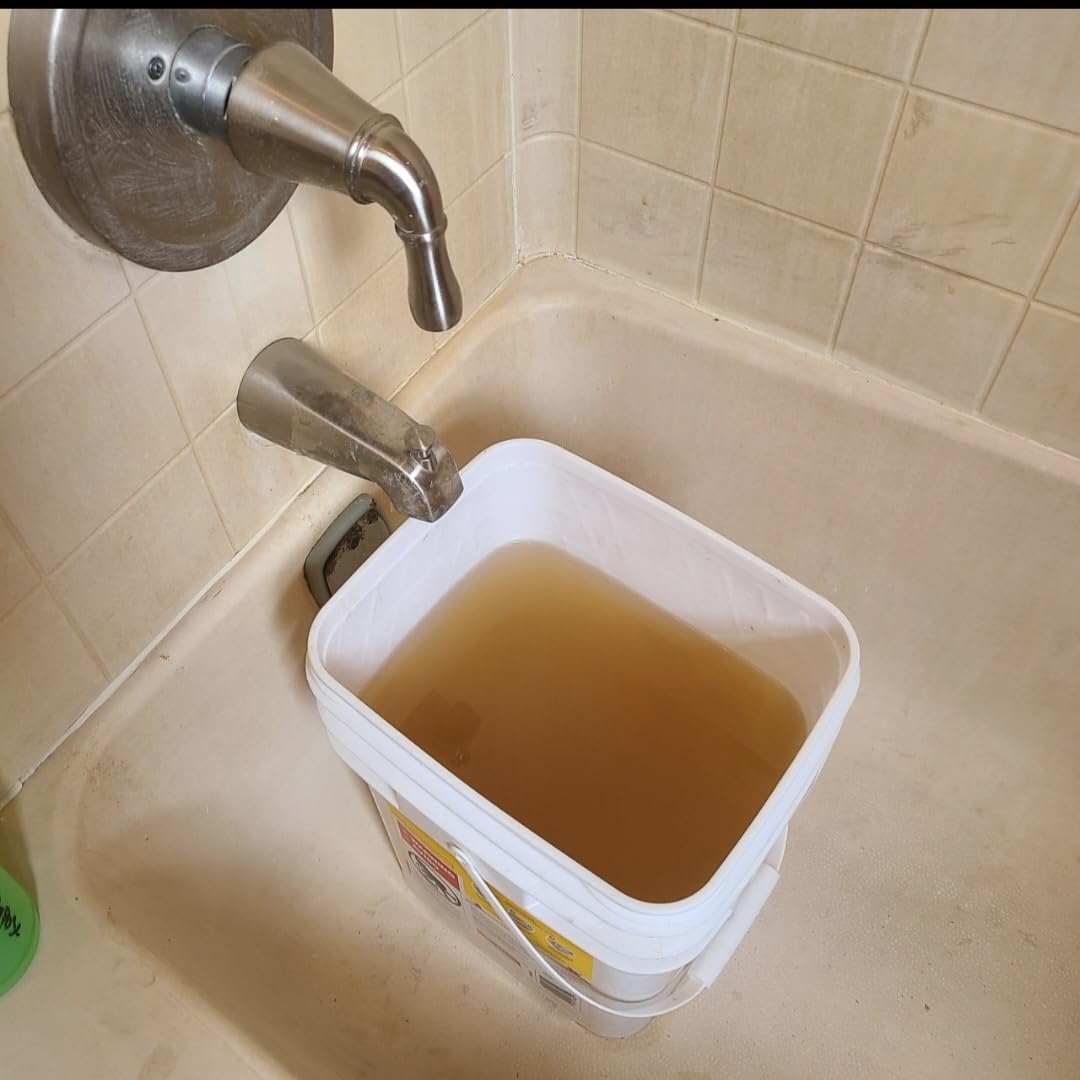
This is the system that addresses the complaint RO alone cannot fix. Hardness minerals scale membranes, and dissolved iron beyond about 0.3 ppm fouls them. Putting a metered softener in front means the RO sees water that is already stripped of the two things that destroy it.
When it makes sense
Consider it if every tap in the house tastes or feels hard, if you have staining in fixtures or scale on appliances, or if you want one installer and one warranty covering both halves of the problem. Sizes are offered at 32,000, 48,000 and 64,000 grains so you can match a larger household.
What it costs you in other ways
This is the highest price point in the roundup by a wide margin, it requires professional installation rather than DIY, and the softener adds ongoing salt cost. At 15 by 15 by 36 inches it is floor-standing and needs a utility space, not a cabinet. The 75 GPD RO portion is also slower than the tankless options listed here.
11. Waterdrop G5P500A 8-Stage Tankless 500 GPD
Waterdrop G5P500A Reverse Osmosis System, 8-Stage RO Filtration, Alkaline
500 GPD
Tankless
2:1 drain ratio
500 ppm max feed TDS
Pros
- Mechanical faucet with no display to fail
- XT kit connects ice makers and refrigerators
- 500 GPD fills a 6 oz cup in about 8 seconds
- Compact tankless body under 14 inches tall
- NSF 58 and 372 certified BPA-free materials
Cons
- 500 ppm feed TDS ceiling is low for many wells
- Needs under-sink electrical power
- Countertop drilling required for the faucet
- Filters are manufacturer-specific
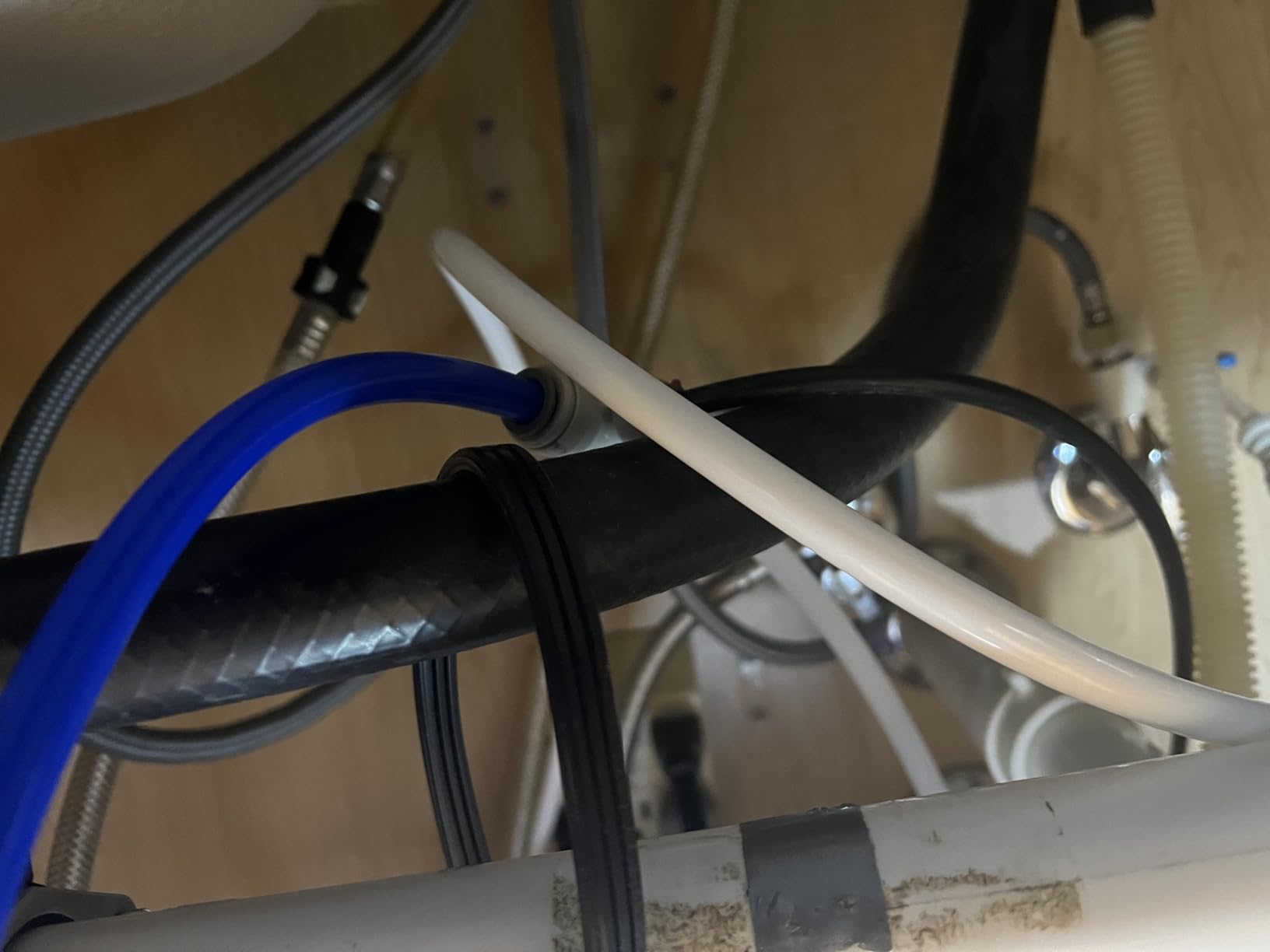
The reason this model earns a place is the refrigerator. It connects to ice makers and refrigerators using the Waterdrop XT kit, and a mechanical faucet means no electronic display, no firmware and no sensor to fail in a cabinet you rarely open. For owners who wanted an ice maker, a tankless unit with a simple faucet is the cleanest answer here.
It holds 4.5 stars across 748 reviews and delivers 500 GPD at a 2:1 pure-to-drain ratio, with a 6 oz cup filling in about eight seconds. Filtration is eight stages through a 0.0001 micron membrane, with alkaline mineralisation adding calcium, magnesium, sodium and potassium back afterwards.
Check the one hard specification before you buy. Maximum supported feed TDS is listed at 500 ppm, which is materially lower than the 1500 to 2000 ppm range several competitors accept. On a shallow well with elevated dissolved solids this is a real constraint, and owners raise it as the main technical caveat.
Otherwise the physical footprint works in tighter cabinets than most tankless units at 16.69 by 5.69 by 13.9 inches, materials are BPA-free, and it carries NSF/ANSI 58 and 372 certification. The tankless layout frees up to 70% of under-sink space.
Who should buy it
Buy it if you want filtered water at an ice maker or refrigerator, you prefer a mechanical faucet to a digital one, and your well TDS is comfortably below 500 ppm. It also suits anyone who wants high flow without the tallest tankless body.
What to watch
It needs under-sink electrical power. The faucet requires holes drilled in the countertop, which is awkward in stone. Filters are manufacturer-specific and add ongoing cost, and it has a smaller review base than the G3P600 in the same line, so there is less long-term field data.
12. Express Water ROALKUV10D 11-Stage with UV
Express Water ROALKUV10D, 11-Stage RO Water Filter System, Alkaline & UV
11 stages
UV plus alkaline
100 GPD
Leak stop detector
Pros
- UV stage targets coliform and E. coli
- Emergency leak stop detector cuts flow on moisture
- Alkaline stage adds calcium potassium and magnesium
- 100 GPD with automatic tank refill
- Deluxe chrome faucet and NSF 372 listed
Cons
- 31 lb tank and UV assembly take cabinet space
- UV bulb is an extra consumable
- Smallest review base here at 196 reviews
- Needs under-sink power for the UV stage
This unit goes the furthest of any in the roundup on microbial protection for a well, with a UV sterilization stage specified against coliform, E. coli, viruses and bacteria. If your annual well test has ever returned a positive coliform result, this is one of the two systems here built specifically for that scenario.
At 4.4 stars across 196 reviews it is the least reviewed product here, so treat its long-term record with more caution than the heavily reviewed models. It does what it claims, and it is a solid mid-priced all-in-one rather than a category leader.
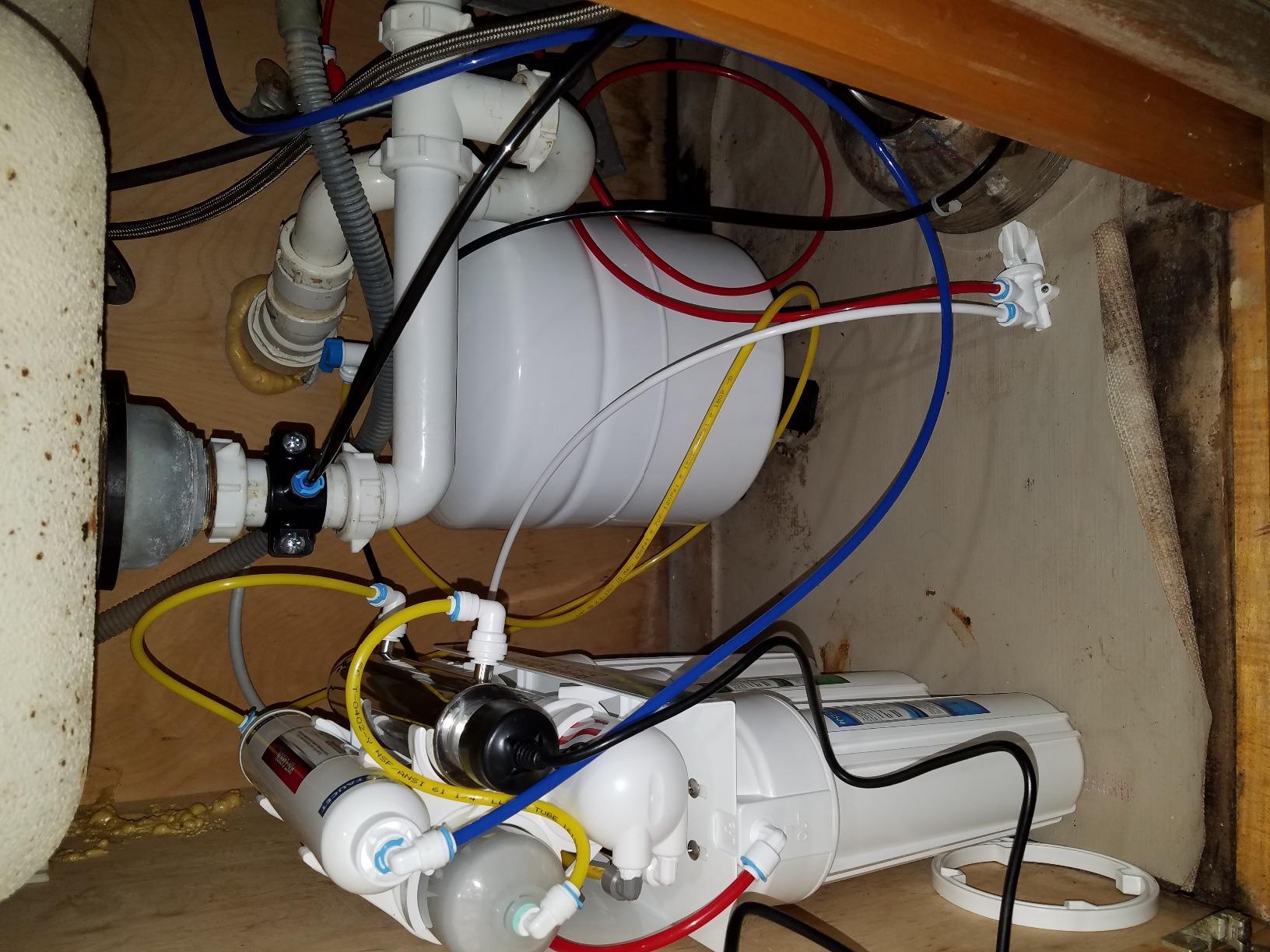
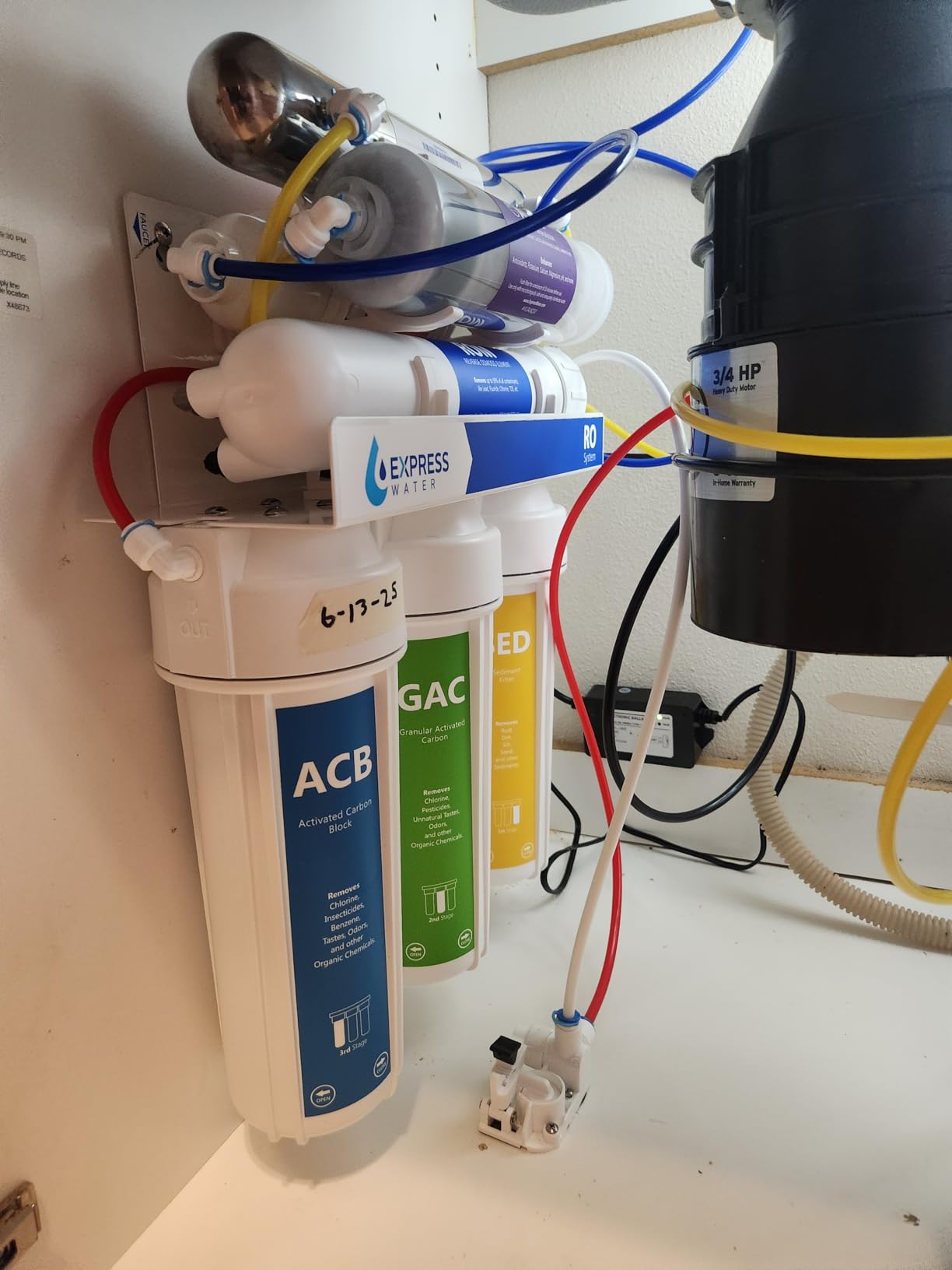
Eleven stages is among the deepest filtration chains we looked at, combining RO, alkaline mineralisation and UV in one assembly. The RO stage is claimed to remove up to 99.99% of lead, chlorine, fluoride, nitrates, calcium, arsenic and bacteria, and alkaline active mineral technology adds calcium, potassium and magnesium back into the finished water.
The emergency leak stop detector shuts off water flow when it detects moisture, which on a wood cabinet under a sink with a storage tank and UV assembly is sensible insurance. Capacity is 100 GPD with an automatically filling tank, so there is no manual intervention.
Where it earns its spot
Choose it if UV disinfection matters more to you than footprint or ownership cost, if you want a single unit rather than separate treatment stages, and if you can accept a heavier installation. It is also designed for straightforward DIY installation without paying for professional setup.
Trade-offs
At 31 pounds the tank and UV assembly occupy substantial cabinet space. The UV bulb is a consumable that must be replaced on schedule, and the whole system needs under-sink electricity, so it stops working in an outage. Replacement filters are brand-specific, and 196 reviews is a thin base for a long-term bet.
What to Look For in a Reverse Osmosis System for Well Water
Certification is the first filter. NSF/ANSI 58 is the standard that certifies dissolved solid reduction, which is the core promise of RO. NSF/ANSI 42 covers chlorine, taste and odor, 53 covers health-based contaminants such as lead and cryptosporidium, and 372 covers lead-free materials. NSF/ANSI 401 covers emerging contaminants such as PFAS. On a private well, where no utility guarantees anything, a system with no third-party certification is a system you are taking on faith.
One caveat that even careful reviewers raise: NSF 58 certifies the membrane, not the carbon prefilter in front of it. Ask for the certification list per component rather than for the system as a whole.
TDS, GPD and recovery ratio are the three numbers that decide whether a system fits your well. TDS is total dissolved solids, and household well readings run from about 50 ppm in good granite wells to well over 1000 ppm in limestone and coastal-plain geology. Compare your lab figure to the system’s maximum feed TDS. GPD is gallons of purified water per day, and a household of one or two needs roughly a quarter of what a family of five does.
Recovery ratio, expressed as pure-to-wastewater, tells you how much water goes down the drain for every gallon you keep. Conventional systems run 3:1 to 4:1. The permeate pump models here reach 2:1, and the Home Master TMHP reaches 1:1. On a well feeding a septic field, that difference is worth more than most buyers expect.
The two features that decide well compatibility
A dedicated sediment stage sized for well sediment is the first. Well water carries sand, rust particles and iron fines that would otherwise reach the membrane and coat it. A booster pump is the second, and it is the single most common reason an otherwise good RO underperforms on a shallow well.
If UV matters to you, the reasoning is about how nothing is regulated on your supply. A positive coliform or E. coli result needs shock chlorination and retesting first, not just a filter, and our guide to UV water purifier systems covers the disinfection side in detail.
Match Your System to Your Water Test
Do not buy a filter before you test. A panel at a certified drinking-water laboratory will give you a report you can act on, and the ordering below comes from what well owners on water treatment forums consistently recommend.
The commonly recommended stack runs in this order: well pump, then a spin-down sediment filter, then a mixing or retention tank, then the well pressure tank, then the water softener, then the under-counter RO at the sink for drinking. Iron removal comes before the softener whenever iron is present, and users repeatedly credit removing iron first with extending both softener and RO system life.
Here is how the common contaminants map to treatment:
Iron and manganese: RO alone will not clear it reliably at well concentrations. Remove it upstream with an oxidation or Filox-type filter, then run the RO.
Hardness above about 7 grains: a softener before the RO. Hardness minerals scale membranes and the softener also cuts the drain ratio.
Hydrogen sulfide odor: an oxidation filter upstream. Carbon stages mask the smell on municipal water because chlorination is what creates it.
High TDS above 500 ppm: pick a system with a 750 to 2000 ppm feed ceiling, and expect slower output.
Silica above about 15 ppm: treat with caution. Silica scales membranes much like hardness and shortens life.
Coliform or E. coli: shock chlorinate the well, flush, retest, then consider UV as a barrier.
Iron bacteria slime: shock chlorination plus flushing or chemical injection. RO will not solve this, and it clogs filters regardless of what you buy.
Booster Pumps and Well Pressure
A reverse osmosis membrane needs feed pressure to work, and 45 PSI is the practical threshold. Below that, a pumpless unit drains continuously while producing slowly, which wastes water and wears the membrane faster. Well pumps that sit close to the water table often deliver less than that at the sink, especially with a long pipe run.
If your static pressure is comfortably above 45 PSI, you do not need a booster pump and can save both money and cabinet space. If it is marginal or below, a pumped system is not a luxury. Seven of the twelve systems here include one, and our top pick is among them.
Measure pressure at the sink with a gauge, not at the well head, since friction and elevation eat into what the pump delivers. Owners of pump-equipped systems report the effect most clearly: output stops dropping when someone runs the dishwasher or a shower, and the drain ratio improves rather than degrading.
Under-Sink vs Whole-House for Well Owners
Under-sink point-of-use treatment wins for most well owners. RO is expensive per gallon of whole-house water, and few households want purified drinking water at the hose bib, the shower and the toilet. Installing under the sink also keeps installation simple and the footprint small.
Whole-house RO makes sense when you want purified water everywhere, but be realistic: it needs a storage tank sized for peak household demand, a booster pump, pretreatment sized for the whole home, and floor space. Cost ranges in this category span from several hundred dollars for a basic point-of-use installation to several thousand for a properly plumbed whole-house setup, and the wide gap is mostly plumbing labour and pretreatment.
The middle path is what the Aquasure bundle represents: a whole-house softener for hardness and iron, plus a dedicated RO at one drinking tap. For most hard wells that combination solves the real problem at a fraction of the cost of whole-house RO.
Installation and Filter Change Schedule for Well Water
Well water shortens filter life compared with municipal supply, and the difference is measurable in practice: your pre-filters will load with sediment and iron fines faster, so plan on more frequent changes than the manufacturer interval printed on the cartridge. Set your first reminder at six months rather than twelve.
A realistic annual pattern on a well looks like this: sediment pre-filters checked every three to six months and replaced annually, carbon blocks replaced annually or sooner if chlorine or sulfur odor returns, membrane replacement assessed each year with a plan for roughly two to three years, post-carbon and alkaline mineralisation filters annually, and UV bulbs on the manufacturer’s hour rating rather than the calendar.
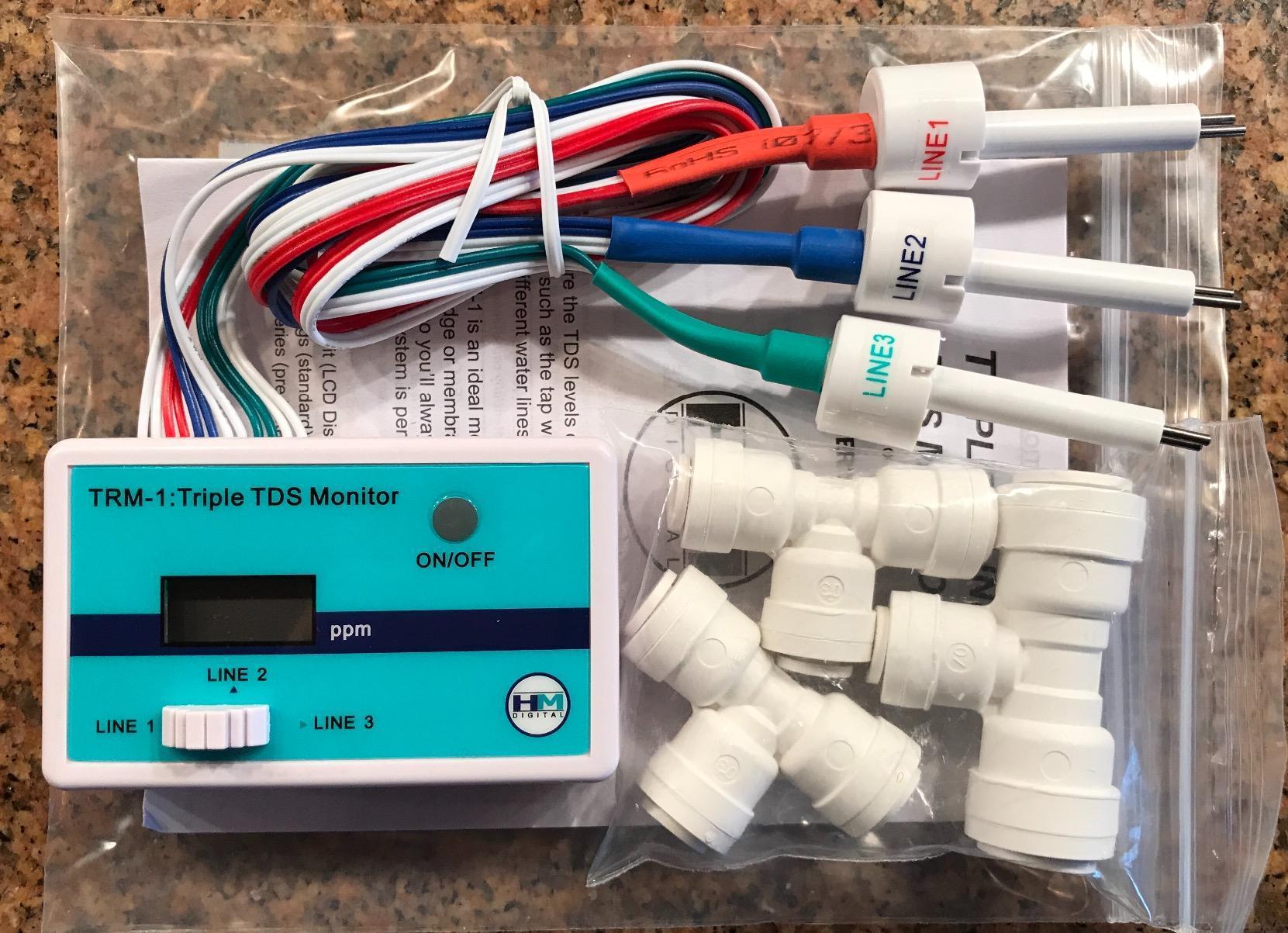
Flush the system after any filter change and before the first glass, because TDS creep means the first draw off a membrane that has sat idle reads high. If you own a tankless model this matters more, and if you own a tanked model, flush the storage tank on the same schedule. Keep a cheap inline TDS meter at the drinking tap; it tells you in seconds whether something upstream has stopped working.
Frequently Asked Questions
Can you use a reverse osmosis system with well water?
Yes, and on most wells you should. RO membranes reject dissolved solids, iron, manganese, PFAS, nitrates and many organics, which is exactly what a private well is likely to contain. The requirement is pretreatment: sediment, and iron or hardness removal if your test shows them, stacked in front of the membrane.
Is a reverse osmosis system worth it for well water?
For drinking and cooking, usually yes. A softener improves showers and household use but does little for drinking-water taste or dissolved solids, which is the most common complaint from well owners. What RO will not fix is iron bacteria slime, silica scaling or a contamination problem that needs shock chlorination first.
What is the highest rated reverse osmosis system?
Among these picks, the iSpring RCC7P-AK, the iSpring RO5004F-AK and the Home Master TMHP share the highest rating at 4.7 stars. The RCC7P-AK is our overall choice because its 1663 reviews combine the highest rating with the strongest field history, a booster pump and a 2000 ppm feed TDS ceiling.
What is the most effective filtration system for well water?
The most effective setup is a stack, not a single device: spin-down sediment filter, then iron or oxidation removal if iron is present, then a softener for hardness, then the RO membrane, with UV as a final barrier if bacteria are a concern. Any one stage alone leaves a gap the next contaminant fills.
What is a major downside of reverse osmosis water?
It strips dissolved minerals along with the contaminants, leaving water that tastes flat and slightly acidic, and it sends three to four gallons of brine to the drain for every gallon kept unless the system has a permeate pump. Remineralisation filters and higher-efficiency ratios address both issues.
Is an under-sink reverse osmosis system better than a whole house system?
For most well owners, yes. Under-sink treatment costs far less per gallon, installs easily and avoids purifying water for showers and toilets. Whole-house RO only makes sense if you want purified water at every tap and can accommodate a large storage tank, a booster pump, pretreatment sized for the whole home and floor space.
Should I install a whole house filter before or after my water softener?
Sediment and iron filters go before the softener. The softener removes hardness by ion exchange, and iron passing through it first coats the resin and destroys capacity. The common well order is well pump, spin-down sediment filter, iron filter if needed, retention tank, pressure tank, softener, then the RO at the sink.
Is RO water hard on the kidneys?
RO water is not considered harmful to kidneys. Healthy kidneys handle low-mineral water without difficulty, and medical guidance generally focuses on people with specific kidney conditions who are advised to limit mineral intake. If you want the reassurance, an alkaline remineralisation stage puts calcium and magnesium back.
Final Verdict
The best reverse osmosis systems for well water are not the ones with the most stages. They are the ones that match your water test, survive your pressure range, and sit behind the pretreatment your well actually needs. Our pick for most households is the iSpring RCC7P-AK, with the Waterdrop G3P600 as the strong alternative when cabinet space and daily volume matter more, and the iSpring RCC1UP-AK when bacteria are a concern.
Test your water first, check your static pressure at the sink, and remove iron before the membrane if it is there. If you want the wider view of treatment options beyond RO, our well water filtration guide covers softeners, UV and sediment stages in more depth. Last reviewed in 2026, and we update this list whenever a testing result or owner report changes a verdict.