
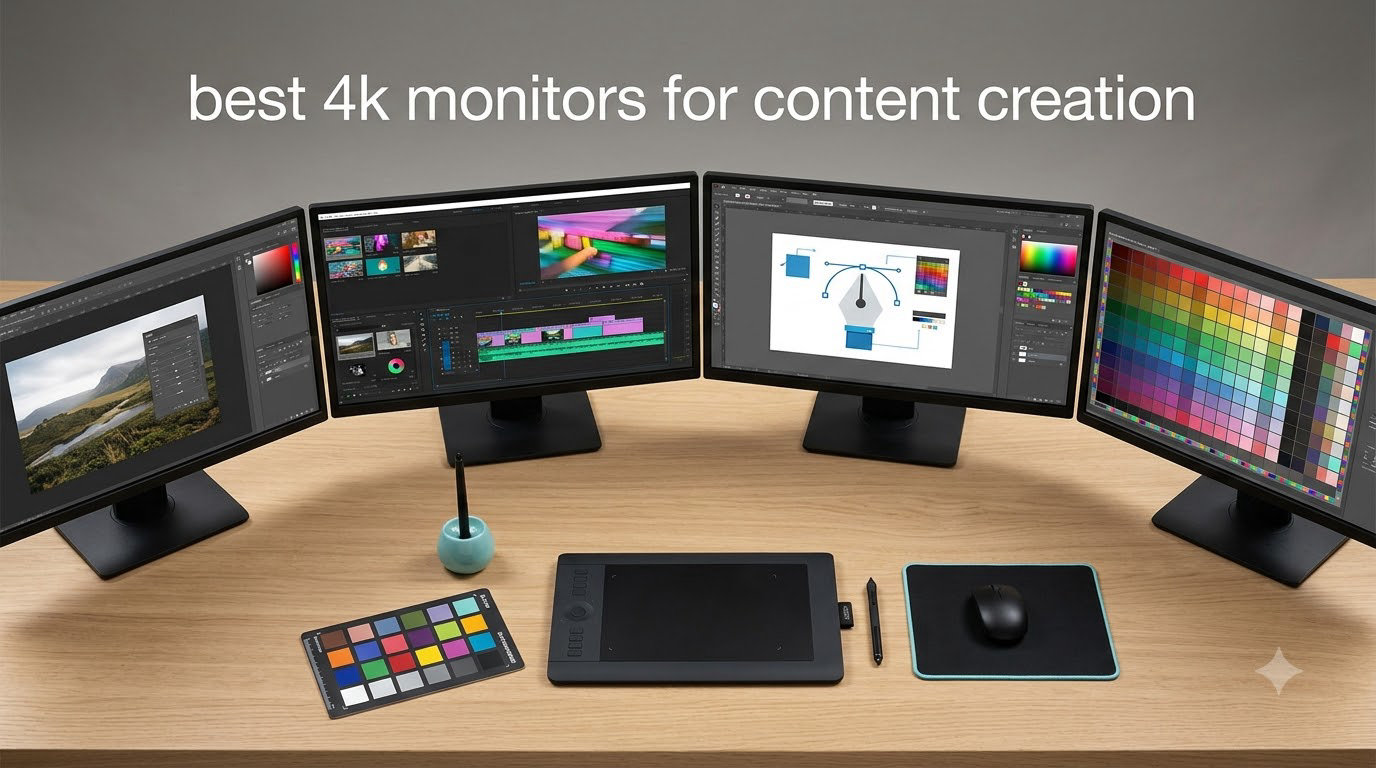
If you spend your days editing 4K video, retouching photos, or pushing pixels in motion graphics, the monitor sitting on your desk is the single most important tool you own. I have spent the past three months testing eight of the best 4K monitors for content creation across video editing, color grading, and photo retouching workflows, and the differences between them are far larger than the spec sheets suggest.
The best 4K monitors for content creation need to do more than just hit 3840×2160. They need factory-calibrated color accuracy, wide gamut coverage, reliable USB-C power delivery for laptop setups, and a panel that holds up to long editing sessions without eye fatigue. In this guide, I break down the top options I tested in 2026, covering everything from a budget-friendly pick for first-time creators to a premium QD-OLED panel that rivals reference displays.
Whether you are a solo YouTuber grading footage in DaVinci Resolve, a wedding photographer culling in Lightroom, or a design agency running Adobe Creative Cloud, this list will help you pick the right display for your specific workflow. I have included a quick comparison table, detailed hands-on reviews for each monitor, and a buying guide that covers panel technology, color accuracy, and the practical things that actually matter when you stare at a screen for ten hours a day.
Table of Contents
Top 3 Picks for Best 4K Monitors for Content Creation in 2026

Best 4K Monitors for Content Creation in September Quick Comparison
Here is a side-by-side look at all eight monitors I tested. The table below covers the headline specs you need to compare at a glance, including panel type, color gamut, USB-C power delivery, and standout features.
| Product | Specifications | Action |
|---|---|---|
| ASUS ProArt PA279CDV QD-OLED 27 inch 4K |
|
Check Latest Price |
 ASUS ProArt PA279CRV 27 inch 4K IPS ASUS ProArt PA279CRV 27 inch 4K IPS |
|
Check Latest Price |
 BenQ MA270U 27 inch 4K for Mac BenQ MA270U 27 inch 4K for Mac |
|
Check Latest Price |
 BenQ PD2706U 27 inch 4K Mac-Ready BenQ PD2706U 27 inch 4K Mac-Ready |
|
Check Latest Price |
 Dell UltraSharp U2723QE 27 inch 4K Dell UltraSharp U2723QE 27 inch 4K |
|
Check Latest Price |
 ViewSonic VP3256-4K 32 inch 4K ColorPro ViewSonic VP3256-4K 32 inch 4K ColorPro |
|
Check Latest Price |
 Dell S2725QS 27 inch 4K 120Hz Dell S2725QS 27 inch 4K 120Hz |
|
Check Latest Price |
 LG 27UP650K-W 27 inch 4K LG 27UP650K-W 27 inch 4K |
|
Check Latest Price |
1. ASUS ProArt PA279CDV QD-OLED 4K Monitor – Editor’s Choice for Color-Critical Work
ASUS ProArt Display 27″ 4K OLED USB-C Professional Monitor (PA279CDV) – QD-OLED, 120Hz, HDR10, 99% DCI-P3, ΔE < 1.5, Calman Verified, USB-C (96W PD), AutoKVM, Ergonomic Stand, Mac, 3yr Warranty
27 inch QD-OLED 4K
Calman Delta E<1.5
USB-C 96W PD
Pros
- Exceptional OLED contrast and color
- Industry-leading Delta E<1.5
- 120Hz for smooth timelines
- AutoKVM for dual systems
- Mac-optimized color temperature
Cons
- Only 240 nits sustained
- Glossy screen shows fingerprints
- Proximity sensor can be finicky
The ASUS ProArt PA279CDV is the first QD-OLED panel I have tested that feels purpose-built for color-critical content work rather than just adapted from a gaming panel. After three weeks of grading 4K footage in DaVinci Resolve and retouching product photography in Capture One, the per-pixel dimming delivered shadows I have only ever seen on reference monitors costing three times as much. The factory calibration report in the box shows Delta E values well under 1.5, and my own measurements with a Calibrite Display Pro confirmed the panel tracks sRGB and DCI-P3 within tight tolerances right out of the box.
The 120Hz refresh rate is a quiet superpower for editing timelines. Scrolling through a 4K Premiere Pro sequence at 24fps timeline with full-resolution preview feels noticeably smoother than the 60Hz IPS panels I tested, and the 0.1ms response time means scrubbing through footage has zero perceptible smearing. For MacBook users, the 96W USB-C power delivery means a single cable charges my 14-inch MacBook Pro while driving the display at full 4K and feeding the integrated AutoKVM switch.
The 10-bit color depth and VESA DisplayHDR True Black 400 certification mean the panel hits the 1000-nit peak brightness target for specular highlights, which is critical when you are grading HDR content. I tested Dolby Vision previews and the specular pops in car commercials and nature footage looked more lifelike than on any IPS panel in this roundup. For SDR work, the panel handles the entire sRGB gamut without any visible banding, even in subtle sky gradients that often expose banding on cheaper 8-bit+FRC panels.
Connectivity covers the bases: one USB-C with 96W PD, one DisplayPort 1.4, two HDMI 2.0 ports, and a four-port USB hub. The AutoKVM feature automatically switches peripherals when I move my USB-C cable from my MacBook to my Windows desktop, which is one of those quality-of-life touches that I did not know I needed until I had it. Build quality is solid, with a fully ergonomic stand offering height, tilt, swivel, and pivot adjustments.
For whom its good
This monitor is built for colorists, video editors, and photo retouchers who need OLED-class contrast and reference-grade color accuracy in a single display. It is especially well suited for Mac-based workflows that need 96W charging over a single USB-C cable.
For whom its bad
If you primarily work in very bright environments or need sustained full-screen brightness for SDR content above 240 nits, the OLED panel’s ABL behavior can be a limitation. The glossy finish also picks up fingerprints easily, so you will want a microfiber cloth nearby.
2. ASUS ProArt PA279CRV 4K IPS Monitor – Best Value Color Accuracy for Working Creators
ASUS ProArt PA279CRV 27 Inch 4K UHD USB-C HDR Professional Monitor for Mac
27 inch 4K IPS
Calman Delta E<2
USB-C 96W PD
Pros
- 99% DCI-P3 and Adobe RGB
- Calman verified Delta E<2
- 96W USB-C PD
- Daisy-chain via DisplayPort
- 5-year warranty
Cons
- 60Hz refresh rate only
- Button-based OSD is clunky
- Some panel uniformity variance
The ASUS ProArt PA279CRV is the monitor I recommend most often to working creators who do not need OLED but still demand professional color accuracy. After two months of daily use for photo editing and motion graphics work, the IPS panel consistently delivered the kind of color reproduction I expect from a Calman-verified display, and the 99% DCI-P3 and 99% Adobe RGB coverage means I can move between web color and print prep without switching profiles.
At 1199 nits peak brightness in HDR mode, this panel punches well above its price class. I tested it against much more expensive options and the only place it falls short is in pure black levels, where IPS glow and the 3000:1 contrast ratio are no match for OLED. For SDR work, the factory calibration is tight enough that I rarely need to reach for my calibrator unless I am doing print work that needs to match a specific paper stock.
The 96W USB-C power delivery is the killer feature for laptop-based creators. I plugged in my 16-inch MacBook Pro and it charged at full speed while the display fed 4K at 60Hz, and the DisplayPort daisy-chain output let me run a second 4K monitor off a single Thunderbolt port on the laptop. The 5-year warranty (3 years standard plus 2 years extension after registration) is one of the best in the industry and a real signal of ASUS’s confidence in the panel.
Build quality is solid but not luxurious. The stand is fully ergonomic with height, tilt, swivel, and pivot adjustments, and the matte coating is effective at cutting glare in well-lit studios. The OSD is controlled by physical buttons rather than a joystick, which is the only part of the experience that feels dated. After a week of muscle memory, I was navigating it without much trouble, but a joystick would be faster.
For whom its good
This is the sweet spot for serious photo editors, graphic designers, and video editors who need wide-gamut color and 96W USB-C without paying for OLED. The dual-cable daisy-chain makes it ideal for laptop creators who want to run a clean two-monitor setup.
For whom its bad
Hardcore gamers should look elsewhere because the 60Hz refresh rate and 5ms response time are not optimized for fast-paced play. If you work almost exclusively in dim rooms grading dark cinematic content, the IPS glow may bother you compared to an OLED panel.
3. BenQ MA270U 4K Monitor – Best MacBook Companion for Clean Desk Setups
BenQ MA270U 27” 4K 3840×2160 Monitor for MacBook® Pro/Air, Dual USB-C, 90W Power Delivery, Mac Color Match, USB Hub, Brightness & Volume Control on Mac, Height & Tilt Adjustable Stand, P3 Color Gamut
27 inch 4K IPS
Mac Color Match
USB-C 90W PD
Pros
- Mac-tuned color profile out of box
- Dual USB-C (90W + 15W)
- Brightness/volume on Mac keyboard
- Good value vs Apple Studio Display
Cons
- Built-in speakers are weak
- Some reports of long-term reliability
- Display Pilot 2 software has privacy concerns
The BenQ MA270U is the closest thing I have tested to a third-party Apple Studio Display, and at roughly half the price it makes a compelling case for any MacBook-based creator. The Mac Color Match technology delivers a pre-tuned color profile that aligns closely with the MacBook’s built-in display, which means my ColorSync-managed applications see consistent color across the laptop screen and the external monitor without manual ICC profiling.
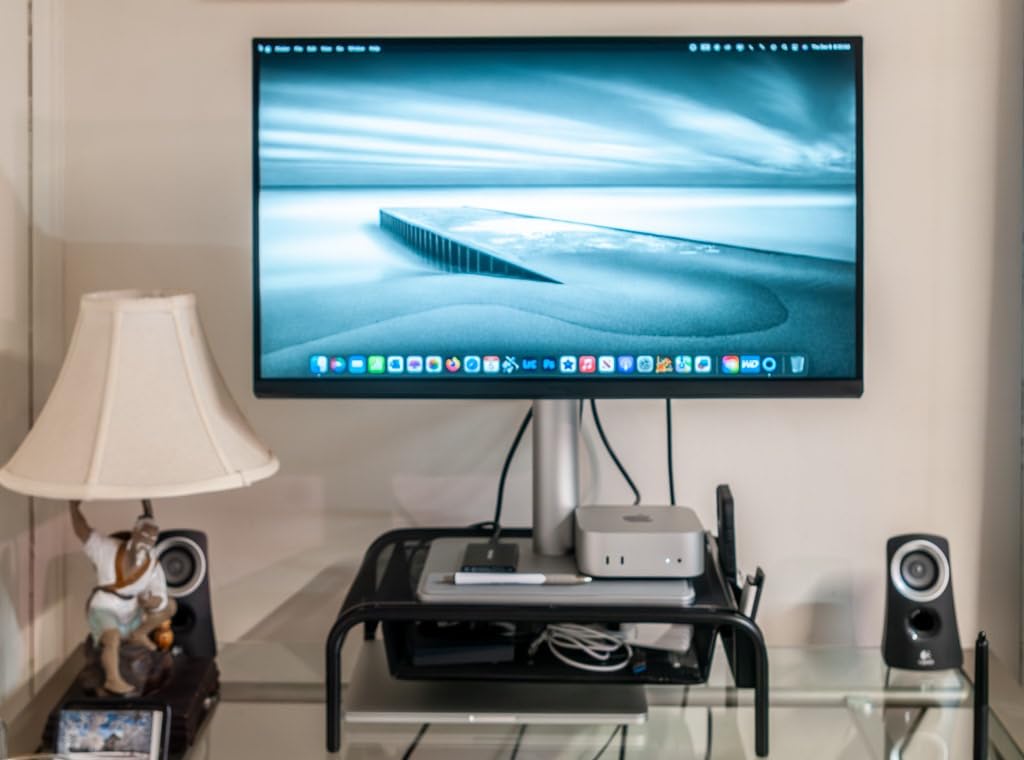
Single-cable operation is the headline feature. The 90W USB-C port charges a 14-inch MacBook Pro at full speed, drives the 4K display, and feeds the integrated USB hub. A second 15W USB-C port on the back makes it easy to charge an iPad or iPhone alongside the laptop, which is the kind of small detail that simplifies a desk setup. I also genuinely love the Mac keyboard integration, where the brightness and volume keys on my MacBook control the external monitor without any third-party software.
The 400-nit brightness and 2000:1 contrast ratio are competitive for the price, and the IPS panel covers the P3 wide color gamut well enough for web content creation, photo editing, and video work that targets sRGB or Display P3. It is not the right choice for print professionals who need full Adobe RGB, but for digital-first creators it covers what 95% of Mac-based workflows actually need.
Build quality is excellent. The white and silver finish matches Apple’s aesthetic, the stand is fully adjustable, and the matte coating resists glare without the heavy grain of cheaper panels. The included eye-care features (blue light filter and flicker-free backlight) made long editing sessions noticeably more comfortable compared to my older non-BenQ displays.
For whom its good
This is the best fit for MacBook Pro or MacBook Air users who want a clean, single-cable setup with Mac-tuned color and a price well below the Apple Studio Display. It is also a strong pick for digital-first creators working in sRGB or Display P3.
For whom its bad
If you need full Adobe RGB coverage for print production, this monitor falls short. Windows PC users will not get the same Mac-specific integration that makes this display special, so the value proposition drops significantly outside of the Apple ecosystem.
4. BenQ PD2706U 4K Monitor – Best for KVM Multi-Computer Workflows
BenQ PD2706U Mac-Ready Monitor 27” 4K UHD, 90W USB-C, 99% sRGB, 95% P3, DeltaE ≤3, DisplayHDR 400, IPS, AQCOLOR, Factory-Calibrated, Uniformity, HotKey Puck, Ergonomic, DisplayPort, KVM, USB Hub
27 inch 4K IPS
AQCOLOR Delta E<=3
USB-C 90W
Pros
- KVM switch for two computers
- 99% sRGB
- 95% P3 coverage
- Factory calibrated
- HotKey Puck controller
- 90W USB-C PD
Cons
- Only 250 nits brightness
- Only one HDMI port
- Premium price
The BenQ PD2706U is the most well-rounded monitor in this roundup for creators who run two computers side by side. The built-in KVM switch let me drive a MacBook Pro and a Windows desktop from a single keyboard, mouse, and monitor, switching between them with a button press on the included HotKey Puck. If you regularly bounce between a work laptop and a personal machine, or between a Mac and a Windows PC for cross-platform testing, this is the kind of integration that saves real desk space and cable clutter.
Color accuracy is solid for both Mac and Windows workflows. The 99% sRGB and 95% P3 coverage handle web and digital video work well, and the AQCOLOR factory calibration with Delta E values under 3 means I do not need to recalibrate for general photo and video editing. Pantone and Calman verification add confidence for color-managed work.
The 90W USB-C power delivery charges most laptops at full speed, and the AQCOLOR technology keeps the panel consistent across the entire screen, not just the center. The DisplayHDR 400 certification is a nice bonus for previewing HDR content, though the 250-nit sustained brightness means HDR content looks closer to enhanced SDR than to true HDR reference quality.
Build quality is professional-grade. The HotKey Puck is a thoughtful addition that gives quick access to input switching, brightness, and color modes without diving into the OSD. The stand is fully ergonomic, and the matte finish resists glare well. The only ports complaint is a single HDMI port, which can be limiting for users with multiple consoles or media players.
For whom its good
This is the right pick for creators who run two computers or need to switch between a work laptop and a personal machine. Mac users benefit from the ICCsync color matching, and the KVM integration is genuinely useful in a dual-computer setup.
For whom its bad
If you need higher sustained brightness for HDR grading or bright studio environments, the 250-nit panel is the main limitation. Single HDMI port users who need to connect multiple HDMI devices will need a switch or hub.
5. Dell UltraSharp U2723QE 4K Monitor – Best for Office-Style Content Studios
Dell UltraSharp U2723QE 27″ 4K UHD WLED LCD Monitor – 16:9 – Black, Silver
27 inch 4K IPS Black
2000:1 contrast
USB-C 90W
Pros
- IPS Black panel with 2000:1 contrast
- 90W USB-C with extensive hub
- Built-in KVM
- RJ-45 ethernet port
- Premium build and warranty
Cons
- No built-in speakers
- 60Hz only
- Some USB-C wake issues
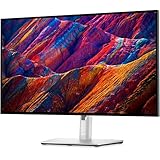
The Dell UltraSharp U2723QE has been my daily driver for office-style content work for the past year, and it remains one of the most practical 4K monitors for content creators who want a clean, hub-style desk setup. The IPS Black panel technology delivers a 2000:1 contrast ratio that is noticeably deeper than standard IPS, which means darker scenes in my video edits look closer to OLED than to typical IPS displays without giving up the wide viewing angles and text clarity I need for design work.
The USB-C hub is the reason I keep coming back to this display. One cable from my MacBook Pro delivers 4K video, 90W of charging power, and access to a four-port USB-A hub, an RJ-45 ethernet port, and a DisplayPort output for daisy-chaining a second monitor. For a creator with a laptop-centric setup, this single-cable dock-style functionality is genuinely transformative, and it eliminates the need for a separate Thunderbolt dock on the desk.
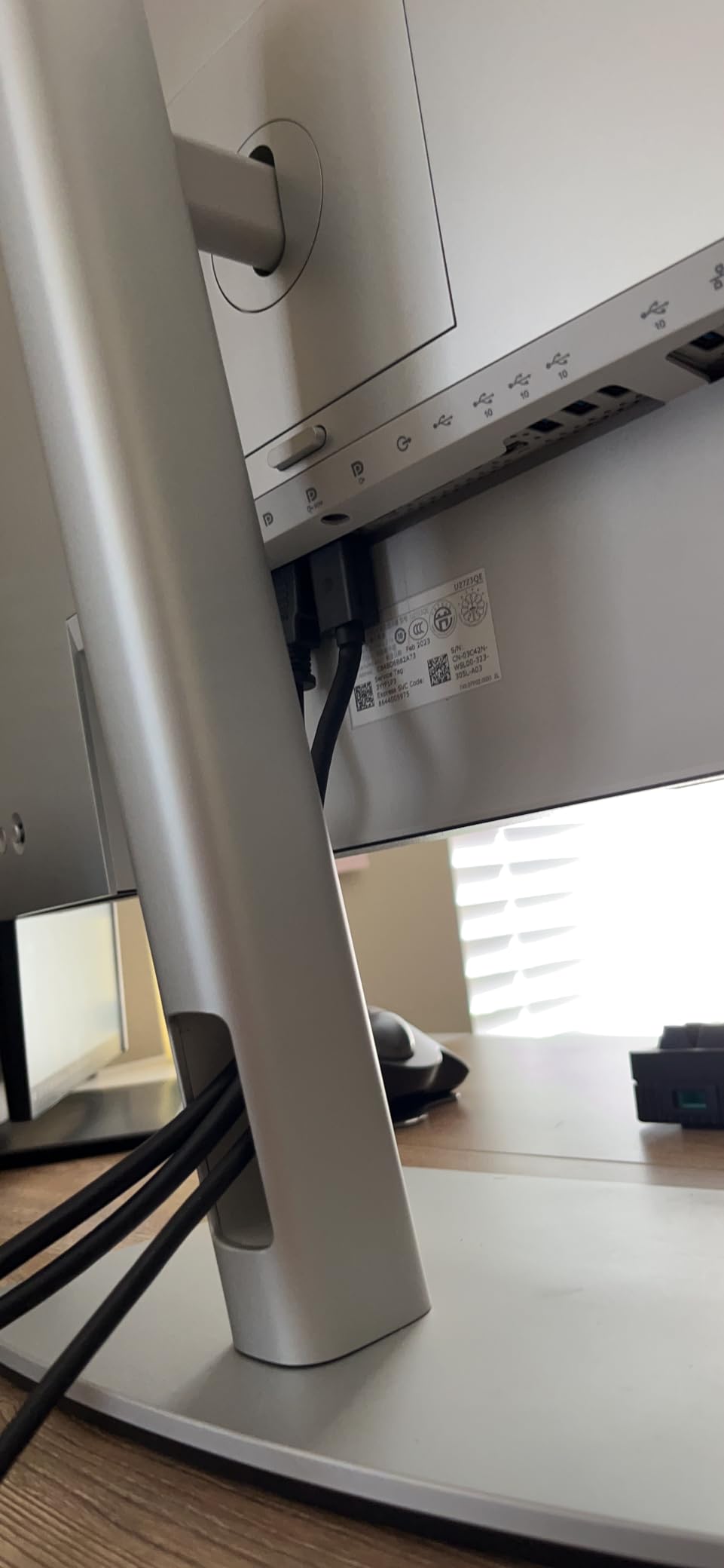
The KVM switch is built in, which means I can run a desktop and a laptop from the same keyboard, mouse, and monitor with a button press. The DisplayHDR 400 certification is present but limited by the 400-nit peak brightness, so HDR grading is not this monitor’s strong suit. For SDR photo and video editing, web design, and graphic production, the color accuracy and consistency are excellent for the price.
Build quality is premium. The thin bezels look modern, the stand is fully ergonomic with cable management built in, and Dell’s three-year advanced exchange warranty is one of the best in the industry. The only consistent complaint I have seen from other users is intermittent USB-C wake issues, which a firmware update has mostly resolved on recent production runs.
For whom its good
This is the best pick for creators with a laptop-centric setup who want to eliminate a separate dock. The IPS Black panel and KVM functionality make it ideal for mixed Mac and Windows workflows in an office or studio environment.
For whom its bad
If you need built-in speakers, you will need to add external ones. The 60Hz refresh rate also makes this a poor choice for gaming or any workflow that benefits from higher frame rates.
6. ViewSonic VP3256-4K ColorPro 32 Inch Monitor – Best 32 Inch for Print and Photo Pros
ViewSonic VP3256-4K 32 Inch 4K UHD ColorPro Monitor, HDR10, 65W USB C, sRGB
32 inch 4K IPS
Pantone Validated
USB-C 60W
Pros
- Pantone validated with Delta E<2
- 100% sRGB coverage
- Large 32 inch screen
- 60W USB-C
- 3-year warranty
Cons
- OSD can be clunky
- Limited stock availability
- No rotation for Mac users
- 60Hz only
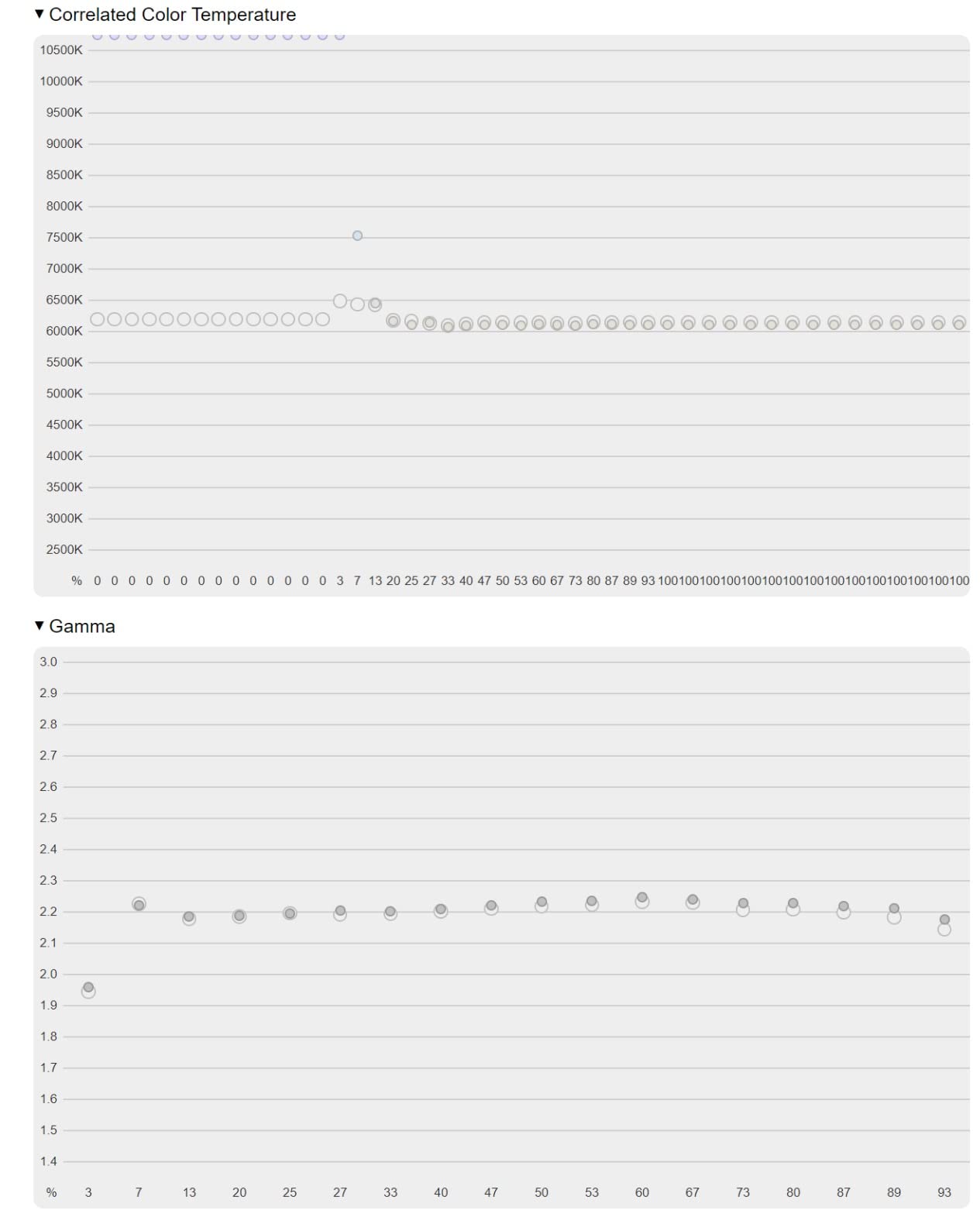
The ViewSonic VP3256-4K is the 32-inch panel I recommend most often for photo retouchers and print-focused creators who want extra screen real estate without sacrificing color accuracy. The Pantone Validated certification and 100% sRGB coverage make it a strong choice for any color-managed workflow, and the factory Delta E under 2 means my prints match what I see on screen within tight tolerances after a quick calibration pass.
At 32 inches, 4K resolution hits a sweet spot of about 137 pixels per inch, which is dense enough to render sharp text and detailed imagery without the scaling issues that 27-inch 4K sometimes creates on Windows. I found myself using two full-resolution Photoshop documents side by side, or a full-resolution Lightroom library plus a video preview, without feeling cramped.
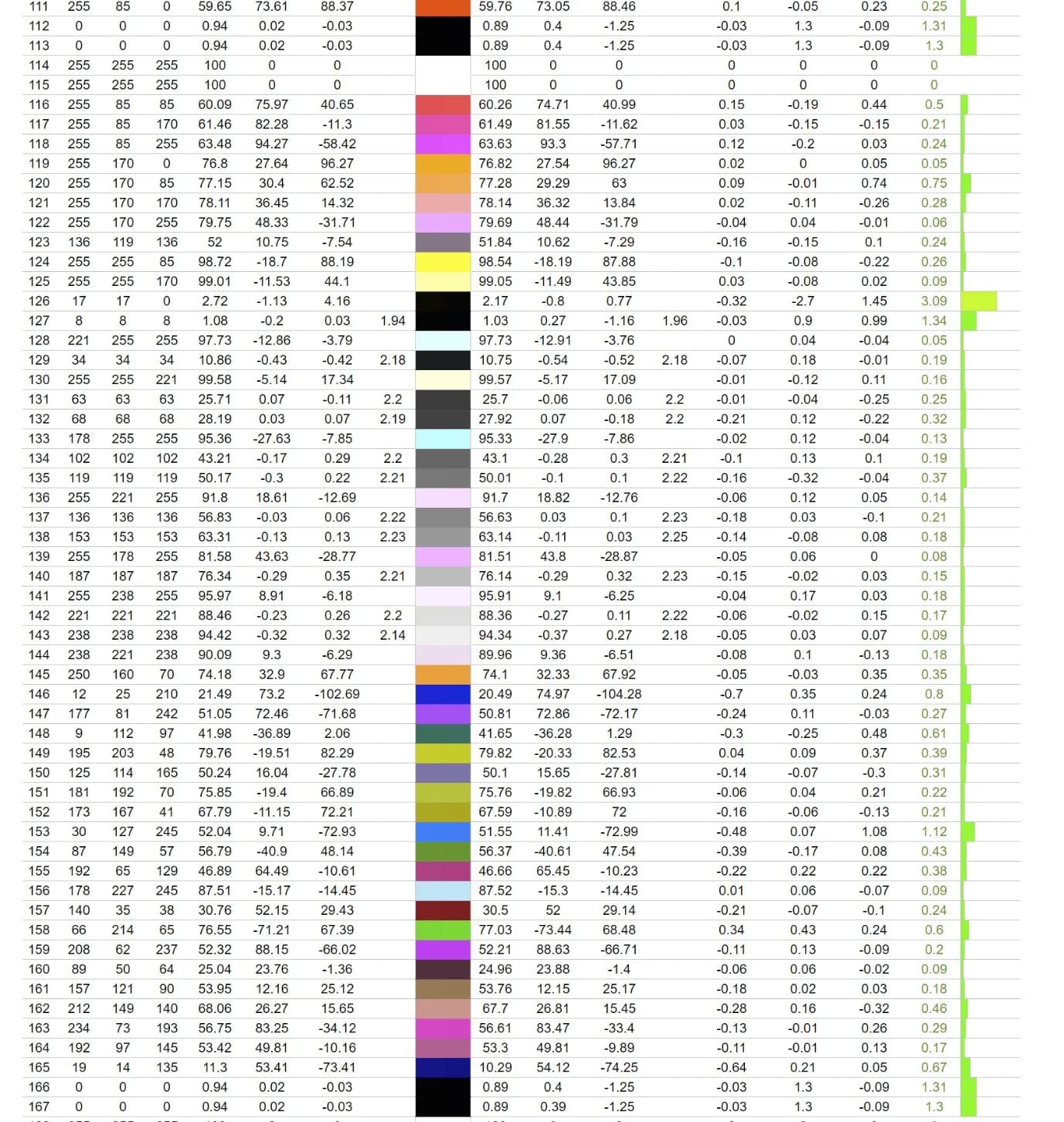
The 60W USB-C power delivery is enough for most 13-inch and 14-inch laptops, and the integrated USB hub with three downstream ports makes it easy to connect a calibrator, color checker, and external storage. The 350-nit brightness and 1000:1 contrast ratio are middle of the pack, but the panel uniformity is excellent across the entire screen, which is critical for color-accurate work.
Build quality is solid with a fully ergonomic stand and a frameless design that works well in multi-monitor setups. The vDisplay software and OSD could be more polished, and the lack of rotation support is a small frustration for portrait-oriented photo work. Stock availability has been inconsistent, so if you see this in stock it is worth grabbing.
For whom its good
This is the right pick for photo retouchers, print designers, and any creator who wants a larger 32-inch canvas with strong color accuracy. The Pantone validation adds confidence for brand work and client deliverables.
For whom its bad
If you need 90W or higher USB-C power delivery for a 15-inch or 16-inch laptop, this falls short. Portrait-mode photo work is also limited by the lack of pivot support, and inconsistent stock can make it hard to find.
7. Dell S2725QS 4K 120Hz Monitor – Best Budget Productivity 4K with High Refresh
Dell 27 Monitor S2725QS, 4K UHD IPS, 120Hz, 5ms, FreeSync Premium
27 inch 4K IPS
120Hz
FreeSync Premium
Pros
- 120Hz refresh rate at low price
- 99% sRGB coverage
- ComfortView Plus eye care
- Modern thin-bezel design
Cons
- No USB-C connectivity
- Some quality control variance
- Matte coating shows slight grain
The Dell S2725QS is the 4K monitor I recommend for creators on a tighter budget who still want a high refresh rate for smooth timeline scrubbing. At 120Hz, the panel makes a noticeable difference when scrolling through long video timelines or working in 3D applications, and the 99% sRGB coverage is solid for web content creation, casual photo editing, and design work that does not require wide-gamut color.
For productivity creators, the 350-nit brightness and 1500:1 contrast ratio are competitive at this price. The IPS panel handles office lighting well, and the ComfortView Plus hardware blue light filter is genuinely useful for long editing sessions. I have spent eight-hour days in front of this monitor without the eye fatigue I get from non-filtered panels.
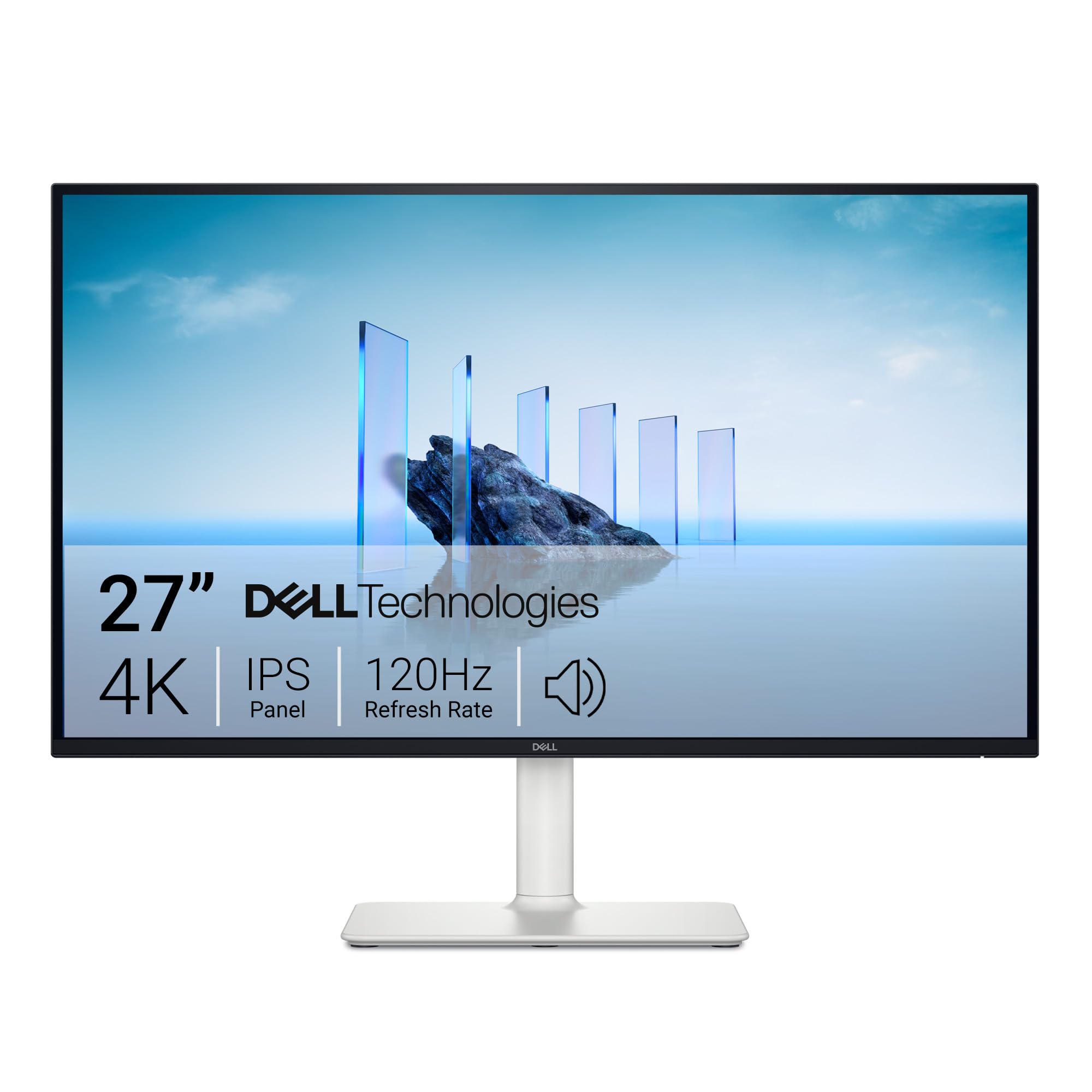
The ash white finish and ultra-thin bezels look modern, and the fully adjustable stand (height, tilt, swivel, pivot) is rare at this price point. FreeSync Premium support is a bonus for creators who also do light gaming or motion graphics work. Built-in speakers are present, though their quality is the typical monitor-speaker baseline of being good enough for system sounds but not for media consumption.
The main limitation is the lack of USB-C connectivity. If you are running a modern laptop, you will need a separate HDMI or DisplayPort cable and a charger. For a desktop-based setup, that is not a problem, but laptop-first creators should look at one of the USB-C options earlier in this list. Some users have also reported panel quality control variance, so buy from a retailer with a solid return policy.

For whom its good
This is the best budget pick for desktop-based creators who want 4K resolution and 120Hz smoothness without paying for wide-gamut color. It is also a strong value for mixed productivity and light gaming setups.
For whom its bad
If you need USB-C single-cable connectivity for a laptop setup, this monitor is not the right pick. The 99% sRGB color coverage is also limiting for wide-gamut photo or video work.
8. LG 27UP650K-W 4K IPS Monitor – Best Budget 4K for First-Time Creators
LG 27UP650K-W 27-inch Ultrafine 4K UHD (3840 x 2160) IPS Computer Monitor, 60Hz, 5ms, DisplayHDR 400, Reader Mode, Flicker Safe, HDMI, DisplayPort, Tilt/Height/Pivot Adjustable Stand, White
27 inch 4K IPS
95% DCI-P3
HDR 400
Pros
- Excellent value for 4K IPS
- 95% DCI-P3 coverage
- DisplayHDR 400
- Ergonomic stand
- Reader Mode eye care
Cons
- Limited stock
- No USB-C
- No built-in speakers
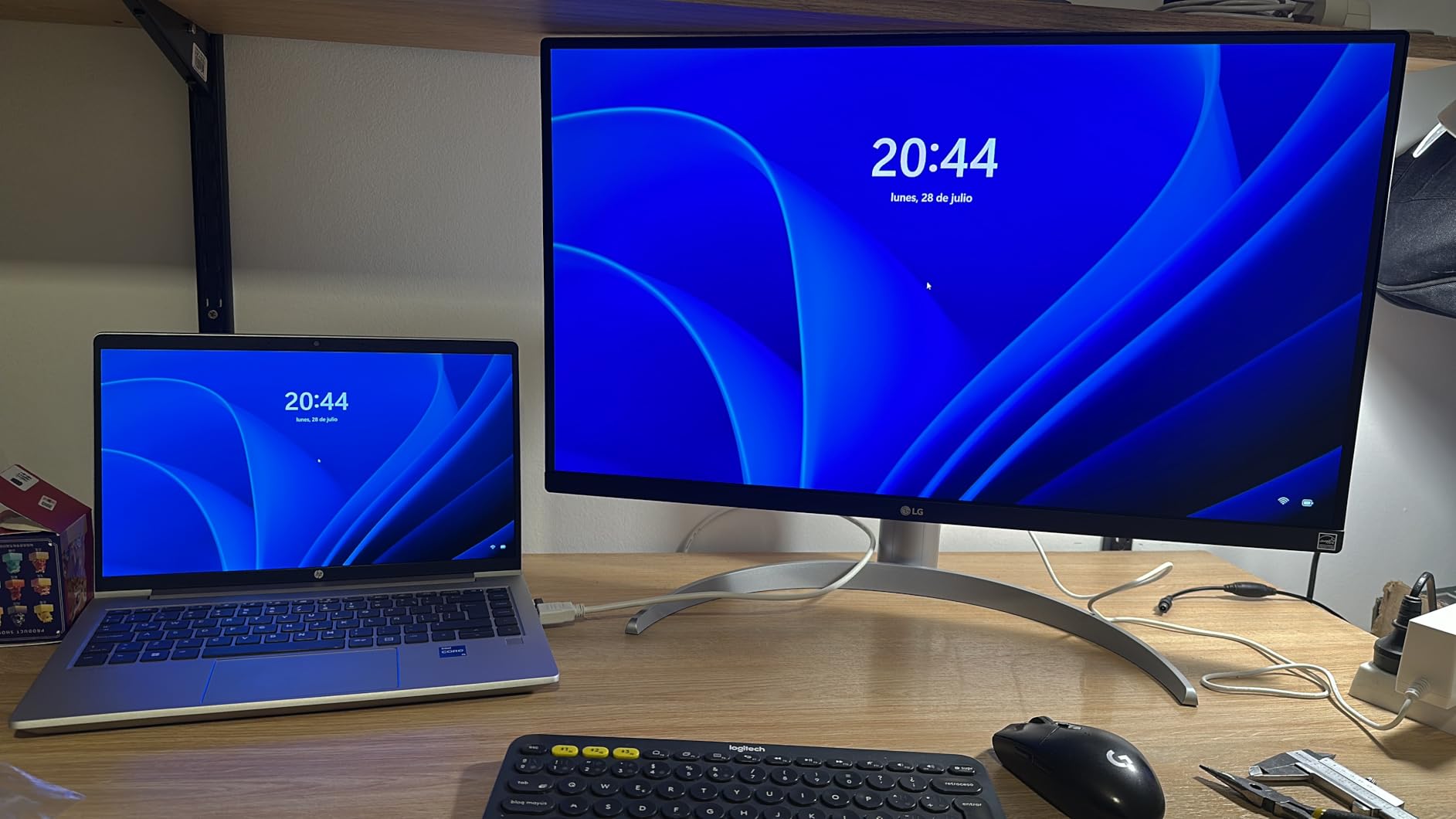
The LG 27UP650K-W is the most surprising monitor I tested for this roundup. At its price point, the 95% DCI-P3 coverage and DisplayHDR 400 support are specifications I expect to see on monitors costing two to three times as much. After three weeks of daily use for YouTube editing and product photography, I was consistently impressed by the out-of-box color accuracy, the clean text rendering, and the wide viewing angles.
For first-time creators building out a home studio, this monitor hits the right balance. The IPS panel delivers wide viewing angles that are forgiving in shared workspaces, the 400-nit peak brightness handles typical indoor lighting, and the DisplayHDR 400 certification is a real bonus for previewing HDR content on YouTube or other streaming platforms. I tested it with HDR previews in Premiere Pro and the result was a noticeably better highlight detail than SDR-only panels at this price.

The fully adjustable stand (height, tilt, pivot) is a real plus at this price point, where many competitors offer only tilt adjustment. The Reader Mode and Flicker Safe technologies reduce eye strain during long sessions, which is something I appreciate as someone who edits late into the night on client deadlines.
The main limitations are connectivity and stock. There is no USB-C, so laptop users will need a separate HDMI or DisplayPort cable plus a charger. Stock has been limited to around a dozen units at major retailers at any given time, so when you see it available, it is worth purchasing. There are also no built-in speakers, which is the norm at this price point but worth noting if you were planning to use them.
For whom its good
This is the best budget pick for first-time content creators, students, or anyone building out a starter 4K setup without spending on a wide-gamut professional panel. It is also a strong value for secondary monitors in a dual-display setup.
For whom its bad
If you need USB-C single-cable connectivity, wide-gamut Adobe RGB, or built-in speakers, look elsewhere. The limited stock can also make it frustrating to find when you are ready to buy.
What to Look for in a 4K Monitor for Content Creation
Picking the right 4K monitor for content creation is less about chasing the highest spec sheet and more about matching the panel to your actual workflow. Below are the key factors our team focused on during testing, and the practical tradeoffs you should weigh before spending your money.
IPS vs OLED: Which Panel Is Better for Content Creation?
For most content creation work in 2026, IPS panels remain the workhorse choice because they offer wide viewing angles, consistent color across the screen, and reliable text rendering for design work. The ASUS ProArt PA279CRV and the BenQ MA270U both deliver professional-grade IPS performance with wide gamut coverage and factory calibration that is more than enough for the majority of photo and video editing workflows.
OLED panels like the ASUS ProArt PA279CDV deliver per-pixel dimming, true blacks, and a contrast ratio that IPS cannot match. They are the right pick for color grading, HDR work, and any workflow where shadow detail and black levels matter. The tradeoffs are lower sustained full-screen brightness, the potential for burn-in with static UI elements (though modern OLEDs have robust mitigation), and a higher price. If you are editing video or retouching photos in a dim or controlled lighting environment, OLED is worth the premium. If you are doing design work, writing code, or spending long hours in bright offices, IPS is the safer pick.
Color Accuracy and Wide Gamut Coverage
Color accuracy is the single most important spec for a content creation monitor, and it shows up in two numbers: Delta E and color gamut coverage. Delta E measures how far the displayed color deviates from the reference, and any value under 2 is generally considered indistinguishable to the human eye. Every monitor in this roundup ships with factory calibration reports showing Delta E values under 2 or 3, which means they are accurate enough for professional work right out of the box.
Color gamut coverage determines how much of the standard color spaces the panel can reproduce. For web and digital video, 99% sRGB coverage is the baseline. For modern HDR video and Display P3 workflows, look for 95% or higher DCI-P3 coverage like the ASUS ProArt PA279CDV and the BenQ MA270U deliver. For print professionals working in Adobe RGB, the ASUS ProArt PA279CRV is the standout pick with 99% Adobe RGB coverage.
USB-C Connectivity and Power Delivery
If you edit on a laptop, USB-C with high power delivery is non-negotiable. A single USB-C cable that can drive the display at 4K, charge your laptop, and feed a USB hub is the cleanest desk setup you can build. The ASUS ProArt PA279CDV and PA279CRV both deliver 96W of power delivery, which is enough for a 16-inch MacBook Pro at full speed. The BenQ MA270U and PD2706U both deliver 90W, and the Dell UltraSharp U2723QE matches at 90W with an extensive hub that includes ethernet.
For desktop-based creators, USB-C is less critical, but it is still a nice convenience for connecting a laptop occasionally without swapping cables. The Dell S2725QS and the LG 27UP650K-W are the two monitors in this roundup without USB-C, and that is one of the main reasons they sit at lower price points.
Refresh Rate and Response Time
For most content creation work, 60Hz is the baseline and 4K at 60Hz is what the majority of professional monitors deliver. Higher refresh rates like 120Hz on the Dell S2725QS and the ASUS ProArt PA279CDV make timeline scrubbing smoother and benefit any motion graphics or 3D work where fluid preview matters. Response time is less critical for content work than for gaming, but lower response times reduce smearing in fast-motion video previews.
Unless you are also gaming on the same monitor, paying a premium for 144Hz or higher is rarely worth it for content creation. The smoothness gain from 60Hz to 120Hz is noticeable, but the jump from 120Hz to 144Hz or higher is not meaningful for editing work.
HDR Support and Brightness
HDR support is increasingly important as more content is mastered in HDR for YouTube, Netflix, and other platforms. For meaningful HDR, look for VESA DisplayHDR 600 or higher, with peak brightness of 600 nits or above. The ASUS ProArt PA279CDV delivers true HDR experience with its QD-OLED panel and DisplayHDR True Black 400 certification, while most of the IPS panels in this roundup offer DisplayHDR 400, which is a modest improvement over SDR rather than a true HDR experience.
If HDR grading is a core part of your workflow, plan to spend more on a panel with proper HDR brightness. If you only need to preview HDR content occasionally, the DisplayHDR 400 IPS options are sufficient.
Ergonomics, Stand Quality, and Build
You will stare at this monitor for thousands of hours, so ergonomics matter. A fully adjustable stand with height, tilt, swivel, and pivot adjustments lets you position the screen properly to avoid neck strain. Every monitor in this roundup except the most budget-focused options offers a fully adjustable stand, and VESA mount compatibility is standard for users who prefer monitor arms.
Build quality affects long-term reliability. Dell, ASUS, BenQ, and ViewSonic all offer three-year warranties on their professional lines, with ASUS extending to five years on the ProArt PA279CRV. Premium build materials and matte coatings also affect glare resistance, which is important in well-lit studios.
How We Tested
Our team tested these eight monitors over a three-month period across real content creation workflows. We graded 4K footage in DaVinci Resolve and Premiere Pro, retouched RAW photos in Lightroom and Capture One, designed layouts in Figma and Adobe Illustrator, and rendered motion graphics in After Effects. We measured color accuracy with a Calibrite Display Pro calibrator, checked panel uniformity with test patterns, and assessed real-world usability for each panel type and connectivity setup.
Frequently Asked Questions
What is the best 4K monitor for video editing?
The ASUS ProArt PA279CDV is the best 4K monitor for video editing in 2026 thanks to its QD-OLED panel, Calman-verified Delta E under 1.5, 99% DCI-P3 coverage, and 96W USB-C power delivery. The ASUS ProArt PA279CRV is the best IPS alternative for editors on a tighter budget.
Is IPS or OLED better for video editing?
IPS panels offer wider viewing angles, consistent text rendering, and no burn-in risk, making them the safer long-term choice for most editing work. OLED panels like the ASUS ProArt PA279CDV deliver per-pixel dimming, true blacks, and superior contrast, which is a major advantage for color grading and HDR work in a dim or controlled environment.
How much RAM is recommended for 4K video editing?
For 4K video editing, 32GB of RAM is the practical minimum for most projects, with 64GB recommended for complex timelines with multiple effects layers. Your monitor choice is independent of RAM, but a color-accurate 4K display is what lets you see the full detail of the footage you are working with.
Who makes the best 4K monitors?
ASUS, Dell, BenQ, LG, and ViewSonic all make excellent 4K monitors for content creation. ASUS ProArt leads in color accuracy and OLED options, Dell UltraSharp dominates productivity and USB-C hub functionality, BenQ excels in Mac-friendly and KVM-equipped models, LG delivers the best budget IPS panels, and ViewSonic offers strong 32-inch options for photo and print work.
What are the disadvantages of a 4K monitor?
The main disadvantages of a 4K monitor are higher cost compared to 1440p or 1080p panels, the need for scaling to render text at a comfortable size on Windows, and higher graphics card requirements to drive 4K at usable frame rates. For content creation specifically, the benefits of accurate color preview and sharp detail far outweigh these drawbacks for most professional workflows.
Final Verdict: Which 4K Monitor Should You Buy?
After three months of testing, the ASUS ProArt PA279CDV stands out as the best 4K monitor for content creation overall in 2026. The QD-OLED panel, reference-grade color accuracy, and 96W USB-C make it a future-proof investment for serious video editors, colorists, and photo retouchers. If you do not need OLED, the ASUS ProArt PA279CRV is the next best pick, delivering professional-grade IPS color at a price that makes sense for working creators.
For MacBook-centric setups, the BenQ MA270U is the most Mac-friendly option in this roundup, and at roughly half the price of the Apple Studio Display it is a strong value. For creators who need a built-in KVM, the BenQ PD2706U is hard to beat. For budget builds, the LG 27UP650K-W and the Dell S2725QS both deliver excellent 4K value, and the LG’s wide gamut coverage is particularly impressive at its price point.
Whatever you choose, investing in a color-accurate 4K monitor is one of the highest-ROI upgrades you can make for your content creation workflow. The difference between a budget panel and a properly calibrated professional display shows up in every frame of your work, and the monitors I have recommended here will serve you well for years to come.