
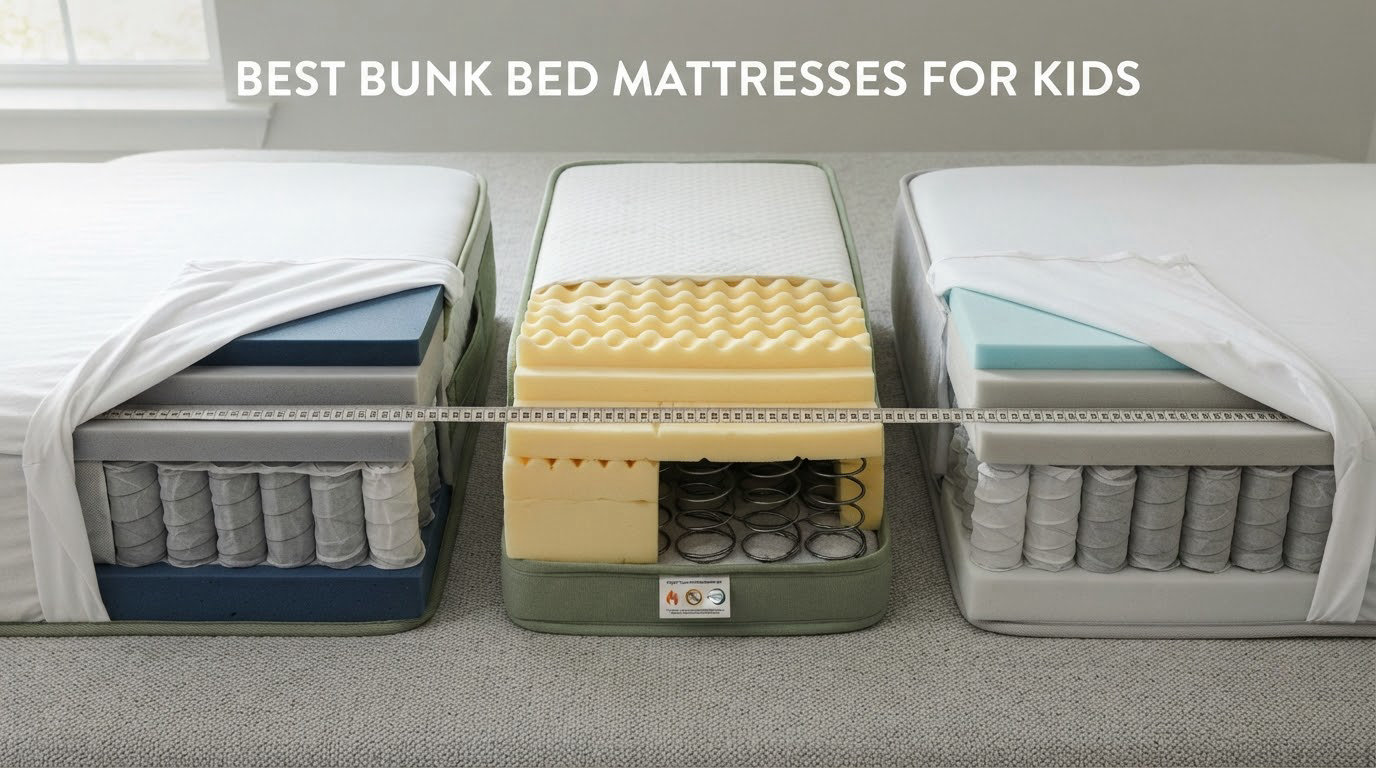
Quick answer: The best bunk bed mattresses for kids are Twin and Twin XL foam or low-profile innerspring models between 5 and 8 inches thick, so the sleeping surface stays safely below the guardrail. Our overall pick is the Linenspa 6 Inch Memory Foam Mattress in Twin XL, a firm innerspring built for bunk and trundle frames.
Thickness first: the top of the mattress needs to sit at least a few inches below the guardrail, so buy the profile your frame allows and measure before you order.
Firmness matters: medium-firm gives growing kids spinal support without the pressure points a soft foam top can create.
Certified foams: look for CertiPUR-US, OEKO-TEX Standard 100 or an explicit fiberglass-free fire barrier so nothing toxic sits in a small bedroom.
Most parents buying a bunk bed make the same two mistakes. The first is ordering a mattress for looks instead of for the frame, and the second is trusting the thin pad that ships in the box with the bed.
Parents on parent forums describe that included pad in pretty blunt terms. It is thin, uncomfortable within a year, and it is usually the very first thing replaced after the frame is assembled. If you are furnishing a new bunk, budget for two real mattresses from the start.
Our team compared all 10 mattresses in this roundup on the variables that decide whether a bunk bed works: thickness against guardrail clearance, weight the mattress can carry, edge strength where kids climb on, foam certification, and care instructions.
If you are still choosing the frame itself, start with our bunk bed roundup, then come back here for the mattress side of the equation. For a single bed without the clearance problem, our best twin mattresses for kids guide covers the fuller-size options.
Table of Contents
Top 3 Best Bunk Bed Mattresses for Kids Right Now in October

Linenspa 6 Inch Twin XL
- Marketed for bunk
- trundle and transition beds
- 350 Bonnell coils
- Very firm feel
- 10 year warranty

COOL GEL 8 Inch Twin XL
- Highest rating in the group
- Open cell gel foam
- Fiberglass free
- 1000 lb capacity

FDW 5 Inch Twin XL
- Lowest cost option
- Maximum bunk clearance
- Machine washable cover
- CertiPUR-US
Those three cover the range most families need: an innerspring that has been validated by an enormous number of households, a gel foam with the highest average rating in the group, and the cheapest mattress that still clears a tight guardrail.
How We Picked
We scored every mattress in this roundup against a weighted set of criteria rather than ranking on star rating alone. A 4.5 with a thousand reviews and a 4.3 with a hundred thousand reviews do not tell the same story about a product that has to hold a child’s weight every night for years.
Safety fit (30%): thickness against typical guardrail clearance, total mattress weight, and whether the listing states a bunk or trundle use case.
Support and durability (25%): firmness rating, layer count, coil or foam construction, edge support, stated weight capacity, and warranty length.
Materials safety (20%): CertiPUR-US, OEKO-TEX Standard 100, and explicit fiberglass-free fire barrier claims.
Owner feedback (15%): rating distribution, how long the mattress holds shape, and whether off-gassing and expansion match what the listing promises.
Practicality (10%): cover care, shipping weight, and how a single parent manages the install.
Where the data was thin, we say so in the review instead of guessing. We also flag the limits of this guide: it covers standard Twin and Twin XL frames, not the odd 27 by 34 inch RV bunks that parents describe on forums and that rarely have a matching listing anywhere.
Quick Overview All 10 Picks Compared in 2026
| Product | Specifications | Action |
|---|---|---|
| Linenspa 6 Inch Memory Foam Mattress Twin XL |
|
Check Latest Price |
 Zinus 12 Inch Green Tea Memory Foam Twin XL Zinus 12 Inch Green Tea Memory Foam Twin XL |
|
Check Latest Price |
 Novilla Bliss 6 Inch Gel Twin XL Novilla Bliss 6 Inch Gel Twin XL |
|
Check Latest Price |
 Best Price Mattress 6 Inch Twin XL Best Price Mattress 6 Inch Twin XL |
|
Check Latest Price |
 EGOHOME 10 Inch Gel Memory Foam Twin XL EGOHOME 10 Inch Gel Memory Foam Twin XL |
|
Check Latest Price |
 LUCID 6 Inch Firm Gel Memory Foam Twin XL LUCID 6 Inch Firm Gel Memory Foam Twin XL |
|
Check Latest Price |
| COOL GEL 8 Inch Memory Foam Twin XL |
|
Check Latest Price |
 NapQueen 8 Inch Bamboo Charcoal Twin XL NapQueen 8 Inch Bamboo Charcoal Twin XL |
|
Check Latest Price |
| FDW 5 Inch Gel Memory Foam Twin XL |
|
Check Latest Price |
 Novilla 5 Inch Memory Foam Twin XL Novilla 5 Inch Memory Foam Twin XL |
|
Check Latest Price |
1. Linenspa 6 Inch Memory Foam Twin XL – The Best Bunk Bed Mattress Overall
Linenspa 6 Inch Memory Foam Mattress – Firm Feel – Twin XL
6 inch Twin XL
Bonnell coil innerspring
Firm feel
10 year warranty
Pros
- Marketed for bunk
- trundle and transition beds
- 350 Bonnell coils hold their shape
- Firm feel suits back and stomach sleepers
- Light enough for one parent to lift
Cons
- Pillow top adds height over a low profile foam
- Spot clean only care
- Firm feel can be too hard for side sleepers
Of everything in this roundup, this is the mattress we keep coming back to for a top bunk. The listing names bunk beds, trundle beds and transition beds directly, the profile is a true 6 inches, and the age range the manufacturer lists covers toddler through kid. That combination of being purpose-built for the job and having an enormous body of owner feedback is why it takes the top slot among the best bunk bed mattresses for kids.
The construction is an innerspring with a Bonnell coil base and a comfort foam layer over the top, finished with a quilted polyester cover and a pillow-top style. Coils are the reason it holds a shape for years rather than developing the center dip that all-foam budget twins tend to show after a couple of school years.
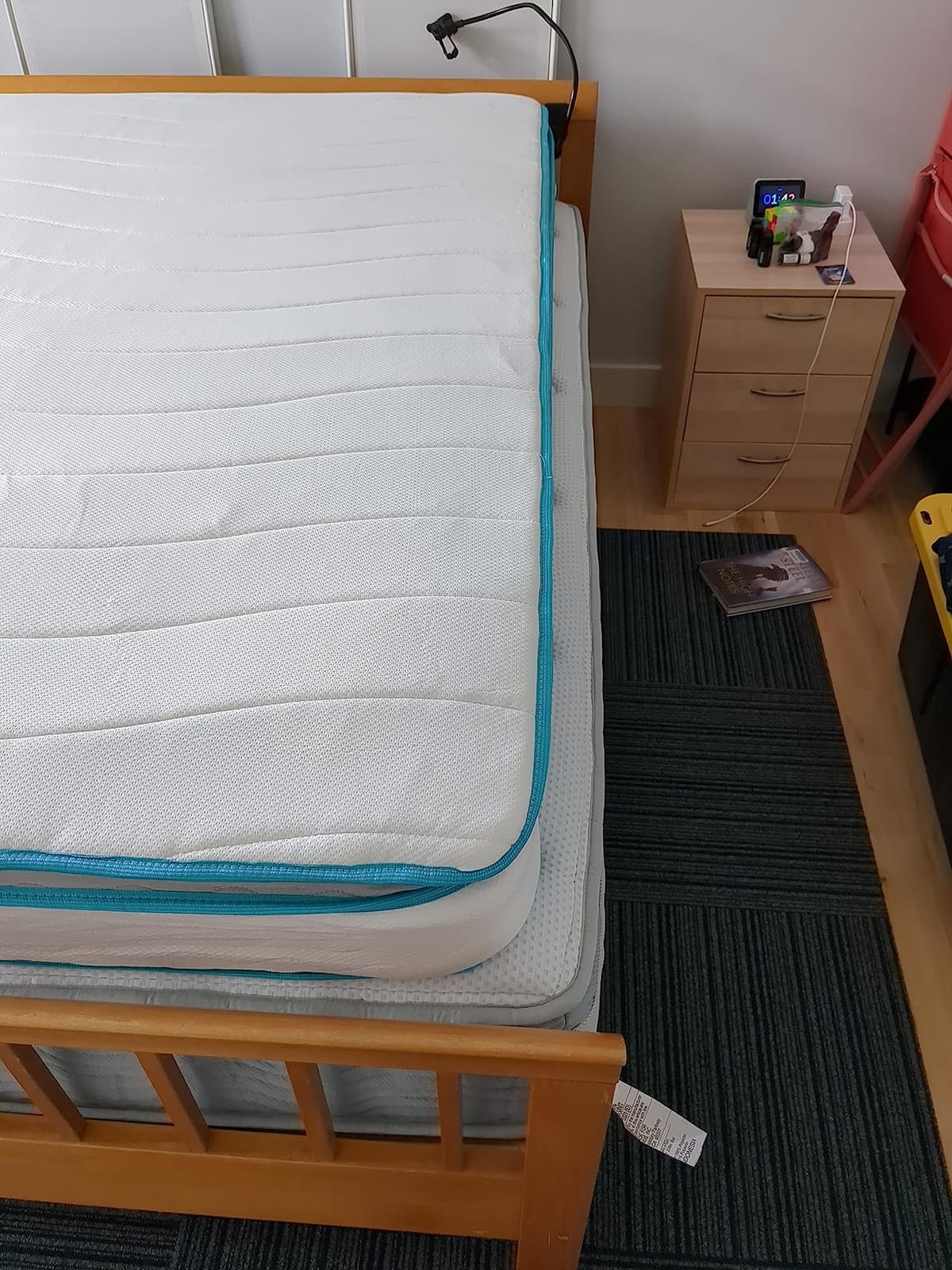
Where it loses points is height and feel. A pillow top is not the flattest sleeping surface, so if your guardrail clearance is tight, this sits higher than a bare 5-inch foam. And the feel is genuinely firm, which a seven-year-old will not mind and a side-sleeping twelve-year-old will.
The 10-year manufacturer warranty is the longest in this group for an innerspring at this profile, and 69 percent of owners gave it five stars. At 36.2 pounds it needs two hands but not two people, which matters when the mattress is going on the top rail.
How it behaves against a guardrail
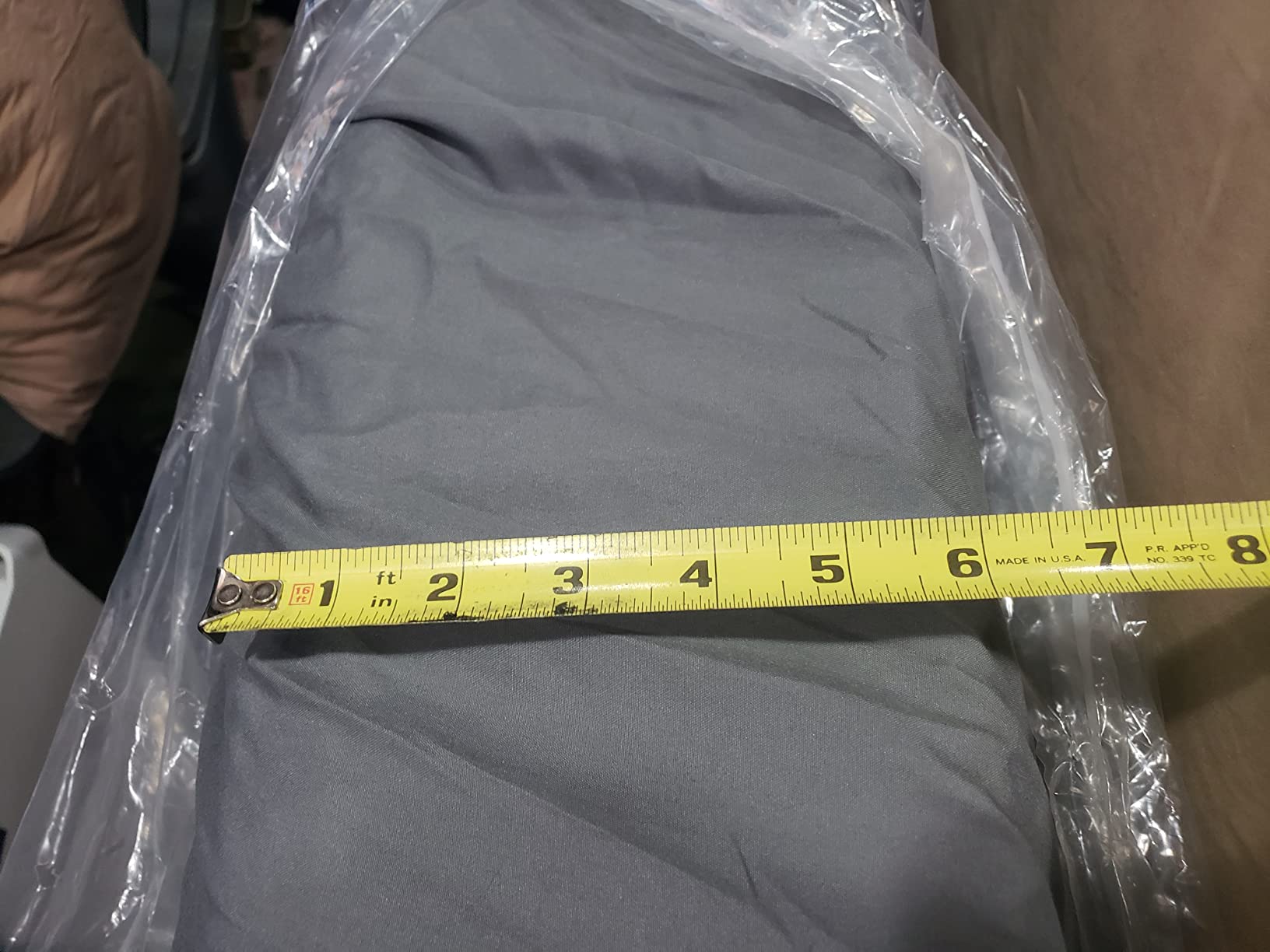
At 6 inches this sits in the middle of the safe band for most bunk frames. You want the mattress surface at least 5 inches below the lowest point of the guardrail, which on many frames means a 6-inch profile clears comfortably while an 8-inch profile gets tight.
Measure before you order. Put the tape measure at the lowest point of the rail and drop to the slat deck, then subtract the mattress thickness. That number is your real ceiling, and it is the only number that matters for safety.
Who should not buy this
Skip it if your child sleeps on their side and complains about hip pressure, or if you need a machine-washable cover for allergy reasons. Care instructions are spot clean only, so a child who spills something is not getting that cover in a washing machine.
2. Zinus 12 Inch Green Tea Memory Foam Twin XL – Best Deep Comfort Option
Zinus 12 Inch Twin XL Green Tea Memory Foam Mattress, Medium Firm Feel
12 inch Twin XL
Memory foam, medium firm
Green tea and charcoal
250 lb capacity
Pros
- Zoned pressure relief adapts across body areas
- Green tea and charcoal infusion controls odor
- CertiPUR-US foams with an OEKO-TEX cover
- Owners report multi-year durability
Cons
- Off-gassing can linger for days after unboxing
- 12 inch profile is too deep for most top bunks
- Weak edge support for sitting on the side
- Spot clean only care
This is the odd one out in the list, and deliberately so. A 12-inch profile is the deepest mattress here, which makes it a poor fit for a top bunk on most frames but a strong choice for the bottom bunk, where there is no guardrail overhead and more depth simply means more comfort.
The build is a three-layer memory foam with a breathable knitted cover over a durable base foam, and the top layer uses patented zoned pressure relief that adapts to different body areas and sleep positions. That zoning is why owners with back pain keep reporting that their pain improves.
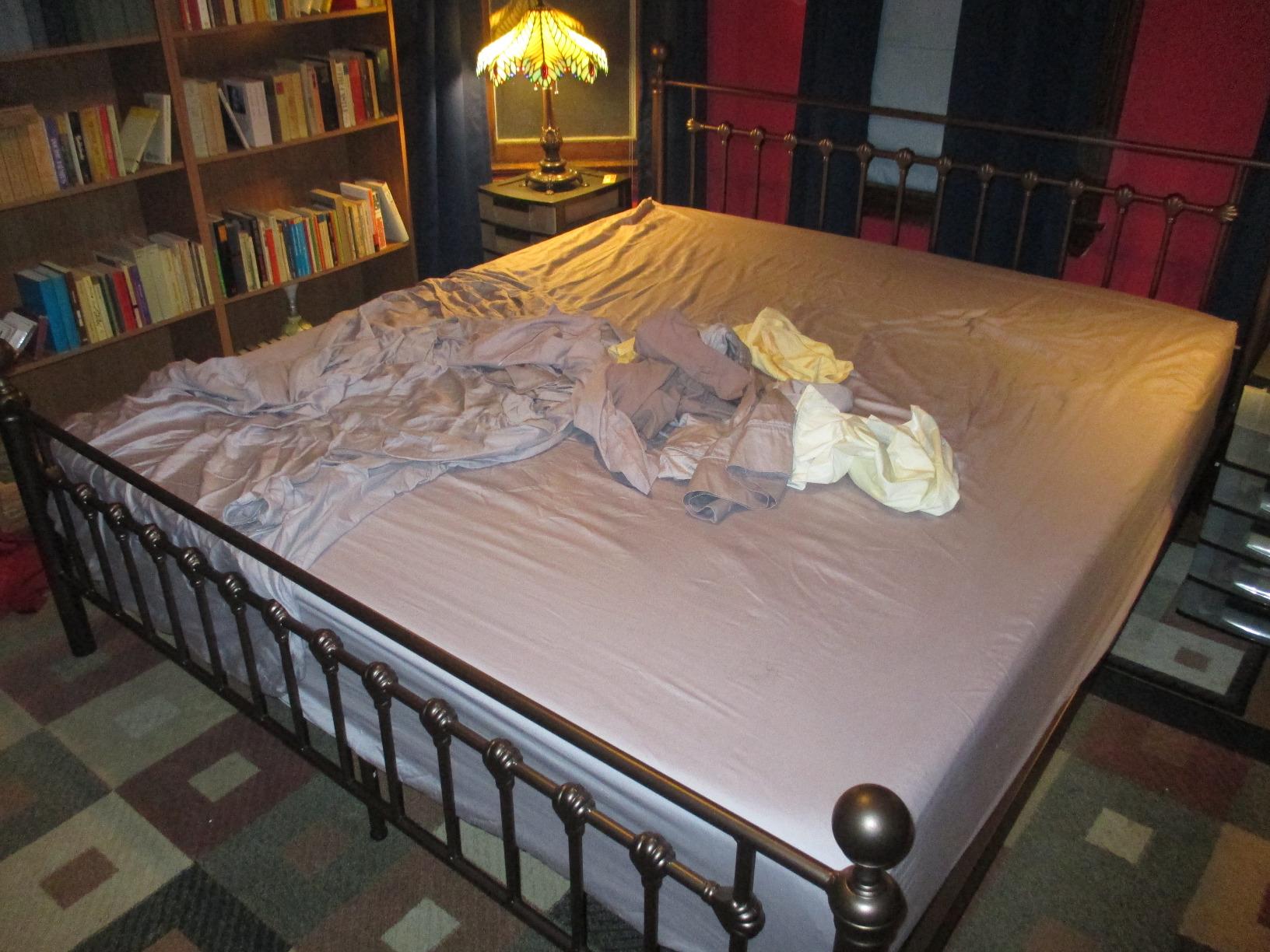
The green tea extract and purified charcoal infusion is a genuinely practical feature for a bunk setup, since two children sleeping in a small room generate a lot of ambient odor and the charcoal helps neutralize it. Weight capacity is rated at 250 pounds, which covers kids and most teens.
Off-gassing is the headline complaint. Reviewers report a noticeable odor on unboxing that some say takes days to clear, so do not schedule this for the night before a sleepover. Expansion also runs the usual 24 to 72 hours.
Bottom bunk versus top bunk placement
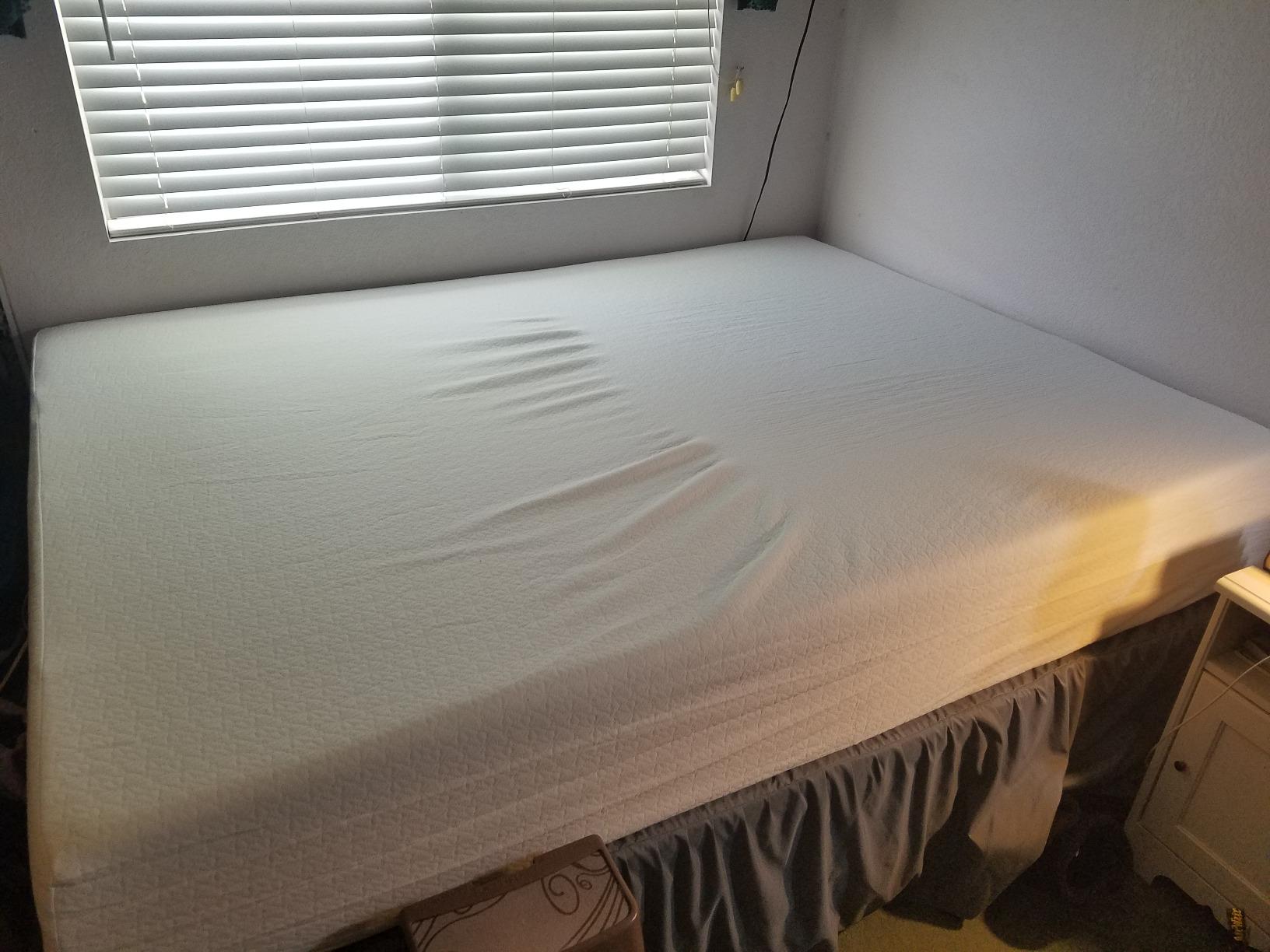
Put this on the bottom bunk without hesitation. The depth gives a side sleeper real pressure relief at the shoulders and hips, and the second child above is not affected by the height because the rail above belongs to the upper frame.
Do not put it on a top bunk unless you have measured and confirmed the frame has deep rail clearance. At 41.7 pounds it is also among the heaviest mattresses here, so the install takes two adults.
Who should not buy this
Skip it if a grown adult regularly sleeps on the bunk, since the stated capacity tops out at 250 pounds. It is also the wrong call for a kid who sits on the mattress edge to put on socks, because all-foam mattresses have almost no edge rebound.
3. Novilla Bliss 6 Inch Gel Twin XL – Best for Spinal Support
Novilla Bliss Twin XL Mattress, 6-Inch Gel Twin XL Memory Foam Mattress
6 inch Twin XL
Gel and NanoGel memory foam
Medium firm, 300 lb
100 night trial
Pros
- 6 inch profile is safe for top bunk clearance
- NanoGel top draws heat away in warm rooms
- ACA certified layers for spinal alignment
- Light at 26.9 lb for a one-person install
Cons
- Thin profile bottoms out for heavier sleepers
- Gel top feels softer than the medium firm label
- Hand wash only care
If your kid is a side sleeper or you are simply buying the best bunk bed mattresses for kids who share a warm room, the Novilla Bliss is the one we keep coming back to. It is a 6-inch gel memory foam, which puts it squarely in the top-bunk-safe zone, and 73 percent of its roughly 28,500 reviews are five stars.
The comfort layer is a gel-infused memory foam with NanoGel particles and an Airbreeze knitted cover built for airflow and moisture wicking. In a small bedroom where the bottom bunk may or may not have a window, that heat dissipation is a real difference rather than a marketing line.
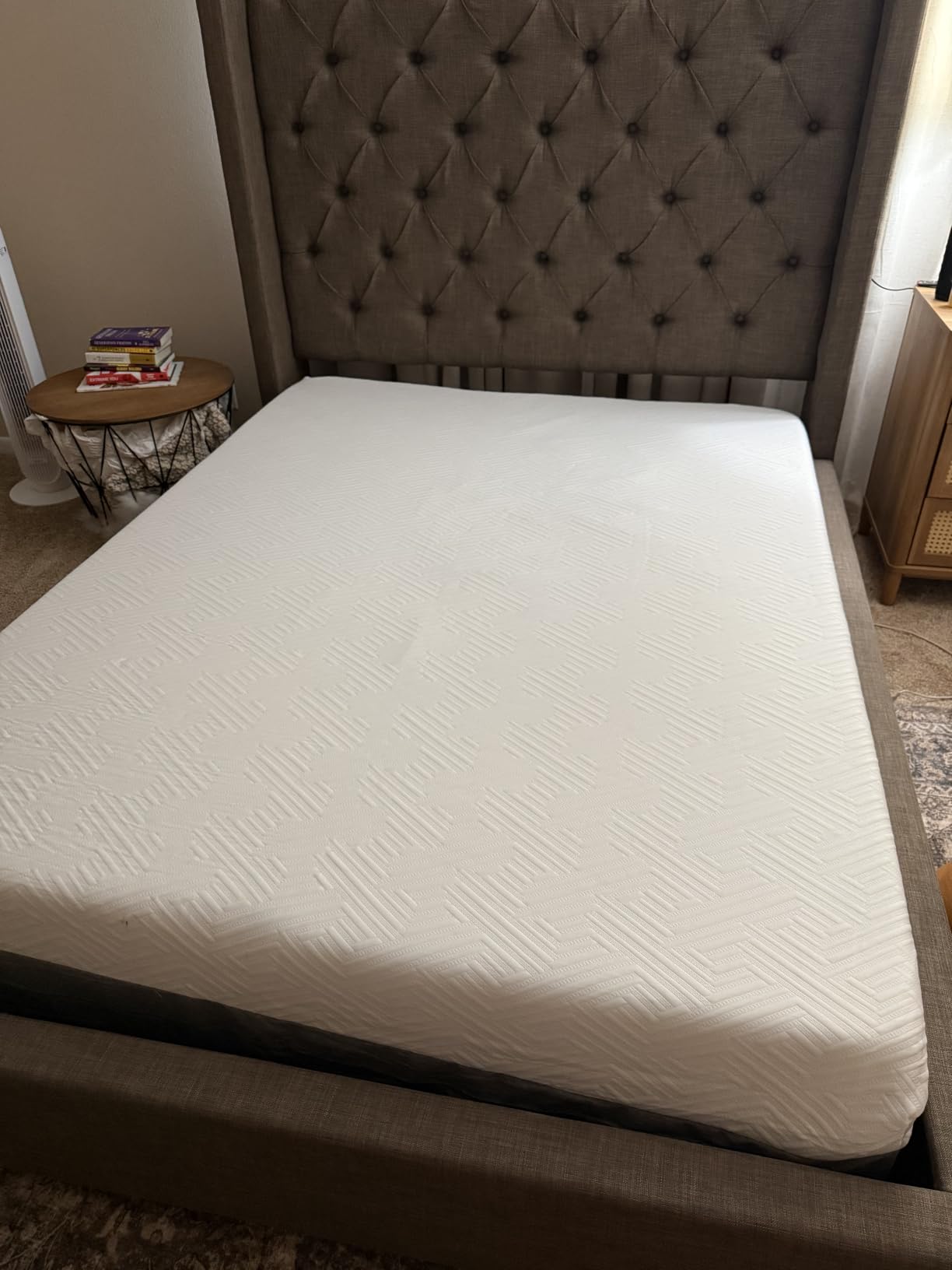
What stands out most is the ACA certification on the foam layers, which is tied to spinal alignment criteria rather than just material safety. For a child in a growth phase, that is the spec we would want a manufacturer to make.
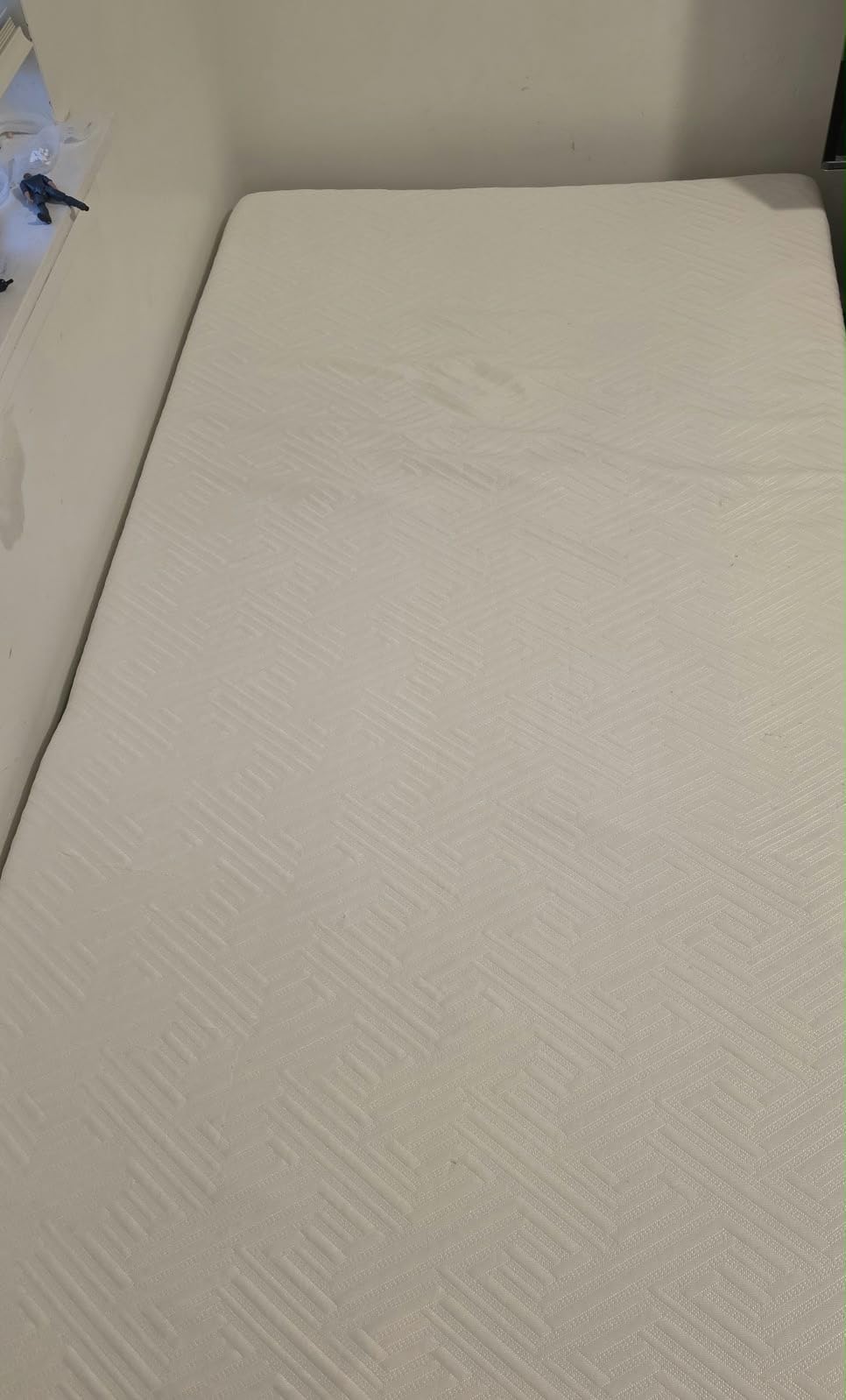
It is rated to 300 pounds and comes with a 100-night free trial plus 10-year protection, so the trial window gives you a season to test it rather than a few weeks. At 26.9 pounds it is one of the easiest mattresses here to get up onto the top rail.
What the 100-night trial actually tests
A trial only helps if the bed stays put. Foam mattresses keep expanding for a few days after unboxing, and this one needs up to 72 hours, so the honest evaluation window starts after that first week rather than on delivery night.
Watch the edges over the first month. Memory foam at 6 inches has limited perimeter structure, and if your child climbs in and out from the side daily, that is where a dip starts first.
Who should not buy this
Skip it for a heavy teen who wants a plush surface, since 6 inches is thin enough to bottom out for a larger body. It is also a poor match if you want a machine-washable cover; the care instruction is hand wash only.
4. Best Price Mattress 6 Inch Twin XL – Best Natural-Material Pick
Best Price Mattres 6 inch Twin Mattress XL Long, Bed-In-A-Box, Green Tea Memory Foam,White
6 inch Twin XL
Green tea memory foam
CertiPUR-US foams
10 year warranty
Pros
- Fits standard bunk frames without crowding
- Light at 25.8 lb for top bunk setup
- Green tea infusion helps in an enclosed bunk
- Cotton-based fire retardant with CertiPUR-US foams
Cons
- Six inches is a minimal profile for heavier kids
- Medium feel is softer than medium firm
- Hand wash only care
- No perimeter support for sitting on the edge
The distinguishing feature here is the fire retardant. Most foam mattresses in this category rely on a fiberglass barrier or a chemical treatment; this one uses a cotton-based fire retardant alongside CertiPUR-US certified foams, which is the version of that story parents are usually looking for.
It is a three-layer foam construction with green tea infusion in the memory foam layer and an OEKO-TEX certified poly jacquard cover. The green tea is a modest benefit, but in a bunk with a child underneath it is not nothing.
At 25.8 pounds this is one of the lighter six-inch mattresses, which matters if you are the only adult available to install it. It fits standard bunk frames without crowding the rail, and the 10-year warranty is longer than most foam mattresses at this profile offer.
Owners rate it 4.3 stars with 68 percent five-star reviews, and the recurring praise is simply that it does the job at a low cost. The recurring complaint is that six inches feels thin once a child passes about 120 pounds, and that the medium feel is softer than a medium-firm label would suggest.
How the cotton fire retardant compares
A cotton-based retardant avoids the fiberglass question entirely, which matters because fiberglass barriers can irritate skin if the cover is ever torn. It also removes the main reason parents search for a fiberglass-free mattress in the first place.
Check that the cover is OEKO-TEX certified, which this one is, because that certification covers the textiles themselves for substances like heavy metals and formaldehyde.
Who should not buy this
Skip it if the top sleeper is a large teen, since a 6-inch all-foam build has no coils to keep a heavier body supported. Also avoid it if you need to sit comfortably on the bed edge, because there is no edge support structure in this build.
5. EGOHOME 10 Inch Gel Memory Foam Twin XL – Best for Hot Sleepers
EGOHOME Twin XL Mattress 10 Inch, Gel Memory Foam Mattress, Medium Firm
10 inch Twin XL
Green tea gel memory foam
Rated to 750 lbs
Fiberglass free
Pros
- Bubble hole structure moves heat off the surface
- Very little chemical odor on arrival
- 750 lb capacity suits teens and adults
- Fiberglass free and CertiPUR-US certified
Cons
- 10 inch profile is deep for most top bunks
- Medium firm label runs softer than expected
- Long term durability is not well documented
Cooling is the entire pitch here, and the mechanism is more interesting than the word gel suggests. The foam uses a bubble hole structure for airflow plus a green tea gel infusion for temperature regulation, and reviewers specifically call it out as a kids’ bed and floor-bed option.
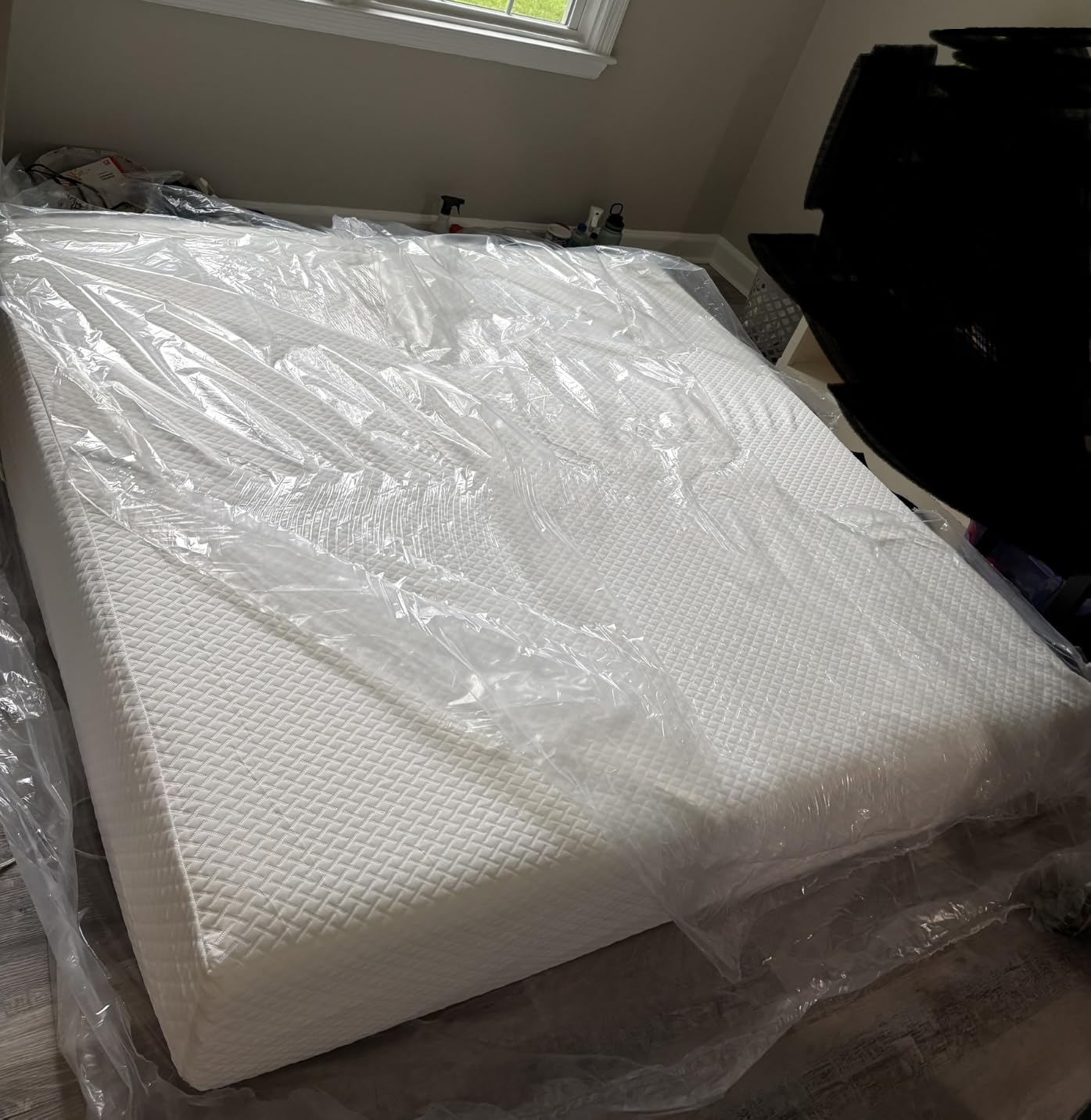
It is a four-layer construction with a 750-pound weight capacity, which is far beyond what most children need and covers the case where an adult occasionally sleeps on that bunk. It is also explicitly fiberglass free and CertiPUR-US certified.
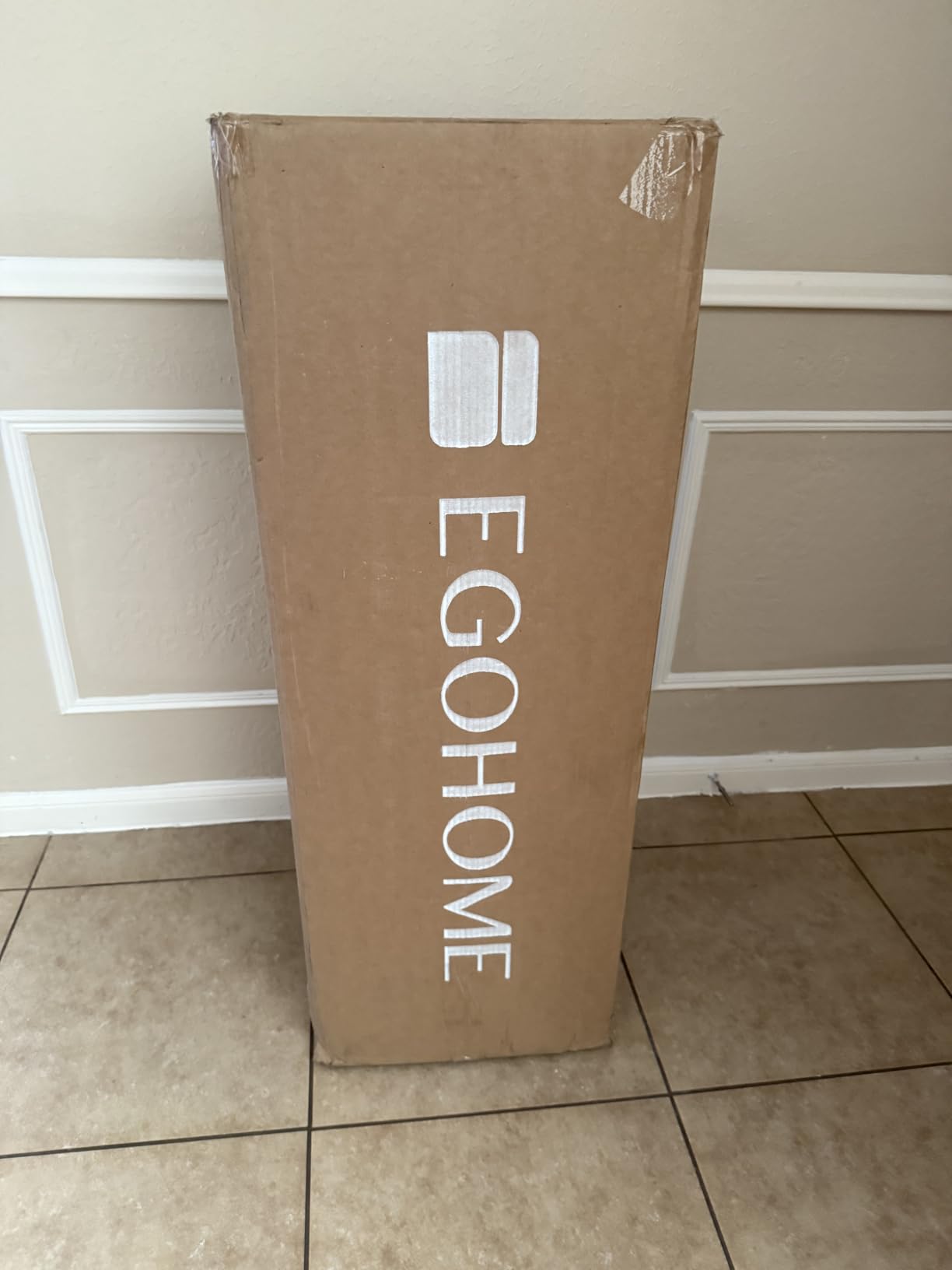
The thing owners mention most often is the absence of odor. Foam complaints about smell are the norm, and this model is repeatedly described as having little to no chemical smell out of the box, plus easy expansion with no real waiting period.
At 10 inches it also ranks near the top in the Mattresses category on Amazon, which tells you how many people are buying it, though long-term durability beyond a few years is not something owners have documented yet.
Measuring clearance before ordering
This is the model where measurement matters most. A 10-inch mattress on a bunk with standard rail height will very likely sit above the lowest point of the guardrail, and that is the exact fall risk the thickness rule exists to prevent.
Measure from the slat deck to the lowest rail point, subtract 5 inches for your safety margin, and see if you clear it. If you do not, this is a bottom bunk mattress.
Who should not buy this
Skip it if the mattress is going on a top bunk without a measurement-first check, or if you want a truly firm surface. Owners describe the feel as closer to medium-plush than the medium-firm label implies, which surprises people expecting support.
6. LUCID 6 Inch Firm Gel Memory Foam Twin XL – Best for Teens
Lucid® 6″ Firm Gel Memory Foam Mattress – Bamboo Charcoal & Cooling Gel – Fiberglass Free – Bed in a Box – CertiPUR-US® Certified – Twin XL Size
6 inch Twin XL
Gel and bamboo charcoal foam
Fiberglass free
CertiPUR-US
Pros
- Listing names bunk beds
- trundles and RVs
- Lightest mattress here at 18.8 lb
- Fiberglass free barrier and CertiPUR-US foams
- Bamboo charcoal and gel for odor and heat
Cons
- Listed 79 x 37.5 in size leaves a frame gap
- Six inches is thin for heavier sleepers
- One review reported a sewing needle inside the mattress
- Spot clean only cover
This is the mattress we recommend when the child using the top bunk is a teenager rather than a small kid. The listing names teens in its age range and names bunk beds, trundle beds and RVs as intended uses, and the firm-but-not-hard feel works for the back and stomach sleeping that tends to develop in older children.
Construction is simple and effective: one inch of ventilated gel and bamboo charcoal memory foam over five inches of base foam, giving a true 6-inch profile. The bamboo charcoal handles odor and the gel handles temperature, both of which matter in a shared room.
It is also the lightest mattress in this roundup at 18.8 pounds, edging past the 5-inch Novilla at 18.9. If you are installing a top bunk without a second adult, that single number removes more friction than any feature on the list.
Owners report meaningful back and knee pain relief, which tracks with the firm feel, and 72 percent gave five stars. One review reported a sewing needle left inside the mattress after delivery, so inspect before the plastic goes in the bin.

Checking the listed dimensions
The listed size is 79 by 37.5 inches, which is slightly under standard Twin XL at 80 by 39. On a tight bunk frame that shows up as a small gap at the end of the bed, and on a slat frame it can mean the mattress is not fully supported across its width.
Measure the interior of your frame first and compare. If your frame is snug, this model may not be the best fit despite everything else it does well.
Who should not buy this
Skip it for a heavy sleeper, because 6 inches of foam over a base layer will bottom out before it supports a large adult. It is also not the pick if you want a washable cover, since cleaning is spot only.
7. COOL GEL 8 Inch Memory Foam Twin XL – Most Versatile for Heavy Sleepers
COOL GEL 8 Inch Twin XL Mattress, Cooling Gel Memory Foam Mattress in a Box, Medium Firm Support & Pressure Relief, Fiberglass Free, CertiPUR-US Certified
8 inch Twin XL
Open cell gel memory foam
Made in USA
Fiberglass free
Pros
- Highest average rating in the group
- Open cell foam dissipates heat in small rooms
- Made in USA with a fiberglass free barrier
- Rated to 1000 lb
Cons
- At 38 lb it is heavy
- so the install takes two people
- 8 inches can crowd some upper guard rails
- Spot clean only cover
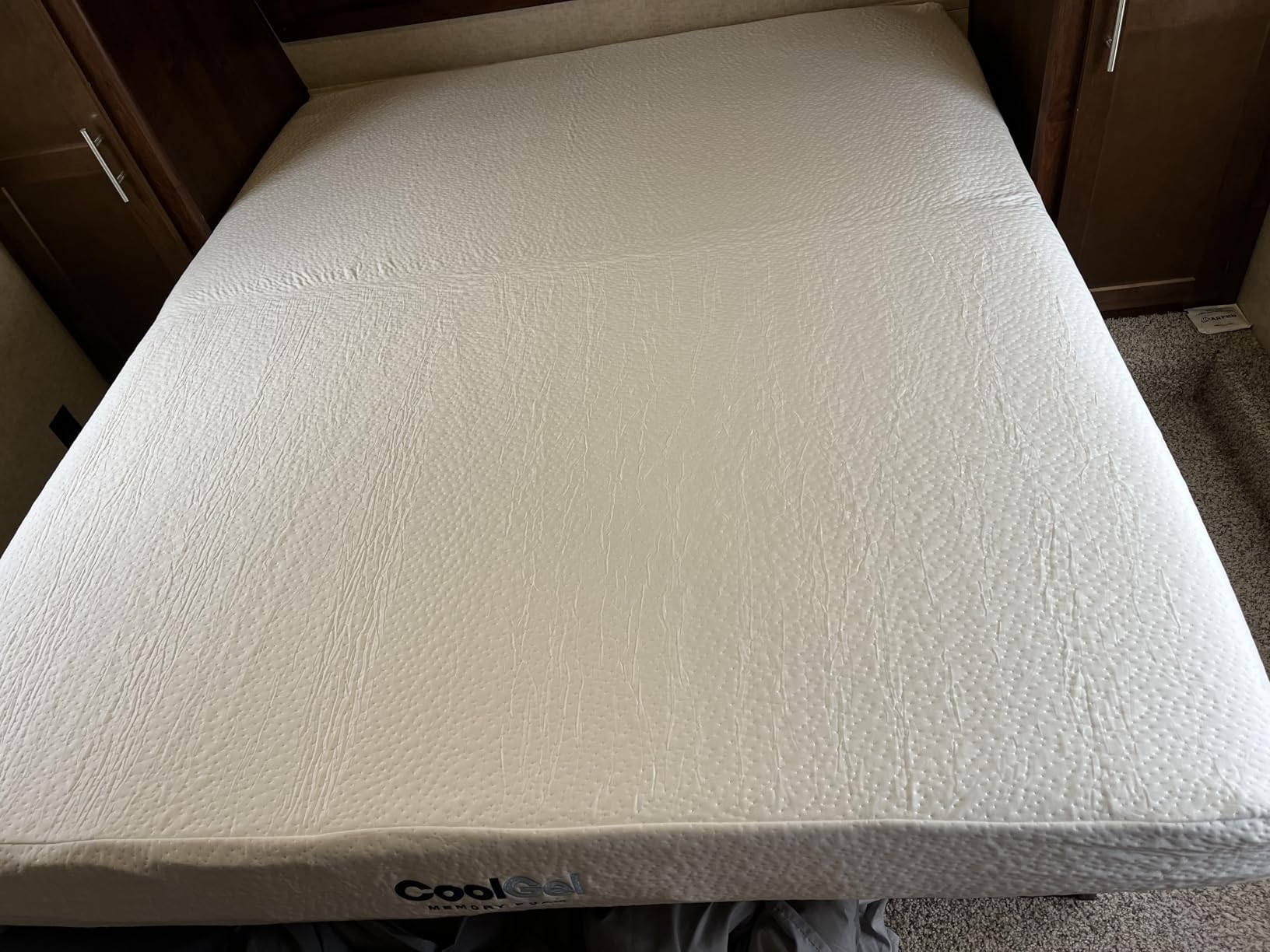
This is the highest-rated mattress in the roundup, and it earns a top three slot for sheer rating quality. At 4.5 stars with a 76 percent five-star share and only 4 percent one-star, it has the cleanest rating distribution of any product we analyzed.
The 8-inch profile sits at the upper end of the bunk-safe band, which makes it a good top bunk mattress on frames with generous rail clearance while still giving a bottom bunk sleeper noticeably more surface depth than a 5 or 6 inch option.
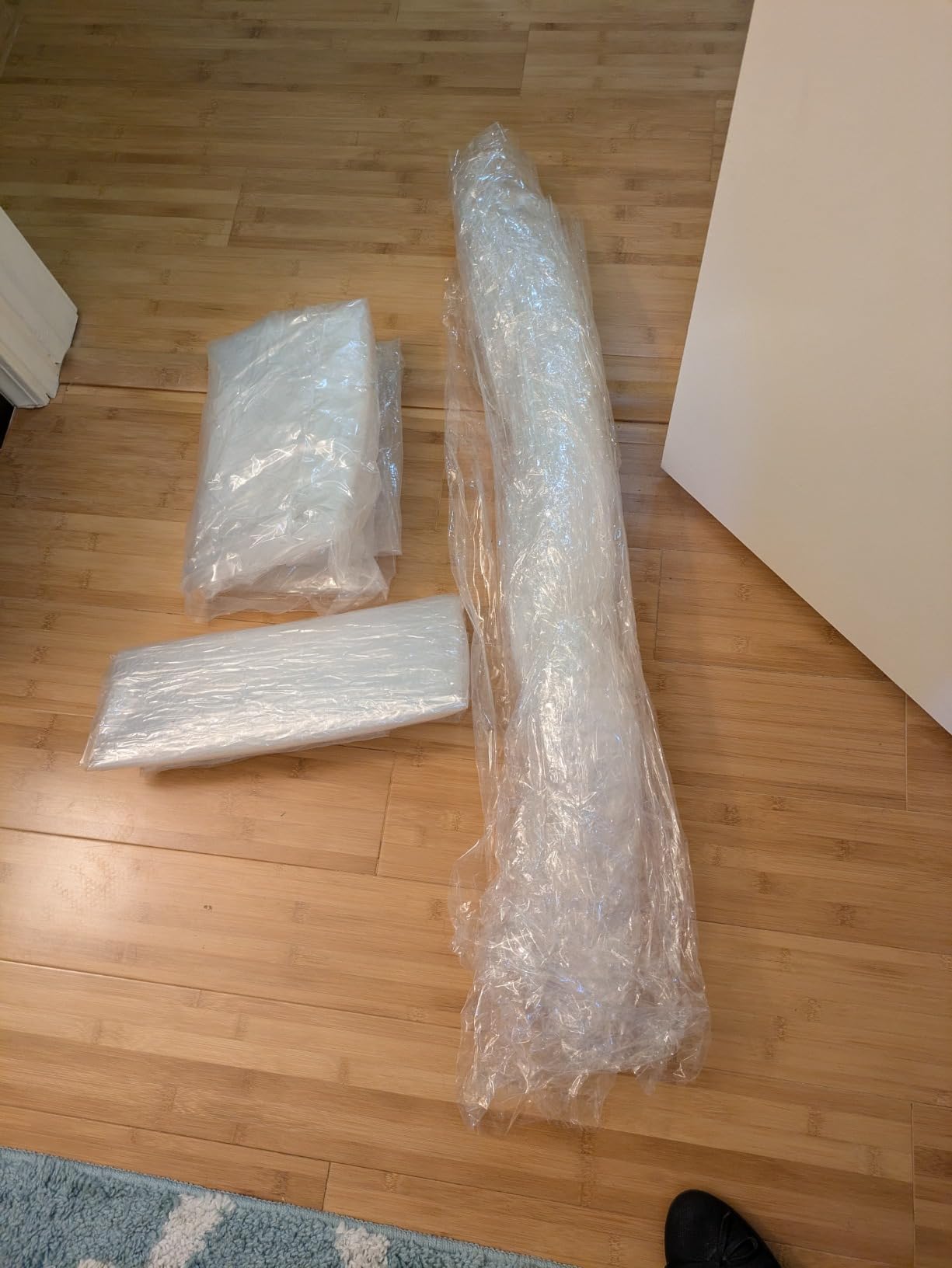
The foam itself is an open-cell gel-infused memory foam, which promotes airflow and heat dissipation better than standard closed-cell foam. Owners mention cooling, medium-firm support and motion isolation, and it is made in the USA with a fiberglass-free fire barrier.
The weight capacity of 1000 pounds is the highest here by a wide margin, so this is the pick if a heavy teen or an adult regularly uses that bunk. It also works with platform, slat, box spring and adjustable base frames.
Whether 8 inches clears your guardrail
Eight inches is the maximum we would consider for a top bunk, and only after measurement. On many frames the rail sits low enough that an 8-inch mattress leaves less than the 5 inches of clearance we would want above the sleeping surface.
If your measurement comes back tight, this is a strong bottom bunk mattress instead, where the extra 2 inches over a 6-inch profile actually matters for a side sleeper.
Who should not buy this
Skip it if you are installing alone. At 38 pounds it is one of the heaviest mattresses in this roundup and getting it onto a top rail is a two-person job. It also costs more than the entry foam picks, which matters when you need two.
8. NapQueen 8 Inch Bamboo Charcoal Twin XL – Best Washable Cover
NapQueen 8 Inch Twin-XL Size Mattress, Bamboo Charcoal Memory Foam Mattress, Bed in a Box, White
8 inch Twin XL
Bamboo charcoal memory foam
Zip-off washable cover
300 lb capacity
Pros
- Zip-off cover is machine washable
- Low motion transfer helps in a shared room
- Charcoal infusion controls odor in enclosed spaces
- Only 27 lb for an 8 inch profile
Cons
- Only a 2 year limited warranty
- Some owners report less than the advertised 8 inches
- Runs softer than the medium firm label
- One buyer reported a persistent chemical odor
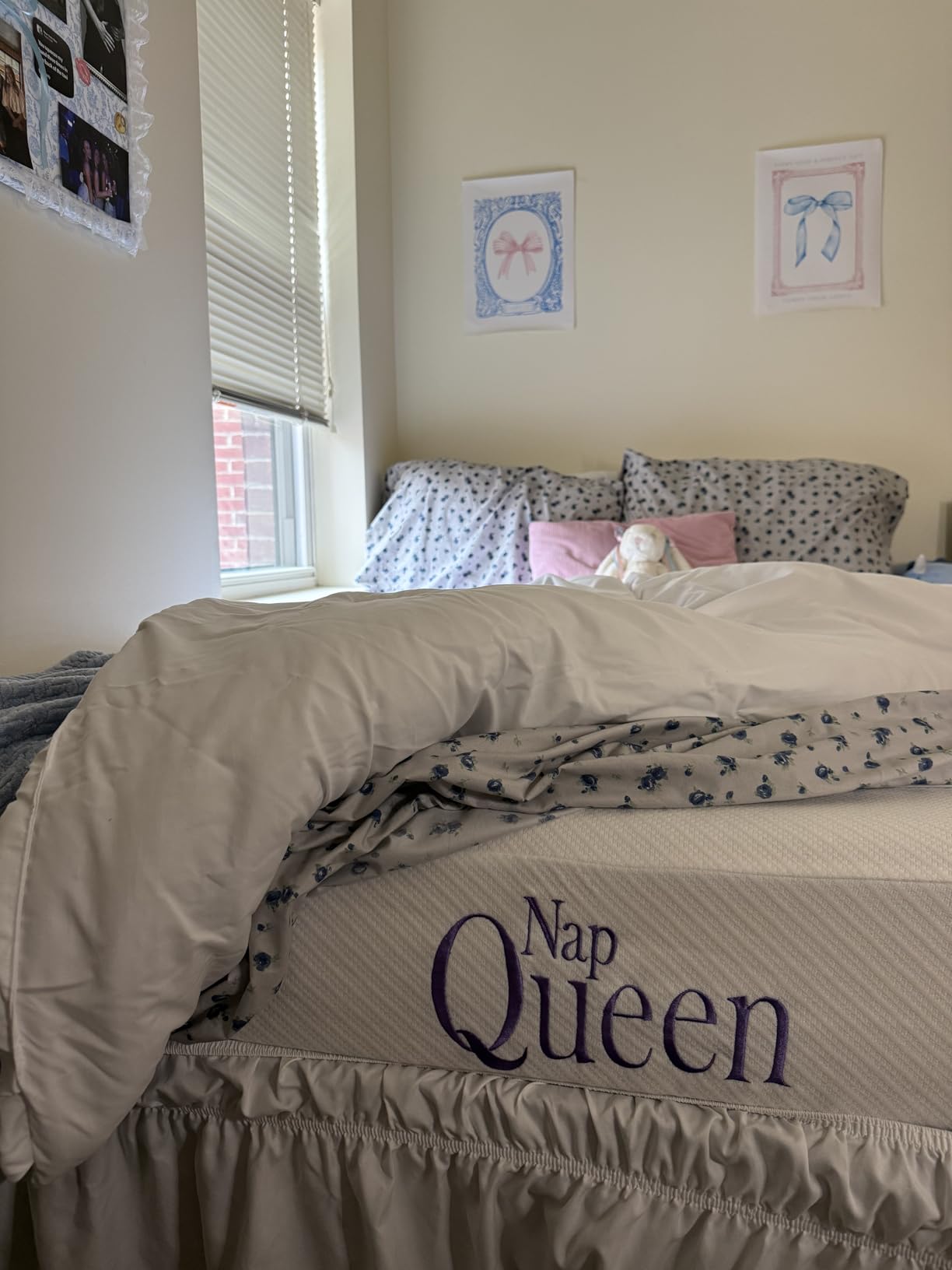
Care instructions decide mattresses more often than people expect, and this is the only 8-inch option in the roundup with a genuinely machine-washable cover. The cover zips off, and it is a 15 percent cotton and 85 percent polyester blend, which feels cooler than an all-polyester cover.
Construction is five layers, with high density base foam, a transition foam layer and a bamboo charcoal infused memory foam on top. That transition layer is what gives it noticeably low motion transfer, useful when a restless sleeper upstairs is above a light sleeper downstairs.
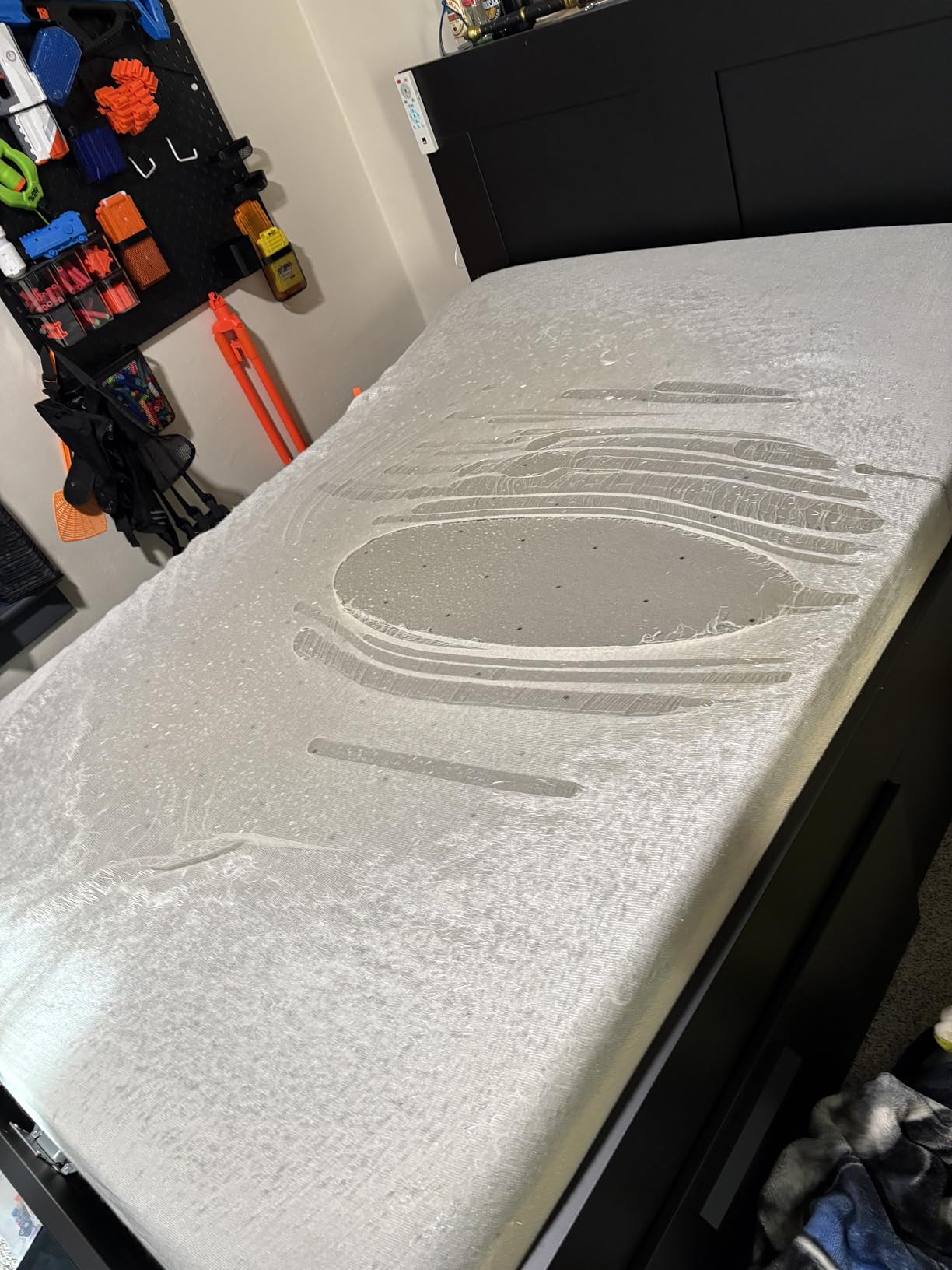
It is rated to 300 pounds, covers kids and most teens, and at 27 pounds it is one of the easier 8-inch mattresses to lift to a top rail on your own. It expands to shape within 72 hours with minimal odor for most buyers.
The warranty is the weak point: two years limited is the shortest in this roundup, and for a foam mattress that will be in daily use for years it is worth weighing against that trade-off. Several owners also report it topping out closer to 7 inches rather than the advertised 8.
Why a washable cover matters in a kid’s room
Spills, sweat and dust mites are all easier to manage when the cover comes off and goes into a washing machine. The 5-inch and 6-inch washable alternatives here are thinner options aimed at a different clearance problem.
If your child has allergies, a washable cover also lets you manage the surface layer without buying a whole mattress protector, though a protector is still the better first line on a bottom bunk.
Who should not buy this
Skip it if you want a long warranty or a genuinely firm surface, since owners report it running softer than the medium-firm label and the warranty is only two years. It is also worth avoiding for a child with a chemical sensitivity, given one report of persistent odor.
9. FDW 5 Inch Gel Memory Foam Twin XL – Budget Pick with Maximum Clearance
FDW | 5 Inch Twin XL Mattress | Medium Firm | Gel Memory Foam | White
5 inch Twin XL
Gel memory foam over base foam
Machine washable cover
CertiPUR-US
Pros
- Lowest cost option in the roundup
- 5 inch profile clears tight guard rails
- Washable removable cover for easy care
- CertiPUR-US without ozone depleters or heavy metals
Cons
- Only 5 inches
- the thinnest profile here
- Little give at the edges
- Some buyers report an initial chemical smell
- Long term durability is uncertain at this profile
This is the mattress to buy when the frame, not the child, sets the limits. At 5 inches it offers the most headroom of anything in the roundup, so it is the safest choice on a bunk with a low-hung guardrail, and it is also the lowest cost option here.
It is a two-layer build with one inch of gel memory foam over four inches of high-density base foam, giving all-position support with spinal alignment. The removable cover is machine washable, which almost nothing at this price offers.
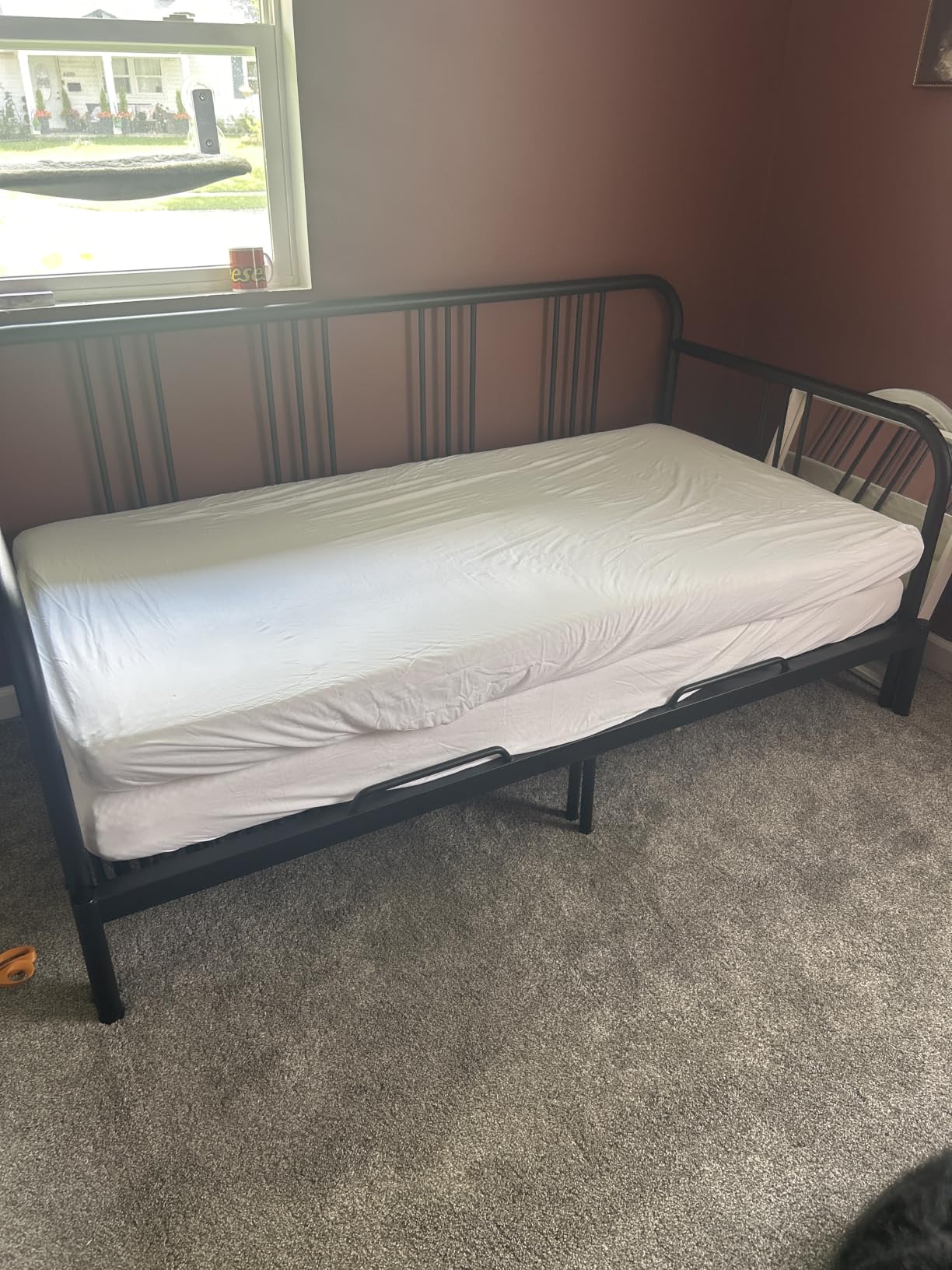
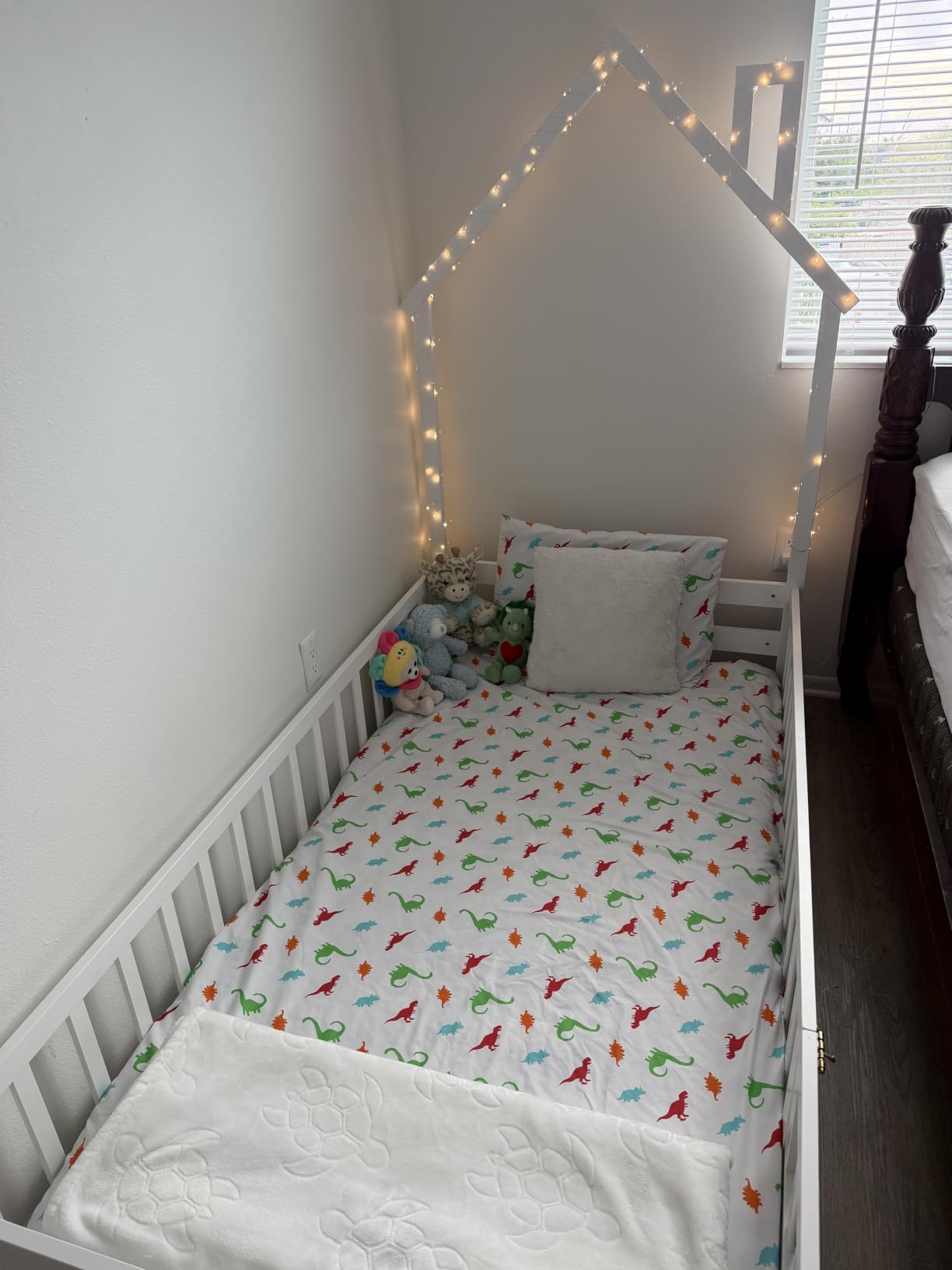
Owners specifically recommend it for toddler beds, big kid beds and floor beds, and the CertiPUR-US certification means the foams are free of harmful chemicals and heavy metals. At 4.3 stars with 70 percent five-star reviews it holds up well for what it is.
The trade-off is straightforward. Five inches is thin, several buyers report the surface feels too firm, and there is little give at the edges, so sitting on the side to put on socks is not comfortable. It expands within 72 hours.
When 5 inches is the right call
If you inherited a bunk bed from a taller child, or you are buying a frame with a low rail, thickness becomes the binding constraint. In that case a 5-inch mattress that clears the rail by a safe margin beats an 8-inch mattress that does not.
Also worth noting: the listed dimensions on this listing show the package rather than the mattress footprint, so measure the actual bed and confirm a Twin XL frame before ordering.
Who should not buy this
Skip it if the top sleeper is a larger child. There is simply not enough surface depth to cushion a heavier body, and a child who bottoms out on the base foam will sleep badly every night.
10. Novilla 5 Inch Memory Foam Twin XL – Best Value Lightweight Option
Novilla Twin XL Mattress 5 Inch,Twin XL Memory Foam Mattress
5 inch Twin XL
Gel memory foam
18.9 lb reinforced edge
CertiPUR-US
Pros
- Light at 18.9 lb for one-person placement
- 5 inch profile clears tight guard rails
- Reinforced three-layer edges resist side sagging
- Porous breathable structure reduces moisture
Cons
- Listed 80 x 37 in width leaves a frame gap
- 5 inches offers minimal cushioning
- Grey color may not match bedding
- No warranty duration is listed
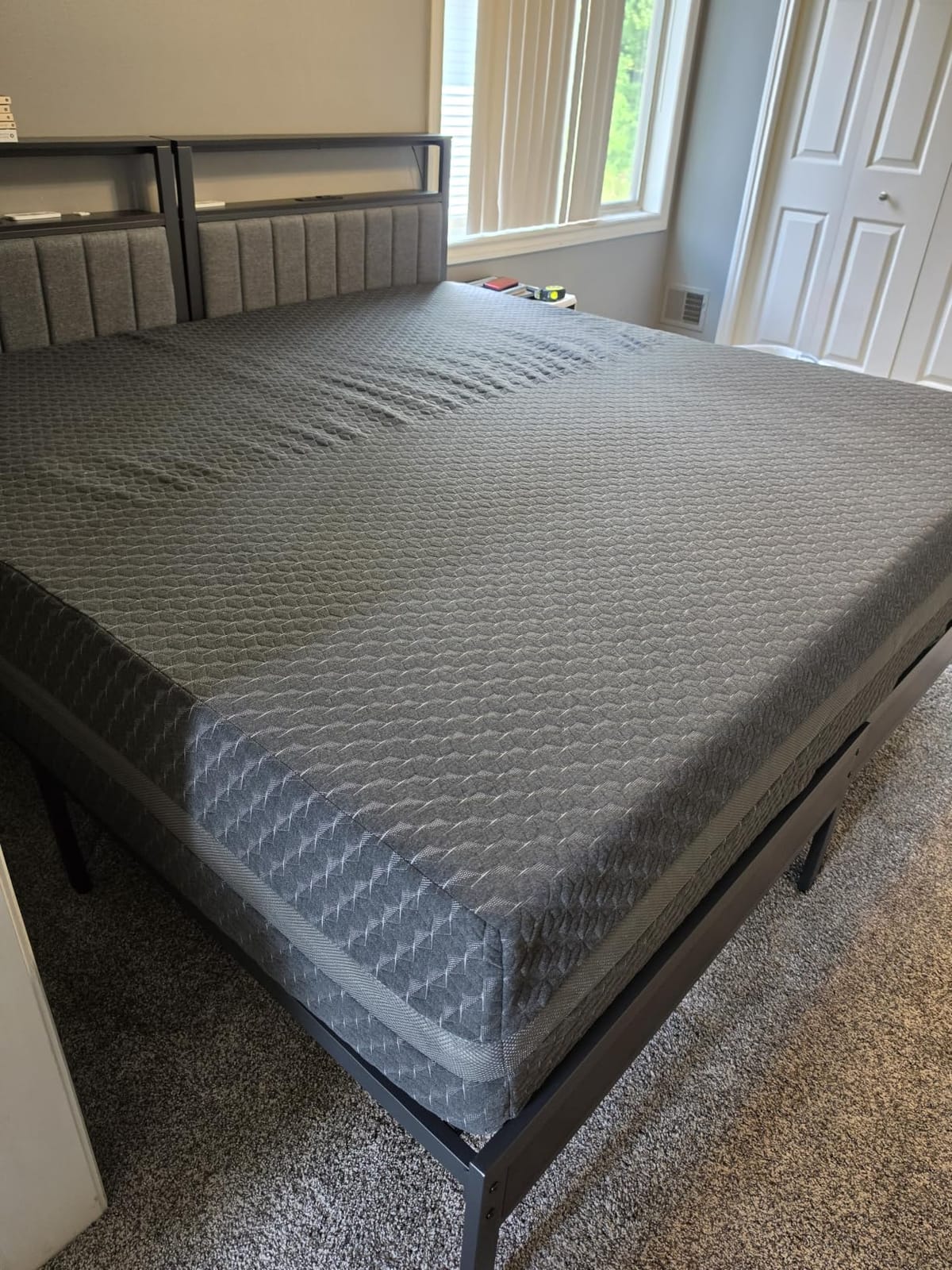
This pairs a 5-inch profile with reinforced edges, and that combination is rare. Kids climb on and off the side of a bunk far more often than they use a ladder, so edge strength is the part of the mattress that actually wears out first in a child’s bedroom.
It is a three-layer foam structure with a gel comfort layer over a high-density core, wrapped in a tear-resistant polyester cover. The porous, breathable design is marketed as hypoallergenic, which helps in a room where both kids have allergies.
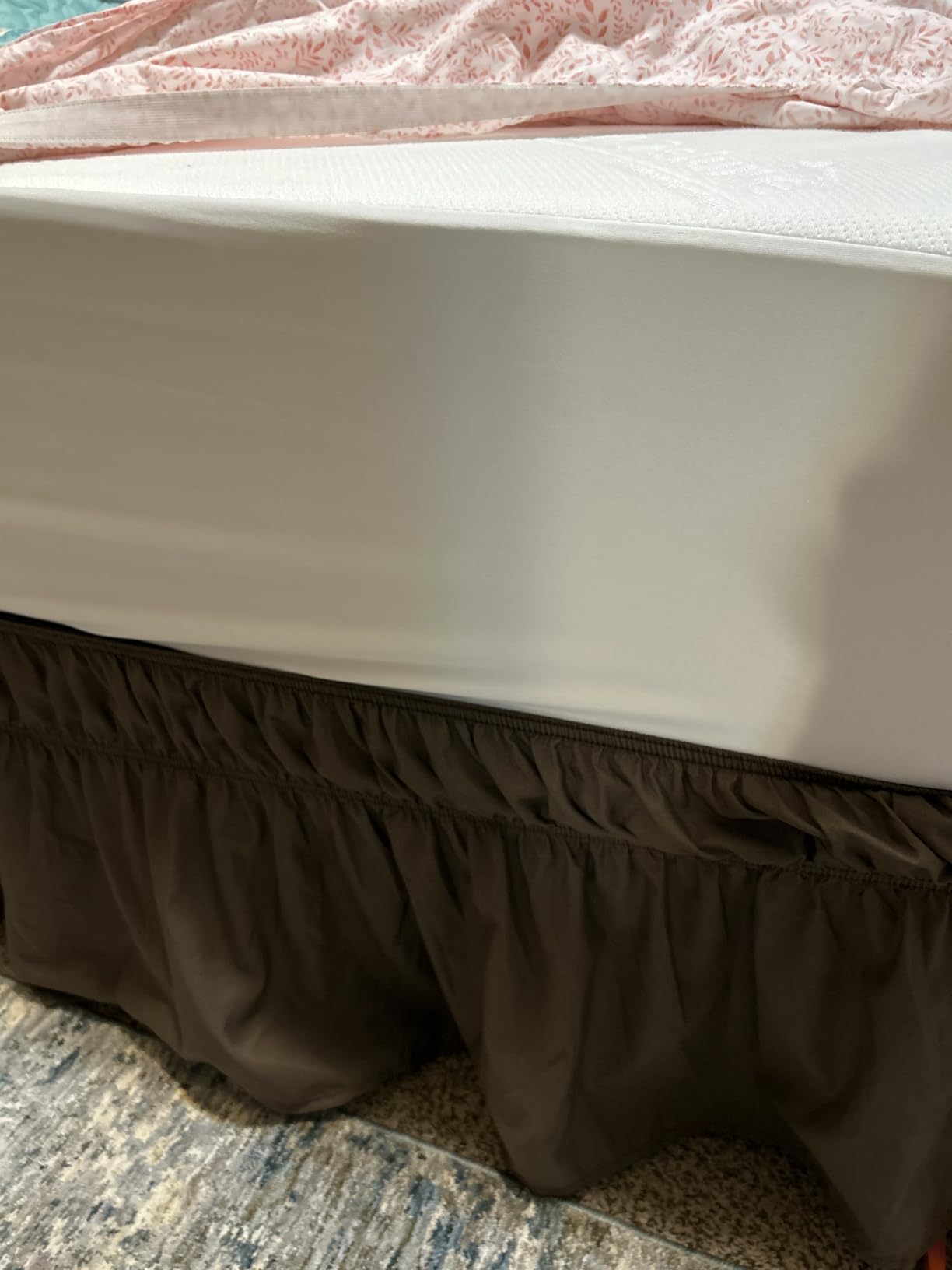
At 18.9 pounds it is the second-lightest mattress here and lighter than most 5-inch foam twins, so putting it on the top rail alone is realistic. Owners rate it 4.4 stars with 74 percent five-star reviews, which is a strong result for the smaller review base.
The cooling layer is worth noting for the bottom bunk, where a mattress with a porous structure does a better job of moving moisture than a dense foam base. It also holds a 4.4 rating while costing less than most six-inch options.
Reinforced edges versus reinforced everything
Most budget foam twins have no perimeter structure at all, which is why they dent when a child sits on the edge. This one adds reinforced edges across the three layers, and that is the feature that decides whether it still looks flat after two years of side-climbing.
It does not fix the width issue though. The listed size is 80 by 37 inches, narrower than a standard 39-inch Twin XL, so check your frame interior before ordering.
Who should not buy this
Skip it for a heavier child, since a 5-inch profile gives minimal cushioning no matter how good the edges are. It is also a poor choice if you need a long warranty, as no warranty duration is listed on this model.
Buying Guide: Choosing a Bunk Bed Mattress
Thickness and guardrail clearance
The single rule that governs everything else: the top of the mattress should sit at least 5 inches below the lowest point of the guardrail. The CPSC recommends keeping total mattress thickness at or under 8 inches on a bunk bed, which is why we cap our picks at that height.
Here is how to measure it in four steps. First, find the lowest point of the guardrail on your frame. Second, measure straight down to the slat deck with a tape measure. Third, subtract 5 inches. Fourth, that number is your maximum mattress thickness.
Measure on both the top and bottom frames if you plan two mattresses. Frames from the same maker are often not identical, and it is common for the upper frame to have less clearance than the lower one.
Top bunk versus bottom bunk
A top bunk has a hard ceiling on thickness. A bottom bunk does not, because there is no rail above the sleeper, so depth is pure comfort there.
That leads to the sensible two-tier approach: put the thinner 5 or 6 inch mattress on top and the deeper 8 or 10 inch model on the bottom. You get safety where safety is enforced and comfort where comfort is free.
Foam, innerspring or hybrid
Foam is quiet, motion-isolating and usually cheaper, but it can bottom out if it is thin and it has weak edge support for sitting. Innerspring is bouncier, holds its shape longer and handles heavier bodies well, but transfers motion more and is heavier to lift.
For a top bunk with a smaller child, foam wins on safety and quietness. For a teen or adult sleeper, innerspring earns its place. Every pick in this roundup is one of those two types.
Size: Twin, Twin XL and Narrow Twin
A standard kids bunk bed takes a Twin at 38 by 75 inches, or a Twin XL at 38 by 80 inches when the frame is long enough. Some newer frames take a Narrow Twin, which is shorter and needs a dedicated mattress.
Measure the frame interior rather than assuming. Several mattresses in this roundup list dimensions a full inch or two under standard, and that gap shows up as an unsupported edge.
Firmness
Medium-firm is the right target for almost every child. Firm enough to keep the spine in a neutral line, soft enough to relieve pressure at the shoulder and hip.
Be aware that labeled firmness and actual firmness often differ. Gel and charcoal infusions in particular tend to make a mattress feel softer than the label suggests, so read owner reviews rather than trusting the label alone.
Certifications and fiberglass-free fire protection
CertiPUR-US means the foam is free of ozone depleters, PBDEs, TDCPP and TCEP flame retardants, heavy metals, formaldehyde and phthalates. OEKO-TEX Standard 100 applies to the textiles, meaning the cover fabric was tested for the same class of substances.
A fiberglass-free fire barrier is a separate claim and a separate decision. Fiberglass barriers meet the federal flammability standard without chemical retardants, but they can irritate skin if the cover tears and the fibers escape. Options like the Best Price Mattress use a cotton-based retardant instead, which sidesteps the issue entirely.
What to avoid on a bunk bed
Avoid anything over 8 inches thick on a top bunk. Owners on parent forums describe this as the number one safety fear, and it is entirely avoidable with a tape measure.
Avoid bare innersprings in a room with allergy-prone children, because coil mattresses collect dust and allergens in ways foam does not. Avoid loose memory foam pads sold as bunk bed solutions, which have no certification and no real support.
Also avoid buying one deep mattress for both bunks. It is the most common reason a top sleeper ends up sitting above the rail.
Buying two mattresses on a budget
Since you need two, split the budget instead of splitting it evenly. Put your money into the bottom bunk mattress, where depth is free, and choose a certified 5 or 6 inch foam for the top.
A waterproof mattress protector is the highest-value add-on for a bottom bunk, since it protects the investment against spills and accidents. Add one to each mattress rather than replacing either one.
If your bunk is a non-standard size
RV bunks and vacation rental bunks often measure 27 by 34 inches or 39 by 74 inches, and there is usually no matching mattress listing anywhere. Parents on forums end up using generic foam pads for this reason.
This guide does not cover those sizes. For a non-standard frame, contact the bunk manufacturer directly for the exact mattress footprint and thickness, then look for a cut-to-size foam mattress in that dimension.
Frequently Asked Questions
What mattress do you use for bunk beds?
Most families use a 5 to 8 inch Twin or Twin XL mattress, either all foam or a low-profile innerspring. The 6 inch band is the safest default for a top bunk because it clears most guardrails while still supporting a child. For a bottom bunk, 8 inches is comfortable and unrestricted. Look for CertiPUR-US certified foam and a fiberglass-free fire barrier, and remember you are replacing the thin pad that arrives with the bed.
What size mattress goes on a kids bunk bed?
A standard kids bunk takes a Twin at 38 by 75 inches, and a longer frame takes a Twin XL at 38 by 80 inches. Some newer frames use a Narrow Twin, which needs a dedicated mattress. Measure the interior width of the frame before ordering, because several mattresses list dimensions an inch or two under standard and leave an unsupported gap.
What thickness mattress is safe for top bunk?
Keep the top of the mattress at least 5 inches below the lowest point of the guardrail, and stay at or under 8 inches total thickness. To check, measure from the lowest rail point straight down to the slat deck, subtract 5 inches, and that number is your maximum mattress thickness. Five and six inch mattresses are the safest choices on frames with low rails.
Do bunk beds require special mattresses?
No special certification is required, but the mattress must fit two constraints the average bedroom twin does not. It needs to be thin enough to stay below the guardrail, which is usually 5 to 8 inches, and light enough that one parent can lift it onto the top rail. Within those limits any certified Twin or Twin XL mattress works.
Can a 7 year old sleep in a bunk bed?
Most manufacturers rate their top bunks for ages seven and up, and pediatric guidance generally points to six as the youngest, mainly because of ladder climbing and fall risk rather than the mattress itself. The bigger concern at that age is mattress thickness, since a thick top bunk mattress raises the sleeper toward the rail.
What safety certifications should I look for?
Look for CertiPUR-US on the foam, which rules out ozone depleters, toxic flame retardants, heavy metals and formaldehyde, plus OEKO-TEX Standard 100 on the cover textiles. Separately check for a fiberglass-free fire barrier, and consider a cotton-based fire retardant if you want to avoid fiberglass entirely. None of these replace a thickness measurement.
What mattress to stay away from?
Avoid anything over 8 inches thick on a top bunk, any mattress you have not measured against your guardrail, and loose foam pads sold as bunk bed solutions with no certification. In a room with allergy-prone children, skip bare innersprings that collect dust. Also avoid the thin pad included with the bed, which parents consistently replace within the first year.
Conclusion
The best bunk bed mattresses for kids share three traits: a 5 to 8 inch profile that keeps the sleeper below the guardrail, certified foam with no fiberglass barrier, and enough structure to hold shape through years of use. Our Editor’s Choice, the Linenspa 6 Inch Memory Foam Mattress in Twin XL, checks all three and has the largest body of real-world feedback in the category.
Before you order anything, spend two minutes with a tape measure. Find the lowest point of the guardrail, measure down to the slat deck, and subtract 5 inches. That number decides your ceiling, and it is the single step that prevents the most common safety problem on a bunk bed.
If you are still furnishing the rest of the room, our guides to the best twin mattresses for kids and the best mattresses overall cover the sleeping setups outside the bunk frame.