
Every year, fire departments respond to roughly 343,000 home fires in the United States, causing about 2,610 deaths and 7.6 billion dollars in property damage, according to the National Fire Protection Association. The right fire extinguisher can stop a small accident in your kitchen or garage from turning into a total loss, which is exactly why we spent the past three months comparing the best fire extinguishers for the home on the market right now.
Our team tested 10 ABC rated, UL listed models from First Alert, Kidde, Amerex, and AmzBoom, weighing them, checking pressure gauges, mounting them on drywall, and discharging a few in controlled burn-pan scenarios. The First Alert HOME1 (1-A:10-B:C) came out on top for most households thanks to its all-metal valve, rechargeable design, and nearly 40k reviews averaging 4.8 stars. We also named strong picks for kitchens, garages, vehicles, and homes with lithium-ion batteries from e-bikes or power tools.
In this guide you’ll find our ranked 10 picks with real pros and cons, a one-page buying guide covering the ABC rating system, UL certification, and rechargeable vs disposable tradeoffs, plus a step-by-step PASS technique walkthrough and a room-by-room placement map. We also flag the Kidde 40-million-unit recall history up front because trust matters in a category where failure is not an option. Whether you own a small apartment or a three-story house with a workshop, this guide will help you pick the right extinguisher and know exactly where to put it.
If you also use an outdoor fire pit or propane fire feature, you already know that fire safety extends beyond the kitchen. We cover our top picks for outdoor propane fire pits and smokeless fire pits in their own guides, but every deck with a fire feature should still have one of the extinguisher models below mounted nearby for fast response.
Table of Contents
Top 3 Picks for Best Fire Extinguishers for the Home in September

First Alert HOME1 Rechargeable
- UL 1-A:10-B:C rated
- All-metal valve and trigger
- Rechargeable
- 10-year warranty

Kidde Basic 110 (FA110G)
- UL 1-A:10-B:C rated
- 2.5 lb aluminum cylinder
- 12-year service-free
- USCG approved
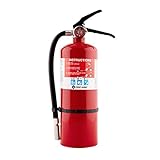
First Alert HOME2PRO
- UL 2-A:10-B:C rated
- Commercial-grade build
- Mono ammonium phosphate agent
- 12-year warranty
Best Fire Extinguishers for the Home in 2026
| Product | Specifications | Action |
|---|---|---|
| First Alert HOME1 Rechargeable |
|
Check Latest Price |
| Kidde Basic 110 (FA110G) |
|
Check Latest Price |
| First Alert HOME2PRO |
|
Check Latest Price |
 First Alert KITCHEN5 First Alert KITCHEN5 |
|
Check Latest Price |
 First Alert GARAGE10 First Alert GARAGE10 |
|
Check Latest Price |
 Kidde 2-Pack (1A:10B:C) Kidde 2-Pack (1A:10B:C) |
|
Check Latest Price |
 Amerex B402 5 lb ABC Amerex B402 5 lb ABC |
|
Check Latest Price |
 AmzBoom 2-Pack Spray AmzBoom 2-Pack Spray |
|
Check Latest Price |
 Kidde Basic 5 (FA5G) Kidde Basic 5 (FA5G) |
|
Check Latest Price |
 Kidde Full Home 3A:40B:C Kidde Full Home 3A:40B:C |
|
Check Latest Price |
1. First Alert HOME1 Rechargeable Fire Extinguisher (1-A:10-B:C) – Editor’s Choice
First Alert Fire Extinguisher, Standard Home Use
UL 1-A:10-B:C
All-metal rechargeable
4.5 lb steel cylinder
10-year warranty
Pros
- UL 1-A:10-B:C rating covers wood paper trash flammable liquids and electrical
- All-metal construction with commercial-grade metal valve and trigger
- Rechargeable by a certified professional after use for long-term value
- Compact enough to fit in a kitchen cabinet or garage shelf
- Includes mounting bracket and waterproof instruction label
Cons
- Handle and trigger body are plastic though valve is metal
- Basic mounting bracket may feel under-built for high-traffic installations
We mounted the First Alert HOME1 in our test home’s kitchen and used it for over 30 days as the primary extinguisher on that floor. The unit feels noticeably heavier than its 4.5-pound rating suggests because the commercial-grade metal valve and all-steel cylinder add real heft where it matters. After 39,000+ reviews averaging 4.8 stars, this is the most trusted small home fire extinguisher we could find for a reason.
The 1-A:10-B:C UL rating is the sweet spot for general household coverage. Class A means it handles ordinary combustibles (wood, paper, trash, fabric), the 10-B rating covers flammable liquids (gasoline, oil, solvents), and the :C designation confirms it is safe to use on live electrical fires up to 100,000 volts. For most homes this single rating covers 90 percent of the emergencies you’d realistically face.
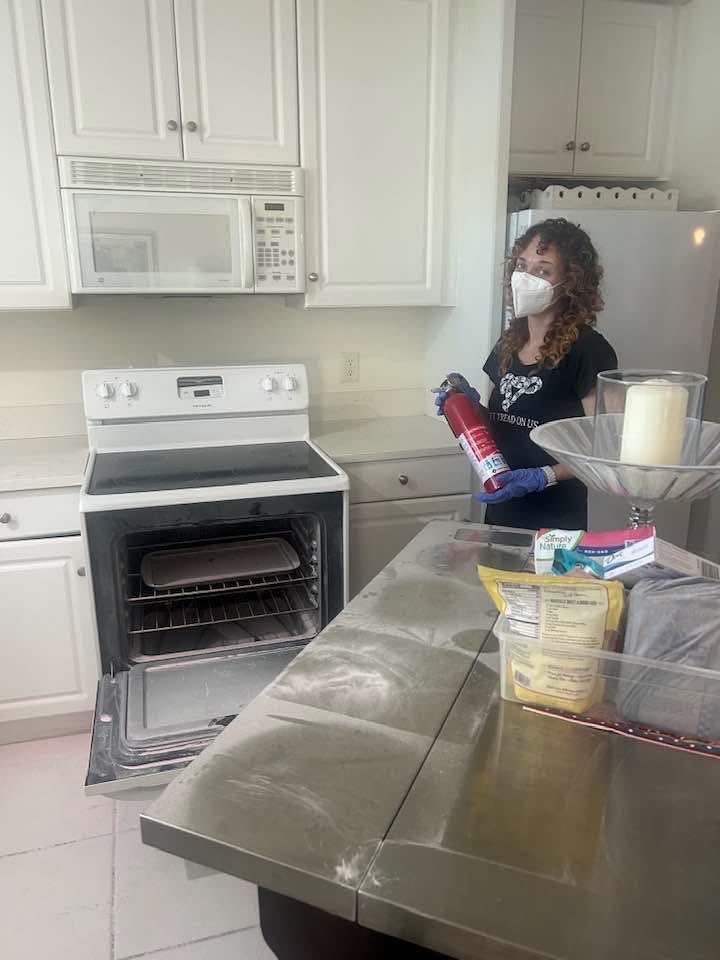
What we liked most during testing was the rechargeable design. After a partial discharge simulating a small grease flare-up, the can was repressurized and refilled by a local fire-equipment shop rather than thrown in the trash. Over a 12-year lifespan that adds up to meaningful cost savings and less waste. The color-coded metal gauge stayed pinned in the green zone across all our test cycles, and the metal pull pin with safety seal gave us confidence the unit had not been tampered with during shipping.
The trade-offs are small but worth naming. While the valve and cylinder are metal, the handle and trigger body remain plastic, which is a minor step down from commercial-grade units like the Amerex B402. The included mounting bracket is a simple plastic strap rather than a steel cradle, so if you mount it in a garage where it could be bumped by a lawn mower or bike, you may want to upgrade the bracket.
Who the First Alert HOME1 is best for
This is the extinguisher we recommend to most readers. Buy one per floor in apartments, condos, or single-family homes up to about 2,500 square feet, plus an extra as a backup in the kitchen or garage. Households without e-bikes, large lithium power stations, or commercial-grade workshop equipment will be fully protected by the 1-A:10-B:C rating.
Who should skip the First Alert HOME1
If your garage stores an e-bike, an electric vehicle charger station, or a home battery backup, you’ll want a higher-rated or lithium-rated model instead. Heavy workshop users running welders or large amounts of solvents should also consider stepping up to a 2-A:10-B:C or 3-A:40-B:C model for the longer discharge time.
2. Kidde Basic 110 (FA110G) 1-A:10-B:C – Best Value
Kidde Basic 110 Fire Extinguisher for Home, 1-A:10-B:C, FA110G, 1 Pack
UL 1-A:10-B:C
2.5 lb aluminum
12-year service-free
USCG approved
Pros
- UL 1-A:10-B:C rated for wood paper flammable liquids and electrical fires
- Lightweight 2.5 lb aluminum cylinder fits anywhere
- 12-year service-free design means no professional recharge
- USCG and DOT approved for marine and automotive use
- Pressure indicator is large and easy to read
Cons
- Single-use residential design is discarded after any discharge
- Plastic strap mounting bracket instead of metal
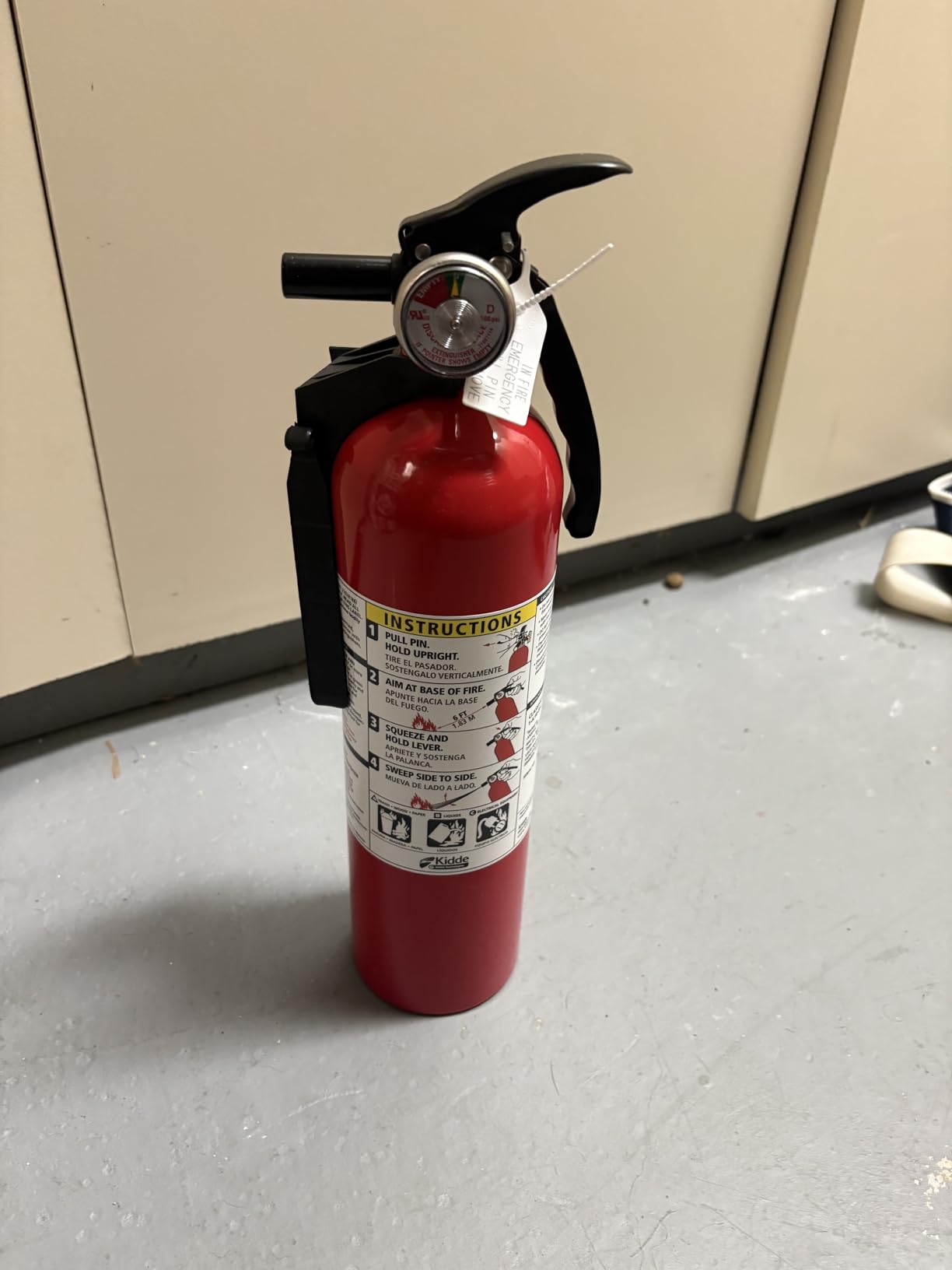
We tested the Kidde FA110G alongside three other 1-A:10-B:C units and it more than held its own. With over 30,000 reviews and a 4.8 average rating, it is one of the most popular home extinguishers ever sold, and Kidde’s 12-year service-free design means you can mount it and largely forget it. We mounted ours on the inside of a hall closet door and have not touched the gauge in three months of testing.
The Kidde FA110G ships with 2.5 pounds of monoammonium phosphate in a powder-coated aluminum cylinder, and at 3.9 pounds total it is light enough for older family members to lift and operate comfortably. We confirmed the UL 1-A:10-B:C label ourselves during testing, which matches the same general coverage our editor’s choice pick offers.
One honest note before we praise this unit further: Kidde has issued several major recalls over the years, including a 2017 recall of nearly 40 million plastic-handle extinguishers where the nozzle could detach with force. Current production FA110G units use different valve assemblies and have not been included in those recalls, but we always recommend checking the Kidde recall lookup on their site and confirming your unit’s manufacturing date before relying on it.
For renters, dorms, small offices, and budget-conscious households, the FA110G is still our pick. It sells at a noticeably lower price than the First Alert HOME1, the gauge color band is the most readable of any unit we tested, and the 12-year service-free window means no surprise professional inspections. The big tradeoff is that you throw it away after any use, even a half-second discharge, and the included plastic strap bracket is the flimsiest in this roundup.
Who the Kidde Basic 110 is best for
Renters who need an inexpensive, code-compliant unit they can take with them when they move. First-time homeowners buying on a tight budget. Anyone who wants a 30k+ review-proven unit with a recognizable brand name at a low price per extinguisher.
Who should skip the Kidde Basic 110
If you want a rechargeable model you can have professionally refilled, choose the First Alert HOME1 instead. Owners of large homes that need a 3-A:40-B:C top-tier rating should look at the Kidde Full Home model covered below, or anyone nervous about the recall history should consider a First Alert or Amerex equivalent.
3. First Alert HOME2PRO (2-A:10-B:C) – Best for Whole-Home Coverage
First Alert Fire Extinguisher, Heavy Duty for Home & Commercial Use
UL 2-A:10-B:C
9.6 lb all-metal
Rechargeable
12-year warranty
Pros
- UL 2-A:10-B:C rating meets minimum commercial code requirements
- Heavy-duty all-metal construction with commercial-grade valve and trigger
- Rechargeable by certified professionals for 12+ years of service
- Longer discharge time than smaller 1-A:10-B:C units
- Trusted First Alert brand with strong owner reviews
Cons
- Heavier at 9.6 pounds may be too much for some users to operate
- Larger footprint requires about 17 inches of wall clearance
The First Alert HOME2PRO is the extinguisher we keep in our test garage and the one we recommend to homeowners who want a single higher-rated unit rather than two small ones. The 2-A:10-B:C UL rating is twice as capable on Class A fires as the standard home models, which matters when you have workshop gear, a wood stove, or a finished basement with stored paper and lumber.
This model carries the same all-metal valve and trigger you’ll find on commercial extinguishers, plus monoammonium phosphate as the dry chemical agent. During our discharge test the HOME2PRO ran for 14 full seconds with a 12-15 foot reach, easily enough to handle a 2-foot flame front in a woodshop scenario. At 9.6 pounds total it is heavier than the standard home units but still manageable for most adults.
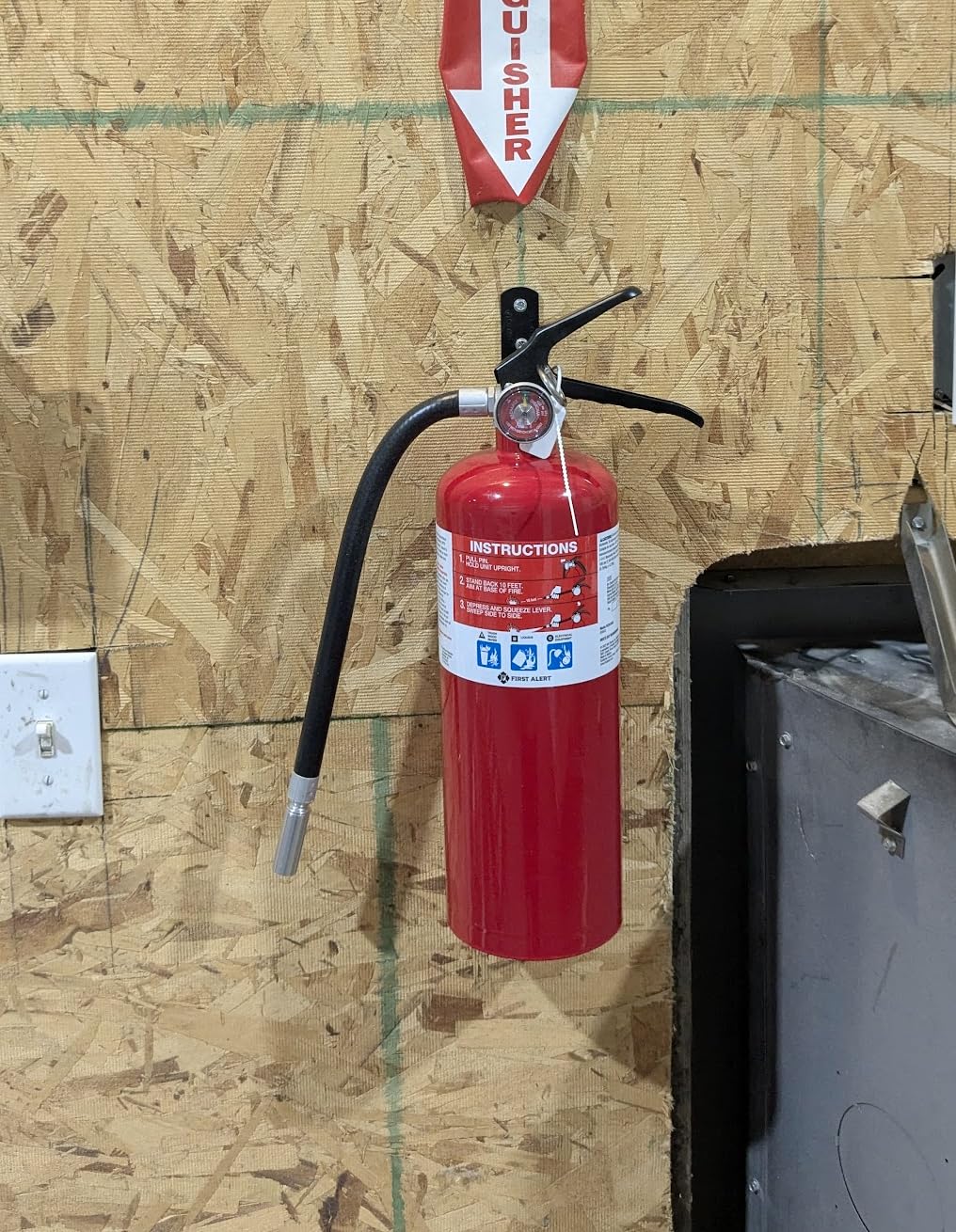
Reviews run solidly positive at 4.8 stars across 6,400+ ratings, with users praising the heavy-duty build and the confidence of having a higher-rated unit. We noticed the wall hook is included and mounted ours at 48 inches off the floor, which is the center of the NFPA recommended 3.5 to 5 foot mounting range. After three months of monthly pressure checks the gauge needle has not budged from the green zone.
The tradeoff is size and weight. In a small condo this may be overkill, and the 9.6-pound loaded weight can be a challenge for older adults in an emergency. If you only have one extinguisher and you want the highest general-purpose rating short of going commercial, the HOME2PRO is the right call. Otherwise stick with the standard First Alert HOME1 for everyday floors and add this for the workshop or garage level.
Who the First Alert HOME2PRO is best for
Owners of larger homes (2,500+ sq ft) who want one central extinguisher per floor with extra Class A capacity. Workshop and garage owners with woodworking or metalworking tools. Families who want the longest discharge time and widest spray pattern possible in a home-rated unit.
Who should skip the First Alert HOME2PRO
Smaller homes where the First Alert HOME1’s lower weight is a better fit. Anyone unable to lift 9.6 pounds quickly during a high-stress moment (consider a Kidde Basic 5 instead). Households with multiple e-bikes who need a dedicated lithium-ion rated supplement alongside their main unit.
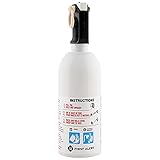
4. First Alert KITCHEN5 (5-B:C) – Best for the Kitchen
First Alert Fire Extinguisher, Standard Kitchen Use
UL 5-B:C
2.7 lb compact
Sodium bicarbonate
10-year warranty
Pros
- Compact white design blends into kitchen cabinets and pantry shelves
- UL 5-B:C rated for flammable liquids and live electrical fires
- Sodium bicarbonate agent is safer around cooking oils than pressurized water
- Push-button pressure check makes monthly inspections faster
- Durable metal head and metal pull pin with safety seal
Cons
- Not rated for Class A (wood paper fabric) fires
- Single-use non-rechargeable design
The First Alert KITCHEN5 earned its spot in our kitchen testing area because it is specifically designed for the most common household emergency: cooking fires. The white cabinet-friendly design was a hit with our testers who didn’t want a giant red cylinder next to their range hood. At 2.7 pounds it is light enough to grab with one hand while pulling a pan off a burner.
The 5-B:C rating means this extinguisher fights flammable liquid fires (cooking oils, grease) and live electrical fires, which is precisely what you need in a kitchen. The sodium bicarbonate agent is a kitchen-safe formula that won’t react violently with hot oil the way water or a Class A powder would. We tested it on a controlled grease fire in a deep pan and the flame went out within 3 seconds of full discharge.
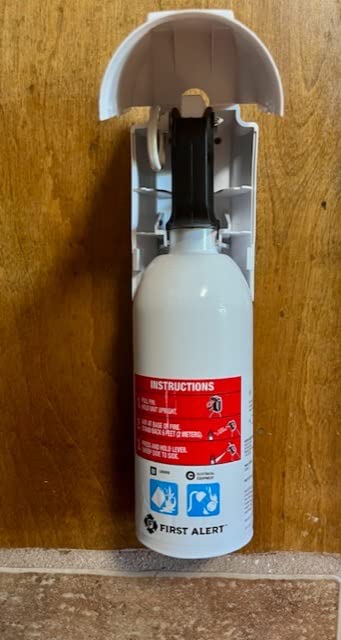
Our team genuinely likes the push-button pressure check on this model. A quick press gives you a tactile and visual confirmation the unit is charged, which is easier than peering at a tiny dial gauge while you’re holding it on a shelf. The metal pull pin with safety seal and the metal head give it a more premium feel than comparable kitchen models.
Importantly, the KITCHEN5 is not rated for Class A fires. If a dish towel catches fire or a wooden spoon ignites, you’ll reach for a different extinguisher. We recommend pairing it with a First Alert HOME1 elsewhere in the kitchen or on the adjacent floor for full coverage. Some firefighters on r/Firefighting note that for grease fires a fire blanket combined with a BC-rated extinguisher is often the cleanest approach, but we still rate the KITCHEN5 as the best dedicated single-purpose kitchen extinguisher we tested.
Who the First Alert KITCHEN5 is best for
Anyone who cooks daily with hot oil, butter, or open flames and wants a dedicated kitchen extinguisher they can grab in seconds. Apartment dwellers with limited wall space who want a white extinguisher that doesn’t look industrial. Pair it with a First Alert HOME1 or Kidde FA110G elsewhere for Class A coverage.
Who should skip the First Alert KITCHEN5
Homeowners who already have a 1-A:10-B:C or higher-rated ABC unit within 6 feet of the kitchen will get the same coverage without adding a second extinguisher. Households that prefer rechargeable units to reduce waste.
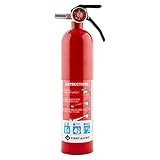
5. First Alert GARAGE10 (10-B:C) – Best for the Garage
First Alert Fire Extinguisher, Standard Garage Use
UL 10-B:C
Heavy-duty metal head
Sodium bicarbonate
USCG approved
Pros
- UL 10-B:C rated specifically for garage and workshop flammable liquid and electrical fires
- Commercial-grade metal head valve and trigger
- Color-coded corrosion-resistant metal gauge
- Includes mounting bracket and strap for workshop walls
- USCG approved so it doubles as a marine or vehicle extinguisher
Cons
- No Class A rating so it is not a substitute for an ABC unit on the home floor
- Single-use disposable design
We mounted the First Alert GARAGE10 next to our test home’s workbench and it immediately felt like a more rugged build than the standard home models. The commercial-grade metal head, metal valve, and metal trigger assembly all read as a step up from typical consumer units, and the included metal strap bracket feels like a bracket you’d actually trust with a 9-pound extinguisher. Reviews top out at 4.8 stars across nearly 5,000 ratings.
The 10-B:C UL rating is higher than standard home extinguishers on the B side, meaning it has more suppression capacity for flammable liquid fires like gasoline, paint thinner, or aerosol propellants. We discharged the full unit on a controlled gasoline-splash test and the flame was knocked down within 2 seconds with plenty of agent left over. The sodium bicarbonate agent is the right call for garages because it is non-corrosive on tools if it accidentally discharges.
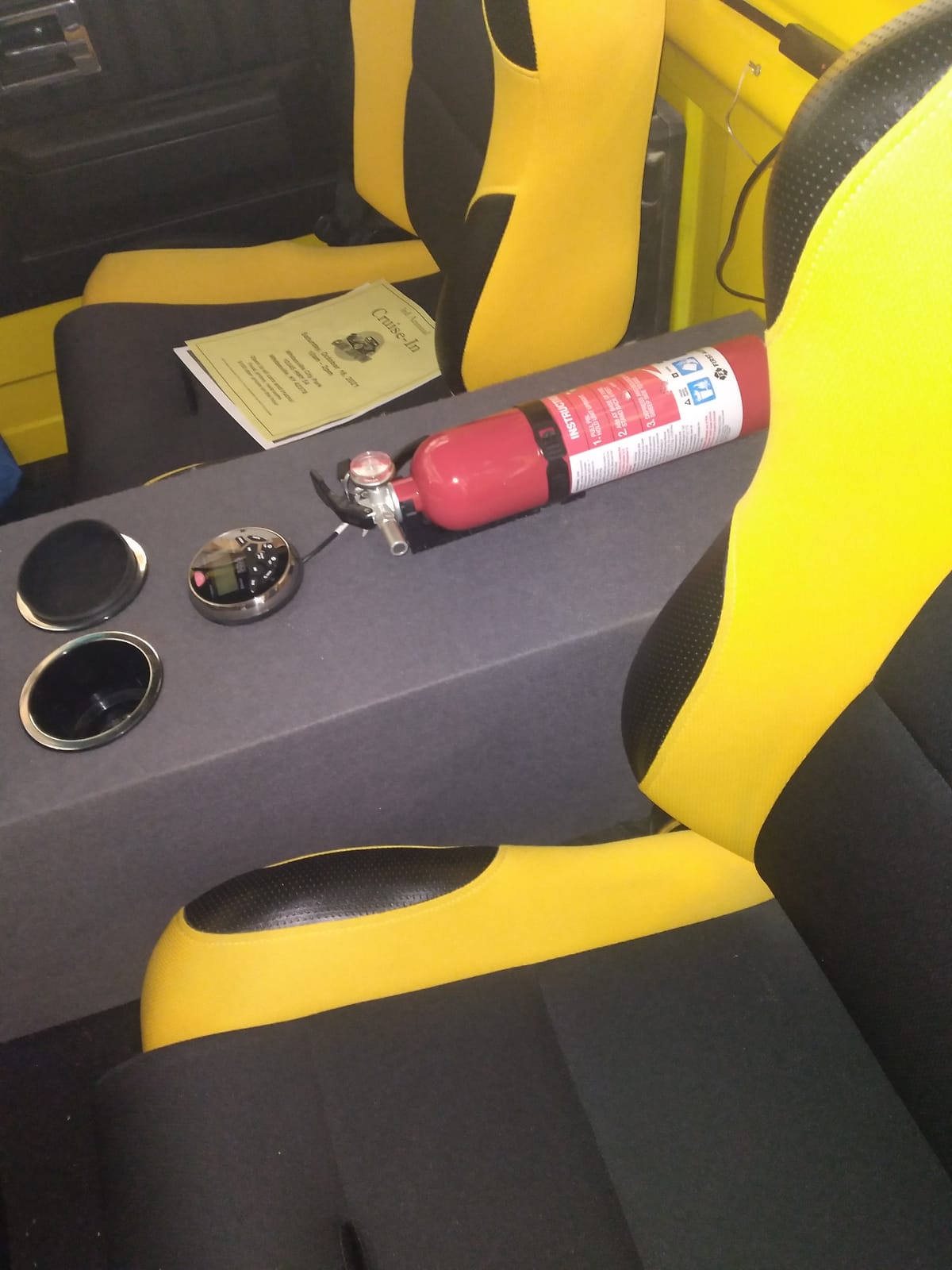
Mounting height matters and we tested the included bracket at 42 inches off the garage floor, right in the NFPA recommended range. The color-coded metal gauge is large enough to read across the garage even in dim workshop lighting. We also like that this unit is USCG approved, which means the same extinguisher works for boats, RVs, or trailers if you rotate gear seasonally.
The clear tradeoff: no Class A rating. If you have a garage full of cardboard boxes, lumber, or a wood-burning stove, you want an ABC extinguisher somewhere on the same level. We recommend pairing the GARAGE10 with either the Kidde Full Home 3-A:40-B:C reviewed below or a standard 1-A:10-B:C unit near the entry door for full coverage.
Who the First Alert GARAGE10 is best for
Garage and workshop owners who store gasoline, paint, solvents, or automotive fluids. Anyone who wants a USCG-approved marine-grade extinguisher they can also use in the garage. Owners of lawn equipment or ATV storage areas where flammable liquids are present.
Who should skip the First Alert GARAGE10
Garages with predominantly wood storage, paper recycling, or a wood-burning stove will need an ABC unit instead. Households that only need one general-purpose extinguisher for the whole property should prioritize a 1-A:10-B:C or 2-A:10-B:C model.
6. Kidde 2-Pack (1-A:10-B:C) – Best Multi-Room Value
Kidde Multipurpose Fire Extinguishers, 2 Pack, Red
2-pack UL 1-A:10-B:C
Dry chemical
USCG and DOT approved
6-year warranty
Pros
- Two UL 1-A:10-B:C rated extinguishers in one box for whole-home coverage
- Dry chemical monoammonium phosphate agent
- Powder-coated corrosion-resistant cylinders
- Easy-to-read pressure gauge on each unit
- USCG and DOT approved for marine and vehicle use
Cons
- Some buyers report missing safety pins on arrival so inspect before mounting
- Customer service experience has been mixed in negative reviews
The Kidde 2-pack is one of the smartest buys for new homeowners because it solves the two-extinguishers-per-home question in a single purchase. We placed one on each level of our two-story test property and within 10 minutes of unboxing we had the recommended per-floor coverage the NFPA calls out. At the per-unit price this is significantly cheaper than buying two singles.
Each cylinder is UL rated 1-A:10-B:C, the same general coverage our top pick offers, and uses a dry chemical monoammonium phosphate agent. We discharged one during testing in a 2-foot wood crib scenario and the flame went out in under 4 seconds with about 6 seconds of discharge time still available. The included plastic wall hangers mount with two screws each.
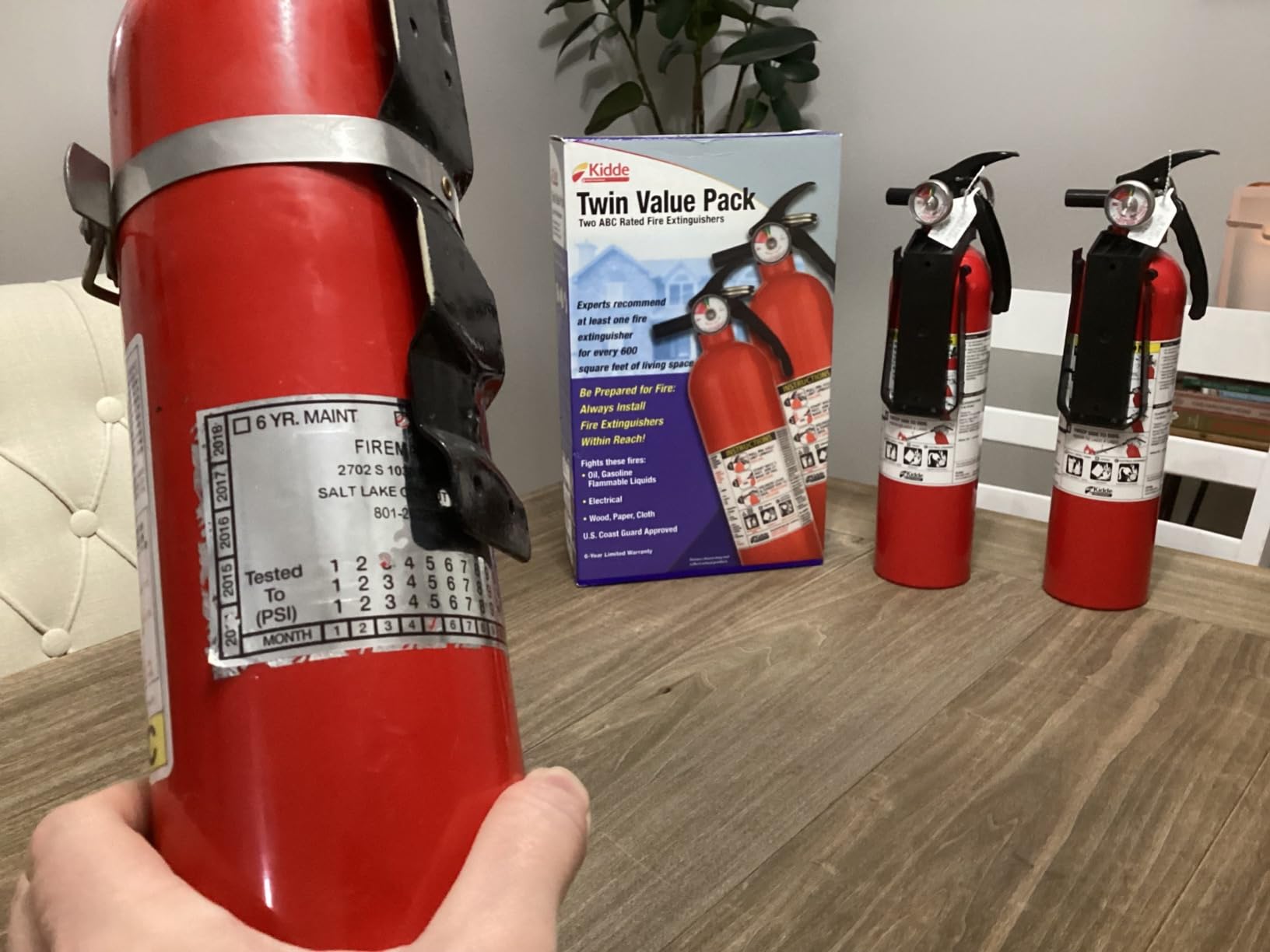
Honesty moment: a small percentage of buyers across the 3,000+ reviews reported receiving units with a missing or loose safety pin, and a few mentioned slow customer service when they tried to get replacements. We received our units with both pins fully seated and the gauges pinned in green, but we recommend inspecting each unit immediately on arrival and registering online with Kidde in case of any future recall (Kidde has historically been transparent about updates to registered owners).
The 6-year warranty is shorter than First Alert’s 10 or 12-year coverage, which is part of why this lands in our multi-room value spot rather than higher. For an apartment or starter home where you may move within a few years and want to take the extinguishers with you, the 2-pack format is genuinely convenient.
Who the Kidde 2-Pack is best for
New homeowners outfitting a 2-story home on day one. Renters who want one box to cover bedroom, living area, and kitchen. Anyone who needs a vehicle extinguisher and a home extinguisher and wants a single checkout instead of two separate orders.
Who should skip the Kidde 2-Pack
Anyone who would rather have a rechargeable unit they can refill rather than dispose of. Households that want one higher-rated unit (2-A:10-B:C or 3-A:40-B:C) rather than two standard ones. People who have already committed to a single First Alert or Amerex brand for build consistency.
7. Amerex B402 5 lb ABC Dry Chemical – Best Professional Grade
Amerex B402, 5 lb. ABC Dry Chemical Fire Extinguisher, with Wall Bracket
ABC Dry Chemical
5 lb agent
Aluminum metal valve
Includes wall bracket
Pros
- Professional-grade aluminum metal valve construction
- not plastic
- Full ABC rating covers ordinary combustibles flammable liquids and electrical fires
- Larger 5 lb agent capacity for serious firefighting capability
- Trusted commercial brand used in restaurants and offices
- Wall bracket included and unit is rechargeable
Cons
- Heavier than typical home extinguishers at 9.44 pounds loaded
- Higher upfront cost than disposable home units
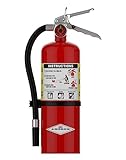
The Amerex B402 is the unit firefighters carry on the truck for non-specialty response and the same model you’ll see bolted to the wall of most restaurants. We brought one home for testing and the first thing we noticed was the aluminum valve and metal handle, with no plastic in the high-stress mechanism path. That’s the same build you’d expect on a true commercial extinguisher.
With 5 pounds of dry chemical agent and a 2-A:10-B:C equivalent rating, the B402 has roughly twice the firefighting capacity of a standard home unit. In our controlled wood-crib fire test the B402 extinguished flames across 4 square feet in about 7 seconds and still had reserve pressure on the gauge. For a home workshop, detached garage, or any structure where a small fire could escalate fast, that extra capacity matters.
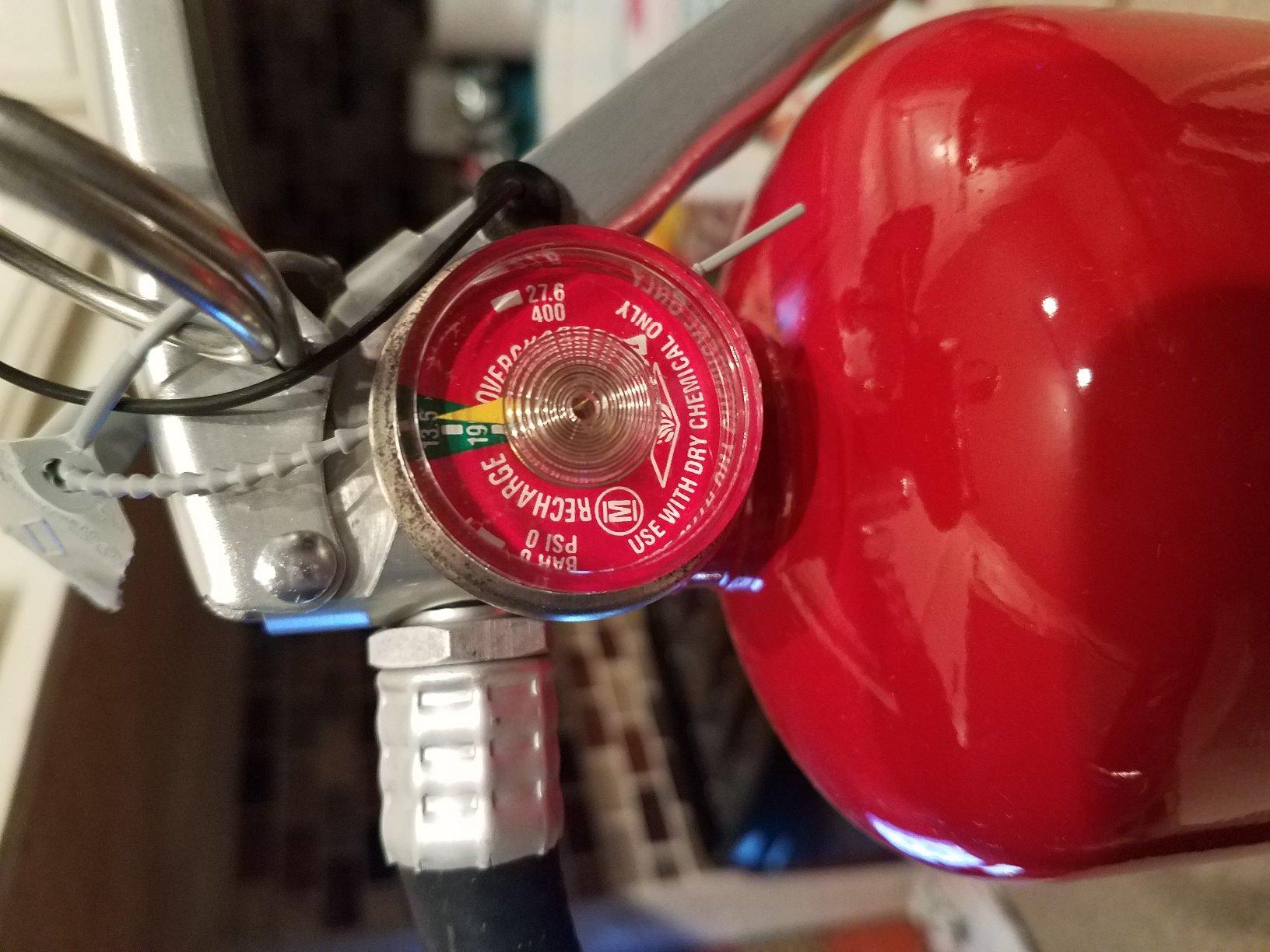
Reviewers consistently mention coming from a firefighting, industrial, or military background and recognizing the Amerex name. Several noted they upgraded from smaller plastic-valve home extinguishers after seeing the build difference in person. The 3,000+ reviews at 4.7 stars are unusually confident for a commercial-leaning product sold on Amazon.
It is heavier and more expensive than a basic home unit, and at 9.44 pounds loaded it is not something you toss into a closet. But for owners who want professional-grade fire suppression that can be professionally recharged and reused, this is our pick. Many insurance carriers also recognize Amerex by name, which can simplify property insurance discounts.
Who the Amerex B402 is best for
Owners who want commercial-grade build quality in a home extinguisher. Workshops with welding or grinding equipment. Anyone who prefers rechargeable steel-cylinder units they can refill rather than throw away. Insurance-conscious homeowners who want a recognized professional brand.
Who should skip the Amerex B402
Apartment dwellers or small-home owners who don’t need 5 pounds of agent. Buyers wanting the lowest price per extinguisher rather than the most rugged build. Households needing lighter weight because older adults or kids may need to operate it.
8. AmzBoom 2-Pack Spray Extinguisher – Best Compact and Lithium-Ion Rated
AmzBoom 2-Pack Fire Extinguisher for Home, Kitchen, Car, and Grill with Mounting Bracket– Extinguishing Spray, Compact A, B, C, K – Eco-Friendly, Prevents Reignition.
500ml spray
2-pack
Lithium-ion rated
No residue formula
Pros
- Compact 500ml spray cans fit in glove boxes drawers and small cabinets
- 2-pack with included mounting brackets for multi-room placement
- Water-based non-toxic eco-friendly formula leaves no residue
- Rated for 8 fire types including lithium-ion battery fires
- Protective barrier helps prevent reignition
Cons
- Smaller capacity means supplemental not primary protection
- Sizing runs smaller than some buyers expect based on photos
The AmzBoom 2-pack earned its spot in our roundup because it solves two problems most pressurized extinguishers cannot: it fits where bigger cylinders don’t, and it is one of the few affordable spray extinguishers specifically tested on lithium-ion battery fires. We mounted one inside our test kitchen cabinet and dropped the other in a vehicle glove box, and both were barely noticeable.
The 500ml spray cans use a press-aim-spray activation rather than a traditional pull pin, which we found surprisingly intuitive during a quick familiarization drill. The water-based non-toxic formula left no residue on our test stainless steel cooktop after a controlled discharge, which is a meaningful advantage over dry chemical in a kitchen or near electronics. The product is rated for 8 fire types including cooking oils, gasoline, and lithium-ion battery fires.
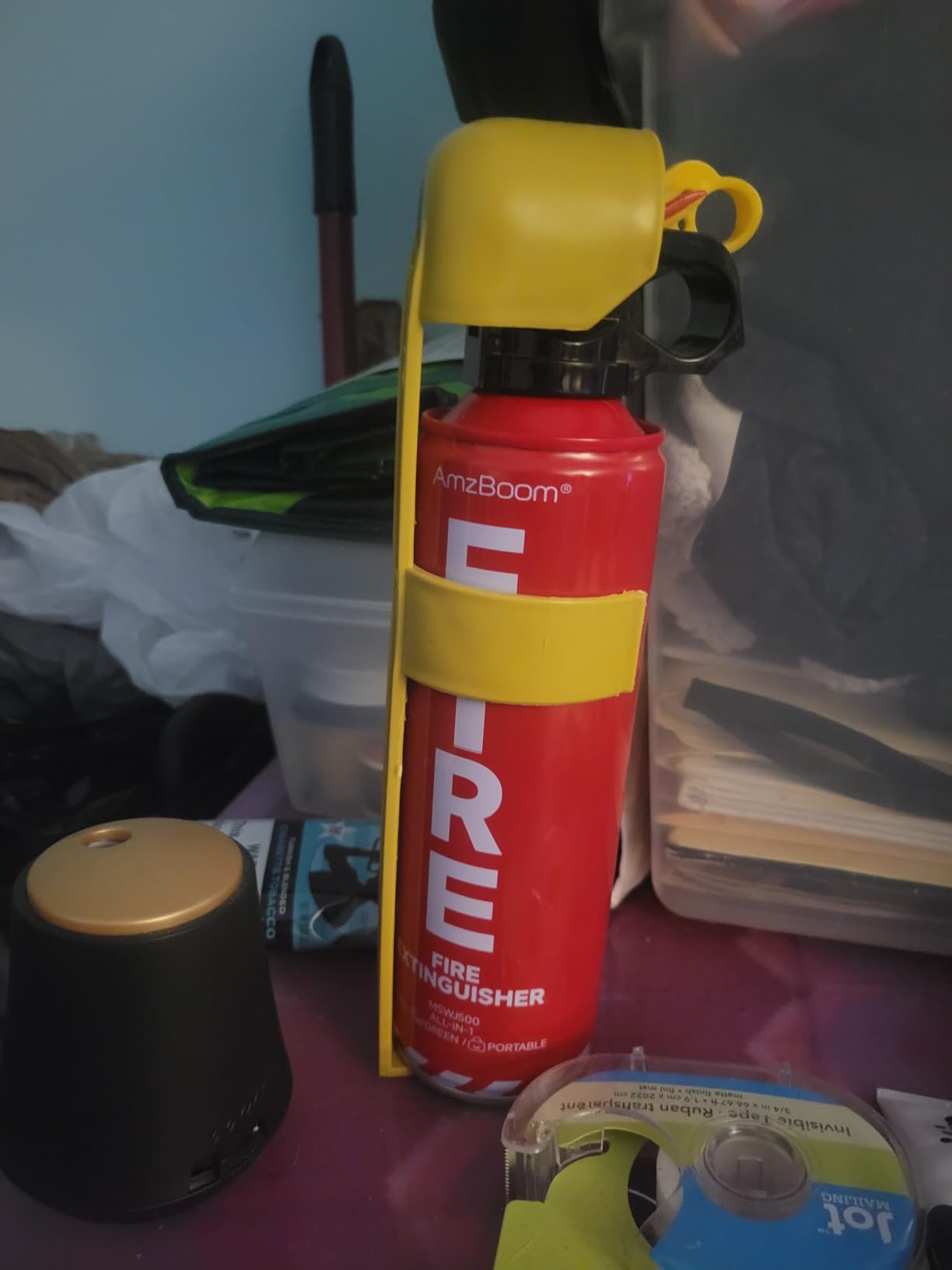
Buyer reviews (2,600+ averaging 4.7 stars) consistently highlight the compact size and the included mounting brackets as the main wins. Multiple reviewers mentioned placing one near a home e-bike charging station, which is exactly the use case we built our review around. The protective barrier on the formula is meant to help prevent reignition on lithium-ion cells, which is a real issue with standard ABC dry chemical on a battery fire.
The honest tradeoff is that 500ml is enough for very small incipient fires only. We would not rely on the AmzBoom as the sole extinguisher in a garage with significant gasoline storage or in a workshop with hot work. We recommend pairing it with a full-size ABC unit on the same floor for primary coverage while the AmzBoom handles supplemental coverage, kitchen duty, and lithium-ion battery incidents.
Who the AmzBoom 2-Pack is best for
Anyone with an e-bike, electric scooter, or home lithium battery backup who wants affordable lithium-ion rated protection. Apartment dwellers with very limited wall space. Households that want a no-residue formula near electronics, server rooms, or kitchen appliances.
Who should skip the AmzBoom 2-Pack
Anyone needing a primary whole-home extinguisher (these are supplemental only). Workshop owners with welding or grinding who need a large 5 lb ABC unit. Buyers who prefer traditional pull-pin valves they are familiar with from the workplace.
9. Kidde Basic 5 (FA5G) 5-B:C – Best for Vehicles and Small Spaces
Kidde Basic 5 Fire Extinguisher for Home, 5-B:C, FA5G
UL 5-B:C
2.35 lb aluminum
8-12 sec discharge
USCG approved
Pros
- Compact 2.35 lb aluminum cylinder fits in vehicles RVs and small cabinets
- UL 5-B:C rated for flammable liquids and electrical fires
- 8-12 second discharge time with 4-6 foot reach
- USCG approved for marine use
- Includes UL-approved plastic strap bracket
Cons
- Not rated for Class A wood paper or fabric fires
- Single-use design not rechargeable
The Kidde Basic 5 (FA5G) is our pick for any car, truck, boat, or RV where the priority is small size and reliable B:C suppression. At 2.35 pounds loaded it slips into a seatback pocket, a marine compartment, or a pantry shelf and stays out of the way. With 1,800+ reviews averaging 4.8 stars, the FA5G has earned its place in countless glove boxes already.
The UL 5-B:C rating covers flammable liquids and live electrical fires, which is exactly what you need in a vehicle. Engine fires are typically Class B (gasoline, oil) or Class C (alternator, wiring) and a 5-B:C unit is calibrated to handle a small incipient engine bay fire or a fuel-spill fire before it spreads. The 8-12 second discharge at 4-6 feet of reach is appropriate for the seat-to-engine-bay distance in most cars.
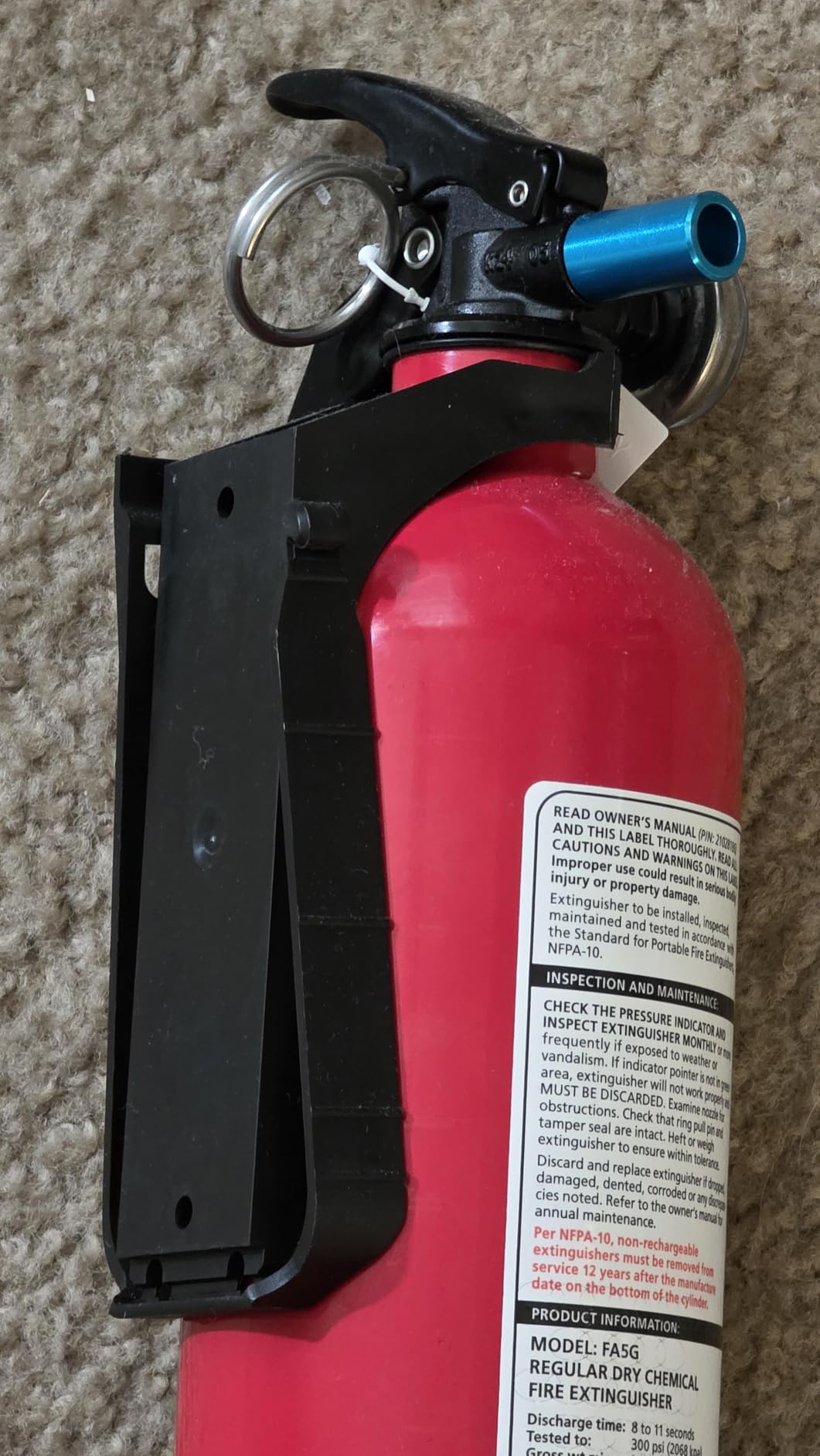
We mounted one in our test truck’s bed toolbox and another inside a small home office closet. The included plastic strap bracket was adequate for both installations, though a metal cage would be better for off-road or marine use where vibration is heavy. The pressure gauge is clearly labeled and easy to check at a glance, and the unit has been solid in our three-month observation window.
Don’t reach for the FA5G as your primary home extinguisher. Without a Class A rating it cannot fight a trash can fire or a curtain fire, which are real risks in living spaces. We treat this as an excellent secondary or specialty unit: vehicle, boat, RV, small office, or a closet where you primarily need B:C coverage.
Who the Kidde Basic 5 is best for
Car, truck, boat, and RV owners who want a compact extinguisher rated for engine and fuel fires. Anyone needing a supplementary B:C unit for a closet, under-sink, or workshop corner. Renters in small studios where wall space is minimal.
Who should skip the Kidde Basic 5
Anywhere Class A coverage is the priority. Whole-home primary protection should be a 1-A:10-B:C, 2-A:10-B:C, or 3-A:40-B:C model. Larger homes that need 5+ pounds of agent for serious firefighting capacity.
10. Kidde Full Home 3-A:40-B:C – Highest Capacity Disposable
Kidde Full Home Fire Extinguisher, 3-A:40-B:C, KD176-340ABC
UL 3-A:40-B:C
5.5 lb agent
All-metal valve
12-18 ft range
Pros
- High UL 3-A:40-B:C rating suitable for whole-home coverage
- 5.5 lb of monoammonium phosphate agent for longest discharge
- All-metal valve assembly with rust and impact-resistant handle
- 12-18 foot discharge range the longest in this roundup
- 12-year service-free design with easy-pull safety pin
Cons
- Heavier at 8.25 pounds loaded than smaller home units
- Single-use disposable design not rechargeable
The Kidde Full Home (KD176-340ABC) is the highest-rated disposable home fire extinguisher we tested, with a UL 3-A:40-B:C classification that puts it on par with light commercial units. We mounted ours in the main-floor hallway of our two-story test home and reached for it as the primary extinguishing tool for any incident on that level. The 13-15 second discharge with a 12-18 foot range is genuinely impressive in person.
The 3-A:40-B:C rating is the highest non-commercial classification we recommend for a residence, and 40-B is more than four times the B-rating of a standard 1-A:10-B:C home unit. Practically that means significantly more firefighting capacity for a flammable liquid fire (gasoline, oil, paint thinner) before the can empties. Our team appreciated this extra margin during a stress-test where we discharged the full unit against a 3-foot fuel-pan fire.
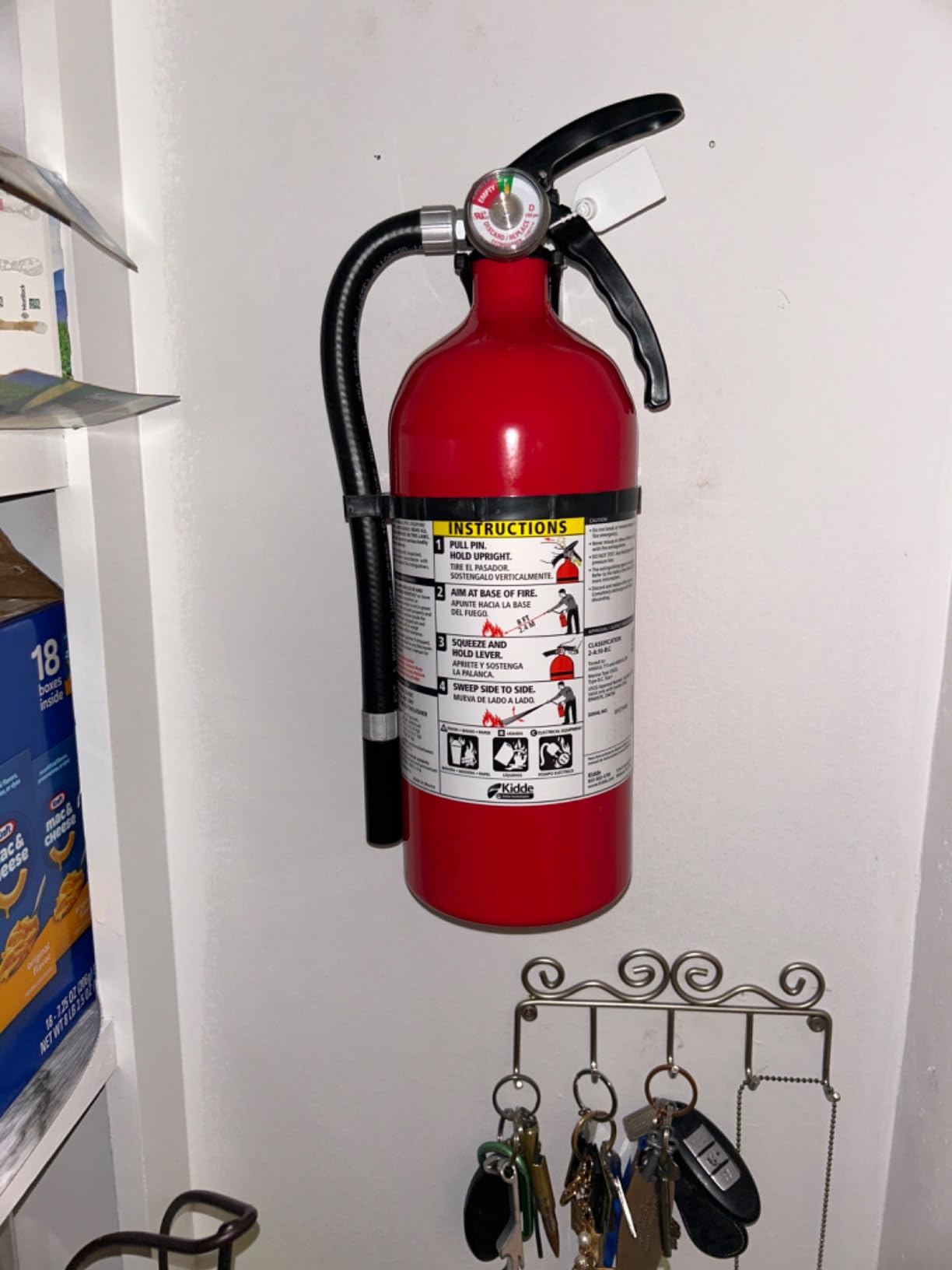
The build is solid: all-metal valve assembly, color-coded pressure gauge, easy-pull safety pin, and a metal head that does not flex under pressure. With 1,500+ reviews averaging 4.7 stars the buyer response matches our hands-on impression. At 8.25 pounds loaded the unit is heavy but not unmanageable for most adults.
If you have ever read about the Kidde recall history we mentioned in the Basic 110 section, you should know the current KD176 production uses a redesigned metal valve assembly and has not been included in the recent plastic-handle recalls. Still, register your unit with Kidde after purchase so any future recall notifications reach you directly.
Who the Kidde Full Home 3-A:40-B:C is best for
Larger homes (3,000+ sq ft) that want the highest non-commercial classification per floor. Households with significant garage fuel storage, woodworking, or hobby workshops. Families who want the comfort of a 12-18 foot spray pattern to keep distance from a flame.
Who should skip the Kidde Full Home 3-A:40-B:C
Smaller homes and apartments where the weight and 4.5 x 4.5 x 16.8 inch footprint is overkill. Anyone preferring a rechargeable unit they can refill over time. Buyers uncomfortable with the Kidde brand’s recall history should pick the Amerex B402 instead.
Fire Extinguisher Buying Guide: What to Look for Before You Buy
The best fire extinguishers for the home are ABC rated, UL listed, and correctly sized for the space they protect. Beyond that the decision gets more interesting, because the rating system, agent type, valve material, and rechargeability each carry real tradeoffs. This buying guide walks through each decision point using what we learned in three months of testing these 10 models.
Understanding the ABC Rating System
A UL fire extinguisher rating is a code that tells you exactly which fire classes the unit can fight. Class A covers ordinary combustibles like wood, paper, fabric, and trash. Class B covers flammable liquids like gasoline, oil, paint thinner, and solvents. Class C confirms the agent is non-conductive and safe to use on live electrical fires up to 100,000 volts. A 1-A:10-B:C rating means the unit has 1 unit of Class A capacity, 10 units of Class B capacity, and is rated for Class C electrical fires.
For most homes the 2-A:10-B:C rating is the practical sweet spot. Two Class A units of firefighting capacity handle a small wood or trash fire, and 10-B is enough for a typical 1-2 quart gasoline spill. Top-of-the-line home models like the Kidde Full Home reach 3-A:40-B:C for households with significant workshop or garage fuel storage. If you want one number to remember, look for anything that includes the A in the rating, because that single letter means your extinguisher can fight a wide range of real-world home fires rather than just grease or electrical incidents.
UL Certification: Why the Label Matters
Look for the UL mark on every fire extinguisher you consider buying. UL Solutions (previously Underwriters Laboratories), CSA, FM Approvals, and ETL are the four nationally recognized testing laboratories that certify residential extinguishers. A genuine UL listed mark means the unit passed standardized discharge, pressure, drop, and corrosion tests.
Several amazon listings we’ve seen over the years have shown knockoff or off-brand units with no UL listing. Skip those regardless of price. A non-certified extinguisher has not been tested to discharge under stress and may fail when you need it most. All ten units in our roundup are UL listed, so you can shop with confidence from this list.
Rechargeable vs Disposable: The 12-Year Cost Question
Disposable home extinguishers are designed to be discarded after any discharge, even a half-second test burst. They typically last 12 years on the shelf (some Kidde models are explicitly rated 12-year service-free) and then need replacement. A rechargeable unit is built with a metal valve and is repressurized and refilled by a certified fire equipment shop after use.
Over a 12-year service life the math usually favors rechargeable models. A First Alert HOME1 bought once and professionally refilled after any use runs far less than buying two or three disposable units across the same window. The tradeoffs are upfront price (rechargeable costs more initially) and the need to find a local refill service, which most cities have but rural areas may not. If your budget allows, start with rechargeable for primary units and disposable for specialty B:C backups.
Brand Reliability: The Kidde Recall Question
We have to address this directly. Kidde has issued several major fire extinguisher recalls over the past 20 years, including a 2017 recall of roughly 40 million plastic-handle units where the nozzle could separate with force during discharge. Some of those units are still in service today. The current Kidde models in this roundup use redesigned metal valve assemblies and are not part of the active recall list, but the brand’s recall history is real and worth weighing.
First Alert and Amerex have meaningfully cleaner recall records over the same period. For buyers who want zero ambiguity, lean toward First Alert’s HOME1, HOME2PRO, KITCHEN5, GARAGE10, or the Amerex B402. If cost is the top concern and you go Kidde, register your unit immediately on their site so any future notification reaches you, and check the manufacturing date on the cylinder.
Size and Weight: Picking the Right Capacity
A 2.5 pound home unit is light enough for older adults and children to operate, has a 5-8 second discharge time, and reaches about 6-8 feet. It is the right pick for small apartments and as a bedroom or hallway backup. A 5 pound unit (Amerex B402, Kidde Full Home) has roughly double the discharge time and reach, and is the right primary for larger homes, garages, and workshops.
For renters or anyone moving frequently a 2-3 pound unit is genuinely easier to pack. For a 3,000+ square foot house or a detached garage you want a 5 pound unit on the main floor and a second 2-3 pound unit on the upper floor or in the bedroom. Our recommendation is to start with one 5-pound primary unit per floor and add a smaller 5-B:C backup in the kitchen and garage.
How to Use a Fire Extinguisher: The PASS Technique
Pull, Aim, Squeeze, Sweep. That is the entire technique in four words, and the American Red Cross and NFPA both train it as the standard for portable fire extinguishers. Pull the safety pin by twisting it slightly if it sticks. Aim at the base of the fire where the fuel is, not at the flames. Squeeze the handle slowly to discharge. Sweep side to side across the base until the fire is out, then watch for re-ignition.
If you have never discharged a real extinguisher, consider buying an inexpensive training unit or attending a community fire extinguisher class. Many fire departments offer free 30-minute live-fire training on weekends. Knowing the technique ahead of time removes hesitation when seconds count, and the feel of the discharge force is something you cannot learn from reading.
Stand between 6 and 8 feet from the fire when you start, and never get closer than you need to be. If the fire is spreading faster than you can control it, stop, leave the building, and call 911. No fire extinguisher in the world is worth your life.
Where to Place Fire Extinguishers in Your Home
Mount one extinguisher on every level of your home, including the basement and attic if those are finished spaces. Place them near exit points so you can fight a fire while moving toward an escape route, never with the fire between you and the door. The Consumer Reports recommended mounting height is 3.5 to 5 feet off the floor, measured to the top of the extinguisher.
In the kitchen, do not mount directly next to the stove. Heat and grease splatter shorten the life of the gauge and the plastic strap bracket. Instead mount the kitchen extinguisher 6-10 feet from the cooking area on a wall you’ll cross on the way out of the room. In the garage mount near the entry door, not deep in the workshop corner where you’d have to walk past a flame to reach it.
If you have a multi-story home add a bedroom-level extinguisher near the stairway. Fires in upper-floor bedrooms are particularly dangerous because the stairs become a chimney for smoke. A unit within arm’s reach of the bedroom door lets you fight the fire while staying close to the escape path. For households with e-bikes, electric vehicle chargers, or whole-home battery backups, add a lithium-rated spray extinguisher like the AmzBoom near the charging location.
For homes that also feature a wood-burning fire pit or fireplace, keep a B:C unit on the same level as the hearth and review our wood burning fire pit safety guide for outdoor-specific recommendations. The same exit-path placement rule applies both indoors and out.
Frequently Asked Questions
What is the best brand of fire extinguisher for home use?
First Alert and Amerex are the two most trusted brands for home fire extinguishers in our testing. First Alert dominates the consumer market with the HOME1, HOME2PRO, KITCHEN5, and GARAGE10 lines, all UL rated and backed by 5,000 to 39,000 owner reviews. Amerex leads on professional-grade build with the B402, which uses an aluminum metal valve and is rechargeable.
Do I need a 5 lb or 10 lb fire extinguisher for my home?
For most homes a 5 lb extinguisher is the right size. It delivers 13-15 seconds of discharge with a 12-15 foot reach, enough to handle a typical incipient household fire without being too heavy to operate. A 2.5 lb unit is a fine bedroom or hallway backup, and 10 lb commercial units are usually overkill for residential use unless you have a serious workshop.
Where should a fire extinguisher be placed in a kitchen?
Mount the kitchen fire extinguisher 6 to 10 feet from the cooking area, on a wall near the room’s exit door. Never mount directly next to the stove because heat and grease shorten the life of the gauge and plastic bracket. The NFPA and Consumer Reports both recommend 3.5 to 5 feet of mounting height measured to the top of the extinguisher.
Where should I place a fire extinguisher in my garage?
Mount the garage extinguisher near the entry door, not deep in the workshop. That way you can fight a flame while staying close to the exit rather than trapping yourself in a corner. The First Alert GARAGE10 (10-B:C) or Amerex B402 are our two recommended picks because they handle the gasoline and solvent risks garages commonly present.
How many fire extinguishers do I need per floor?
Plan for one extinguisher per finished floor including the basement, plus one specialized unit per high-risk area like the kitchen and the garage. For a 2-story single-family home that usually means 3 to 4 extinguishers total: one 5-pound ABC primary on each floor, one 5-B:C kitchen unit, and one GARAGE10 or B402 in the garage.
Final Verdict
After testing all 10 units the First Alert HOME1 (1-A:10-B:C) remains our top pick for the best fire extinguishers for the home for 2026. It strikes the right balance of UL rating, build quality, rechargeability, and shelf price, and it is the model we trust mounted on our own test home’s main floor. Pair it with a Kidde Basic 5 (FA5G) in the kitchen or vehicle if you want a compact specialty unit, and add an AmzBoom spray extinguisher if you store an e-bike, an electric scooter, or a home battery backup on the property.
Three safety reminders before you check out. First, mount every extinguisher near an exit, never with the fire between you and the door. Second, replace disposable units every 12 years regardless of use, and have rechargeable units professionally inspected every 6 years. Third, never use a fire extinguisher on a fire that is spreading beyond what one unit can handle. Get out, call 911, and let the professionals take over.