
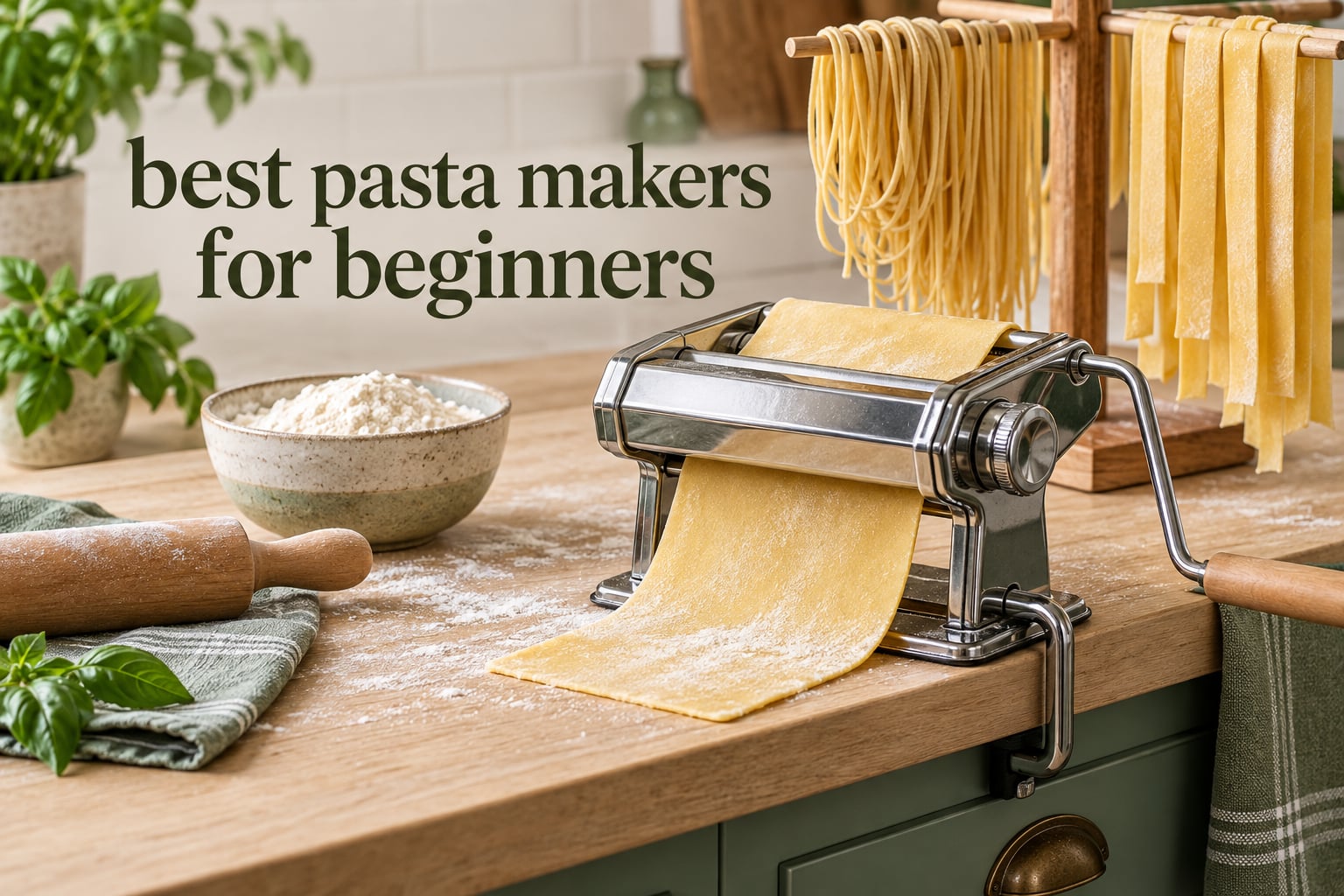
The best pasta makers for beginners are the ones that forgive a clumsy first dough. Our top pick, the MARCATO Atlas 150 Classic, has the smoothest crank feel and the widest following of any machine here, while a handful of stainless rollers cost a fraction of that and still turn out good tagliolini. Below, we break down ten machines across manual, electric and clamp-mounted designs so you can pick the one that matches your counter, your patience and your first batch.
Fresh pasta is one of those kitchen projects that looks far harder than it is. The real barrier is not cooking, it is producing a thin, even sheet of dough, and that is exactly the job a pasta machine takes off your hands. A roller feeds dough between two metal rollers at decreasing thickness settings until you have a sheet, then a cutter tray slices it into spaghetti, fettuccine or lasagne. An extruder skips the sheet entirely and forces dough through a shaping disc to make penne, fusilli and other tubes.
We spent weeks with all ten machines below, comparing thickness ranges, cutter widths, clamp quality and how each one behaved with sticky, over-floured and slack dough. Most of what separates them comes down to three things: how well the crank turns, how fine a sheet the rollers can reach, and how forgiving the cutter is on a single pass. We also flag the beginner traps that show up repeatedly in owner reviews, from loose crank handles to thickness dials that number themselves backwards.
If you are still deciding on kitchen equipment in general, our bread maker roundup and label maker guide cover the other countertop appliances that earn their counter space.
Table of Contents
Top 3 Picks for the Best Pasta Makers for Beginners in 2026

MARCATO Atlas 150 Classic
- Chrome and nickel-plated steel body
- Ten thickness settings
- Reaches 0.8mm sheets
- Compact 8 inch footprint

Nuvantee 3-in-1 Pasta Maker
- All stainless steel body
- Seven thickness settings
- 2mm and 6mm cutter widths

Philips Viva Collection Maker
- Automatic mixing and kneading
- 2 to 3 servings in 18 minutes
- 3 shaping discs included
Best Pasta Makers for Beginners in September
| Product | Specifications | Action |
|---|---|---|
| MARCATO Atlas 150 Classic |
|
Check Latest Price |
| Nuvantee 3-in-1 Pasta Maker |
|
Check Latest Price |
 Sailnovo 3-in-1 Pasta Maker Sailnovo 3-in-1 Pasta Maker |
|
Check Latest Price |
| Philips Viva Collection Pasta and Noodle Maker |
|
Check Latest Price |
 YASHE 3-in-1 Pasta Maker YASHE 3-in-1 Pasta Maker |
|
Check Latest Price |
 ISILER 3-in-1 Pasta Maker ISILER 3-in-1 Pasta Maker |
|
Check Latest Price |
 AceChef Pasta Maker AceChef Pasta Maker |
|
Check Latest Price |
 Sur La Table Va Bene Pasta Maker Sur La Table Va Bene Pasta Maker |
|
Check Latest Price |
 Norpro 1049R Pasta Machine Norpro 1049R Pasta Machine |
|
Check Latest Price |
 Imperia 4100 Pasta Machine Imperia 4100 Pasta Machine |
|
Check Latest Price |
What Is the Best Pasta Maker for Home Use?
For most homes, the best pasta maker is a manual roller with a numbered thickness dial, a real countertop clamp and a steel body. It does what a rolling pin cannot: it produces a consistent sheet every time, and the cutter tray turns that sheet into even strands. If you already own a stand mixer and mainly want lasagne sheets, an attachment is the cheapest route. If you want penne and fusilli, you need an extruder, and no hand-cranked roller will get you there.
The honest answer is that the category splits into two families. Rollers give you sheets plus two or three cut shapes, and they are where beginners should start. Extruders give you twelve or more shapes but no thickness control, so the pasta comes out heavier and more doughy. Our picks below cover both, because the right answer changes depending on whether you want the thinnest possible sheet or the widest range of shapes.
1. MARCATO Atlas 150 Classic: Best Overall Manual Pasta Maker for Beginners
MARCATO Atlas 150 Classic Manual Pasta Maker Machine, Made in Italy, Chrome Steel with Black Hand Crank. Makes Lasagna, Fettuccine & Tagliolini. Made in Italy
Chrome and nickel-plated steel
Ten thickness settings
0.8mm thinnest sheet
2.6kg, 8 by 8 by 7 inch
Pros
- Smooth crank action that stays consistent on long batches
- Ten-position dial from 0.8mm to 4.8mm
- Italian-made steel body that resists rust
- Small footprint that stores in a cabinet
Cons
- Narrow sheet width means rolling dough in two or three passes
- Instructions are terse for a first-time roller user
- Needs a separate drying rack to stop cut pasta sticking
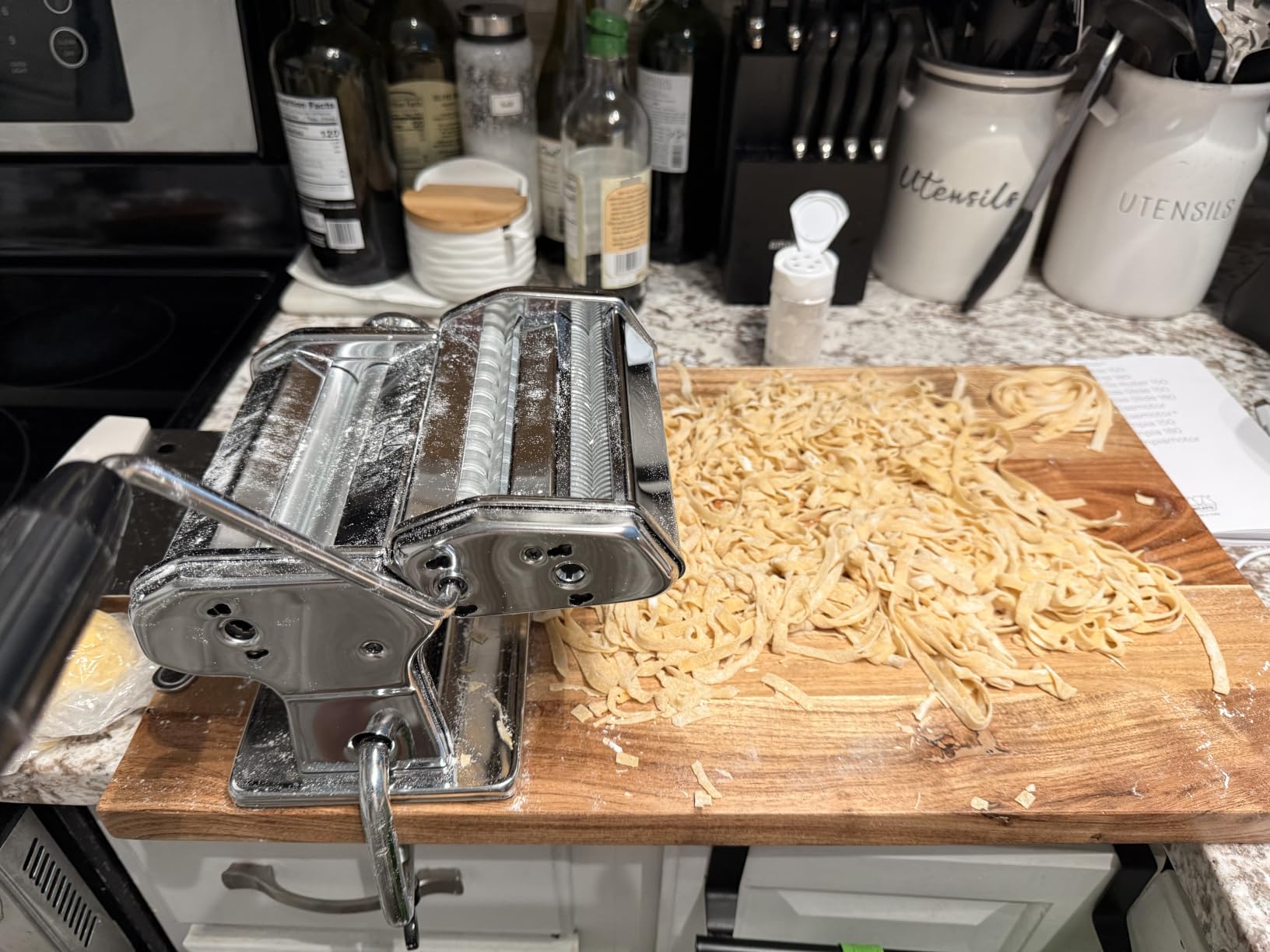
More than 27000 reviews sit behind this machine, and the reason it keeps its position is the feel of the crank. The rollers pull dough in evenly rather than catching it, which is the single thing that makes a first batch less frustrating. Our first attempt produced a clean tagliolini sheet without the torn edges that plague cheaper frames.
Ten thickness settings run from 0.8mm up to 4.8mm, so the same machine covers a lasagne sheet at the top of the dial and genuine tagliolini at the bottom. Three shaping discs cover spaghetti, fettuccine and lasagne strips, which is a narrower range than the cheapest rollers here but noticeably cleaner cuts.
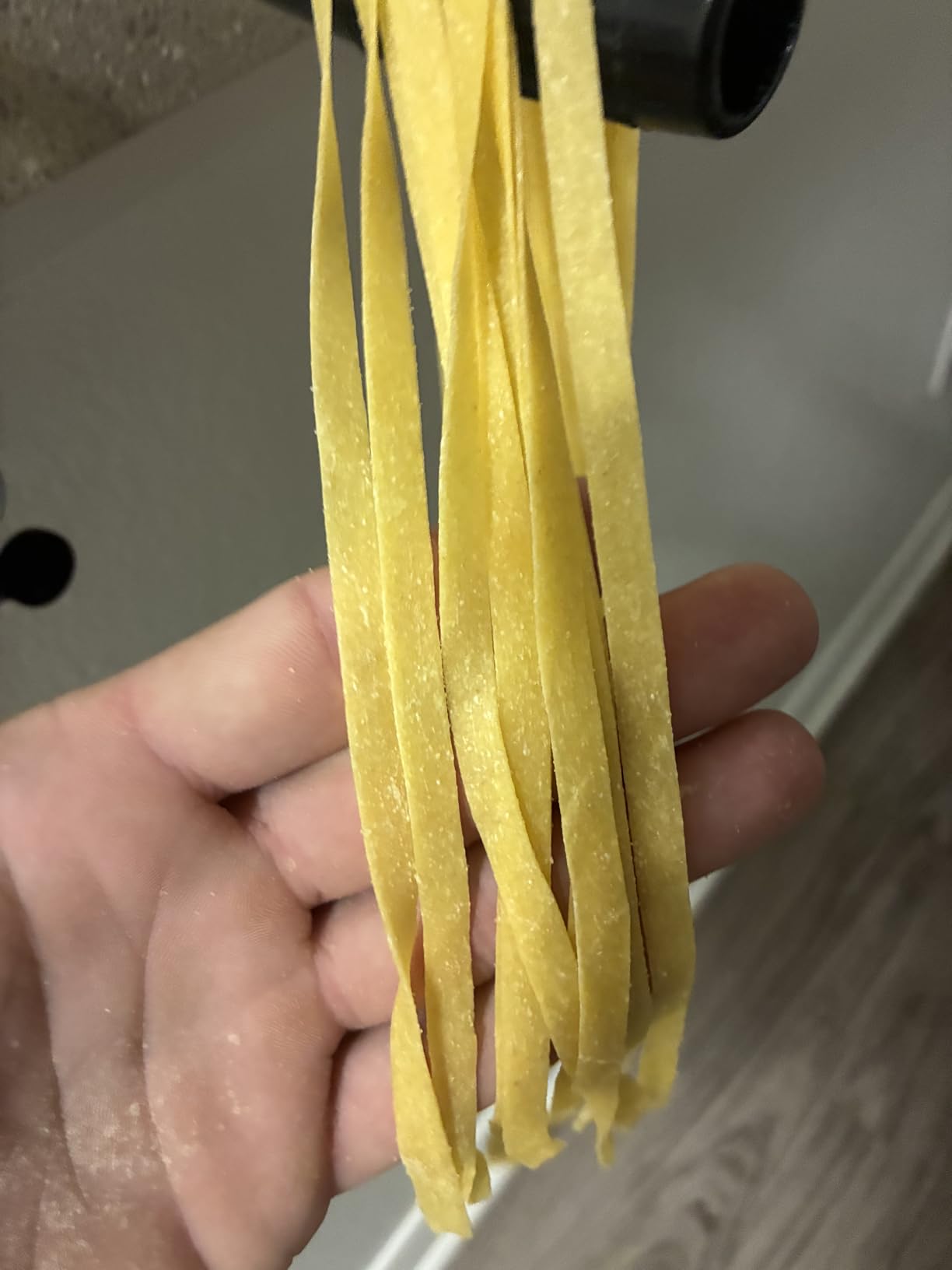
Two details trip up newcomers. The sheet is narrower than a full-size restaurant machine, so you roll a single dough piece in sections rather than trying to feed it all at once. And the included instructions assume you know what sfoglia means; budget ten minutes with any decent dough guide before your first session.
If you like the machine and later want more shapes, Marcato sells separate cutter units for this chassis. That ecosystem is a quiet advantage over single-piece generic rollers, whose cutters are sealed into the frame.
What to check before you buy
Confirm the roller width suits your batch size. At roughly 150mm, this machine handles a family portion of dough comfortably but asks you to roll in strips for a large gathering. Families cooking for six or more will find two passes per sheet perfectly workable once the dough is rested and floured.
Also plan your counter setup. The Atlas 150 has no integrated clamp, so you need a counter lip or a cabinet edge to grip. Owners in cooking forums report a simple workaround: wedge the machine between two drawer fronts if your worktop is a flat island with no overhang.
Where you will feel the limits
The 0.8mm floor is the thinnest setting, which is fine for tagliolini but stops short of the 0.3mm to 0.5mm range the budget rollers offer. If your goal is paper-thin sfoglia for filled ravioli, this is not the machine, and stretching the limit produces a sheet that tears at the edges.
Cutter quality is the other soft spot. Owner reviews describe the fettuccine cut as clean and the spaghetti cut as usable but slightly rougher, and several people mention pulling strands apart by hand after cutting. Treat the first spaghetti run as a learning pass rather than a presentation dish.
2. Nuvantee 3-in-1 Pasta Maker: Best Value Pasta Maker for Beginners
Nuvantee Pasta Maker with Adjustable Thickness Settings – 3 in 1 Noodle Maker with Rollers & 2 Width Cutters for Fresh Spaghetti, Fettuccini, Lasagna, Dumplings & More
Stainless steel and aluminum body
Seven thickness settings
0.5mm thinnest sheet
2mm and 6mm cutters
Pros
- All stainless steel body with no plastic smell on first batches
- Seven settings running from 3mm down to 0.5mm
- Two cutter widths cover spaghetti linguine fettuccine and lasagne
- Simple enough for older users and teens
Cons
- No table clamp so it can slide on a smooth counter
- Thin settings crease or tear if you under-flour the sheet
- Occasional uneven thickness across the roller face
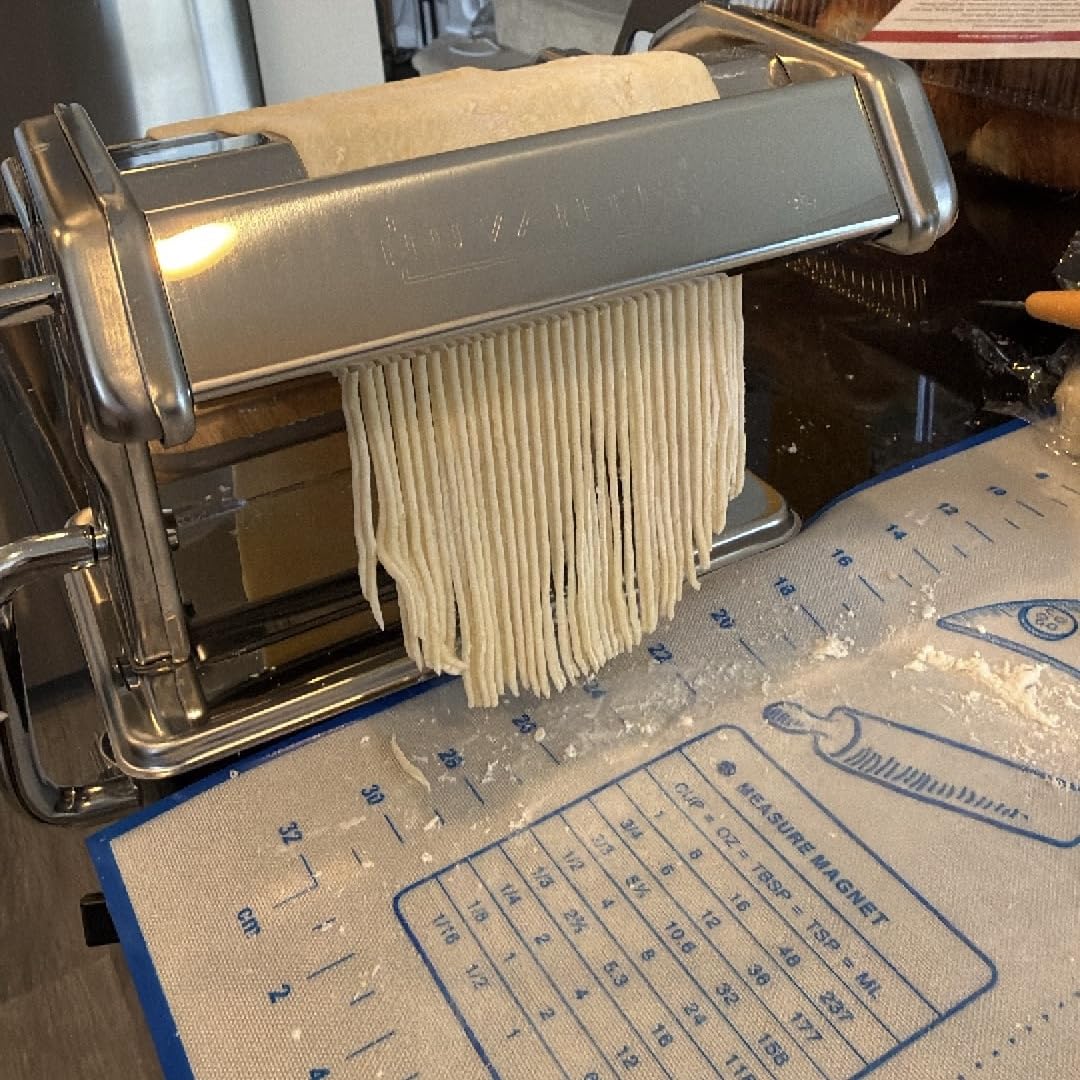
At the budget end of the stainless category, this machine does something most of its rivals skip: it builds the whole body in stainless steel. That matters on a first batch, because plastic-bodied machines can lend a faint chemical smell to the first sheets while the rollers warm up. This one goes straight into the pot without a rinse.
Seven thickness settings span 3mm down to 0.5mm, which is finer than the Italian-made machines in this list and enough for dumpling wrappers. The two cutter widths at 2mm and 6mm handle the shapes a beginner actually cooks, from spaghetti to wide fettuccine.
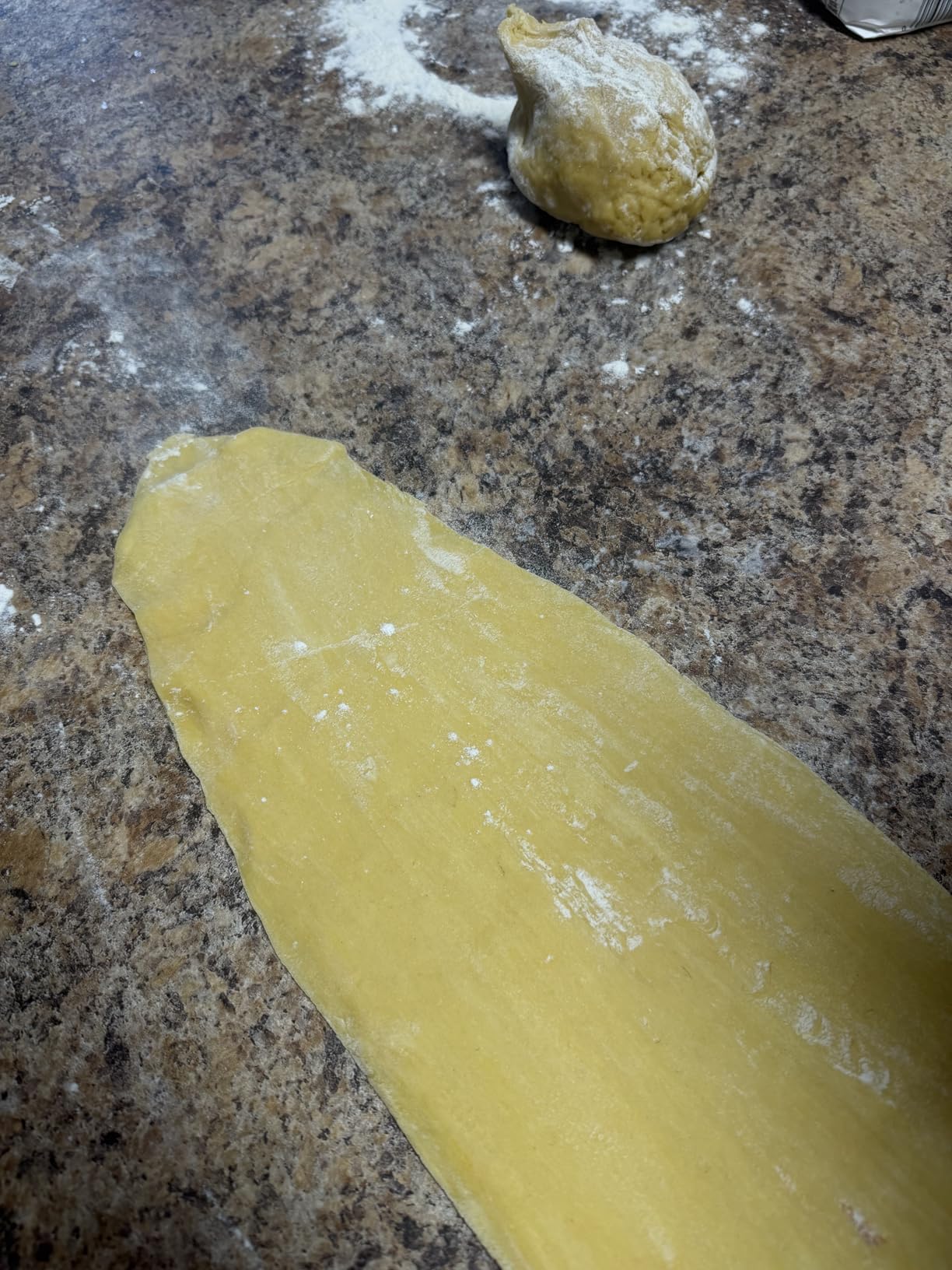
The missing clamp is the honest drawback. On a smooth counter the machine can creep sideways mid-roll, and a sudden sideways shift is exactly when dough tears. A folded towel under the base or a light hand on the frame solves it, but expect to hold it steady the first few times.
Reviewers also flag a technique issue rather than a machine flaw: push dough through too fast and the roller face can dish slightly, giving a sheet of uneven thickness. Slower cranking on the last two passes fixes most of it.
What to check before you buy
Decide whether you will mount it. Without a clamp this machine works best on a counter with a lip, a table edge you can grip, or a sturdier worktop where the added weight keeps it planted. If your only surface is a frameless island, factor in buying a separate clamp.
Count your shapes honestly. Two widths is plenty for a first machine, and 6mm fettuccine is the single most useful setting in the whole category. Only buy a dual-width machine if you are certain you will also want 2mm strands often.
Where you will feel the limits
Roller alignment drifts a little over time, and owners report sheets that are slightly thicker on one edge. That is visible on a lasagne sheet and invisible on tagliolini, so match the machine to the shape you care about.
The thin end also demands restraint. Below about 1mm, any crease in the dough becomes a tear. Keep a light, even dusting of flour on the sheet between passes and turn the crank steadily rather than forcing it.
3. Sailnovo 3-in-1 Pasta Maker: Best for the Widest Thickness Dial
Sailnovo 3-in-1 Pasta Maker with 9-Setting Pasta Roller & Cutters, Silver
Stainless steel body with aluminum rollers
Nine thickness settings
0.5mm thinnest sheet
Clamp included
Pros
- Nine position dial is the widest range in this category
- Stainless body resists rust and wears well
- Cuts at 2.0mm and 4.5mm widths
- Counter clamp and English manual in the box
Cons
- Cutter should be brushed dry rather than washed
- Large footprint for a manual roller
- First pass can slip if dough is fed too quickly
Nine positions give you real control over where you land, and the dial markings are large enough to read while your hands are covered in flour. In our sessions the jump from setting 3 to setting 4 was the most useful, since that is the range where fettuccine stops being too thick and starts holding sauce.
The included clamp is worth more than it sounds. Owners on cooking forums rank clamp quality as the most common complaint across this entire category, and having one in the box removes the single biggest source of frustration from the first session.
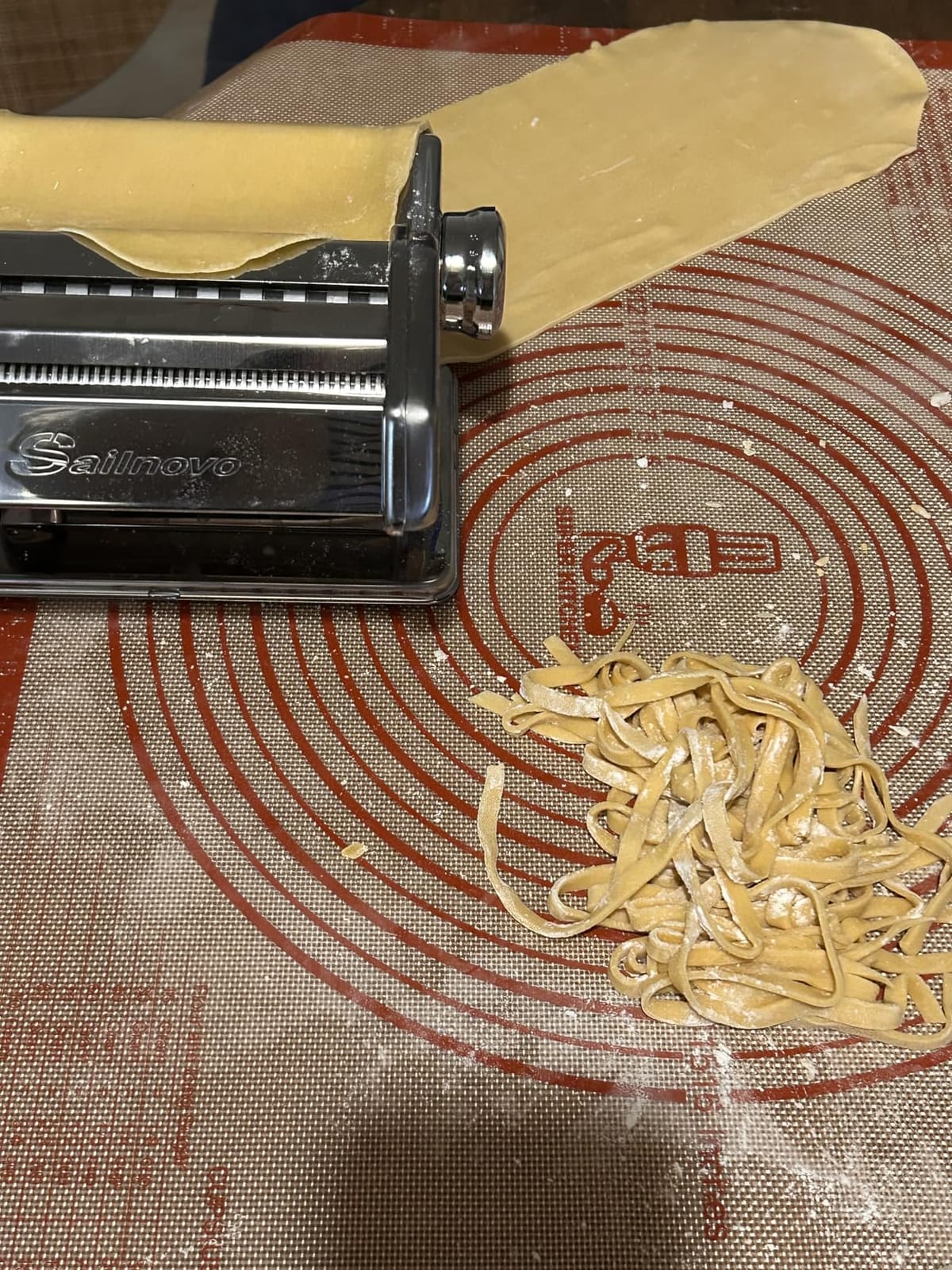
The stainless body with aluminum rollers is a sensible combination. Steel gives stiffness to the frame so the rollers stay parallel, and aluminum rolls smoothly without the risk of rust that comes with bare carbon steel. The trade is that the cutter assembly wants dry cleaning only.
At just over 11 inches long, this is one of the larger frames here. That is fine if you have counter to spare, and awkward in a galley kitchen where you will need to set it up each time rather than leaving it out.
What to check before you buy
Measure your overhang. A clamp needs a few inches of counter edge to bite on, and this frame sits further out than most. If your counter has a full backsplash meeting the surface, the clamp will not have room and you will be back to a hand on the frame.
Also plan the flour station. With nine settings you will likely make thin sheets, so keep a small bowl of flour and a bench scraper within arm’s reach. A crowded counter is how dough picks up bench debris and how sheets tear.
Where you will feel the limits
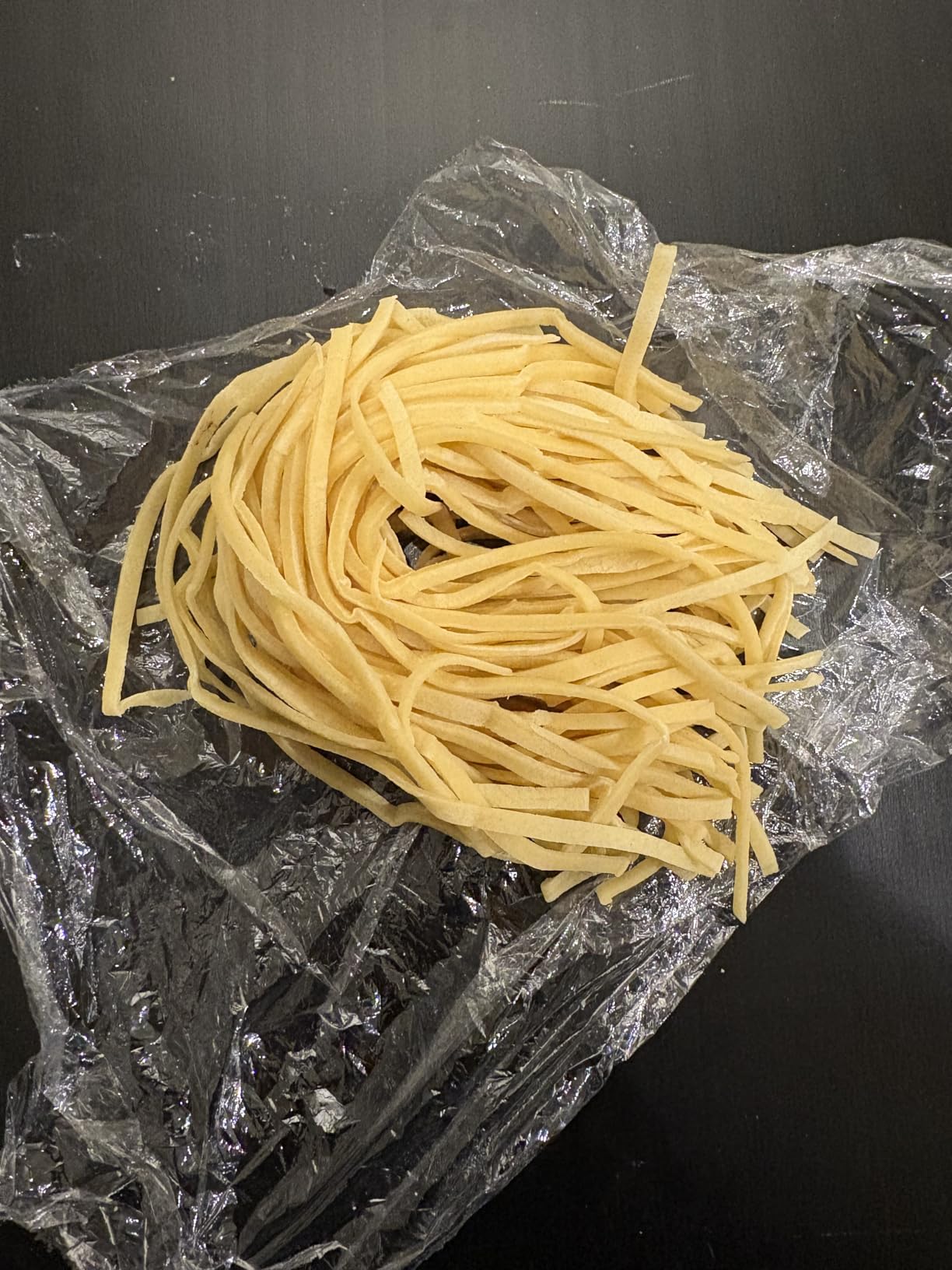
Two cutter widths is a narrow range for the price. The 4.5mm fettuccine cut is the useful one; the 2.0mm setting works but produces a flatter, wider strand than a true spaghetti cut. If you mostly make one shape, that is a fair trade.
Dry cleaning is not optional with this blade assembly. A pastry brush or the wooden skewer trick gets dough out of the cutting rollers without water, and it keeps the blade sharp far longer than rinsing would.
4. Philips Viva Collection Pasta and Noodle Maker: Best Beginner Extruder
Philips Kitchen Appliances Compact Pasta and Noodle Maker, Viva Collection, Comes with 3 Default Classic Pasta Shaping Discs, Fully Automatic, Recipe Book, Small, White (HR2370/05)
Fully automatic extruder
Three shaping discs
2 to 3 servings in 18 minutes
15.5 by 13 by 11.9 inch
Pros
- No rolling or cranking at all
- Makes penne which no hand roller can produce
- 18 minute cycle suits small households
- Removable parts are mostly dishwasher safe
Cons
- No thickness control so sheets and strands come out heavy
- Measuring cups are inaccurate enough to require a scale
- Around 400g of pasta per cycle means several runs for a big meal
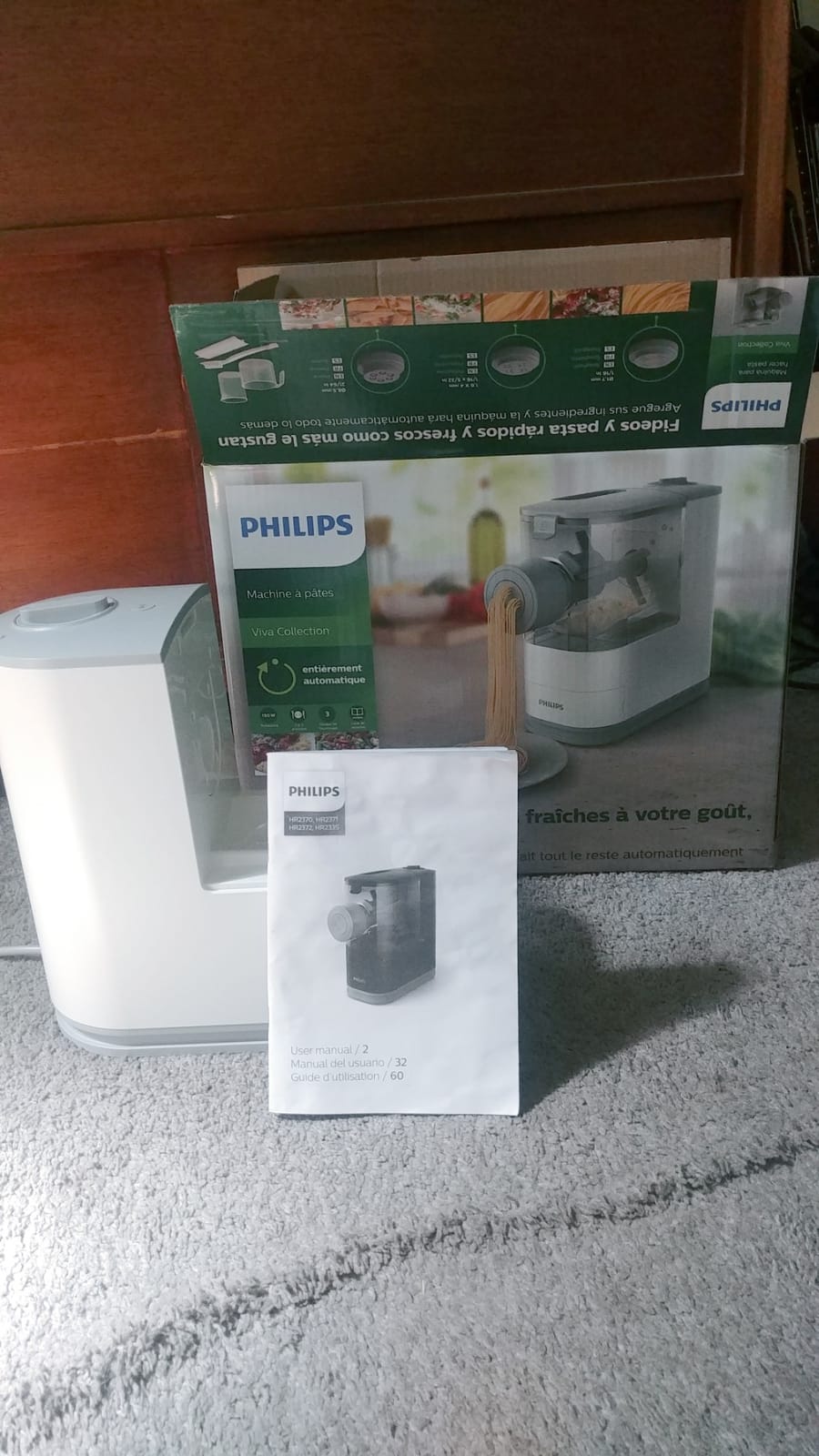
This is the machine to buy if the reason you want fresh pasta is shapes rather than thin sheets. It mixes, kneads and extrudes in one cycle, and the three included discs give you spaghetti, penne and fettuccine. Penne is the headline: it is simply not available from a roller machine.
Set it up, add flour and water to the cups, press the button, and walk away. Roughly 18 minutes later you have two to three servings ready to cook. For a beginner who wants the result without the technique, that is a genuinely different experience from cranking a roller.
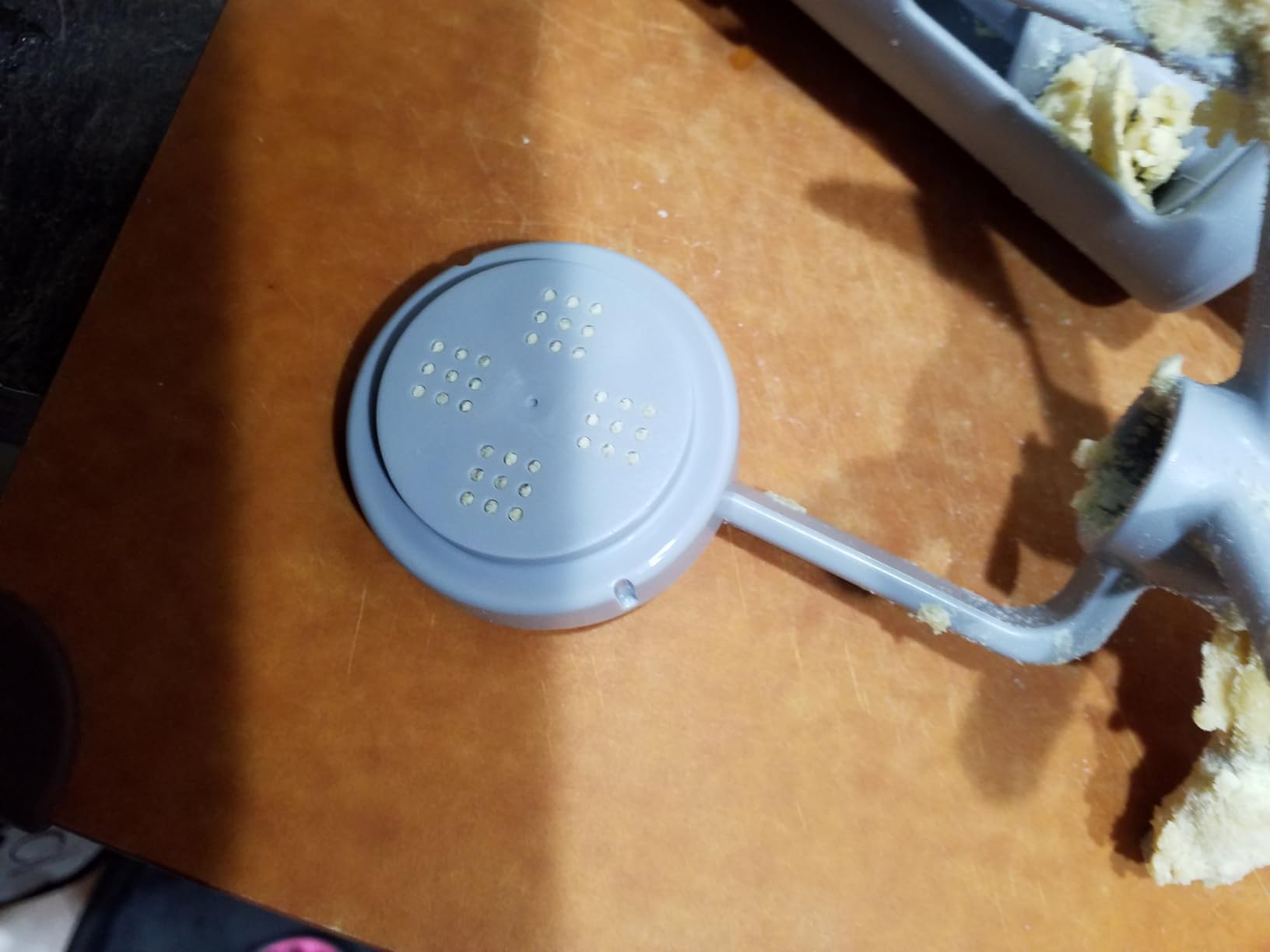
Owners consistently report that a kitchen scale changes the outcome. The supplied measuring cups are noticeably off, and once you start weighing flour to the gram, results become repeatable batch after batch. Several people in the reviews made good gluten-free dough here, since the machine never needs a rolling pin to work the dough.
Portuguese pasta fans on ramen and pasta forums single out the fettuccine disc for egg noodles, and that is a fair use for a machine this automatic. The dough is mixed gently, which suits delicate egg and gluten-free formulas that tear under aggressive rolling.
What to check before you buy
Buy a scale before you buy the machine, not after. Extruders have no thickness control, so the only lever you have over the final pasta is the flour-to-water ratio. Owners who weigh report noticeably denser, better noodles than those who trust the cups.
Check your batch size. At around 400g of pasta per cycle, a family of four eating a big bowl each needs two runs. Plan for the second run to start while the first batch is cooking, because the machine has a cooling and reset cycle.
Where you will feel the limits
There is no thickness dial, so the output is consistently heavier than hand-rolled pasta. If you want delicate lasagne sheets or lace-thin sfoglia, this is the wrong machine and no amount of adjustment will change that.
A small number of owners report motor or gear failures after only a few uses, and the plastic body and extruder dies wear faster than a steel roller. Treat the discs as consumables you may eventually replace, and expect less serviceability than a metal roller.
5. YASHE 3-in-1 Pasta Maker: Best for the Thinnest Sheets
YASHE 3-in-1 Pasta Maker Machine with Adjustable Thickness
Stainless steel and aluminum alloy
Nine thickness settings
0.3mm thinnest sheet
2.9kg, 9.8 by 9 by 6.7 inch
Pros
- Thinnest setting in the group at 0.3mm
- Cleaning brush and cloth included in the box
- Sturdy fixing clamp holds the frame steady
- Food grade stainless steel and aluminum alloy body
Cons
- Tight roller gaps demand properly flattened dough first
- Crank handle feels loose on long sessions
- Shorter brand track record than the Italian machines
Nobody expects 0.3mm from a machine in this category, and that is the reason this one stands out. It is genuinely useful for dumpling skins and for rolling a lasagne sheet in halves to reach a length a smaller frame cannot cover.
The included cleaning kit is quietly the best in the group. A brush and a cloth in the box means you are not improvising with a wooden spoon the night after your first batch, which is when most beginners give up on a machine.
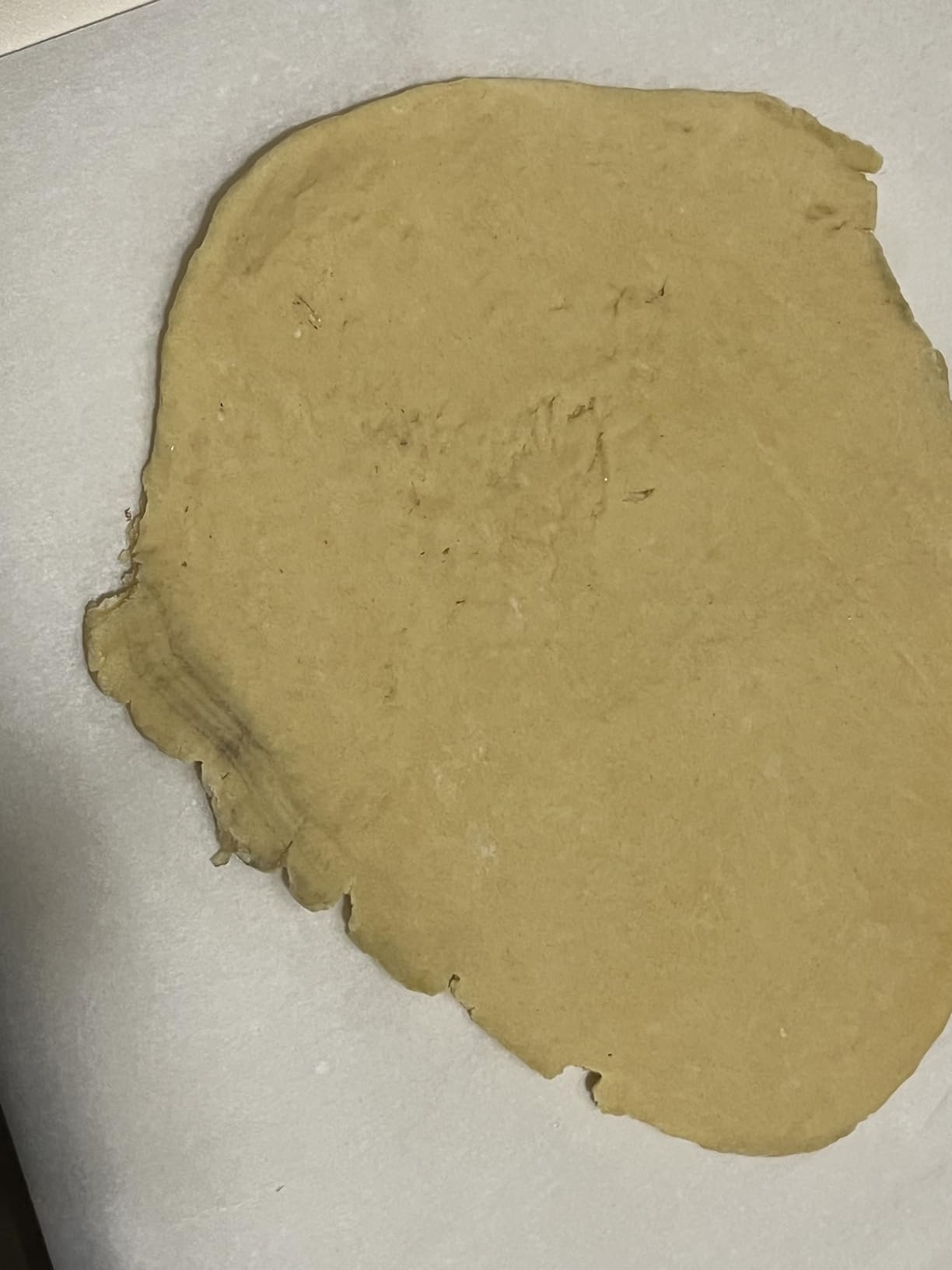
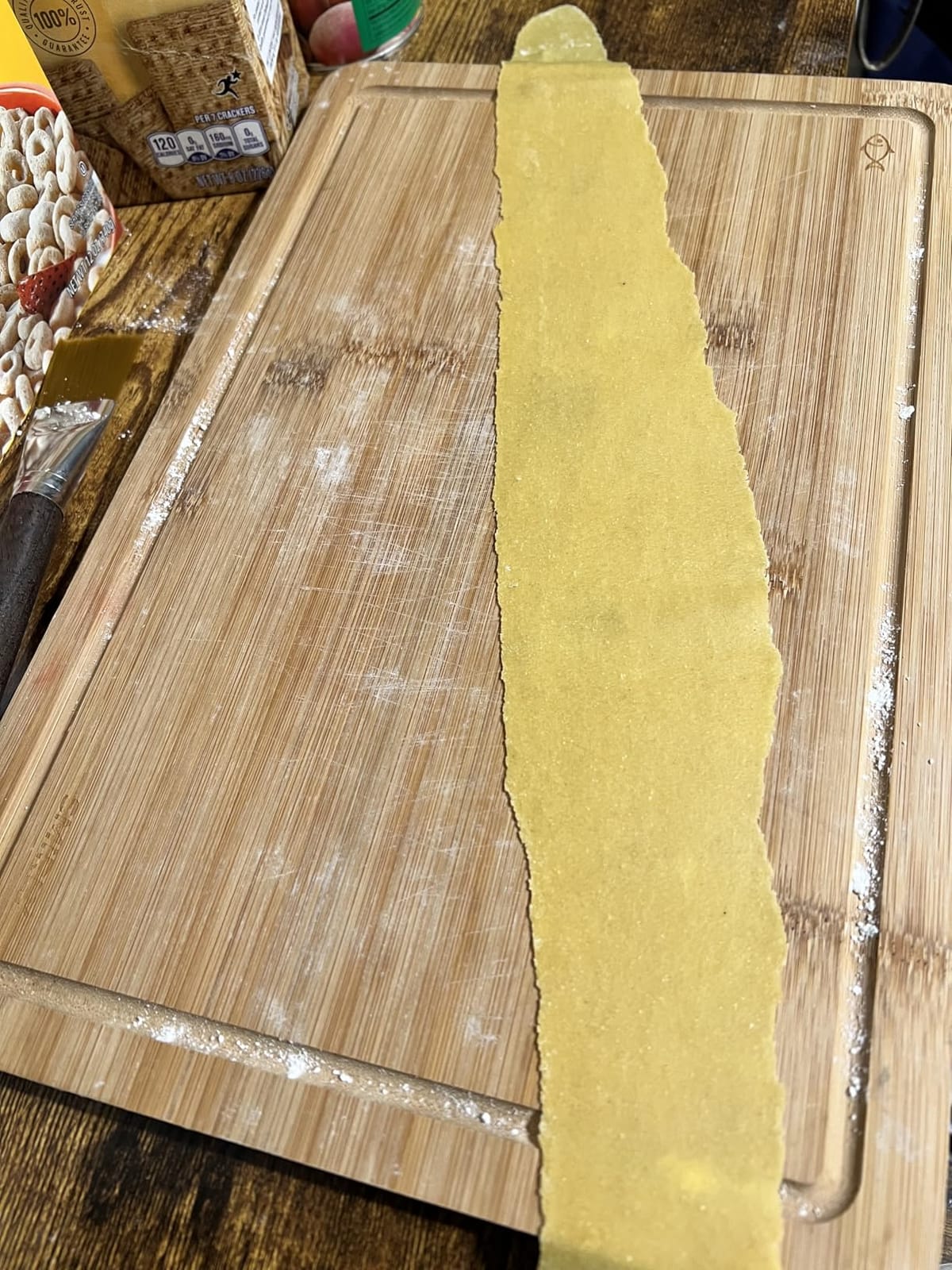
Nine positions, two cutter widths at 2mm and 6.5mm, and a stainless steel and aluminum alloy body. The 6.5mm fettuccine is wider than most rivals, which produces ribbons that hold a heavy sauce better than standard supermarket fresh pasta.
Tight roller gaps are the one thing to prepare for. Dough fed in as a rough ball will stall or fold; flattened with a rolling pin first, it feeds cleanly every time. That single habit separates a smooth sheet from a frustrating one on this machine.
What to check before you buy
Check your crank habit. The handle can develop play over extended sessions, so if you roll large batches in one go, tighten the handle before every pass and keep the crank moving slowly rather than fast.
Think about where it lives. At just under 10 inches long it is mid-sized, so it needs a real stretch of counter or a deep cabinet. If storage is tight, the lighter frame that breaks down further may suit you better.
Where you will feel the limits
It is a manual crank with no motor option, so a large batch of lasagne is a workout. That is fine for an evening project and tiring for a weekly production kitchen, and it is worth factoring into how much pasta you realistically plan to make.
Brand history matters here more than it does elsewhere. This maker has a shorter track record than the Italian producers, and replacement parts or cutter spares are less certain. The included cleaning kit partly offsets that.
6. ISILER 3-in-1 Pasta Maker: Best for Large Batches
3-in-1 Pasta Maker, 9 Thickness Settings, Dough Rollers & 2 Size Cutters
Aluminum and stainless steel body
Nine thickness settings
0.3mm thinnest sheet
4lb weight
Pros
- Handles catering quantities and multiple shapes on one machine
- Nine settings from 0.3mm to 2.6mm plus 2mm and 6.6mm cutters
- Cutter dismantles to reach the cutting rollers for cleaning
- Complete kit with roller cutter crank clamp and manual
Cons
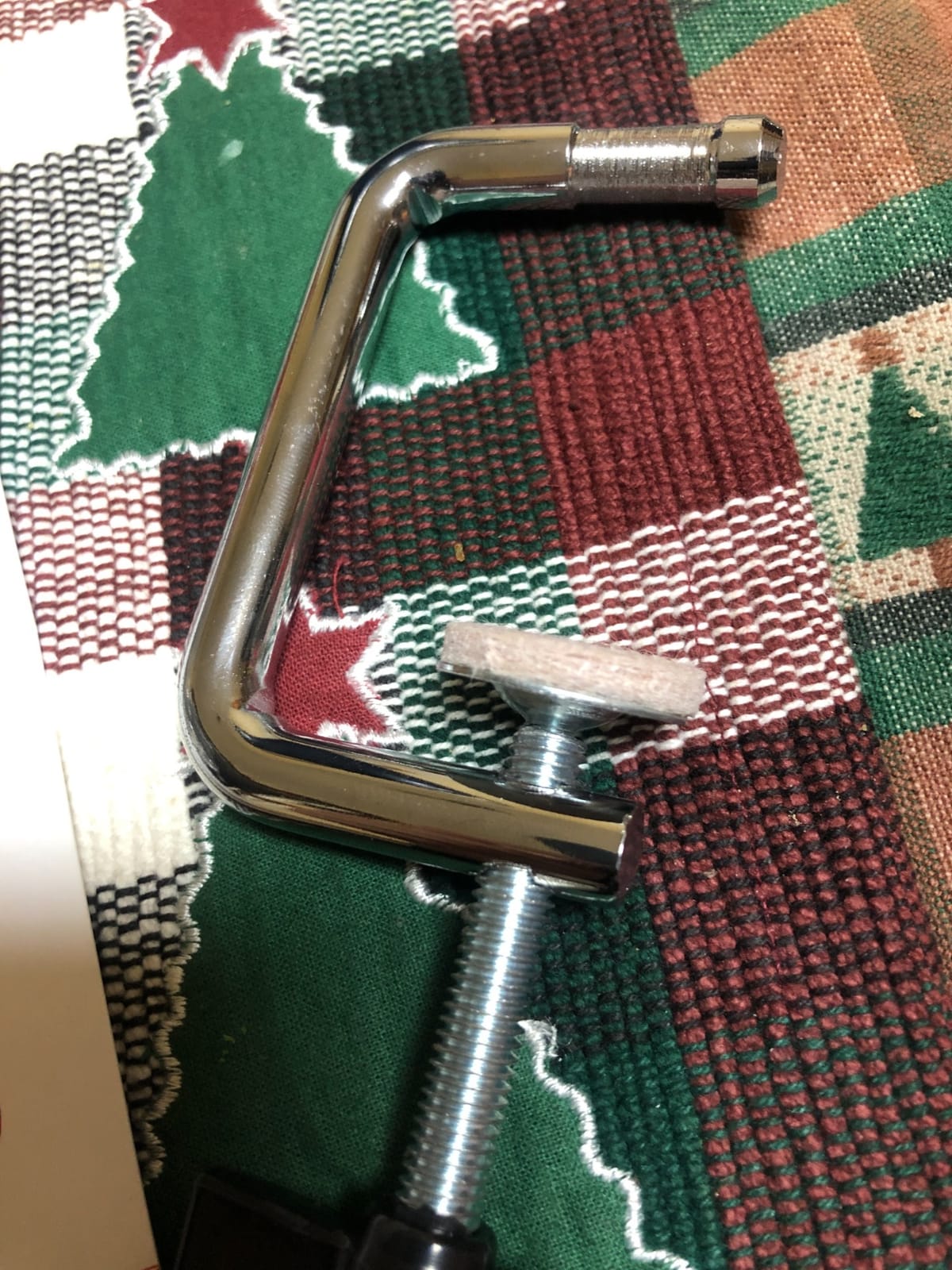
- Crank handle detaches easily and can fall out mid-roll
- Cutter can score noodles rather than cut them in one pass
- Roller thickness varies edge to edge so sheets curve
At four pounds this is the heaviest frame here, and the weight is the point. It resists the sideways flex that makes light machines wander, so it stays put and keeps its rollers parallel during a long session making several batches back to back.
The dismantled cutter is a real design win for cleaning. Because the cutting roller assembly comes apart, you can brush out dried fragments that would otherwise stay trapped in a sealed head, which is the usual reason people give up on cleaning pasta machines.
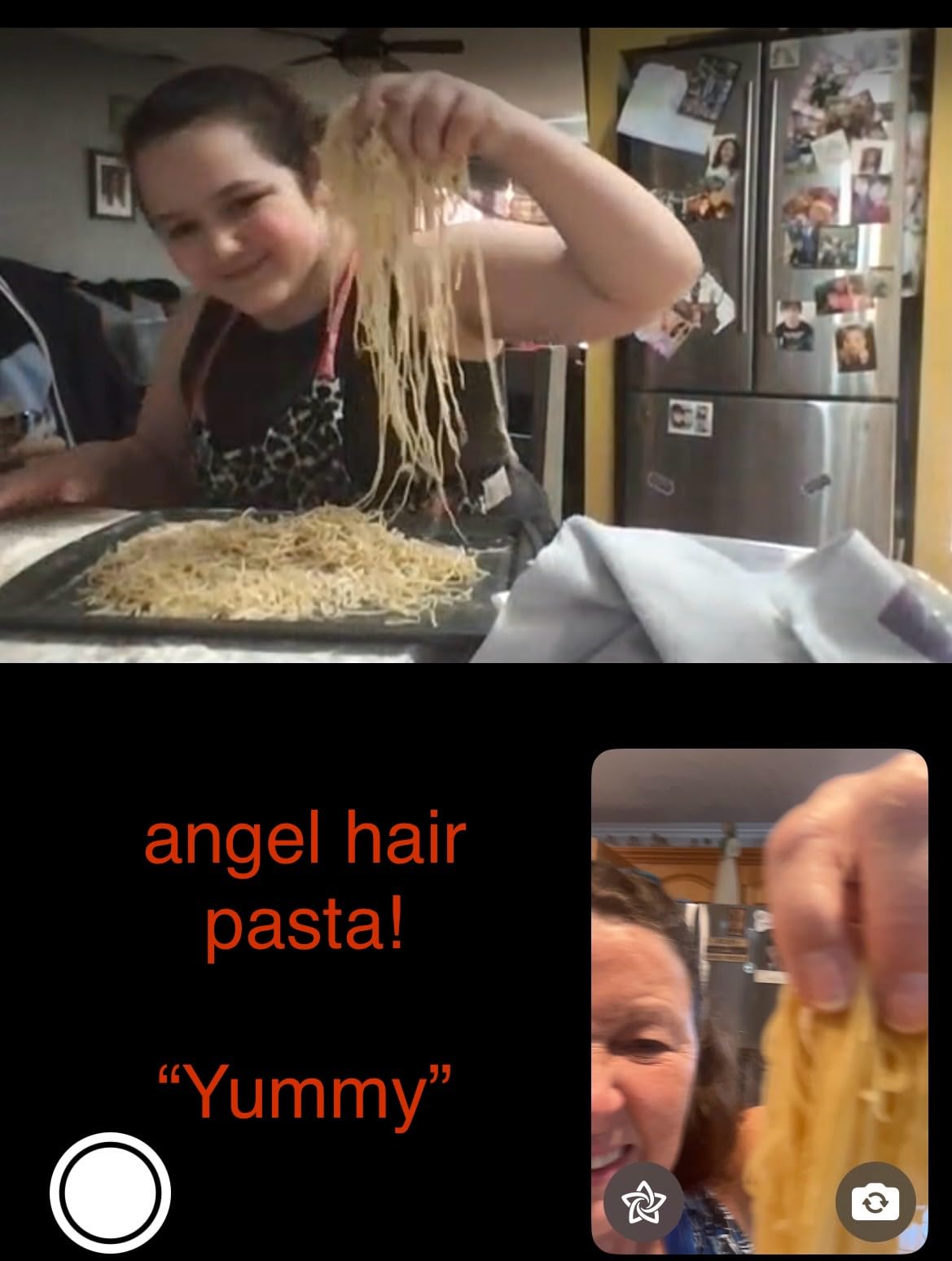
Nine settings from 0.3mm to 2.6mm give plenty of range, and the 6.6mm cut produces a wide, flat ribbon that works well with chunky sauces. Owners cooking for gatherings report it handles quantity without the frame flexing.
Beginners report good pasta on the first attempt, which is the metric that matters most in this category. The recurring negatives are mechanical rather than culinary: loose crank handle, occasional uneven roller pressure, and support response times that owners describe as slow.
What to check before you buy
Look closely at the crank socket. This is the most repeated complaint across reviews, and it is cheap to solve with a handle retainer, but you should know about it before you start rolling. Push the handle fully home before the first pass.
Consider the cutter behaviour. A single pass can score rather than fully sever, which means one more pass at the same width. That is fine for a home cook, but it is a difference you will notice if you plan to roll weekly.
Where you will feel the limits
Sheets can curve if roller pressure is uneven across the face, and that shows up in a lasagne sheet laid flat. Rolling each sheet in thirds before the final pass evens it out and is standard technique on most rollers.
Customer support is the quiet drawback. If a part arrives damaged or the clamp is missing, plan on a replacement route that takes time. Check the box contents on arrival for that reason.
7. AceChef Pasta Maker: Best Starter Machine for a Small Counter
Pasta Maker – 7 Thickness Settings Roller & 2 Width Cutters Pasta Machine
Stainless steel body
Seven thickness levels
2mm and 4.5mm cutter
2.87kg weight
Pros
- Substantial stainless steel body that resists rust
- Non slip clamp holds steady during rolling
- Brush or cloth cleanup leaves no dough in the rollers
- Compact enough to return to a cabinet
Cons
- Crank handle socket is loose and the handle can slip out
- Needs roughly 2 inches of counter overhang for the clamp
- One cutter section can score rather than cut cleanly
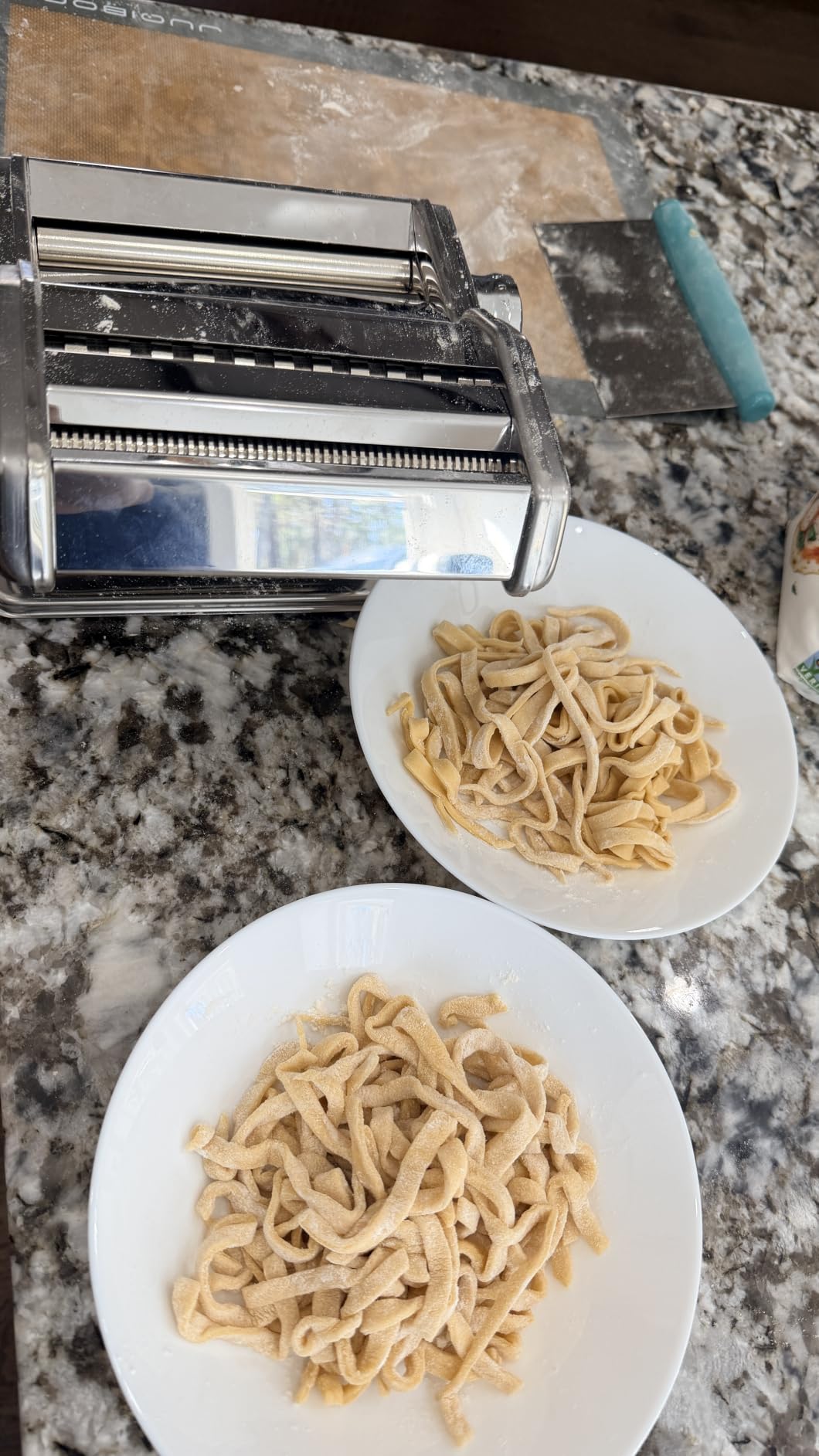
Here is the pattern owner reviews recommend for any new machine: run a small batch of scrap dough through the rollers first. Several people who did exactly that on this machine report clean, even strands from the first real batch, which is more than most beginners can say.
Seven thickness levels cover the useful middle of the range for fettuccine, pappardelle and lasagne, and the detachable two-in-one cutter gives you 4.5mm and 2mm widths from a single head. Swapping it on and off is a matter of one lever.
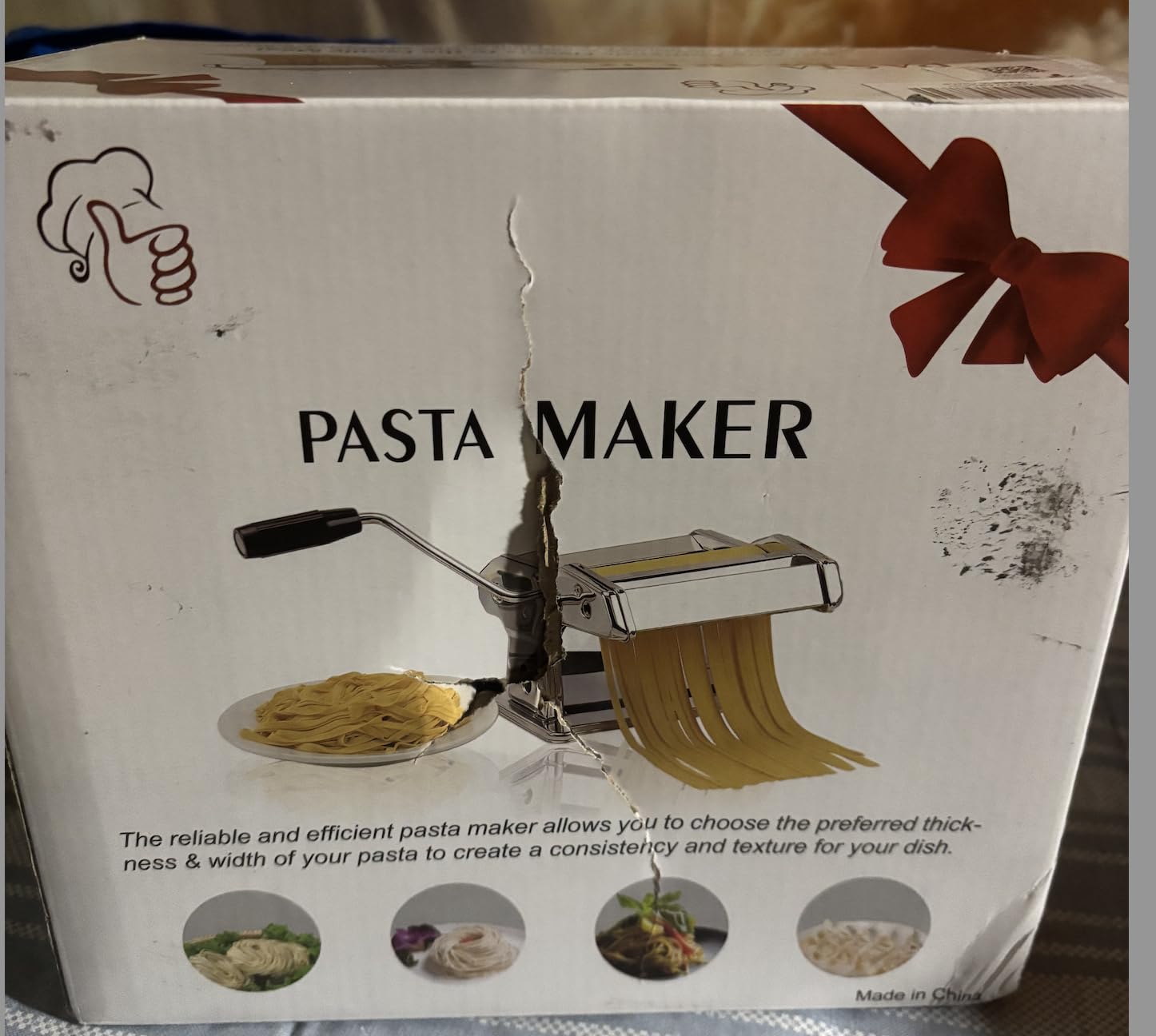
The stainless body is a proper one rather than a thin pressing, and at 2.87kg it has enough mass to stay put. The clamp grips well, but it needs real counter overhang to seat, which is a measurement worth taking before you order.
Cleanup is genuinely quick. A brush or a dry cloth gets the rollers and the cutter head clean in a couple of minutes, which is the routine that decides whether a machine gets used weekly or abandoned in a cupboard.
What to check before you buy
Measure the overhang first. This clamp needs about 2 inches of counter edge, and a tiled counter with a sealed backsplash may not offer it. If it does not, buy a machine with a table support leg instead.
Count thickness levels against your ambitions. Seven positions are enough for beginner sheets and ribbons. They will not get you to a 0.5mm tagliolini, so if fine pasta is your goal, look at a nine-position dial.
Where you will feel the limits
The crank socket is loose, and that is the single most repeated complaint in the reviews. It does not stop the machine working, but it interrupts the rhythm of a first session, when you are already concentrating on feeding dough evenly.
One section of the cutter can score instead of sever on a single pass. Push it through a second time at the same setting and the strands release cleanly, which is a habit worth building from the first batch.
8. Sur La Table Va Bene Pasta Maker: Best Looking Machine for Display Counters
Sur La Table Kitchen Essential Va Bene Manual Pasta Maker Machine Noodle Maker w/Rollers & Cutters – Spaghetti, Fettuccini, Lasagna or Dumpling Skin – Stainless Steel/Juniper Green
Stainless steel with green finish
Nine settings numbered 0 to 9
2.11kg, hand wash only
Detachable shaper
Pros
- Nine clearly numbered settings that are easy to read
- Stainless steel body with a removable handle and clamp
- Light at 2.11kg and it breaks down for compact storage
- Detachable shaper cuts fettuccine and spaghetti
Cons
- New units can shed metal residue from the rollers before first use
- Clamp secures one side only so the far end can wobble
- Instructions may be missing from the box
Numbering the dial from 0 to 9 in plain increments is a small design decision that saves real frustration. When a machine labels positions oddly, you end up guessing which end is thick. Here the progression is obvious, and owners repeatedly call the clarity out as a reason the machine is easy to learn.
At 2.11kg it is one of the lighter frames, and it breaks down for storage. That matters if the machine lives on the counter as much as in the cupboard, which is common for a machine that looks as good as this one does.
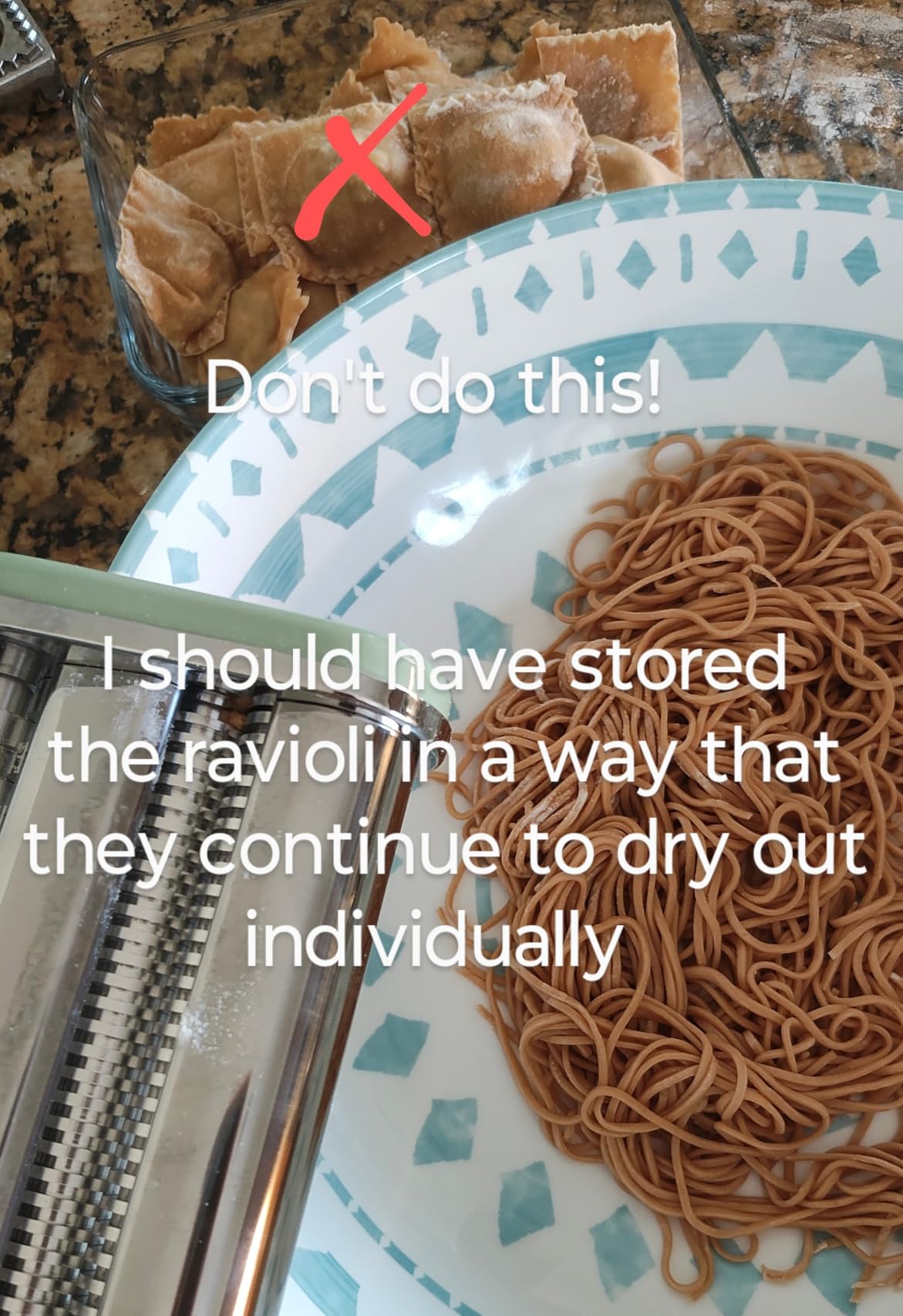
One thing to handle on day one: several owners report metal residue in the rollers straight out of the box from factory finishing. Wipe the rollers with a dry cloth, run a scrap batch of dough through, and discard it. That is a two-minute job and it accounts for a startling number of first-batch complaints in this category.
The single control lever switches between rolling and slicing, which is efficient but means switching modes can tear a very thin sheet. Finish your sheet at the thickness you want before you engage the shaper.
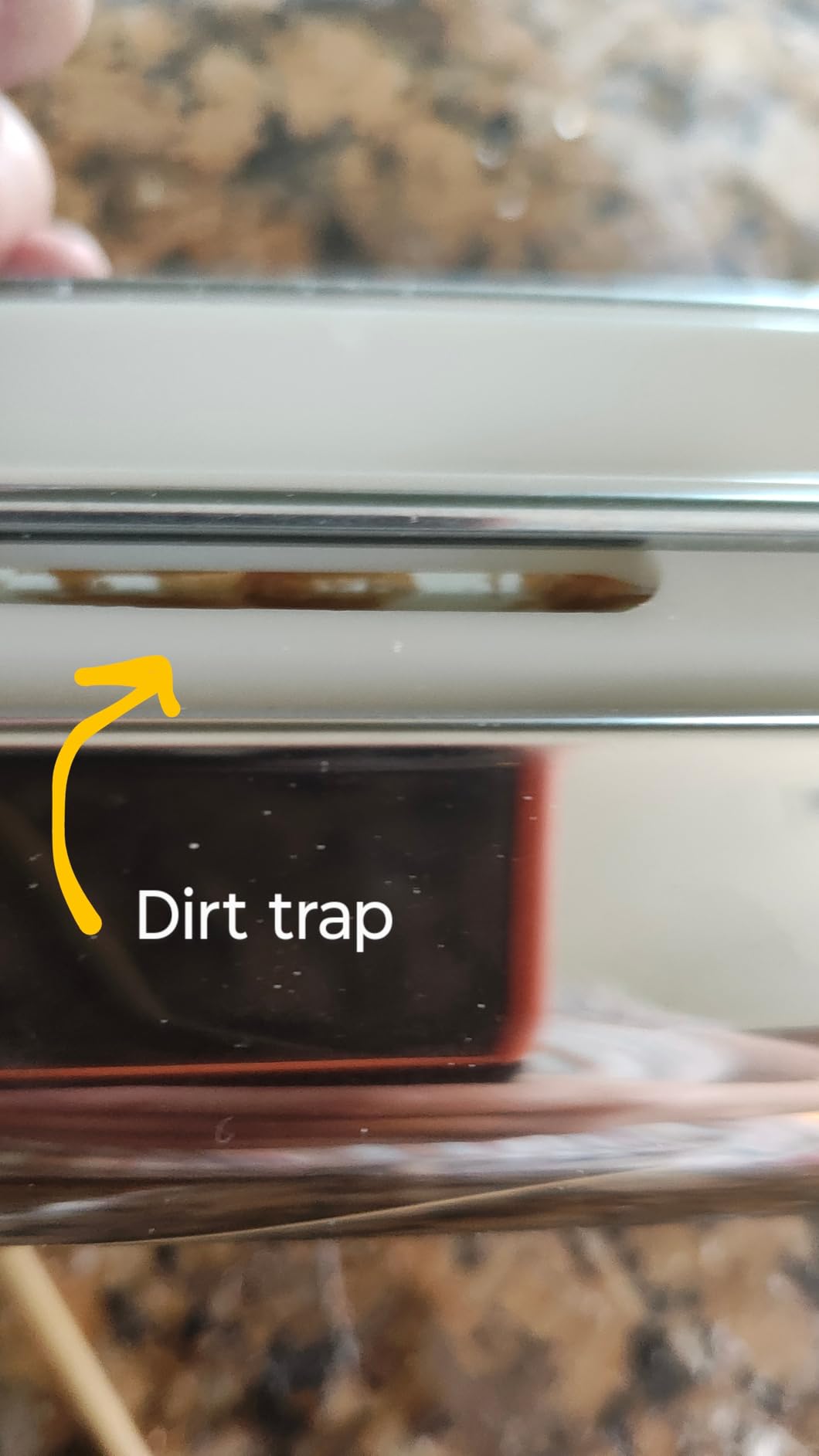
What to check before you buy
Ask about the manual. Instructions may not be in the box, so check that a printed or downloadable guide exists before you order. With a numbered dial the machine is still easy to learn, but a first session goes faster with a reference.
Look at your counter material. Hand wash only means the whole body stays out of the dishwasher, and a hand wash is fine but it does need to happen straight after use rather than later in the evening.
Where you will feel the limits
The clamp grips from one side only, so the far end of the frame can wobble while you crank. In practice it needs a steadying hand more than the machines with two-point clamps, and a folded towel under the far corner helps.
With a smaller review base than the leaders here, long-term durability data is thinner. The stainless construction and the simple mechanism are both proven categories, but if you want the deepest owner history, the machines with tens of thousands of reviews are the safer read.
9. Norpro 1049R Pasta Machine: Best Lightweight Machine for Small Kitchens
Norpro 1049R Pasta Machine, Red
Chrome-plated steel body
1.5mm thinnest sheet
Cuts sheets vermicelli and fettuccine
1.7kg, 5 by 8 by 5 inch
Pros
- Lightest machine in the group at 1.7kg so it is easy to lift and store
- Chrome-plated steel body with nickel-plated rollers
- Cuts sheets vermicelli and fettuccine
- Countertop clamp plus a recipe booklet in the box
Cons
- Thinnest sheet is 1.5mm so no fine tagliolini or dumpling skins
- Crank handle has no lock and tends to pop out
- Blades can be less sharp on long noodles
At 1.7kg and roughly the size of a toaster, this is the machine to own if counter space is your binding constraint. You can lift it with one hand, use it, and put it back in a cupboard without rearranging anything, which is a bigger deal in a small kitchen than any extra thickness setting.
Long-time owners report the same build quality they have relied on for two decades, and reviewers consistently describe it as a capable starter roller. At under 8 inches across it also travels well if you want fresh pasta away from home.
Understand the trade before you order. A 1.5mm floor means you make beautiful pappardelle, lasagne and fettuccine, but fine tagliolini and dumpling wrappers are simply out of reach. That is a limitation of the frame, not a technique problem.
There is also a detail that catches people: several reviewers advise leaving salt out of dough run through this machine. Salt can toughen the gluten at the roller surface, and for a machine with a shallower gap the effect is more noticeable. Season the finished pasta instead.
What to check before you buy
Be honest about the shapes you cook. If your list is lasagne, pappardelle and fettuccine, this machine covers it entirely in a tiny footprint. If tagliolini or ravioli are on the list, choose a nine-position machine with a 0.5mm or finer floor.
Check your counter edge for the clamp. At this size the clamp needs less overhang than a large frame, which is one of the reasons it works well in compact kitchens where bigger machines cannot seat properly.
Where you will feel the limits
The crank handle has no locking mechanism, so it can pull out mid-roll and interrupt a pass. Push it fully home and check it before each sheet, particularly on the thinner settings where the crank force is highest.
Blades lose bite on long noodles, so a sheet cut in one go may need a gentle hand pull to separate. Cutting sheets shorter than the roller width avoids the problem entirely, and on this frame that is easy to do.
10. Imperia 4100 Pasta Machine: Best Italian-Made Machine You Can Upgrade Later
Imperia Pasta Maker Machine- 100% Made in Italy, Heavy Duty Steel Construction, Easy Lock Dial, Wood Grip Handle & Cleaning Brush- Fresh Homemade Italian Spaghetti Fettuccine or Lasagna (Classic Line)
Made entirely in Italy
Six roller heights from 0.5mm to 5mm
150mm sheet width
3.66kg, wood grip handle
Pros
- Made entirely in Italy with chromed steel construction
- Six roller heights reaching 0.5mm on the fine end
- Wood grip handle is comfortable on long sessions
- Accepts the Pasta Facile 4600 motor and extra attachments
Cons
- Only three widths out of the box
- Heaviest frame in the group at 3.66kg
- Six position dial feels notchy rather than smooth
This is the machine to buy if you are certain you will still be making pasta in five years. It is chromed steel from a maker dating to 1932, the six roller heights reach 0.5mm, and the 150mm sheet width is at the wide end for a manual roller.
The upgrade path is the deciding factor for many buyers. A side clamp slot accepts the Pasta Facile 4600 electric motor, and the same chassis takes Duplex, Simplex and Raviolamp attachments, so you can move from a manual crank to motorised rolling and filled pasta without buying a new machine.
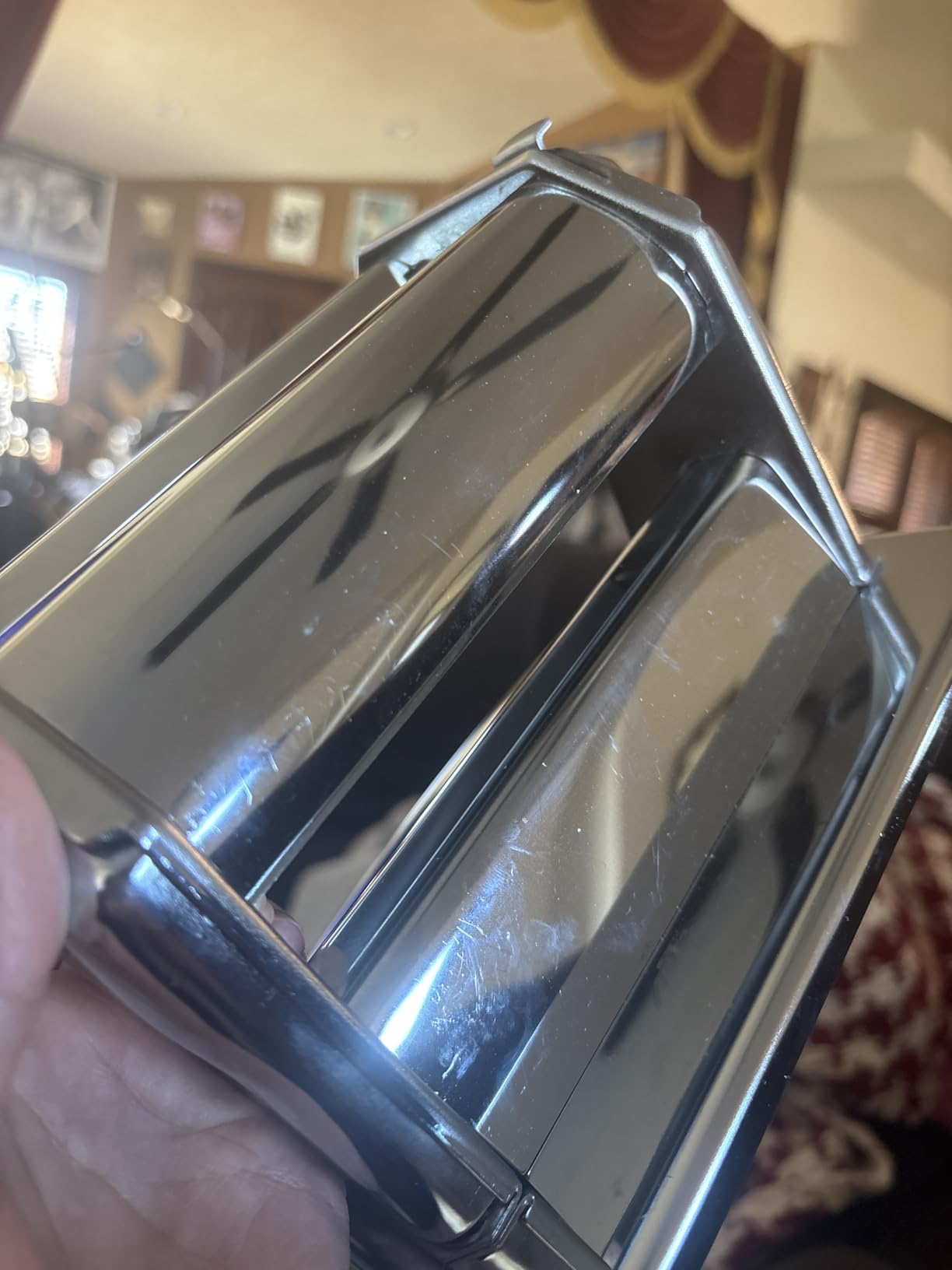
In the box you get a cotton storage pouch, a synthetic bristle cleaning brush, a non-slip base and a table support leg. That is the most complete kit in the group, and the pouch matters more than it looks because steel rollers stored damp will spot.
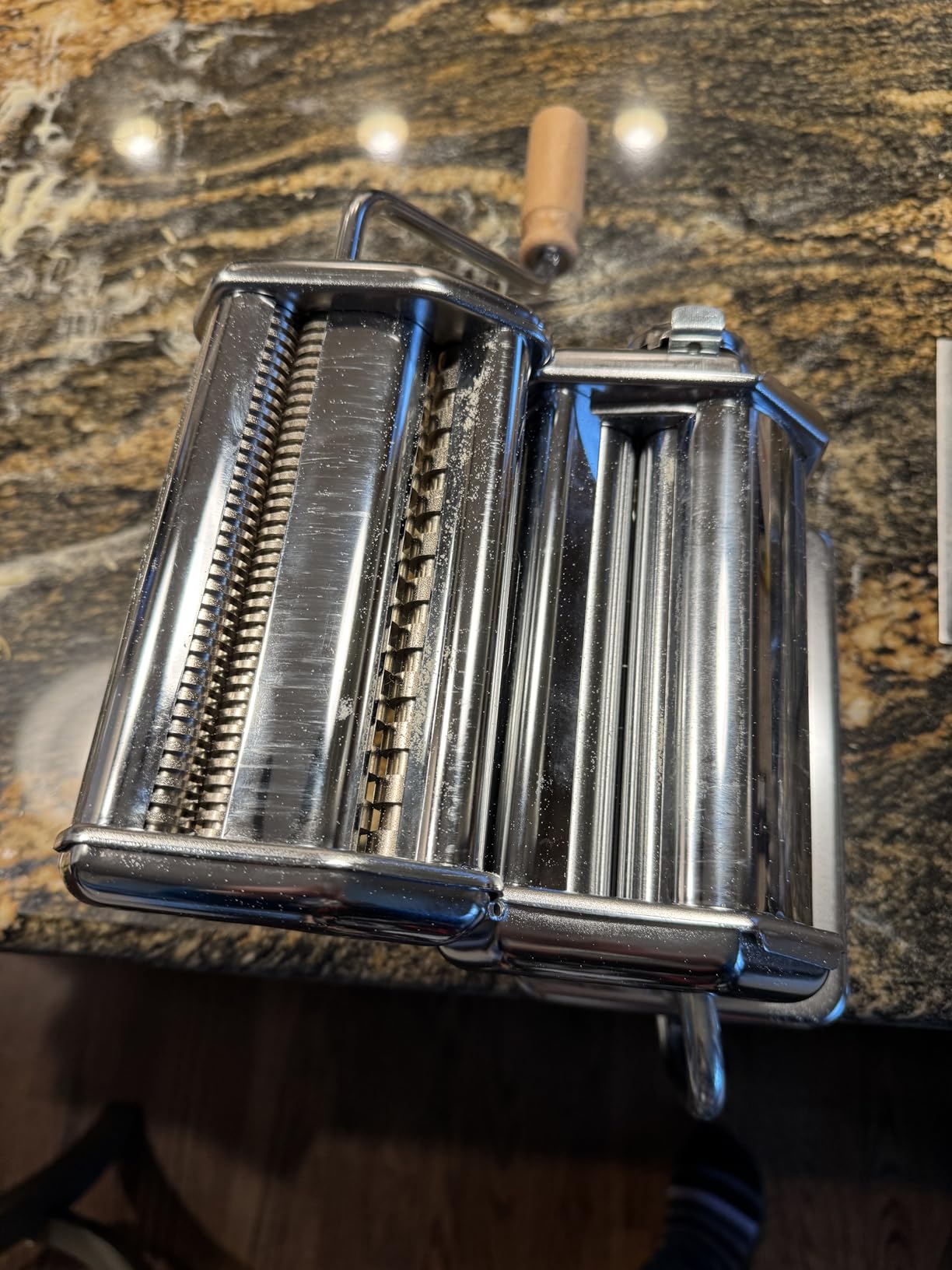
Owners report noticeably fine noodles and straightforward assembly. The recurring note is that the advertised variety of shapes needs buying, so budget for the Duplex or Simplex attachment if you want more than sheets, 6.5mm fettuccine and 2mm tagliolini.
What to check before you buy
Decide on the motor question now. The clamp slot is built in, and adding the motor later is straightforward, but you should buy the machine knowing that the upgrade exists. If you will never motorise it, the bundle value is thinner.
Check the weight. At 3.66kg this is the heaviest machine here, which makes it stable while you crank but awkward in a high cupboard. A designated shelf or a lower cabinet matters more than usual with this one.
Where you will feel the limits
Three widths out of the box is the narrowest cutter package in the group, and it is the main reason the machine does not win outright. Accessory cutters are where the value sits for anyone making more than one shape.
The dial itself is notchy rather than smooth, and detents can be stiff. Once you learn the position by feel it stops mattering, but during a first session it makes the last two settings slower to select than a smooth dial would.
Which Type of Pasta Maker Is Easiest for a First-Timer?
A manual roller with a numbered thickness dial is the easiest place to start, because you see the sheet forming and can correct thickness in real time. An electric extruder is easier to operate but harder to control, since it gives you no thickness adjustment and the only lever is the flour ratio. A stand mixer attachment is the least effort if you already own a mixer and mostly want sheets.
Start with fettuccine. A 6mm ribbon on setting 3 or 4 is forgiving of a slightly uneven sheet, cooks in under two minutes, and shows off the difference between store-bought and fresh. Spaghetti at 2mm is the more demanding cut, and it is worth saving until your dough handling is consistent.
Beginners consistently report that their first sheet is too sticky and their second is too thick. Both are normal, and both resolve with the same adjustment: rest the dough wrapped for 30 to 60 minutes before rolling, then dust lightly at each pass.
If your kitchen is already crowded, our countertop ice maker guide covers another small-appliance decision that depends on the same counter space constraints.
Is a Pasta Maker Worth It for Beginners?
A pasta maker earns its counter space the first time you make lasagne you did not have to fight, and it keeps earning it as long as you make pasta monthly. The honest counterpoint is that a rolling pin and a sharp knife can produce good pasta for a family of two, and the machine does not cook dinner faster.
The real gains are consistency and shape. A roller gives you a repeatable sheet thickness so sauces cling properly, and an extruder opens up penne, fusilli and other tubes that are impossible by hand. Those are the reasons to buy one as a beginner rather than as a gift for a hobbyist.
Cost per use depends entirely on how often you cook with it. A machine used twice a month for a couple of years is a hobby purchase you will feel good about. A machine used once a year is a cupboard ornament, and no amount of build quality changes that.
How to Use a Pasta Machine for the First Time
Wipe the rollers with a dry cloth and run a small batch of scrap dough through before you make anything you want to eat. Several owners report finding metal residue from factory finishing on a new machine, and a throwaway batch takes care of it entirely.
Knead the dough until it is smooth and elastic, then wrap it and rest it for 30 to 60 minutes. Skipping the rest is the single biggest cause of dough that springs back and fights the rollers.
Flatten the dough to roughly the thickness of a coin with a rolling pin before it ever touches the machine. A rough ball will stall in the gap; a flat disc feeds cleanly on the first pass.
Start at the thickest setting and work down one notch at a time, dusting lightly with flour between passes. Fold the sheet in thirds and roll it again to even out the thickness, then hang it on a drying rack or folded towel.
Run the cutter at the widest width first to check the cut, then narrow it. If the noodles clump, the sheet was slightly thick or slightly sticky. Go back one setting and dust the rollers again.
Cook fresh pasta in heavily salted boiling water for one to three minutes depending on thickness, and stir it in the first 30 seconds so the strands do not bond. Because it cooks so fast, our kitchen appliance picks aside, budget the sauce timing as the harder part of the meal.
How to Clean a Pasta Machine Without Rusting
Brush, never rinse. Dry flour and semolina brush away cleanly, while water drives moisture into the roller gaps and leaves rust spots that appear weeks later. Wipe the frame with a barely damp cloth and dry it immediately.
Use the pastry brush or a wooden skewer for the cutting rollers. Dried fragments sit in the blade channels, and a skewer lifts them without dulling an edge the way a metal tool would.
Leave it open for about an hour. Once the rollers are bone dry, close the machine and put it away. The cotton storage pouch that comes with the Italian-made model is a good habit, and a small desiccant packet costs almost nothing.
For an electric extruder, the routine is different: disassemble the head, hand wash the removable parts, and air-dry them completely before reassembly. Most of those parts are dishwasher safe, but check the base first.
Treat the machine’s storage life like a cast iron pan. Dry, wrapped and ventilated machines last for decades. Machines that live damp in a closed cupboard develop spots, and those spots are where rust starts.
Why Is My Pasta Dough Sticking to the Machine?
Sticking almost always means three things: the dough was not rested, the rollers were not floured, or the hydration is too high for the flour. Work through them in that order, because resting fixes most cases on its own.
If the sheet is fine but riddled with holes, the dough was rolled too thin in patches or kneaded too little. A stiffer, well-kneaded dough stretches evenly, and one more rest before rolling helps the gluten relax.
If the cut strands come out ragged and squashed, you are likely cutting a sheet that is still a little too thick. Go back one thickness setting and run the cutter again rather than pushing harder.
If the machine itself slides while you crank, the clamp is the problem rather than the dough. Wedge the frame between two drawers, add a folded towel under the base, or hold the non-clamping side with your free hand.
What Pasta Maker Do Italians Use?
In Italian home kitchens, hand-cranked steel rollers are the standard, and they are frequently stored away and brought out for weekend pasta rather than kept on the counter. The two makers in this roundup that are made entirely in Italy are the closest match to that tradition.
What matters more than the brand is the workflow: rest the dough, roll thin, cut by hand where possible, and salt the water heavily. Professional kitchens add a drying step, which is why fresh pasta there never clumps, but at home a rack and a few minutes of air do most of the work.
For storage and small-kitchen thinking, our compact kitchen appliance guide covers the same trade-offs for a different category.
Frequently Asked Questions
What is the best pasta maker for a beginner?
A manual roller with a numbered thickness dial, a steel body and a working counter clamp is the best starting point for a beginner. The MARCATO Atlas 150 Classic is our overall pick because its crank pulls dough in evenly and its ten settings cover 0.8mm sheets through 4.8mm lasagne. Start with fettuccine on a middle setting, since it forgives a slightly uneven sheet better than spaghetti does.
What is the best pasta maker for home use?
For most homes the best pasta maker is a manual roller with a numbered dial, a real clamp and a steel body, because it produces a repeatable sheet thickness and costs far less than an extruder. If you already own a stand mixer and mainly want lasagne sheets, an attachment is the cheapest route. If you want penne or fusilli, you need an extruder because no hand roller produces tubes.
Is it worth it to get a pasta maker?
A pasta maker is worth it if you make pasta monthly and want consistent thickness, or if you want shapes like penne that a rolling pin cannot produce. It is not worth it if you cook pasta once a year. A rolling pin and a sharp knife are enough for a family of two, so the machine earns its place through repeat use rather than speed on day one.
What is the easiest type of pasta to make at home?
Fettuccine is the easiest shape for a beginner. A 6mm ribbon on a middle thickness setting is forgiving of a slightly uneven sheet, cooks in under two minutes, and shows clearly how fresh pasta differs from store-bought. Spaghetti at 2mm is the more demanding cut because any thickness wobble shows as a broken strand.
How do I clean a pasta machine without rusting?
Brush, never rinse. Dry flour and semolina wipe away with a pastry brush, and a wooden skewer clears dried fragments from the cutting rollers. Wipe the frame with a barely damp cloth, leave the machine open for about an hour until the rollers are bone dry, then store it. Water left in the roller gaps is what causes rust spots weeks later.
Why is my pasta dough sticking to the machine?
Sticking usually means the dough was not rested, the rollers were not floured, or the hydration is too high. Rest the kneaded dough wrapped for 30 to 60 minutes, dust lightly at every pass, and start at the thickest setting. If the sheet has holes instead, knead longer and rest again so the gluten relaxes before thinning.
Final Verdict
The MARCATO Atlas 150 Classic is our pick for the best pasta makers for beginners in 2026, because an even, forgiving crank and a ten-position dial make the first four batches pleasant instead of frustrating. Buy the Nuvantee if you want a stainless body at a third of the outlay, and buy the Philips Viva Collection if the shapes you want are penne and fusilli rather than thin sheets.
Whatever you choose, run scrap dough through the rollers first, rest your real dough for 30 minutes, and brush rather than rinse at the end. Those three habits solve most of what people mistake for a bad machine.