
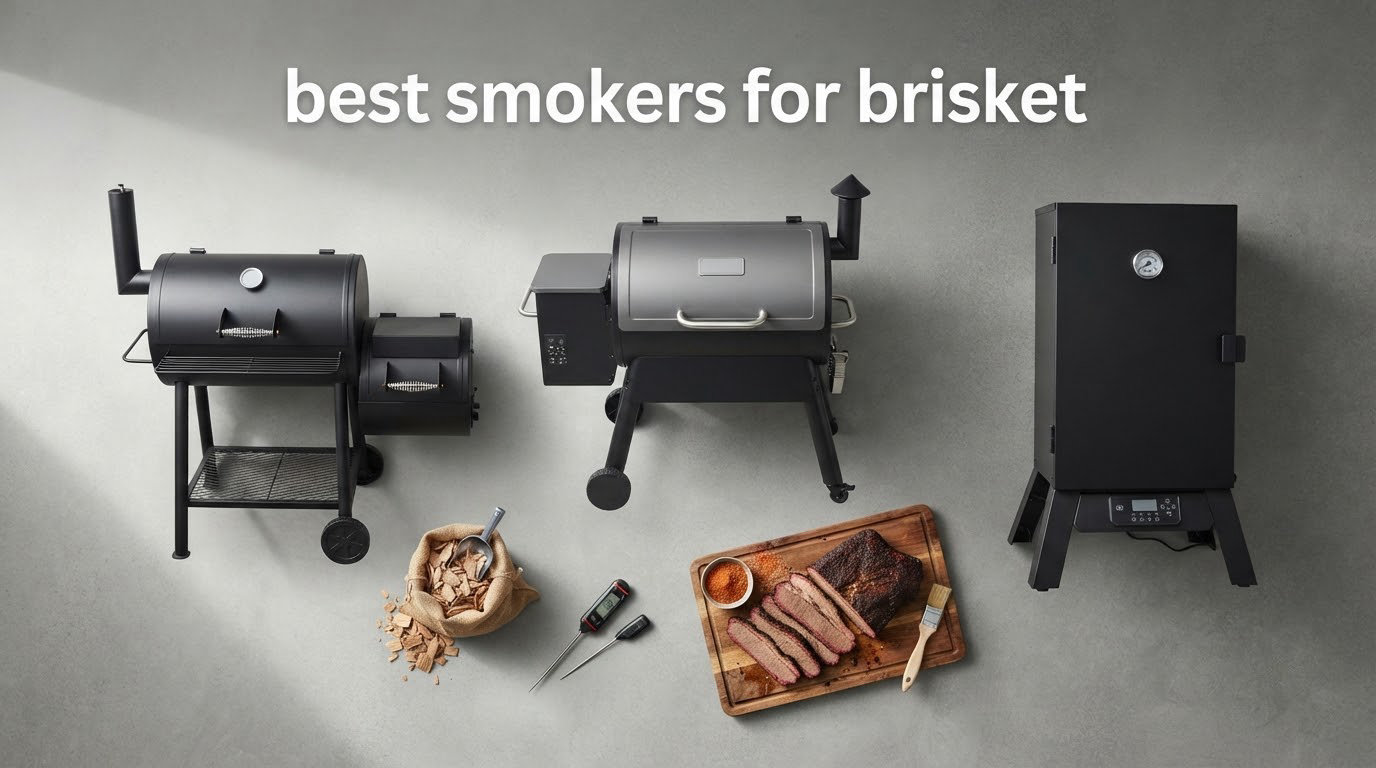
The Weber Smokey Mountain Cooker is widely considered the best overall smoker for brisket because of the balance nobody else matches: charcoal-and-wood flavor with the stability to hold a low cook for ten hours, at a weight you can still walk around the yard with. Our team has been comparing smokers cut after cut for years, and the 4.7 rating and 5,500-plus owner reviews behind that cooker are not a fluke.
But “best” changes completely depending on who is cooking. A pellet grill wins the Tuesday-night weeknight because nobody has to feed a fire at 2am. A kamado wins the weekend because its ceramic wall holds temperature through a cold front. A 1,176 square inch vertical offset wins the cook where two full packers have to be done at once. This roundup covers all of them.
Below we break the 10 best smokers for brisket into the five fuel types that actually matter, then review every one with the details that decide a brisket cook: real grate space, how long it holds temperature, how much tending it demands, and who should walk away from it. If you are still choosing a fuel type, start with the type explainer further down. If you already know you want charcoal, our [best charcoal smokers guide](https://eatcreatesleep.net/best-charcoal-smokers/) goes deeper on that category alone.
Table of Contents
Top 3 Best Smokers for Brisket in October
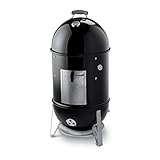
Weber Smokey Mountain 18-Inch
- Water pan steadies humidity
- Two 18.5-inch nickel-plated grates
- 10-year bowl and lid warranty
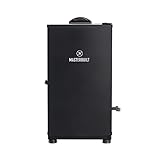
Masterbuilt 30-Inch Digital Electric
- 711 sq in vertical space
- Side wood chip loader
- Set-and-forget digital hold
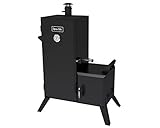
Dyna-Glo DGO1176BDC-D
- 1176 sq in across six grates
- 25 lb per grate capacity
- Adjustable flue for airflow
Those three cover the widest range of use cases on this list. The Weber is the one most cooks start and rarely replace, the Masterbuilt is the one that handles a 14-hour cook while you sleep, and the Dyna-Glo is the one that lets you cook a whole party of brisket without a second pit.
The 10 Best Smokers for Brisket in 2026 at a Glance
| Product | Specifications | Action |
|---|---|---|
| Weber Smokey Mountain Cooker 18-Inch |
|
Check Latest Price |
| Masterbuilt 30-Inch Digital Electric |
|
Check Latest Price |
| Dyna-Glo DGO1176BDC-D |
|
Check Latest Price |
 Char-Griller AKORN 20-Inch Char-Griller AKORN 20-Inch |
|
Check Latest Price |
 Pit Boss 440 Mahogany Series Pit Boss 440 Mahogany Series |
|
Check Latest Price |
 Kamado Joe Classic II 18-Inch Kamado Joe Classic II 18-Inch |
|
Check Latest Price |
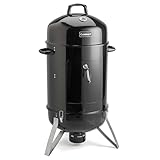 Cuisinart 18-Inch Vertical Smoker Cuisinart 18-Inch Vertical Smoker |
|
Check Latest Price |
 Z GRILLS ZPG-450A2 Z GRILLS ZPG-450A2 |
|
Check Latest Price |
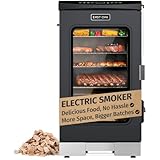 EAST OAK 30-Inch Electric Smoker EAST OAK 30-Inch Electric Smoker |
|
Check Latest Price |
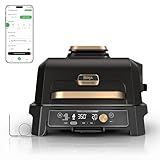 Ninja Woodfire ProConnect XL Ninja Woodfire ProConnect XL |
|
Check Latest Price |
Two numbers in that table decide more brisket outcomes than any other. The first is primary grate space, because a full packer is wide and flat, and a large total spread across six small grates is not the same as a smaller number you can lay a flat brisket on.
The second is how the unit handles air. A smoker that leaks around the door or has a flue with no adjustment will force you to compensate with fuel all night. More on that in the buying guide below.
What Kind of Smoker Is Best for Brisket?
Brisket is a long, quiet cook. You need 225°F held for somewhere between eight and fourteen hours, and the collagen in the flat has to convert slowly enough that the bark already set on the outside does not burn off. That single requirement separates the five smoker types more clearly than any other cooking decision you will make.
Charcoal water smoker: the forgiving classic
The water pan is the secret. A pan of hot water inside the cook box raises humidity, slows the drying that turns a good brisket into a leather one, and gives you a wide margin when the fire misbehaves. Owners of the Weber Smokey Mountain routinely report 10-16 hour unattended burns, which is exactly the window a full packer needs. The tradeoff is manual fire tending and no real control of the smoke profile beyond the wood you throw on.
Vertical offset and drum smoker: the biggest loads
These are the pits built for volume, with the cooking grate running vertically in a firebox below or a drum with a firebox on one end. Grate heights are adjustable, so a large flat brisket can sit level at the right height, and airflow through an adjustable flue is the easiest fine-tuning you will find on a charcoal unit. The Dyna-Glo in this roundup shows what 1,176 square inches looks like on a vertical layout. You manage every bit of the fire yourself.
Kamado: the ceramic heat retender
Triple-wall or ceramic construction means almost no air leaks, because the whole point of the design is to restrict airflow. Once a kamado is at 225°F, it barely moves, and it can ride out a cold or windy day without you feeding it. Brisket, pork butt and prime rib are the cooks owners praise most. The learning curve is real, the top vent takes practice, and you should buy a heat deflector plate before your first brisket.
Pellet grill: the flavor-effort tradeoff
Pellets automate the fire, so effort per cook drops to nearly nothing. The cost is smoke intensity. Pellet smoke is milder than a stick burner, and a lot of owners compensate with additives or a smoke tube rather than buying a stronger-smoke box. If you can live with a lighter bark and no late-night tending, this is the easiest wood-tasting option to run overnight. The forum consensus we found also flags the failure mode honestly: owners report auger and controller problems and some are moving back to offsets.
Electric: the most unattended cook possible
An electric smoker never needs fire, never needs airflow management, and holds its set temperature through a January morning. On a brisket that means you set the controller, load a water bowl and chips, and check a probe in the morning. What you give up is real wood fire, and with a 275°F ceiling on most models, the ability to sear. If your brisket schedule is overnight work, this is the honest answer.
Still deciding? Our [best vertical pellet smokers](https://eatcreatesleep.net/best-vertical-pellet-smokers/) and [best electric smokers](https://eatcreatesleep.net/best-electric-smokers/) guides each go deeper on the two most hands-off ends of the spectrum.
1. Weber Smokey Mountain Cooker 18-Inch Is the Best Overall Smoker for Brisket
Weber® Smokey Mountain Cooker Smoker, 18″ Charcoal Smoker
Charcoal water smoker
Two 18.5-inch nickel-plated grates
39.1 pounds
10-year bowl warranty
Pros
- Holds temperature over 10-16 hour burns with a full ring
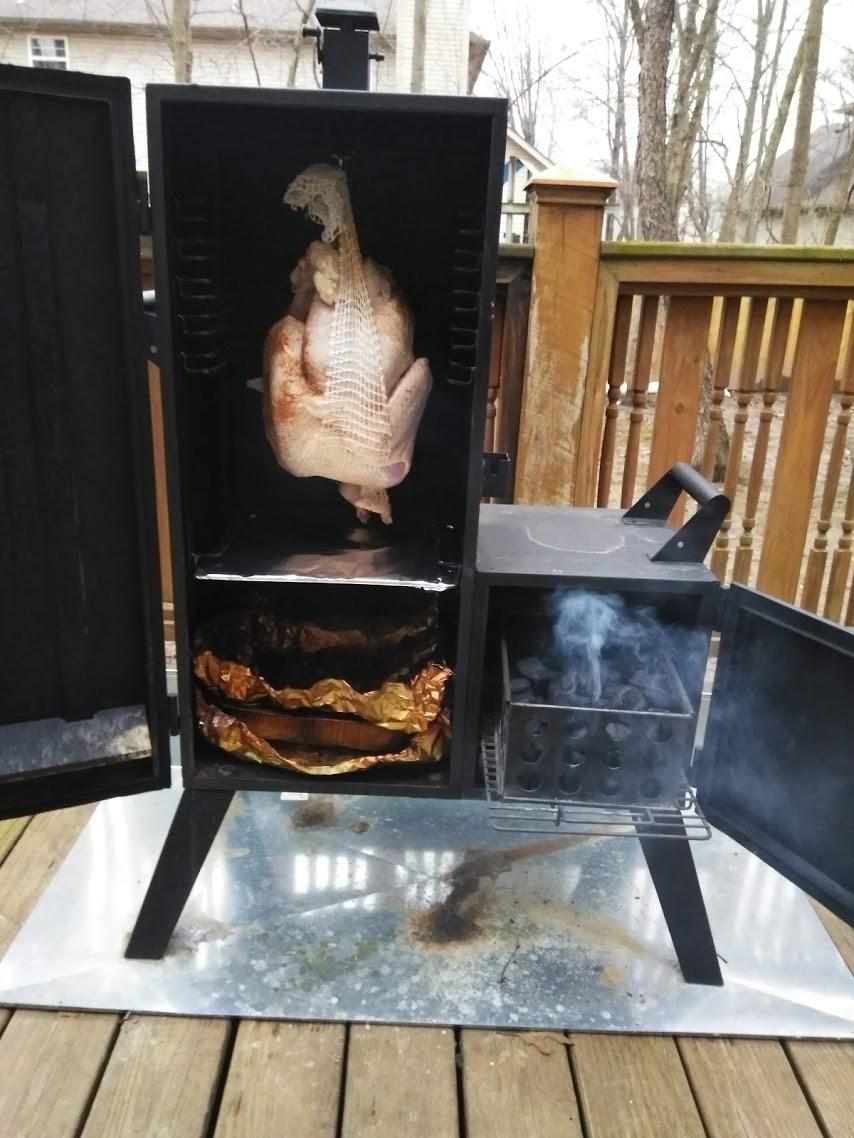
- Water pan plus dual grates fit a turkey and a ham together
- Simple to learn with a huge accessories and parts ecosystem
- Ten-year warranty on bowl
- lid and center ring
Cons
- Requires manual fire tending and a remote probe
- Lid thermometer is not a reliable surface reading
- Water pan sits high enough to limit a full charcoal load
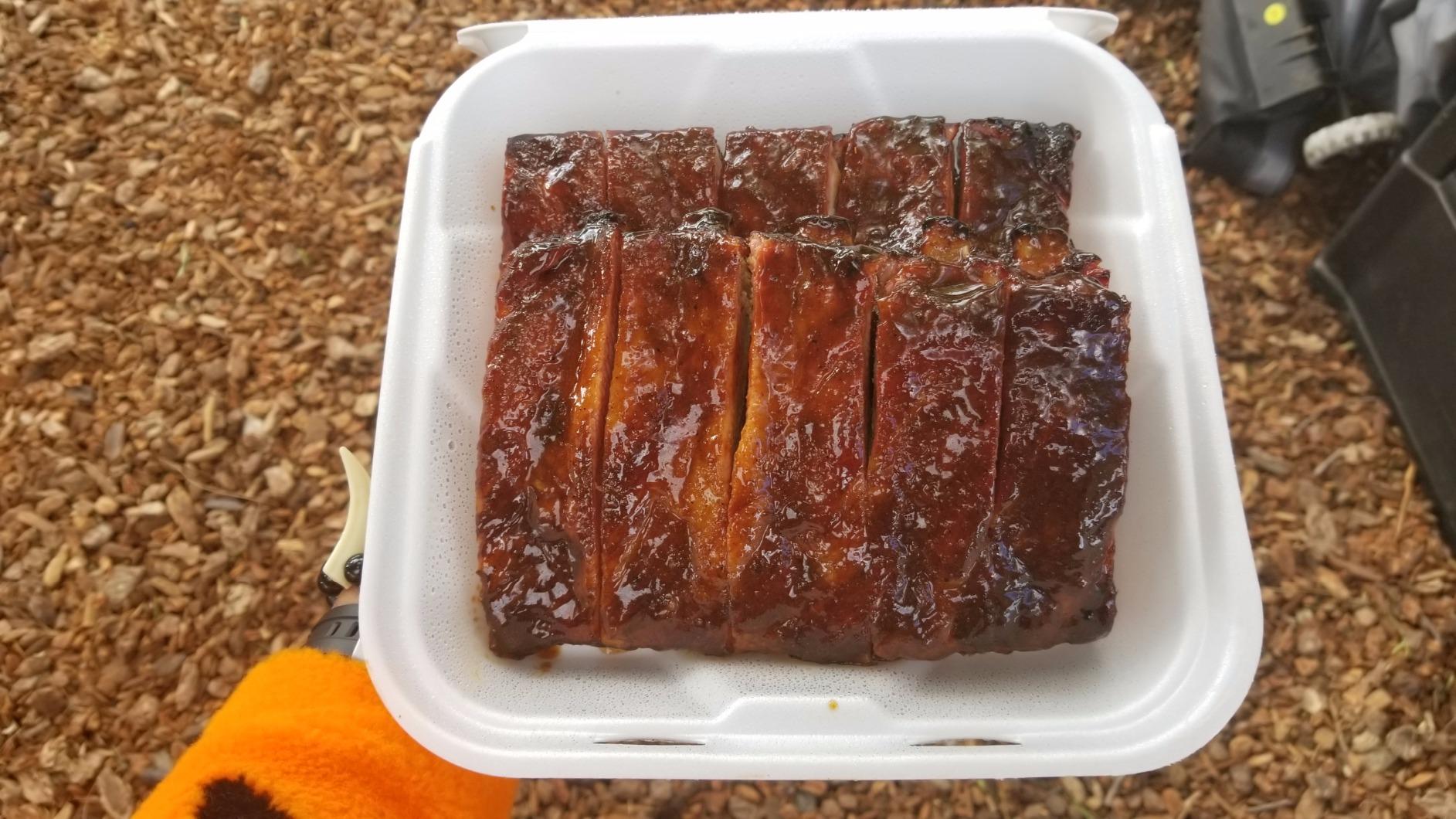
We have cooked more briskets on 18-inch Smokey Mountain cookers than on any other single unit, and the reason it keeps winning is that it does nothing dramatically and does everything adequately. The 18-inch bowl runs from 225°F to 275°F without drama, and owners report 10-16 hour burns on a full charcoal ring before needing a reload.
The water pan is what separates it from a bare vertical smoker. Hot water in that pan holds humidity around the meat, and the two 18.5-inch nickel-plated grates give you a real flat surface to lay a trimmed packer on rather than a curved shelf. Weber also builds in plenty of headroom: the same pit handles a whole turkey and an entire ham at the same time.
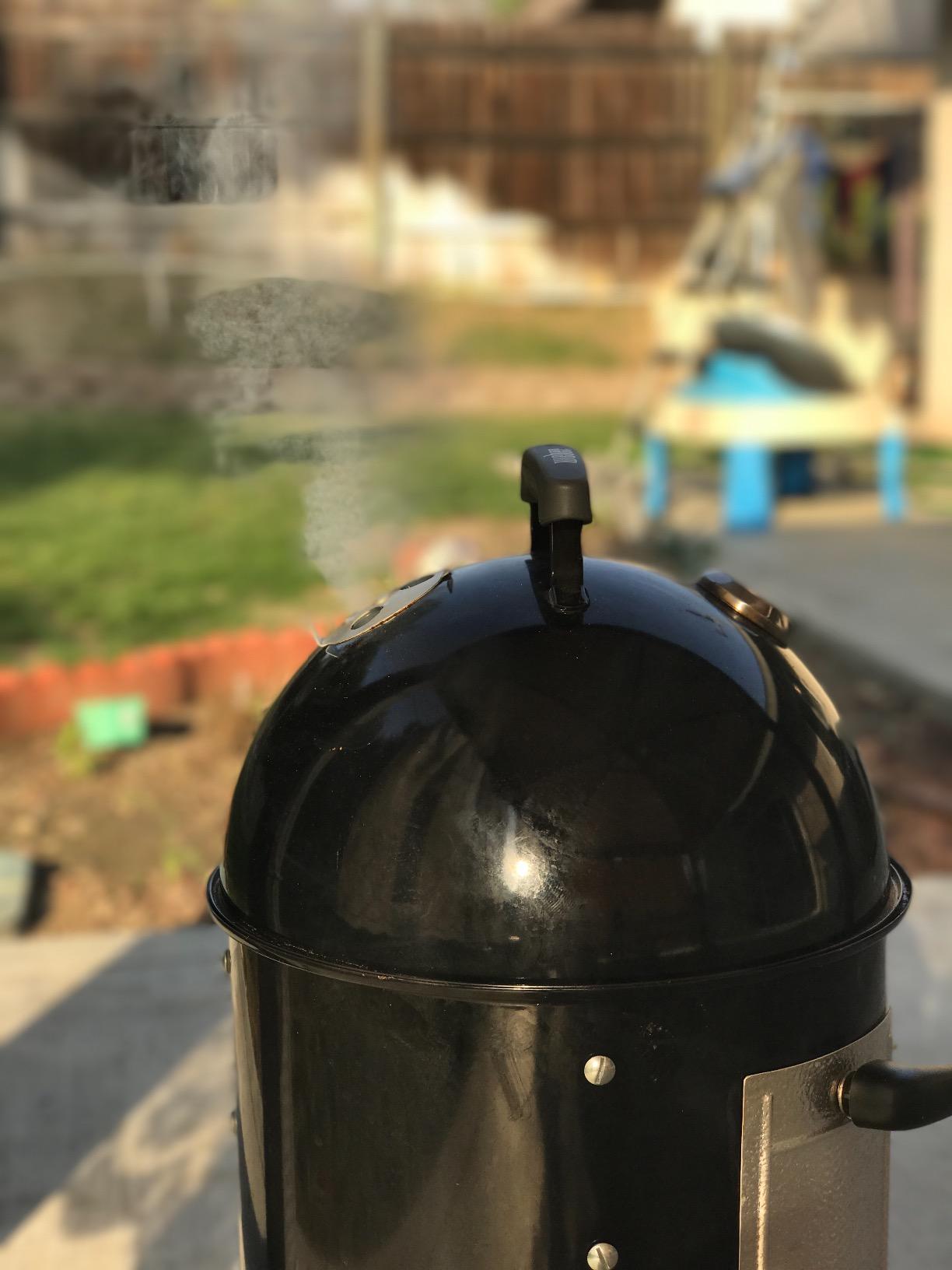
Build quality is the quiet story here. Porcelain-enameled steel, a ten-year warranty on the bowl, lid and center ring, and a replacement parts catalog that will outlive the smoker. Our research on owner experience turned up the same three pieces of advice over and over: season the pit first, run a Minion-style fire rather than a chimney, and trust a remote probe instead of the lid dial.
It is also a smoker you have to participate in. There is no auger, no controller, nothing automatic. You open the firebox, you manage fuel, you watch the water pan. Owners running 14-hour cooks do exactly that, and they do it because the pit rewards attention instead of punishing it.
One practical note for brisket specifically: many owners run an empty or foil-wrapped water pan on long cooks, or fill it only partway, because the pan sits high enough in the 18-inch bowl to limit how much charcoal you can load underneath it. Plan your fuel load around that, not before you buy.
When the Smokey Mountain earns its counter space
Choose it if this is your first brisket and you want the highest probability of a good result with the least number of variables. The learning curve is short, the water pan removes humidity as a failure mode, and if you move up in ten years the Weber accessories ecosystem means nothing you buy here is wasted.
It also wins for anyone cooking a moderate load. Two 18.5-inch grates plus the warming space above them means a flat brisket and a pork shoulder at the same time, which is the sweet spot for a family cook.
When the Smokey Mountain is the wrong call
Skip it if you want to sleep through a two-day cook without touching the firebox, or if you plan to run three or more full packers for a large gathering. Both are real jobs for a much larger pit.
Also weigh the walk. At 39.1 pounds it is manageable, but the 22-inch version is a different proposition entirely, and buying the bigger bowl than you need costs you both space and money for grates you may never fill.
2. Masterbuilt 30-Inch Digital Electric Is the Most Proven Smoker for Brisket
Masterbuilt® 30-inch Digital Electric Vertical BBQ Smoker with Side Wood Chip Loader, Chrome Racks and 710 Cooking Square Inches in Black, Model MB20071117
Electric vertical,711 sq in
Four chrome-coated racks
45.9 pounds
Heats to 275F
Pros
- Accurate hold on set temperature including in cold weather
- Patented side chip loader adds smoke without opening the door
- Removable water bowl for moisture
- 711 sq in fits multiple butts or rib racks
- Light enough to move and fine on a covered porch
Cons
- Panel sets time and temperature only
- needs a separate food probe
- 275F ceiling limits searing
- Chip tray and interior are tedious to clean
With 11,200 ratings behind it, the Masterbuilt 30-inch digital has more owner feedback behind it than any other pick here, and the reports are consistent in a way most product categories are not. The recurring headline is relief: set the dial, add chips on a timer, walk away.
For brisket specifically, three design choices matter. The digital panel holds your set temperature accurately, including when the temperature outside drops, which is exactly the scenario where a charcoal pit starts eating fuel. The patented side wood chip loader lets you add smoke without opening the main door, so you stop losing heat and moisture every time you top up. And the removable water bowl gives you the humidity control that a plain vertical smoker lacks.
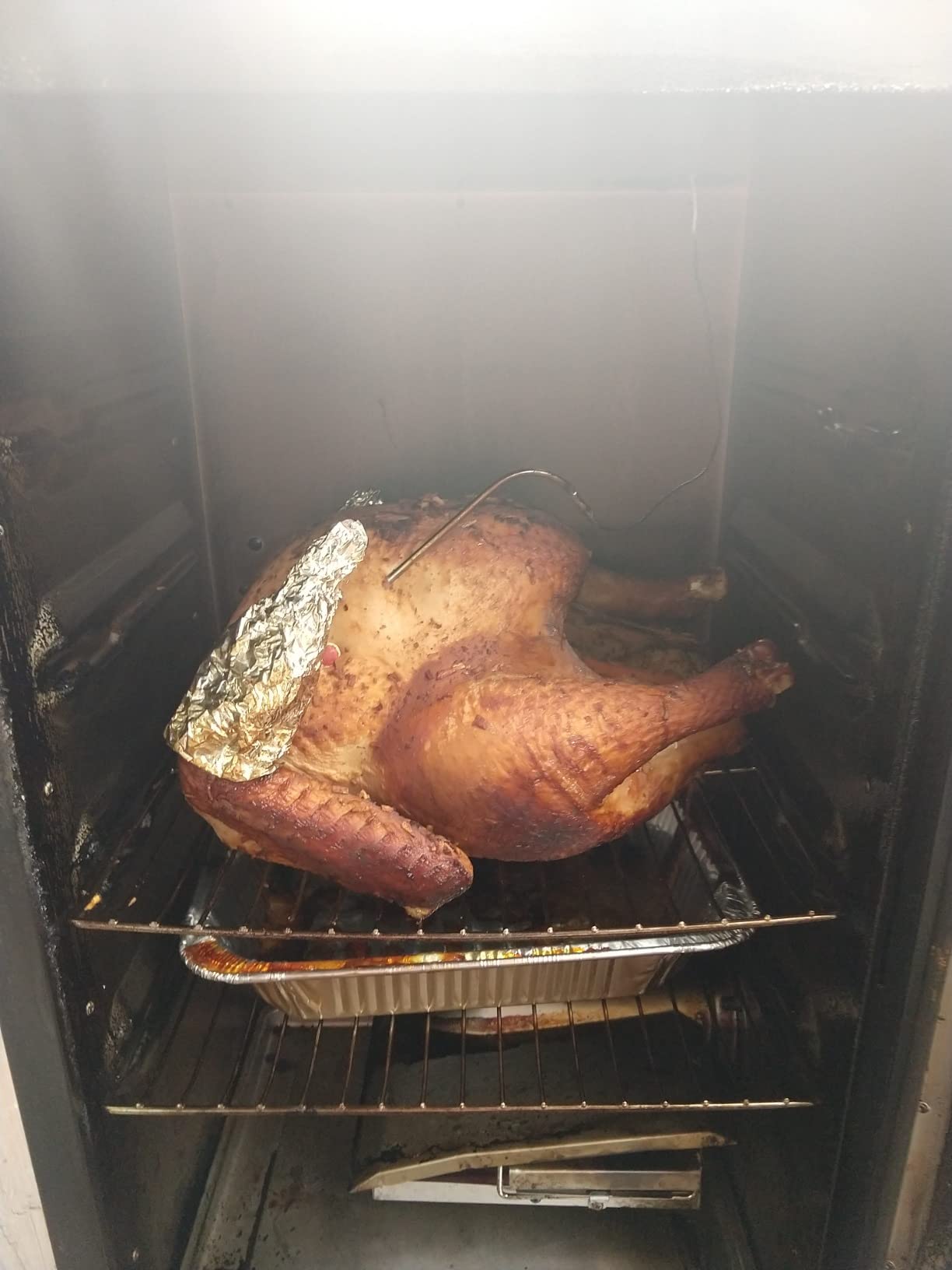
The 711 square inches across four chrome-coated racks is genuinely useful space. Owners fit four racks of ribs, four pork butts or two turkeys, and a full packer brisket sits flat on the middle racks with room above and below for airflow. A removable rear grease tray keeps cleanup down, though the chip tray under the hood and the interior itself are still a chore to scrub.
One modification shows up in almost every long-term review: repositioning the chip tray so it sits directly over the heating element raises smoke output at low temperatures. On a 225°F brisket cook that is the difference between a light haze and a proper smoke ring.
The honest limit is the ceiling. At 275°F this unit will not let you sear brisket flat at the end of a cook the way a kamado or a pellet grill with a broiler plate will. And a few owners with older cabinets report the plug-in control panel failing while the body outlasted it, so treat the electronics as a consumable part of the machine.
When the Masterbuilt 30-inch earns its plug socket
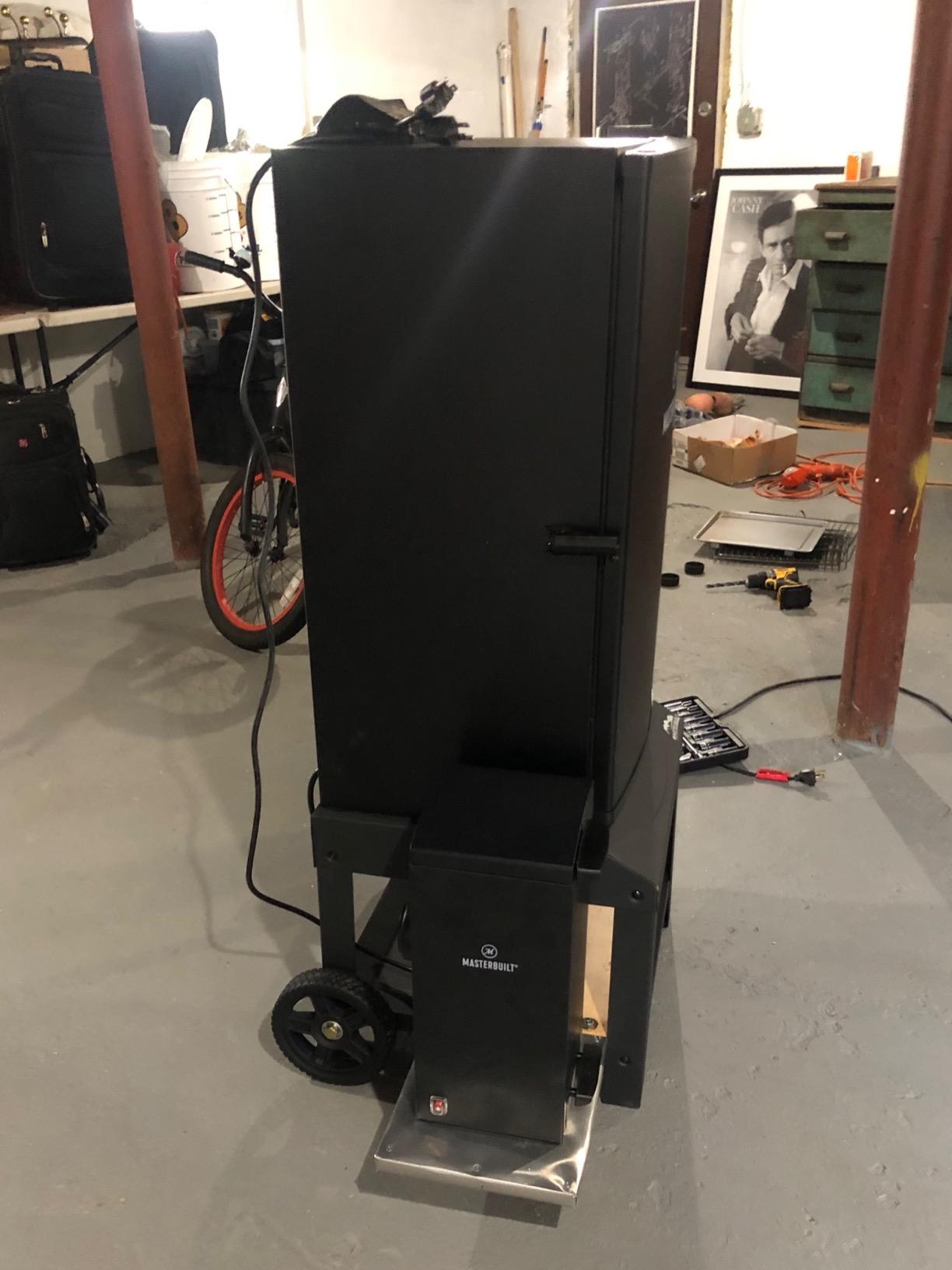
It wins for the overnight cook, the weekday cook and anyone cooking in cold weather. If you work nights or your brisket schedule is an alarm at 4am rather than a camp chair by the pit, the automation is the entire point.
It also suits a covered porch, an apartment patio with a safe outlet, or any situation where an open charcoal fire is not an option but you still want real smoke flavor from chips.
When the Masterbuilt 30-inch is the wrong call
Skip it if you care most about the bark and the smoke ring. Chip-fired electric produces a noticeably milder profile than a stick burner and you cannot add a split of hickory to it.
Also skip it if finishing at high heat matters to you. The 275°F ceiling rules out the reverse-and-sear finish many cooks use, and full racks of St. Louis ribs may need cutting to fit the width.
3. Dyna-Glo DGO1176BDC-D Is the Best Value Smoker for Big Brisket Loads
Dyna-Glo DGO1176BDC-D Vertical Offset Charcoal Smoker
Charcoal vertical offset,1176 sq in
Six height-adjustable grates
57 pounds
Adjustable flue
Pros
- 1176 sq in across six grates is enormous for the money
- Adjustable flue and smoke stack give real airflow control
- Stainless gauge with a marked smoke zone
- Porcelain-enameled chamber promotes long efficient burns
- Grate heights adjust to fit bulky cuts
Cons
- Heavy at 57 pounds and awkward to reposition
- Vertical bullet layout is less forgiving of airflow than a water smoker
- Not a set-and-forget cooker
The Dyna-Glo’s argument is arithmetic. At 1,176 square inches across six height-adjustable grates, each rated for 25 pounds of food, it offers more usable cooking surface than anything else in this roundup by a wide margin. If you cook for a crowd, this is the pick.
Height adjustment is the feature owners praise most, and it matters specifically for brisket. A trimmed full packer is roughly 10 inches wide and 2 to 3 inches thick once the fat cap is off, you need a grate that is both wide enough and positioned at a height where the firebox is not cooking it directly. Six grate levels let you solve that.
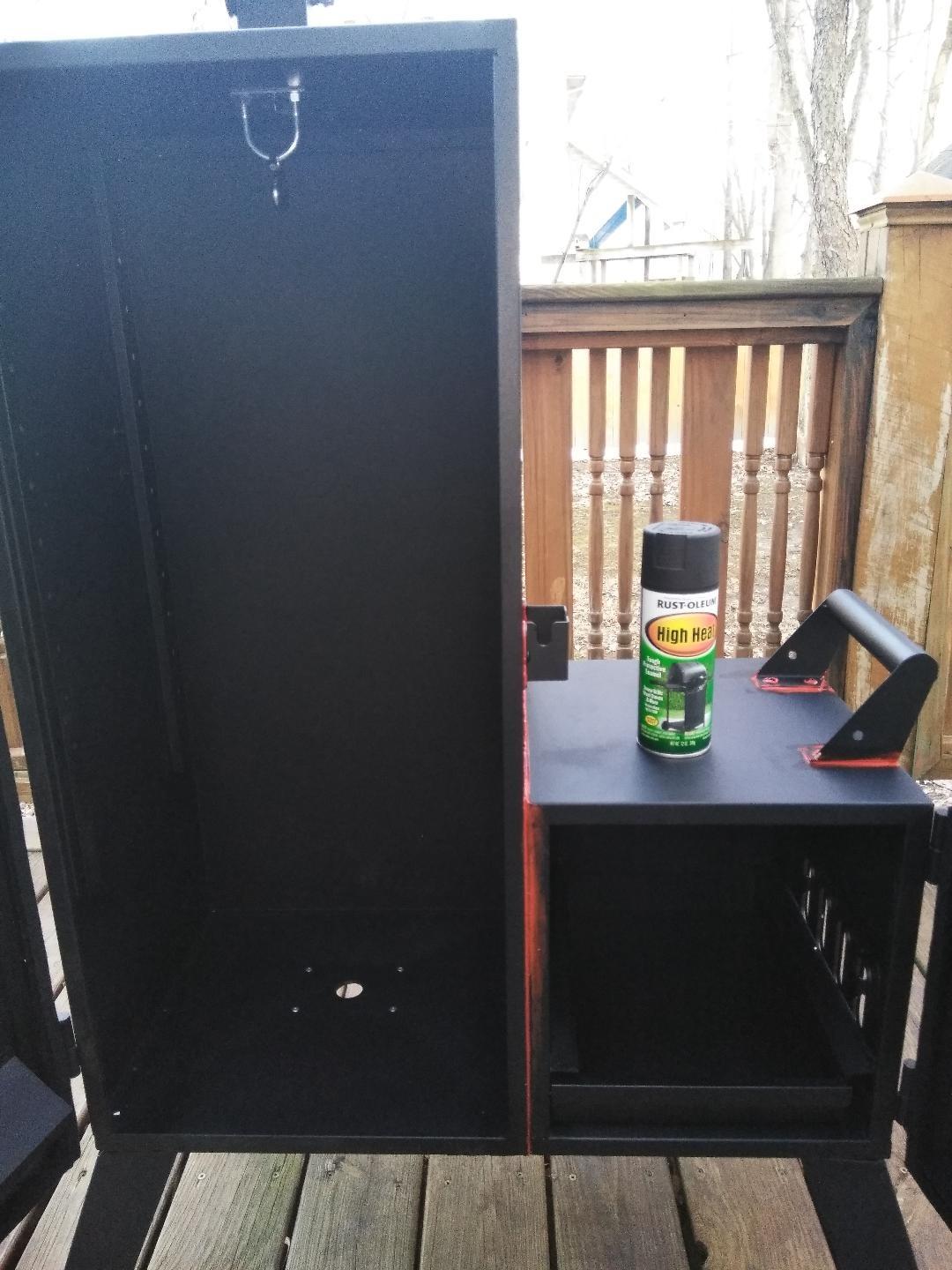
The stainless temperature gauge with a marked smoke zone is a small touch with real practical value. The zone tells you where the pit is producing smoke flavor rather than just radiant heat, which is a shortcut for a cook that runs eight hours before the bark is even set.
Manage the flue and the firebox together. The steel smoke stack with an adjustable flue is the airflow control, and a porcelain-enameled charcoal chamber keeps briquettes stacked tightly enough to burn long and even. Get that relationship right and the pit holds for a 12-hour cook without heroics.
Two cautions. At 57 pounds it is genuinely heavy to reposition, so plan where it lives before the first cook. And unlike the Weber, there is no water pan here, so you manage moisture with a foil pan if you want the insurance that one provides.
When the Dyna-Glo earns its footprint
Choose it when you are cooking for a group and the group wants brisket. Two full packers at once, brisket plus pork butts, or a stack of loaded grates that would need three loads in a smaller pit.
It also suits anyone who wants charcoal flavor and does not mind managing the fire. The adjustable flue is a real damper, which is more control than most vertical bullets in this bracket offer.
When the Dyna-Glo is the wrong call
Skip it for a single family brisket. You will have a large empty pit on most cooks, more charcoal to manage than you need, and a 57-pound box to shuffle around the yard.
It is also not the choice if you want to leave a cook unattended overnight. Manual vent management is required, and a vertical bullet layout punishes a badly managed fire faster than a water smoker does.
4. Char-Griller AKORN 20-Inch Is the Best Kamado-Style Smoker for Brisket
Char-Griller AKORN 20-Inch Kamado Charcoal Grill and Smoker, Triple-Wall Insulated Steel with Cast Iron Grates, Warming Rack and EasyDump Ash Pan, 445 Sq. In. Cooking Area, Graphite
Triple-wall insulated steel,445 sq in
Cast iron grates,97 pounds
200F to 700F cooking range
Pros
- Holds low temperatures for hours on a small coal load
- Much lighter than ceramic so one person can move it
- EasyDump ash pan and foldable side shelves
- Handles 150F indirect smoke to 600F searing
Cons
- Steel body and painted parts need regular oiling or they rust
- Lid thermometer is not accurate
- Steep learning curve on damper control
The AKORN answers a question many buyers ask: do you have to buy ceramic to get kamado behavior? Owners describe it as delivering roughly 80 percent of a ceramic kamado’s cooking performance for a fraction of the outlay, and for brisket specifically the reason is heat retention.
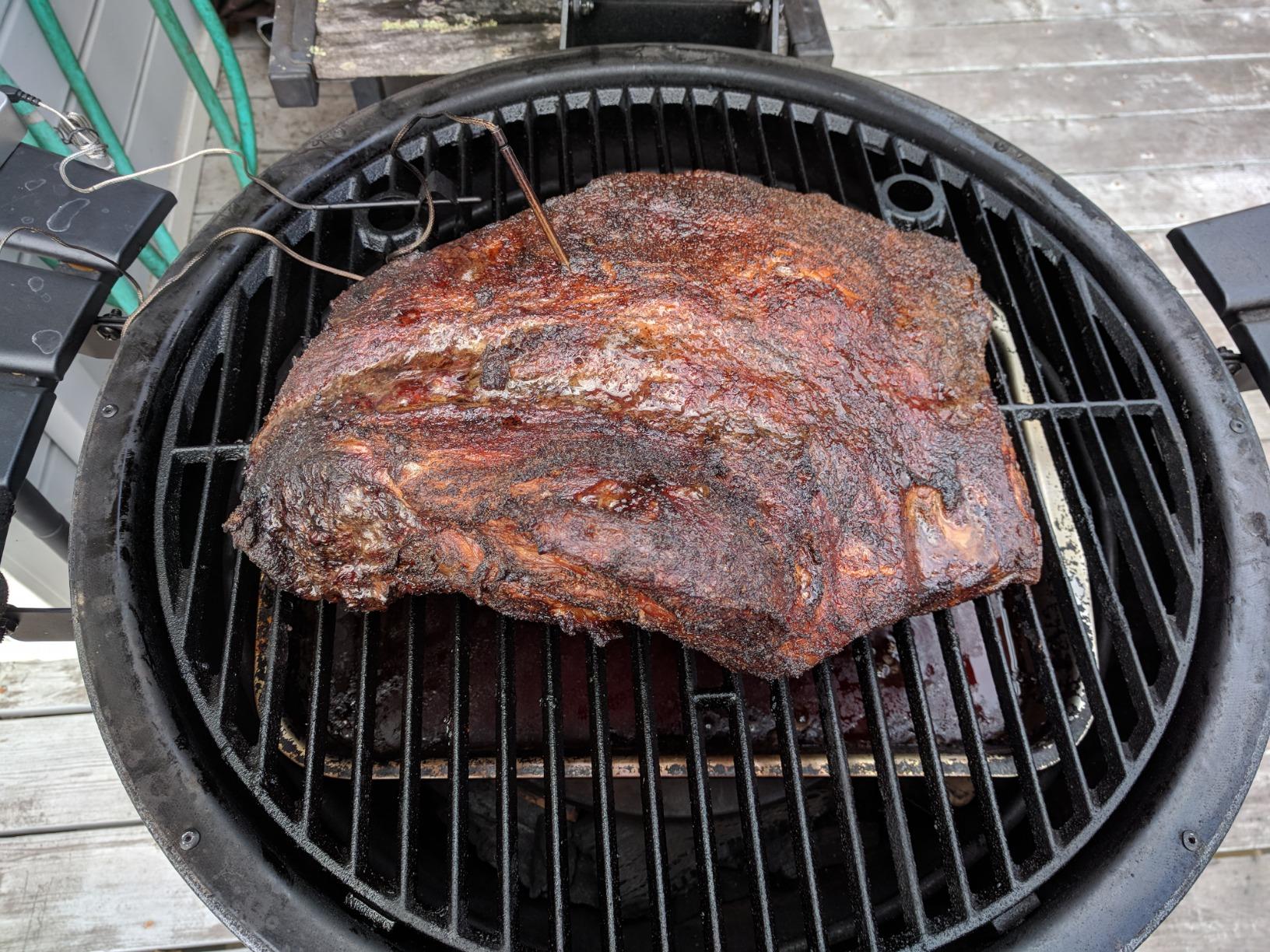
Triple-wall insulated steel limits airflow by design, which is the entire trick of a kamado. Once you dial in the top and bottom dampers and settle at 225°F, the pit barely moves. Owners run long low-and-slow cooks on a minimal charcoal load, and the temperature stays steady through weather that would force a thin smoker to eat wood all night.
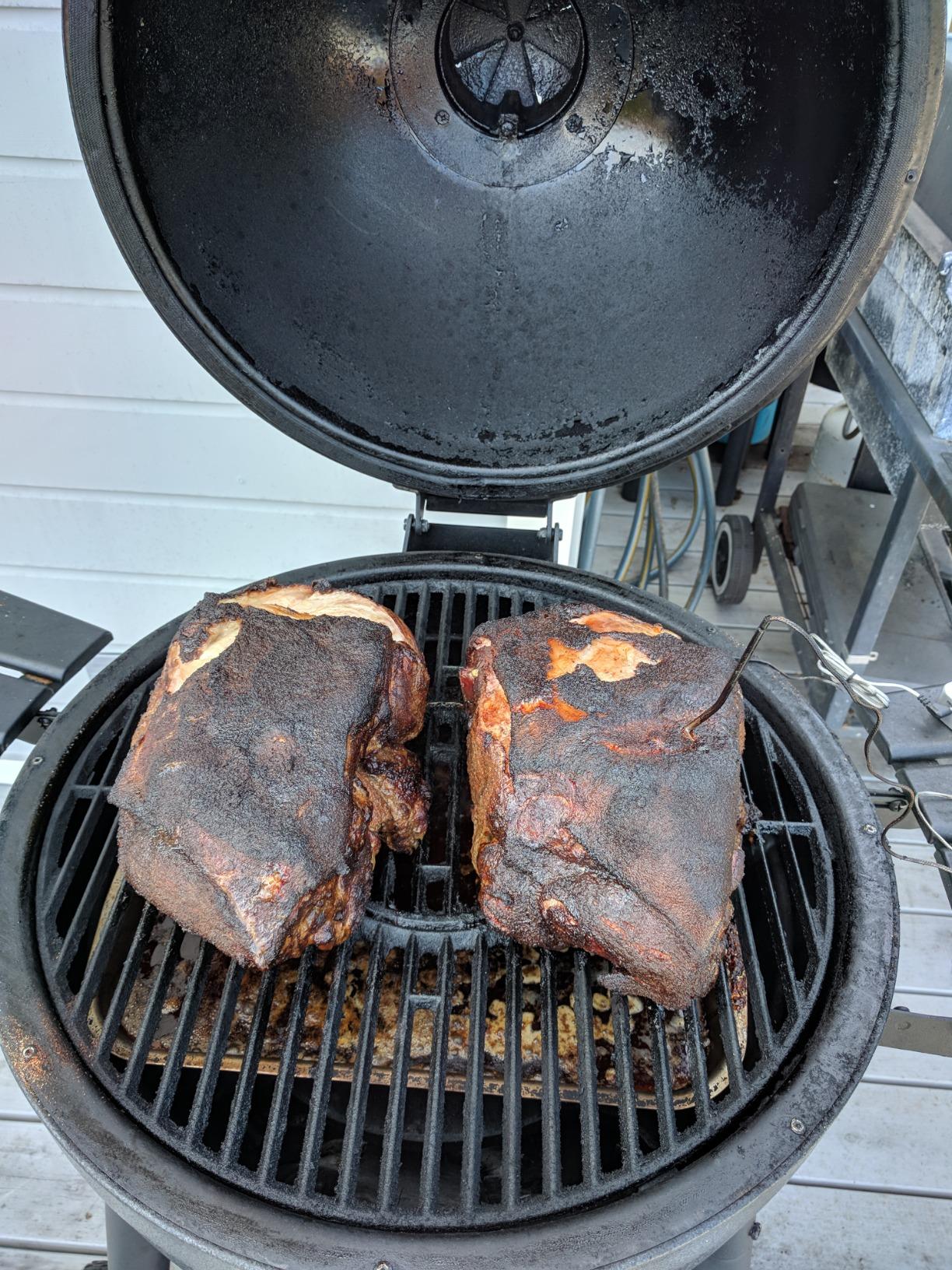
Weight is the second real advantage. At 97 pounds with 8-inch locking casters, one person can move this around. A ceramic kamado of the same class is a two-person lift and tends to stay in one corner of the yard for the next decade.
The 200°F to 700°F range is a genuine kamado trait and it matters after the brisket is pulled. You wrap, rest, then come back and sear or finish hot without changing appliances. Cast iron grates and a removable stainless warming rack give you 445 square inches of total space with a 20-inch cooking diameter.
Nearly every reviewer recommends buying three things before the first brisket: a heat deflector stone, a cover and a remote thermometer. The stone sits above the coals for indirect cooking, the cover keeps rain off the painted steel, and the probe is necessary because the built-in lid gauge is not accurate. Expect a learning curve on the dampers; the manual does not explain vent positions well.
When the AKORN earns its casters
It wins for the cook who wants ceramic-style consistency without the ceramic outlay, and for anyone whose yard gets cold or windy during a long cook. Heat retention is where you feel the difference on an overnight brisket.
It also fits cooks who want one appliance for everything: 445 square inches handles a packer brisket, and the same pit roasts a whole chicken, bakes bread or sears steaks at 600°F.
When the AKORN is the wrong call
Skip it if you will not maintain it. Painted steel and steel body parts need regular oiling and a cover, and owners who let them go report rust. Ceramic does not do that.
Also skip it if you cook a very large flat. A 20-inch cooking diameter limits batch size compared with the larger vertical options here, and the grate lifter tool included does not fit well between the grates.
5. Pit Boss 440 Mahogany Series Is the Best Pellet Smoker for Wood-Fired Weekends
Pit Boss 440 Mahogany Series Wood Pellet Grill & Smoker with Flame Broiler and LED Digital Controller, 518-Sq. In. Cooking Space, 180°F to 500°F Temperature Range, 5 lb. Pellet Hopper, Brown
Wood pellet grill,518 sq in
LED digital controller
5 lb pellet hopper
180F to 500F range
Pros
- Heavy steel build owners describe as over-engineered
- Flame Broiler sear plate and Prime heat boost button
- Two meat probe ports for two proteins
- Good value that easily handles a brisket
Cons
- Temperatures swing roughly 25-50F from set point
- Lid thermometer does not match external probes
- 5 lb hopper needs refilling about every 90 minutes
- Warming rack sits close to the lid
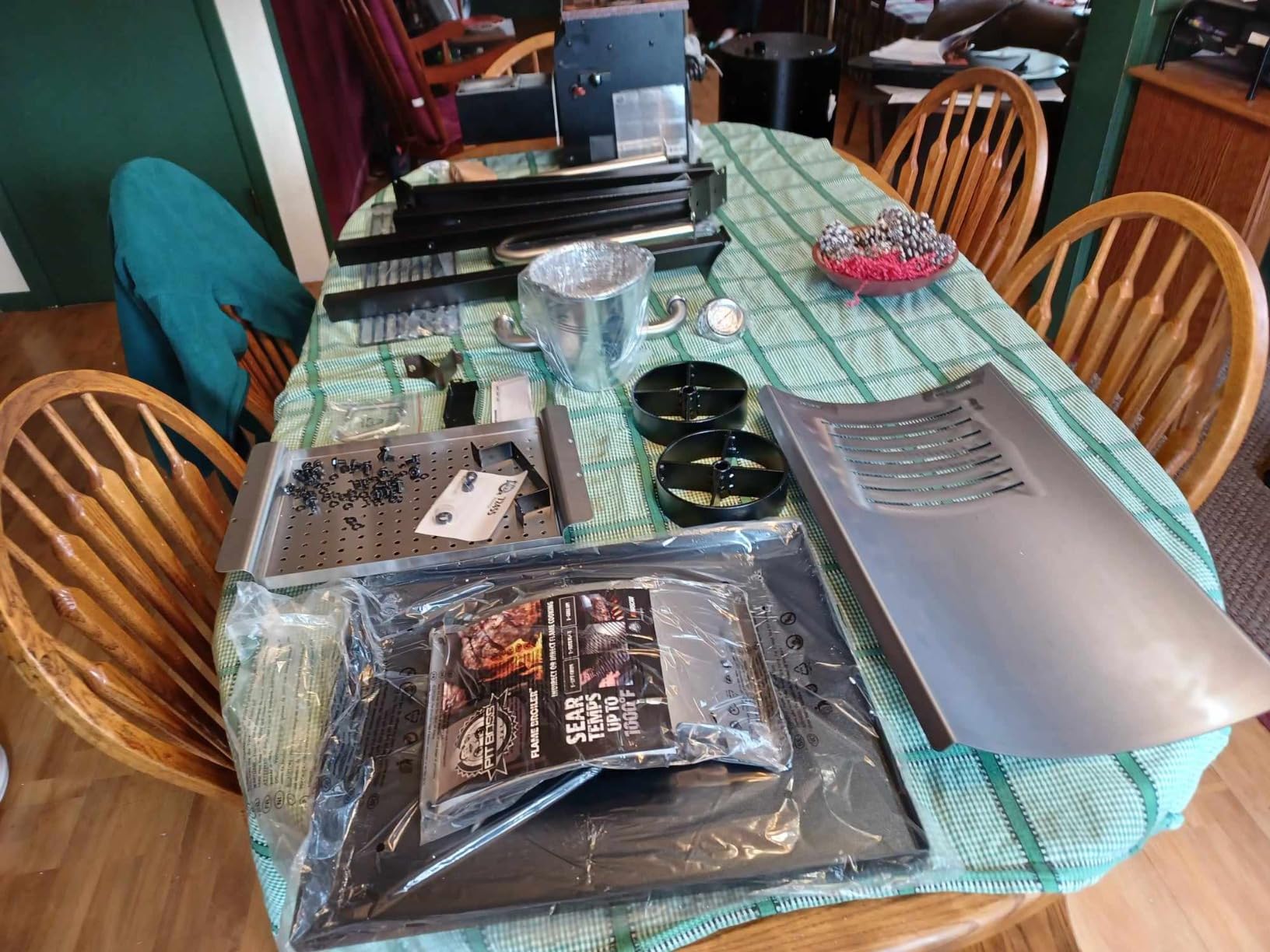
The Pit Boss 440 is the pellet option for someone who wants to keep a fire in the room and still be hands-off. What separates it from most pellet grills in this bracket is build weight: owners consistently describe the steel as over-engineered, with a fire pot, wheels and hardware that feel like they will outlast the controller.
On a brisket cook that translates to a pit you can leave alone. Most owners report a stir or a chip check every 45 minutes or so rather than genuine fire management, which is the honest version of set-and-forget. The 518 square inches of cooking space is rated from 180°F to 500°F, and a trimmed packer fits flat with a warming rack above it for spares.
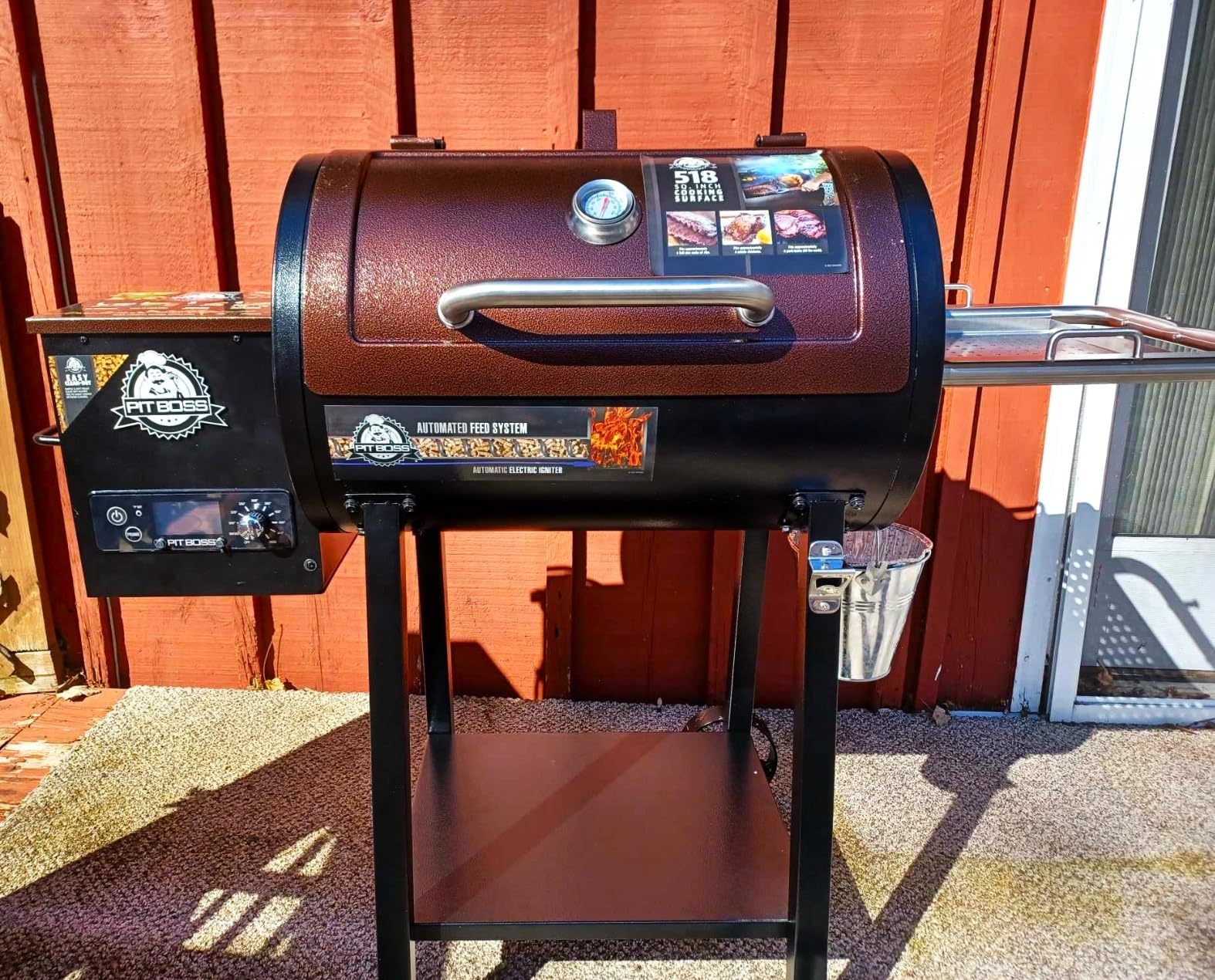
Two meat probe ports let you track a brisket and a pork shoulder at the same time, which is a small feature that saves a lot of guessing on a combined cook. The slide-out burn pot panel also gives you searing access through the Flame Broiler plate, so the same unit finishes a brisket flat after the long low phase.
Be realistic about two things. First, temperatures swing roughly 25-50°F from the set point, and the lid thermometer and internal display both read differently from external probes, so budget for that swing rather than fighting it. Second, the 5-pound hopper is small: expect a refill about every 90 minutes, and keep a bag within arm’s reach.
On smoke flavor, forum owners are direct about it. Pellet smoke is milder than a stick burner, and the workaround in these communities is additives such as Smokeboost rather than a stronger box. If you are coming from a wood-fired offset for the first time, adjust your expectations on the smoke ring.
One easy fix worth knowing: several reviewers document an ERR code on first startup caused by a loose hopper wire connection behind the access panel. Reseat it and the code clears. It is a five-minute fix, but it is confusing if you do not know it exists.
When the Pit Boss 440 earns its hopper
Choose it if you want genuine wood flavor with a fire you do not have to sit next to. It is a good fit for a weekend cook who also grills during the week, because the Flame Broiler and the 500°F ceiling cover searing.
Two probe ports make it a strong pick for anyone cooking a brisket and a shoulder together, and the steel construction means it can handle being outside year after year.
When the Pit Boss 440 is the wrong call
Skip it if you are cooking overnight and do not want to wake up for a hopper refill. Ninety-minute intervals turn a 12-hour brisket into two interruptions you will remember.
Skip it if the deepest possible smoke matters more than convenience, and be aware the warming rack sits short and close to the lid, so anything placed up there can slide when the lid opens.
6. Kamado Joe Classic II 18-Inch Is the Best Ceramic Smoker for Brisket
Kamado Joe Classic Joe Series II 18-inch Ceramic Charcoal Grill and Smoker with Cart, Side Shelves, Stainless Steel Grates and 250 Cooking Square Inches in Red, Model KJ-23RHC
Ceramic kamado,250 sq in
232 pounds
Limited lifetime warranty on ceramic
225F to 750F range
Pros
- Precise stable control from 225F smoking to 700F plus searing
- Air Lift hinge opens the dome with one finger
- Sliding ash drawer and included cart with side shelves
- Limited lifetime warranty on ceramic parts
Cons
- No open-flame sear capability
- Built-in painted top cap can melt at high heat
- 232 pounds is a two-person lift onto the cart
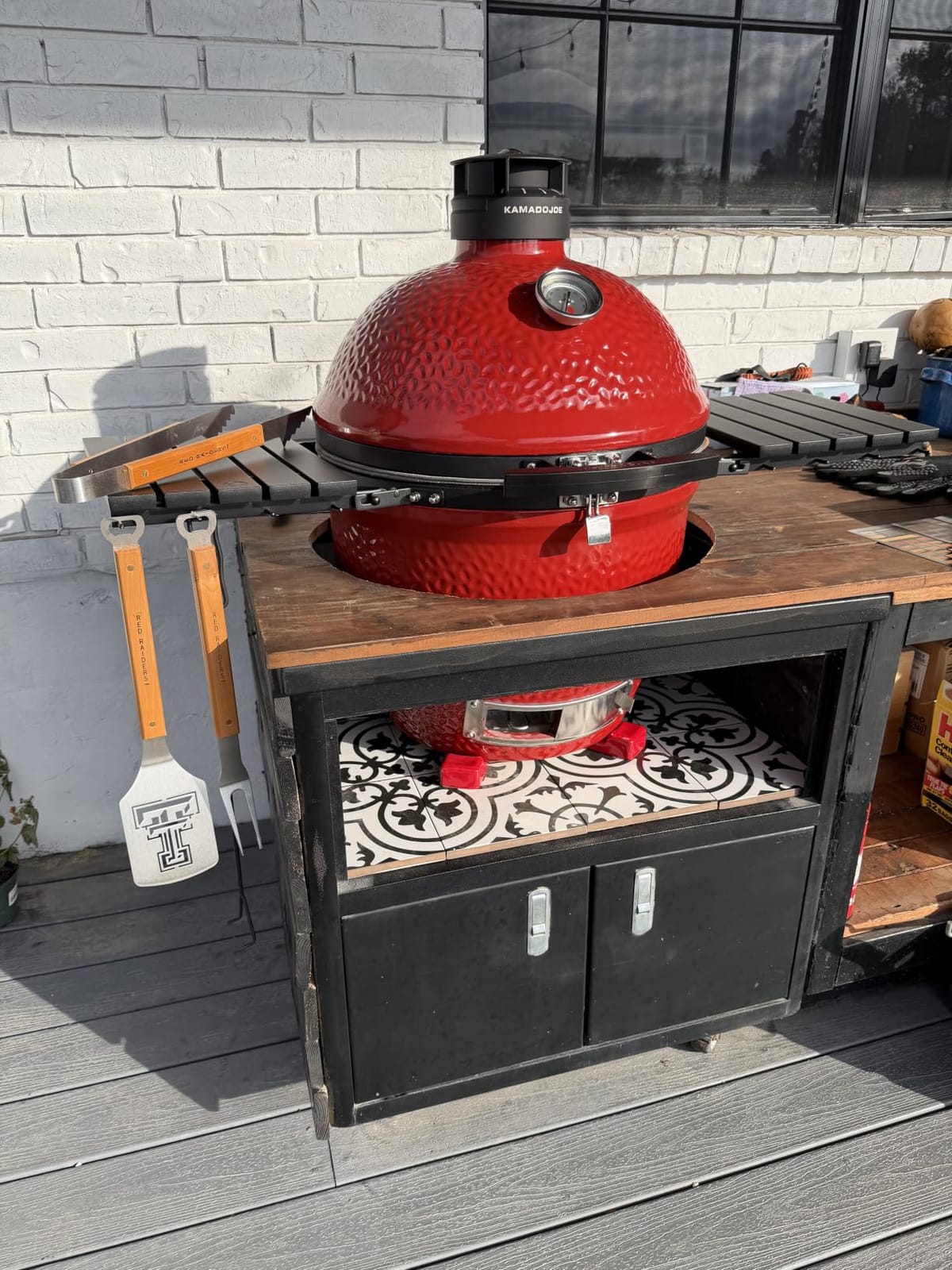
Every serious brisket cook eventually meets a kamado, and the Classic II 18-inch is the version most of them end up owning. Owners call it the balance point between a Big Green Egg and a cheaper kamado, and the specific upgrades they name are the hinge, the seal, the ash tray and the fact that the cart is included rather than sold separately.
For a brisket, the ceramic wall is the whole point. The grill does not leak air the way a steel box does, so once the top vent is set the pit sits at 225°F with almost no fuel input. Brisket, pork butt and prime rib are the most commonly praised cooks, and owners specifically report that meats come out moist rather than dried out.
The Air Lift hinge genuinely changes the daily experience. The dome weighs enough that it is a two-person lift into the cart, but once seated you open it with one finger. On a 14-hour cook where you open the lid a dozen times, that is not a small detail.
The 2-Tier Divide & Conquer system lets you run different foods at different temperatures at the same time, and the Kontrol Tower top vent holds its air setting through dome openings and is rated from 225°F all the way to searing at 750°F. Ceramic parts carry a limited lifetime warranty, with five years on metal and cast iron.
Two real constraints. The 250 square inches of cooking space is modest, and a large trimmed brisket fills it, so plan on one packer at a time. And the painted top cap that comes with the unit can melt at high heat, which is why many owners upgrade to a stainless cap. A few buyers needed free replacement gaskets or vents early on but rated that service experience very highly.
When the Classic II earns its lifetime warranty
Choose it if you cook in cold or windy conditions, if you want temperature that barely moves once the vent is set, or if you are buying once and intend to own the pit for decades. The warranty is the only one here that covers ceramic parts for life.
It is also a strong single-appliance answer for a cook who grills, roasts and smokes. The same dome takes you from a 225°F brisket to a 700°F sear without a second cooker.
When the Classic II is the wrong call
Skip it if you are feeding a large group in one cook. One full packer fills 250 square inches, and the pit is a 232-pound object that does not move casually once it is full.
Skip it if your brisket plans are big. If the first question is how many packers fit at once, this is the wrong answer even though it is the best heat-retention answer.
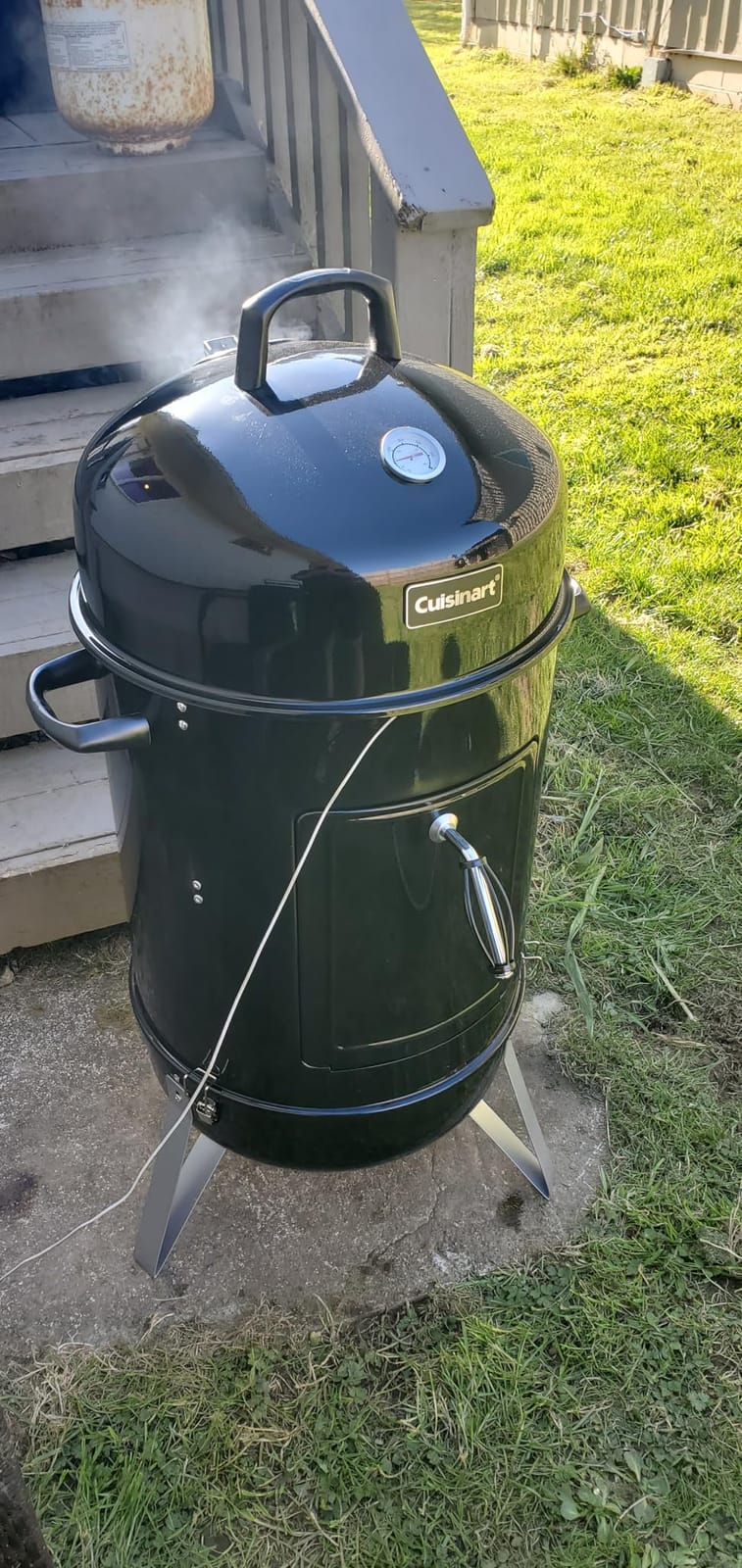
7. Cuisinart 18-Inch Vertical Is the Best Entry-Level Smoker for Brisket
Cuisinart 18” Vertical Charcoal Smoker, Integrated Thermometer, Water Bowl and Dual Vents Perfect for Smoked Brisket, Chrome Plated Grates Smoker Grill for BBQ, Camping, Tailgates
Charcoal vertical bullet,510 sq in
Two 18-inch chrome grates
32 pounds
Three year warranty
Pros
- Assembles in about 15 minutes
- 510 sq in handles ribs plus a shoulder and chicken in one cook
- Holds around 250F at sea level once the fire is established
- Lightest unit here at 32 pounds
- Porcelain water bowl keeps meat moist
Cons
- Leaks smoke from the door
- lid and top vent without gasket tape
- Included thermometer is inaccurate and sometimes fails
- Shallow charcoal ring needs a reload about every 90 minutes
- Legs are not strong enough for a full load
We include this one because a large share of brisket cooks start here, and the fit-or-fail reality is worth knowing before you buy. Two 18-inch chrome-plated grates give 510 square inches, a porcelain-enameled water bowl holds moisture, and dual top and bottom vents let you regulate heat. At 32 pounds it is also the easiest unit here to move.
Owners fall into two camps. One group treats it as a cheap first smoker and reports being delighted with results at 225-250°F, and the value of learning brisket on a simple firebox is real. The other group hits the limits hard and moves on, usually within a season.
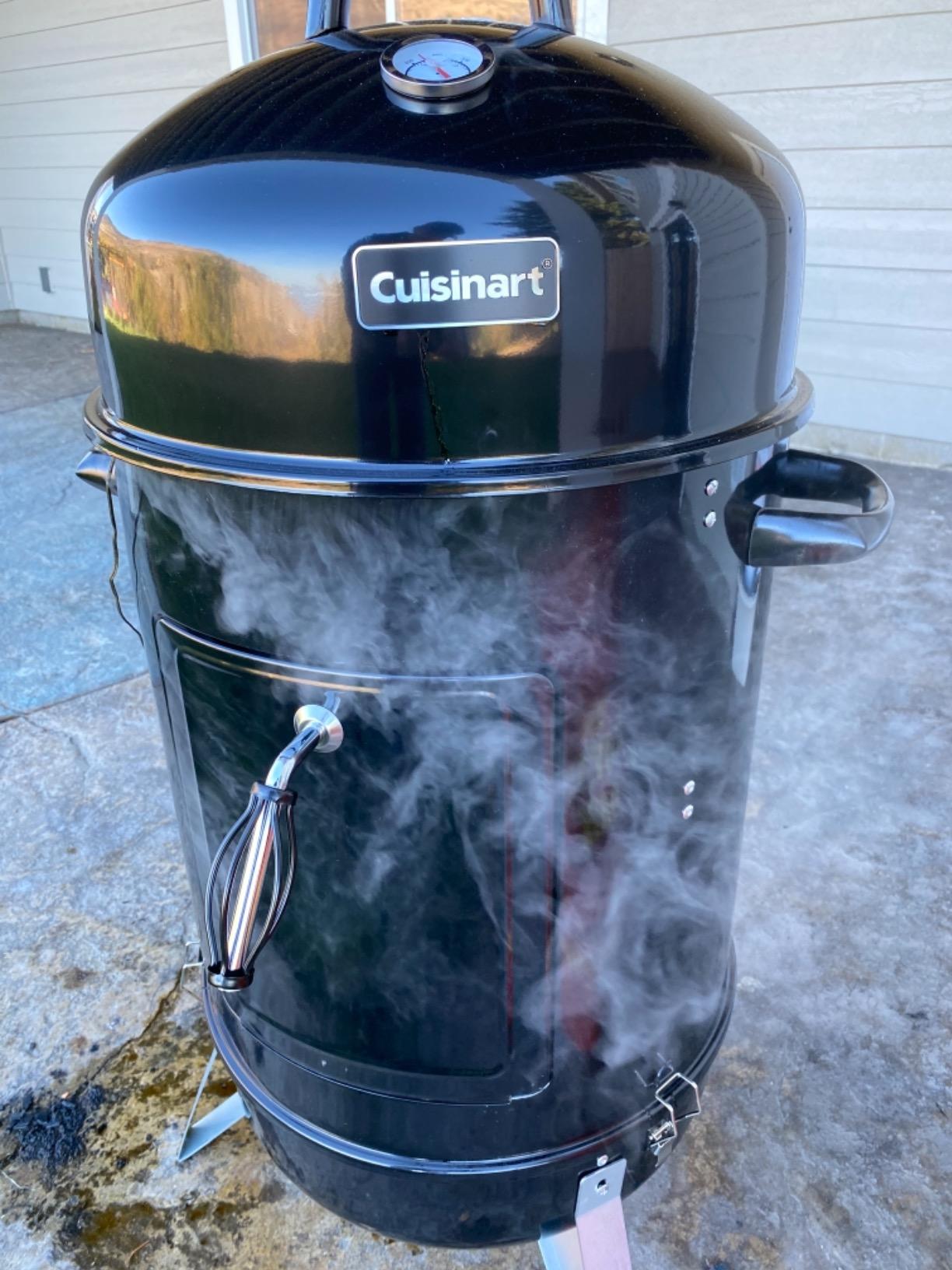
The limits are specific and worth weighing. Smoke leaks from the door, under the lid and around the top vent unless you add gasket tape. The included thermometer is inaccurate and several owners report it failing after a few cooks. The charcoal ring is shallow, so a reload comes due about every 90 minutes on a long brisket. And the legs are not strong enough for a full load, with some owners reporting the smoker tipping.
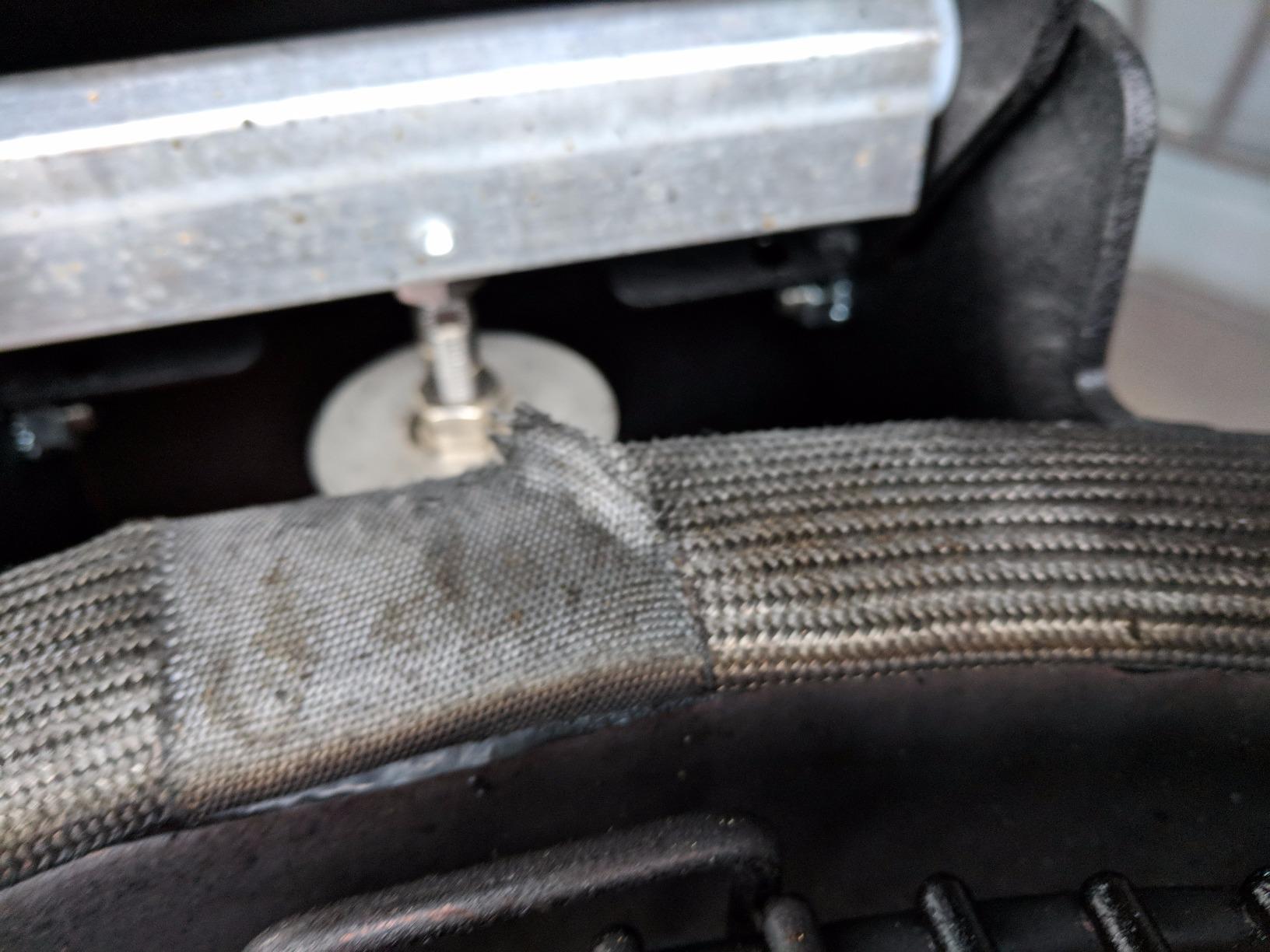
The upgrade path described in reviews is well documented and cheap: Nomex gasket tape, a taller coal ring in the Smokey Mountain style, and a separate probe thermometer. Owners who do all three report the smoker transforms. Just budget for the weekend of mods before the first cook.
One dimension catches people out. Actual grates measure closer to 16.5 inches, so a full rack of ribs needs trimming to fit. Check your grate width against your longest cut before you commit.
When the Cuisinart vertical earns its keep
Choose it if the goal is to learn brisket on a real charcoal fire for a modest outlay, and you are willing to gasket it and add a probe. For a first full packer on a limited budget, it works, and owners get good results at 225-250°F.
It is also a decent patio unit if space is tight, since 32 pounds and 510 square inches fit where a 232-pound kamado never will.
When the Cuisinart vertical is the wrong call
Skip it if you are cooking a 10-pound-plus trimmed packer and stability matters, because the leg strength issue is a real reported failure mode under a full load. Skip it if you are cooking overnight, since the shallow coal ring forces a 90-minute reload cycle all night.
Also be realistic about cold and windy weather. Thin steel walls burn through fuel quickly when the wind picks up, which is the opposite of what you want on a 14-hour cook.
8. Z GRILLS ZPG-450A2 Is the Best Pellet Smoker for Long Low-and-Slow Cooks
Z GRILLS ZPG-450A2 Wood Pellet Grill & Smoker, PID V3.0 Controller, 459 Sq in Cook Area, Foldable Shelf&Side Shelf, Meat Probe, Rain Cover, 8 in 1 BBQ Grill Outdoor Auto Temperature Control, Bronze
Wood pellet grill,459 sq in
PID V3.0 controller
84 pounds
Rain cover and meat probe included
Pros
- PID V3.0 holds set temperature within a few degrees across the grate
- Set the dial and walk away for 10-18 hour cooks
- 459 sq in plus warming rack handles a butt or a brisket
- Heavy steel build with rain cover and probe included
- Pellet cost per hour well below charcoal
Cons
- Smoke leaks out of nearly every gap
- Assembly instructions are jumbled and hardware brittle
- Warming rack sits above the exhaust and is unsuitable for meat
- Advertised 450 sq in counts the warming rack
- No open-flame sear capability
With 6,497 ratings averaging 4.4, the ZPG-450A2 has the strongest rating-to-review-count combination of the pellet grills here. The dominant owner sentiment is simple: this runs accurately, needs almost no attention, and produces food that matches pellet grills costing considerably more.
The PID V3.0 controller is the reason. Owners measure within a few degrees across the grate rather than managing a swing, and the large LCD with an included meat probe means you are checking a number rather than a dial. On a 225°F brisket that stability is what lets you sleep.
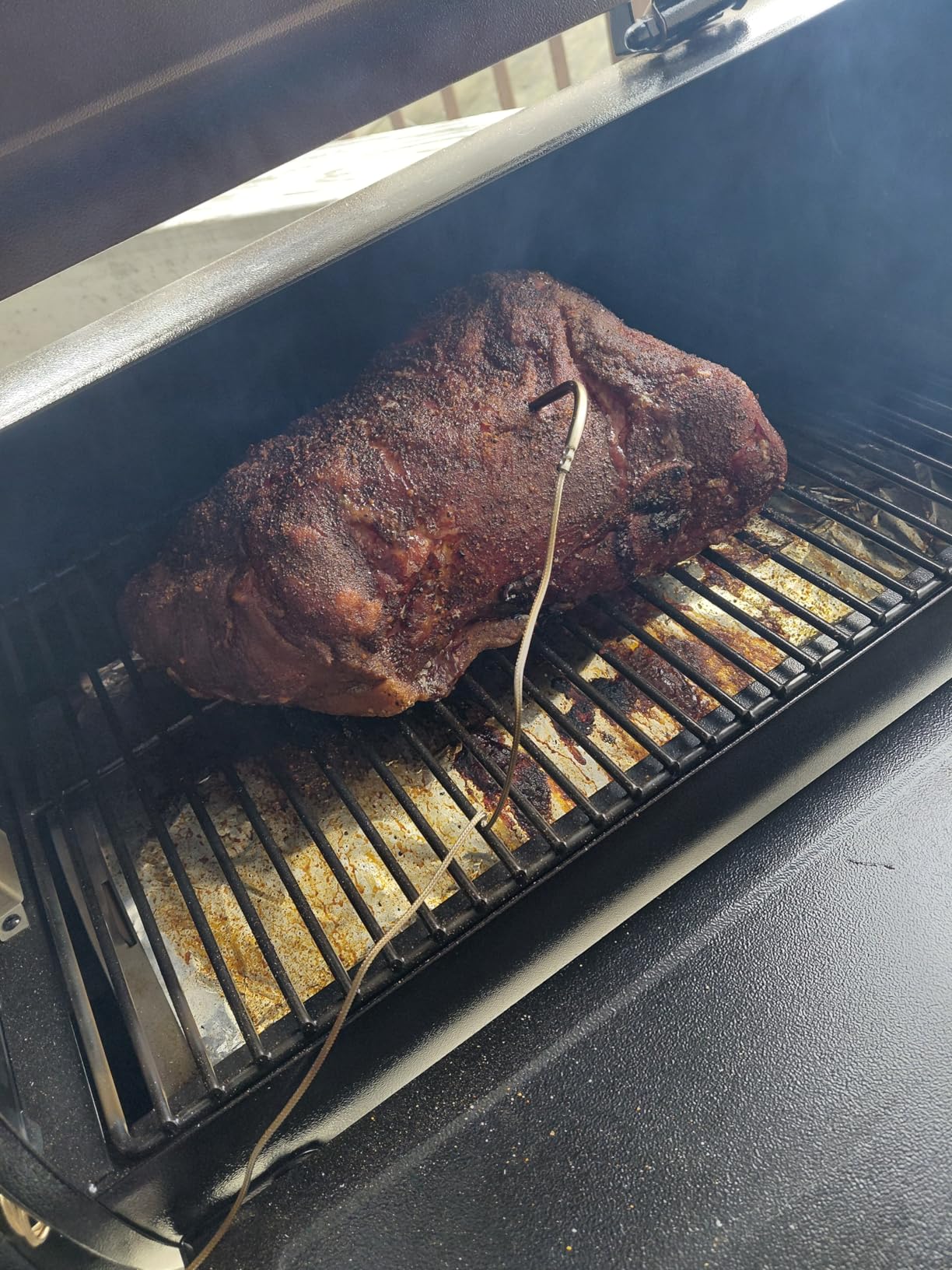
For long cooks, the practical math matters. Running this for a 10-18 hour brisket uses a small fraction of what a charcoal fire consumes, which owners consistently call out as the real ongoing saving. A foldable front and side shelf, a grease bucket, a rain cover and a locking two-wheel-and-leg mobility design all come in the box.
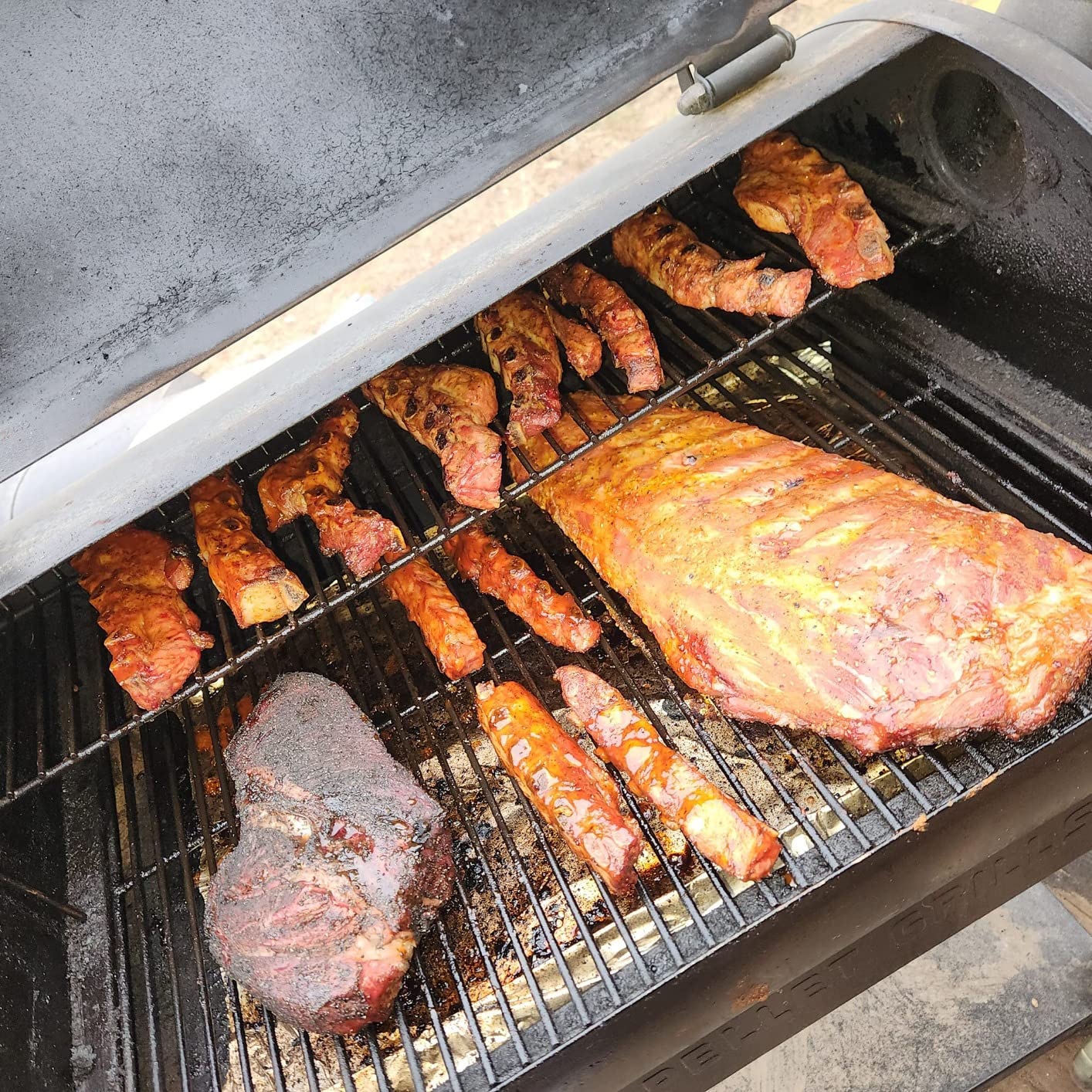
Now the honest part. Smoke leaks out of nearly every gap except the fiberglass-gasketted hopper and chimney joints, and the chimney has no adjustable closure. Assembly instructions are jumbled and contradict the printed manual, and the included hardware is brittle. Both problems are real and both are documented at length in reviews.
The fix that reviewers use is inexpensive: lid gaskets, heat-resistant silicone and firebricks. Owners who add them report a meaningful drop in leakage. Customer service is mixed, with some slow responses on damaged units, though hardware failures such as the fan, motherboard and hopper assembly have been replaced. And the warming rack sits above the exhaust, making it unsuitable for meat even though the advertised 450 square inches counts it.
When the ZPG-450A2 earns its PID controller
Choose it if your brisket schedule is long and unattended, and if pellet cost per cook matters over a season of use. Precise temperature holding is the whole feature, and it delivers.
It suits cooks who want one appliance for smoking and grilling weeknights, and anyone who does not want to manage a charcoal fire in bad weather.
When the ZPG-450A2 is the wrong call
Skip it if you are not handy at all. The assembly experience is the most common complaint in the reviews, and a jumbled instruction sheet is a poor first impression before a big cook.
Skip it if you need open-flame searing, since there is no flame broiler, and budget for gasket tape before the first cook because the leakage is the other dominant theme.
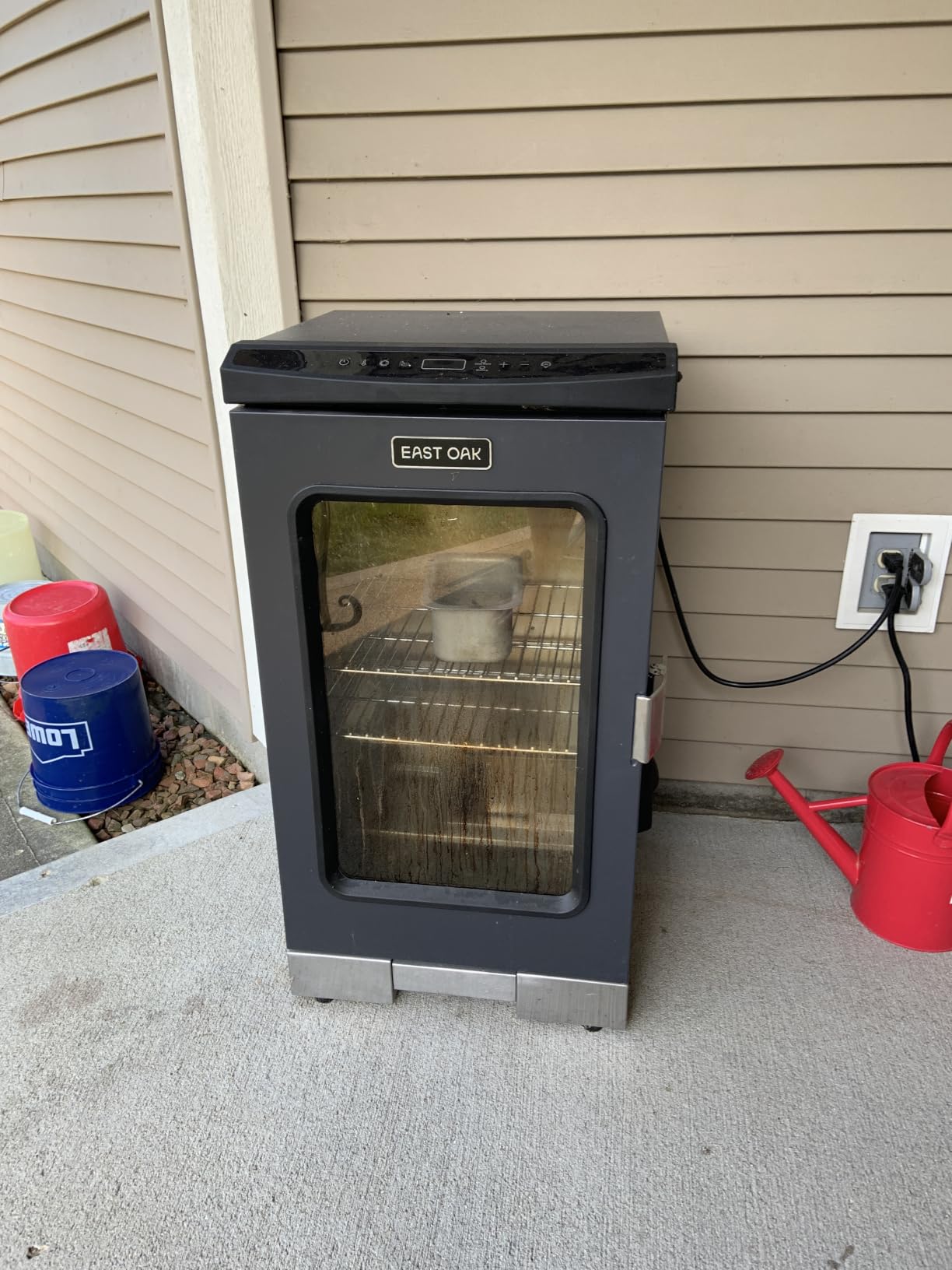
9. EAST OAK 30-Inch Electric Is the Best Smoker for Unattended Brisket
EAST OAK 30″ Electric Smoker for Outdoors | Built-in Meat Probe & Clear Viewing Window | Side Chip Loader for 6x Longer Uninterrupted Smoking | 725 sq in Cooking Area for Bigger Batches, Night Blue
Electric vertical,725 sq in
Four removable racks
52.3 pounds
Built-in meat probe
Pros
- Built-in probe tracks internal temperature and switches to keep-warm
- Side chip loader refills without opening the main door
- 725 sq in fits full racks of ribs or multiple birds
- Clear viewing window monitors without door opening
- Digital time and temperature controls
Cons
- No open-flame sear capability
- Wood chip flavor is lighter than a charcoal fire
- Owner review text was not available for this listing
The EAST OAK 30-inch has the cleanest feature set for an unattended cook in this roundup, and the reason it earns a place on a brisket list is the built-in meat probe. It tracks internal temperature in real time, and when the target time arrives the unit stops cooking and switches to keep-warm mode on its own. On a 12-hour brisket that is the difference between a good cook and a ruined one.
At 725 square inches across four removable racks, it fits full racks of ribs, multiple whole birds or multiple cuts at once, and a trimmed packer sits flat with clearance on every side. The claimed 6x longer interval between chip loads means you are not opening the door every 30 minutes losing heat and moisture.
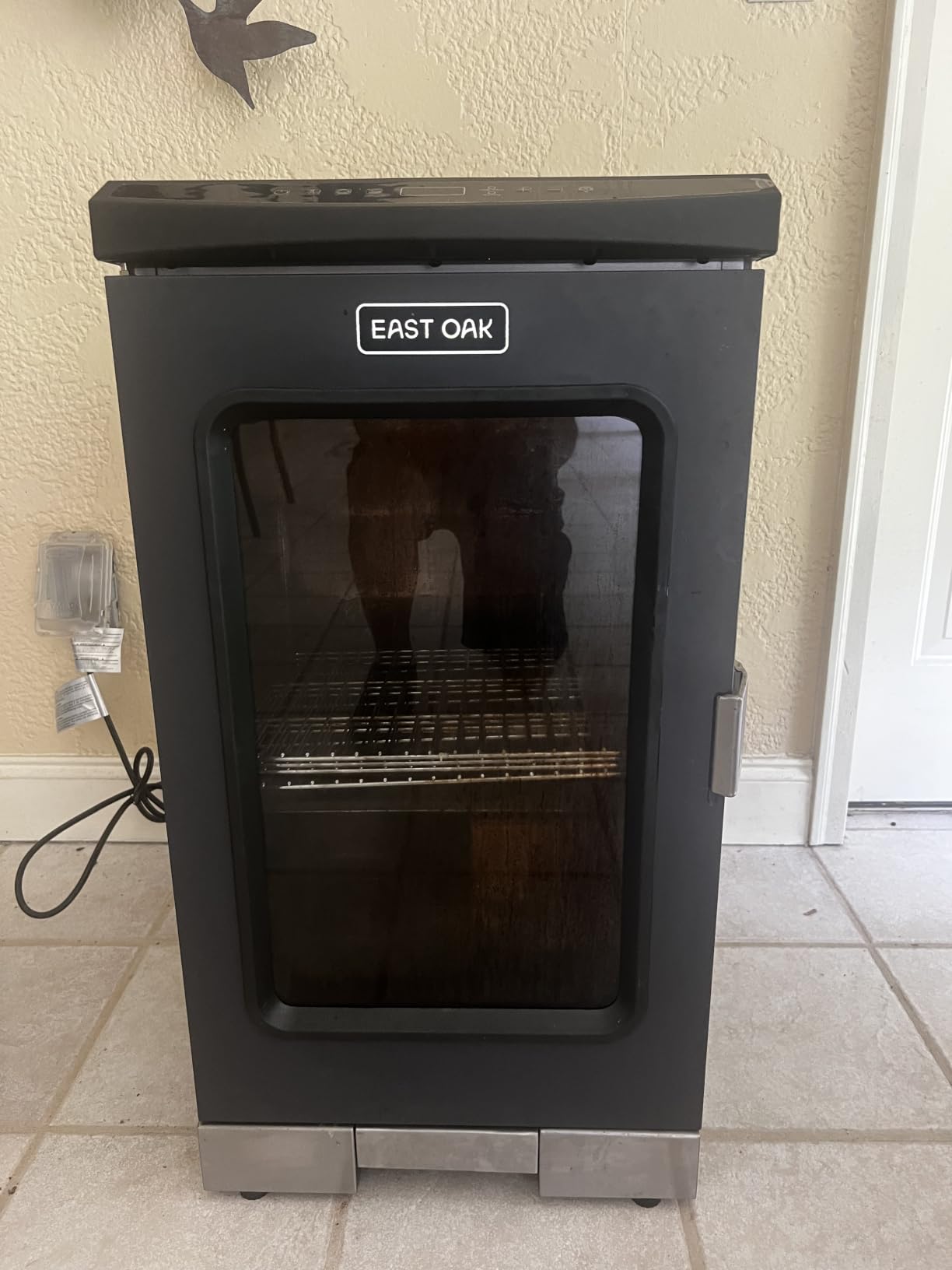
The clear viewing window is a small feature that matters over a long cook. You can check bark development without opening the door and dropping the temperature, which is exactly the mistake beginners make at hour three.
We want to be straightforward about one thing: individual customer review text was not available for this listing, so our read is based on the 4.7 average across 1,088 ratings and a distribution with 83 percent five-star and only 2 percent one-star, combined with the feature set. That is a strong signal, but it is thinner evidence than the other nine picks.
Electric means no open flame, so plan the brisket as a smoke-and-hold cook rather than a reverse-and-sear. If you want char at the end, finish it on a hot skillet or a grill. The water bowl and grease tray are both included, and at 52.3 pounds the unit is portable enough for an RV or a small patio.
When the EAST OAK earns its outlet
Choose it if you want the fewest decisions attached to a brisket. Set time, set temperature, load the probe, and the unit holds and holds and then switches itself to keep-warm.
It is a good fit for feeding a group without a second pit, since 725 square inches handles multiple cuts at once, and for anyone cooking in cold weather where a charcoal pit would need constant attention.
When the EAST OAK is the wrong call
Skip it if wood-fired flavor is the reason you are here. Chip-fired electric produces a lighter smoke profile than a stick burner, and you cannot add a split of post oak or hickory to it.
Skip it if you want a high-heat finish on the same appliance, and weigh the fact that our evidence here rests on aggregate ratings rather than a deep set of owner comments.
10. Ninja Woodfire ProConnect XL Is the Best Smoker for Small Patios
Ninja Woodfire ProConnect Premium XL Outdoor Grill & Smoker, Black & Gold
Electric with pellet flavor,180 sq in
34.5 pounds
App monitors two proteins
Built-in thermometer
Pros
- Fits a 10-lb brisket in a 180 sq in footprint
- App monitoring of two proteins with step notifications
- Electric heat with real wood pellet flavor and no open flame
- Only half a cup of pellets needed per cook
- Light at 34.5 pounds and weather resistant
Cons
- 180 sq in is the smallest cooking area here and limits batch size
- Requires an app and Bluetooth for full functionality
- No room for a large full packer
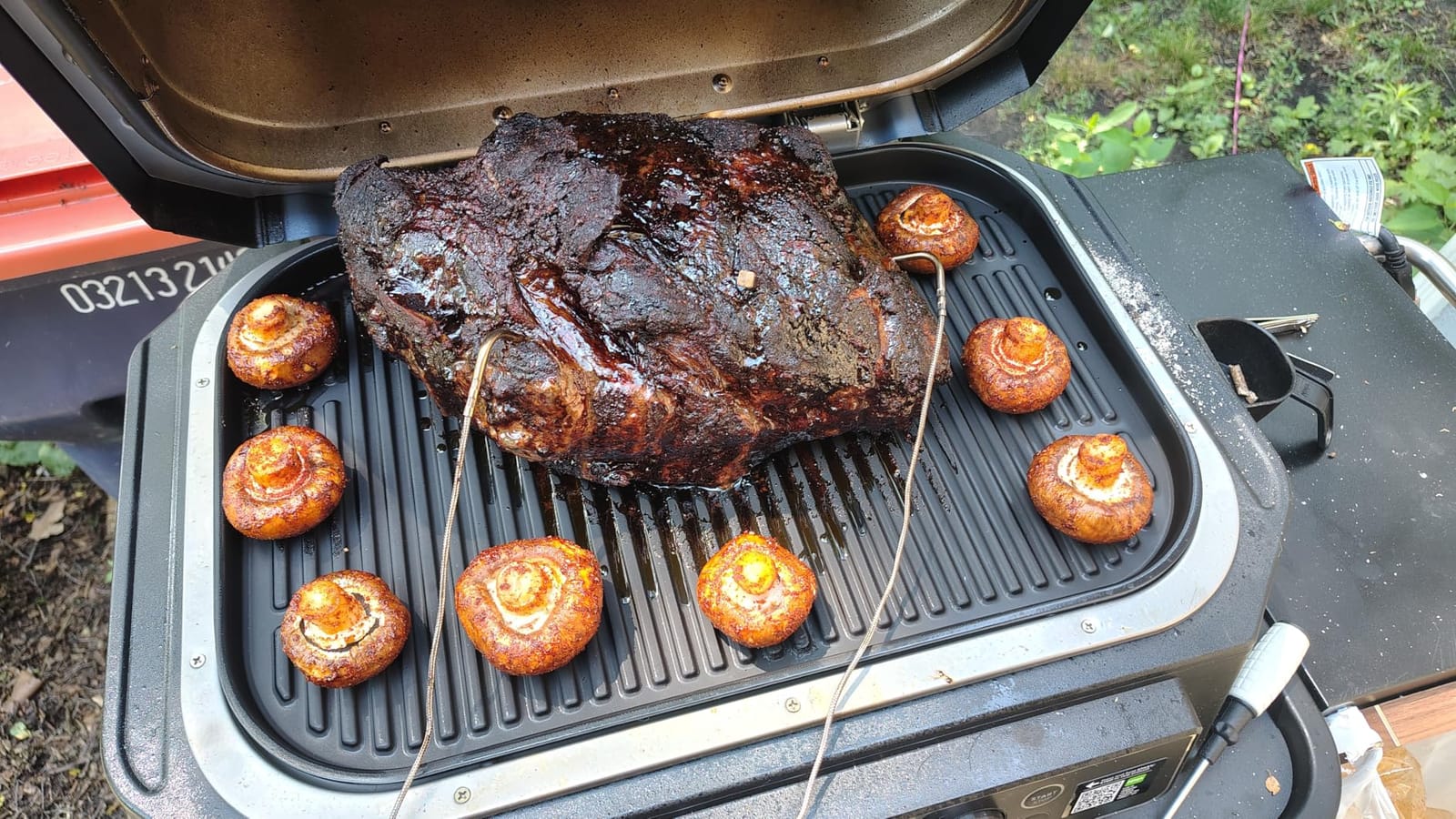
The Ninja Woodfire ProConnect XL solves a problem none of the other nine address: how do you cook a brisket if you do not have a yard. At 180 square inches and 34.5 pounds, it is the smallest and most portable unit here, and the manufacturer states it fits a 10-pound brisket, two full racks of ribs, or two 7-pound chickens.
What makes it interesting for brisket is the app. Pair it to your phone and you can monitor cook time and temperature for two different proteins, receive real-time notifications when the grill is preheated and when to add food, and pull cooking charts. On an unattended cook, that notification layer replaces the physical check.
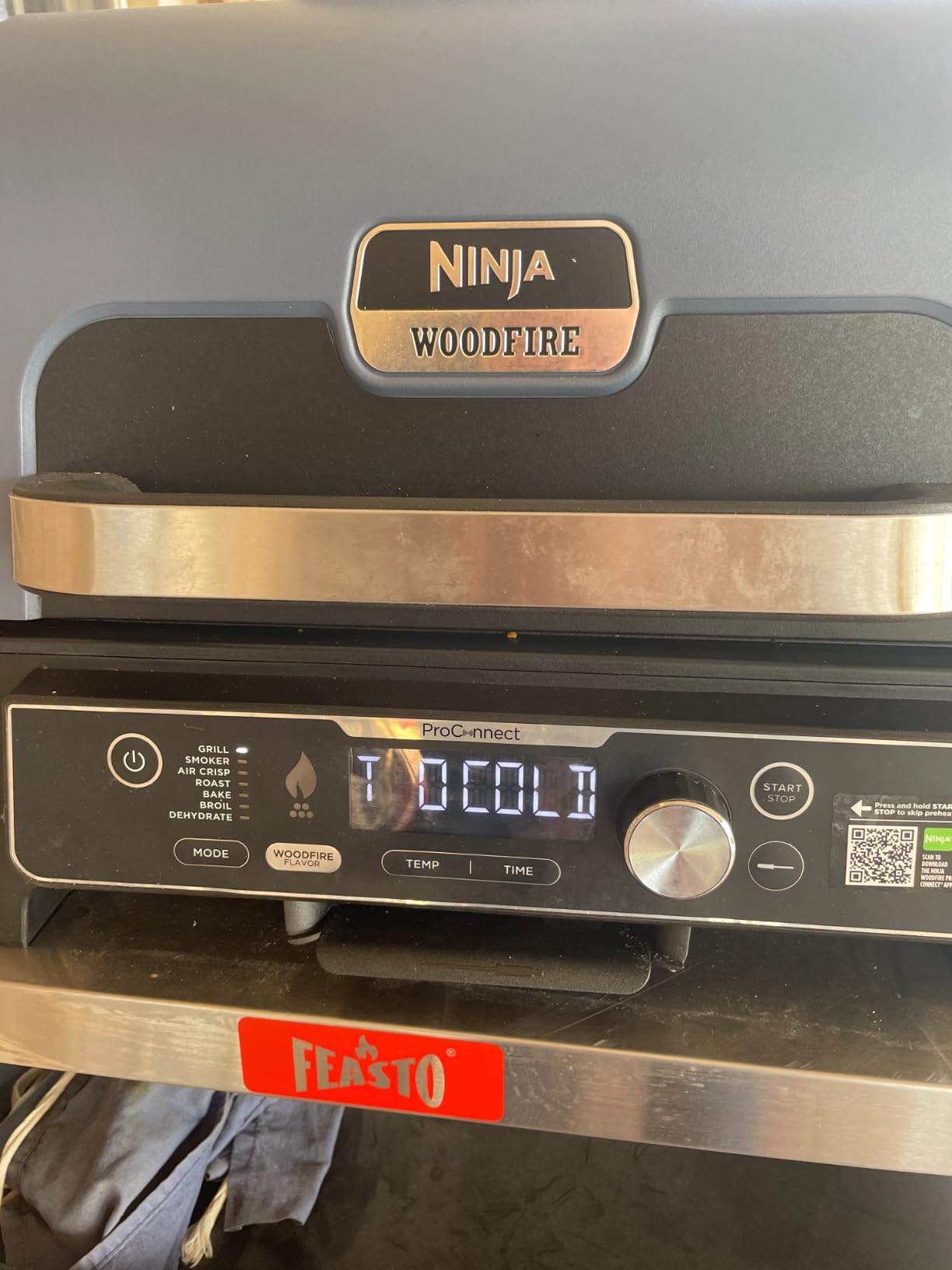
The woodfire system uses real burning pellets for flavor with electric heat, so there is no open flame and no charcoal. Half a cup of pellets per cook is the stated usage, and the claim is bark and flavor in a compact box. It also does air fry, roast, bake, broil, dehydrate and grill, so one appliance covers most of a small-space kitchen.
Being honest about the limits: 180 square inches is the smallest cooking area in this roundup by a wide margin, and it means one cut at a time with nothing else on the grate. It is also dependent on an app and Bluetooth for the features that justify its position in this list. A built-in thermometer handles doneness settings, but there is no open-flame sear.
As with the EAST OAK, individual customer review text was not available for this listing, so our read rests on the 4.5 average across 1,044 ratings with 80 percent five-star plus the documented feature set. Weather resistance and year-round outdoor storage are stated, and the stated use cases run from an apartment balcony to an RV to a parking lot party.
When the Ninja earns its spot on the balcony
Choose it if your cooking space is a patio, a deck or an RV, and if a single brisket at a time is exactly what you need. It is also a capable weeknight grill alongside the pellet picks here, and a strong one for a cook who does not want charcoal.
It suits a cook who wants notifications instead of a thermometer walk, and anyone who values having no open flame near a building.
When the Ninja is the wrong call
Skip it if you cook a large trimmed full packer or if you ever want two cuts at once. The footprint simply does not allow it, and no accessory changes that.
Skip it if you want a real wood fire, since the flavor comes from pellets burned for effect rather than from a burning log or split.
How Big of a Smoker Do You Need for a Brisket?
Size the smoker to the trimmed cut, not to the raw weight and never to the advertised total. A raw packer can be 14 to 18 pounds and still come out of the trim at 8 to 10 pounds, and the shape that matters is a wide, flat rectangle roughly 10 inches across and 2 to 3 inches thick once the fat cap is off.
Here is the sizing logic we use. A trimmed full packer needs roughly 200 to 250 square inches of flat grate at minimum, and comfortable clearance around it for air. That is why the Smokey Mountain’s two 18.5-inch grates handle one packer plus a shoulder, and why the Ninja’s 180 square inches handles one brisket and nothing else.
Add capacity by the number of cooks, not by enthusiasm. One packer needs about 250 square inches of usable primary grate. Two packers at once needs 500 or more, which is why the Dyna-Glo’s 1,176 square inches across six adjustable grates exists. Feeding fifteen people on one brisket plus a pork shoulder means thinking in the 700 to 1,000 square inch range, where the Masterbuilt and EAST OAK land.
Two traps to avoid. First, advertised total cooking area often includes warming racks, firebox grates and narrow upper shelves that you cannot lay a brisket on; the ZPG-450A2’s stated 450 square inches counts a warming rack that reviewers say is above the exhaust and unsuitable for meat. Second, vertical grates are not interchangeable with horizontal ones, so a high square-inch number on a bullet smoker may be less useful for a flat brisket than a smaller number on a wide-grate unit.
Our [best offset smoker guide](https://eatcreatesleep.net/best-offset-smokers/) goes deeper on how grate dimensions and firebox size affect a long cook, and the shape of the pit matters as much as the number printed on the box.
How to Choose a Smoker for Brisket Without Wasting Money
Steel thickness and thermal mass come first, before any feature list. Thin steel loses heat fast, and a smoker that swings 30°F in a stiff breeze forces you to burn more fuel to compensate. A water smoker or kamado will forgive a fire mistake; a thin steel box will not. If the manufacturer does not state gauge steel, treat that as a question you should have answered before buying.
Second, airflow control. You want adjustable intake and exhaust, not a fixed vent, because airflow is how you raise and lower temperature without adding fuel. A smokestack with an adjustable flue, indexed dampers on a kamado, or a controller on a pellet grill all qualify. A vertical bullet with one bottom vent and a fixed top vent does not, and reviewers of budget vertical smokers consistently report poor airflow design.
Third, thermometer accuracy and probe access. The lid thermometer that comes with almost every smoker in this roundup is a rough indicator at best, and several products here have documented inaccurate dials. Budget for a leave-in or wireless probe, and check whether there is a probe port or an access point at grate level. If a manufacturer rated the pit using its own dial, the number means very little.
Fourth, fuel strategy and effort. Be honest with yourself about how often you will sit with the pit at 10pm. A stick burner demands a fire adjustment every 30 to 60 minutes and gives you the deepest wood flavor. A pellet grill or an electric asks you to refill a hopper or a chip tray. Choosing the wrong one is the most common reason a good smoker goes unused.
Fifth, the accessories budget. Every pit on this list needs at least a remote probe, and gasket tape if smoke leaks. Kamados need a heat deflector stone for indirect cooking. Pellet grills benefit from a smoke tube. None of these are expensive, and skipping them is why budget smokers underperform.
Sixth, placement logistics. Weights here range from 32 pounds to 232 pounds, and the heaviest are two-person lifts. Measure your doorways, your patio and your vehicle before you order, and pick a permanent spot that lets you open the door and access the ash catcher.
Seventh, maintenance. Steel smokers need oiling and a cover. Ceramic smokers need a cover and gasket replacement eventually. Pellet grills need hopper and grease management, and some need auger cleaning. Pick the maintenance load you will actually keep up with, not the one that sounds easiest on day one.
Mods and Accessories to Budget For Before Your First Cook
A remote probe thermometer is the one accessory no smoker here should be cooked without. Every pit in this roundup comes with a lid dial that owners describe as inaccurate or misleading, and a 225°F brisket cook lasts long enough for a 30°F misread to ruin the result.
Gasket tape matters on any vertical or bullet smoker. Owners of the Cuisinart report adding Nomex gasket tape transforming the smoke seal, and the same fix applies to leakage around pellet grill doors.
A heat deflector stone or plate is mandatory on a kamado brisket cook. It sits above the coals to create indirect heat, and nearly every AKORN review recommends buying one before the first cook rather than after a mistake.
A grill cover is not optional for any steel unit on this list. The Char-Griller’s most common complaint is rust on painted steel, and the same issue shows up in reviews of vertical smokers that were left uncovered through a wet season.
A proper charcoal ring or fire management setup for water smokers is the difference between a 12-hour unattended burn and a 12-hour feed schedule. A taller ring in the Smokey Mountain style is the standard answer.
Common Buying Mistakes to Avoid
Buying on total advertised square inches. That number frequently includes firebox grates, warming racks and narrow shelves that cannot hold a brisket. Read the primary grate dimensions and check the grate shape for your cut.
Buying a pit too small for the cut you cook. Measure your longest trimmed brisket and the smoker’s internal width before you order. A full packer is wider than most people expect, and a smoker that cannot take it means cooking the point and the flat in separate loads.
Ignoring the temperature ceiling. Most electric smokers cap at 275°F, which rules out searing on the same appliance. If you want a reverse-and-sear finish, that decides the category for you.
Trusting the included thermometer. Treat it as a rough indicator. Every rating in this roundup that survives contact with owner feedback involves a separate probe.
Skipping seasoning and the first burn. New units run hot and smoky. Season the pit with a cheap cut of meat before you put a good brisket in it.
Underestimating the tending a charcoal smoker needs. Owners who try to run a stick burner without a fire plan end up feeding it all night. Decide whether you will enjoy that job, because a pellet or electric smoker will do it for you.
Ignoring wind and cold. A thin steel smoker in a windy spot can lose 30°F and burn through a fire ring in a couple of hours. Test the spot with an empty cook before you commit to a full packer in bad weather.
Frequently Asked Questions
What is the best smoker for making a brisket?
The best all-round smoker for brisket is the Weber Smokey Mountain Cooker 18-inch, which holds 225°F for 10-16 hour burns, pairs a water pan with two 18.5-inch grates, and comes with a ten-year warranty on the bowl and lid. Choose the Masterbuilt 30-inch digital electric for a fully unattended overnight cook, the Dyna-Glo vertical for two or more full packers at once, or a kamado such as the Char-Griller AKORN for the steadiest temperature in wind and cold.
How long does it take to smoke brisket at 225?
Most cooks plan on 1 to 1.5 hours per pound of trimmed weight, which puts a 10-pound trimmed packer at roughly 10 to 14 hours. Plan for 12 hours to be safe on a full packer, and add time if you are cooking two briskets in one pit or working in cold weather. Holding 225°F with an even bark is the priority rather than a precise finish time.
How long to smoke a 10 lb brisket at 225 degrees?
A 10-pound trimmed brisket at 225°F generally takes 10 to 14 hours. Most of that is the temperature phase, and you should not count on the time until the internal temperature is where you want it, because the bark still needs to set. If you wrap in tallow or paper around the 160°F mark, expect the second phase to be faster than the first.
What is the 4-2-10 rule for smoking brisket?
It is a temperature-to-condiment rule rather than a smoker rule. Hold the brisket at 250°F for the first 4 hours so the bark sets, move to 225°F for the next 2 hours to work through the render, and finish at 200°F or 210°F for the final 10 minutes per pound while it tightens up. The smoker matters less than the three temperature phases, which is why a pit that holds 225°F steadily is the priority.
How big of a smoker do you need to smoke a brisket?
Size to the trimmed cut rather than the raw weight. One trimmed full packer needs about 200 to 250 square inches of flat primary grate plus clearance, so a smoker with two 18-inch grates is the practical minimum. Two packers at once means 500 square inches or more, and feeding a group usually means 700 to 1,000 square inches. Measure your longest trimmed cut against the internal width before buying.
What is the difference between a Weber Smokey Mountain smoker and an offset smoker?
A Weber Smokey Mountain is a vertical water smoker: charcoal burns in a ring below a water pan, so it cooks on moist, indirect heat and needs no airflow management, while a traditional offset burns a fire in a side firebox and cooks meat directly above the fire with dampers and a chimney to control it. Water smokers are more forgiving and more humid, offsets give more direct heat and a wider grill surface, and a reverse-flow offset routes smoke past the meat before it reaches the cooking chamber.
Is Oklahoma Joe a good offset smoker for brisket?
Oklahoma Joe is the most-recommended offset brand in the barbecue forums we reviewed, and forum cooks commonly run post oak in an Oklahoma Joe offset for brisket. Owners praise the heavy steel, the cooking capacity and the reverse-flow models that route smoke the length of the chamber for an even cook. The tradeoff is the same one every offset has: you manage the fire yourself through a long cook.
Are pellet smokers good for brisket?
They are good for brisket if your priority is an unattended cook, and weaker if your priority is deep smoke flavor. Pellet smoke is milder than a stick burner, and forum owners report reliability issues with pellet equipment that push some of them back to offsets. Owners compensate for lighter smoke with additives rather than a stronger box. Our two pellet picks here, the Pit Boss 440 and the Z GRILLS ZPG-450A2, both hold temperature well and both need gasket work.
The Verdict: Weber Smokey Mountain Cooker for Most Cooks
After all of this, the Weber Smokey Mountain Cooker 18-inch is still our pick for the best smoker for brisket, and the reason has not changed: the water pan removes humidity as a failure mode, two 18.5-inch grates give you real flat surface, and 4.7 stars across more than 5,500 ratings is a result set we trust more than any other here.
The exception cases are clear. Buy the Masterbuilt 30-inch digital if the cook has to run while you sleep. Buy the Dyna-Glo DGO1176BDC-D if two packers go in at once. Buy the Char-Griller AKORN or the Kamado Joe Classic II if you want the temperature to hold itself through cold and wind. Buy the Pit Boss 440 or the Z GRILLS ZPG-450A2 if you will not manage a fire but still want wood flavor. Start with the type explainer, measure your longest cut, and the right pit picks itself.
We are not compensated for the conclusions in this article, and we earn a commission when you buy through the links on this page, at no additional cost to you. Our full method: specifications and owner feedback from product listings and barbecue forums, cross-checked against what we know from cooking on these pits. If a spec mattered to the verdict, it is in the review above.