
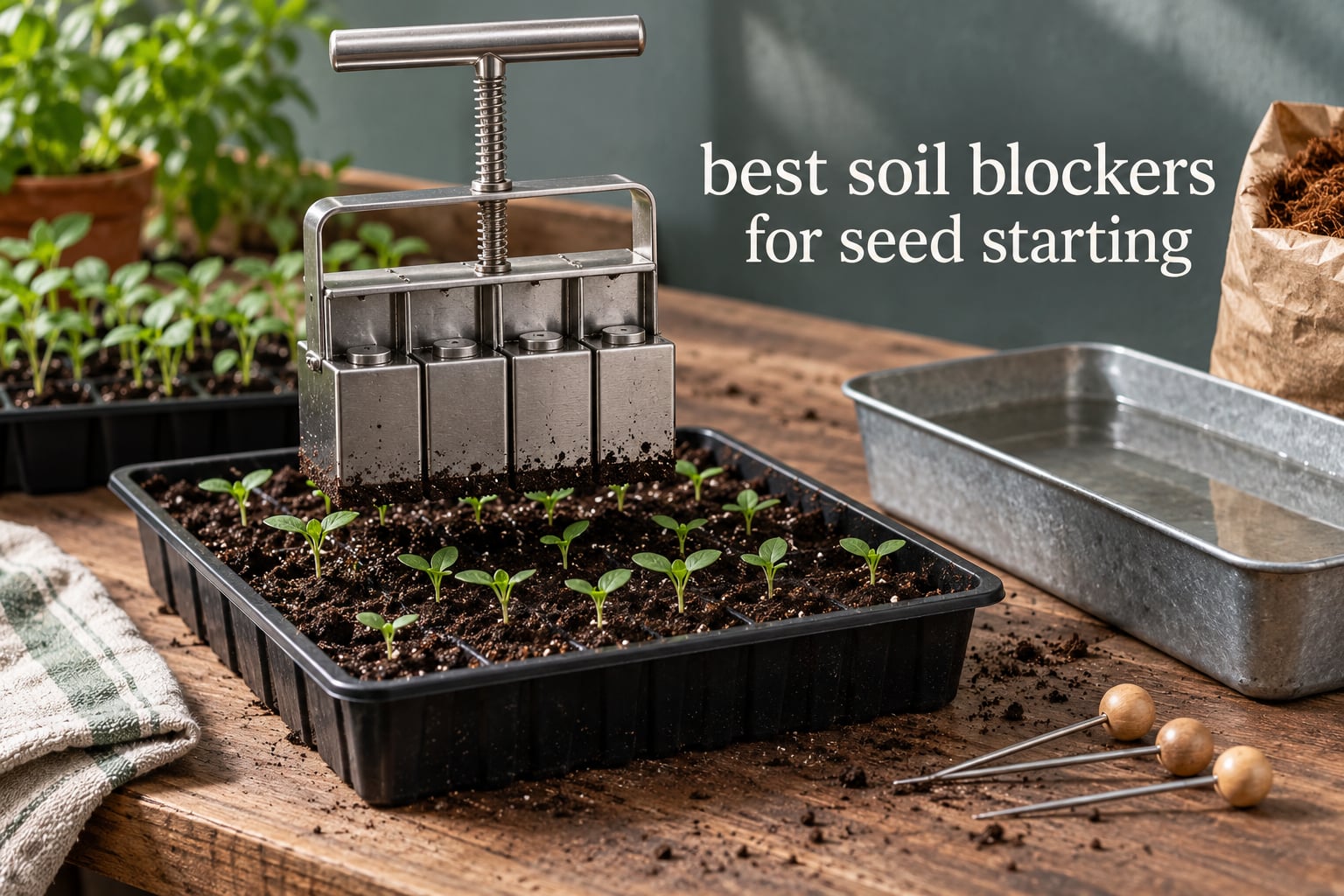
Soil blocking is a seed-starting method where a handheld or stand-up metal tool is pressed into moist, compost-based potting mix to form compressed cubes with seeds sown into the top of each cube. The exposed sides air-prune roots as they reach the block edge, producing a dense, fibrous root system that transplants with minimal shock and removes disposable plastic cell trays from the process entirely.
That definition matters because the tool you press is the whole difference between air pruning and a loose, crumbly pile of soil. Our team compared ten of the most-reviewed soil blockers on the market, weighed the steel, counted the cells, and read the complaints that owners actually report after a season or two of use. We are covering the best soil blockers for seed starting across the full size ladder, from a twenty-cell micro press to eight-cell stainless tools and the classic four-cell 2-inch press.
One theme runs through nearly every review we read: the hardware matters far less than the soil moisture. Every tool here will produce clean blocks if the mix is wet enough to hold shape and dry enough not to smear. If you are still choosing a growing medium, our soil test kit guide covers how to know what your garden soil is actually doing before you amend anything.
Table of Contents
Top 3 Soil Blockers for Seed Starting in October 2026
Three tools earned a place on the podium, and the reasoning is about fit rather than raw quality. The Ladbrooke Mini 4 is the one to buy if you will only own one blocker, the Ladbrooke 5-Piece Essentials Set is the complete system, and the Fiskars tool is the lowest-friction way for a first-timer to try the method without a steep learning curve.

Ladbrooke Mini 4 Soil Blocker
- Four 2 inch blocks per press
- EP-coated steel made in England
- nests with the Micro 20
- six seed pins included

Ladbrooke 5-Pc Essentials Set
- Mini 4 and Micro 20 together
- cubic inserts for nesting
- seed pins and dowel pins
- 2.5 pounds of steel

Fiskars Soil Block Maker
- One 3 inch block or four 1 inch blocks
- plastic body that will not rust
- lifetime warranty
- 14.88 ounces
All 10 Soil Blockers Side by Side for October 2026
Every blocker below is a real, widely reviewed tool rather than a relisted generic. The table is the fastest way to match cell count, material and block size to the way you actually start seeds.
| Product | Specifications | Action |
|---|---|---|
| Ladbrooke Mini 4 Soil Blocker |
|
Check Latest Price |
 Ladbrooke Micro 20 Soil Blocker Ladbrooke Micro 20 Soil Blocker |
|
Check Latest Price |
| Fiskars Soil Block Maker |
|
Check Latest Price |
| Ladbrooke 5-Pc Essentials Set |
|
Check Latest Price |
 SOLIGT 4-Cell Soil Blocker SOLIGT 4-Cell Soil Blocker |
|
Check Latest Price |
 BlumWay 8-Cell Soil Blocker BlumWay 8-Cell Soil Blocker |
|
Check Latest Price |
 FANFX Manual Soil Block Maker FANFX Manual Soil Block Maker |
|
Check Latest Price |
 MELVTATA Soil Blocker MELVTATA Soil Blocker |
|
Check Latest Price |
 zukakii 4-Cell Soil Blocker zukakii 4-Cell Soil Blocker |
|
Check Latest Price |
 nanovi 4-Cell Soil Blocker nanovi 4-Cell Soil Blocker |
|
Check Latest Price |
1. The Ladbrooke Mini 4 Is the Best Overall Soil Blocker for Seed Starting
Authentic Ladbrooke Mini 4 Soil Blocker — Four 2″ Blocks Per Press, Made in England
4 blocks of 2 inch per press
EP-coated steel
1.5 pounds
6 seed pins included
Pros
- Consistent 2 inch blocks suit most vegetables herbs and flowers
- Heavy gauge EP-coated steel built to last many seasons
- Nests with the Micro 20 so seedlings move up without repotting
- Removes plastic pots and trays from the process
- Six 3/8 inch seed pins create the seed dimple
Cons
- Learning curve around soil moisture and packing
- Block tops can snap when moisture is wrong
- Needs a proper blocking mix rather than standard potting soil
The Mini 4 is the tool I hand to anyone who asks for one soil blocker and nothing more. It produces four 2-inch blocks per press, which is the general-purpose size that handles tomatoes, peppers, most herbs and a wide range of flowers without a second tool. It carries a 4.7 average across 1,183 reviews, the strongest rating-to-review combination in this group, and roughly four in five of those reviews are five-star.
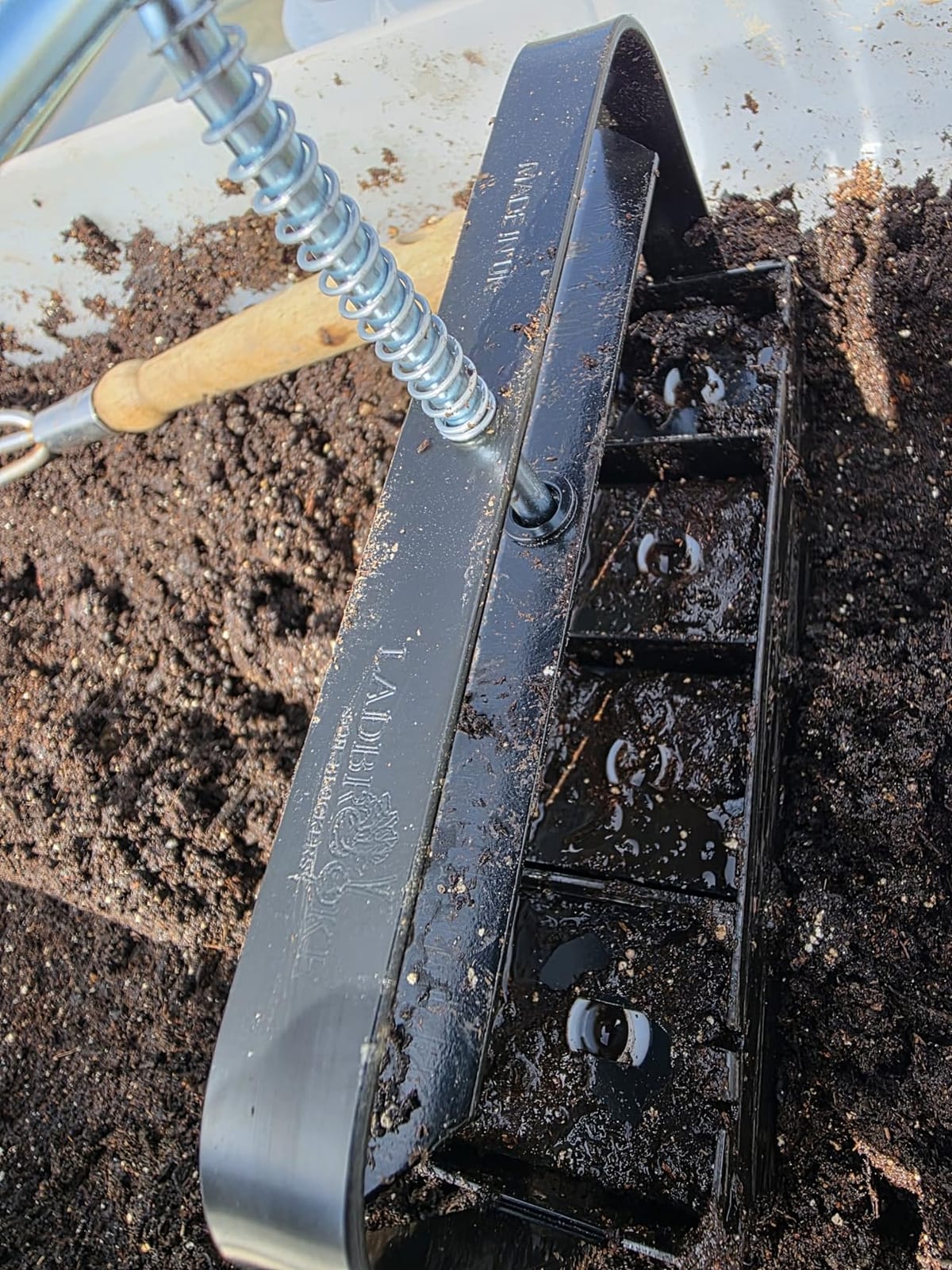
Build quality is the reason it lasts. The body is premium EP-coated steel manufactured in England since the 1960s, weighing 1.5 pounds and measuring 9 by 2 by 8 inches, so it has enough mass to punch through wet mix without flexing. Owners report using the same tool across many seasons, and the coating is what keeps corrosion and soil chemicals from taking the steel apart.
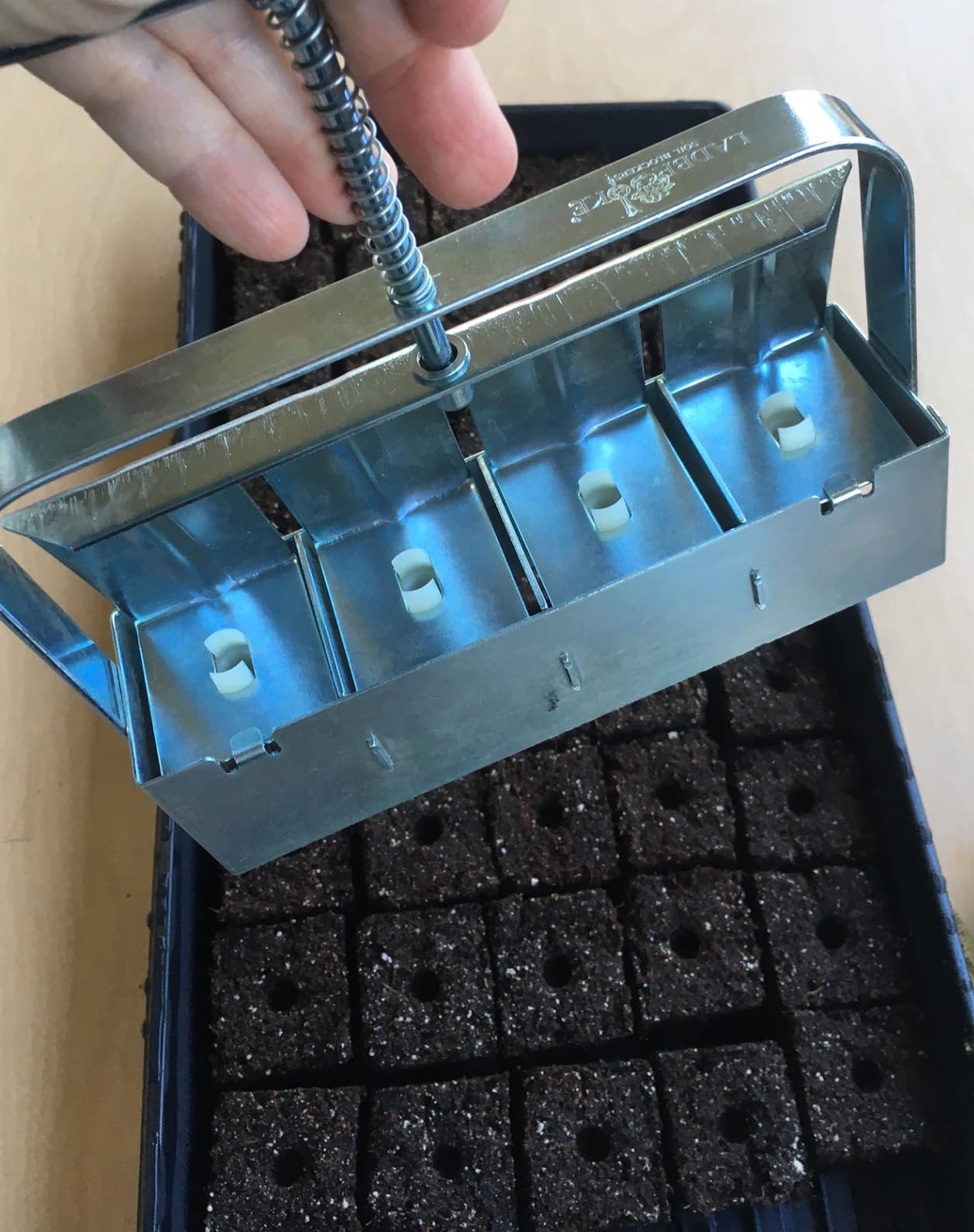
What makes it a system rather than a gadget is nesting. Micro 20 blocks drop straight into Mini 4 blocks, so a seedling started small moves up a size without being pulled out of anything. The kit also includes six 3/8-inch seed pins you press into the tool before loading, and each block comes out with a dimple ready for a seed. If you also want the finer tier, our handheld tool comparison covers the trade-offs between lighter and heavier steel designs.
The Mini 4 is the right pick if you want one size that covers most of your seed list
Four 2-inch blocks per press gives you a workable count for a home setup, and the blocks sit flat in a standard 1020 tray. Owners on r/gardening describe the release as the satisfying part: squeeze the handle and the blocks pop out intact rather than needing to be pried loose. That clean release is what keeps tray work fast.
The blocks also hold water well enough that many growers skip humidity domes once seeds have broken soil, which simplifies a setup that otherwise needs a lot of accessories. Bottom watering into a solid tray keeps them evenly moist without the tops sloughing off.
The Mini 4 is a poor match if you are pressing hundreds of tiny seeds in one session
The recurring complaint is a short learning curve, not a defect. It takes several attempts to pack and release blocks consistently, and the block tops can break off during the lift if the mix is too wet or too dry. Reviewers also flag the noise the tool makes when pressing, which is loud enough to notice in a quiet house.
One more practical note: the tool expects a specifically mixed blocking recipe. Standard peat-based potting soil will not hold a cube, and forcing it to try is the fastest route to frustration. Budget for a proper mix before you blame the hardware.
2. The Ladbrooke Micro 20 Is Best for Fine Seeds and Small Crops
Authentic Ladbrooke Micro 20 Soil Blocker, Twenty 3/4″ Blocks, England
20 blocks of 3/4 inch per press
EP-coated steel
0.28 kg
Fine seeds only
Pros
- Twenty blocks per press conserves tray space under lights
- Suits lettuce basil tomato parsley and celery
- Nests directly into Mini 4 blocks with no repotting
- Removes plastic pots and trays
- EP-coated steel resists soil chemicals
Cons
- Tiny blocks dry out quickly and need close attention
- Needs a fine chunk-free blocking mix
- Fast germinators outgrow the blocks almost immediately
The Micro 20 makes twenty 3/4-inch blocks per press, the highest block count of any tool in this roundup. That number is the entire argument for it: under a 24-inch shelf of grow light, twenty small blocks fit where four large ones would waste most of the space. It rates 4.4 across 648 reviews, with 73 percent five-star ratings.
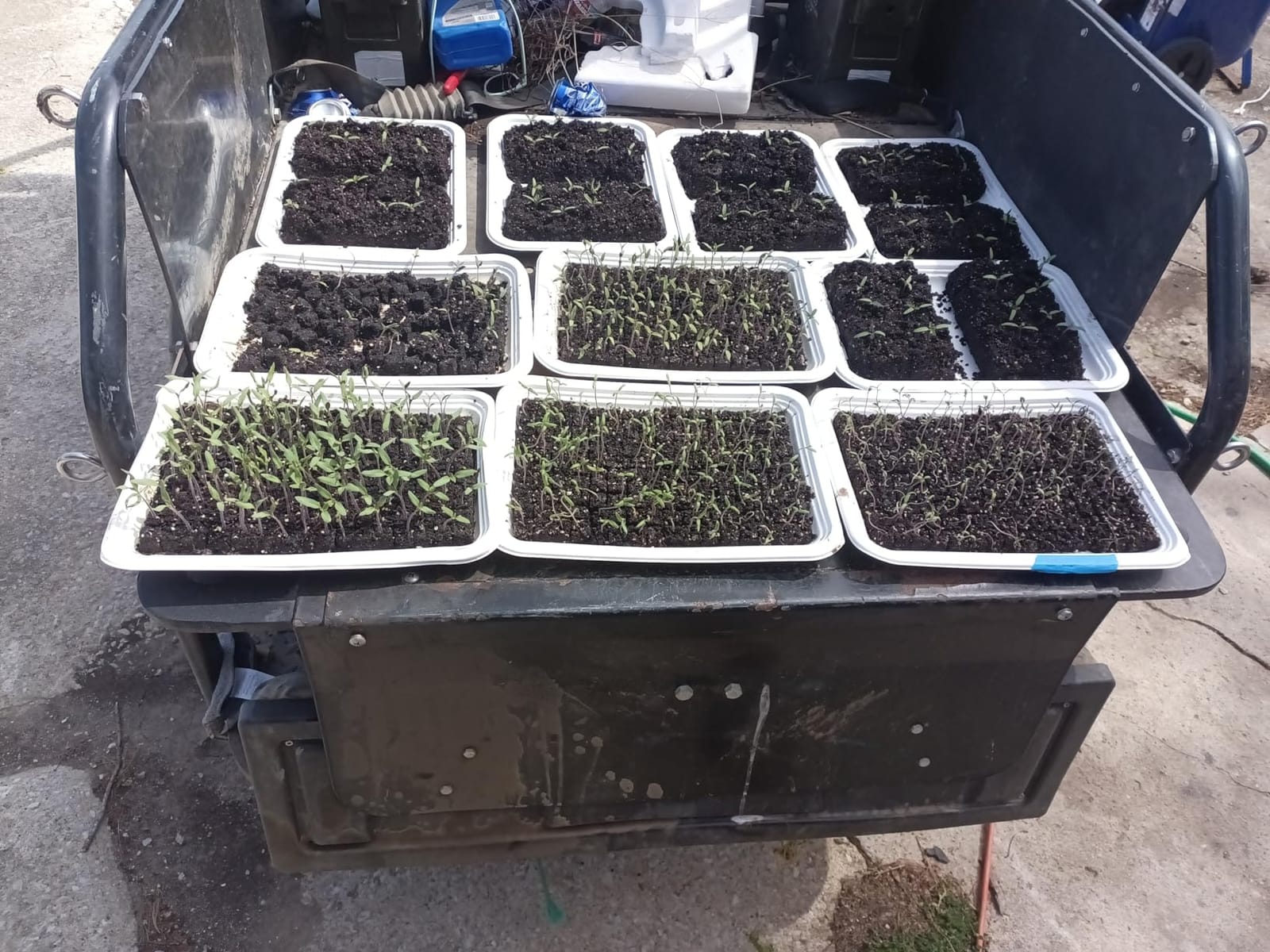
It is built from the same premium black EP-coated steel as the rest of the Ladbrooke range, manufactured in England since the 1960s, and it weighs 0.28 kg. The model number is LADMIC20, and the maker stamps the handle so you can confirm you have the authentic tool rather than a copy.
Where it shines is crops with fine seed and a slower start: lettuce, basil, parsley, celery and small-seeded flowers. A block per seed means you waste nothing on cells that never germinate, which is the reason most growers adopt blocking in the first place. Market gardeners producing transplants at volume get the most out of this output.
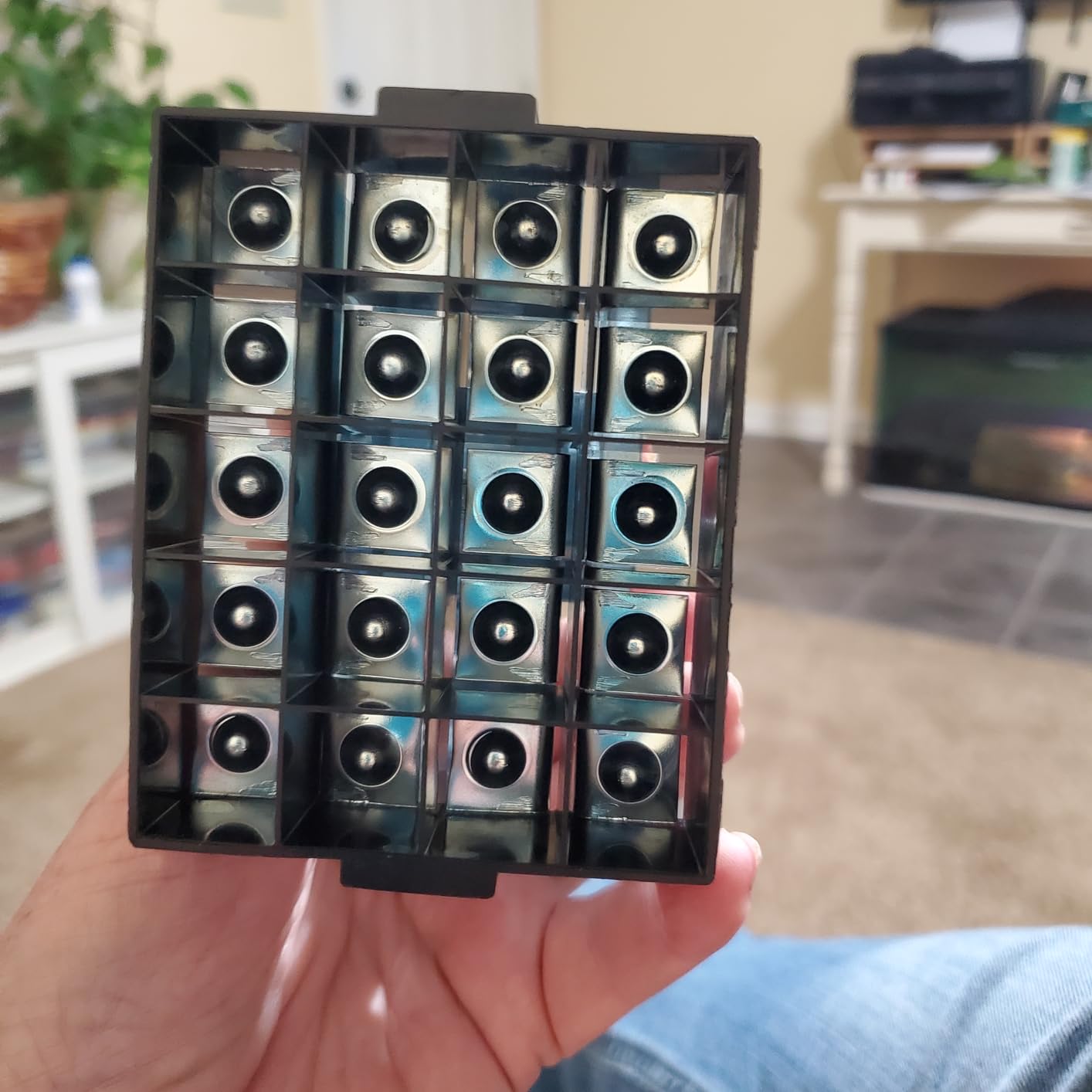
The Micro 20 is the right tool when shelf space is the binding constraint
Packing twenty starts into one tray footprint changes what you can germinate under a limited setup. Reviewers consistently praise the clean nesting into the Mini 4, so seedlings started in the micro press move up into a 2-inch block without root disturbance at the transplant step.
It also eliminates the plastic pot stage entirely for anything you start at this size, which is the cleanest waste reduction available in seed starting. The steel wipes clean and stores flat.
The Micro 20 is the wrong first tool for a beginner or a fast crop
The 3/4-inch blocks lose moisture quickly and need daily attention or a humidity dome. They also demand a fine, chunk-free mix, because a single twig or stone in the mound will crumble the whole press. Fast-germinating seeds often outgrow the block before you get around to potting up.
Some owners skip this step entirely and start directly in the 2-inch blocker, which is a perfectly reasonable choice. If you want the space savings without the moisture chasing, the Mini 4 is the smoother starting point.
3. The Fiskars Soil Block Maker Is the Best Blocker for Beginners
Fiskars Garden Soil Block Maker for Plant Seeds with Natural Air Pruning
1 block of 3 inch or 4 of 1 inch
Plastic body
14.88 ounces
Lifetime warranty
Pros
- Easy to learn for first-time soil blocking
- Two block sizes in one tool
- Plastic will not rust and washes clean
- Backed by a full lifetime warranty
- Good value against metal blockers
Cons
- Round blocks do not nest or sit neatly in 1020 trays
- The single large block is oversized and cone shaped
- Small blocks tip outward when the tool is loaded
The Fiskars tool is the gentlest introduction to soil blocking we found. It makes one 3-inch block for larger seeds or four 1-inch blocks for smaller plants, and the tool presses a seed hole into each one. At 4.3 across 640 reviews with 62 percent five-star ratings, the pattern in the reviews is consistent: people like how little fuss it involves.
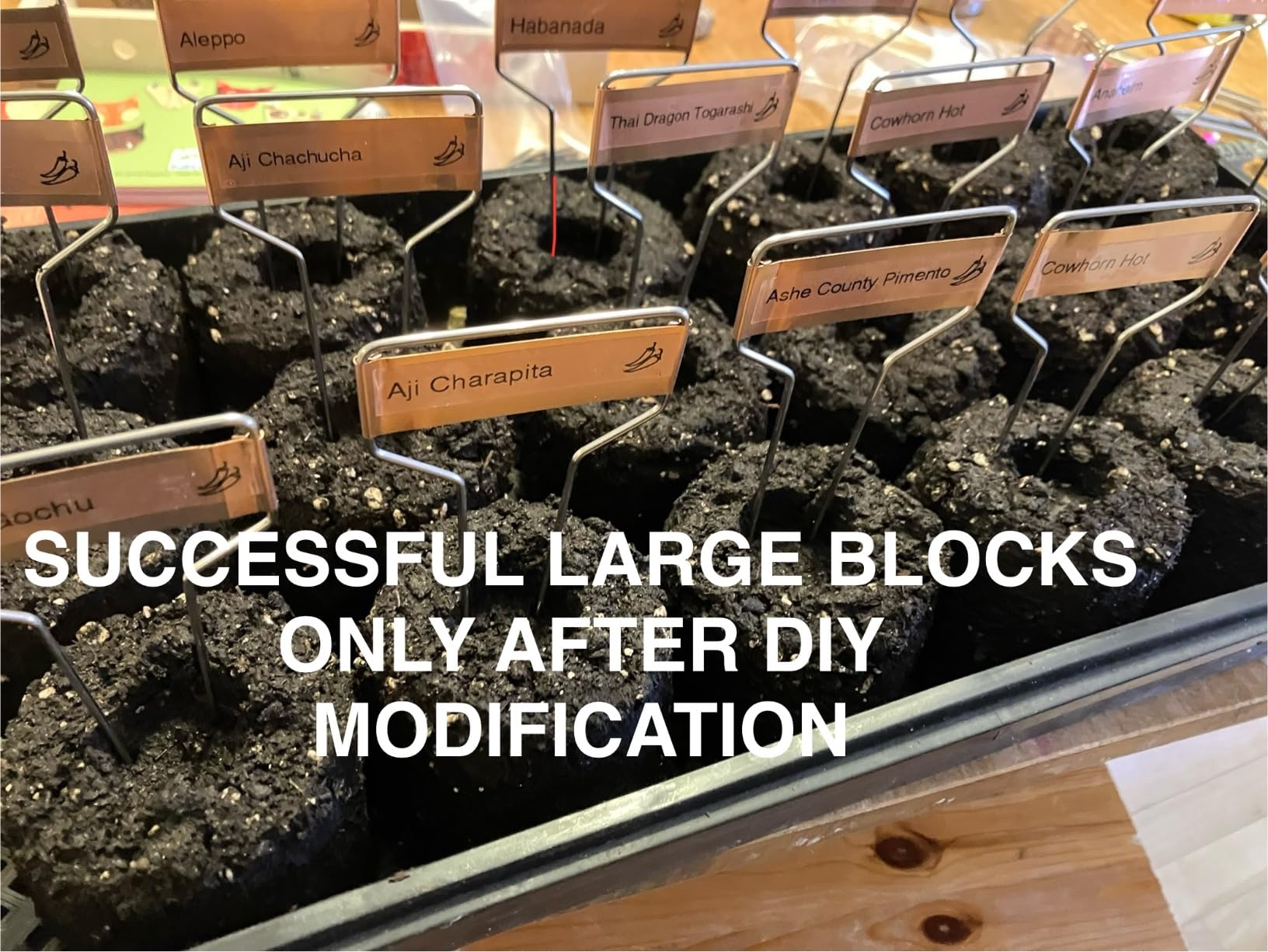
Two details make it friendly. The body is plastic, so it will not rust no matter how long it sits in damp soil or how many seasons it gets stored, and it washes clean in seconds. It also weighs just 14.88 ounces, which makes repeated pressing far easier on your hands than a multi-pound steel tool. Fiskars backs it with a full lifetime warranty, and the part number is 340120-1001.
This is the tool to buy if your seeds are a mixed handful rather than a production run. One 3-inch block for a sunflower or a squash, four 1-inch blocks for a row of brassicas, and nothing else to learn.
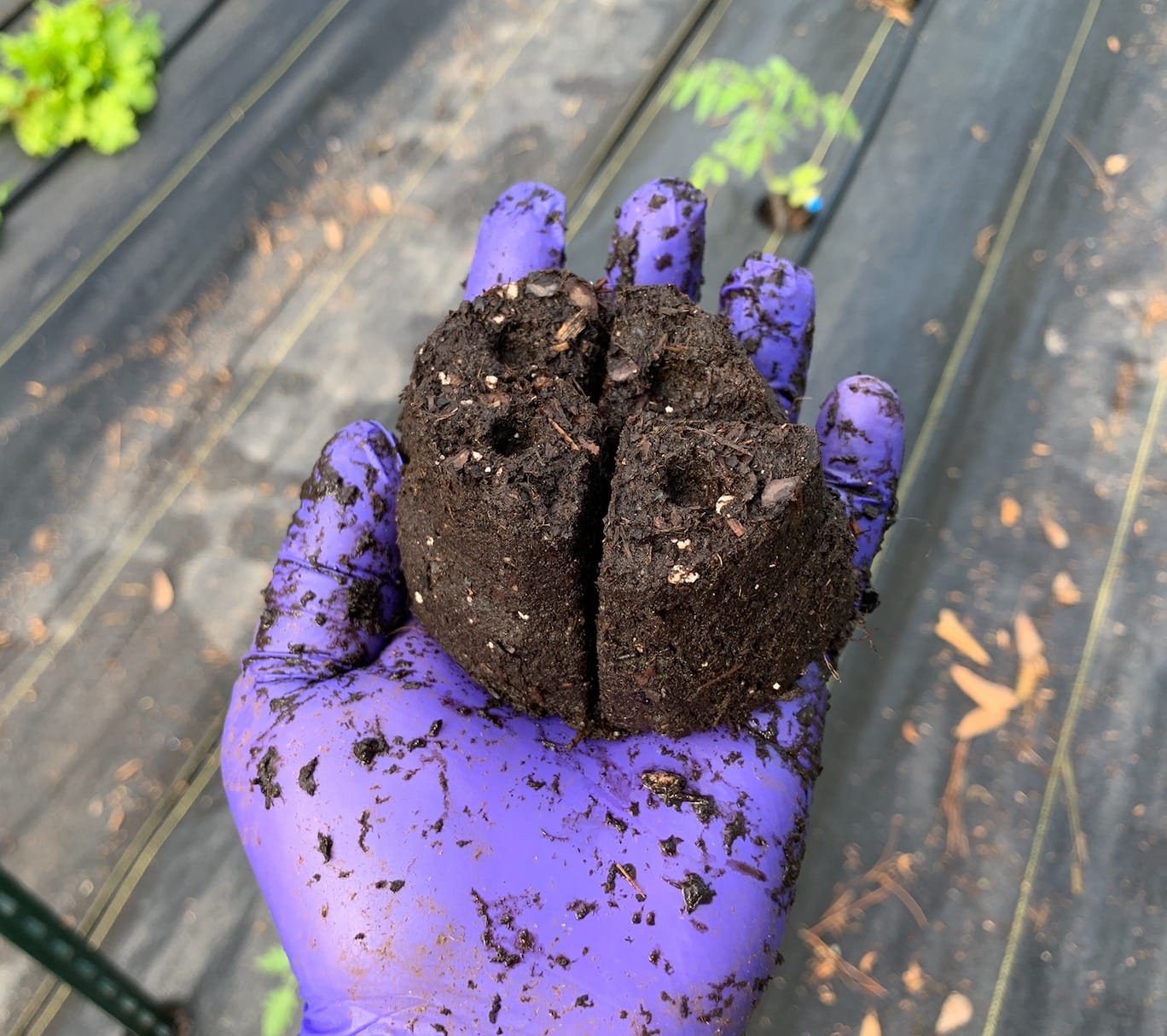
The Fiskars tool is the right choice when you are testing whether blocking works for you
Reviewers repeatedly call it well made, easy to use and good value next to the metal tools. The tool places a hole in every block, which removes one of the fiddliest parts of the process, and the two sizes cover most of what a first season needs. It also reduces the need for disposable starter trays and pods.
For a home gardener with a shelf and a bag of mix, that is a complete setup. If you plan to move hundreds of transplants a season, the geometry becomes a problem rather than a feature.
The Fiskars tool frustrates anyone who wants square blocks that stack in a 1020 tray
The round shape is the main complaint. Round blocks do not fit standard trays neatly, they do not nest inside one another, and they leave gaps that let air move across the soil surface and dry it out faster. The single large block option is also described as oversized and cone shaped, which wastes both soil and tray space.
Pressing effort is higher than it looks if the soil is not packed firmly first, and the smaller sections can tip outward when the tool is loaded. Experienced growers tend to treat it as a supplement for odd jobs rather than a replacement for a steel blocker.
4. The Ladbrooke 5-Pc Essentials Set Is the Premium All-in-One System
Authentic Ladbrooke 5-Pc Essentials Soil Blocker Set, England
Mini 4 and Micro 20 plus inserts
Seed pins and dowel pins
2.5 pounds
EP-coated steel
Pros
- Complete blocking sequence from day one
- Cubic inserts nest micro blocks into 2 inch blocks
- Sturdy steel users expect to last for years
- Saves tray space against plastic cell trays
- Dowel pins give deeper holes for large seeds
Cons
- Cubic insert is awkward to screw in under the handle
- Small blocks dry fast and need domes or daily watering
- Handles tire during high-volume production
This set bundles the two tools most growers end up owning anyway. It includes the Mini 4, the Micro 20, cubic inserts, 3/8-inch seed pins and 7/8-inch dowel pins, so the full sequence works the day it arrives. It scores 4.5 across 480 reviews with 76 percent five-star ratings, and the completeness is the first thing owners mention.
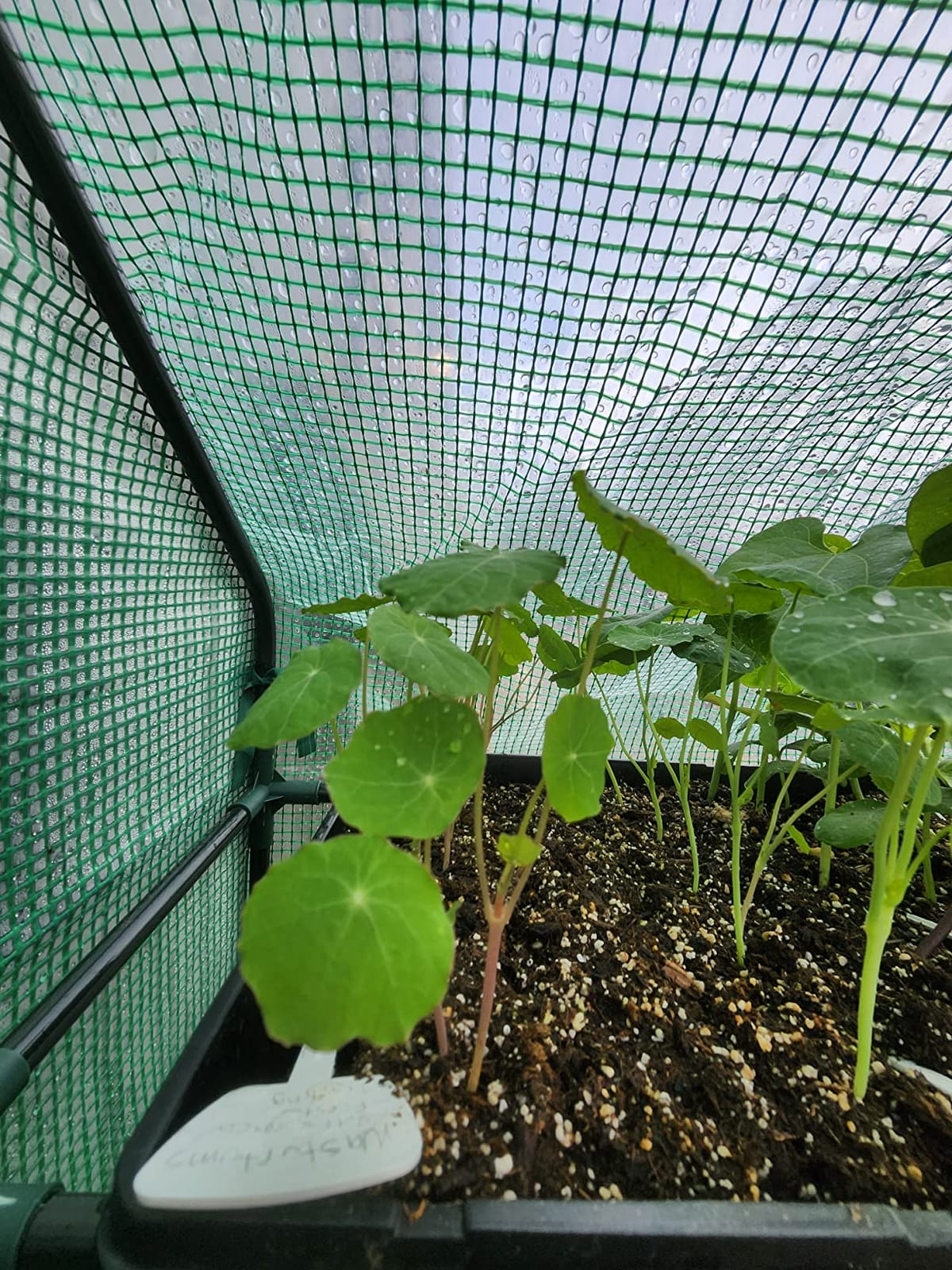
At 2.5 pounds of EP-coated steel, the set has the same heft and finish as the standalone tools, and reviewers describe it as sturdy and built to last years. The dowel pins are the quiet extra: they punch deeper holes, which is what large seeds such as sunflowers and sweet peas want.
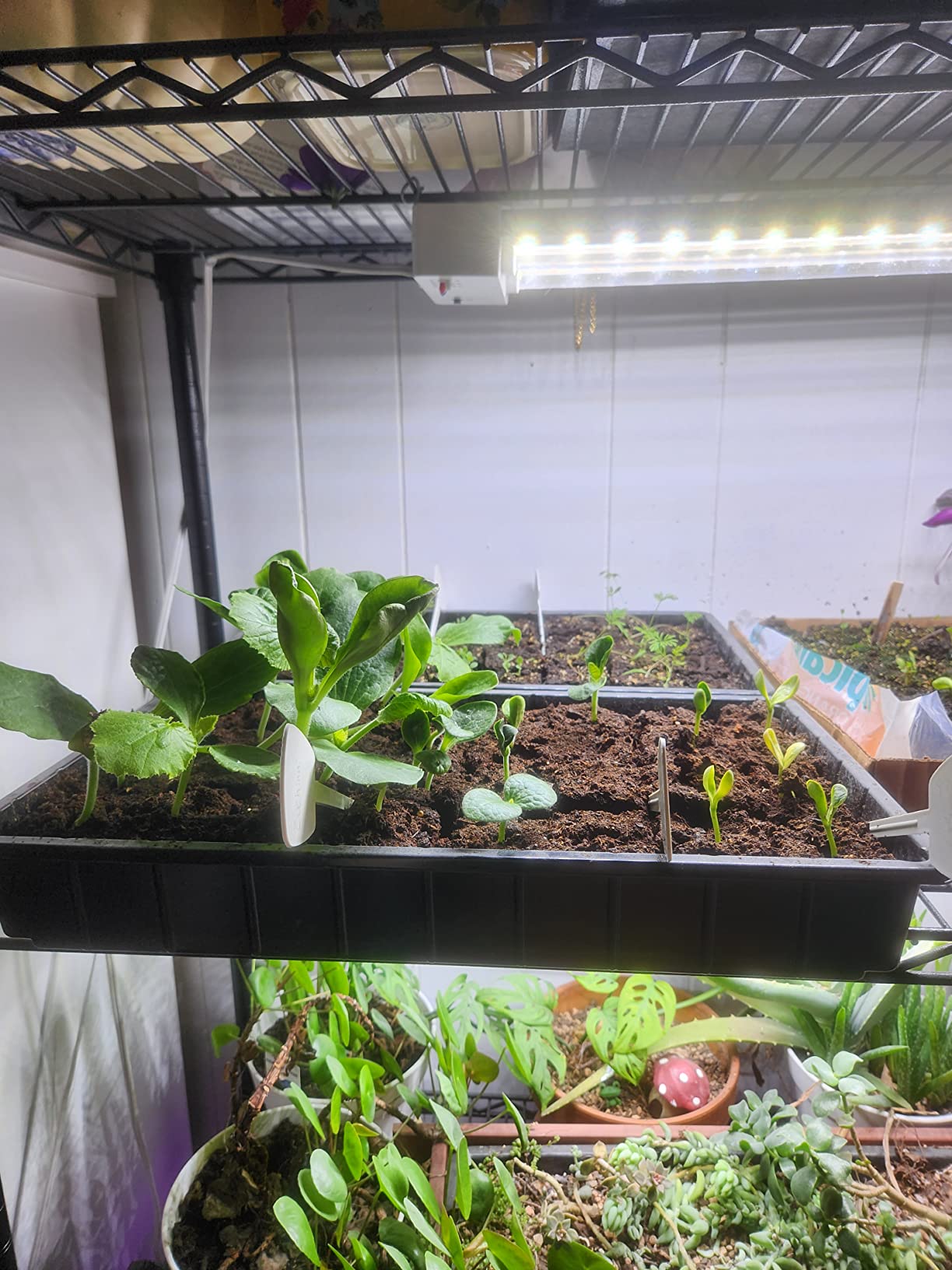
What the set really buys you is continuity. Micro 20 makes the 3/4-inch starter blocks, the cubic inserts let those nest inside the Mini 4’s 2-inch blocks, and you never pull a seedling out of anything. Space savings over plastic cell trays are a common theme in the reviews for anyone working under a shelf.
The Essentials Set is worth it if you already know you will use two sizes
The economics are simple. Buying the two blockers and the inserts separately means paying for the same steel twice, and the inserts and pins are the pieces most often lost or omitted. Owners who plant both fine seed and transplants praise having the whole ladder in one box.
It is also the cleanest plastic-free starter setup we found, since nothing in the kit is a single-use tray. The blocks transplant whole with the seedling still rooted in the cube.
The Essentials Set is awkward to assemble and tiring under volume
The most common negative is the cubic insert. It screws in beneath the handle, which is an uncomfortable position and genuinely fiddly the first few times. Small blocks still dry out fast and need a dome or daily watering, and larger blocks break down under top watering, so solid bottom trays are effectively required.
Handles can also become uncomfortable during long production sessions, and one reviewer reported the smallest blocker bending at the handle after extended use. If you only ever sow one crop size, a single tool will serve you better.
5. The SOLIGT 4-Cell Blocker Is the Best Budget Steel Press
Soil Blocker with Comfortable Handle, 4 Cell Soil Block Maker 2 Inch Mold
4 blocks of 2 inch per press
Rounded steel handle
0.95 kg
Rust resistant
Pros
- Rounded handle removes sharp edges for long sessions
- Heavy-gauge steel resists rust and is quiet to press
- Four 2 inch blocks release cleanly with practice
- Removes reliance on plastic pots and cell trays
Cons
- Block consistency depends on getting soil moisture right
- Instruction sheet is thin for a first-time user
- A few buyers report seed pin inserts loosening
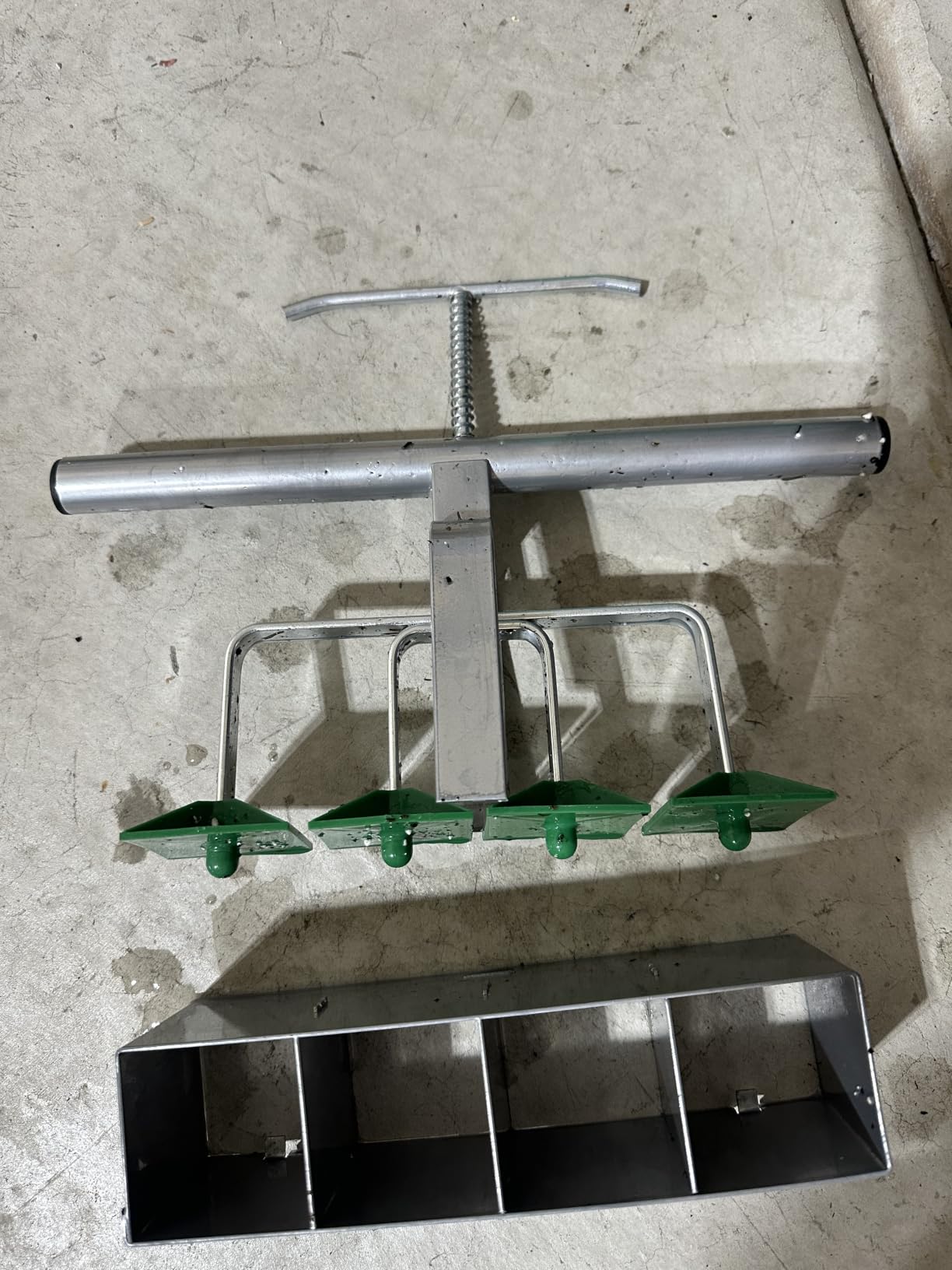
The SOLIGT tool answers the most common complaint about budget steel presses: uncomfortable edges. Its rounded handle design removes the sharp seam you feel after a few hundred presses, and buyers call it noticeably quieter than tin versions. It rates 4.3 from 329 reviews with 70 percent five-star ratings.
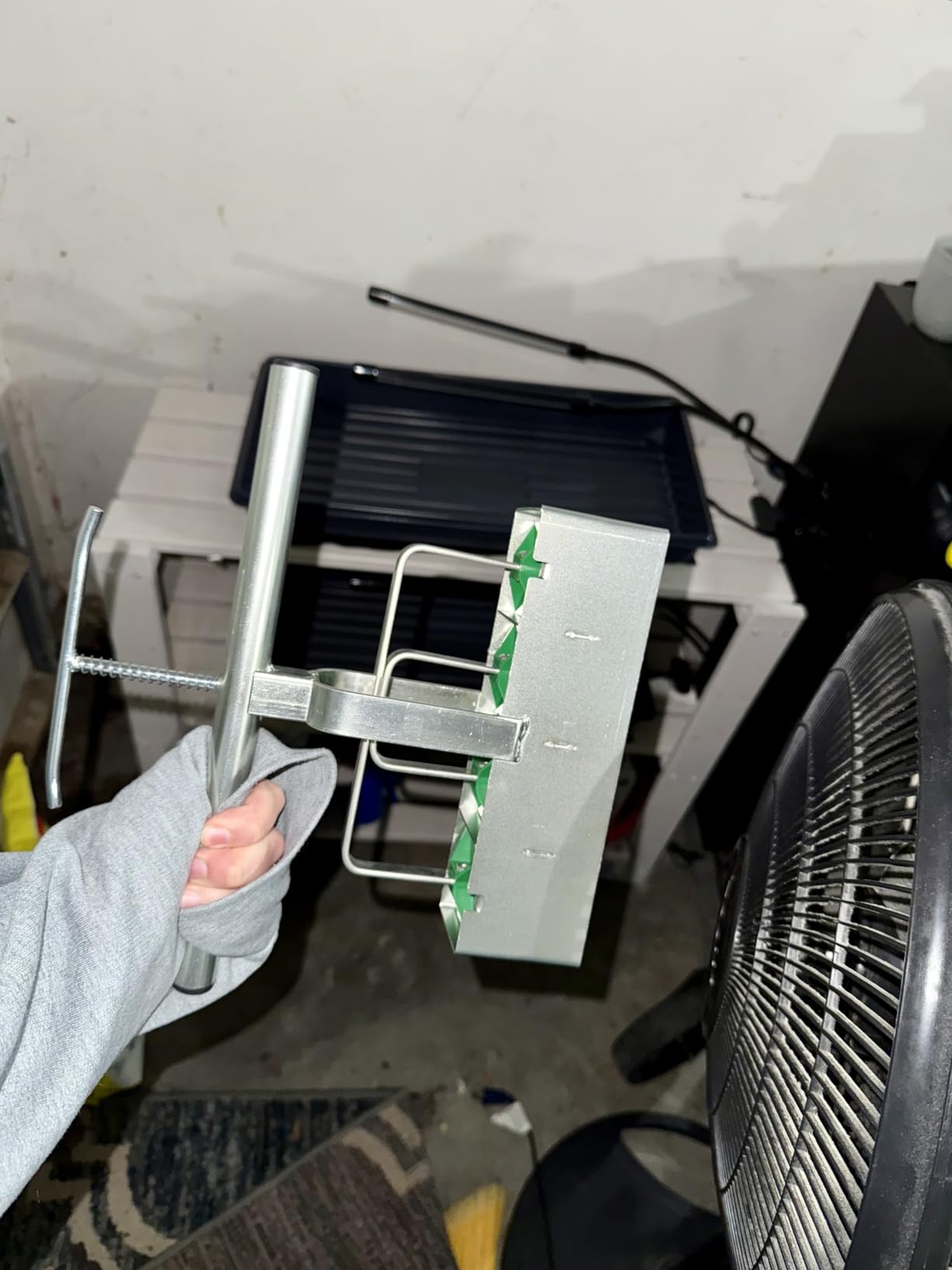
It weighs 0.95 kg, which sits in the middle of the group, and the build is heavy-gauge steel described as rust resistant. The working structure is strong enough to separate the finished cubes from the mold cleanly, and each block comes out as a square 2-inch cube with a seed dimple.
The result is a straightforward four-block press that removes plastic pots from the routine and transplants seedlings without pulling them out of a cell tray. For a gardener moving from trays to blocks for the first time, the ergonomics matter more than brand pedigree.
The SOLIGT press is the best value for hand comfort at a four-cell size
Reviewers single out the handle as the reason to pick it over generic steel. Long sessions are the point, because each press is one round trip to the tray, and a rounded handle reduces the blisters and finger digging that make people quit blocking after a week.
It also ships with seed pin inserts so the dimples are already the right depth, and blocks transplant whole. If you start around 100 to 200 plants a season, four blocks per press is a comfortable rhythm.
The SOLIGT press will not rescue you from bad soil moisture
Almost every complaint about this tool is technique rather than hardware. Block consistency depends heavily on getting the moisture right, and the instruction sheet is minimal for someone who has never made a block before. A few buyers report seed pin inserts that loosen or need replacing during use.
Plan on a tray of practice blocks before you sow anything expensive into it. Once the moisture is dialled in, owners report consistent results and a tool that holds up.
6. The BlumWay 8-Cell Blocker Is Best for Higher Output per Press
BlumWay Soil Blocker, 8 Cell 2 inch Soil Block Maker for Seed Starting
8 blocks of 2 inch per press
Stainless steel body
3 seed pin sizes
8 inch high
Pros
- Eight cells double the output of a four-cell 2 inch press
- Stainless steel holds up season after season
- Three seed pin sizes give different hole depths
- Rounded handle does not dig into fingers
Cons
- Noticeably heavy at 1530 g
- Hand pressure is challenging with joint pain
- Instructions do not explain the soil mixture
The BlumWay is the first stainless steel tool in this group to double the 2-inch output. Eight cells per press means a full 1020 tray area fills in far fewer trips, and that is where the time savings come from. It holds a 4.4 average across 272 reviews with 71 percent five-star ratings.
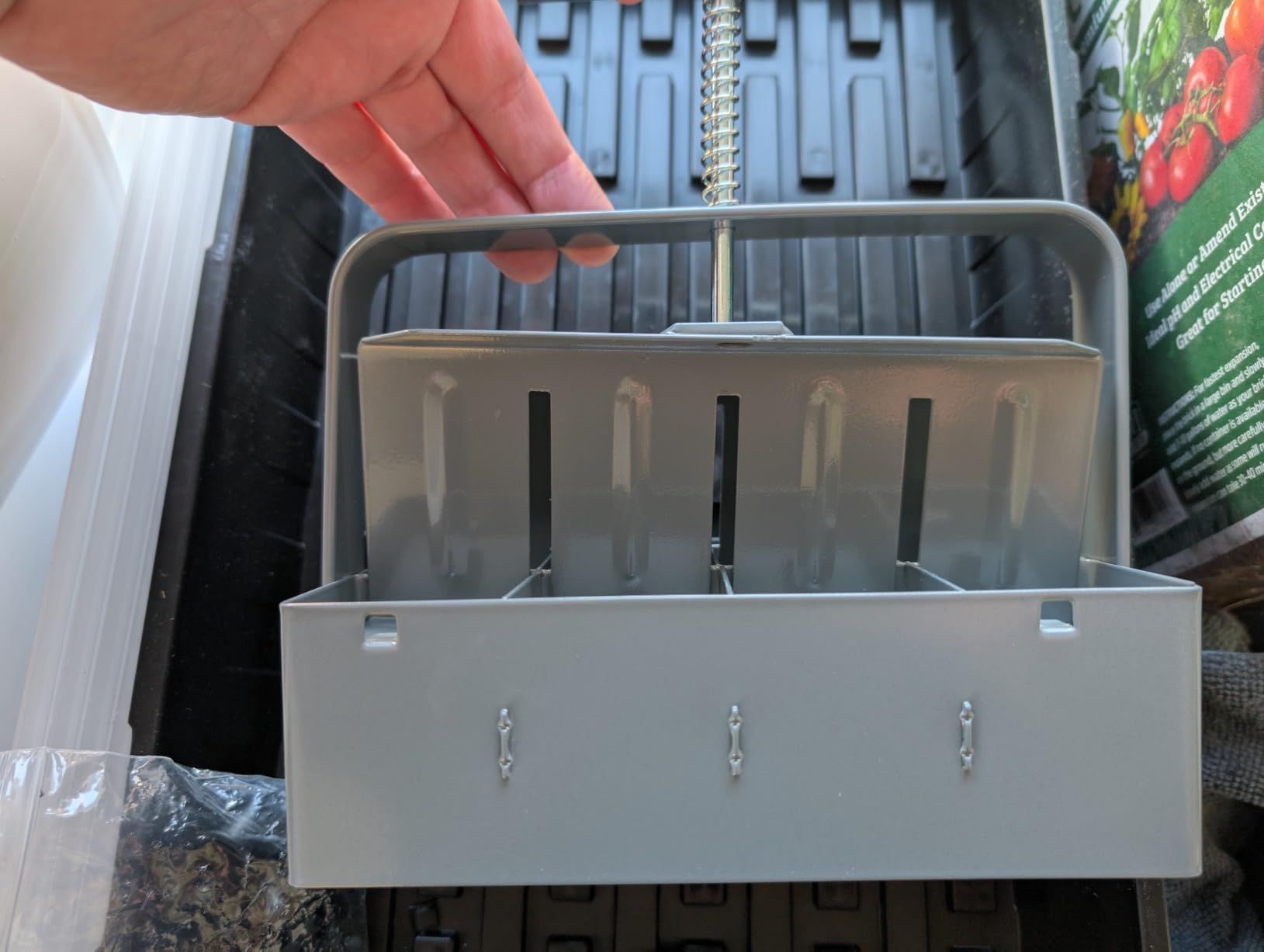
The body is stainless steel rather than coated carbon steel, which is why owners expect it to survive season after season without the corrosion questions that come with cheaper finishes. It stands 8 inches high, which keeps the press upright and manageable on a crowded bench.
The three included seed pin sizes are the detail worth paying attention to: square, short cylinder and long cylinder. Swapping the pin changes the hole depth and shape, so the same tool handles a lettuce seed and a cucumber seed without a second implement.
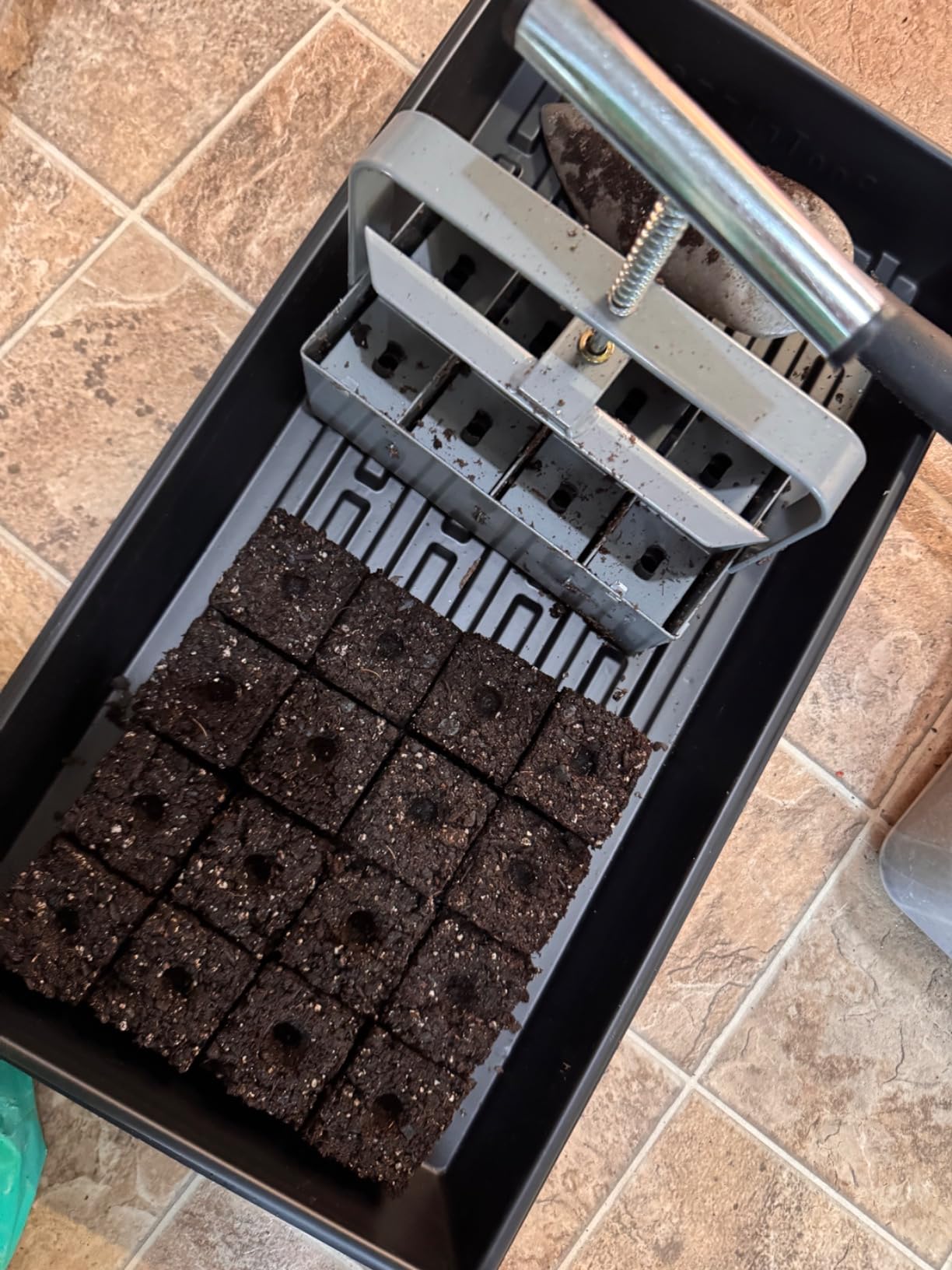
The BlumWay is the right press when you want a full tray in a single session
Output per press is the whole argument, and it compounds. If a tray takes four presses with a four-cell tool and one with this one, you also cut the number of times you re-moisten the mix, and consistency improves because you are sampling the same mound fewer times.
Reviewers highlight the strong spring and working structure, which release blocks cleanly once you have the technique, and the rounded handle that does not dig into fingers during a long run.
The BlumWay is heavy and demanding on hands that already hurt
At 1530 g it is the heaviest tool we tested in this roundup, and the strong spring that makes clean releases possible also makes the press demanding. Buyers with joint or hand pain specifically call out the hand pressure required. The supplied instructions are thin and do not explain what soil mixture to use.
For a market garden producing hundreds of transplants a week, the efficiency wins. For one home gardener with a tray of tomatoes, it is more tool than the job needs.
7. The FANFX Manual Blocker Comes With the Most Seed Pins
Manual Soil Block Maker Micro Soil Blocker Set 2 inch Soil Block Soil Blocking Tool for Seed Stater Tray
4 blocks of 2 inch per press
Stainless steel
12 seed pins in 3 sizes
0.74 kg
Pros
- Sturdy stainless steel producing uniform 2 inch blocks
- Includes 12 seed pins across three sizes
- Easy to clean and simple to assemble
- One year quality guarantee included
Cons
- Some shipments arrive with a missing handle bolt
- Seed pin inserts fit loosely and fall out
- No printed instructions and sharp steel edges
The FANFX set is the most generously specced of the four-cell tools on pin accessories. It includes 12 seed pins across three sizes, four each of 0.82 by 0.43 inch, 0.43 by 0.39 inch and 0.66 by 0.66 inch, which covers everything from fine herb seed to larger cucumbits. It rates 4.0 from 257 reviews, and it is the lowest-rated tool in the group for one specific reason.
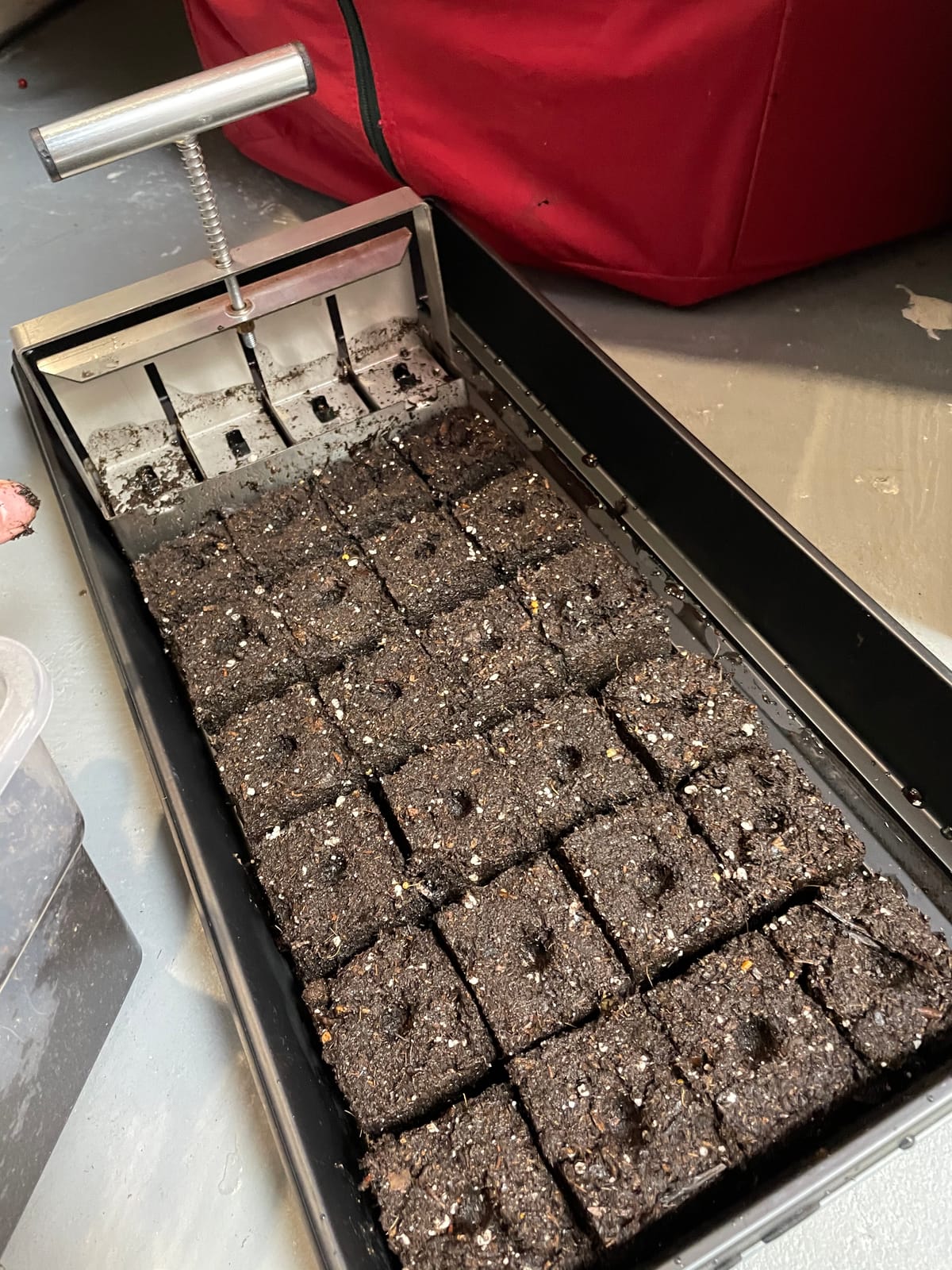
The stainless steel body and handle are 0.74 kg and measure 2.4 by 5.71 by 8.62 inches. Owners who receive a complete unit describe it as well built and sturdy, producing uniform 2-inch blocks, and it is easy to clean and assemble. A one year quality guarantee is included, and the maker notes that light scratching from cutting will not affect use.
Weight is worth noting for anyone comparing it to the SOLIGT and nanovi presses. At 0.74 kg it sits below the heavy end of the four-cell group, which reduces hand fatigue on a long pressing run.
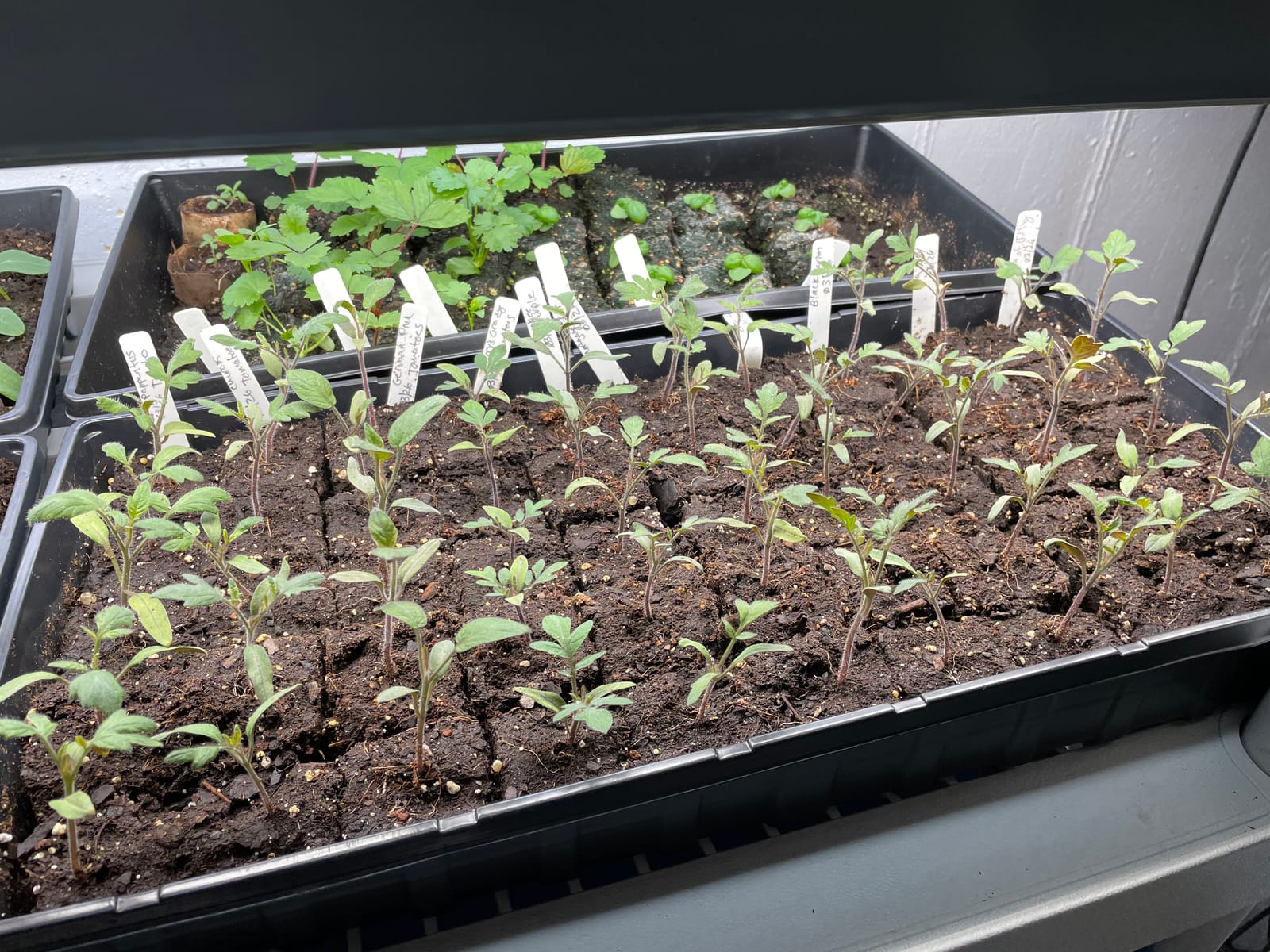
The FANFX is a solid four-cell press if your shipment arrives complete
The consistent praise is for build quality and uniformity of the finished block, plus the pin assortment. Gloves are worth wearing, since the steel edges can scratch, and the tool rinses clean without disassembly. It removes plastic seed containers from the workflow and cuts transplant handling.
For a gardener who wants one tool that handles several seed types without buying extra pins, the three included sizes are a genuine advantage over most rivals.
The FANFX has a shipping defect that shows up often enough to plan around
Several buyers received the tool with the handle bolt or its drilled mounting hole missing, which rendered it unusable until repaired. That is the defining negative theme in the reviews and the main reason the average sits at 4.0 with 11 percent one-star ratings. Seed pin inserts also fit loosely and fall out easily, and there are no printed instructions.
Our advice is simple: check the bolt and the pin inserts the moment it arrives, before you mix your blocking soil.
8. The MELVTATA Blocker Adds a Five-Size Seed Dispenser
MELVTATA Soil Blocker for Seed Plants
4 square blocks of 2 inch
Galvanized steel body
5-size seed dispenser
0.96 kg
Pros
- Makes four uniform 2x2 inch square blocks
- Pre-punched seed holes in every block
- Bundled 5-size seed dispenser controls seed flow
- Galvanized steel is simple and durable
Cons
- Consumes plastic seed pins that can be lost
- Block shape depends on soil moisture
The MELVTATA is the only tool here that bundles a multi-outlet seed dispenser. Five different outlet sizes let you control the flow of seed, which directly addresses the complaint that hand-placing fine seed into a dimple is the slowest part of the whole process. It rates 4.2 from 204 reviews with 64 percent five-star ratings.
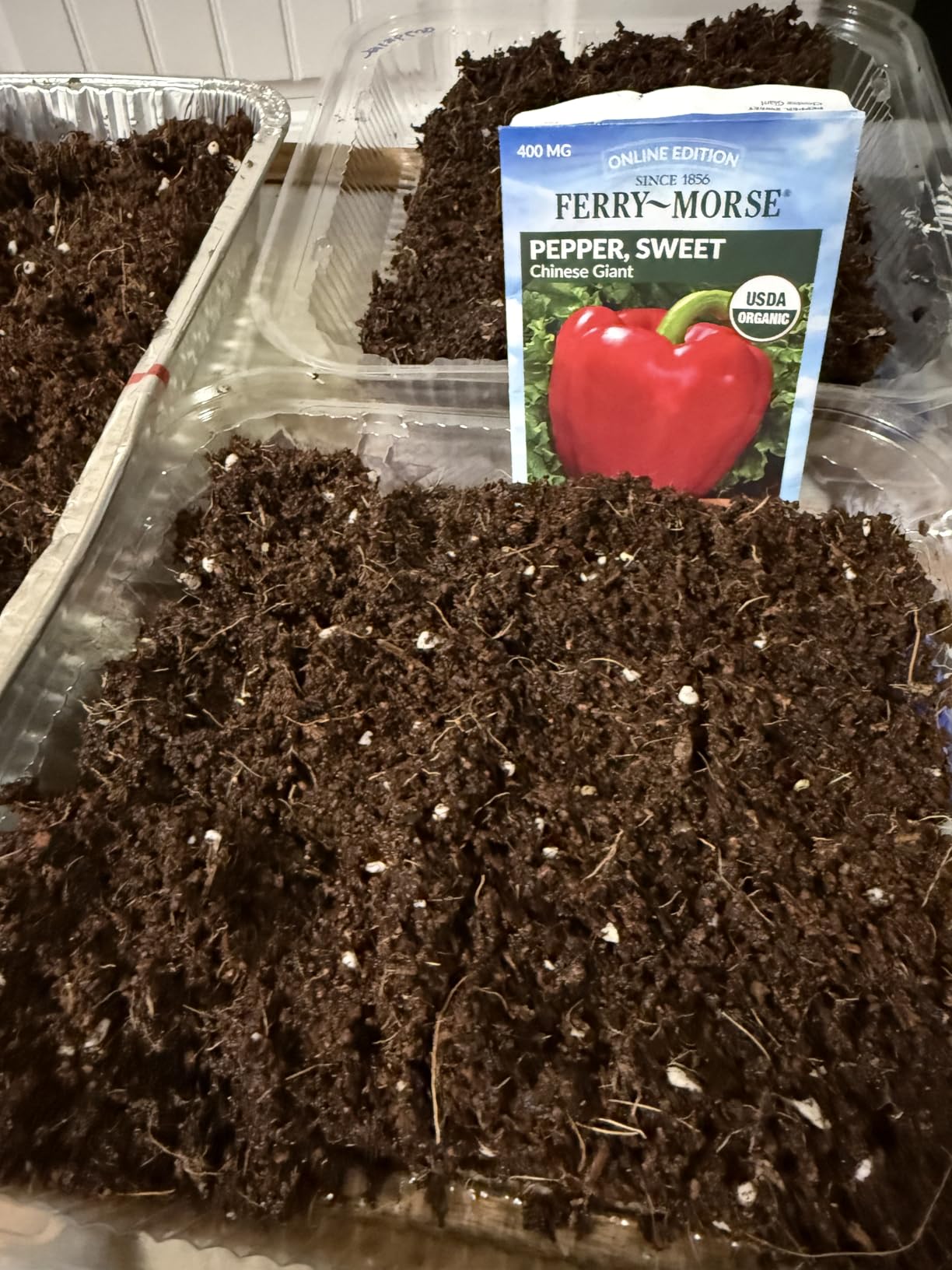
The body is galvanized steel with a deliberately simple structure, weighing 0.96 kg, and it makes four 2 by 2 inch square blocks per press. Squares matter more than they sound: flat sides sit tight against each other in a tray, and the tool’s own listing notes it produces blocks that transplant without damaging roots.
Each block comes out with small holes already punched in the top, so you are not poking at wet soil with a toothpick. It is a straightforward tool for anyone who wants uniform blocks and a controlled seed drop in one step.
The MELVTATA is the best pick when seed placement is your sticking point
The dispenser is unusual value at this level of build quality, and reviewers call it out specifically. Combined with pre-formed holes, it turns the slowest task in soil blocking into something you can repeat at the same accuracy across a whole tray.
The galvanized steel is described as durable and easy to use repeatedly, with a straightforward press, lift and squeeze motion. It also means no disposable seed starter containers in the process.
The MELVTATA uses plastic seed pins and still depends on moisture
The pins are a consumable, and buyers note they can be lost or need replacing, which is a small ongoing cost and a small plastic use in a method built around cutting plastic. The other familiar caveat applies: the block shape depends on getting soil moisture right.
Neither issue is serious, but both are worth knowing before you commit to it as your only tool.
9. The zukakii Press Has the Thickest Claimed Steel Gauge
zukakii Soil Blocker 2 Inch 4 Cell Upgraded Soil Block Maker Heavy Duty with Comfortable Handle and 3 Sizes Seed Pins Handheld Soil Blocking Tool for Seed Starting transplanting Germination
4 blocks of 2x2x2 inch
Zinc-coated heavy gauge steel
Rounded handle
1.14 kg
Pros
- Thickened round handle with no sharp edges
- Consistent 2 inch cubes with a seed dimple in each
- Three seed pin sizes included
- Simple press and release motion
Cons
- Some tools arrived bent or rusted and need cleaning
- Seed pin inserts can fall out while pressing
- Occasional uneven compression on some tools
The zukakii press makes a specific claim that matters: heavy-gauge iron reported as 30 percent thicker than typical, with a zinc-coated finish. Thicker steel is what stops a blocker flexing under pressure, and that is the failure that turns cheap tools into frustrating ones. It rates 4.0 from 158 reviews with 63 percent five-star ratings.
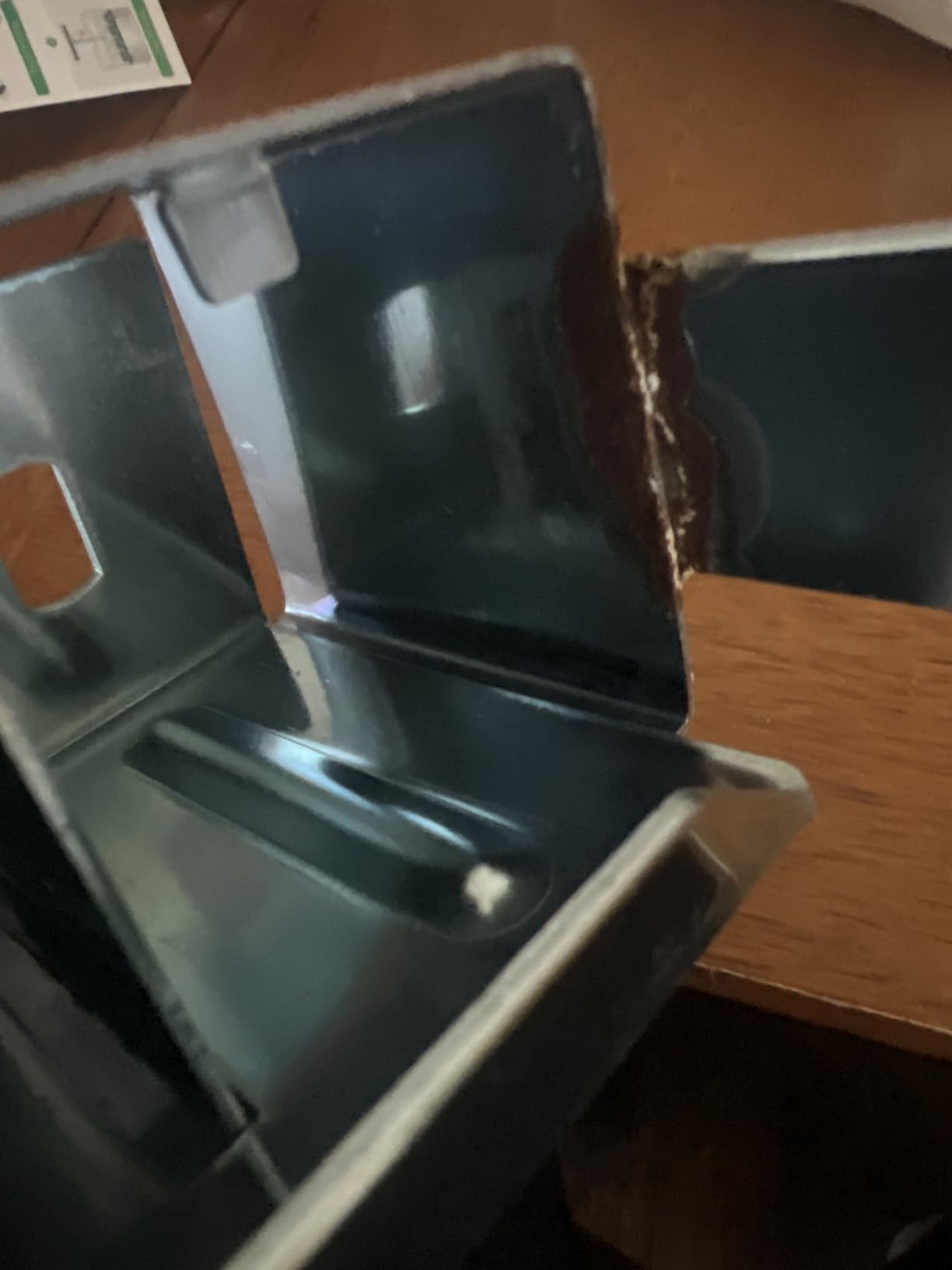
The handle is a thickened round shape with no sharp edges, and the spring has been improved so the four 2 by 2 by 2 inch cubes separate from the mold cleanly. It weighs 1.14 kg, which is honest weight for real steel, and the cube design is meant to increase air circulation around the seed and reduce transplant shock.
Three sizes of seed pins ship with it, so you can match the hole to the seed without buying anything else. Many users find it simple, durable and effective for beginners.
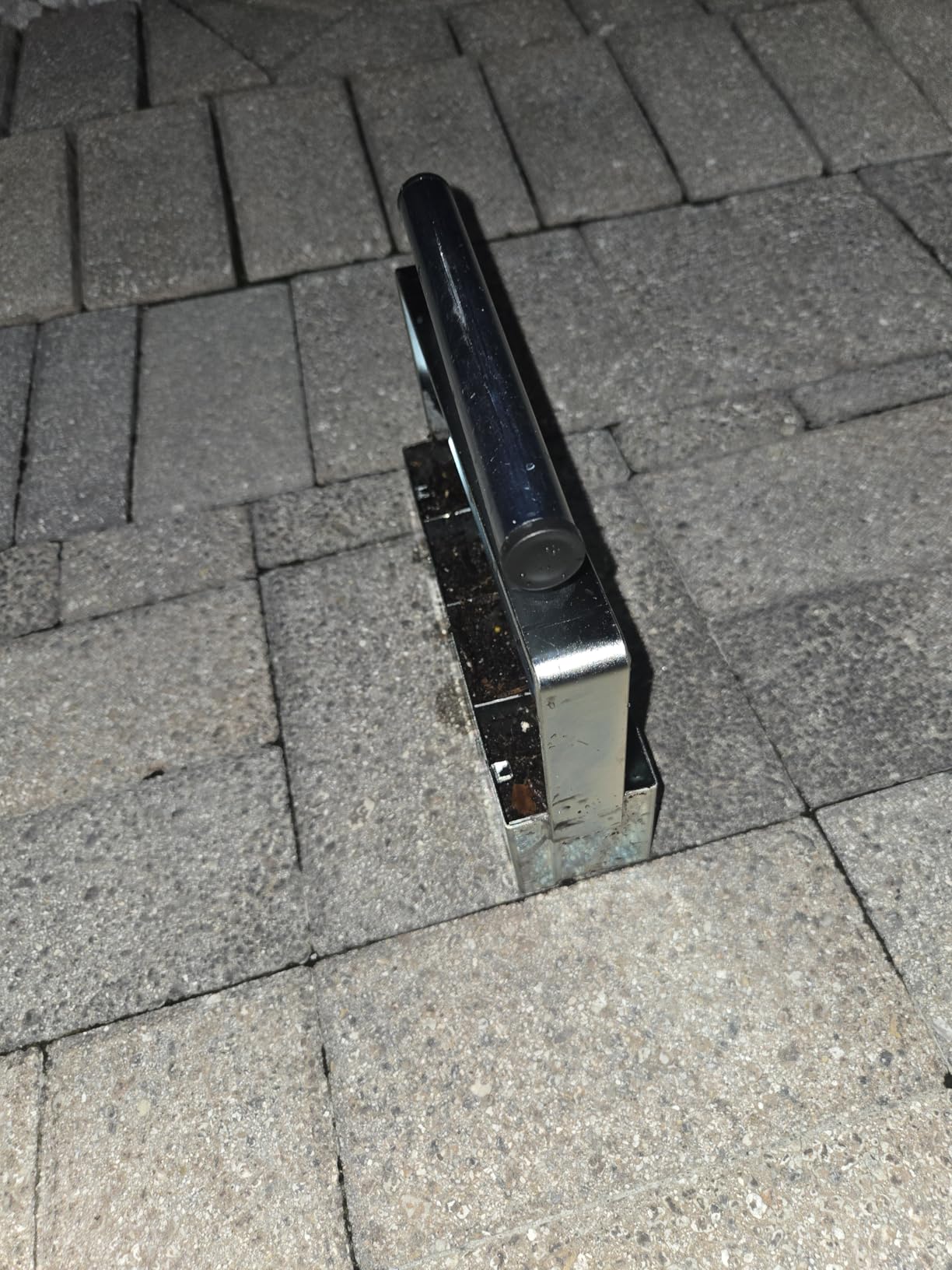
The zukakii press suits growers who press a lot of blocks in one sitting
The thickened handle is the practical feature, because the round profile spreads pressure instead of digging into your palm. Reviewers who master the moisture find consistent cubes with a dimple in each one, and the press-and-release motion takes no learning beyond getting the mix right.
It also covers seedlings, cuttings and greenhouse work, not just seed starting, which makes it more versatile than the label suggests.
The zukakii press has inconsistent arrival quality worth checking
The negative feedback clusters on what arrives rather than what the tool does. Some buyers received tools bent or rusted and had to clean them before use, and seed pin inserts can fall out during compression. One reviewer found a tool that would not compress fully and produced inconsistent blocks, which points to a spring tolerance problem rather than a technique problem.
Expect some trial and error to find the right soil moisture, and inspect the tool the day it arrives.
10. The nanovi Blocker Has the Most Consistent Quality Record
Nanovi Soil Blocker, 2 Inch Soil Block Maker with 3 Sizes Seed Pins & Comfortable Handle 4 Cell Handlheld Soil Blocking Tool for Seed Starting, Grow Seedling, Outdoor Plants, Greenhouses, Garden
4 blocks of 2 inch per press
Zinc-coated steel
3 seed pin sizes
1.11 kg
Pros
- Sturdy zinc-coated steel expected to last for years
- Rounded handle with no sharp edges
- Three seed pin sizes for different seeds
- Washes off easily and blocks transplant whole
Cons
- Fiddly while you learn the right soil wetness
- Some shipments missing the handle bolt
- Blocks dry faster than plastic cells
The nanovi press is the quiet standout on consistency. It holds 4.4 from 154 reviews with 71 percent five-star ratings and only 3 percent one-star, the tightest spread of any tool in this group. Owners describe zinc-coated steel they expect to last for years and a rounded handle that works with easy hand pressure.
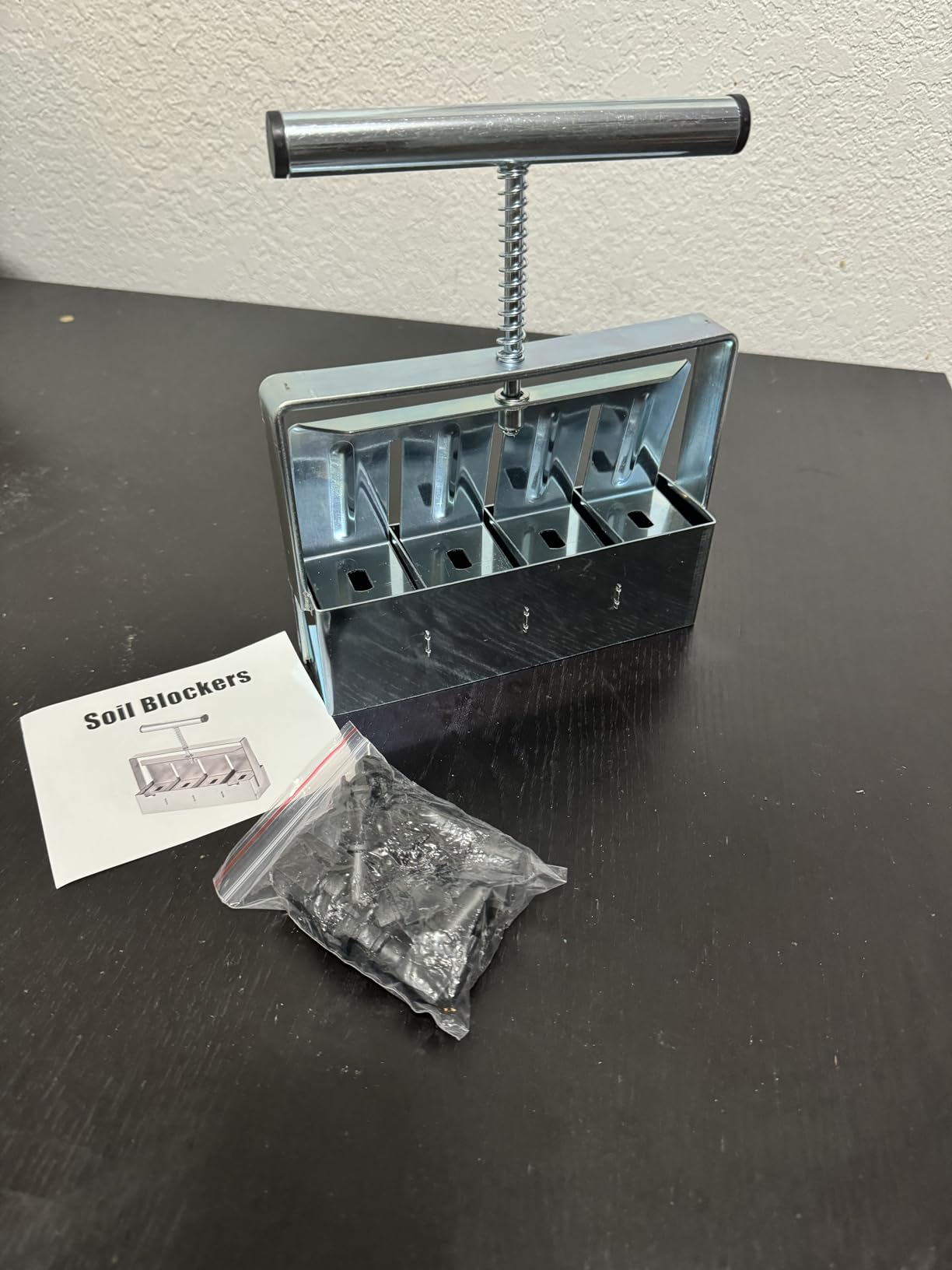
It weighs 1.11 kg and includes three sizes of seed pins plus a user manual, which is more documentation than most competitors ship. The maker describes waterproof thickened zinc-coated steel, and the operation is simple: fit the pins, press into moist soil, place on the seed flat, and squeeze with palm and fingertips together.
Because the tool acts as both container and growing medium, seedlings transplant without the root disturbance, stunting and slow growth that root-bound plug tray starts often suffer.
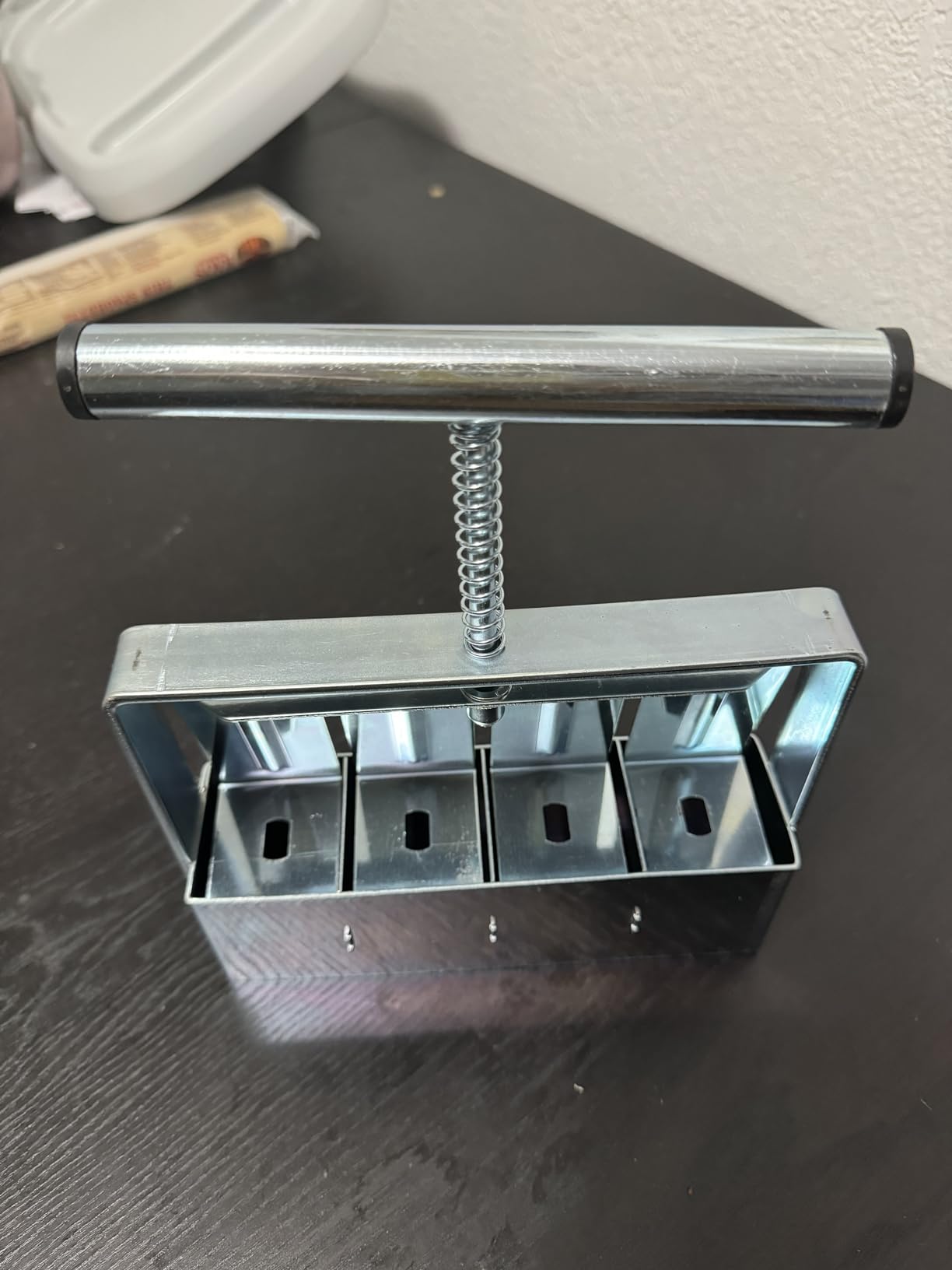
The nanovi press is the safest four-cell buy if arrival quality worries you
Few tools in this category reach 4.4 with a tiny one-star share, and that consistency matters more than any single feature. The rounded handle has no sharp edges, the seed pins swap easily for different hole sizes, and the tool washes off without fuss.
It also blocks in a tray with a wider seed assortment than the 2-cell alternatives, which keeps a mixed propagation schedule workable in a small space.
The nanovi press dries out faster than plastic cells and has a bolt problem
Blocks dry faster than plastic cells, so they need closer attention and a consistent watering rhythm. Expect a fiddly first session while you learn the right soil wetness, which is the learning curve nearly every tool in this roundup shares. A minority of shipments have also arrived without the handle bolt.
One quality complaint mentions sharp edges around the parts and a loose fit, so a quick inspection before the first press is worth the minute.
How to Use a Soil Blocker in Six Steps
Every tool in this roundup works the same way, so the technique is worth learning once before you compare hardware. The whole sequence takes about ten minutes for a full tray.
1. Wet the mix properly. Add water to your blocking medium and work it until it holds a squeezed shape but still breaks apart with a thumb. Saturated mix smears and dry mix crumbles, and both ruin the cube.
2. Fit the seed pins. Push the pin size you want into the top of each cell before you load the tool, so every block comes out with the same dimple depth.
3. Mound and press. Heap the wet mix into a mound on a flat surface, press the blocker straight down into it, then rock it back and forth and side to side until all cells are filled.
4. Lift and squeeze. Lift the tool clear of the mound, move it over your flat 1020 tray, and squeeze the handle. Blocks should drop out with minimal handling.
5. Sow and cover lightly. Place one or two seeds per dimple and press a thin layer of dry vermiculite or sifted mix over the top, no deeper than roughly twice the seed width.
6. Bottom water under a dome. Set the tray in a shallow pan of water so the blocks wick it up from below, cover with a humidity dome until emergence, then move to lights at 14 to 16 hours a day.
Which Blocker Size Matches Your Seeds?
Matching block size to seed size is the decision beginners most often overcomplicate. The consensus among experienced growers is that a micro block handles the large majority of what a home gardener sows, and that buying the full ladder on day one is a common and expensive impulse.
3/4 inch micro blocks suit lettuce, basil, parsley, celery, tomatoes and small-seeded flowers. The tiny cells mean a seed per block with no wasted medium, but they dry out fast and need either a dome or daily watering, so the Micro 20 is a second tool rather than a first one for most people.
1.5 inch mini blocks are the middle step for herbs and flowers that need more room than a micro block but not the volume of a full 2-inch cube. They are the natural destination for transplanting up from micro blocks.
2 inch maxi blocks are the general-purpose size. This is where tomatoes, peppers, brassicas, squash and most flowers belong before planting out, and it is the size every 4-cell and 8-cell tool on this list produces.
Stand-up multi-cell presses exist for growers producing transplants at real volume, and growers on r/vegetablegardening describe using a 35-cell stand-up block for a big garden, fitting three sets into a 1020 tray. None of the handheld tools we tested reach that output, so market-scale propagation is a different buying decision than this roundup covers.
Soil Blocker Buying Guide: Material, Grip, and Cell Count
Zinc-coated or EP-coated steel is the default for good reason. The coating resists corrosion, moisture and soil chemicals, and the resulting weight means the tool does not flex when you press. The Ladbrooke tools have been made in England since the 1960s with premium EP-coated steel, and the budget presses here use comparable coatings at a lighter duty. Expect a few rust complaints on the cheapest zinc-coated options, and clean tools after each session.
Stainless steel is the no-rust answer, and it shows up on the BlumWay, FANFX and MELVTATA tools. It is heavier, which some growers like and others with hand or joint problems do not. If your storage is damp or you want to stop thinking about corrosion entirely, stainless is the safer long-term material.
Plastic works, and the Fiskars tool proves it with a lifetime warranty and no rust risk at all. The trade-off is geometry, not durability, since round blocks do not nest or pack into standard trays. A commenter on r/pnwgardening asked whether any soil blocker is completely plastic free, and the honest answer for this roundup is that every one of these ten tools has a plastic or metal component and only the metal presses eliminate single-use trays.
Cell count is a time trade. Four cells per press is a comfortable rhythm for a few hundred plants. Eight cells, as on the BlumWay, fills a tray faster but needs more force. Twenty micro cells, as on the Micro 20, maximises shelf space for fine seed but multiplies the number of tiny blocks that need daily moisture checks.
Handle shape matters more than specs suggest. Rounded handles on the SOLIGT, BlumWay and nanovi tools remove the blisters that end a season of blocking, and the Reddit consensus is that pressing repeatedly is the least enjoyable part of the process. If you already have joint or hand pain, look for a lighter tool or consider hand-filling small batches instead of pressing.
Sizing and tray fit is worth verifying before you commit. Square 2-inch blocks pack tight into a flat 1020 tray, while round blocks leave gaps. If you are planning a whole setup, our seed spreader and seeding equipment guide covers the supporting tools, and soil aeration matters for the garden you are transplanting into.
Troubleshooting: Gnats, Mold, and Blocks That Fall Apart
Fungus gnats are the most cited complaint in every gardening forum discussion about blocking, and the cause is consistent: blocks stay wet for a long time and organic-rich mix attracts them. Bottom watering from a shallow tray, wiping standing water away, and keeping finished blocks on a mesh-bottom tray that drains freely all reduce the problem. Sticky traps catch adults, and letting the top of the block dry slightly between waterings reduces the attraction.
Damping off and surface mold appear when blocks are either too wet or allowed to dry out completely during germination. The fix is consistency rather than volume: water on a schedule, use a dome until emergence, then remove it and increase light rather than increasing water. Cinnamon dust on the surface is a widely used home remedy, and a fan on low circulation helps.
Blocks that crumble or fall apart have almost always lost too much moisture. Once the coir and compost in a blocking mix dry out, the cube has nothing holding it together, and no tool can fix that. Keep them out of direct sun and off a dry shelf, and treat solid-bottom trays plus a consistent watering rhythm as part of the tool, not an accessory.
Seeds that never germinate are usually a depth or moisture problem rather than a blocker problem. Press seed no deeper than roughly twice its width, keep the dome on until you see emergence, and move to lights quickly afterwards. Damping off kills seedlings so fast that a tray can look fine and be lost in a day, so check daily during the vulnerable window.
Overhead watering is the mistake that ruins the most blocks. It collapses the top of the cube and washes seed out of the dimple, which is why bottom watering is not optional. If you are moving to blocks to cut plastic waste, adding it to your soil care routine is a good time to rethink watering habits too.
The Best Soil Blocking Mix and Where to Get It
Blocking mix is not the same as ordinary potting soil, and that difference decides whether your blocks hold shape. Standard peat-based seed starting mix is too loose and too fluffy to compress into a cube that keeps its edges. You want a mix with coir or compost that binds when pressed, plus perlite for air space.
Two premixes are the reference points. Fort Vee from Vermont Compost and Johnny’s 512 mix are both formulated for blocking, and both are widely recommended for a reason. Most home growers can build their own cheaper: coco coir as the base, compost or worm castings for fertility, and perlite for drainage. Home mixers on r/outdoorgrowing report success with coco coir, worm castings and wool pellets in place of a premix.
Mix it wet in a bucket rather than dry in a tray, and let it sit so the water distributes evenly. Sift out chunks before loading the blocker, especially for micro blocks, because a single stone will crumble a whole press of 3/4-inch cubes.
Frequently Asked Questions
What is soil blocking?
Soil blocking is a seed-starting method where a metal or plastic tool is pressed into moist, compost-based potting mix to form compressed cubes with seeds sown into the top. The exposed sides air-prune roots as they reach the block edge, producing a dense, fibrous root system that transplants with minimal shock and removes disposable plastic cell trays entirely.
What are the disadvantages of soil blocking?
The main drawbacks are a learning curve around soil moisture, blocks that dry out faster than plastic cells, and fiddly seed placement without a seed pan or pins. Blocks crumble if they dry out or break down under overhead watering, so bottom watering and a consistent rhythm are required rather than optional.
What is the best mixture for making soil blocks?
Fort Vee from Vermont Compost and Johnny’s 512 mix are the reference premixes for blocking. A cheaper home blend uses coco coir as the base, compost or worm castings for fertility, and perlite for drainage. Mix it wet in a bucket and sift out chunks, since standard peat-based potting soil is too loose to hold a cube.
How long do soil blocks last?
Blocks stay intact through germination and early seedling growth, typically several weeks from sowing until transplanting size, provided they are kept evenly moist. After transplanting, the cube goes into the ground or a larger pot and breaks down naturally, so a soil block maker is a season-after-season tool rather than a single-use item.
Can I make my own soil blocker?
You can, using a length of 2 by 2 timber with square holes cut into one end, a piece of 1 by 2 for a handle, and screws to join them. The wood swells when damp and the cubes are slightly rougher, but a homemade press costs a fraction of a steel tool and teaches you the packing and moisture technique for free.
Conclusion: The Best Soil Blockers for Seed Starting in 2026
The Ladbrooke Mini 4 remains the single best soil blocker for seed starting in 2026. Four 2-inch blocks per press, decades of steel construction and a 4.7 average from 1,183 reviews make it the tool we would buy first, and the Micro 20 or the 5-Piece Essentials Set is the natural second purchase when you want the full size ladder.
Start with one size, buy a real blocking mix, water from the bottom, and give yourself three trays to get the moisture right. The hardware is the easy part.