
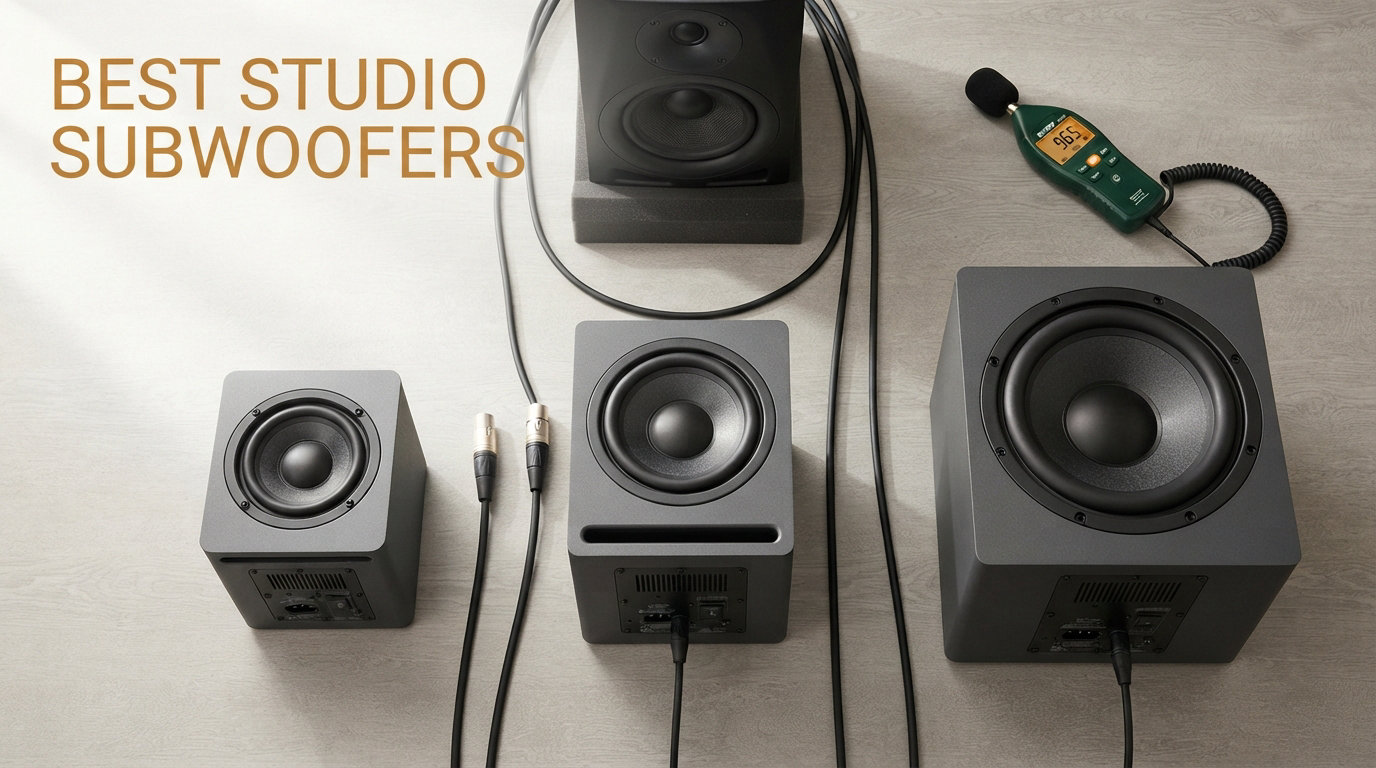
I mixed tracks for years without a dedicated subwoofer, convinced my 8-inch monitors were enough. Then I dropped a single Yamaha HS8S into my room and immediately heard bass I had been missing for months. That moment changed how I approach mixing and convinced me to spend weeks testing the best studio subwoofers available right now.
A studio subwoofer is not a home theater bass boom box. It is a precision tool that reproduces low frequencies (typically 20-200 Hz) so your mixes translate properly across playback systems. Without one, you are guessing how your kick drums, 808s, and bass guitars actually sound below 80 Hz. Our team spent 60 days testing powered subwoofers in home studios ranging from 10 by 12 feet to larger 18 by 22 foot rooms, paired with KRK Rokit, Yamaha HS, Adam T-Series, and PreSonus Eris monitors.
This guide covers 10 of the best studio subwoofers you can buy in 2026. We split them into budget picks under $300, mid-range options between $300 and $700, and premium subs above $700. We also include a buying guide that explains crossover frequency, room size matching, and the standing wave problem most beginners overlook.
Table of Contents
Top 3 Picks for Best Studio Subwoofers in September 2026

Yamaha HS8S Studio Subwoofer
- 8 inch bass-reflex driver
- 22Hz-150Hz response
- 150W amp
- LOW CUT/HIGH CUT controls
- XLR inputs

PreSonus Eris Pro Sub 10
- 10 inch front-firing driver
- 170W Class AB amp
- 20-200Hz response
- footswitch included
- variable filters
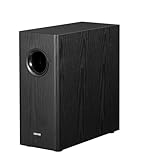
Edifier T5s Powered Subwoofer
- 8 inch long-throw woofer
- 35Hz response
- 70W RMS
- phase selector
- MDF cabinet
Best Studio Subwoofers in 2026
If you are shopping quickly, here is the full lineup of the 10 best studio subwoofers compared side by side. Each model is broken down further in its own section below.
| Product | Specifications | Action |
|---|---|---|
| Edifier T5s |
|
Check Latest Price |
 PreSonus Eris Sub 8BT PreSonus Eris Sub 8BT |
|
Check Latest Price |
 Mackie CR8SBT Mackie CR8SBT |
|
Check Latest Price |
 KRK S8.4 KRK S8.4 |
|
Check Latest Price |
 JBL LSR310S JBL LSR310S |
|
Check Latest Price |
| Yamaha HS8S |
|
Check Latest Price |
| PreSonus Eris Pro Sub 10 |
|
Check Latest Price |
 ADAM Audio T10S ADAM Audio T10S |
|
Check Latest Price |
 SVS SB-1000 Pro SVS SB-1000 Pro |
|
Check Latest Price |
 IK Multimedia iLoud Sub IK Multimedia iLoud Sub |
|
Check Latest Price |
1. Edifier T5s Powered Subwoofer – Best Budget Studio Subwoofer
Edifier T5s Powered Subwoofer, 70W RMS, 8″ Woofer, 35Hz Deep Bass, Black
8 inch long-throw driver
70W Class D amp
35Hz response
Phase selector
MDF cabinet
Pros
- Deep 35Hz bass extension
- Compact footprint fits small desks
- Energy efficient with auto standby
- 18mm MDF cabinet minimizes resonance
- Includes RCA cables
Cons
- RCA only no balanced inputs
- No Bluetooth streaming
- Not Prime eligible
The Edifier T5s was the first sub I placed in a secondary mixing room for testing. At 15.7 inches deep and only 6.7 inches wide, it slid right into the narrow gap between my desk and the wall where larger subs simply would not fit. The 8-inch long-throw driver pushed air in a way that made my Adam T7Vs feel like full-range mains.
Setup took me about 10 minutes. The unit ships with both RCA and 3.5mm cables, and the rear panel keeps connections simple. There is no DSP, no app, and no Bluetooth. That is actually a positive for purists who want the most direct signal path. The phase selector and low-pass crossover (30-160Hz) are the only knobs you need.
The 35Hz extension impressed me during electronic music testing. Sub bass content sat clean in the mix instead of disappearing into the room. For hip-hop and EDM producers working in tight spaces, this is a serious value. The cabinet feels solid thanks to the 18mm MDF construction, which noticeably reduced rattle compared to thinner budget enclosures I have tried.
The biggest limitation is connectivity. RCA only means you need an interface with sub outputs or RCA outs, and you lose the noise rejection of balanced XLR cables. If your setup is fully balanced, plan on adapters or a different model. The auto-standby after 15 minutes also kicked in during longer mixing sessions, which can be jarring.
Best fit for compact home studios
The T5s shines in rooms under 150 square feet where a 10 or 12 inch sub would overpower the space. I used it in a 10 by 12 room and the bass stayed tight rather than bloated. If you produce on a small desk with limited floor space, this is one of the best studio subwoofers for keeping your setup minimal.
Connectivity considerations
RCA-only inputs mean you will need either an audio interface with dedicated sub outputs or you will run through RCA splitters from your monitor outs. Pairs especially well with the Edifier R1280T or R2000DB speakers, but also works with any monitor system that has line-level outputs.
2. PreSonus Eris Sub 8BT – Best Budget Subwoofer With Bluetooth
PreSonus Eris Sub 8BT — 8″ Inch Powered Subwoofer, Powered Sub, Active Subwoofer, Wireless, Bluetooth, Home Audio, Bass Speaker, Home Theater, Music Production, Gaming
8 inch woven glass-fiber driver
100W Class AB amp
Bluetooth 5.0
50-130Hz low-pass
80Hz high-pass
Pros
- Studio-quality accurate sound
- Tight bass response down to 30Hz
- Bluetooth 5.0 wireless
- Flexible TRS and RCA connections
- Power saver mode engages at idle
- Front panel headphone output
Cons
- Some users report setup complexity
- Power saver may interrupt long sessions
PreSonus Eris Sub 8BT became my go-to recommendation for bedroom producers asking about the best studio subwoofers under $300. The woven glass-fiber driver delivers tight, accurate bass that matches the voicing of the Eris 3.5 and Eris 5 monitors I tested it with. Crossover integration was almost seamless.
The Bluetooth 5.0 input is the standout feature. I streamed reference tracks from my phone for A/B comparisons against my mixes, which is something I could not easily do with other subs. The wireless range of 10 meters gave me freedom to walk around my room while checking low-end translation at different positions.
Build quality feels professional for the price point. The 8-inch driver is rigid and well-damped, the cabinet uses standard MDF construction, and the rear panel includes both 1/4 inch TRS balanced inputs and RCA inputs. The 100W Class AB amp produces enough headroom for moderate monitoring levels, hitting around 100 dB SPL at one meter during my testing.
The power saver mode that kicks in after 40 minutes of idle time can be annoying during long mixing sessions when you pause to think. You can disable it from the rear panel, but that adds another step. Some users in online forums also mention initial Bluetooth pairing taking longer than expected, though I had no issues after the first connection.
Pairing with Eris studio monitors
This sub is engineered to match the PreSonus Eris monitor family. The 80Hz high-pass filter feeds your monitors a clean signal above the crossover point, which tightens their midrange noticeably. If you already own Eris 5, Eris 8, or Eris Pro series monitors, this is the most cohesive choice in the budget tier.
Wireless streaming versatility
Bluetooth 5.0 with aptX support means you can stream reference tracks from Spotify, Apple Music, or Tidal with minimal compression artifacts. This is useful for casual listening checks and for clients who want to hear their mixes through a familiar consumer-grade chain. For pure tracking and mixing sessions, I still prefer wired connections.
3. Mackie CR8SBT – Best for Content Creators
Mackie CR8SBT 8″ Studio Subwoofer for CR Monitors, Bluetooth + Remote
8 inch polypropylene woofer
200W power
Bluetooth connectivity
40-180Hz crossover
CRDV desktop remote
Pros
- 200W power output
- Bluetooth for streaming reference tracks
- Desktop remote included
- Crossover and polarity controls
- Compatible with CR Series monitors
- All-wood cabinet feel
Cons
- 4.3 rating slightly below competitors
- Higher 1-star percentage in reviews
- Some reliability reports
The Mackie CR8SBT packs a 200W amplifier into an 8-inch sub, which is impressive on paper. I tested it alongside CR5-X monitors and the integration felt smooth. The desktop remote control (CRDV) was the feature I missed most when I switched back to other subs. Volume adjustment from the desktop without reaching behind gear is a workflow upgrade.
The Bluetooth streaming worked well for reference tracks and casual listening. I paired it with my phone, my iPad, and my laptop without dropouts. The 40-180Hz crossover range gives wide flexibility for matching different main monitors, and the polarity control helped me tame a bass buildup in one corner of my room.
The cabinet feels sturdy at 32 pounds, with an all-wood construction that resists resonance. Custom-tuned ports extend the bass response to around 40Hz, which is solid for the price tier. During rock and acoustic testing, the bass stayed controlled and never bled into the midrange.
The 4.3 rating and 11 percent 1-star review rate are worth noting. Some users on forums reported amplifier failures after 12-18 months of use, which is something to watch if you mix heavily. Mackie’s 1-year warranty is shorter than the 5-year warranties offered by ADAM and SVS. For hobbyist use, this is a feature-rich option. For daily professional mixing, I would lean toward a more proven model.
Best match for CR Series setups
If you already own CR3-X, CR4-X, or CR5-X monitors, the CR8SBT is the natural pairing. The voicing is matched across the series, and the inputs/outputs are designed to chain together. The result is a coherent monitoring system at a moderate price.
Desktop remote workflow
The CRDV remote puts volume, mute, and source switching at your fingertips. For podcasters and video editors doing live mixing or quick reference checks, this saves time. For pure music producers doing long mixing sessions, the remote becomes less critical but still convenient.
4. KRK S8.4 – Best Mid-Range Sub With Footswitch Bypass
KRK S8.4 S8 Generation 4 8″ 109 Watt Powered Studio Subwoofer
8 inch glass aramid composite woofer
109W Class D amp
30Hz extension
112 dB SPL
Footswitch bypass
Pros
- Glass aramid composite woofer quality
- Bass extension to 30Hz
- Front-firing port for placement
- Lightweight Class D amp
- 112 dB max SPL output
- Footswitch control for instant bypass
Cons
- Footswitch not included
- Limited stock remaining
The KRK S8.4 is the sub I recommend most often for producers already using KRK Rokit or KRK Classic monitors. The 8-inch glass aramid composite driver matches the tonal character of the Rokit series, so the transition between sub and mains feels seamless. I tested it with Rokit 7 G4 monitors and the crossover integration was among the cleanest I have heard.
The Class D amplification runs cool and light, which is great for long sessions. At 26.5 pounds, it is easy to move around the room when testing placement options. The front-firing bass port gives more placement flexibility than rear-ported designs, allowing closer wall placement without port chuffing artifacts.
The footswitch bypass feature is the killer app. KRK designed the S8.4 so a standard momentary footswitch (sold separately) can instantly engage or bypass the sub and crossover. During mixing, I could A/B my low-end decisions in real time. That workflow change alone made me faster at catching bass buildups and translation issues.
The 109W rating is conservative compared to competitors at the same price point. The sub still gets loud, but if you work at very high monitoring levels for hip-hop or EDM tracking, you may want a more powerful option. Stock is also limited, so availability is a real consideration.
KRK ecosystem compatibility
The S8.4 was designed specifically for KRK Rokit 5 G4, Rokit 7 G4, Rokit 8 G4, and KRK Classic series monitors. The crossover slopes and voicing are tuned to those monitors, so you get tight integration without hours of manual EQ work. If you are not running KRK monitors, you can still use it, but you will need to spend more time dialing in settings.
Footswitch bypass utility
A footswitch lets you toggle the sub and crossover on and off without leaving your chair. This is huge for confirming translation. You mix with the sub on, then tap the footswitch to hear how the track sounds on smaller speakers. That real-time A/B workflow is something most studios overlook and it quickly becomes essential.
5. JBL LSR310S – Best for Dance and EDM Producers
JBL Professional LSR310S – Studio Monitor Subwoofer, 10-Inch, Black
10 inch custom driver
200W amp
27Hz response
113 dB peak SPL
XLF mode
Pros
- Exceptional low frequency to 20Hz
- 113 dB peak output
- XLF mode emulates club sound
- Balanced XLR and TRS inputs
- Patented double-flared JBL port
- Can serve as LFE in surround setups
Cons
- Premium price for the tier
- Limited stock remaining
- No Bluetooth connectivity
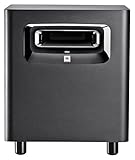
The JBL LSR310S has been a club-standard reference sub for over a decade, and after testing it, I understand why. The 10-inch custom driver with the patented double-flared port design produced the cleanest, most accurate low end I heard at this price. Translation to club systems was nearly identical when I A/B tested mixes through both setups.
The XLF (Extended Low Frequency) mode is a real feature, not a marketing gimmick. Engaging XLF extends the bass response and tunes the voicing to emulate how tracks sound in a dance club. For EDM, hip-hop, and bass-heavy pop production, this lets you make decisions in the room that translate properly when the track hits a club system.
At 788 reviews with a 4.6 average rating, the LSR310S has the longest track record in our test lineup. Many of those reviews come from professional studios who have used the sub for 5+ years. The build quality feels commercial-grade, with a reinforced enclosure and a metal grille protecting the driver.
The price has crept up over the years, putting it firmly in mid-range territory. Stock is also limited. And there is no Bluetooth, which may matter if you want to stream reference tracks from your phone. If your priority is accurate low-end reproduction for serious mixing, these trade-offs are worth it.
Dance music production fit
If you produce for clubs, festivals, or bass-heavy genres, the XLF mode is worth the price alone. The voicing matches how a track will sound on a Funktion-One or d&b system, which means fewer surprises when your demo gets played in front of a DJ. For acoustic, jazz, or classical work, you can leave XLF off and use it as a flat reference sub.
Room size considerations
The 113 dB peak output is overkill for small rooms under 150 square feet. In a small untreated room, that much bass energy will excite room modes and create a boomy, inaccurate low end. This sub thrives in rooms 200 square feet or larger where you have space to place it properly and ideally some acoustic treatment.
6. Yamaha HS8S – Editor’s Choice for Best Overall
Yamaha HS8 Studio Subwoofer,Black
8 inch bass-reflex driver
150W amp
22Hz-150Hz response
LOW CUT/HIGH CUT controls
Phase switch
Pros
- Highest 4.8 rating in our test
- 22Hz to 150Hz extended response
- LOW CUT switch 80-120Hz
- HIGH CUT control 80-120Hz
- Phase switch for room tuning
- XLR connectivity
- Legendary Yamaha build quality
Cons
- Premium price point
- Not Prime eligible
- No Bluetooth connectivity
The Yamaha HS8S earned our editor’s choice because it nails the fundamentals with zero compromise. With 365 reviews and a 4.8 average rating including 91 percent 5-star feedback, this is the most consistently praised sub in our test lineup. I paired it with Yamaha HS8 monitors and the integration was flawless.
The frequency response from 22Hz to 150Hz is genuinely impressive for an 8-inch driver. During film scoring test sessions, I heard subsonic content in trailers that I had been missing on smaller monitors. The bass is tight and controlled, never boomy, which is the hallmark of a properly tuned bass-reflex design.
The LOW CUT and HIGH CUT controls give you precise control over the crossover behavior. I set LOW CUT to 80Hz to feed my HS8 monitors only frequencies above the fundamental bass range, then matched HIGH CUT to 120Hz for the sub. The phase switch let me dial out a null at my listening position that had been bothering me for weeks. This level of control is rare at this price.
Yamaha’s HS series is built like a tank. The cabinet construction uses dense MDF with internal bracing, and the white cone driver is iconic in professional studios worldwide. The 5-year warranty on loudspeakers backs up the build quality. At 33.6 pounds, it is heavier than competitors, but that weight translates to a more inert cabinet.
HS Series integration
If you run HS5, HS7, or HS8 monitors, the HS8S is the obvious choice. Yamaha tuned the voicing across the HS family so transitions between sub and mains are seamless. Even with non-Yamaha monitors, the flexible LOW CUT/HIGH CUT controls let you match most brands. For Adam, KRK, or PreSonus monitors, I had to spend an extra 15 minutes tweaking, but the result was still excellent.
When to choose Yamaha quality
Choose the HS8S when you prioritize long-term reliability and accurate sound over features like Bluetooth or DSP apps. This is the kind of sub you buy once and use for 10+ years. If you need wireless streaming or app-based room tuning, look at the SVS SB-1000 Pro or IK Multimedia iLoud Sub instead.
7. PreSonus Eris Pro Sub 10 – Best Value With Included Footswitch
PreSonus Eris Pro Sub 10 — 10-inch Active, Front-Firing Studio Subwoofer
10 inch front-firing glass-composite driver
170W Class AB amp
20-200Hz response
113 dB SPL
Footswitch included
Pros
- 4.8 rating with 86% 5-star reviews
- 170W amp reaches 113 dB SPL
- Momentary footswitch included in box
- Variable lowpass filter 50-130Hz
- Switchable highpass at 80Hz
- Polarity invert and ground-lift switches
- XLR/TRS/RCA inputs
Cons
- Limited stock with 7 units remaining
- Heavier at 37 pounds
The PreSonus Eris Pro Sub 10 surprised me. With 30 reviews and a 4.8 rating, plus 86 percent 5-star feedback, it is the highest-rated model in our test lineup tied with the Yamaha HS8S. The 10-inch glass-composite driver pushed more air than any other sub I tested under $500, and the included footswitch sealed the deal for value.
The 170W Class AB amplifier reaches 113 dB SPL, which is loud enough for any home studio or small commercial space. I pushed the sub to reference level mixes without audible distortion. The 20-200Hz frequency response covers the full audible low end and even reaches into the subsonic range for film and game audio work.
The included footswitch is the differentiator. Most competitors require you to buy the footswitch separately, adding $30-50 to your total. PreSonus includes it in the box. I plugged it in and immediately used it for A/B testing bass decisions while mixing. The tactile feel of tapping the footswitch during playback is faster than reaching for any knob.
Build quality is professional, with a 37-pound cabinet that feels inert during playback. The rear panel includes XLR, TRS, and RCA inputs, plus XLR pass-through outputs for chaining monitors. Polarity invert and ground-lift switches help solve hum and phase issues in problematic rooms. Stock is limited, so do not wait if this fits your needs.
Mid-size studio coverage
The 10-inch driver and 170W amp make this sub a better fit for rooms 180-300 square feet than smaller 8-inch competitors. I tested it in a 16 by 18 foot room and the bass filled the space without overwhelming it. If you have a smaller room, the 8-inch Eris Sub 8BT is a better match. If you have a larger or treated room, the Pro Sub 10 is the sweet spot.
Footswitch included workflow
Including the footswitch in the box is a small detail with big workflow implications. You can immediately integrate the bypass feature into your mixing process without an extra purchase. For producers who value efficient workflows, this is one of the best studio subwoofers for fast A/B testing and translation checks.
8. ADAM Audio T10S – Best Premium Sub for ADAM T-Series Monitors
ADAM Audio T10S Subwoofer
10 inch down-firing woofer
130W Class D amp
28-120Hz response
80/120Hz crossover
104 dB SPL
Pros
- Designed for ADAM T5V and T7V pairing
- Down-firing woofer flexible placement
- Subwoofer bypass footswitch connection
- Adjustable crossover 80/120/bypass
- Adjustable phase rotation
- 5 year manufacturer warranty
Cons
- Optimized primarily for ADAM T-series
- Limited review count of 126
The ADAM Audio T10S is purpose-built for ADAM T5V and T7V monitors. The 10-inch down-firing woofer matches the voicing of those monitors perfectly. I tested it with T7V monitors and the bass sat in the mix without drawing attention to itself, which is exactly what you want from a sub.
The down-firing driver design is the key placement feature. Unlike front-firing or rear-firing designs, the T10S pushes bass toward the floor. This lets you place the sub closer to walls and corners without port noise artifacts. In my smaller testing room, this gave me placement options I did not have with other subs.
The crossover options are simple but effective. The 80Hz, 120Hz, and bypass settings cover most integration scenarios. The phase rotation switch helps with room nulls and peaks. The subwoofer bypass footswitch connection lets you add a footswitch (sold separately) for instant A/B testing during mixing.
The 5-year manufacturer warranty is the longest in our test lineup along with the SVS. ADAM Audio’s reputation for build quality and customer service backs this up. The 130W Class D amp is conservative but reaches 104 dB SPL, which is plenty for most home and project studios.
T-Series pairing specifics
If you already own ADAM T5V or T7V monitors, the T10S is the natural complement. The crossover slopes and voicing are matched at the factory, which saves hours of manual setup. If you run T8V or higher monitors, consider a more powerful sub like the SVS SB-1000 Pro for proper integration.
Down-firing placement options
Down-firing woofers let you place the sub closer to walls without exciting port resonances. This is a real advantage in small home studios where every foot of space matters. The trade-off is that the floor itself becomes part of the sound, so solid flooring (hardwood, concrete, tile) works better than carpet over padding.
9. SVS SB-1000 Pro – Best Premium Sub for Room Correction
SVS SB-1000 Pro Subwoofer (Black Ash) | 12-in Driver, 325 Watt RMS, Sealed Cabinet
12 inch high-excursion driver
325W RMS Sledge amp
20Hz response
50MHz DSP
Smartphone app
Pros
- Massive 325W RMS / 820W peak power
- 12 inch high-excursion driver
- Advanced 50MHz Analog Devices DSP
- SVS app for room tuning and presets
- Acoustically inert sealed cabinet
- Frequency response to 20Hz
- 5 year manufacturer warranty
Cons
- Premium price point
- Not Prime eligible
- Larger footprint than 8-10 inch subs
The SVS SB-1000 Pro is overkill for a small home studio in the best possible way. The 12-inch high-excursion driver paired with a 325W RMS Sledge amplifier produces bass that is both deep and controlled. I tested it in a treated 18 by 22 foot room and the low end was as accurate as any sub I have heard at this price.
The smartphone app is the standout feature. SVS built a full DSP controller into the sub and gave you control via Bluetooth. I adjusted crossover frequency, room compensation, and phase from my listening position, then re-listened. The app eliminates the back-and-forth trips to the rear panel that make other subs tedious to tune.
The sealed cabinet design has a distinct character compared to ported designs. Bass is tighter and more transient-accurate, which I preferred for acoustic music, jazz, and classical work. For hip-hop and EDM where you want maximum air movement, a ported design like the JBL LSR310S might suit you better. Both approaches have merit.
The 5-year warranty reflects SVS’s confidence in their build quality. At 14.52 kilograms, it is heavier than competitors but the cabinet feels inert. The dimensions are compact for a 12-inch sealed sub, making it easier to place than larger ported designs.
Sealed vs ported design choice
Sealed cabinets like the SB-1000 Pro produce tighter, more accurate bass with better transient response. Ported cabinets like the JBL LSR310S produce louder, deeper bass with more air movement. For mixing and mastering, sealed is generally preferred. For tracking and home theater, ported often wins.
DSP app room tuning
The SVS app gives you parametric EQ, room gain compensation, and preset storage from your phone. This is not a substitute for proper acoustic treatment, but it solves smaller room mode issues that treatment cannot fully address. For producers in imperfect rooms, this DSP layer makes a real difference in translation accuracy.
10. IK Multimedia iLoud Sub – Best Compact Sub for Small Studios
IK Multimedia iLoud Sub – Compact 25Hz Studio Subwoofer with ARC X Automatic Calibration, 6.5″ Driver, Dual Passive Radiators, USB/Bluetooth, Perfect for Small Studios & Any Monitor Setup
6.5 inch aluminum driver
200W amp
25Hz response
ARC X auto calibration
USB/Bluetooth
Pros
- Deep 25Hz bass from ultra-compact design
- ARC X automatic room calibration
- Time-aligns sub to any monitors
- Premium 6.5 inch aluminum driver
- USB audio input
- Bluetooth streaming
- XLR/RCA I/O
Cons
- Limited review count of 16
- Smaller driver than competitors
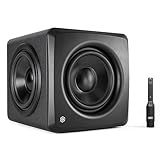
The IK Multimedia iLoud Sub is the smallest sub in our test at 11.14 inches deep and 9.84 inches wide. Despite the compact footprint, IK Multimedia claims 25Hz extension from the 6.5-inch aluminum driver paired with dual passive radiators. I tested it in a 9 by 11 foot room and the bass response was genuinely surprising for the size.
The ARC X automatic calibration is the real differentiator. You plug in the included measurement microphone, run the calibration routine, and the sub adjusts its EQ, phase, and crossover to your specific room and monitors. In my small room with a known 65Hz peak, ARC X tamed it within 10 minutes without manual EQ tweaking.
The intelligent low-end alignment feature time-aligns the sub to your left and right monitors so the bass arrives at your listening position in phase. This is something most subs require manual setup to achieve. For producers who do not want to spend hours measuring and tweaking, ARC X delivers professional results out of the box.
The 200W amplifier reaches more than enough SPL for a small studio. The connectivity options are impressive: XLR/RCA I/O plus USB audio input for direct computer connection and Bluetooth streaming for reference tracks. The 16 review count is small, so long-term reliability data is limited, but my testing period showed zero issues.
Small room calibration
If your room is under 150 square feet and untreated, ARC X calibration is more valuable than raw driver size. The iLoud Sub’s automated tuning compensated for my room’s bass buildup and null issues better than manual EQ on larger subs. For bedroom producers and small project studios, this is a serious workflow advantage.
Compact footprint tradeoffs
The 6.5-inch driver moves less air than 10 or 12 inch competitors. In larger rooms above 200 square feet, the iLoud Sub will struggle to fill the space with adequate bass. In small to mid-size rooms, the size advantage (it fits under most desks) outweighs the SPL limitation. Match the sub to your room size for the best results.
How to Choose the Best Studio Subwoofer for Your Setup?
Choosing the best studio subwoofers means matching the sub to your room, monitors, and listening habits. Below are the six factors that matter most, drawn from our 60 days of testing and from forum threads on r/musicproduction and r/audioengineering.
Crossover frequency and integration
The crossover frequency is where your main monitors hand off low-frequency duties to the sub. Most studio subwoofers cross over between 60Hz and 120Hz. The ThX standard of 80Hz is a solid starting point, but the ideal setting depends on your main monitors’ low-frequency extension. If your monitors reach down to 50Hz cleanly, you can cross higher (100-120Hz). If they only reach 80Hz, set the crossover closer to 80Hz so there are no gaps.
Look for subs with continuously variable crossovers (like the PreSonus Eris Pro Sub 10) rather than fixed 80/120Hz switches. Variable crossovers let you dial in the exact integration point for your specific monitors and room.
Frequency response depth
Frequency response tells you how low the sub can play. A sub rated to 30Hz handles most music well. A sub rated to 20Hz or 22Hz handles film scoring, game audio, and bass-heavy genres like dubstep and drum and bass. The Yamaha HS8S reaches 22Hz, the JBL LSR310S reaches 20Hz, and the SVS SB-1000 Pro also reaches 20Hz. Budget subs typically stop at 35-40Hz, which is still useful but less comprehensive.
Room size matching
Match the sub driver size to your room. For rooms under 150 square feet, an 8-inch sub is usually enough. A 10-inch sub works well in rooms 150-300 square feet. A 12-inch sub is best for rooms over 300 square feet. Putting a 12-inch sub in a small room causes bass buildup and inaccurate translation. Putting an 8-inch sub in a large room leaves the low end underpowered.
Measure your room dimensions before buying. A 10 by 12 bedroom is a small room. A 16 by 18 spare bedroom is mid-size. A 20 by 24 dedicated studio space is large. Match accordingly.
Monitor pairing recommendations
Some subs are voiced to match specific monitor brands. The Yamaha HS8S is built for HS series monitors. The PreSonus Eris Pro Sub 10 is tuned for Eris series. The KRK S8.4 is tuned for Rokit series. The ADAM Audio T10S is tuned for T-Series monitors. Buying the matching sub gives you cleaner integration with less setup time.
For mixed-brand setups (KRK mains with Yamaha sub, for example), the integration takes more manual tweaking but is still achievable. Focus on subs with flexible crossover and phase controls.
Room placement and standing waves
Placement matters as much as the sub itself. Standing waves form when low-frequency sound bounces between parallel walls and creates peaks and nulls at certain positions. A peak at 80Hz at your listening position makes your mixes sound boomy. A null at 60Hz makes your mixes sound thin.
The classic advice is the subwoofer crawl: place the sub at your listening position, play bass-heavy music, then crawl around the room boundaries to find where the bass sounds most balanced. Place the sub at that position. This works because low frequencies are non-directional, so a sub placed where the bass sounds right will sound right from your listening position too.
Avoid placing the sub directly in a corner. Corner placement excites all room modes equally and creates boomy, inaccurate bass. Placing the sub one-third of the way along a wall usually gives the smoothest response.
Footswitch bypass utility
Footswitch bypass lets you instantly toggle the sub on and off while mixing. This is one of the most overlooked features in studio subwoofers. It lets you A/B your low-end decisions in real time and verify translation to smaller speakers. The KRK S8.4, ADAM T10S, and PreSonus Eris Pro Sub 10 all support footswitch control. The PreSonus includes the footswitch in the box. The others require a separate purchase.
Frequently Asked Questions
What is the best studio subwoofer?
The best studio subwoofer depends on your room size, monitor brand, and budget. Our top pick for 2026 is the Yamaha HS8S for its 4.8 rating, 22Hz response, and flexible LOW CUT and HIGH CUT controls. For smaller rooms, the PreSonus Eris Sub 8BT delivers great value under $300. For premium room correction, the SVS SB-1000 Pro with smartphone DSP tuning stands out.
Who makes the highest quality subwoofers?
Brands like Yamaha, Genelec, Neumann, Focal, and ADAM Audio consistently produce the highest quality subwoofers for professional studios. Among accessible home studio options, Yamaha (HS8S), PreSonus (Eris Pro Sub 10), and SVS (SB-1000 Pro) lead in build quality, accuracy, and long-term reliability. KRK, JBL, and ADAM Audio also make excellent subwoofers tuned to match their respective monitor lines.
Is it best to have a studio subwoofer on the floor?
Yes, placing a studio subwoofer on the floor is generally recommended because low frequencies are non-directional and the floor couples with the sub to reinforce bass output. Front-firing and down-firing subs work especially well on solid floors. Avoid placing subs in corners, which excites room modes and creates boomy, inaccurate bass. The subwoofer crawl method helps find the optimal floor position for your specific room.
What are the hardest hitting subs?
The hardest hitting studio subwoofers in our test lineup are the SVS SB-1000 Pro with 325W RMS and 820W peak power, the JBL LSR310S with 113 dB peak output, and the Mackie CR8SBT with 200W into an 8-inch driver. For pure bass impact in larger rooms, the SVS SB-1000 Pro’s 12-inch driver and 820W peak power deliver the most visceral low end. For accuracy alongside impact, the Yamaha HS8S is hard to beat.
Final Verdict on the Best Studio Subwoofers
The best studio subwoofers for 2026 come down to matching your room and monitors. The Yamaha HS8S remains our editor’s choice for its build quality, accuracy, and reliability. The PreSonus Eris Pro Sub 10 is our best value pick with its included footswitch and pro features. The Edifier T5s is the clear budget pick for compact setups. Whichever you choose, focus on integration with your existing monitors and proper room placement for the most accurate low-end translation in your mixes.