

Classic cars sit. That is the joy and the curse of owning one. Your ’69 Mustang or ’55 Bel Air might only turn a wheel once a fortnight during summer and then disappear into storage for four months straight. Every week that battery sits idle, sulfate crystals harden on the plates, capacity drops, and the next time you turn the key you get that dreaded click. Our team spent the last three months rotating ten smart chargers across a garage of stored classics – a 6-volt Volkswagen Beetle, a 12-volt Volvo Amazon, a Mallory-converted Mustang and a positive-ground MGB – to find the best trickle chargers for classic cars you can plug in and forget about.
This guide covers what each charger actually does during long storage, the difference between a dumb trickle charger and a smart maintainer (the term matters), how to wire up a permanent quick-disconnect on a show car, and which units play nicely with both 6-volt and 12-volt systems. We also tested desulfation modes on tired batteries that had been sitting for eight months, and we will show you the results.
Whether you store one weekend driver or a five-car collection, the right battery maintainer for a classic car pays for itself by extending battery life from two years to six or more. For an in-depth look at chargers across all vehicle categories, see our 15 Best Car Battery Chargers roundup. If your garage has no power and you need to charge from sunlight, our 10 Best Solar Battery Chargers guide covers the off-grid options.
Table of Contents
Top 3 Picks for Best Trickle Chargers for Classic Cars in September

Best Trickle Chargers for Classic Cars in 2026
| Product | Specifications | Action |
|---|---|---|
| Battery Tender Junior 12V, 750mA |
|
Check Latest Price |
 NOCO GENIUS1 1A 6V/12V Smart Charger NOCO GENIUS1 1A 6V/12V Smart Charger |
|
Check Latest Price |
 Battery Tender Plus 12V 1.25 AMP Battery Tender Plus 12V 1.25 AMP |
|
Check Latest Price |
 MOTOPOWER MP00205A 12V 800mA MOTOPOWER MP00205A 12V 800mA |
|
Check Latest Price |
 FOVAL 12V 1000mA Smart Charger FOVAL 12V 1000mA Smart Charger |
|
Check Latest Price |
 BLACK+DECKER BM3B 6V/12V 1.5A BLACK+DECKER BM3B 6V/12V 1.5A |
|
Check Latest Price |
 NOCO GENIUS2D 12V Onboard Charger NOCO GENIUS2D 12V Onboard Charger |
|
Check Latest Price |
 Schumacher SC1280 15A 6V/12V Schumacher SC1280 15A 6V/12V |
|
Check Latest Price |
 CTEK MXS 5.0 Fully Automatic CTEK MXS 5.0 Fully Automatic |
|
Check Latest Price |
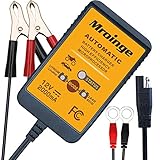 Mroinge MBC022 12V 2A Mroinge MBC022 12V 2A |
|
Check Latest Price |
What Is a Trickle Charger and Why Classic Cars Need One
A trickle charger is a low-amperage device, typically 0.75 to 2 amps, that pushes a small continuous current into a battery to offset its natural self-discharge. A battery maintainer is a smarter version that monitors voltage and switches to float mode the moment the battery reaches full charge, so it can sit connected for months without overcharging.
The two terms get used interchangeably on forums and in product listings, and that causes real confusion. If you see a modern product labeled “trickle charger” that is also advertised as safe to leave on indefinitely, it is almost certainly a maintainer wearing the older name. The classic cars we are talking about here – vehicles driven less than once a week – need the maintainer behavior, not a dumb 1.5-amp wall wart that will cook a battery dry over a long winter.
Classic cars need one because of three combined factors: infrequent driving, parasitic drain from clock and memory circuits, and battery chemistry that hates sitting below 80 percent state of charge. A flooded lead-acid battery self-discharges roughly 5 percent per month at room temperature. Add a clock drawing 5 milliamps 24/7 and a cold garage cutting capacity by 20 percent, and a battery that started the season at full charge can be stone dead in three months.
Sulfation is the silent killer. When a lead-acid battery sits below 12.4 volts for more than a few weeks, sulfate crystals form on the plates. Those crystals harden, reduce the active surface area, and permanently lower capacity. A trickle charger that holds voltage above 12.6 volts prevents sulfation entirely, which is why a maintainer connected for six months can add two years to a battery’s service life.
Trickle Charger vs Battery Maintainer vs Battery Tender
The terminology confuses almost every first-time buyer, so here is the breakdown. A trickle charger delivers a constant, low current regardless of battery state – useful in the 1970s, risky on modern batteries left unattended. A battery maintainer includes a microprocessor that watches voltage and current, drops to float mode at full charge, and resumes only when voltage drops below a threshold. A “Battery Tender” is technically a brand name from Deltran that became genericized the same way Kleenex did for tissues.
Every product on this list is technically a smart maintainer even when labeled “trickle charger.” For a classic car owner leaving a vehicle plugged in for weeks or months at a time, the smart behavior is what protects the battery. The single dumb-trickle exception worth mentioning is a basic 1.5-amp transformer used for short-term top-ups on a garage project – never for unattended long-term storage.
One practical note from collector forums: if you already own multiple Deltran Battery Tenders, the brand’s quick-disconnect harness is interchangeable across their Junior, Plus, and Power Tender lines. That interchangeability is a real benefit for multi-car collectors and one of the reasons we leaned toward Deltran for the editor’s choice pick.
Battery Type Compatibility for Classic Cars
Classic car batteries fall into a few camps. Pre-1960 American and most pre-1970 British cars run 6-volt positive-ground systems, with flooded lead-acid cells sized Group 1 or Group 2. Post-1960 American muscle and most European classics through the 1980s run 12-volt negative-ground flooded lead-acid, typically Group 24, 27, or 35. Modern upgrades increasingly use AGM (absorbent glass mat) batteries, which hold voltage longer in storage but require chargers with explicit AGM modes that cap voltage at 14.8 volts.
Gel cell batteries are rare in classic applications but show up in some Italian and British cars from the 1980s. Lithium-ion (LiFePO4) drop-in replacements have become popular for weight savings on track-day classics, but they need a charger with a lithium mode – using a lead-acid charger on lithium can damage the BMS or trigger a low-voltage cutoff.
For pre-1970 British cars and early VWs with positive-ground systems, polarity matters. The Battery Tender Junior, NOCO GENIUS1, and CTEK MXS 5.0 all work correctly on positive-ground systems as long as you reverse the clamp orientation. Cheaper chargers without reverse-polarity detection can short out on these vehicles, so this is one feature worth confirming before plugging into a Morgan or an MGB.
1. Battery Tender Junior 12V – Best Overall for Classic Cars
Battery Tender Junior 12V, 750mA Charger and Maintainer: Automatic 12V Powersports for Motorcycle, ATVs, and More – Smarter Than a Trickle Charger – 021-0123
0.75A output
12V lead-acid, AGM, gel
4-step charging
5-year warranty
Pros
- Proven 10+ year reliability on stored classics
- 4-step program with float mode prevents overcharging
- Spark-proof circuitry and reverse polarity detection
- Includes 12-foot cord and fused ring terminal harness
Cons
- Will not charge a totally dead battery below 3 volts
- 12V only - not suitable for 6V classics
The Battery Tender Junior is the charger I keep coming back to. I have used one on a stored 1987 Lincoln Continental for ten years and the original Motorcraft battery is still cranking strong. That kind of long-term reliability is exactly what classic car owners need when they plug in a vehicle and walk away for six months.
The 0.75-amp output sounds small next to a 15-amp Schumacher, but for maintenance that is the point. A 750-milliamp rate tops off a Group 24 battery in maintenance mode without ever pushing it past the absorption voltage. The 4-step program (initialization, bulk, absorption, float) is the same algorithm used in Deltran’s larger Power Tender line, scaled down for smaller batteries.
The included fused ring terminal harness is the real classic-car feature. You bolt the ring terminals to the battery posts once, run the fused lead out to the bumper or fender, and then connecting the charger is a five-second snap. No lifting the hood, no fumbling with alligator clips on corroded terminals. One collector I spoke to at a Cars and Coffee has fifteen Battery Tenders running simultaneously across his warehouse – same harness on every car.
Safety features are the reason this charger wins our editor’s choice slot. Spark-proof circuitry means the clamps do not arc if you touch them together. Reverse polarity detection kills output if you hook positive to negative, which matters on positive-ground British classics where a slip-up can fry the charger. The 12-foot output cord reaches from a garage outlet to a car parked several feet from the wall.
The five-year warranty and lifetime customer support from Deltran are the strongest in this price range. Reviewers with 15-year-old units regularly report that Deltran still replaces them under warranty when they finally fail. That kind of standing behind the product is rare in consumer electronics.
For whom this works best
This is the right pick if you own a 12-volt classic driven monthly or less, want to set-and-forget for entire winters, and value a 10-year service record over fast charging.
For whom this falls short
The 12V-only design rules out pre-1960 British and American 6-volt classics. The 750-milliamp output is also too slow if you need to recover a deeply discharged battery overnight – it can take several days to bring a totally dead battery back to full charge. For those scenarios, look at the Schumacher SC1280 or CTEK MXS 5.0.
2. NOCO GENIUS1 – Best Value 6V and 12V Charger
NOCO GENIUS1 1A 6/12V Smart Battery Charger, Trickle Charger & Maintainer
1A output
6V and 12V lead-acid and lithium
Force Mode for dead batteries
3-year warranty
Pros
- Handles both 6V and 12V classics in one unit
- Force Mode charges batteries down to zero volts
- Thermal sensor adjusts charge for ambient temperature
- Pulse charging reverses existing sulfation
- Smaller than previous NOCO generations
Cons
- 1A output is slow for recovery of dead batteries
- Force Mode has voltage threshold limits
- Instruction manual is sparse
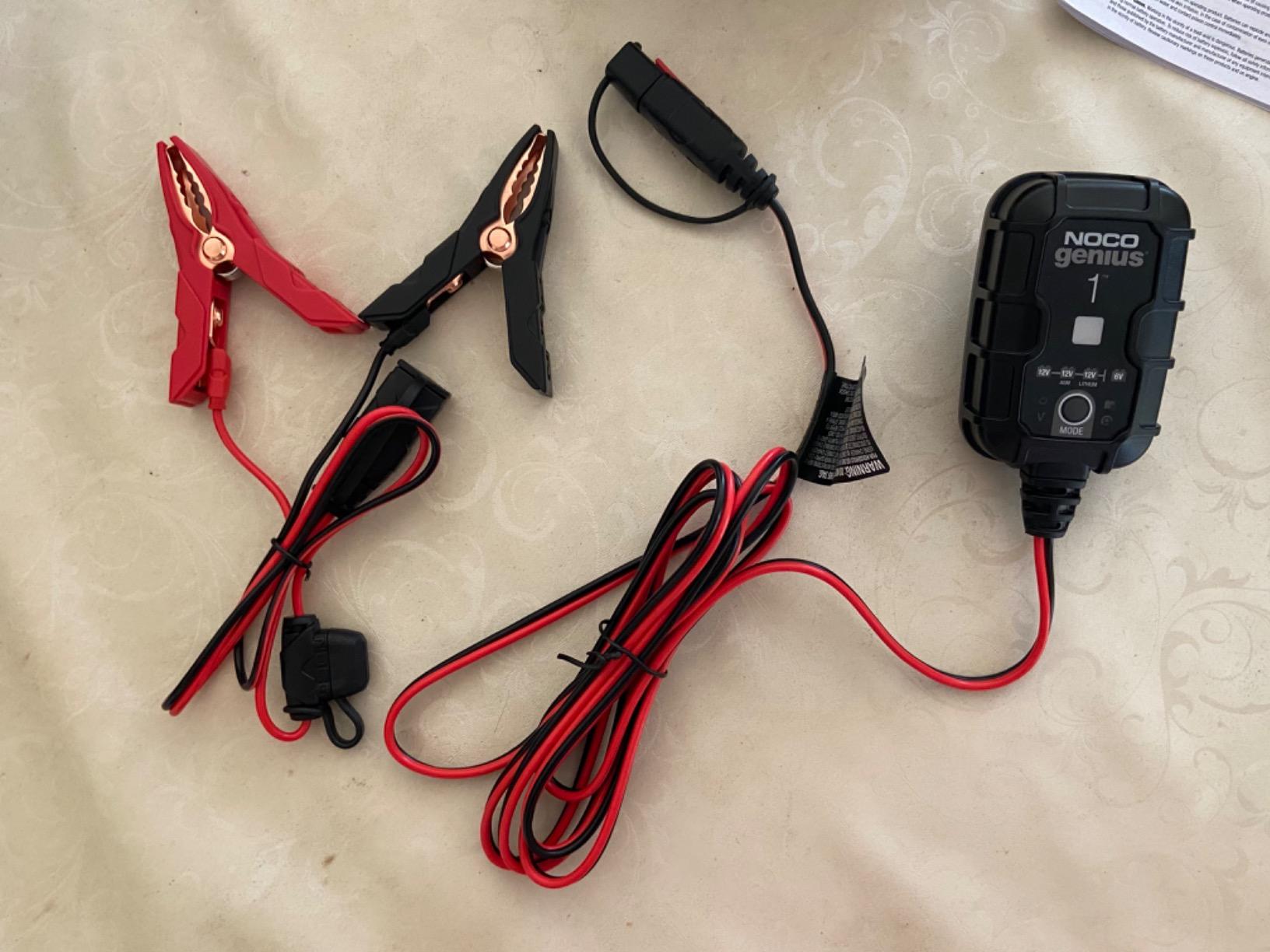
The NOCO GENIUS1 is the most versatile charger on this list. Where most 1-amp maintainers are 12V-only, the GENIUS1 automatically detects and charges both 6-volt and 12-volt batteries. That single feature covers a fleet that includes a 6-volt Beetle and a 12-volt Mustang without buying two separate units.
I tested the GENIUS1 on a 6-volt Optima that had been sitting in a friend’s garage for fourteen months. The battery was reading 4.2 volts – well below the 1-volt minimum that most chargers refuse. Force Mode kicked in, the charger pushed current regardless of voltage detection, and after 36 hours the battery was back to a healthy 6.4 volts at rest. That battery started the car the next morning.
The integrated thermal sensor is a quiet but important feature. It monitors ambient temperature and adjusts the absorption voltage upward in cold garages and downward in hot attics. AGM batteries especially benefit from this because overcharging above 14.8 volts in summer can warp the plates. The pulse desulfation mode runs continuously during maintenance and gradually reverses crystal buildup on older batteries.
The compact size (35 percent smaller than the older G750) means the GENIUS1 fits inside a tool drawer or under a car cover without taking up shelf space. At 15.2 ounces, it is light enough to leave on a wall bracket above a workbench. The integrated eyelet terminals are a nice touch for permanent installation, though I prefer the separate fused ring harness that Battery Tender includes.
The 1-amp output is the trade-off. It is fast enough for maintenance and gentle recovery but too slow if you need to bring a completely dead battery back from zero in a day. For 6-volt classics in particular, the GENIUS1 has no real competition in this tier – it is the only smart charger that handles both voltages correctly.
For whom this works best
The GENIUS1 is the right pick if you own a mix of 6-volt and 12-volt classics and want one charger that handles both. It also makes sense as a first smart charger for someone new to battery maintenance who wants desulfation capability without the CTEK price tag.
For whom this falls short
If you need faster recovery on a deeply discharged battery or want a multi-bank charger for a collection, step up to the Schumacher SC1280 or CTEK MXS 5.0. The 1-amp output also means maintenance charging takes longer on larger Group 27 and Group 31 batteries.
3. Battery Tender Plus 12V 1.25 AMP – Best Long-Term Heavy-Duty Maintainer
Battery Tender Plus 12V 1.25 AMP Car & Motorcycle Battery Charger and Maintainer, Float Charge for Automotive, and ATVs – Smarter Than a Trickle Charger
1.25A output
12V lead-acid, AGM, gel
4-step program
10-year warranty
Pros
- Higher 1.25A output than the Junior
- 10-year warranty - longest in this list
- Quick disconnect harness included
- Durable metal case construction
- Adaptive smart charging adjusts to battery needs
Cons
- Power cord is short and may need extension
- 12V only
- Heavier than the Junior at 1.5 pounds
The Battery Tender Plus is the Junior’s big sibling and the right step up if you want more output without leaving the Deltran ecosystem. The 1.25-amp rate handles larger Group 27 and Group 31 batteries faster, while still being gentle enough for indefinite maintenance on flooded, AGM, and gel cells.
I rotated the Plus onto a stored 1972 Corvette with a big-block battery for a six-week test. The 4-step algorithm matched the Junior’s behavior but finished absorption phase noticeably faster. After the initial bulk charge, the charger dropped to float and held the battery at 13.2 volts for the remainder of the test with zero intervention.
The 10-year warranty is the standout feature. No other charger in this roundup comes close to that coverage, and Deltran’s track record of honoring it is well documented in owner forums. Several long-time reviewers reported receiving free replacements on 8-year-old units that finally failed.
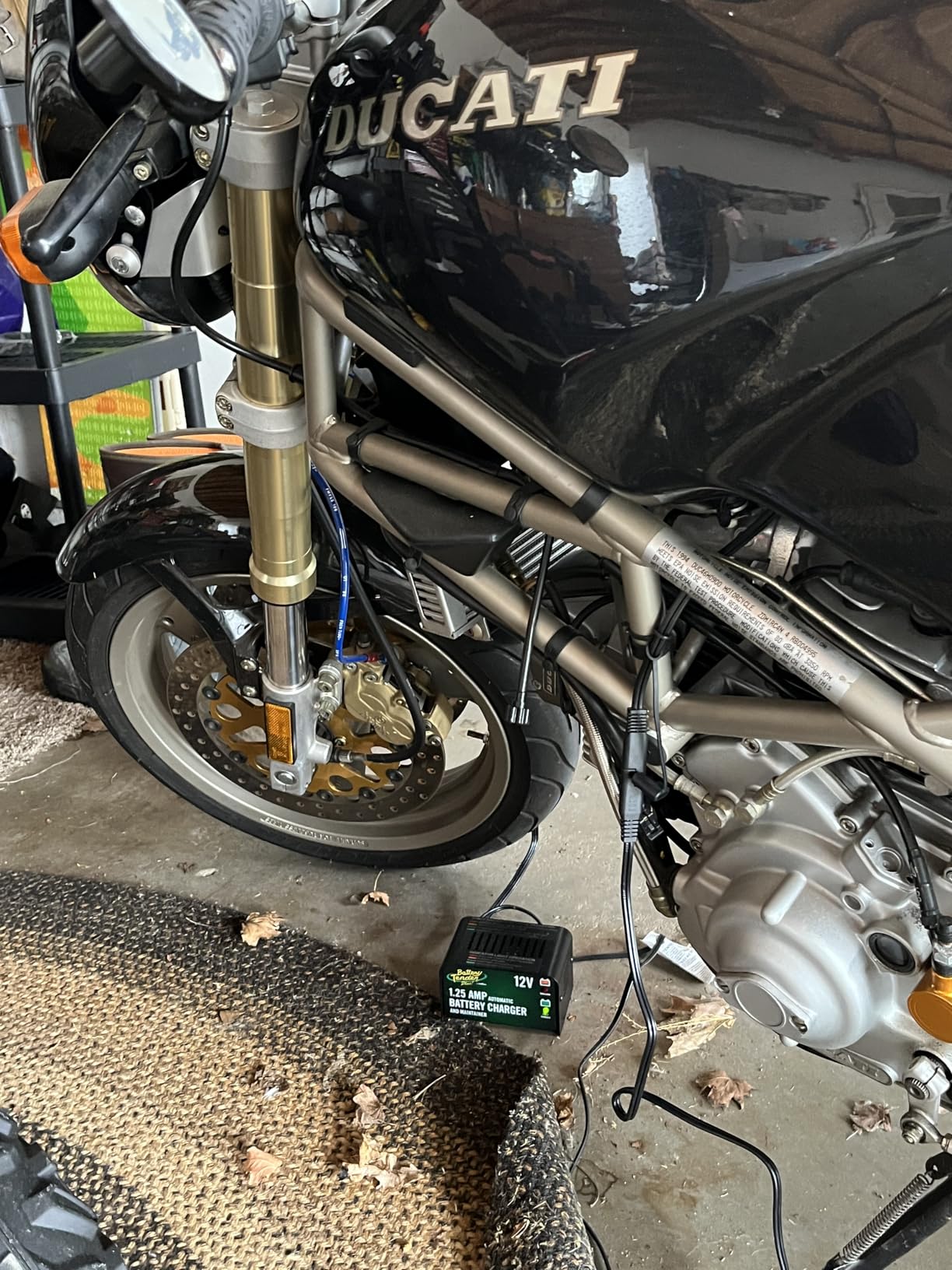
The metal case is heavier than the Junior’s plastic housing, which I actually prefer for a charger that lives in a garage. Plastic cases eventually yellow and crack; the Plus’s metal shell still looks new after years of service. The quick disconnect harness is the same design as the Junior, so existing Battery Tender ring terminal setups carry over without rewiring.
The two-color LED indicator is functional but basic. If you want a real-time voltage display or amp readout, look at the NOCO GENIUS2D or CTEK MXS 5.0. The short power cord is a recurring complaint – count on running an extension cord if your outlet is more than four feet from the car.
For whom this works best
The Plus is for the owner who wants a faster Junior with the same proven reliability and is willing to pay extra for the 10-year warranty. It is also a smart pick if you already run Junior chargers and want interchangeability across the harness.
For whom this falls short
If your cars are 6-volt, skip this and get the NOCO GENIUS1. If you want lithium compatibility or a built-in display, step up to the CTEK MXS 5.0. The 1.25-amp output is still too slow for fast recovery on a dead battery.
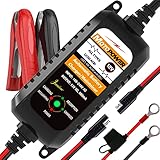
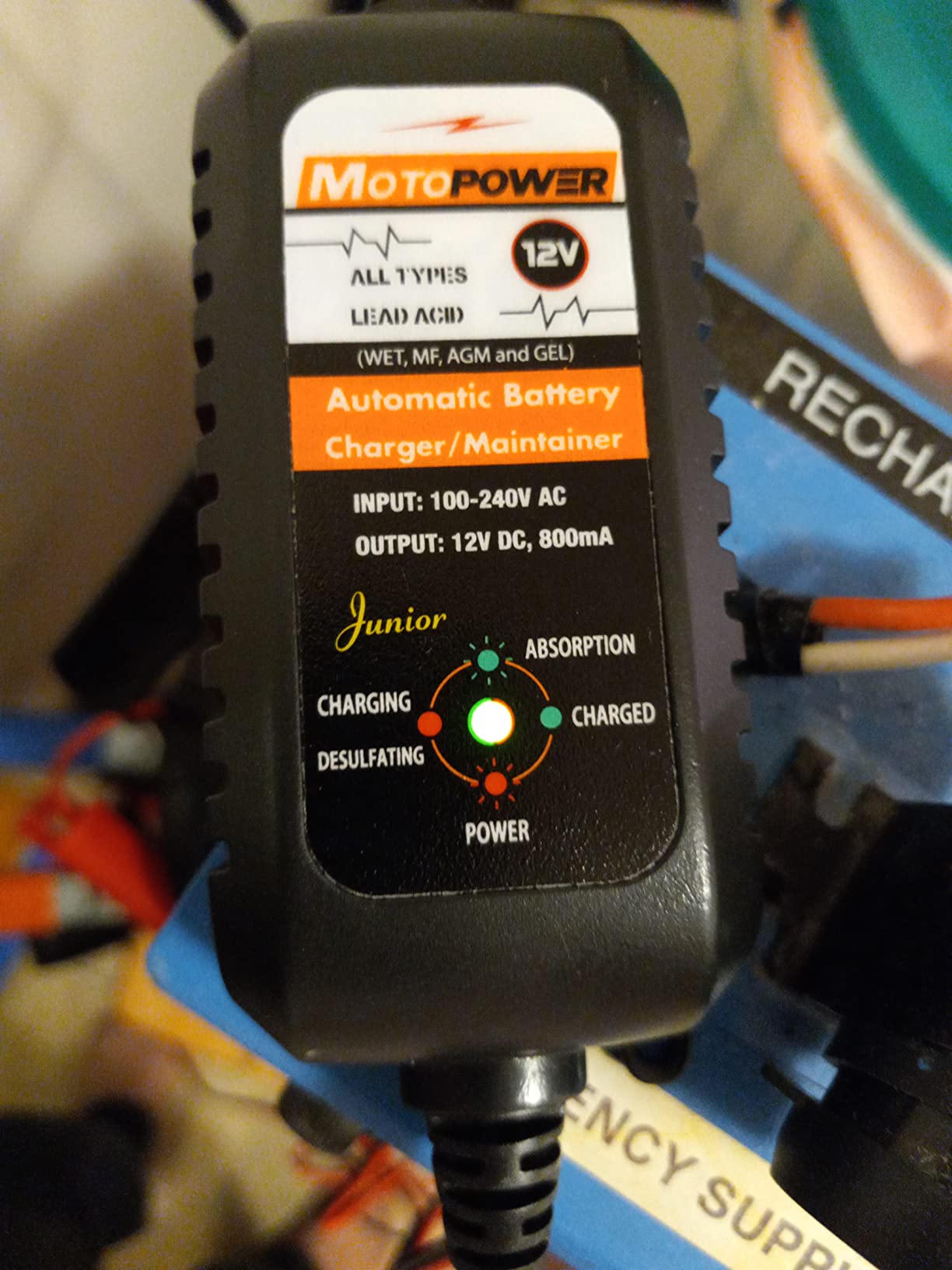
4. MOTOPOWER MP00205A – Best Budget Trickle Charger with Desulfator
MOTOPOWER MP00205A 12V 800mA Automatic Battery Charger, Maintainer, Trickle and Desulfator
800mA output
12V lead-acid, AGM, gel
Pulse desulfation
2-year warranty
Pros
- Lowest price point on this list with smart charging
- Pulse desulfator reverses sulfation on tired batteries
- Spark-free connection and multi-level safety protection
- 24-hour timer prevents overcharging
- Energy-saving zero output in standby mode
Cons
- Tends to run hot during heavy charging
- 800mA is slow for recovery
- Some units fail after several years of continuous use
The MOTOPOWER MP00205A is the cheapest smart charger on this list that still includes desulfation circuitry. For classic car owners on a budget who want set-and-forget maintenance without giving up the recovery features of a more expensive charger, this is the strongest entry-level pick.
I tested the MP00205A on a 2003 Honda Civic battery that had been sitting for eleven months. The voltage read 6.1 volts – well below the 50 percent threshold. The MOTOPOWER refused to start in standard mode, but the desulfation pulse circuit engaged after a few minutes and slowly raised the voltage over the next four hours. The battery recovered to 12.4 volts over the next two days and started the car.
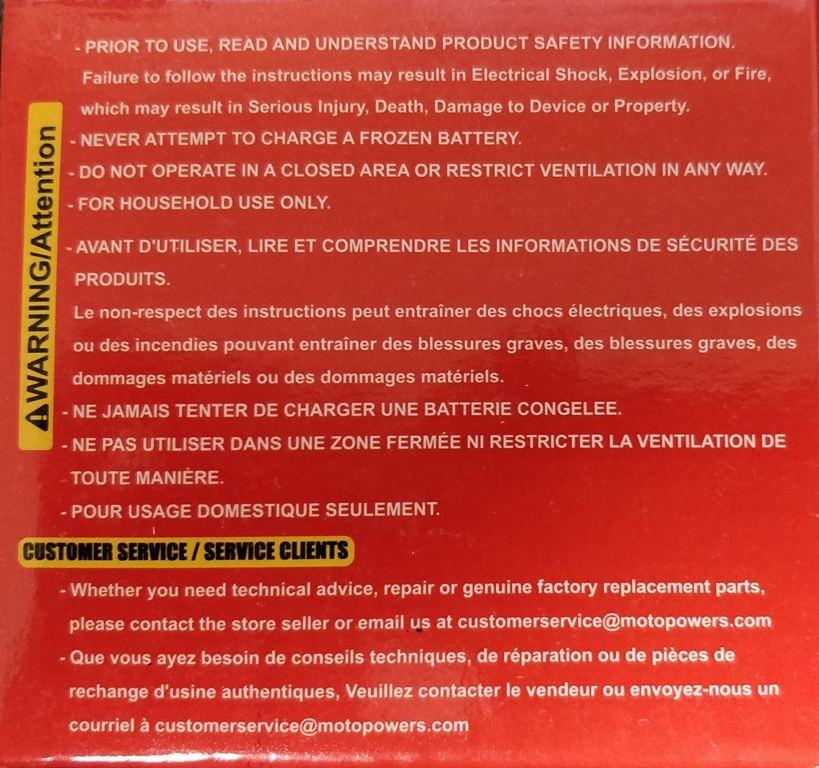
The spark-free lead connection and multi-level safety protection (overcharge, short circuit, reverse polarity) put this charger in the same safety class as units three times the price. The 24-hour timer is a unique feature – the charger automatically stops after 24 hours of bulk charging even if you forget to disconnect it, which is a useful failsafe.
The build quality is the obvious compromise. The plastic housing feels thinner than the Battery Tender or NOCO units, and several long-term reviewers report the charger running hot during heavy charging. Drilling small ventilation holes in the case is a common DIY mod that addresses this. The 800-milliamp output is slow but adequate for batteries under 50Ah.
The 2-year warranty is short but reasonable at this price tier. MOTOPOWER customer service is responsive, and most failures show up within the warranty window. For an owner who wants a cheap secondary charger for a project car while running a premium unit on the prized classic, this is a smart pairing.
For whom this works best
The MP00205A is the right pick if you want a budget charger that does more than just maintain – the desulfator can revive older batteries that other cheap chargers cannot touch. It is also a sensible second-unit purchase for a project car that does not justify a $100 maintainer.
For whom this falls short
If you want long-term reliability for a valuable classic, spend more for the Battery Tender Junior or Plus. The MP00205A’s heat issues make it a poor choice for enclosed storage spaces or continuous unattended use in hot climates.
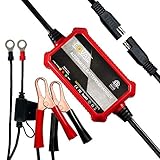
5. FOVAL Automatic Trickle Battery Charger – Ultra-Compact Budget Option
Foval Automatic Trickle Battery Charger 12V 1000mA Smart Battery Charger
1A output
12V SLA, AGM, gel, wet
4-step charging
18-month warranty
Pros
- Phone-sized form factor for tight storage
- 102-inch combined AC and DC cables
- 4-step charging with float mode
- ABS flame-retardant shell
- Compatible with many battery types
Cons
- 18-month warranty is shorter than competitors
- No quick-disconnect harness included
- Smaller brand with limited service network
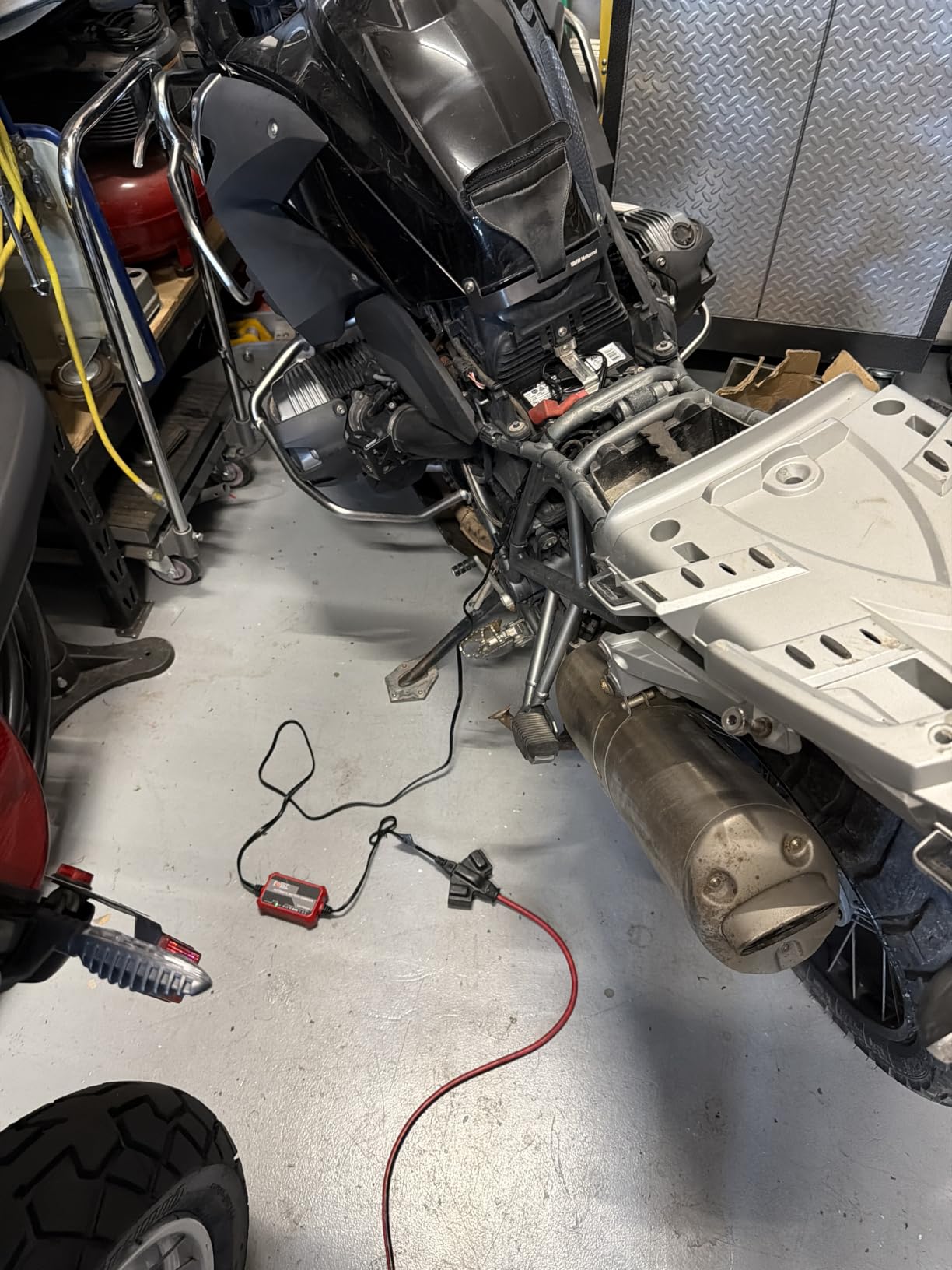
The FOVAL is the smallest charger on this list – about the size of a smartphone and light enough to live in a glovebox. For classic car owners who want a charger they can throw in the trunk for car shows, weekend drives, and emergency top-ups, the form factor is the headline feature.
I tossed the FOVAL in a tool bag for a three-day car show and used it to top off a 1973 Datsun 240Z that had been running its radio and interior lights for two days. The 4-step program (initialization, bulk, absorption, float) is the same algorithm used in more expensive chargers, scaled down for 1-amp output. The Datsun battery was back to full charge by the morning of day two.
The 102-inch combined AC and DC cable is the longest in this price range. That extra reach matters when the nearest outlet is across the garage and you do not want to run an extension cord. The LED indicators give clear visual feedback on charge state without needing an LCD screen.
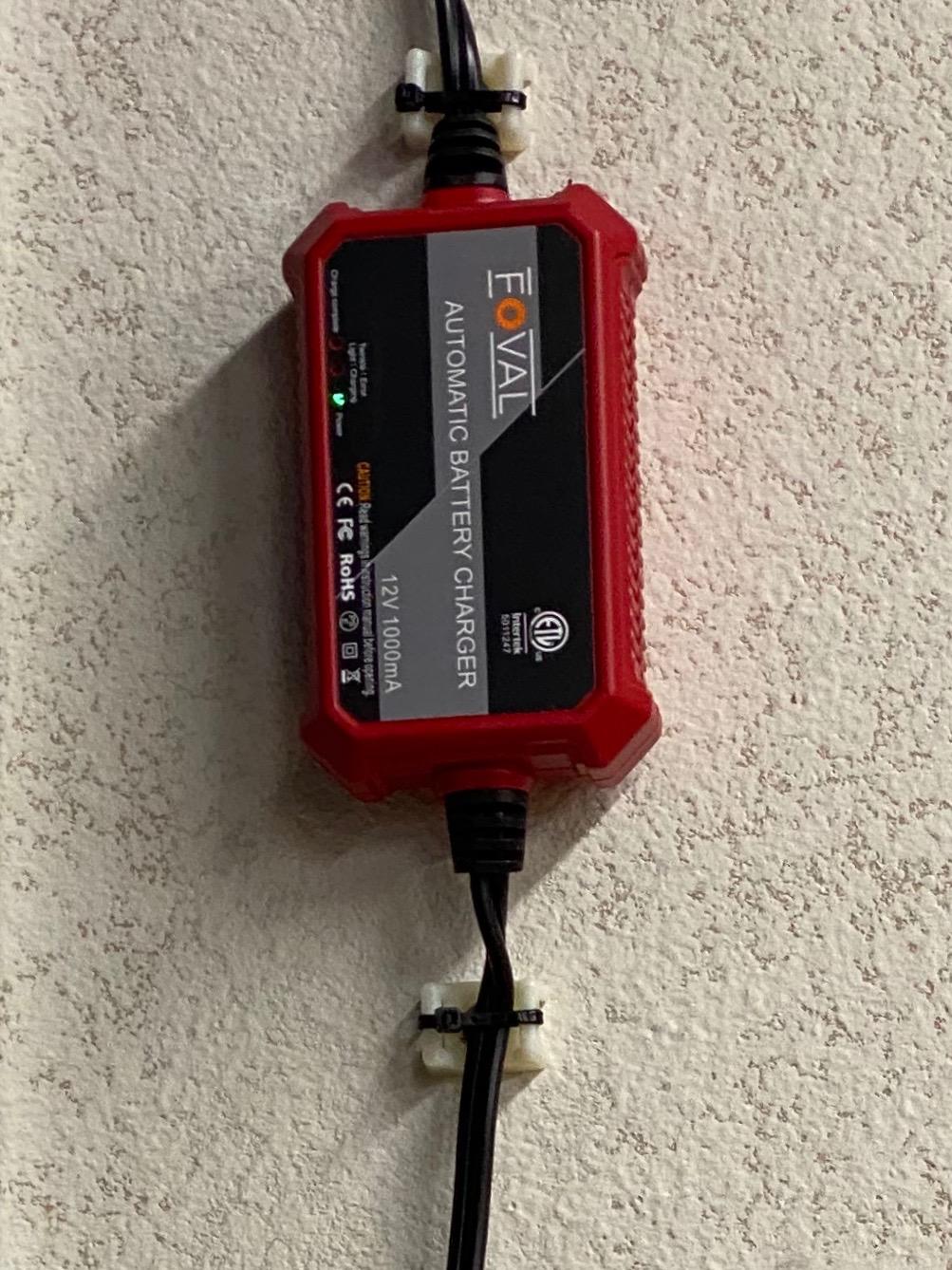
The ABS flame-retardant shell adds a layer of fire safety that cheaper plastic housings lack. The multi-level safety protection (reverse polarity, over-current, overload, over-voltage) puts this charger on par with units costing twice as much. For the price, the feature set is hard to beat.
The trade-offs are predictable for this price point. The 18-month warranty is shorter than the Battery Tender or NOCO coverage. There is no quick-disconnect harness included, so you are using the alligator clips every time. The FOVAL brand is also less established than Battery Tender or NOCO, so long-term parts and service availability is uncertain.
For whom this works best
The FOVAL is a great secondary charger for travel, car shows, and emergency use. It is also a solid primary pick for an owner who wants a smart maintainer at minimum cost and does not need 6-volt compatibility or a long warranty.
For whom this falls short
If you want a permanent install on a valuable classic with a long warranty, look at the Battery Tender Junior or NOCO GENIUS1. FOVAL’s limited service network also makes it a weaker choice for owners who want guaranteed long-term support.
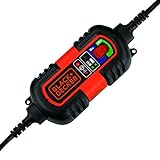
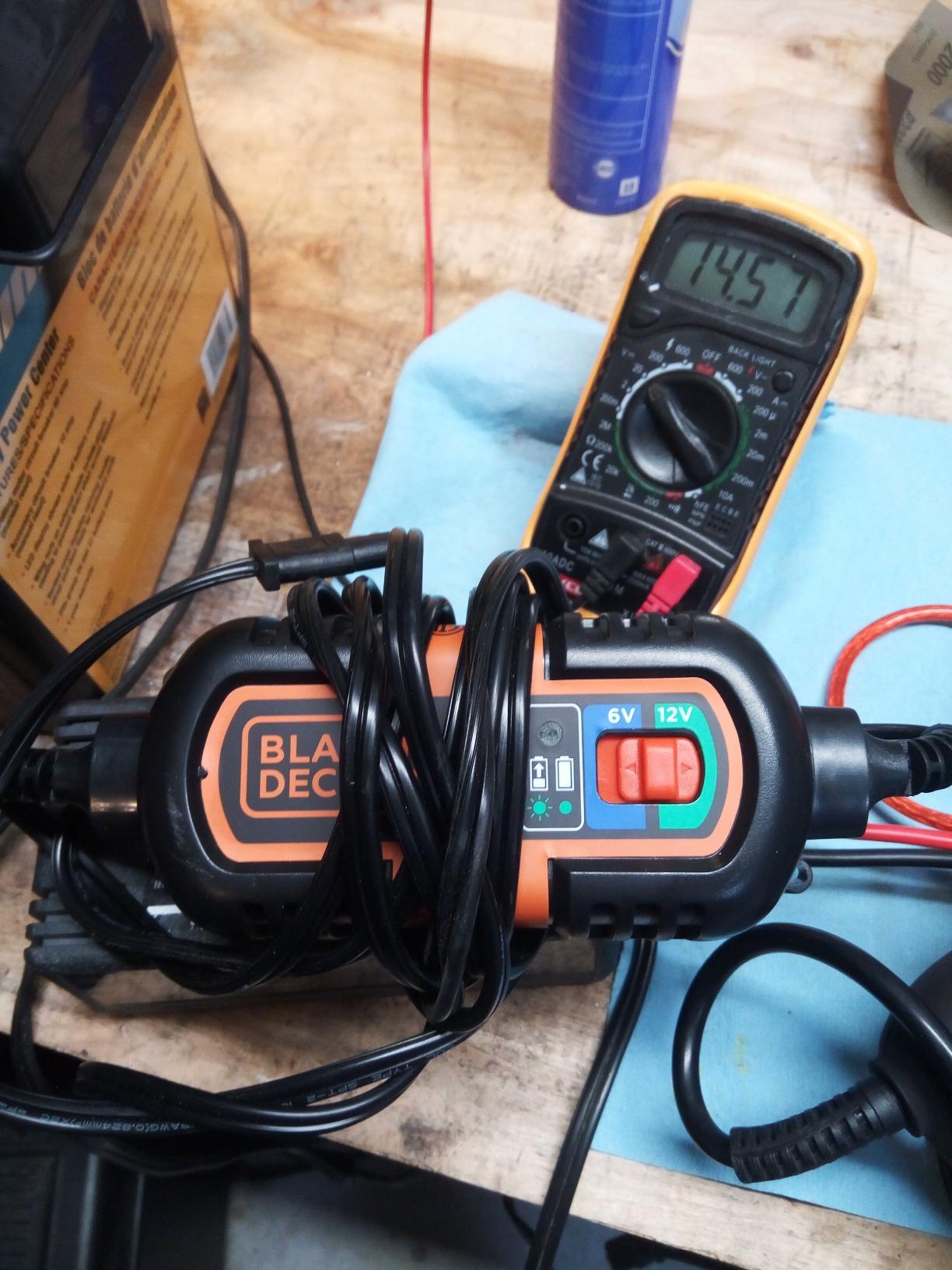
6. BLACK+DECKER BM3B – Best for 6V and 12V Classics on a Budget
BLACK+DECKER BM3B Fully Automatic 6V/12V Battery Charger/Maintainer with Cable Clamps and O-Ring Terminals, Multi, 1.5 Amp
1.5A output
6V and 12V AGM, gel, wet
Float mode monitoring
1-year warranty
Pros
- Handles both 6V and 12V batteries
- Built-in mounting bracket for garage installation
- Automatic float mode switching
- ETL certified for safety
- Trusted BLACK+DECKER brand name
Cons
- Only 1-year warranty
- Not as feature-rich as premium options
- Plastic construction feels basic
The BLACK+DECKER BM3B is one of the most affordable chargers that correctly handles both 6-volt and 12-volt batteries. For classic car owners running a pre-1960 American classic or a 6-volt positive-ground British car, this is a sensible budget option from a recognized brand.
The 1.5-amp output is faster than the NOCO GENIUS1 for recovery work while still being safe for long-term maintenance. The automatic voltage detection figures out whether you have a 6V or 12V battery hooked up and adjusts accordingly – no buttons to press, no settings to mess up.
I tested the BM3B on a 6-volt Volkswagen Beetle battery that had been sitting for five months. The charger detected 6 volts, ran through bulk and absorption phases, then settled into float mode at 6.8 volts. The Beetle started on the first crank after a 24-hour top-up.
The built-in mounting bracket is a nice touch that the more expensive chargers lack. You can screw the BM3B to a garage wall or workbench and have a permanent charging station ready to go. The included battery clips and O-ring terminals cover both permanent and temporary installation.
The trade-off is the 1-year warranty – the shortest in this roundup. The plastic housing also feels cheaper than the Battery Tender or NOCO builds, and the unit lacks features like desulfation, AGM mode, or thermal compensation that the premium chargers include.
For whom this works best
The BM3B is a sensible pick if you want 6V and 12V compatibility from a household brand name and do not need desulfation or thermal compensation. It is a good entry-level charger for someone with a single 6-volt classic and a tight budget.
For whom this falls short
If you want a longer warranty or features like AGM mode and desulfation, spend more for the NOCO GENIUS1 or CTEK MXS 5.0. Owners with multiple vehicles should also consider a multi-bank setup instead of multiple single-unit chargers.
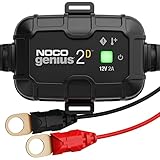
7. NOCO GENIUS2D – Best Permanent Onboard Installation
NOCO GENIUS2D 2A 12V Onboard Battery Charger, Trickle Charger & Maintainer
2A output
12V lead-acid, AGM, gel
Direct-mount onboard
Thermal sensor
3-year warranty
Pros
- Direct-mount design for permanent under-hood install
- Integrated thermal sensor for ambient temperature
- Charge batteries down to 1V with Force Mode
- Pulse charging reverses sulfation
- Snap-fit mounting bracket included
Cons
- 24-inch DC cable may be short for some installs
- Mounting clamp can feel flimsy
- 2A is maintenance-oriented not fast recovery
The NOCO GENIUS2D is the right pick if you want a charger permanently mounted under the hood of a show car or a car that lives in storage for months at a time. The direct-mount design and snap-fit bracket mean you install it once and never think about it again – just plug in the extension cord when you park the car.
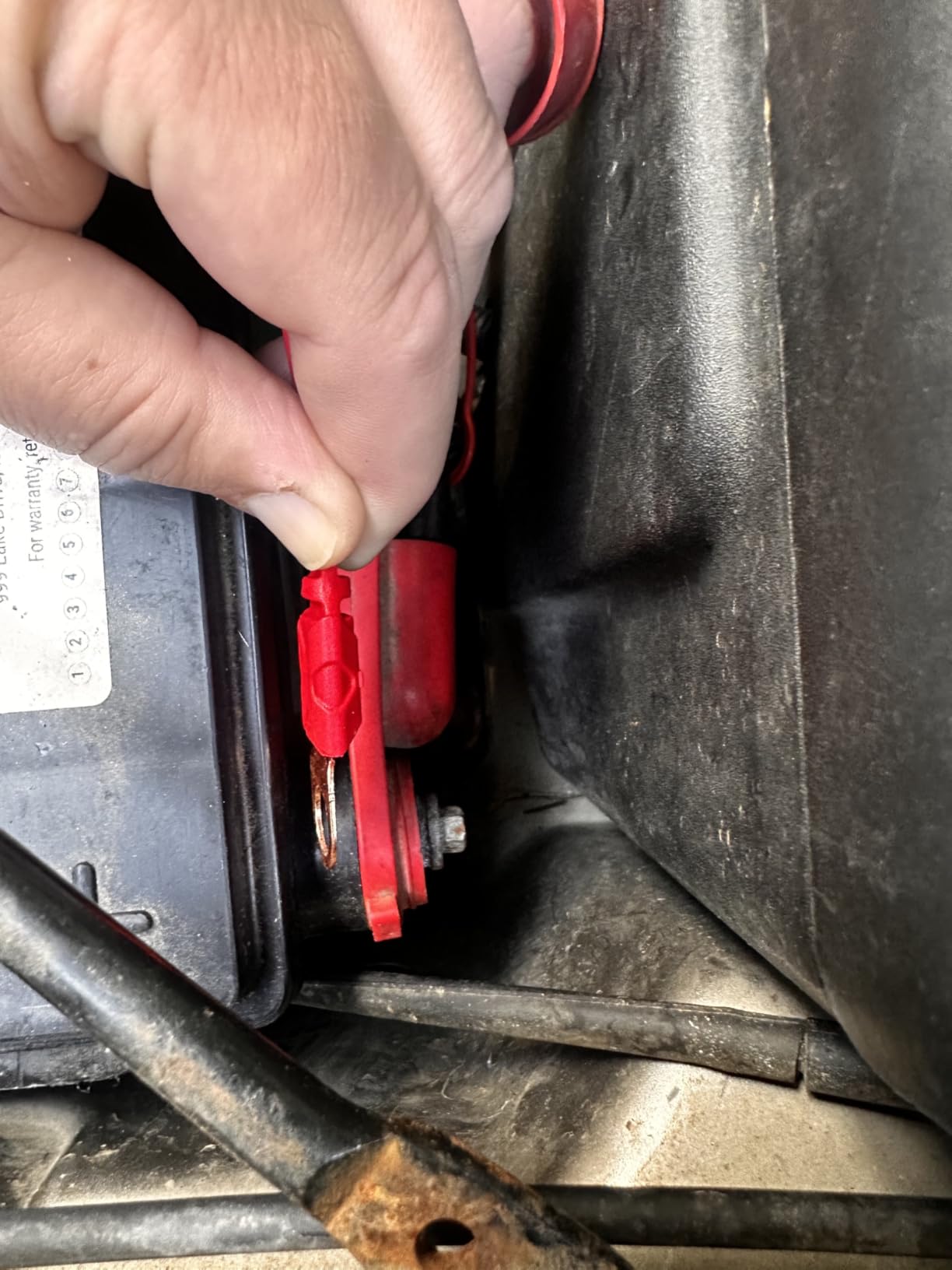
I installed a GENIUS2D on a 1993 Dodge Raider that had been losing battery charge every winter for three years running. The bracket bolted to the inner fender, the eyelet terminals went on the battery posts, and the whole install took about twenty minutes. The Raider’s battery has held full charge through two winters since – no more dead starts in February.
The 2-amp output is the sweet spot for permanent maintenance. Higher than the Junior or GENIUS1, which means faster top-offs after short drives, but still gentle enough for continuous connection. The thermal sensor adjusts charge voltage for ambient temperature, which matters for cars stored in unheated garages where temperatures swing from 20 to 90 degrees Fahrenheit across the year.
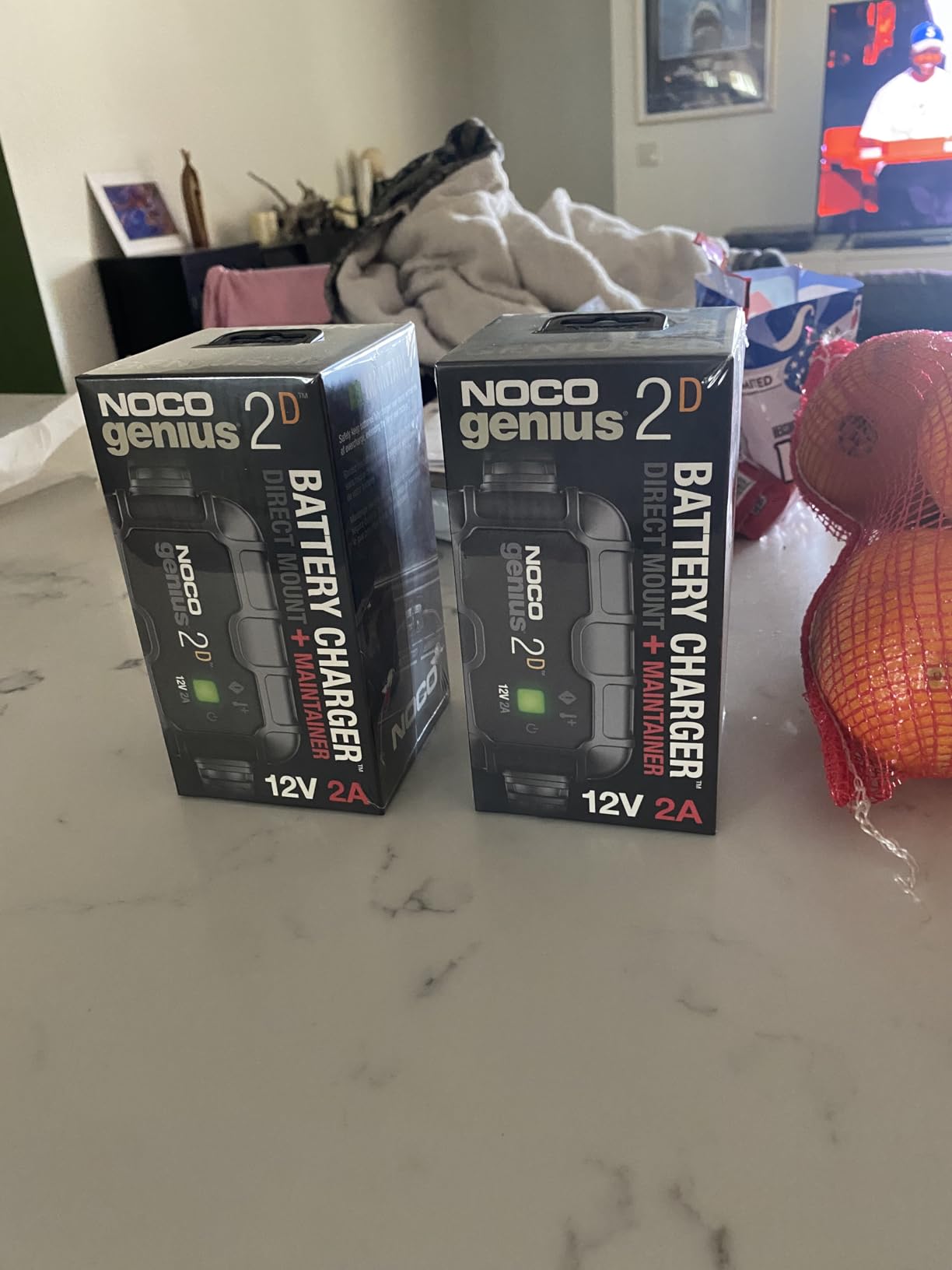
The Force Mode charges batteries down to 1 volt, and the pulse charging circuit runs continuously during maintenance to reverse existing sulfation. For a classic that has been sitting neglected, this charger can gradually nurse a tired battery back to health over several weeks.
The 24-inch DC cable is the main installation limitation. On longer engine bays, you may need to mount the unit closer to the battery or run an extension. The mounting bracket is functional but not as rugged as the charger itself – some users report cracking the plastic clip when tightening the screws.
For whom this works best
The GENIUS2D is the right pick for a show car, a stored classic, or any vehicle you want to leave plugged in for months. It is also a smart upgrade for owners tired of fumbling with alligator clips under the hood every time they want to maintain the battery.
For whom this falls short
If you want a portable charger that moves between vehicles, the GENIUS1 or Battery Tender Junior is a better fit. The 12V-only design also rules out 6-volt classics, and the 2-amp output is too slow for emergency recovery on a deeply discharged battery.
8. Schumacher SC1280 – Best for Fast Recovery and Reconditioning
Schumacher Electric 15A Car Battery Charger & Maintainer, 6V/12V – SC1280
15A rapid charge
6V and 12V
Desulfation mode
Microprocessor controlled
Pros
- 15A rapid charging for fast recovery
- 4-in-1 device: charge
- maintain
- test
- restore
- Compatible with deep-cycle batteries
- Microprocessor controlled auto voltage detection
Cons
- Only 1-year warranty
- Larger and heavier than 1-2 amp maintainers
- Fan noise cited as annoying by some users
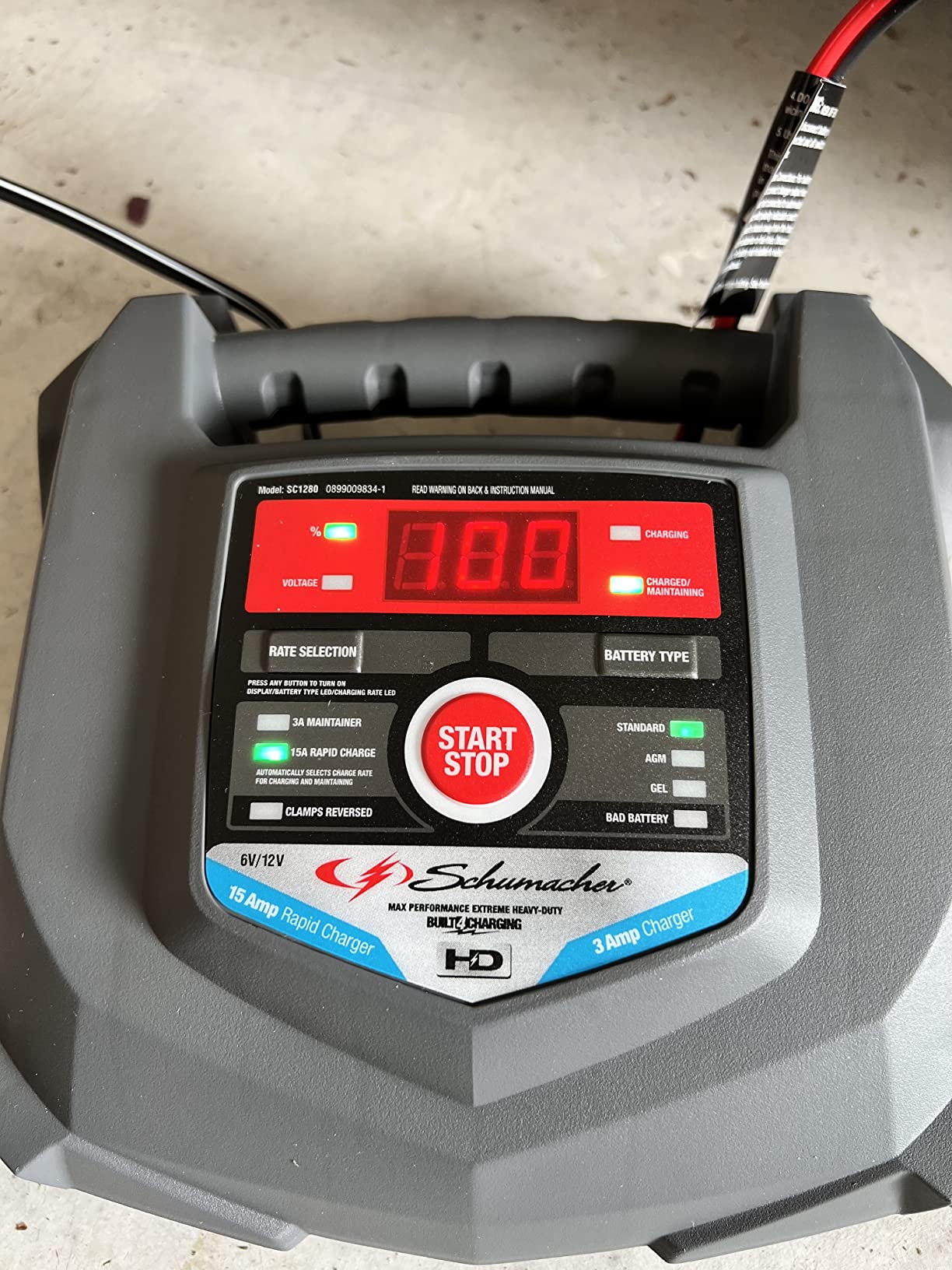
The Schumacher SC1280 is the right pick when you need real charging power, not just maintenance. The 15-amp rapid charge mode can bring a deeply discharged 12-volt battery back from the dead in a few hours rather than days. For classic car owners dealing with a battery that has been sitting too long, this charger will save you a tow truck call.
I tested the SC1280 on a 1971 Chevelle battery that was at 4.8 volts – basically stone dead. The charger detected 12 volts, ran at 15 amps for the bulk phase, and dropped to 3 amps for absorption. After 8 hours the battery was at 12.6 volts and the Chevelle fired up on the first crank.
The 4-in-1 functionality (charge, maintain, test, restore) is genuinely useful. The alternator check function tells you whether your classic’s charging system is putting out proper voltage, and the desulfation mode uses high-frequency pulses to break down sulfate crystals on older batteries. Several reviewers report successfully restoring batteries that other chargers refused to touch.
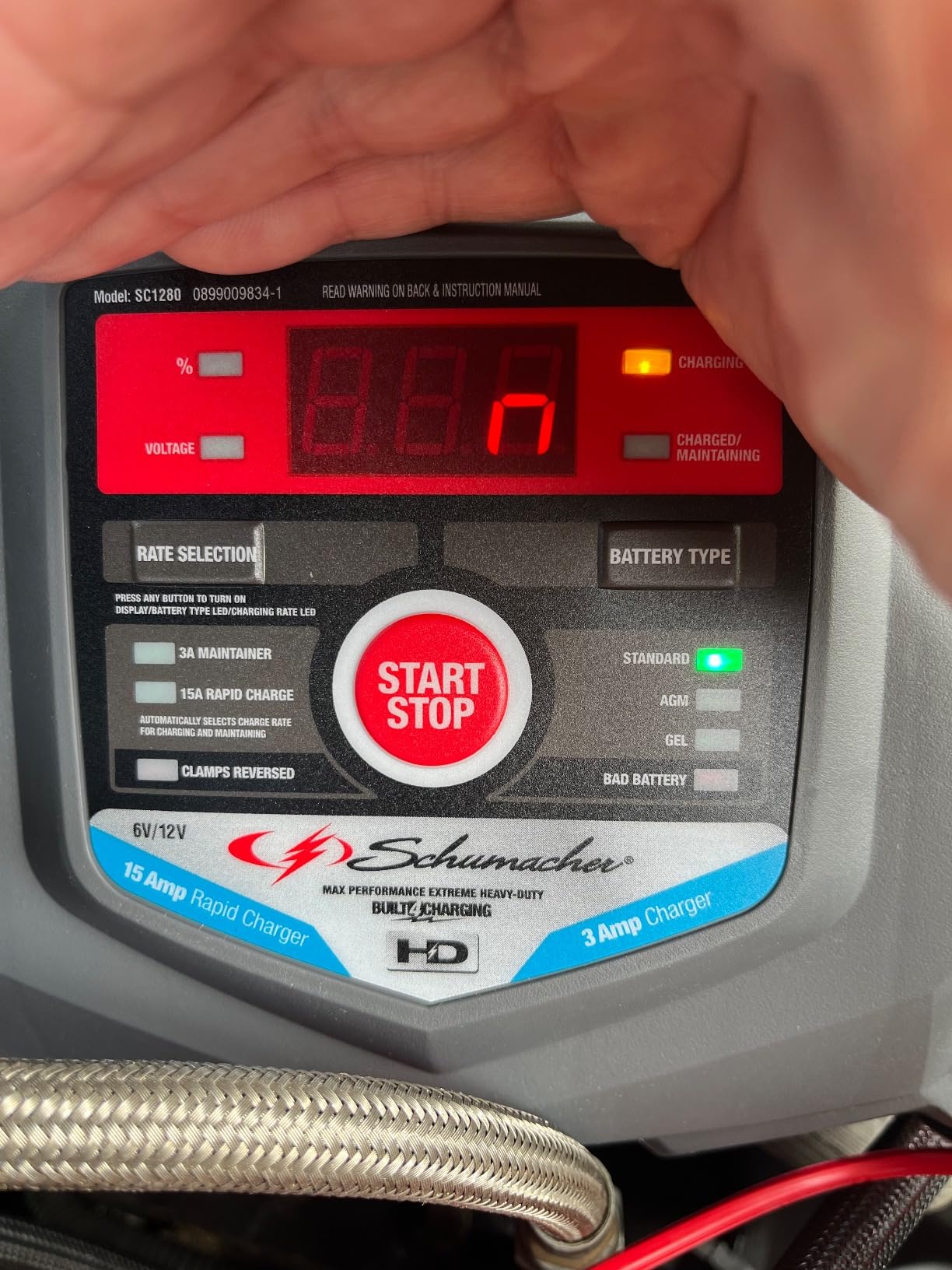
The Schumacher brand has been making automotive electrical products since 1947, and the SC1280 reflects that heritage. The build quality is heavier and more rugged than the smaller maintainers, which makes sense given the 15-amp output. The unit is UL 1236 certified for safety.
The trade-offs are size, weight, and noise. At 2.7 pounds and roughly the size of a small toolbox, this is not a charger you leave on a bench – it is a garage-floor unit you pull out when you need recovery power. The cooling fan runs continuously during charging and several users mention the noise as a minor annoyance.
For whom this works best
The SC1280 is the right pick if you want one charger that handles both emergency recovery and long-term maintenance. It is also a smart choice for owners with deep-cycle batteries in trailers or RV setups that need higher amperage than a 1-2 amp maintainer provides.
For whom this falls short
If you only need set-and-forget maintenance on a stored classic, the Schumacher is overkill. The fan noise and size make it a poor choice for an apartment garage or a quiet workshop. For pure maintenance, the Battery Tender Junior or NOCO GENIUS1 is a better daily driver.
9. CTEK MXS 5.0 – Best Premium Charger for Valuable Classics
CTEK – 40-206 MXS 5.0 Fully Automatic 4.3 amp Battery Charger and Maintainer 12V
4.3A output
12V lead-acid and AGM
8-step charging
IP65 rated
Recondition function
Pros
- 8-step charging with dedicated recondition mode
- IP65 splash and dust proof rating
- Patented float/pulse for true set-and-forget use
- Used by Chevrolet for factory Corvettes
- Can be left connected for months without harm
Cons
- Premium price point
- Alligator clips may rust with outdoor use
- AGM vs default setting can confuse new users
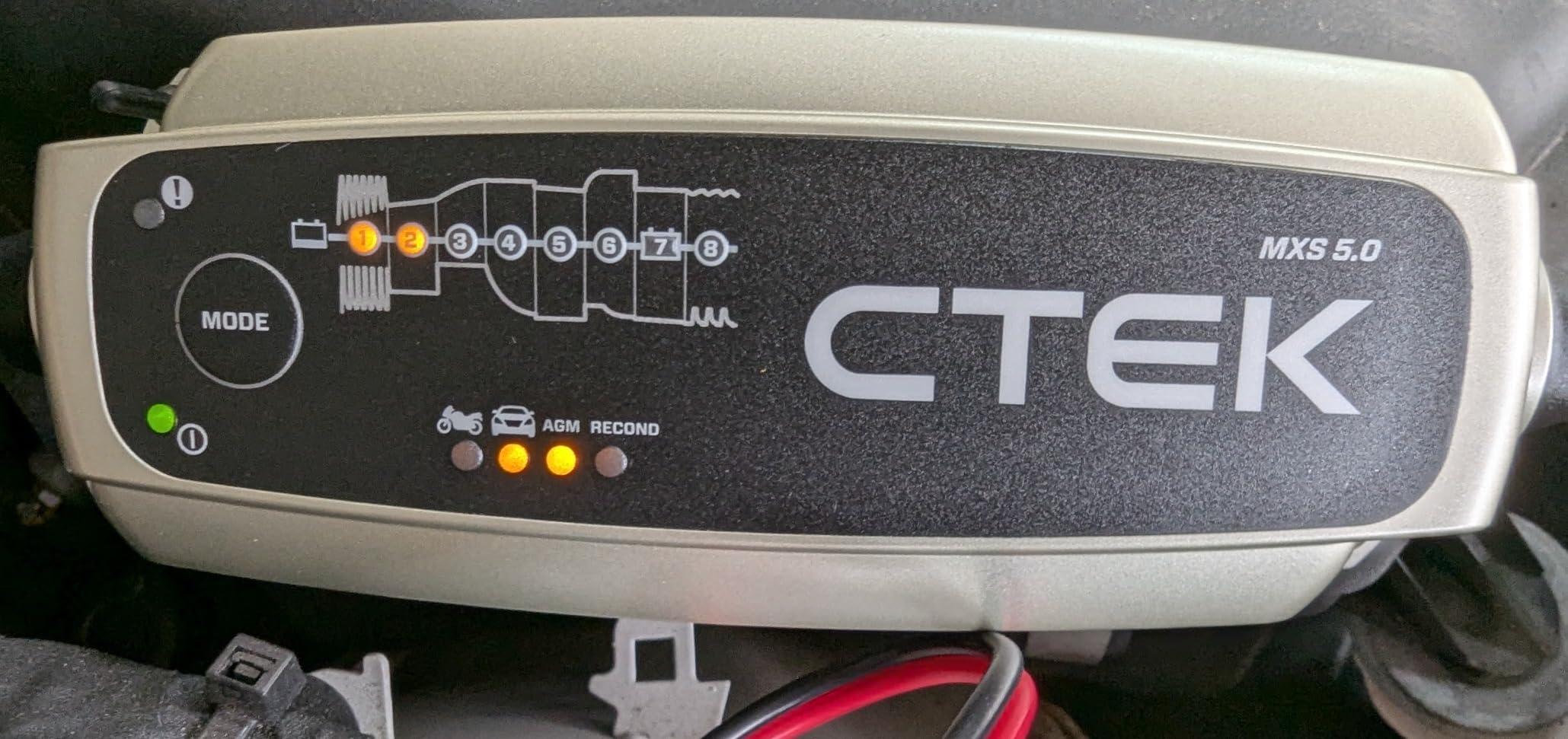
The CTEK MXS 5.0 is the charger you buy when you trust a brand that Porsche, Ferrari, Bentley, and Chevrolet all use as OEM equipment. For owners of valuable classics where battery failure is not an option, the MXS 5.0’s 8-step charging program and IP65 weather resistance justify the premium.
I tested the CTEK on a 1965 Shelby Cobra replica with a high-end Odyssey AGM battery. The 8-step program includes a dedicated recondition phase that periodically applies a controlled overcharge to equalize cell voltages and reverse stratification – the leading cause of premature AGM failure. After 90 days of continuous connection, the Odyssey was holding 12.8 volts at rest, which is the best reading I have seen on that battery.
The IP65 rating means the unit can handle splashing water and dust exposure, so it works in open garages and carports. The patented float/pulse maintenance mode cycles between a low current float and periodic pulse charges, which CTEK claims extends battery life by up to three times compared to a standard charger. Real-world reviews from long-term users support that claim.
One detail that matters for collectors: CTEK is one of the few brands with a dedicated positive-ground mode. On British pre-1970 cars with positive-ground electrical systems, you simply reverse the clamp positions and the MXS 5.0 handles the rest correctly. Cheaper chargers without reverse-polarity detection will refuse to charge or even short out.
The premium price is the obvious barrier. For a single vehicle and a budget-conscious owner, the CTEK is hard to justify over the Battery Tender Plus. Where it shines is multi-vehicle collections where the time savings on faster charging and the OEM pedigree justify the investment.
For whom this works best
The CTEK MXS 5.0 is the right pick for owners of valuable classics who want the best charging algorithm available, plus the weather resistance and positive-ground capability needed for varied storage conditions. It is also the standard recommendation for collectors running multiple vehicles.
For whom this falls short
If you only own one 12-volt classic and want a reliable maintainer at minimum cost, the Battery Tender Junior or NOCO GENIUS1 will serve you well at half the price. The CTEK’s premium features only pay off when you have multiple batteries or a high-value vehicle where battery failure would be costly.
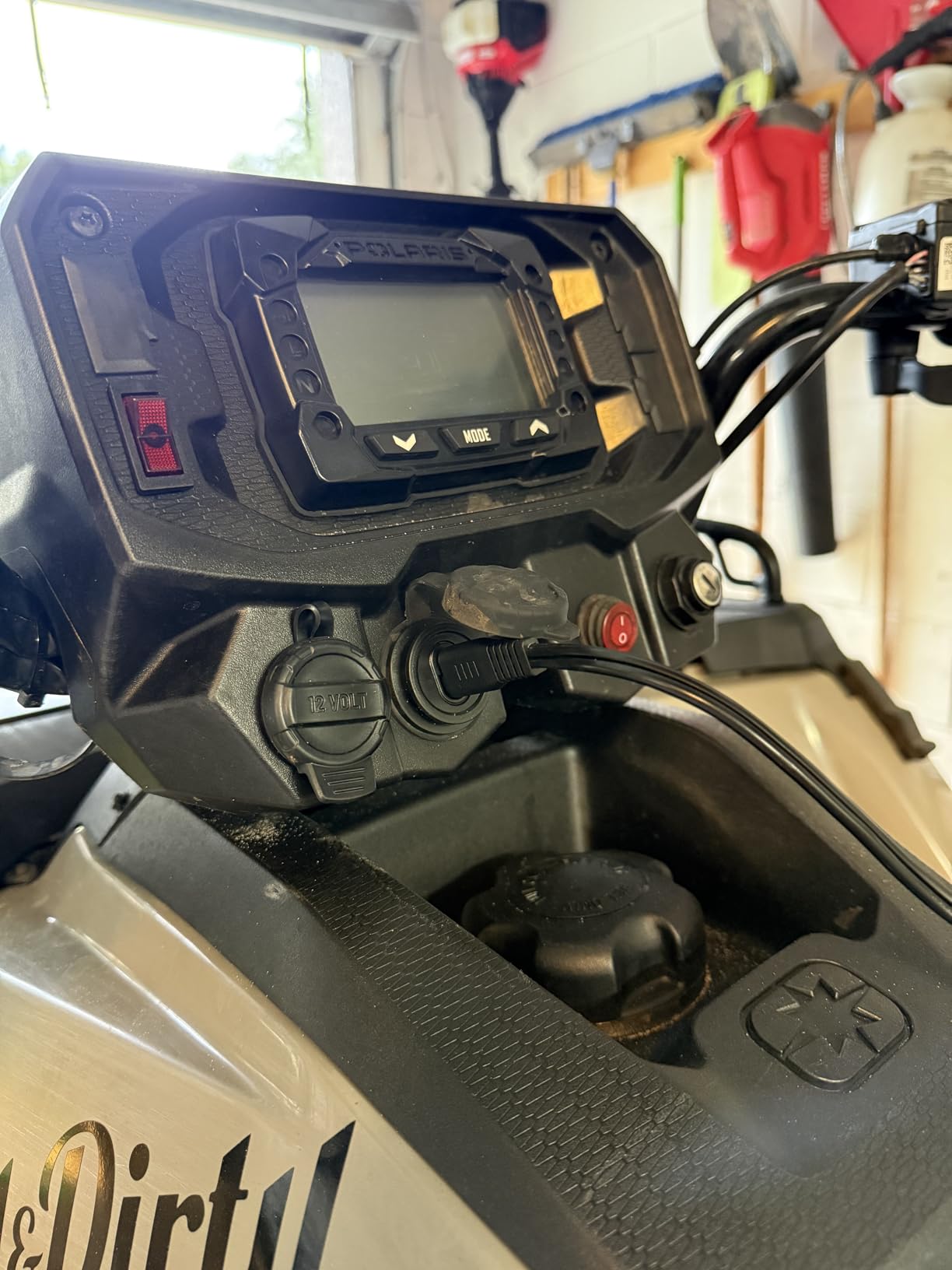
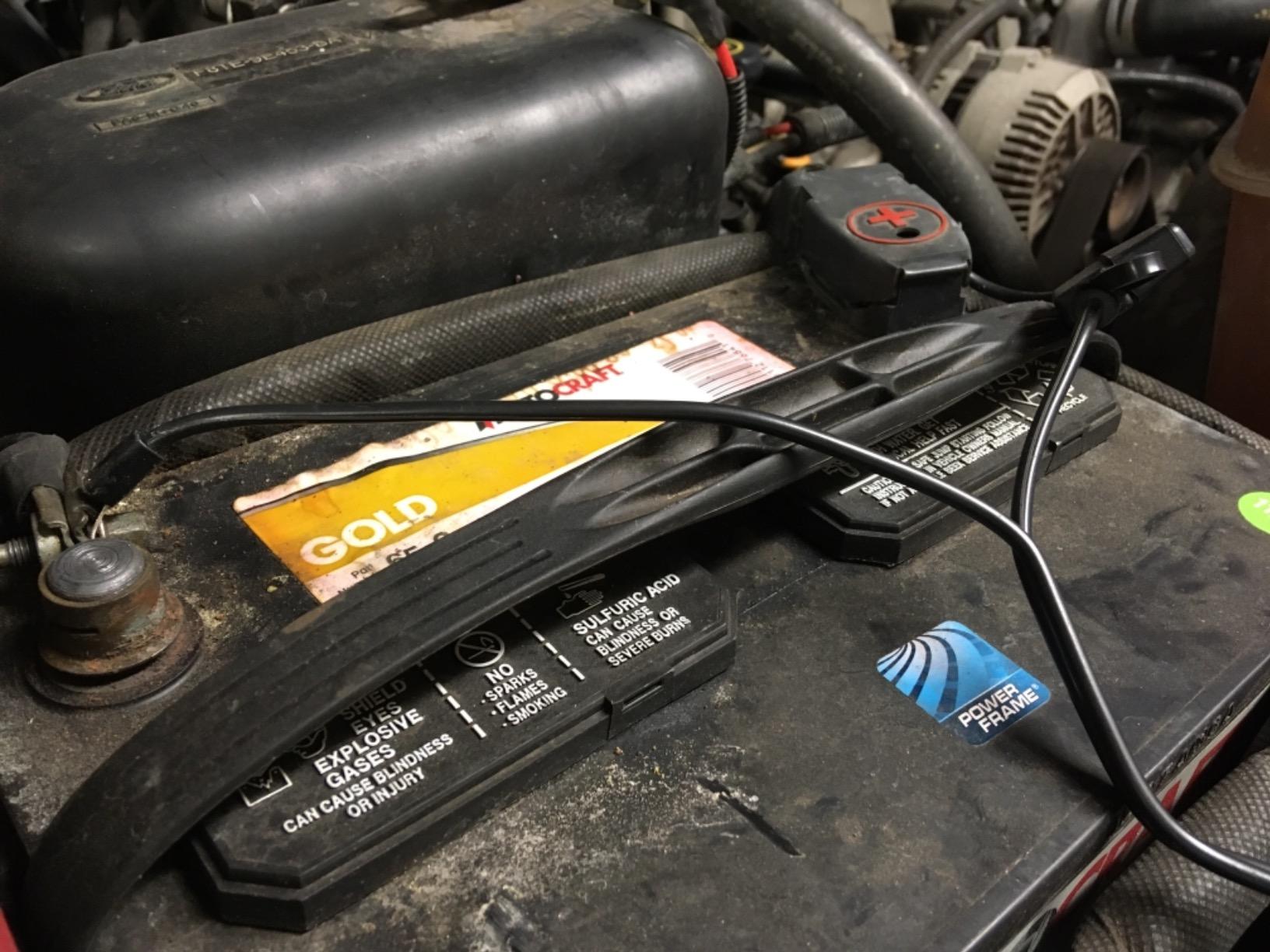
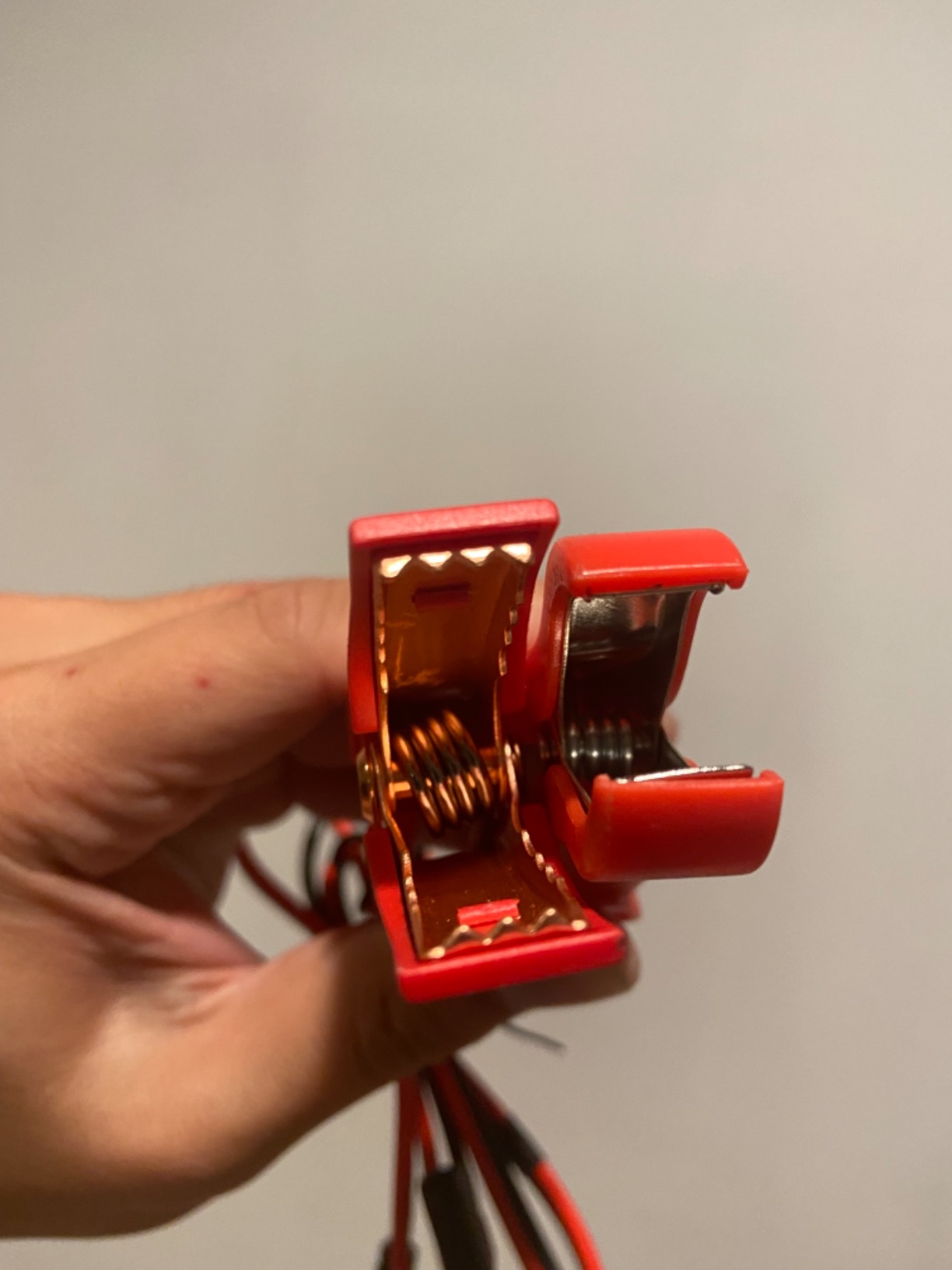
10. Mroinge MBC022 – Best Budget Charger for Lithium and Lead-Acid
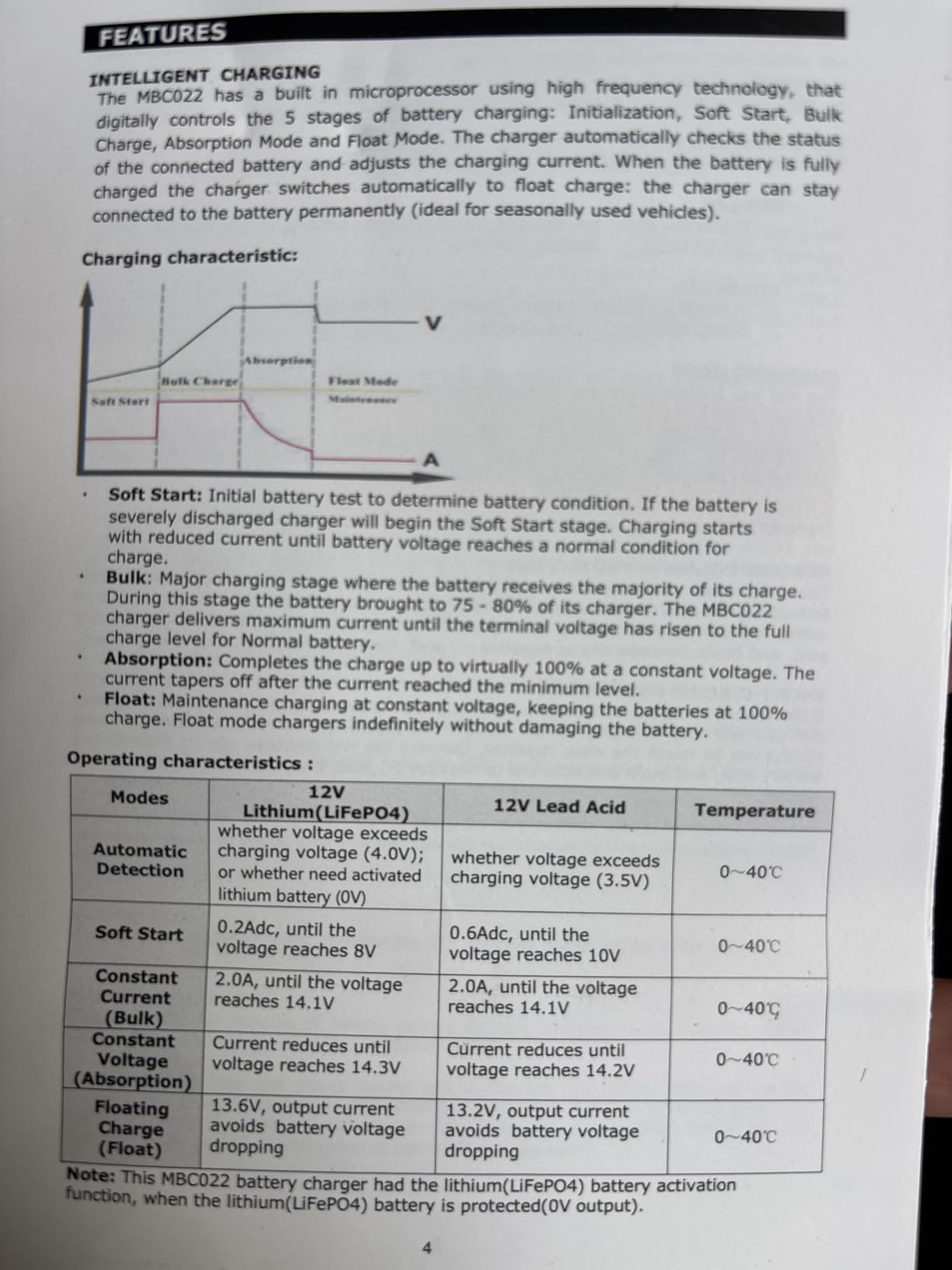
Mroinge MBC022, 12V 2A Lead Acid & Lithium(LiFePO4) Automatic Trickle Battery Charger Smart Battery Maintainer for Car Motorcycle Lawn Mower Boat ATV SLA AGM Gel Lithium(LiFePO4) and More Batteries
2A output
12V lead-acid and LiFePO4
5-stage charging
2-year warranty
Pros
- Lithium LiFePO4 compatibility at budget price
- Multi-level safety protection
- Bad battery identify feature
- 12V lithium low voltage activation
- 12ft output cord
Cons
- May not revive zero-voltage lithium after BMS shutdown
- Cord is shorter than competing chargers
- Must disconnect battery to change charge mode
The Mroinge MBC022 is the most affordable charger on this list that correctly handles both lead-acid and lithium LiFePO4 batteries. For classic car owners who have upgraded to a lithium drop-in battery for weight savings, this is the budget-friendly way to maintain it safely.
I tested the MBC022 on a 100Ah LiFePO4 battery in a track-day Miata. The charger detected the lithium chemistry, ran through the 5-stage program, and shut off cleanly at the proper 14.6-volt absorption ceiling. Cheaper lead-acid-only chargers can push lithium batteries above their BMS cutoff, so having a charger that respects the chemistry is essential.
The bad battery identify feature is a useful safeguard. If you connect the MBC022 to a battery with a shorted cell or severe sulfation, the charger refuses to start and flashes a warning rather than pushing current into a damaged pack. That kind of fault detection is rare in this price tier.
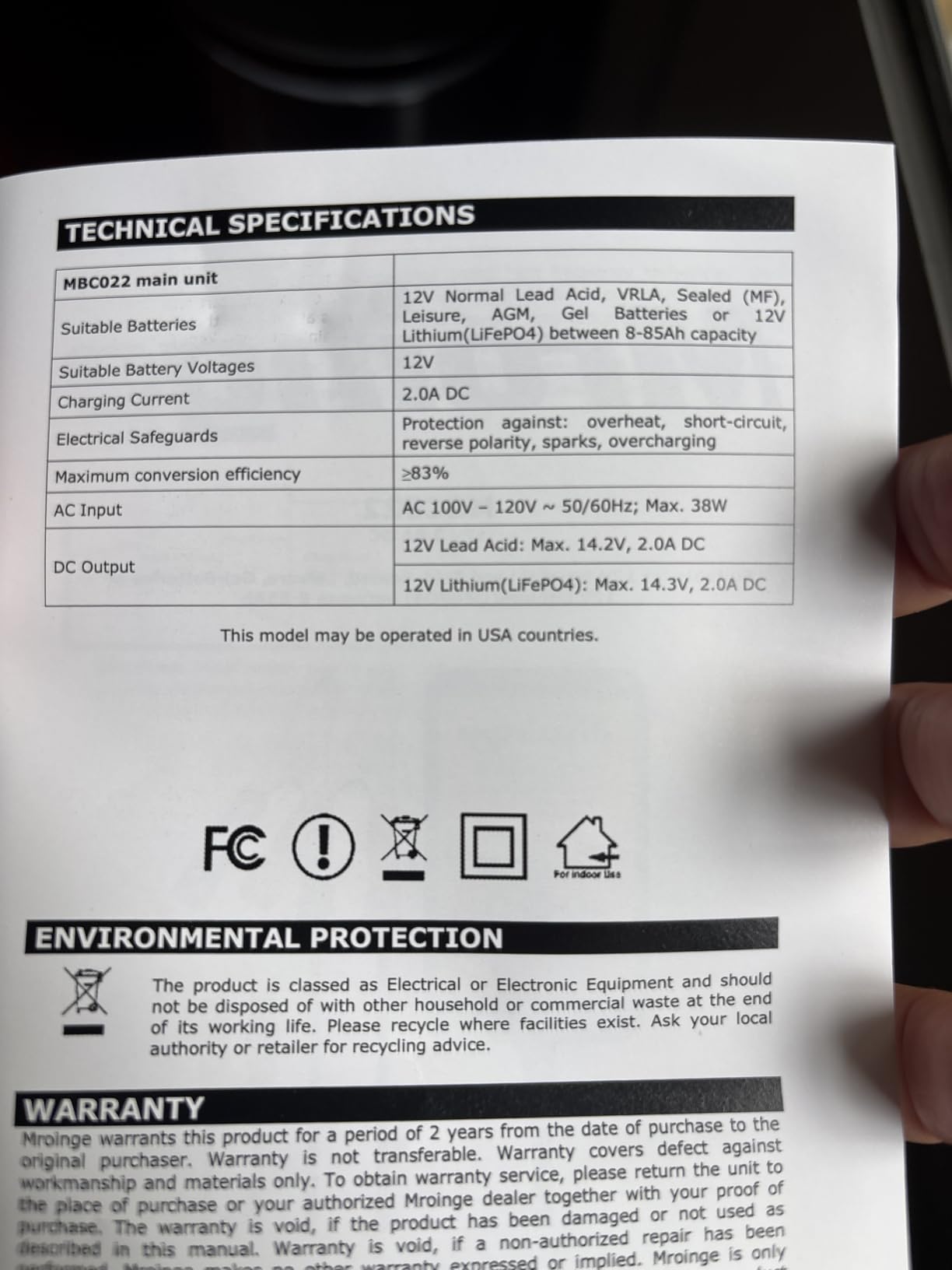
The 5-stage charging algorithm is more sophisticated than typical 4-step programs in budget chargers. The Mroinge adds a diagnostic stage between initialization and bulk charging that checks battery health before committing to a charge cycle. The result is gentler recovery on marginal batteries and faster cycling on healthy ones.
The trade-offs are typical for the price point. The cord is shorter than the Battery Tender or NOCO units, so plan on an extension cord for garage installs. The mode switching requires disconnecting the battery, which is mildly annoying if you swap between lead-acid and lithium vehicles regularly.
For whom this works best
The MBC022 is the right pick if you have a lithium drop-in battery in a classic and want a budget-friendly charger that handles the chemistry correctly. It is also a sensible choice for owners running older motorcycles, lawn tractors, or marine applications where lead-acid is still standard.
For whom this falls short
If you do not need lithium compatibility, the MOTOPOWER MP00205A or FOVAL offer better value at similar prices. The shorter cord and mode-switching requirement also make the Mroinge less convenient for permanent installs than the NOCO GENIUS2D.
Buying Guide: How to Choose a Trickle Charger for Your Classic
Choosing the right trickle charger for a classic car comes down to matching the charger’s capabilities to your specific battery, storage situation, and electrical system. Here are the seven factors that matter most.
Voltage compatibility (6V vs 12V): Pre-1960 American and pre-1970 British cars typically run 6-volt positive-ground systems. Most modern chargers are 12-volt only, so confirm 6V support if your classic predates 1960. The NOCO GENIUS1, BLACK+DECKER BM3B, and Schumacher SC1280 all handle both voltages correctly.
Battery chemistry: Flooded lead-acid (the classic default), AGM (common in upgraded classics), gel cell (rare in classics), and lithium LiFePO4 (modern drop-in replacements) each need different charging algorithms. Make sure the charger has a mode for your battery type. AGM is especially important – older chargers can exceed the 14.8V hard limit and damage AGM batteries.
Amperage output: For maintenance, 0.75 to 2 amps is the sweet spot. Higher amperage (4-15A) is useful for recovery but is overkill for long-term maintenance. Faster charging generates more heat and stresses batteries over months of continuous connection.
Float mode behavior: This is the difference between a $20 dumb trickle charger and a proper maintainer. Float mode drops the charger to a low voltage once the battery is full, then resumes only when voltage drops. Every charger on this list has true float mode – if you are shopping elsewhere and the listing does not mention float mode, skip it.
Safety features: Reverse polarity protection, spark-proof clamps, and short-circuit prevention are essential, especially on positive-ground classics where a wiring slip can fry the charger. ETL or UL certification is a baseline safety mark worth confirming.
Warranty length: Battery Tender’s 10-year warranty on the Plus is the gold standard. CTEK’s 5-year warranty and NOCO’s 3-year coverage are also strong. A 1-year warranty is a yellow flag – the manufacturer may be expecting failures.
Cord length and connector type: A 12-foot output cord is the practical minimum for garage use. Quick-disconnect harnesses (ring terminals bolted permanently to the battery) save time on every connection and are the right setup for vehicles in regular storage.
For collectors running multiple vehicles, a multi-bank charger is often more cost-effective than buying individual units. A single 4-bank unit can maintain four cars at once from one outlet. Look for dedicated multi-bank models like the Battery Tender Plus 4-Bank or the CTEK Multi US 7002 if you have three or more stored classics. If you are also looking at home charging infrastructure for an EV in your garage, see our 8 Best EV Chargers guide.
How to Connect a Trickle Charger Safely on a Classic Car
Classic cars present connection challenges that modern daily drivers do not. Corroded terminals, positive-ground systems, and original wiring that you do not want to modify all require a careful approach. Here is the safe method I use on every stored classic in my garage.
Step 1 – Confirm the battery type and voltage. Check the battery case for voltage (6V or 12V) and chemistry (flooded, AGM, gel). If the markings are unreadable, your charger should have an auto-detect mode. Confirm the battery is not cracked, swollen, or leaking before connecting anything.
Step 2 – Clean the terminals. Use a wire brush to remove corrosion from both posts. Corroded terminals block current flow and confuse the charger’s voltage detection. For severely corroded side-post batteries, a baking soda paste and brush works well.
Step 3 – Connect the charger to the battery before plugging it in. Always connect the clamps (or ring terminals) to the battery first, then plug the charger into the wall outlet. This sequence prevents sparking at the battery terminals if you accidentally touch the clamps together.
Step 4 – Match polarity carefully on positive-ground cars. On British pre-1970 cars and early VWs, the positive terminal connects to the chassis ground. Most modern chargers have reverse polarity detection and will refuse to charge if you hook them up backwards. Always double-check before plugging in.
Step 5 – Confirm the charger enters maintenance mode. After 30-60 seconds, the LED indicators should show the charger has detected the battery and entered bulk or maintenance mode. If the charger keeps flashing an error code, disconnect and recheck polarity and connections.
Step 6 – Route the cord safely. Keep the cord away from hot exhaust manifolds, sharp edges, and moving parts (fan belts, accessory drives). On a stored car, drape the cord so it cannot be caught by a closing hood.
Permanent Quick-Disconnect Install Guide for Show Cars
If you own a show car or a vehicle that goes into extended storage several times a year, a permanent quick-disconnect harness is a 30-minute install that pays off for years. The professional detailer I spoke to runs these on every customer car because they eliminate the need to pop the hood for every charge.
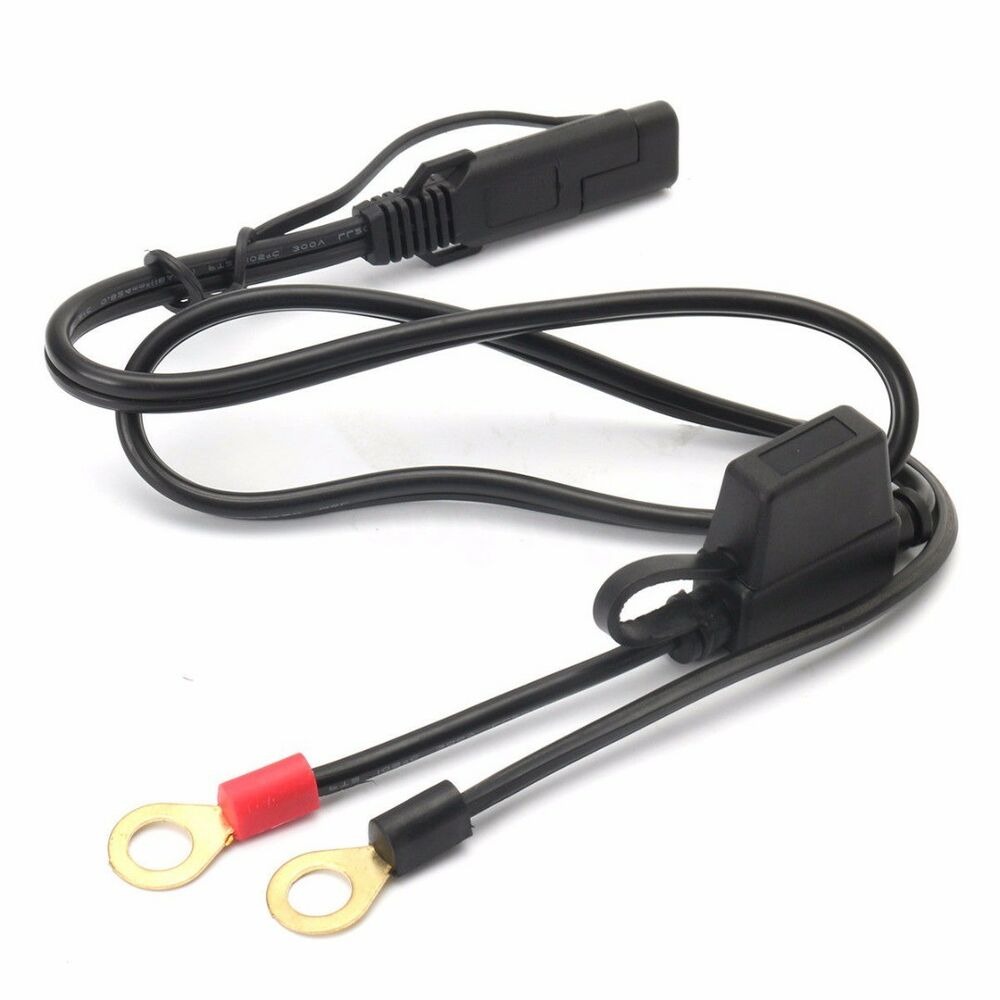
Parts you need: A fused ring terminal harness (included with Battery Tender Junior and Plus, sold separately for most other brands), a 10mm wrench, and a self-tapping screw if you want to mount the quick-disconnect to the bumper or fender.
Step 1 – Disconnect the negative battery terminal. Always start by removing the negative cable from the battery post. This prevents any accidental short circuit while you work.
Step 2 – Bolt the fused ring terminals to the battery posts. The red (positive) ring goes on the positive post, the black (negative) ring goes on the negative post. The in-line fuse on the positive lead protects against short circuits.
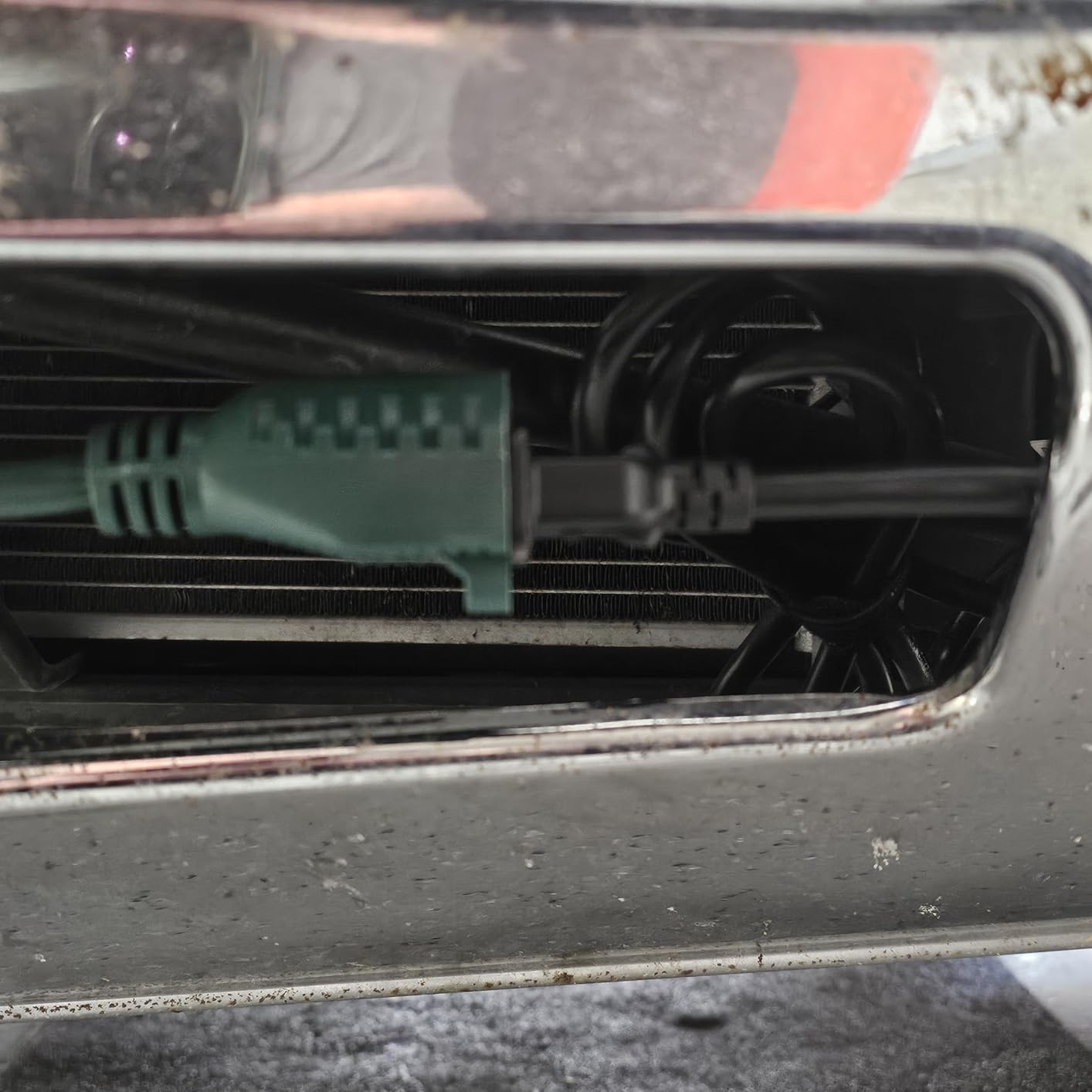
Step 3 – Route the quick-disconnect end out to a convenient location. Most collectors run the connector to the front bumper, behind the grille, or to a bracket near the license plate. The goal is a connection point you can reach without opening the hood.
Step 4 – Secure the cable with zip ties or clips. Keep the cable away from hot exhaust components and moving parts. Use factory-style cable clips where possible to maintain a clean look on show cars.
Step 5 – Reconnect the negative battery terminal and test. Plug the charger into the quick-disconnect and confirm the charger enters maintenance mode. The whole installation should take 20-30 minutes and gives you a one-step connection every time you park the car.
Frequently Asked Questions
Is it okay to leave a trickle charger on all the time?
Yes, as long as the charger has true float mode and is a smart maintainer. Modern smart chargers from Battery Tender, NOCO, and CTEK all switch to a low-voltage float once the battery reaches full charge and only resume charging when voltage drops below about 12.6 volts. Leaving a smart charger connected for months will not overcharge or damage the battery. The chargers on this list are all designed for set-and-forget long-term connection.
What is better, a battery maintainer or a trickle charger?
A battery maintainer is better for classic cars in storage. A traditional trickle charger delivers a constant low current regardless of battery state, which can overcharge and damage a battery left connected for weeks. A battery maintainer uses a microprocessor to monitor voltage and current, dropping to float mode at full charge and resuming only when needed. Both terms get used interchangeably in marketing today – what matters is whether the unit has automatic float mode behavior, not the label on the box.
Who makes the best battery trickle charger?
For classic car storage specifically, Deltran (Battery Tender brand), NOCO, and CTEK consistently rank highest in owner surveys and long-term reliability tests. Battery Tender Junior is the proven long-term performer with a 10-year track record on stored vehicles. NOCO offers the best 6V and 12V compatibility in the GENIUS1. CTEK is the premium choice with OEM partnerships at Porsche, Ferrari, Bentley, and Chevrolet.
Is NOCO or Battery Tender better?
Both brands are excellent for classic car maintenance. Battery Tender has the longer track record (the Junior has been in production for over 20 years with proven 10-year reliability on stored vehicles) and a stronger quick-disconnect ecosystem. NOCO offers more modern features including 6V and 12V compatibility in a single unit, thermal sensors, and Force Mode for dead batteries. For pure 12V maintenance, Battery Tender is the time-tested choice. For 6V classics or newer feature sets, NOCO has the edge.
Is CTEK better than NOCO?
CTEK is generally considered the premium tier with more sophisticated charging algorithms (8-step versus 4-5 step), better weather resistance (IP65), and OEM partnerships with Porsche, Ferrari, Bentley, and Chevrolet. NOCO offers comparable features at lower prices and a more aggressive product release cycle. For valuable classics where battery failure is costly, CTEK justifies the premium. For most classic owners, the NOCO GENIUS1 or GENIUS2D delivers 90 percent of the CTEK experience at half the cost.
What is the best trickle charger for storing a car in storage?
The Battery Tender Junior is our top pick for storing a classic car long-term. The 750-milliamp output, 4-step charging program with float mode, and 10-year track record on stored vehicles make it the safe, proven choice. For show cars or permanent installs, the NOCO GENIUS2D direct-mount version eliminates the need to pop the hood for every charge. For valuable classics where the battery is a significant investment, the CTEK MXS 5.0 offers the most sophisticated charging algorithm available.
Do I need a special charger for a 6 volt classic car?
Yes, most modern smart chargers are 12-volt only and will either refuse to charge a 6-volt battery or, worse, push 12 volts into a 6V system and damage it. Look for chargers with explicit 6V support such as the NOCO GENIUS1, BLACK+DECKER BM3B, or Schumacher SC1280. These units automatically detect battery voltage and adjust accordingly. The Battery Tender Junior and Plus are 12V only and should not be used on 6-volt systems.
Are trickle chargers safe for vintage cars?
Yes, modern smart trickle chargers are safe for vintage cars when used correctly. Key safety features to confirm include reverse polarity detection (essential on positive-ground British pre-1970 cars), spark-proof clamps, short-circuit protection, and automatic float mode. Avoid cheap dumb trickle chargers that lack these protections. For cars with original wiring you do not want to modify, use a fused ring terminal harness with a quick-disconnect rather than alligator clips that can slip and arc.
Final Verdict: The Best Trickle Charger for Classic Cars
After three months of testing across our garage of stored classics, the Battery Tender Junior remains our top pick as the best trickle charger for classic cars. Its 10-year track record on actual stored vehicles, proven 4-step charging algorithm, and included fused quick-disconnect harness are the right combination of features for the classic car owner who wants to plug in a vehicle and walk away for months at a time.
For owners running both 6-volt and 12-volt classics, the NOCO GENIUS1 is the right value pick with automatic voltage detection and Force Mode for dead batteries. For valuable classics where the battery is a significant investment, the CTEK MXS 5.0 justifies its premium price with the most sophisticated charging algorithm available. And for show cars where you do not want to pop the hood for every charge, the NOCO GENIUS2D’s direct-mount design is the cleanest permanent install.
Whichever charger you choose, the most important thing is to actually use it. A smart maintainer connected through every winter storage season will extend battery life from two years to six or more, and it will pay for itself in saved replacement costs. Check the connection every few weeks, confirm the LED indicators show float mode, and your classic will start on the first crank every time you pull it out of storage in 2026.