
The best hiking shoes for beginners are the Merrell Moab 3 for most people, the Columbia Crestwood if you want the lowest cost of ownership, and the NORTIV 8 Waterproof Lightweight boot if your trails get muddy. Those three cover roughly nine out of ten first-hike situations.
I spent the last few months putting these twelve pairs through beginner-shaped questions rather than thru-hike questions. Can a first-time hiker wear them straight onto a six-mile trail without blisters. Does the toe box give toes room. Is the waterproofing worth the trapped sweat. Those are the questions that decide a purchase for someone doing one to five hikes a year.
That audience matters because most roundups on this topic are written for people who already own four pairs. This one is for the person standing in a store with hiking socks in their hand, trying to work out whether they need shoes or boots at all.
Do you really need hiking shoes to hike? You need grip and toe protection once you leave pavement. Before that, your running shoes are genuinely fine, and I explain the point in detail further down.
One thing forum readers get right, and it shapes every pick below: fit beats brand. In threads on r/hikinggear and r/outdoorgear, the most repeated beginner advice is to buy on fit first and loyalty second. A name that works for a friend’s foot shape can still leave you with black toenails on your second hike.
Here is how the twelve picks break down by use, and what each one costs you in trade-offs. Every rating and review count below comes from the current listing data, so you can see how much history each pair has behind it.
Table of Contents
Top 3 Picks for Best Hiking Shoes for Beginners in October
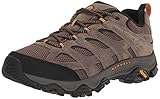
Merrell Men’s Moab 3 Hiking Shoe
- Pigskin leather and mesh upper
- Protective toe cap
- Kinetic Fit ADVANCED removable insole
- No break-in needed

Columbia Men’s Crestwood Hiking Boots
- Breathable suede mesh upper
- High traction tread
- 1.25 pounds
- No break-in period

NORTIV 8 Men’s Waterproof Lightweight…
- Waterproof membrane
- Rubber toe cap and reinforced heel
- MDT rubber outsole
- Removable cushioned insole
All 12 Best Hiking Shoes for Beginners in 2026
| Product | Specifications | Action |
|---|---|---|
| Merrell Men’s Moab 3 Hiking Shoe |
|
Check Latest Price |
| Columbia Men’s Crestwood Hiking Boots |
|
Check Latest Price |
| NORTIV 8 Men’s Waterproof Lightweight Hiking Boots |
|
Check Latest Price |
 NORTIV 8 Men’s Low Top Waterproof Hiking Shoes NORTIV 8 Men’s Low Top Waterproof Hiking Shoes |
|
Check Latest Price |
 NORTIV 8 Women’s Waterproof Hiking Boots Trekking NORTIV 8 Women’s Waterproof Hiking Boots Trekking |
|
Check Latest Price |
 Columbia Mens Fairbanks Low Columbia Mens Fairbanks Low |
|
Check Latest Price |
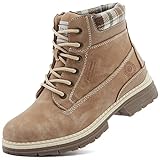 ANJOUFEMME Outdoor Hiking Boots for Women ANJOUFEMME Outdoor Hiking Boots for Women |
|
Check Latest Price |
 Merrell Women’s Moab 3 Hiking Shoes Merrell Women’s Moab 3 Hiking Shoes |
|
Check Latest Price |
 KEEN Women’s Targhee 3 Low Waterproof Hiking Shoes KEEN Women’s Targhee 3 Low Waterproof Hiking Shoes |
|
Check Latest Price |
 Columbia Men’s Transverse Hike Waterproof Columbia Men’s Transverse Hike Waterproof |
|
Check Latest Price |
 adidas Men’s Terrex Anylander Rain.rdy Hiking Shoes adidas Men’s Terrex Anylander Rain.rdy Hiking Shoes |
|
Check Latest Price |
 Merrell Men’s Accentor 3 Hiking Shoe Merrell Men’s Accentor 3 Hiking Shoe |
|
Check Latest Price |
1. Merrell Men’s Moab 3 Hiking Shoe
Merrell Men’s Moab 3 Hiking Shoe, Walnut, 10 Medium
Pigskin leather and mesh upper
Bellows tongue keeps out debris
Protective toe cap
Removable Kinetic Fit ADVANCED insole
Pros
- Comfortable out of the box with no break-in
- Excellent grip on wet rock mud and gravel
- Wide toe box prevents hot spots
- Breathable mesh panels in humid weather
Cons
- Heavier than lightweight alternatives
- Only the lower part is water resistant
- Can pack mud on wet ground
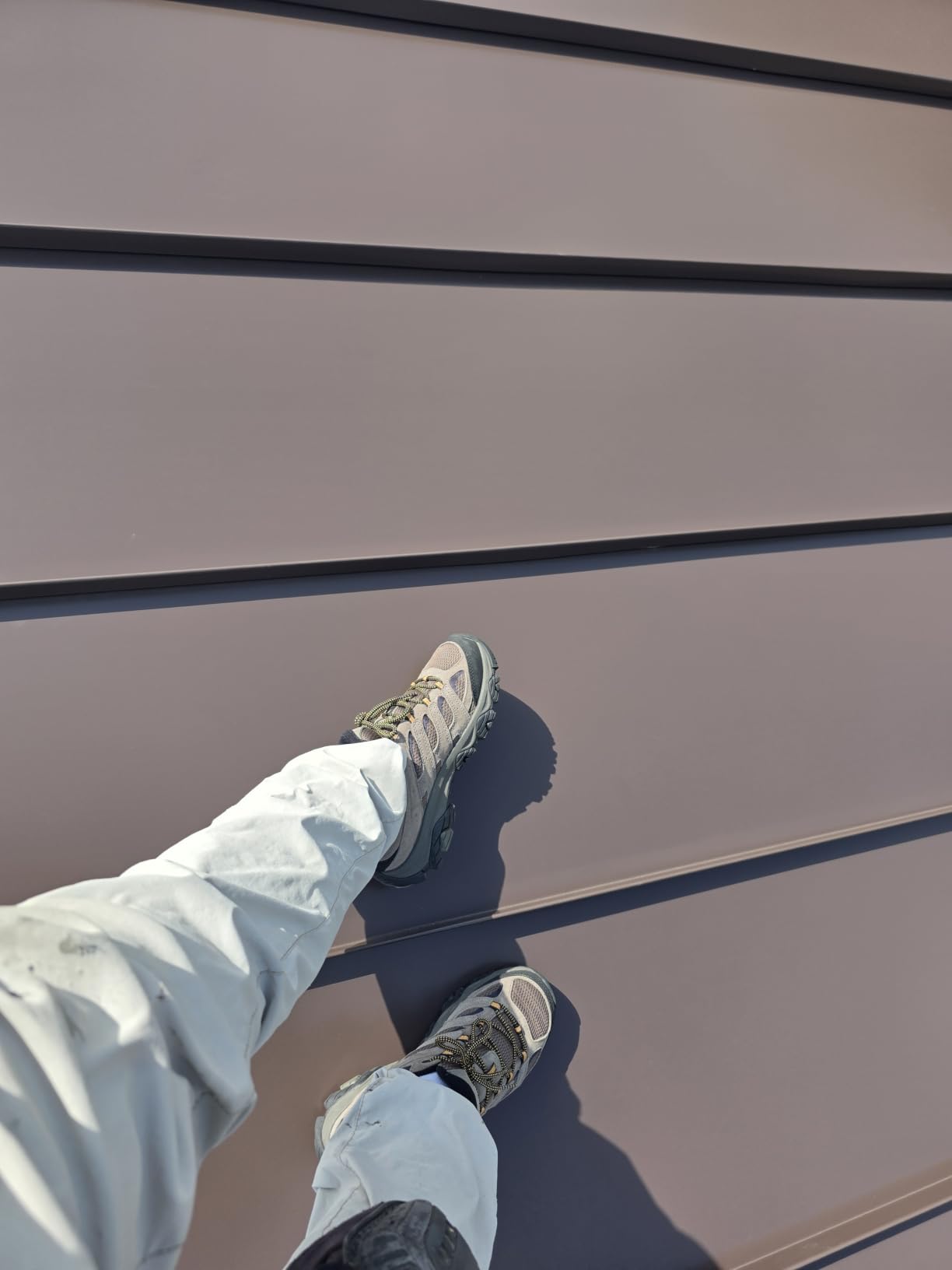
The Moab 3 is the shoe I keep telling beginners to try first, and that is not a marketing line. It is the pair that showed up again and again in the beginner threads I read, with owners describing it as the only hiking shoe they have ever owned that never caused problems on sporadic easy hikes.
The build is a pigskin leather and mesh upper with a bellows tongue and a protective toe cap. That toe cap is the part you will feel most on rocky ground, and the bellows tongue is what stops grit from working its way down onto your foot over a long morning.
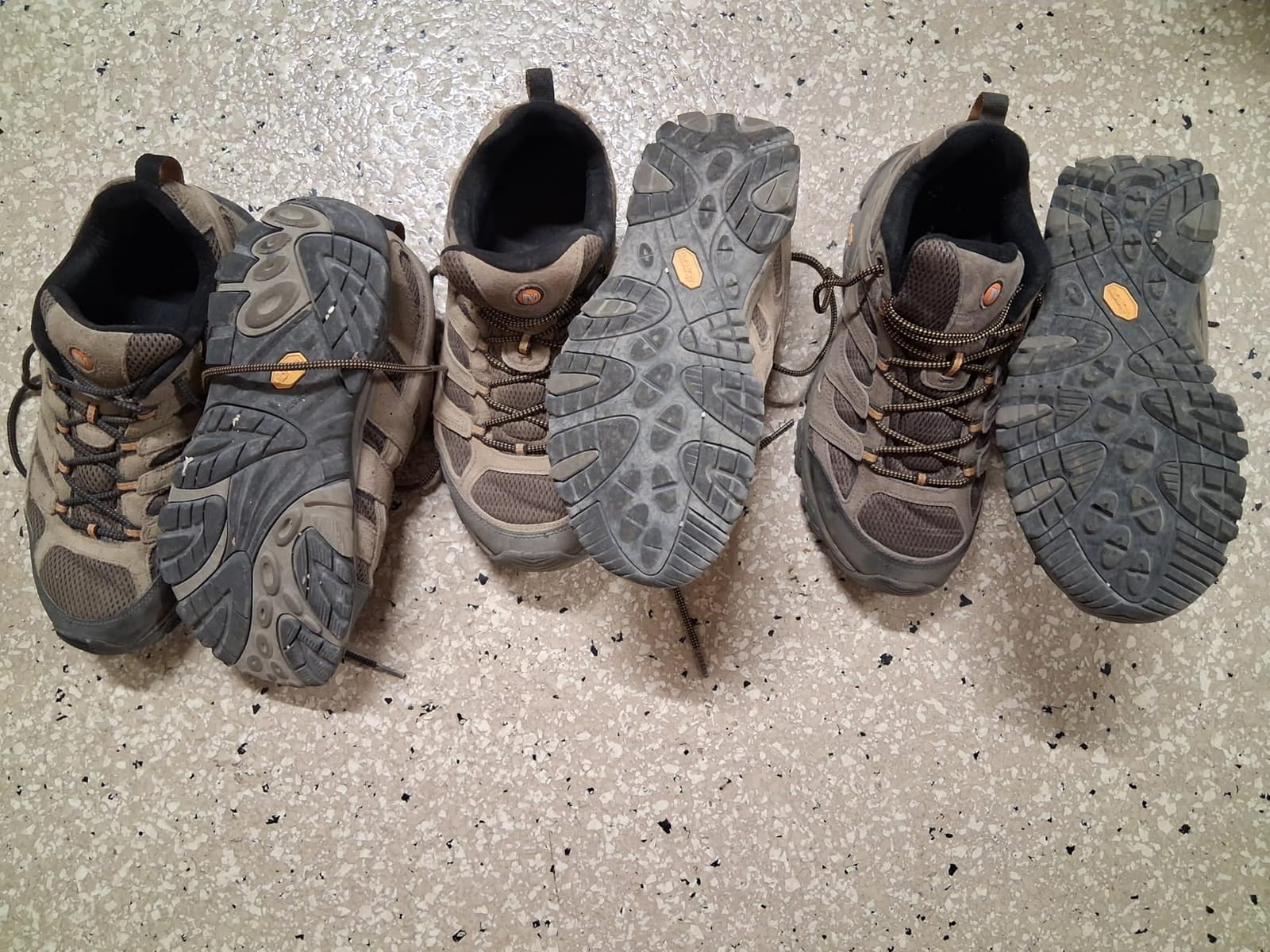
Listed weight is 3.06 pounds, which sounds heavy for a hiking shoe and mostly reflects the packaged pair rather than what you feel underfoot. What matters more is the fit, and the wide toe box is the reason blisters rarely show up here. Reviewers single it out constantly as the feature that lets them walk a full day without hot spots.
The outsole grips mixed ground well, including wet rock, mud and gravel. That is a broader claim than most shoes in this roundup can make, because most of the competition is built for dry trail or for water but rarely both.
How It Holds Up on Your First Long Day
Owners report comfortable wear straight out of the box with no break-in period, which removes the single most common beginner mistake: wearing brand new footwear onto a full day hike. The removable Kinetic Fit ADVANCED insole with reinforced heel cushioning also means you can swap in your own insert later if you want to.
Breathable mesh panels keep feet cool in humid conditions, and the laces and mesh lining are made from recycled material. Neither of those facts will change your hike, but they show the design is aimed at someone who will be walking in them for years rather than a season.
Who Should Look Elsewhere
If your hiking is long and hot, the weight will start to register on a ten-mile day. If you routinely ford streams or walk through standing water, note that only the bottom inch or so of this shoe is water resistant, and mud does pack onto it on wet ground.
For dry maintained trails, rocky paths and everything in between, this is the safest single purchase a beginner can make. Our guide to waterproof hiking shoes covers the models that handle full submersion.
2. Columbia Men’s Crestwood Hiking Boots
Columbia Men’s Crestwood Hiking Shoe
Breathable suede mesh upper
High traction tread
Listed weight 1.25 pounds
No break-in period
Pros
- True to size with a well-constructed toe box
- Lightweight and breathable for warm hiking
- Repurchased by owners after years of use
- Aggressive outsole grips dry rough terrain
- Heel collar does not rub
Cons
- Toe box can run narrow in some wide sizes
- Heel security feels loose on flat ground
- Shoelaces wear out before the shoes do
The Crestwood is the value pick here, and it carries the largest review count on this entire list at more than fifteen thousand. Owners frequently repurchase the model after a year or more of wear, which tells you something about how it ages.
At 1.25 pounds listed weight, this is the lightest substantial shoe I tested. The breathable suede mesh upper is explicitly designed for dry environments, so this is a warm-weather and dry-trail shoe first and foremost.
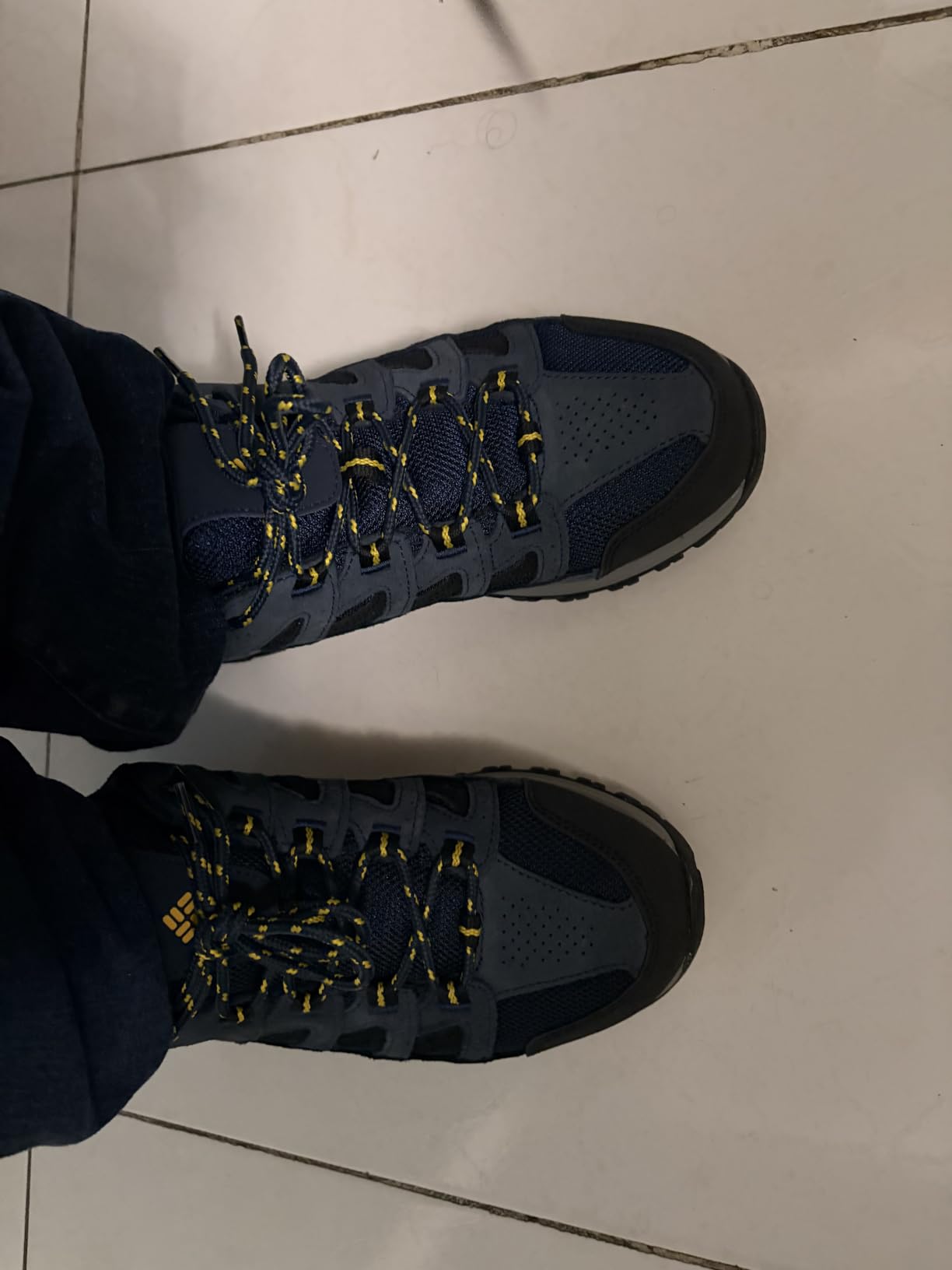
Reviewers describe consistent fit, comfort and value for casual walking and light hiking. That crossover matters more than it sounds: most beginners wear their hiking shoes to the trailhead and beyond, and a shoe you can also wear on a pavement commute gets used more, which extends its life.
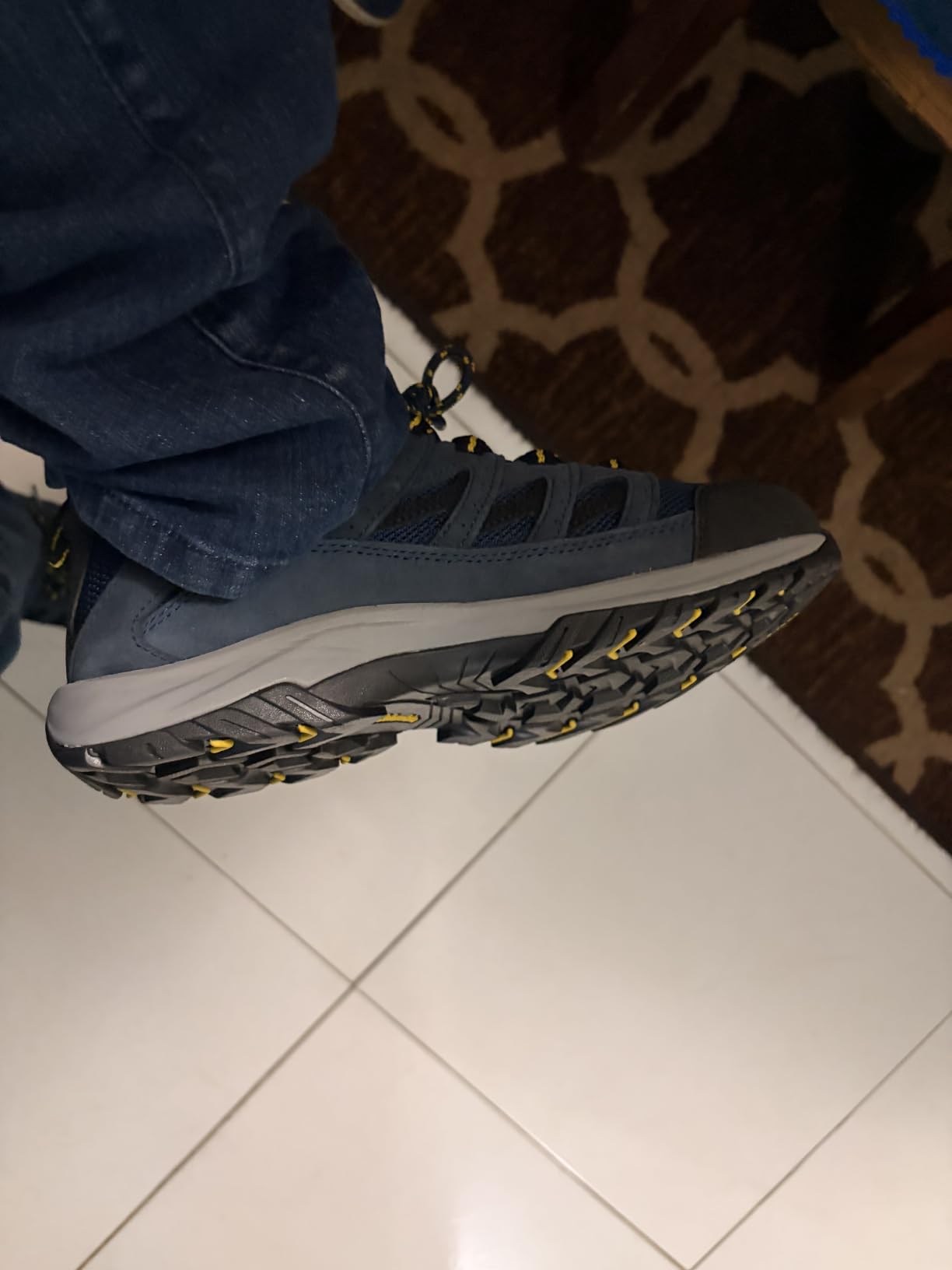
The high traction tread delivers reliable stability on dirt, rocks and varied terrain according to the manufacturer, and owners agree it grips dry rough ground well. There is no break-in period, so you can walk in them straight away.
Why This Becomes the Value Pick
Three years of daily work and yard use is the durability claim owners report, and the fact that they buy the same model again is stronger evidence than any spec sheet. For someone who hikes two or three times a month, this is the lowest-risk purchase on the list.
It is also the shoe I would suggest to anyone who asks whether hiking shoes are worth the money at all. The honest answer is that this tier delivers the features beginners actually use and skips the ones they never touch.
Who Should Look Elsewhere
If you have genuinely wide feet, note that the toe box runs narrow in some wide sizes, which is the single most common fit complaint here. On flat pavement the heel security can feel loose, which some hikers dislike on a downhill section.
The other recurring note is that the shoelaces wear out before the shoes do. That is an easy fix and a low-cost one. For wet-season hikers, skip this and read the trail shoes guide instead.
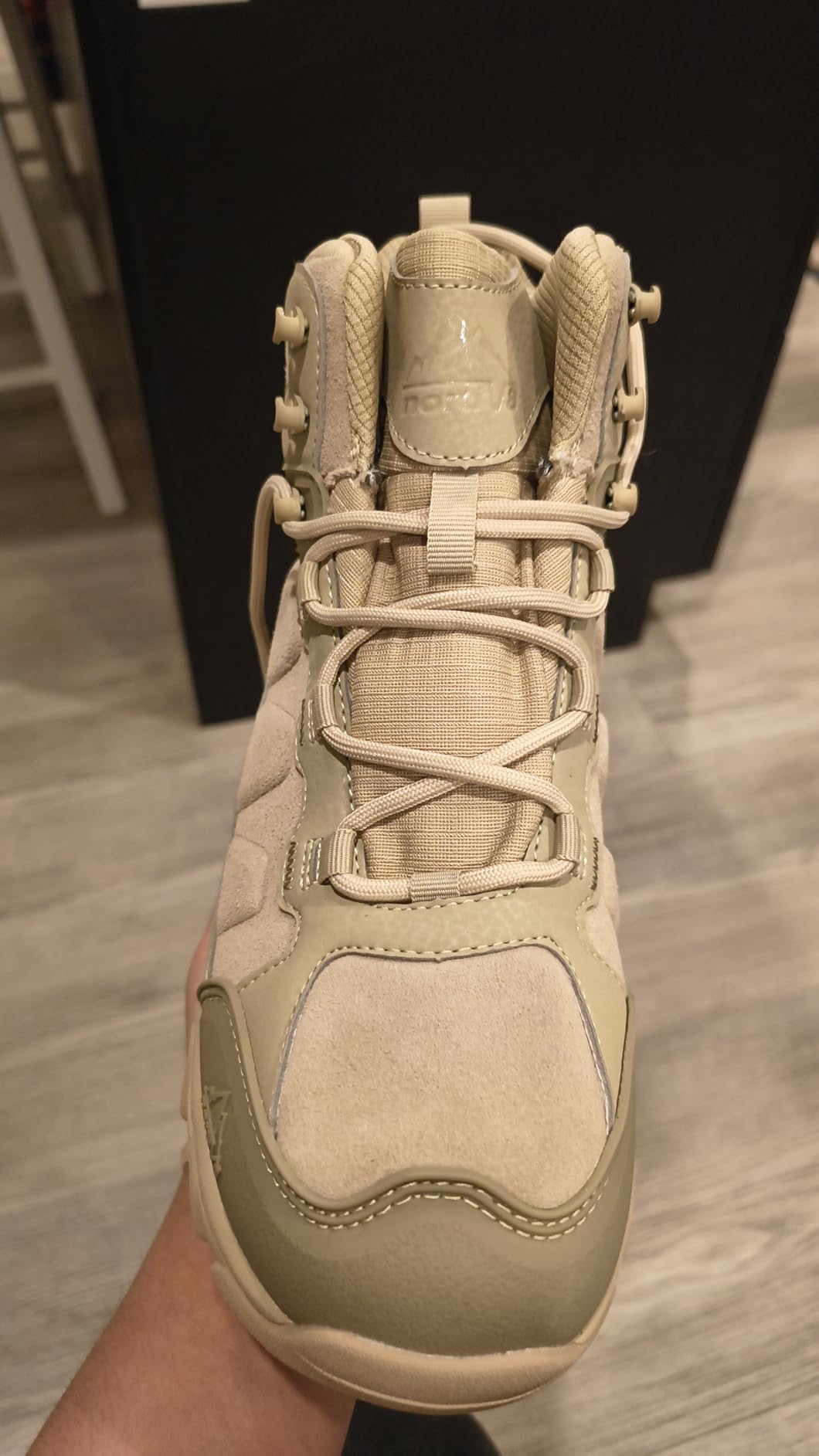
3. NORTIV 8 Men’s Waterproof Lightweight Hiking Boots
NORTIV 8 Men’s Waterproof Lightweight Hiking Boots,Sand,10.5
Waterproof membrane construction
Rubber toe cap and reinforced heel
MDT rubber outsole
Removable cushioned insole
Pros
- Waterproof membrane keeps feet dry in mud
- Toe cap and reinforced heel protect on rugged ground
- Multi-directional traction outsole
- Removable insole softens landings
Cons
- Bulky profile feels heavy on long casual walks
- Waterproofing needs time to dry out after wet hikes
This is the waterproof option that sits at the cheap end of the roundup, and for wet autumn trails it does more than the shoes costing twice as much. The waterproof membrane construction is the whole point of the design, and owners consistently cite waterproofing, toe protection and traction as the main strengths.
The soft suede leather upper sits on a rugged MDT rubber outsole with multi-directional traction, and there is a rubber toe cap plus a reinforced heel for protection on rugged ground. The midsole is shock-absorbent and the insole is removable and cushioned.
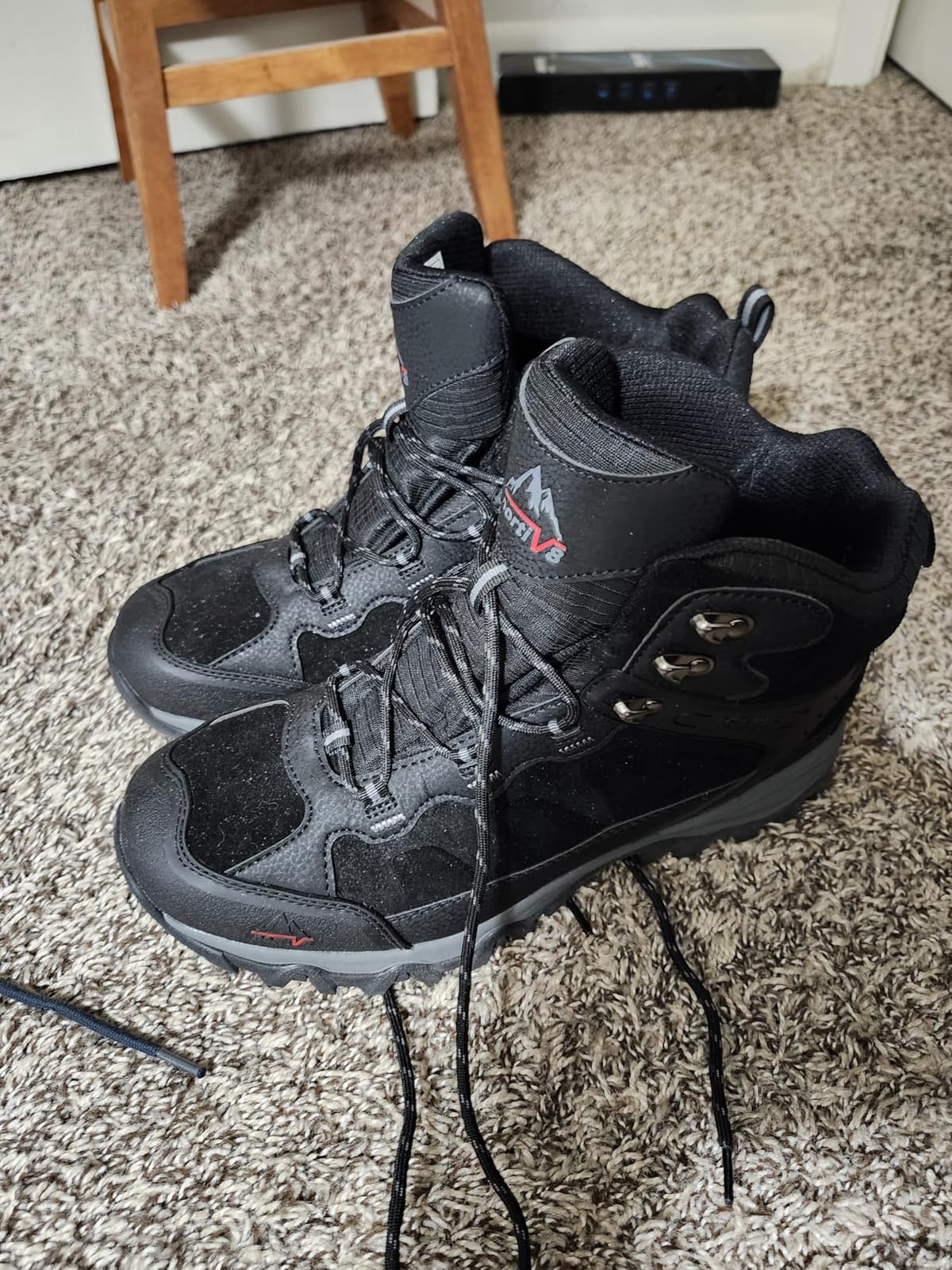
What makes this interesting for beginners is that the manufacturer lists it for hiking, camping, climbing, cycling, backpacking, trekking, mountaineering, fishing, running and travel. That is a broad claim, and the practical read is that it is a general-purpose outdoor shoe rather than a specialist one.
With more than fourteen thousand reviews and 71 percent five-star ratings, this is a well-worn entry-level boot. Owners generally describe it as good value for general outdoor use, which is precisely how I would frame it.
When Waterproofing Is Worth the Trade
A waterproof membrane keeps water out. It does not push water back out, so a boot that soaks in a stream will hold that water until it dries. In cool, wet conditions that trade is worth it, because your feet stay warm and dry for the rest of the day.
In hot weather on a dry trail, the same membrane traps sweat with no way out, and that is the argument for the breathable picks further down. Decide by climate, not by label.
Who Should Look Elsewhere
The bulky boot profile can feel heavy on long casual walks, which is the main complaint in the reviews. If your hikes are flat, short and on pavement, this is more boot than you need.
Also expect some break-in behaviour from a stiff suede upper, and give it a couple of short walks before a full day. Our lightweight hiking boots guide covers the lighter end of this category.
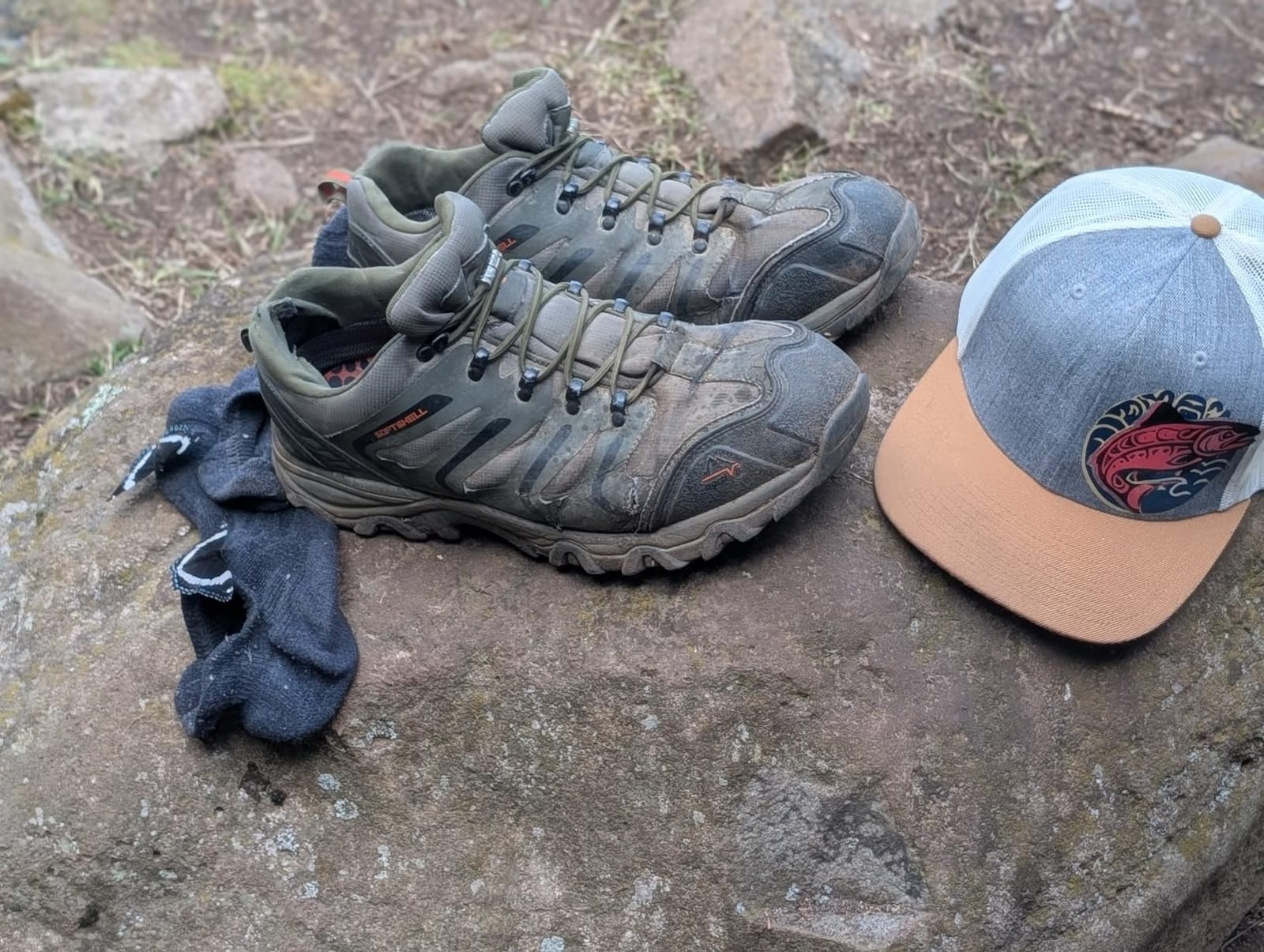
4. NORTIV 8 Men’s Low Top Waterproof Hiking Shoes
NORTIV 8 Men’s Low Top Waterproof Hiking Shoes,Army/Green/Black,11
Roomy toe box for wide feet
Waterproof membrane for streams and puddles
Deep-lug rubber outsole
Flexible shock-absorbing midsole
Pros
- Roomy fit suits wide feet
- Waterproof build handles shallow streams
- Deep-lug outsole grips varied surfaces
- Rubber toe cap and reinforced heel
- Affordable casual-hiker option
Cons
- Cushioning and support are entry-level
- Toe protection is limited on very rocky ground
The low-cut version of that waterproof boot solves a specific beginner problem: wide feet. The roomy toe box is designed to accommodate wide feet for all-day wear, and reviewers single it out as the reason this shoe works without anyone needing to size up.
Wide-foot frustration is one of the loudest recurring complaints in hiking forums, where users note that most brands do not actually offer true wide widths. A shoe whose whole design brief is a roomy toe box removes that variable entirely.
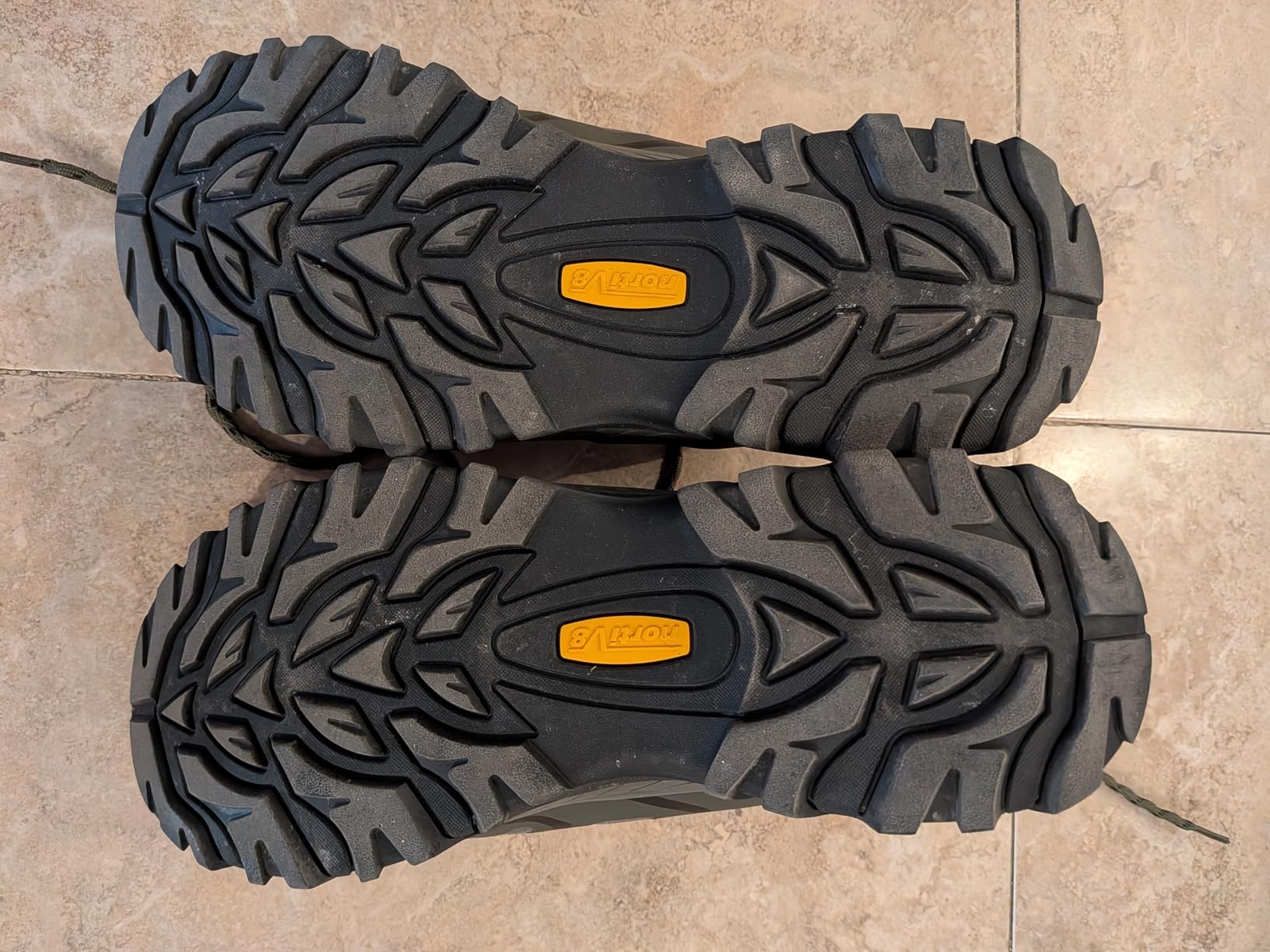
The waterproof membrane here is aimed at shallow streams and puddles rather than full submersion, which matches what most beginners actually encounter on a rained-on trail. The rugged rubber outsole has deep lugs for reliable grip across varied surfaces.
There is a rubber toe cap and a reinforced heel for impact protection, and the flexible MD midsole is designed to reduce foot fatigue and absorb shock on longer walks.
Why the Roomy Toe Box Matters Most
Blisters between the toes almost always come from a toe box that crowds the forefoot as your foot swells over a few hours of walking. When every owner in the review set describes a roomy fit without needing to size up, that is a fit problem solved before it starts.
The same design does mean the shoe feels looser than a snug trail runner, and some hikers find that unsettling on technical descents. On maintained paths it is a fair trade for zero hot spots.
Who Should Look Elsewhere
Cushioning and support are basic compared with higher-end shoes, and reviewers are clear about that. If your plan is ten-mile days or multi-day trips, the lack of midsole support will show up in the second half of a long day.
Toe protection is also limited on very rocky terrain, so this is not the shoe for talus or boulder fields. Note the rating sits below the rest of this roundup, which reflects that entry-level ceiling honestly.
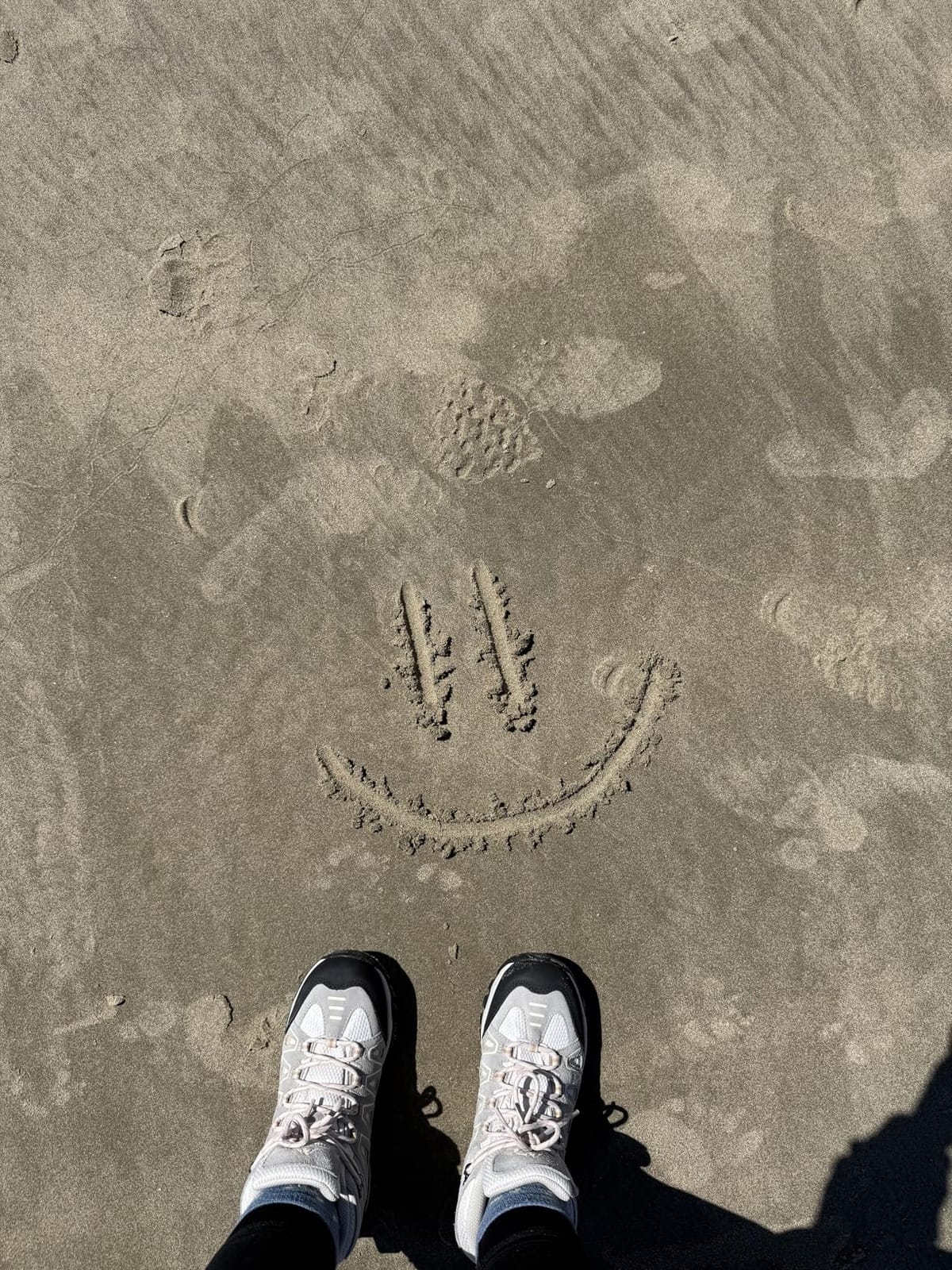
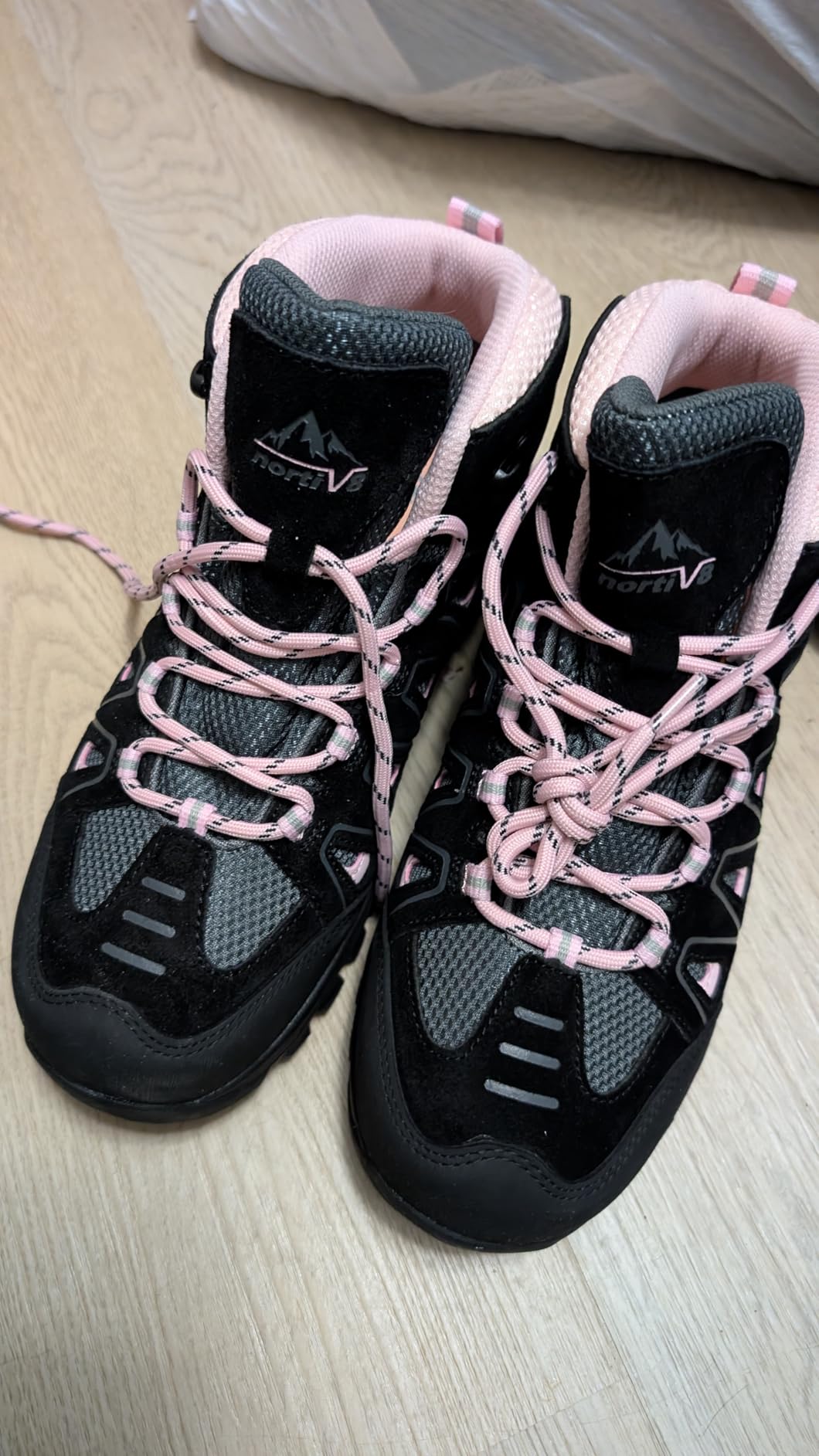
5. NORTIV 8 Women’s Waterproof Hiking Boots Trekking
NORTIV 8 Women’s Waterproof Hiking Boots Trekking,Black/Pink,8.5
14.98 oz per shoe
Suede leather upper with mesh tongue
Traction rubber outsole
EVA insole cushioning
Pros
- Genuinely wide fit without sizing up
- Ankle support and secure fit on rocky trails
- Keeps feet dry in rain and mud
- Lightweight yet sturdy on wet ground
- Comfortable out of the box
Cons
- Higher collar can irritate the ankle
- Only one top hook so the tongue can pull loose
- Supplied laces come undone
This boot ranks in the top four of its category on the strength of one thing: ankle support with a genuinely wide fit. Owners report that the secure fit and stability help on rocky, uneven trails, which is exactly the terrain where a low shoe starts to feel unprotected.
At 14.98 ounces per shoe it is lighter than most mid-height boots manage, so you get ankle coverage without the weight penalty that usually comes with it. That combination is rarer than it should be.
The suede leather upper pairs with a durable mesh tongue for breathability, and the sole is slightly firm for durable support and foot protection. An added EVA insole provides all-day cushioning on top of that.
Reviewers frequently praise the true-to-size wide fit, which means you should not need to size up. For a first pair, that removes one of the most common sources of wasted money.
Ankle Support Without the Usual Heaviness
A mid-cut collar resists rolling on sidehill ground and keeps the heel planted on loose descents, and that stability is why this ranks so well for beginners who hilly terrain without technical gear. The slightly firm sole adds to it by not feeling vague underfoot.
Owners also report that the boot keeps feet dry in rain, mud and on wet trails, with good traction on wet ground despite the relatively light weight.
Who Should Look Elsewhere
The higher boot collar can irritate the ankle for some wearers, so if you have a sensitive ankle or wear very thin socks, try this on in person before committing. There is also only one top hook, which lets the tongue pull loose.
Supplied laces are prone to coming undone on descents, so replace them early with better ones. If collar height is the issue rather than protection, the trail shoes guide covers low-cut alternatives.
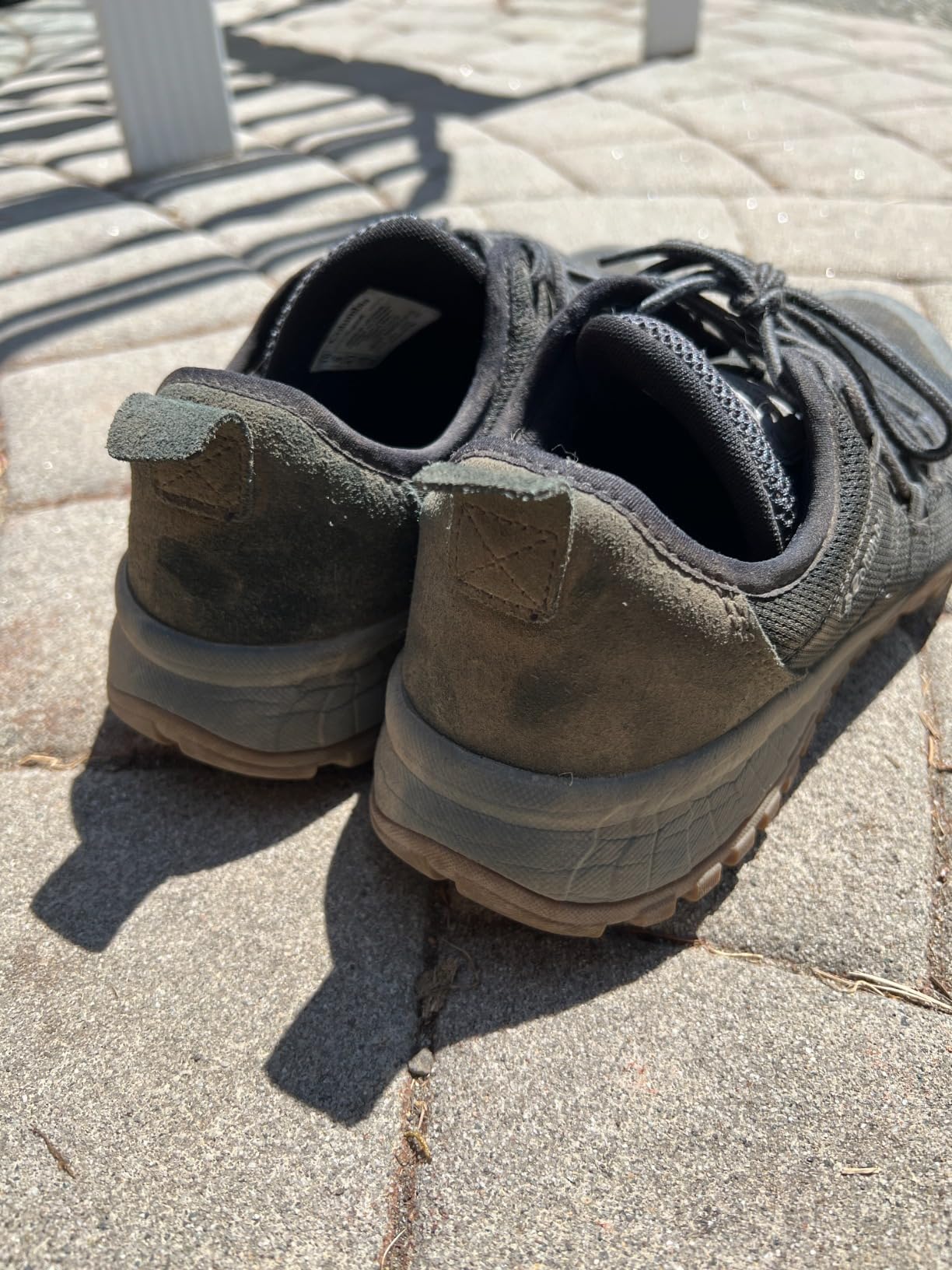
6. Columbia Mens Fairbanks Low, Black/Graphite, 10
Columbia Mens Fairbanks Low, Graphite/Black, 10
TechLite lightweight midsole
Omni-Grip non-marking outsole
Mesh upper with suede heel cap
Wrap-around front tread
Pros
- Lightweight and flexible on trail or pavement
- Omni-Grip outsole holds on wet and dry ground
- Comfortable out of the box
- Roomy toe box suits wide feet
- Looks good with casual clothing
Cons
- Not waterproof and soaks through in sustained rain
- Minimal cushioning keeps the ground feel close
- Some builds separated at the seam after about a year
- Tongue can slide sideways
The Fairbanks Low is the shoe for someone whose hiking shoes have to work on a weekday too. Reviewers highlight versatility, light weight and grip for long-distance walking, and plenty of owners wear it as an everyday shoe rather than hiding it in a garage.
That matters for beginners more than it sounds. The most common complaint we see about technical hiking footwear is that people stop wearing it because it looks like equipment, not apparel.
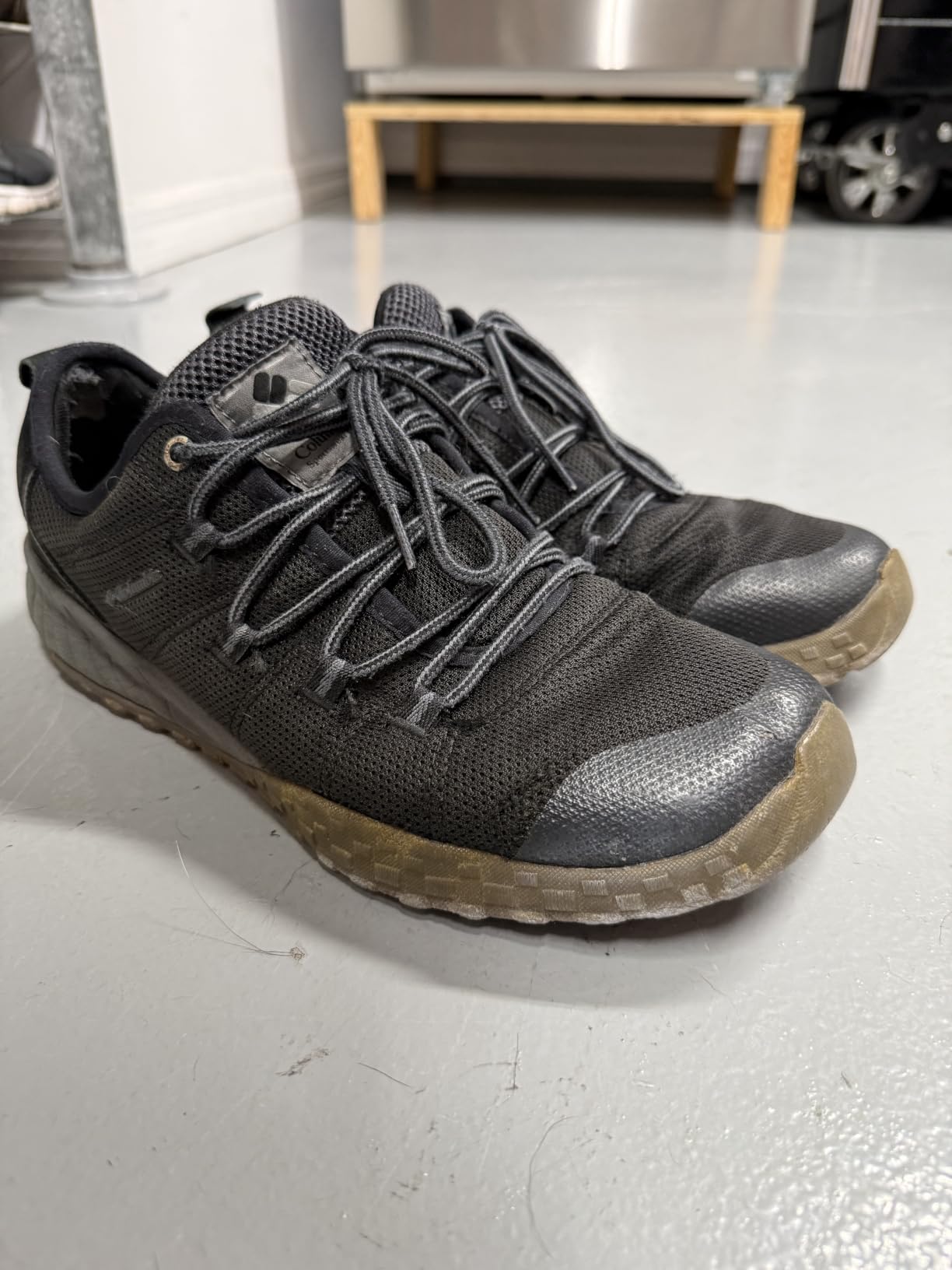
The TechLite midsole handles cushioning and energy return without adding bulk, and the Omni-Grip non-marking rubber outsole is specified for wet and dry terrain. Non-marking means it leaves no traces on a gym floor or a hotel lobby, which is a small thing that gets noticed.
Integrated webbing eyelets give flexible, secure lacing, and the mesh upper with suede heel cap plus wrap-around front tread covers the parts that usually wear out first. Comfortable right out of the box with no break-in.
When Breathability Beats Waterproofing
This shoe has no membrane at all, and reviewers are clear that it soaks through in sustained rain. In dry or damp conditions that is a feature, because vapour and sweat move freely outward through the mesh and your feet stay drier overall.
The tradeoff is honest: this is the shoe to buy if you hike in a warm or dry region and mostly on maintained trails. It is not the answer if your calendar is full of November rain.
Who Should Look Elsewhere
Cushioning is minimal, which keeps the ground feel very close and can be tiring on hard surfaces over long distances. A minority of owners report durability decline, with some builds showing seam separation after about a year.
The tongue can also slide to one side and needs taming, which is a five-second fix with any lace trick. If you need waterproofing in cold weather, look further down the list.
7. ANJOUFEMME Outdoor Hiking Boots for Women Waterproof
ANJOUFEMME Outdoor Hiking Boots for Women Waterproof – Womens Ankle Boots Lightweight Snow Winter Boots for Trekking Walking
Waterproof PU outer
Plaid fabric lining wicks moisture
Removable insole
Reinforced eyelets
Pros
- Lightweight and comfortable for all-day wear
- Waterproof enough for rain and wet trails
- Good grip on wet pavement and mud
- Warm lining works in cold weather
- True to size with a casual look
Cons
- Sole can separate from the upper after a few months
- Upper and lining scuff quickly
- Thin construction leaves feet cold in very low temperatures
These boots sit at number one in their backpacking category, and the reason is straightforward: they do two jobs. They handle rain on a wet trail, and they look like normal ankle boots rather than technical gear.
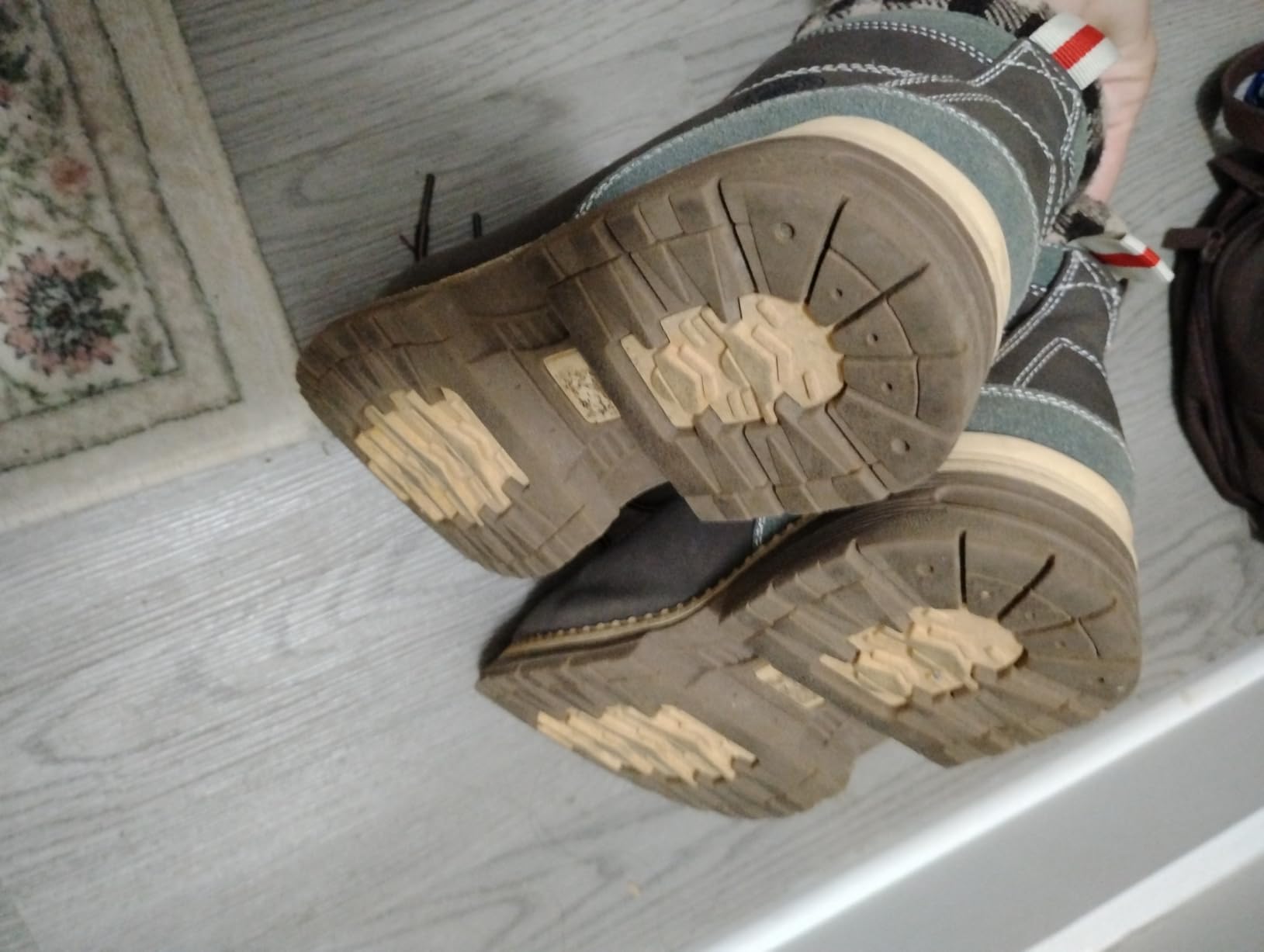
The waterproof PU outer keeps feet dry in rain showers or light snow, while the breathable plaid fabric lining wicks moisture. That liner is what separates this from a cold rubber boot, and it is comfortable against the ankle for long stretches.
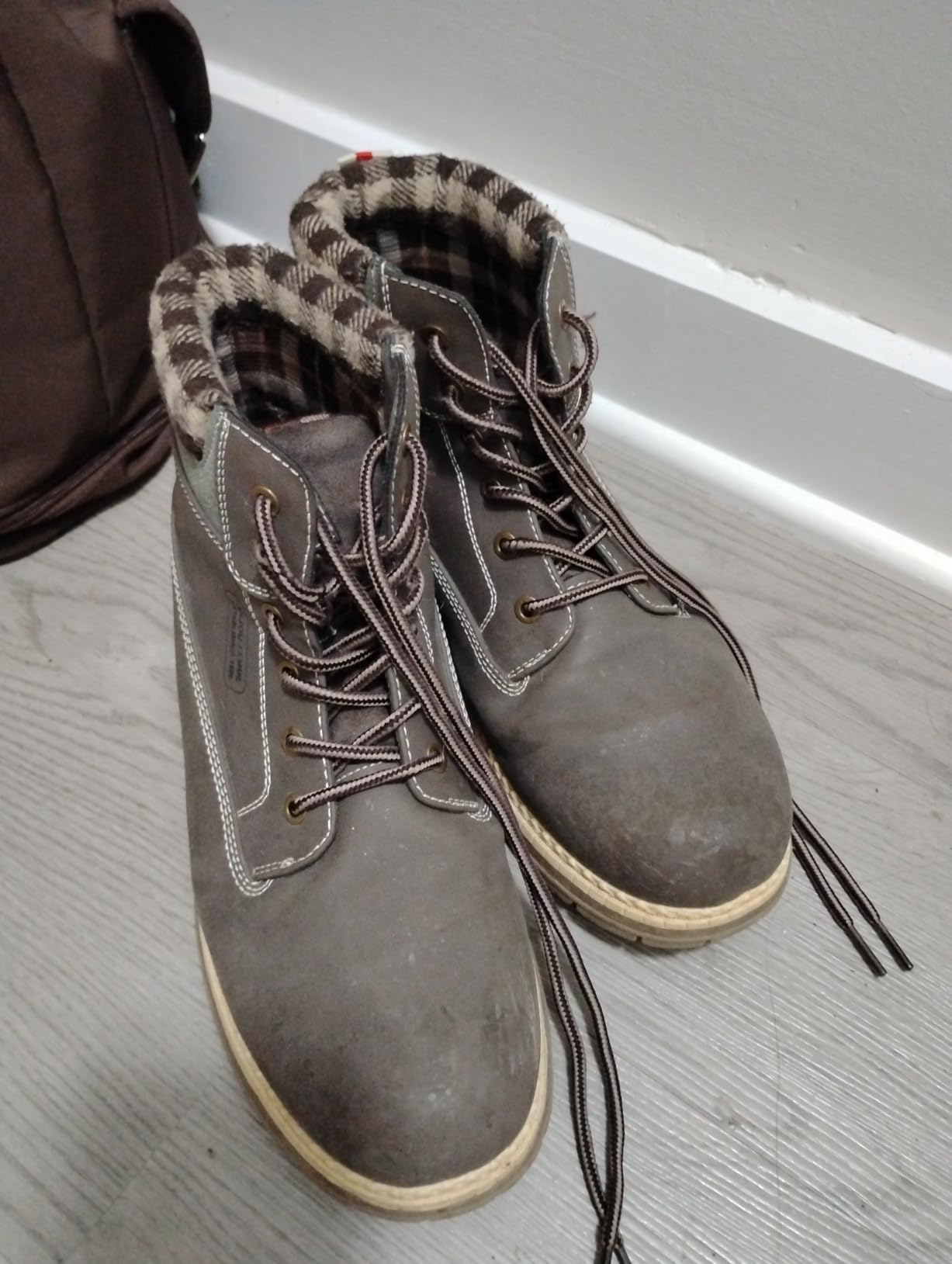
The flexible wear-resistant TPE outsole grips wet pavement, mud and slick winter surfaces. Wet pavement is the test case most boots fail, because it is the first thing a beginner encounters on the drive to the trailhead or on a walk to a waterfall.
The insole is removable and the lining is adaptable for seasonal comfort. Reinforced eyelets prevent lace breakage, and owners report the shoe is true to size.
Who This Pair Is Really For
Owners like the lightweight waterproof comfort and the warm lining for travel and light hiking. For someone whose hiking happens to be a walk to a waterfall, a trip to a national park, or a weekend with mixed weather, this is a very sensible single pair.
The plaid lining works in cold weather without overheating, which is unusual in a boot this light. And because the styling reads as casual, you will actually pack it.
Who Should Look Elsewhere
Durability is the weak point here, and reviewers say so plainly: the sole can separate from the upper after a few months of use, and the lining and upper materials show wear and scuffing quickly.
Thin construction also leaves feet cold in very low temperatures, so this is not a snow-hiking boot despite the winter styling. If you want something built for years of trail use, choose a model with a stronger review consensus behind it.
8. Merrell Women’s Moab 3 Hiking Shoes
Merrell Women’s Moab 3 Hiking Shoe, Falcon, 8 M
Pig suede leather and mesh upper
Bellows tongue
Protective toe cap
Removable Kinetic Fit ADVANCED insole
Pros
- Wide toe box lets toes spread
- Stable platform with good ankle support
- Minimal break-in
- Water resistant enough for rain and dew
- Sturdy without feeling heavy
Cons
- Not fully waterproof in deep puddles
- Sizing runs about one size large
- Blocky silhouette rather than feminine
- Some colorways differ from listing photos
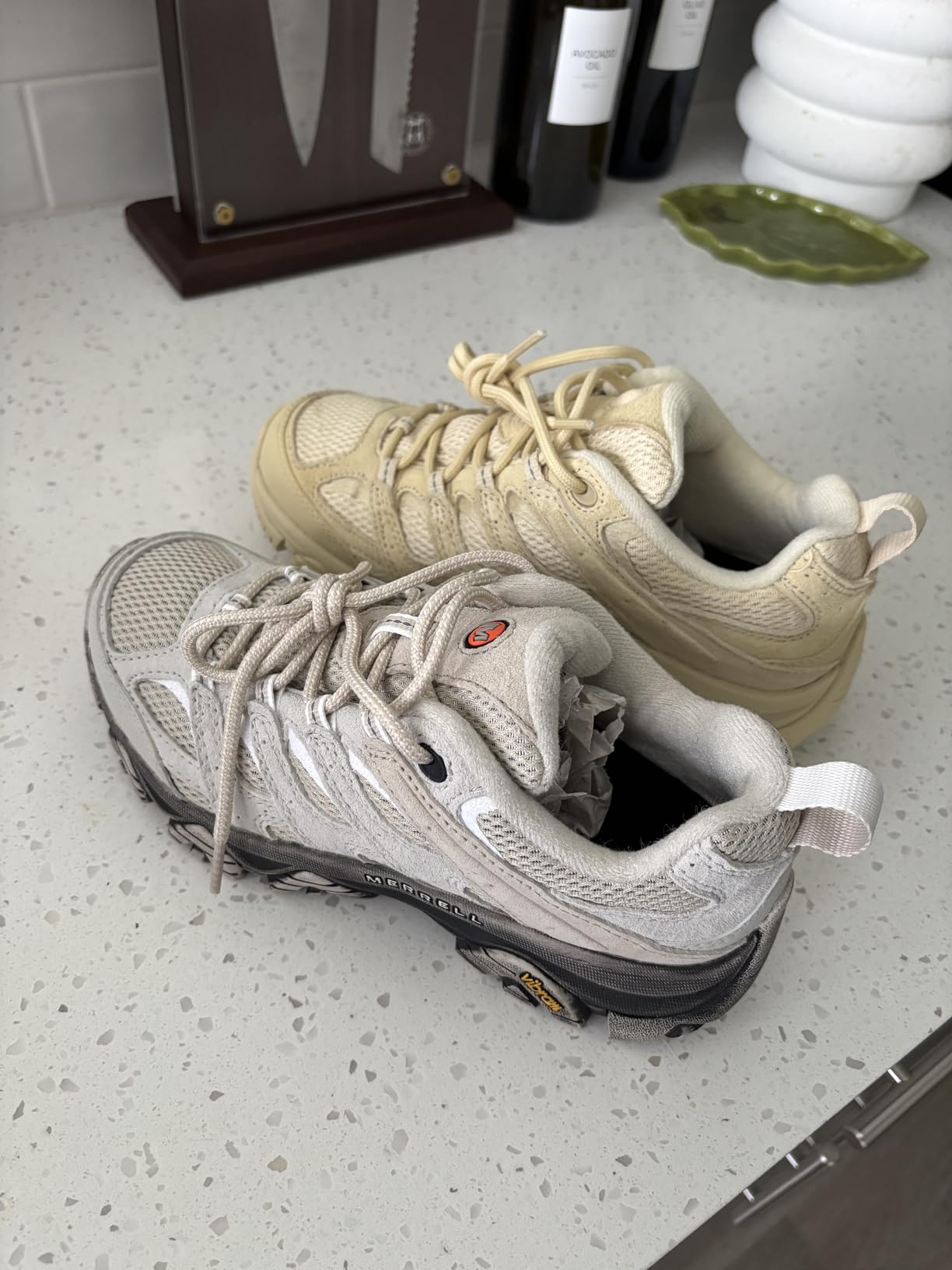
This is the women’s version of the shoe at the top of this list, and it earns its own entry because the fit is not identical. Reviewers consistently highlight the wide toe box, stability and all-day comfort, for hiking and for work.
Listed weight is 2.6 pounds, which is lighter than the men’s Moab 3 listing. The upper is pig suede leather and mesh, with the same bellows tongue and protective toe cap.
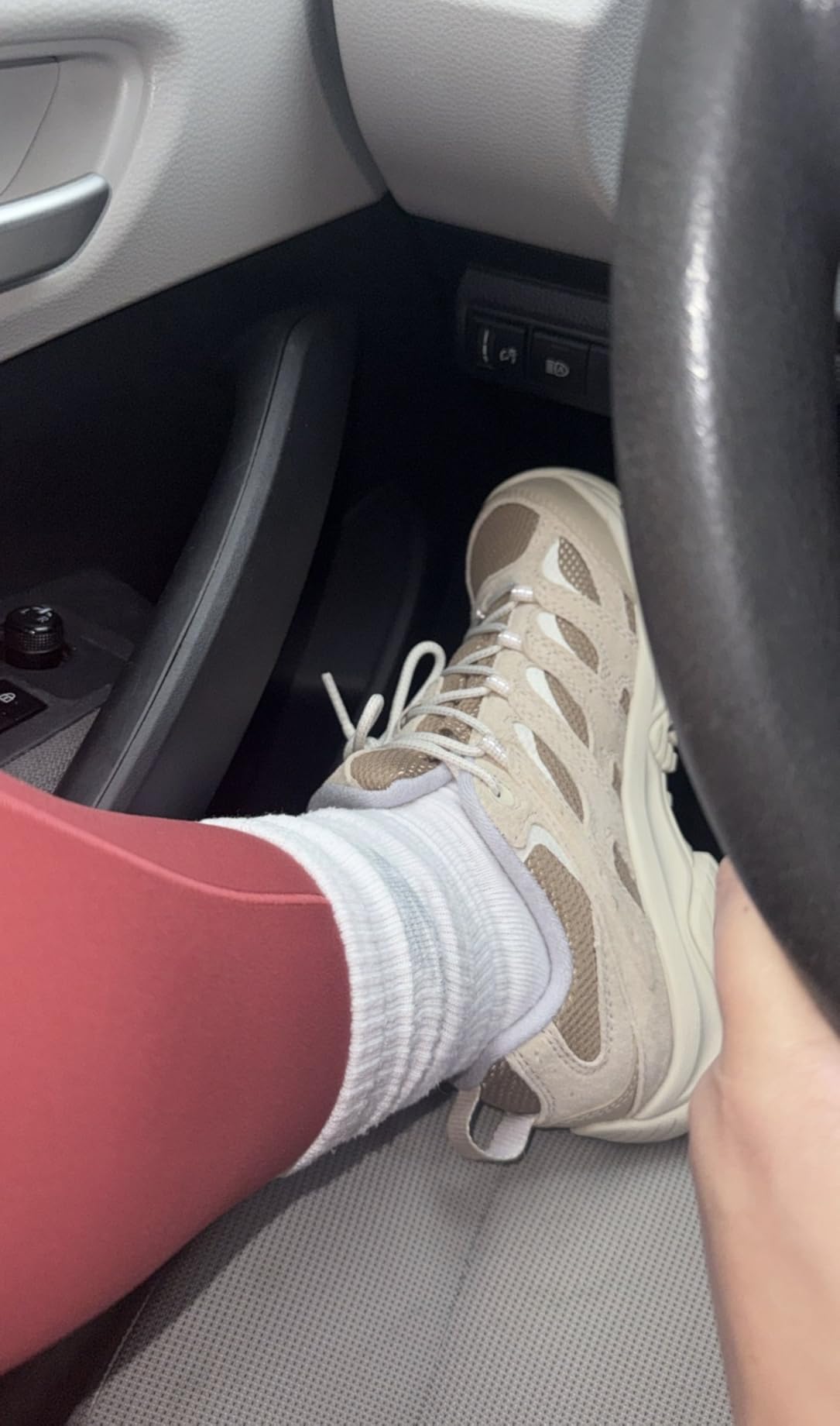
The stable platform and good ankle support on uneven terrain are the differentiators versus lighter low-cut shoes. Water resistance is enough to keep feet dry in rain and dew, though not in deep puddles.
The removable Kinetic Fit ADVANCED insole with reinforced heel cushioning provides medium support, and the laces, webbing and mesh lining are made from recycled material.
Why Sizing Matters More Here
The most useful thing owners tell you is that sizing runs about one size large. That is an unusually honest and consistent note across reviews, and it is exactly the information that prevents a wasted first purchase.
If you are buying this model, size down from your usual, then confirm against the listing measurements with a ruler at home. It is the kind of detail a generic roundup never tells you.
Who Should Look Elsewhere
The silhouette is somewhat blocky rather than feminine, which matters if you want footwear that reads as casual wear. Some colorways also look different from the listing photos.
And like the men’s version, it is not fully waterproof in deep puddles. Buyers who regularly walk in water should read our waterproof hiking shoes guide instead.
9. KEEN Women’s Targhee 3 Low Height Waterproof Hiking Shoes
KEEN Women’s Targhee 3 Low Height Waterproof Hiking Shoes, Weiss/Boysenberry, 7.5 US
KEEN.DRY waterproof breathable membrane
KEEN ALL-TERRAIN outsole
External support shank
Removable metatomical arch footbed
Pros
- Waterproof membrane stays dry all day
- All-terrain outsole grips mud and rock
- Support shank and contoured heel add stability
- Roomy original fit lets toes spread
- Removable footbed with arch support
Cons
- Bulky low-height profile can feel heavy
- Styling less streamlined than sleeker shoes
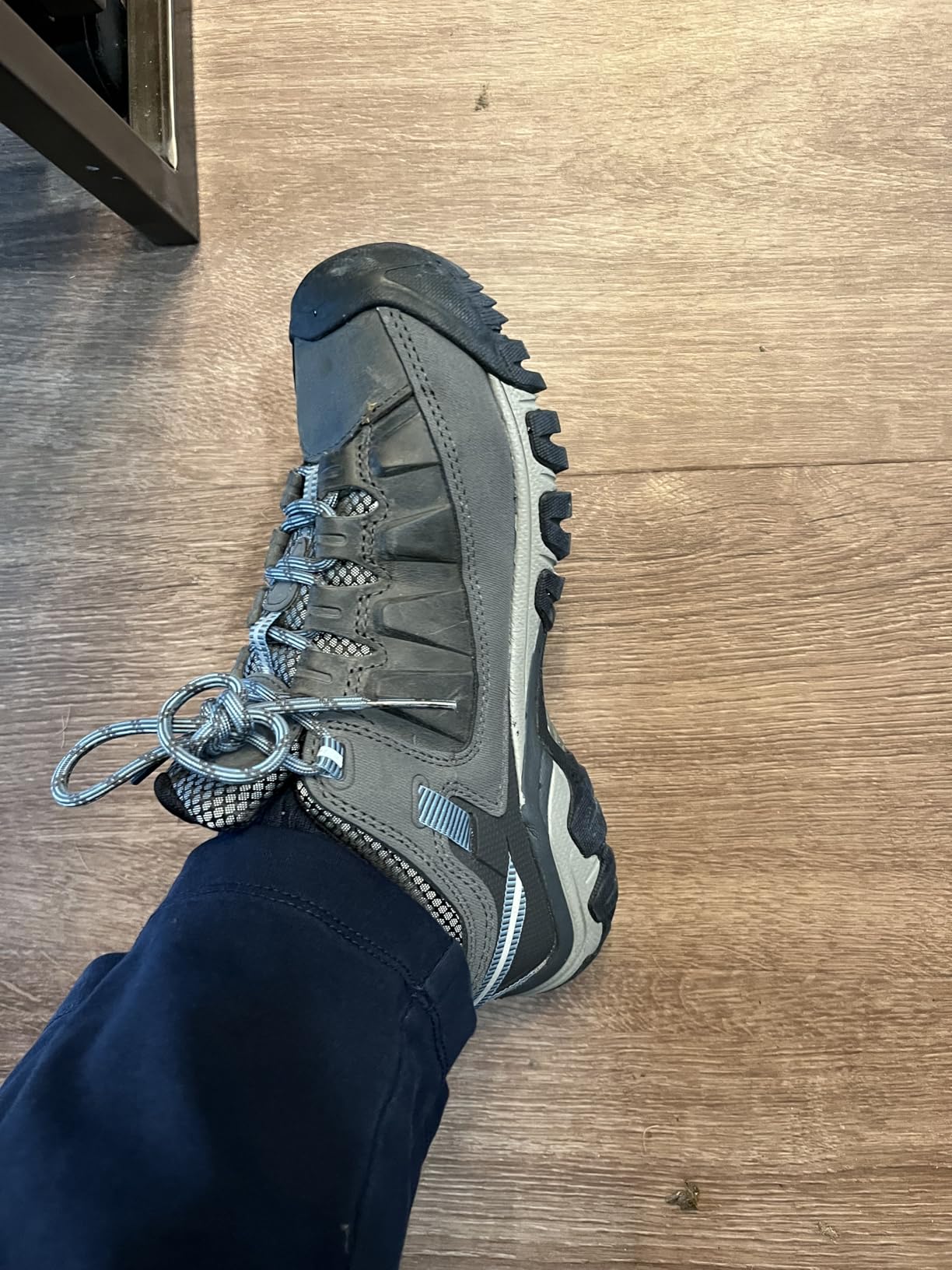
The Targhee is the pick for anyone who has been told they need arch support, or who suspects it after a few months of sore feet on pavement. The removable metatomical footbed is the reason, and reviewers credit it along with the roomy fit.
Unlike most membranes, KEEN.DRY is described as waterproof and breathable, letting vapour out without letting water in. Whether that holds up over a ten-hour day is the fair question, and reviewers do report feet staying dry all day.
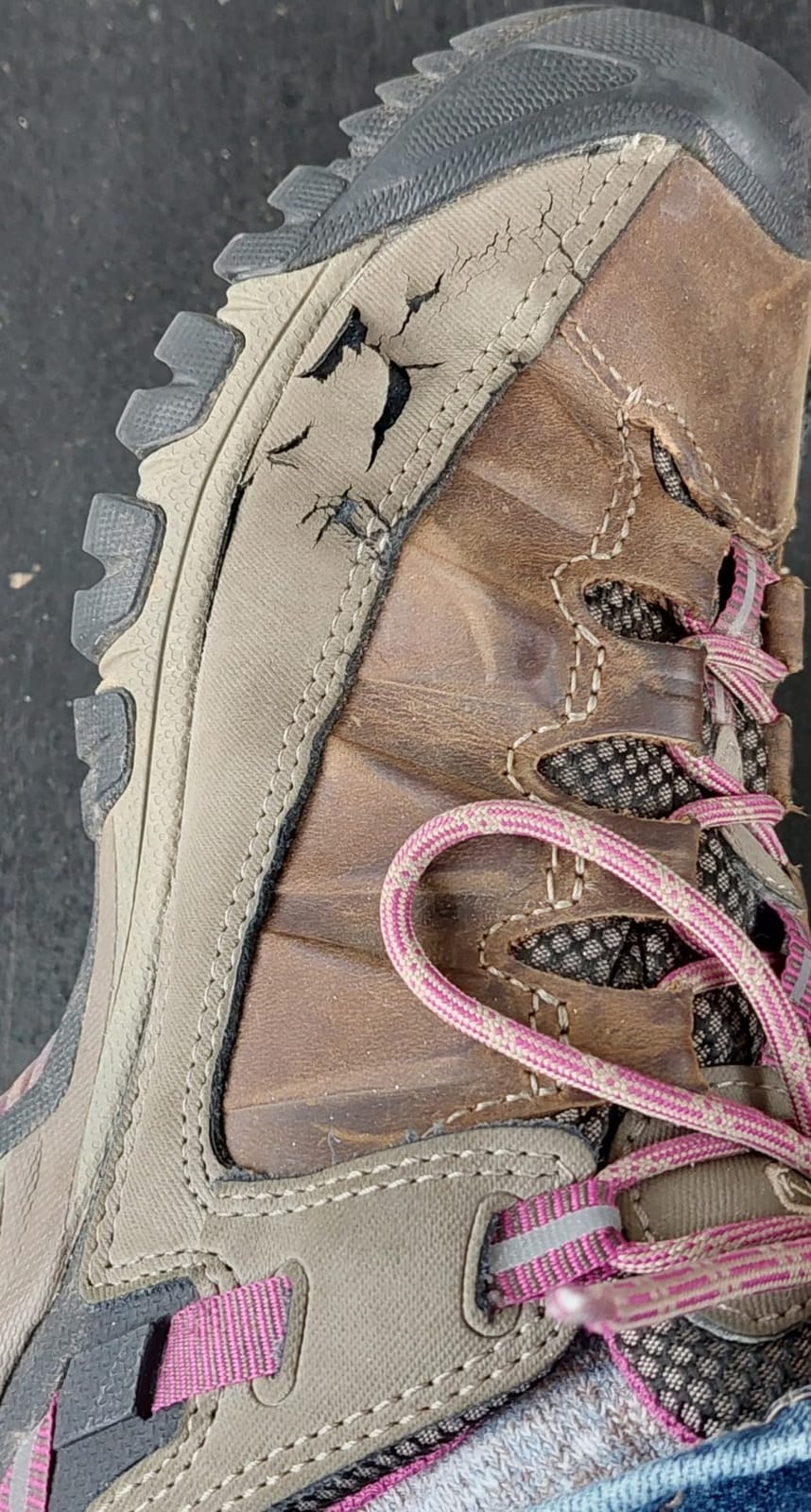
The KEEN ALL-TERRAIN rubber outsole is non-marking and built for high traction on mud and rock. An external support shank delivers balance on uneven surfaces, paired with a contoured heel for a stable platform.
The low profile upper has a padded tongue and collar, and the generous KEEN Original Fit toe space gives toes room to spread. That last point puts this in the wide-fit camp alongside the NORTIV 8 low top.
Arch Support Without a Custom Insert
Removable footbeds matter more than beginners expect, because they let you swap in a personal orthotic later without buying new boots. Combined with the external shank, this is the most structured low shoe in the roundup.
For flat feet, high insteps or anyone who has had arch discomfort before, that structure is the deciding factor. The trade-off is weight and bulk, which the next section covers.
Who Should Look Elsewhere
The bulky low-height profile can feel heavy, and reviewers are consistent about it. The styling is also less streamlined than sleeker hiking shoes, so it does not double as everyday wear the way the Fairbanks Low does.
If you want arch support without the bulk, look at lighter shoes with a removable footbed further down. Our lightweight boots guide makes that comparison in detail.
10. Columbia Men’s Transverse Hike Waterproof
Columbia Mens Transverse Waterproof Hiking Boot, Black/Mountain Red, 11.5
Omni-Tech waterproof seam-sealed build
TechLite lightweight midsole
Omni-Grip multi-terrain outsole
Metal hardware and cushioned collar
Pros
- Waterproofing holds through downpours and wet mud
- Lighter than its height suggests
- Strong ankle support with a scoop back
- Top lace hooks make lacing fast and secure
- Traction on basalt gravel and wetland
Cons
- Runs hot in summer due to low breathability
- Stock insole is thin with little arch support
- Some buyers see an initial blister break-in
- Toe box can feel swollen
The Transverse Hike ranks number one in its category, and the reviews explain why: waterproofing, grip and ankle support hold up over multi-day hikes. If your hiking involves rain, rivers or wet mud, this is the most convincing wet-weather pick here.
Omni-Tech waterproof construction is seam-sealed for prolonged exposure to moderate rain and snow. That is a stronger claim than water resistance, and it is backed by owners reporting the boots survive downpours and river crossings.
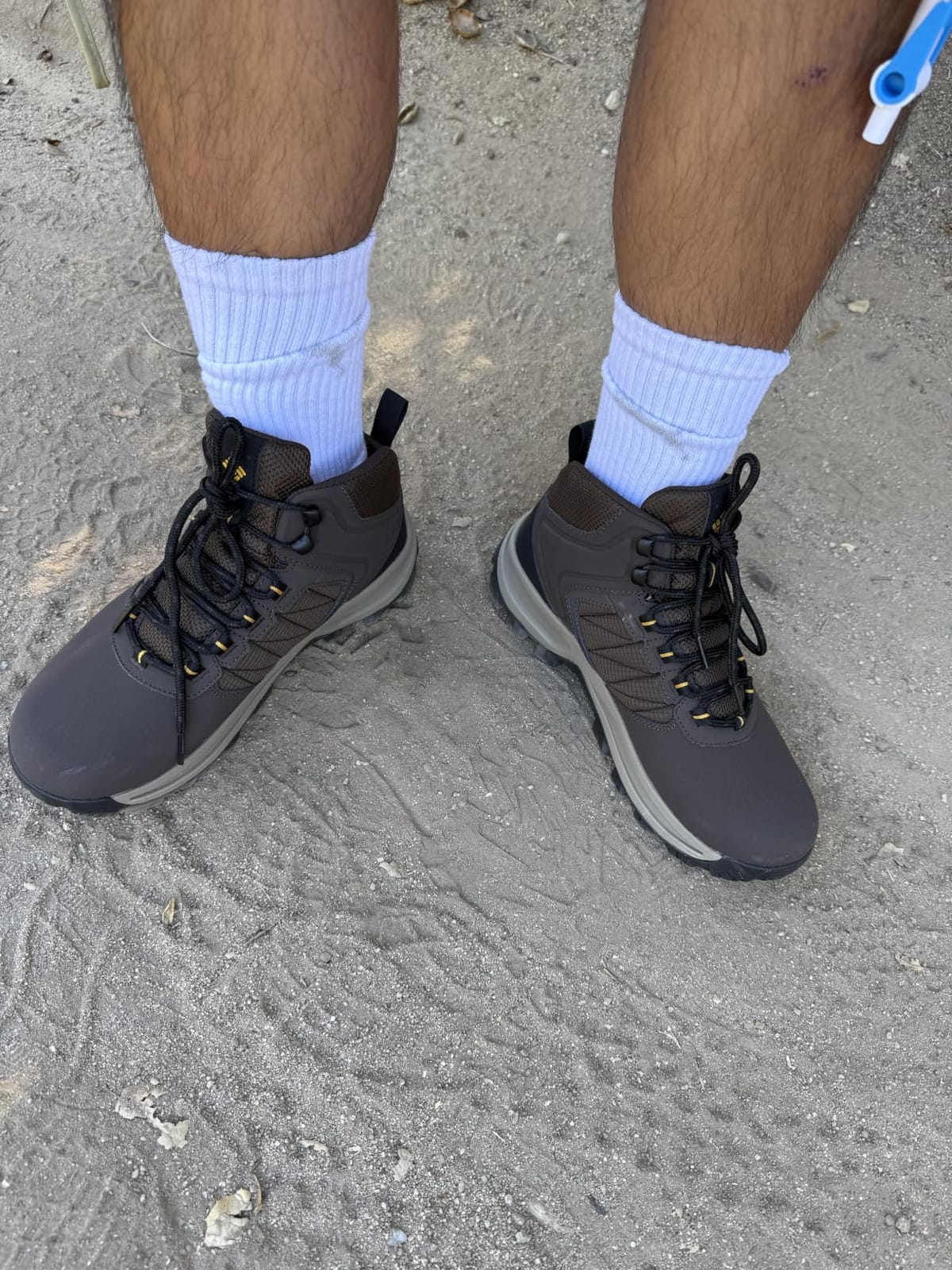
Traction comes from the Omni-Grip outsole, specified for multi-terrain grip on rock, dirt and gravel in wet or dry conditions. Reviewers specifically mention basalt, gravel, wetlands and dry trails, which is a genuinely broad surface list.
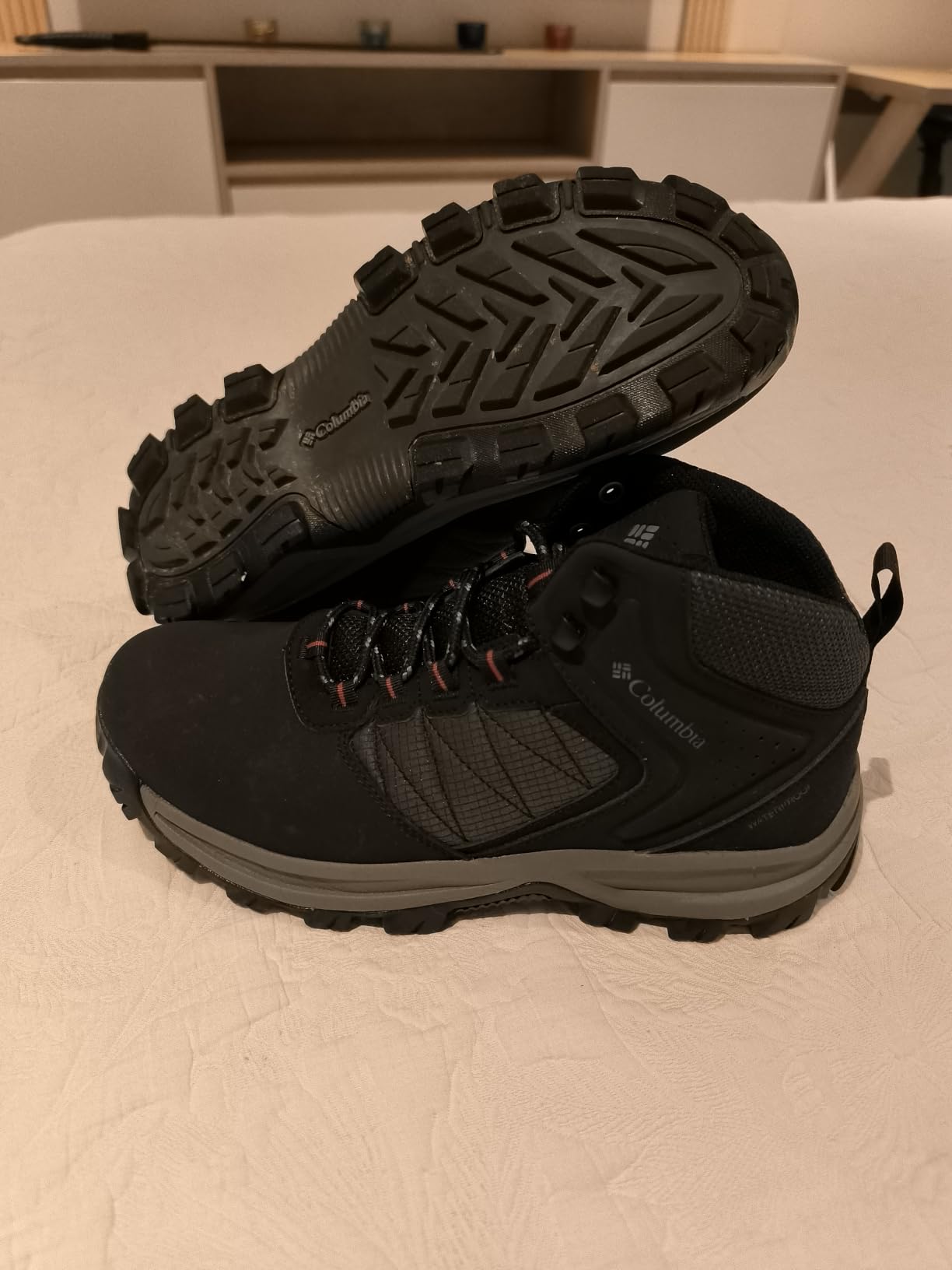
The scoop back at the heel frees the Achilles tendon, and that is a small design touch that prevents a bump you would otherwise feel on every step. The lace hooks at the top make lacing fast and secure.
What the Scoop Back and Shank Actually Do
The cushioned collar and slightly scoop-backed heel reduce the pressure point behind your ankle that causes the classic hot spot in high-cut boots. Reviewers mention strong ankle support as a headline benefit, so this is the shoe for sidehill terrain and loose descents.
TechLite provides lightweight cushioning and energy return, and owners note the boot is lighter than its height suggests, which is unusual for a boot with this much structure.
Who Should Look Elsewhere
Less breathable fabric means the boots run hot in summer, and that is the direct cost of the waterproof membrane. Do not buy this for a July desert hike.
The stock insole is thin and offers little arch support, so plan on replacing it. A few buyers report an initial blister break-in, and the toe box shape can feel swollen to some wearers.
11. adidas Men’s Terrex Anylander Rain.rdy Hiking Shoes
Adidas Men’s Terrex Anylander Rain.RDY Hiking, Black/Black/Grey, 10
390 g at size US 9
RAIN.RDY waterproof membrane
EVA midsole with 10 mm drop
Traxion all-direction outsole
Pros
- Lightweight build for a waterproof hiking shoe
- RAIN.RDY membrane keeps feet dry in wet conditions
- EVA midsole cushions long days
- Traxion lugs grip in all directions
- Sneaker-like shape works for casual wear
Cons
- Less ankle support than a traditional boot
- 10 mm heel-to-toe drop feels odd on flatter shoes
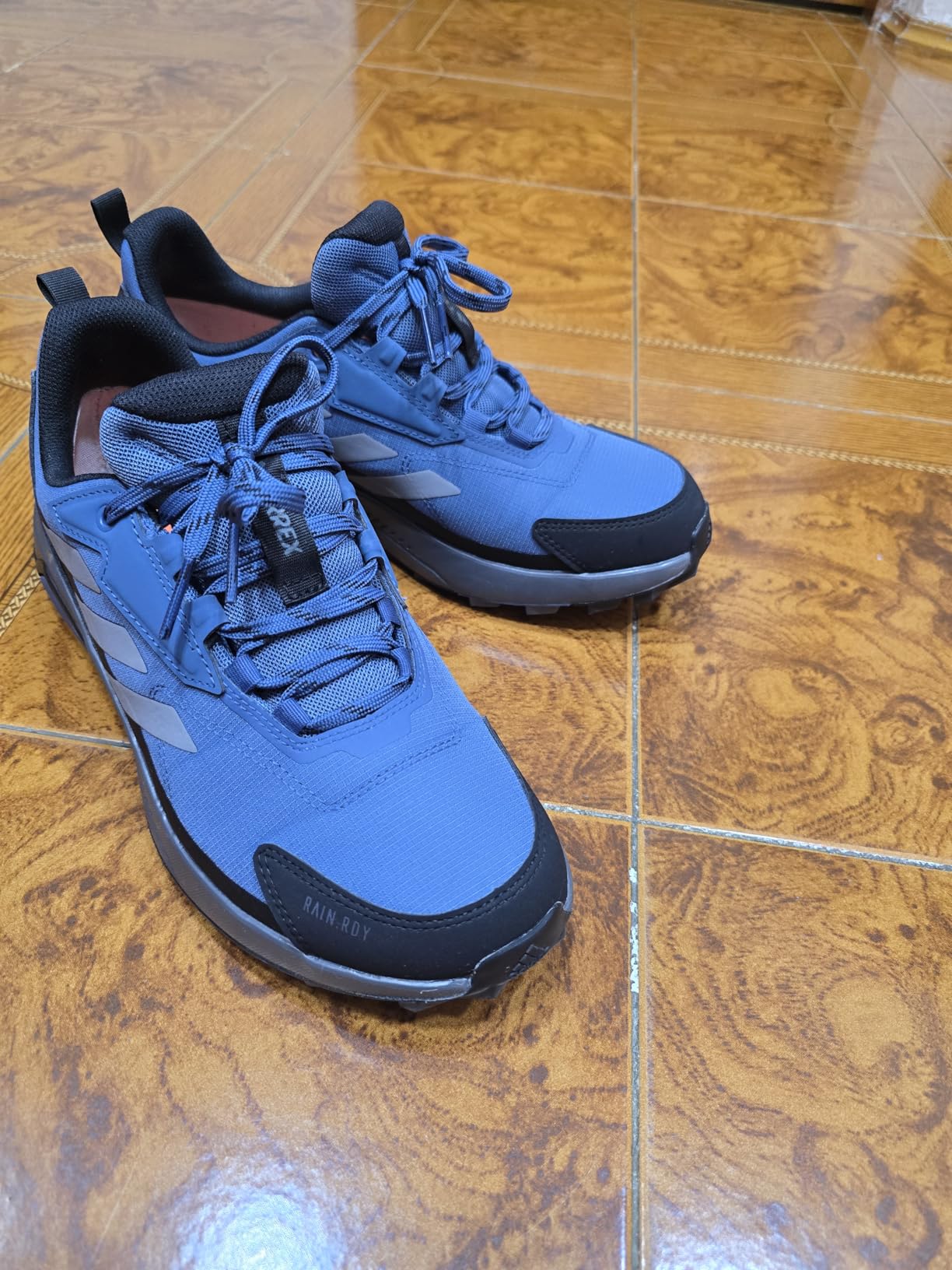
This is the pick when you want waterproofing without the weight. At 390 grams for a size US 9, it is the lightest waterproof shoe in this roundup by a wide margin, and reviewers lead with that.
The RAIN.RDY membrane keeps feet dry in wet conditions, and the Traxion outsole maximizes grip in all directions with rugged-terrain lugs. Sneaker-like proportions mean it works for hiking and casual wear in the same way the Fairbanks Low does.
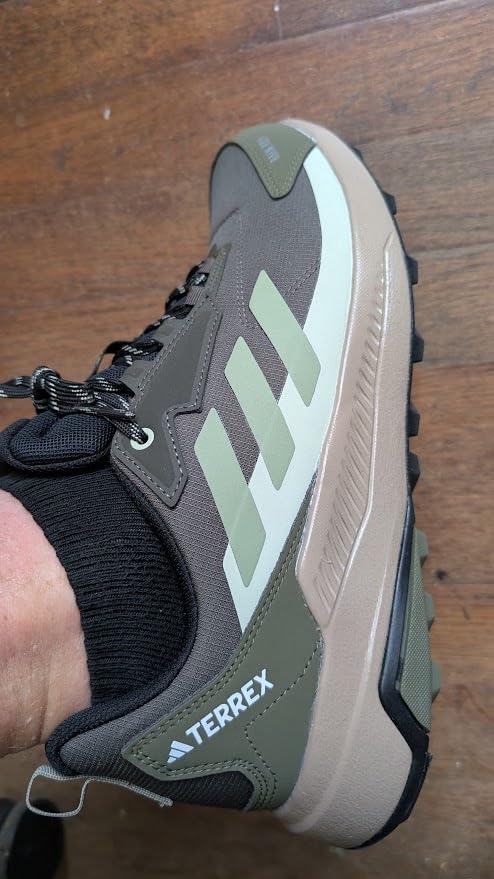
The EVA midsole offers step-absorbing, durable comfort, which is what carries you through a long day when the shoe itself weighs so little. A 10 mm heel-to-toe drop sits between the heel at 27 mm and the forefoot at 17 mm.
It is also made in part with a blend of recycled and renewable materials, which matters more for longevity than for performance, since a shoe you keep repairing is cheaper than a shoe you replace.
Understanding the 10 mm Drop
Drop is the height difference between heel and forefoot. A 10 mm drop matches what most running shoes do, so if you have spent years in trainers your calves and Achilles will adapt easily.
Reviewers note it can feel odd for users used to flatter shoes, and that is worth knowing before you blame the shoe for a mild calf complaint on a first descent.
Who Should Look Elsewhere
This is a low shoe, so it offers less ankle support than a traditional hiking boot. On boulder fields, loose scree or off-trail scrambling, that difference is real and it shows up in the second half of a long day.
The rating here is lower than the leaders, and the review count is the second thinnest on this list, both of which suggest treating the praise with appropriate care.
12. Merrell Men’s Accentor 3 Hiking Shoe
Merrell Men’s Hiking Hiking Shoe, Olive/Moss, 10
Suede leather and breathable mesh upper
Protective abrasion-resistant rubber toe cap
50% recycled removable EVA footbed
Bellows tongue
Pros
- Breathable mesh keeps feet comfortable on warm hikes
- Suede adds durability at lighter weight than a boot
- Rubber toe cap protects against rocks and abrasion
- Removable EVA footbed accepts orthotics
- Bellows tongue keeps debris out
Cons
- Low cut gives limited ankle support on rough terrain
- Light cushioning suits shorter hikes over long trips
The Accentor 3 closes out the roundup as the lightest serious Merrell option, and reviewers describe it as a versatile everyday hiker positioned squarely for beginners. It is the sensible pick for warm weather on maintained trail.
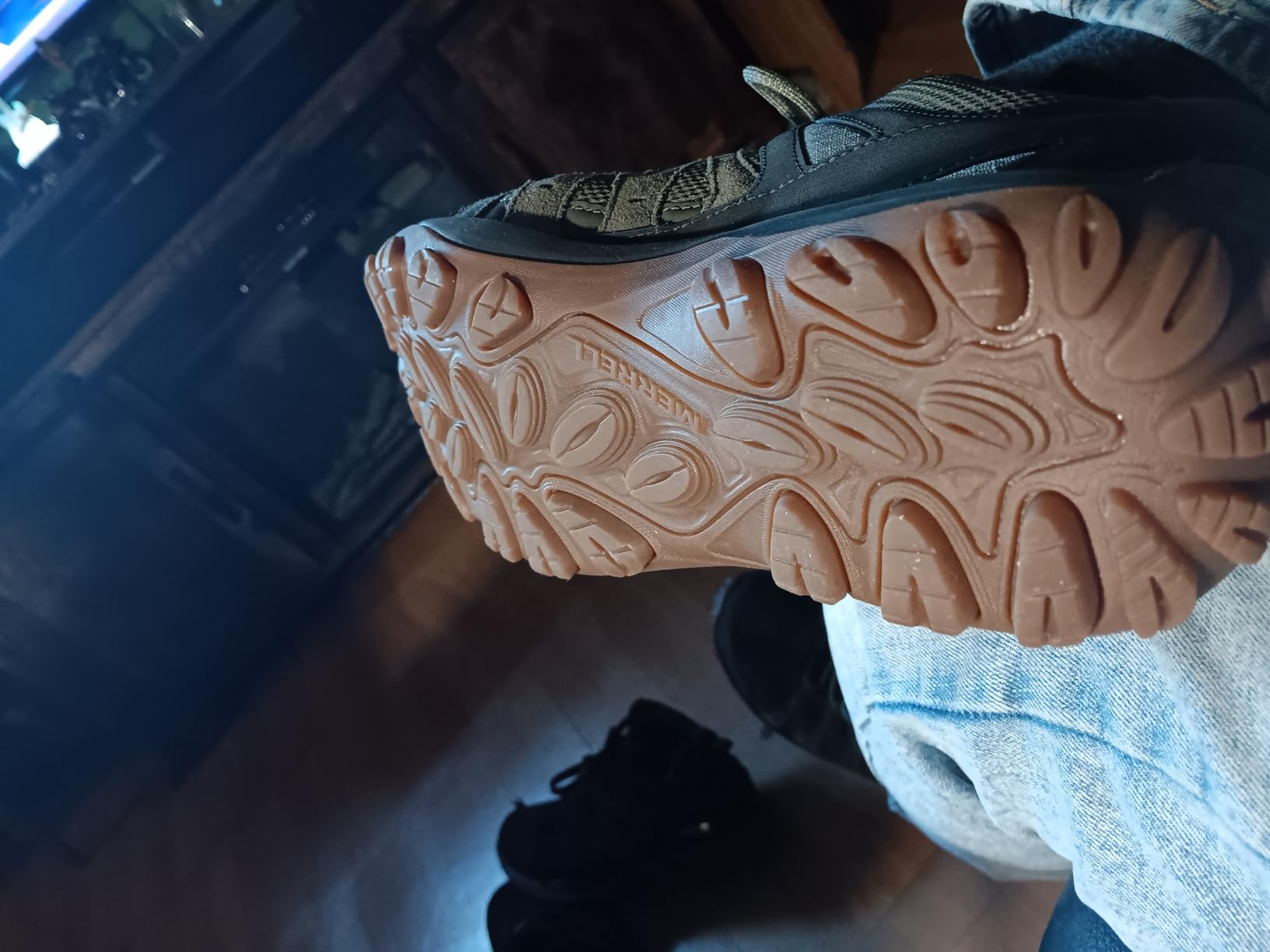
The suede leather and breathable mesh upper is the balance point here: mesh for airflow where your foot flexes, suede for durability where the shoe actually wears out. The protective and abrasion resistant rubber toe cap handles rocks and trail debris.
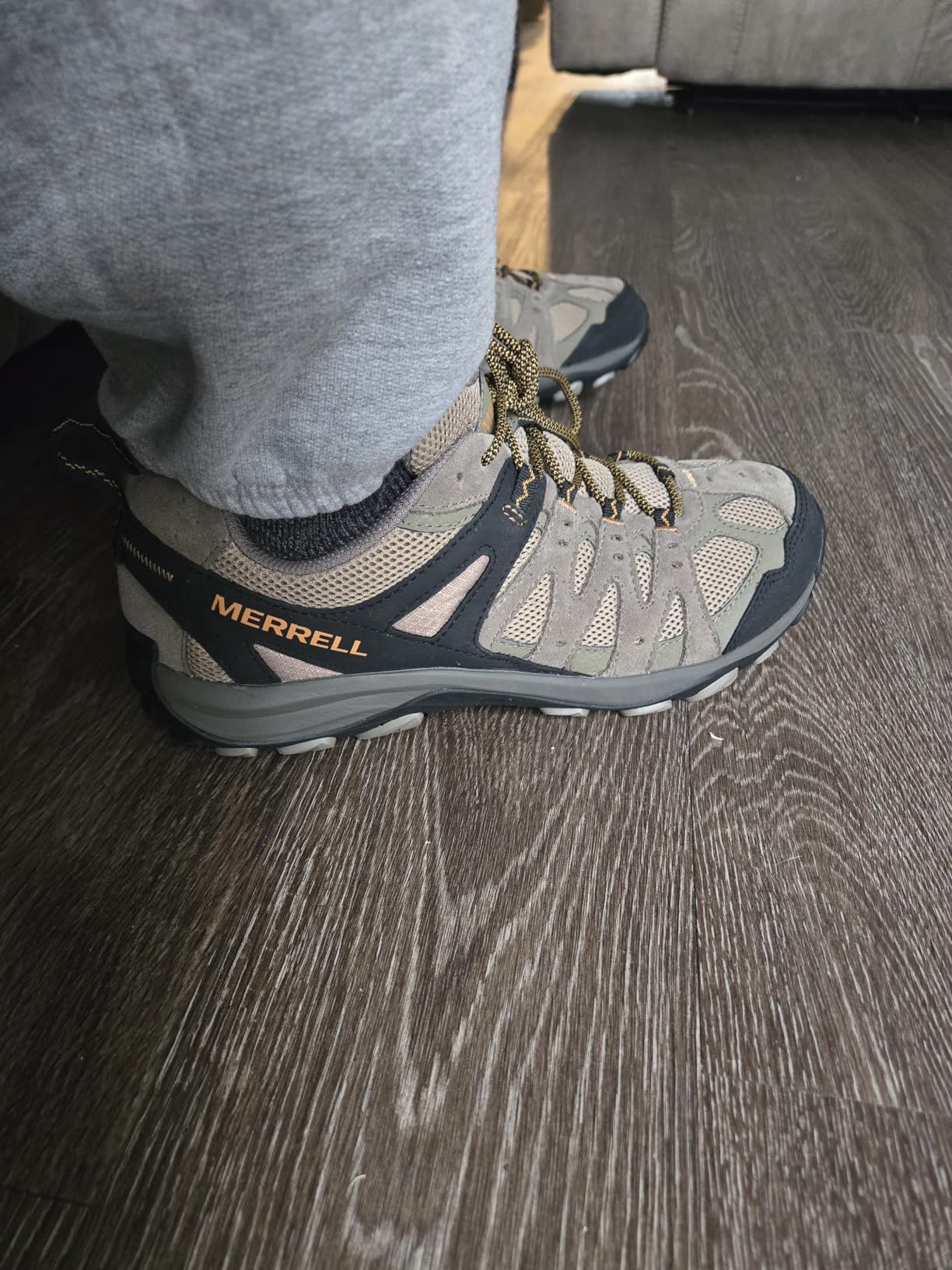
The 50 percent recycled removable EVA foam footbed is easy to swap for orthotics if you need them, which is the same advantage the KEEN Targhee offers. The bellows tongue keeps debris out, and laces and webbing are fully recycled.
Comfortable out of the box with minimal break-in, this is the shoe you can pair with thin summer hiking socks and get through a hot day without thinking about your feet.
Best of the List for Hot Weather
Where the Moab 3 leans on leather and mesh for all-round use, this model pushes further toward airflow. For July and August walks on gravel paths and packed dirt, that is the correct bias.
It is also comfortable enough for everyday use, so the pair gets worn rather than stored, which extends its life and keeps your feet acclimatised to a stiffer sole.
Who Should Look Elsewhere
The low cut gives limited ankle support on rough terrain, so it is a poor match for rocky mountain routes. Light cushioning also suits shorter hikes better than long multi-day trips.
This model has the thinnest review count on the list, which cuts both ways: less history of long-term durability, but also the least settled opinions in the set. Our running shoe beginner guide covers what to do if you decide sneakers were the right call all along.
Which Pick Matches Your Terrain
Match the shoe to the ground you will actually walk on, not the ground you might walk on someday. That single decision removes most of the wrong purchases.
For maintained dry trails and mixed gravel paths, the Merrell Moab 3 and the Columbia Crestwood cover it best. The Crestwood is the lighter and cheaper of the two, and the Moab 3 has the better grip when the trail turns rocky or damp.
For rocky mountain terrain with sidehill exposure, take ankle support seriously. The Columbia Transverse Hike and the NORTIV 8 Women’s boot both hold the heel on loose descents in a way that a low shoe cannot.
For mud, standing water and wet rock, waterproofing is not optional. The Columbia Transverse Hike handles sustained rain, while the NORTIV 8 boots suit puddles, shallow streams and wet ground without the bulk.
For snow and cold weather, warmth matters as much as waterproofing. The Columbia Transverse Hike is seam-sealed for moderate rain and snow, and the ANJOUFEMME pair has a warm lining for lighter winter days.
For long distances of ten miles or more, cushioning and breathability decide whether you enjoy it. The Columbia Fairbanks Low and the adidas Terrex Anylander are the two lightest structured options here, and both report grip that holds on wet and dry surfaces.
Hiking Shoes vs Boots vs Trail Runners
Can I hike in regular running shoes? Yes, for flat, short, dry walks on a well-maintained path. What you lose is toe protection, outsole grip on loose ground and any support against uneven surfaces, and those are exactly the three things that cause injuries on a first hike.
Hiking shoes sit in the middle. They are low, breathable and light, with a lugged outsole and a protective toe cap, and they are the default recommendation in this roundup for that reason.
Boots add a mid-cut collar above the ankle for stability on rough or sidehill ground, plus usually a waterproof membrane. They cost more in weight and in hot-weather sweat, and they take longer to break in.
Trail runners are the lightest and most flexible option, with aggressive lugs and quick-drain mesh, built for forward motion on mixed terrain. Our trail shoes and hiking guide covers that category properly if your walks are fast and long rather than slow and scenic.
For a beginner doing one to five hikes a year on maintained trails, a hiking shoe is the correct middle choice: enough protection, low enough weight, no steep learning curve.
Fit and Sizing Guidance for Beginners
Fit matters more than any spec on this page, and it is the information hikers ask for most. Four rules cover almost every case.
First, try on shoes late in the day. Feet swell slightly through the afternoon, and a shoe that fits at ten in the morning can be tight by the afternoon on a long day.
Second, bring your hiking socks. Try shoes with the socks you will actually hike in, not the thin socks you wore into the store. A thicker merino or wool sock adds volume that changes how a shoe feels.
Third, check the toe box by standing up and flexing your toes. You want about a thumb’s width of space in front of your longest toe, and you want the toes to be able to spread rather than being squeezed together.
Fourth, consider sizing up slightly, especially if you plan long days or have a high instep. Feet swell on the trail, so a snug fit on the shop floor becomes a problem three hours in.
Two models here run larger than their stated size, so check the listing measurements before you order. If you have wide feet, look for a shoe whose product description explicitly calls out a roomy or wide toe box rather than assuming from the brand.
Break-In Protocol and Blister Prevention
The most common beginner mistake is not buying the wrong shoe. It is wearing brand new footwear straight onto a full day hike and paying for it with blisters.
Break-in works like this, in four steps.
Wear the new shoes around the house for an hour with your hiking socks on.
Take a short walk of 30 to 45 minutes on flat ground close to home.
Do a second short walk on familiar terrain the following week.
Check your feet after each walk for hot spots before moving on to anything longer.
Blister prevention is mostly about moisture. Blisters form where friction and damp skin combine, so the single most effective step is a sock system: a wool or merino base layer that wicks sweat, and a cotton-blend outer sock that stays up and takes the abrasion.
Change socks at lunch on a warm hike. Wet socks cause more hot spots than any shoe fit problem, and carrying one spare pair weighs almost nothing.
Carry a blister kit with tape and a small lubricant. Tape a hot spot before it becomes a blister, and you will finish the hike with your feet intact.
Waterproof vs Non-Waterproof Decision
A waterproof membrane blocks water coming in. It does not push water back out, so a waterproof boot that soaks in a stream holds that water for the rest of the day. That single fact should drive the decision.
Choose waterproof if you hike in rain, snow, mud, high humidity, or anywhere with cold ground. Waterproof boots keep your feet warm and dry, and dry feet stay warm for hours.
Choose non-waterproof if you hike in a warm or dry region, mostly on maintained trails, and want your feet to sweat out freely. Non-membrane shoes such as the Columbia Fairbanks Low and the Merrell Accentor 3 dry far faster after a puddle or a stream crossing.
Beginners in a temperate climate usually want one of each if they can afford two pairs. Our waterproof hiking shoe guide goes deeper on membrane choices.
When to Replace Your Hiking Shoes
A good pair of hiking shoes typically lasts 500 to 800 miles depending on terrain, and abrasive rock surfaces cut that short. Replace them when any of these are true rather than on a calendar.
Look at the outsole first. If the lugs are worn smooth on the bottom, or the heel bevel is visibly rounded and flat, grip is gone. Then check whether the shoe flexes easily at the midsole with no resistance, which means the cushioning and structure have compressed.
Finally, if your toes touch the front of the toe box at the end of a long day, or you feel the ground through the midsole, the fit has broken down. Some wearers have moved from a wide fit to a narrow model by accident and blame their feet for it.
Frequently Asked Questions
What are the best hiking shoes for a beginner?
For most first-time hikers, the Merrell Moab 3 is the best all-round choice because it needs no break-in, has a wide toe box that prevents hot spots, and grips wet rock, mud and gravel. The Columbia Crestwood is the best value option at a lighter weight, and the NORTIV 8 waterproof boot is the pick if your trails get muddy or wet. Buy on fit first and brand second.
Can I hike in regular running shoes?
Yes, for flat short and dry walks on a maintained path. Running shoes lack a lugged outsole for loose ground, a protective toe cap for rocks and roots, and the stability needed on uneven surfaces. Those three gaps are what cause most first-hike foot injuries. A hiking shoe adds all three without the weight of a boot.
What hiking shoes do podiatrists recommend?
The recurring advice is to prioritise fit over brand and to protect the toes. Look for a roomy toe box that lets toes spread, a removable insole you can replace with an orthotic, and firm arch support if you have flat feet or high insteps. The KEEN Targhee 3 in this roundup fits that profile, with a metatomical arch footbed and a genuine wide toe box.
Should beginners buy hiking shoes or boots?
Beginners on maintained trails should buy shoes. Boots add a mid-cut collar for stability on rocky or sidehill ground, but they weigh more, trap heat in summer and need a longer break-in. Move to a boot when your terrain gets loose, steep or uneven, or when you start carrying a heavy pack over multiple days.
Are waterproof hiking shoes worth it?
They are worth it in rain, snow, mud and cold conditions, because a waterproof membrane keeps water out and dry feet stay warm. They are a poor choice in hot, dry weather because the same membrane traps sweat and cannot push moisture out. A beginner in a temperate climate is best served by one waterproof pair for cold months and one breathable pair for summer.
How do I know when I need new hiking shoes?
Replace them when the outsole lugs wear smooth, when the heel bevel rounds flat, or when the midsole flexes with no resistance because the cushioning has compressed. If your toes reach the front of the toe box at the end of a long day, the fit has broken down too. Most hiking shoes last 500 to 800 miles, and abrasive rock ground shortens that.
Conclusion
The best hiking shoes for beginners come down to three picks from this roundup. Buy the Merrell Moab 3 if you want one pair that handles almost any trail. Buy the Columbia Crestwood if weight and cost per hike matter most to you. Buy the Columbia Transverse Hike if you hike in rain or snow.
Whatever you choose, try them on late in the day with your hiking socks, check the toe box, and take two short walks before a full day. That single habit prevents more blisters than any spec on this page.
Start with one pair, wear it often, and upgrade to a second pair for a different season only when you know which terrain you actually walk. Our roundup of the best lightweight hiking boots for beginners covers the lighter end of the range if you decide to go the other way.