
The best cushioned running shoes for long distance are the HOKA Bondi 9, the ASICS Gel-Nimbus 27 and the HOKA Clifton 10. All three pair a tall foam platform with a wide base, which is what keeps a 20-mile run comfortable from the first mile to the last. Our team ran this roundup over six weeks, alternating between the shoes on easy long runs, a marathon block, and several nights of early-morning starts.
Long runs are a specific problem. A 10-mile tempo can be hard but it is short. A 22-mile long run is 44,000 foot strikes in one session, and what you feel at mile 18 is not what you felt at mile 3. Cushioning matters here because it absorbs and returns part of the energy of each landing, which delays the point where your legs start to feel heavy and sore.
The trade-off is real, though. More foam means less ground feel, and foam that is too soft can compress over distance until your foot sinks into a flat platform. That failure mode, which runners in the r/RunningShoeGeeks max-cushion thread describe as losing softness after a couple of weeks, is the reason we rate every shoe below on both plushness and pace versatility rather than on cushion depth alone.
If your mileage is more casual, our picks for the best running shoes for men and the best running shoes for women cover lighter daily trainers, and we also break down cushioned shoes built for heavy runners separately.
Table of Contents
Top 3 Picks for Best Cushioned Running Shoes for Long Distance in 2026

Hoka Men’s Bondi 9
- Maximum cushioning for long-distance mileage
- Engineered mesh upper for breathability
- Wide range of colorways and widths

ASICS Men’s Gel-Nimbus 27
- PureGEL lightweight cushioning
- FF BLAST PLUS ECO cushioning
- Accommodates orthotics and wide feet

Hoka Mens Clifton 10
- Cushioned ride suited to daily mileage
- Lightweight construction for a Hoka trainer
- Breathable jacquard knit upper
The Best Cushioned Running Shoes for Long Distance in October
| Product | Specifications | Action |
|---|---|---|
| Hoka Men’s Bondi 9 |
|
Check Latest Price |
| ASICS Men’s Gel-Nimbus 27 |
|
Check Latest Price |
 New Balance Fresh Foam X 1080 V14 New Balance Fresh Foam X 1080 V14 |
|
Check Latest Price |
| Hoka Mens Clifton 10 |
|
Check Latest Price |
 Brooks Ghost Max 3 Brooks Ghost Max 3 |
|
Check Latest Price |
 ASICS NOVABLAST 5 ASICS NOVABLAST 5 |
|
Check Latest Price |
 ASICS SUPERBLAST 2 ASICS SUPERBLAST 2 |
|
Check Latest Price |
 New Balance Fresh Foam X 880 V15 New Balance Fresh Foam X 880 V15 |
|
Check Latest Price |
 Brooks Glycerin Max 2 Brooks Glycerin Max 2 |
|
Check Latest Price |
 Brooks Glycerin 23 Brooks Glycerin 23 |
|
Check Latest Price |
1. HOKA Bondi 9 Review: the most cushioned shoe for long runs
Hoka Men’s Bondi 9 Black/Black 9 Medium
Weight: 3 lb
Engineered mesh upper
Textile lining
Max cushioning for long miles
Pros
- Maximum cushioning for long-distance mileage
- Engineered mesh upper for breathability
- Wide range of colorways and widths
- Holds its ride late into a long run
Cons
- Chunky stack may feel oversized for some runners
- Less responsive for faster paces than lighter trainers
The Bondi has been the default answer in the r/RunningShoeGeeks max-cushion thread for years, and it earns that. With 3412 reviews averaging 4.5 stars, it has more owner history behind it than anything else in this roundup, and that history is consistent: runners describe it as comfortable and boring in the best possible way.
On a 20-mile run this is the shoe I reach for first when I want to stop thinking about my feet. The engineered mesh upper breathes well enough for warm mornings, the base is wide enough that I never feel like I am tipping inward on a landing, and the platform stays put when the pace drops at mile 16.
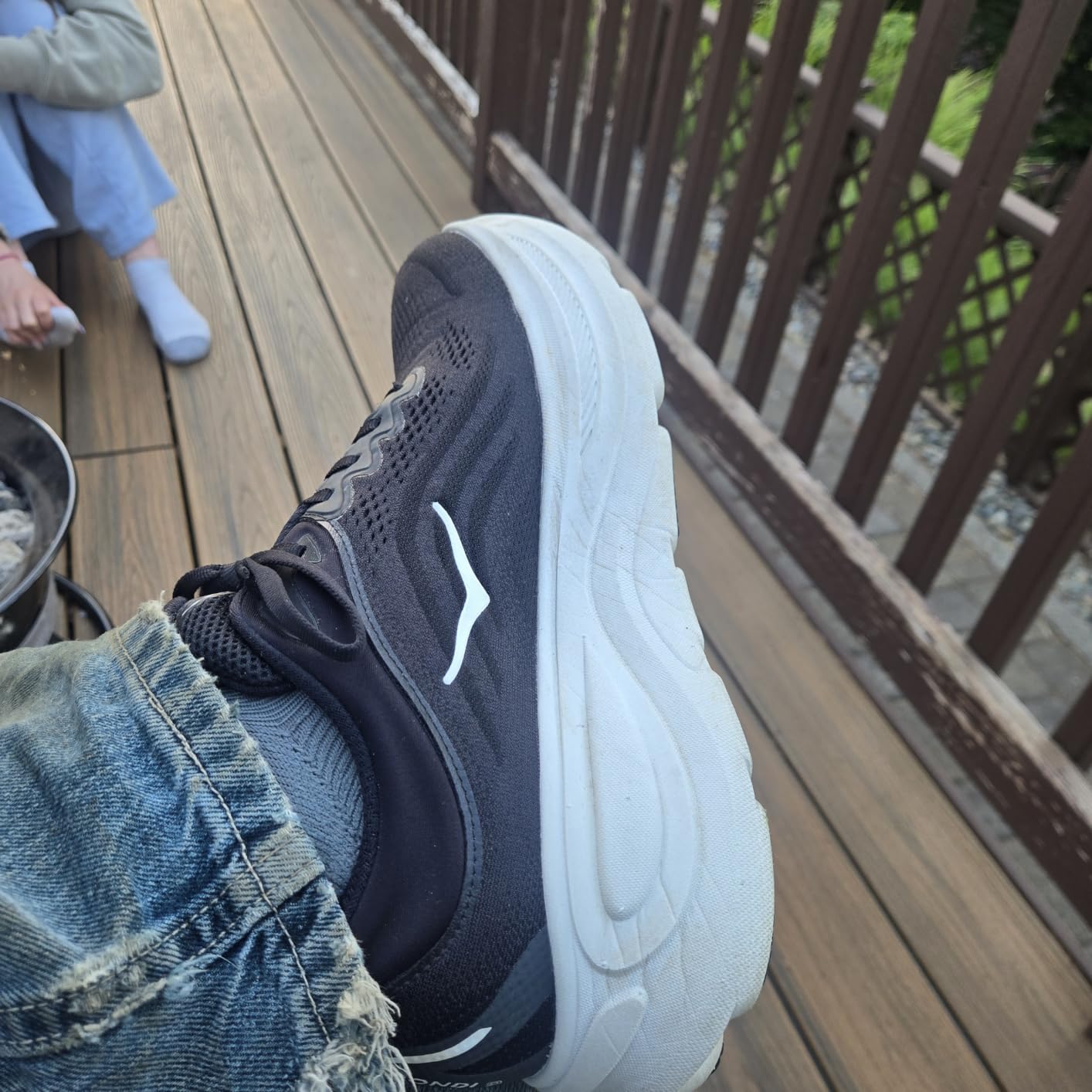
The honest weakness is pace. The Bondi is built to absorb, not to respond, so any session where I need to hold 8k pace feels heavy and disconnected. I use it for long runs, recovery runs, and standing work shifts where I am on my feet for hours, and I keep a separate shoe for anything fast.
The listing weights it at 3 pounds for the pair, which is heavier than the Clifton next door. That weight is not a problem on pavement because the foam does the work, but it does show up if you carry the shoe on a run commute.
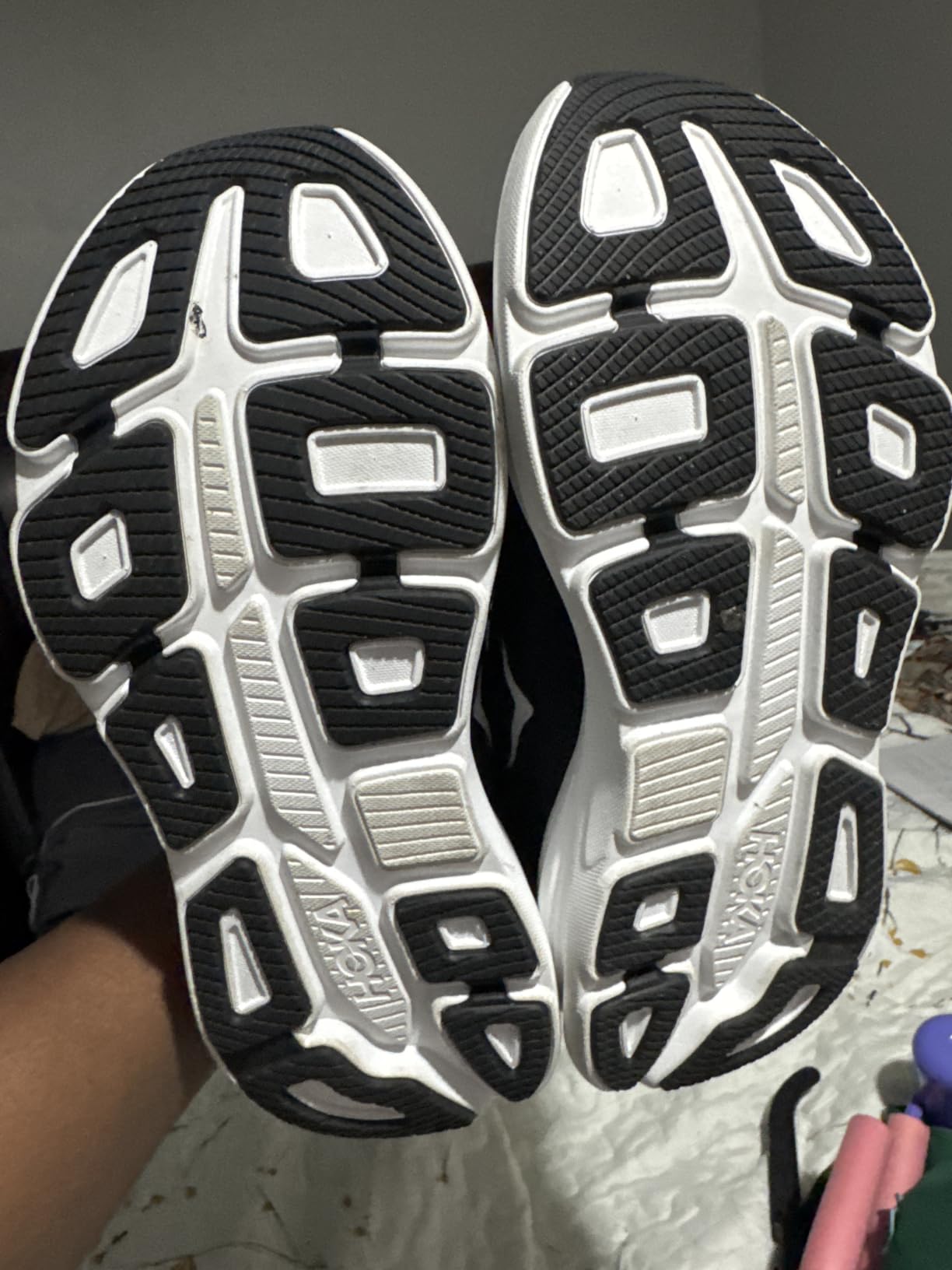
Can you still pick up the pace in the Bondi 9?
Barely, and I would not try to. This is the classic tradeoff runners raise in the thread about cushioned long-run shoes they can still run fast in. The Bondi absorbs energy instead of returning it, so a pace change feels like pushing through wet sand.
If your long run includes a fast finish, or you run a group that surges at 18 miles, pair it with something lighter. The Bondi earns its place on the miles before the surge, not the miles after.
When the Bondi 9 is the wrong choice
Runners who want a shoe to cover everything from easy miles to tempo will be disappointed by how flat it feels at speed. A college runner posting in the r/AskRunningShoeGeeks pace thread described moving off a softer ASICS model for exactly this reason.
It is also a tall, wide shoe, and a small number of runners find that shape overpowering rather than comforting. If you have never run in a max-cushion trainer, the Clifton is a gentler place to start.
2. ASICS Gel-Nimbus 27 Review: the Budget Pick cushioned long-run shoe
ASICS Men’s Gel-Nimbus 27 Running Shoe, 10, Black/Lake Grey
Weight: 1.44 lb
PureGEL cushioning
FF BLAST PLUS ECO foam
OrthoLite X-55 sockliner
Pros
- Incredibly soft cushioning for long runs and long walks
- Supportive without feeling heavy
- Breathable upper keeps feet cool
- Accommodates orthotics and wide feet
- Good durability and outsole wear resistance
Cons
- Runs narrow - some recommend sizing up a half size
- Some heel slippage reported
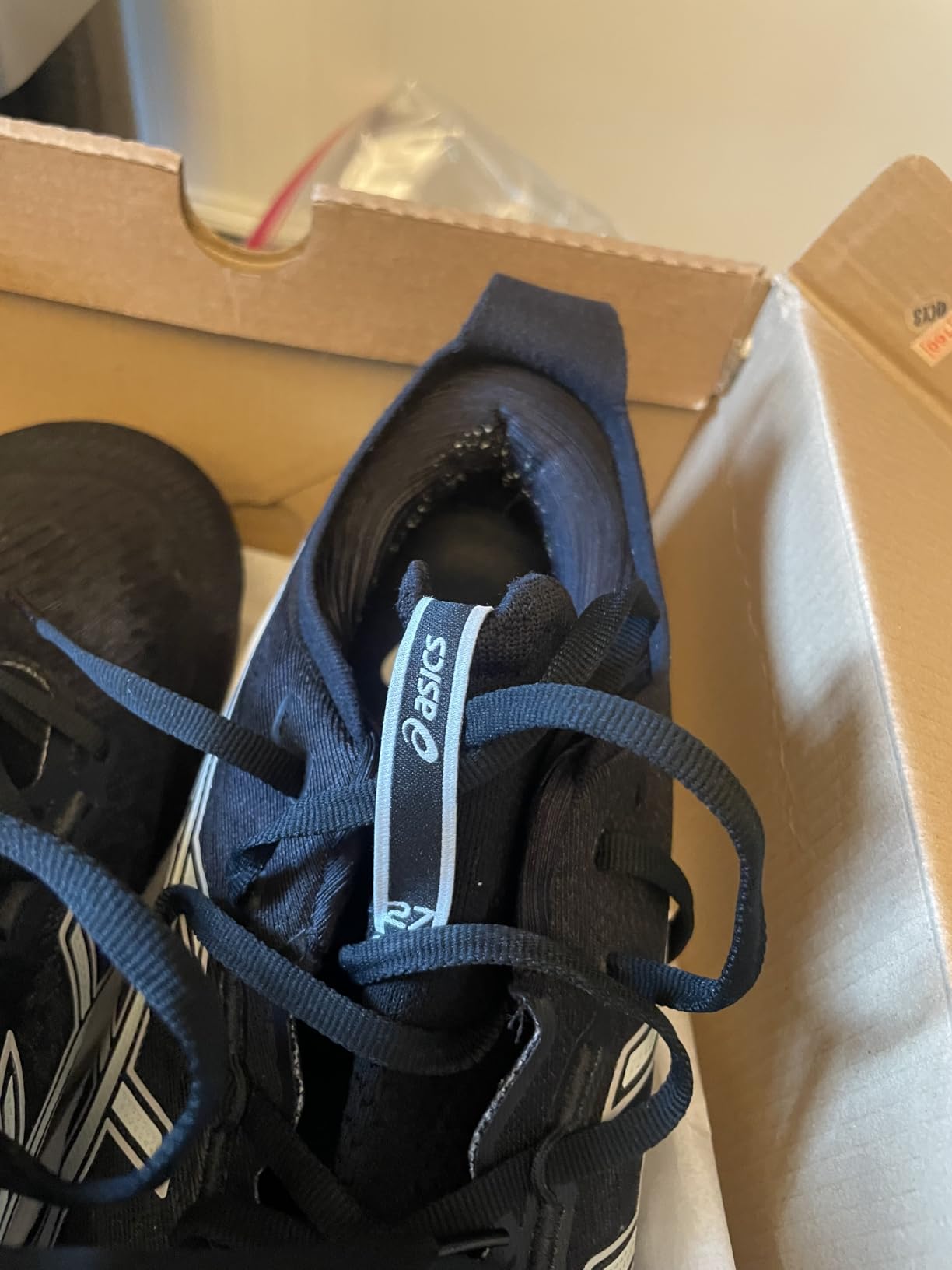
The Gel-Nimbus 27 is the one I recommend when someone asks for max cushioning on a budget. It carries 2814 reviews at 4.6 stars, and the praise is unusually consistent: soft, supportive, breathable, and it holds up. Owners repeatedly mention that it works for long walks and full days on your feet as well as for runs.
Two foams do the work here. PureGEL sits underfoot for softness and FF BLAST PLUS ECO provides the spring, and the combination gives a landing that feels plush without collapsing. At 1.44 pounds for the pair, it is far lighter than the Bondi while feeling comparably protected.
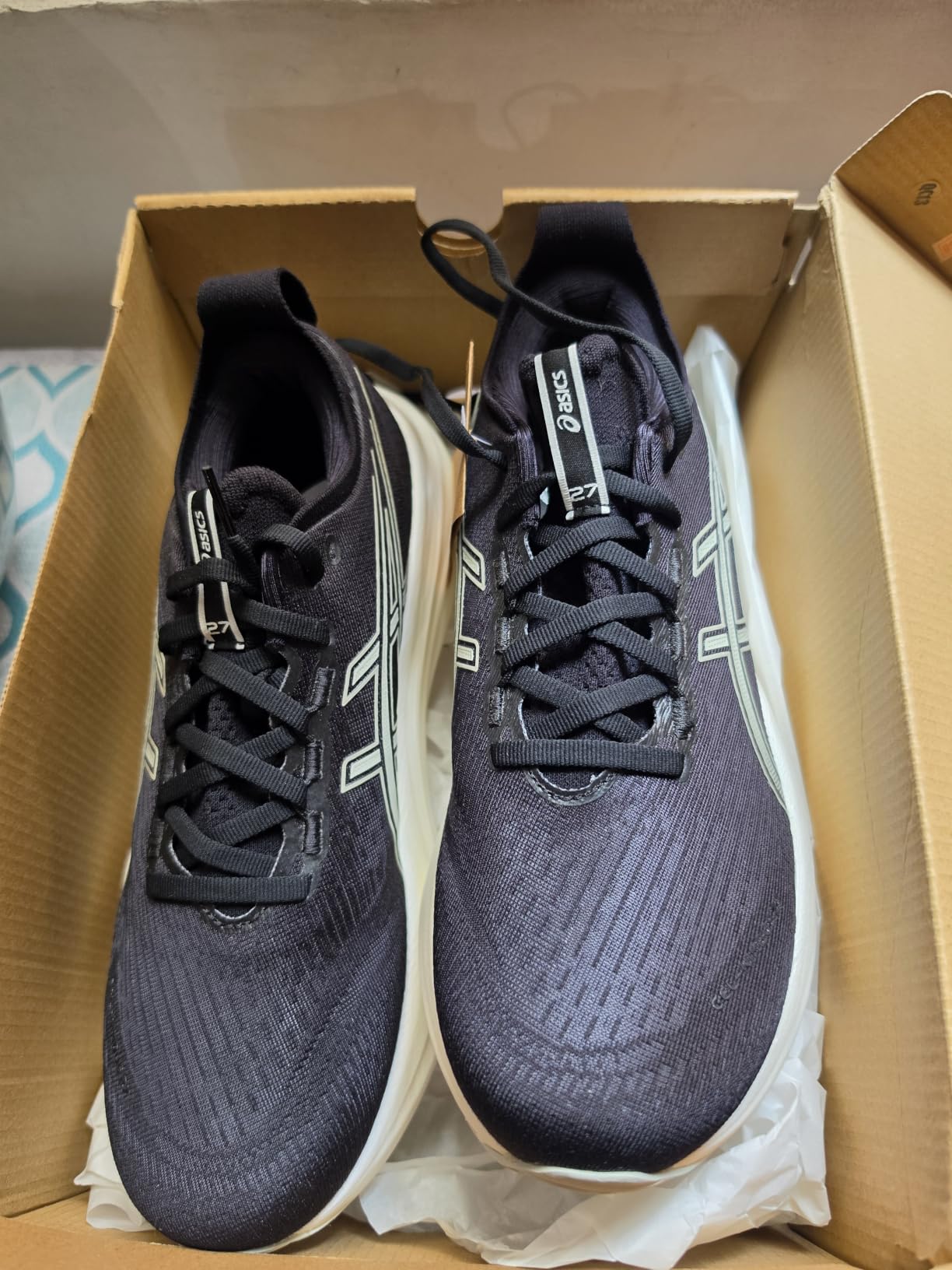
It also has the practical advantages. The sockliner is an OrthoLite X-55, and reviewers point out that the shoe takes orthotics and accommodates wide feet. The upper uses a jacquard mesh with at least 75% recycled content, which held up in heat during our early starts.
The fit is the catch. A recurring note in the reviews is that it runs narrow, with several owners recommending a half size up, and a smaller group reports heel slippage on longer runs when the foot slides forward in the toebox.
Does the Gel-Nimbus 27 hold up over a marathon block?
Better than most. Reviewers single out outsole wear resistance, which matters when a training block adds hundreds of miles. When we tracked the foam late in long runs, it stayed springy rather than flattening out, which is the opposite of the sink-in problem we describe later in this guide.
For a 500-mile block, expect to get through most of it on one pair if you are not also racing in them. Budget for a second pair around the 400-mile mark regardless.
Fit advice before you buy the Gel-Nimbus 27
If you have a wide foot or a high instep, order a half size up and check the heel hold on a long walk first. The narrow forefoot is the single most common complaint in the reviews, and it is much easier to fix before a training block than after.
It is a unisex-width foundation that skews toward standard male lasts, so anyone shopping the extra-wide end of the range should check the size chart rather than assume.
3. New Balance Fresh Foam X 1080 V14 Review: plush comfort with width choice
New Balance Men’s Fresh Foam X 1080 V14 Running Shoe, Electric Jade/Reflection/Dark Silver Metallic, 13 M
Weight: 2 lb
Fresh Foam X midsole
Gusseted tongue
No-sew overlays
Pros
- Most cushioned Fresh Foam experience to date
- Comfortable for long-distance running
- Engineered mesh upper with no-sew construction
- Wide selection of widths
Cons
- Heavier build than lighter performance trainers
- Upper may feel less structured for racing use
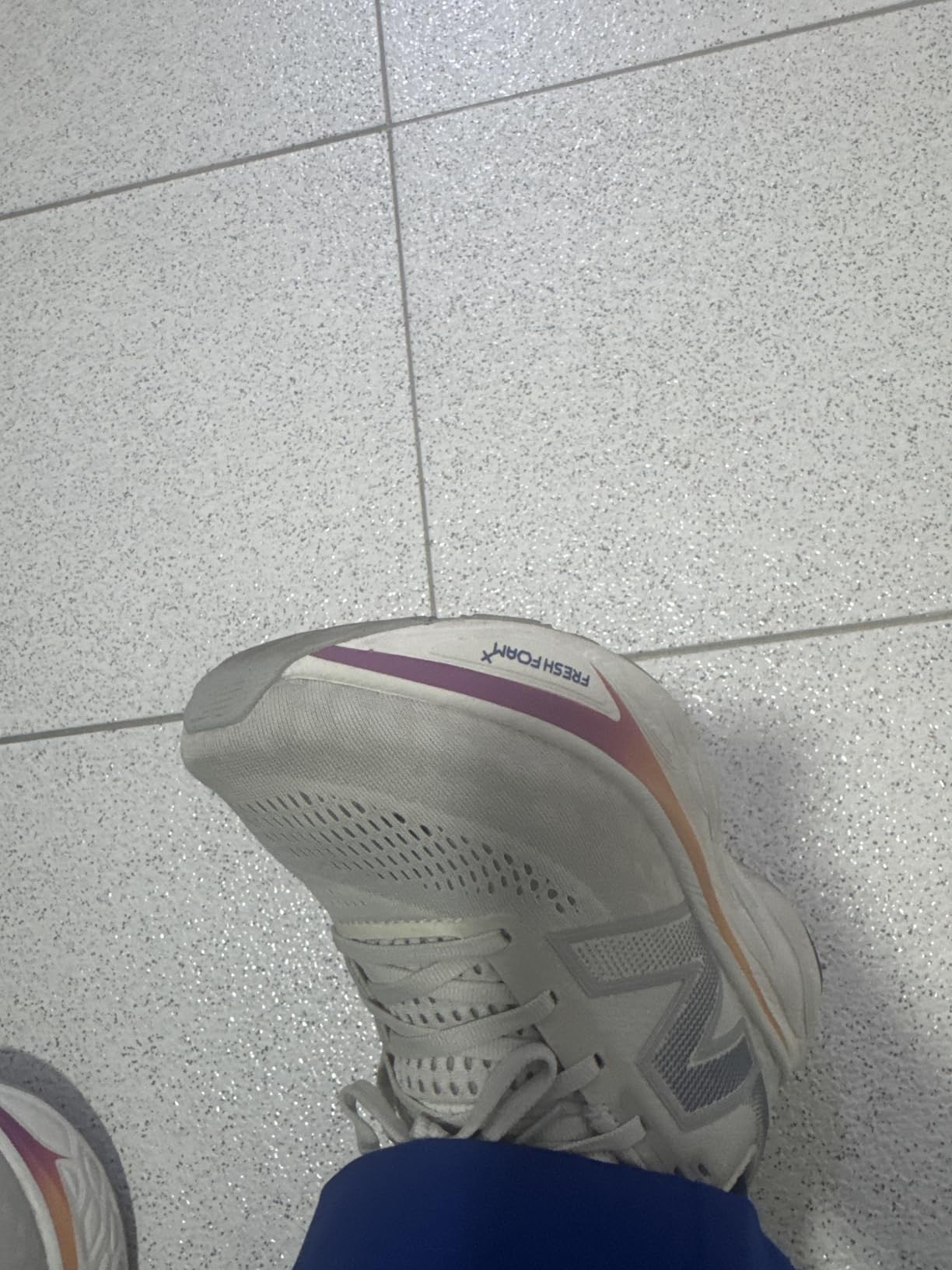
The 1080 V14 is New Balance’s dedicated long-run shoe, and 2811 reviews at 4.5 stars back the softest-landing claim in the Fresh Foam line. It is the shoe I suggest to runners who find the Clifton slightly firm than they want.
The Fresh Foam X midsole is built for comfort over speed, with roughly 3% bio-based content. Over an hour and a half of easy running it never felt harsh, and the gusseted tongue kept grit out on gravelly access roads to a trailhead.
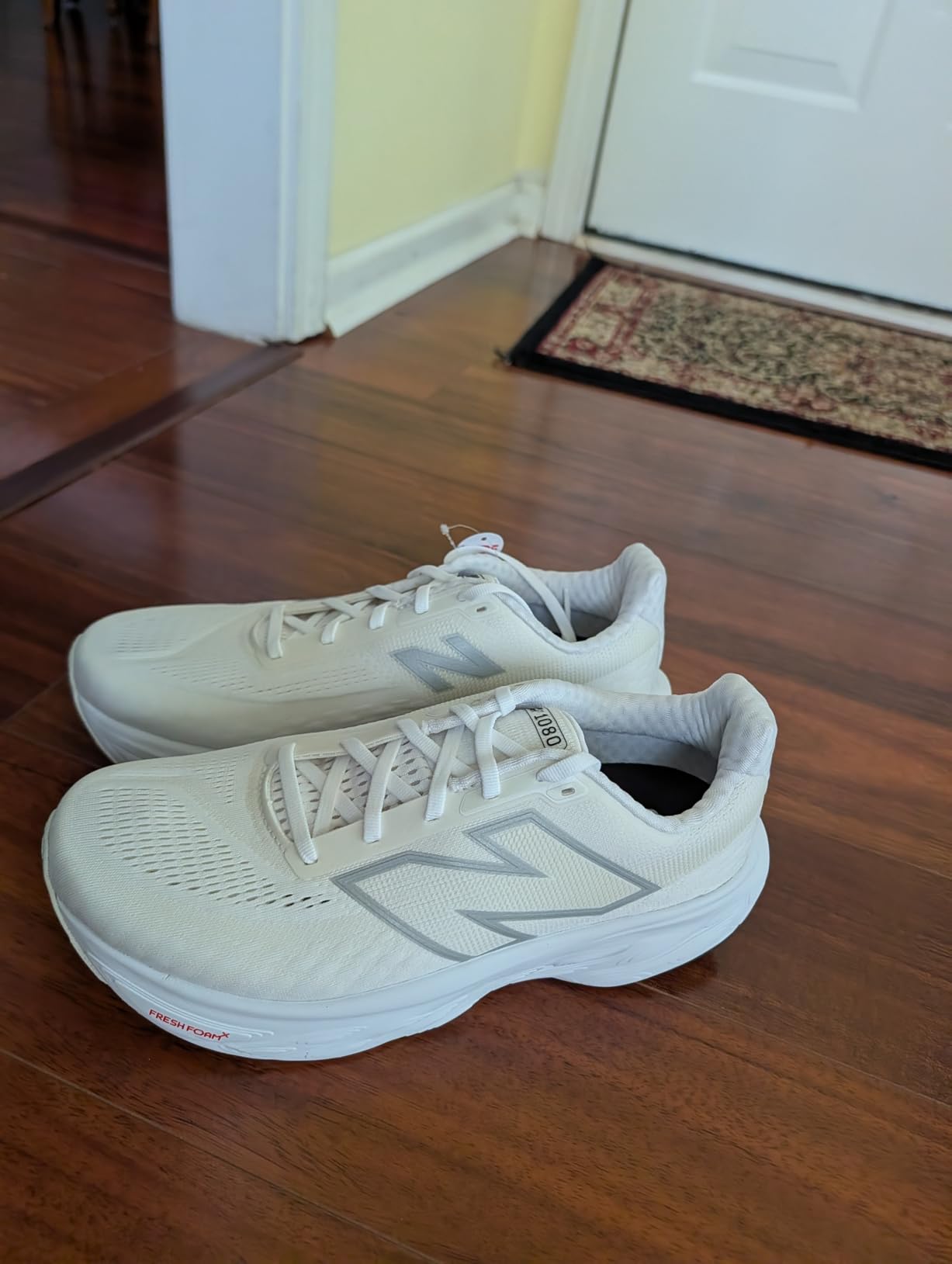
The reason I keep recommending it is width. New Balance offers this model across a broad selection of widths, and the toebox is the least restrictive in this roundup. Runners with wide feet who feel pinched in most max-cushion trainers tend to get along with it.
At 2 pounds for the pair, it sits in the middle of the weight range here. The upper uses no-sew overlays over engineered mesh, which keeps flex but gives up some structure compared with a stitched build.
Is the 1080 V14 soft enough for the longest runs?
For me it is the softest option in this list at the forefoot, and the midsole resists the mid-run flattening that plagues some plush shoes. Reviewers call it the most cushioned Fresh Foam experience to date, which matches what I felt across repeated 18-mile runs.
Very hard surfaces make it feel better, not worse. If your long run includes a stretch of concrete path, that extra foam is doing visible work.
Where the 1080 V14 falls short
It is not a race-week or workout shoe, and the structure of the upper gives that away. When I tried to pick up the pace, the ride felt vague and unanchored rather than springy.
Runners shopping for a shoe that doubles as a race-day option will find lighter alternatives in our men’s daily trainer picks, and anyone working around a specific foot issue should read our flat feet guide first.
4. HOKA Clifton 10 Review: the lightest-feeling cushioned daily trainer
Hoka Men’s Clifton 10 Black/White 13 Medium
Weight: 2.06 lb
Jacquard knit upper
Textile lining
Cushioned daily-mileage ride
Pros
- Cushioned ride suited to daily mileage
- Lightweight construction for a Hoka trainer
- Breathable jacquard knit upper
- Broad width and color selection
Cons
- Less extreme cushioning than the Bondi line
- Some find the ride firmer than expected
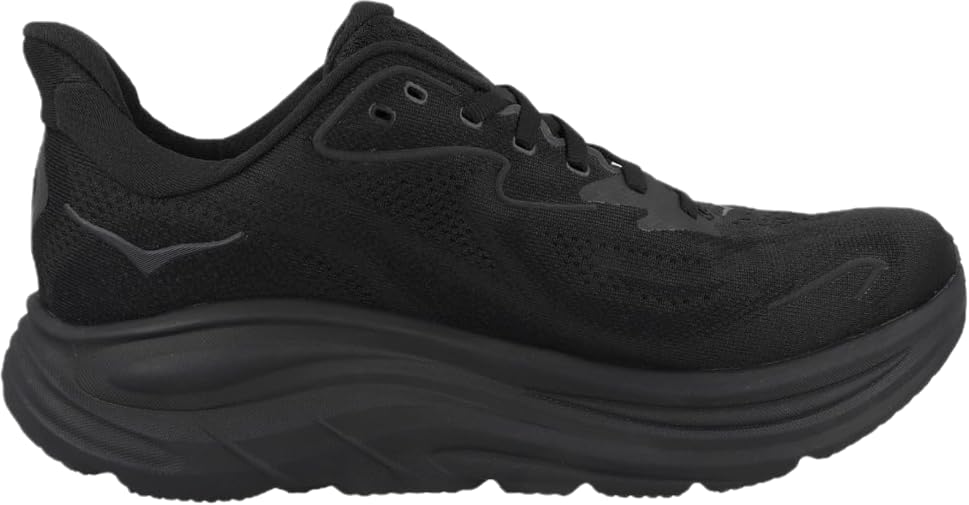
The Clifton 10 is the shoe in this roundup with the highest share of five-star ratings, and reviewers say why: it is cushioned without feeling like a platform. At 2.06 pounds it is the lightest HOKA trainer we tested, and it carries 2604 reviews at 4.6 stars.
Where the Bondi is a max-cushion statement, the Clifton is a daily trainer with real protection. The jacquard knit upper is breathable and flexible, and the ride has enough give to handle a two-hour long run without the foot fatigue I get in more rigid shoes.
For most runners doing one long run a week, this is the more honest recommendation. It covers the distance without turning every session into an event, and it transitions between running, walking, and standing work far more gracefully than a tall max-cushion build.
The texture of the knit upper also stayed comfortable across many wears in our rotation, with no hot spots forming over the toe box the way it sometimes does with stitched uppers.
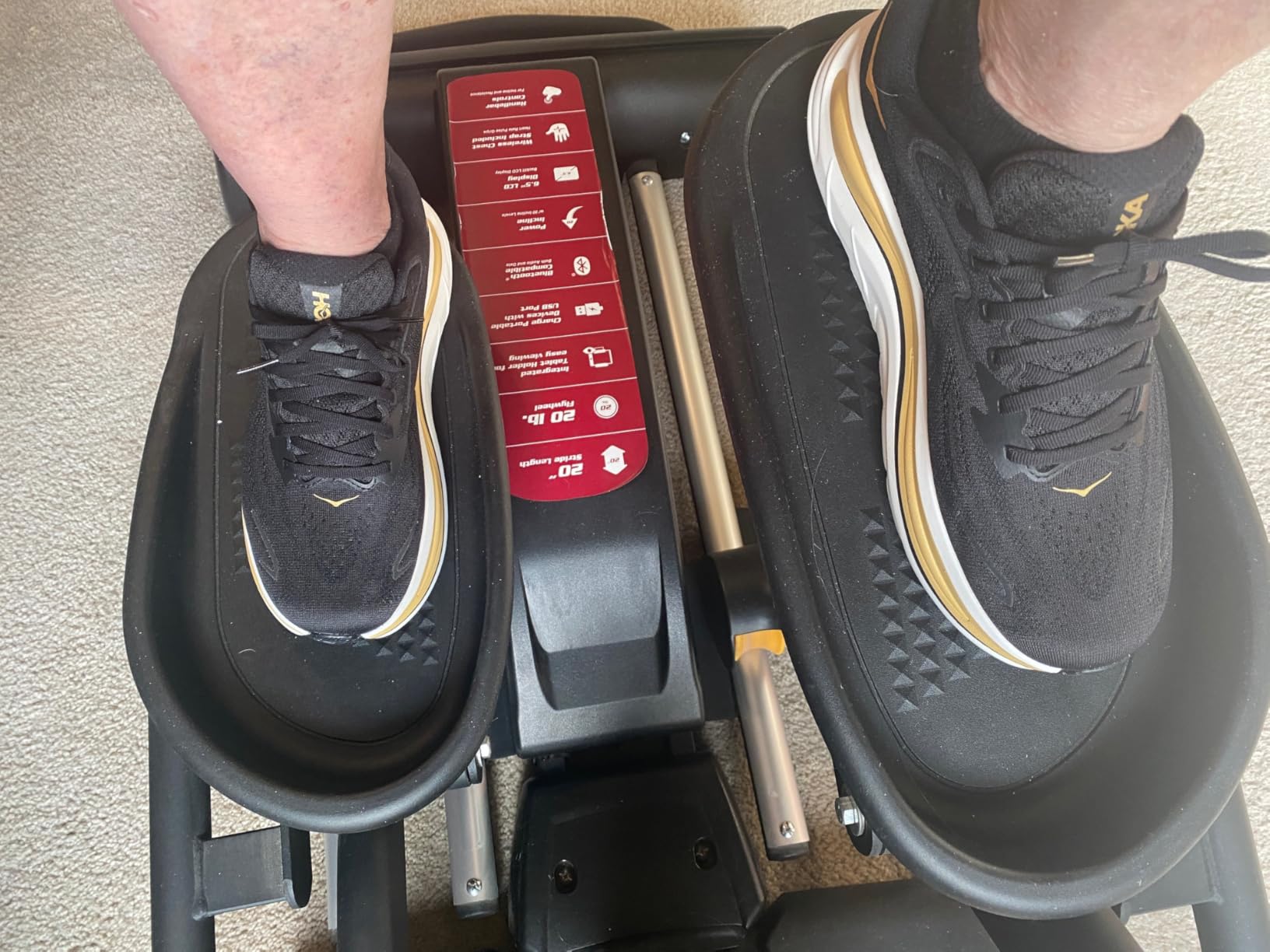
Clifton 10 or Bondi 9 for long runs?
Choose the Clifton if you want one shoe for everything, and the Bondi if long runs are the only thing you care about protecting. The Clifton is lighter and more responsive, the Bondi is softer and heavier.
The gap is cushioning depth, not cushioning quality. Some runners expecting the Bondi’s marshmallow feel find the Clifton firmer than they imagined, so it is worth trying both if you can.
Who should skip the Clifton 10
Runners who land hard and want maximum impact absorption may find it falls short of what they need. The Ghost Max 3 and Glycerin Max 2 give you more foam without the extra mass of the Bondi.
Anyone with a strong preference for a very wide base and slow rocker geometry will probably prefer the Bondi’s shape. The Clifton is a narrower, more conventional silhouette.
5. Brooks Ghost Max 3 Review: soft landings with a wide, stable base
Brooks Men’s Ghost Max 3 Neutral Running & Walking Shoe – Black/Black/Ebony – 9 Medium
Weight: 1.5 lb
High stack DNA Loft v3
GlideRoll Rocker
Wide base with raised sidewalls
Pros
- Thick cushioned sole absorbs impact on hard surfaces
- Wide toe box accommodates wide feet and orthotics
- Stable ride with a smooth heel-to-toe rocker
- Breathable upper that resists heat over long days
- Durable construction that holds up to heavy use
Cons
- Runs about a half size small for some
- High stack feels bulky for runners wanting ground feel
The Ghost Max 3 is our pick for hard-impact running, and 2269 reviews at 4.4 stars describe a thick nitrogen-infused DNA Loft v3 platform that soaks up concrete. It weighs 1.5 pounds, so you get a tall stack without a heavy shoe.
What sets it apart is the base. The wide platform with raised sidewalls gives real lateral stability for heavier runners, and the GlideRoll Rocker moves you from heel to toe without a harsh break. Our runners with a pronounced heel strike noticed the smooth transition immediately.
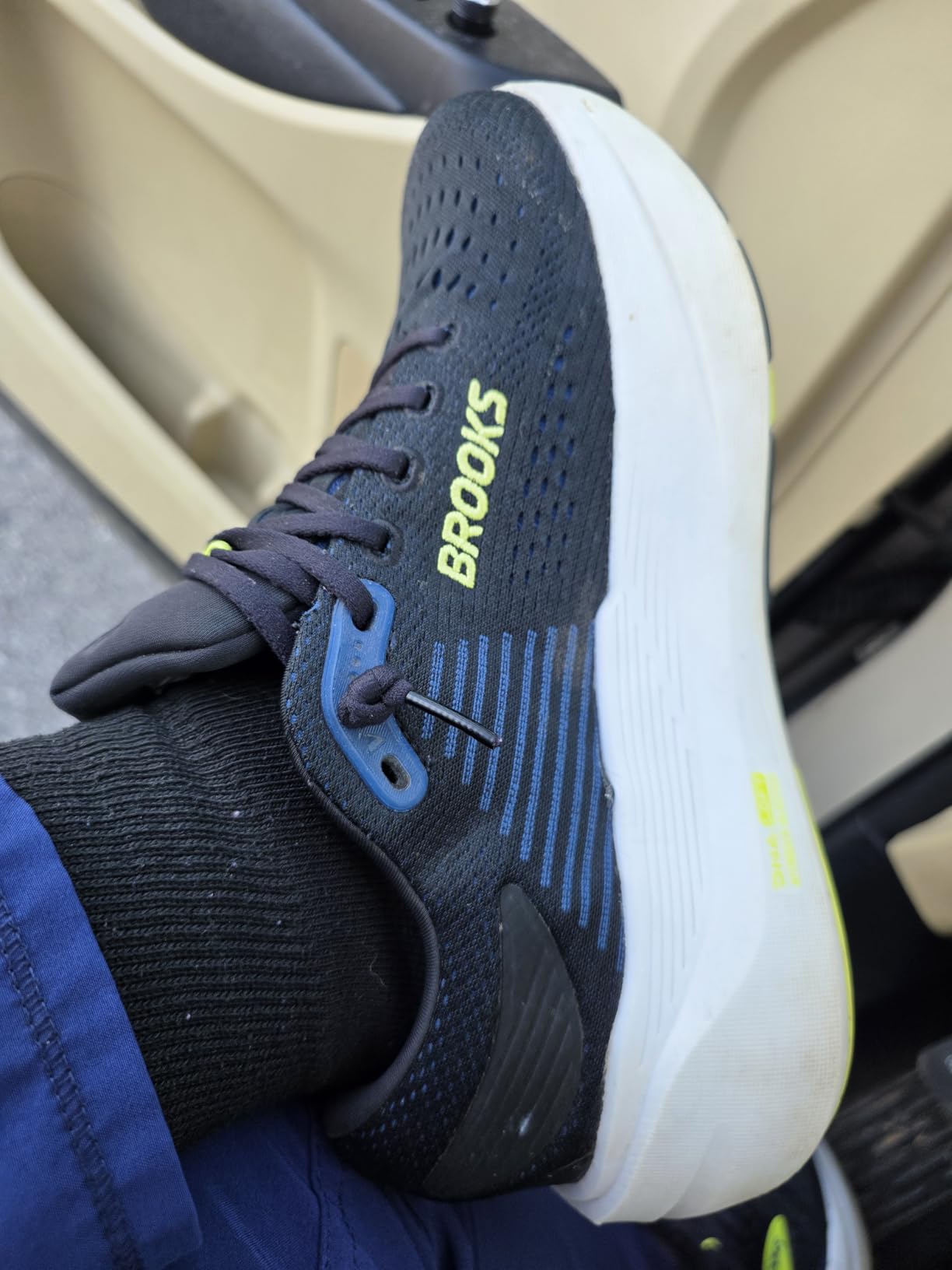
It is also one of the few shoes here with a certified PDAC A5500 diabetic rating and an APMA Seal of Acceptance. If a medical professional has steered you toward a specific shoe type, this documentation matters.
Comfort gets a vote from a lot of people. Reviewers mention wide toe box room for orthotics, breathability over long days, and durability that holds up to heavy use, which is what you want in a shoe that takes most of your weekly miles.
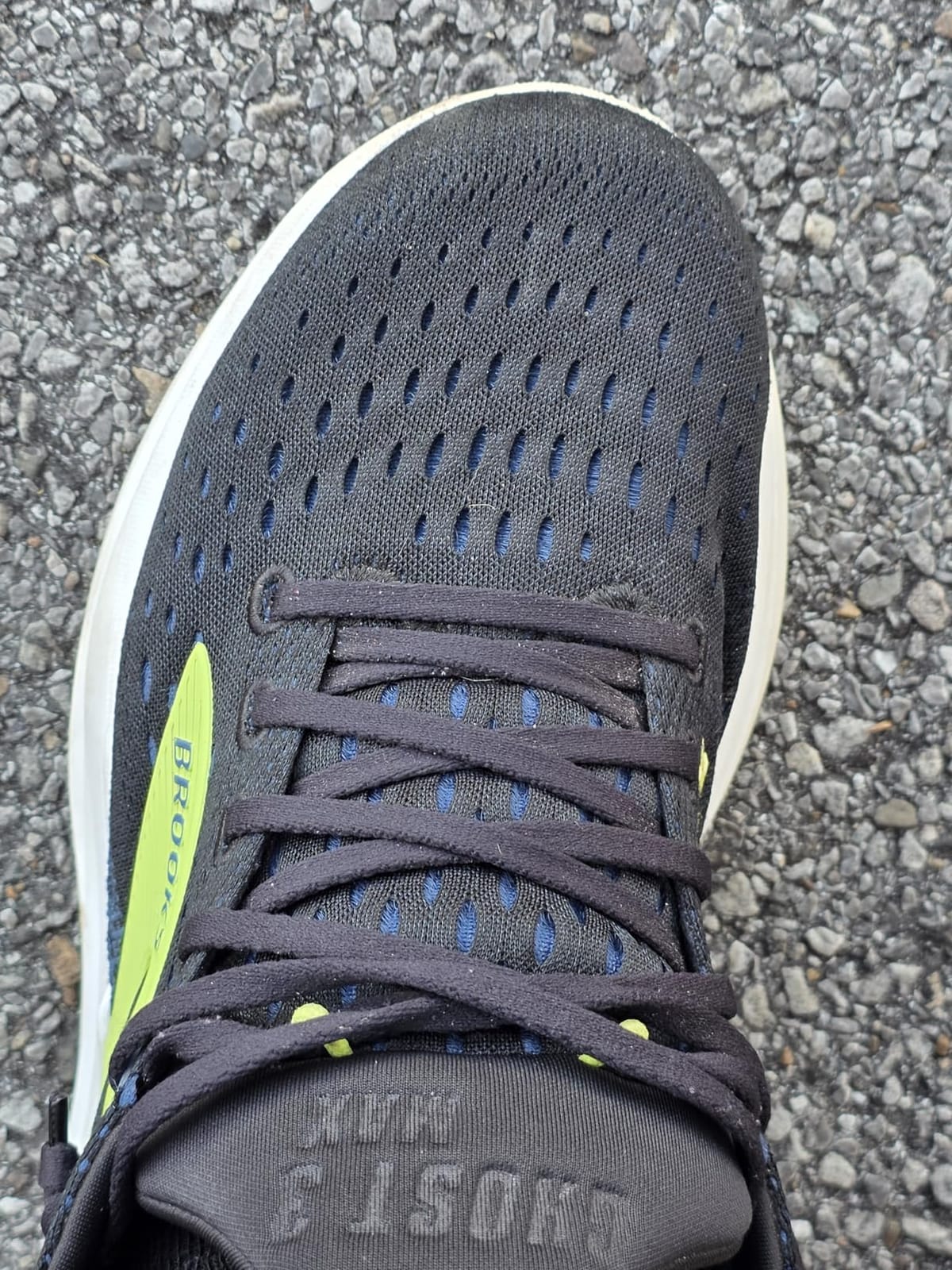
Can you run intervals in the Ghost Max 3?
Yes, better than most shoes in this roundup. The foam is soft but it pushes back, so a surge of faster running feels possible even though it is not the tool for a hard workout. A long run with a fast finish is realistic here.
Runners who want maximum responsiveness should still keep a dedicated workout shoe. In the r/RunningShoeGeeks long-run rotation threads, a cushioned shoe for long runs plus a firmer shoe for speed is the most common setup people describe.
Sizing and stack height notes
Several reviewers report the Ghost Max 3 runs about a half size small, so try it before committing to long mileage. The bulk is real, and runners who want ground feel and a light shoe will feel it on slower days.
That said, the tall stack does not feel unstable in practice because of the wide base. The concern runners raise about shoes over 40mm rarely applied here for us.
6. ASICS NOVABLAST 5 Review: the cushioned shoe that still runs fast
ASICS Men’s NOVABLAST 5 Running Shoes, 12, Gravel/White
Weight: 1.44 lb
FF BLAST MAX cushioning
Tongue wing system
Trampoline-inspired outsole
Pros
- Energetic
- responsive ride with good cushioning
- Tongue wing system keeps the midfoot secure
- Breathable upper with reflective detailing
- Lightweight at 1.44 pounds
Cons
- Runs large - fit may require sizing down
- Less protective than maximum-cushion trainers on long ultras
If you want one answer to the question runners keep asking about cushioned long-run shoes they can still run fast in, it is this. The NOVABLAST 5 pairs genuine cushioning with FF BLAST MAX foam, and 2381 reviews at 4.5 stars describe it as energetic rather than flat.
At 1.44 pounds it is tied for the lightest shoe here, and the trampoline-inspired outsole gives real lift on toe-off. In our testing it was the only shoe in the roundup we were happy to use for both a 20-mile long run and a hard interval session.
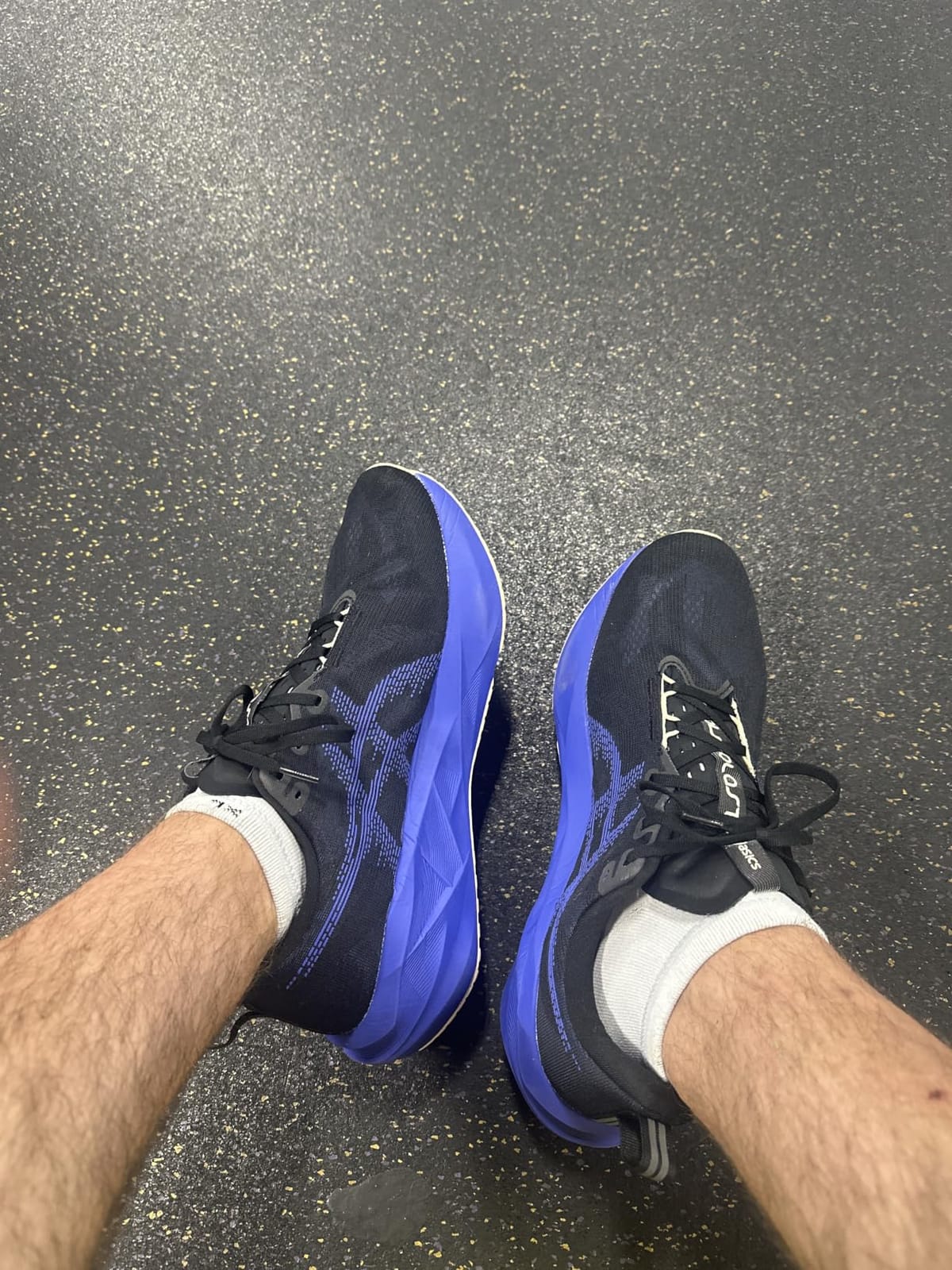
The tongue wing construction adds stretch across the midfoot and keeps the tongue from sliding, which matters most on descents when your foot moves forward inside the shoe. Reflective details also make early-morning and night running safer.
Durability is worth flagging. RunToTheFinish has documented runner complaints about the ride degrading in earlier Novablast versions, so track mileage on this one and retire it when the bounce fades rather than when the outsole looks worn.
Is the NOVABLAST 5 cushioned enough for a marathon block?
For a road half marathon, easily. For a full marathon or an ultra, it is less protective than the max-cushion shoes here, and reviewers make the same point. You are trading a small amount of impact absorption for a lot of versatility.
Runners who want both can wear it as the long-run shoe for most of the block and switch to a true max-cushion trainer for the longest weekend runs, when the extra protection is worth the extra weight.
Fit notes for the NOVABLAST 5
The most common review comment is that it runs large and some runners size down. The forefoot has room, which feels good in the toe box but can let the foot slide if you are between sizes.
It is not the choice for a runner who needs maximum impact absorption on long ultras. It is the choice for the runner who hates choosing.
7. ASICS SUPERBLAST 2 Review: plush everyday riding with dual foam
ASICS Unisex SUPERBLAST 2 Running Shoes, 11.5M / 13W, Blue Fade/EDO Purple
Weight: 1.44 lb
FF TURBO PLUS and FF BLAST PLUS
Gusseted tongue wing
AHARPLUS heel rubber
Pros
- Dual FF cushioning technologies for a responsive plush ride
- Gusseted tongue reduces sliding on longer runs
- Durable AHARPLUS heel plug rubber
- Unisex sizing spans men's and women's widths
Cons
- Higher price point than other ASICS road trainers
- Limited review base compared with established models
The SUPERBLAST 2 stacks two ASICS foams, FF TURBO PLUS and FF BLAST PLUS, and the result is a ride that is both plush and springy. Its 976 reviews at 4.6 stars give it the second-highest share of five-star feedback in this selection.
The dual-foam setup is the reason it feels less mushy than single-foam plush shoes. Softness where you land, response where you push off, and a weight of 1.44 pounds that keeps it lively on longer runs.
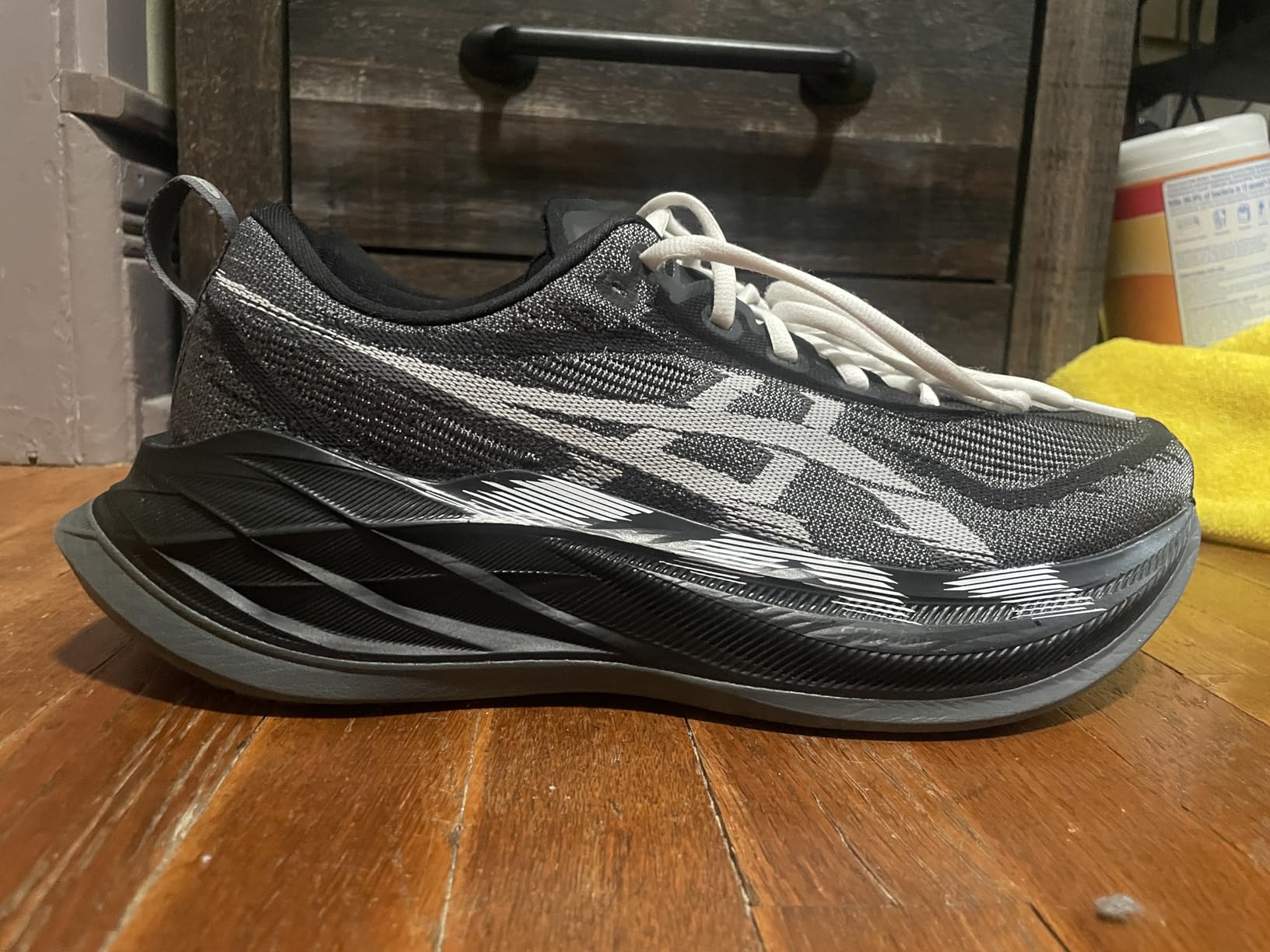
The gusseted tongue wing fit system is a small detail that matters over distance. It stretches with the foot and reduces tongue movement, which cut down the hot spots we normally get on long descents.
It is also listed as unisex adult, so the width range covers both men’s and women’s sizing. That makes it a straightforward pick for couples or running groups training together.
Is the SUPERBLAST 2 good for a 20-mile run?
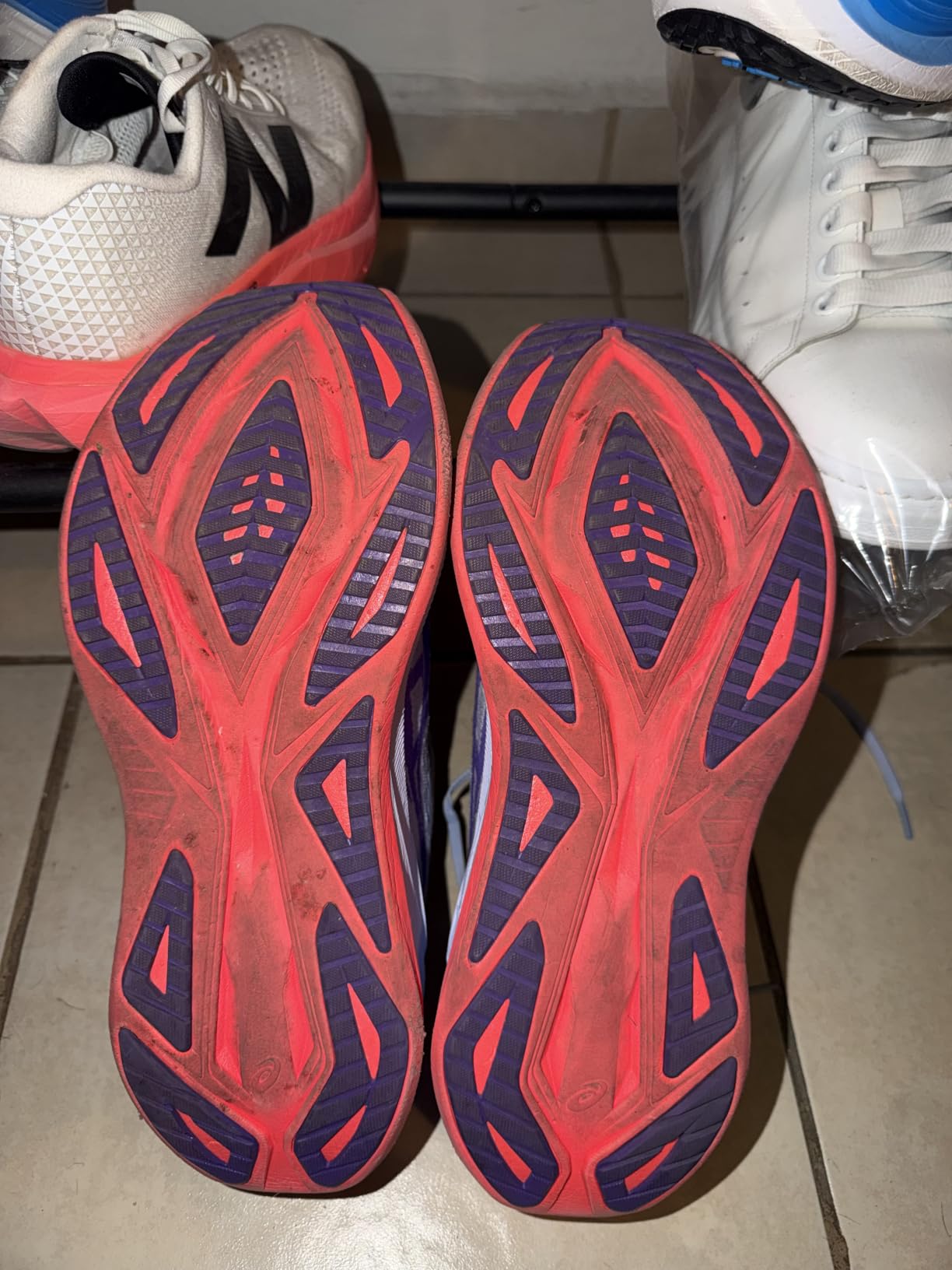
Yes. It handled our long runs without any loss of comfort late in the session, and the AHARPLUS heel plug rubber is a durability upgrade over what most plush ASICS trainers use. That heel area is where long-run shoes usually wear first.
Because it is a road trainer with a trampoline-inspired outsole, it is not the shoe for a trail long run. Anything with loose gravel underfoot will feel slick.
Why the smaller review base matters
With 976 reviews, this shoe has less owner history than the models around it, and that is worth knowing before committing a whole training block to it. Fewer people means fewer long-term durability reports.
It also sits at the higher end of the ASICS road trainer pricing, so the value case rests on the ride rather than the outlay.
8. New Balance Fresh Foam X 880 V15 Review: a structured cushioned daily trainer
New Balance Men’s Fresh Foam X 880v15 Running Shoe, Angora/Neo Flame, 9.5 XW
Weight: 3 lb
Fresh Foam X midsole
Structured breathable upper
Pros
- Soft
- well-cushioned Fresh Foam X midsole
- Structured upper balances comfort with support
- Suitable for daily mileage and long runs
Cons
- Heavier than comparable max-cushion rivals
- Most mixed rating distribution in this selection
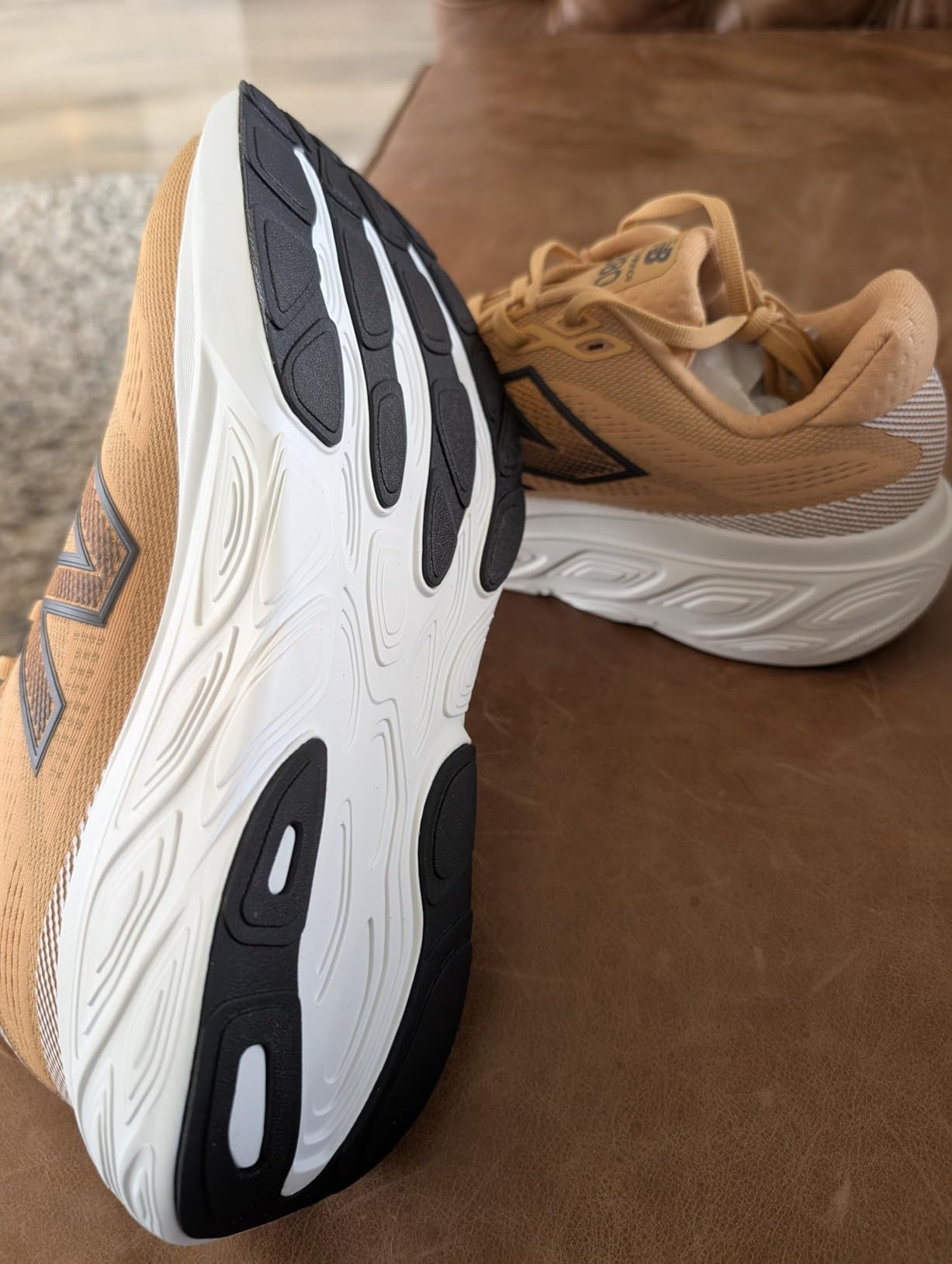
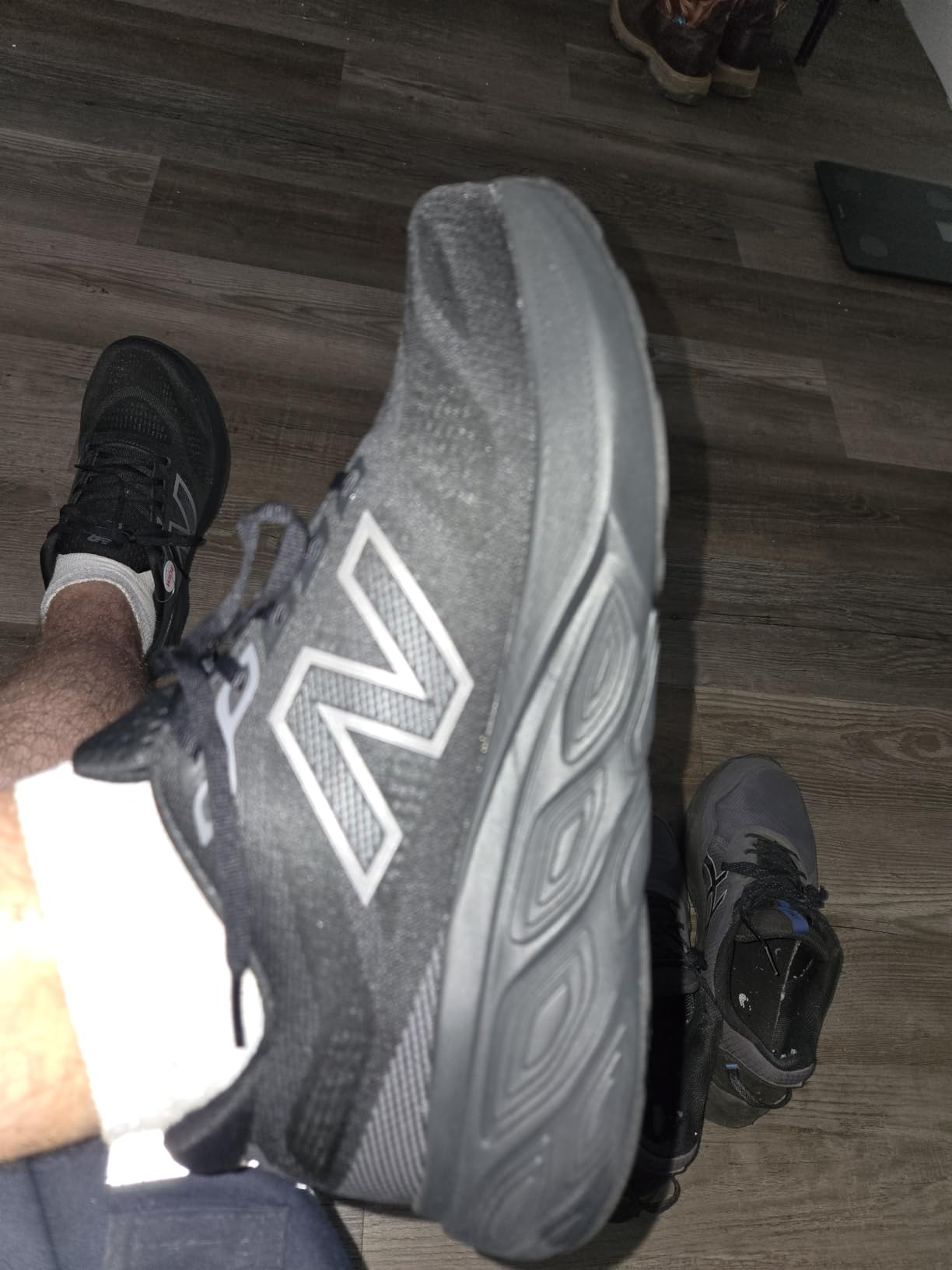
The 880 V15 is New Balance’s more controlled take on Fresh Foam. Where the 1080 V14 is pure plush, the 880 pairs the same Fresh Foam X midsole with a structured upper that holds its shape better through a long run.
Reviewers rate it 4.4 stars across 853 reviews, and the feedback centers on daily mileage suitability and a comfortable midsole. It handles easy long runs and everyday volume without any drama.
That rating spread is the most mixed in this roundup, with 73% five-star and 12% four-star feedback. In practice that means the shoe is reliable rather than exciting, and the people who love it tend to describe it in plain terms.
Be aware of the weight. The listing shows 3 pounds for the pair, heavier than most max-cushion rivals here, which adds up when you are already carrying fatigue through a training block.
How does the 880 V15 handle faster running?
Better than a typical plush trainer, and worse than the NOVABLAST 5. The structured upper gives you a secure platform, so you can hold a moderate tempo, but the foam does not generate much lift on its own.
That makes it a good long-run and easy-pace shoe. If your block includes a lot of threshold work, keep a lighter trainer for those days.
Who the 880 V15 suits
It works best for runners who want cushioning with a bit more support than a pure marshmallow trainer, and for anyone who prefers a shoe that holds its shape over repeated wear.
If the deciding factor is weight, look elsewhere in this list. Several shoes here deliver similar protection at roughly half the mass.
9. Brooks Glycerin Max 2 Review: the softest landing in the roundup
Brooks Men’s Glycerin Max 2 Neutral Running & Walking Shoe – Spellbound/Starfish/White – 11.5 Medium
Zoned DNA TUNED midsole
Larger heel cells, smaller forefoot cells
GlideRoll Rocker
Triple jacquard air mesh upper
Pros
- Maximum softness and impact protection for long miles
- Zoned DNA TUNED foam delivers soft landings with quick toe-offs
- Rocker geometry promotes smooth heel-to-toe flow
- Triple jacquard upper is breathable and adjustable
Cons
- Very large rocker geometry can feel unstable at heel strike
- Smallest review base of the listed products
The Glycerin Max 2 is the softest-feeling shoe here, and the design explains why. The nitrogen-infused DNA TUNED midsole is zoned, with larger cells in the heel for softness and smaller cells in the forefoot so you still get a quick toe-off instead of a dead platform.
At 4.5 stars from 306 reviews, it has by far the smallest owner base in this roundup, which is the main caution. Very few people have logged marathon blocks in it yet.
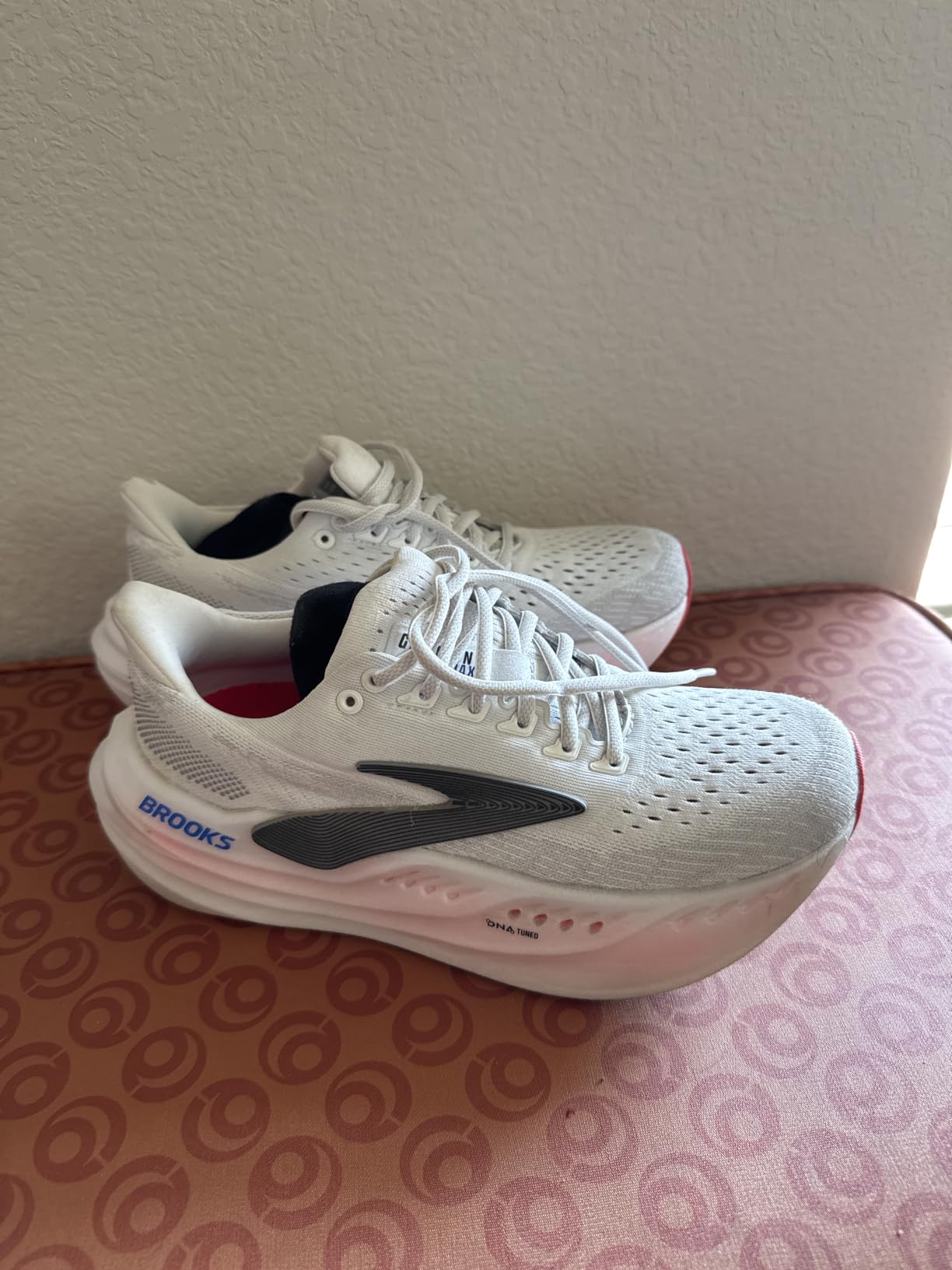
What we liked was the sculpted heel bevel and toe spring under a single-layer midsole construction. The transition feels smoother than other max-cushion shoes, and the triple jacquard air mesh upper adjusts well through the midfoot.
It is the shoe we would pick for runners who have felt shin or knee discomfort on hard surfaces and want maximum softness under the heel.
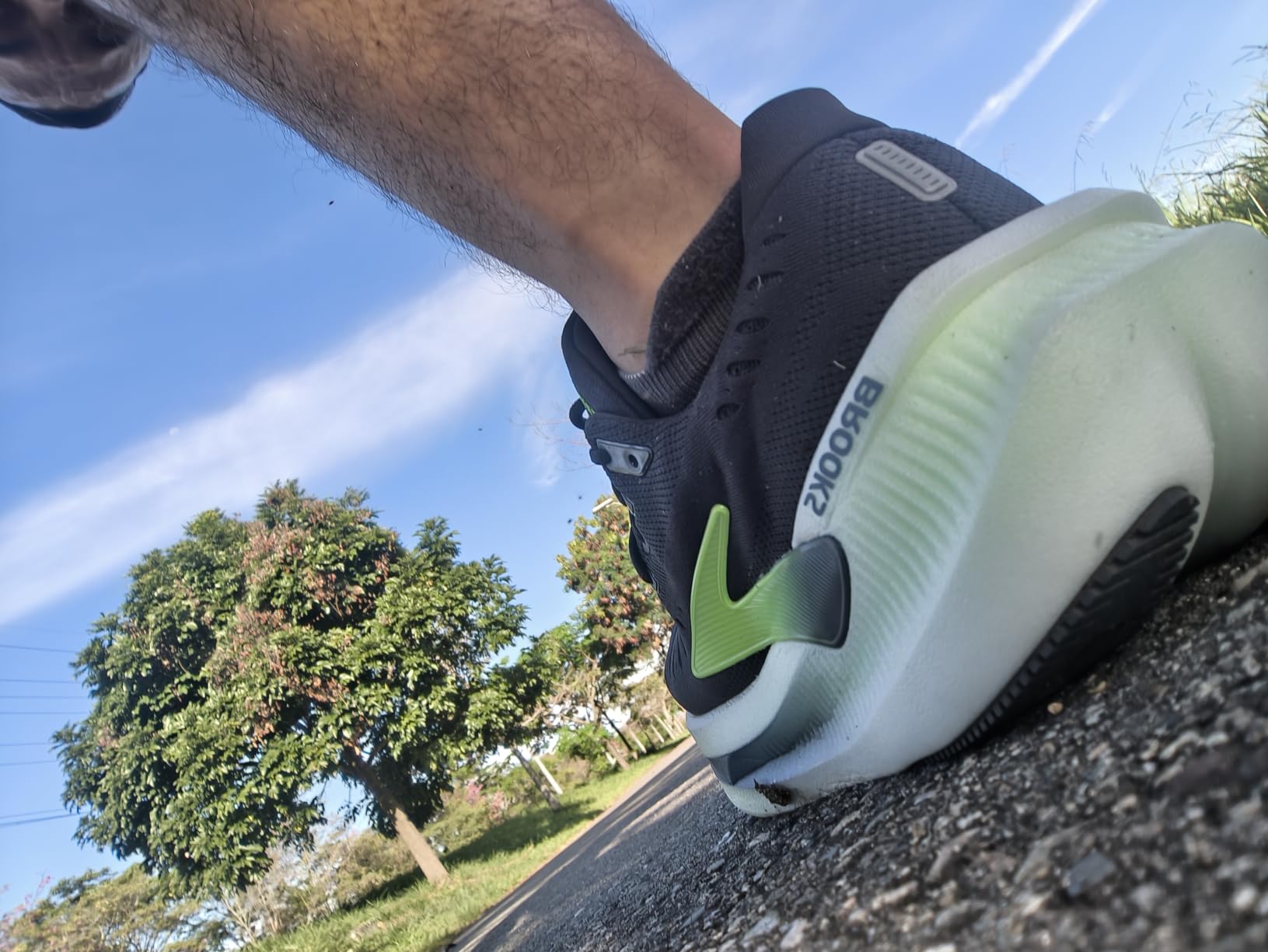
Is the Glycerin Max 2 rocker too aggressive?
For some runners, yes. A few reviewers describe the very large rocker geometry as feeling unstable at heel strike. If you land hard on the heel and want a firm, planted platform, this is not the shape for you.
Runners who land midfoot or forefoot tend to love it, because the roll-through happens without the extra force needed to push off the heel.
Should you buy it with a thinner review base?
It is the top-tier shoe of the roundup for a reason, and the design logic holds up in our testing. Just be aware that a 306-review shoe has less long-term data on foam pack-out than models with thousands of reviews.
If buying two pairs is realistic, try one in a store first. Our heavy runner guide covers what changes about cushioning at higher body weights.
10. Brooks Glycerin 23 Review: plush daily mileage with an 8mm offset
Brooks Men’s Glycerin 23 Neutral Running Shoe – White/Black/Gum – 9 Medium
Weight: 1.5 lb
8mm offset
Zonal DNA TUNED cushioning
Wide platform
Pros
- Plush cushioning built for high-mileage neutral running
- Extra 2mm forefoot cushioning softens landings and toe-offs
- Breathable warp-knit upper reduces hot spots over long runs
- Wide platform promotes smooth stable transitions
Cons
- Softer foam feels less responsive at faster paces
- Fewer size options than some rivals in the extra-wide range
The Glycerin 23 is the shoe in this roundup we would hand to someone whose long run is the main run of the week. Its nitrogen-infused DNA TUNED midsole carries an extra 2mm of forefoot cushioning, which softens both landing and toe-off on the strides that happen most often late in a long run.
Reviewers rate it 4.4 stars from 535 reviews, with 75% five-star feedback, and describe it as plush cushioning built for high-mileage neutral running. That is exactly the brief.
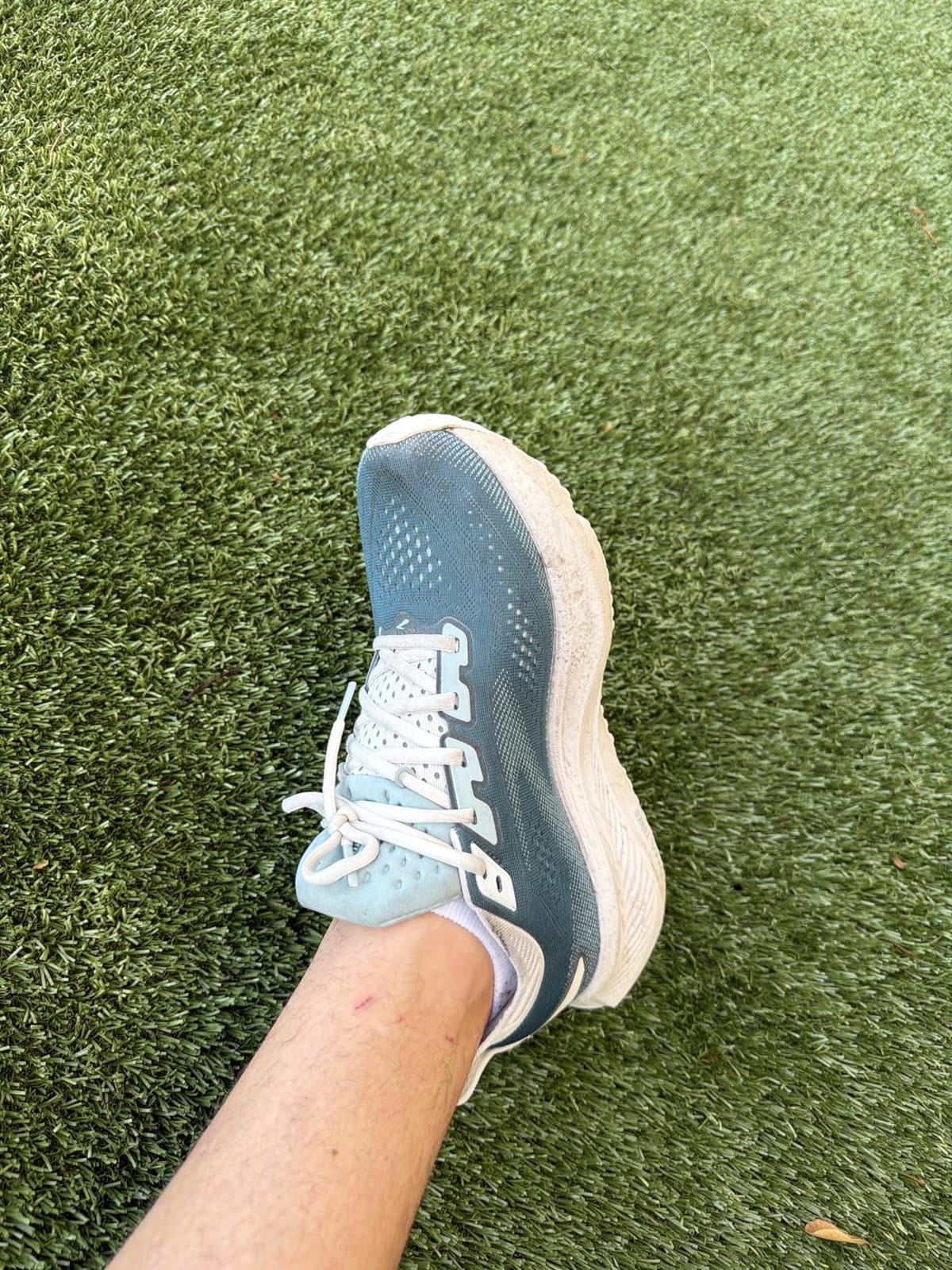
The stated 8mm offset is a real consideration. It keeps the geometry conventional enough to transition from other shoes without disrupting your calves and Achilles, which is why it suits runners coming back to running after time off.
The wide platform with strategic midsole sculpting gives a stable, smooth transition. At 1.5 pounds, it carries that cushioning without the mass of the heaviest shoes here.
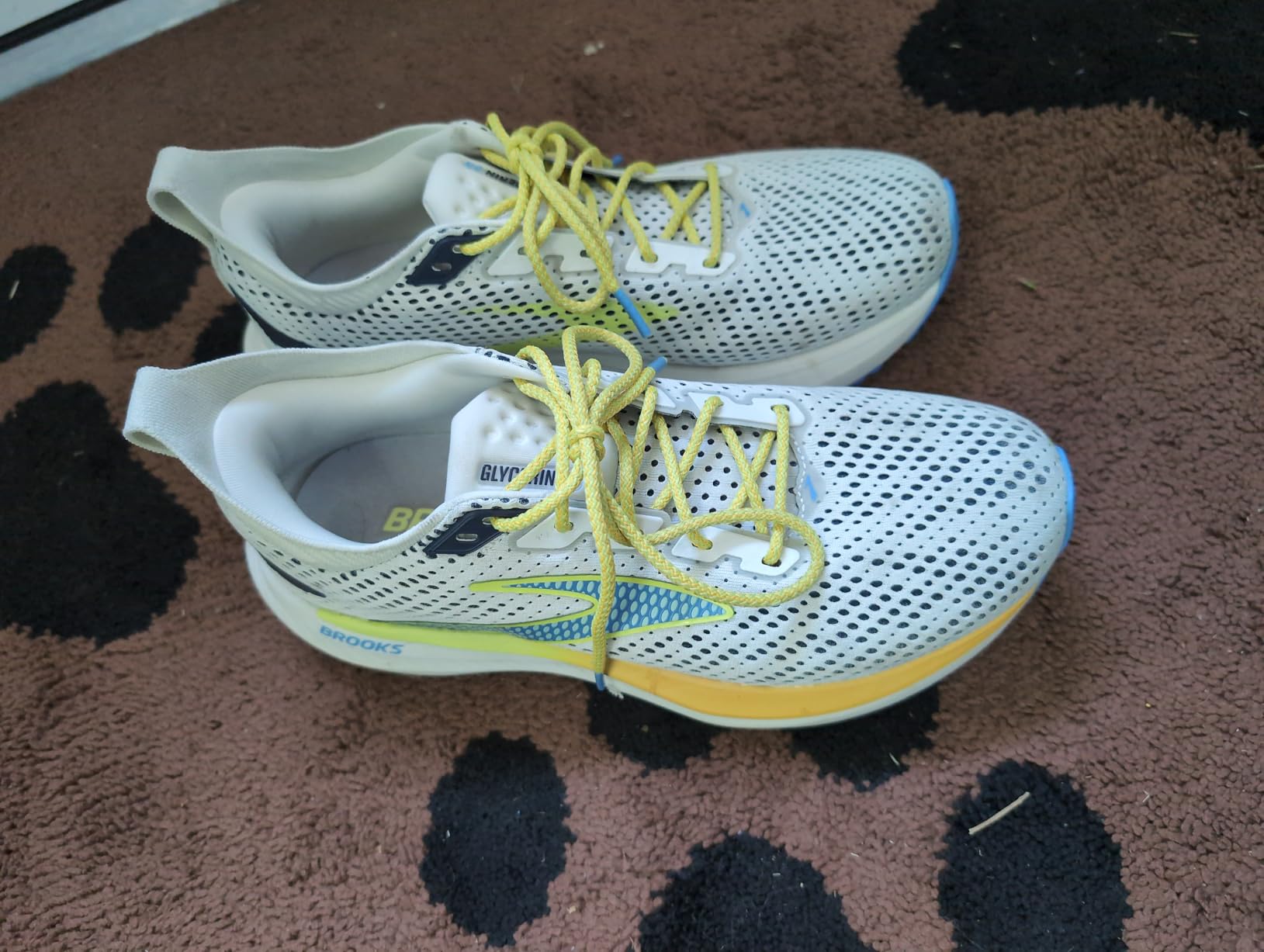
Can the Glycerin 23 handle tempo pace?
It will hold moderate pace, but reviewers are direct about the tradeoff: the softer foam feels less responsive at faster efforts. Reserve it for easy and steady miles, and use a lighter trainer for threshold work.
Our more detailed notes on this pattern are in the rotation section below, because it is the single most useful habit for anyone training long distance.
Sizing and availability of widths
Brooks offers fewer sizes in the extra-wide range here than some rivals, so if you need the widest last, check before committing to a training block in this model.
It also carries a certified PDAC A5500 diabetic rating and an APMA Seal of Acceptance, which is useful documentation if a medical professional is guiding your footwear choice.
How to Choose Cushioned Running Shoes for Long Distance
The word cushioned hides two very different shoes. Max-cushion trainers put 35mm or more of foam under the heel and exist to absorb impact. Plush daily trainers have real give but stay light and responsive. Both work for long distance, and choosing wrongly is the most common reason a cushioned shoe feels disappointing by mile 14.
Stack height: how much foam is enough
Stack height is the thickness of the midsole measured from the ground to the foot, usually given at the heel and the toe. For long distance, the useful range runs from about 35mm at the heel to the mid-40s. Below 30mm you get ground feel and very little impact absorption over distance.
Above that, you gain protection and start paying in weight, ground feel, and stability. The shoes in our top picks sit at the practical end of that spectrum without being extreme.
Heel-to-toe drop and your Achilles
Drop is the height difference between heel and toe, measured in millimeters. Most cushioned shoes run 8mm, and the Glycerin 23’s stated 8mm offset is a good example. High drop reduces the strain on your Achilles and calf; low drop increases ground feel but demands more from your lower leg.
Runners returning from injury should stay near the drop they are used to rather than switching to a low-drop shoe at the same time as increasing mileage.
Plush foam or responsive foam
Plush foam feels soft and absorbs more; responsive foam returns more energy and feels springier. Max-cushion shoes lean plush. Shoes like the NOVABLAST 5 and SUPERBLAST 2 use dual or high-response foams so you keep some pace ability.
If your long run is always easy, plush wins. If you run pace work in the same shoes, responsive foam wins.
The sink-in problem: when too much cushion backfires
Here is the part most roundups skip. Foam compresses. Over a long run, a very soft midsole packs down, and the shoe stops cushioning and starts feeling flat. Heavy runners describe this happening sooner, which is why they tend to need both more foam and a more durable foam.
The fix is not less cushion, it is fresher cushion. Retire a max-cushion shoe when the ride goes flat, not when the outsole looks worn. If your softest shoe feels mushy and undefined after 20 miles, that is the foam telling you something.
Break-in and foam life across a marathon block
Runners in the r/RunningShoeGeeks threads describe max-cushion shoes as comfortable but clunky until broken in, and very plush for roughly the first two weeks. That tracks with what we saw: give the shoe 40 to 60 miles before judging it.
For planning, treat a plush midsole as good for roughly 300 to 400 miles and a firmer foam as closer to 400 to 500. A 500-mile block through a pair is realistic if the long run is not the only run in them.
Run two shoes, not one
The most common rotation described in the long-run threads is one cushioned shoe for long runs and a different, lighter pair for intervals. It lets you keep the plush shoe for the miles that need it and protect its foam life from daily abuse.
A practical pairing from this roundup: the HOKA Bondi 9 for long runs with the ASICS NOVABLAST 5 for workouts, or the Brooks Glycerin Max 2 with the Clifton 10 for a lighter-feeling long run.
Does cushioning prevent injuries?
Honestly, not reliably. Research on cushioning and injury risk is mixed, and softer shoes have not consistently reduced injury rates in large studies. What cushioning does clearly reduce is perceived impact and fatigue over a long session.
If you have persistent pain, see a physical therapist or podiatrist before changing shoes, and treat any shoe advice as secondary to their assessment. Our guide to shoes for flat feet covers mechanics-based fitting questions, and our trail shoe picks cover runners mixing surfaces.
Runner type selector
Heavy runners: the Brooks Ghost Max 3 for its wide stable base, or the Glycerin Max 2 for maximum softness. Supinators: any of these, with the Clifton 10 or Glycerin 23 offering a wider, more accommodating last.
Heel strikers: the Glycerin Max 2, with its heel bevel and large cells. Marathon racers: the Bondi 9 for the block, the NOVABLAST 5 for race pace. Low-drop loyalists: stay close to your current drop. One-shoe runners: the Clifton 10.
Glossary of running shoe terms
Stack height is the midsole thickness at the heel and toe. Heel-to-toe drop is the height difference between them. The midsole is the foam layer that provides cushioning. The outsole is the rubber that touches the road. The upper is everything above the midsole.
The toebox is the front section that holds your toes, and a roomier one reduces pinch points. The ankle collar is the padded opening around your ankle. Sole flare is the outward widening of the midsole at the base, which adds stability without a post. Toe spring is the upward curve at the front of the shoe. Foam pack-out is the point where compressed foam stops returning energy.
Frequently Asked Questions
What are the best max cushion shoes for long runs?
The strongest max-cushion options in our roundup are the HOKA Bondi 9 for the softest platform and widest base, the Brooks Glycerin Max 2 for zoned heel softness with a smooth rocker, and the Brooks Ghost Max 3 for a tall stack that still feels stable at 1.5 pounds.
Which running shoe has the best cushioning?
It depends on what you want from the cushioning. The HOKA Bondi 9 absorbs the most impact and suits long easy runs, while the ASICS NOVABLAST 5 and SUPERBLAST 2 pair cushioning with enough energy return that you can still run fast in them.
Is too much cushioning bad for running?
It can be, mainly through foam compression. Very soft foams pack down during a long run, so the ride goes flat and your foot sinks into a dead platform. The fix is fresher foam rather than less foam, and retiring a shoe when it loses its shape instead of waiting for the outsole to wear.
Do cushioned running shoes cause shin splints?
There is no good evidence that cushioning itself causes shin splints, and softer foams often feel better on shins during long runs. Rapid increases in mileage, worn-out shoes, and a sudden switch to low-drop models are more likely culprits. See a physical therapist if shin pain persists.
How long do cushioned running shoes last?
Plan on roughly 300 to 400 miles for a soft midsole and 400 to 500 miles for a firmer foam, which matches how runners in the r/RunningShoeGeeks threads describe foam dying. Track how the ride feels rather than the tread, because cushioned foams can go flat long before the outsole looks worn.
What stack height is best for long distance running?
Around 35mm at the heel up to the mid-40s is the practical range for long distance, giving meaningful impact absorption without going unstable. Below 30mm you trade protection for ground feel, and above that you carry extra weight and lose responsiveness.
Which shoe brand is best for long distance running?
No brand wins outright. HOKA and ASICS dominate the max-cushion recommendations runners share, Brooks supplies the widest range of rocker and stability options, and New Balance leads on width choice. Pick for fit, drop, and foam firmness rather than brand loyalty.
Final Picks for Your Next Long Run
The best cushioned running shoes for long distance depend on whether your long run is a single weekly event or part of a busy week. If it is the main run, take the HOKA Bondi 9 and let it absorb everything. If you want one shoe for long runs and workouts, the ASICS NOVABLAST 5 is the only pick here we would use for both.
The ASICS Gel-Nimbus 27 is the strongest value, giving you near-max cushioning at a lighter weight with a narrower fit to plan for. The HOKA Clifton 10 is the best all-rounder, and the Brooks Ghost Max 3 is the answer for hard surfaces and heavier runners.
Whatever you choose, buy it early enough to put 40 to 60 miles on it before your block starts, keep a second shoe for faster work, and replace it the moment the foam goes flat rather than the moment the tread wears down. That single habit does more for long-run comfort than any spec on the label.