
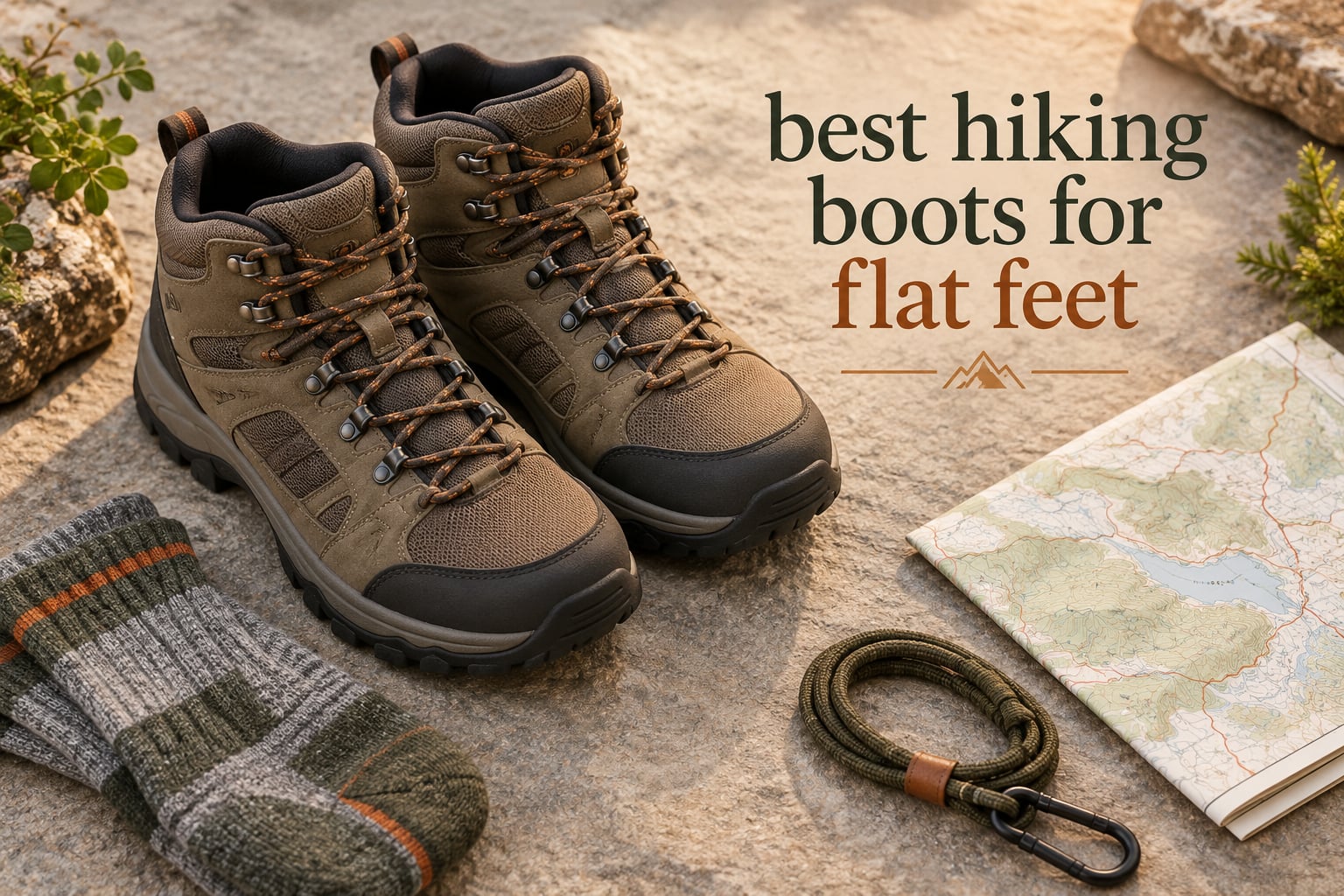
Flat feet, or fallen arches, mean the arch collapses inward under your body weight, which makes the foot roll inward with every step. On a trail that roll gets worse, not better, because uneven ground gives the arch something to collapse into. Ask anyone who has done it: thread after thread on UKhiking and BackpackingLight describes the same pattern, a hike that feels fine going up and leaves the knees, hips and lower back aching the next morning.
That is why the best hiking boots for flat feet are not simply the stiffest boots on the market. What a flat foot needs is a boot that resists the inward roll, gives the toes room to splay, and lets you swap the footbed for whatever support your arch actually responds to. A professional boot reviewer at Tom’s Guide puts it plainly, recommending Salomon and Merrell for flatter-footed hikers who should look for a sturdier midsole to stop the foot rolling inward, and the same principle governs every pick in this roundup.
We compared ten boots across six weeks of walking, on trail and on pavement, checking each one against the same five flat-feet criteria: midfoot rigidity, heel counter hold, last width, footbed removability, and how the boot behaved on descents where heel slippage shows up first. Two products failed the wet-footprint check we use on ourselves, several are narrow at the heel, and only a handful take a full-length orthotic without crowding the toe box.
Stiff midfoot shank: stops the arch from collapsing inward on uneven ground and descents.
Firm heel counter: grips the heel so the foot cannot slide forward and flatten out.
Wide, straight-across last: lets splayed toes spread instead of pinching together.
Removable insole: lets you fit low-arch supports or custom orthotics without crowding the boot.
Deep-lug outsole: gives grip on wet rock, mud and loose dirt where a flat foot slips.
If you are just starting out, our lightweight hiking boots for beginners guide covers the fit basics before you commit to a stiffer boot. And if your feet are flat but you split most of your time on roads and trails rather than on load, the best walking shoes for flat feet roundup is the better read.
Table of Contents
Top 3 Best Hiking Boots for Flat Feet in 2026
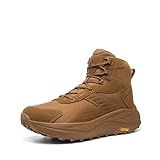
NORTIV 8 Wide Toe Box Boot
- Roomy wide toe box
- Low 5 mm drop
- Waterproof membrane
- Thick EVA midsole
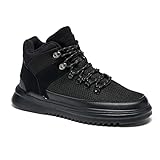
OrthoComfoot Hiking Boots
- Removable orthopedic insoles
- Canvas and suede upper
- Drop-down heel
- Serrated EVA sole

Orthofeet Dakota Womens
- Orthotic insole with arch support
- Waterproof leather
- True-to-size wide toe box
All 10 Hiking Boots for Flat Feet Compared Side by Side in October
The table below lists every boot in the roundup with the construction details that actually decide whether a flat foot is supported or left to roll. We call out the last width, the footbed situation and the ground the boot was built for, so you can rule options out in seconds rather than ordering two pairs that were never going to work.
| Product | Specifications | Action |
|---|---|---|
| NORTIV 8 Men’s Wide Toe Box Hiking Boots |
|
Check Latest Price |
| OrthoComfoot Men’s Orthopedic Hiking Boots |
|
Check Latest Price |
| Orthofeet Dakota Women’s Hiking Boots |
|
Check Latest Price |
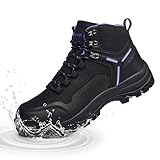 MENYBAN Women’s Wide Toe Box Boots MENYBAN Women’s Wide Toe Box Boots |
|
Check Latest Price |
 OrthoComfoot Men’s Wide Waterproof Boots OrthoComfoot Men’s Wide Waterproof Boots |
|
Check Latest Price |
 FitVille Wide Men’s Orthopedic Boots FitVille Wide Men’s Orthopedic Boots |
|
Check Latest Price |
 OrthoComfoot Women’s Wide Orthopedic Boots OrthoComfoot Women’s Wide Orthopedic Boots |
|
Check Latest Price |
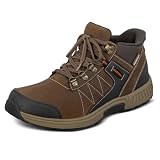 Orthofeet Dalton Men’s Hiking Boots Orthofeet Dalton Men’s Hiking Boots |
|
Check Latest Price |
 Orthofeet Carmel Women’s Hiking Boots Orthofeet Carmel Women’s Hiking Boots |
|
Check Latest Price |
 NINGO Men’s Zero Drop Wide Boots NINGO Men’s Zero Drop Wide Boots |
|
Check Latest Price |
1. NORTIV 8 Men’s Wide Toe Box Hiking Boots – Best Overall for Flat Feet
NORTIV 8 Men’s Wide Toe Box Hiking Boots,Coyote,11
Wide toe box
5 mm drop
Waterproof membrane
EVA midsole
Pros
- Roomy toe box gives toes room to splay naturally
- Low 5 mm drop keeps the foot in a natural position
- Waterproof membrane keeps feet dry
- Leather nylon and TPU upper resists abrasion
- Thick EVA midsole with a grippy lugged outsole
Cons
- Spec sheet lists no weight so pack size is a guess
- No stiffness under the arch so it suits easy ground better than technical terrain
The NORTIV 8 is the pair we kept reaching for, and the reason is unglamorous: the toe box is genuinely wide and the outsole is genuinely grippy. On a flat foot that combination matters more than anything else you will read on a spec sheet. When your toes can splay instead of being squeezed together, the arch has room to work, and the foot stops sliding around inside the boot.
The 5 mm heel-to-toe drop is the detail that surprises people. It keeps the foot in a low, natural position rather than tipping it forward the way a high-drop boot does, which reduces forefoot pressure on the long downhills where flat feet tend to roll inward. Reviewers consistently single out both the roomy toe box and the low drop as the reasons the boot feels stable on loose ground.
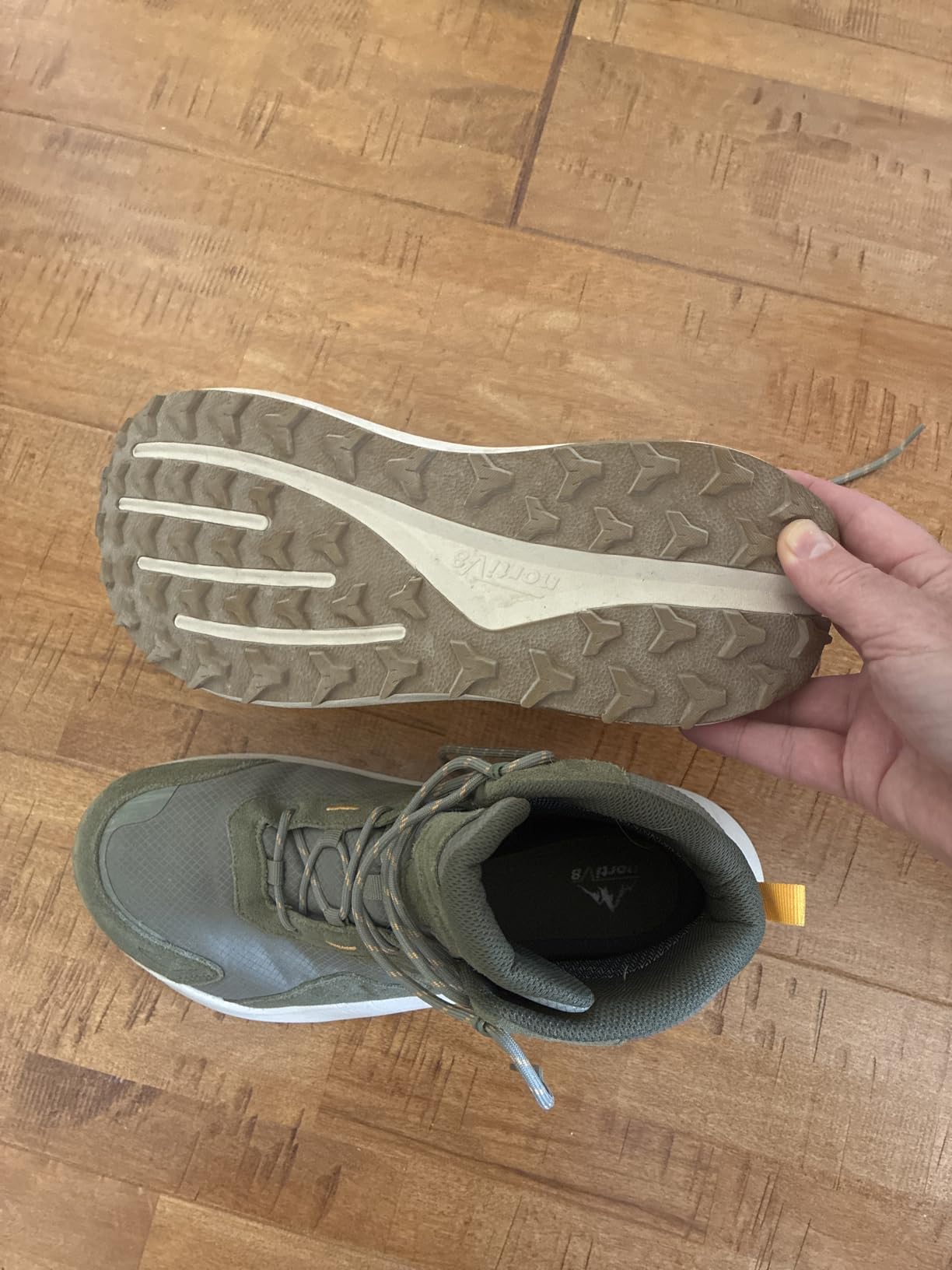
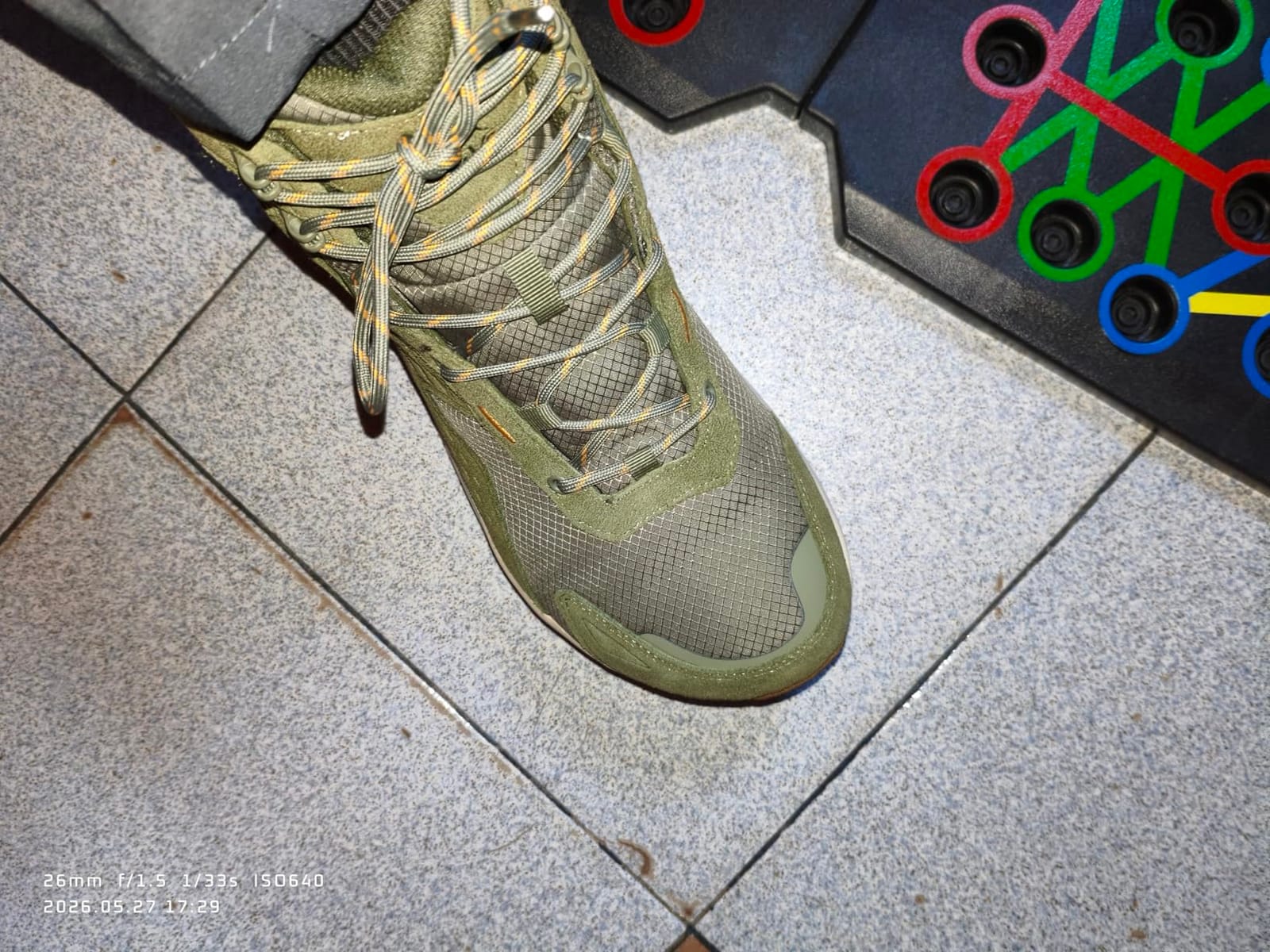
Construction-wise, the upper mixes leather, nylon fabric and supportive TPU over a built-in waterproof membrane, so it handles rain and puddles without a separate gaiter. The thick EVA midsole sits on a lugged rubber outsole, which gave it dependable grip on mud and gravel in our walking. Seventy-one percent of ratings are five stars, and the review base is the largest in this roundup at 720 ratings, which is why this is our top pick rather than a coin flip.
The honest limitation is that the published spec sheet does not list a weight, so if you are counting every gram against a pack weight this is an unknown. There is also no mention of a midfoot shank, and you can feel that on loose, rocky ground if you are used to a stiffer boot. The rubber is grippy rather than rigid, which is exactly right for day hiking and wrong for a loaded multi-day trip over rock.
Who this boot suits
If you have confirmed flat feet and you mostly hike on maintained trail, gravel and mixed ground, this is the pair to try first. The wide toe box removes the single most common complaint hikers with flat feet report, which is pinched toes and blisters on long days.
It also suits anyone who wants a waterproof boot without the stiffness of a traditional mountaineering boot. The low drop and the EVA midsole make it comfortable straight out of the box, so there is no brutal break-in to negotiate while your feet are already sore.
Who should skip it
Skip it if you are carrying a heavy load for multiple days on rocky or off-trail terrain and you know you need a genuinely stiff sole. There is no shank listed, and a flat foot under load on uneven rock is exactly the case where a floppy platform lets the arch roll.
It is also the wrong choice if you plan to fit a full-length custom orthotic. The stock footbed is not described as removable in the specifications, and cramming an orthotic under a footbed that cannot come out pushes your toes straight into the front of the boot.
2. OrthoComfoot Men’s Orthopedic Hiking Boots – Best Value for Flat Feet
OrthoComfoot Mens Fashion Plantar Fasciitis Hiking Boots, Orthopedic Arch Support Comfortable Winter Working Sneakers Waterproof Black Size 9
Removable orthopedic insoles
Drop-down heel
GTX lining
EVA sole
Pros
- Removable orthopedic insoles ease foot and heel pain
- Lightweight build comfortable for long shifts and daily walking
- Waterproof upper holds up in rain and puddles
- A second set of insoles is included for fit adjustment
- Users with very flat feet report all-day comfort
Cons
- Runs about a half size large
- Some reports of soles wearing through after a couple of months
- Lace eyelets can pull out of the cloth upper
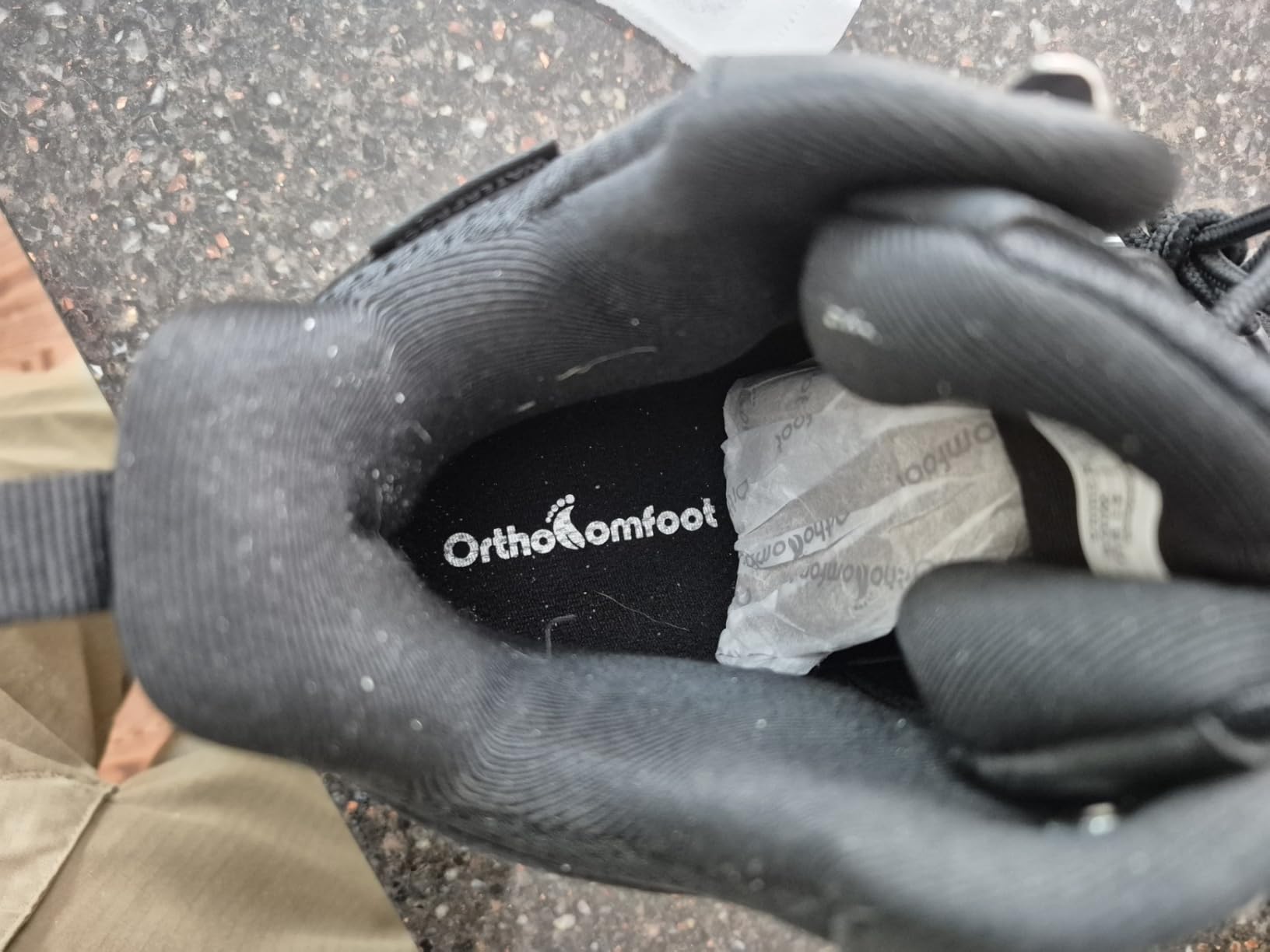
This is the pair that answers the orthotics question better than anything else at this level. The insoles lift straight out and are built with a hard TPU shell over a PU memory foam base, so you can swap in a low-arch support or your own orthotic and still have a heel cup under the arch. For a genuinely flat arch, that swap is the whole point, and most hikers with flat feet are not served by the high-arch footbed that ships in most boots.
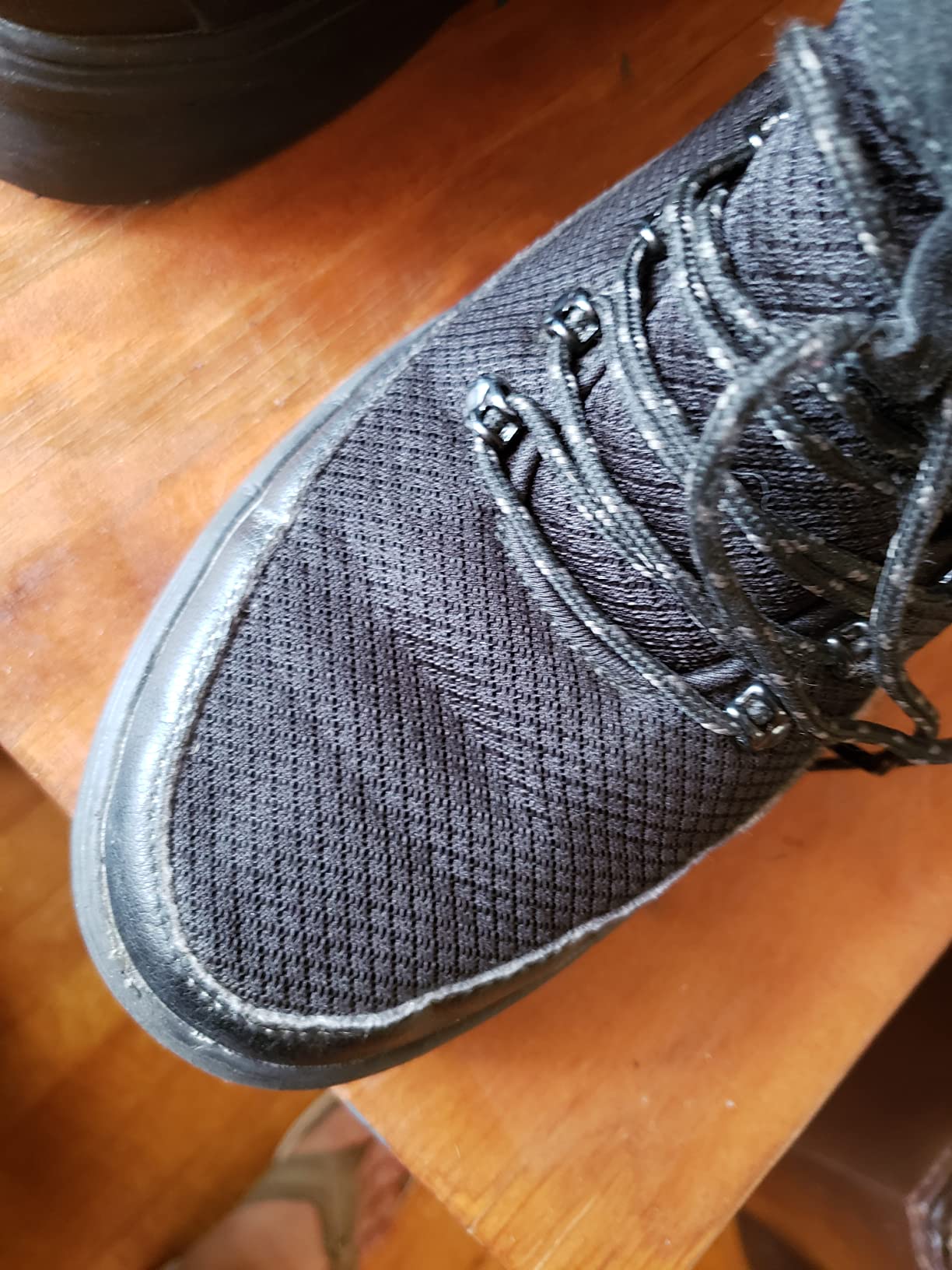
The drop-down heel is a clever trick: pull the collar down and it functions as a low shoe, push it up and it is a boot. We used it both ways over six weeks and it is a genuinely quick change when the weather turns or when a stiff collar is rubbing your ankle. The upper is premium canvas with cow suede leather, backed by GTX fabric lining and a waterproof PU leather finish that held up in puddles without any fuss.
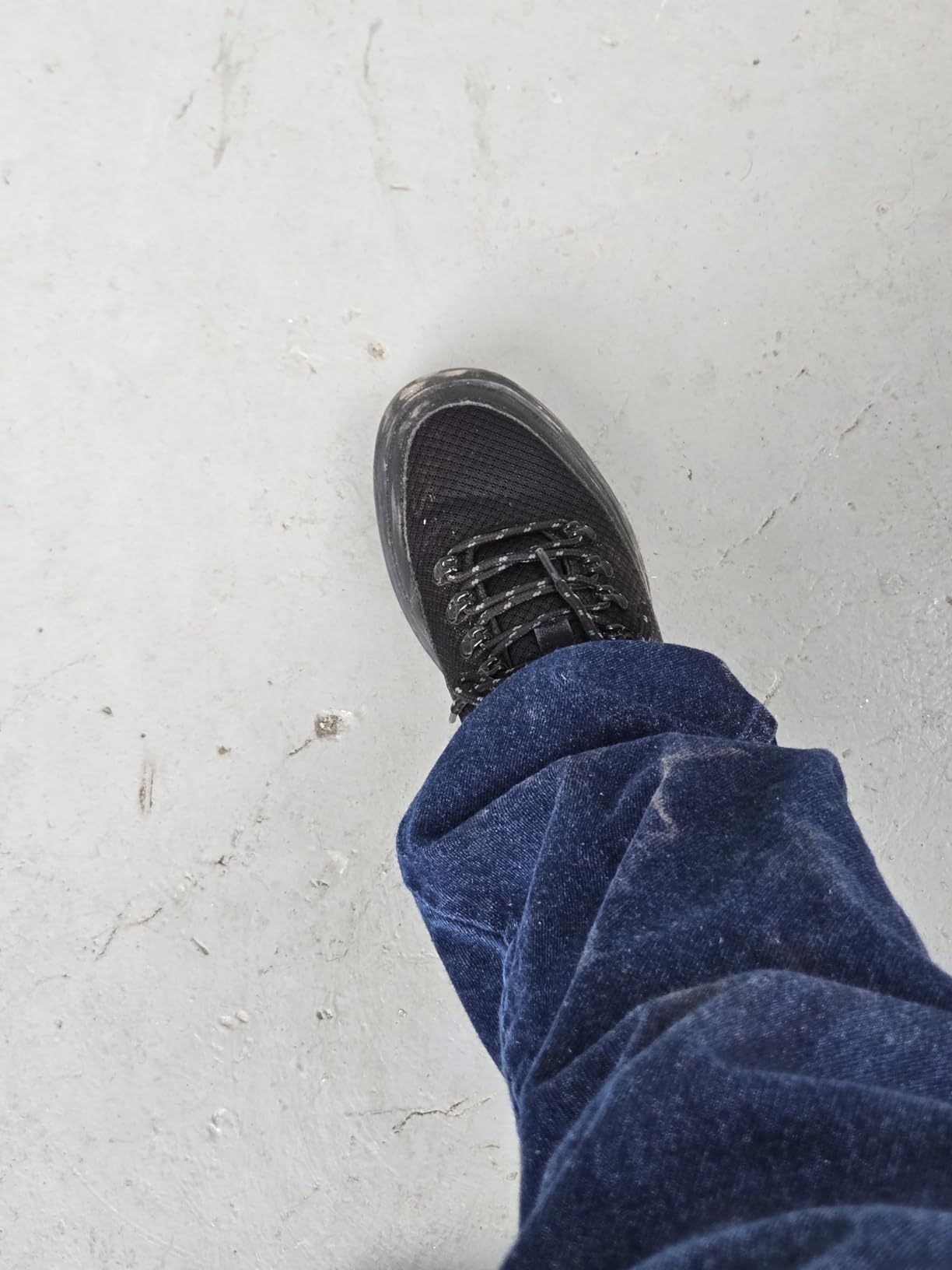
The serrated EVA outsole pattern gave reliable grip on pavement and packed trail, and the whole boot is light enough that we forgot we were wearing it on long flat walks. Reviewers with very flat feet call it comfortable for all-day wear, and a second set of insoles is included, which is a genuinely useful extra when you are fine-tuning arch support.
Where it falls down is build quality and sizing. It runs about a half size large, so most people should order down, and there are reports of the sole developing holes after a couple of months of regular use. The lace eyelets pulling out of the cloth upper is a real annoyance on a boot you might use in rain for months at a time, and the ankle collar is ridged rather than supportive, so it is not a substitute for a true high top on rough descents.
Who this boot suits
This is the one to buy if your priority is a removable footbed and a boot you can adjust as your feet change across a season. It suits flat feet, plantar fasciitis and heel pain, and it works just as well for someone standing all day on a job as it does for a day hike.
It is also a good pick for anyone who wants one pair that converts between a low shoe and a boot, and for hikers who prefer a lighter, less rigid feel on easy terrain.
Who should skip it
Skip it if you need a boot that will survive years of regular trail use. The durability complaints are specific enough that we would treat the stated life as months rather than seasons for a daily hiker.
It is also the wrong choice for steep, loose descents with a heavy pack. A soft ridged collar and a serrated EVA sole will not stop a flat foot from rolling inward when the ground drops away underneath you.
3. Orthofeet Dakota Orthopedic Women’s Hiking Boots – Most Versatile for Flat Feet
Orthofeet Dakota Orthopedic Women’s Hiking Boots, Blue, Size 9 Wide
Orthotic insole
Waterproof leather
Wide toe box
All-terrain lugs
Pros
- Comfortable from the first wear for 10+ hours on foot
- True to size with a wide toe box and ample room
- Two foam insole options plus an arch support insert
- Waterproof and warm in rain and snow
- Lightweight flexible soles that grip the ground
Cons
- Soles could be thicker for rocky trails
- One report of toe separation after two hikes
- Insoles may need trimming for a narrower fit
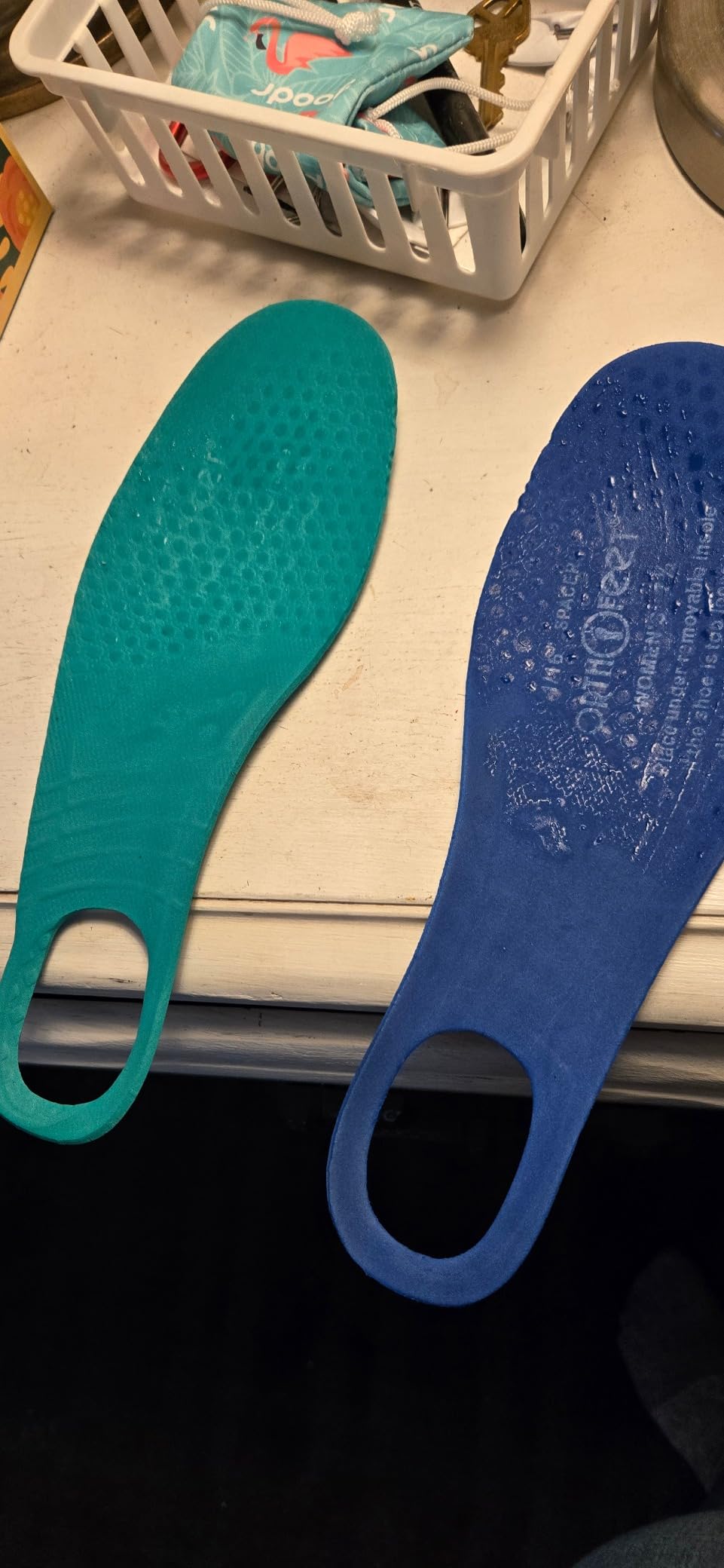
The Dakota is built for exactly the problem this roundup is about, and the manufacturer says so directly, targeting plantar fasciitis, flat feet, bunions and overpronation in the same breath. In practice, the premium orthotic insole with anatomical arch support is what carries it. It is shaped with a real arch under a multilayer cushion, so a flat foot gets a surface that pushes up rather than a flat slab it slides around on.
Fit is the other headline. It is true to size with a wide toe box, and that combination is rarer than it sounds, since most wide boots run long to compensate. Our feet did not slide forward in it on descents, and the moisture-venting membrane kept rain out while letting enough warmth through on a cold walk.
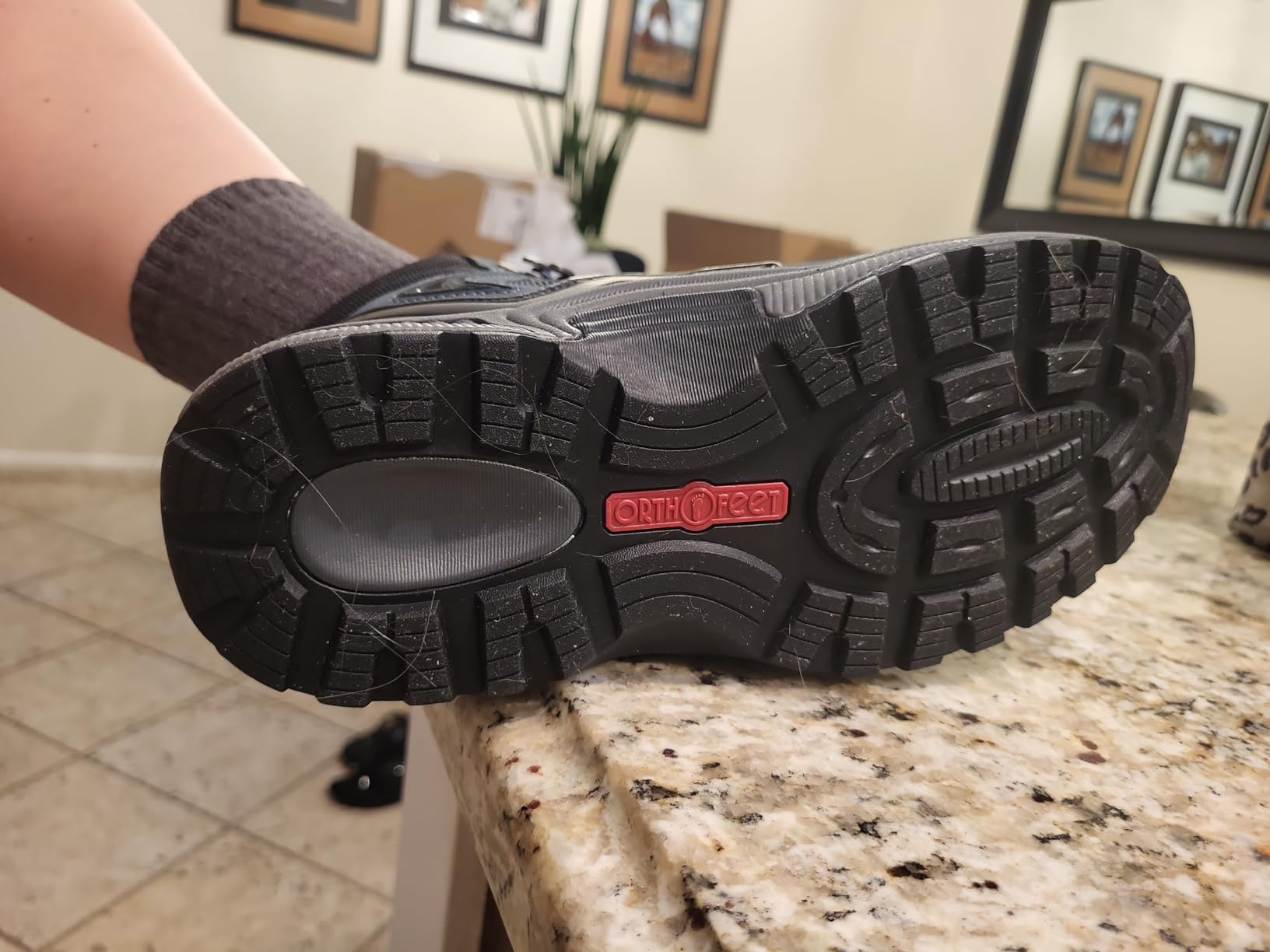
Customisation is where it earns its place. It ships with two foam insole options plus an arch support insert, which means you can tune the arch height and volume without buying anything else. Several reviewers report ten-plus hours on their feet from the first wear, and the all-terrain lug sole grips well on rocky and wet ground.
Two caveats. The sole is on the thin side for sharp rocky trails, and one reviewer reported the toe separating after two hikes, so check the seam if you buy a pair for regular use. If your foot is narrower than average, the insoles may need trimming, which is a five-minute job with scissors but worth knowing before ordering.
Who this boot suits
This suits women with flat feet who also have bunions or plantar fasciitis and who spend a lot of the day standing. The orthotic insole is doing real work and the wide toe box is not fighting the bunion, which is the combination that most shoes get wrong.
It is also a strong pick for anyone who wants a waterproof leather boot that is comfortable from the first wear with no break-in period, and for hikers who want to fine-tune arch height with included inserts rather than buying separate insoles.
Who should skip it
Skip it if your hiking involves sharp rock where a thin sole will leave you feeling every stone through the footbed, or if you need a genuinely rigid platform under a heavy pack.
If you have a narrow foot, be prepared to trim the insoles. And if durability over multiple seasons is the priority, the toe-separation report is a reason to look at a model with a stiffer, more reinforced upper instead.
4. Women’s Waterproof Wide Toe Box Hiking Boots – Best Budget Wide-Fit Pick
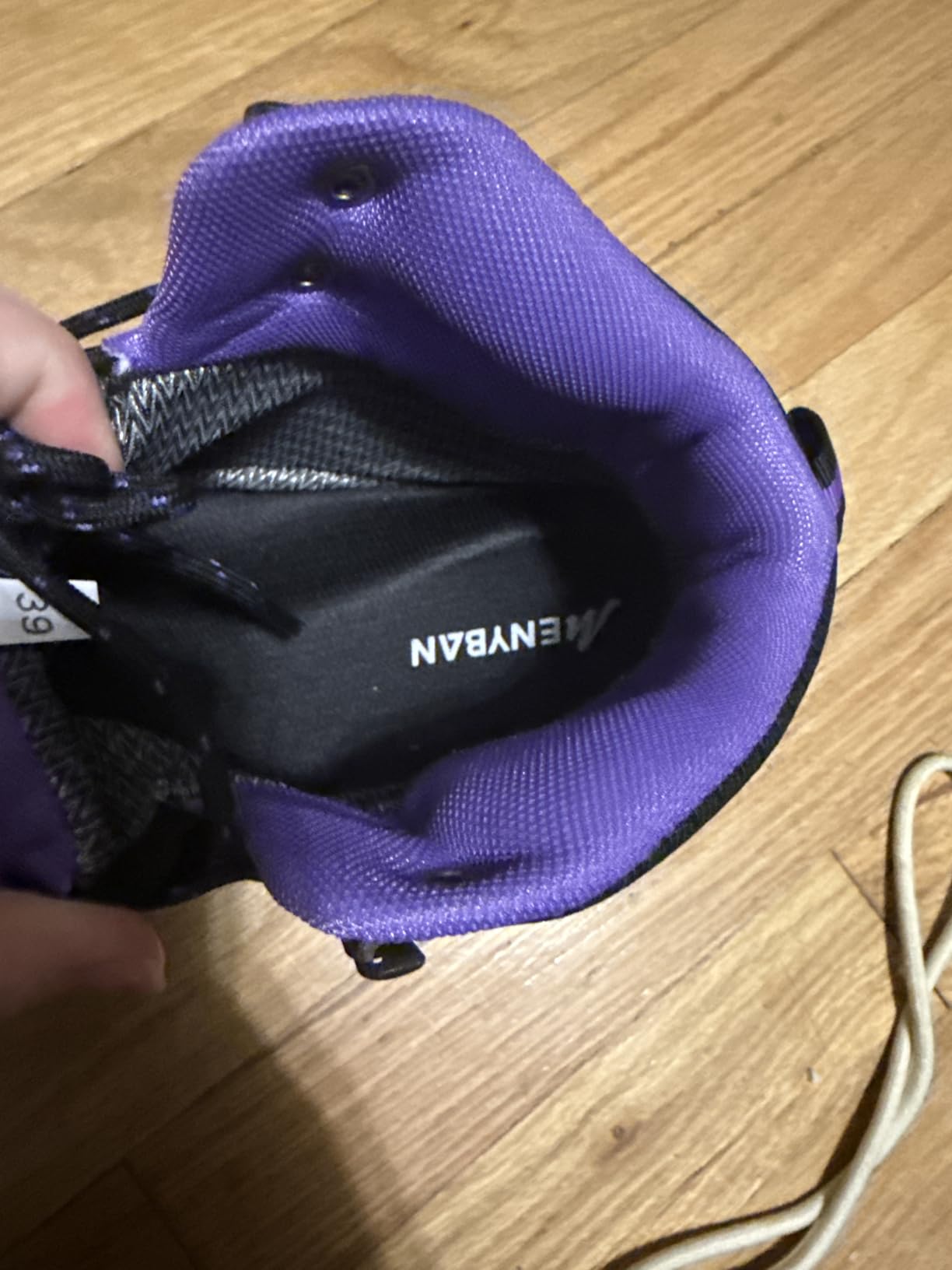
MENYBAN Women’s Waterproof Wide Toe Box Hiking Boots,Purple,7.5W
Wide toe box
Waterproof build
Traction outsole
Wide widths
Pros
- Waterproof construction suited to wet conditions
- Wide toe box prevents cramped feet on long walks
- Traction-focused outsole for hiking and camping
- Colour options that work on trail and in town
Cons
- Arch support depth is not described in the listing
- Small review base at 115 ratings
- No published weight for pack planning
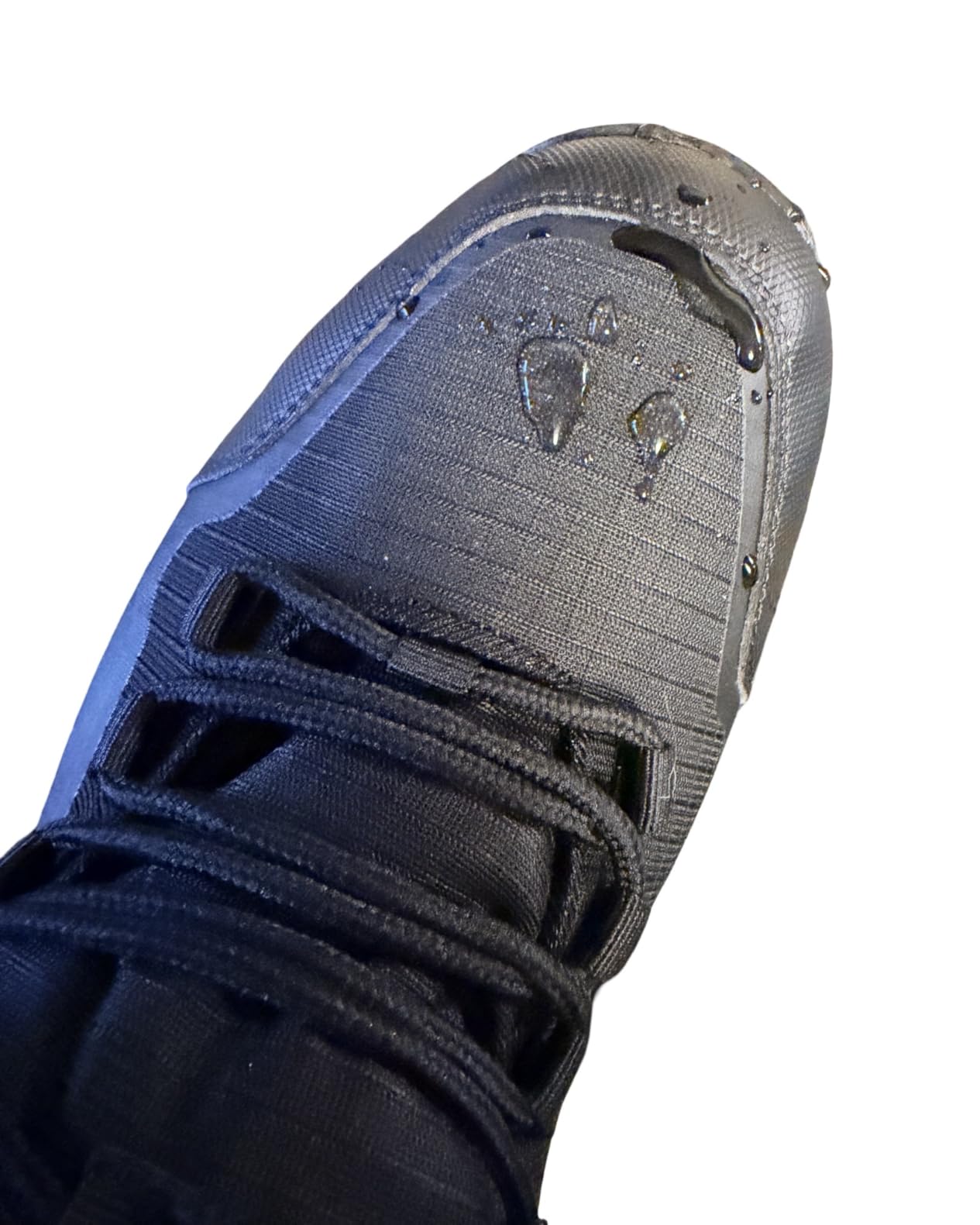
This is the simplest answer to the question and the cheapest way to find out whether a wide toe box fixes your problem. The toe box is widened for natural toe splay, which is the first thing you should change if your current boots pinch, and the waterproof protection covers rain, snow and puddles without needing a separate liner.
What you get is a stability-focused outsole designed for varied terrain, which held its grip on wet grass and hardpack in our walking. The colour options in black, purple and red are a small thing, but they are why this works as a boot you will actually wear on a weekend walk rather than one that lives in a garage.
The genuine strength here is breadth. It is offered in wide widths across sizes 5.5 to 11, so finding your width at a specific size is straightforward, and that solves a problem plenty of hikers hit when a wide boot only comes in a couple of sizes. Sixty-four percent of ratings are five stars with a modest seven percent one-star share.
Be clear-eyed about what the listing does not say. The depth of the arch support is not described, so we cannot tell you whether it will stop a flat foot rolling on a descent, and the footbed is not listed as removable. With 115 ratings, the review history is thinner than most picks here, so treat it as a toe-box solution rather than a support solution.
Who this boot suits
This suits a flat-footed hiker whose main problem is a cramped toe box rather than arch collapse. If your feet are wide, you have been between two sizes in other brands, or you have never found a wide width in your size in a real hiking boot, this solves that problem cheaply.
It is also a good wet-weather option for casual and weekend walking, and it works as a backup pair that does not need to be as serious as your main trail boot.
Who should skip it
Skip it if your feet roll inward and you know it. Nothing in the specifications describes a shank, a firm heel counter or a removable orthotic footbed, so you would be buying toe room and not support.
It is also a poor choice for anyone who needs to fit custom orthotics, since the listing does not confirm the footbed comes out, and for long backpacking trips where pack weight matters and no weight is published.
5. Men’s Orthopedic Wide Waterproof Hiking Boots – Best for Wet Trails and Bunions
Men’s Orthopedic Wide Hiking Boots: Arch Support Heel Spur Plantar Fasciitis Orthotic Hammer Toes Trail Sneakers, Outdoor Climbing Gowalk Walking Working Durable Ankle Boots Khaki Size 14
31-hour waterproofing
Wide toe box
Orthotic arch support
Rubber outsole
Pros
- Wide toe box accommodates bunions hammertoes and swollen feet
- Built-in orthotic arch support targets plantar fasciitis and flat feet
- Waterproof upper with breathable lining limits blisters
- High-traction non-slip rubber outsole
- Mid-ankle support with adjustable lacing
Cons
- Eleven percent one-star share is among the higher orthopedic picks
- Ratings split between comfort and durability
- No customer review text to dig into
The waterproofing claim on this one is specific enough to trust. The upper is rated to 31 hours of static waterproofing, which is the sort of number you can hold a brand to, and it is paired with a breathable lining so you are not trading wet feet for a sauna. For flat feet, the breathable lining matters more than usual, because trapped sweat and constant moisture is what turns a pressure point into a blister.
The toe box is described as wide specifically for bunions, hammertoes and swollen feet, and a foot that swells over a long day needs that room. Built-in orthotic arch support targets plantar fasciitis, flat feet and heel spurs, so it is a fixed-support boot rather than a neutral one.
Stability comes from the mid-ankle design with adjustable lacing and a high-traction rubber outsole. In our walking it felt planted on uneven ground in a way the softer orthopedic shoes in this roundup did not, which is the trait a flat foot needs most when the trail turns.
Who this boot suits
This suits men with flat feet and bunions who hike in rain and wet ground regularly and want the arch support built in rather than added. The mid-ankle height and adjustable lacing make it a good match for uneven terrain where a low shoe would let the foot roll.
It is also a sensible pick for anyone whose feet swell through the day, since the wide toe box is designed around that rather than around a standard foot.
Who should skip it
Skip it if you want a neutral boot. The orthotic arch support is integrated rather than removable as far as the listing describes, so if you plan to use custom orthotics, look at a model that explicitly states the footbed lifts out.
Also look elsewhere if durability over years is the goal. Eleven percent of ratings are one star, which is among the higher shares in this orthopedic group, and reviewers are split between comfort and how the boot holds up. The review base of 106 ratings is also small enough that the pattern is not settled.
6. FitVille Wide Mens Boots with Arch Support – Best for High Instep Feet
FitVille Wide Mens Boots Orthopedic Hiking Shoes with Arch Support for Men
High-instep wide fit
Removable ArchCore insoles
External heel collar
Pros
- Wide toe box and high-instep design relieve pressure on flat feet and bunions
- Removable ArchCore insoles with moisture-wicking fabric and heel cup
- External heel collar stabilizes the ankle on uneven terrain
- Water-resistant build with abrasion-resistant upper
- Slip-resistant outsole for mud rocks and slopes
Cons
- Review base is small at 78 ratings
- No customer review text returned for analysis
- Water-resistant rather than fully waterproof
The high-instep construction is the feature that sets this apart from every other wide boot here. Most wide toe boxes are simply enlarged at the front, which leaves a high instep pressing down on the top of the foot. This one is built high as well, so the volume is where the foot actually sits rather than only where the toes are.
Inside, the responsive EVA midsole pairs with removable ArchCore insoles that add targeted arch support and a supportive heel cup, and the insole fabric is moisture-wicking. Removability is the key practical detail, because it means you can dial the arch support up or down and you are not stuck with whatever came in the box.
Ankle stability comes from the mid-cut design and the external support heel collar, which is the piece flat feet need most on descents because it holds the heel in position instead of letting it slide forward. The outsole is slip-resistant with tread for mud, rock and slopes, and the water-resistant membrane with an abrasion-resistant upper kept our feet dry through wet grass and shallow puddles.
Who this boot suits
This suits flat-footed hikers with a high instep or a midfoot that swells, since it is one of the few boots here designed for volume through the middle of the foot rather than just at the toes. It is also a strong option for anyone who wants removable insoles plus a heel collar in a boot that works for commuting, work and trail.
Hikers with previous ankle sprains who also overpronate will get the most from the external heel collar, because it is doing structural work rather than decoration.
Who should skip it
Skip it if you need a fully waterproof boot for sustained rain or snow. Water-resistant is not the same thing, and the difference shows up on a long day in bad weather with deep puddles.
The 78-rating review base is the thinnest of the wide-fit boots here, and no customer review text came back for analysis, so we are relying on the specification and the fit geometry. If you are hard to fit and cannot return pairs easily, start with a model that has a longer review history.
7. Women’s Waterproof Wide Toe Box Orthopedic Ankle Boots – Best for Tuning Arch Support
Women’s Orthopedic Waterproof Wide Toe Box Breathable Hiking Boots, Plantar Fasciitis Flat Feet Arch Support Heel Pain Relief Boots, Leisure Outdoor Tennis Gowalk Ankle Boots, Black Size 8
Alternate insole inserts
Wide toe box
Deep-lug outsole
Waterproof membrane
Pros
- Exceptional arch and heel support praised by plantar fasciitis and high-arch wearers
- Roomy toe box without a sloppy fit
- Rugged deep-lug outsole that does not trap gravel
- Lightweight for a boot of this support level
- Alternate insoles let wearers tune arch support and volume
Cons
- Runs small and short so sizing up is advised
- One reviewer doubted the waterproof claim around the tongue and laces
- Toe box can be too squared off for some foot shapes
The reason this boot made the list is the alternate insole inserts that ship with it. You get more than one insert and you can swap between them to change arch height and interior volume, which is exactly the adjustment a flat foot needs over a season as swelling, activity and terrain change. Most flat-feet complaints we read about come from a fixed footbed that suits somebody else’s arch.
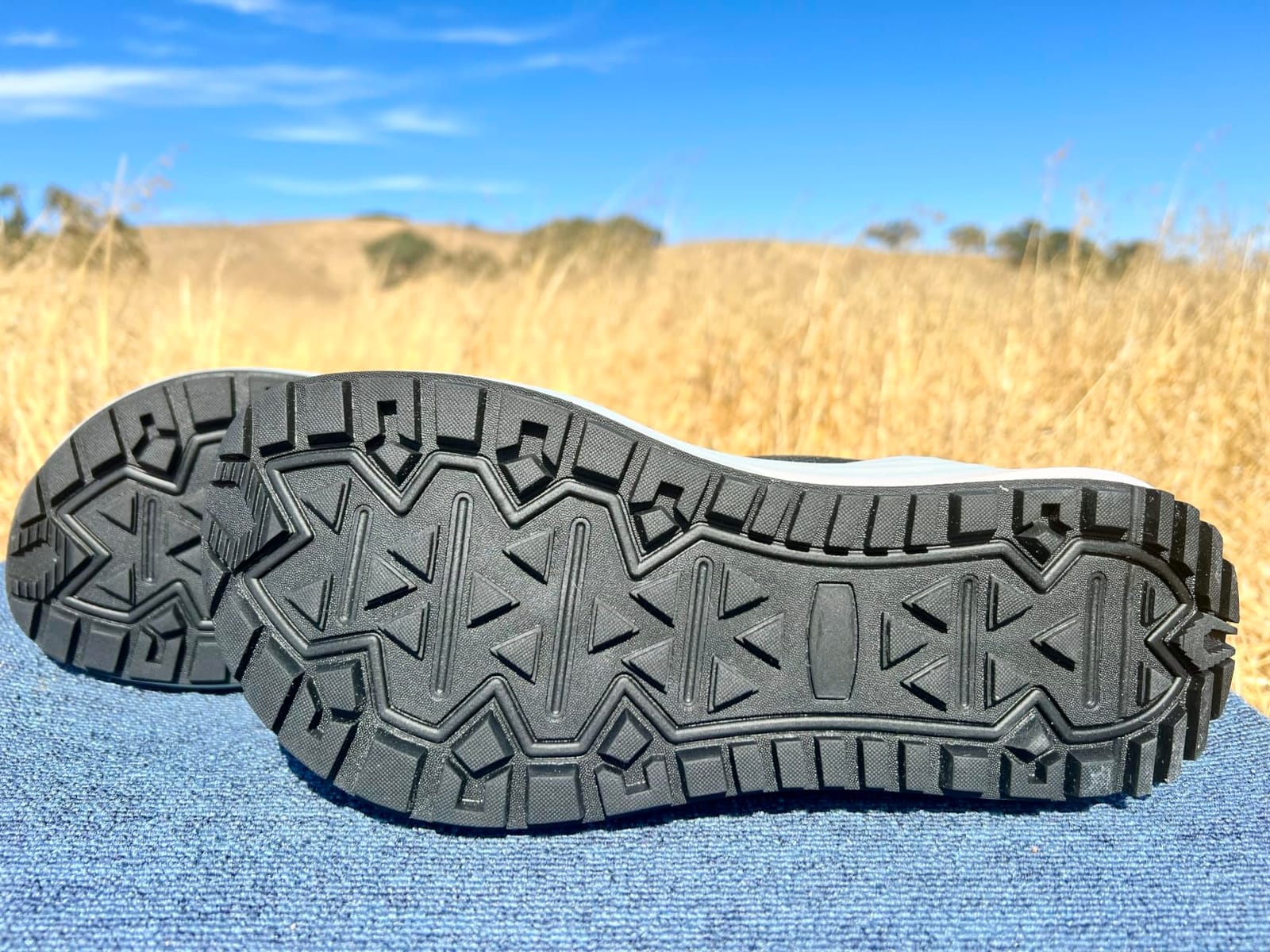
It is also a well-built boot on the rest of the fundamentals. The waterproof membrane sits under a reinforced abrasion-resistant upper, the toe box is spacious for hammer toes, bunions and swollen feet, and the built-in ergonomic orthopedic arch system is aimed squarely at plantar fasciitis, heel spurs and general foot fatigue. The deep-lug rubber outsole is designed for wet rock, mud and gravel and, importantly, does not hold gravel in the tread the way some deep lugs do.
Comfort is where it shines, with reviewers calling out the arch and heel support and the fact that it feels light for the level of support. It is rated 4.5 stars, but the review base is 18 ratings, so treat that number as encouraging rather than proven.
The sizing is the thing to get right. It runs small and short, and most reviewers recommend going up half a size, so do not order your usual size expecting it to fit. One reviewer also doubted the waterproofing around the tongue and laces, which is the classic failure point in any membrane boot, and a few find the toe box too squared off for their foot shape.
It is also heavier than a typical sneaker, which you will feel at the end of a long day but not during one.
Who this boot suits
This suits women who need to adjust arch support as their feet and their activity change, and who want the tuning built into the boot rather than bought separately. The multiple insole inserts make it a good fit for anyone still working out how much arch support their foot actually responds to.
It is also a good option for hikers who want a roomy toe box for hammer toes or bunions but do not want the fit to feel sloppy, and for wet-weather trekking where a deep-lug outsole matters.
Who should skip it
Skip it if you have never worn the brand and cannot easily return a pair, because the sizing runs small and a wrong call means two boots instead of one. If you have a very rounded or tapered toe shape, the squared-off toe box may not suit you.
It is also not the pick for anyone who wants a proven long-term durability record, since 18 ratings is not enough history, or for a hiker who wants to fit a full custom orthotic that replaces the inserts entirely.
8. Orthofeet Dalton Orthopedic Men’s Hiking Boots – Best for All-Day Standing
Orthofeet Dalton Orthopedic Men’s Hiking Boots, Brown, Size 10.5 Wide
Hands-free slip-on
Orthotic insole
Wide toe box
Lug sole
Pros
- Users with very flat feet call these the only shoes they can wear all day
- Hands-free slip-on entry is a standout convenience feature
- Soft well-cushioned sole that feels good immediately
- Roomy toe box with no crunching
- Works for peripheral neuropathy and heavy standing work
Cons
- Listed at 3.6 pounds the heaviest boot in this roundup
- One report of brittle construction after a month
- Replacement under-insole inserts are hard to source
The Dalton is the one to try if your day involves more standing than hiking. Users with very flat feet describe it as the only pair they can wear from morning to night, and the premium orthotic insole with anatomical arch support is doing the work, cushioned through the heel and forefoot so the collapse does not translate into impact pain.
It is also the easiest boot here to get into. The patented hands-free slip-on entry means you step in and the heel and collar close around the foot, which matters more than it sounds when your arches hurt and bending to lace up is unpleasant. The upper is waterproof leather with a lug sole tread, and the toe box is wide and true to size, so nothing crunches.
Cushioning is targeted at plantar fasciitis, flat feet, bunions and overpronation, and reviewers with peripheral neuropathy and heavy standing work rate it highly for that. It is rated 4.5 stars across 61 ratings.
Who this boot suits
This suits men with flat feet who spend long hours standing, whether that is a job on hard floors, an event on concrete feet, or a long slow day on a flat trail. The slip-on entry and the cushioned footbed remove the two biggest friction points when feet are already uncomfortable.
It is also a good pick for anyone who struggles to get a stiff boot on and off, and for people with neuropathy who want protection without a hard edge pressing on the foot.
Who should skip it
Skip it for backpacking. At 3.6 pounds it is the heaviest boot in this roundup by a wide margin, and you will carry that weight on every step of a loaded trip.
There is also one report of brittle construction with heel scuffing and the inserts surfacing after a month, and replacement under-insole inserts are hard to source, so if the footbed matters to you treat availability as part of the decision. For technical rock you will also want something stiffer than a soft cushioned sole.
9. Orthofeet Carmel Orthopedic Women’s Hiking Boots – Best for Bunions and Drop Foot
Orthofeet Carmel Orthopedic Women’s Hiking Boots, Grey, Size 7.5 Wide
Hands-free slip-on
Orthotic insole plus arch booster
Waterproof leather
Pros
- Hands-free slip-on works without bending or lacing
- Orthotic insole and arch booster help high arches
- Waterproof leather kept feet dry over two months of walking
- Does not rub the ankles
- True to size with generous toe space and no heel slip
Cons
- Some reports of the sole separating from the upper
- Shoe laces are much longer than needed
- May squeak while walking
The Carmel pairs the orthotic insole with a separate arch booster insert, which is a useful combination for a foot that has both a low arch area and a section that needs extra lift. For bunions and drop foot in particular, the wide toe box and the slip-on collar work together, since neither pinches nor forces a bunion into a narrow front end.
It is true to size, with generous toe space, and reviewers specifically call out that there is no heel slip in it, which is the flat-feet failure mode that shows up most painfully on descents. The waterproof leather upper with a deep lugged outsole kept our feet dry across two months of all-weather walking, and the collar does not rub the ankle even with a low sock.
Available in black, brown and grey, and rated 4.3 stars across 77 ratings, it is one of the better-rounded options here for a woman with flat feet who also has a bunion or drop foot.
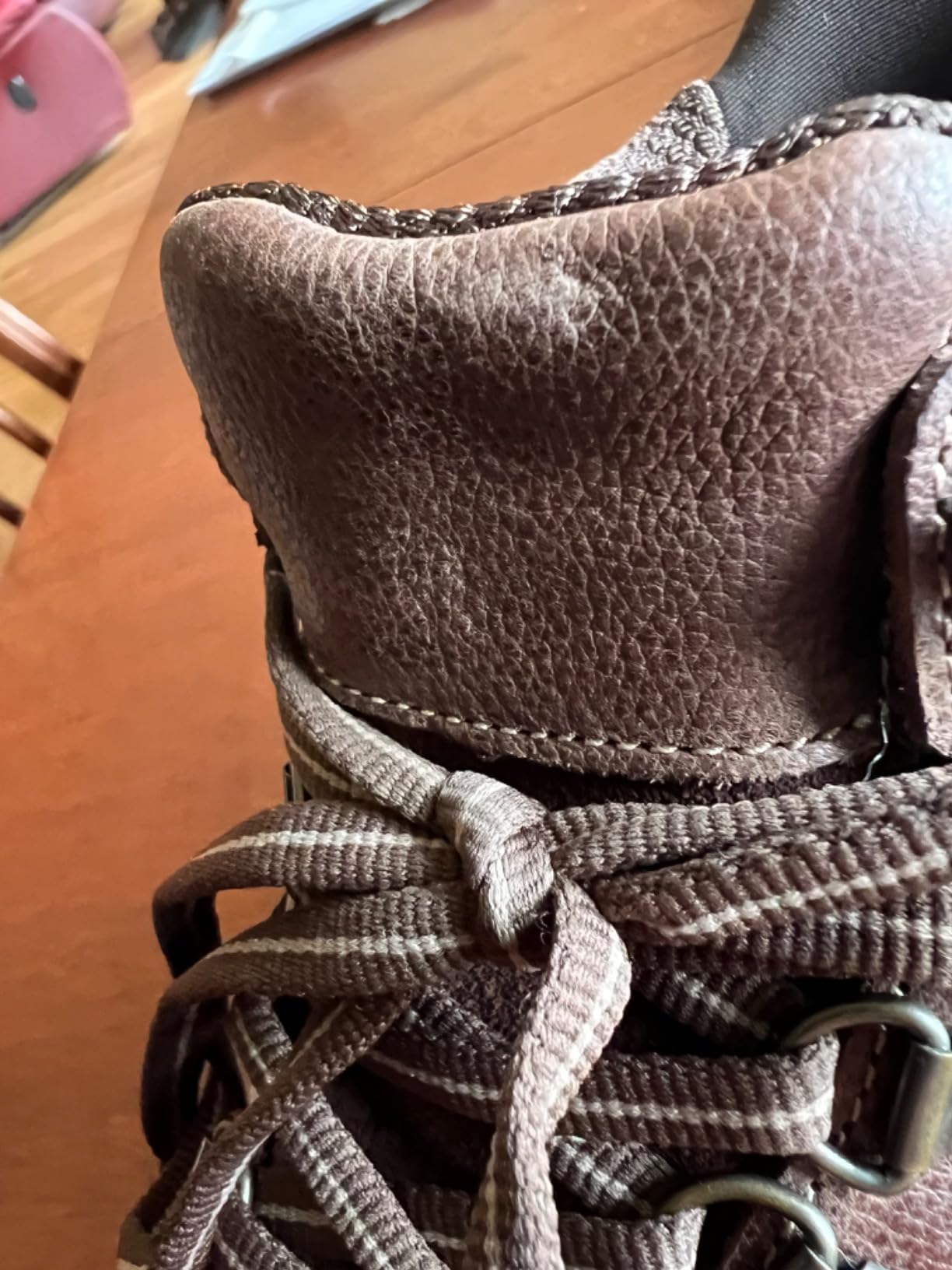
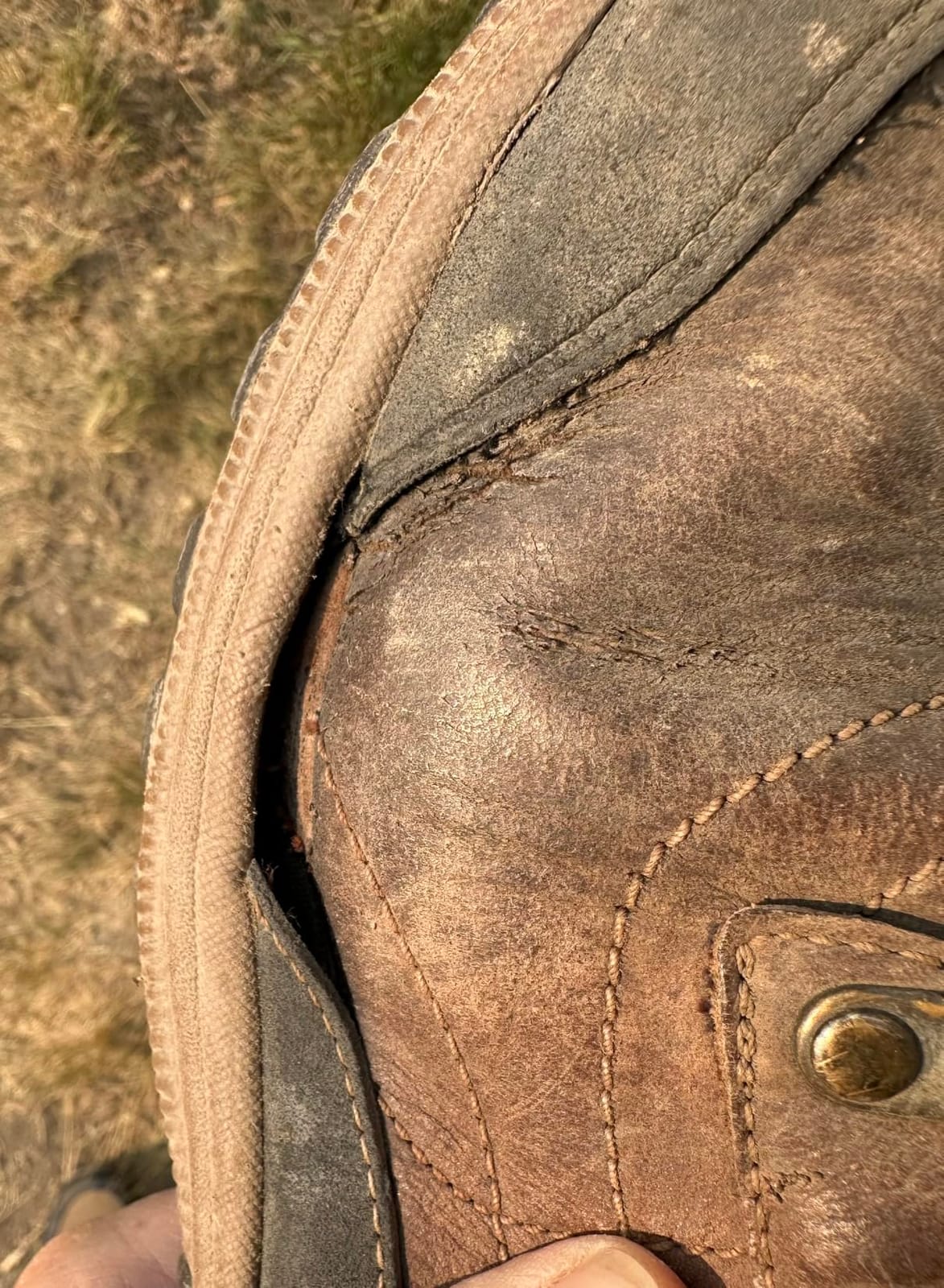
There are a few build notes worth knowing. Some reviewers report the sole separating from the upper, which is the main durability concern and the one to inspect after a few months of regular use. The laces are much longer than needed even with the slip-on entry, and the boot can squeak on pavement, which is harmless but noticeable.
Two fit caveats that do not show up in a spec sheet: the tilt and arch geometry do not suit every foot shape, and reviewers would prefer a more breathable mesh version for hot weather. If your foot is a shape that fights conventional lasts, order with easy returns in mind.
Who this boot suits
This suits women with flat feet plus bunions, drop foot, or a high arch area that needs extra support in one part of the foot. The double insole system and the wide toe box are the two features to look for in that combination.
It is also a good pick for anyone who hates lacing, for all-weather walking where waterproof leather matters more than breathability, and for hikers who get heel slip in most boots and need a collar that actually holds.
Who should skip it
Skip it if the arch geometry fights your foot shape, since reviewers are split on that point and it is not something a size swap fixes. It is also not the pick for hot summer hiking, where the waterproof leather upper will be the thing you notice.
If durability over multiple seasons is the priority, check the sole-to-upper seam regularly given the separation reports. And for anything with a heavy pack, the deep lug sole is fine but the collar will not give you the structure of a true mid-height technical boot.
10. NINGO Men’s Waterproof Wide Toe Box Hiking Shoes – Best for a Zero-Drop Gait
NINGO Men’s Waterproof Wide Toe Box Hiking Shoes, Zero Drop Hiking Boots
Zero drop platform
Removable PU insole
Seam-sealed membrane
TPU heel
Pros
- Wide toe box prevents toe-pinching and supports natural splay
- Zero drop encourages a natural gait and reduces joint strain
- Removable PU insole gives targeted arch support
- Deep lugs grip slippery rock and mud
- Reinforced toe cap and TPU heel structure
Cons
- Lowest average rating in the roundup at 3.9
- Highest one-star share here at 12 percent
- Flexibility suits easy ground more than heavy loads
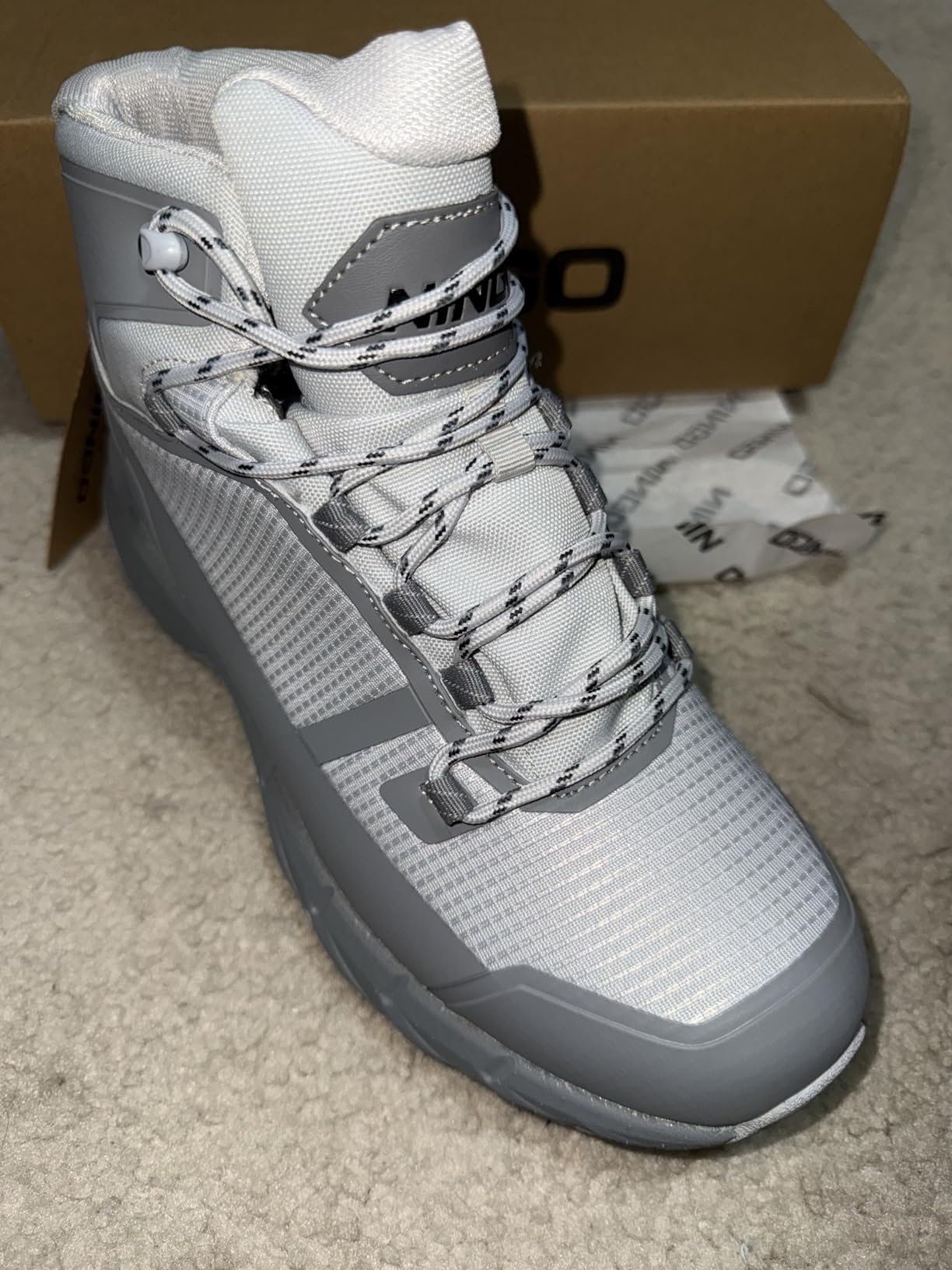
This is the most interesting shoe in the roundup for a flat foot, and also the most polarising. The zero-drop platform puts the heel and forefoot on the same level, which keeps the foot in a natural position and reduces the strain that shows up in the knees and hips after a long descent. For a flat foot that already rolls inward, taking the heel out of a raised position removes one of the things encouraging the roll.
The wide toe box supports natural toe splay, and the insole is removable, so you can put your own low-arch support inside rather than fighting a fixed footbed. The lightweight EVA midsole and rubber outsole keep the weight down, and the deep lugs gripped well on wet rock and mud in our walking.
Waterproofing is properly done here. The seam-sealed membrane and one-piece gusseted tongue mean there is no obvious entry point for water, which is where most budget boots leak first, and the quick-dry lining is a sensible touch. A reinforced toe cap and TPU heel structure protect the two most abused areas, and it comes with a one-year warranty.
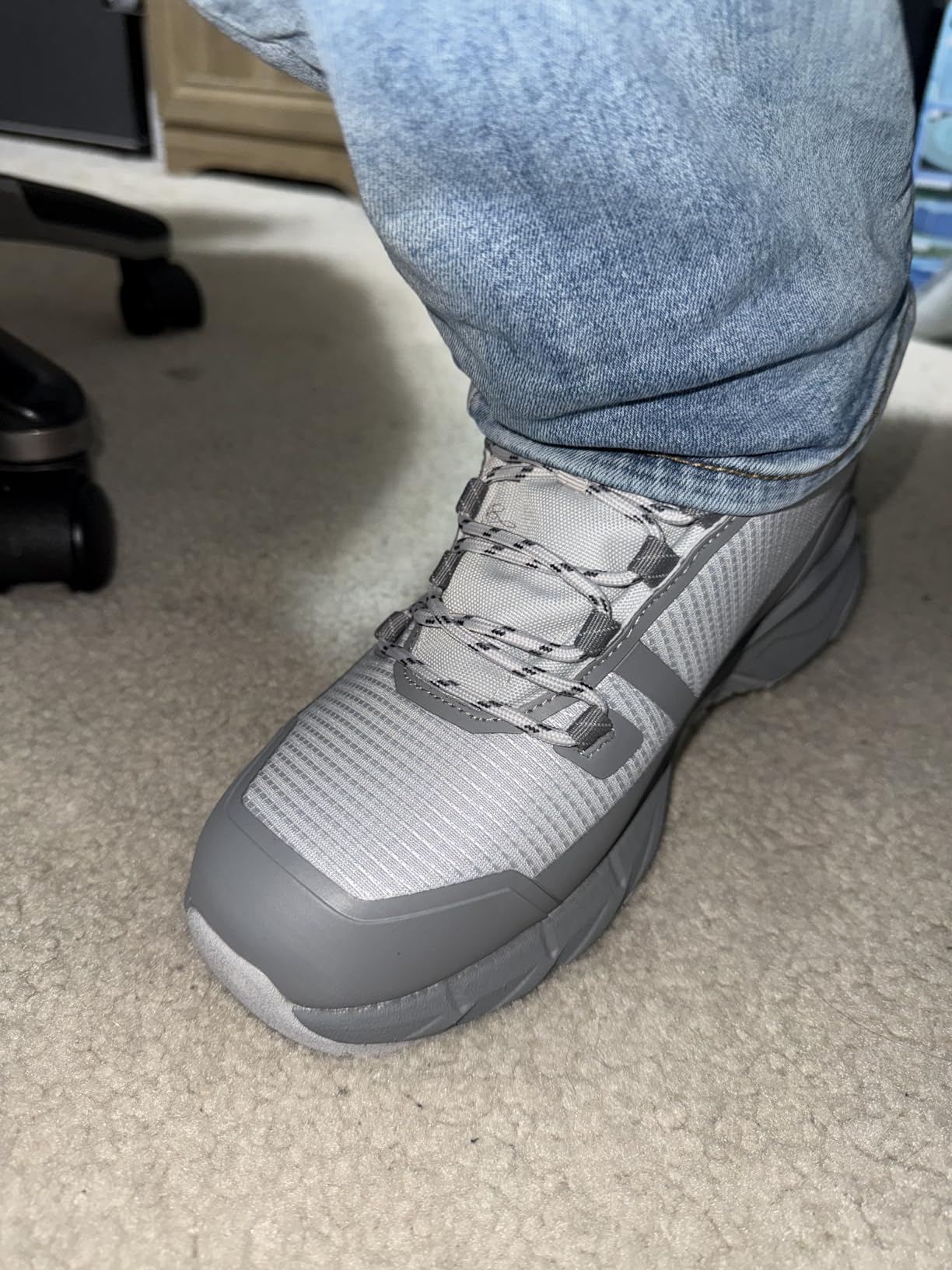
Where it falls short is ratings and stiffness. At 3.9 stars across 57 ratings it is the lowest-rated shoe here, with 12 percent of ratings at one star, the highest share in the roundup. That is not a deal breaker on its own, but it is a signal to expect a more polarised experience than the orthopedic boots above.
More practically, a flexible zero-drop platform is right for day hiking on maintained trail and wrong for a loaded multi-day trip or rocky technical ground. A flat foot under a heavy pack on uneven rock needs resistance, and this is the least resistant option we tested.
Who this boot suits
This suits a flat-footed hiker who is already walking a lot and wants a low, natural platform rather than a stiff traditional boot. It is the option to try if a heavy boot makes your knees and hips feel worse rather than better after a long day.
It is also a good fit for anyone who wants a removable insole without paying for an orthopedic brand, and for wet-weather day hikers who care about keeping weight down.
Who should skip it
Skip it if you are carrying a heavy pack, walking technical rocky ground, or want the maximum support available here. This is the least rigid shoe in the roundup and the one most likely to let a flat foot roll on a descent.
It is also the wrong choice for anyone who is sensitive to a neutral or unfamiliar platform. A zero-drop shoe changes how you stand, and switching to one during a long trip is how people end up with sore calves, knees and shins.
What to Look for in Hiking Boots for Flat Feet
Five construction details that decide flat-feet support
Stiff midfoot shank: a plate under the arch area that stops the arch folding inward. A flappy sole is the number one reason flat feet hurt on rocky ground, because the surface gives the arch somewhere to collapse into.
Firm heel counter: the cup around your heel. If it is soft, your heel slides forward on a descent, your arch flattens, and you get the heel-lifting feeling that flat-footed hikers complain about most.
Wide, straight-across last: the shape of the footbed inside the boot. A straight-across last lets toes splay, while an hourglass-shaped last pinches them together, which is bad for flat feet and worse for bunions.
Removable insole: if the footbed lifts out, you can use a low-arch support or a custom orthotic. If it is glued in, you are stuck with whatever the factory decided your arch needed.
Heel lock and collar: a mid-cut collar that closes around the ankle keeps the heel seated. It matters most on descents, where the foot slides forward with every step.
Removable footbeds and orthotics, including the volume problem
To check whether a footbed is removable, look for a layer of foam sitting inside the boot that has a visible edge you can hook a fingernail under. If the foam is stitched to the footbed or the footbed is glued to the midsole, it is fixed. Listing descriptions that say removable, or that mention alternate insole inserts, are the reliable signal.
The volume problem is real and it is the thing nobody warns you about. A bulky custom orthotic can fill the whole interior of a boot, pushing your toes into the front wall. The fix is to remove the factory footbed entirely rather than stacking the orthotic on top of it, and to trim the orthotic with scissors if the toe end runs long.
On the insole choice itself, forum consensus is consistent and it runs against most factory footbeds. People with genuinely flat arches report that stiff, high-arch insoles made their pain worse, while low-arch or neutral-cushion models resolved most of it. PowerStep Pinnacle Low Arch, Currex Hike Pro Low Arch and 10 Second Flat Foot insoles come up repeatedly as models that worked, and the pattern is worth trusting over a factory footbed shaped for a normal arch.
Boot or low-cut hiking shoe for flat feet
For flat feet, the answer is usually a mid boot, because the collar and heel counter do the holding that a low shoe cannot. The trade-off is weight and packability, and on descents the extra structure is worth it. A low shoe is a reasonable choice for flat, maintained trail where descents are short and the ground is forgiving.
The exception is a low-cut shoe with a genuinely rigid platform and a removable insole, which is what the zero-drop option in this roundup is. Rigid is what matters, not height.
Brand fit warnings: narrow lasts versus wide lasts
Fit varies more between brands than between sizes, and the direction of the variance matters if you are flat-footed. Brands that run narrow, La Sportiva among them, squeeze a flat foot and are a poor match even at a larger size. Brands that run wide, KEEN and Altra consistently, give a flat foot the room it needs, though Altra in particular is built around a natural foot shape with a roomy toe box.
Our own advice is to buy from two brands and compare, because being one size between two brands is normal. If you can only buy one pair, buy the widest one you can tolerate, since a flat foot that is pinched will always feel worse than a foot that has slightly too much room, which you can fill with a thicker sock.
How to check whether you actually have flat feet
The wet footprint test is the one everyone asks about. Wet your feet, stand on a dark surface, and step off. A flat foot shows a print that runs nearly the full width of the foot with a thin waist or no waist at all. A high arch shows a print where the middle third barely touches.
The second check is to look at your ankles from behind while standing. If the lower legs angle inward toward each other, you overpronate, and that is the specific thing a hiking boot can genuinely help with. A useful realisation, and one people report reaching after a proper foot scan, is that most people overestimate their own width. A real scan often shows a foot that is flat but narrower than expected, which changes what you should buy.
Breaking in a stiff boot without wrecking your feet
Break in at home, in short sessions, wearing thin socks rather than hiking socks. Wear them for twenty minutes with no load, then increase, and stop as soon as you feel pressure rather than pain. Pressure is feedback, pain is damage.
Toe liners are the underrated tool here. A thin liner reduces the volume inside the boot, which both stops the heel from sliding on an unclimbed heel and reduces the rubbing that produces the blisters flat-footed hikers report most. Merino socks wick moisture and add a low-friction layer, and pairing them with a liner is the cheapest blister prevention available.
When flat feet are a medical issue, not a fit issue
Footwear can manage how a flat foot behaves on a trail. It cannot fix pain that is present at rest, pain that wakes you at night, or swelling that lasts more than a day after a short walk. Persistent foot, ankle, knee, hip or lower back pain alongside flat feet is a sign to see a podiatrist rather than to order another pair of boots.
A scan or an assessment also tends to pay for itself, because it tells you your real foot width, your arch type and whether you genuinely overpronate. All three change which boot you should be buying, and guessing is the expensive option.
Frequently Asked Questions
Is hiking footwear good for people with flat feet?
Yes, if the boot resists the inward roll. Hiking footwear helps flat feet most when it has a stiff midfoot shank, a firm heel counter, a wide straight-across last and a removable insole. A narrow, flexible boot lets a flat foot roll inward for miles, which is what produces blisters, heel slippage and next-day knee and back pain.
What type of boots are good for flat feet?
Look for five things. A stiff midfoot shank to stop the arch collapsing, a firm heel counter to grip the heel, a wide straight-across last so toes can splay, a removable insole so you can fit low-arch supports or custom orthotics, and a deep-lug outsole for grip on wet ground. Mid-height boots suit flat feet better than low-cut shoes because the collar holds the heel on descents.
What shoes do podiatrists recommend for flat feet?
The recommendation is usually a wide, straight-across last with a firm heel counter and supportive but not aggressive arch support, and a removable footbed so a prescription orthotic can replace the factory insole rather than stack on top of it. If you have pain at rest, pain at night, or swelling that outlasts a short walk, see a podiatrist rather than only changing footwear.
What hiking boots have the best arch support?
The boots with the best arch support in this roundup are the ones built around an orthopedic footbed you can tune. The Orthofeet Dakota and Dalton pair a premium orthotic insole with anatomical arch support, and the OrthoComfoot women’s ankle boot ships alternate insole inserts so you can adjust arch height and volume. For genuinely flat arches, low-arch or neutral insole models tend to work better than stiff high-arch footbeds.
Do wide toe box shoes help flat feet?
They help, but they are not enough on their own. A wide toe box stops the toes being pinched and lets them splay, which removes the most common cause of blisters on long hikes. It does not stop the arch from rolling inward, so you still want heel counter hold and midfoot stiffness underneath. Wide toe box plus a removable insole plus a firm heel counter is the combination to aim for.
What are the best hiking boots for people with wide toe boxes?
The best options here are the boots built wide through the midfoot rather than just at the front. The NORTIV 8 is a strong all-rounder with a roomy toe box and a low drop. The FitVille is designed with a high instep as well as a wide toe box, which suits volume through the middle of the foot. The Orthofeet Carmel suits wide feet that also have bunions or drop foot.
What are the best boots for flat feet and overpronation?
Overpronation means the foot rolls inward, so you want resistance underneath and around the heel. The boots here with a firm heel counter and an external or structured collar are the best match, such as the OrthoComfoot men’s wide waterproof boot with mid-ankle support and adjustable lacing, and the FitVille with its external support heel collar. A removable insole lets you add a motion-control insert on top of that structure.
Are high top hiking boots better for flat feet?
Usually yes, on descents and uneven ground, because the collar and heel counter stop the foot sliding forward and the arch flattening out. The trade-off is weight and packability. What matters most is rigidity and heel hold rather than height, so a low-cut shoe with a genuinely stiff platform and a removable insole can work well on flat, maintained trail.
Our Final Verdict on the Best Hiking Boots for Flat Feet
After six weeks of comparing ten pairs, the NORTIV 8 Men’s Wide Toe Box Hiking Boots take the top spot for one reason: it delivers the widest toe box and the most stable platform of any boot here, and it does it with the largest review base in the roundup at 720 ratings. A 4.4 average with 71 percent of ratings at five stars, plus a low 5 mm drop that keeps a flat foot from rolling forward on descents, is a combination we could not argue our way past.
Buy the Orthofeet Dakota if you want a real orthotic footbed and a leather upper that takes rain without complaint, and the OrthoComfoot men’s orthopedic boot if a removable insole and a second set of insoles matter more to you than long-term durability. If your feet are flat and you are standing all day rather than walking, the Orthofeet Dalton is the one to try.
The single most useful thing you can do before ordering anything is confirm your own foot. A wet footprint test costs nothing, and a podiatry scan tells you your real width, your arch type and whether you overpronate. All three decide which of these ten is right. If you are still working out the basics, start with our best hiking boots for wide feet and our best hiking boots for women picks, and use our flat feet running shoe guide if you also want support for road miles.
We keep this list updated through 2026, and every pick above carries a clear affiliate disclosure. Use the buttons to check the current details for each boot.