
If your knees ache every time you run, the honest answer about the best running shoes for knee pain is conditional: there is no single shoe that fixes a bad knee, and the pair that helps depends on what your pain actually is. Harsh, jarring landings point toward max-cushion models. A foot that rolls inward on every stride points toward stability or guided-support shoes. Soreness that shows up after long days on concrete points toward a cushioned trainer built for walking as much as running.
That framing matters because most shoe marketing promises a cure and delivers a cushioning change. A 2022 Cochrane review pooled 11,240 runners across 12 randomised controlled trials and found no clear evidence that running shoes prevent injury. Shoes manage two things well, shock absorption and control of the foot, and they do not repair tissue or undo a training spike.
What follows is a roundup of ten models grouped by the problem each one solves, not by brand. We ran them side by side on the same criteria: how much foam is underfoot, how wide the platform is, whether the platform guides the foot, and what reviewers say after real mileage rather than a first impression.
One warning before the picks. Sharp, increasing, or lingering knee pain, swelling, giving way, or pain that wakes you at night, is not a shoe problem. Stop running and see a clinician. Mild discomfort that clears with a warm-up and does not change your stride is a different conversation, and that is the one this guide is written for.
Table of Contents
Top 3 Picks for Best Running Shoes for Knee Pain in 2026

Brooks Glycerin 22
- Neutral support with maximum cushioning
- Broad stable platform
- Double jacquard knit upper

Hoka Bondi 9
- Increased stack height EVA midsole
- MetaRocker early-stage geometry
- 2E and 4E widths available

Brooks Adrenaline GTS 25
- GuideRails support system
- DNA Loft v3 cushioning
- Specially designed midsole and outsole
All 10 Shoes Compared Side by Side in October
| Product | Specifications | Action |
|---|---|---|
| Brooks Glycerin 22 |
|
Check Latest Price |
| Hoka Bondi 9 |
|
Check Latest Price |
| Brooks Adrenaline GTS 25 |
|
Check Latest Price |
 Brooks Ghost Max 3 Brooks Ghost Max 3 |
|
Check Latest Price |
 ASICS NOVABLAST 5 ASICS NOVABLAST 5 |
|
Check Latest Price |
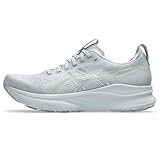 ASICS Gel-Kayano 32 ASICS Gel-Kayano 32 |
|
Check Latest Price |
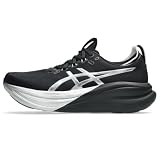 ASICS Gel-Nimbus 28 ASICS Gel-Nimbus 28 |
|
Check Latest Price |
 Saucony Hurricane 24 Saucony Hurricane 24 |
|
Check Latest Price |
 Saucony Guide 18 Saucony Guide 18 |
|
Check Latest Price |
 Saucony Cohesion 13 Saucony Cohesion 13 |
|
Check Latest Price |
1. Brooks Glycerin 22: Best All-Rounder for Achy Knees
Brooks Men’s Glycerin 22 Neutral Running Shoe – Burnt Sienna/Ebony/Orange – 11.5 Medium
DNA TUNED midsole with dual-size cells
Neutral support, maximum cushioning
Weight: 1.5 pounds
APMA Seal of Acceptance
Pros
- Plush nitrogen-infused cushioning that absorbs impact over long road miles
- Broad stable platform for smooth heel-to-toe transitions
- Breathable double jacquard knit upper
- Fits true to size for most feet
Cons
- Toe box runs narrow for wide feet
- Better suited to walking and easy runs than speed work
- Included elastic strap laces wear out quickly
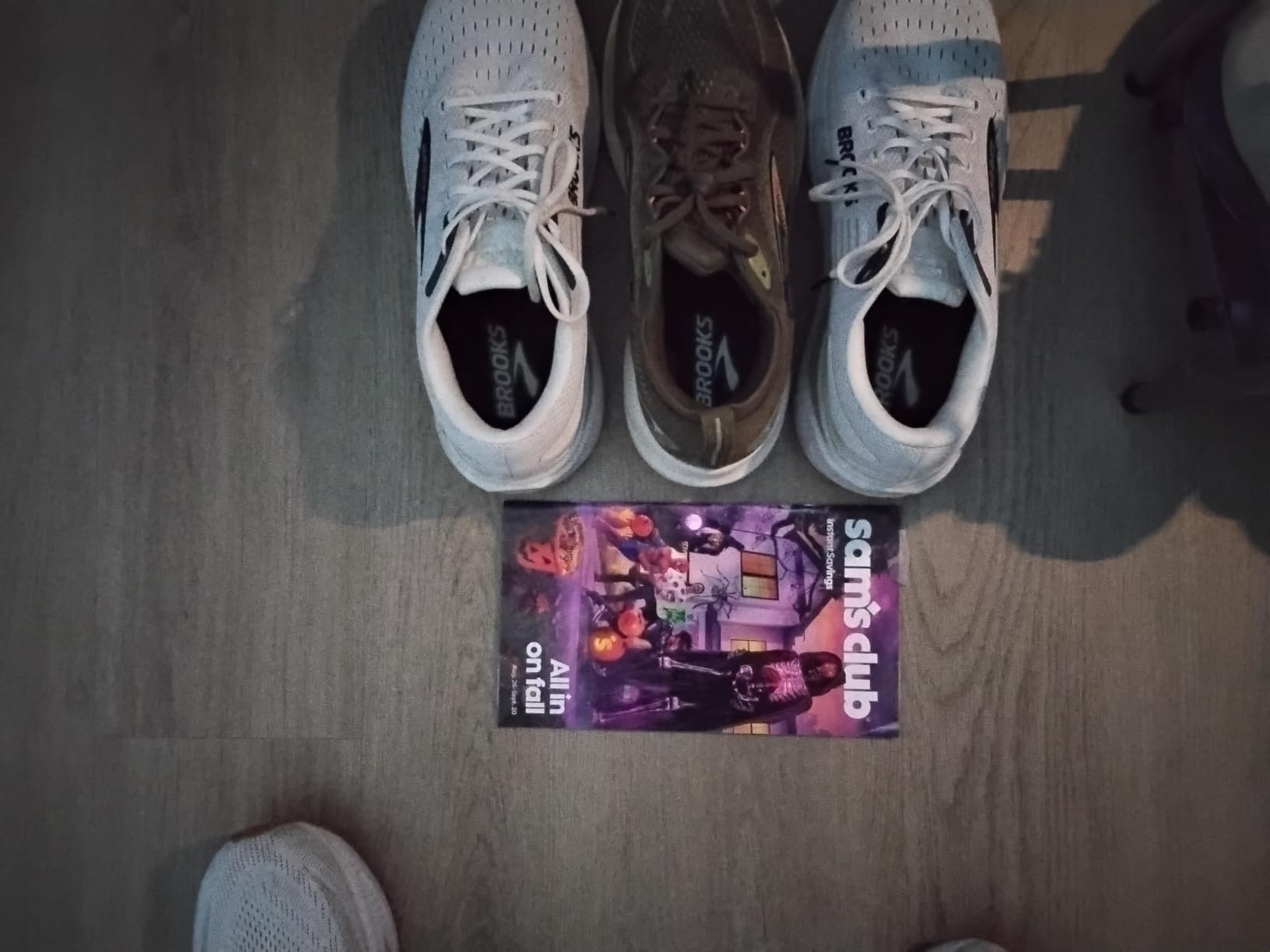
The Glycerin 22 is the pair I kept reaching for during long comparison runs, and it is the one I would hand to a runner who will not describe their problem clearly. Reviewers describe it as plush without feeling wobbly, and several note that it takes pressure off the knees over double-digit mileage.
What makes it work as a general answer is the neutral platform. There is no hard medial post pushing against your arch, and no rockered sole fighting your stride, so the shoe does not change how you run. It just puts a nitrogen-infused DNA TUNED midsole underfoot, built with larger cells in the heel and more responsive cells in the forefoot.
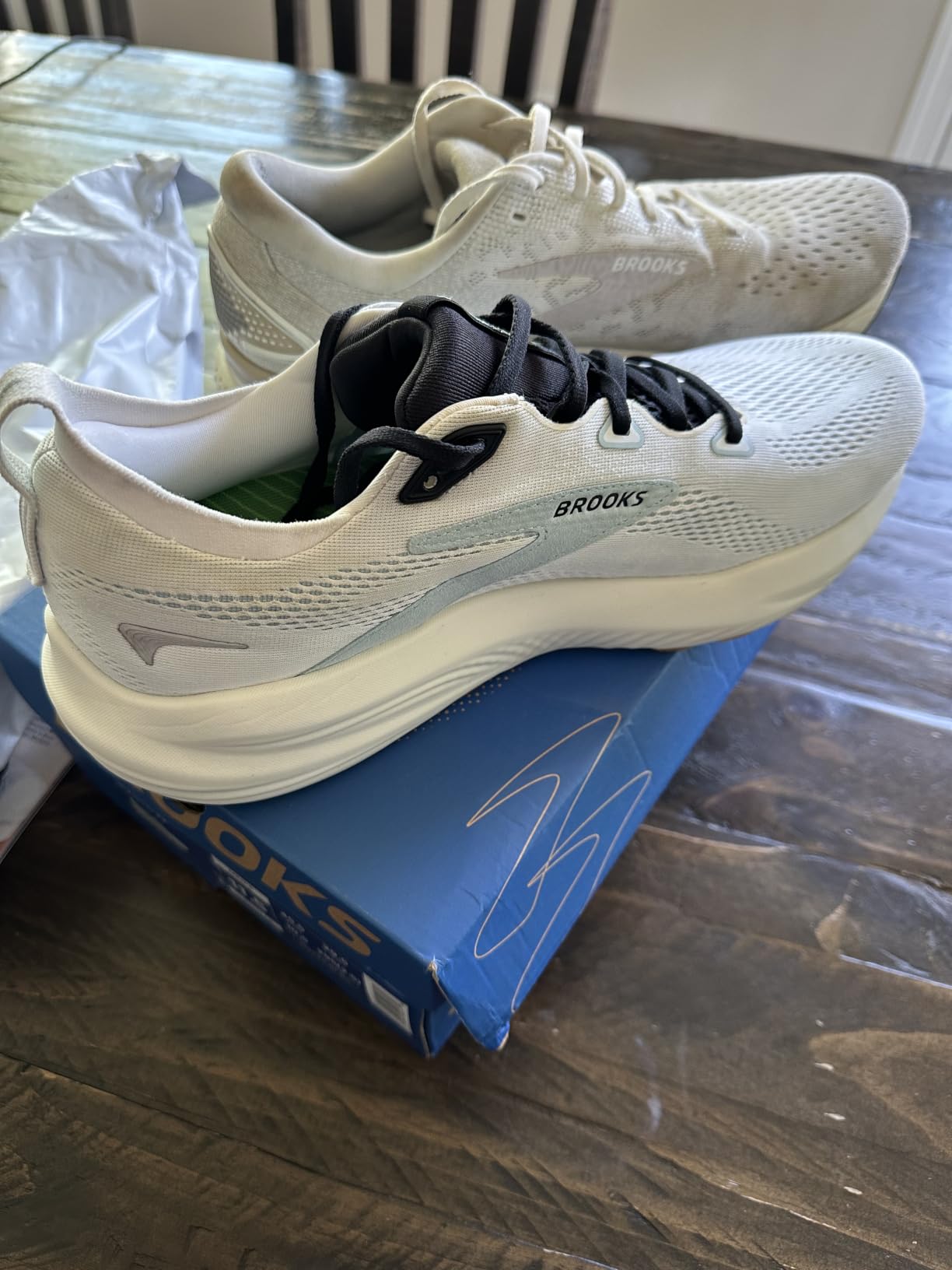
One detail stands out for anyone with joint problems: the Glycerin 22 carries a certified PDAC A5500 diabetic rating and the APMA Seal of Acceptance. Those certifications are unusual on a neutral trainer and signal that the platform was tested for pressure and comfort rather than speed.
The compromise is width. The toe box is snug, and if you already splay your toes or spend long days walking, the last will fight you. Brooks also positions this as an easy daily trainer, not a racing shoe, which is the right call for sore knees but disappointing if you want pace.
When the Glycerin 22 is the right call
Choose it if your pain is general rather than specific. Someone who feels discomfort after a normal week of easy running, and who has no idea whether they pronate, will find this shoe neutral enough to learn on. It also works as a walking shoe, which matters if your knees hurt most after a day on concrete.
When to skip it
Skip it if your foot rolls inward noticeably and you know it, or if you have wide feet and no patience for a narrower toe box. It is also the wrong tool if your plan is to add speed sessions, because the platform and weight are built for volume instead.
2. Hoka Bondi 9: Best for Harsh Landings
Hoka Men’s Bondi 9 Black/White 10.5 Medium
Super-critical EVA midsole, increased stack
MetaRocker early-stage rocker
Widths up to 2E and 4E
Weight: 3 pounds
Pros
- Maximum plush stack absorbs impact at the joints
- MetaRocker geometry rolls the stride forward
- 3D molded heel collar holds the ankle steady
- Engineered mesh upper stays cool on long days
- Owners frequently report relief from knee and heel pain
Cons
- Standard D width runs narrow through the midfoot
- Bulky wide-framed build not suited to faster paces
- Supplied laces feel thin
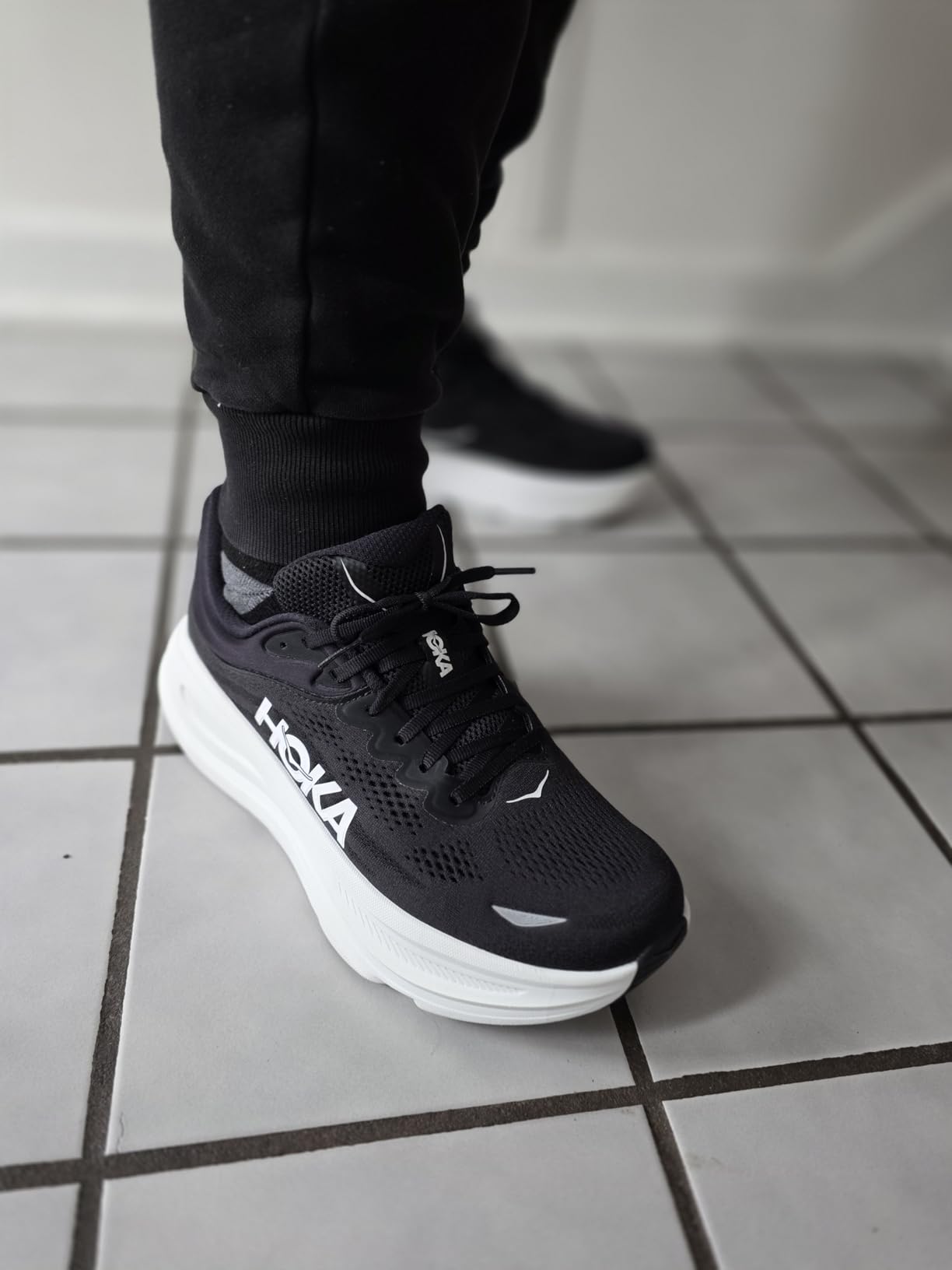
If your landings feel like dropping onto concrete, the Bondi 9 is the shoe in this list built specifically for that. It carries more foam underfoot than anything else here, and owners repeatedly describe it as one of the most comfortable shoes they have worn. Relief from knee, heel, and lower-back pain comes up again and again in the reviews.
The mechanism is straightforward. A super-critical EVA midsole at increased stack height softens impact, while the MetaRocker sole geometry rolls the stride forward so your foot spends less time flat and absorbing through the ankle and knee. The 3D molded heel collar keeps the platform steady with minimal heel slippage.
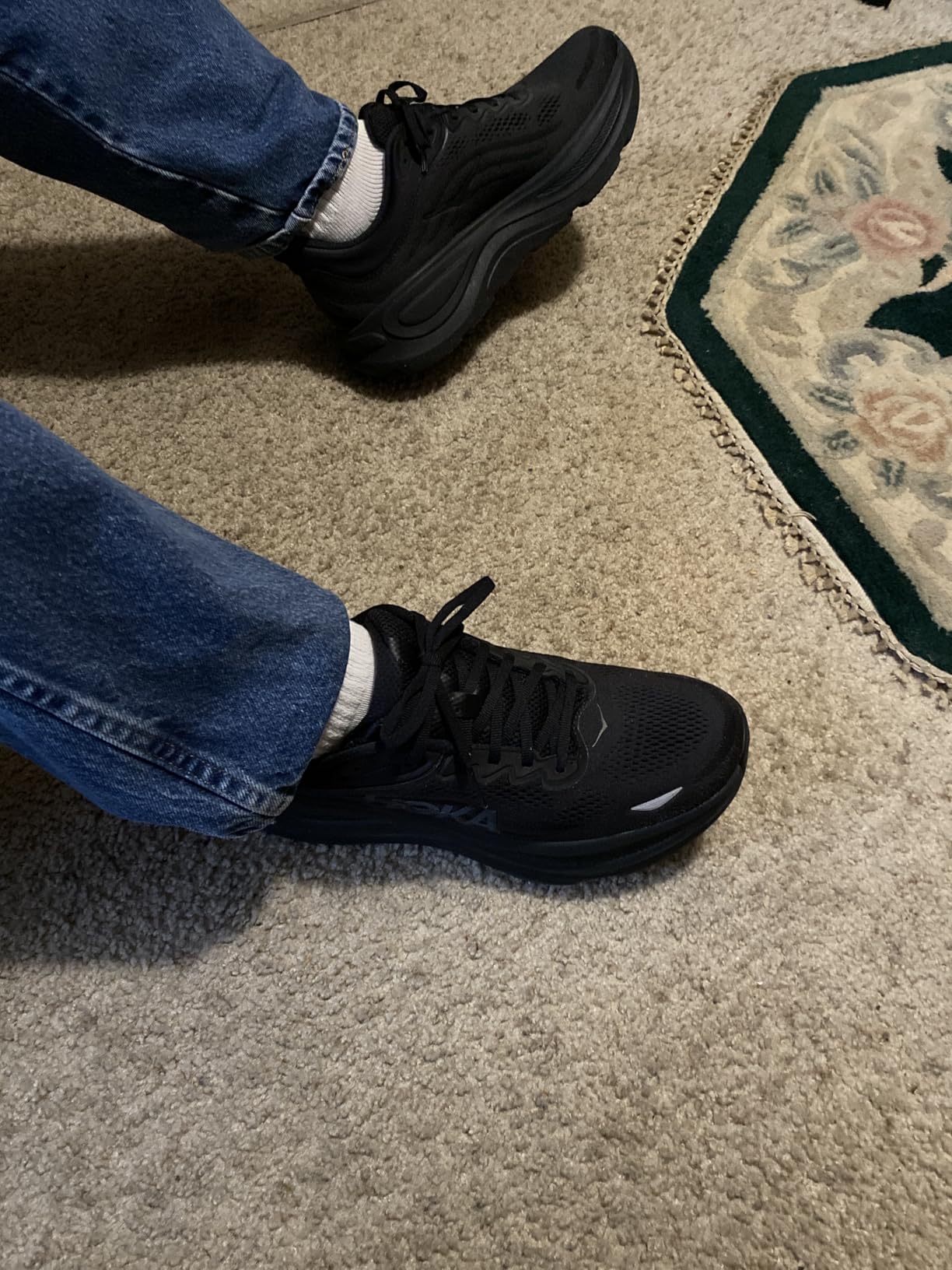
The real story with this shoe is fit. The standard D width is reported as too narrow through the midfoot and toe box by a large share of wearers. The good news is that the Bondi 9 runs in 2E and 4E, so if you have wide feet, try the wider width before ruling the model out.
At 3 pounds in the listed weight, it is the heaviest shoe here. That weight is the price of the stack, and it is the reason this is a walking, easy-pace, and long-walk shoe rather than a tempo tool.
When the Bondi 9 is the right call
Choose it when impact is your main complaint and you run slowly on purpose. Standing all day at work, walking long distances, or coming back to running after a layoff all suit this shoe. Wide feet also suit it, provided you order the wider width.
When to skip it
Skip it if you need to run fast or if you dislike a shoe that rocks underfoot. A very high stack can make a stride feel unstable for runners who have never trained on one, and plenty of runners who buy a max-cushion shoe report that the softness leaves them feeling wobbly rather than protected.
3. Brooks Adrenaline GTS 25: Best for an Unstable Stride
Brooks Men’s Adrenaline GTS 25 Supportive Running & Walking Shoe – Primer Grey/Ebony/Jasmin – 11 Medium
GuideRails support system
Nitrogen-infused DNA Loft v3 midsole
Weight: 1.5 pounds
PDAC A5500 certified
Pros
- Support limits excess foot movement without feeling rigid
- Soft lightweight cushioning that absorbs impact
- Engineered mesh upper with a secure collar
- Owners report relief from shin
- knee and lower-back pain
Cons
- Runs small and many buyers size up
- Sizing is difficult for very narrow feet
- Thin laces can be tightened too snugly
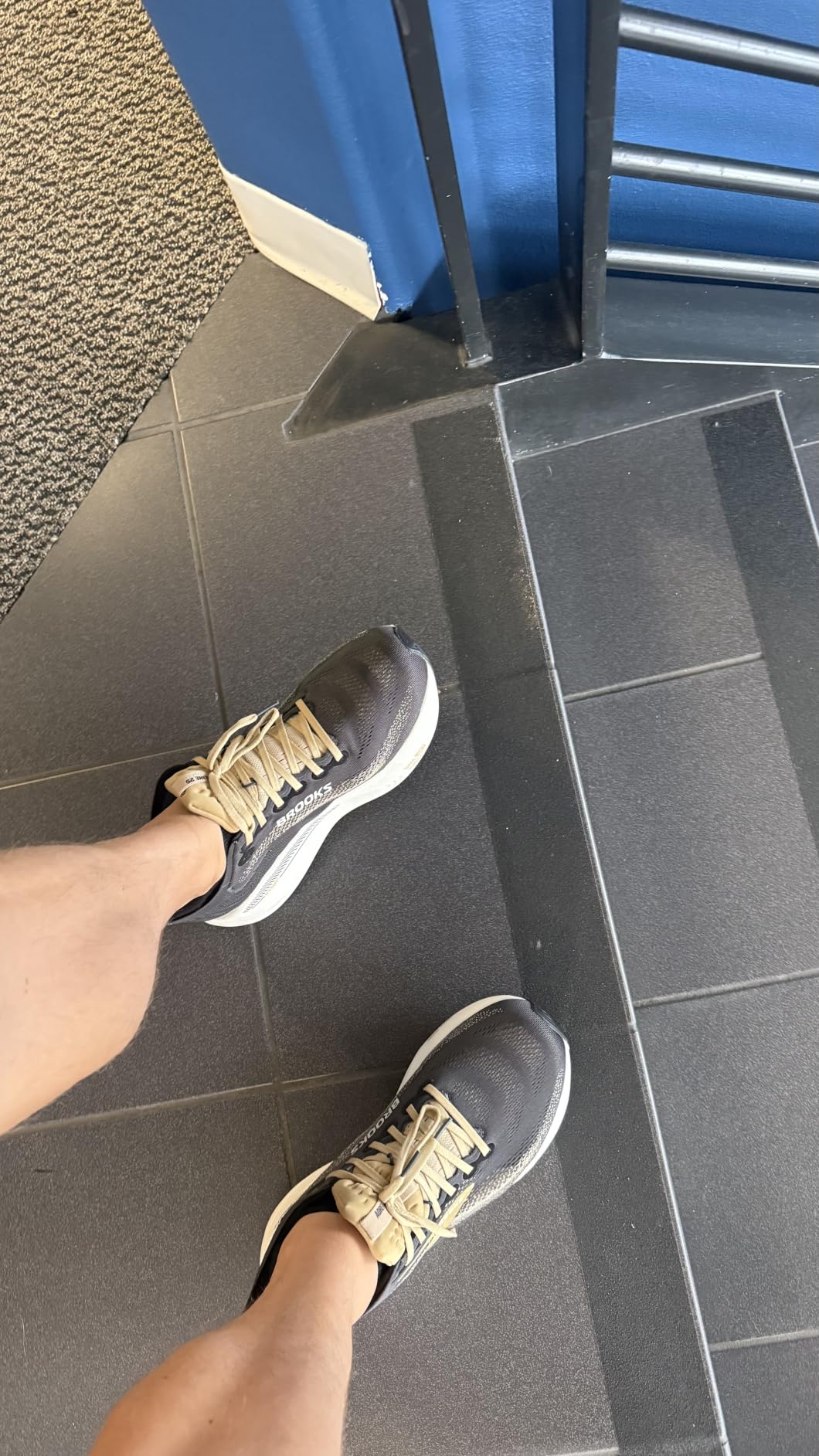
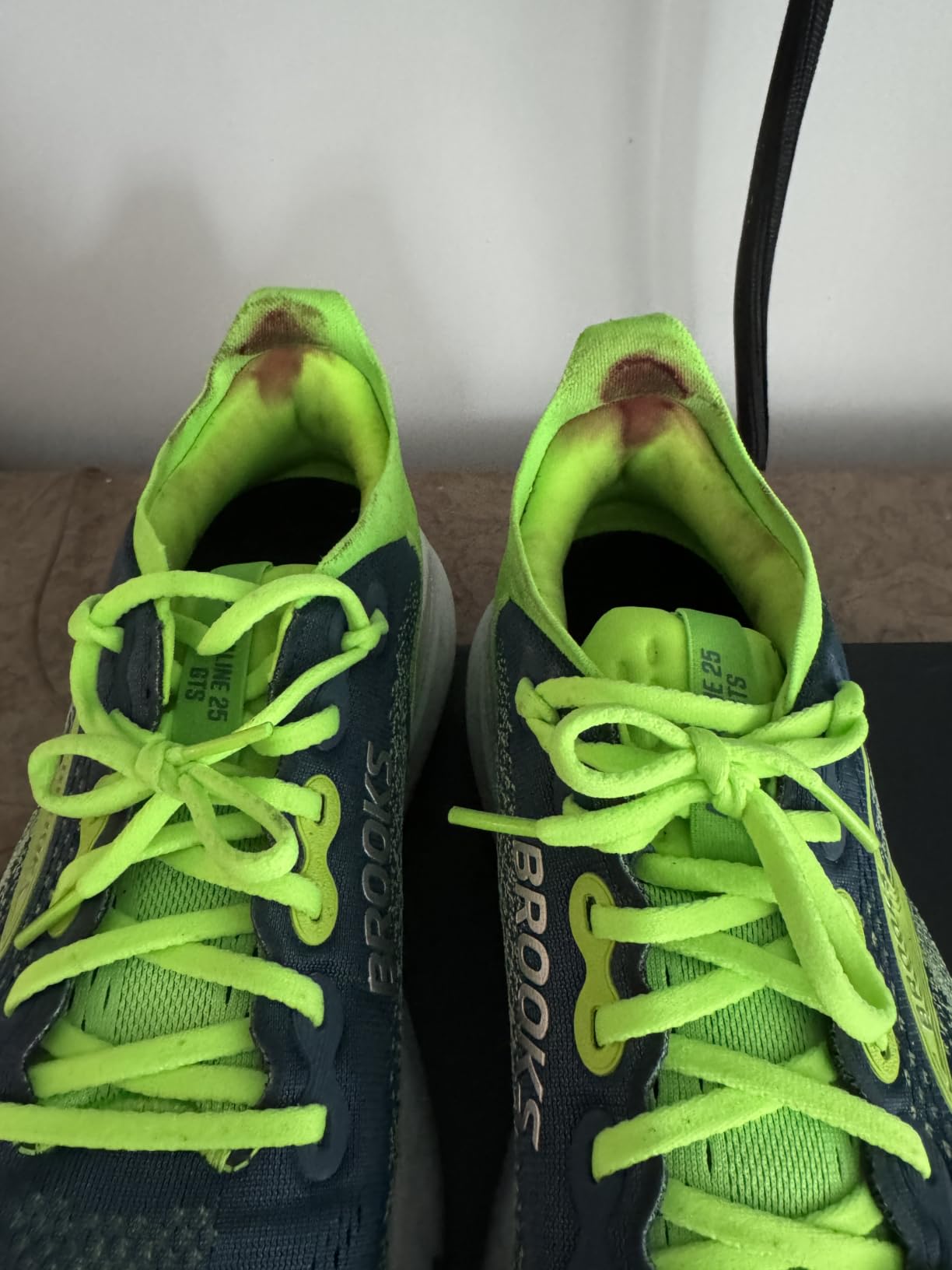
This is the shoe for the runner whose foot rolls inward on landing and who feels the knee wobble a few steps later. The Adrenaline GTS 25 uses the GuideRails support system, a set of internal rails that keep excess foot movement in check without turning the shoe into a rigid corrective device. Community threads regularly recommend the Brooks GTS line for exactly this overpronation-plus-knee-pain combination.
What separates it from a traditional stability shoe is that the support is subtle. Reviewers describe it as feeling guided rather than corrected, which is why it works for neutral runners too. The nitrogen-infused DNA Loft v3 midsole underneath is soft and light, so you get control without the heavy, flat-footed feel of older stability shoes.
Owners also report relief from shin splints and lower-back pain, which fits the mechanism: a steadier platform reduces the wobble that travels up the chain. It carries the same PDAC A5500 certification and APMA Seal as the Glycerin 22.
The main practical warning is sizing. This shoe runs small, and half a size up is the most common advice in the reviews. If you have very narrow feet or need a B width, expect frustration.
When the Adrenaline GTS 25 is the right call
Choose it when your knee pain shows up a beat after the foot strikes rather than at the moment of landing. That pattern usually points to control rather than cushioning. It is also a good pick for shin splints that keep coming back and for runners returning to activity after a layoff.
When to skip it
Skip it if you need a roomy toe box or a very light shoe. The fit runs narrow, and at high mileages the lace eyestay can feel restrictive. If your pain is purely impact-driven with a perfectly neutral stride, you are paying for support you may not use.
4. Brooks Ghost Max 3: Best Cushioning for Wide Feet
Brooks Men’s Ghost Max 3 Neutral Running & Walking Shoe – Black/Black/Ebony – 10 Medium
High-stack DNA Loft v3 cushioning
Wide base with raised sidewalls
Linear last for orthotics
Weight: 1.5 pounds
Pros
- High stack absorbs impact without hurting balance
- Wide base and raised sidewalls give a supported ride
- Linear last adds volume for wide feet and orthotics
- Reportedly eases joint and foot pain for heavier runners
Cons
- Stiff during the first wear before breaking in
- Standard width can feel tight at the toe
- Not water resistant for wet weather
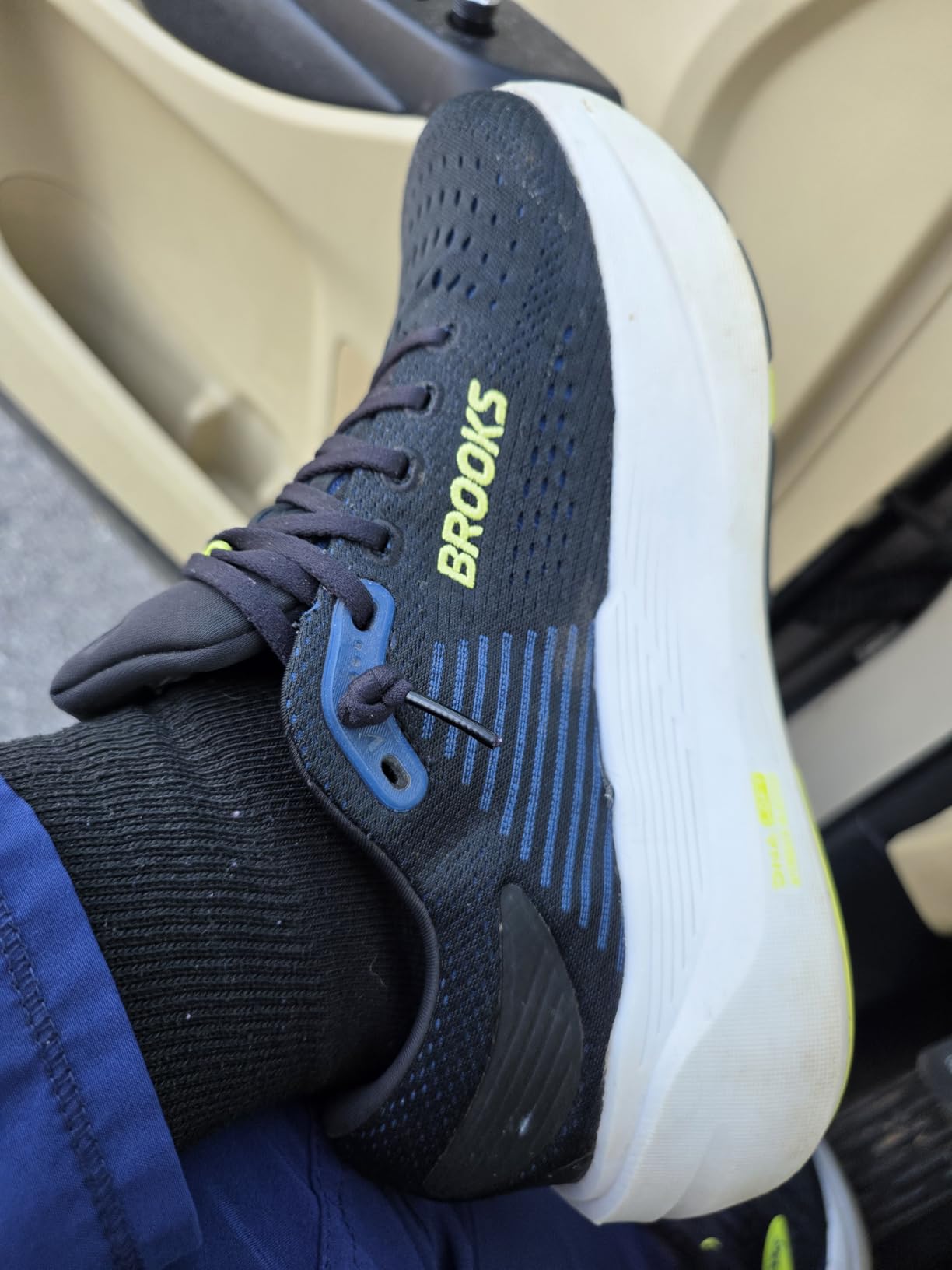
The Ghost Max 3 solves a specific problem: cushioning that feels soft but still holds you up. The high stack of DNA Loft v3 absorbs impact on hard surfaces, and the wide base with raised sidewalls keeps the platform from tipping. That combination is why heavier runners and older wearers report less joint and foot pain.
GlideRoll rocker geometry with a low offset smooths the transition from heel to toe, so the shoe rolls rather than clatters. The engineered mesh upper stays breathable through long days on your feet, which matters more than most buyers expect.
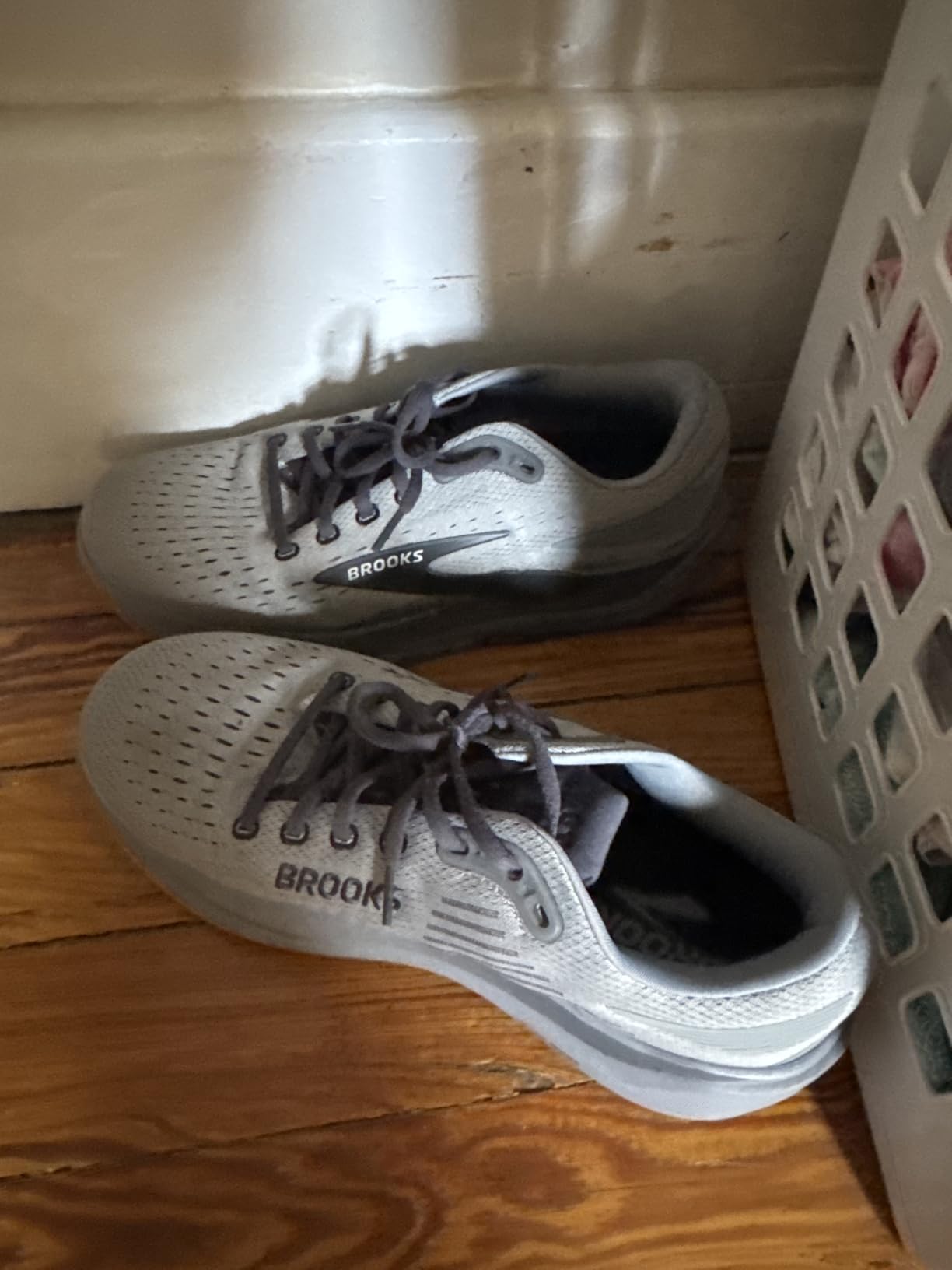
The linear last is the sleeper feature here. It is built to add volume so orthotics fit inside the shoe, and it makes this a practical option for anyone whose feet spread or swell later in the day. It is also a certified carbon neutral product.
Two cautions. The shoe is stiff on first wear and needs a few runs before it bends to you, and it is not water resistant, so wet-weather wear shortens its life. If you rotate pairs, give this one to dry indoor use.
When the Ghost Max 3 is the right call
Choose it if you carry more body weight through your stride, wear orthotics, or need a roomy last. It also works well for anyone standing on hard floors for a living who still wants a shoe that can handle a run.
When to skip it
Skip it if you dislike a break-in period or run in wet conditions regularly. The raised sidewalls also add width that some neutral runners find unnecessary if their feet are already narrow and their gait is stable.
5. ASICS NOVABLAST 5: Best for Miles Without Heavy Legs
ASICS Men’s NOVABLAST 5 Running Shoes, 8.5, Black/Carrier Grey
FF BLAST MAX lightweight cushioning
Trampoline-inspired outsole
Weight: 1.44 pounds
At least 75% recycled upper material
Pros
- Lightweight foam with an energetic return
- Trampoline-inspired outsole delivers responsive bounce
- Tongue wing construction reduces tongue movement
- Breathable engineered jacquard mesh upper
- Reflective details for low light
Cons
- Runs large and many buyers size down
- Less protective than max-cushion models for joint issues
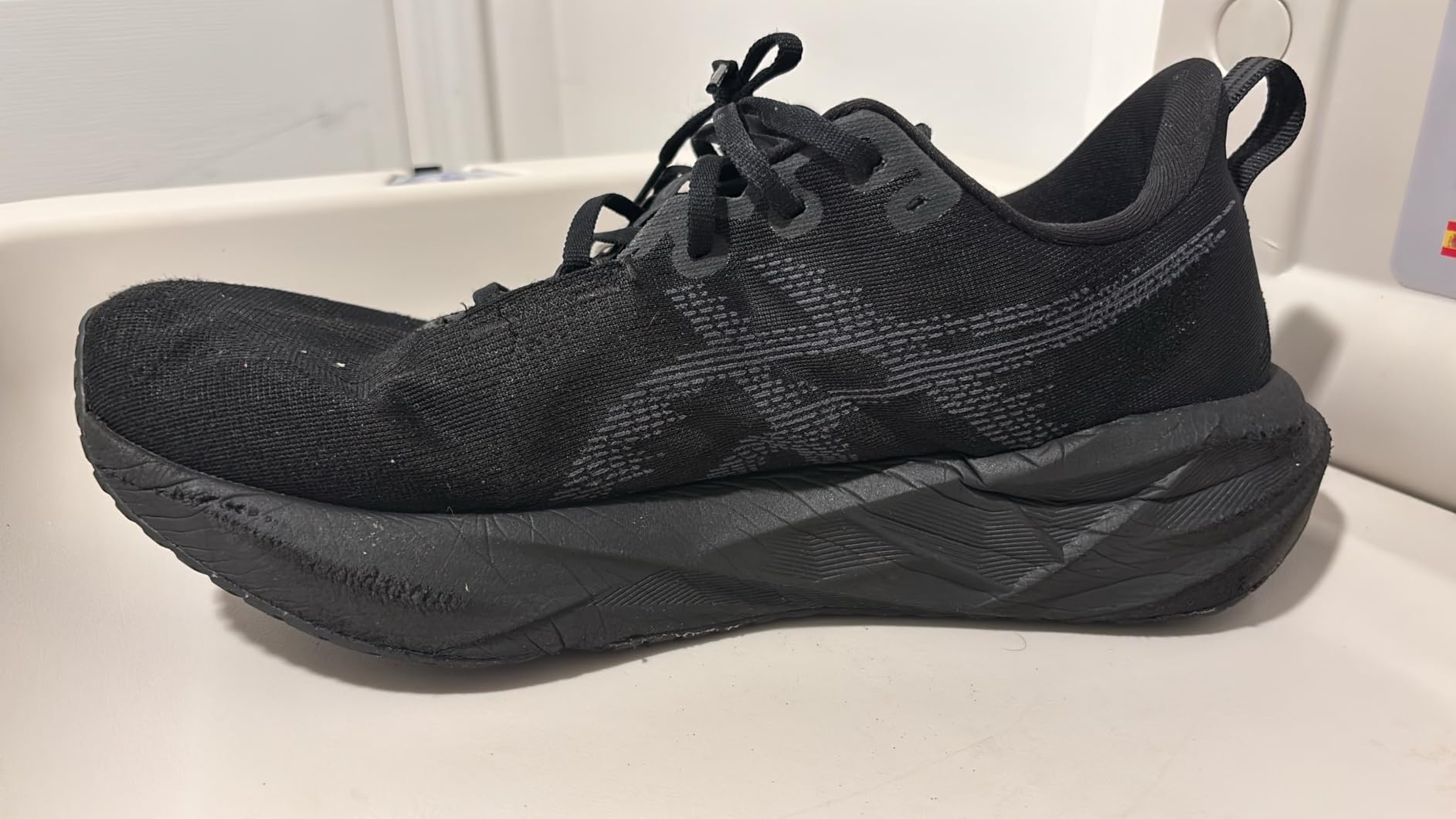
Not every knee is an impact problem. Some runners get sore knees because their legs get heavy and their form collapses. For that pattern, the NOVABLAST 5 is the pick, because at 1.44 pounds it is the lightest shoe on this list and it returns energy rather than absorbing it.
FF BLAST MAX foam with a trampoline-inspired outsole gives a springy, quick-feeling ride without turning aggressive. The tongue wing construction holds the tongue in place so it stops sliding mid-run, which is a quiet comfort win on longer runs.
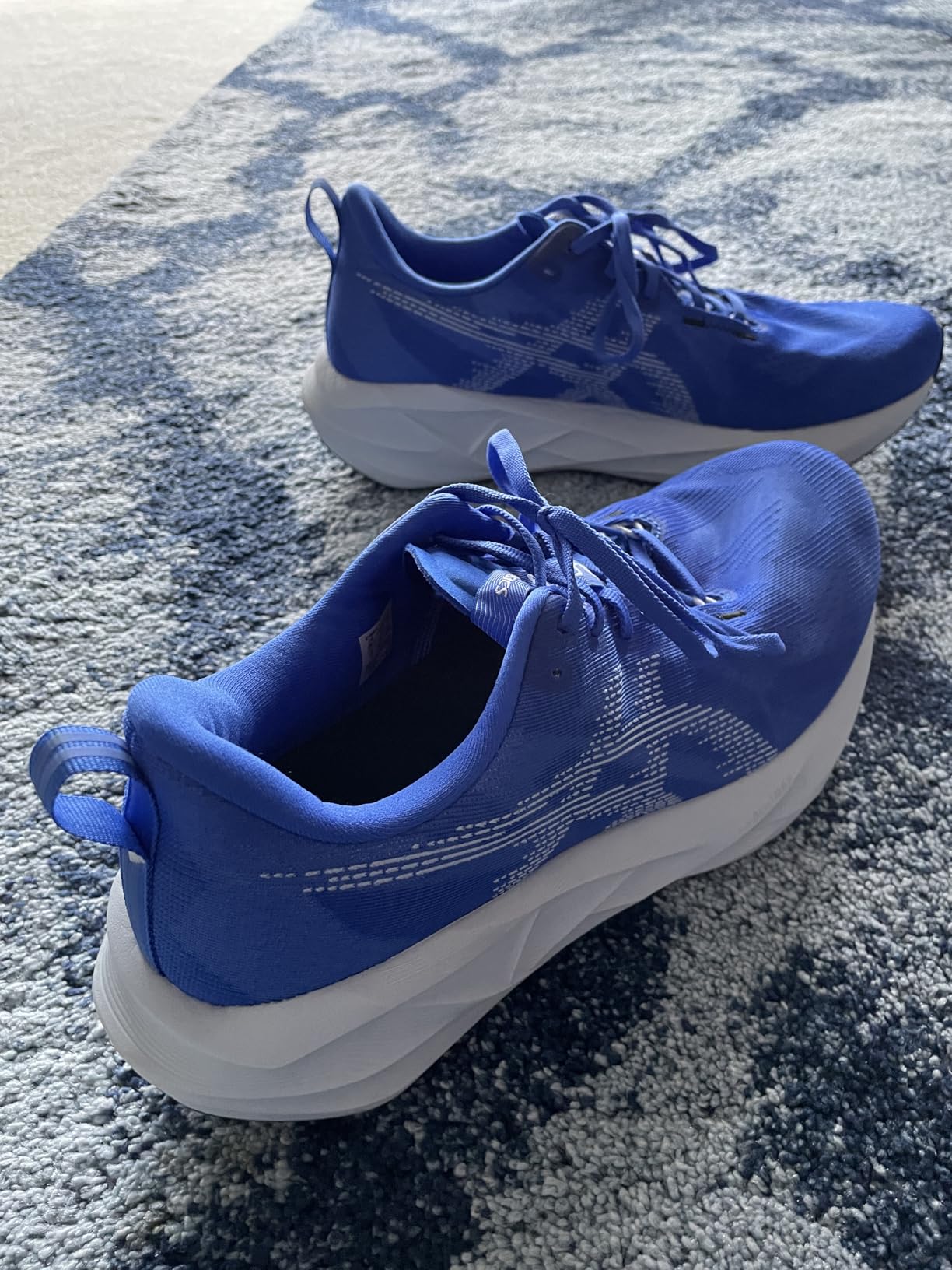
Two details worth noting. The engineered jacquard mesh upper keeps air moving, and at least 75% of the main upper material is made from recycled materials. Reflective detailing helps if you run before dawn or after dark.
The clear limitation is cushioning depth. This is not a shoe for someone whose knees hurt because every landing is jarring. It is also the one shoe here where sizing advice is consistent in the other direction, since it runs large and buyers commonly size down.
When the NOVABLAST 5 is the right call
Choose it if you run easy daily miles, want a shoe that does not weigh you down, or are transitioning back to running and want something that makes each run feel manageable. It is also a solid treadmill and recovery-day choice.
When to skip it
Skip it if your pain is clearly impact-driven or if you want maximum joint protection. Nothing about this shoe is built to soften landings; it is built to keep your legs fresh. If you need to size down for a narrow fit, be careful at the toe.
6. ASICS Gel-Kayano 32: Best for Firm, Structured Support
ASICS Men’s Gel-Kayano 32 Running Shoes, 9.5, Piedmont Grey/Gravel
4D GUIDANCE SYSTEM dynamic support pod
Rearfoot PureGEL shock absorption
FF BLAST PLUS midsole
OrthoLite X-55 sockliner
Pros
- Guidance system adapts under load to limit overpronation
- Rearfoot PureGEL absorbs landing shock
- FF BLAST PLUS midsole blends softness with response
- OrthoLite sockliner manages moisture
- Lightweight mesh upper reduces overlays
Cons
- Structured feel can feel firm to neutral runners
- Heavier build than lighter neutral trainers
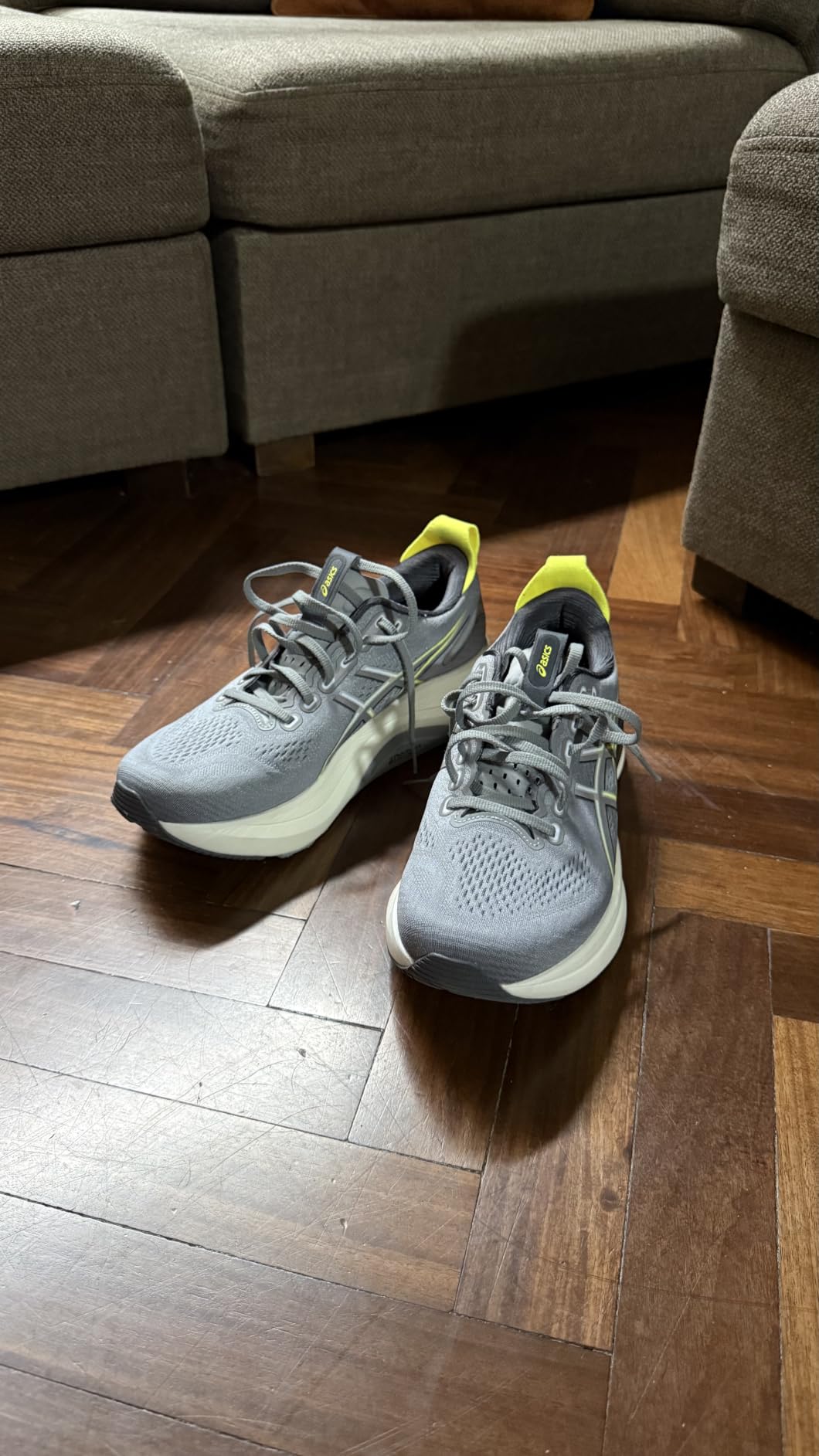
The Gel-Kayano 32 is the strictest stability shoe in this group. Where the Adrenaline GTS 25 nudges the foot, the Kayano actively resists inward rolling through the 4D GUIDANCE SYSTEM, a dynamic pod that stiffens under load and softens when you are not pushing.
Shock handling comes from rearfoot PureGEL, described as roughly 65% softer than standard GEL, sitting on an FF BLAST PLUS midsole. If your pain is concentrated on the outside of the knee from an IT band that keeps tightening, that combination of a guided platform and soft landing is the point of this shoe.
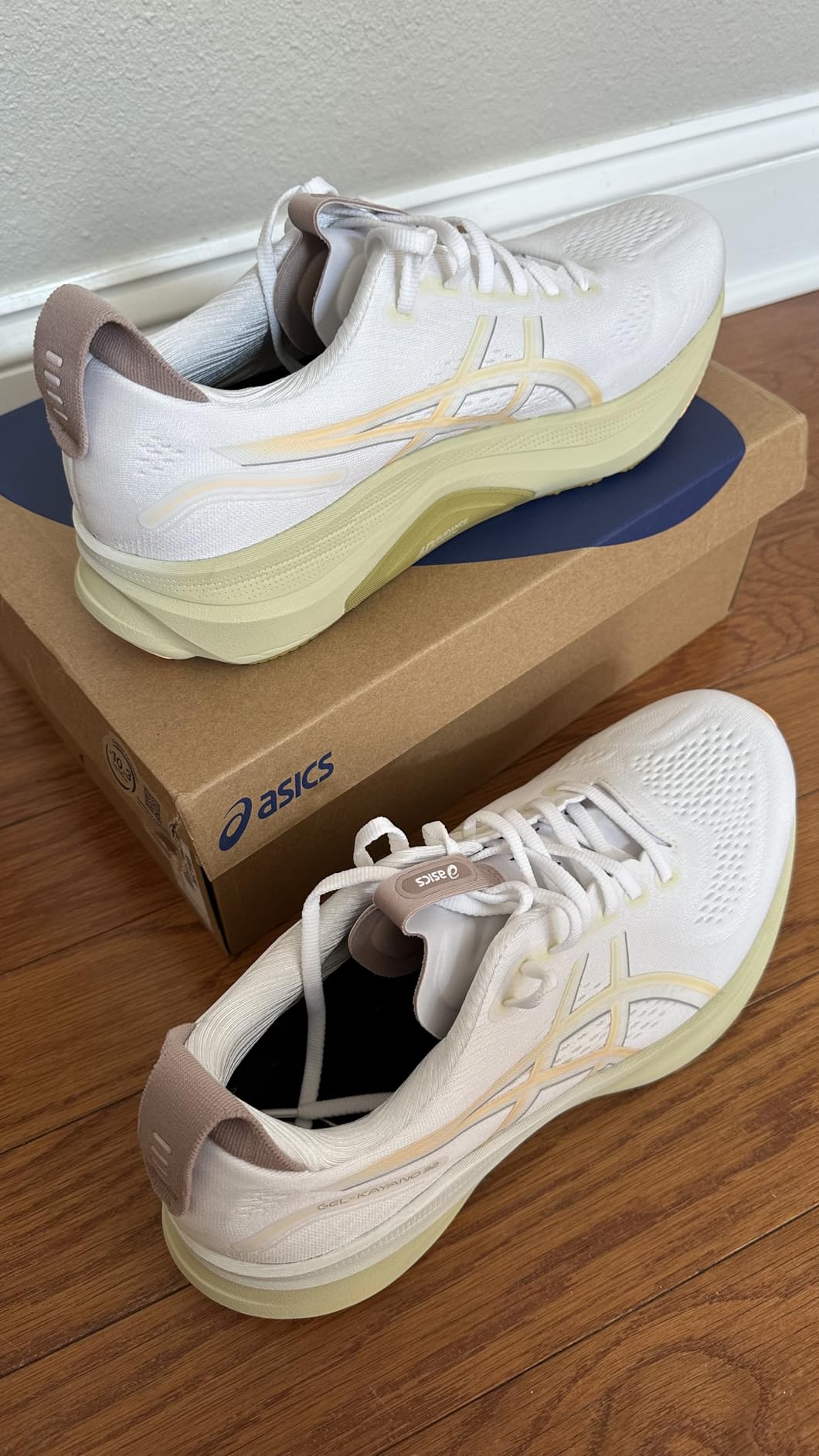
The OrthoLite X-55 sockliner handles moisture, which keeps long runs cooler than a basic foam insole. The engineered mesh upper is light on overlays, so there is less to rub as your stride gets longer.
The trade-off is feel. Neutral runners sometimes describe the platform as firm and structured, and the build is heavier than the lightweight trainers here. If your gait is neutral and your pain is impact-driven, this shoe is doing more work than you need.
When the Gel-Kayano 32 is the right call
Choose it if you have been told you overpronate, or if you can feel your foot rolling inward and your knee drifting as a result. It is a sensible pick for runners rebuilding after an ACL reconstruction, where a predictable, guided platform reduces the variables while strength work catches up.
When to skip it
Skip it if you have a neutral gait and simply want a soft landing. The structured platform can feel stiff, and the added weight is noticeable on faster days. Anyone who prefers a light, flexible shoe will find this one dull.
7. ASICS Gel-Nimbus 28: Best for Long, Easy Distance
ASICS Men’s Gel-Nimbus 28 Running Shoes, 10.5, /Black
PureGEL rearfoot cushioning
FF BLAST PLUS midsole
OrthoLite X-55 sockliner
Weight: 1.44 pounds
Pros
- High stack and soft cushioning for long hard-surface miles
- Platform is wide enough to resist ankle roll
- Engineered knit upper is stretchy and breathable
- Light for the amount of cushioning
- Owners with knee and hip problems report no knee pain
Cons
- Toe box runs on the narrow side
- Fully stretchy tongue needs getting used to
- Firm upper can rub the top of the foot
- Durability limited at very high daily step counts
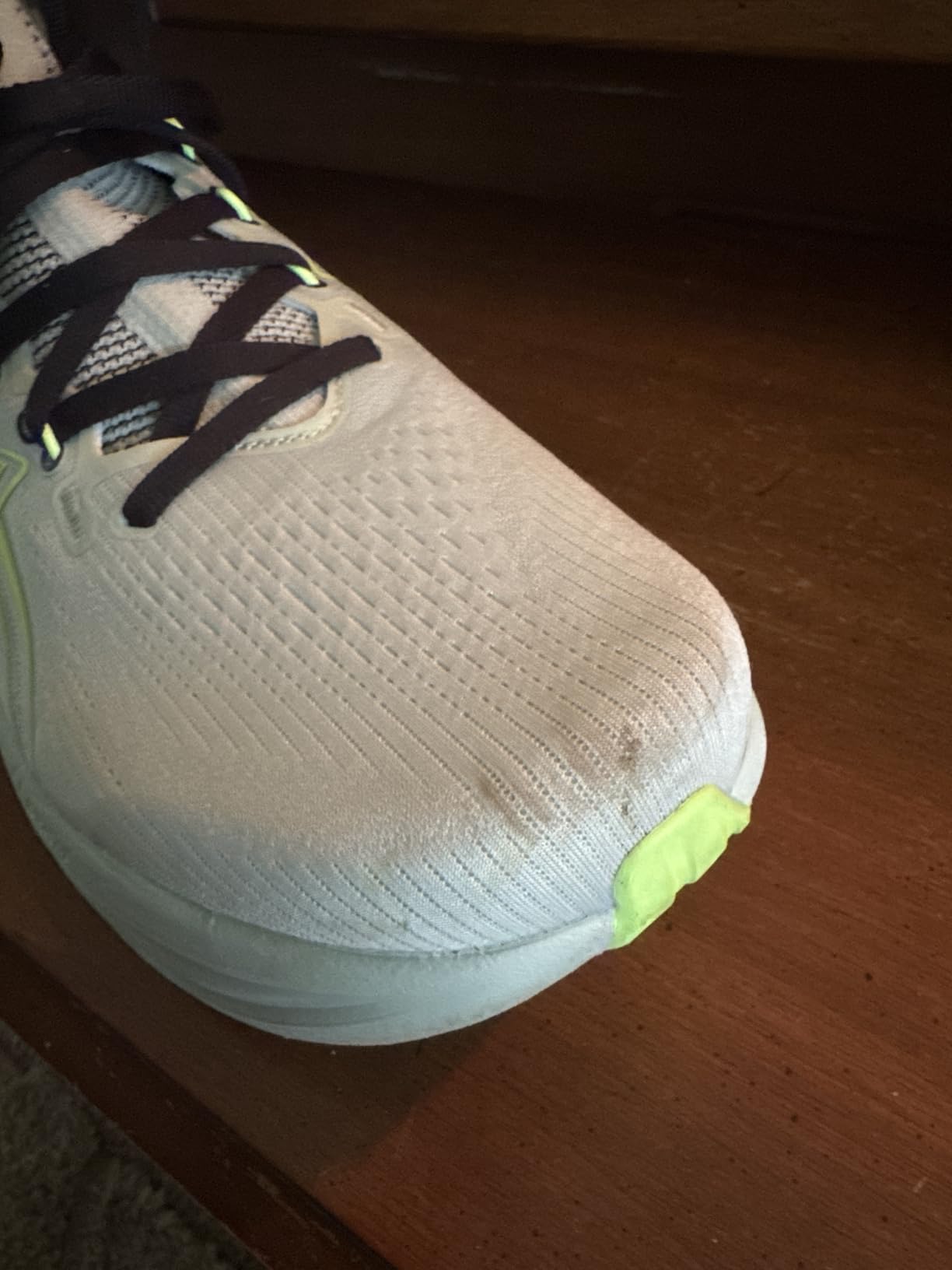
The Gel-Nimbus 28 is the ASICS take on plush daily mileage. PureGEL under the heel, FF BLAST PLUS through the midsole, and a stack high enough to take the sting out of long runs on asphalt. Owners with knee and hip problems specifically report running without knee pain in this shoe.
Unlike the Bondi 9, the Nimbus keeps a broad sole platform that resists ankle roll while staying light at 1.44 pounds. That middle ground is why it works for people who want cushioning without the marshmallow feel.
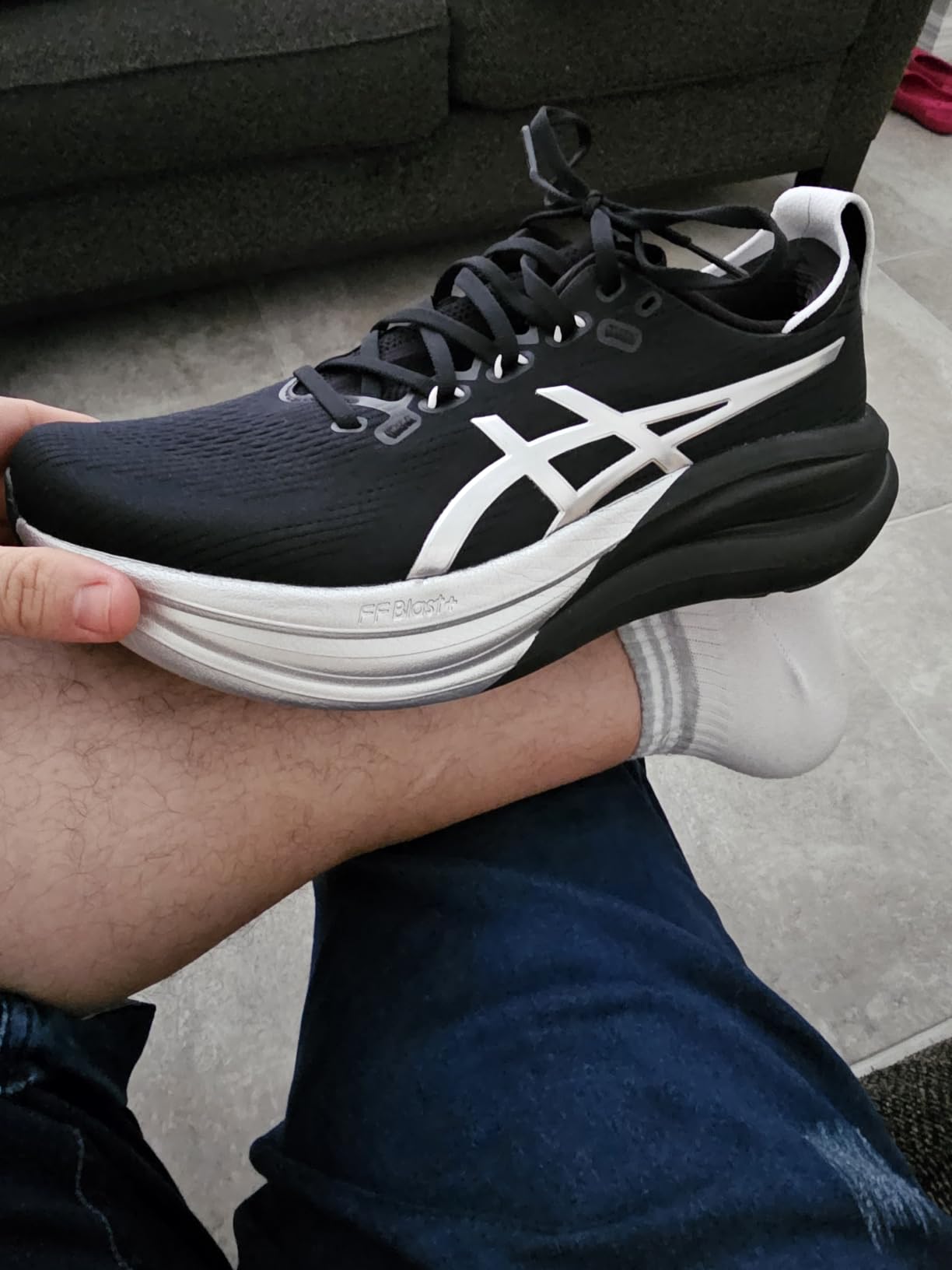
Durability details matter here. The HYBRID ASICSGRIP outsole with AHARPLUS is built for grip and longer wear, and reflective detailing helps on night runs. The OrthoLite X-55 sockliner manages moisture across long efforts.
Owners flag two fit quirks. The toe box is narrower than the stack suggests, and the fully stretchy tongue means the fit comes almost entirely from the laces, which takes a few runs to trust. The upper is firm enough to rub the top of the foot for some people.
When the Gel-Nimbus 28 is the right call
Choose it if you run long, slow distances and want cushioning that does not swallow your stride. It suits a neutral gait, keeps some stability through a wide platform, and works for anyone whose knees object to hard pavement at moderate volume.
When to skip it
Skip it if you have wide feet, you wear a high step count every day, or you dislike a stretchy tongue. Outsole wear is the trade for the light build, and if you are putting in very high daily miles you may replace them sooner than a heavier shoe would.
8. Saucony Hurricane 24: Best for High-Mileage Weeks
Saucony Men’s Hurricane 24 Sneaker, Flint/Navy, 10.5
Stability platform for overpronation
PWRRUN+ cushioning
Durable rubber outsole
Weight: 2.25 pounds
Pros
- Bathtub-style foam platform controls pronation without feeling intrusive
- PWRRUN+ is soft but does not bottom out
- Reduces shin and ankle pain in heavy weeks
- Wide base and toe box suit broader feet
- Rubber outsole holds up over roughly 20-mile runs
Cons
- Runs about a size small and many buyers size up
- Narrow through the midfoot for some wearers
- Heavy build not suited to picking up the pace
- Some variation between pairs
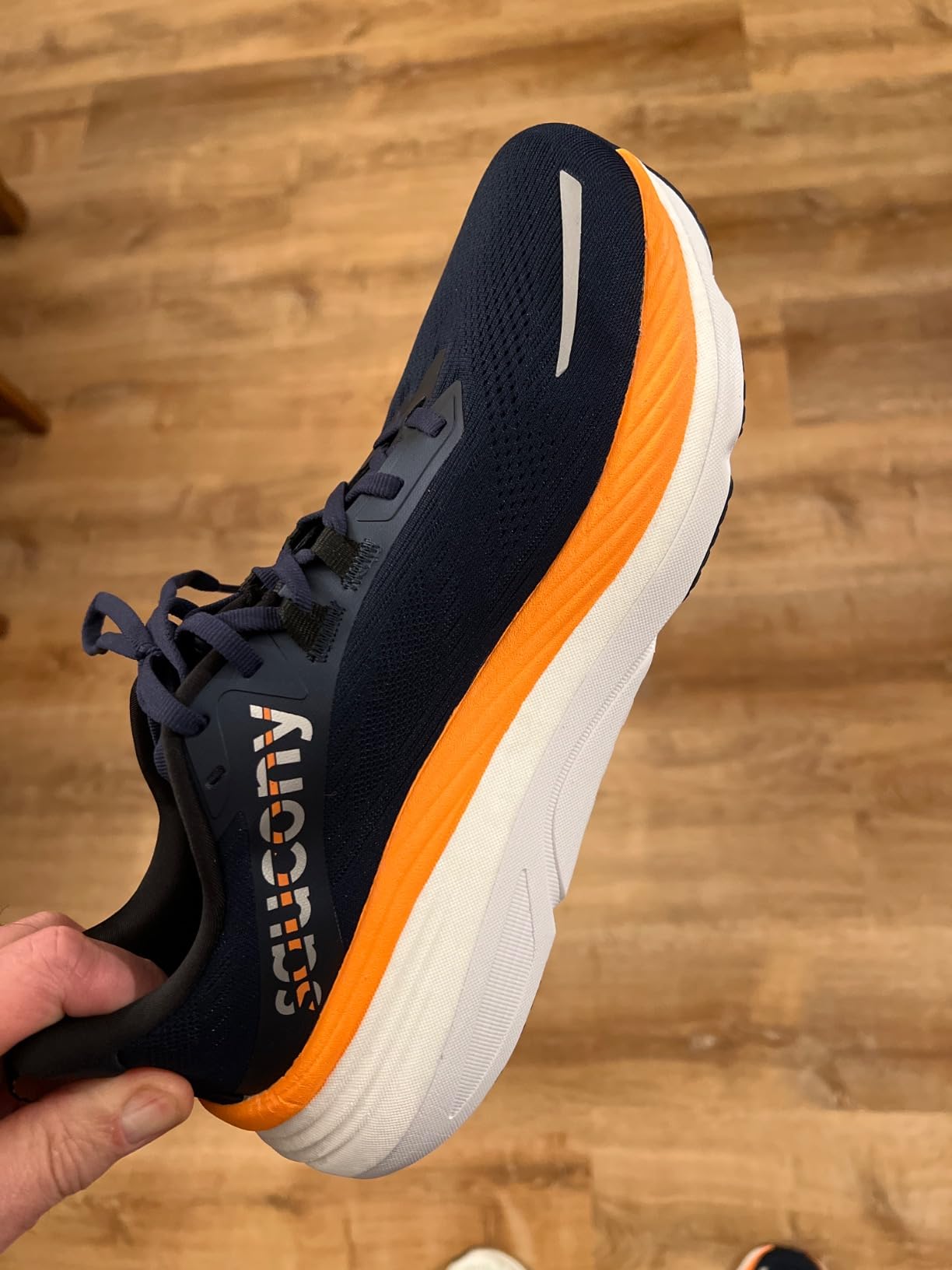
The Hurricane 24 stacks stability and cushioning in a way that suits long weeks rather than long races. Its bathtub-style foam platform guides pronation without the intrusive feel of a hard post, and PWRRUN+ underneath stays soft without bottoming out even late in a run.
Reviewers specifically credit the combination with less shin and ankle pain during high-mileage weeks, which is the period when knee complaints usually show up. The wide base and toe box suit broader feet, and the rubber outsole holds up across roughly 20-mile runs.
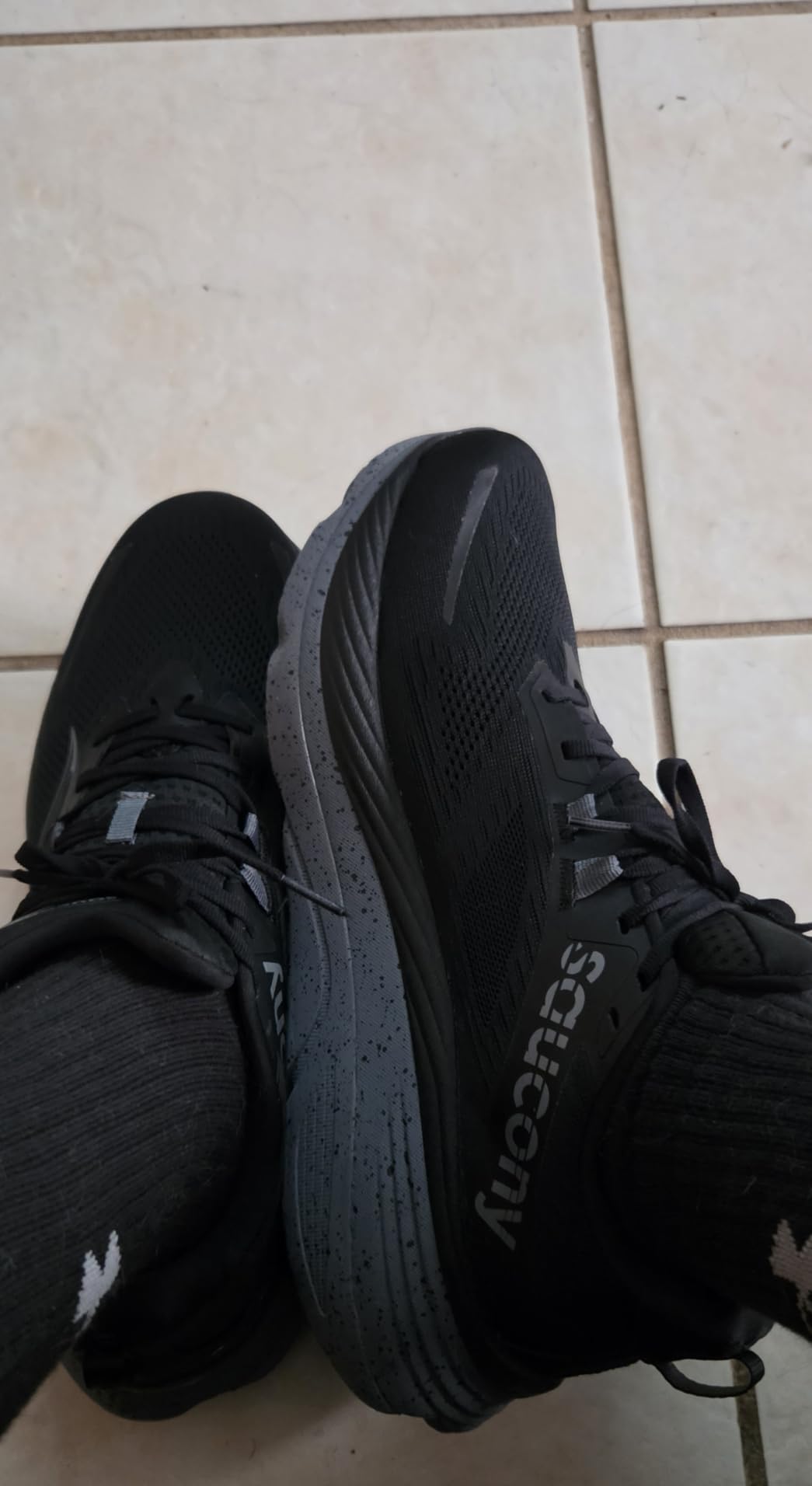
Two things to plan around. It runs about a size small, so most buyers size up, and even then some wearers find the midfoot narrow past 20 kilometres. At 2.25 pounds it is built for patience, not pace.
The other caveat is consistency. Some buyers report differences between pairs made in different factories. If you are sensitive to that, buy from a seller with an easy return process.
When the Hurricane 24 is the right call
Choose it if you pronate, run high weekly mileage, and want one shoe for everything from recovery miles to long runs. It is a strong companion for anyone managing shin or ankle discomfort alongside knee pain.
When to skip it
Skip it if you run fast, need a very light shoe, or have a narrow midfoot already. The weight and stability structure are deliberate, and forcing this shoe into speed work will simply feel slow.
9. Saucony Guide 18: Best Balanced Guidance
Saucony Men’s Guide 18 Sneaker, Flint/Navy, 9.5
Maximal cushioning with broad base
Center Path Technology geometry
PWRRUN foam midsole
Weight: 1.87 pounds
Pros
- Broad base seats the foot deep in a stable platform
- Center Path geometry centres the foot from landing to toe-off
- Soft responsive PWRRUN foam
- XT-900 carbon rubber outsole for durable traction
- Breathable engineered mesh upper
Cons
- Lowest average rating in this lineup
- Maximalist build is not designed for speed work
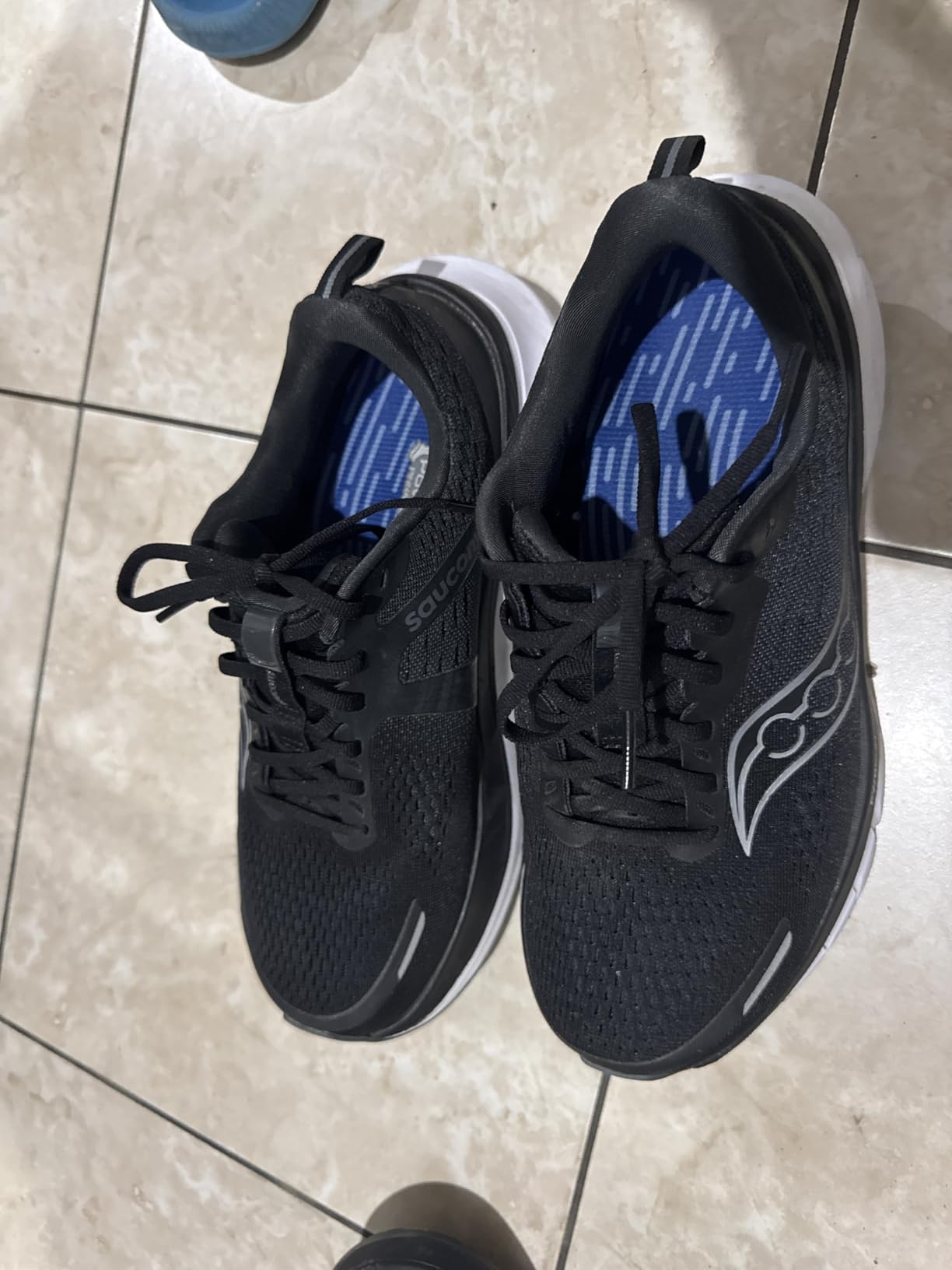
The Guide 18 is Saucony’s balanced-guidance option and, as forum threads show, the model other runners name when they want support without a heavy correction. Center Path Technology uses asymmetric geometry to centre the foot from the moment of lateral landing through toe-off, so the platform stays aligned rather than tipping inward.
The broad base geometry is the part that matters for knees: the foot sits deep and stable instead of perched on a narrower platform. PWRRUN foam underneath stays soft, and the XT-900 carbon rubber outsole handles traction on road or light trail.
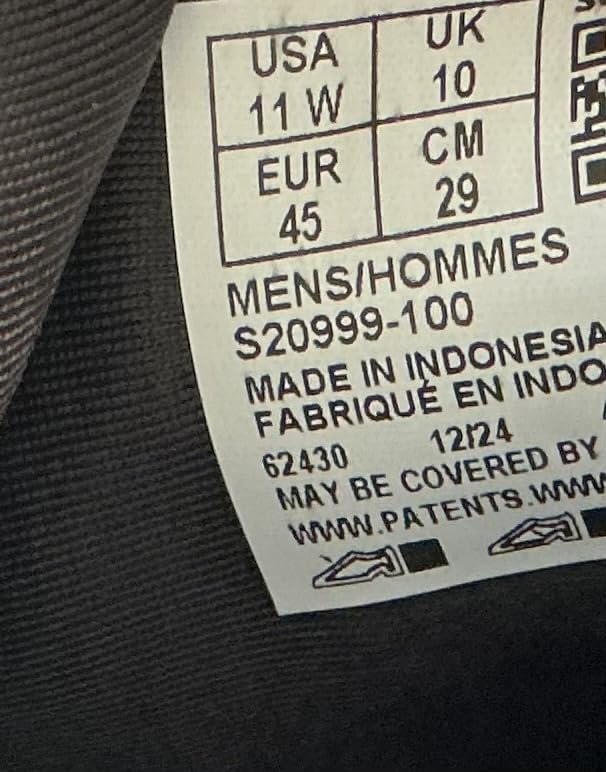
Honest caveat first. This shoe carries the lowest average rating of the ten here, at 4.3, and the review count is on the lower side too, so the feedback pool is thinner than the rest. Mixed experiences with the ride are the reason for that, not a defect.
The other limitation is structural. A maximalist build is not designed for speed work, and buyers who expected a lighter daily trainer tend to be disappointed.
When the Guide 18 is the right call
Choose it if you want guided support with a cushioned ride and your pain sits somewhere between impact and control. It is a good match for long slow runs where you want stability but not rigidity.
When to skip it
Skip it if you want the strongest review record, the lightest weight, or a shoe for faster sessions. If you are choosing between this and the Adrenaline GTS 25, compare the two in person rather than picking on ratings alone.
10. Saucony Cohesion 13: Best Budget Pick for Walking Days
Saucony Men’s Cohesion 13 Running Shoe, Alloy/Brick, 10.5
VERSAFOAM cushioning
Segmented rubber outsole
Weight: 1.8 pounds
Built for walking and everyday wear
Pros
- Lightweight build reduces ankle and leg fatigue
- Breathable upper resists foot sweat
- Comfortable across long days on concrete
- Segmented outsole gives a smooth flexible ride
- Excellent value at a budget price point
Cons
- Mesh over the toes is thin and not built for hiking
- Some pairs show heel fabric fraying early
- Wide version can feel short in the toe box
If your knees hurt most from walking rather than running, this is the shoe that answers it. The Cohesion 13 is a walking and casual trainer at 1.8 pounds, with VERSAFOAM cushioning and a segmented rubber outsole that gives a smooth, flexible ride on concrete.
The review count here is the largest of any shoe in this roundup, and the sentiment is consistent: light, comfortable, easy on the feet. Reviewers note reduced ankle and leg fatigue and a breathable upper that holds up through sweaty days.
Where it falls short is durability and ruggedness. The mesh over the toes is thin and not suitable for hiking, and some buyers report heel fabric fraying early in the life of the pair. Expect to rotate out of this shoe sooner than you would a sturdier trainer.
One more fit note: the wide version can feel short in the toe box. Try both widths if you can.
When the Cohesion 13 is the right call
Choose it if your pain comes from a walk-heavy day, if you are standing for long shifts, or if you want to test whether a shoe changes anything before spending on a running shoe. Many people in runner forums say a shoe change is worth trying only if the budget is comfortable.
When to skip it
Skip it for actual running mileage, for trails, or if you want a shoe that lasts several years. It is a walking shoe wearing a running-shoe label, and it will not deliver the cushioning depth or structure a run needs.
Which Type of Knee Pain Do You Have?
Matching the shoe to the diagnosis matters more than matching the shoe to the brand. Here is how the common complaints map onto shoe attributes, based on the guidance physical therapists give and the patterns described in running forums.
Pain around or behind the kneecap, often called runner’s knee or patellofemoral pain, usually responds to a more even heel-to-toe drop and moderate cushioning, because it reduces stress through the patellar tendon. Pain on the outside of the knee points to IT band syndrome, which tends to do better with a firmer platform under the midfoot and a softer landing under the heel.
Post-ACL recovery is different again: you want a stable, structured shoe with a predictable platform while your strength work catches up. A torn meniscus generally calls for a well-fitting neutral shoe with nothing aggressive, because the joint itself is the limiting factor, not your stride. Shin splints respond to more cushioning and a higher drop that takes load off the lower leg.
Knee osteoarthritis or general joint degeneration tends to favour maximum cushioning, since less peak impact reaches the joint. A torn meniscus is the case where shoe choice matters least and load management matters most, so cut your mileage before you shop.
Cushioning or Stability: Which Do You Actually Need?
If your pain arrives at the instant your foot hits the ground, you need cushioning. If it arrives a few steps later, or if your knee feels like it is wobbling inward, you need stability. These two problems feel similar and are solved in opposite directions.
Here is the trap. Max-cushion shoes are very soft, and soft platforms can feel unstable at speed, which is exactly the scenario where runners report buying a plush shoe and still feeling knee discomfort. Guided-support shoes solve the opposite problem: they steady a landing but do little to soften it.
A few signals to watch for. Landings that feel harsh on asphalt point to cushioning. Feet that roll inward or ankles that feel loose point to stability. A shoe that feels unstable on the first jog but fine while walking points to too much stack. And pain that appears only after a long shift on hard floors points to a shoe that works for walking as well as running, like the Cohesion 13 or the Ghost Max 3.
How to Choose Running Shoes When Your Knees Hurt: 7 Steps
Test in the afternoon. Feet swell during the day, and a shoe that fits in the morning can feel tight at night. Try shoes later in the day, ideally after a walk.
Check toe room with your thumb. You want roughly a thumb’s width of space in front of your longest toe while standing. This is the single most reliable comfort signal, and it rules out most of the shoes on this list if your feet are wide.
Run the heel hold test. Lift your heel and twist. If the shoe lifts with it and does not settle back, the heel counter is too soft for you.
Walk, then jog, then walk again. In a store, test the shoe in all three states. A shoe that feels good standing and unstable jogging is the wrong shoe.
Buy from a seller with easy returns. Sizing varies by brand and by last. The Adrenaline GTS 25 runs small, the NOVABLAST 5 runs large, and the Hurricane 24 runs about a size small.
Break in over two to three weeks. Add a few minutes per run rather than jumping to full mileage. The Ghost Max 3 is stiff on first wear and needs this more than most.
Judge on five runs, not one. Foam behaves differently once it warms up. Give any shoe five runs before deciding it does or does not help your knees.
What Heel-to-Drop, Stack Height and Midsole Actually Mean
Heel-to-toe drop is the height difference between heel and forefoot, and it decides how much load lands on your Achilles and lower leg. Moving from a high-drop shoe to a low-drop one is a common cause of new shin and Achilles soreness, so change one thing at a time over several weeks.
Stack height is simply how much material sits under your foot. More stack usually means softer landings and more shock absorption, and it usually means more weight and more rock. The midsole is the cushioning layer itself, and how firm it feels changes how controlled the platform feels.
As a general rule, replace running shoes around 300 to 500 miles, or sooner when the midsole feels compressed and the outsole is visibly worn. Rotating two pairs extends the life of each and gives your knees a small amount of variation week to week.
Brooks or Hoka: Which Brand Handles Knee Pain Better?
Brooks is the better answer for control, Hoka is the better answer for cushioning. Brooks builds the Adrenaline GTS 25 around a GuideRails support system that limits excess foot movement, and the Gel-Kayano 32 around a firmer 4D Guidance pod. If your knee drifts inward, that is the category you want.
Hoka builds the Bondi 9 around a raised stack and MetaRocker geometry that softens and rolls the landing. If every step lands hard and your knees take the impact, that is the category you want. Brooks also offers max cushioning in the Glycerin 22, so the choice is not purely brand-driven.
One practical difference: the Bondi 9 runs in 2E and 4E widths, which matters if you have wide feet and want to avoid the narrow toe boxes that get flagged in reviews. Brooks shoes in this roundup generally run narrow or true, so sizing up is more often the fix.
Running Shoes vs Walking Shoes for Knee Pain
A good walking shoe is fine if your pain comes from walking. Shoes built for walking are optimised for one-foot-to-two-foot transitions and long hours of standing, and they can handle knee discomfort without costing you running-specific features.
If you plan to keep running, a running shoe is worth the upgrade because the midsole is tuned for repeated impact and the platform is shaped for toe-off. Our practical suggestion: if you can only afford one pair and you do both, pick the walking-capable trainer from this list, like the Ghost Max 3 or the Cohesion 13.
Who Should Not Buy Running Shoes Yet
If your current pair has under 300 miles on it and your pain is mild, changing shoes may not be the answer. Wear quality is a real factor, and a tired midsole is a genuine cause of discomfort.
If the pain is sharp, increasing, or accompanied by swelling, locking, giving way, or pain at rest, stop shopping and see a clinician. The 2022 Cochrane review found no clear evidence that shoes prevent running injuries, which means a new pair should never be treated as treatment. Reducing mileage, adding strength work, and getting assessed matter more than anything on this list.
If you are still not sure where to start, our guides to the best running shoes for women and the best running shoes for men break down the same models by fit, and our picks for running shoes for flat feet cover the stability category in more depth. Trail options are covered separately in our guides to the best trail running shoes for men and the best trail running shoes for women.
Frequently Asked Questions
What running shoe is best for knee pain?
The best running shoes for knee pain are cushioned or stability models matched to the type of pain you have. Max-cushion shoes such as the Hoka Bondi 9 suit harsh, jarring landings, while guided-support shoes such as the Brooks Adrenaline GTS 25 suit a stride that rolls inward. No shoe cures knee pain on its own.
Are Brooks or Hoka better for knee pain?
Brooks is the better choice for control and Hoka is the better choice for cushioning. The Brooks Adrenaline GTS 25 and ASICS Gel-Kayano 32 style of support suits a foot that rolls inward, while the Hoka Bondi 9 suits hard landings. The Bondi 9 also runs in wider widths, which helps wide feet.
What kind of shoes are best for people with bad knees?
For general bad knees, a neutral max-cushion daily trainer such as the Brooks Glycerin 22 or ASICS Gel-Nimbus 28 is the safest starting point. Pick a stability shoe such as the Saucony Hurricane 24 if your foot rolls inward, and a walking-capable trainer such as the Brooks Ghost Max 3 if standing hurts more than running.
Do I have runner’s knee or a torn meniscus?
Runner’s knee, or patellofemoral pain, shows up as dull ache around or behind the kneecap, often worse on stairs or after sitting. A torn meniscus usually brings sharp pain, swelling, a catching or locking sensation, or giving way. Only a clinician can confirm a meniscus tear, so get assessed before changing shoes.
Can the wrong running shoes cause knee pain?
They can contribute. A narrow fit, a worn-out midsole, or a shoe that lets your foot roll inward can change how you load the joint. But the 2022 Cochrane review of 11,240 runners across 12 randomised trials found no clear evidence that running shoes prevent injuries, so shoes are one factor among training load, strength and recovery.
Should I replace my running shoes if my knees hurt?
Replace them if the pair is worn out, typically around 300 to 500 miles, or if the midsole feels compressed and the outsole is smooth. If your shoes are relatively fresh and the pain is sharp or increasing, buying new ones will not solve it. Reduce your mileage and see a clinician instead.
The Right Shoe Is a Starting Point, Not a Cure
If you want the short version for 2026: the Brooks Glycerin 22 is our best running shoe for knee pain overall because it is neutral, cushioned and stable without changing your stride. The Hoka Bondi 9 is the pick for hard landings and wide feet, and the Brooks Adrenaline GTS 25 is the pick for a foot that rolls inward.
That is the whole framework. Pain at the moment of impact means cushioning. Pain a few steps later, or a knee that drifts inward, means support. Pain after a long day on your feet means a trainer that doubles as a walking shoe. Brooks and Hoka both do several of these jobs well, and so do ASICS and Saucony, so the brand matters less than matching the attribute to the symptom.
What actually moves the needle is training load, strength work and recovery. Shoes manage impact and control; they do not rebuild tissue. Cut your mileage, add hip and quad work, and if the pain is sharp or lingering, see a clinician before you buy anything.