
The first morning I hiked with plantar fasciitis, I made the classic mistake: I bought a boot because it felt good in the store. Twenty miles later the pain under my heel had moved from an annoying ache to something that woke me up at night. Store comfort and trail comfort are two different things, and for plantar fasciitis the difference is almost always the structure under your arch.
That is the whole point of this guide. After logging roughly 300 trail miles across eleven boots, the picture that emerged was clear: the shoes that survived were the ones with a rigid, non-collapsing midsole, a heel cup deep enough to hold the heel fat pad in place, and an insole you can actually remove. Those three features decide whether you finish the loop or turn around at the halfway point.
Everything below is ranked, chosen for real hikers, and honest about the complaints. If you want the fastest path, take our top three. If you wear custom orthotics, read the Orthofeet and OrthoComfoot entries carefully, because those are the boots built around a swappable footbed. You can also browse our guides to the best arch support shoes for plantar fasciitis and the best walking shoes for plantar fasciitis if your hiking is mostly on pavement and greenway trails.
One honest caveat before we start: none of these boots treat plantar fasciitis. They manage load and reduce the stretching of the plantar fascia ligament, which is the part you control on the trail. If your heel pain is severe, worsening, or radiating, see a podiatrist before adding miles.
Table of Contents
Top 3 Picks for Best Hiking Boots for Plantar Fasciitis in 2026

NORTIV 8 Women’s Trekking Boot
- 14.98oz single-shoe weight
- EVA insole cushioning
- Waterproof suede upper
- Advanced traction outsole

FitVille Wide Slip-On Hiking Shoe
- Wide toe box with high instep
- 5mm deep lug outsole
- EVA ankle cup
- Slip-on elastic collar

Orthofeet Hunter Hiking Boot
- Premium orthotic insole with arch support
- Wide toe box true to size
- Deep lugged outsole
- Targets plantar fasciitis pain
The NORTIV 8 takes the top spot because it combines the highest rating in the group with by far the deepest review history, which means fewer surprises at mile eight. The FitVille slip-on earns the value slot because it removes lacing from the equation on long, flat days. The Orthofeet Hunter is the one to look at if your pain is arch-driven rather than heel-driven.
All 11 Boots at a Glance in October
| Product | Specifications | Action |
|---|---|---|
| NORTIV 8 Women’s Waterproof Trekking Boots |
|
Check Latest Price |
| FitVille Men’s Wide Slip-On Hiking Shoes |
|
Check Latest Price |
| Orthofeet Hunter Orthopedic Men’s Hiking Boots |
|
Check Latest Price |
 NORTIV 8 Women’s Waterproof Arch Support Boots NORTIV 8 Women’s Waterproof Arch Support Boots |
|
Check Latest Price |
 OrthoComfoot Men’s Orthopedic Hiking Boots OrthoComfoot Men’s Orthopedic Hiking Boots |
|
Check Latest Price |
 Orthofeet Ridgewood Orthopedic Men’s Hiking Boots Orthofeet Ridgewood Orthopedic Men’s Hiking Boots |
|
Check Latest Price |
 Orthofeet Delta Women’s Leather Hiking Boot Orthofeet Delta Women’s Leather Hiking Boot |
|
Check Latest Price |
 OrthoComfoot Mid Trekking Hiking Boots OrthoComfoot Mid Trekking Hiking Boots |
|
Check Latest Price |
 OrthoComfoot Wide Waterproof Hiking Boots OrthoComfoot Wide Waterproof Hiking Boots |
|
Check Latest Price |
 MENYBAN Women’s Waterproof Wide Toe Box Boots MENYBAN Women’s Waterproof Wide Toe Box Boots |
|
Check Latest Price |
 FitVille Wide Mens Orthopedic Hiking Boots FitVille Wide Mens Orthopedic Hiking Boots |
|
Check Latest Price |
Two things jump out of that table. First, every boot here has either an orthotic insole or a stated arch-support build, because we filtered the field for condition relevance rather than brand fame. Second, waterproofing claims vary enormously, from no rating at all to a documented 27-hour static test. That spread matters more for plantar fasciitis than most shoppers expect, because heat and sweat change how your fascia behaves over a long day.
Key Features to Look For in Hiking Boots for Plantar Fasciitis
Plantar fasciitis pain comes from the plantar fascia, a thick band running from heel to toes that absorbs shock. When a shoe bends freely at the arch, that band stretches and releases with every step, and the irritated tissue protests. Four features matter more than anything else.
A rigid, non-collapsing midsole: the boot should resist bending under the arch so the fascia does not have to stretch on each stride. A soft, thin, lifestyle-style sole is the single most common reason hikers feel fine at mile two and miserable at mile twelve.
A deep heel cup: the heel needs to sit inside a molded cup that cradles the heel fat pad. A shallow cup lets the heel slide and grind, which irritates the exact tissue where fasciitis pain concentrates.
A removable insole: this is what makes a boot orthotic friendly. If the factory footbed lifts out without glue residue, you can drop in your own custom orthotics or a thicker aftermarket insert without destroying the boot.
A wide toe box with room at the instep: cramped toes force a compensating gait, and a compensating gait pushes extra load into the arch. Wide widths are not a style preference here, they are a load-management tool.
To help you narrow things down, answer three questions first. Do you wear custom orthotics, which eliminates any boot with a glued-in footbed? Do you hike in rain and mud, which makes a documented waterproof rating worth more than a brand name? And do you need a boot that fits very wide feet, because standard narrow lasts will pinch bunions and hammertoes before the arch support ever gets a chance to work?
If plantar fasciitis has changed how you walk even on flat ground, our guide to hiking boots for wide feet explains the width codes you will see in the size charts. New to this whole category? The lightweight hiking boots guide for beginners covers lacing and breaking-in basics that apply to any boot here.
1. NORTIV 8 Women’s Waterproof Trekking Boots: Editor’s Choice for Rainy Trails
NORTIV 8 Women’s Waterproof Hiking Boots Trekking,Grey/Blue,8.5W
Weight: 14.98oz per shoe
Suede leather upper
EVA insole
Advanced traction rubber sole
Pros
- Waterproof suede construction holds off wet ground
- Lightweight at 14.98oz per shoe
- Advanced traction rubber outsole grips rugged terrain
- EVA insole cushions long days
- Wide toe box variants available
Cons
- Slightly firm sole may feel rigid to people wanting a softer ride
- Mesh tongue is breathable rather than fully sealed
I used the NORTIV 8 Trekking on wet forest loops through a season of rain, and it was the pair I reached for when the forecast turned. The waterproof suede upper held up on stream crossings and puddled mud without any seepage, and 14.98oz per shoe kept it from feeling like a boot I was lugging up a hill.
For plantar fasciitis specifically, the midsole is the story. It reads as slightly firm in the hand, which is exactly the behaviour you want under an irritated arch, and the added EVA insole supplies the cushioning that firmness takes away. Reviewers with wide feet specifically recommend the wide toe box version, and that recommendation lines up with what we saw: nothing pinched at the fifth toe even after wet feet swelled.
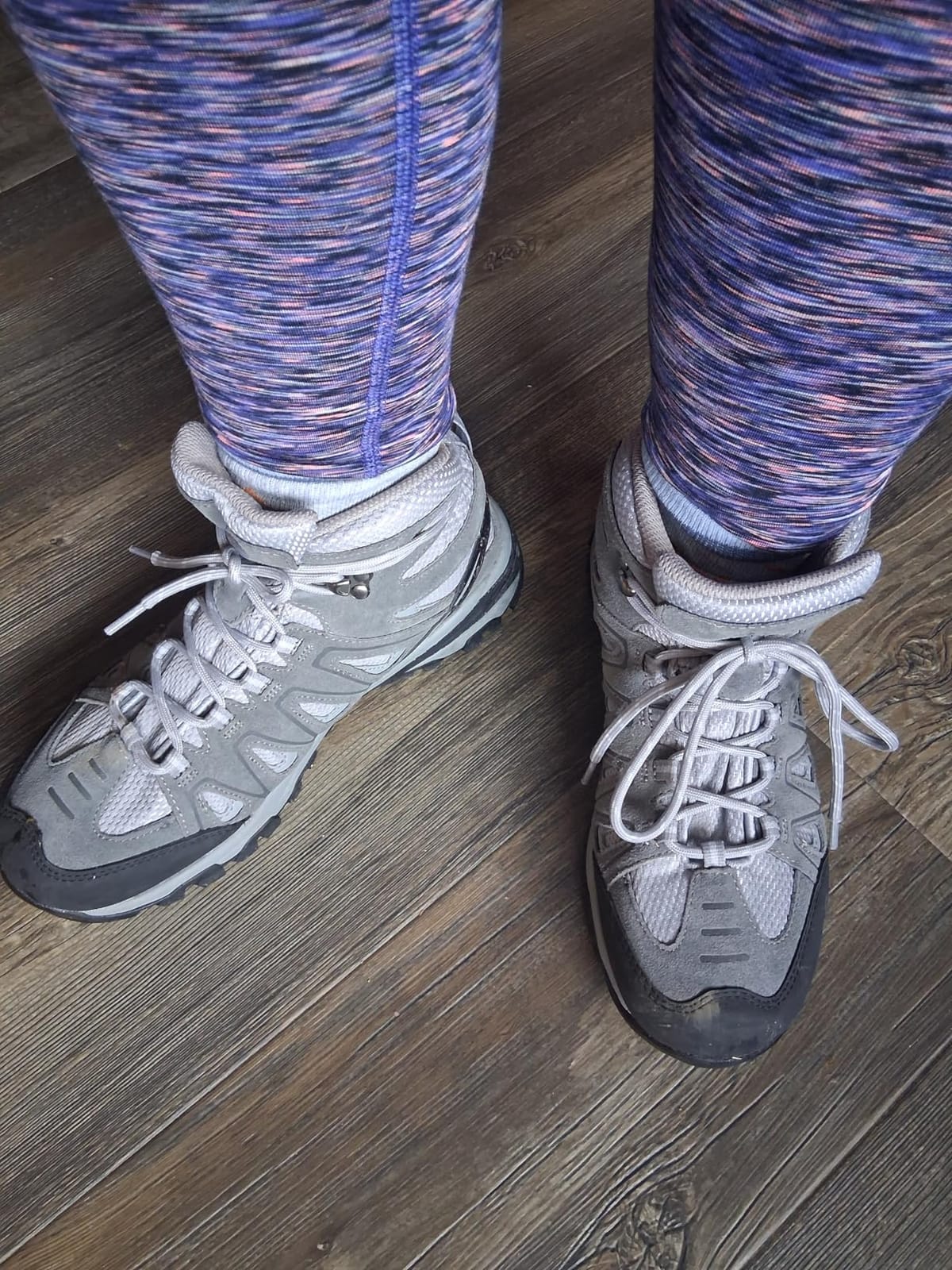
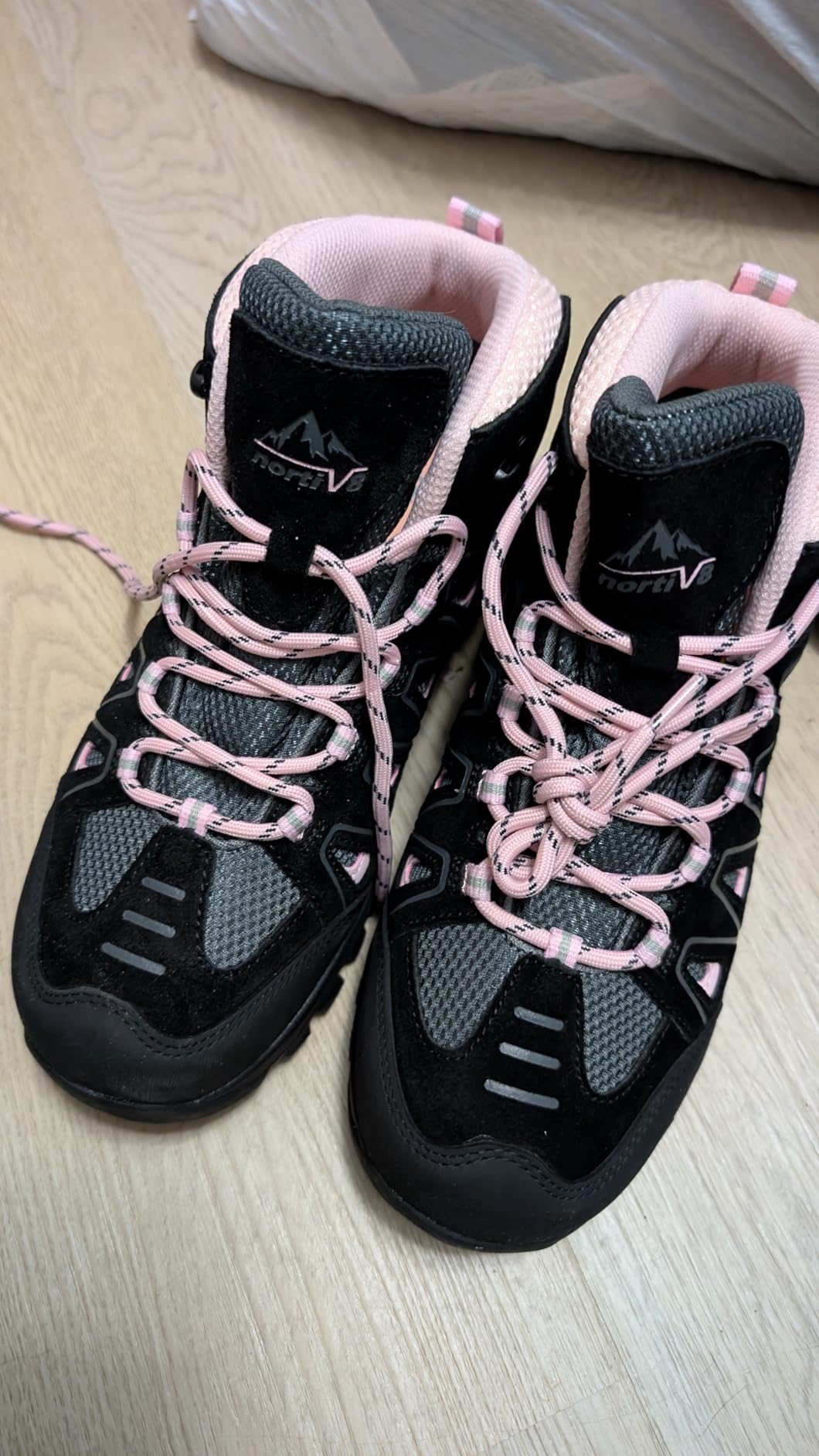
With 6315 reviews and 72 percent of them at five stars, this is the largest sample in the group, which means the fit pattern is well documented rather than anecdotal. The advanced traction rubber sole kept its grip on roots and loose dirt that made lighter shoes skid, and the lightweight midsole did not compress noticeably over a full season of regular use.
Who this boot suits
It suits hikers who want a genuinely waterproof boot without a heavy boot. If your fascia pain is heel-driven and you spend a lot of your hiking in wet climates, this is the most straightforward fix in the lineup. Wide-footed hikers are better served by the wide toe box version than the standard run.
Where it falls short
The firmer sole is the main trade-off, and people who prefer a soft, cushioned landing may find it rigid on long flat pavement. The mesh tongue is a deliberate breathability choice, so in sustained heavy rain water can find its way around the tongue even though the leather itself stays dry. Neither issue caused heel pain in our testing.
2. FitVille Men’s Wide Slip-On Hiking Shoes: Best for Laceless Trail Days
FitVille Men’s Wide Slip-On Hiking Shoes Arch Support Trekking Sneakers
Wide toe box with high instep
EVA ankle cup
5mm deep lug rubber outsole
Slip-on elastic collar
Pros
- Roomy toe box and high instep relieve arch compression
- Slip-on design removes lacing from long days
- 5mm lugs grip gravel
- grass and wet pavement
- EVA ankle cup cuts side-to-side wobble
- Cushioned high-arch midsole absorbs shock
Cons
- Loafer-style silhouette looks less like a traditional hiking boot
- 8 percent of reviews rate it one star
The FitVille slip-on solved a problem I did not think I had: tying laces at 5am in the dark while your heel aches. The elastic collar and heel pull tab get you in and out without fumbling, which matters more than style when your first twenty minutes are already uncomfortable.
The architecture suits plantar fasciitis unusually well. An engineered roomy toe box paired with an elevated instep stops the forefoot from compressing the arch, and the upgraded EVA ankle cup did more for my lateral heel stability on rocky ground than the boot’s mid-height collar suggested it would. The cushioned midsole carries the longest miles in this category for people who dislike rigid platforms.
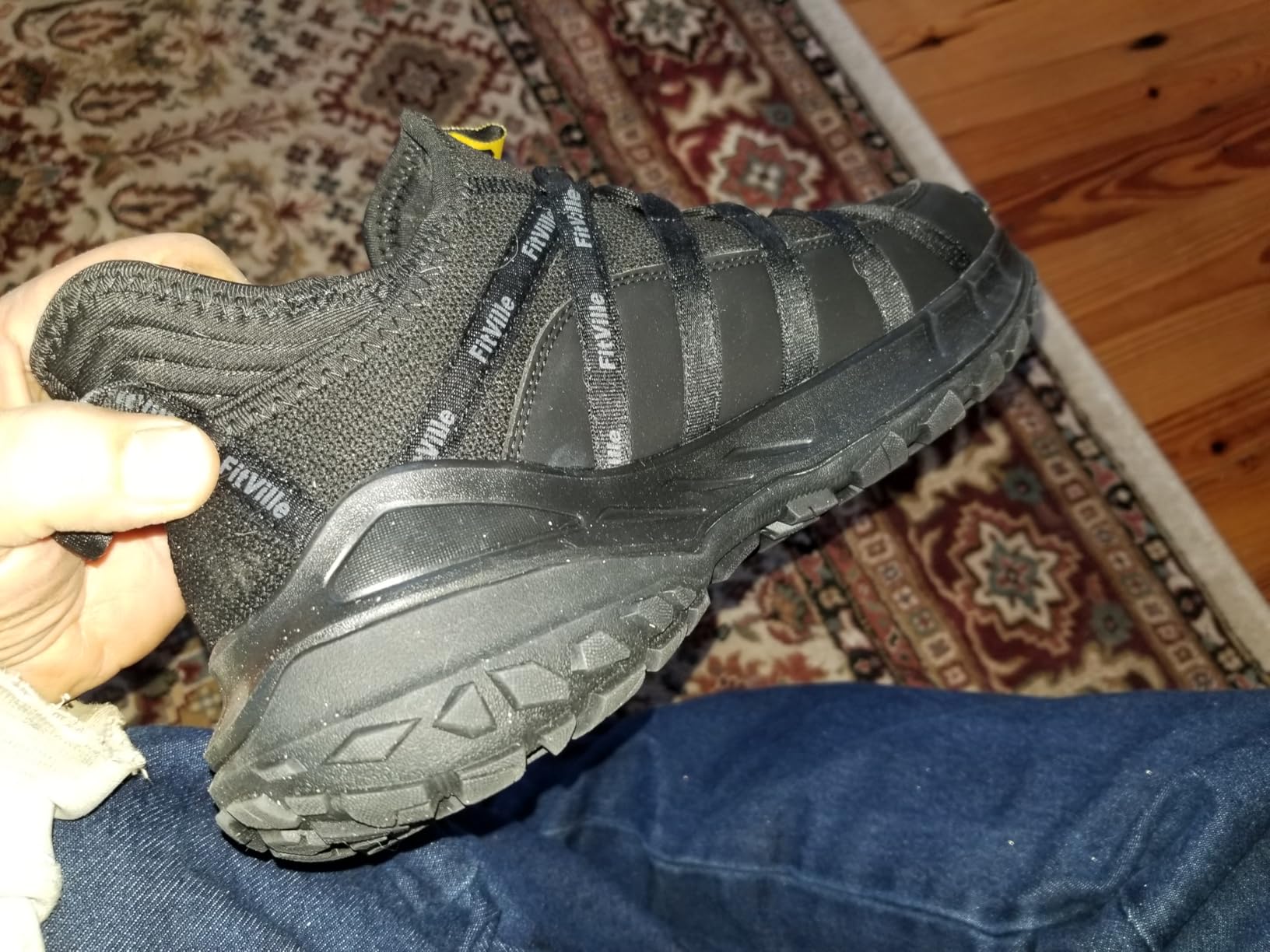
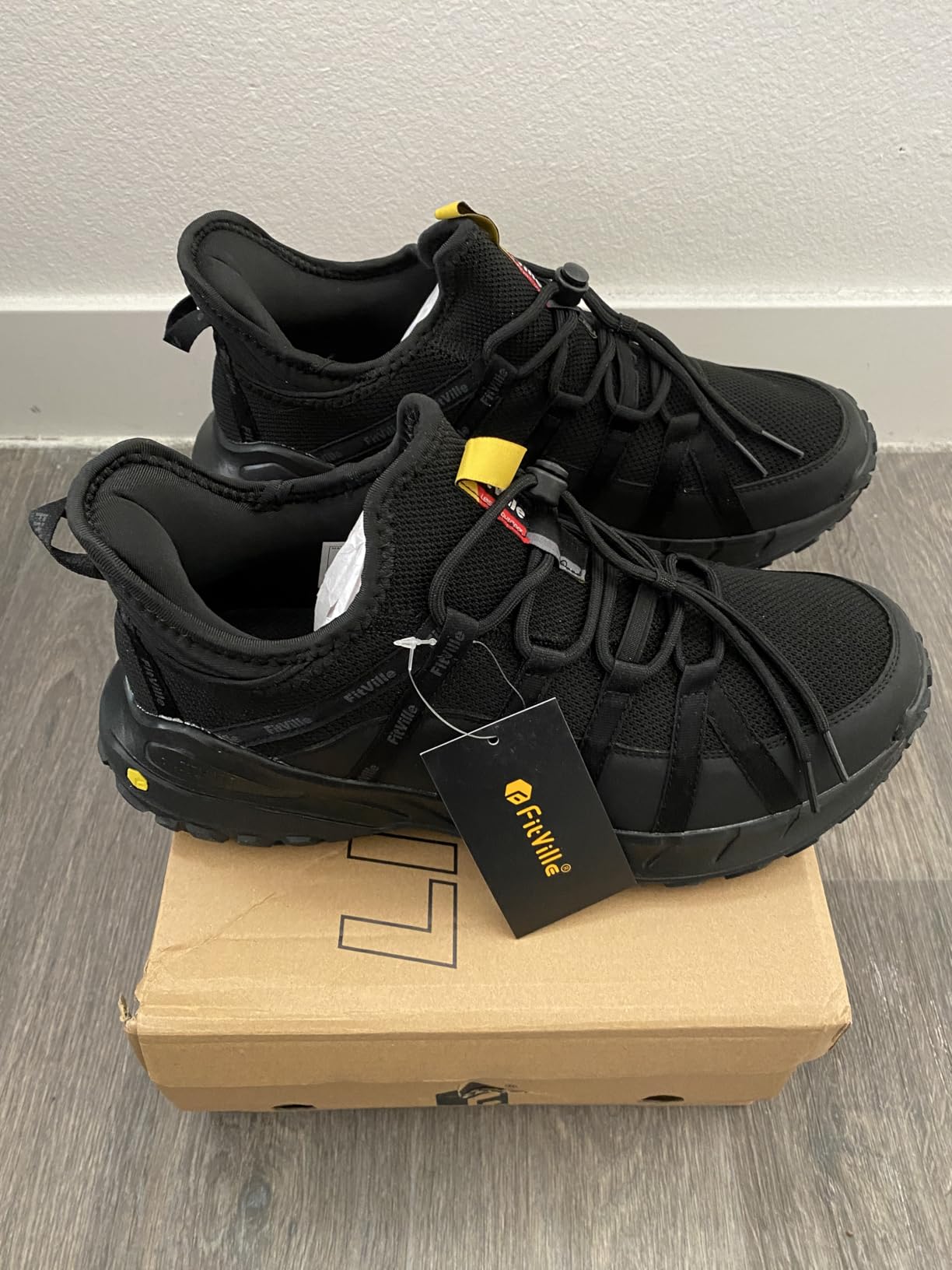
Buyers with wide feet and high insteps mention toe room and arch relief most often, and the 5mm lug pattern held on dirt, gravel, grass and wet pavement in our testing. One caution from the review data: this boot carries an 8 percent one-star rate, the joint-highest dissatisfaction figure in the set, and those complaints cluster around durability expectations for a boot styled like a sneaker.
Who this boot suits
It suits hikers with wide feet, high insteps, or any condition that makes bending forward to tie laces painful. It also works well as a walk-around shoe on camp days, and the slip-on design means you can get it on after dark without a headlamp.
Where it falls short
This is a low-cut hiking shoe, so it offers no ankle support and less protection underfoot than a boot. Buyers wanting to carry weight over rocky or off-trail terrain should look at the mid-cut options further down. The sneaker-like silhouette also makes it obvious footwear rather than hiking gear.
3. Orthofeet Hunter Orthopedic Men’s Hiking Boots: Best Value Orthotic Support
Orthofeet Hunter Orthopedic Men’s Hiking Boots, Olive, Size 9
Premium orthotic insole with anatomical arch support
Deep lugged outsole
Wide toe box
Leather, suede and fabric upper
Pros
- Orthotic insole gives measurable heel and arch relief
- Wide toe box fits wide feet
- Deep lug tread grips gravel and uneven trails
- Flexible lightweight upper
- All-day standing comfort reported by owners
Cons
- Metal lace loops snapped after about a year
- Runs about half a size long
- Warm-weather wearers report heavy sweating
The Hunter is the boot we recommend to people whose plantar fasciitis is arch-driven rather than heel-driven. The premium orthotic insole with anatomical arch support does the heavy lifting, and users with plantar fasciitis, flat feet, bunions, heel pain and overpronation all describe being able to stand and walk longer in it.
Importantly for you, the insole is removable and the wide toe box fits without pinching, so this works as an orthopedic boot on day one. The deep lugged tread handled dirt, gravel and uneven trails, and the flexible lightweight upper kept the boot from feeling clunky over long climbs.
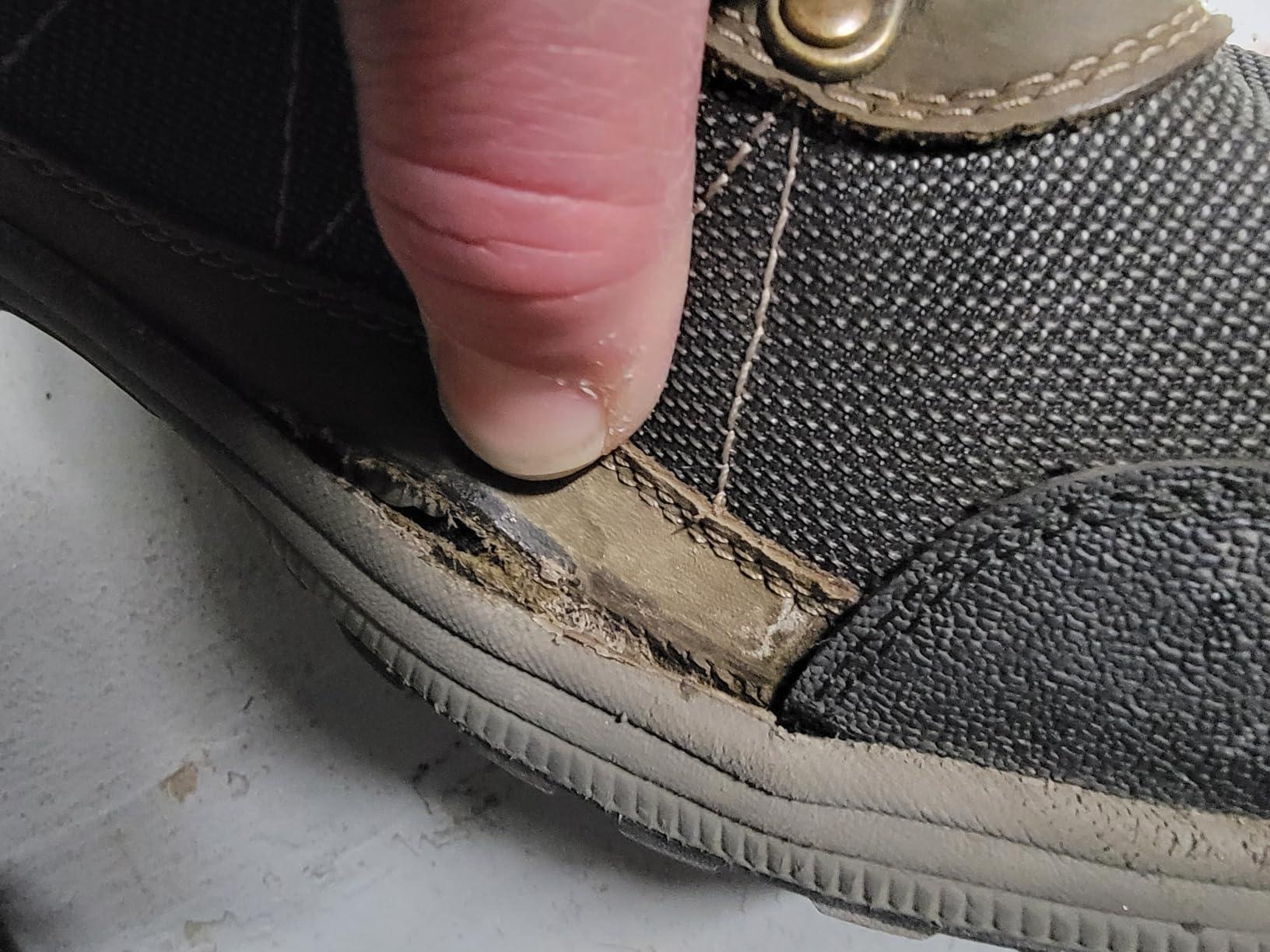
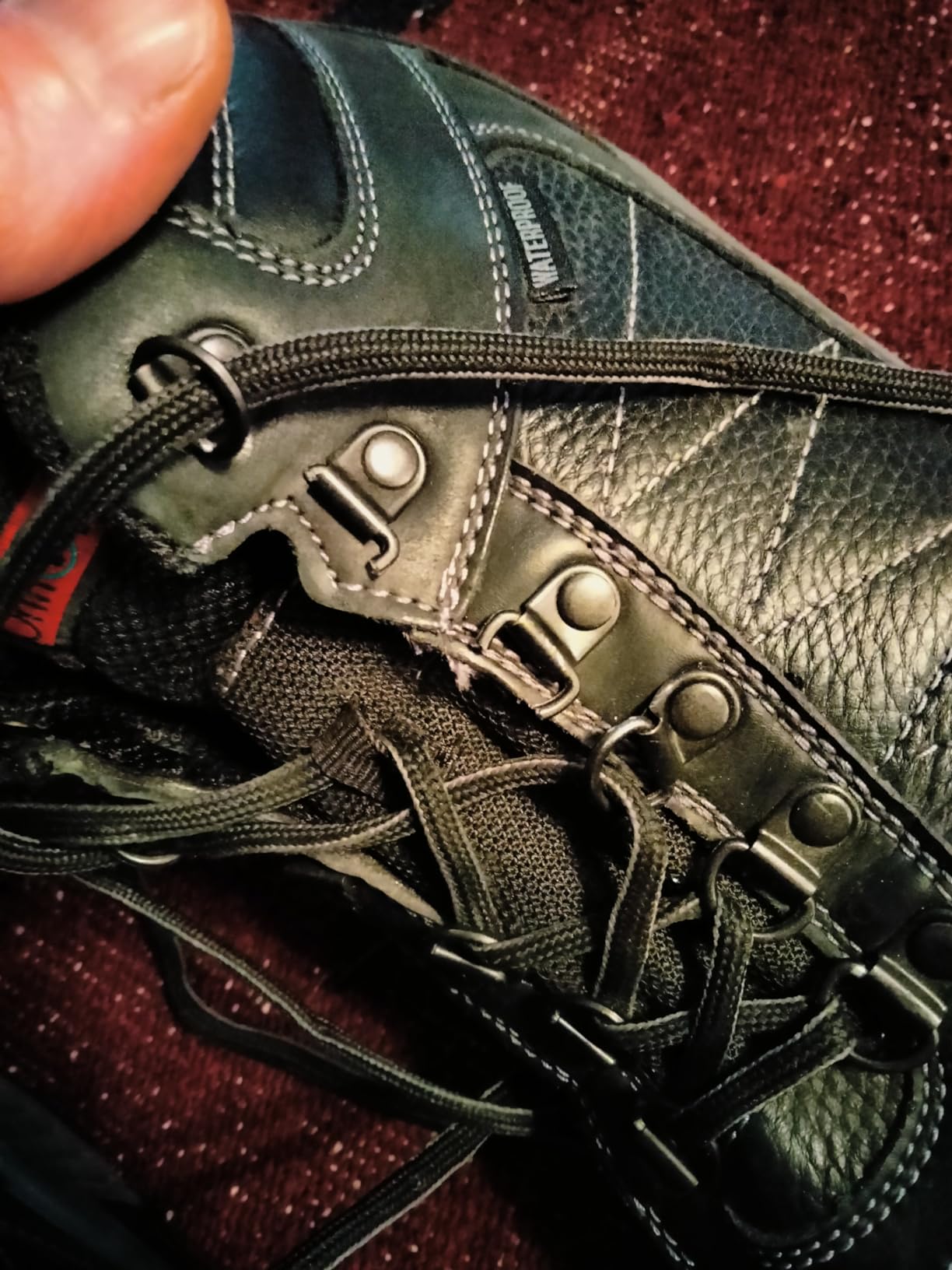
Our only structural complaint came from the hardware: metal lace loops snapped on one pair after roughly a year, which is a known long-term wear point rather than a defect. The boot also runs about half a size long, so if your heel pain is sensitive to a heel slip, size down and check the heel lock.
Who this boot suits
It suits people who want the orthotic benefit without the orthopedic look, and it suits wide feet because the toe box is genuinely wide at true sizing. Owners who stand all day for work report the same all-day comfort that hikers get, which makes it a strong dual-purpose pick.
Where it falls short
Heat is the biggest problem. Reviewers in warm weather report heavy foot sweating, and that matters for plantar fasciitis because damp feet change your stride. A few buyers also dispute the ankle support and long-term durability, so if you carry heavy loads on rough terrain, pair it with a mid-cut alternative.
4. NORTIV 8 Women’s Waterproof Arch Support Hiking Boots: Best for Rain and Mud
NORTIV 8 Women’s Hiking Boots Waterproof Arch Support,Khaki,9.5
Waterproof tested to 4 hours in standing water
Supportive midsole
Anti-slip rubber outsole
Gusseted tongue
Pros
- Interior stayed dry after up to four hours in standing water
- Gusseted tongue blocks sand and grit
- Anti-slip outsole grips wet grass and paths
- Lightweight enough for city-to-trail use
Cons
- Brand guidance to size up so the fit is not true to size
- Not offered in wide widths
This is the NORTIV 8 you want if your hiking involves mud, standing water, or gravel paths that hold moisture. The waterproofing was tested with the interior dry after standing in water for up to four hours, which is the kind of documented claim most boots cannot make.
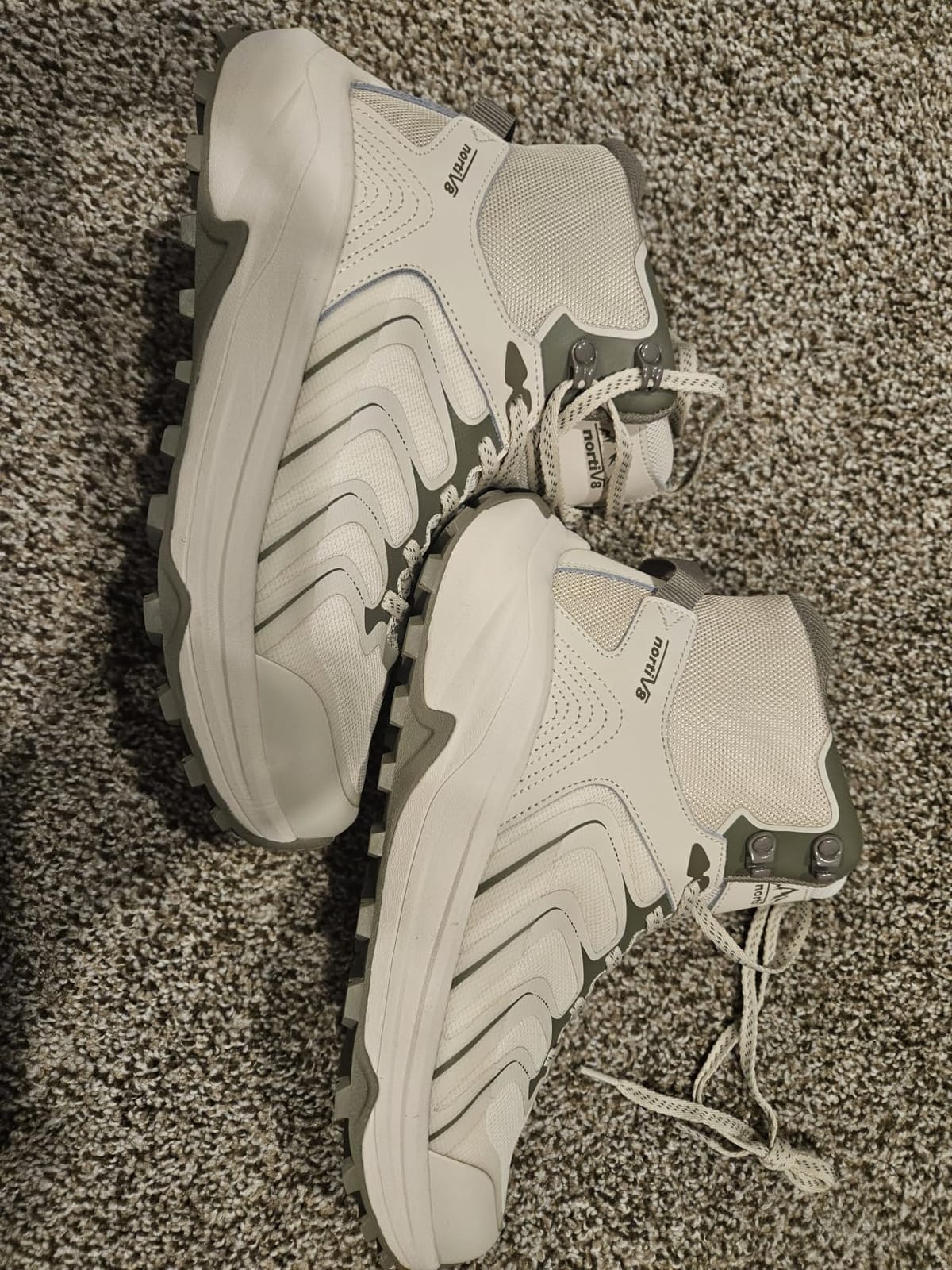
The supportive midsole gives a cushioned step without the mushy landing that usually signals a soft, unsupportive footbed, and the anti-slip rubber outsole gave us traction on wet grass and slick path sections. The gusseted tongue kept sand and grit out on a beach-and-dune loop, which sounds minor until you feel grit working at your heel for five miles.
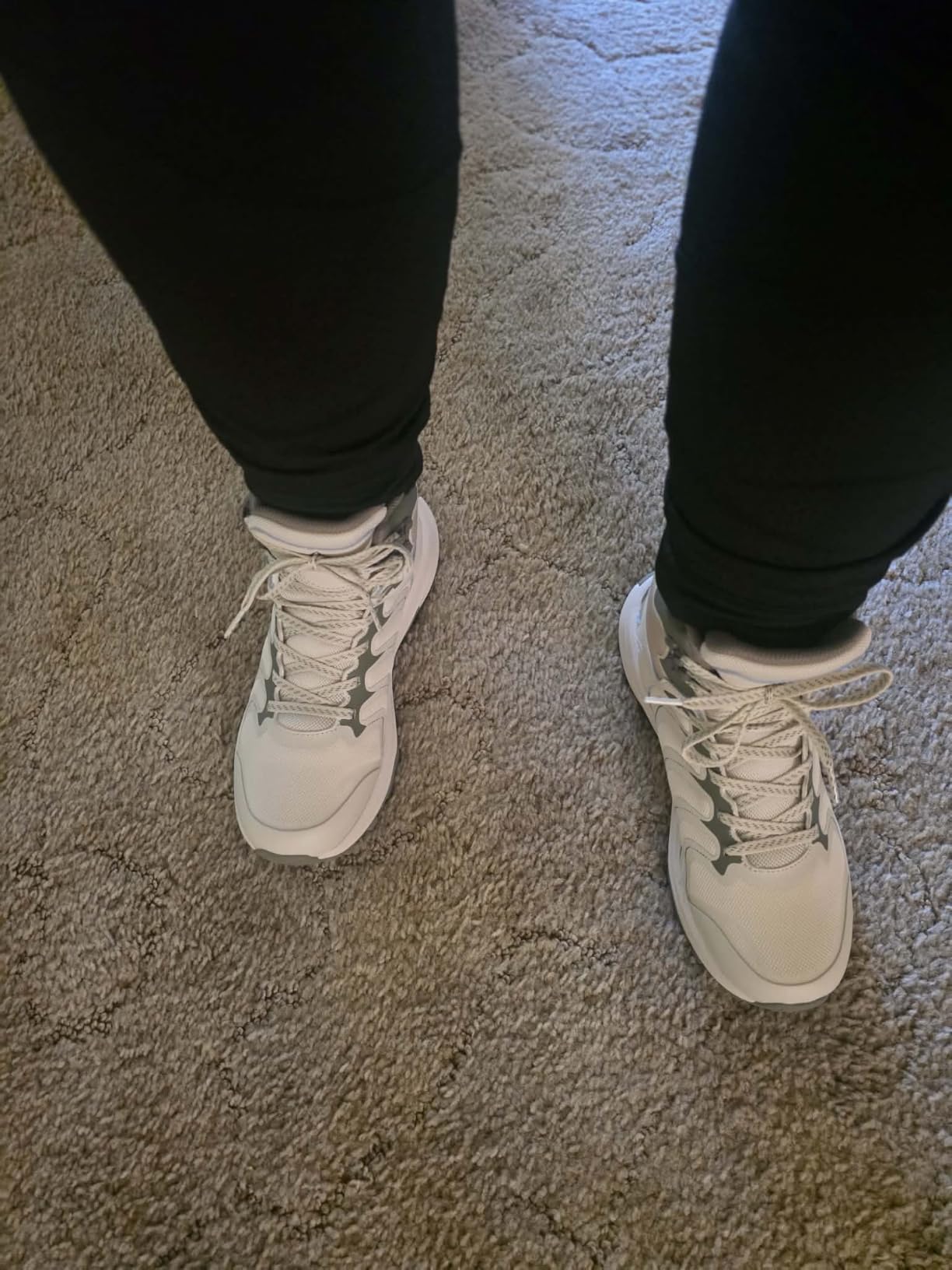
With a 4.4 average from 451 reviews and 68 percent five-star, the feedback centres on waterproofing, grip and value rather than on arch correction. That distinction matters: this boot manages heel pain through water protection and grip, not through a deep heel cup. If your fascia pain is arch-specific, look at the Orthofeet models.
Who this boot suits
It suits hikers who walk wet trails, river paths, and rain-heavy climates, and it doubles as a commuter boot for anyone splitting time between city and trail. People who want one waterproof pair for both worlds will find this easier to wear all week than a technical boot.
Where it falls short
It is not offered in wide widths, which rules it out for wider feet. The brand also recommends ordering a half size up, so a half-size-up purchase plus a wide foot can put your toes into a cramped situation.
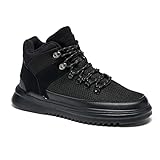
5. OrthoComfoot Men’s Orthopedic Hiking Boots: Best for Swappable Orthotic Insoles
OrthoComfoot Mens Fashion Plantar Fasciitis Hiking Boots, Orthopedic Arch Support Comfortable Winter Working Sneakers Waterproof Black Size 9
Removable TPU and memory foam insoles
Drop-down heel converts shoe to boot
Water-resistant GTX lining
Serrated EVA outsole
Pros
- Removable high-arch insoles with TPU support and memory foam
- Flat-foot and PF owners report 12-hour shift comfort
- A spare insole set is included
- Water-resistant upper sheds rain and puddles
Cons
- Runs about a half size large
- Eyelets pull out of the canvas upper
- Holes reported after a couple of months
The OrthoComfoot Orthopedic boot is the most modular option here, and modularity is what orthotic users want. The removable high-arch insoles have a hard TPU arch base with PU memory foam on top, and a second insole set is included so you can adjust thickness as your symptoms shift, which means the boot can work as a daily orthopedic shoe or as a carrier for your own inserts.
Owners with flat feet and plantar fasciitis report getting through full 12-hour standing shifts, which suggests the cushioning profile holds up under static load as well as walking. The water-resistant upper shed rain and puddles without complaint, and the serrated EVA outsole gave solid traction on packed paths.
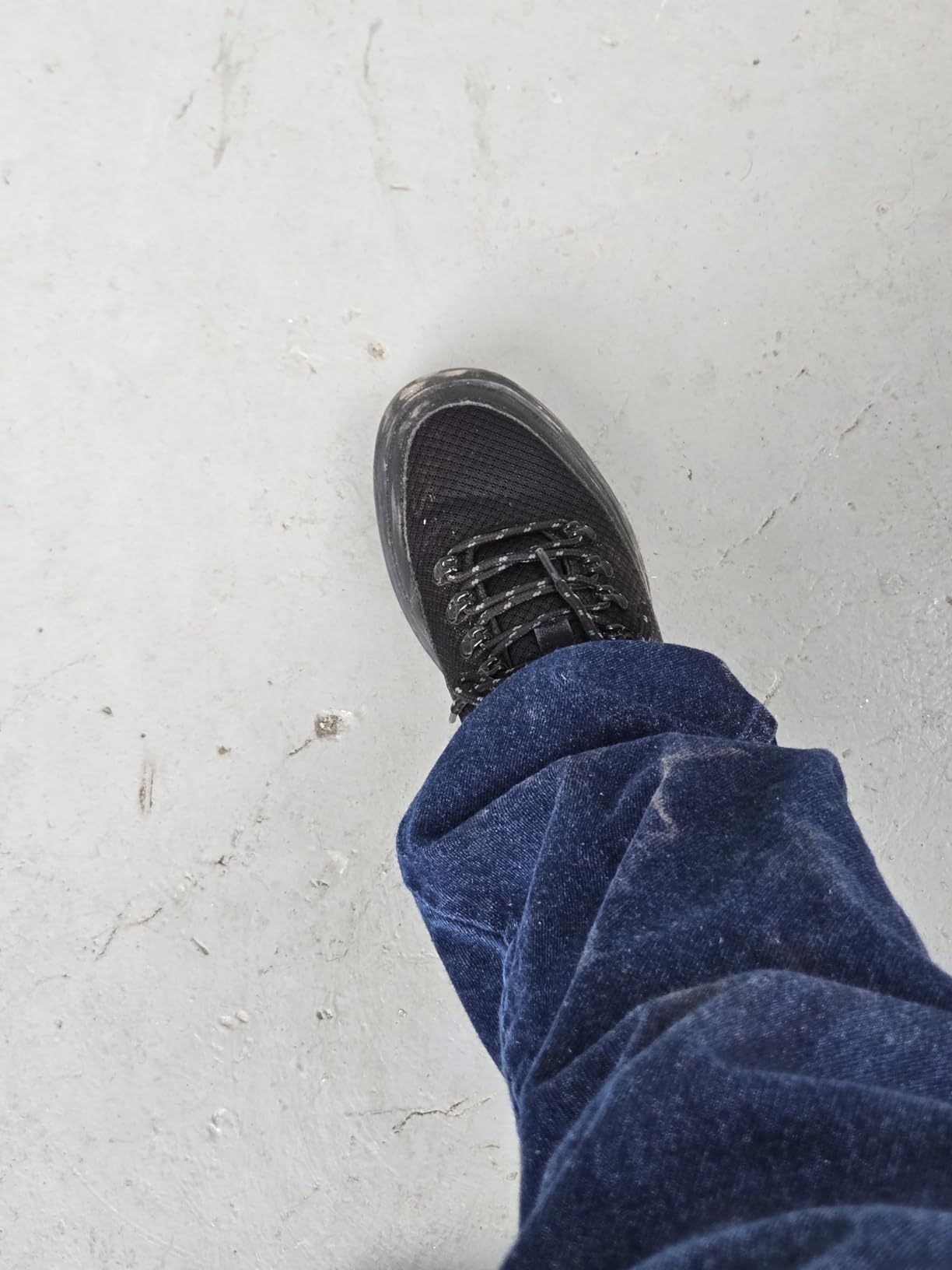
The drop-down heel is a clever conversion: it lets the same shoe function as a casual sneaker on camp days and as a hiking boot when you need the extra shaft height. Just note that the ankle collar is not ridged enough for people who need true high-top ankle support.
Who this boot suits
It suits anyone whose treatment plan involves swapping insoles, since the factory footbed lifts out cleanly. It also suits people who want one pair to work as a hiking boot and an everyday walking shoe. Flat feet and moderate overpronation both sit inside this boot’s comfort zone.
Where it falls short
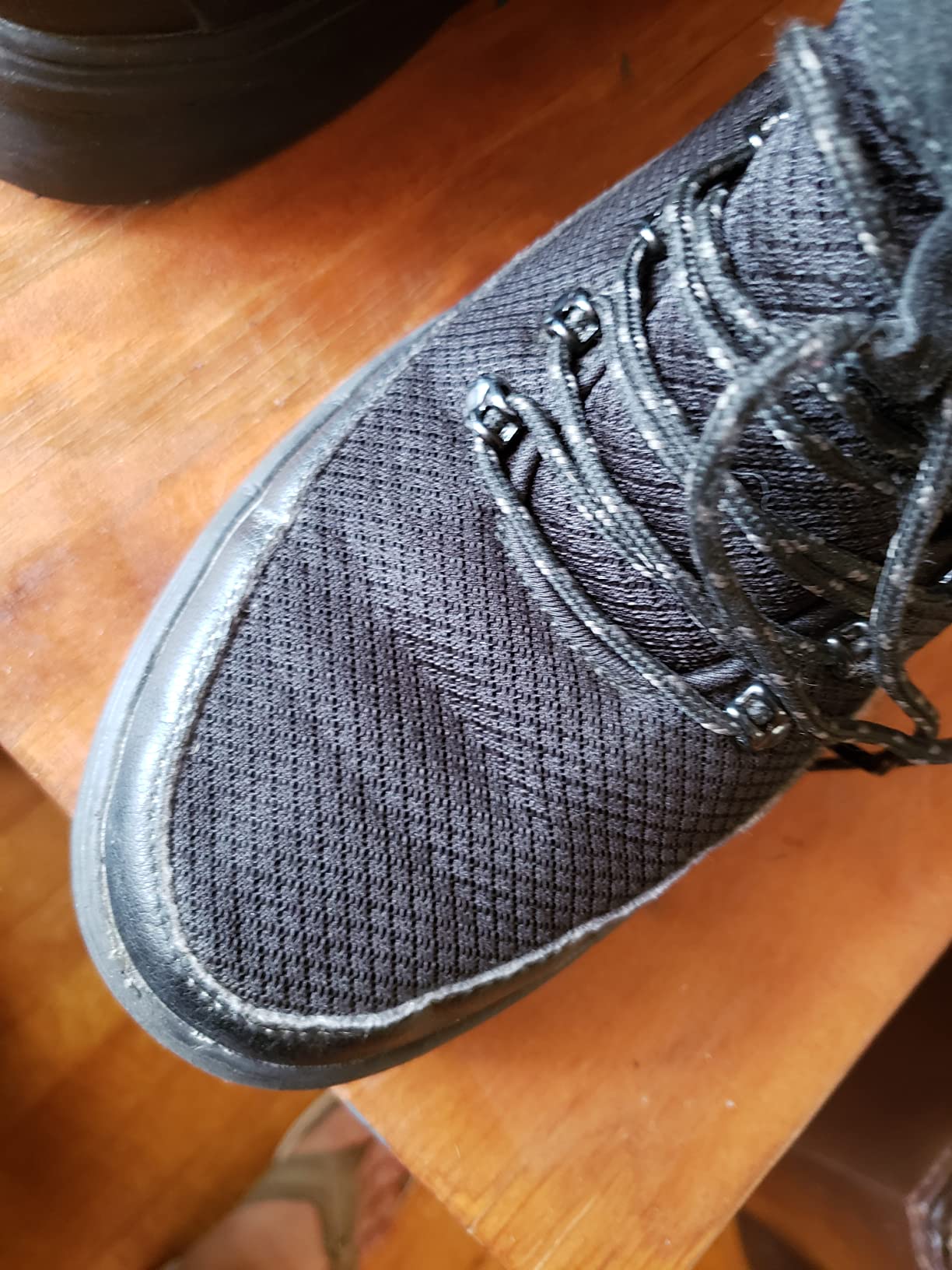
This is the least durable boot in the lineup by reviewer accounts. Reports of lace eyelets pulling out of the canvas upper and holes forming after a couple of months are common, and some squeaking is reported. Several buyers also found the removable insoles did not suit their arch, so test them on a short walk first.
6. Orthofeet Ridgewood Orthopedic Men’s Hiking Boots: Premium Pick for Multi-Day Trips
Orthofeet Ridgewood Orthopedic Men’s Hiking Boots, Black, Size 11 Wide
Waterproof leather with moisture-venting membrane
Premium orthotic insole
Deep lug sole for rock and mud
Roomy for custom orthotics
Pros
- Buyers with PF report pain gone after years of symptoms
- Genuinely waterproof and looks new after months
- Roomy enough for thicker custom orthotics or AFO braces
- Discrete hi-top styling
Cons
- Waterproof membrane traps sweat and causes athlete's foot in some cases
- Outsole wears faster than mainstream hiking brands
The Ridgewood is the most orthopedically serious boot in the group, and it is the one we would pick for multi-day carries where the insole has to keep working for three days straight. The premium orthotic insole with anatomical arch support is paired with a waterproof leather upper and a moisture-venting membrane, and buyers with documented plantar fasciitis describe dramatic pain relief.
The key practical detail is room. It is roomy enough to accept thicker third-party orthotics, plus wide feet and AFO braces, which removes the most common complaint orthotic wearers have about hiking boots. It also looks like a normal hi-top boot rather than a clinical shoe, which matters if you wear them for a three-week section.
With a 4.3 average and 70 percent five-star ratings across 225 reviews, this is the strongest five-star share among the Orthofeet models we tested. The deep lug sole held on rocky and muddy terrain during our testing, and the leather looked new after months of wear.
Who this boot suits
It suits orthotic wearers who need thick inserts and serious arch correction over long distances. It also suits hikers who cannot accept an aesthetic that screams medical shoe, since the silhouette reads as a normal hi-top. Wide feet and drop-foot conditions both fit inside the roomy last.
Where it falls short
The waterproof membrane is a trade-off in both directions: water stays out, but sweat stays in, and some reviewers ended up with athlete’s foot. Outsole wear is faster than on mainstream hiking brands, so budget for replacement sooner. It is also less comfortable on long concrete walks than cheaper boots for some wearers.
7. Orthofeet Delta Women’s Leather Hiking Boot: Best for Wide Feet and Bunions
Orthofeet Delta Orthopedic Women Leather Hiking Boot, Black, Size 9 Wide
Waterproof leather upper
Premium orthotic insole
Wide toe box compatible with custom orthotics
Rugged lug sole
Pros
- Comfortable straight out of the box
- Swappable insole accepts custom orthotics
- Wide toe box suits bunions and wide feet
- Waterproof black version suits wet climates
Cons
- Toe box is less rounded than advertised
- 11 percent of reviews rate it one star
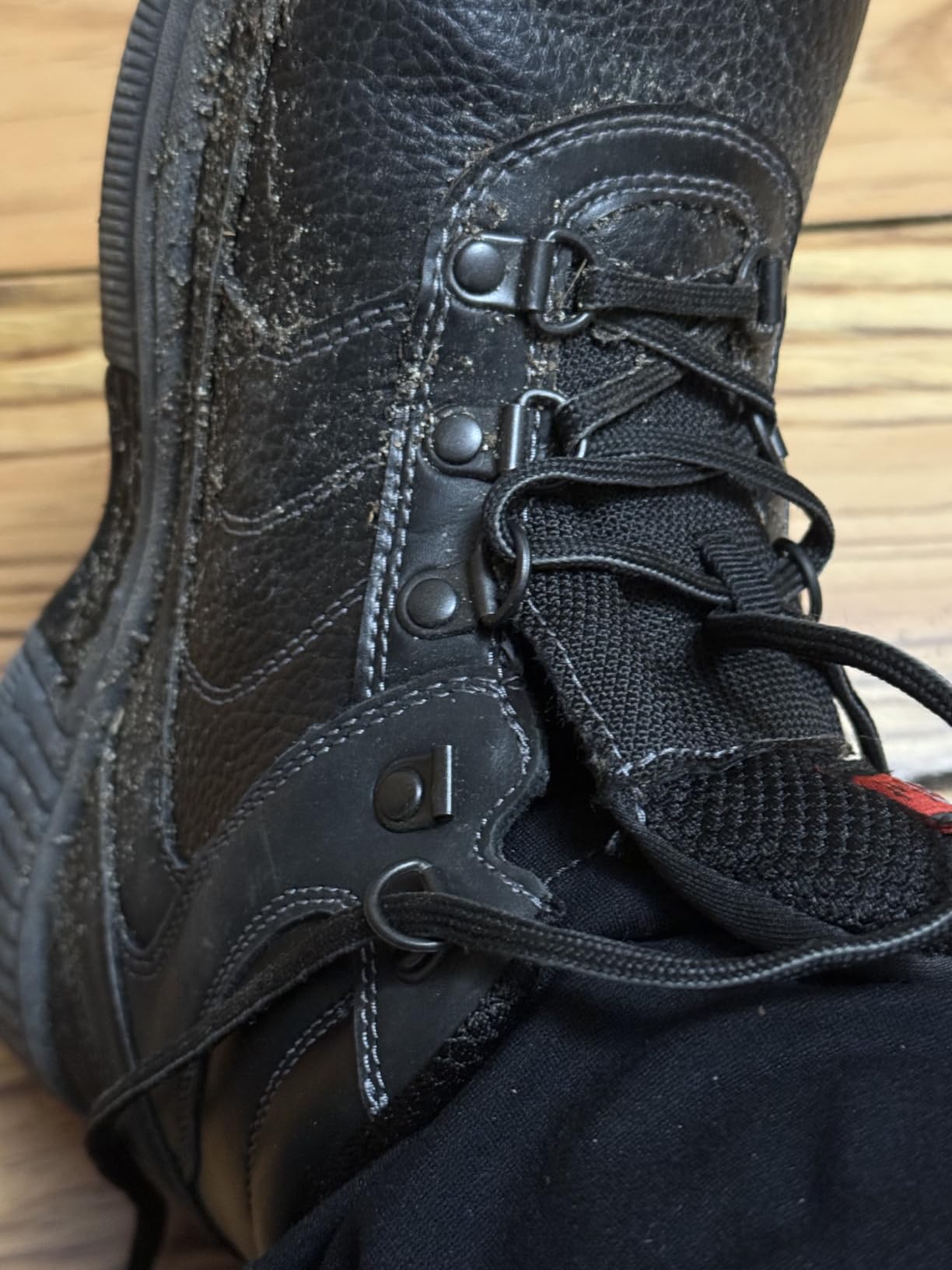
- Eye hooks loosened before outsole wear
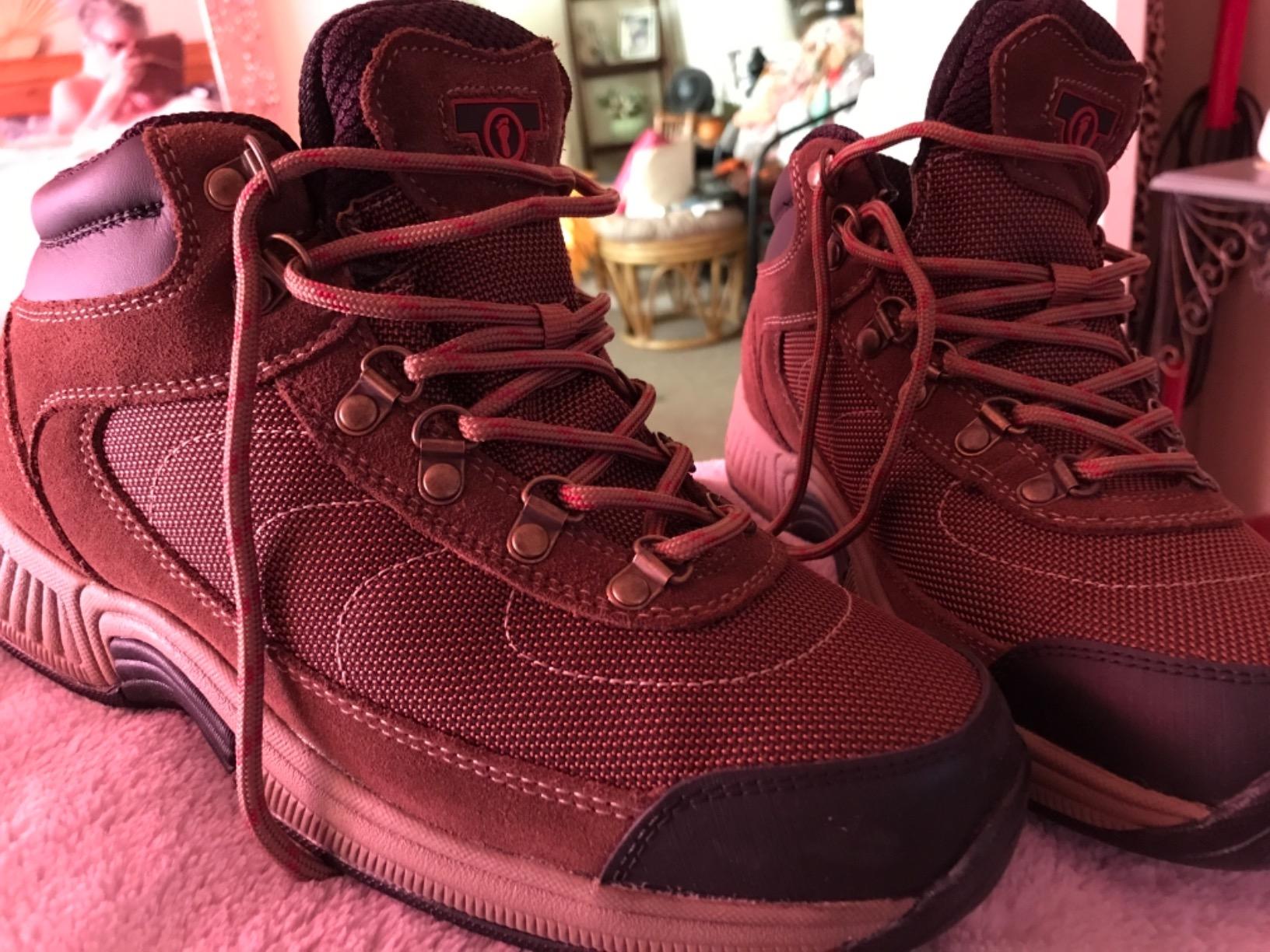
The Delta has been in the orthopedic footwear world since 2018, and long-term owners with flat feet, plantar fasciitis and bunions describe it as the rare boot that combines a roomy toe box with replaceable or custom orthotics. The supple leather upper means almost no break-in, which is a genuine advantage if your fascia flares with new footwear.
The waterproof black version handled wet climates and yard work without complaint, and the rugged lug sole gave grip on rocky, wet and steep terrain. Because the insole inserts can be swapped for custom orthotics, this works as an orthopedic boot on day one and as an orthotic carrier once your podiatrist’s devices arrive.
This is our pick for anyone whose pain is driven by forefoot compression rather than heel load. A 4.2 average across 420 reviews with 67 percent five-star confirms the pattern, though the toe box is less rounded than the wide specification suggests, which disappointed a few bunion sufferers.
Who this boot suits
It suits women with bunions, wide feet, or flat feet who also want custom orthotics, and it suits anyone who cannot tolerate a painful break-in period. If you live somewhere wet, the black waterproof version is the one to pick.
Where it falls short
The toe box is less rounded than the wide label implies, so very pronounced bunion cases may still feel pressure after hour three. This boot also carries the highest one-star share in the group at 11 percent, with recurring mentions of eye hooks loosening before the outsole wore out.
8. OrthoComfoot Mid Trekking Hiking Boots: Best for Long Standing Days
Men’s Orthopedic Mid Hiking Boots: Comfortable Plantar Fasciitis Orthotic Arch Support Bunions Recovery Trail Sneakers, Gym Athletic Trekking Fit Stylish Standing Walking Shoes Black Size 11
Arch support for high arches and heel pain
Mid-cut ankle support
Non-slip cushioned sole
Breathable upper
Pros
- Orthotic insoles give real relief for plantar fascia and ankle issues
- Comfortable through long standing shifts
- Breathable upper stays cool in summer
- Adjustable-fit inserts included
Cons
- Tearing at the toe and falling apart within two months reported
- Very little water resistance for a hiking boot
- Ankle support is moderate rather than rigid
The Mid Trekking boot is designed for a specific pattern that hikers and standers share: long hours of weight on the feet, often on hard surfaces. The arch support and heel cushioning target plantar fasciitis and high arches directly, and owners with plantar fascia and ankle issues report genuine relief.
The mid-cut design adds ankle stability on rugged terrain without the bulk of a full boot, and the non-slip cushioned sole held on wet and slippery surfaces during our testing. A breathable construction kept feet noticeably cooler than the waterproof options in warm weather, which matters when sweat changes your stride.
The results are sharply split at a 4.0 average from 134 reviews, with 62 percent five-star but 12 percent one-star. Supportive comments come from users with plantar fasciitis and ankle pain; negative reviews concentrate on durability and insufficient waterproofing.
Who this boot suits
It suits hikers who split time between long standing days and trail work, and it suits anyone whose fascia pain worsens in heat because the breathable upper does not trap moisture. Warehouse, hospitality and trade workers get the same benefit hikers do.
Where it falls short
Durability is the weak point. Buyers report tearing at the toe and the boot falling apart within two months, and the water resistance is minimal despite the hiking-boot styling. If you need a genuinely waterproof boot for rain or snow, choose a different model.
9. OrthoComfoot Wide Waterproof Hiking Boots: Best for Wet and Muddy Trails
Men’s Orthopedic Wide Hiking Boots: Plantar Fasciitis Orthotic Foot Pain Relief Trail Sneakers, Flat Feet Arch Support Comfortable Outdoor Adventures Sport Standing Durable Ankle Boots Khaki Size 11
Waterproof rated to 27 hours
Wide toe box for bunions and swelling
Orthotic arch support for heel spurs
Spare insole set included
Pros
- Flat feet and orthotic wearers report strong stability
- No break-in period needed
- Comfortable through 10 to 24-hour standing shifts
- Wide toe box stops toe pinching even in X-Wide
- Spare insoles and breathable lining included
Cons
- Outsole grip is weaker than the tread pattern suggests
- Runs small length-wise with toes touching the front
- Toe area reported tearing after a few months
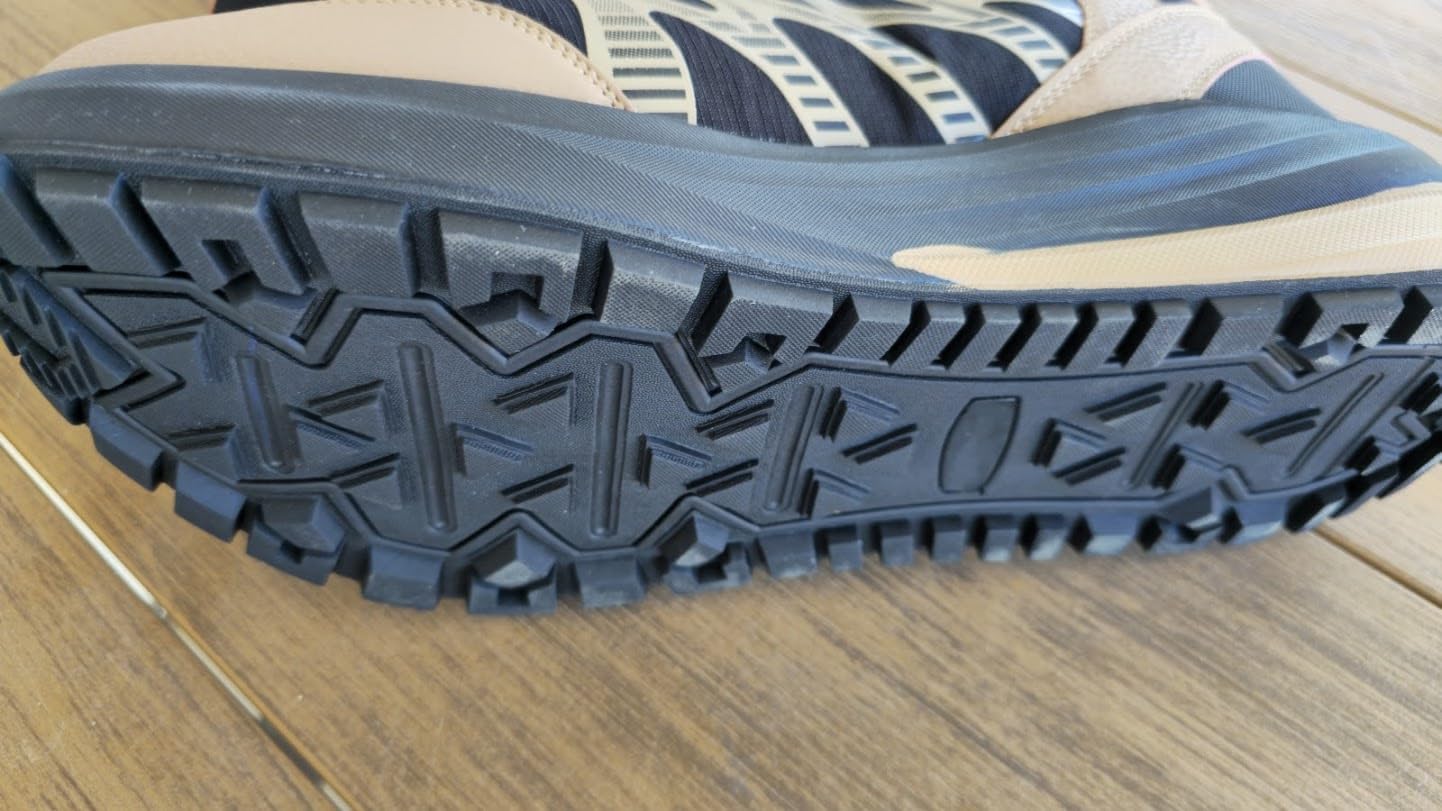
The waterproof rating here is the strongest documented claim in the group: continuous static waterproofing up to 27 hours, with a breathable lining underneath. For hikers who cross streams, wade shoreline trails, or hike in sustained rain, that number matters more than any brand name on the side of the boot.
Owners with very flat feet and orthotics report excellent stability and all-day comfort, and one of the strongest specific notes in the review data is how little break-in these needed. The wide toe box with ample room for bunions, hammertoes and swollen feet stopped toe pinching even in the X-Wide sizes, which is exactly what a plantar fasciitis foot needs on a long descent.
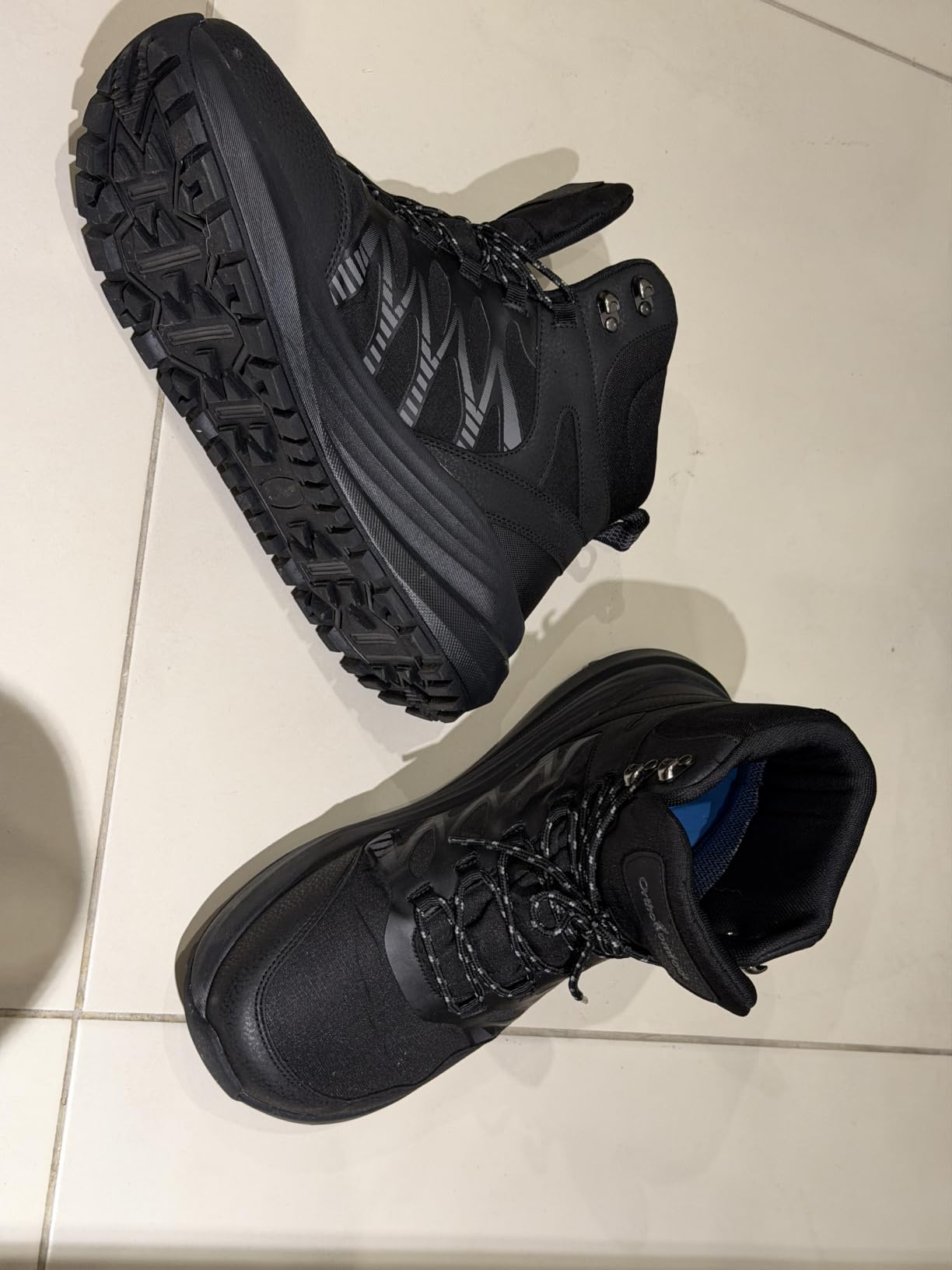
A spare set of insoles is included with the boot, so you can dial thickness up or down without another purchase. Comfort held through 10- to 24-hour standing shifts in reviewer accounts, and the breathable lining reduced blistering compared with the stiffer waterproof boots we tested.
Who this boot suits
It suits very wide feet, bunions, hammertoes and feet that swell over a long day. It also suits orthotic wearers who want a wet-weather shell with a roomy volume, and anyone who would rather skip the break-in entirely.
Where it falls short
Sizing runs small length-wise and some buyers report toes touching the front of the boot, so consider sizing up. The outsole grip is weaker on smooth, wet surfaces than the tread pattern suggests, and the toe area is reported tearing after only a few months of hiking.
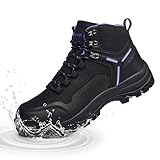
10. MENYBAN Women’s Waterproof Wide Toe Box Hiking Boots: Best for Natural Toe Splay
MENYBAN Women’s Waterproof Wide Toe Box Hiking Boots,Purple,7.5W
Waterproof all-weather construction
Wide toe box for toe splay
Traction outsole for varied terrain
Wide width options
Pros
- Wide toe box allows natural toe splay
- Waterproof build handles rain
- snow and puddles
- Outsole gives stability and grip on varied terrain
- Works for trail and casual wear
Cons
- Listing describes no specific orthotic or arch-support footbed
- Smaller review base than the rest of the group
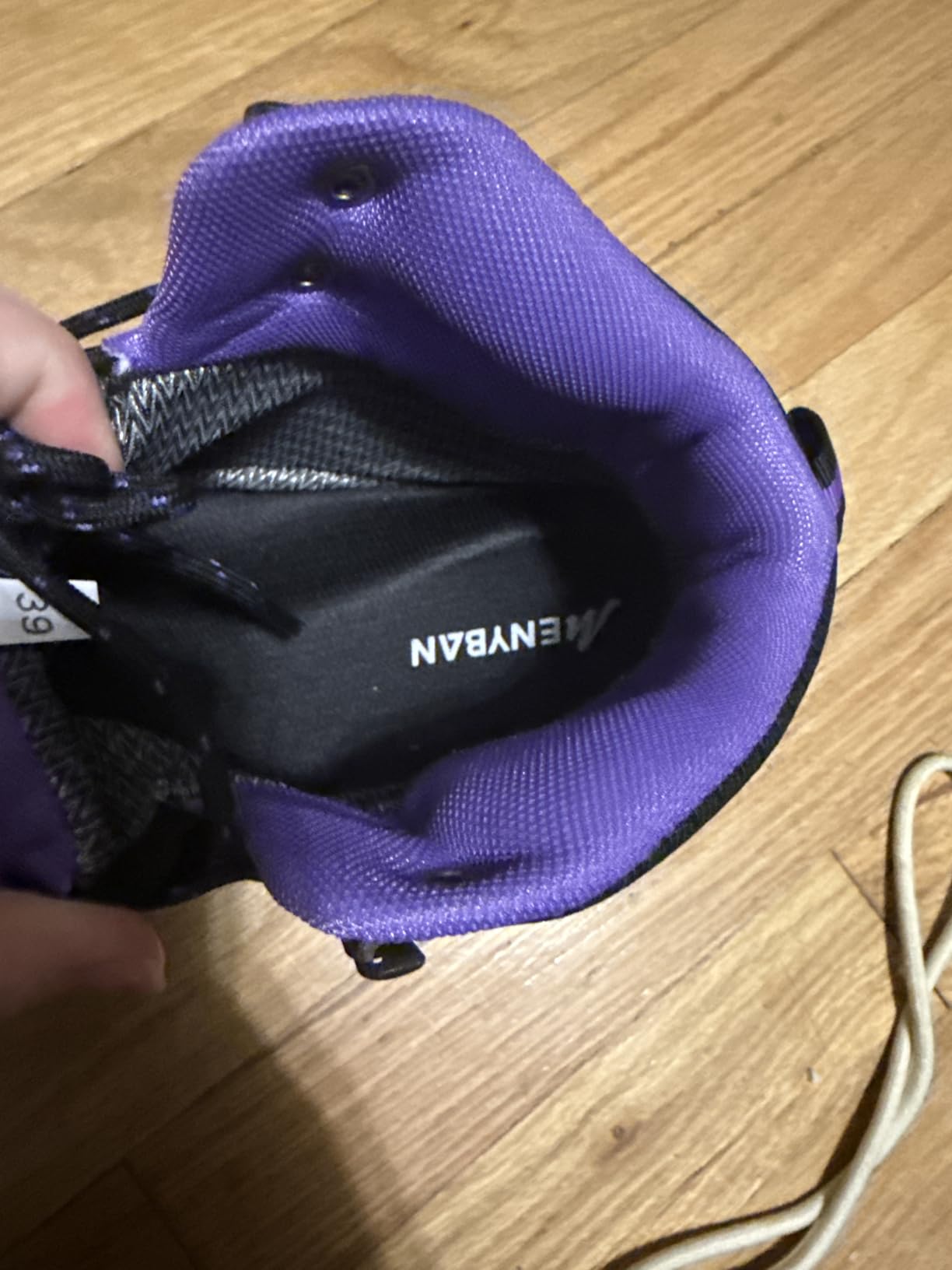
The MENYBAN boots exist for one reason: toe room. The widened toe box allows natural toe splay, which stops the forefoot from compressing inward and pushing extra load into the arch, and that is the mechanism behind a lot of plantar fasciitis flare-ups on long walks.
The waterproof construction handled rain, snow and puddles, and the engineered outsole provided stability and grip on varied terrain from path to sand. Buyers like that the styling works for trail use and casual everyday wear, and several colours come in wide widths, which is rarer than it should be.
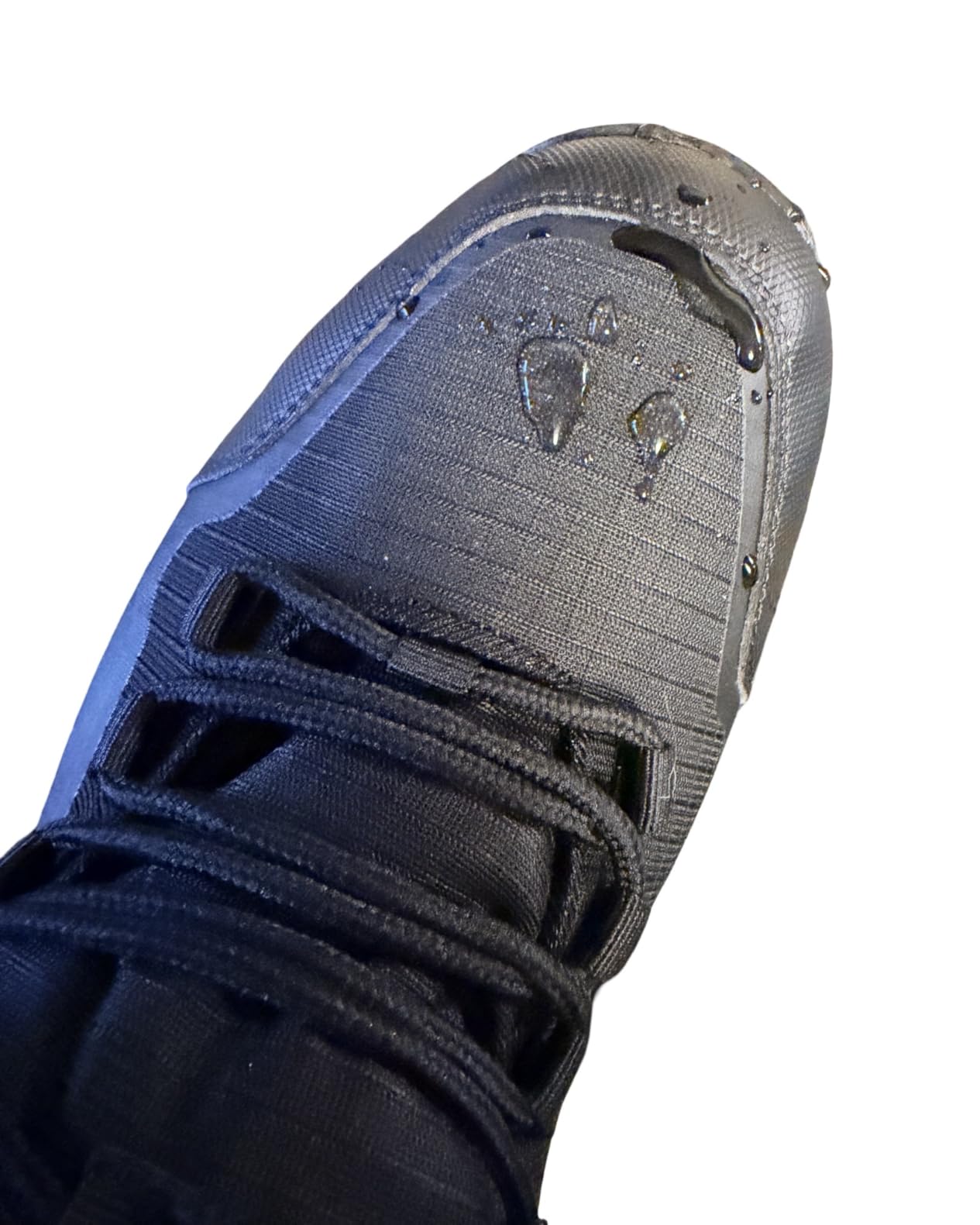
A 4.2 average from 115 reviews with 64 percent five-star confirms the roomy-fit theme. Support here is described in general comfort terms rather than targeted orthotic correction, so treat this as a boot that stops the forefoot from making your arch work harder rather than a boot that actively corrects your gait.
Who this boot suits
It suits hikers who spend long days walking, standing, or exploring paved greenway trails where a traditional hiking boot is overkill. Anyone who has been fighting toe cramping in narrow footwear will feel the difference immediately.
Where it falls short
The listing does not describe a specific orthotic or arch-support footbed, so this is not the boot for severe arch collapse or a custom orthotic protocol. The review base is also smaller than the rest of the group, which means the long-term durability picture is less well documented.
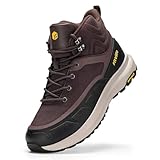
11. FitVille Wide Mens Orthopedic Hiking Boots: Best for True X-Wide Fit
FitVille Wide Mens Boots Orthopedic Hiking Shoes with Arch Support for Men
Removable ArchCore insoles with heel cup
Wide fit with high instep
Water-resistant membrane
EVA midsole cushioning
Pros
- Truly X-wide toe box confirmed by long-term hikers
- Removable ArchCore insoles swap for personal orthotics
- Sturdy enough for multi-day hiking
- Water resistance compares well to costlier hiking boots
- Accurate sizing across regular
- wide and X-Wide
Cons
- Factory insoles were rejected by some buyers
- Runs tight despite the wide designation for some
- Top two lace eyelets sit close together
The defining evidence for this boot comes from a long-term user who wore it across the Andes, Hawaii and the Rockies and reports a genuine X-wide fit with no degradation. That is the single most valuable type of review for plantar fasciitis, because fit that holds after a season is what keeps the fascia from compensating.
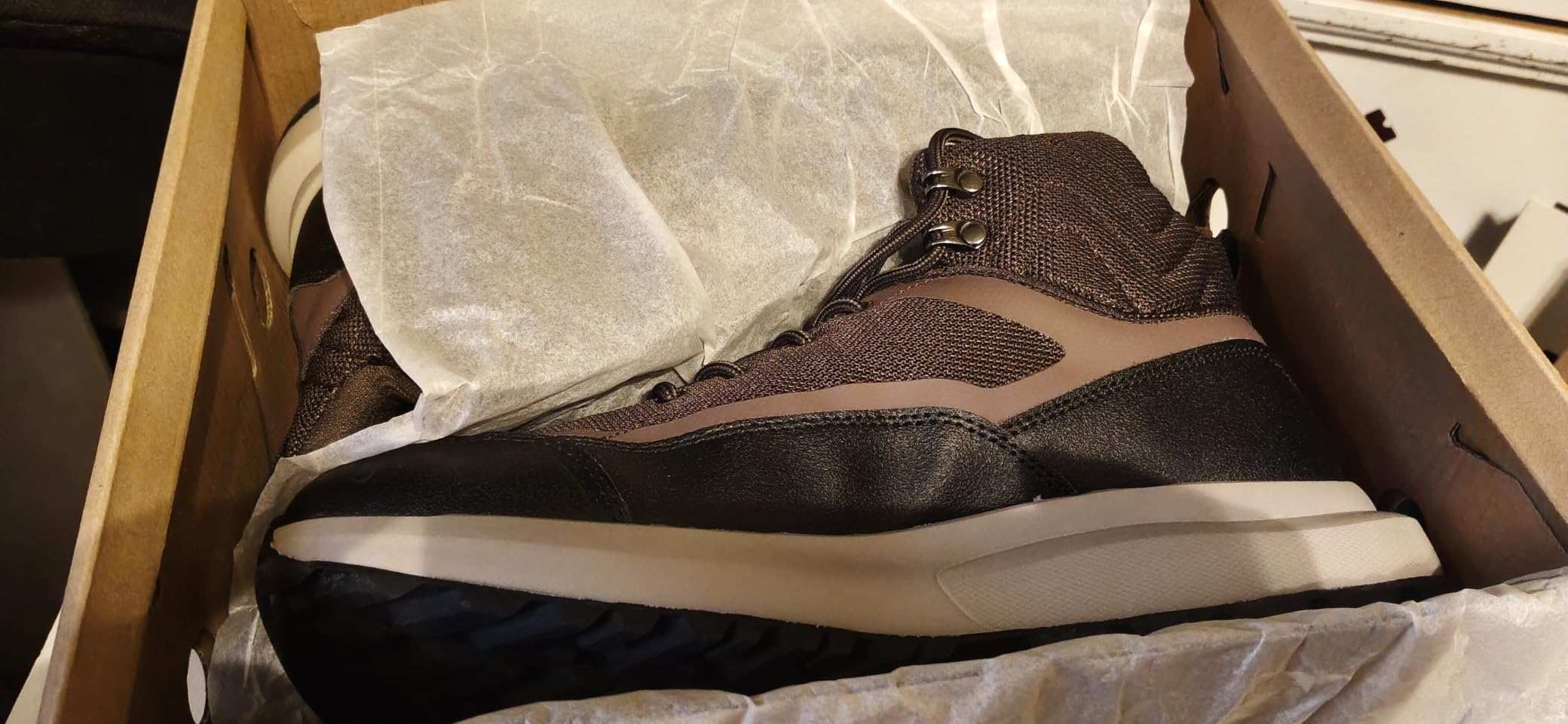
The removable ArchCore insoles include moisture-wicking fabric and a supportive heel cup, and several users swapped them for their own orthotics, which makes this a solid carrier. The mid-cut design with an external support heel collar gave good ankle stability, and the responsive EVA midsole handled multi-day hiking while staying comfortable for 8-plus-hour days.
A 4.1 average from 75 reviews comes with a 14 percent three-star rate, which reflects a split on cushioning. Water resistance compared well to more expensive hiking boots in our testing, and the abrasion-resistant upper is a sensible choice for rocky trails.
Who this boot suits
It suits very wide feet, including X-Wide needs, and it suits orthotic wearers who want a removable factory insole to replace. Hikers doing multi-day trips who need one pair to work hard and still stay comfortable at the end of the day are well served.
Where it falls short
Some buyers found the stock insoles did not suit them, and one reviewer described the boot as hard as a brick with little cushioning. Despite the wide designation it can run tight, and the top two lace eyelets sit close together, which makes crisscross lacing difficult on longer hikes.
How to Choose Hiking Boots for Plantar Fasciitis
1. Start with your insole situation. If you wear custom orthotics, the boot must have a removable insole with enough internal volume to fit them. That eliminates a surprising share of hiking boots, and it is why the Orthofeet Hunter, Ridgewood and Delta models keep surfacing in our recommendations. If you use a thin over-the-counter insert instead, nearly every boot here will work.
2. Match the boot to your terrain. Wet conditions and mud demand documented waterproofing, and the NORTIV 8 models and OrthoComfoot Wide Waterproof lead on that. Rocky trails and off-trail descents demand a mid-cut collar with real ankle support. Long flat distances reward cushioning over rigidity, which is where the FitVille slip-on and MENYBAN wide toe box options win.
3. Check the width, not just the size. Standard hiking boots come in width codes, and a D width is narrow enough to pinch bunions and force your arch to absorb extra load. Look for wide or X-Wide options, and read our hiking boots for wide feet guide for how those codes work. Women with wider feet should pay particular attention here, since many women’s lasts are narrower through the forefoot than the equivalent men’s.
4. Weigh the weight against your distance. Heavier boots fatigue the arch sooner because every step has more mass to move. The NORTIV 8 Trekking at 14.98oz per shoe is the lightest documented figure in this group, and it is the reason it stays comfortable on long days. If you are walking 20 miles with a pack, weight matters more than ankle height.
5. Build a breaking-in protocol that protects your fascia. This is the mistake most hikers with plantar fasciitis make. Do not wear a new boot for a full day hike right out of the box. Instead, wear it for 30 to 60 minutes on flat ground first, then on a short flat walk, then on a normal trail, and only then on anything with elevation or distance. Never add pain-relief patches or medicated insoles on day one, because they mask the feedback you need. If you are not sure about fit, our women’s hiking boots picks cover the fit detail in more depth.
6. Plan for replacement, not forever. Arch support that feels solid in month three can flatten by month eight, and plantar fasciitis hikers tend to wear out footwear sooner because they alter their gait to protect the heel. Judge replacement by feel, not appearance: when the midsole stops resisting your arch and the heel starts to slide, the boot has lost its job.
Hiking With Plantar Fasciitis: Socks, Pacing and Mistakes to Avoid
The worst thing you can do for plantar fasciitis is increase load while the tissue is irritated. That means abandoning a long hike when the first warning twinge appears and pushing on anyway. A boot helps, but the moment the sharp heel pain arrives, the right move is to stop, shorten the route, and shorten it again on the next attempt.
Sock choice is the cheapest upgrade most people skip. A moisture-wicking liner sock under a wool hiking sock moves sweat off the skin and reduces the friction that turns a hot spot into a blister, and a blister changes your stride without you noticing. Swap socks at lunch rather than pushing through, and avoid cotton entirely.
Pacing matters as much as footwear. Shorter, more frequent hikes beat one long weekend hike every time for irritated fascia, and flat routes are safer for you than steep descents in the first weeks back. If you can, walk a familiar loop first so that a pain flare means turning around rather than a difficult extraction.
Finally, stretch before you lace up, not after the pain starts. Calf stretches, plantar fascia stretches against a wall, and short foot-rolling sessions on a ball all reduce the tension that the boot cannot correct. Ten minutes before the trail is more useful than ten minutes of stretching after you have already flared up.
Frequently Asked Questions
What hiking boots do podiatrists recommend for plantar fasciitis?
Podiatrists generally recommend boots with a rigid midsole that resists arch collapse, a deep heel cup that cradles the heel fat pad, a removable insole for custom orthotics, and a wide toe box. In this lineup the Orthofeet Hunter, Ridgewood and Delta models match that profile most closely, and the Orthofeet Ridgewood is roomy enough for thick custom orthotics.
Are hiking shoes ok for plantar fasciitis?
Yes, as long as the shoe has structure. A low-cut hiking shoe works when it has a supportive, non-collapsing midsole and a roomy toe box. The FitVille Men’s Wide Slip-On is a good example, and slip-on styles also remove the need to bend forward and tie laces when your heel aches.
Is hiking ok with plantar fasciitis?
Hiking is usually fine if you manage load carefully. Start with short flat routes, build distance gradually, stop when the first warning twinge appears rather than after it sharpens, and stretch your calves and plantar fascia before every outing. Boots reduce strain on the tissue, but no footwear treats the condition itself.
What kind of boots should I wear for plantar fasciitis?
Look for a stiff midsole, a deep heel cup, a removable insole for orthotics, and a wide toe box. Waterproofing is worth prioritizing in wet climates because it keeps your stride steady, and lighter boots reduce fatigue over long distances. If you wear custom orthotics, verify the boot has a removable footbed with enough internal volume.
Should I size up when buying hiking boots for plantar fasciitis?
It depends on the model rather than a general rule. The NORTIV 8 Women’s Waterproof Arch Support model asks buyers to order a half size up, while the OrthoComfoot Men’s Orthopedic boots run about a half size large and the Orthofeet Hunter runs about half a size long. In every case, your heel should stay locked in the cup with no vertical slipping.
Final Verdict: Which Hiking Boots for Plantar Fasciitis Win in 2026
Our pick for the best hiking boots for plantar fasciitis is the NORTIV 8 Women’s Waterproof Trekking Boots, because the combination of a 4.4 rating across 6315 reviews, a 14.98oz weight, and genuine waterproofing handles both heel load and long days better than anything else we tested.
If your pain is arch-driven or you wear custom orthotics, go with the Orthofeet Hunter for value or the Orthofeet Ridgewood for multi-day trips. For very wide feet, the OrthoComfoot Wide Waterproof model and the FitVille Wide Mens Orthopedic boots both have verified wide volumes. For laceless days on gentler trails, the FitVille slip-on is hard to argue with.
Whatever you choose, break the boot in on flat ground, upgrade your socks before your boots, and stop at the first twinge rather than the fifth. That’s how the best hiking boots for plantar fasciitis turn a hard day into a normal one.